
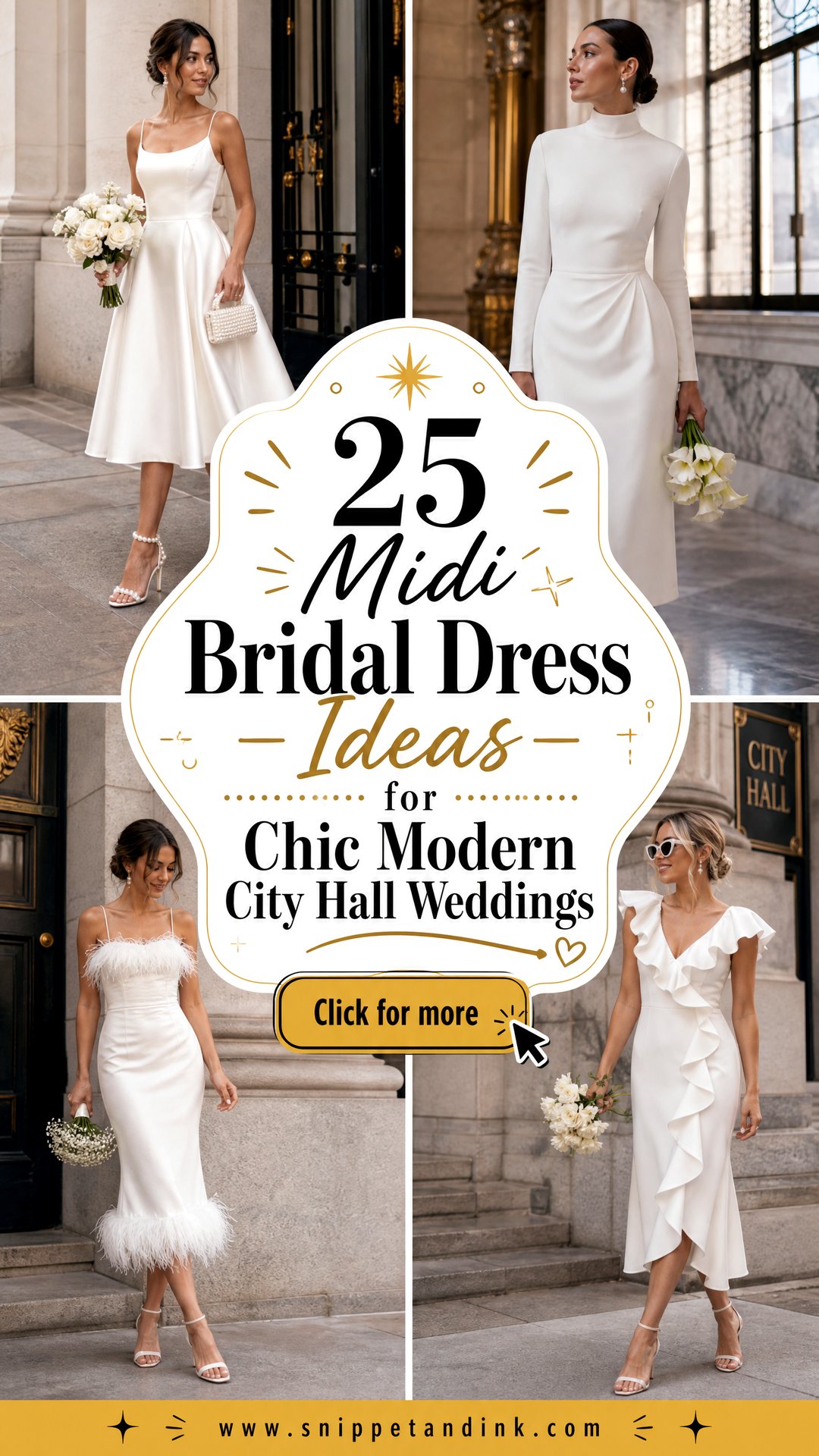
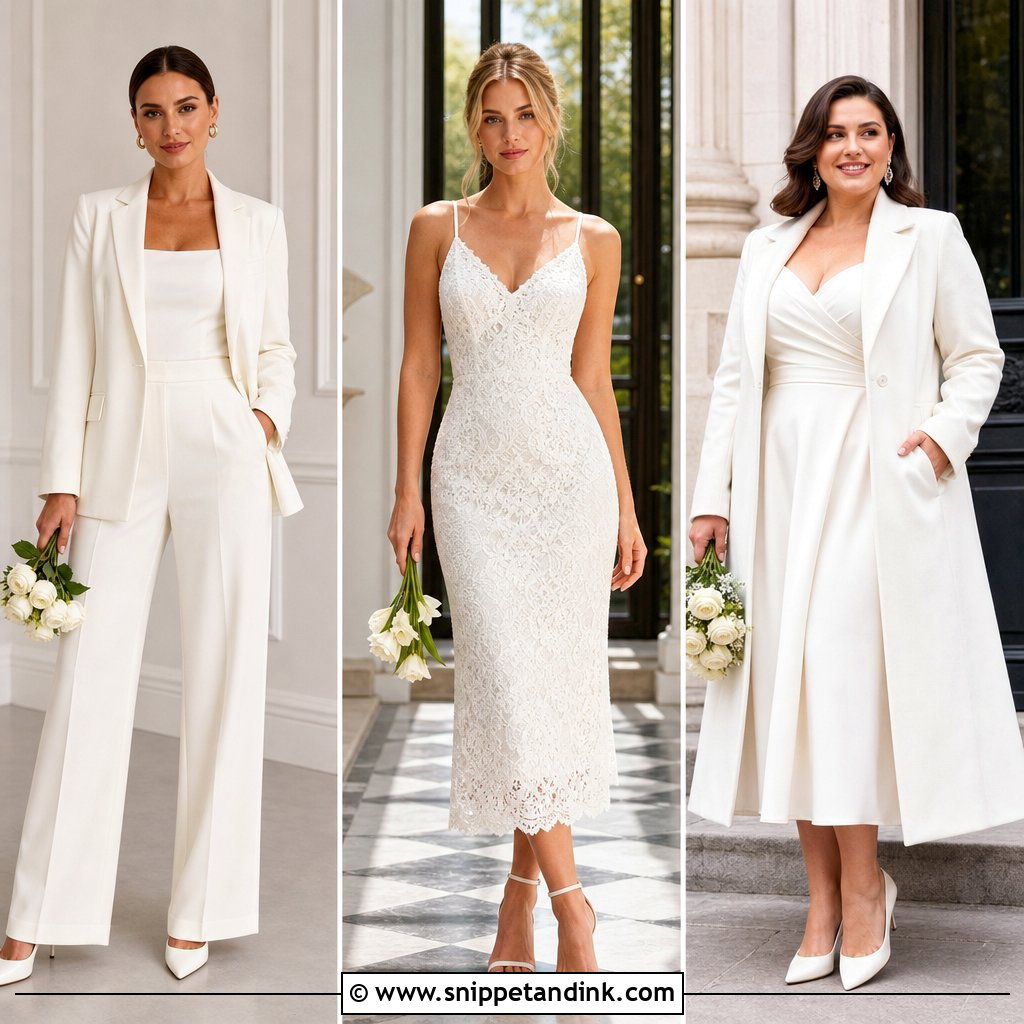
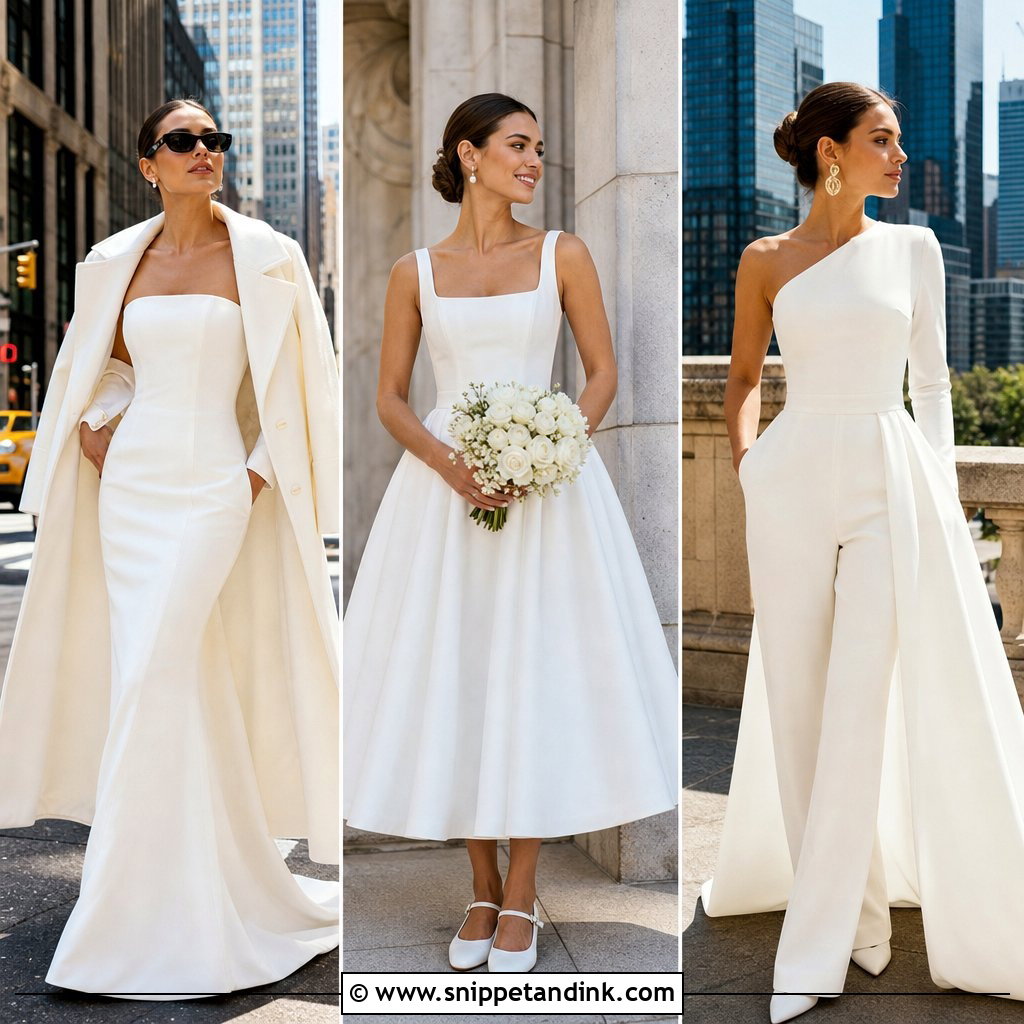
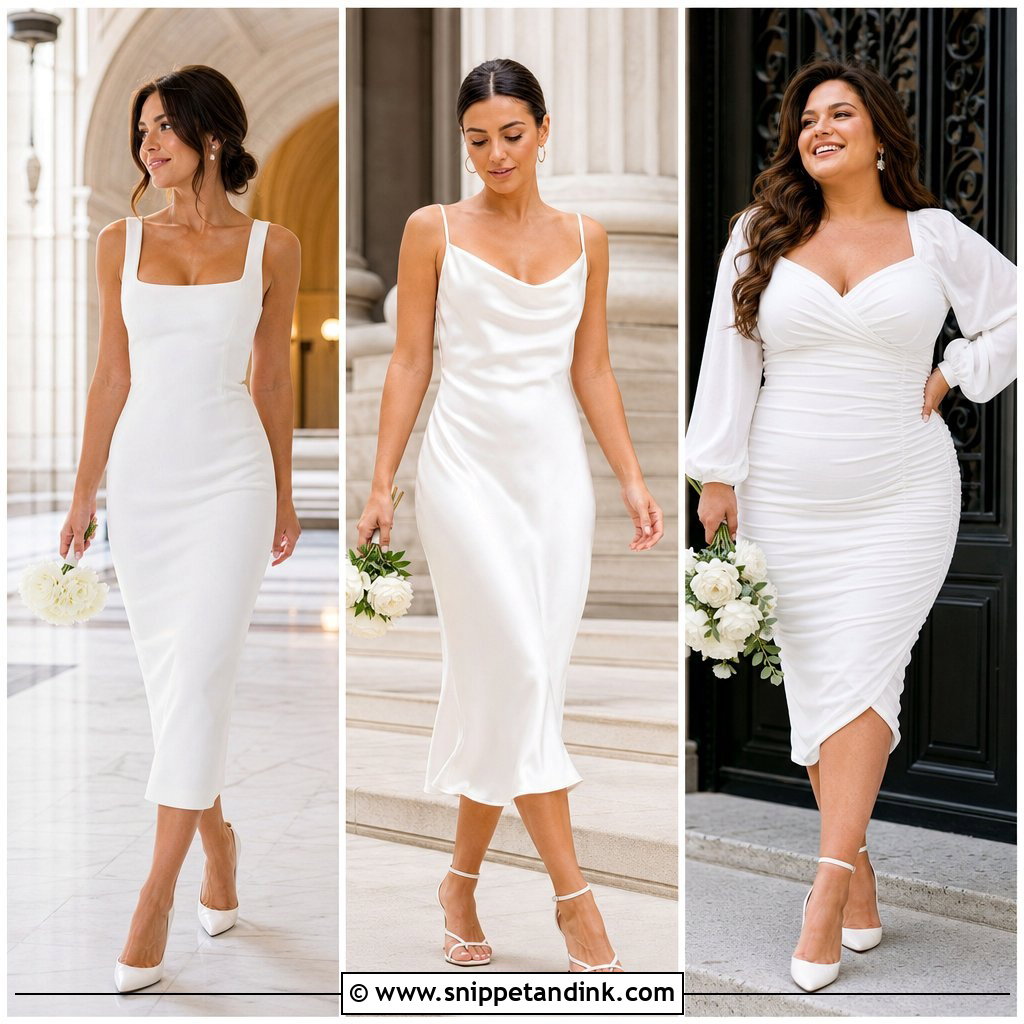
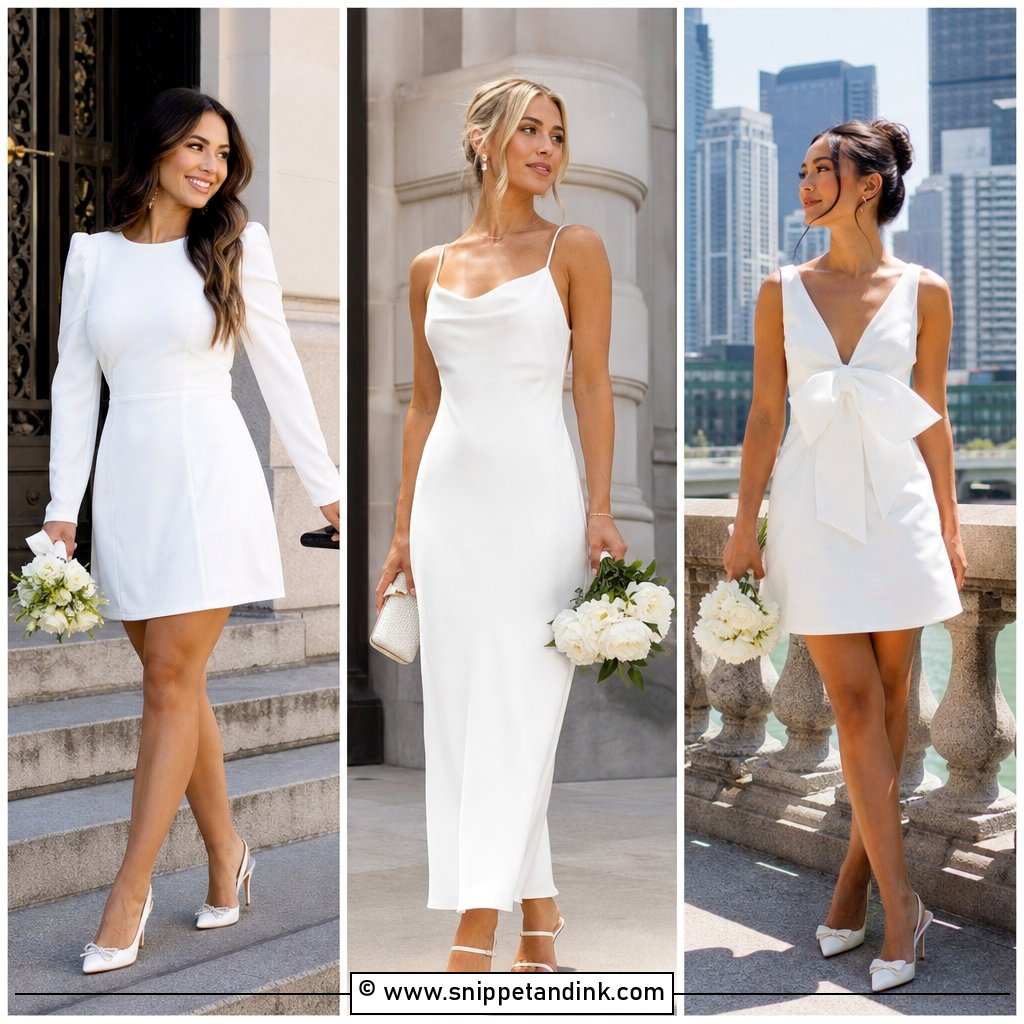
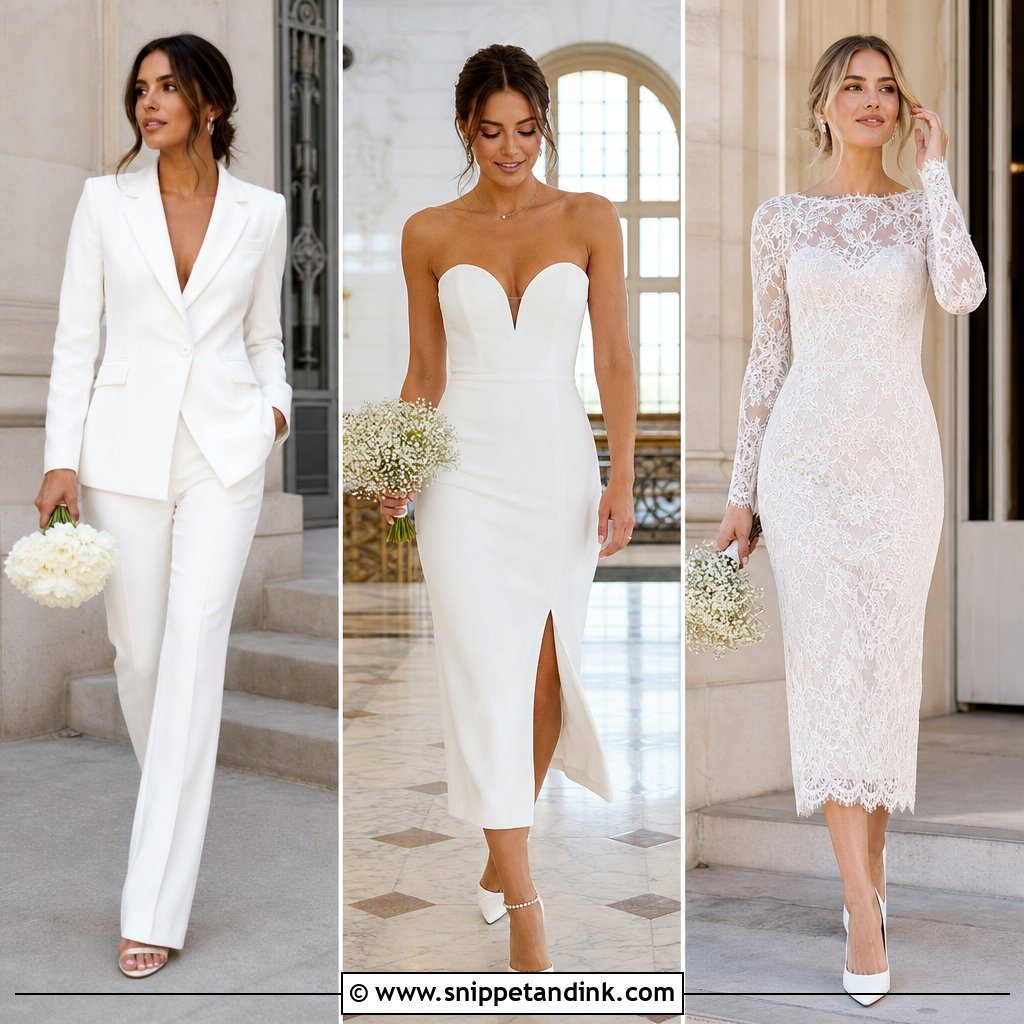
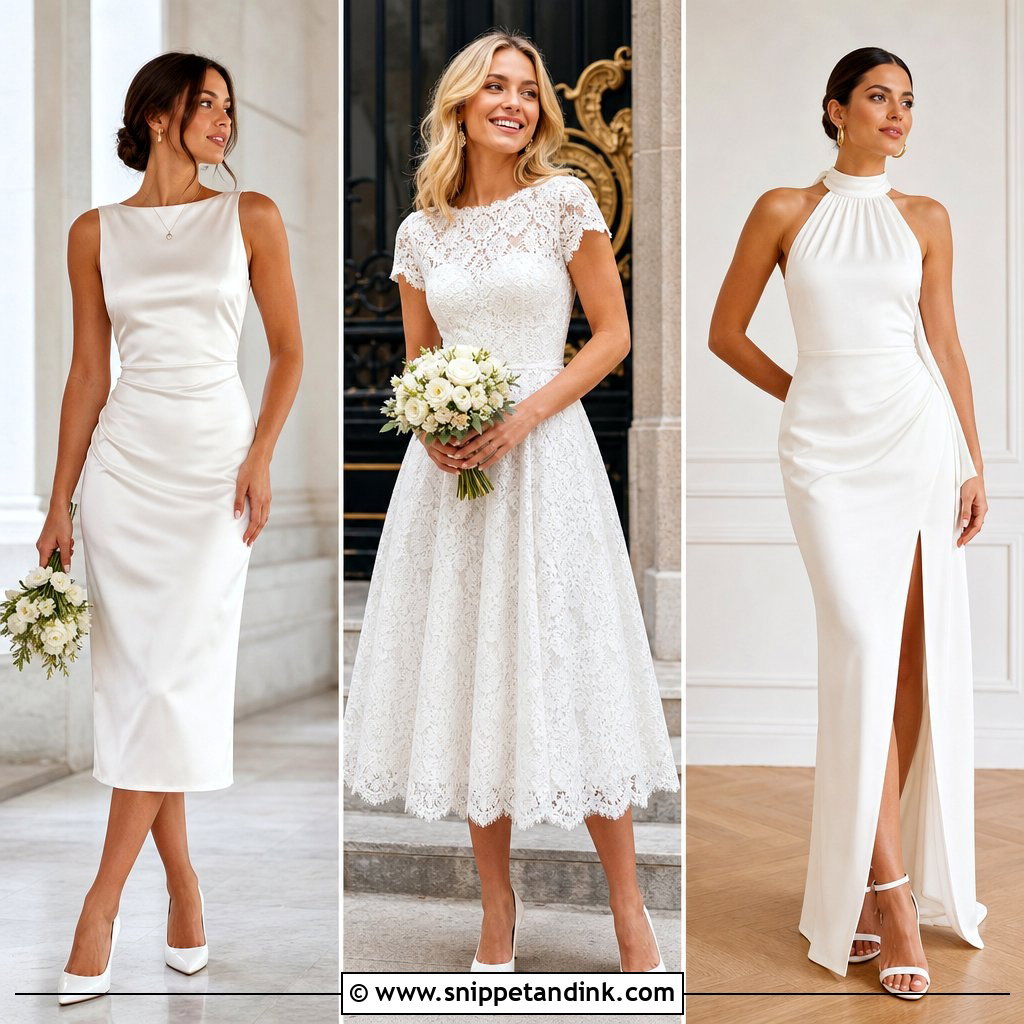
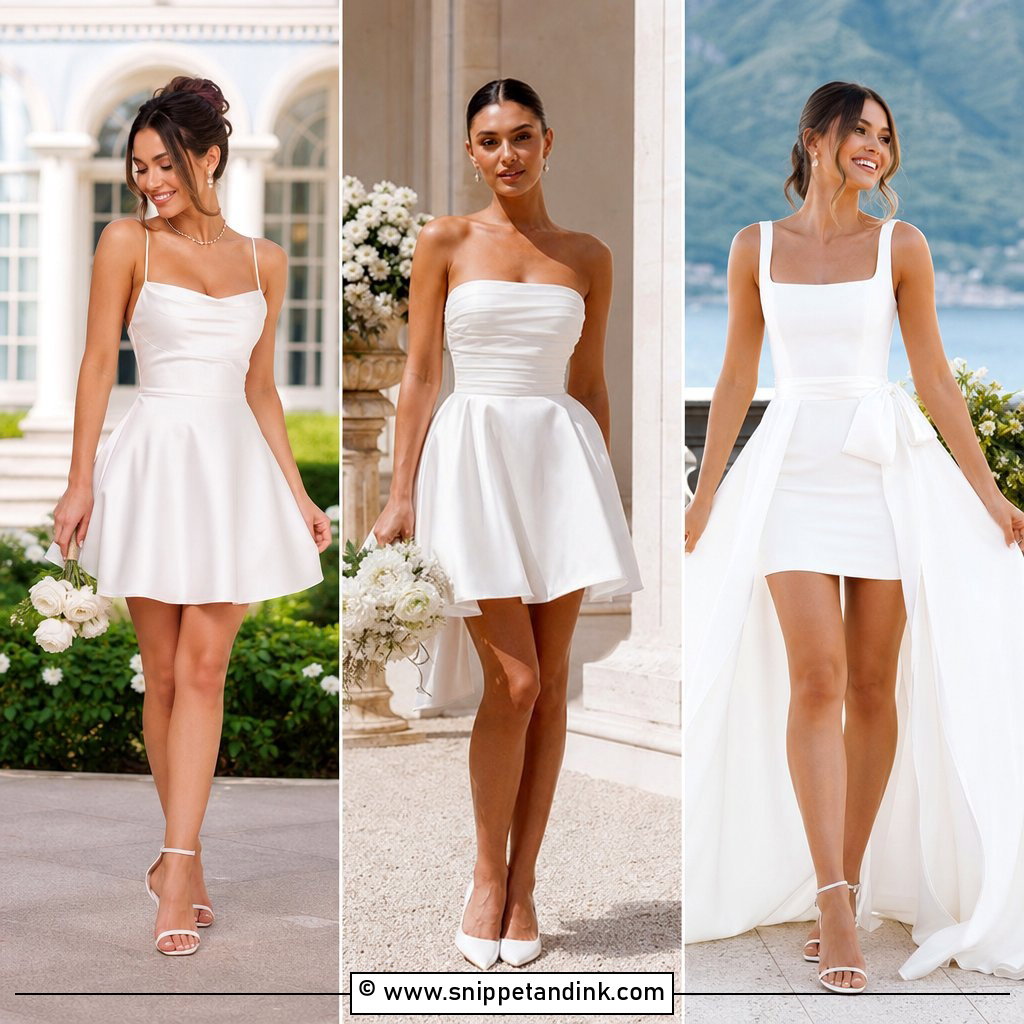
A midi is the dress I reach for most often when a bride tells me her ceremony is at a clerk’s office and lunch is booked straight after. The hem sits somewhere between just below the knee and the top of the ankle, so you can climb courthouse steps, get in and out of a taxi and dance later without anyone holding a train. It suits city hall ceremonies, and it also works for garden parties, elopements and a second look at the reception. Bridal designers now cut midis in satin, crepe, lace, tulle and even tailoring, so the choice is far wider than it was a few seasons ago. Below are twenty-five dresses, each paired with the shoes and accessories I’d actually put with it, plus notes on where each one gets tricky.
Setting a Midi Hem With Your Wedding Shoes On
With a midi, the hem is the decision. A few centimetres change the whole look, because the dress stops exactly where your leg and your shoes are on show. I fit every midi with the wedding shoes on, never barefoot, since a heel tilts the body forward and shortens the front of the hem.
The three landing points I look at
- Just below the knee: crisp and modern, best with a pointed shoe. Check that it still covers the knee when you sit on a bench.
- Mid-calf: the hardest spot, because it can cut the calf at its widest. I move the hem up or down from the fullest point rather than across it.
- Lower calf to just above the ankle: the tea-length range. It is the most forgiving with flats and looks right with a strap or a Mary Jane.
Bring the exact shoes to every fitting and wear them around the house for an hour first. If you’re torn between two heel heights, hem for the lower one. A hem that looks a touch long in a flat still looks right with a small heel, but a hem cut for a tall heel looks short the moment you change into something comfier for the party.
Alterations on a midi are usually simpler than on a full gown, but don’t leave them late. Most seamstresses want two or three fittings, with the last one close to the date. Scalloped lace hems take longer, since the lace is unpicked and re-laid along the new line rather than simply cut.
1. Satin Midi Bridal Dress With Pearl Heels
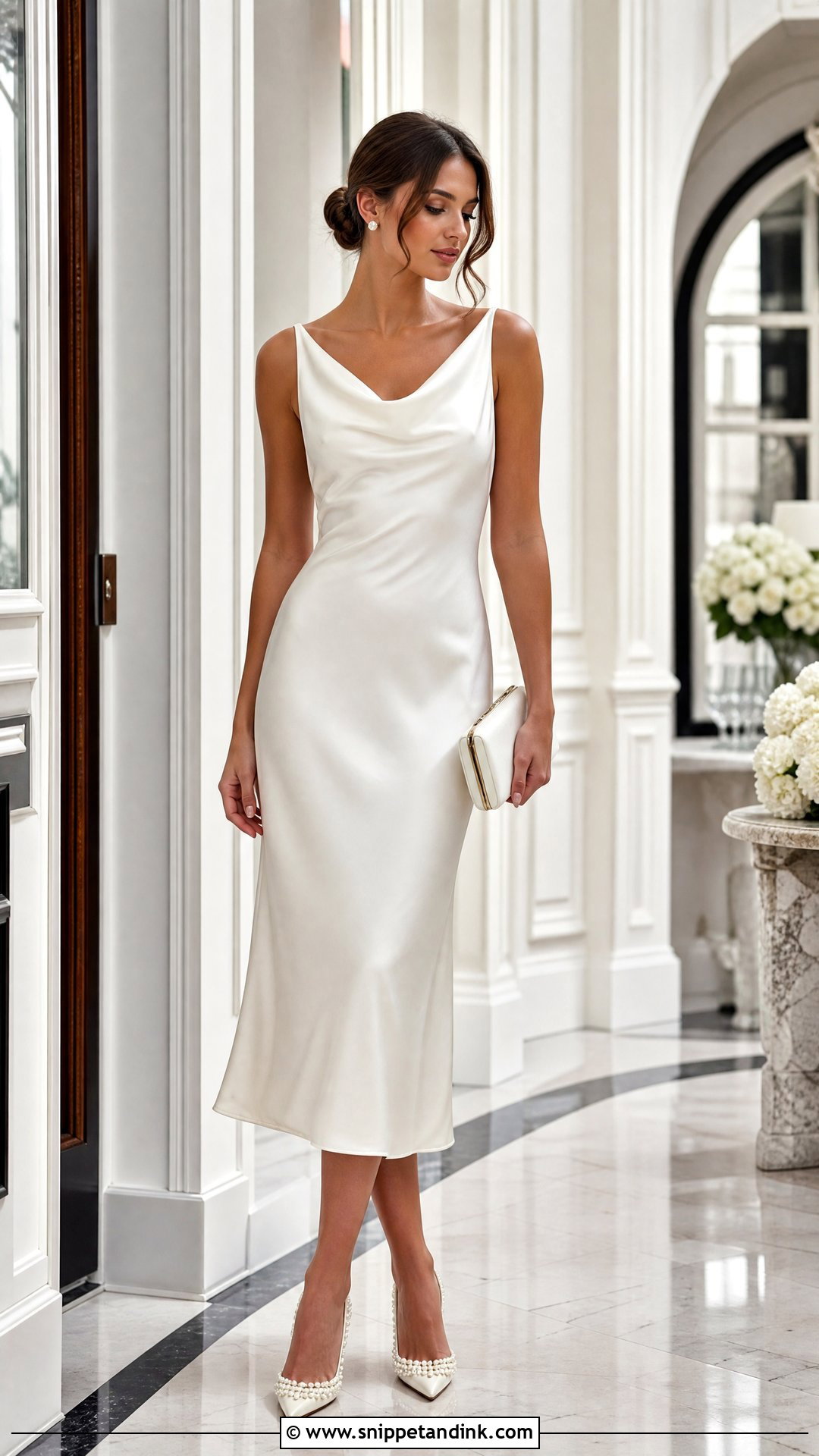
Satin is the fabric I’m most careful with on a midi, because it shows everything: a seam that pulls, a bra line, the crease from sitting in the car. A bias cut helps, since the fabric drapes over the body instead of gripping it, but bias satin also needs a skilled seamstress for any alteration. When the fit is right, a satin midi bridal dress needs very little added. Pointed pearl heels or satin slingbacks, pearl studs, a fine bracelet and a small structured clutch are enough. With a cowl neckline, put the hair in a low bun so the drape isn’t hidden. For a cold morning at the registry, a cropped blazer beats a shawl, which slides around all day.
2. Lace Midi Bridal Dress With Block Heels
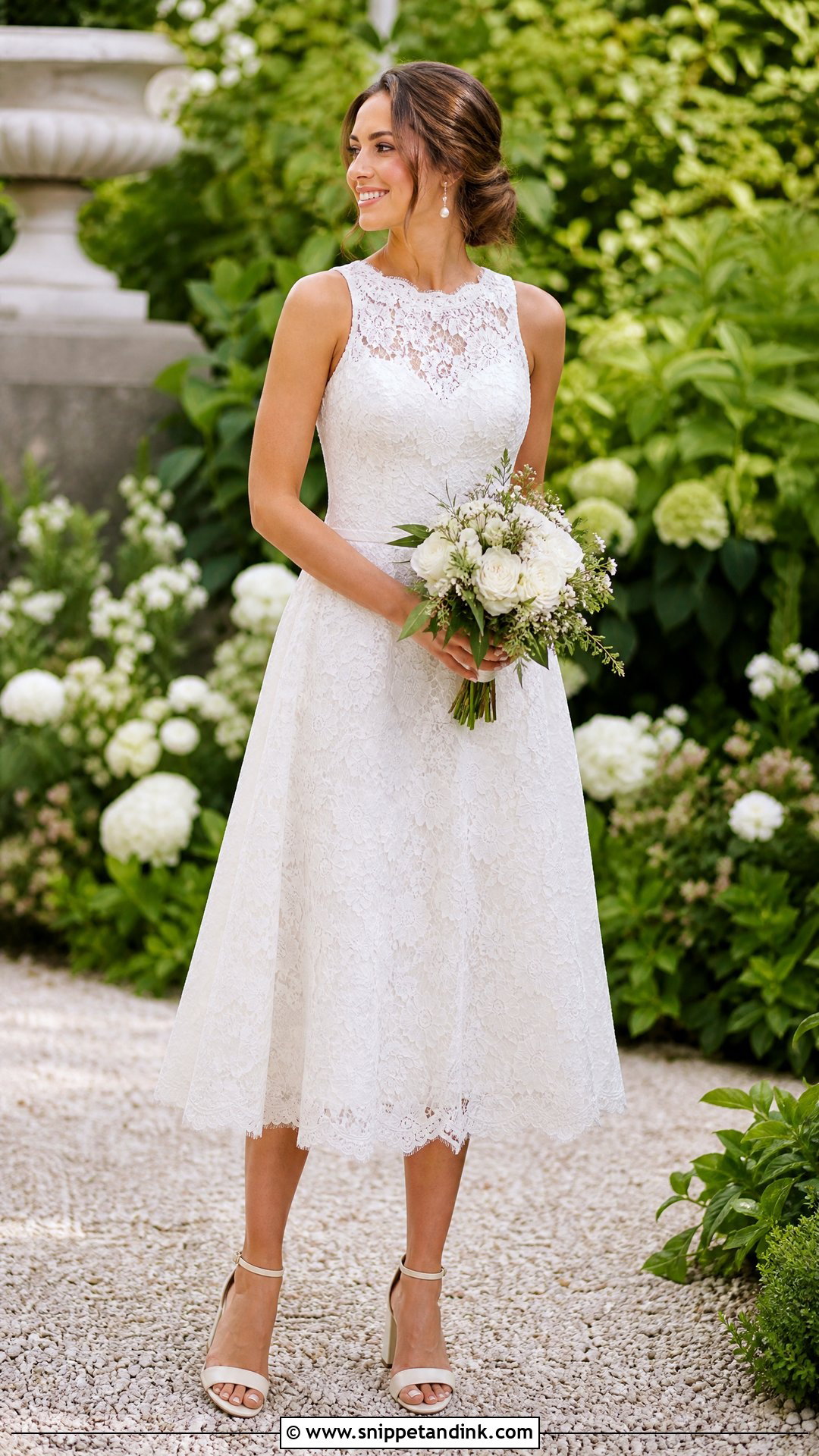
Lace forgives far more than satin. Its texture hides small creases from sitting, which matters at a ceremony where you’ll be in and out of chairs. Look for floral lace, a scalloped hem or a soft A-line skirt that moves when you walk. I pick block heels here for practical reasons: they won’t sink into a lawn or catch in the gaps of old stone paving. Let your earrings decide whether the heel is ivory, nude or metallic. With busy lace, keep the bag plain, then finish with a simple veil and a loose greenery bouquet. It is at its best outdoors, at a brunch or a garden portrait session.
3. Off Shoulder Midi Bridal Dress With Strappy Sandals
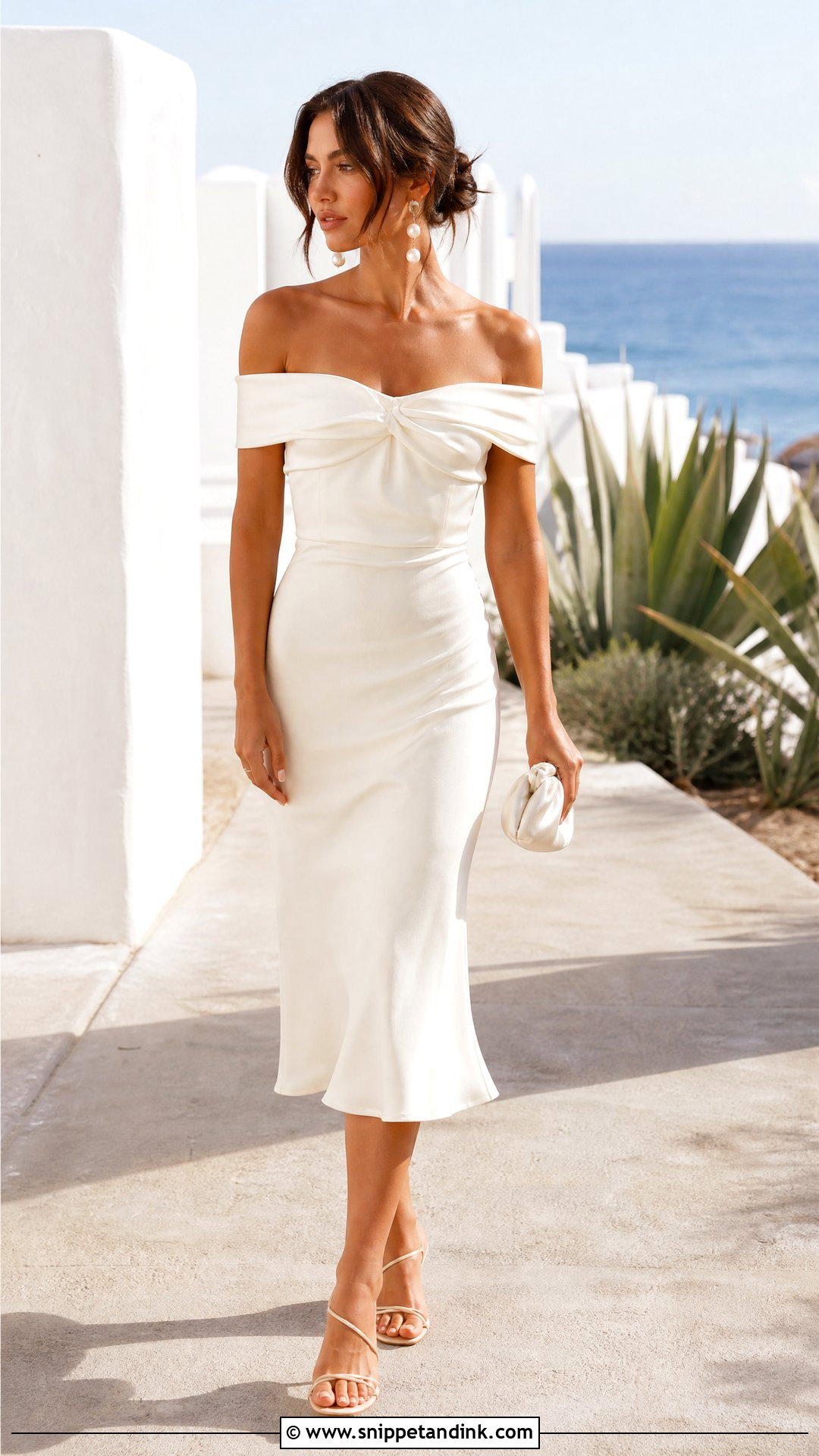
Off-shoulder necklines need one thing checked before anything else: can you lift your arms? Many bodices are built so tight to stay up that hugging or raising a glass drags the whole neckline down. At the fitting, I ask brides to reach forward as if signing the register. If it passes, the neckline frames the collarbone well, and a fitted bodice over a soft skirt is the easiest balance, while a sleek column reads more modern. Strappy ivory sandals keep the look light. I usually skip the necklace in favor of a statement earring, with loose waves or a low twist. Warm, coastal settings suit it, and it makes a good reception change.
4. Long Sleeve Midi Bridal Dress With White Pumps
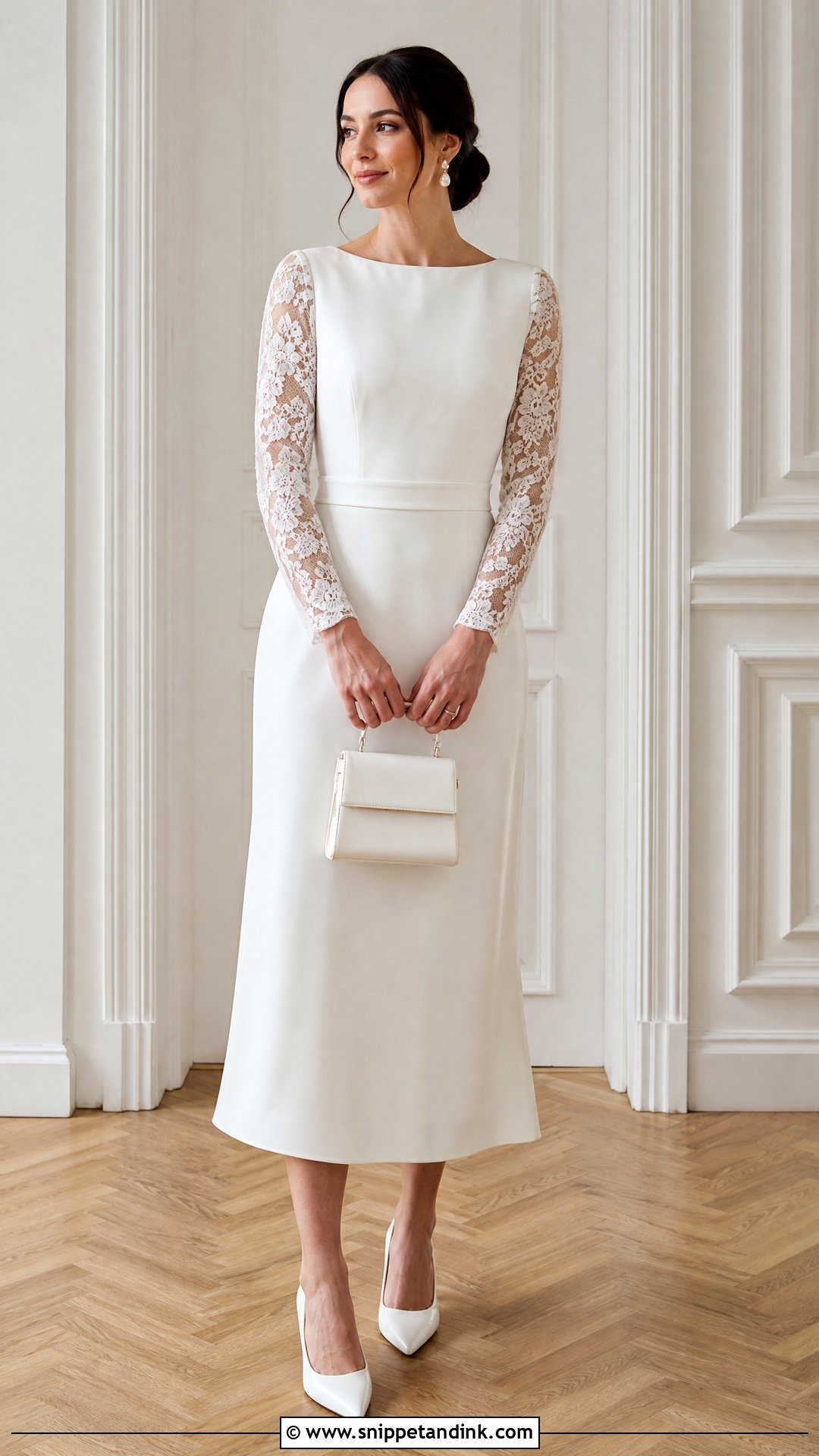
Sleeves change a midi’s proportions, so I check sleeve length with the arm bent, not hanging straight. A sleeve that ends exactly at the wrist bone when you stand will ride up when you hold flowers. Sheer lace, crepe, satin and embroidered mesh all suit cooler months and brides who want coverage. White pumps keep it clean, and below a midi hem the shoe is fully on show, so make it a good one. A structured mini bag, pearl earrings and a sleek low bun finish the outfit. If the dress is otherwise straight, a defined waist gives it shape, and a square or bateau neckline keeps the upper half crisp.
5. Square Neck Midi Bridal Dress With Bow Heels
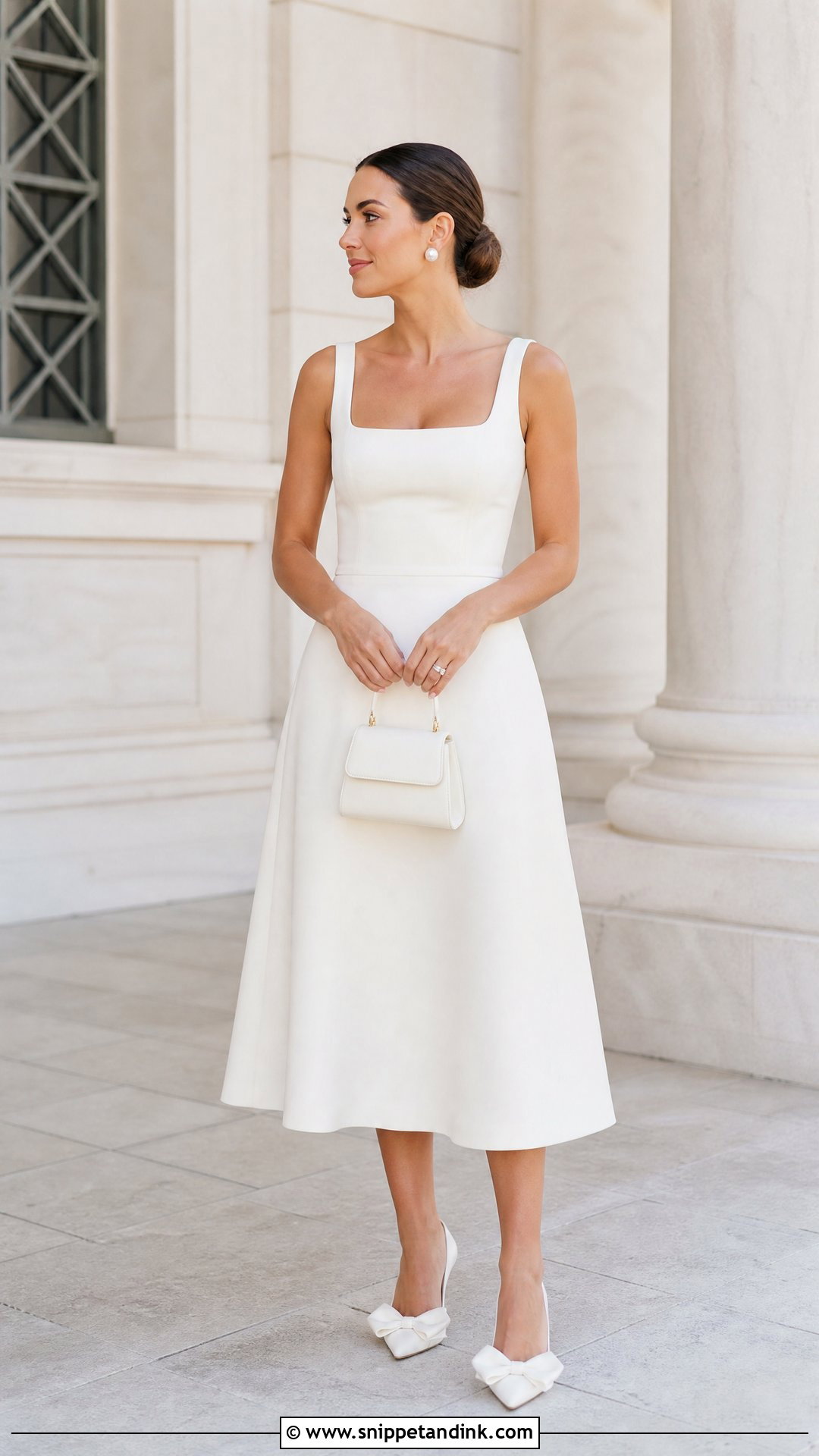
A square neckline is one of the most forgiving shapes I fit. The straight line across the chest gives the upper body structure and pairs easily with a fitted or A-line skirt. Watch the strap placement: straps set too wide slip off the shoulder by mid-afternoon, so I often have them moved in slightly. Bow heels add a small bridal note without tipping into sweet. Clean satin or crepe keeps it modern, and a full skirt softens it. Small pearl earrings, a smooth updo and a mini top-handle bag are all it needs, whether for a courthouse wedding, a shower or a rehearsal dinner.
6. Strapless Midi Bridal Dress With Pointed Heels
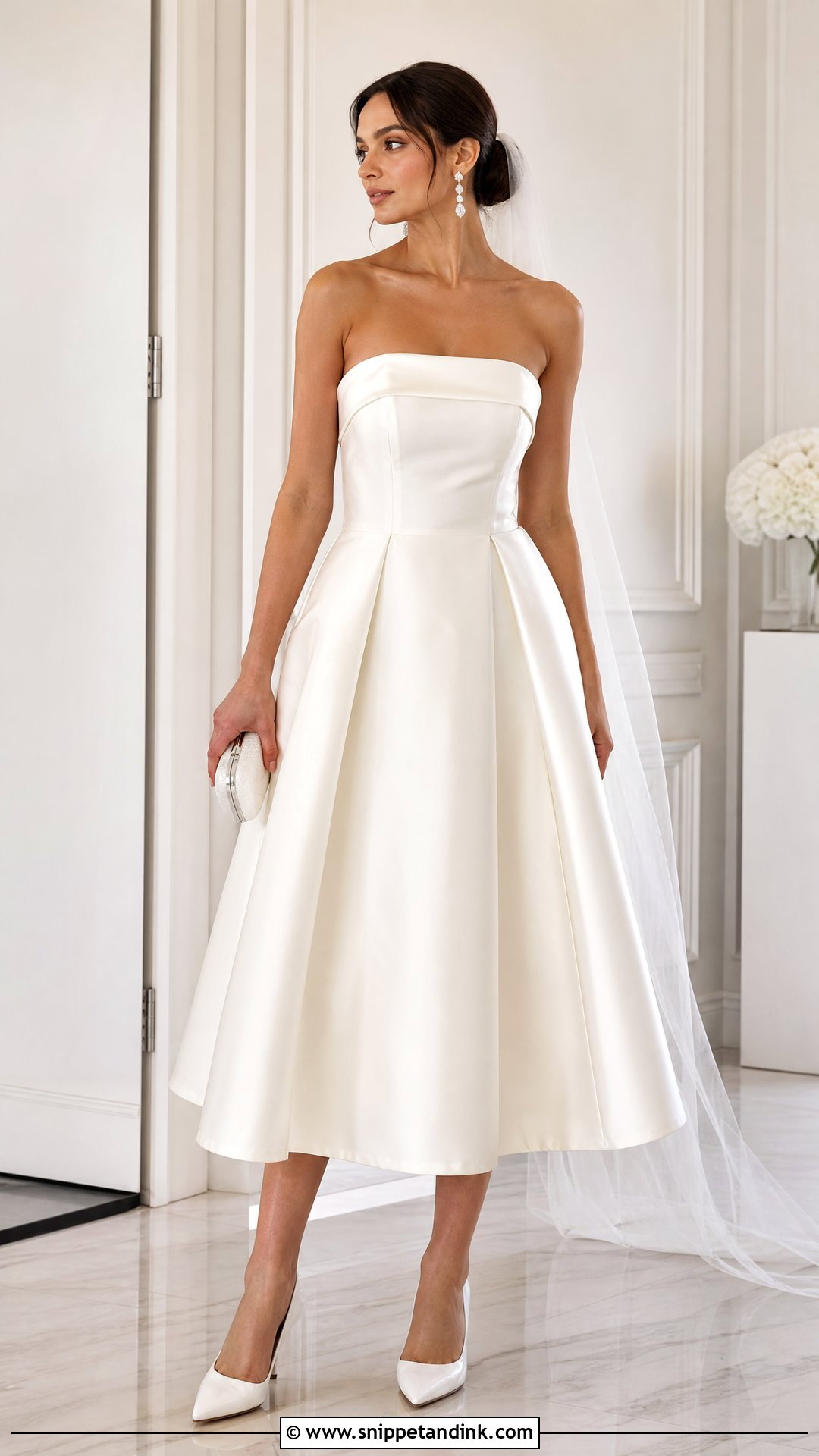
Strapless only works when the bodice is built to hold itself up. Structured satin, mikado or crepe with proper boning does that; a soft fabric without it will need hitching all day, and you’ll see the hitching in every photo. Before I sign off on a strapless midi bridal dress, the bride sits, stands and bends in it. Pointed heels lengthen the leg below the hem. A straight neckline can take statement earrings or a short pearl strand; a sweetheart neckline wants finer jewelry. Add a small clutch and a simple veil, then stop. Rooftops and modern venues suit it, and it makes a sharp reception entrance.
7. Tulle Midi Bridal Dress With Ballet Flats
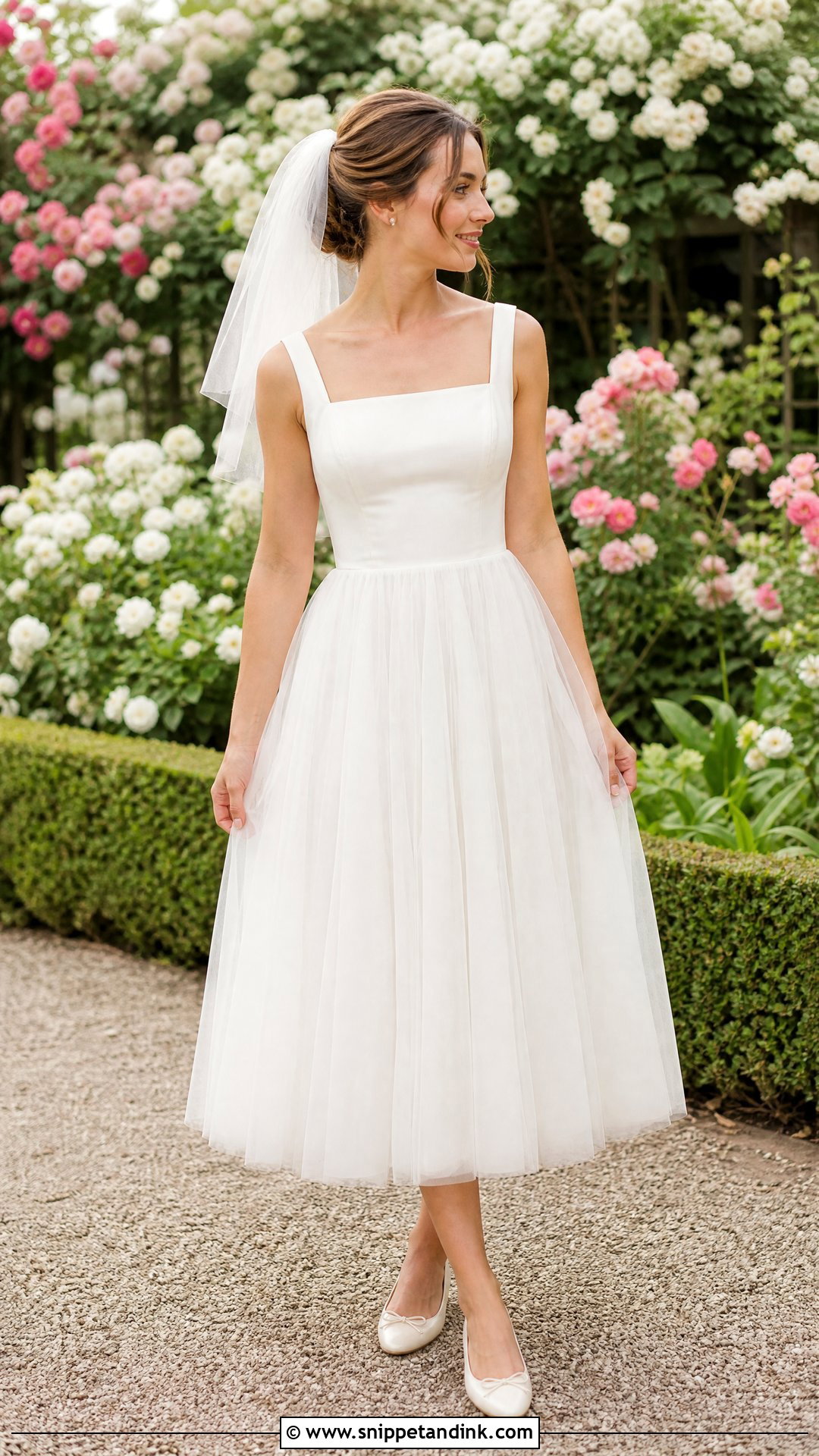
Tulle at midi length is light enough to wear all day, which is why I suggest it to brides who plan to walk between venues. The trap is static: several layers of synthetic tulle cling to tights and to each other in dry winter air, and a light mist of anti-static spray on the underlayers fixes it. Ballet flats suit the airy skirt and spare your feet, and a satin or pointed pair looks most finished. A fitted bodice balances the skirt, and a ribbon belt can mark the waist. Pearl studs, a short veil and a small bouquet are plenty for a garden wedding and a long night of dancing.
8. Crepe Midi Bridal Dress With Minimal Accessories
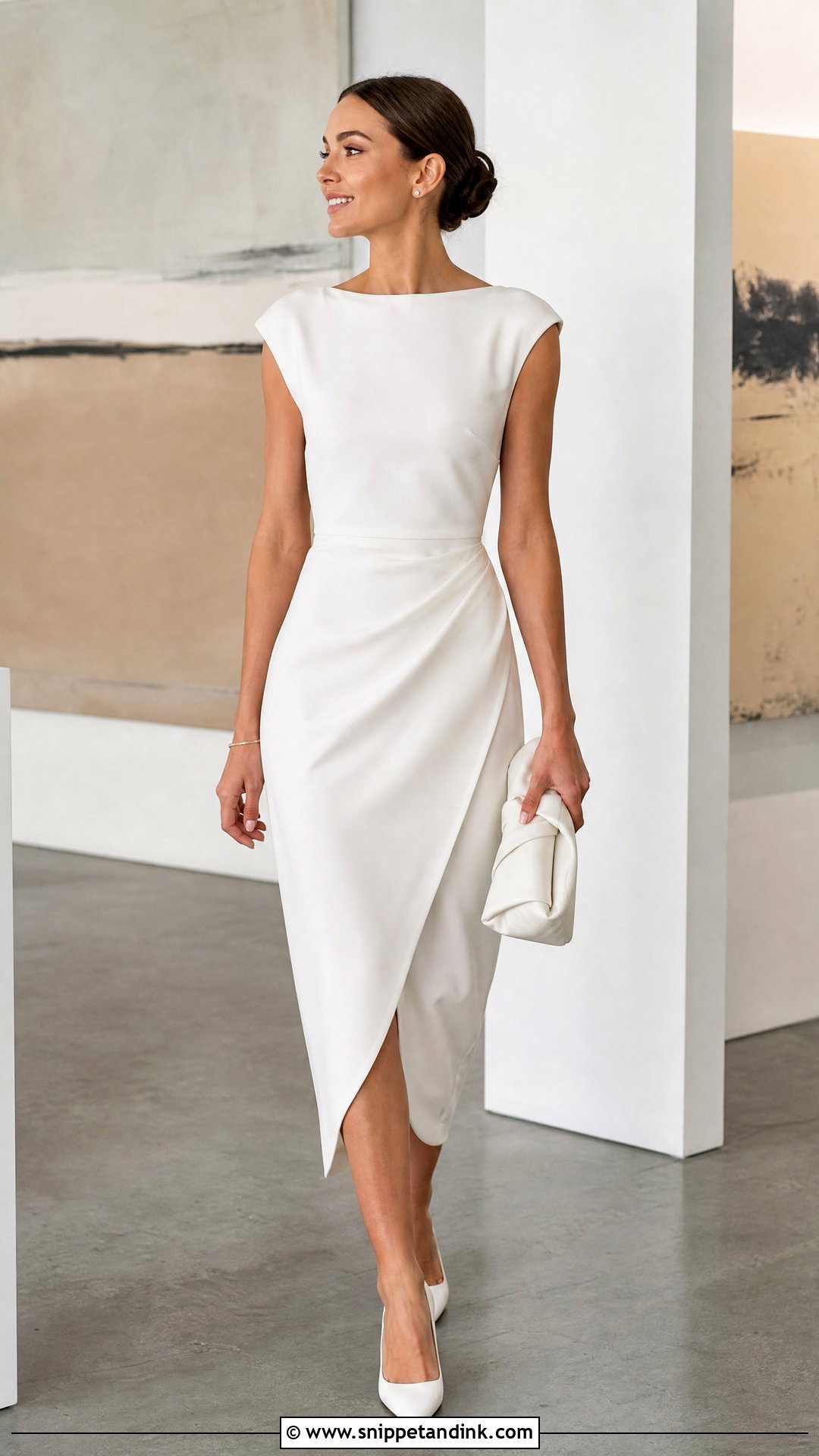
Crepe is what I’d choose for a bride who wants clean lines and hates fuss. It has enough weight to fall straight and doesn’t crease much in the car, though it does show body shape, so the fit through the hip has to be exact. A sheath, a column or a gently flared skirt all come in crepe; pick by how much ease you want. Small studs, a simple bracelet and sleek white pumps or sandals keep it quiet, and a low bun or smooth blowout matches the sharpness. If it starts to feel too plain, a sculptural clutch or a short raw-edge veil adds character without clutter.
9. Midi Bridal Dress With Puff Sleeves
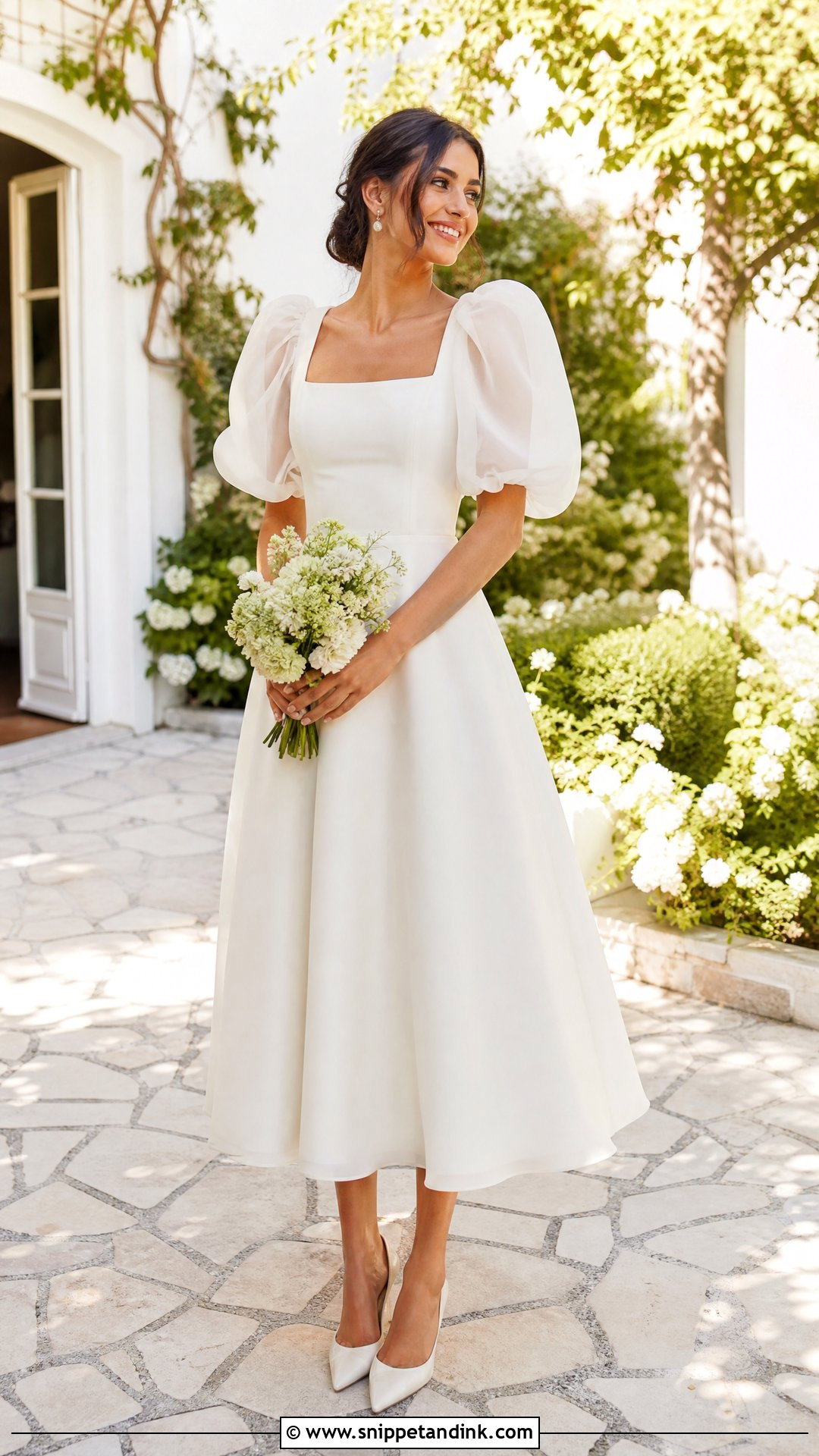
Puff sleeves add width at the shoulder, so the rest of the dress has to stay narrow, with a fitted waist and a simple skirt. Organza sleeves look softer and hold their puff. Satin ones look bolder but can collapse if the inner support is thin, so I turn the sleeve inside out to check for a net lining. Keep feet simple with ivory pumps, slim sandals or pearl flats, and skip big jewelry because the sleeves already take the attention. A neat bun, soft waves or a half-up style all suit. In a good fabric it reads sweet and still grown-up.
10. Midi Bridal Dress With Detachable Overskirt
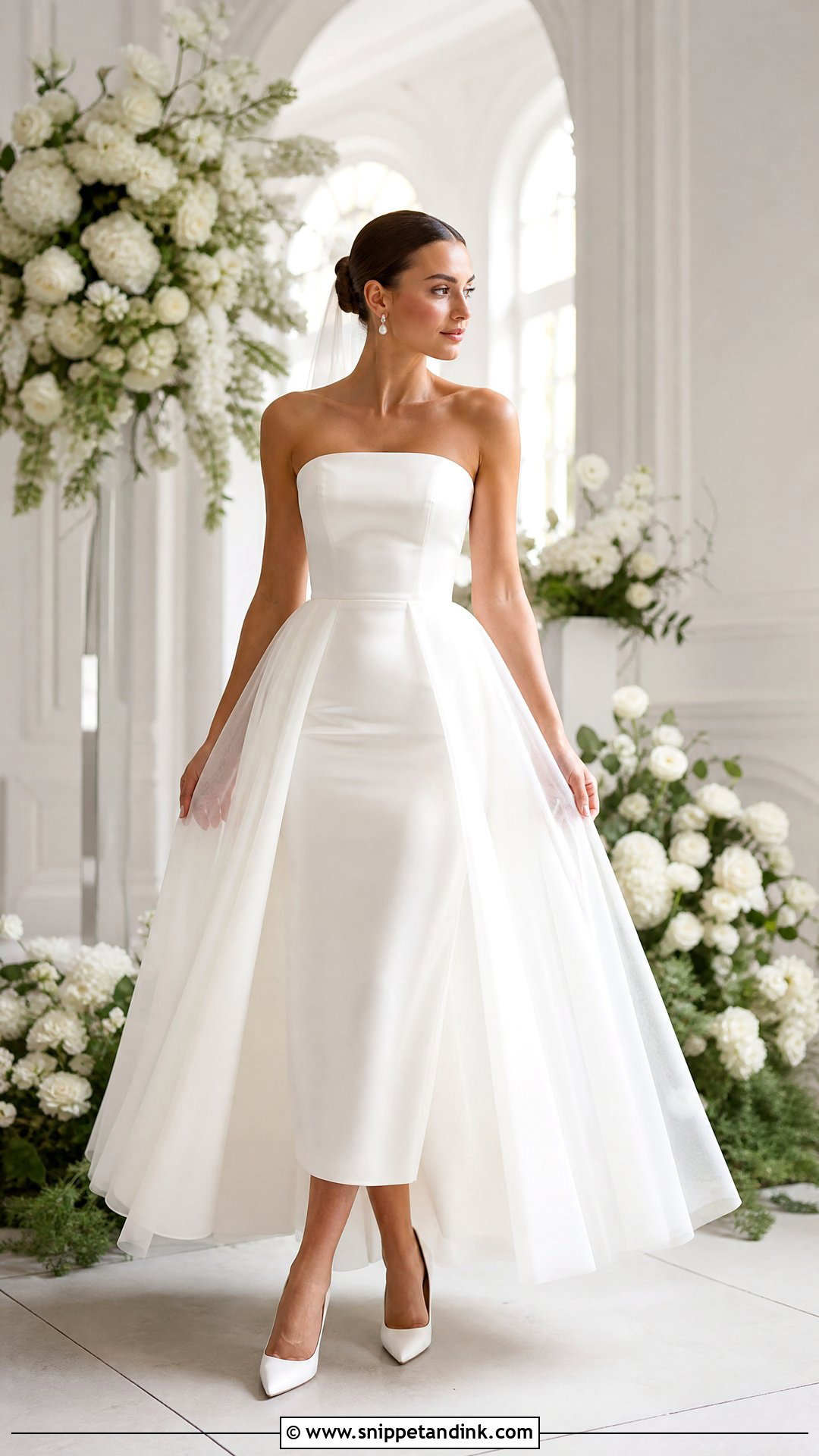
A detachable overskirt gives you two dresses: the full layer for the ceremony and portraits, then off for dinner and dancing. Before you buy, ask how it fastens. Rows of tiny hooks are fiddly, while a wide waistband with a few buttons is quick, and remember someone else will be doing it for you in a restroom. The base dress can be satin, crepe, lace or a simple strapless cut. Choose shoes that look right with and without the extra volume, usually a mid heel. Wear the veil for the ceremony, then swap to statement earrings later. It’s the practical answer for a bride who wants an entrance without a long gown all day.
11. Floral Applique Midi Bridal Dress With Nude Heels
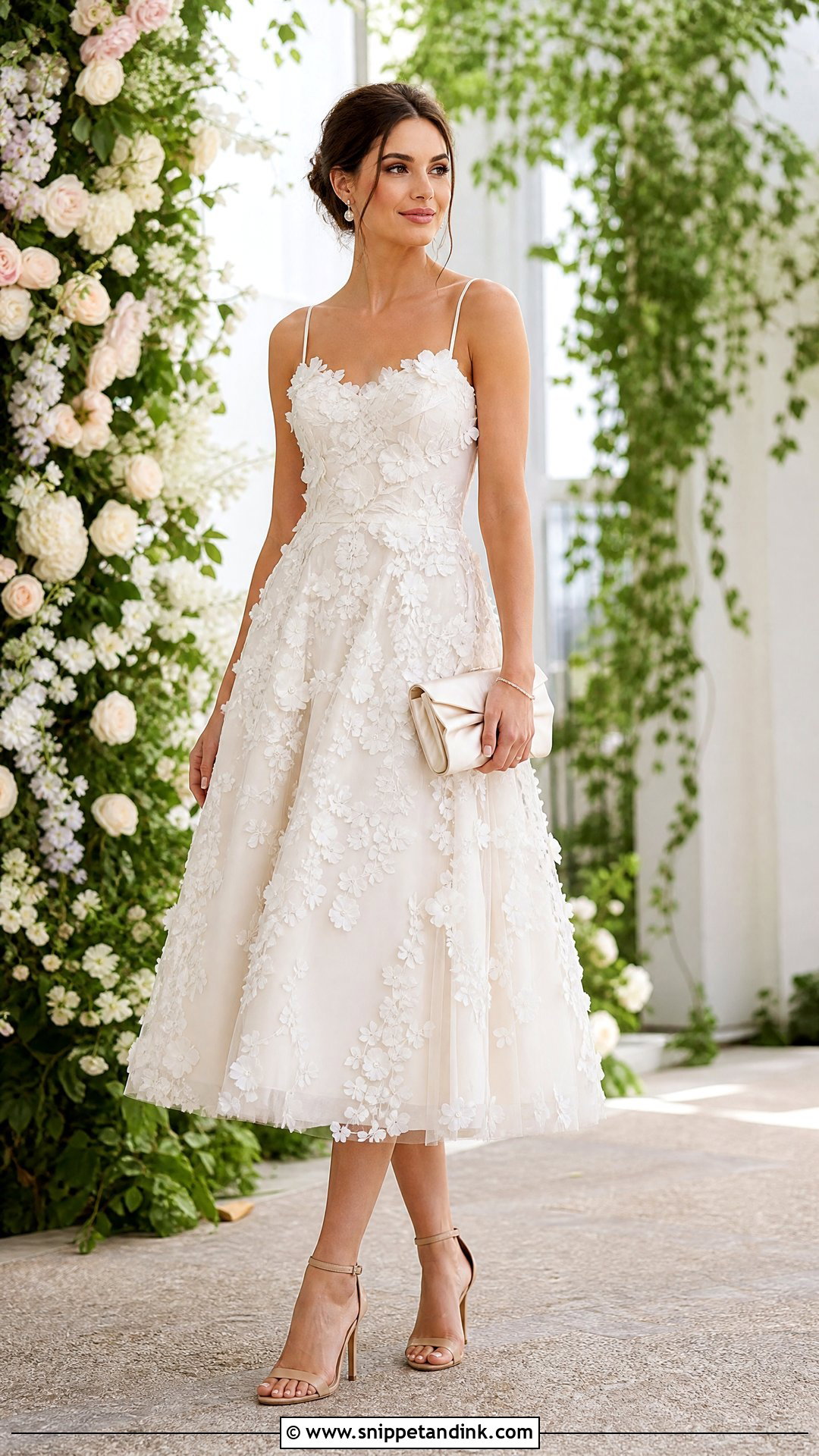
Raised floral applique reads best up close, so it rewards a small ceremony where guests stand a few feet away. Inspect how the flowers are attached: hand-stitched appliques stay flat after a day of hugs, while glued ones can lift at the petal edges. A sheer overlay, an embroidered bodice or a scattered skirt all carry the idea. Nude heels lengthen the leg and let the dress lead. A satin clutch or pearl pouch is plenty, and pearl or crystal earrings shouldn’t fight the flowers. Spring and garden venues suit this one best.
12. Beaded Midi Bridal Dress With Metallic Sandals
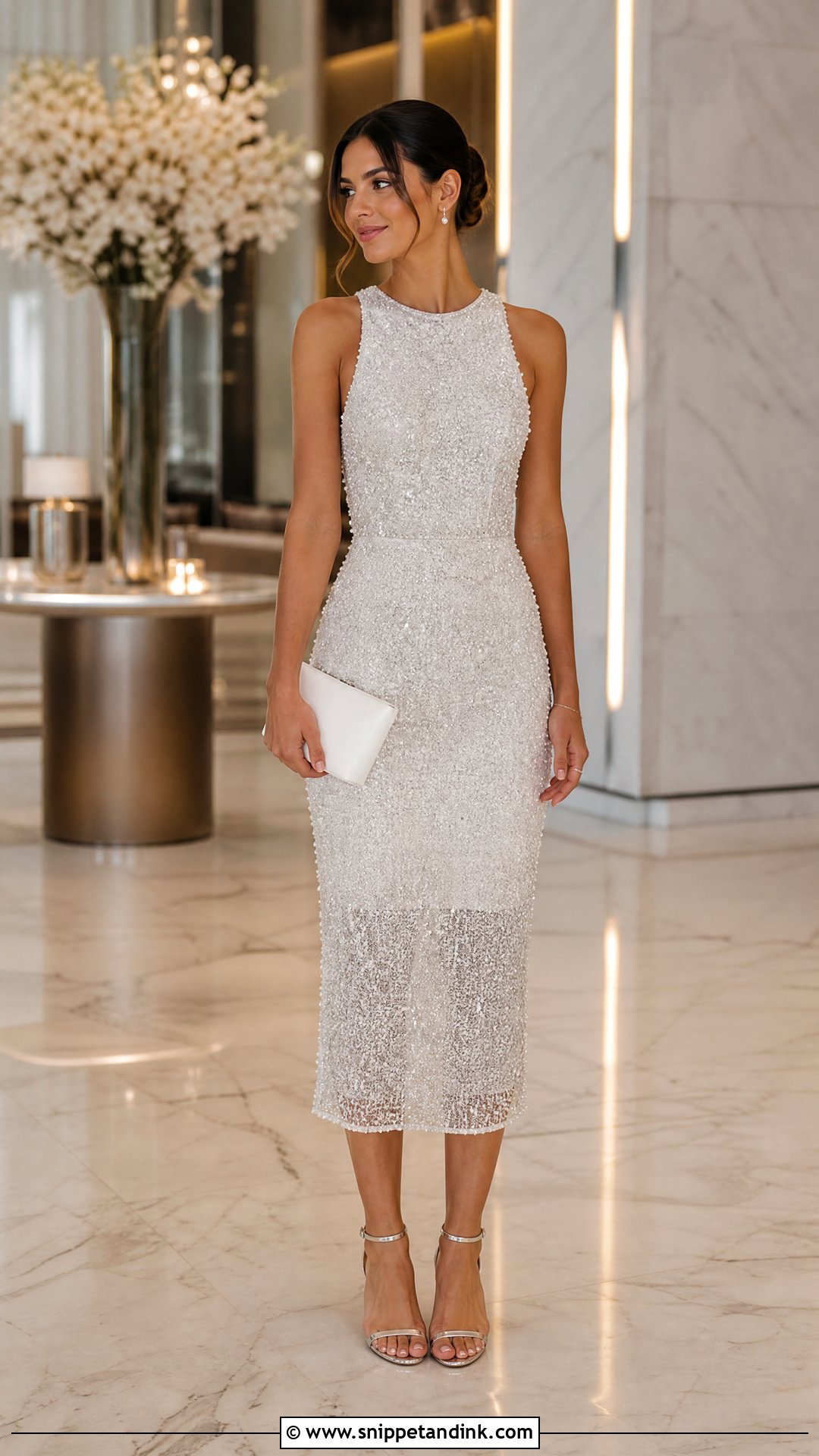
Beading adds weight, and weight changes how a midi hangs. A heavily beaded skirt drops at the seams over a long day, so I recheck the hem after the dress has hung for a while. I also ask brides to sit in it, because beads under the thighs are miserable on a hard bench. Subtle pearl beading or scattered crystal on a simple shape is the refined version. Metallic sandals in silver, champagne or soft gold pick up the shine. Keep the hair sleek, the clutch plain and the earrings small, and save it for an evening reception or a hotel dinner.
13. Corset Midi Bridal Dress With Slingback Heels
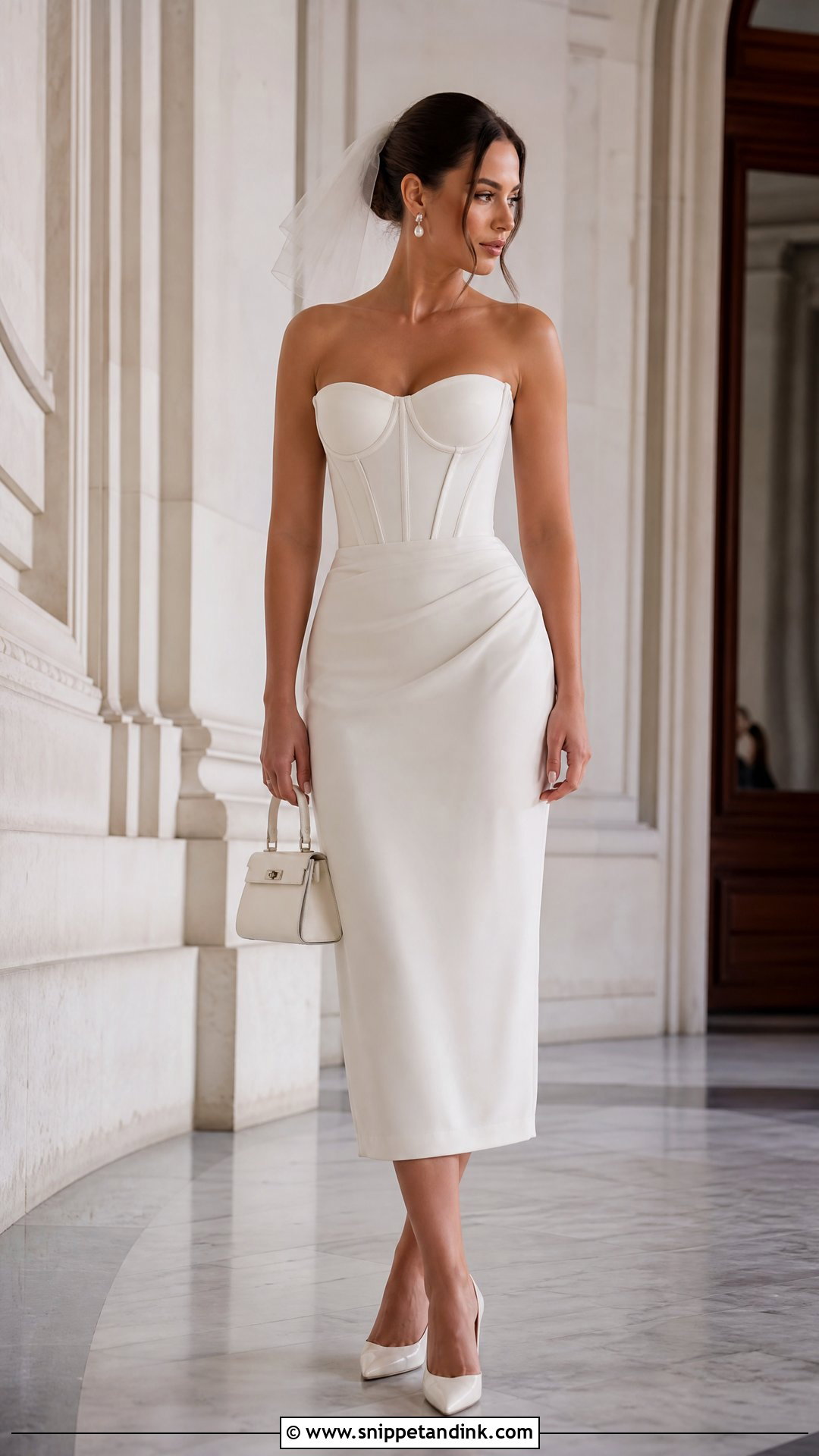
A corset bodice gives real shape, but the boning has to match your torso length. Too long and it digs into the hip when you sit; too short and it cuts across the ribs. This is the one dress where I insist on a seated fitting. Clean seams, soft lace or a satin finish all work, depending on the mood you want. Slingback heels keep it elegant without being formal, and a short veil, pearl earrings and a structured mini bag finish it for a city hall ceremony or an intimate reception. For more coverage, look for wide straps or a sheer overlay.
14. Halter Midi Bridal Dress With Low Bun
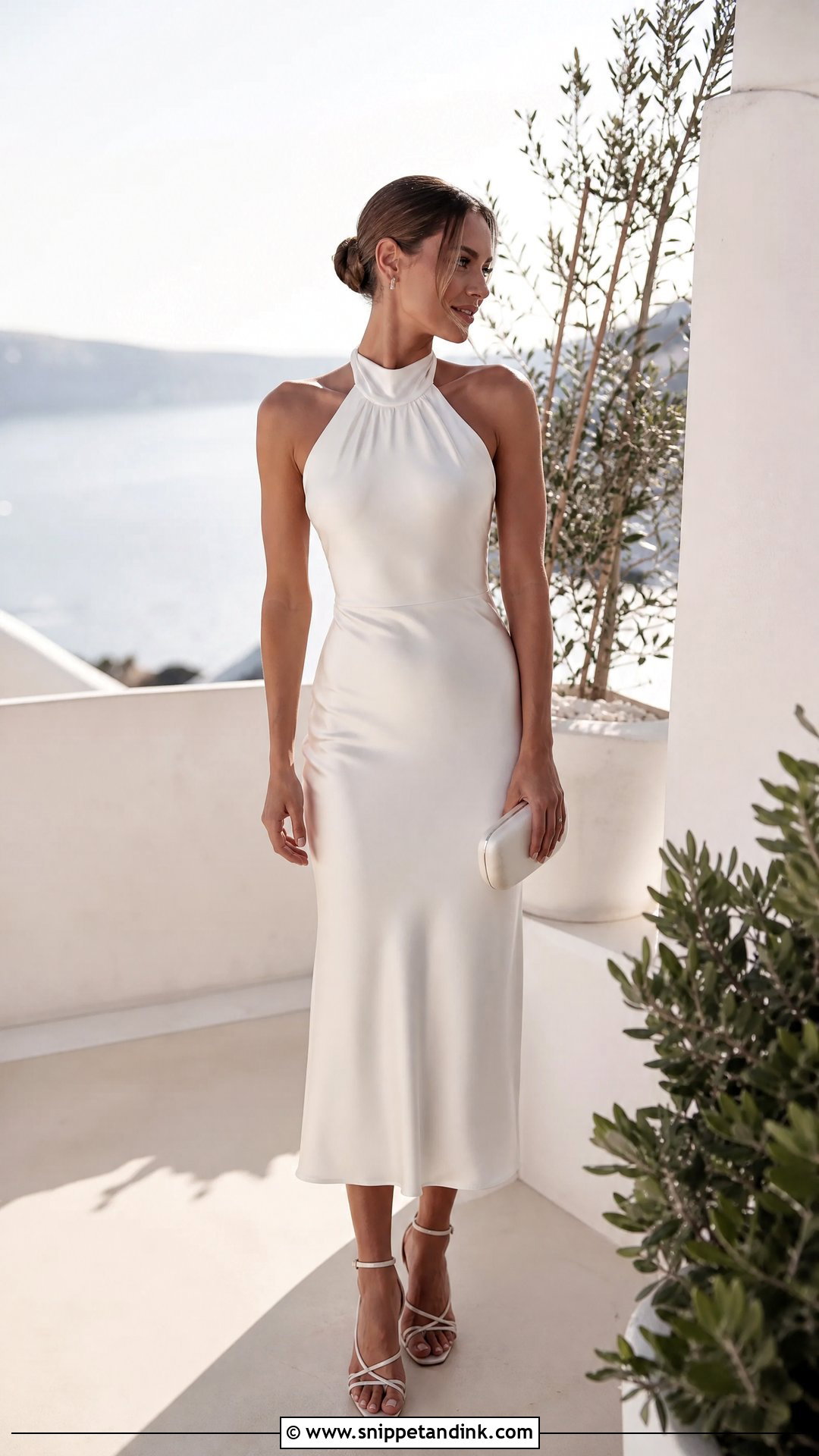
A halter puts the focus on the shoulders and neck, so I steer brides toward it when they love their arms. The weight of the dress hangs from the neck, and a heavy satin halter can ache by evening; ask whether there is a hidden back strap or internal bodice support. A halter midi bridal dress wants a low bun to keep the neckline open. Strappy heels, simple studs and a small satin clutch are all you add. Satin, crepe and smooth jersey suit the cut. With a high halter neck, drop the necklace entirely. Warm weather and destination ceremonies are its natural home.
15. Pleated Midi Bridal Dress With Kitten Heels
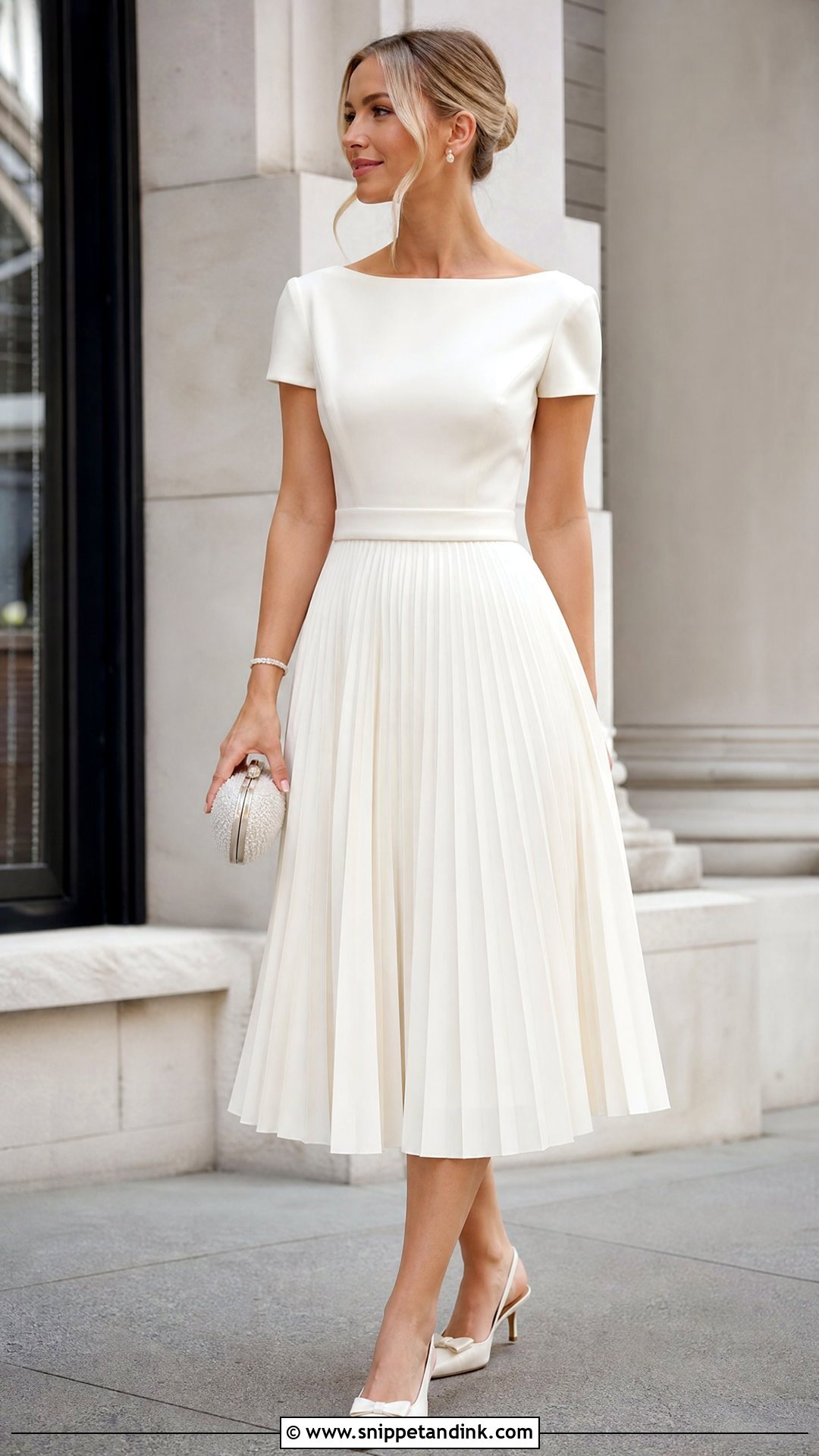
Pleats move with every step, which is what makes them fun on camera. Sharp knife pleats need pressing on the morning, because they flatten wherever you’ve been sitting; soft sunray pleats recover on their own. Kitten heels are my pick for a day of standing, and they suit the slightly vintage shape. A fitted waist, wrap bodice or sleeveless top balances the skirt. Pearl studs, a slim bracelet and a small clutch finish it. With crisp pleats, keep everything else minimal. Soft pleats can take a romantic veil.
16. Wrap Midi Bridal Dress With Ankle Strap Heels
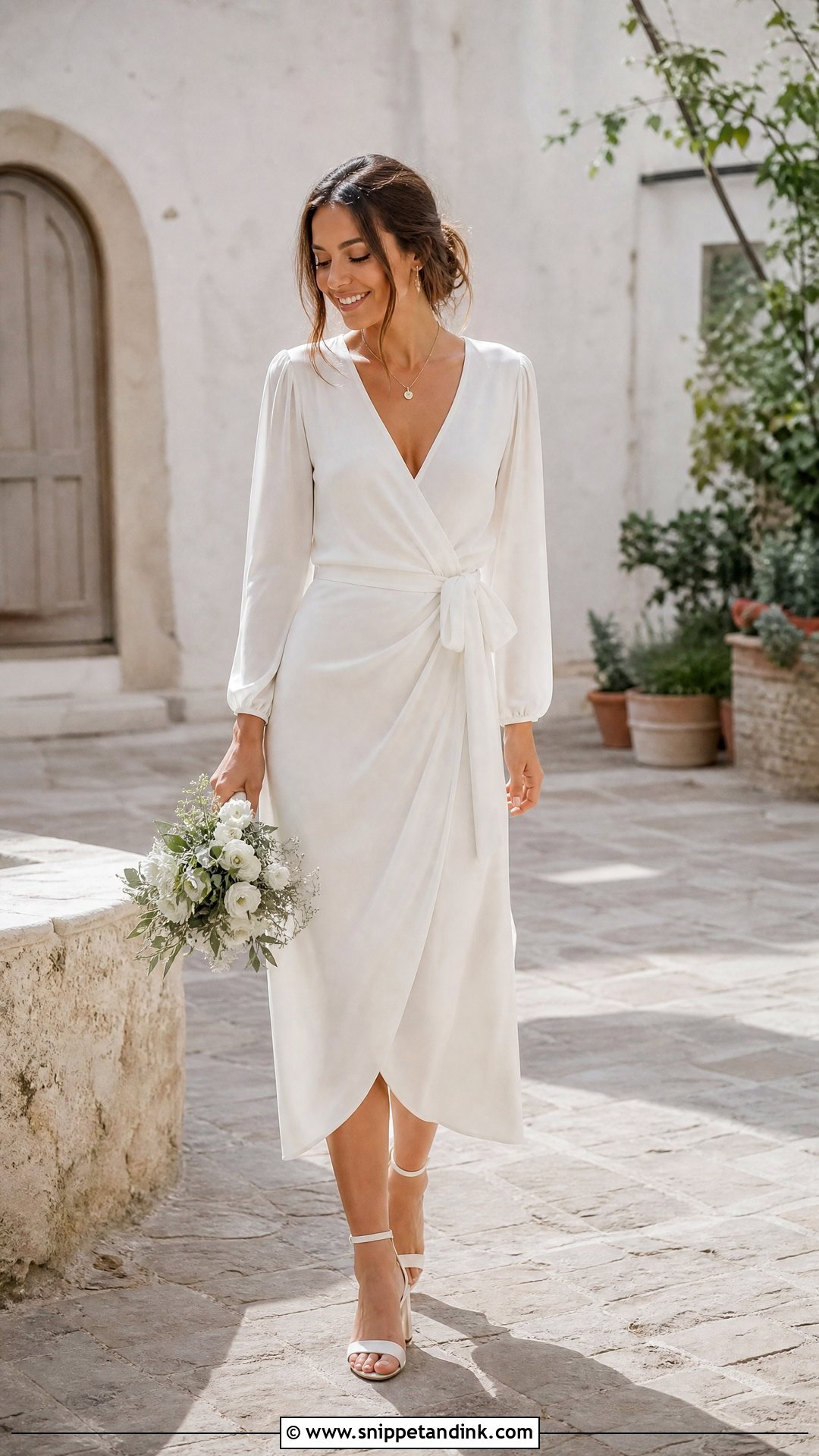
A wrap dress adjusts to your shape, which makes it kind to brides whose size may shift a little before the date. The risk is the front opening. I ask brides to sit, cross their legs and walk into a breeze before they commit, and a few discreet hand stitches or a hidden snap at the overlap fixes most gaps. Ankle strap heels keep the foot secure. Satin dresses it up, crepe keeps it clean and lace adds softness. A fine pendant, small earrings and a soft-toned bouquet finish it for an elopement or a small ceremony.
17. High Neck Midi Bridal Dress With Pearl Earrings
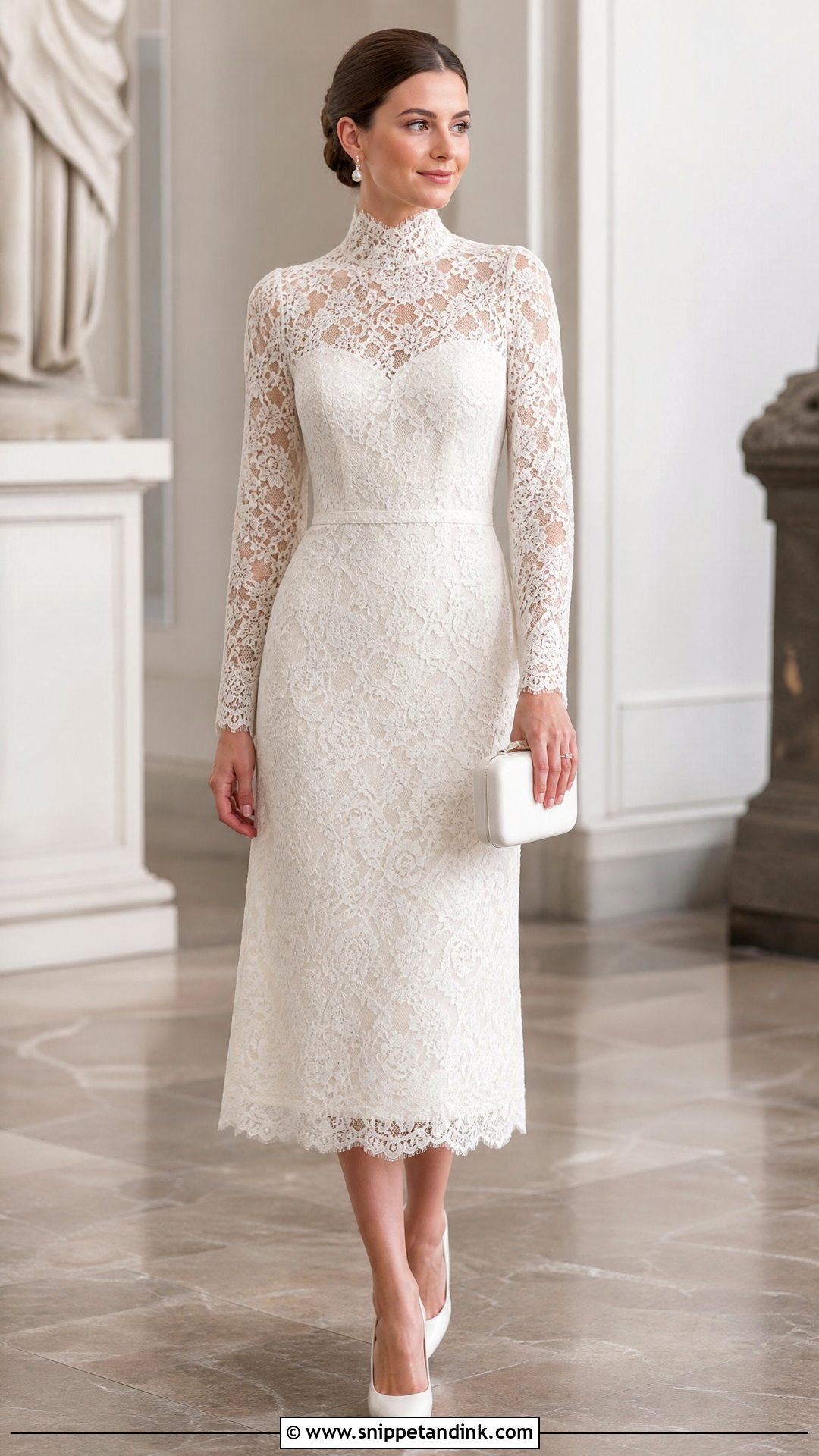
A high neck is quietly dramatic, and it’s my usual suggestion for registry offices with a formal tone. It does need a little room at the throat. A collar that fits perfectly when you stand tall can feel tight when you look down at a ring or a register, so leave a finger’s width. Lace, crepe and satin all hold the shape. Pearl earrings soften the line without clutter, and pointed pumps, slingbacks or block heels finish the outfit. A smooth updo keeps the neckline visible. With long sleeves, keep accessories close to none; sleeveless, a bracelet or small clutch adds balance.
18. One Shoulder Midi Bridal Dress With Sculptural Heels
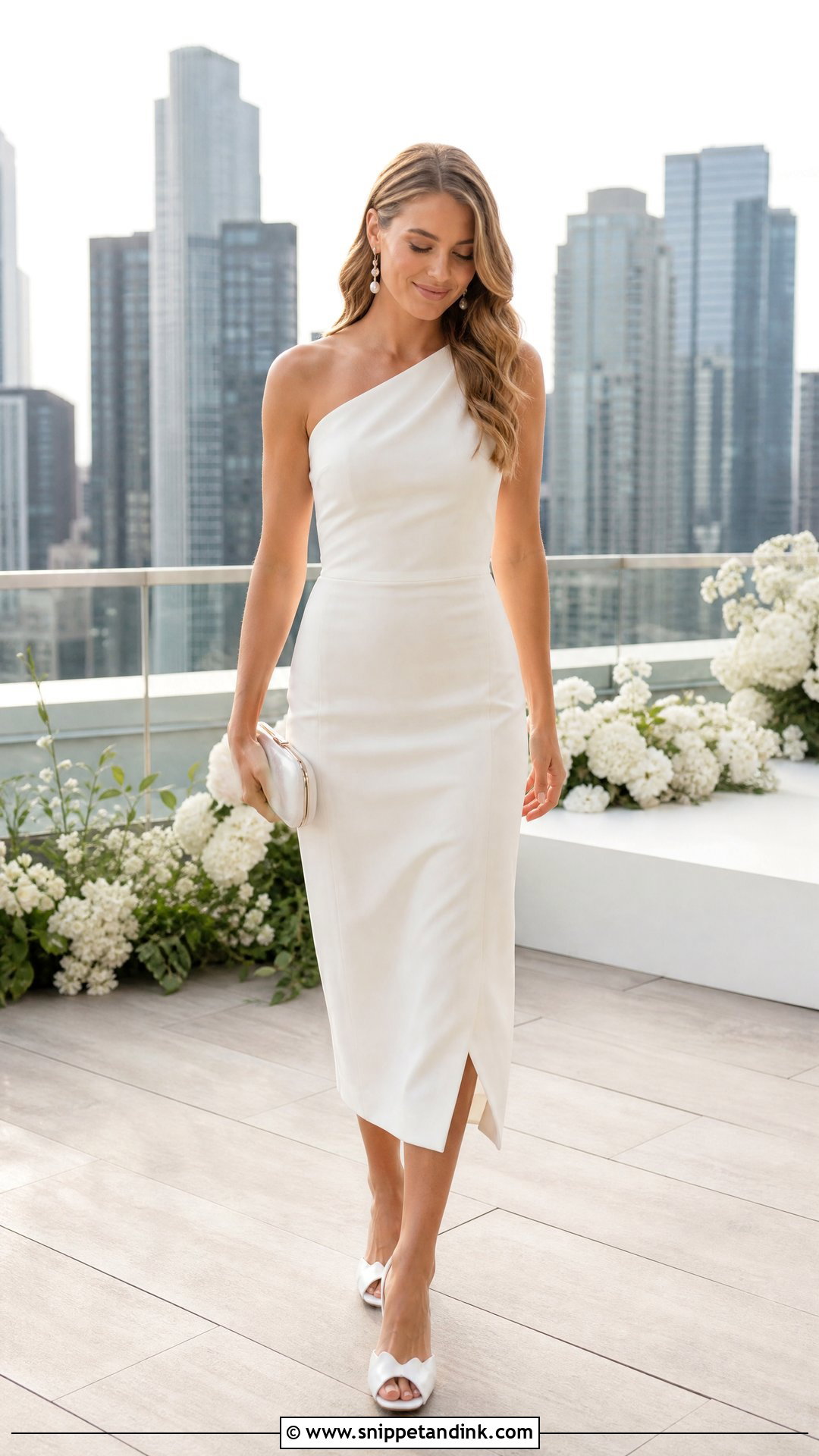
One-shoulder dresses look easy, but they hang from a single anchor point. The strap has to be snug enough not to slip yet loose enough not to dig in. At your fitting, raise the arm on the bare side and watch whether the bodice lifts. Satin or crepe keeps the neckline as the only feature, and sculptural heels match the modern line. Skip the necklace for clean earrings, then add a sleek clutch with soft waves or a low ponytail. It makes a smart reception change or rooftop dress for a bride who wants simple without plain.
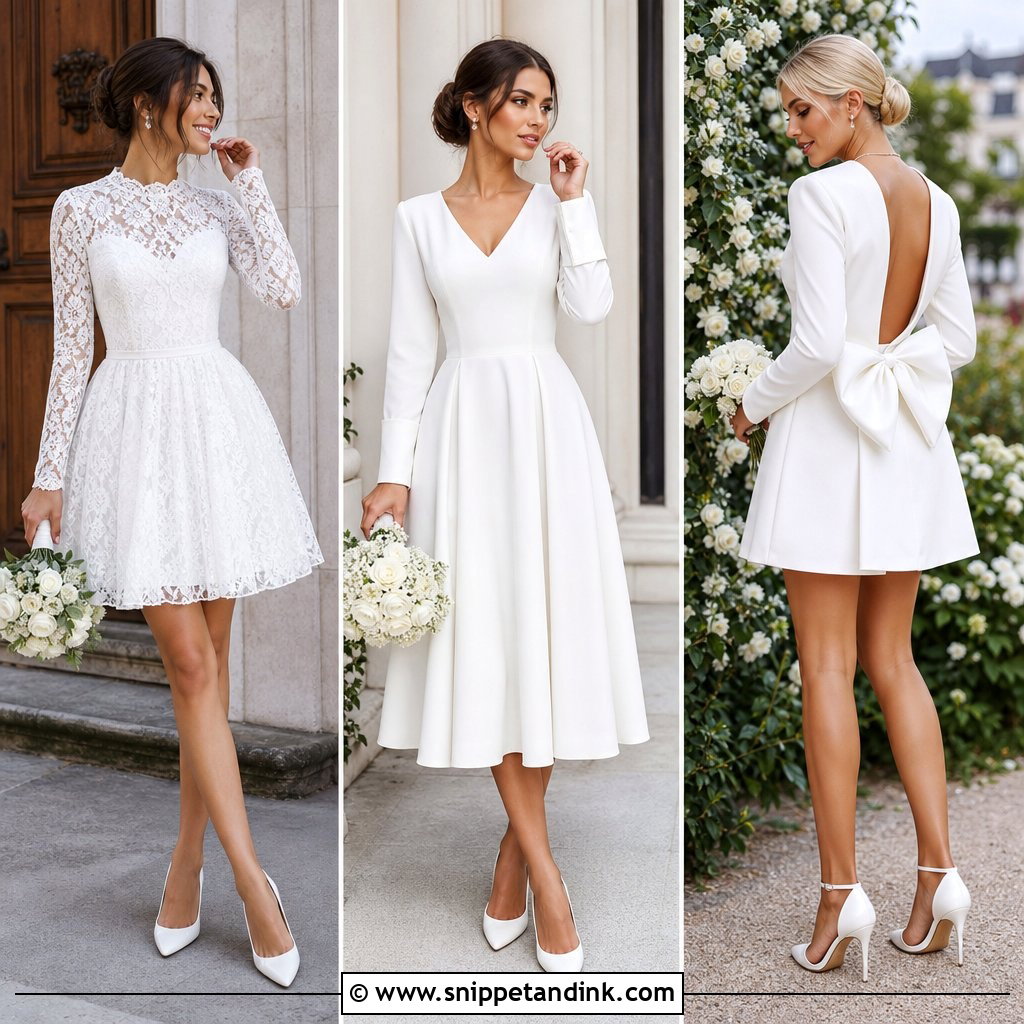
19. Bow Back Midi Bridal Dress With Satin Pumps
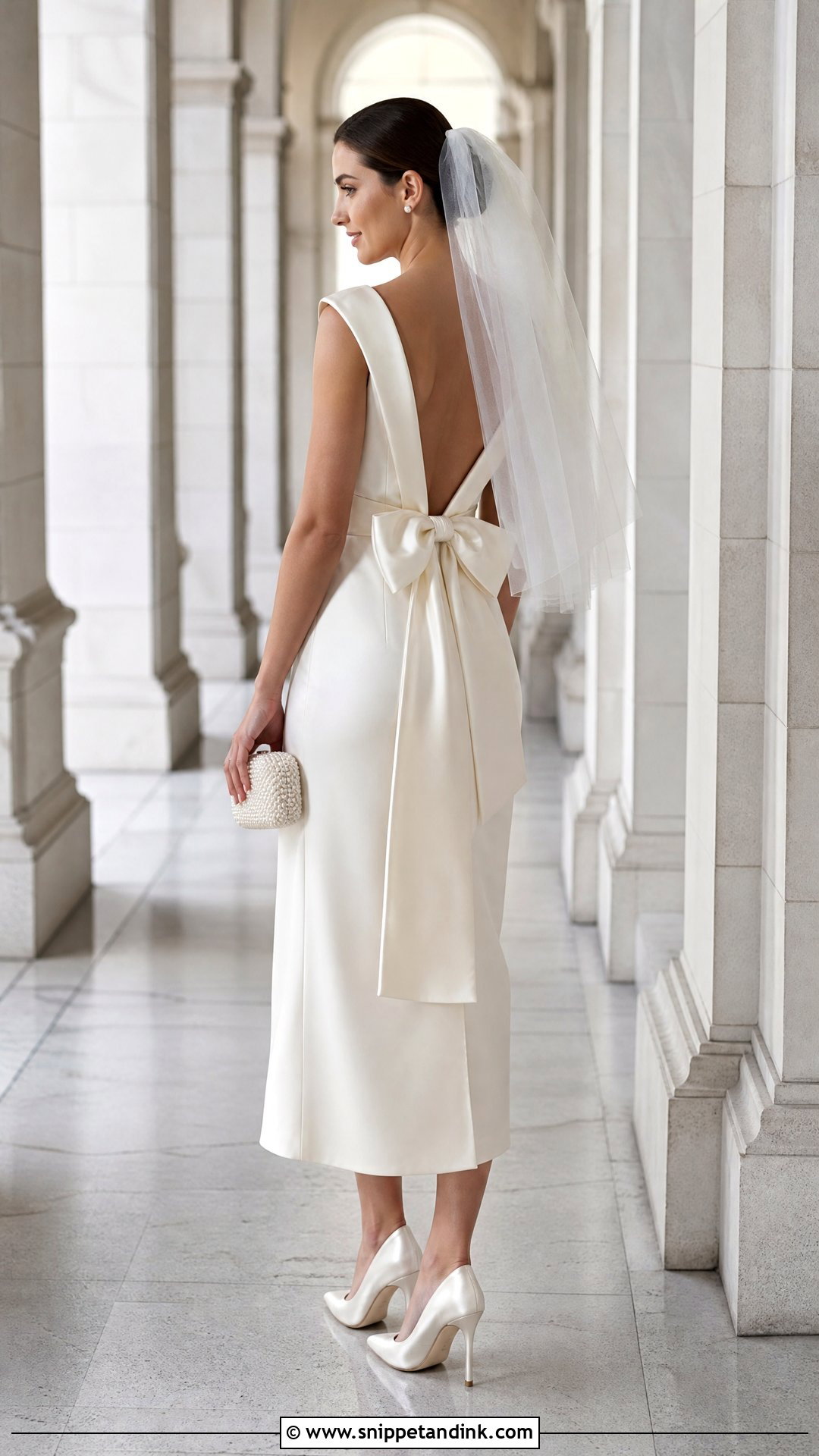
A bow back is for the walk down the aisle and the back-of-dress photo, so I treat it as its own design element. Large satin bows need interfacing inside or they droop by noon; a smaller ribbon bow stays put. At a civil ceremony your guests mostly see your back, which makes this detail worth more than it seems. Satin pumps keep things classic. Wear the hair up or swept to one side so the bow stays visible, and add only pearl studs, a clean veil and a small clutch.
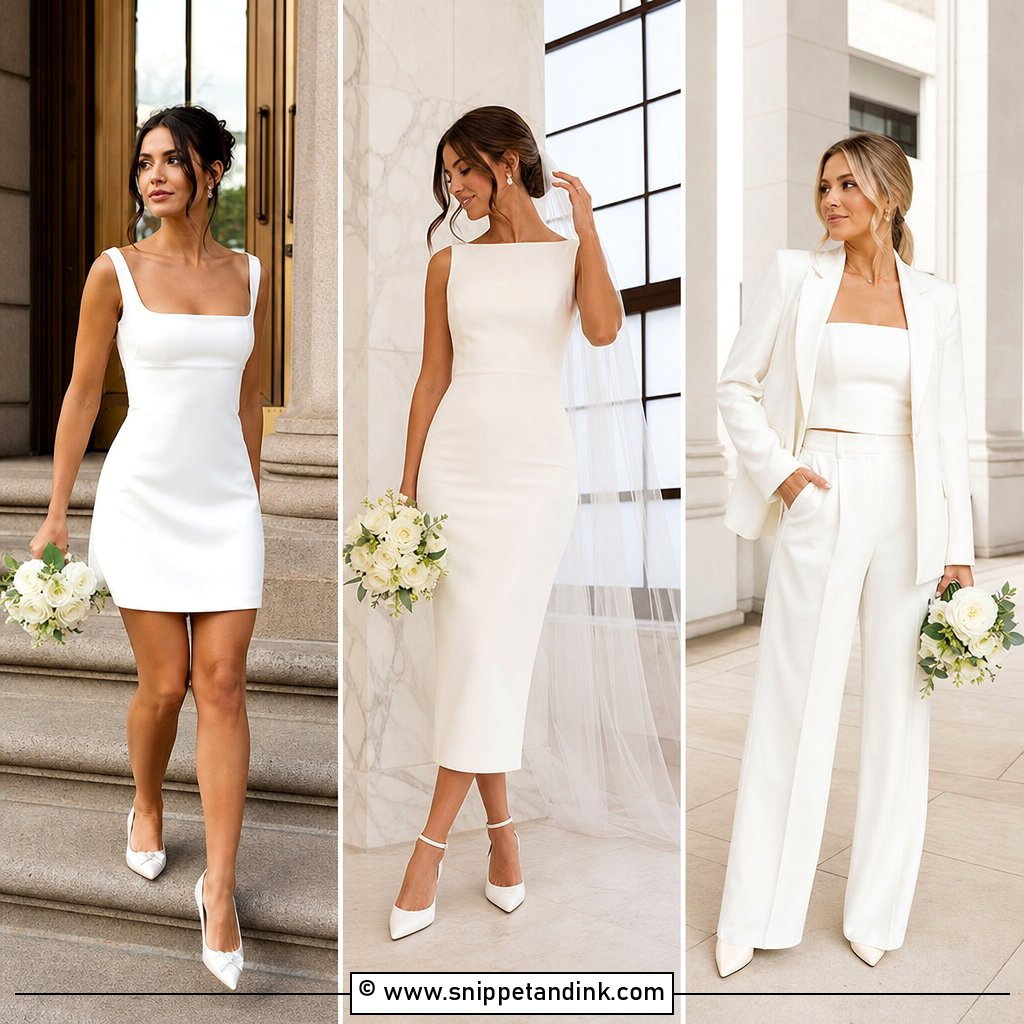
20. Two Piece Midi Bridal Dress With Sandals
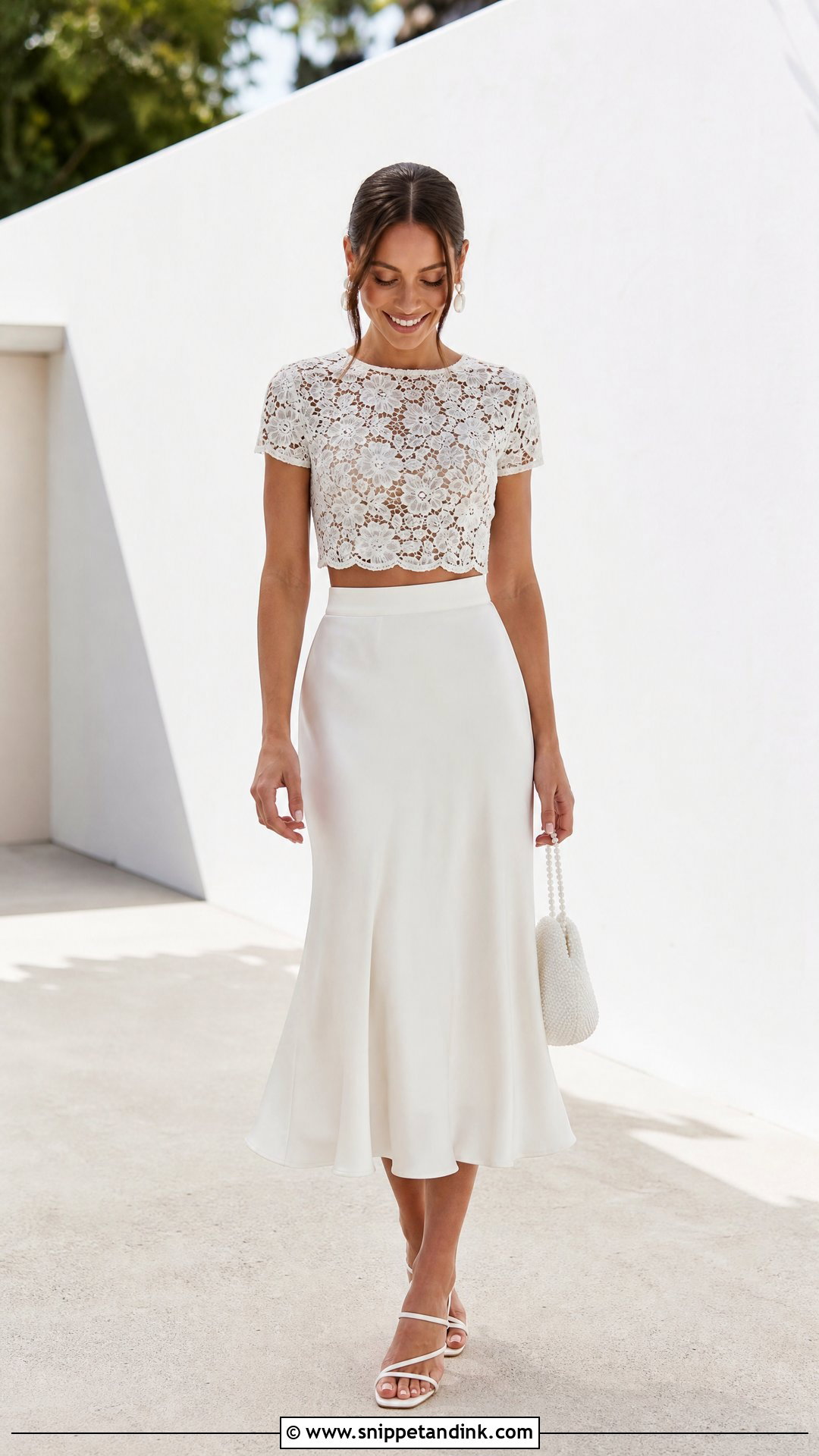
Two-piece bridal outfits are the easiest I fit, because top and skirt can be sized separately. A cropped top with a high-waisted midi skirt, a lace blouse over satin or a structured bodice with an A-line skirt all work. Match the ivories carefully in daylight: two ivory fabrics from different makers can look slightly off side by side in photos. Sandals keep it light for warm weather, with simple earrings, a delicate bracelet and a small bag. The real bonus is that you can wear each piece again on its own.
21. Feather Trim Midi Bridal Dress With Simple Heels
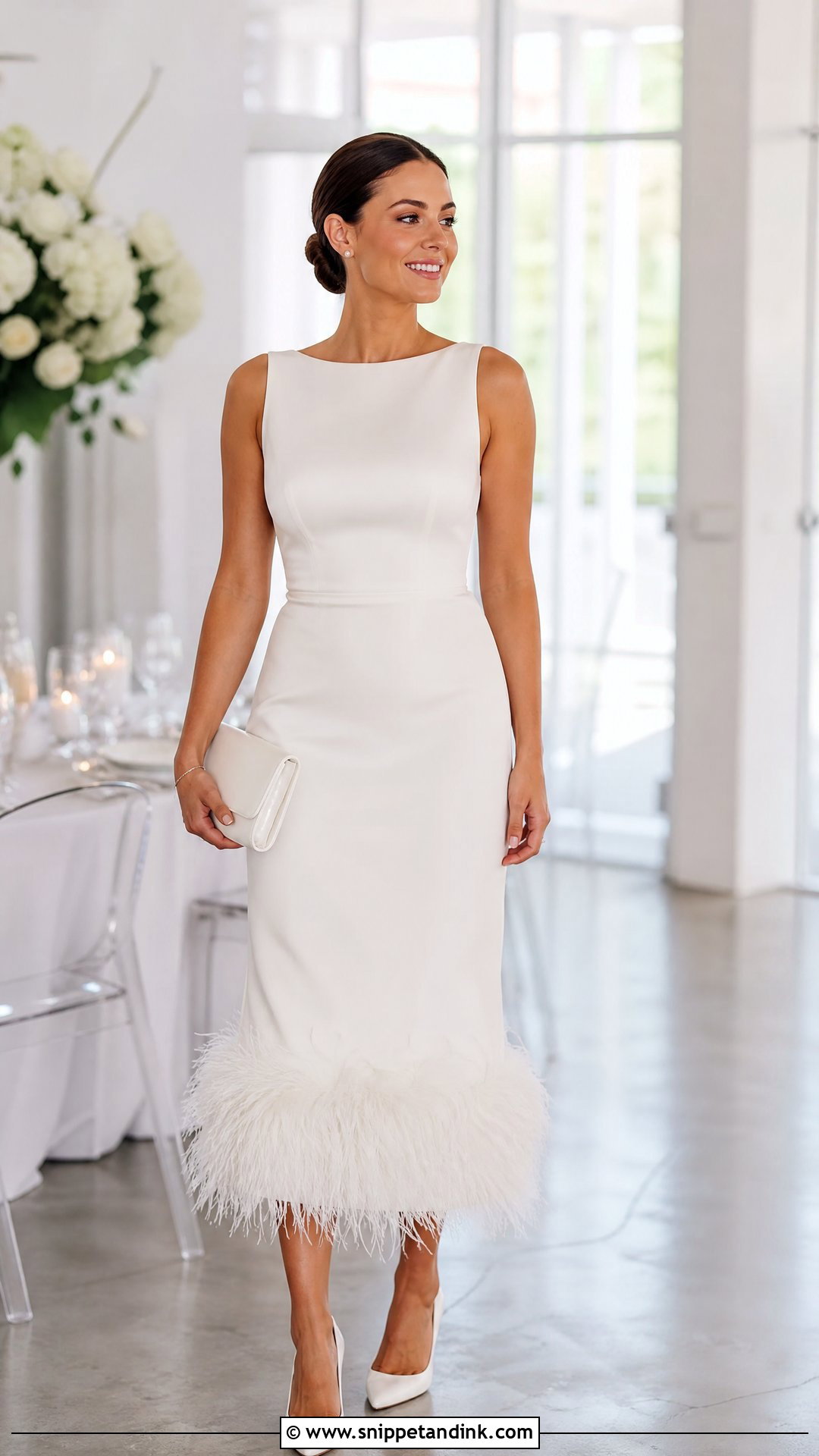
Feathers move with every breath of air, which is the appeal and also the upkeep. Ostrich trim sheds a little and gets flattened by bag straps and seat belts, so I keep a soft brush in my kit to fluff it back up. A feather trim midi bridal dress can carry trim at the hem, cuffs, neckline or sleeves. That already brings plenty of personality, so choose simple heels in white, nude or metallic. Minimal jewelry, a sleek clutch and smooth hair keep it from looking like a costume. A feathered hem comes alive on the dance floor; just keep the trim soft rather than bulky.
22. Tea Length Midi Bridal Dress With Mary Jane Heels
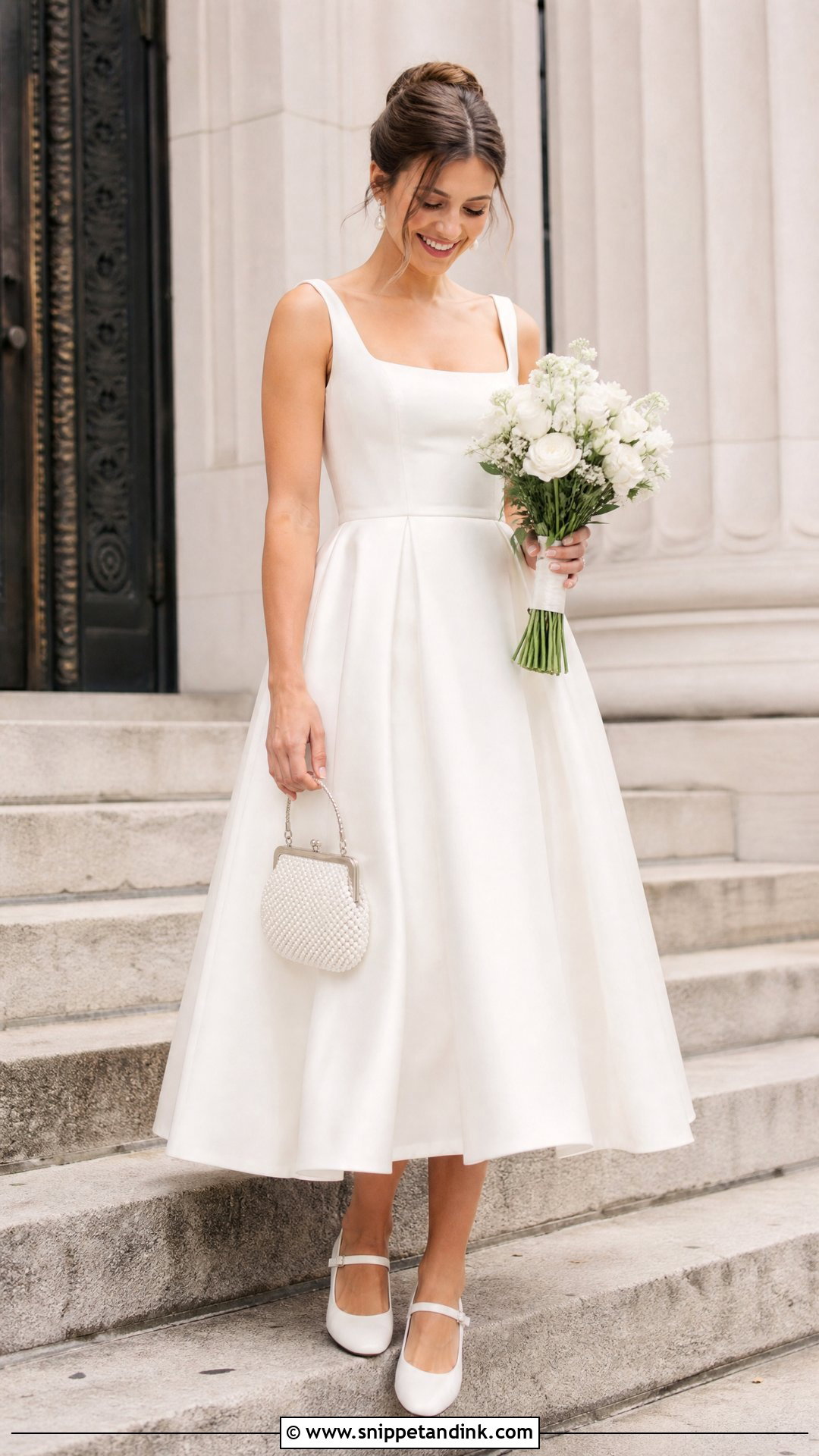
Tea length lands around the lower calf, the most retro of the midi lengths. Exactly where it lands matters, because the widest part of the calf is the least flattering place for a hem, so I usually raise or drop it a little away from that point. Mary Jane heels add charm and stay on the foot when you dance; satin, patent and pearl-trimmed pairs all suit. A fitted bodice over a fuller skirt is the classic shape, and some structure in the skirt helps it hold in photos. Short gloves add a vintage note, or keep it to pearl earrings and a small bag.
23. Ruffle Midi Bridal Dress With Strappy Heels
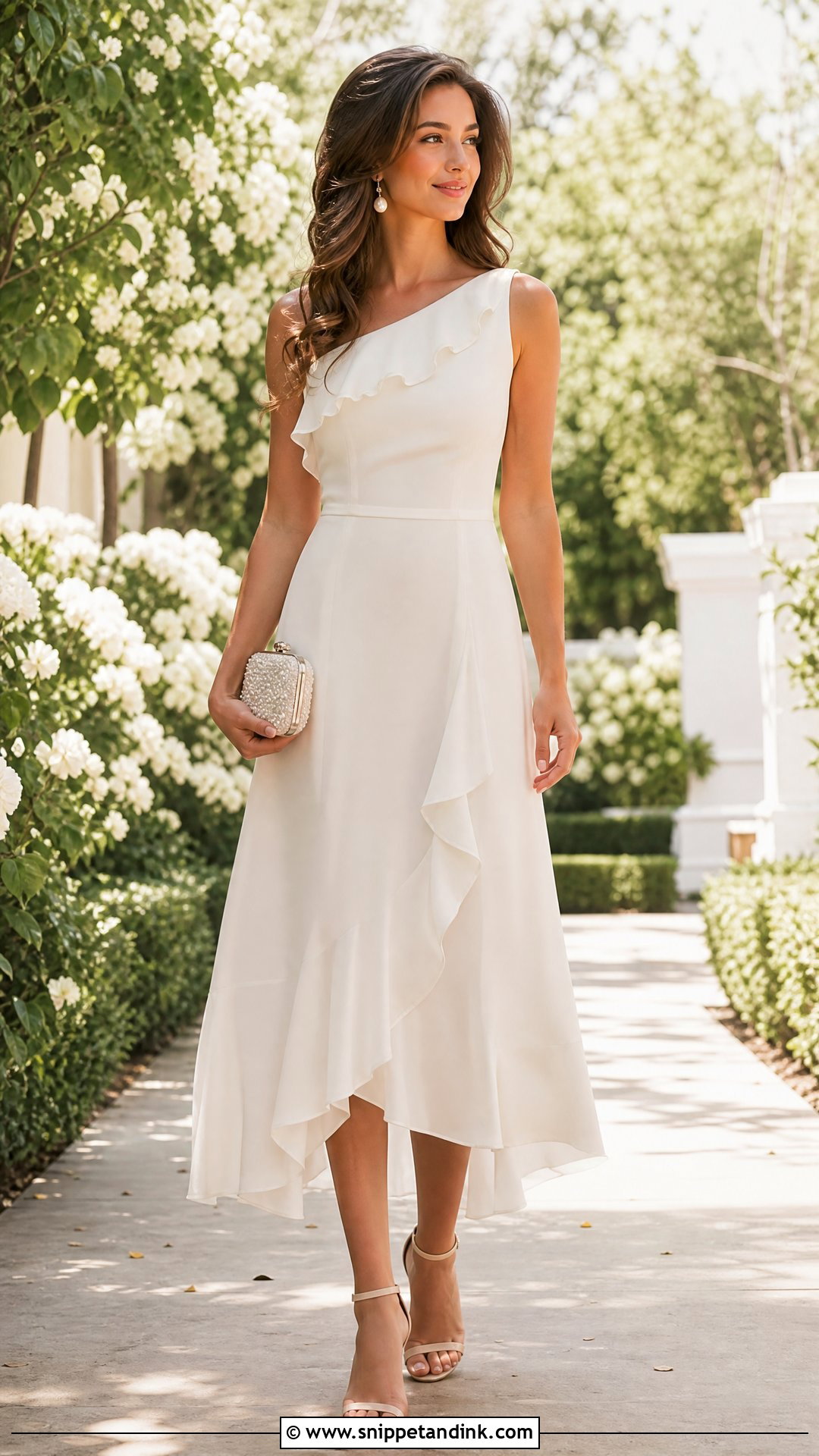
Ruffles can sit at the neckline, hem, sleeves or across skirt tiers, and balancing them is the whole game. Bold ruffles want strappy heels and quiet jewelry. Subtle ones can take pearl earrings or a small hair accessory. Check that the ruffle edges are rolled and finished: raw chiffon edges fray after a day outdoors. Ivory, white and champagne all suit. A small clutch and loose waves keep it relaxed, and it is happiest at an outdoor summer ceremony.
24. Blazer Midi Bridal Dress With Pointed Pumps
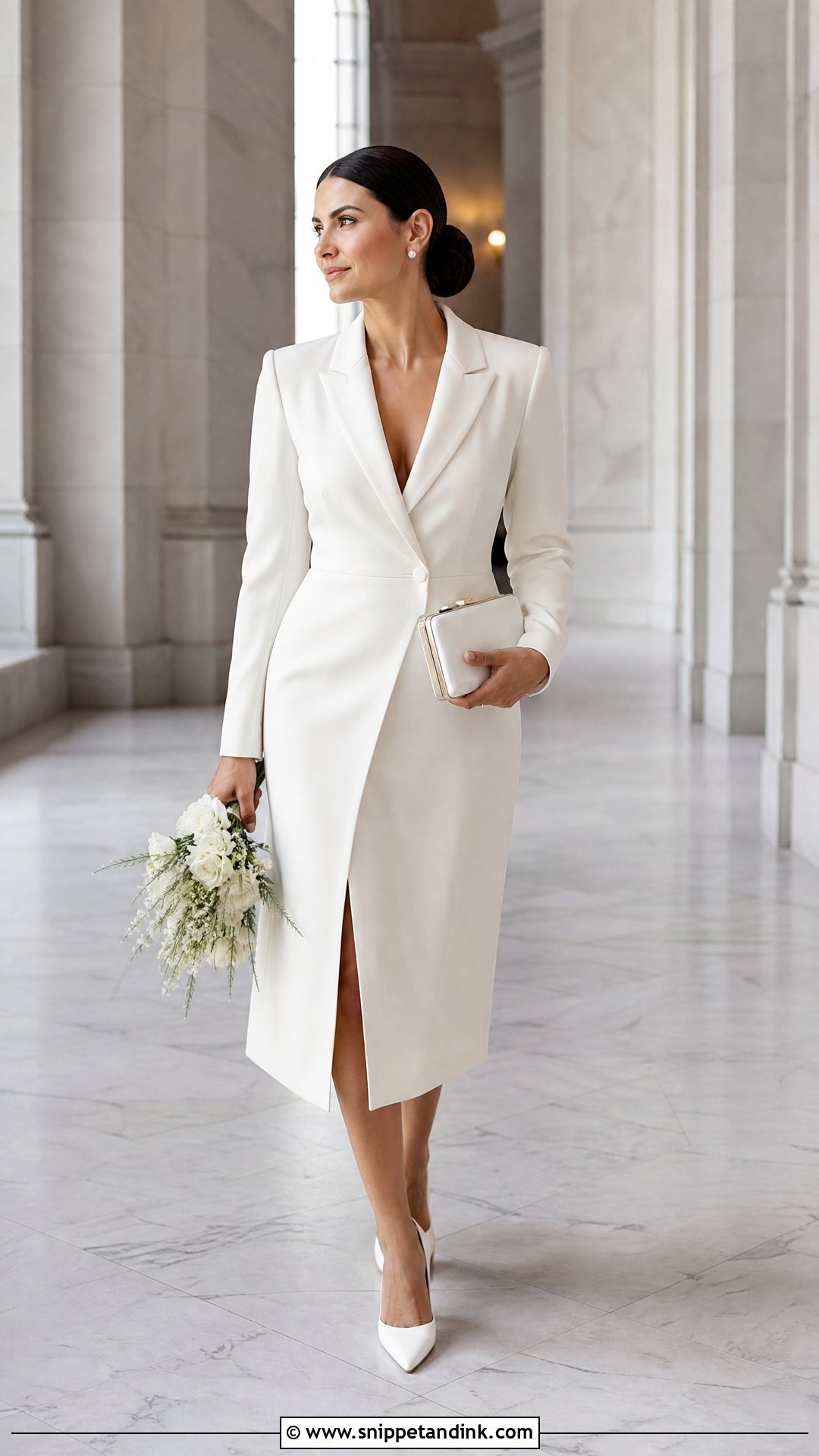
This is the sharpest option of the twenty-five: tailoring with a bridal finish. A blazer midi bridal dress in white or ivory with a defined waist and clean lapels suits city hall and the dinner afterward. Because it’s tailored, the shoulder seam has to sit exactly on your shoulder bone, and that is the costliest place to alter, so buy for the shoulders and take in the rest. Pointed pumps keep the line sleek. Pearl studs, a structured clutch and a neat bun or blowout finish it. If the neckline plunges, fashion tape or a lace camisole keeps you comfortable.
25. Champagne Midi Bridal Dress With Ivory Accessories
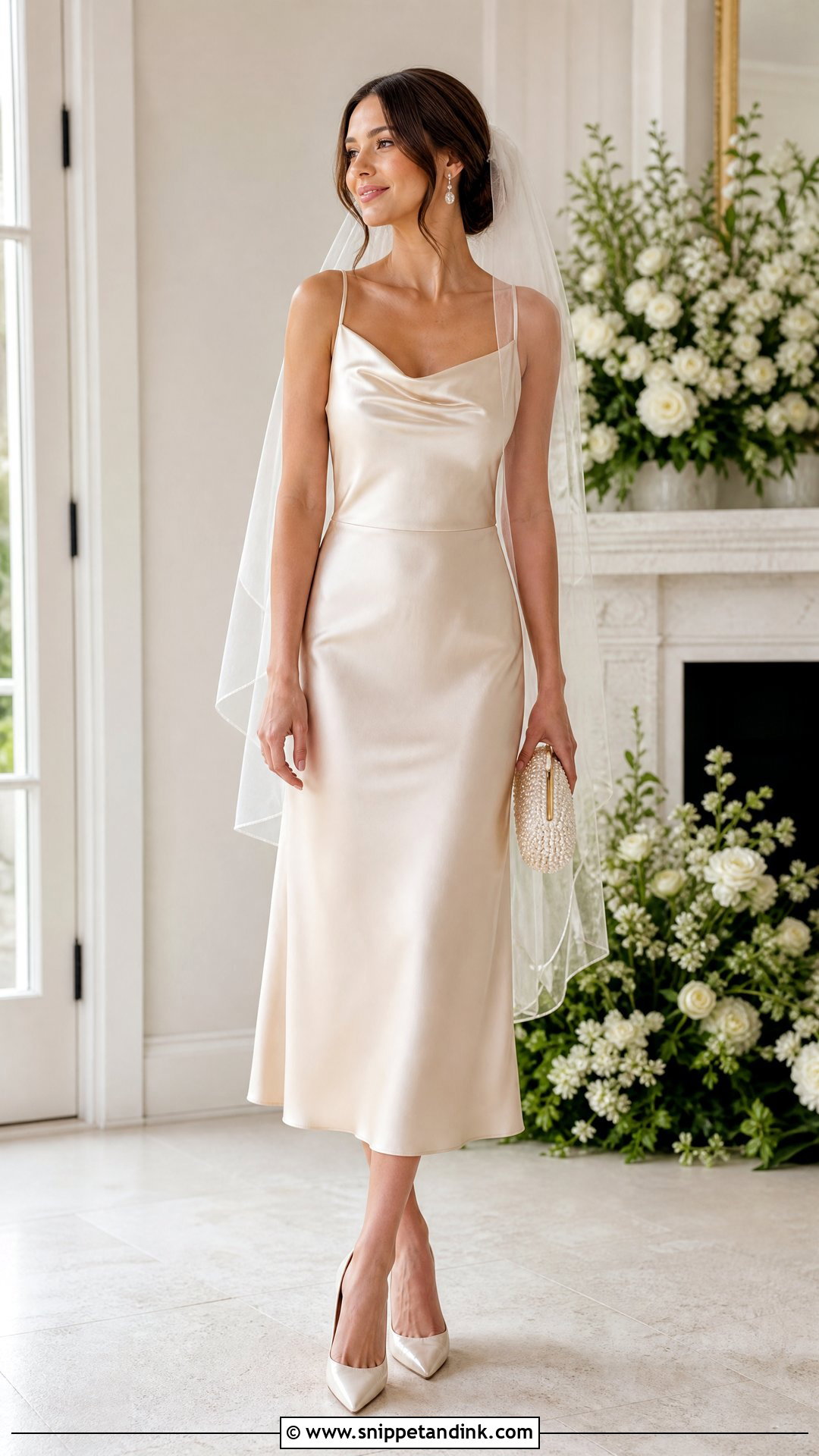
Champagne is a warm alternative to bright white and can be lovely, but it’s the shade I always test against skin in daylight. On some complexions it reads golden; on others it can look close to nude from across a room. Satin, lace and beaded fabrics all come in champagne. Ivory accessories keep it bridal and let the dress color show: ivory pumps, a pearl clutch and delicate jewelry. If the dress shimmers, keep the veil and shoes simple. Plain satin can take a few pearl or crystal details.
What a Courthouse Morning Does to Your Dress
City hall days have their own rhythm. You queue, you sit on a wooden bench, you sign, and you’re back on the street within the hour. Then come photos on the steps, a car or train ride and lunch. Each of those moments tests the dress in a different way.
- Benches crush satin and silk across the back of the skirt. Stand while you wait if you can, and when you sit, smooth the skirt flat under you instead of bunching it.
- Steps outside public buildings catch wind. Wrap and tulle skirts lift, so a slip underneath or a couple of small hem weights sewn in keeps things in place.
- Security screening may ask you to put down bags and outer layers, so carry a small clutch with very little in it.
- Step portraits take longer than anyone expects. Wear shoes you can stand in on hard stone for half an hour.
My kit for a registry day is small: a handheld travel steamer, a lint roller, fashion tape, safety pins, blister plasters and a clean white cloth for spills. The steamer fixes most bench creases in a minute or two in the restroom before you walk out for photos.
Cleaning a Midi So You Can Wear It Again
A midi is far more likely to be worn again than a ballgown, so the aftercare is worth doing properly. Check the hem the next morning, because city pavements leave a faint grey line on ivory fabric even if you were careful. Take it to a cleaner who handles bridal fabrics within a few weeks, and point out every spill, including clear ones like champagne or white wine, which can oxidize into yellow marks months later if left.
At home, keep it in a breathable cotton garment bag, never the plastic cover from the cleaner, which traps moisture. Fold heavy beaded and crepe dresses around acid-free tissue instead of hanging them, since their weight slowly stretches the shoulders. Lighter satin and tulle can hang on a padded hanger from the inner loops.
From the Clerk’s Office to the Dance Floor
A midi earns its place by letting you move. Settle the fabric first, because it decides how the dress handles a day of sitting, walking and hugging, then build shoes and accessories around the hem. From courthouse steps to a garden lunch or a reception change, there’s a cut here for almost every kind of day. Keep the ones that suit how you’ll really spend yours, and let the rest go.
You'll Like These Ideas:



Leave a Reply