
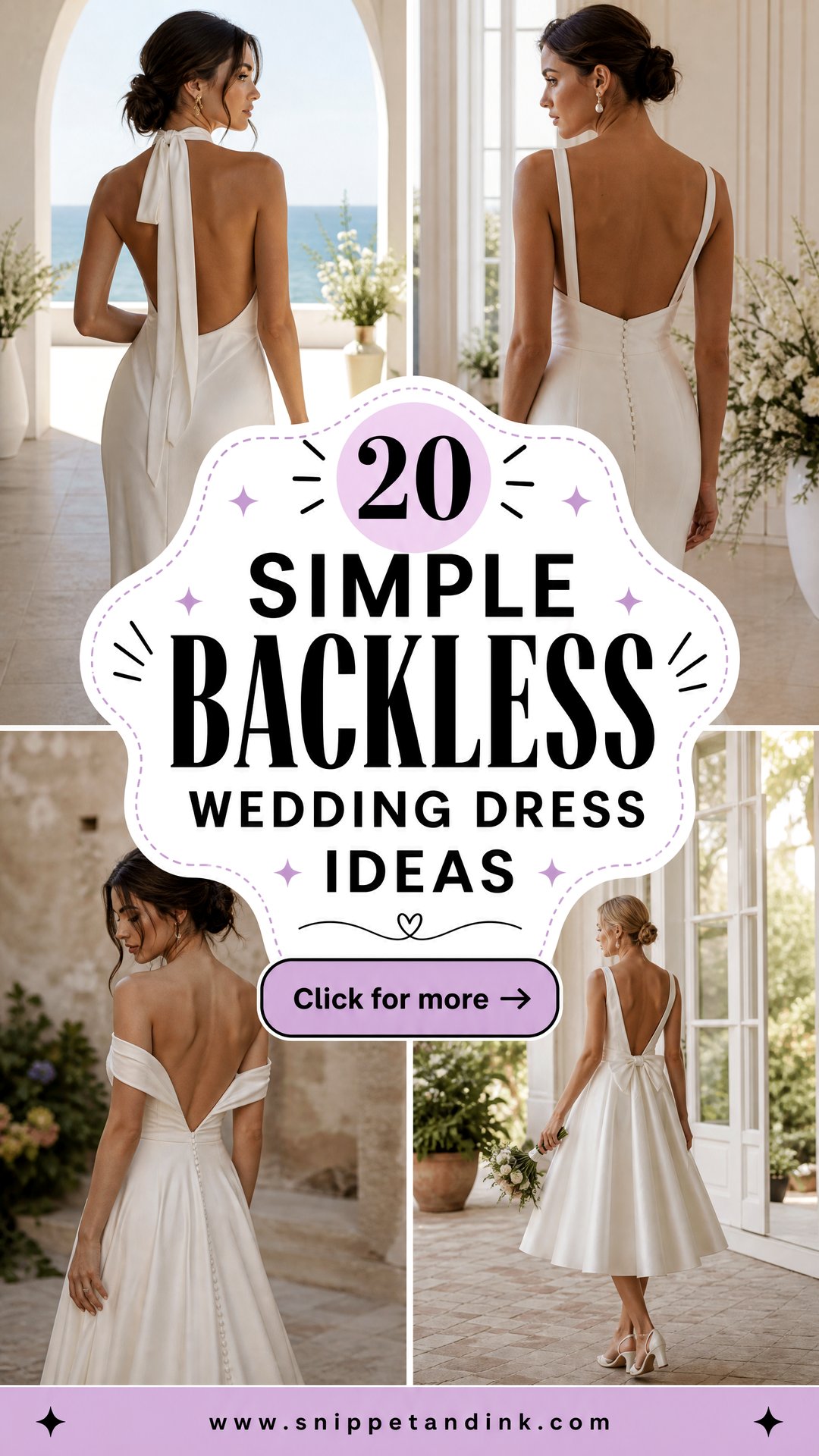
An open back is one of the few details on a wedding dress that does its job with nothing added, which means the rest of the gown can stay plain. Guests spend most of the ceremony looking at your back, so it carries the look on its own. The opening might be a soft scoop, a deep V, a keyhole, one of the draped cowl backs, an illusion panel or two thin straps, and each one asks something different of the fit. When I style an open-back bride, I start with support and work outward, because the cut of the back decides which bra options are possible, how low the hair can sit and which veil will lie flat. Each gown below comes with the accessories and hair I’d put with it, plus the fitting checks that keep the back smooth from the aisle to the last dance.
Where Your Bra Goes When the Dress Has No Back
This is the first question every open-back bride asks me, and the answer depends on how low the back drops and how much support you’re used to. Settle it before the first fitting, because cups and stays change how the bodice is taken in. If you bring a new solution to the third fitting, the seamstress may have to undo work.
- Sewn-in cups. Molded cups stitched into the lining are the option I trust most. They can’t shift, they add no straps, and they work with almost any back height.
- Low-back convertible bras. These have a band that drops and wraps around the waist. They suit a scoop or V that ends at the natural waist, but not a back cut lower than that.
- Adhesive cups and tape. Fine for smaller busts and short ceremonies. Heat and sweat weaken the grip over a long day, so do a full test wear in warm conditions and patch-test the adhesive on your skin first.
- Bodysuits with a plunging back. Useful under crepe, which shows every line, as long as the back of the bodysuit sits below the lowest point of the dress.
Whatever you choose, wear it to every fitting and on the day. A dress fitted over one bra and worn over another will not sit the same way.
1. Satin Slip Backless Wedding Dress
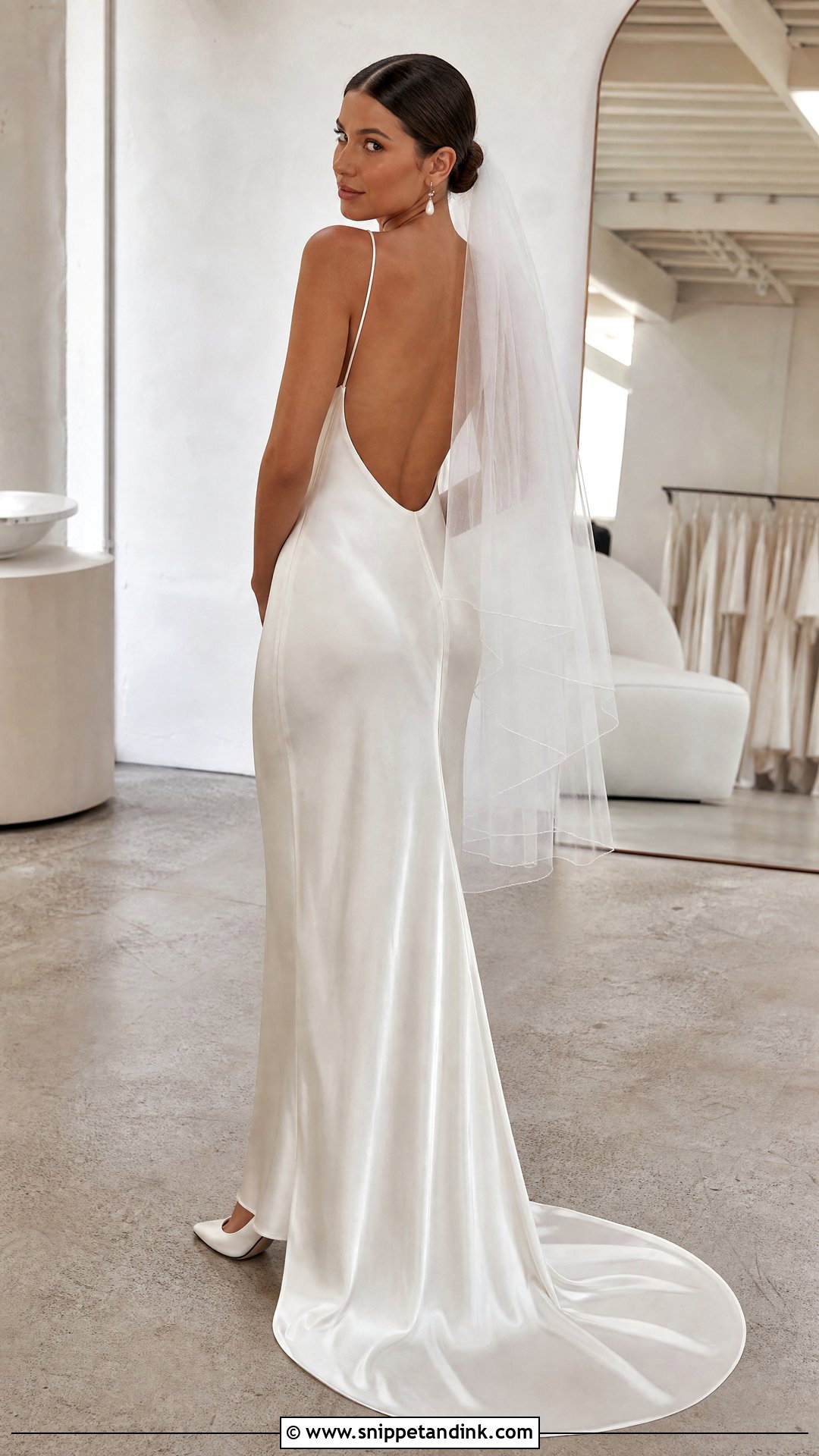
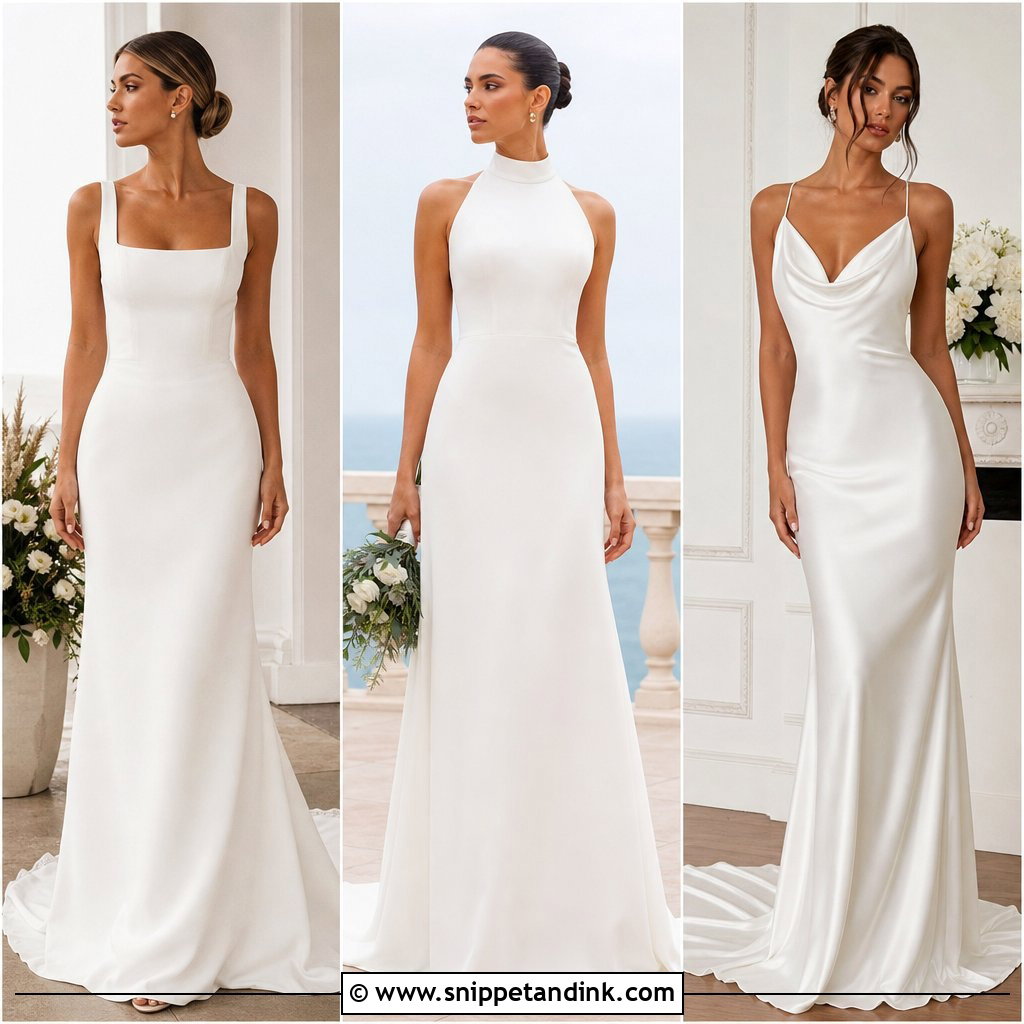
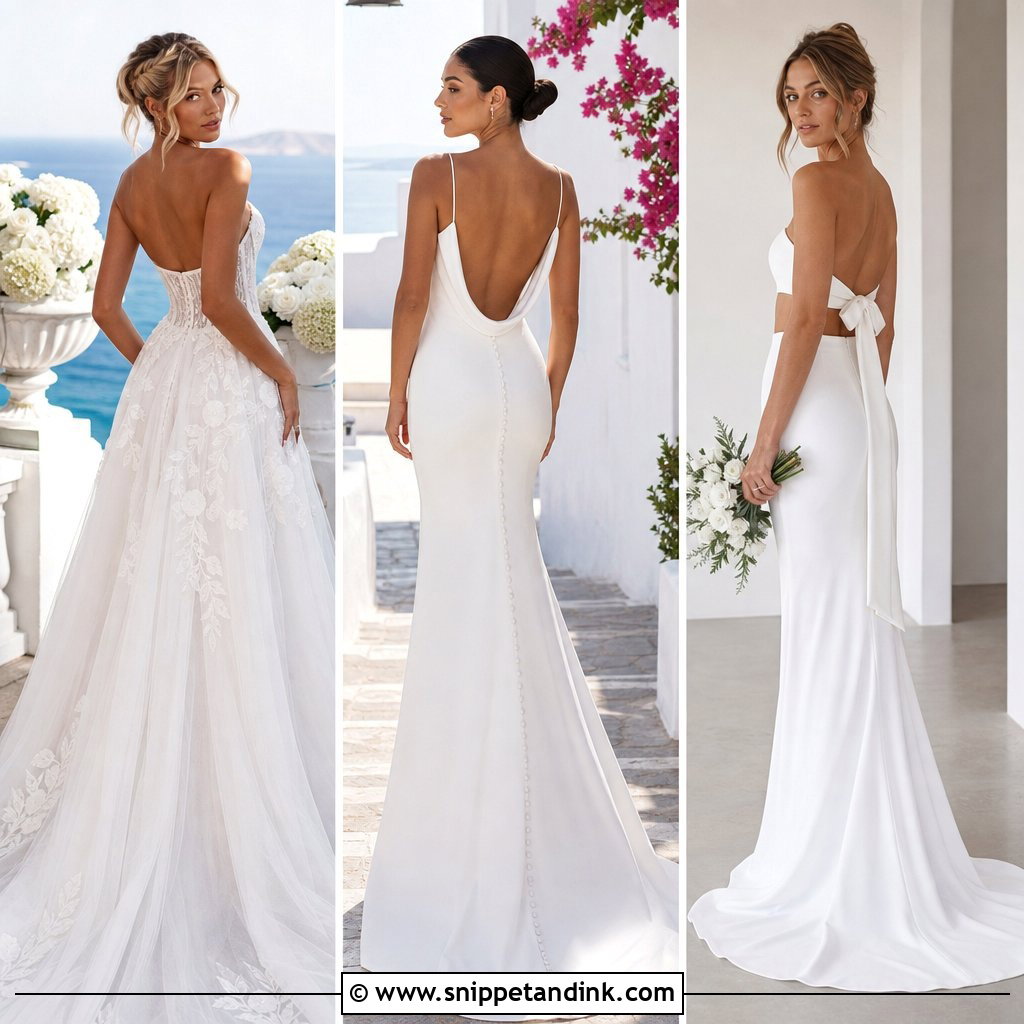
Bias-cut satin hides nothing. It shows every seam and every line underneath, so I treat a slip as a fitting project more than a dress. Look for slender straps, a softly draped neckline and a low scoop back, and let it skim rather than cling: bias fabric relaxes and drops a little as you wear it, and a tight fit turns into ripples by the reception. Pearl drop earrings, white pointed-toe pumps and a small satin clutch keep it quiet. A smooth low bun leaves the back clear, and a fingertip veil can come off after the ceremony. Ask your seamstress about sewn-in cups and a hidden waist stay, because a slip has nowhere to hide bulky shapewear.
2. Crepe Sheath Backless Wedding Dress
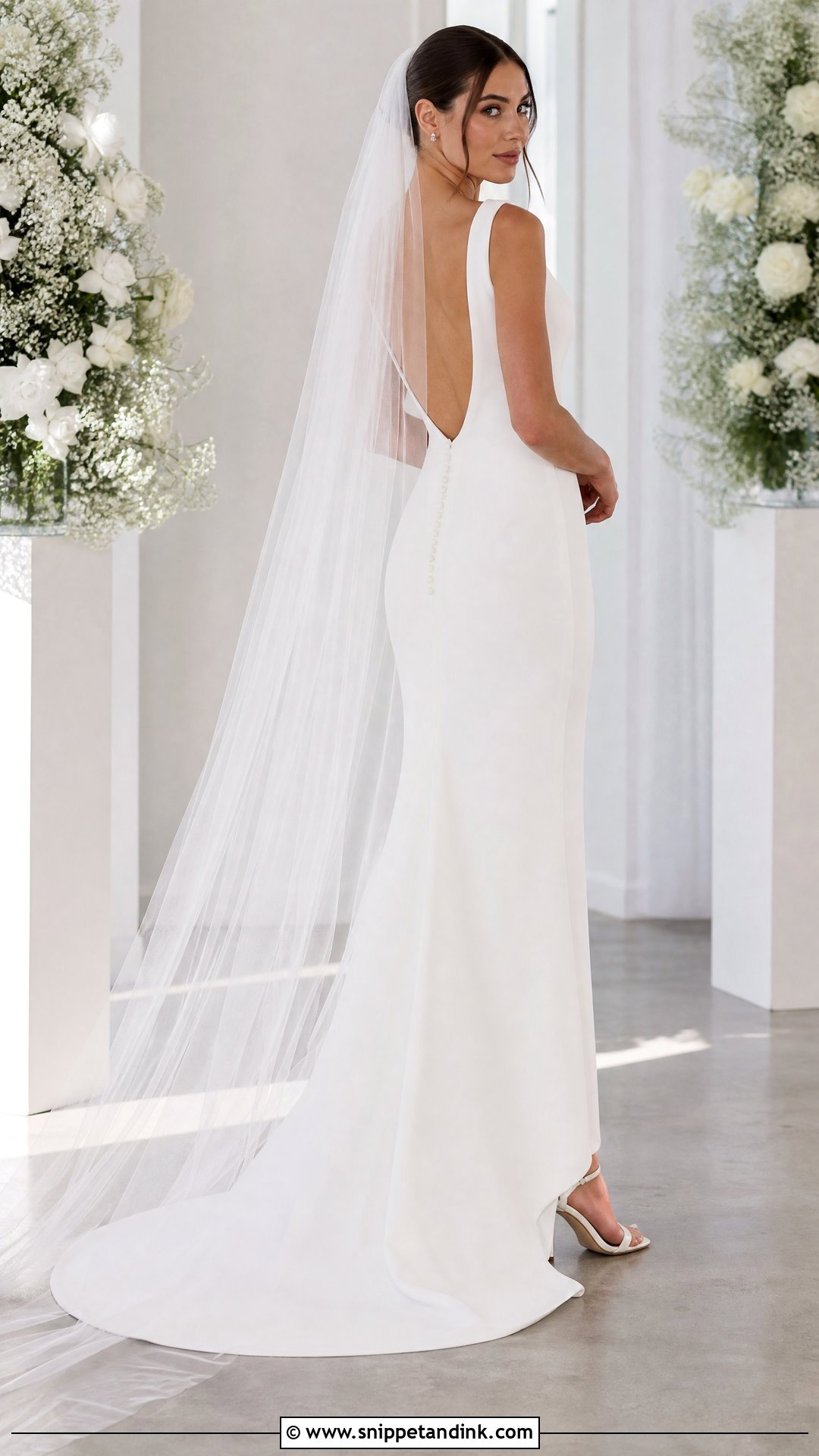
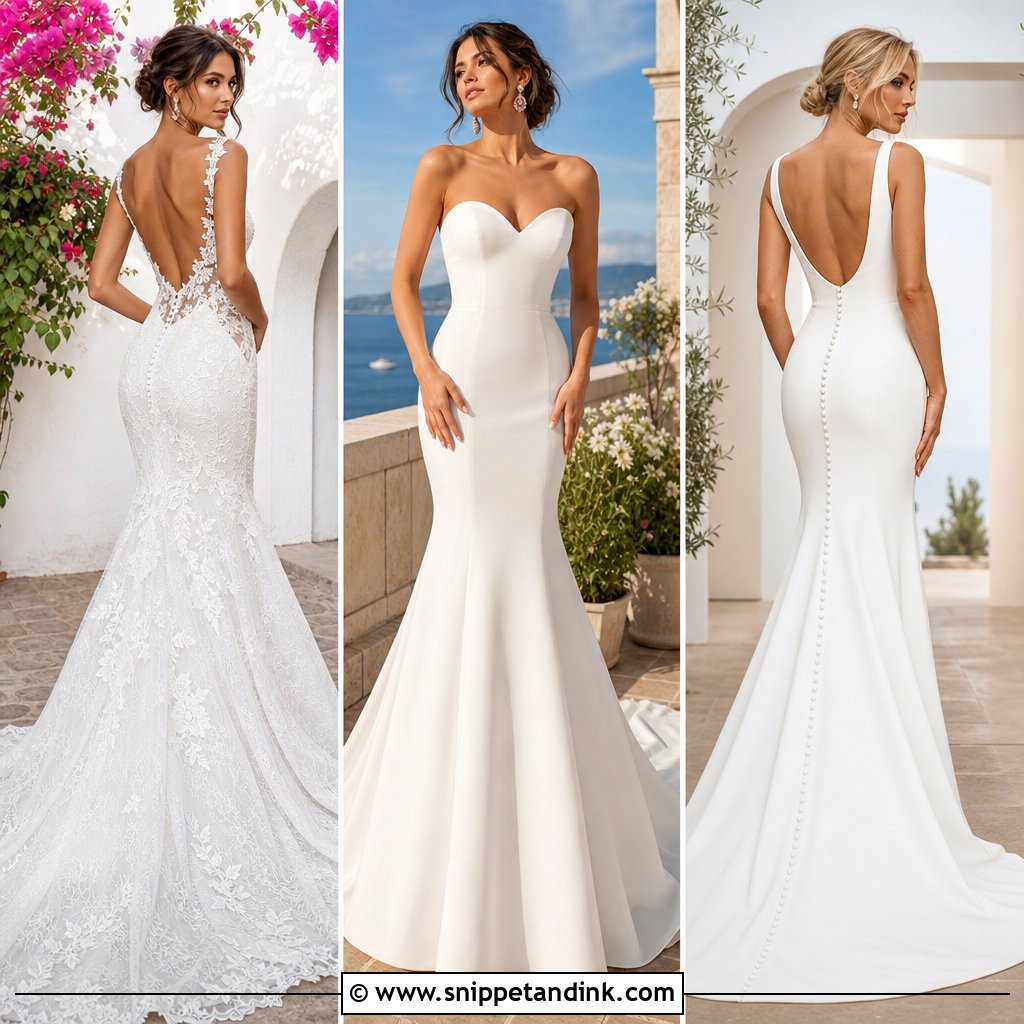
Crepe holds its shape better than satin, so a backless sheath gown in crepe looks tailored even with nothing on it. I like a bateau or modest V at the front against a deeper V behind, finished with covered buttons running into a short train. Slim ankle-strap heels, small studs and a light cathedral veil are all it needs, with a polished chignon so the neckline stays clean. The catch is that crepe shows every line beneath it, so wear your actual undergarments to every fitting. Most gaping at the back of a sheath starts at the waist and hip, not at the opening itself, and that is where I’d ask the seamstress to begin.
3. Scoop Back A-Line Wedding Dress
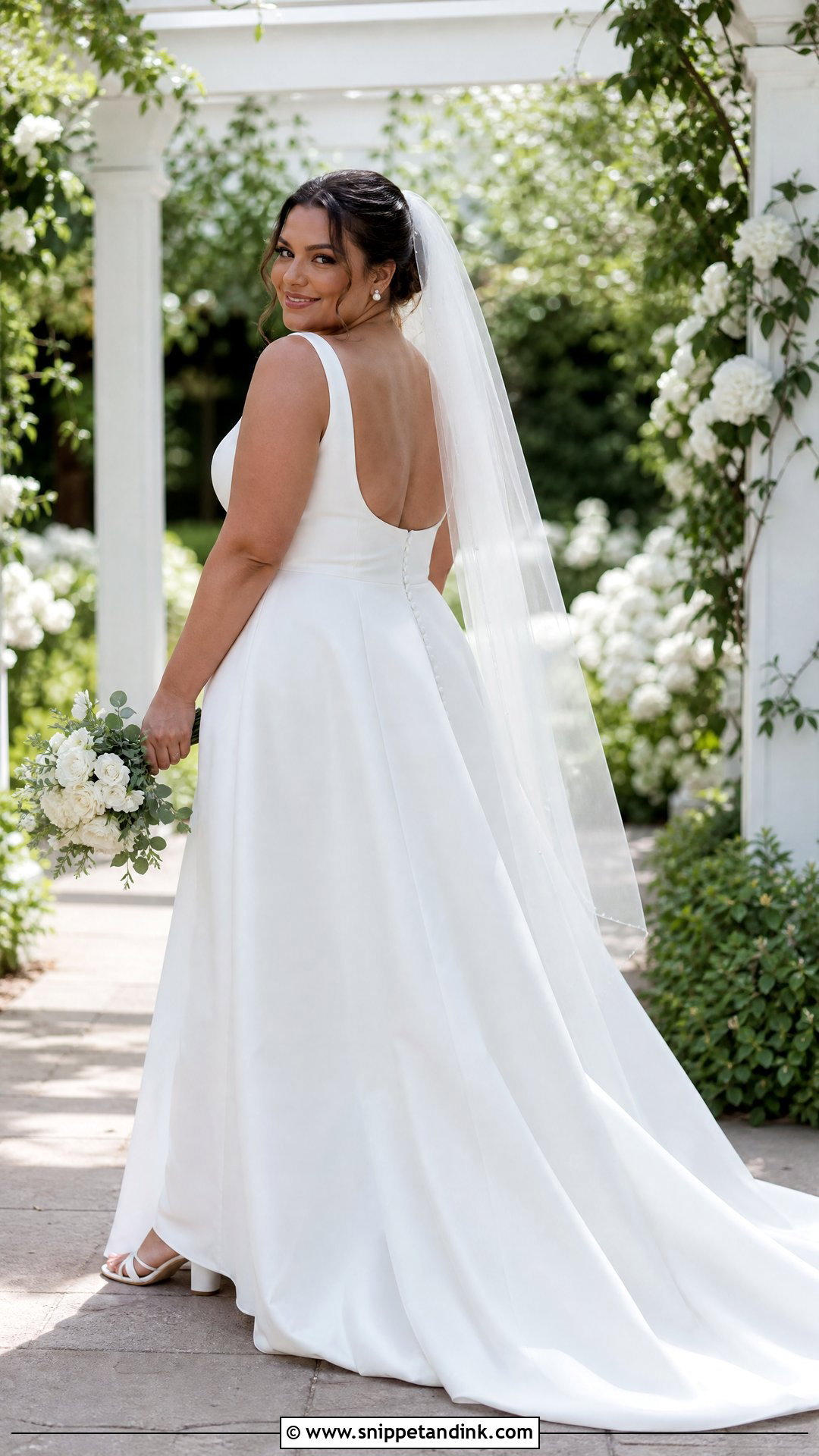
If baring your back makes you nervous, a scoop that stops well above the waist is the gentlest way in. The fitted bodice holds the waist and the A-line skirt falls clear of the hips, so the opening doesn’t have to carry any of the dress. Matte satin or mikado reads cleanly on camera. Block-heel sandals, pearl studs and a single-layer veil suit it, and soft waves pinned to one side keep most of the back on show. I look for wider straps, internal boning and a firm waist seam here, because the rounded edge of a scoop is the first place a loose fit starts to fold outward.
4. Deep V Back Wedding Dress
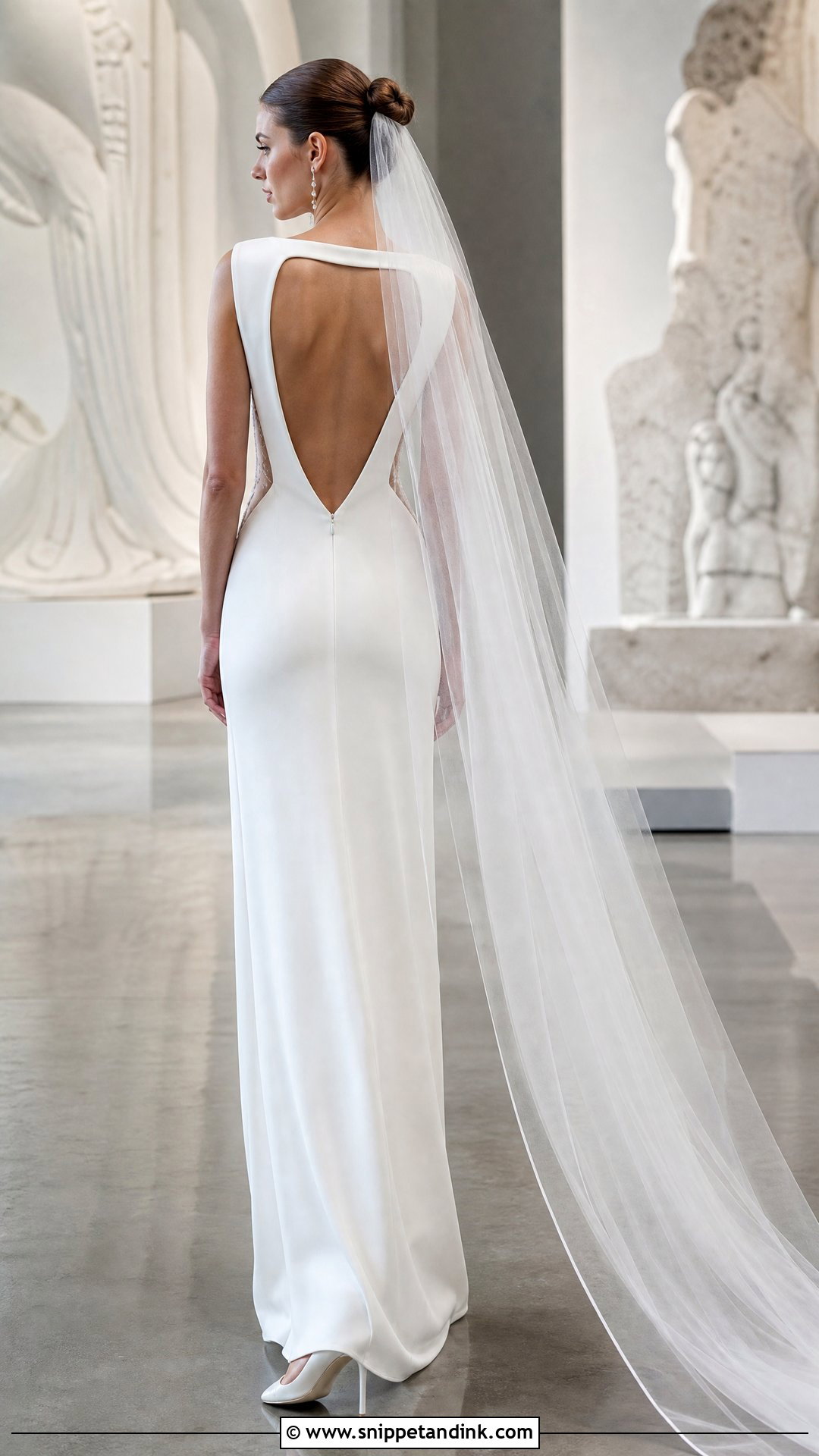
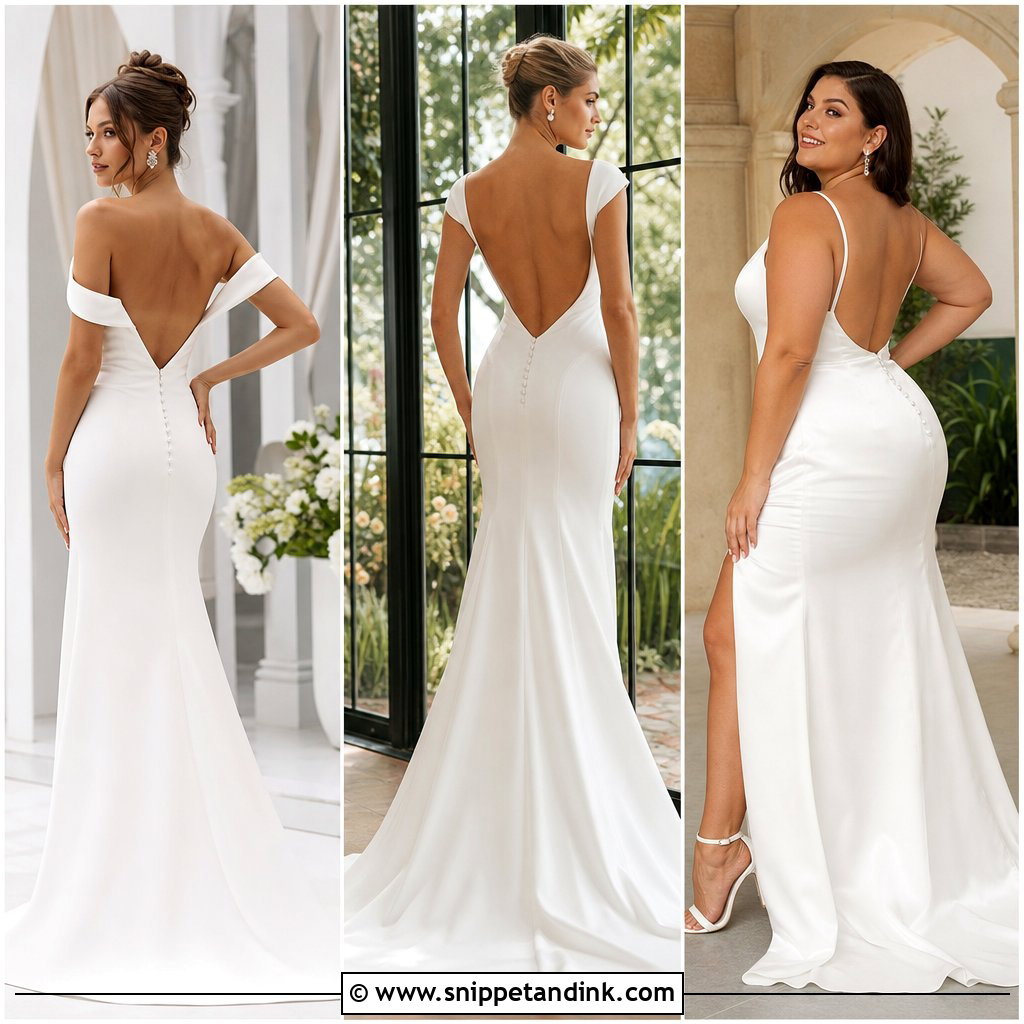
A deep V back is a commitment, and I balance it by covering more in front with a high bateau neckline, simple cap sleeves or a gently shaped bodice. Keep the skirt to a column or soft A-line so nothing competes with the V. Threader earrings, ivory pumps and a sheer chapel veil finish it, with an updo high enough to clear the point. At fittings I ask brides to hug someone, sit down and lift both arms overhead, since a low V hangs almost entirely from the shoulders and that’s where it slips first. Clear illusion strips along the inside edges add stability nobody will spot in photos.
5. Cowl Back Satin Wedding Dress
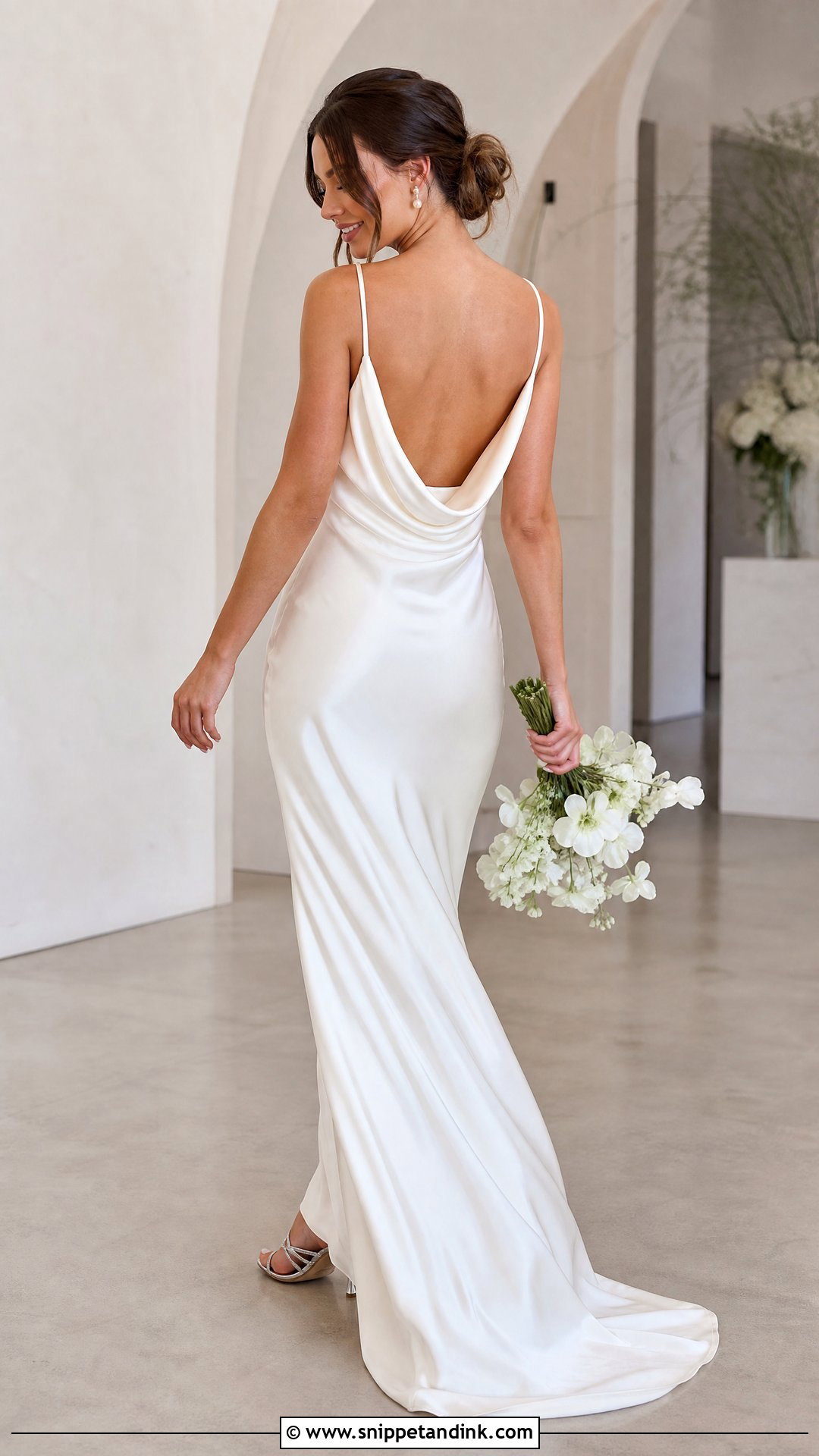
On a cowl back the fabric is the decoration: satin cut on the bias and left to fall in folds between the shoulder blades. It belongs on a slip or a narrow sheath, with a straight or barely-V front so the drape is the only movement. Silver sandals, small pearl earrings and a slim bracelet are plenty. Keep the hair up in a loose bun or sculpted twist, and choose a plain tulle veil or a removable cape over anything beaded, because beads and lace edging snag the folds. The drape only hangs evenly when both straps are exactly the right length on your body, so expect the seamstress to adjust them by tiny amounts.
6. Halter Backless Wedding Dress
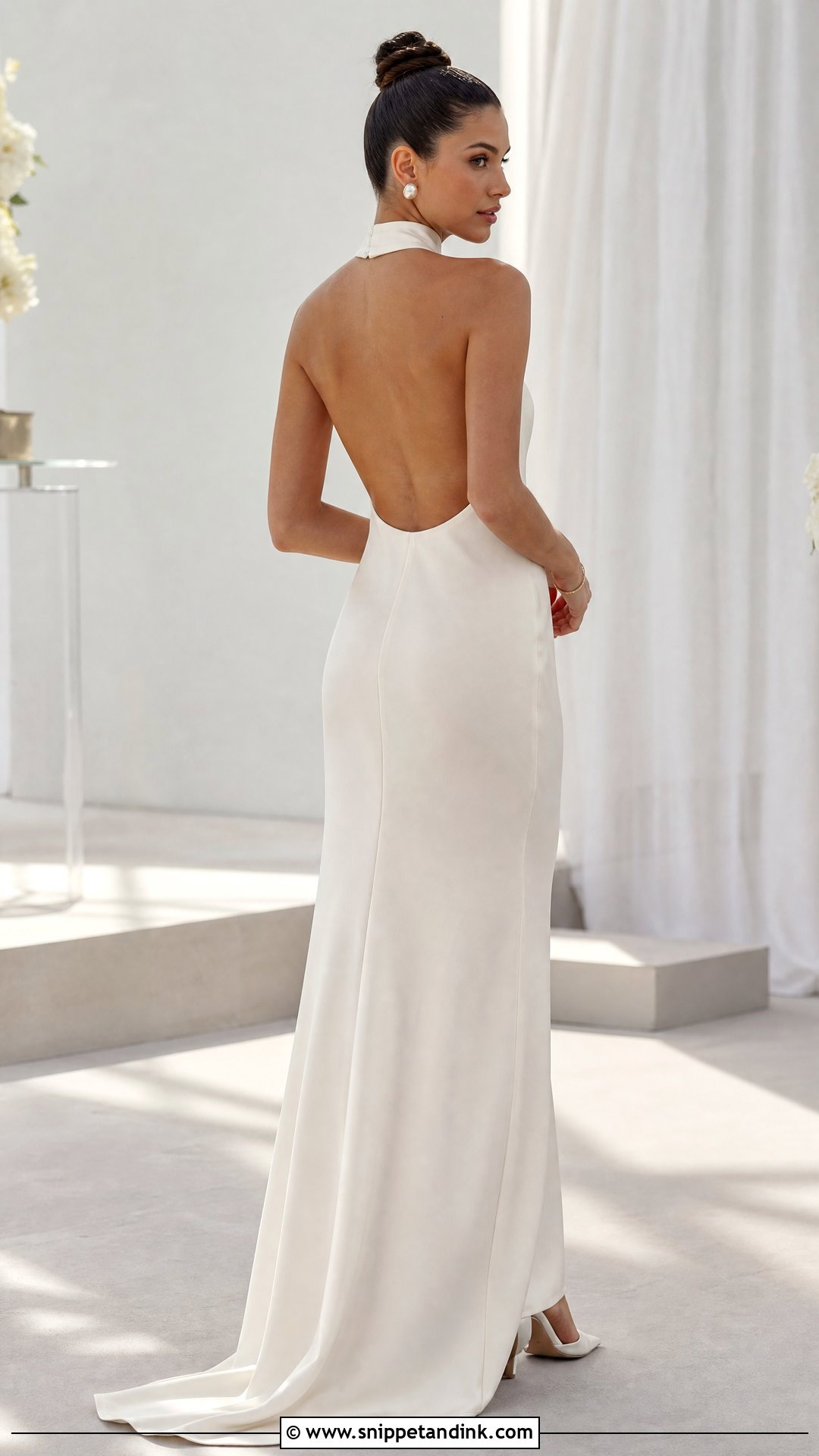
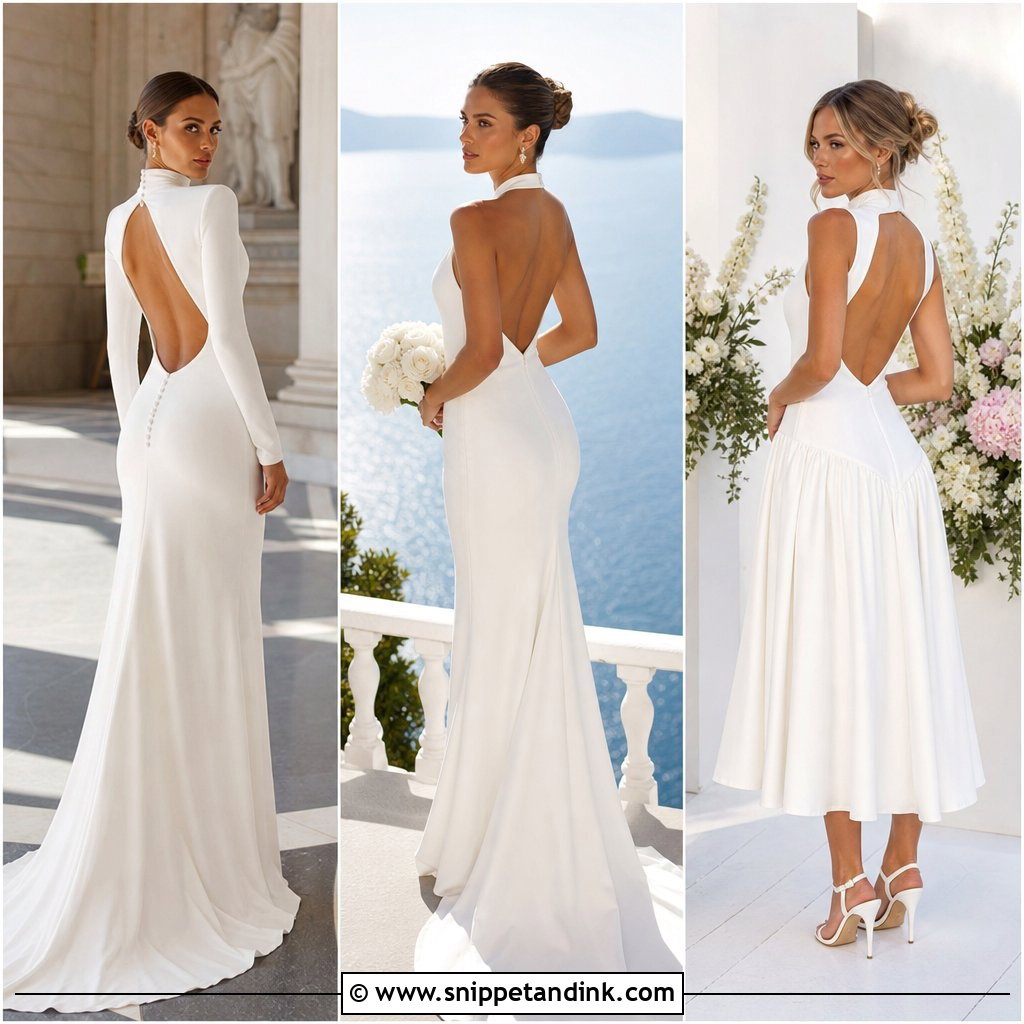
Of all the open backs, the halter is the most secure, because your neck carries the weight. That makes it the one I point dancers toward. Choose a high halter bodice, a clean open back and a softly fitted skirt in satin or crepe. Pointed-toe heels, sculptural studs and a narrow cuff suit it; skip the necklace, as the neckline already frames you, and wear your hair high or short so the shape reads from behind. One honest warning: a halter fastening that sits too tight can leave your neck and shoulders aching by evening, so wear the dress for a full hour at your last fitting before you sign off.
7. Square Neck Backless Wedding Dress
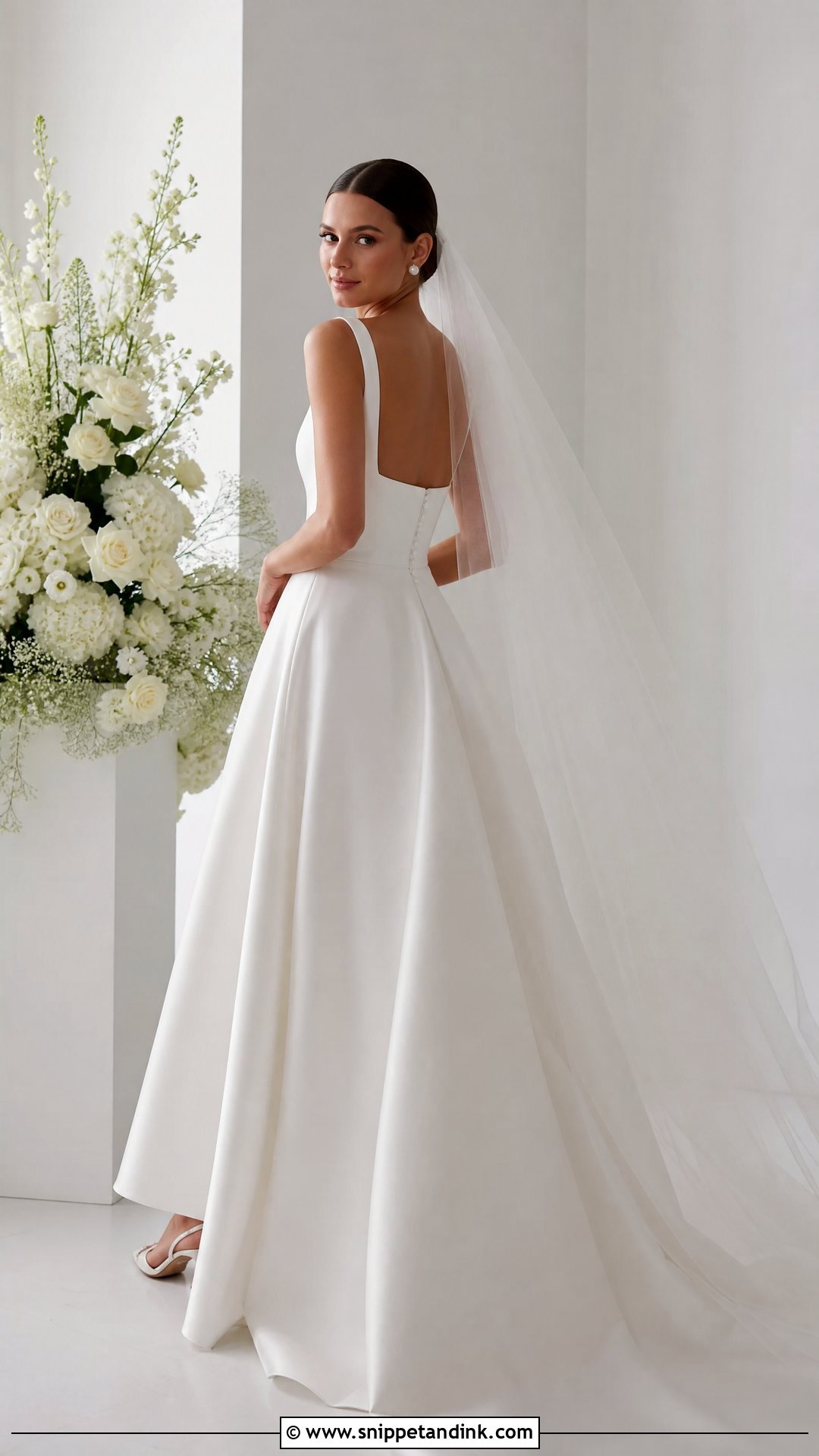
A square neck in front and a square opening behind give the dress a matched, architectural feel. I’d always go for wider straps on this cut, since thin ones on a square bodice tend to slide toward the edge of the shoulder. Pair the fitted bodice with an A-line or straight skirt in matte satin or crepe, which keeps the corners crisp. Pearl button earrings, low slingbacks and a plain tulle veil fit the geometry, and a center-parted low bun echoes it. A small white bouquet with fresh greenery softens all those straight lines. Watch the corners at fittings: if they curl or lift when you move your arms, the straps need shortening.
8. Long Sleeve Backless Wedding Dress
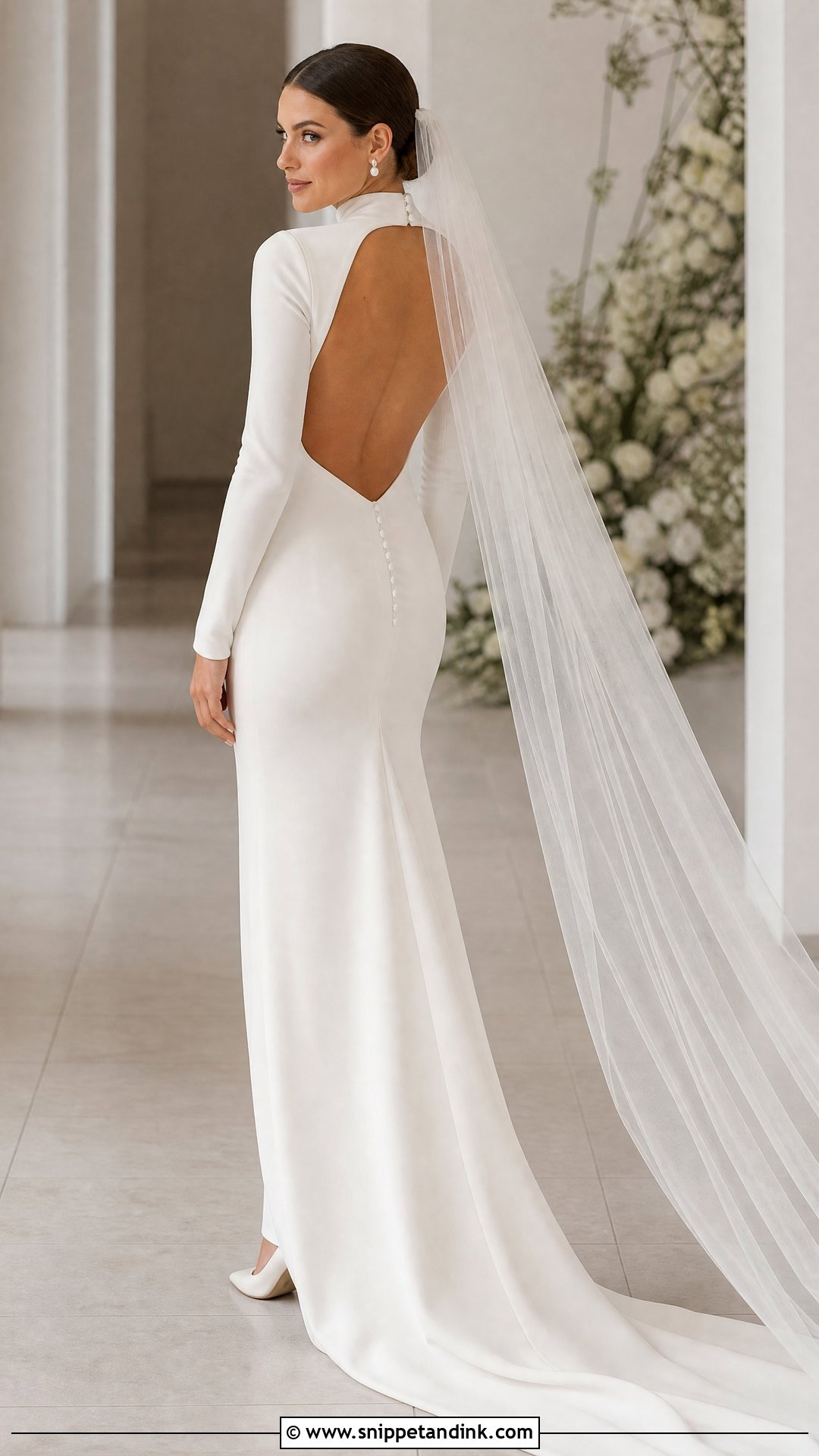
Long sleeves with a bare back is a favorite of mine for winter brides who want coverage in front and a surprise when they turn. A fitted crepe gown with clean sleeves, a high neck and a deep rounded or V back keeps it simple over a narrow or gently flared skirt. Closed-toe pumps, small drop earrings and an unedged sheer veil are enough, and a smooth twisted bun leaves the back in view. Sleeves change how a backless bodice behaves. When you raise your arms, the sleeve pulls the shoulder seam forward and the back edge lifts, so test that at every fitting. A thin strap across the upper back or an illusion insert fixes it almost invisibly, and a tailored ivory coat covers you between the car and the venue.
9. Off Shoulder Backless Wedding Dress
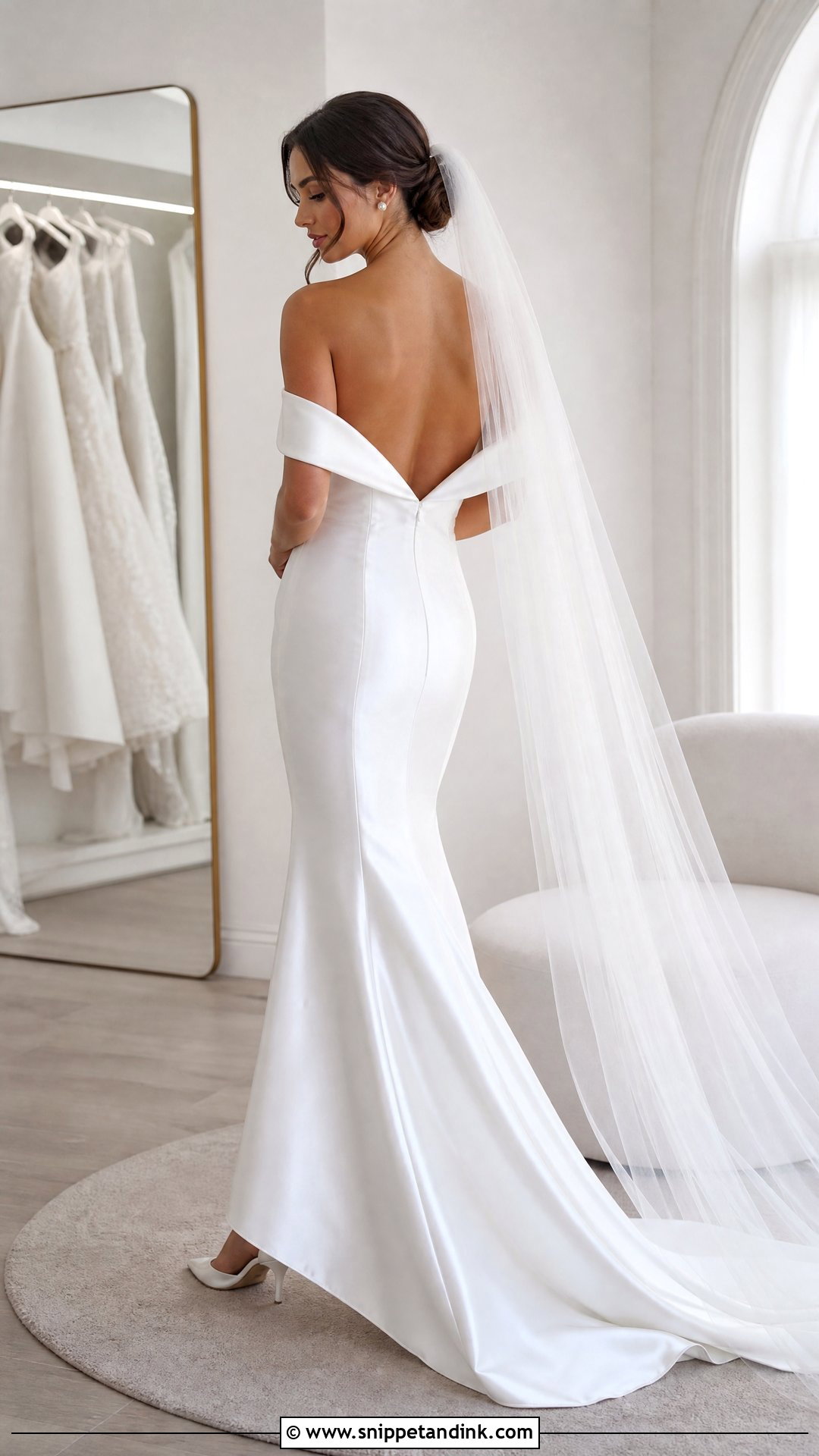
Off-the-shoulder into a low back exposes a lot of skin, so I keep the fabric plain: a folded satin band rather than lace or ruffles. A fitted bodice and a soft flare in the skirt give it enough shape. Simple studs, pointed satin pumps and a light chapel veil keep it calm, with a low bun or side-swept waves that leave the shoulders clear. Off-shoulder sleeves pin your arms more than most brides expect, so hug, sit and reach during alterations. Interior boning and a waist stay are what stop the bodice sliding down between photos.
10. Lace Keyhole Back Wedding Dress
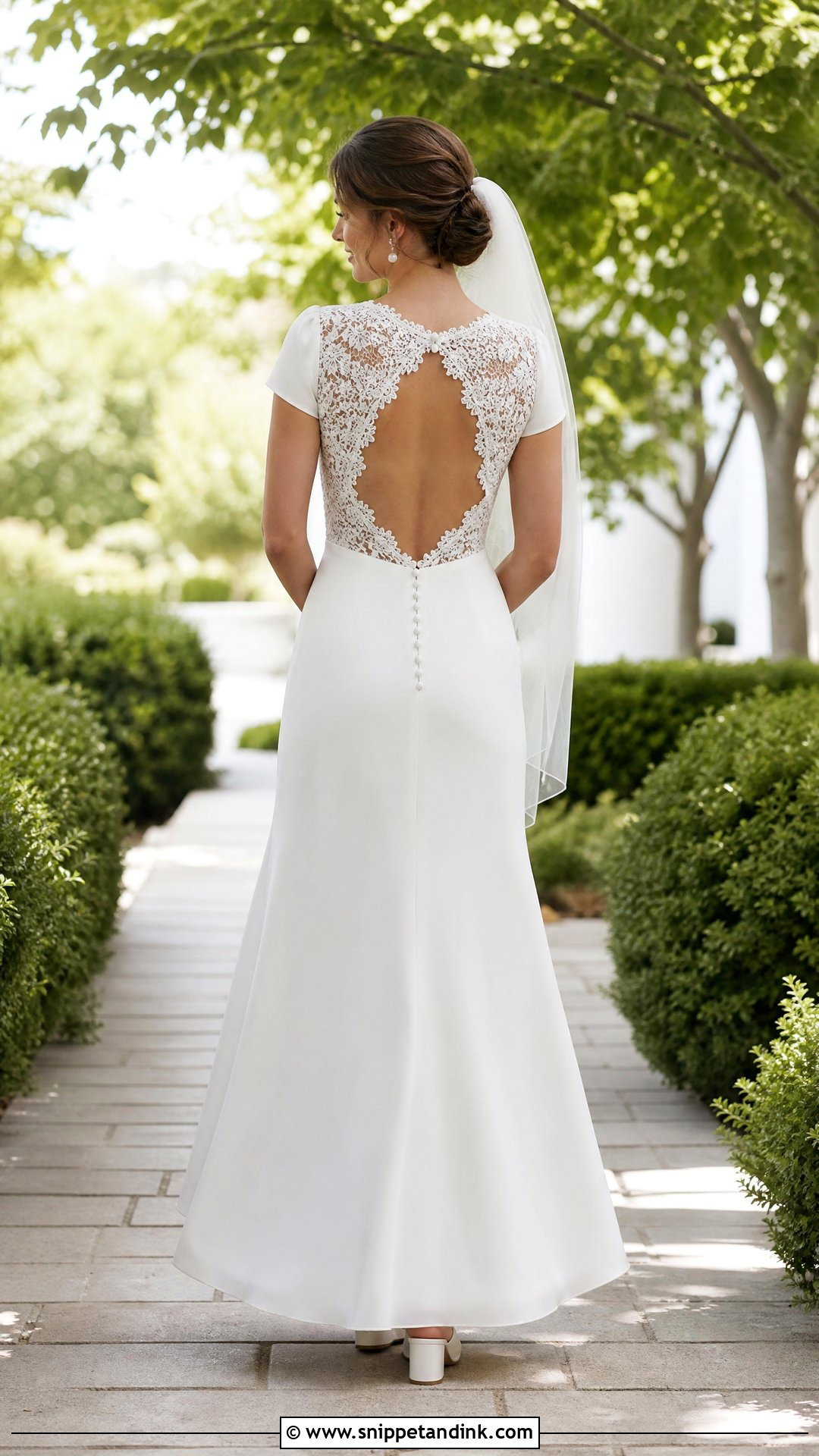
A keyhole back is the compromise I suggest most often to brides who love the idea of an open back but want more structure to work with. A plain crepe or chiffon dress with a single lace edge around the keyhole looks far cleaner than lace all over. Pair a modest front and short sleeves with ivory block heels, tiny pearl earrings and a plain fingertip veil, and wear a textured low bun that keeps the opening in sight. The closure at the neck carries the top of the dress, so check that it lies flat and doesn’t drag the keyhole into a stretched oval. A few covered buttons at the nape finish it neatly.
11. Illusion Back Wedding Dress
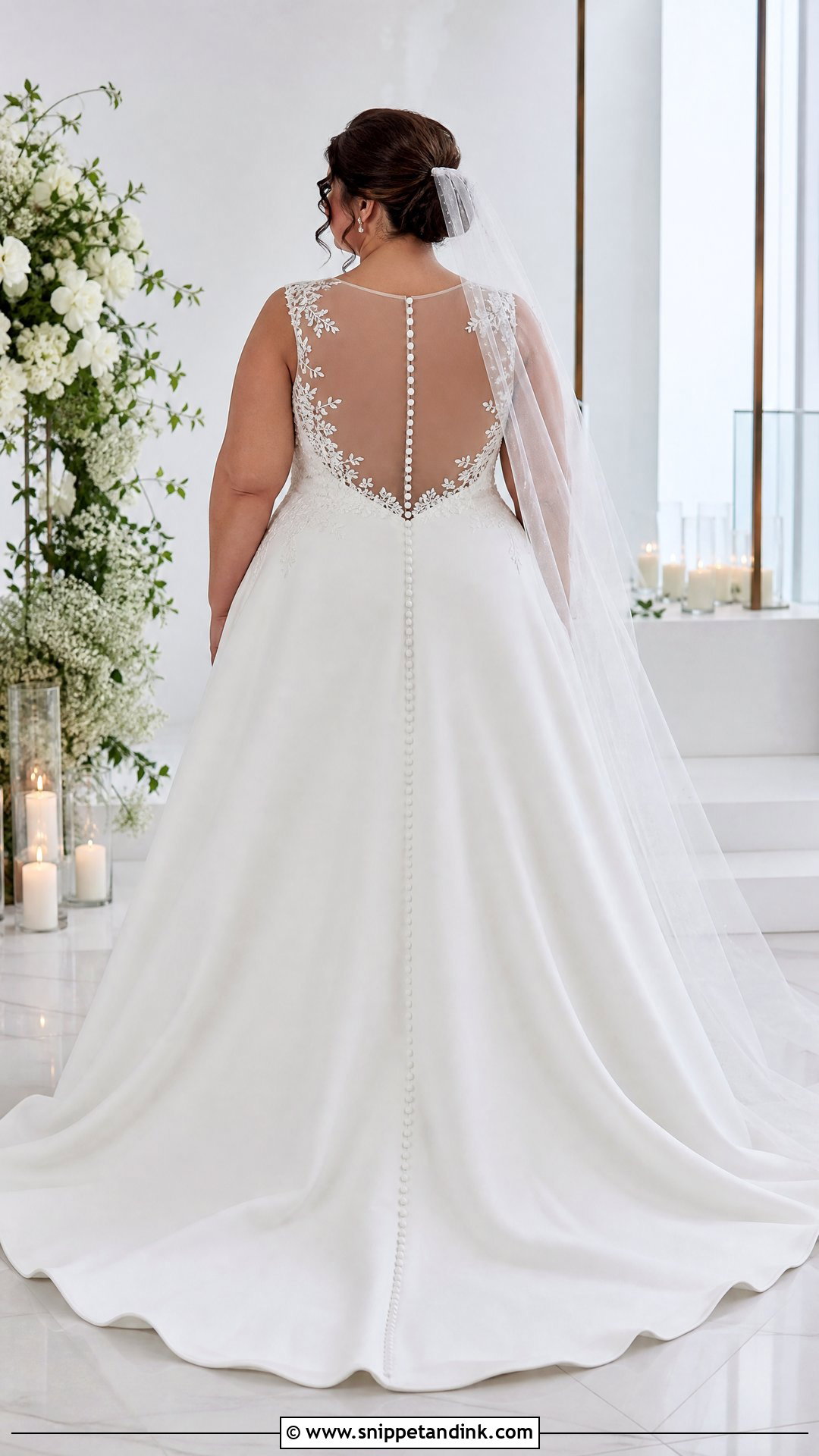
Illusion mesh gives the look of bare skin with real support behind it, but only if the shade matches you. I hold mesh swatches against a bride’s back in daylight and again under warm indoor light, because a tulle that vanishes in the shop can turn into a visible beige panel under camera flash. Keep everything else quiet: a fitted crepe bodice, an uncomplicated A-line skirt, and either minimal appliques or a row of covered buttons. Crystal studs, classic pumps and a soft tulle veil suit it, with a neat updo. The panel should lie smooth across the shoulder blades with no sagging and no tight edges where it meets the opening.
12. Pearl Strap Backless Wedding Dress
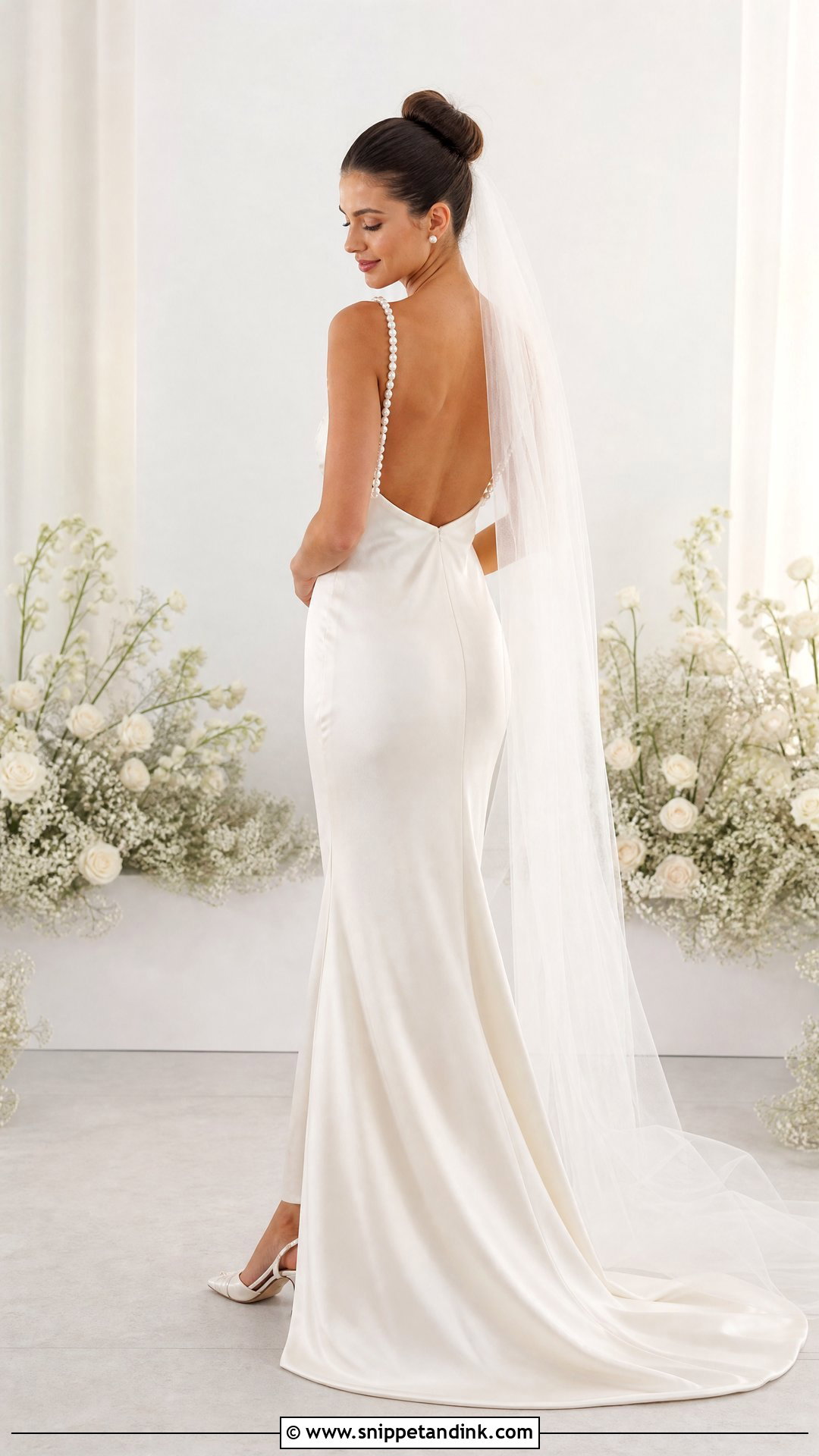
Pearl straps are the one piece of decoration this dress allows, so everything else steps back. A smooth satin or crepe sheath with a straight neckline and low scoop back gives them room. Pearl studs, satin slingbacks and a plain sheer veil keep the shine coordinated. Wear your hair high, in a sleek ponytail or a short bob, so it can’t tangle in the strands. Strung pearls are decorative, not structural, and the thread stretches if the bodice hangs from them. Ask the seamstress to reinforce each strand and add hidden support underneath so the pearls only have to look pretty.
13. Bow Back Wedding Dress
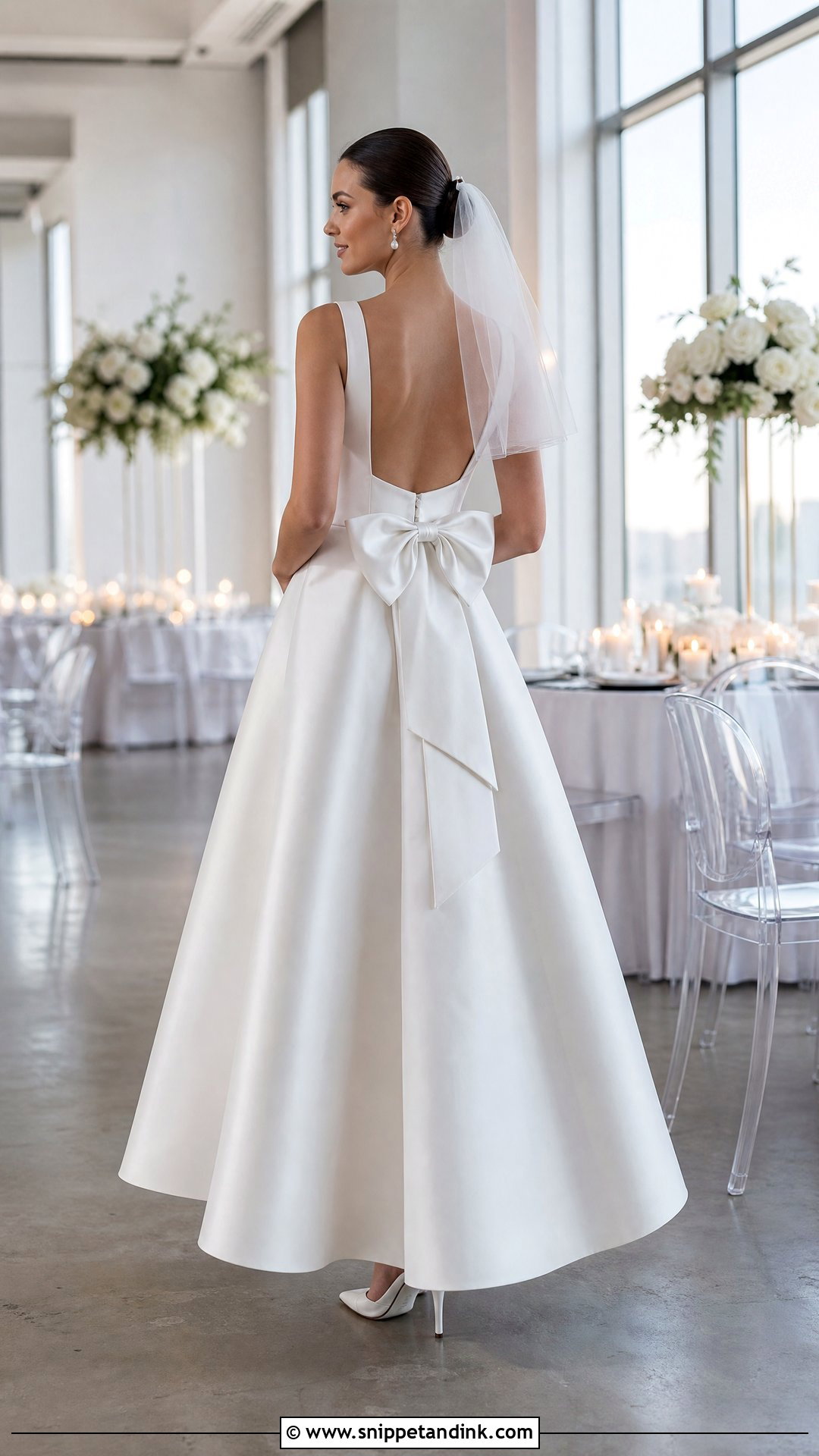
A bow at the base of a low square or scoop back gives a plain satin A-line one clear focal point. Size is the whole decision. A medium bow with slim tails stays in proportion, while an oversized one turns into a lump when you sit. Pearl earrings, pointed heels and a plain veil that stops above or below the bow, never on top of it, round it off with a smooth bun. A removable bow is handy for a lighter reception look. Satin bows crush when you lean back in a chair, so I ask for interfacing inside the loops and check the bow is still centered after the bride has sat down.
14. Button Back Wedding Dress
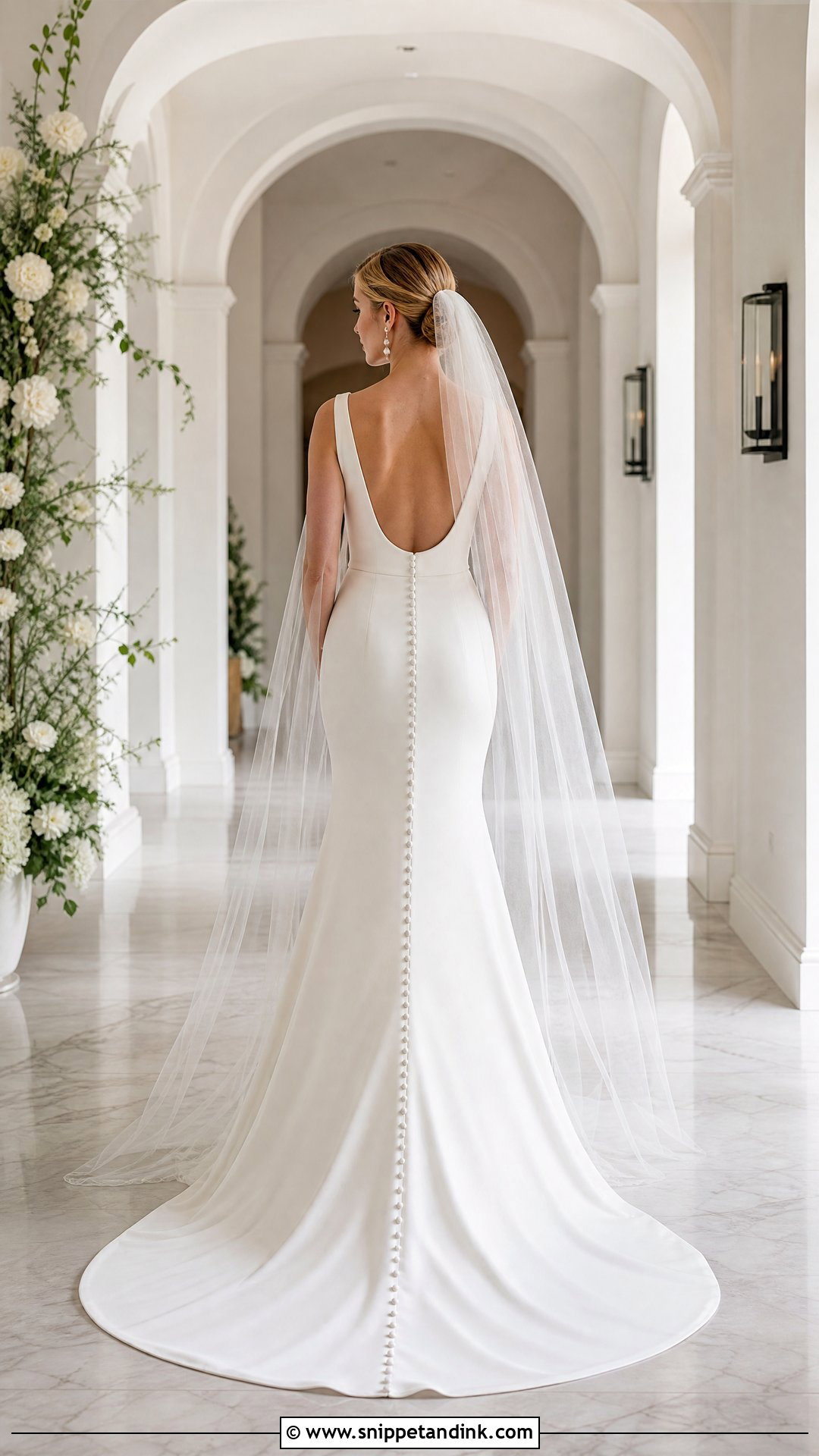
Covered buttons running from the waist down the train give a deep V or rounded back a line for the eye to follow. Keep the front plain with a bateau neck or narrow straps. Closed-toe pumps, small drop earrings and a sheer cathedral veil suit it, and a classic chignon shows the whole row. The practical question is whether the buttons actually fasten. Working buttons with loops take a helper a long time to close, so I usually recommend a hidden zip beneath decorative buttons. Either way the loops must be stitched firmly, because one popped loop shows to every guest behind you.

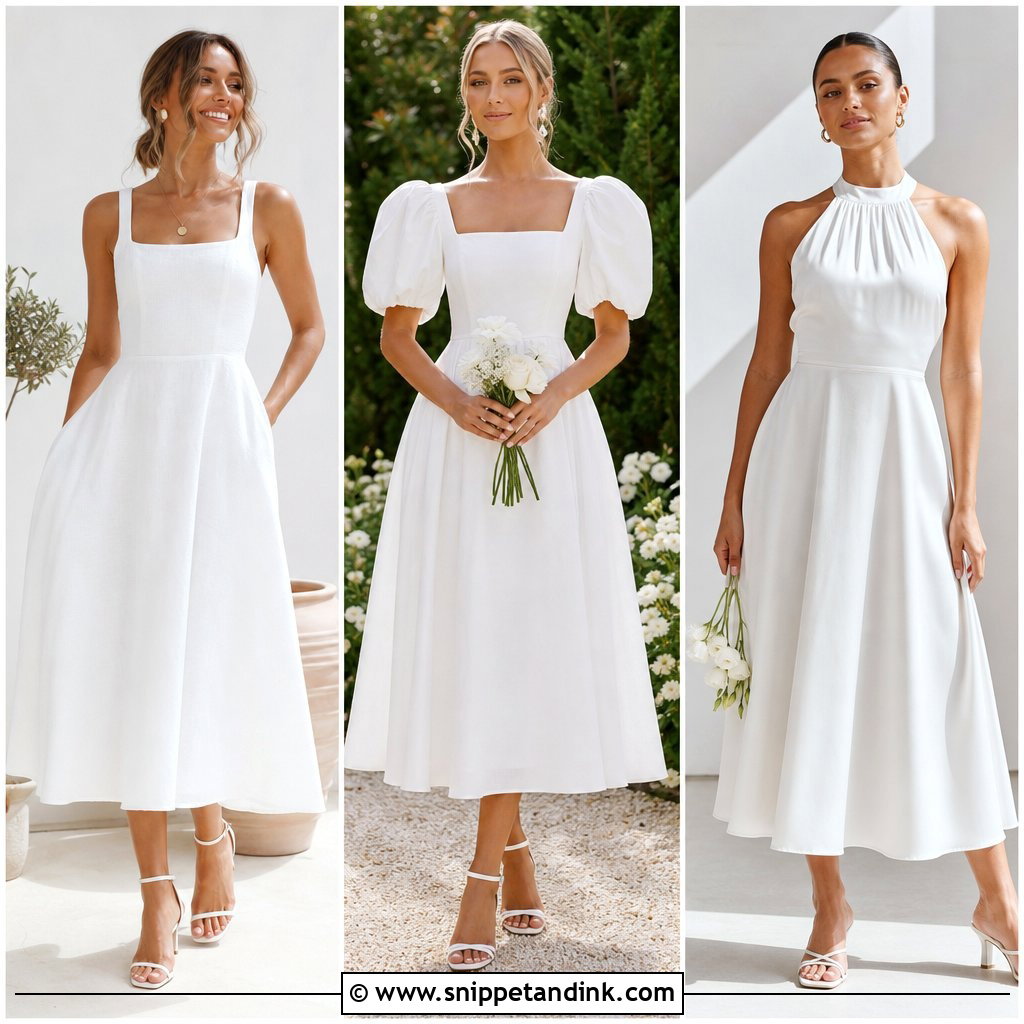
15. Backless Mermaid Wedding Dress
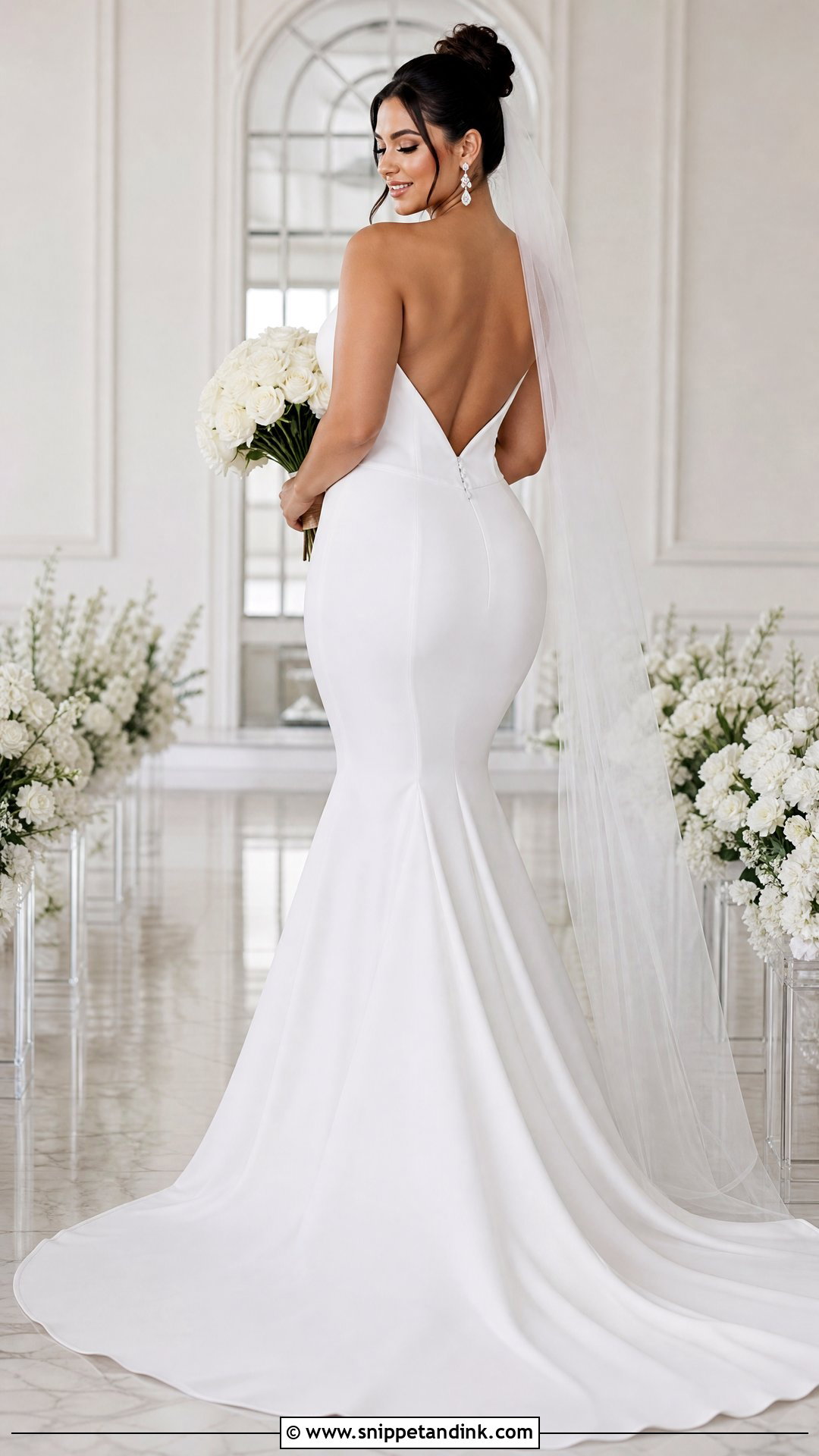
A mermaid in matte crepe stays simple when the fit does the talking: close through the bodice and hips, a low back, and a flare that starts around the knee. Leave out heavy lace and beading. Slim pointed heels, small crystal earrings and a plain chapel veil are enough, and a high polished bun lengthens the neck. Of every gown here, this is the one I’d test hardest for movement. Walk, sit and climb a few stairs in it, because a knee flare shortens your stride, and plan a secure bustle for the train. Bodice boning matters as well, since the back edge depends on the front structure to stay flat.
16. Chiffon Beach Backless Wedding Dress
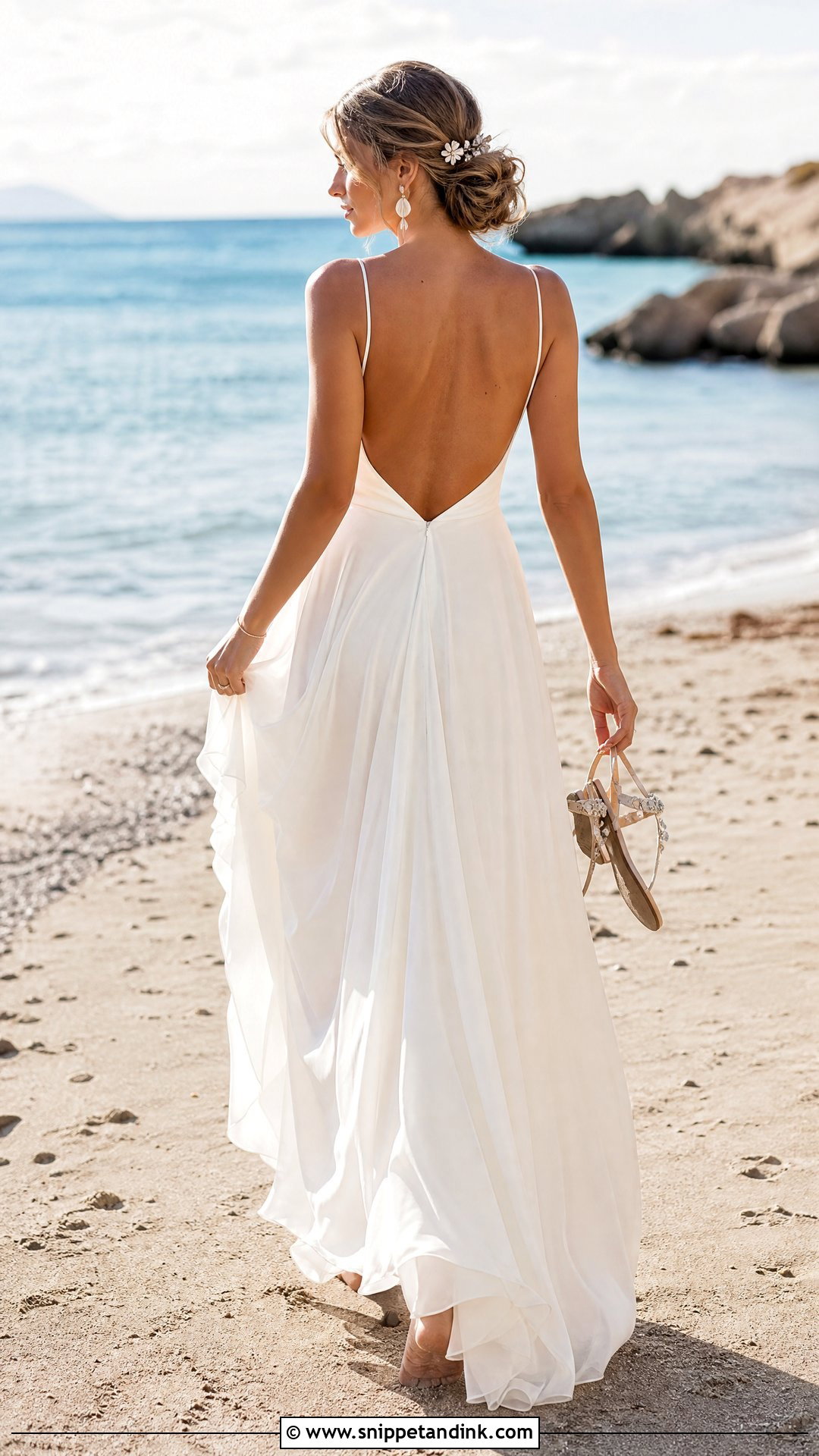
Chiffon moves in a coastal breeze instead of fighting it, which is why I’d pick it over satin for a beach ceremony. An A-line with slender straps, a low V back and a softly layered skirt is all it needs, with perhaps a narrow band at the waist. Flat sandals, small shell-shaped earrings and a hair comb suit the setting. Wind is the real problem outdoors. A loose low bun or braided updo stays put, and a short veil or none at all is easier than wrestling tulle on a sandy aisle. Have the hem taken up so it clears the ground, and make sure there’s a lining under the chiffon, since bright sun turns a single layer see-through.
17. Tea Length Backless Wedding Dress
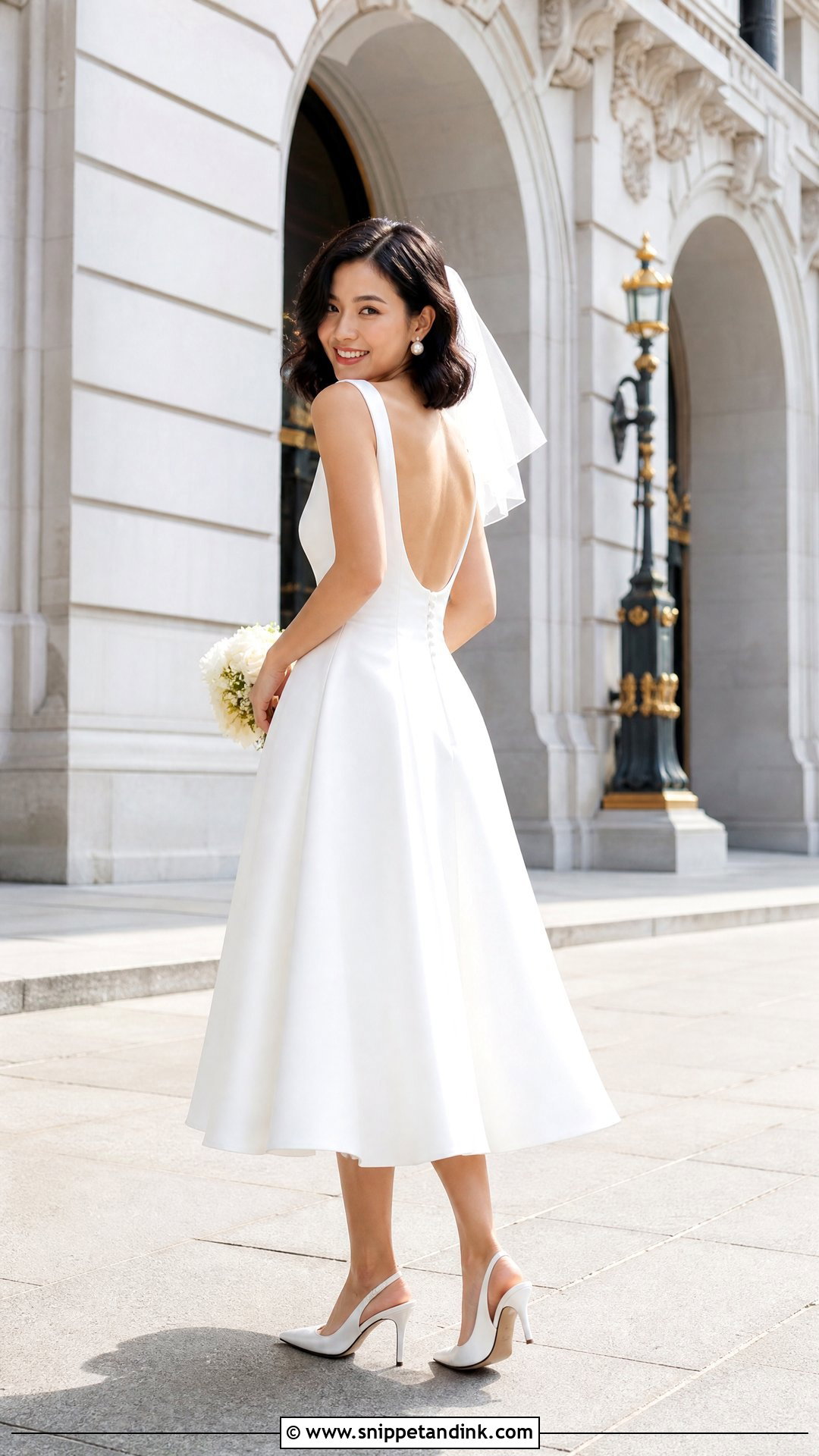
Tea length suits a courthouse ceremony, a small gathering or a second dress for the reception. Choose a clean satin design with a fitted bodice, a scoop back and a hem between knee and ankle. Your shoes are on show now, so pointed slingbacks or good bridal flats deserve as much thought as the dress. Pearl studs, a short veil and a compact bouquet keep the proportions right, with a sleek bun or waved bob. The hem is where I’d focus at alterations. On a shorter skirt any unevenness is obvious, so have it checked while you’re wearing the actual wedding shoes.
18. High Neck Backless Wedding Dress
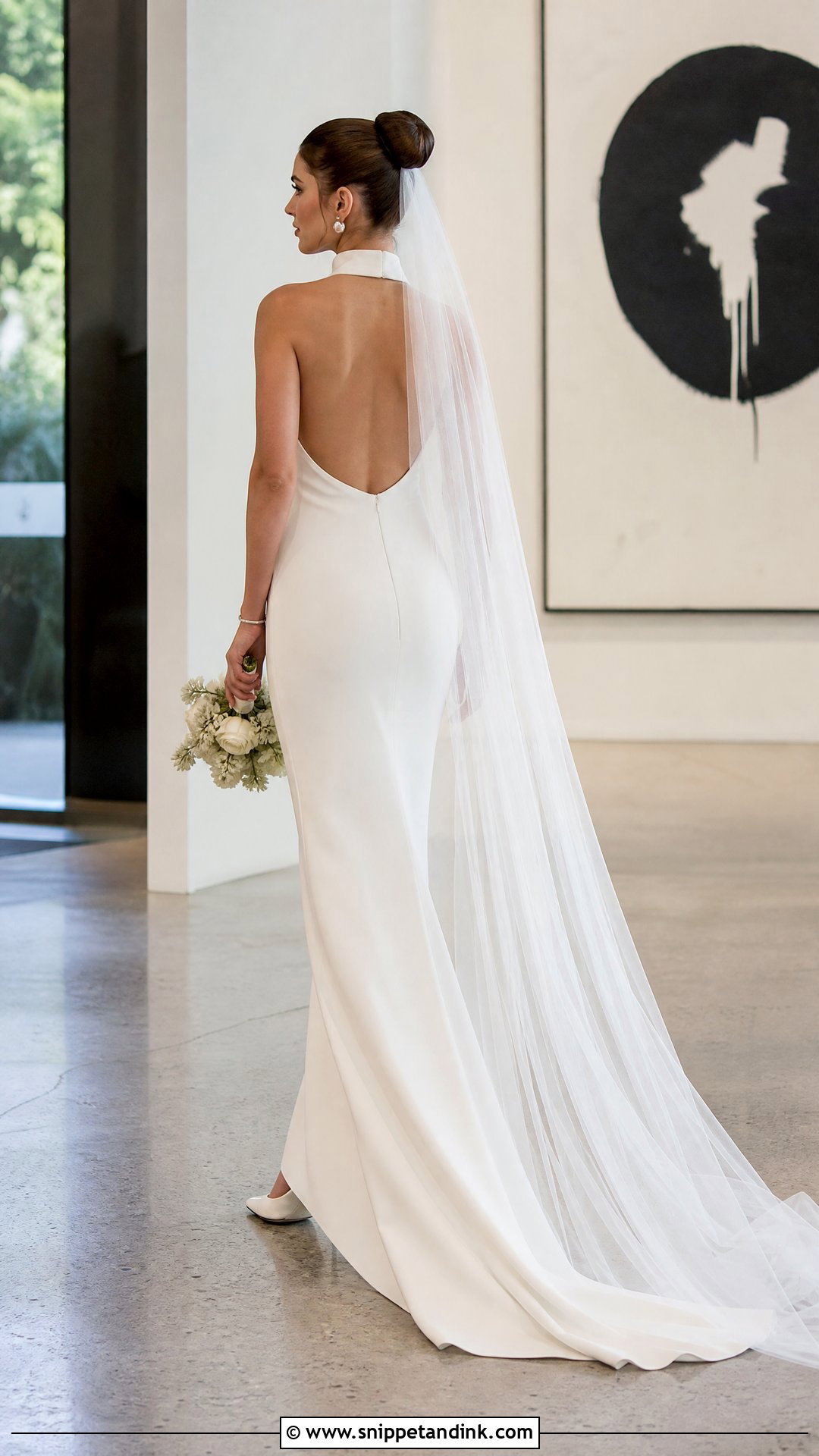
A high neck in front makes the bare back more dramatic, because nobody sees it coming until you turn. A sleeveless crepe column with a clean mock neck, fitted waist and deep oval or teardrop back keeps the lines sharp, so leave off embellishment. Modern studs, white pumps and a narrow bracelet are enough. Skip the necklace and wear a high bun or sculpted twist, with the veil attached beneath the bun so the front stays clear. I check two things on this cut: the neck fastening, which holds up much of the dress, and the armholes, which can dig in or gape and show the side of the bodice.
19. Simple Backless Ball Gown
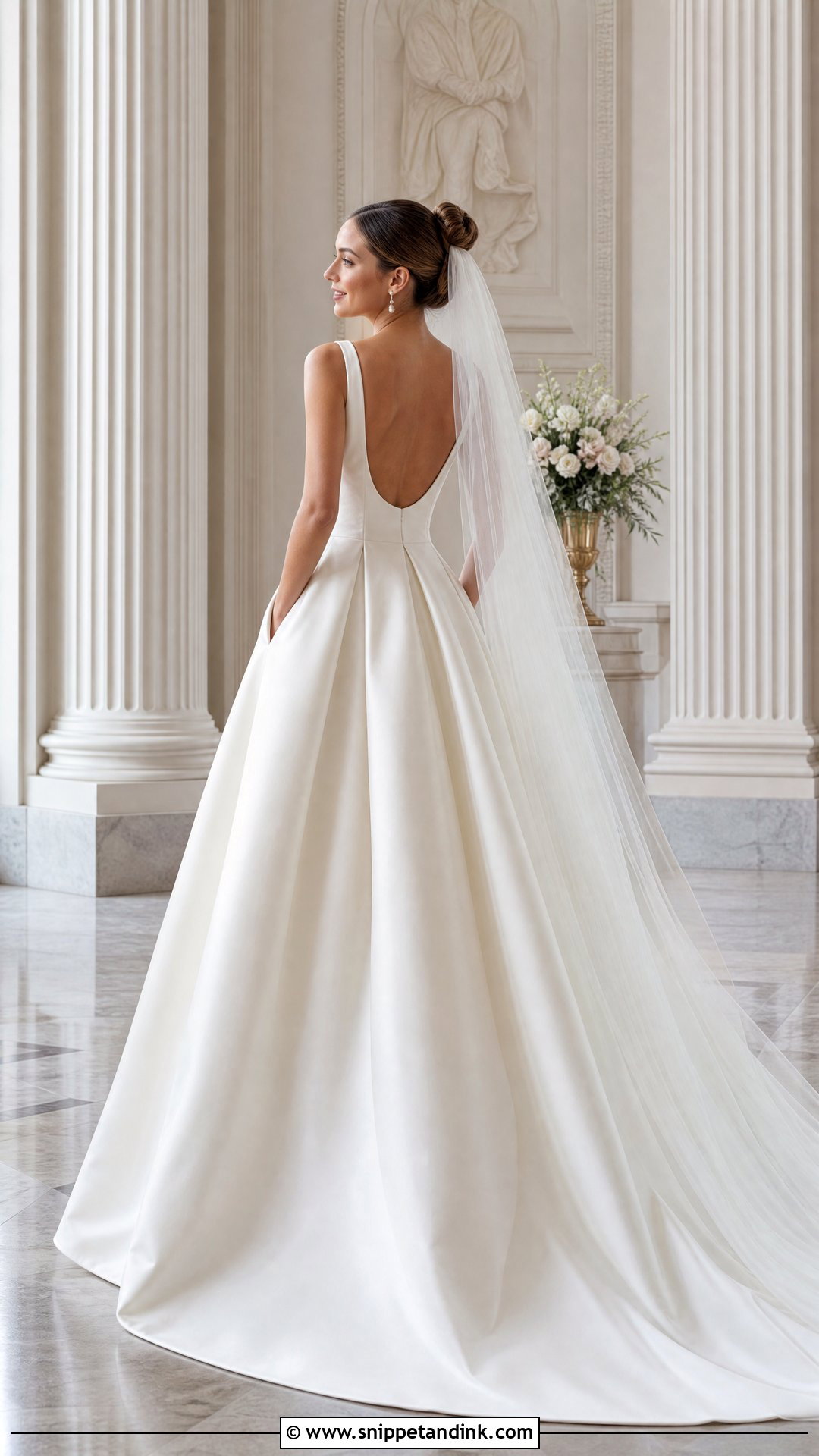
A ball gown reads minimal when the fabric is plain and the shape is structured. A mikado or satin bodice with a low scoop back over a full pleated skirt is my starting point; add glitter or layers of lace and the volume quickly looks fussy. Comfortable block heels, pearl drop earrings and a plain cathedral veil suit it, with a polished bun to balance the skirt. Pockets are fine if they don’t break the pleats. With this much skirt weight, the inner waist construction has to carry the gown, or the skirt drags the bodice down and the scoop gapes. Ask for a bustle you can manage without a team of helpers.
20. Supportive Backless Wedding Dress
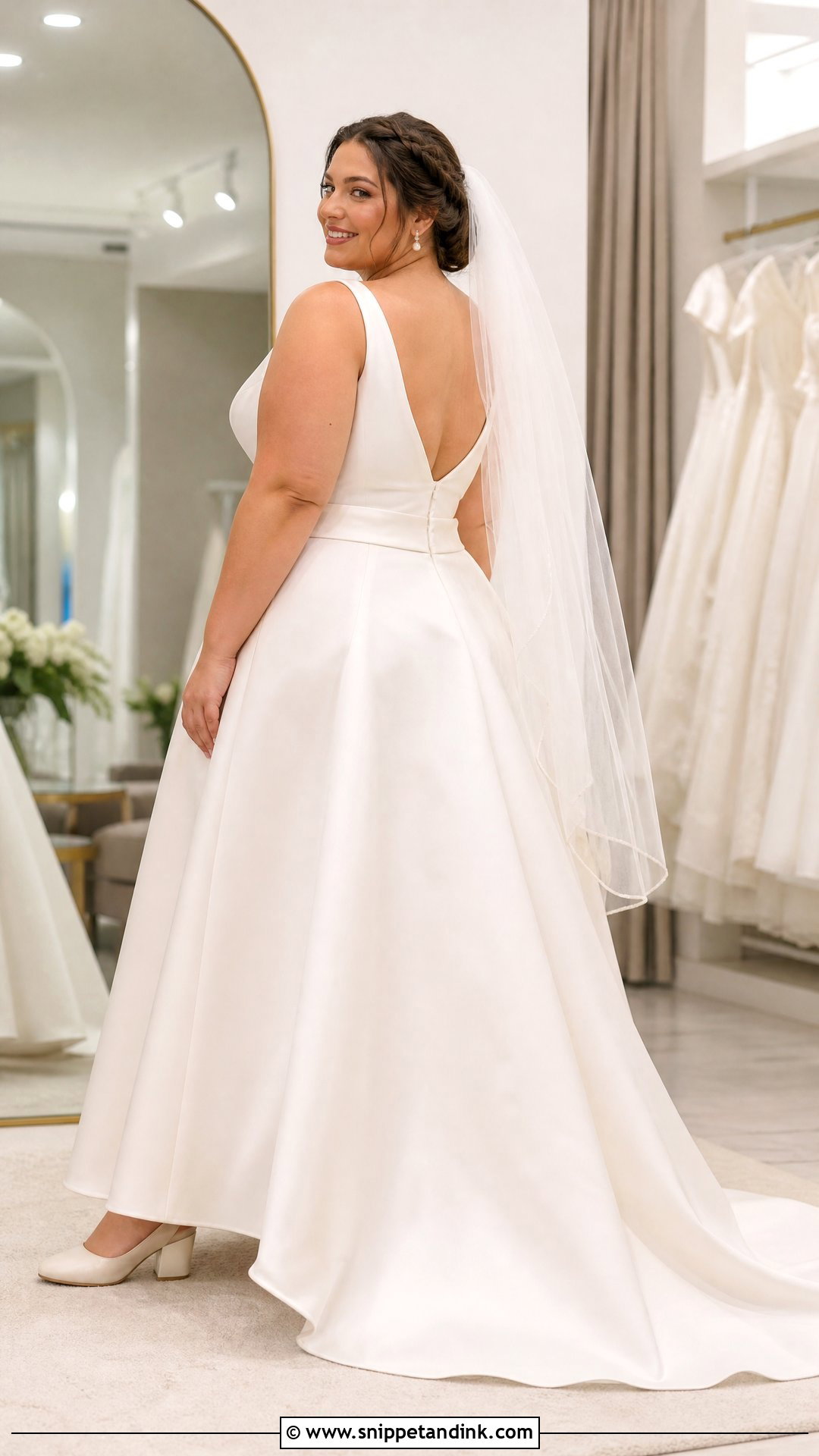
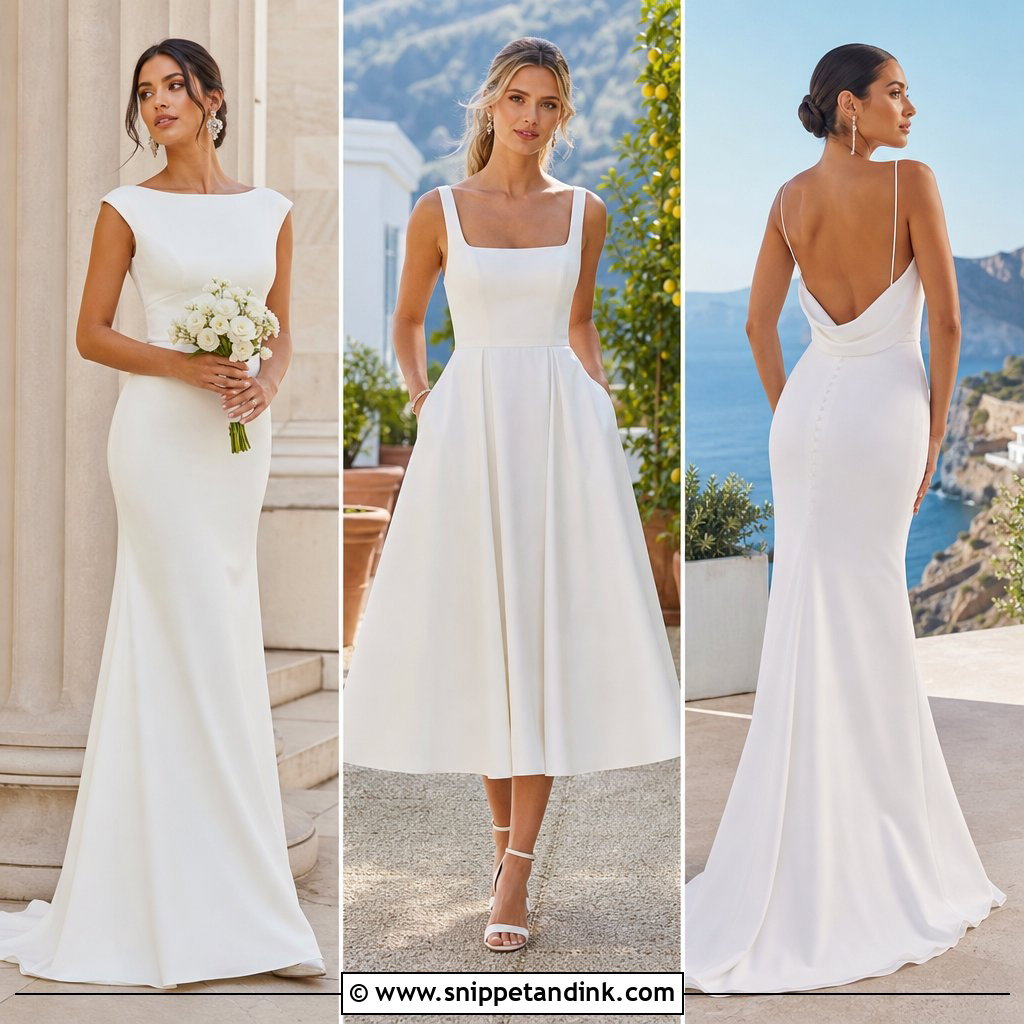
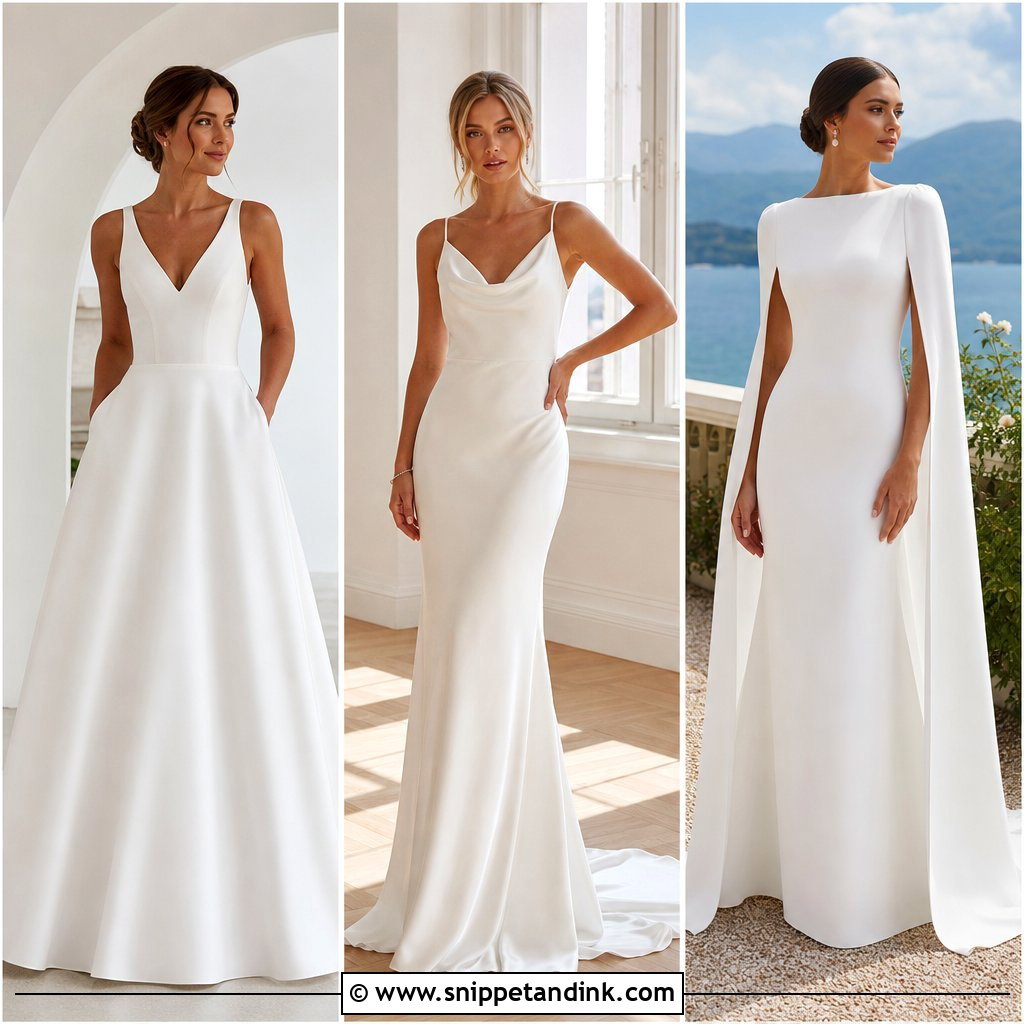
Support comes from construction, not from a particular body type or dress size. I look for wider straps, a structured waist, sewn-in cups, boning and firm side panels around a moderate scoop or V back. An A-line in crepe or satin keeps it comfortable and clean. Block-heel pumps, pearl earrings and a light veil work, and the hair can be whatever feels like you, from an updo to natural curls. Bring the undergarments you plan to wear to every appointment, and ask the consultant what can be altered before you buy, since some gowns have very little seam allowance at the back. A good fit lets you sit and dance without hitching a strap all night.
Guests Watch Your Back During the Vows
For most of the ceremony your guests see you from behind, which makes your skin and your veil part of the dress. I talk brides through this at the final fitting, because a few small things show far more than they would under a closed gown.
Skin, tan lines and strap marks
Bra straps leave pressure marks that can last for hours, so wear something strapless or nothing the morning of the wedding. Watch for tan lines from summer swimwear in the weeks before. If you use self-tanner or body makeup on your back, test it well ahead and let it dry fully before dressing, since both transfer onto ivory satin. Skip body oil and shimmer lotion on the day; oil marks silk and doesn’t come out easily.
Veils that don’t hide the back
A long veil falls straight down your back and covers the very detail you chose. A plain sheer tulle with no edging is the least distracting, and I usually suggest attaching it below the bun so it starts low. If you want the full back seen during the vows, a shorter veil or one you remove after the processional is the simpler answer. Ask your photographer to take a few frames from behind before the veil goes on.
How Much Back You Show Is Only the First Decision
Start with how much back you’re comfortable showing, then let that decide everything structural: straps, fabric, neckline and support. Tailoring is where an open-back dress succeeds or fails, because that edge has to stay flat while you move, hug and dance. Keep the jewelry small and the hair off the back so the cut gets seen. A satin slip and a structured ball gown need very different fittings, yet both work when the support is built into the dress rather than added at the last minute.
You'll Like These Ideas:




Leave a Reply