
Dressing as a guest at a South Asian wedding is a pleasure and a small puzzle: several events, several dress codes, and clothing that ranges from a six-yard saree to a stitched suit you can put on in two minutes. When I style guests, I start with the silhouette they can move and eat in, then layer on embroidery and jewellery. Light fabrics and simple detail belong to daytime events; silk, brocade, velvet and metallic work come out in the evening. Good tailoring matters more than the price tag. Below are twenty outfits, from sarees to suit sets, lehengas and fusion pieces, each with how I’d finish it and what I’d check before you leave the house.
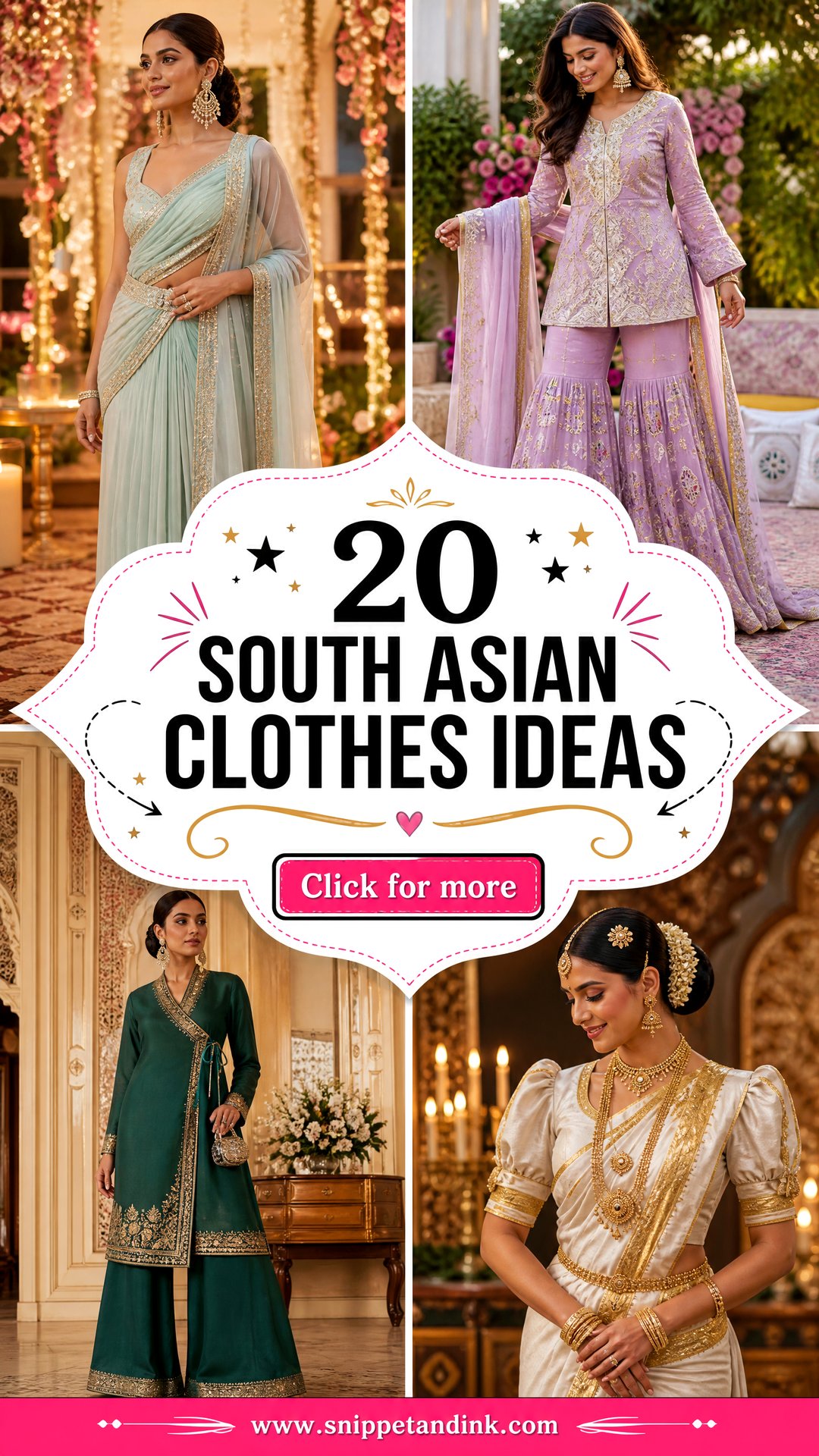
Matching Your Outfit to Each Event of a Multi-Day Wedding
Many South Asian weddings run over several events, and each has its own mood. The invitation or the hosts will usually tell you if there’s a colour theme, and it’s always fine to ask. Without one, this is roughly how I’d plan a guest wardrobe.
- Mehndi or haldi: bright, light and washable. Haldi paste stains, so wear something you don’t mind marking, and keep heavy silk away from henna.
- Sangeet or dholki: something you can dance in, like a sharara, Patiala or a light lehenga with a secure waistband.
- Religious ceremony: modest and covered. At a gurdwara everyone covers their head and removes their shoes, so carry a scarf and choose shoes that slip off easily. A nikkah usually calls for covered arms and a head covering for women too.
- Reception or walima: the most formal outfit, often silk, brocade, velvet or heavy embroidery.
Two colour cautions apply in many communities: bright red is often the bride’s colour, and plain white can be associated with mourning. Neither is a strict rule everywhere, but if in doubt, choose something else.
1. Banarasi Silk Saree With Gold Accessories
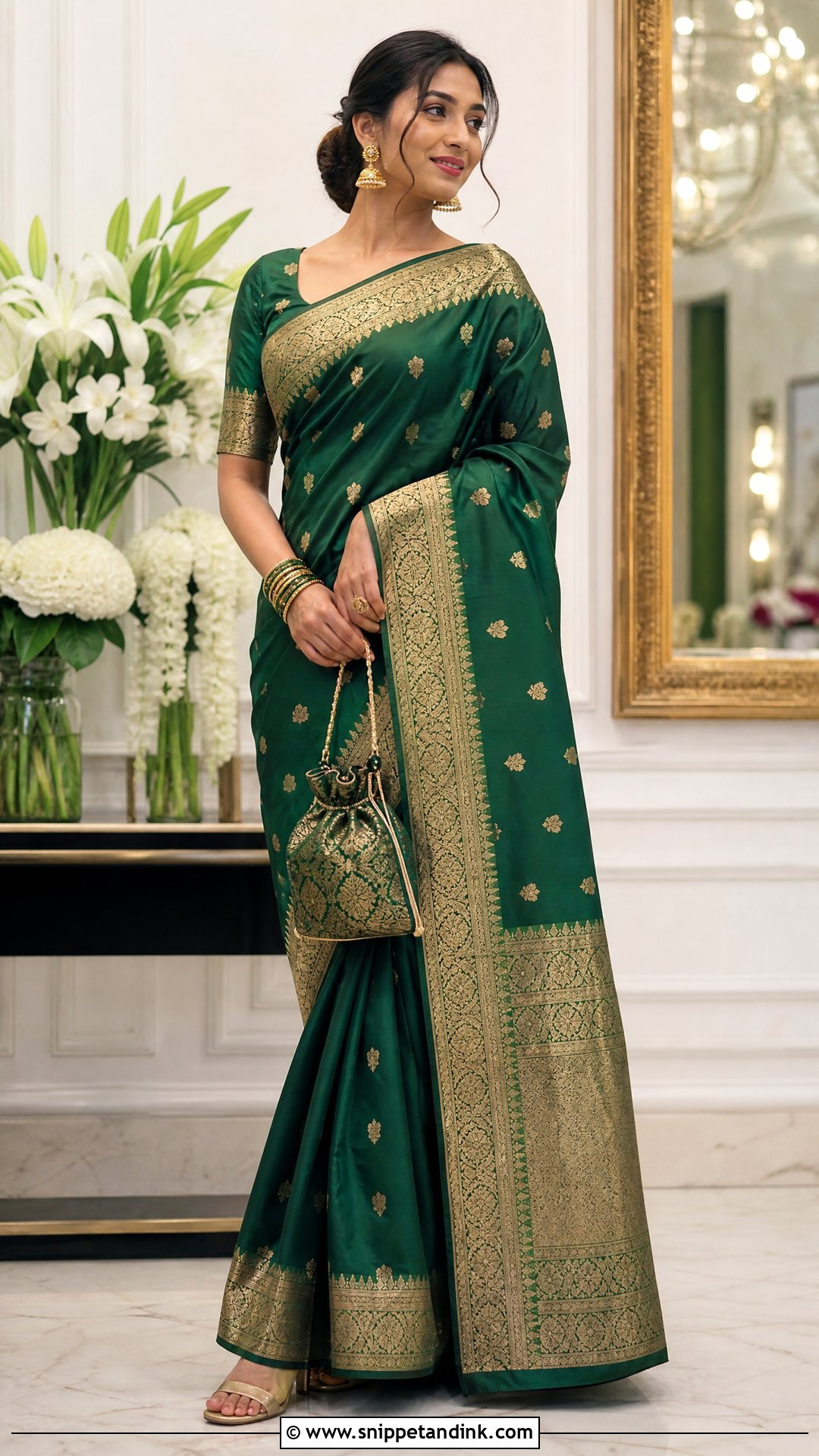
Banarasi silk is heavy, rich and woven rather than embroidered, which means it holds pleats well and drapes with real weight. For evening, go for emerald, maroon, navy or deep purple; blush or powder blue reads lighter by day. A fitted short-sleeve blouse that repeats one colour from the border ties it together. Gold jhumkas, stacked bangles and a structured potli are the classic finish. If the zari is dense, keep the necklace small. One thing I always remind first-timers: silk this heavy pulls on the shoulder pin, so use two safety pins at the pallu, not one.
2. Chiffon Saree With Embroidered Blouse
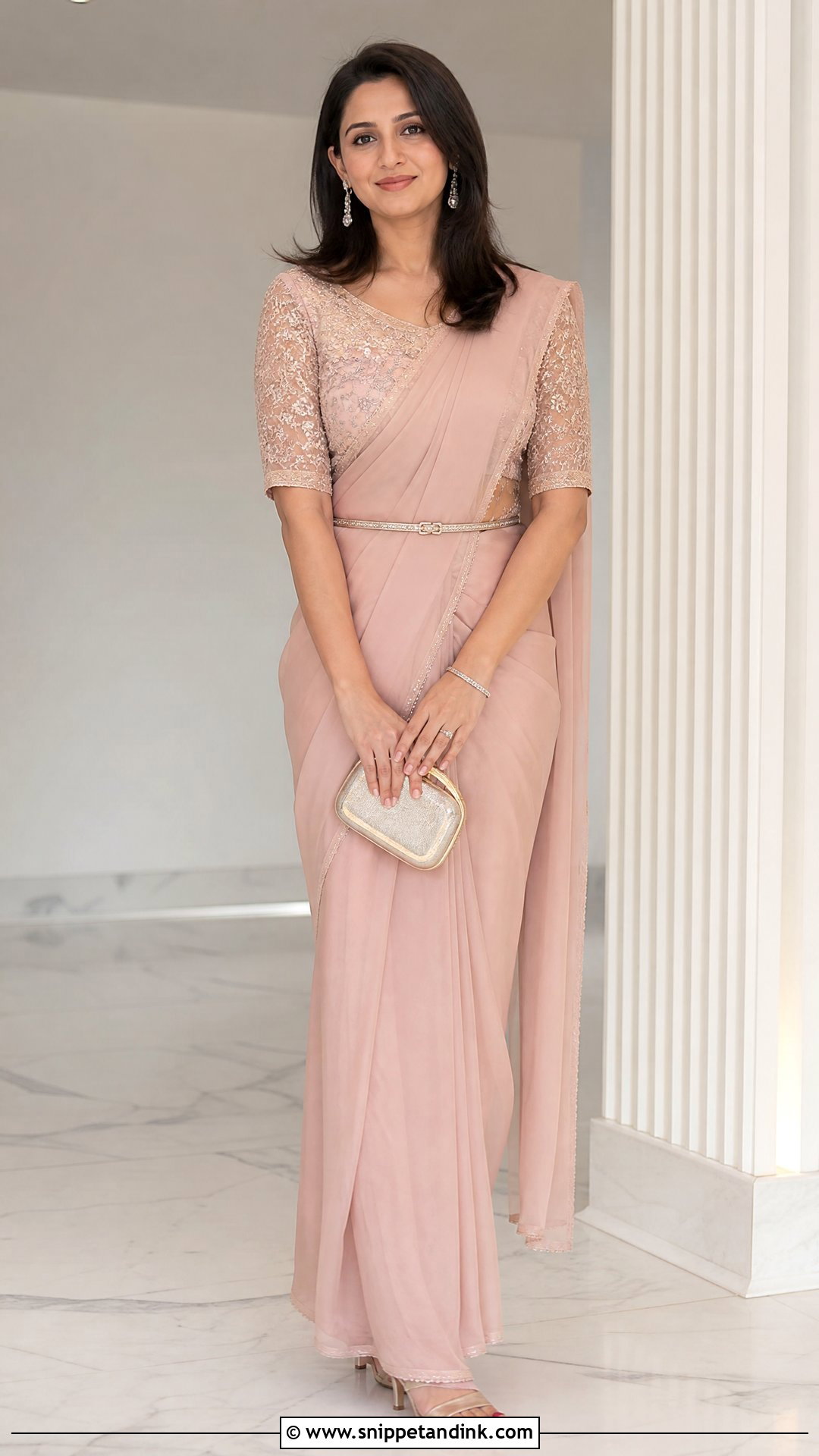
Chiffon is the saree I’d hand to someone facing a long evening of sitting, standing and walking. It’s light and forgiving, but it’s also slippery, so pleats need firm pinning or they slide apart within an hour. Pick a plain chiffon with a lightly embellished border and let the blouse carry the sparkle in beadwork, thread or fine sequins. Kitten heels, a metallic clutch, drop earrings and one slim bracelet are enough. A saree belt defines the waist and holds the fabric in place. For more coverage, choose elbow sleeves and a higher back.
3. Pre-Draped Saree With Statement Earrings
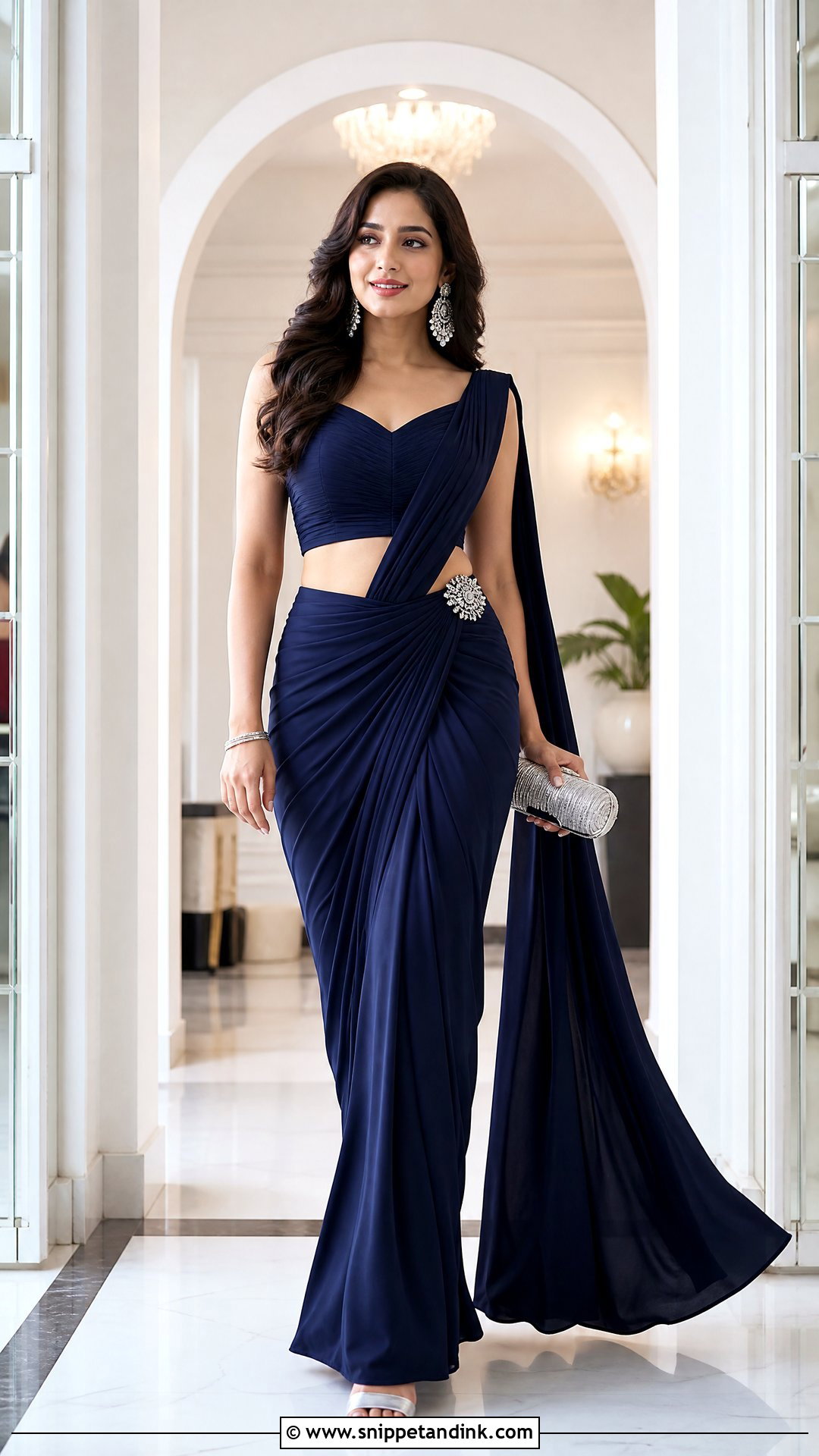
What if you love the look of a saree but dread draping one? A pre-draped saree has the pleats stitched in and a waistband that closes like a skirt, so it goes on in minutes. Crepe, satin or georgette all work. Pair it with a structured blouse in a toning colour; a square, modest V or one-shoulder neckline each change the mood. Statement earrings, a small clutch and comfortable heeled sandals finish it. Sleek hair and fresh makeup keep it current. It’s my default suggestion for anyone travelling to a wedding or wearing a saree for the first time.
4. Embroidered Lehenga Choli With Dupatta
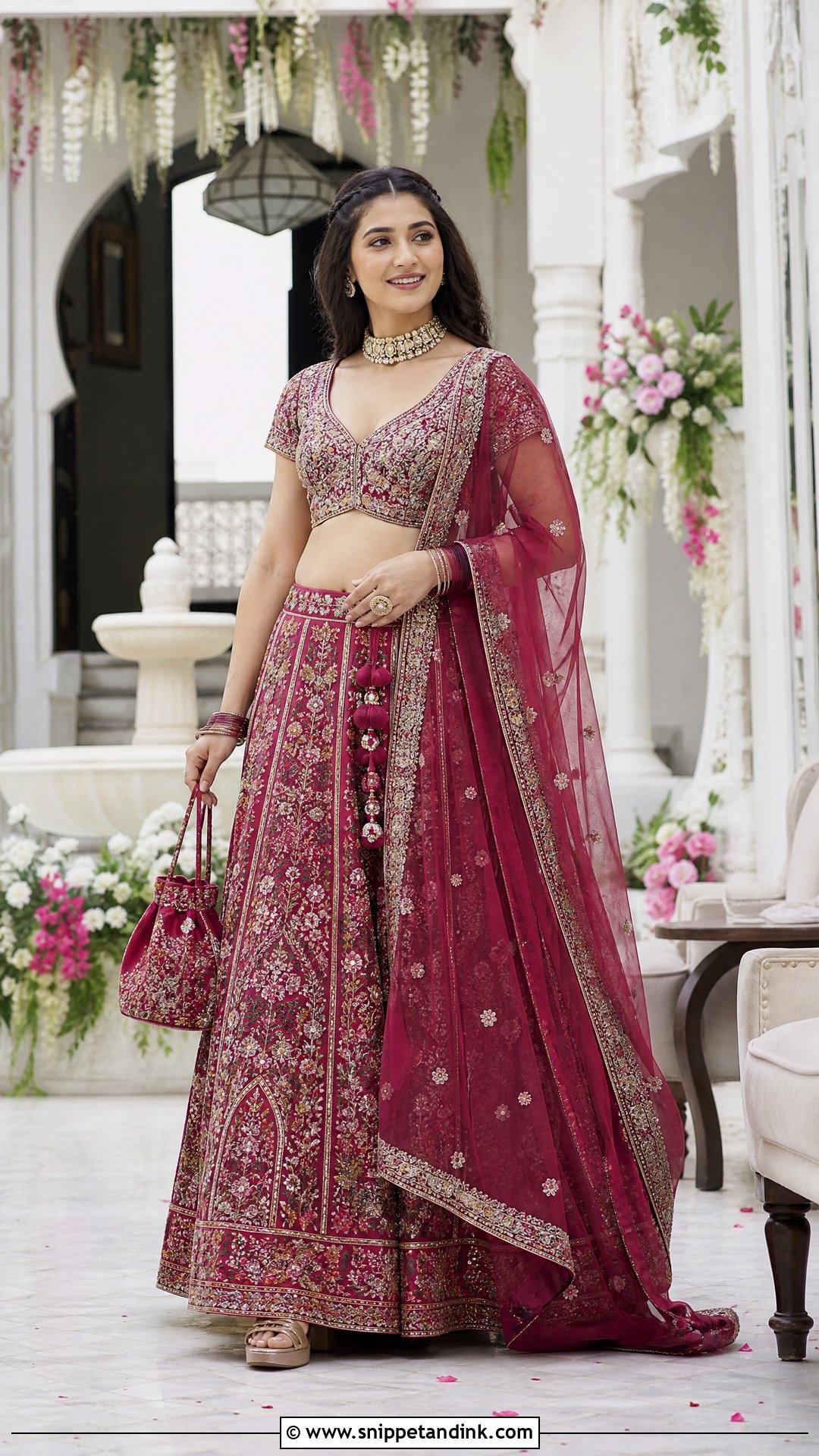
A lehenga choli is the festive guest outfit, and the waistband decides whether you enjoy it. A heavy embroidered skirt hangs from one point on your body for hours, so the band should sit at your natural waist without digging, and the hem should clear your shoes by a centimetre. Smaller motifs and controlled volume suit a petite frame; taller or curvier figures can carry wider borders and fuller panels. Drape the dupatta over one shoulder to move freely, or pin it across the front for coverage. A choker, earrings, bangles and platform sandals complete it, with a braid or low bun to balance the skirt.
5. Anarkali Suit With Churidar Pants
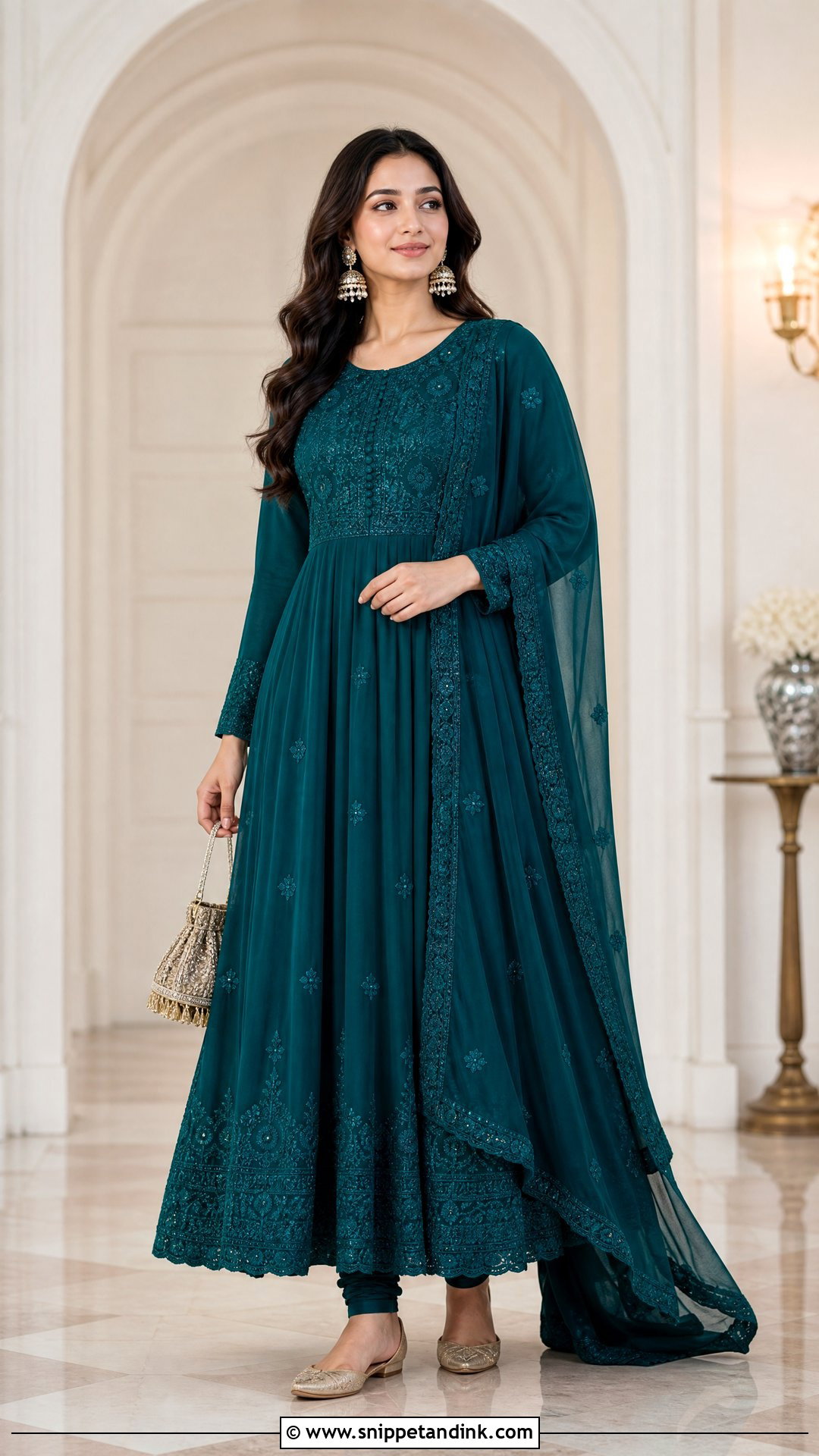
The Anarkali’s long flared shape looks formal with very little effort from the wearer. Fit is all in the bodice: it should sit smoothly before the skirt opens out, or the whole outfit looks borrowed. Vertical panels, small prints and tonal embroidery lengthen the line; broad borders add drama. Wear it over fitted churidar so the lower half stays slim. A light dupatta over both shoulders gives traditional coverage. Jhumkas, a small bag and pointed flats or low heels finish it, and if the neckline is heavily worked, let the earrings stand alone.
6. Straight Salwar Kameez With Matching Dupatta
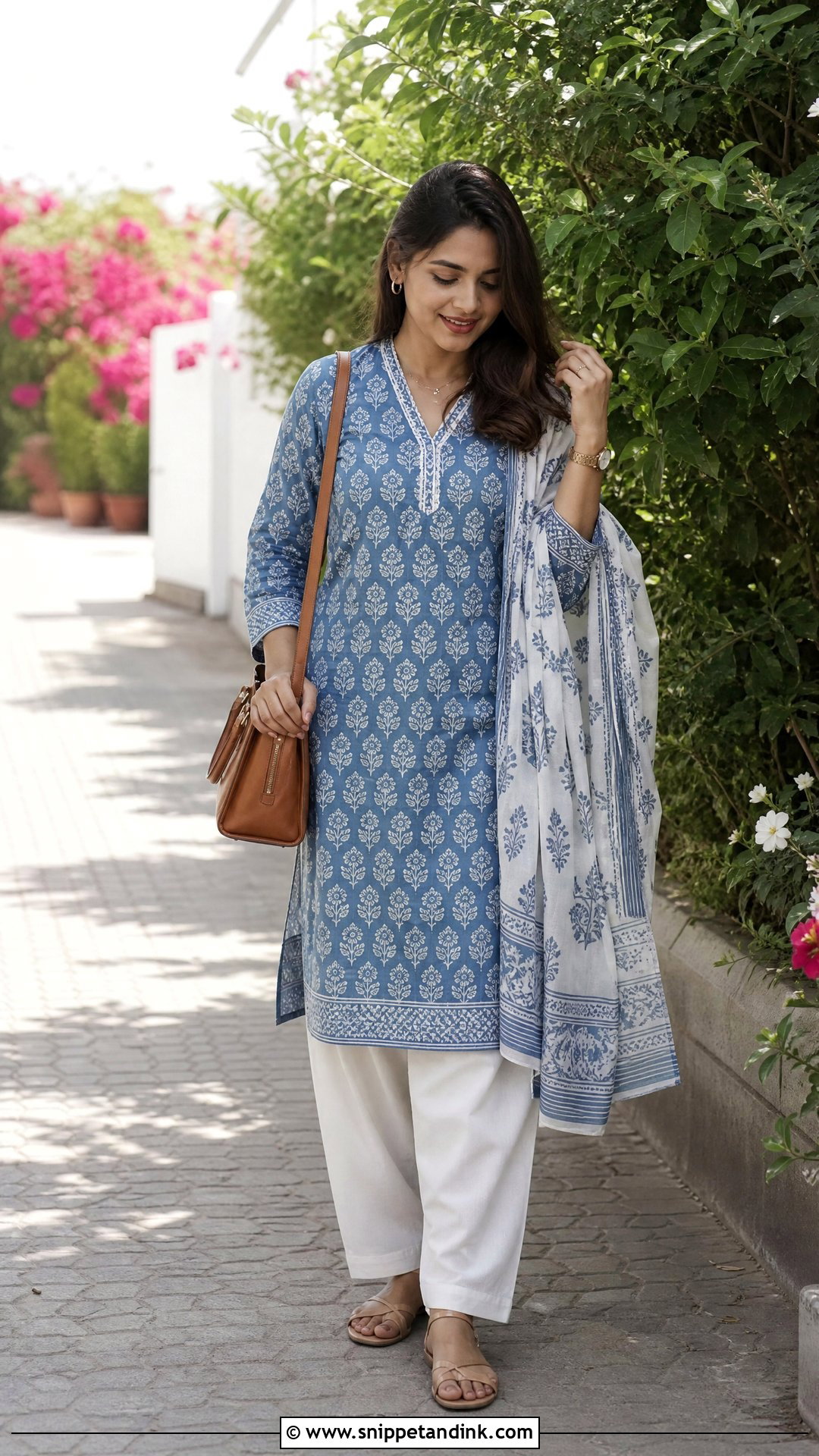
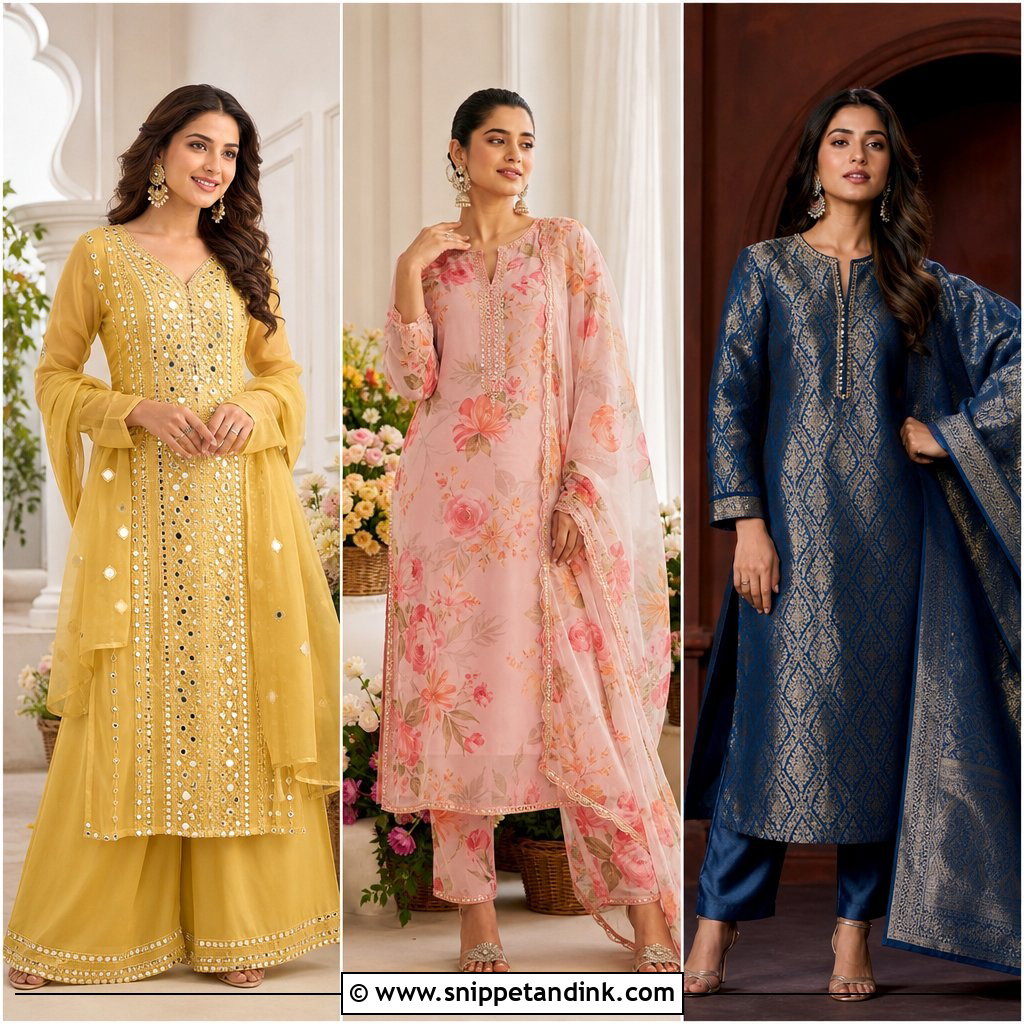
Straight salwar kameez is the workhorse of South Asian dressing, and I’d put one in every guest’s suitcase. A knee- or calf-length kameez over relaxed salwar is comfortable all day. Breathable cotton with block prints suits daytime gatherings; a silk blend in a deeper colour carries the same shape into the evening. Match the dupatta to the pants or bring a contrasting print. Flat sandals, small hoops and a roomy bag keep it practical. Two fit points matter: side slits that don’t ride up when you sit, and a shoulder seam that sits on your shoulder. On a petite frame a loose shoulder makes the whole shape look oversized.
7. Punjabi Patiala Suit With Juttis
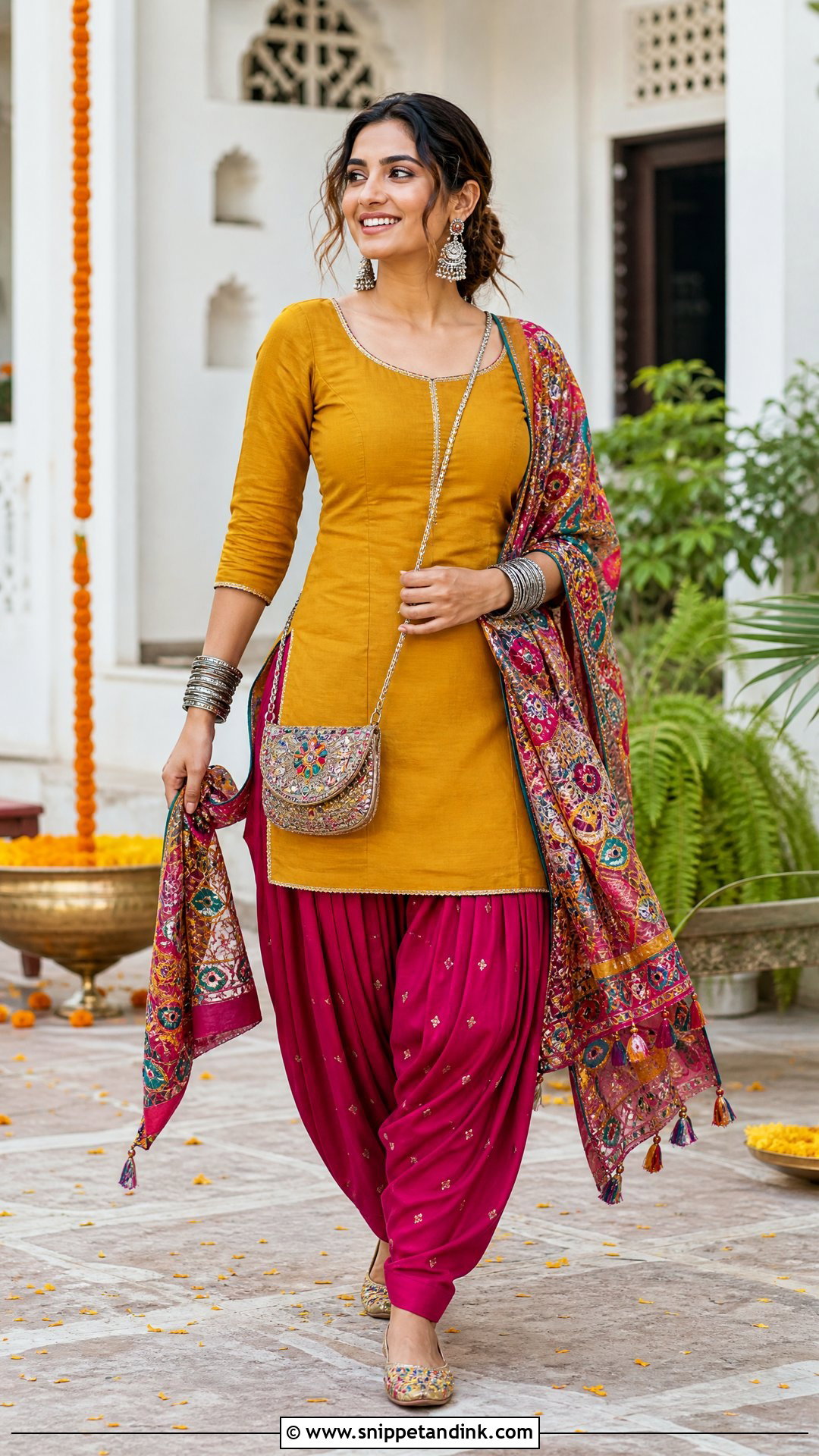
Colour and movement are the reason to wear a Punjabi Patiala suit. The pleated pants carry lots of fabric, so I pair them with a fitted knee-length kameez to balance the volume. Mustard, magenta, turquoise and green look right with bold borders and traditional embroidery. Drape the dupatta over one shoulder or around both arms to keep your hands free for dancing. Embroidered juttis that pick up a colour from the kameez are the natural shoe, though new juttis are stiff, so wear them around the house first. Oxidised silver earrings, colourful bangles and a small crossbody finish it.
8. Sharara Set With Short Kurta
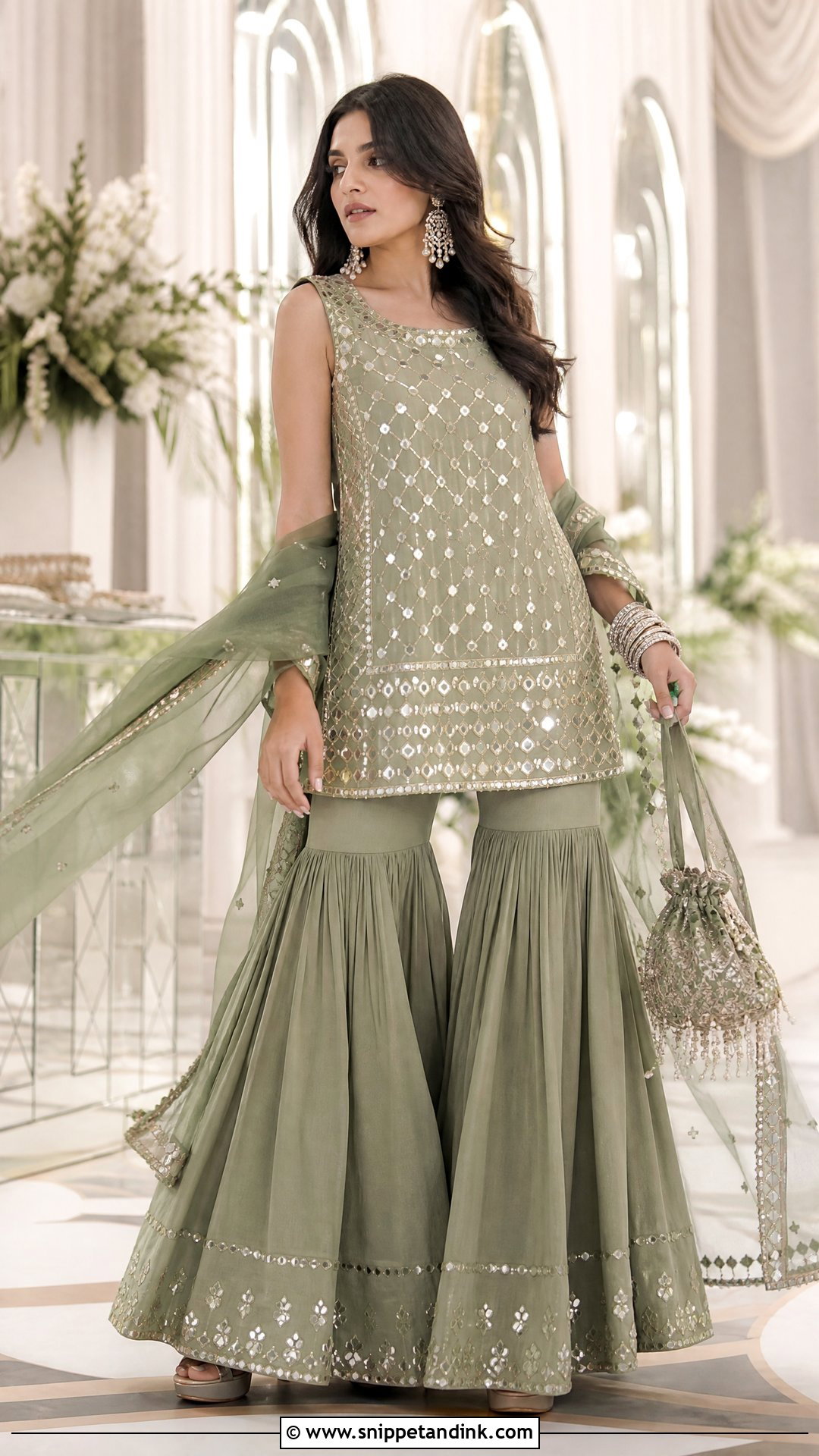
A sharara pairs a kurta with wide pants that flare from the hip, and the short kurta is what lets that flare show. End it around the upper thigh. A monochrome set in sage, lavender, ivory or deep blue looks modern; mirror work and metallic embroidery dress it up. Pin the dupatta discreetly at the shoulder if you’ll dance. The hem is my main concern: shararas are easy to trip on. Platforms keep the flare off the floor, or have the pants shortened to suit embellished flats. Chandelier earrings, a bangle stack and a compact potli complete it.
9. Gharara Set With Embellished Kurti
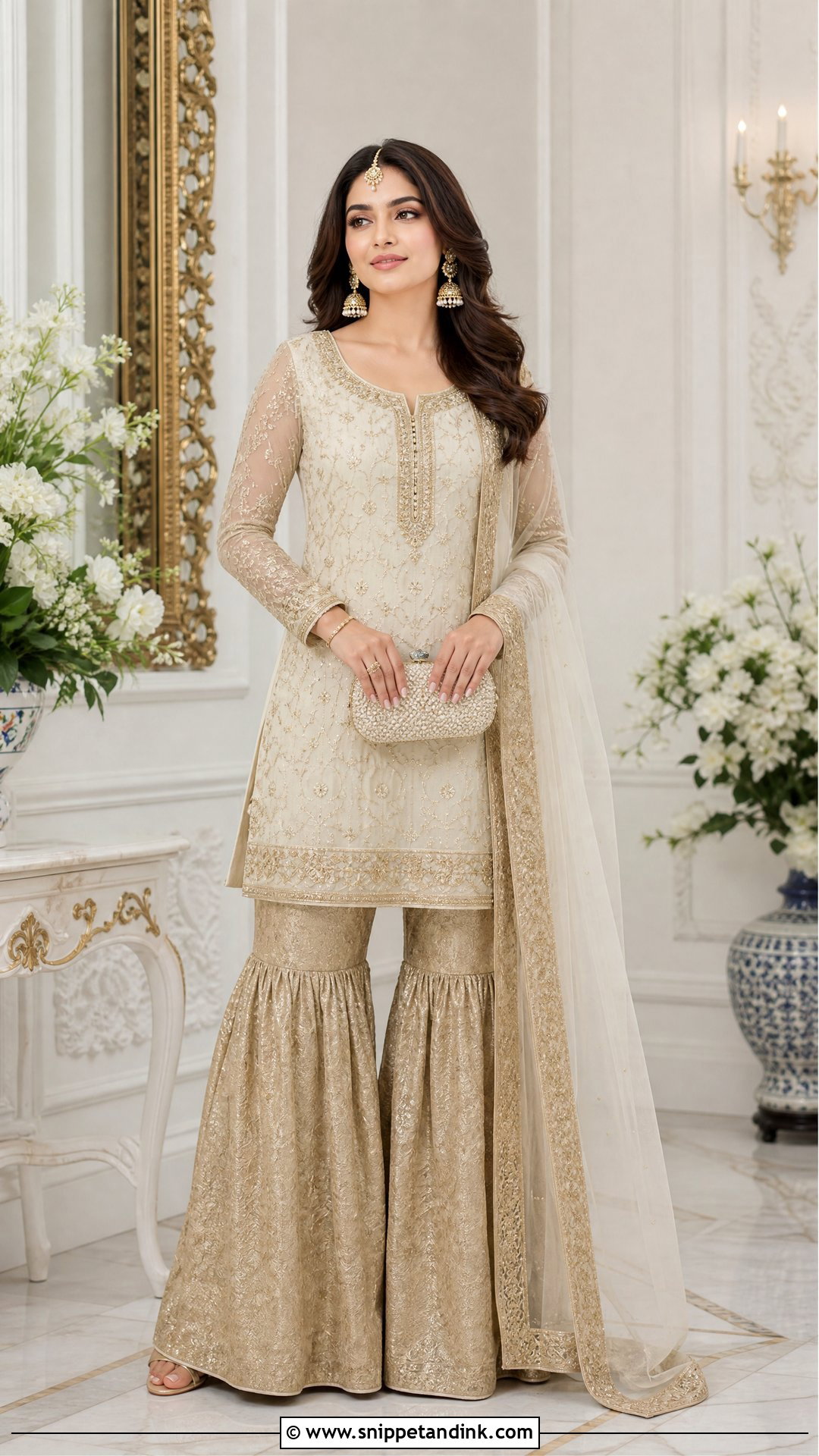
The gharara is easy to confuse with a sharara, but the fit is different: the pants hug the leg to the knee, where a joint (often hidden under a band of embroidery) opens into the flare. That knee seam has to sit exactly at your knee or walking and sitting become awkward, so get it tailored. Pair it with a short embellished kurti that shows off the shape. Ivory and gold, green and pink, or black with antique metallics are traditional pairings. Choose a light bordered dupatta over a heavy one. Low heels, a beaded clutch, jhumkas and a delicate tikka for formal events finish it.
10. Pakistani Lawn Suit With Flat Sandals
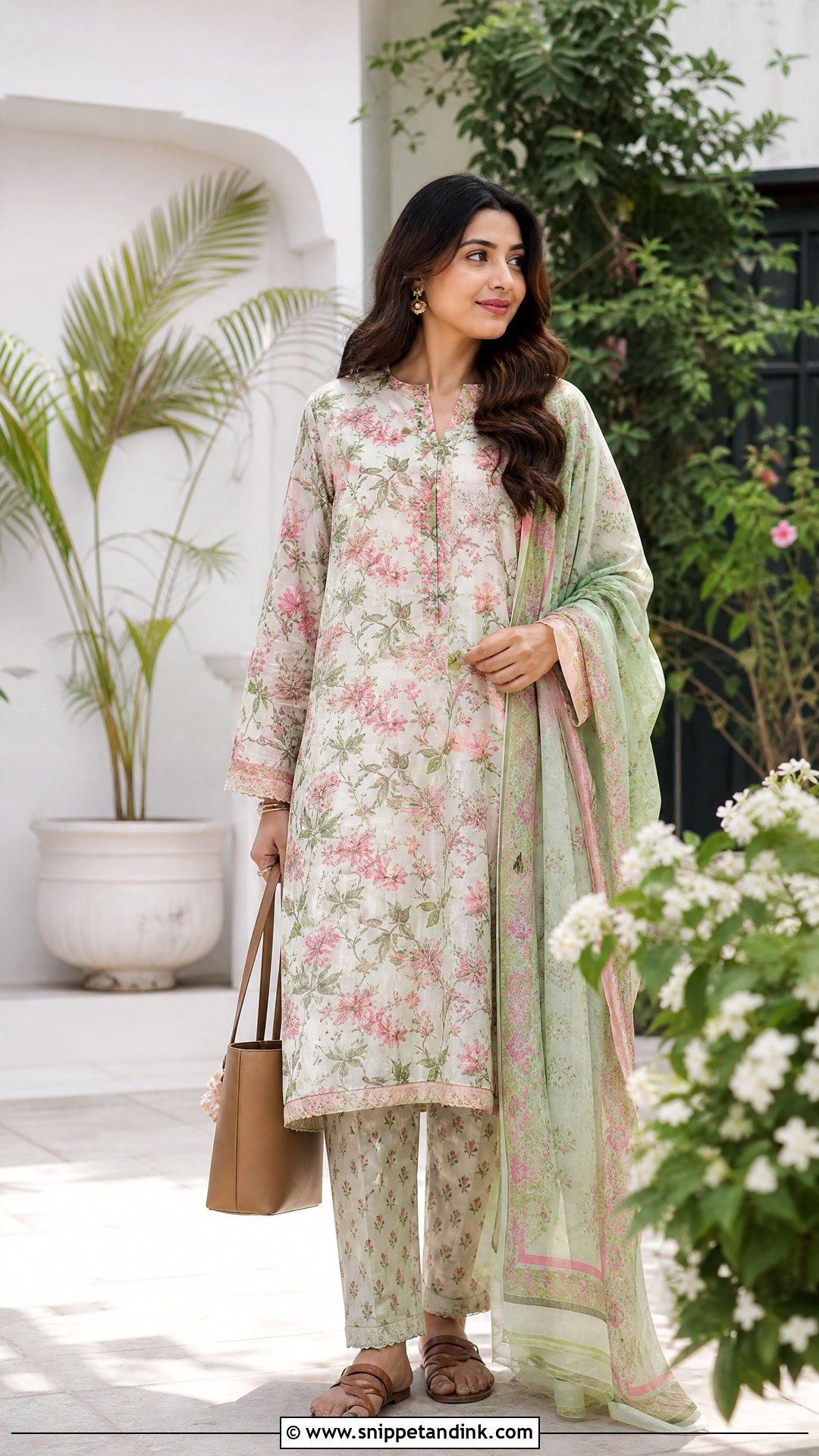
In real heat, a Pakistani lawn suit is the most comfortable thing you can wear. Lawn is a fine, breathable cotton, usually sold as unstitched printed or embroidered fabric for shirt, trousers and dupatta, which means the fit is up to your tailor. A straight shirt with side slits and ankle-length trousers is the easy shape. Florals, geometric borders and contrasting panels make jewellery almost unnecessary. Flat leather sandals, small earrings and a practical bag are enough. Keep the trousers off the ground if you’re wearing flats. It suits lunches, daytime events and family visits.
11. Farshi Shalwar Suit With Long Kameez
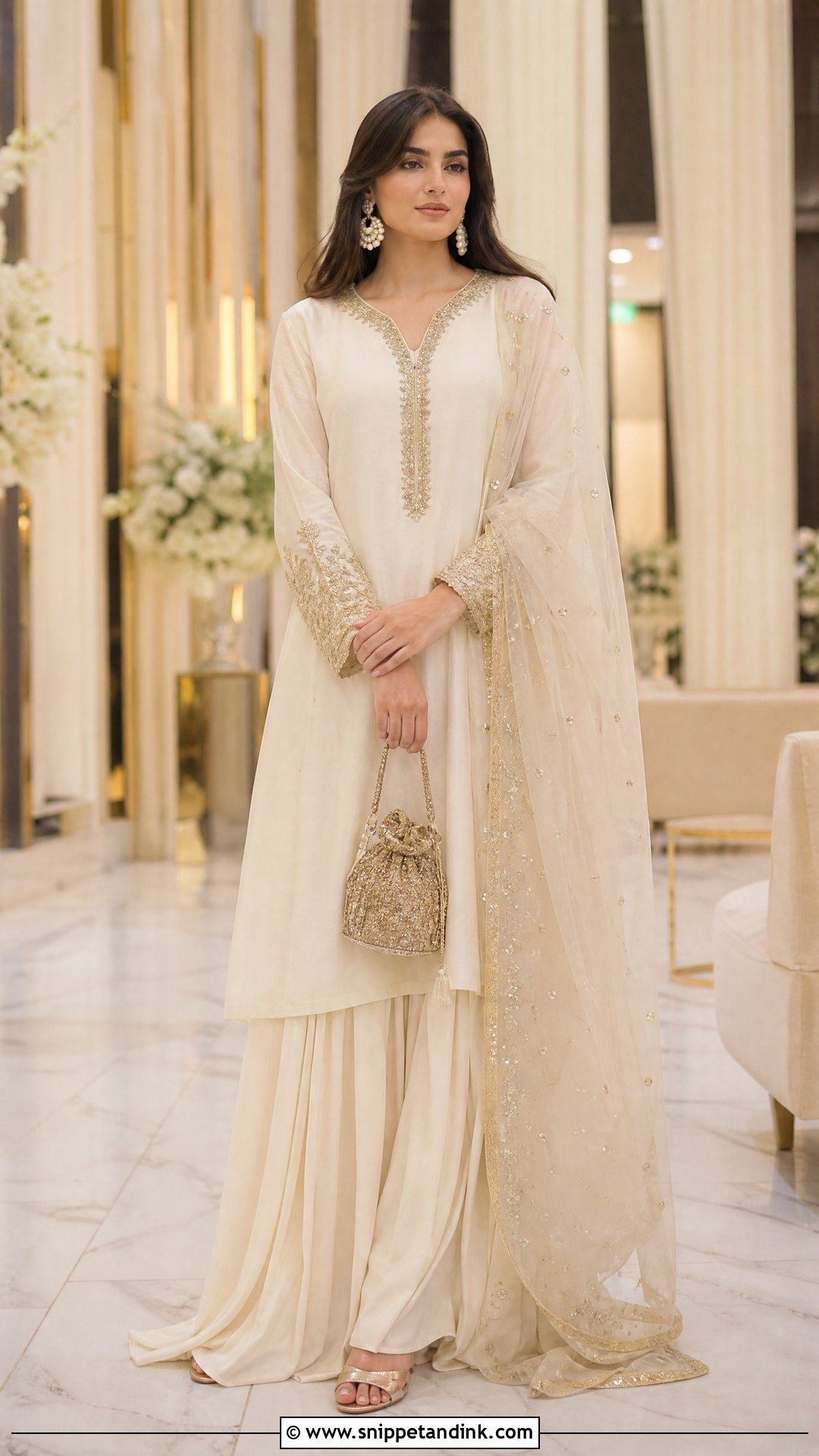
A farshi shalwar is the most dramatic pair of trousers you’ll ever wear: wide, gathered and long enough to pool on the floor. Balance it with a long, fairly straight kameez and keep embroidery to the neckline, cuffs and hem. Soft, fluid fabric falls better than anything stiff, which just adds bulk. Even with heeled sandals, have the shalwar hemmed to your exact height and shoe, or you’ll be stepping on it all evening. A sheer dupatta, pearl earrings and a small embellished bag are plenty, with hair sleek or softly pinned back. Formal evening events suit it.
12. Angrakha Kurta With Wide-Leg Pants
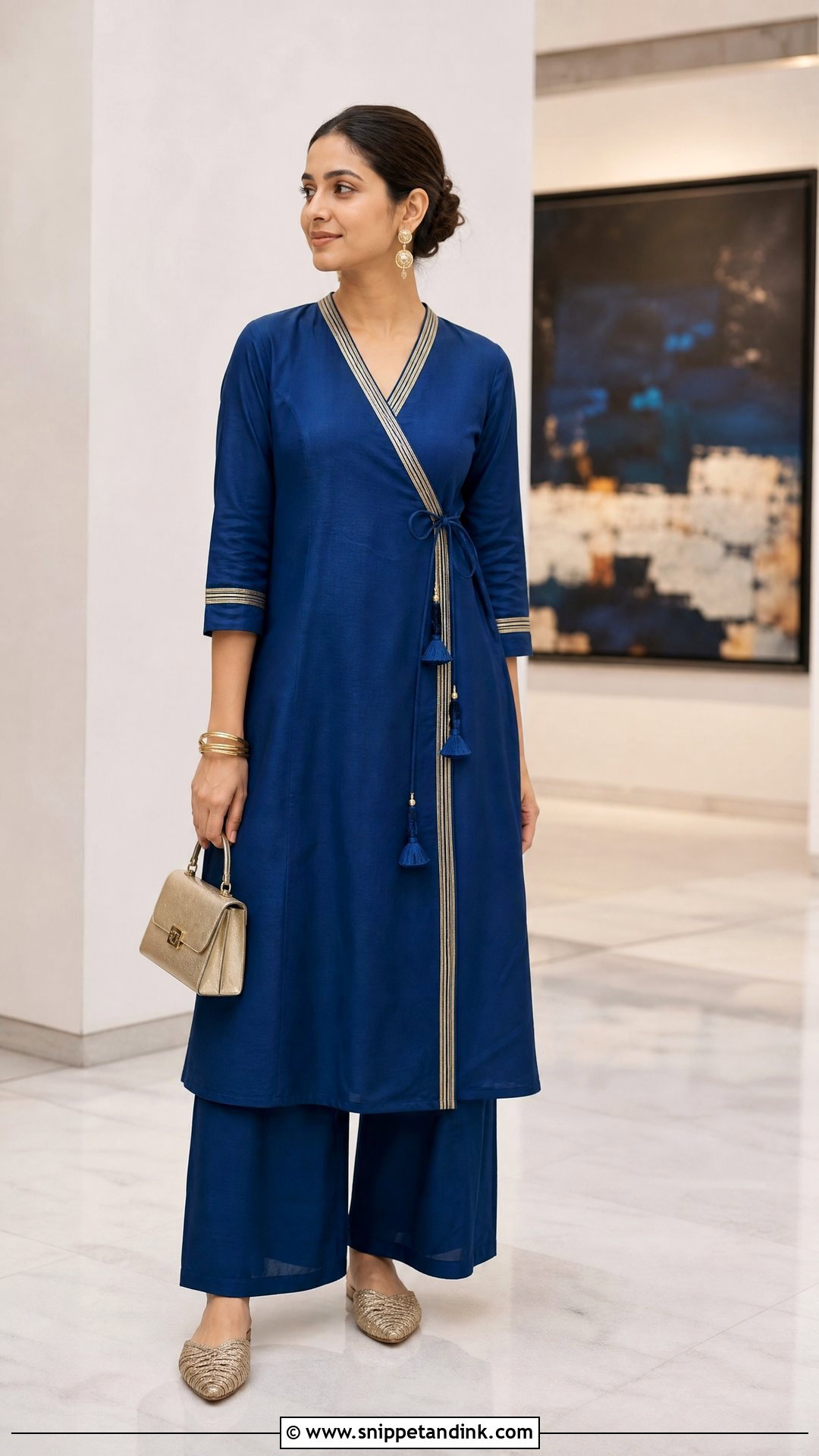
An Angrakha’s wrap front and side ties give shape without a fitted bodice. A mid-length kurta over straight or wide-leg trousers is the balanced version. Ties, tassels, piping or embroidery can trace the overlap. Smaller wrap details suit petite frames; taller women carry longer hems and bigger ties. Add a dupatta only if the event is formal, because the neckline is already the focus. Pointed mules, slim bangles, drop earrings and a mini bag finish it. Cotton silk for day, velvet or brocade for evening. Check that the inner tie is secure; wraps can gape when you lean forward to greet elders.
13. Kurta With Palazzo Pants And Dupatta
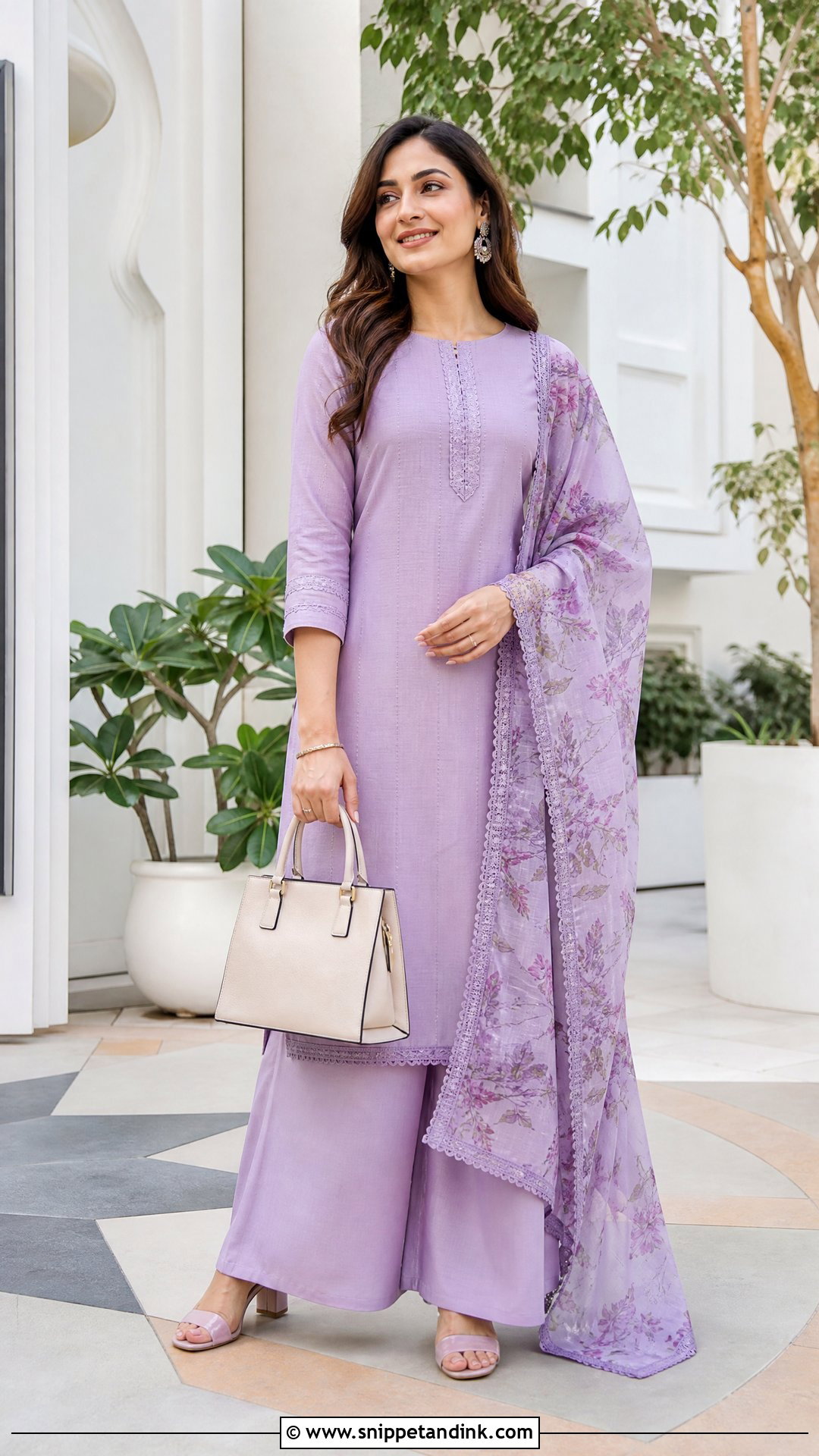
Few combinations are as easy to wear as a kurta with palazzo pants. Start with a straight or gently flared kurta ending below the knee, then add flowing trousers in the same colour family. Monochrome lengthens the line; a printed dupatta adds personality. For waist definition, princess seams work better than a belt over a kurta. Block heels, embroidered flats or simple mules all suit it. Medium earrings and a structured bag keep it clean. Have the palazzo hem nearly covering the shoe without touching the floor. I pack this set for lunches, travel days and relaxed functions.
14. Churidar Kurta With Printed Dupatta
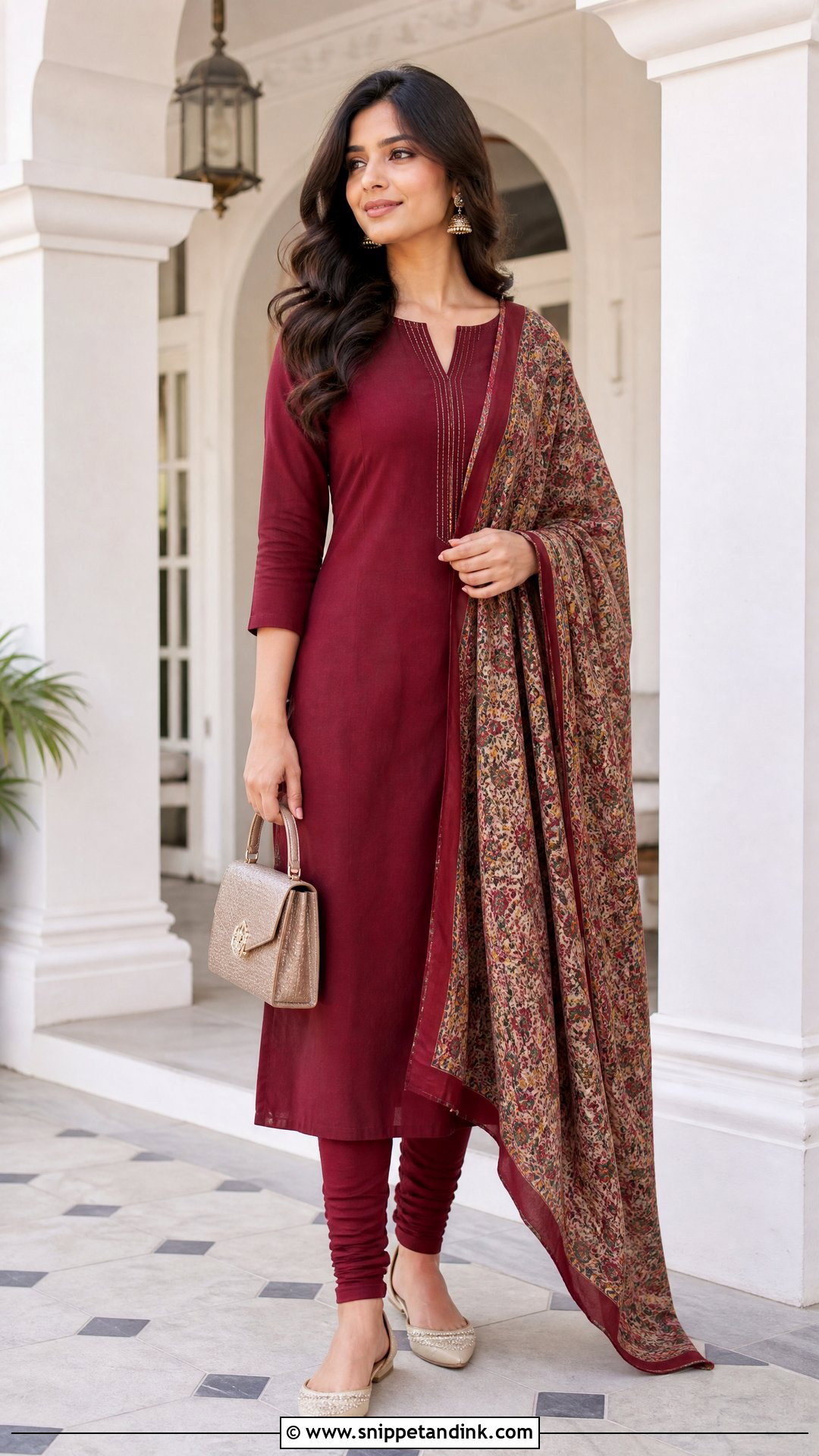
Churidar under a fitted kurta is a clean, year-round outfit. A calf-length kurta with side slits lets the gathered ankles of the churidar show. Solid colours are a good base for a printed dupatta in florals, block prints or woven borders, and matching one accessory to a dupatta shade makes the whole thing look planned. Pointed flats, small jhumkas and a top-handle bag suit daytime; for evening, switch to silk or jacquard and metallic sandals. A churidar should be cut long enough to gather at the ankle, but if it’s too tight through the calf you’ll feel it every time you sit cross-legged.
15. Short Kurti With Dhoti Pants
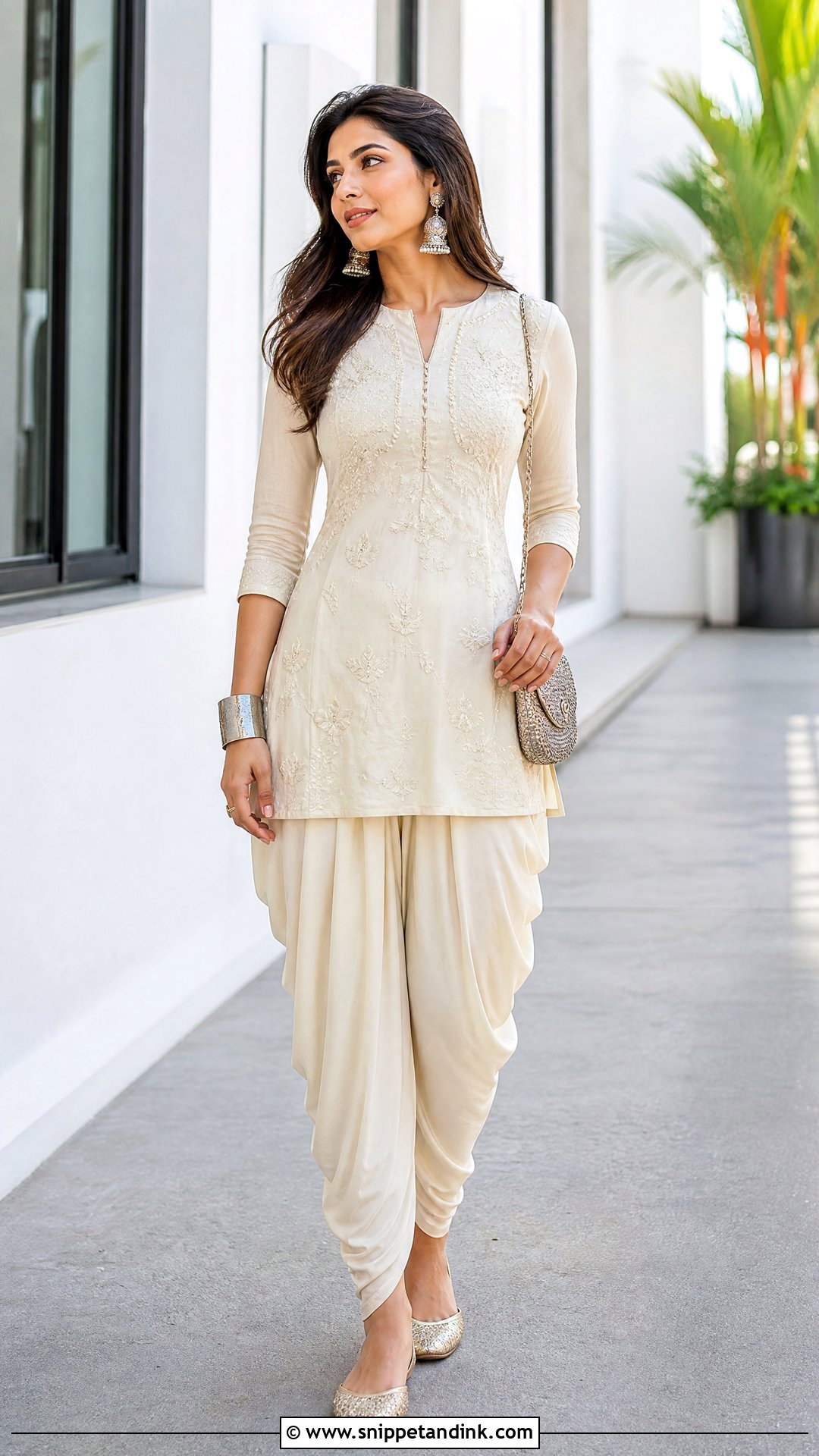
Dhoti pants with a short kurti feel modern while staying rooted in South Asian dressing. The draped pants already give plenty of shape, so pair them with a fitted, straight or lightly structured top. A peplum kurti works only if it ends above the widest point of the pants. Keep colours coordinated or the layers look busy. Metallic flats, a cuff, medium earrings and a small bag finish it, and a short embroidered jacket can replace the dupatta when it’s cool. Watch the drop of the centre folds: too low and they look sloppy, too high and they pull. It’s great for dancing.
16. Peplum Top With Lehenga Skirt
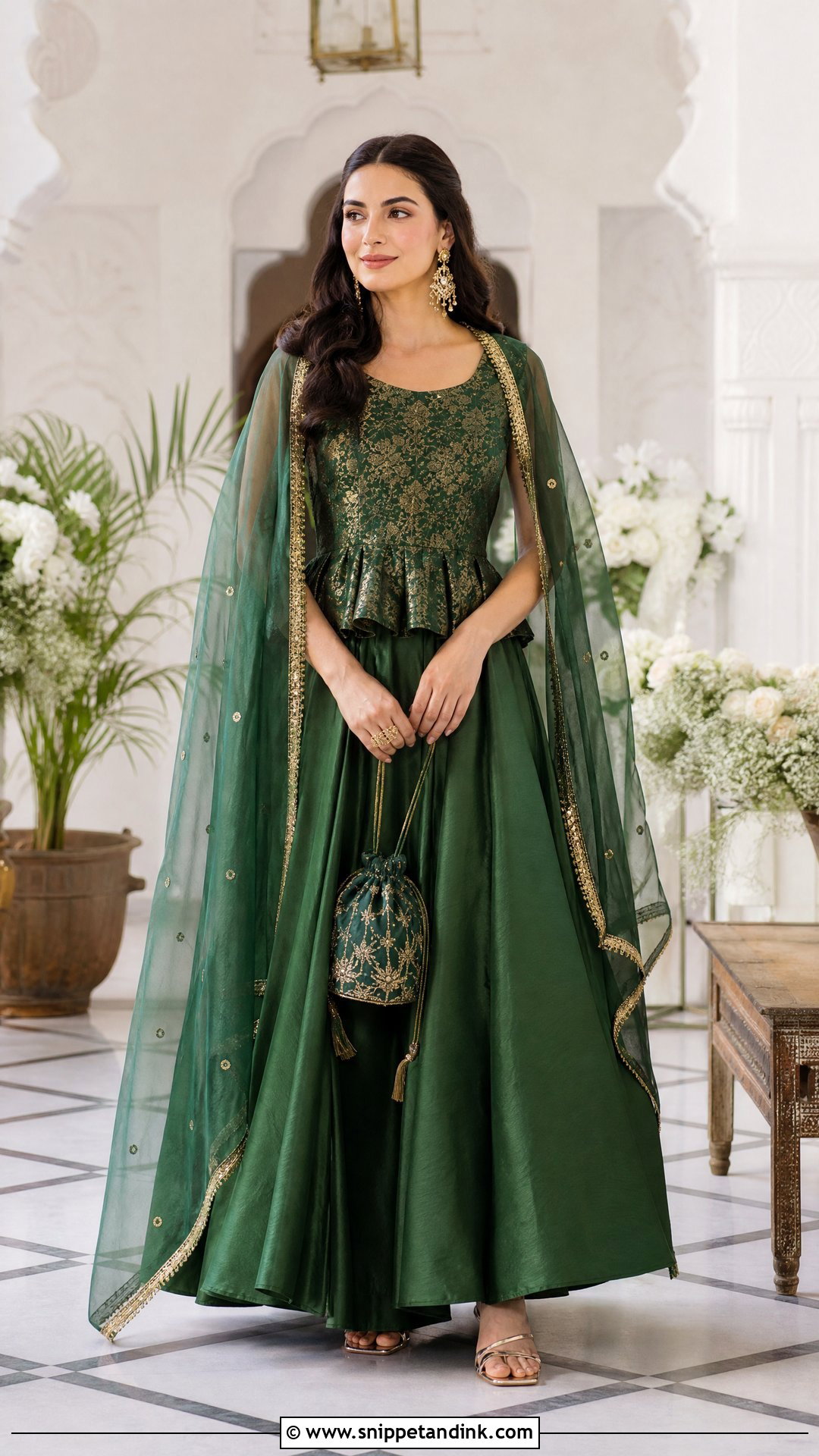
A peplum top over a lehenga skirt gives you coverage at the midriff with a defined waist, which many guests prefer to a short choli. Choose a fitted bodice that flares at the natural waist so the peplum hides the skirt’s waistband. Keep one piece simple if the other is heavily embroidered; a plain silk skirt under an ornate brocade top is a pairing I come back to often. A dupatta on one shoulder, heeled sandals, statement earrings and a potli finish it. Skip the big necklace if the peplum neckline is decorated. A centre-parted bun or polished waves complete it.
17. Cape Blouse With Long Skirt
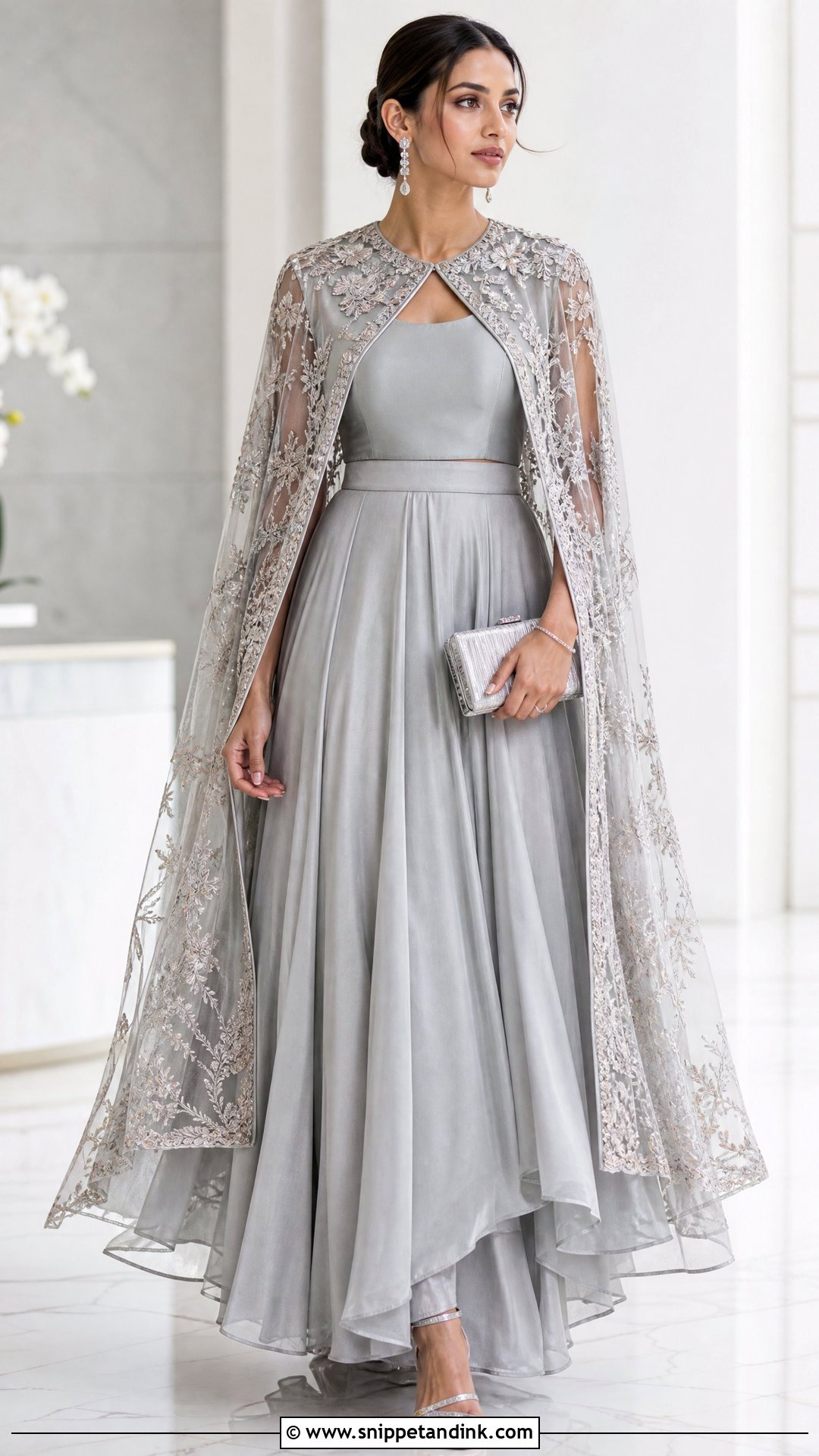
A cape blouse over a long skirt removes the dupatta from the equation, which many guests find a relief at a long event. The cape can be sheer with light embroidery or cut from the blouse fabric. Pair it with a high-waisted skirt that falls smoothly rather than adding volume at the hips. Tonal pairings look polished; a contrasting cape is bolder. Earrings, a sleek clutch and secure heeled sandals finish it. Leave the necklace off. Wear hair in a low bun or ponytail; loose hair tangles in a sheer cape and earring backs catch on it.
18. Bangladeshi Jamdani Saree With Simple Blouse
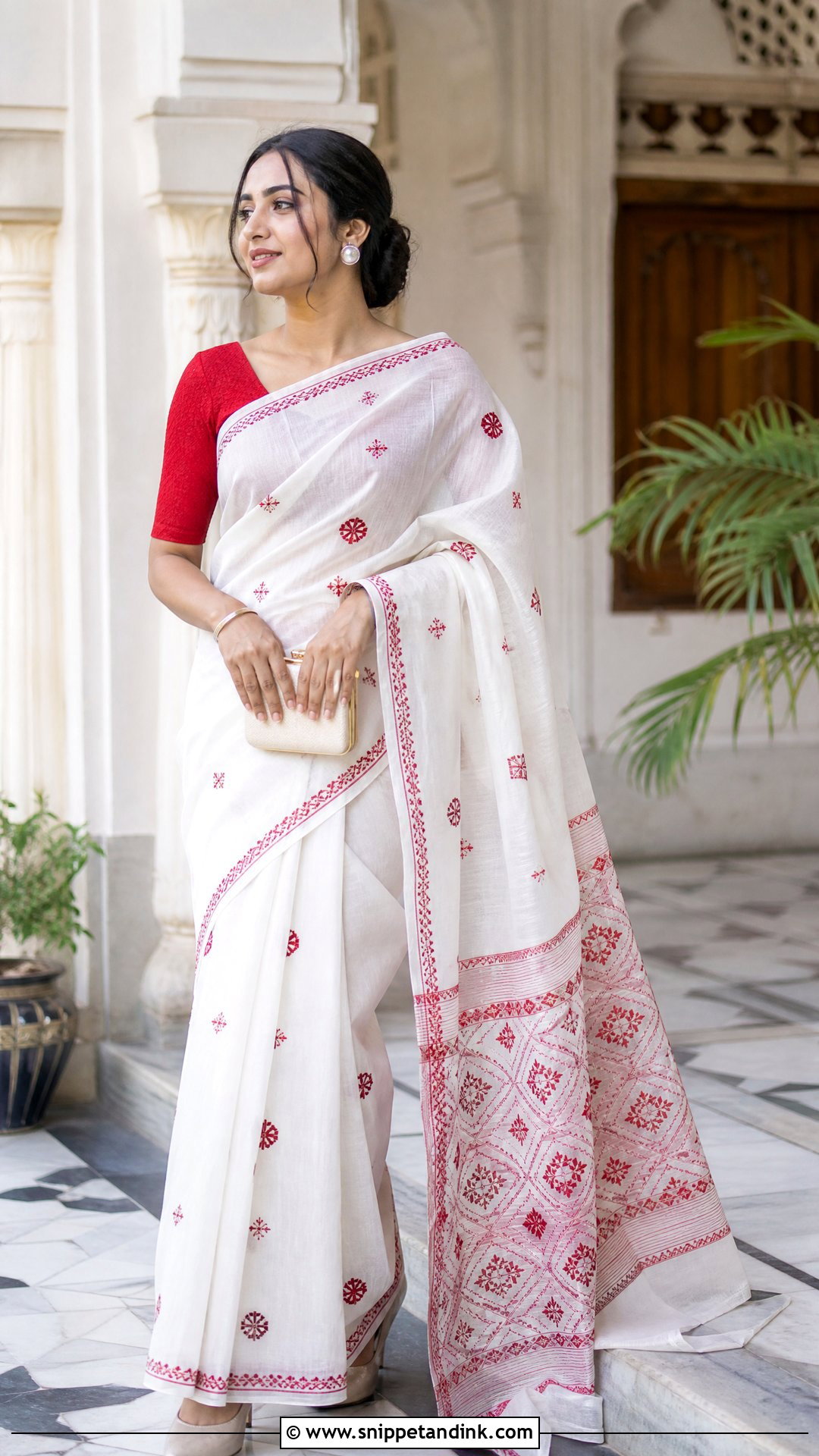
Jamdani is handwoven, with motifs worked into the cloth on the loom, so a Jamdani saree should be the star. Pair it with a simple, well-fitted blouse, either matching for a continuous look or in a solid contrast that brings out the pattern. Comfortable heels or elegant flats depend on your drape length. Pearl earrings, slim bangles and a structured clutch suit it. Let the pallu fall loosely to show the weave, then pin it carefully. Jamdani is fine and crisp, so it creases easily; I keep a travel steamer handy for these. A low bun or soft braid and fresh makeup complete it.
19. Sri Lankan Kandyan Saree With Traditional Jewelry
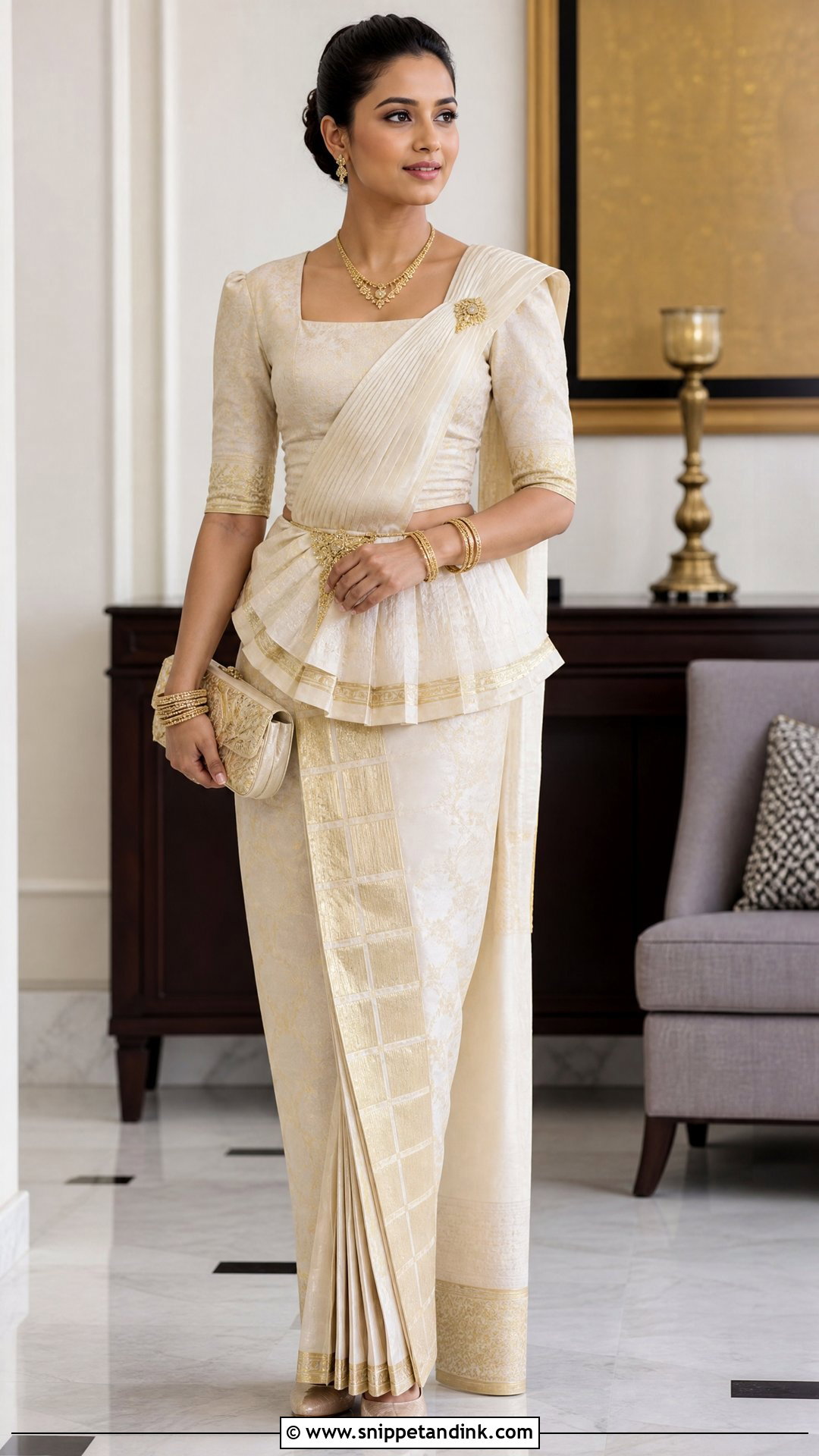
The Sri Lankan Kandyan saree is recognisable from its frilled, structured waist treatment and neat pleats. Silk or brocade suits formal events; lighter fabric suits heat. A fitted blouse with elbow or short sleeves keeps the top half tidy under the drape. Traditional-style earrings, bangles and a small bag are enough. Wear low heels hidden under the hem. The Kandyan drape is a specialised technique, and honestly, unless you’ve been taught it, I’d book someone who drapes them regularly or buy a well-made pre-stitched version. A smooth bun or half-up style finishes it.

20. Nepali Kurta Suruwal With Shawl
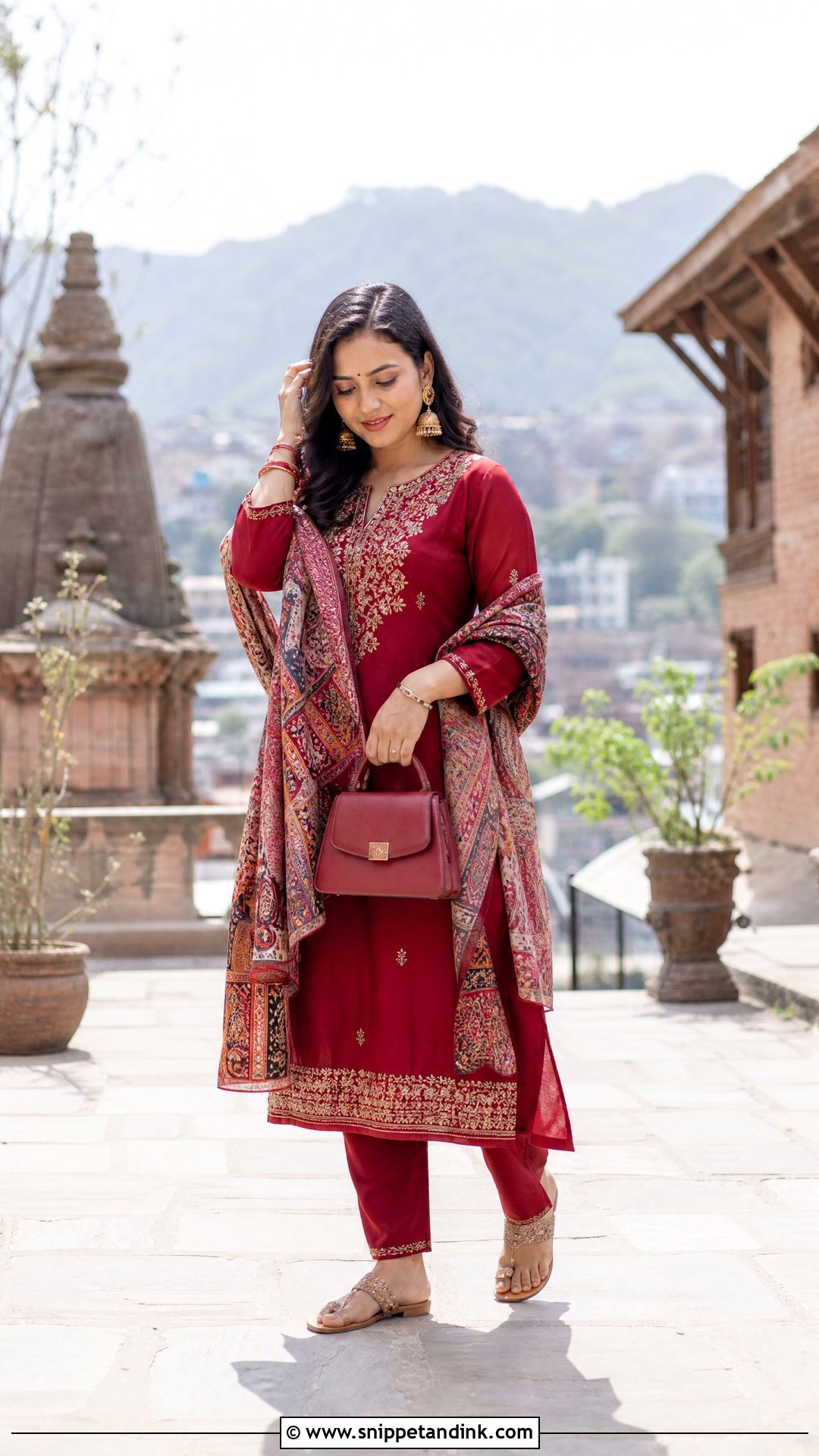
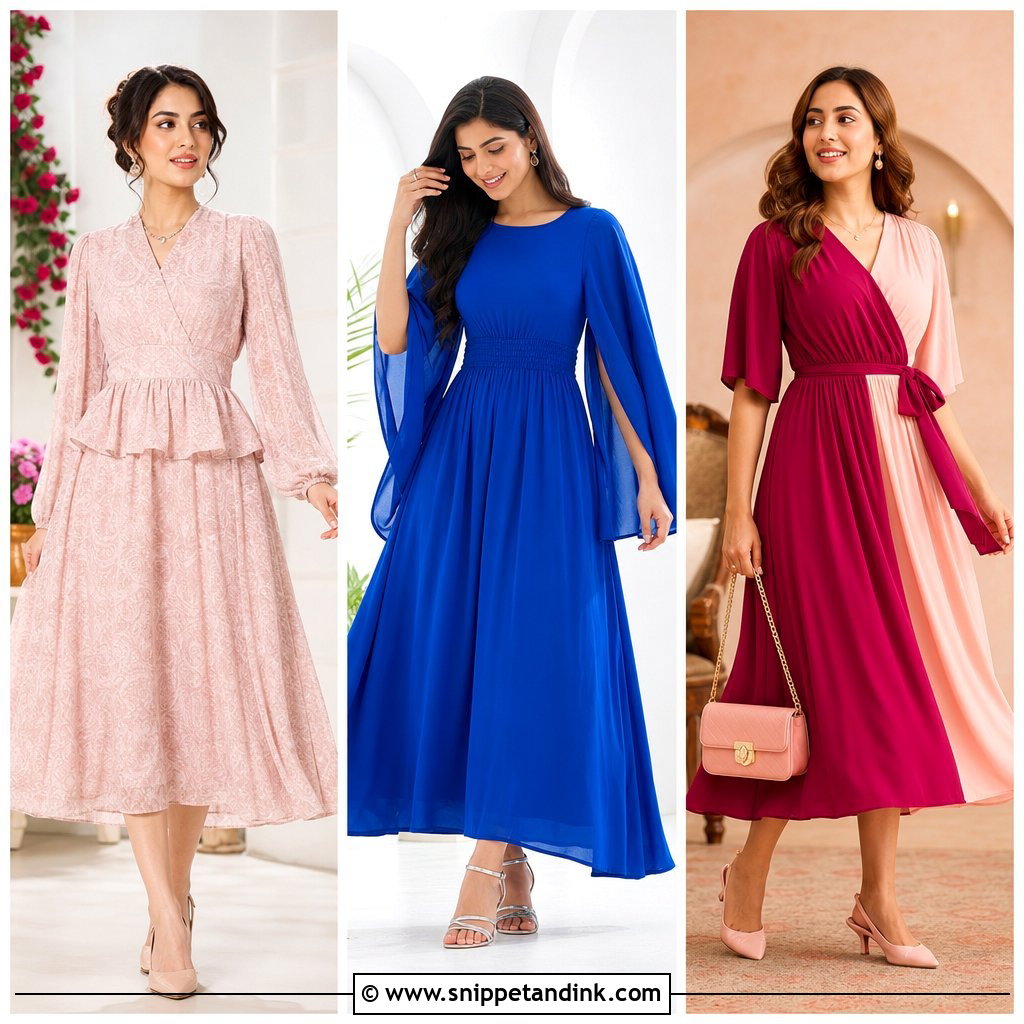
A Nepali kurta suruwal is modest, comfortable and easy to layer. Start with a long printed or embroidered kurta over tapered or softly gathered suruwal, then drape a coordinating shawl or light scarf across the shoulders. Cotton suits casual daytime; a silk blend suits celebrations. Flat sandals, traditional earrings, bangles and a small structured bag finish it. The kurta should sit cleanly at the shoulders with room through the body. Red, green, blue and maroon read festive; soft neutrals stay understated. A braid or low bun keeps it tidy.
First Time in a Saree? Here’s How I Make One Stay Put
Most saree disasters I’ve fixed at events come down to two things: a loose petticoat and too few pins. Draping is easier than it looks once the foundation is right.
- Tie the petticoat firmly at the waist where you’ll tuck the saree. It’s the anchor for everything, so it should feel snug.
- Wear the shoes you’ll actually wear before you start, because the hem length is set by the first tuck.
- Make the front pleats roughly the same width, hold them together and pin them at the top before tucking.
- Pin the pallu to the blouse at the shoulder with a small safety pin hidden in the fold, and a second one lower down for heavy silks.
- Walk, sit and climb a stair before leaving. If anything shifts, re-pin then, not halfway through the evening.
Blouses are stitched to measure, and a good tailor can be booked up before wedding season, so order yours early. If time is short, a pre-draped saree or a stitched suit is the safer choice.
Guests From Outside the Culture Are Welcome in These Clothes
Many hosts are delighted when guests wear South Asian clothing, and some will offer to lend pieces or help you dress. Ask the couple or a family member what’s appropriate for each event, and follow their lead on head coverings, colours and jewellery. A simple, well-fitted suit or pre-draped saree, worn with care, always looks more respectful than an elaborate outfit worn awkwardly.
Dress for the Event, Then for Yourself
A good South Asian guest outfit respects the clothing’s character and still lets you eat, dance and hug relatives without fuss. The ideas above cover breathable everyday suits, regional sarees, formal lehengas and fusion separates. Start with the setting, weather, formality and how much moving you’ll do. Then check length, shoulder fit, waistband and sleeves before you think about jewellery, which should support embroidery and weaves rather than fight them. Comfortable shoes matter more than at almost any other kind of wedding, because these celebrations run long. Get those basics right and your own style has plenty of room to show.
You'll Like These Ideas:


Leave a Reply