
Pakistani clothing covers an enormous range, from a cotton lawn suit you’d wear to the market to a hand-embroidered lehenga that takes months to make. In between sit straight shirts, embroidered kurtas, ghararas, anarkali frocks, velvet formals and soft pastel nikkah outfits. What separates a good look from a forgettable one is usually small: how the dupatta falls, the cut of the trouser, the weight of the fabric, the finish on a sleeve. I’ve grouped 35 outfits below, roughly from daily wear up to wedding functions, with the styling and tailoring notes I’d give anyone dressing for Eid, a dholki or a baraat.
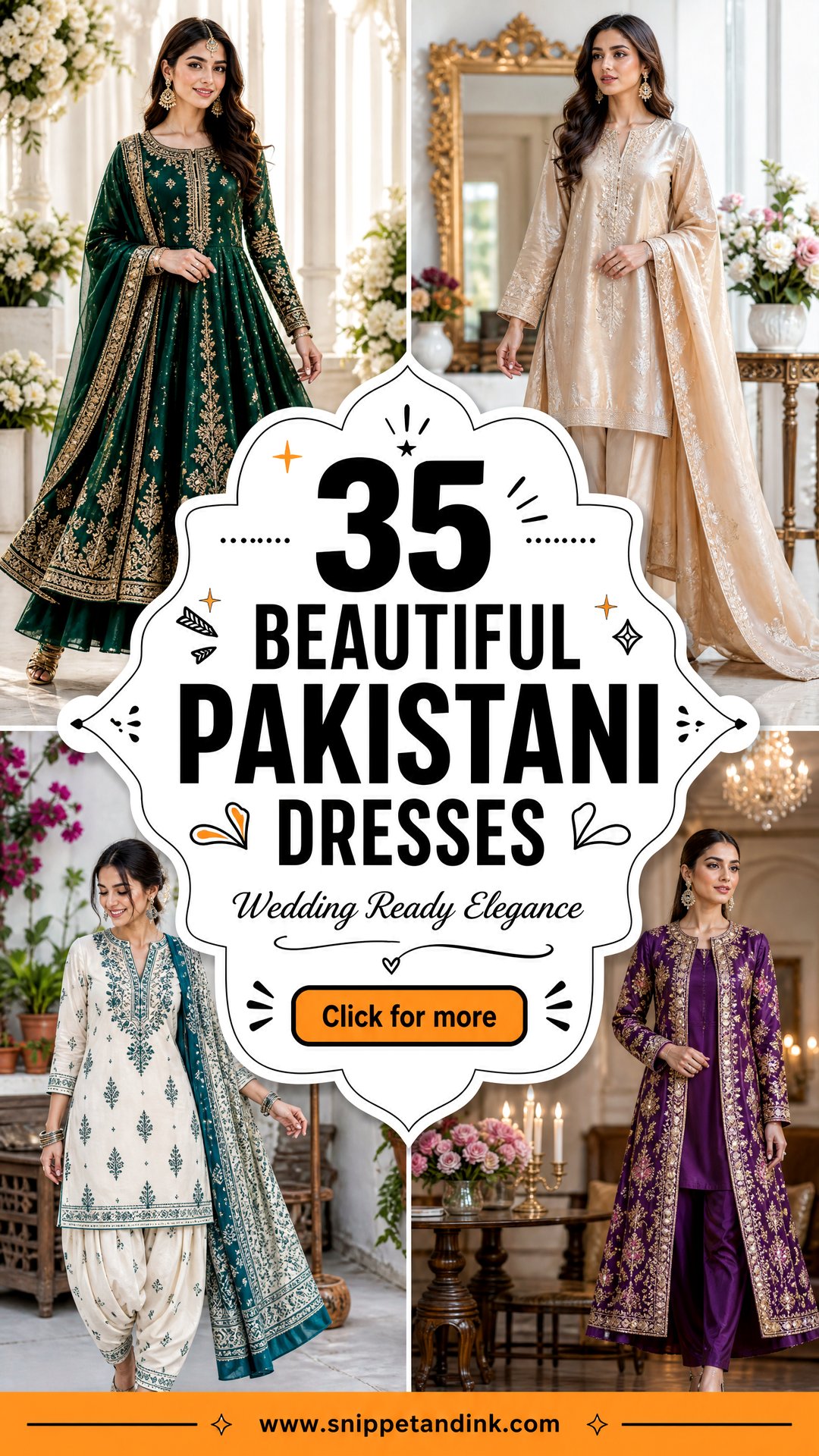
Mayun to Walima: How Dressed Up Each Event Should Be
A Pakistani wedding is usually several events, and dressing at the same level for all of them is the most common mistake I see. Customs vary between families and regions, so check with the hosts, but this is the general scale.
- Dholki: the most relaxed. A printed or lightly embroidered suit is right; you’ll likely sit on the floor and sing, so skip anything stiff.
- Mayun and mehndi: bright colors, gota, mirror work and floral jewelry. Yellow is traditional for mayun, while greens, oranges and pinks fill out the mehndi.
- Nikkah: often softer, in pastels or ivory, with a dupatta you can cover your head with.
- Baraat: the most formal night. Guests wear their heaviest outfits, but I’d avoid a bridal-red lehenga so you don’t look like the bride.
- Walima: formal but lighter in color, with gowns, organza and pearl work common.
If you’re attending several events, plan the outfits together, from lightest to heaviest. Repeating one dupatta or set of jewelry across two functions is perfectly fine and saves space in a suitcase.
1. Pakistani Lawn Suit With Trousers
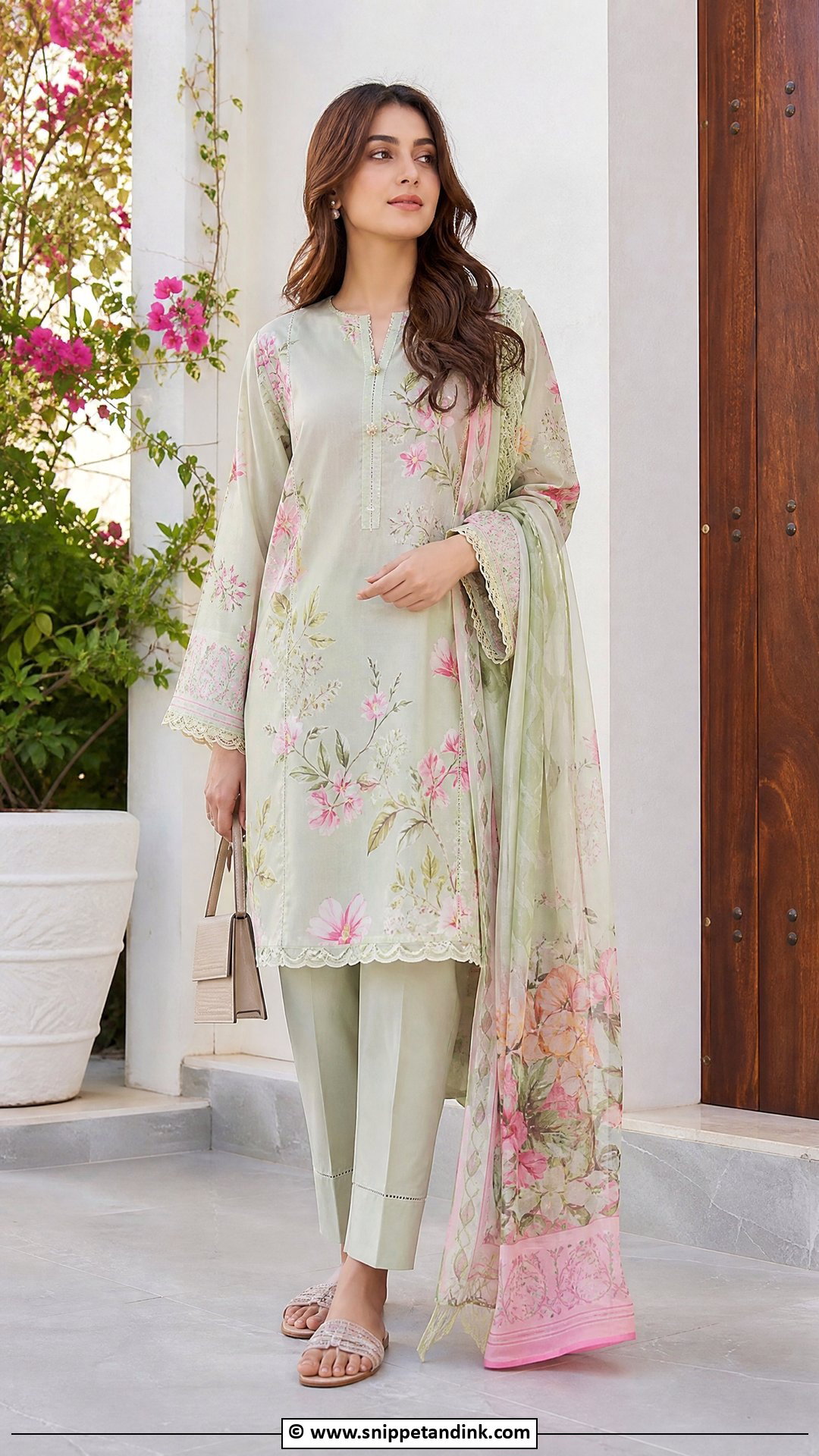
Lawn is what most of us live in through the hot months, and a three-piece suit with tailored trousers is still the most useful thing in the wardrobe. The fabric is fine, crisp cotton that breathes in heat, but cheaper lawn goes see-through when it’s light-colored, so I check prints against daylight before buying and add a lining to pale shirts. Straight trousers look neater than very loose bottoms. Flat sandals, small studs and a crossbody bag suit errands, lunches and family visits.
2. Pakistani Embroidered Kurta With Cigarette Pants
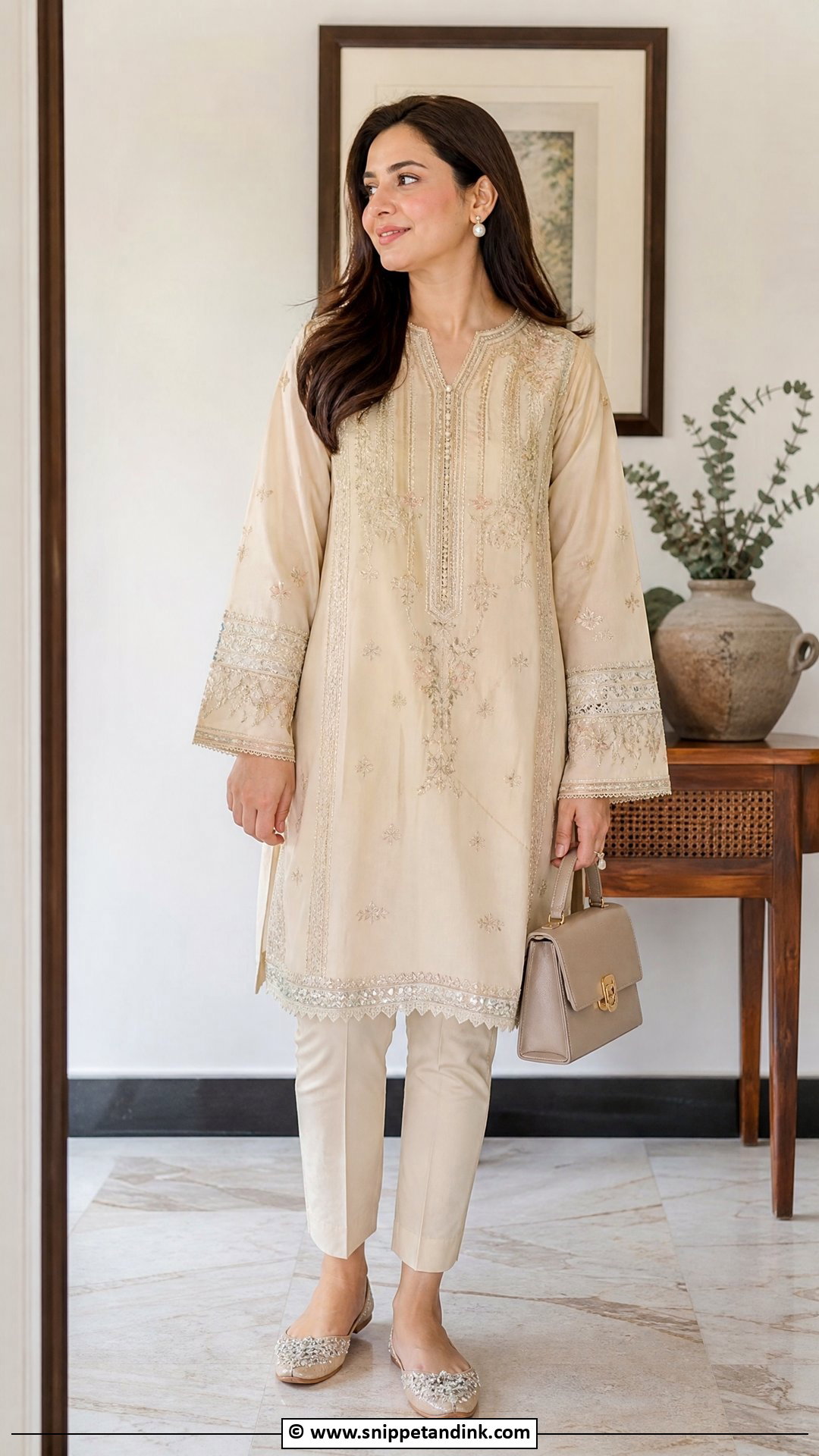
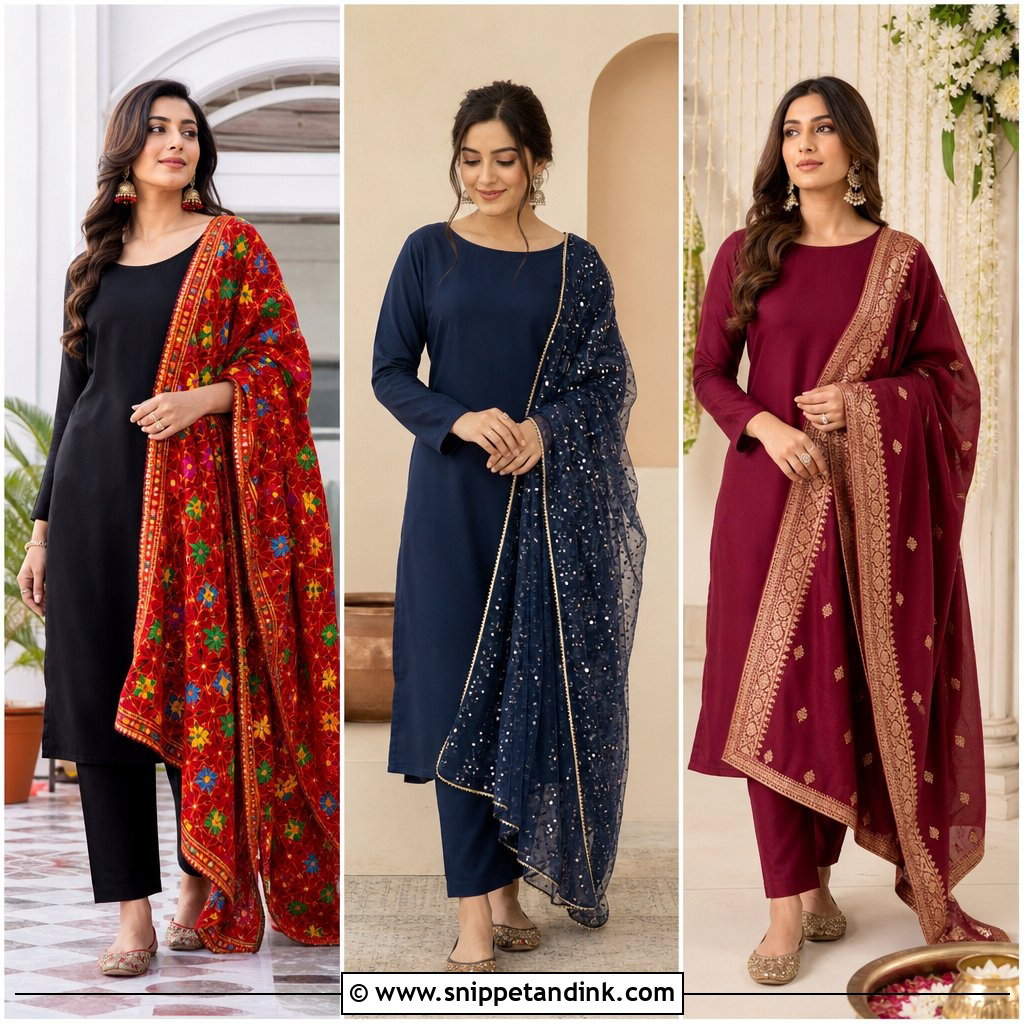
Cigarette pants under a longer kurta give a clean, modern line that suits work events and semi-formal dinners. The kurta can be cotton, lawn, cambric or silk depending on the season. Threadwork on the sleeves, hem and neckline adds interest while staying wearable. One rule I stick to: if the kurta is busy, the dupatta stays plain, and the reverse. Cigarette pants should stop at the ankle bone so the hem of the kurta and your khussas both show.
3. Pakistani Chikankari Suit With Dupatta
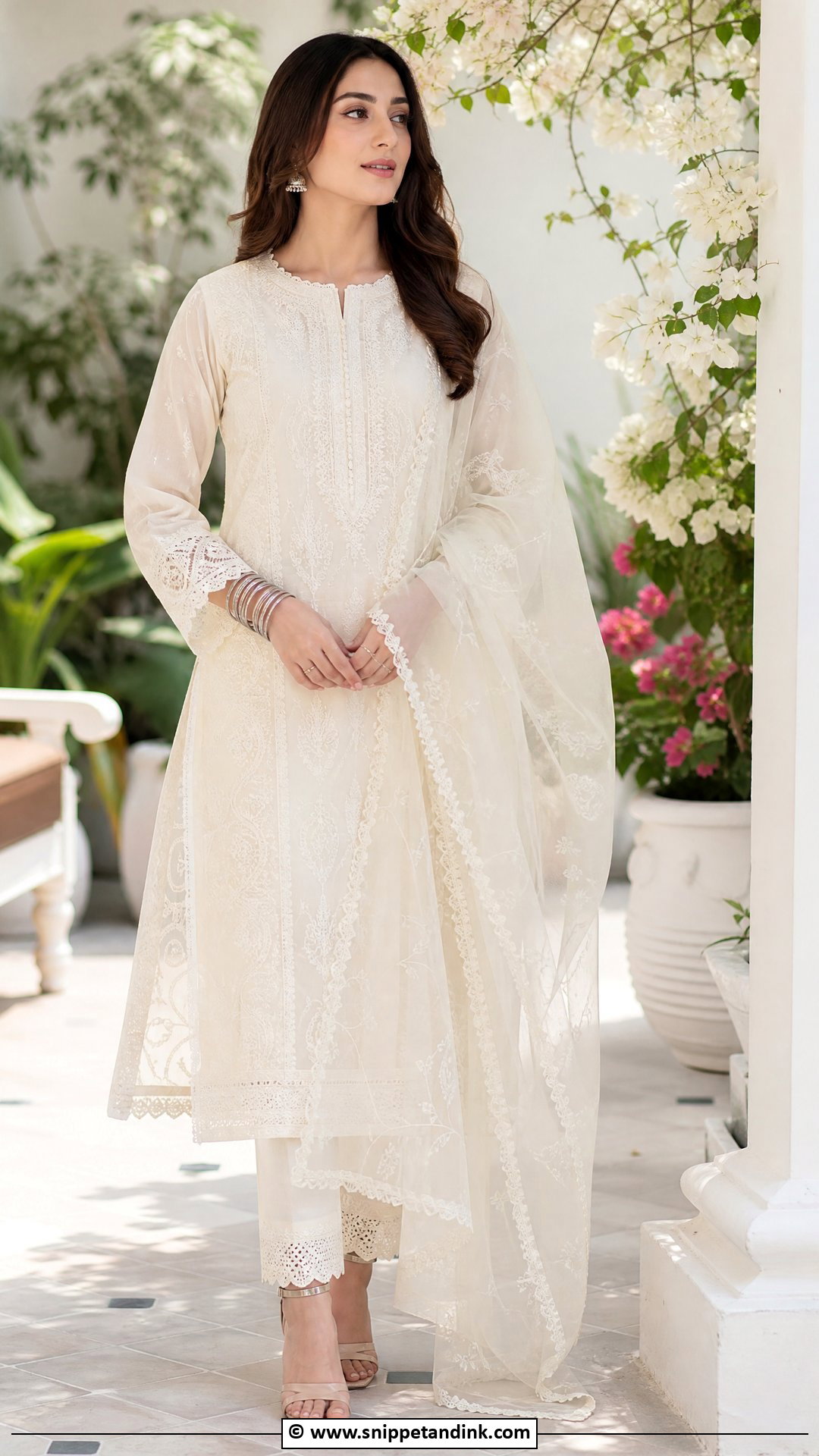
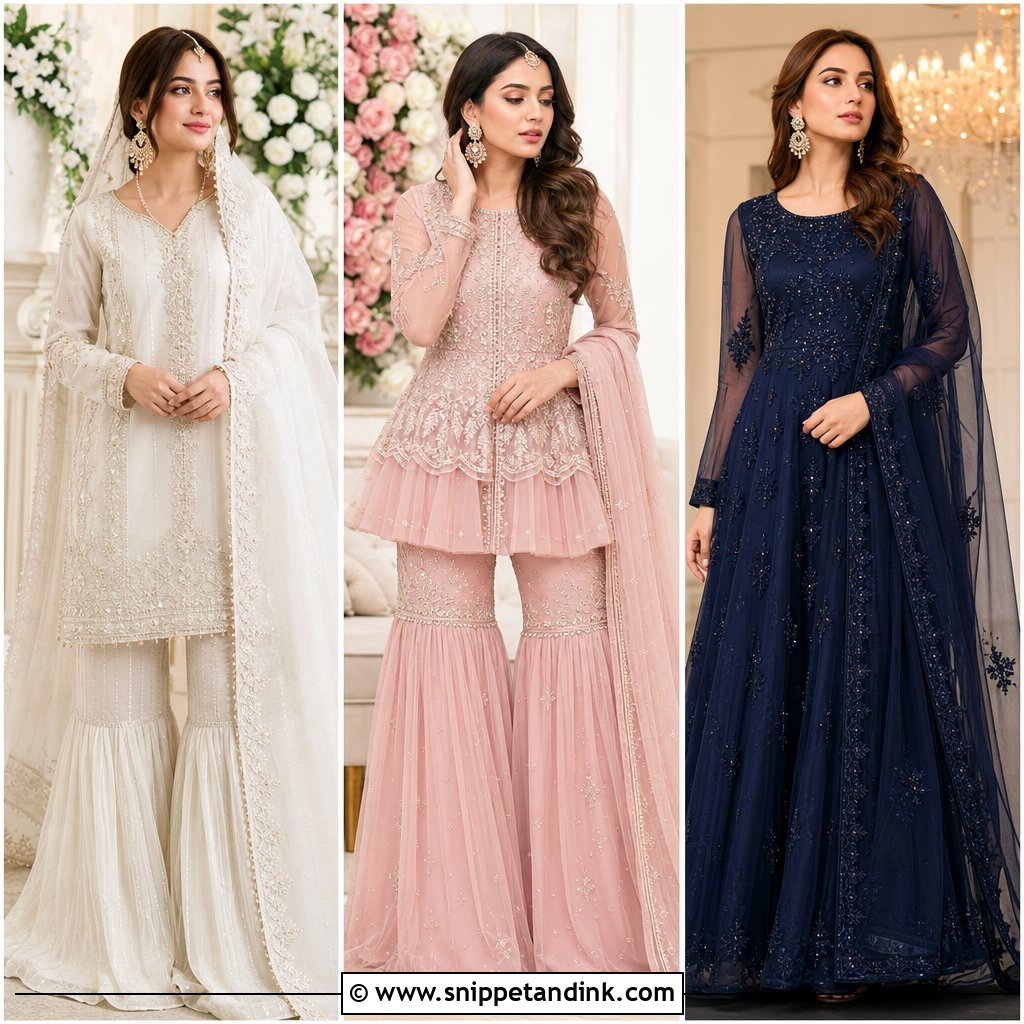
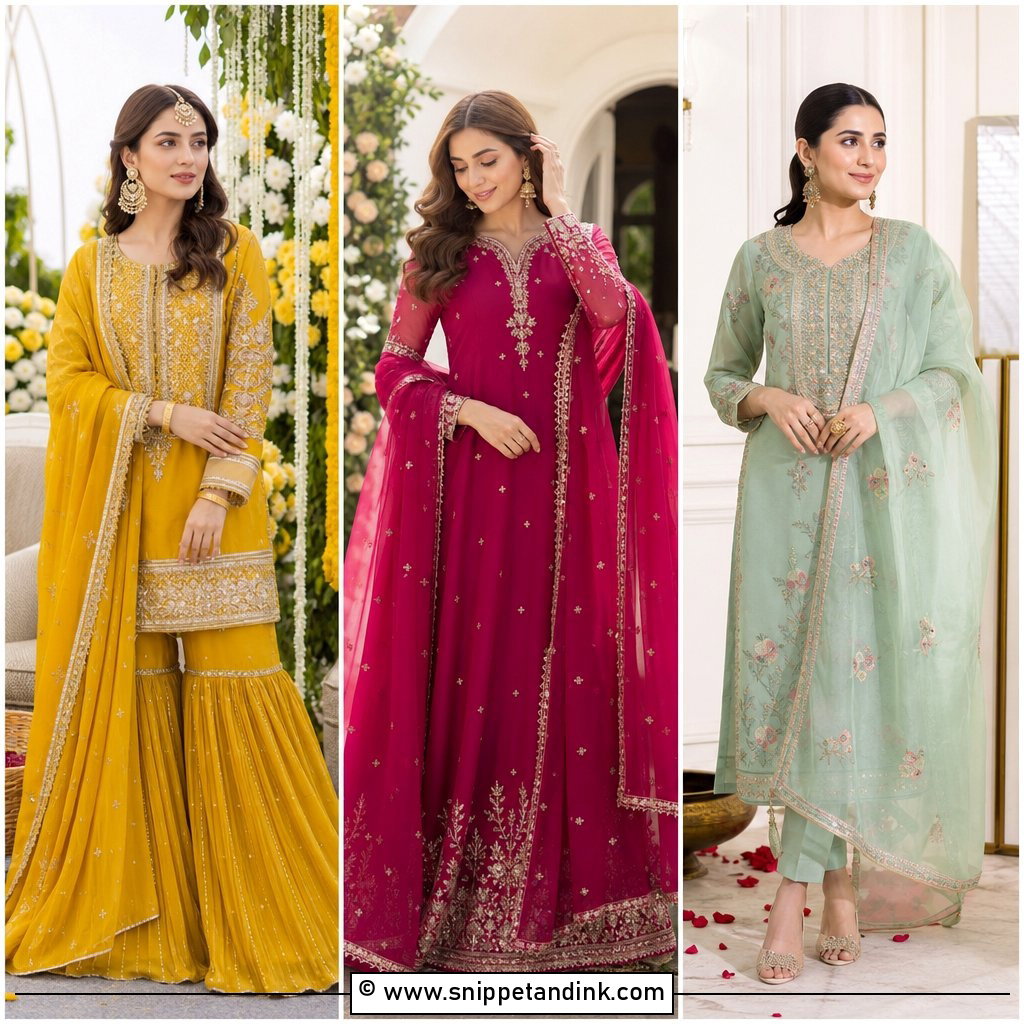
Chikankari is hand embroidery in fine white or tonal thread, traditionally on cotton or georgette, and its softness is the whole appeal. White, ivory, powder blue, blush and mint suit it best. A straight shirt with matching trousers and a sheer dupatta fits daytime occasions and Eid mornings. Fine chikankari needs gentle handling: I’d hand wash it cold and never wring it, since the threads pull and the fabric puckers. Silver bangles and small jhumkas leave the embroidery room to breathe.
4. Pakistani Sharara Suit For Wedding Guests
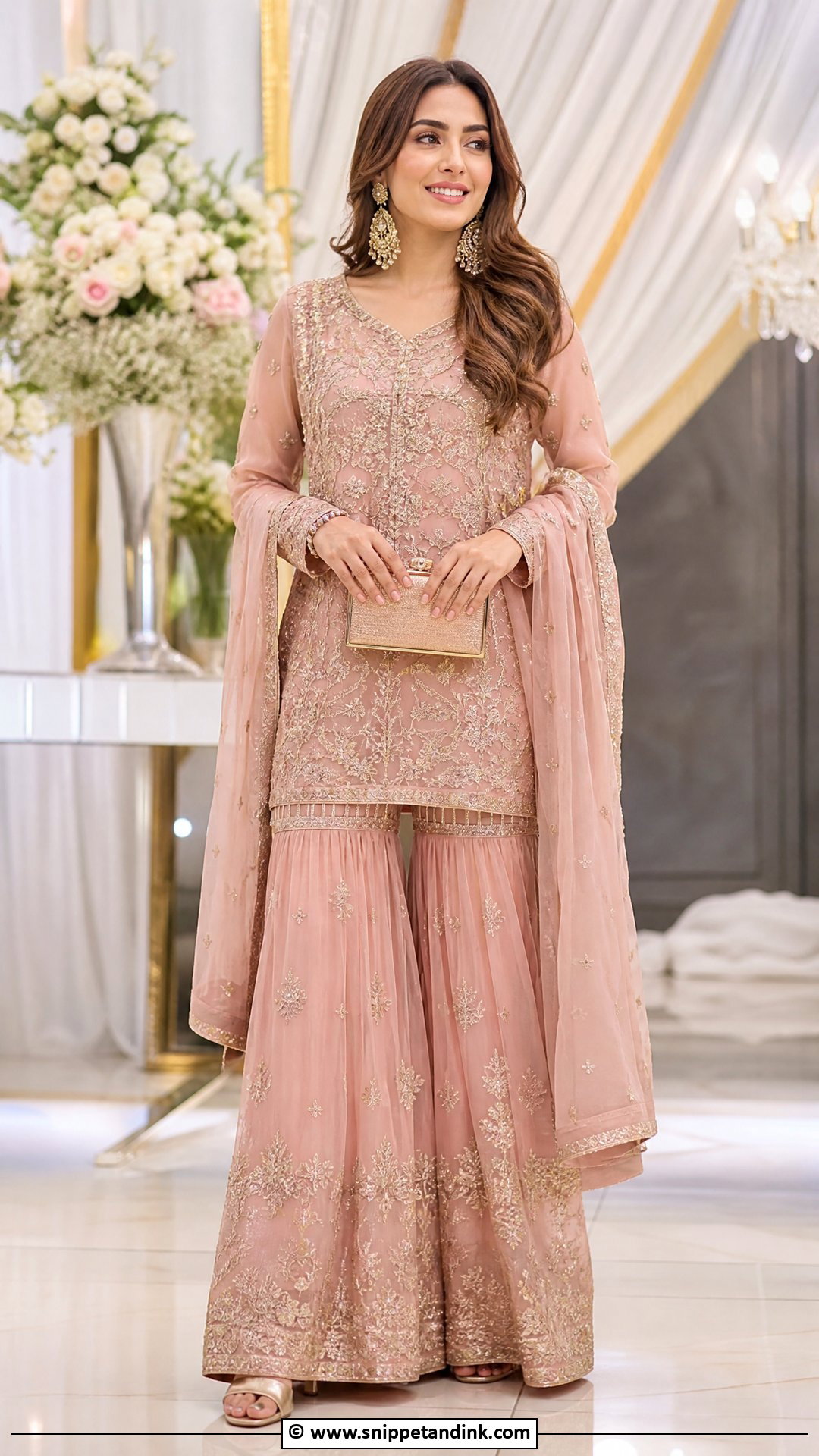
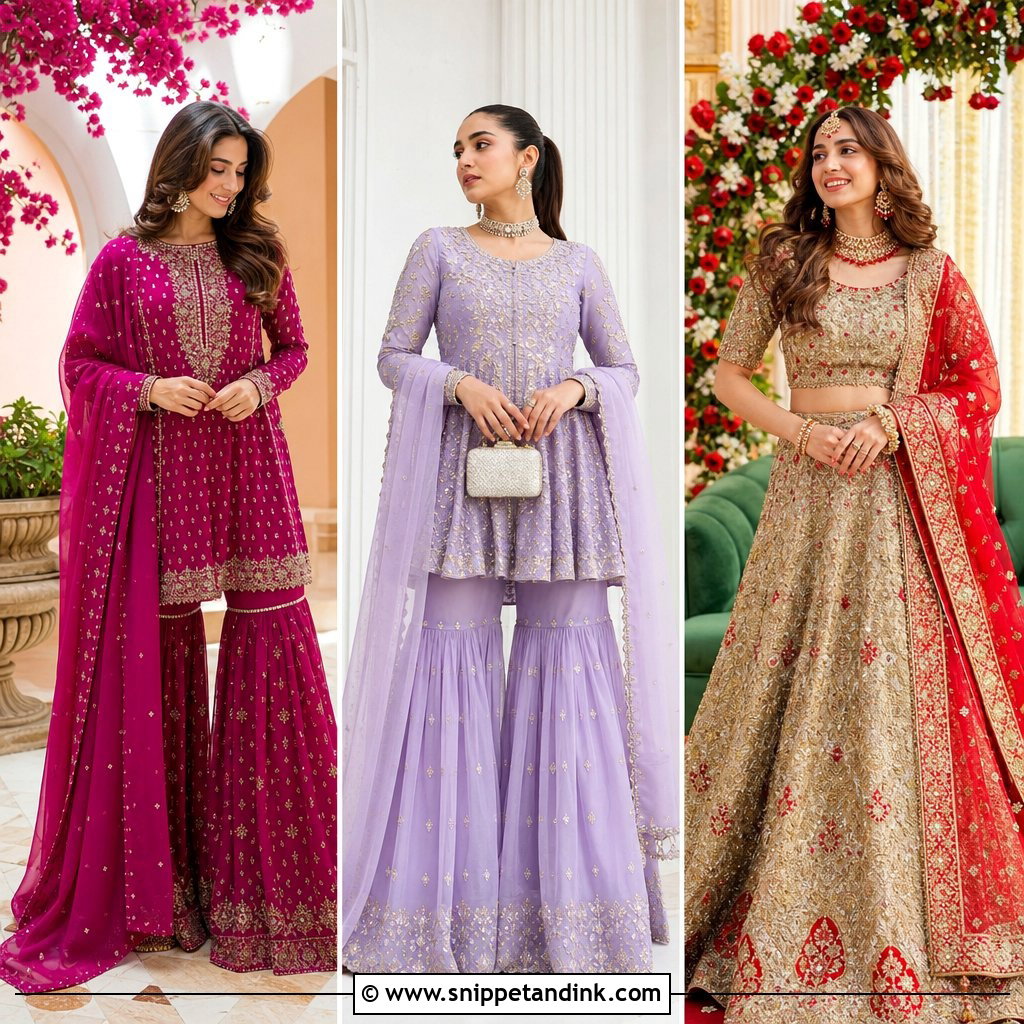
A Pakistani sharara suit is one of the most popular choices for wedding guests, and for good reason: a short or mid-length shirt over pants that flare from the waist moves wonderfully on a dance floor. Silk, organza, chiffon and net carry gota, zari or sequins well. Have the sharara hemmed with your heels on, because a sharara that is even slightly long gets stepped on all evening. Pick statement earrings or a tikka, not both plus a heavy necklace. Mehndi, dholki and family weddings suit it.
5. Pakistani Gharara Dress With Short Shirt
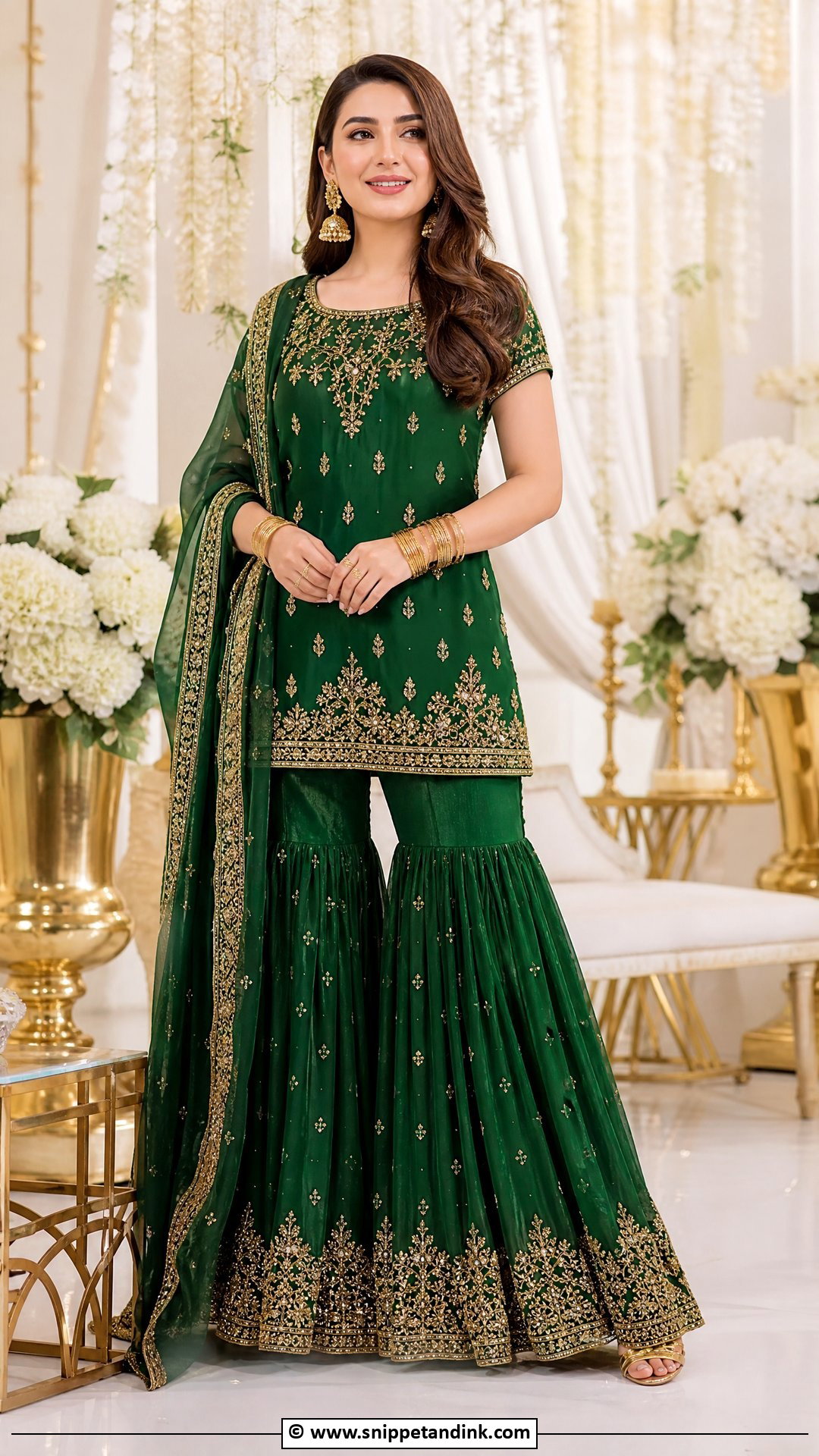
The gharara differs from a sharara in one detail: it’s fitted to the knee, gathered there under a decorative band, then flares to the floor. That knee joint is what gives the outfit its classic wedding shape. Rich maroon, emerald, rust, gold and deep pink suit it; pastel organza softens it. I’d make sure the knee band sits exactly at your knee when you stand, or the flare starts too low and you’ll shuffle. A Pakistani gharara dress with a short embroidered shirt and a bordered dupatta suits engagements, mehndi functions and close-family weddings.
6. Pakistani Anarkali Frock With Churidar
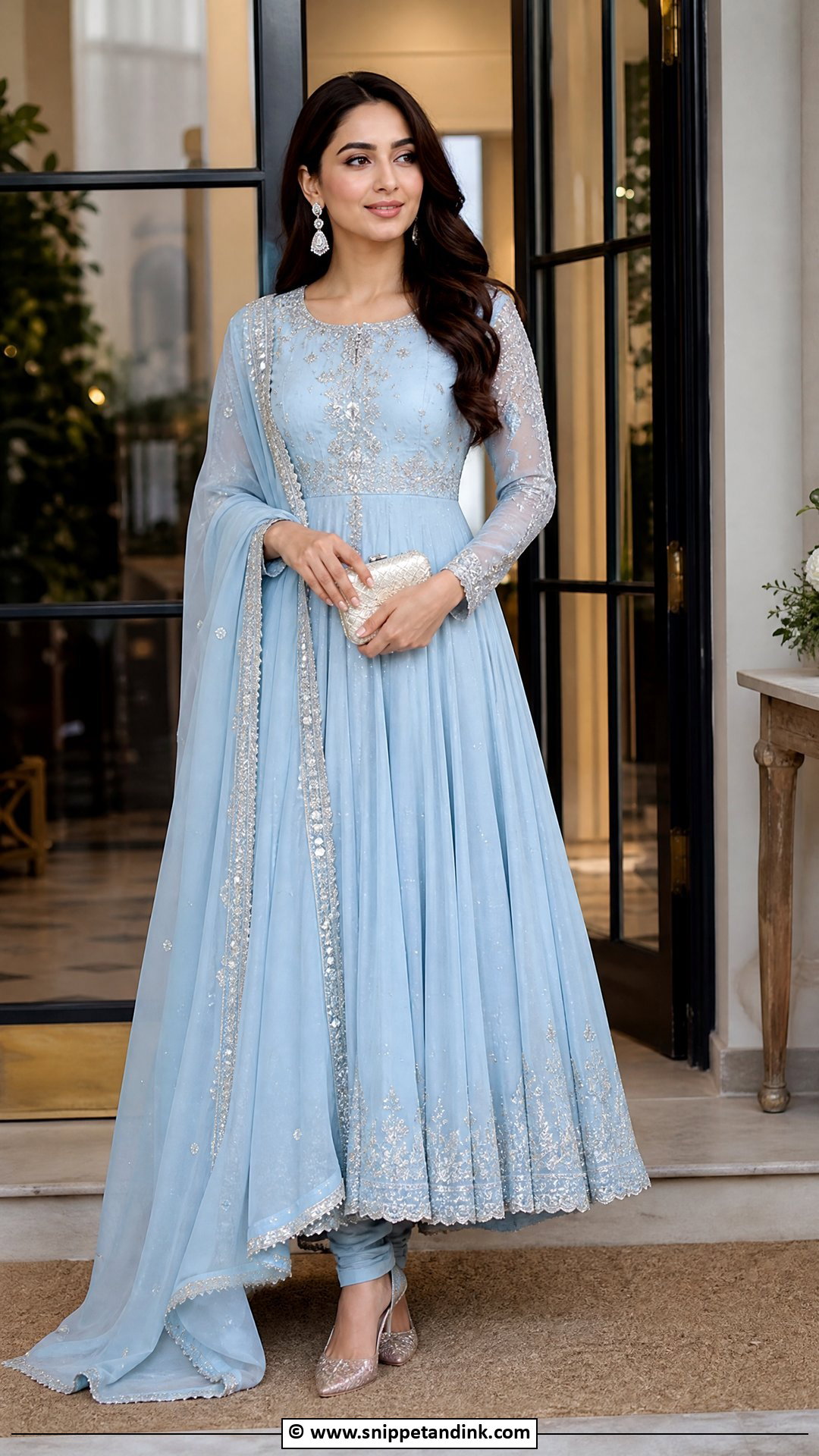
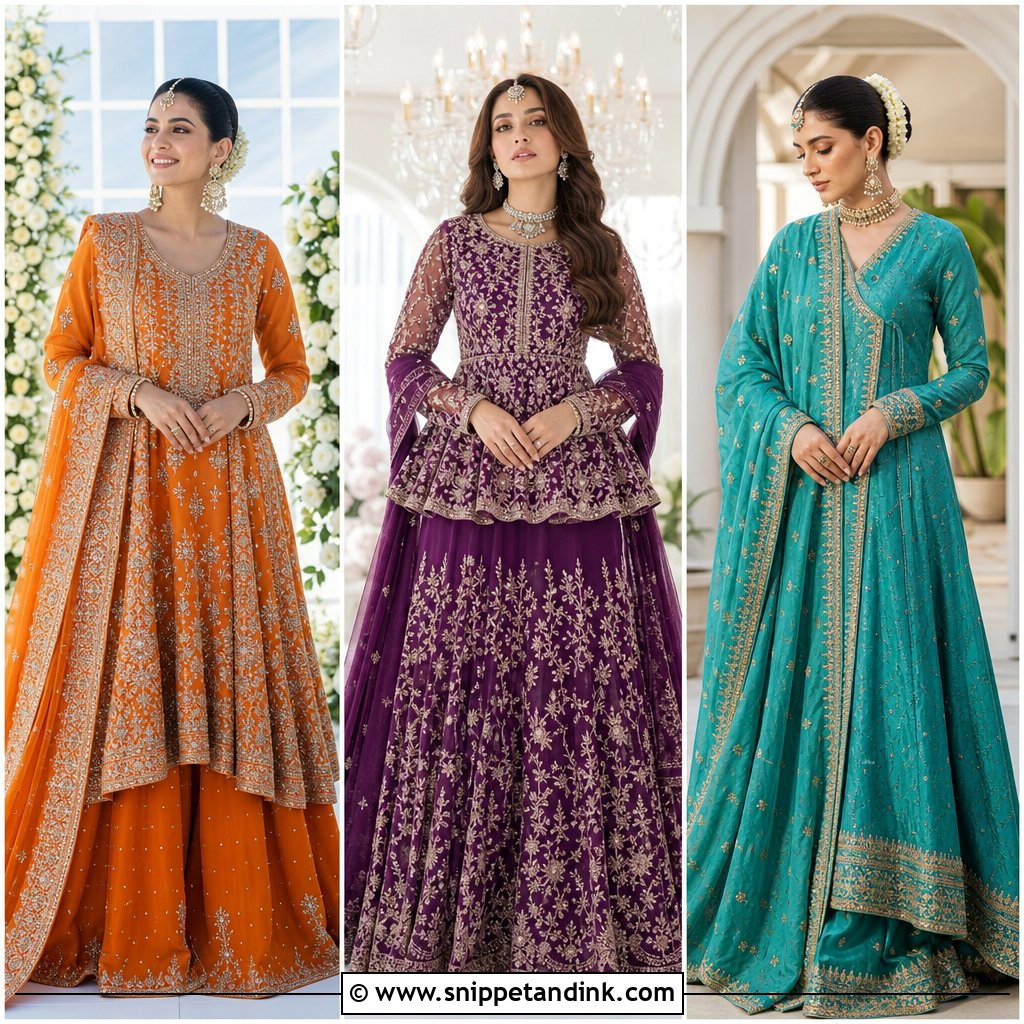
A Pakistani anarkali frock flares from just under the bust, which makes it forgiving across many figures. Churidar pants keep the lower half neat; they’re cut extra long so they ruche at the ankle, and that’s intentional. Georgette, chiffon, silk or cotton net dress it up. Pastels with light embroidery suit daytime; jewel tones with zari look formal at night. I check the flare length in heels so it falls just above the ankle.
7. Pakistani Angrakha Dress With Pants
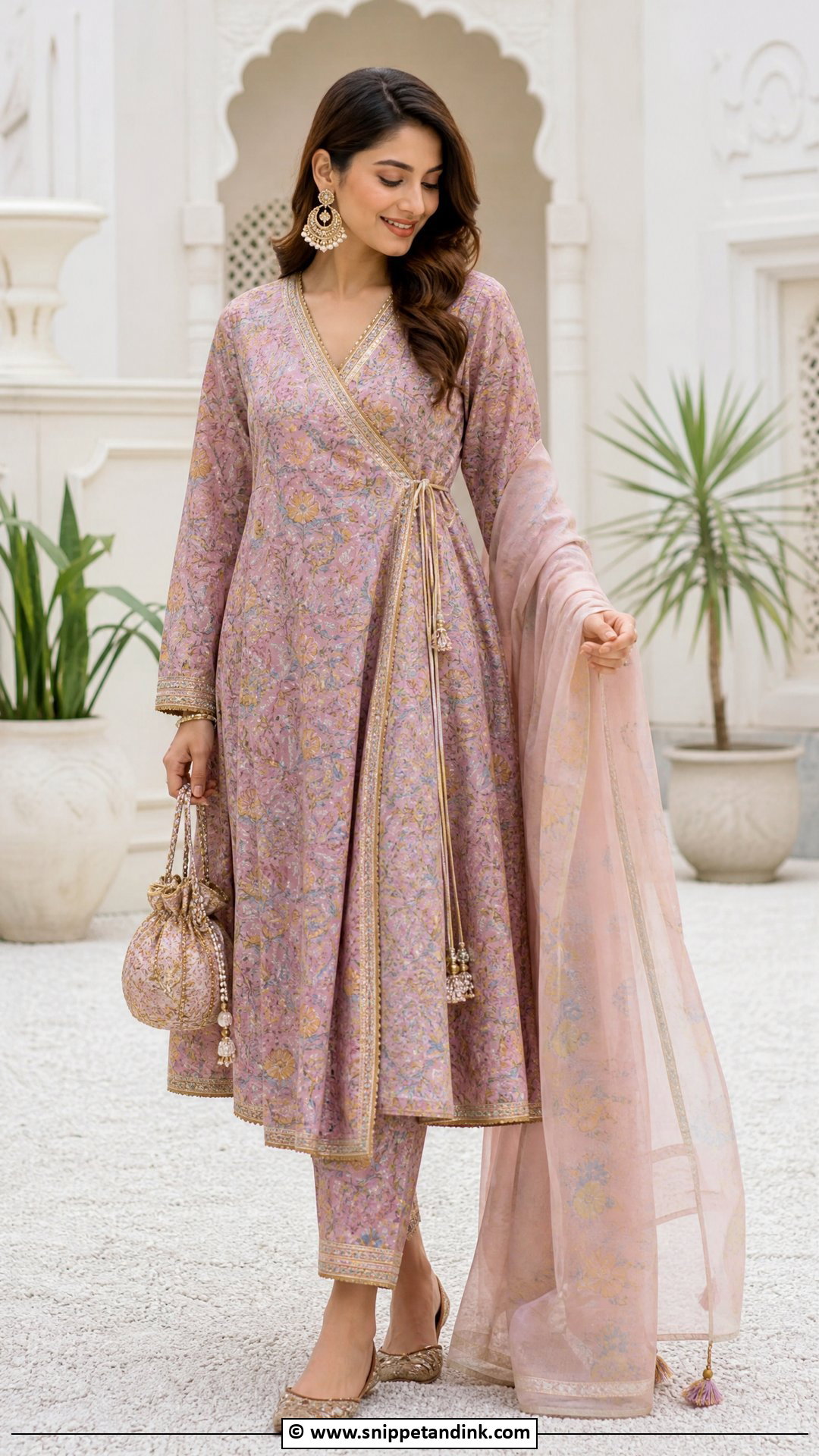
An angrakha wraps across the front and ties at the side, so the neckline does the decorating. A short angrakha with straight pants looks youthful; a longer one with wide trousers feels formal. Printed lawn versions suit daytime, silk or embroidered chiffon suits events. The ties are the weak point. If they’re only decorative, the overlap can gape when you sit, so I add a hidden hook inside. Khussas and chandbalis finish it; skip the necklace.
8. Pakistani Peplum Top With Sharara
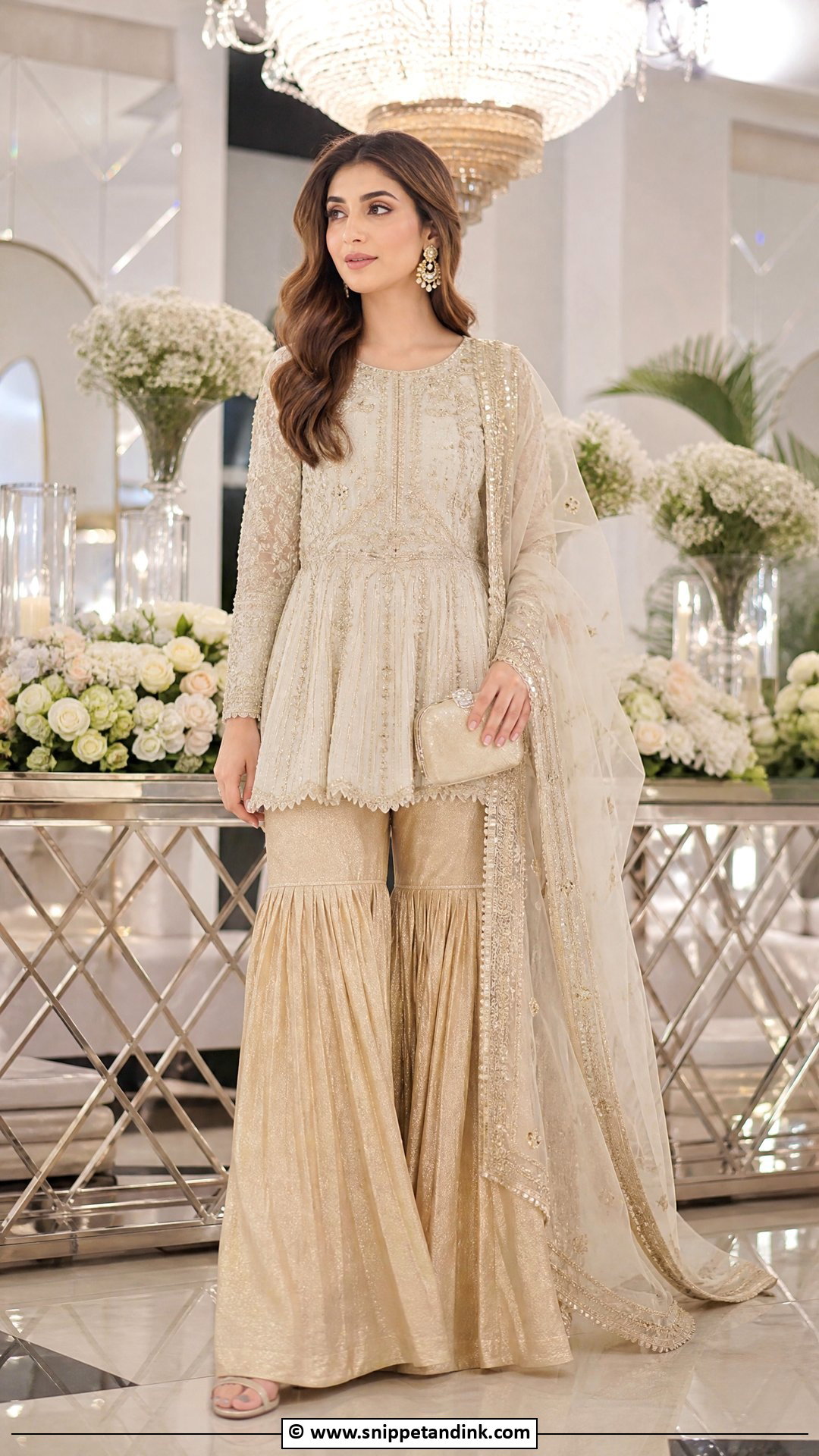
A peplum top defines the waist and the sharara supplies volume below, so the outfit looks shaped rather than boxy. Threadwork, mirror work, sequins or zari on the peplum dress it up for events. A plain sharara lets the top lead; an embroidered one looks richer. The peplum flare should start right at your natural waist. Too low, and it widens the hips. Heels, a soft dupatta and statement earrings complete it for engagements and mehndi events.
9. Pakistani Long Maxi Dress With Dupatta
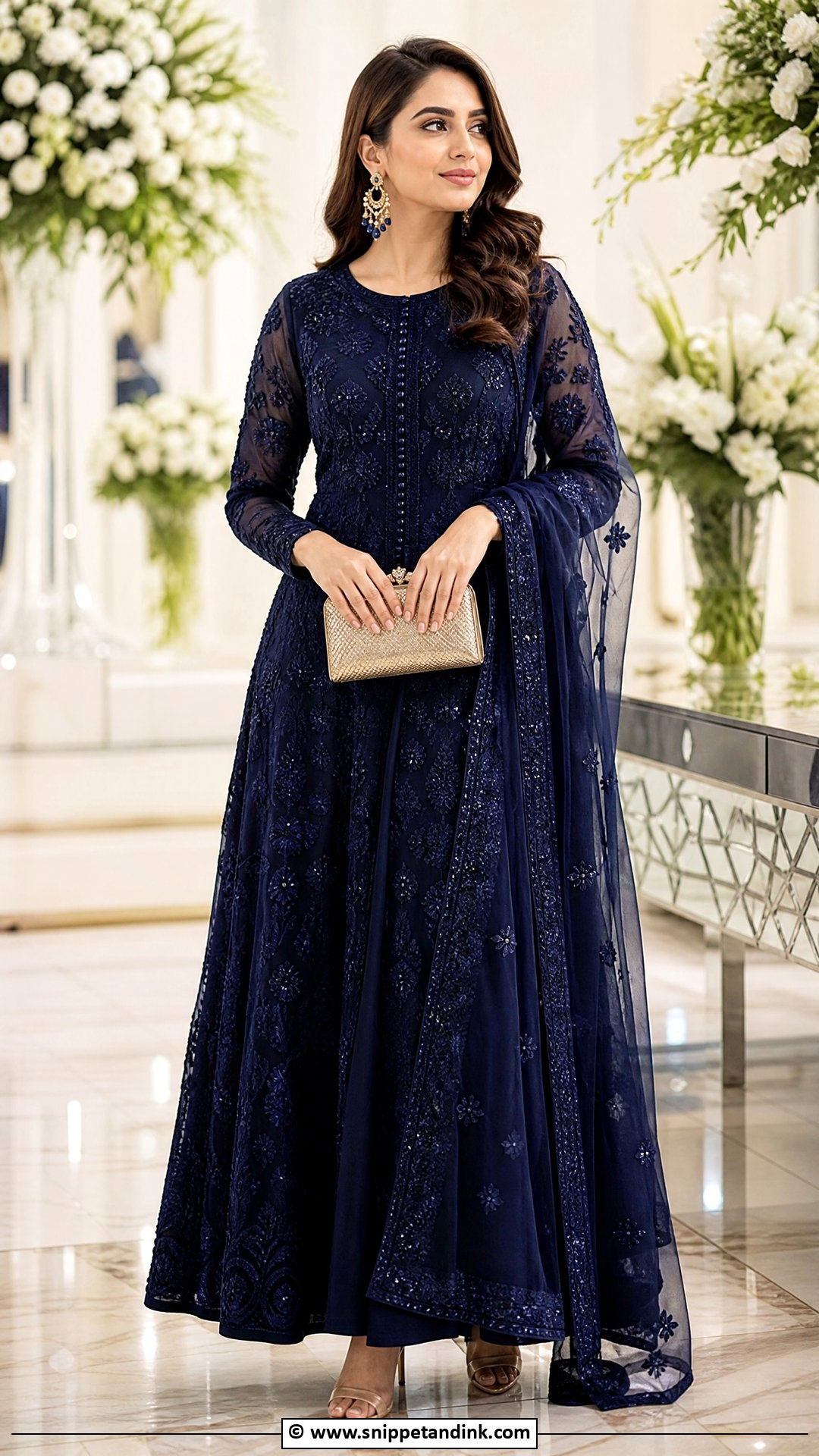
A floor-length maxi gives a formal look without separate trousers or a sharara, which makes dressing quicker on a busy wedding day. Embroidered bodices, flowing chiffon layers and soft net dupattas carry evening events. Full or sheer embroidered sleeves keep it modest. Pastels suit daytime; navy, maroon, plum and emerald suit night. Watch the hem on stairs and at dinner venues; I hem maxis for heels and give guests a little clearance, never a puddle.
10. Pakistani Velvet Suit For Winter Weddings
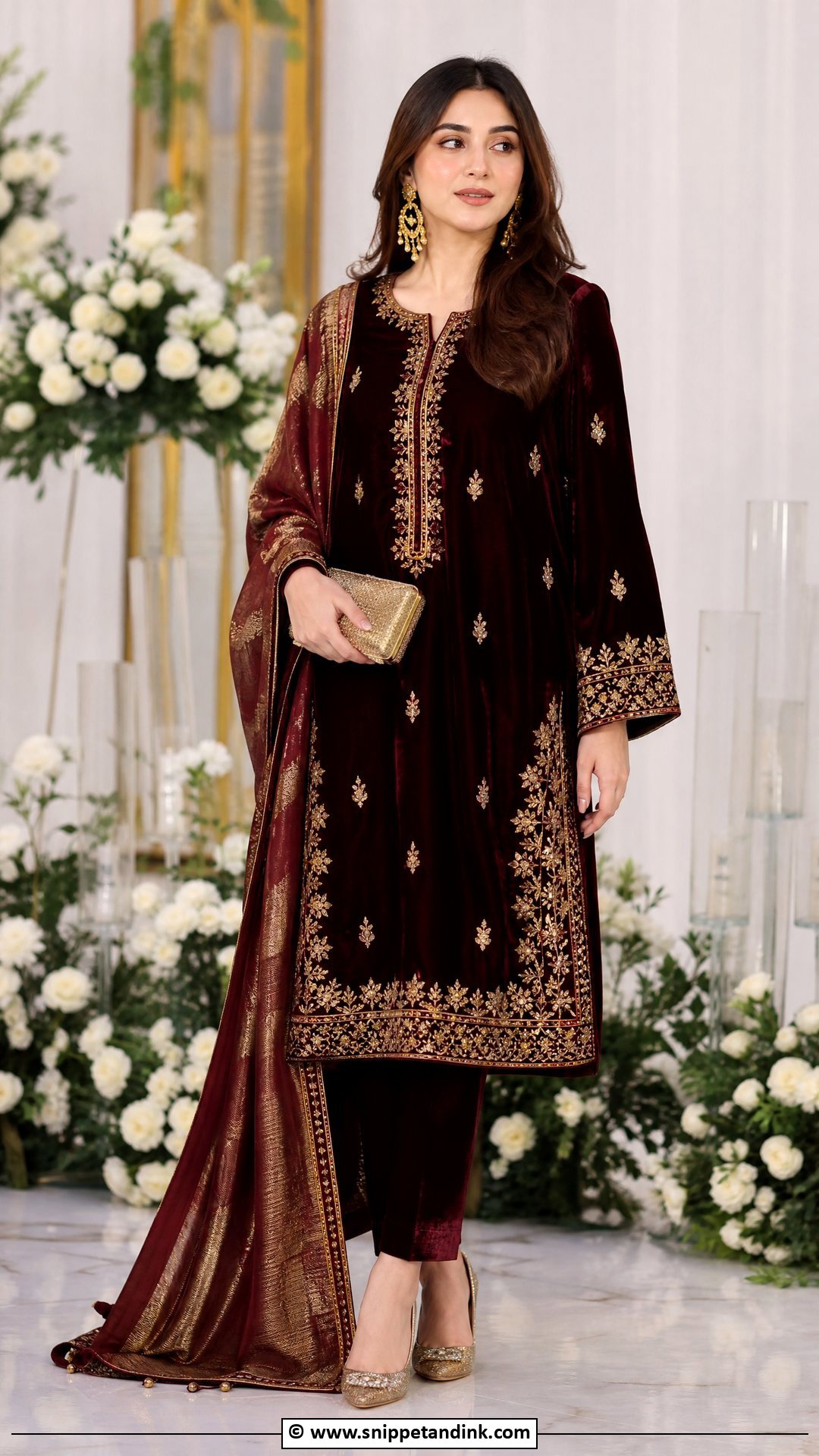
Winter weddings are when velvet comes out. Even a plain straight shirt looks formal in it because the pile soaks up light and gives deep color. Bottle green, navy, burgundy, chocolate or black with gold embroidery are the classic shades. Velvet can’t be ironed flat without crushing the pile, so I steam it from the inside and hang it well before the event. Pair it with straight pants and a silk or organza dupatta, then keep jewelry to statement earrings and a ring.
11. Pakistani Organza Suit With Embroidery
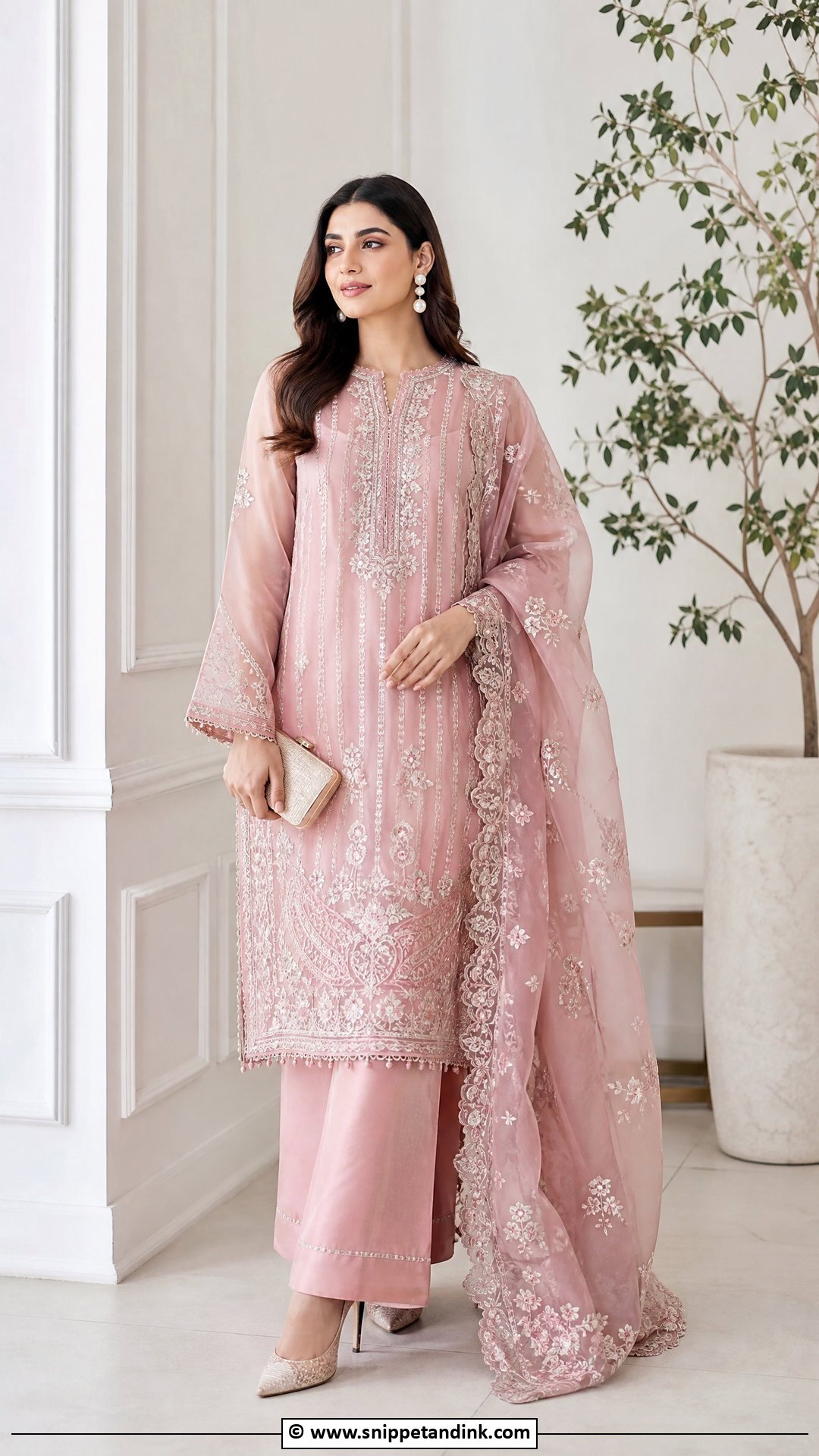
Organza holds its shape, so sleeves, dupattas and borders stay crisp all evening. A straight organza shirt over raw silk trousers is a common formal pairing. Pearls, sequins, zari or threadwork add texture without weight. Organza can scratch at the inner arm and underarm, so I always ask for lined sleeves. Silver or pearl jewelry suits pastels; gold suits bolder shades.
12. Pakistani Silk Kameez With Straight Pants
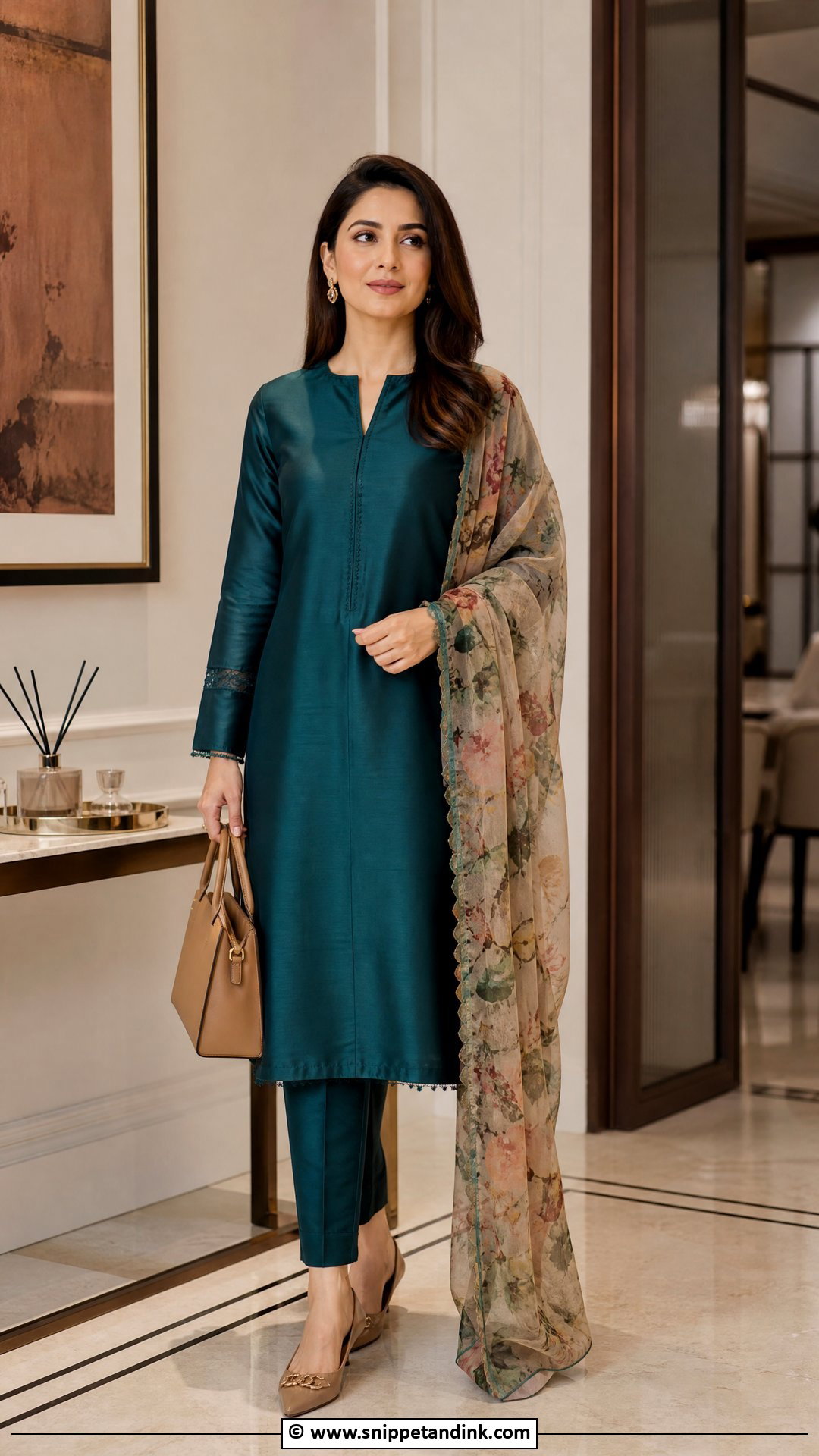
Silk has a natural sheen, so a long straight kameez looks dressed with very little embroidery. Jewel tones, soft neutrals or black make it versatile. Pair it with tailored straight pants and a printed silk or chiffon dupatta. Silk shows sweat marks in heat, so I’d save it for evening dinners and cooler months. Pointed flats, kitten heels or khussas, plus small gold earrings.
13. Pakistani Cotton Kurta With Shalwar
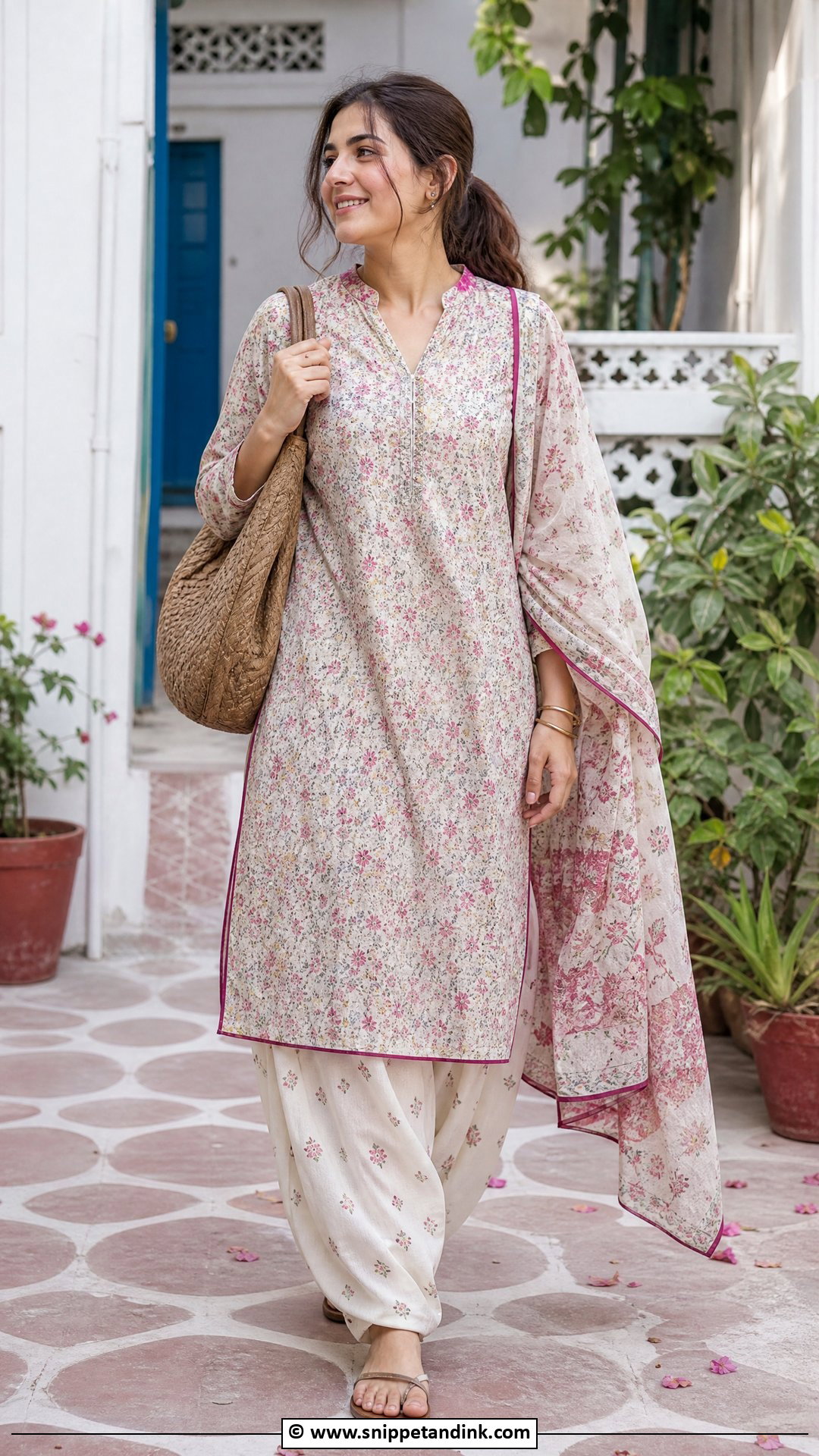
Nothing is more comfortable than a cotton kurta with a traditional shalwar. It breathes, moves and suits everyday life. Solid colors, prints or light embroidery all work. Balance is the trick: a long, loose kurta over a very full shalwar can look shapeless, so I keep one of the two slimmer. Add a contrast dupatta, flat sandals and bangles for home gatherings and travel days.
14. Pakistani Co Ord Set With Dupatta
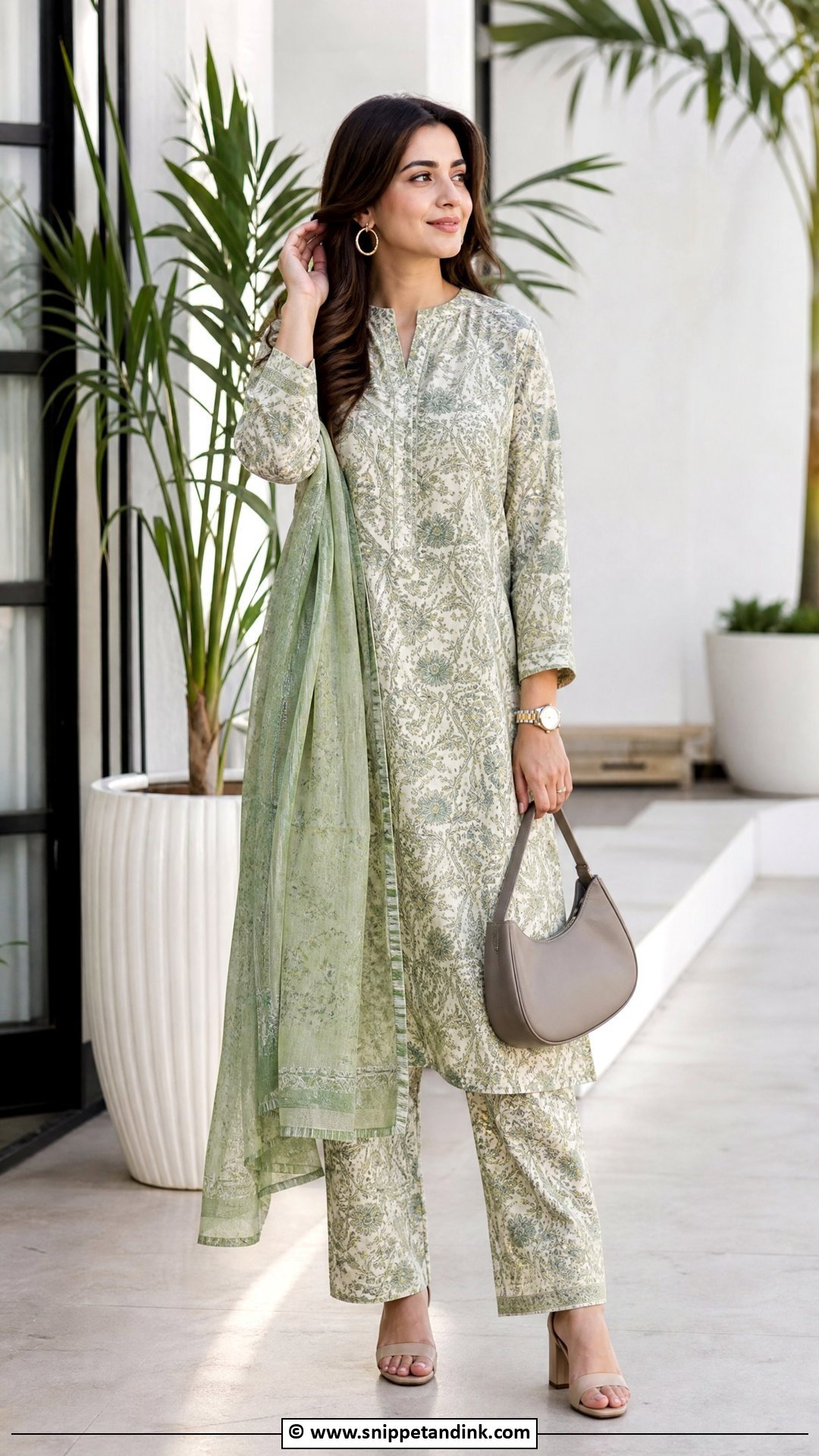
A matching shirt and trouser in one fabric looks neat and current, and the dupatta brings it back to family occasions. Printed lawn suits daytime; silk, crepe or jacquard suits evening. A little embroidery at the neckline or cuffs makes the set look more finished. Co-ords show fit everywhere, so I’d get the trouser hem and shirt length sorted together. Block heels, hoops and a sleek bag suit lunches and university days.
15. Pakistani Printed Lawn Dress For Summer
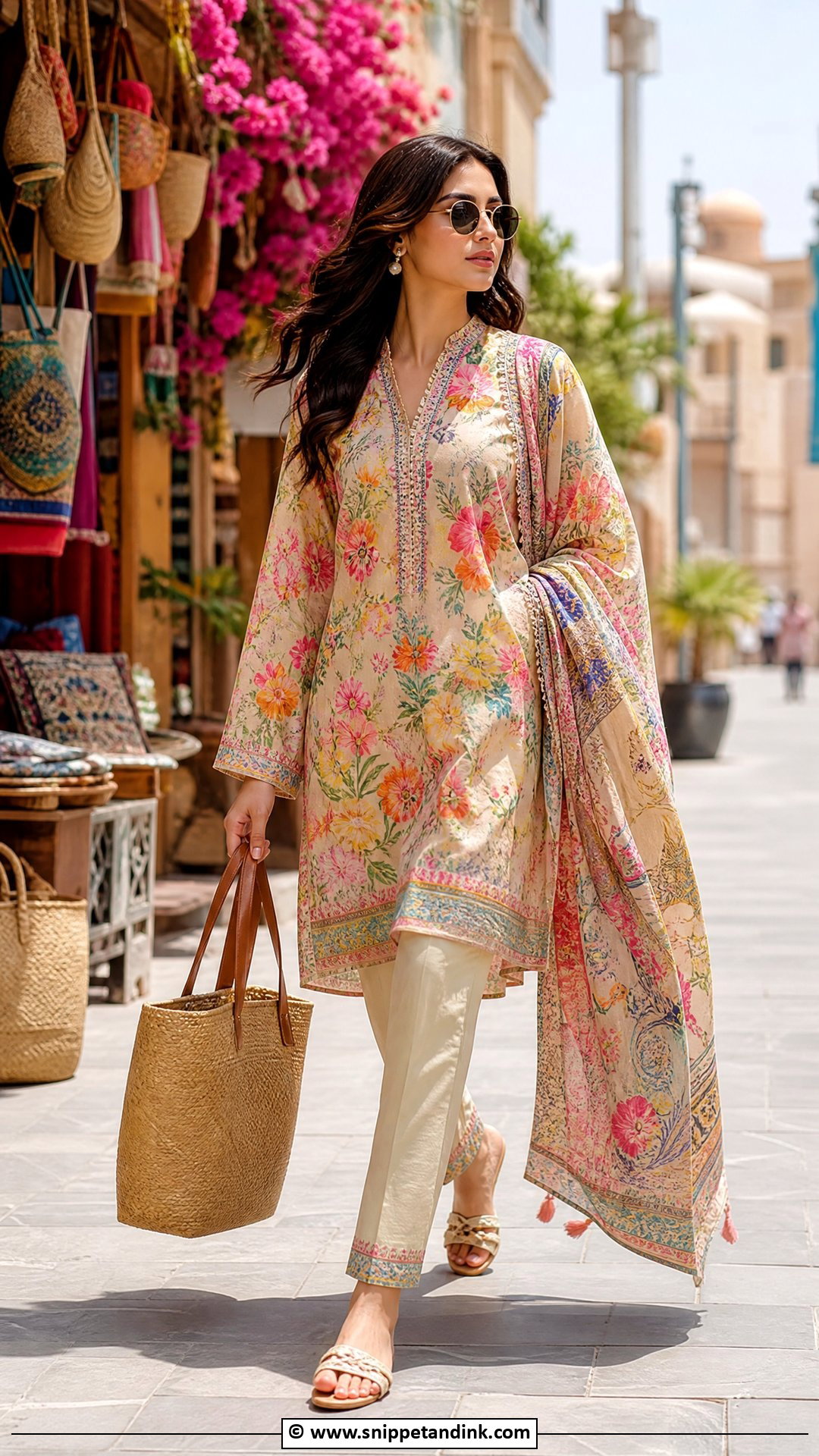
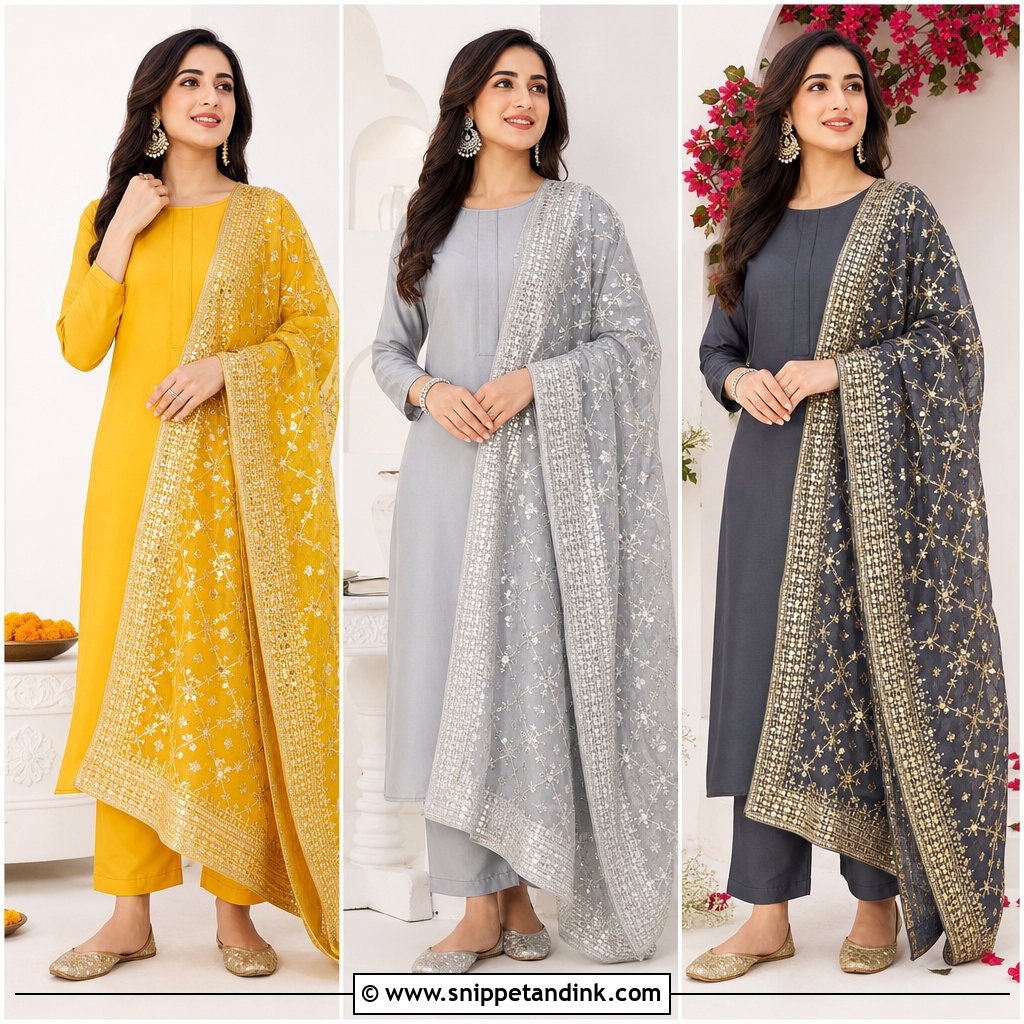
Printed lawn is the summer staple: florals, geometrics, paisley and watercolor designs. A three-piece suit with printed shirt, trousers and dupatta gives you a complete outfit. Before the first stitch, I’d wash lawn once, since some cotton shrinks a little and darker dyes can bleed. Press the dupatta well and tailor the trousers neatly, and even a casual print looks polished for shopping or a summer lunch.
16. Pakistani White Suit With Colorful Dupatta
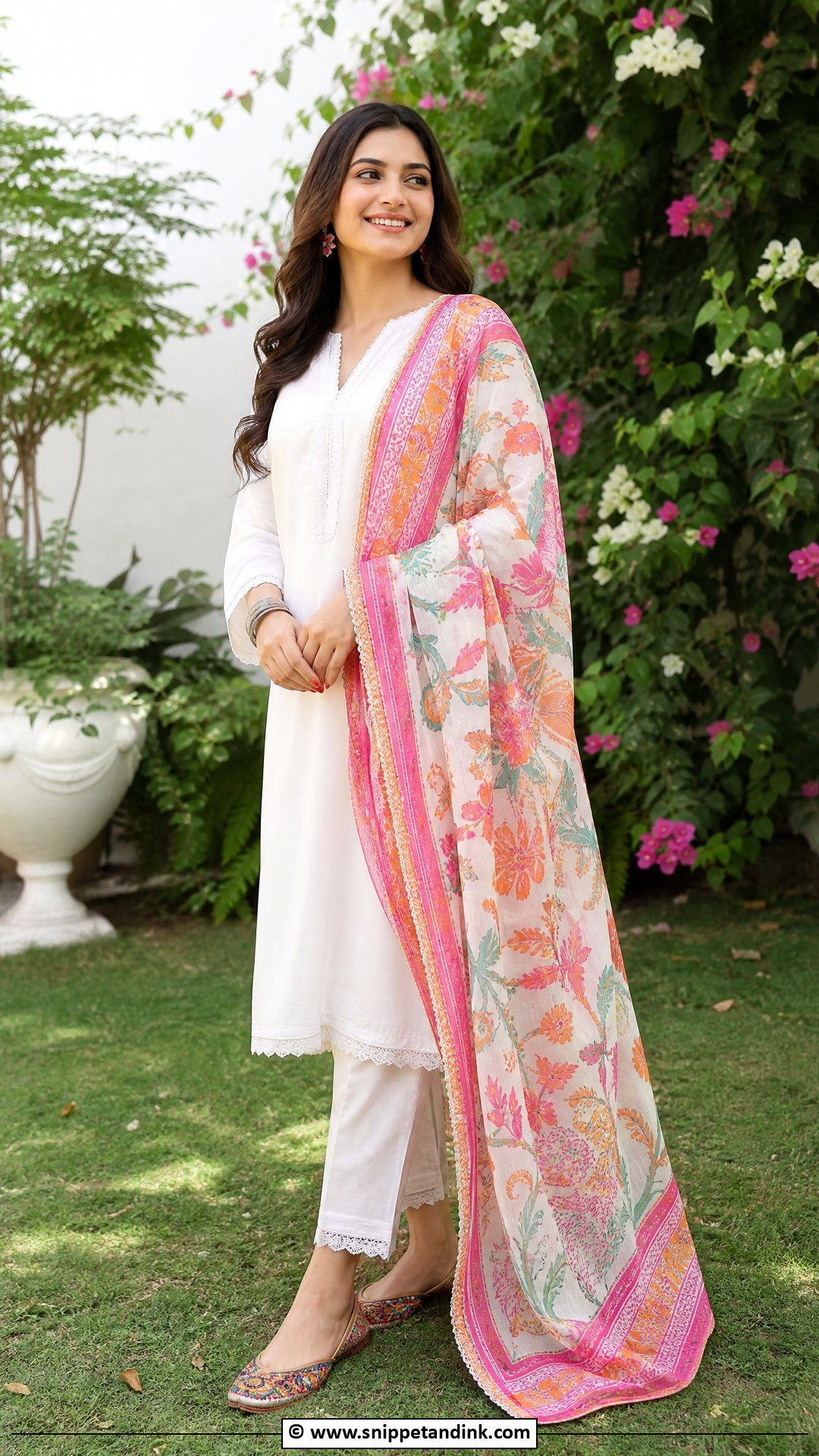
A white base lets the dupatta carry all the color and personality. Plain white cotton, a chikankari shirt or a lightly embroidered kameez work underneath. Pair with bandhani, phulkari, printed silk or organza depending on the event. Test any bright dupatta for color-fastness first. A damp phulkari or bandhani can bleed straight onto white cotton at a hot outdoor event. Colorful khussas tie it together.
17. Pakistani Black Suit With Gold Embroidery
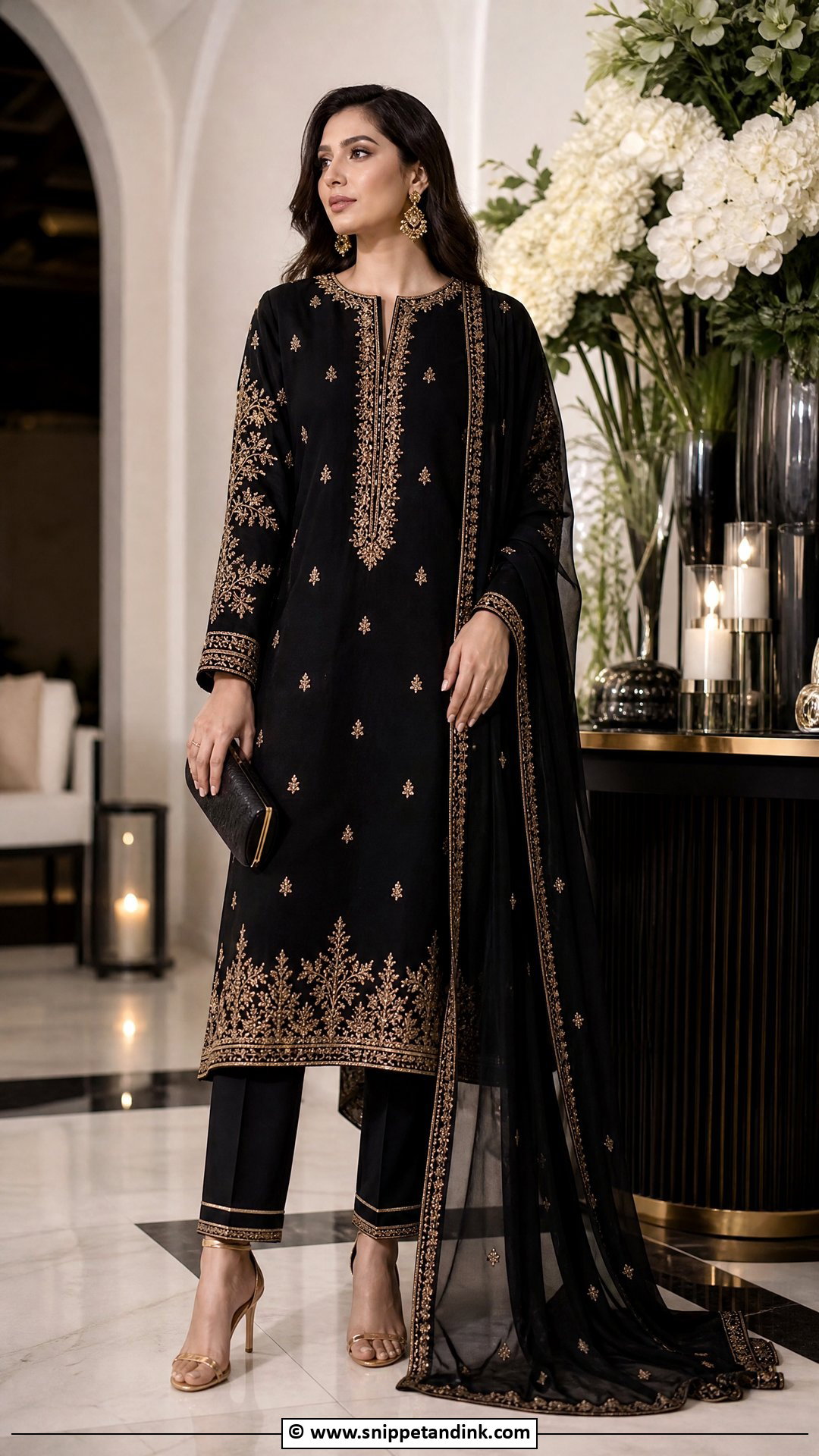
Black with gold work is rich without needing color, and it suits nearly every skin tone. A straight black shirt with cigarette pants and a matching dupatta looks polished at night. Gold embroidery at the neckline, sleeves and hem adds structure. Check the zari before buying: cheaper metallic thread can turn dull or greenish over time, and real zari keeps its warmth. Gold earrings and a black clutch finish it for formal dinners and wedding guest events.
18. Pakistani Pastel Suit For Nikkah
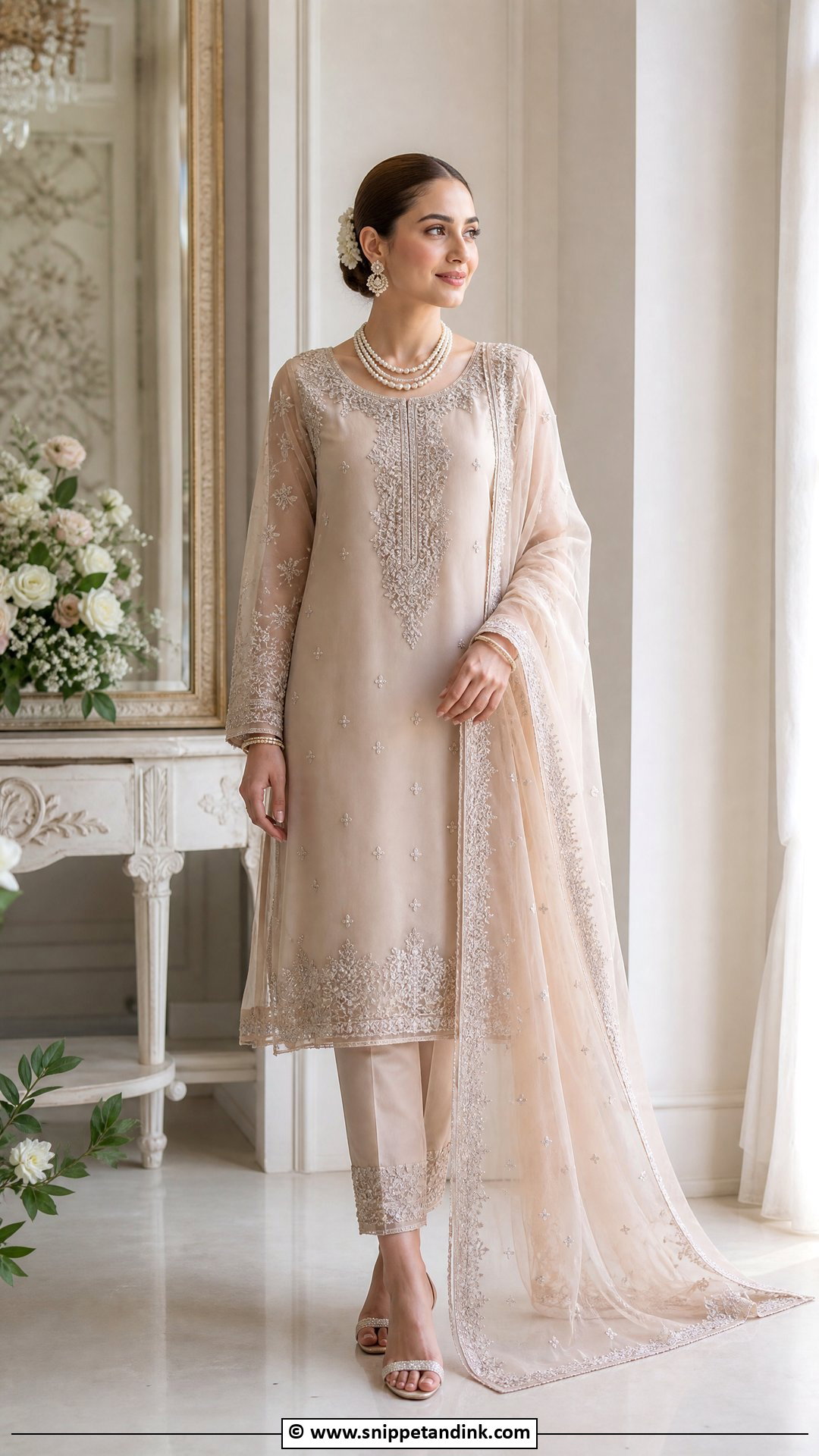
A Pakistani pastel suit for nikkah suits the quieter, more intimate feel of the ceremony. Ivory, blush, tea pink, powder blue, sage and champagne are the usual shades. Organza, net, silk or chiffon with pearl, thread or sequin work keeps it soft. A long shirt with straight pants feels refined; a gharara or sharara feels traditional. Since the dupatta often covers the head for the nikkah, I pick a light one that pins easily and won’t slide during the signing.
19. Pakistani Mehndi Dress With Gota Work
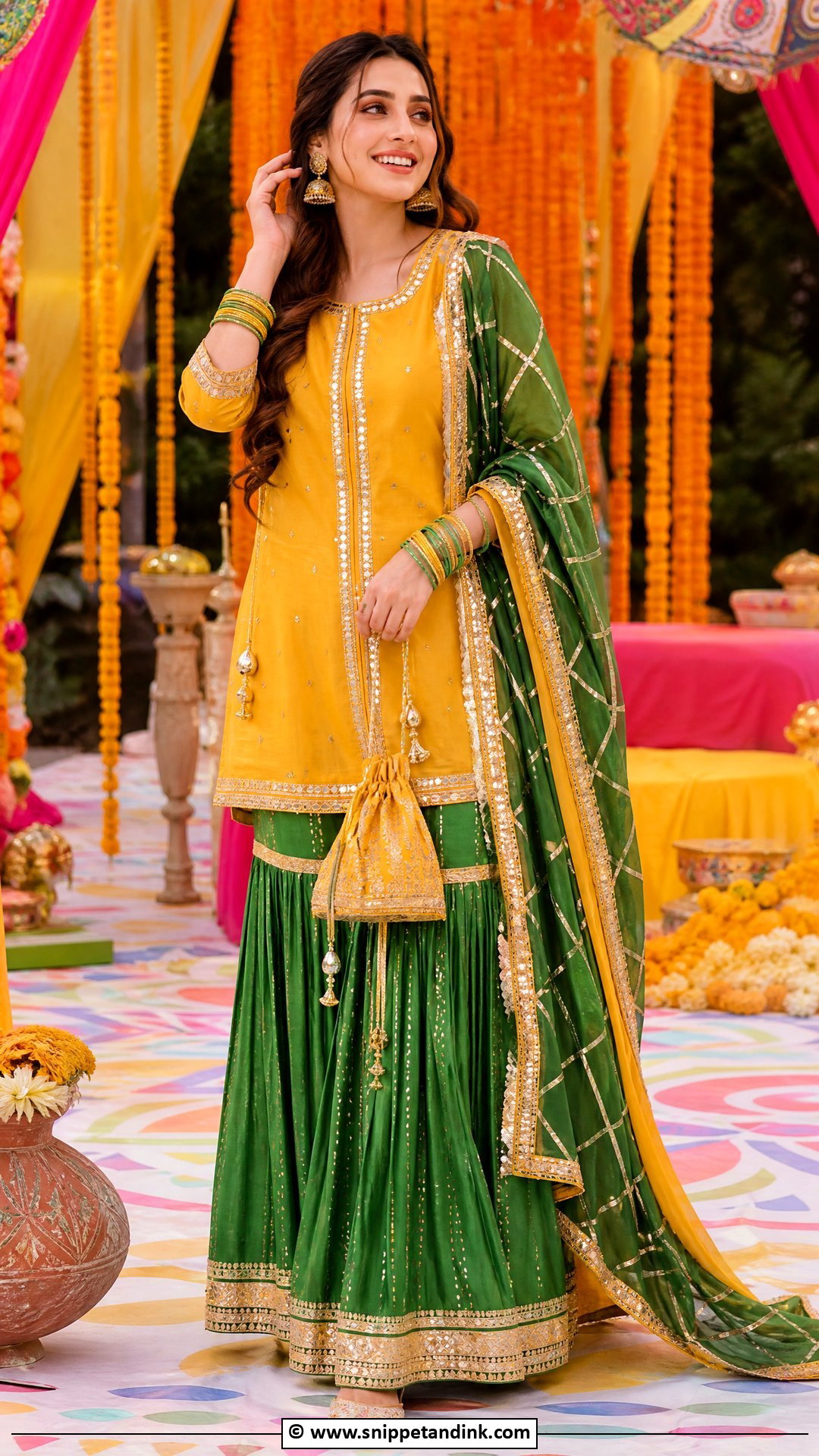
A Pakistani mehndi dress with gota work is the brightest outfit of the week. Yellow, green, orange, pink and lime are traditional for good reason: they look joyful on camera. A short shirt with sharara, gharara or lehenga is the classic shape. Gota is metallic ribbon, and it can catch on bangles and scratch the skin, so I’d keep the gota off the inside of the sleeves. Jhumkas, bangles, khussas and a potli bag complete it; floral jewelry suits daytime events.
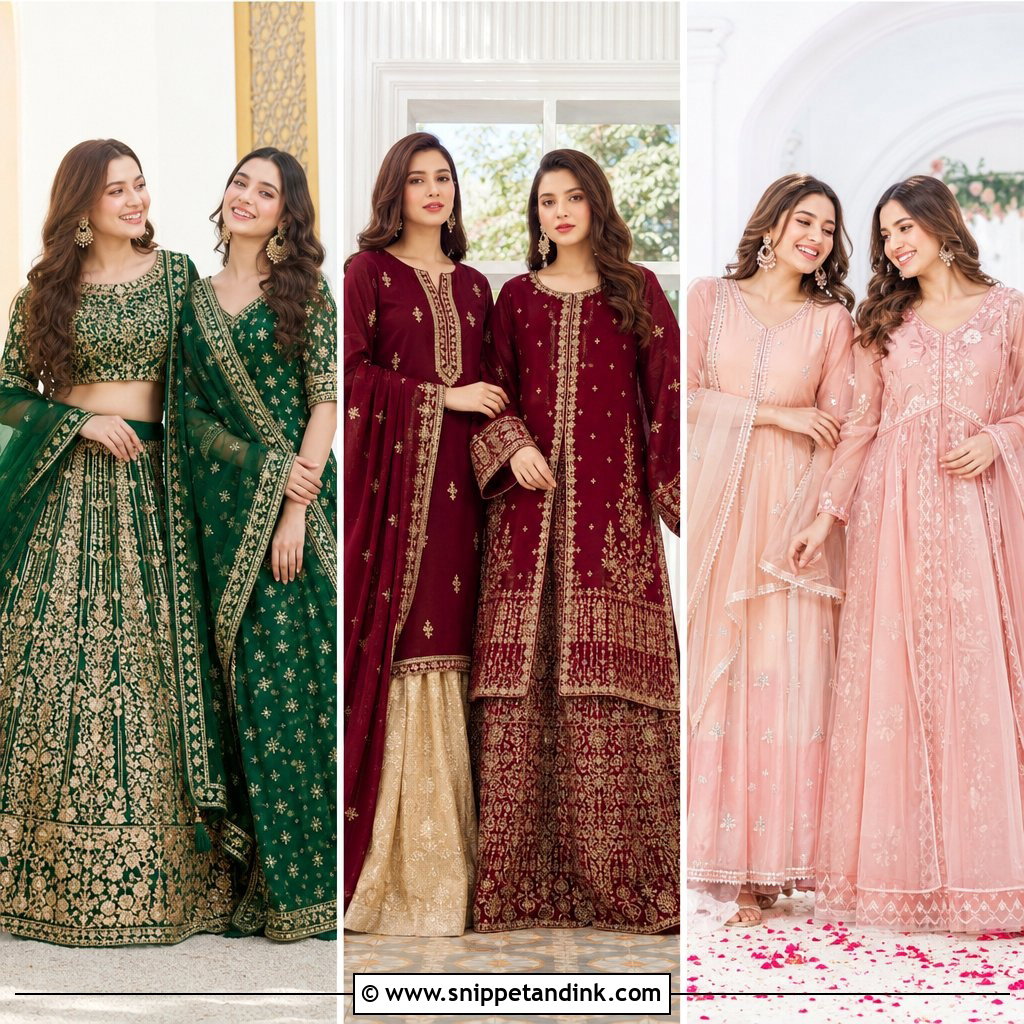
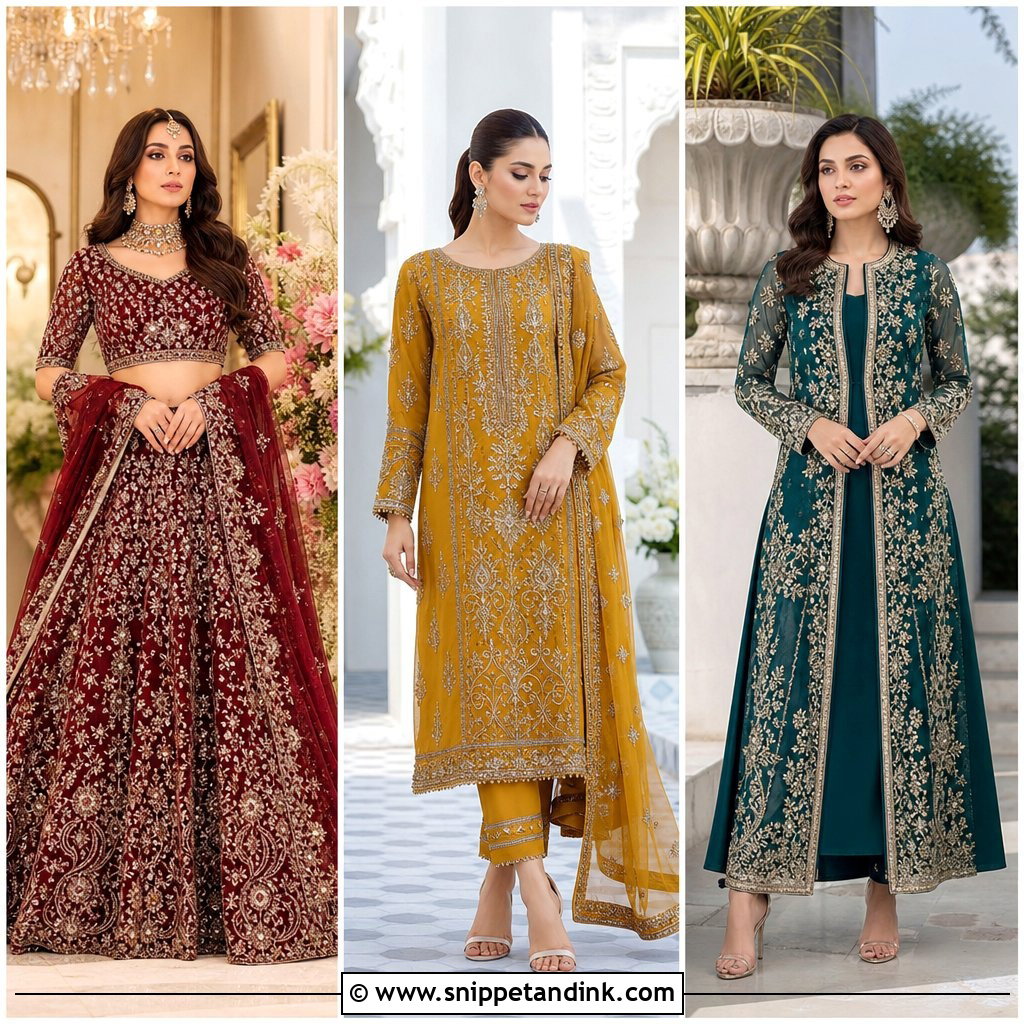
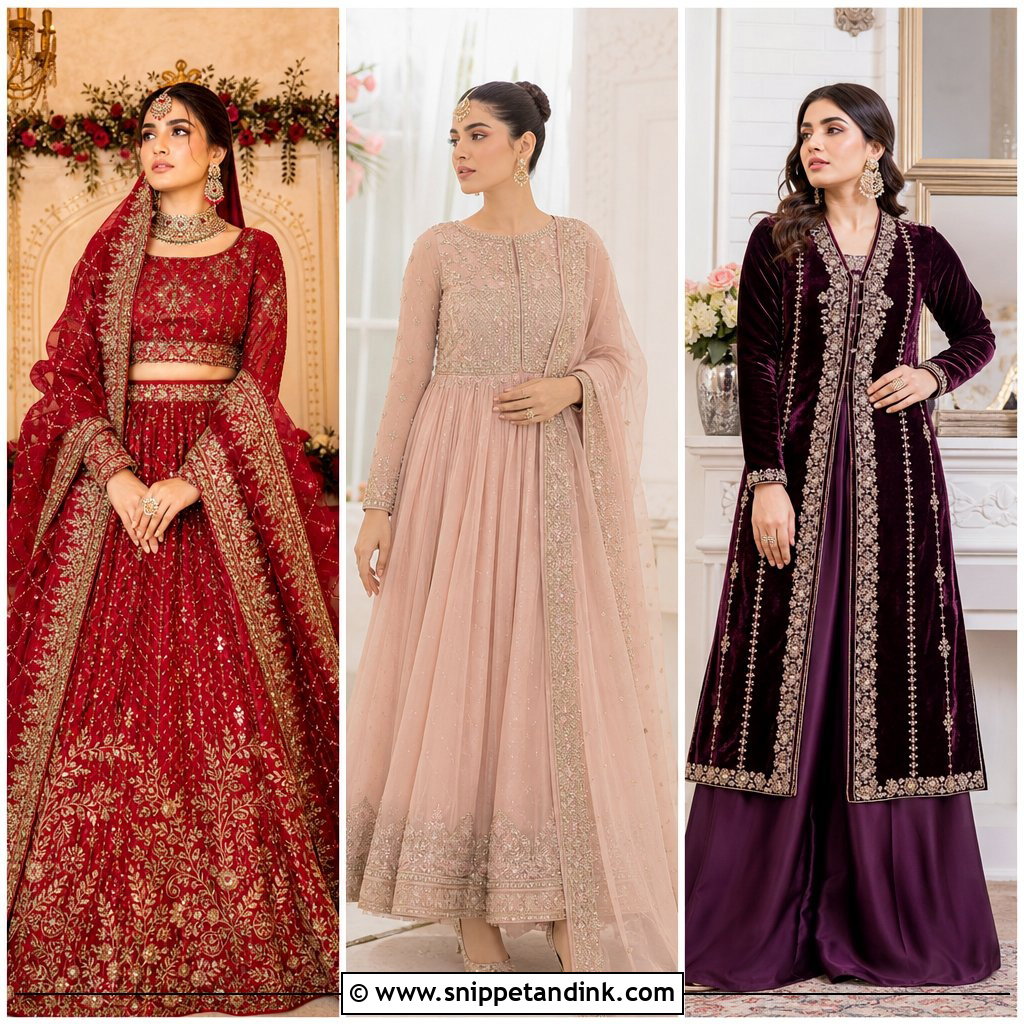
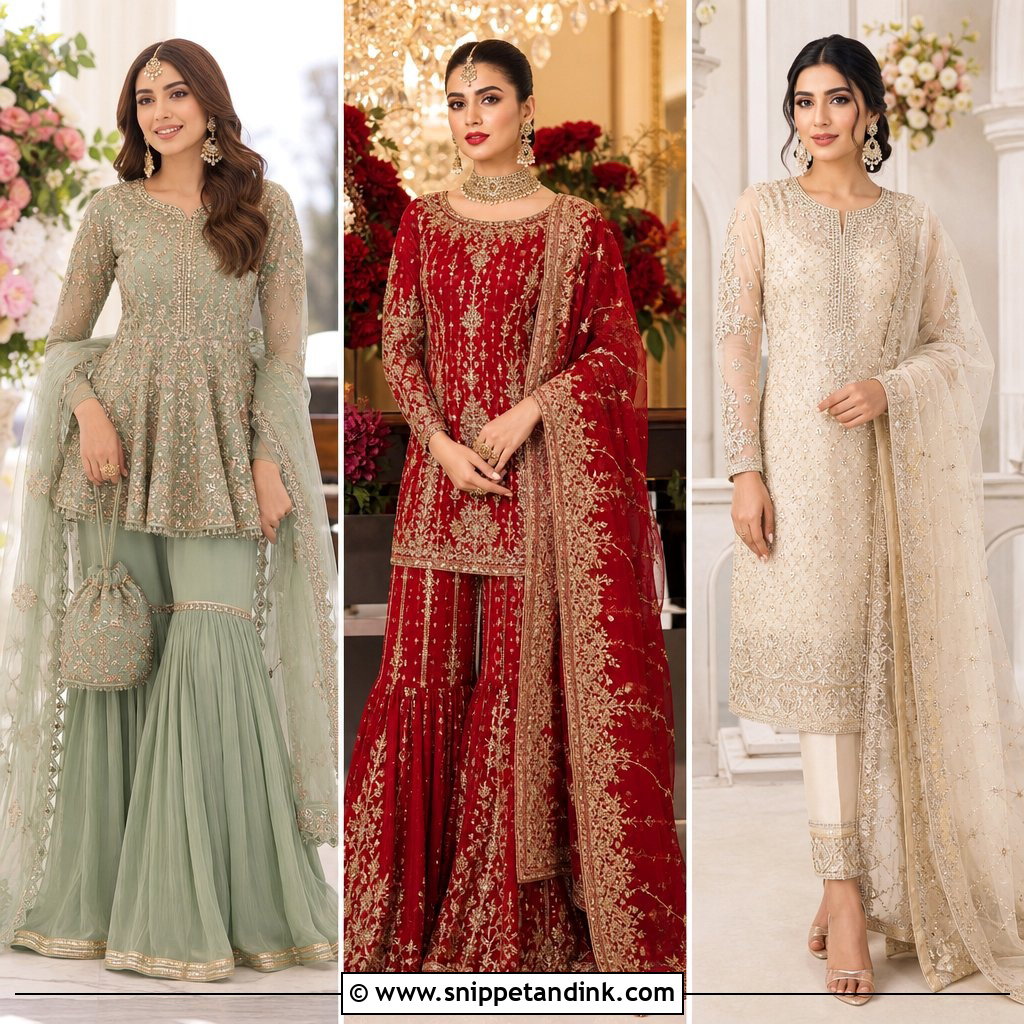
20. Pakistani Bridal Lehenga With Long Shirt
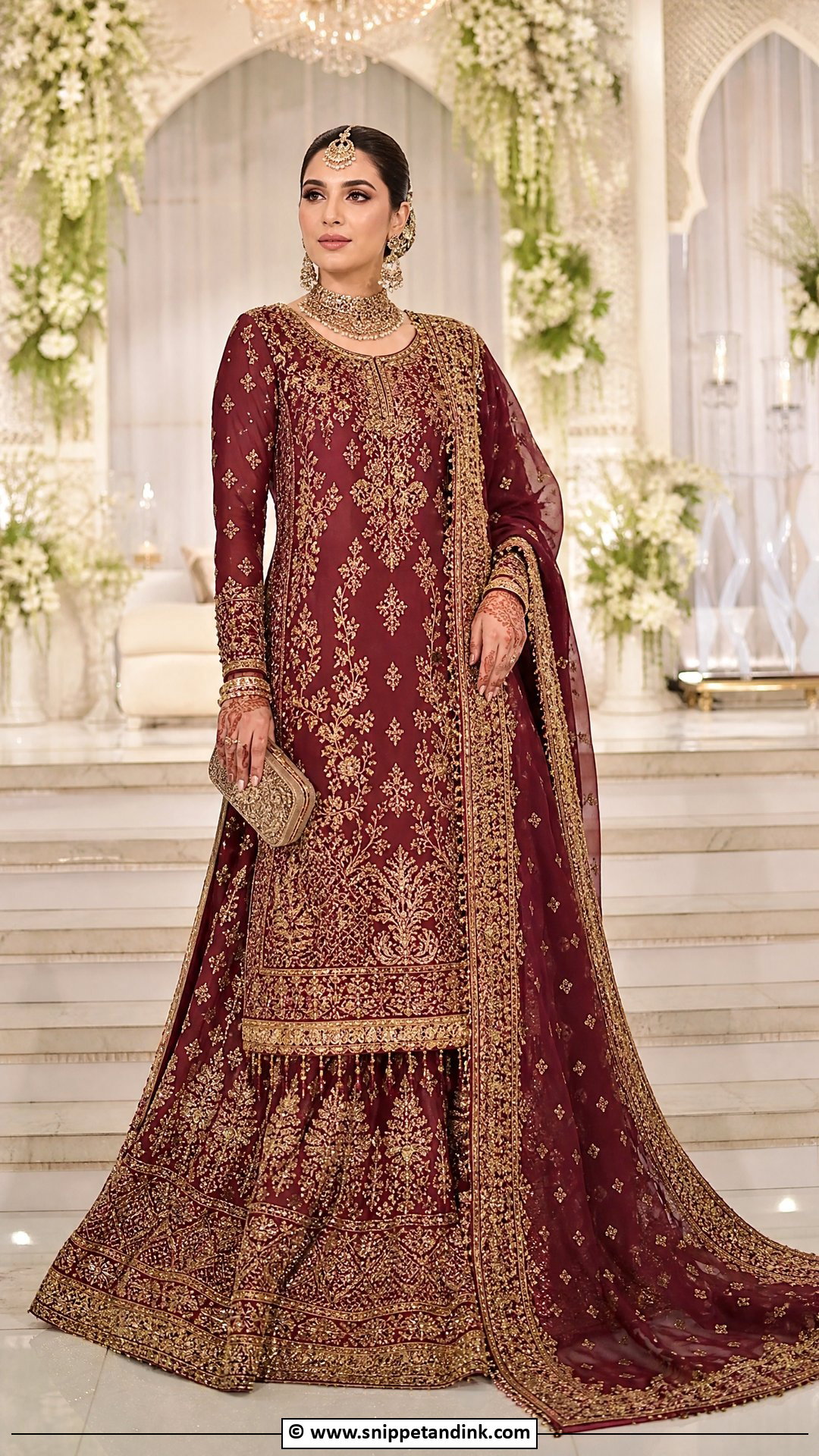
The long shirt over a lehenga adds coverage and grace, while the lehenga brings volume. Red, maroon, rust, gold, ivory and deep rose are classic bridal shades, and pastels have become common too. Look for handwork, zari, dabka, sequins and thread embroidery placed with thought. Bridal outfits of this kind are heavy; I always have the bride wear it for half an hour at a fitting and sit on the floor once, since many functions involve sitting low on a stage. Traditional jewelry and a bordered dupatta finish it.
21. Pakistani Walima Gown With Net Dupatta
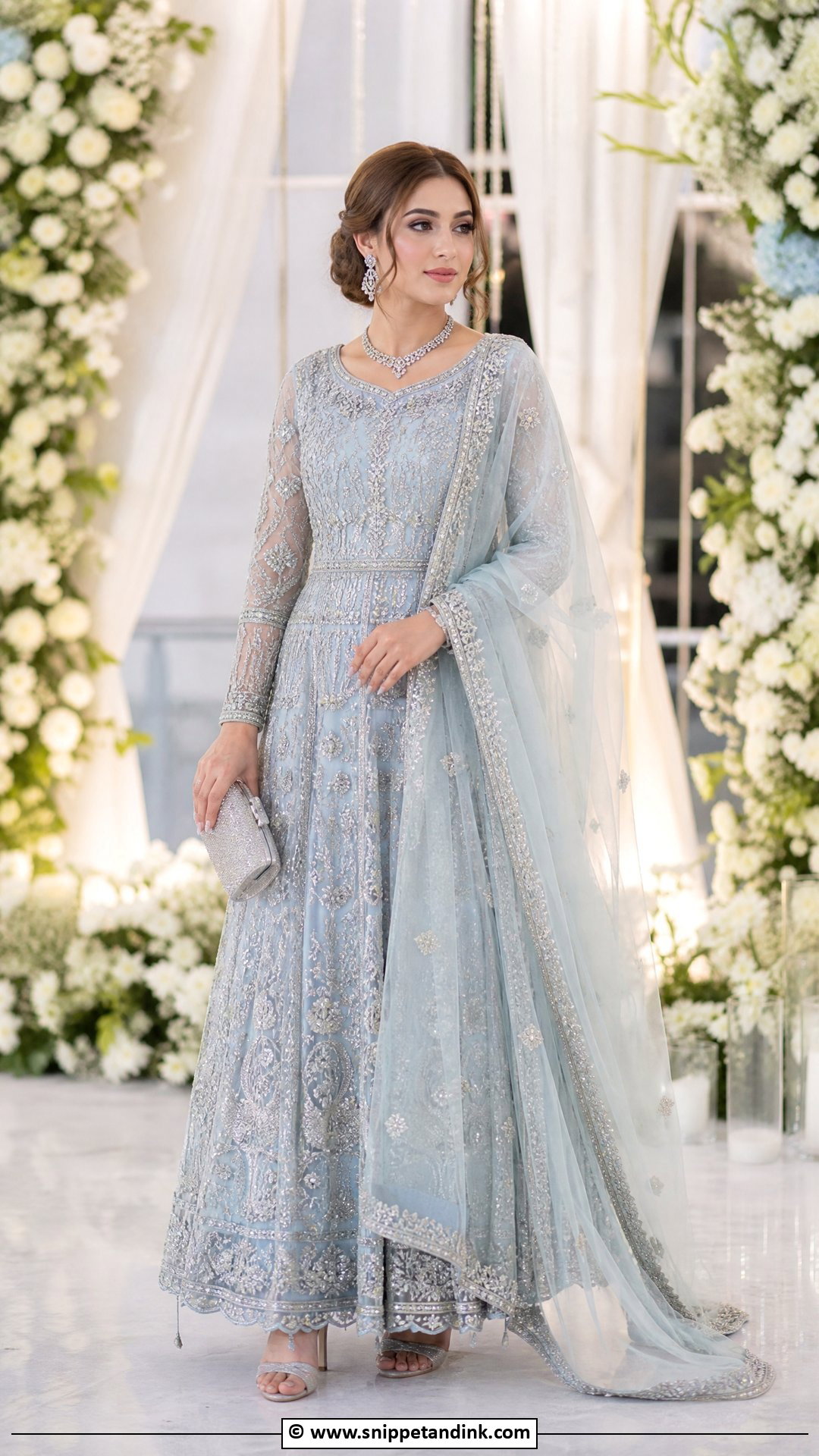
Walima outfits usually lean softer than the baraat, so silver, champagne, ice blue, lavender, blush and sage are typical. A long gown with delicate embroidery and a net dupatta looks graceful. Beadwork, pearls, sequins or tonal threadwork keep it refined. Gowns need a smooth inner lining and the right undergarments, which I’d plan at the first fitting rather than the last. Crystal jewelry and soft heels finish it for brides, sisters or formal guests.
22. Pakistani Eid Dress With Embroidered Dupatta
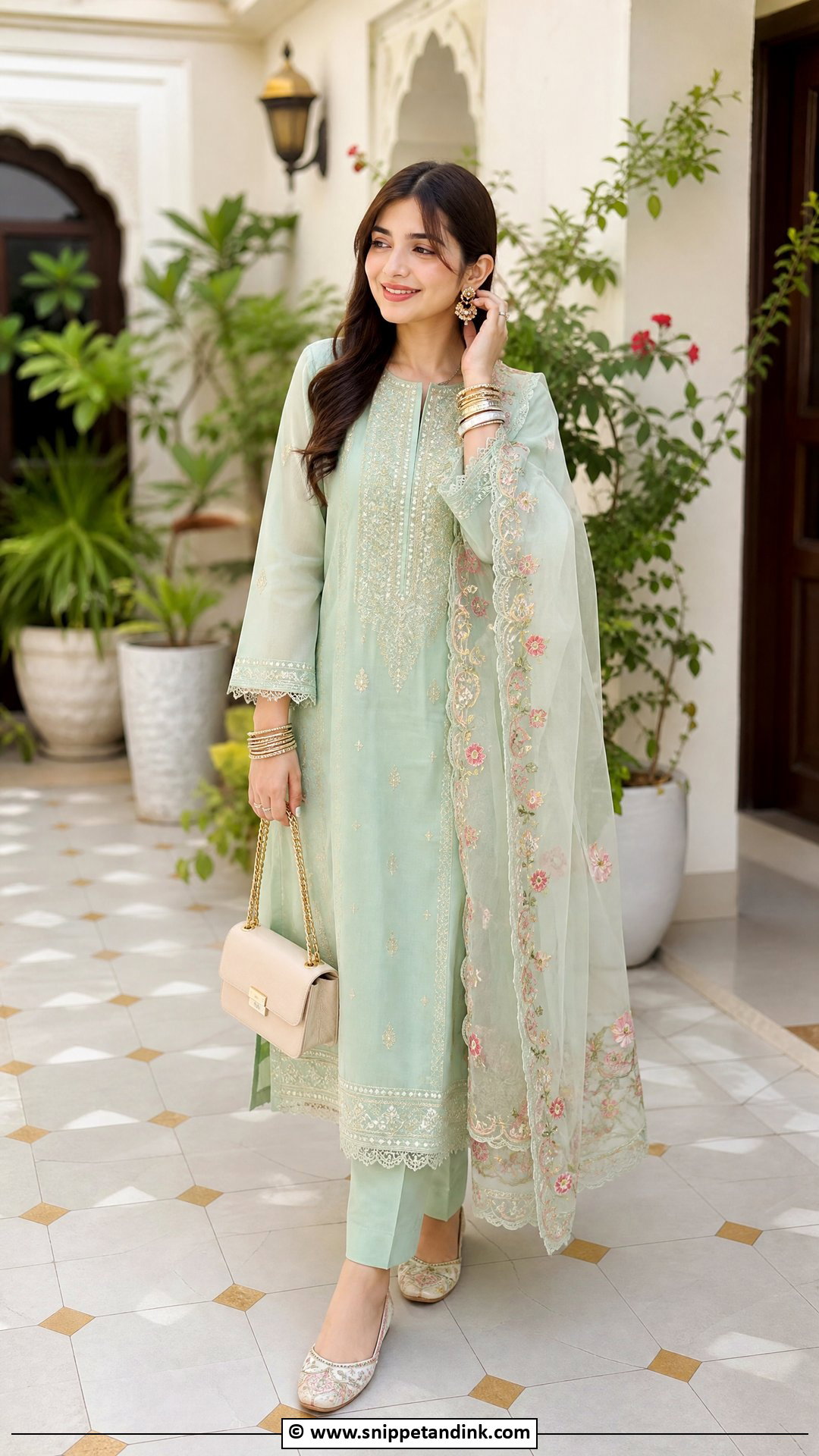
A Pakistani Eid dress with an embroidered dupatta looks festive without being heavy. Underneath, a straight shirt with trousers, a long kameez with shalwar or a soft frock all work. Mint, peach, lilac, ivory, lemon or rose suit daytime gatherings. Eid involves a lot of visiting, sitting and hugging, so I keep the fabric soft and the embroidery off the inner arms. Khussas and light earrings suit the day.
23. Pakistani Party Wear Suit With Sequins
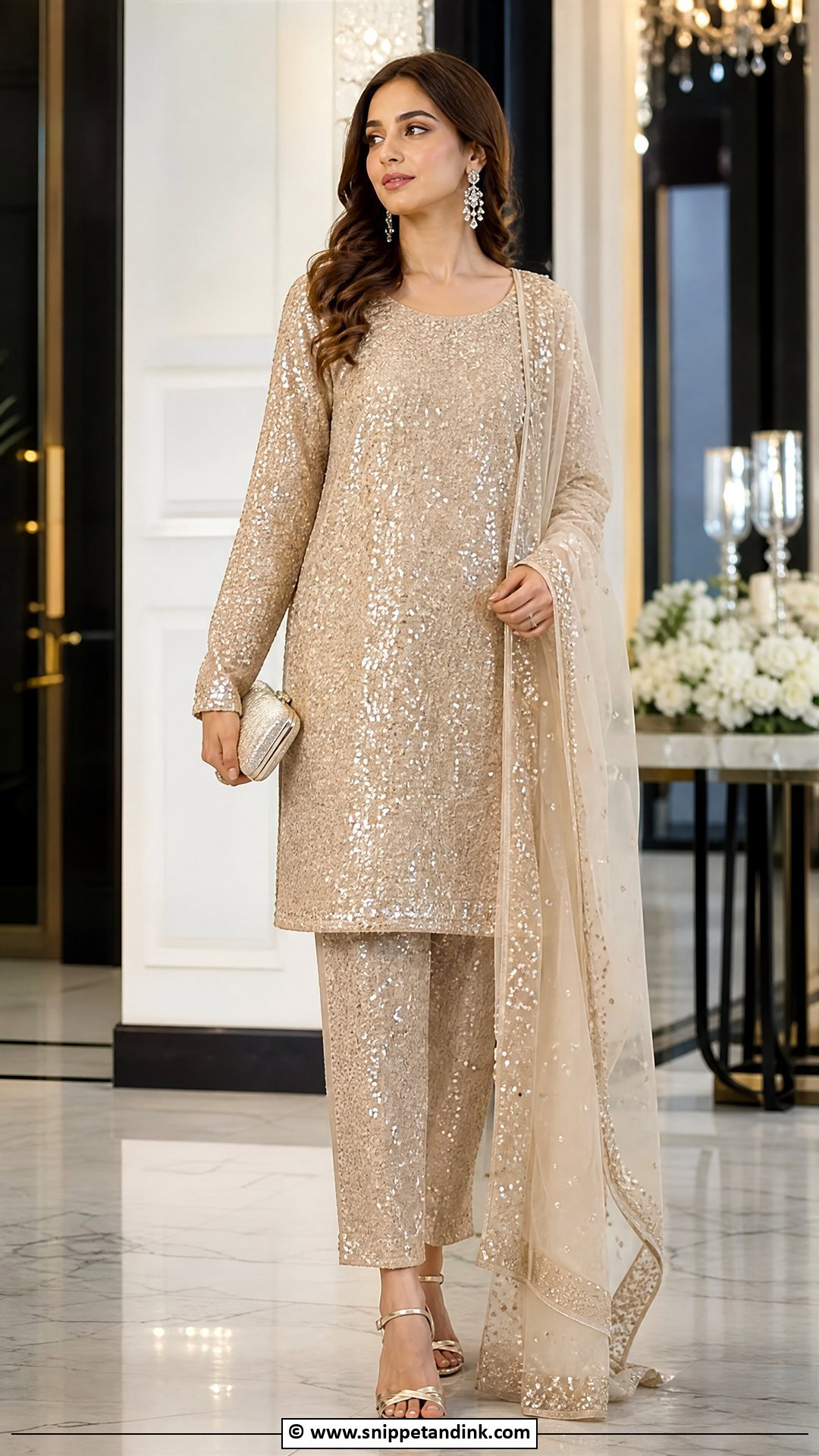
Sequins give sparkle without a bridal-weight outfit. A straight shirt with scattered sequins, matching trousers and a chiffon dupatta looks festive and modern. Black, navy, emerald, champagne, mauve or silver suit evenings. Dense sequin work scratches the inner arm and snags chiffon dupattas, so keep sequins on the front and lower sleeves. Skip heavy necklaces; metallic heels and earrings that catch light are enough.
24. Pakistani Formal Shirt With Palazzo Pants
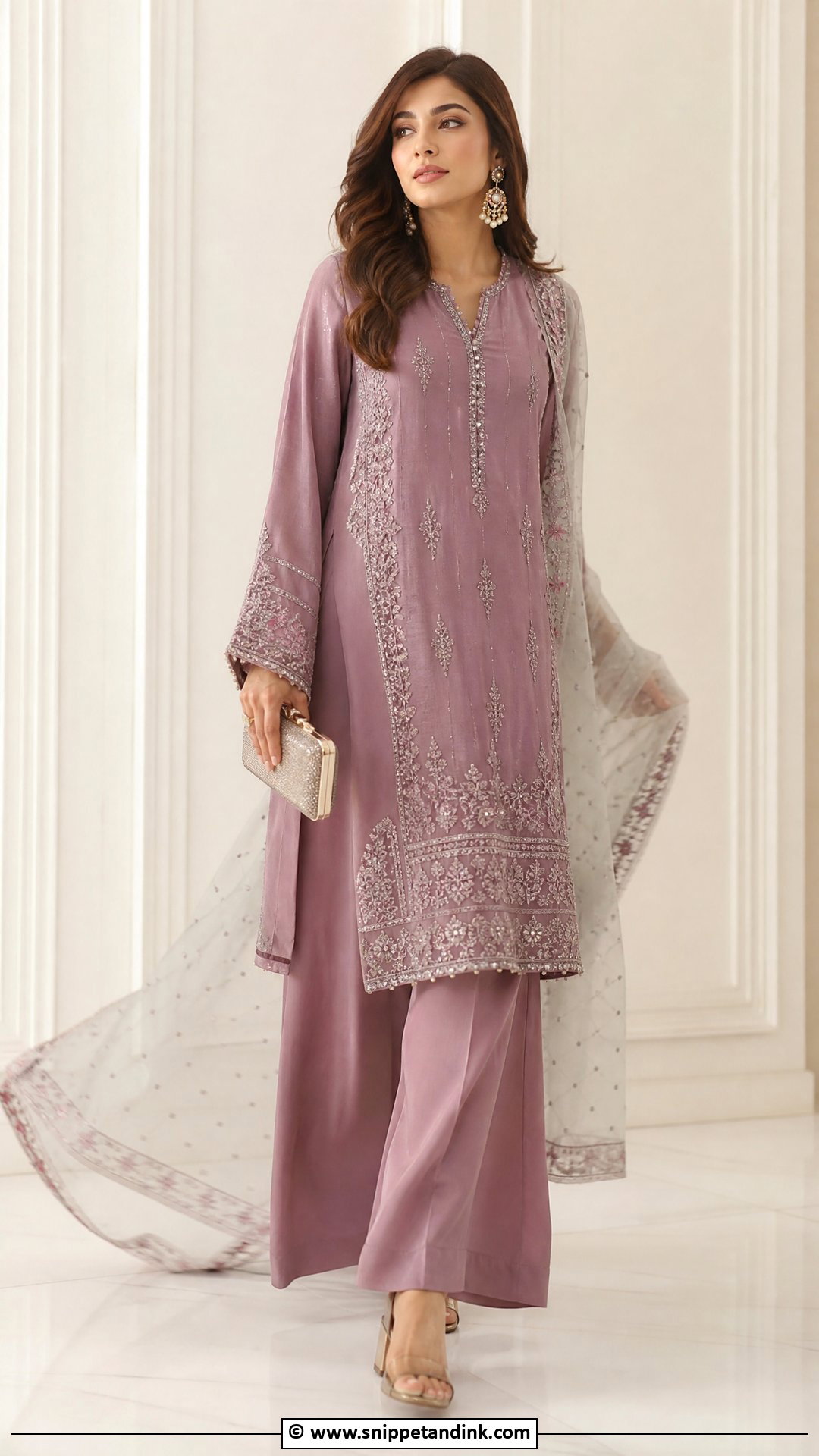
Palazzo pants feel airy and move well, while a formal shirt keeps the outline structured. Long embroidered shirts, short embellished tops or asymmetric hems all work. Silk, chiffon, organza and raw silk make it formal. Hem palazzos in the shoes you’ll wear; block heels or wedges help them fall smoothly. A light dupatta adds balance at family events.

25. Pakistani Kaftan Dress With Trousers
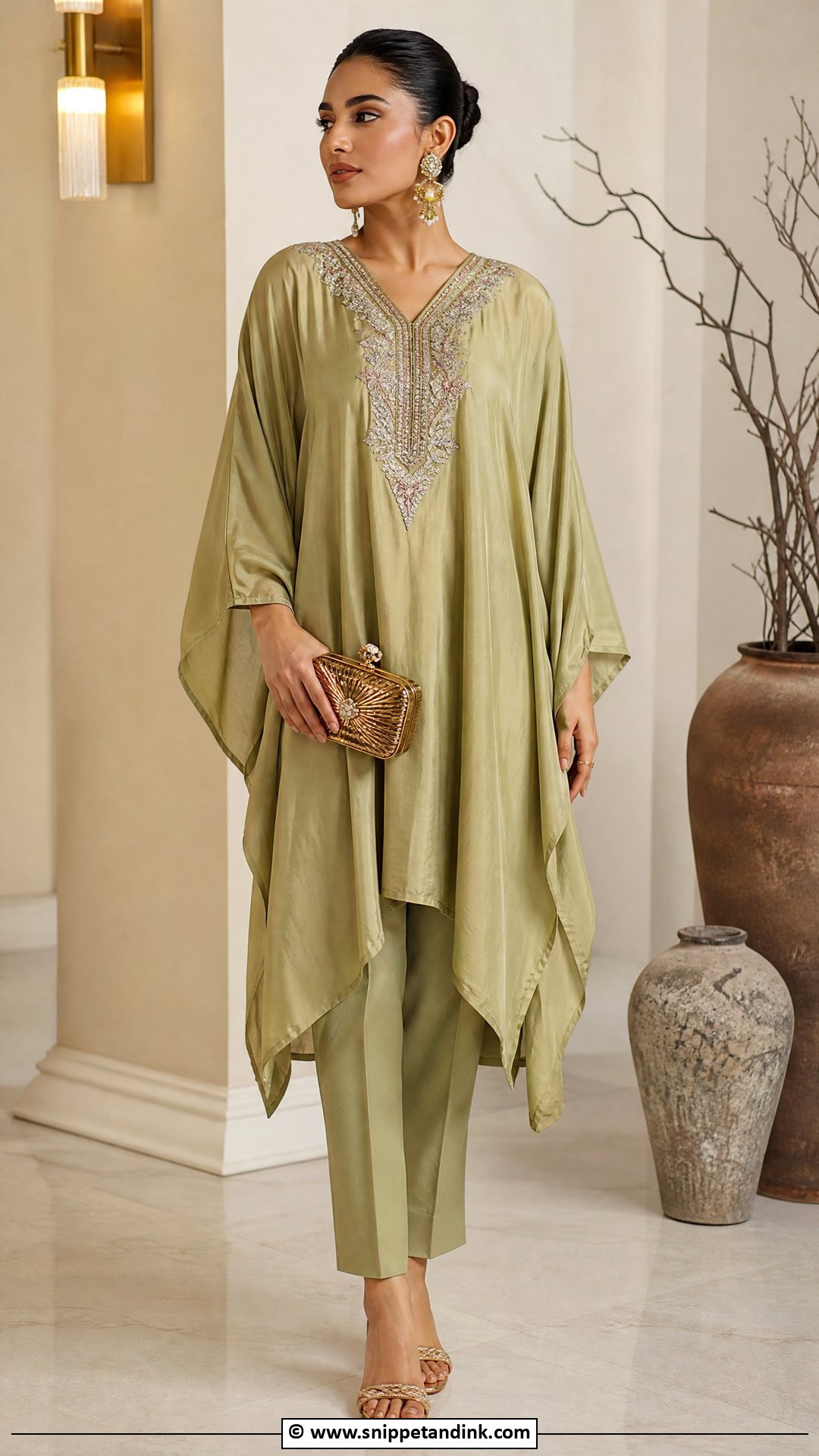
A loose kaftan over slim trousers is the comfortable option on a long evening. Silk, crepe, chiffon or lawn depending on the event. Embroidery at the neckline, sleeves or side panels dresses it up. The volume needs control below, so slim trousers are a must; wide ones make the whole outfit look oversized. Heels and bold earrings for dinners, flats for daytime Eid visits.
26. Pakistani Fusion Kurti With Jeans
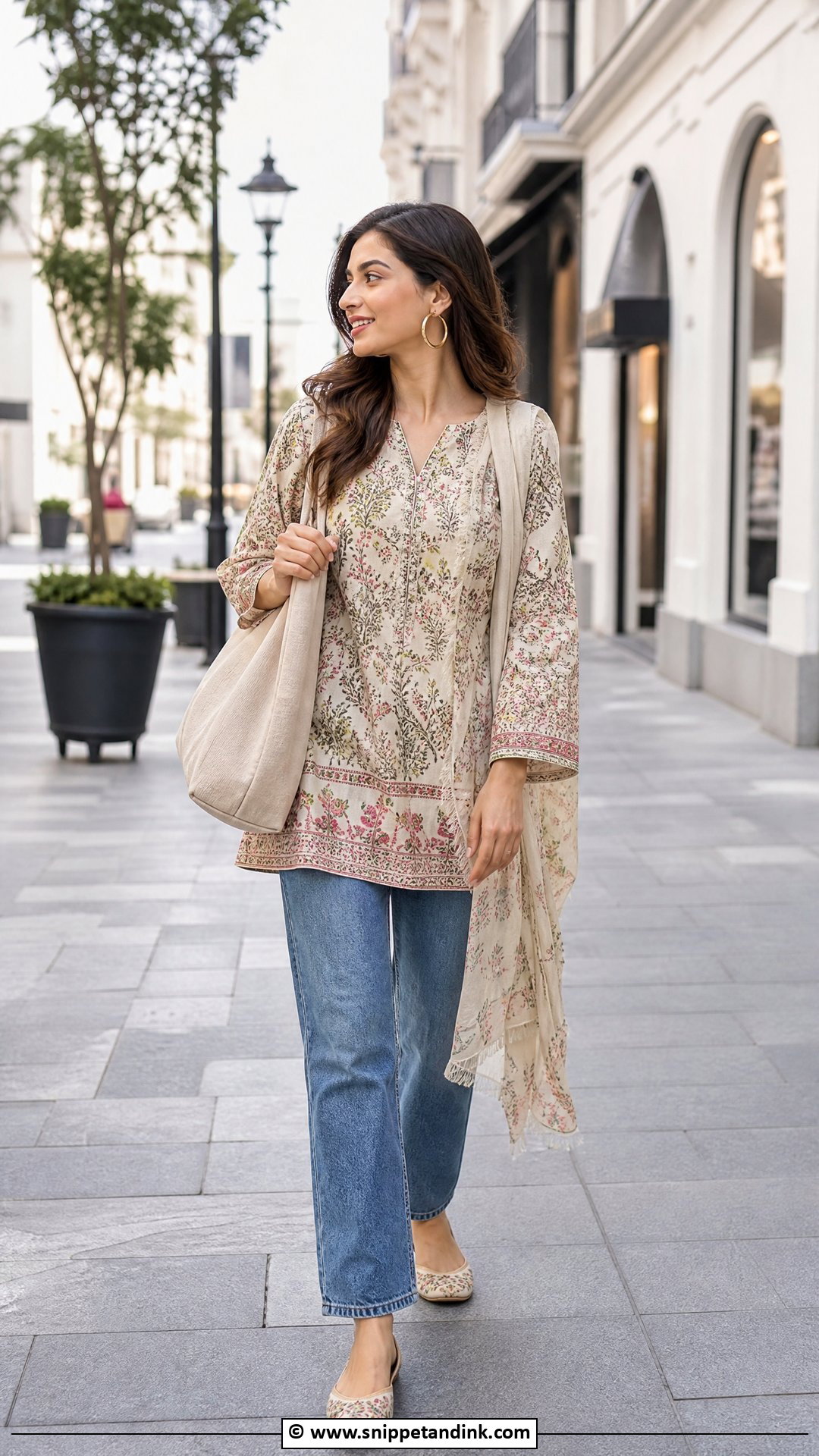
A short or mid-length kurti over jeans is how many of us wear tradition day to day. Straight-leg, bootcut or slim jeans all work. Printed cotton, embroidered lawn or textured fabric suits the kurti. I’d keep the kurti length at mid-thigh or shorter with jeans; anything longer starts to look like a missing shalwar. Sneakers, flats or khussas depending on your plans.
27. Pakistani Long Shirt With Wide Leg Pants
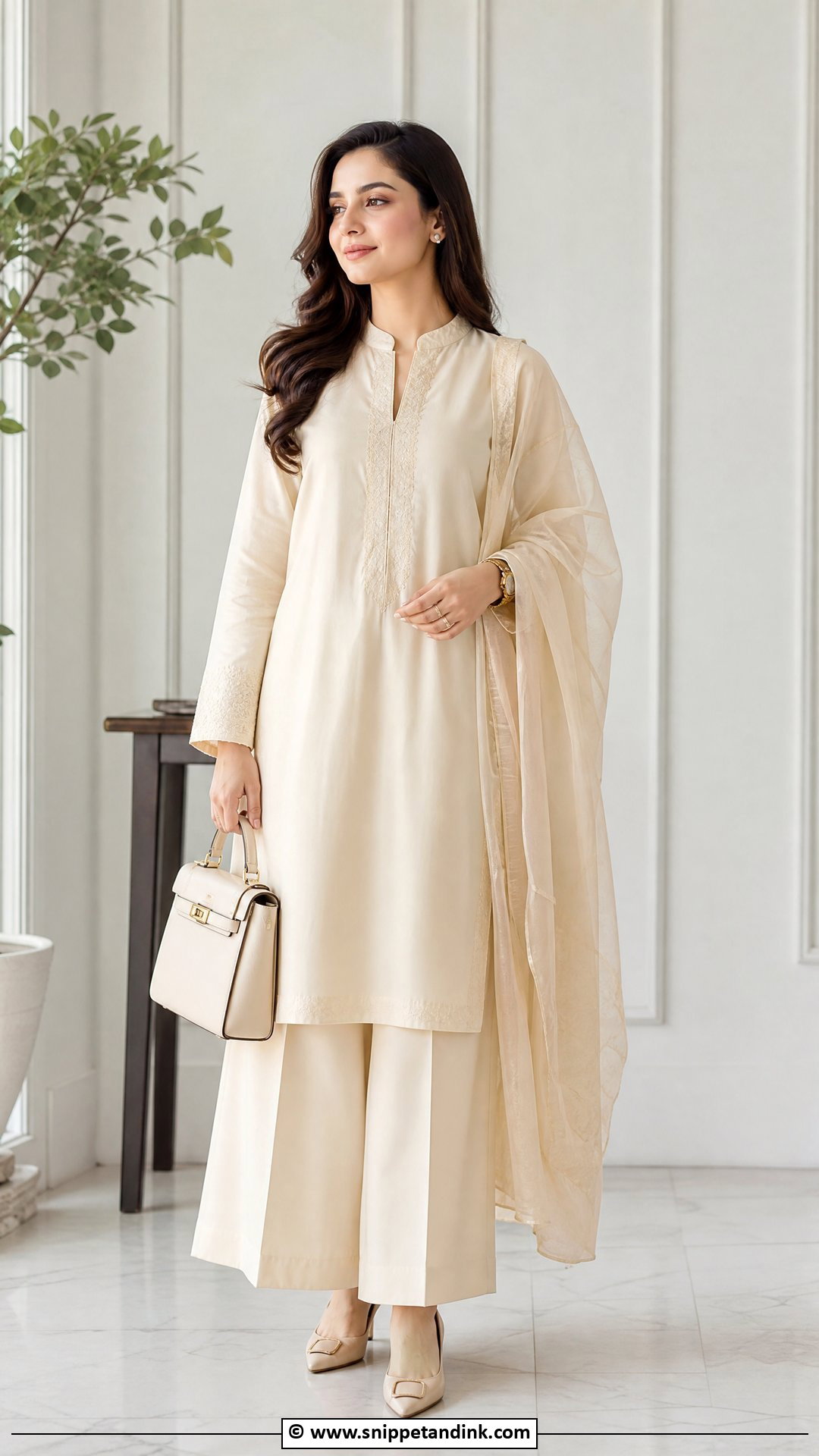
A long shirt creates vertical lines and wide pants add movement, so the pairing is modest and flattering when tailored well. Solid colors look minimal; embroidered fabric looks formal. Side slits let the pants show and stop the outfit from looking heavy. I’d have the slits start at hip level and no higher if you’ll sit on low seating at family events. Pointed flats or khussas, and a soft dupatta.
28. Pakistani Short Kurti With Farshi Shalwar
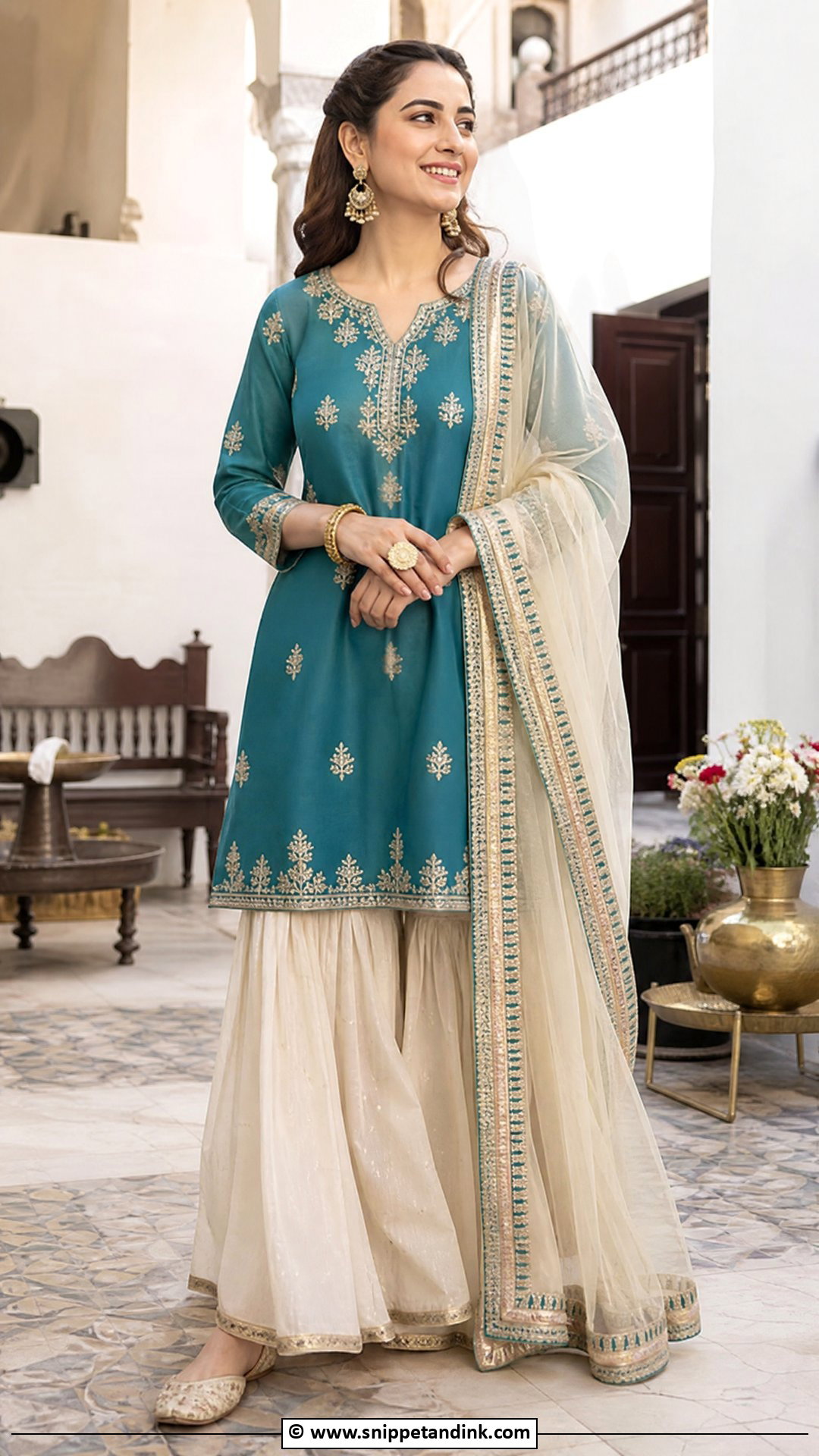
The farshi shalwar has a vintage charm that has come back: very wide, falling to the floor and pooling slightly. A short kurti shows off that fall. Cotton, silk, jacquard or lawn changes the formality. Farshi needs careful walking, since the extra length catches on heels; khussas are the right shoe here, both for the old-world feel and because they keep you clear of the hem. A dupatta with lace or a border completes it.
29. Pakistani Two Piece Suit With Statement Earrings
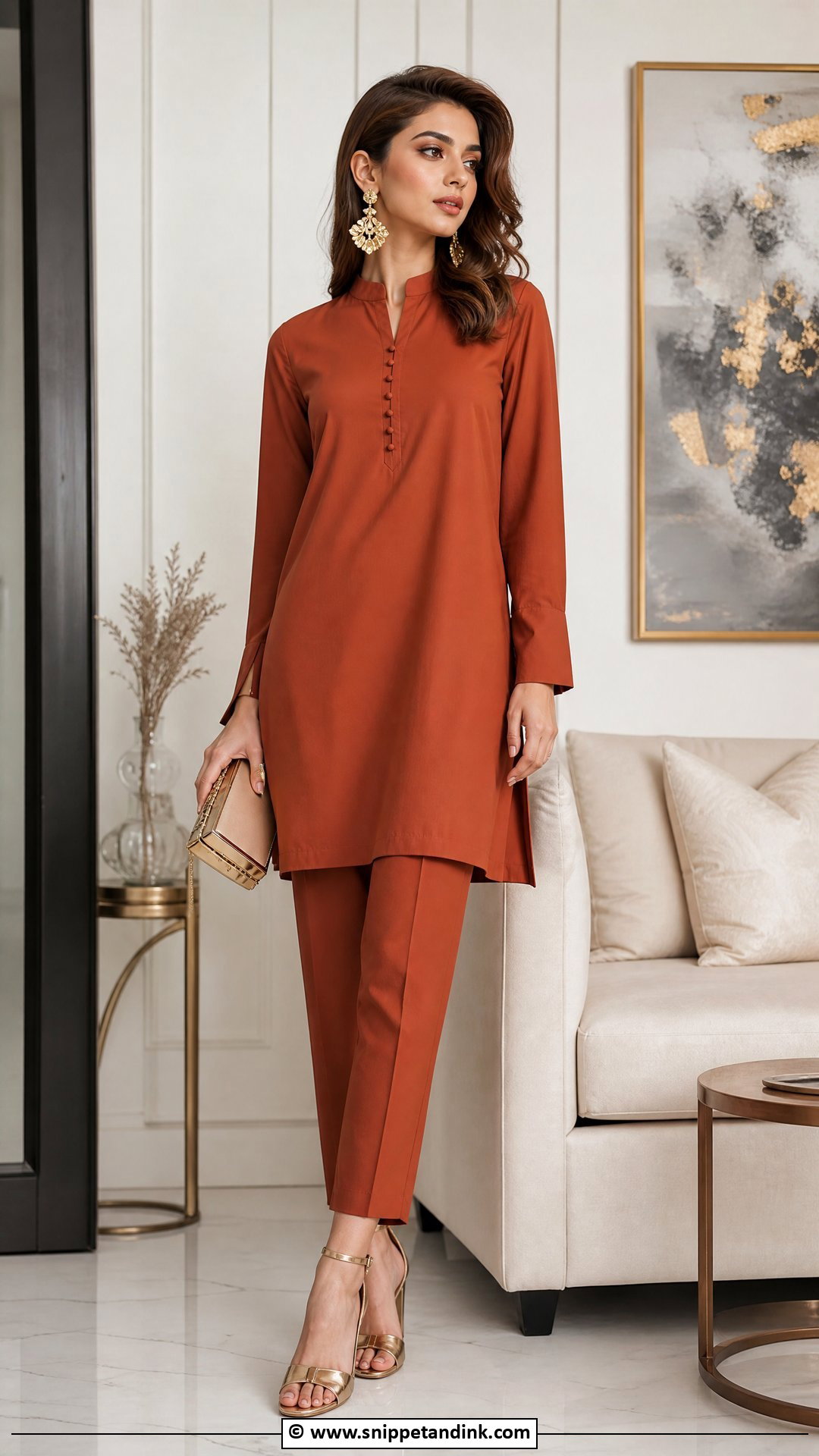
Going without a dupatta asks more of the shirt and trousers. The fit has to be clean, or the outfit looks unfinished. Strong colors, textured fabric or neckline embroidery help. Statement earrings frame the face and supply the festive note. Before you skip the dupatta, check the event; many family occasions and religious functions still expect one, so I’d carry a light stole just in case.
30. Pakistani Three Piece Suit With Chiffon Dupatta
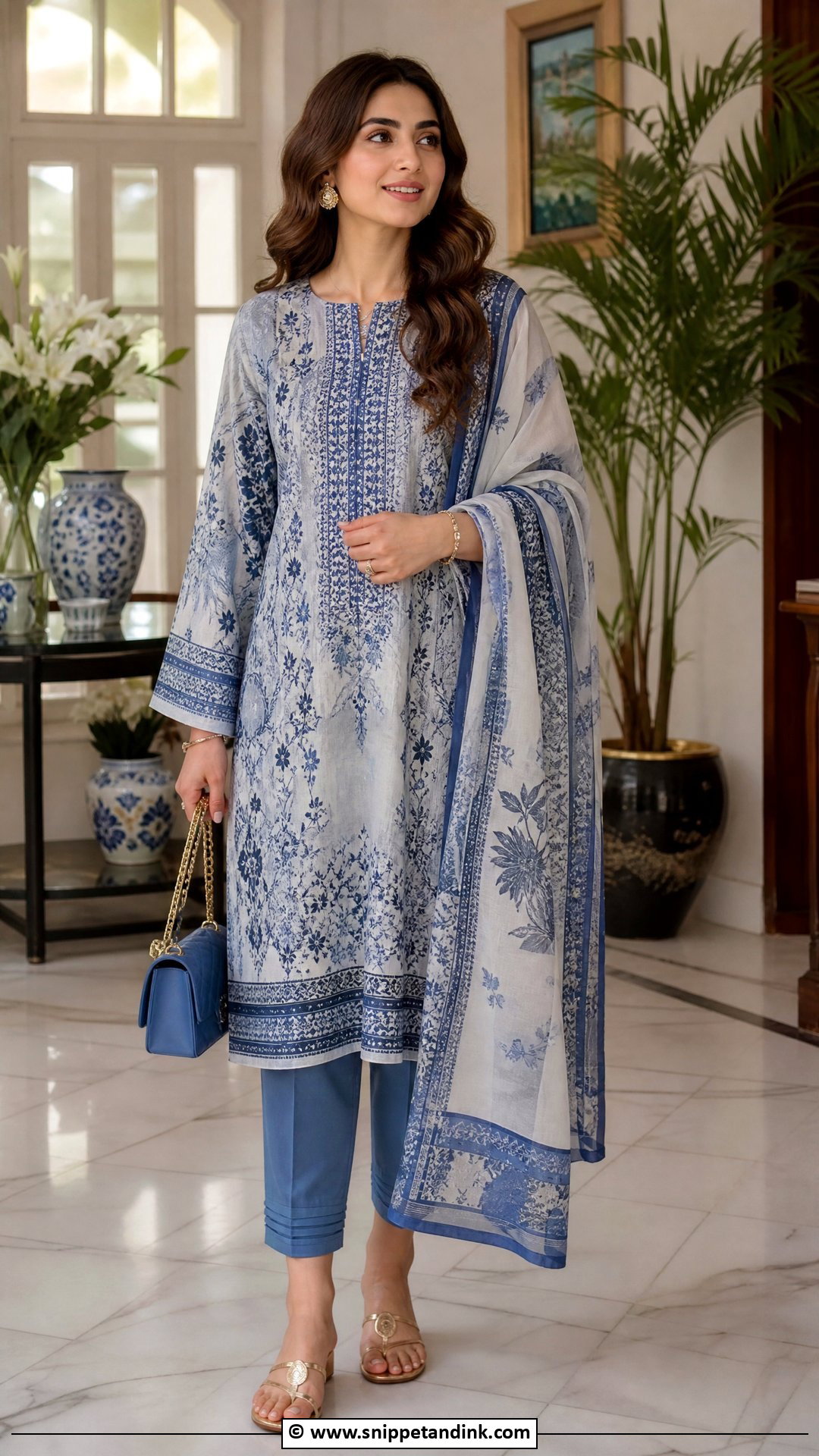
Shirt, trousers and a chiffon dupatta make the most dependable outfit in Pakistani dressing. Chiffon drapes softly and adds movement without bulk. Printed lawn for casual, embroidered cotton for semi-formal, silk blends for dinners. The trouser cut follows the shirt length: shorter shirts suit straight or cigarette pants, longer ones handle a slightly wider leg. Make sure the chiffon dupatta edges are finished with a pico or lace so they don’t fray after a few wears.
31. Pakistani Mirror Work Suit For Festive Wear
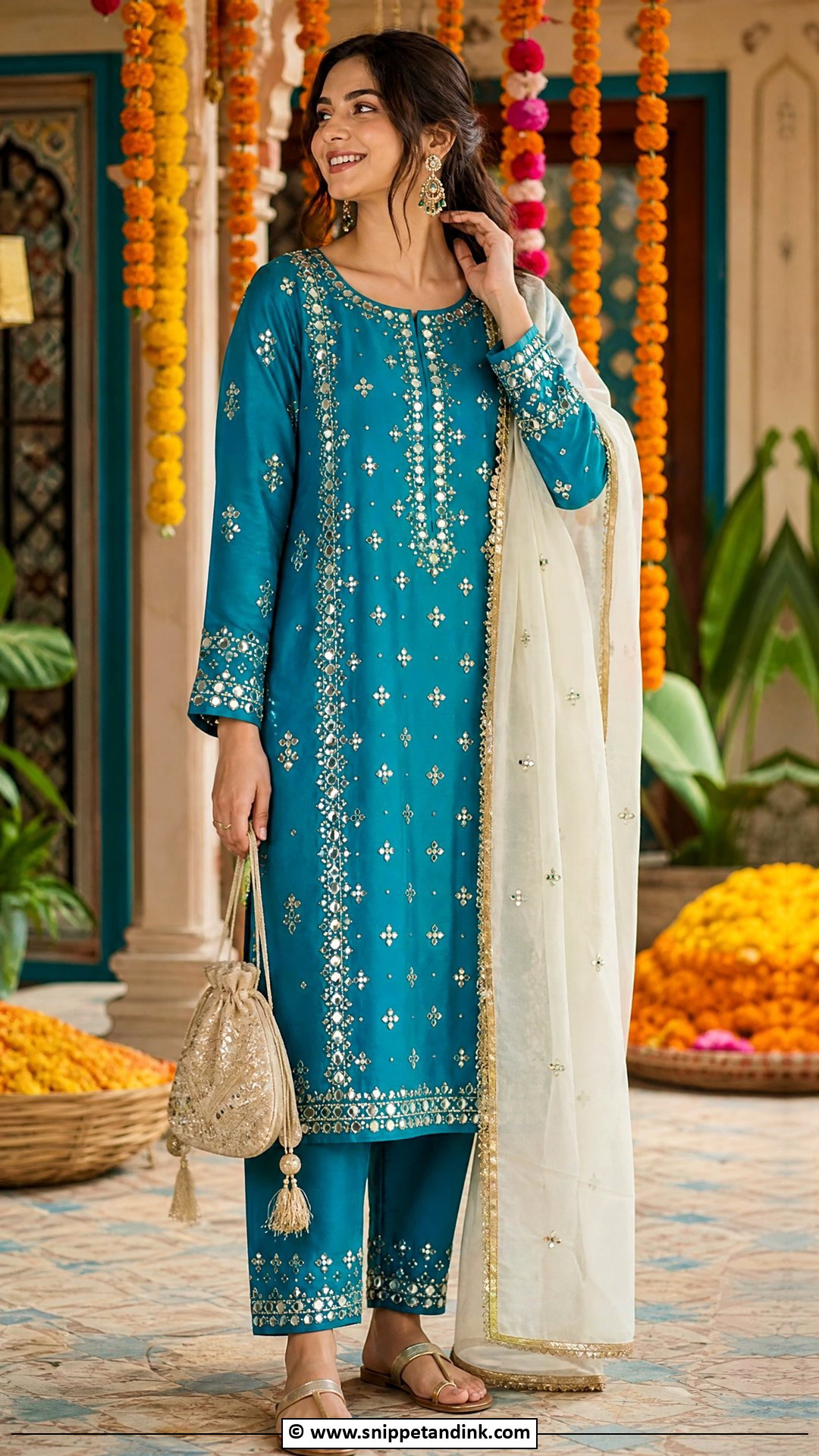
Mirror work, small glass pieces stitched into embroidery, adds sparkle and celebration. It sits well on cotton, georgette, chiffon and silk. Keep it around the neckline, sleeves and hem for a wearable festive look. Yellow, teal, pink, orange and green make it playful. Mirrors have edges, so check the backing on the inside is smooth, especially at the neck. Simple jewelry, khussas or metallic sandals.
32. Pakistani Banarsi Suit With Plain Dupatta
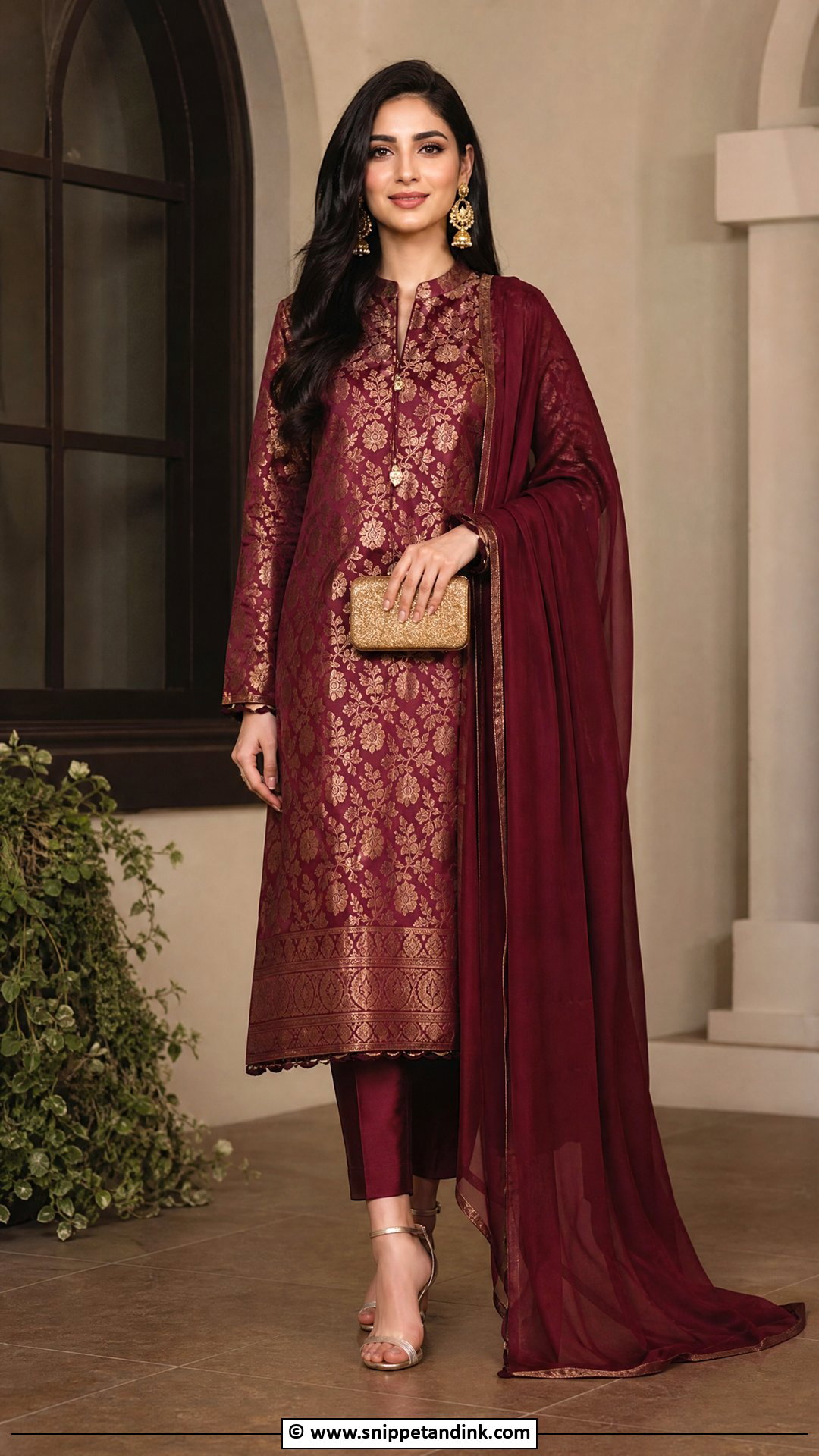
Banarsi fabric is a brocade with patterns woven in, often with zari, so it looks luxurious without embroidery. A Banarsi shirt with plain trousers and a simple chiffon or organza dupatta keeps balance; Banarsi trousers with a plain kameez is the softer version. Maroon, emerald, navy, mustard and plum glow in it. Brocade is stiff and frays at cut edges, so ask your tailor to finish seams properly. Gold earrings and a small clutch.
33. Pakistani Cape Dress With Straight Pants
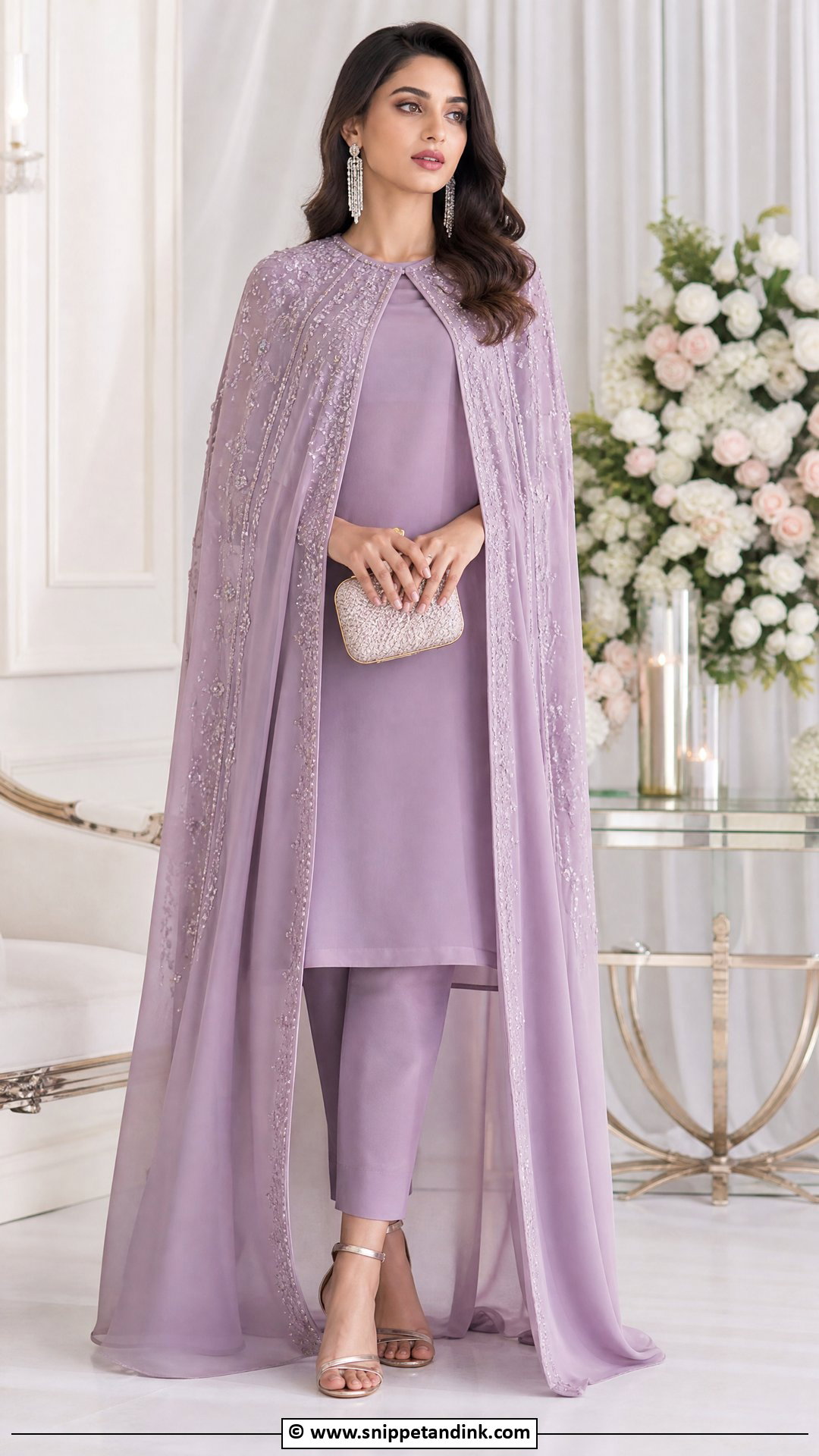
A cape over a straight shirt and slim pants gives drama and coverage at once. Chiffon, net, organza or silk with light embroidery or beadwork on the cape edges suits receptions. Keep the shirt and pants simple because the cape already moves. Check how the cape attaches; one sewn in at the shoulder stays put, while a loose one slides back when you hold a plate. Long earrings and heels finish it.
34. Pakistani Jacket Dress With Trousers
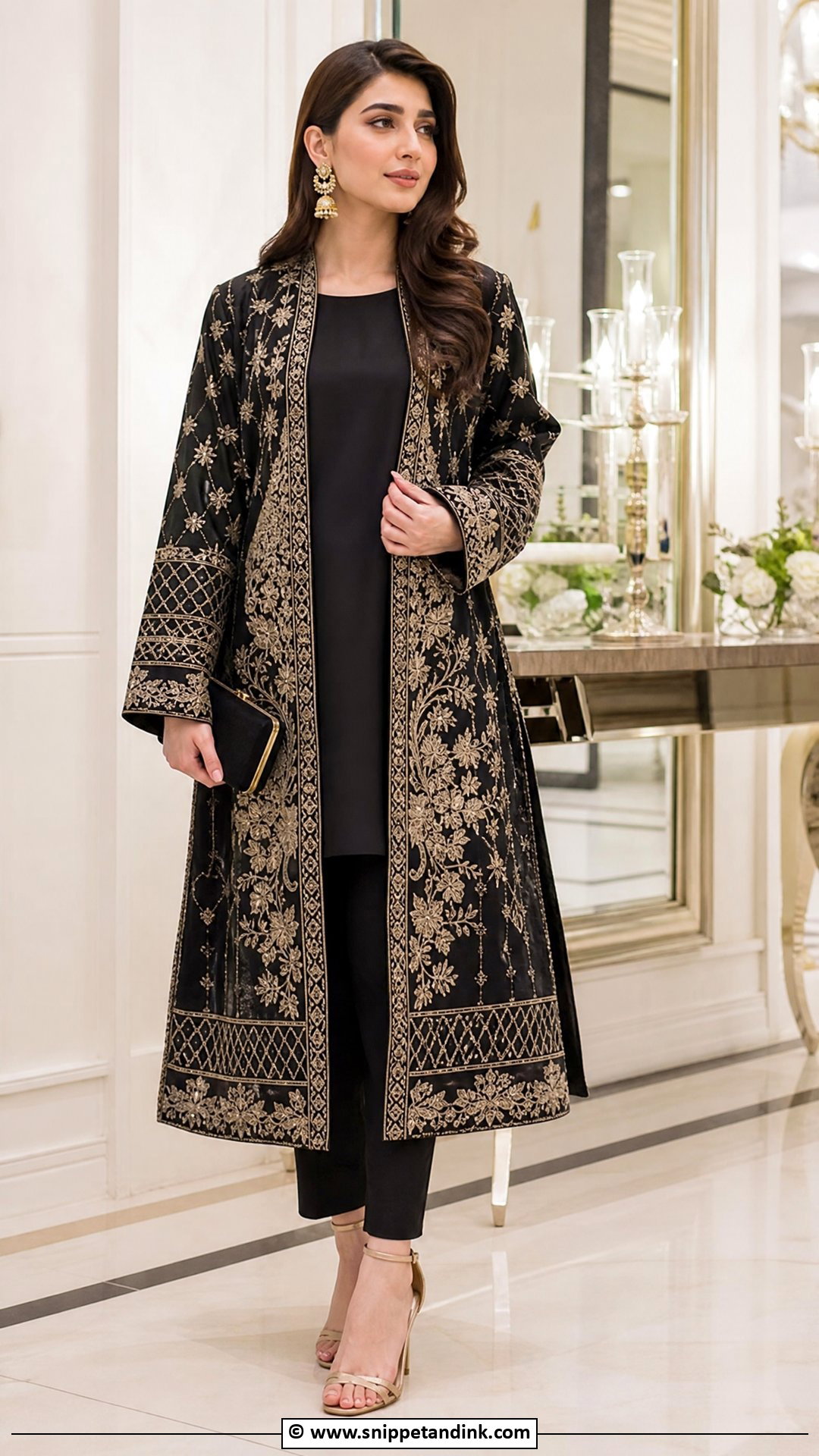
Layering a jacket over a plain inner shirt looks polished and modest at once. The jacket carries the embroidery, print or embellishment. Long jackets suit straight pants; shorter ones go with cigarette pants or palazzos. Raw silk, velvet, organza or jacquard dress it up. In a warm hall, a jacket gets hot, so I’d choose a sleeveless inner shirt underneath. Winter events and receptions suit it.
35. Pakistani Ready To Wear Suit For Daily Wear
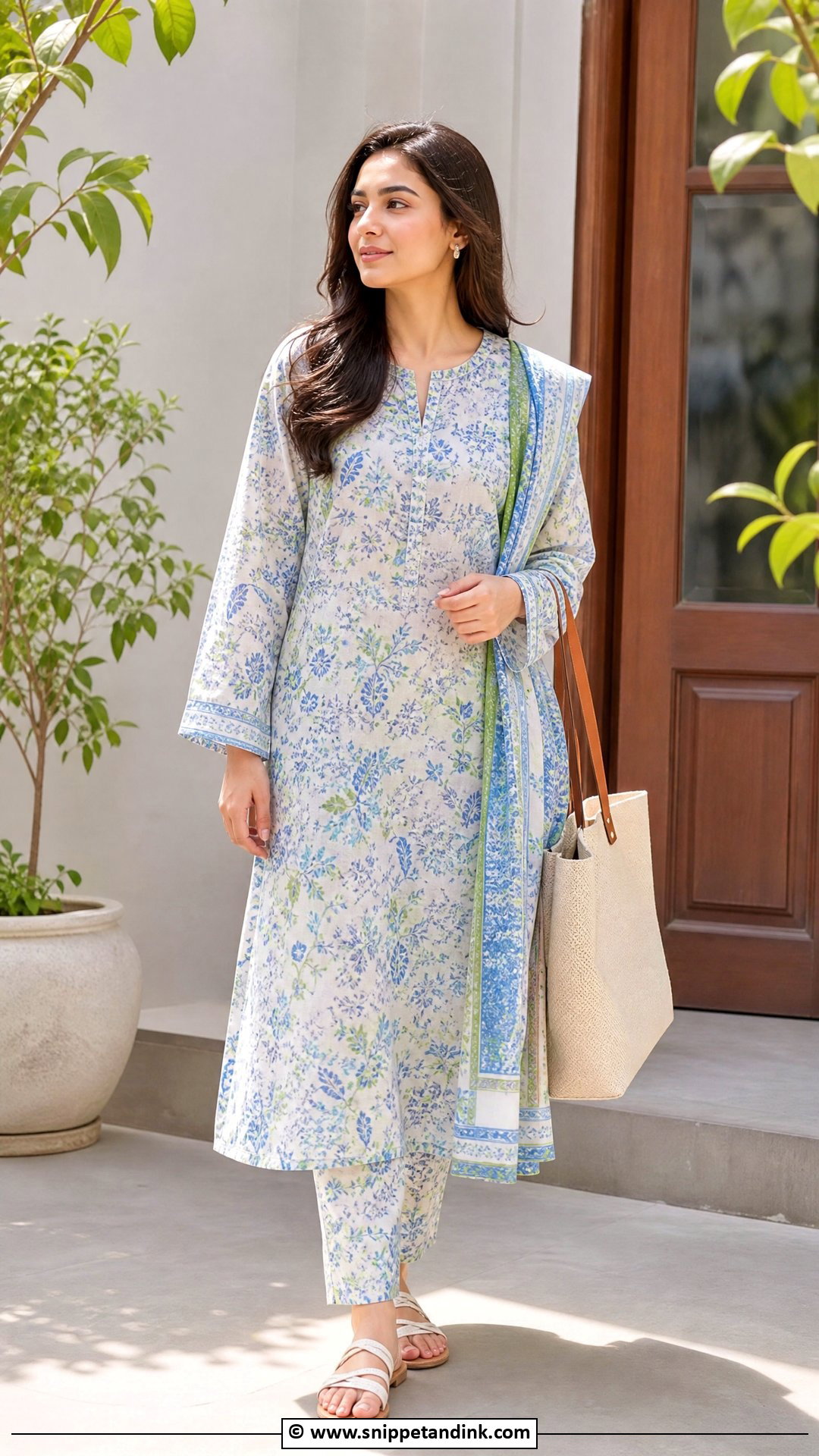
Ready-to-wear saves the tailor’s queue and still looks put together. Check stitching and seam allowances before buying: good pieces leave enough fabric in the side seams to let out later. Lawn, cotton, cambric or linen blends suit daily wear. Straight shirts with trousers are the most versatile. Neutral colors repeat well, bright prints carry summer. Flats, simple earrings and a light dupatta.
Unstitched Suits Need a Tailor and Time
Much Pakistani formalwear is bought unstitched, as fabric for shirt, trousers and dupatta. That gives you control over the cut, but tailors get very busy before Eid and through the winter wedding season. I’d hand fabric over several weeks before you need it, and longer for heavy formals.
- Bring a shirt that already fits you well, so the tailor can copy its measurements.
- Ask for extra seam allowance at the sides; it lets you alter the outfit later.
- Decide on linings for sheer fabrics like organza and pale lawn before cutting.
- Agree on sleeve length and neckline depth in writing, since these are the hardest to fix afterward.
Pinning a Dupatta So It Stays Put Through Dinner
A heavy dupatta slides as soon as you reach for a plate. I pin it in two places: one small safety pin hidden under the fold at the shoulder, and a second at the back of the shoulder blade if it’s draped across both arms. On a head-covered nikkah look, a couple of fine pins into the hair underneath hold it better than any clip. Pin through the dupatta’s border, not the open net, which tears easily.
One Wardrobe, Many Functions
Pakistani clothing gives you comfort and tradition in more forms than almost any wardrobe I know. A lawn suit handles daytime, and velvet, a sharara, a gharara or an embroidered maxi carries formal nights. Your occasion, fabric, color and comfort decide the rest. Good tailoring and accessories that support the outfit matter more than adding more embellishment. From everyday ready-to-wear to a bridal lehenga, dress for what the event asks and what you can move in.
You'll Like These Ideas:


Leave a Reply