
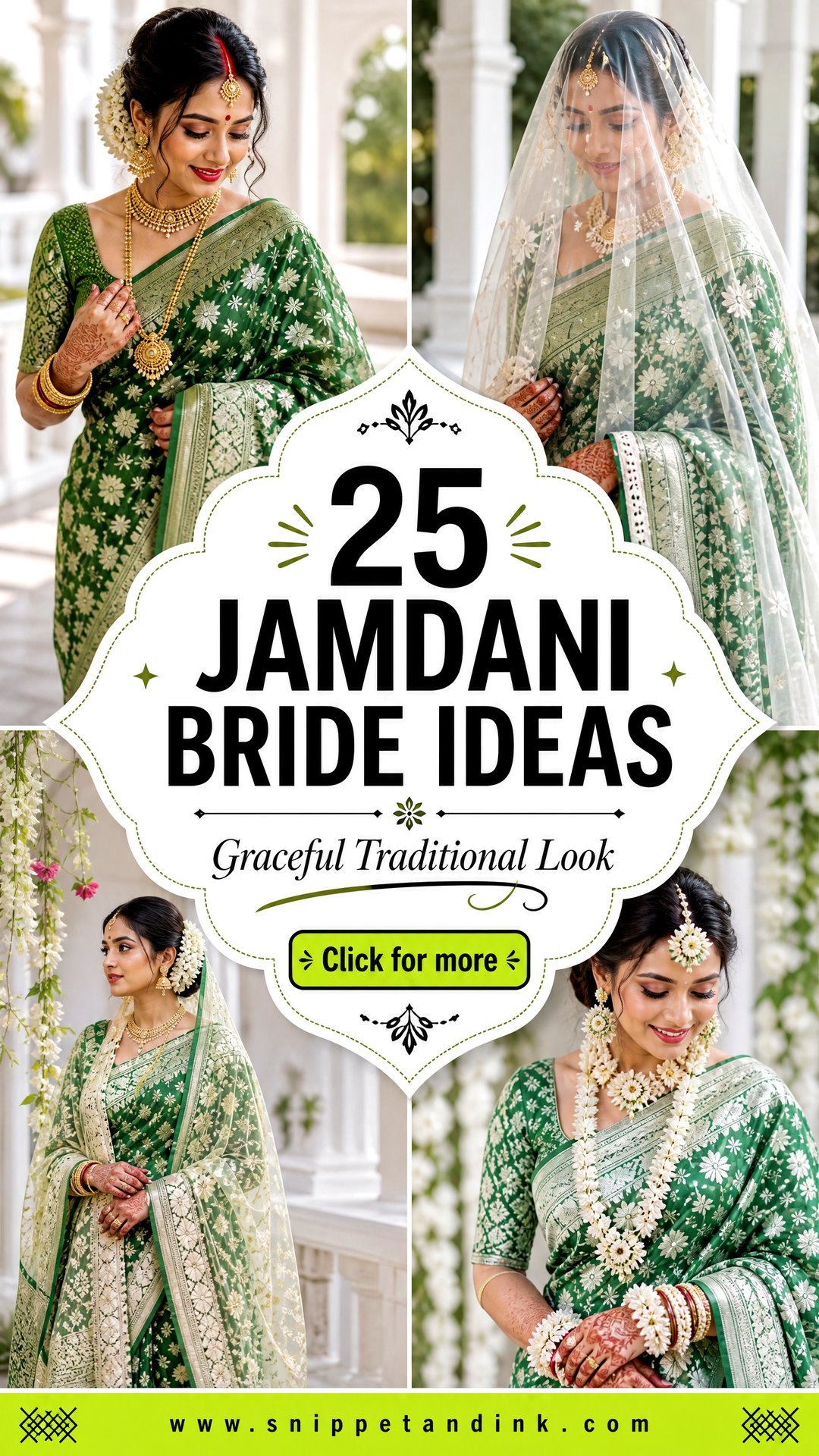
Jamdani is woven, not decorated. The motifs are worked into the cloth on the loom, one supplementary thread at a time, which is why a good piece feels almost weightless and still carries detailed pattern. That lightness is the reason I reach for it with brides who dread a heavy silk drape in warm weather. It can read classic in red and gold, quiet in ivory, bright in yellow or soft in pastel, and the blouse, jewellery and hair decide which. For a Bengali wedding, another South Asian ceremony, a reception or a pre-wedding ritual, the 25 looks below show how I’d style it and what to watch for in each.
Handloom or Powerloom? Spotting a Genuine Jamdani Before You Buy
Jamdani is one of the most copied weaves in South Asia, and bridal shopping is where I see brides pay handloom prices for machine copies. The technique itself is the giveaway. On a handloom piece, each motif is woven in by hand with extra weft threads as the cloth is made, so the motif is part of the fabric. Machine imitations usually lay the pattern thread across the back in long floats that are then trimmed.
- Turn the saree over. A handwoven motif looks tidy on the reverse, close to the front. Long loose threads or clipped floats suggest a powerloom copy.
- Look at the edges of each motif. Hand-inserted threads give tiny irregularities; machine motifs repeat with perfect sameness.
- Feel the weight. Fine cotton Jamdani is very light and slightly crisp. A heavy, slippery feel often means synthetic blends.
- Ask the weave time and the yarn count. A seller who knows the piece will answer without hesitation.
Prices vary widely with yarn fineness and motif density, so I’d compare a few pieces in person before committing. Handloom bridal sarees can take weeks or months to weave, so order early if you want a specific colour or border, and leave time for a blouse to be stitched after the saree arrives.
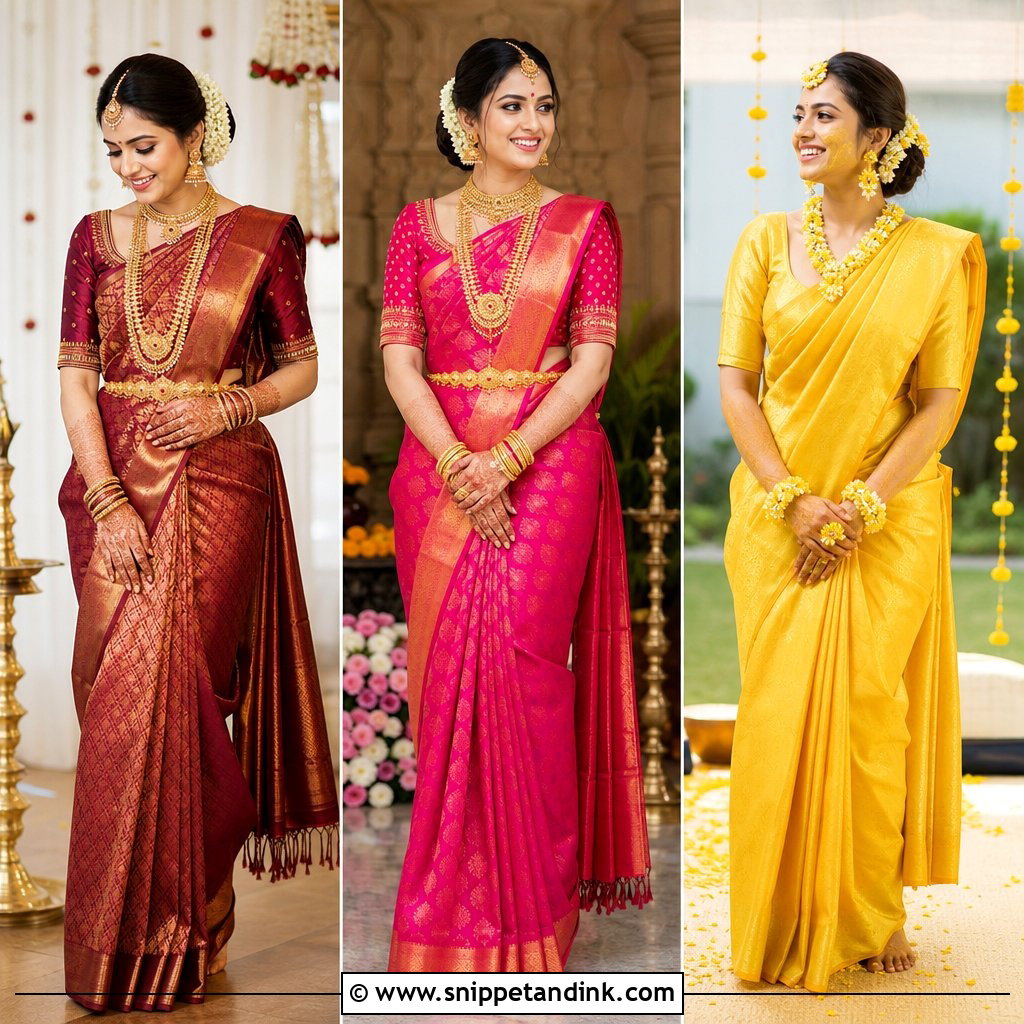
1. Red Jamdani Bride Saree
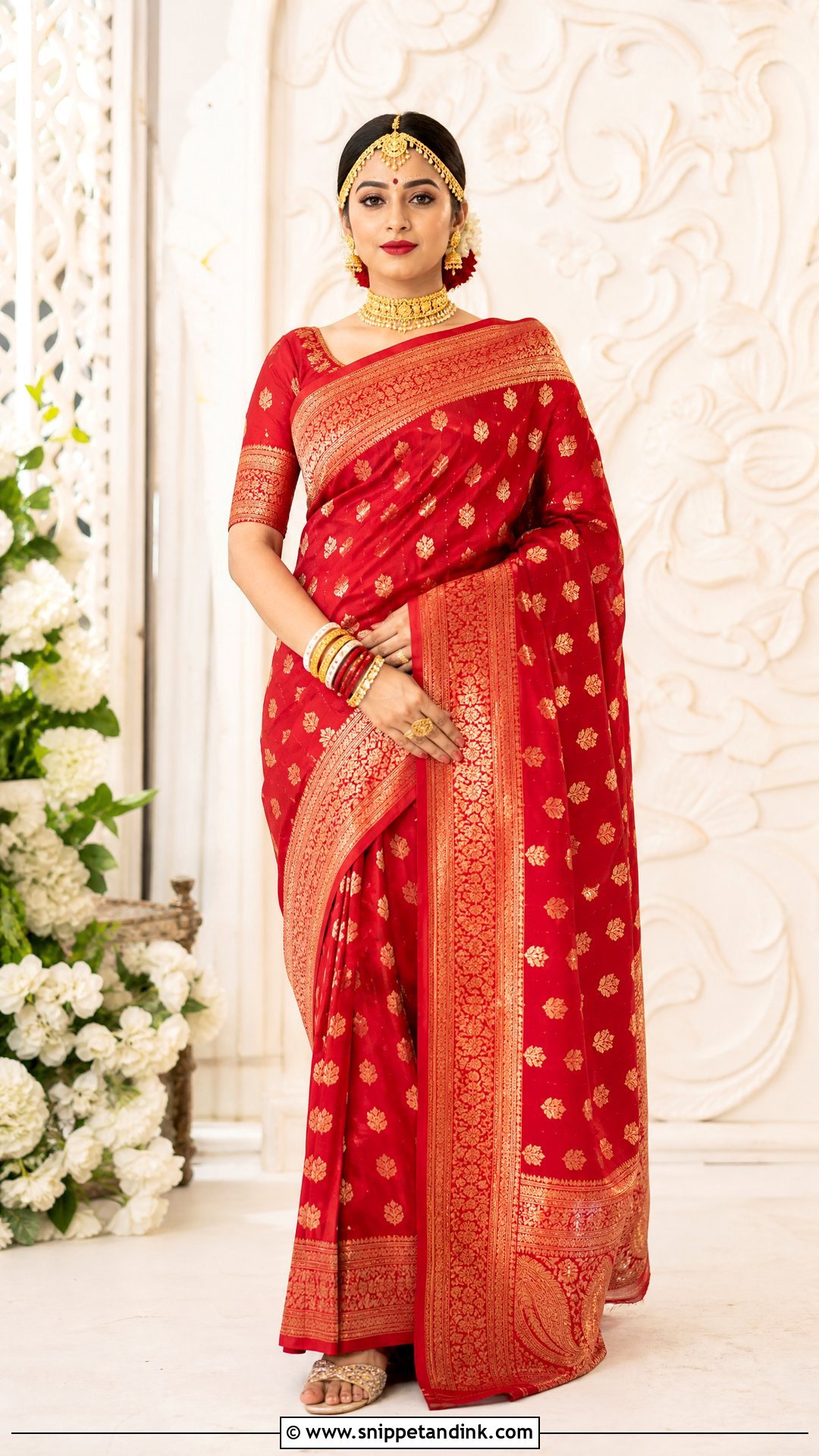
Red with gold motifs is the version most families picture. A deep red handwoven body with gold, ivory or self-coloured buttis looks rich without the stiffness of brocade. Because cotton Jamdani is so light, heavy temple jewellery can drag the pallu off the shoulder, so I pin the pallu to the blouse in two places before the choker and bangles go on. A matha patti adds a fuller bridal frame. A neat bun with flowers, defined eyes and a red lip complete it.
2. White And Red Jamdani Bride Saree
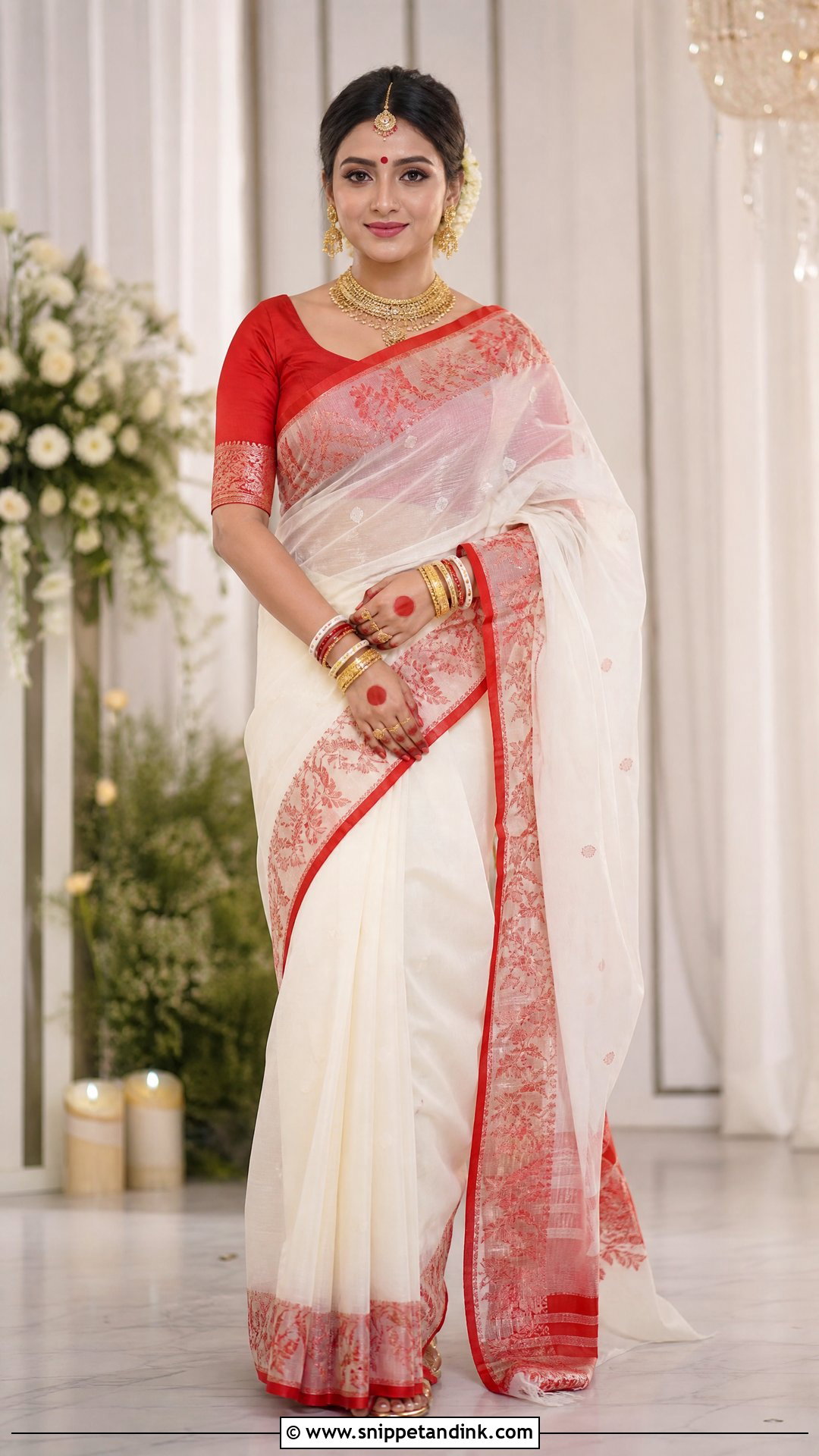
White with a red border has deep roots in Bengali bridal tradition, and it’s the drape I see brides choose most often for rituals where the family wants something close to the classic look. The white base keeps it light; the border carries the colour. A red blouse, gold jewellery, alta on the feet if it’s part of your custom, and a centre-parted bun with jasmine are the usual styling. A sheer red veil works if it’s lighter than the saree itself. One practical warning: red dye in handloom cotton can bleed onto white if the saree gets wet, so keep it away from water rituals.
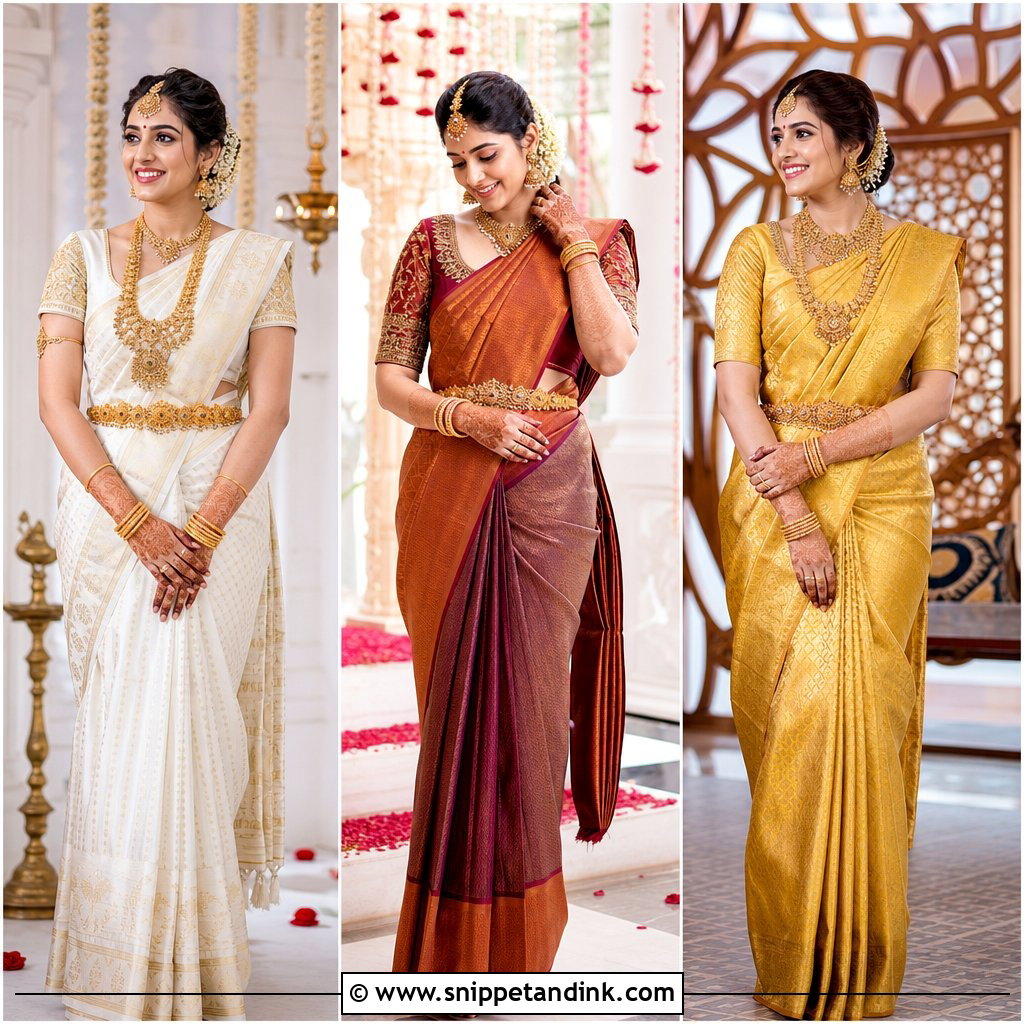
3. Ivory Jamdani Bride Saree
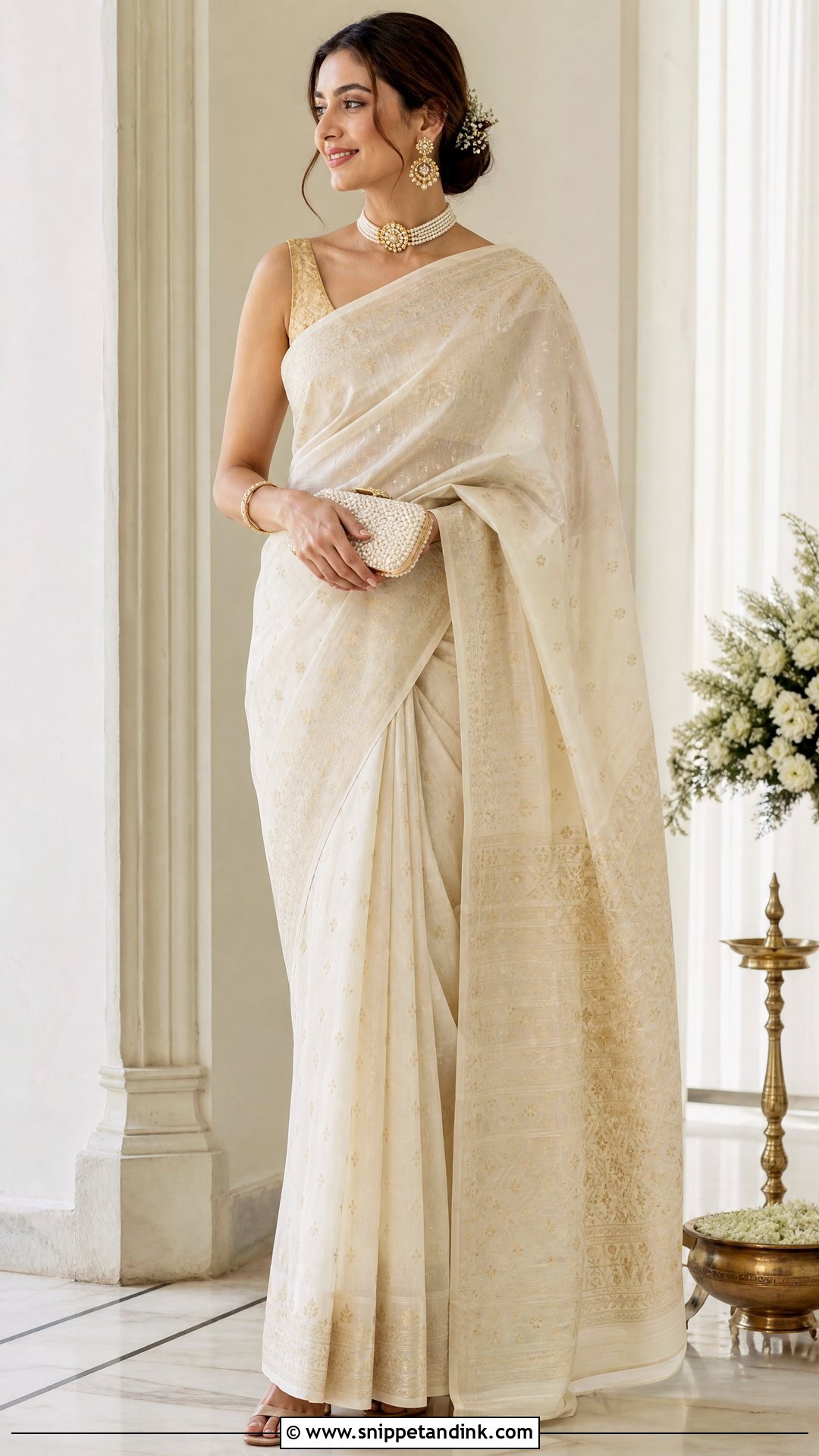
Ivory Jamdani with gold, silver or beige motifs is the quietest bridal choice and suits daytime ceremonies and small weddings. Ivory shows every mark, so I’d keep it for an event without turmeric, vermilion or food near the lap. A gold blouse, pearl choker, kundan earrings and thin bangles make it feel bridal. Sharp pleats and an open pallu show the weave best. Nude heels and soft rose makeup keep the palette calm.
4. Gold Jamdani Bride Saree
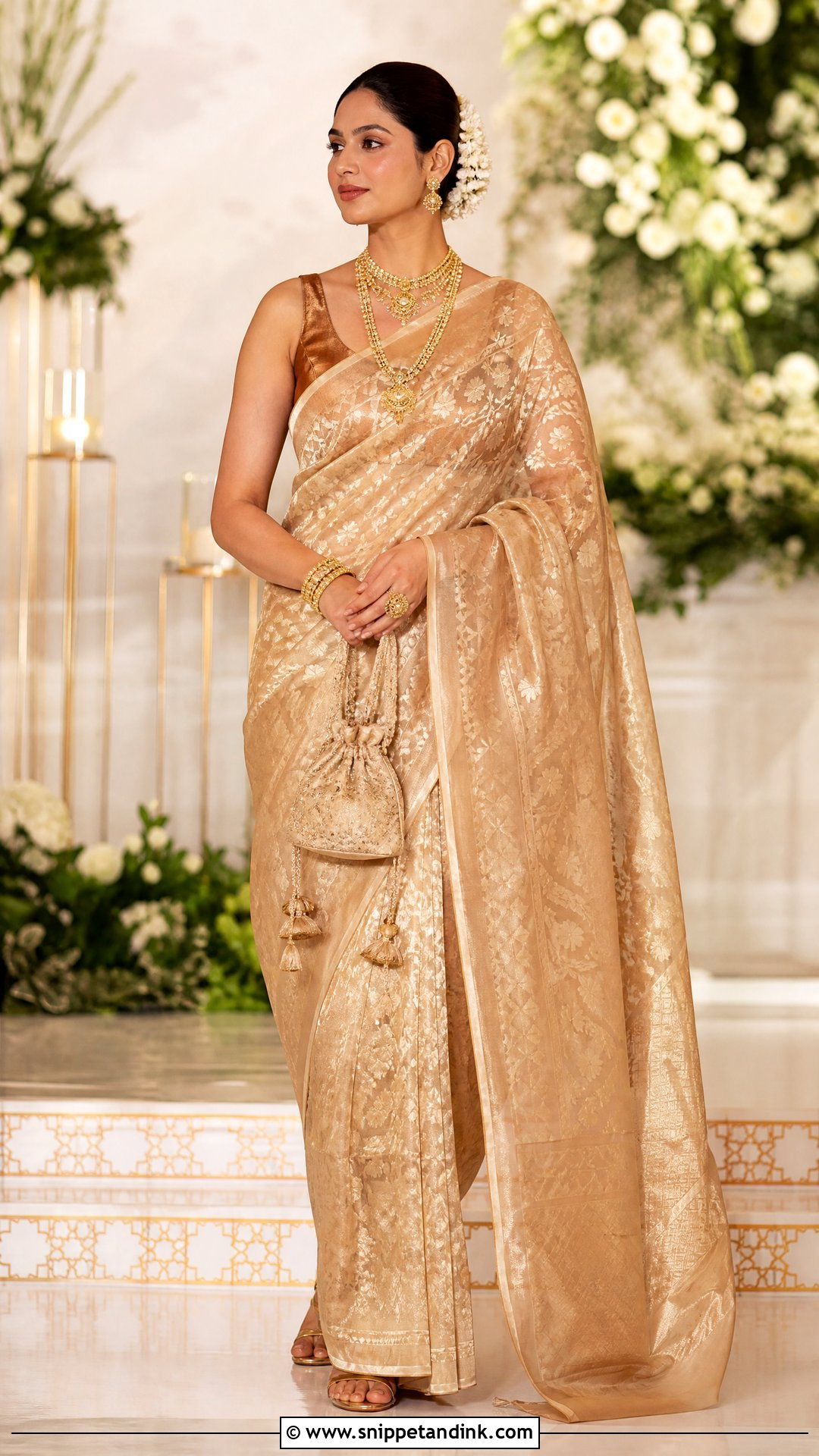
Gold Jamdani glows on its own. A soft gold ground with woven florals, paisleys or geometric motifs needs a darker blouse, deeper gold, bronze or maroon, to give it an edge, otherwise the whole outfit blurs into one tone in photographs. Traditional gold jewellery works; pearls and kundan soften the shine. Keep footwear and bag simple. Warm neutral makeup with a muted red lip suits it.
5. Pink Jamdani Bride Saree
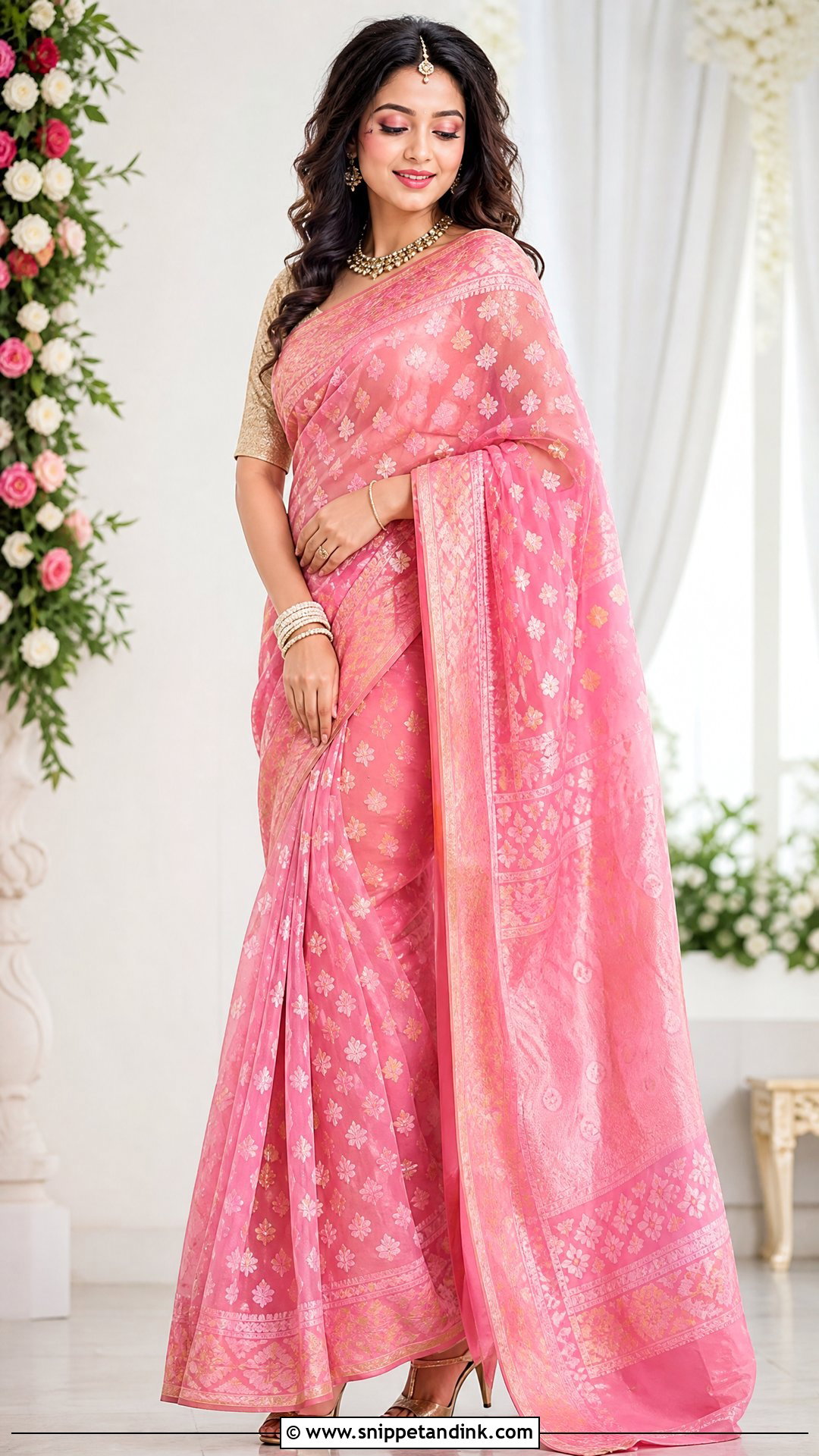
Pink gives you a bridal feel without the expected red. Blush and dusty pink suit daytime and small ceremonies; rani pink holds its own at a large evening wedding. A matching blouse looks delicate, a gold one more formal. Rani pink cotton can fade unevenly in strong sun, so if you’re buying an older or pre-loved piece, check the pallu fold lines in daylight. Kundan jewellery, pearl bangles and a small tikka suit it, with a low bun or soft waves.
6. Yellow Jamdani Bride Saree
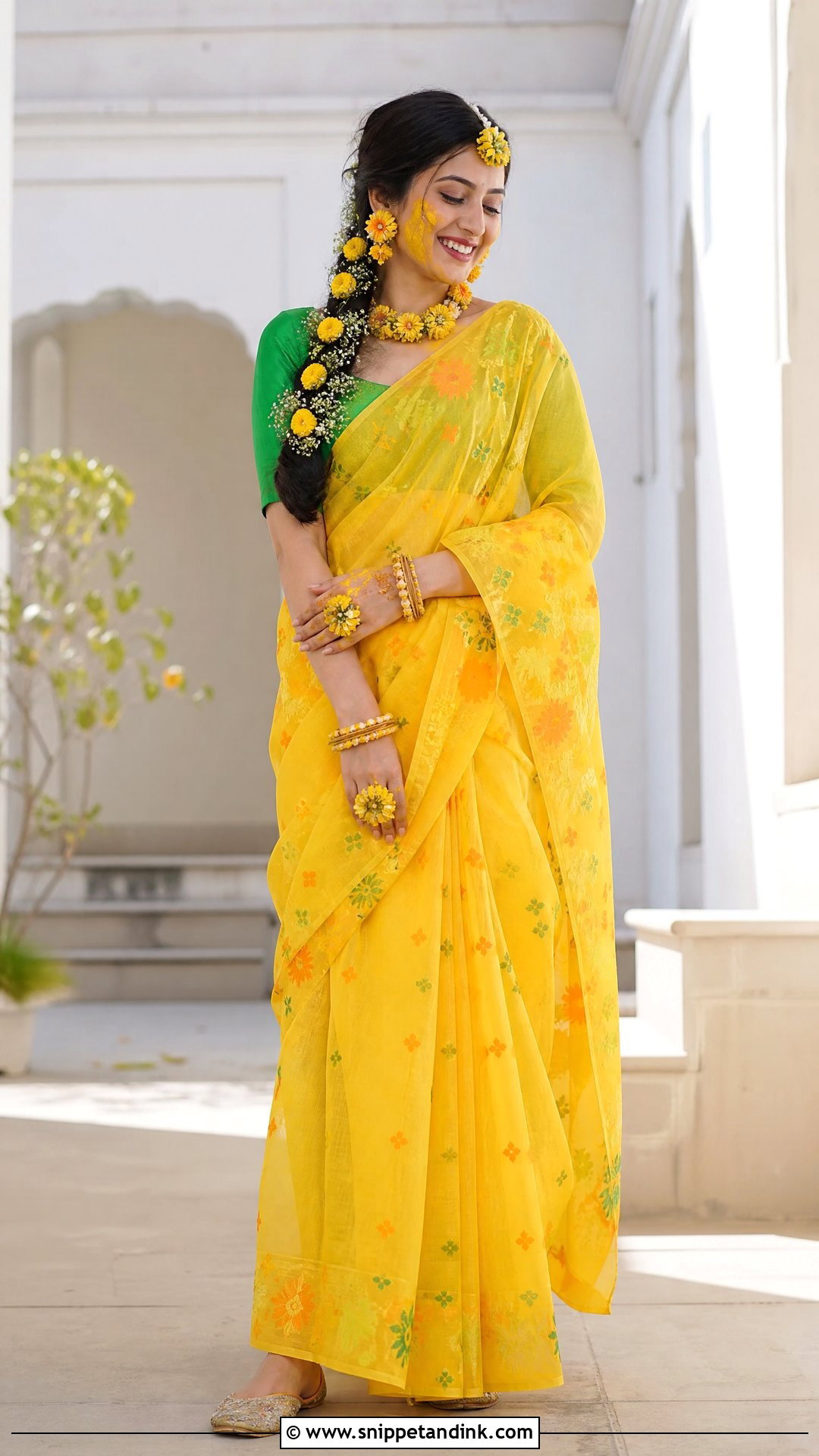
Yellow is the natural Jamdani for haldi and daytime rituals. Mustard and marigold flatter deeper skin tones; soft lemon suits fair skin in daylight. A yellow Jamdani bride saree takes a green, orange or gold blouse well. Floral jewellery keeps the mood light for pre-wedding events, while gold makes it more formal. This is one saree I’d drape loosely, with a little room at the waist, since haldi involves sitting on the floor and getting paste on your arms. Braided hair with flowers and dewy makeup complete it.
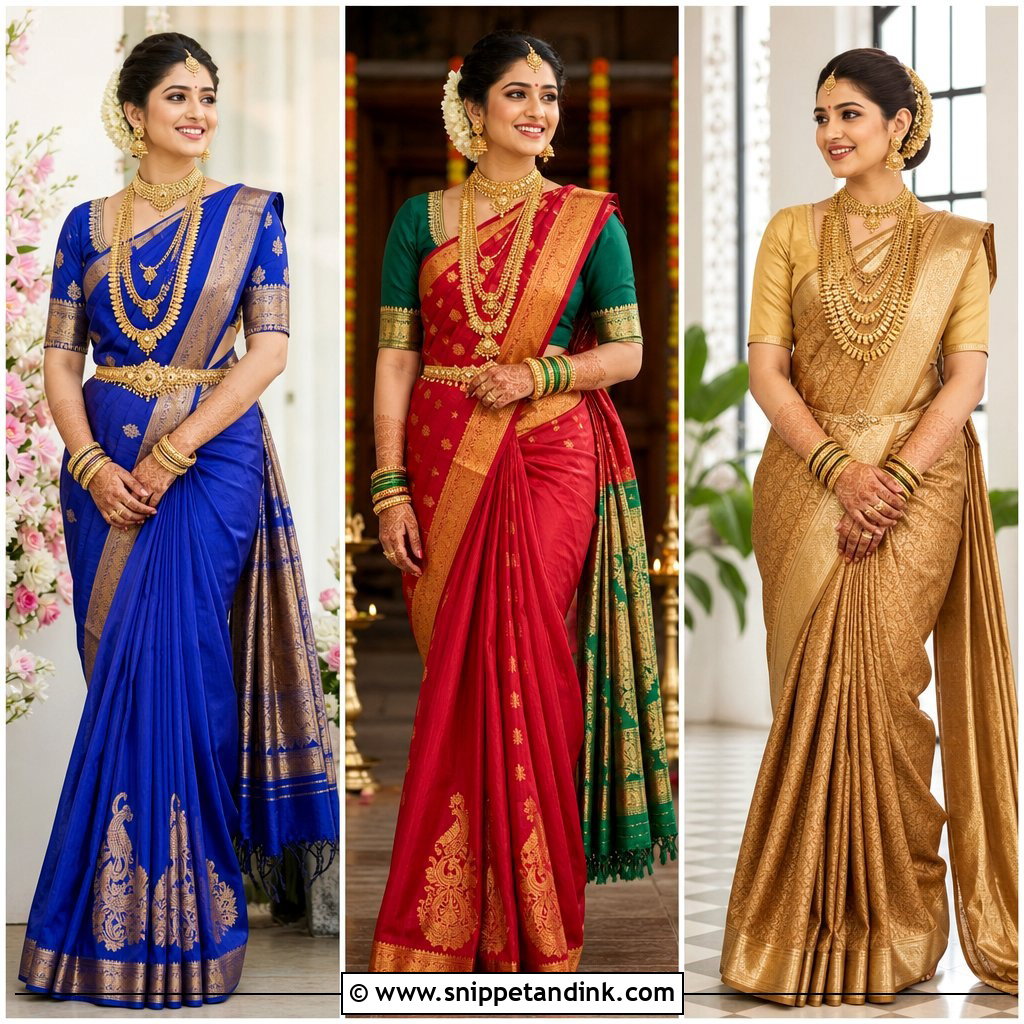
7. Green Jamdani Bride Saree
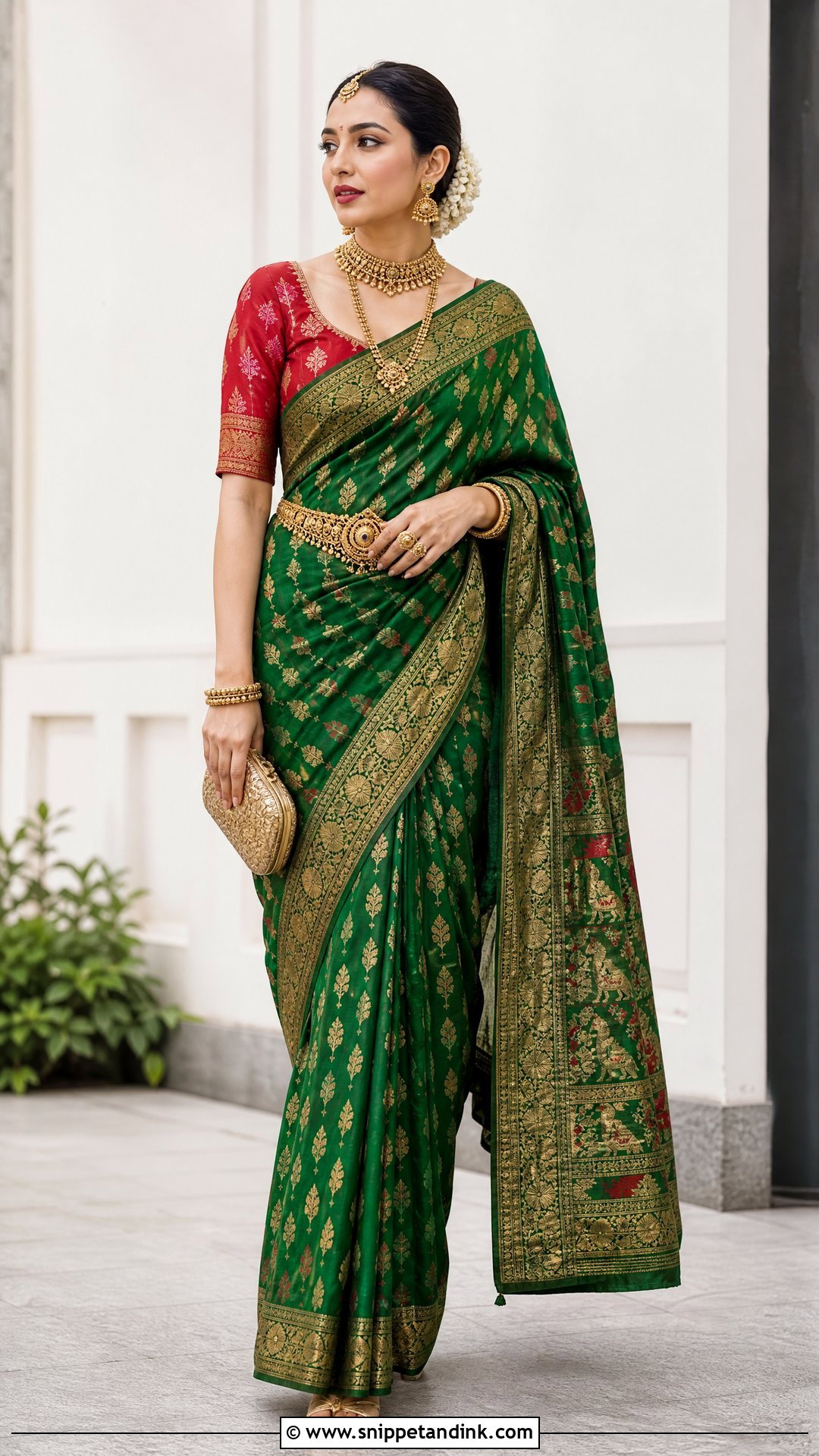
Green ranges from emerald to sage, and each one reads differently. Emerald with gold jewellery and a red blouse is the strong traditional contrast; sage or mint with pearls and a pastel blouse is softer. A green saree also makes a good second bridal look for the mehendi or reception. A gold kamarbandh adds shape at the waist, which helps because soft cotton Jamdani has little structure of its own. A bun with flowers and gold footwear finish it.
8. Blue Jamdani Bride Saree
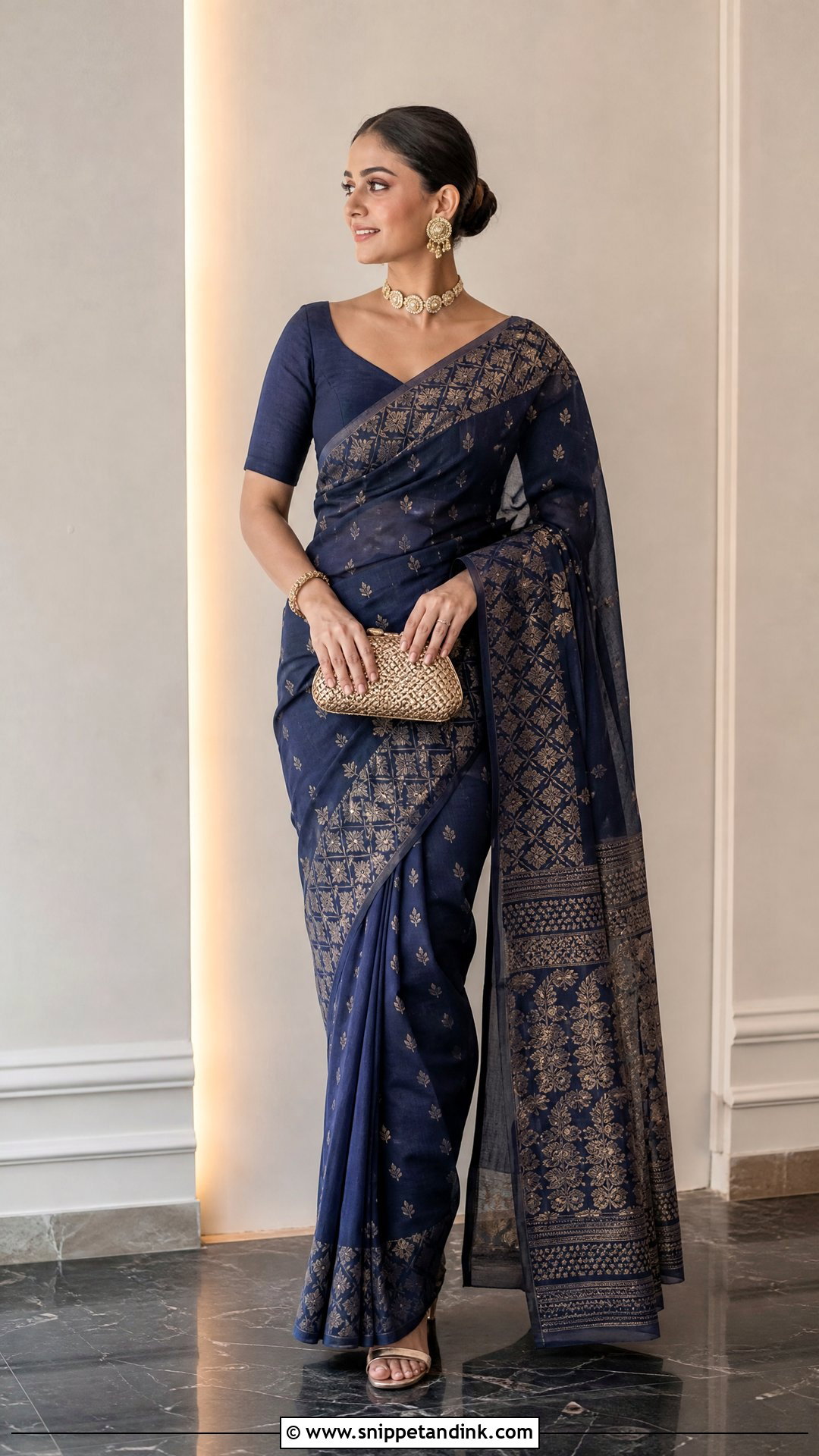
Blue is the colour I suggest to brides who want tradition without red. Navy with gold motifs feels grand at night; powder blue looks airy at a daytime ceremony. Antique gold suits darker blues; pearls and silver tones suit lighter ones. An elbow-sleeve structured blouse gives the soft fabric a defined shape at the top. Keep the hair sleek and the shoes metallic.
9. Black Jamdani Bride Saree
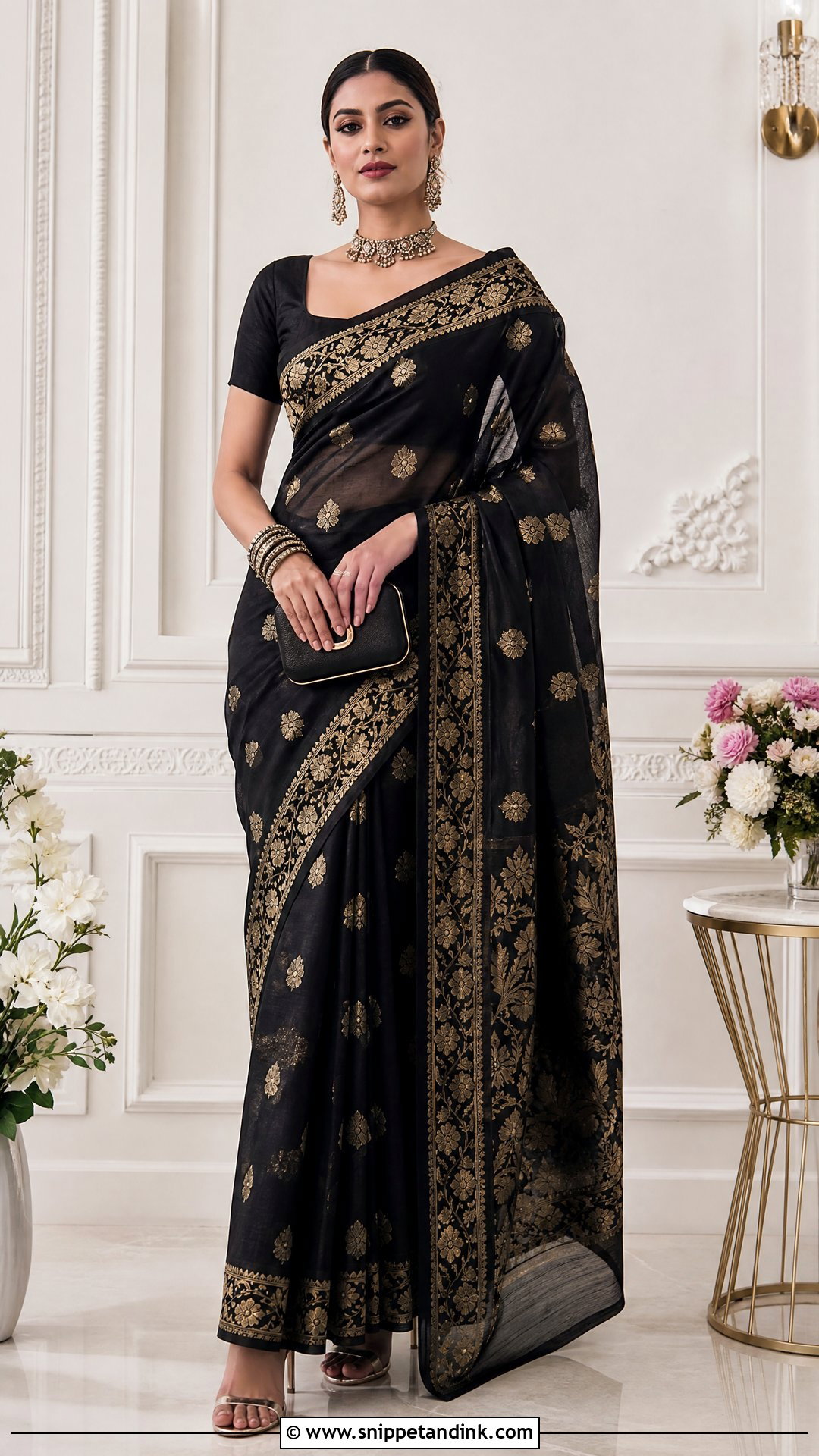
Black Jamdani is for receptions and post-wedding events, and I’d check family feelings first, since some households avoid black at weddings. With gold, silver, red or ivory motifs, it looks bridal rather than sombre. A fitted black, gold or maroon blouse, statement earrings, a choker and stacked bangles add formality. Keep the hair sharp. Soft smoky eyes and a berry or nude lip suit evening photographs.
10. Pastel Jamdani Bride Saree
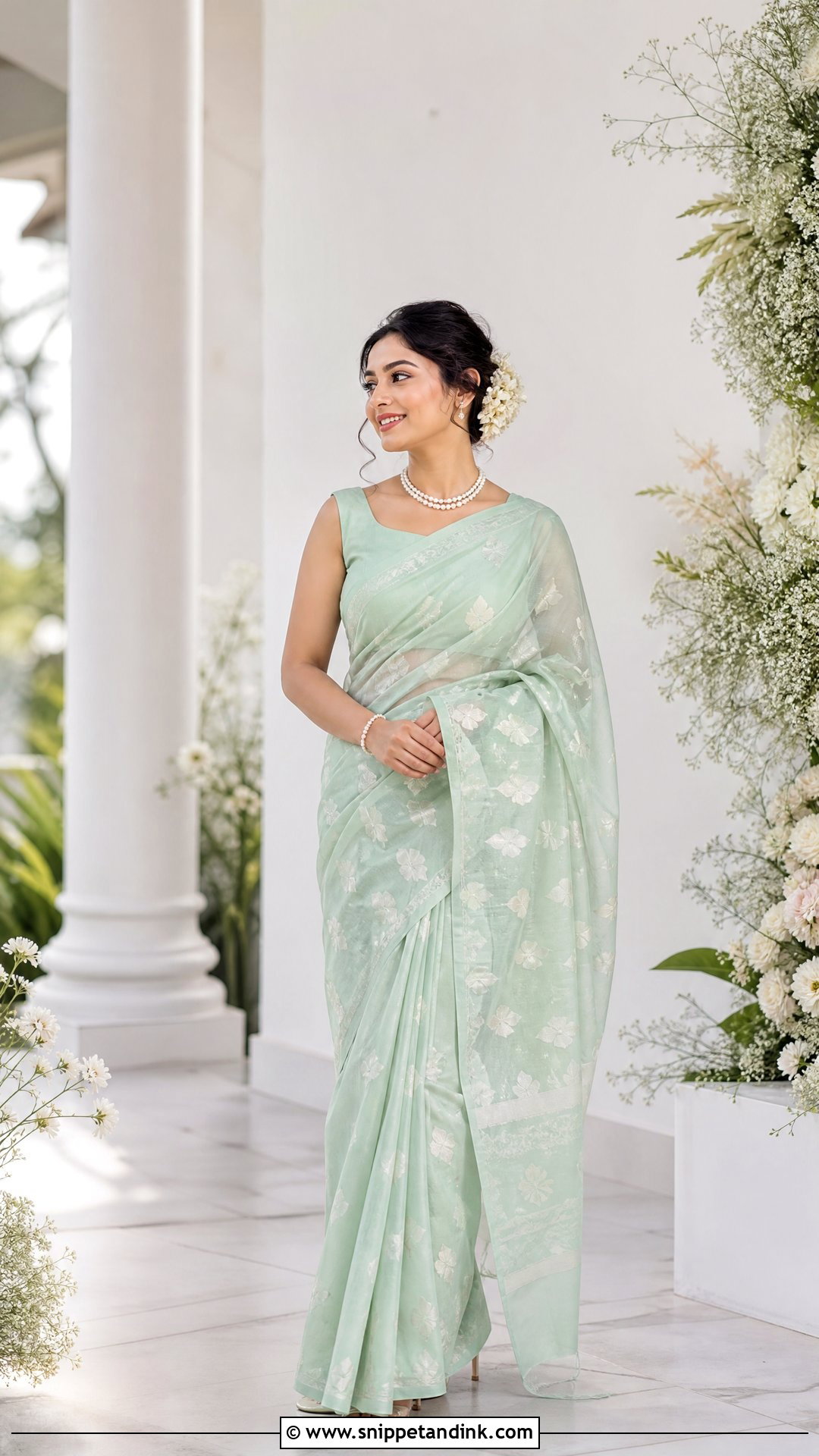
Pastel Jamdani in powder pink, mint, lavender, peach or pale blue suits spring weddings, daytime receptions and small ceremonies. The challenge is contrast: pale saree, pale blouse and pale makeup can disappear in photos. A tone-on-tone blouse looks clean; a metallic one lifts it. Pearl jewellery, kundan studs and a small tikka keep the styling gentle. I’d ask the makeup artist for a little more definition at the eyes than you’d wear day to day.
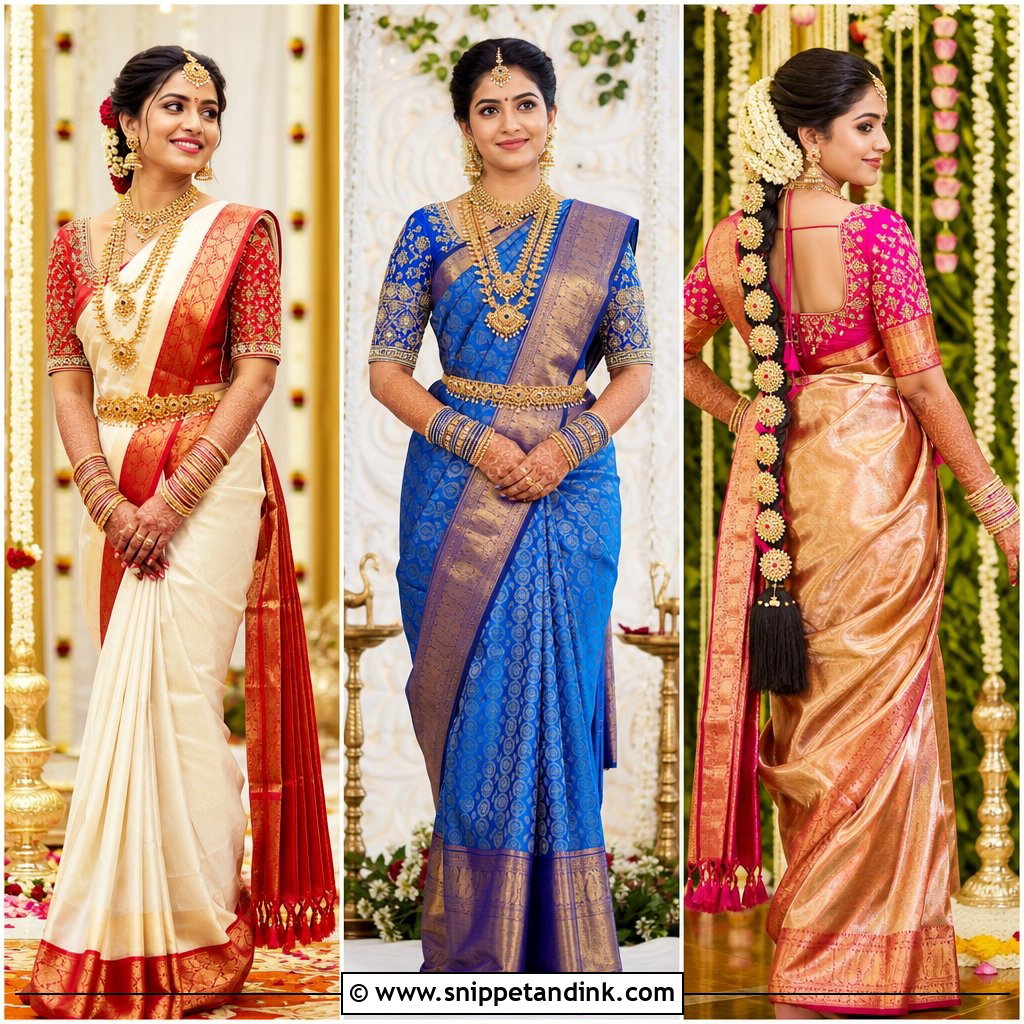
11. Jamdani Bride Saree With Gold Blouse
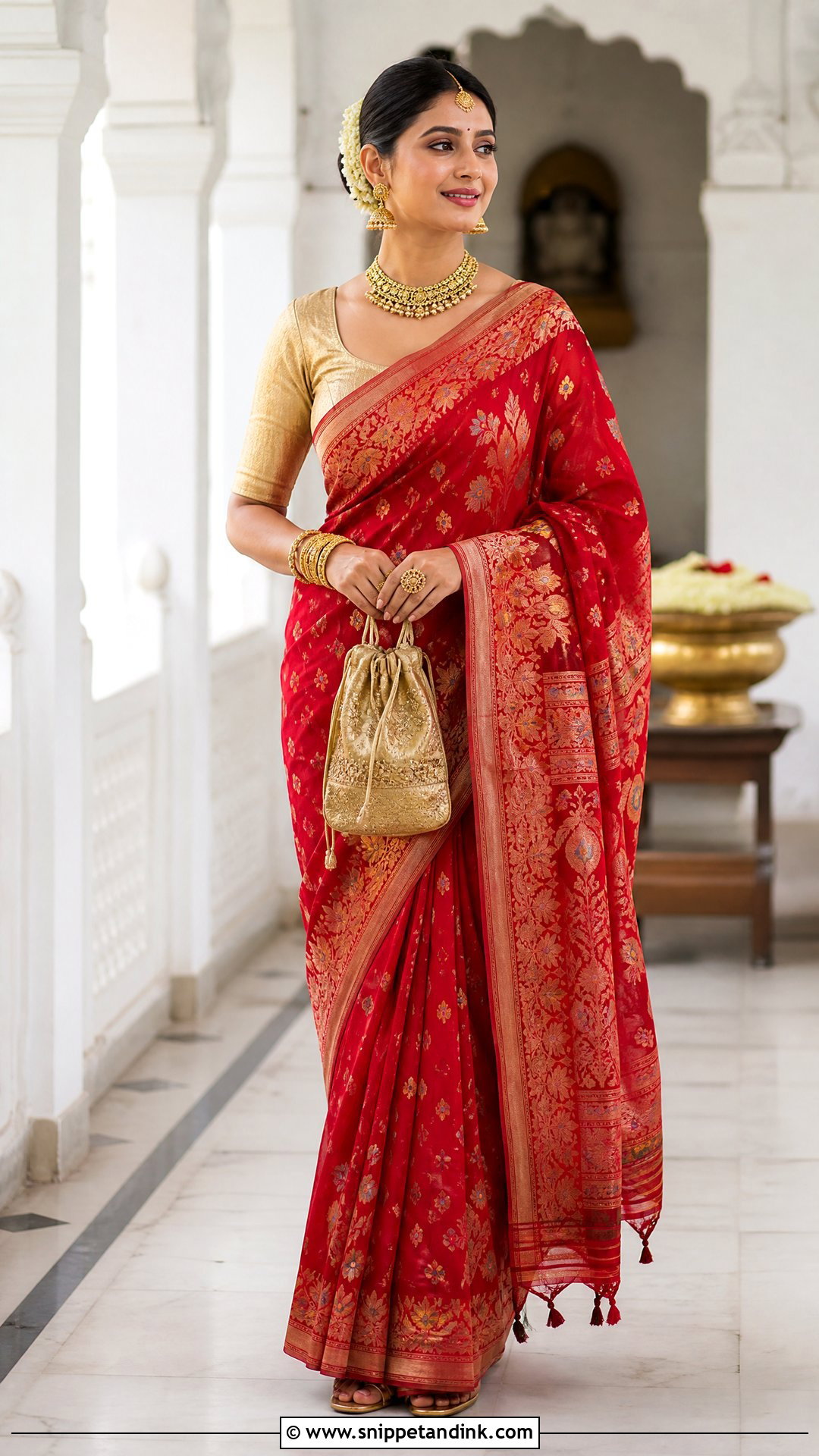
A gold blouse turns almost any Jamdani bridal. The rule I follow is about weight: fine, delicate motifs on the saree can take a textured brocade or zari blouse, while a busy saree needs a plain, well-fitted silk one. Red, white, green, pink, blue and ivory sarees all work with gold. Add gold jewellery, a neat bun with flowers, gold sandals and a potli.
12. Jamdani Bride Saree With Red Blouse
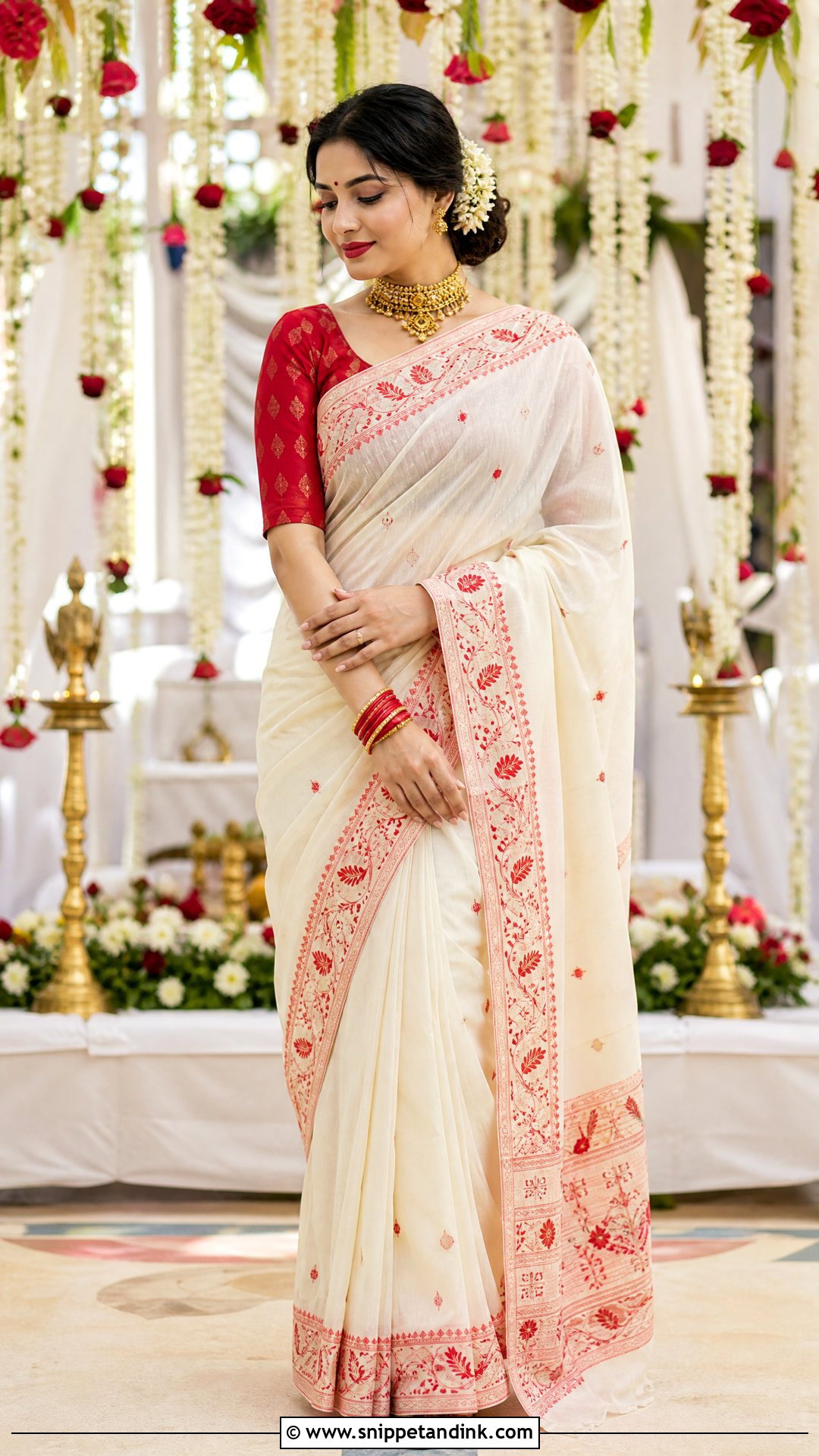
A red blouse warms up white, ivory, gold, green and even pale pink Jamdani and ties it straight to bridal tradition. Elbow sleeves, a boat neck or a classic round neck all suit it. The red needs to match the saree’s red border closely; two clashing reds look like a mistake in close-ups. Gold jewellery, red bangles and a bindi if it’s part of your tradition complete it, with a centre-parted bun and defined eyes.
13. Jamdani Bride Saree With Veil
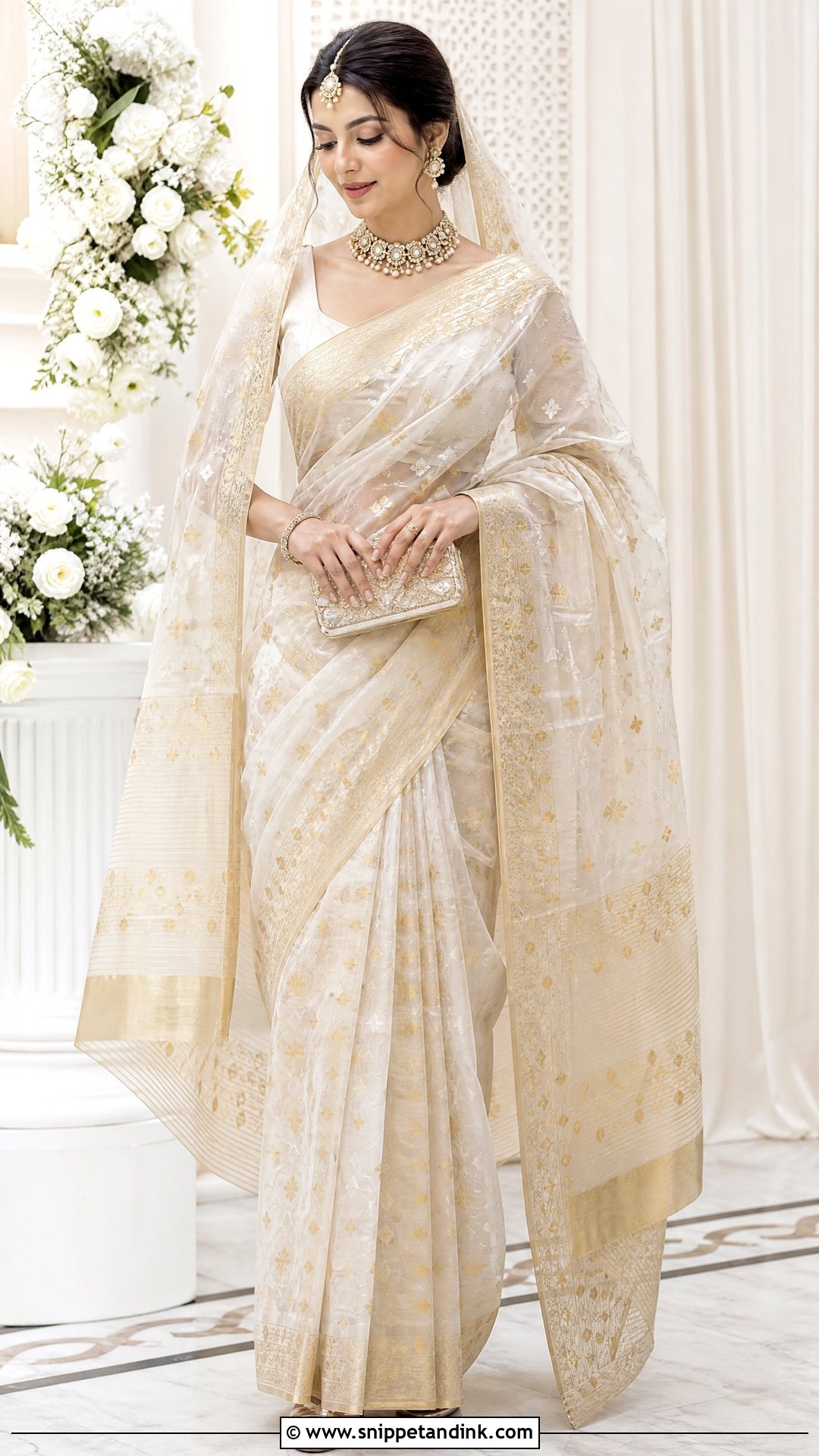
A veil over Jamdani has to be lighter than the saree, or it flattens the drape. Organza, net, muslin or tissue work; heavy embroidered dupattas don’t. It can match the saree, pick up the border colour or carry a subtle edge. Pin it at the crown with small U-pins rather than heavy clips, since Jamdani bridal looks often already include a tikka and flowers in the bun. Keep the jewellery to a choker, earrings and tikka so the head area doesn’t get crowded.
14. Jamdani Bride Saree With Dupatta
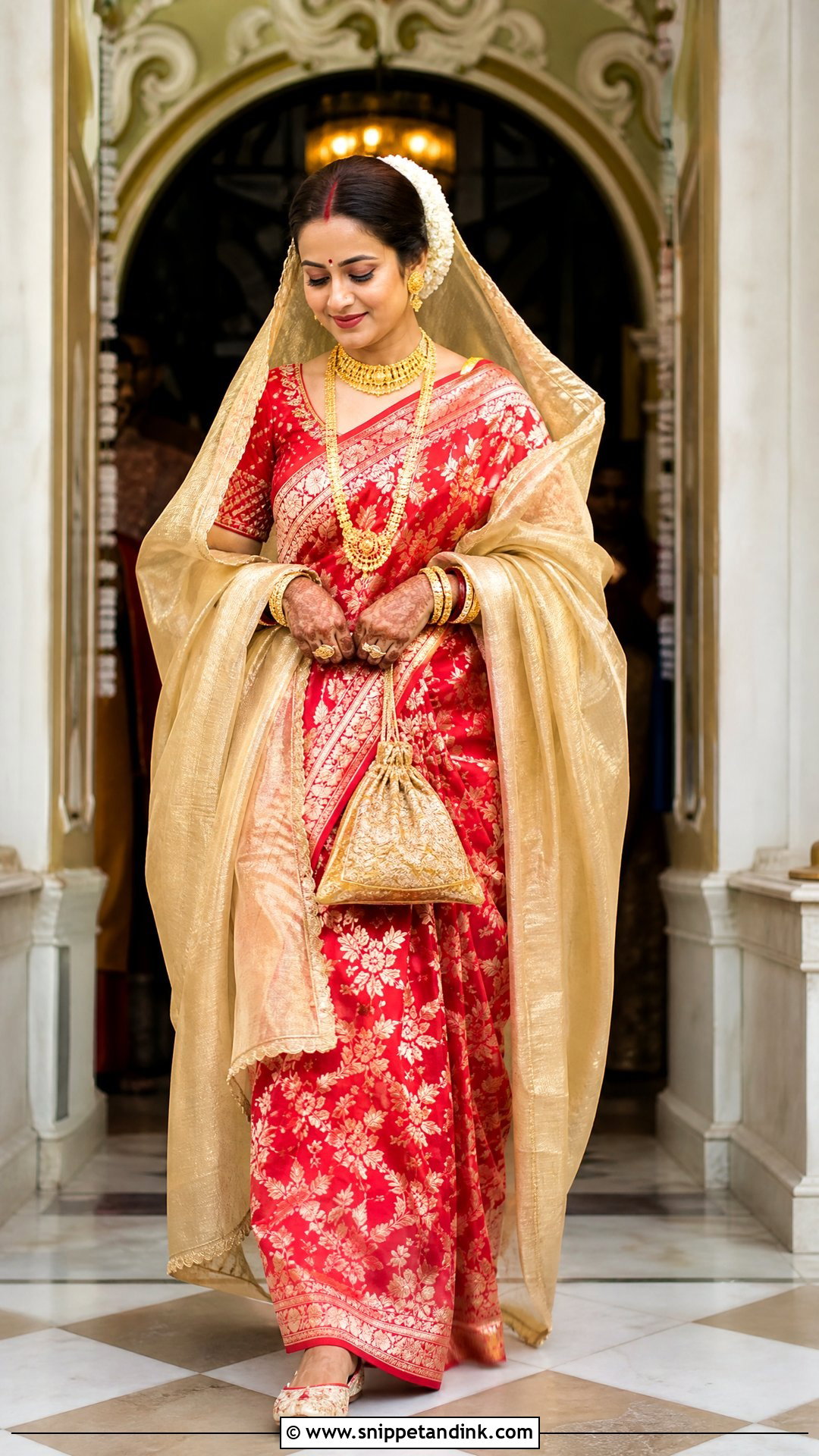
Adding a dupatta gives a layered, ceremonial finish and extra coverage. A red Jamdani with a gold tissue dupatta, or an ivory Jamdani with a red embroidered one, are classic pairings. Keep the dupatta light, because the airy weave is the whole point of Jamdani. I pin it over one shoulder for the main ritual and drape it over the head only where the custom calls for it. A choker, earrings, bangles and a sleek bun complete the look.
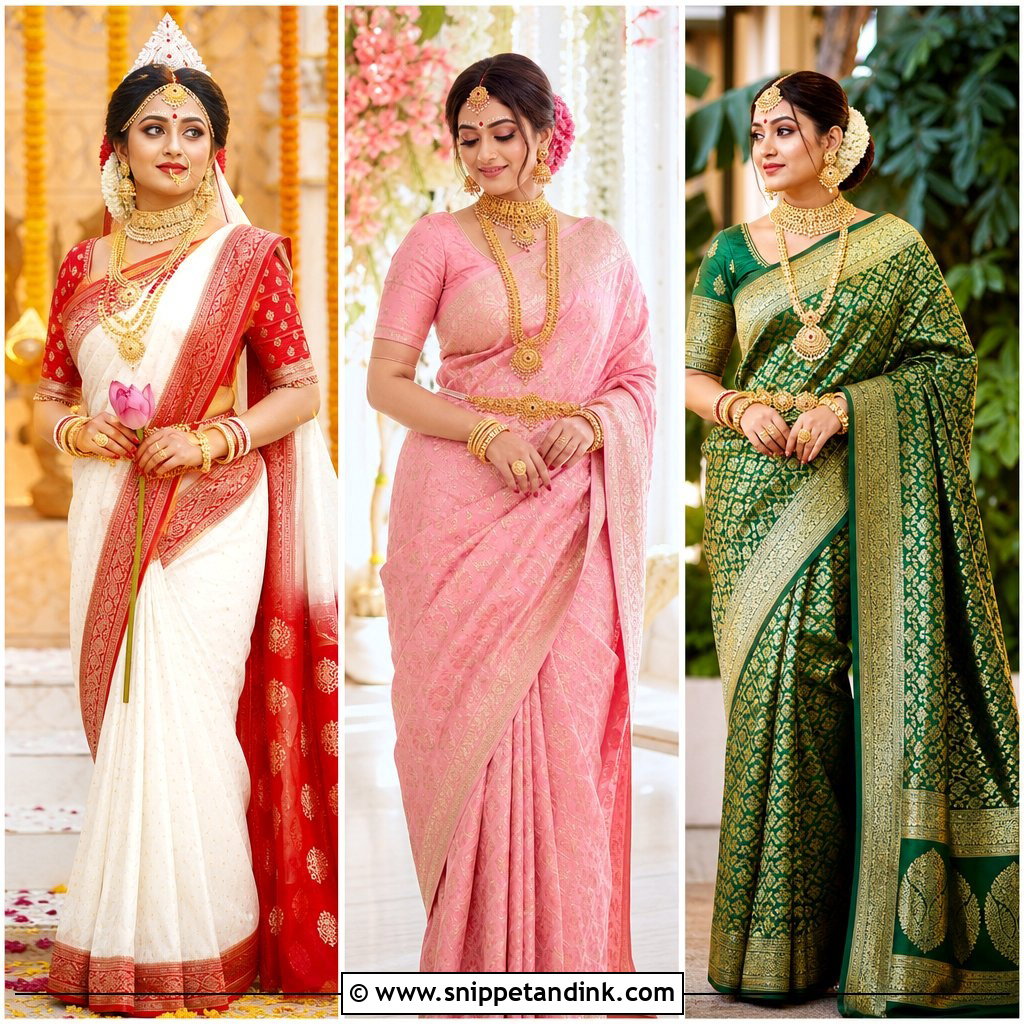
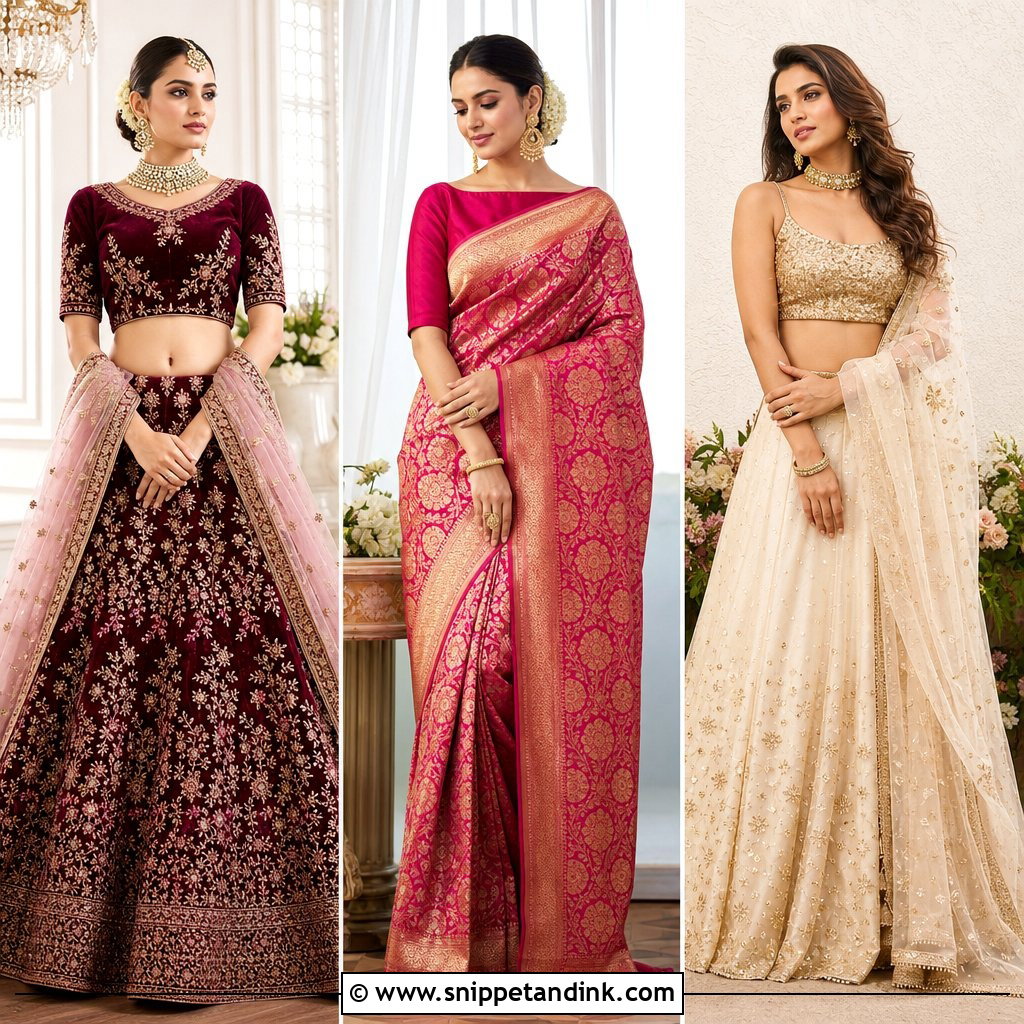
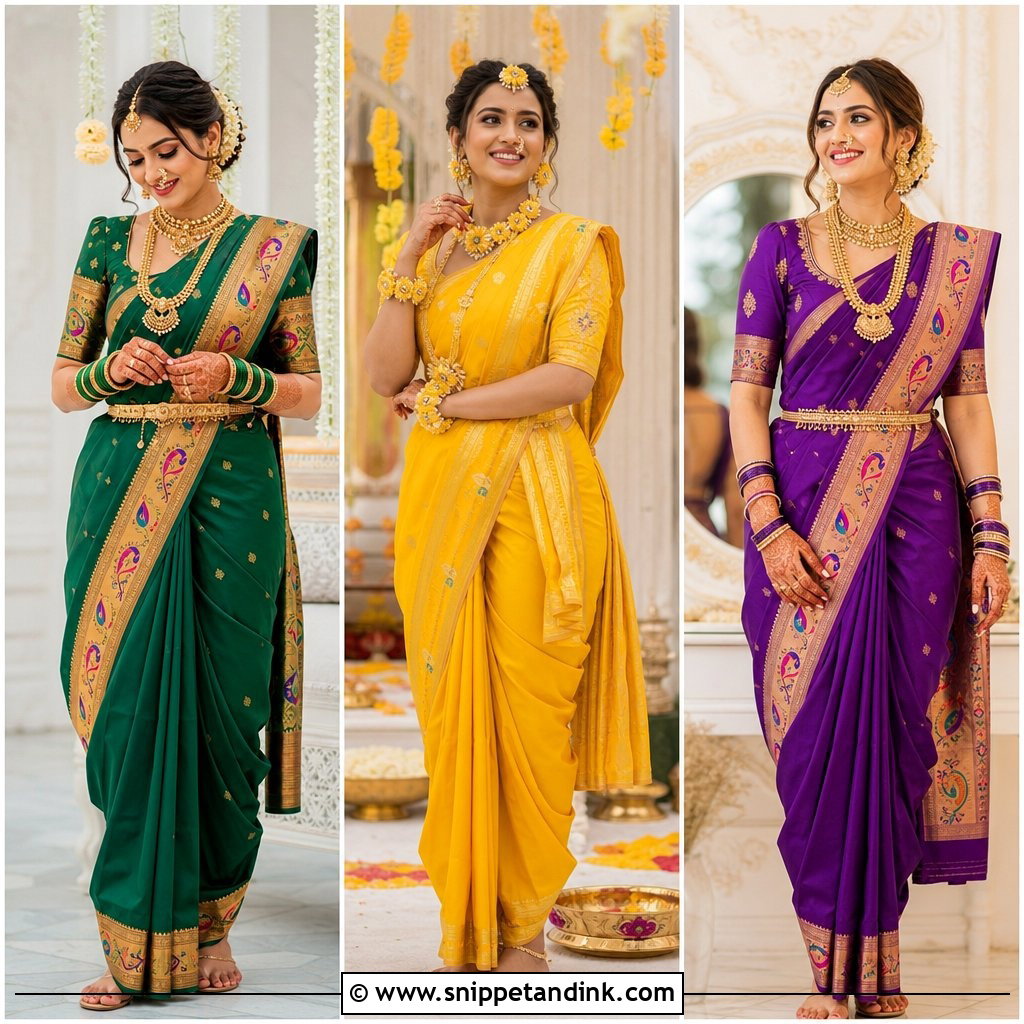
15. Jamdani Bride Saree With Kundan Jewelry
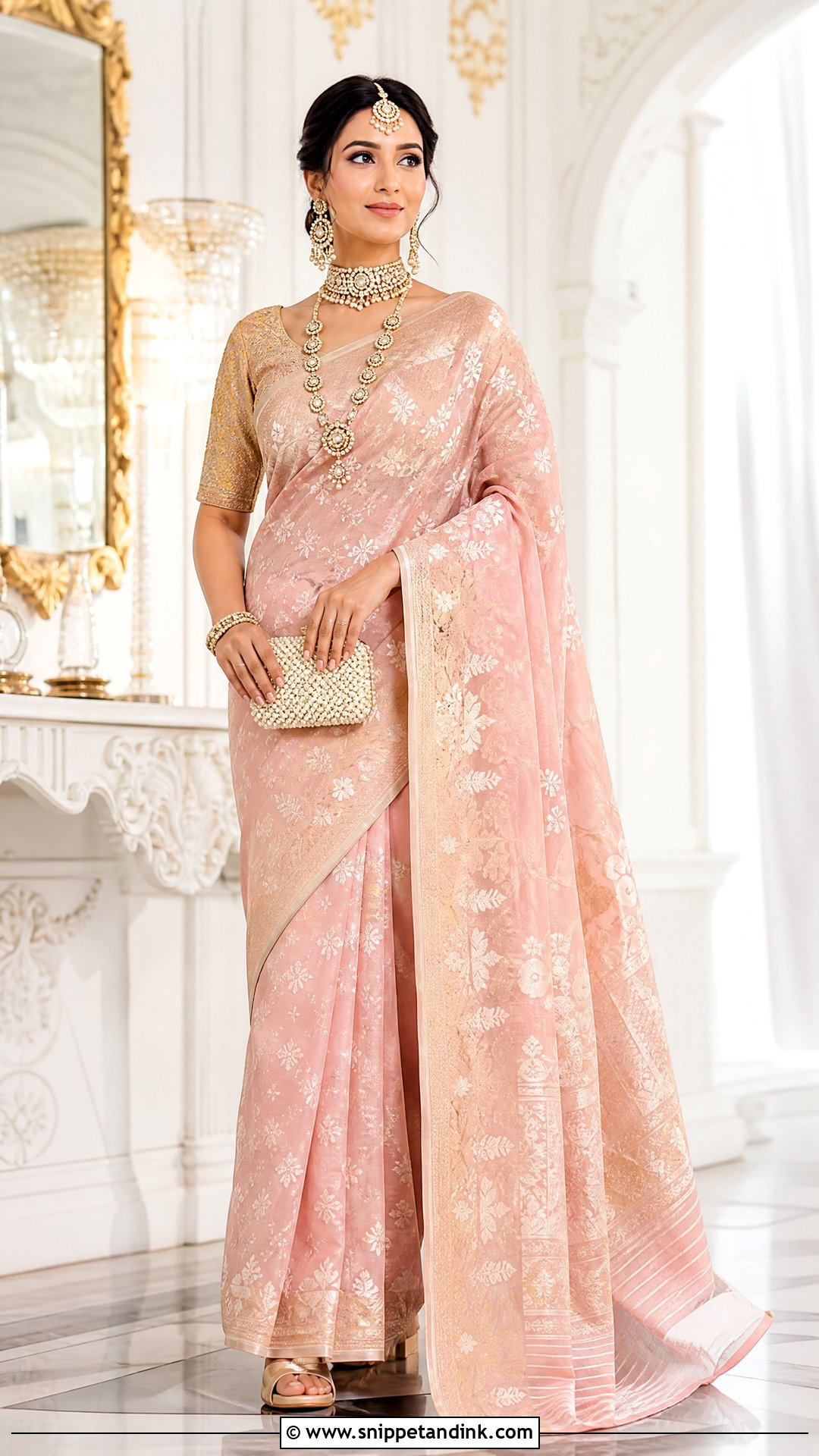
Kundan sits well on Jamdani because its flat-set stones don’t snag fine cotton the way open-claw settings can. A choker and matching earrings suit a clean neckline; a longer layered necklace looks grander. A maang tikka and bangles finish it. The blouse neckline should be simple so the jewellery sits flat. Red, ivory, pastel, green and gold sarees all suit kundan, for the ceremony, the reception or family portraits.
16. Jamdani Bride Saree With Pearl Jewelry
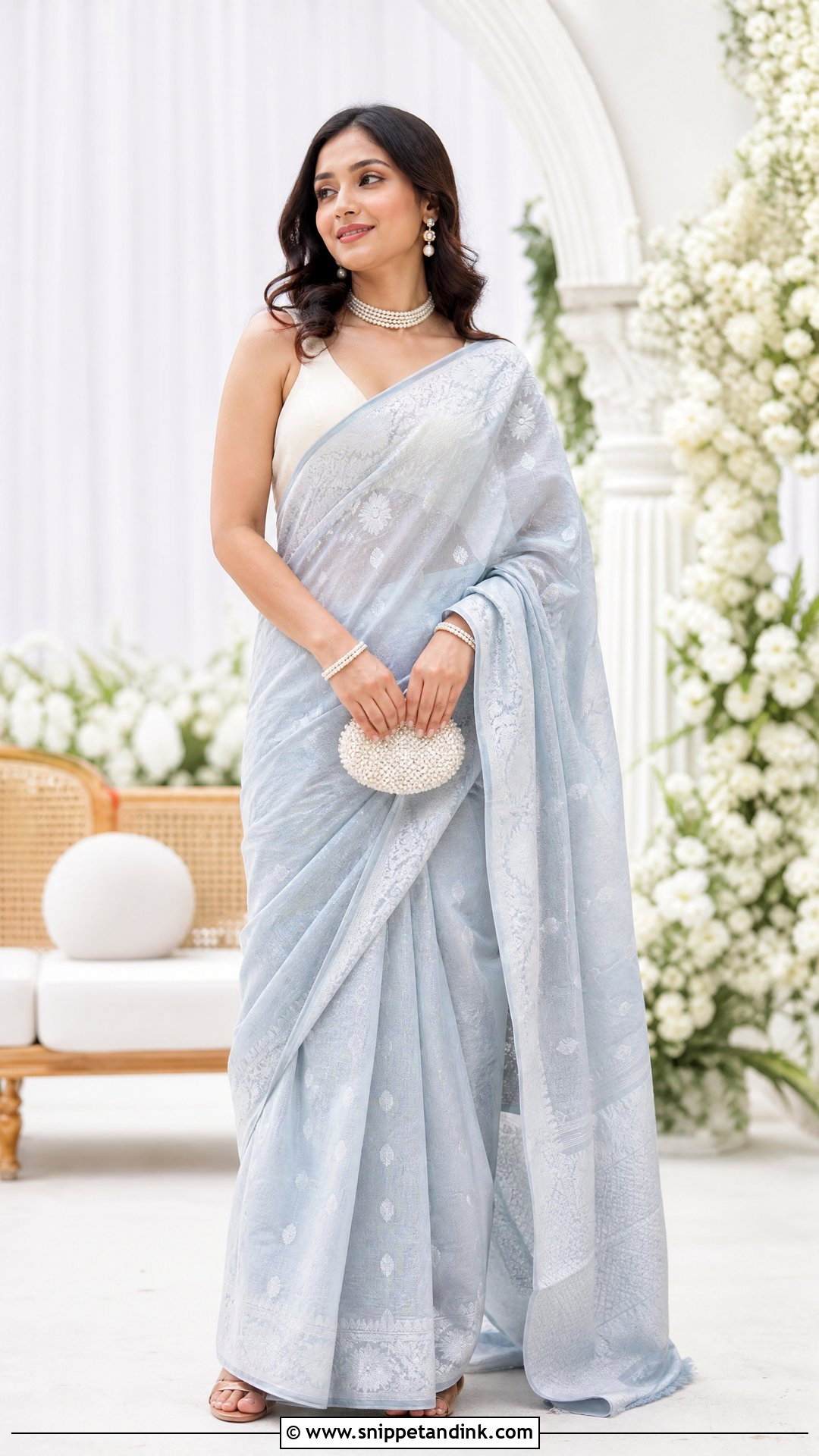
Pearls soften Jamdani and suit ivory, pastel, white-red, powder blue and blush sarees. A pearl choker, drop earrings and slim bangles with a silk or raw silk blouse feel refined for a daytime wedding, a civil ceremony or a small celebration. Pearls are also light, which helps on a cotton saree that won’t hold heavy weight well at the shoulder. Keep the drape neat and the pallu open. Soft curls, a low bun or a flower braid all work.
17. Jamdani Bride Saree With Temple Jewelry
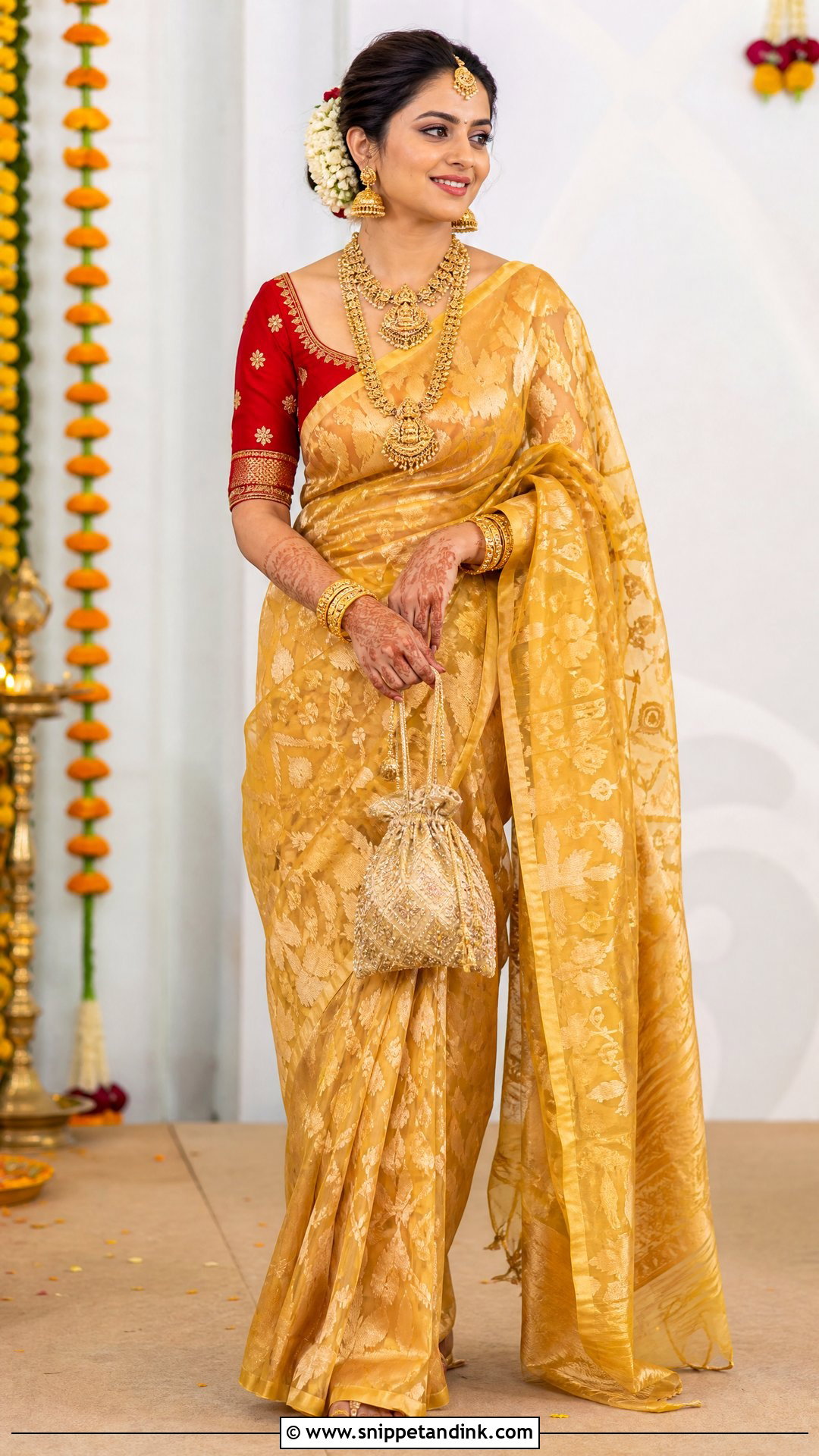
Temple jewellery is heavy, and Jamdani is not, so this pairing needs care. A bold necklace, jhumkas, bangles and a hair ornament give a strong heritage look with red, green, mustard, gold and ivory sarees. I’d choose a structured blouse here with firm shoulder seams to anchor the pallu pin. A bun with flowers keeps the neckline clear. It suits traditional rituals and family-focused moments, with gold sandals and warm-toned makeup.
18. Jamdani Bride Saree With Floral Jewelry
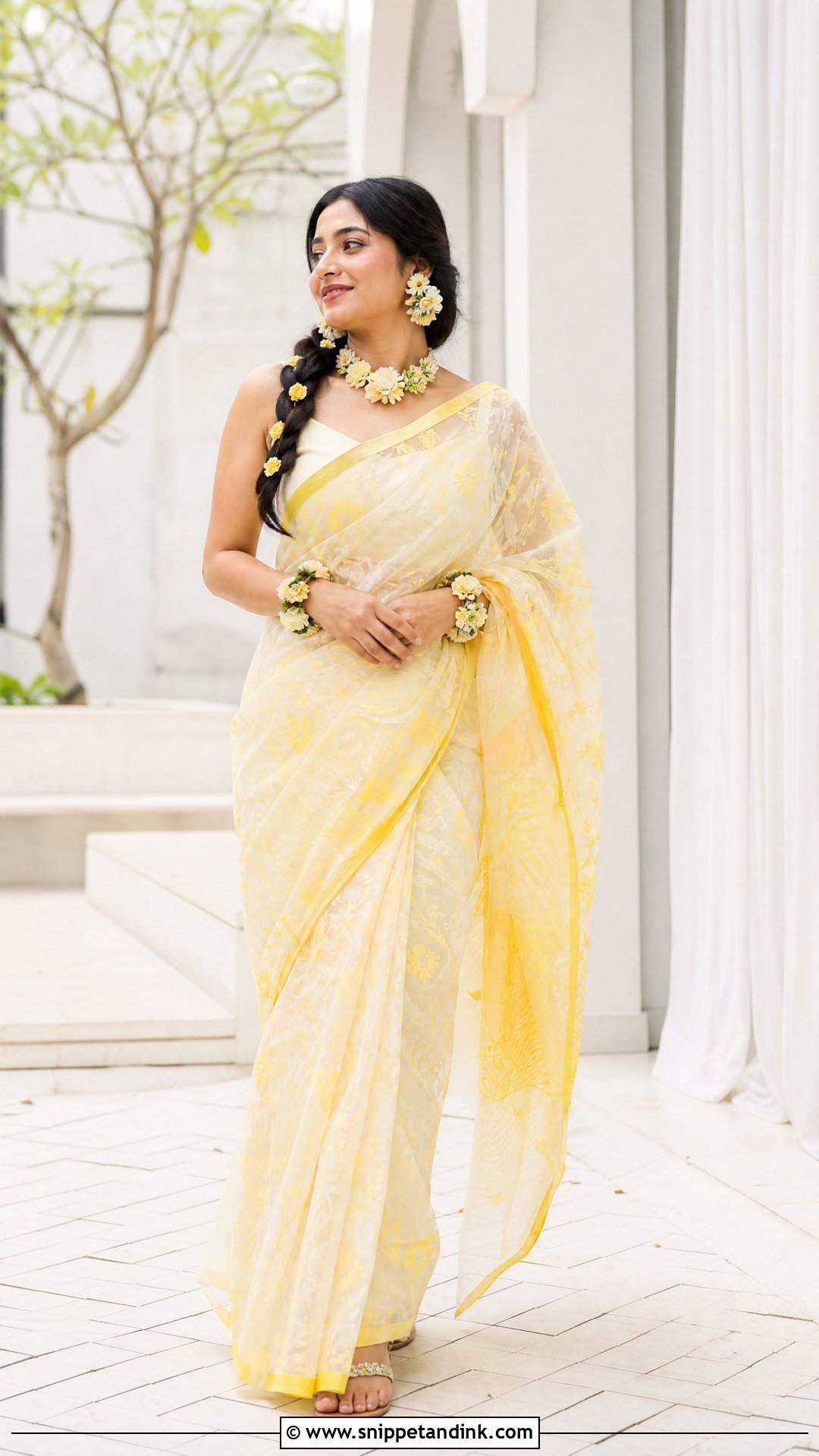
Floral jewellery suits haldi, mehendi and morning events. Yellow, white, pink, peach or green Jamdani with a fresh or handmade floral necklace, earrings, bangles and hair flowers keeps everything light. Fresh flowers wilt in heat within a few hours, so I order the floral set for delivery as close to the event as possible and keep it cool until dressing. A simple blouse stops the flowers and motifs competing. Flats or barely-there sandals are best for rituals with movement.
19. Jamdani Bride Saree With Bengali Drape
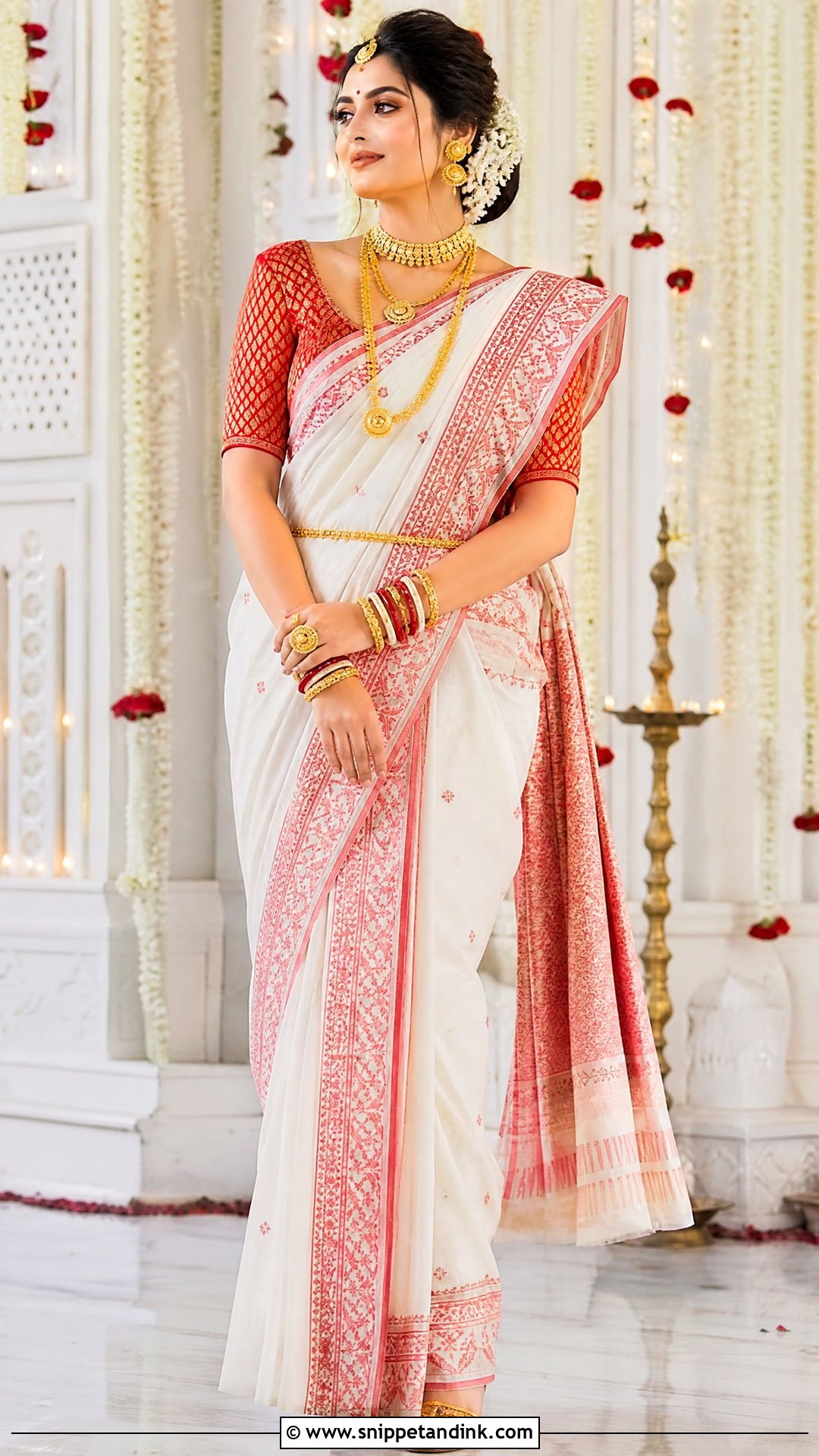
The Bengali drape brings the pallu over the left shoulder and around, which shows off the border and gives a statuesque line. White-red, red-gold and ivory-red Jamdani work especially well for it. A red or gold blouse, traditional gold jewellery, bangles and a bindi if you wear one complete it. Soft cotton doesn’t hold the drape’s shape on its own, so a light starch the day before helps the pleats stand. A secure bun keeps everything neat through the ceremony.
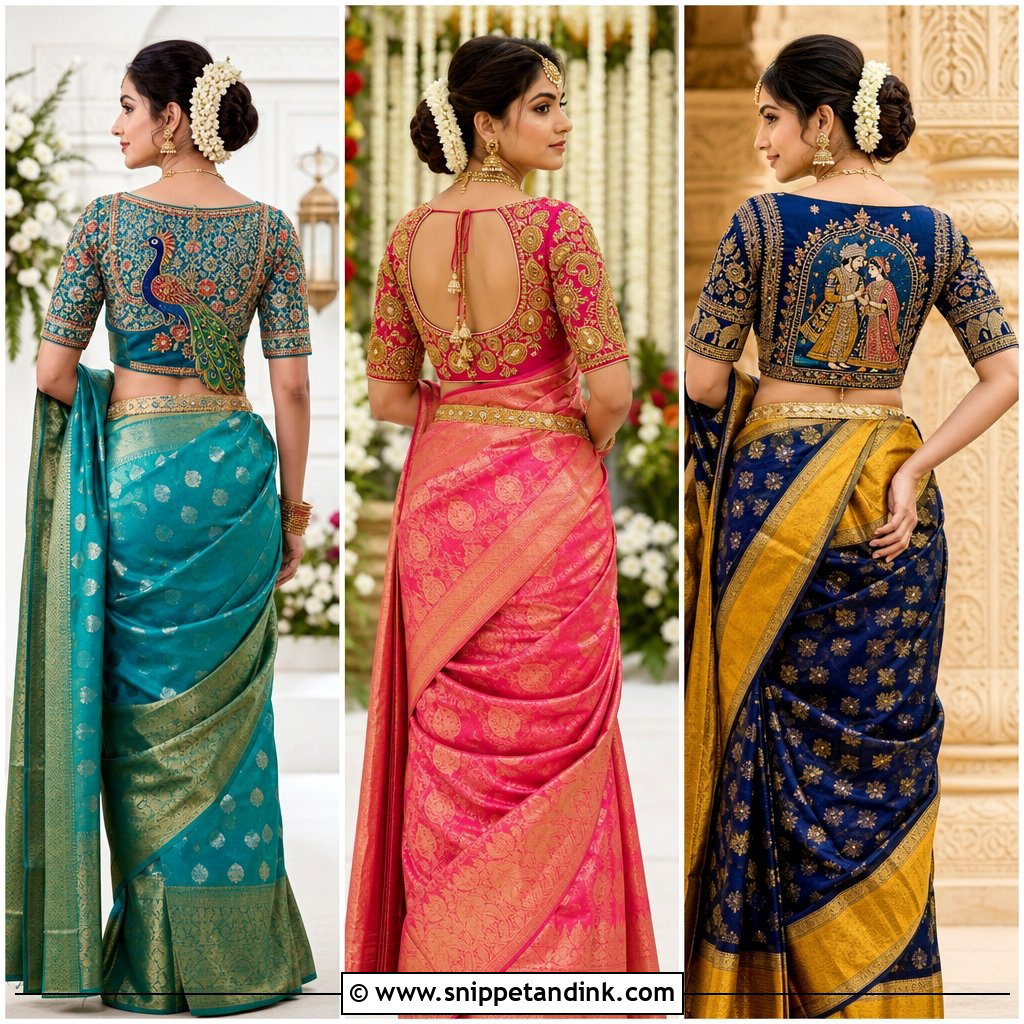

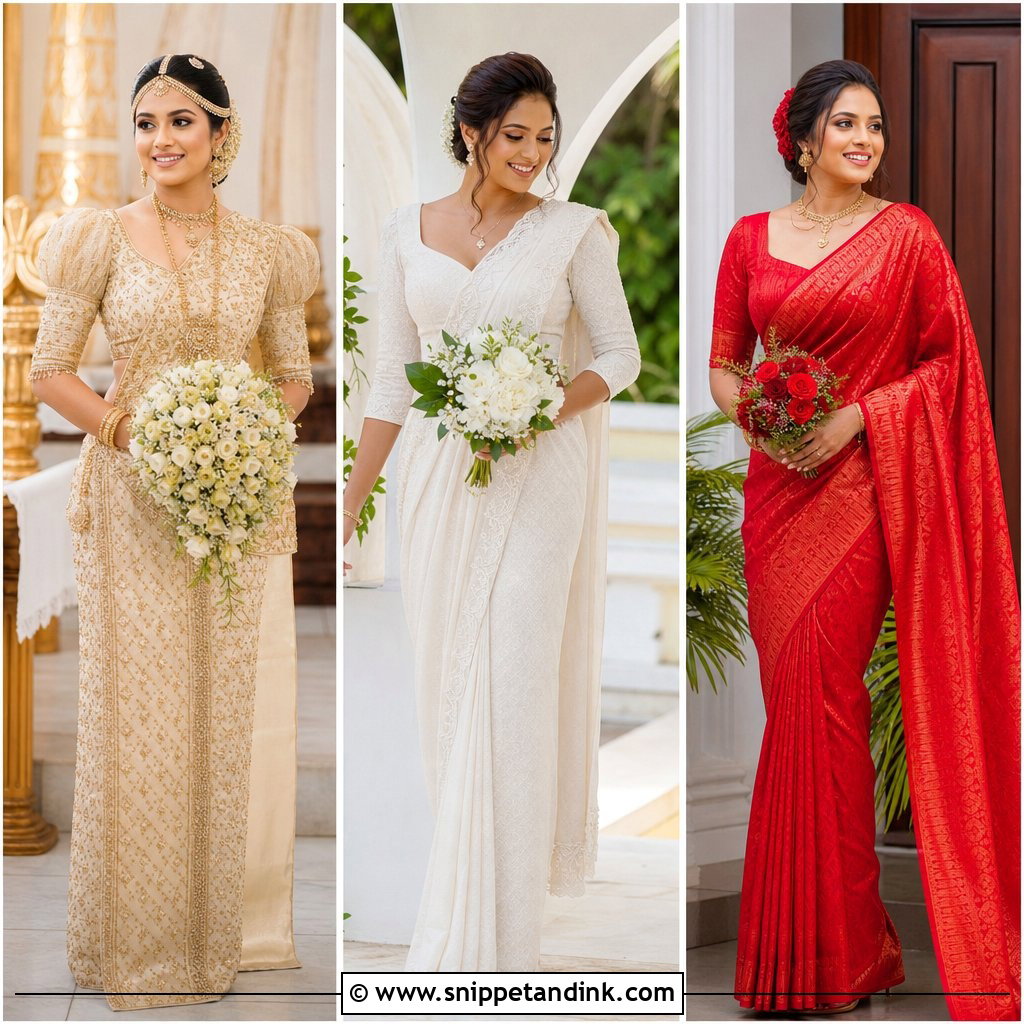
20. Jamdani Bride Saree With Open Pallu
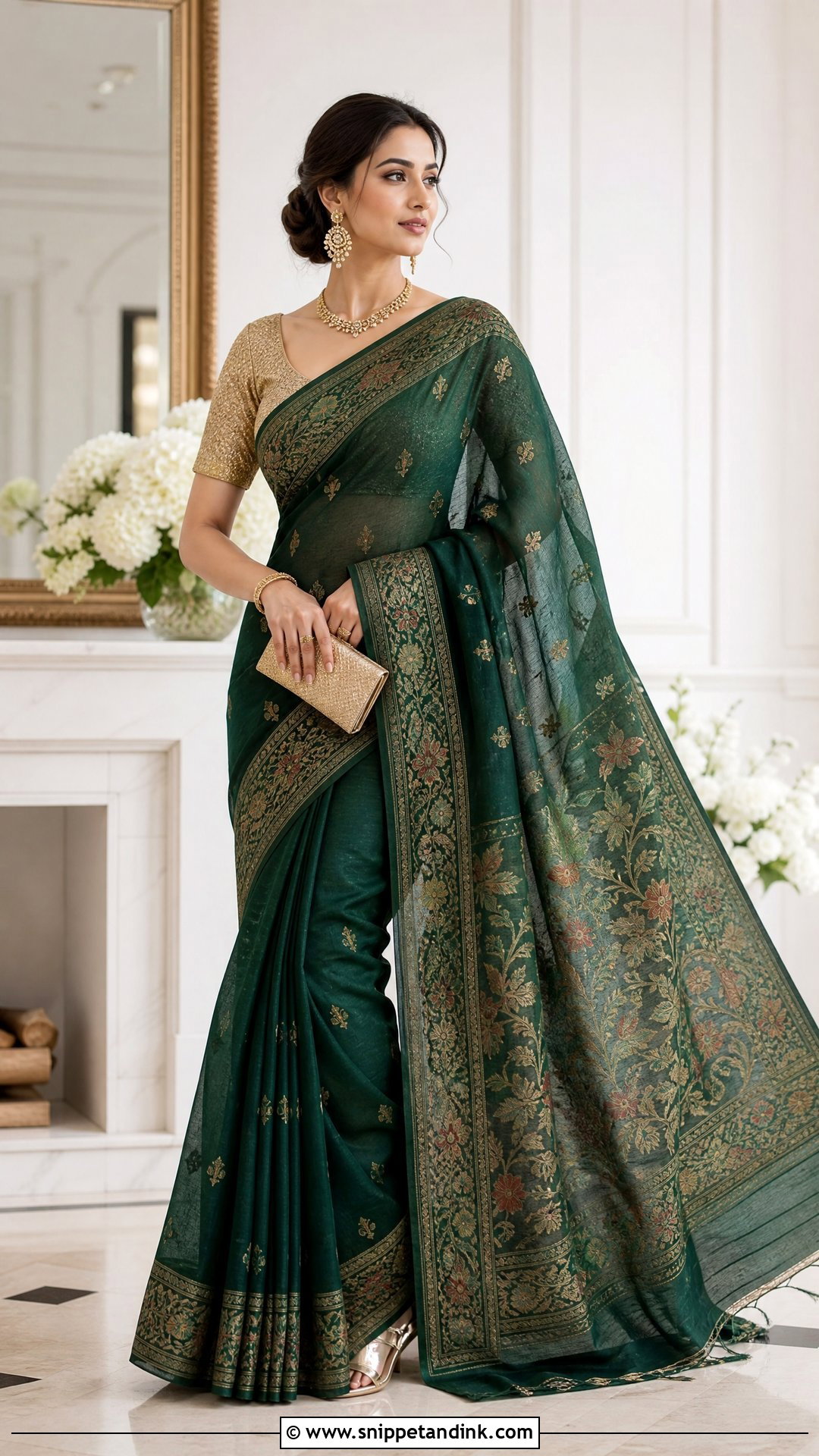
An open pallu shows off the weave, so save it for sarees with detailed motifs across the body or a strong border. Pin the shoulder lightly so the fabric still flows. A fitted blouse, statement earrings and a balanced necklace suit it. Posture matters more than people expect here; an open pallu falls cleanly when you stand tall and creases when you slump, so I’d choose heels you can stand in comfortably for portraits.
21. Jamdani Bride Saree With Belt
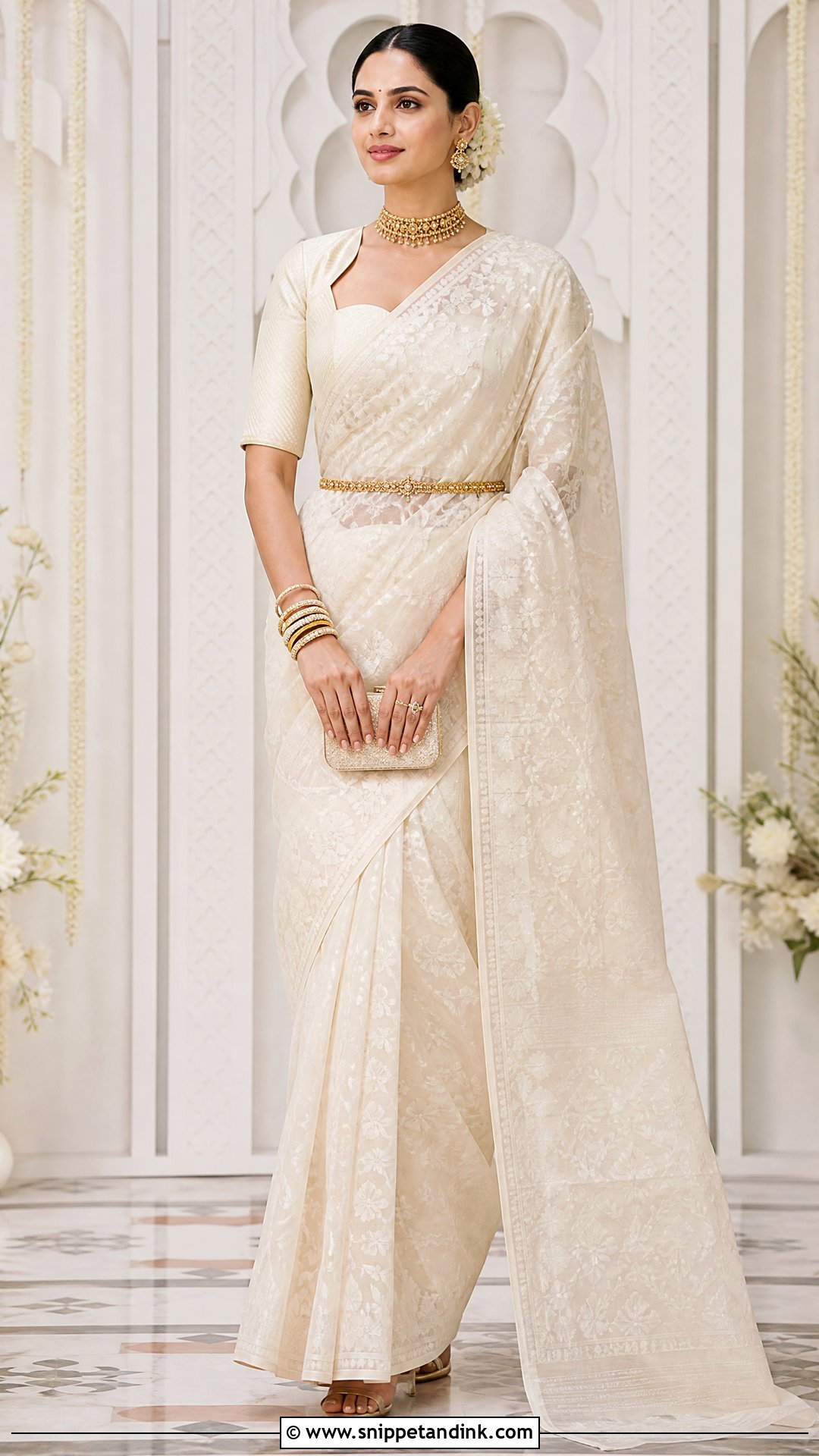
A belt anchors the pallu at the waist, which is practical for long ceremonies in a fabric this light. A slim gold kamarbandh, an embroidered belt or a fabric belt can work depending on the saree’s mood. Keep the pleats sharp so the belt looks deliberate, and choose jewellery that doesn’t crowd the waist. Red, ivory, green and pastel Jamdani all suit it with heeled sandals and a sleek bun.
22. Jamdani Bride Saree With Long Sleeve Blouse
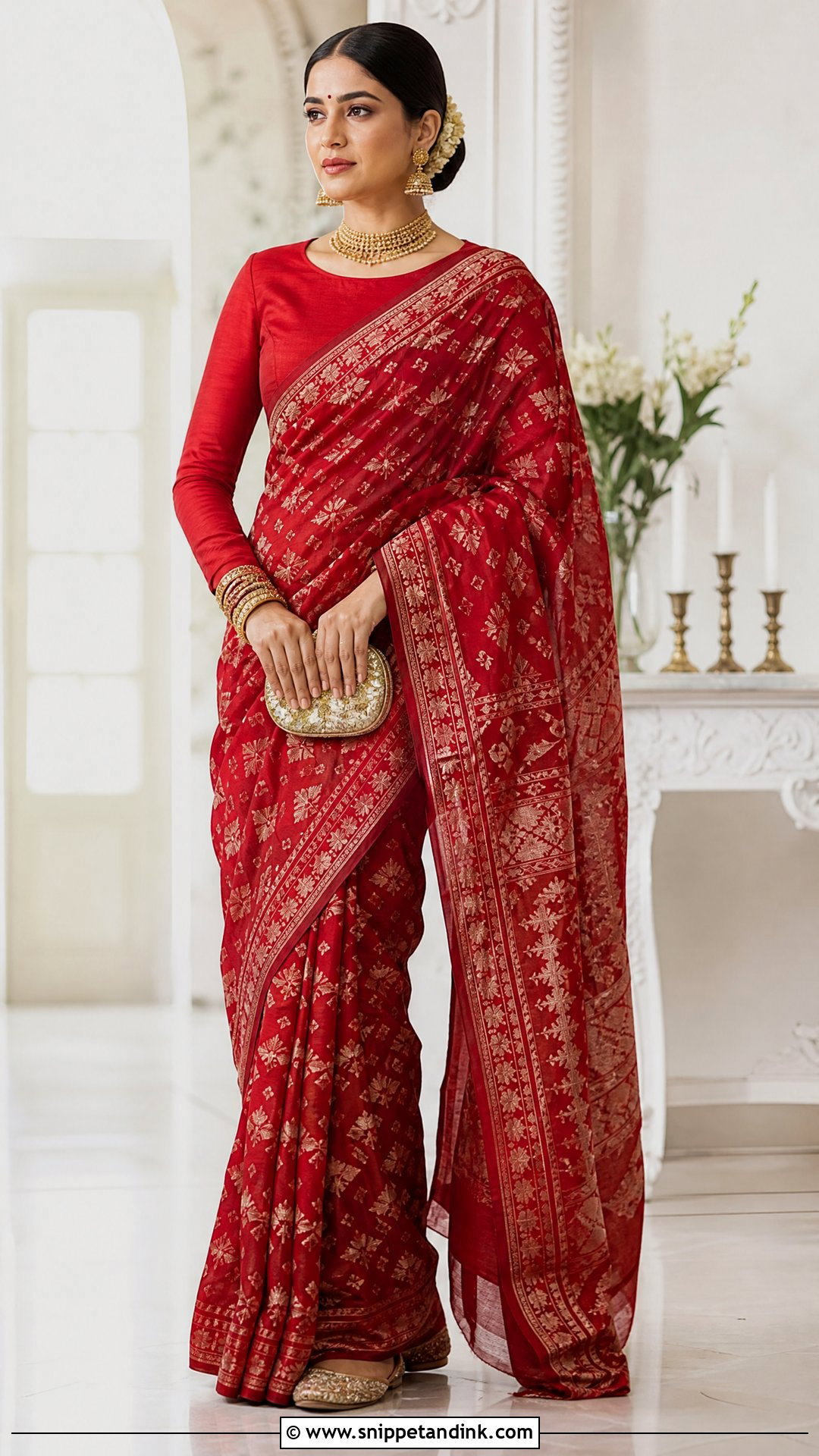
Long sleeves suit cooler weather, formal venues and brides who want coverage. Silk, brocade, velvet or embroidered fabric can be matched to the saree’s weight; I’d avoid velvet with a fine cotton Jamdani, because the contrast in weight looks odd. A red Jamdani with a red long sleeve blouse is classic; ivory with gold reads luxurious. If you’ll wear a choker, keep the neckline high enough that the two don’t overlap. Earrings, bangles and a neat bun finish it.
23. Jamdani Bride Saree With Statement Blouse
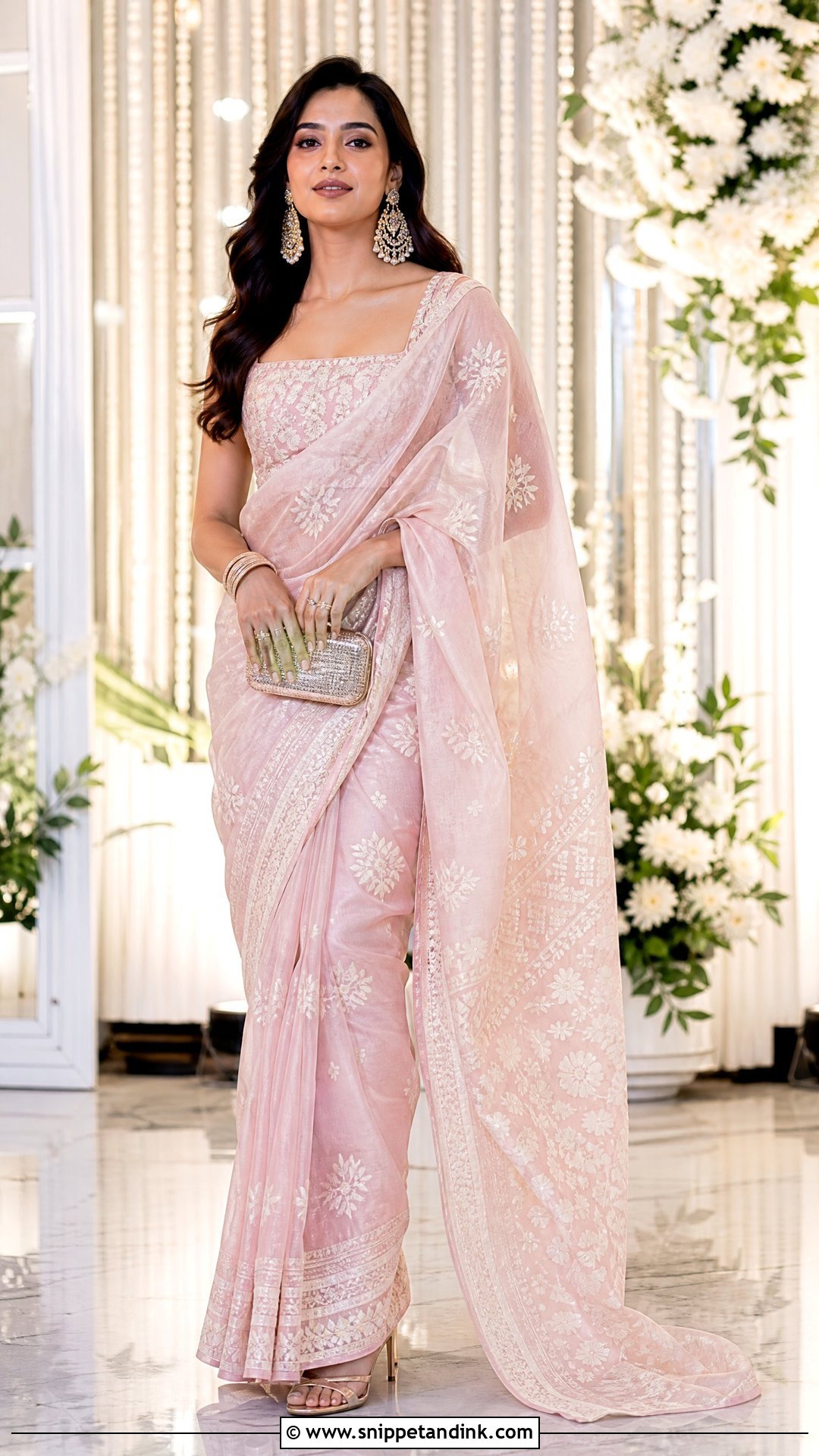
A statement blouse lets a bride add something personal: puff sleeves, a square neck, mirror work, embroidery, brocade or a contrast colour. Link the blouse and saree through at least one shared tone so the outfit looks planned. A bold blouse needs simpler jewellery; a minimal saree lets the blouse carry more. This suits receptions, engagements and modern portrait sessions, with sleek hair and metallic footwear.
24. Jamdani Bride Saree For Reception
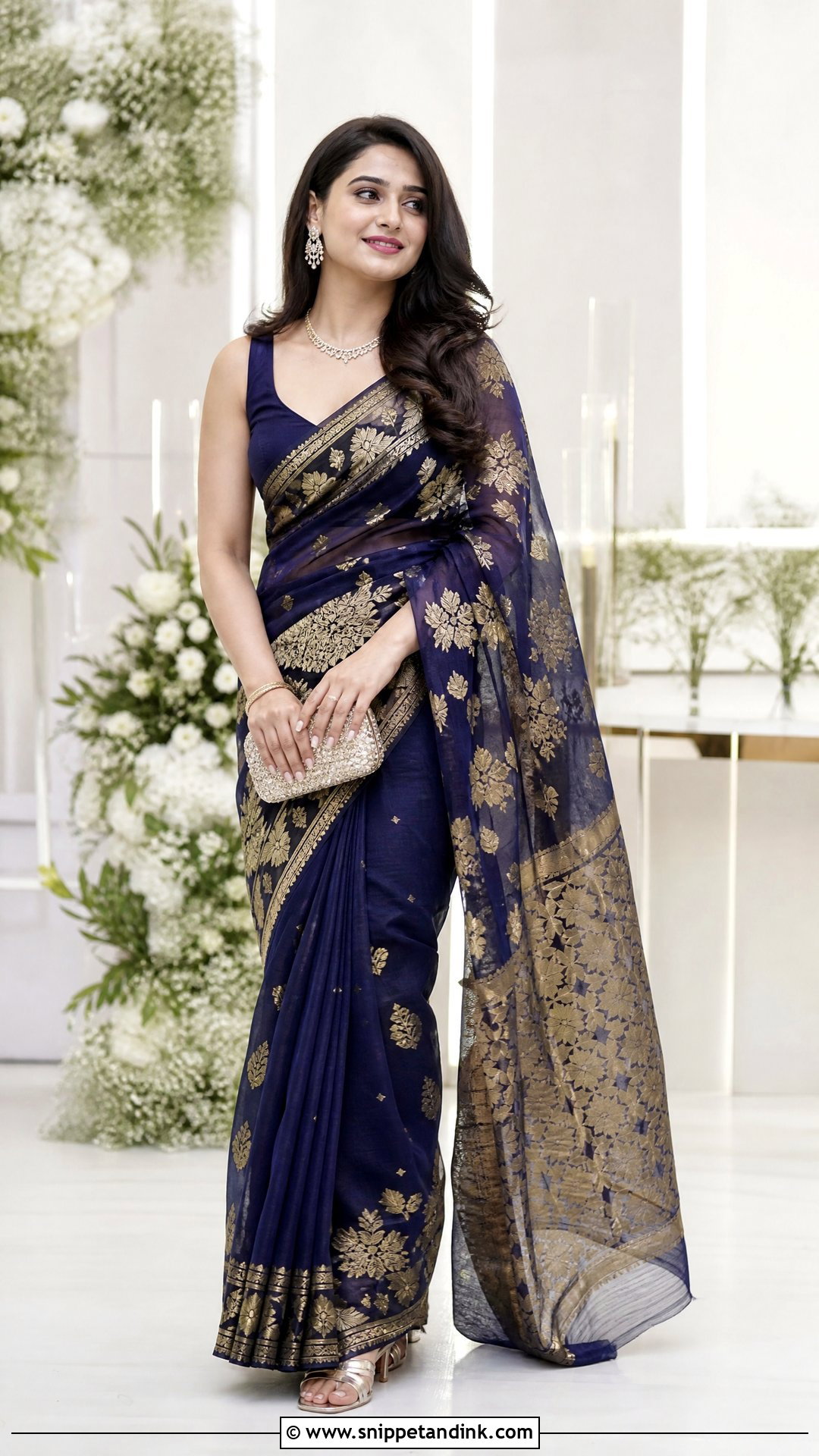
Reception Jamdani can be bolder than the ceremony saree. Black and gold, navy, champagne, emerald, blush or silver-toned weaves suit evening light. A fitted blouse, statement earrings and a sleek necklace keep it glamorous. An open pallu or a belted drape makes it easy to move between tables. Makeup can go a step deeper here, with defined eyes or a richer lip.
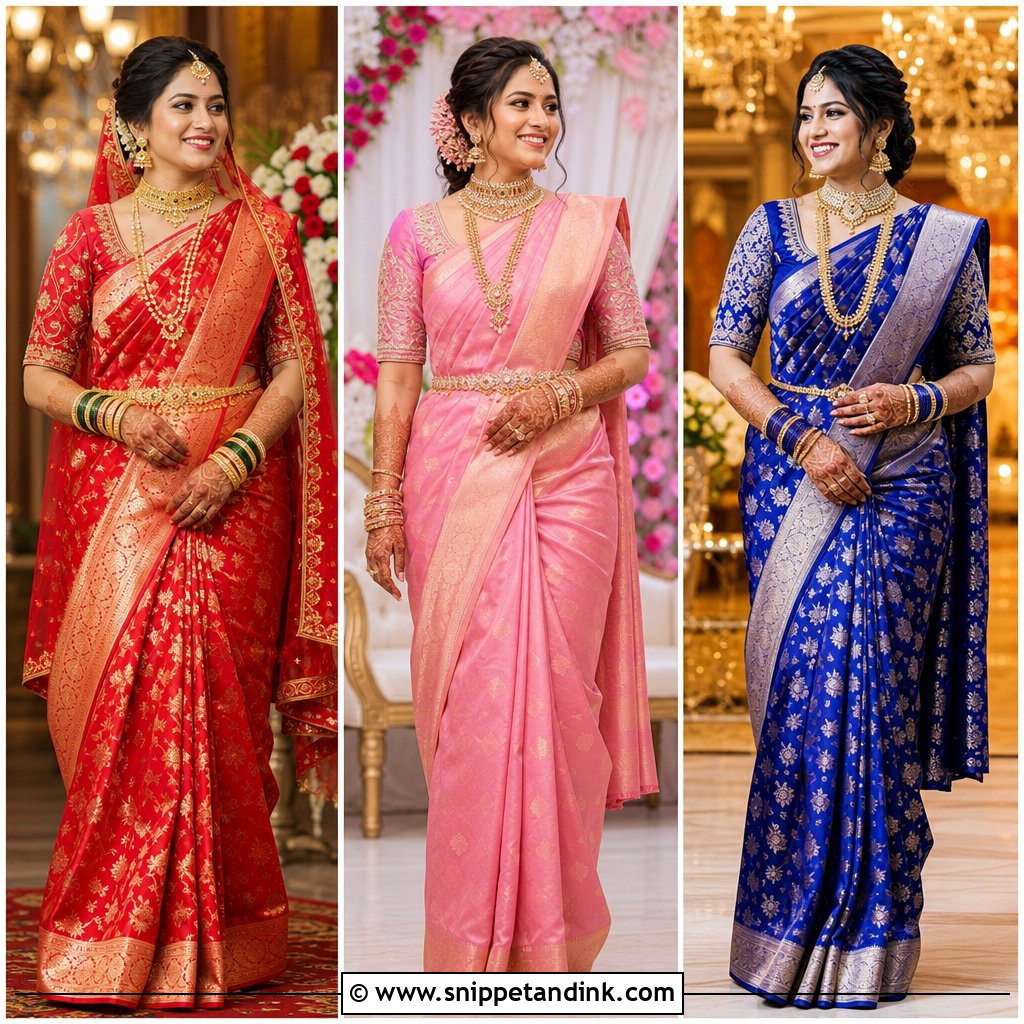
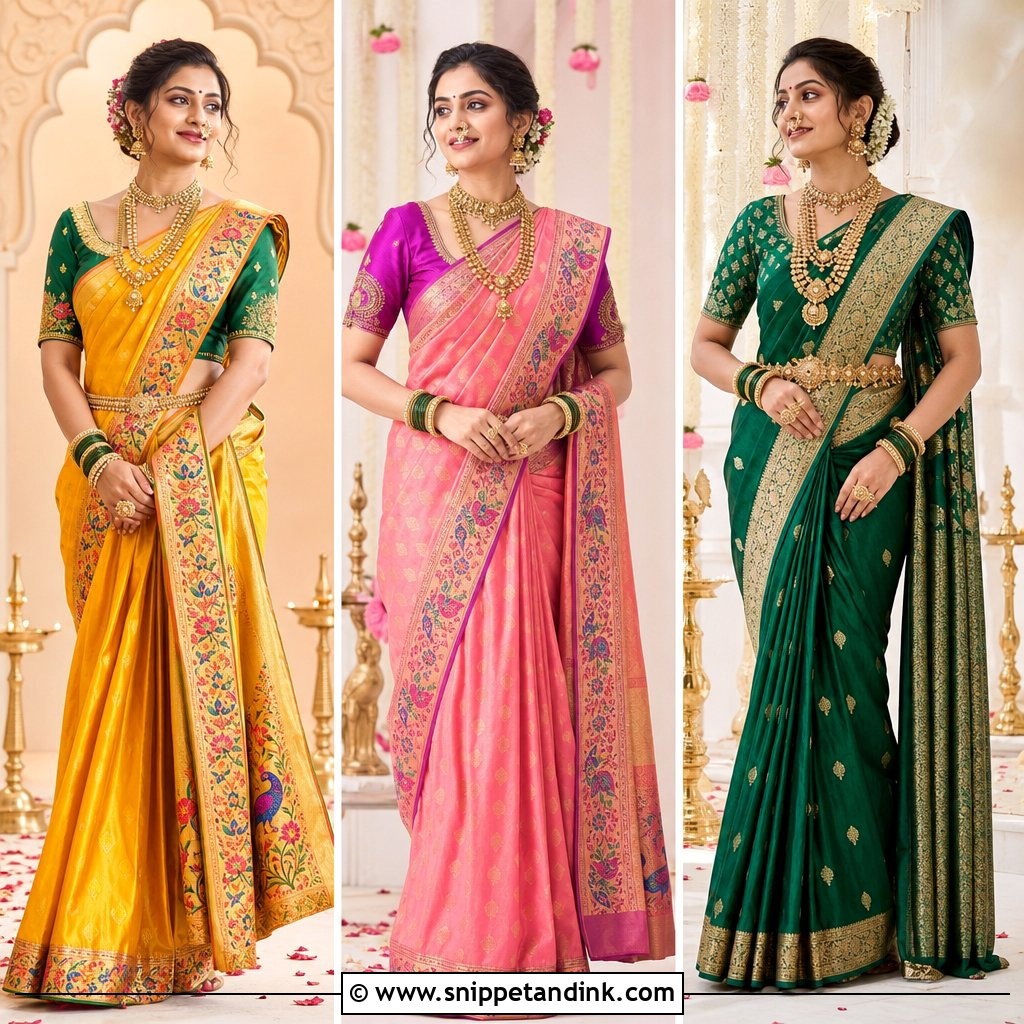
25. Jamdani Bride Saree For Haldi
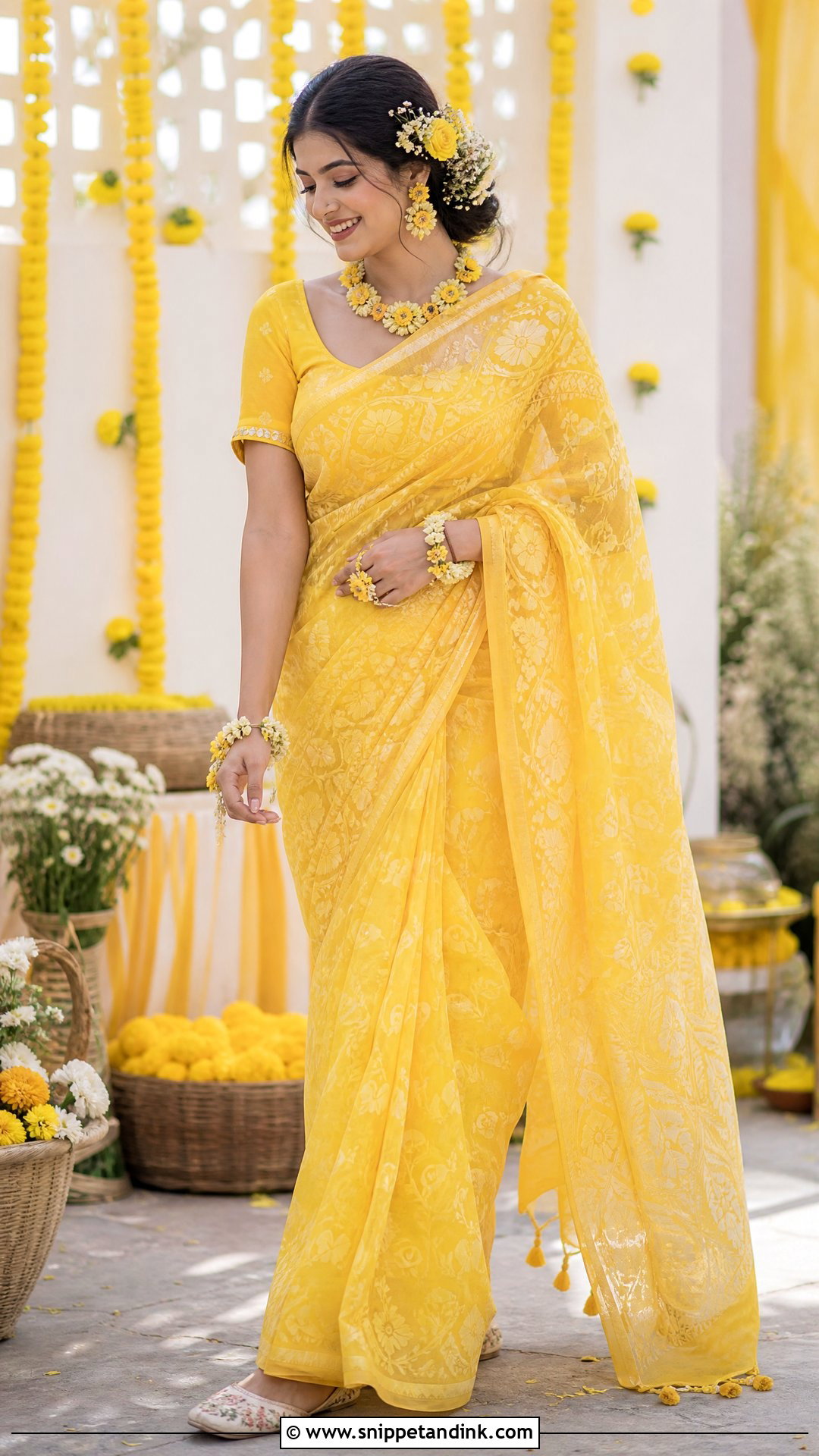
Haldi is messy, and I’d never put a bride in a precious Jamdani for it. Choose a saree for haldi you’re happy to stain: yellow is classic, but white with yellow motifs, soft orange, lime green or marigold all work. A sleeveless or short-sleeved blouse keeps the paste off your sleeves. Floral jewellery, flowers in the hair and light bangles, with flats or low sandals, keep the look festive and practical. Fresh, dewy makeup is enough.
Starch, Pins and a Saree That Weighs Almost Nothing
The same lightness that makes Jamdani comfortable makes it harder to drape for a long ceremony. Soft cotton doesn’t hold sharp pleats on its own, and a bridal pallu loaded with jewellery slides. Here is the routine I follow with a cotton Jamdani bride.
- A day or two before, have the saree lightly starched and pressed by someone used to handloom. Heavy starch makes fine cotton look stiff.
- Wear a petticoat that matches the saree colour closely, since fine Jamdani is slightly sheer.
- Pin the pleats at the waist, the pallu at the shoulder in two places, and add one hidden pin at the hip.
- Put the heavy jewellery on last, after the pins are set, and check the shoulder again.
After the Wedding
Let the saree air for a day before putting it away. Dry clean it the first few times, especially deep reds, which can bleed. Store it folded in a cotton or muslin cloth, not plastic, and refold it along different lines every few months so the creases don’t wear through. Keep it away from naphthalene balls touching the fabric; a small cloth sachet of neem leaves or cloves in the cupboard is gentler.
Letting a Light Handwoven Saree Carry the Whole Bridal Look
Jamdani gives a bride room to honour tradition and still look like herself. Red, white, gold and the Bengali drape keep it classic; pastels, pearls, veils and modern blouses soften it. Style the saree as a whole outfit, thinking about the ritual, the season, how much jewellery the fabric can carry, the blouse shape, hair, shoes and comfort. When every piece supports the weave rather than weighing it down, the look holds together from the first photo to the last.
You'll Like These Ideas:


Leave a Reply