
A wrapper gown takes the drape of a tied wrapper and sews it into a dress, so you keep the movement without retying anything every time you stand up. The shape comes from wrap fronts, layered skirts, side knots, fitted bodices or a decorative wrapper panel, and the fabric sets the mood: Ankara is bold and graphic, lace reads formal, satin carries an evening reception. When I put a guest outfit together, I plan the neckline, sleeves, hem, shoes, jewelry, bag and headwear as one decision, because a busy print plus busy accessories is the most common way these looks go wrong. The twenty ideas below are complete outfits you can adapt to your own fabric and fit.

Giving Your Tailor a Brief That Gets You This Gown
Most wrapper gowns are sewn to order, and the result depends heavily on how clearly you explain what you want. I’d walk into the first appointment with these ready:
- Reference photos from the front, side and back, with the knot or drape side marked. “A wrapper gown” means something different to every tailor.
- Enough fabric. A floor-length gown with a wrapper panel uses most of a standard six-yard Ankara piece, and matching the print across the overlap takes more. Buy the full piece.
- Your shoes, or at least the exact heel height, so the hem is set once and set right.
- A first fitting date that leaves room for a second. Tailors get very busy in wedding season, and rushed sewing shows in crooked panels.
Ask your tailor whether to pre-wash cotton prints. Some shrink slightly in the first wash, which matters on a fitted bodice that you’ll want to clean and wear again.
1. Ankara Long Wrapper Gown
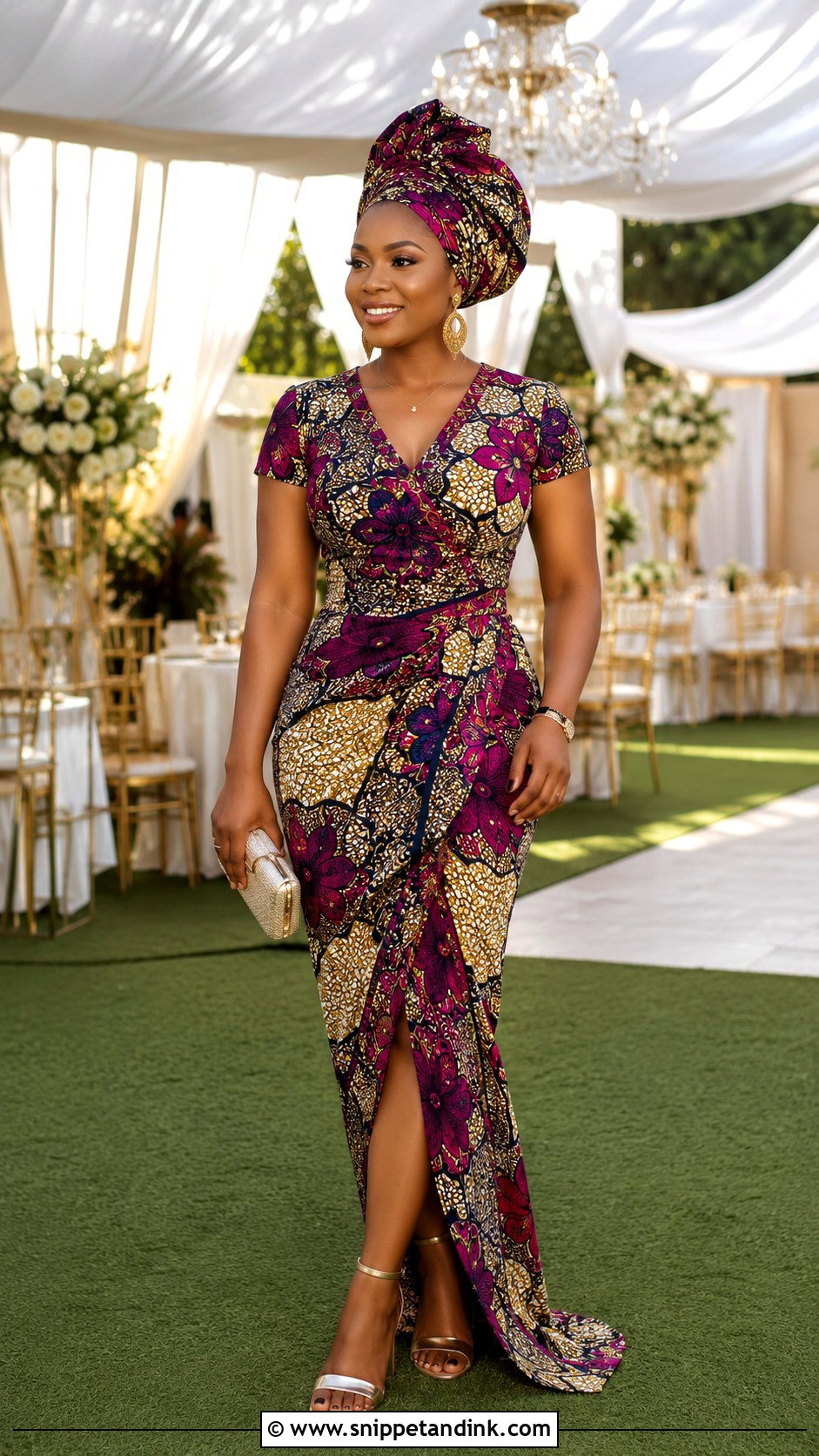
Most people start here, and with good reason. Build it on a fitted V-neck bodice with a floor-length wrapper panel crossing at the waist and a softly flared skirt that lets you walk and dance. The print is doing the talking, so keep everything else solid: block heels in one of the print’s colors, small gold earrings, a structured clutch. A matching headwrap adds cultural character, while a simple updo shows off the neckline. I always ask the tailor to set the knot slightly above the natural waist, which lengthens the leg line. If you’re buying cloth for a long Ankara wrapper gown, buy the whole piece rather than cutting it close, since matching the print across the wrap panel eats yardage.
2. Lace Wrapper Gown
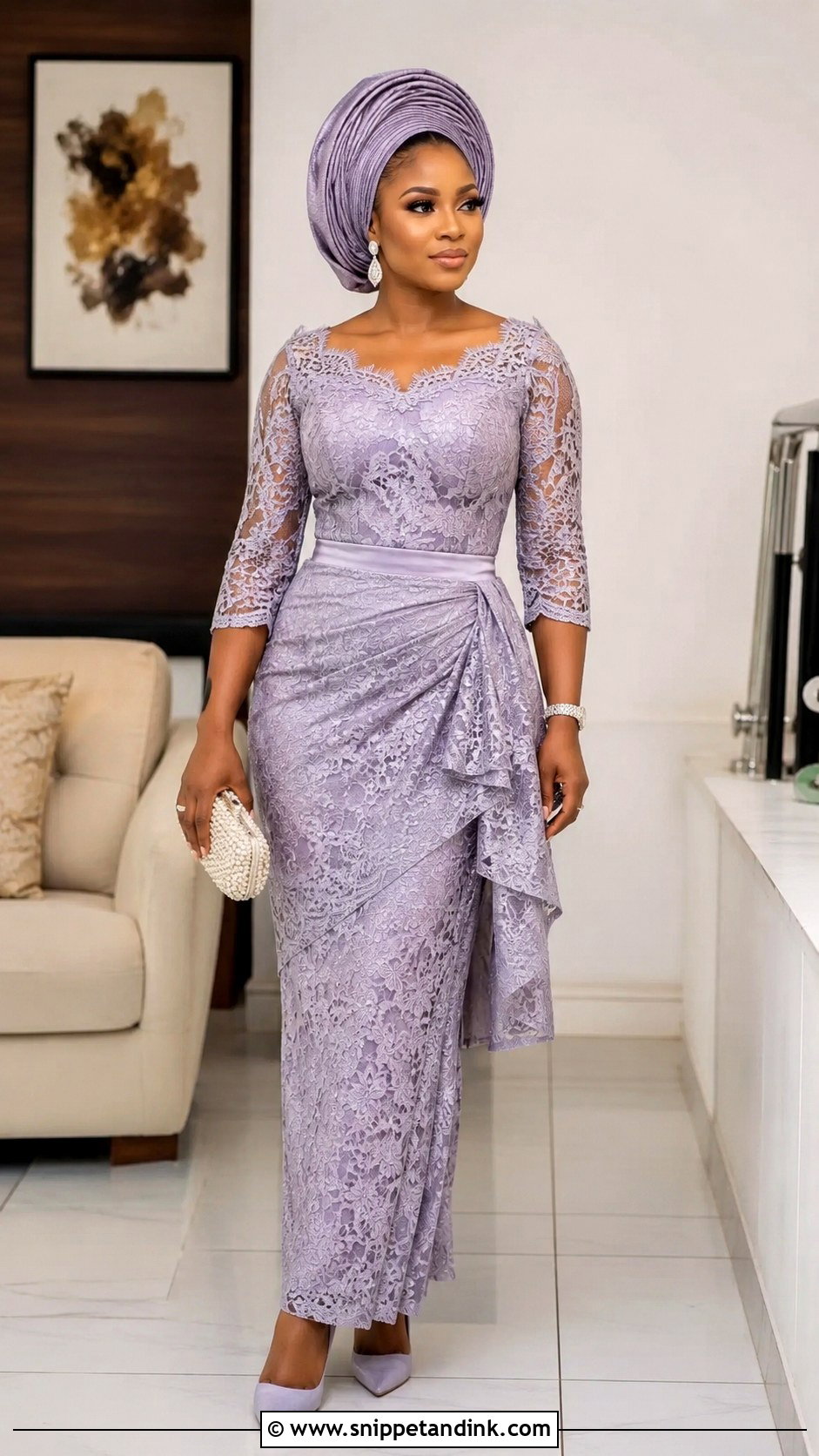
Lace looks finished almost by itself, which is why I keep the wrapper skirt on a lace gown simple. A lined lace bodice, three-quarter sleeves and a modest sweetheart or rounded neckline, then a skirt with one clean side drape instead of ruffles, so the lace pattern stays the main detail. The lining matters more than people think. Match it closely to the lace, because a contrasting underlayer shows through every gap in the motif and cheapens it. Pointed pumps, a beaded clutch and simple drop earrings finish it. A matching headwrap suits a traditional celebration; a sleek bun gives a more current feel.
3. Off Shoulder Wrapper Gown
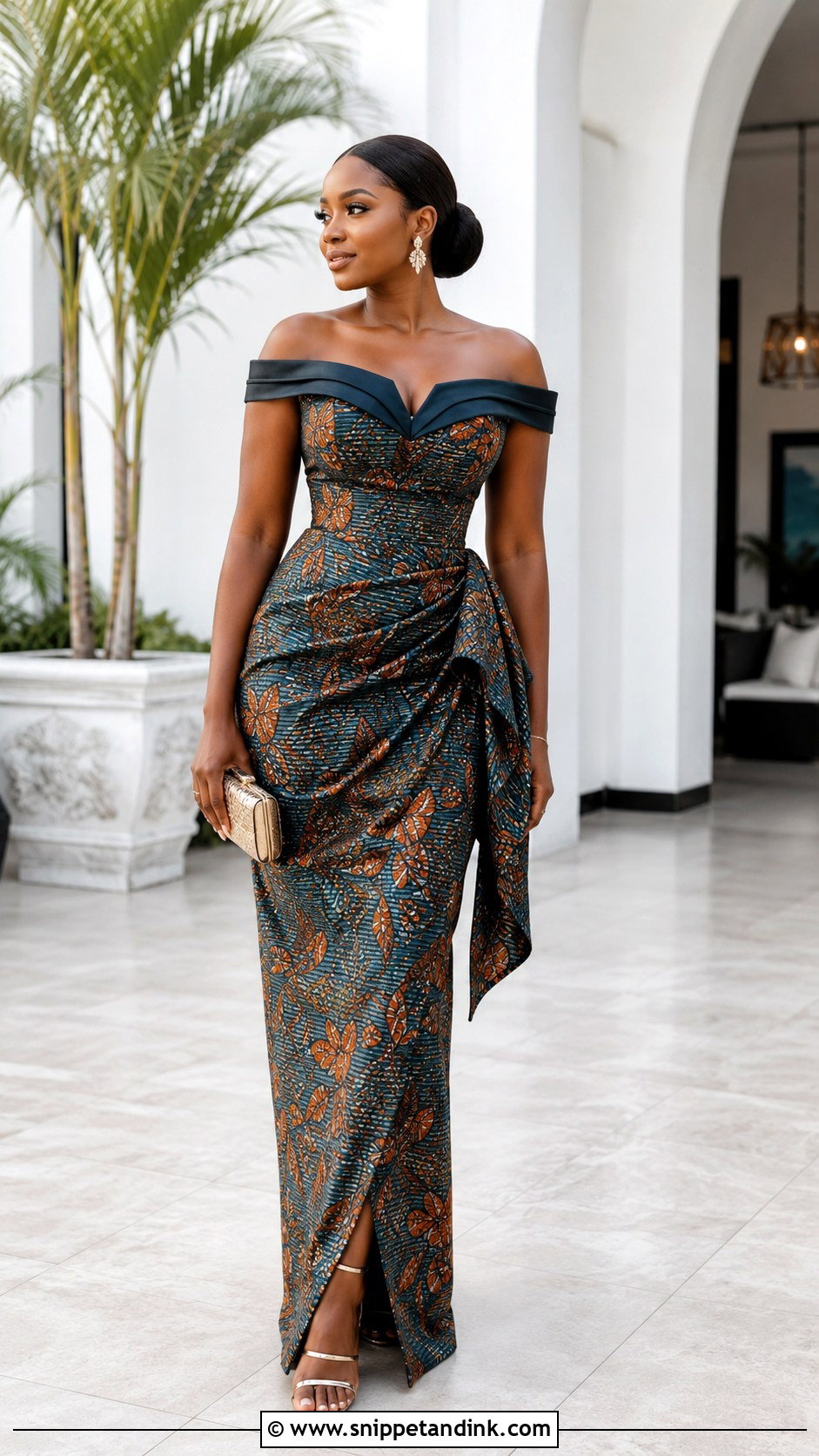
Off-the-shoulder brings soft drama, but only if the neckline stays put. I’d ask for a structured band with light boning or grip tape inside so it doesn’t slide down every time you clap or hug someone. Below it, a fitted waist and a long wrap-effect skirt with a side fold or gathered knot gives the wrapper shape without much volume. Skip the necklace; shoulder-skimming earrings, a compact clutch and metallic heeled sandals are enough. With a bold print, keep accessories in gold, silver or nude. A smooth low bun or side-swept hair puts the focus on the shoulders.
4. Corset Wrapper Gown
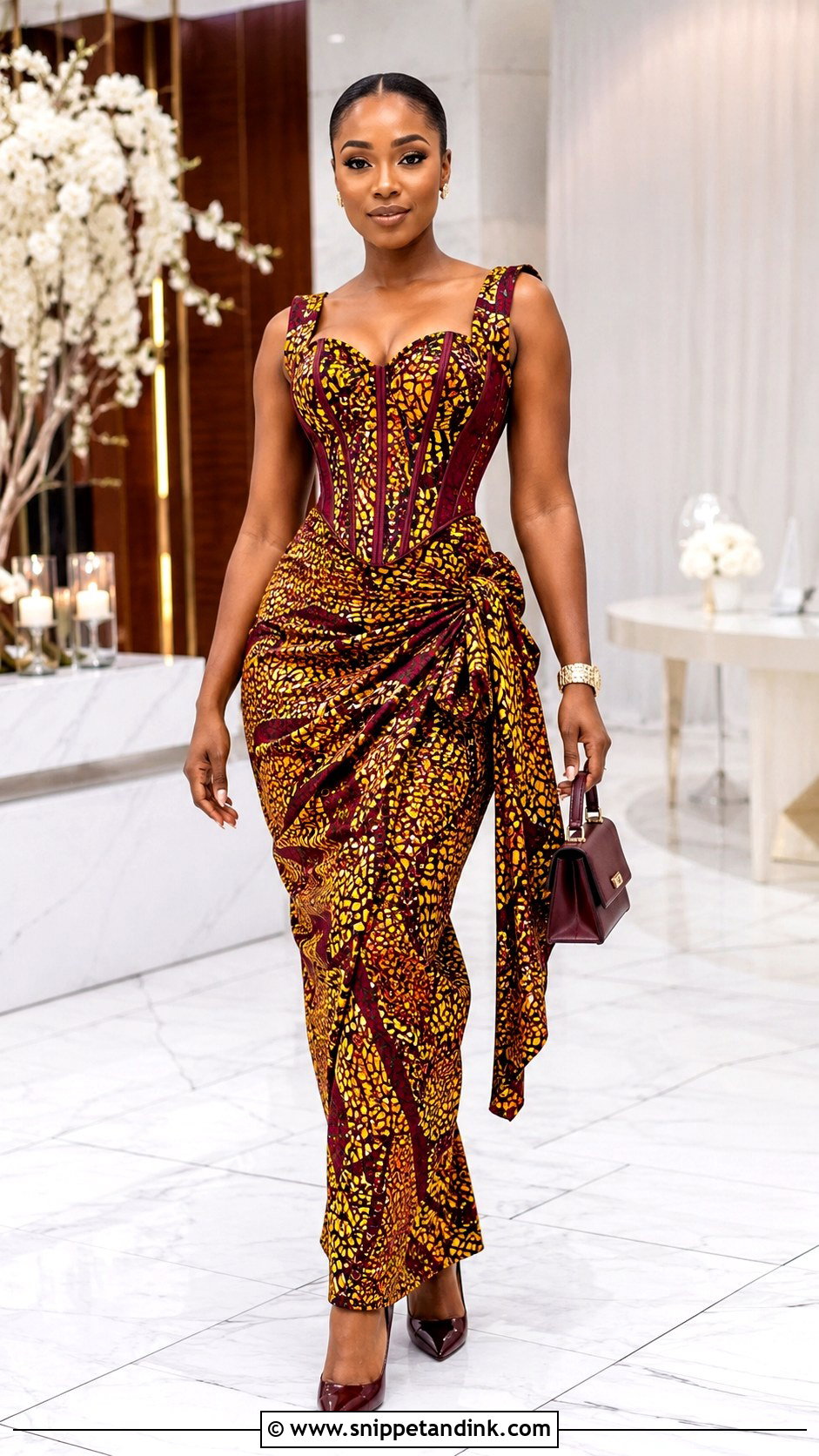
This one pairs a sculpted top with a softer drape below. Look for real boning, a comfortable lining and a neckline that covers securely. The wrapper panel should start at the waist and fall diagonally across the skirt, which shapes the hips without shortening your stride. Rich Ankara, brocade and embellished lace all hold up to the structure. Finish with sleek pumps, a small top-handle bag and one statement bracelet, and keep earrings plain if the bodice is beaded. Tailoring makes or breaks a corset. At the fitting I have guests sit down and lean forward as if reaching across a table; it should support you through a long reception meal, not pinch.
5. One Shoulder Wrapper Gown
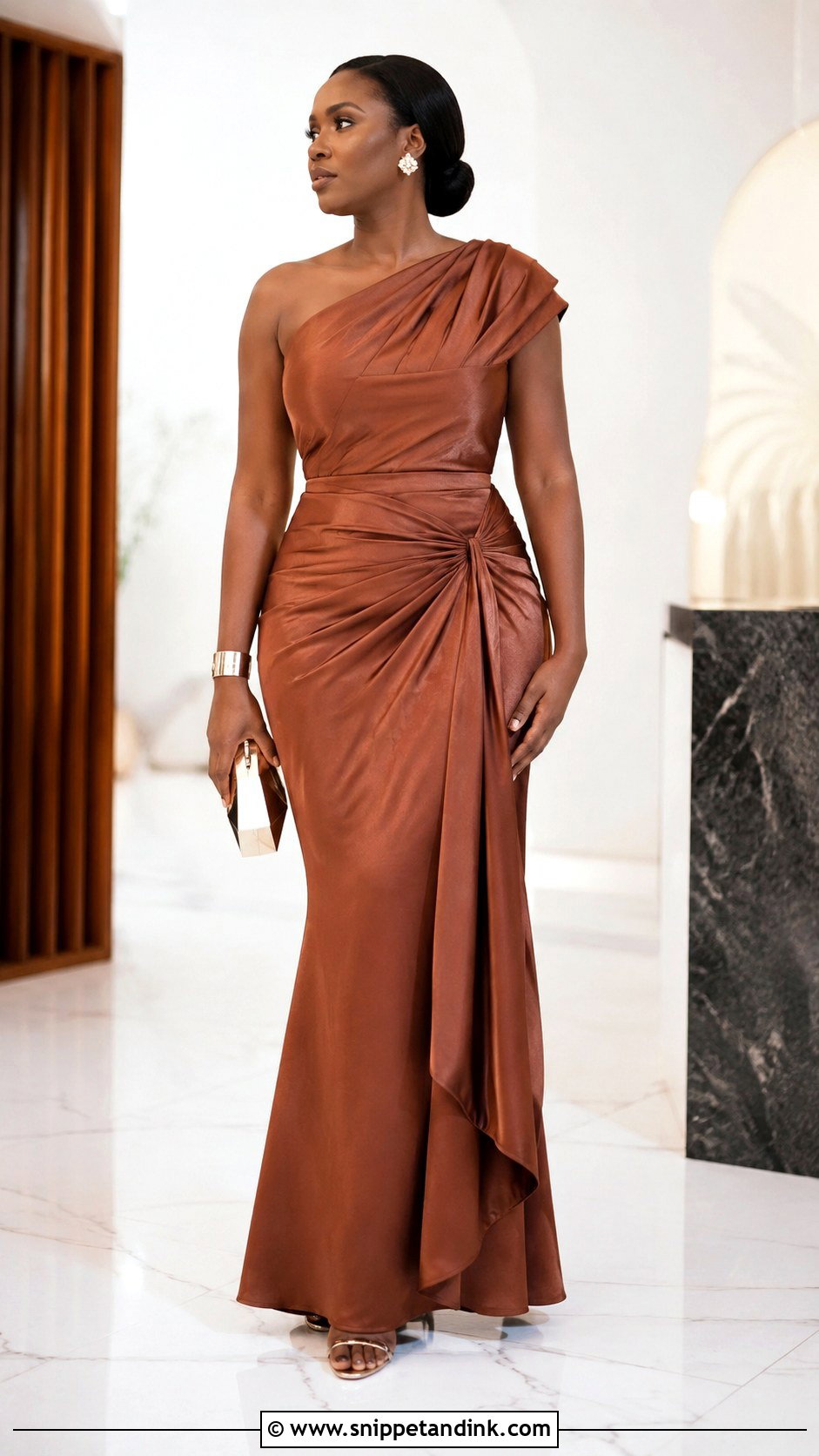
Asymmetry is the whole point here, so the drape has to be controlled. The single shoulder can carry a structured strap, soft pleats or a modest bow, balanced by a straight or gently flared skirt with the wrapper panel gathered on the opposite side. That diagonal leads the eye across the body. Test the strap at your fitting by raising both arms, since one-shoulder bodices tend to ride up on the bare side when the strap is cut short. Simple heeled sandals, a metallic box clutch and quiet earrings, with a cuff on the bare arm. Hair in a low bun or swept-back ponytail keeps the shoulder visible.
6. Peplum Wrapper Gown
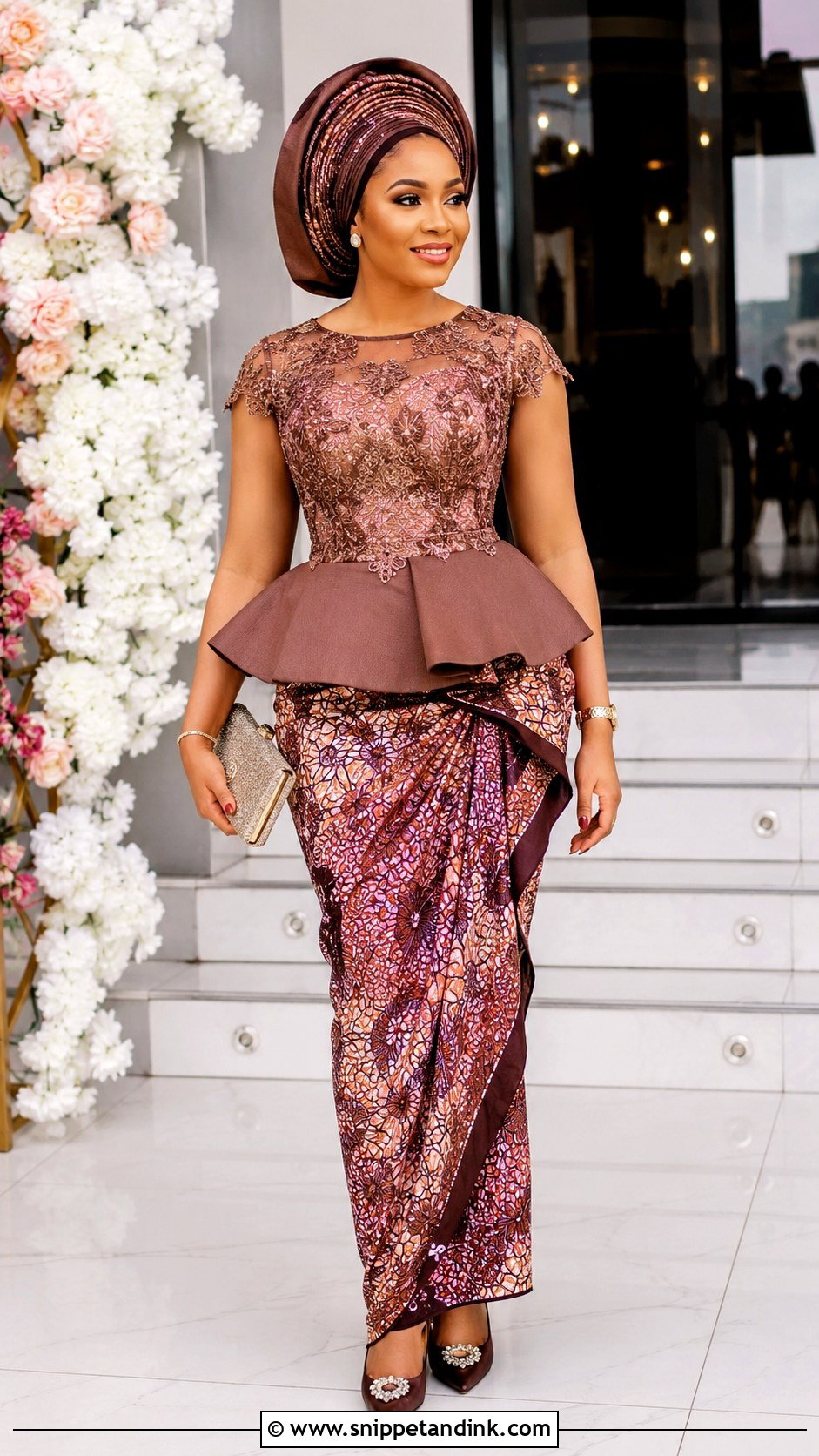
A peplum wrapper gown adds waist definition on top of the layered wrapper look, so I keep the peplum short and neat rather than wide. The lower gown can take a straight wrapper panel, side pleats or a lightly gathered front overlay. Ankara and lace together work well, one for the bodice and the other for accents. Pointed heels, a medium clutch, stud earrings and a polished headwrap. Remember that a peplum and a wrapper knot both add volume near the hip. If the peplum flares, keep the skirt streamlined, otherwise the two compete and the figure gets lost.
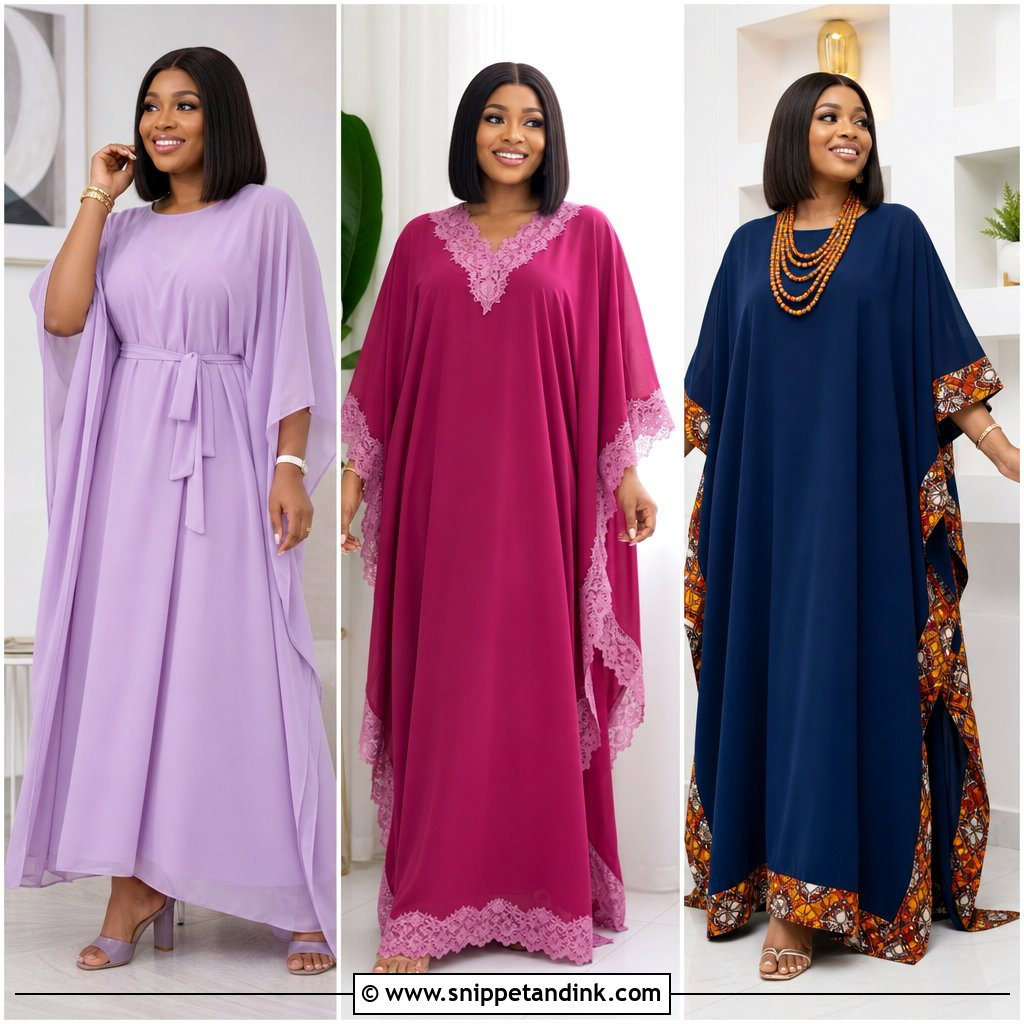
7. Boubou Wrapper Gown
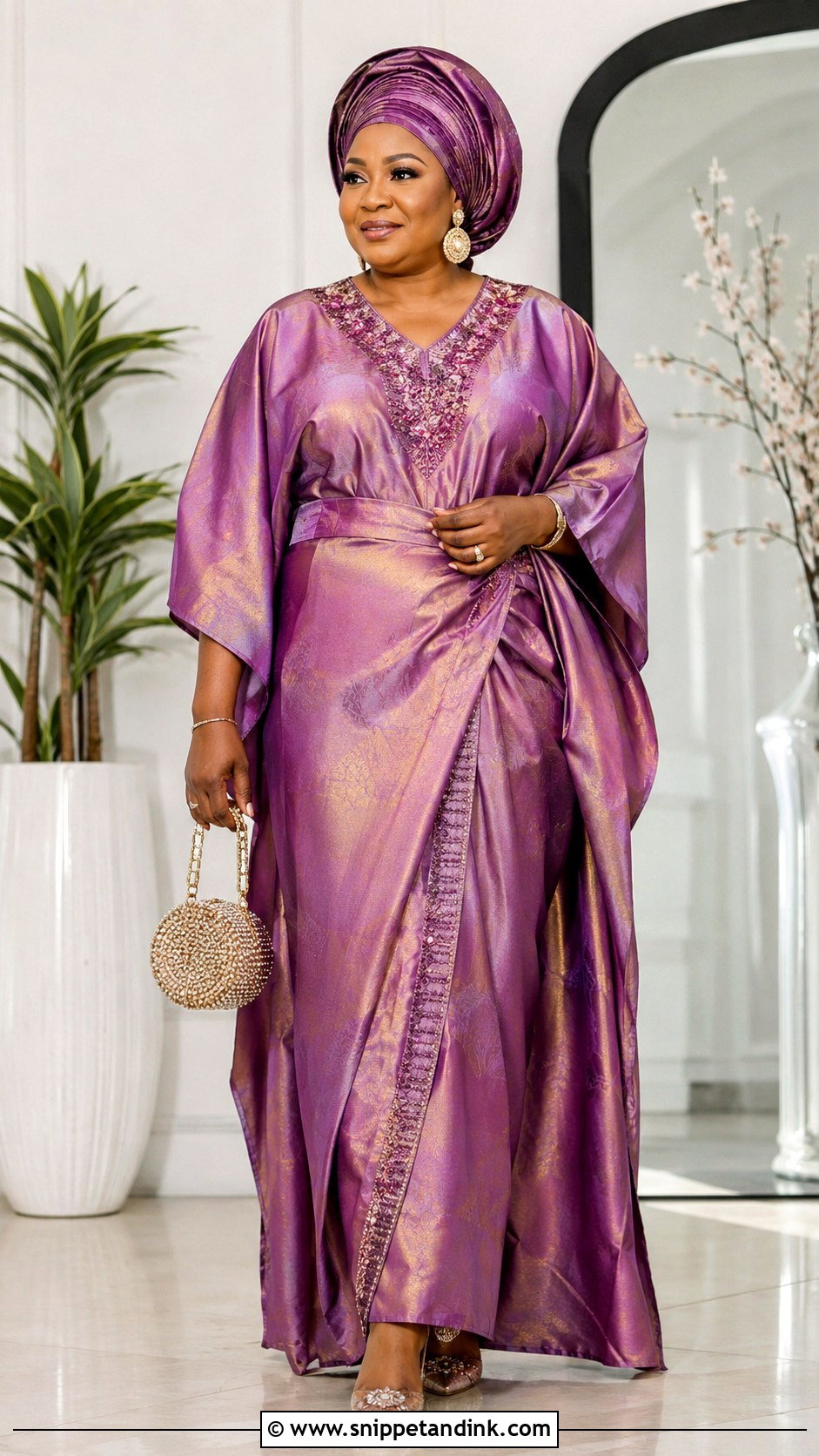
Comfort first. A boubou-inspired top falls loose, and a stitched wrapper panel at the front gives it shape so it doesn’t read as a plain kaftan. Chiffon, silk blends or lightweight jacquard drape properly; stiff cotton in this cut stands away from the body and turns boxy. Choose a V-neck or rounded neckline with embroidery around the collar and cuffs. Embellished flats or low block heels, a beaded bag and bold earrings work, with a coordinated headwrap giving the flowing shape a defined top. Keep the palette tight and the accessories in proportion, since oversized pieces make a relaxed cut look heavy.
8. Mermaid Wrapper Gown
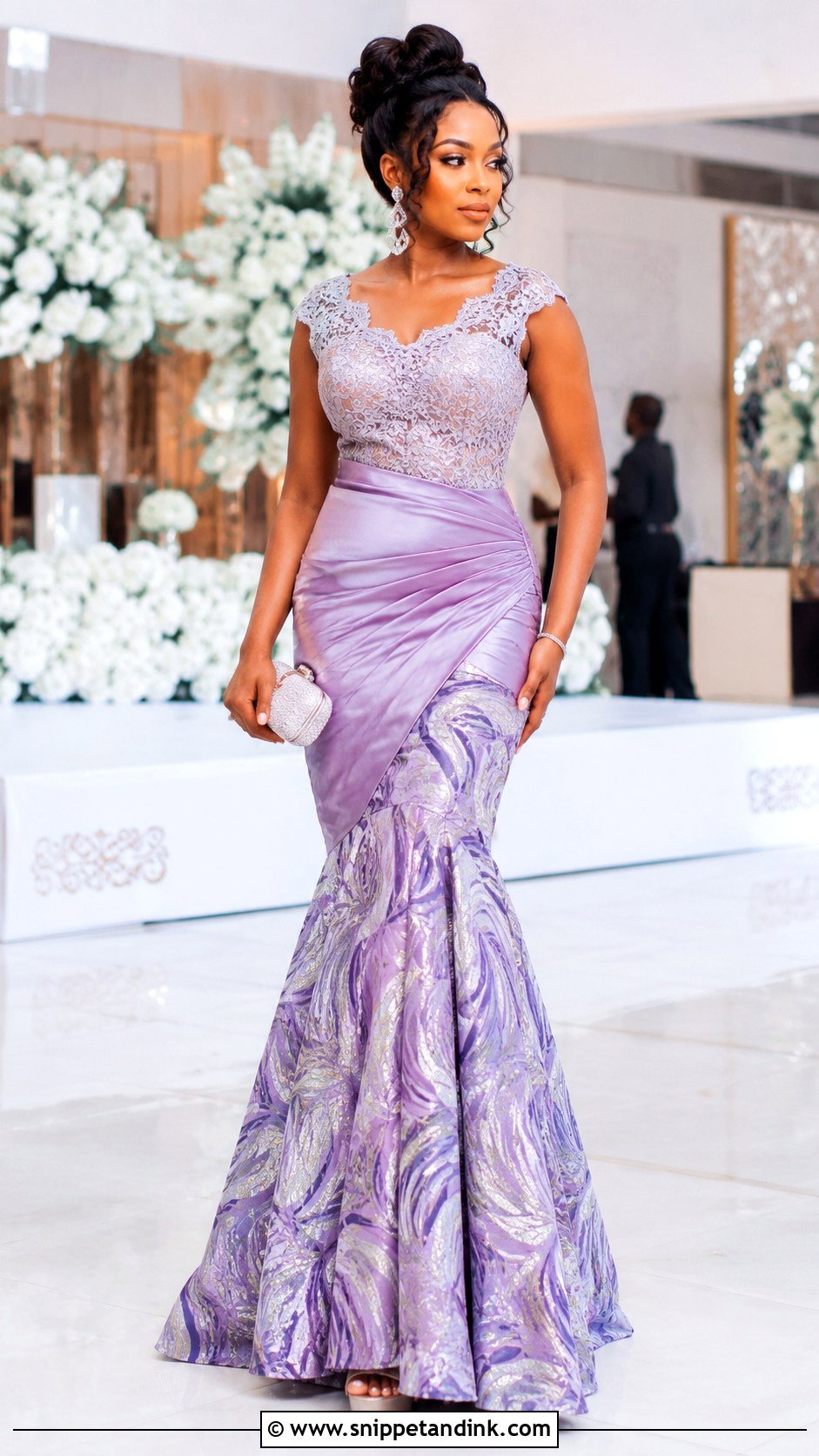
This is the most glamorous shape here and the most demanding to move in. The wrapper detail crosses the hips and gathers at one side before blending into the flare. I’d insist on fabric with a little stretch or enough ease around the knees, because you’ll be climbing steps and dancing, not only standing for photos. Lace, brocade, and structured Ankara all show off the line. Platform heels, a compact clutch, refined drop earrings and a sculpted updo suit the formality. Don’t put a big knot right on the widest part of the hip; a flatter drape set slightly forward reads smoother.
9. High Low Wrapper Gown
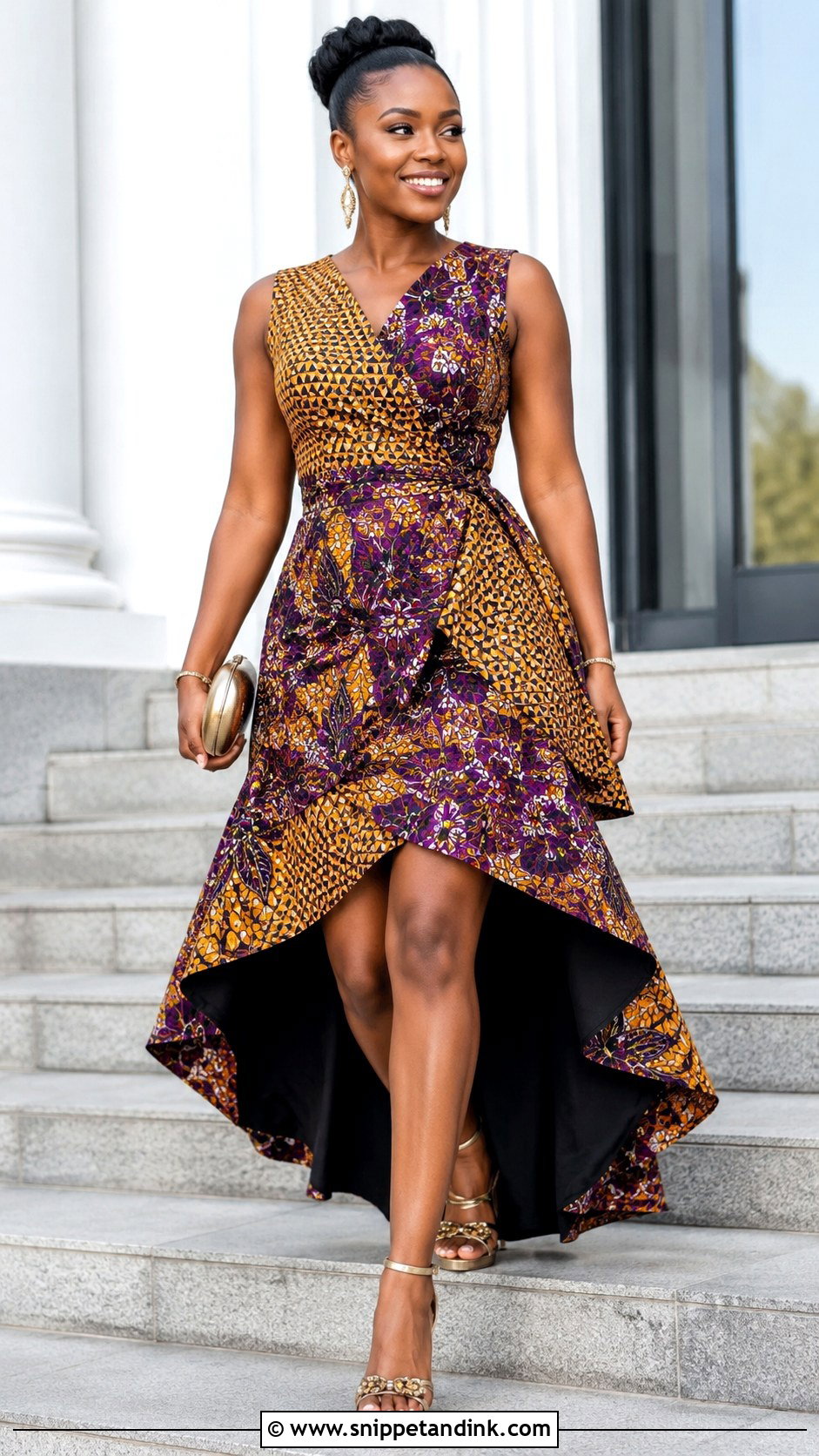
Short in front and sweeping behind, this cut shows off the shoes and is one of the easiest gowns here to dance in. A crossover bodice and layered wrapper skirt make the uneven hem look deliberate. Choose a crisp fabric that holds the curve of the hem, such as structured Ankara, cotton brocade or medium jacquard; soft fabrics let it droop into something that looks unfinished. Because your feet are on show, pick decorative ankle-strap heels that echo one color in the print. A small clutch and medium hoops or drops are enough. Keep the wrapper folds tidy at the waist so the hemline stays the focus.
10. Midi Wrapper Gown
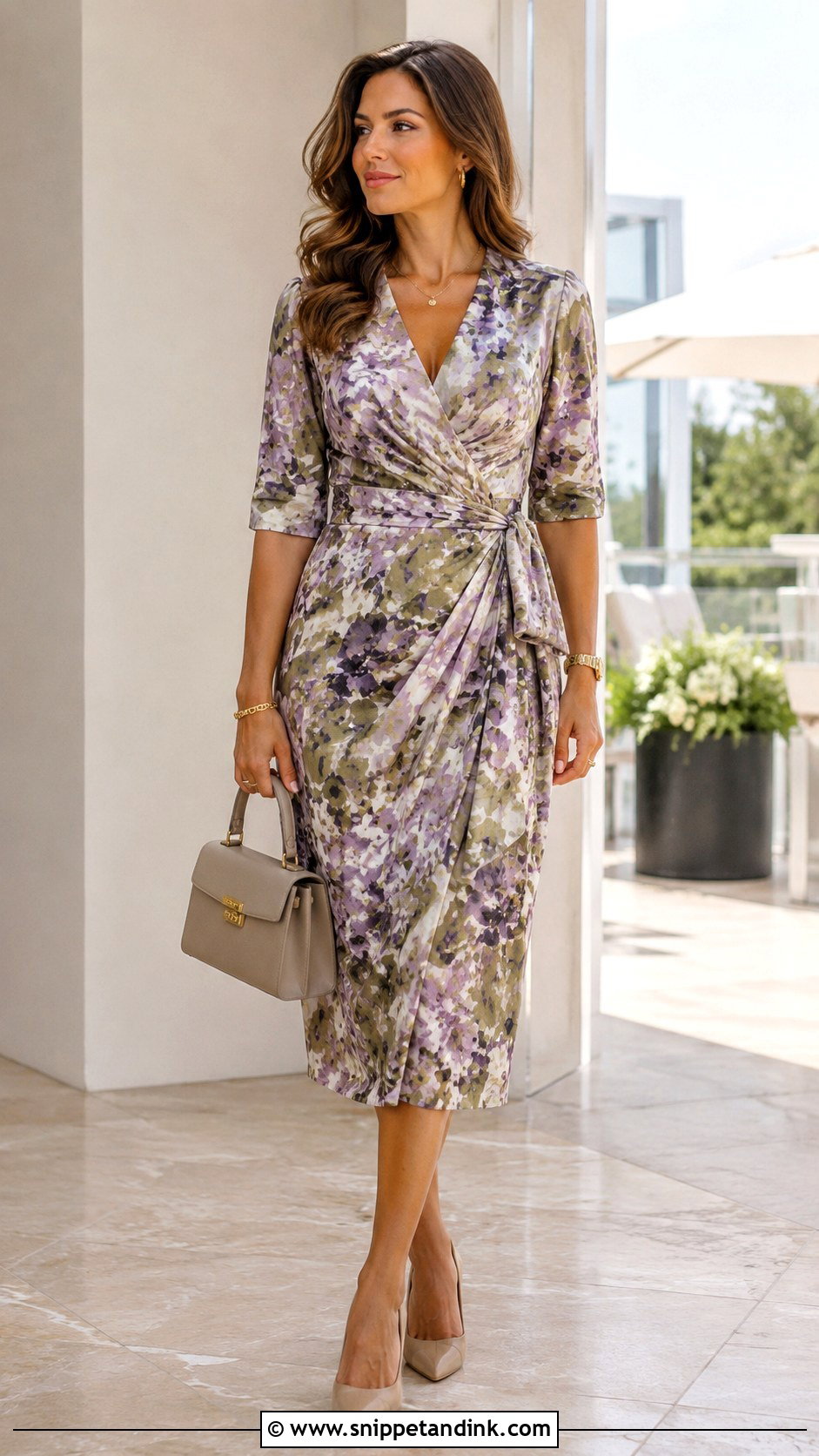
Midi is the practical length for semi-formal events, and the one I suggest when a guest wants to move without holding her skirt. Set the hem below the knee or near mid-calf depending on your height; petite guests usually suit the shorter end. A wrap neckline, defined waistband and gently tapered skirt keep it neat, and a small side drape adds the tied-wrapper reference. Pointed pumps or slingbacks, a structured handbag and minimal gold jewelry. A neat headwrap dresses it up, loose curls relax it. With a large-scale print, keep the cut plain so the pattern isn’t chopped up by seams.
11. Short Wrapper Gown
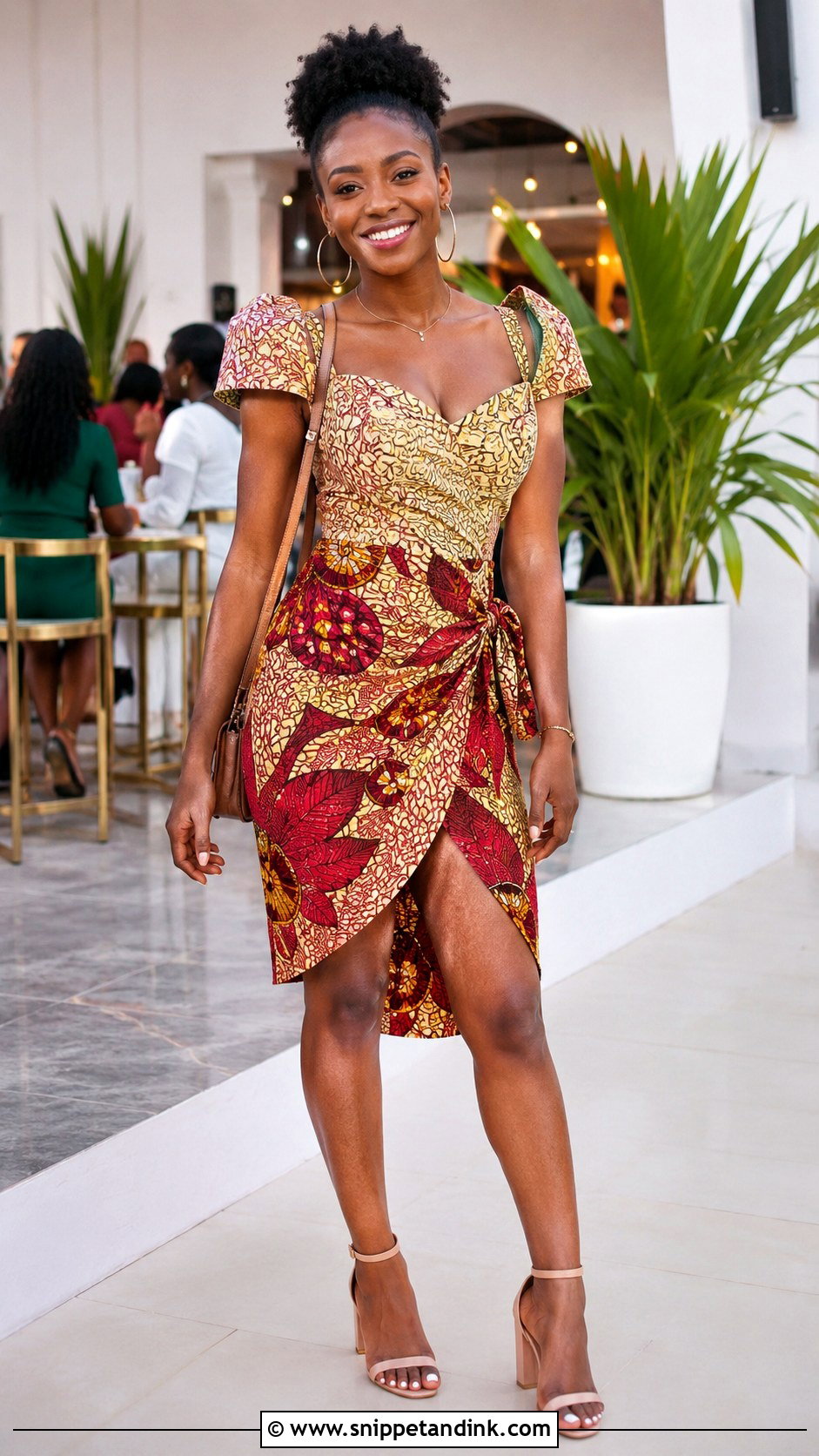
Short wrapper gowns feel youthful, and the overlap is the part I check most. Choose a length near the knee, a fitted bodice and an overlapping skirt panel secured with a decorative side knot. That overlap must be wide enough not to gape when you sit or climb into a car, because on a short skirt there’s no margin for error. Puff sleeves or neat short sleeves balance the hem so it doesn’t read casual. Block-heel sandals, a small shoulder bag and simple hoops. A bold Ankara print suits this length, though solid crepe gives a cleaner finish. It’s a daytime outfit more than an evening one.
12. Aso Oke Wrapper Gown
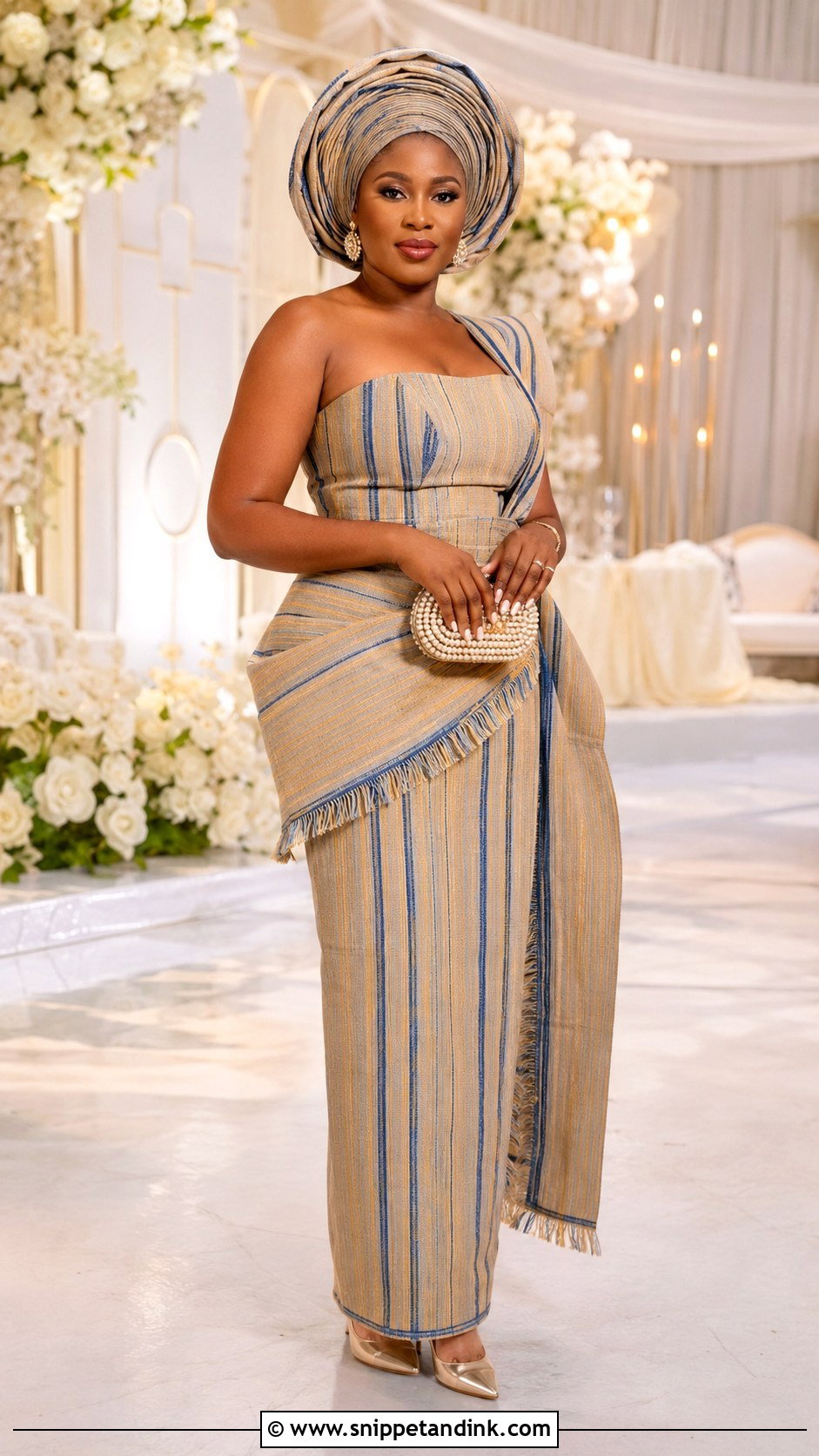
Aso Oke has so much presence that I use it in one or two places, the bodice, the wrapper panel, the sleeves or the waistband, rather than everywhere. It’s a handwoven cloth, stiffer than Ankara, so it holds pleats crisply but won’t drape softly. A fitted top with a straight floor-length skirt is the foundation, with the overlay pleated at one hip and a subtle fringe edge. A coordinated headwrap, metallic pumps, a beaded clutch and classic earrings keep the woven texture in charge. When different Aso Oke strips are joined, ask your tailor to line up the stripes at every seam. Misaligned lines are the first thing anyone notices.
13. Adire Wrapper Gown
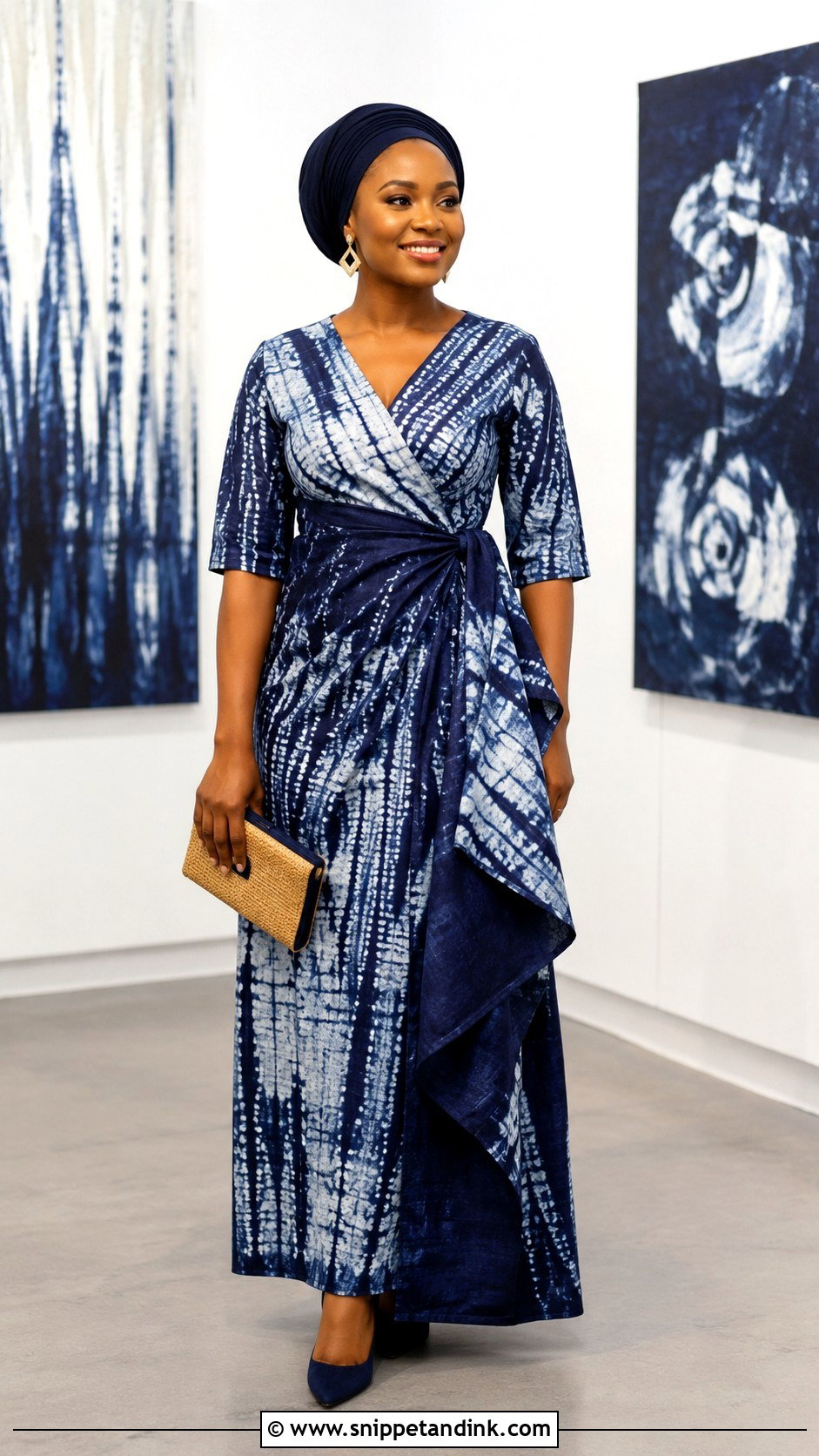
Adire is hand-dyed, so no two lengths match exactly, and that’s part of its charm. Indigo and white is easy to coordinate; multicolored Adire makes a louder statement. Try a fitted V-neck bodice, elbow sleeves and a long skirt with a softly draped wrapper overlay, and keep the construction clean so the organic pattern isn’t fighting seams. Indigo can rub off onto pale shoes and bags in the first few wears, so I’d pick navy, silver or neutral heels and a woven clutch rather than anything white. Add a matching headwrap, or wear natural hair with geometric earrings, depending on how traditional you want it.
14. Satin Wrapper Gown
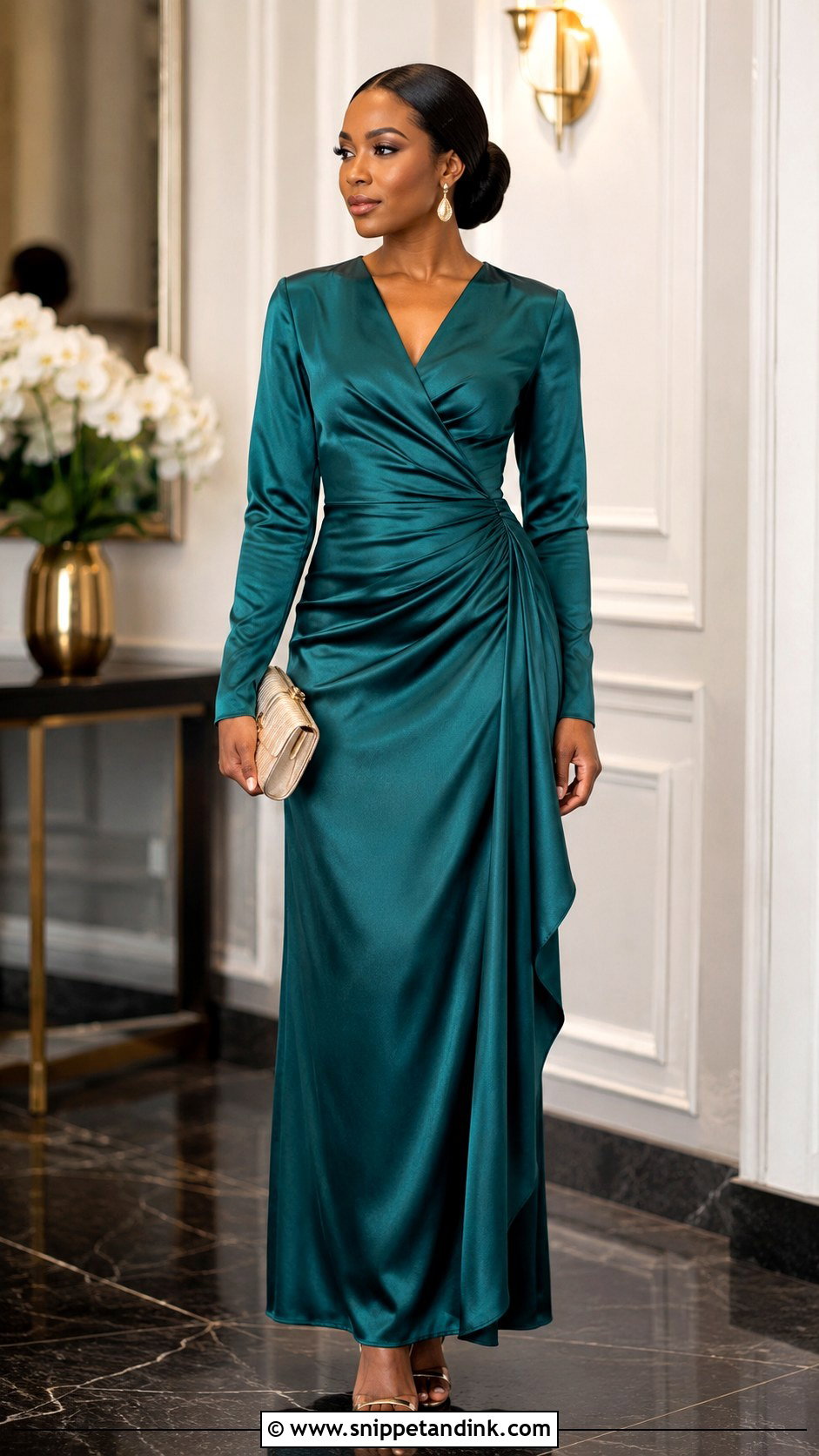
Satin catches light on every fold, which is both its appeal and its risk. I choose heavier satin that drapes cleanly instead of clinging, then a long-sleeved crossover bodice, fitted waist and softly gathered wrapper skirt. Jewel tones, neutrals and deep metallics all suit it. Slender heels, a crystal or satin clutch and delicate earrings, with a sleek bun so the sheen does the work. Because satin shows every crease and pucker, the wrapper panel needs careful pressing and pinning, and the waist gathers should be minimal. A light lining smooths the line over undergarments.
15. Velvet Wrapper Gown
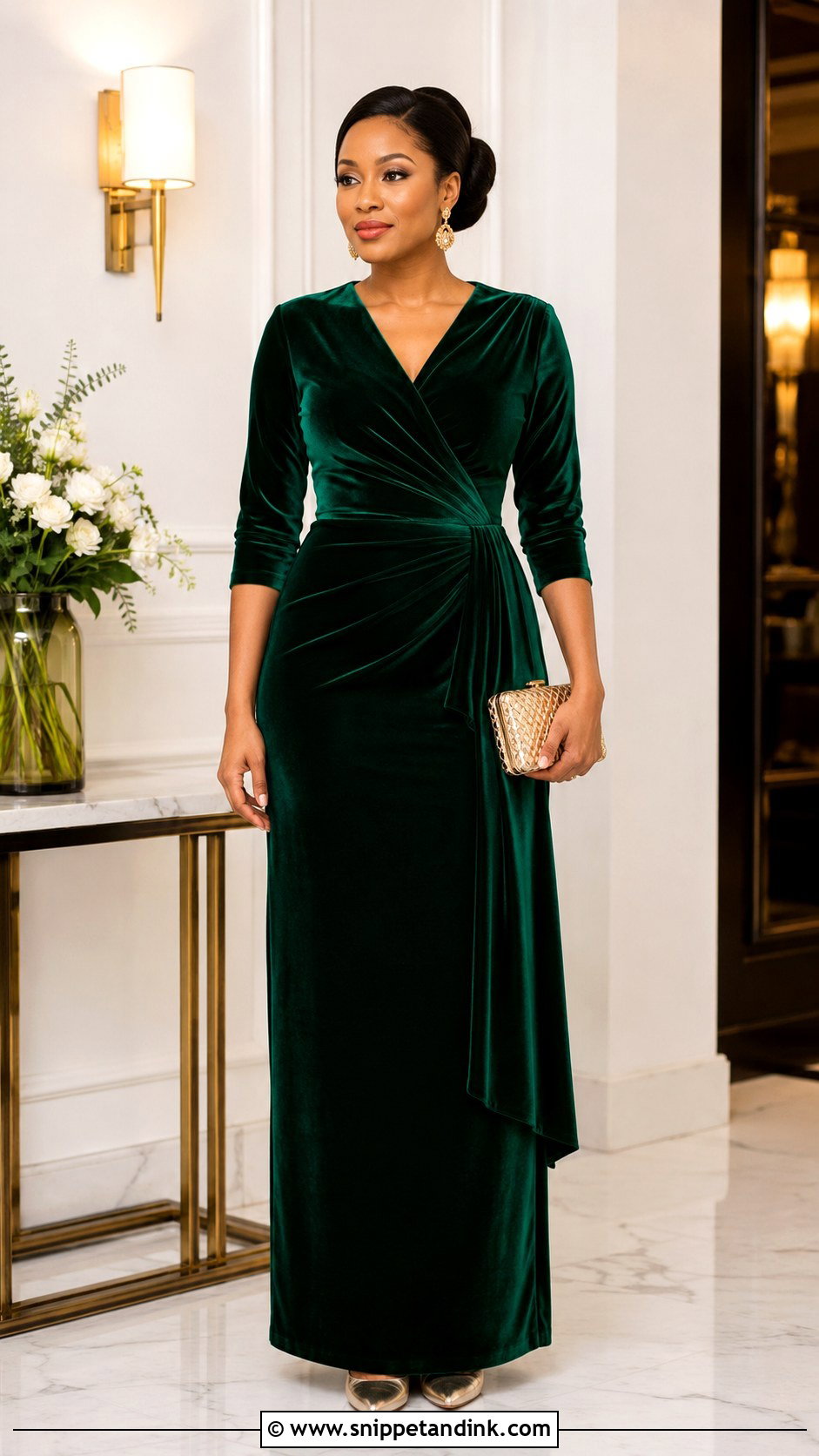
Velvet gives a wrapper gown weight and a formal feel, so the silhouette needs to stay simple: fitted bodice, defined waist, straight wrapper skirt. Three-quarter sleeves or a modest V-neck stop it looking heavy, and dark green, burgundy, navy and plum suit the pile best. Metallic pumps, a small structured clutch and refined gold jewelry are plenty; velvet already plays with light, so skip heavy beadwork. A smooth updo or neat headscarf finishes it. Keep the wrapper panel fairly flat at the waist, because folded velvet doubles in bulk very quickly and a thick knot sits like a cushion on the hip. It’s also warm, so save it for evenings and cooler months rather than a hot outdoor afternoon.
16. Organza Sleeve Wrapper Gown
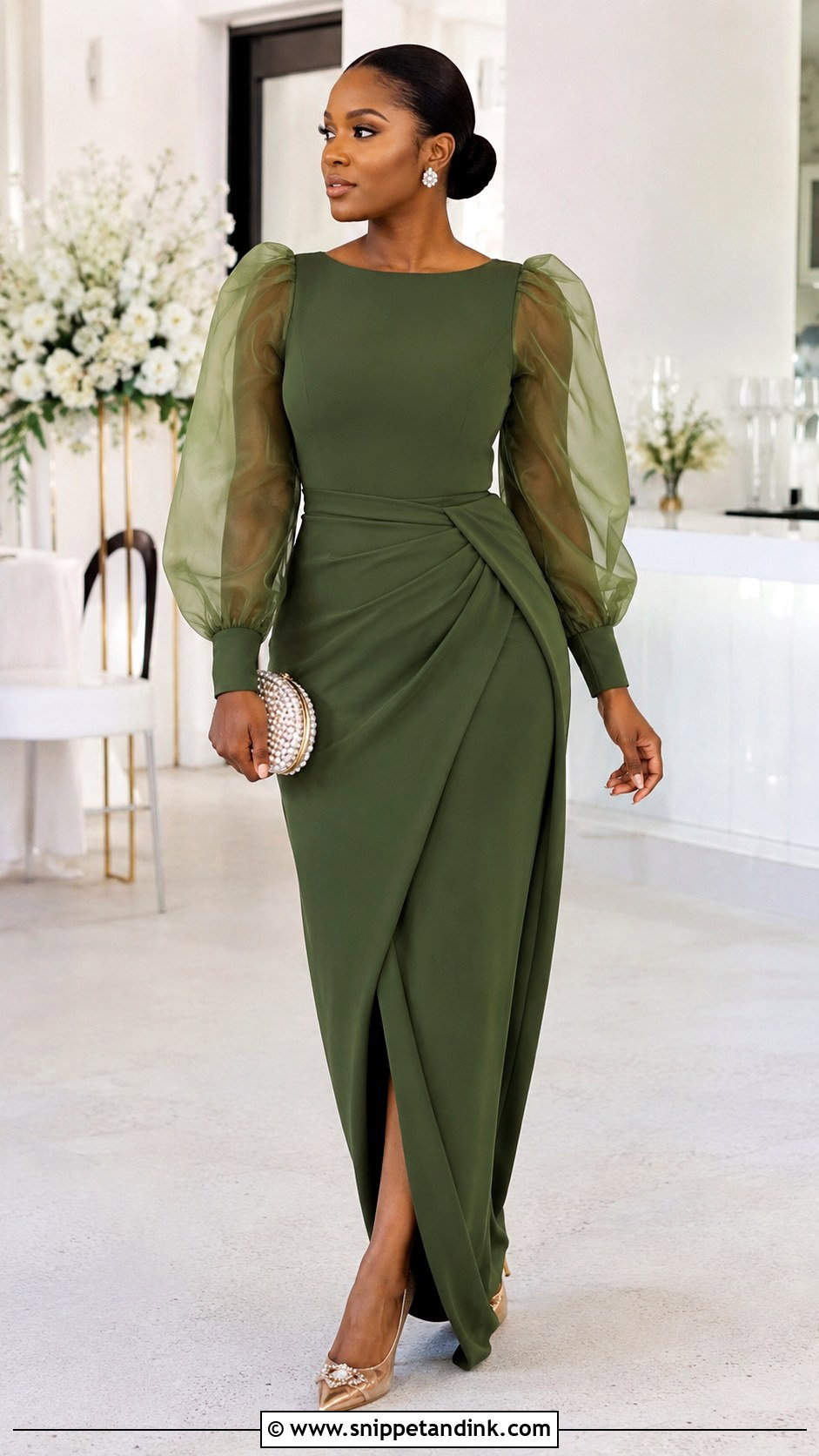
Sheer organza sleeves turn a plain wrapper gown into an evening outfit. Start with an opaque fitted bodice and a full-length wrapper skirt, then add transparent puff sleeves with fitted cuffs. Solid crepe, satin or subtle jacquard suits the main gown. Organza is crisp and holds a puff well, but it creases if you squash it under a coat in the car, so carry a light shawl instead. Pointed heels, a pearl-accented clutch and compact earrings. Hair in a low bun or smooth ponytail keeps the shoulders clear. Match the organza closely to the gown so the sleeves read as part of the dress, not an add-on.
17. Two Tone Wrapper Gown
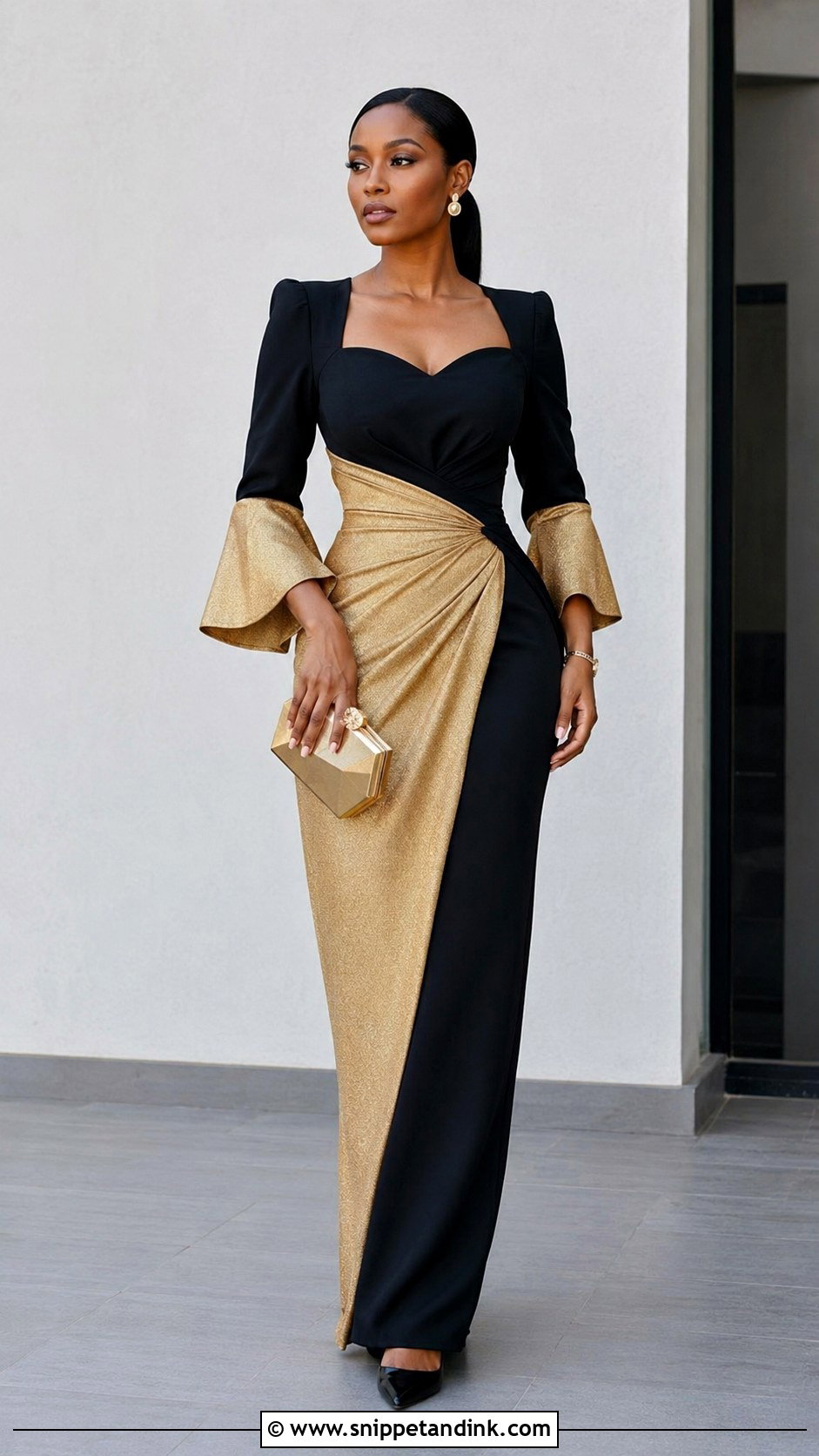
Two colors make the wrapped construction visible. Use one shade for the bodice and main skirt, then bring in a second through the overlay, sleeves or waistband. Black with gold is formal and blue with silver cooler, while cream with dusty pink or olive with beige is softer. I place the color change at the natural waist or just above it, because a line across the widest part of the hip widens it. Coordinate shoes and bag with the quieter color. Simple earrings and one bracelet are plenty; the color blocking is already the detail.
18. Plus Size Wrapper Gown
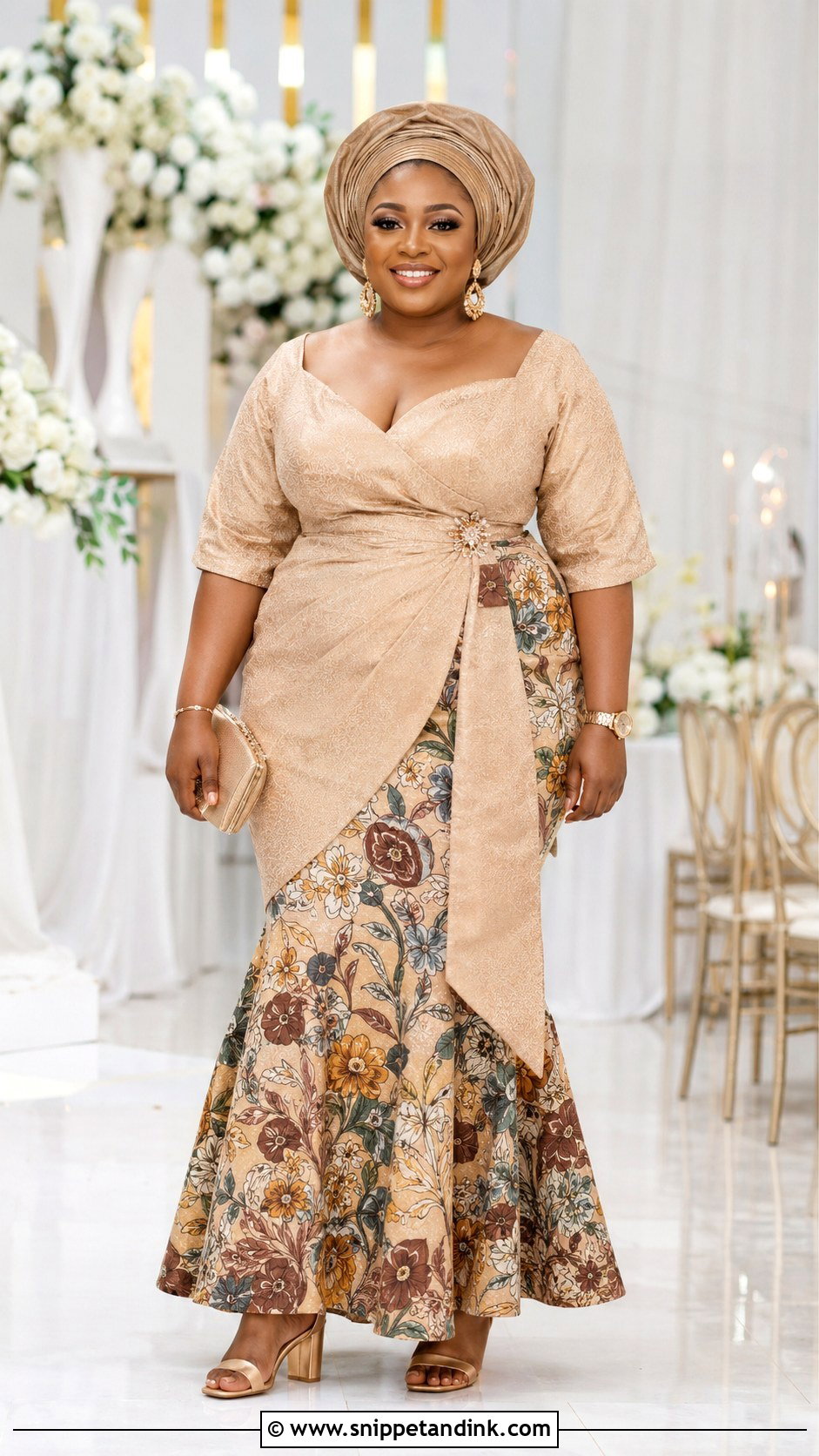
Drape that follows the body without clinging is what I look for in a plus-size wrapper gown. Choose a supportive bodice, sleeves you can lift your arms in, and a wrapper panel that crosses smoothly over the midsection rather than knotting on it. A slightly raised waist defines the shape, and an A-line or softly flared skirt keeps movement easy. Medium-scale prints and vertically arranged patterns hold together well. Stable block heels, a structured clutch, statement earrings and an optional headwrap. Good undergarments and a quality lining make a visible difference to how the panel sits. Have it cut to your own measurements, since standard sizing rarely gets bust, waist and hip right at once.
19. Maternity Wrapper Gown
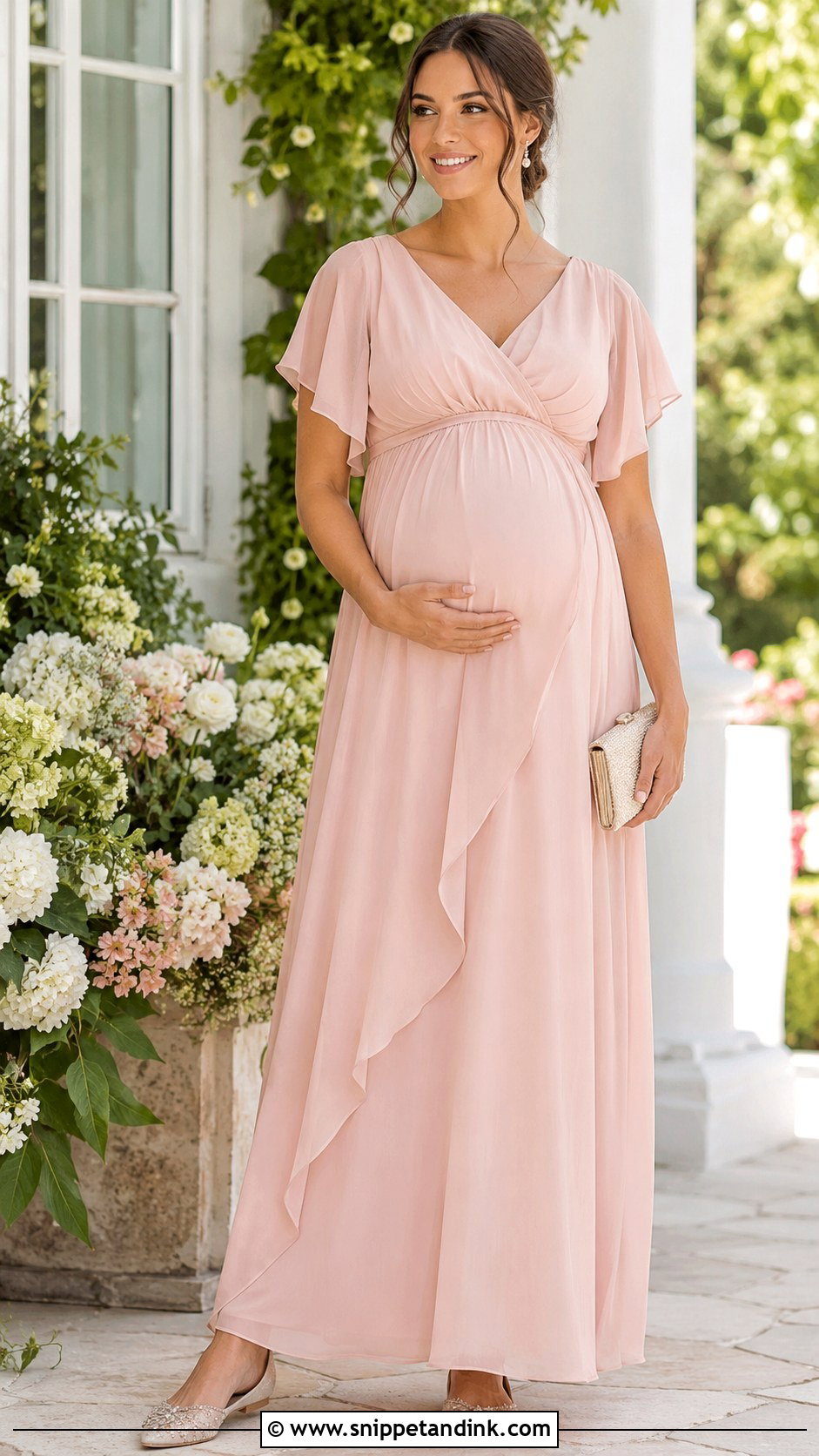
Comfort and coverage come first for a pregnant guest. A raised or empire waist sits above the bump and lets the wrapper panel drape gently over the front. Soft crepe, chiffon or lightweight Ankara moves easily, whereas stiff fabric pushes away from the body and adds bulk. Flutter sleeves, a wrap neckline and a long A-line skirt keep it airy. Cushioned low heels or embellished flats, a light clutch and simple earrings. Skip tight waistbands, heavy beading and knots on the bump. I like an adjustable inner tie, especially if the event is weeks after your last fitting, because the fit will keep changing. A breathable lining helps over a long day.
20. Simple Wrapper Gown
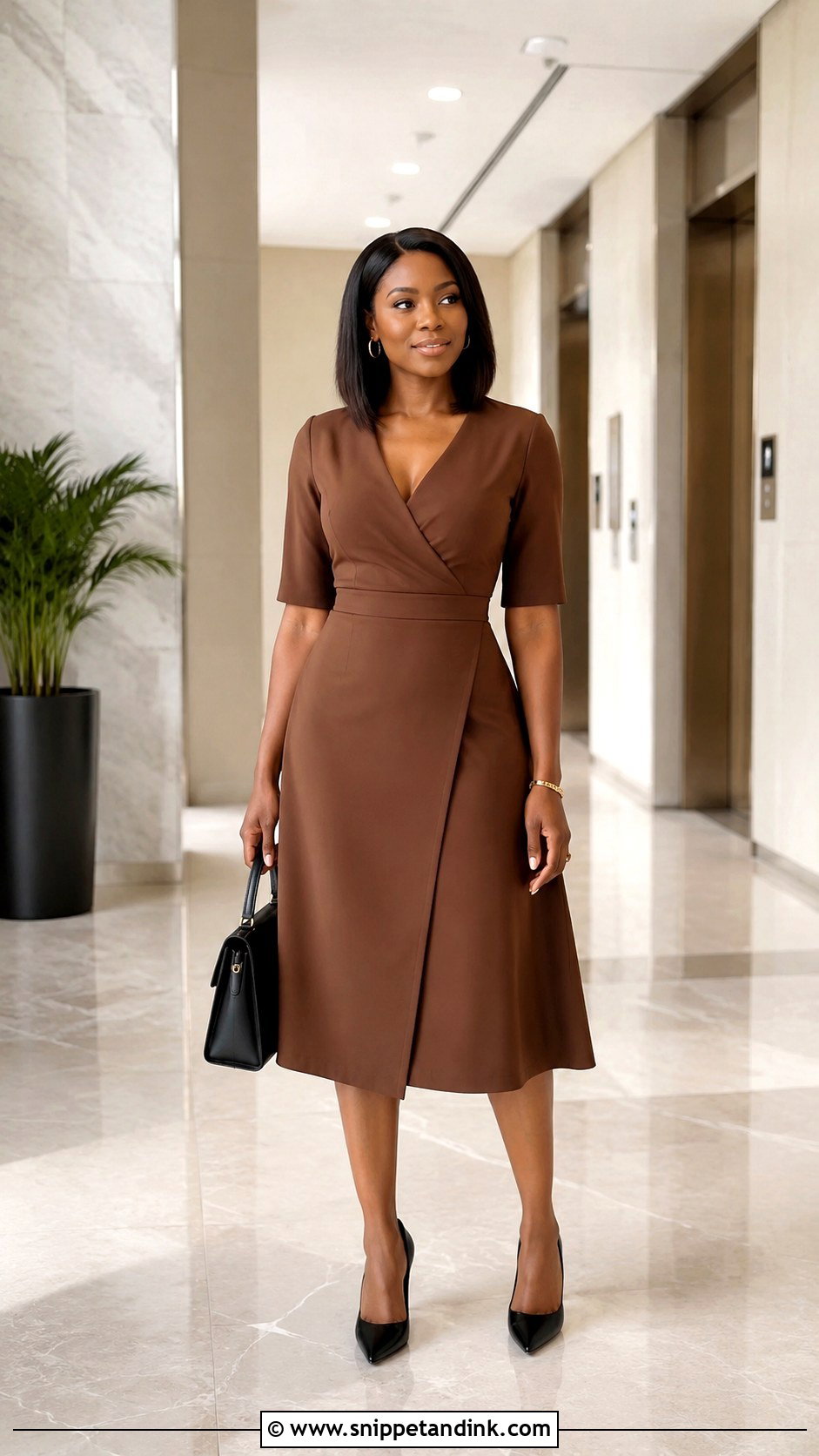
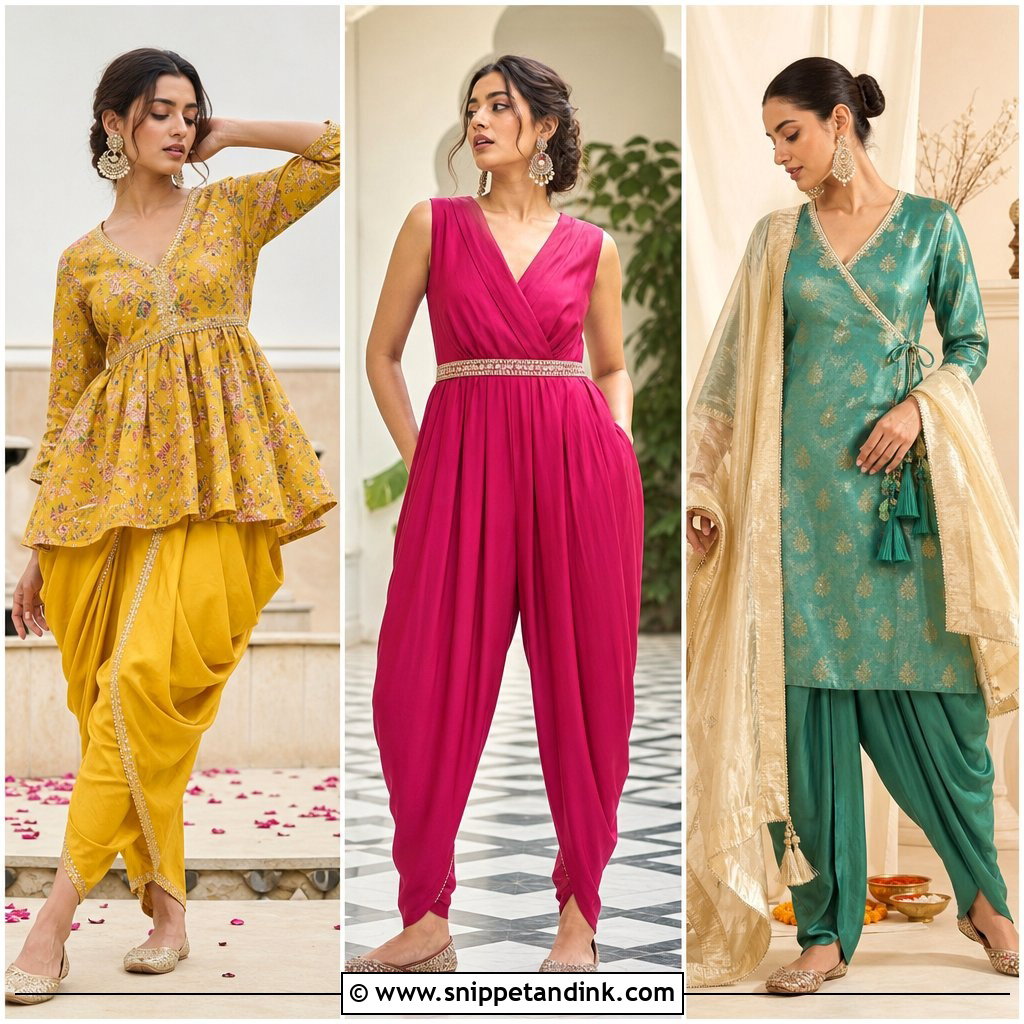
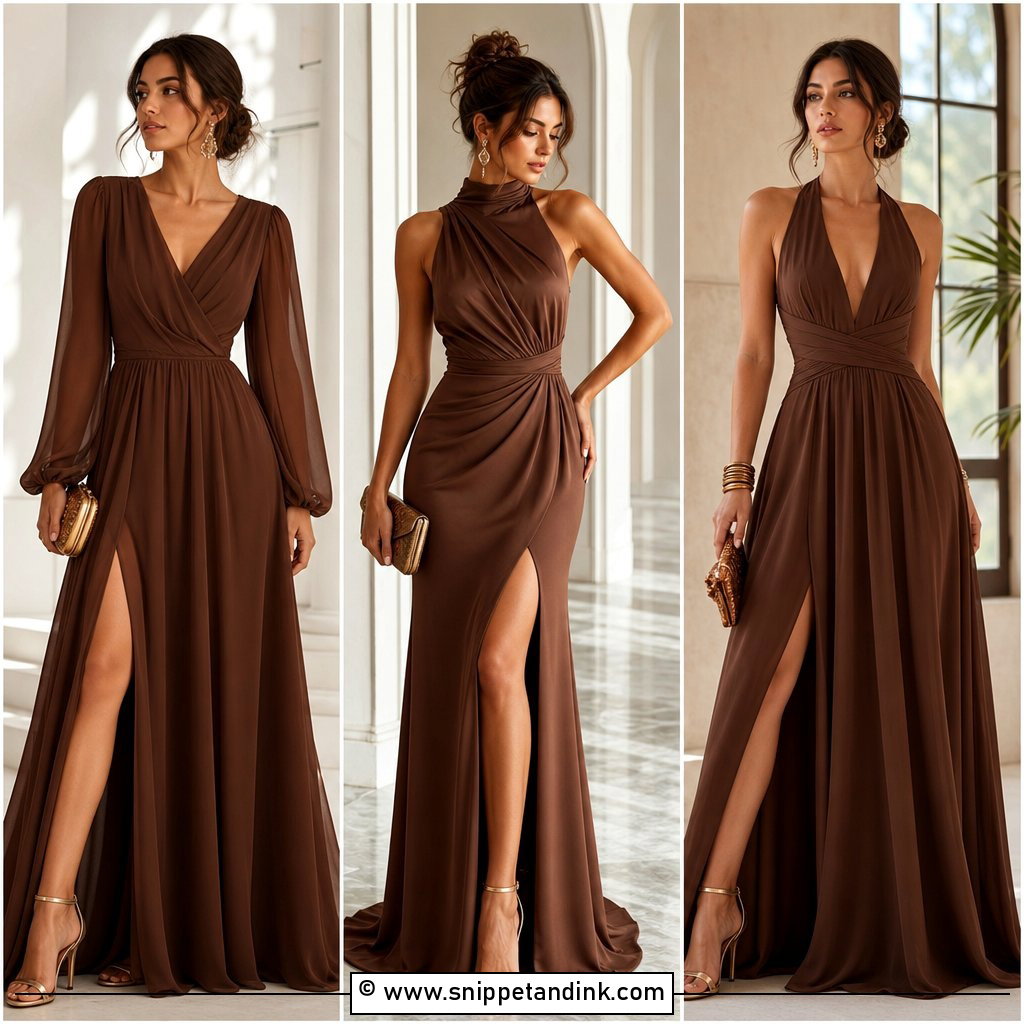
Clean lines and very little decoration get you the most wear out of a wrapper gown. Choose solid crepe or a light pattern, a V-neck bodice, elbow sleeves and a straight or A-line skirt, with a flat crossover panel at the waist rather than a bow or big knot. Pointed pumps, a structured handbag, small hoops and a slim bracelet. A neat headwrap adds a traditional touch; shoulder-length hair keeps it current. Tailoring is everything on a minimalist cut, since every seam shows. Change the shoes, jewelry, bag and hair, and the same gown moves from a church service to an evening party.
Will the Knot Hold Through Hours of Dancing?
At a Nigerian or Ghanaian reception you won’t be sitting still. Guests dance in long stretches, often with arms raised while spraying the couple, and hug half the room. A sewn wrapper is far more secure than a tied one, but the decorative knot and the overlap still take strain.
At the last fitting I run a quick movement test: sit down and stand up, raise both arms over your head, take a big step as if climbing onto a stage, and turn sharply. Watch the overlap and the knot in the mirror while you do it.
- If the overlap opens when you sit, ask for a hidden snap or hook-and-bar at its lowest point.
- If the knot shifts, have it tacked to the skirt with a few hand stitches underneath.
- If the whole bodice lifts when your arms go up, the armholes are usually cut too low, and a tailor can often raise them.
Asoebi Cloth and the Couple’s Colors
If the couple has chosen an asoebi fabric for friends and family, wearing it is how you show you’re part of their circle, so buy it rather than a near match. The cut is normally yours to decide, which is exactly where a wrapper gown helps you stand out within the group without clashing with it. Check whether a specific gele or headwrap color goes with the cloth, and leave ivory and white to the bride unless the couple has said otherwise.
One Wrapped Shape, Twenty Ways to Wear It
One wrapped silhouette stretches across a lot of fabrics, body types and occasions. Ankara and Adire bring pattern, while lace, satin, velvet and organza read more formal. Corset bodices, asymmetric necklines, peplums and layered skirts make each version personal. What matters most is proportion and tailoring: the panel should sit securely, the neckline should support you, and the skirt should let you walk, sit and dance. Choose shoes, jewelry, a bag and headwear that back the gown up rather than compete with it, and wear the version that feels like you.
You'll Like These Ideas:



Leave a Reply