
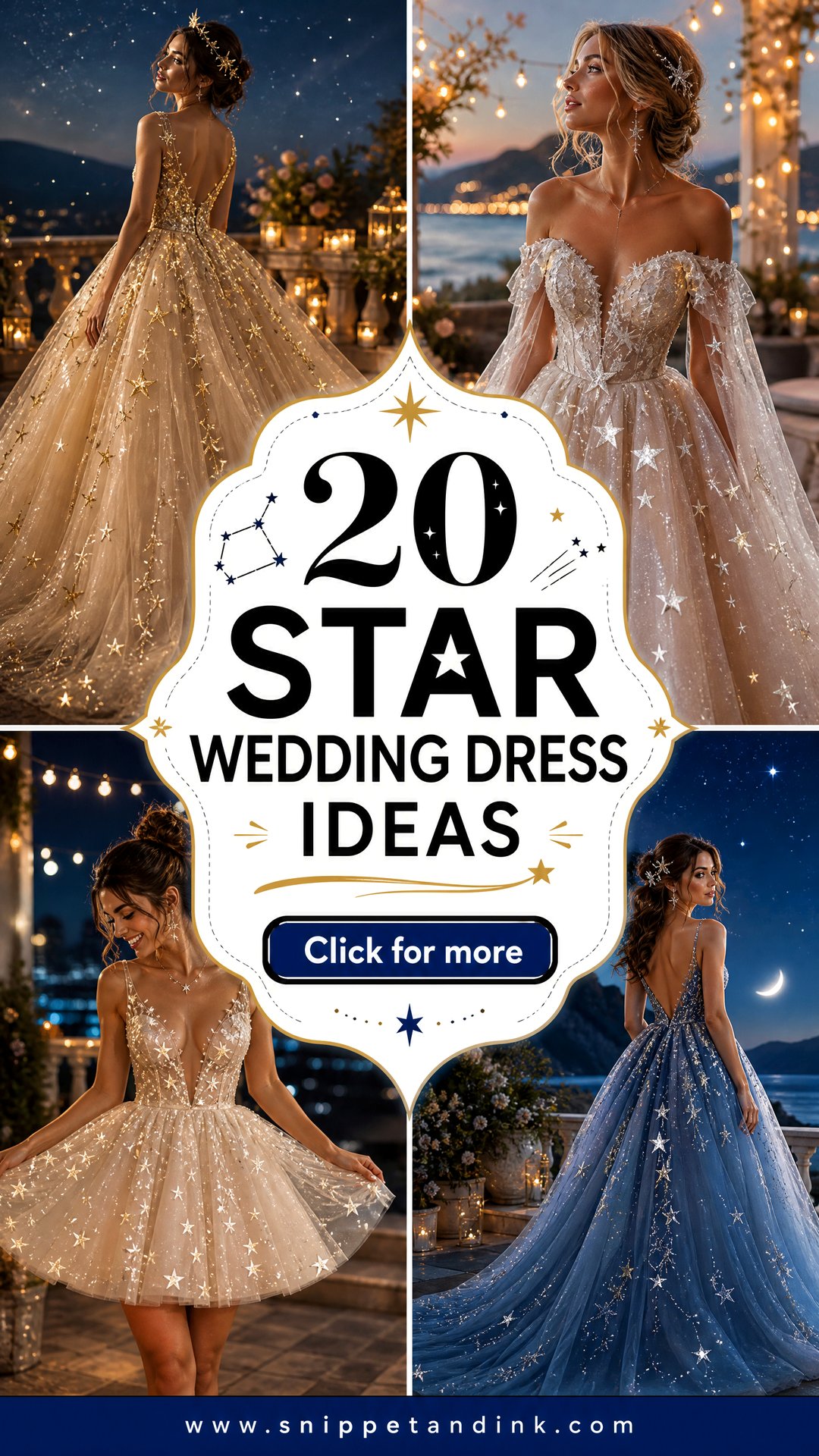
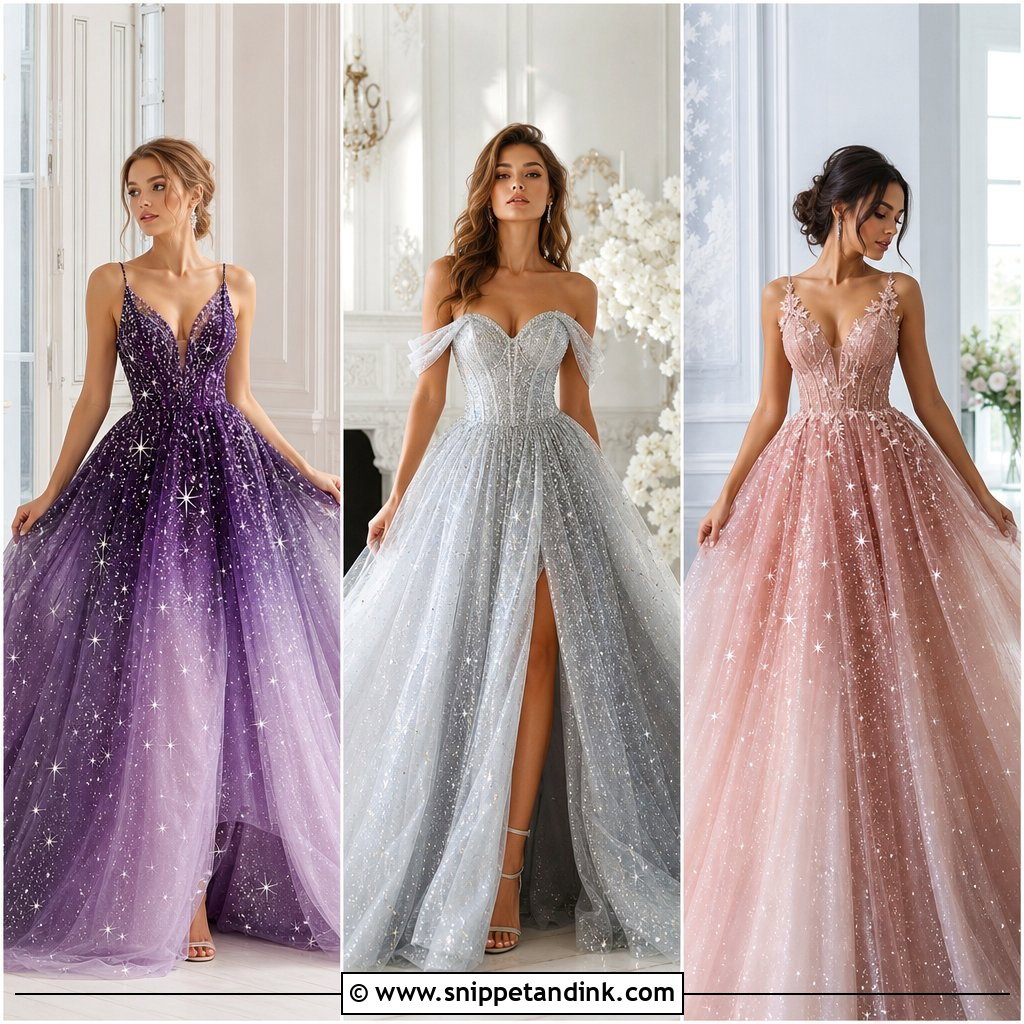
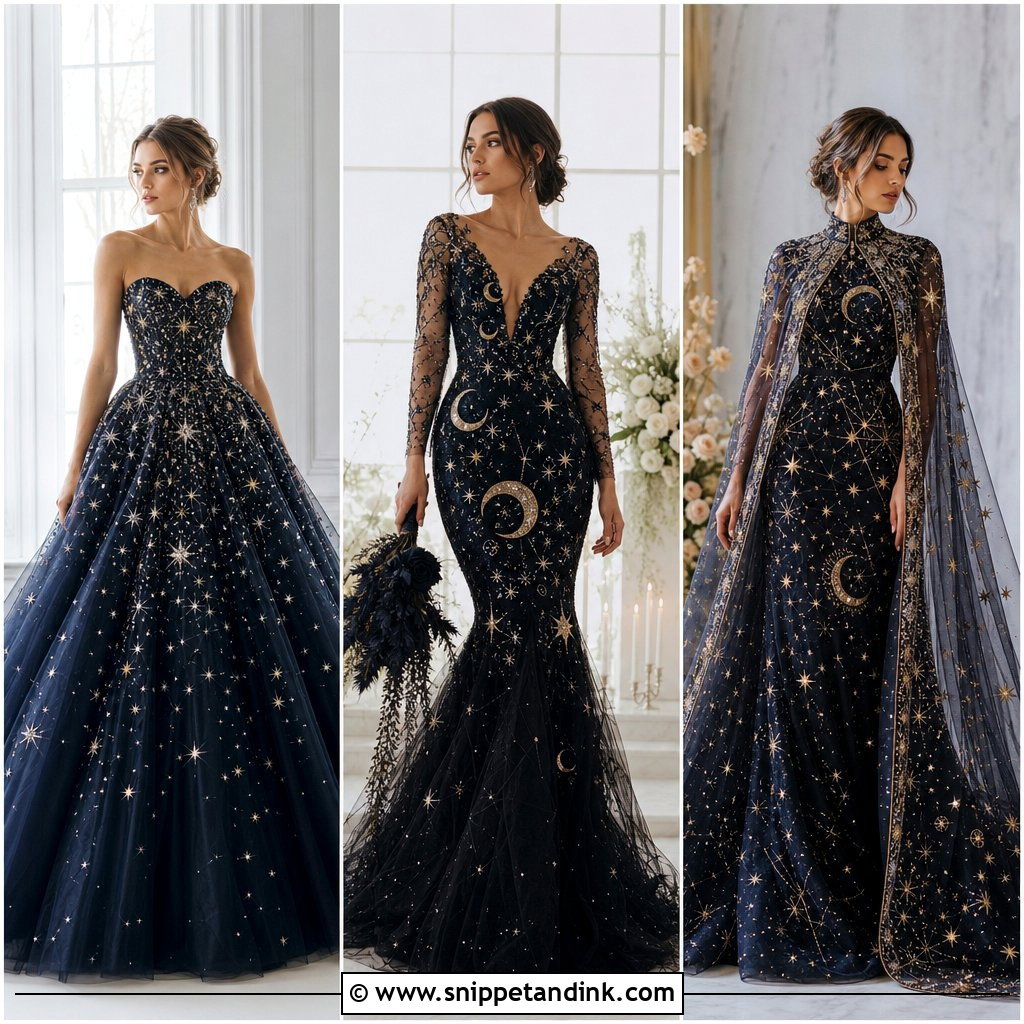
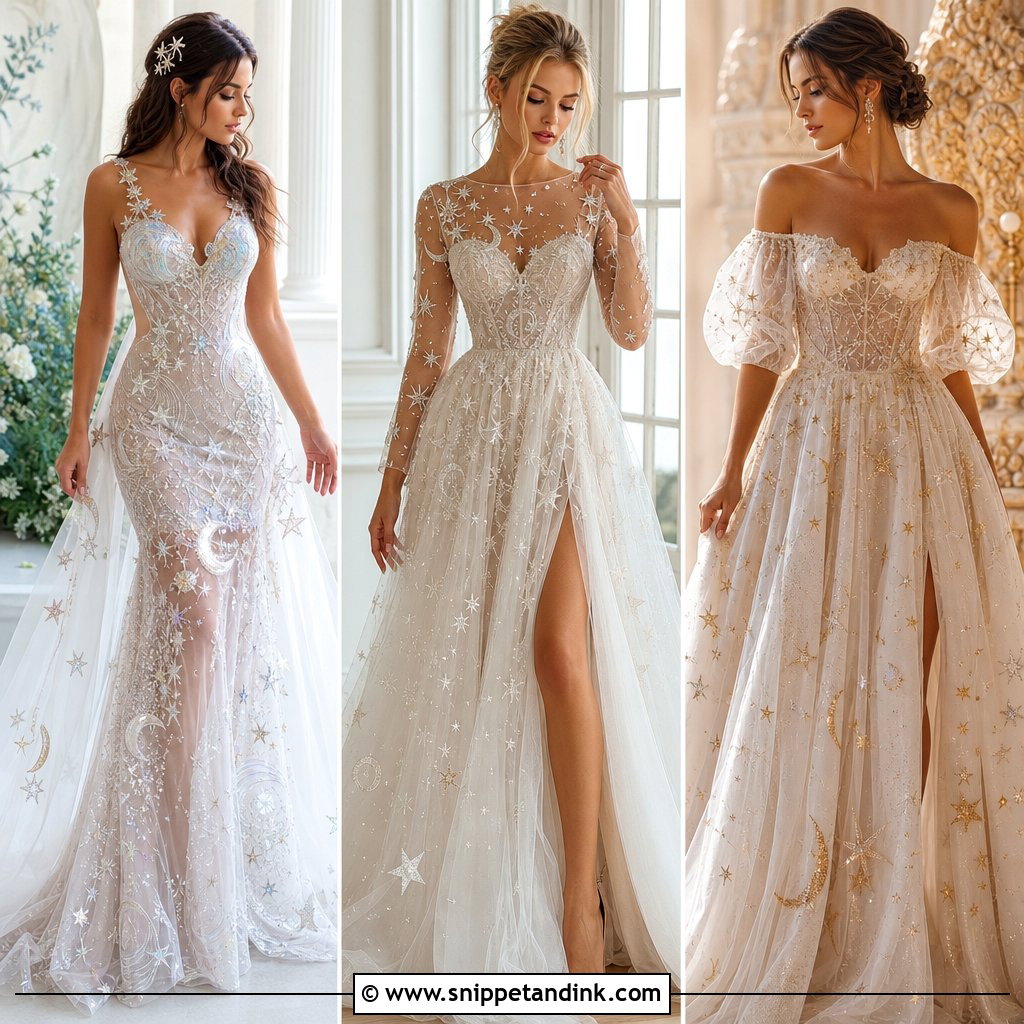
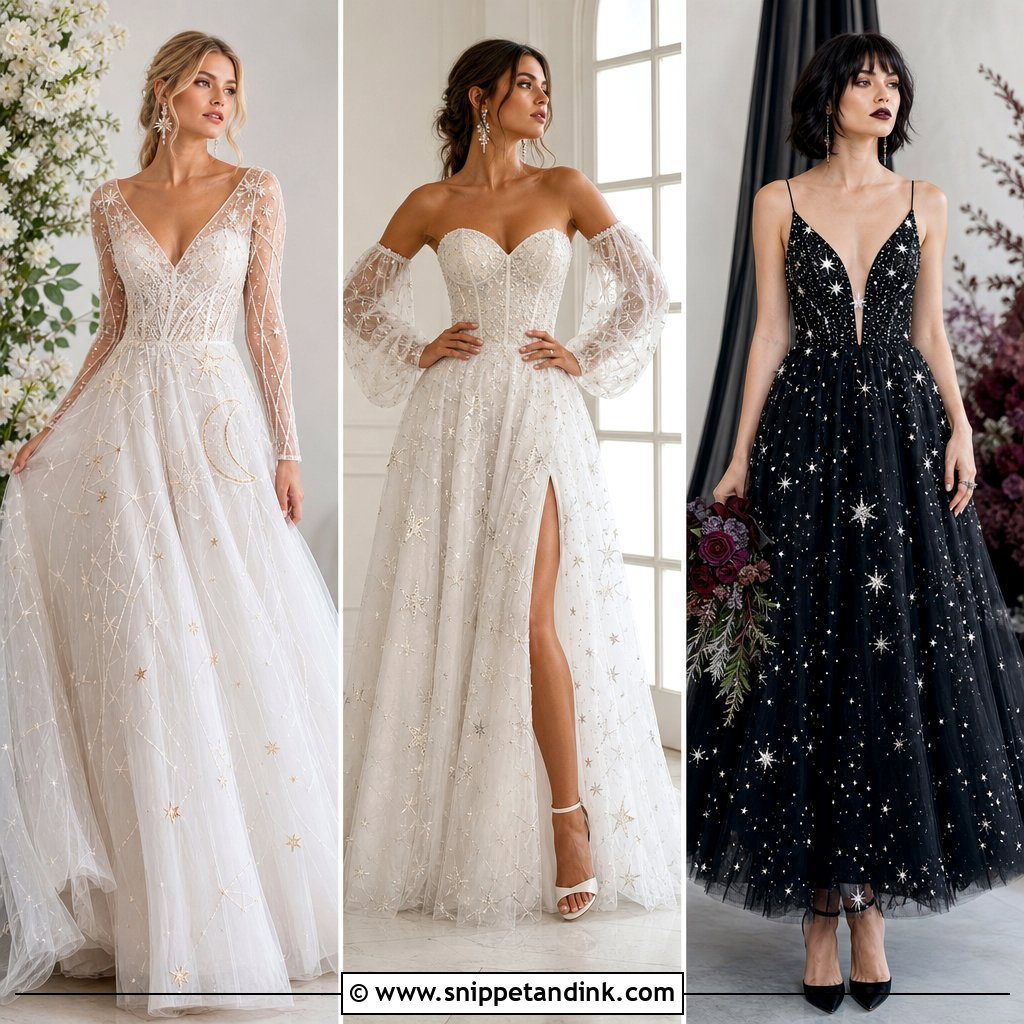
Star gowns range from a few stitched stars you’d only notice up close to full night-sky skirts that glitter from the back row. The ideas below run from delicate constellation embroidery to bold metallic appliqués, glittering capes and colored stars. Those stars can be sequins, crystals, pearls, beads or thread, and each behaves differently in a long day of hugs and dancing, which I’ll cover first. My usual advice is to decide how loud you want the theme before you shop. Scattered silver stars read as a quiet detail; moons, constellations and layered sparkle read as a statement. Keep the shoes, veil, jewelry and hair calmer than the dress, and the look stays bridal rather than costume.
Glitter Tulle, Sequin Stars or Thread: How Each Holds Up
The word star on a label covers very different fabrics, and I talk brides through the differences before they try anything on.
Glitter star tulle
Stars are printed or bonded onto the mesh with glitter. It’s light and usually the most affordable, but it sheds. Expect glitter on your partner’s jacket, your car seats and the dance floor. It can also crack if it’s folded tightly for long periods.
Sequin and beaded stars
These are stitched on, so they last better and catch more light. They add weight, and a skirt covered in them feels heavier by the end of the night. Check the back of the fabric for loose threads that can unravel a whole row.
Embroidered stars
Thread embroidery is the most durable and the most subtle. Metallic thread sparkles a little; plain thread gives a soft, textured look. It’s usually the most expensive per meter, but it doesn’t shed or snag.
Camera flash treats them differently too. Sequins and crystals bounce flash back as bright points, glitter turns into a fine haze, and embroidery barely changes. If your photographer works with flash at the reception, take a quick phone photo with the flash on in the salon and see which you prefer.
1. Star Embroidered A-Line Wedding Dress
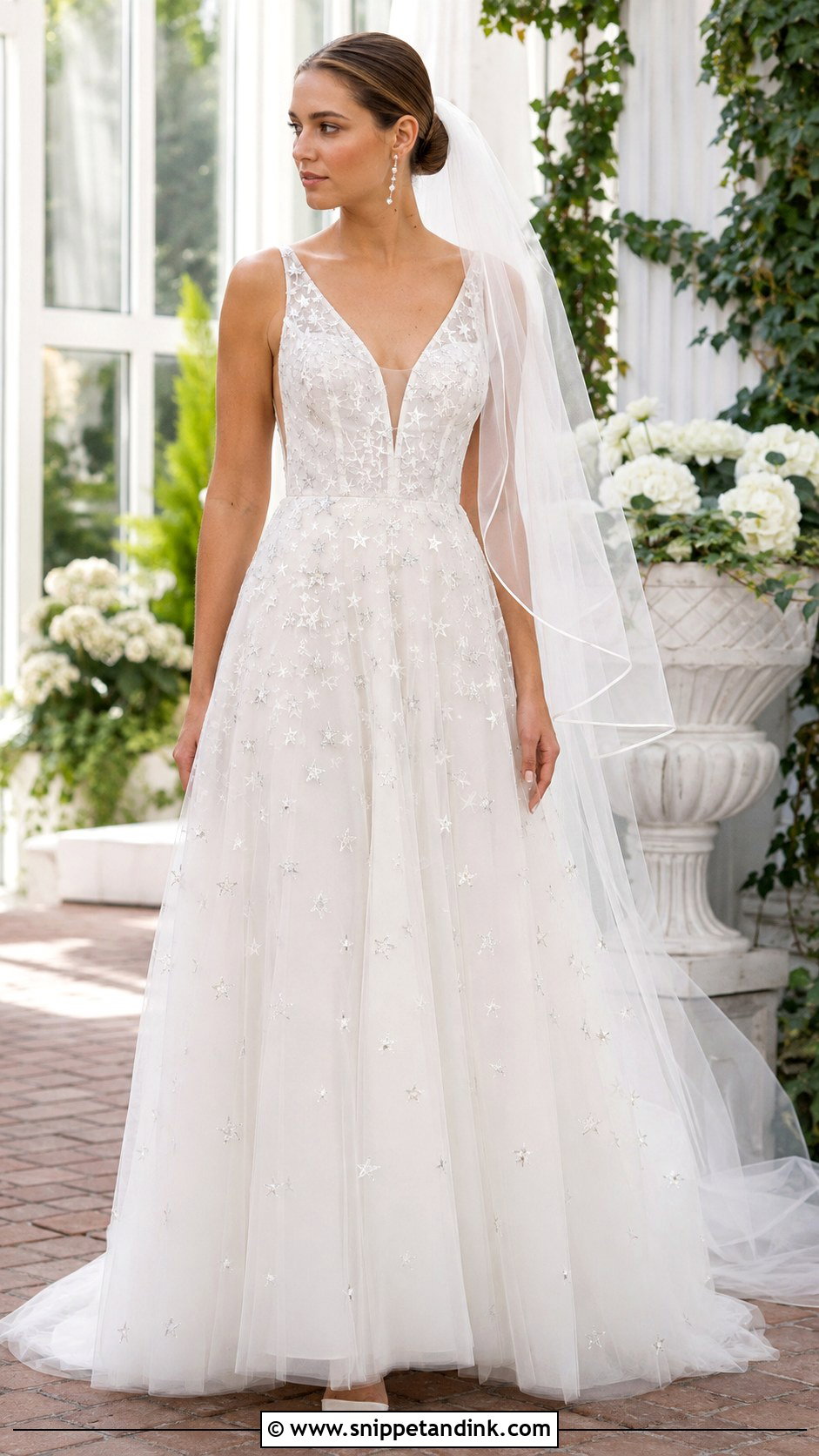
Embroidered stars sit flat in the tulle, so they move with the skirt instead of weighing it down, which is why I start most celestial brides here. Soft ivory tulle over a comfortable lining keeps an A-line light. A fitted V-neck bodice defines the waist, and scattered silver stars lead the eye down the whole dress. Pointed ivory heels, crystal drops and a smooth low bun are enough. Pick a plain fingertip veil; an embroidered veil over embroidered tulle blurs both. It suits evening receptions, gardens and indoor venues, with a simple bouquet of white flowers and greenery.
2. Gold Star Tulle Ball Gown Wedding Dress
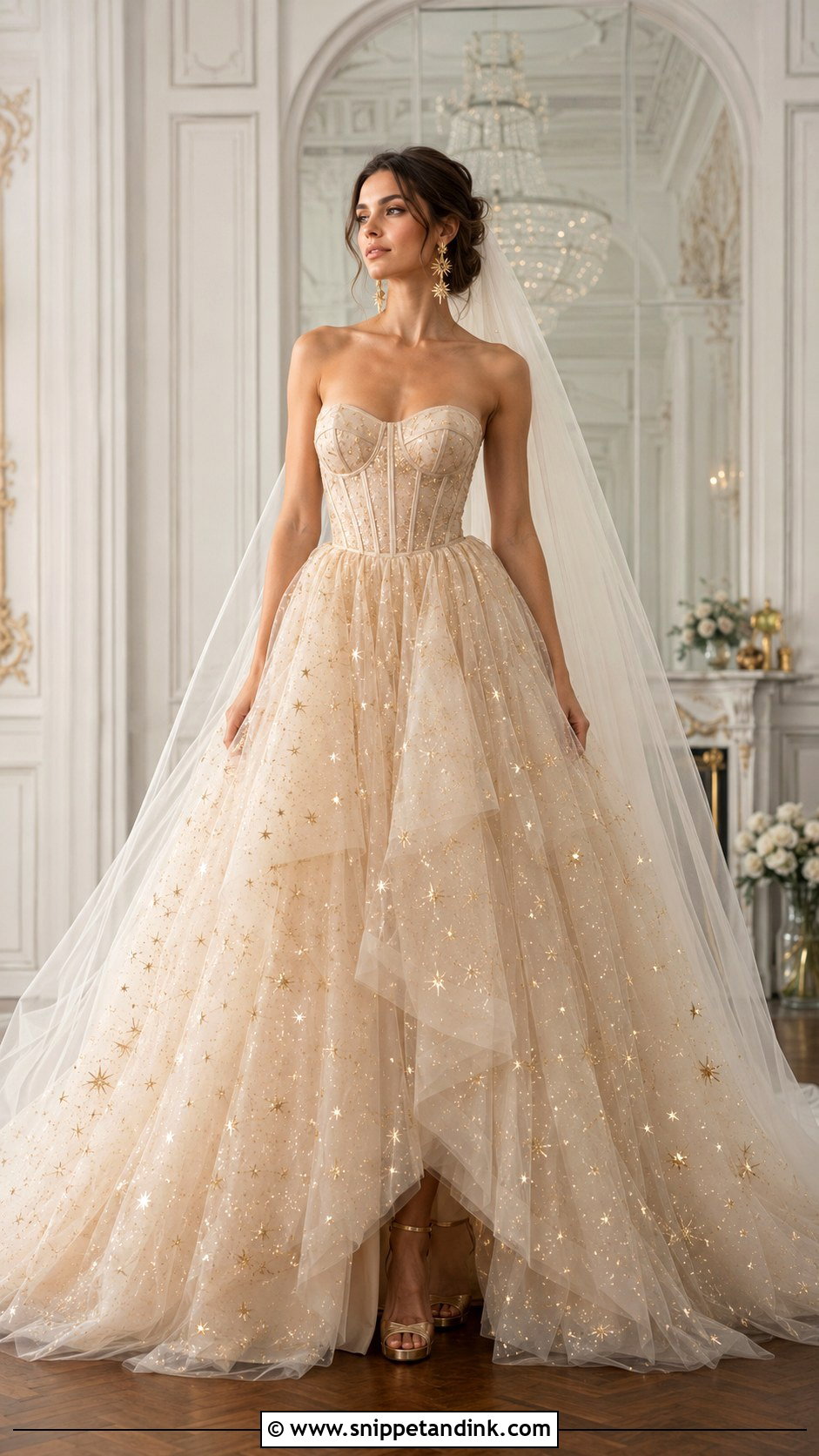
Gold stars change a lot depending on what’s under them. Over a white lining they can look brassy; over champagne or pale nude, the metallic thread looks warmer and stands out more. That’s the first thing I’d ask the salon to show you on a layered tulle ball gown with gold stars in several sizes. A structured corset bodice carries the weight of a full skirt. Gold block heels, small celestial earrings and an updo with a couple of star pins finish it. Choose a plain cathedral veil. A ballroom with soft overhead light makes raised stars cast tiny shadows that look wonderful.
3. Silver Star Long Sleeve Wedding Dress
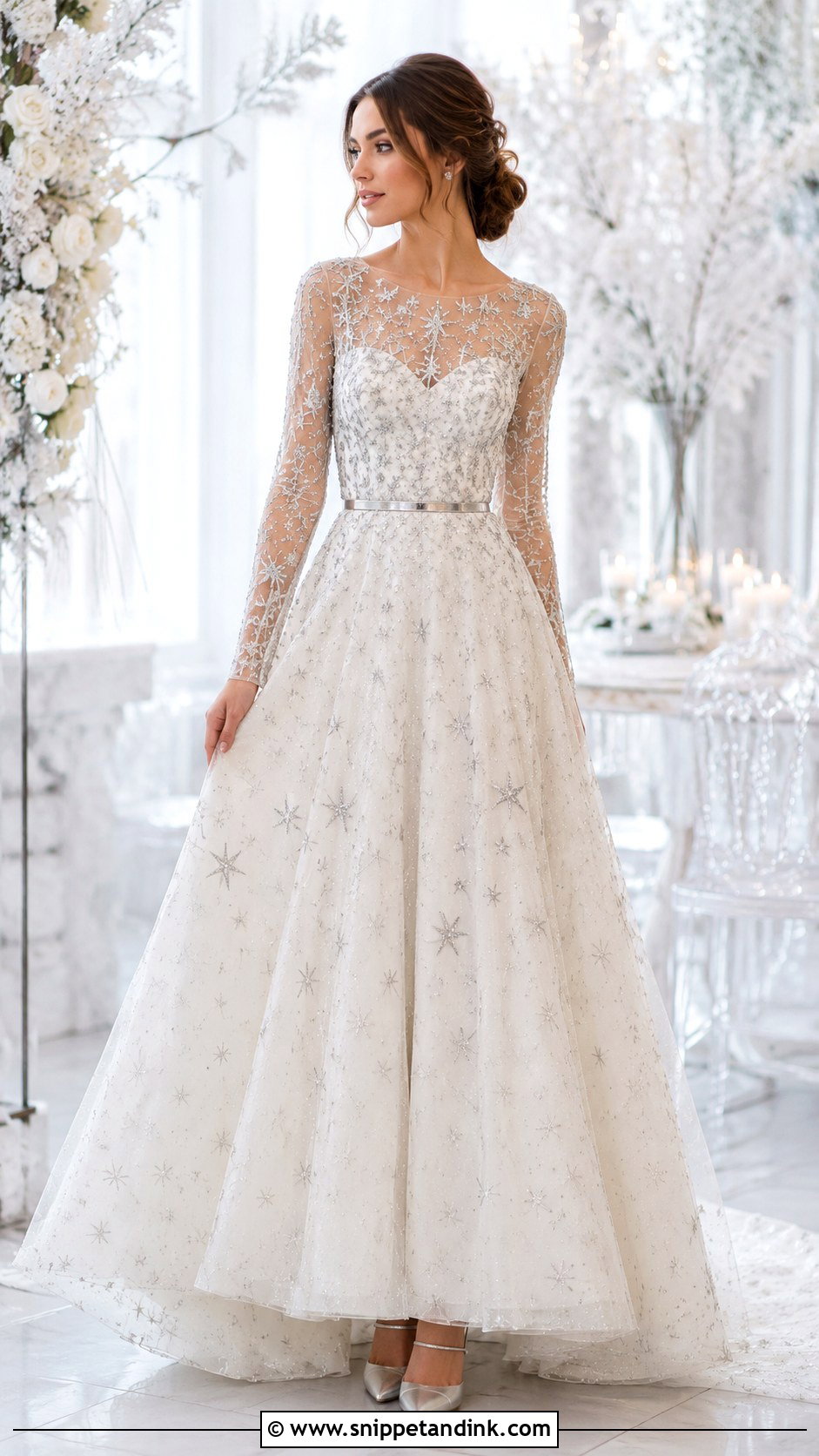
Sheer illusion sleeves embroidered with tiny silver stars give coverage without weight, and the stars keep going across the bodice before fading into the skirt. The sleeves are what I check most at fittings: illusion mesh has little stretch, so ask the bride to hug someone and lift her arms. A fitted waist with chiffon or tulle below stops the dress feeling heavy. Silver heels, crystal studs and a slim metallic comb. Wear a loose chignon or waves tucked behind the ears to keep the neckline clear. A narrow silver belt helps if the waist seam is plain. Best in fall or winter, though it works on a cool spring evening.
4. Celestial Star Corset Wedding Dress
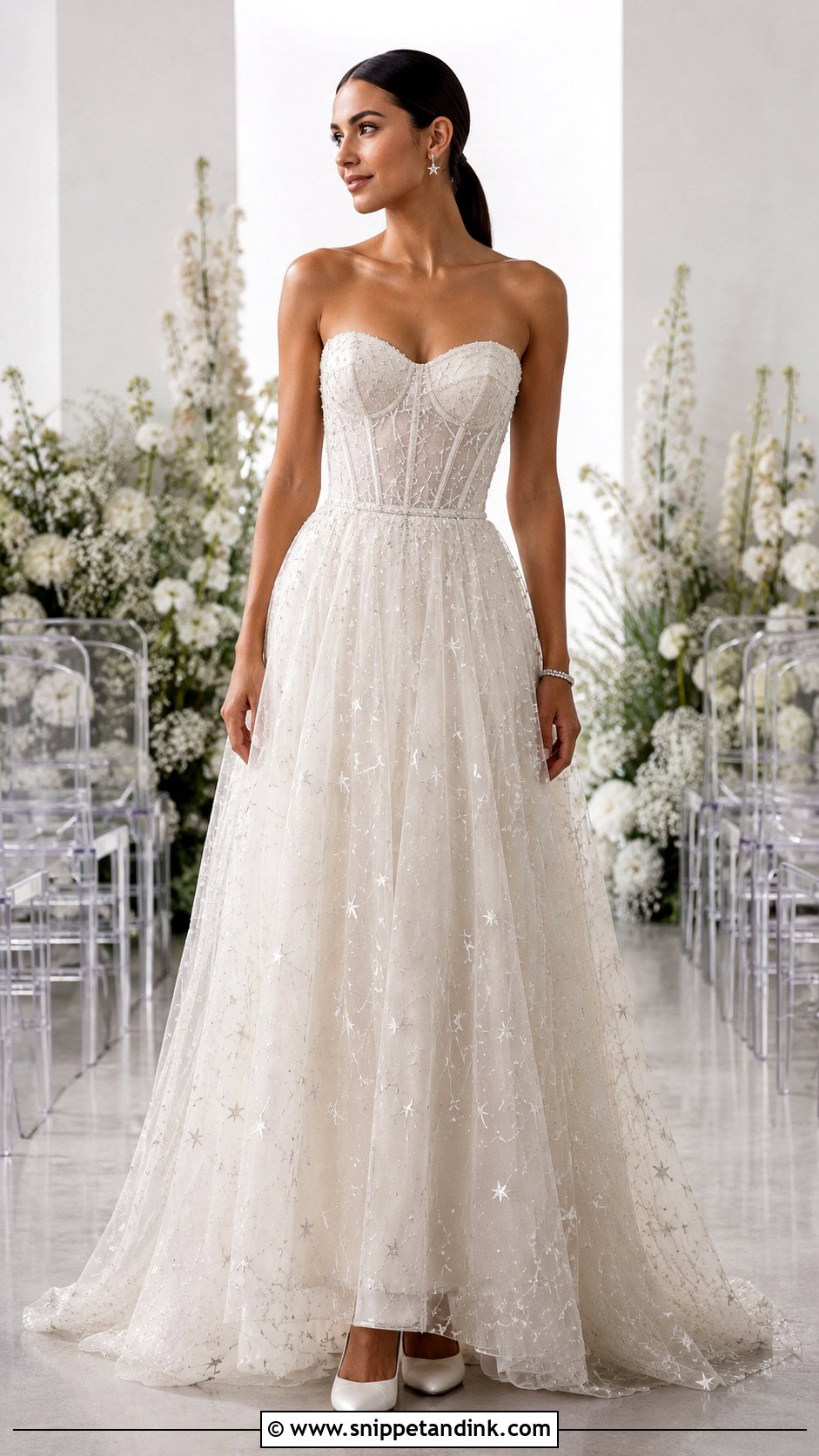
A corset gives a celestial gown structure, and starbursts across the bodice look striking when the boning is visible. I’d choose supportive cups and gently curved lines over a very sheer corset, which tends to show every crease. Embroidered constellations or crystal starbursts can travel from the bodice into the skirt. Crystals on a corset add weight where the bodice is already firm, so make sure it’s fitted with you sitting as well as standing. Closed-toe satin pumps, a tennis bracelet and small star earrings, with a structured low ponytail. A detachable tulle wrap or illusion bolero adds coverage. Keep other accessories minimal.
5. Moon And Star Wedding Dress
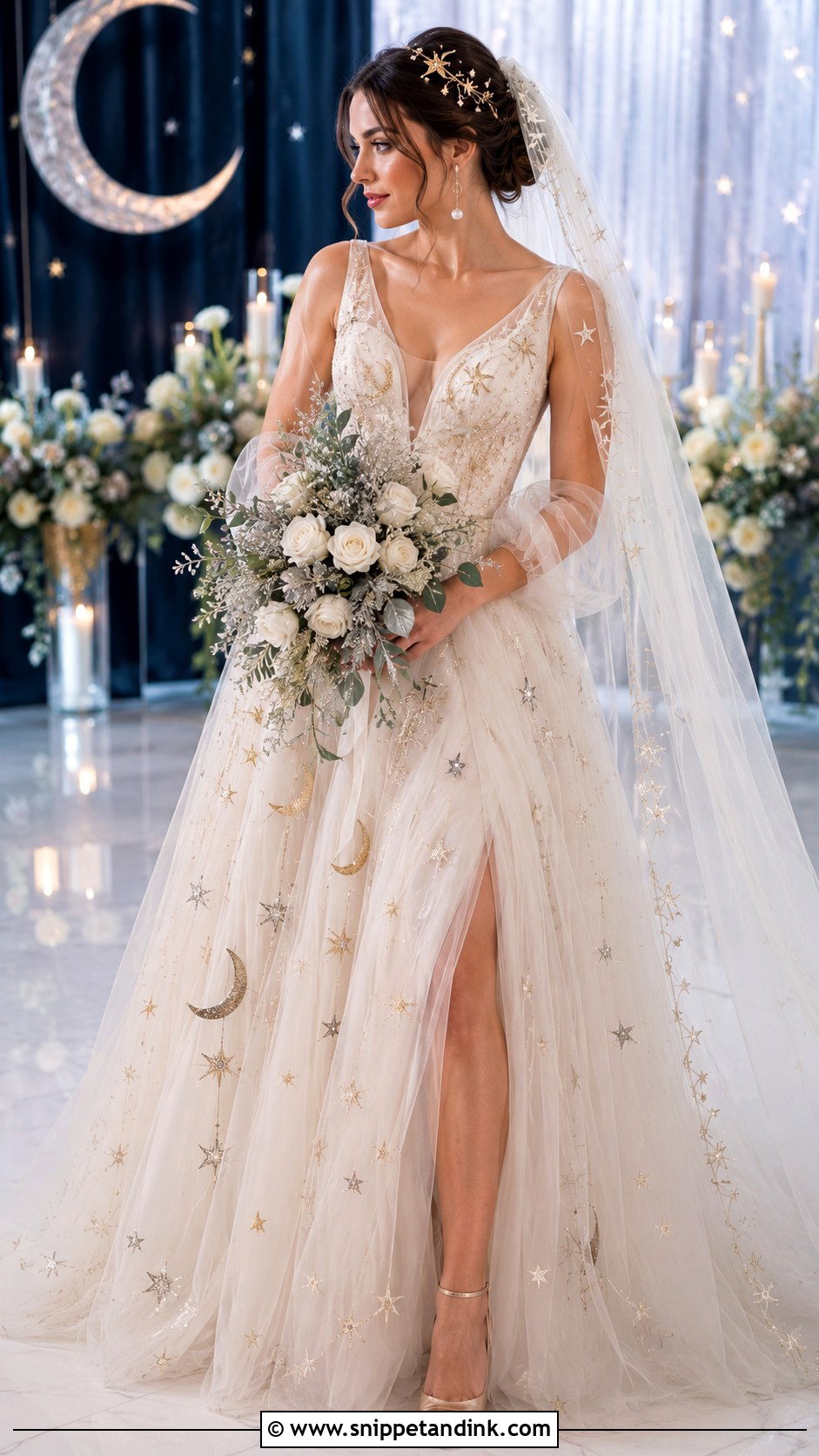
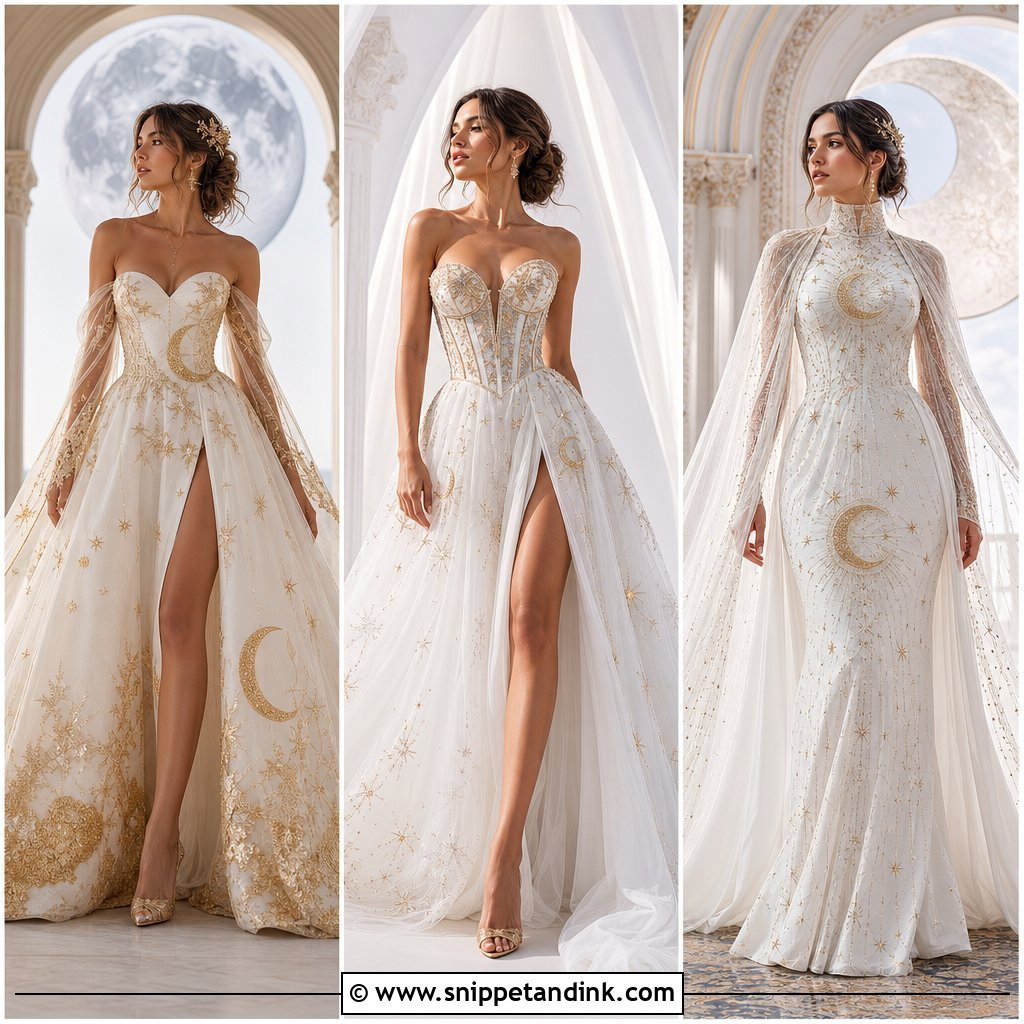
Crescent moons give the theme a second shape, which actually makes the pattern easier on the eye than stars alone. A moon and star wedding dress in ivory tulle with pale gold embroidery over a fitted bodice and flowing skirt is the version I like best. A sweetheart or soft scoop neckline keeps it romantic. Champagne heels, a crescent comb and small pearl earrings are plenty. For the veil, a few stars only at the hem carry the theme without crowding the dress. White roses, baby’s breath and silvery foliage suit it. Twilight outdoor ceremonies feel made for it.
6. Minimal Satin Star Wedding Dress
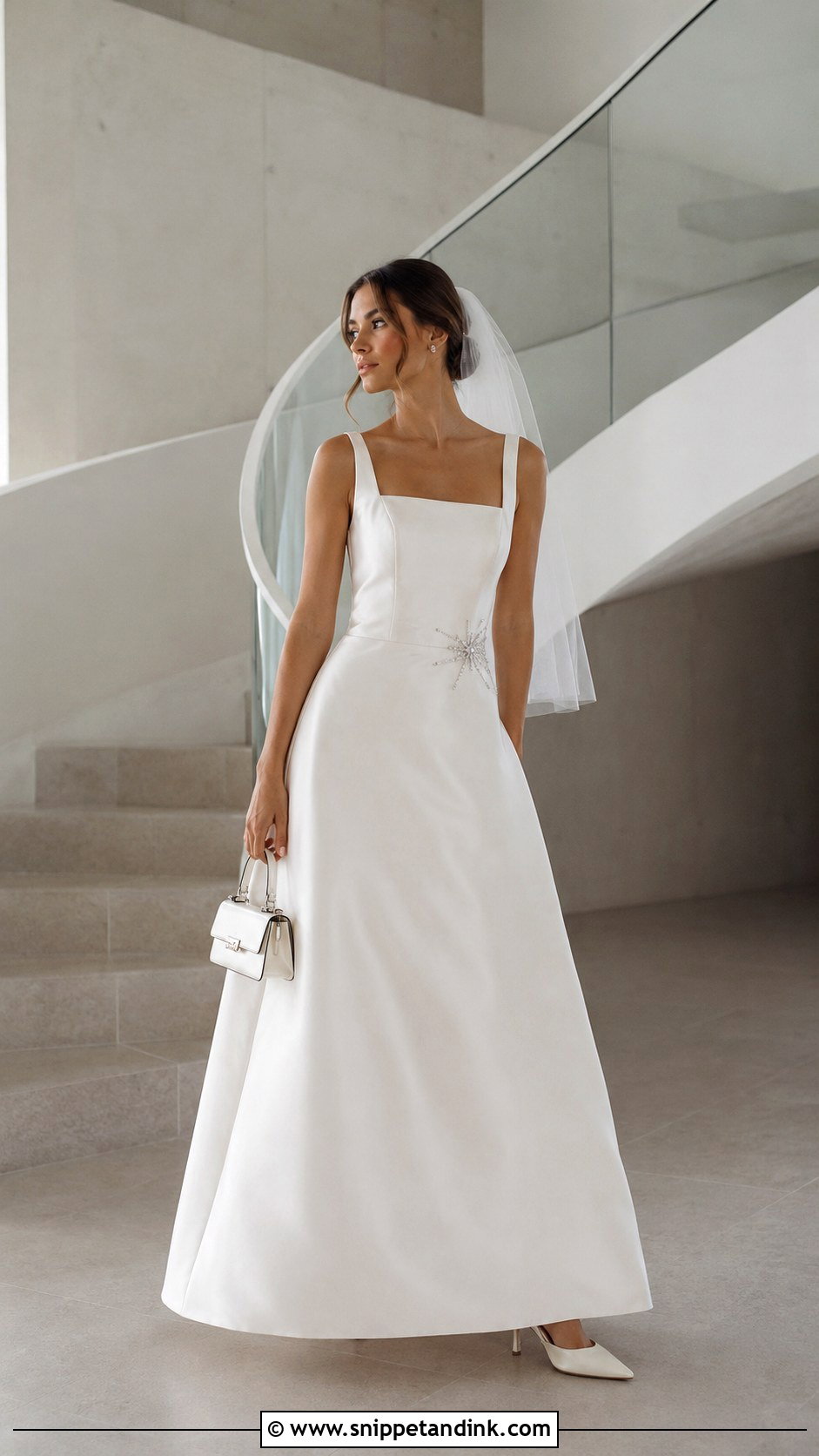
You don’t need an allover pattern to wear stars. I like a sleek ivory satin column or A-line with a square neckline and wide straps, plus one small cluster of crystal stars at the waist, down the open back or at one shoulder. It reads as classic from across the room and personal up close. One practical note: a cluster of crystals on satin can pull the fabric slightly, so ask for a light backing behind the appliqué. Slingback heels, studs, a smooth bun and a chapel veil keep it clean. Modern venues with bright, plain architecture suit it best.
7. Boho Star Lace Wedding Dress
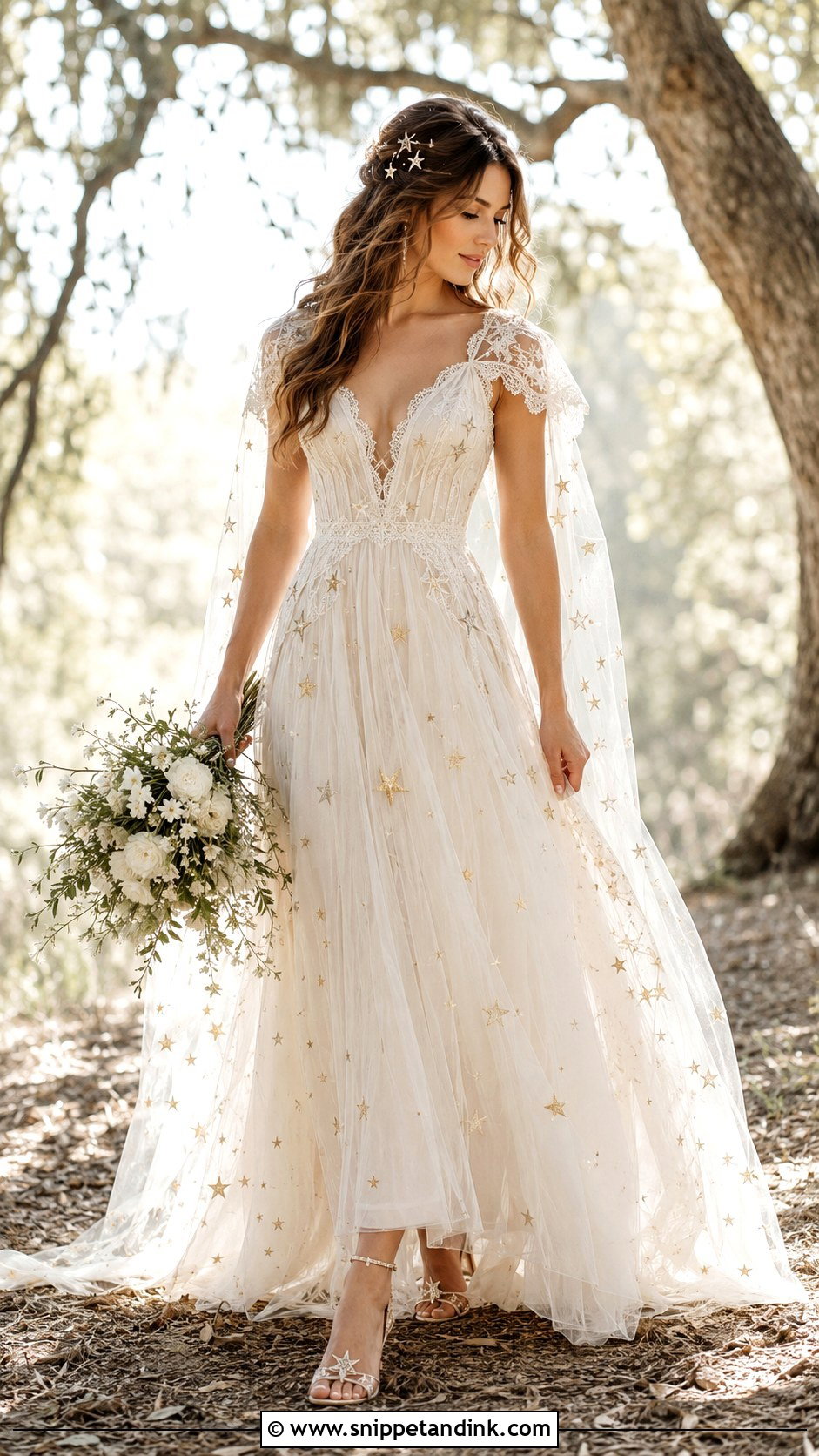
Boho and stars sit together naturally once the textures are soft. A lightweight gown with a lace bodice, flutter sleeves and a flowing skirt topped with embroidered star tulle. Ivory-on-ivory stars are subtle; pale gold stars give contrast. I’d skip glitter tulle for outdoor boho weddings, as it sheds onto grass and your partner’s suit. Embroidered flats or low sandals, loose waves or a braided half-up style with tiny pins, and a soft tulle cape instead of a veil. A loose bouquet with white blooms, eucalyptus and dried grasses works for woods, barns and deserts.
8. Star Wedding Dress With Celestial Cape
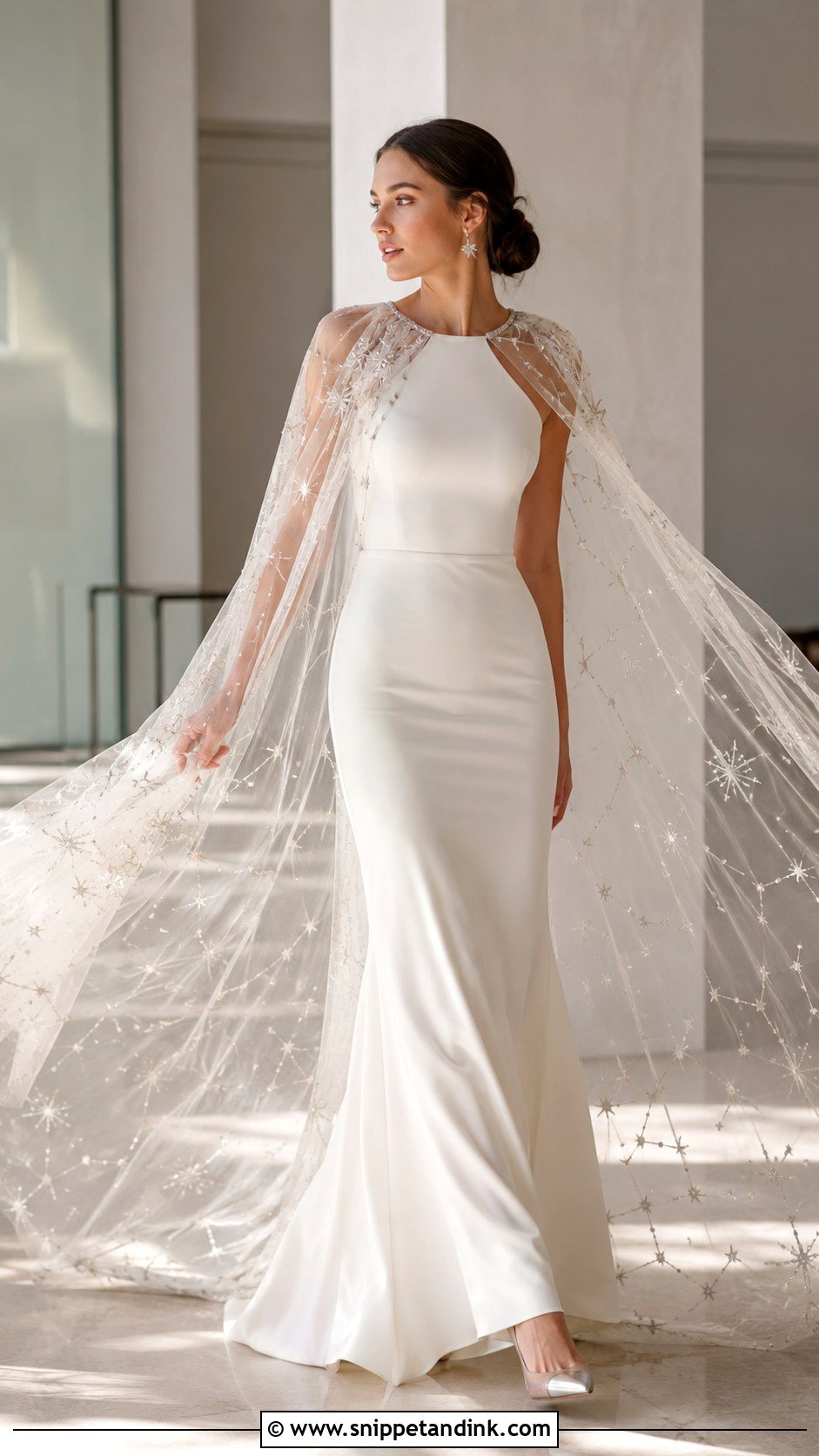
A cape is the most flexible way to wear stars, because it comes off. Start with a fitted crepe or satin dress with clean lines, then add a floor-length tulle cape embroidered with silver stars, tiny moons and constellations. The attachment matters: hidden hooks or snaps at the shoulder seams hold better than ties and won’t pull the neckline when the cape catches on a chair. Metallic pumps, slim drops and a low bun. Skip the veil; the cape gives you the length. Wear it for the ceremony, take it off for dancing.
9. Off Shoulder Star Wedding Dress
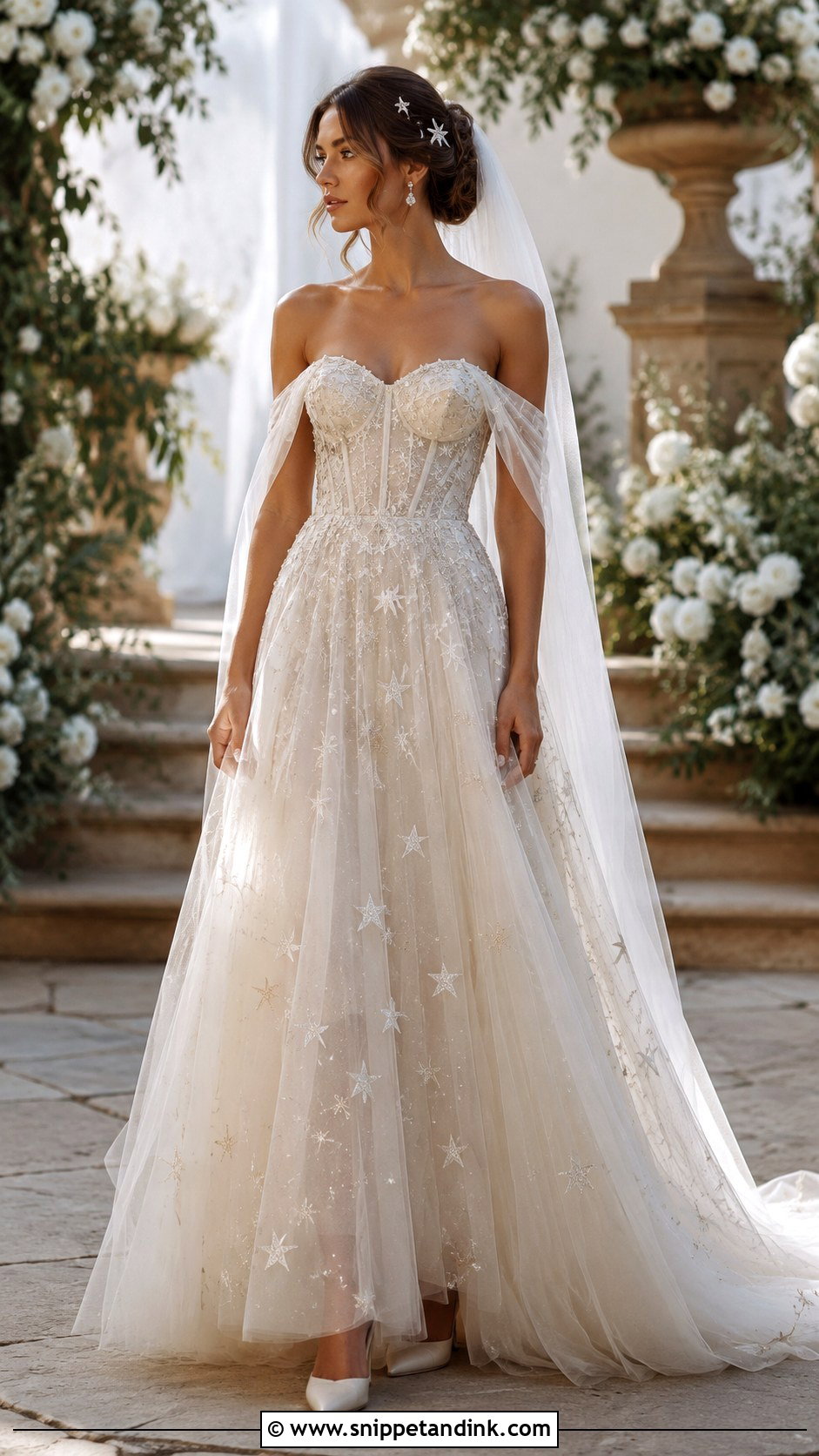
Off-the-shoulder necklines need a lot of hidden structure to stay put, so the bodice has to be well boned and fitted. I always have brides raise their arms at fittings in this cut, since the neckline is the first thing to ride down. Light tulle sleeves and scattered crystal stars across the neckline, waist and A-line skirt keep it soft. Pointed satin heels, a fine pendant and star pins through a loose updo suit it. Attach the veil beneath the hair. A wrap or detachable sleeves give coverage later. Sunset outdoor ceremonies and formal evenings suit it.
10. Plus Size Star Wedding Dress
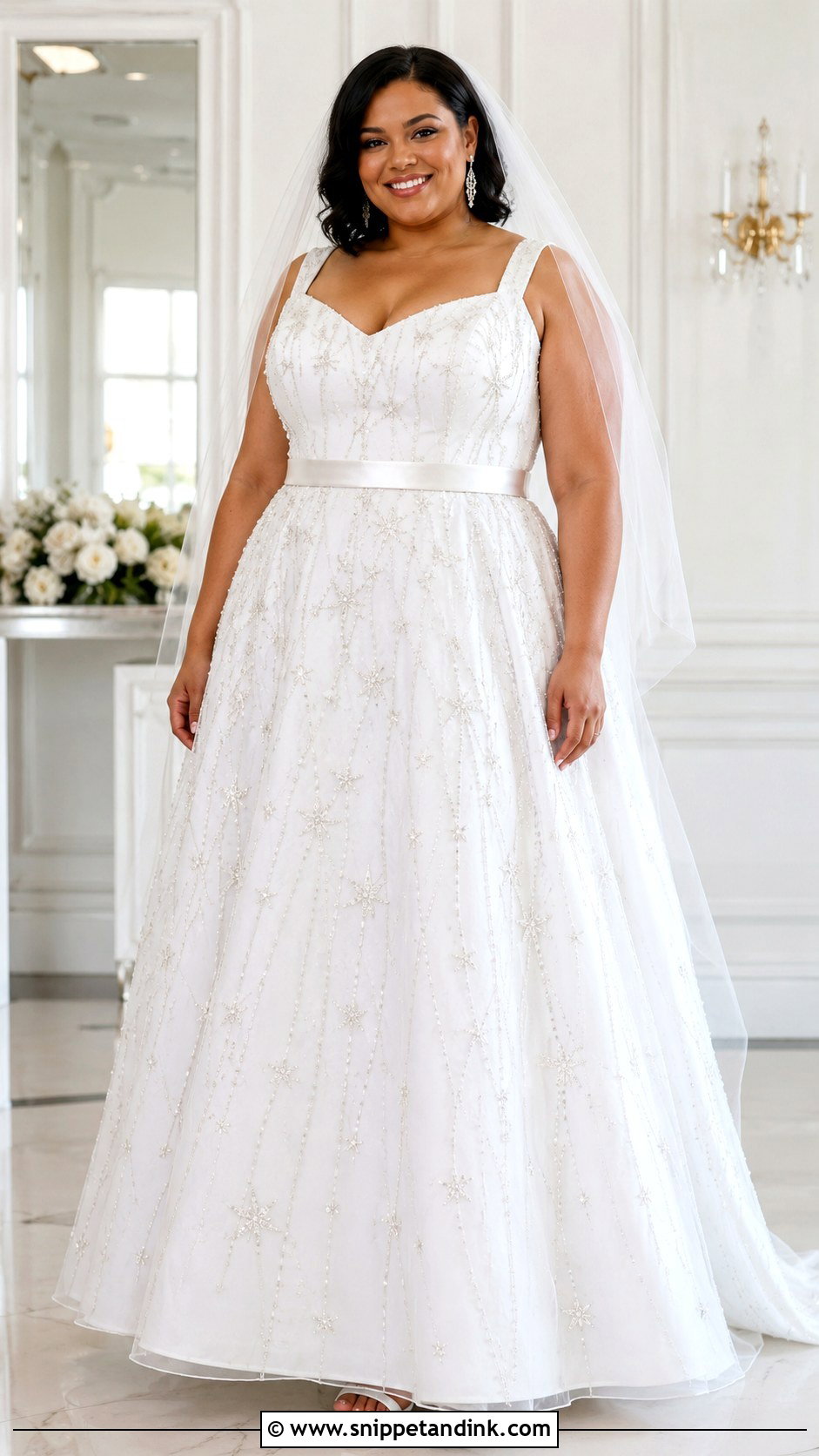
On a plus-size star gown, the pattern direction makes a real difference. Embroidery that runs vertically from bodice to skirt draws the eye up and down; wide horizontal bands of stars do the opposite. An A-line with a corset interior, wider straps and a soft neckline gives a secure fit. A defined waistband or matching satin belt marks the waist without cutting through the pattern. Block heels, crystal earrings and a shoulder-length veil keep it practical, and soft curls or a textured updo add volume near the face. Book professional alterations: a gown fitted to you will always look better than one chosen by size alone.
11. Modest Star Wedding Dress
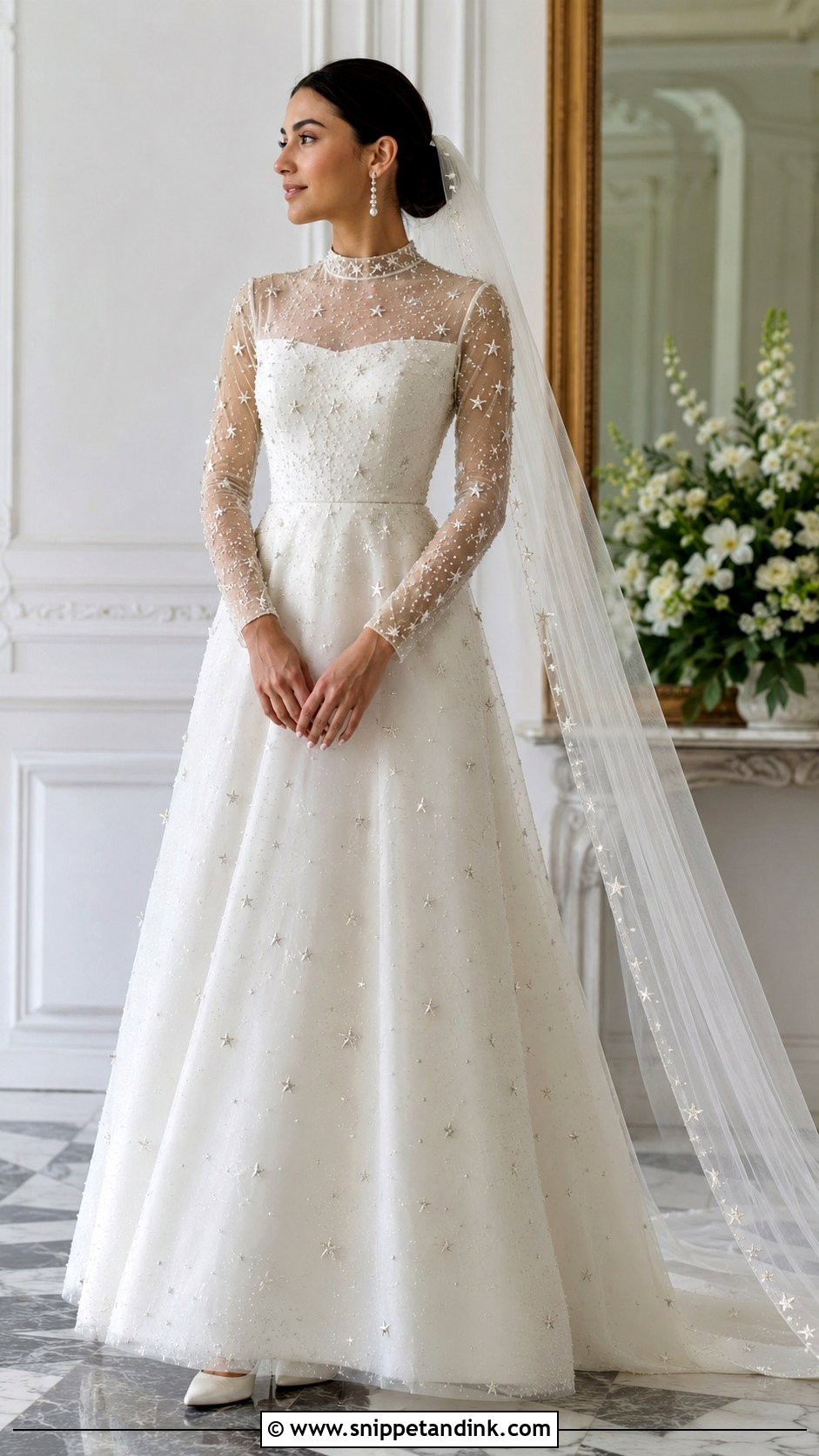
Full coverage stays light when the fabric is airy. A high illusion neckline, fitted long sleeves and a flowing A-line skirt, with tiny pearl and silver stars scattered over ivory tulle, give detail without flash. The lining color is the detail I’d pay attention to. Line the bodice in a shade close to your skin or to the gown’s ivory, otherwise the illusion panels look patchy in photos. Closed-toe pumps, pearl drops and a low bun. A plain cathedral veil adds formality; one with a narrow star-trimmed edge ties it to the dress.
12. Short Star Wedding Dress
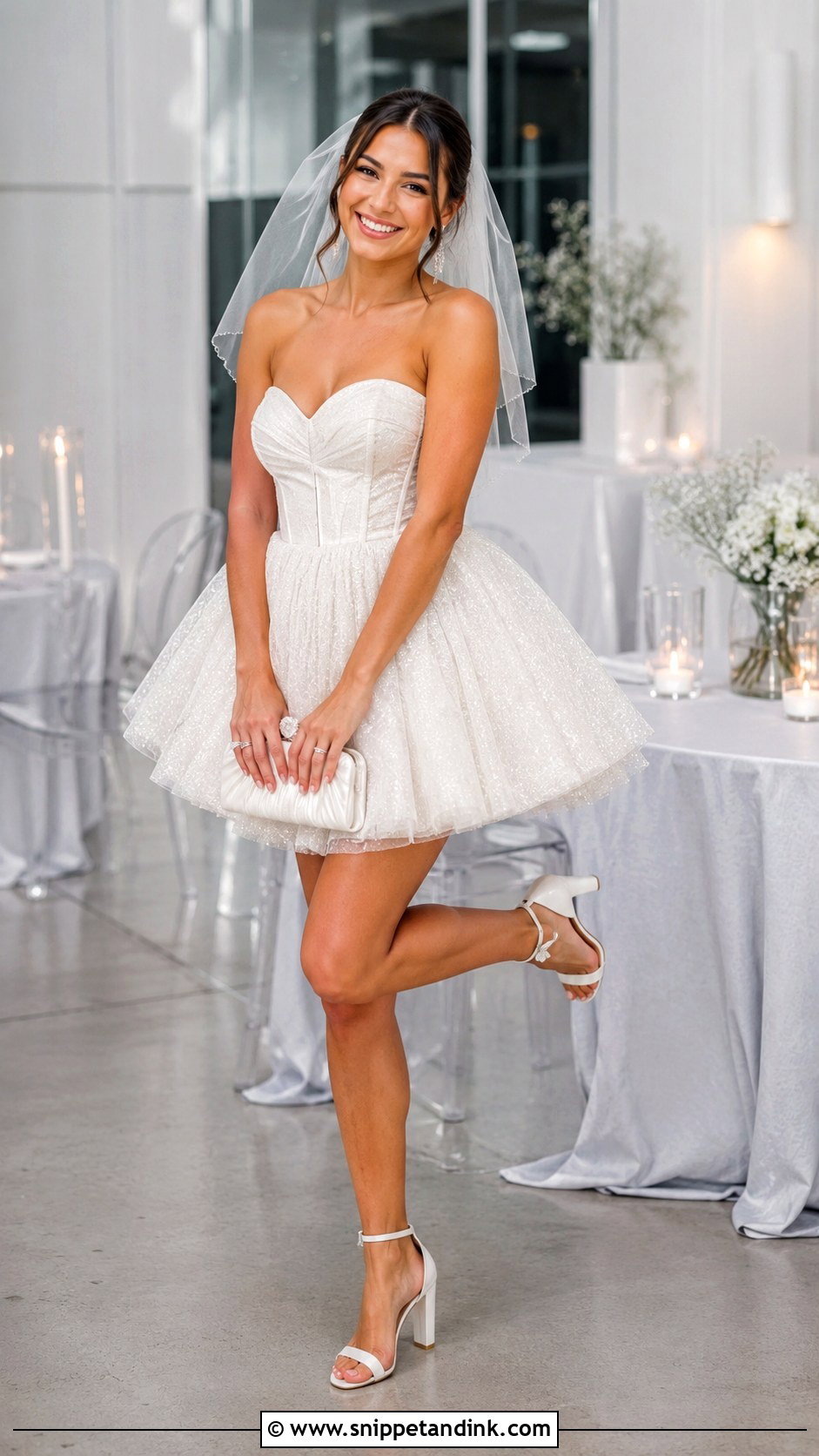
A short star dress is my favorite reception change, because it’s quick to get into and you can actually dance. A structured mini or tea-length skirt in layers of star-covered tulle, with a fitted bodice and a square or sweetheart neckline, holds its shape. A defined waist stops the fuller skirt looking shapeless. Ivory ankle-strap heels, crystal earrings and a satin clutch. A short veil, bow or star headband is enough on top. If the dress is busy, keep the shoes plain. It also suits a courthouse ceremony.
13. Blue Star Wedding Dress
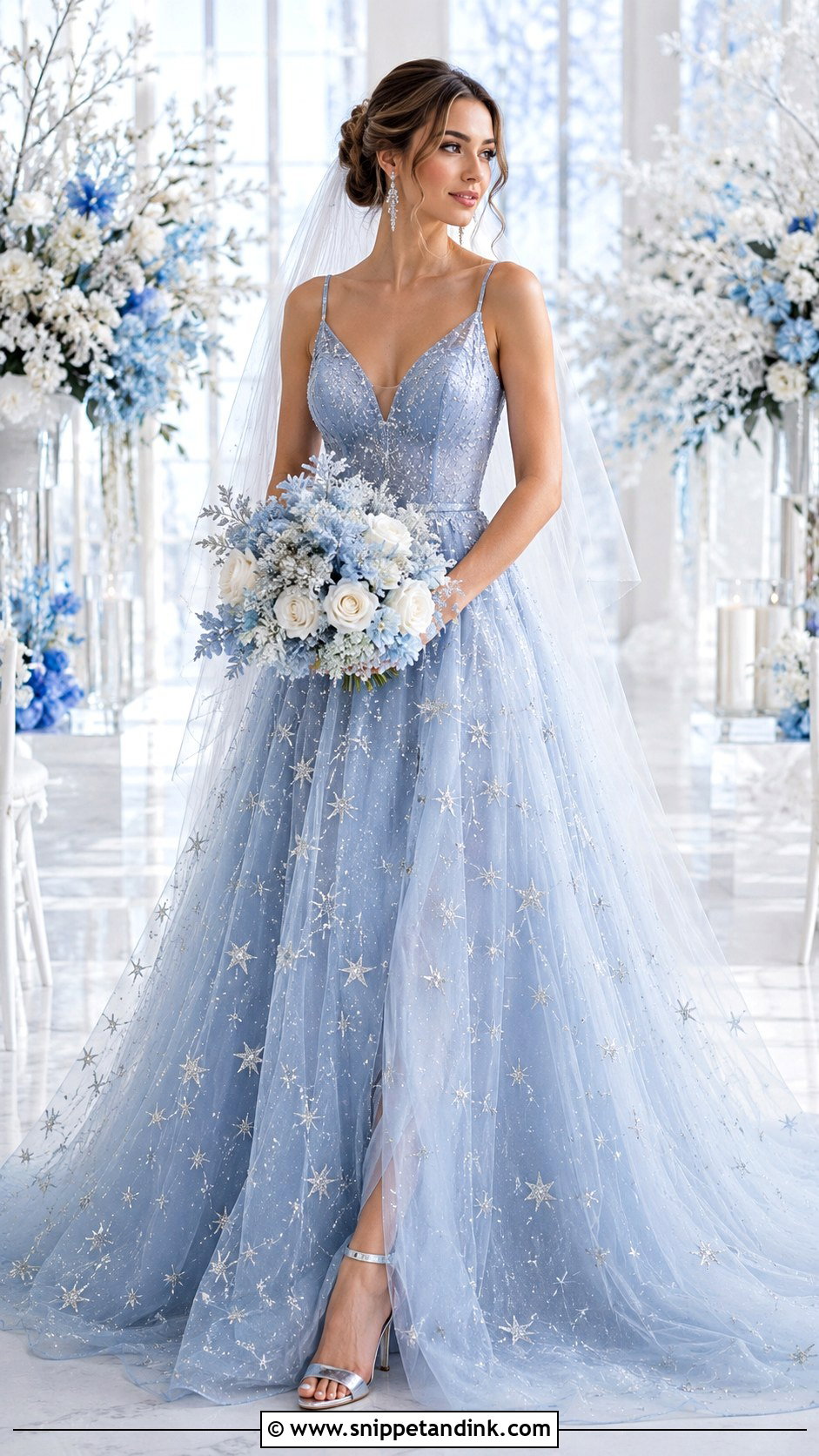
Pale blue reads as color in person but can look nearly white in strong sunlight, so test it outside before you buy. Misty blue tulle with silver stars over a slightly deeper blue or neutral lining gives it depth. A fitted bodice, narrow straps and an A-line skirt keep it ethereal rather than theatrical. Silver heels, crystal drops and a white or pale blue bouquet. An ivory veil softens the color; a matching blue cape strengthens it. Cool rose makeup with a little silver highlight suits it. Winter and evening weddings show the blue best.
14. Black And White Star Wedding Dress
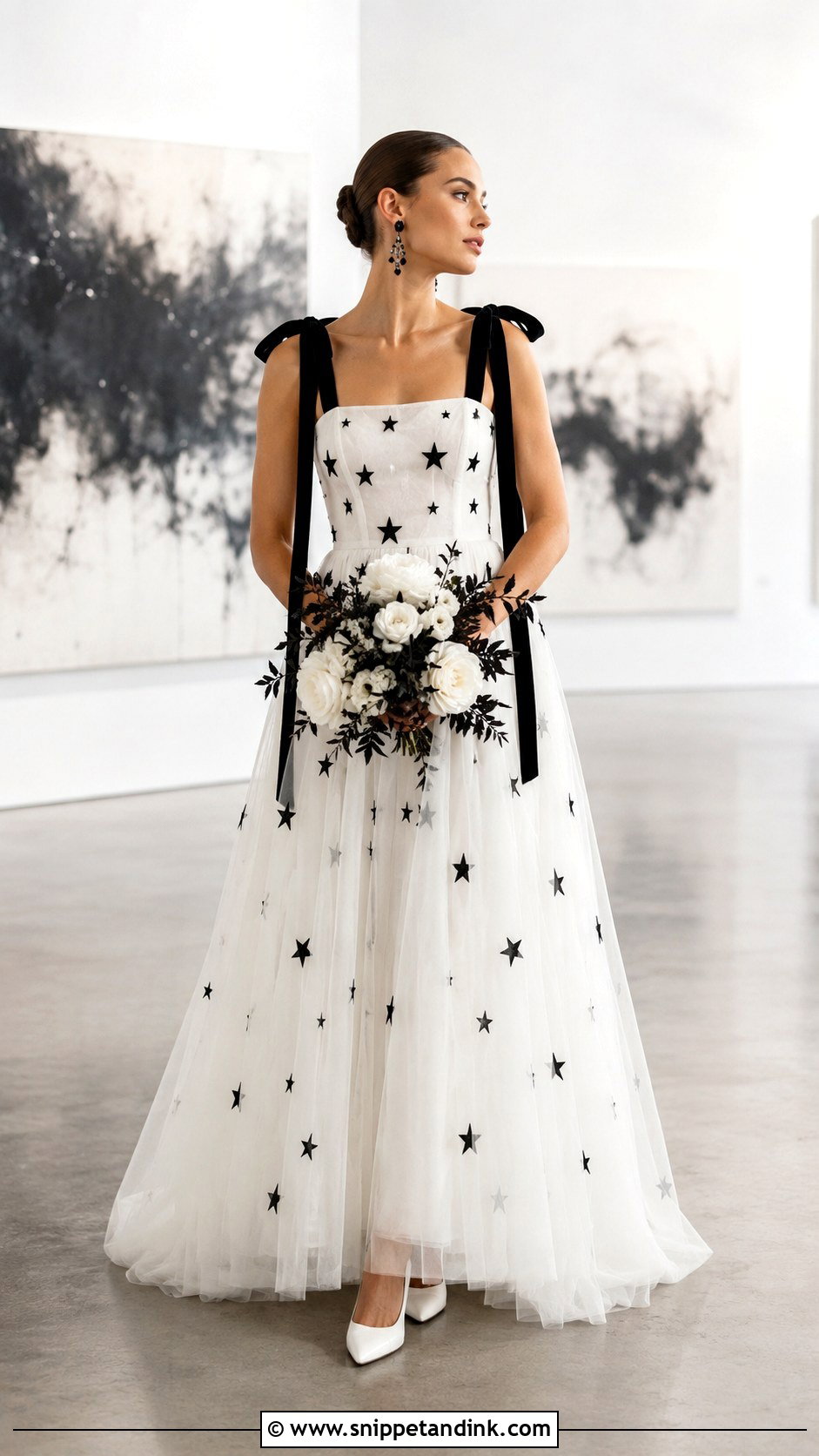
Black on a white gown is a strong accent, and the risk is using too much of it. A white tulle A-line with black embroidered stars only at the bodice and hem stays bridal. Black velvet shoulder ties, a narrow waist ribbon or a detachable black cape can add more. I’d make sure black thread or appliqués are colorfast before anything gets steamed or cleaned; dark dye bleeding into white tulle can’t be undone. White pumps, black crystal earrings, a sleek updo and a mostly white bouquet with a little dark foliage. Keep white as the main color.



15. Champagne Star Wedding Dress
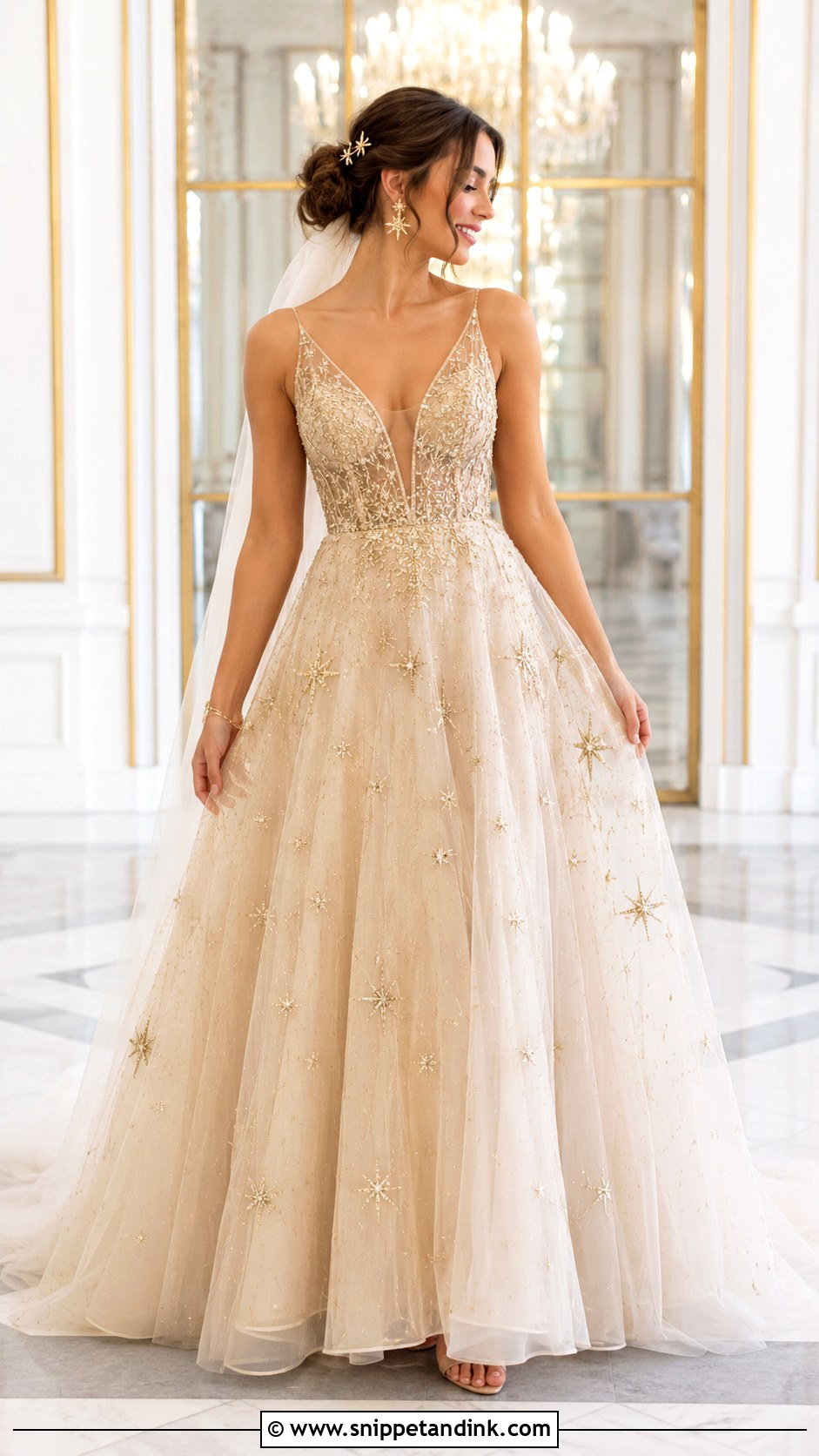
Bright white can look stark against warm or olive skin, and champagne is often what I suggest instead. It also gives gold stars a glowing background. An A-line or fit-and-flare with a warm lining, layered ivory tulle and scattered metallic stars is the build. A plunging neckline is dramatic; a scoop or sweetheart gives more support. Nude or champagne heels, gold earrings and a fine bracelet. A low textured bun with a few gold star pins. Pick an ivory veil without embellishment. Neutral flowers, cream roses and greenery suit the palette.
16. Star Wedding Dress With Bell Sleeves
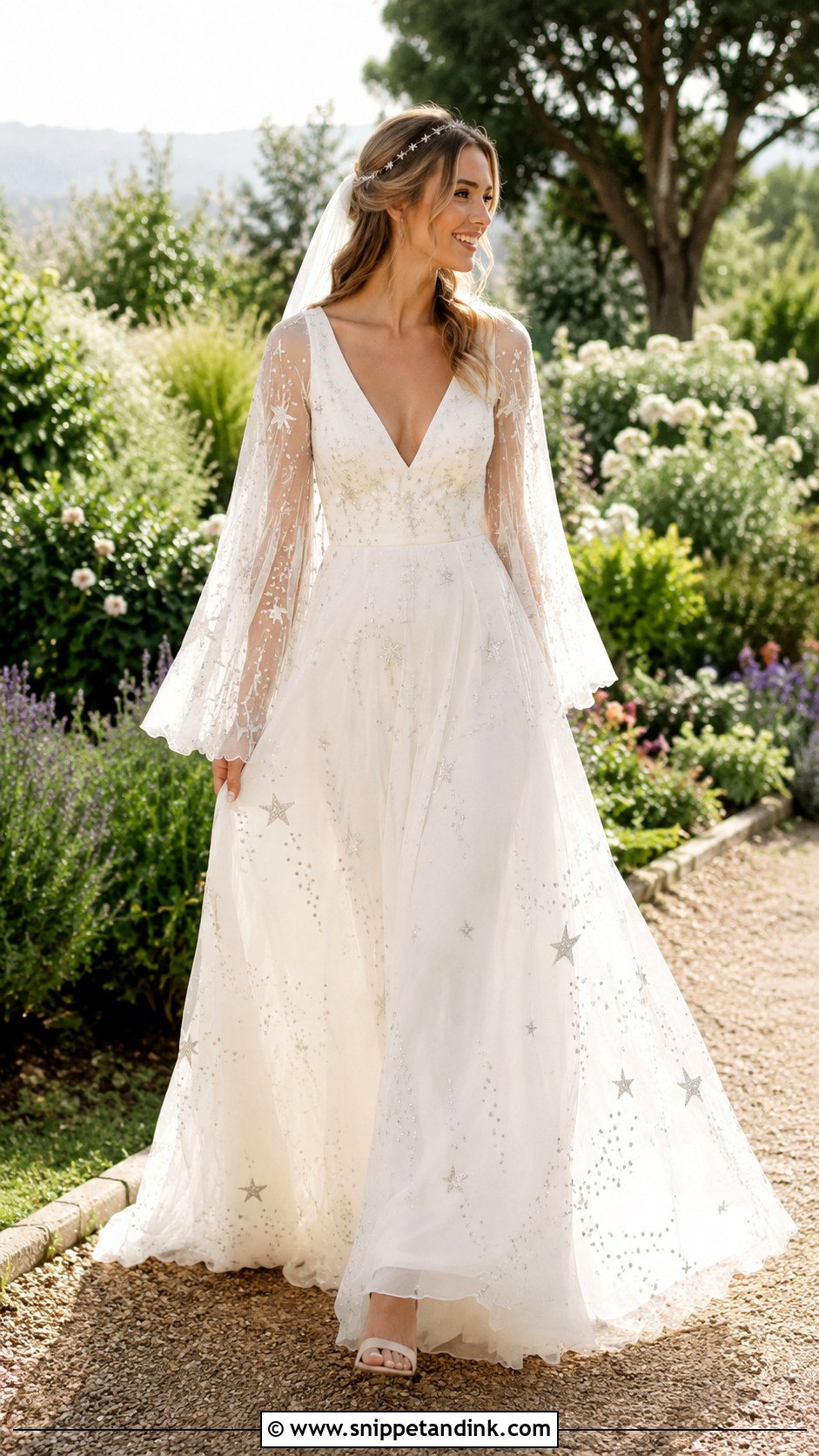
Bell sleeves catch on everything at a reception, from cake to candle flames, so I tell brides to plan how they’ll eat. That said, fitted illusion sleeves opening below the elbow with silver or gold stars look wonderful in motion. A V-neck bodice and a flowing skirt balance the volume at the wrists. Low block heels, a slim headband and small earrings that won’t tangle. Loose waves or a half-up style keep the mood relaxed. Keep the veil plain and light. Outdoor ceremonies and creative venues suit it.
17. Star Fit And Flare Wedding Dress
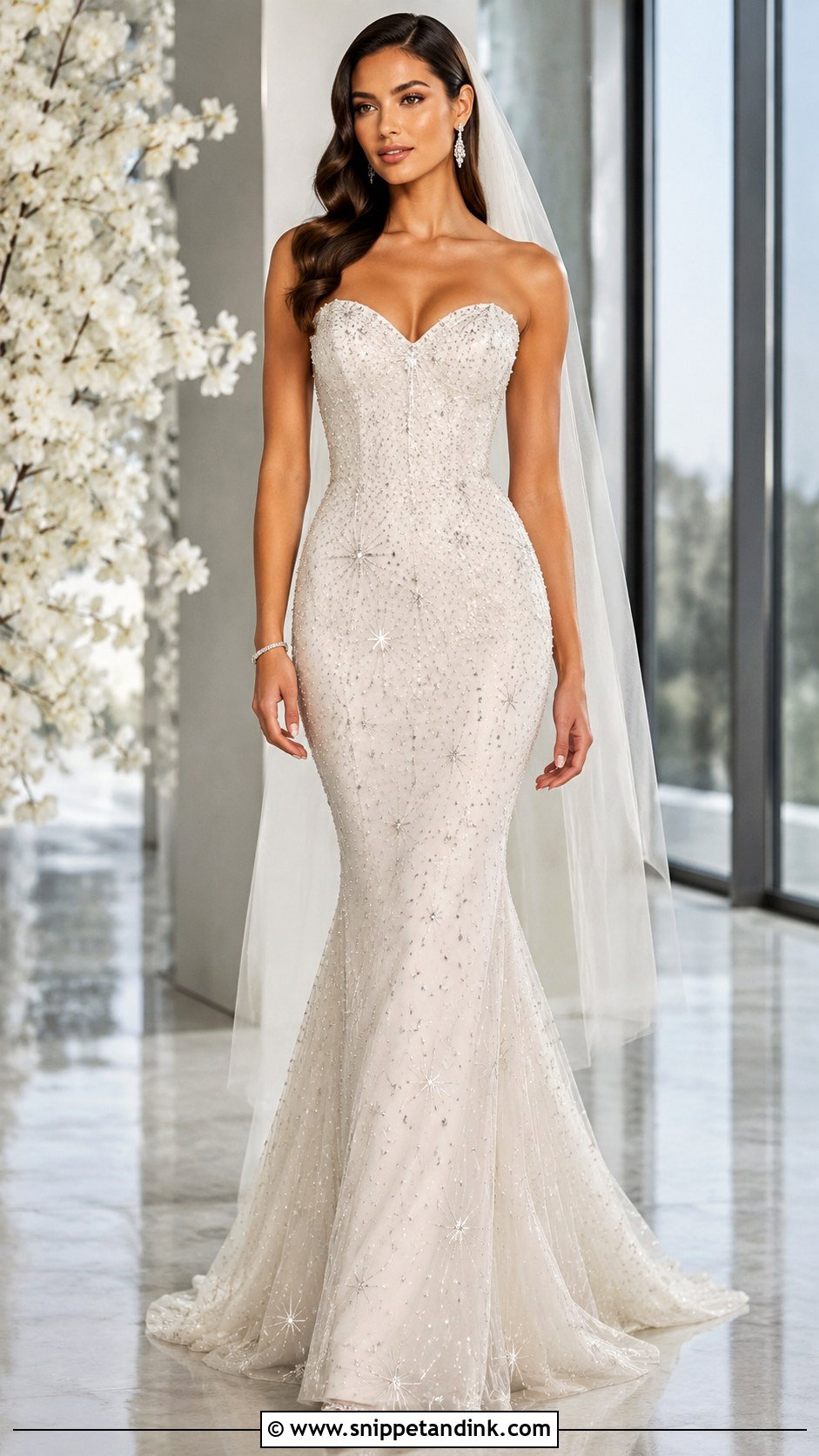
Fit-and-flare is the most tailored star gown here, and it depends completely on alterations. The dress follows the body through the hips and opens near the knee, so the flare point has to suit your height and stride. Beaded stars and crystal constellations look best concentrated at the neckline and upper skirt, scattering toward the hem. Pointed heels, a narrow bracelet and refined drops. A sleek ponytail or side-parted waves. Choose a veil that starts below the crown so the back detail shows. Sit, walk and climb a step at every fitting.
18. Star Wedding Dress With Detachable Skirt
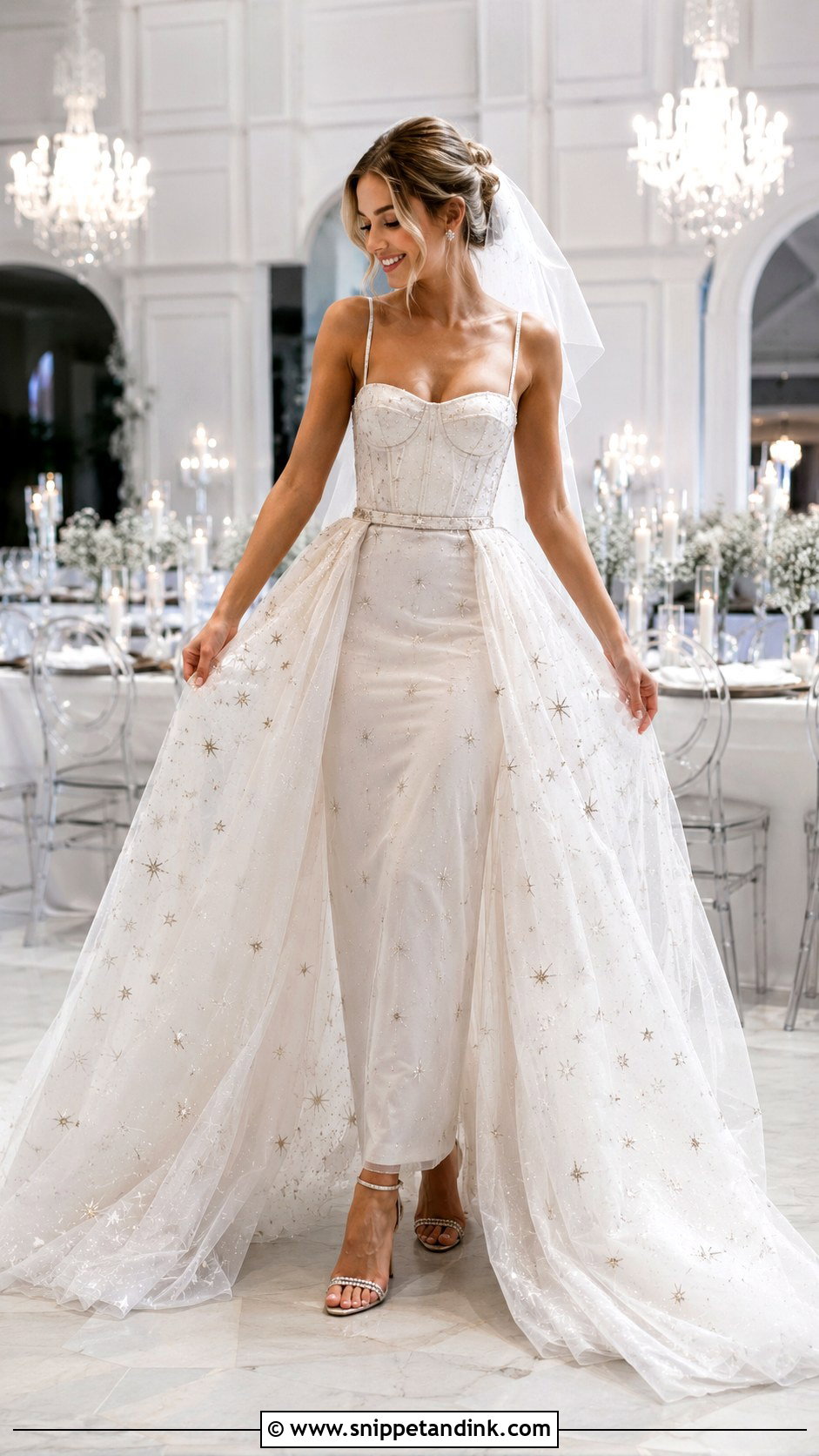
A detachable skirt turns one dress into two. Start with a fitted mini, column or slim crepe gown, then add a removable overskirt of layered tulle with stars and subtle constellation lines. For the ceremony it looks like a full ball gown; afterward, you’re in something light for dancing. The fastening is what I’d test: the waistband should lie flat over the base dress, and a bridesmaid should practise removing it at least once. Silver heels, crystal studs, a simple updo and a fingertip veil work with both versions.
19. Rainbow Star Wedding Dress
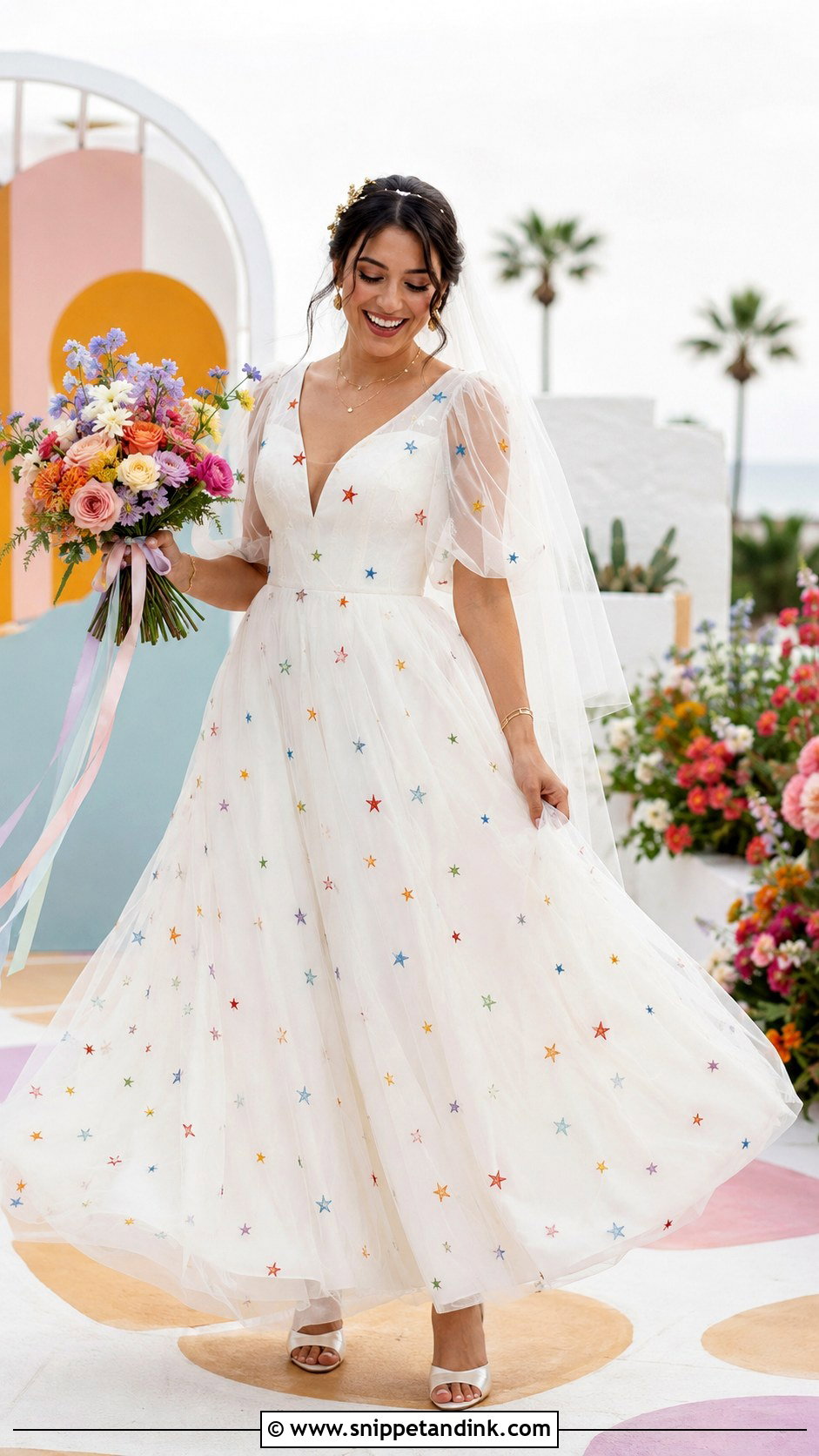
Rainbow stars are joyful, and the way to keep them bridal is a very simple silhouette. A white or ivory maxi with small rainbow stars across a soft tulle overlay, in an A-line with a fitted waist and light sleeves, lets the color look intentional. White heels, fine gold jewelry and a small bouquet with a few pastel flowers. A plain ivory veil stops it going too far. Flats work for a relaxed party. A rainbow star wedding dress makes most sense when the decor, flowers or stationery carry the same playful palette.



20. Star Wedding Dress With Matching Veil
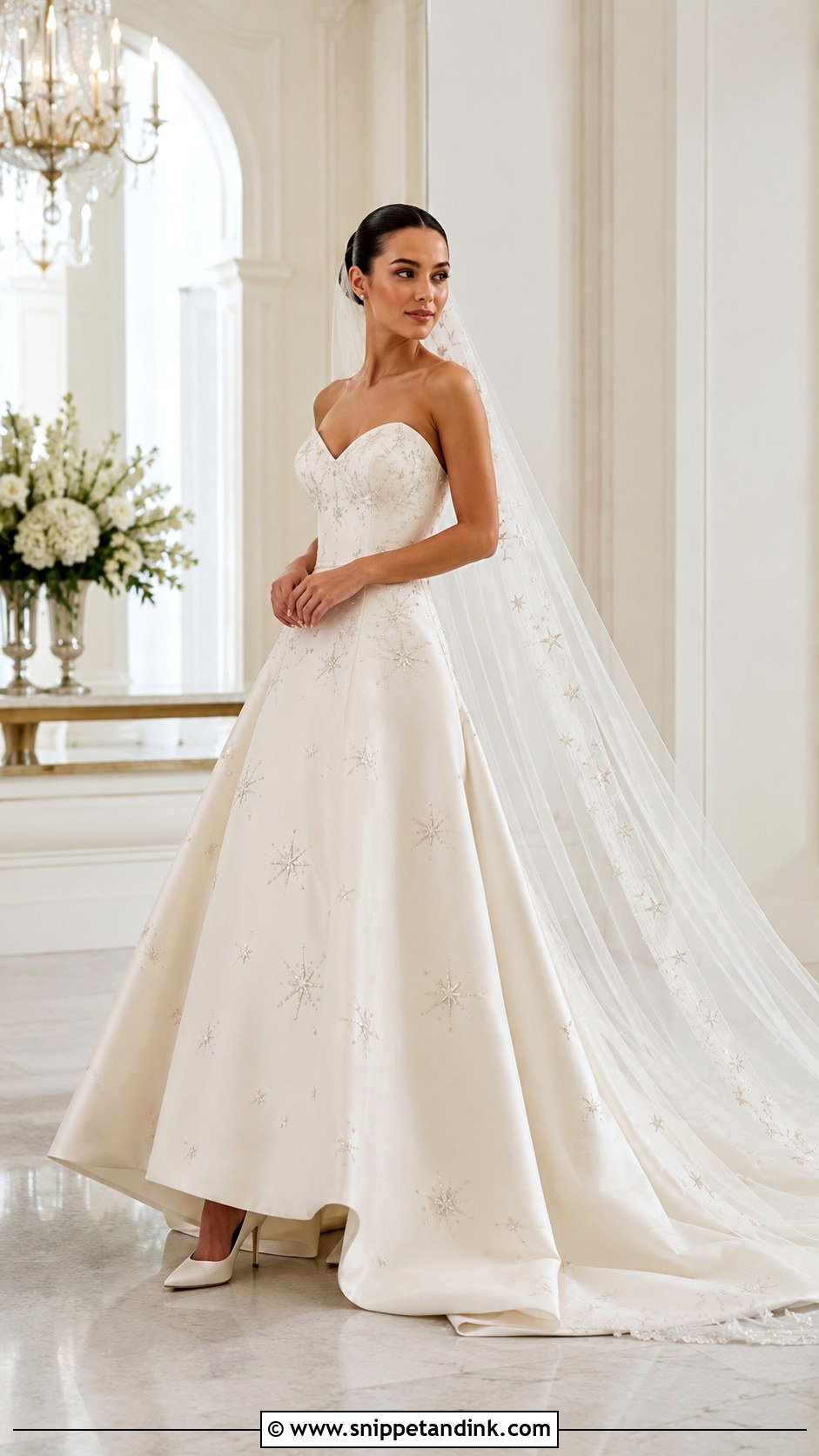
Matching a veil to a star gown sounds easy, but the ivories rarely match exactly when they come from different makers. I compare the gown and veil side by side in daylight and indoor light during alterations. Choose a gown with star appliqués denser at the bodice or hem, and a sheer cathedral veil with similar stars only around the edges. That way the two don’t crowd each other. Simple satin pumps, tiny crystal studs and a smooth bun to anchor the veil. Skip the tiara; the veil already frames your face with sparkle.
Adding Stars to a Dress You Already Own
If you love your dress but wish it had a celestial detail, a good seamstress can add one. Star appliqués, sold by the piece or by the meter of trim, can be hand-stitched onto a bodice, sleeves or the edge of a veil. I’d keep it to one area, like a scatter across the shoulders or a band at the hem, so it looks designed rather than added.
- Buy a few extra appliqués so you can test placement and keep spares for repairs.
- Match the appliqué base color to your dress. White stars on an ivory gown look stark.
- Allow several weeks for hand-stitching, and do it before your final fitting so the weight is accounted for.
- A star-trimmed veil or cape is the lowest-risk option, because it doesn’t touch the dress itself.
Whatever you add, try the dress on afterward and move in it. Appliqués near the underarm or inner elbow can rub, and it’s much easier to shift one before the day than during it.
How Much Sky Do You Want to Wear?
A celestial dress works when the stars suit your personality and the gown still feels secure to wear. There’s a version here for every taste: dramatic ball gowns, sleek satin, colorful stars, detachable layers and modest designs. Settle the silhouette first, then decide whether stars should cover the dress or appear in smaller places like the sleeves, a cape or the veil. Keep the shoes and jewelry quiet when the fabric is busy, and leave time for tailoring so the pattern sits right on your body.
You'll Like These Ideas:





Leave a Reply