
Embroidered, Beaded or Printed: How the Stars Get onto the Tulle
Two starry gowns can look alike on a screen and feel completely different in your hands. The method used to put the stars on decides the weight, the price, how it photographs and how easily it can be altered. I always turn the skirt inside out at an appointment to see which one I’m dealing with.
- Glitter or foil printed tulle is light and affordable. It sparkles well but can shed, and the shine sits flat rather than catching light from different angles.
- Embroidered stars are stitched in metallic or tonal thread. They’re durable and lie flat, which suits sleeves and illusion necklines.
- Sequin and bead stars are sewn on individually. They throw the most light and add real weight, so the bodice and straps need to be built for it.
- Appliqué stars are cut motifs stitched onto the tulle. They can be moved, added or removed, which makes them the easiest to alter.
Hand-beaded gowns usually take longer to make, so order earlier if that’s what you love. Ask the shop for its production time on the specific style, and leave a few weeks beyond that for alterations.
1. A-Line Starry Wedding Dress
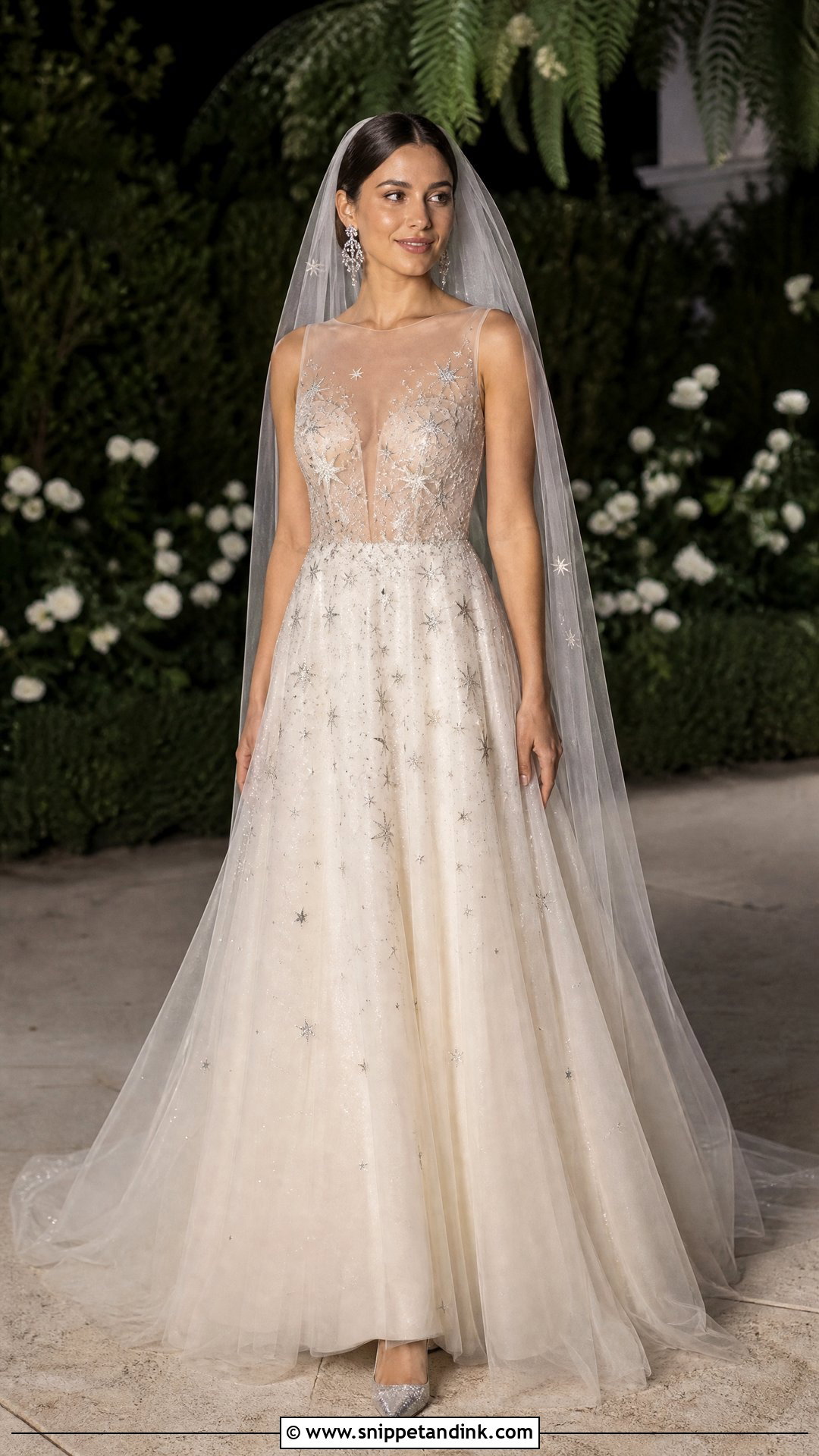
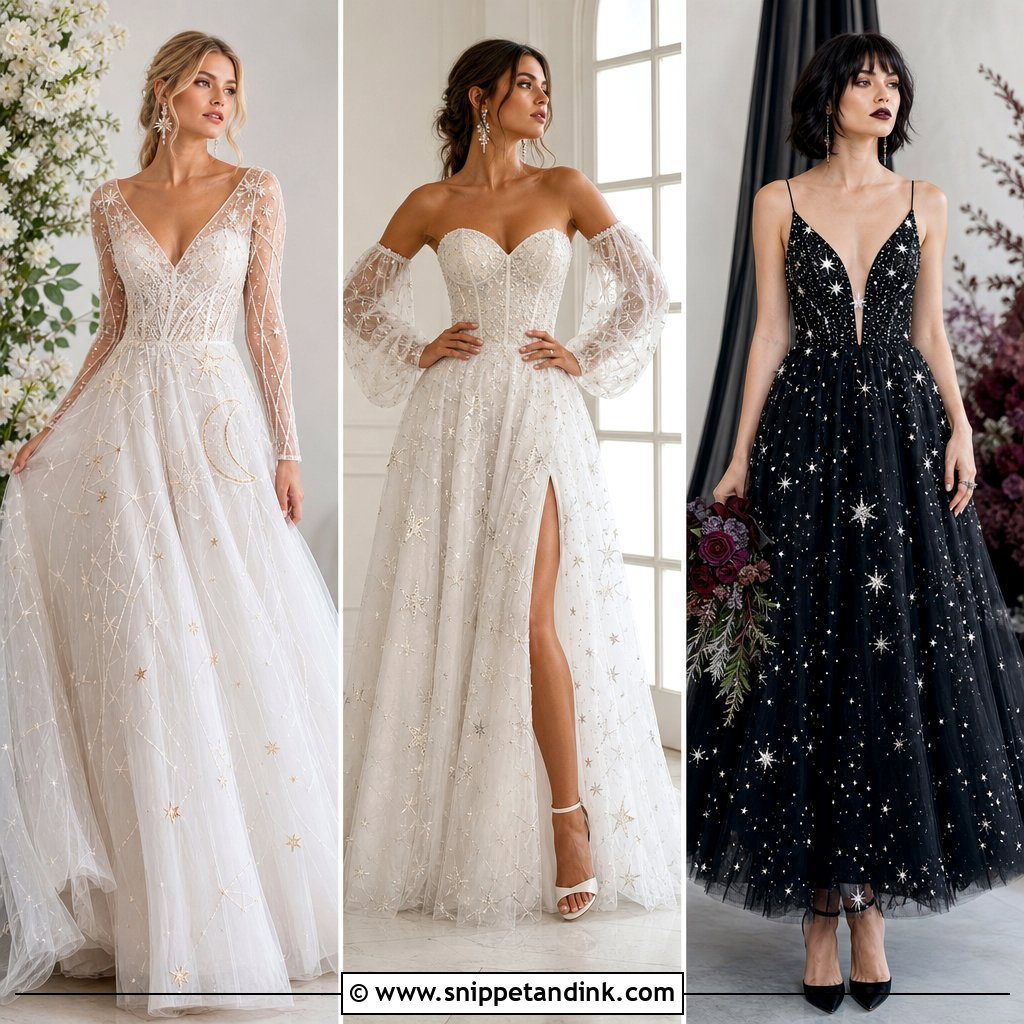
Start with the A-line if you’re unsure whether celestial detail is for you. The skirt flows away from a fitted bodice, so the stars get room to move instead of being stretched over the hips. Scattered silver or pearl stars keep it romantic rather than theatrical. On an illusion neckline, the stars look as if they’re sitting on your skin; ask for the mesh to be matched to your skin tone, because a mismatch shows in every close-up. Silver pointed heels, crystal drops, a fingertip veil and soft waves finish it for a garden or evening ceremony.
2. Long Sleeve Constellation Wedding Dress
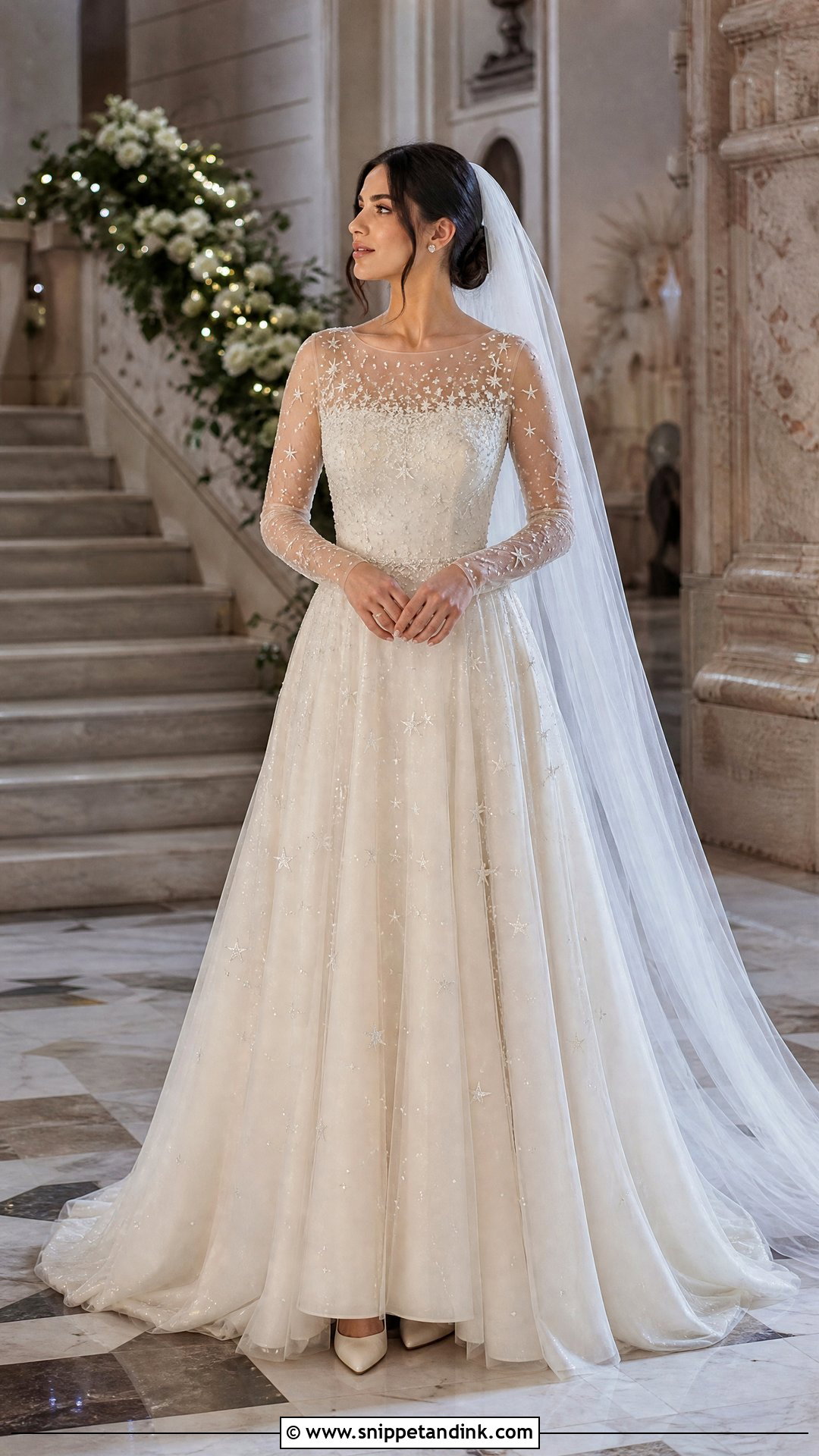
Sheer sleeves embroidered with star maps, tiny crystals and fine metallic thread are where a cold-season bride gets to show detail. Metallic thread is scratchy on the inner arm, so I always check the sleeve seams are finished cleanly and the thread is backed. A fitted bodice and flowing skirt keep the shape, and an illusion high neck or modest V frames the face without competing with the sleeves. Closed-toe satin pumps, small studs, a low textured bun and a plain tulle veil let the embroidery lead. Candlelit halls and winter evenings suit it.
3. Strapless Starry Ball Gown
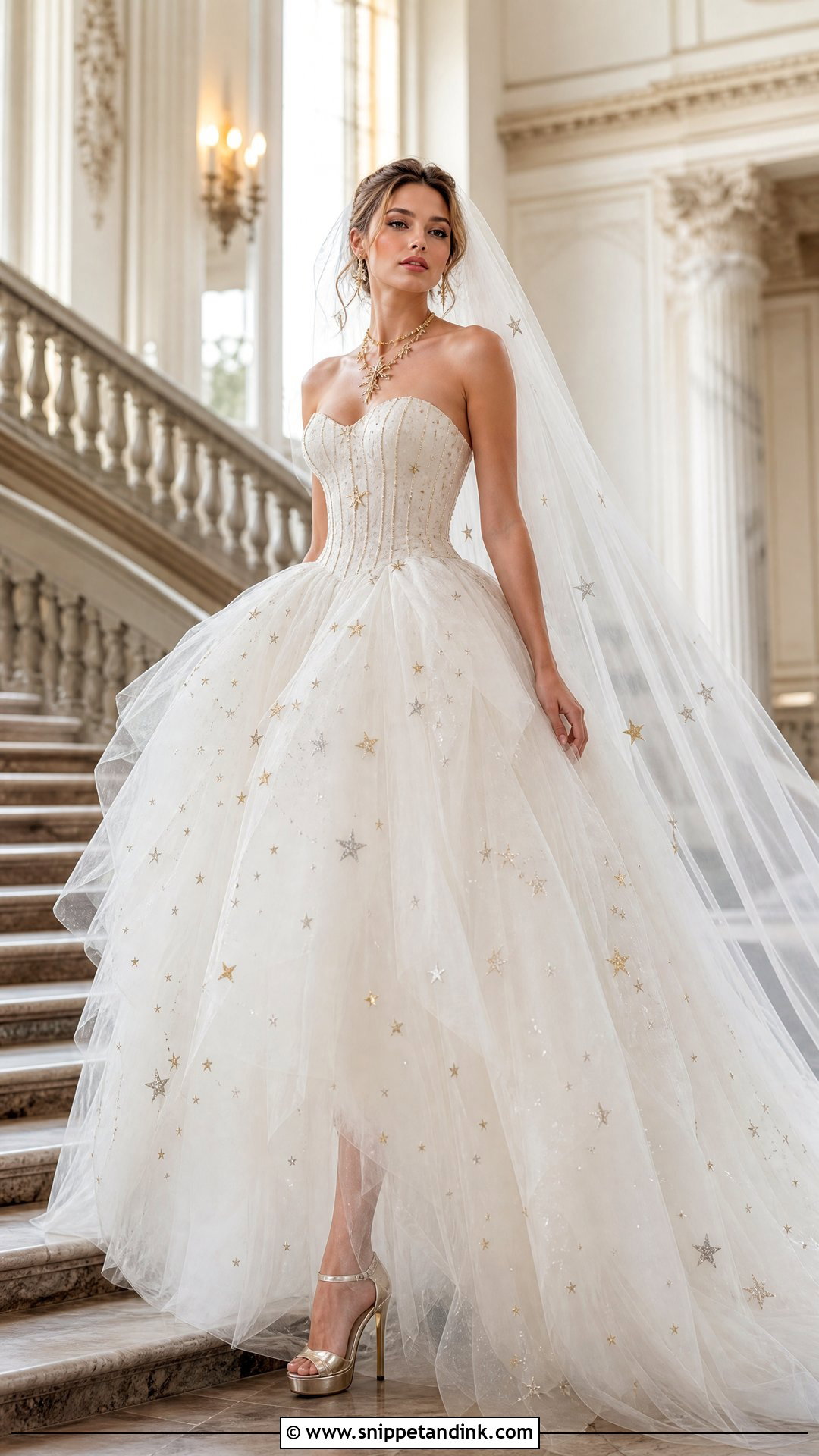
A strapless ball gown with a corset bodice and layers of tulle is the grand-entrance option. The detail I’d ask about is star placement: denser at the waist and thinning toward the hem draws the eye up and makes the skirt look longer. Silver embroidery reads cool and modern; gold suits ivory or champagne fabric. A starburst necklace, crystal earrings and metallic block heels under the skirt complete it, with a cathedral veil cut clean at the edge so it doesn’t fight the pattern. Plan on help with the staircase and the car.
4. Celestial Corset Tulle Wedding Dress
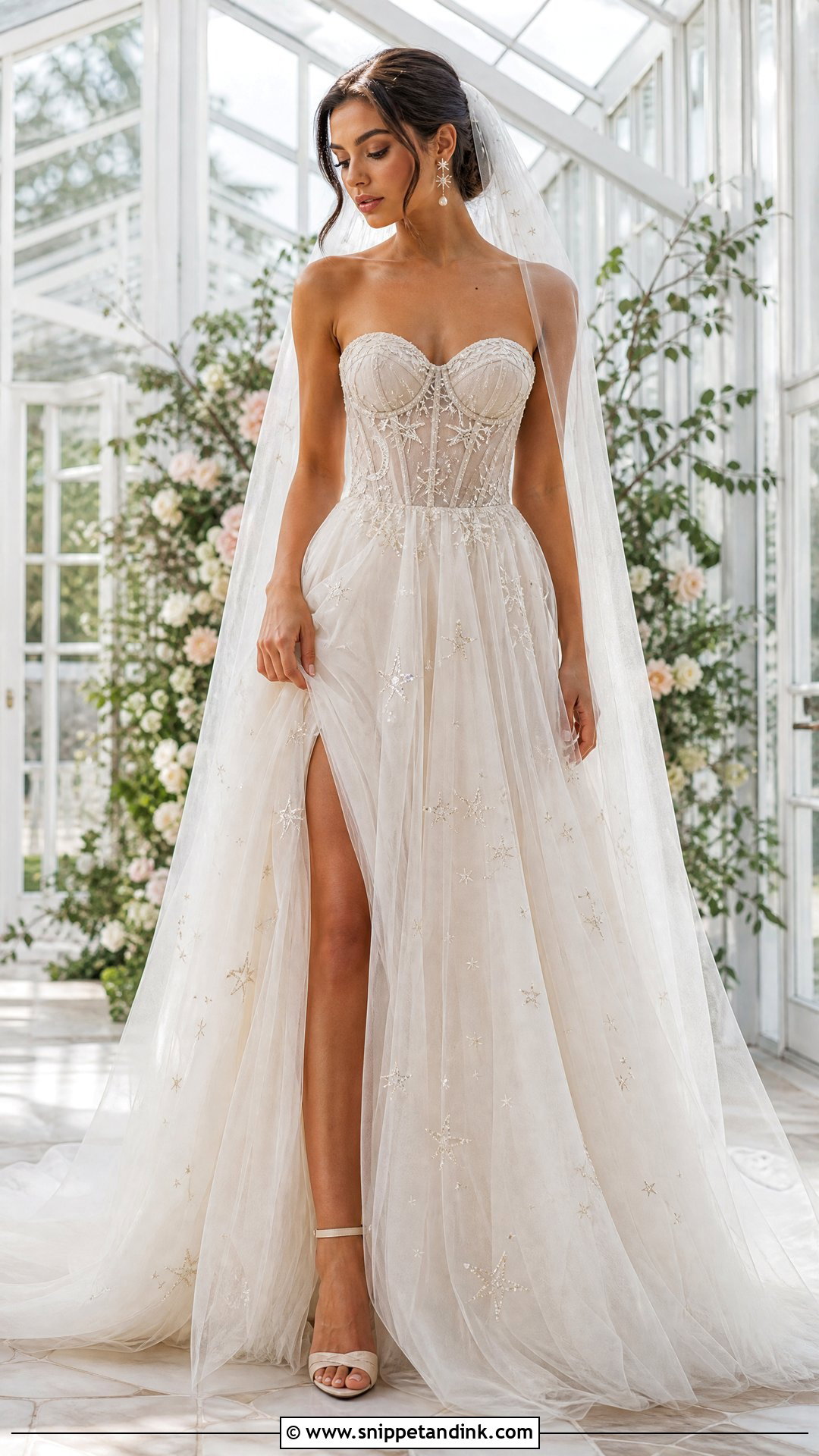
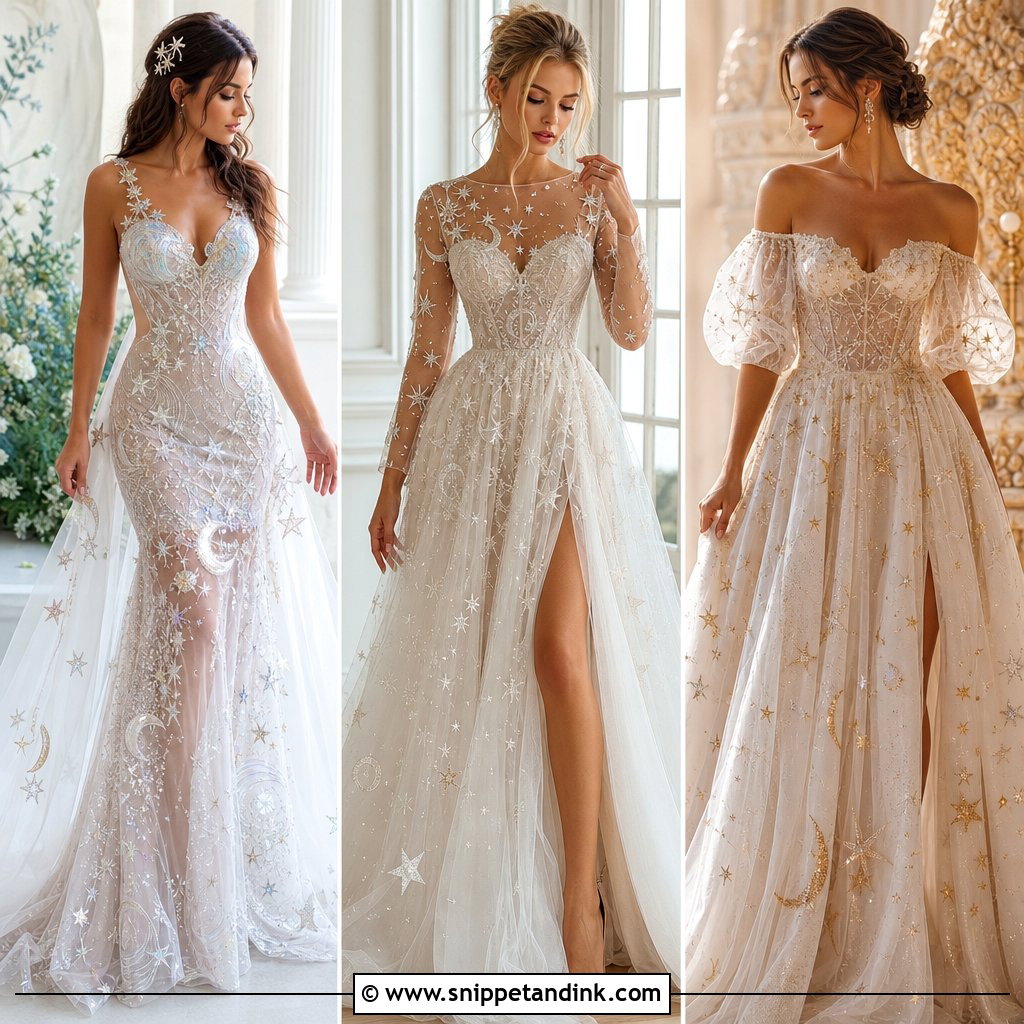
Corset plus tulle gives you structure on top and float below. The boning should define the waist without stopping you breathing when you sit; I have brides sit through a full fitting appointment to check. Star appliqués, beads and small crescents that travel from bodice onto skirt make it one continuous design. A sweetheart or scooped neck keeps it romantic. Pearl-and-star earrings, ivory ankle straps and a sheer veil with only a few scattered stars, plus loose curls or a half-up style, suit a glasshouse or evening reception.
5. Champagne Gold Star Wedding Dress
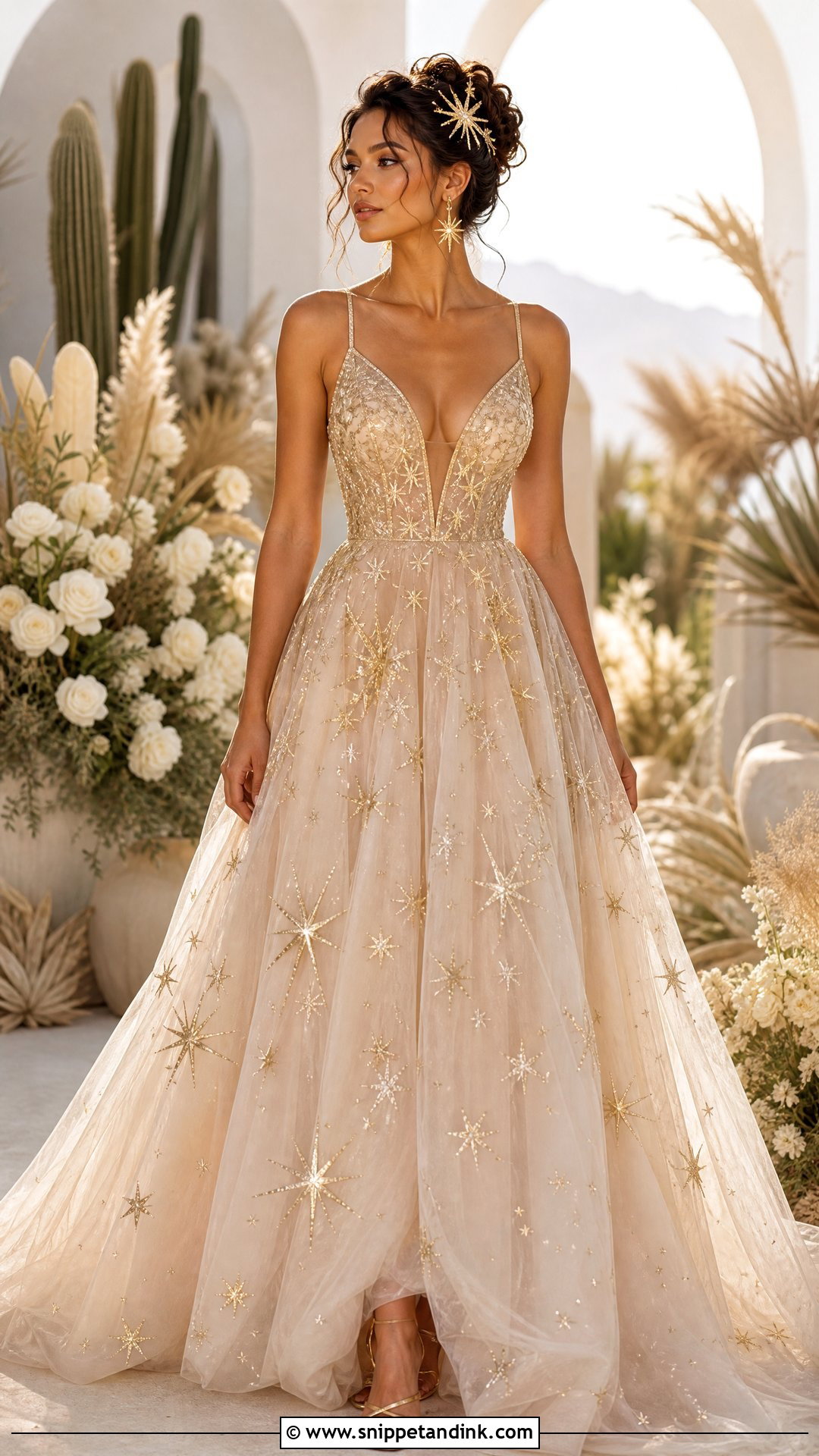
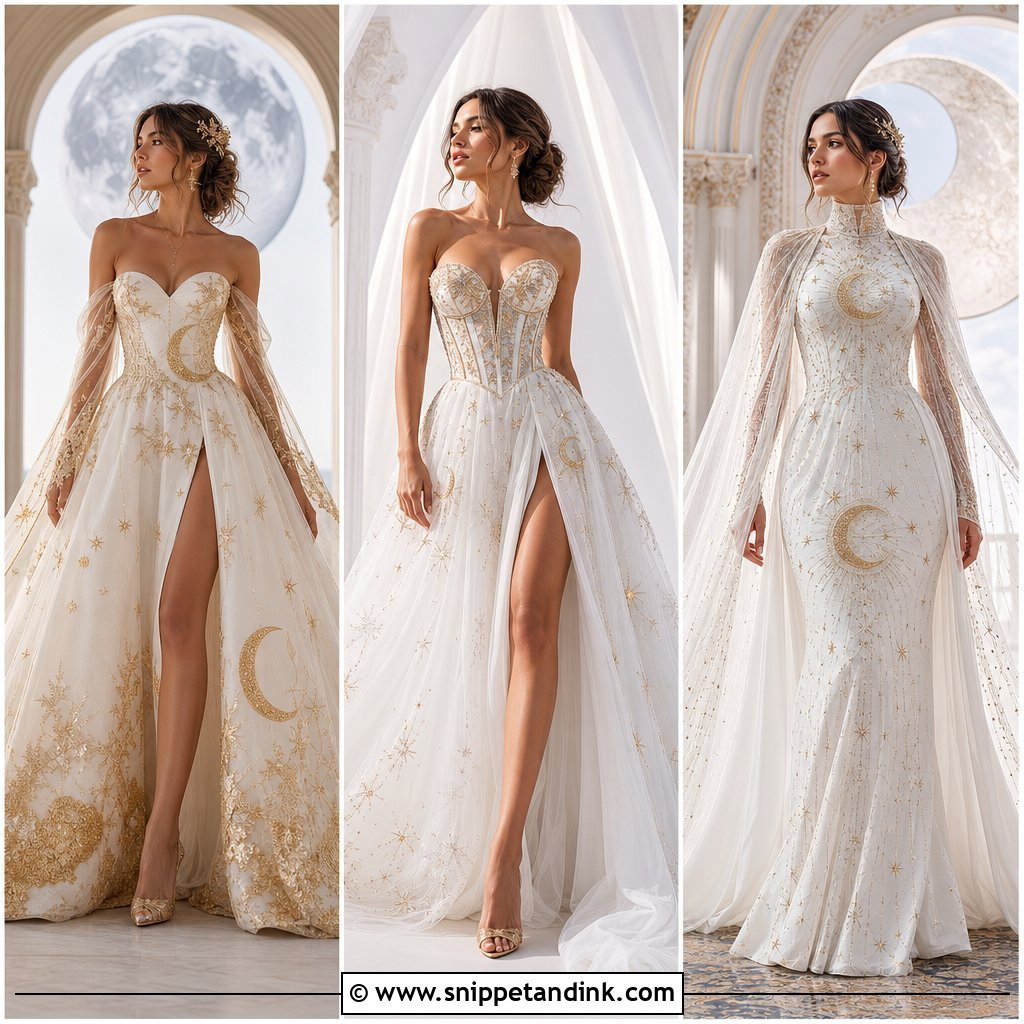
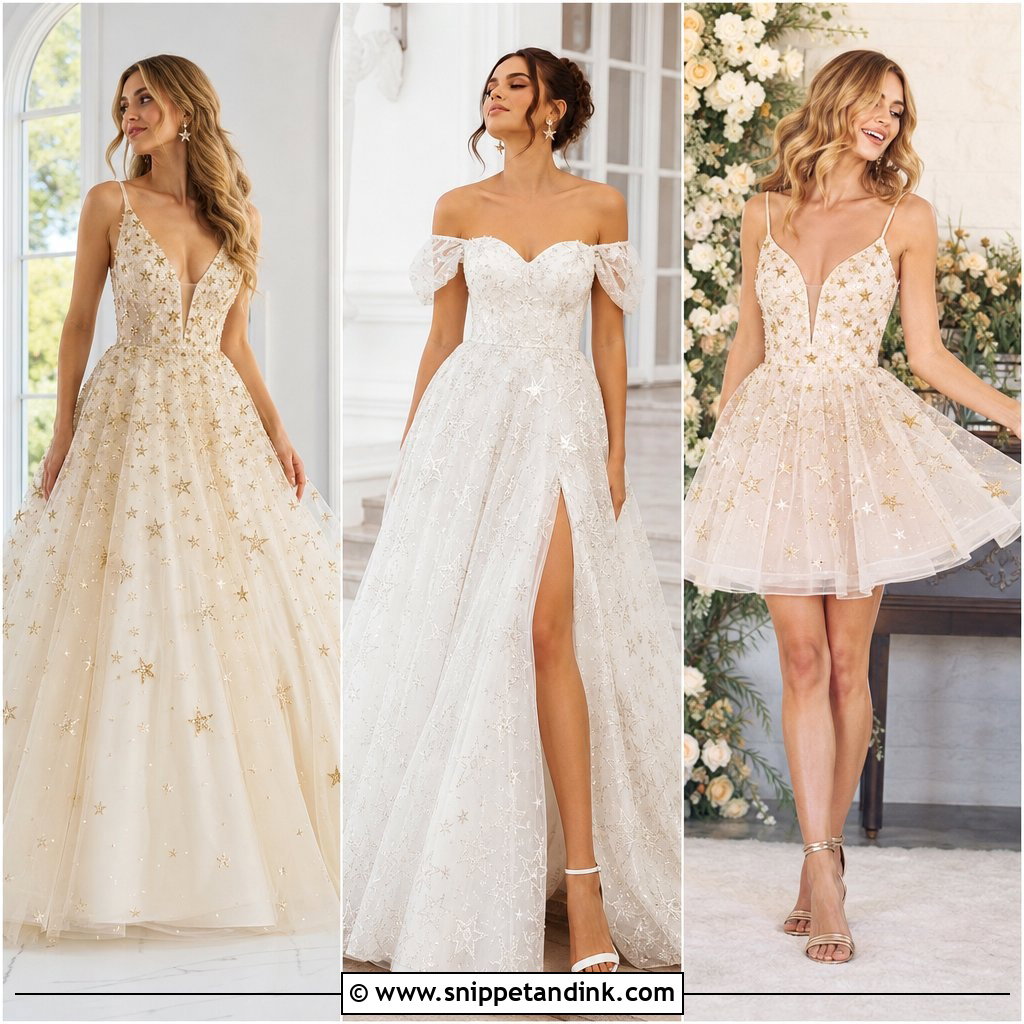
Gold stars show up best on warm fabric. Bright white tulle makes gold embroidery look yellow; soft beige, pale gold or a light nude underlayer makes it glow. A plunging neckline needs wider straps and a firm bodice to stay put. Gold starbursts scattered across the skirt or set in subtle constellation patterns suit the warm base. Champagne heels, brushed-gold earrings and a celestial comb finish it. Choose a veil a shade warmer than pure white so it doesn’t look grey next to the gown. Late-afternoon light, desert venues and fall weddings flatter it.
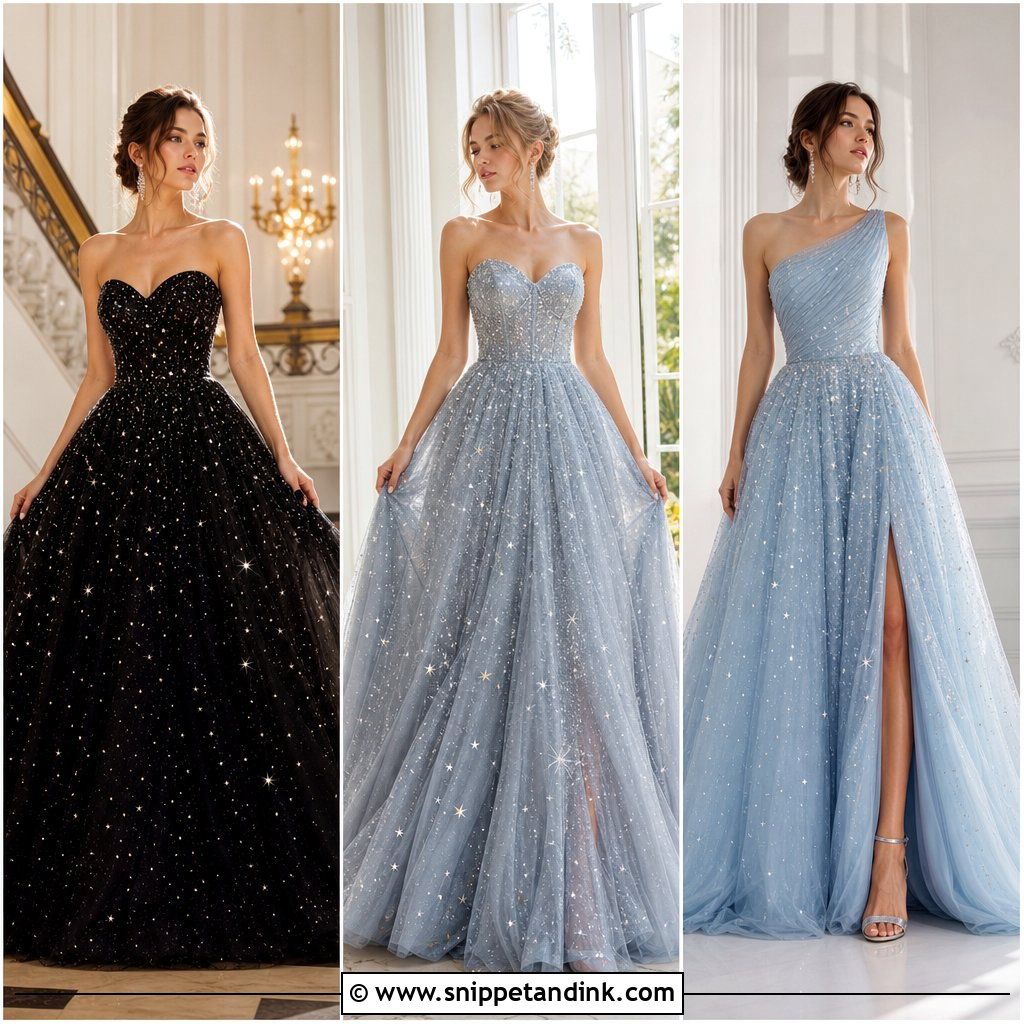
6. Blue Ombre Starry Wedding Dress
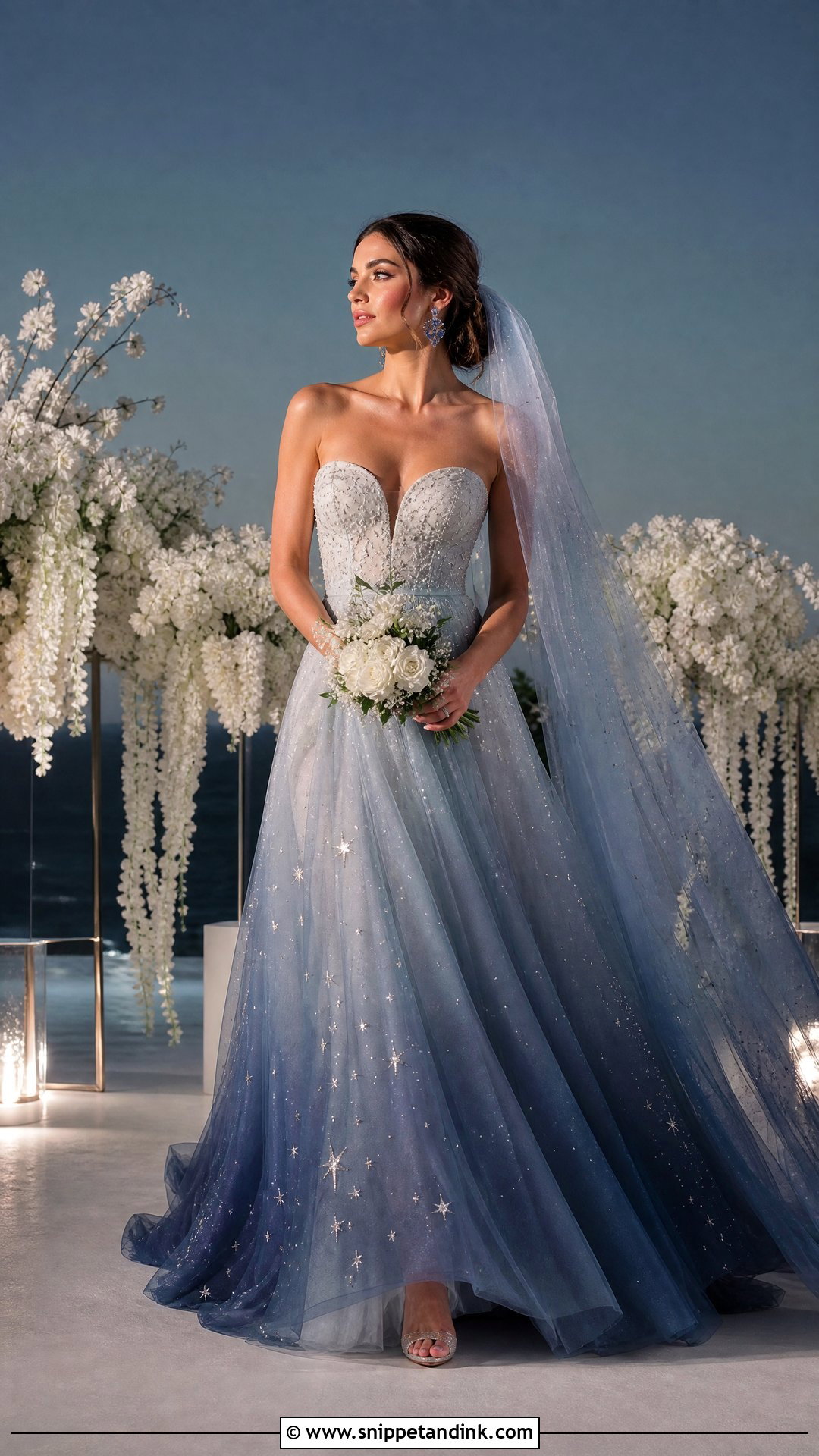
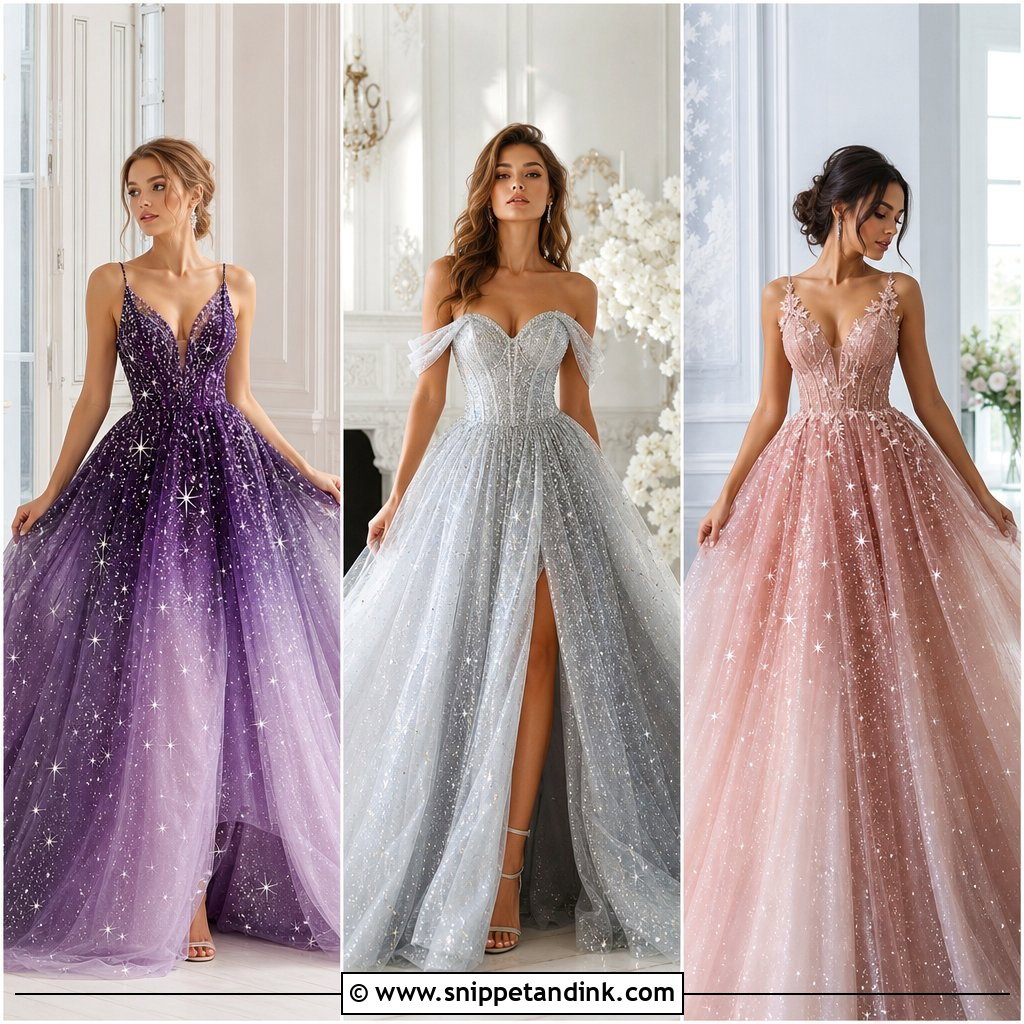
Colour plus shape: a blue ombre starry wedding dress starts ivory or pale blue at the bodice and deepens to dusty blue or midnight at the hem, like daylight turning to night. Crystals, pearls and silver stars along the gradient add the sky. A strapless or off-the-shoulder neckline balances the dark skirt. Silver heels, sapphire drops and a grey-blue veil coordinate it. Keep the bouquet mostly white. One caution: dark dyed hems show dust and grass quickly at an outdoor ceremony.
7. Black Celestial Wedding Dress
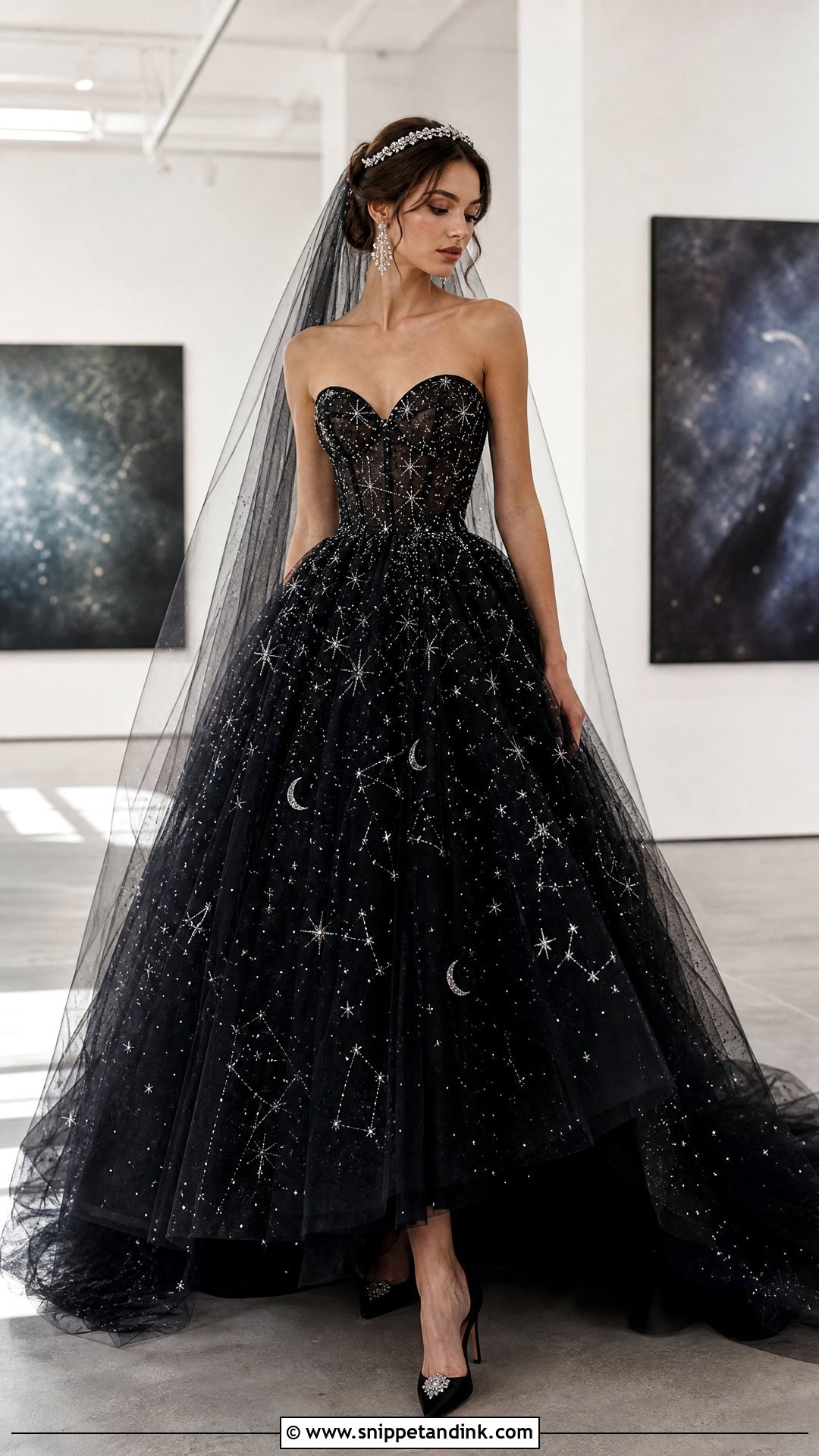
Black tulle or organza with silver stars, beaded constellations and small moons is the bold version. It stays bridal through shape, so I’d stick to an A-line or ball gown rather than a sleek sheath. Black pointed heels keep the line continuous, and crystal earrings with a silver star headband put brightness near the face. A sheer black veil is dramatic; a soft grey one gives lighter contrast. Glowing skin and defined eyes photograph better against black than heavy matte makeup. It suits art venues and formal halls at night.
8. Blush Moon And Star Wedding Dress
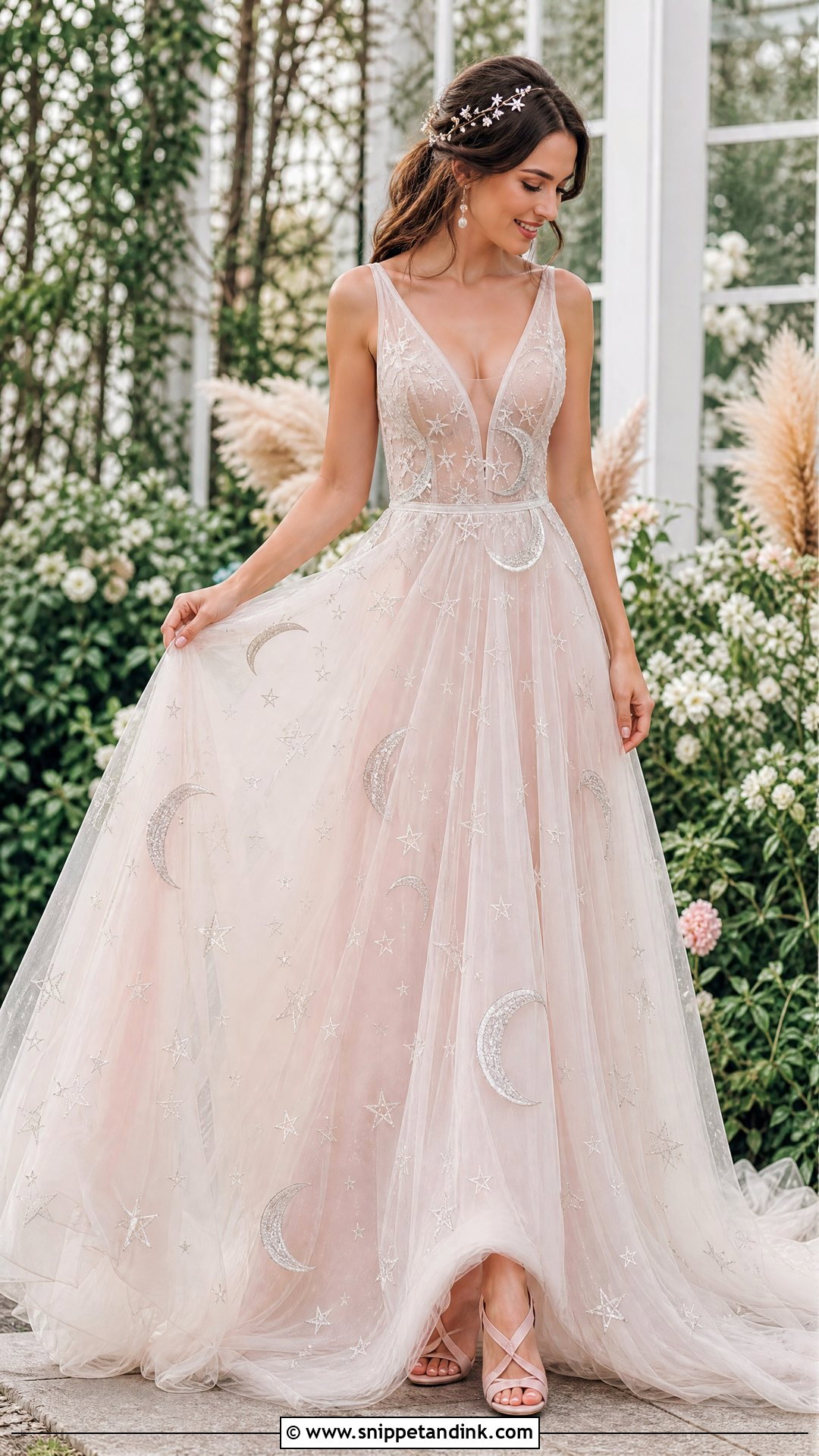
Blush works best as a lining, not a top layer. Pale pink under ivory tulle gives a warm glow that stays subtle in photos, where a solid pink gown can read as a bridesmaid dress. Crescent moons, tiny pearls and silver or pale-gold stars on the bodice fade into the skirt. A V-neck and soft waist suit it. Blush satin heels, pearl drops and a slim celestial hair vine finish it. Pick an ivory veil with a blush undertone; bright white next to it looks harsh. Spring gardens are its natural home.
9. Silver Sequin Starry Wedding Dress
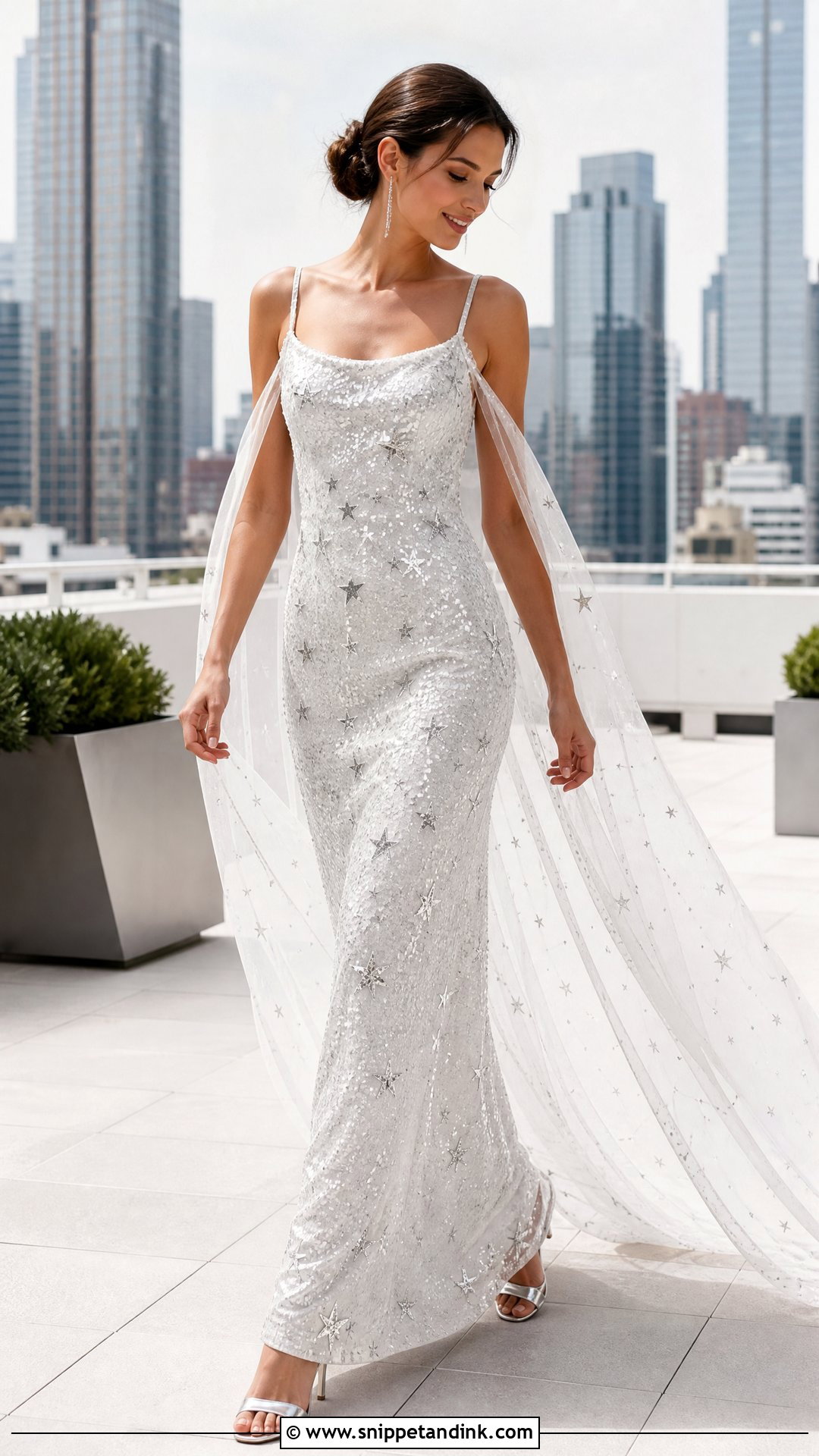
Sequins in mixed sizes, scattered like stars, look far more expensive than one size covering every inch. A sheath or column lets the surface shine without adding bulk. Sequinned fabric is heavier than it looks and pulls on thin straps, so I’d want straps that are actually load-bearing or a cowl with internal support. Metallic heels, slim crystal earrings and a smooth low bun keep it sleek, with a sheer cape or plain chapel veil for movement. Rooftops and contemporary venues suit it.
10. Starry Lace Mermaid Wedding Dress
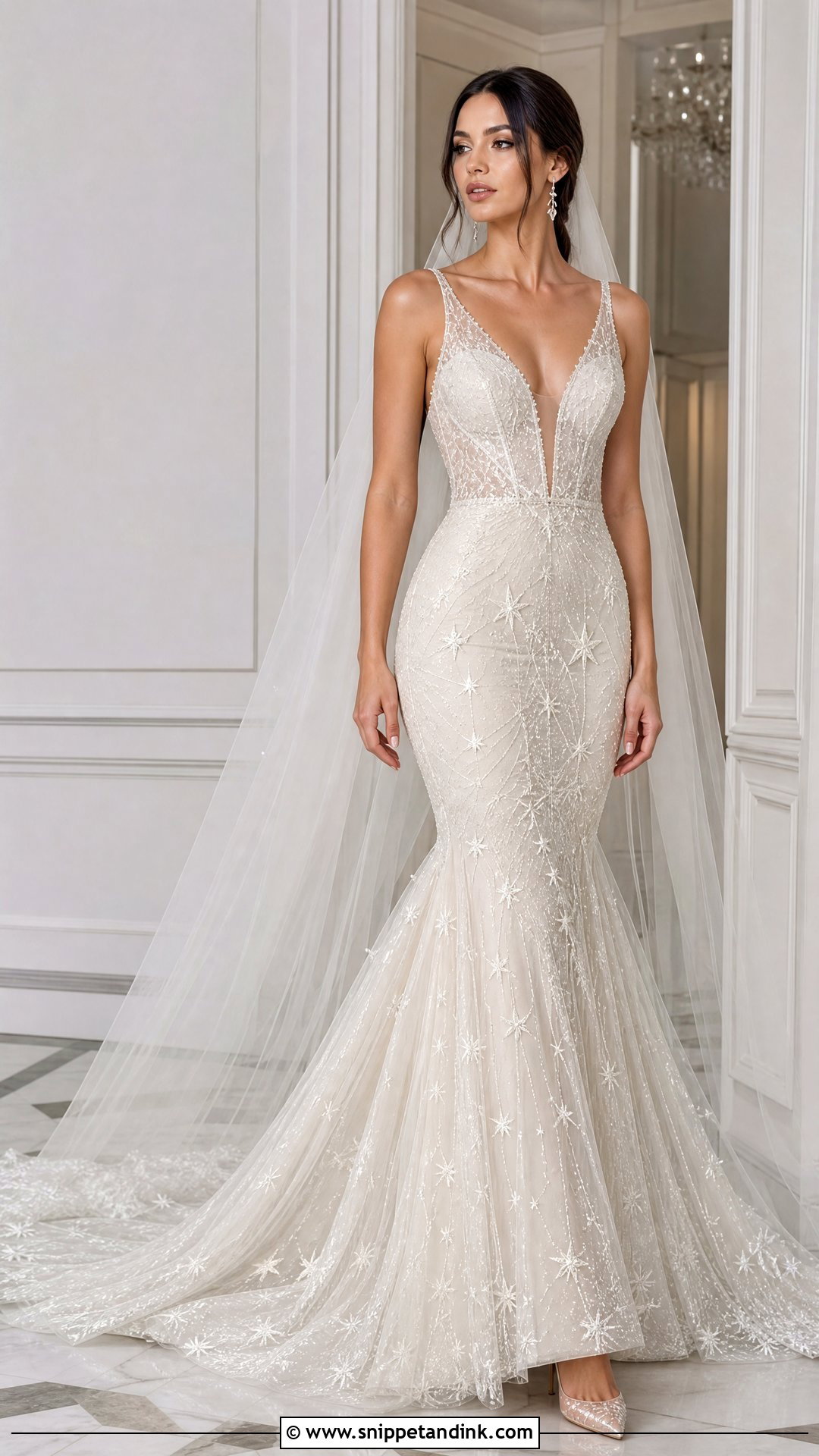
Mermaid gowns live or die by alterations, and star lace adds a layer of difficulty because the motifs have to line up across seams. The bodice follows waist and hips and flares near the knee. Star-shaped lace, crystal clusters and embroidered constellations make a fresh change from florals, and a faint shimmer lining adds depth. Practice walking and sitting at every fitting. Pointed ivory heels, drop earrings, a side-parted style and a long plain veil let the silhouette and train lead. Formal indoor evenings suit it.
11. Boho Starry Wedding Dress With Bell Sleeves
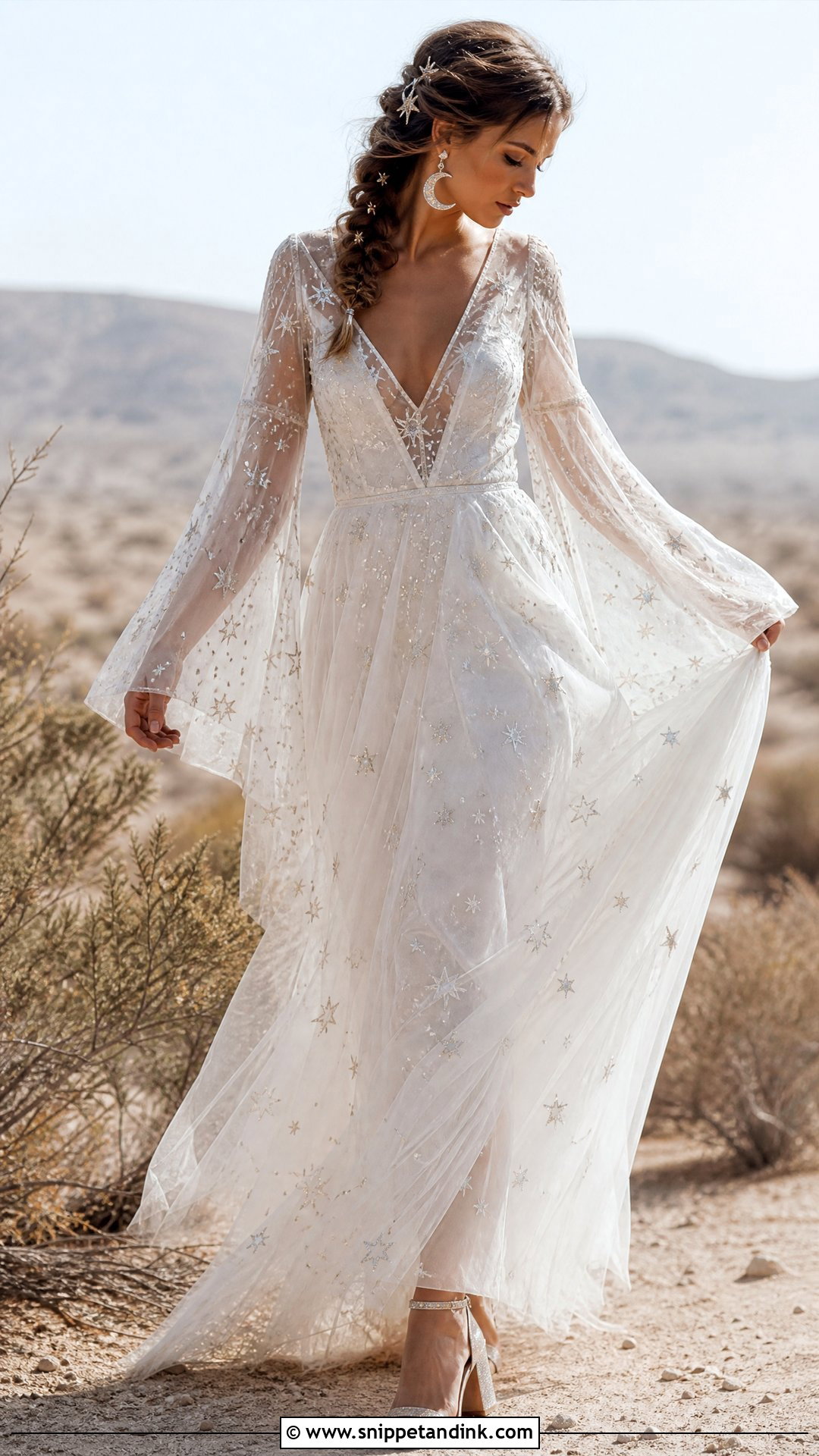
Bell sleeves in light tulle, chiffon or soft mesh with tiny stars move with your arms, which is the whole charm. They also drag through cake, so practice the reach for a glass at your fitting. A defined waist and flowing A-line keep the sleeves from swamping you, and a V-neck with an open back keeps it light. Ivory block-heel sandals, moon earrings and a textured braid with small metallic pins suit the boho feel, with a soft veil or light cape. Desert and woodland ceremonies are where it belongs.
12. High Neck Celestial Wedding Dress
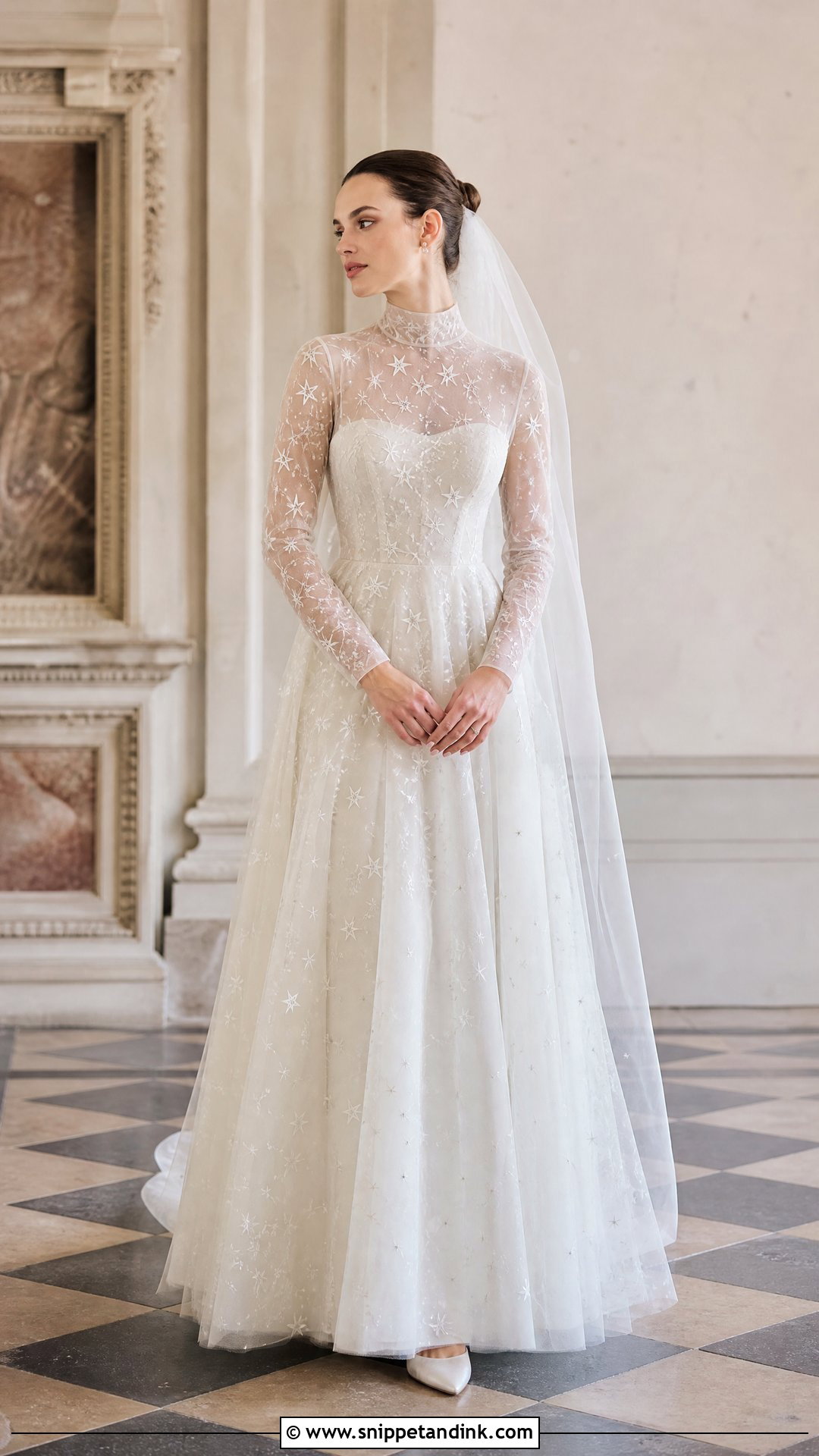
A high neck moves the detail up to the shoulders and collar. Sheer tulle softens the neckline, and beaded stars and constellation lines do the work a low cut would. Pair it with an A-line for formal venues or a column for a modern one; long sleeves feel regal, sleeveless suits summer. Make sure the neckline mesh doesn’t scratch when you turn your head. Pearl studs, a sleek bun, silver or ivory pumps and no necklace. Fix the veil beneath the bun so the collar stays clear.
13. Starry Mini Wedding Dress
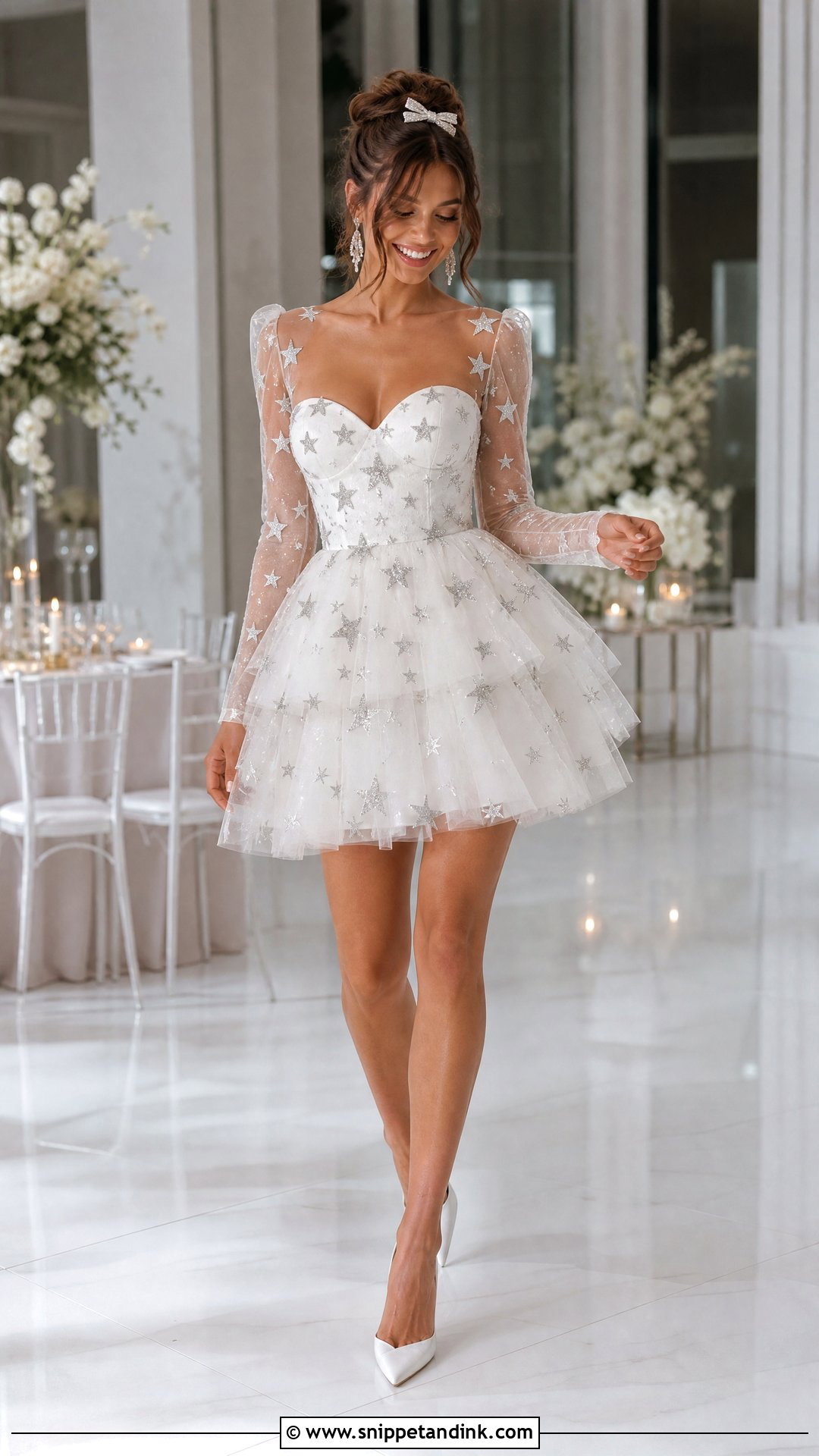
Short tulle covered in silver stars, crystals or raised appliqués on a structured bodice: the mini is for courthouse ceremonies and reception changes. Long sheer sleeves balance the hem, and a square or sweetheart neck keeps it bridal. White pointed pumps, crystal statement earrings, a small structured bag and a short veil or sparkling bow finish it. If you’ll dance for hours, the lining matters more than the stars. Beaded tulle against bare legs rubs, so ask for a soft lining that comes all the way to the hem.
14. Tea Length Starry Wedding Dress
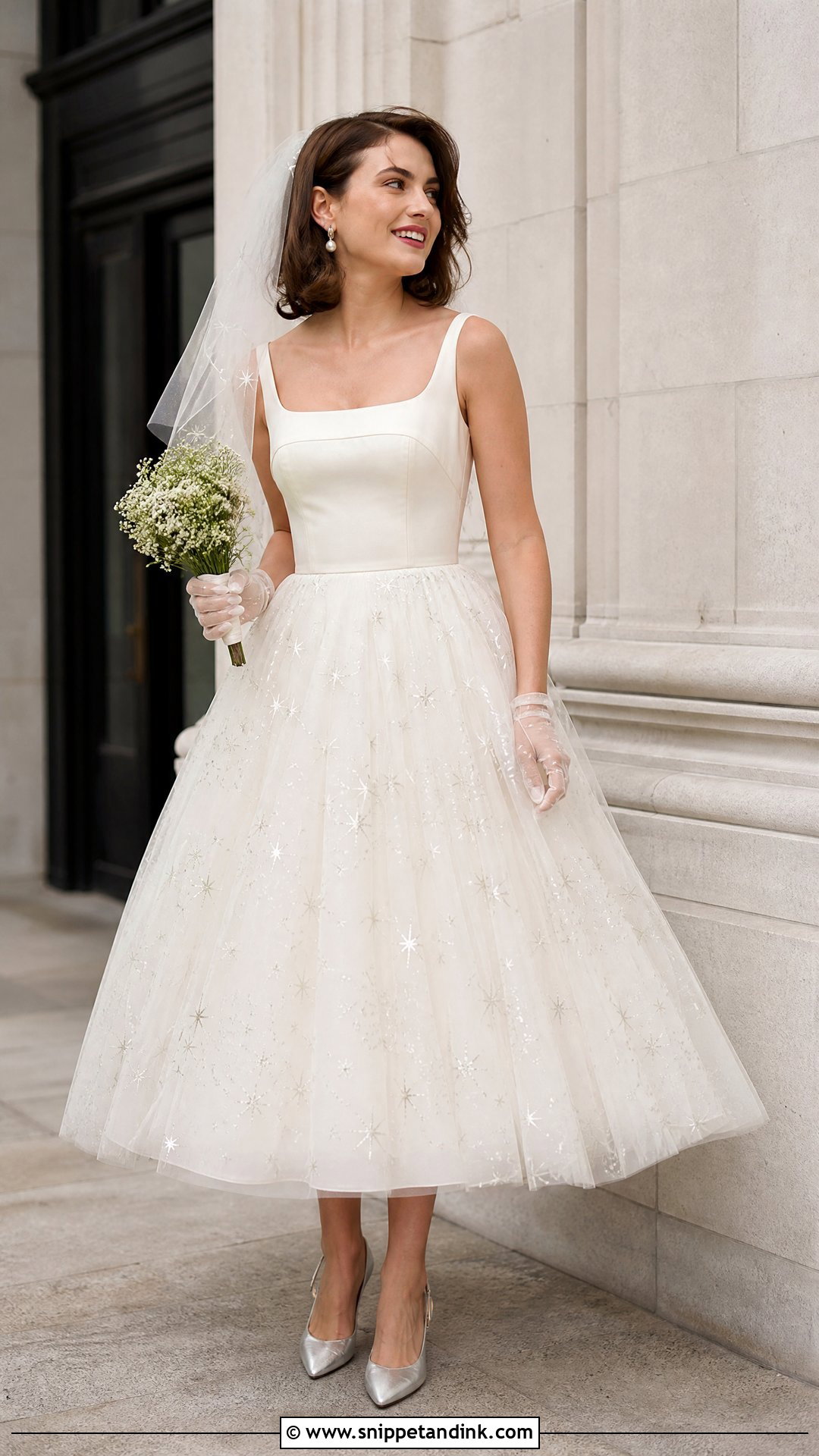
Tea length lands between knee and ankle, so the shoes become half the outfit. Fit the hem with those exact shoes on. A fitted bodice and softly flared tulle skirt with metallic stars or starbursts keep it retro. Ivory satin pumps, silver slingbacks or low block heels all suit it, with pearl earrings, short gloves if you like them and a shoulder-length veil. A defined waist keeps it neat. Courthouses, daytime receptions and restaurants are the natural fit.

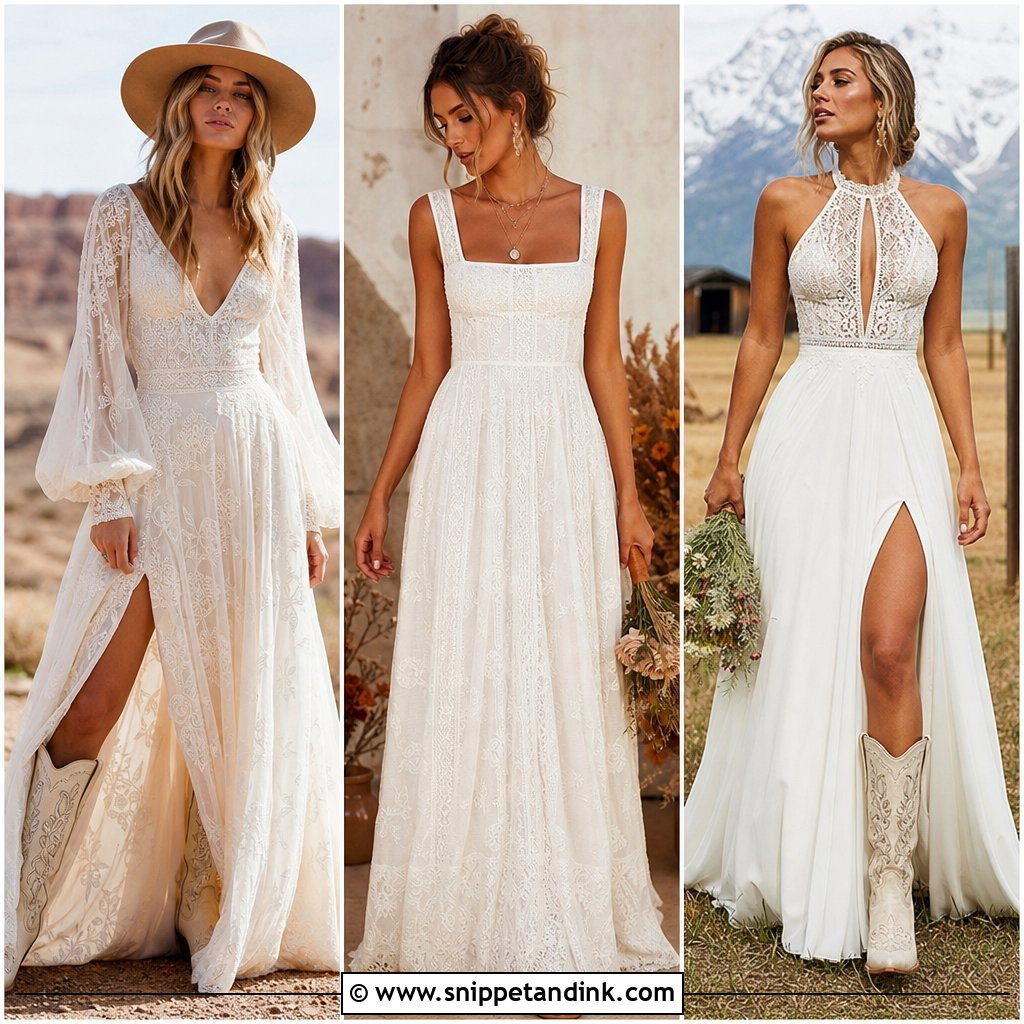
15. Two Piece Starry Wedding Dress
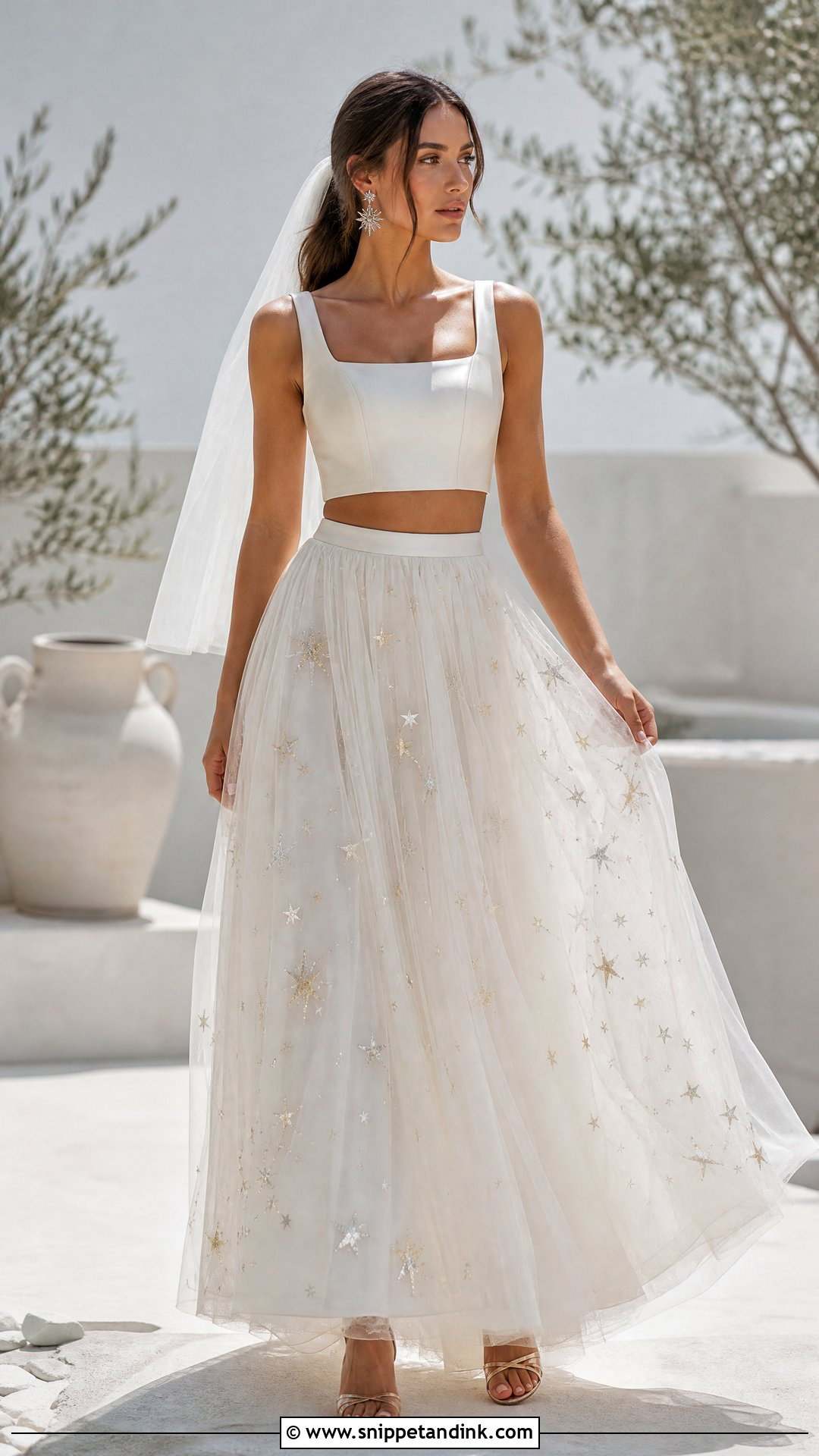
Separates let you change the look halfway through. A two piece starry wedding dress pairs a fitted satin camisole or corset top with a star-embroidered tulle skirt. A sliver of skin at the waist or overlapping pieces: both work, but fit the top and skirt together so the waistbands meet where you want them when you raise your arms. Silver and gold stars on the sheer overlay let the clean base show through. Metallic sandals, celestial earrings, a low ponytail and a plain veil keep it bridal. Swap the skirt for tailored trousers later.
16. Starry Wedding Dress With Celestial Cape
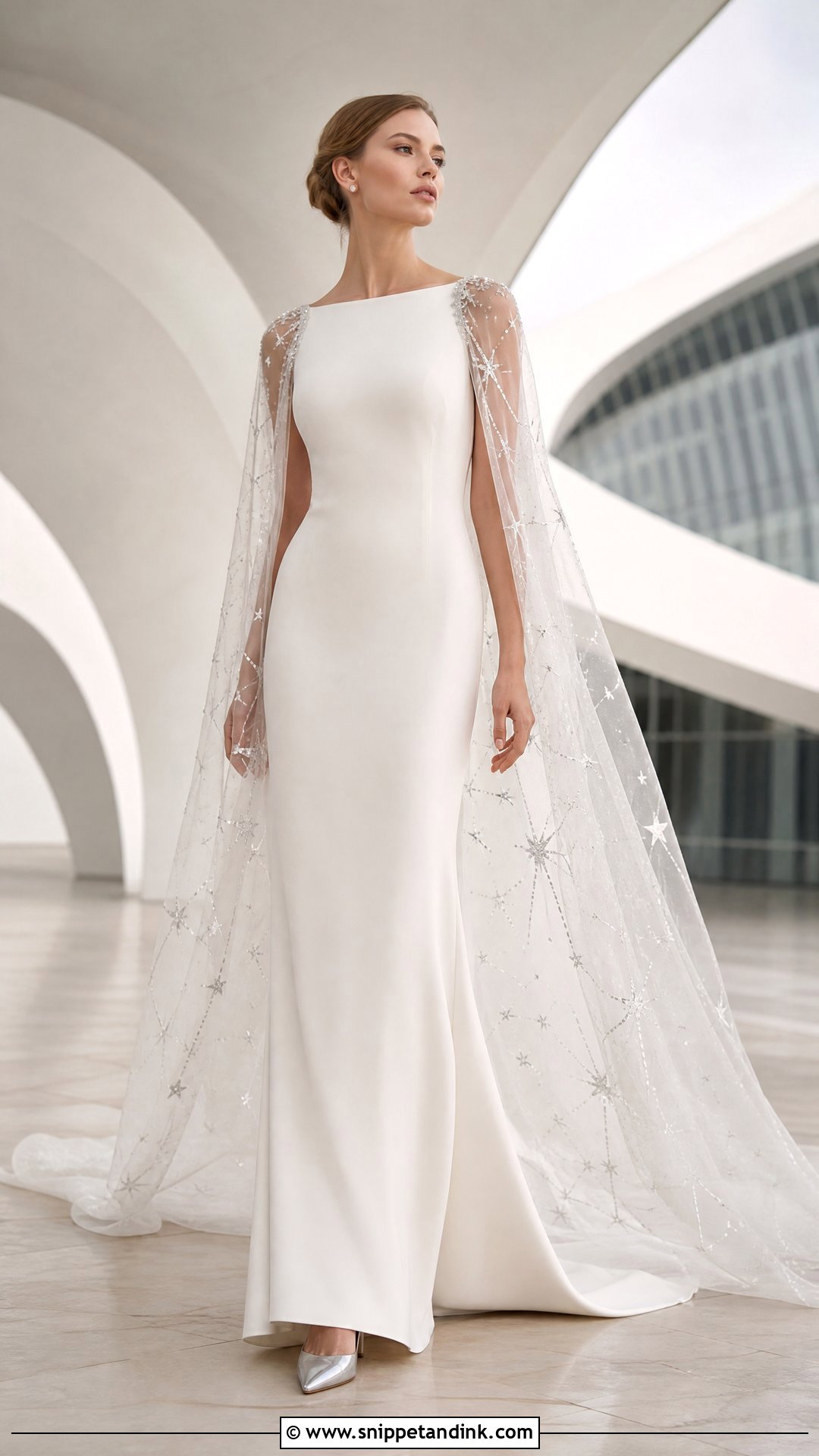
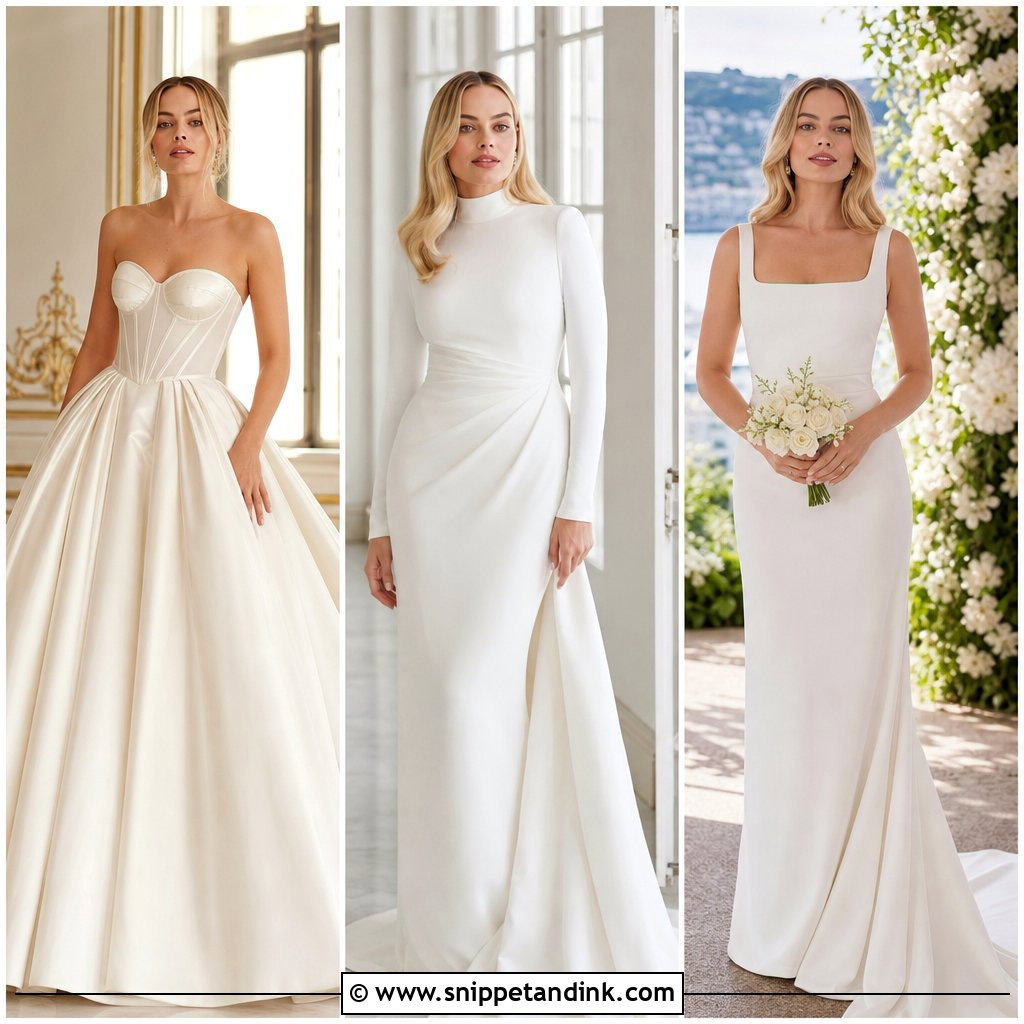
A star cape is the easiest way to get celestial drama onto a plain dress. Start with a clean sheath, crepe gown or simple satin A-line, then add a sheer floor-length cape with stars, constellations and crystals. The open front keeps the dress visible; the back moves like a veil. Embellished capes are heavier than plain tulle, so the shoulder fastenings need to be sewn to the dress or secured with strong hooks, not just a clip. Silver pumps, studs and a sleek style finish it. Take it off for the reception.
17. Off The Shoulder Moon Wedding Dress
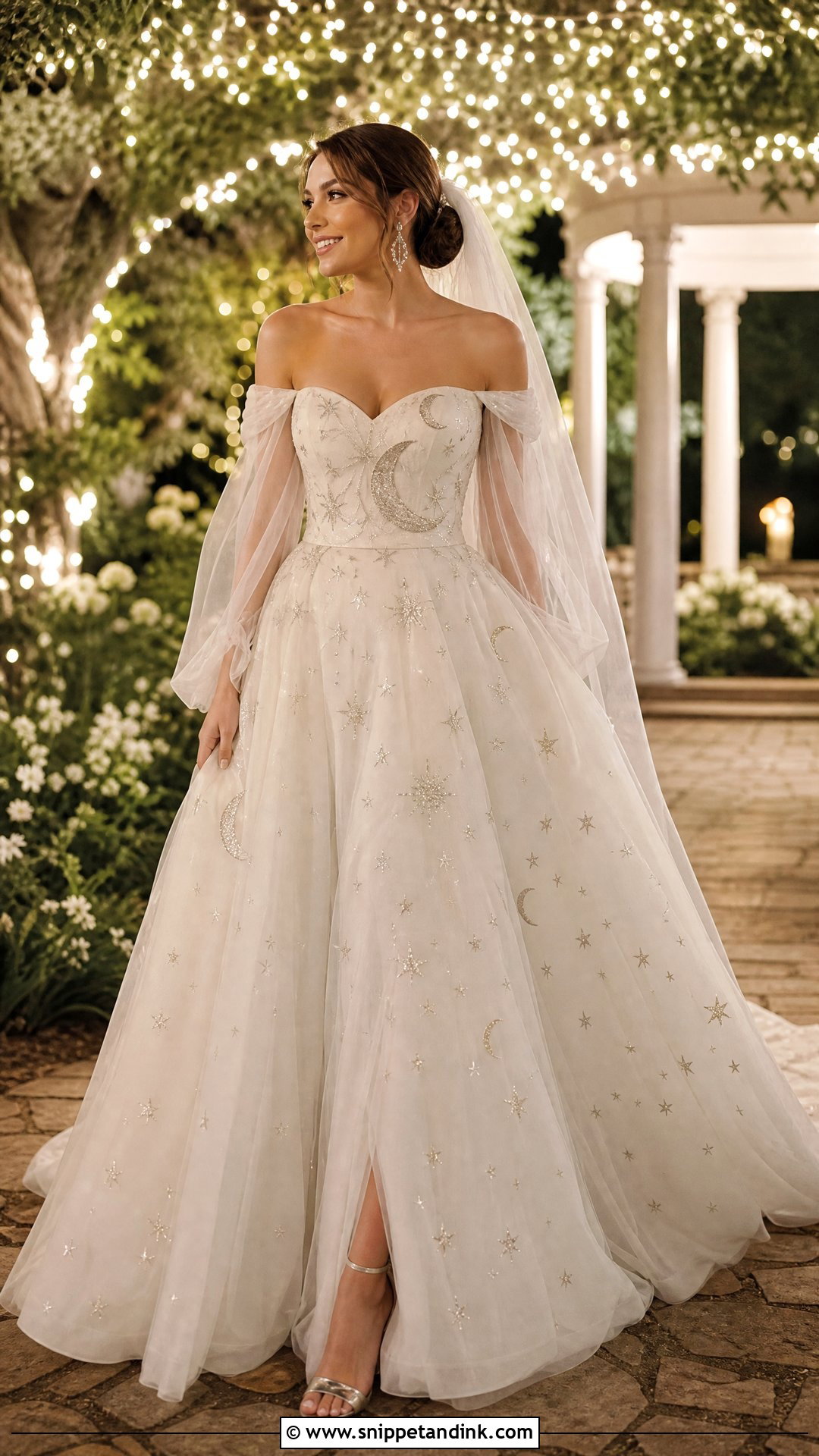
Draped tulle off the shoulder looks soft, but it needs a corset inside or it slides down every time you reach. An off-the-shoulder moon wedding dress with crescents, small stars and crystal clusters on the bodice, scattering into the skirt, frames the collarbone. A full A-line feels romantic; a fitted shape is sleeker. A delicate pendant, drop earrings, ivory or silver heels and a loose low bun keep the shoulders clear. Finish with a plain chapel veil or a sheer cape at the shoulders for a garden or hall.
18. Plus Size Starry A-Line Wedding Dress
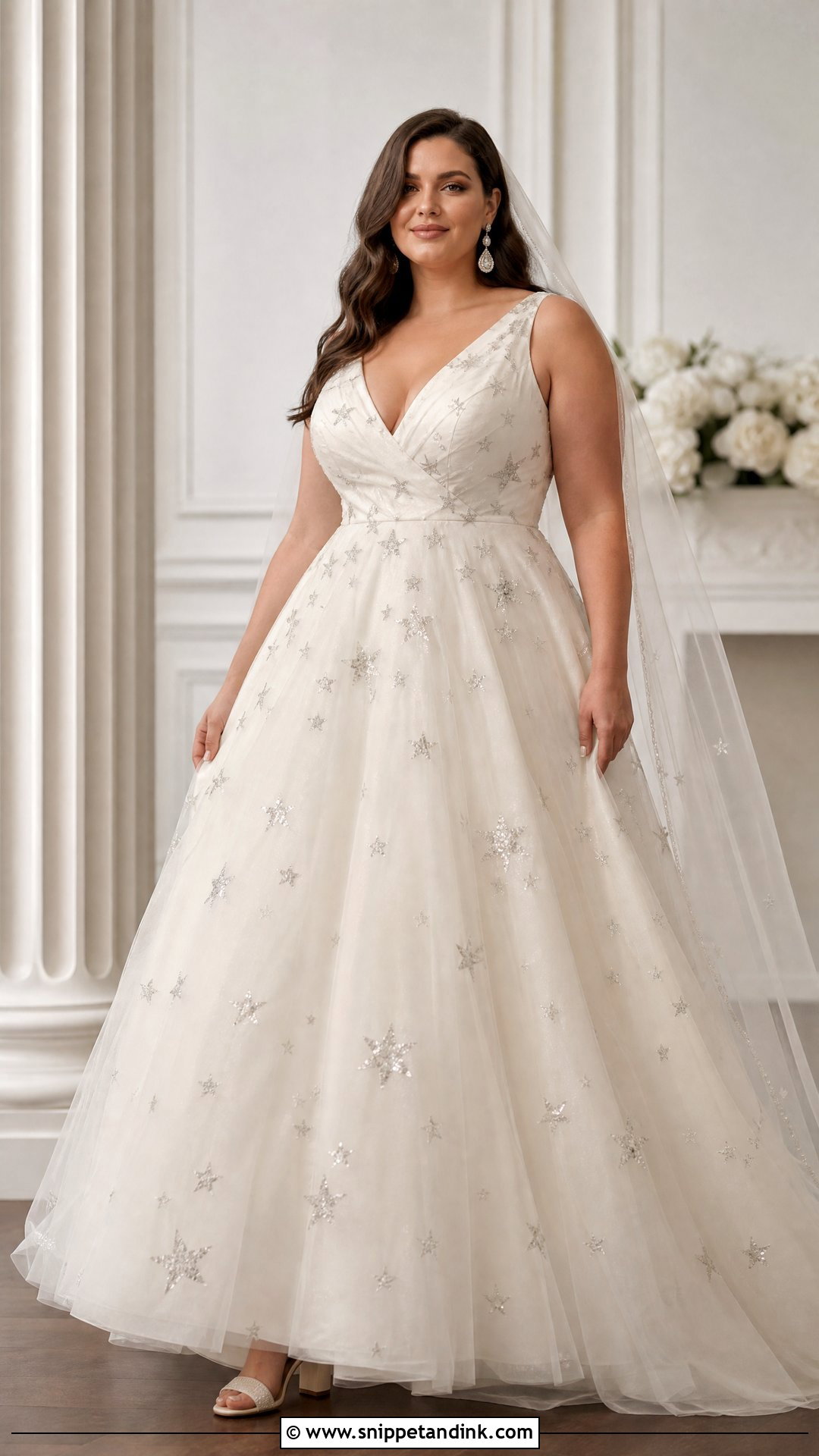
On a plus-size A-line, the construction comes first and the stars second. Wide straps, internal boning and a supportive neckline carry you through a full day. Then look at pattern flow: stars running diagonally or thinning gradually look better than embroidery that stops in a hard line at the waist, which cuts the body in two. A layered tulle skirt floats away from the body and keeps shape. Block heels, crystal earrings and a fingertip veil finish it. Fit the straps, bust and waist so nothing pulls when you sit.
19. Minimalist Satin Starry Wedding Dress
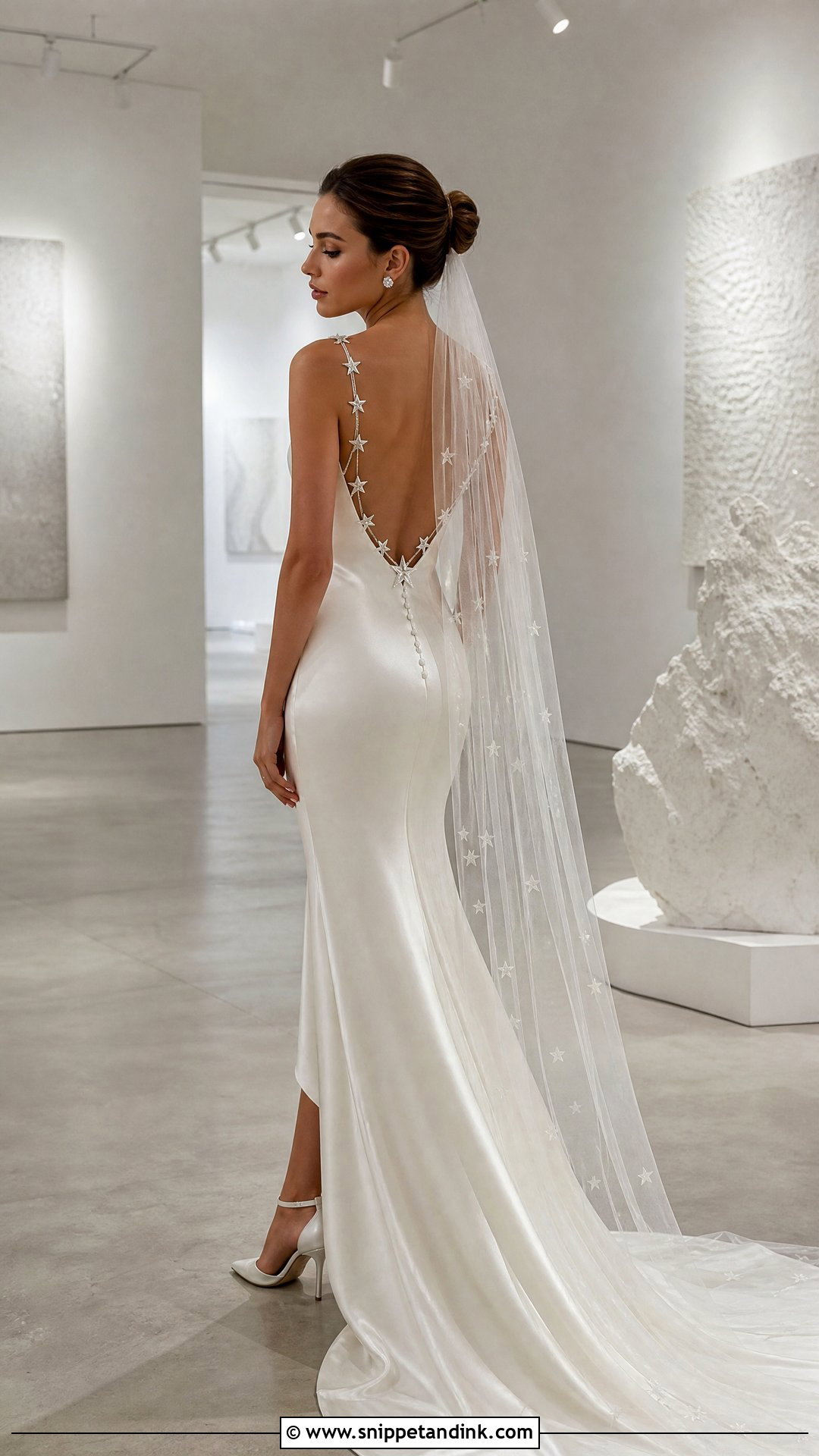
Minimal satin with just a few stars suits the bride who’d rather be precise than sparkly. A plain column, slip or A-line with a clean neckline is the base, with small crystal stars along the straps, back or waist. The veil can carry more celestial detail than the dress. Satin pumps, small diamond earrings and a polished bun. One or two celestial accents will do more than five. Satin shows tailoring flaws up close, so this is a gown for a fitter you trust and an intimate city or gallery venue.
20. Rainbow Star Embroidered Wedding Dress
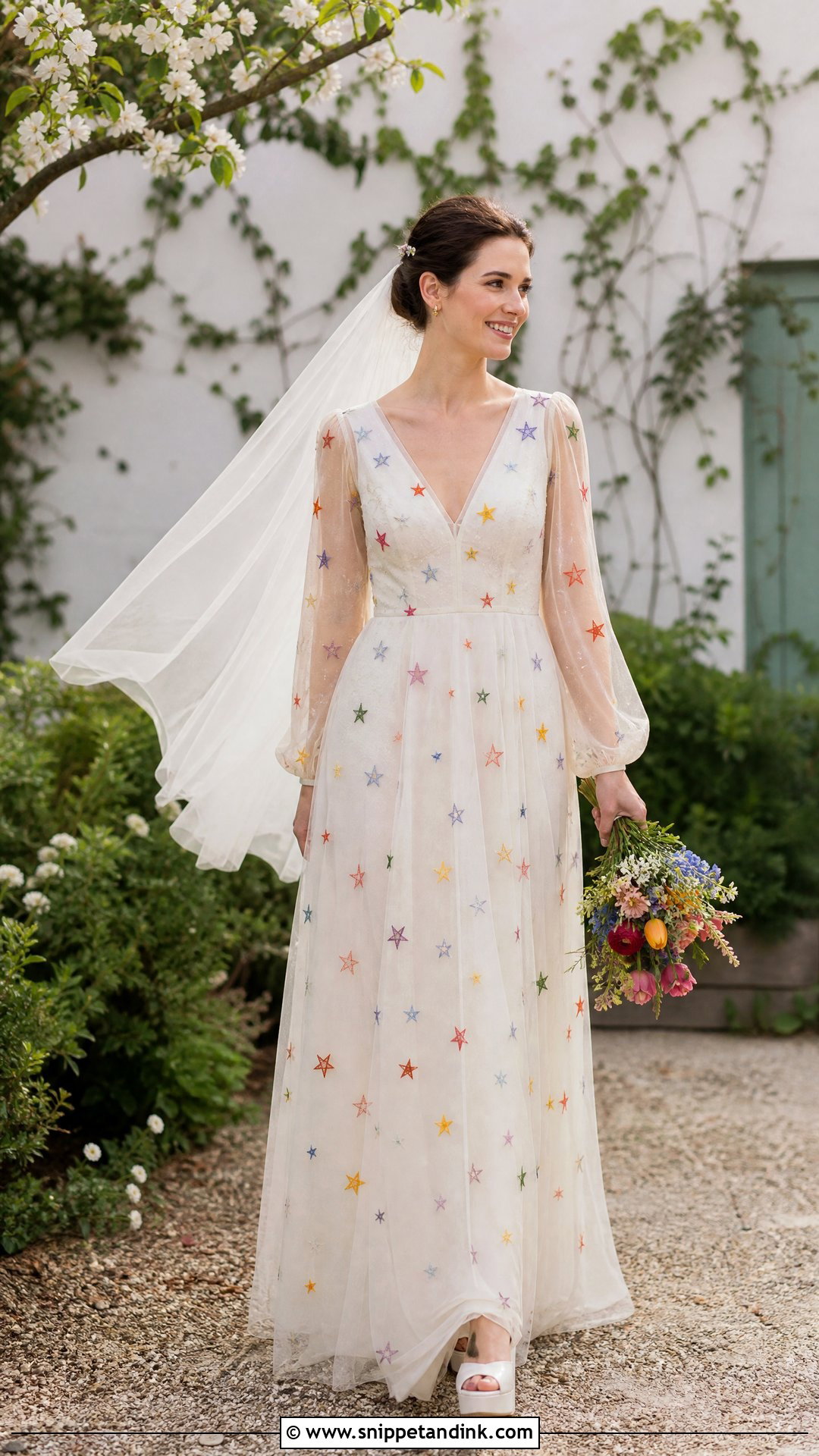
Multicoloured stars on an ivory or soft white base are the cheerful outlier here. A flowing maxi with a fitted waist is easy to wear, and sheer sleeves give the embroidery extra space. Colourful thread can bleed if it gets soaked, so this isn’t the gown for a beach ceremony where you’ll wade in. Keep accessories plain: white block heels, small gold earrings and a simple comb. Skip the veil for an informal day if you like. Pull two or three of the thread colours into the bouquet to tie it together.
Hemming and Taking In a Gown Covered in Stars
A plain tulle skirt can be shortened in an afternoon. A beaded one cannot. Any seam or hem that crosses embellishment means the seamstress has to unpick the stars along that line, make the alteration and then sew them back on by hand so the pattern looks continuous. That takes time, and it usually costs more than a standard alteration.
What helps
- Order the size that fits your largest measurement. Taking a beaded gown in is far easier than letting one out.
- Ask whether the hem can be taken up from the waist instead. On some layered skirts that avoids touching the beading at all.
- Keep any spare beads or appliqués that come with the dress. They patch gaps after alterations and repair any star that falls off on the day.
- Book your first fitting early, roughly two to three months ahead, because beaded work needs more than one session.
On the wedding day, a few loose stars are normal on a heavily beaded skirt. Have your maid of honour carry a needle with matching thread and a couple of spares.
Is It a Wedding Dress or a Costume? Test It First
A celestial gown should still be comfortable and right for your venue. The range here runs from ivory ball gowns to colourful embroidery, short minis and black tulle. Start with the silhouette you feel confident in, then compare how the stars are made: star embroidery, crystal beading, moon appliqués, sequins or a detachable cape. Give the outfit one focal point. Walk, sit and dance in it before you commit, and with careful tailoring it will feel like a wedding dress you chose, not a costume.
You'll Like These Ideas:




Leave a Reply