
A colored wedding dress used to need explaining. Now it mostly needs good styling. Brides come to me wanting anything from a faint blush tulle to a red ball gown, and the colored options in bridal shops have widened to pastel layers, colored embroidery, painted skirts, metallics and saturated tailoring. Color itself is rarely the hard part. What decides whether it reads as bridal or as a party dress is everything around it: the veil, the shoes, the flowers and how much neutral space you leave. Below are twenty complete looks, each with the details I’d pay attention to if you were standing in my fitting room.
Seeing a Colored Gown in Daylight, Candlelight and Flash
White is forgiving under almost any light. Color is not. A sage that looks soft by a shop window can turn khaki under warm bulbs, and pale blue can wash out to grey in harsh noon sun. So before I let a bride commit to a color, we test it the way the day will actually see it.
- Ask for a fabric swatch, or at least take photos of the sample dress next to a window and under indoor lighting.
- Hold the swatch against your bare face without makeup. If your skin looks grey or yellow beside it, the shade is fighting your undertone.
- Take a phone photo with flash. Metallics, sequins and some satins reflect much more than you’d expect.
- Think about the venue light at the time of your ceremony. A 4 p.m. outdoor ceremony and a candlelit evening reception need different shades.
Then show the swatch to your photographer. Most are happy to tell you how a color tends to render in their style of editing, and it’s far easier to adjust before the dress is ordered.
1. Blush Pink Ball Gown Bride
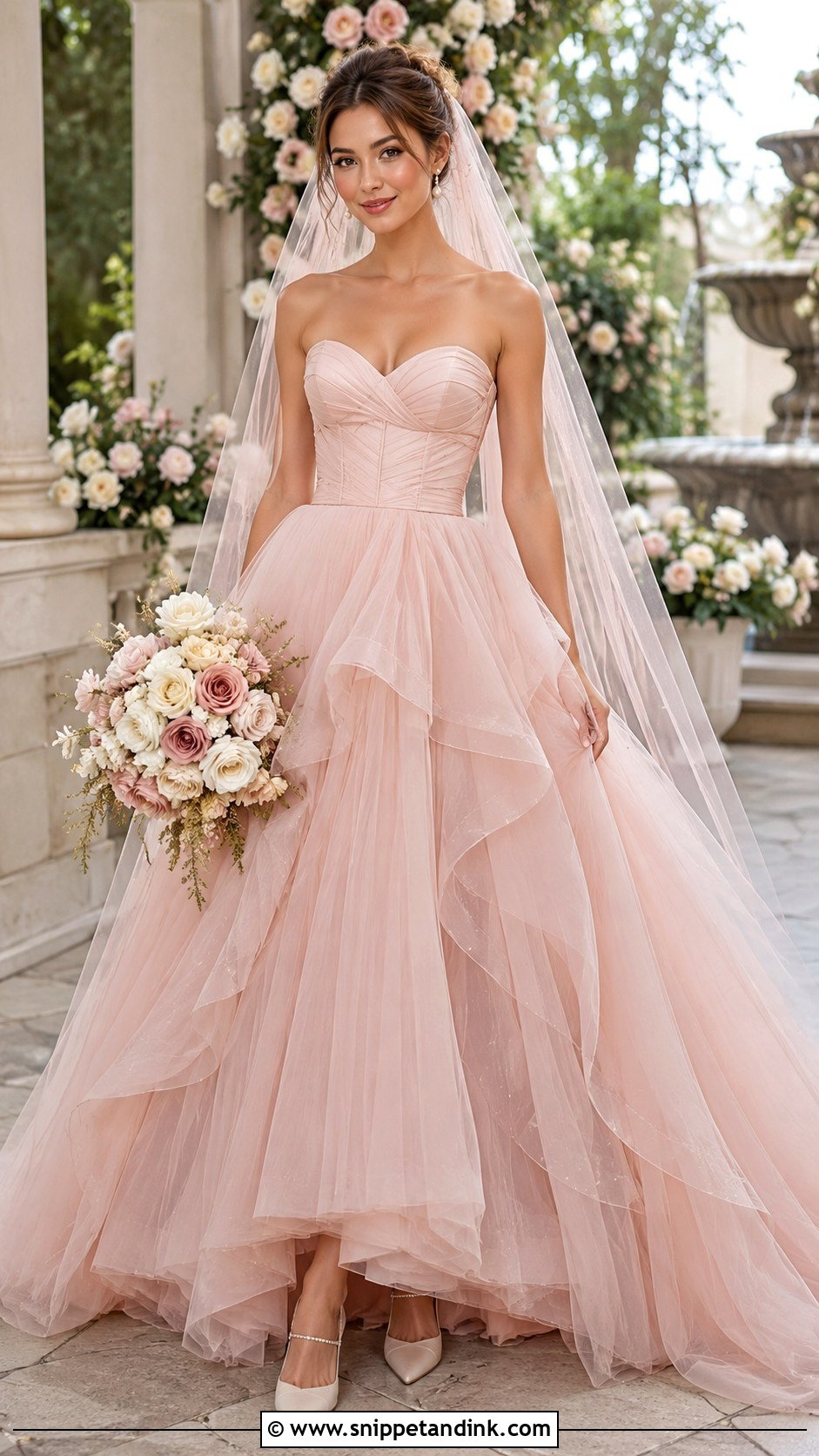
Blush is the gentlest way out of white, and a ball gown keeps the shape everyone expects of a bride. The color lives in the layering. A single layer of blush tulle over ivory can disappear in bright sun, so I ask brides to look at several layer counts before ordering. A structured bodice and fitted waist hold the volume up; floral appliqués or light beading give the camera something to catch. Ivory pointed heels, pearl drops and a sheer blush veil keep it soft. Flowers in cream, dusty rose and pale peach repeat the palette, and a rosy cheek with a neutral pink lip finishes it. Spring ballrooms, estates and formal gardens suit it best.
2. Blue Floral Wedding Dress Bride
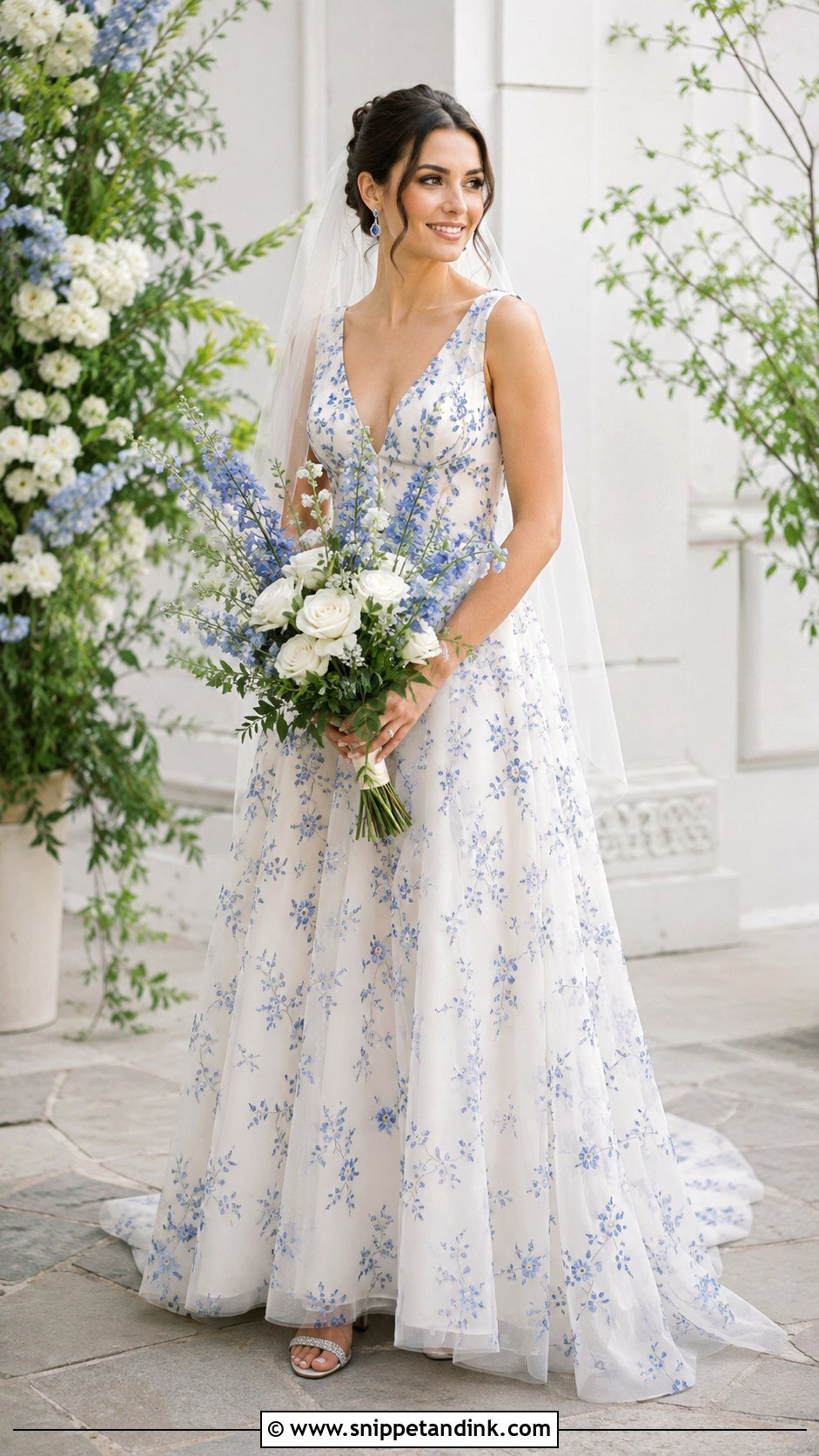
Blue embroidery on a white or pale blue gown is about as easy as color gets: it still looks unmistakably bridal from across a room. An A-line with flowers scattered over the bodice and skirt, plus optional sheer sleeves, lets the work breathe. Before you buy, look at how the embroidery is attached. Machine-stitched thread on tulle can pucker when the skirt is pressed, so ask how the shop steams it. Silver sandals, blue topaz earrings and a pale blue ribbon on the bouquet are enough. Keep the veil plain so it doesn’t hide the stitching, and pair white roses with blue delphiniums for an outdoor spring ceremony.
3. Lavender Tulle Wedding Dress Bride
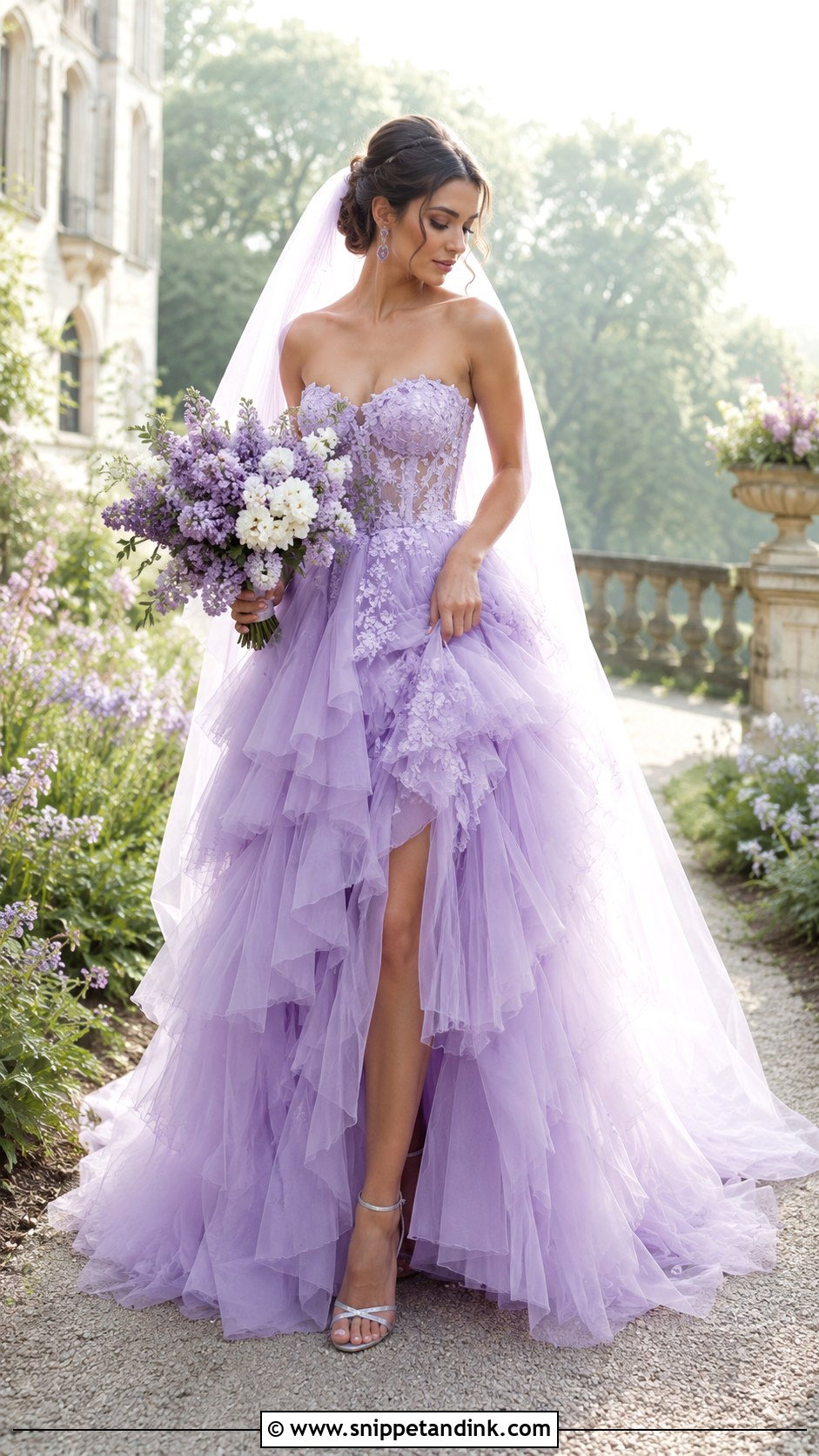
Lavender in tulle reads almost grey in some light and nearly pink in others, which is why I always want brides to see it outdoors before they commit. A corset-style bodice with a gently full skirt keeps it from looking like a costume, and tonal appliqués or small crystals add depth without weight. Silver heels, amethyst earrings and a fingertip veil in pale lavender or sheer ivory carry the color. Lilac, white sweet peas and muted greenery suit the bouquet. A slim satin belt helps if you want a clearer waist. For makeup, glowing skin, a mauve lid and a pink-nude lip.
4. Sage Green Satin Wedding Dress Bride
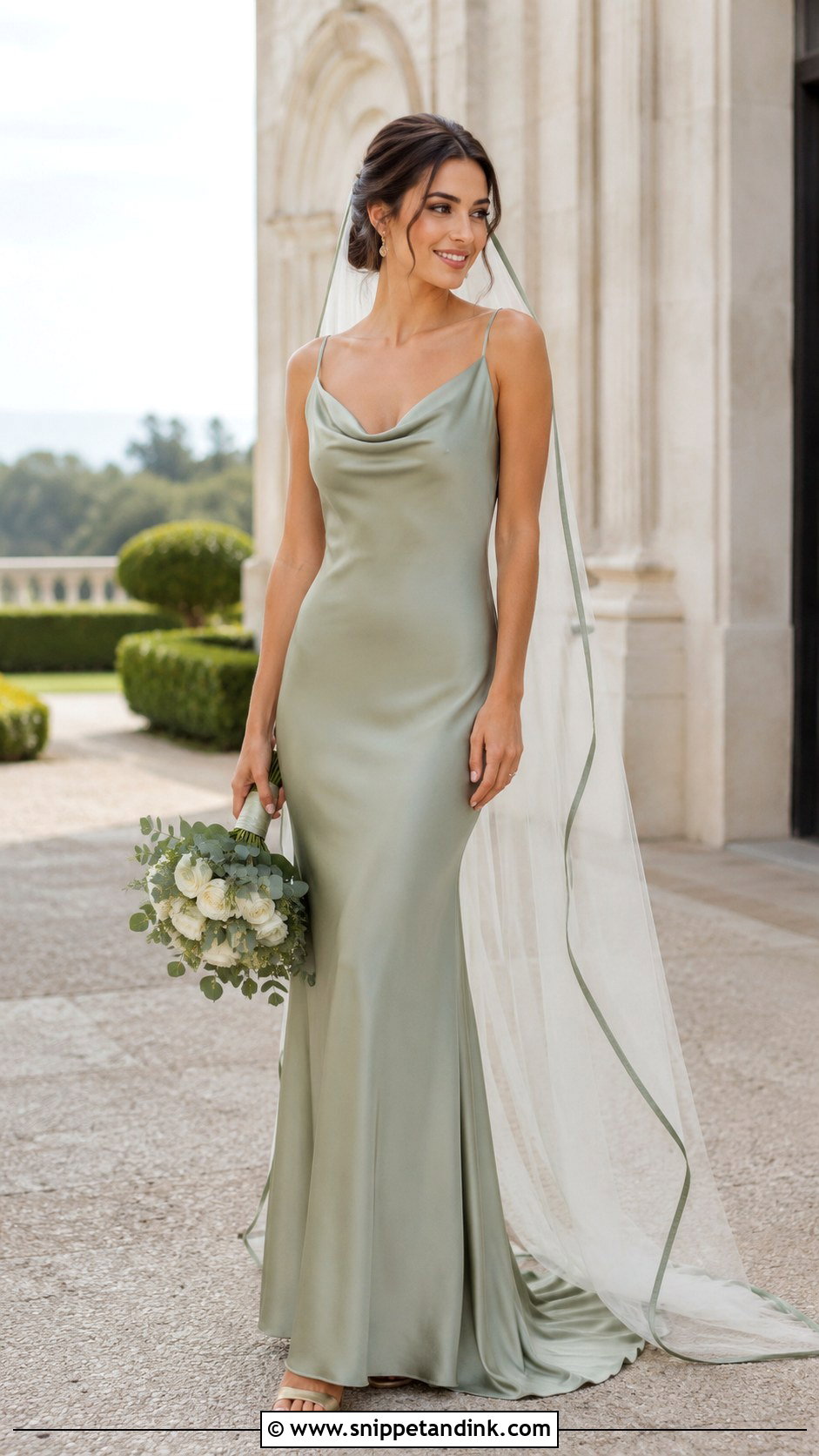
Sage satin is quieter than most colors here, and that’s its strength. A cowl neckline, fitted waist and slight flare let the satin pool and drape. Satin in a green shade shows every pull line, so the alterations need to be precise around the hips; I’d budget for an extra fitting. Champagne heels and fine gold jewelry warm it up, and a long sheer veil edged with a narrow sage ribbon makes the outfit unmistakably bridal. Cream roses, white ranunculus, eucalyptus and olive leaves suit it. A sleek low bun with small gold pins and natural makeup belong at a vineyard or a late-summer estate.
5. Yellow Tea-Length Wedding Dress Bride
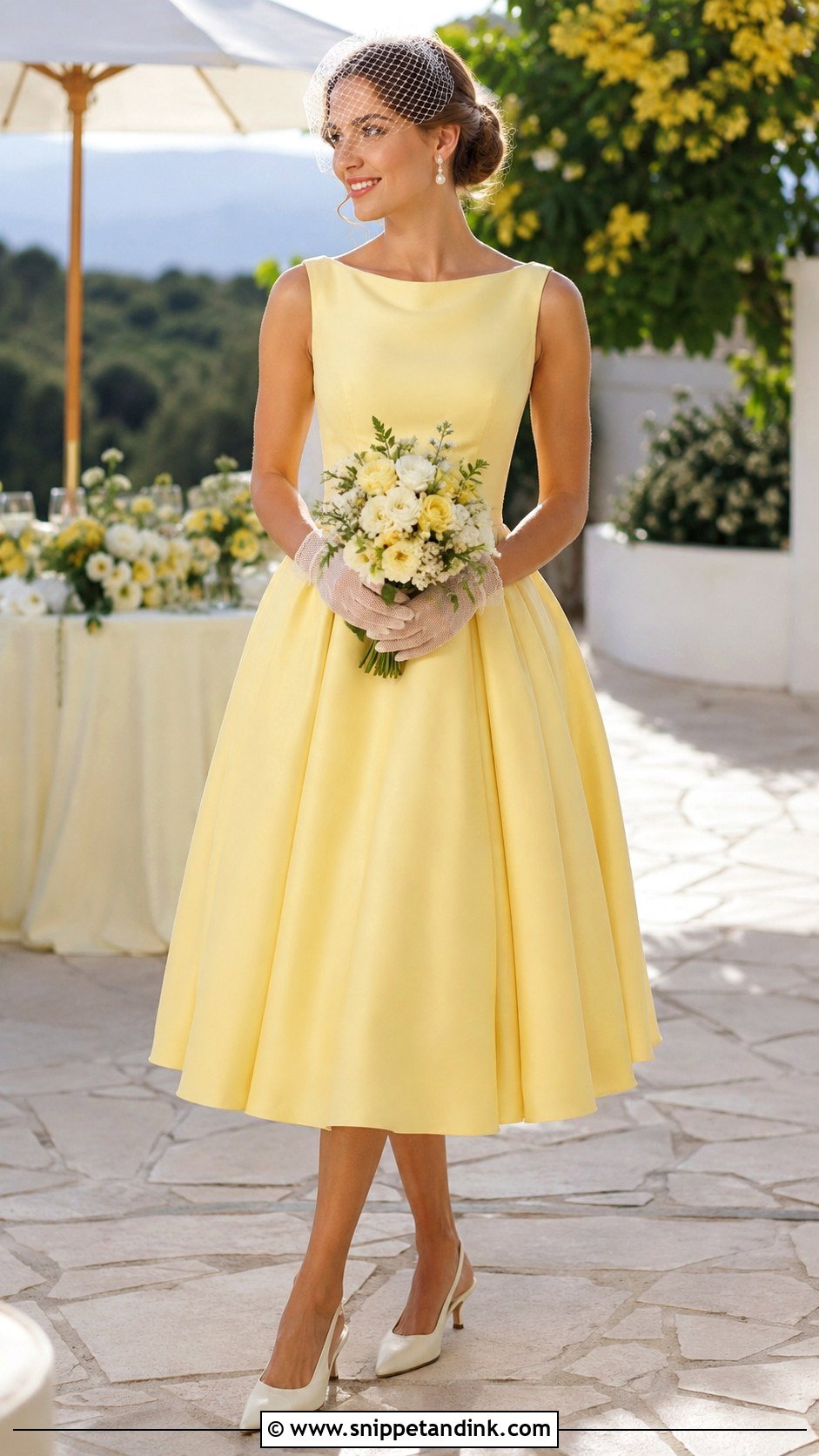
Yellow suits daylight. In a dim evening venue it can turn sallow, so I steer this one toward lunches, gardens and courthouse ceremonies. A tea-length dress with a fitted bodice and full skirt has a vintage feel. Butter yellow is the soft option and marigold the bold one, and the right choice depends on your undertone more than your taste: butter flatters cool skin, marigold warm. Ivory slingbacks, pearl studs and short gloves suit the length, and a birdcage veil or a simple bow keeps the hem the star. Finish with a compact bouquet of white and yellow flowers and a soft coral lip.
6. Red Wedding Gown Bride
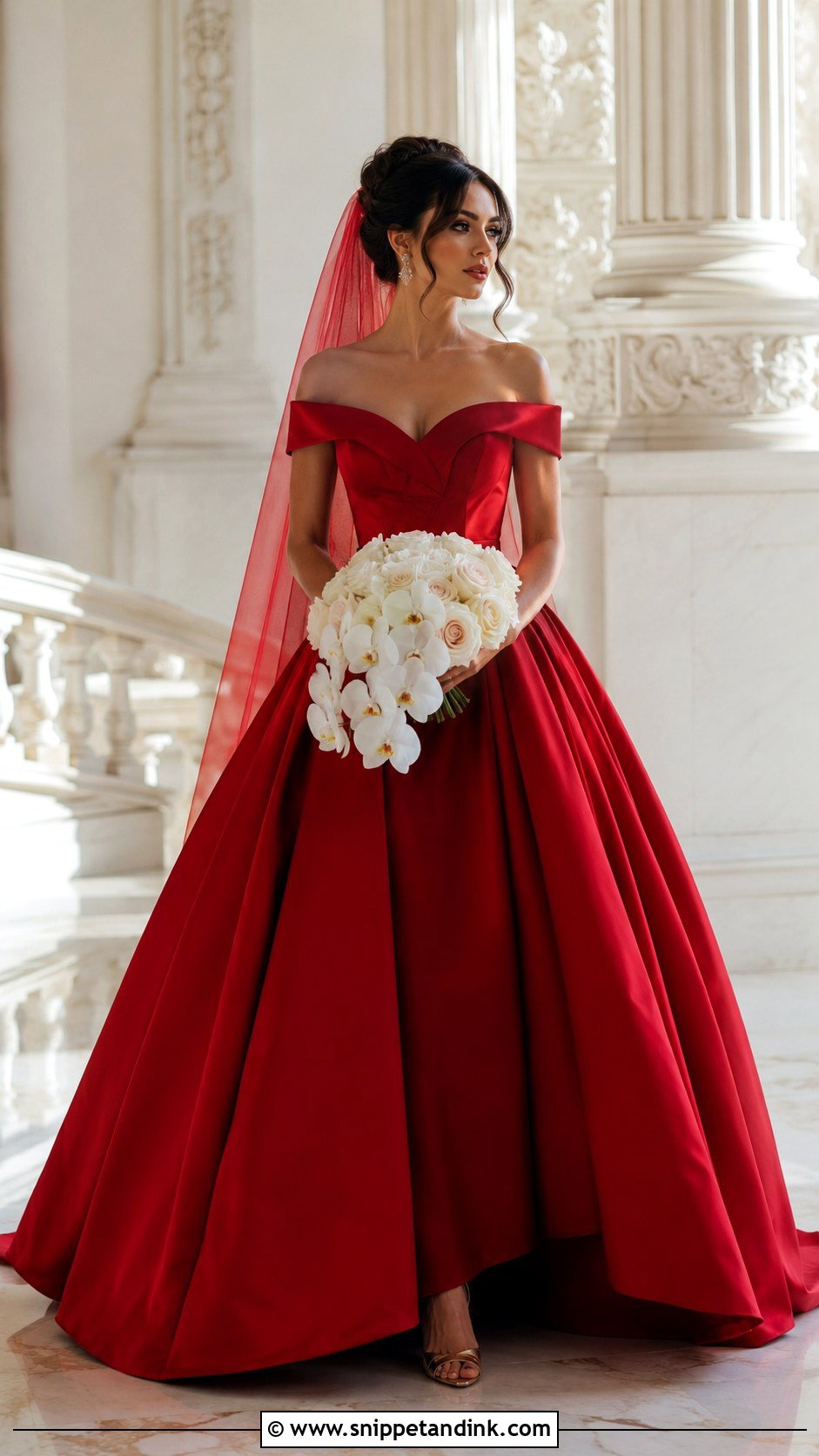
Red puts the bride at the center of every photo, so the styling around it should be restrained. Crimson, ruby and deep cherry all work in structured fabrics; satin and mikado hold the color evenly and don’t go patchy the way thin chiffon can. An off-the-shoulder ball gown, a column or a full A-line all suit it. Gold heels, small diamond or crystal earrings and a red veil keep it cohesive. I’d make the bouquet lighter, with cream roses and white orchids. Red is also the color that carries the most cultural meaning, so if your families include Chinese, Indian or Vietnamese traditions, it may be greeted as a nod to heritage rather than a departure from it.
7. Rainbow Ombre Wedding Dress Bride
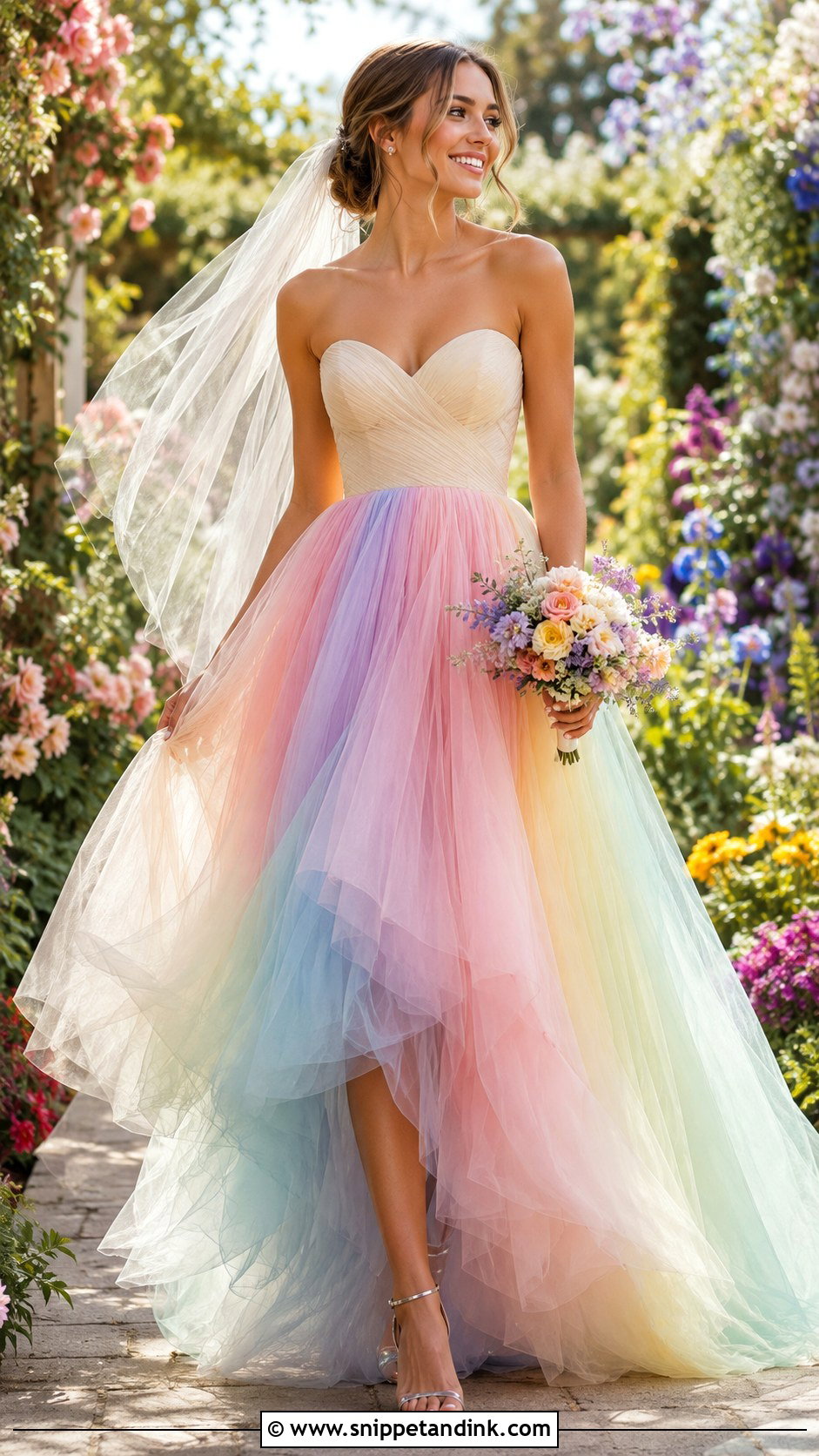
Ombre is where colored bridalwear can look chaotic if the transition is wrong. The versions I’d point you toward start ivory or pastel at the bodice and deepen through the skirt into pink, blue, lavender, yellow or green. Tulle gives the smoothest fade because each layer can be a slightly different shade, while dyed satin can band visibly. A rainbow ombre gown needs nothing loud alongside it: silver sandals, crystal studs, a sheer veil. Pick two or three colors from the skirt for the bouquet, not all of them, and keep makeup fresh with only a little shimmer.
8. Pink Floral Embroidered Bride
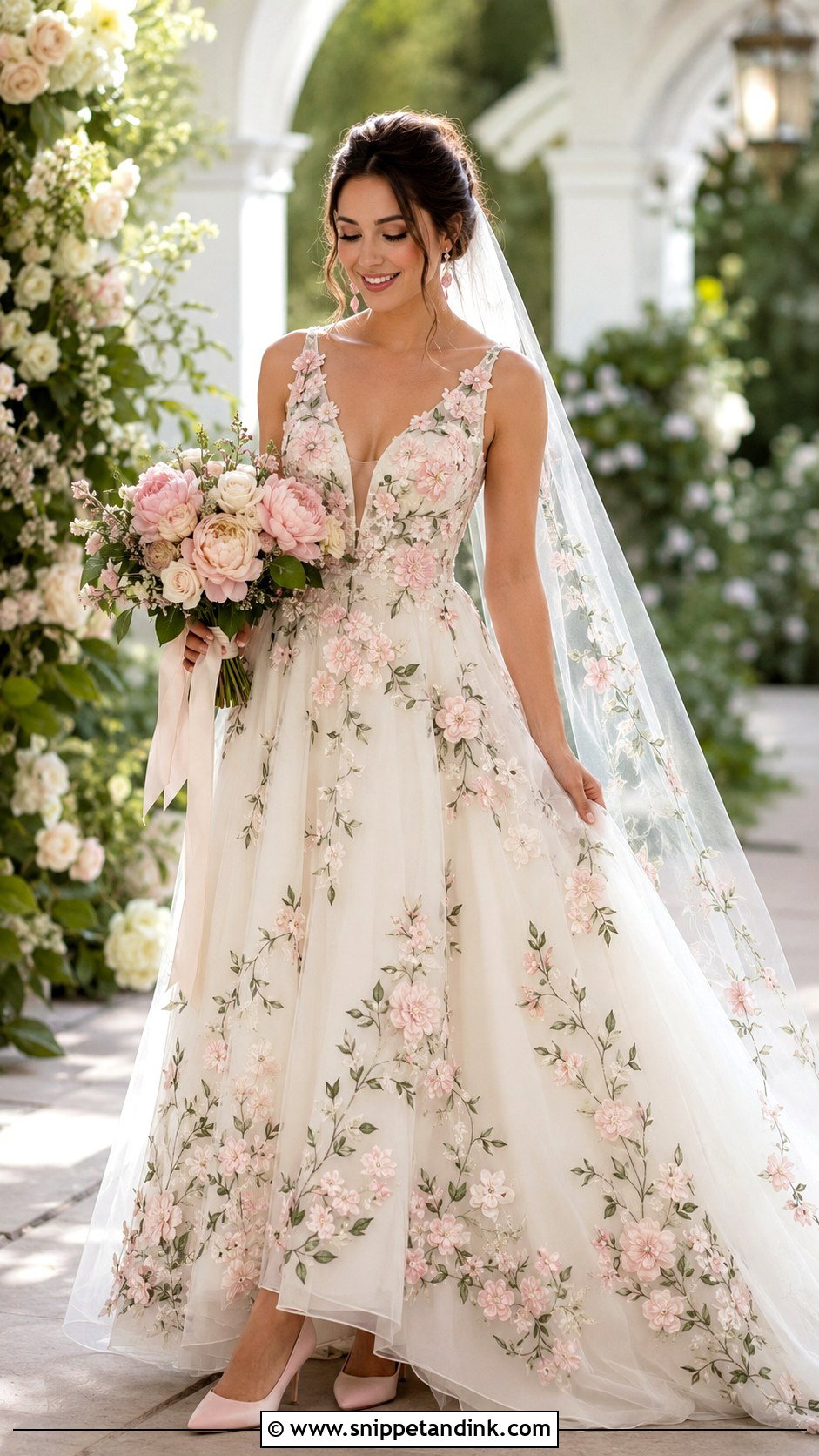
Pink embroidery on ivory is how many brides I work with ease into color: they keep the white gown they always pictured and let the flowers carry the color. Embroidery that starts on the bodice and trails down the skirt, with green leaves and a few beads or 3D petals, looks richer than an even all-over pattern. Ask whether the veil edge can be embroidered to match; many shops can order it with the gown. Pale pink heels, rose quartz earrings, pink peonies and cream roses suit it. A curled half-up style keeps the neckline visible.
9. Teal Satin Wedding Dress Bride
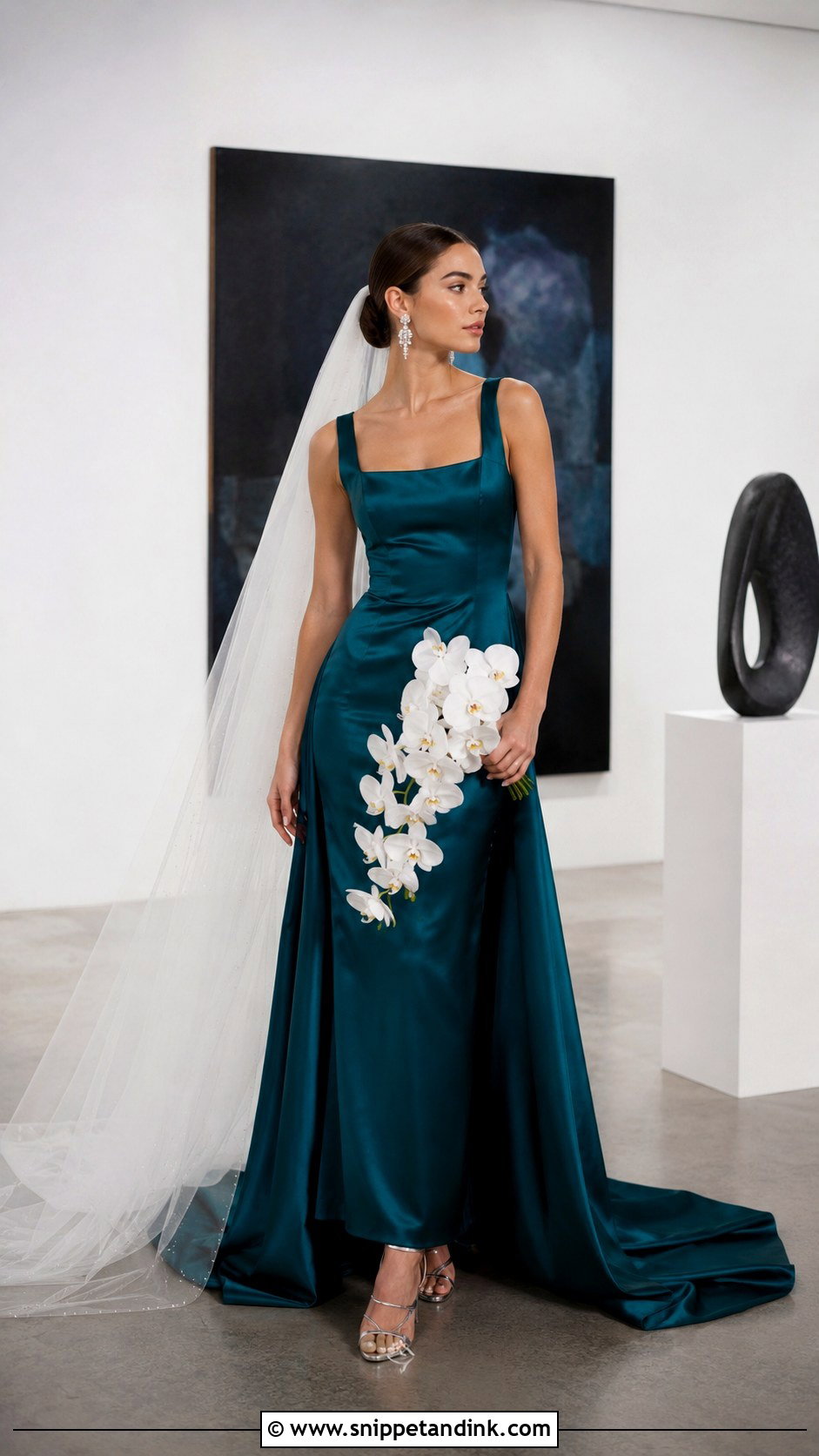
Teal satin is a city dress. It looks sharpest against concrete, glass and dark wood, and it handles winter light better than pastels do. A square neckline, defined waist and long skirt with minimal seaming let the satin shine; the fewer seams, the less the color shifts under different light. Silver heels, crystal drops and a small metallic clutch for the reception are enough. A sheer cathedral veil adds bridal length without adding another color. White orchids or calla lilies in a streamlined bouquet match the clean shape, and a sleek ponytail keeps the neckline clear.
10. Orange Organza Wedding Dress Bride
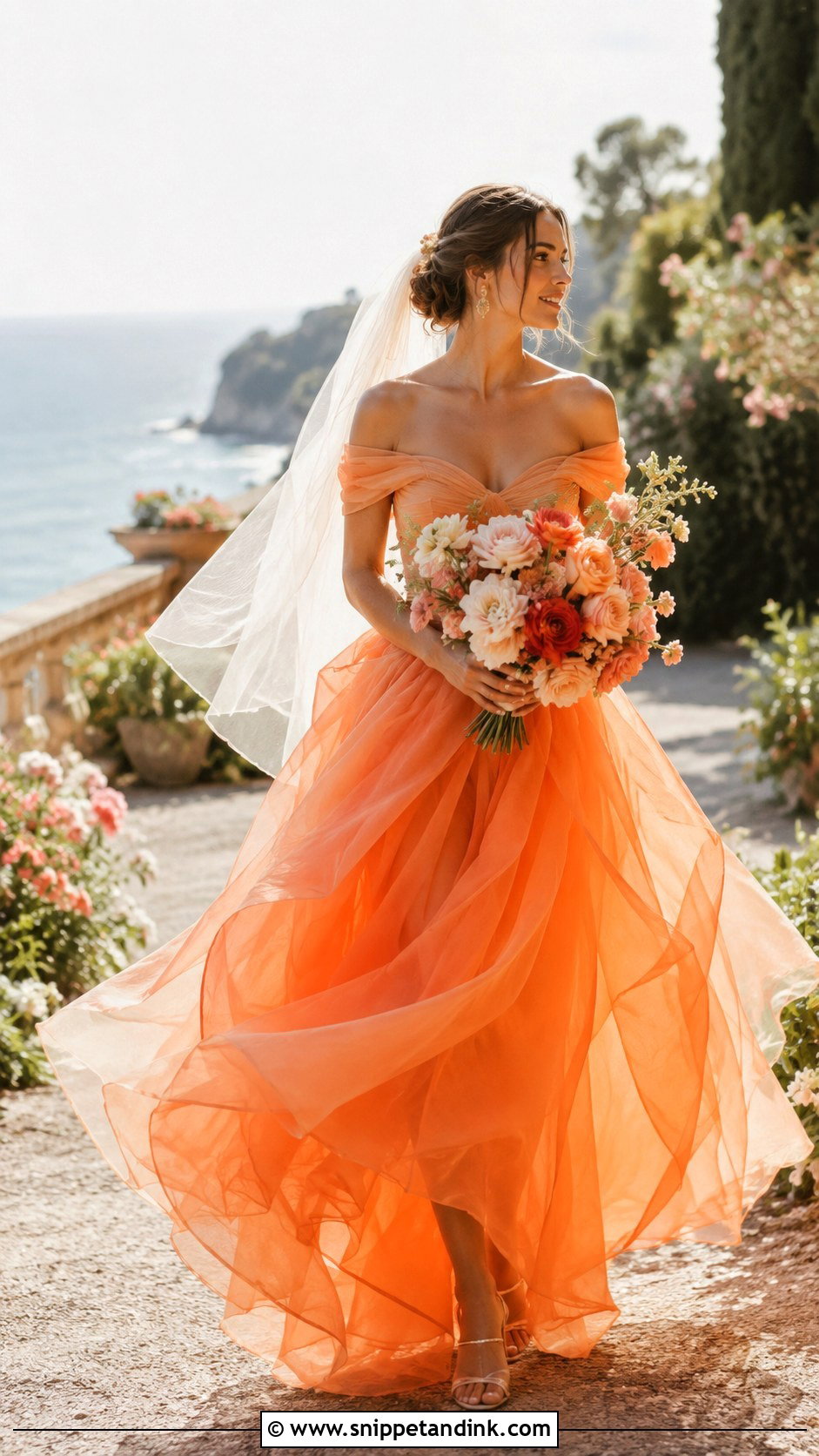
Orange in heavy satin can feel like a lot; in organza it turns airy and lit from within. Apricot, coral or a tangerine organza gown keeps the romance of a full skirt with real color. A fitted bodice with wide straps or an off-the-shoulder neck carries the layered skirt. Organza creases more readily than tulle, so plan a steam on the morning and avoid long car rides sitting on the skirt. Champagne sandals, fine gold earrings and a sheer ivory veil soften it. Cream roses with peach ranunculus and a peach blush suit sunset gardens and coastal venues.
11. Purple Bridal Pantsuit
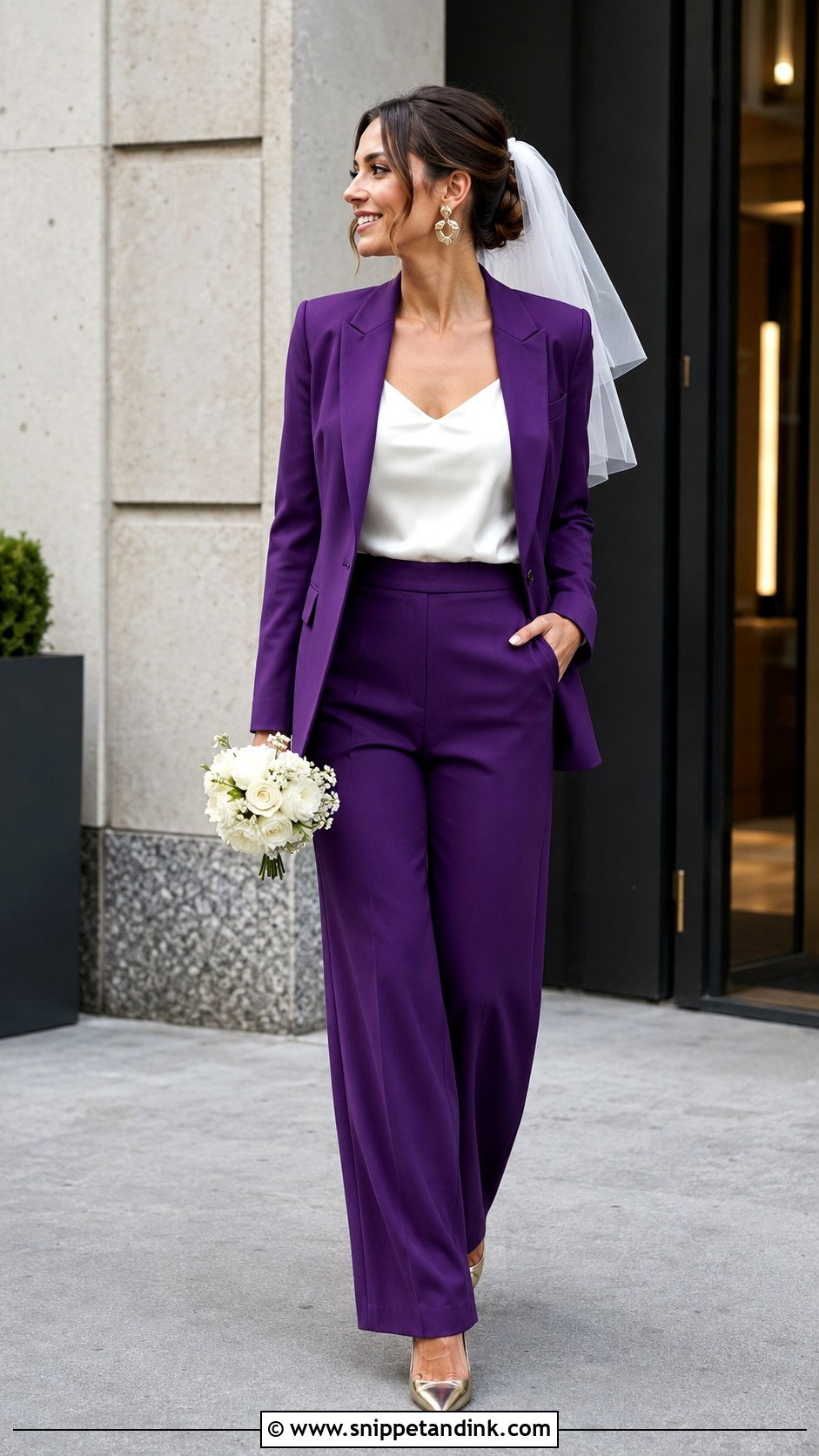
Not every colorful bride wants a gown. A tailored purple pantsuit is comfortable and very much its own statement. Lavender, violet and deep plum all work in a blazer with a nipped waist and high-rise trousers. The thing I fuss over with bridal suits is the trouser break: hem them for the exact shoes, so they fall cleanly in every photo. An ivory silk camisole or a structured corset top underneath, pointed metallic heels, sculptural earrings and a short tulle veil pinned into a smooth bun make it bridal. Take the veil off and add a jeweled clutch for the reception.
12. Cobalt Blue Bridal Jumpsuit
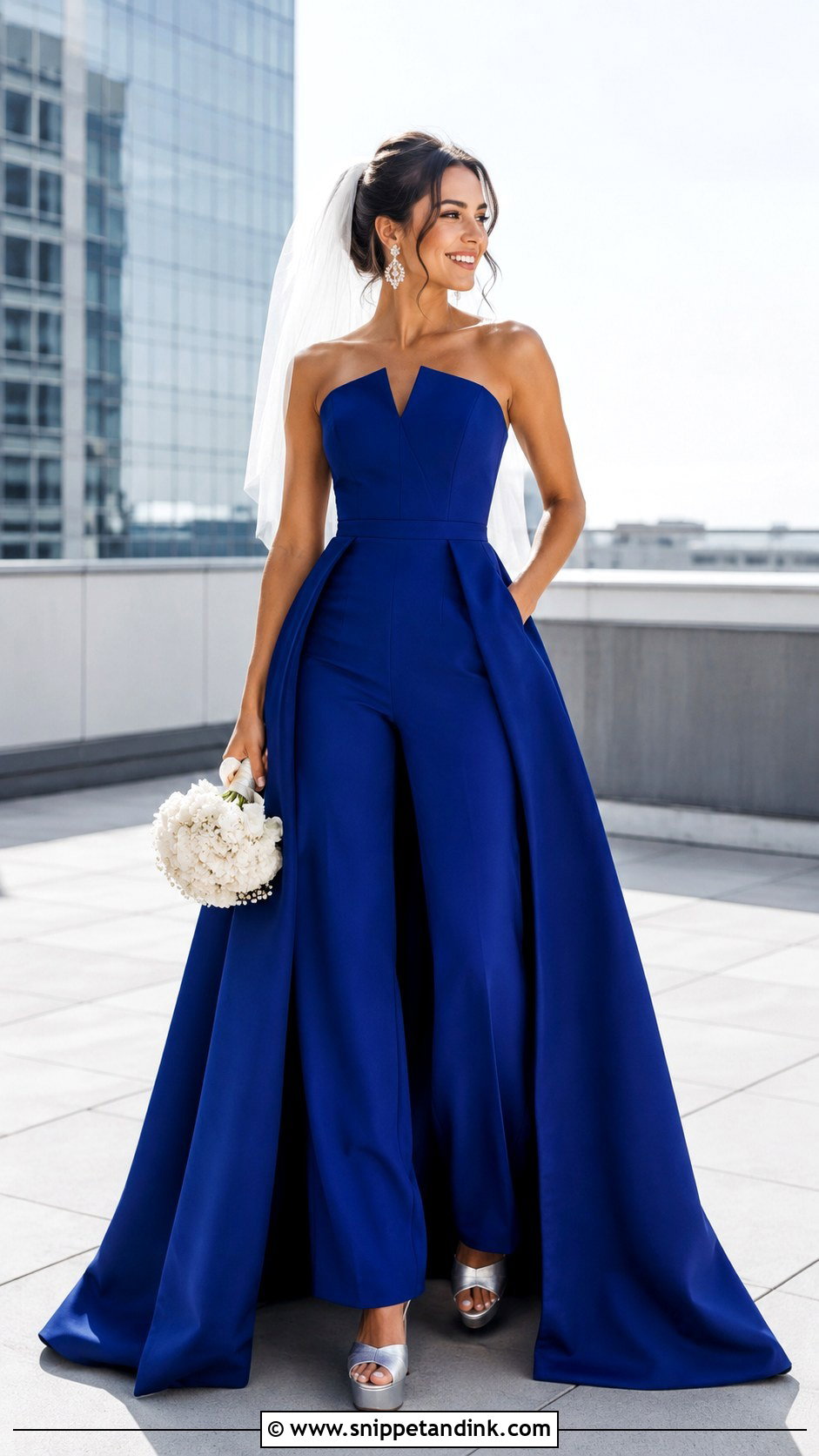
A cobalt jumpsuit is the confident option, and the one I suggest most to brides who plan to dance hard. A fitted waist, wide legs and a structured neckline make a long line. A detachable overskirt is the clever part: full volume for the ceremony, then off for the party. Check how the overskirt attaches; hooks and a hidden belt hold better than snaps on a heavy skirt. Silver platforms, crystal earrings, a white mini bouquet and a short veil or polished headband complete it. Rooftops, civil ceremonies and modern venues suit it.
13. Watercolor Wedding Dress Bride
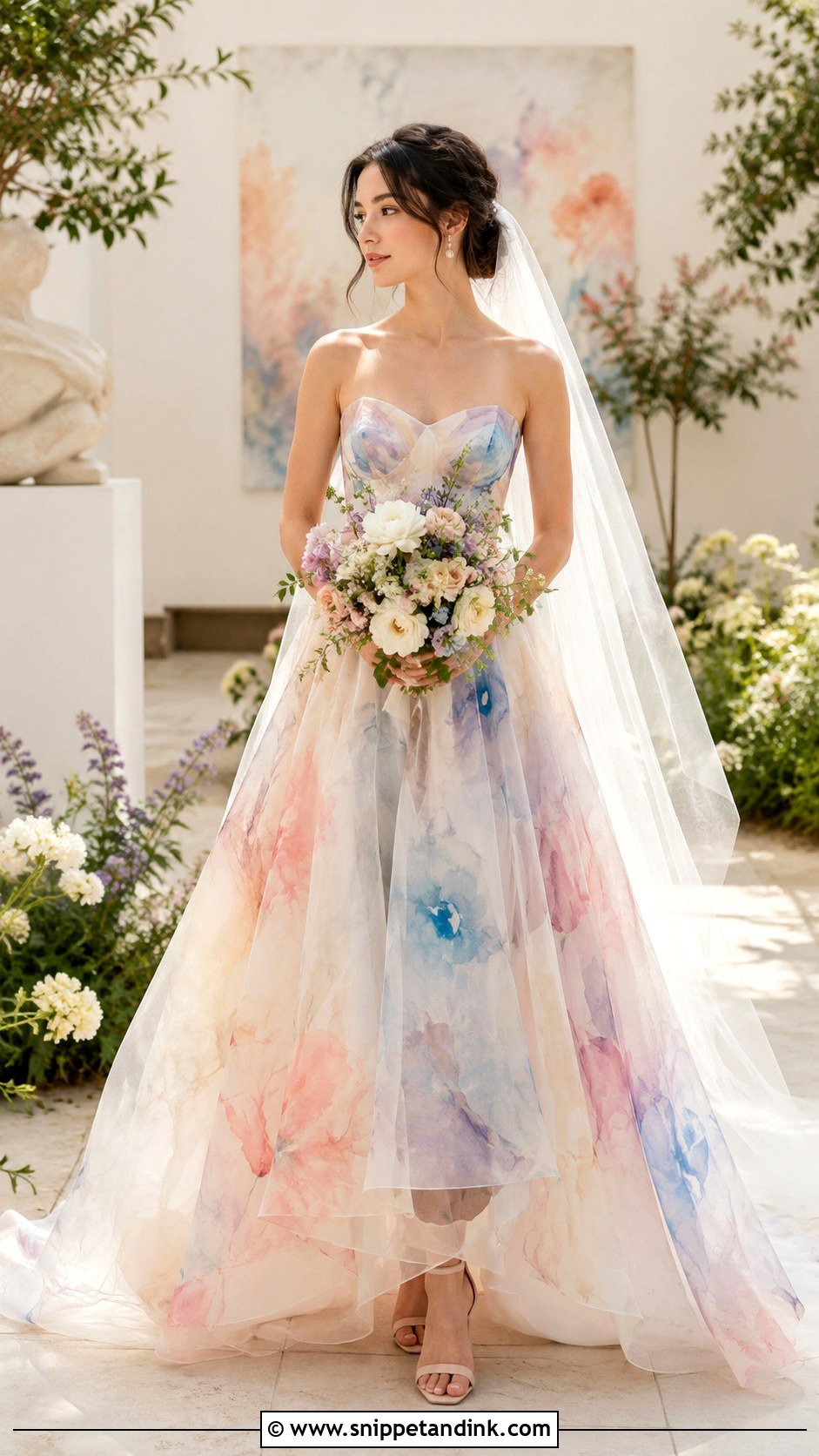
Watercolor gowns are usually printed or hand-painted on organza, and the painted ones vary from piece to piece, which is part of the appeal. A watercolor wedding dress with washed pink, blue, lavender and peach over ivory needs a plain fitted bodice to give the skirt room. Painted fabric shouldn’t be spot cleaned with water, which can move the pigment, so I’d treat any marks only through a specialist cleaner. Nude or champagne heels, pearl studs and a light veil keep it simple. Repeat one strong color in the bouquet with plenty of white around it.
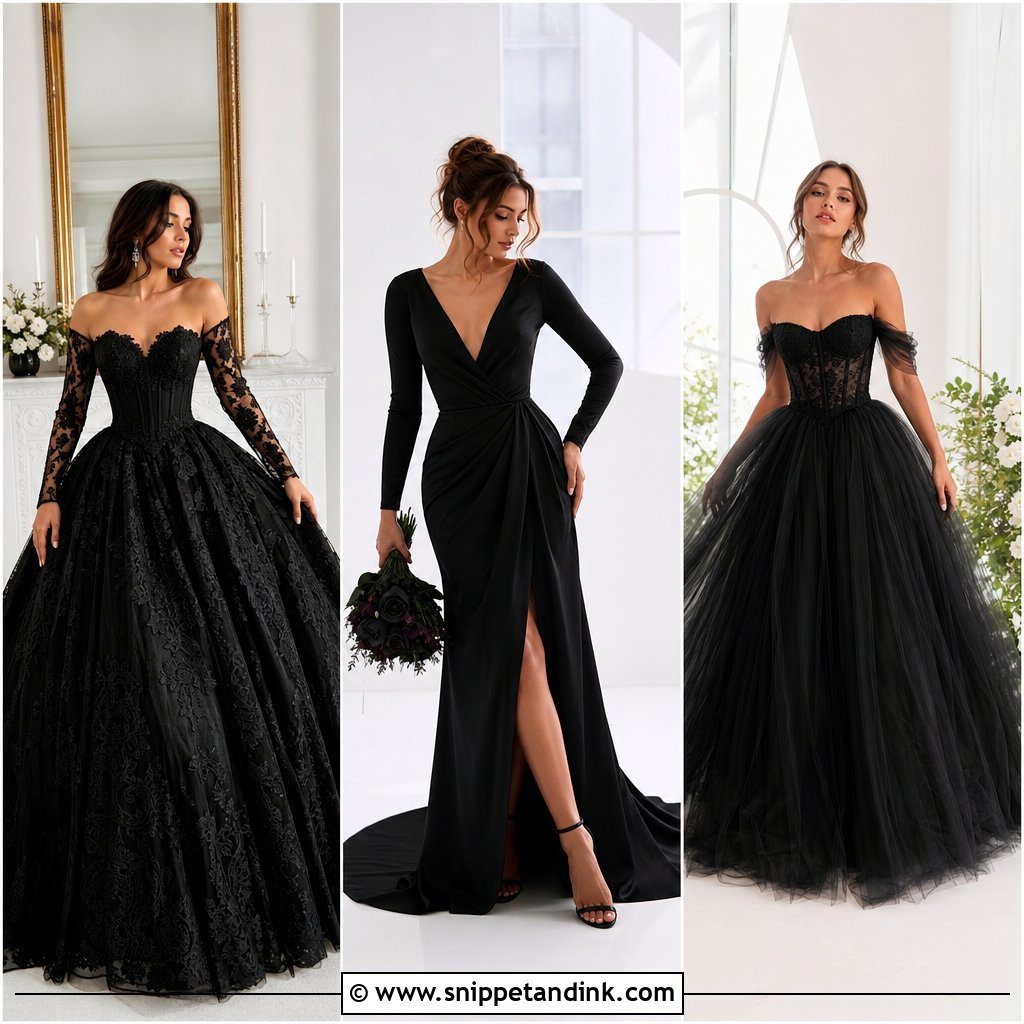
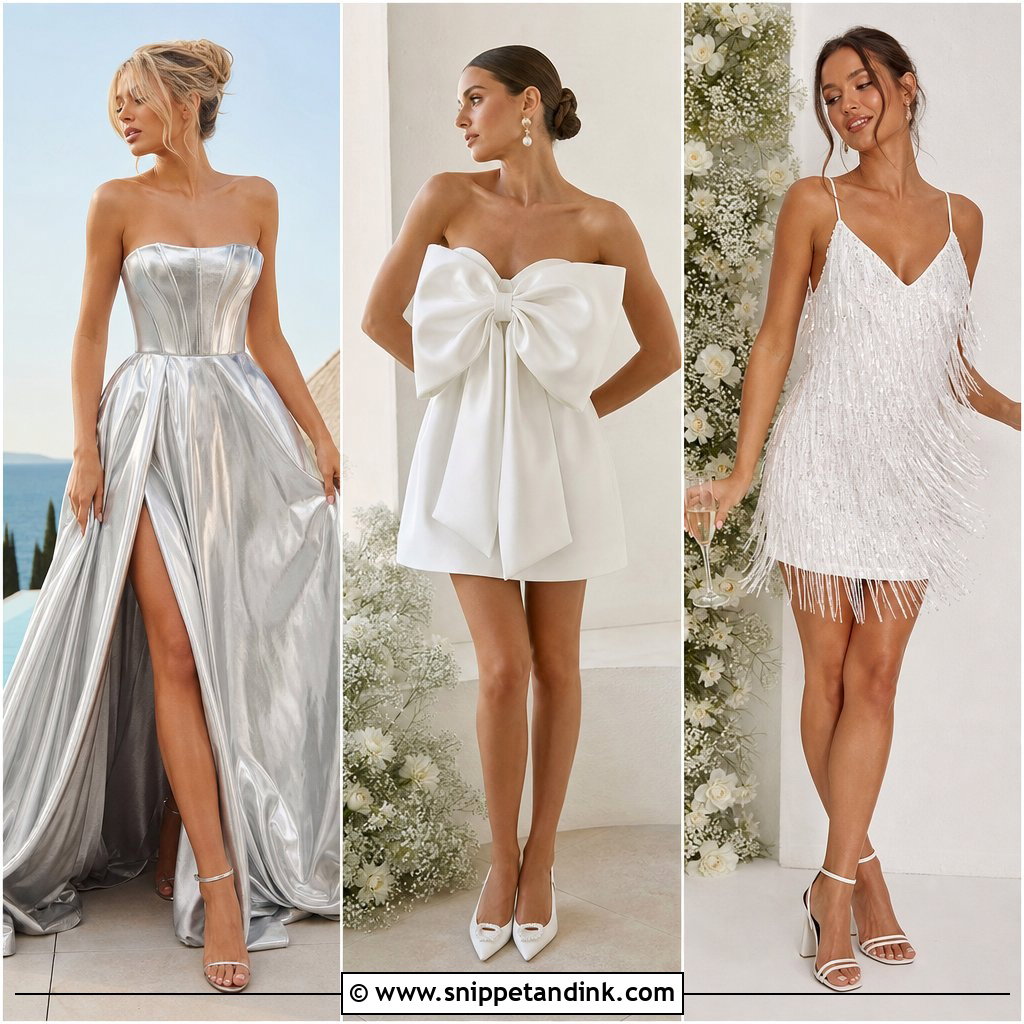
14. Gold Metallic Wedding Dress Bride
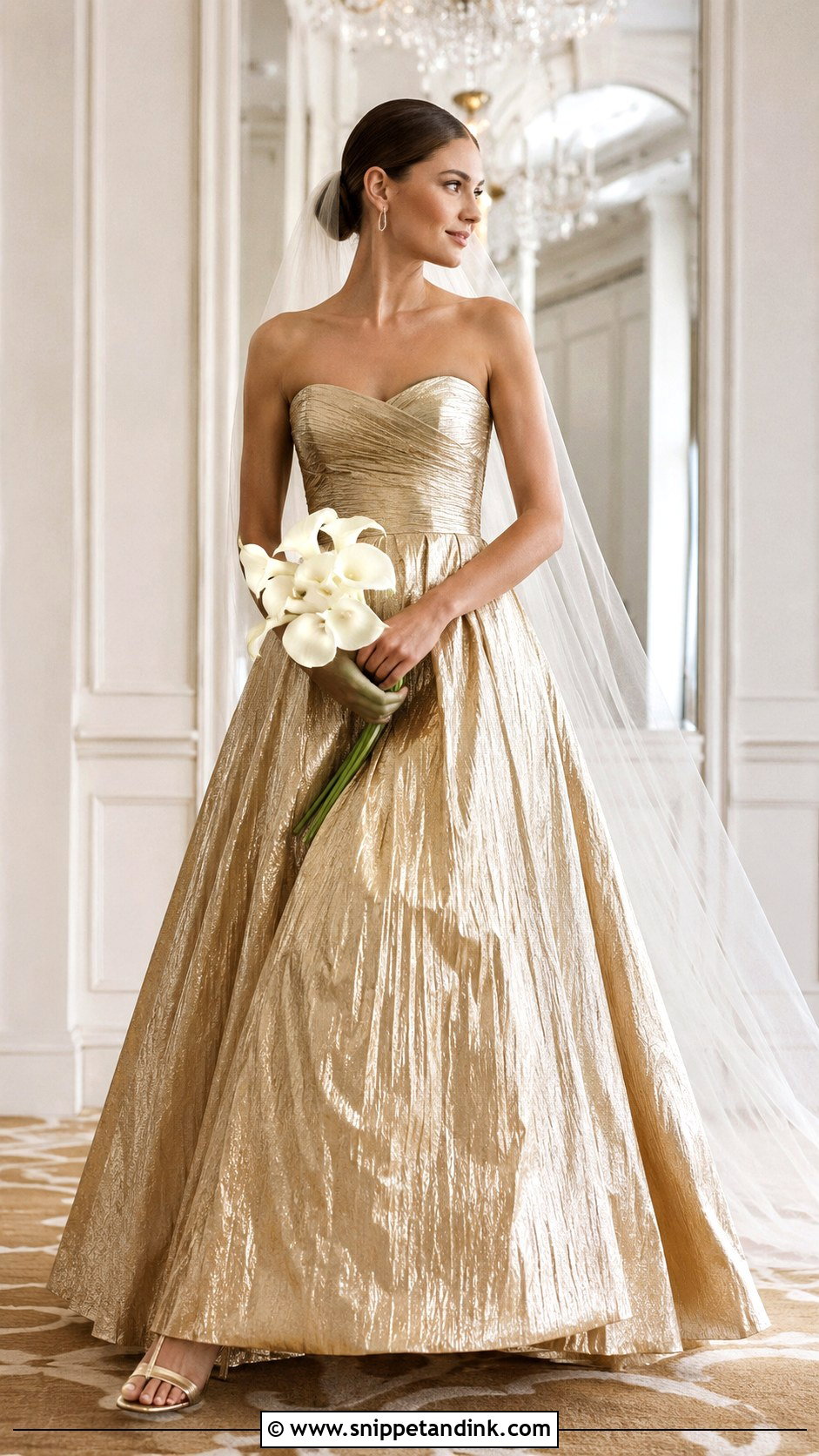
Metallic gold can tip into evening wear quickly, and the ivory veil is what pulls it back to bridal. Champagne gold is subtle; antique gold has more depth. A column, a structured A-line or a pleated metallic all work. Lamé and metallic jacquard reflect flash strongly, so I tell brides to brief the photographer early, because hot spots on the bodice are easier to avoid with light placement than to fix later. Tonal gold sandals, slim earrings and a small hair comb, plus white orchids or calla lilies. Ballrooms and hotels suit it well.
15. Silver Sequin Wedding Dress Bride
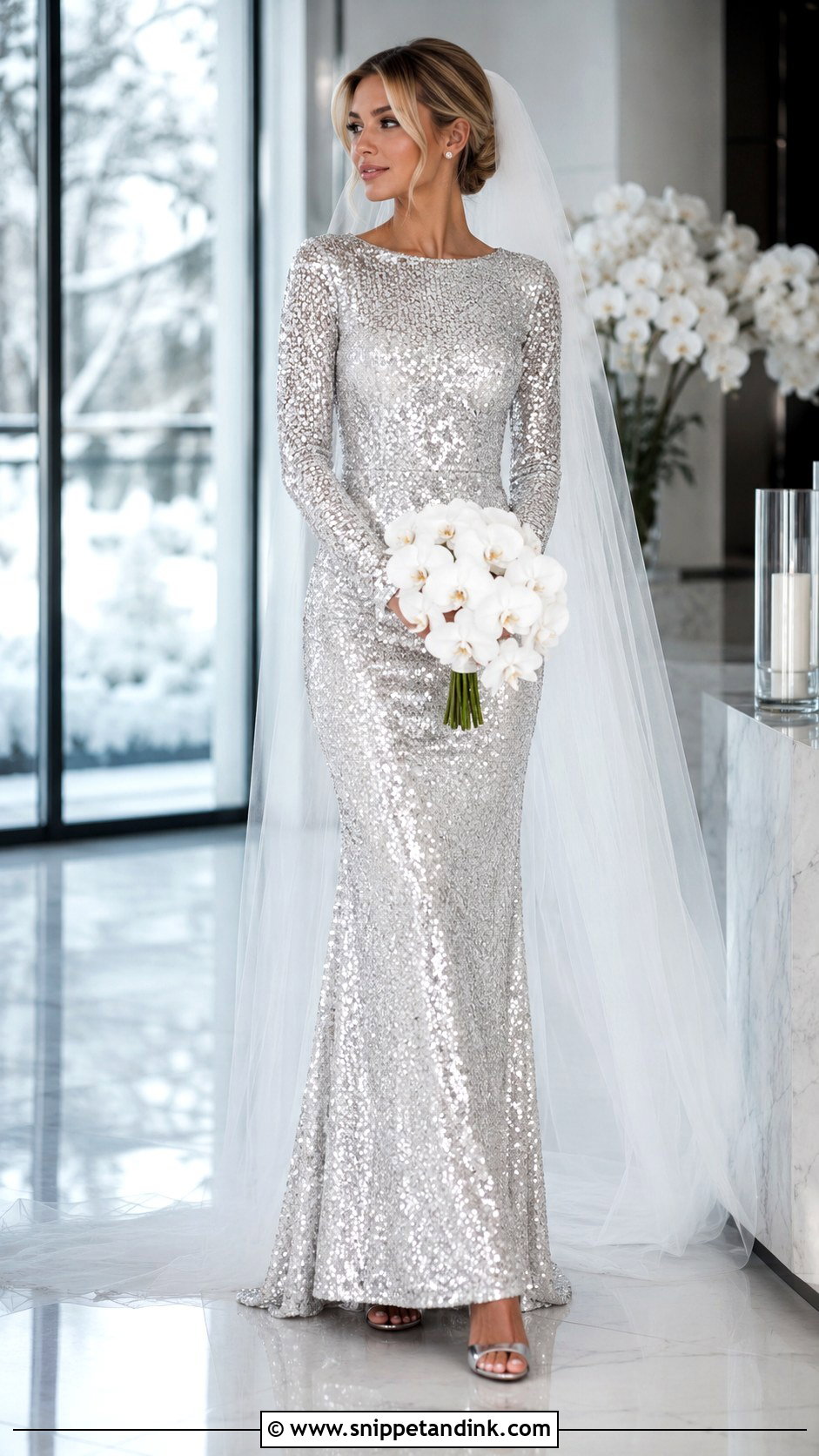
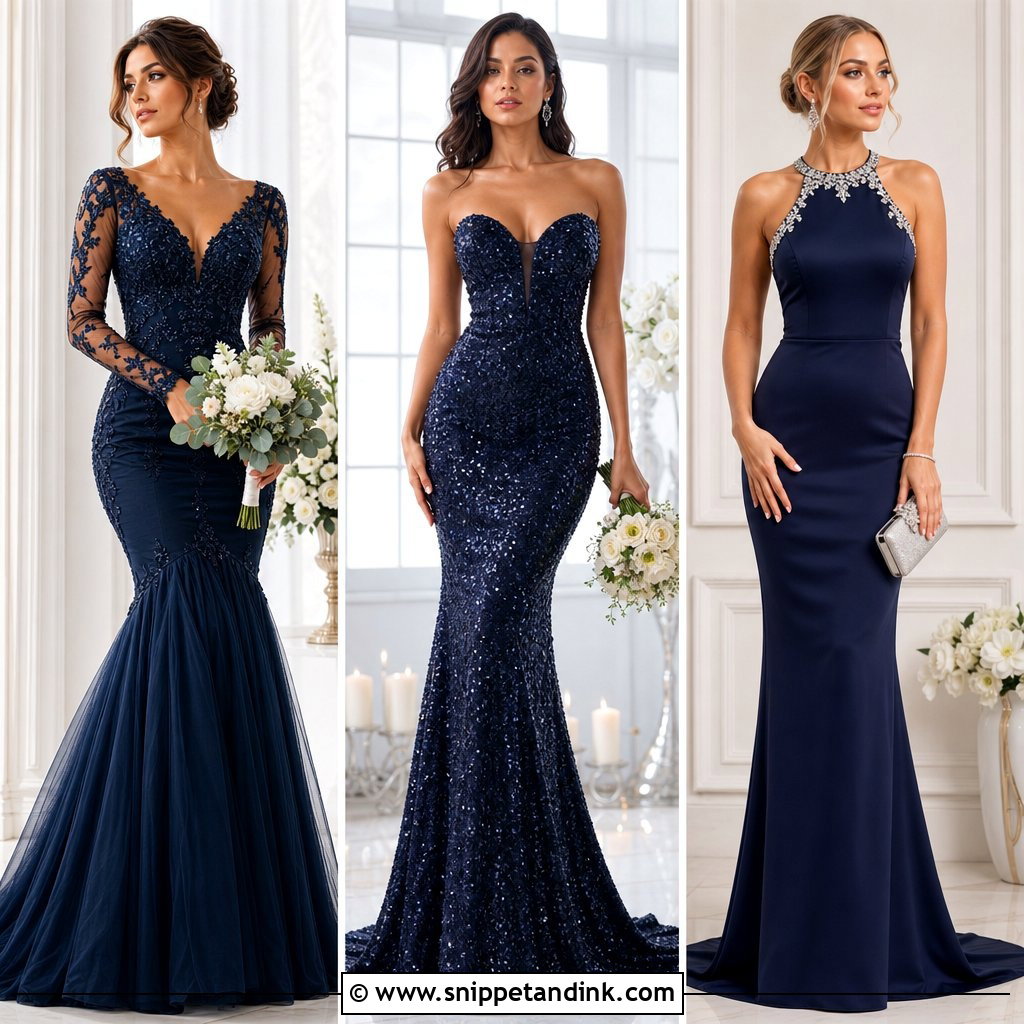
Silver sequins look refined when the shape is plain and the sequins are small. Large paillettes flash in photos and can look like stage wear; fine sequins and beading read as texture. A long-sleeved column, a fitted slip or a gentle flare all work. Sequined gowns are heavy and don’t breathe, so a winter wedding or an evening reception suits them better than a hot afternoon. Silver heels, diamond studs and a sheer grey or ivory veil, with a compact bouquet of white roses or orchids. A sleek bun and soft smoky eye finish it.
16. Colorful Floral Bridal Two-Piece
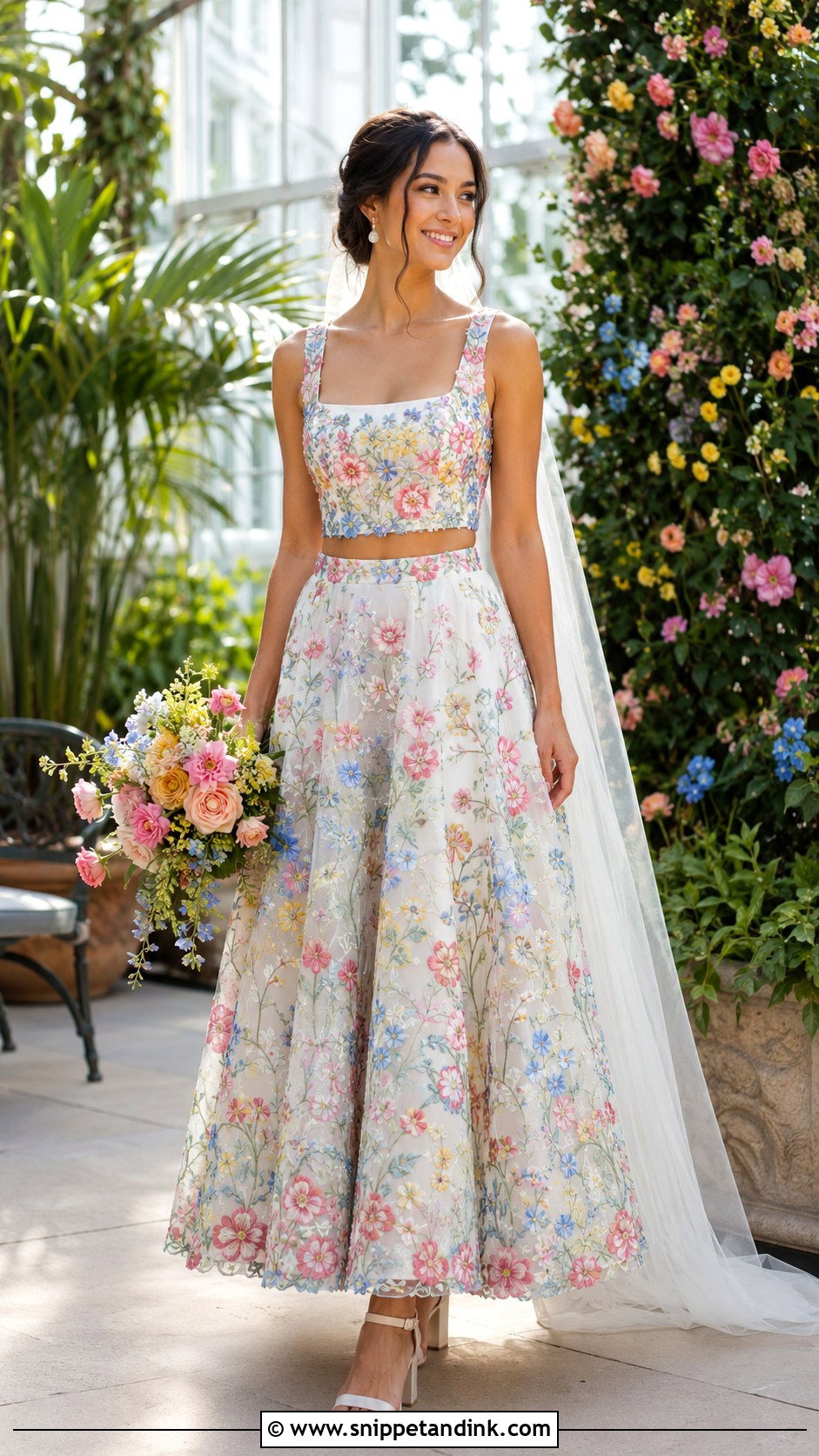
Two-pieces give you a fitted top and a full skirt that you can wear again separately. An embroidered crop top with a high-waisted skirt in the same floral pattern looks coordinated; if you’d rather not show skin, a narrow sheer panel between the pieces works. I always have brides raise their arms in the fitting, because a crop top that sits right standing can ride up during a first dance. Block-heel sandals, pearl earrings and an ivory veil suit it. Pull one or two colors from the print into the bouquet. Garden and destination weddings are where it feels most natural.
17. Pastel Rainbow Reception Mini Bride
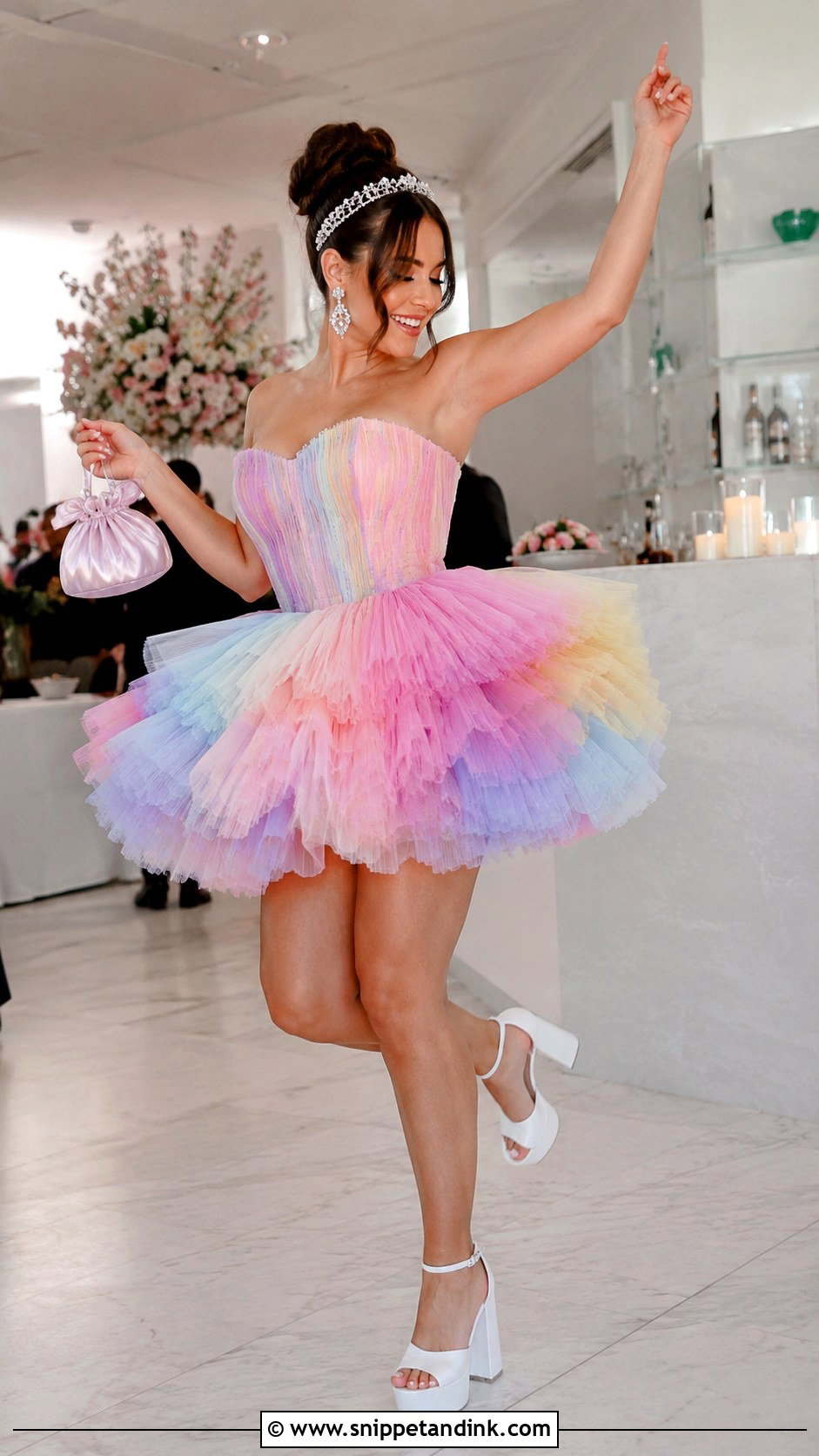
The reception mini is where you can play. Layers of pink, lavender, blue and yellow tulle, or an ivory mini covered in multicolored appliqués, keep the colorful thread from the ceremony going. A fitted bodice and defined waist hold it together. Swap the veil for a bow, a jeweled headband or a short tulle piece. White platforms you can dance in matter more here than at the ceremony, so I’d break them in at home for a week. Crystal earrings, a small satin bag and a high ponytail finish it, and carry a mini bouquet only for the entrance.
18. Colorful Bridal Cape Dress
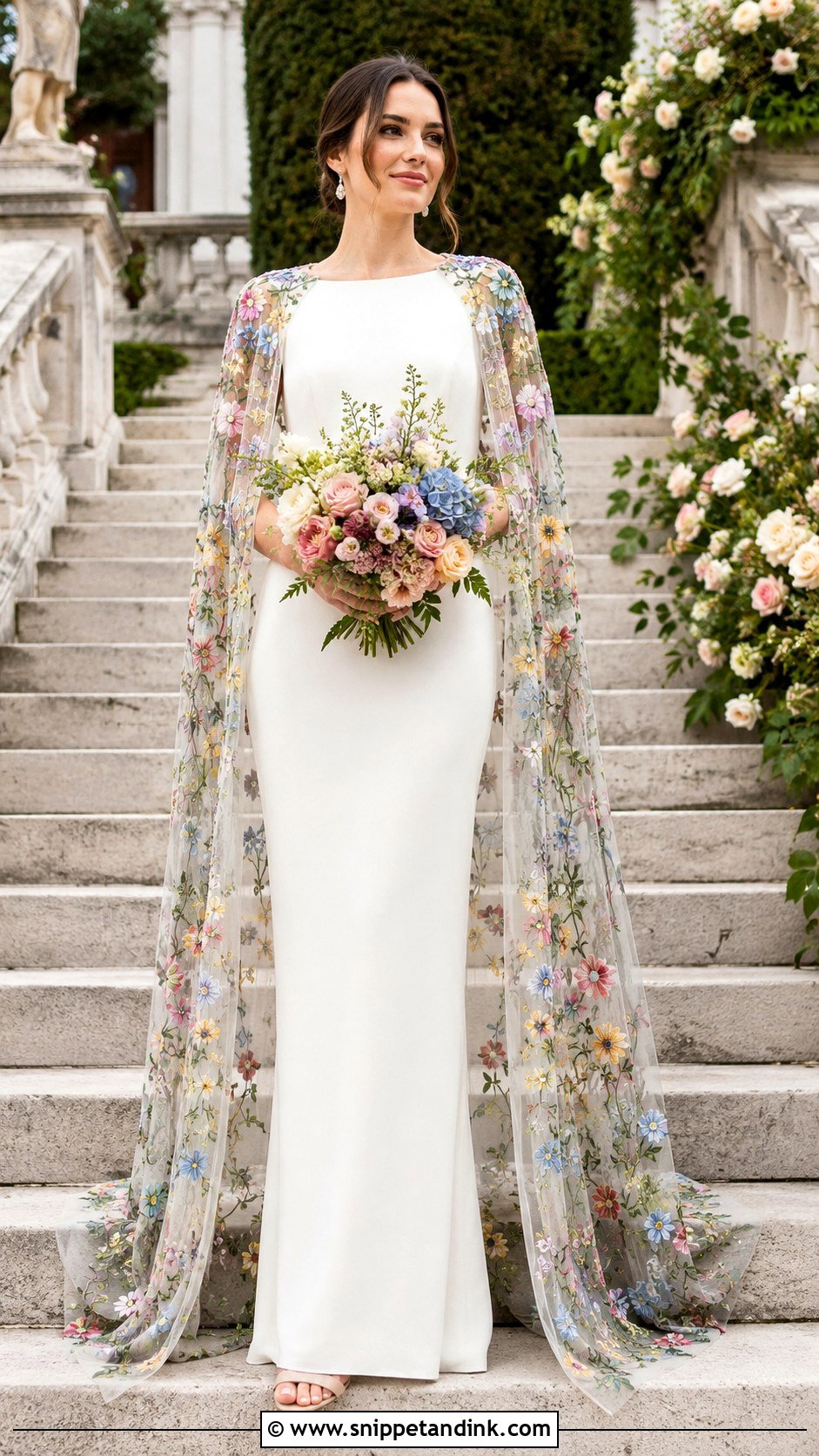
A colored cape lets a very plain gown carry a lot of color without changing the dress itself. Start with an ivory, blush or pale blue column and add a sheer cape embroidered with multicolored flowers, falling from the shoulders nearly to the hem. Capes shift at the shoulder when you hug people, so ask for a small hidden snap or loop to the dress at each shoulder seam. A veil is optional because the cape frames you from behind. Neutral heels, small earrings and a bouquet that repeats the strongest embroidered color, with a low bun to keep the collar clean.
19. Colorful Bridal Veil Outfit
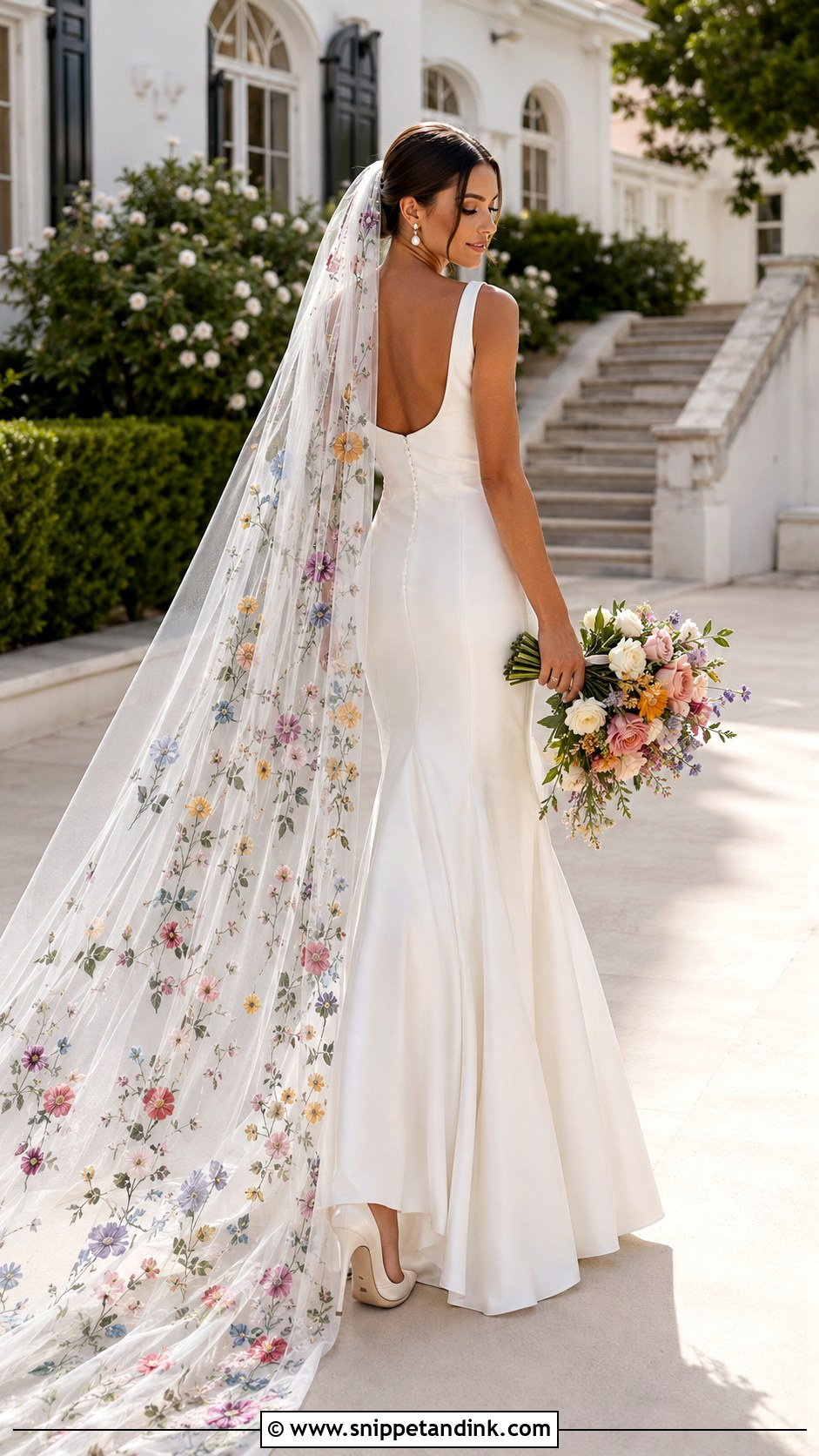
If you love your white gown but still want color, put it in the veil. A clean satin or crepe dress with no embellishment lets a long veil embroidered in pink, blue, yellow, purple and green take over. Embroidered veils are heavier than plain tulle, so the comb needs a secure base; I’d pin it into a low bun with extra grips under the comb. Ivory heels, small pearls and a bouquet in shades pulled from the embroidery. Natural makeup and a soft pink lip keep it fresh. Take the veil off after the ceremony and you have a simple, classic reception look.

20. Multicolor Floral Ball Gown Bride
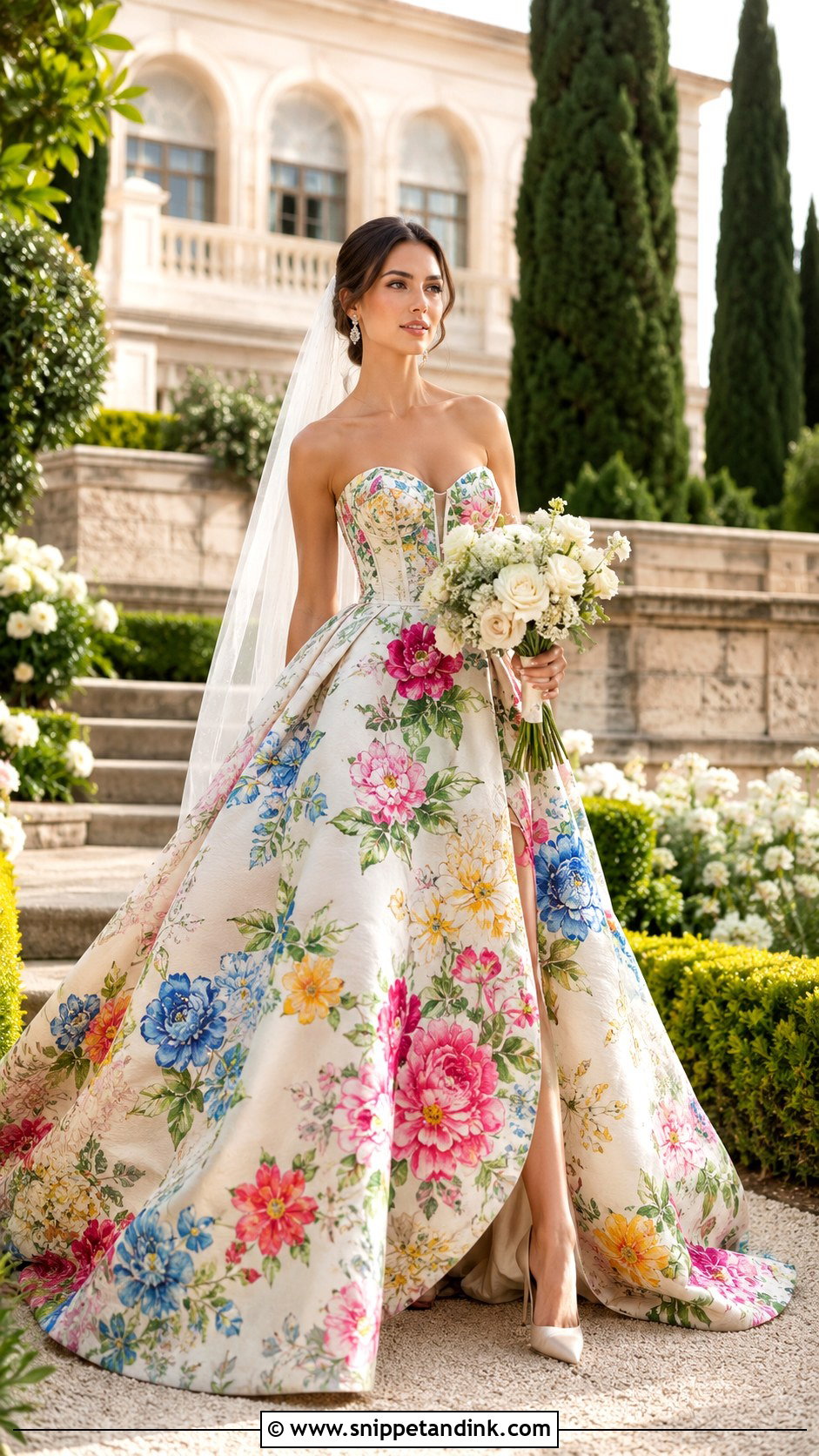
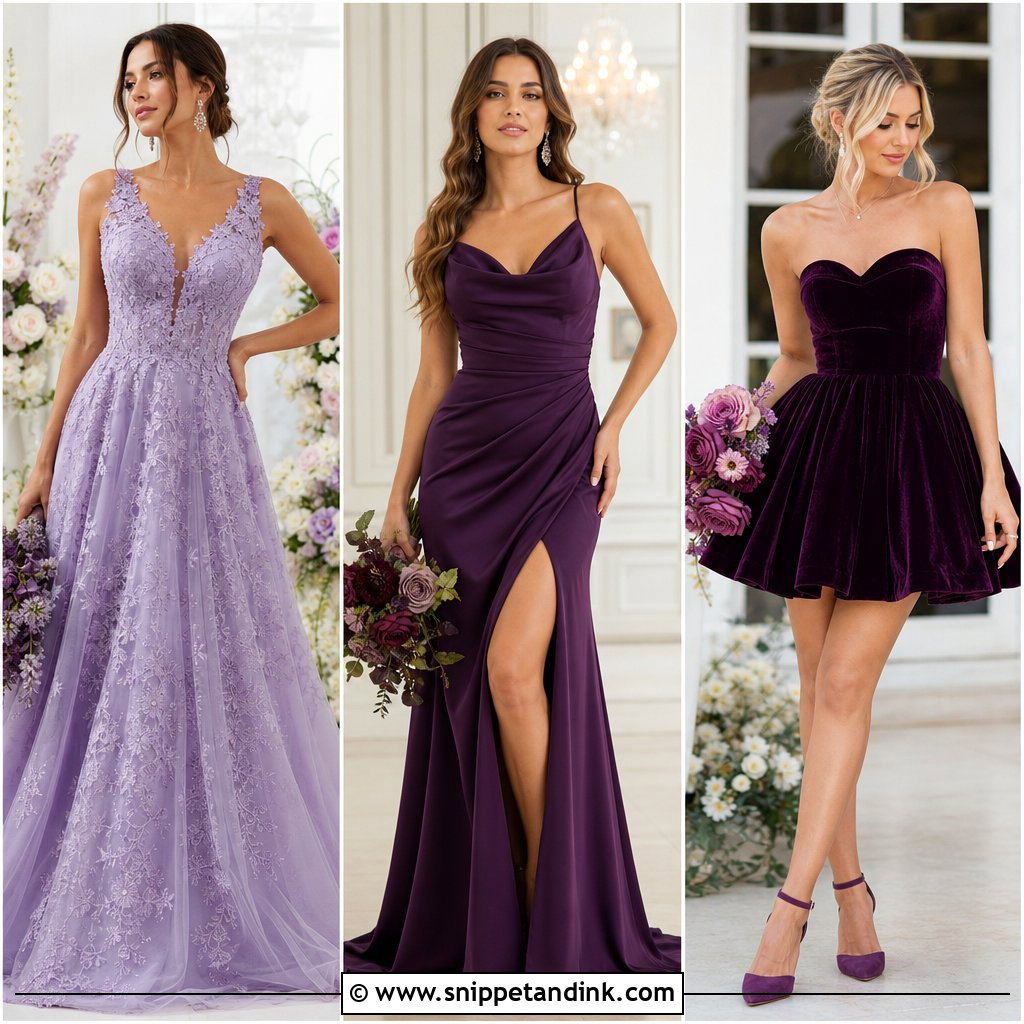
For the boldest option, a full ball gown in a large-scale multicolor floral pattern. A corset bodice and sweeping skirt keep the bridal shape even when the flowers are strong pink, blue, red, yellow or green. Keep the neckline clean and skip extra embellishment. The bouquet is where most brides go wrong with a print this loud. I’d carry mostly white with one accent from the gown, because a multicolored bouquet against a multicolored skirt disappears. Neutral satin heels, diamond studs, a sheer ivory veil and a polished updo to balance the volume.
Dye Lots and Custom Shades Need Extra Time
Colored bridalwear often runs on a longer schedule than white. Many gowns are made to order after you choose the color, and dyed fabric is produced in batches, so the shade on your gown can differ slightly from the shop sample. If the color must match a veil, a sash or bridesmaid dresses, I’d order those pieces together, from the same maker where possible.
Leave room for alterations on top of production time. Ask the shop for its current timeline and then add a few weeks of slack, because a colored gown that arrives late is harder to replace off the rack than a white one.
Protecting the Color After the Wedding
Colored silk and satin fade in daylight faster than most brides expect, so store the gown away from windows in a breathable cotton bag, not plastic. Don’t attempt home stain removal on dyed or painted fabric; water rings and lifted pigment are common results. A specialist bridal cleaner should know the fiber and dye before they start, so keep the label and any notes from the shop.
Will Color Still Feel Bridal on the Day?
A colored dress works when it feels connected to you, your venue and how comfortable you are being looked at. You can arrive in red, teal or gold, or bring color in through embroidery, pastel tulle or a painted veil. Either way, repeat the important shades sparingly and leave enough neutral space for the main piece. Try the whole outfit together before your final fitting, shoes, jewelry, flowers and headpiece included, and look at it by a window and under indoor light. When the details around it are chosen with care, color looks deliberate and celebratory, and nobody questions that you’re the bride.
You'll Like These Ideas:



Leave a Reply