
Flowers on a wedding dress can be stitched on as lace motifs, embroidered straight into the fabric, woven into jacquard or built up as separate 3D petals, and each method wears very differently over a long day. The twenty gowns below cover all of them, from sculptural appliqué ball gowns to a single oversized rosette on a plain column. For each one I’ve noted the shoes, veil, jewelry and bouquet I’d put with it, because the most common mistake I see with floral gowns is accessorizing them as if they were plain. A busy dress needs quieter company. Read the construction notes as well: they tell you how the dress will behave when you sit, hug people and climb in and out of a car.
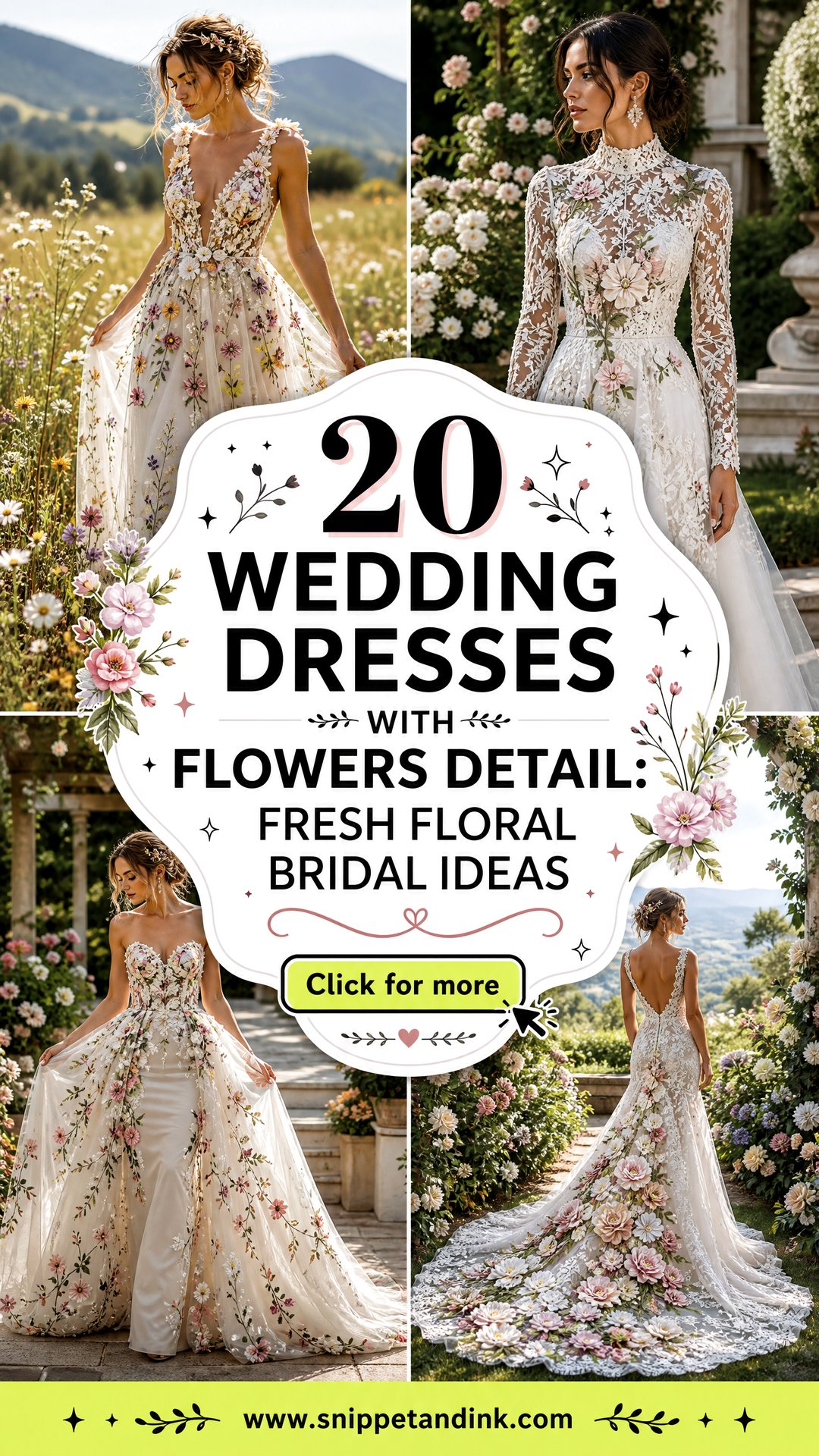
Raised, Stitched or Woven: How Each Floral Technique Wears
Two gowns can both be called floral and behave nothing alike once you put them on. Before I pull dresses for a bride, I ask how the flowers are made, because that decides how the gown handles heat, sitting, hugging and a car ride far more than the silhouette does.
- 3D appliqués and petals are cut separately and tacked on by hand. They give the most depth in photos, but they crush under a seatbelt and can catch on cufflinks and beaded clutches.
- Lace motifs are flatter and very forgiving. Re-embroidered lace, where a cord outlines each flower, holds its shape better than plain tulle-based lace.
- Embroidery is stitched straight into the base fabric, so nothing falls off. Heavy thread work does add stiffness and weight, especially on a full skirt.
- Jacquard weaves the pattern into the cloth itself. Nothing snags or sheds, but the fabric is thicker and warmer than tulle or chiffon.
If you sweat easily, are marrying outdoors in summer or have a long day of hugging ahead, I’d lean toward lace or embroidery. Save the big dimensional flowers for a cooler indoor venue where you won’t be squeezed into a car twice.
1. 3D Floral Appliqué Ball Gown Wedding Dress
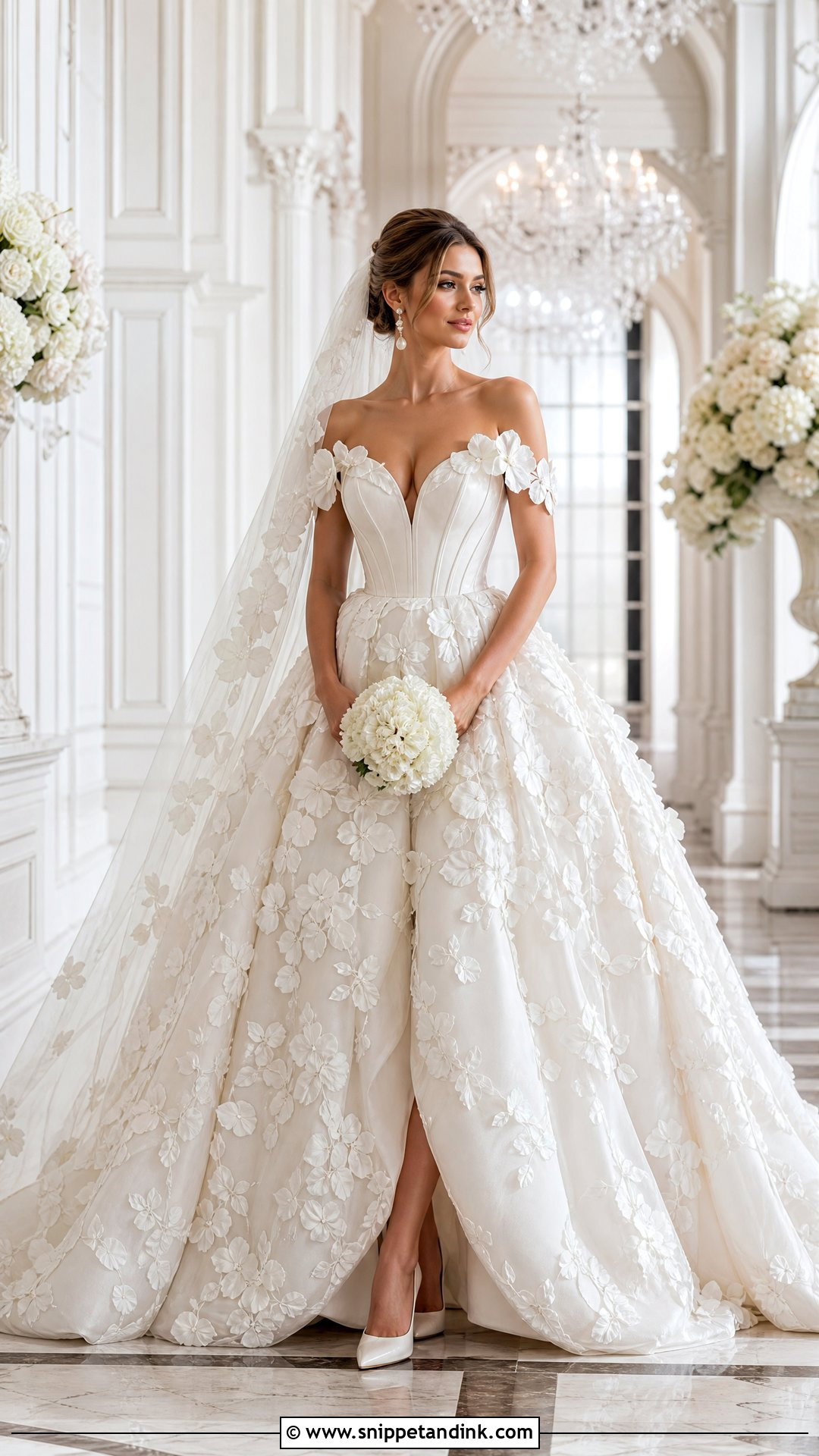
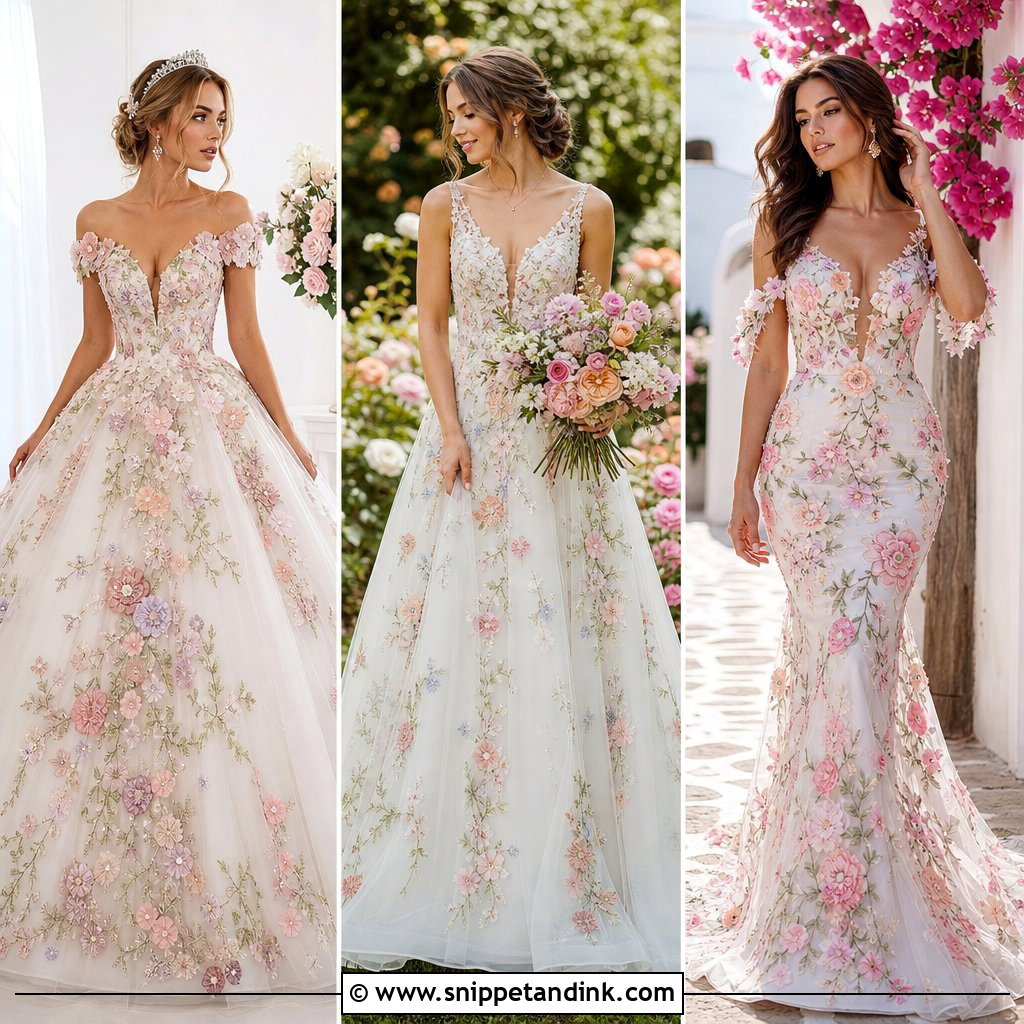
Dimensional appliqués need a firm, structured bodice underneath them. Without one, the weight of the flowers pulls the fabric into small puckers by the end of the night. On a ball gown I look for blooms clustered at the neckline that thin out as they travel down the skirt, so the eye has somewhere to rest. Keep the cathedral veil plain-edged; a lace border on top of raised petals reads as clutter in photos. Pointed ivory heels, pearl drop earrings and a compact bouquet of white flowers and greenery are all it needs, with the hair in a low bun or polished waves. Save it for a ballroom, a formal estate or a wide garden lawn where the skirt has room.
2. Floral Lace A-Line Wedding Dress
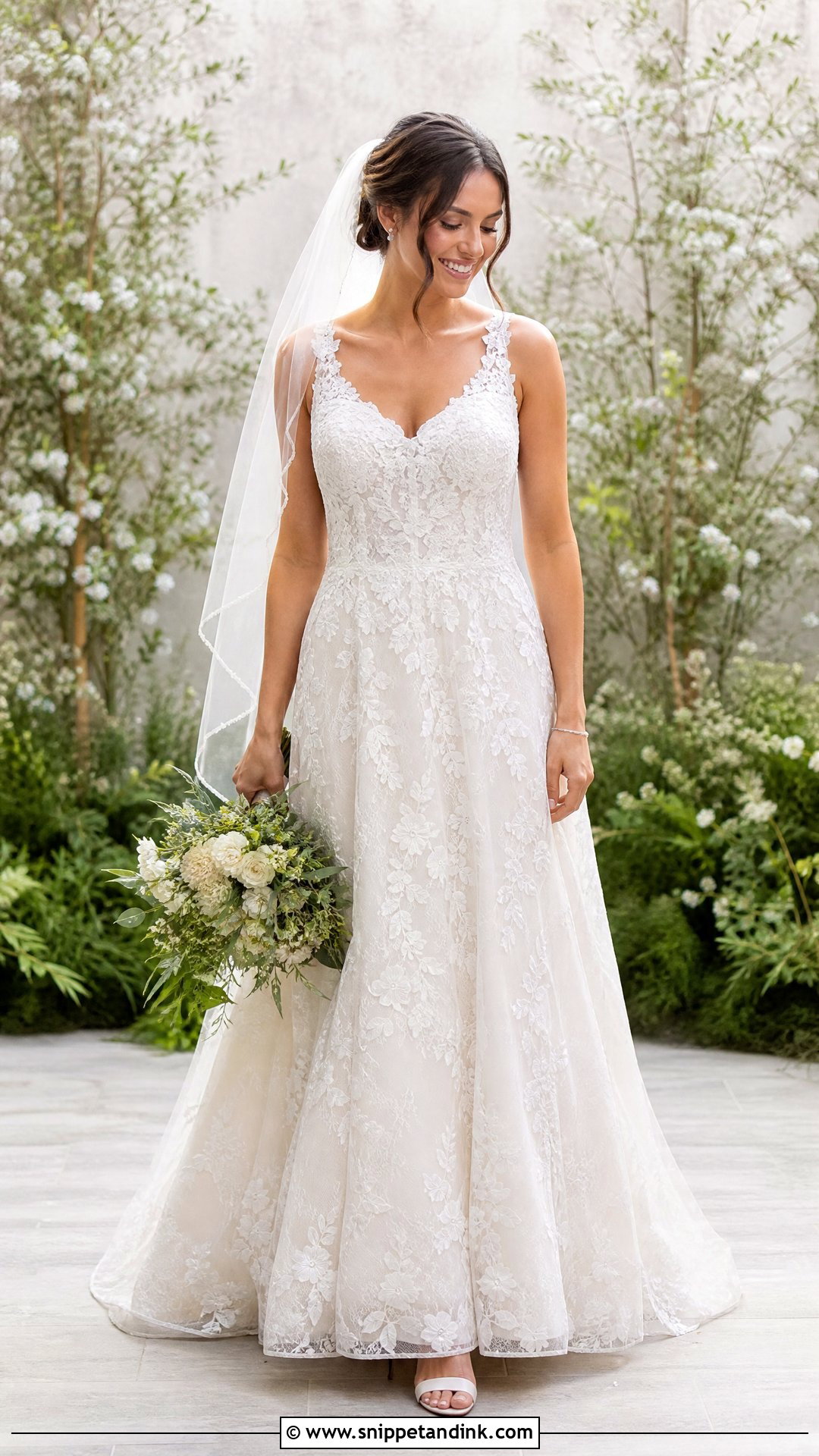
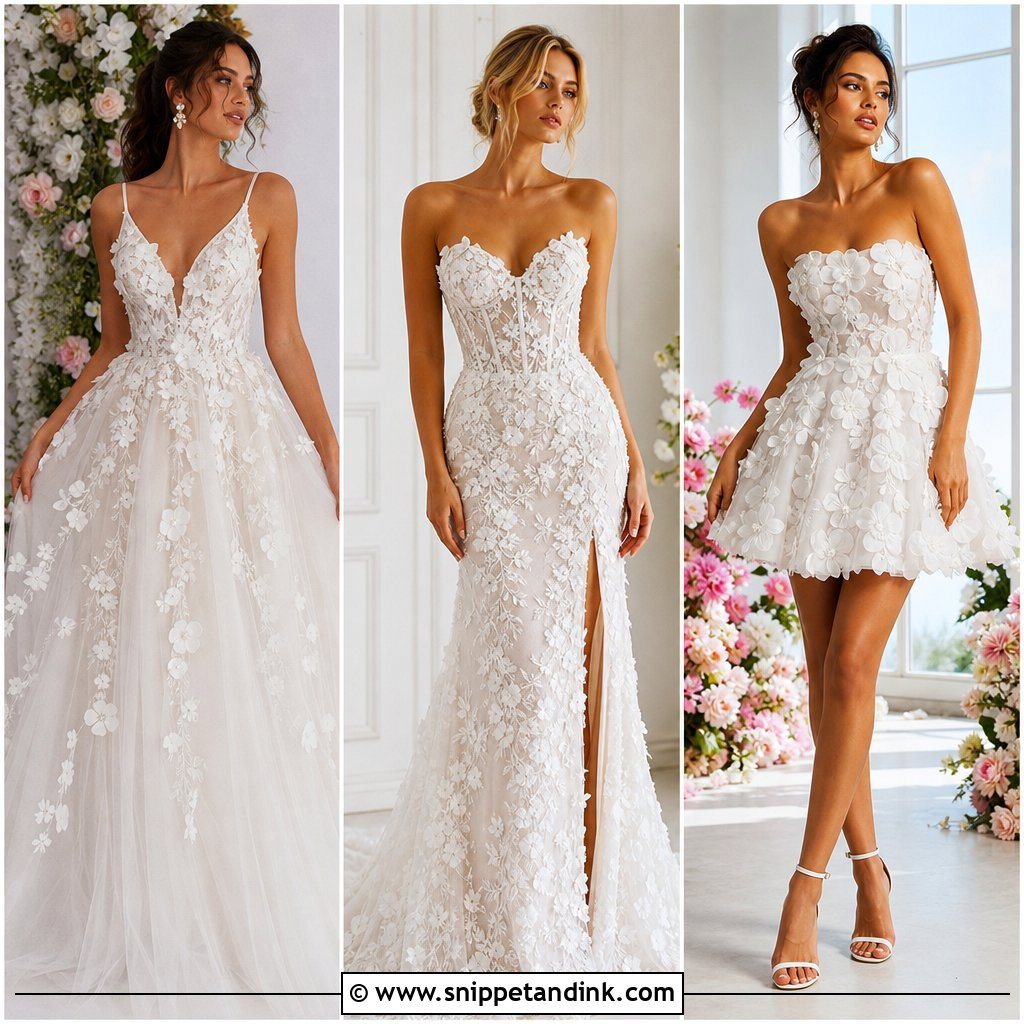
The lace A-line is the floral gown brides forget they’re wearing by mid-afternoon, and I mean that as praise. The fitted bodice defines the waist, the skirt skims over the hips, and sitting or dancing takes no negotiation. When you compare laces, hold the fabric at arm’s length: motifs that still look like flowers from a few feet away will read in photos, while very fine all-over lace can flatten into plain texture. Ask for a soft lining in the bodice so the lace never scratches. Block-heel sandals, a fingertip veil, small studs, a slim bracelet and a loose bouquet of seasonal white blooms finish it, with soft curls or a low chignon.
3. Colorful Floral Embroidered Wedding Dress
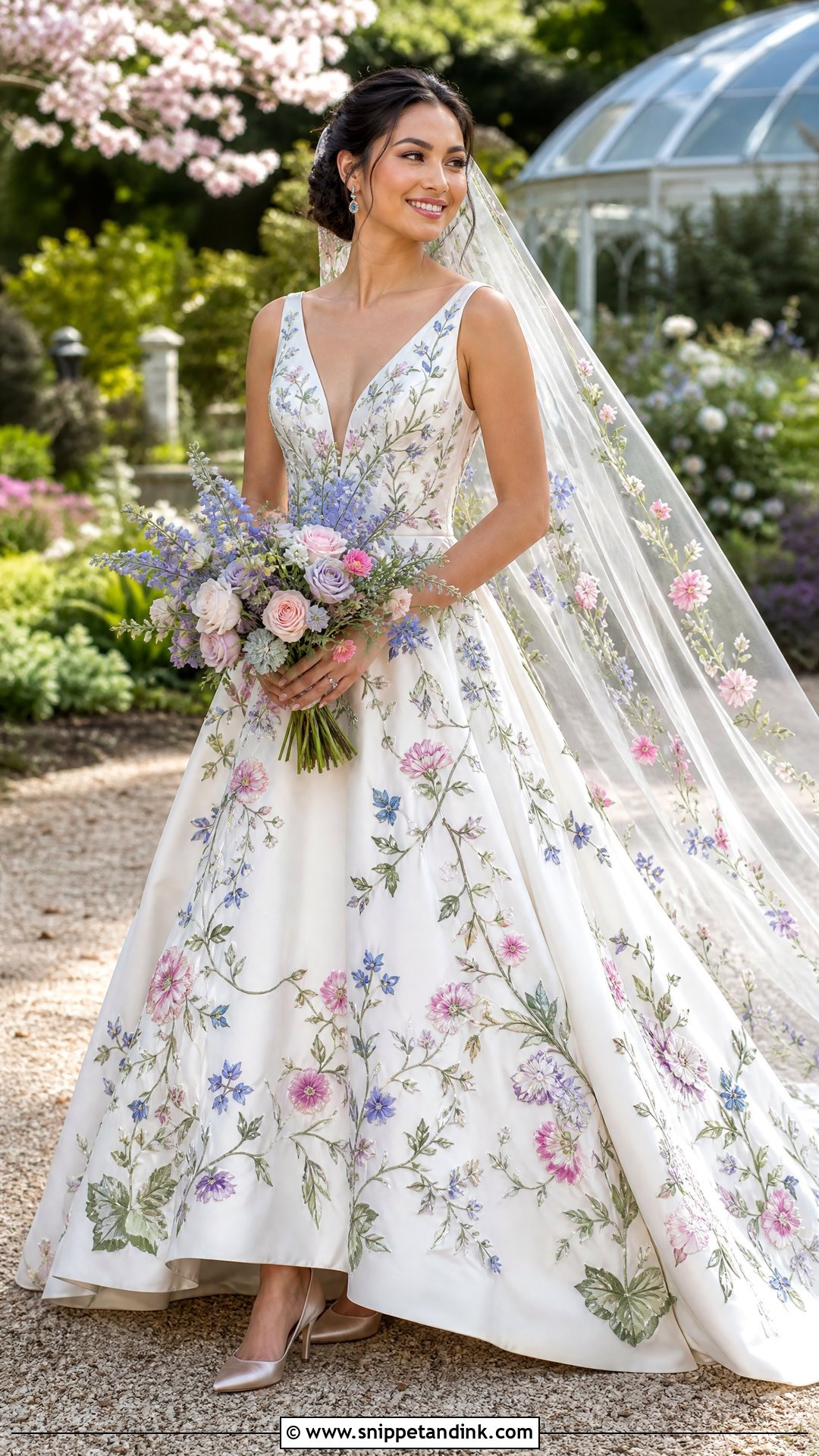
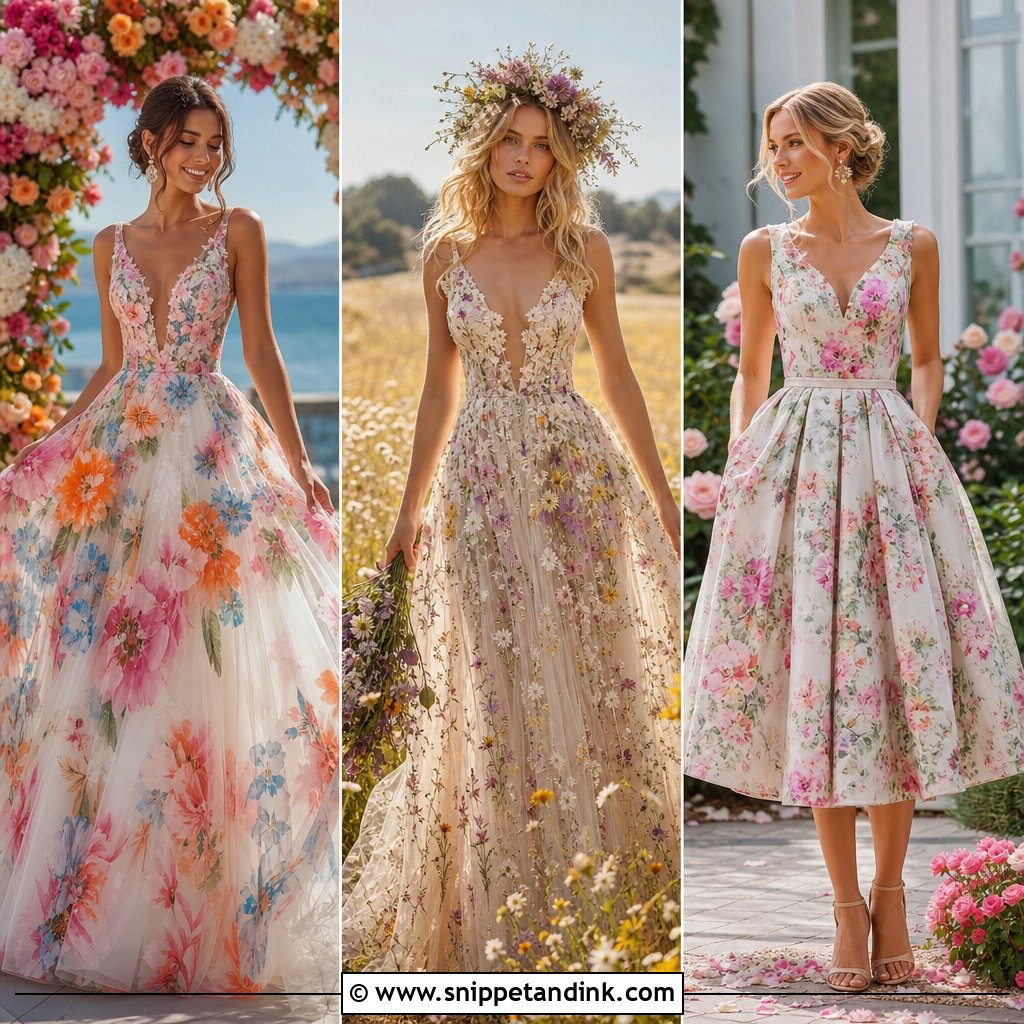
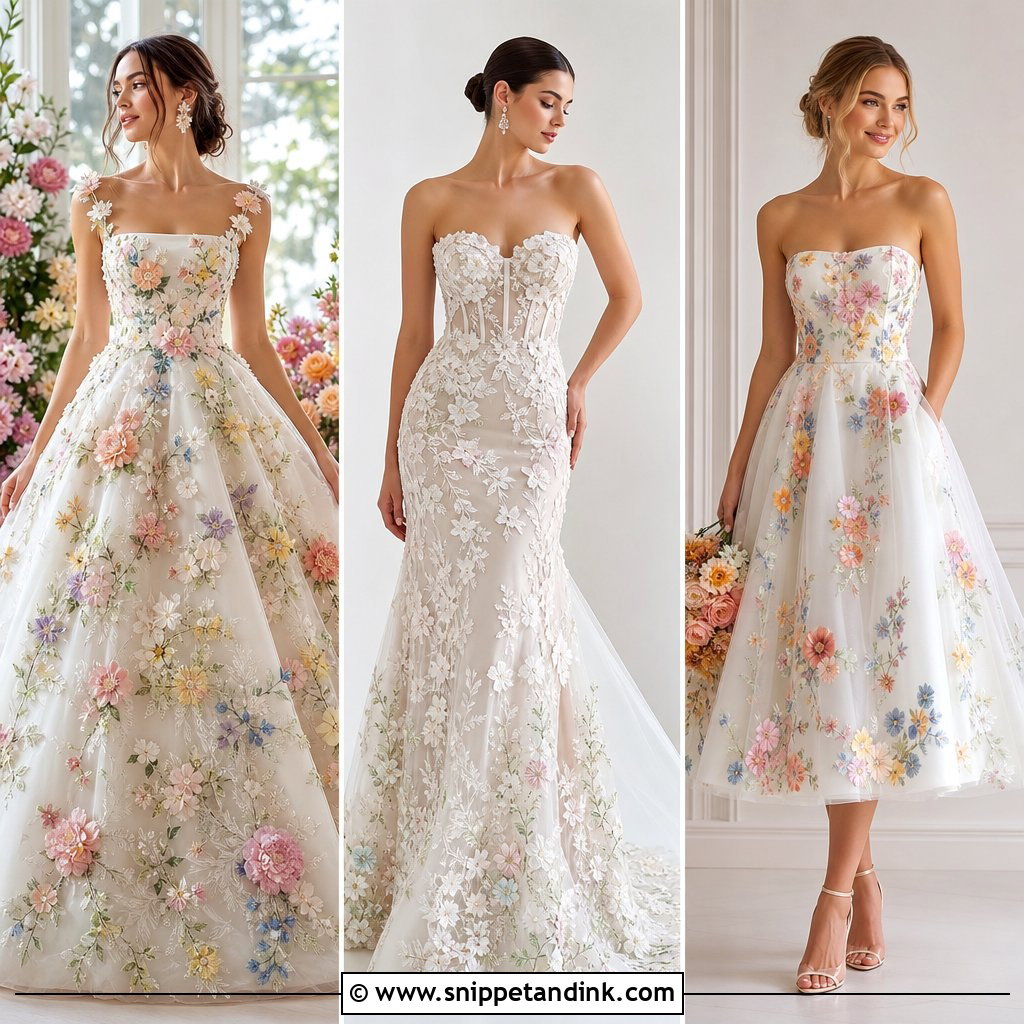
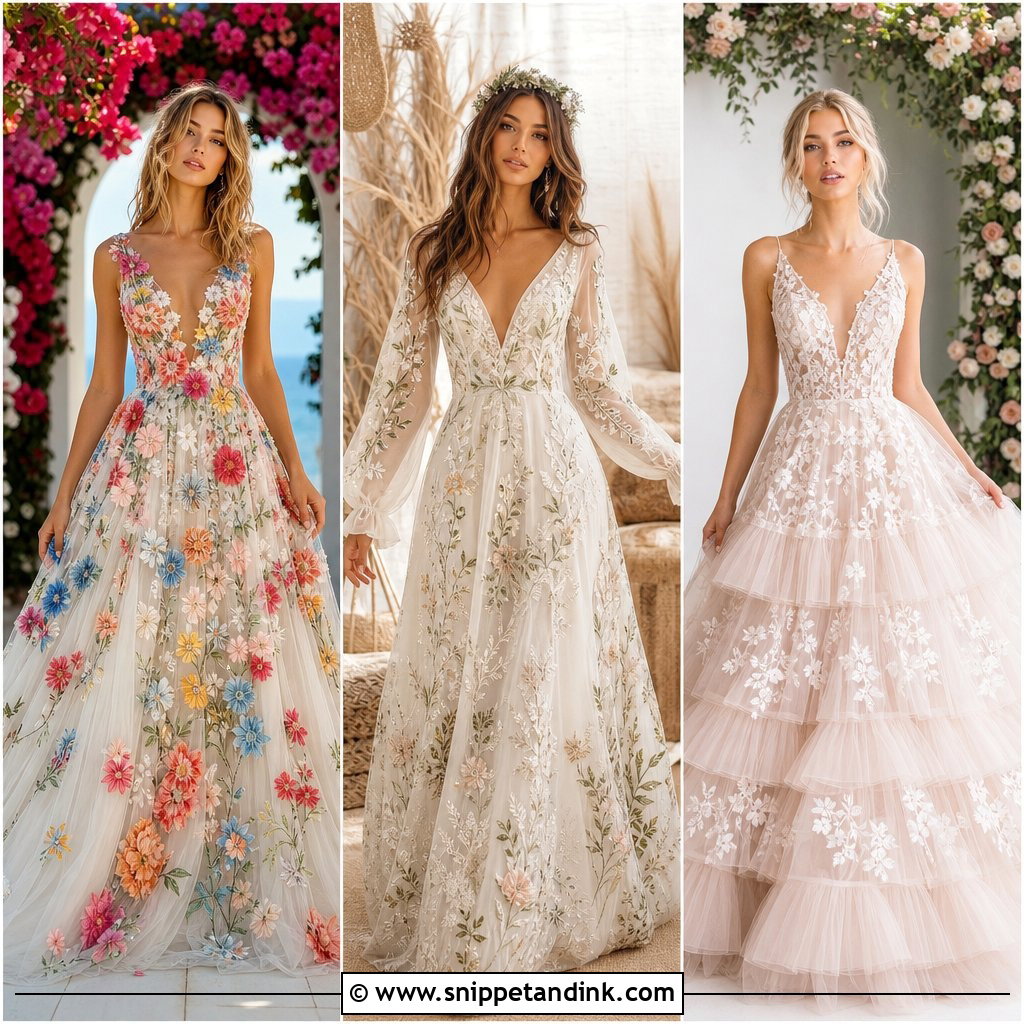
Colored embroidery is the one floral detail I insist you see in daylight before you commit. Pink, blue, lavender or green flower motifs on an ivory or soft white base can look muted under boutique spotlights and far brighter outdoors. An A-line skirt gives the stitching enough flat space to show. Let the bouquet borrow one or two of the thread colors, never all of them, and if you want embroidery on the veil, keep it to a few blooms near the hem. Neutral satin heels, small gemstone earrings and a soft updo that clears the neckline are enough. Botanical gardens and countryside ceremonies suit it best.
4. Strapless Rosette Wedding Dress
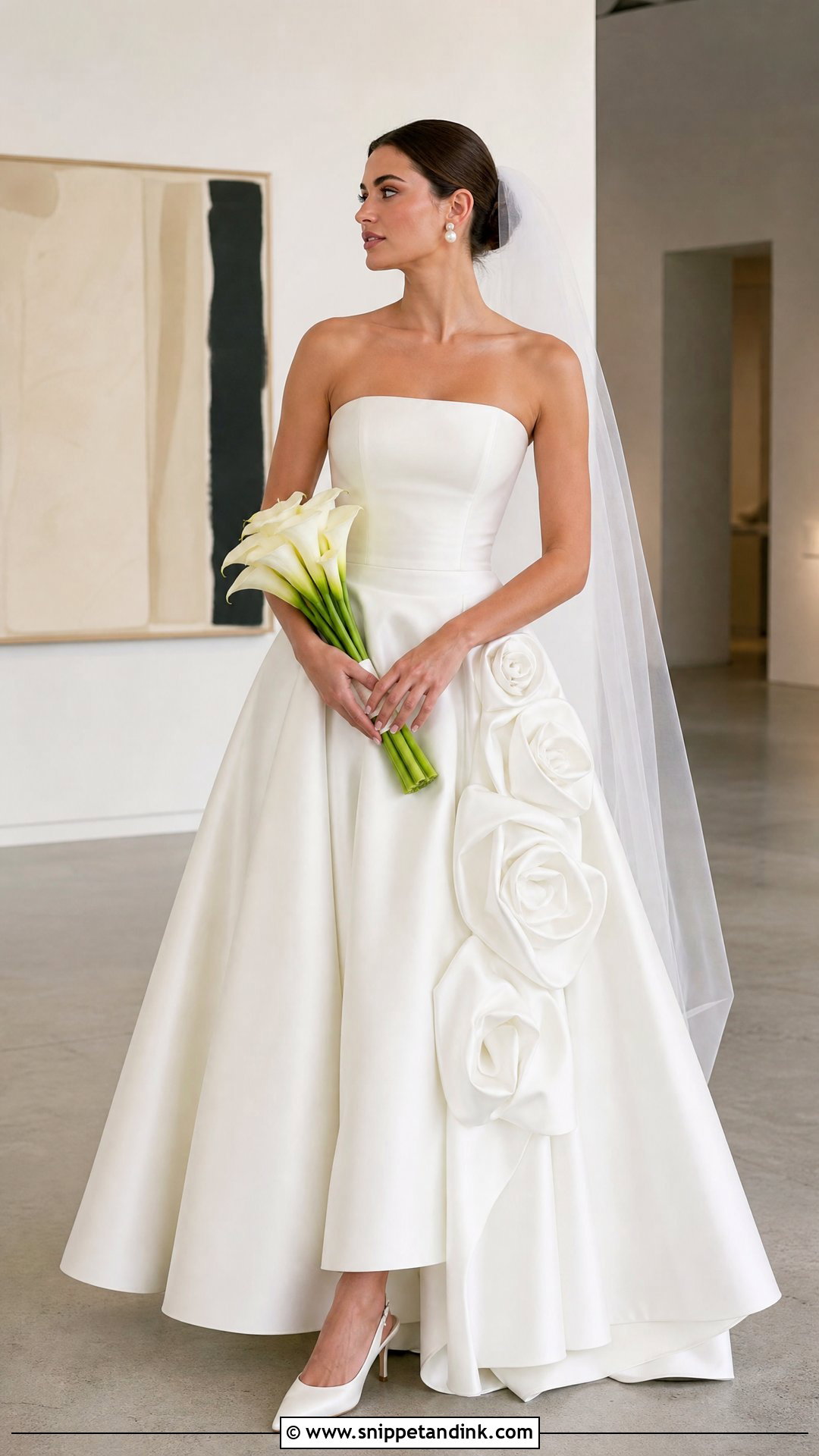
Large fabric rosettes work when they’re rationed: one at the neckline, or a cluster running down one side of the skirt. On a strapless satin gown I always check how a neckline rosette behaves once the bride sits down, because the bodice shifts slightly and a big flower can tip forward toward the chin. Everything around it should be plain. Sleek slingbacks, small pearl earrings, a narrow bracelet, an unadorned veil and a tidy bunch of calla lilies are plenty. A smooth bun or side-parted waves keep the shoulders open. Take this one to a gallery, a modern hotel or a formal city venue.
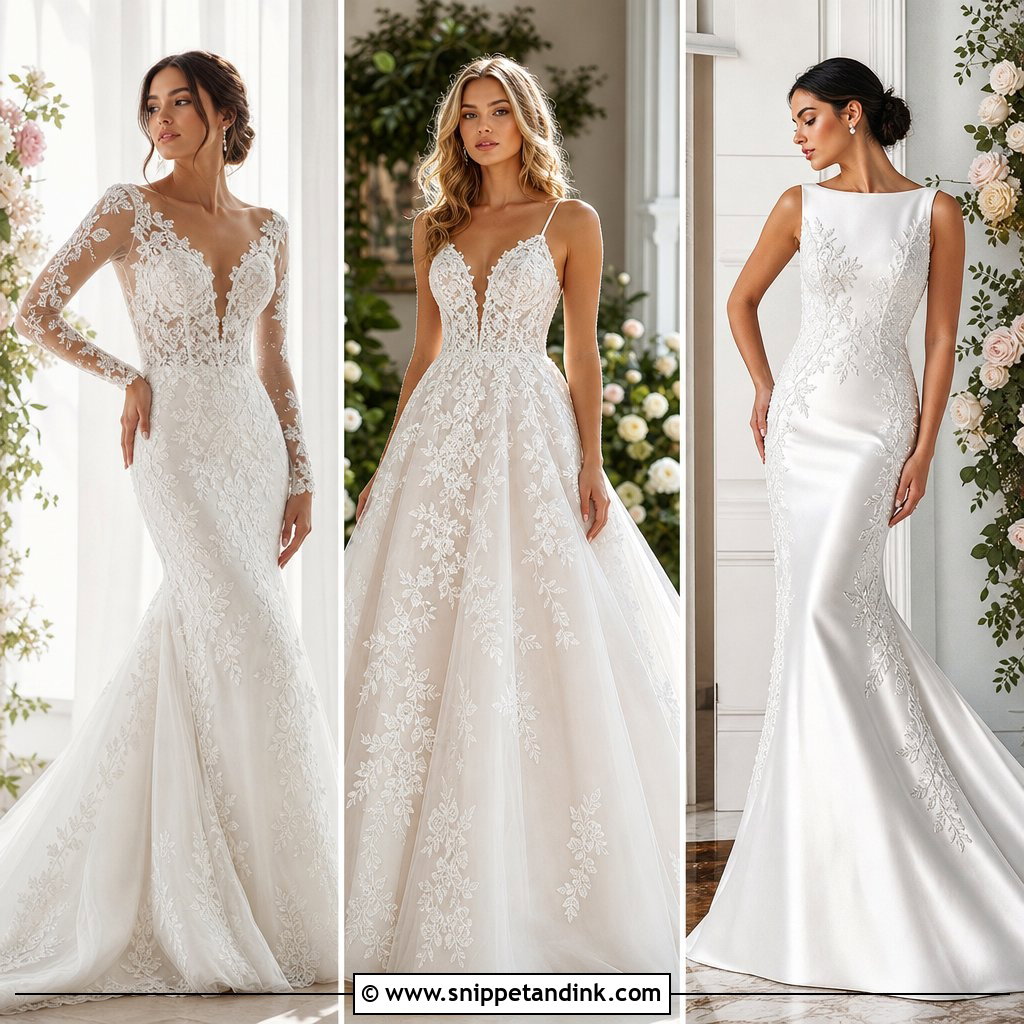
5. Long Sleeve Floral Lace Wedding Dress
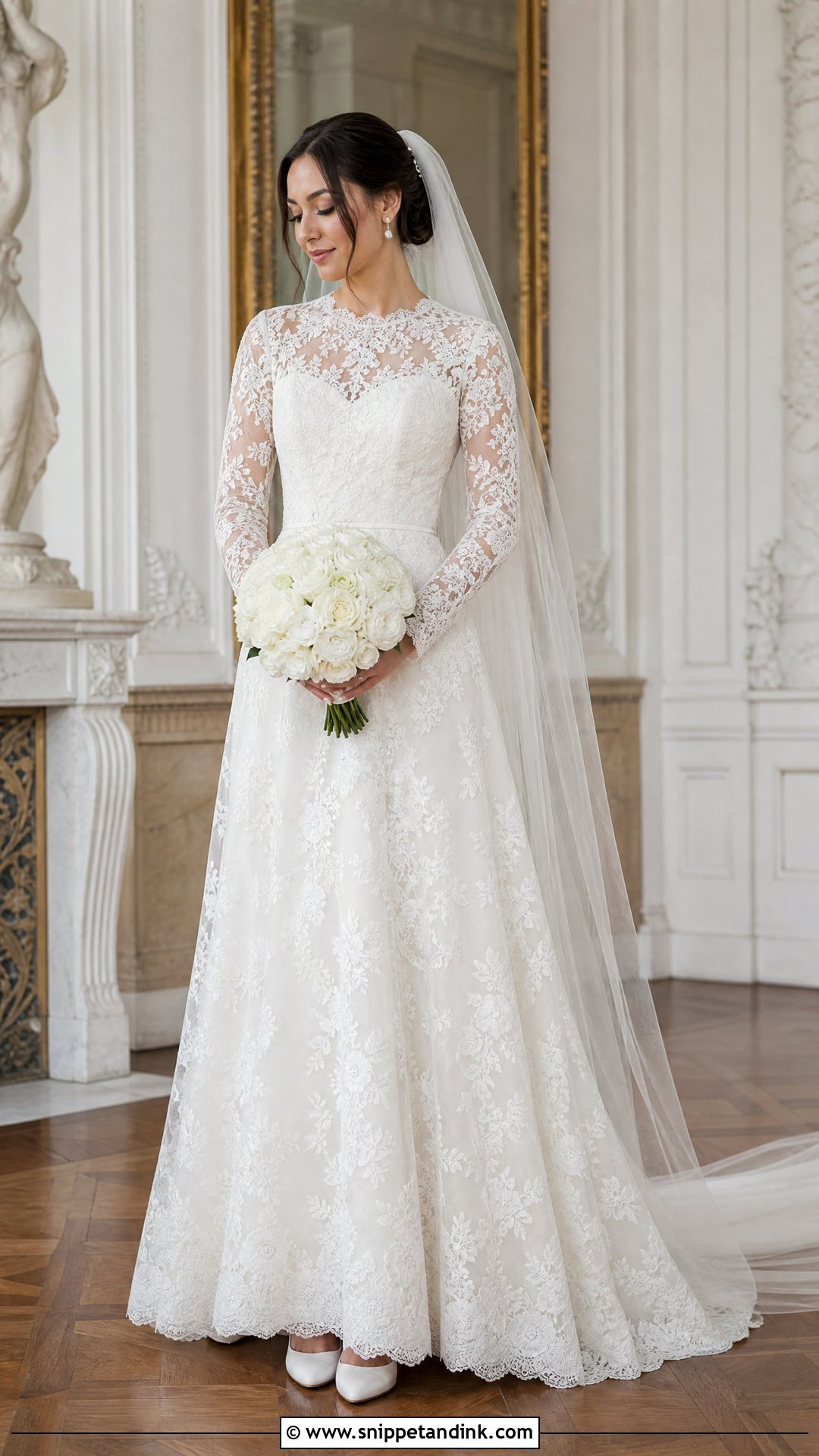
Lace sleeves are where fit problems show up first. At fittings I ask brides to hug someone and lift a glass, because sleeves cut too close at the elbow drag the lace motifs out of line and can strain the armhole seam. Pair them with a lightly structured A-line or fit-and-flare shape, closed-toe ivory pumps and understated earrings. Skip the necklace, since the bodice already carries plenty of pattern, and keep the bouquet to white roses or small seasonal blooms. A chapel-length veil anchored beneath a low bun completes it. Long lace is warm, so I’d reserve it for cooler months or air-conditioned historic venues, and a soft lining makes the hours far kinder on your skin.
6. Off Shoulder Floral Wedding Dress
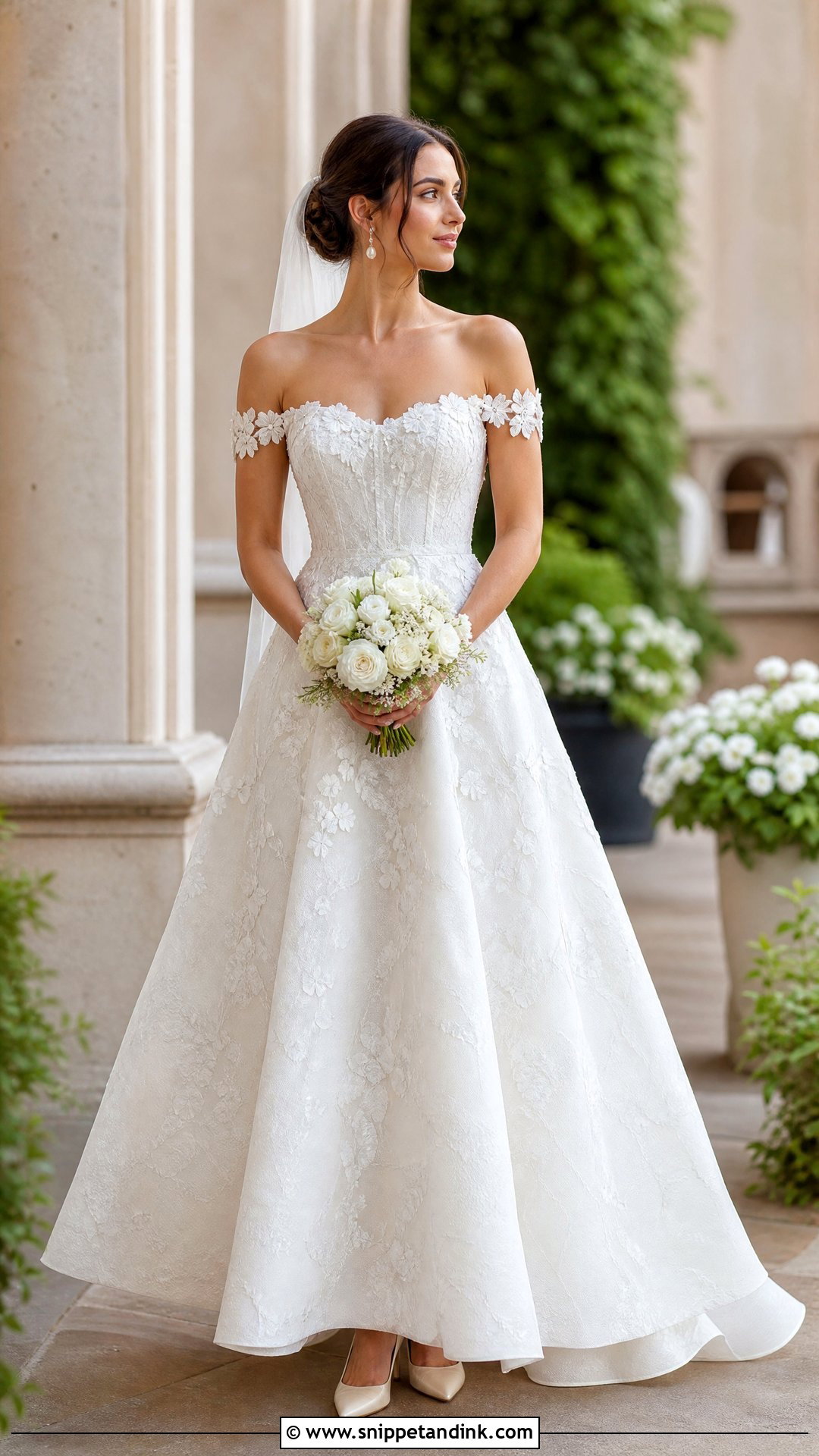
Off-the-shoulder bands are the detail I test hardest. Raise both arms as if hugging a tall relative: if the bands ride up or dig in, they’ll do the same through every greeting and on the dance floor. When floral appliqués trace the neckline and spill lightly onto the bodice, sleeves and dress read as one piece rather than an add-on. The skirt can be a flowing A-line or a fuller ball gown depending on the venue. Pearl drops, comfortable low heels and a veil tucked beneath a low chignon keep the collarbones visible, and a rounded bouquet with restrained greenery repeats the curve of the neckline.
7. Square Neck Floral Wedding Dress
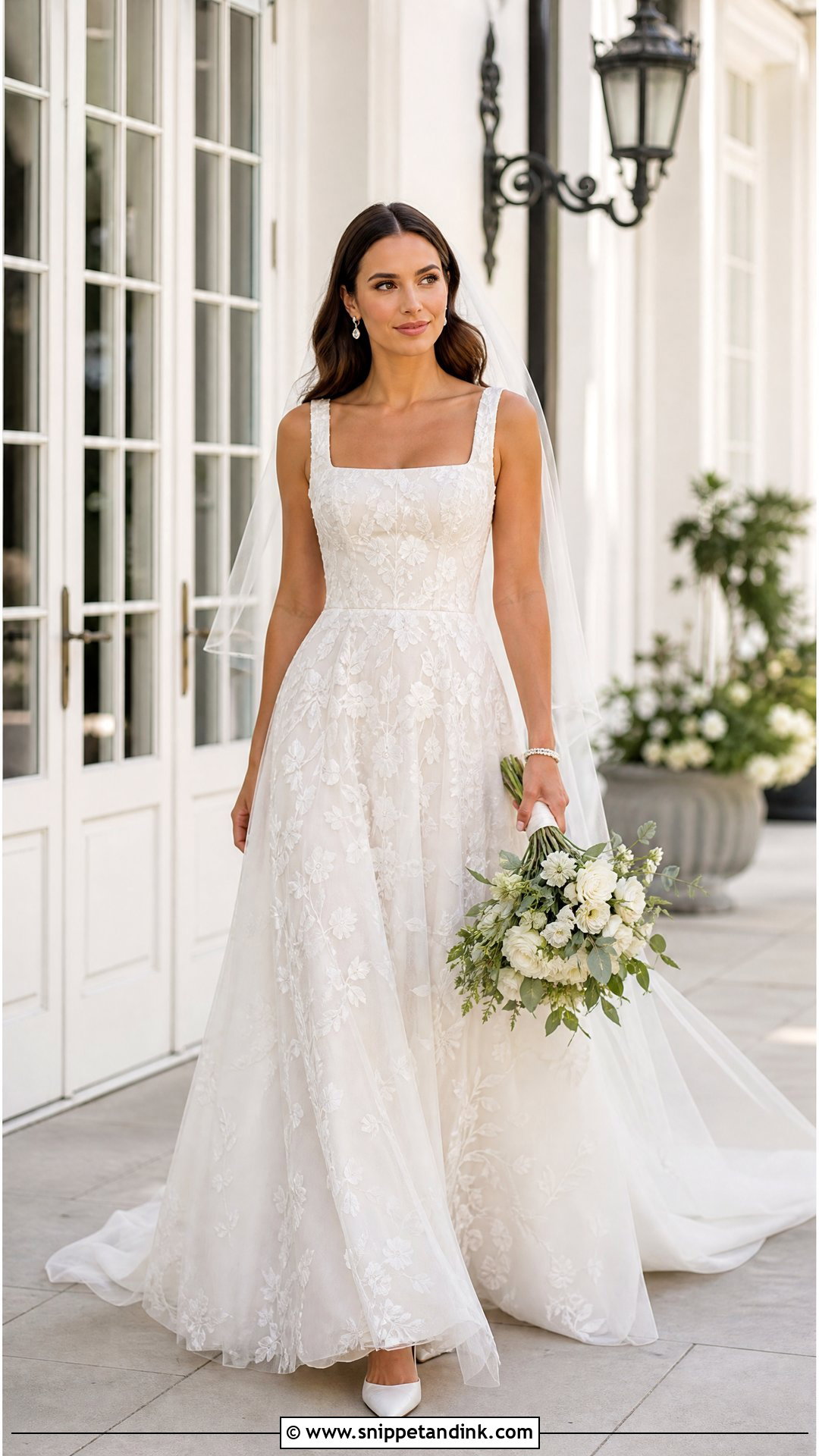
A square neckline gives you a crisp architectural line, and embroidered flowers or lace appliqués stop it feeling severe. I pair it with an A-line skirt and a defined waist so the proportions stay classic without looking old-fashioned. The rule I hold to here is no heavy necklace. A pendant sitting inside that square breaks the very line the neckline was cut to show. Short drop earrings, a fine bracelet, pointed pumps and a waist-length veil are enough, with a neat bun or half-up hair so the corners stay visible in photos. A medium bouquet of white flowers on fresh green stems suits garden ceremonies, country estates and museum venues.
8. Corset Floral Wedding Dress
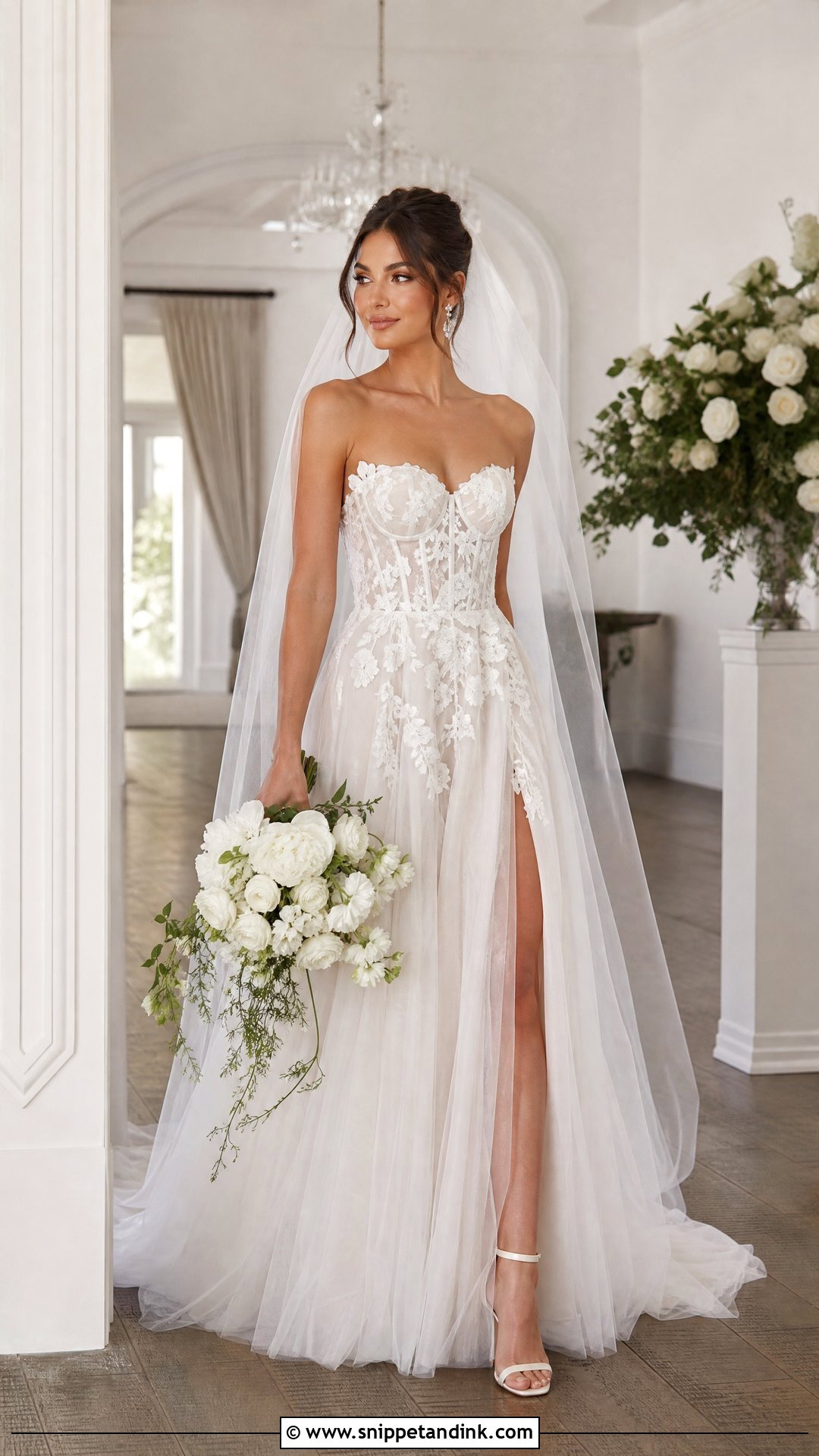
A corset bodice should hold you up through its internal boning, not through how hard someone pulls the laces. Overtightened lacing is the usual reason a bride feels breathless by the speeches. Floral appliqués across the cups and waist soften the seam lines and carry the eye down into an airy tulle skirt. During fittings, sit, walk and raise your arms; the bodice should stay put without you hitching it up. Satin heels, tiny crystal earrings, a sheer veil without a heavy border and a loosely gathered bouquet keep it light. Wear the hair up or swept behind the shoulders so the bodice stays the focus.
9. Floral Mermaid Wedding Dress
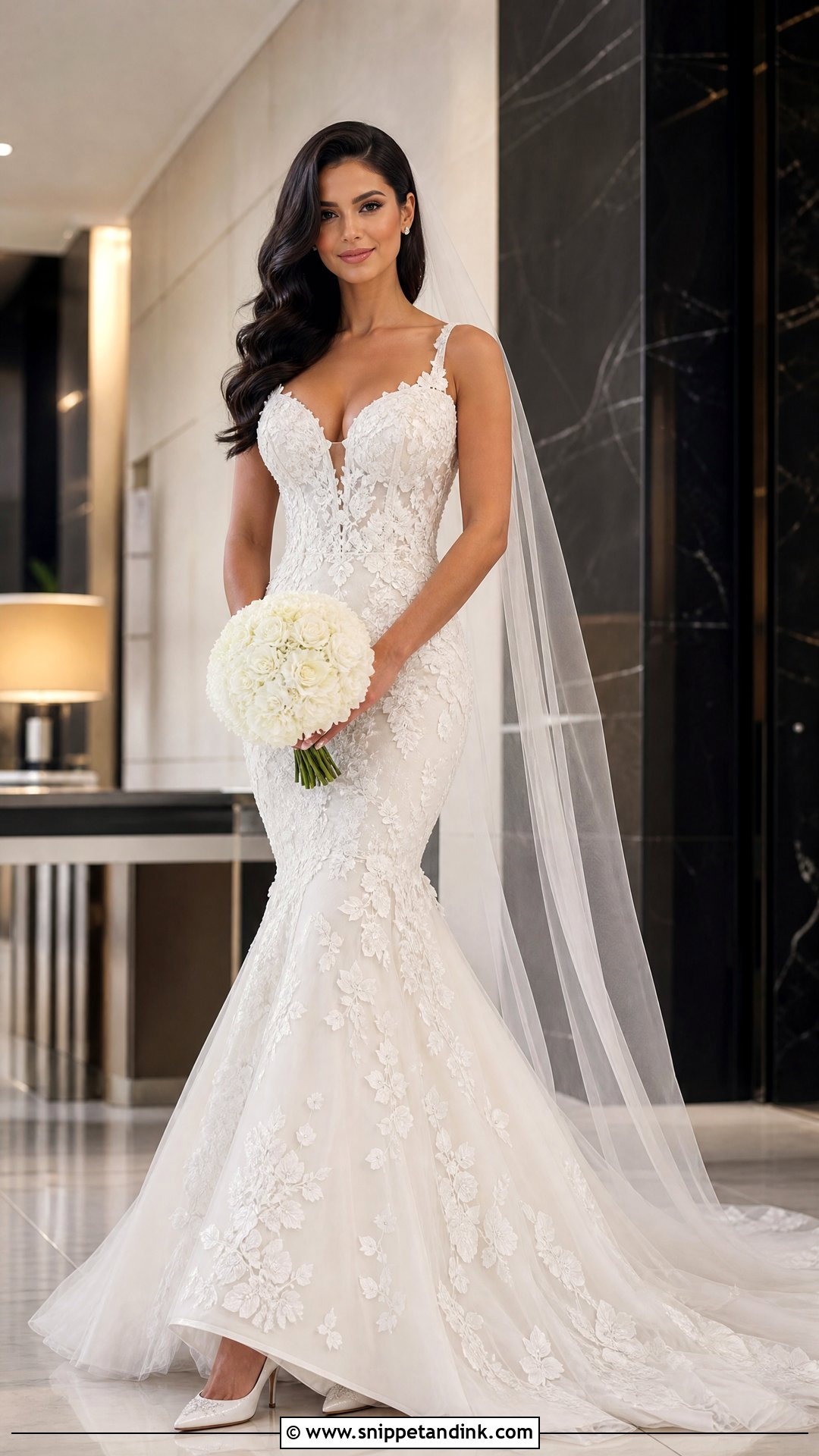
Mermaid gowns are the least forgiving on fit, so I plan the most alteration time for them. The dress should contour you down to the knee and still let you take a normal stride and sit at the head table without the seams straining. Appliqués concentrated at the bodice and hips that lighten toward the flared hem keep the skirt from looking bottom-heavy. Ask early whether the train can take a secure bustle for the reception. Supportive pointed-toe heels, a long plain veil, simple studs and a compact bouquet suit it, along with sleek waves or a low ponytail. Glamorous hotels and evening receptions are its natural setting.
10. Minimal Wedding Dress With One Flower
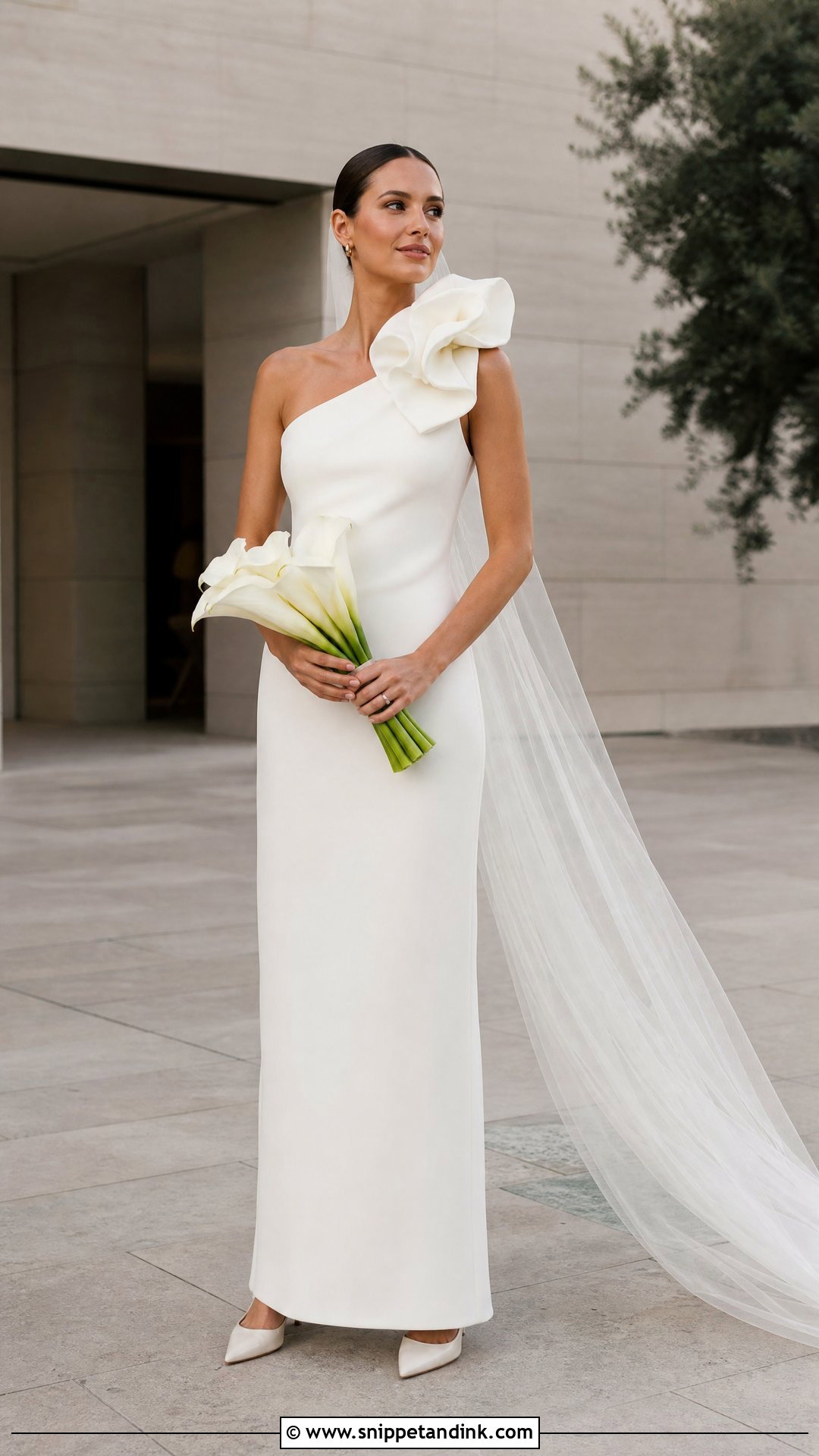
Sometimes one oversized flower makes a stronger impression than a skirt full of appliqués. On a clean column, sheath or softly draped dress, placement matters more than size: at the shoulder the bloom moves with your arm, at the waist it gets crushed every time you sit, at the neckline it frames your face. I always check how firmly it’s stitched, because a heavy flower held by a few tacks droops by evening. Minimalist heels, small metallic earrings, a narrow veil or detachable tulle scarf and a bouquet of a single flower variety keep things spare. Skip floral hairpieces; a smooth bun or glossy shoulder-length hair is cleaner. Courthouses, contemporary restaurants and architectural city spaces suit it.
11. Basque Waist Floral Wedding Dress
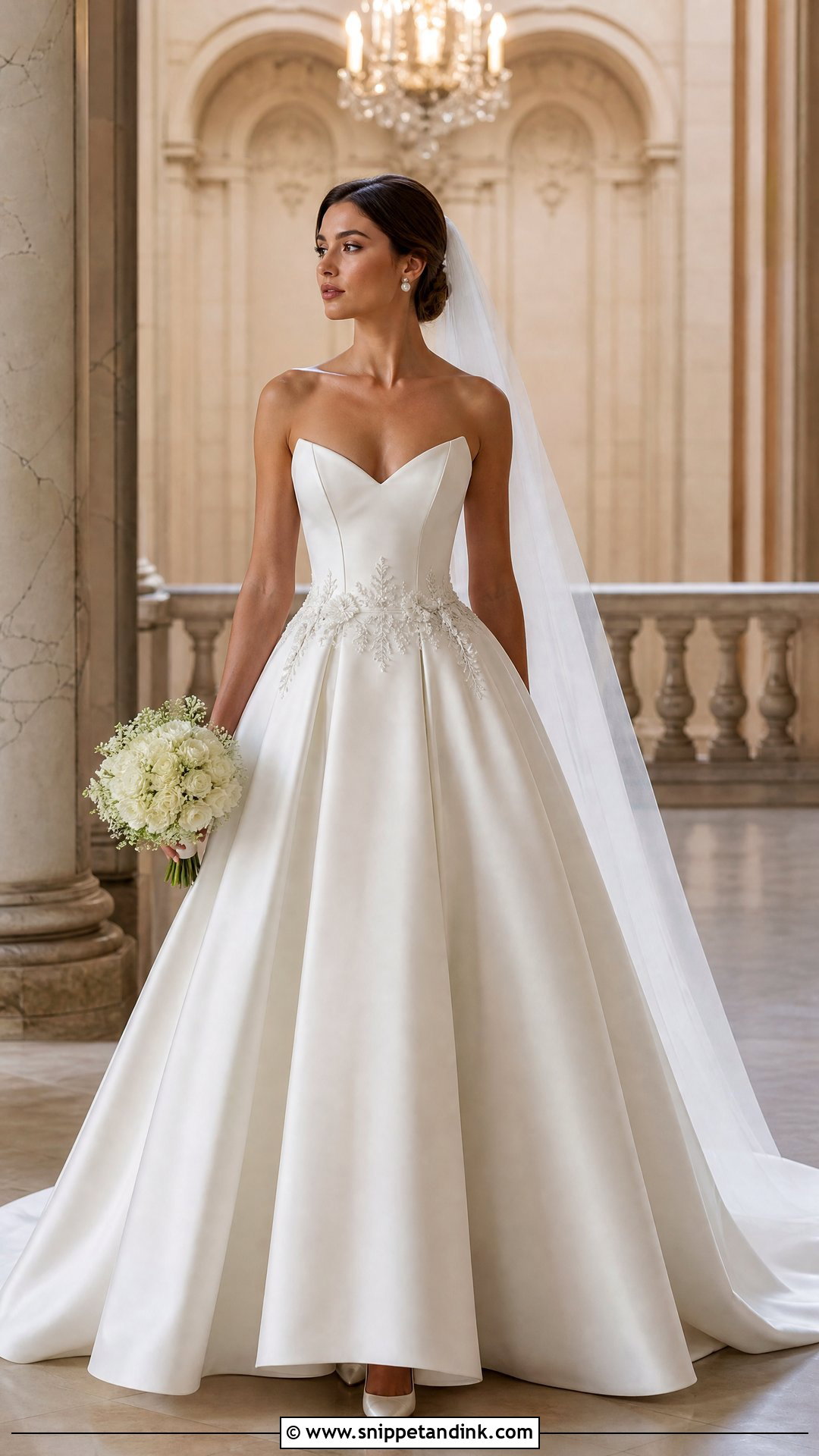
The pointed shape of a basque waist drops the line between bodice and skirt into a long V, and embroidery that follows the point pulls the eye to the center before fanning out over a full skirt. The thing I check is comfort when seated. If the bodice is cut even slightly long, that point presses into the stomach every time you sit, so test it on a chair at each fitting. Classic pumps, pearl studs, a long plain veil and a small structured bouquet match the formality. With a heavily embroidered bodice, leave out big jewelry and hair flowers and choose a softly sculpted updo. Grand halls and traditional ballrooms give the skirt the space it needs.
12. Floral Jacquard Wedding Dress
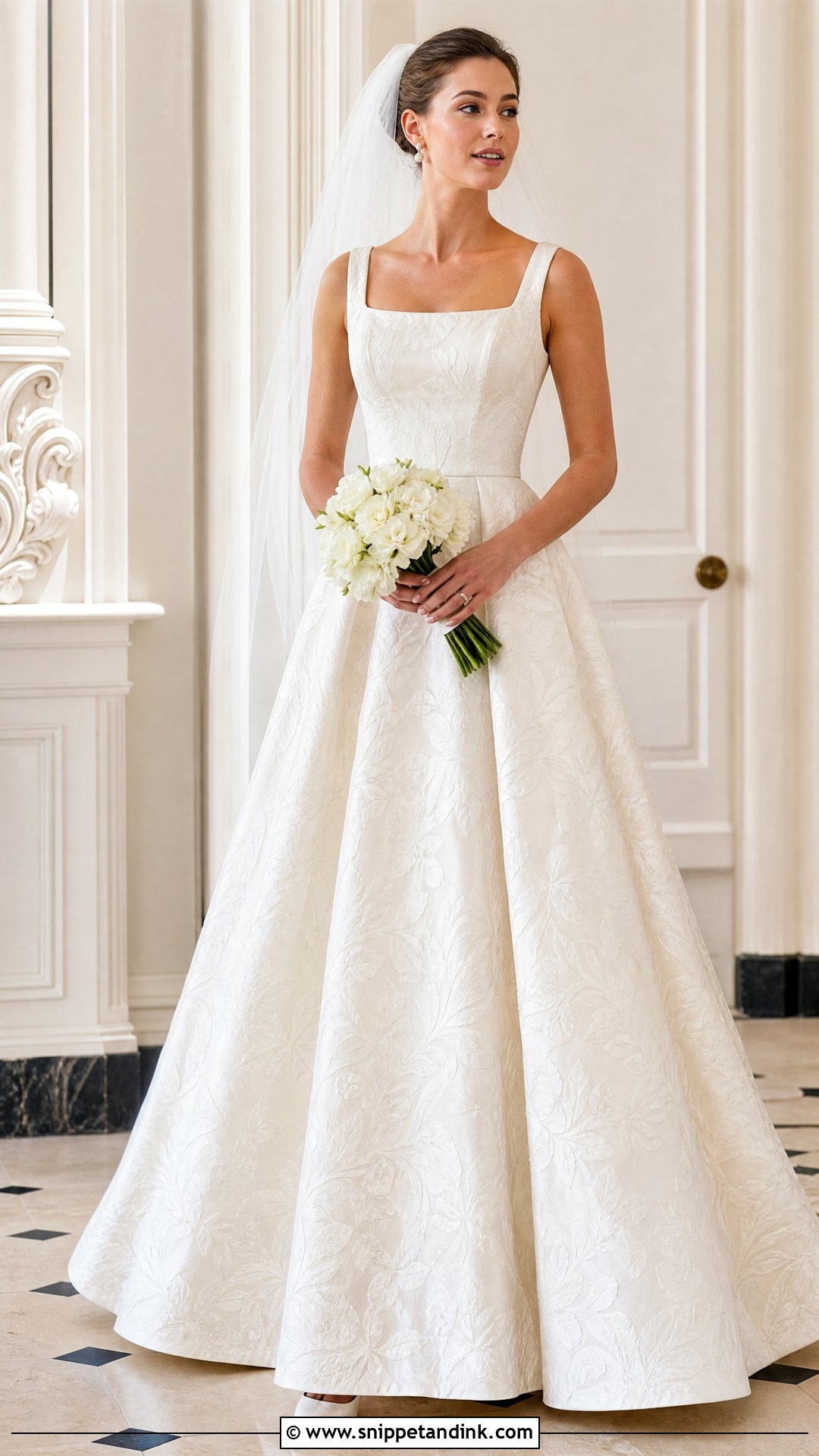
Jacquard has its flowers woven into the cloth, so nothing is raised to snag, crush or shed. The pattern appears and fades as light crosses it, which looks rich in candlelight and quite subtle in flat daylight. Structured strapless or square-neck ball gowns show it best. Jacquard also has more body than chiffon or tulle, which makes it warmer and heavier, and I wouldn’t put it in an outdoor summer ceremony. Leave off a decorated belt because it cuts across the continuous weave. Pointed satin shoes, pearl earrings, a clean veil, a neatly tied bouquet and a smooth updo keep it formal for hotels and stately historic rooms.
13. Organza Petal Wedding Dress
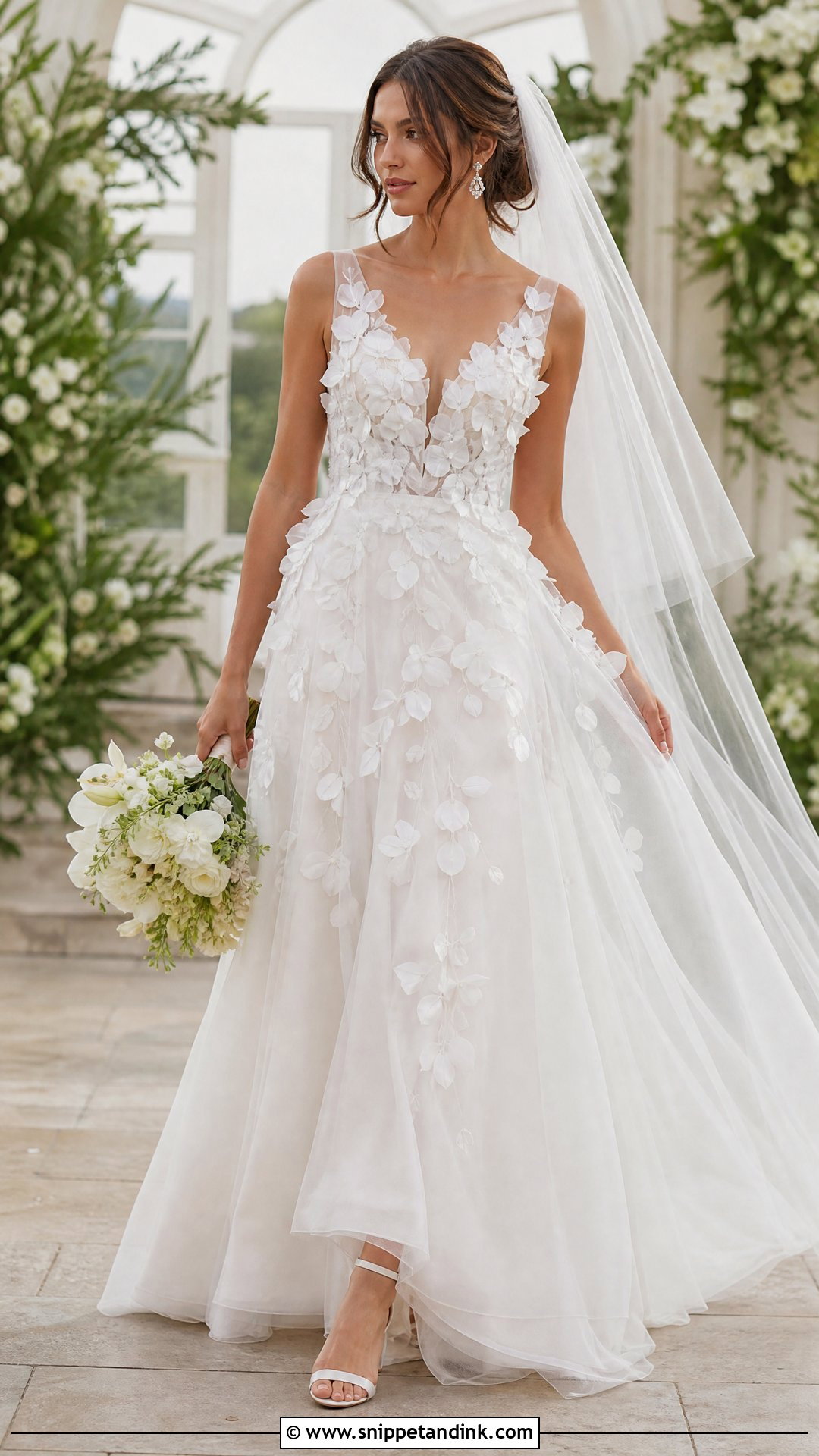
Organza petals look as if they’re floating, but they crush easily, and the damage usually happens in the car rather than at the venue. Look for petals concentrated at the bodice, one shoulder or the lower skirt instead of covering every surface, on a softly fitted A-line that lets them move. Ask the boutique exactly how they want the gown packed and steamed. Most petals recover with gentle steam held a few inches away; pressing them flat with an iron ruins the shape. Delicate ankle-strap heels, small crystal earrings, a plain tulle veil and a light white bouquet with minimal greenery keep the airy feel, with loose waves or a relaxed low bun. Bright gardens show it off.
14. Boho Wildflower Wedding Dress
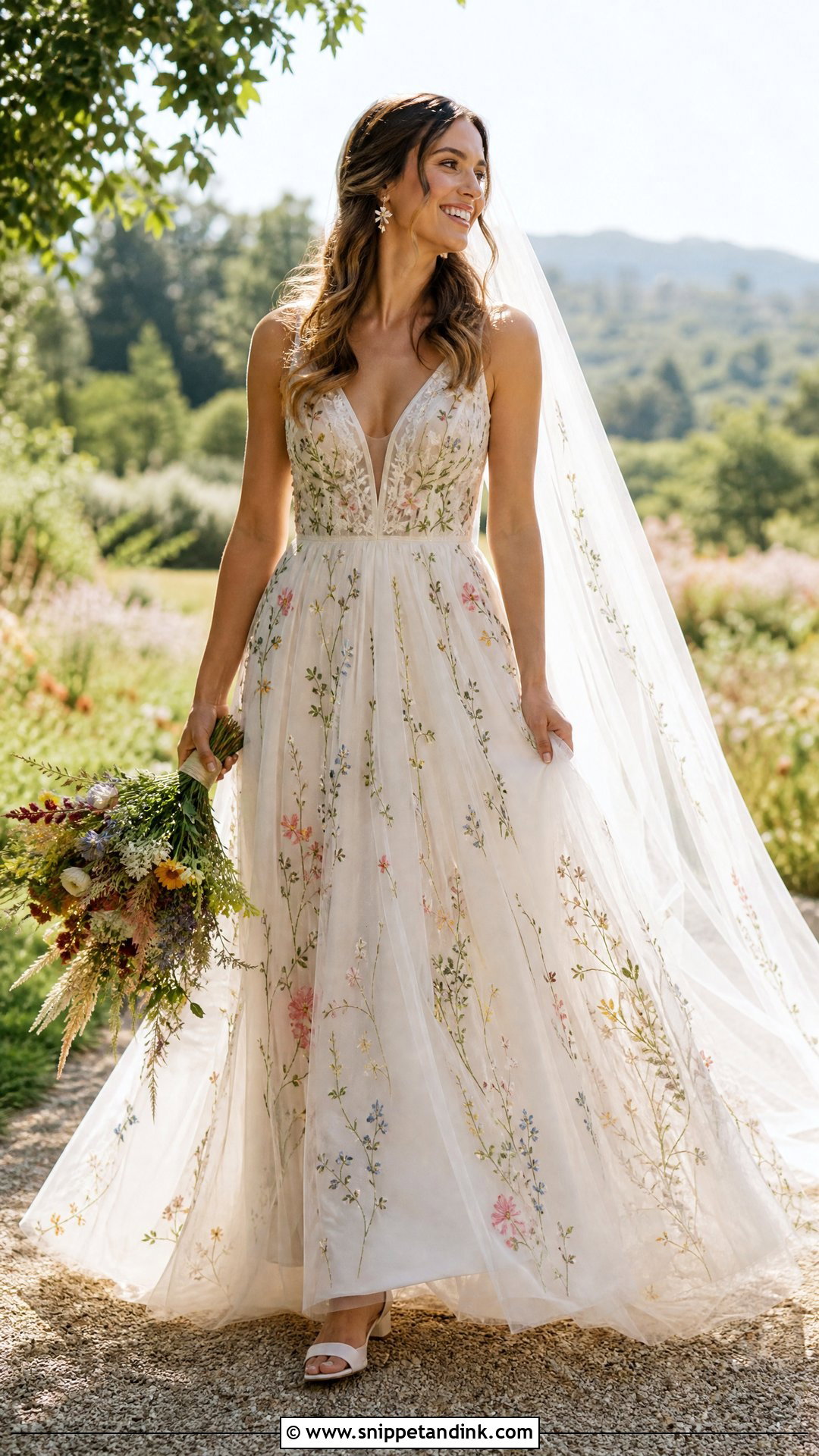
A boho wildflower wedding dress is the easiest floral gown to live in for a long outdoor day. Soft tulle, flowing chiffon or lightweight lace scattered with small embroidered stems moves well and forgives a bit of creasing, while a gently fitted bodice stops it looking like a nightdress. On farm or meadow ground, swap heels for low blocks or polished flats; stilettos sink and you’ll stop enjoying yourself within the hour. Repeat a few flowers from the embroidery in a loose bouquet, add a light fingertip veil and small botanical earrings, and wear the hair in soft waves or a braided updo. Go easy on rustic accessories. One is charming; four starts to look like a costume.

15. Tea Length Floral Wedding Dress
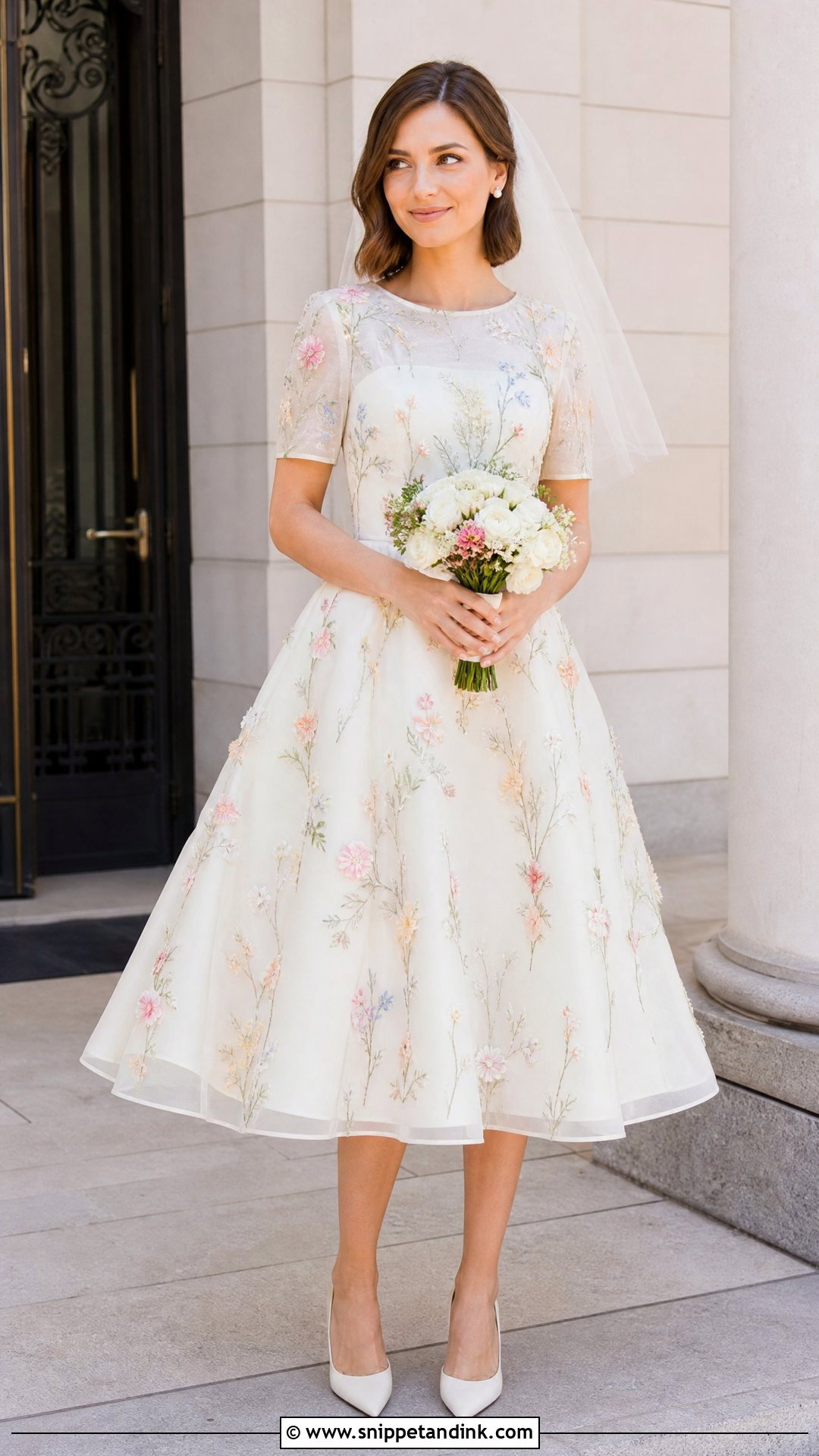
Tea length puts your shoes on show, so I treat them as part of the dress from the first fitting. The hem usually lands between knee and ankle, and an inch either way changes how the legs and shoes look, which is why you should bring the actual pair to alterations. Embroidered flowers or small appliqués spread evenly over an A-line skirt keep the shape lively. Pointed pumps or slingbacks in ivory or a soft coordinating shade, a short veil, pearl studs and a compact bouquet keep the proportions right, with smooth waves or a neat updo. It’s a strong pick for a courthouse, a daytime ceremony or a reception built around dancing.
16. High Neck Floral Wedding Dress
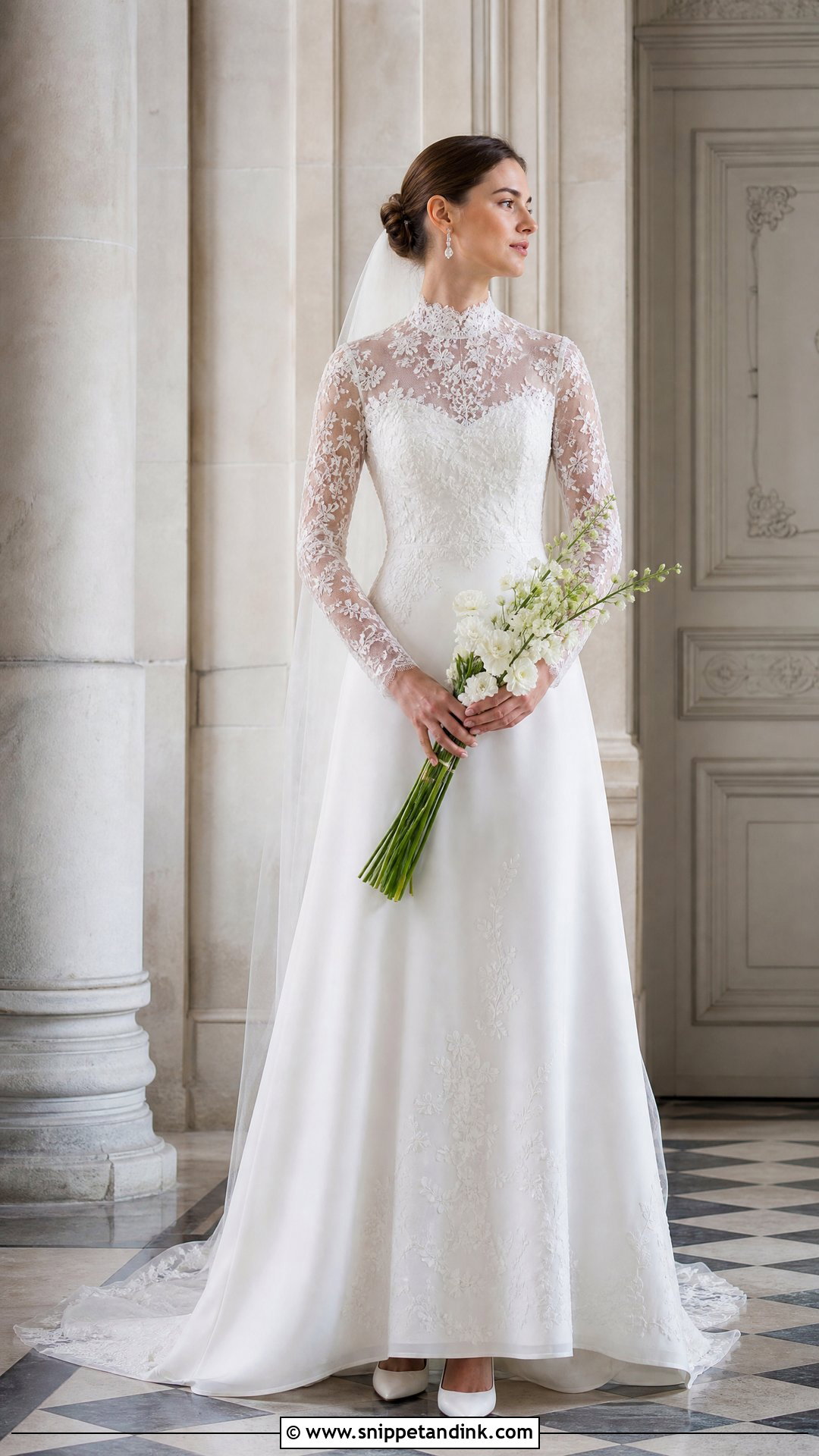
A high floral neckline frames the face, and sheer embroidered lace keeps it from feeling heavy. The fit check I never skip is turning the head. A collar that sits fine while you look straight ahead can rub the skin raw by evening if it catches every time you glance over your shoulder. Balance the detailed top with a smooth A-line, column or fit-and-flare skirt. No necklace; drop earrings do the work. Closed-toe pumps, a veil set below a sleek bun and a bouquet with long, clean stems echo the vertical line. Formal ceremonies, historic buildings and cooler seasons suit it.
17. Floral Cape Sleeve Wedding Dress
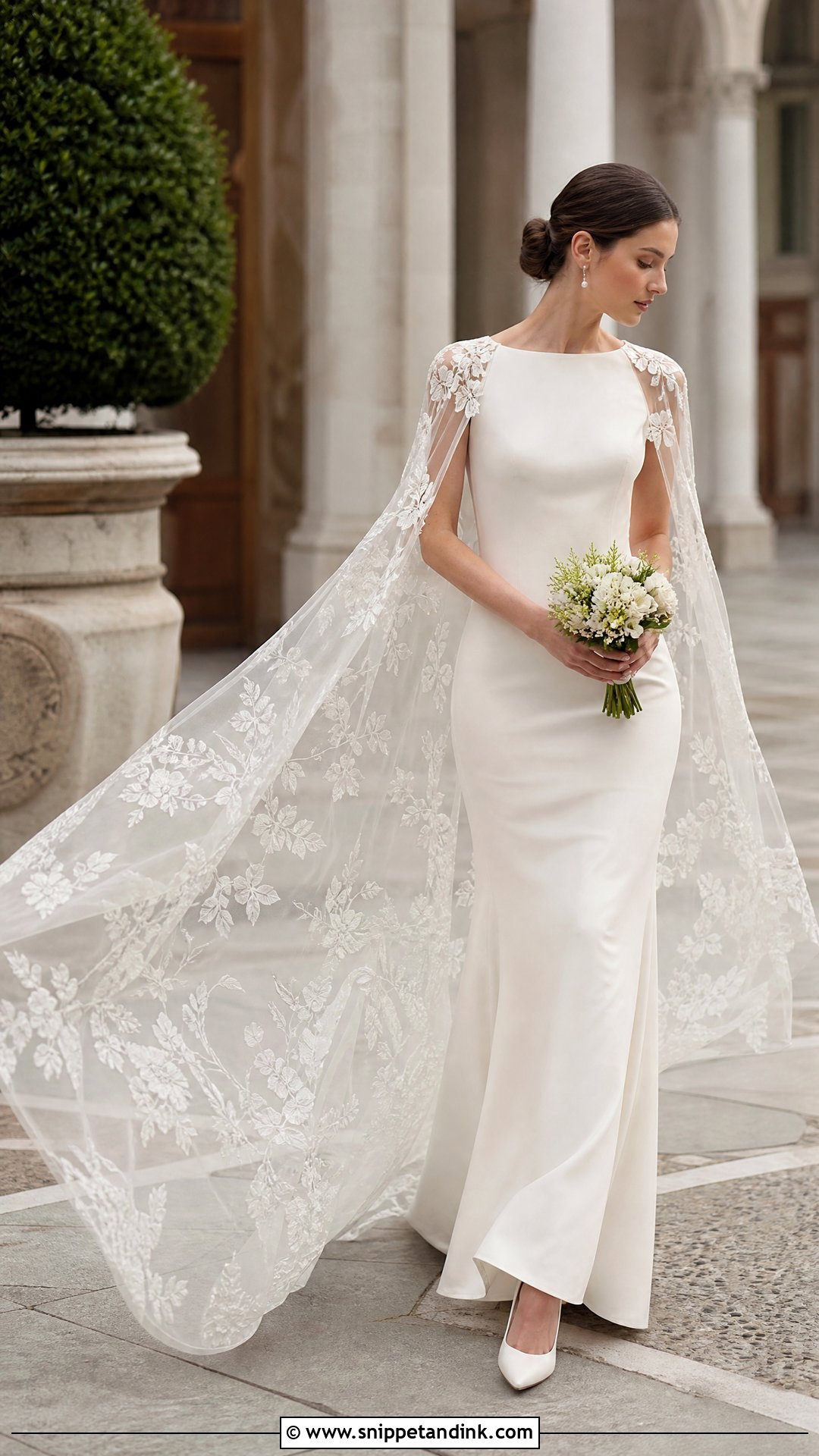
A floral cape gives you coverage and movement without committing to fitted sleeves, which helps if sleeves never feel comfortable on you. Layer a sheer cape embroidered along the shoulders, edges or train over a clean sheath or A-line base. Capes usually fasten at the shoulder seams or with hooks at the neckline, and I check that the weight of the embroidery isn’t dragging the neckline backward when you stand straight. In most cases you can skip a separate veil, since the cape already frames the back. Classic pumps, small earrings, a smooth low bun and a small bouquet that doesn’t hide the embroidery finish it. Choose a venue with room for the fabric to trail.
18. Floral Wedding Dress With Detachable Overskirt
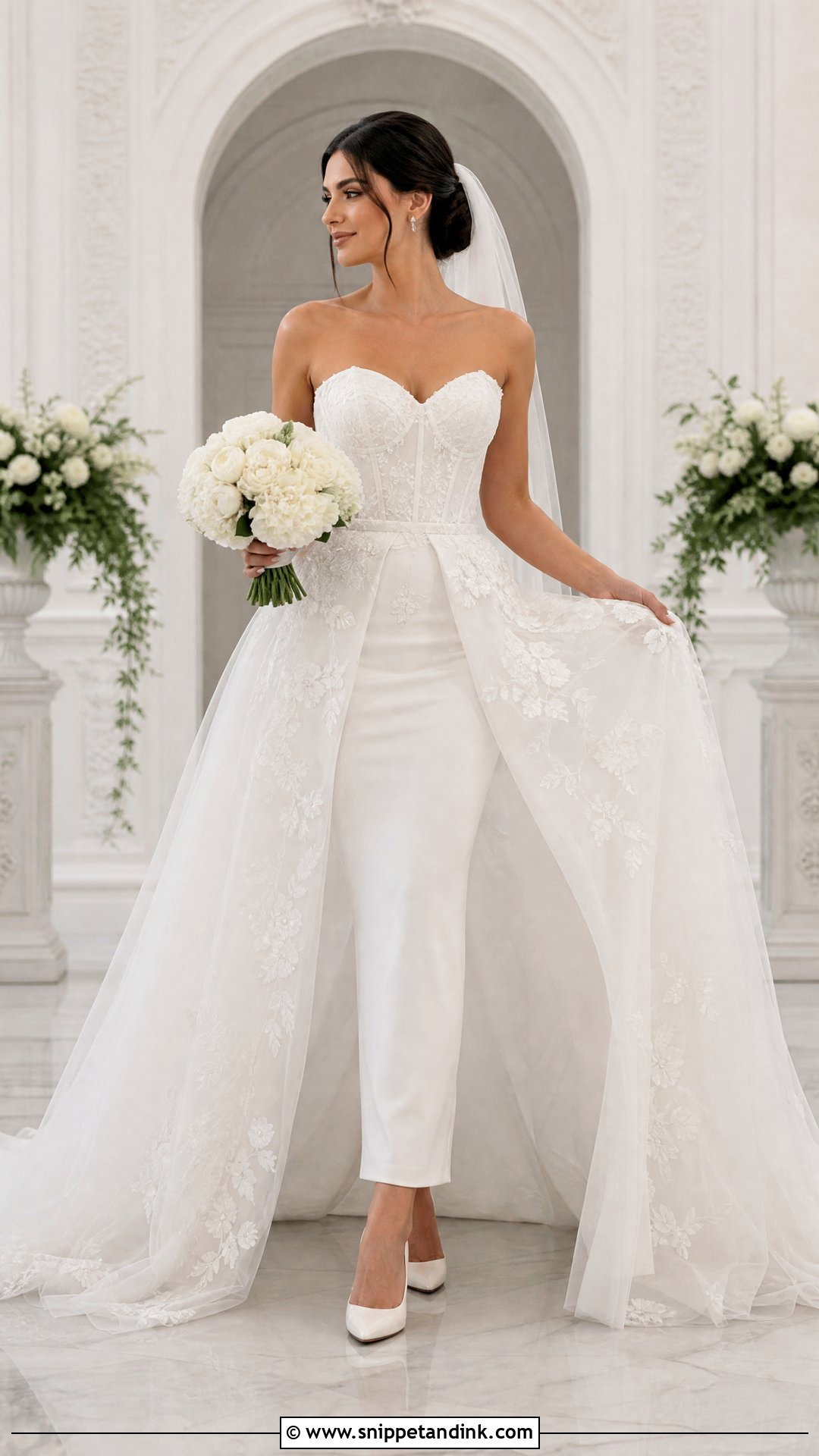
A detachable floral overskirt gives you two silhouettes from one gown. The base is a fitted column or fit-and-flare; the full tulle overskirt with floral appliqués goes on for the ceremony and comes off after photographs. Have your seamstress hide the fastenings, then teach one trusted helper how to remove it. I’d rehearse the change once before the day, because hooks buried under appliqués are fiddly with nervous hands. Comfortable heels, subtle earrings, a simple veil that suits both versions and a neat bouquet keep the ceremony look from tipping into overdone. You get a dramatic entrance and a streamlined second look without purchasing another dress.
19. Floral Train Wedding Dress
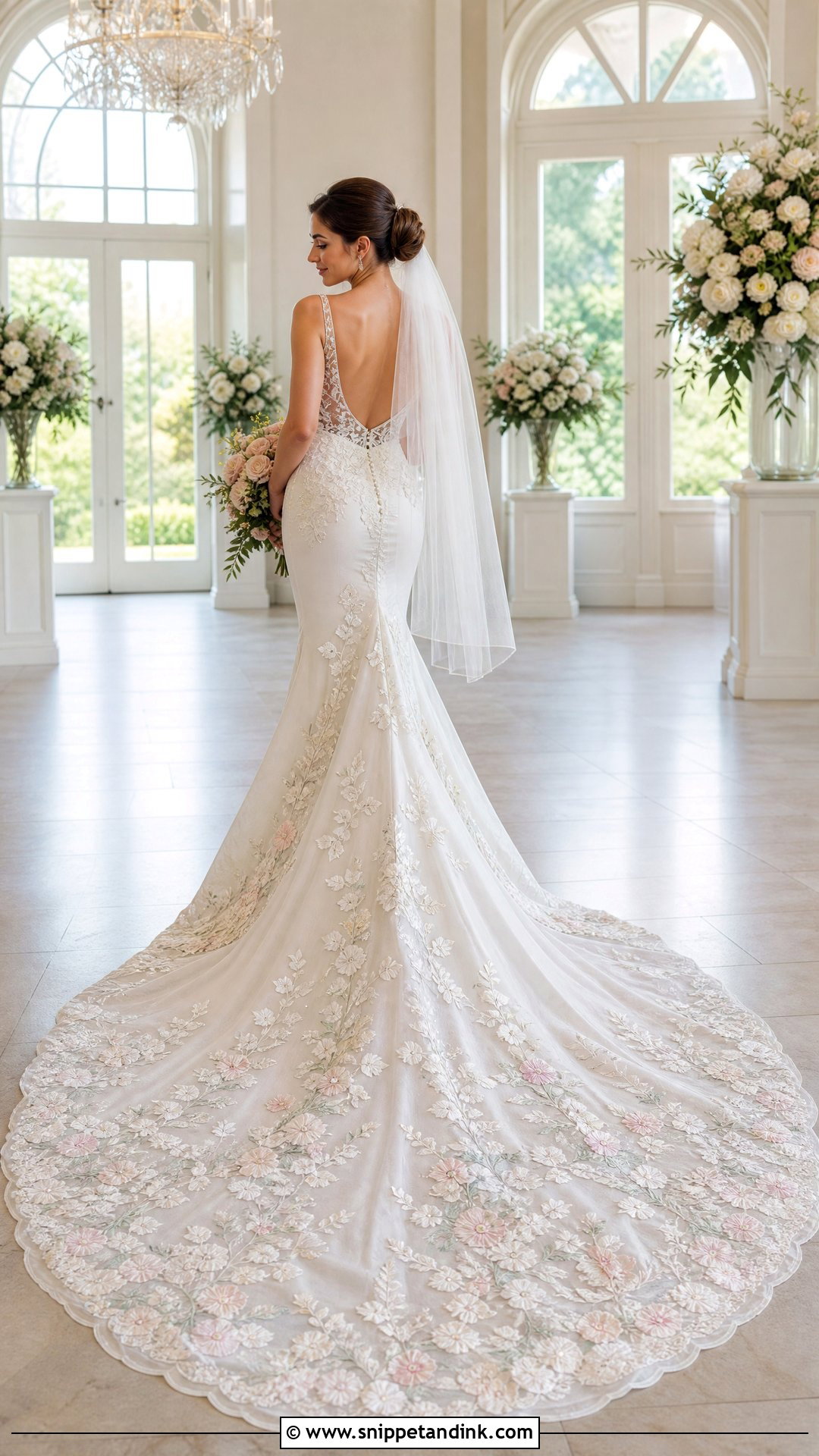
Embroidery that starts lightly at the hips and builds toward the hem makes the back of the dress the main event, which is exactly where guests look during the ceremony. Keep the bodice fairly plain to balance it. The veil should either stop short of the train or be sheer enough to show the pattern through it, and a polished updo keeps the back clear. Carry a modest bouquet so it stays out of rear-facing portraits. Practise walking and turning before the day. A floral train needs a strong bustle with several attachment points, because appliqués add weight and a weak bustle drops the moment dancing starts.
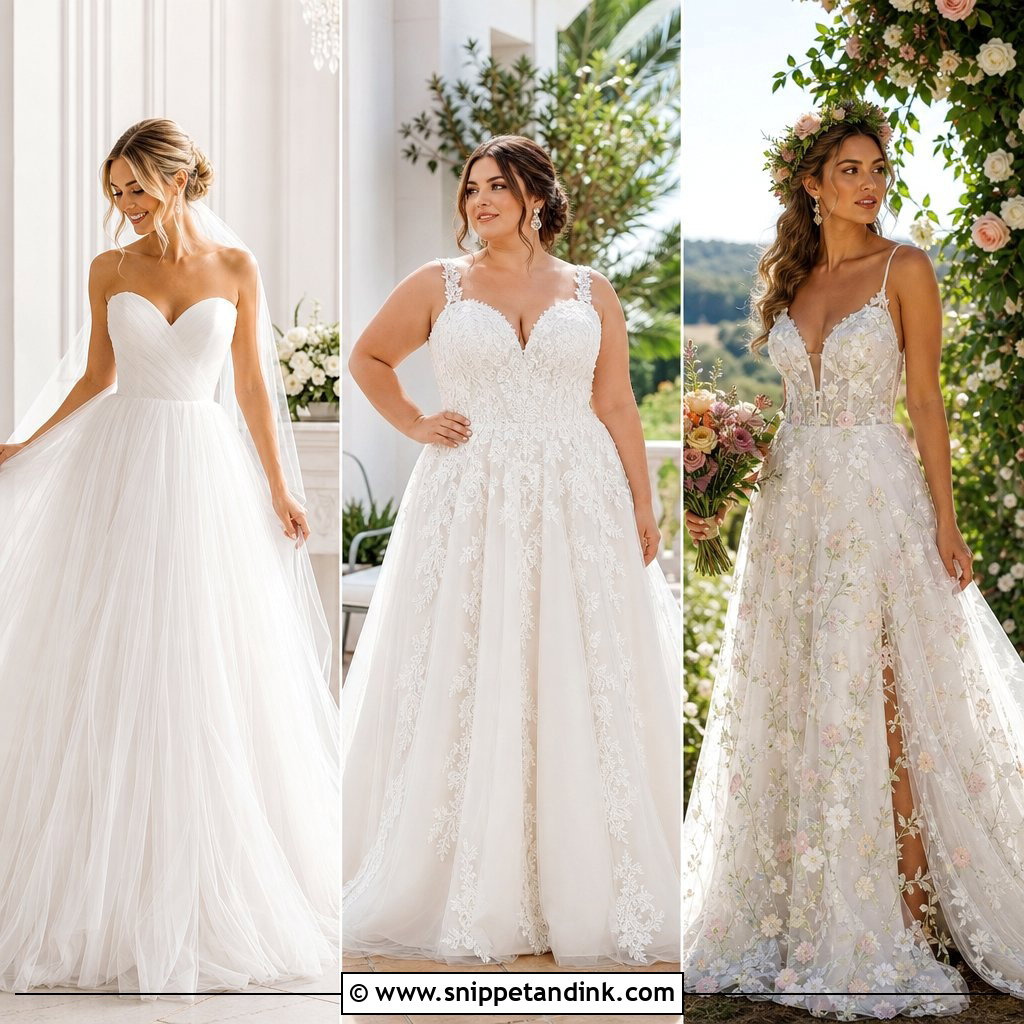
20. Plus Size Floral A-Line Wedding Dress
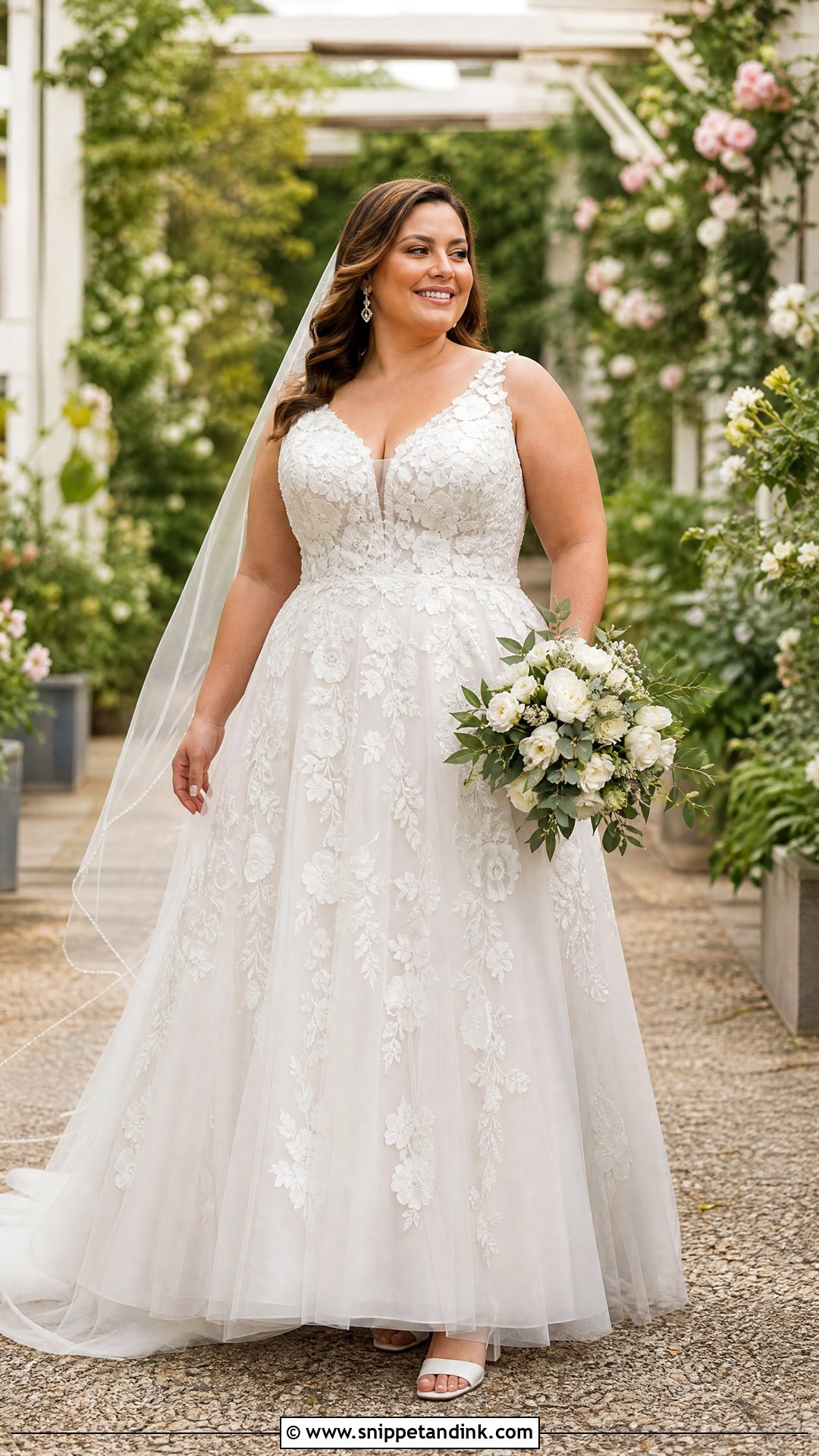
In a plus-size floral A-line, construction matters more than any trend: proper lining, a bodice that supports without constant adjusting, and straps or cups placed where your body actually needs them. Appliqués at the neckline and waist give definition, then flow naturally down the skirt. At every fitting I ask for movement tests. Sit, bend, hug and lift your arms; if anything shifts, the boning, cups or straps can be adjusted. Supportive block heels, medium earrings, a fingertip veil and a bouquet scaled to the gown look balanced. Choose your hair by the neckline, not by rules about your size. The goal is fit, proportion, comfort and your own taste, never hiding.
Why Appliquéd Gowns Take Longer at the Seamstress
A plain satin hem can be shortened in an afternoon. A hem edged with lace flowers cannot. The seamstress unpicks the motifs, takes the length out of the skirt underneath and then hand-stitches each flower back so the border looks untouched. Taking in a side seam on a heavily appliquéd bodice works the same way. That handwork is slower and usually costs more, so I’d book the first fitting roughly two to three months before the wedding rather than leaving it to the last few weeks.
Ask the boutique whether spare motifs came with the gown. Many lace dresses ship with a few extra flowers, and they’re useful for covering a bustle hook, softening a seam that had to move or filling a gap at a new hemline.
Cars, Chairs and Hugs on the Day
Most damage to floral gowns happens away from the aisle. A few habits I pass on to every bride wearing raised flowers:
- Travel with the skirt lifted over your lap and the seatbelt kept off any dimensional petals.
- Spread the skirt behind you before sitting, so you aren’t pinning appliqués flat under your weight for an hour of dinner.
- Pack a small kit with a needle, ivory thread and clear nylon thread for reattaching a loose petal.
- Revive crushed organza or tulle flowers with a handheld steamer held several inches away, never an iron.
Wearing Flowers From Bodice to Hem
Floral detail comes in very different weights. Raised petals bring drama, embroidered wildflowers bring color, lace gives softness, and jacquard or a single rosette suit brides who want restraint. Whichever one catches you, judge it on placement, fabric weight, support and how easily you can move, then keep the veil, jewelry and bouquet quieter than the dress. Wear the whole outfit at your final fitting, shoes included, and spend ten minutes sitting, walking and hugging in it. If it still feels good after that, it will feel good at the reception.
You'll Like These Ideas:






Leave a Reply