
A convertible dress gives you a ceremony gown and a reception look without buying two separate dresses. The change can be a removable overskirt, detachable sleeves, a train, a cape, a topper or a short dress hidden under a full skirt. Done well, each version keeps the overall bridal wardrobe connected, and the second look makes dinner and dancing far easier. Done badly, you spend the reception tugging at a waistband that never sat flat. I judge every convertible piece on two things: how the base dress looks with nothing attached, and how fast the change happens. The twenty ideas below are written with both in mind.
Snaps, Hooks and Buttons Under a Convertible Gown
Every transformation in this list depends on hardware you never see. Before I look at the fabric of a convertible piece, I turn it inside out and check how it fastens, because that decides how the base dress looks afterwards and how long the change takes.
- Covered snaps: the most common choice for overskirts, sleeves and capes. They are fast and flat, but each one needs a reinforced patch inside the base dress or it pulls the fabric when weight hangs from it.
- Hook-and-eye bars: stronger than snaps and good for heavy satin or Mikado overskirts. They take longer to undo, so your helper needs practice.
- Buttons and loops: the prettiest option, but the slowest. Fine for a bolero or coat, frustrating for a skirt with twenty loops.
- Hook-and-loop tape: I avoid it near tulle, lace or chiffon. It grabs the fabric, pulls threads and makes a ripping sound mid-reception.
Ask the shop which method each piece uses and whether the base dress has been finished to hide the attachment points once they are empty. Exposed snaps on a bare bodice spoil the second look.
1. Detachable Overskirt Wedding Dress
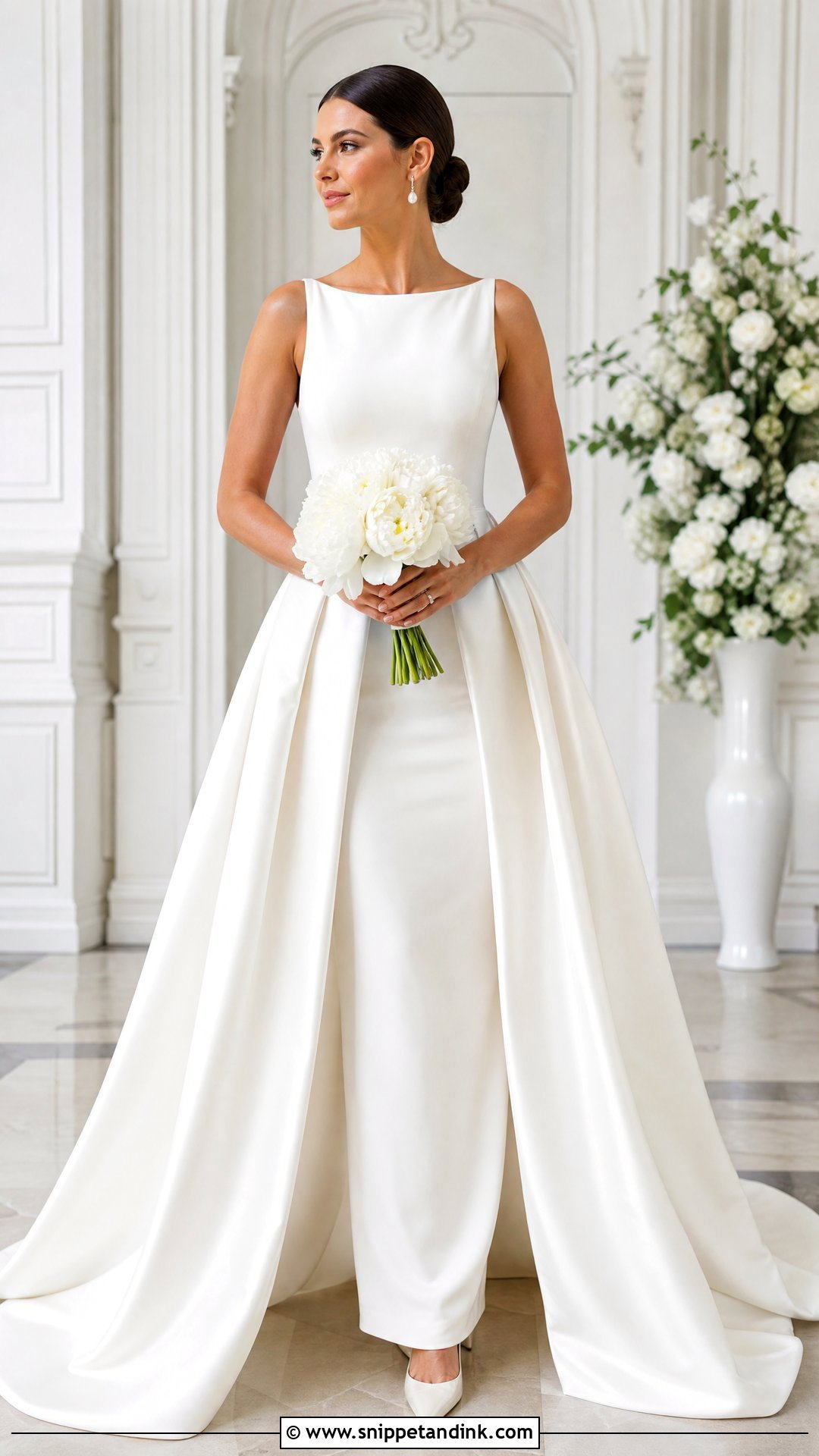
An overskirt gives you the full aisle silhouette without wearing a heavy ball gown all evening. Underneath, choose a fitted crepe, satin or lace dress that moves comfortably on its own. The overskirt in matching fabric goes on for the ceremony, portraits and the entrance. Open-front versions show the slim dress beneath; closed ones read as a single gown. Pointed pumps, pearl earrings and a structured bouquet keep the first look formal. The detail I check hardest is the waist. Overskirts fasten with hooks or snaps over the base dress, and if those are bulky they leave a ridge you can see once the skirt is gone. Ask for flat hardware set inside a waistband.
2. Removable Sleeve Wedding Dress
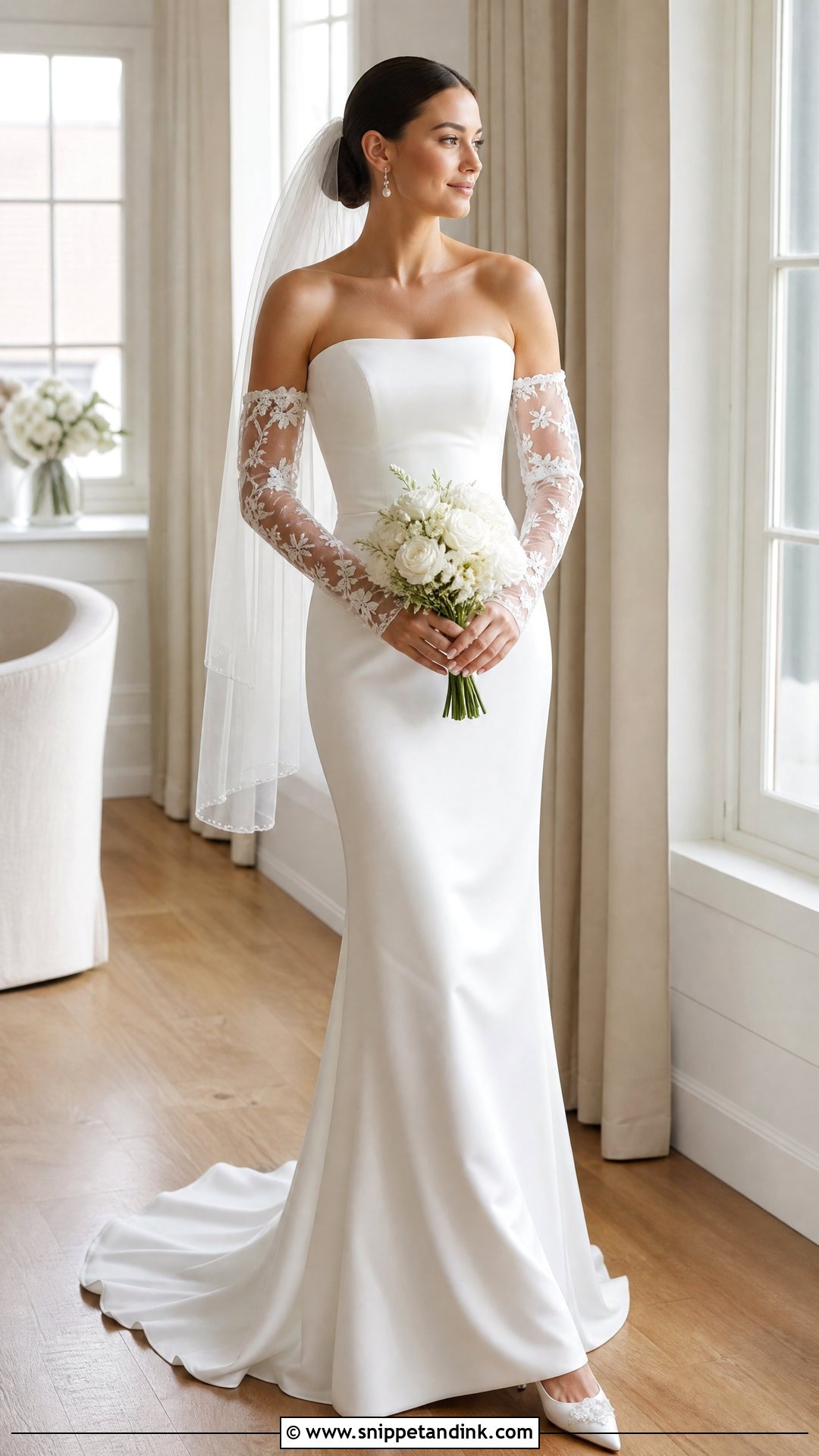
Want long sleeves for the vows and bare arms for the dance floor? Removable sleeves do exactly that. Fitted lace adds texture, sheer tulle stays soft, and puff sleeves bring volume; whichever you choose, repeat a detail from the bodice so the sleeves look original to the dress. For the ceremony I add a fingertip veil, small drop earrings, closed-toe heels and a small bouquet, then swap to bolder earrings or a cuff once the sleeves come off so the second look feels finished. The underarm is where these fail. That joint moves constantly, and a loose snap there shows the moment you wave or hug.
3. Detachable Cape Wedding Dress
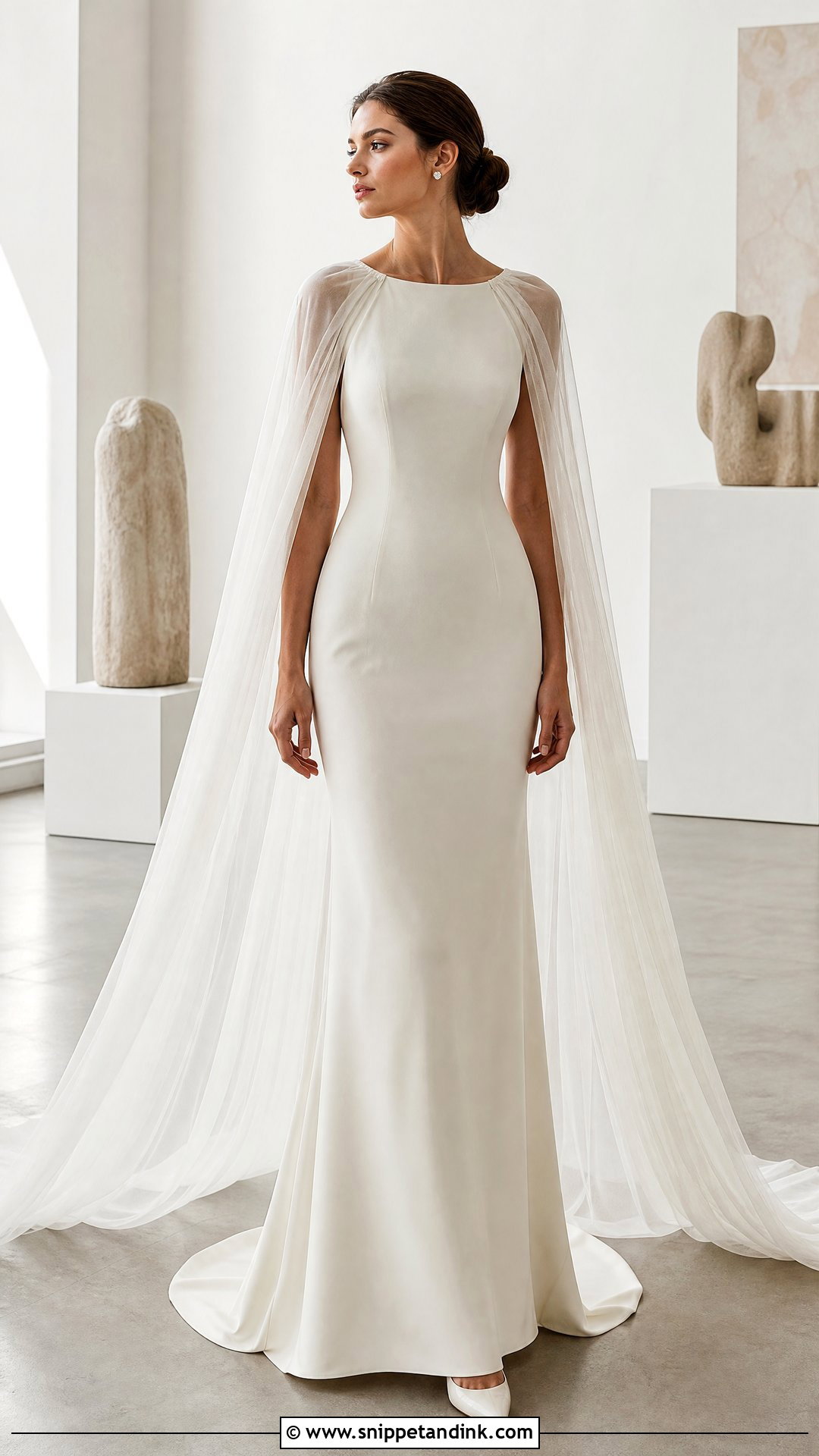
A cape gives you movement and length without a veil. Pair a slim column or A-line gown with a floor-length cape fastened at the shoulders or neckline; tulle keeps it airy, satin or crepe makes it architectural. Studs, polished pumps and a low bun keep the neckline clear. Take it off before dinner and add a jeweled clip or stronger earrings. Two practical checks: the cape must clear the hem when you walk, or you will step on it climbing stairs, and it must not hang from delicate straps. I prefer invisible snaps sewn to a reinforced point over ribbon ties, which slip and knot.
4. Mini Wedding Dress With Removable Overskirt
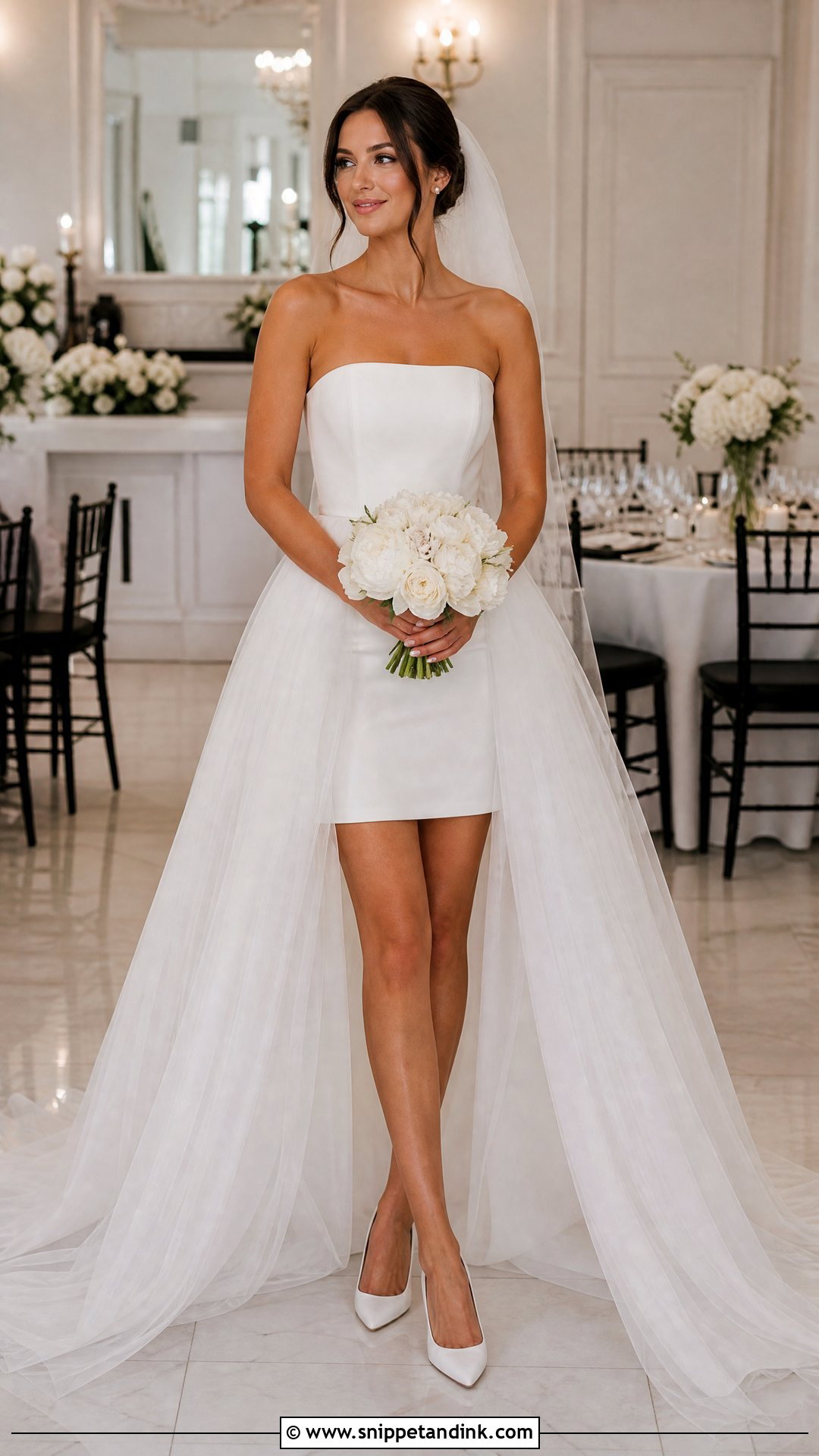
This is the biggest reveal on the list. Down the aisle it reads as a full-length gown; lift the skirt away and there is a short party dress beneath. The mini has to stand on its own, so I look for a structured bodice, a secure neckline and some stretch so you can actually dance. Satin gives the overskirt smooth volume, layered tulle is softer and more playful. Wear a long veil, classic pumps, pearl studs and a small bouquet for the ceremony, then switch to embellished flats, slingbacks or sneakers. Watch the waistband. After hours of wear, a tight overskirt band can leave a crease line in a thin mini.
5. Mermaid Wedding Dress With Ball Gown Overskirt
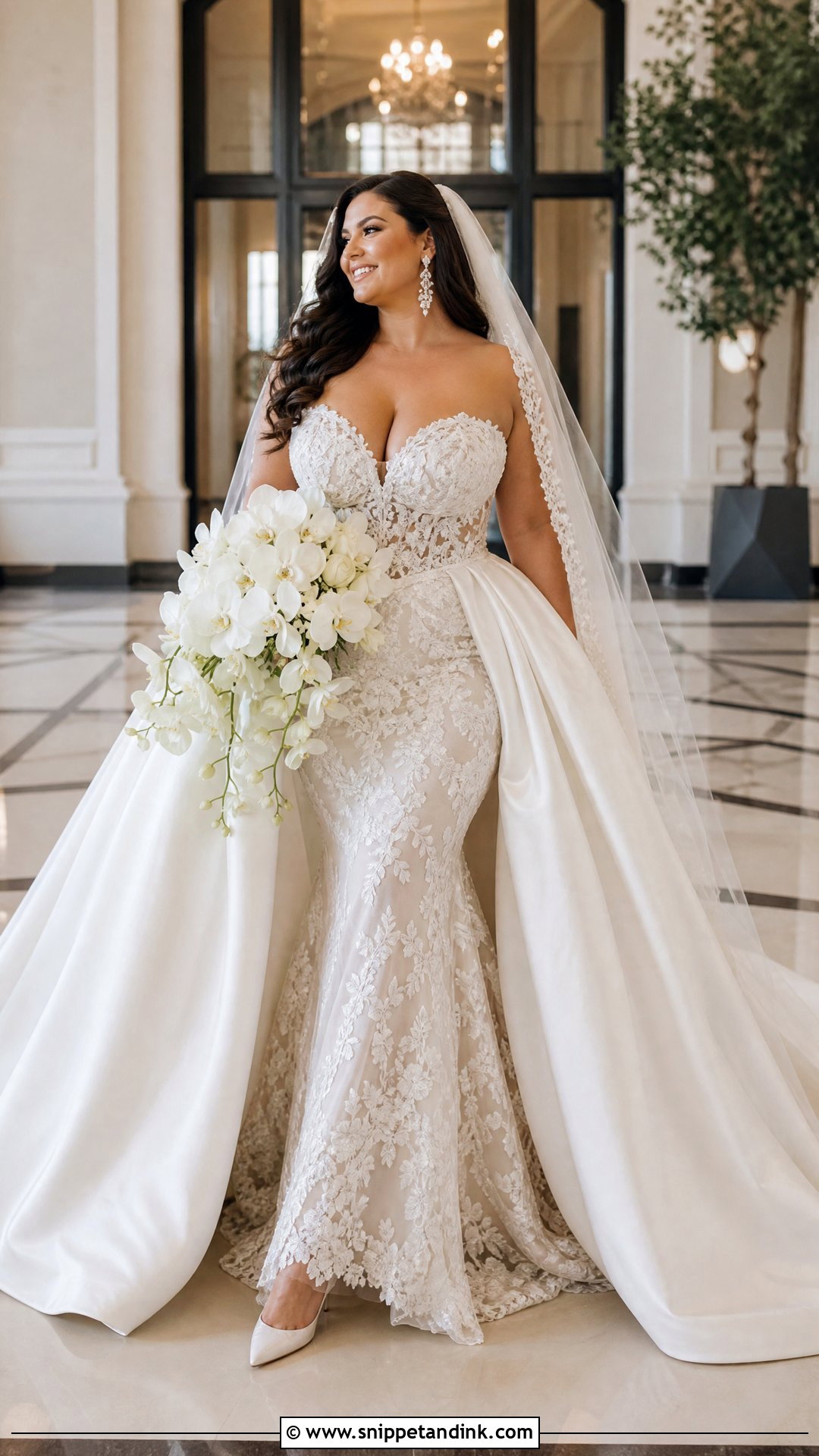
Picture a fitted mermaid that becomes a sweeping ball gown with one extra layer. The base skims the body and flares at the knee; a full overskirt attaches at the waist for a grander ceremony shape while the bodice stays on show. Satin keeps it clean, while floral lace or organza adds depth. Add a cathedral veil, crystal earrings, pointed heels and a cascading bouquet. Taking the overskirt off brings back the mermaid line and makes walking much easier. Have the attachment set at the narrowest point of your torso. If it sits lower, the extra weight drags the mermaid seams out of shape.
6. Wedding Jumpsuit With Detachable Skirt
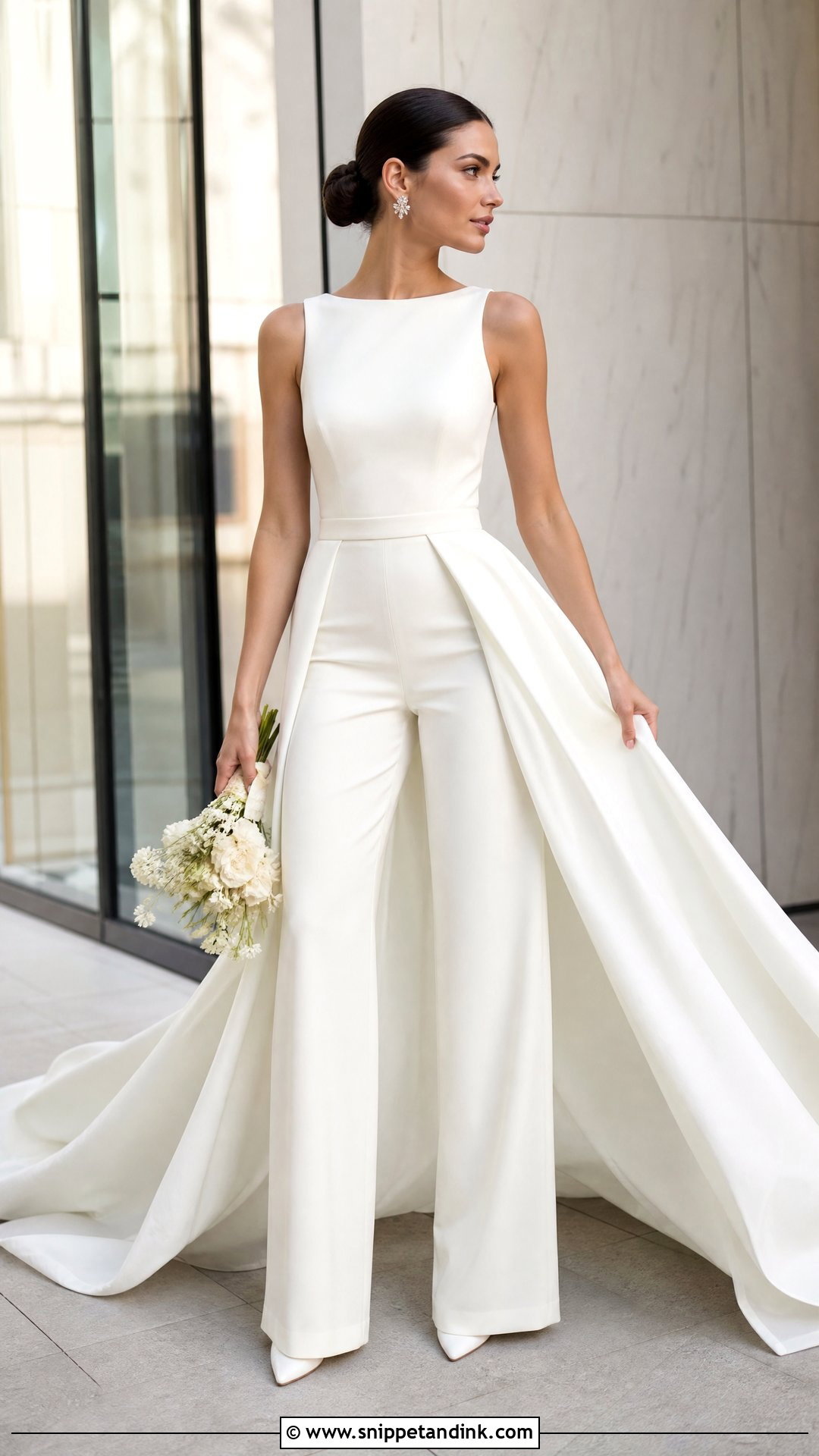
For something outside the usual gown, a wedding jumpsuit with a detachable skirt gives you clean lines and real coverage. A tailored ivory jumpsuit moves easily, and a sweeping overskirt makes it read as a formal dress from front and back. I match the skirt to the leg shape: wide legs sit smoothly under tulle, organza or chiffon, while slimmer legs suit structured satin. Pointed pumps, sculptural earrings, a sleek bun and a minimalist bouquet finish the ceremony look. Once the skirt comes off, the jumpsuit is ready for the party. Hem the skirt and the trousers with the same pair of shoes, or you will need a second pair and a second alteration.
7. High Neck Topper Wedding Dress
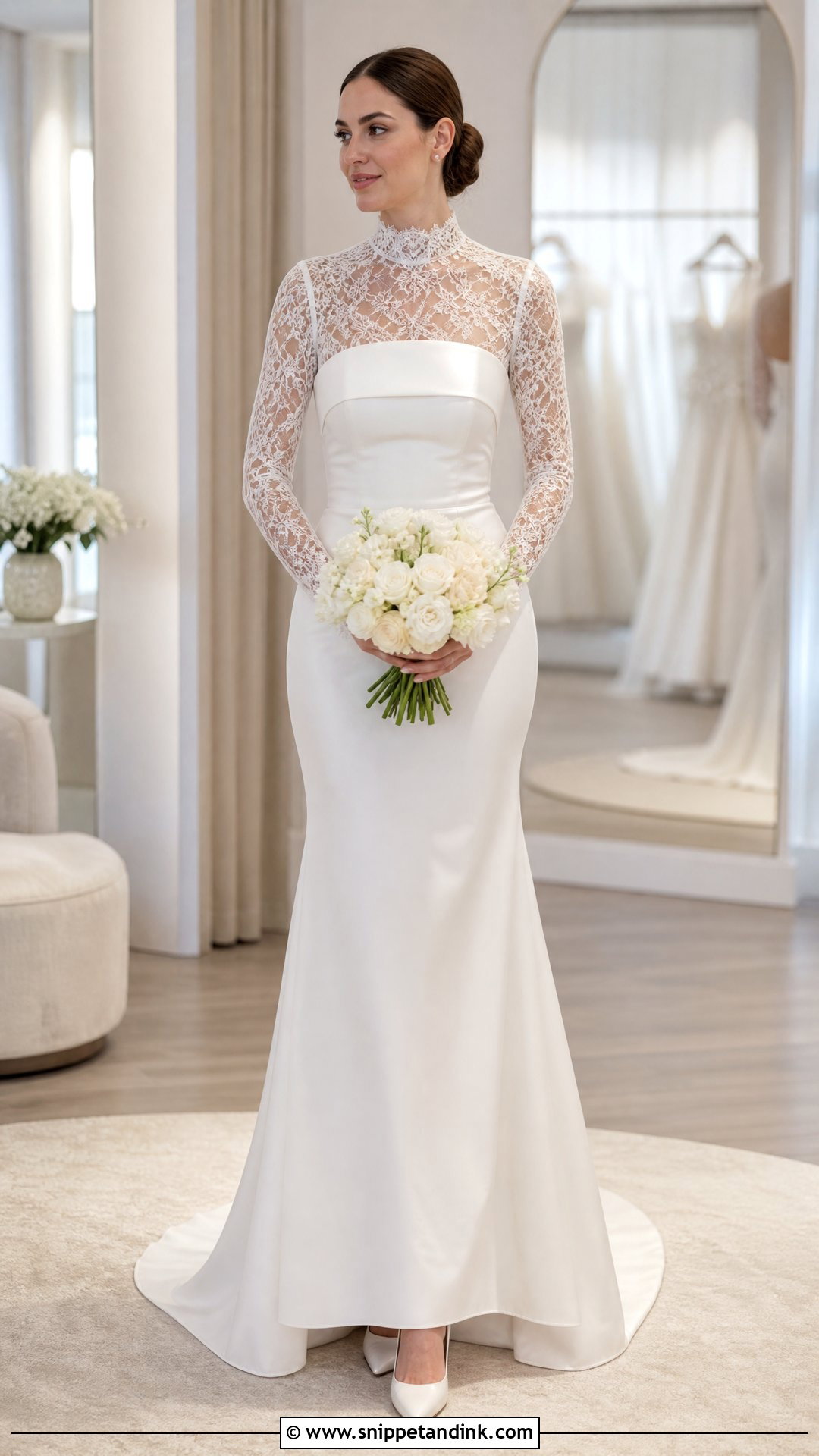
A high neck topper adds sleeves, coverage and detail to a plain strapless dress. Fitted lace, beaded tulle or embroidered tulle all suit it, as long as it lies flat over the bodice. Underneath, the bare dress is cleaner and more relaxed for the reception. I pair the topper with a low chignon, small earrings, satin heels and a soft bouquet, then trade it for a fine necklace or statement earrings later. The giveaway with toppers is a gap or ripple at the waist. Your seamstress should anchor it discreetly at the waist and shoulders so it looks cut as part of the dress rather than pulled over it.
8. Strapless Wedding Dress With Off Shoulder Sleeves
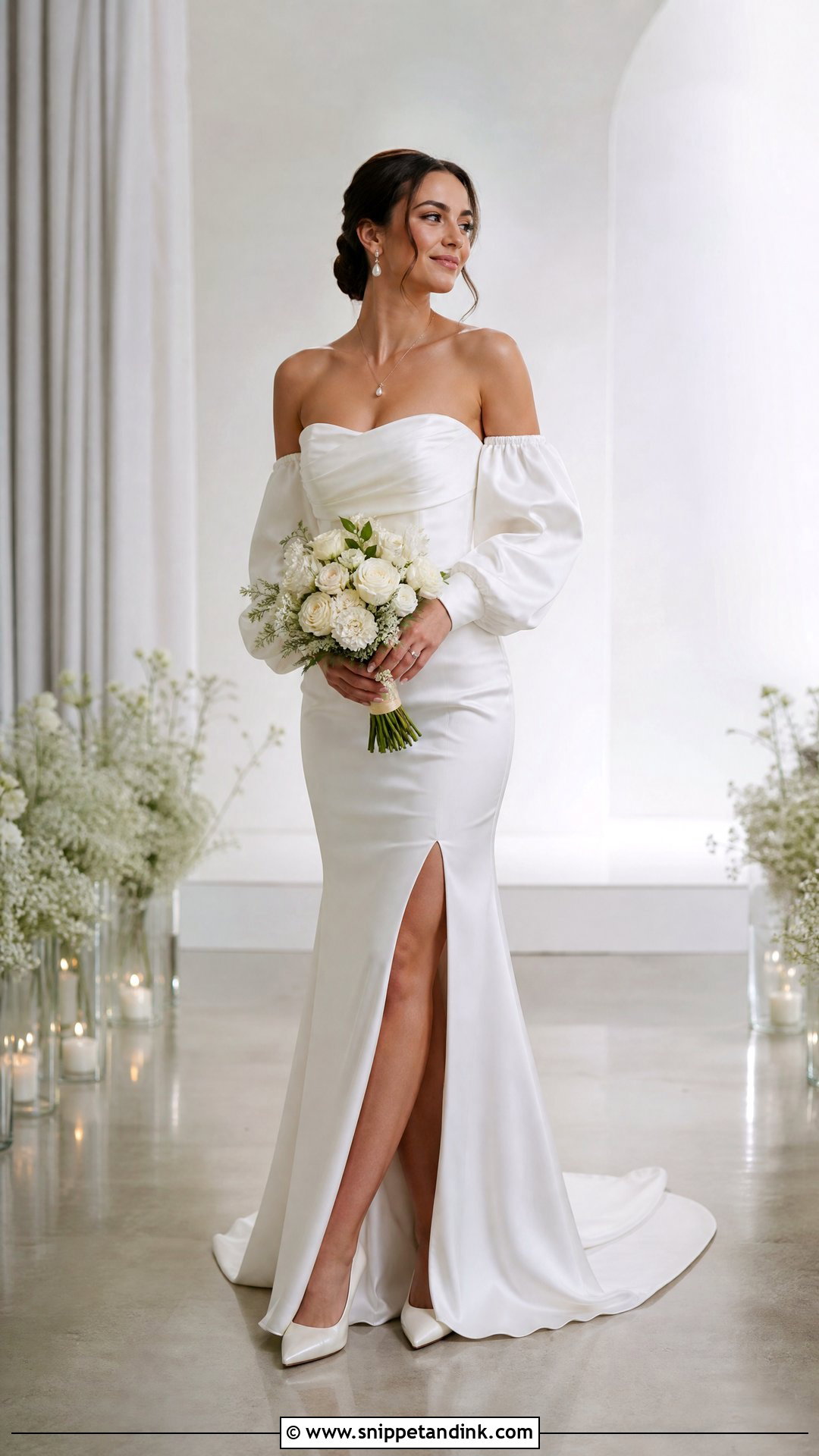
Off-the-shoulder sleeves change a strapless dress completely. Draped satin bands look refined, floral appliqué sleeves look romantic and tulle adds air. For the ceremony they frame the neckline and balance the shoulders; I add a short pendant, pearl drops, a swept-back style and classic pumps. Remove them and you have a clean strapless reception dress, with a bracelet or hair piece for finish. Test them hard. Raise your arms, hug someone and sit. Wide bands tend to fold or roll when the arm moves, and that twist shows in every photo.
9. Detachable Train Wedding Dress
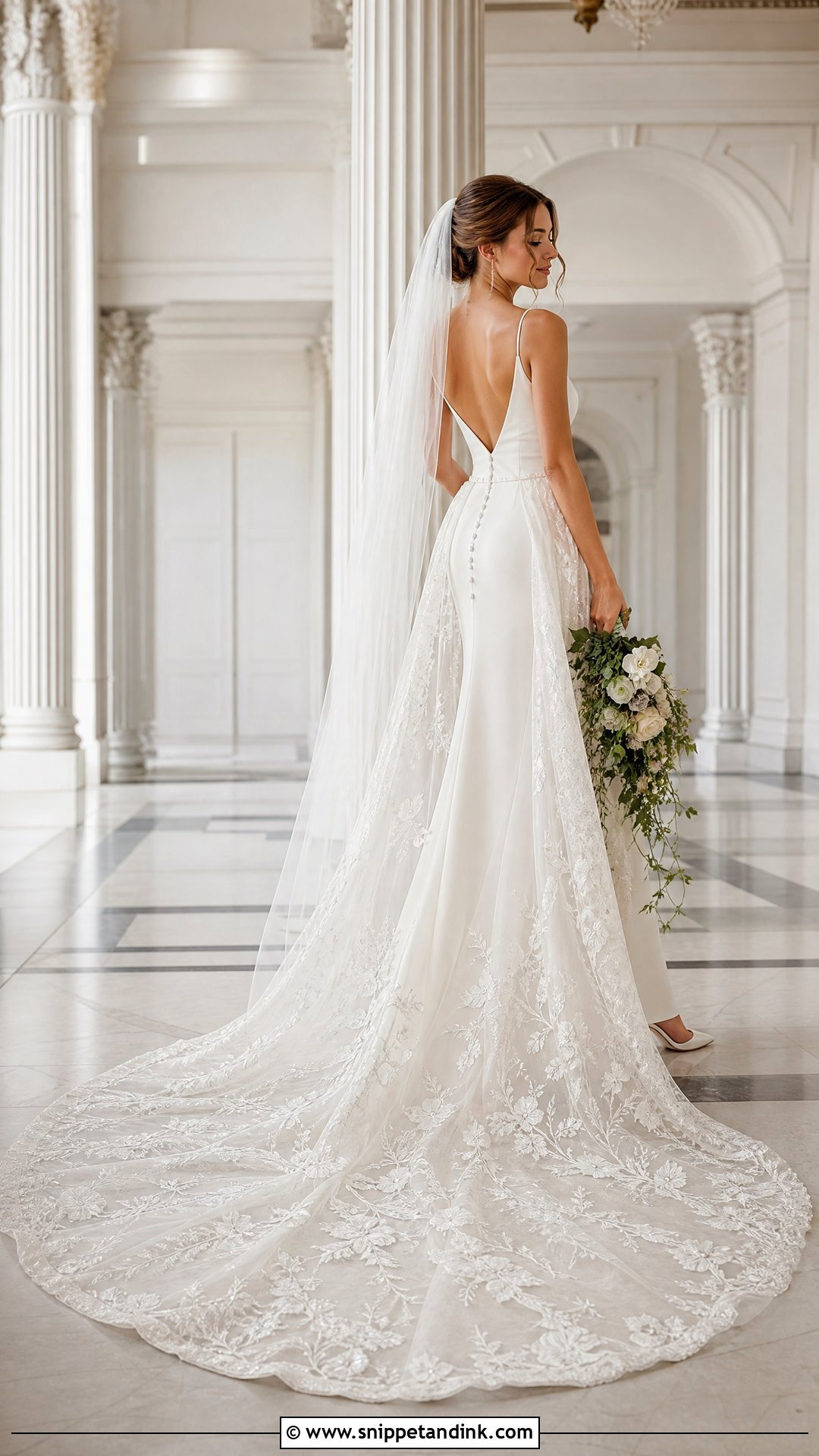
A detachable train gives you a dramatic entrance and removes the need for a bustle. Start with a fitted column, sheath or minimal A-line, and add a train fastened at the back waist: cathedral satin for drama, lace or embroidered tulle for detail. A long veil, quiet jewelry, pointed pumps and a bouquet with a little trailing greenery suit the ceremony. After portraits, unhook it and the gown underneath takes over. This is the option I suggest when a bride likes a clean front but wants impact from behind. Practise attaching and removing it at your fitting, and make sure the fastening points disappear once the train is off.
10. Detachable Bow Train Wedding Dress
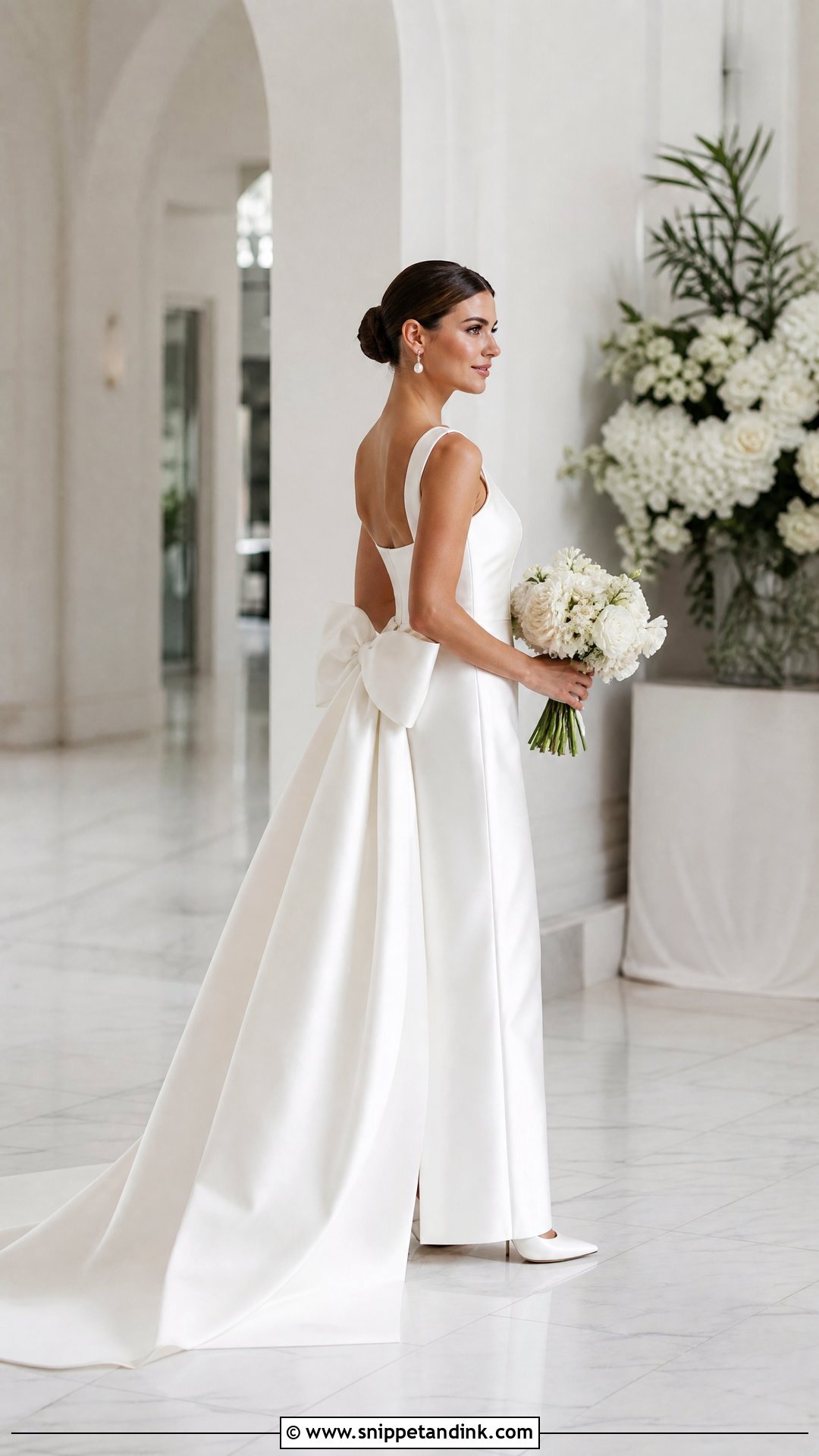
An oversized bow at the back waist adds personality to a simple strapless or square-neck gown. Long tails can run into a ceremony train, while short structured loops look more tailored. Keep everything else restrained: small earrings, a smooth bun, closed-toe heels and a neat bouquet. Remove the bow and the minimal dress underneath can take sparkly earrings or a colored shoe. Bows droop. Heavy fabric sags within an hour, and a bow fixed at one point slides off center when you sit, so I ask for a lightweight, interfaced bow anchored at two or three interior points. Check it from the side as well as the back.
11. Lace Bolero Wedding Dress
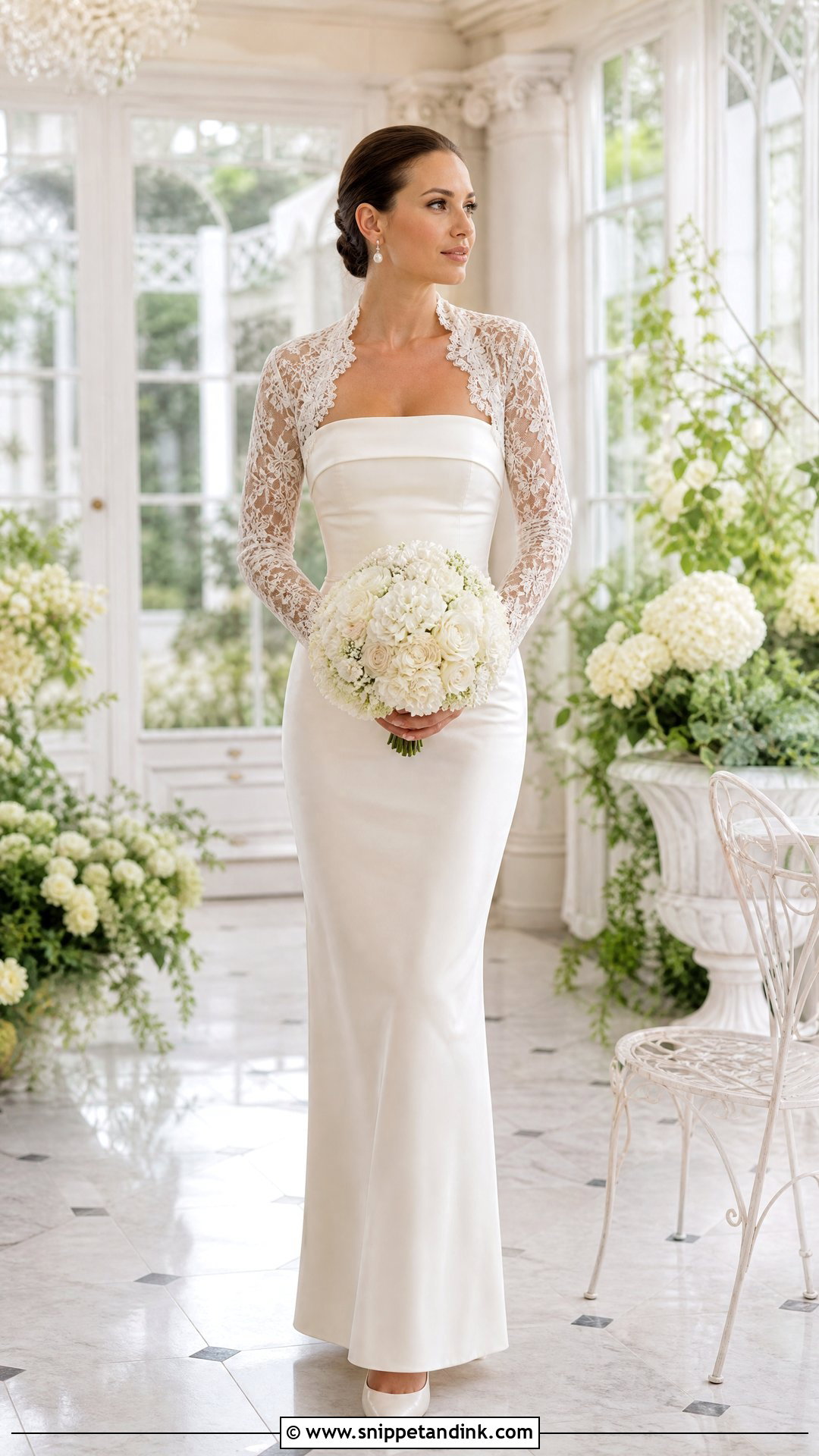
A lace bolero turns a sleeveless or strapless gown into a covered ceremony outfit, which is useful for religious venues. Match the lace color closely and repeat a floral pattern, bead or trim from the dress. A cropped bolero keeps the waist visible; a longer one can pass for a fully sleeved bodice. Pearl earrings, combed-back hair, classic pumps and a rounded bouquet complete the first look, and a fine necklace or shoulder-grazing earrings take over after it comes off. The bolero’s neckline should follow the dress, not cut across it. Check the back closure too. Tiny loops and hooks are slow to open when your helper is in a hurry.
12. Sheer Overlay Wedding Dress
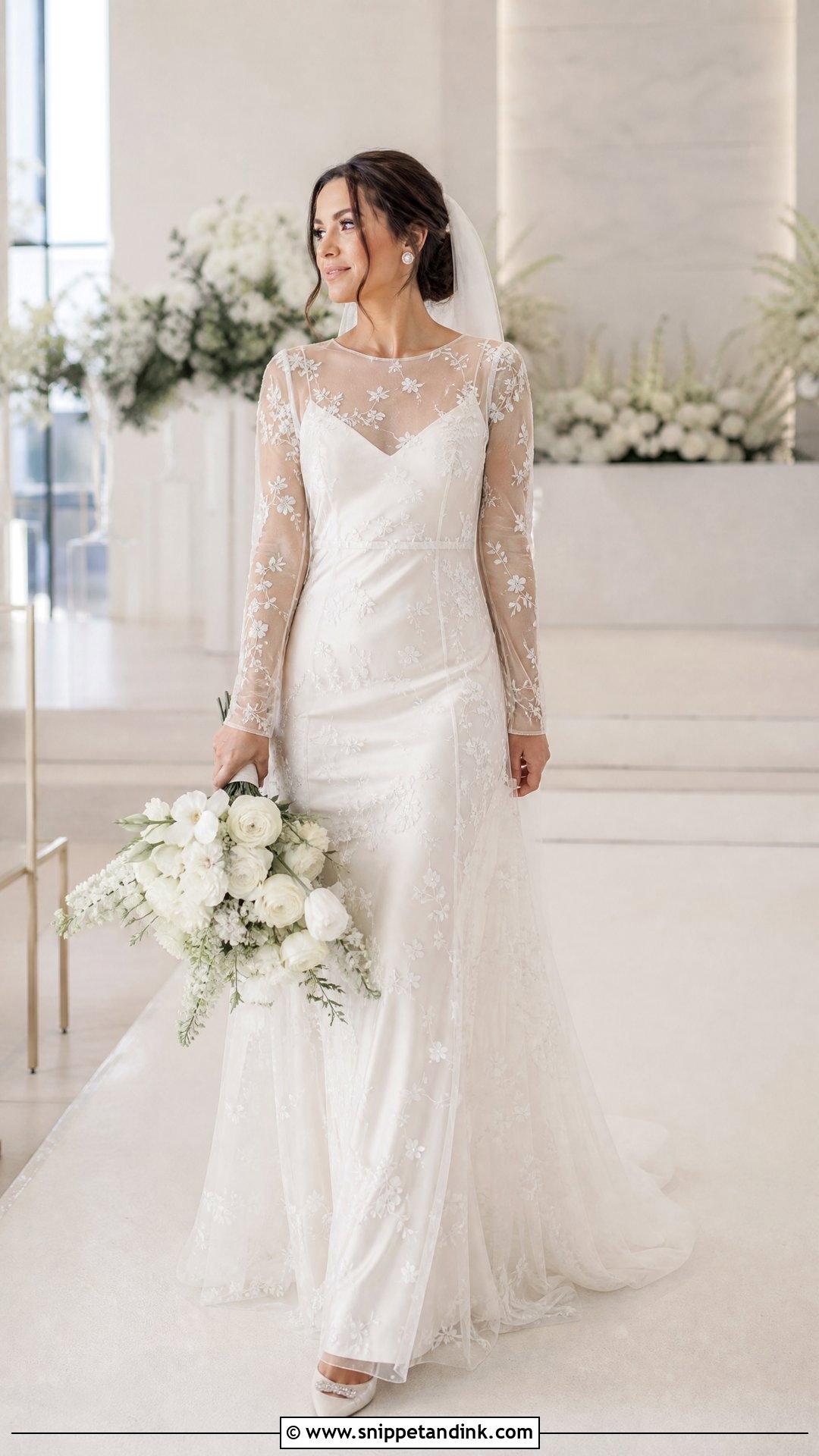
A sheer overlay moves you from romantic to modern by removing one layer. An embroidered tulle or organza overlay sits over a fitted slip, a column dress or a clean satin mini; a floor-length overlay can carry sleeves, a high neck and a small train. Wear delicate heels, small crystal earrings, a simple veil and a loose bouquet with it. Underneath, the smooth base dress is a genuinely different reception look. The overlay needs ease at the hips and arms. Cut too close, it pulls against the dress below and you see the strain lines. Its zipper and fastenings should hide inside the embroidery so it looks graceful from every side.
13. Detachable Peplum Wedding Dress
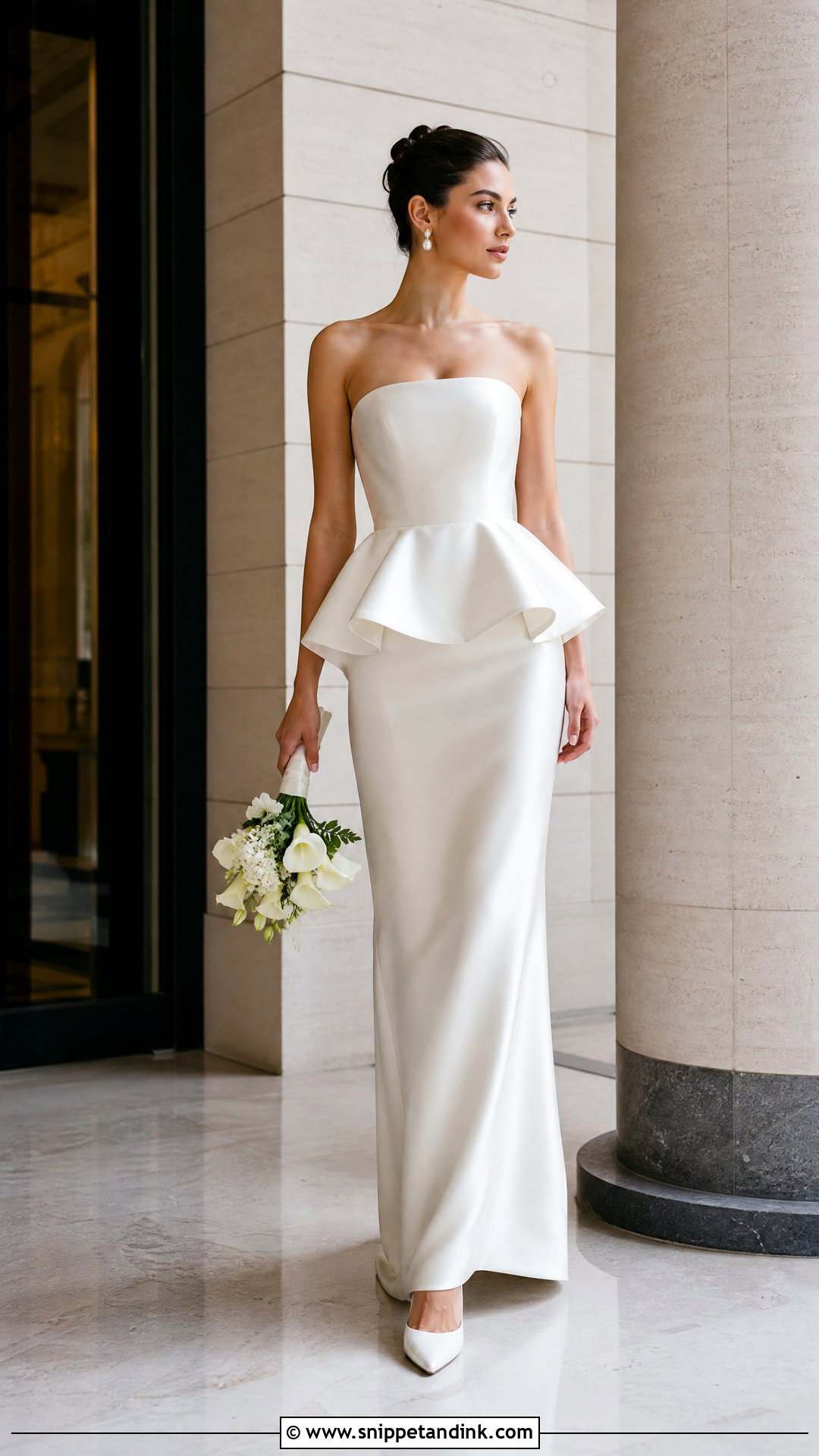
A detachable peplum is a small change that still reads clearly in photos. The added waist piece shapes a column, trumpet or fitted satin gown; a crisp sculptural peplum looks fashion-led, a soft lace one moves gently. Sleek pumps, pearl earrings, a polished updo and a compact bouquet suit the ceremony, and the gown underneath looks streamlined once it comes off. Peplums like to rotate. I ask for the closure to line up with the gown’s back seam and for a few hidden anchor points at the side seams. Keep the band thin, because a thick one leaves a ridge in delicate fabric after it is gone.
14. High Low Convertible Wedding Dress
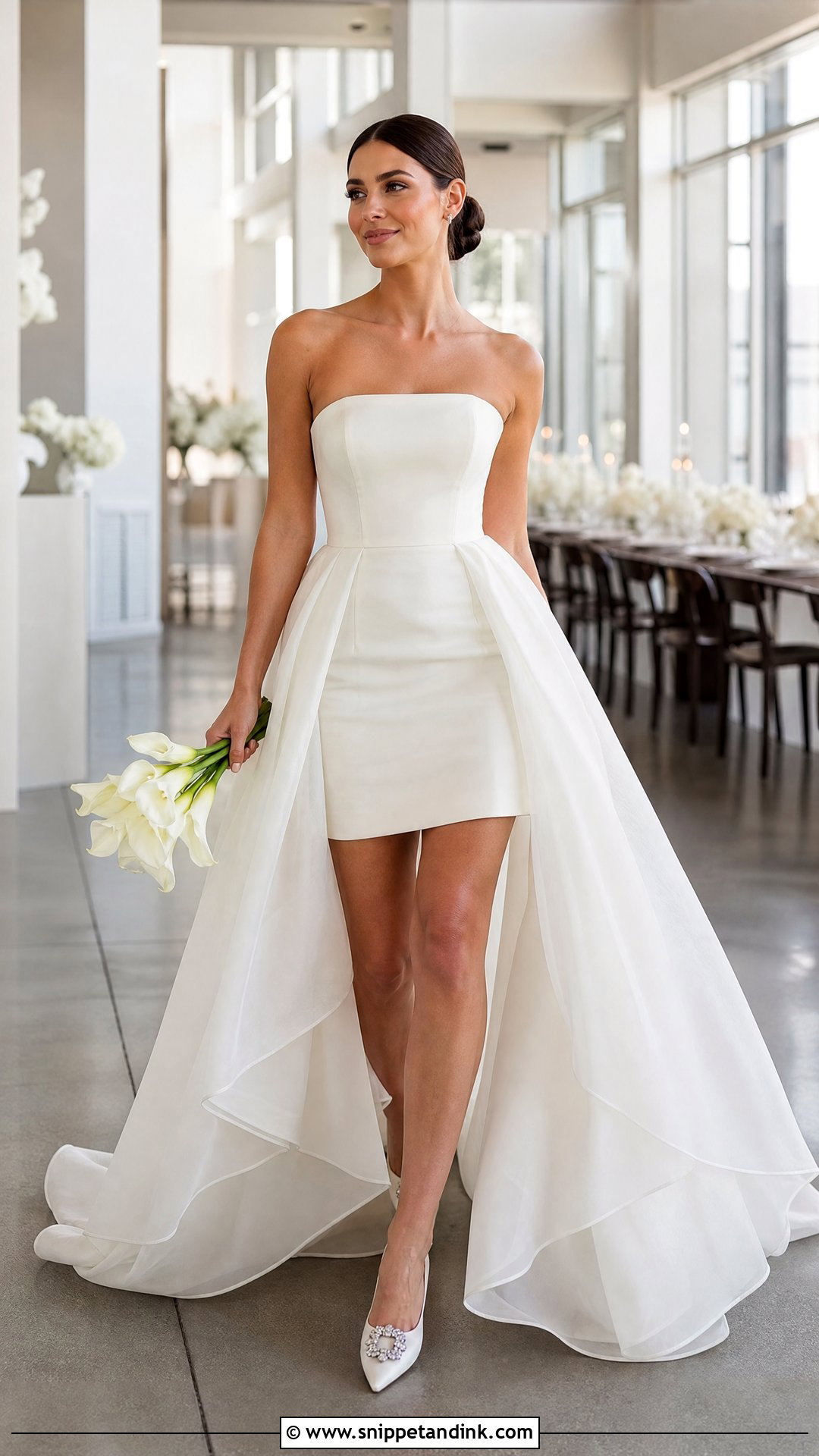
A high low convertible pairs a floor-length outer skirt with a shorter hem hidden under it. An open-front outer skirt can show a glimpse of legs and shoes before the reveal. Structured satin holds a bold shape, chiffon or organza moves lightly. Wear standout pumps, simple earrings, a smooth hairstyle and a slim bouquet for the ceremony. Remove the long layer and the short dress is easy for dancing and moving between rooms. My main concern is the short hem itself. It has to be finished and shaped as a real skirt, otherwise it looks like a lining that lost its dress.
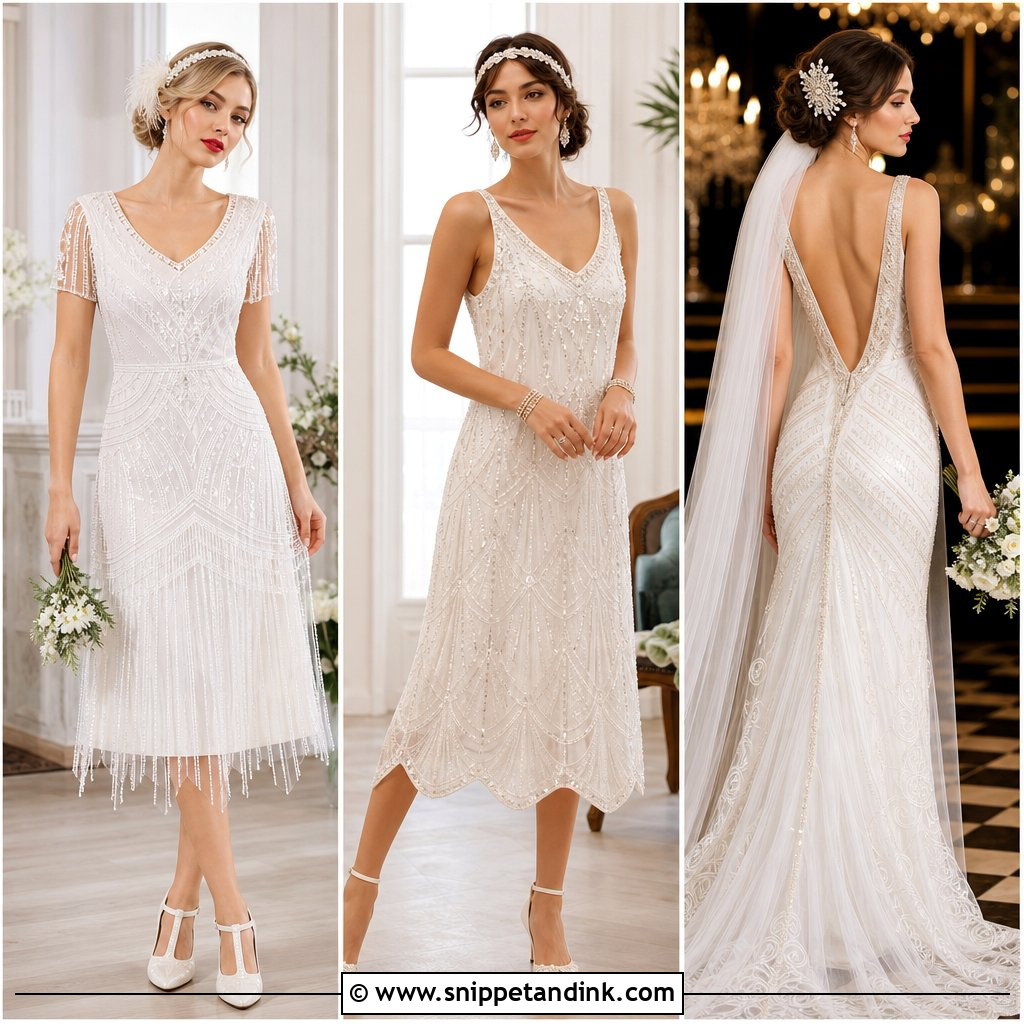
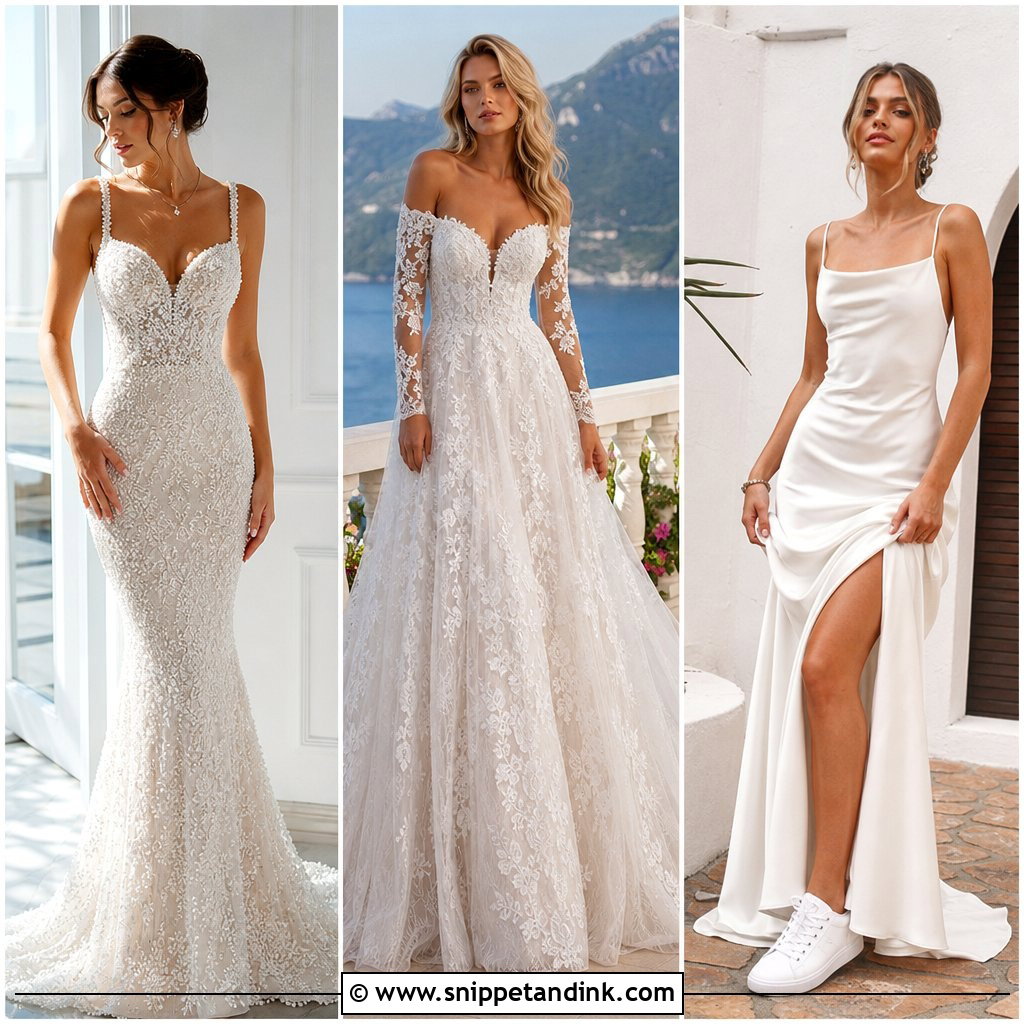
15. Two Piece Wedding Dress With Skirt Change
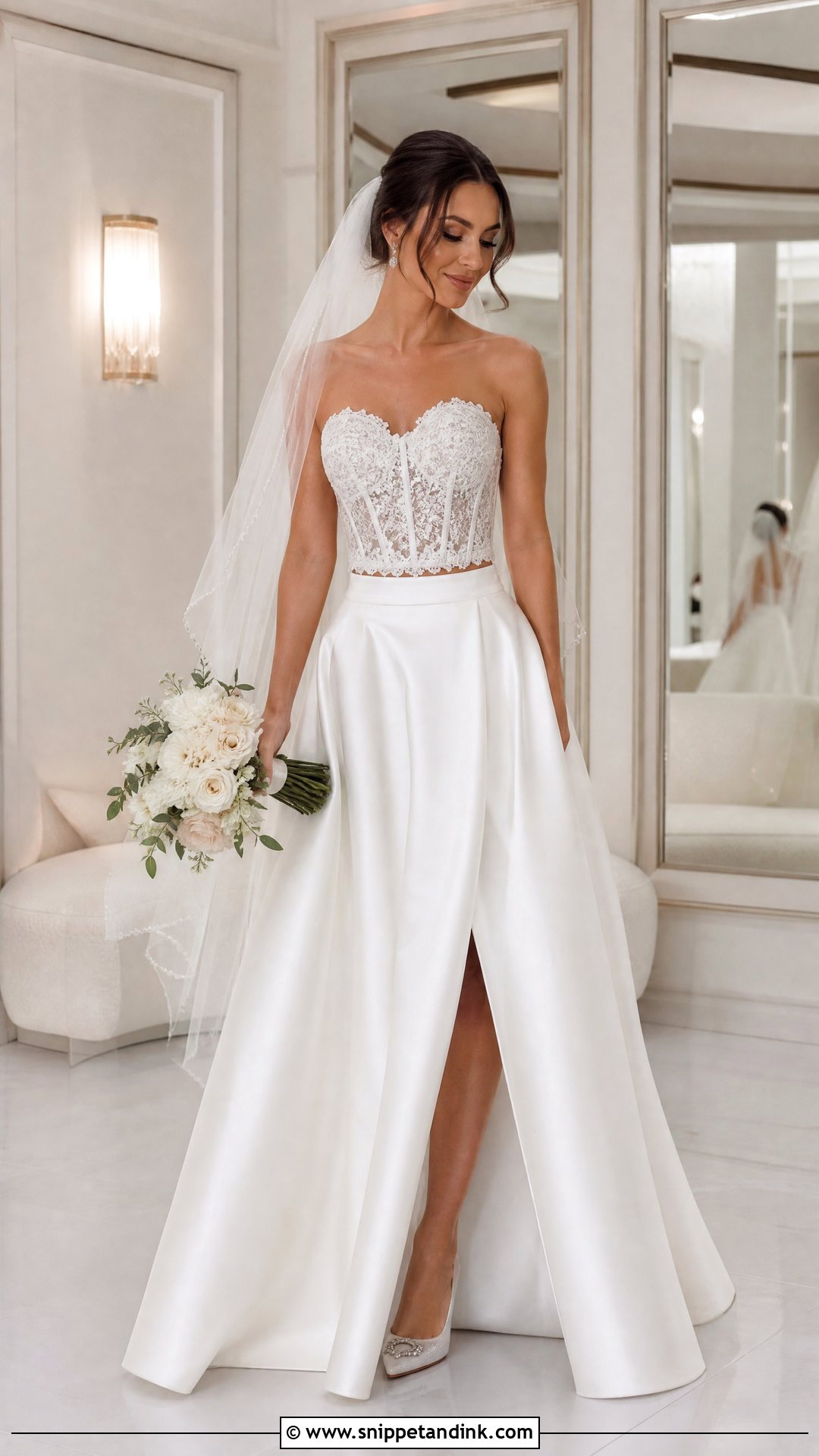
A two-piece lets you keep one fitted top and change the bottom half. Start with a corset, lace blouse or structured sleeveless bodice and a full A-line skirt for the ceremony. Later, swap to a satin midi, a column skirt or tailored wide-leg pants. Matching fabric, trim or buttons connect both outfits. Add a veil, refined heels, fine earrings and a classic bouquet for the ceremony; for the reception, lose the veil and add a statement piece or flatter shoes. The bodice has to stay put through both changes. Hidden snaps at the waist stop the gap that opens when you reach up.
16. Wedding Dress With Removable Neckline Panel
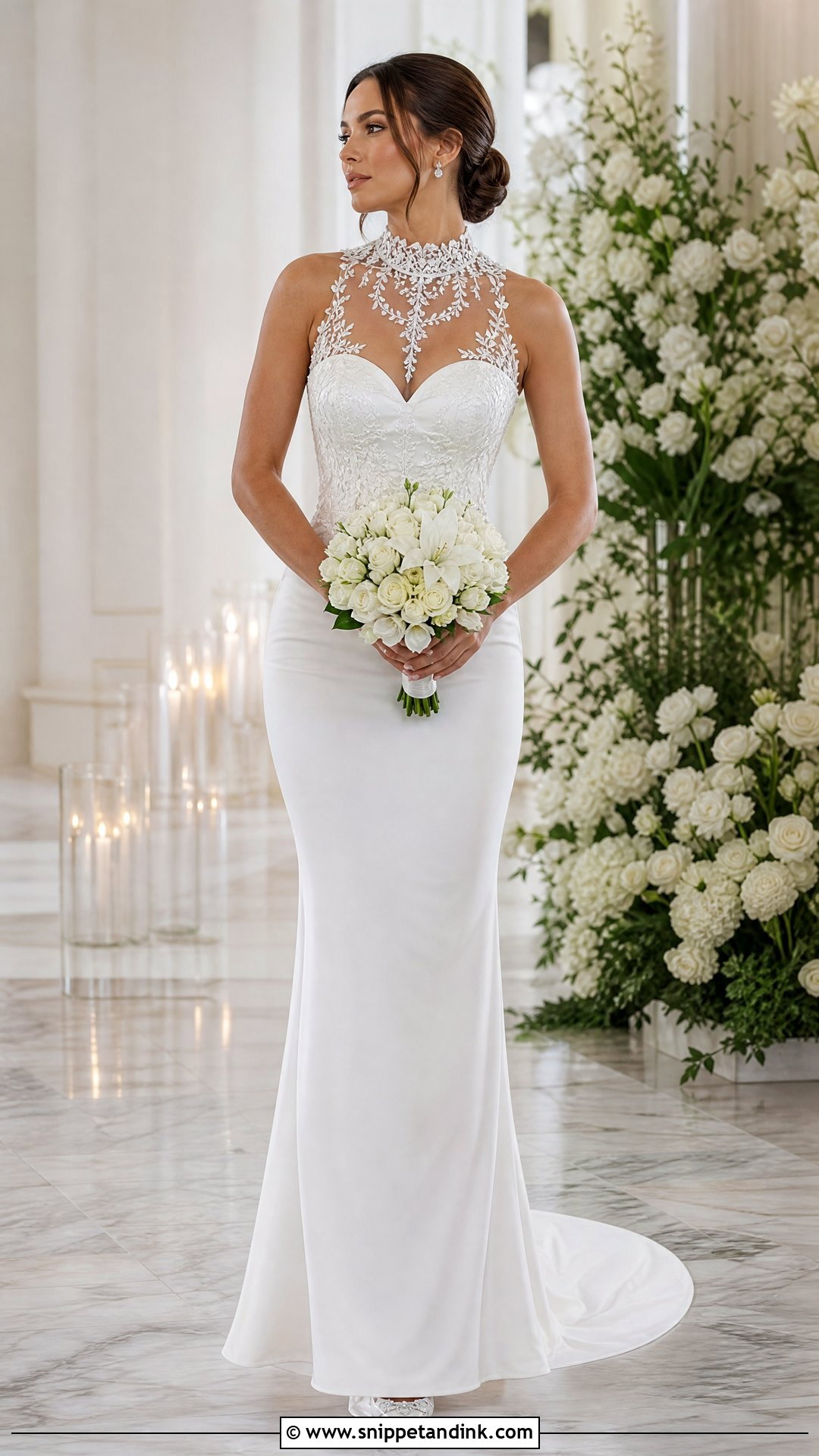
A removable neckline panel adjusts coverage while the gown’s shape stays the same. For the ceremony, a sheer illusion panel, lace insert or high-neck bib fills a plunging, sweetheart or strapless bodice, connecting at the dress seams and repeating its appliqué. I keep the jewelry small then, with a clean updo, closed-toe heels and a quiet bouquet. Remove the panel for the reception, where a pendant or bigger earrings finish the change. Bend, sit and turn at your fittings to check that the insert stays flat. The snaps or hooks should vanish once it is off and never scratch your skin.
17. One Shoulder Cape Sleeve Wedding Dress
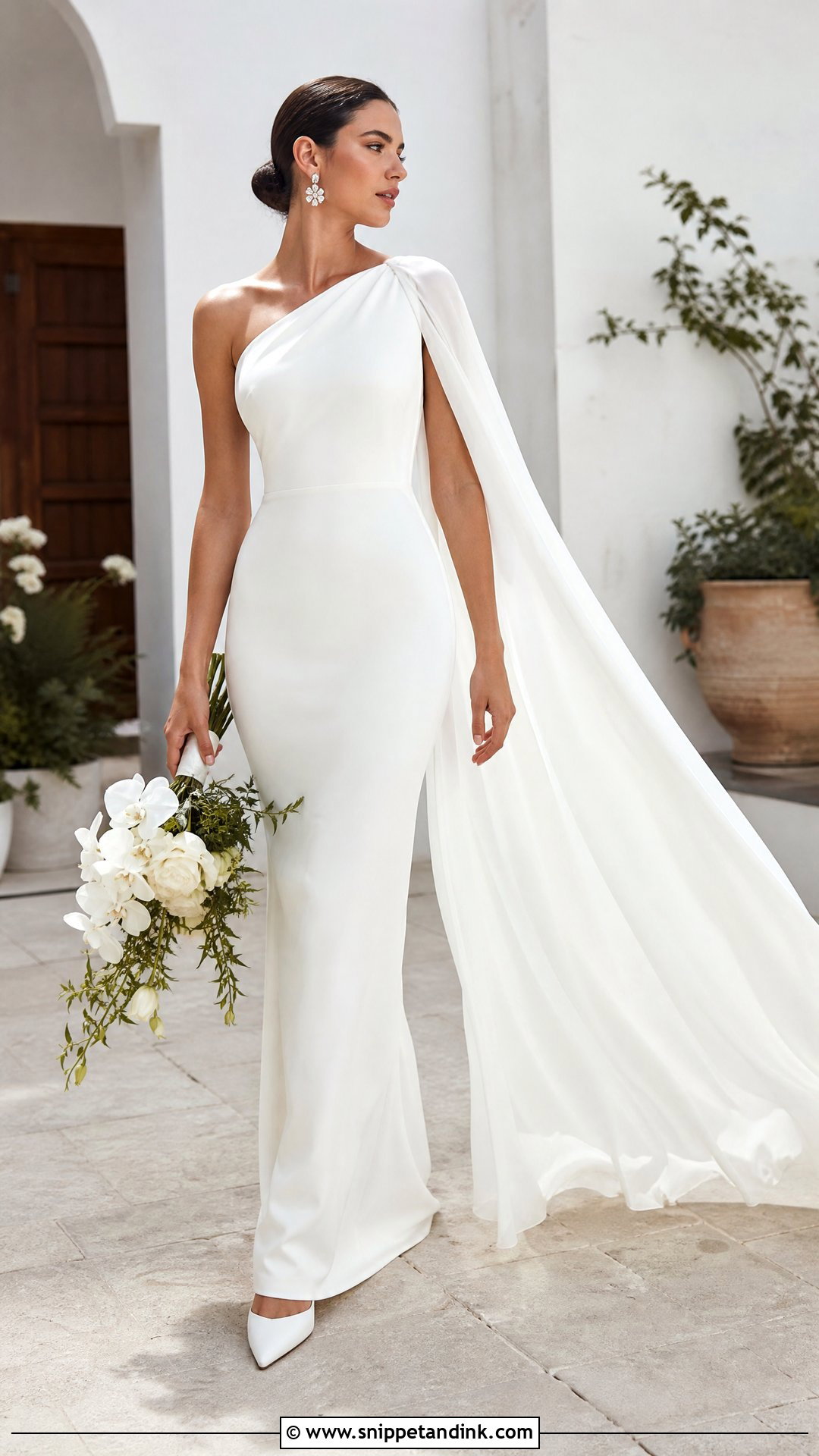
A one-shoulder cape sleeve makes a minimal gown asymmetric. Chiffon, tulle or satin attaches at one shoulder, drapes along the arm and continues toward the floor; a column or softly flared dress keeps the balance. For the ceremony, a sleek bun, one strong earring or a matched pair, pointed pumps and a modern bouquet suit it. Remove it for the reception and you get a clean neckline and freer arms. All the weight hangs from one point, so that shoulder attachment must be strong enough not to pull the dress sideways. If any part of your day is outdoors, test it in a breeze, because light fabric on one side catches wind like a sail.
18. Bridal Coat Over Wedding Dress
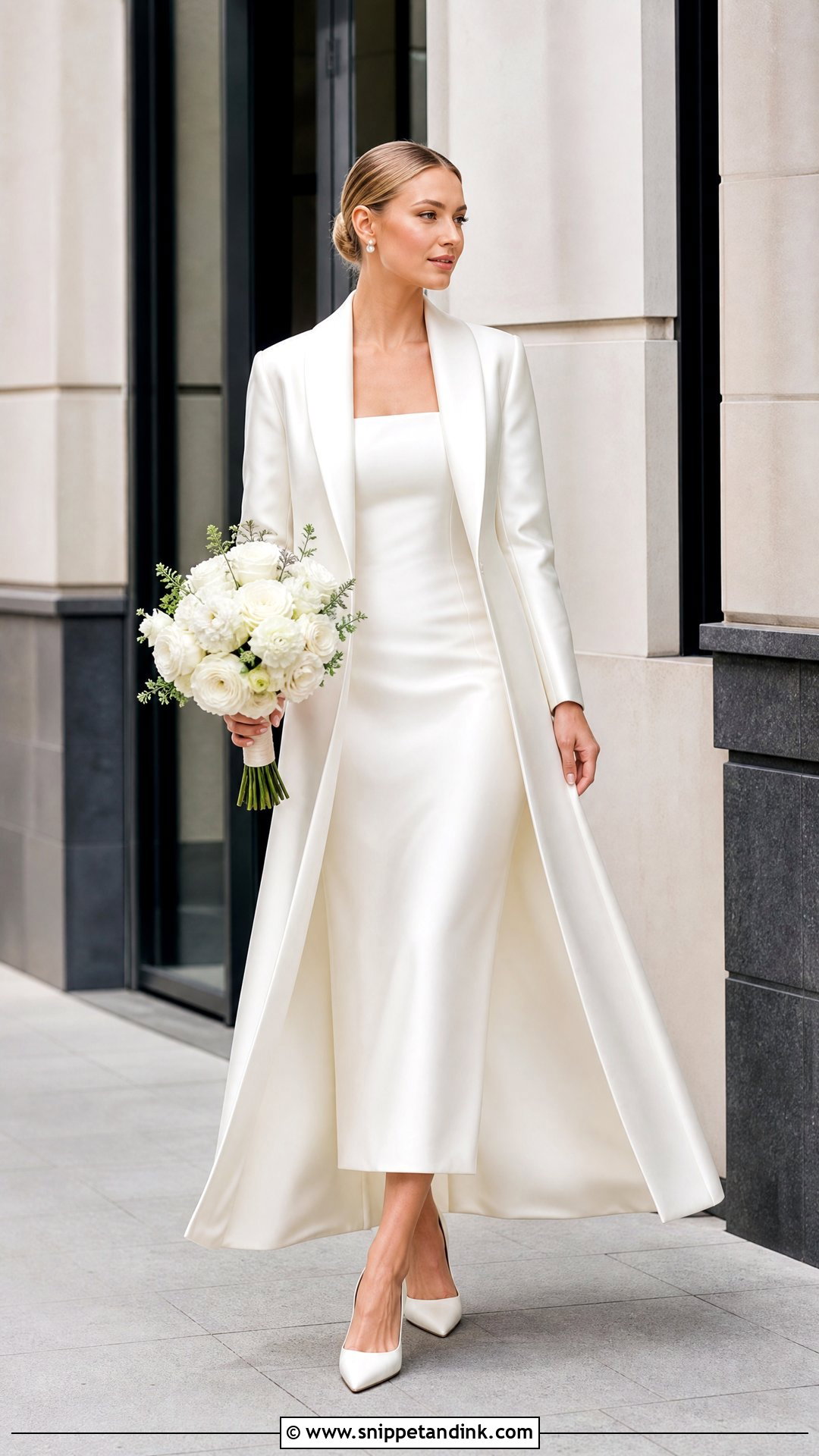
A bridal coat can hide the dress completely until the reveal. Choose a long satin coat with covered buttons, a structured collar or a little embroidery, and wear a column, mini or sleeveless midi beneath that looks finished alone. Pointed pumps, pearl earrings, a sleek hairstyle and a structured bouquet complete the ceremony look. Slip it off for the second look. This is the convertible I recommend most for cold weather and venues that swing between a chilly church and a warm reception room. Lining matters: a slippery lining lets the coat slide over beading, while a rough one catches every bead. Check the hem on stairs.
19. Satin Ball Gown With Removable Full Skirt
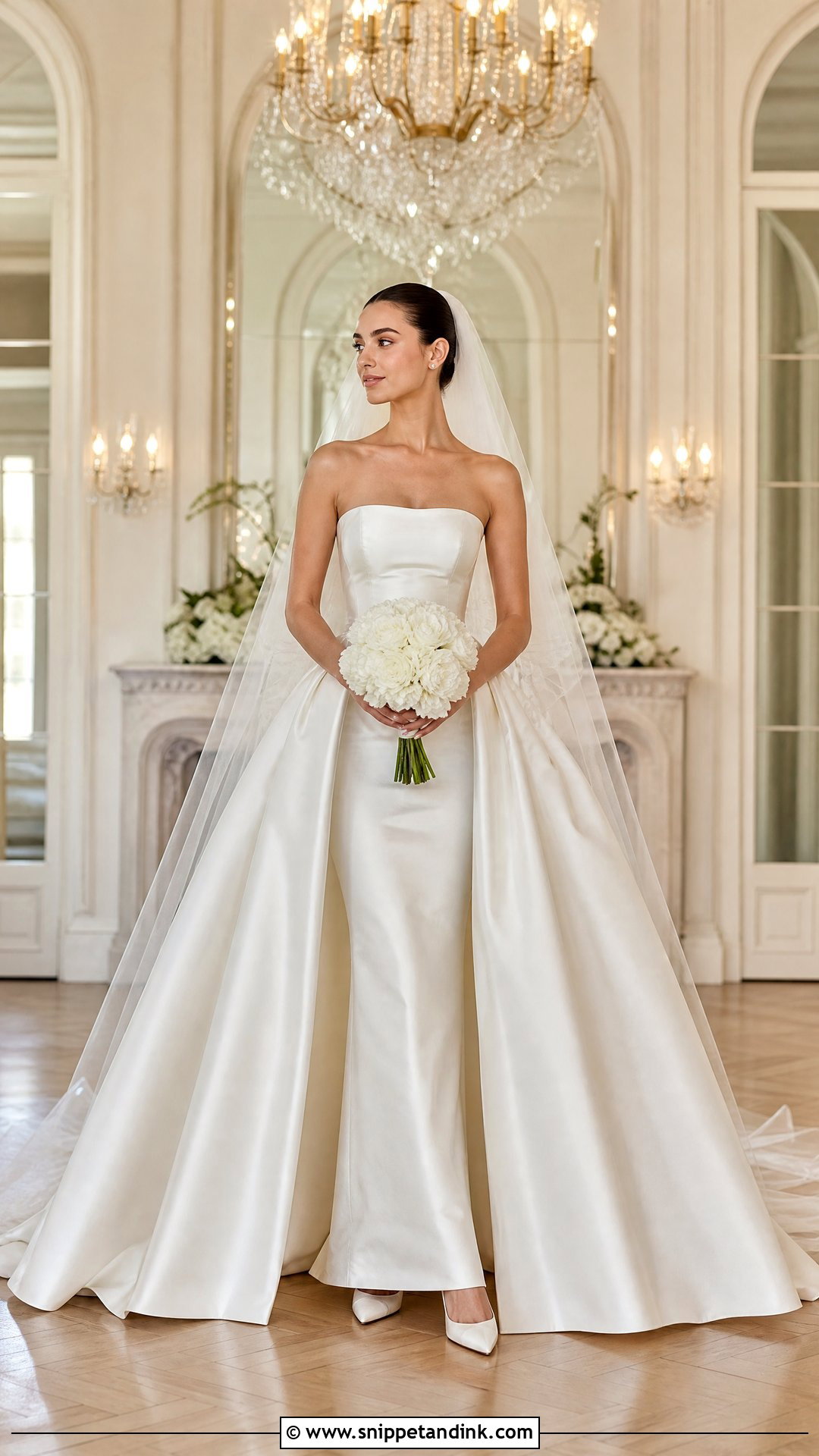
Clean satin keeps a convertible ball gown cohesive. Choose a fitted satin base in a column or fit-and-flare cut, then a full removable skirt in the same shade and finish. The volume does the work, so heavy embellishment is unnecessary. Pearl studs, a smooth veil, pointed satin pumps and a white bouquet suit it. Once the skirt is off, the base gown is sharper and easier for dinner and dancing. Color matching is the risk here, since two ivory satins from different bolts can look different in daylight and under tungsten. I look at both pieces together by a window and under indoor light before approving anything. The overskirt hem should float just above the floor all the way round.
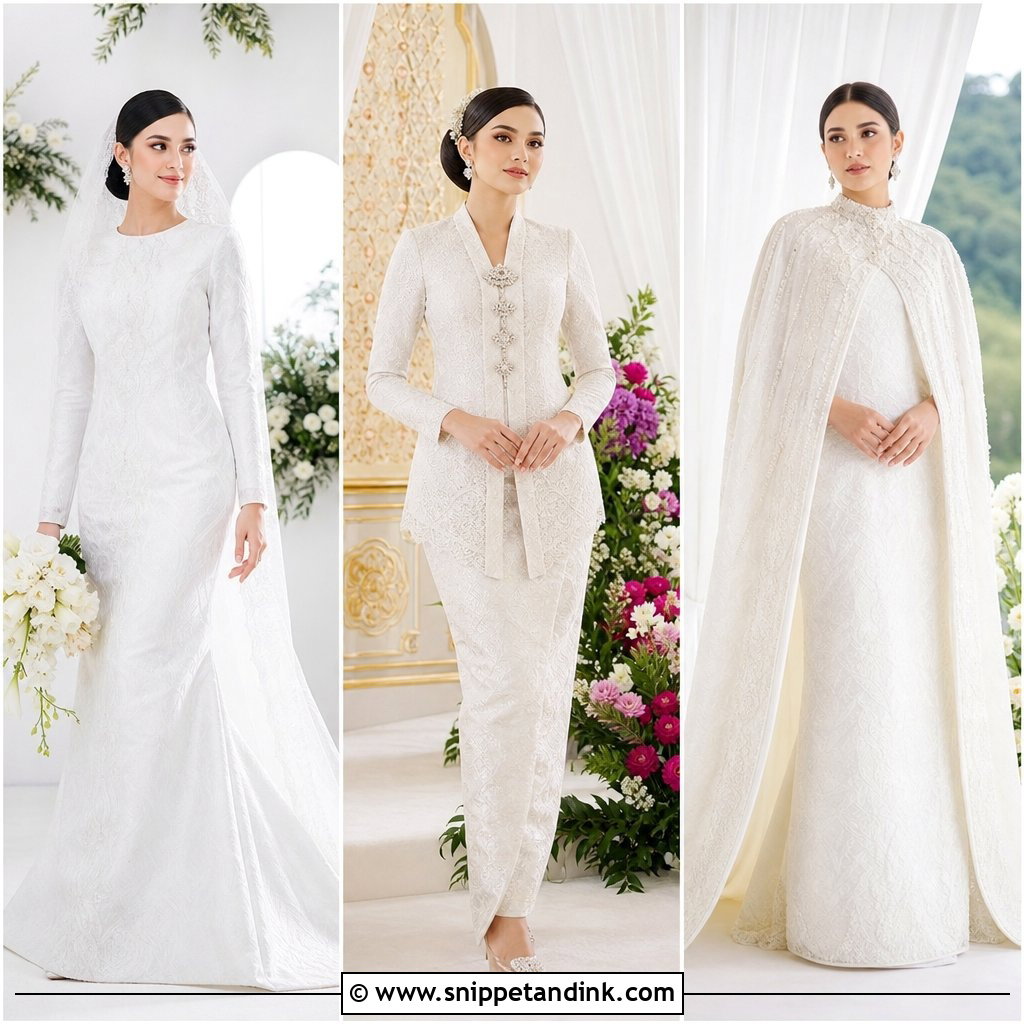
20. Three In One Transforming Wedding Dress
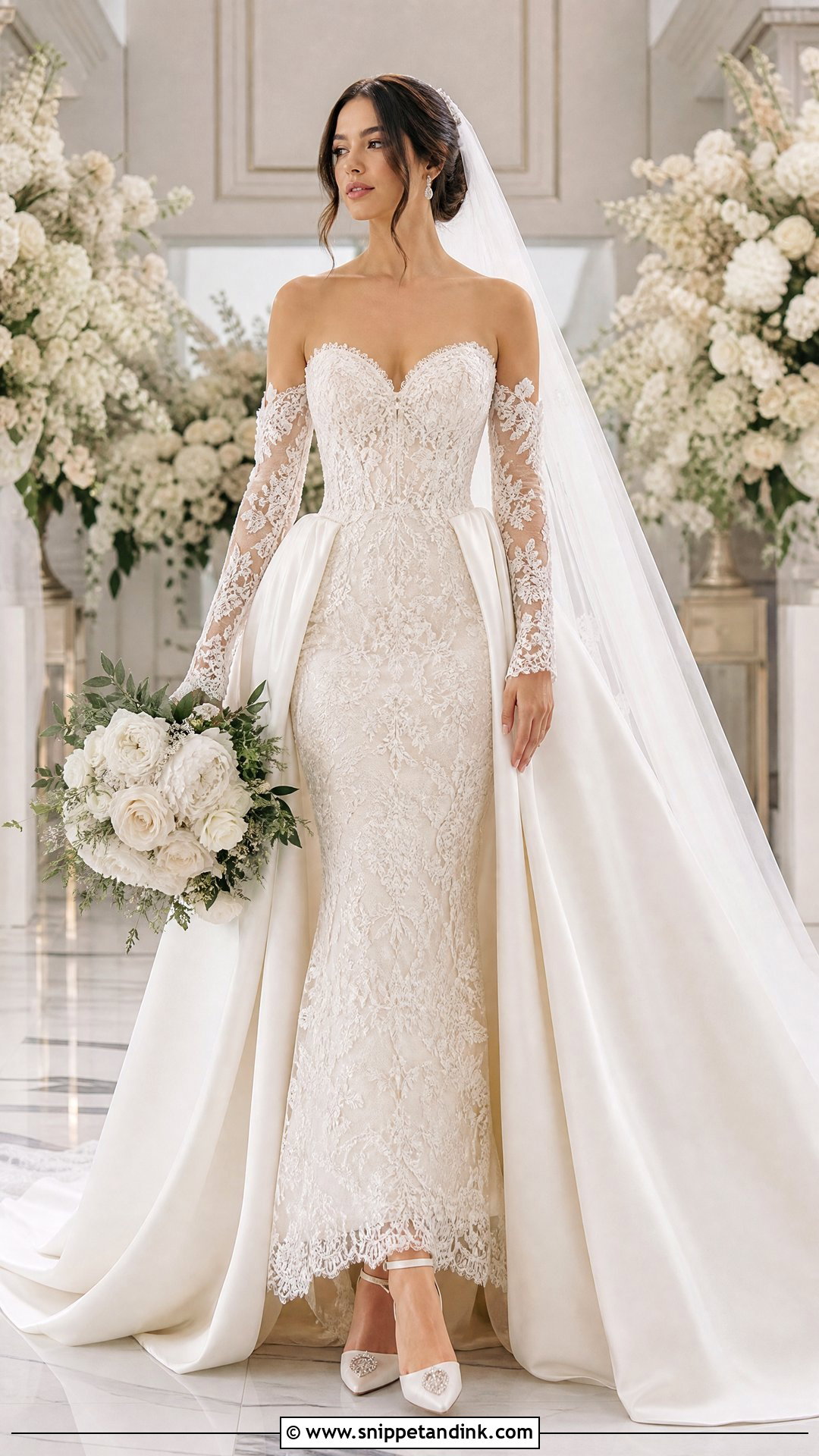
Can one gown give you three distinct looks? A three-in-one transforming wedding dress combines several removable parts, usually fitted sleeves, a full overskirt and a train. Everything goes on for the ceremony with classic heels, subtle earrings, a long veil and a formal bouquet. The train comes off for portraits or dinner. Then the overskirt and sleeves go, leaving a strapless gown for dancing. Plan a small accessory change for each stage, such as swapping the veil for a clip. With three pieces in play, I label each one, give them all to one trusted helper and run the whole sequence at the final fitting.
Planning the Change Itself, Minute by Minute
The change is a small event inside your wedding. Brides plan the dress carefully and then forget to plan the ten minutes between looks, which is when things tear.
- Pick the moment: right after portraits or before the grand entrance usually works. Tell your photographer and planner so the timeline allows for it.
- Pick the room: a private space with a full mirror and good light, not a corridor or a bathroom stall.
- Pick one helper: the person who practised with you at the final fitting. Two people unfastening at once is how hooks get pulled out.
- Pack a small kit: a padded hanger with loops, a garment bag, safety pins, fashion tape and a handheld steamer.
- Check the base dress in the mirror before you walk out. Look for crease lines from the overskirt band and any empty snaps showing.
What happens to the removed pieces
A satin overskirt stuffed into a tote will be crushed and creased by morning. Hang it on a padded hanger inside its own bag and give it to someone who is responsible for taking it home. If you plan to preserve the gown later, the detached parts should go to the cleaner with the dress so they are treated together and stay a matching color.
Is a convertible cheaper than two dresses?
Sometimes, not always. You save on a second gown, but each removable piece needs its own fitting, and alterations on two or three layers add up. Prices vary widely by shop and fabric, so ask for an alteration estimate on every piece before you decide.
Does the Dress Still Work With Nothing Attached?
A convertible dress should look complete at every stage, not only before the pieces come off. Put your energy into secure attachments, matched fabrics and changes that fit your timeline. Bring your shoes and undergarments to each fitting, then walk, sit, hug and raise your arms. I photograph the dress before and after each change at the final fitting, because a phone picture shows a visible hook or a bunched waistband faster than a mirror. Plan where the detached pieces will be kept. A cape, a hidden mini, a sleeve swap or a full overskirt can all give you two weddings’ worth of looks in one dress.
You'll Like These Ideas:







Leave a Reply