
A shoreline ceremony asks more of bridal hair than a ballroom does. Wind arrives off the water in gusts, humidity softens every curl, and you’ll be photographed from every side for hours. That’s why most beach brides I work with end up in an updo, even those who came in wanting their hair down. Pinned hair keeps your neck cool, holds a veil better, and doesn’t whip across your face during the vows. Below are the updos I’d put on a bride by the sea, with notes on how each is built, who it suits and where it can let you down.
Test Your Updo Outside, Not in the Salon
A trial in an air-conditioned salon tells you how an updo looks. It doesn’t tell you how it holds by the water. I ask beach brides to wear their trial style outside for a few hours afterward, ideally somewhere breezy, and send me photos of the back and sides.
- Schedule the trial roughly two to three months before the wedding, after you’ve chosen the dress and veil.
- Bring the veil or a similar length of tulle, plus any comb or hairpiece you plan to wear.
- Wear a top with the same neckline as your gown, so you can judge the balance in photos.
- Notice what moves first: the face-framing pieces, the crown or the bun. That’s what we’ll strengthen on the day.
If your hair has a habit of dropping curls, mention it at booking. I’ll plan more setting time and fewer loose pieces.
1. Low Braided Bun
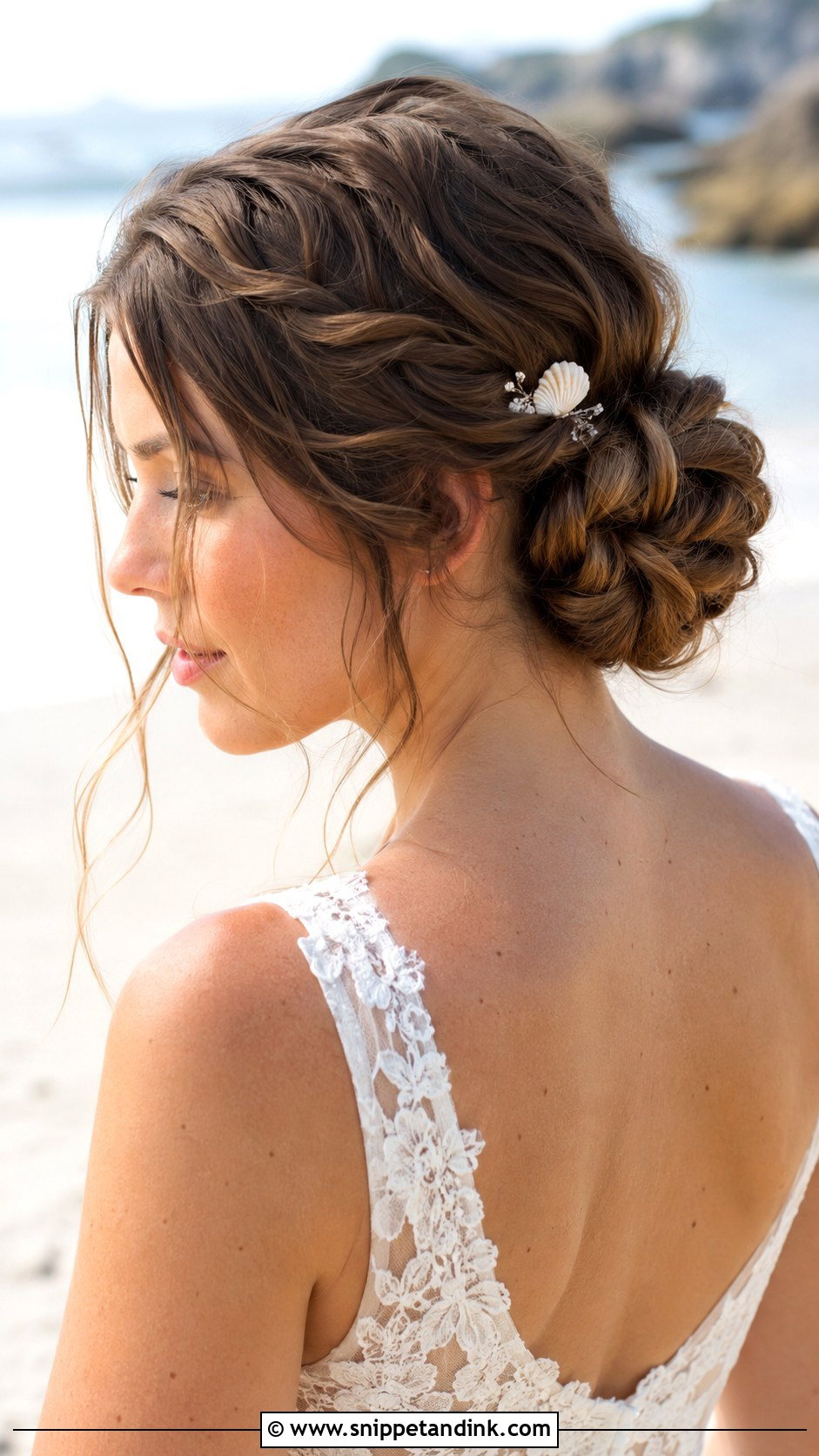
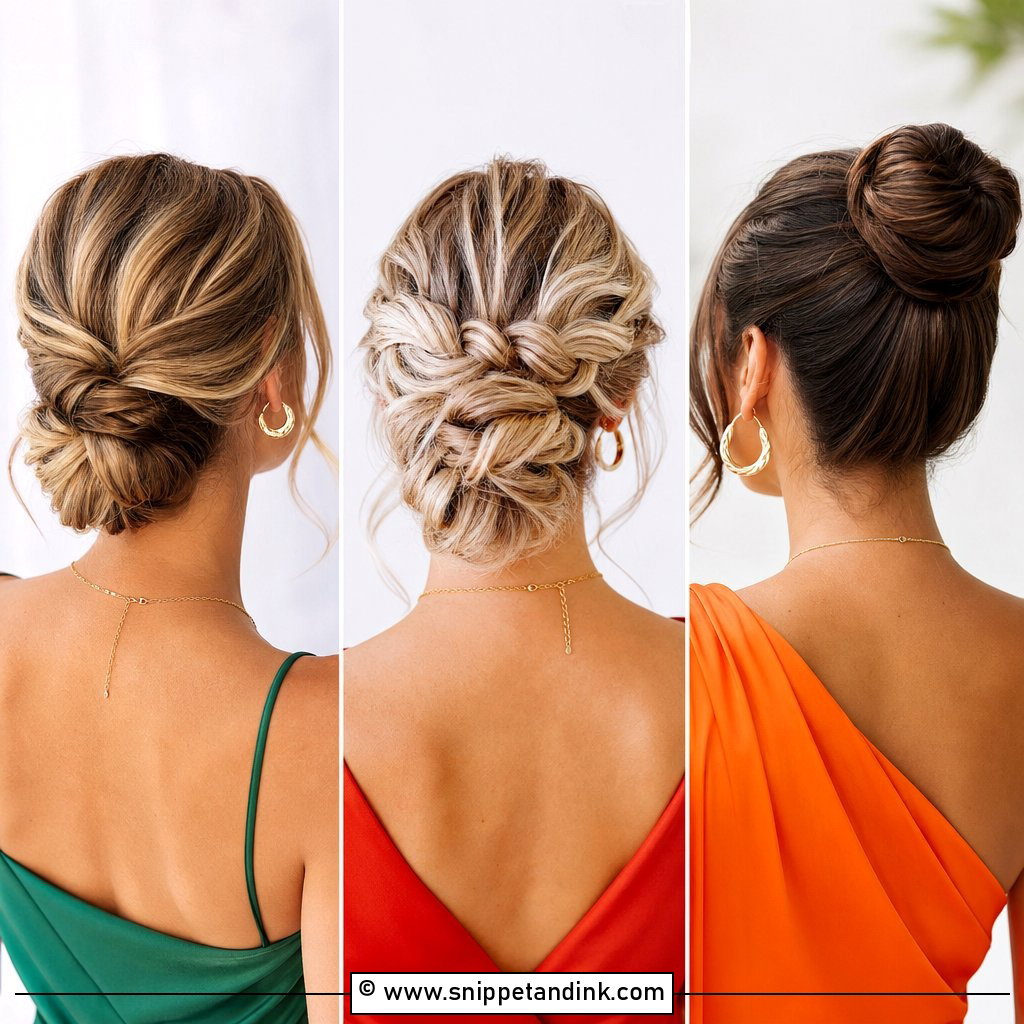
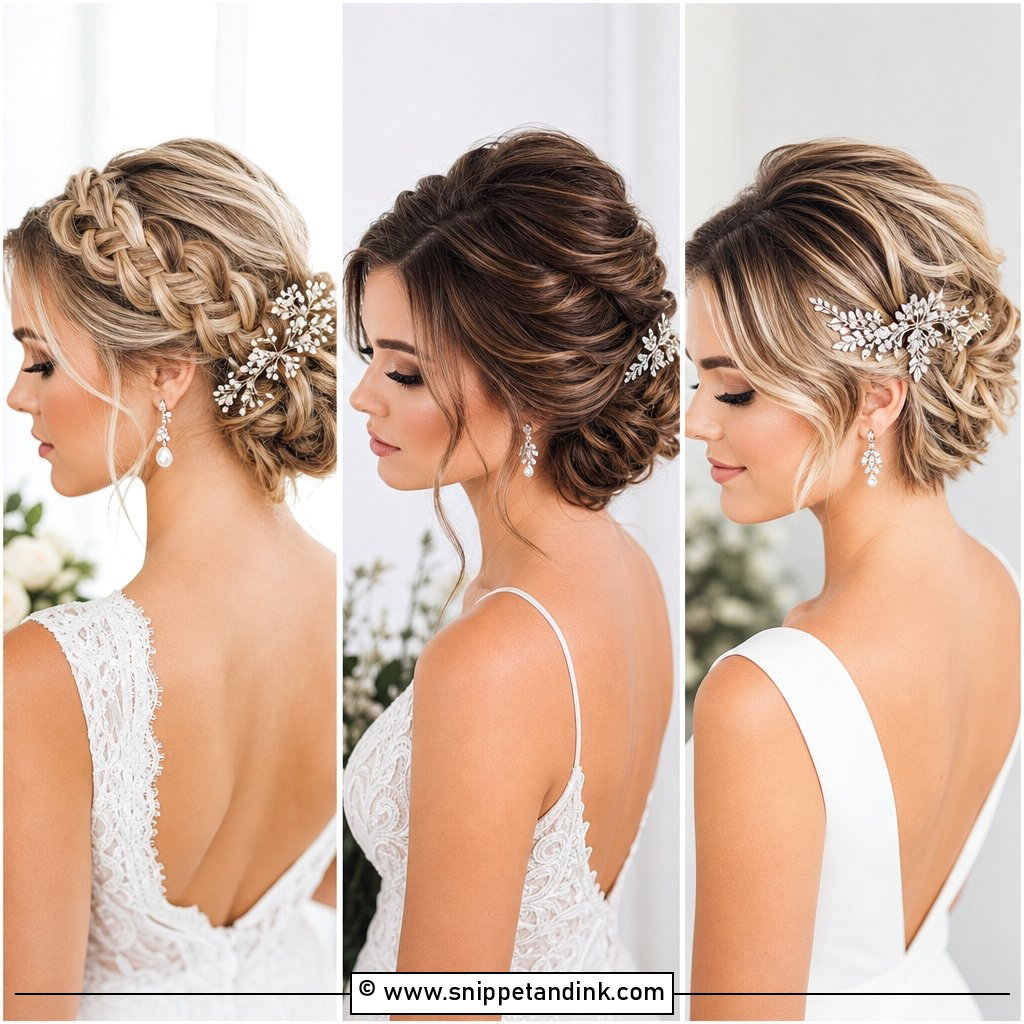
Coiling a loose braid into a rounded bun at the nape is one of the sturdiest things I can do with medium to long hair. The braid gives the bun a built-in grip, so it needs fewer pins than a smooth knot. I braid loosely, pancake it before coiling, then pin through the coil every inch or so with pins angled toward the center. A few face-framing pieces near the cheeks keep it soft. A tiny seashell pin or one fresh bloom tucked at the side is all it needs.
2. Messy Tousled Bun
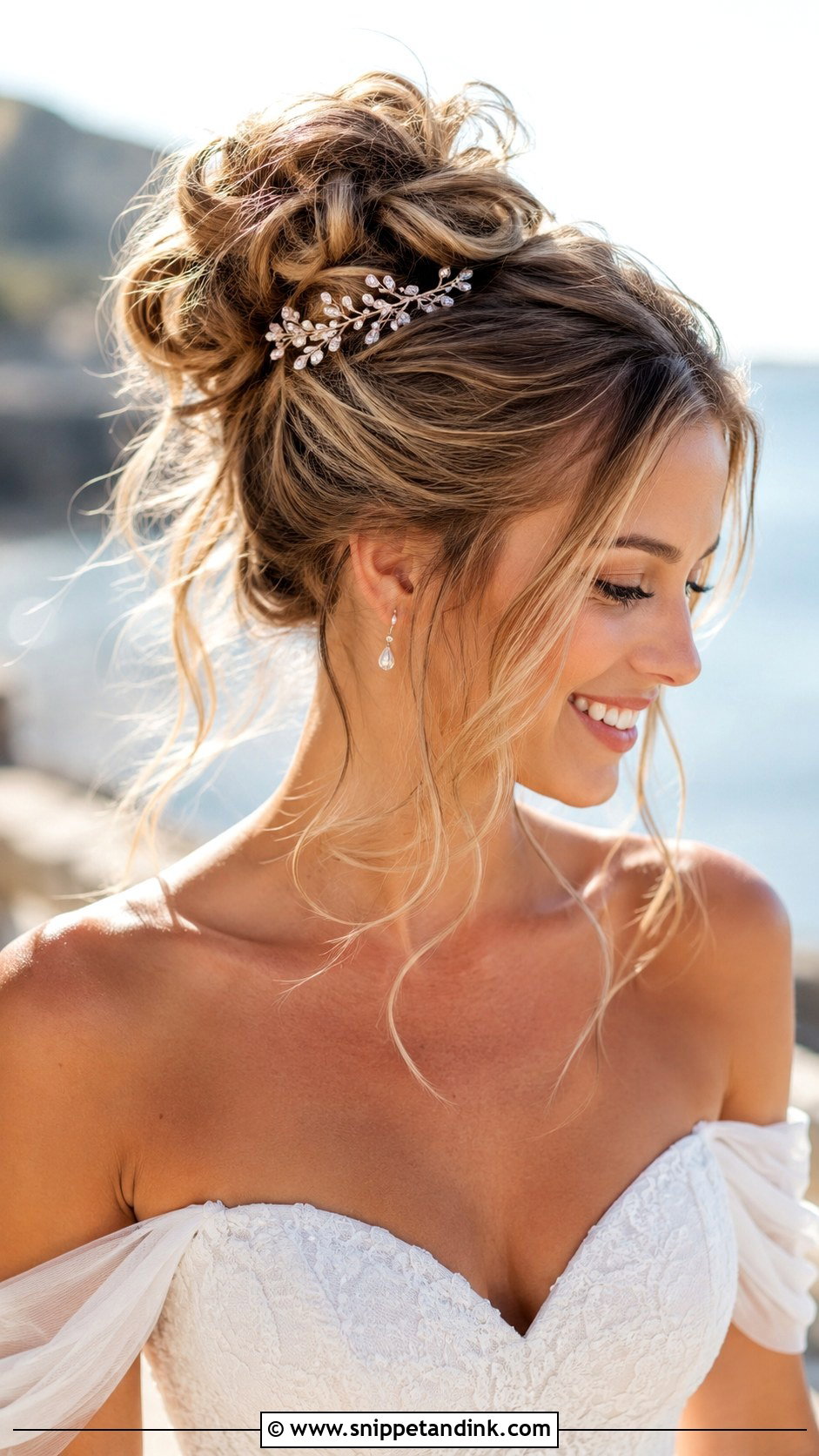
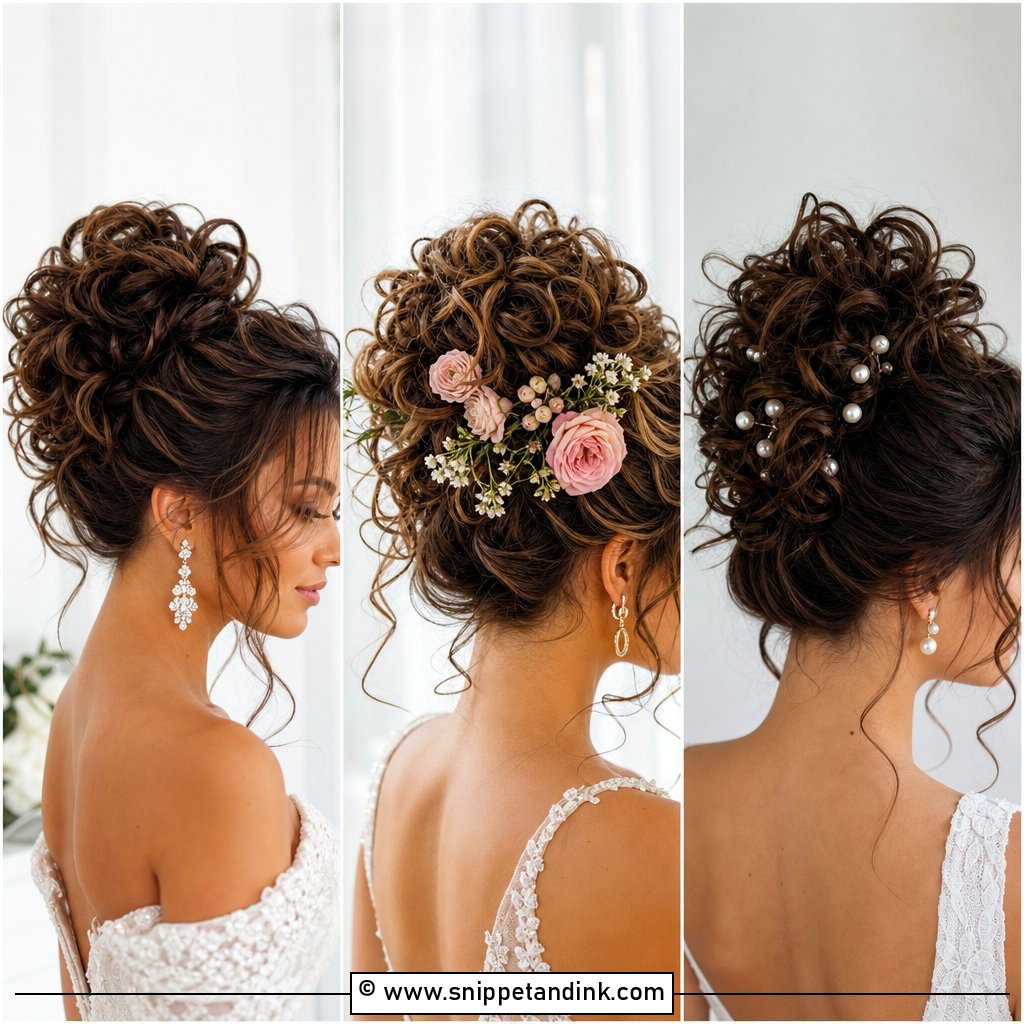
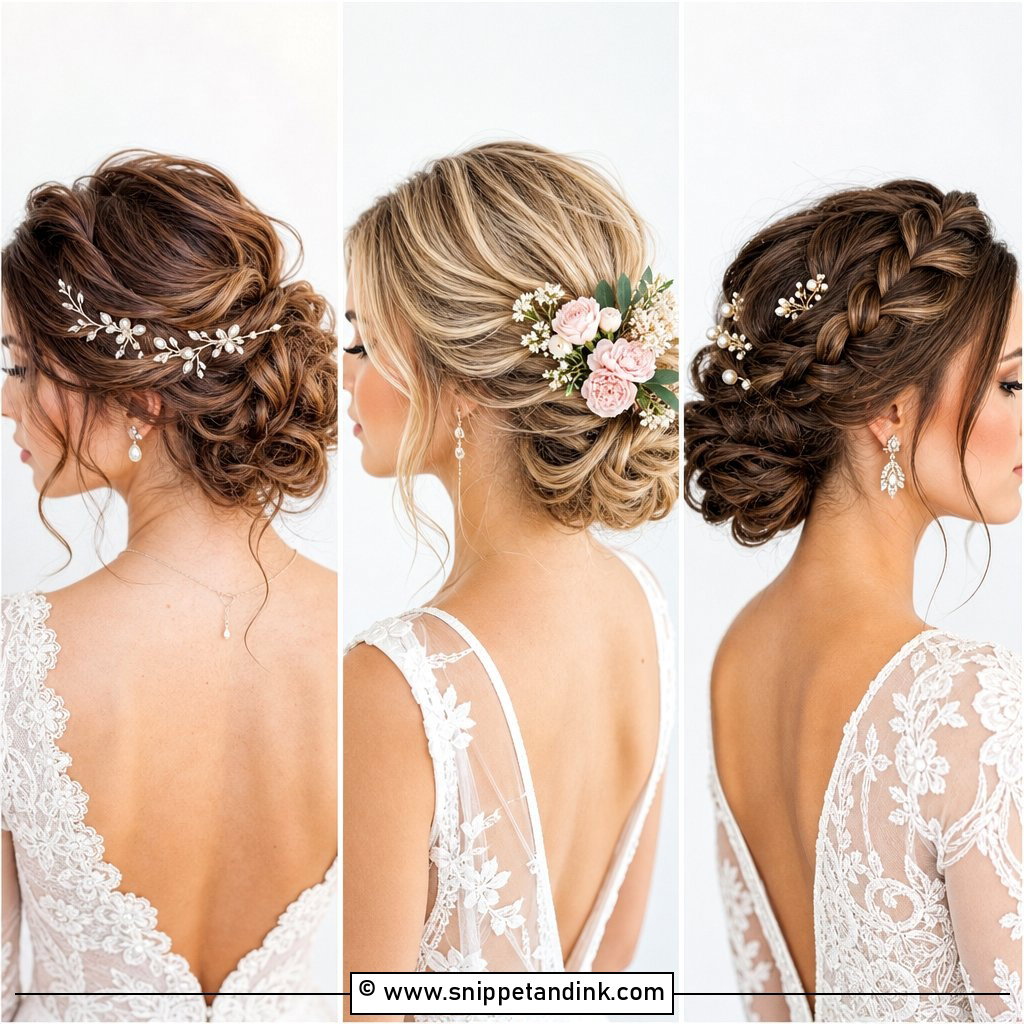
Messy buns look easy, and the bridal version takes longer than people think. The texture has to be designed. I set the hair in hot rollers first, gather it mid-back, twist loosely and pin it in place, then pull out pieces one at a time around the face. Done right, the breeze adds to it rather than wrecking it. It suits round and oval faces and almost any length. A delicate hairpin adds sparkle. Very fine hair needs a padded base inside so the bun doesn’t look sparse in photos.
3. Classic French Twist
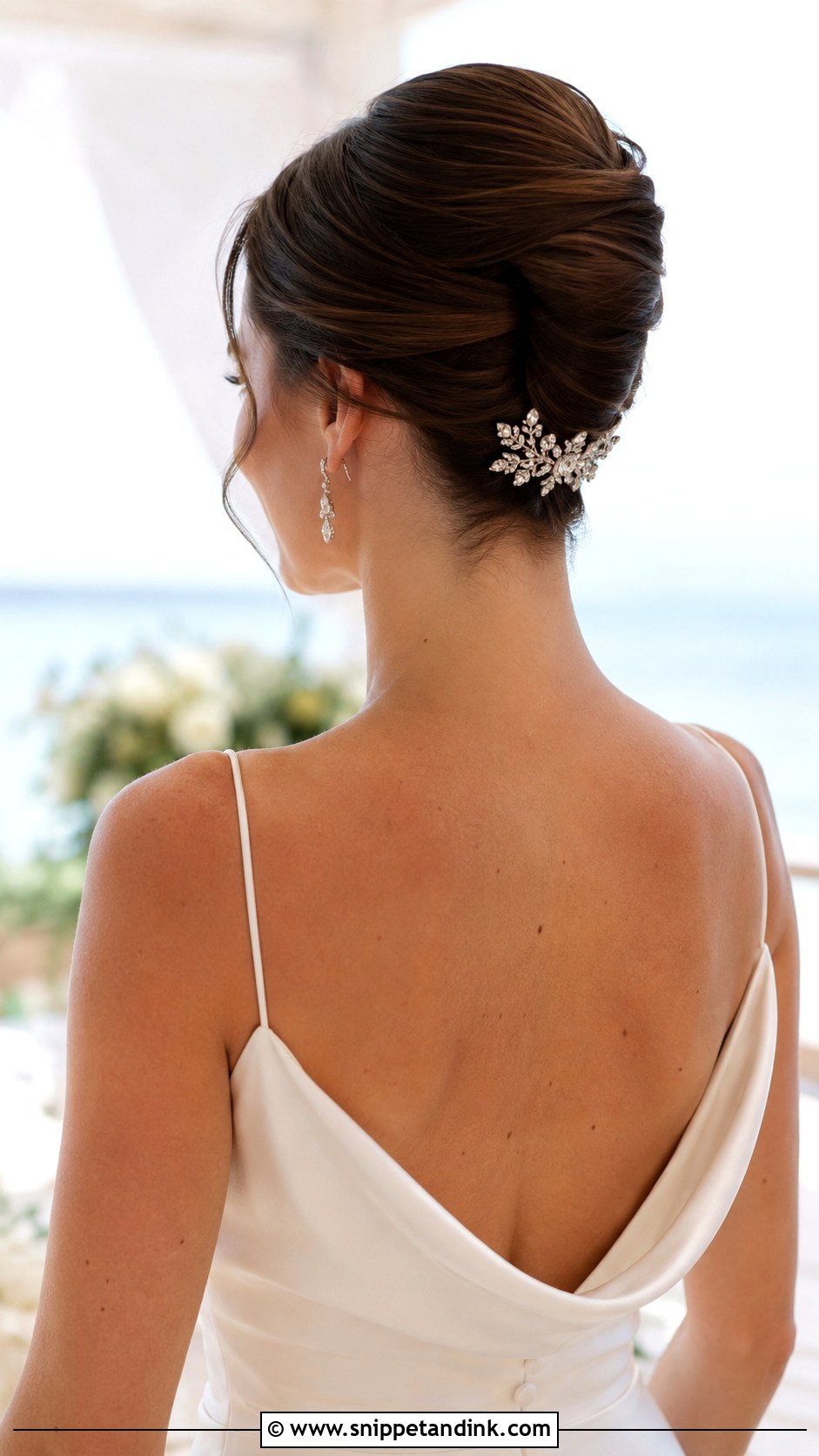
A French twist is clean and structured, and it is among the most wind-resistant updos I do because the hair folds into itself vertically. The work is in the foundation: I criss-cross bobby pins up the center back first, like a zip, and roll the twist over them so it has something to lock onto. Keep it sleek for a modern gown or soften the edges for a romantic one. Very short layers at the nape can escape, so I add a little wax there. A jeweled comb at the base is enough decoration.
4. Fishtail Braid Updo
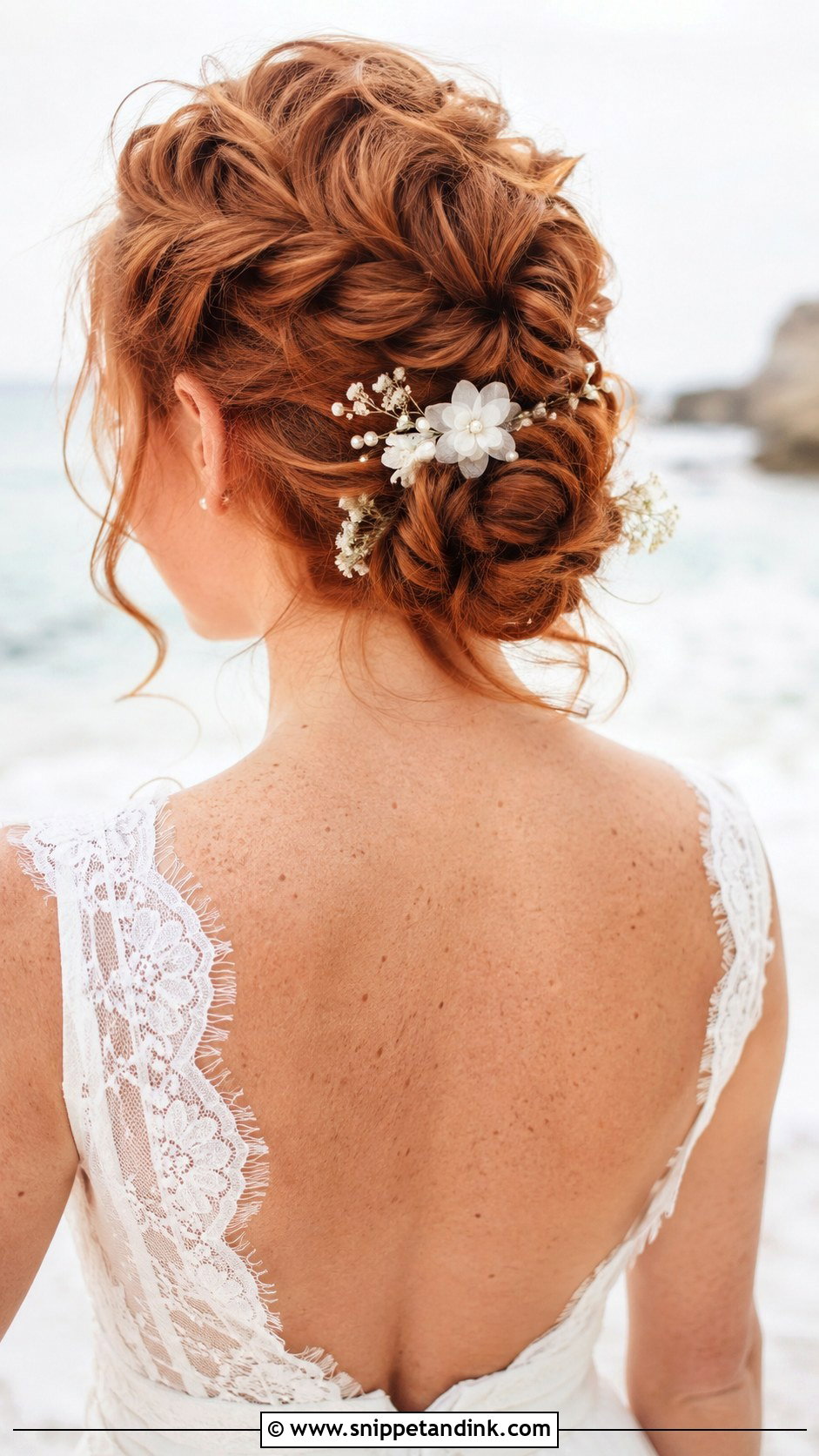
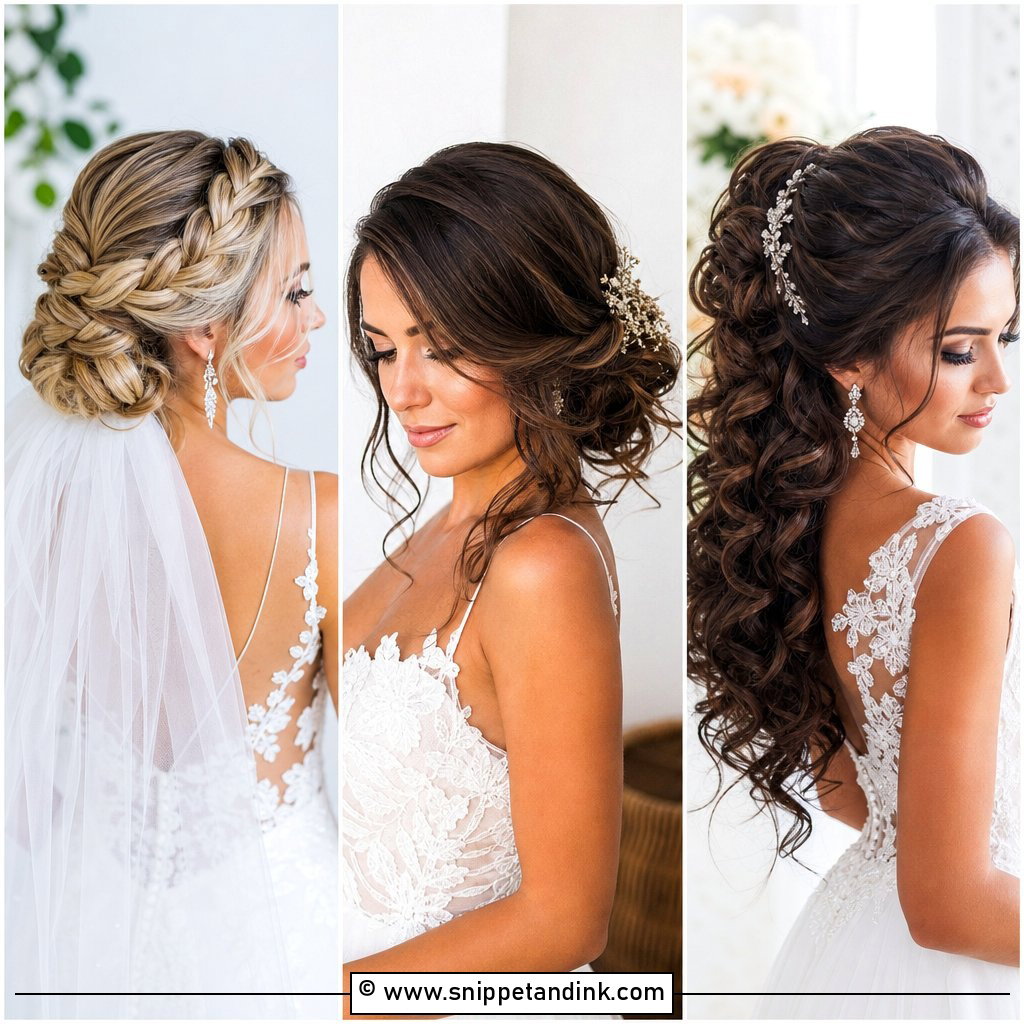
Starting a fishtail near the crown and wrapping it into a bun at the nape gives detail from the back, which is what guests see during the ceremony. It suits boho and ethereal wedding themes. I braid it on second-day hair; freshly washed hair slips and the pattern loses definition. Loosen the plait before pinning so it holds its fuller shape. Tiny flowers or pearl pins look lovely along the woven line.
5. Twisted Chignon
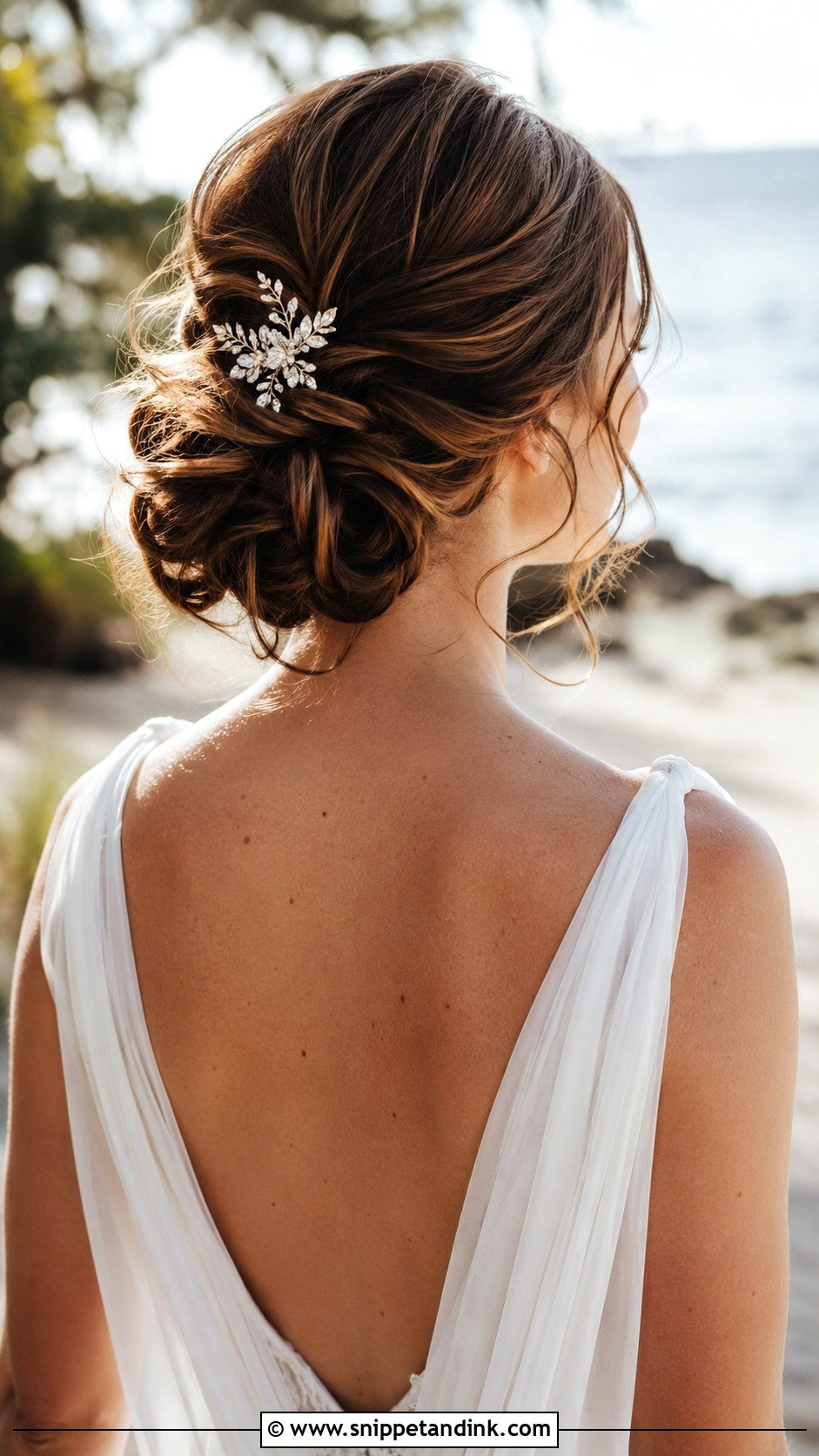
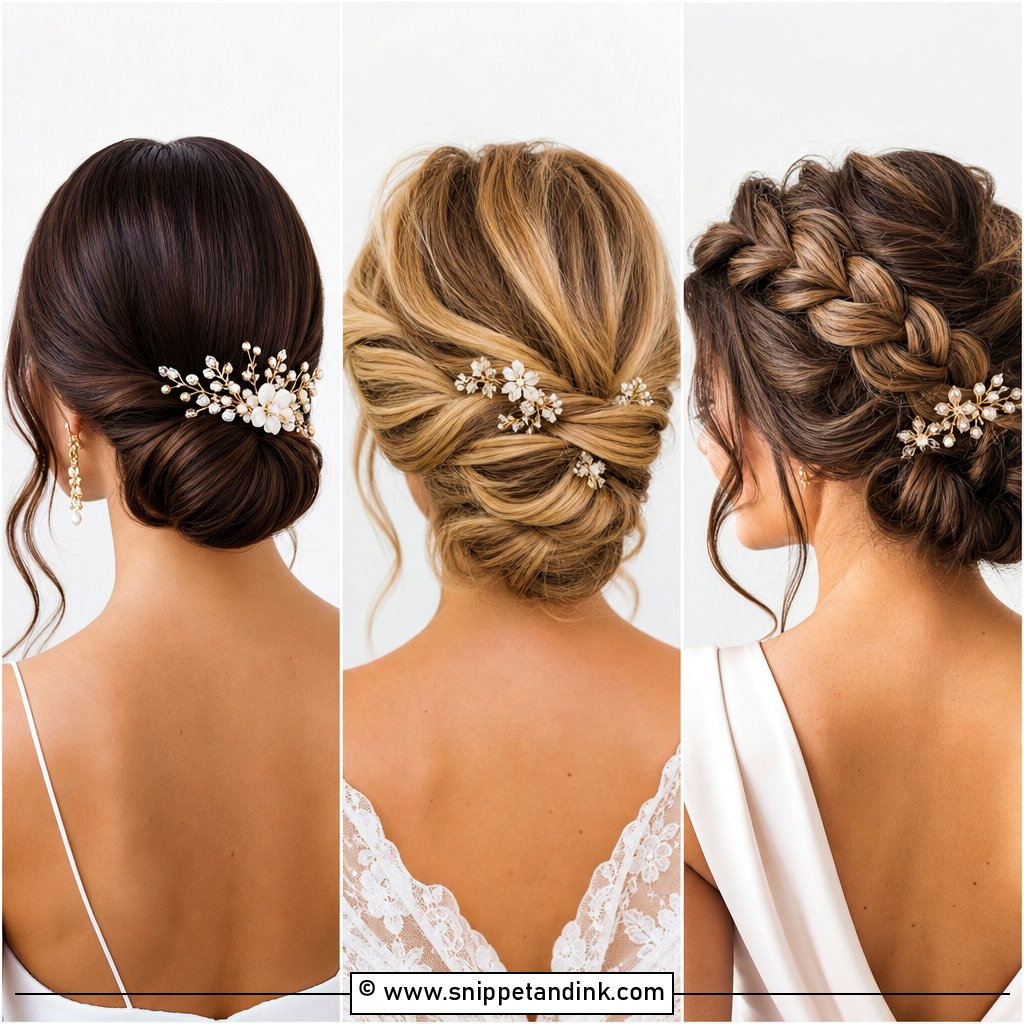
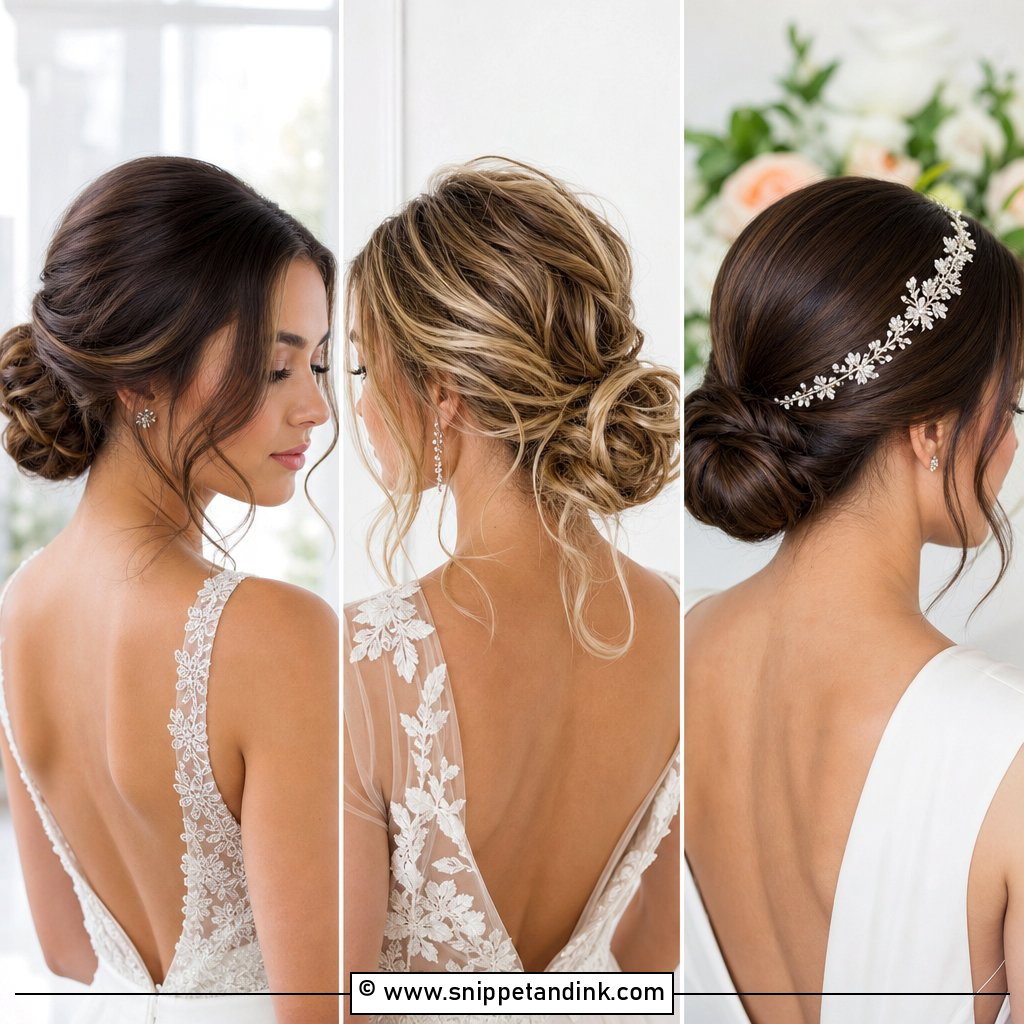
Chignons are the beach bride’s workhorse, and twisting each section before looping it adds movement without losing that hold. I divide the hair into four or five sections, twist each, and pin them one by one into a low knot so the weight spreads evenly across the head. That spread matters when you add a veil. It suits every face shape and keeps your neck bare in the heat. A few wispy tendrils and a sparkling clip finish it.
6. Waterfall Braid Updo
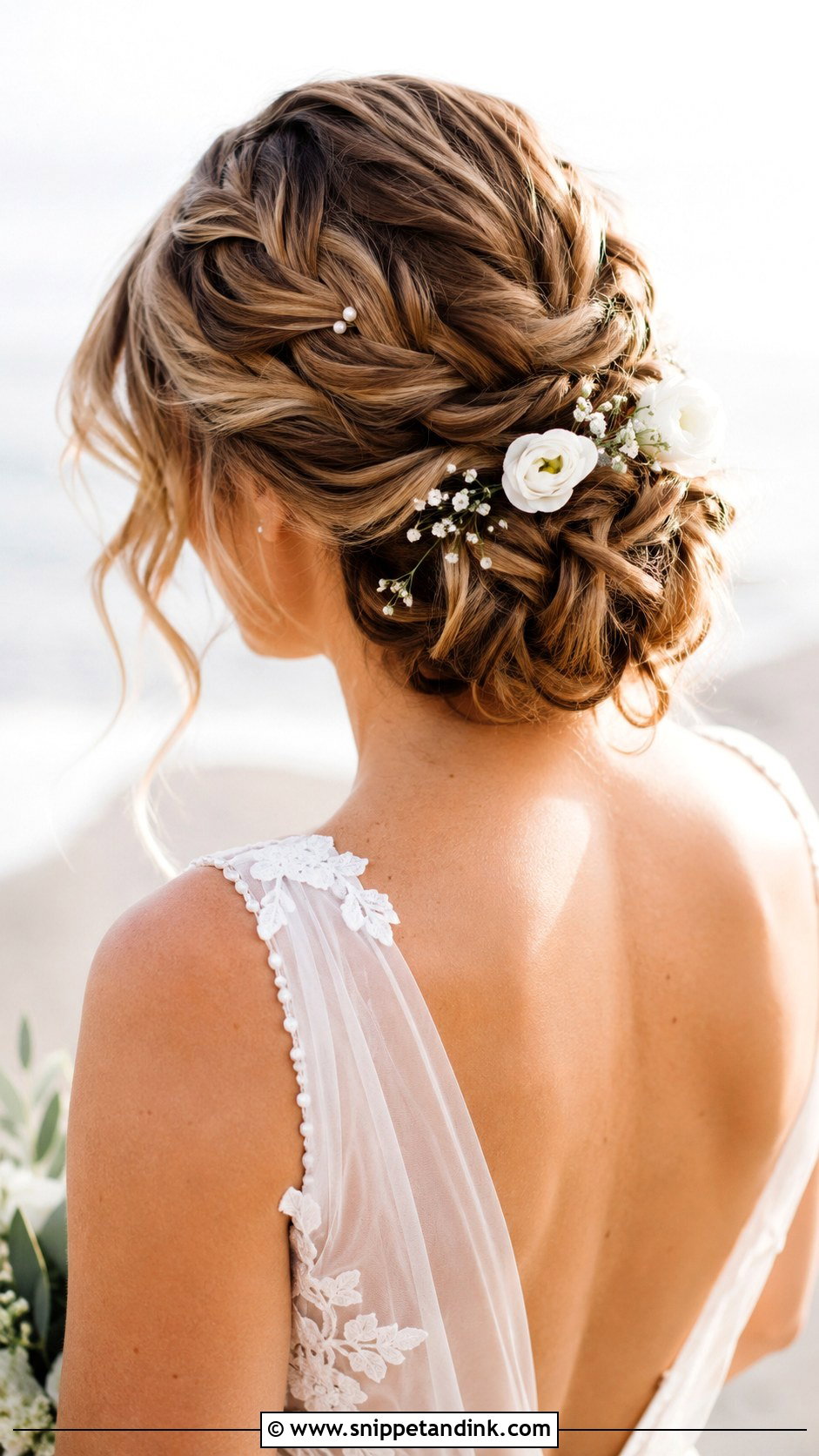
A waterfall braid drops strands as it travels across the back of the head, so it looks like hair cascading. It’s a detail that reads well from behind during the ceremony. I run the braid from temple to temple, then coil the remaining length into a soft chignon. The dropped strands are the weak point on a windy beach; I pin them lightly under the chignon so they can’t blow forward. Fresh blooms or pearls along the braid add to it.
7. Low Chignon
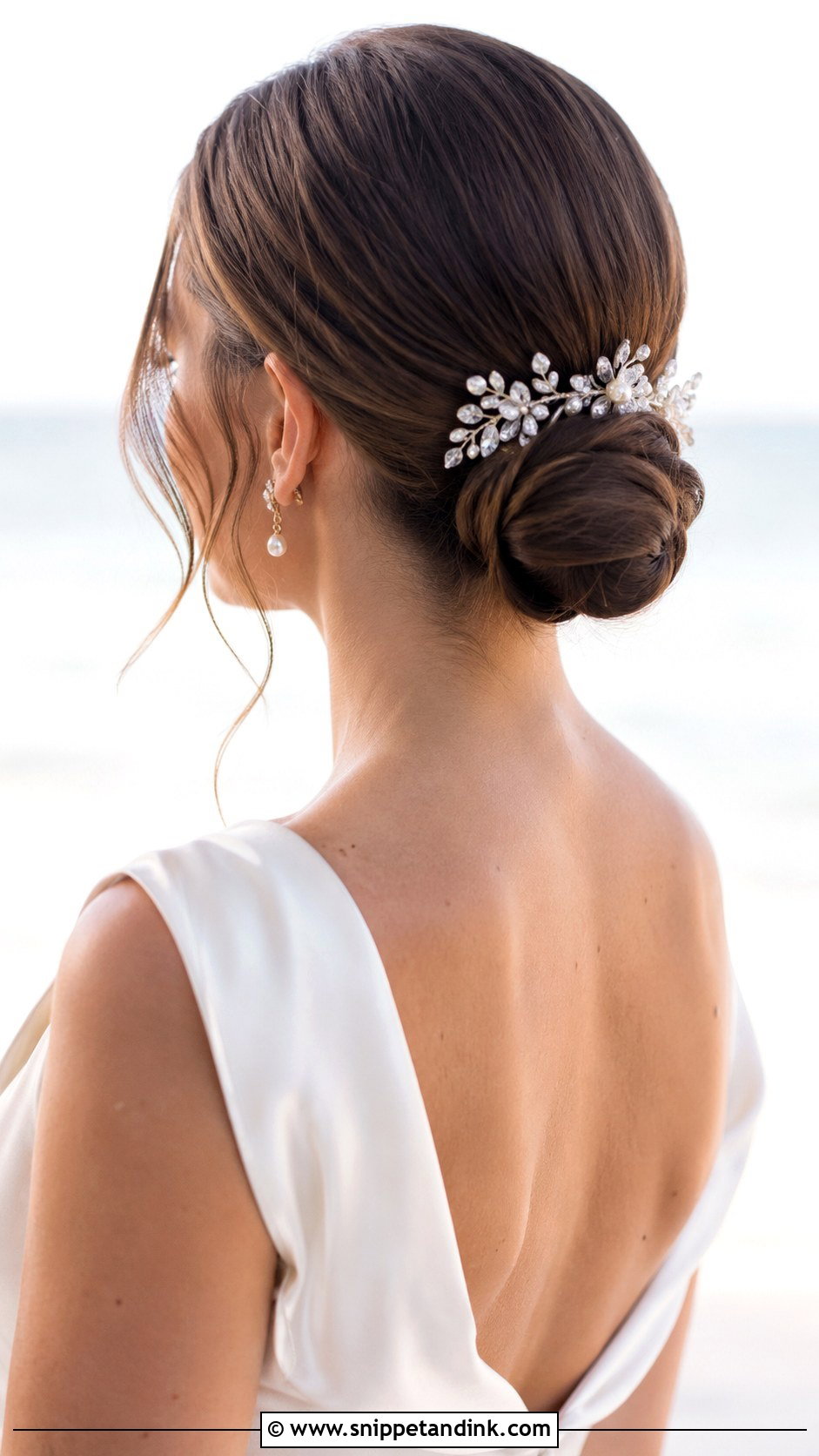
A plain low chignon is the updo I’d choose for a bride who doesn’t want to think about her hair at all. Smooth the hair back, twist it into a low knot and pin it firmly. It’s sturdy, it keeps the face open, and it suits both minimalist and glamorous gowns. I use U-pins in the knot itself; they hold the shape without crushing it. A few loose strands at the ears soften it, and a veil comb slides straight into the base.
8. Boho Braided Updo
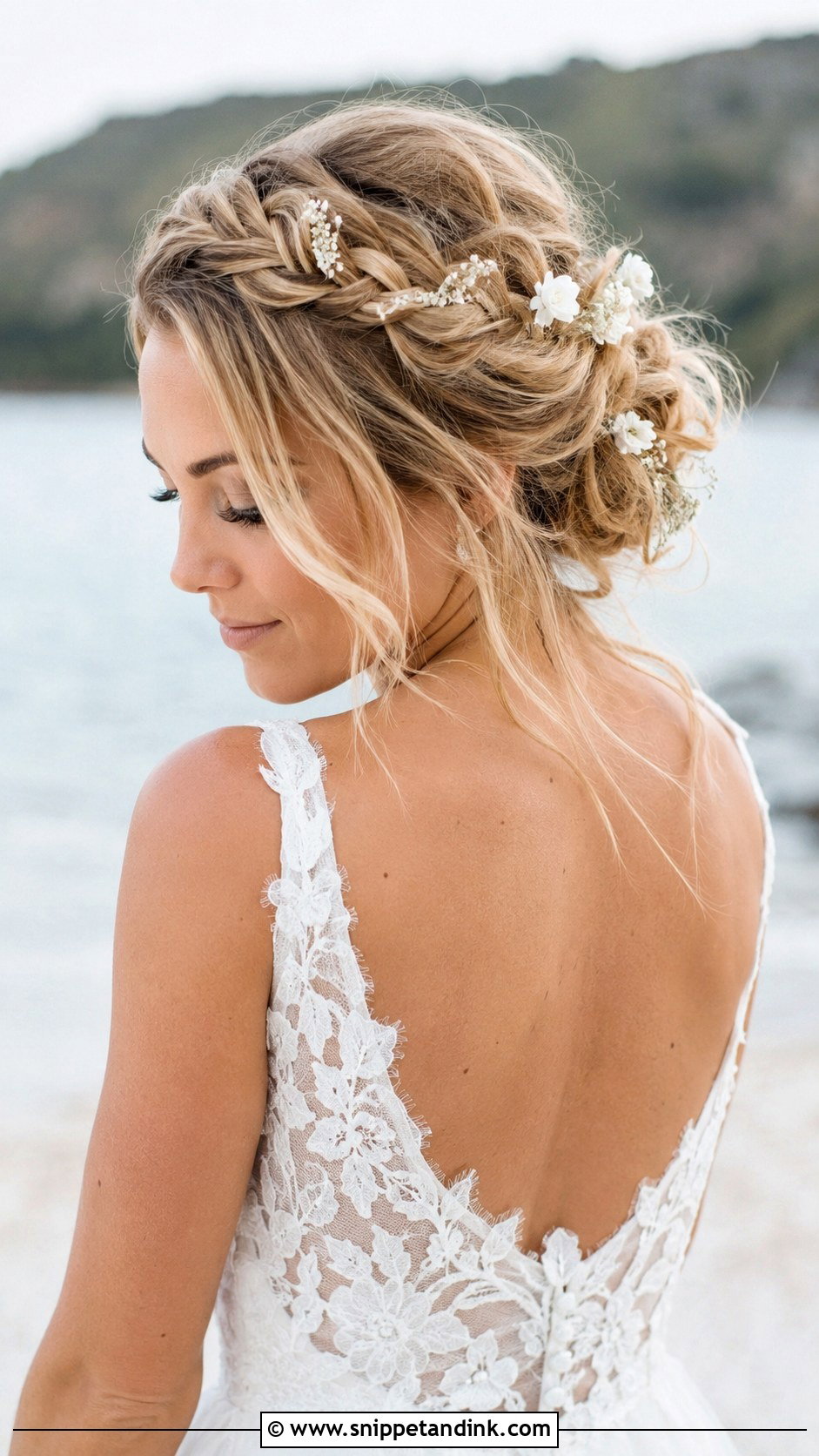
This is the updo for a relaxed ceremony with a flower crown or scattered floral pins. Loose braids around the crown, a few twists and waved lengths are gathered into a soft bun at the back. Honestly, it’s my favorite to build. The trick is pinning firmly underneath and loosening only the surface, so the wind can lift the wispy pieces without pulling the structure apart. It feels personal and unfussy.
9. Romantic Curly Updo
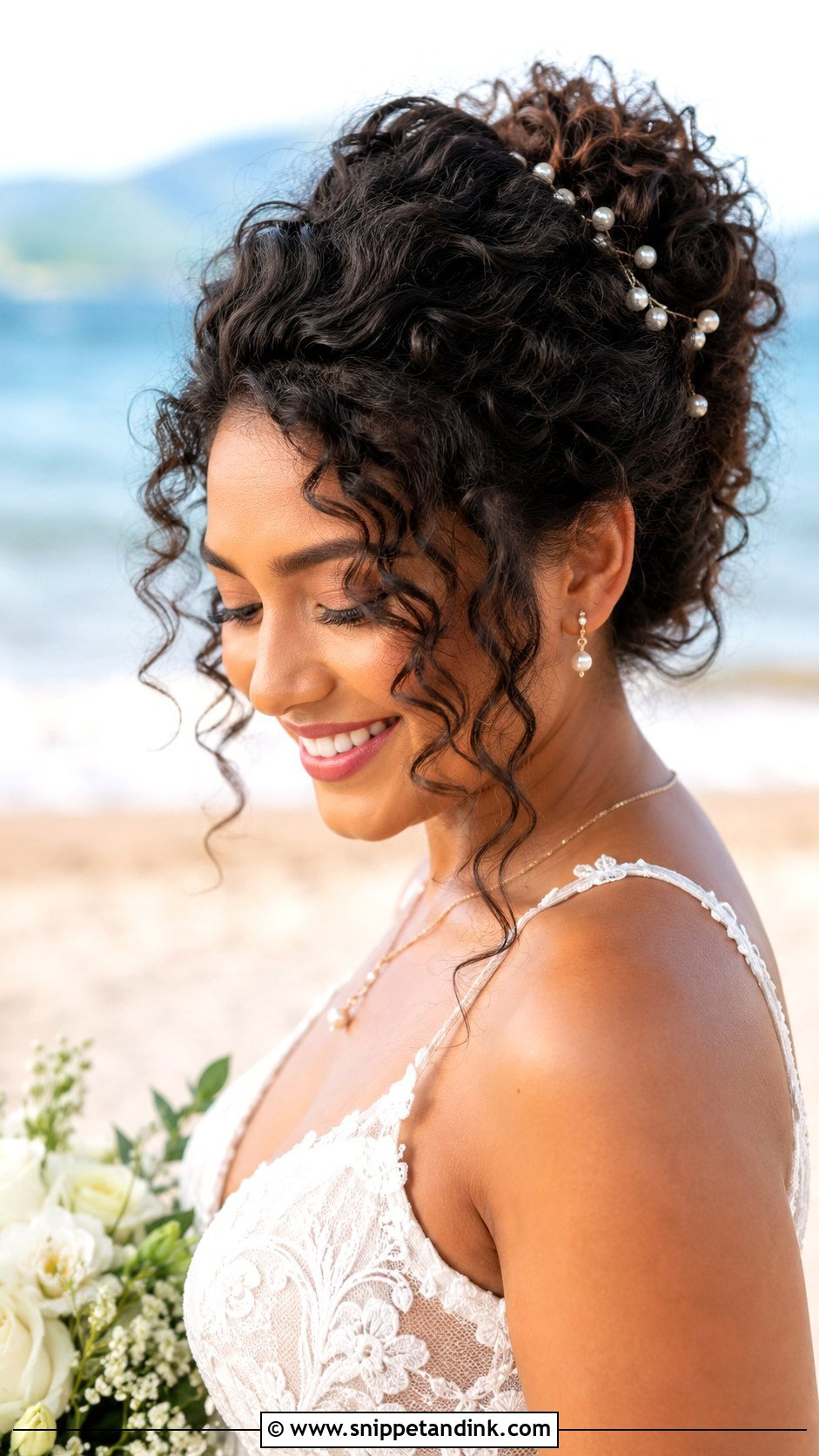
Pinned curls give the most volume of any shape here, and they need hair that holds a curl. Naturally wavy or curly hair is ideal. I set the curls first and let them cool completely, often in pin curls for twenty minutes, then gather and pin them into a rounded shape at the back. A few loose spirals frame the face. Fine straight hair can drop in sea air, so I’d test this one in humidity before committing. Pearls or small blooms tucked among the curls look sweet.
10. Side Swept Updo
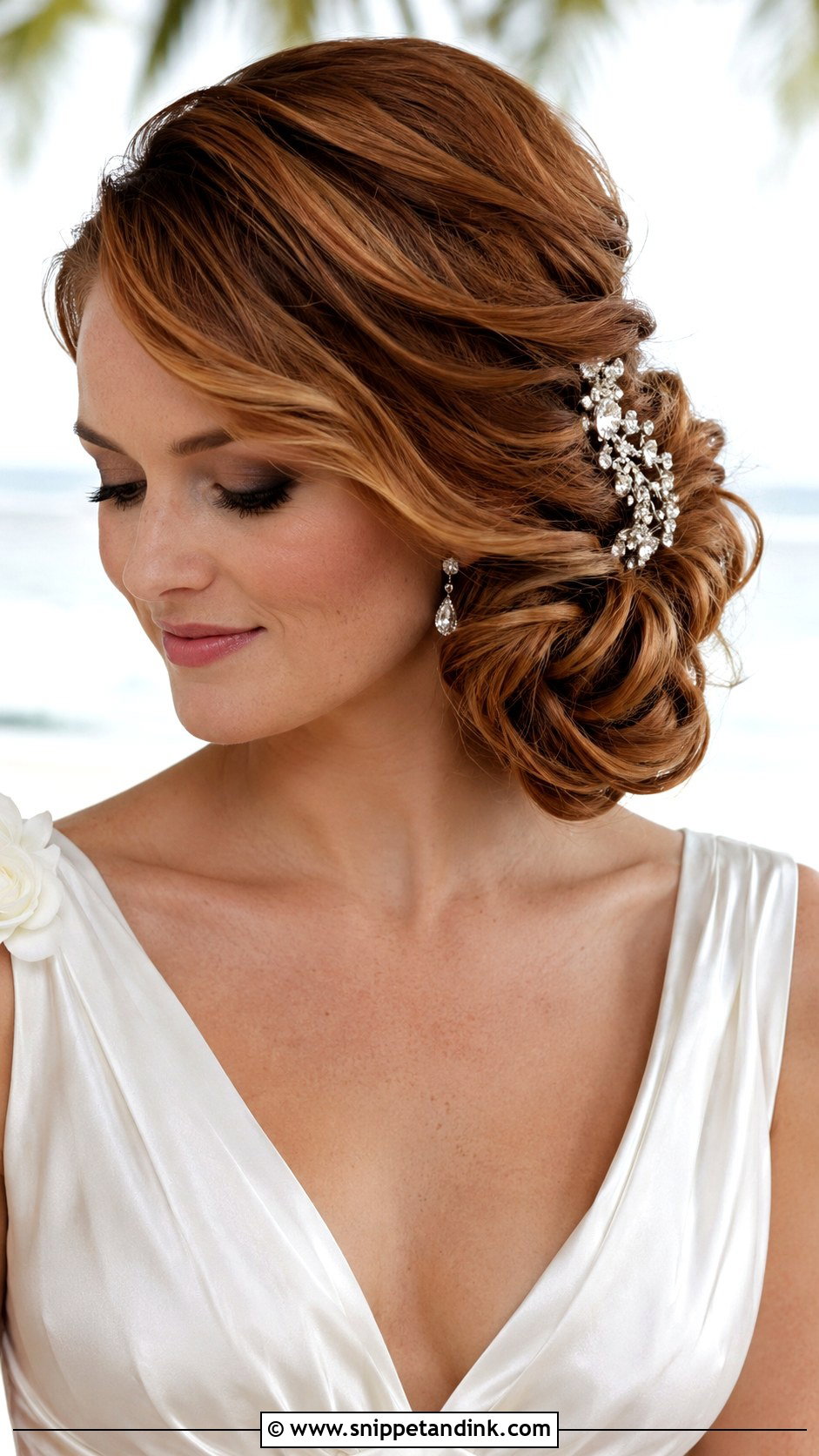
Sweeping an updo to one side gives an old-Hollywood shape and shows off a statement earring. I gather the hair low toward one shoulder and twist it into a bun or chignon just behind the ear. Choose the side carefully: it should be the side facing your guests during the vows, and ideally the one away from the wind. A few loose waves near the collarbone and a sparkling clip finish it.
11. Floral Crown Updo
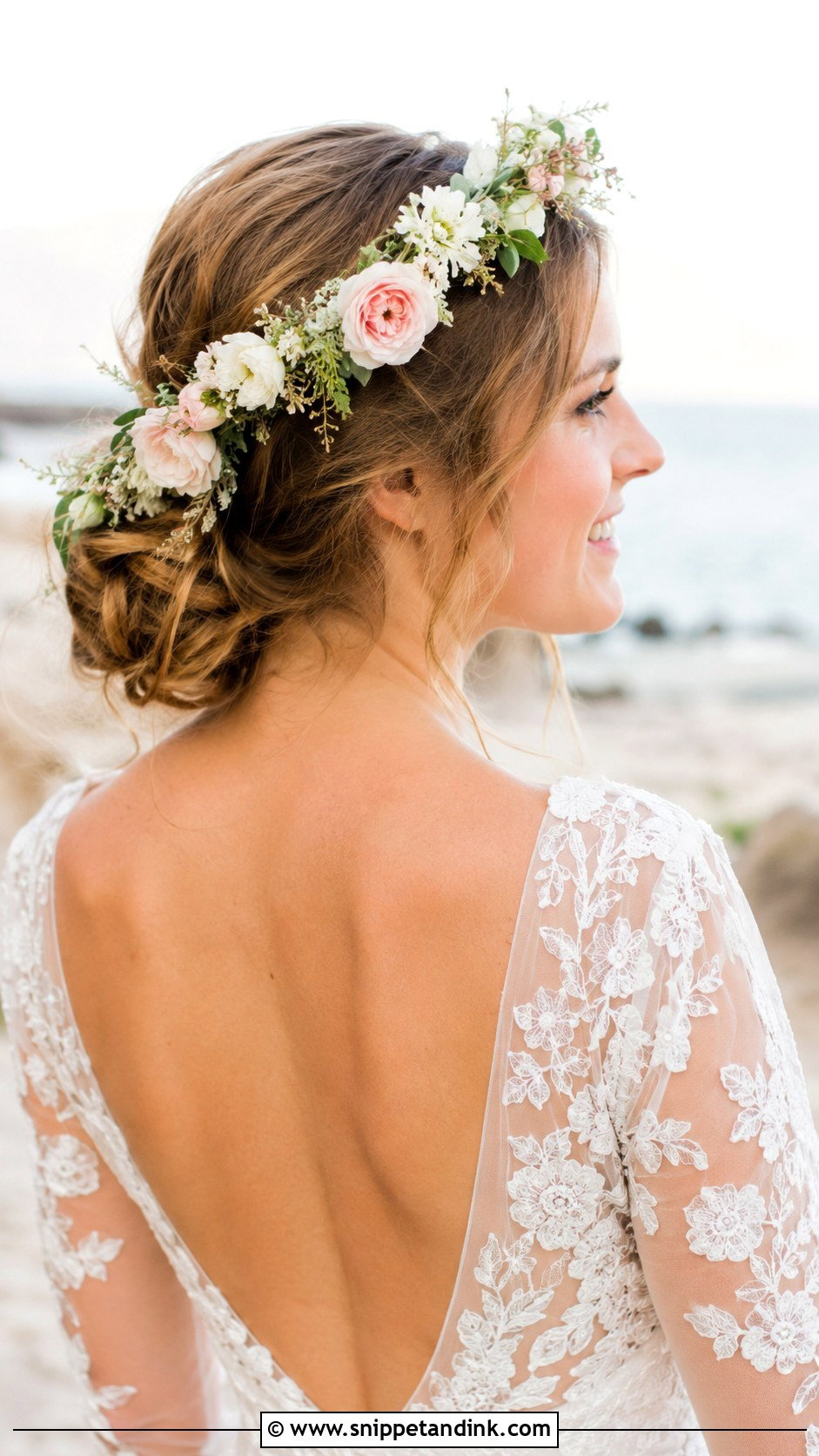
A crown of fresh or silk flowers over a soft bun suits boho and garden-themed beach weddings. Matching the blooms to your bouquet ties the look together. Fresh flowers in sun do wilt, so I’d pick sturdy varieties or silk for the crown itself and save the delicate fresh blooms for the bouquet. I anchor the crown with pins crossed under it at each temple and at the back. A few tendrils around the face soften the effect, and it reads like a fairytale in the best sense.
12. Halo Braid Updo
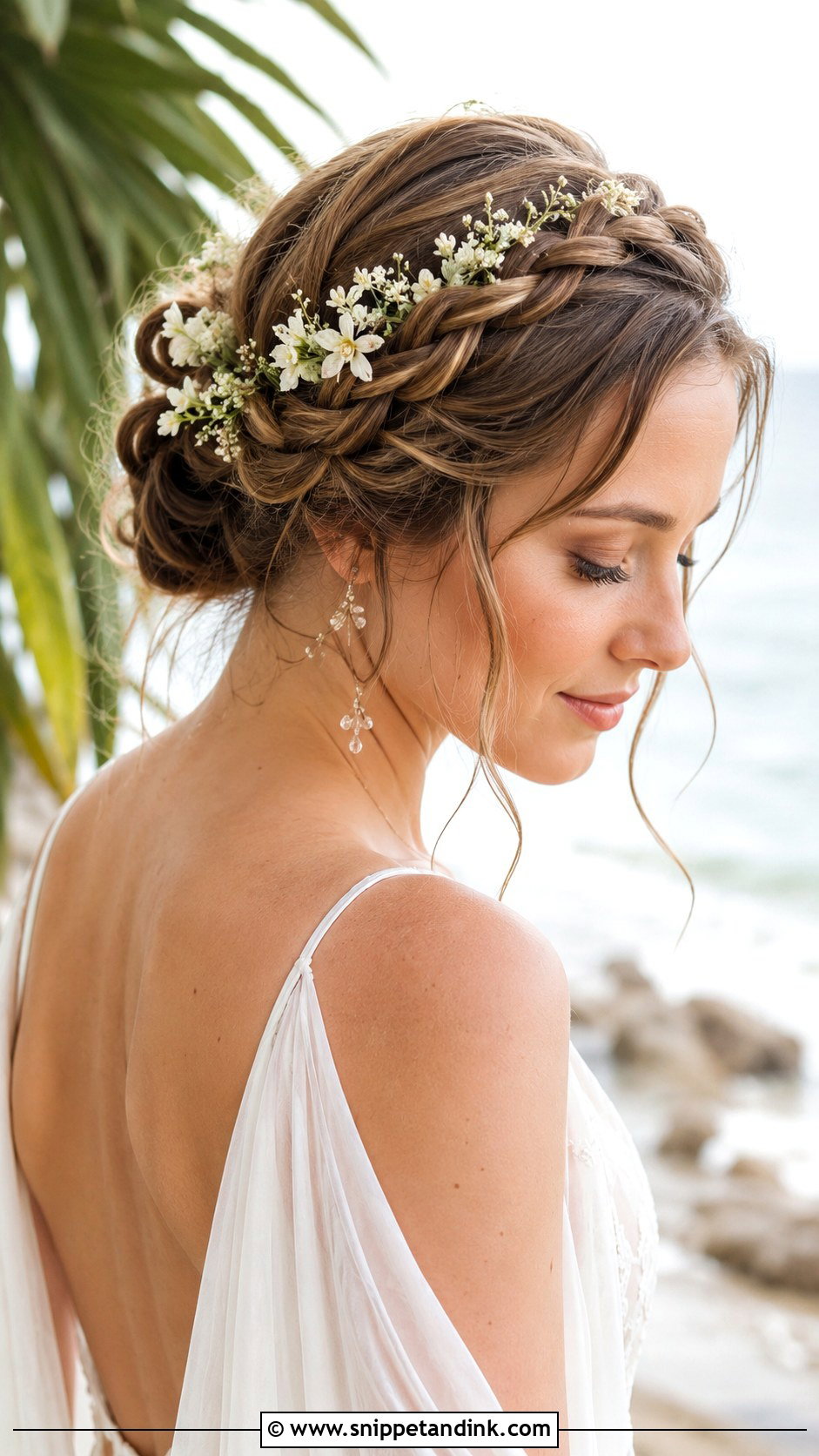
A single braid circling the head like a halo is about as wind-proof as bridal hair gets. It needs long hair, roughly to the shoulder blades, to go all the way round; otherwise I use two braids meeting at the back. I tuck and pin the ends under the start of the braid so the join disappears. It reads ethereal and goddess-like next to a draped gown. Floral accents can be woven along it.
13. Knotted Bun
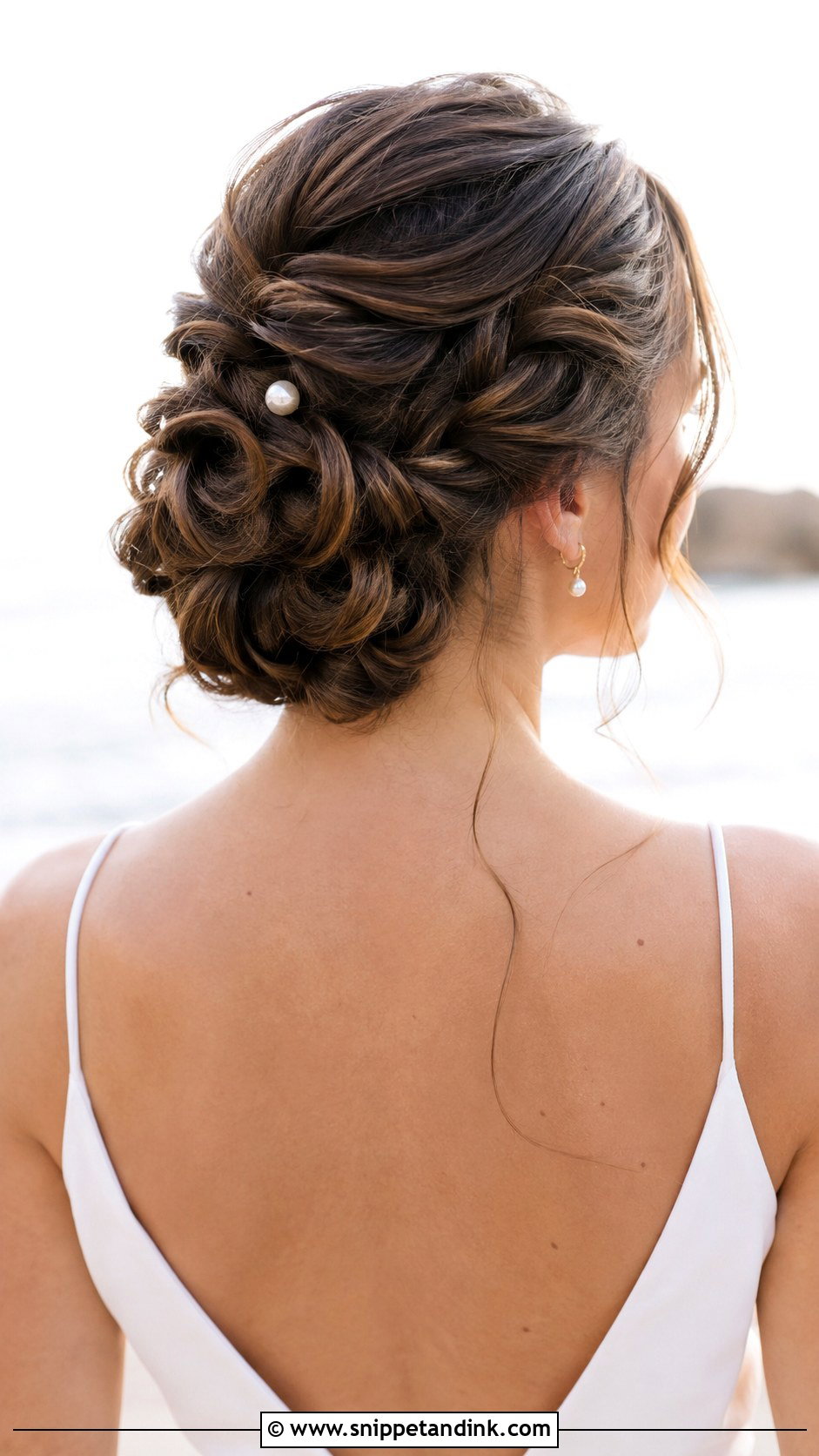
Twisting sections into small knots before gathering them into a bun gives a contemporary, textured look with plenty of dimension. It’s more forgiving than a smooth bun on hair with layers, because short pieces hide inside the knots. I tie each knot loosely, pin it, then arrange the knots into a bun. Medium to long hair works best. A small pearl pin between the knots adds a quiet sparkle.
14. Dutch Braid Bun
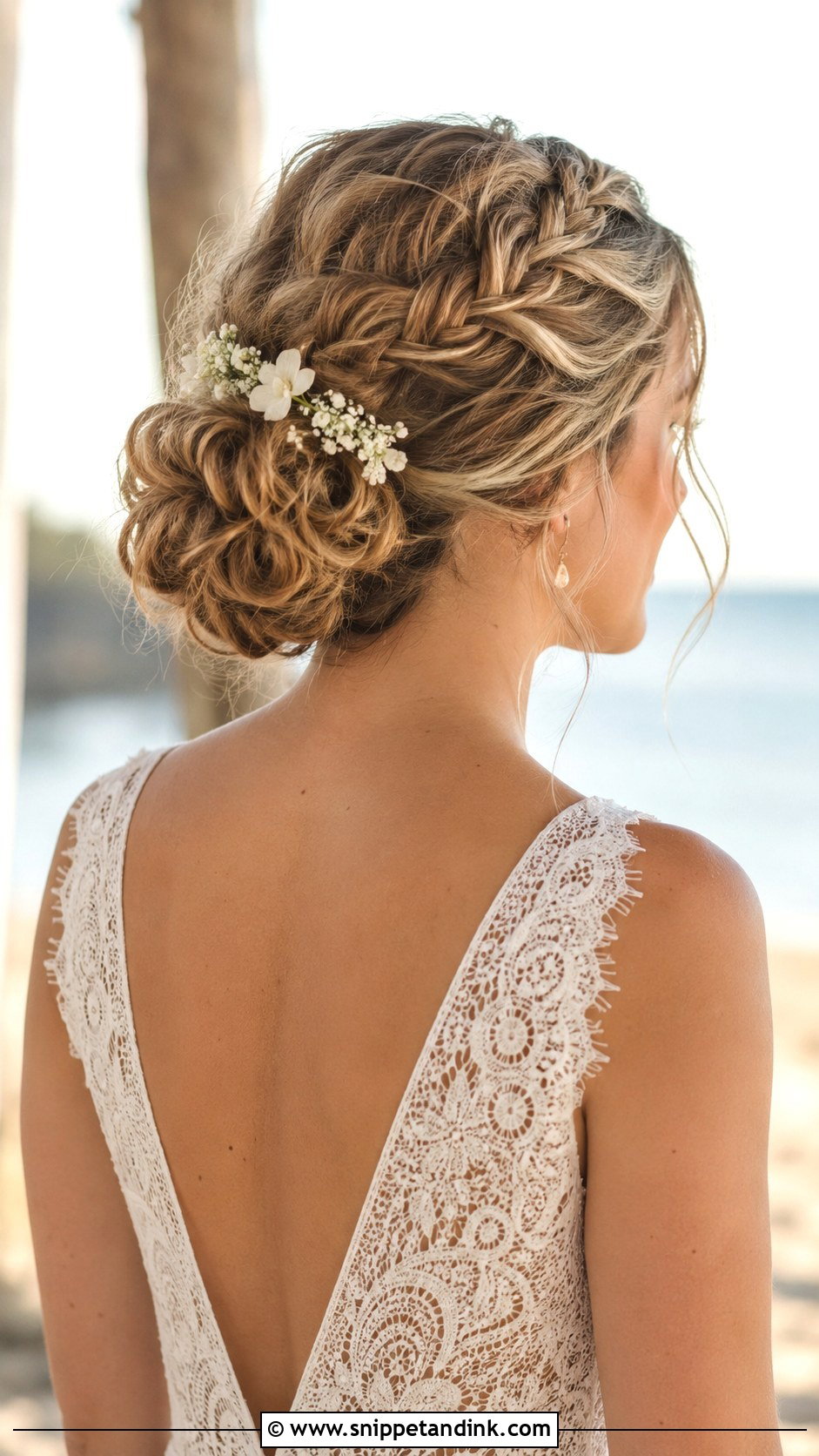
Raised Dutch braids show up strongly in photos and hold firm on a windy beach. I braid from the hairline back, then coil the finished braid into a low or mid bun. This one suits brides planning to be active: a barefoot first dance, sand games, a boat out after the ceremony. Loosen the braid edges for softness and pull a couple of face-framing pieces out. Florals or pins along the braid give it a coastal finish.
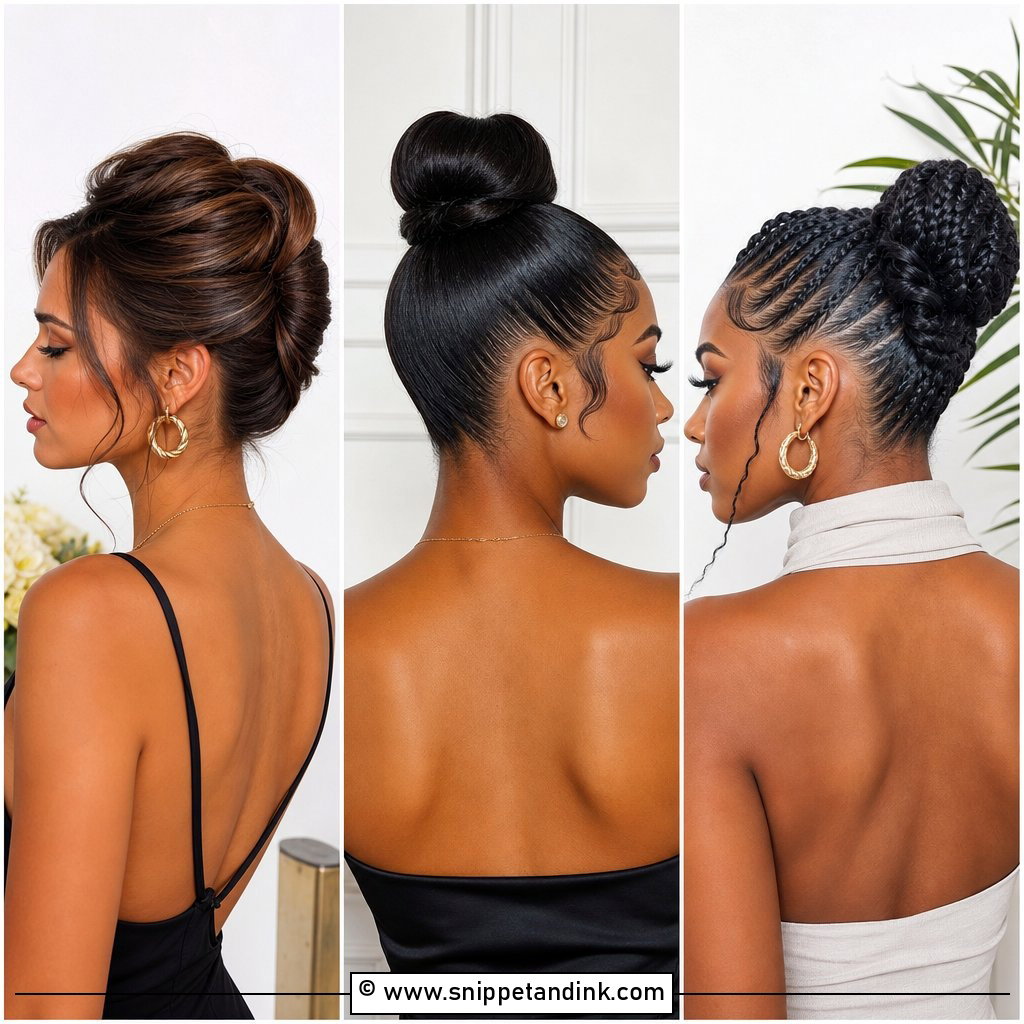
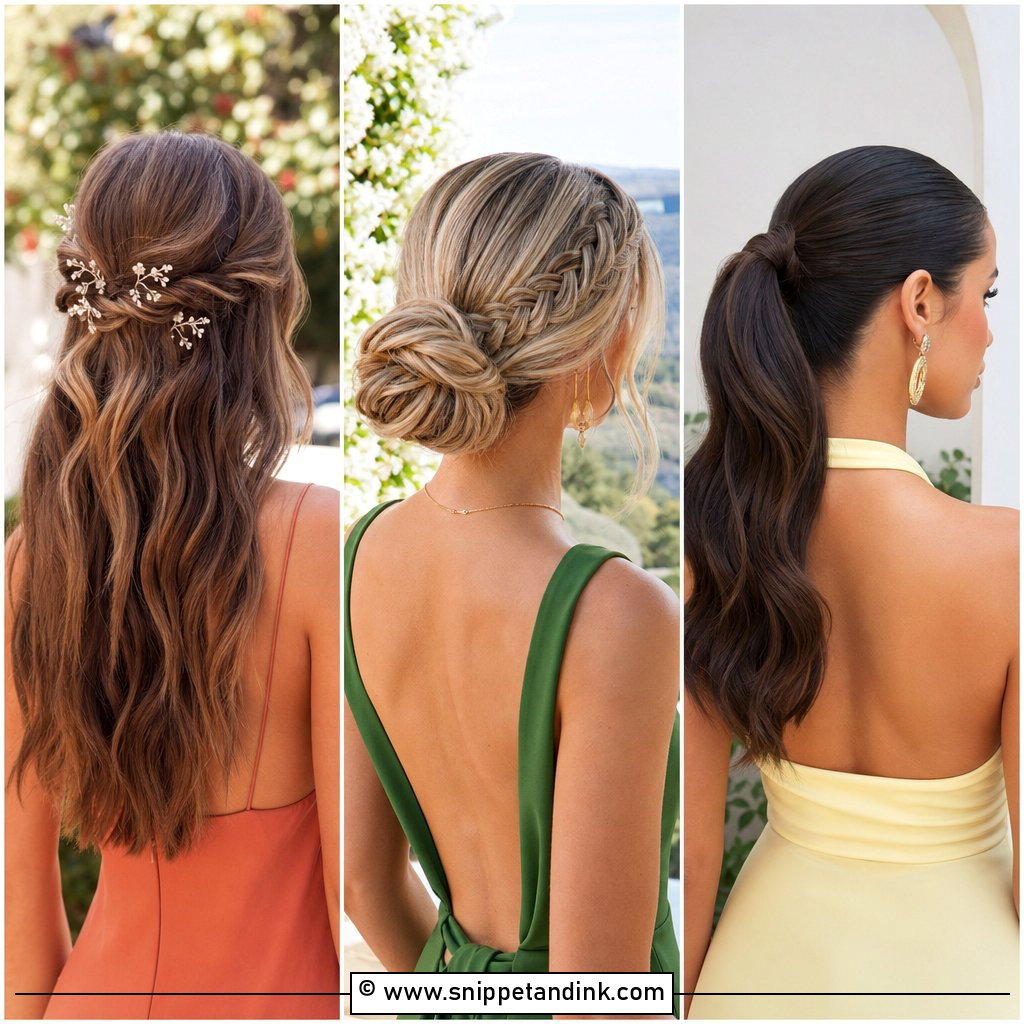
15. Sleek Top Knot
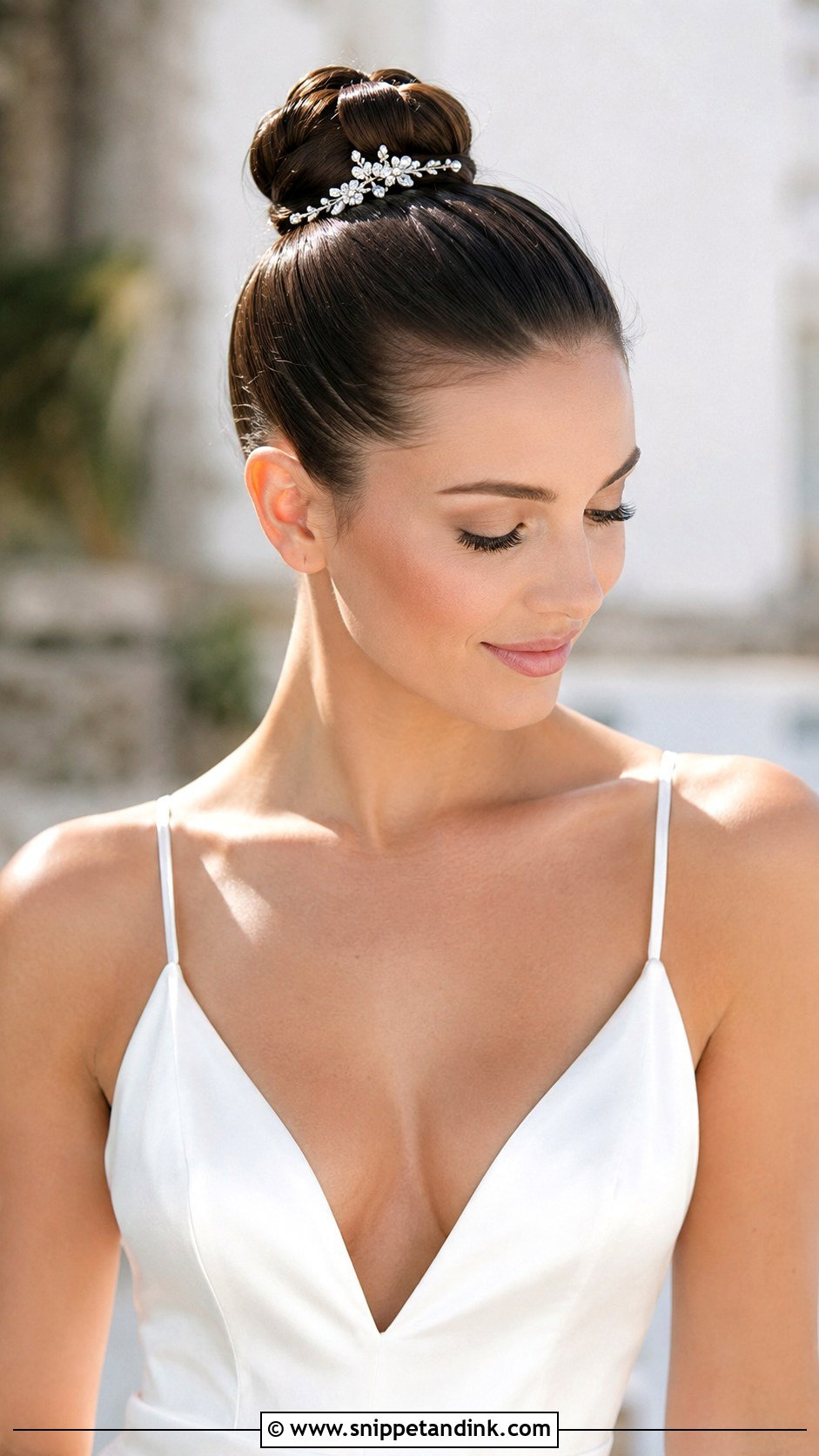
A polished top knot is a modern choice for a minimalist beach wedding, and it keeps the neck and shoulders completely bare. I smooth the hair upward into a tight ponytail at the crown, then wrap and pin it into a neat knot. The thing to plan is the veil: a high knot means the veil sits below it, which changes how the fabric falls. Smoothing cream keeps flyaways down in humidity. A jeweled hairpin adds a touch of glamour.
16. Loose Pinned Updo With Tendrils
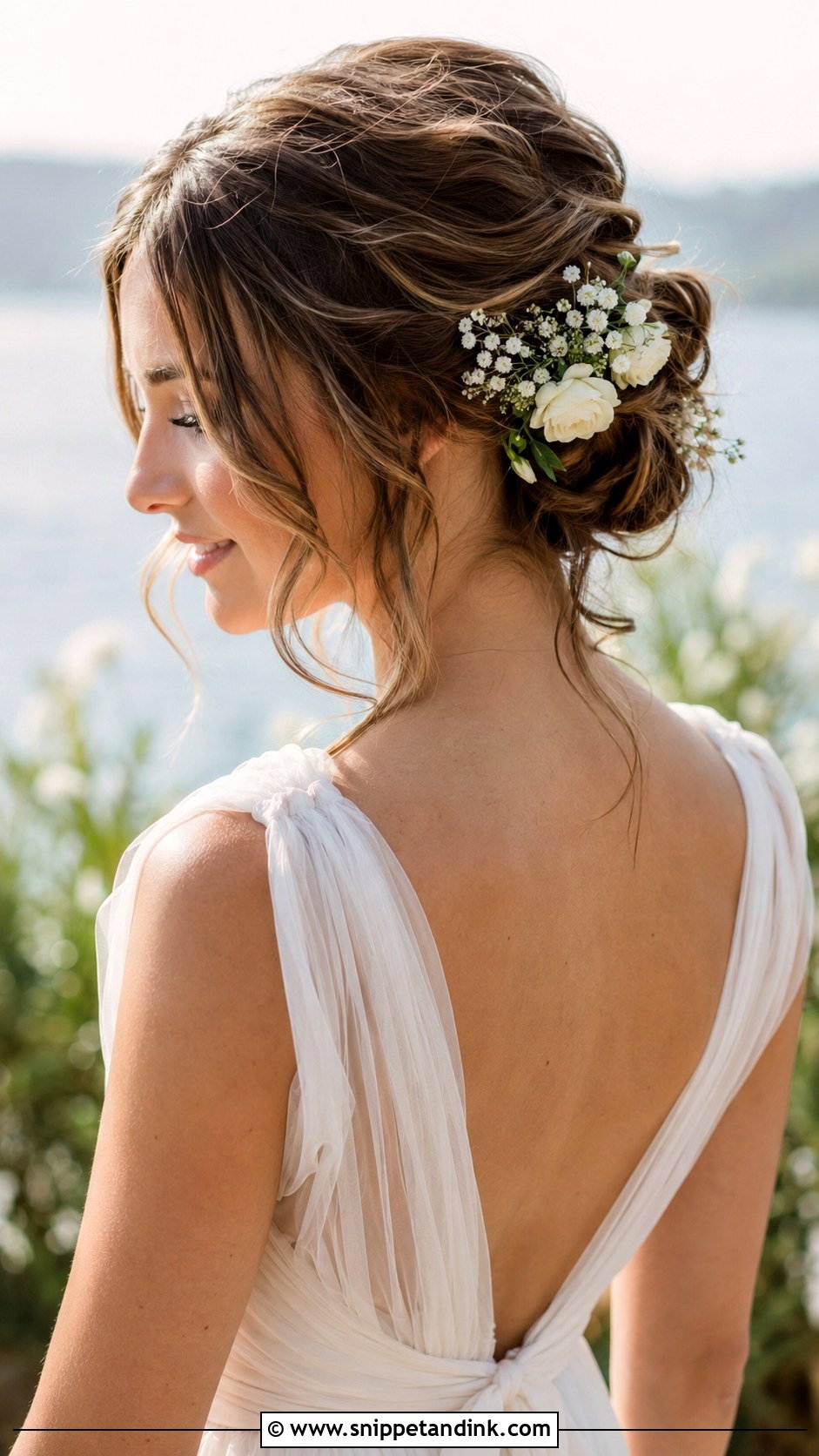
Hair pinned up loosely with plenty of soft pieces left out suits a bride who prefers romance over polish. The wispy tendrils around the face and neck are the point of it. I curl the loose strands lightly so they hang in soft bends instead of falling straight. On very humid days those pieces can frizz, so I finish them with a drop of serum rather than hairspray. Small blooms or pearls finish it.
17. Vintage Rolled Updo
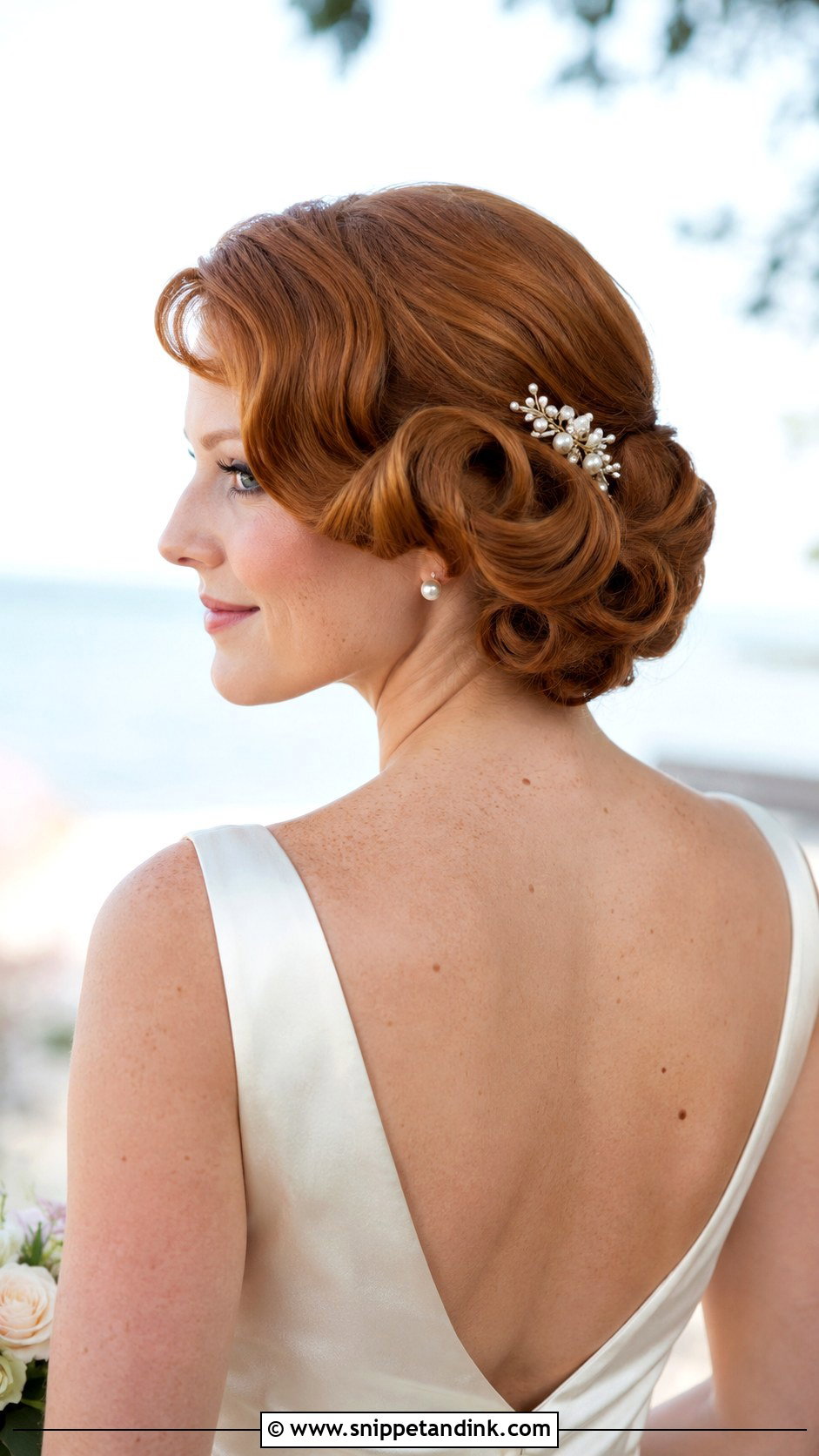
Smooth, sculpted rolls give a vintage rolled updo its old-Hollywood shape, and it’s surprisingly secure in a breeze once it’s set. The structure comes from setting the hair first, usually with rollers, so each roll has body to hold. I roll the sections inward and pin them along the inner edge where the pins can’t be seen. It suits classic gowns and statement jewelry. A slight wave near the face and a vintage comb or pearl accent finish it.
18. Pearl Embellished Updo
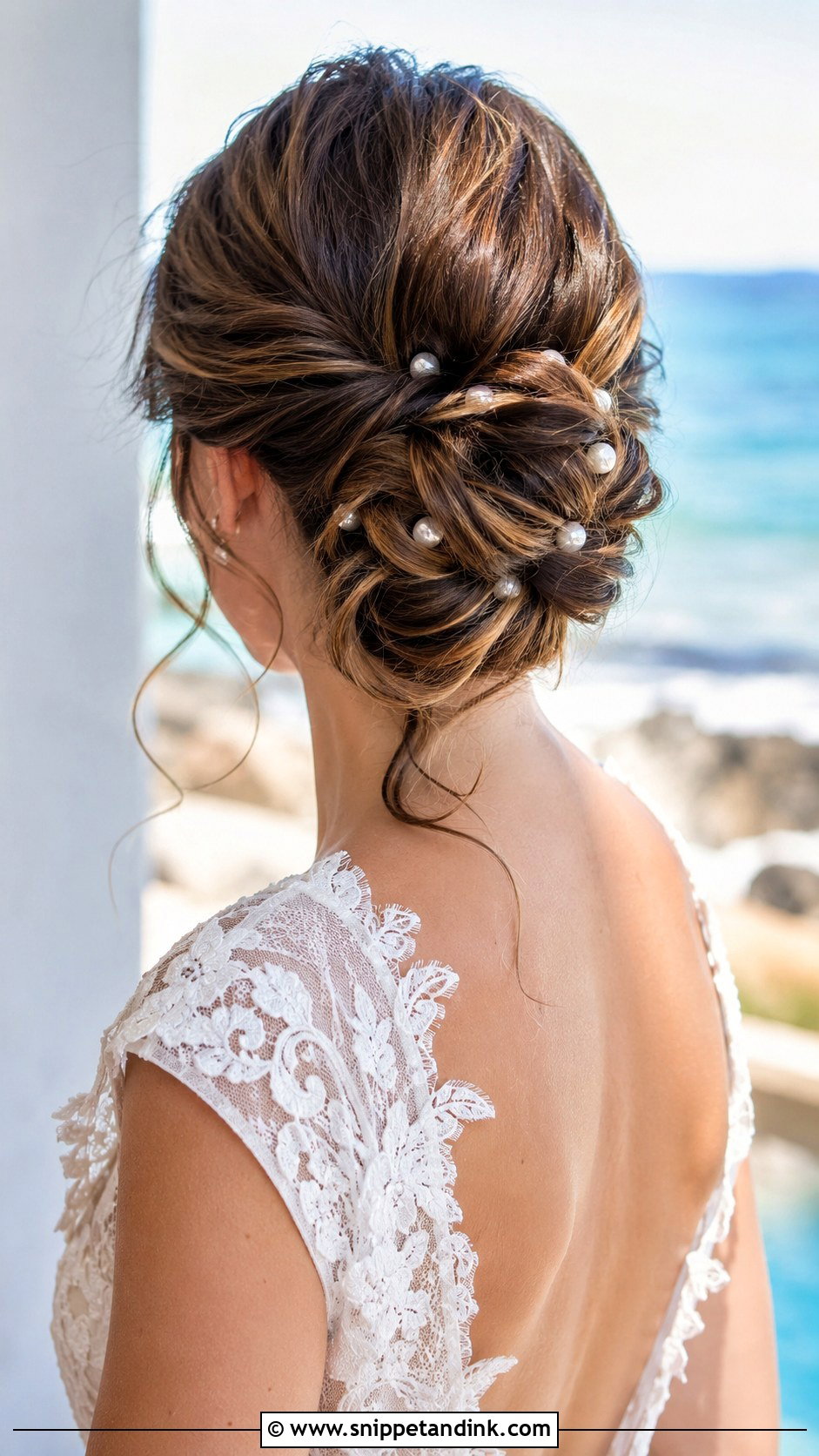
Pearls scattered through a soft bun or twist echo the sea and catch the light in outdoor photos. Pearl pins come in two types: those with a straight pin stem, which slide in easily but can slip, and those on a small bobby pin, which hold much better in wind. I use the bobby pin kind and place them after the updo is finished. They work with sleek buns, loose twists and braided styles alike. Keep everything else simple.
19. Wrapped Ponytail Updo
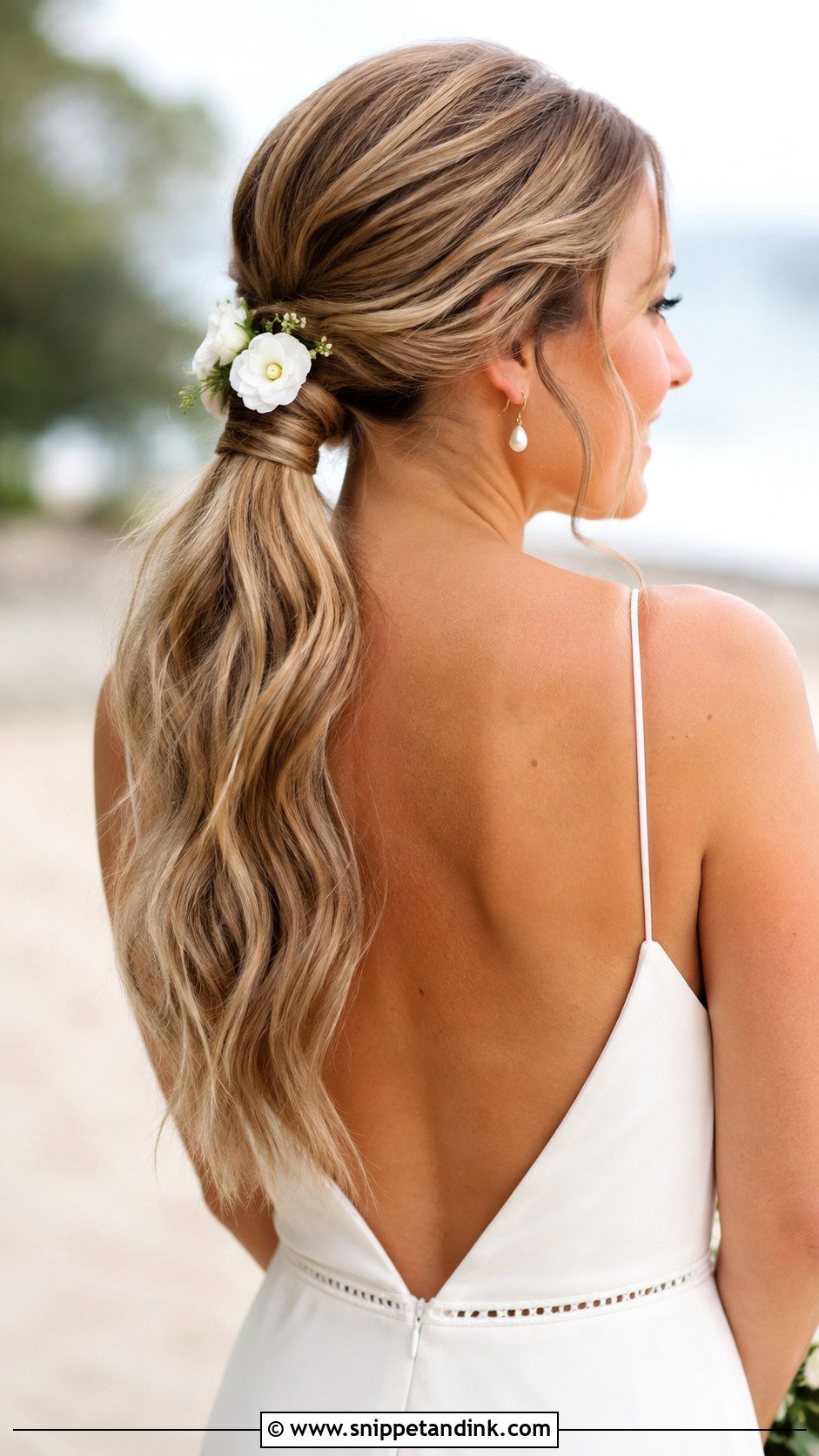
A ponytail wrapped at the base looks sleek and streamlined, and it suits brides who want something modern. I gather the hair low or mid-back, wrap a section around the elastic and pin it underneath. On thick hair I use two elastics to spread the weight and stop the pony drooping by evening. Keep it sleek, or add soft waves for movement. A few pins or small blooms give it a bridal finish.
20. Twisted Crown Updo
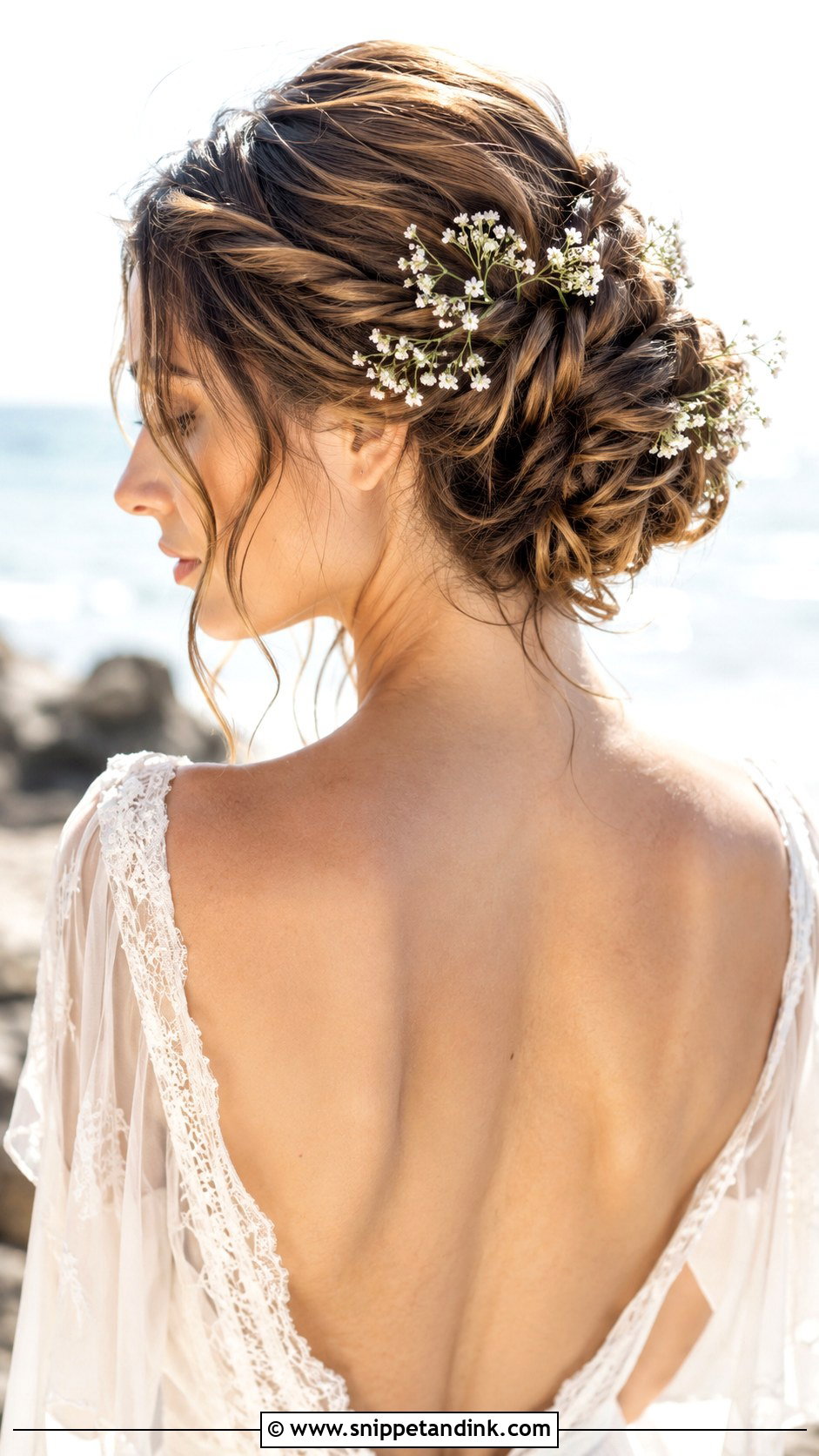
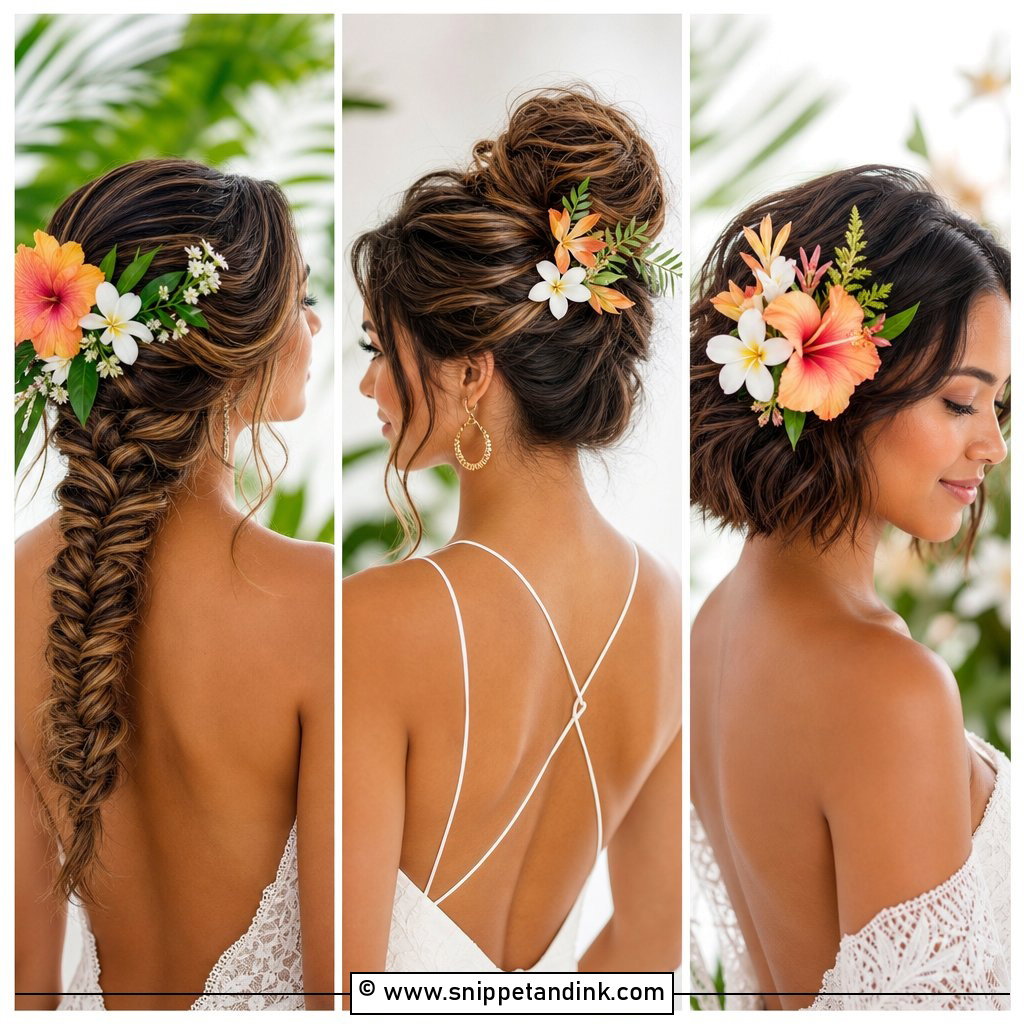
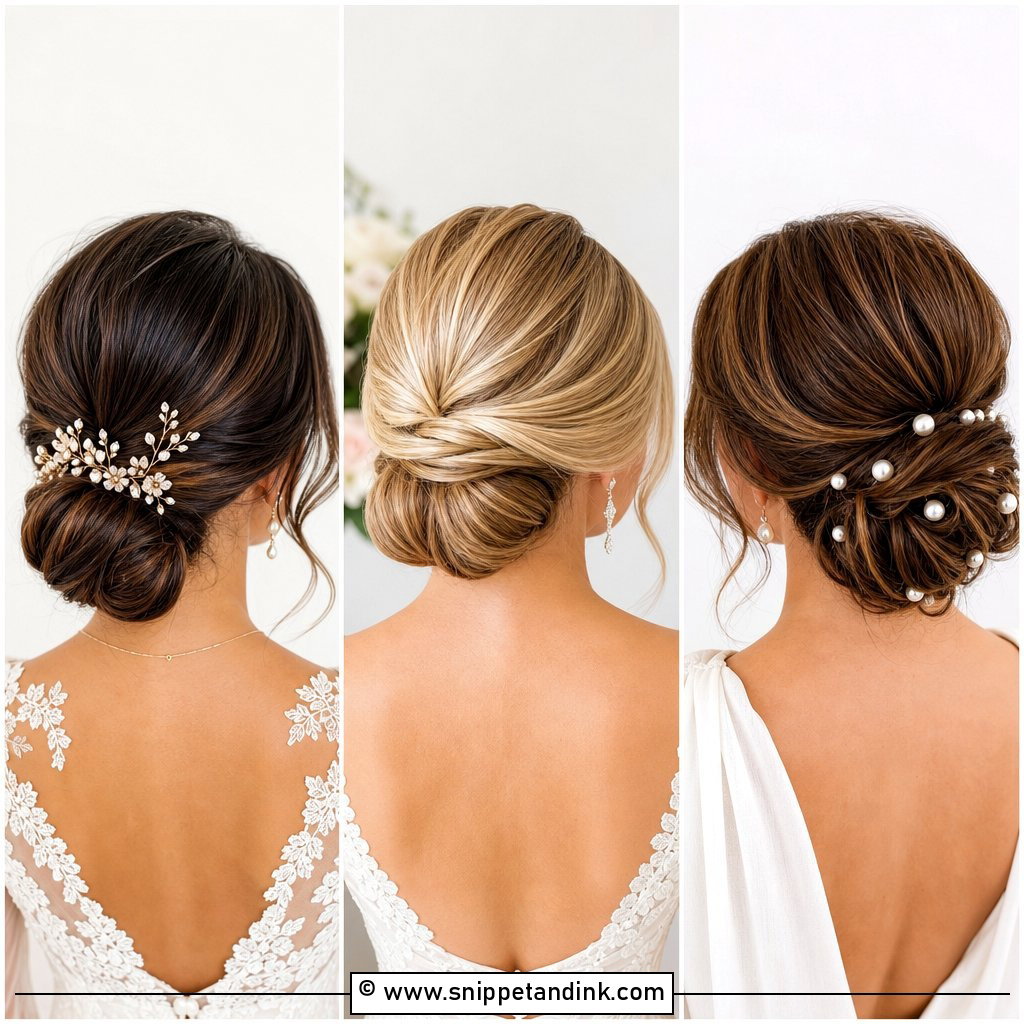
Soft twists from each side wrapped round the crown and nape give a goddess-like outline, and they hold well against wind. I twist the sections from front to back, pin them in a circle around the head, and tuck the ends under the opposite twist. The twists add texture without the time a braid takes. Leave a few loose pieces at the face. Delicate flowers or pearls work with ethereal, boho or classic themes.
Veil Placement When the Wind Comes Off the Water
A long veil on a windy shore can lift straight up and pull on the comb. I place the comb under the updo, slid into the base of the bun rather than above it, so the veil hangs from the strongest point of the style. A shoulder or elbow-length veil behaves better on a beach than cathedral length. Your photographer may suggest waiting for a gust for a dramatic shot. Most veils come out after the ceremony and portraits anyway, and a comb placed underneath slides out without disturbing the updo.
Unpinning After Midnight
An updo can hold dozens of pins, and pulling them out tired and in a hurry is how ends snap. Remove accessories first, then find each pin by running a finger along the bun and slide it out in the direction it went in. Don’t brush until the pins are gone. Then work a little conditioner or oil through the lengths and finger-comb out the hairspray from the ends upward. Leave the wash until the morning if you’re exhausted.
One more thing for the morning itself: ask your stylist to finish your hair about an hour before you leave, not right at the end. That gives the pins and spray time to settle before the wind meets them, and leaves room for a quick fix if something sits wrong.
An Updo That Lets You Forget the Wind
Planning bridal hair should feel exciting rather than stressful, and an updo takes most of the worry out of a seaside celebration. Braids, twists, chignons and pearl-studded buns all cope with wind and humidity far better than loose hair. Think about your gown’s neckline, if you’re wearing a veil, and how much you’ll move during the reception. Add a seashell, a fresh bloom or a sparkling pin to tie it to the setting. Then trust the pins and enjoy saying your vows.
You'll Like These Ideas:


Leave a Reply