
Hair down under a veil is the style I’m asked for most often, and the one that needs the most quiet engineering. Loose hair gives a veil comb nothing solid to bite into, and curls start relaxing the moment they leave the iron, so the look that seems simplest is the one I plan most carefully. It can work on almost any length and texture, from sleek strands to boho curls, as long as the anchor and the set are right. Below are 25 pairings of down styles and veils, with notes on how each one holds up, who it suits and where I’d steer you elsewhere.
Anchoring a Veil When There’s No Bun to Grip
In an updo, the comb slides into a solid bun and stays there. With your hair down, there’s nothing for it to hold, and a veil comb pushed straight into loose hair will slip within the hour, faster with a long veil or a breeze. So the first thing I do on any down style is build a small hidden anchor.
- Take a small section where the comb will sit and lightly backcomb it at the root for grip.
- Cross two bobby pins in an X over that section, or twist it into a tiny knot if the veil is heavy.
- Smooth the top layer of hair back over the anchor so it disappears.
- Slide the comb in with its teeth angled toward the scalp, into the anchor, then pin through the outer teeth with crossed pins.
Height changes the look. A comb at the crown adds lift and suits shorter veils. For a cathedral or chapel length, I usually set it just below the crown, where the head curves, so the weight hangs straight down instead of pulling backward.
On very fine or very slippery hair, I’ll sometimes swap the comb for loops sewn onto it, which let pins pass through the veil itself. Ask your veil maker whether that’s possible before the wedding week.
1. Loose Waves With a Cathedral Veil
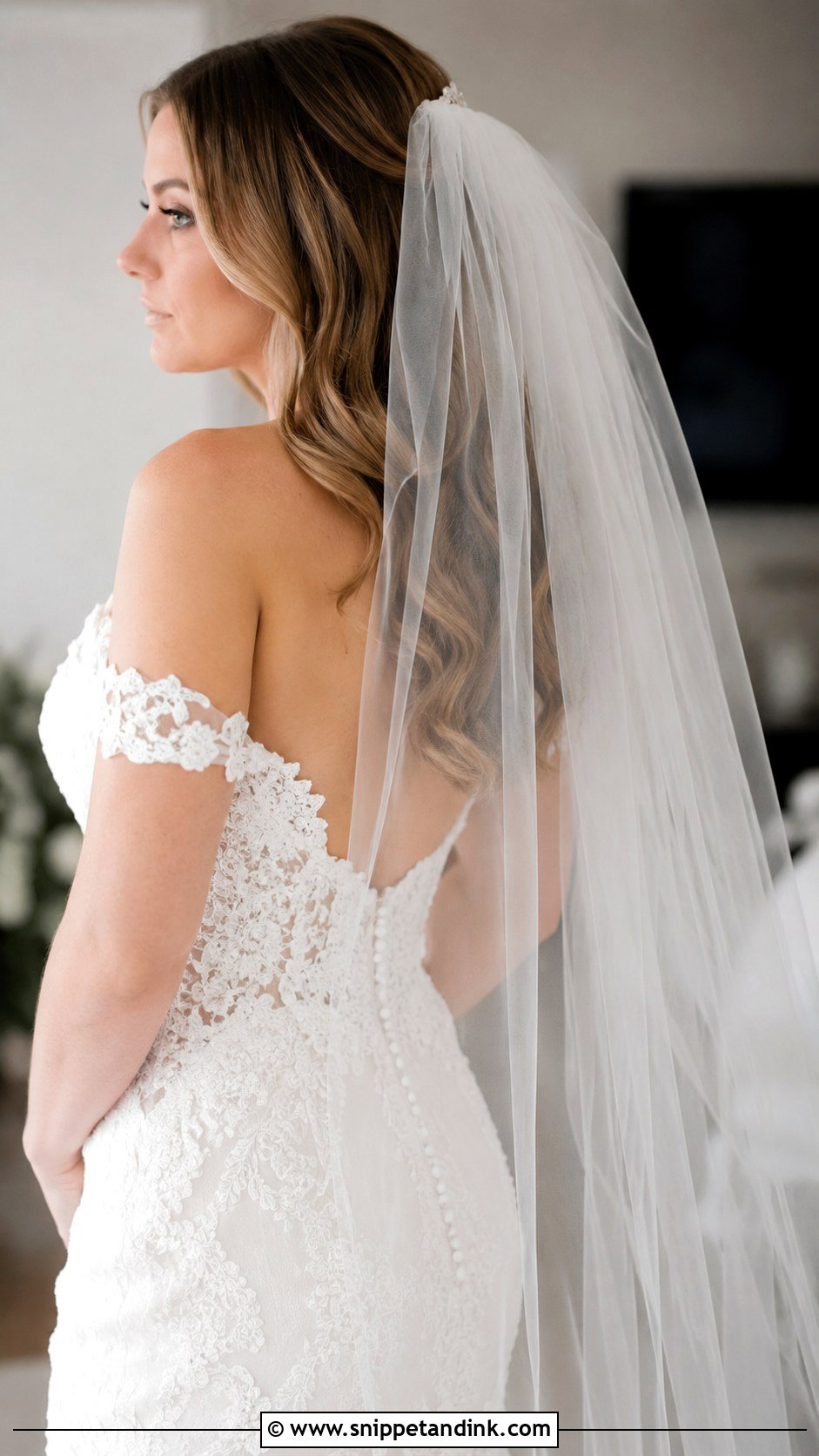
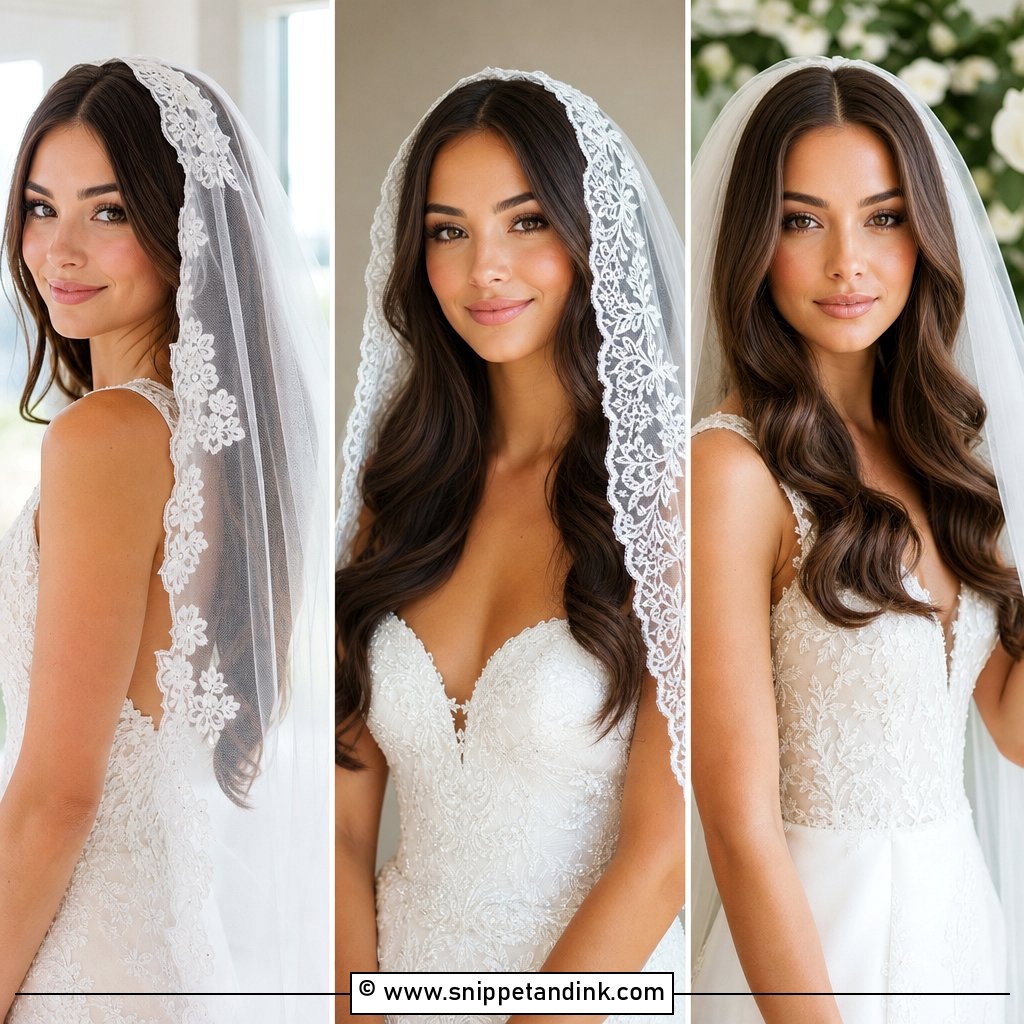
A dramatic cathedral veil over loose waves is the classic pairing for a long aisle and a big room. The tulle extends far past the hair and floats when you move, while the waves underneath stay soft. The weight is what I plan for. A cathedral pulls backward the entire time you walk, so I build a small hidden anchor just above the crown, crossed pins in a tiny section, and slide the comb into that instead of into loose hair. Without it, the comb creeps down the back of the head before the processional is over.
2. Hollywood Waves With a Fingertip Veil
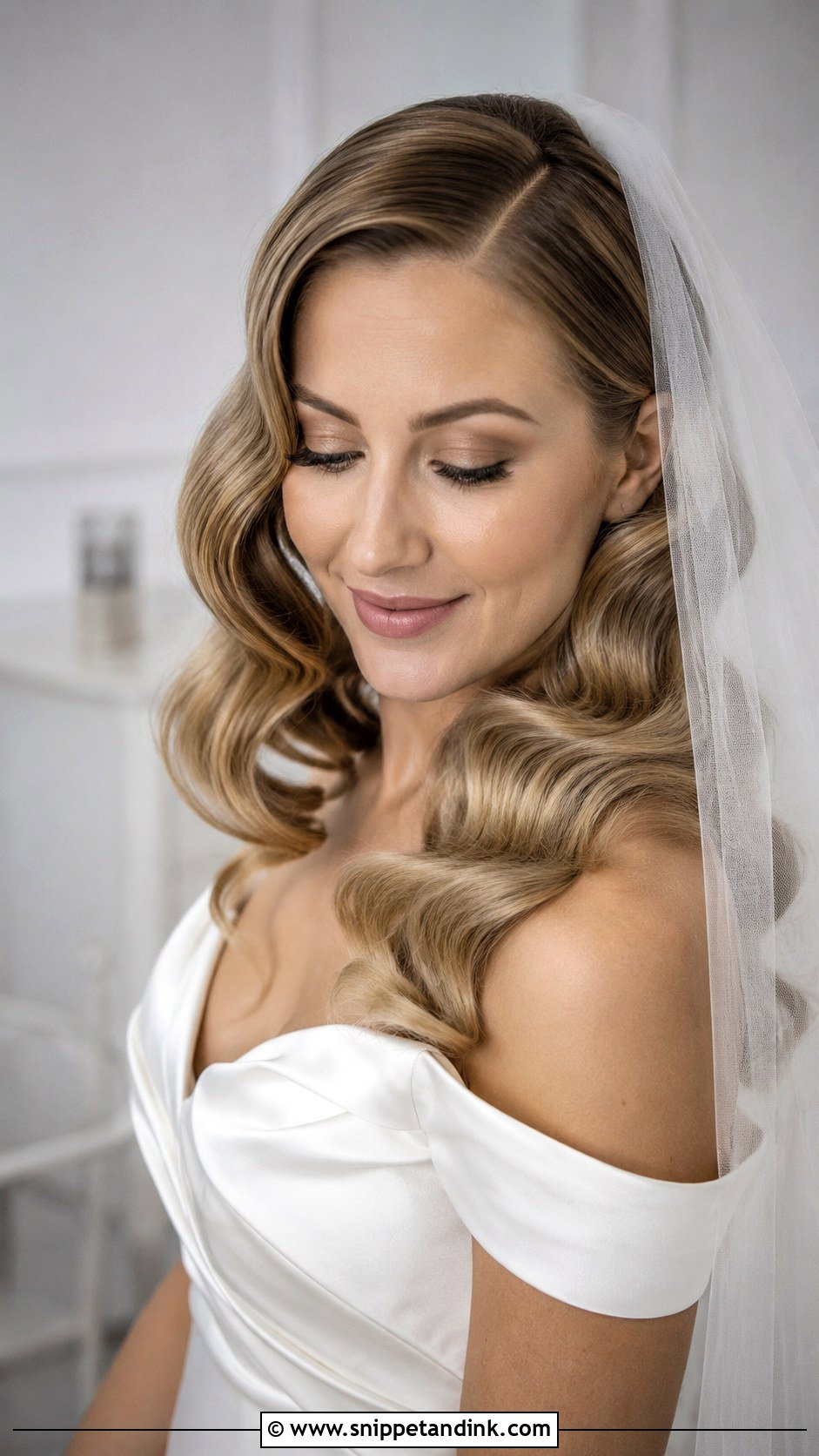
Hollywood waves are sculpted, glossy and all one direction, usually off a deep side part. I set them in pin curls or with a large iron, let them cool completely, then brush them out into one smooth ripple. A fingertip veil ending around the hips suits them, since a longer, heavier veil tends to flatten the wave pattern down the back. I place the comb on the side opposite the part so it doesn’t break the main wave over the forehead. Go light on the shine product at the end; too much and the waves separate into strands.
3. Half-Up Half-Down With a Veil
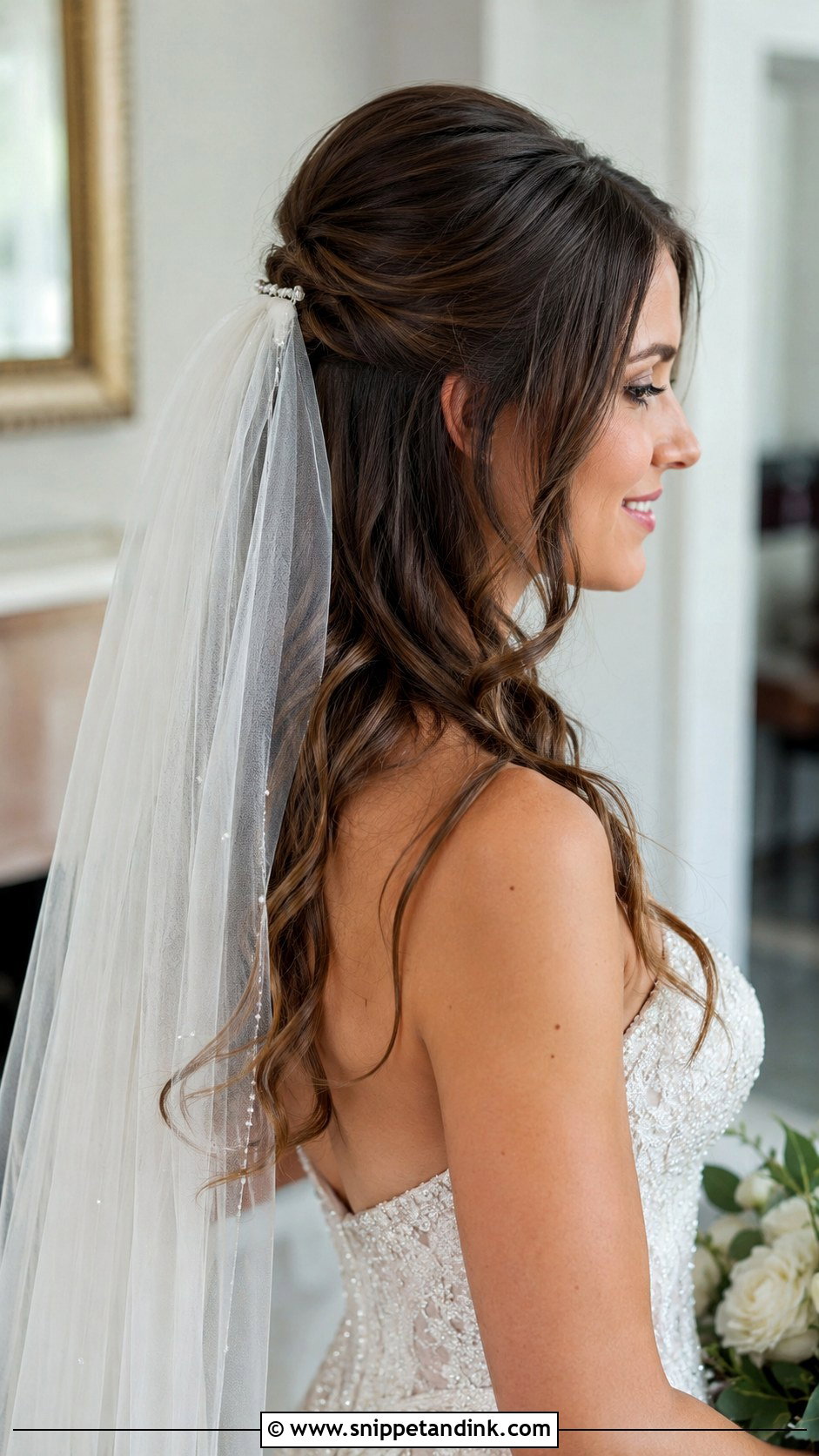
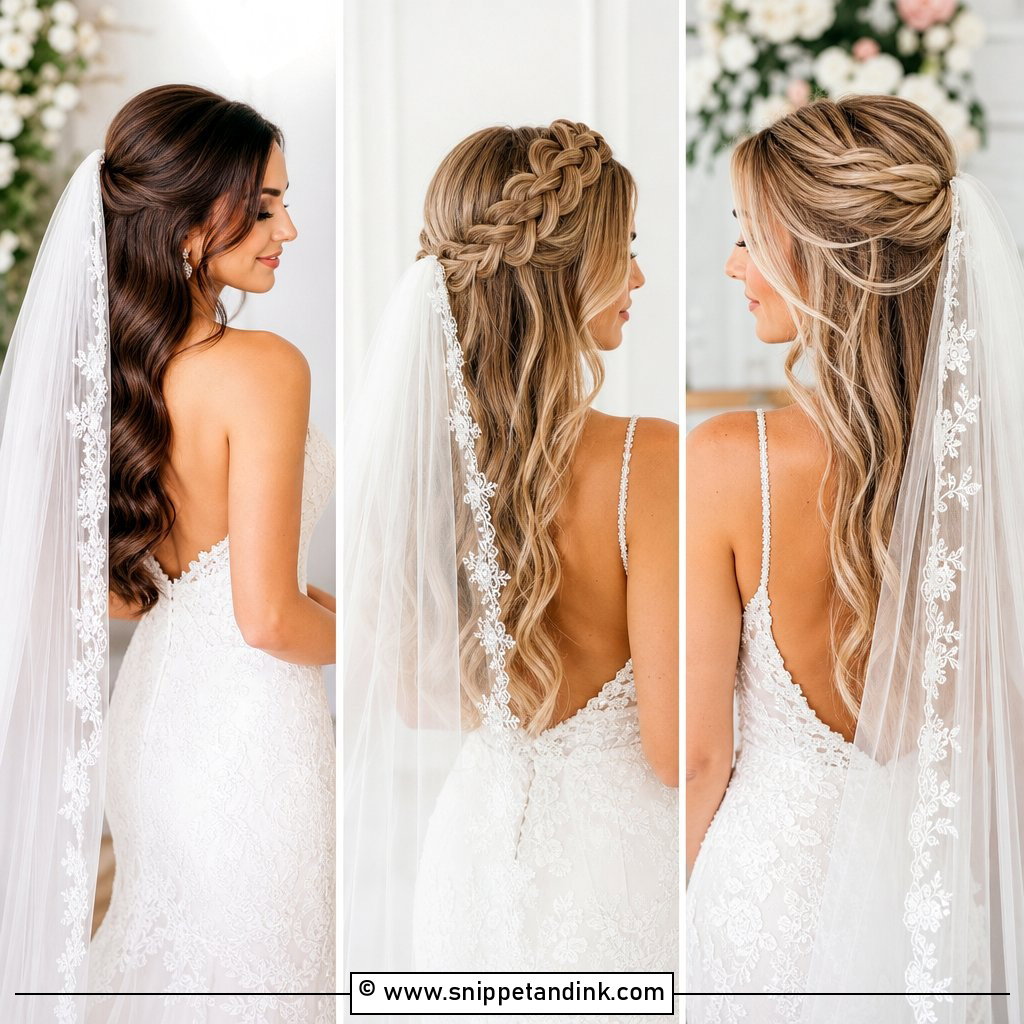
Half-up is my answer for brides torn between an updo and loose hair. The top section is pulled back and secured, the rest falls over the shoulders, and that secured section gives the veil comb something firm to grip. That’s why I suggest it to anyone nervous about a heavy veil. It keeps hair off the face during the vows and still shows off length. Curl the lengths for softness. It takes any veil, from shoulder length to cathedral.
4. Boho Curls With a Lace Mantilla Veil
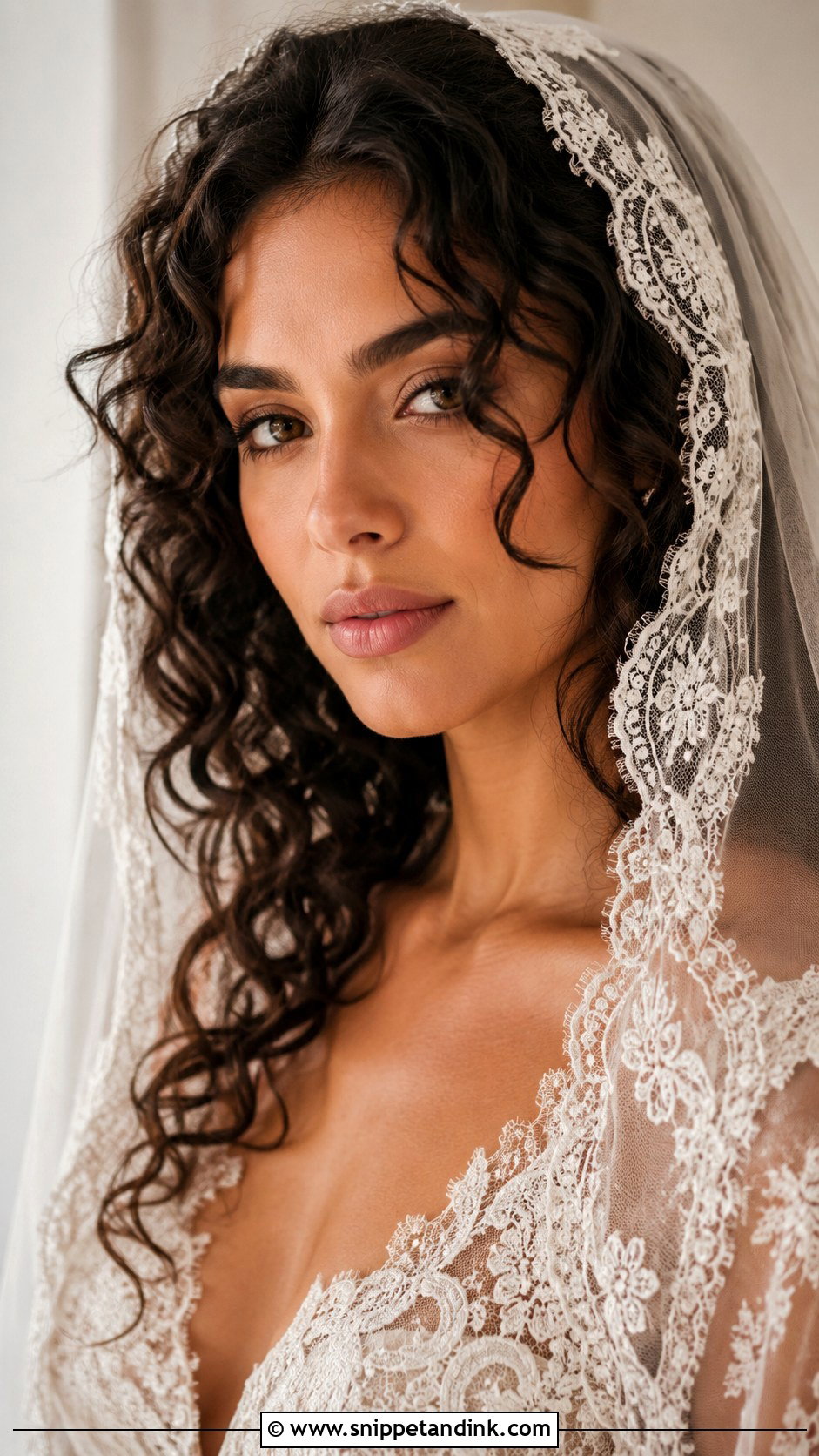
A lace-edged mantilla veil lies flat on the head and drapes around the face and shoulders, and loose boho curls show through the lace in a way a structured style wouldn’t. The lace is the weak spot. Heavy lace edging can catch on textured curls and drag them out of shape, so I smooth the top layer of hair where the edge will rest and keep the defined curls below it. Small clear combs at each side keep the mantilla from sliding. Leave a few curls loose by the face for a garden or outdoor ceremony.
5. Sleek Straight Hair With a Birdcage Veil
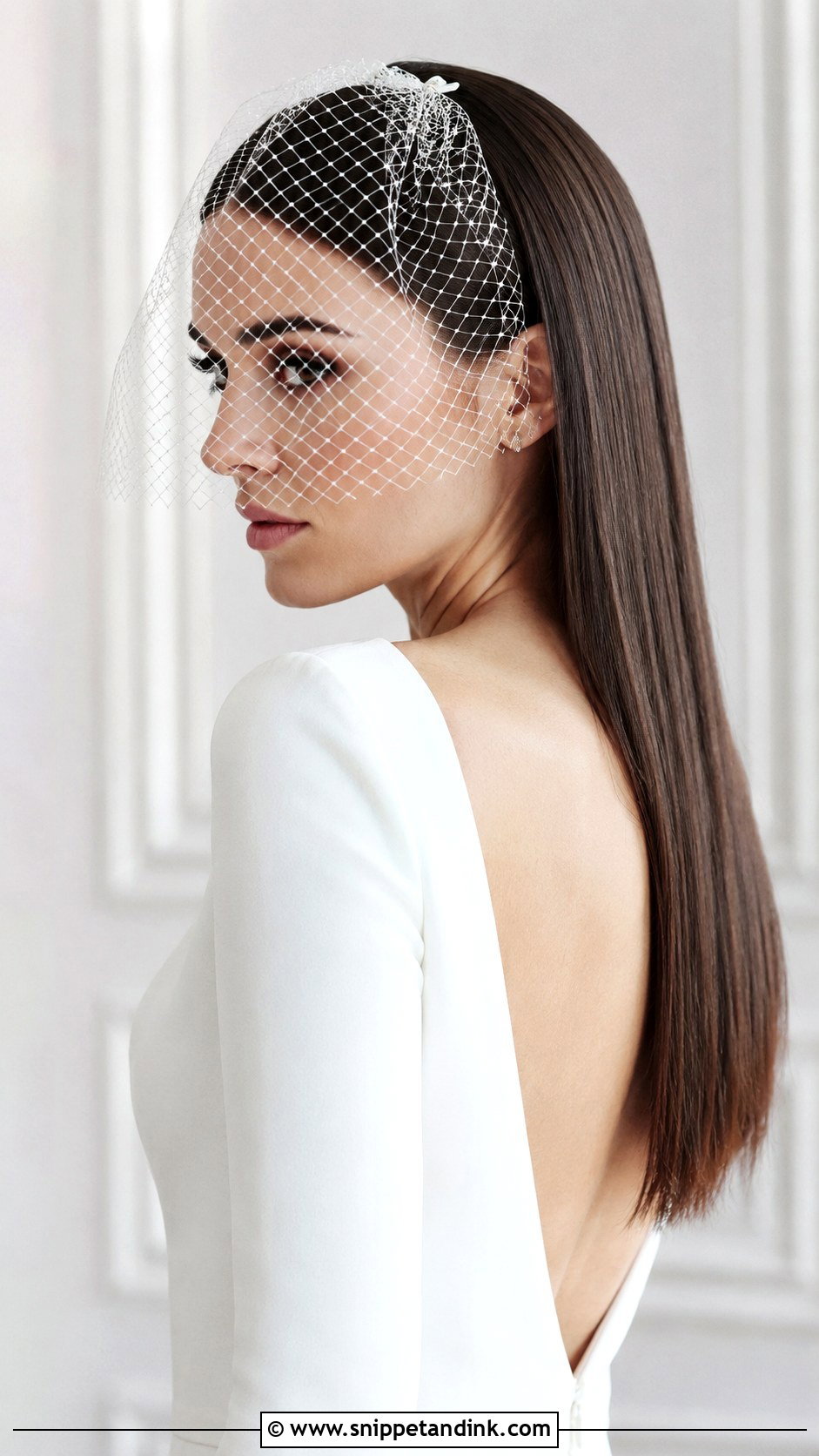
A short birdcage veil skimming the eyes needs a clean backdrop, and sleek straight hair gives it one. The netting sits at an angle across the face, pinned on one side just above the ear. I flat-iron in small sections, finish with a light shine spray, and pin the birdcage on the side with the most hair so the pins disappear. It’s sharp and retro, a natural fit for city weddings and elopements. One honest note: very fine straight hair can look limp beside the structure of netting, so I usually add a little root lift at the crown.
6. Face-Framing Waves With a Soft Veil
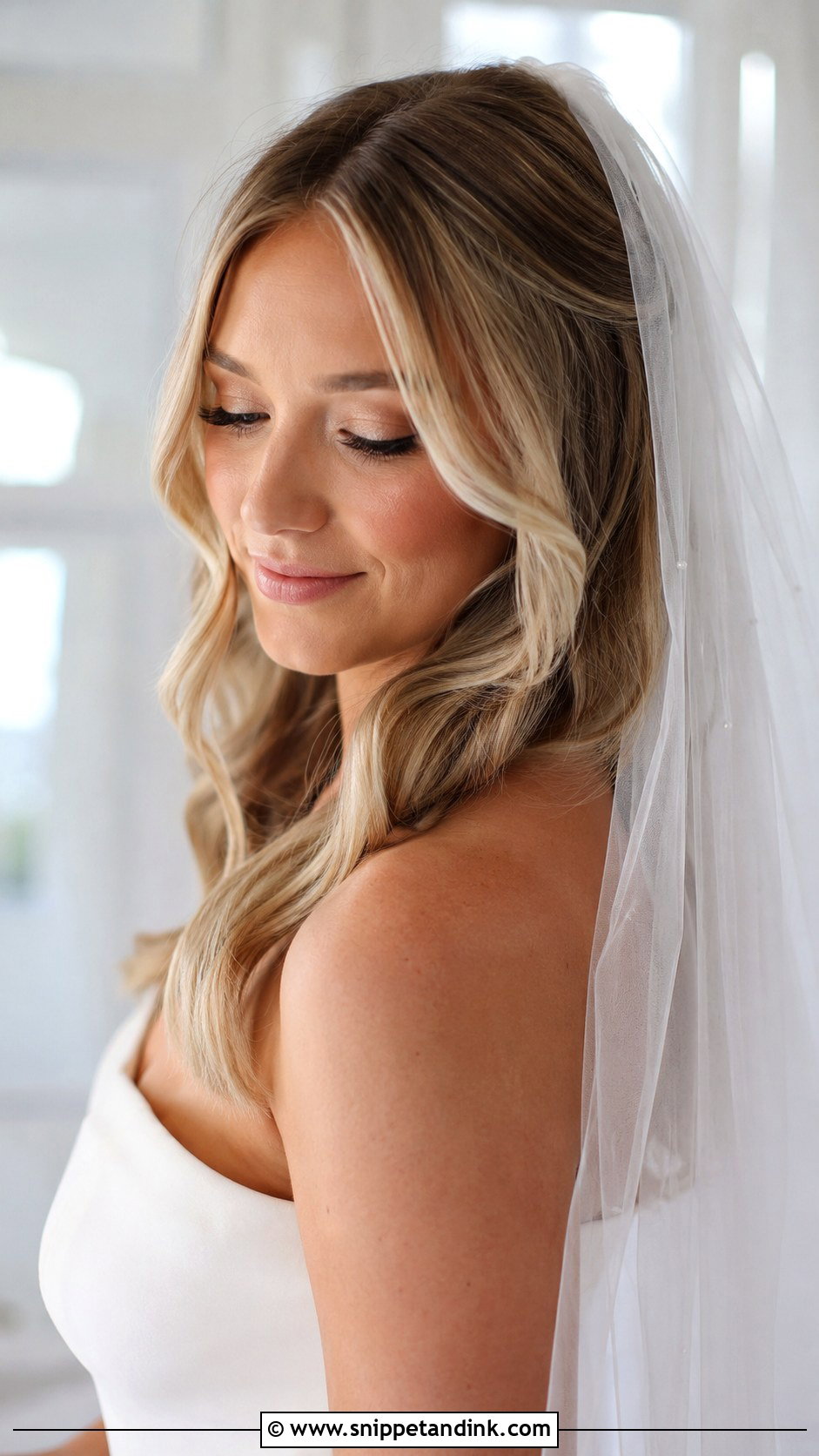
Face-framing waves bend around the cheekbones and draw attention to the eyes. With a light, minimal veil, the whole look stays relaxed. I curl the front pieces away from the face so they open it up; curled toward the face, they close it in and stick to lip colour. It’s the least fussy style here, right for small ceremonies. A bend from a wand, left to cool before brushing, is all the texture it needs.
7. Long Layered Hair With a Veil
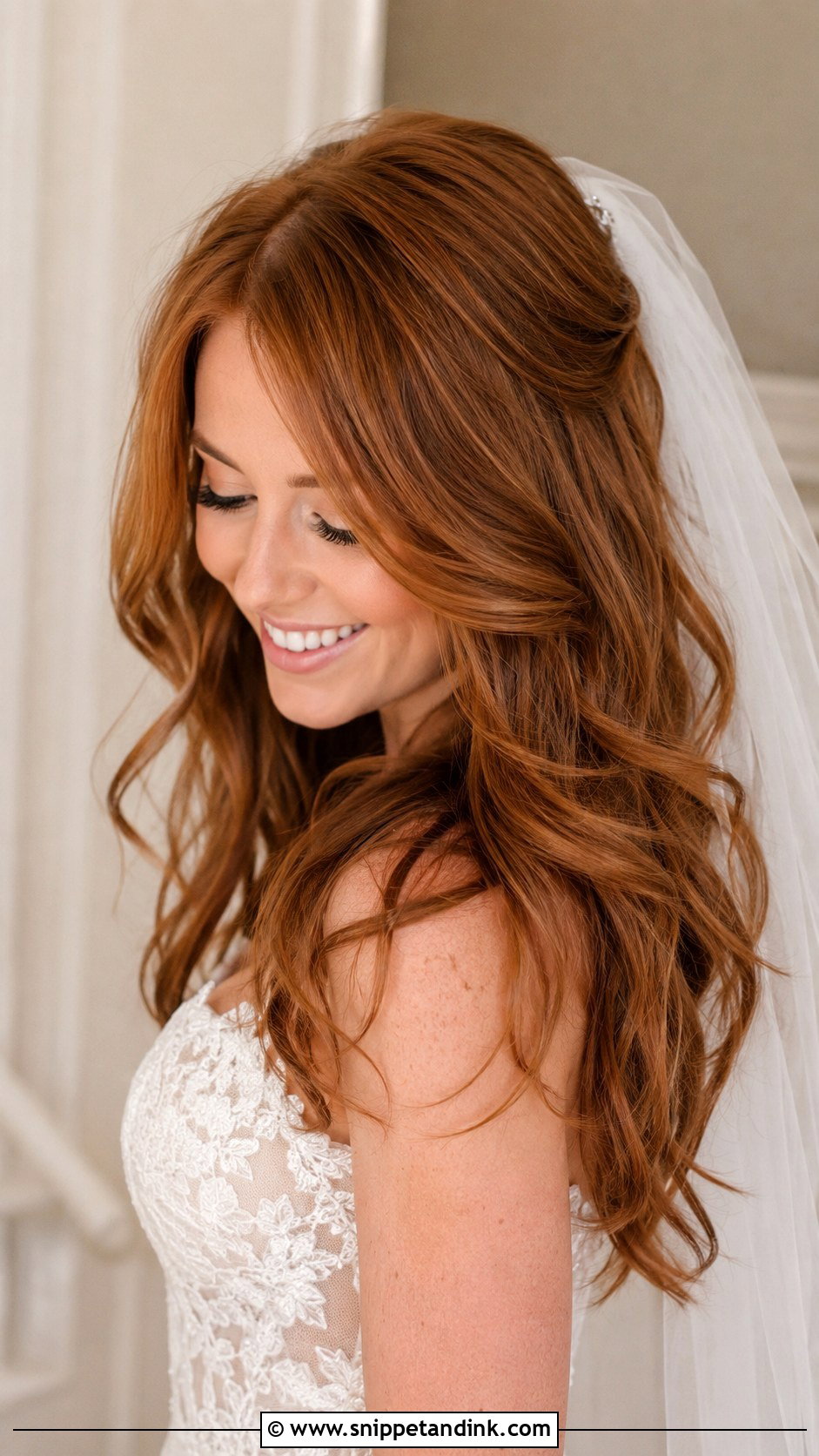
Layers stop long hair from hanging flat under a veil. The different lengths catch light and keep movement in the ends, and a veil placed at the crown lets them fall freely beneath. Loose waves bring out the shape. The catch is that the shortest layers drop out of curl first, so I curl those slightly tighter than the rest and leave them pinned to set while I finish the back.
8. Curled Tendrils With a Cascading Veil
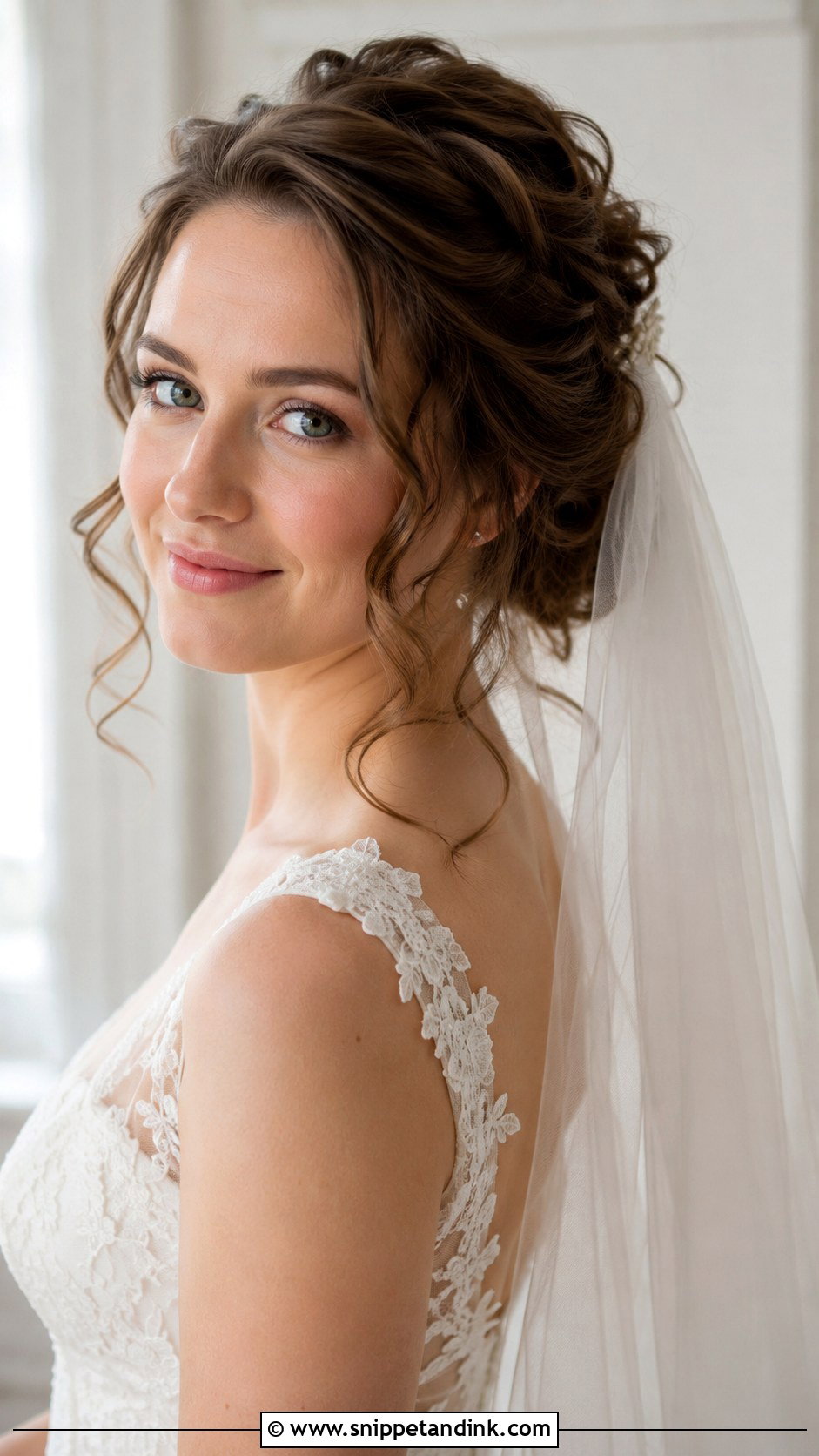
Curled tendrils at the face, the rest swept softly back, and a delicate veil falling over loose curls behind: a light, youthful look for spring or summer. I’m strict about the tendrils. Too many and they look accidental, so I leave two or three per side, taken from the hairline at different depths so they don’t fall as one block. In heat they drop fastest, which is why I curl them last and set them with a light spray before the veil goes in.
9. Center Part Waves With a Veil
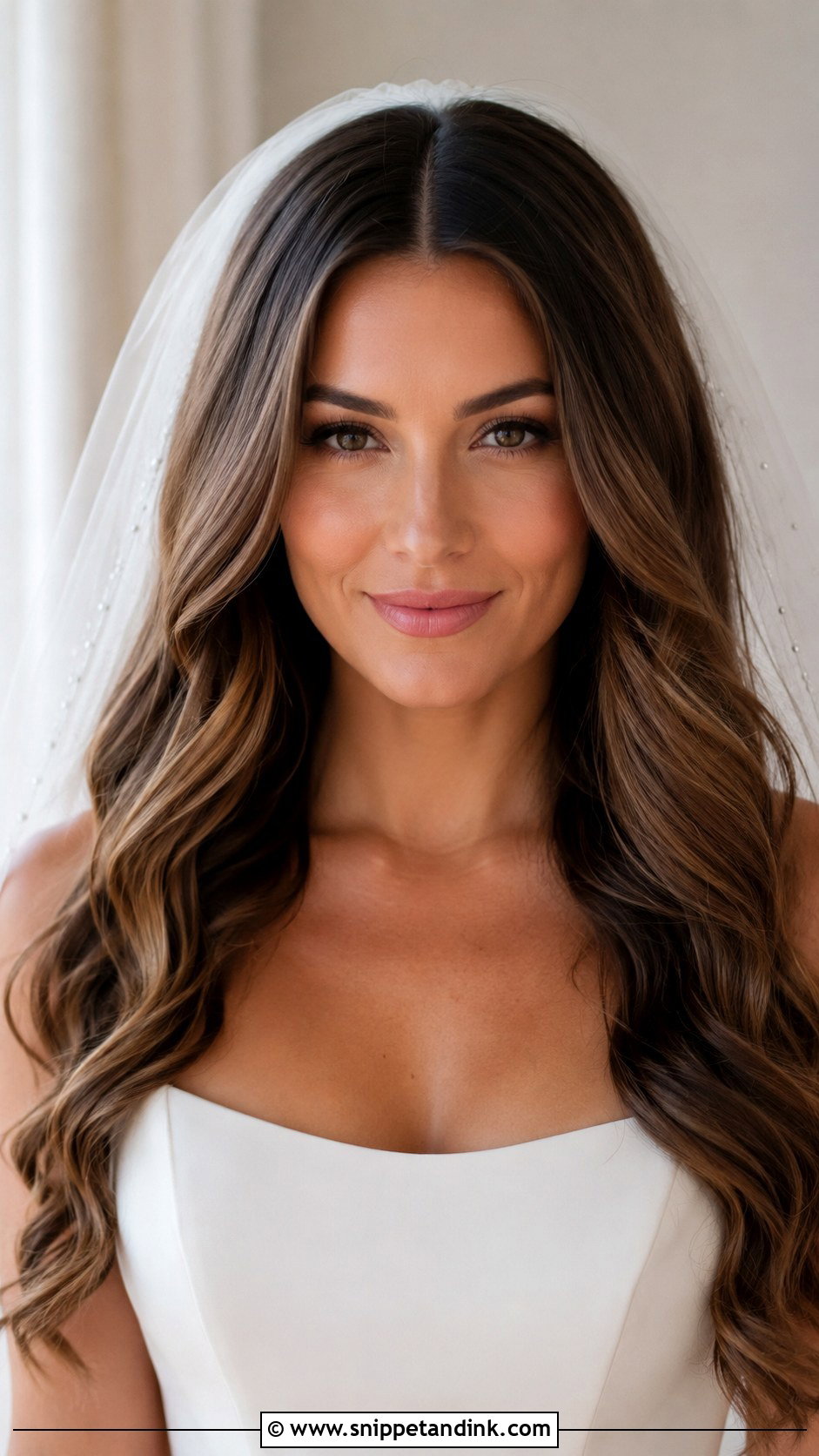
The centre part has been the most-requested parting for a while now, and it gives a veil a symmetrical frame. Soft waves fall evenly on both sides, the veil sits at the crown and carries the line down the back. Oval and heart-shaped faces wear it easily. Precision is the whole look. I draw the part with the tail of a comb from forehead to crown and check it in the mirror, because a part that drifts by a few millimetres looks crooked under a centred veil.
10. Beachy Waves With a Mantilla Veil
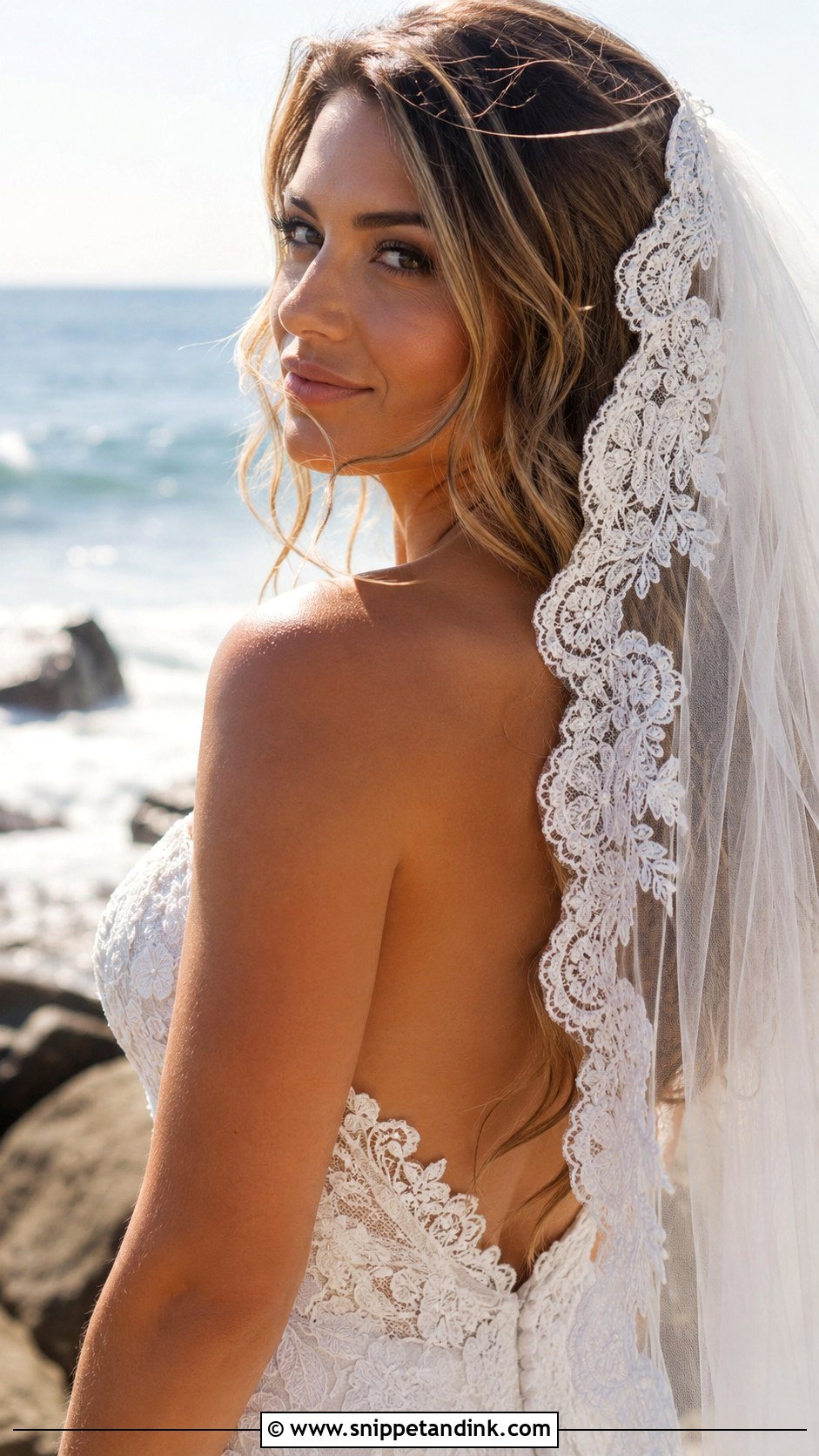
Salt-textured beachy waves look tousled and undone, and under a mantilla the lace edge plays against that casual texture. Coastal and destination weddings are the natural home for it. Sea-salt spray gives grip, but it also dries out the lengths and adds frizz, so I use it on the mid-lengths only and keep the ends soft. Wind is the bigger issue on a beach. Any long veil needs a firm anchor there, and if the ceremony is on open sand, I’d seriously consider a shorter veil.
11. Deep Side Part With a Veil
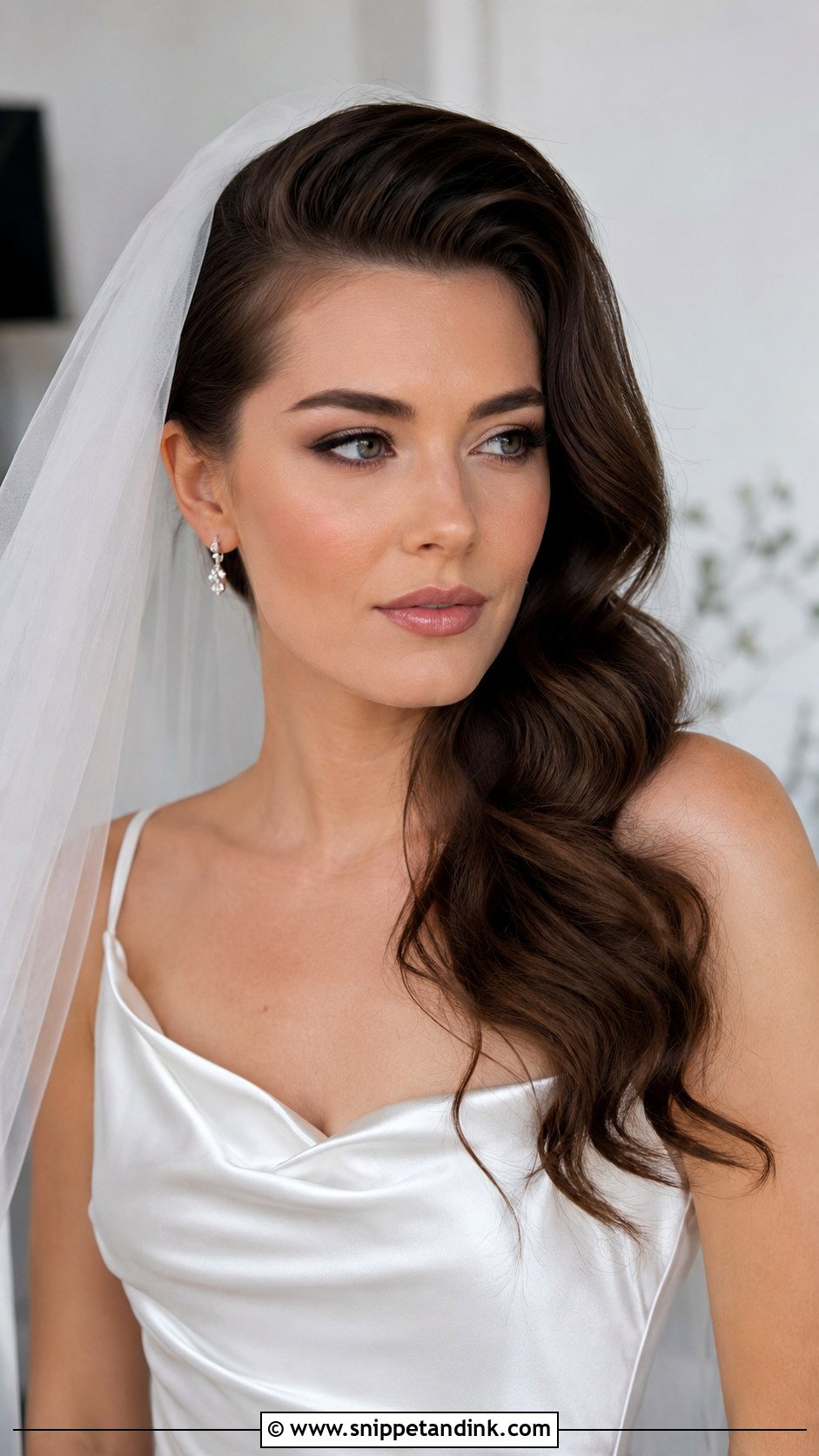
A deep side part builds volume at the crown and sweeps hair across to one side, which reads instantly as old Hollywood. Waves or sleek strands both work with it. I anchor the veil on the fuller side of the part, where there’s more hair to grip and the comb won’t pull the part open. If you have a strong cowlick at the crown, test this at your trial. A deep part fighting a cowlick will flip back by the afternoon.
12. Soft Curls With a Juliet Cap Veil
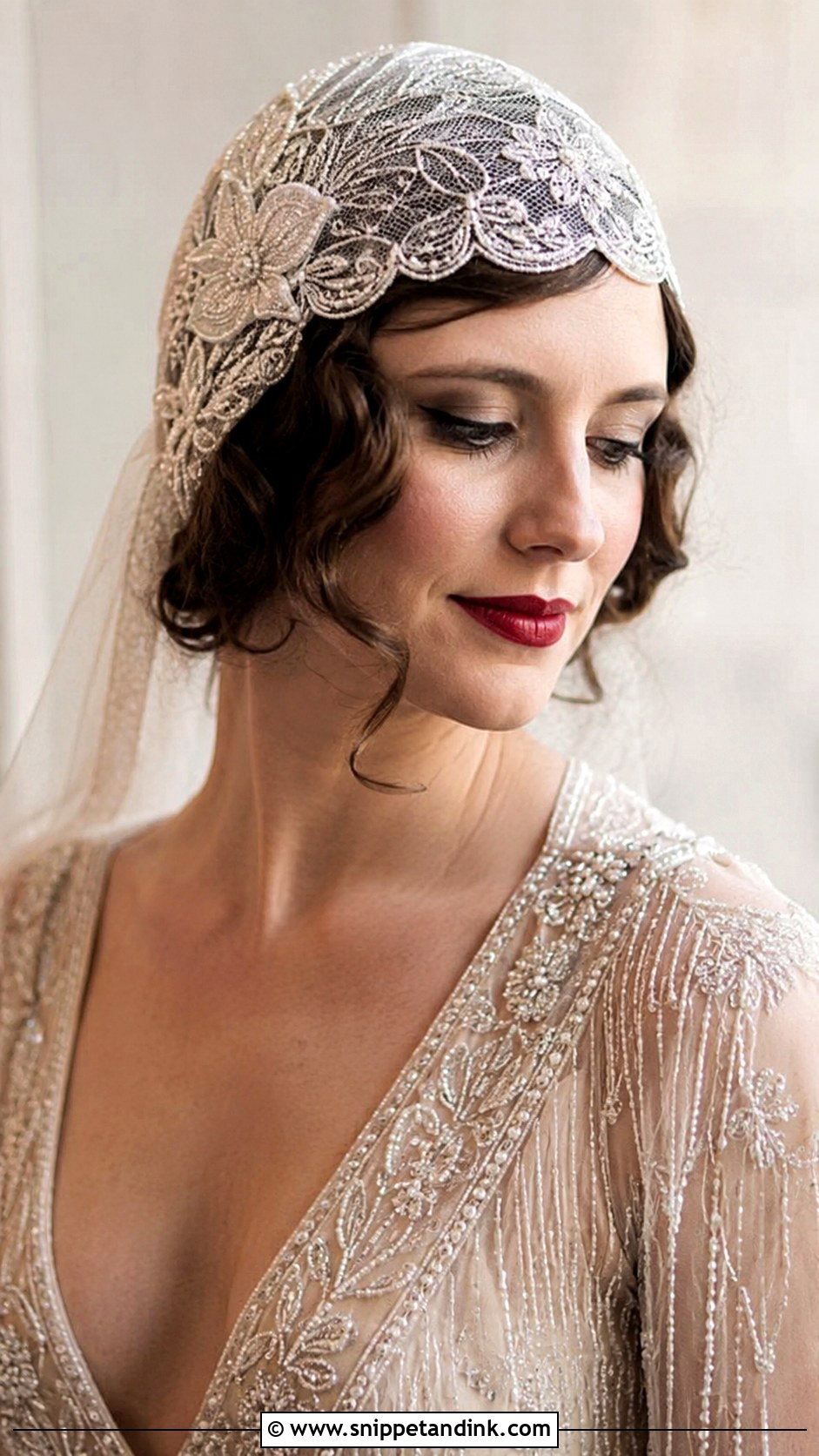
A Juliet cap fits snugly over the crown like a delicate cap, with tulle falling behind the hair. It carries a 1920s and 1930s aesthetic, and soft loose curls under it keep the mood romantic. Because the cap covers the crown, any volume there gets flattened, so I put the lift into the sides and lengths instead. Pins go through the cap’s edge at the temples and behind the ears. Vintage-leaning brides tend to fall for it.
13. Straight Hair With a Cathedral Veil
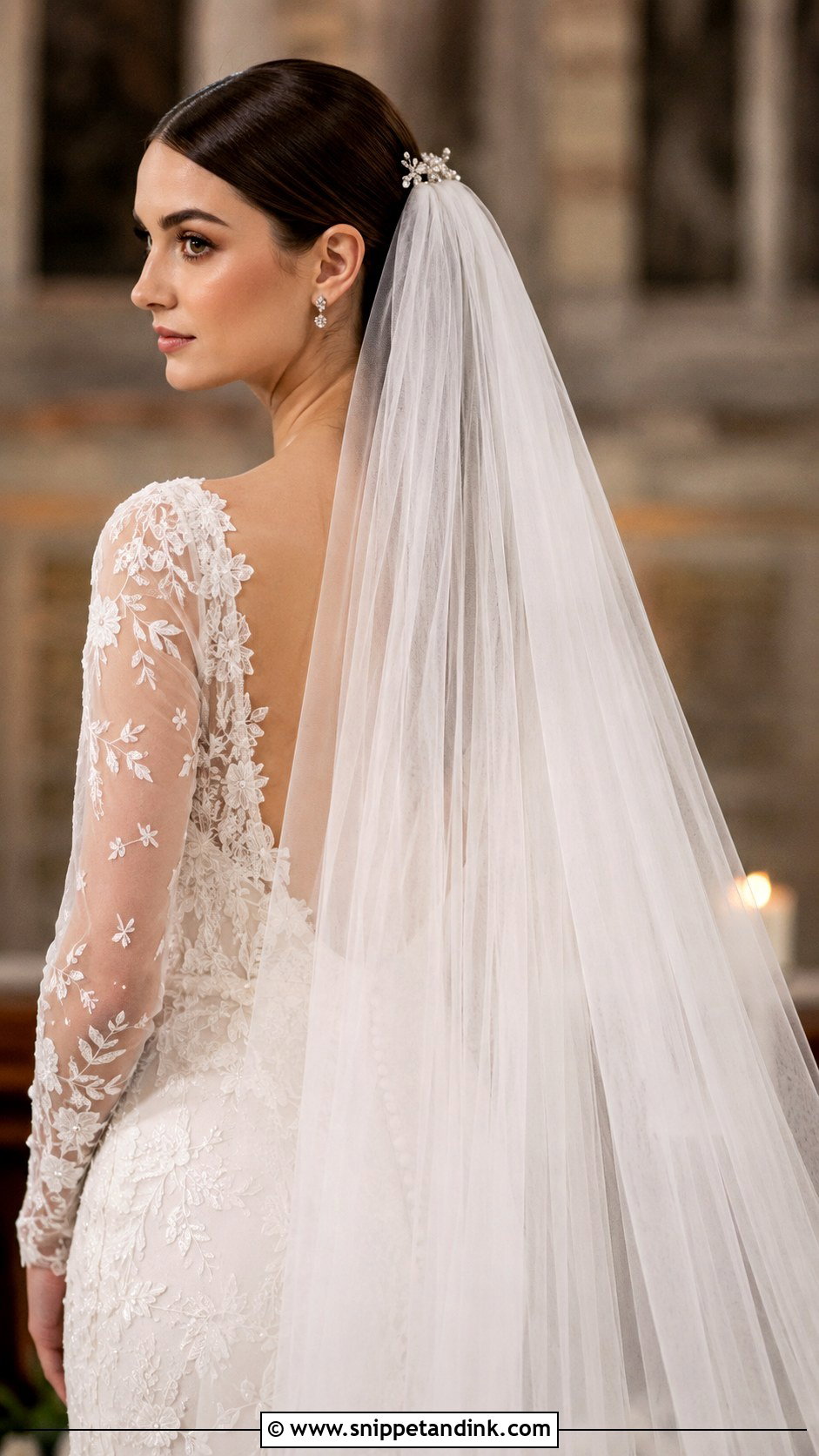
Sleek straight hair and a cathedral veil are a study in contrast: smooth and minimal close to the face, grand once the veil trails behind. The veil does the talking, so the hair should be glass-smooth. I flat-iron thin sections and put a little serum on the lengths only. Straight hair is slippery, which makes a hidden anchor at the crown even more important under a heavy veil. Formal ceremonies and grand venues suit it best.
14. Boho Braids With Hair Down and a Veil
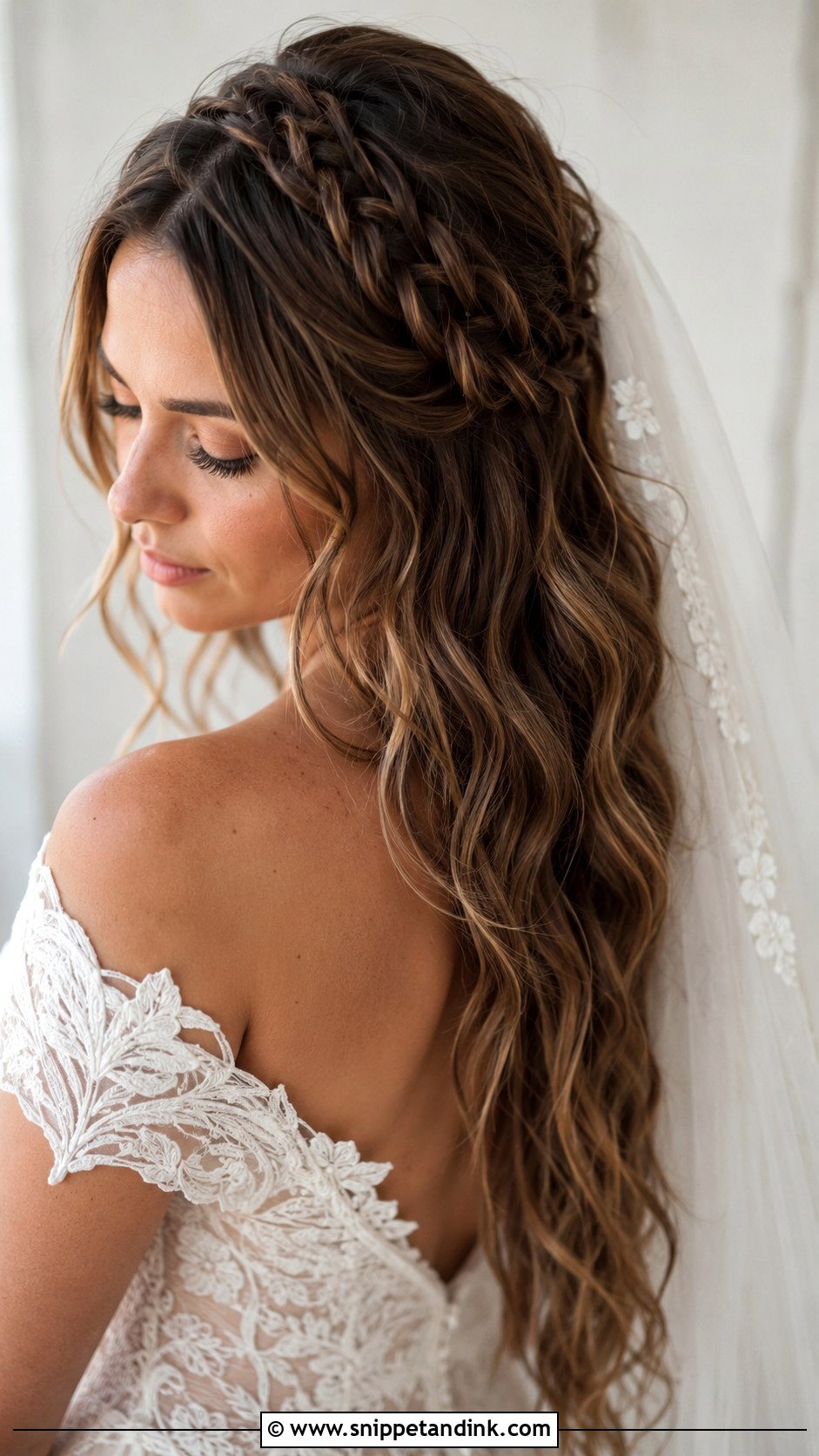
Braids woven through loose hair add detail without pulling everything up. My usual version is two thin braids from the temples meeting at the back, with the rest left in waves. They also do a practical job. The point where the braids meet is a firm spot for the veil comb, so this suits anyone worried about a comb slipping. Gently tug the edges of each braid to loosen it, or it looks too neat beside the waves.
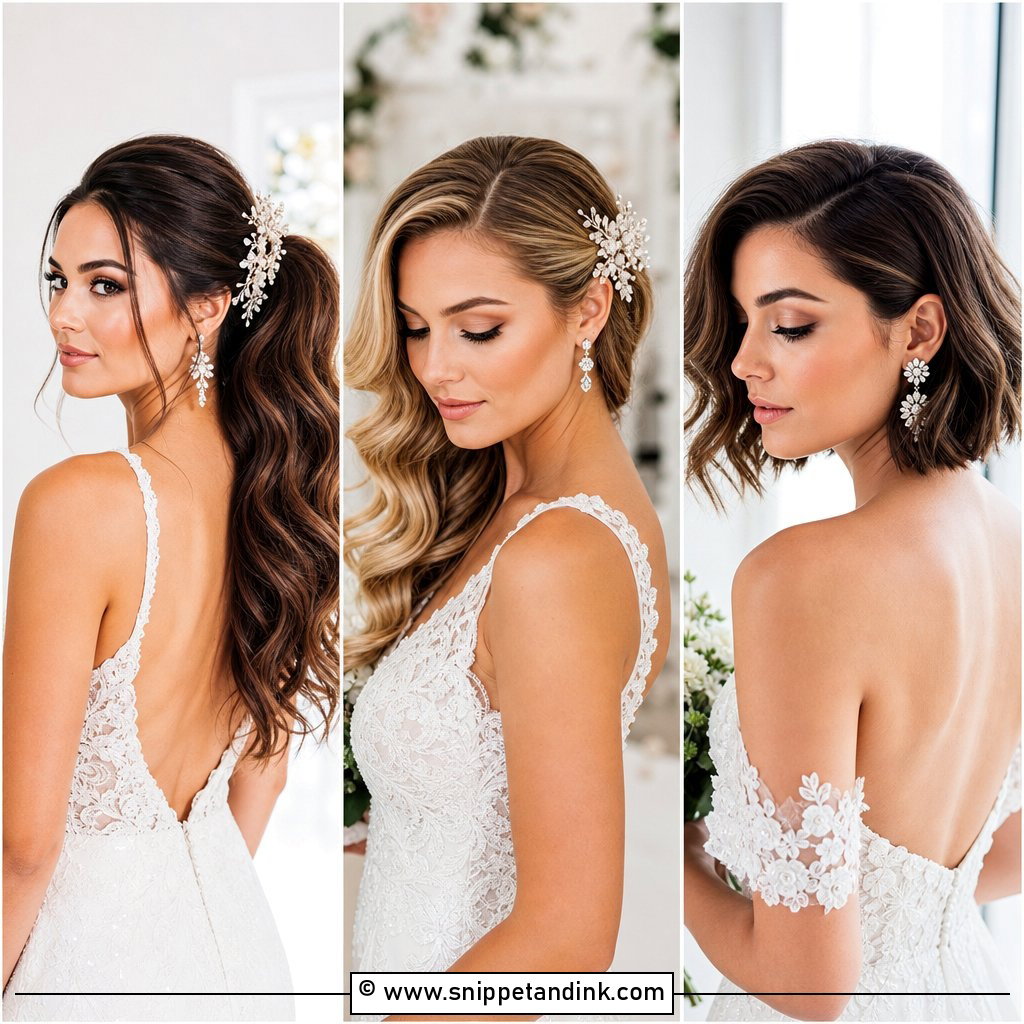
15. Voluminous Curls With a Veil
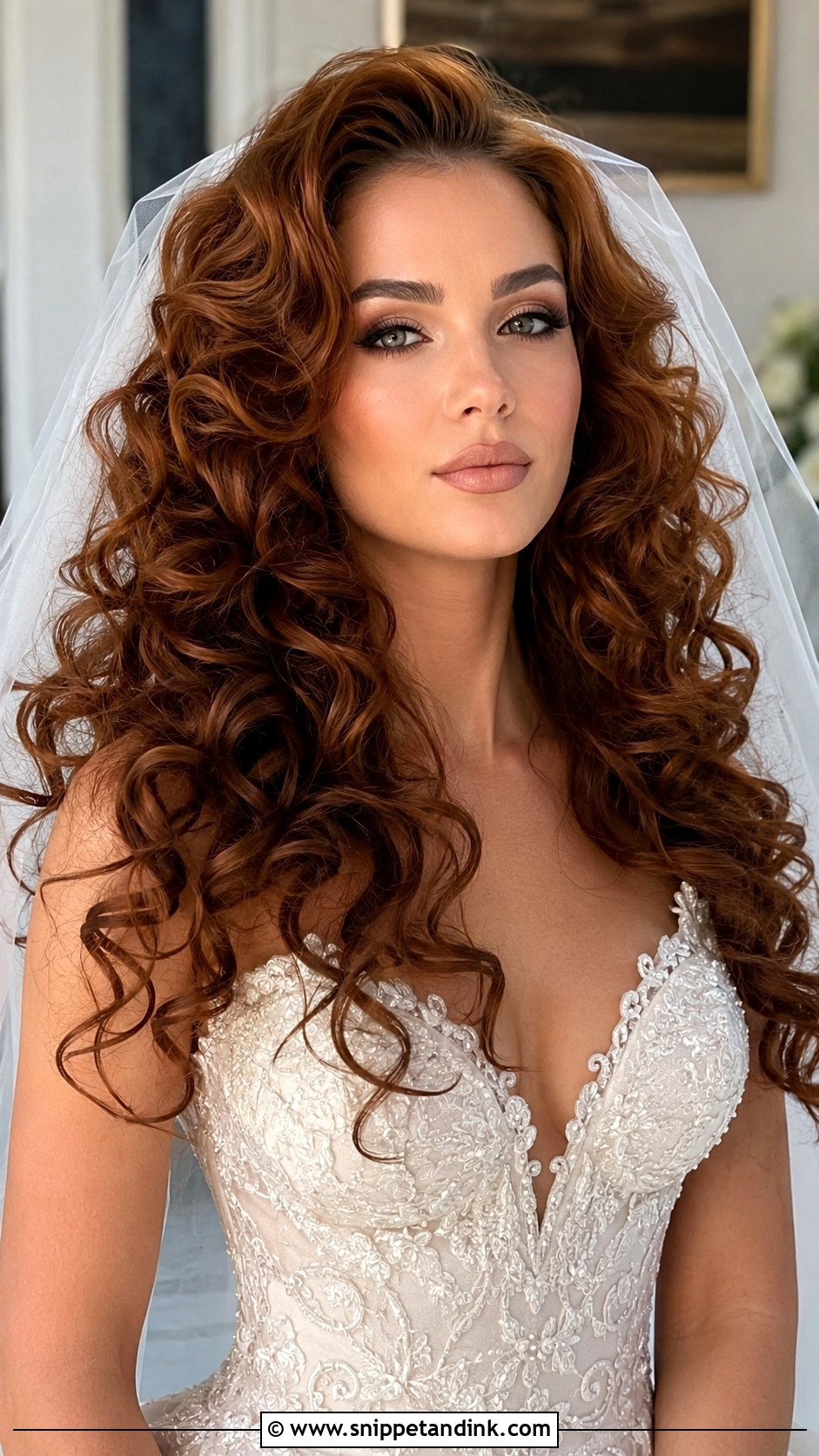
Big, bouncy curls bring the most drama of any down style. I set them with a large-barrel iron, pin each curl to cool, and break them up with my fingers instead of a brush to keep the bounce. The veil anchors at the crown among the curls, but too much volume there lifts the veil away from the head, so I keep the crown slightly flatter than the sides. A flexible hairspray helps the bounce survive the dancing.
16. Low Half-Up Style With a Veil
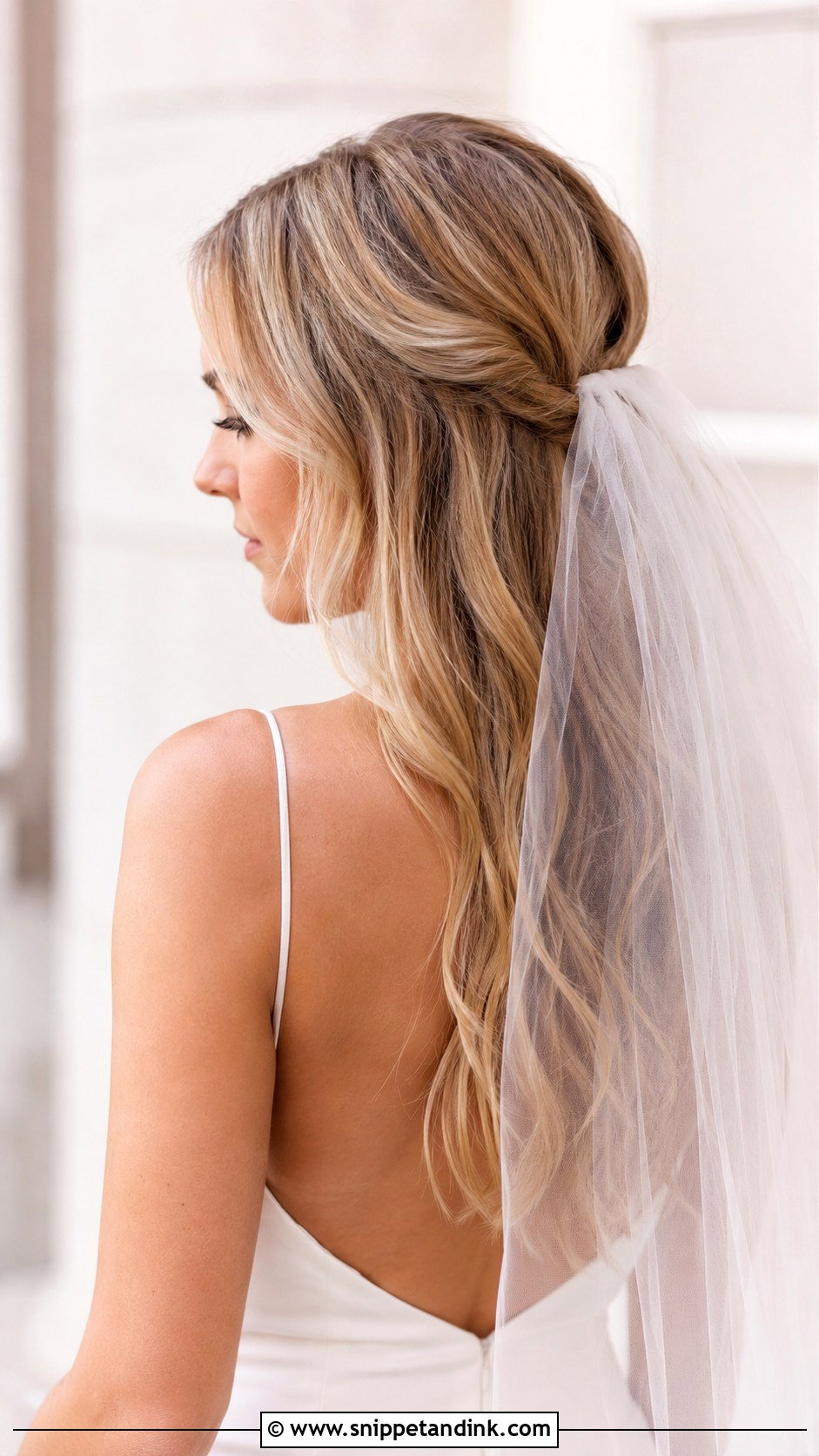
The low half-up gathers a small section at the lower crown and leaves the rest to flow, and the veil comb slides in just above that tie. It’s quieter than a high half-up, a polished detail without committing to an updo. With a longer veil, the lower anchor point also means the tulle falls from lower on the head, which gives a softer silhouette from behind. Loose waves in the lengths finish it.
17. Wavy Hair With a Lace Trim Veil
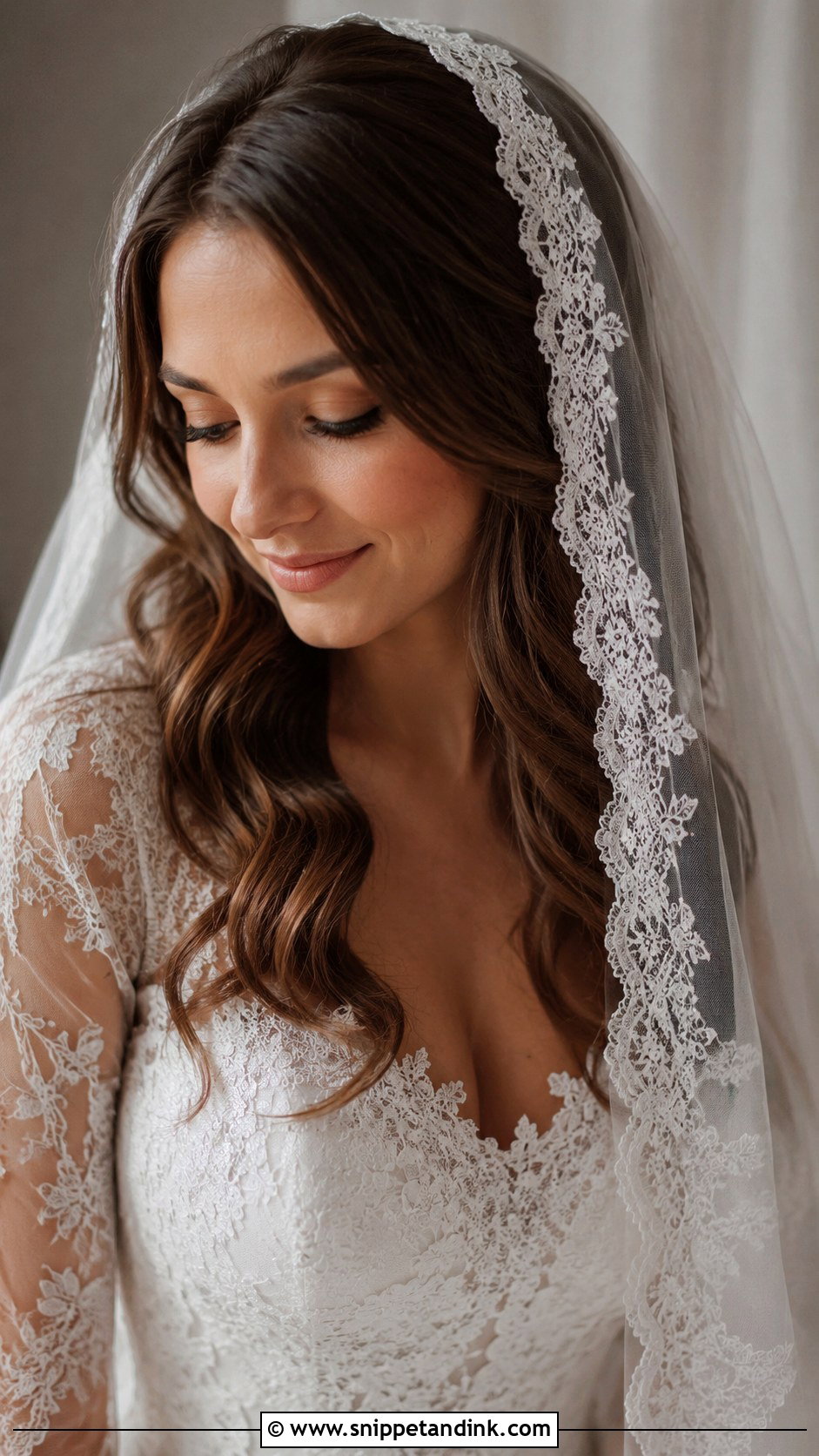
A lace-trimmed veil puts the detail at the edges, so the waves underneath should stay simple, just gentle movement from a wand. The lace frames the face and shoulders on its own. Watch where the edge lands. If it ends exactly where your curls are densest, the two textures blur together, so at the trial I adjust the curl placement or the veil length until they meet cleanly.
18. Middle Part Sleek Hair With a Birdcage Veil
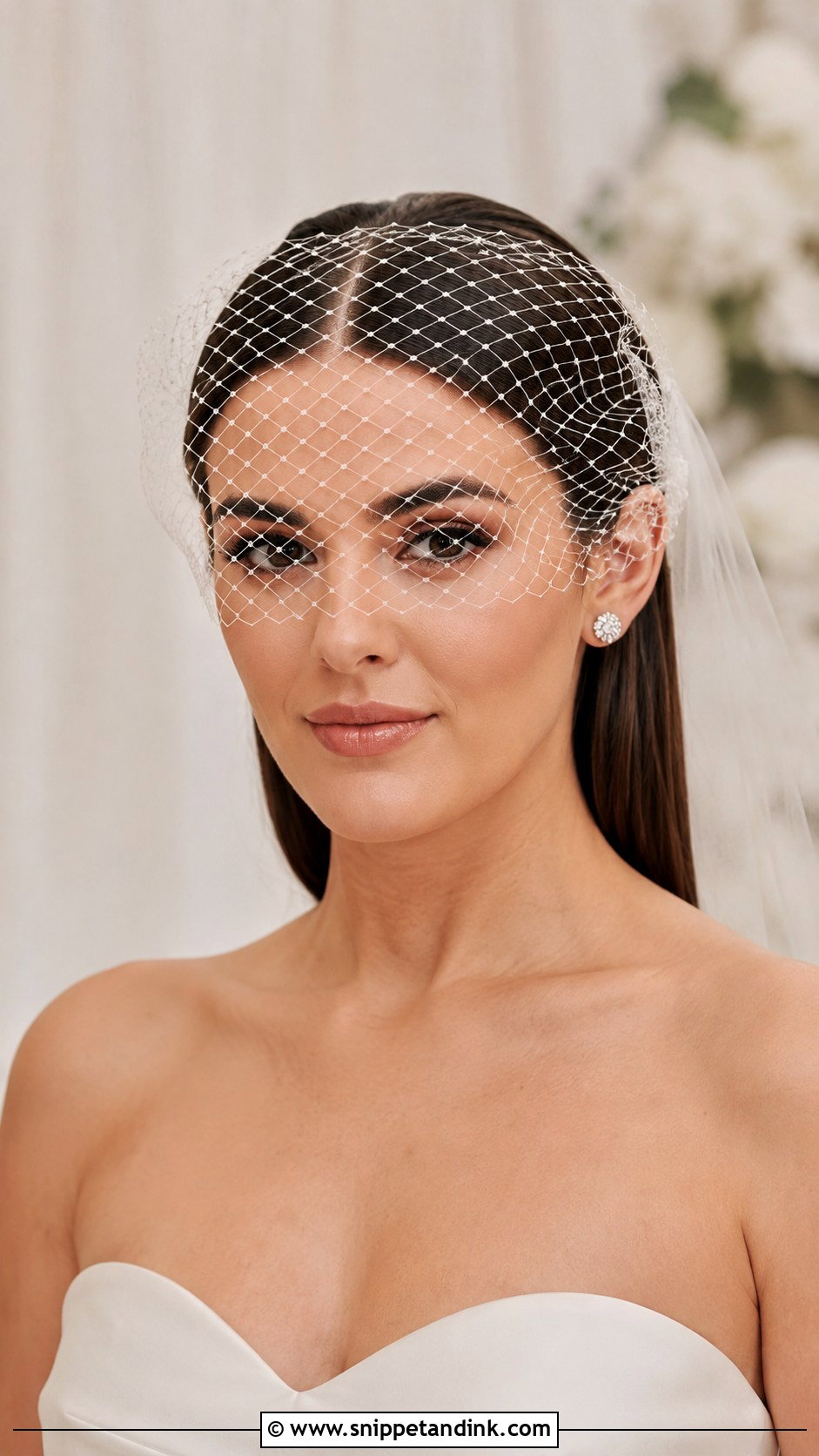
A sleek middle part with a short birdcage veil is the most graphic look on this list: symmetrical lines, glassy hair and netting across the face. Because the part is centred, I pin the birdcage off to one side so the netting angles across the face and the look doesn’t turn rigid. Flat-iron in small sections and keep products light, since a sleek finish shows any residue. City weddings and modern venues are where I’d reach for it.
19. Romantic Waves With a Floral Veil
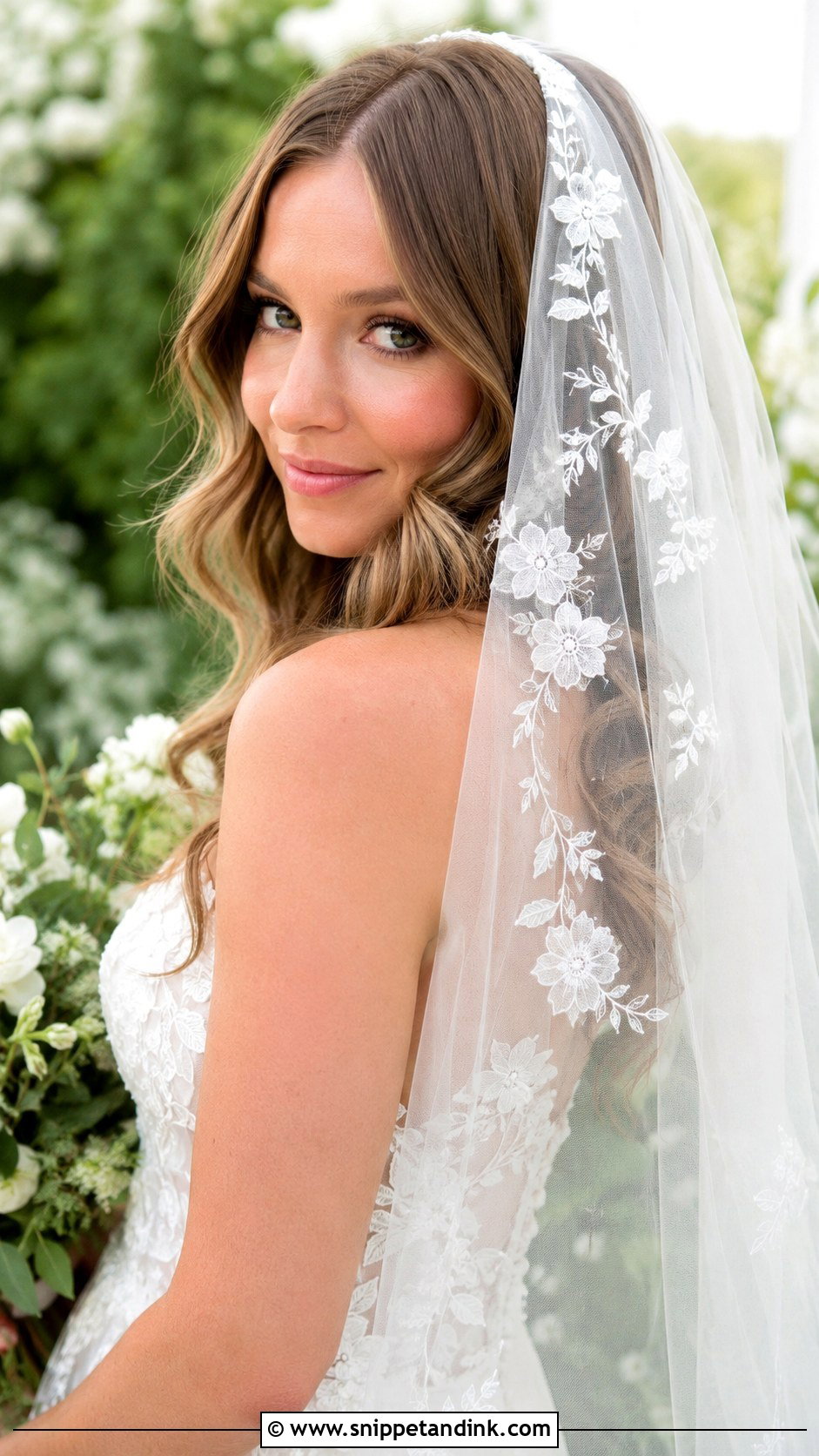
A veil scattered with embroidered or appliquéd flowers brings colour and texture, so the waves underneath should stay soft and loose. Spring and garden weddings suit it. Embroidered motifs add weight and can catch on the hair where they rest, so I set the comb at a height where the heaviest flowers fall below shoulder level instead of sitting on the waves. The blooms then frame the hair without snagging it.
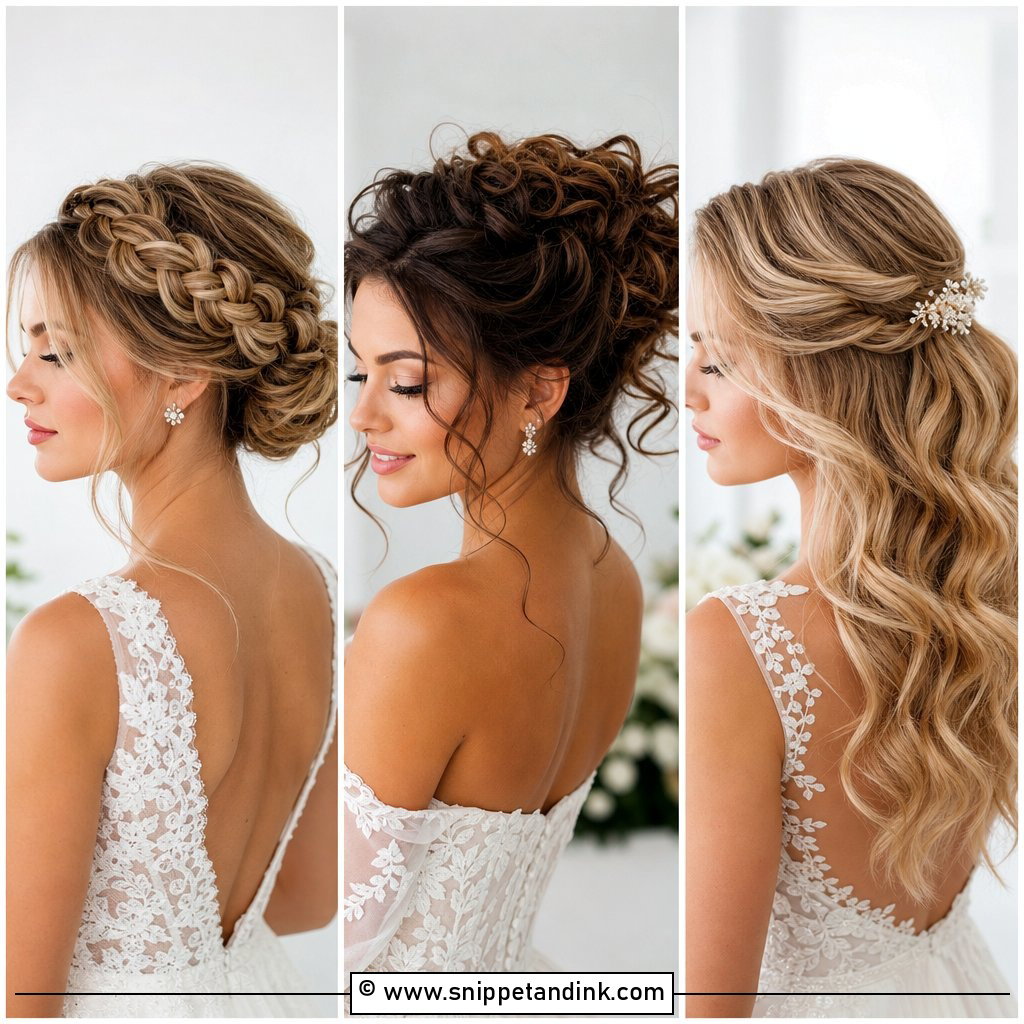
20. Long Sleek Hair With a Fingertip Veil
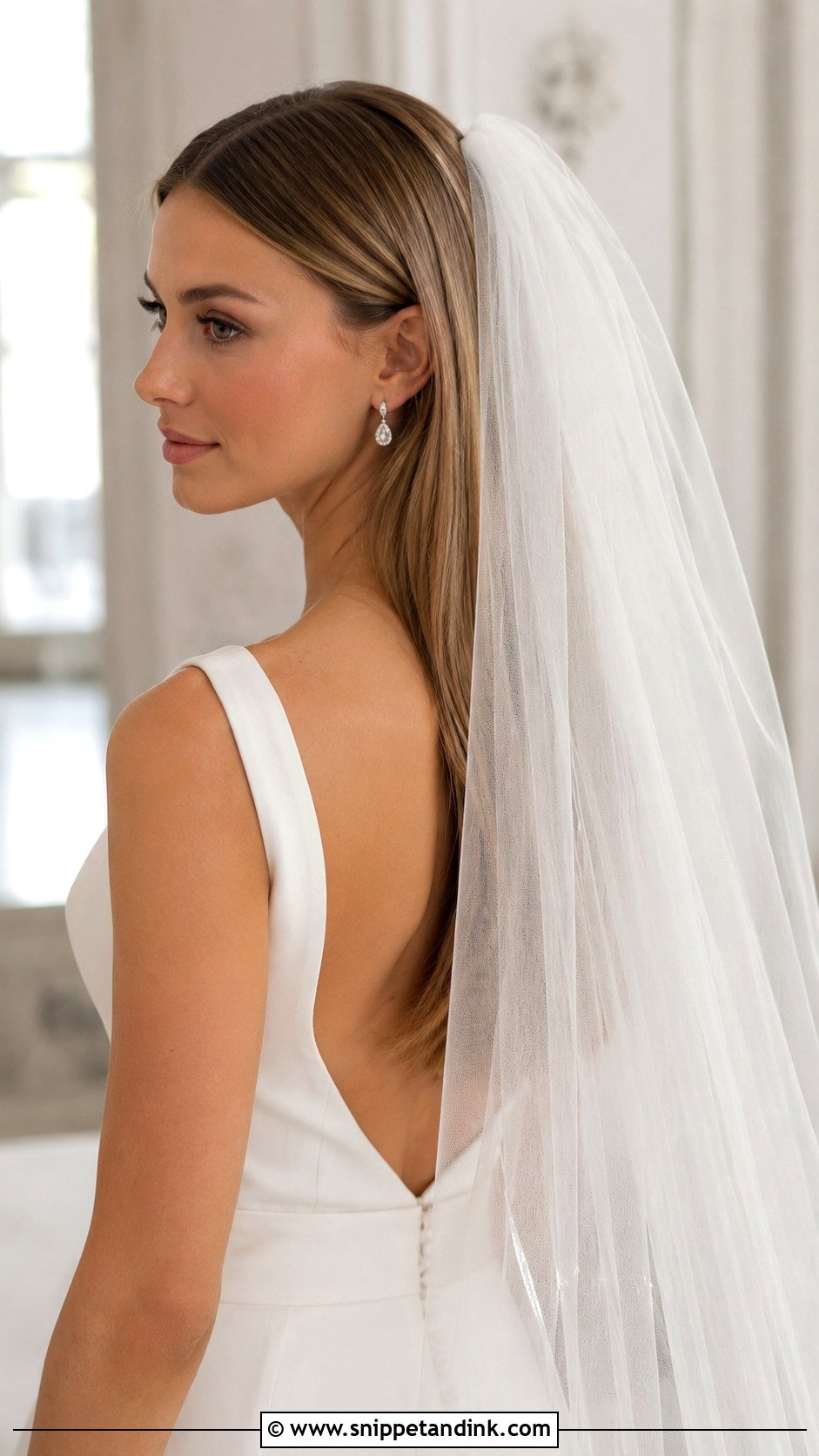
Long sleek hair with a fingertip veil keeps everything refined: smooth, glossy lengths and a veil ending around the fingertips, long enough to feel bridal and easy to manage through a long day. Flat iron, a touch of shine serum, done. Very long straight hair shows every split end, though, so I’d book a trim a few weeks before the wedding. No other style here shows off healthy length quite so directly.
21. Tousled Waves With a Soft Veil
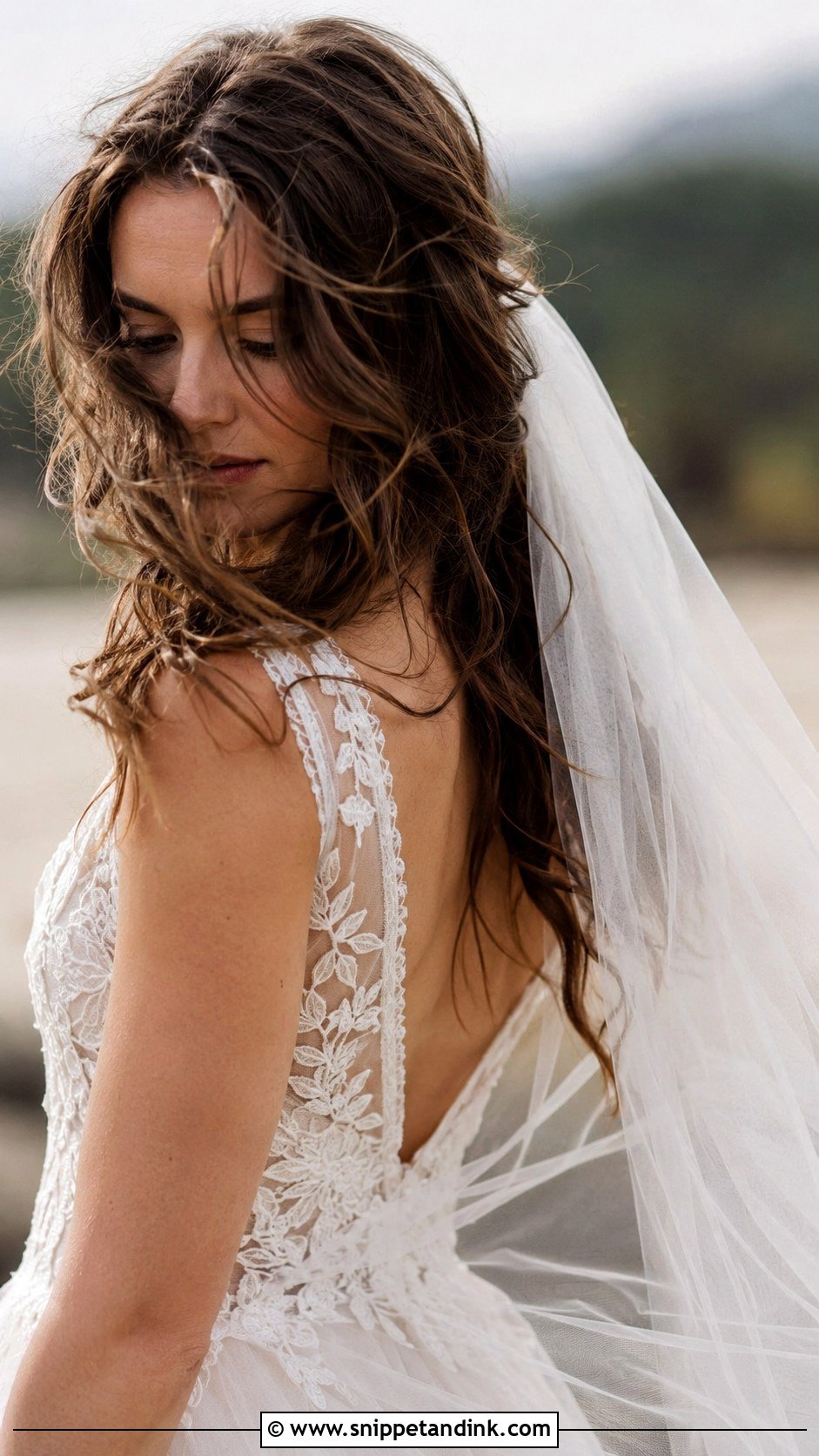
Tousled waves are deliberately imperfect, loose and lived-in, with a soft veil floating behind. Boho, beach and garden weddings suit them. Texturising spray creates the undone effect, but it adds grip, and tulle sliding over gritty hair can tangle at the nape. I keep texture product away from the area under the veil and break curls apart with my fingers instead of brushing, so the finish stays natural.
22. Curtain Bangs With Hair Down and a Veil
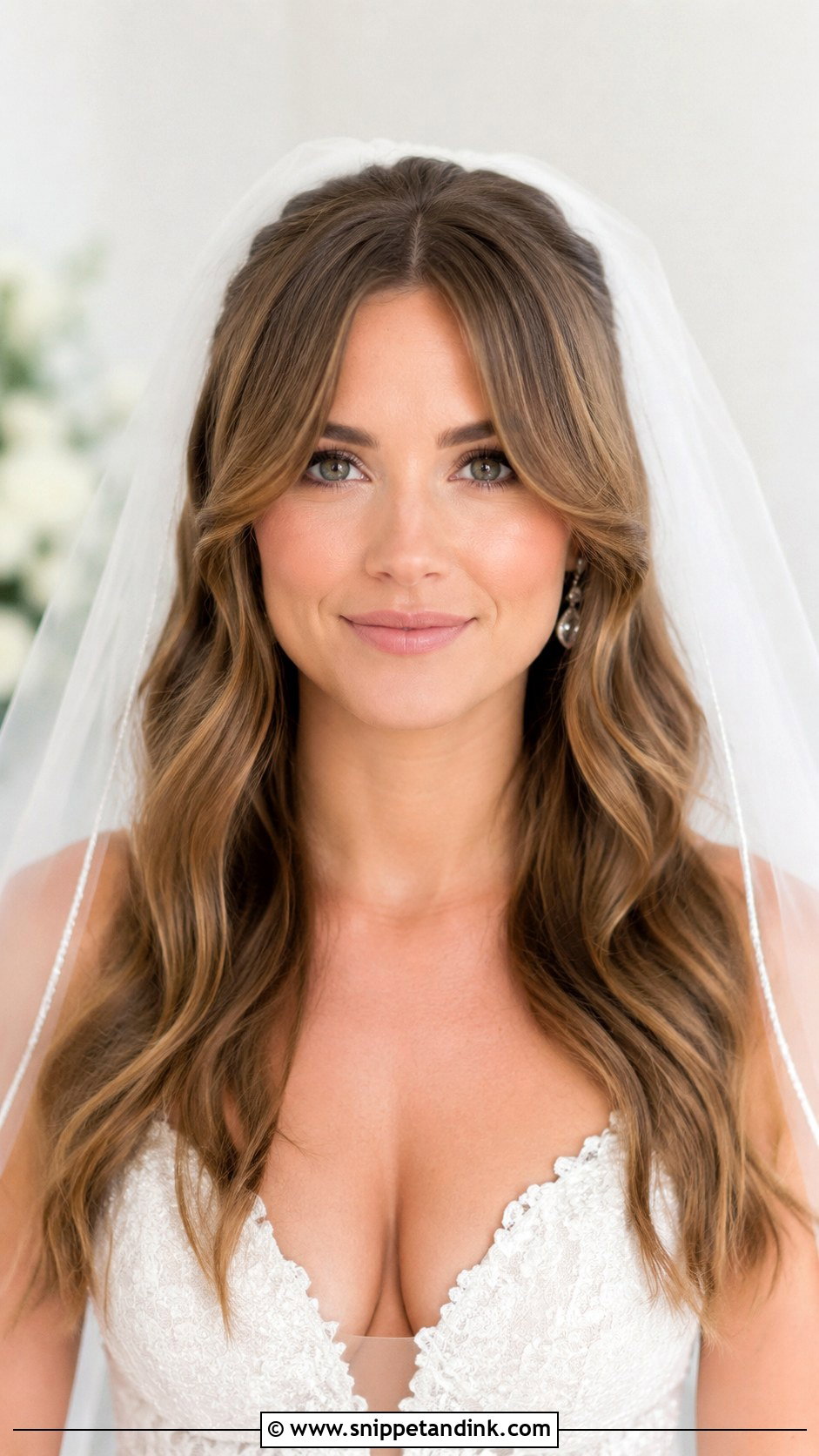
Curtain bangs part in the middle and sweep to each side, framing the face with a modern edge, and they sit comfortably with flowing hair and a veil at the crown. Loose waves in the lengths match them. Bangs get touched, sweat and react to humidity more than any other part of the style, so I blow-dry them with a round brush, set them with a light spray and hand the bride a small comb. Growing bangs out? Avoid a fresh cut in the final weeks; brand-new curtain bangs can behave unpredictably.
23. Side-Swept Waves With a Veil
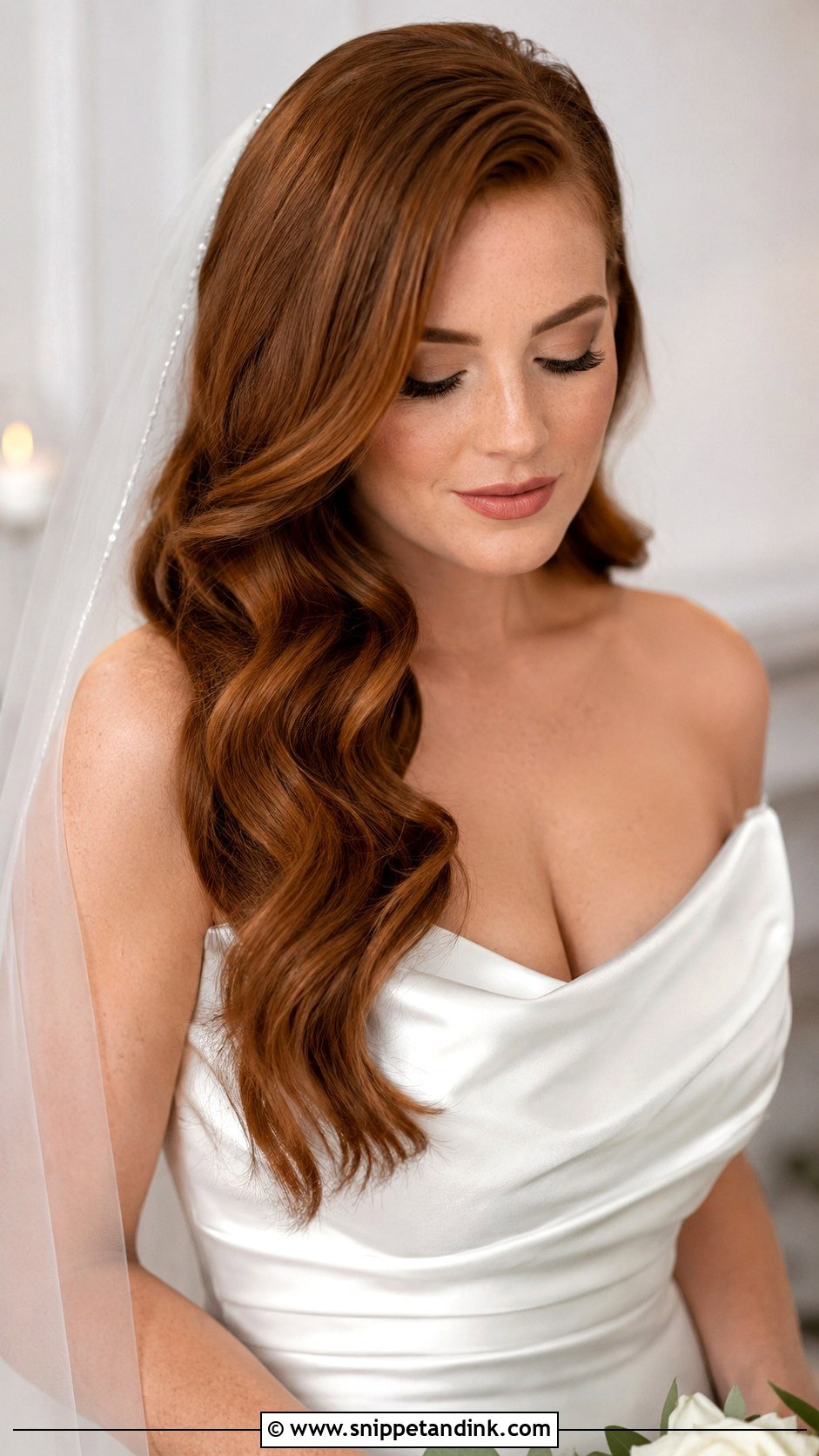
Side-swept waves bring all the hair over one shoulder in a long ripple. The veil anchors at the crown and falls behind while the hair drapes forward on one side. I secure the sweep with crossed pins behind the ear on the side the hair leaves, or it slowly drifts back to centre during the day. A little shine serum finishes it. Glamour without an updo, in short.
24. Natural Curls With a Mantilla Veil
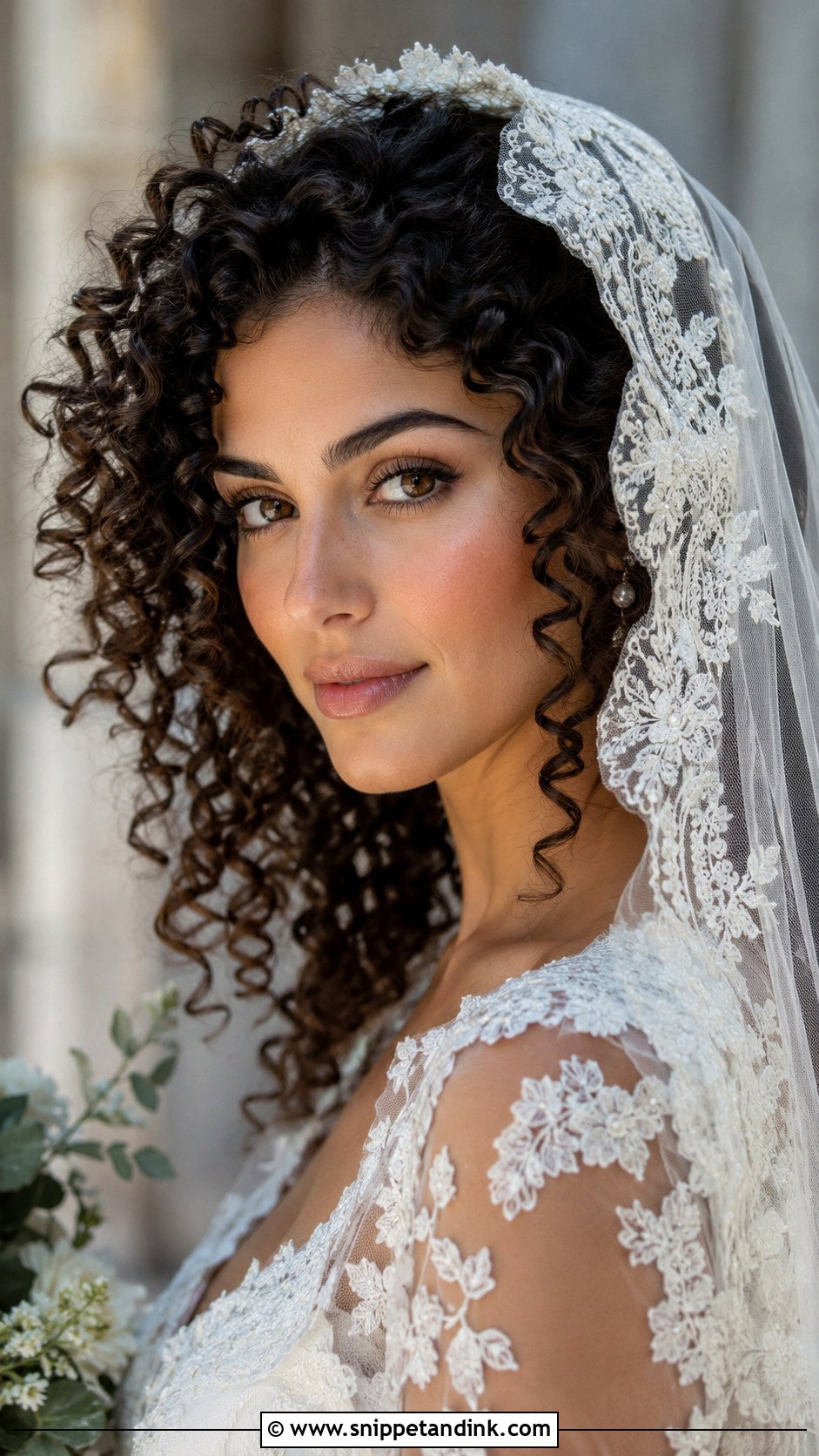
Natural curls bring volume, definition and personality, and a draping mantilla veil lays over them softly. I work with the curl pattern instead of against it: curl cream to define, diffuse or air-dry, and no brushing once dry. Comb placement needs care on curly hair, because teeth pushed straight in can snag and frizz the curls around them. I make a small smoothed anchor point under the crown and slide the comb in there. Bring your usual curl products to the trial; your hair already knows them.
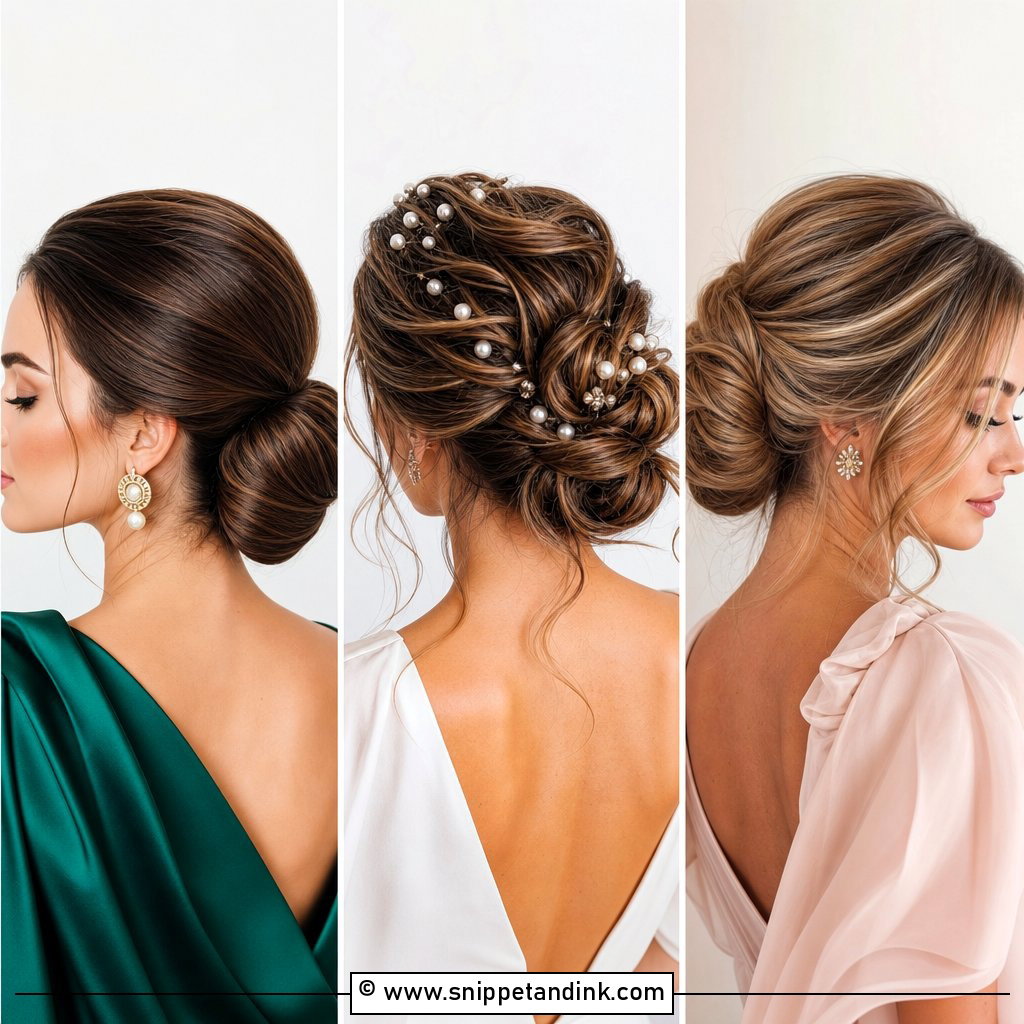
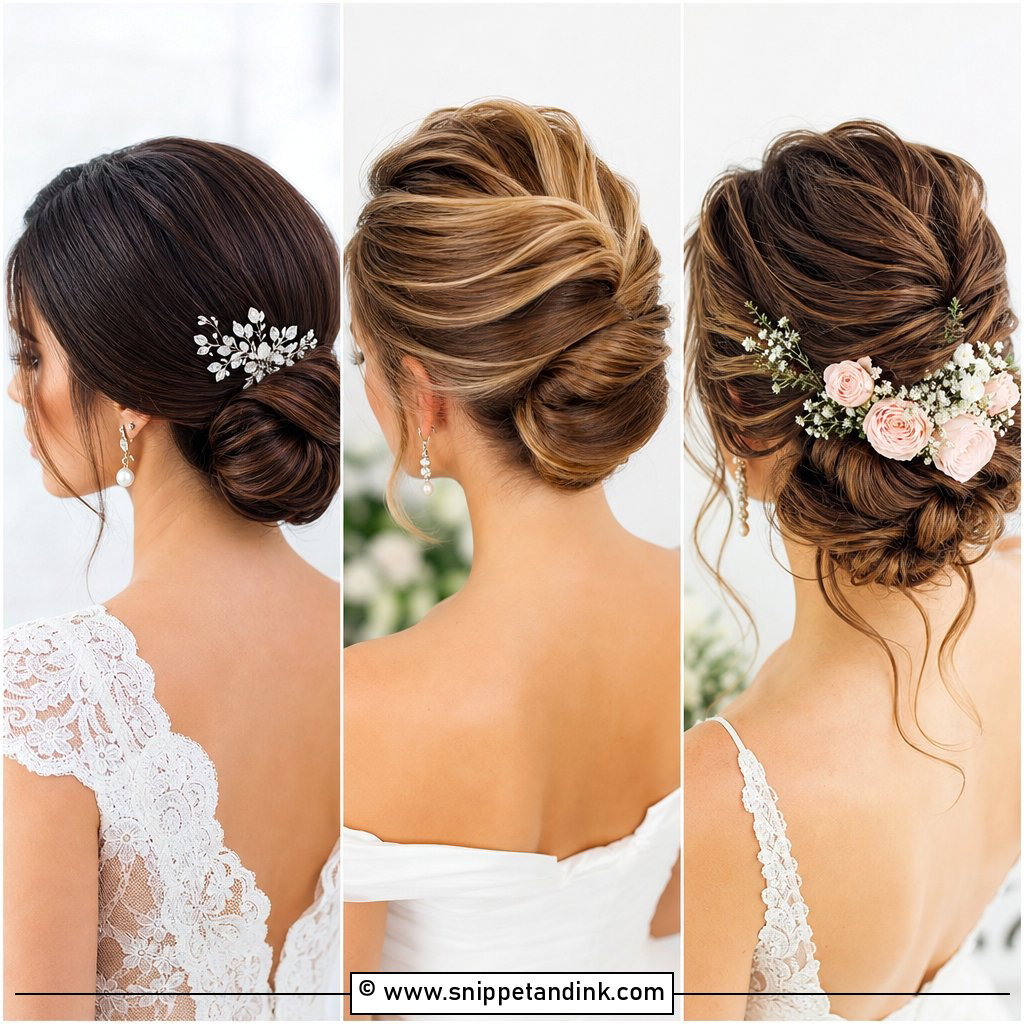
25. Crown Braid With Hair Down and a Veil
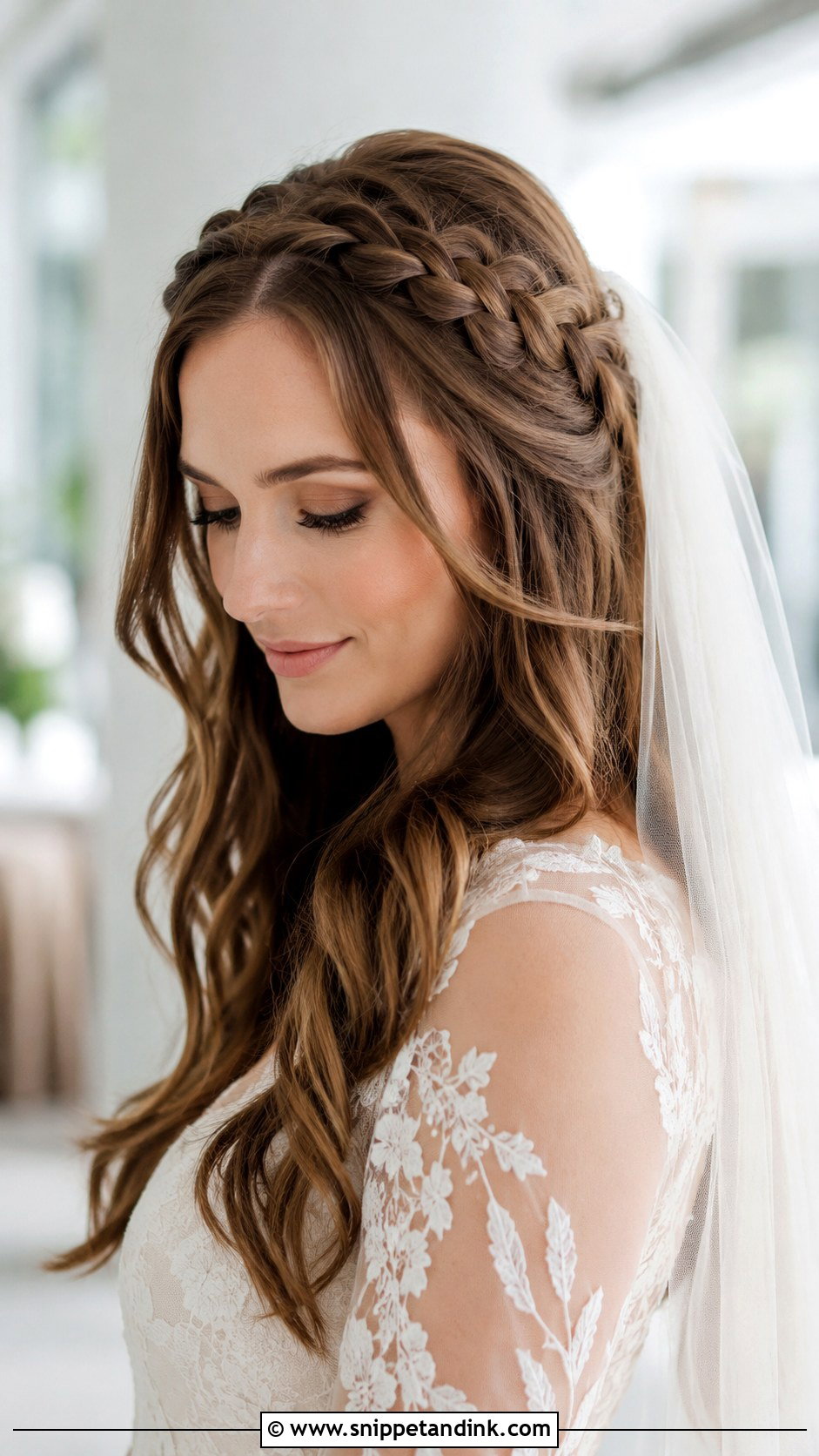
A crown braid wraps around the top of the head while the rest of the hair flows beneath, and it doubles as a solid foundation for the veil comb. That makes it one of the most secure down styles on this list. Loose waves in the lengths soften the structure. On fine or shorter hair a full crown braid can look thin, so I braid a little looser and gently pull it wider, or add a matching hairpiece.
Why Curls Drop Under a Veil, and What I Do About It
Down styles relax faster than updos. Gravity pulls on every curl, the veil rubs against the back, and humidity loosens the set as the day warms up. Fine, straight hair loses curl first; thick, coarse hair holds longer but can puff in damp air.
- Wash your hair the day before, not the morning of. Freshly washed hair is slippery and lets curls fall out quickly.
- Every curl should cool fully before it’s touched. I pin each one and only release them once the whole head is done.
- Light, layered spray holds better than one heavy coat, which weighs curls down.
- Expect the curls to soften by the evening. That softer wave often suits the reception better anyway.
Taking the Veil Out Before the First Dance
Most brides take the veil off after the photos, and a rushed removal is how a style gets wrecked. Have your stylist or a bridesmaid who watched the pinning do it. Pull the crossed pins first, then lift the comb back out along the same angle it went in, never straight up.
After that, shake the roots gently with your fingers and fluff the back where the veil sat, since that area is usually flattened. The anchor can stay in, hidden under the top layer. It’ll hold any hairpiece or flowers you want to add for the evening.
Bring the Real Veil, Not a Photo of It
Wearing your hair down with a veil keeps your hair looking like yours while the veil carries the bridal moment. From cathedral lengths to short birdcage netting, almost every down style has a veil it pairs well with. The step I’d never skip is bringing your actual veil to the hair trial, so your stylist can test the anchor, the comb placement and how the weight sits. With the right pins and a hidden foundation, the veil stays put through the ceremony and comes out cleanly when you’re ready to dance.
You'll Like These Ideas:


Leave a Reply