
Plenty of couples come to me apologising for wanting only two tiers, as if a smaller cake were a compromise. It isn’t. A well-proportioned two-tier cake looks deliberate, sits comfortably on a cake table for a smaller guest list, and lets the money go into the finish and the flavour instead of extra sponge. What it can’t do is hide weak decisions, because everything is at eye level. The twenty styles below run from buttercream and pearls to beach and garden cakes, and for each I’ve noted what makes it work and where it tends to go wrong.
Two Tiers Means Two Flavours, So Plan the Fillings
One advantage of two tiers is that you can offer two flavours without any fuss. I usually suggest one crowd-pleaser and one that’s more personal: vanilla bean on the bottom tier, which serves more people, and a couple’s favourite like lemon raspberry or salted caramel on top.
The filling also decides how the cake can be stored and displayed, and that’s where couples get caught out.
- Buttercream, ganache and jam are stable and can sit out at room temperature for a few hours.
- Curd and fruit compote need a buttercream dam so they don’t seep and bulge the sides.
- Fresh cream, mascarpone, custard and cream cheese need refrigeration and a short display time.
- Fresh fruit layers add moisture and are best eaten the same day.
If the cake will be on show for most of the evening, I’d keep the soft creamy fillings for a dessert served from the kitchen.
At the tasting, I bring small samples of each sponge and filling separately so couples can mix them. Taste them at room temperature, since that is how guests will eat them; a cold sample hides flavour and makes buttercream seem firmer than it really is.
1. Two Tier Buttercream Wedding Cake
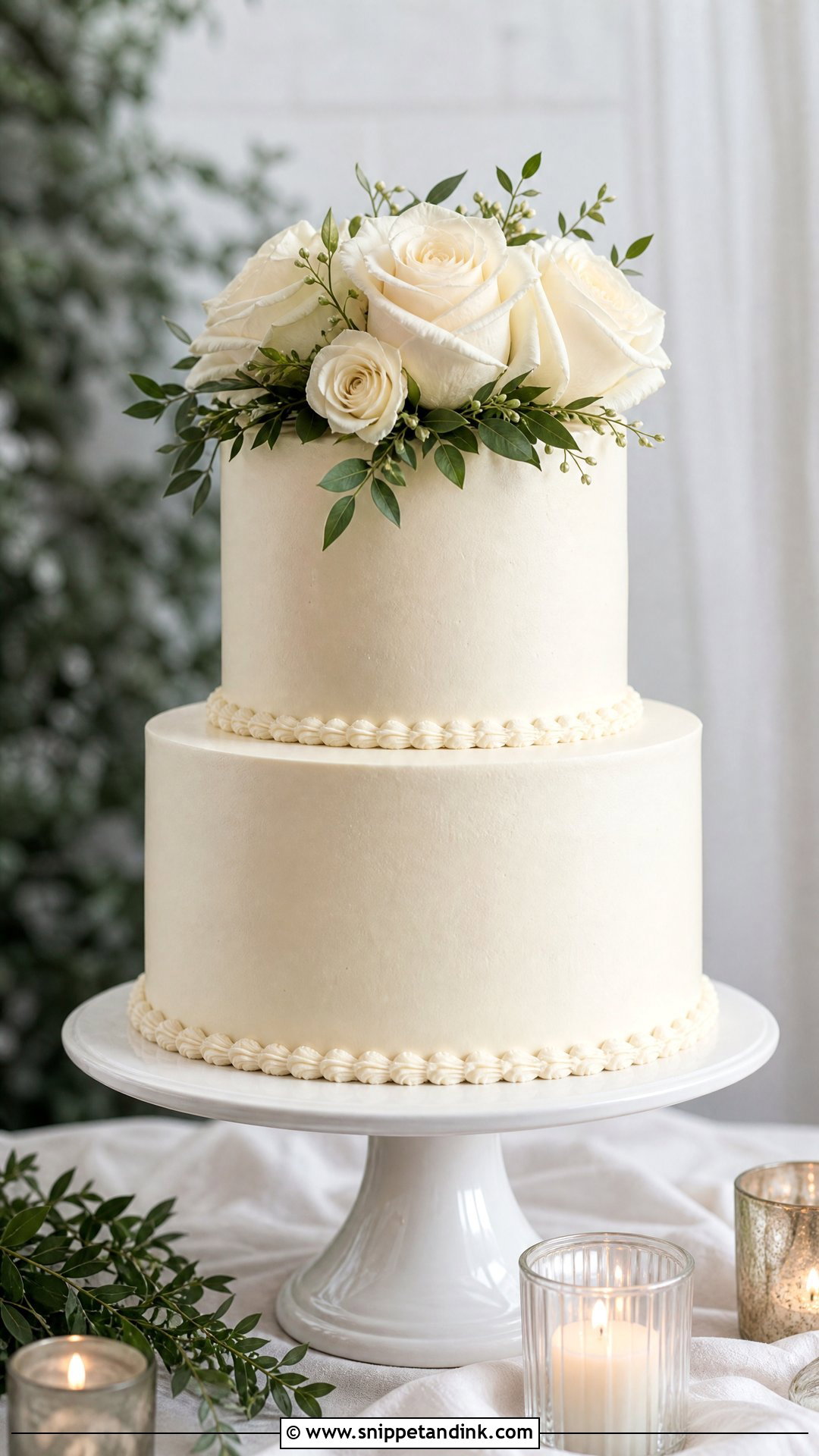
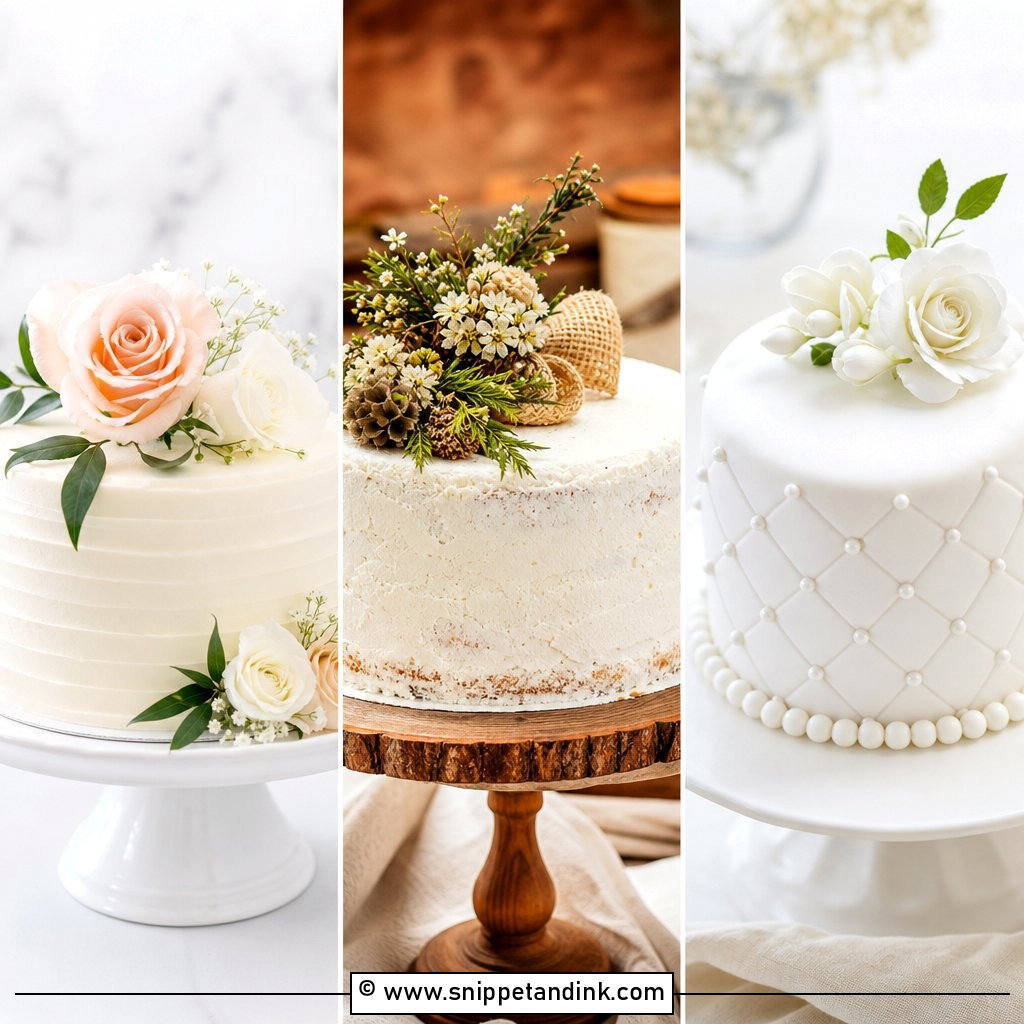
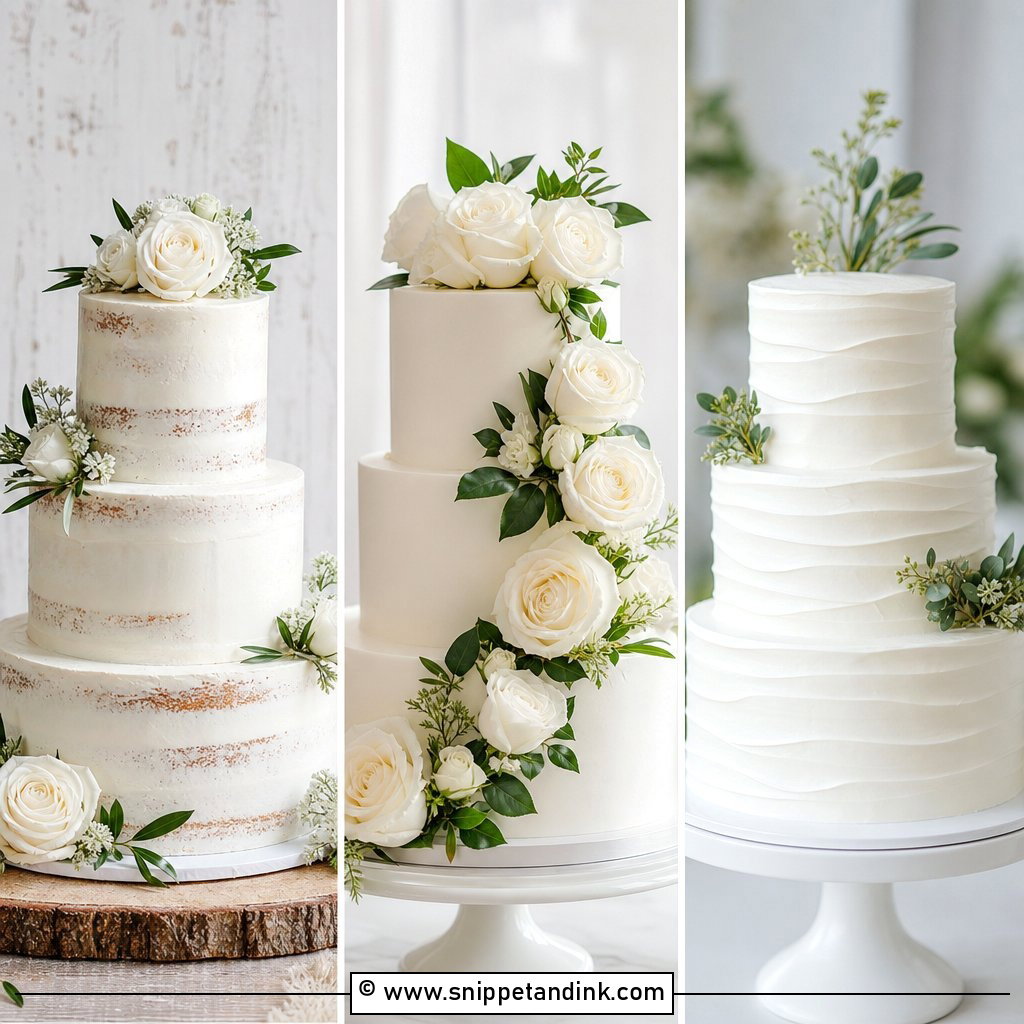
Buttercream is still the finish I make most, because it tastes good and forgives a bit of handling. Smooth reads clean and classic; a light palette-knife texture reads handmade. Since the outside can stay ivory, the flavour inside can carry the personality, whether that’s vanilla, almond, lemon, champagne or strawberry. A few roses or ranunculus at the tier edge finish it. The thing to plan for is temperature: buttercream softens in a warm room, so the cake should stay somewhere cool until it’s needed.
2. Two Tier Floral Wedding Cake
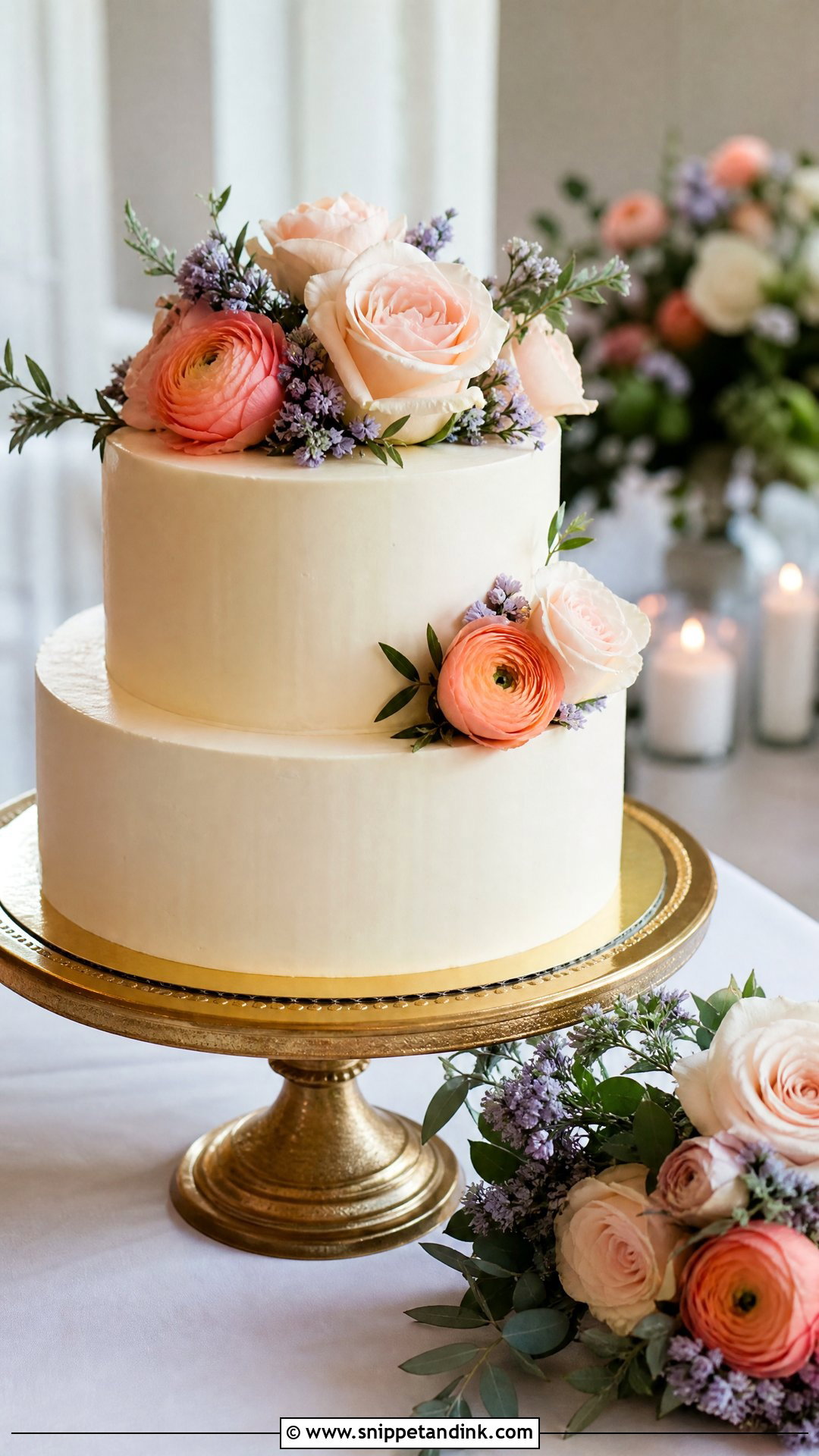
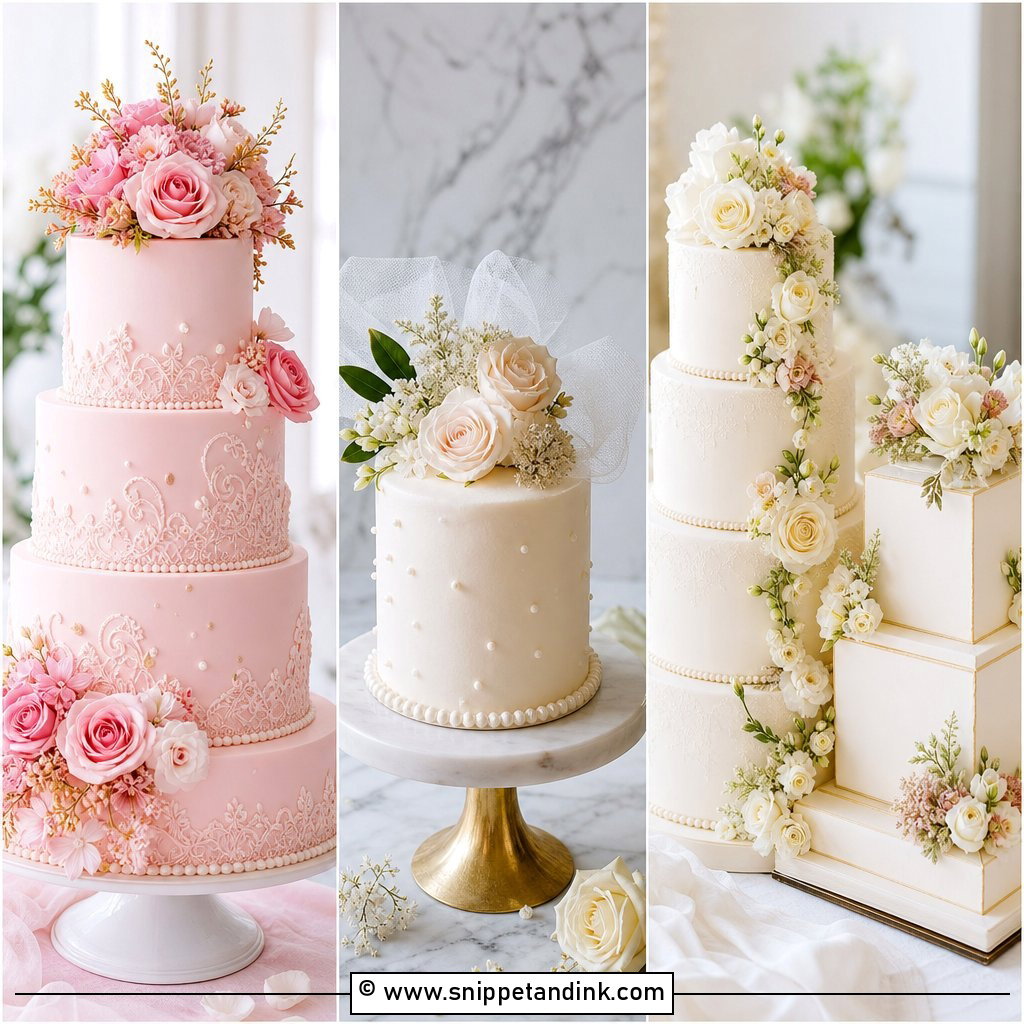
When the cake needs to match the bouquet or the arch, I talk to the florist directly so the blooms come from the same order. Clusters look better than full coverage on two tiers; a single group on the top edge and a smaller one at the base keeps the shape visible. Fresh, sugar or buttercream flowers all work, though some venues don’t allow fresh flowers on food, so check your contract. Soft pink, peach, lavender or dusty blue on a cream base suit spring and summer.
3. Two Tier Pearl Wedding Cake
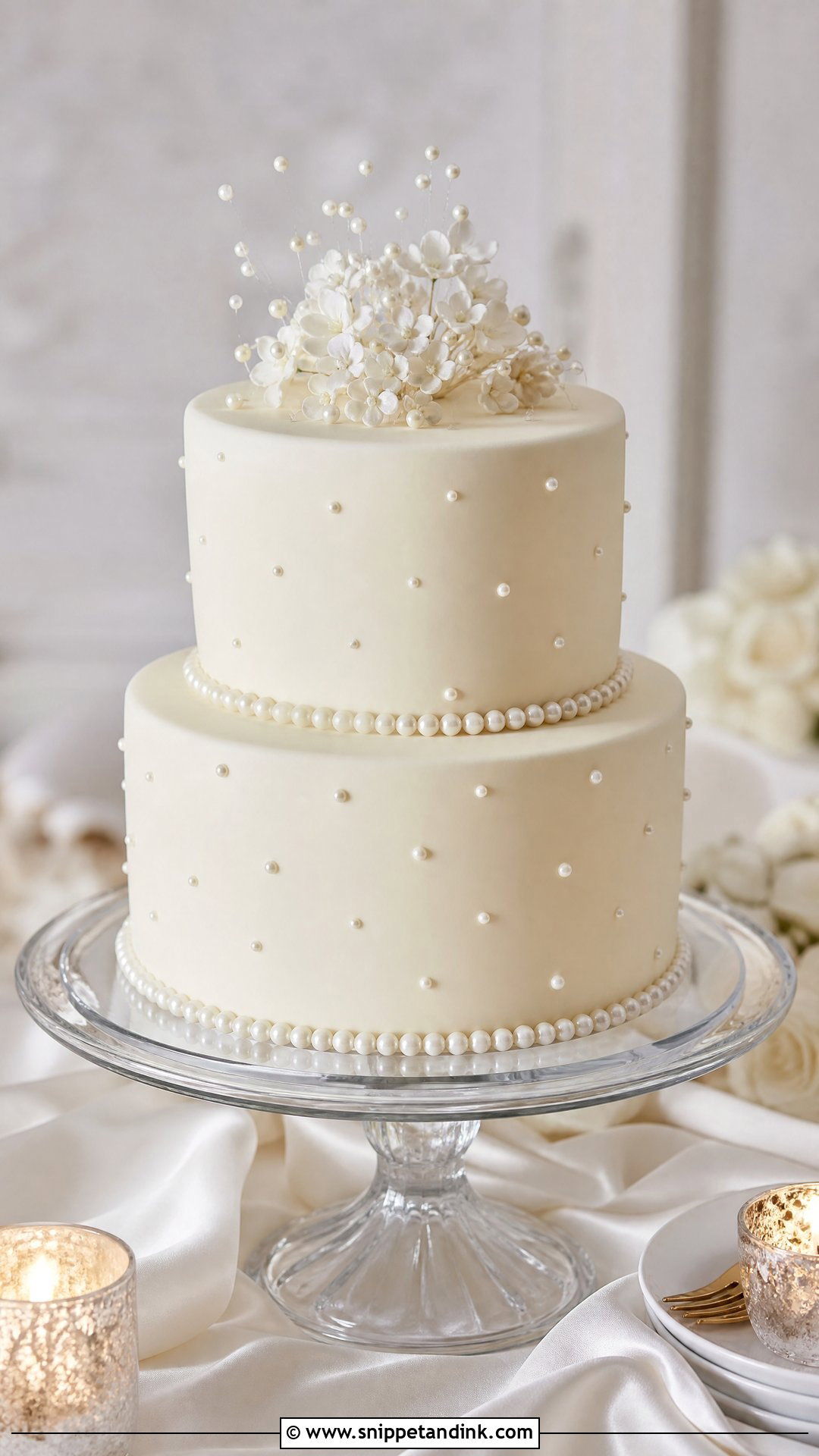
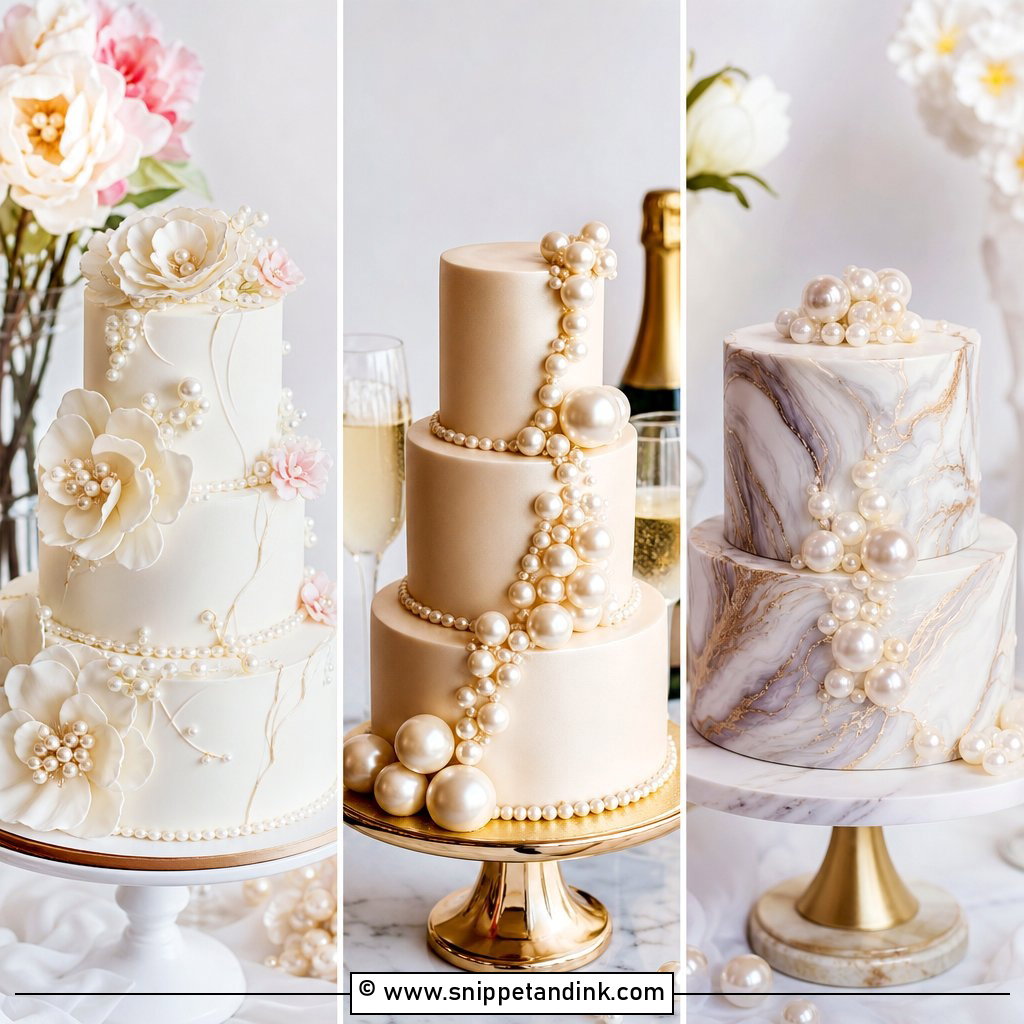
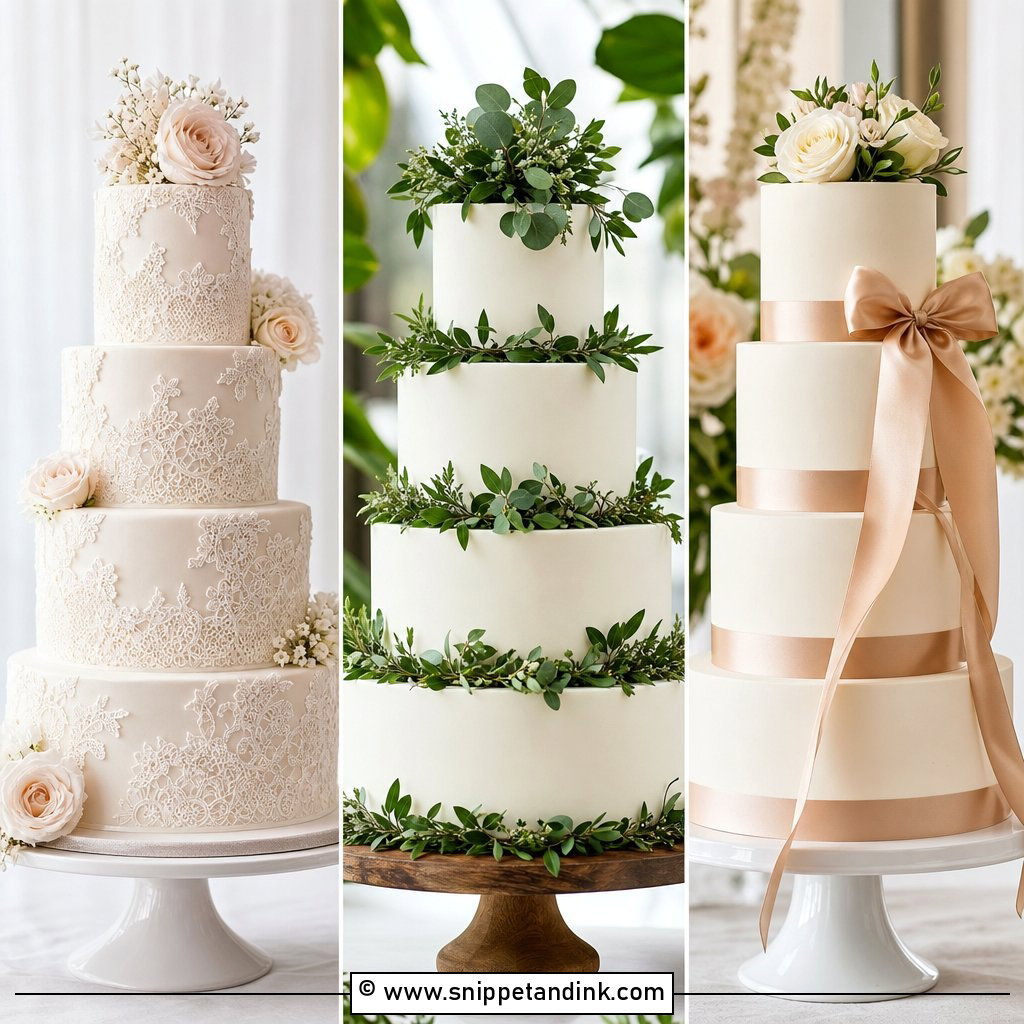
Pearls can make a plain cake look more finished than almost any other small detail. They need a clean, smooth base to show up, so I put them on ivory buttercream or fondant. Scattered pearls look modern, pearl borders look classic, and a full cascade is the glamorous version. Sugar pearls are hard on the teeth, so I keep them off the areas that will be cut first. Satin linens and a glass stand suit the look, especially at indoor receptions.
4. Two Tier Bow Wedding Cake
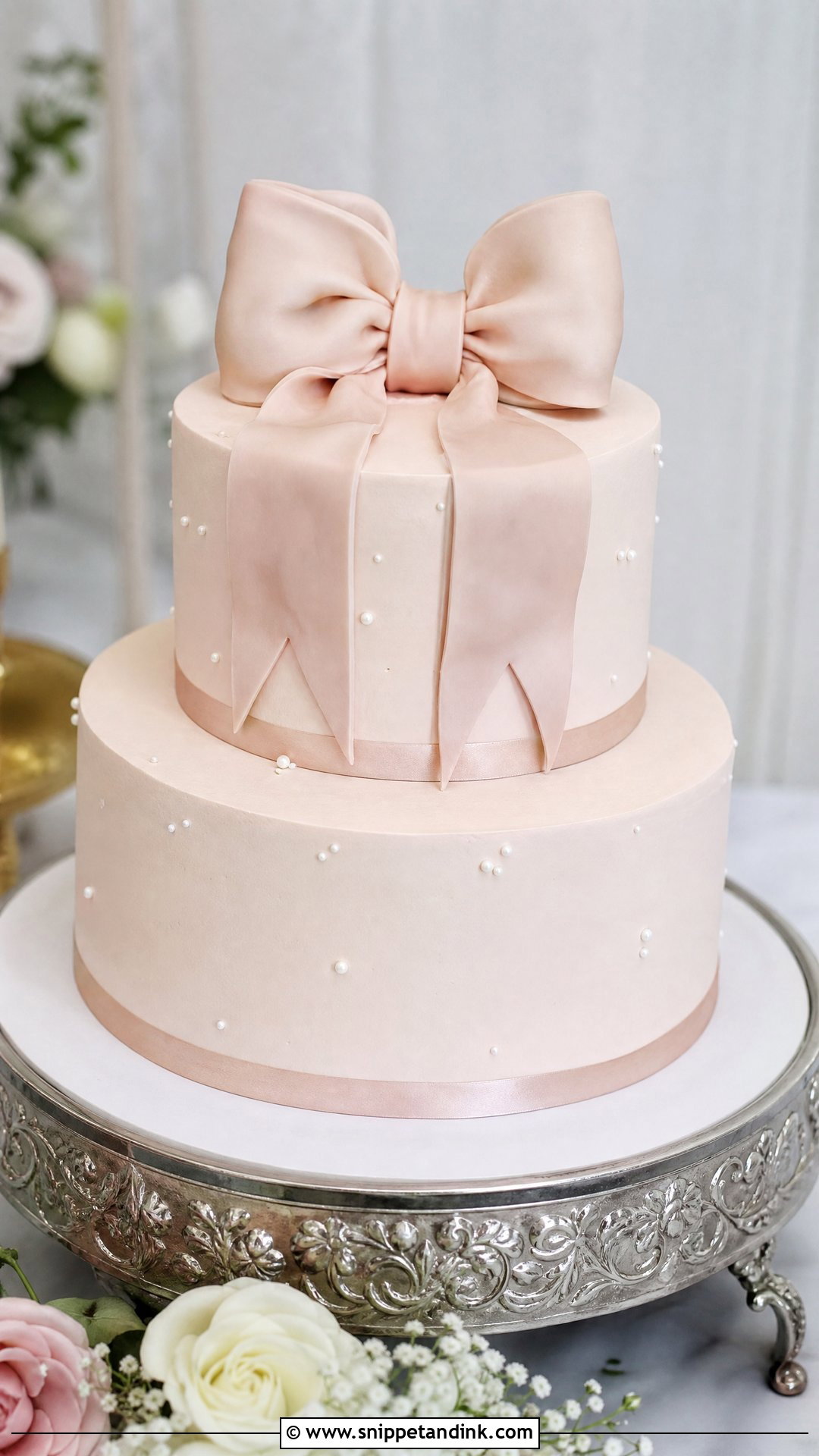
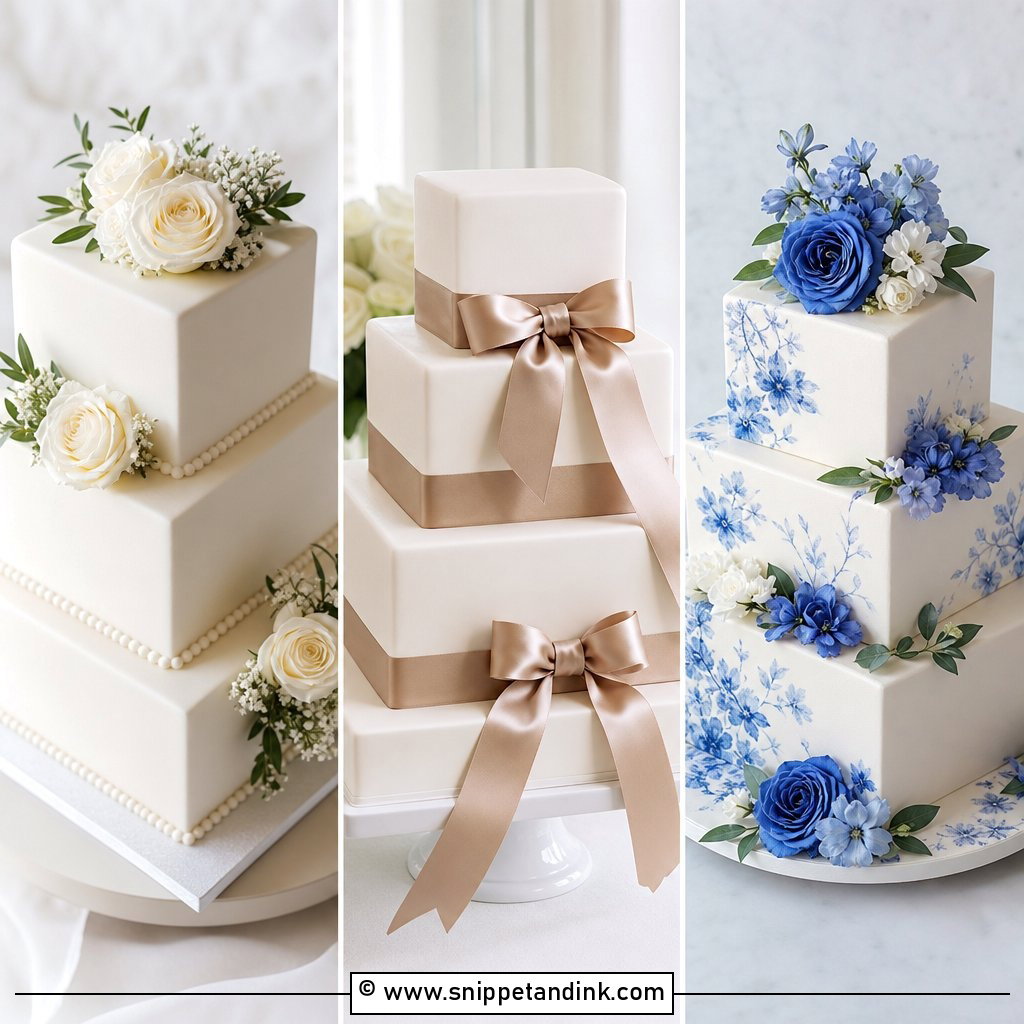
A bow can sit on top, wrap round a tier or fall down the side like loose ribbon. Fondant bows hold their loops crisply; I shape them over rolled paper towels and leave them to dry for a day or two so they don’t sag. Edible wafer paper ribbon is softer and moves more like silk. White, blush, champagne or pale blue keep it bridal. Smooth frosting matters here, because a bow on a textured cake looks lost. It suits romantic and ballroom weddings.
5. Two Tier Vintage Wedding Cake
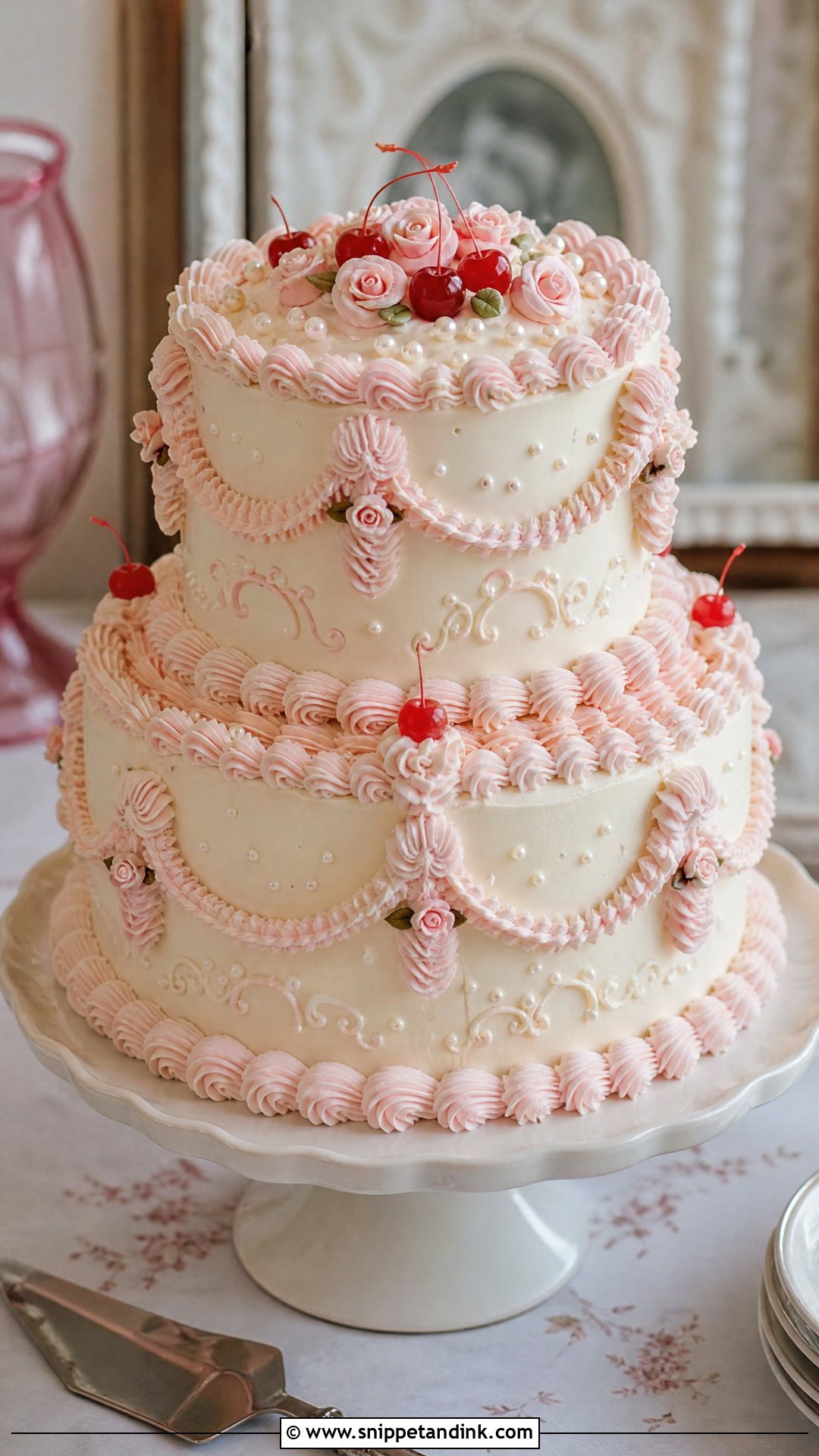
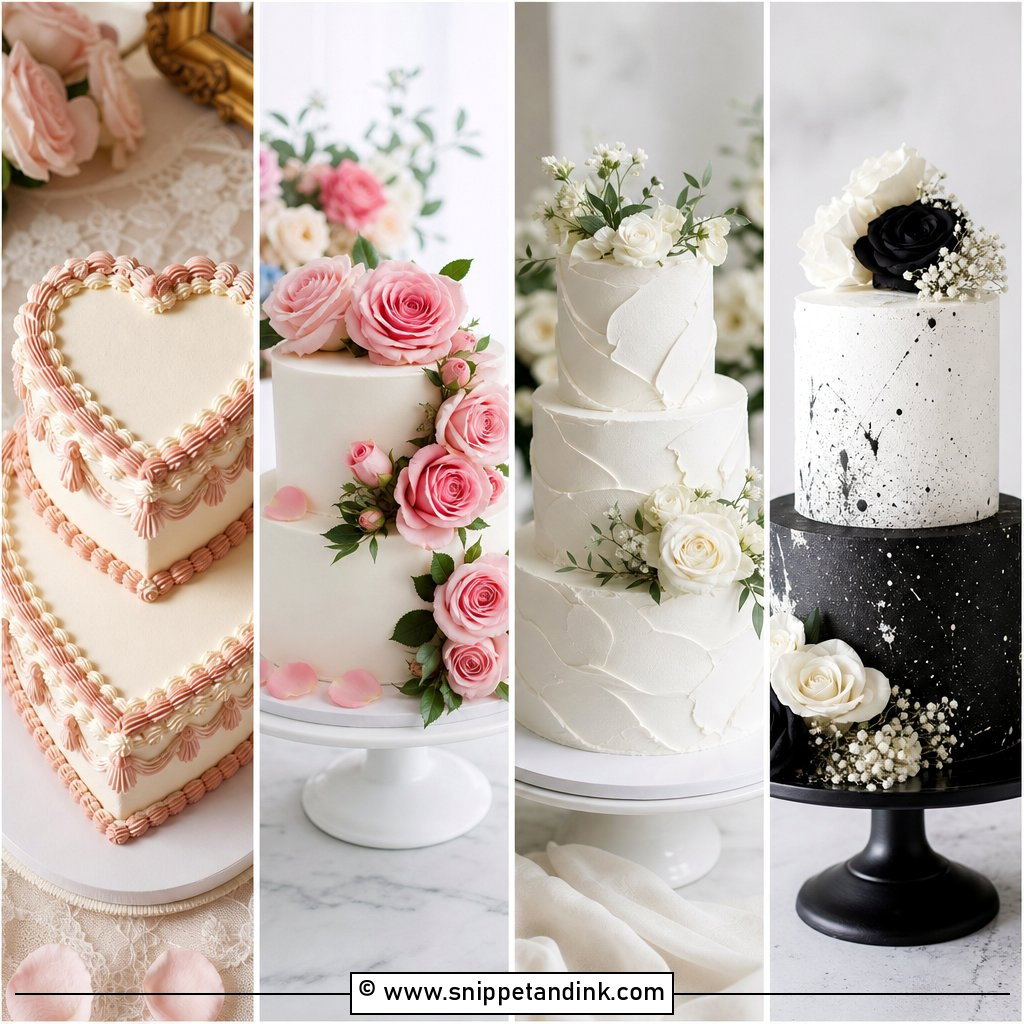
Vintage piping gets its charm from texture, so it doesn’t need big flowers or toppers. Think shell borders, ruffles, scrolls, dots and swags; in white buttercream they look classic, while blush, pale yellow or powder blue feel more personal. I use a slightly stiffer buttercream for this work so the ridges stay defined through the evening. Cherries, small roses or a heart topper keep it playful. Expect hand piping to take time and to be priced that way.
6. Two Tier Minimalist Wedding Cake
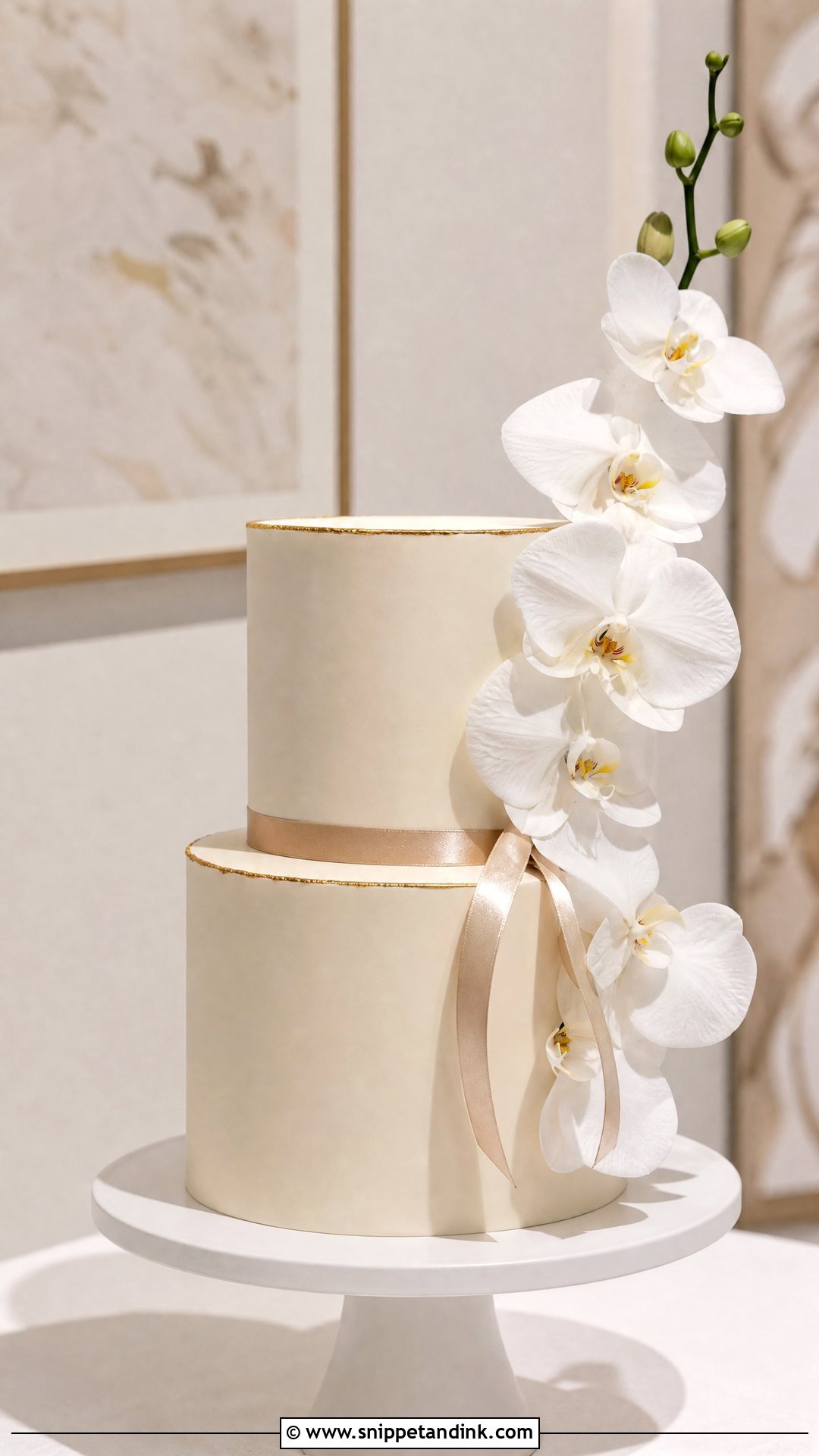
Clean lines can make a two-tier cake look expensive, but only if the basics are perfect: straight sides, sharp top edges and tiers stacked dead centre. I give minimalist cakes extra chilling time between coats for exactly this reason. Then one focal point, such as an orchid stem, a small floral cluster, a thin ribbon or a gold edge. White, beige or soft grey keep it calm. It suits galleries, rooftops and restaurant receptions.
7. Two Tier Rustic Wedding Cake
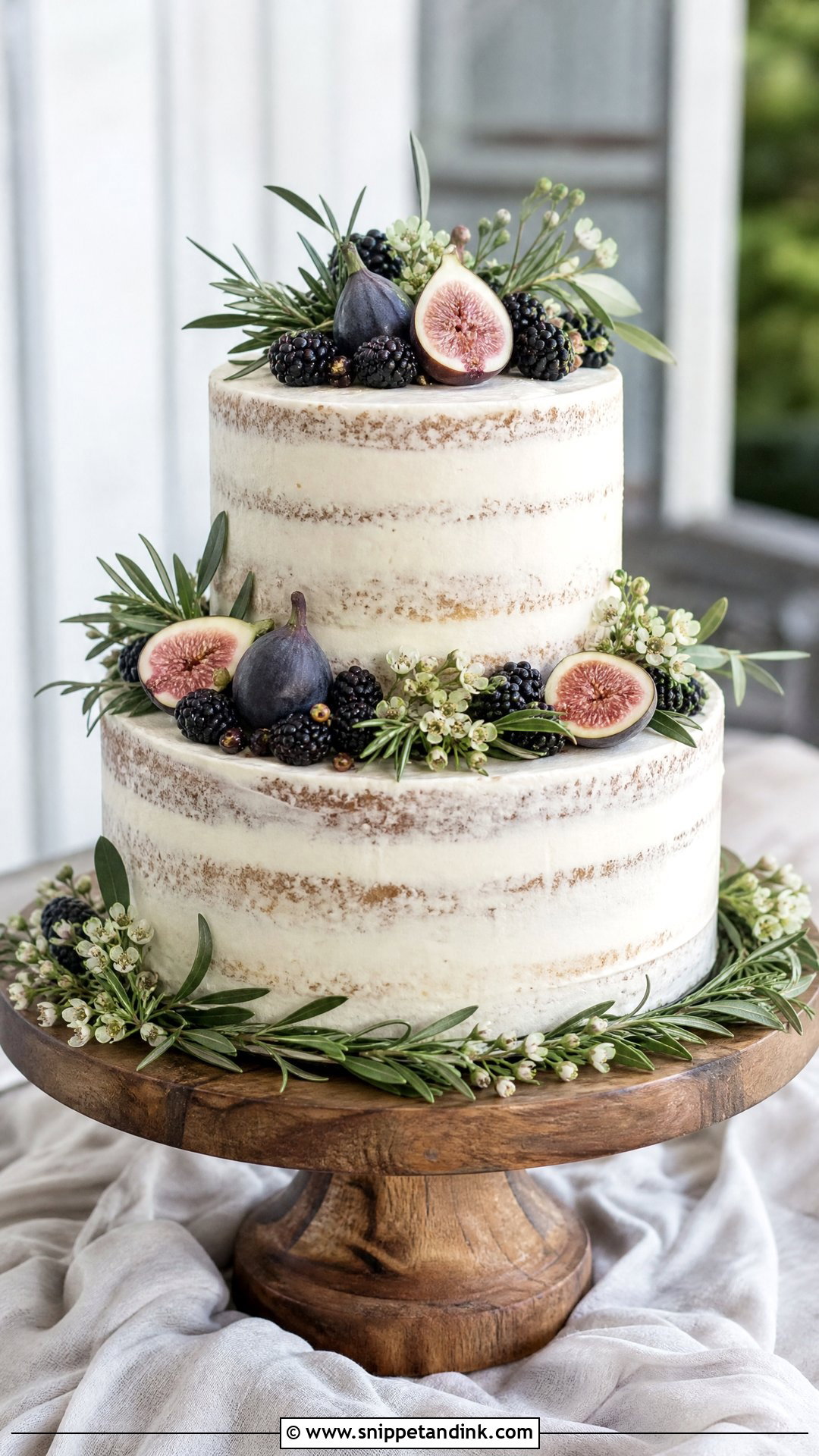
Rustic cakes lean on semi-naked frosting or rough buttercream with greenery, small flowers, figs, berries or dried citrus. It should look natural, not neglected, which is a fine line: too much exposed sponge looks unfinished in photos. Spice, carrot, honey or almond flavours suit it. Exposed sponge dries quickly, so I keep it wrapped until it’s set out. Wooden stands and wildflowers nearby fit barn, mountain or backyard weddings.
8. Two Tier Gold Wedding Cake
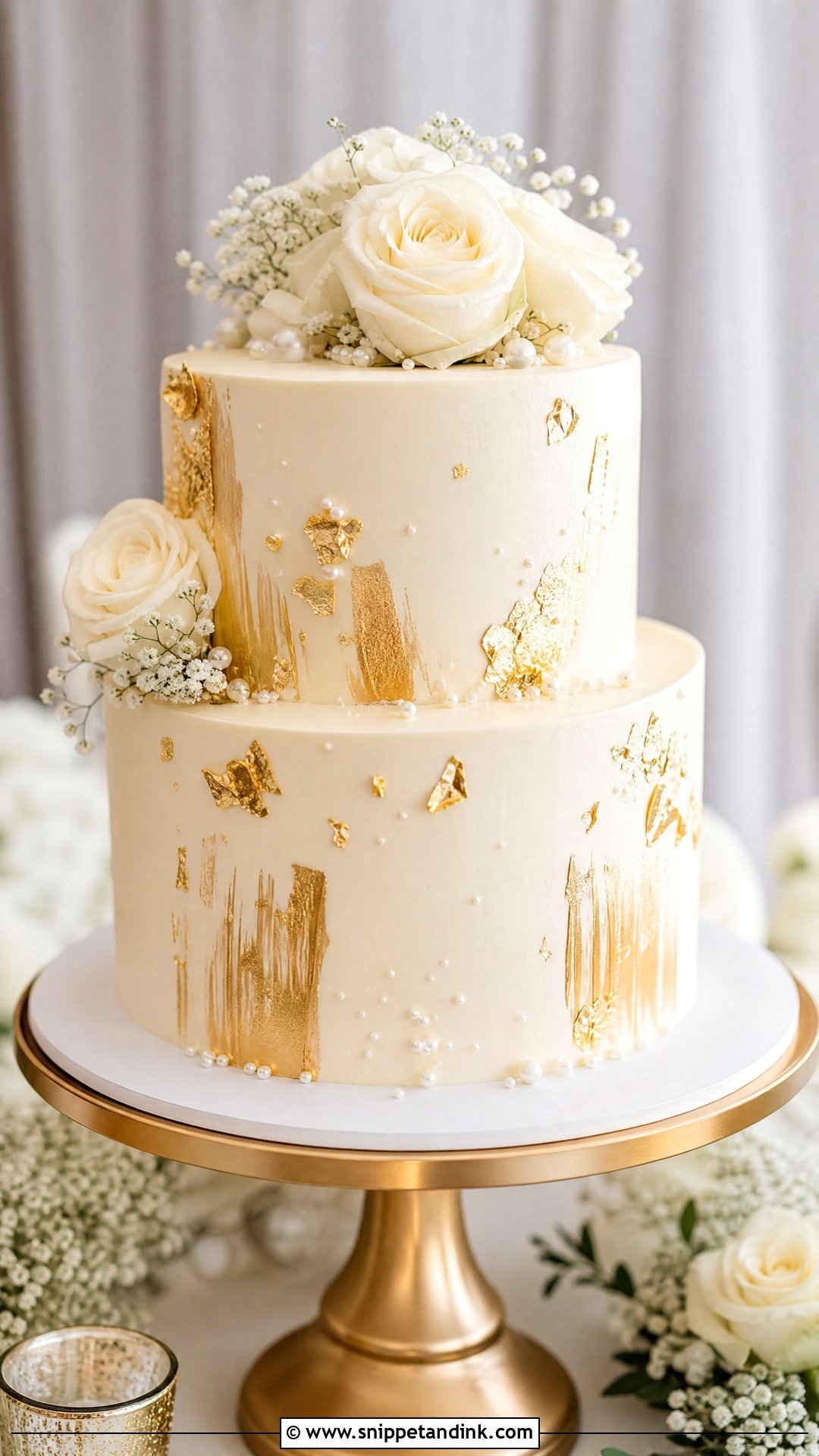
Gold works as an accent, not a coating. Gold leaf, brush strokes, metallic edging or a painted bottom tier can all look tasteful if the rest stays restrained. I paint gold with lustre mixed into a little alcohol, which dries quickly and doesn’t streak. Ivory buttercream, white fondant, champagne tones or blush flowers balance it. Evening and formal receptions suit it best, where it catches candlelight.
9. Two Tier Square Wedding Cake
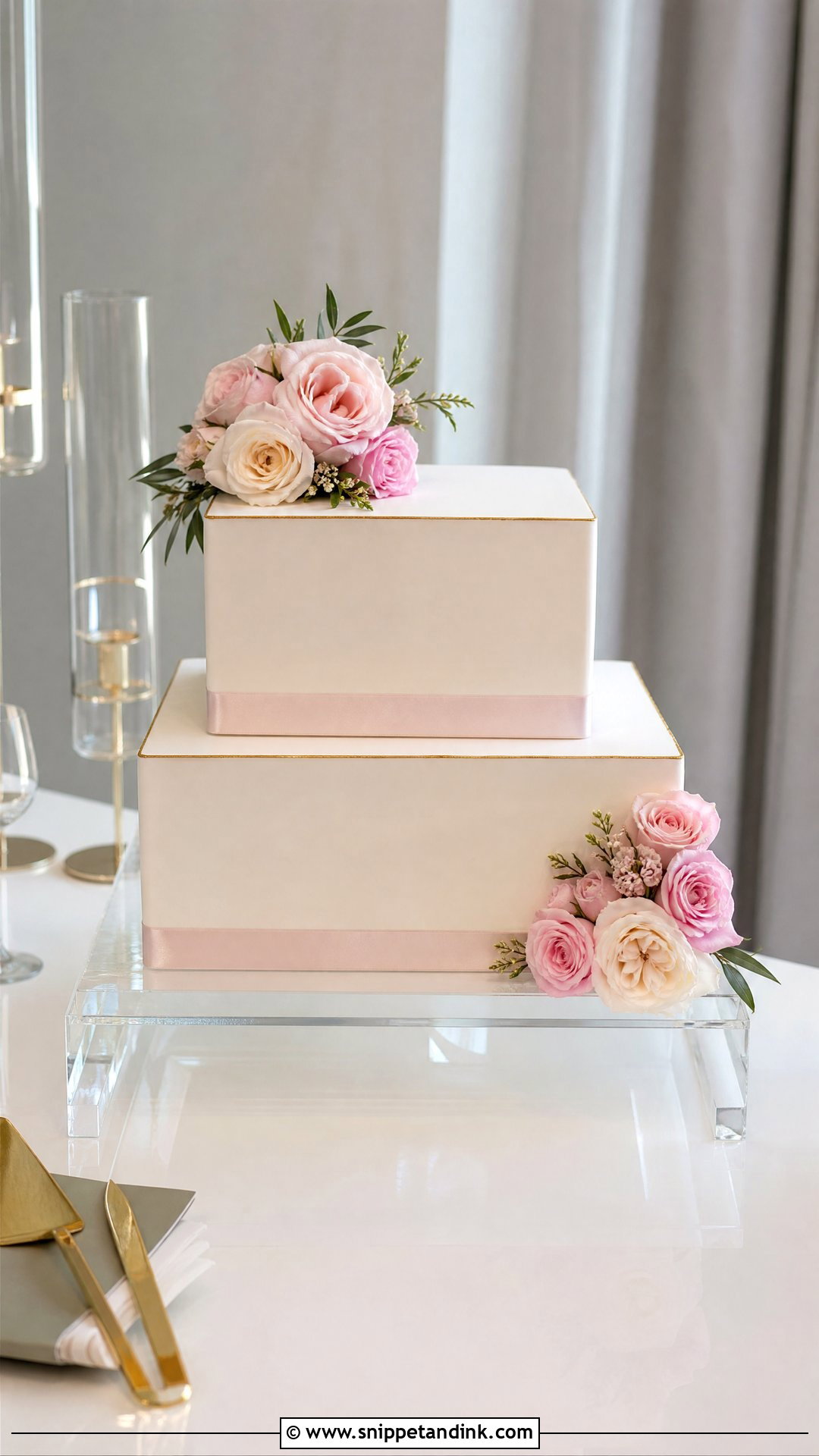
Square tiers stand out simply because most cakes are round. Fondant gives the crispest corners; buttercream looks softer. Flowers at opposite corners, ribbon or thin piping along the edges, and marble or monochrome details all suit the shape. One practical note: square cakes are heavier per tier and need firm support boards, so they’re slightly harder to deliver. They suit hotel ballrooms and black-and-white receptions.
10. Two Tier Round Wedding Cake
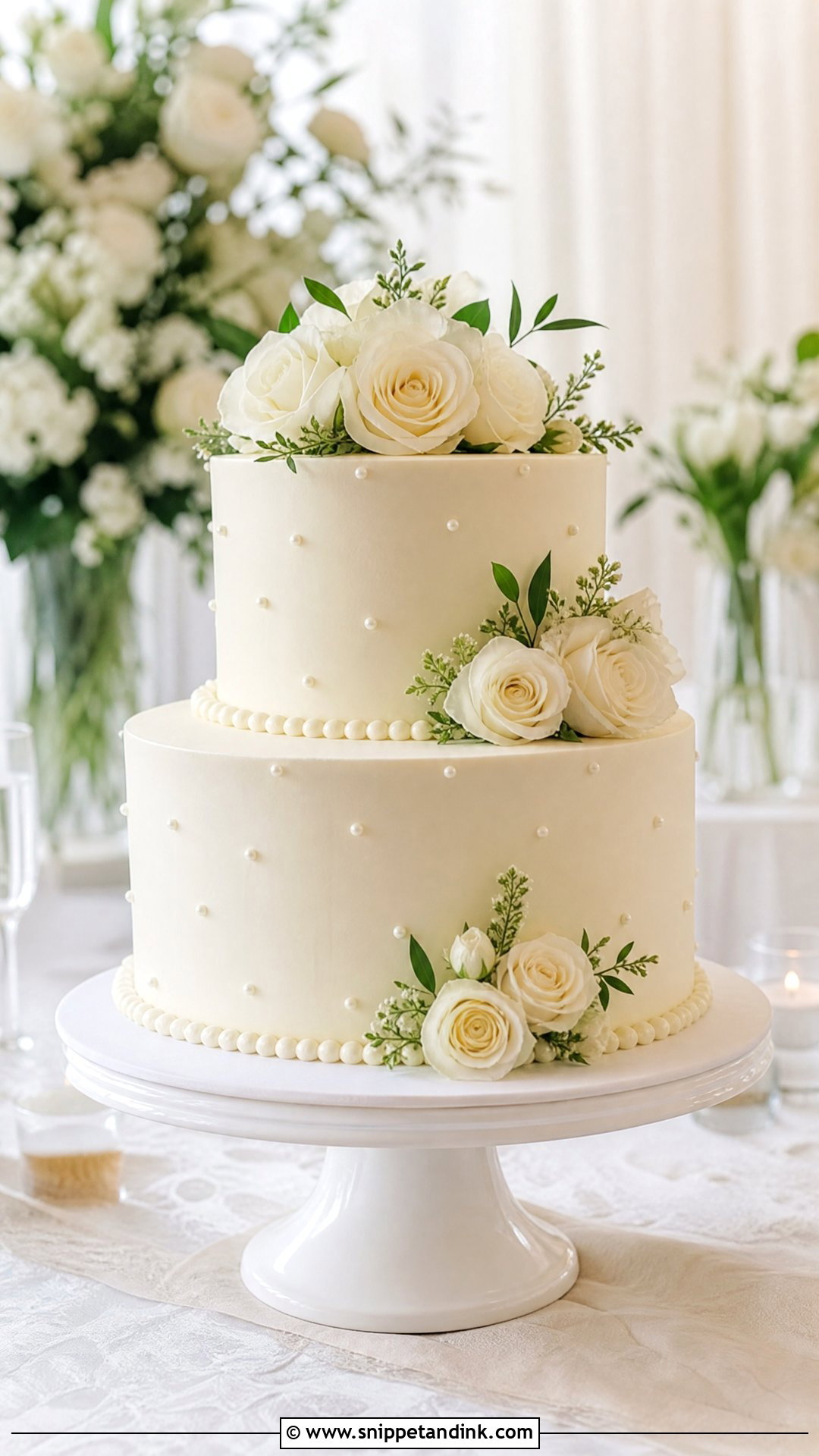
Round tiers are the classic for good reason. They’re easiest to finish evenly, they photograph from any angle, and they work with every style from smooth to piped to dripped. They also scale neatly: a two-tier round plus a plain sheet cake in the kitchen can serve far more guests than the display suggests. If you’re worried about a look dating, round with ivory frosting and soft florals is the safest choice there is.
11. Two Tier Greenery Wedding Cake
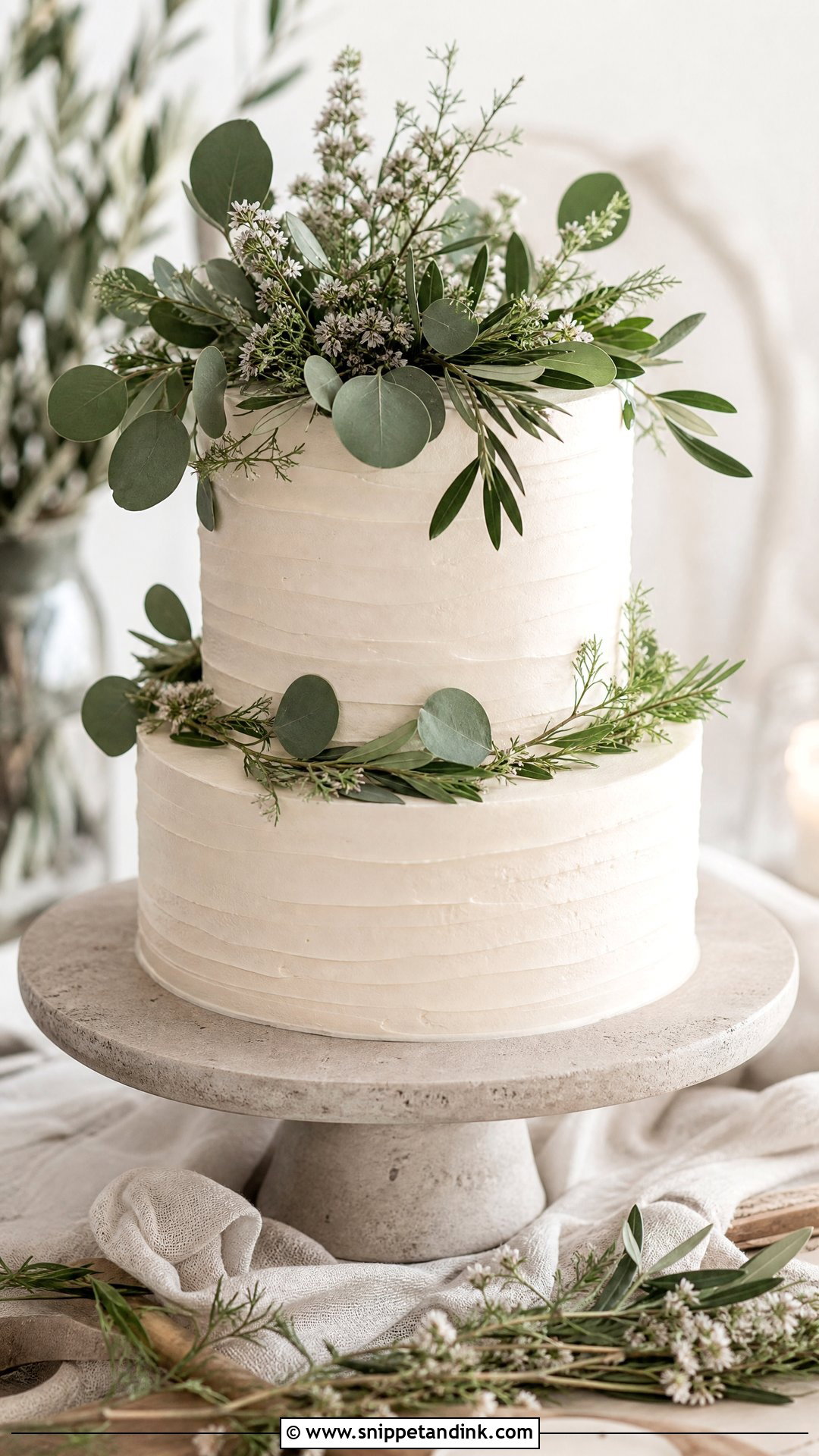
Greenery is a cheaper way to dress a cake than flowers, and it suits most wedding styles. Olive, rosemary and small vines are my usual picks. Eucalyptus is very popular but not food safe, so if you want it, I only use it with a full barrier or on a separate board. A white or ivory buttercream base keeps leaves crisp. Add a few white flowers or keep it all green for a minimalist look.
12. Two Tier Rose Wedding Cake
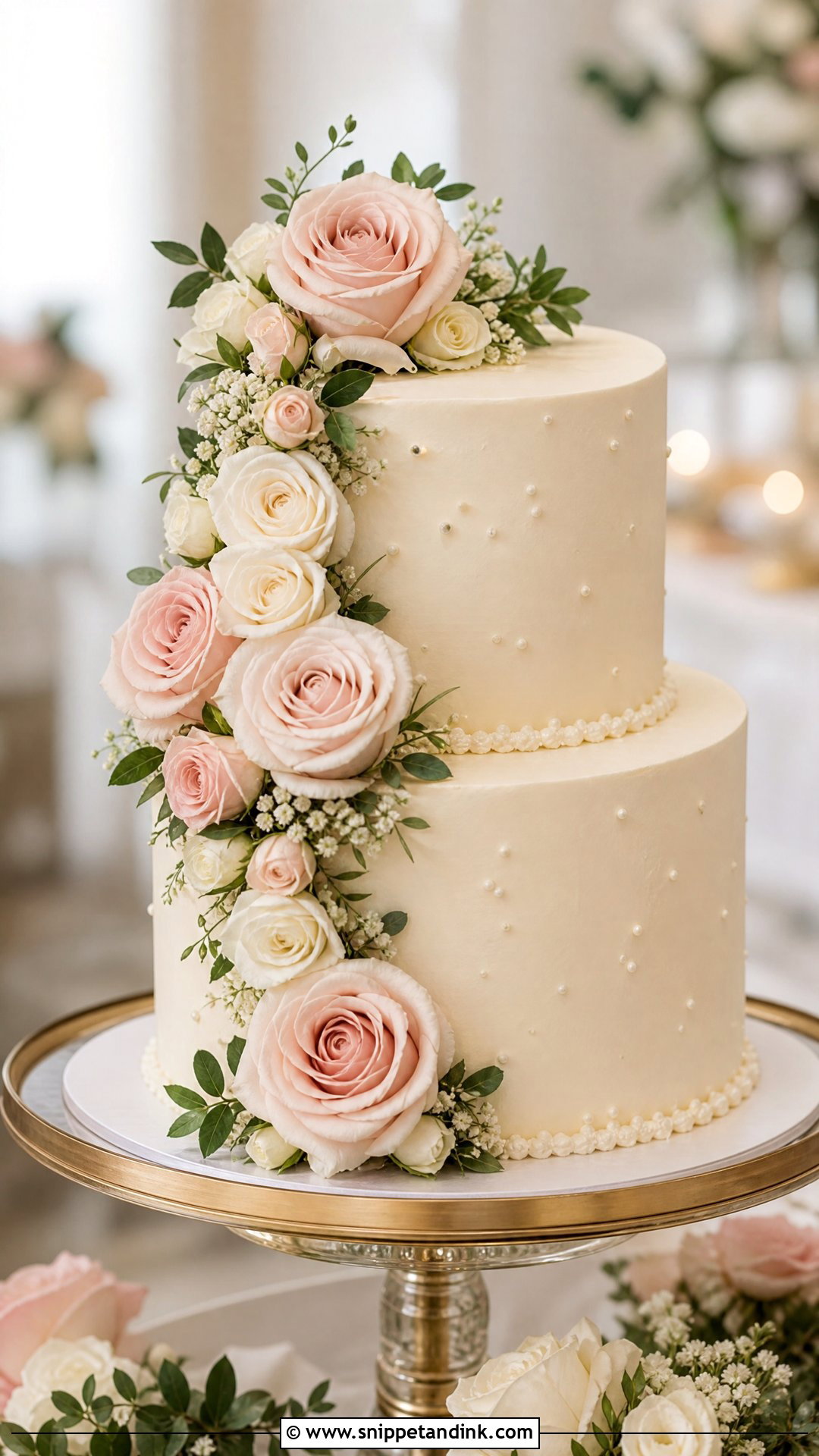
Roses shift style with colour: white looks bridal, blush sweet, deep pink bolder. Use them in one cluster, around the base or cascading down a side. Piped buttercream roses are a good alternative if your florist’s roses aren’t certified pesticide free, and they taste far better than a wired stem. I like a cake that repeats the exact rose colour from the centrepieces so the room feels joined up.
13. Two Tier Orchid Wedding Cake
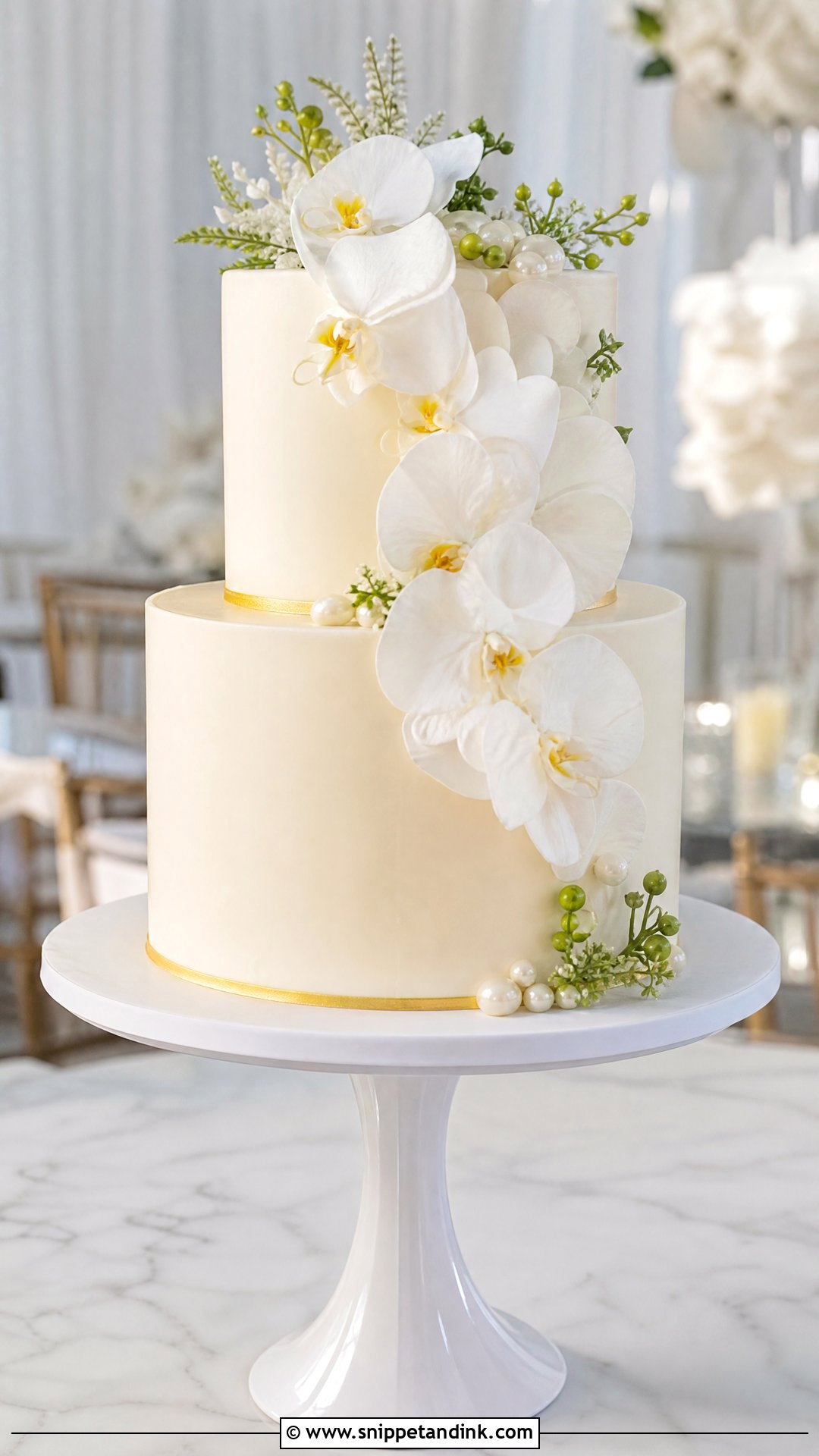
Orchids have a sculptural shape, so a few stems go a long way. White orchids on smooth ivory look sleek; blush or purple add drama. Their petals bruise easily, so I place them at the venue and handle them as little as possible. Thin gold accents, pearl dots or a satin ribbon are enough alongside. It suits hotel weddings, tropical venues and evening receptions.
14. Two Tier Fruit Wedding Cake
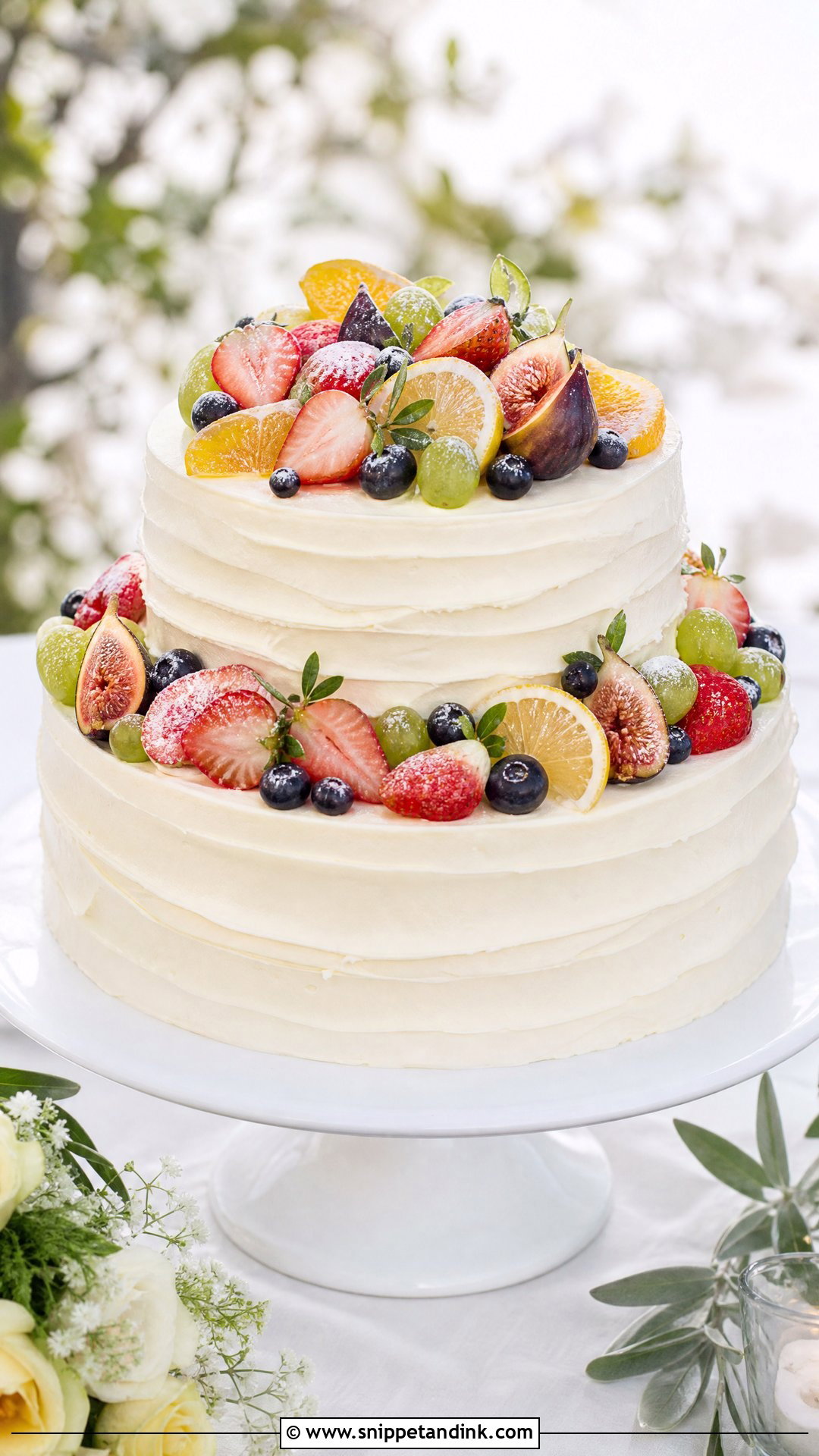
Fruit turns a simple cake seasonal. The pairings matter: berries with whipped frosting, figs with honey buttercream, citrus with lemon sponge, grapes with an almond cake. I arrange fruit in deliberate groups rather than a scatter. A brush of light glaze keeps it glossy and slows drying, while powdered sugar looks pretty but dissolves on moist fruit within the hour. Fruit should go on close to serving, especially at outdoor summer weddings.


15. Two Tier Drip Wedding Cake
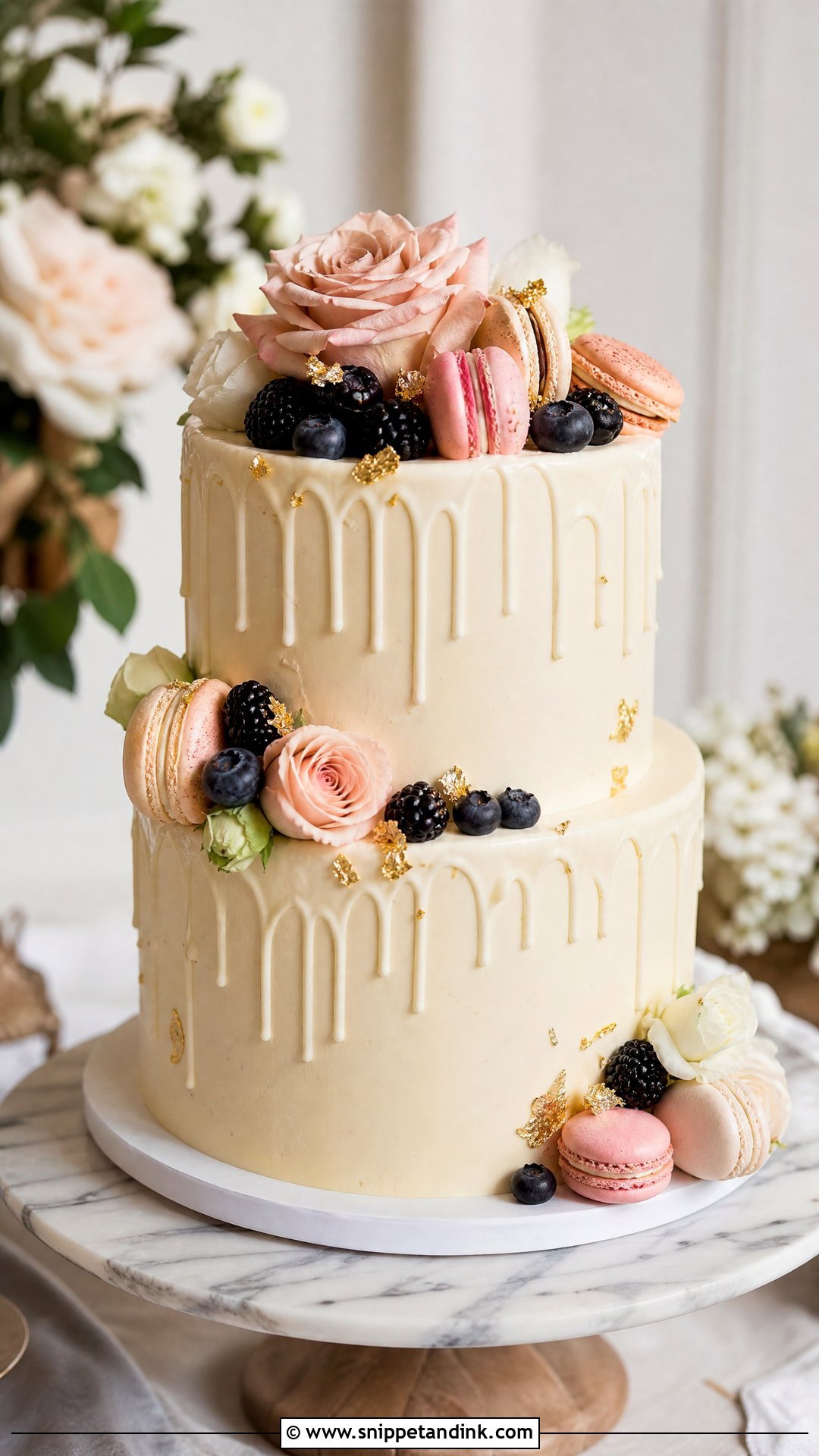
Drips look easy but depend on temperature. Ganache that’s too warm runs to the board; too cool, it stops short and looks lumpy. I test one drip on the back of a chilled cake before doing the front. White chocolate, caramel, ganache or coloured glaze can match the flavour. A white chocolate drip on ivory looks soft; a dark chocolate drip gives contrast. Top it with flowers, berries or gold leaf, and keep the drips even so it reads as a wedding cake.
16. Two Tier Black And White Wedding Cake
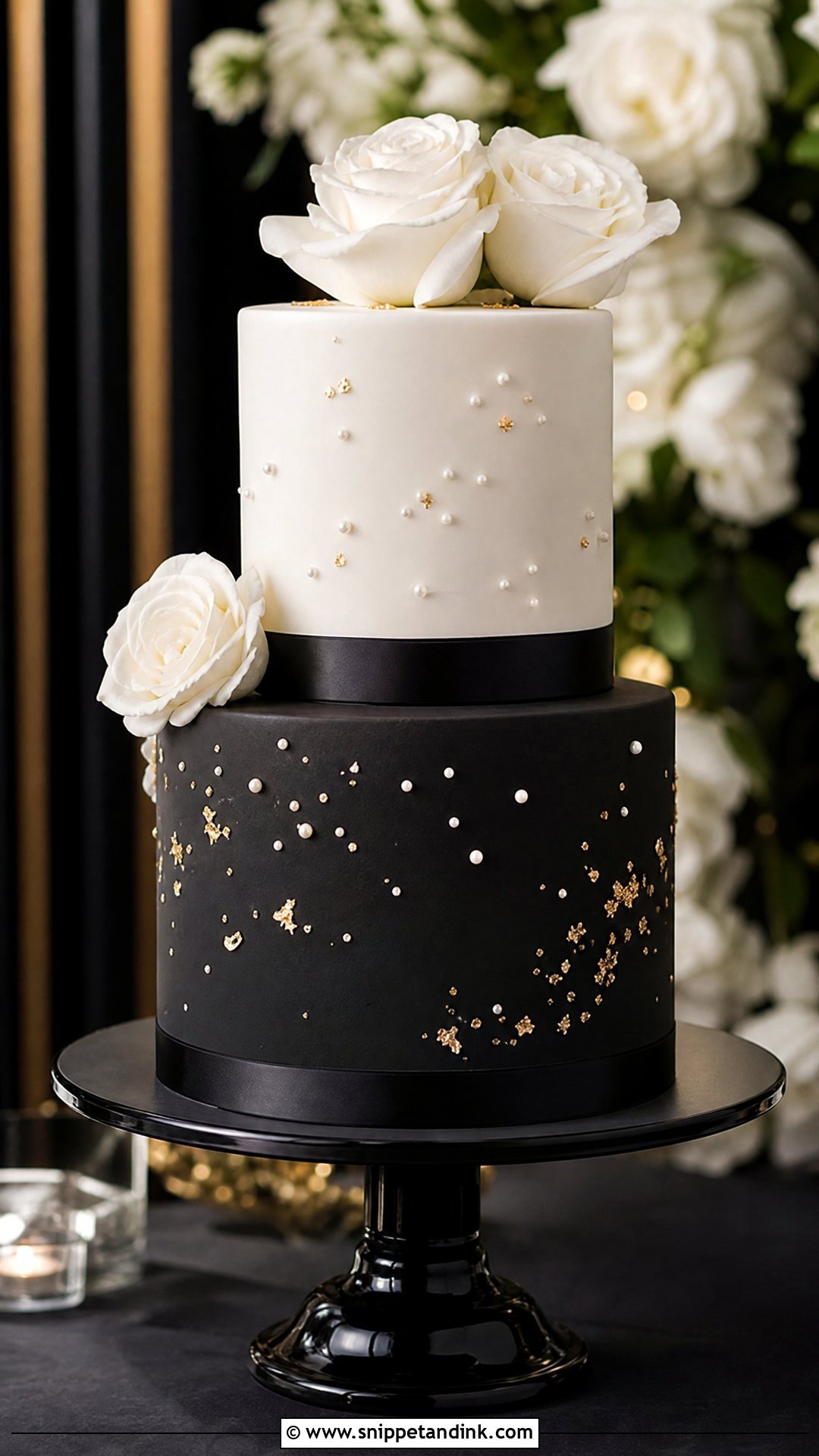
Black and white gets its drama from contrast, so I keep the layout clean: black ribbon, painted flowers, piping, or a black bottom tier under a white top. Black buttercream needs so much colouring it can taste bitter and stain mouths, so I’d use black fondant or ribbon instead. White roses, anemones or pearls soften it. It suits evening and formal weddings with a monochrome palette.
17. Two Tier Blush Wedding Cake
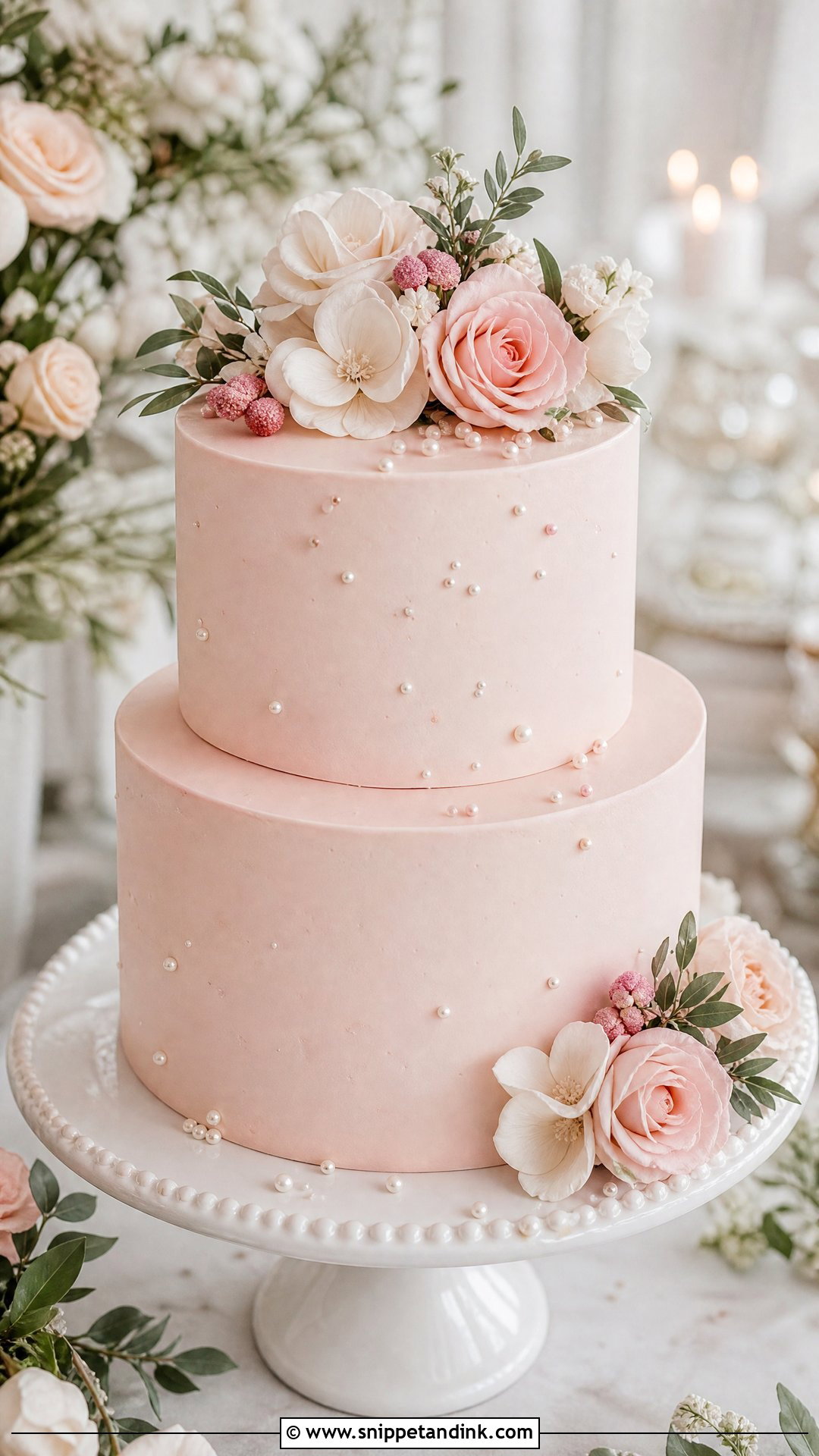
Blush can appear as frosting, a watercolour wash, a ribbon or in flowers. It pairs well with ivory, champagne, gold, sage or peach. If too much pink reads childish, use blush on one tier only and keep the other ivory. Pink tints can fade near windows, so I keep the cake out of direct sun. Strawberry, almond or champagne sponge suits it, and it’s easy to style with spring flowers.
18. Two Tier Blue Wedding Cake
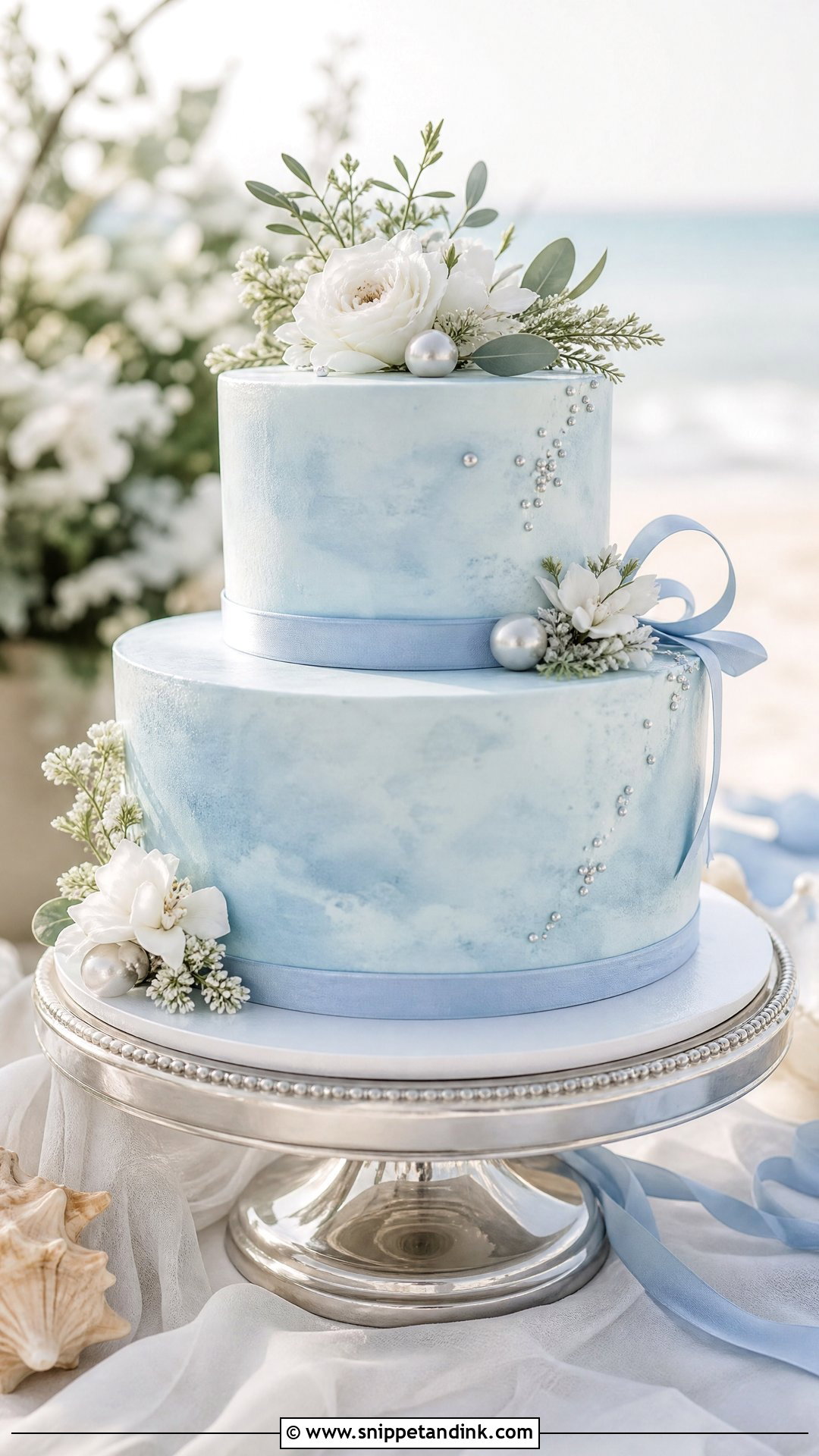
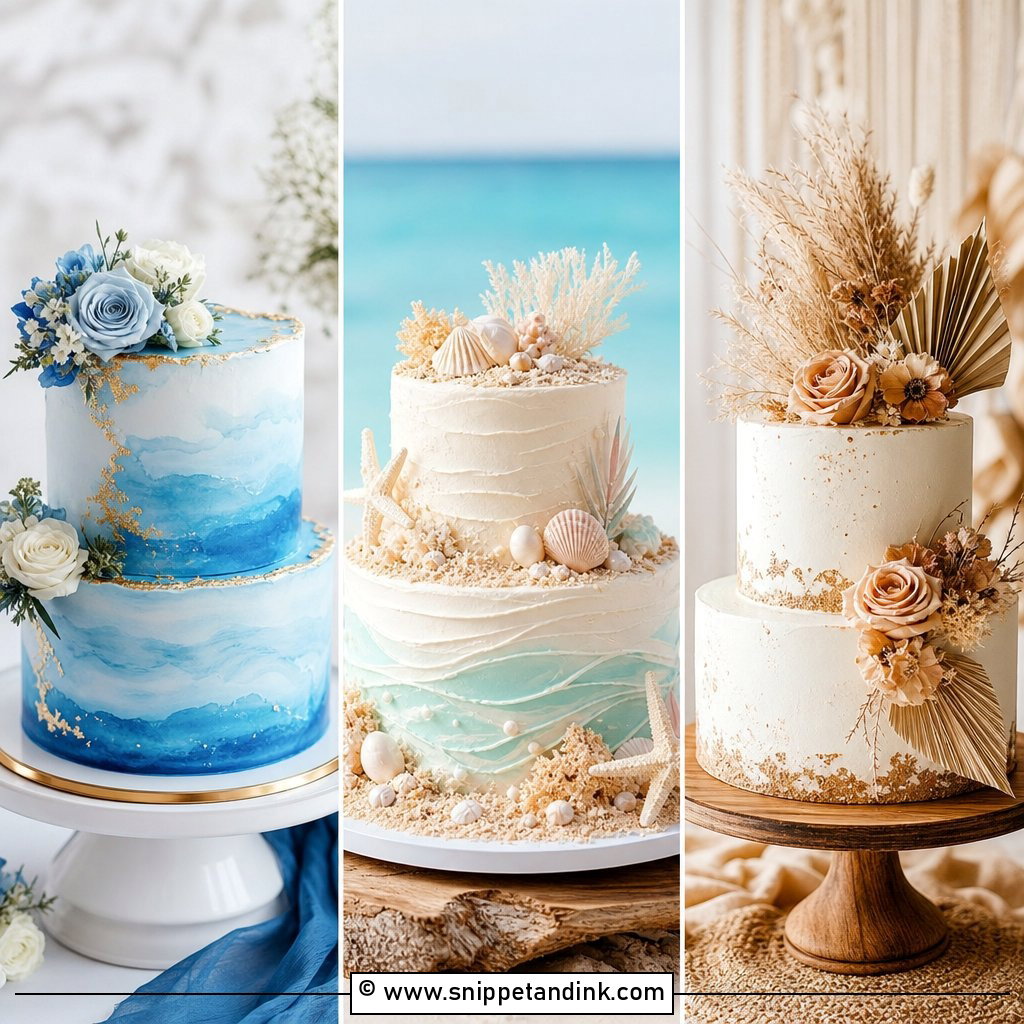
Pale blue, dusty blue and powder blue are the shades that look wedding-ready; brighter blues can look like a birthday. Blue can appear as the base colour, in watercolour strokes, in sugar flowers or as ribbon. Because buttercream starts yellowish, I whiten it first so the blue stays clean rather than turning teal. White flowers, silver, pearls and soft greenery keep it refined. Lemon or coconut flavours suit it.
19. Two Tier Beach Wedding Cake
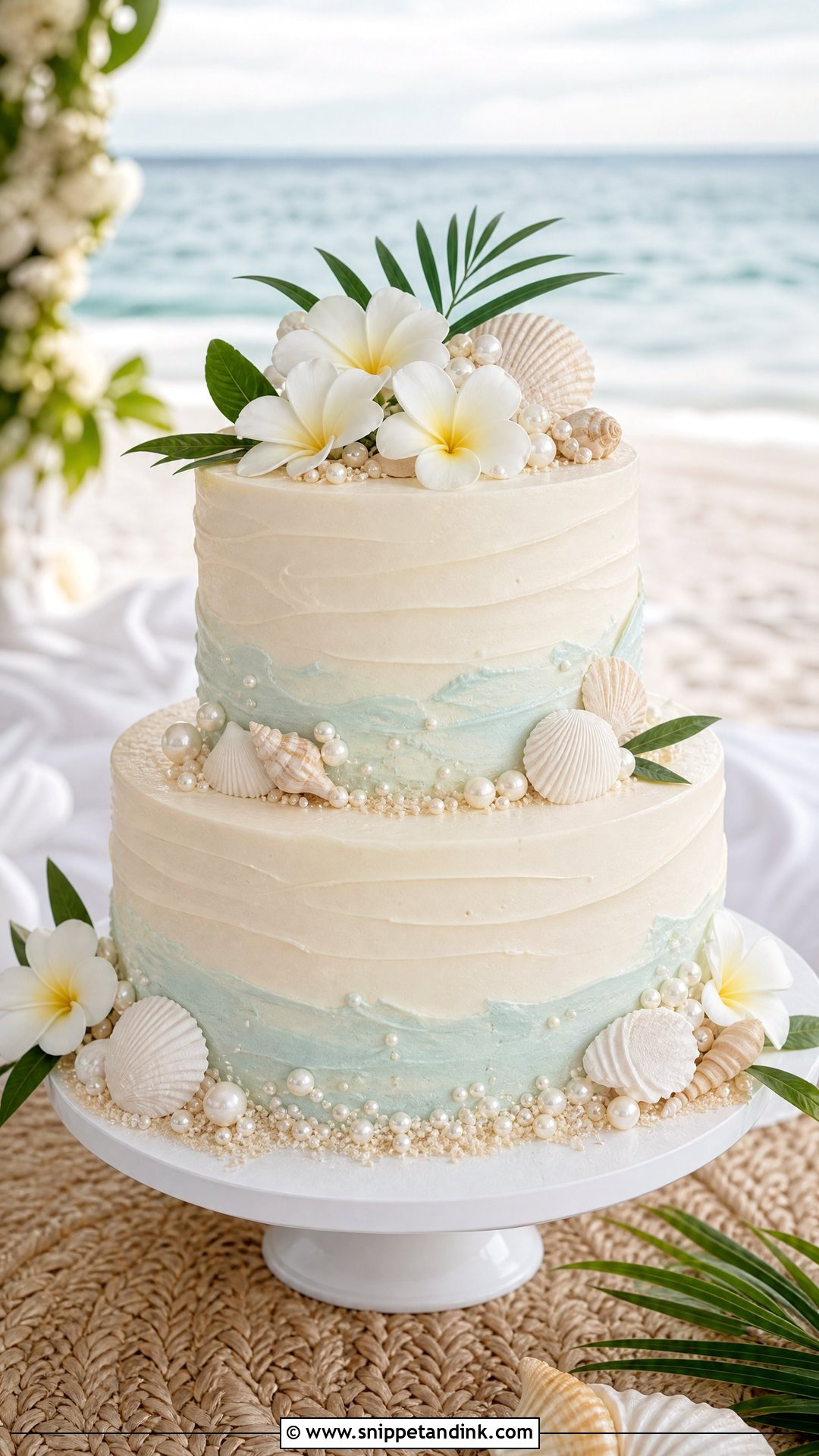
Beach cakes go wrong when they become novelty pieces covered in shells and starfish. I keep to soft ivory buttercream, pale blue accents, a few edible shells and some textured waves. Sea air is humid, which softens sugar decorations, and sand and wind are real problems on an open beach, so the cake should stay in the shade or indoors until cutting. Coconut, lemon, pineapple or passion fruit suit the setting.


20. Two Tier Garden Wedding Cake
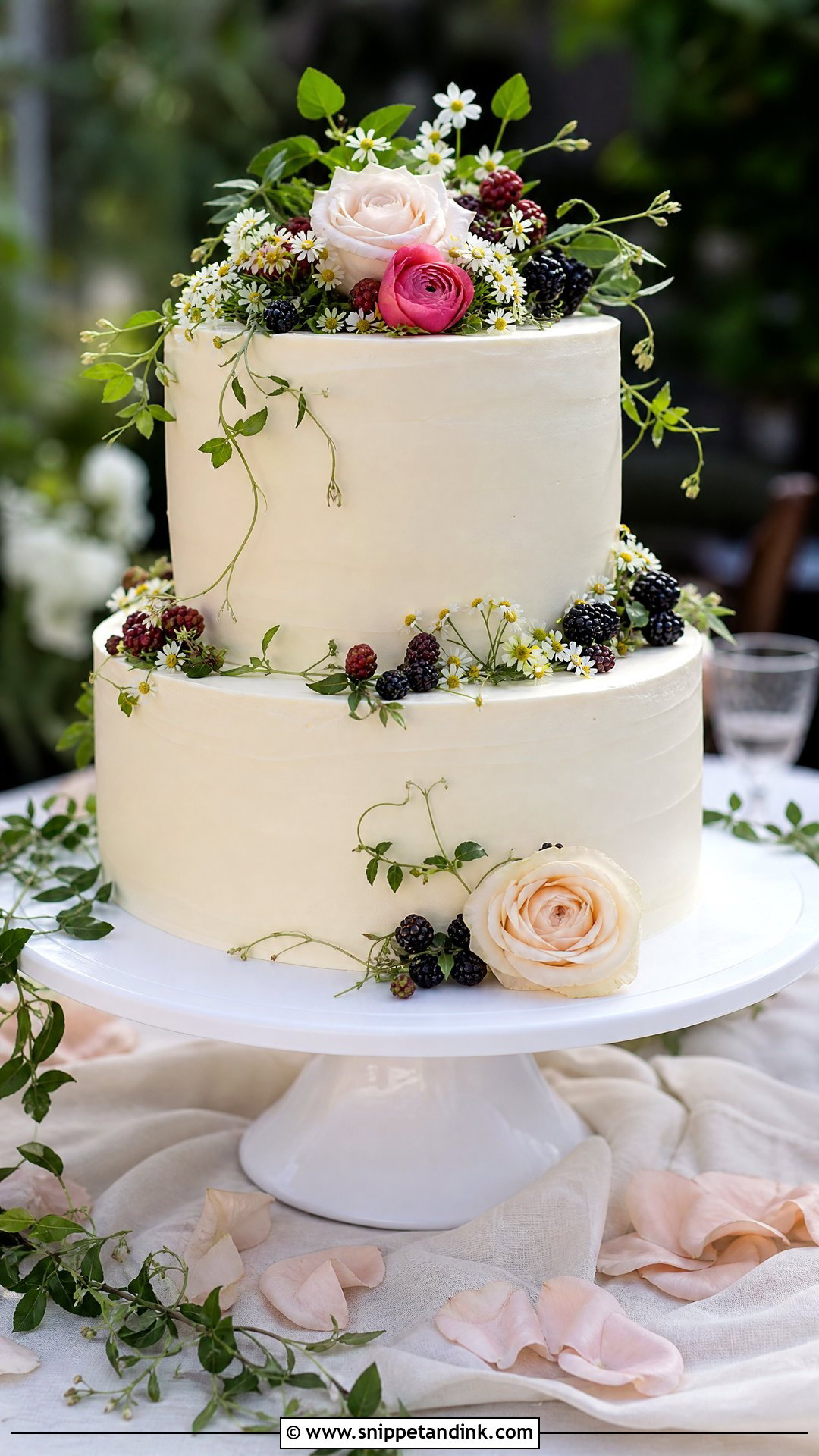
Garden cakes should feel airy, not overgrown. On an ivory or pale buttercream base, I use roses, ranunculus, sweet peas, chamomile and small vines, with gaps between groups so the cake still shows. Herbs and berries can fill out a design cheaply. Outdoors in spring, watch out for insects, so I’d keep a cake dome or net handy until it’s served. It suits greenhouse venues and backyard weddings.
Why a Small Cake Isn’t Always a Cheap One
Couples are often surprised that a two-tier quote isn’t half the price of a four-tier one. The sponge is the cheap part. Most of the cost is labour and fixed costs that don’t shrink with the cake.
- Hand-made sugar flowers, which can take hours each
- Detailed piping, lace or painting
- Delivery, setup and the time a baker spends at the venue
- Stand hire, a separate kitchen cake and any extra flavour
- Special requests such as gluten-free or vegan tiers, made separately
Prices vary a lot by region and by baker, so compare quotes on the same design. For a busy summer date, contact bakers several months ahead; smaller orders can sometimes be squeezed in later, but popular weekends fill first.
If you’re saving the top tier
Remove flowers and toppers, chill it until firm, then wrap tightly in several layers of cling film and foil before freezing. I’d eat it within a few months; a year in a home freezer rarely does it any favours, and many bakers will make a small fresh copy for your first anniversary instead.
Two Tiers, One Clear Idea
A two-tier cake doesn’t need to be large to carry the cake-cutting moment. What makes it look right is one clear idea, whether that’s pearls, fruit, a bow or a single colour, used with confidence across both tiers. Match the finish to your venue’s temperature, the flavours to your menu and the size to your guest count, with a kitchen cake or other desserts if you need extra servings. Take two or three favourites from this list to your tasting and let the baker tell you which suits your day best.
You'll Like These Ideas:






Leave a Reply