
Brides who come to me asking for vintage usually aren’t after a costume. They want a dress with a past, or at least one that looks as if it has one. The range is wide, from 1920s beaded sheaths to 1950s tea-length skirts, and the details borrowed from those decades are all over new collections too: basque and drop waists, pearls, satin, gloves, bows, high necklines and heirloom-style veils. Below are 35 directions, each with what I’d actually check before you commit, whether the gown is genuinely old or newly made with an old-world cut.
Real Antique or a New Gown With an Old Cut?
This is the first conversation I have with anyone asking for vintage, because the two routes need different planning. A genuine antique gown is a one-off: there’s no other size to order and the fabric is decades old. A new dress cut along vintage lines comes in your size, in fresh fabric, on a predictable timeline.
Why old size labels mislead everyone
Labels from the 1950s and earlier run much smaller than modern sizes, and the underwear of the time shaped the body differently, so waists are often narrow and bust darts sit higher than you’d expect. Ignore the number. Lay the dress flat and measure bust, waist, hips and the back from neck seam to waist, then compare those with your own measurements plus a little ease.
What I look at before you fall for an original
- Seam allowances. Turn it inside out. Generous seams can be let out; narrow ones mean the dress can only get smaller.
- Underarms and shoulders. Old perspiration weakens silk in exactly these places, and silk that has started to split can’t be rewoven.
- Discoloration. Even, all-over yellowing can often be lightened by a specialist cleaner. Brown spots from old stains frequently can’t.
- Smell. Mustiness usually airs out. Strong mothball or smoke odors need professional treatment.
- Closures. Original zips may be metal and brittle, while buttons and loops are usually easier to repair.
If more than one of those worries you, a reproduction or a modern gown with vintage details will give you the look with far fewer surprises.
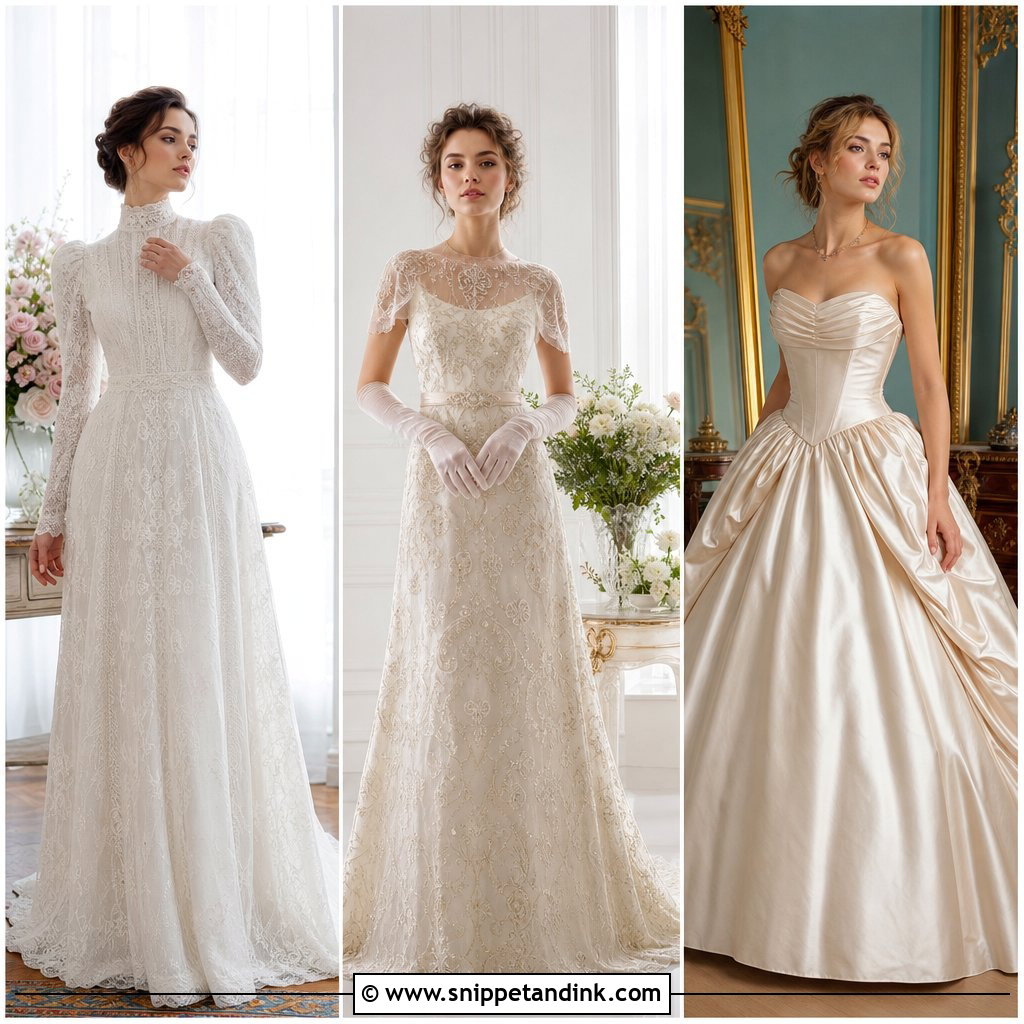
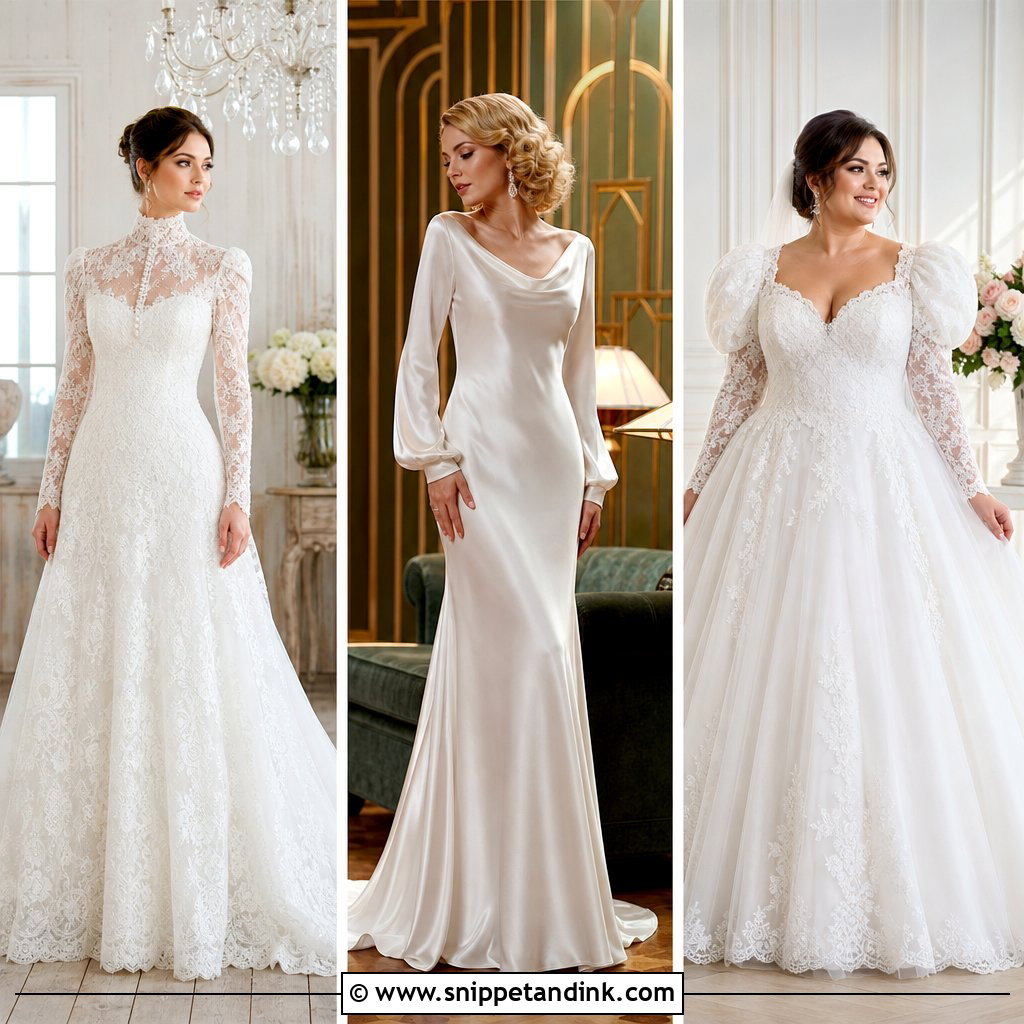
1. Vintage Lace Long Sleeve Wedding Dress
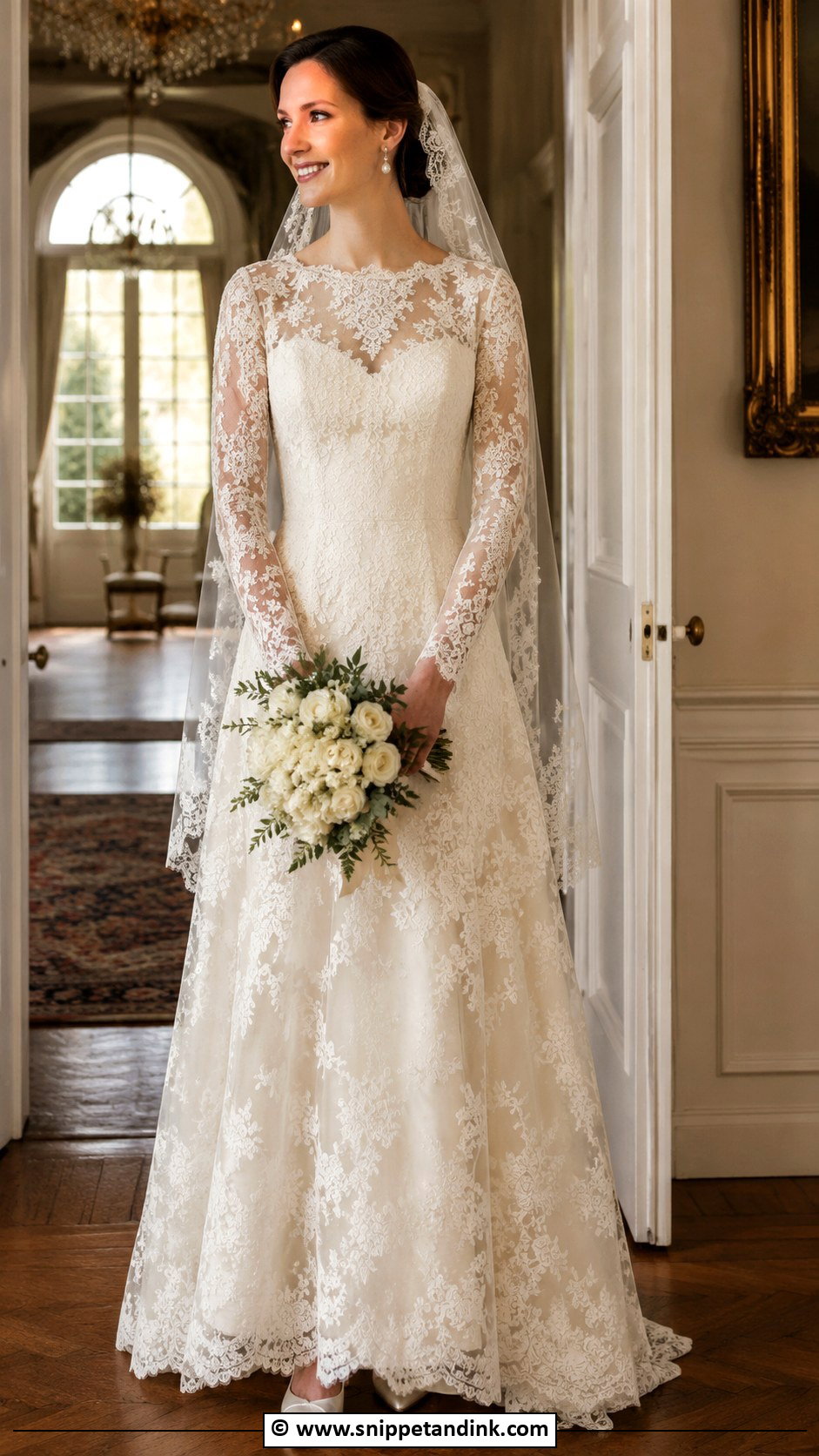
With long lace sleeves, the first thing I check is the armhole, not the bodice. Old lace has very little give, so if the armhole sits low you won’t be able to lift your arms to hug anyone, and fixing that means unpicking lace motifs. Look for floral lace, covered buttons, a fitted bodice and an A-line or column skirt. Sheer sleeves feel lighter; lined ones give more coverage and suit cooler months. With a high neckline I keep jewelry to pearl earrings and let the lace lead, then add a low chignon, satin pumps and a lace-trim veil.
2. Vintage Satin Basque Waist Wedding Dress
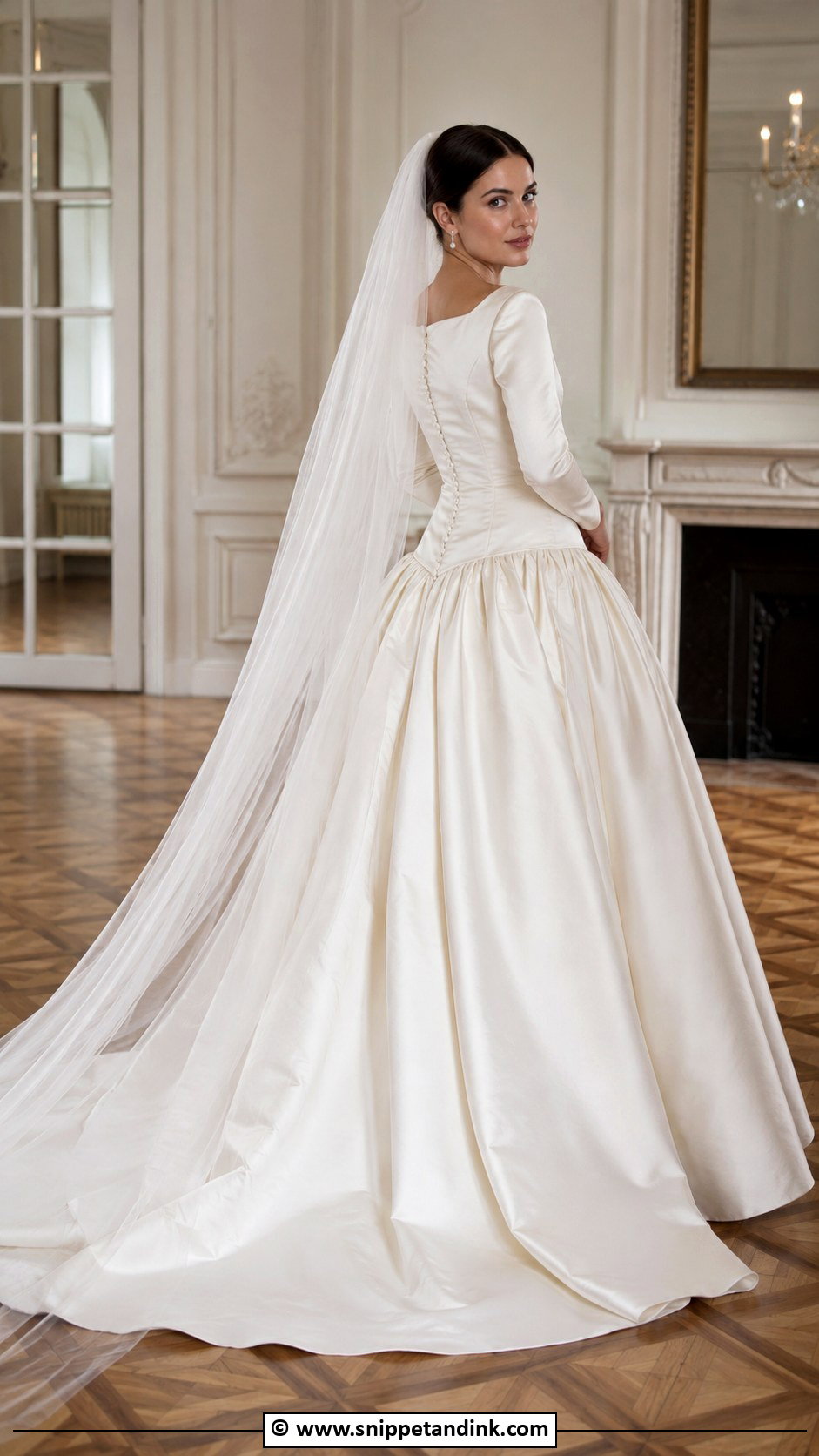
The dipped point of a basque waist lengthens the torso and pulls the eye into an hourglass, which is why it reads princess without tipping into costume. Satin is the right partner because it holds that V crisply. I’d go ivory or candlelight rather than bright white, since warmer satin looks older and kinder on most skin. The catch is precision: the point has to land at your natural waist or just below, so expect careful bodice fitting. A full skirt takes it to the ballroom, a slim one keeps it quiet. Pointed satin heels, pearl drops and a plain cathedral veil finish it, and historic hotels suit it well.
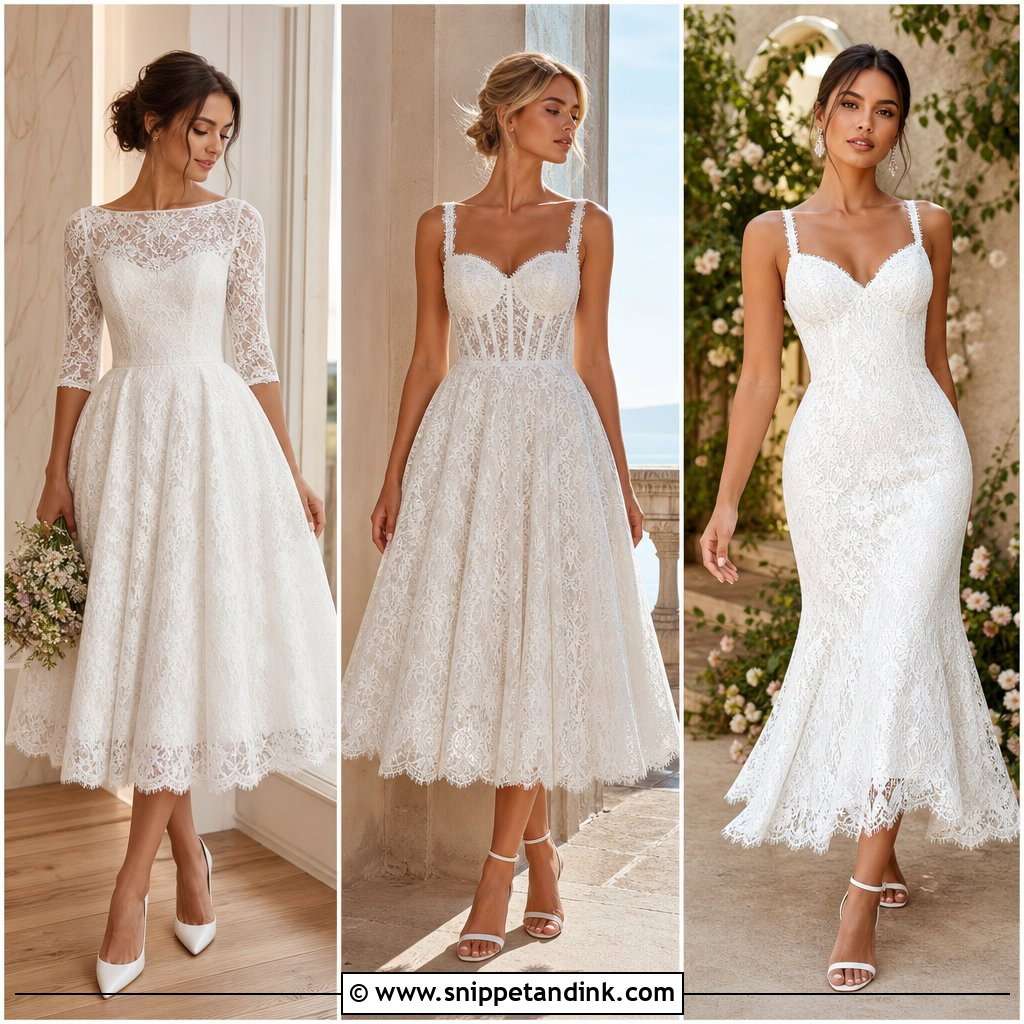
3. Vintage Tea Length Wedding Dress
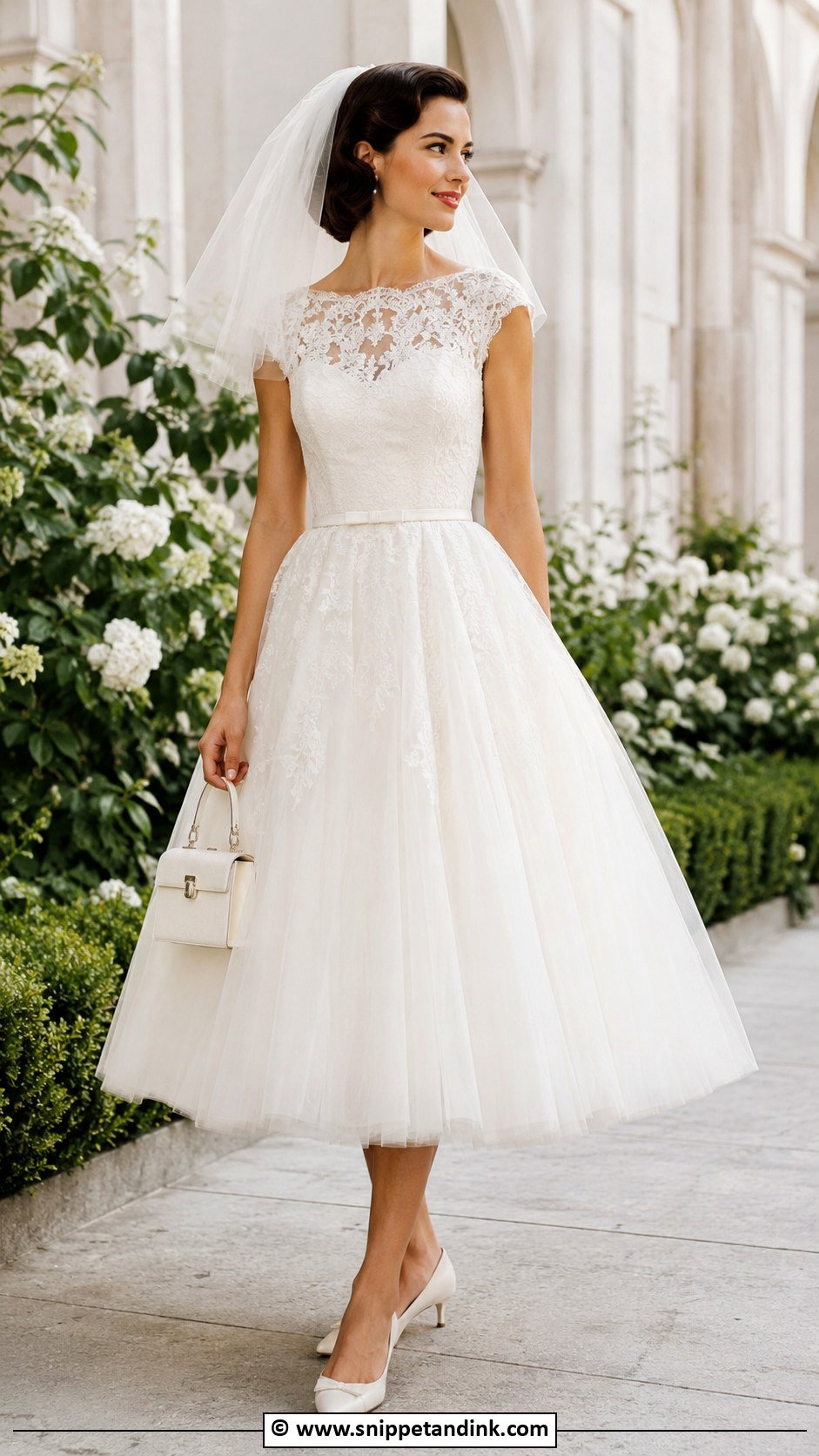
A vintage tea length wedding dress is the one I suggest to brides who’ll be on their feet and moving, from a courthouse to a lunch or across a garden. The hem lands between knee and ankle, so your shoes are on show all day; buy them early and wear them in. A fitted bodice over a full skirt gives the 1950s shape in lace, tulle or satin, and kitten heels, a short veil, pearl studs and a small structured bag are enough. Watch the hem on a petite frame. Tea length can cut the leg at the widest part of the calf, so I pin it at a few heights before anyone sews.
4. Vintage Beaded 1920s Wedding Dress
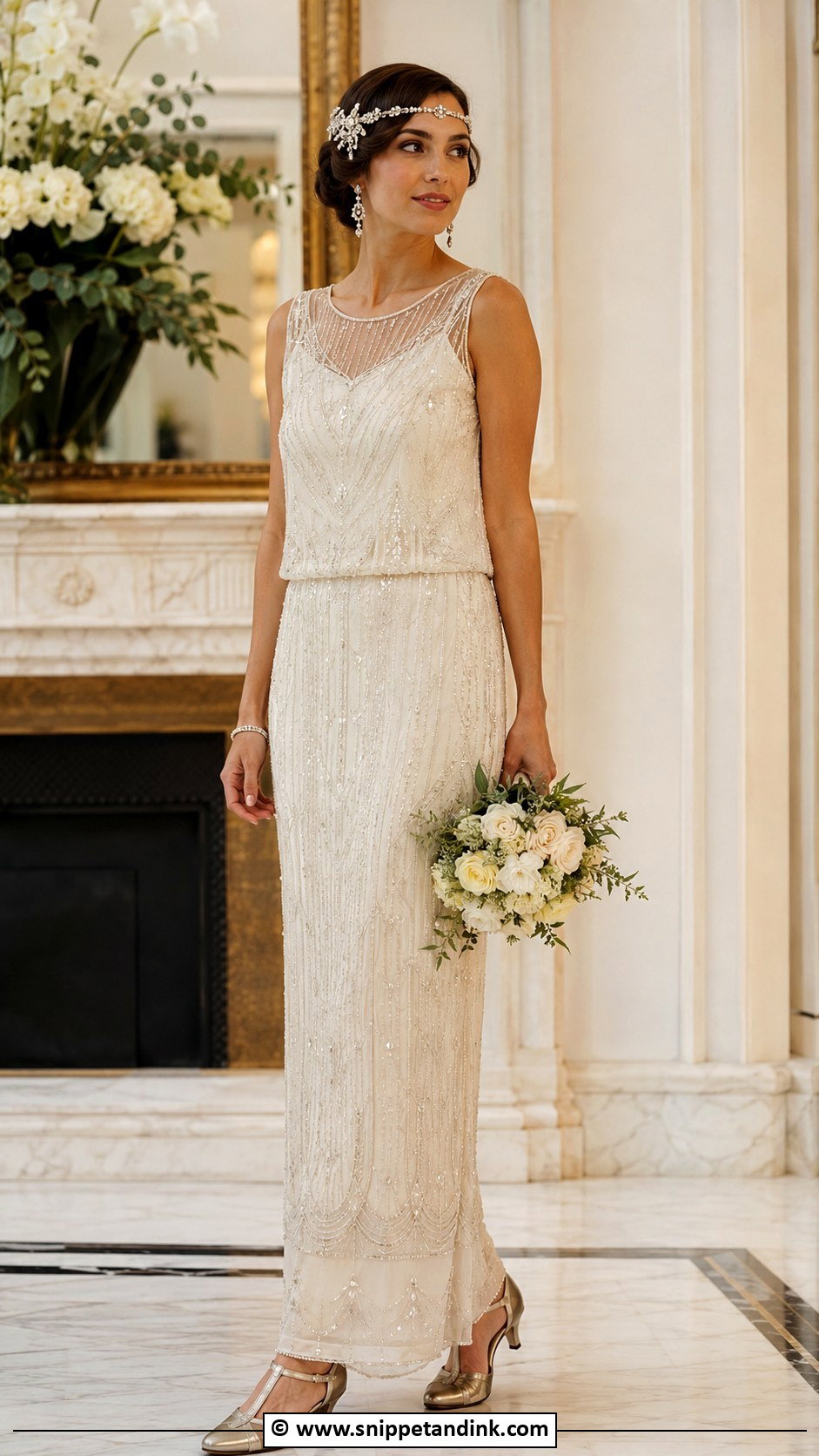
Beaded 1920s gowns are heavier than they look. Hundreds of glass beads on silk chiffon pull downward, and in originals that weight often splits the fabric at the shoulders, so I turn an antique one inside out before anything else. The shape is straight or slightly dropped at the waist, with geometric beading that catches light as you move. Finger waves, crystal earrings, metallic heels and a simple veil or beaded band are all it needs; skip the necklace. Evening and city venues suit it, and a rooftop works if you keep the hem off rough concrete.
5. Vintage High Neck Wedding Dress
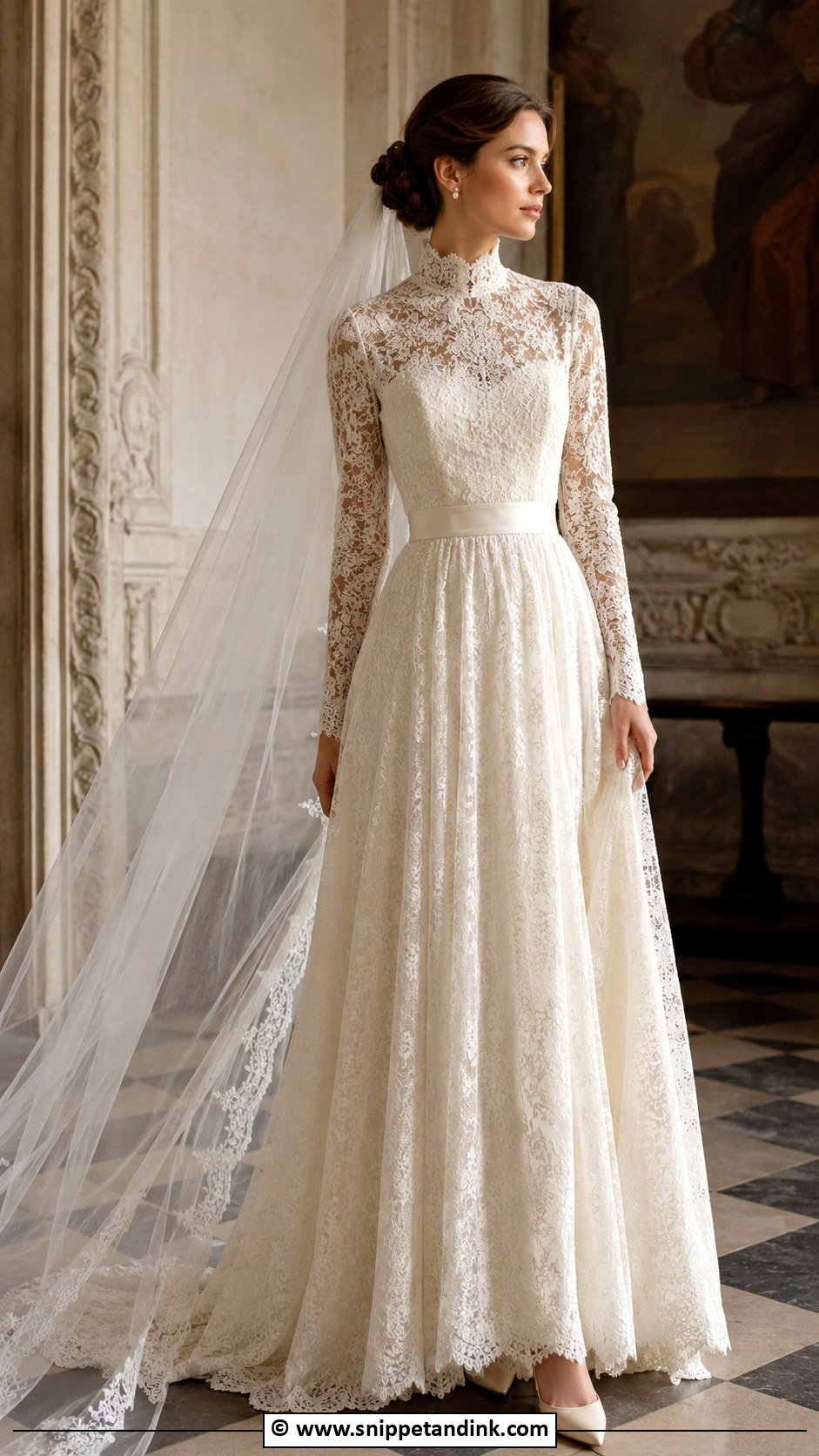
High necks show every habit of posture. If you tend to drop your chin, the collar creases, so at fittings I ask brides to stand and look straight ahead while I mark it. Expect lace, illusion fabric, satin buttons or Victorian touches, often with long sleeves or a slim A-line skirt. To keep the coverage from feeling heavy, I look for a fitted waist, a little sheer lace or a small keyhole at the back. Pearl studs, a smooth updo and a long veil keep it traditional for formal ceremonies and historic venues.
6. Vintage Drop Waist Wedding Dress
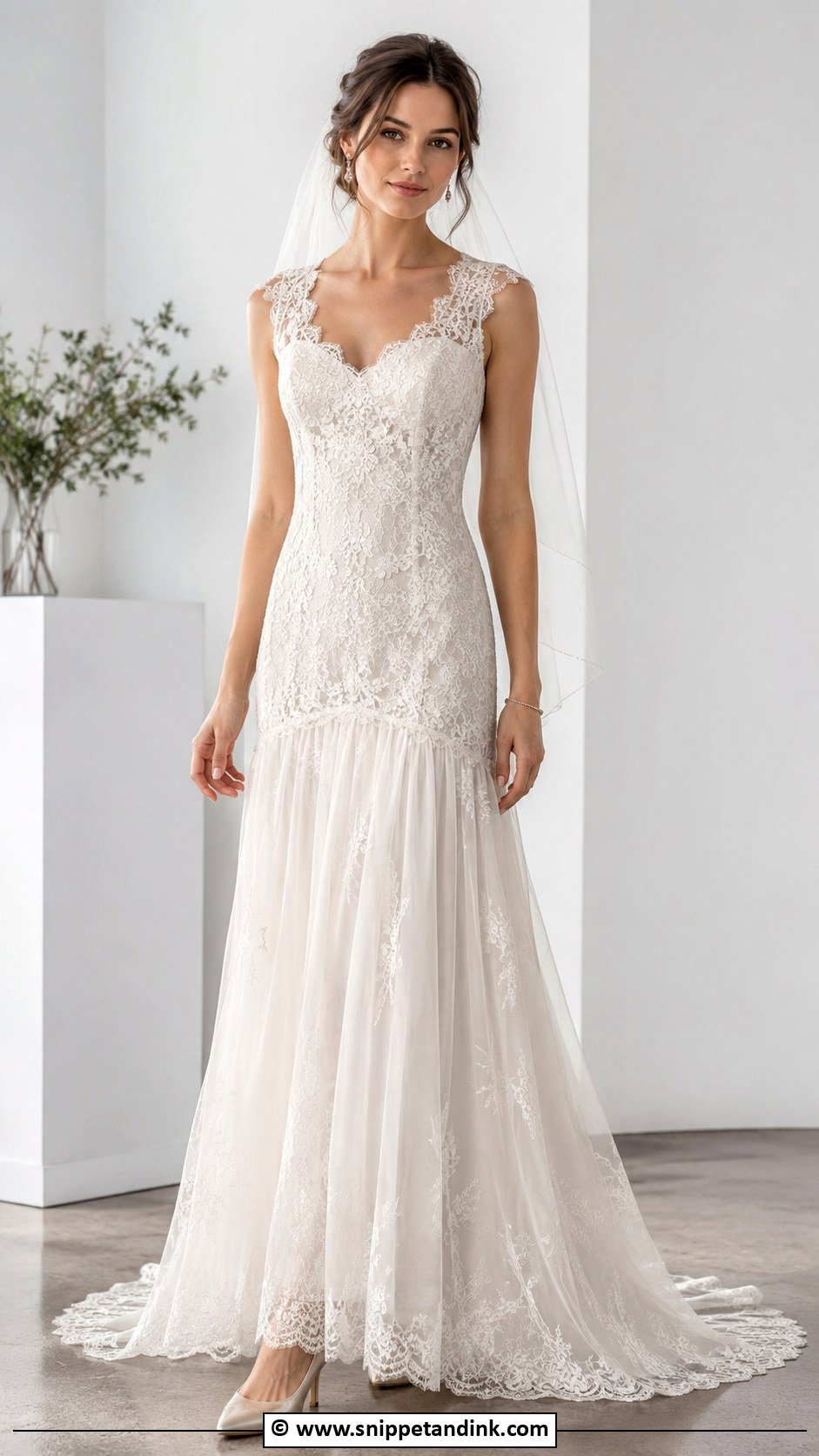
The drop waist is back in bridal, and it’s the most divisive shape here. The seam sits at the hips, which lengthens the torso and releases the skirt lower down. On a long-waisted figure it looks easy; on a shorter torso it can make the legs read short, so I always want a bride to try one on before she falls for a photo. The fabric sets the decade: lace leans 1920s or 1930s, while crisp satin drifts toward the 1980s and looks sculptural. Slim heels, a soft veil and almost no jewelry keep the line unbroken.
7. Vintage Pearl Wedding Dress
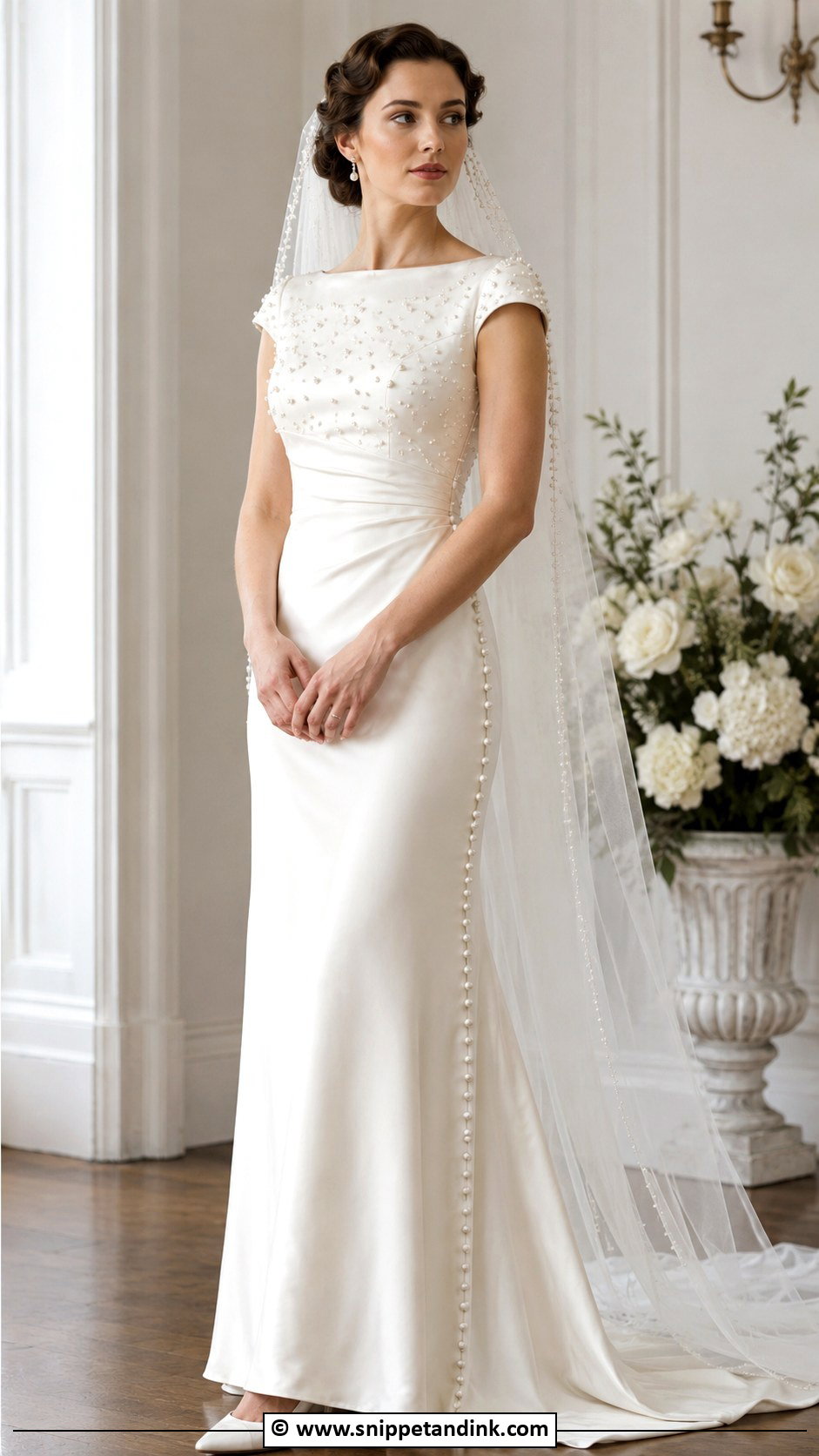
Pearls do their best work on a plain base. Seed-pearl embroidery, pearl straps, pearl buttons or a pearl-scattered veil all read heirloom, but only if the satin, crepe or tulle underneath stays quiet. I check how they’re attached, because glued pearls tend to pop off at the first long hug while stitched ones stay. Pearl earrings, satin heels and a clean bun tie it together. I’d pick this over beading for anyone who likes texture but not sparkle.
8. Vintage Off The Shoulder Wedding Dress
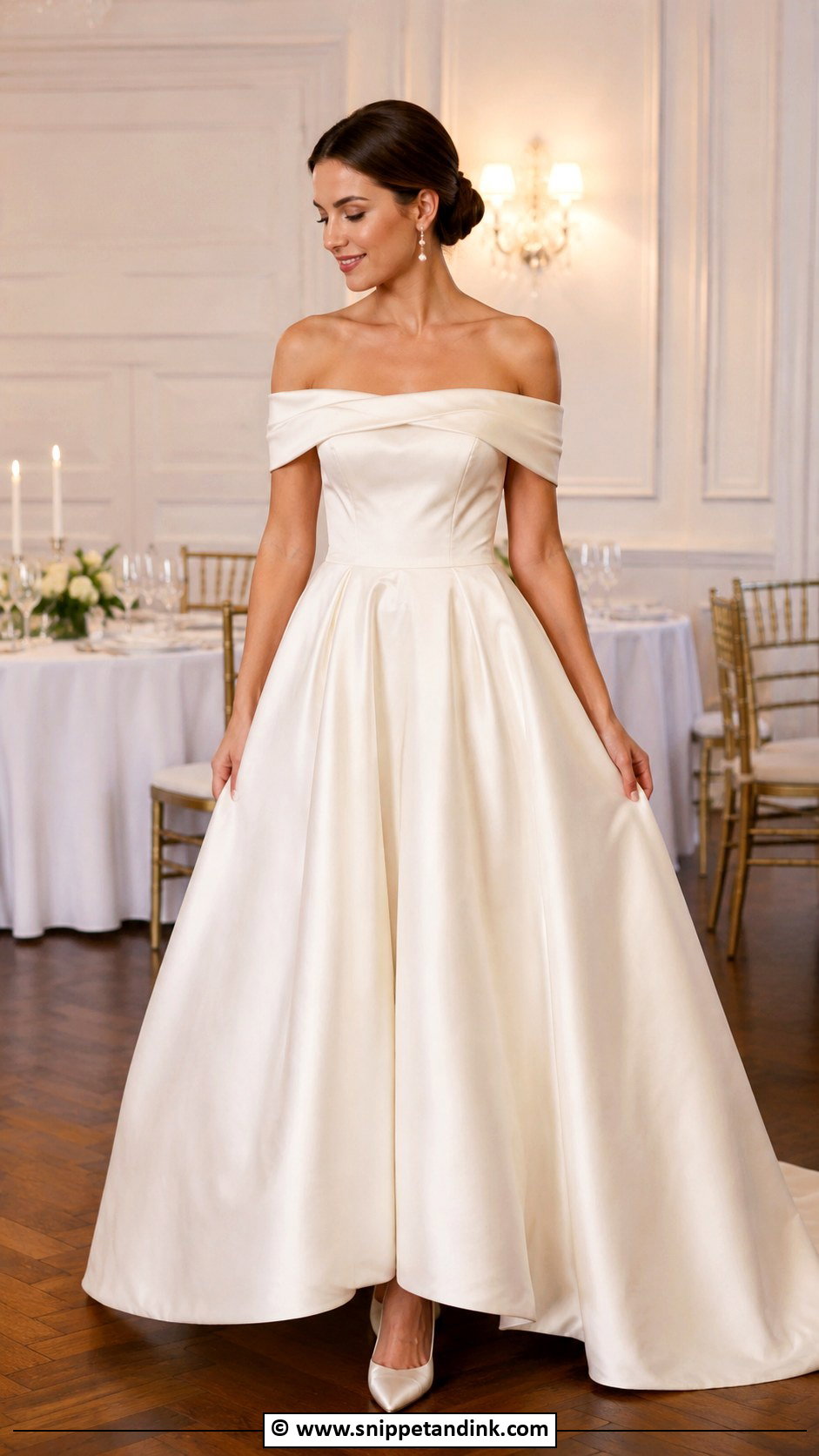
Off-the-shoulder necklines show the collarbone and sit well on a fitted bodice with either a full skirt or a slim satin line. Lace sleeves make it antique; folded satin cuffs push it toward old Hollywood. My warning is structural. Those bands can’t hold anything up on their own, so the inner bodice has to do the work. If you keep tugging the sleeves at the fitting, they’ll be at your elbows by the speeches. A delicate necklace or none, drop earrings, a polished updo and pointed heels, and it’s ready for a candlelit reception or a formal outdoor ceremony.
9. Vintage Ball Gown Wedding Dress
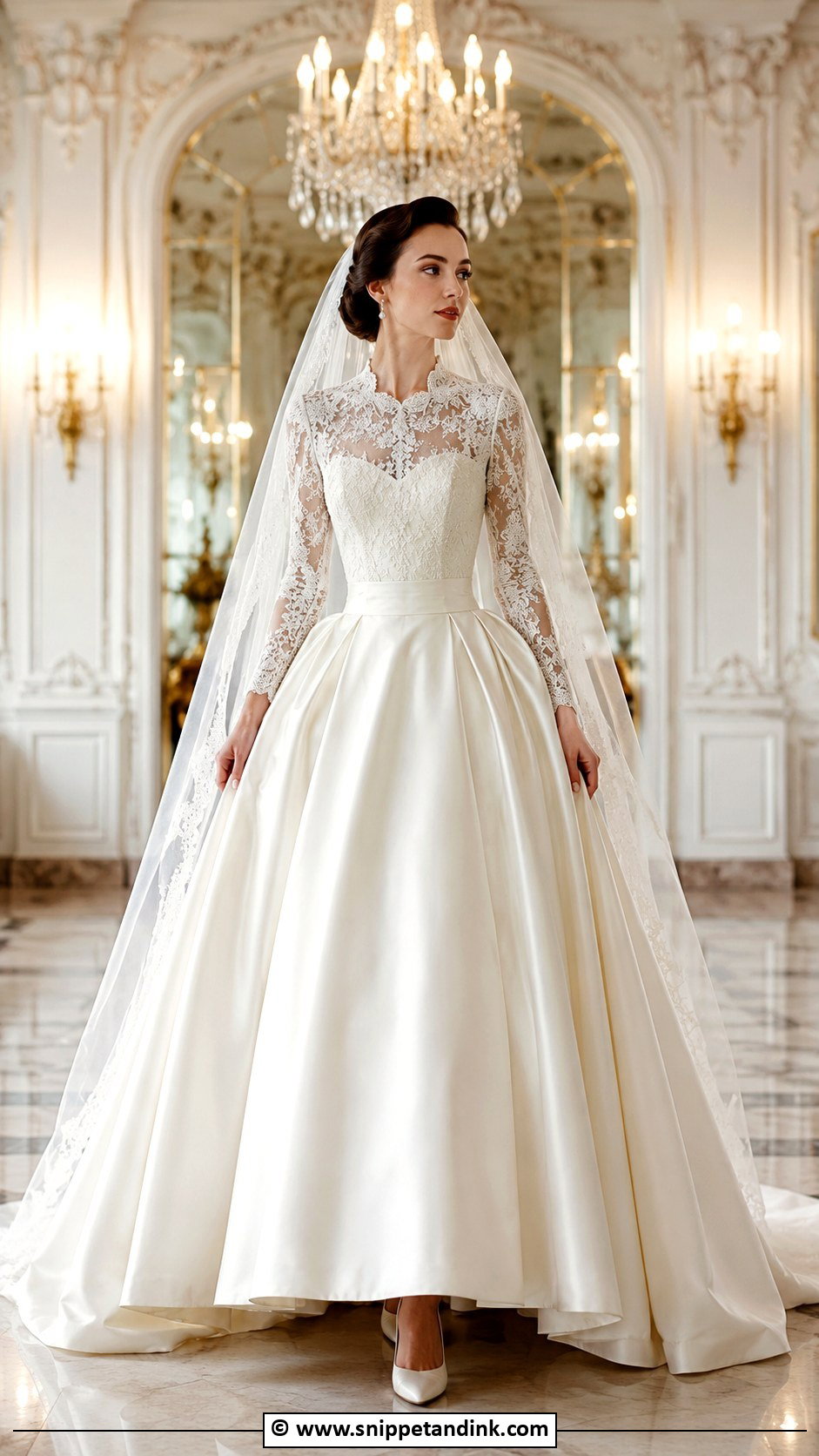
A vintage ball gown gets you the entrance, so I spend the fitting thinking about the rest of the day: sitting, the bathroom, getting into a car. Classic versions combine lace bodices, satin skirts, basque waists, portrait necklines, covered buttons or long trains. Pick one feature to lead and let the others step back. With the skirt doing so much, I keep hair soft and add pearl earrings and a clean veil. Estates, ballrooms and museums give it the room it needs, and it holds up from every angle a photographer finds.
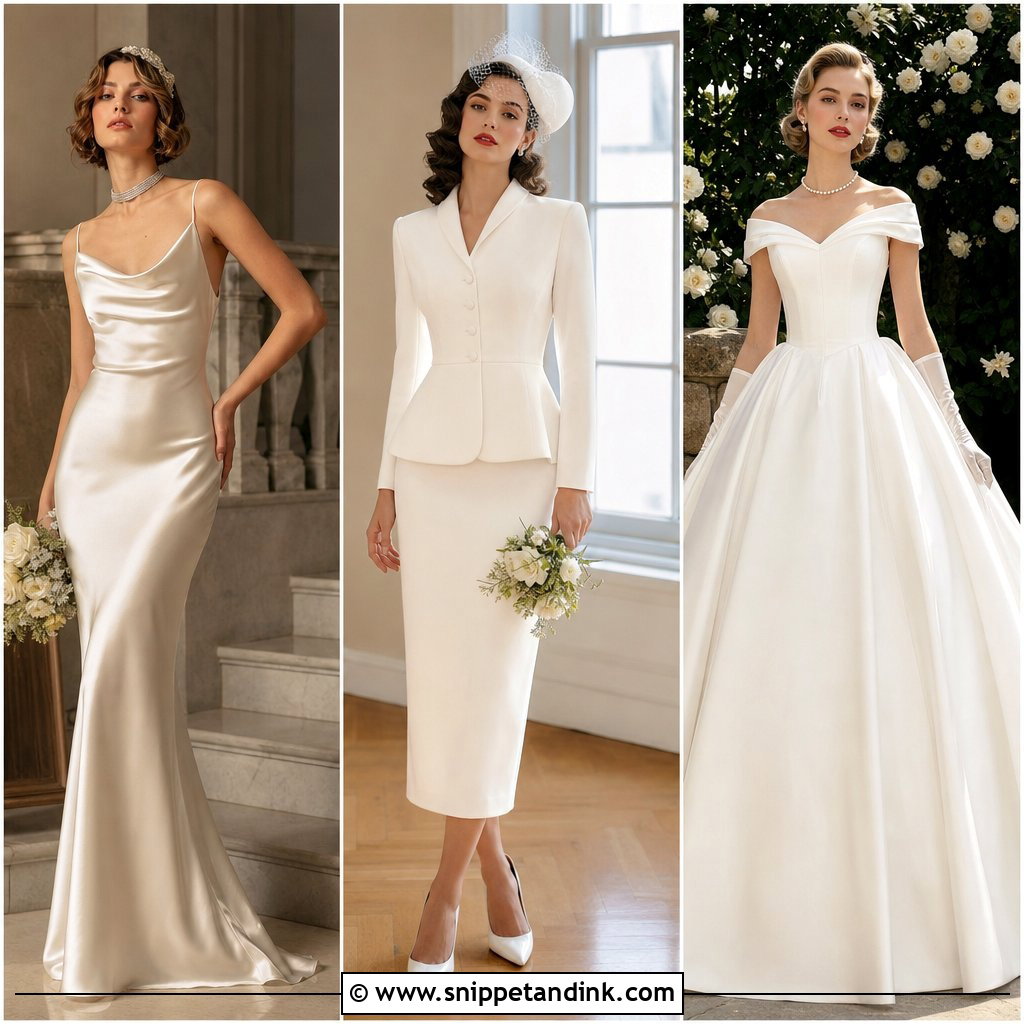
10. Vintage Slip Wedding Dress
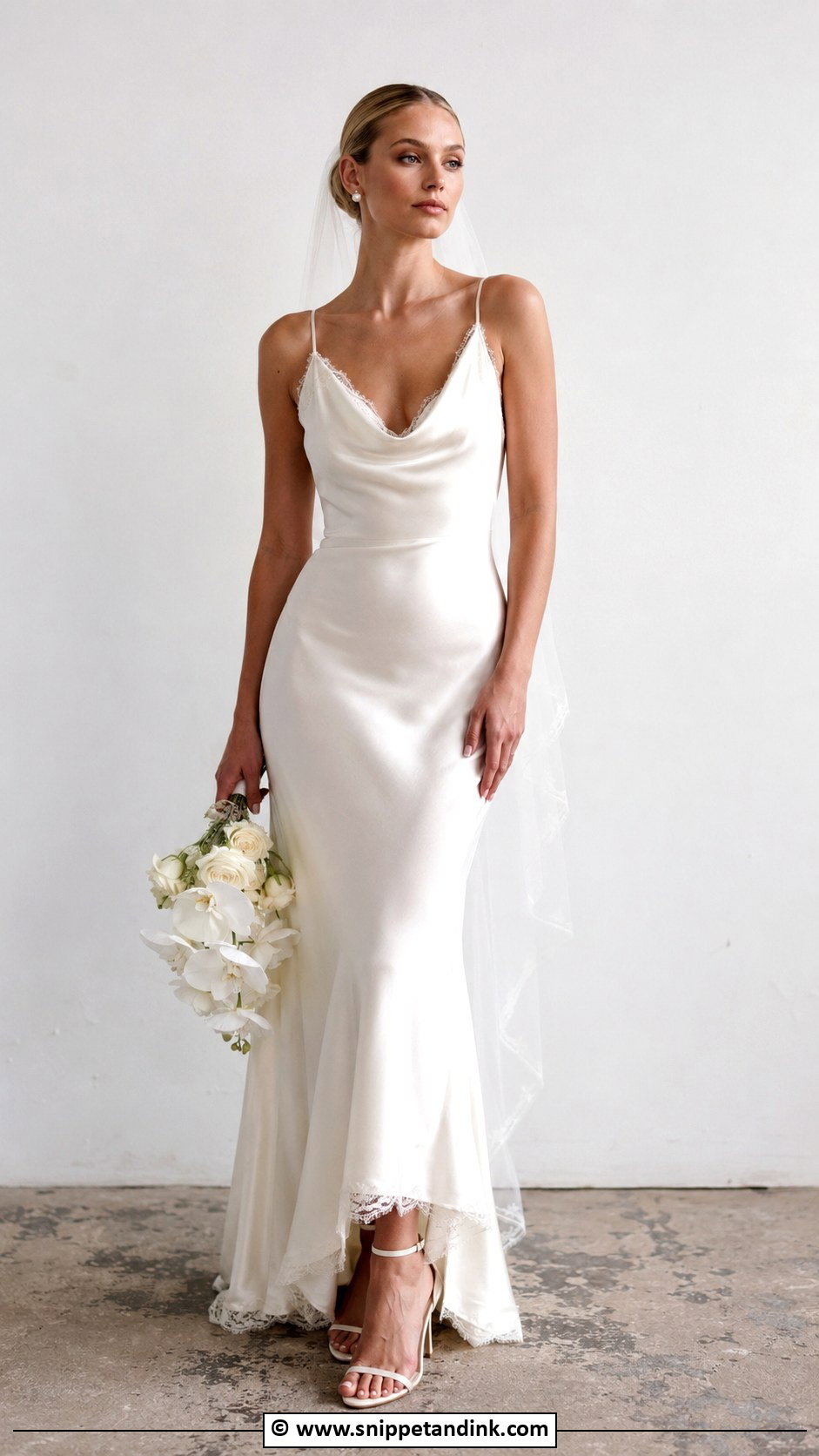
Slip dresses are cut on the bias, which is what lets them pour over the body and also why they’re so unforgiving. Inspired by 1930s and 1990s bridal minimalism, they come in silk or satin, sometimes with a cowl neck or a fine lace edge. The dress should skim, never grip. I size up and take in rather than squeeze into a tight one, because bias fabric drops and lengthens as it hangs. Strappy heels, soft waves, pearl studs and a sheer veil, plus a capelet or faux fur wrap when it’s cold.
11. Vintage Edwardian Wedding Dress
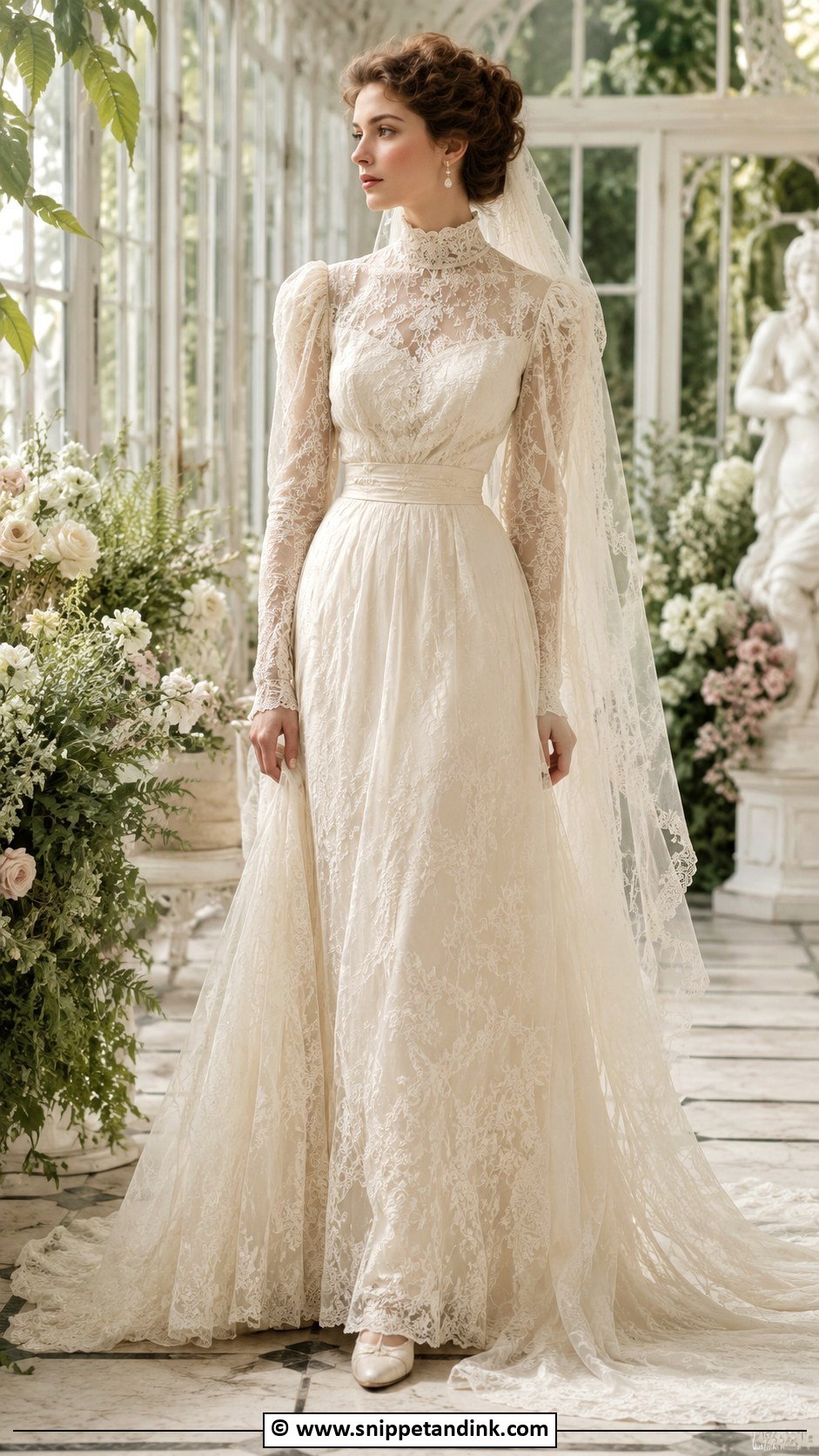
Edwardian dresses rely on air rather than structure: high necklines, lace insets, soft sleeves, tucks and an empire or natural waist. For the closest feel to the real thing I steer brides to cotton lace, silk chiffon or embroidered tulle. Originals from this period are often cotton lawn, which yellows but survives careful washing far better than old silk does. A lace veil, low bun, pearl earrings and plain ivory shoes give you a garden or spring look that covers you without ever looking severe.
12. Vintage Victorian Wedding Dress
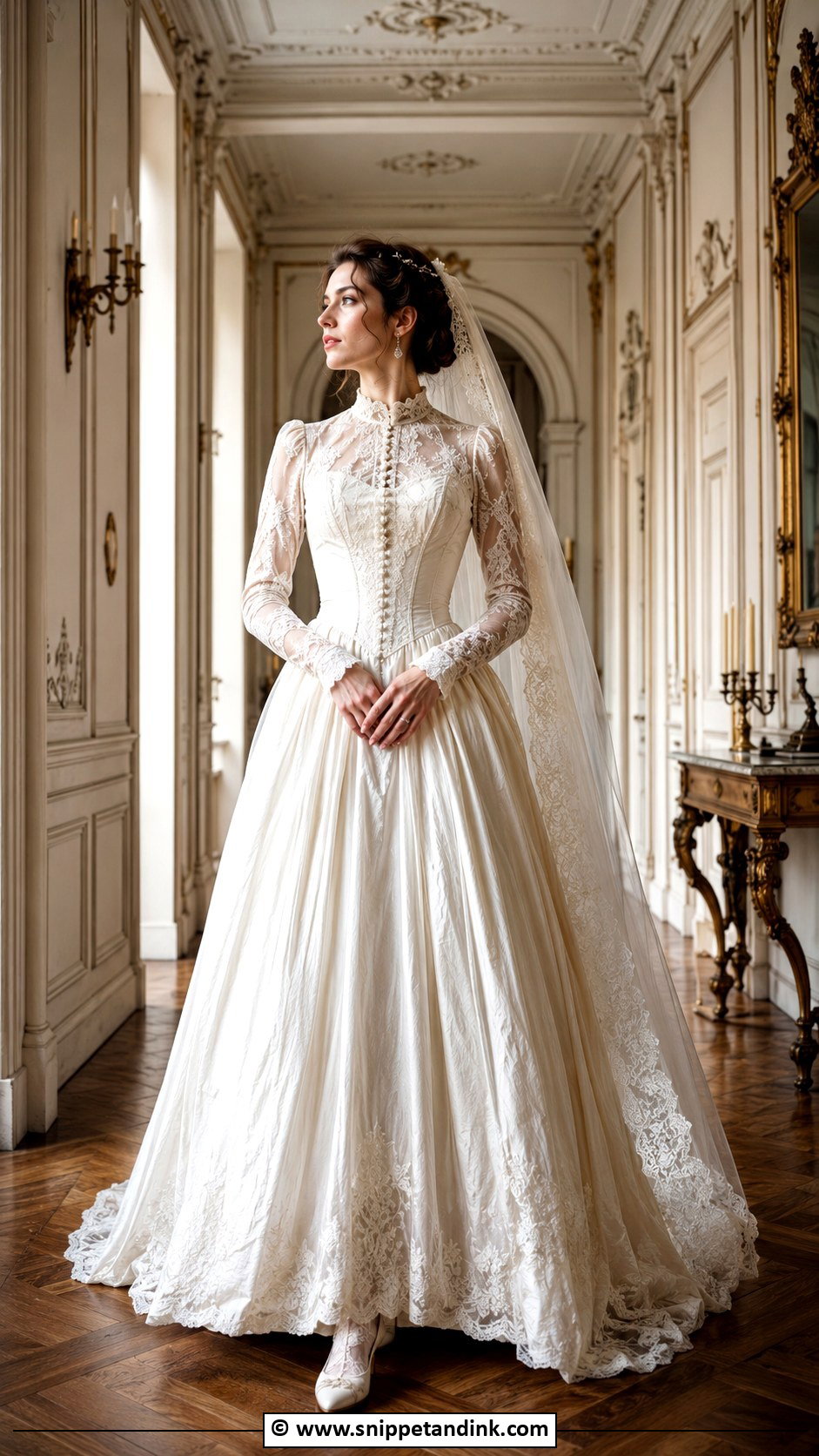
Victorian gowns tempt anyone who loves drama, with high collars, long sleeves, corset bodices, full skirts, lace trims and rows of covered buttons. My job is usually talking down the weight. I’d rather see breathable fabric and a cleaner line than layer on layer, because a warm venue in a boned, long-sleeved dress makes for a long afternoon. Keep the waist fitted and the skirt flowing, then add a long veil, antique-style earrings and closed-toe heels. Soft makeup stops it going theatrical. Winter weddings and historic venues are its natural home.
13. Vintage 1950s Wedding Dress
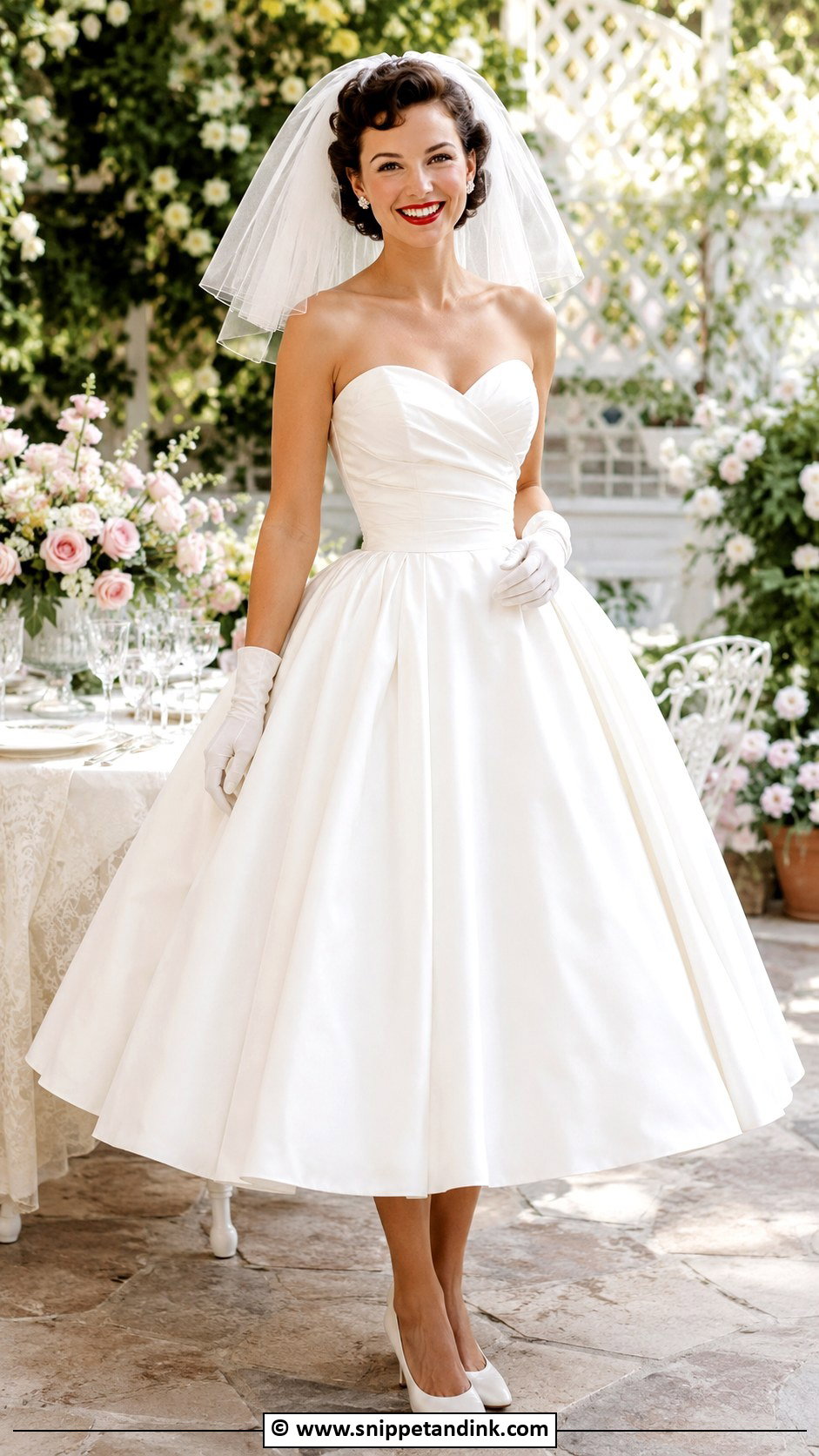
Nipped waist, full skirt, bateau or sweetheart neck, often a tea-length hem: the 1950s gown is the easiest era to wear. Lace, satin and tulle all suit it. For more volume I add a petticoat, though I always have the bride sit and climb a step in it first, since some stiff crinolines flip up at the front. A short veil, pearl earrings, gloves and pumps finish it. It loves a courthouse, a garden party or a retro reception, and it’s what I’d reach for if dancing matters most.
14. Vintage 1960s Wedding Dress
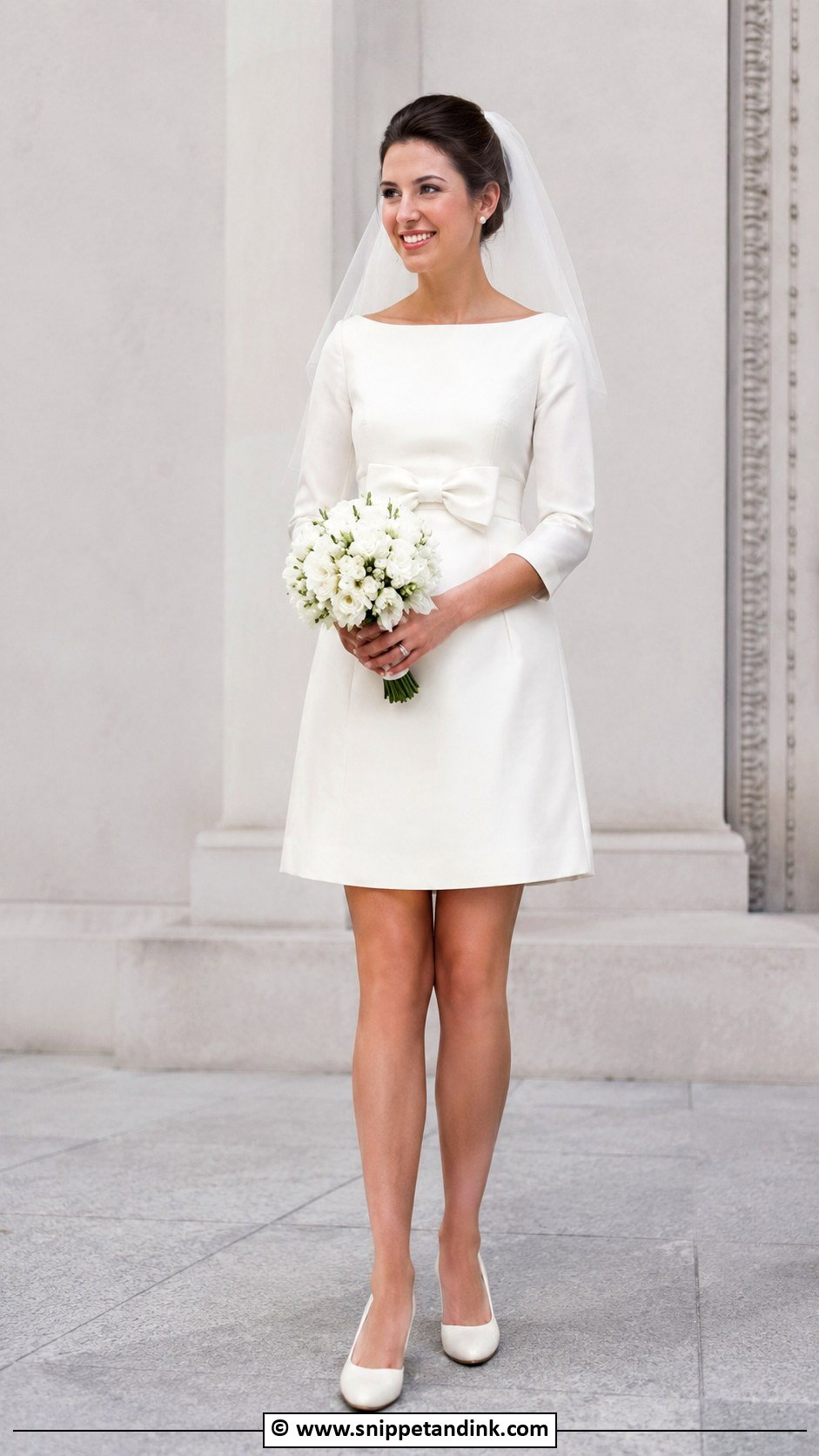
The 1960s gave bridal its clean A-lines, short hems, bateau necks, bow accents and plain fabrics. A mini or knee-length dress in something structured, mikado or a firm crepe, looks fresh and needs almost no embellishment. Structure is the whole point at that length; a soft fabric just reads as a day dress. Block heels, a short veil, pearl studs and a smooth blowout or soft updo. I’d send anyone who finds lace-heavy romance too sweet straight to this decade, especially for a courthouse or city elopement.


15. Vintage 1970s Wedding Dress
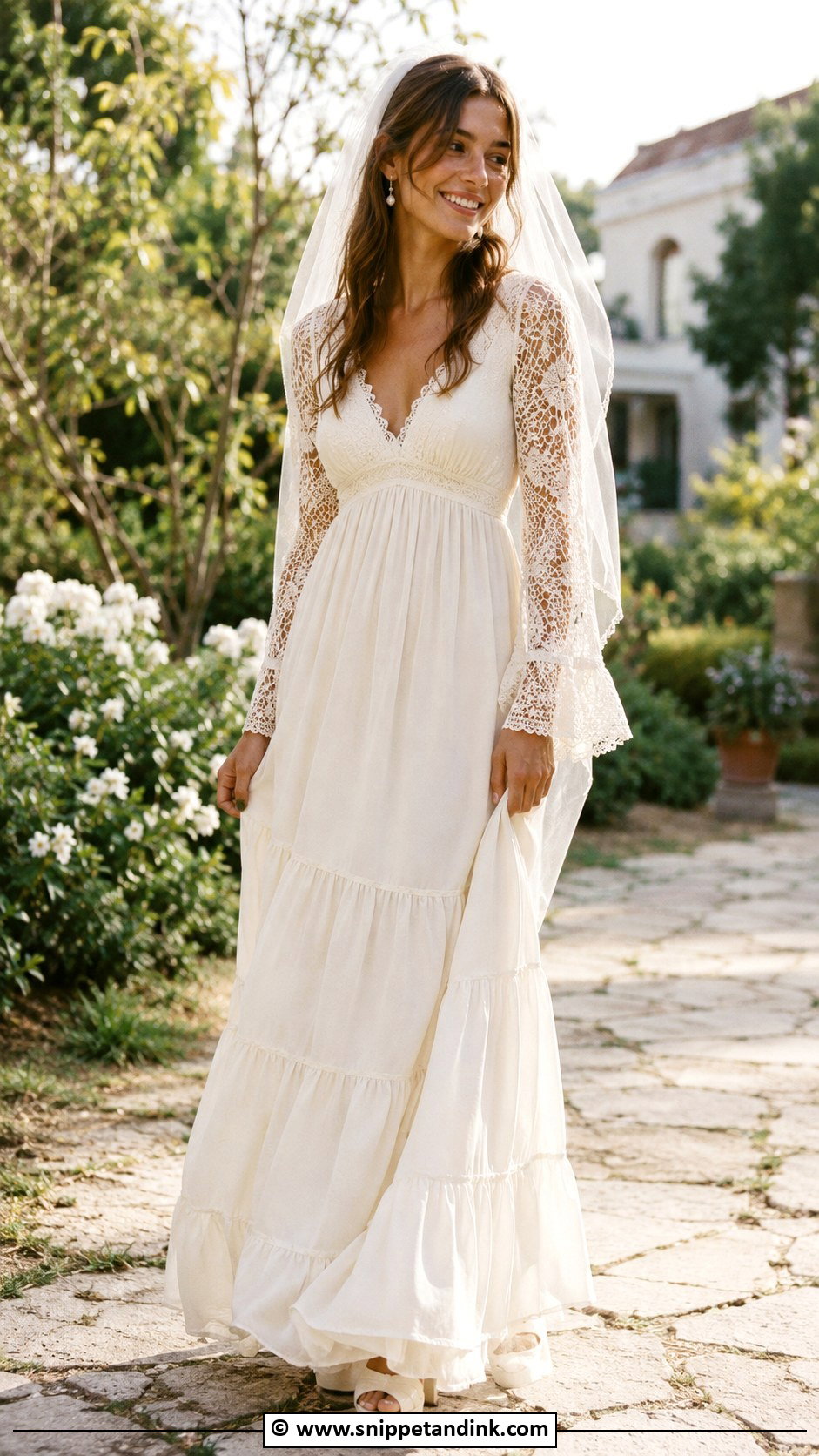
A vintage 1970s wedding dress is relaxed by nature: flowing sleeves, crochet lace, empire waists, tiered skirts and square necks. The risk is styling that goes so rustic the dress disappears into a theme. I keep it clean with loose waves, small earrings and platform sandals or block heels, then add a flower-free veil, lace headband or soft cape for the bridal note. Originals from this decade are often polyester, which is good news. It shrugs off a desert or backyard ceremony and survives the dry cleaner.
16. Vintage 1980s Wedding Dress
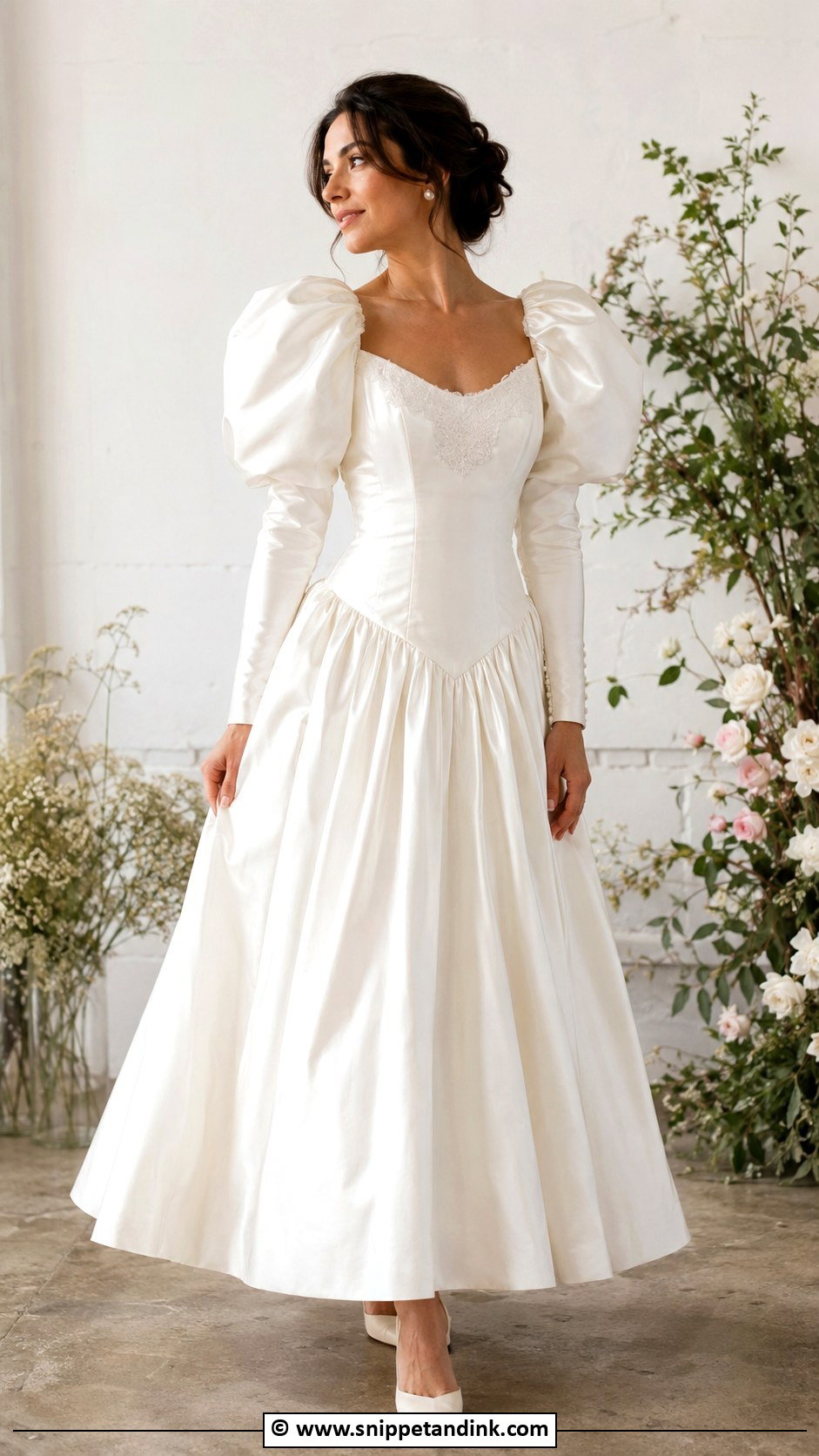
Puff sleeves, dropped waists, bows, shiny satin, high necks and full skirts: worn exactly as found, a 1980s gown can swallow a bride. With an original I usually suggest a tailor deflate the sleeves, remove some trim or take volume out of the skirt, and since many of these dresses were built with generous seams, that’s usually doable. Then edit the accessories down to sleek heels, small earrings and fresh makeup. What’s left has real presence and a sense of humor about itself.
17. Vintage Puff Sleeve Wedding Dress
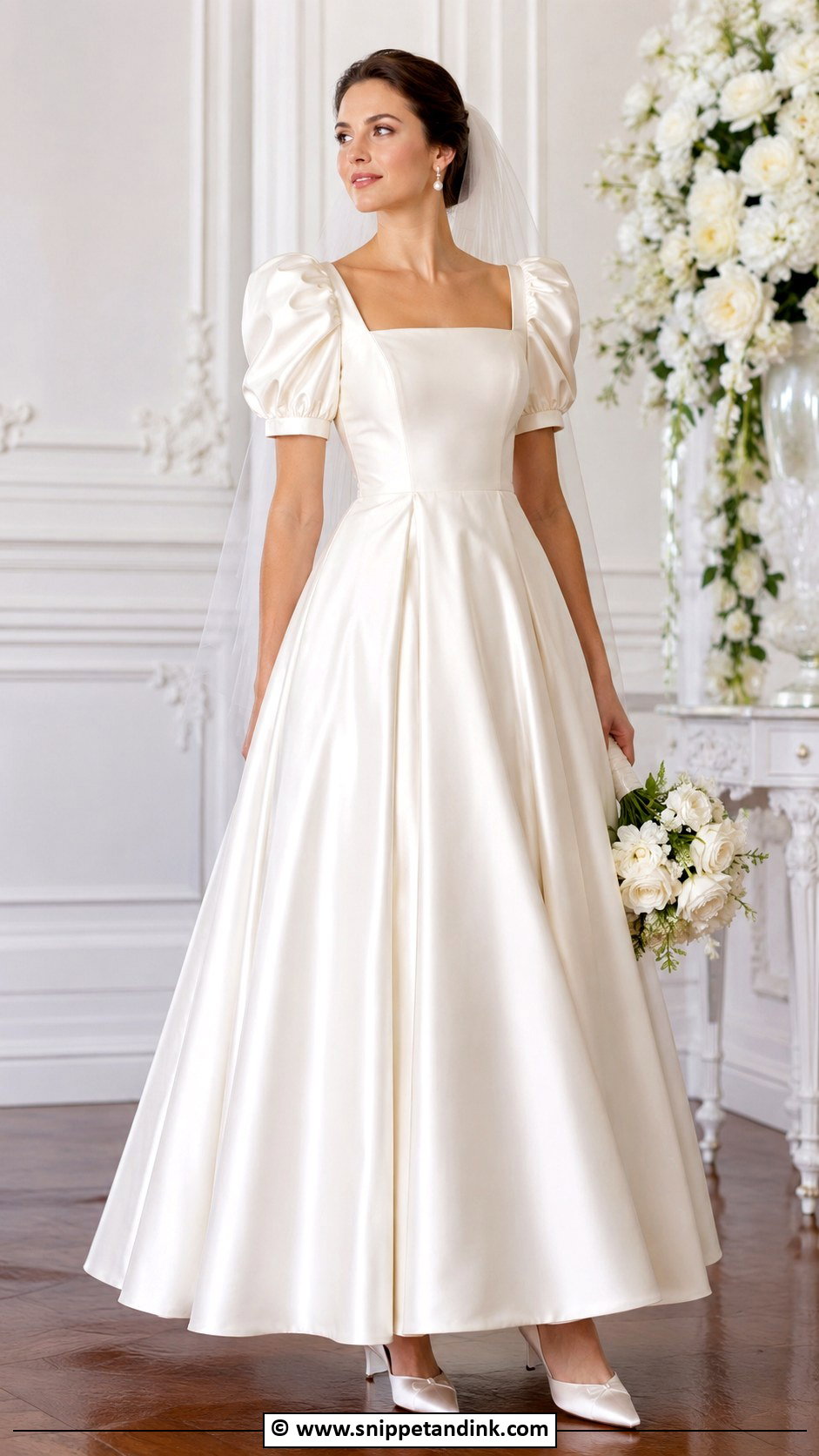
Puff sleeves add romance and structure in one move, whether they’re sheer and soft, bold satin or lightly gathered at the shoulder. They sit well with fitted bodices, square necks, basque waists and full skirts. If the sleeves are big, I simplify everything else so the shape stays balanced. One practical note: satin puffs crush under a coat or after a lot of hugging, and some need a light net lining inside to hold their shape. A center-part bun, pearl earrings and satin heels suit formal indoor weddings and editorial outdoor portraits alike.
18. Vintage Square Neck Wedding Dress
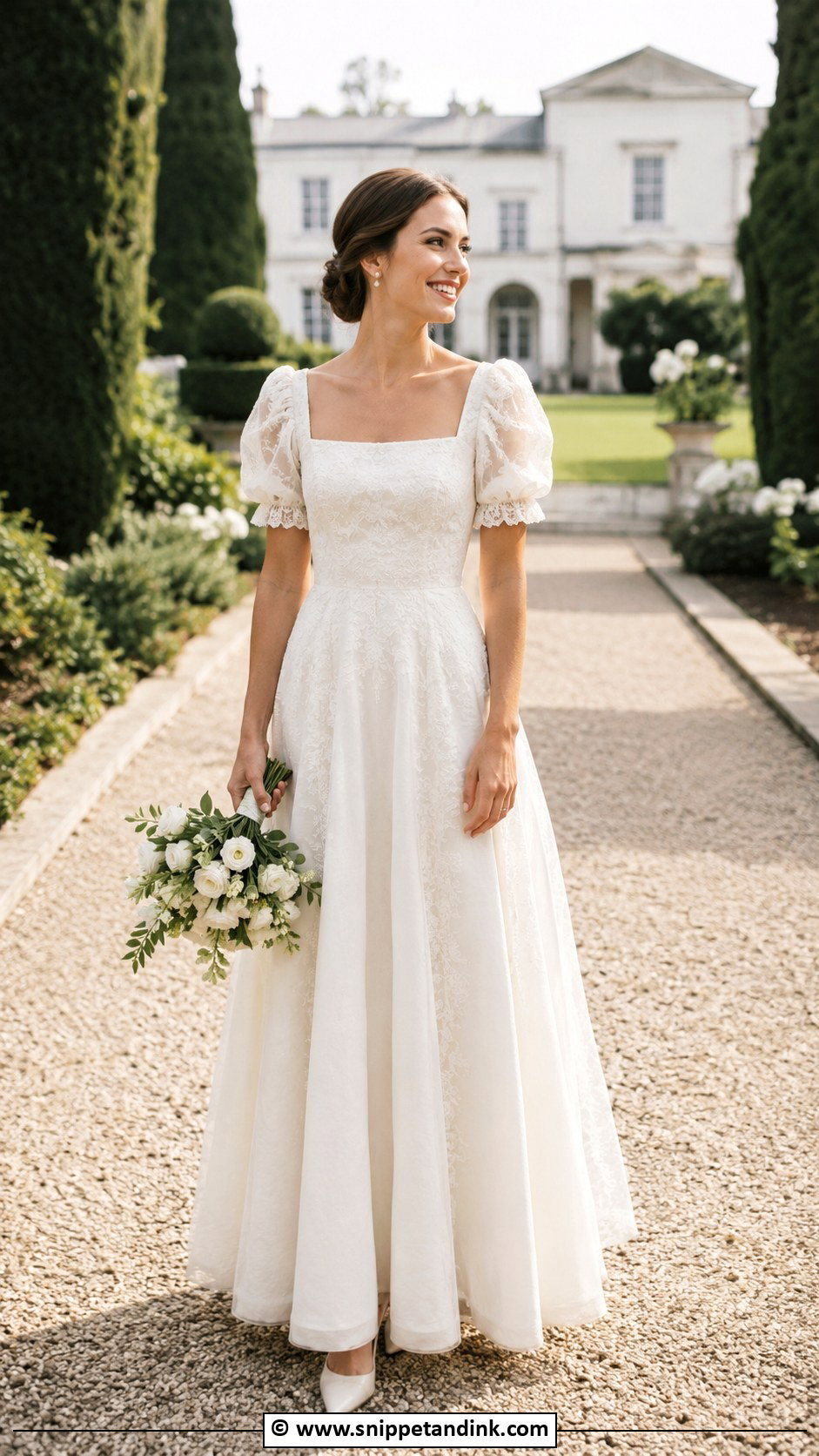
It’s one of the easiest necklines I fit, because a square neck stays put and needs no fiddling all day. It frames the chest and shoulders and gives the bodice a structured edge. Lace or embroidery softens it; mikado or satin makes it crisp. What I check is width. The corners should sit inside the shoulder points, or the neckline makes shoulders look broader than they are. A low bun, pearl studs and a simple veil work in a garden ceremony or a formal hall.
19. Vintage Bateau Neck Wedding Dress
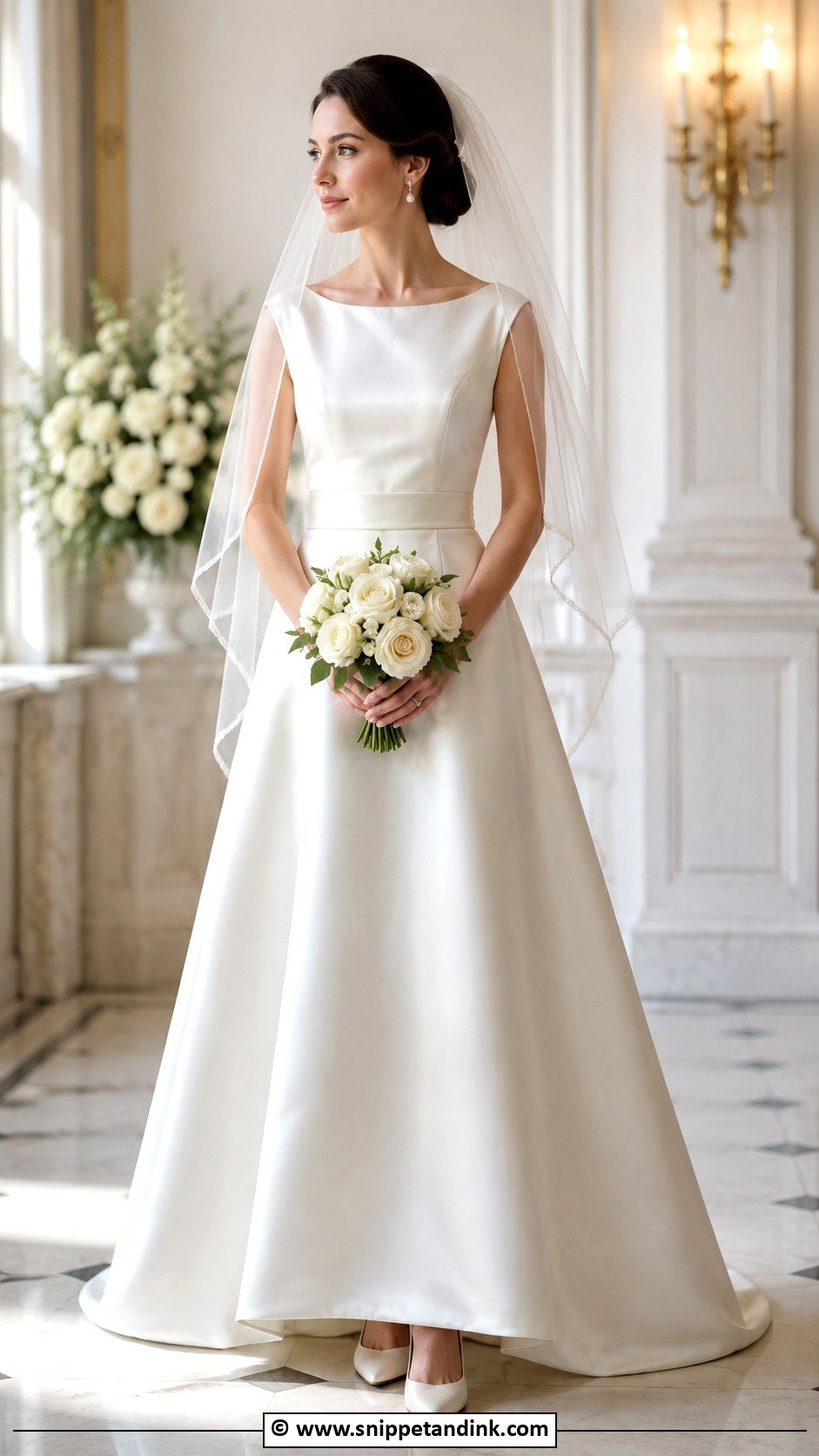
Bateau necks run straight across from shoulder to shoulder at collarbone height, so a necklace has nowhere to sit. That makes earrings the jewelry: pearl drops, crystal studs or small vintage clips. You’ll see this neckline on 1950s satin gowns and lace A-lines. A smooth updo or soft waves, closed-toe pumps and a fingertip veil keep it refined, for a big formal ceremony or a dinner for twenty.
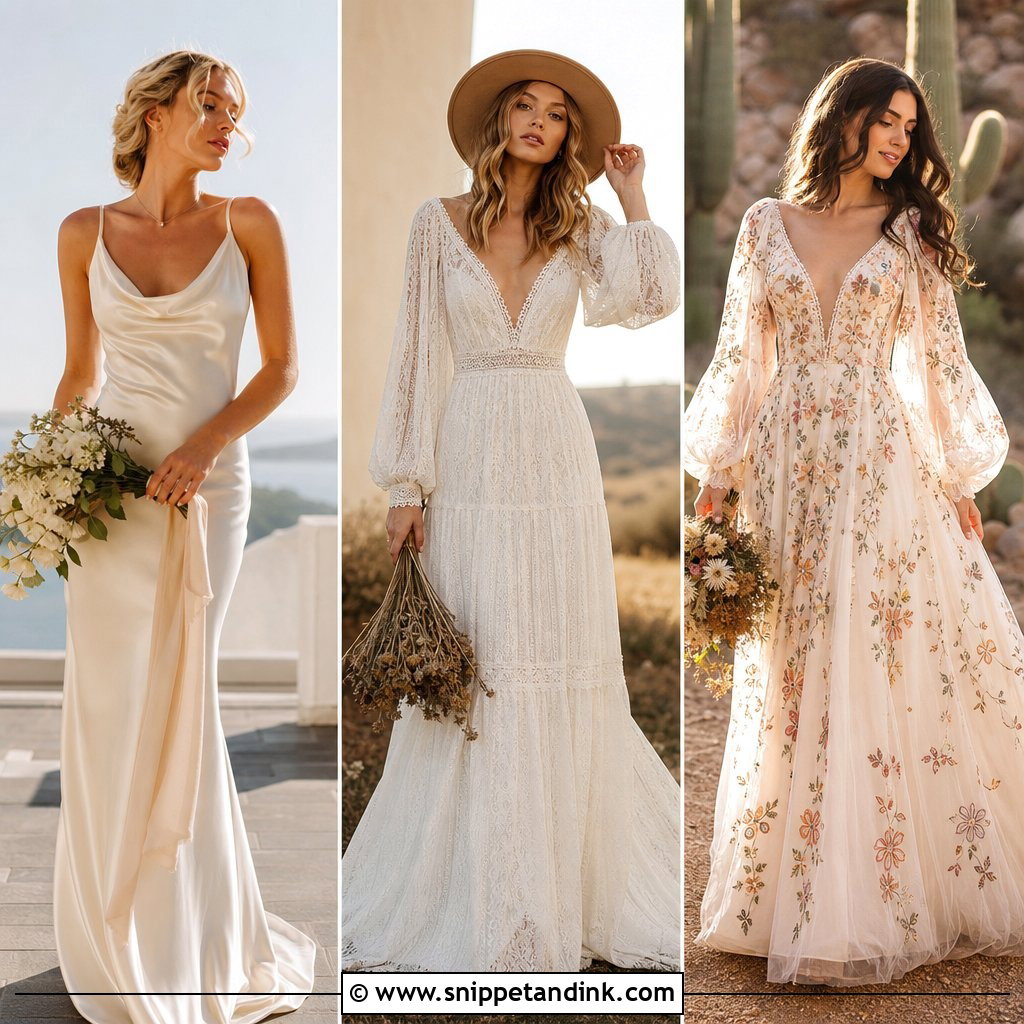
20. Vintage Wedding Dress With Gloves
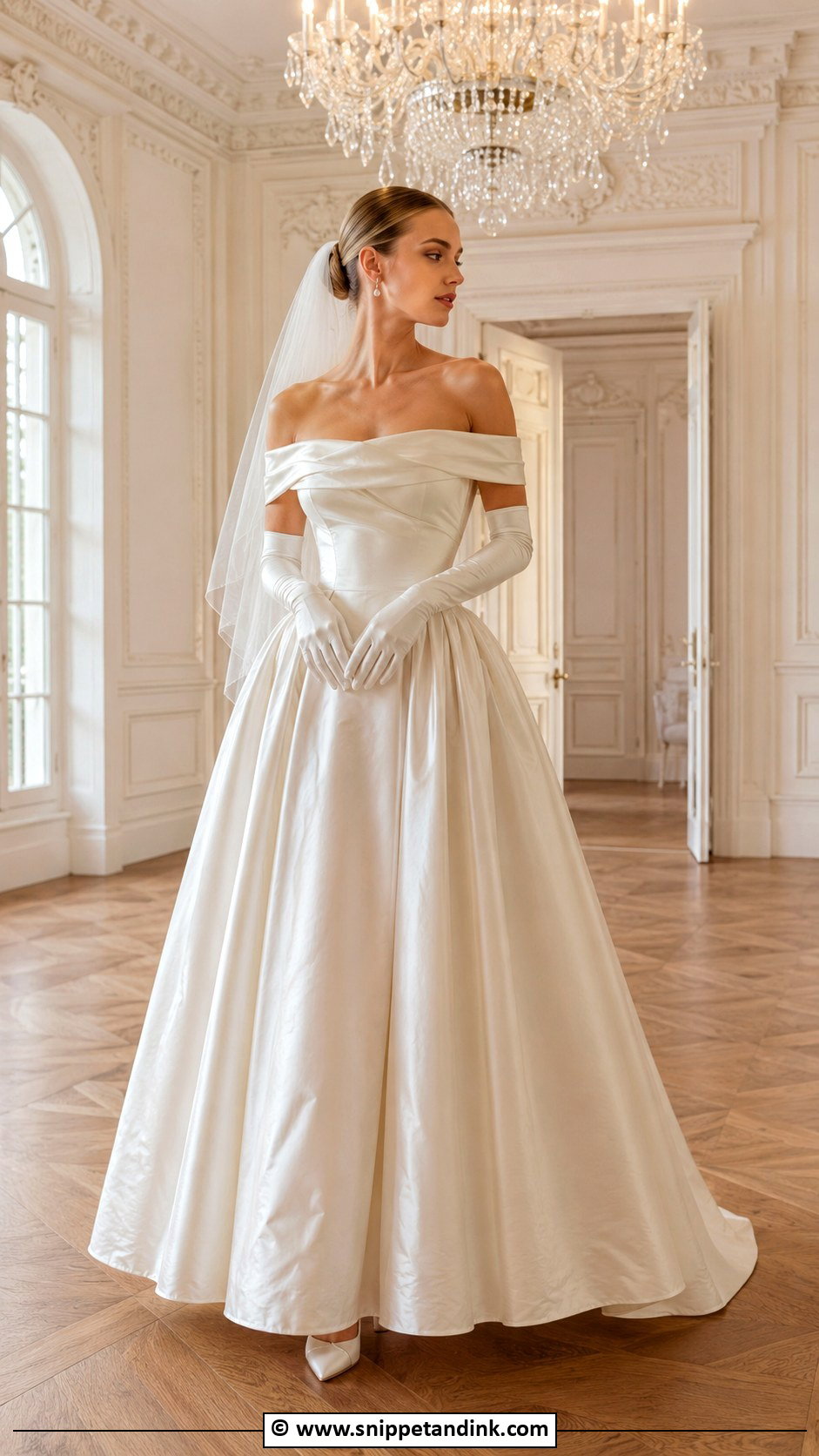
Gloves shift the mood of a dress more than almost any other accessory, which is why I love a vintage wedding dress with gloves. Opera length reads formal; wrist length reads sweet and retro. Let the sleeve decide: strapless and sleeveless gowns take long gloves, short sleeves take short ones. Two things I settle with every bride in advance: how the ring goes on (slipping the left glove off, or a pair with an open ring finger) and whether she can eat a canape in them. Pearl earrings, neat hair and simple heels keep it out of costume territory.
21. Vintage Wedding Dress With Veil
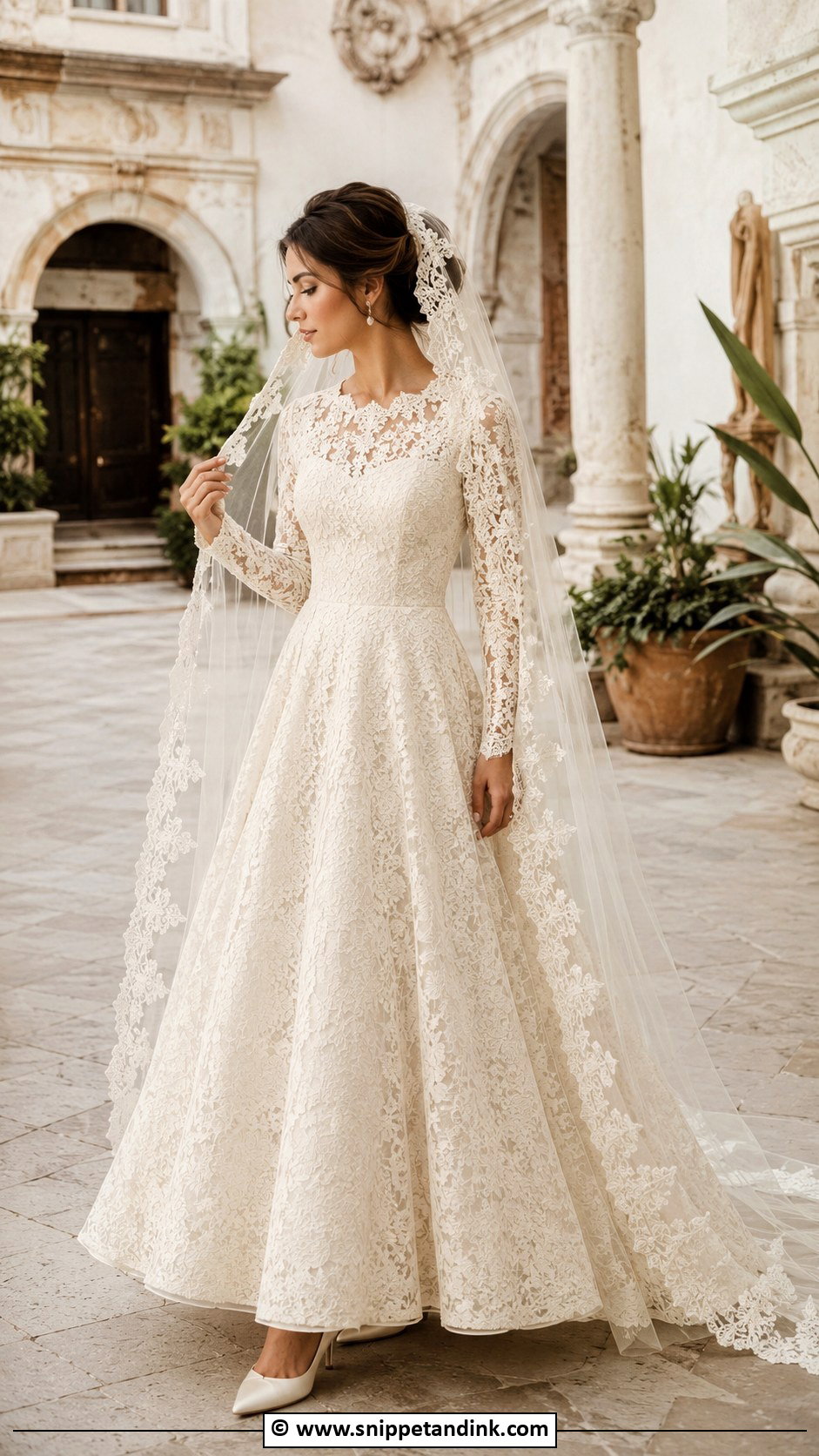
The veil can move a dress through the decades without changing a stitch. Lace mantillas feel romantic, birdcage veils feel retro, Juliet caps feel old-world and cathedral lengths feel formal. I match detail level: heavy beading wants a plain veil, while plain satin can carry lace trim or pearls. Mantillas are the tricky one. With no gathers to hide the comb, they need a secure base such as a small bun, or they slide back every time you turn your head.
22. Vintage Wedding Dress With Bow
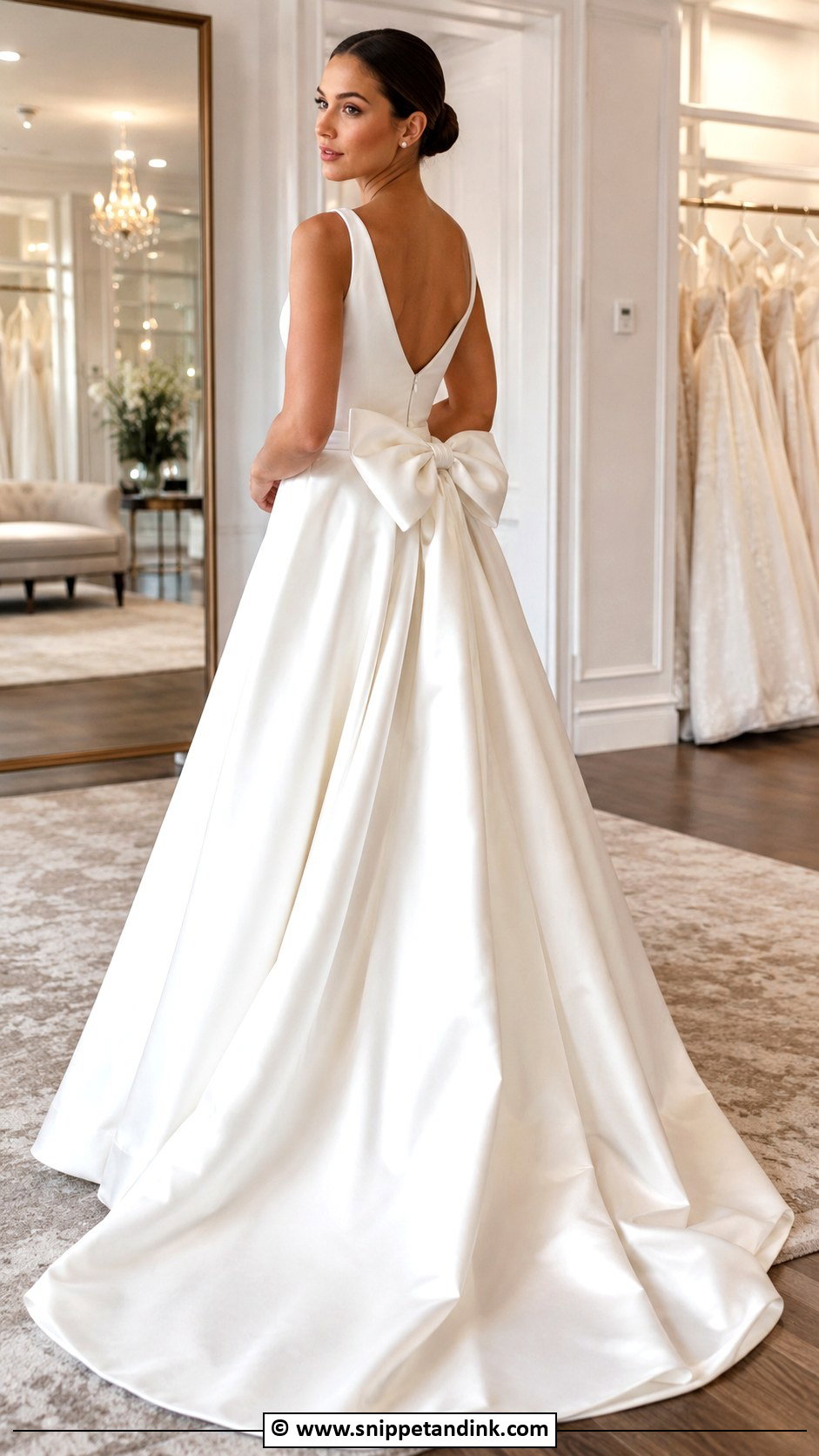
Where the bow sits changes the dress. At the back it’s classic, at the shoulder it’s fashion, at the waist it marks your shape. Satin bows hold a crisp loop, organza bows are lighter. I check that a large back bow has an internal stay stitched in, otherwise it droops by evening, especially after you’ve sat on its tails through dinner. Keep the rest simple with pearl studs, sleek heels and a plain veil or none. It earns its place in every ceremony shot taken from behind.
23. Vintage Wedding Dress With Cape
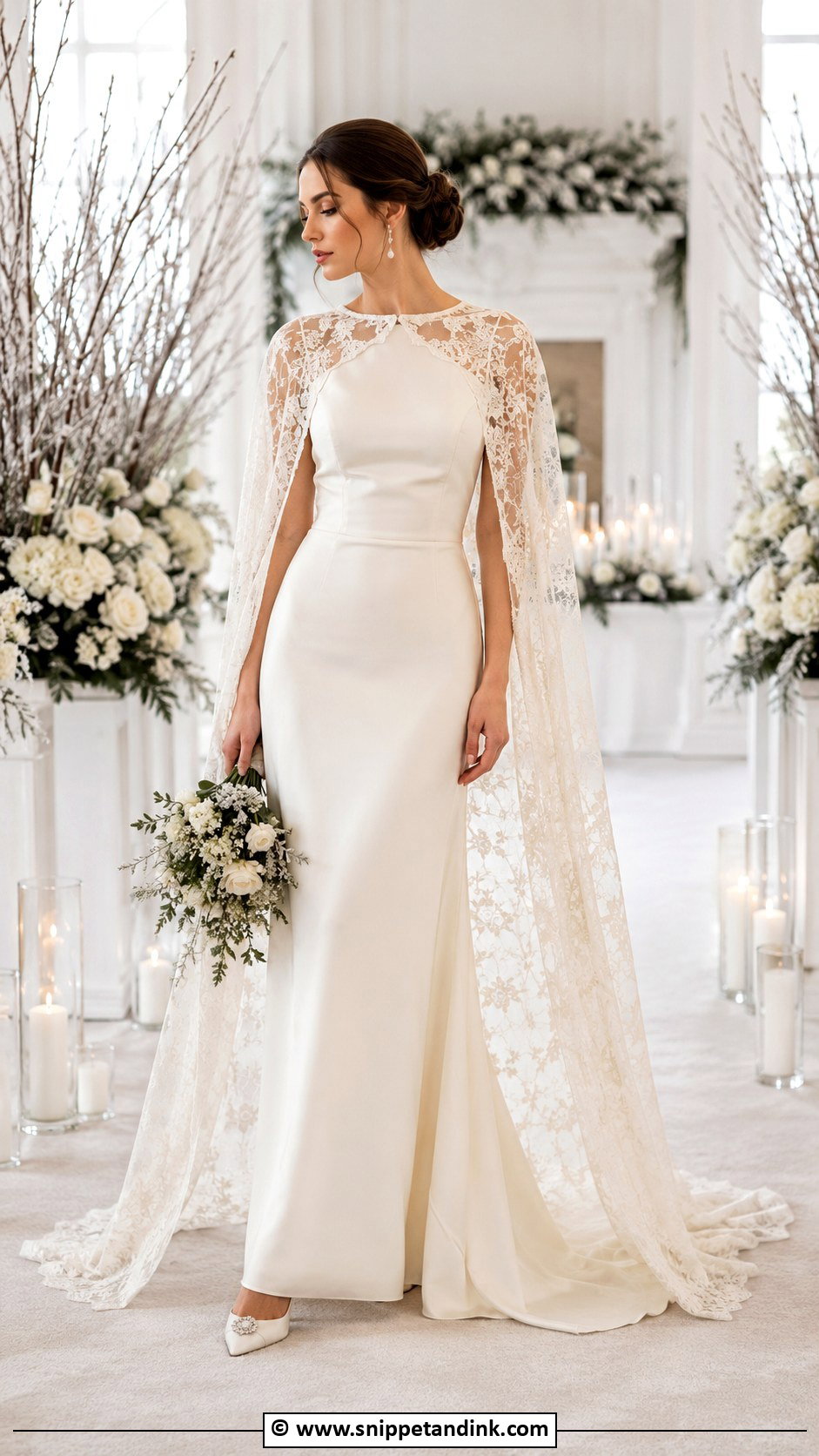
A cape gives shoulder coverage without committing to sleeves for the whole day. Lace looks antique, sheer tulle floats and satin carries old Hollywood polish. I pair a plain gown with a detailed cape or a plain cape with an embellished dress, never two busy pieces together. Ask where it fastens and how: capes catch on chair backs and doorframes, so the closure needs to be hidden and strong. Delicate earrings, soft hair and pointed heels for a winter ceremony, and taking it off for the reception gives you a second look for free.
24. Vintage Wedding Dress With Jacket
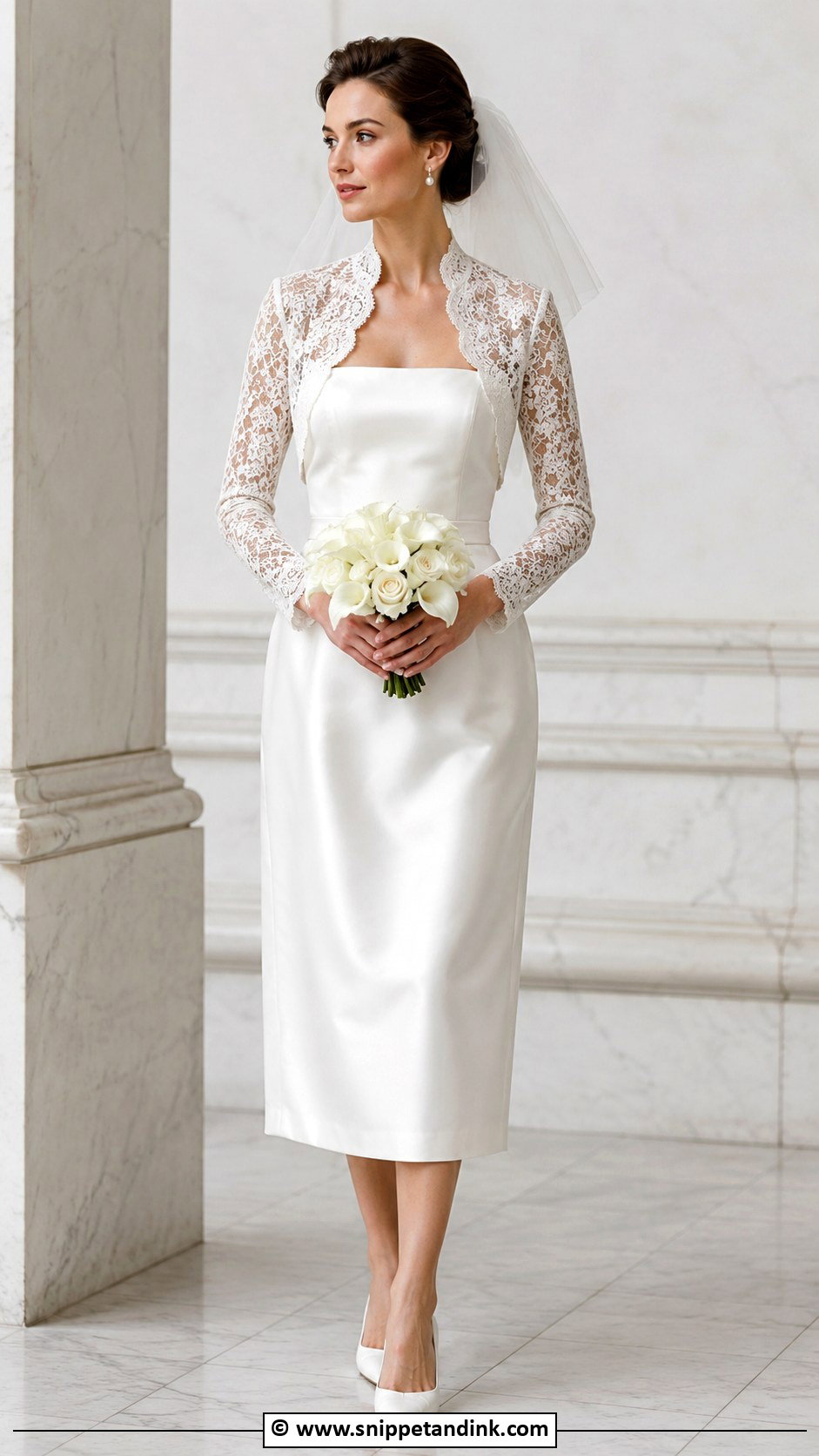
Jackets are the most practical item on this list. A lace bolero, cropped satin jacket, beaded topper or tailored bridal jacket covers you for a cold or modest ceremony, then comes off for dancing. They work over strapless gowns, slip dresses, tea-length and plain satin. Fit decides everything: a boxy jacket hides the waist, so I have it cut to end at or just above it. Classic heels, pearl earrings and neat hair are plenty.
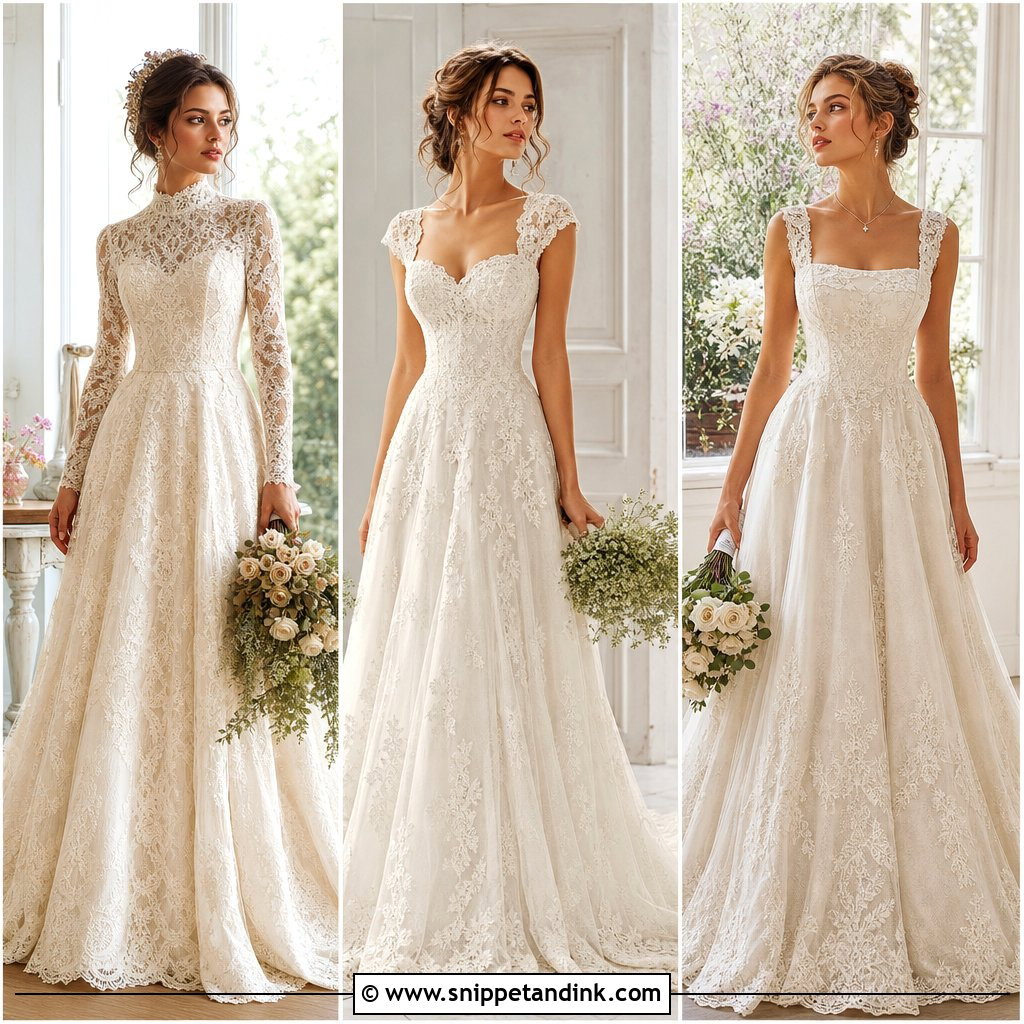
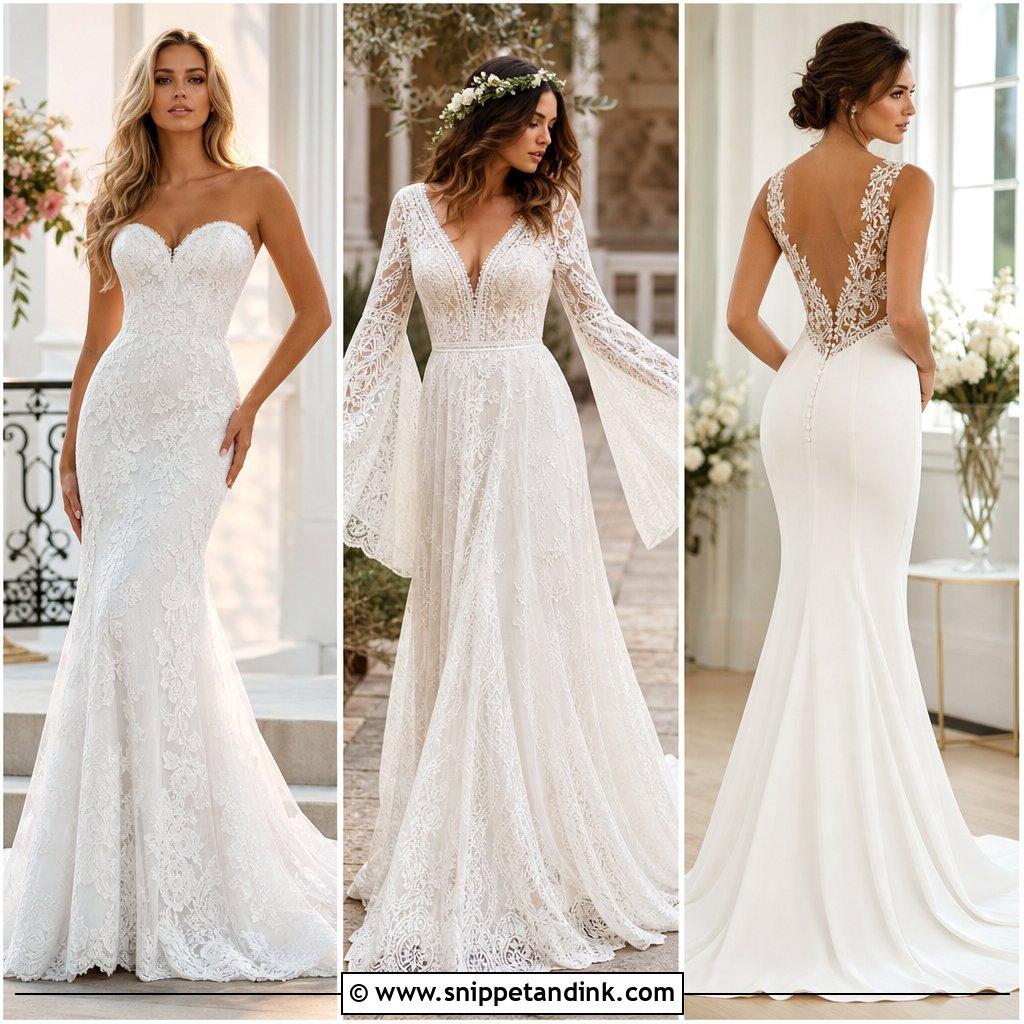

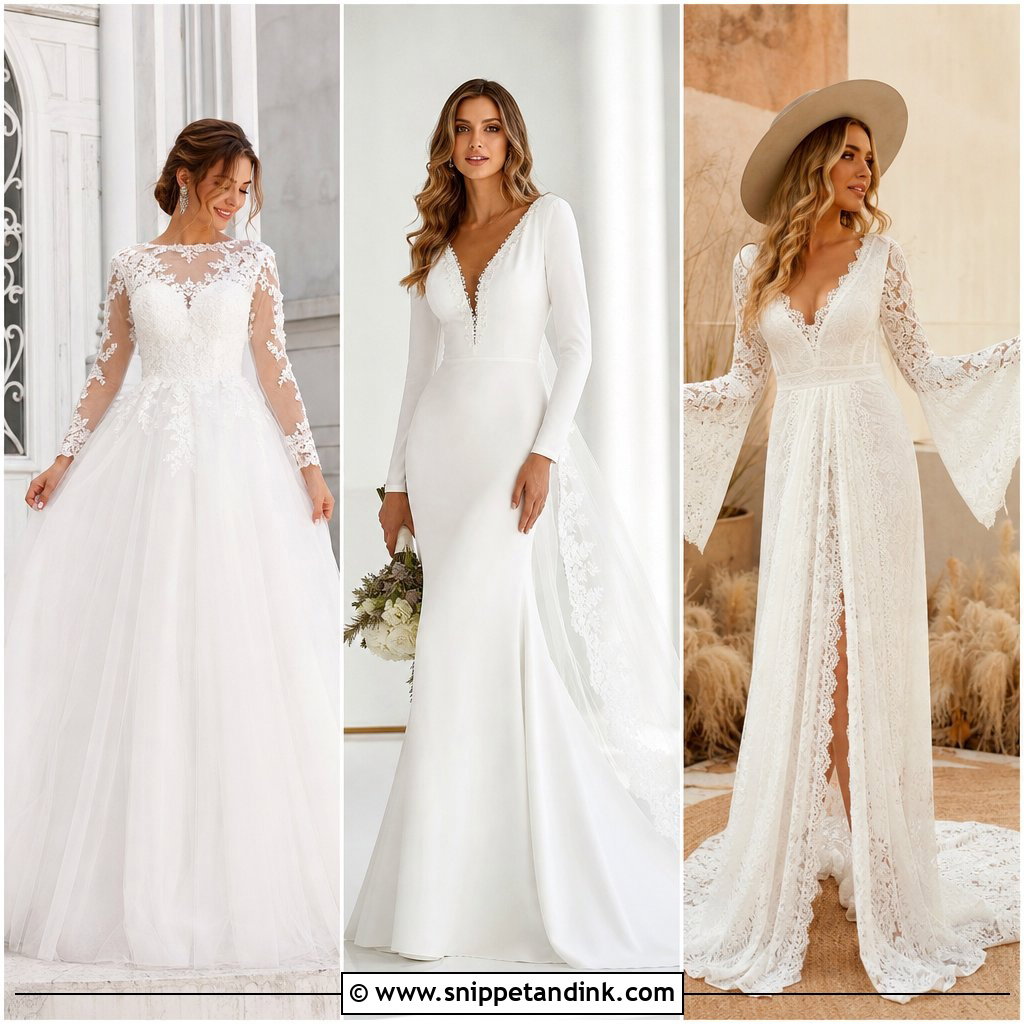
25. Vintage Tulle Wedding Dress
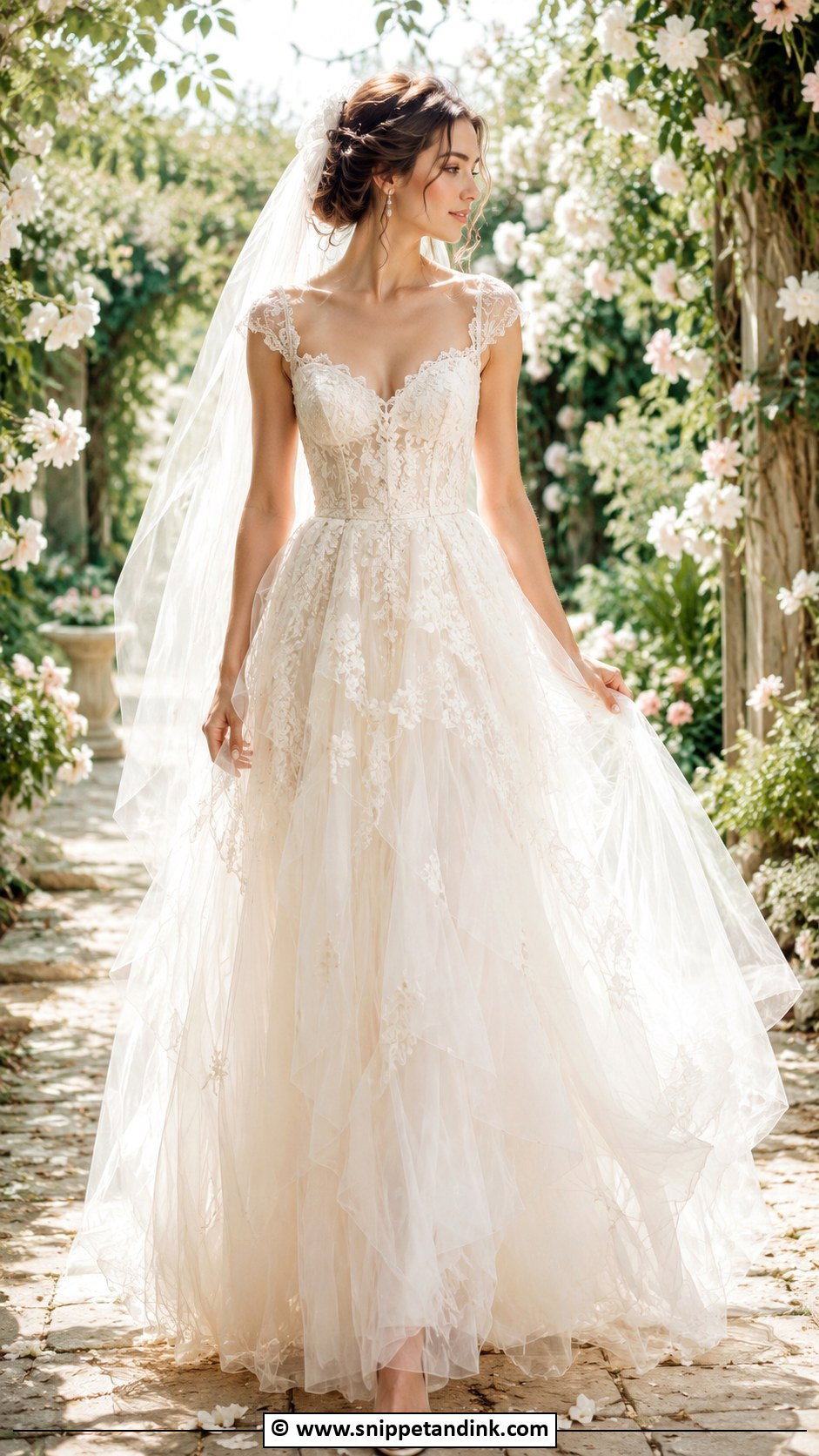
Tulle gives volume without weight, which is why it carries layered skirts, illusion sleeves and embroidered bodices so well. I often suggest a blush, ivory or champagne lining under ivory tulle; it adds depth and makes the gown read older. Tulle snags on bracelets, rough stone and garden benches, so I ask about the venue floor before anything else. With a full skirt, keep the veil light so the whole thing doesn’t turn into a cloud. Dainty earrings, soft waves and simple heels are enough.
26. Vintage Chiffon Wedding Dress
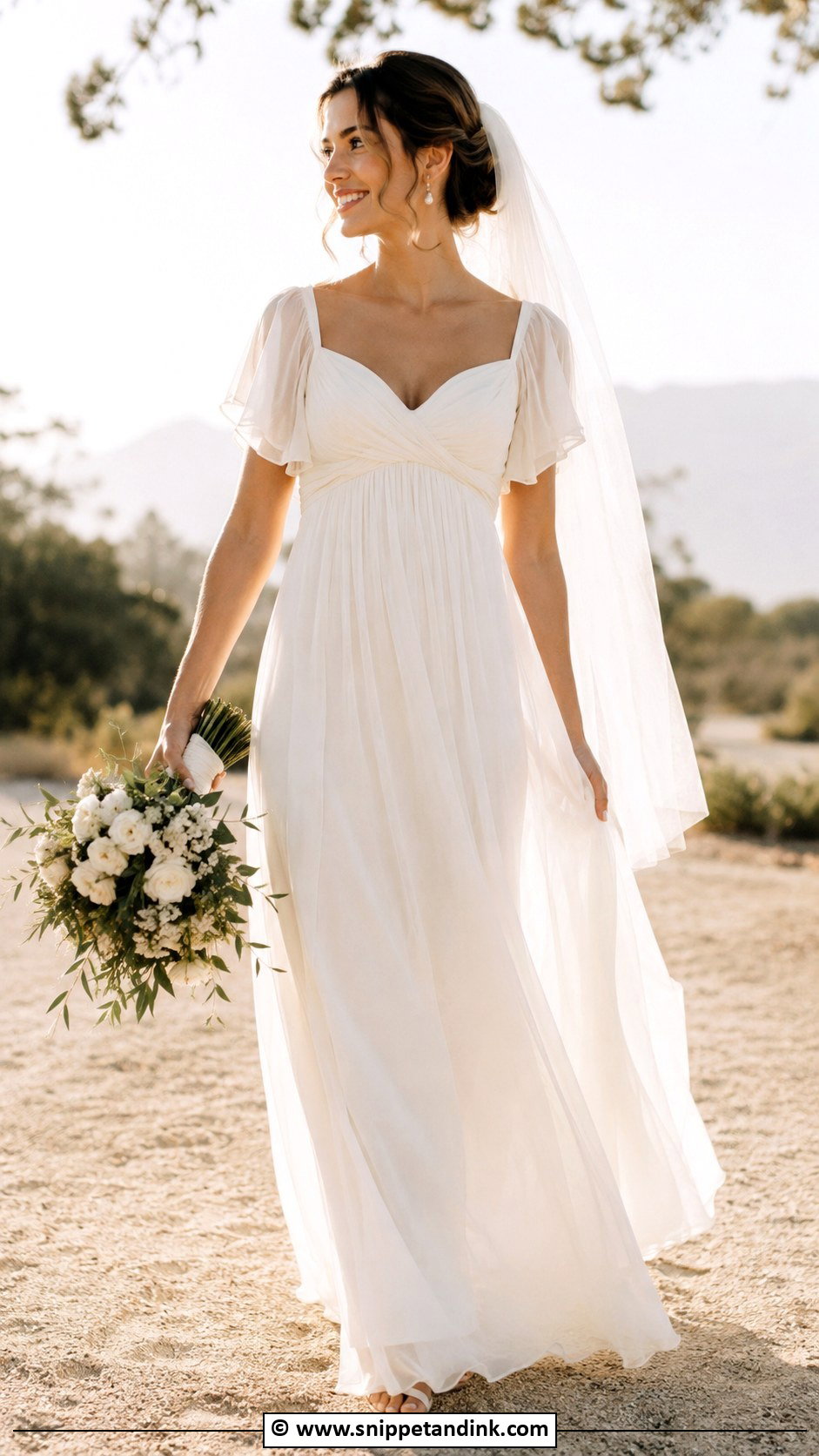
Chiffon moves in the slightest breeze, and that’s the reason to wear it for a warm-weather or outdoor wedding. The influences are usually 1930s, 1970s or Grecian: soft sleeves, empire waists, draped bodices, flutters and long skirts. It’s comfortable but fragile. Chiffon pulls easily, so an antique one needs a gentle fitter and no bracelets with sharp clasps. Delicate sandals, pearl or gold earrings, a loose updo and, if you like, a sheer veil.
27. Vintage Silk Wedding Dress
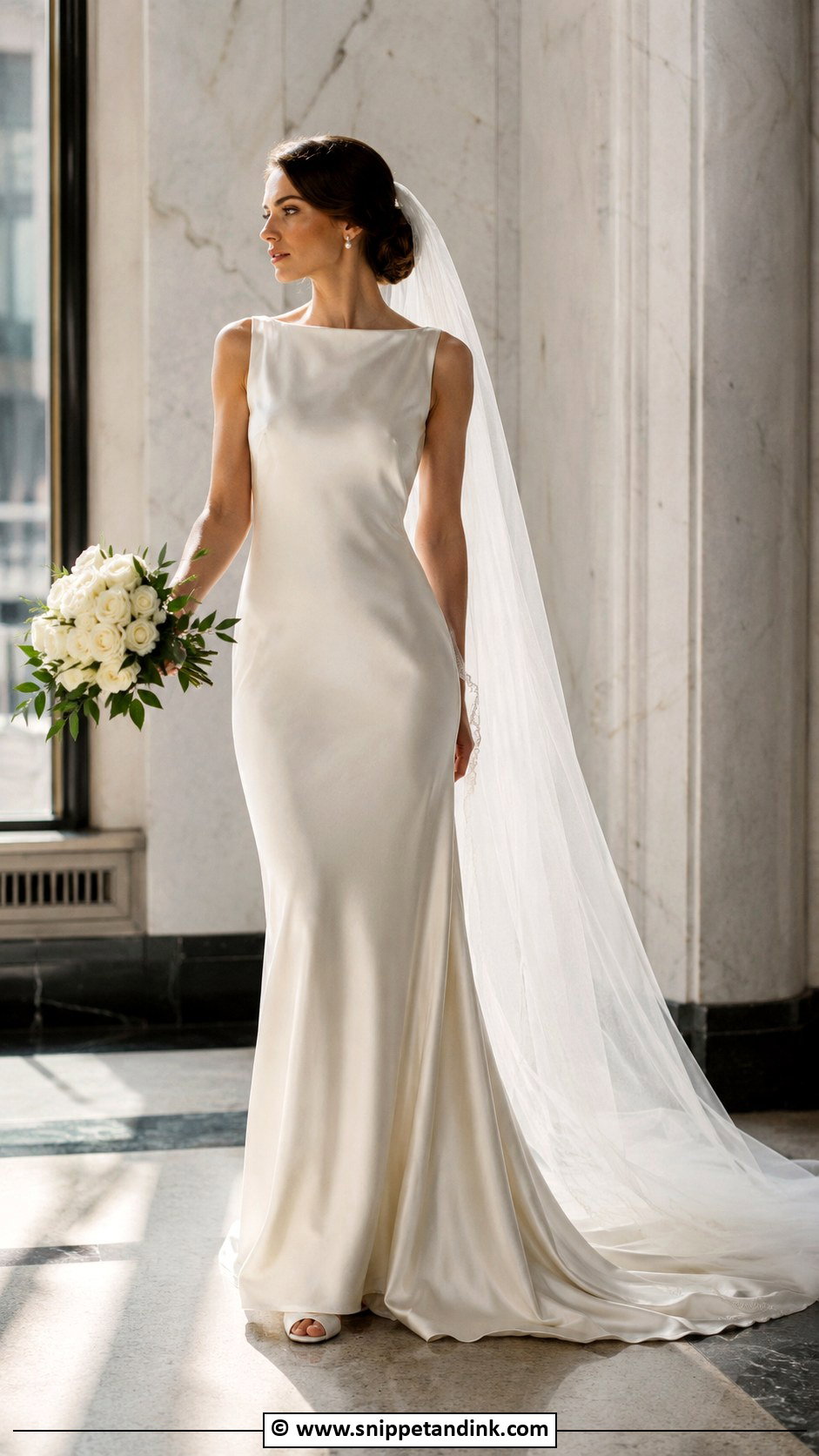
In a silk dress the fabric is the design, and the weave decides how it behaves. Bias-cut silk is 1930s, silk satin is glamorous, silk organza is light and crisp. Silk shows tailoring more than any textured fabric, so every pucker is visible; I’d spend the budget on a skilled fitter before any accessory. Keep those simple: satin heels, pearl earrings, plain veil. Silk satin also water-marks, so keep spilled drinks and rain away from it. City weddings and intimate ceremonies suit its quiet luxury.
28. Vintage Crochet Lace Wedding Dress
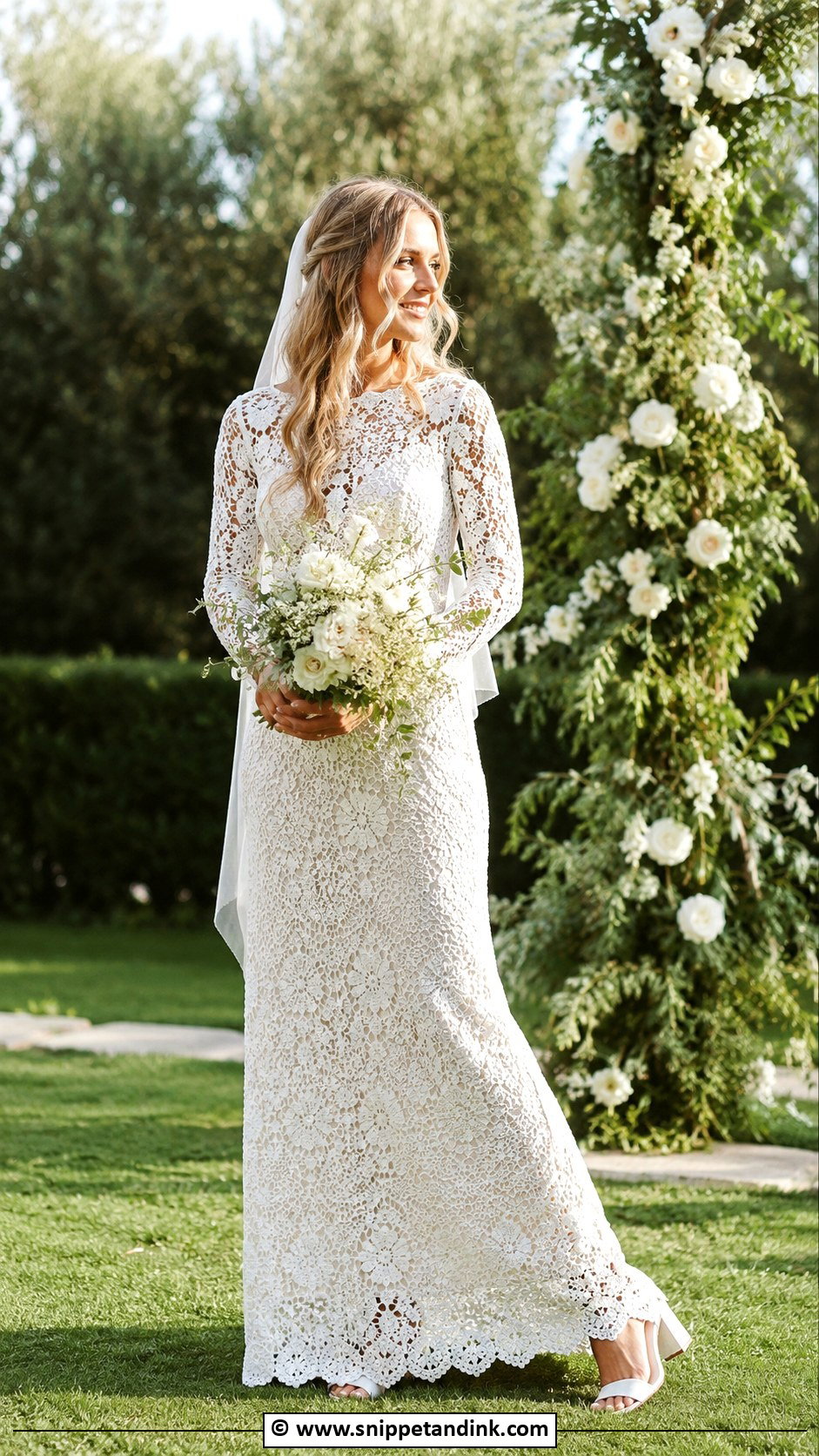
Crochet lace feels handmade and unhurried, with that 1970s mix of long sleeves, openwork, scalloped edges and easy shapes. A proper lining keeps it bridal, since unlined crochet shows skin through every gap. I go for ivory or soft white and leave out the rustic props; the texture already says vintage. Block heels, delicate earrings, loose waves and a simple veil or lace headband suit beach, garden and backyard ceremonies. Crochet stretches under its own weight, so store it folded flat rather than on a hanger before the day.
29. Vintage Embroidered Wedding Dress
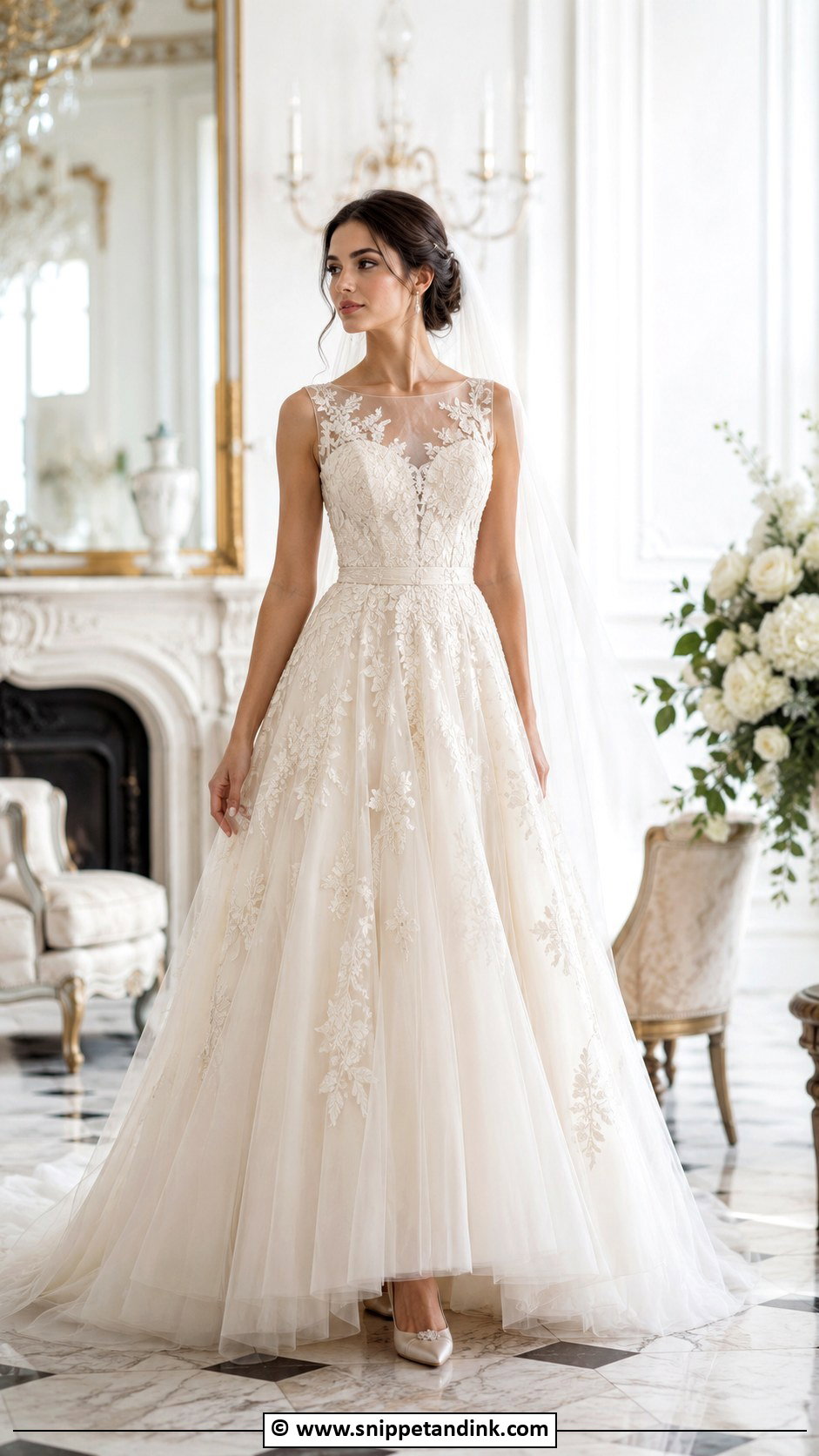
Embroidery gives detail without sparkle: florals, vines, leaves, pearls or tone-on-tone threadwork on tulle, organza, lace or soft satin. An A-line, a fitted bodice over a flowing skirt or long sleeves leave room for it to show. When the thread carries color, I keep every accessory neutral so the two don’t compete. Simple earrings, a plain veil and soft makeup. Expect your photographer to linger over the close-ups.
30. Vintage Ruffle Wedding Dress
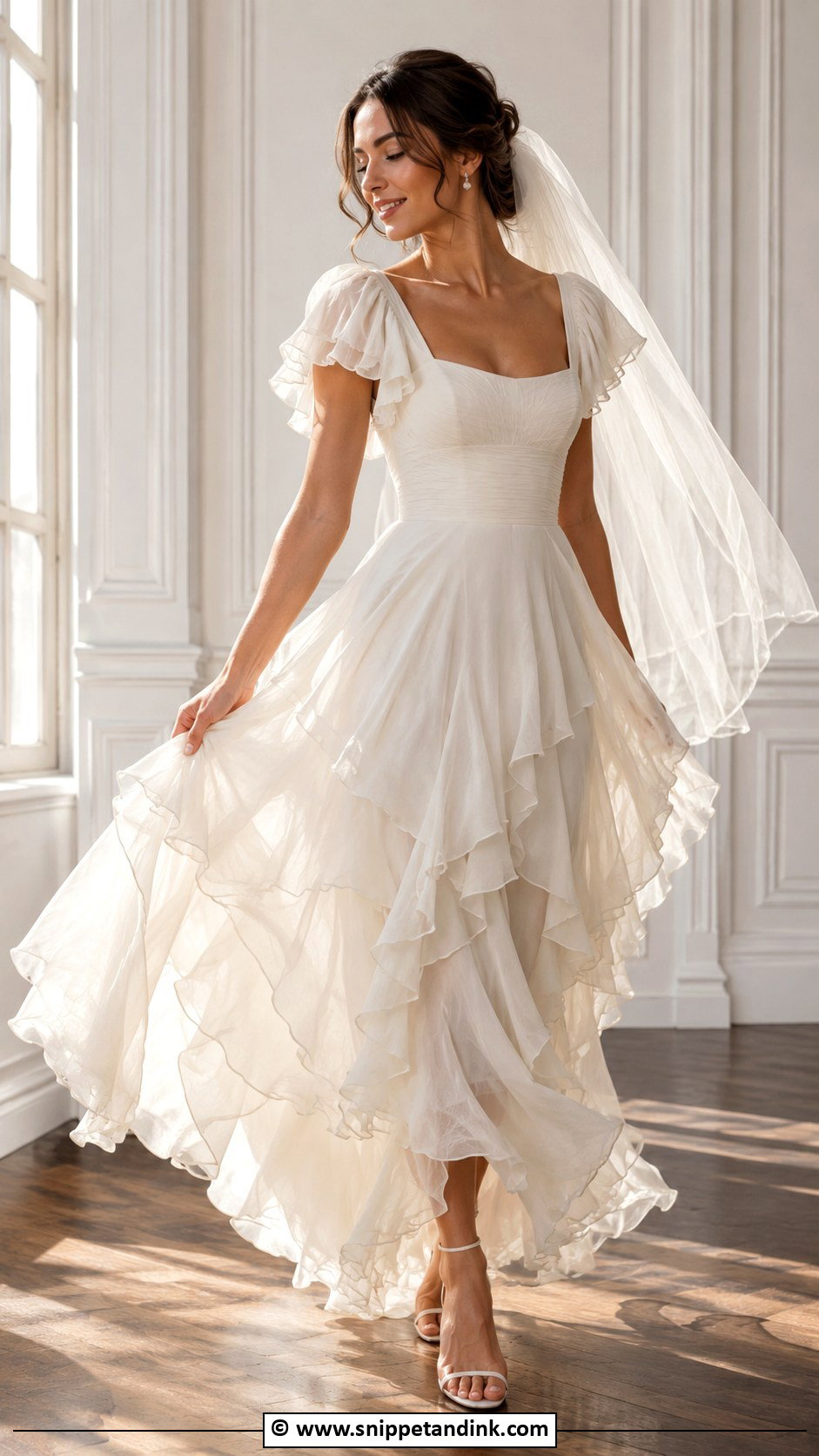
Ruffles can read Victorian, 1970s or 1980s depending on the cut. Soft chiffon ruffles stay airy; organza ruffles are structured and bold. Balance is the skill: a ruffled skirt wants a clean bodice, a ruffled neckline wants a smooth skirt. I warn brides that stiff organza ruffles can scratch the inner arm over a long day, so sit at the fitting with your arms relaxed by your sides and see how it feels. Minimal jewelry, simple heels and a soft veil. The layers throw shadow and shape on camera.
31. Vintage Mermaid Wedding Dress
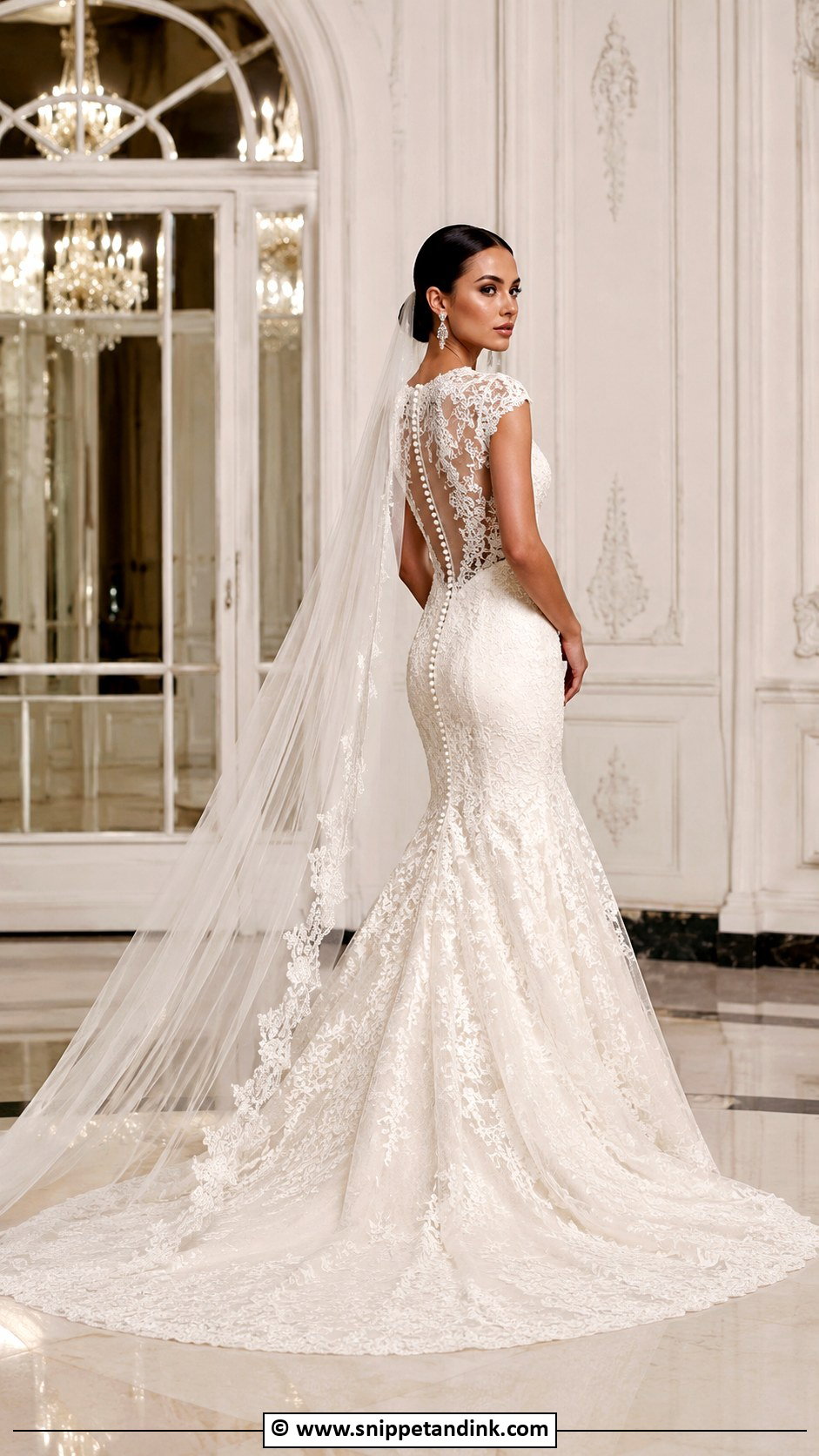
A mermaid gown fits through the hips and flares at or below the knee, and that flare point is the first thing I check. Set too low, you’ll shuffle down the aisle; steps and sitting need testing too. Lace, satin, off-the-shoulder necks, covered buttons or old Hollywood draping bring the vintage note. Tailoring matters more here than for any other silhouette in this list. Drop earrings, a smooth hairstyle, elegant heels and a long veil to soften the line for the ceremony, then it’s at home at a formal evening reception.
32. Vintage A Line Wedding Dress
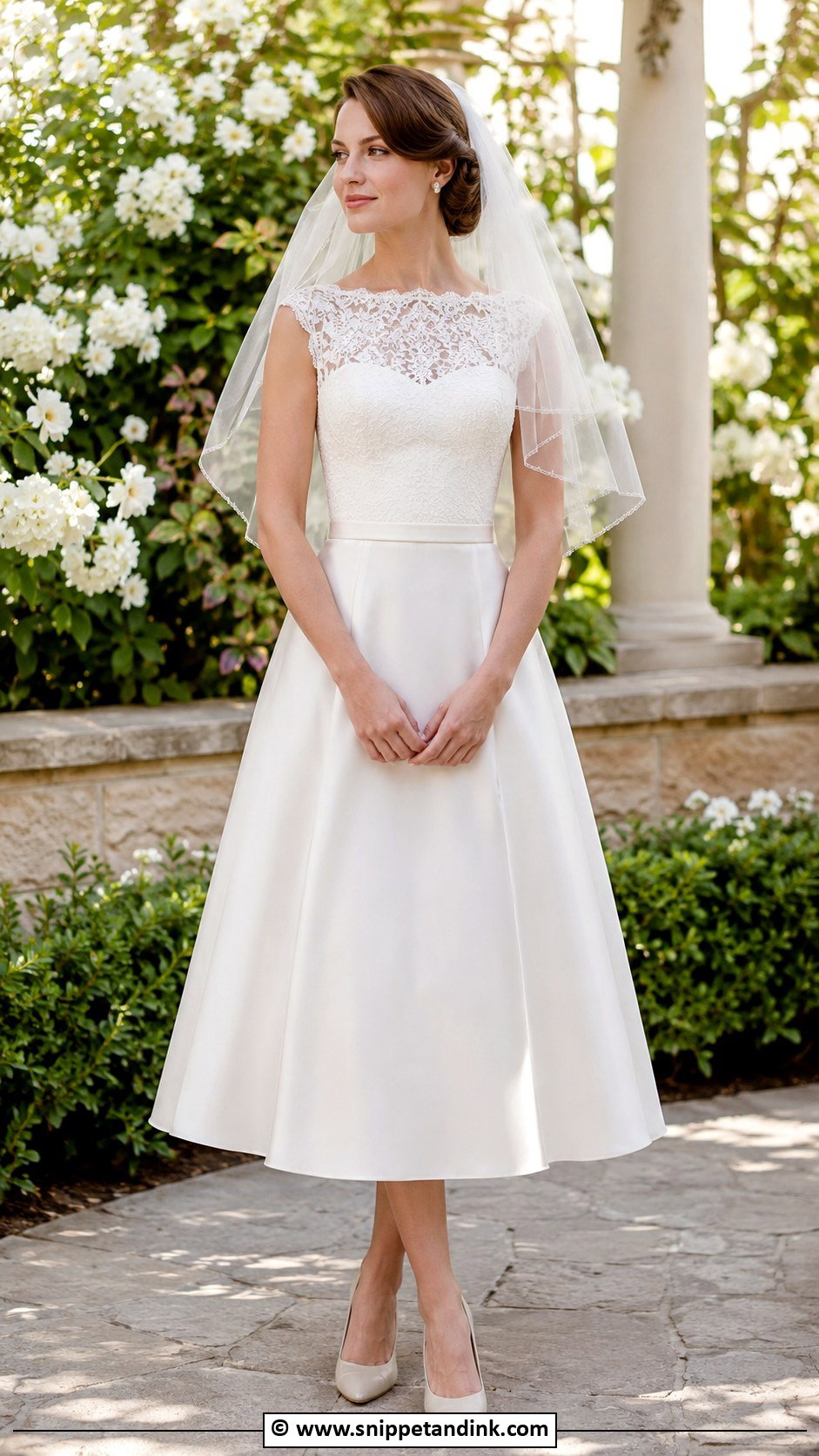
If someone tells me she doesn’t know what shape she wants, I put her in an A-line first. It fits through the bodice and widens gently from the waist, so it’s comfortable for walking, sitting and dancing and suits nearly every venue and season. The vintage character comes from details: lace sleeves, satin buttons, bateau necks, embroidered bodices or soft tulle. Pearl earrings, a fingertip veil and classic heels. It’s the safe pick, and I don’t mean that as a criticism.
33. Vintage Column Wedding Dress
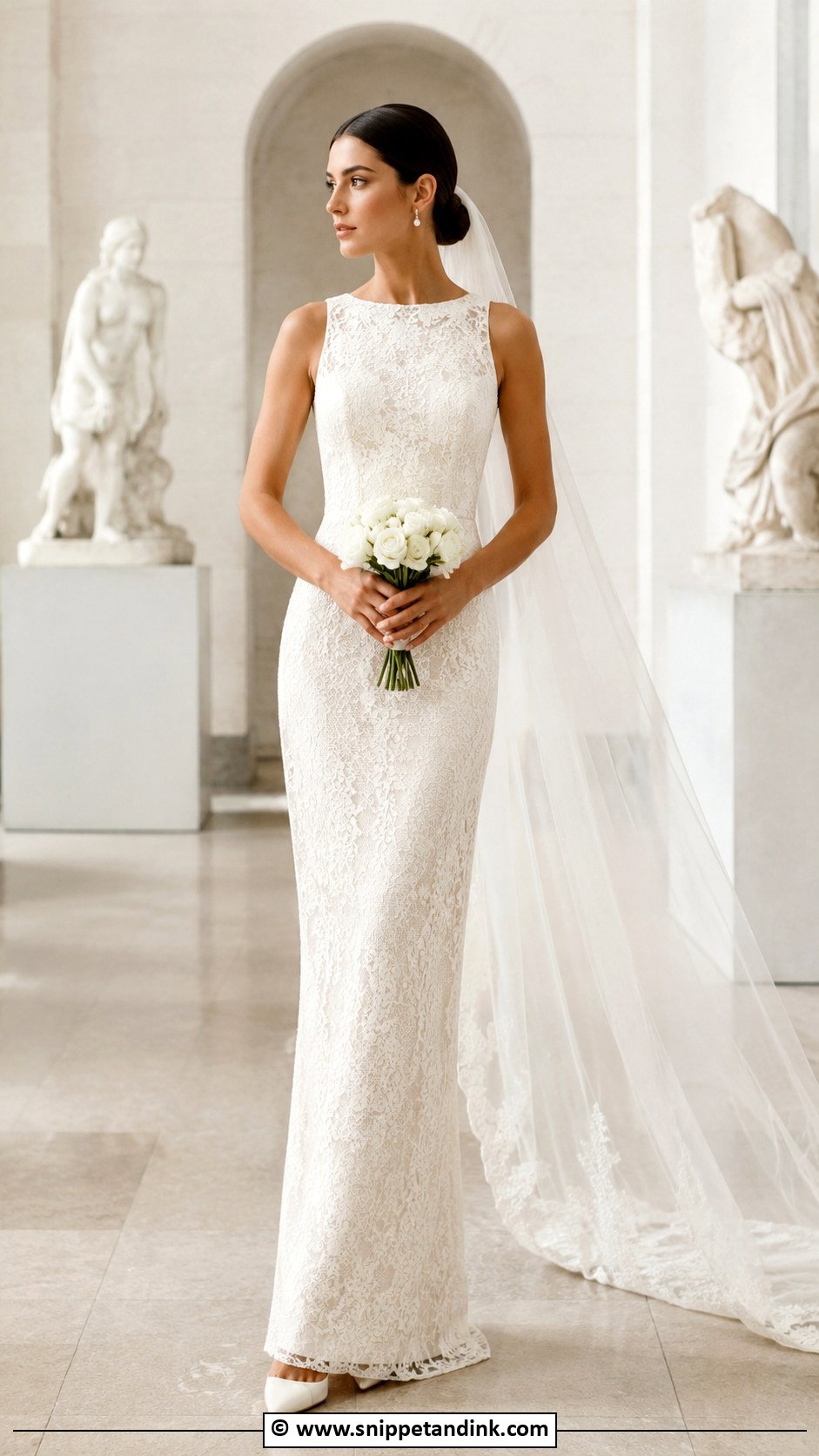
A column falls straight from shoulder or waist and makes one long line. In lace it’s antique; in satin or crepe it’s old Hollywood. Nothing hides the fit, so the dress must skim without pulling across the hips or seat. I watch brides walk away from the mirror, not toward it, because that’s where a column gives itself away. A long veil, pearl earrings and pointed heels. City weddings, museums and small ceremonies suit its quietness.
34. Vintage Courthouse Wedding Dress
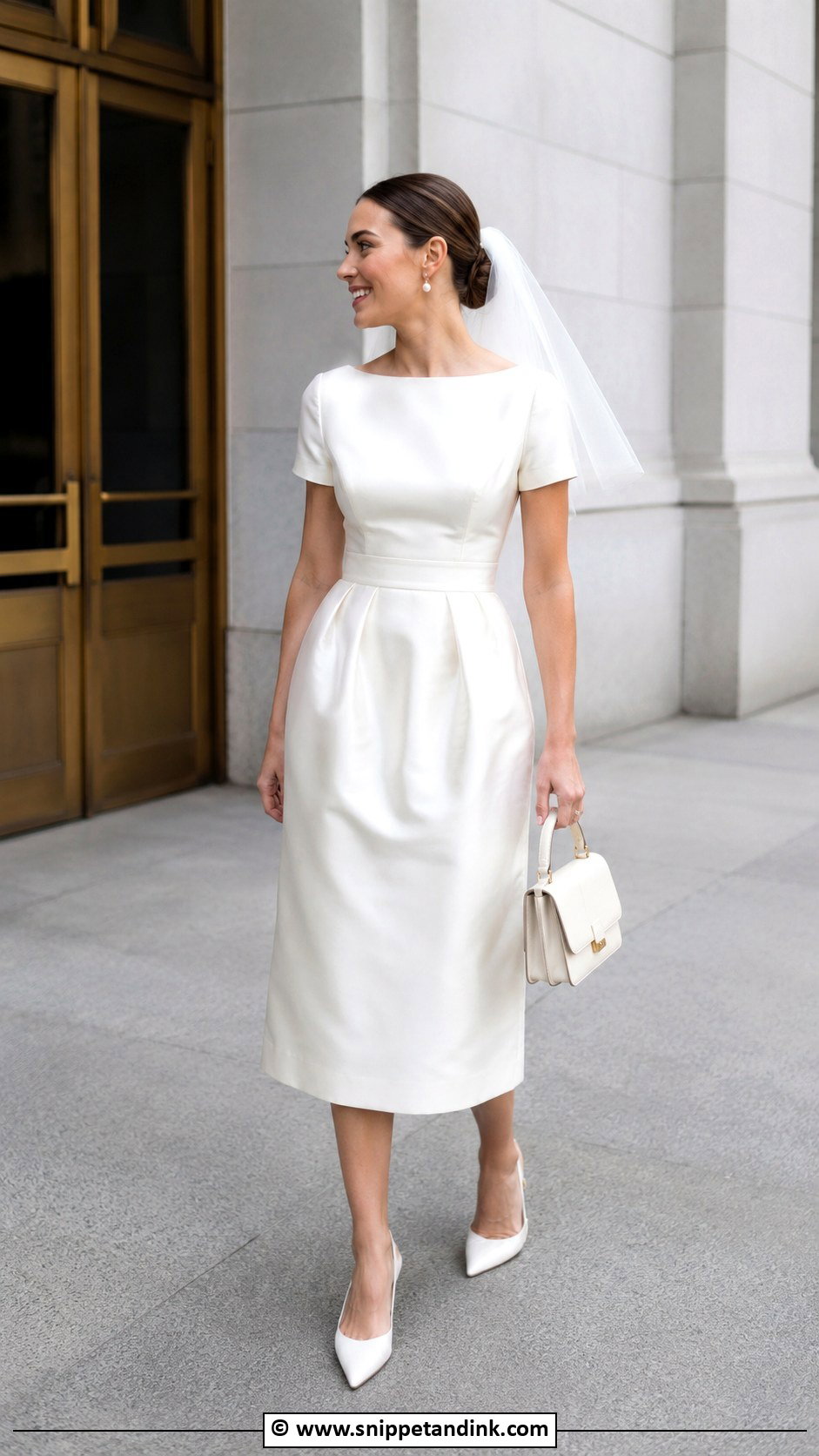
At a courthouse the dress should feel bridal without overpowering a small room. Tea-length, a chic mini, a satin midi, a lace sheath or a simple A-line all fit. The accessories do the bridal work here, so I add pearl earrings, a short veil, kitten heels, gloves or a structured bag. Courthouse backdrops are usually plain, which helps a clean silhouette read well in photos. Make sure you can sit comfortably, as there’s often a wait. A dress doesn’t need a train to mean something.
35. Vintage Reception Wedding Dress
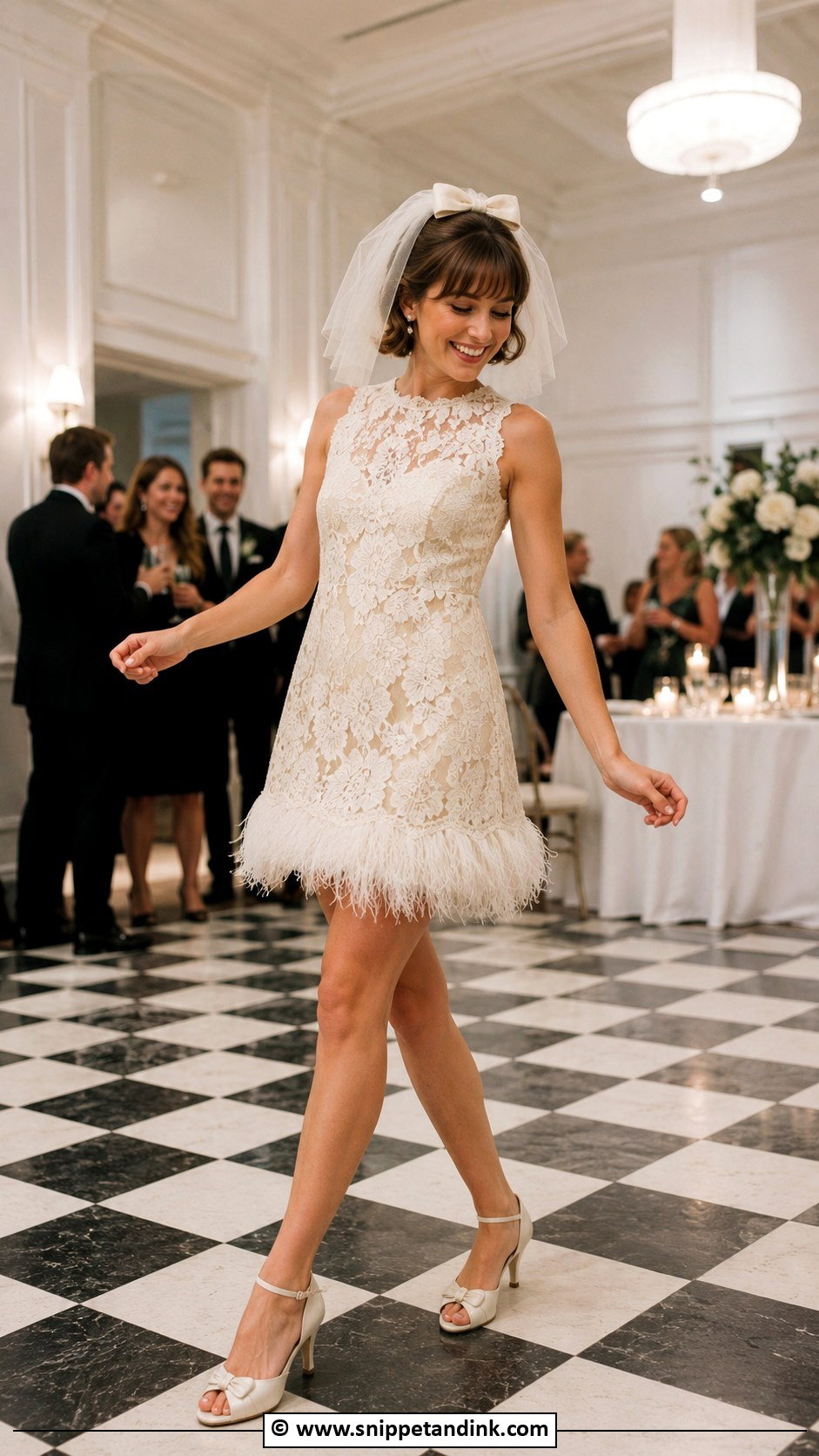
A reception dress is about movement and personality: short lace, a satin mini, a feather hem, tea-length or a beaded sheath. If the ceremony gown is formal, this one can be lighter and more playful while staying in the same vintage world. I always plan the change itself with the bride: who handles the buttons, where she changes and how long it will take, because a slow change quietly eats into dinner. Dance-friendly heels, pearl studs, a small bow or a short veil, and then you can greet guests and dance without a train to manage.
Altering a Dress Older Than Your Parents
Take an antique dress to a seamstress who has handled old textiles, not only modern bridal. I’d allow at least three to four months for alterations on an original, since cleaning may have to come first and fragile fabric slows every step. A few rules I stick to:
- Clean before you alter, so you see what the fabric really looks like and how it reacts.
- Keep everything that’s removed. Trimmed lace, spare buttons and hem fabric become patches if something tears later.
- Reinforce rather than replace. Fine net or silk backed behind weak lace keeps the original visible.
- Test the bustle with the bride sitting, standing and walking up stairs before the final fitting ends.
Costs vary widely by region and by how much hand work the fabric needs, so get a quote once the seamstress has seen the dress in person, not from a photo.
Storing It So It Lasts Another Fifty Years
After the wedding, have it cleaned soon. Sugar from champagne or cake is invisible at first and turns brown over time. Then store it loosely folded in acid-free tissue inside an acid-free box, with tissue padding each fold so no sharp crease sets. Skip plastic bags, which trap moisture, and wire hangers, which stretch shoulders; a heavily beaded or bias-cut dress shouldn’t hang at all. Keep the box somewhere dark with a steady temperature, a closet inside the house rather than an attic or basement, and refold it along different lines every year or so.
Fit First, Era Second
The decade matters less than the fit. You can wear a true antique, a restored family dress or a new gown with old details, and lace, satin, pearls, bows, gloves, veils, basque waists, tea-length hems and soft sleeves will carry the heirloom mood in any of them. I’d judge each option on your venue, how many hours you’ll be in it, and whether it still feels like you once the alterations are done. Get the tailoring right, add one or two well-chosen accessories, and the dress will look as good in your photos decades from now as it does in the mirror.
You'll Like These Ideas:








Leave a Reply