
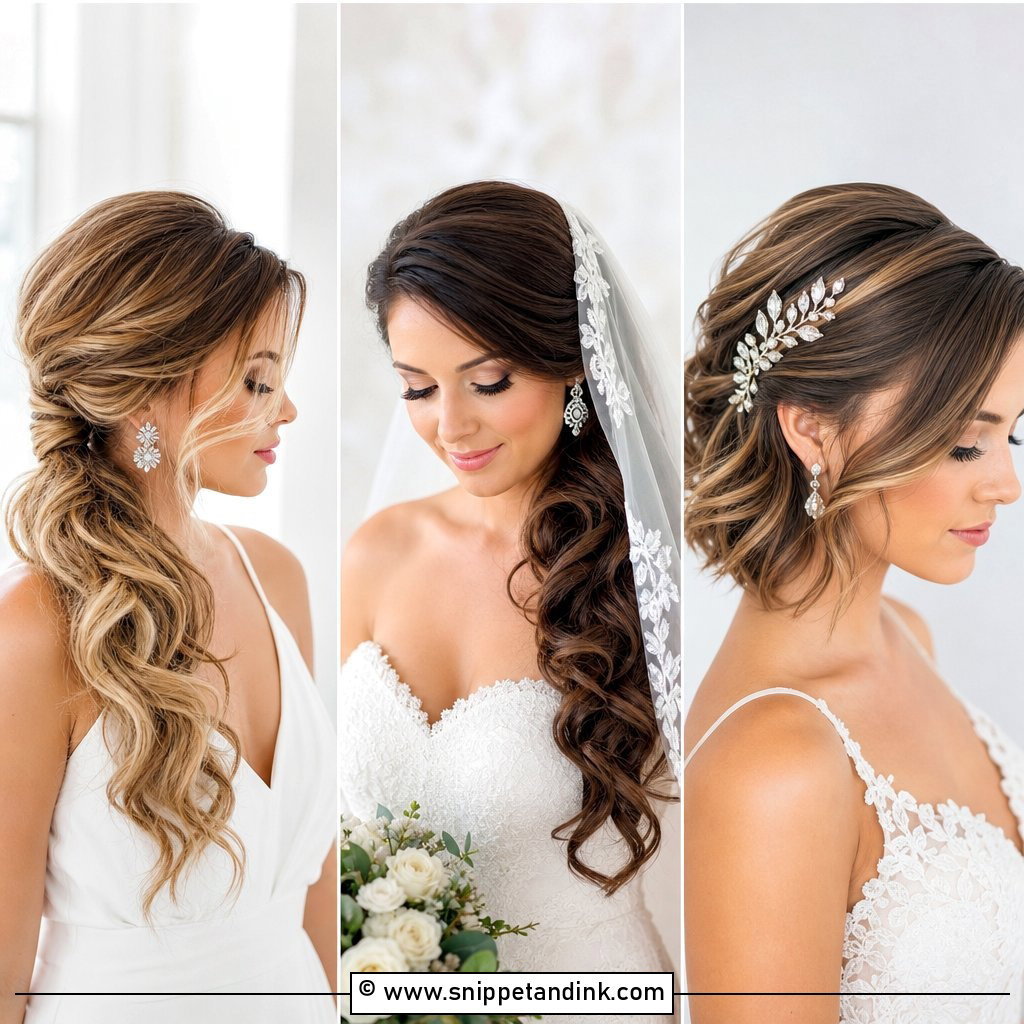
A wave is a shape, not a style, and that’s why it adapts to almost any dress, venue or hair length. What changes is how it’s built: pinned tight for a ballroom, loosened and braided for a field, sculpted flat for a 1920s gown. Here are 20 wavy hairstyle ideas I’d happily put on a bride, with the honest notes on each, including the ones that need more hair or more patience than people expect.
Cut, Color and Wash Timing in the Weeks Before Wedding Waves
Waves show the condition of your hair more than an updo does, because the lengths are on display. Most of what makes them shine happens before the day.
- Trim two to three weeks out. A fresh cut has blunt ends that kick out instead of curling under.
- Color about one to two weeks before, never a brand new shade. Toner fades fast, and you want it settled, not brassy or patchy.
- Stop heavy masks and oil treatments a few days ahead. They make hair soft and slippery, and the waves won’t hold.
- Wash the day before. Day-old hair has a little grip at the root, which helps pins and curls stay.
- Skip any new product on the morning. Your stylist will layer what’s needed.
If you wear extensions, have them fitted or refreshed at least a week before the trial, so we can curl the extensions and your own hair together and see if the textures match.
1. Hollywood Waves for Wedding
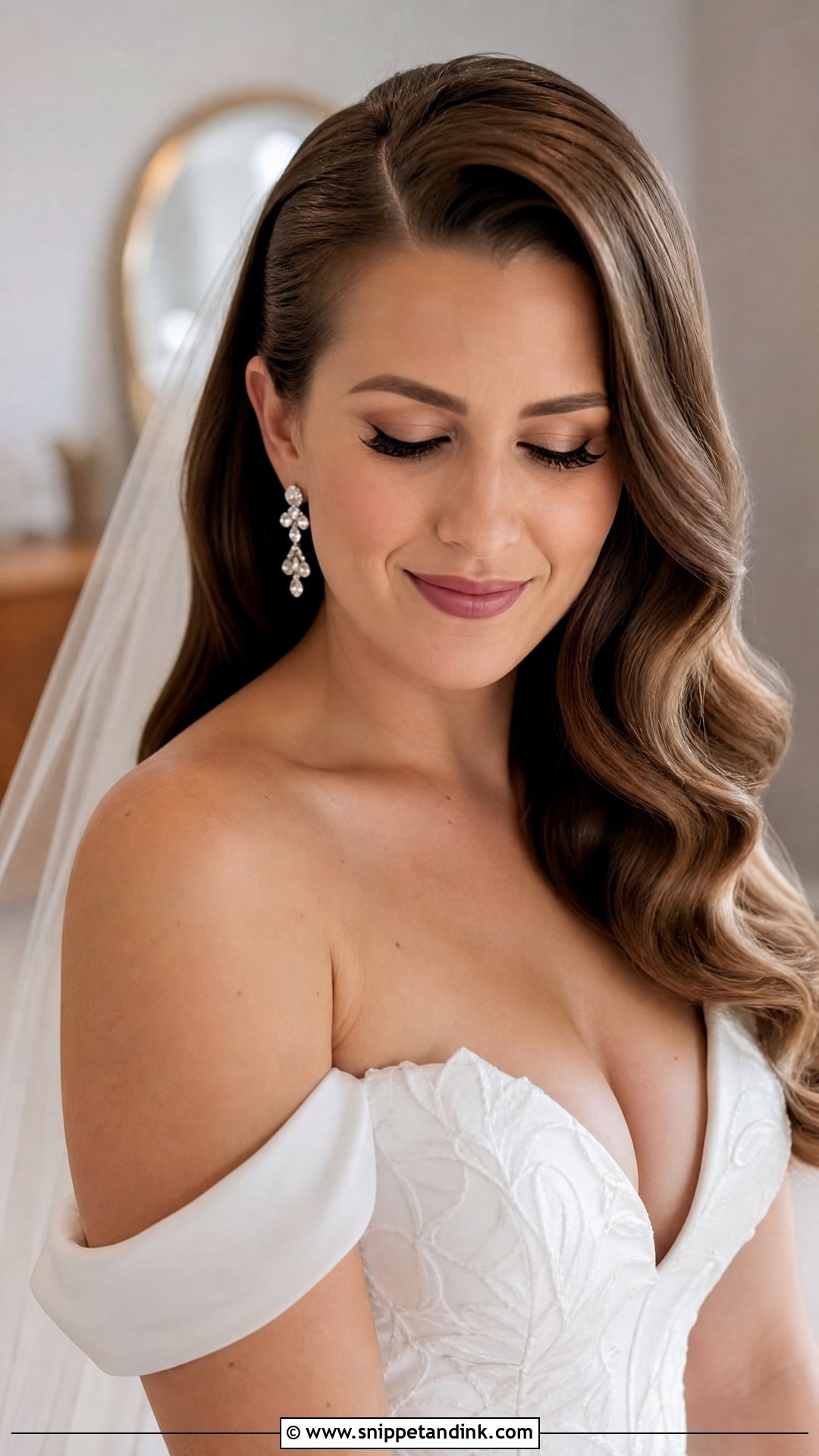
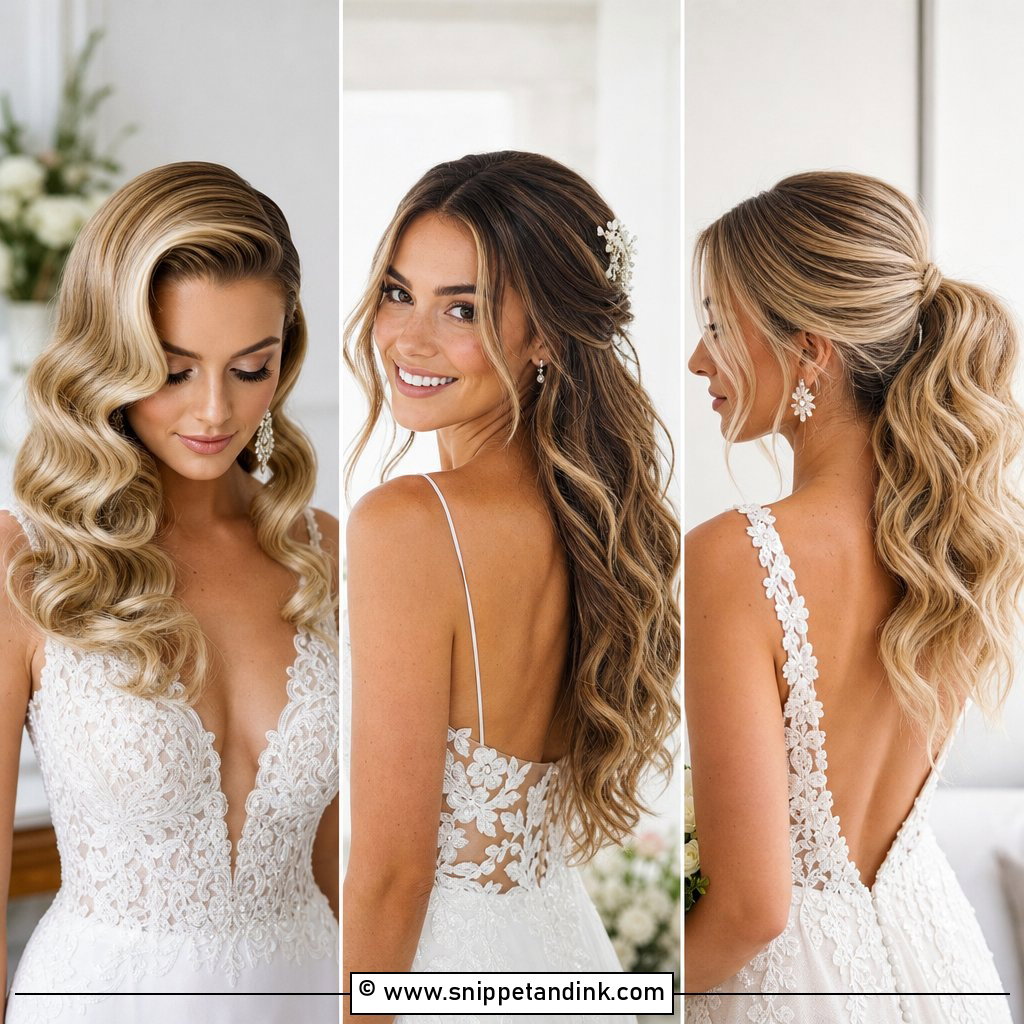
Hollywood waves sit close to the head in one unbroken S, swept from a deep side part. Every section has to be curled the same way, away from the face, then cooled and brushed until the curls merge. Good prep and a skilled hand can get them through eight to twelve hours, but that depends on hair that holds a set; very soft, fine hair will relax a little by the evening. A vintage comb at the part fits the era.
2. Half Up Half Down Wavy Wedding Hairstyle
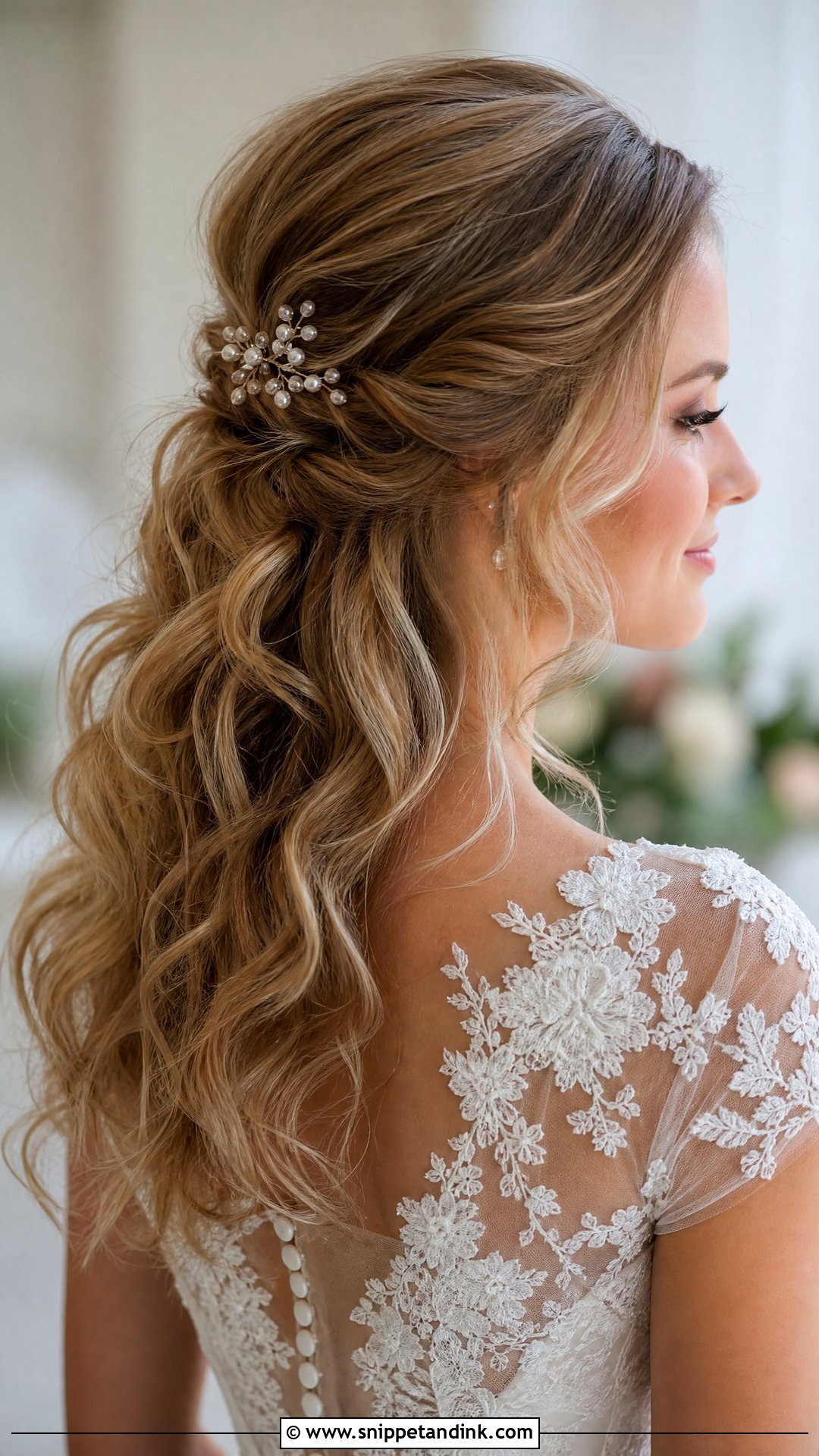
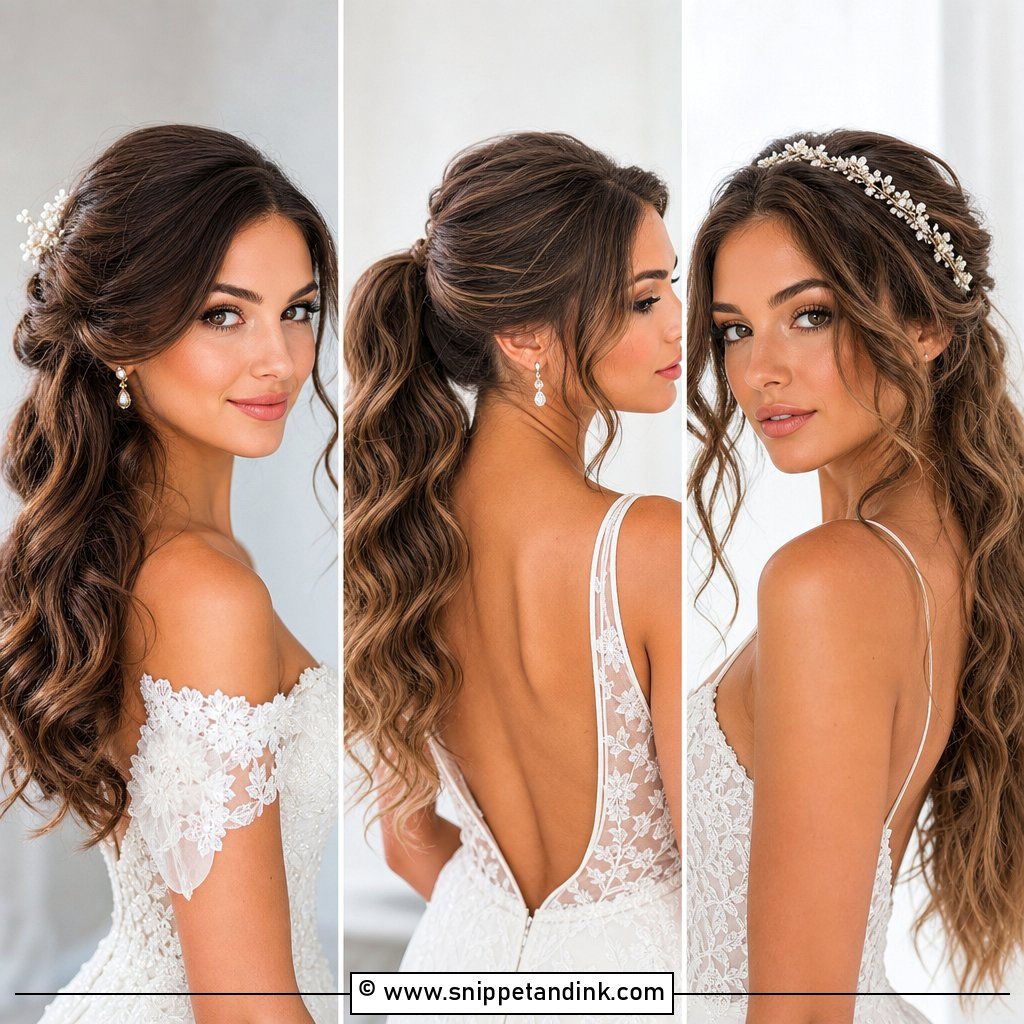
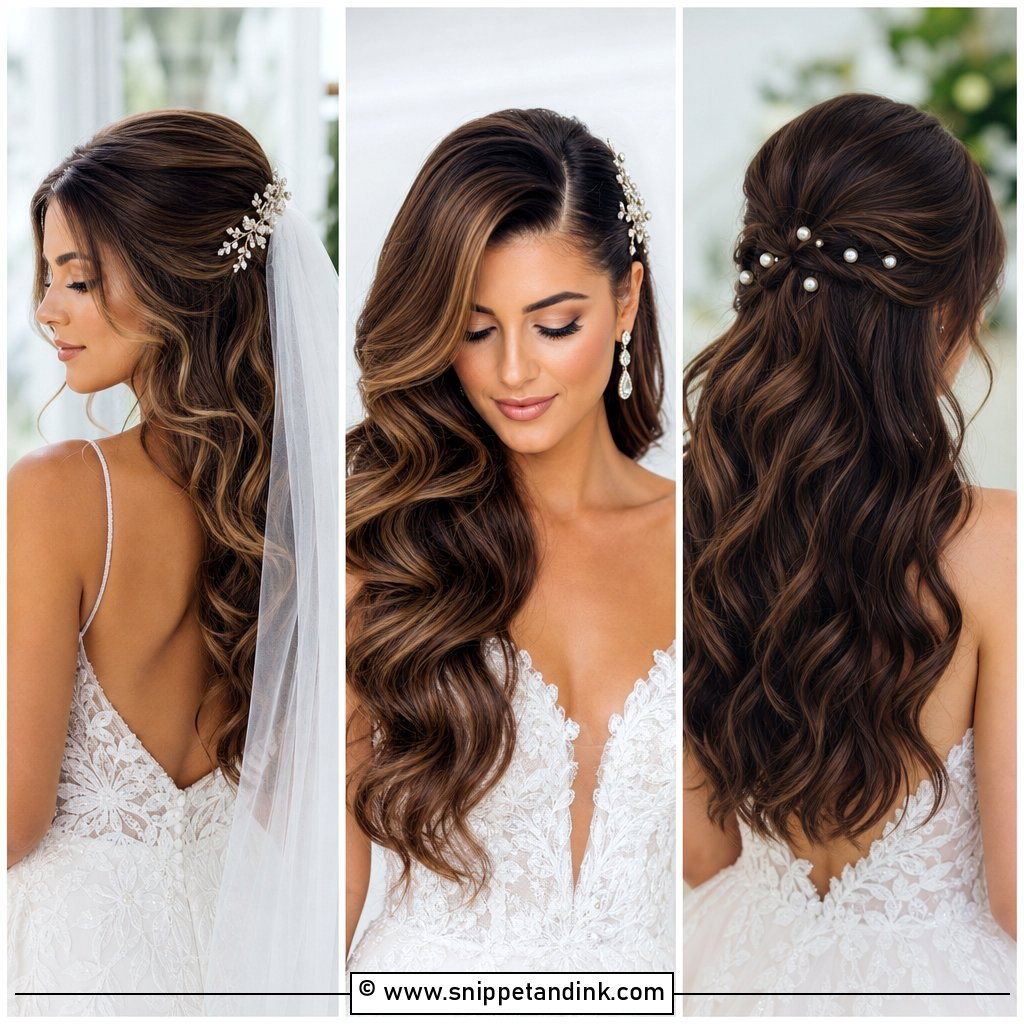
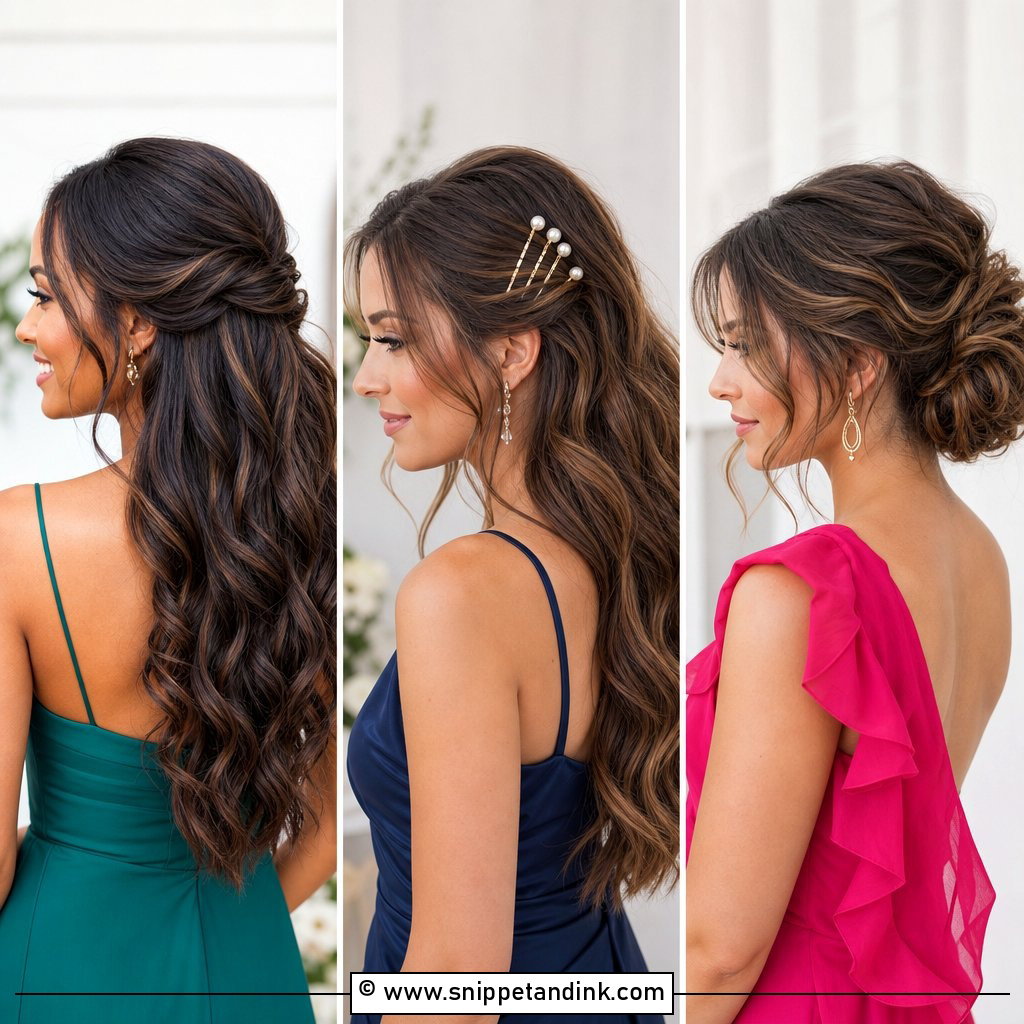
Most brides end up here, and for good reason: half up keeps your face clear for the vows and leaves the length down your back. On medium to long hair, I twist or pin the top section into a hidden anchor of crossed bobby pins rather than loose hair, which is what stops it sliding by the first dance. A pearl clip or ribbon covers the join. If your hair is short at the nape, keep the top section small so the lengths still look full.
3. Boho Waves for Wedding
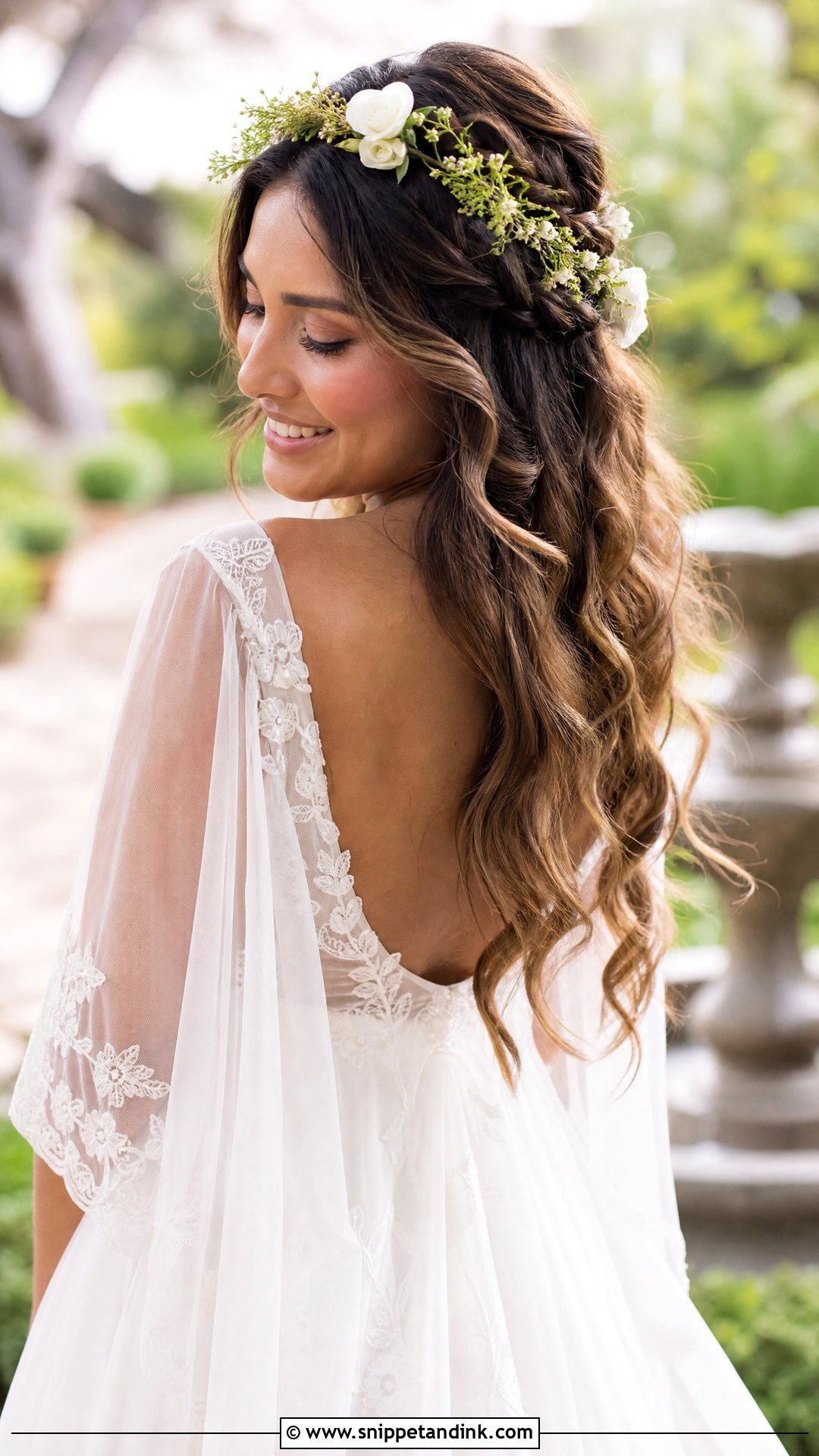
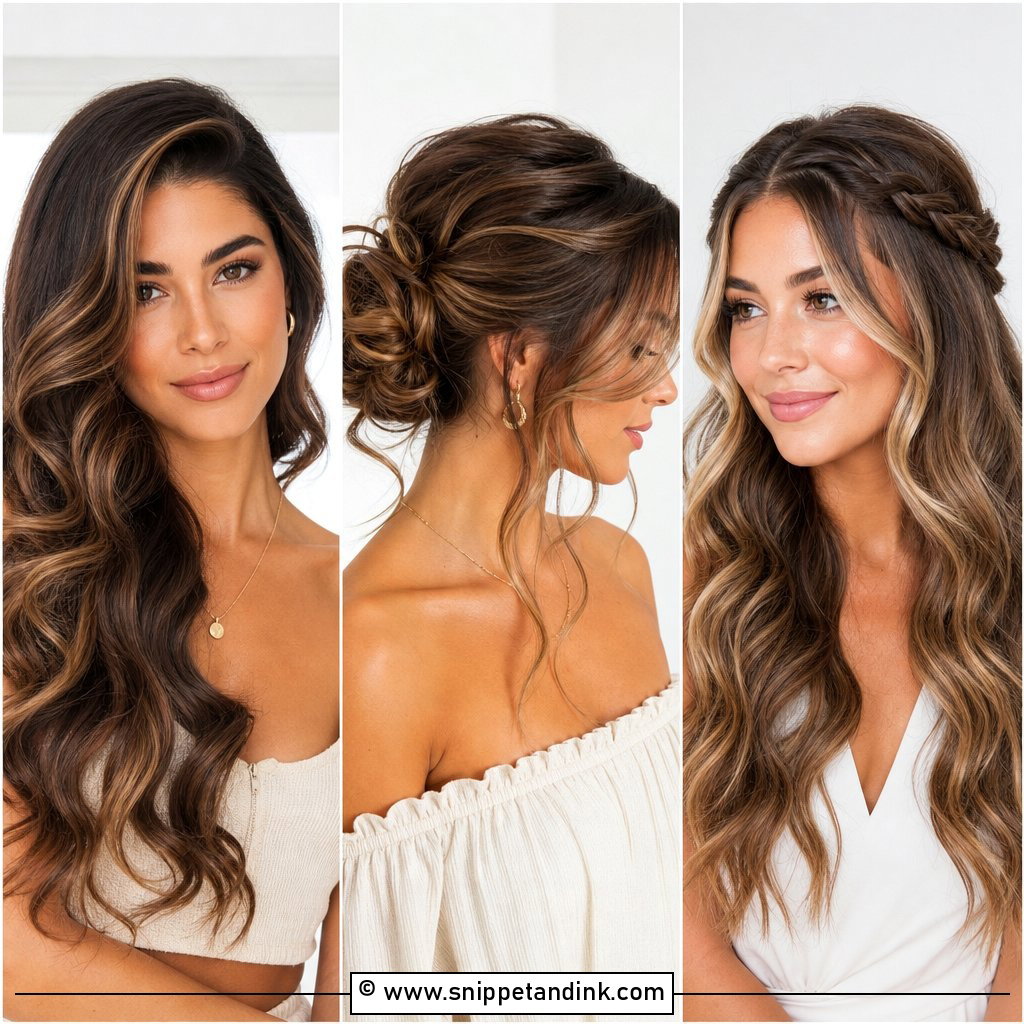
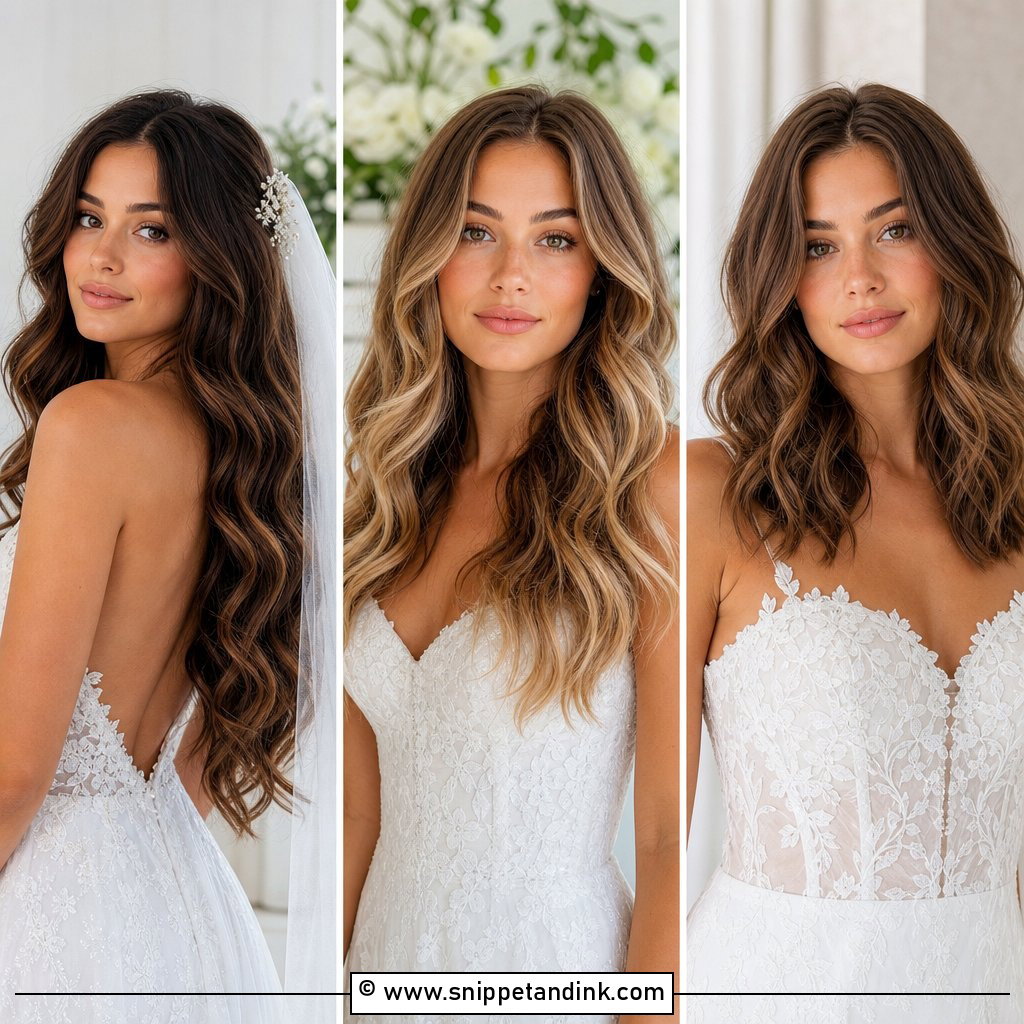
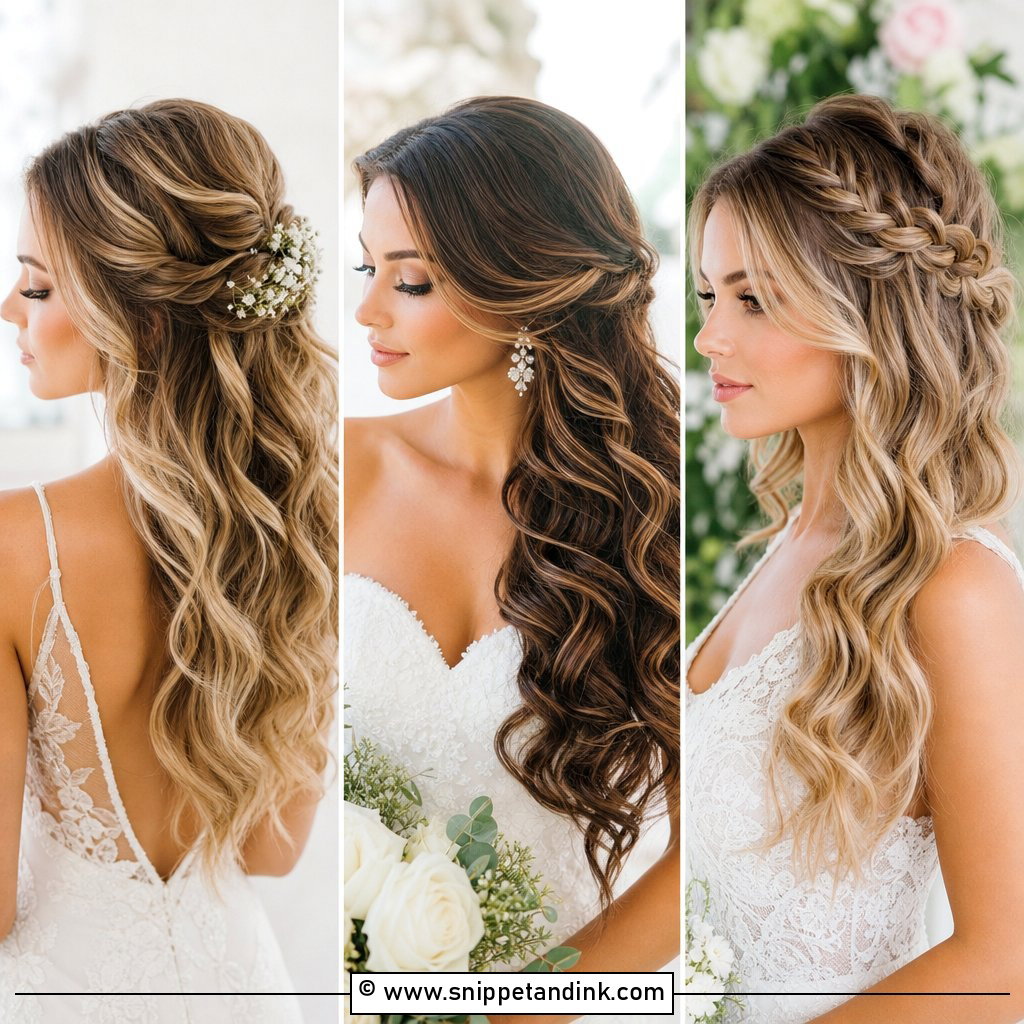
Boho waves look unplanned, and getting that takes planning. I curl in alternating directions, leave the ends straight, and weave in a couple of thin braids or twists for grip. A floral crown or scattered blooms finish it. The honest trade-off: undone texture reads as relaxed in daylight at a garden or barn wedding, but under flash in a formal room it can just look unfinished, so match it to the setting.
4. Beach Waves for Wedding
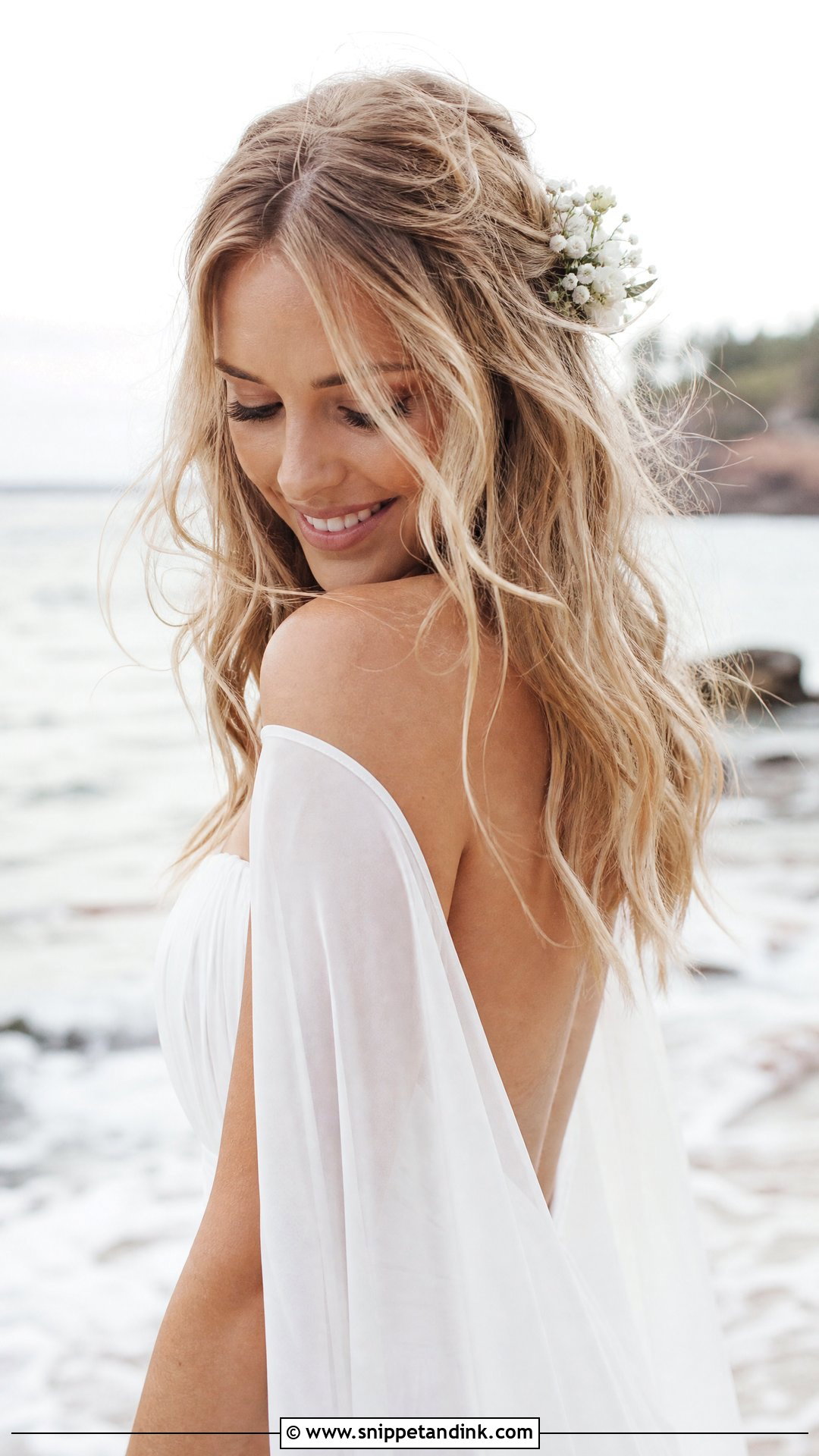
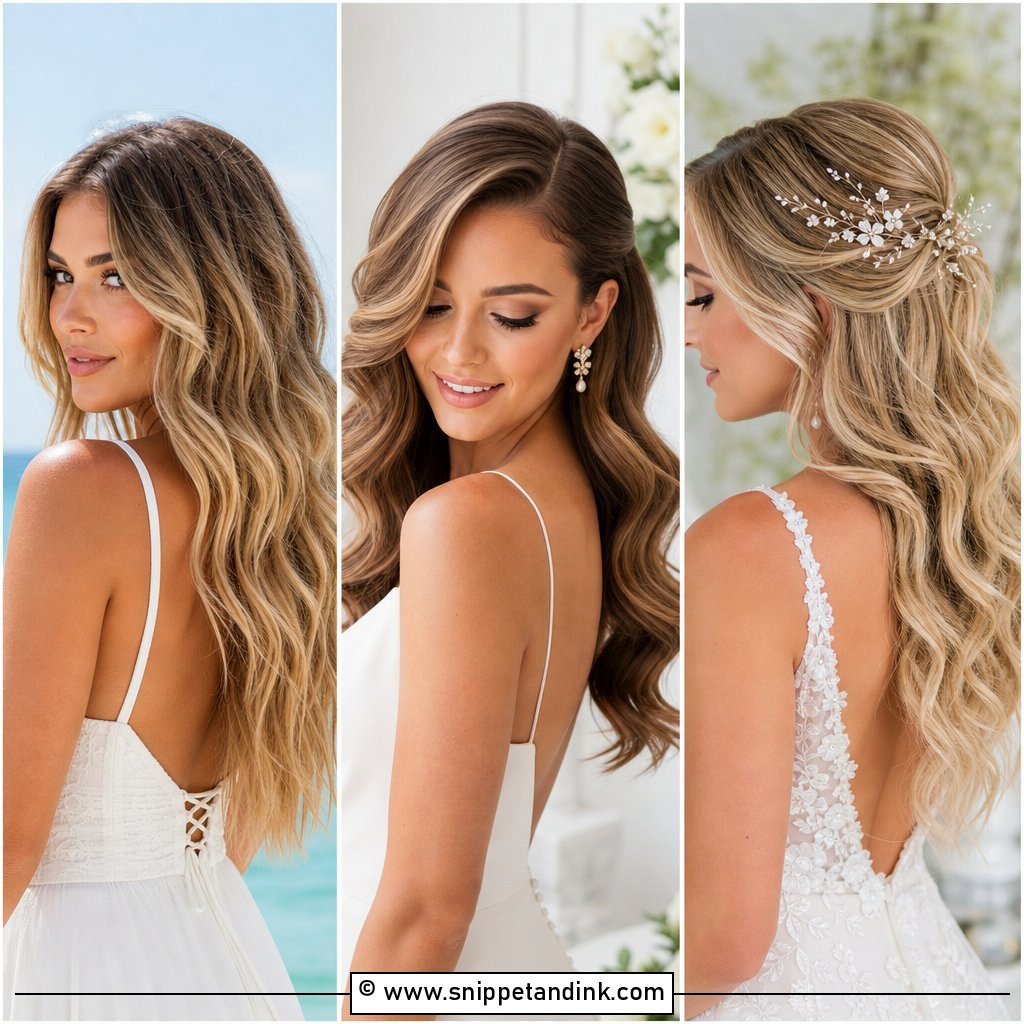
Real beach air is the enemy of beach waves. Wind and humidity loosen any curl, so I set them firmer than the photo and let the breeze do the relaxing. A salt spray gives the matte, tousled finish. Floral pins hold better than a heavy shell crown, which can drag on loose hair. These suit medium to long hair of any texture, and they work best at a seaside or open-air wedding where the softness looks intentional.
5. Side Swept Wavy Wedding Hairstyle
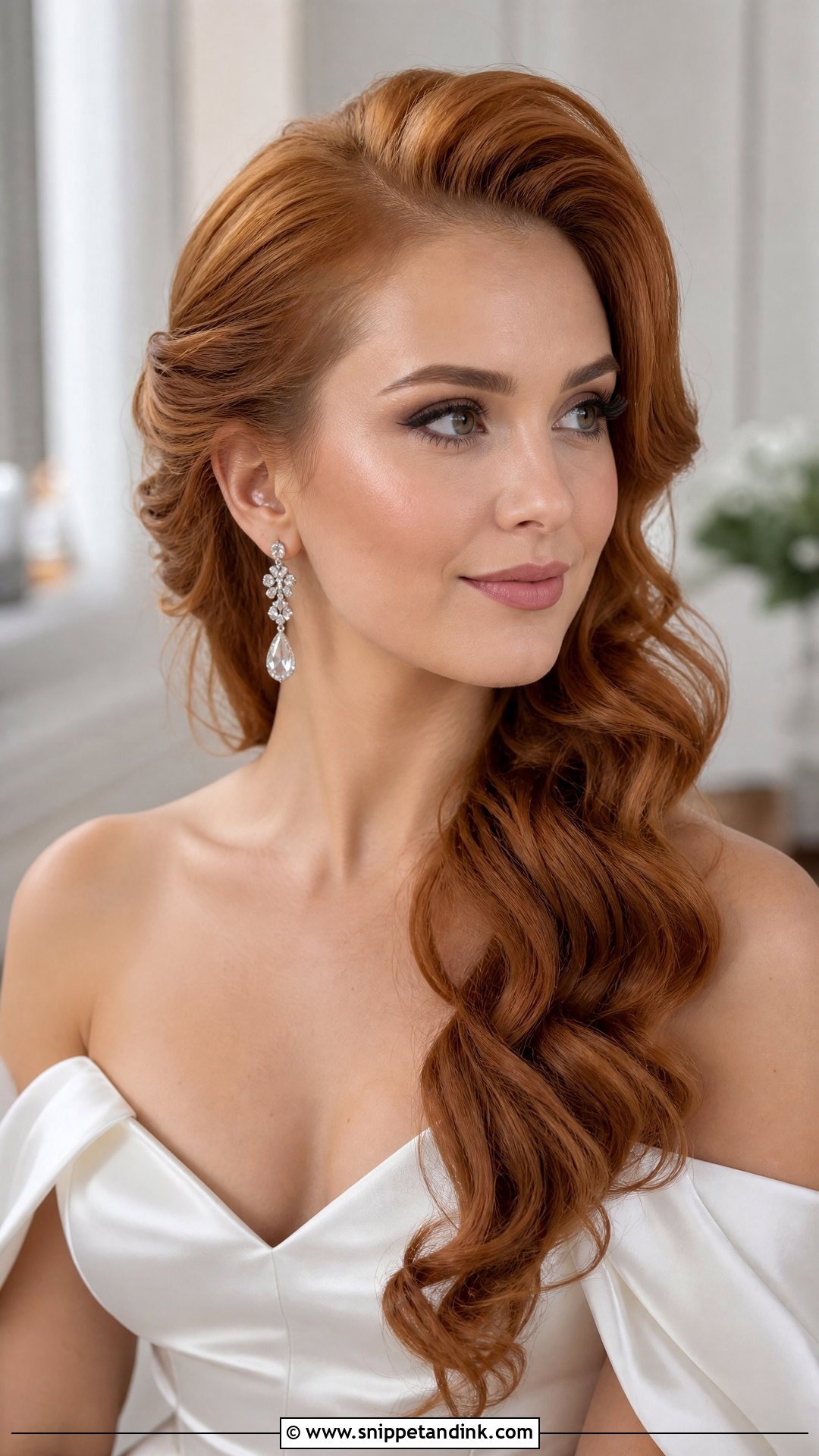
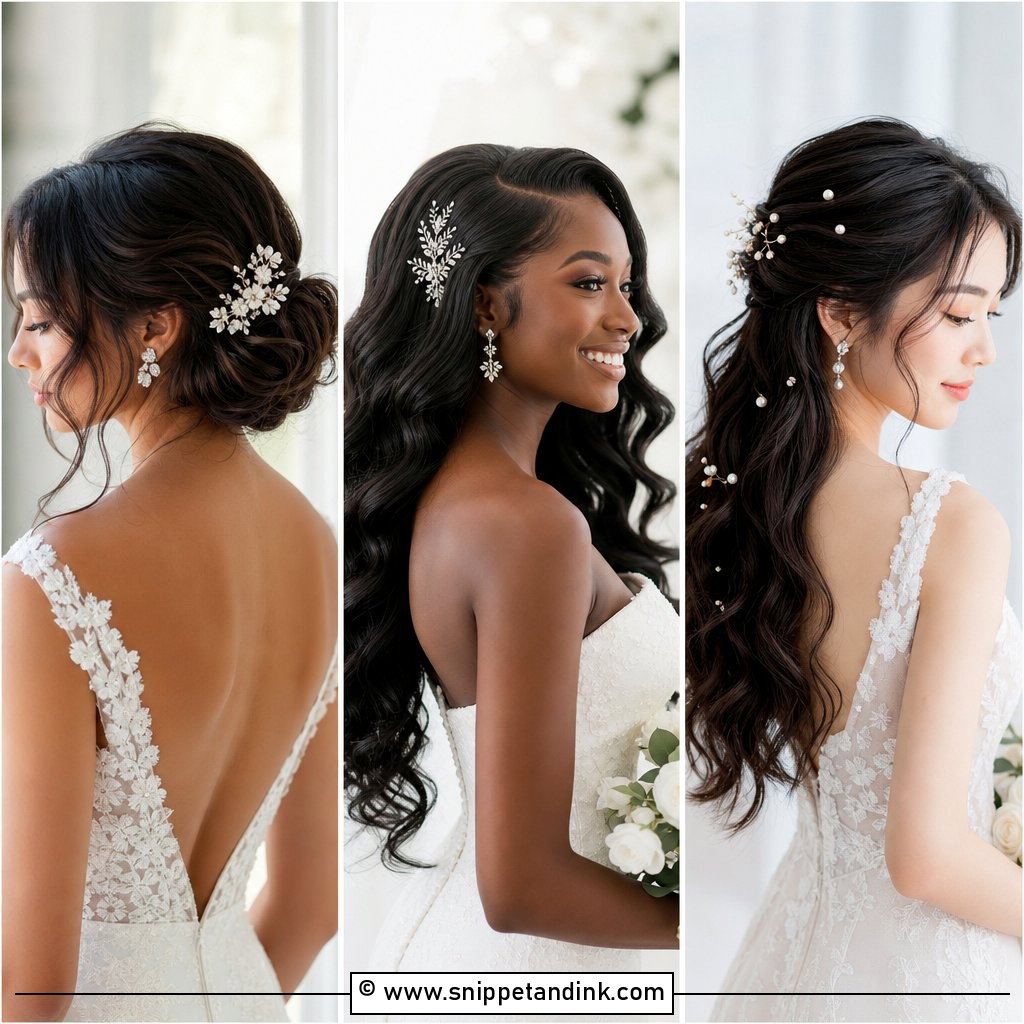
Swept to one shoulder, waves show off a statement earring and the neckline on the bare side. The volume comes from a deep part with lift at the root. What makes it last is a hidden row of pins behind the ear on the light side, so the hair can’t creep back to center. A clip near the part adds a little sparkle. I’d skip it with a high, ruffled collar, where the hair and fabric compete on the same shoulder.
6. Wavy Low Bun for Wedding
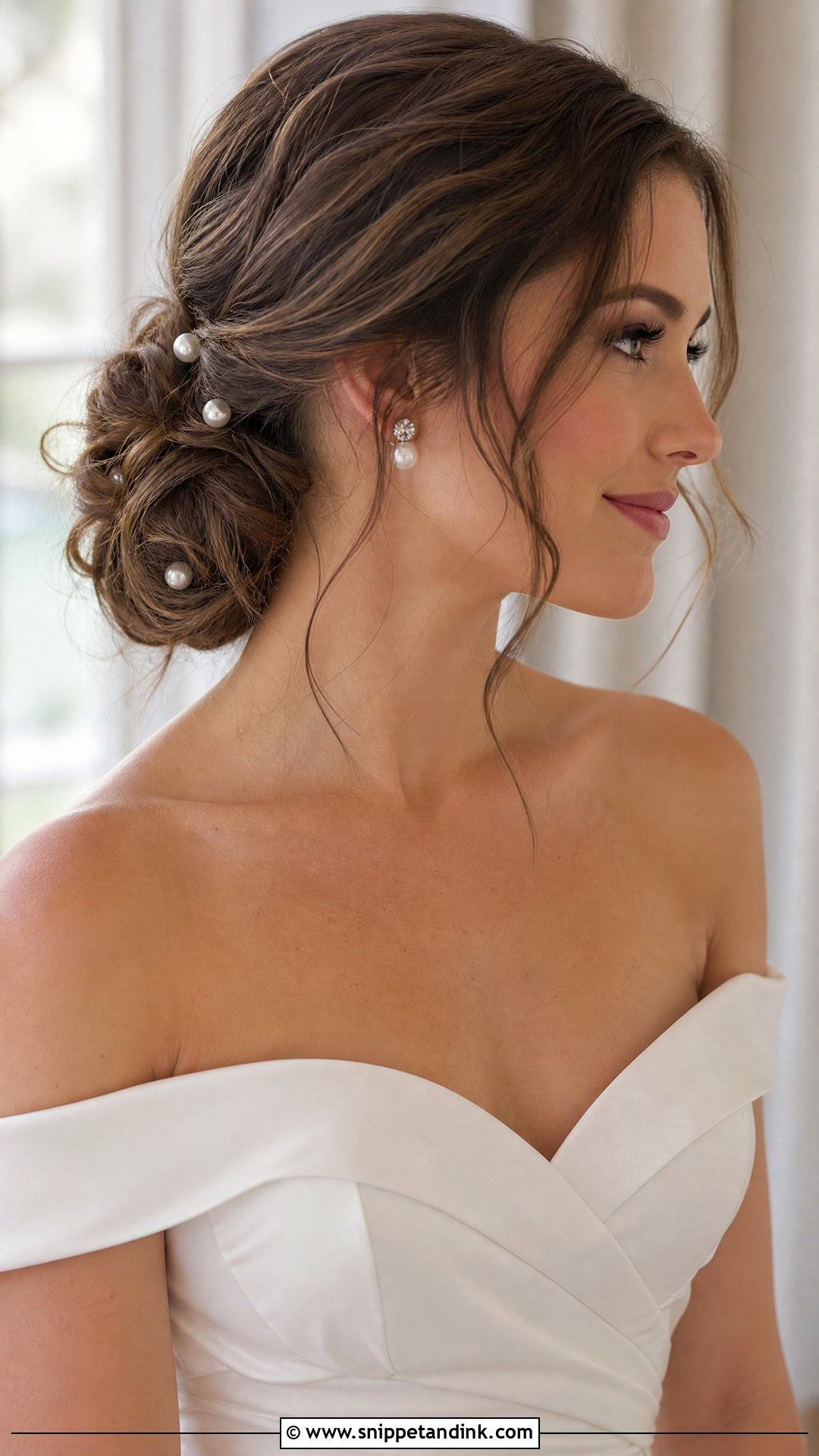
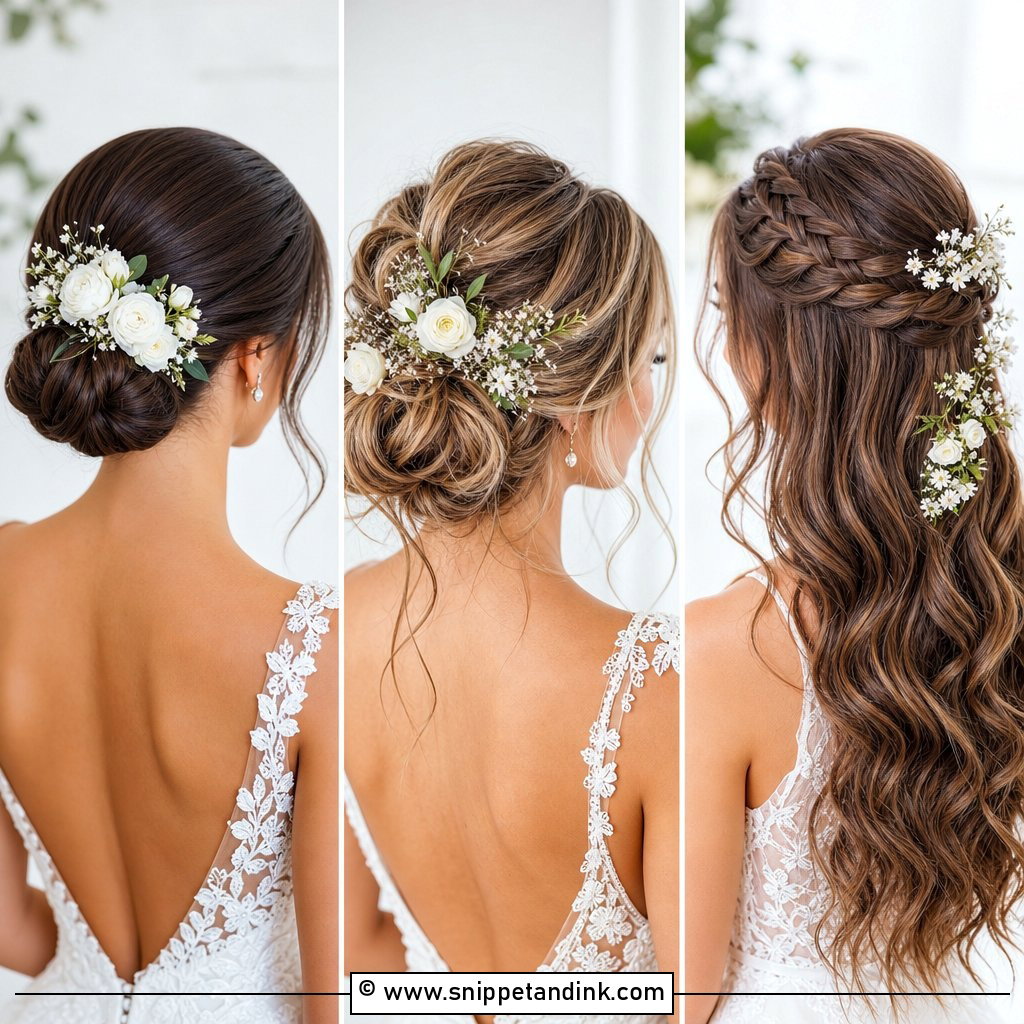
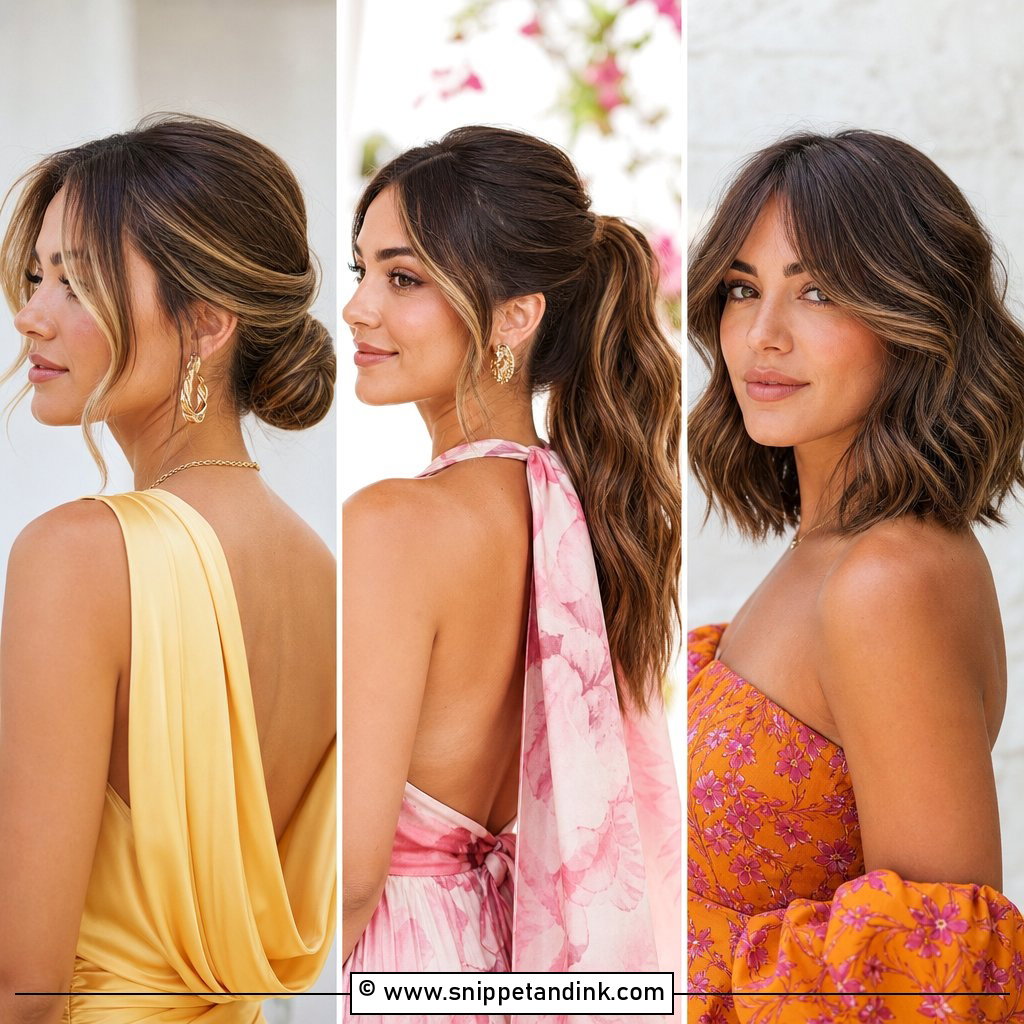
The low bun is my safest recommendation for a long, active day. Waves are gathered loosely at the nape, with a few face-framing pieces left out, and the bun is pinned through its core so it can’t loosen as you hug people. Keep it airy rather than tight, because a slick bun under bright light shows every bump. Pearl pins or a couple of fresh flowers tuck in easily. It sits under a veil, works at formal and outdoor weddings alike, and looks good from the back, which is the angle half the ceremony photos catch.
7. Wavy Updo for Wedding
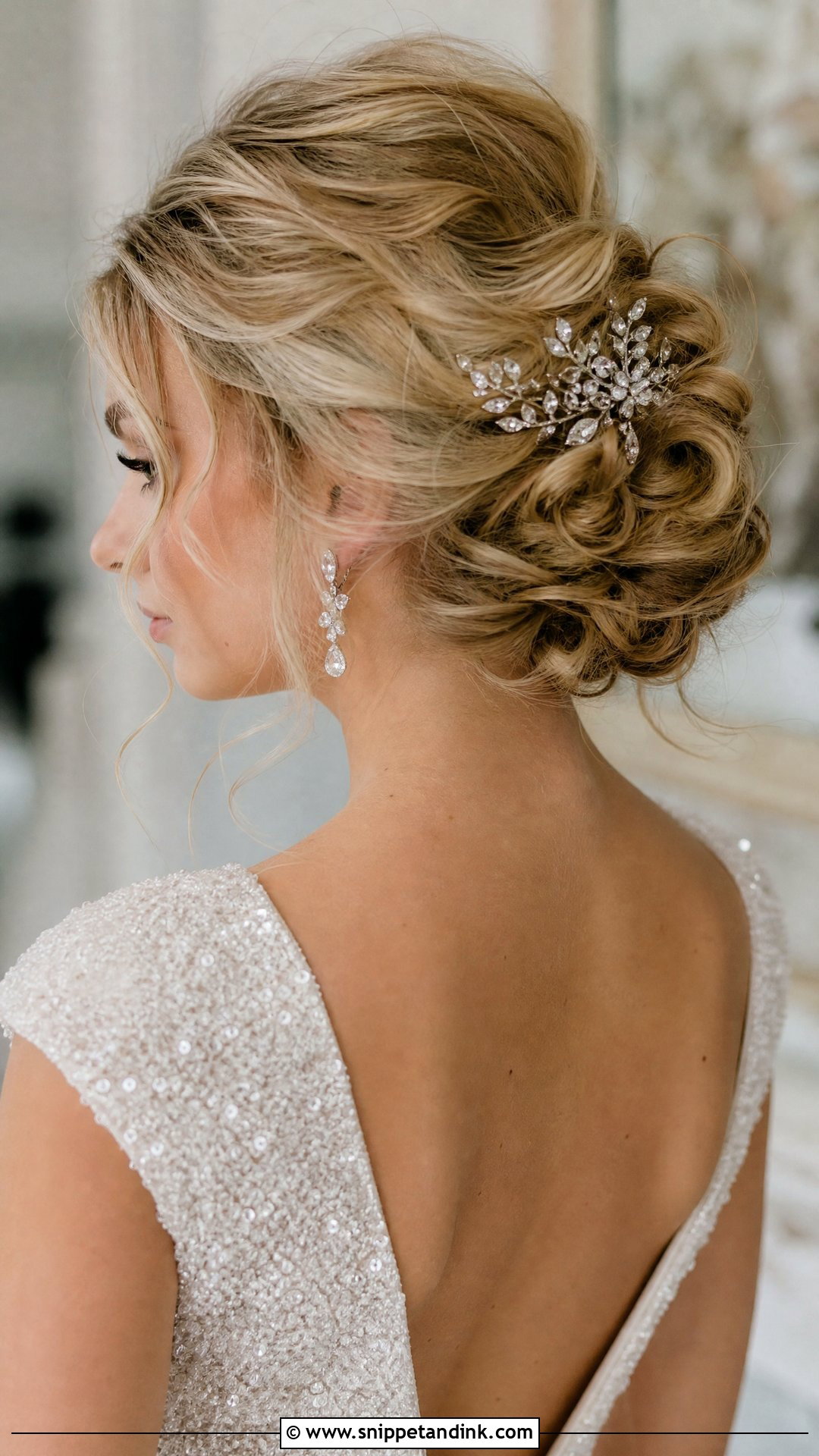
Choose an updo when it’s hot or the back of your dress deserves to be seen. Here the waves are pinned upward into a soft, textured shape instead of smoothed flat, so the pattern still shows. Pins go in against the direction of the hair to lock. Combs, crystals or small blooms add detail. For a warm-weather wedding this is the most comfortable choice on the list, since nothing touches your neck.
8. Wavy Half Up Braid for Wedding
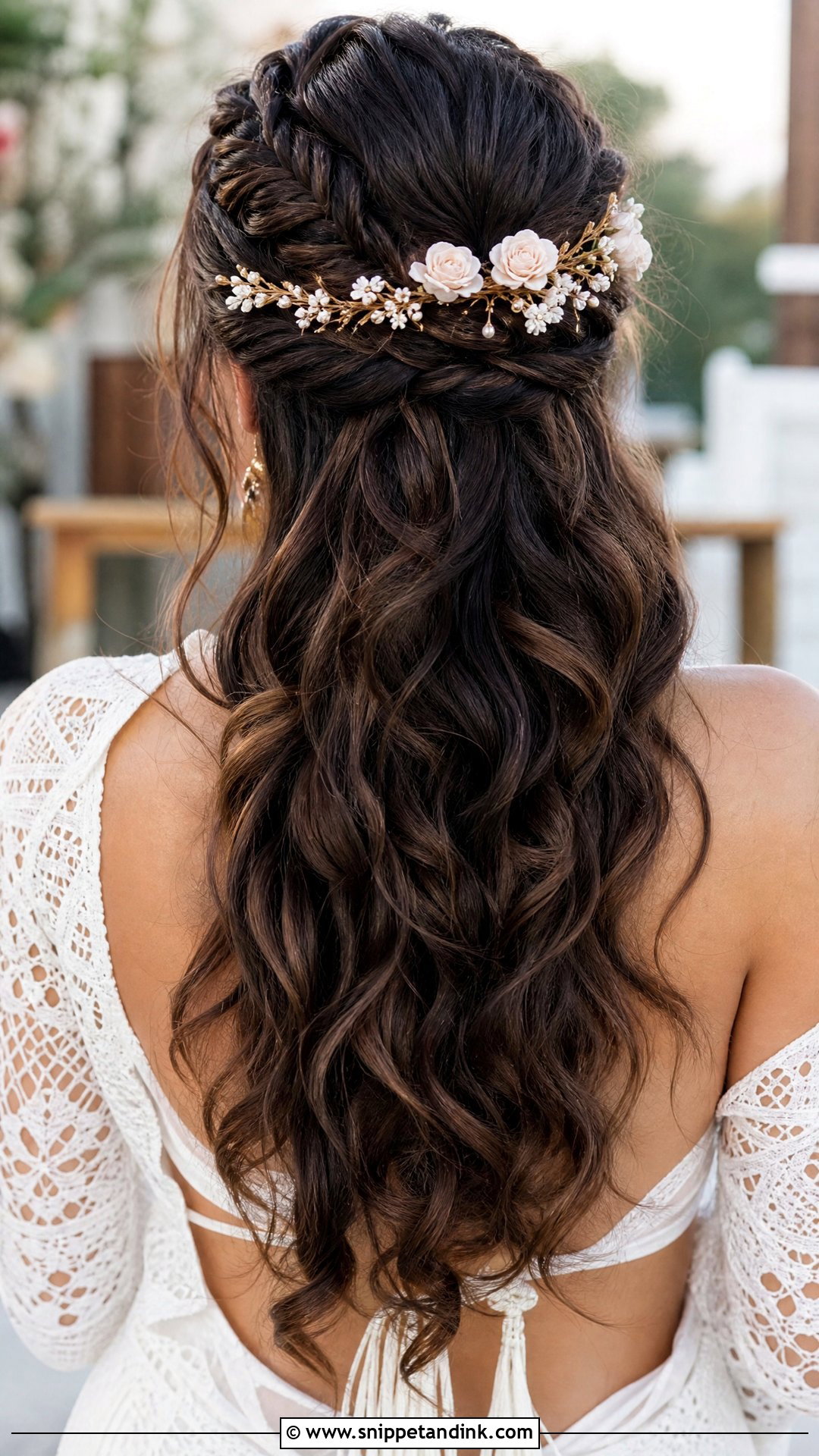
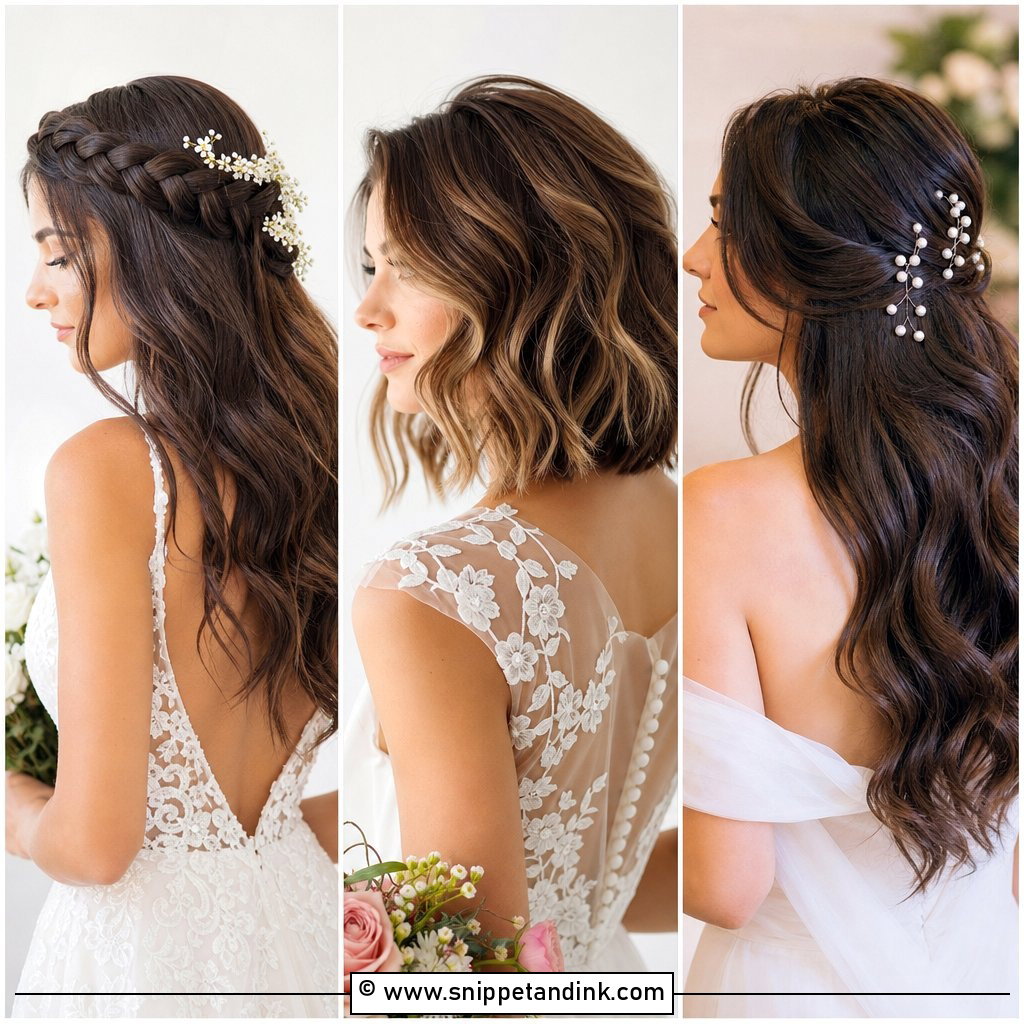
The braid does a job here, not just decoration. Plaiting the top section, as a fishtail or a simple three-strand, holds it far more firmly than a twist, so this is the version I suggest for slippery, freshly washed hair. Loose waves fall below. I braid tight, then gently pull the edges out so it looks soft. A floral headband or a few pins can sit along it. It suits boho and garden weddings, and keeps hair off your face all day.
9. Wavy Hair With Floral Crown for Wedding
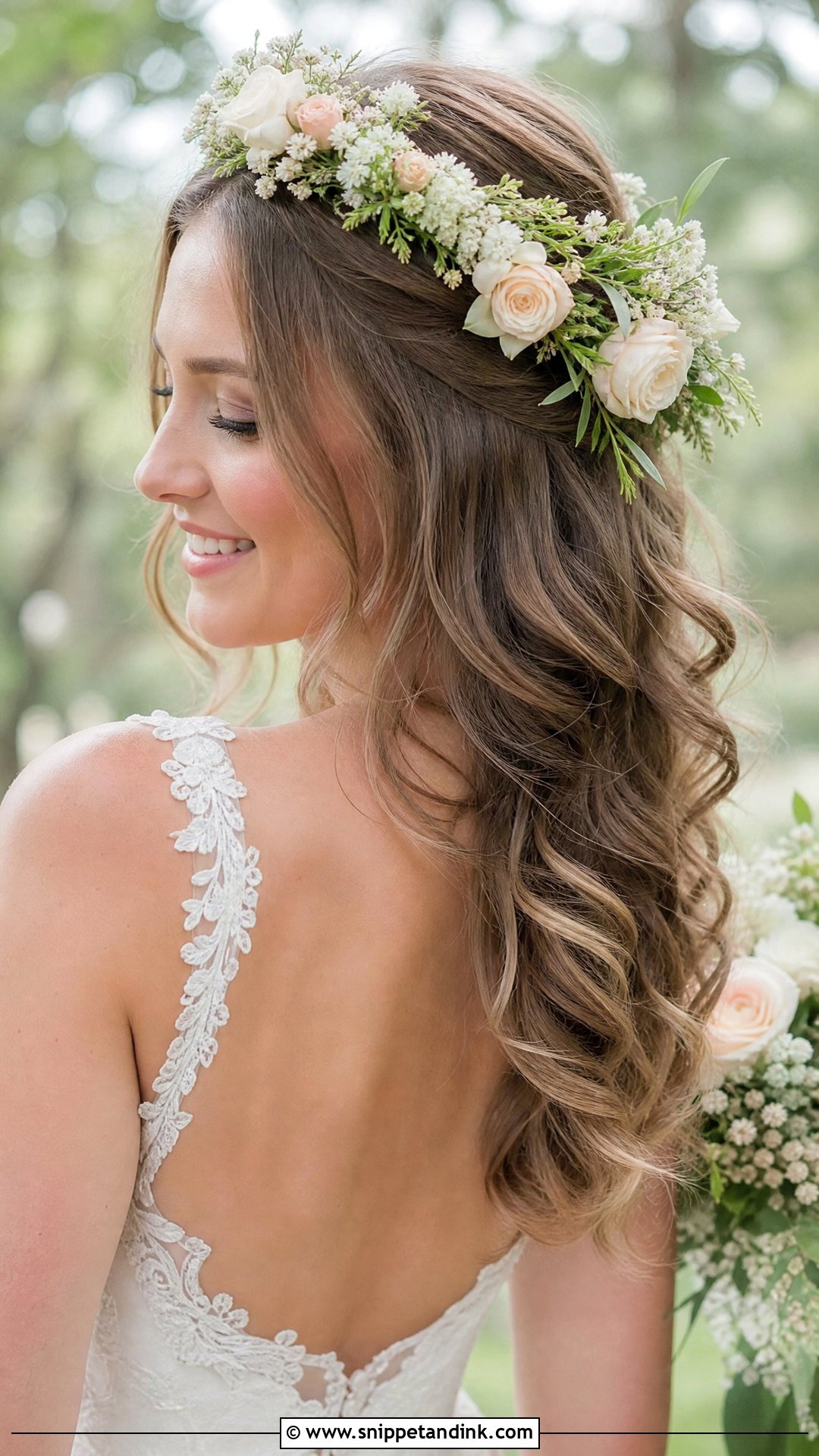
A floral crown on waves is lovely but heavy, and that’s what people don’t plan for. A full crown of real flowers needs pinning at four or five points into a section of hair that has some grip, or it slips backwards. Silk flowers weigh less and won’t wilt, so for an outdoor summer ceremony they’re the practical choice. Ask your florist for blooms that survive hours out of water, and choose the crown before your trial so I can build the hair around it.
10. Wavy Ponytail for Wedding
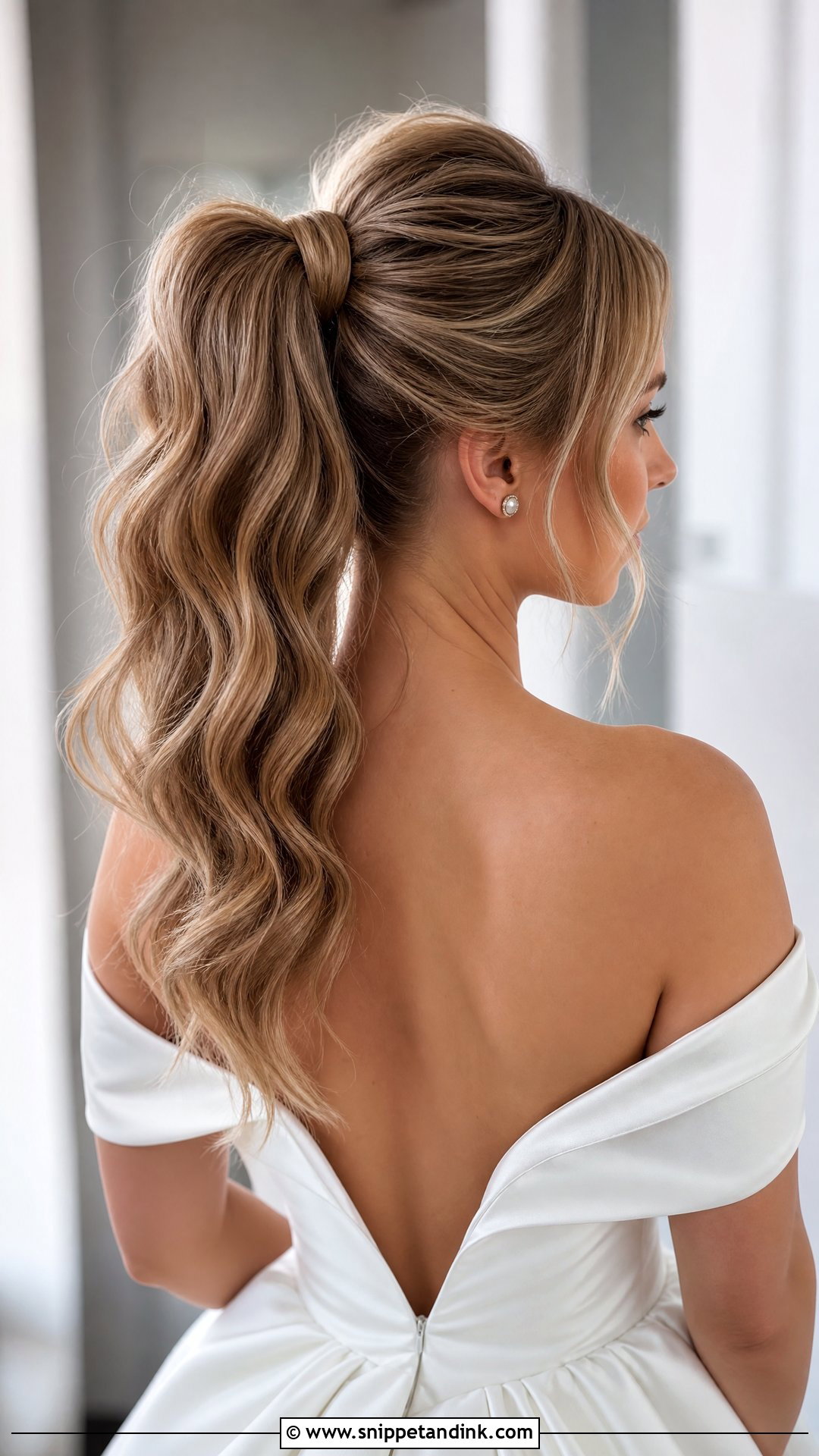
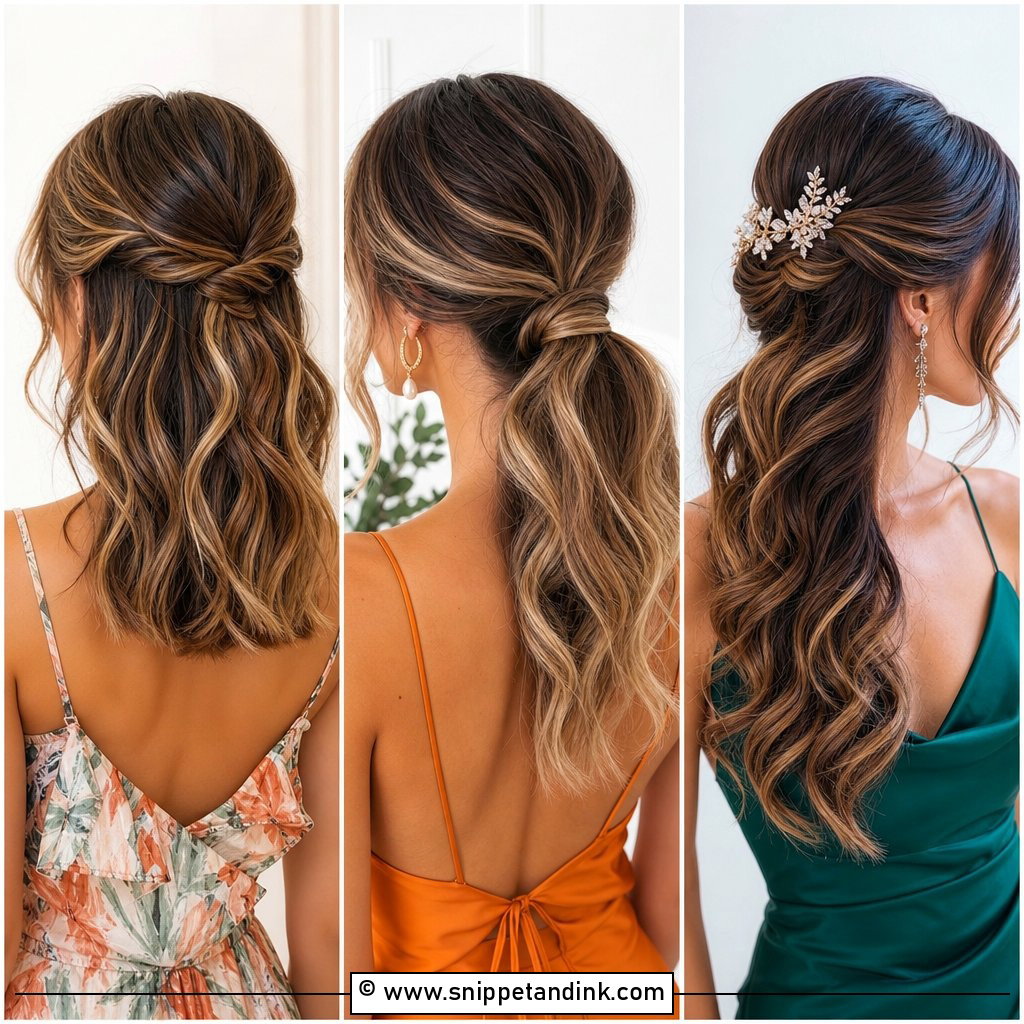
Gathered high or low, a wavy ponytail keeps your hair out of the way and still has movement behind you. A voluminous high ponytail adds height and length and needs medium to long hair. I curl before tying so the waves are even, then wrap a strand round the base to hide the elastic. A high ponytail is heavy, so I support it with two crossed pins underneath. It’s a modern pick and a little unexpected, and it suits a sleek, clean dress more than a romantic lace one.
11. Vintage Finger Waves for Wedding
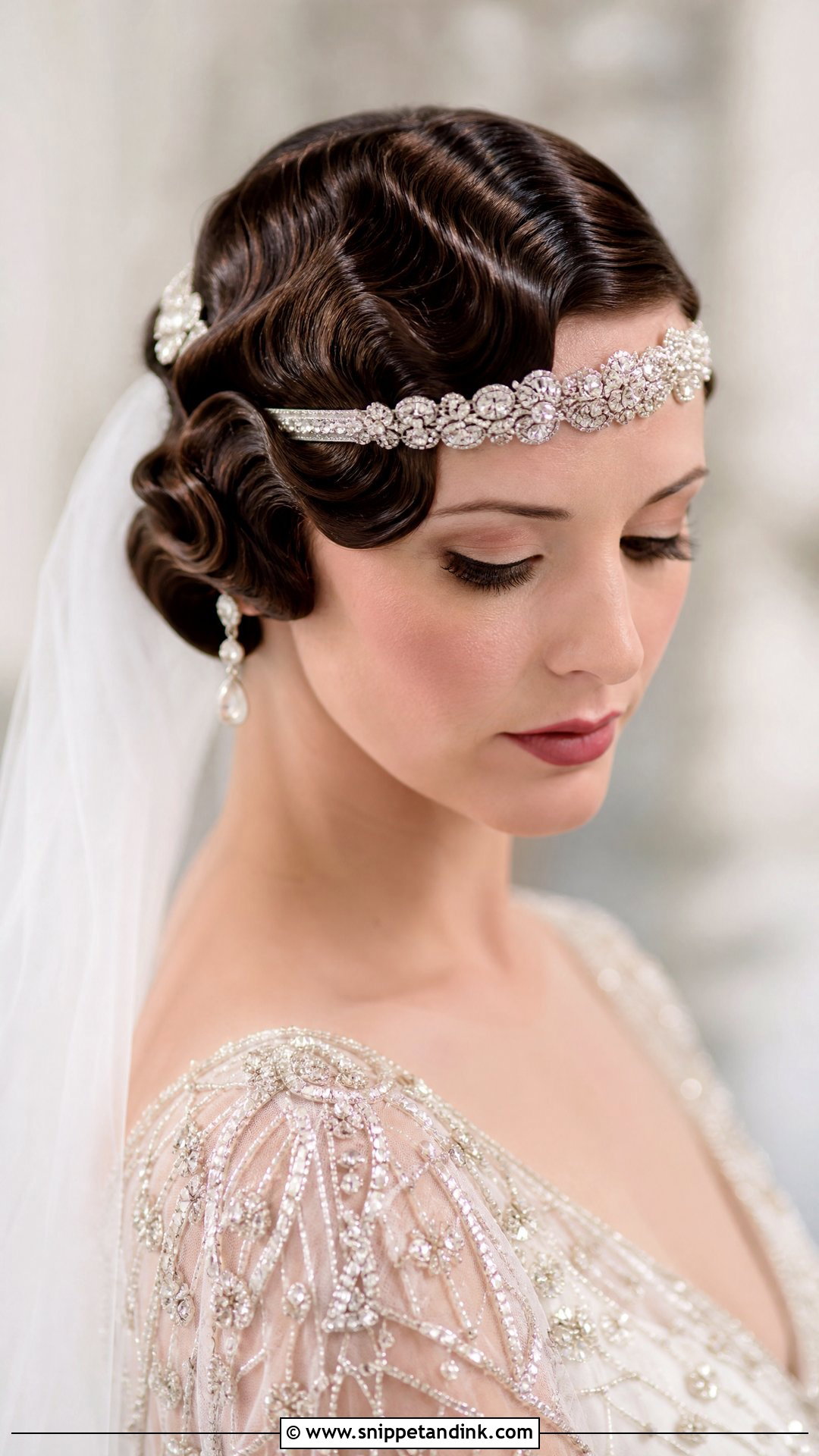
Real vintage finger waves are formed on wet hair with a comb and setting gel, pressed into ridges close to the head and left to dry, which takes time. They come from the 1920s and 1930s and suit art deco or vintage weddings. They work best on short to medium hair; on long hair I usually create the waves around the face and pin the length into a low roll. A jeweled headpiece or comb finishes the look. Book a longer appointment for this one.
12. Loose Wavy Hair Down for Wedding
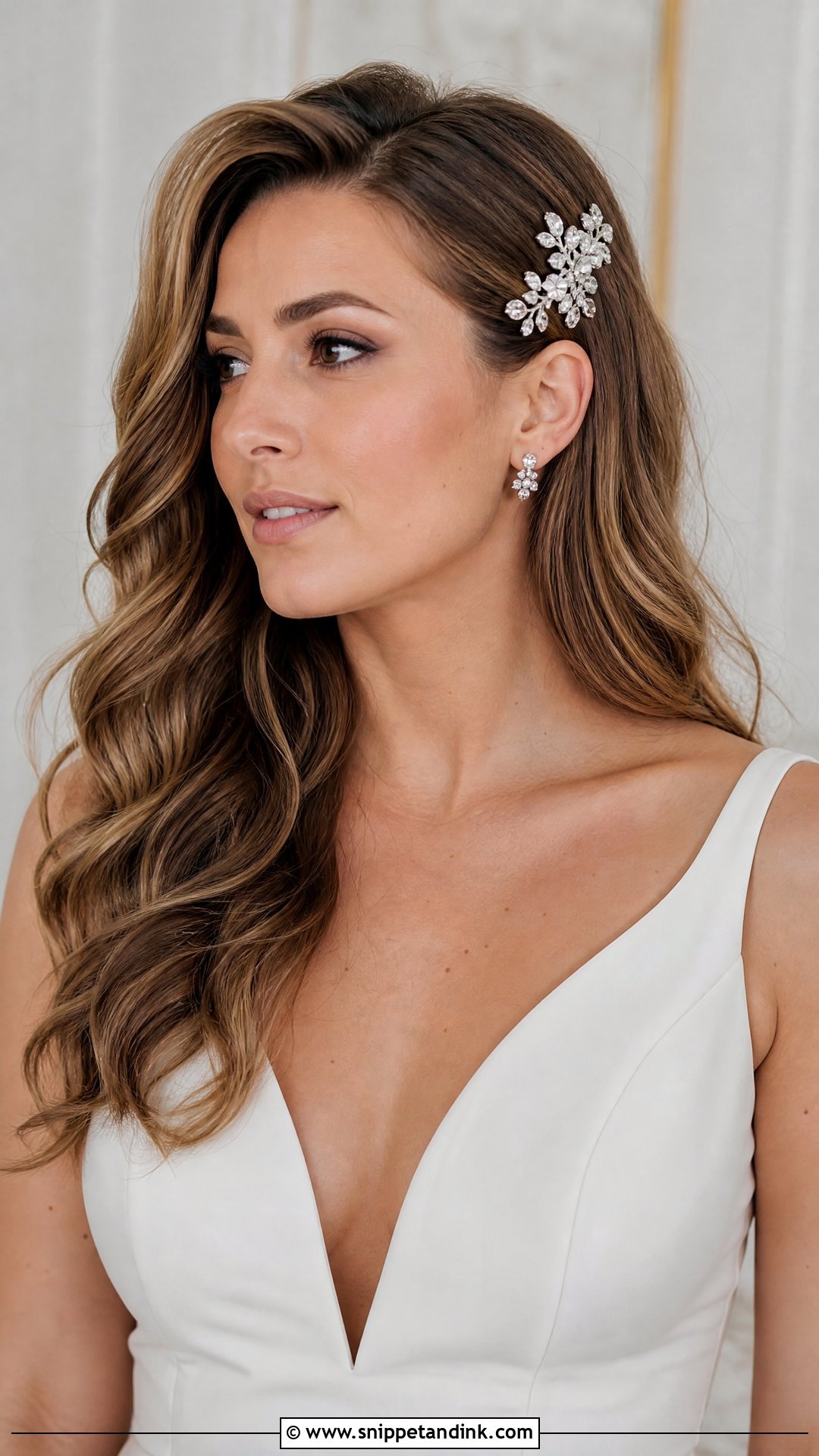
Waves worn fully down are the easiest to wear and the hardest to keep. Nothing is pinned, so the only thing holding the shape is the set itself. Root lift and a good cool-down before brushing make the difference. Tucking one side behind the ear helps frame your face and keeps hair off your bouquet. Expect them to relax by the evening, and if you have very fine hair, add a small clip on one side to hold at least part of the shape.
13. Wavy Bob for Wedding
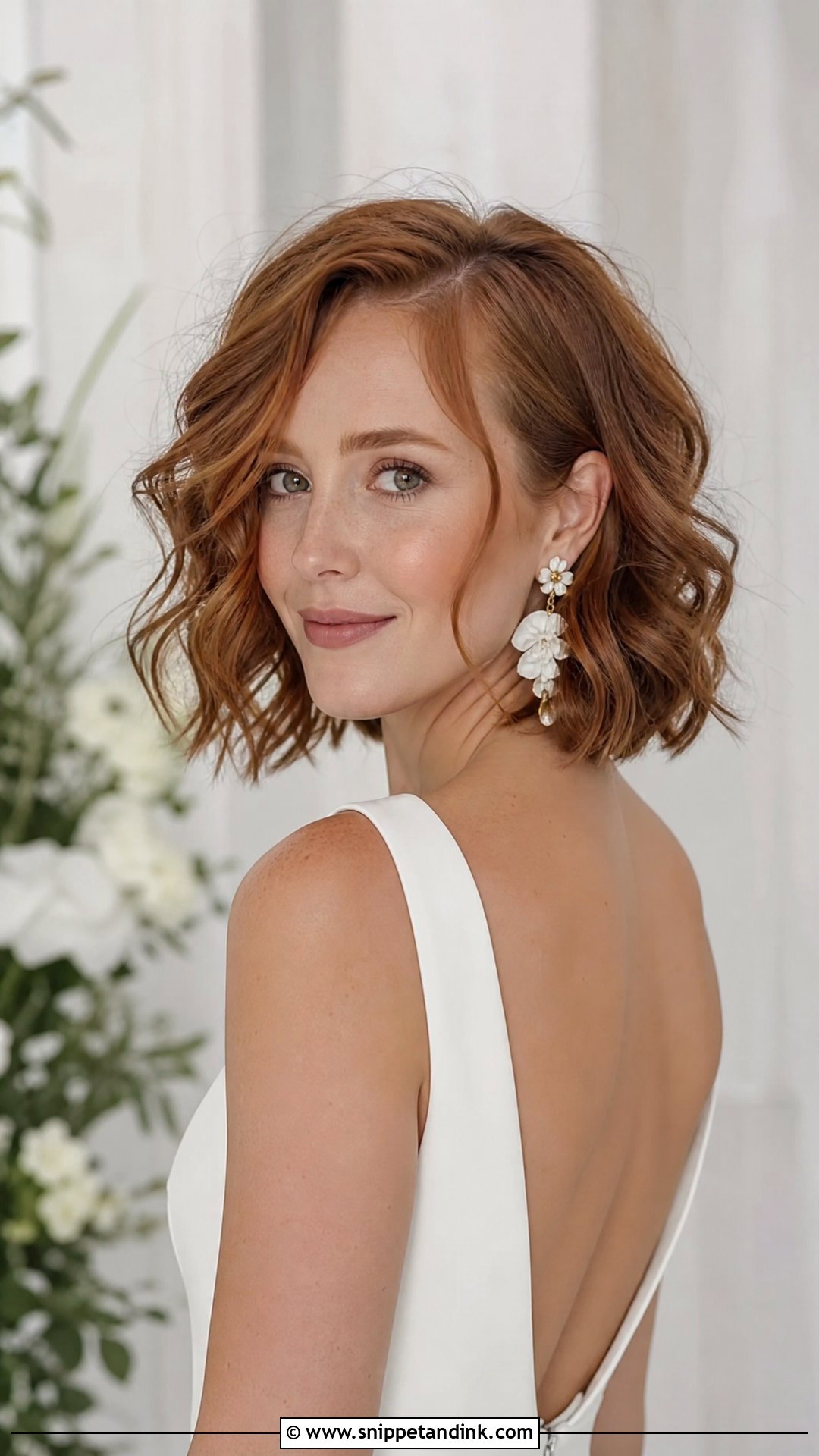
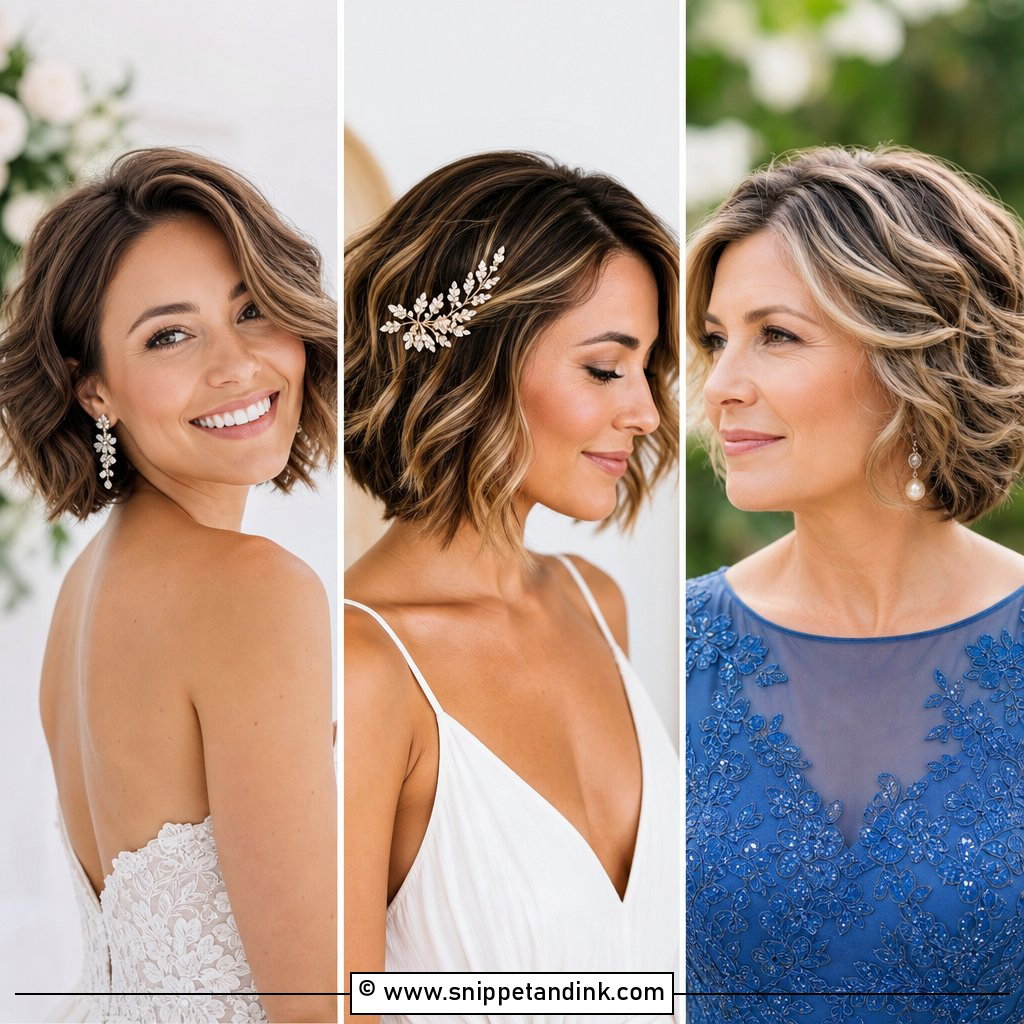
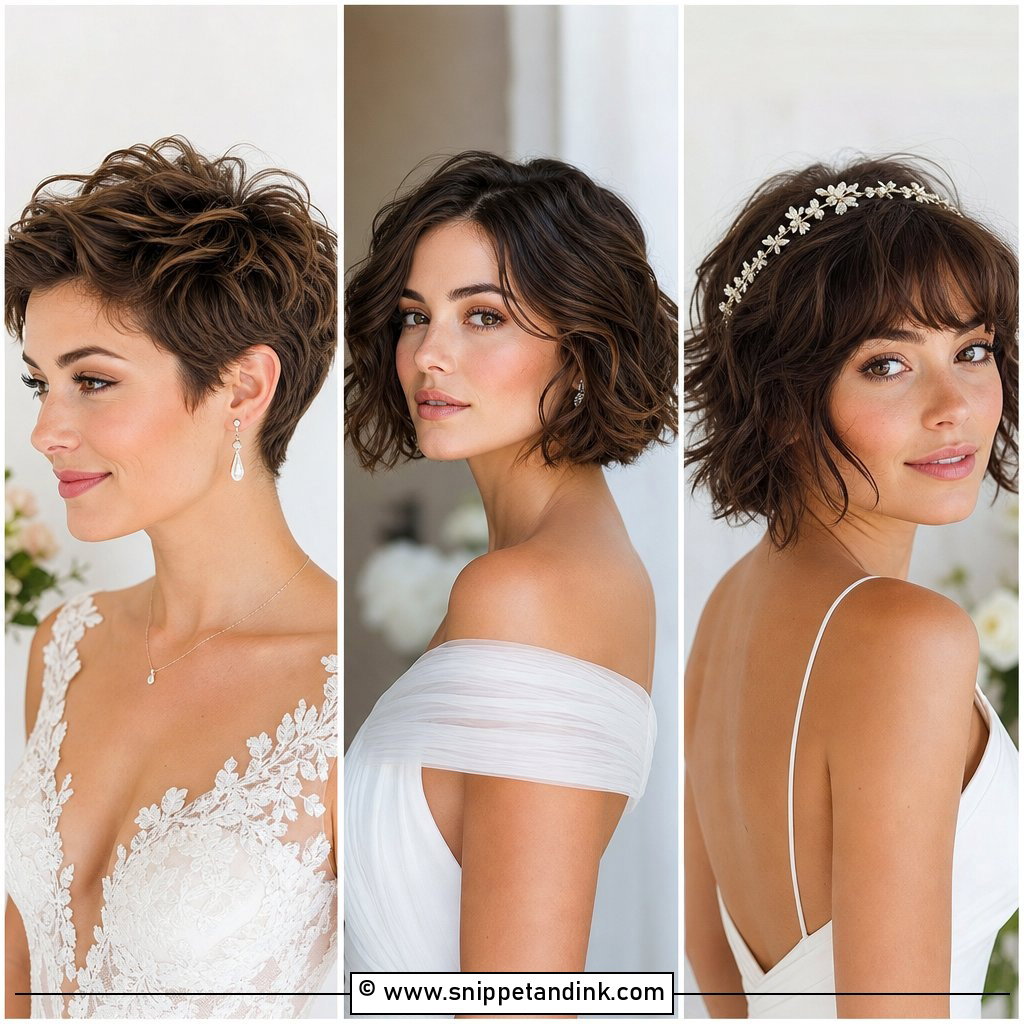
Short hair takes waves well. A wavy bob brings chic, clean styling to shoulder-length or shorter hair, and the texture adds volume around the face. I use a smaller barrel and leave the ends straight so it doesn’t turn into ringlets. It can go sleek or tousled. A small pin or comb near the part is enough decoration. Get your trim two to three weeks before, not the week of, so the ends have softened.
14. Wavy Hair With Veil for Wedding
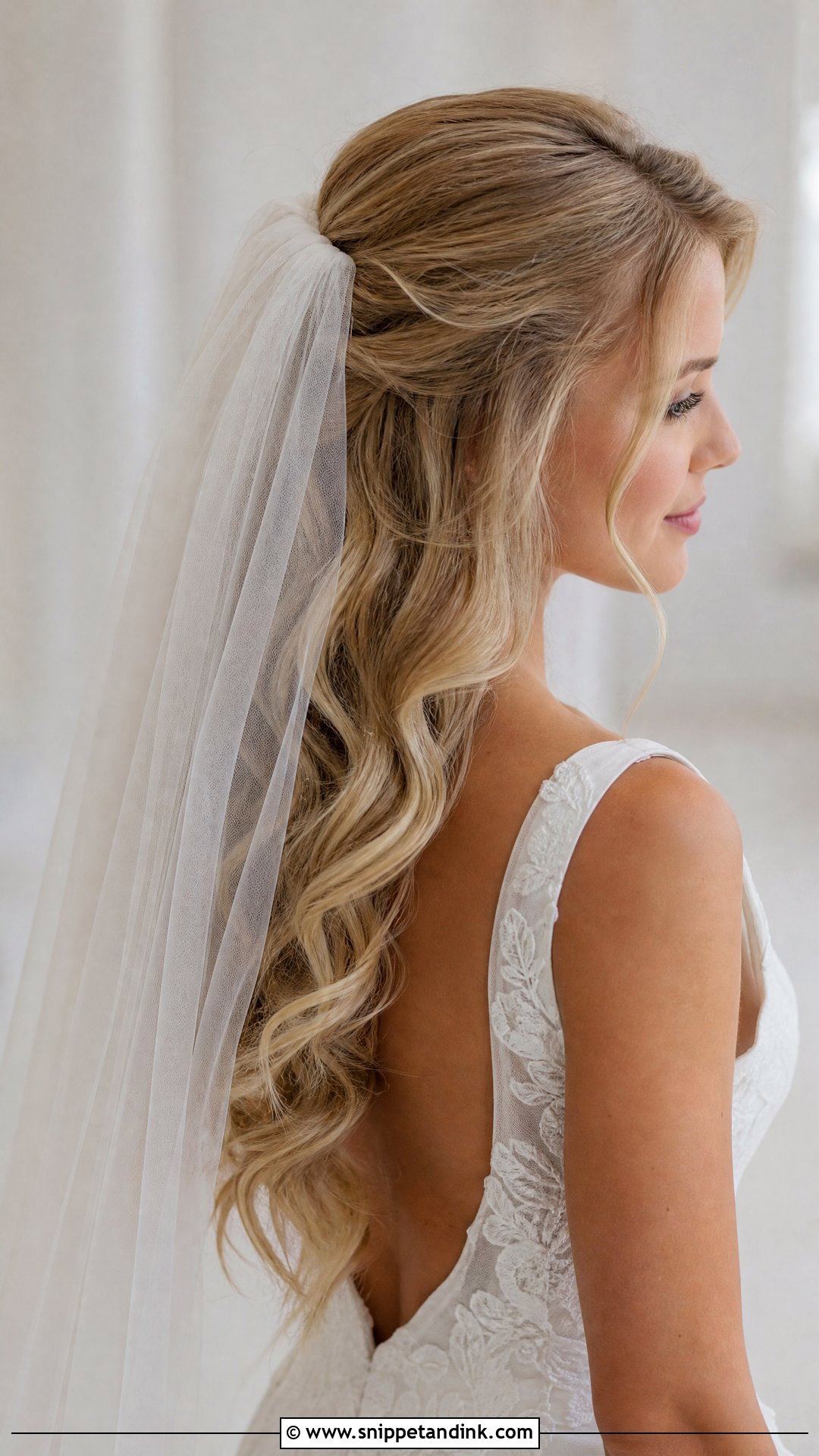
Veils and waves are a natural pairing, but the comb needs something to grip. In silky waves it slides, so I tease a small pad at the crown or anchor it into a pinned section. A veil worn high shows the waves underneath; tucked beneath them, it frames the face more. It lifts off easily for the reception. Pick the length with your venue in mind, since a long veil drags across grass and gravel.
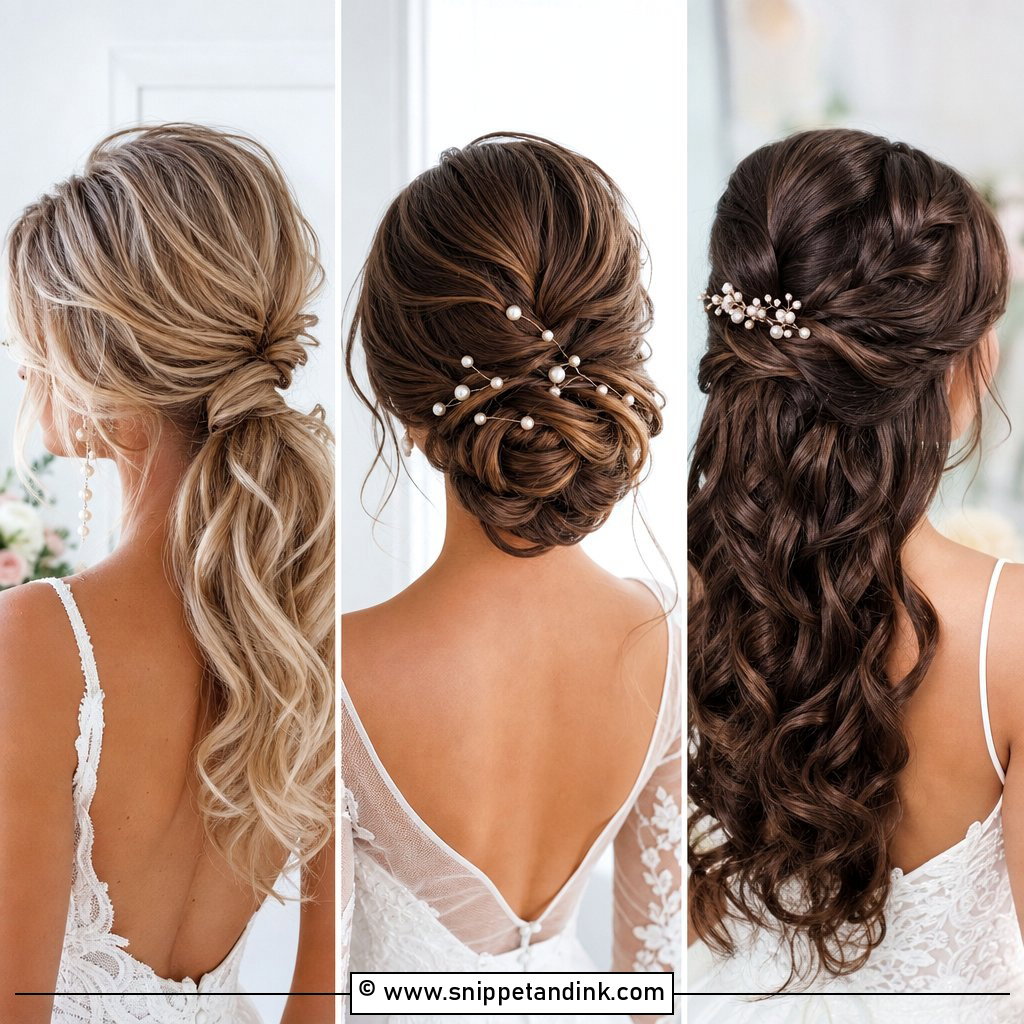
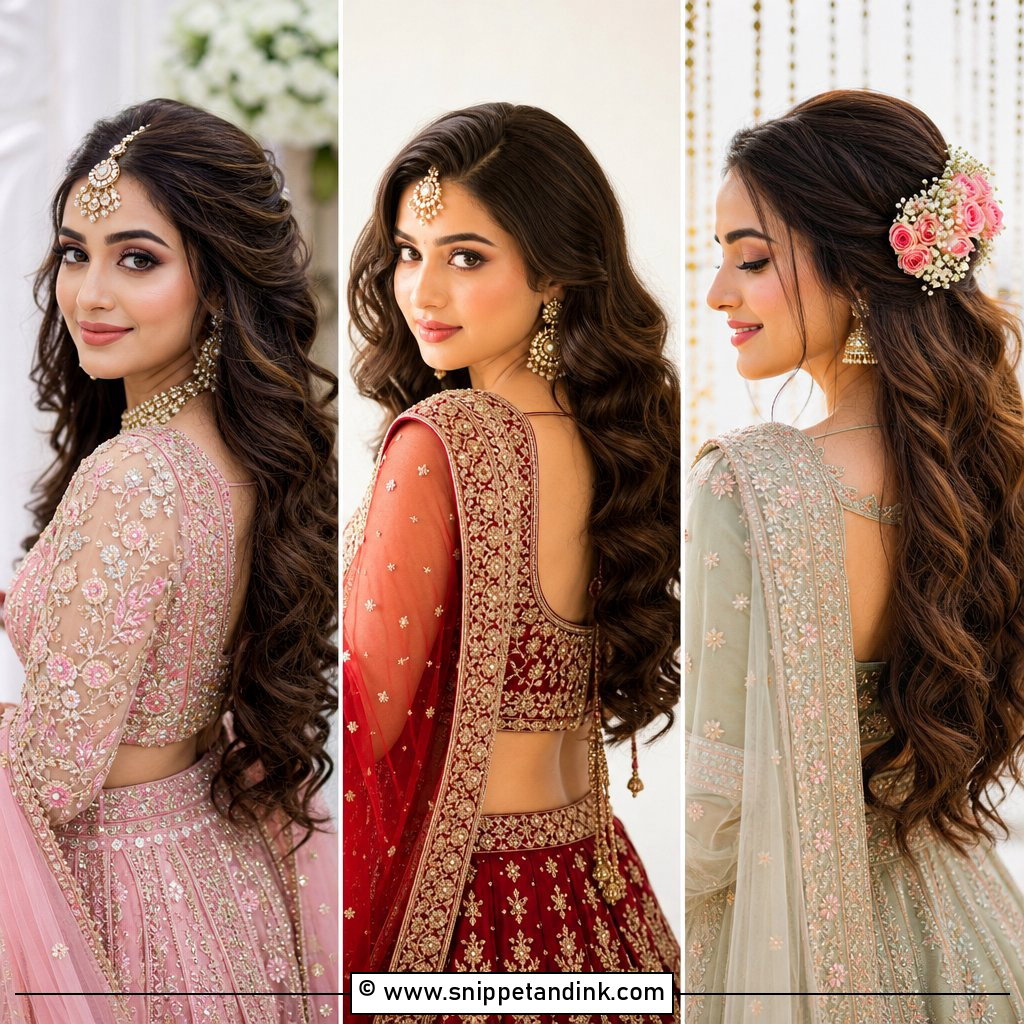
15. Tousled Wavy Updo for Wedding
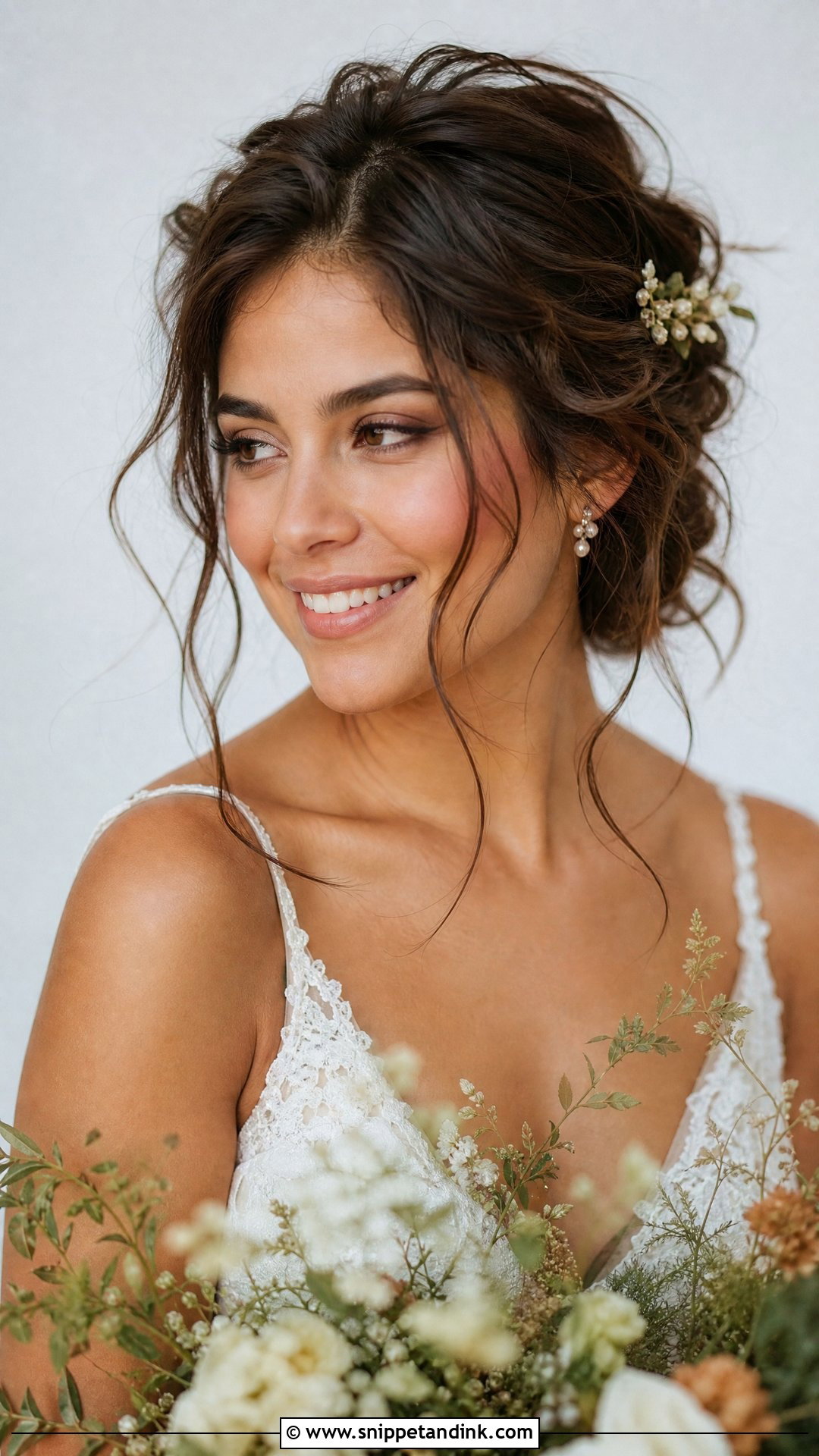
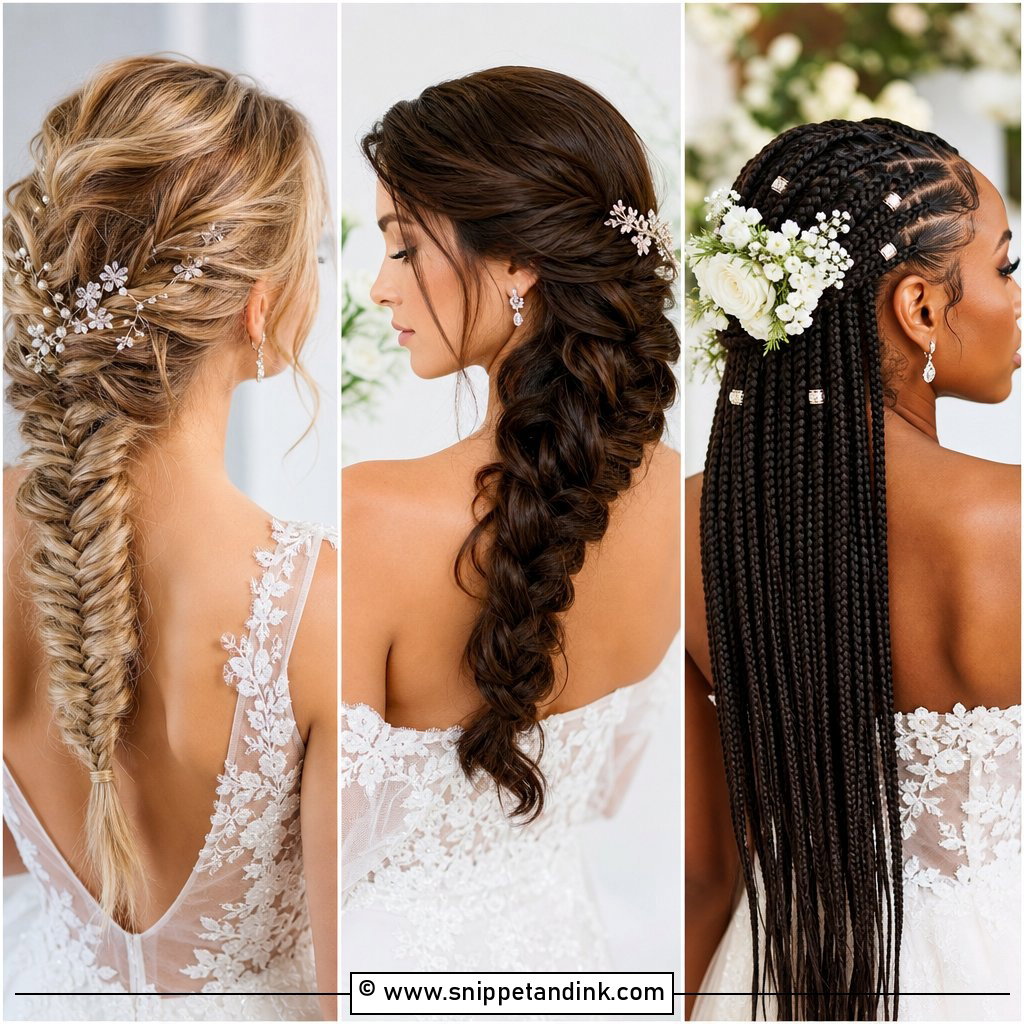
A tousled wavy updo is pinned loosely on purpose, with strands left free around the face. The loose look is built on a firm base: I make a small, secure ponytail or pin structure first and drape the waves around it. Without that, an airy updo really does come apart. Small flowers or pearls can sit in the gaps. It suits a boho or garden wedding and holds through dancing better than you’d guess.
16. Wavy Hair With Hair Vine for Wedding
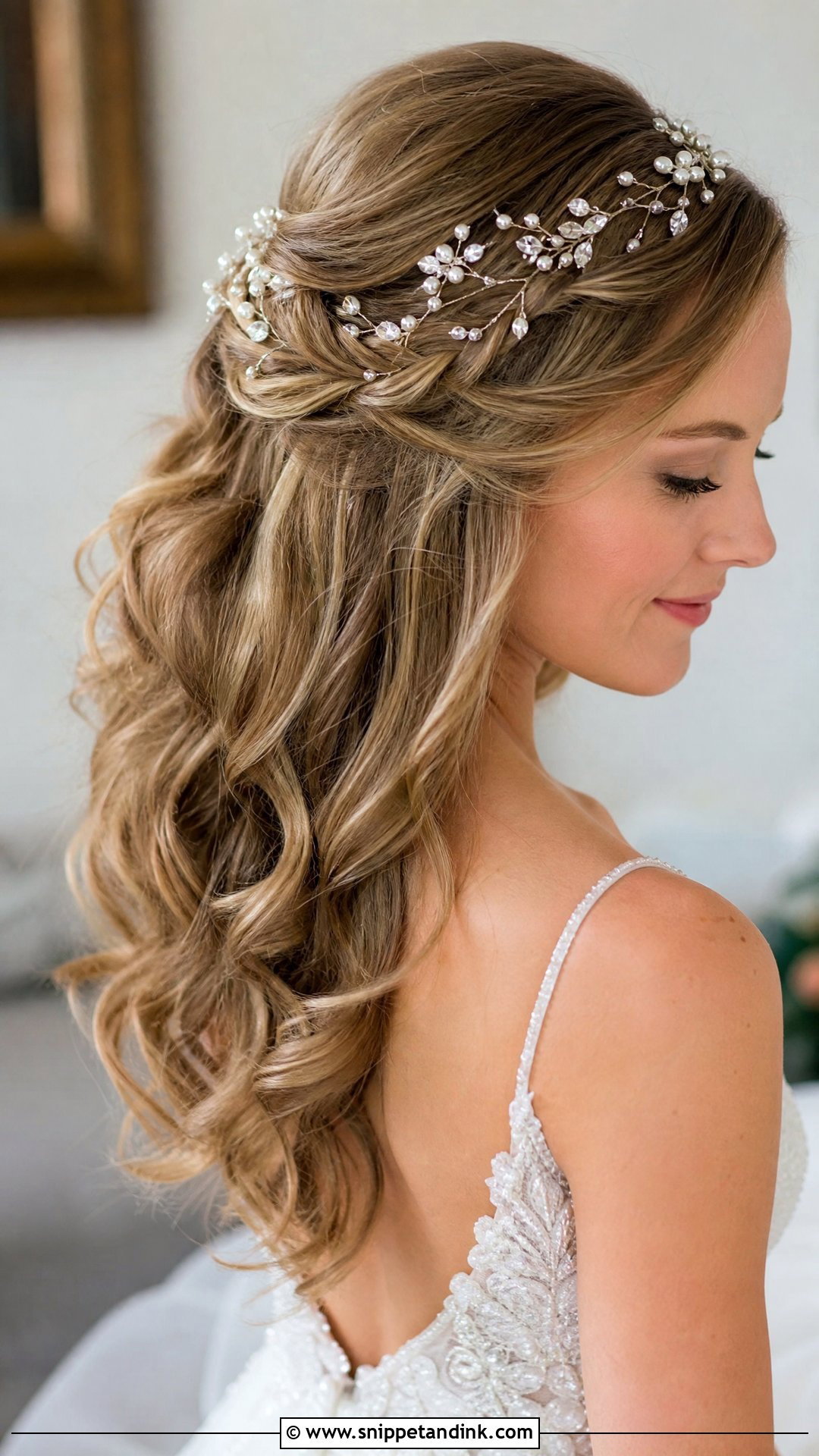
A delicate hair vine is a flexible wire of crystals, pearls or flowers that I weave through the hair and pin at intervals. It needs some texture to grip, so it works best through a half-up section or braid rather than flat across smooth waves. The sparkle catches ceremony light. Match the metal to your jewelry, and bend the vine to your head shape before the day so it isn’t fighting the hair.
17. Deep Side Part Wavy Wedding Hairstyle
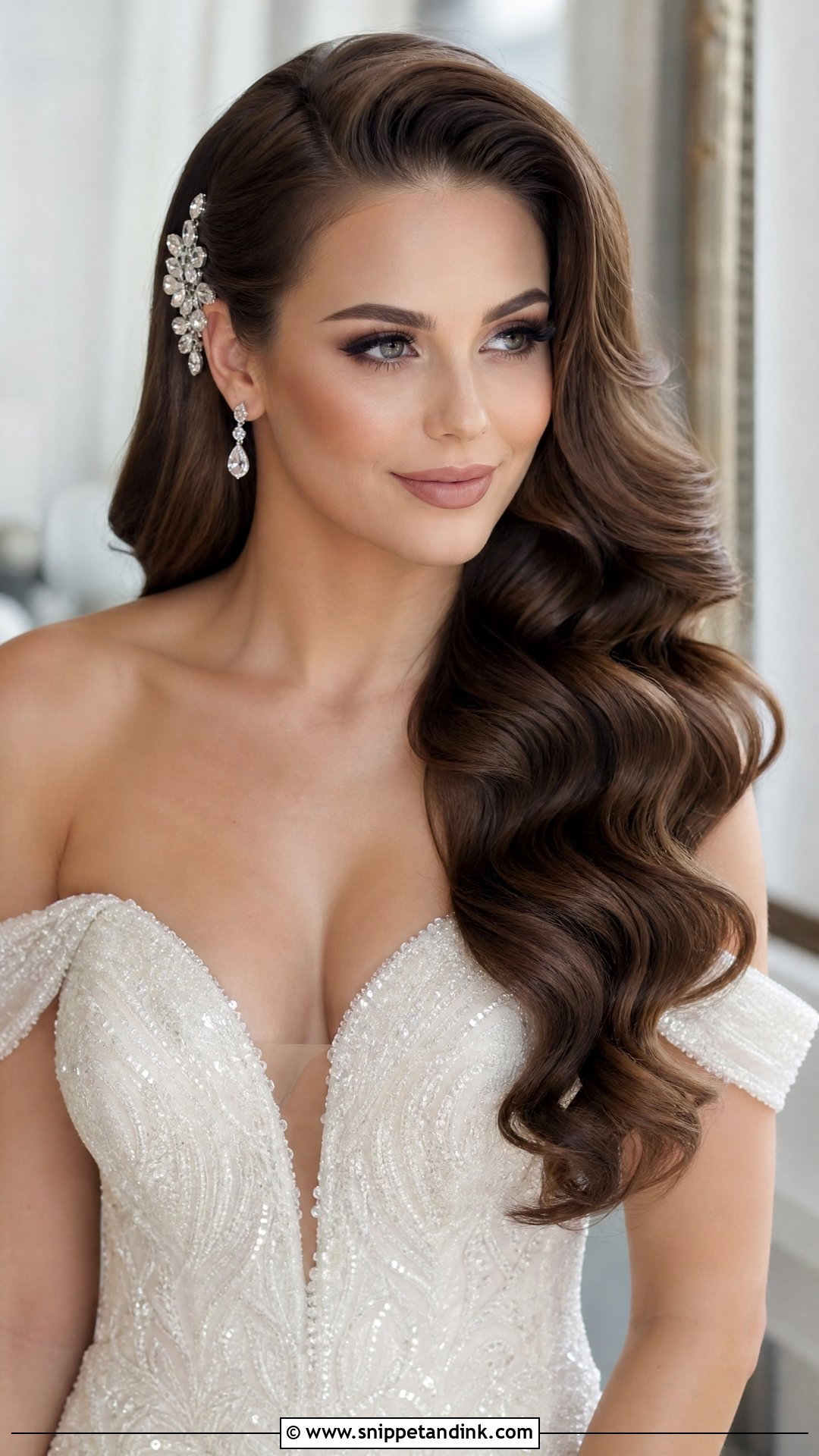
A deep side part pushes most of the volume to one side and frames the face strongly. It reads glamorous and suits evening and formal weddings. I lift the root on the full side with a round brush before curling, since that’s where it collapses first. A clip at the part or a sleek finish both work. If your natural part sits in the center and you have a cowlick, test this at the trial; some hairlines refuse to flip.
18. Wavy Fishtail Braid for Wedding
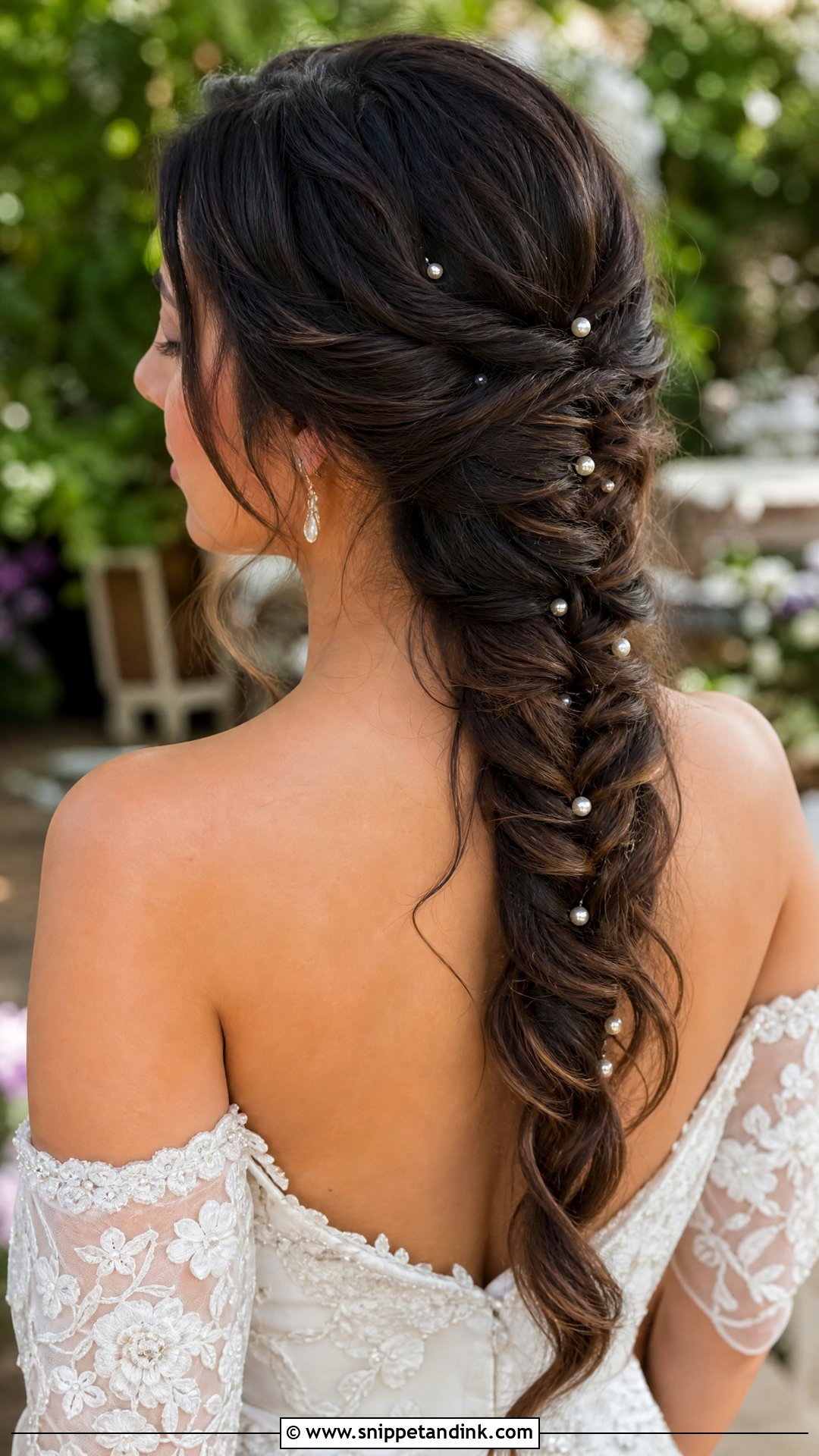
Fishtails look intricate but hold well because of the many small crossovers. Worn to one side or down the back, the braid is woven loose and then pulled wider for an undone finish, with waves left around it. Tuck small flowers or pearls in the gaps. A fishtail needs hair below the shoulders to show its pattern. I’d tie the end with a tiny clear elastic and wrap a strand over it, since a visible band is the first thing you notice in close-ups.
19. Glam Waves for Wedding
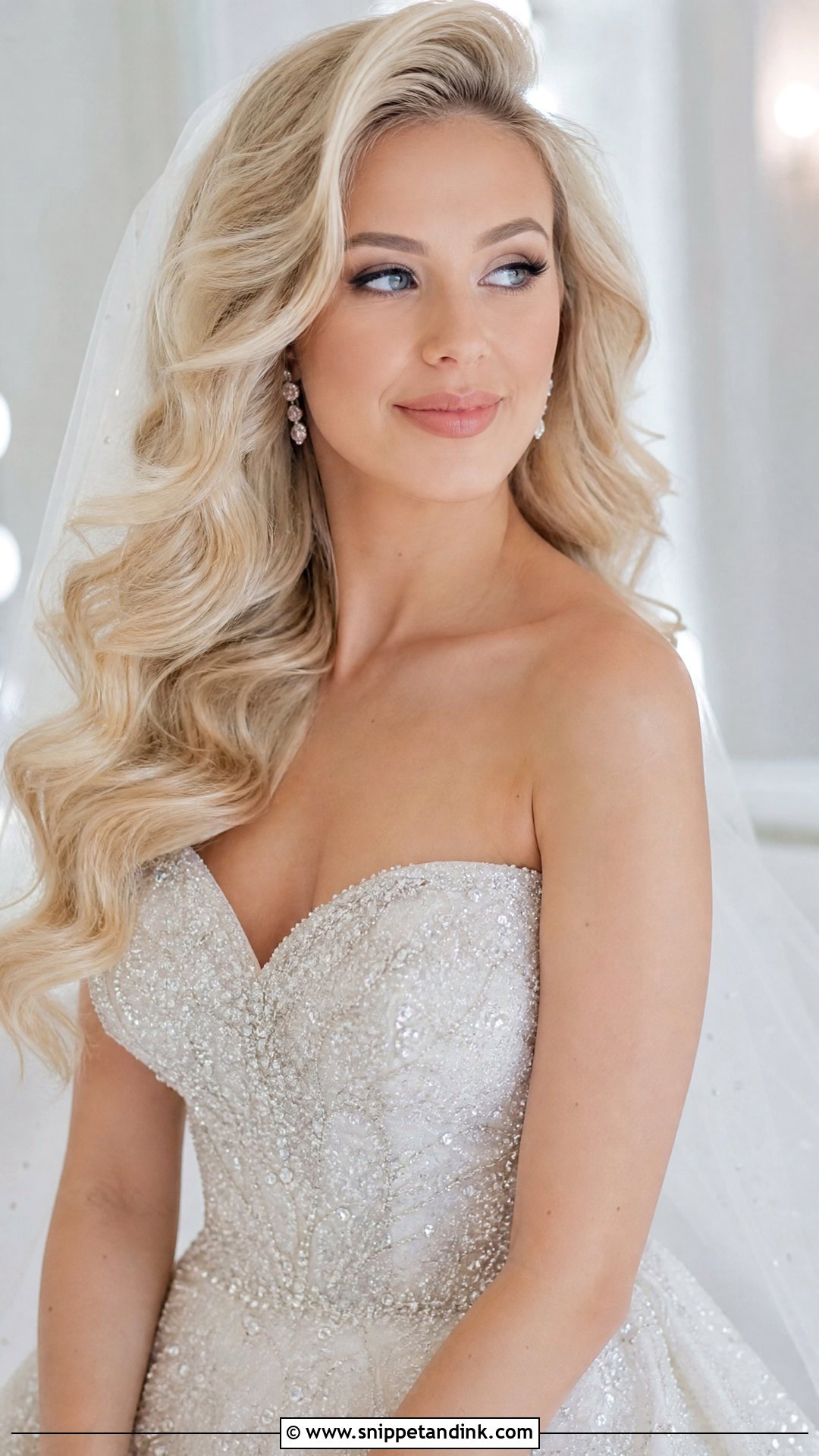
Glam waves are bigger and bouncier than Hollywood waves: more root volume, softer curls, not merged into one ridge. They need medium to long hair. I set with large hot rollers, let them cool fully, then brush gently so the volume stays. Formal and evening weddings suit them. Large curls lose more shape than tight ones over a long day, so plan a quick touch-up before the reception photos. Let the texture carry the look rather than adding lots of sparkle.
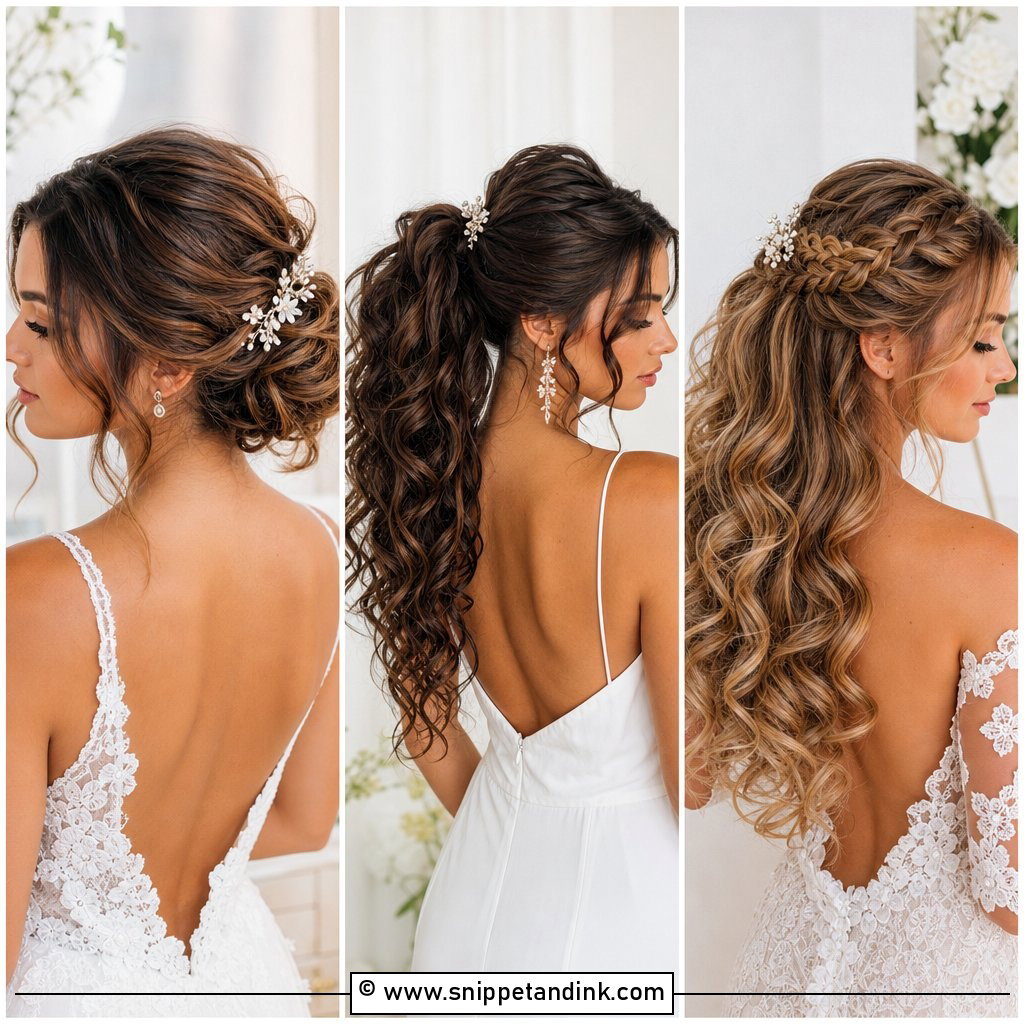
20. Wavy Updo With Loose Tendrils for Wedding
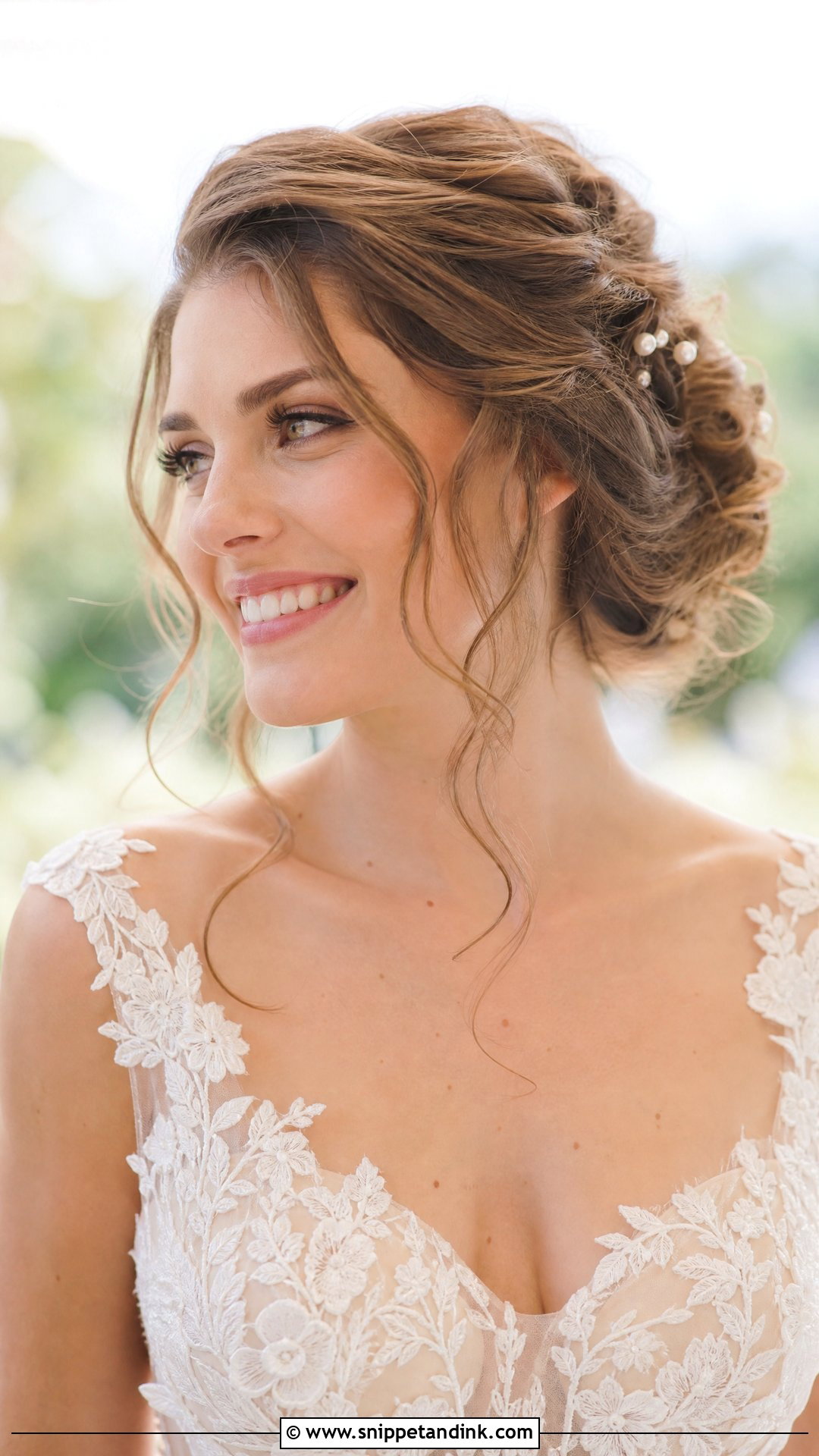
Tendrils are what soften an updo, and they’re also the bit that goes limp first. I curl each face-framing piece separately with a small iron and set it with a light spray, because a tendril left straight just looks like hair that fell out. The waves above are swept up and pinned. Pearls, crystals or a few flowers suit the updo. Keep the tendrils fewer and finer than you think; two or three on each side reads better in photos than a curtain of loose strands.
Very Fine, Very Thick or Heavily Layered: Which Waves Work
Not every wave on this list suits every head of hair, and it’s better to know that before the trial.
Fine hair
Pinned styles are kinder to you than loose ones: the half-up braid, the low bun and the tousled updo all hold the shape mechanically. Clip-in wefts add density for waves worn down. Avoid very brushed-out glam waves, which flatten quickly.
Thick or coarse hair
Your waves will hold, but they take time to heat through, so budget a longer appointment. Updos can feel heavy at the nape. Ask your stylist to split the bun or remove some bulk from underneath with pinning rather than cutting.
Lots of layers
Short layers spring out of Hollywood and finger waves. Boho, tousled and braided styles hide them, and they’re the ones I steer layered cuts towards.
Natural curls or coils
You don’t have to heat your hair straight and then curl it back. Defining your own pattern with a cream and a diffuser, then smoothing only the front pieces, gives a wave that copes with humidity far better than an ironed set. If you do want a silk-pressed wave, plan for a dry, air-conditioned venue and keep a pinned half-up option ready as a backup.
Matching the Wave to Your Dress and Your Venue
Start with your dress and venue, then choose how much structure you want. Take the inspiration photos you like most to your stylist and say how the hair should look at the end of the night, not only at the start. A trial with your actual accessories will tell you more than any photo. Then pick the version you’ll be happy to see in the pictures twenty years from now.
You'll Like These Ideas:


Leave a Reply