
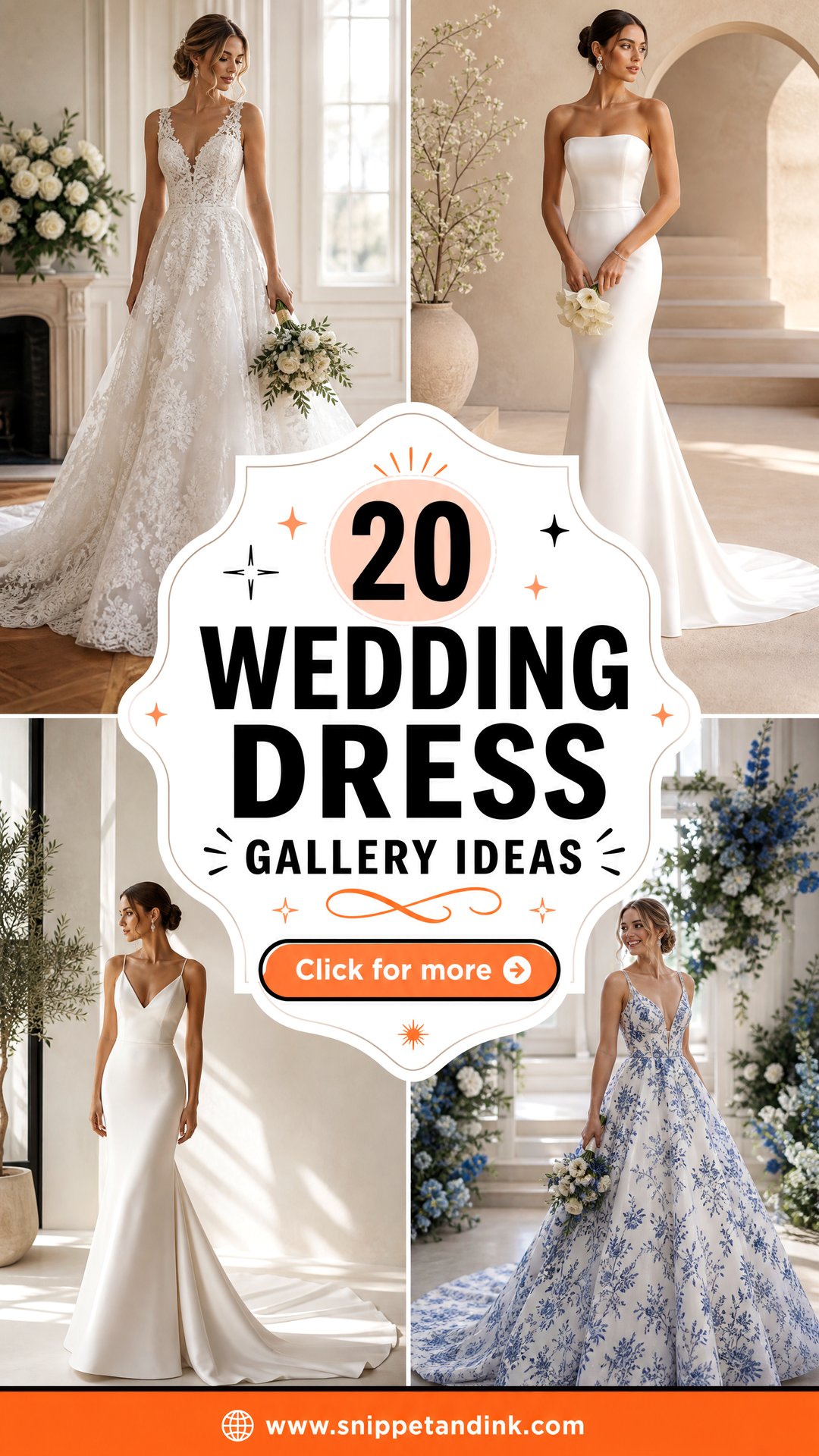
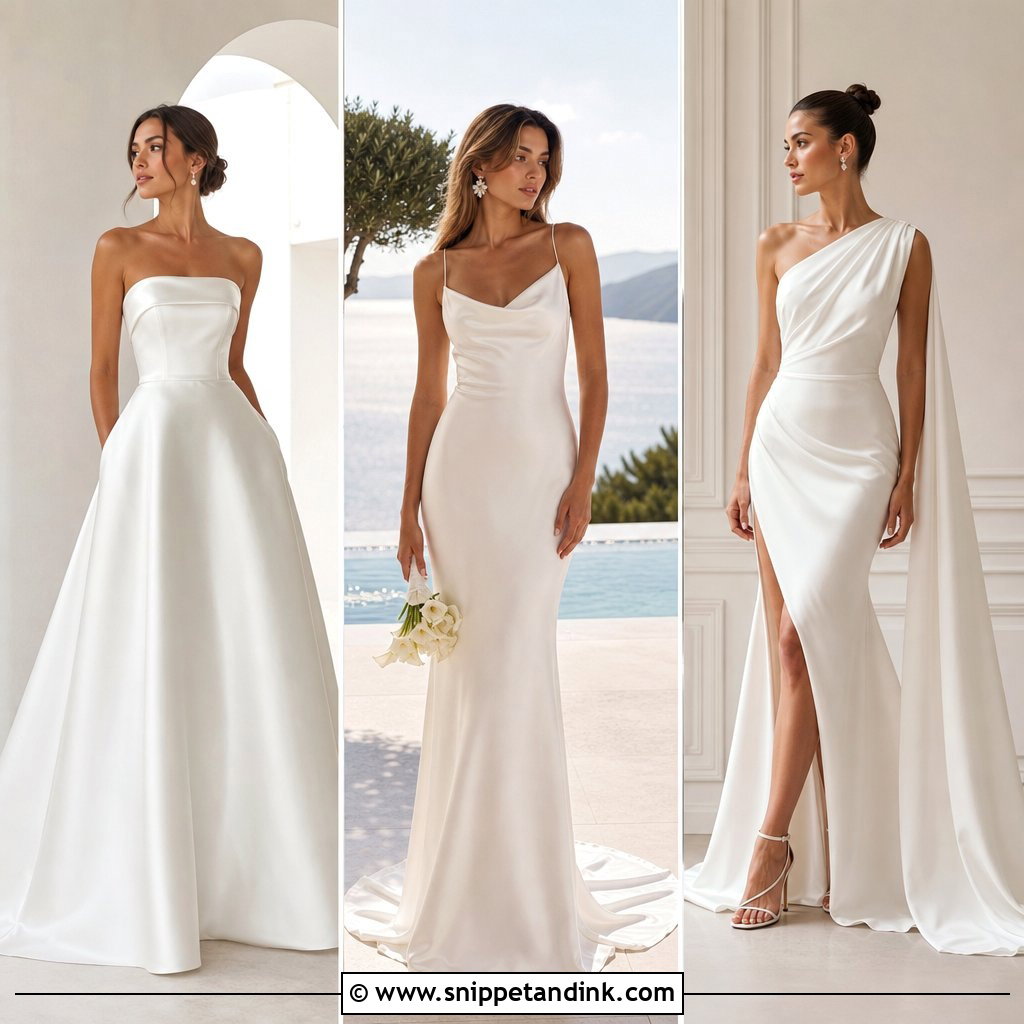
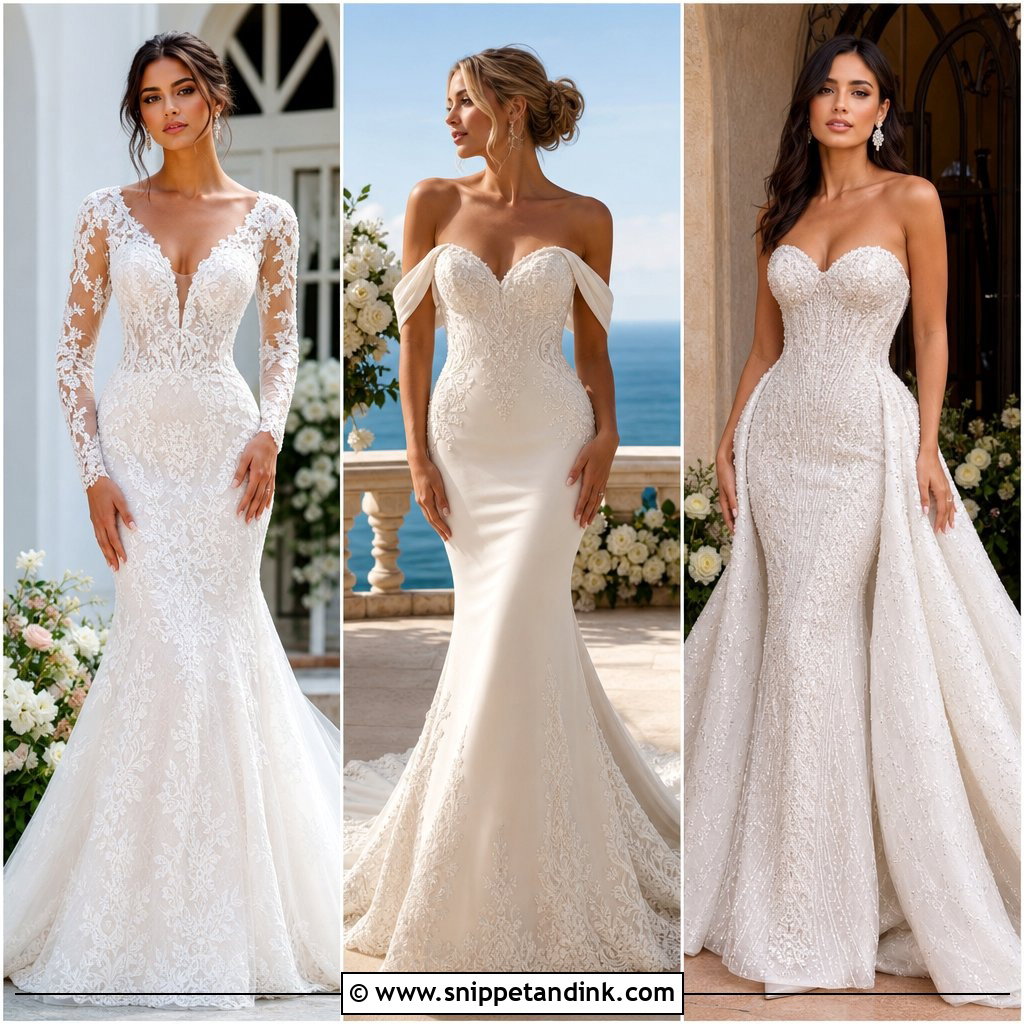
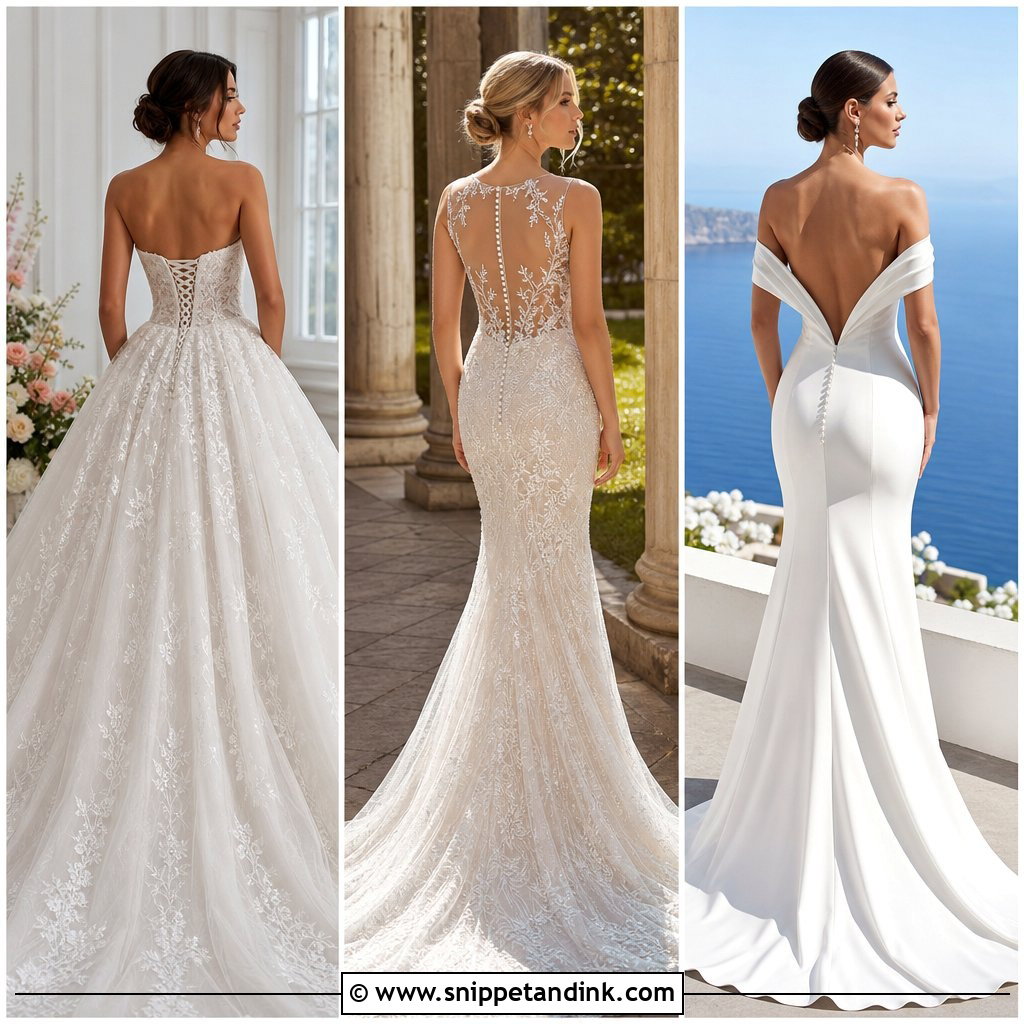
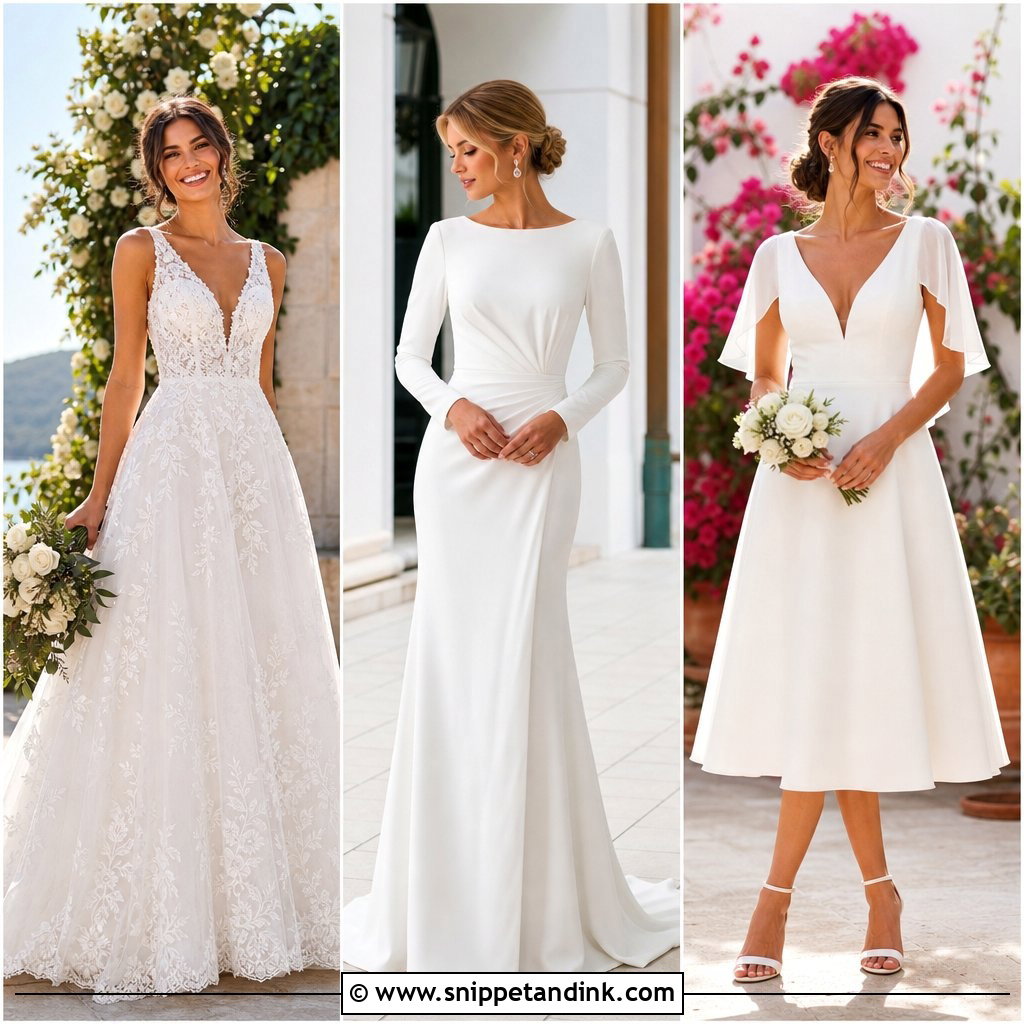
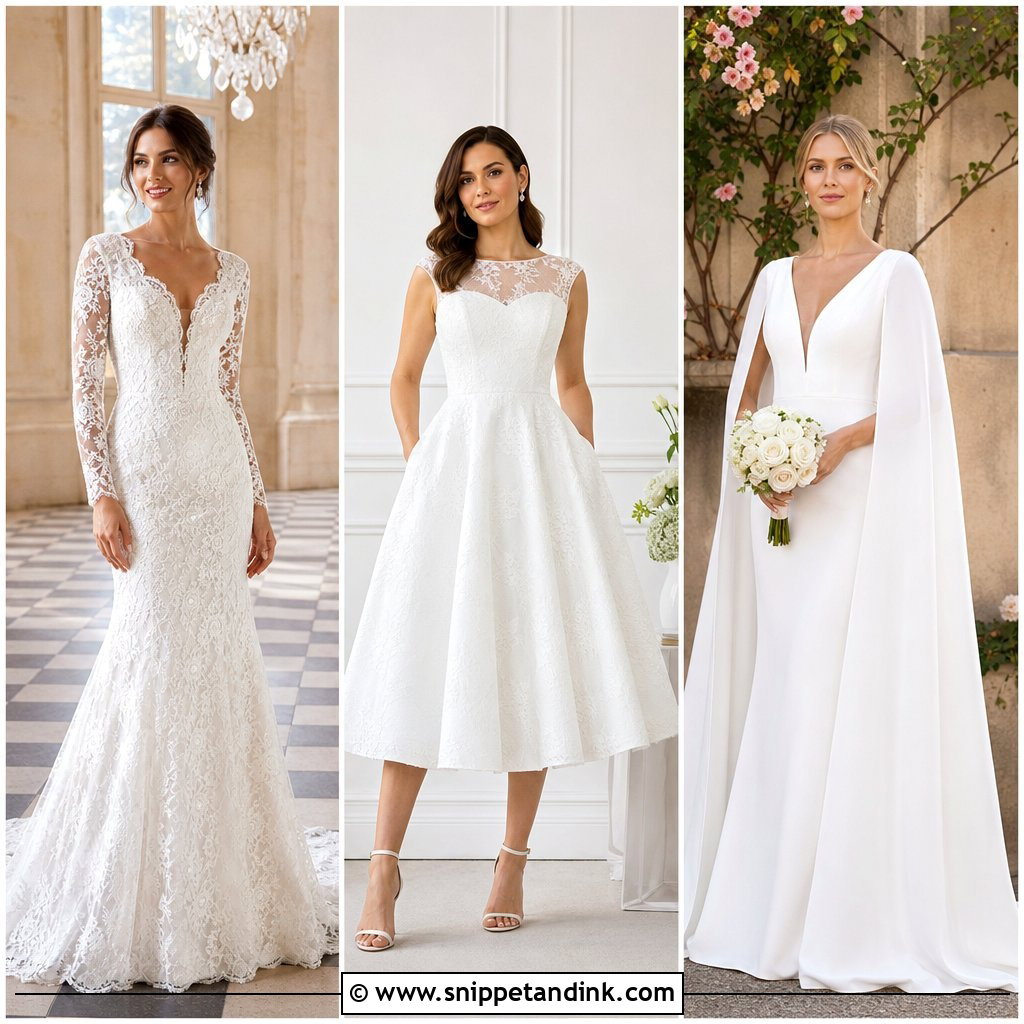
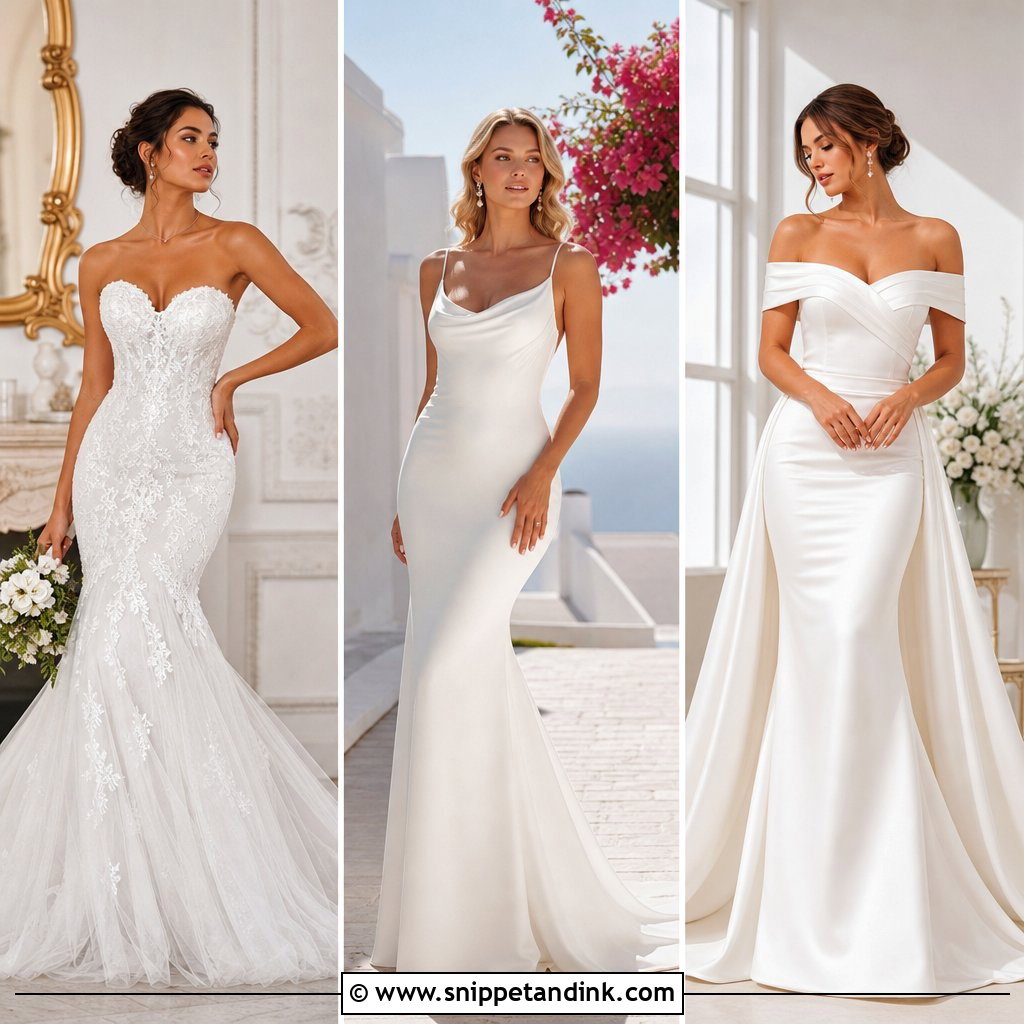
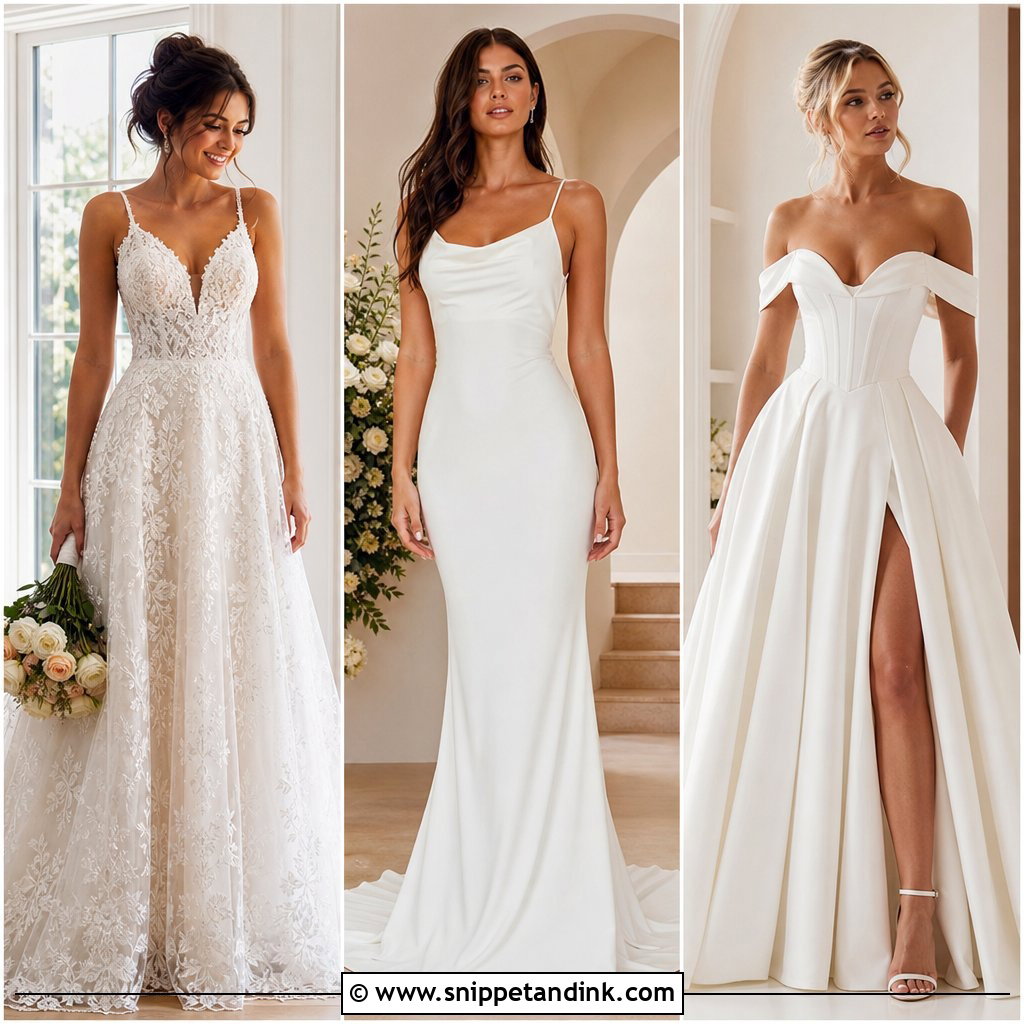
Before a bride walks into a salon, I want her to have looked at enough gowns to know what she reacts to, even if she can’t name it yet. The gallery below lines up twenty silhouettes, fabrics and necklines side by side, each styled with a veil, shoes, jewelry and flowers, so you can compare whole looks instead of isolated dresses. As you scroll, watch where each waistline sits, how the skirt moves away from the body, and whether the accessories support the gown or crowd it. Save the ones you keep returning to, even when they contradict the dress you pictured. Those saves become the start of an inspiring bridal mood board that tells a consultant far more than a list of adjectives.
What a Bridal Photo Doesn’t Show You
Every gown in a gallery has been photographed at its very best, and I’d be doing you a disservice if I didn’t explain how. Samples are usually pinned or clipped at the back to fit the model, the lighting is chosen to flatter the fabric, and the pose hides how the skirt behaves when you walk or sit. None of that is dishonest, but it means a photo shows the idea of a dress more than the way it wears.
When I look at a bridal photo, I read it in this order:
- The waistline: where it sits on the body, because that decides more about fit than the neckline does.
- The fabric’s behaviour: whether the skirt holds its shape or drapes, which tells you how it will move on you.
- The neckline and sleeves, judged as a pair rather than separately.
- The styling last, since veils, shoes and flowers can all be changed.
A gown you like in a picture is a starting point. It’s worth trying even the ones you aren’t sure about, because fabric and fit often change your mind in person.
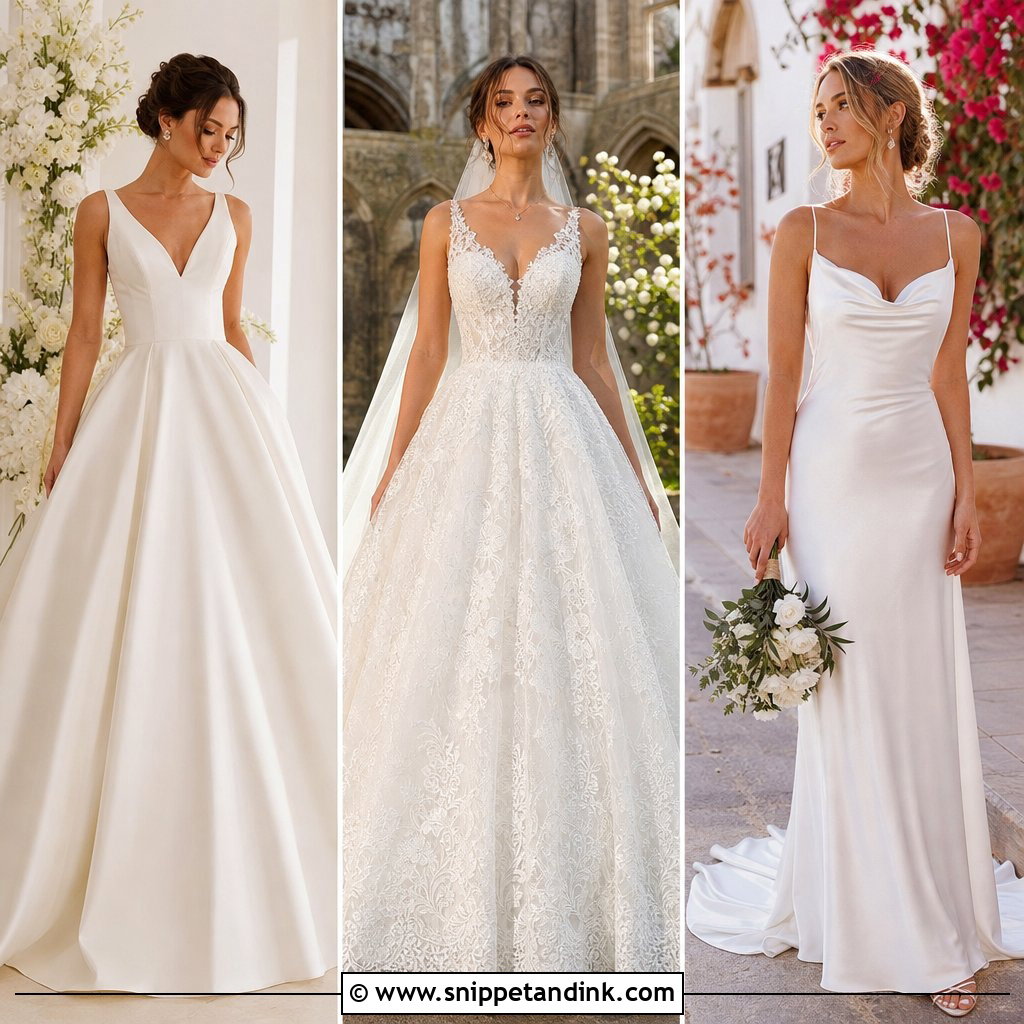
1. Satin Ball Gown Wedding Dress
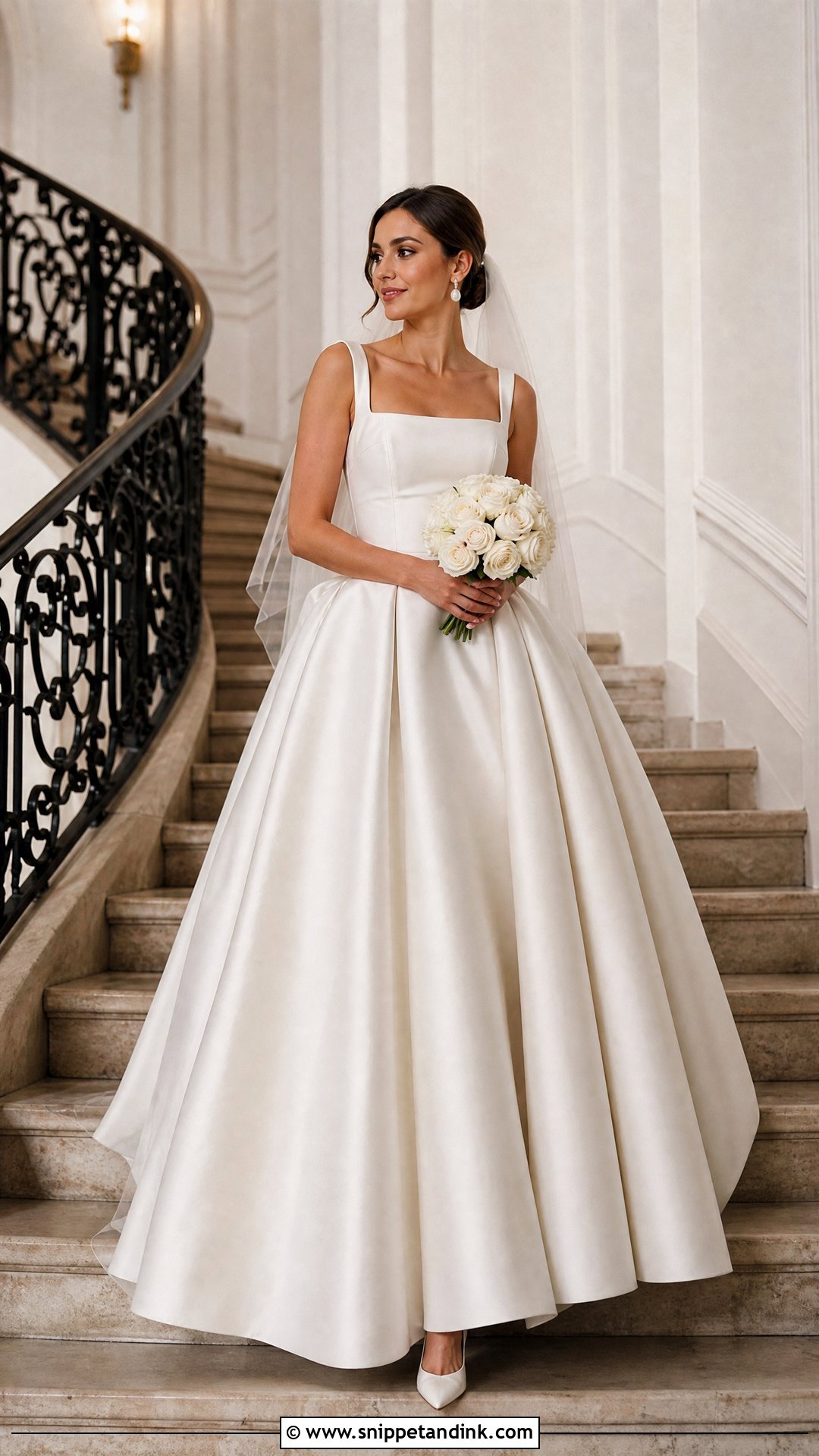
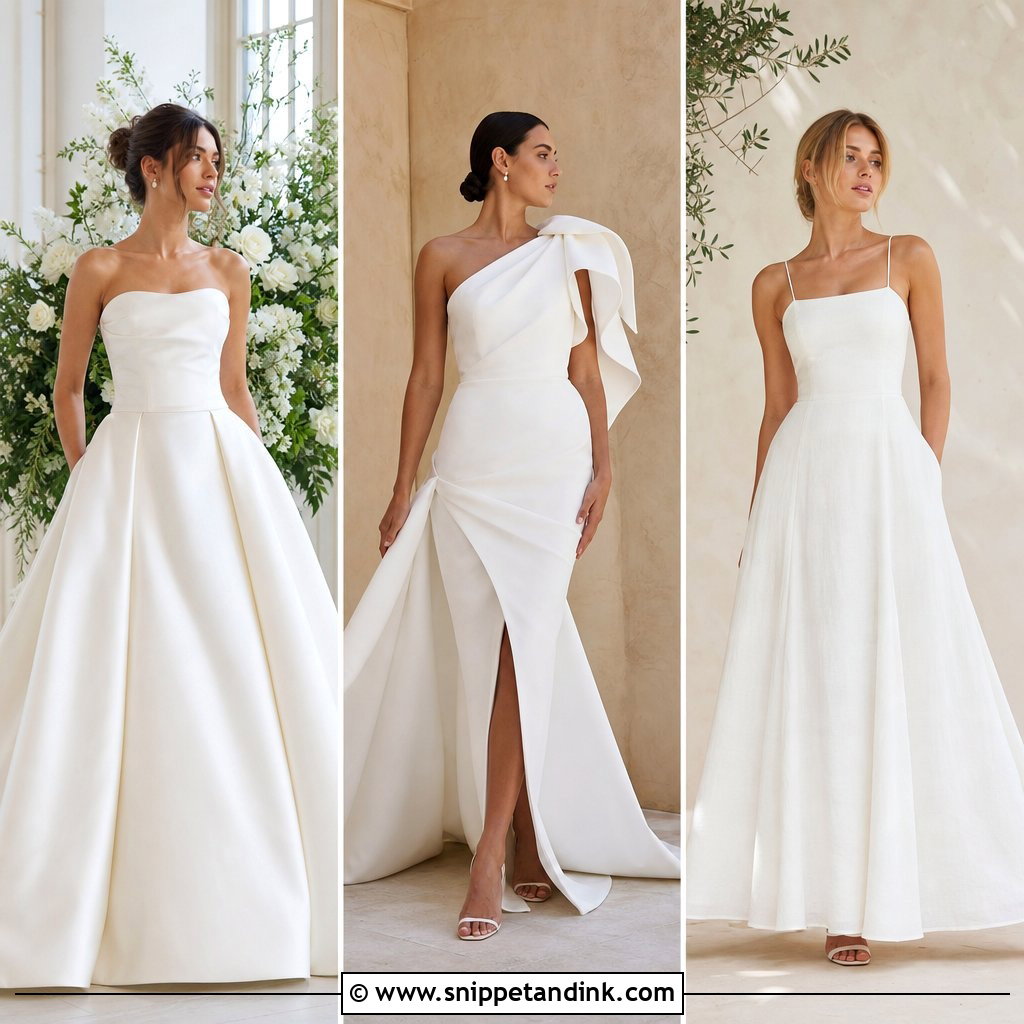
A full satin skirt has real presence, and it needs a fitted bodice with a softly curved neckline to keep the volume from swallowing you. A natural or basque waist defines the shape without heavy embellishment. Pearl drops, a fingertip veil and pointed satin pumps are enough, with a compact bouquet of white roses or peonies. Scale matters most here. On a petite frame I usually reduce the petticoat layers so the skirt is controlled, while a taller bride can carry a wider skirt and longer train comfortably. The hem should float just above the shoe; set it too long and the satin folds over your toes with every step.
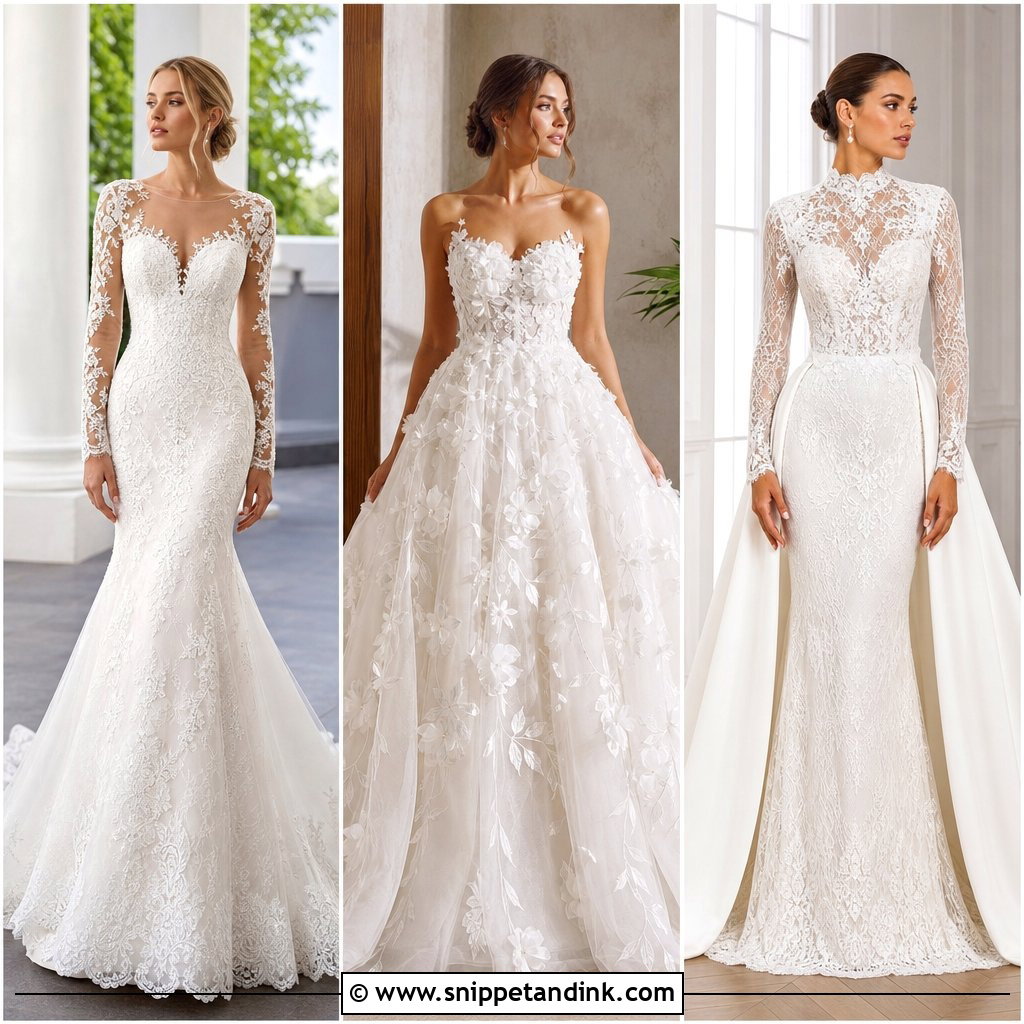
2. Lace A-Line Wedding Dress
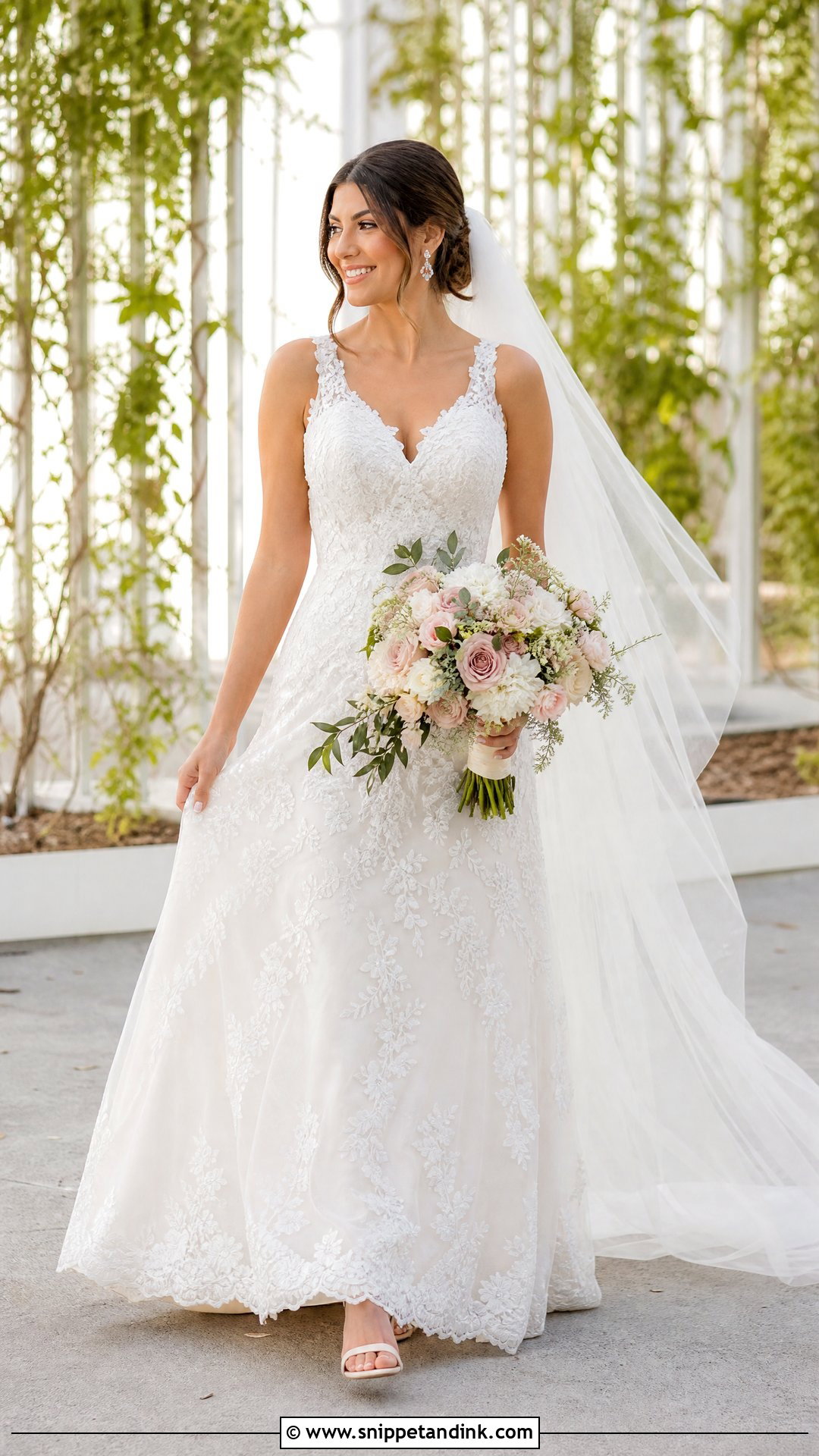
Lace A-lines are the gown I see brides relax in fastest, because the skirt opens gradually from the waist and never fights you when you sit or walk. What separates a good one from an average one is lace placement: the motifs should follow the bodice seams and flow onto the skirt, not stop abruptly at the waist. A plain tulle veil, small crystal earrings and block-heel sandals keep it light, and a loose bouquet of white, blush and green picks up the texture. If you want more coverage, illusion sleeves or a lined bodice add it without bulk. A low bun or polished half-up style suits the softness.
3. Basque Waist Wedding Dress
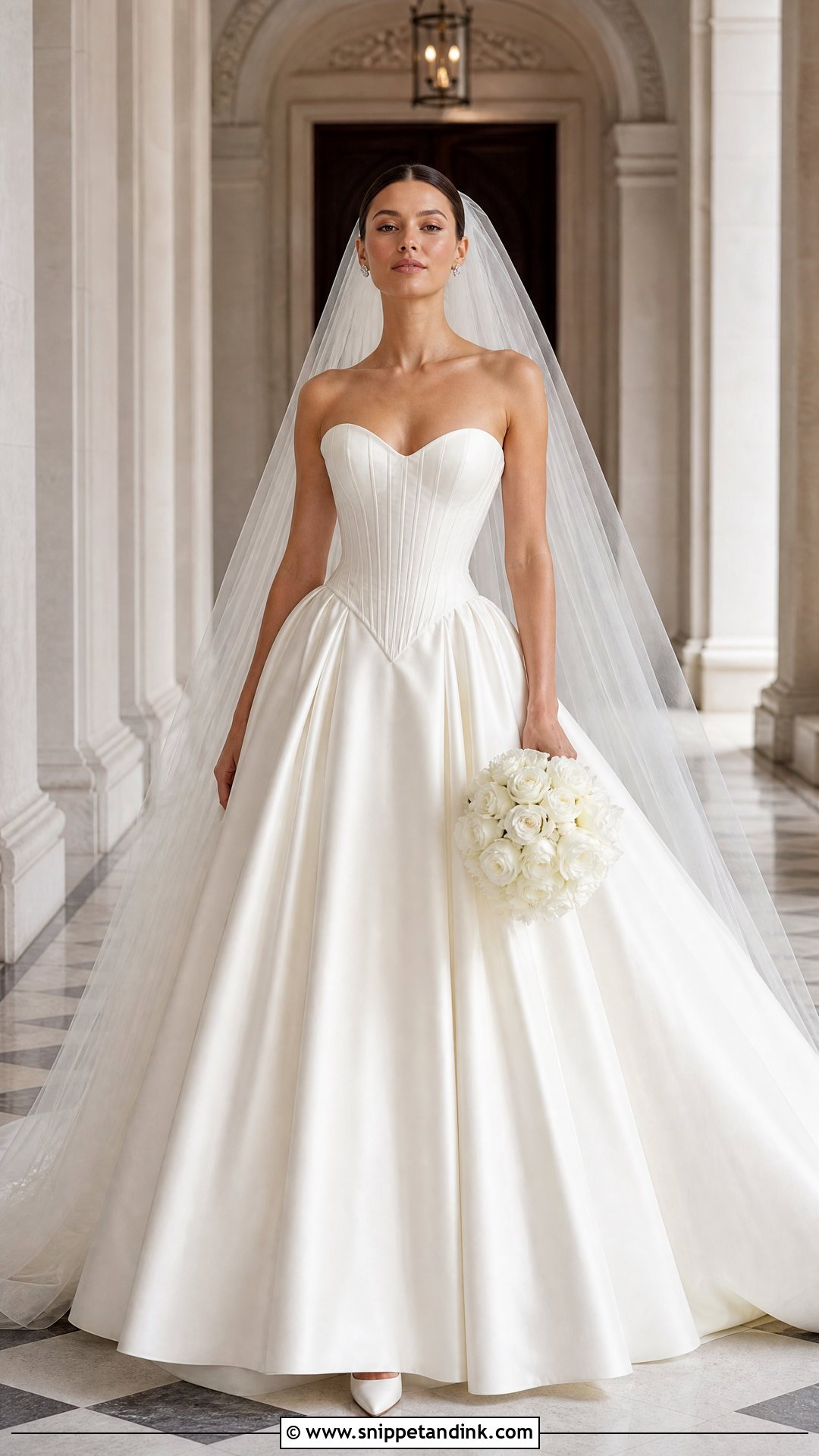
The V-shaped point of a basque waist wedding dress lengthens the torso and makes a full skirt look deliberate rather than heavy. Paired with a structured corset bodice and a satin or tulle skirt, the silhouette is dramatic but balanced. The waist is already the detail, so I keep accessories quiet: a cathedral veil, small diamond studs, satin pumps and a neatly gathered bouquet. Have the fitter check the point while you sit, walk and lift your arms, because a basque that’s a fraction too long digs into the hips when seated. A clean updo shows off the neckline and shoulders.
4. Drop Waist Wedding Dress
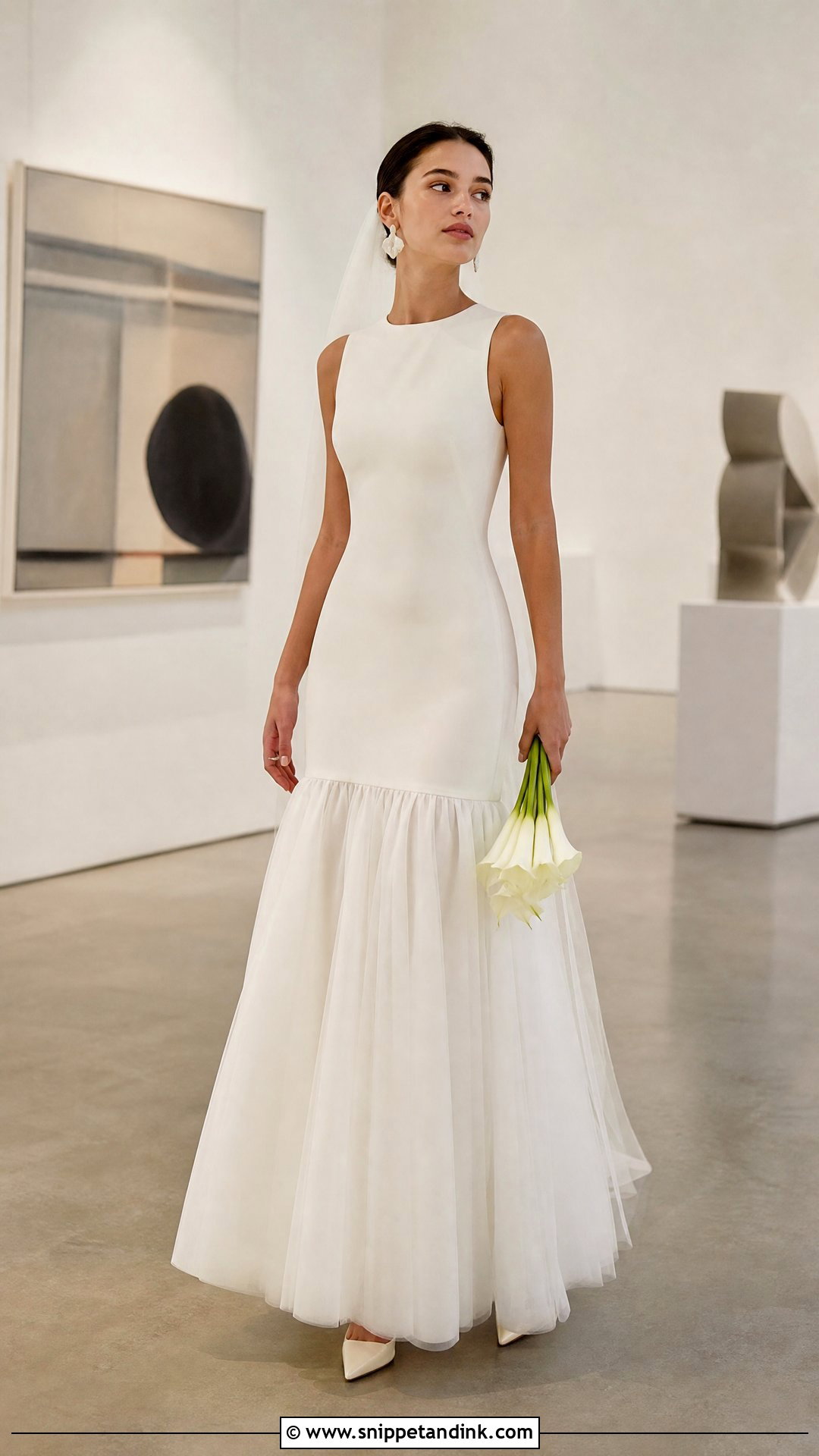
Drop waists divide opinion, and honestly they suit long-waisted brides best. The bodice runs past the natural waist before the skirt opens, so the torso looks sleek and the volume starts near the hips. On a shorter torso the same cut can make the legs look short. Crisp satin gives a structured finish; layered tulle moves more softly. Style it with a narrow veil, sculptural earrings, pointed pumps and a minimal calla lily bouquet, and leave belts and sashes off entirely. At alterations, check that the join between bodice and skirt stays smooth when you sit. A polished low bun or glossy waves keeps the proportions clean.
5. Off Shoulder Wedding Dress
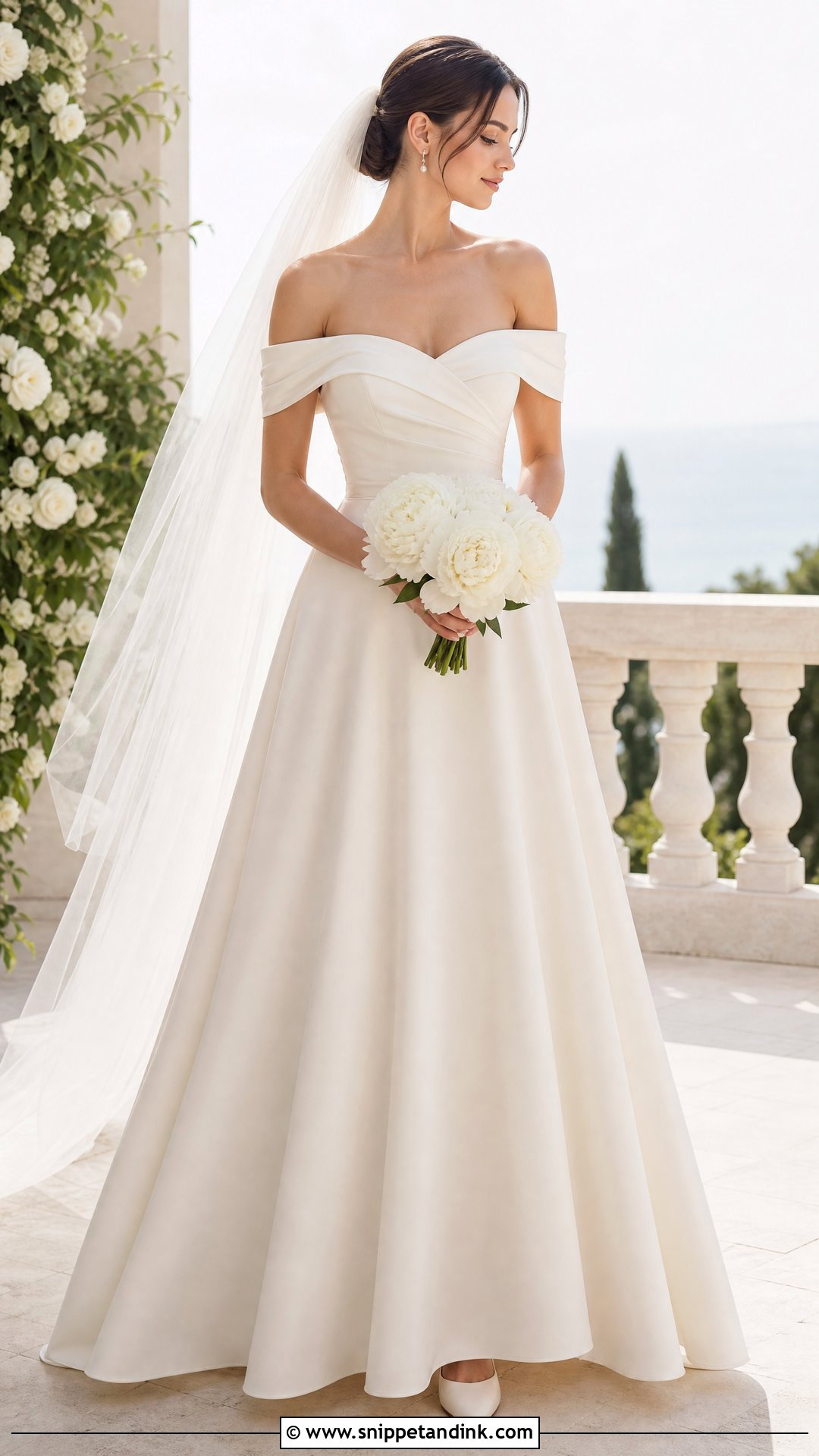
Off-the-shoulder necklines frame the collarbones well, but they live or die on construction. If the bands are carrying the weight of the bodice, they’ll creep down every time you hug someone. A well-built version has the bodice doing the support, with the bands as decoration. Draped satin bands look clean, lace sleeves softer. I’d pair it with a low chignon, short drop earrings, a sheer veil and closed pumps, and carry a rounded bouquet at waist level so it doesn’t hide the neckline in photos. Lift your arms in the fitting room before you commit. Most brides look best leaving the neck bare, though a very fine chain can work.
6. Long Sleeve Wedding Dress
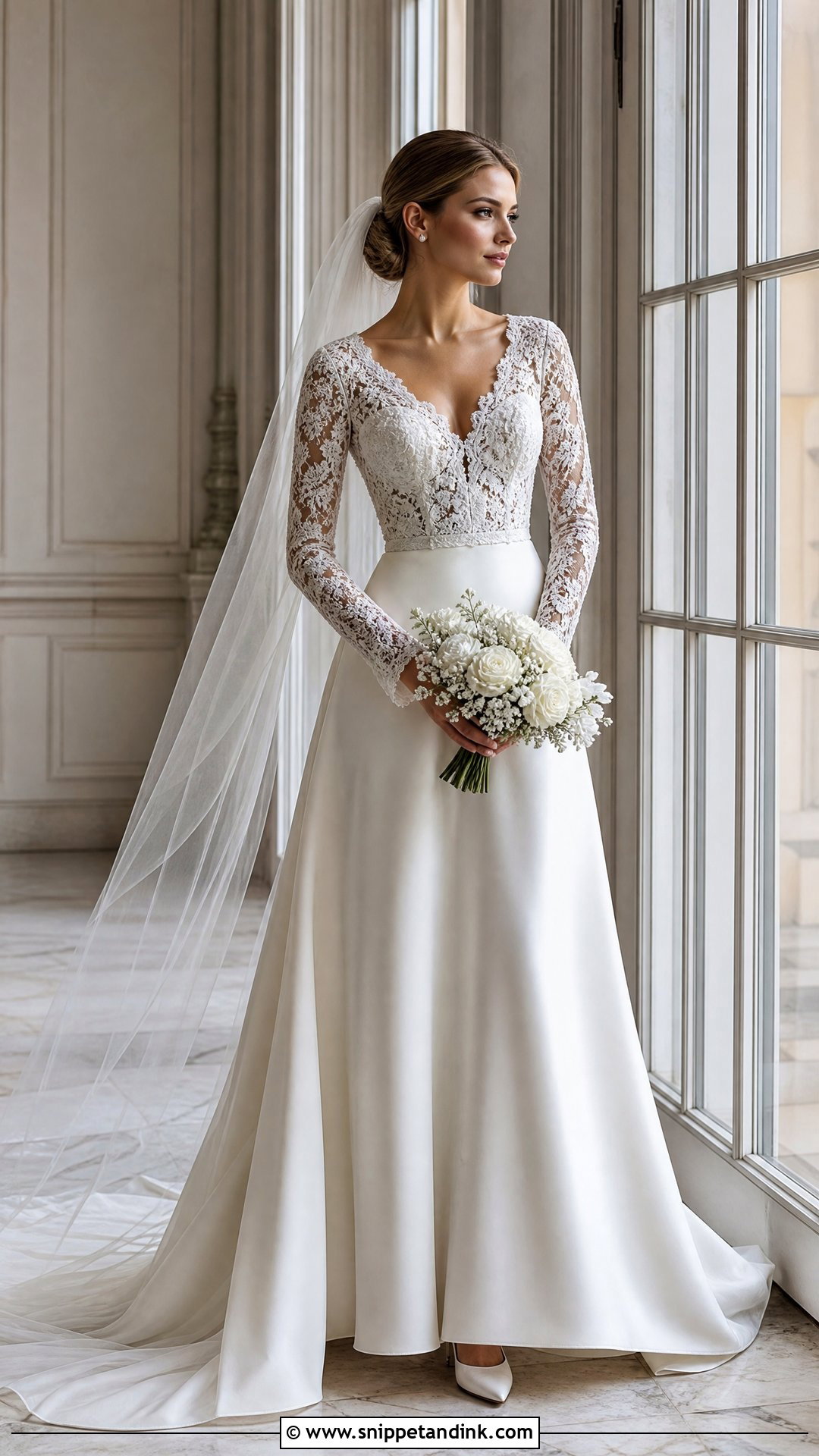
Sleeves change how a gown wears more than how it looks. Fitted lace adds delicate texture, sheer tulle gives light coverage and smooth crepe feels minimal, but whichever you choose, bend your elbows and reach forward at the fitting, because tight sleeves restrict hugging and eating more than brides expect. Balance covered arms with an open neckline, a defined waist or a low back. Pearl studs, a long veil, closed heels and a structured white bouquet finish it, and a low bun keeps the neckline visible. In cooler weather, a tailored ivory coat covers outdoor portraits and comes off indoors.
7. Strapless Column Wedding Dress
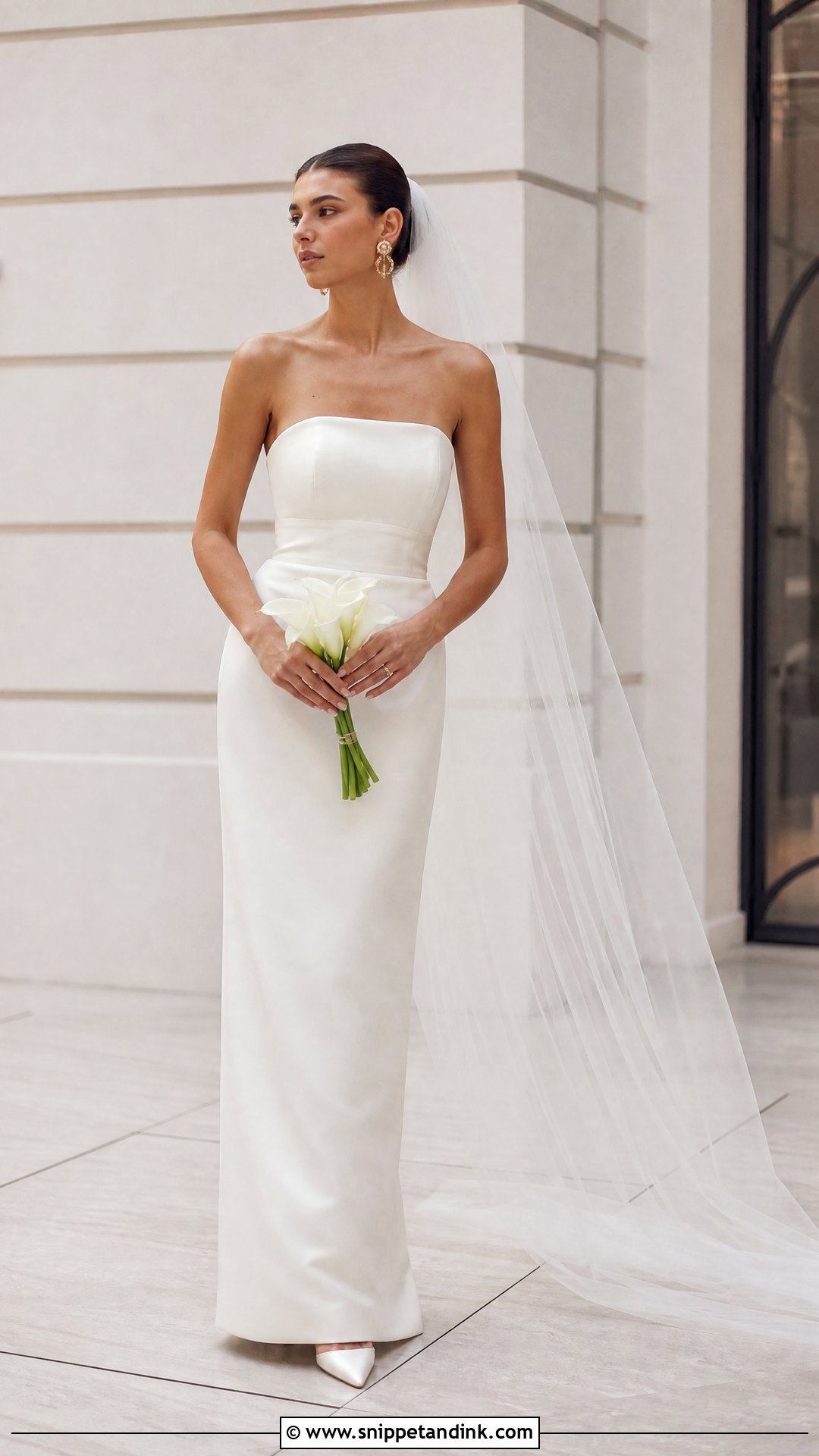
Strapless columns are the cleanest line in this gallery and the least forgiving of a weak bodice. Structured satin, Mikado or crepe holds the shape from neckline to floor, but what keeps it up is internal boning and a bodice fitted to your ribcage, not constant hitching. I always check how much the bride tugs at it during a fitting; if she does it twice in ten minutes, the bodice needs taking in. A sleek bun, statement earrings, pointed heels and narrow calla lilies keep it modern. For the reception, swap the veil for a short satin scarf or detachable gloves. Walk and sit in it to be sure the skirt allows enough movement at the knee.
8. Square Neck Wedding Dress
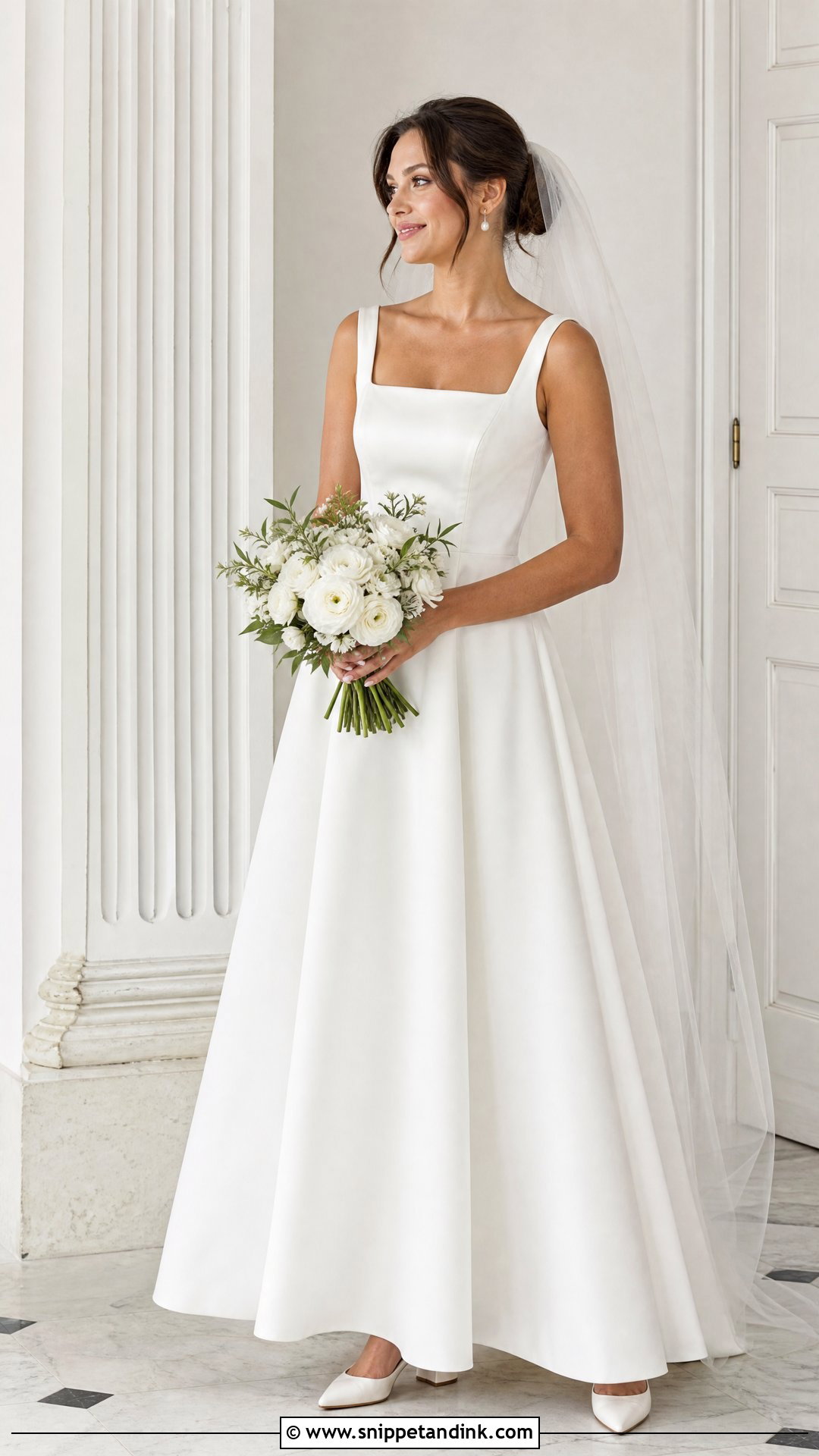
A square neckline gives the shoulders and collarbones clear structure, and it works with wide straps, short sleeves or long fitted sleeves. The fitting test is simple: the edge should lie flat against the chest when you breathe in and bend forward, without gaping at the corners. An A-line skirt moves gently, while a column feels sharper. A low twisted bun, pearl earrings, a plain tulle veil and block-heel pumps suit it, with white ranunculus and greenery. If you’d like more softness, look for floral embroidery or a light tulle overlay. Skip necklaces so the shape stays crisp in close-ups.
9. Halter Neck Wedding Dress
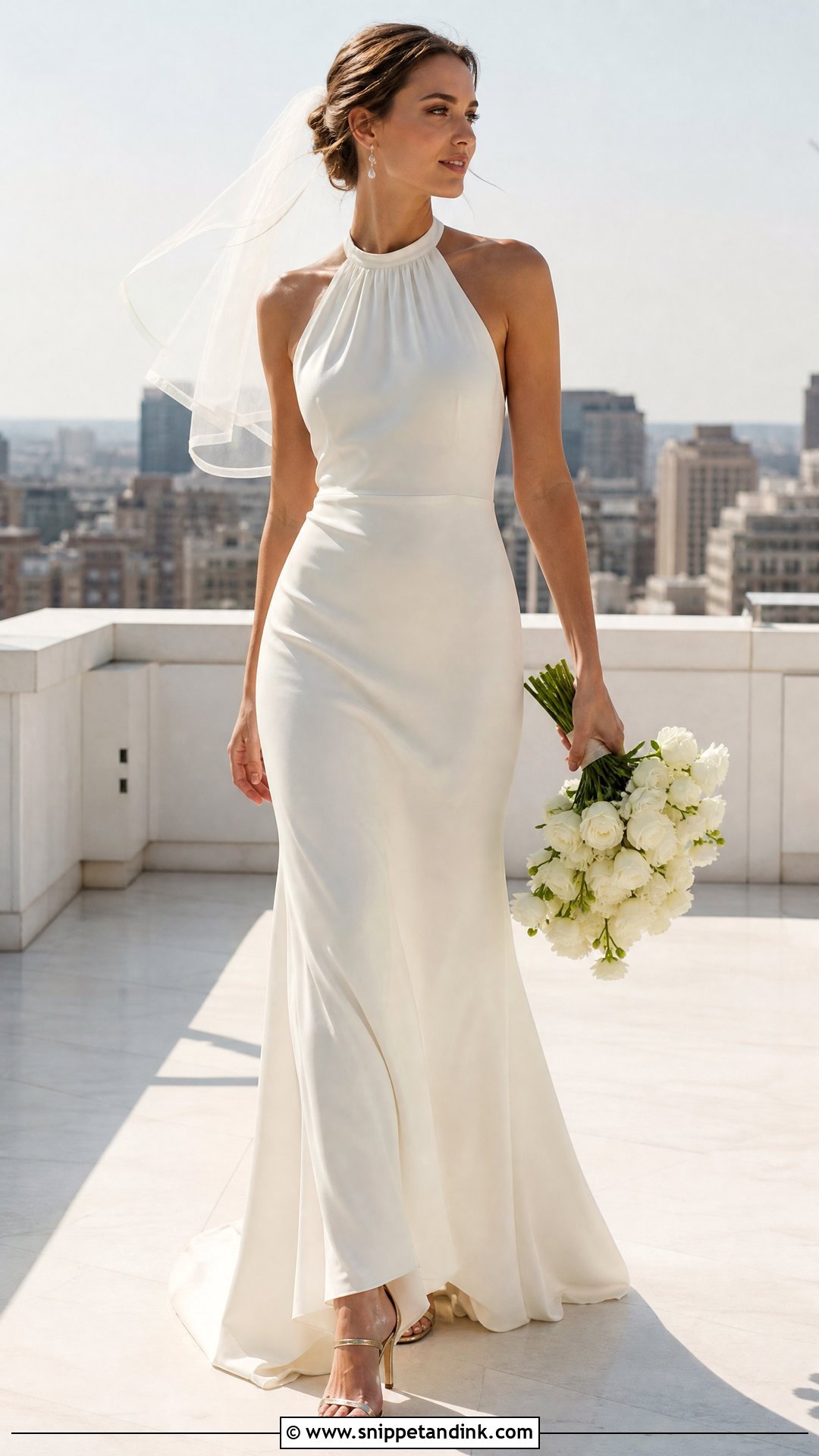
Halters pull the eye up to the shoulders, so they suit brides who like their arms and upper back. Fluid satin or crepe moves well in this cut, and a softly gathered neck keeps it from looking severe. The detail to check is the back of the neck: a halter carrying a heavy bodice can ache by evening, so ask whether the weight is supported elsewhere. Style it with an updo, small drops or hoops, metallic sandals and a streamlined bouquet, and leave the necklace off. Add a short veil or a sheer cathedral one depending on formality. Rooftops, coastal venues and modern rooms suit it.
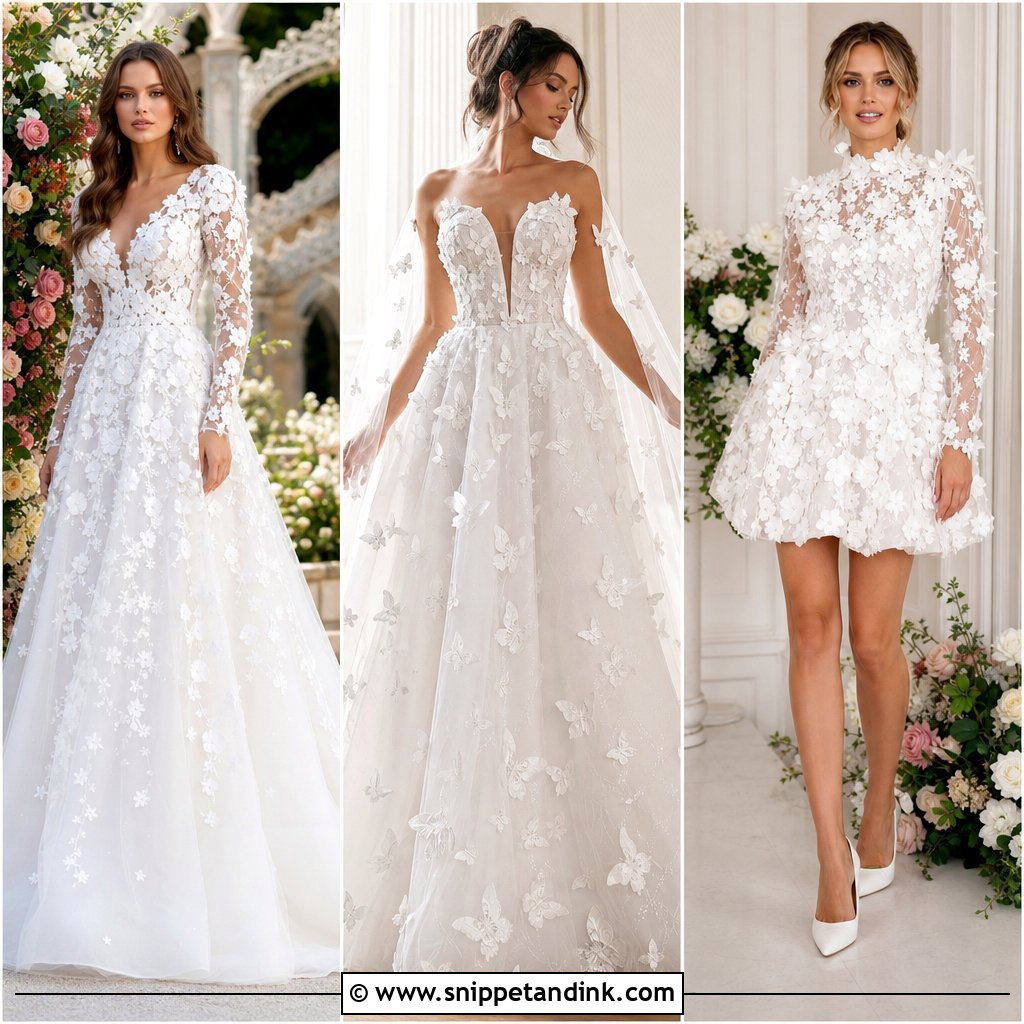
10. Floral Applique Wedding Dress
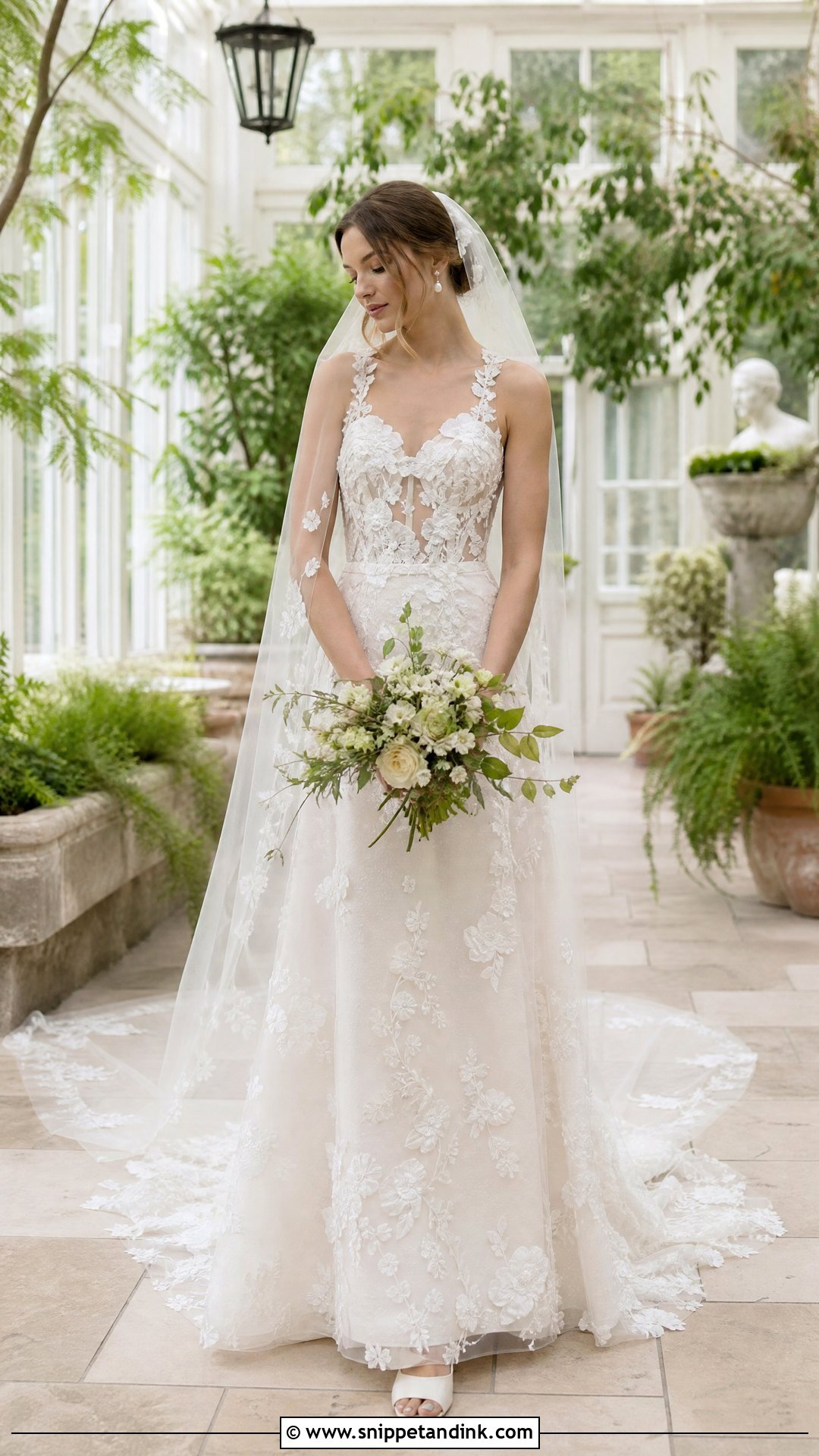
Raised floral appliqués catch side light, which is why they show so clearly in outdoor portraits. They need space, so pick a fitted A-line or a soft ball gown rather than a busy cut. The flowers may sit on the bodice, scatter down the skirt or continue onto a matching veil. Look at the placement from the front, side and back in a full-length mirror; well-placed appliqués draw the eye to the waist, while badly placed ones can sit like patches over the hip. Pearl earrings, simple ivory heels and a loose garden bouquet are enough. Spring weddings, conservatories and green outdoor venues are where this gown makes the most sense.
11. Corset Bodice Wedding Dress
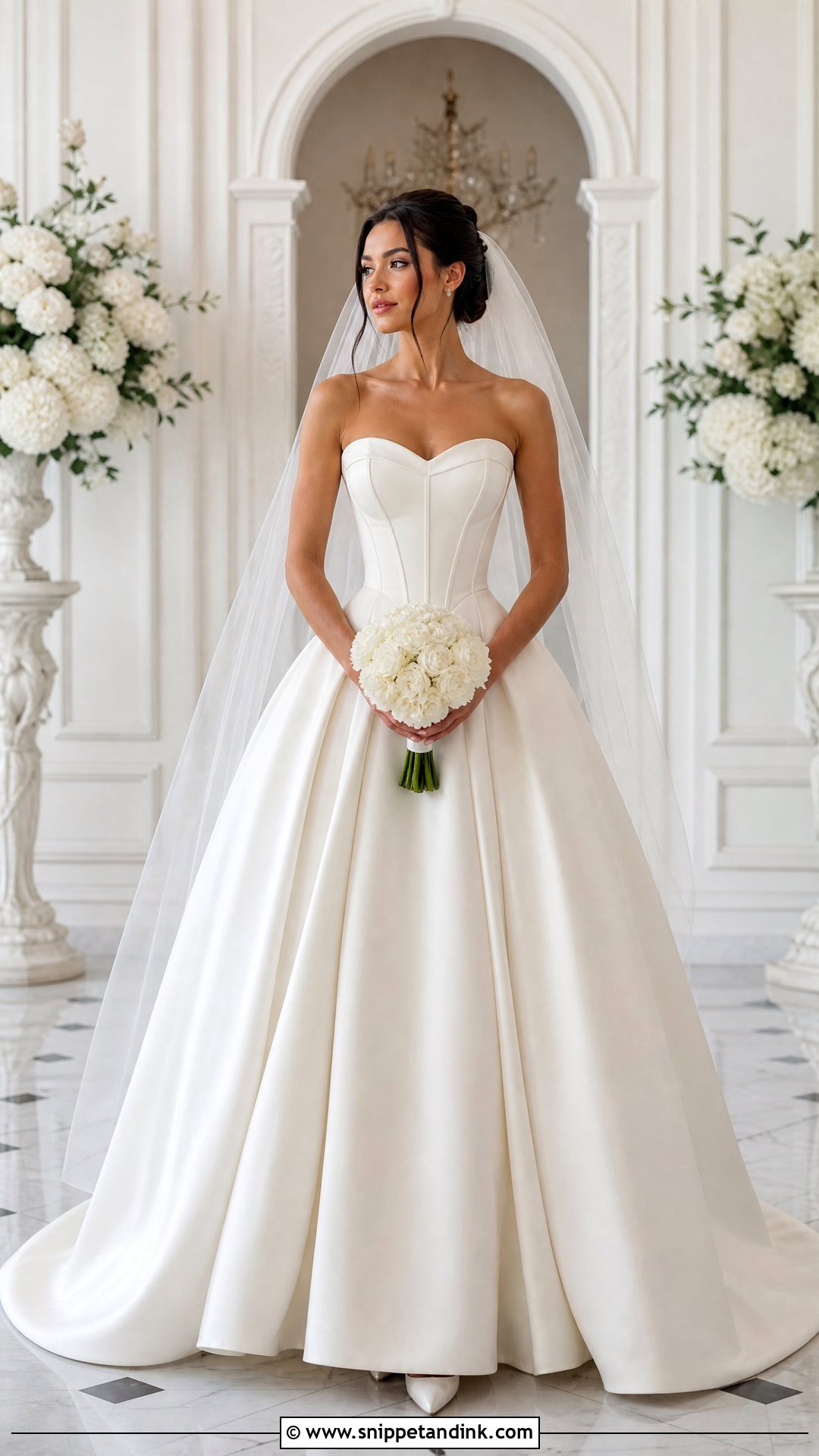
A corset bodice should hold you, never squeeze you. My fitting test is whether the bride can take a full breath and laugh without the boning pressing into her ribs; if not, it’s too tight, however good it looks in the mirror. The bodice can top a satin ball skirt, a flowing A-line or a fitted mermaid. Tonal boning and a lined bodice look refined, while subtle sheer panels with placed embroidery feel more fashion-led. Ask the fitter to check the back closure while you sit, because laced backs can gap when you lean forward. A soft veil, crystal studs, closed heels and a compact bouquet keep the focus on the construction.
12. Pleated Chiffon Wedding Dress
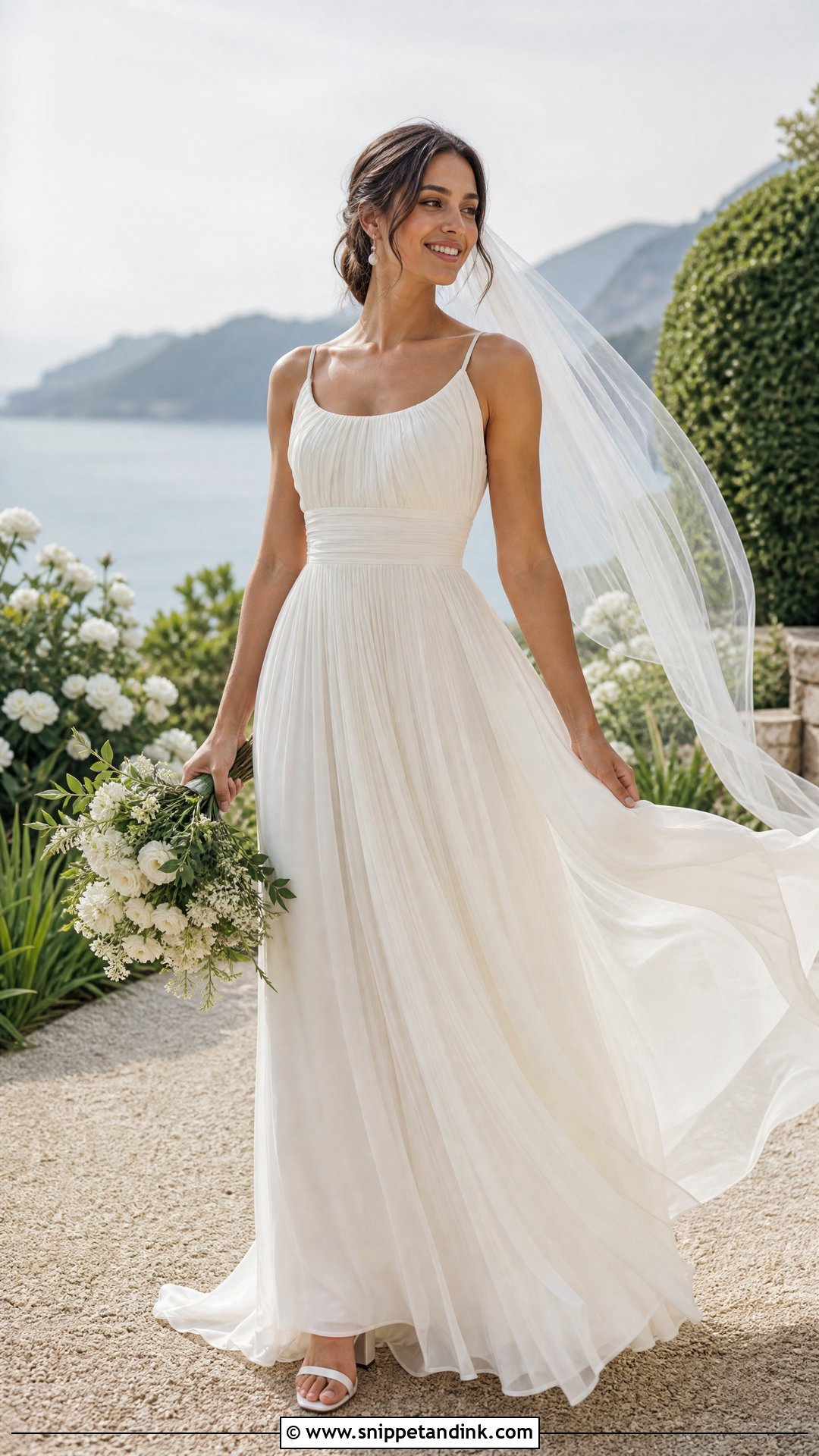
Pleated chiffon is the gown for heat and outdoor ceremonies. It’s light, it moves with every breath of wind, and it doesn’t trap warmth the way satin does. A gathered bodice and defined waistband give it shape without weight. Chiffon is slightly sheer, so I always check the lining near a window and under a phone flash before a bride orders, since what looks opaque in a salon can show legs in backlit photos. Thin-strap block heels, delicate gold or pearl earrings and a light veil suit it, along with soft waves or a textured bun. Keep the hem just skimming the floor; on grass or sand, longer chiffon soaks up damp.
13. Pearl Beaded Wedding Dress
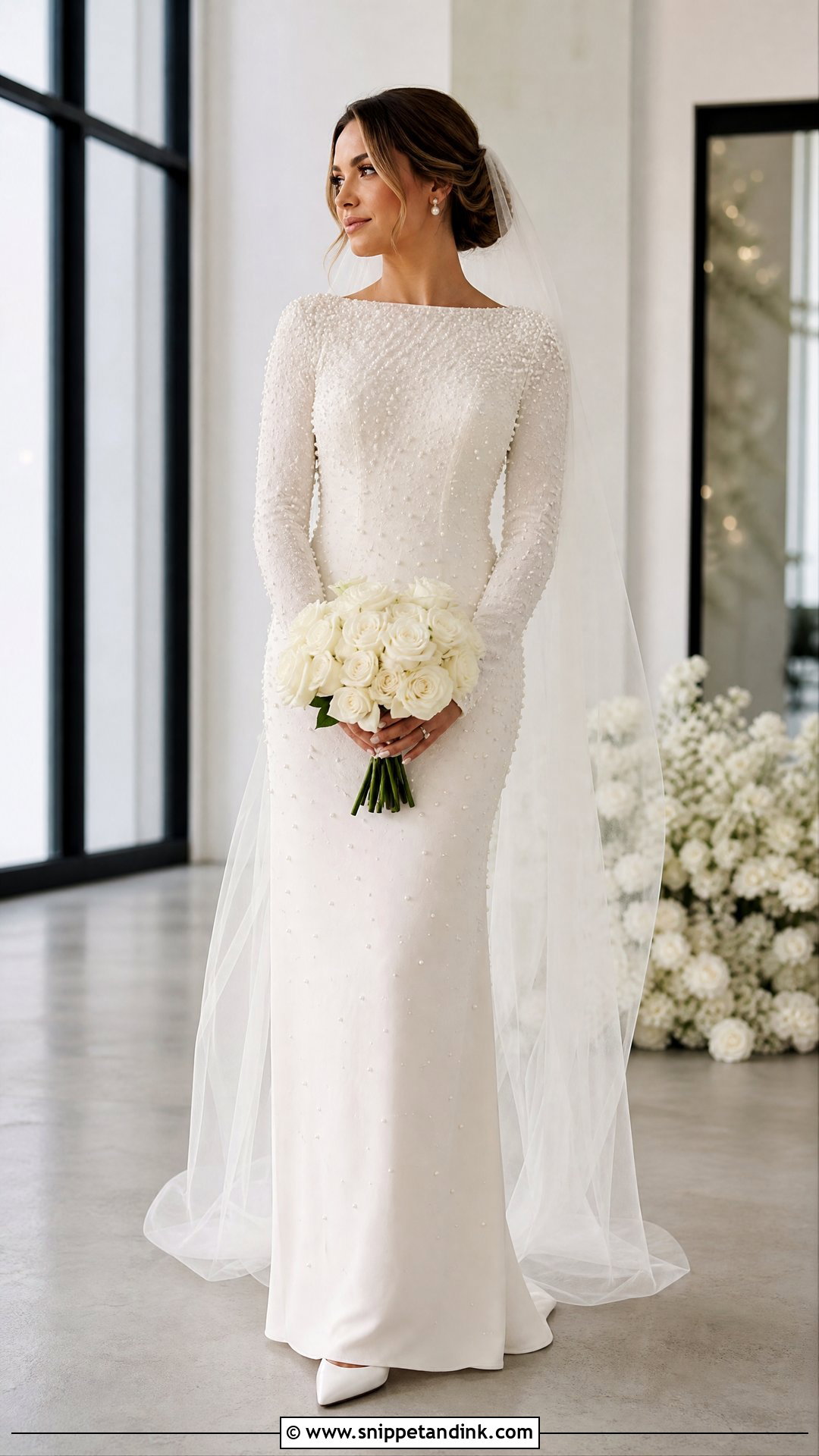
Pearls give a soft glow rather than the sharp flash of crystals, which suits brides who find sparkle too much. Scattered across the bodice, sleeves or neckline, they look intentional; covering the whole gown, they can feel heavy. A fitted column or gentle A-line keeps the texture balanced. Style it with plain satin heels, small pearl studs, an unembellished veil and white roses, and don’t repeat pearls on every accessory or the outfit starts to look themed. I run a hand over the beadwork at every try-on. Loose threads or rough settings snag veils and catch on beaded sleeves as the arms move.
14. Bow Back Wedding Dress
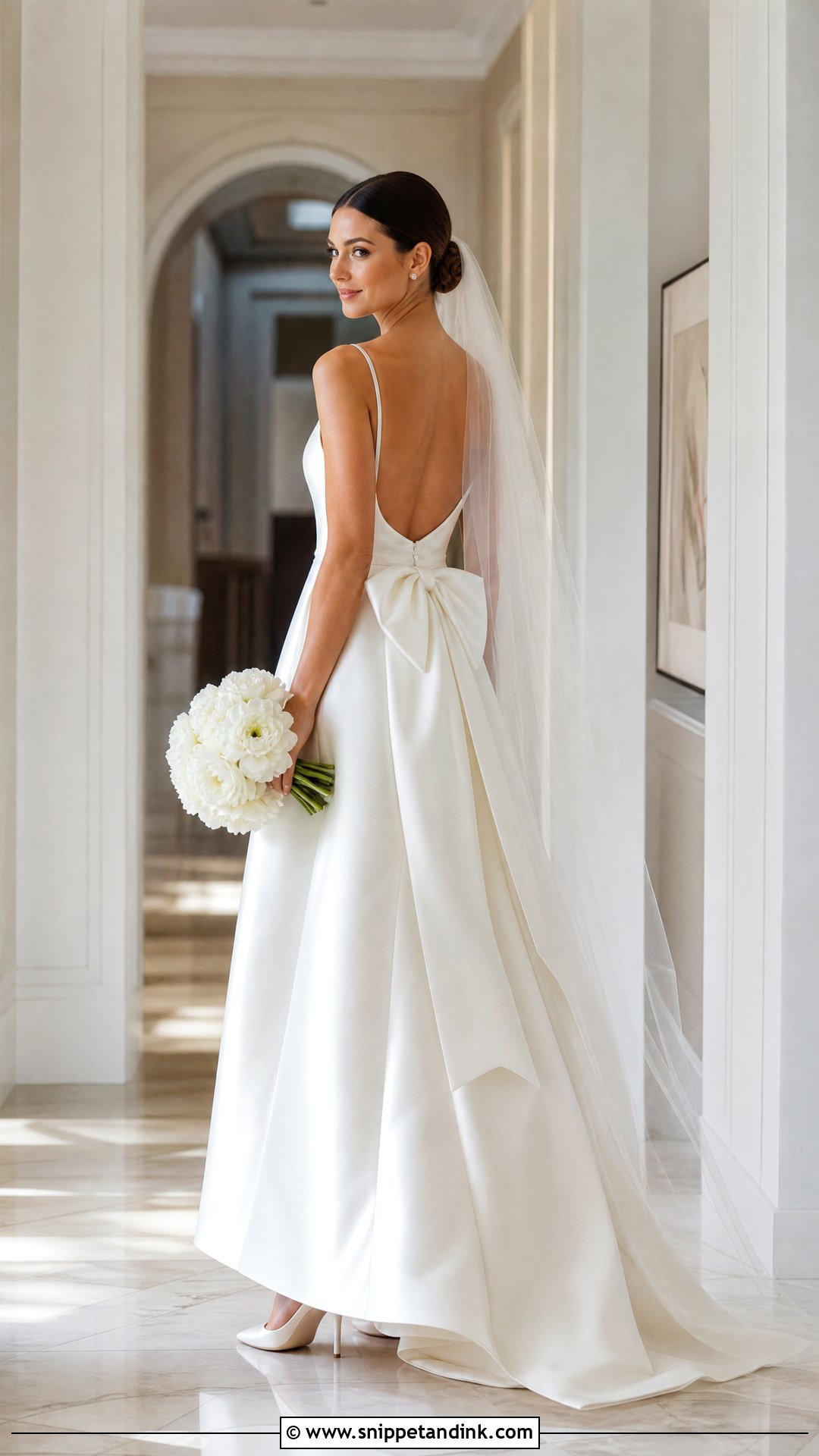
A bow at the back gives guests something to look at during the ceremony, when they see your back far more than your face. On a structured satin column, A-line or ball gown, the bow should sit neatly at the waist or upper back and hold its shape without drooping. Ask whether it’s detachable if you want a simpler reception look. A plain veil that comes off after the ceremony, pointed pumps, small earrings and a tidy bouquet are enough. Wear your hair lifted or swept to one side so nothing covers the bow, and mention it to your photographer so they plan rear and side portraits.

15. Cape Sleeve Wedding Dress
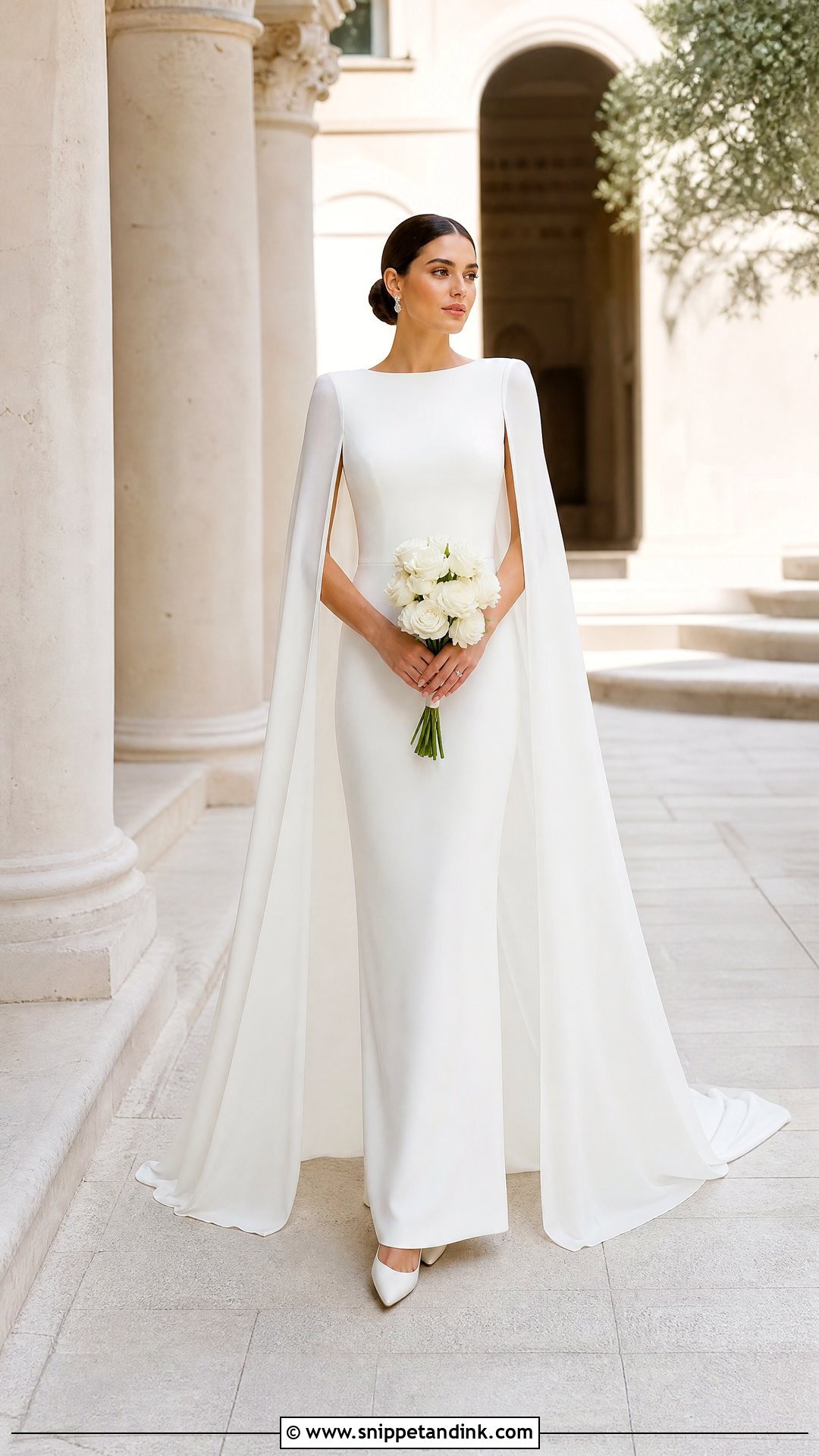
Cape sleeves give you movement and coverage at once, and they make an entrance. The cape might fall from the shoulders, attach at the neckline or flow from a clean column gown. Chiffon reads soft; structured satin gives a sharper outline. With a cape already providing length, I’d usually skip a traditional veil. A sleek updo, understated earrings, closed pumps and a narrow bouquet keep the line simple. Walk a lap in the full outfit before buying, as capes catch on bouquets, bag straps and car doors. A detachable design leaves you a simpler dress for dancing.
16. Detachable Overskirt Wedding Dress
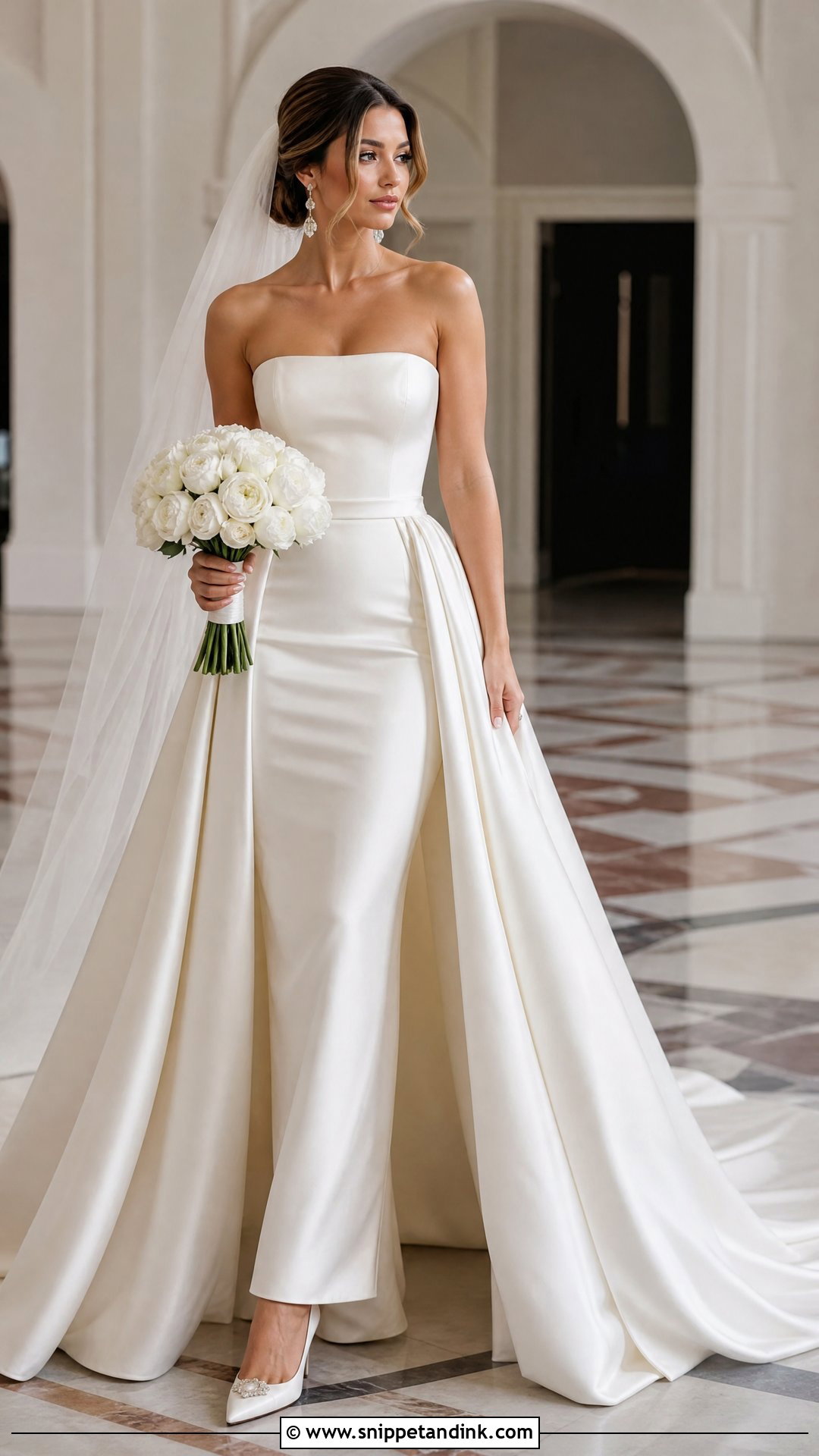
One dress, two looks. A full overskirt over a fitted column, mermaid or even a mini gives you ceremony volume, then comes off for the reception. The pieces should be in matching fabric and colour so they look designed together rather than assembled. Wear a long veil, drop earrings and elegant pumps for the ceremony, then switch the veil for a hair comb and add a small evening bag later. When you test the removal, the overskirt should open smoothly without bunching at the waist, and the attachment points shouldn’t show on the dress underneath. Practise the change with the person who’ll actually do it on the day.
17. Tea Length Wedding Dress
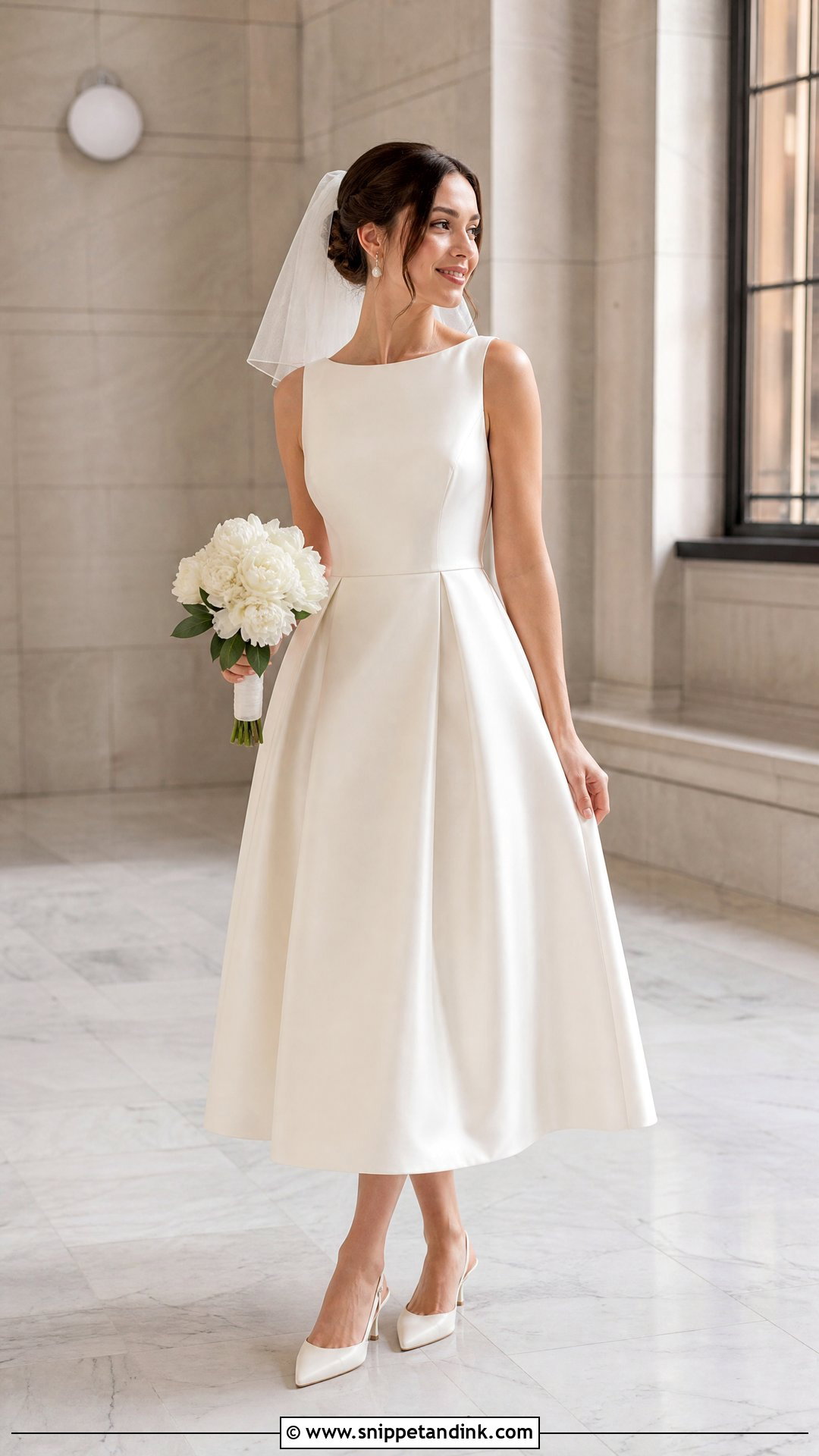
Tea length ends between knee and ankle, and the exact stopping point matters more than people realise. A hem that lands at the widest part of the calf visually shortens the leg; an inch higher or lower usually looks better, so try the dress in your real shoes before alterations. A fitted bodice with a structured, pleated or layered skirt gives a vintage outline. Pointed pumps, slingbacks or embellished flats are all on show, so pick ones that look finished from every angle. A short veil, pearl earrings and a compact bouquet keep the proportions playful. Courthouse ceremonies, daytime parties and smaller venues suit it, and moving around to greet guests is much easier.
18. Minimal Crepe Wedding Dress
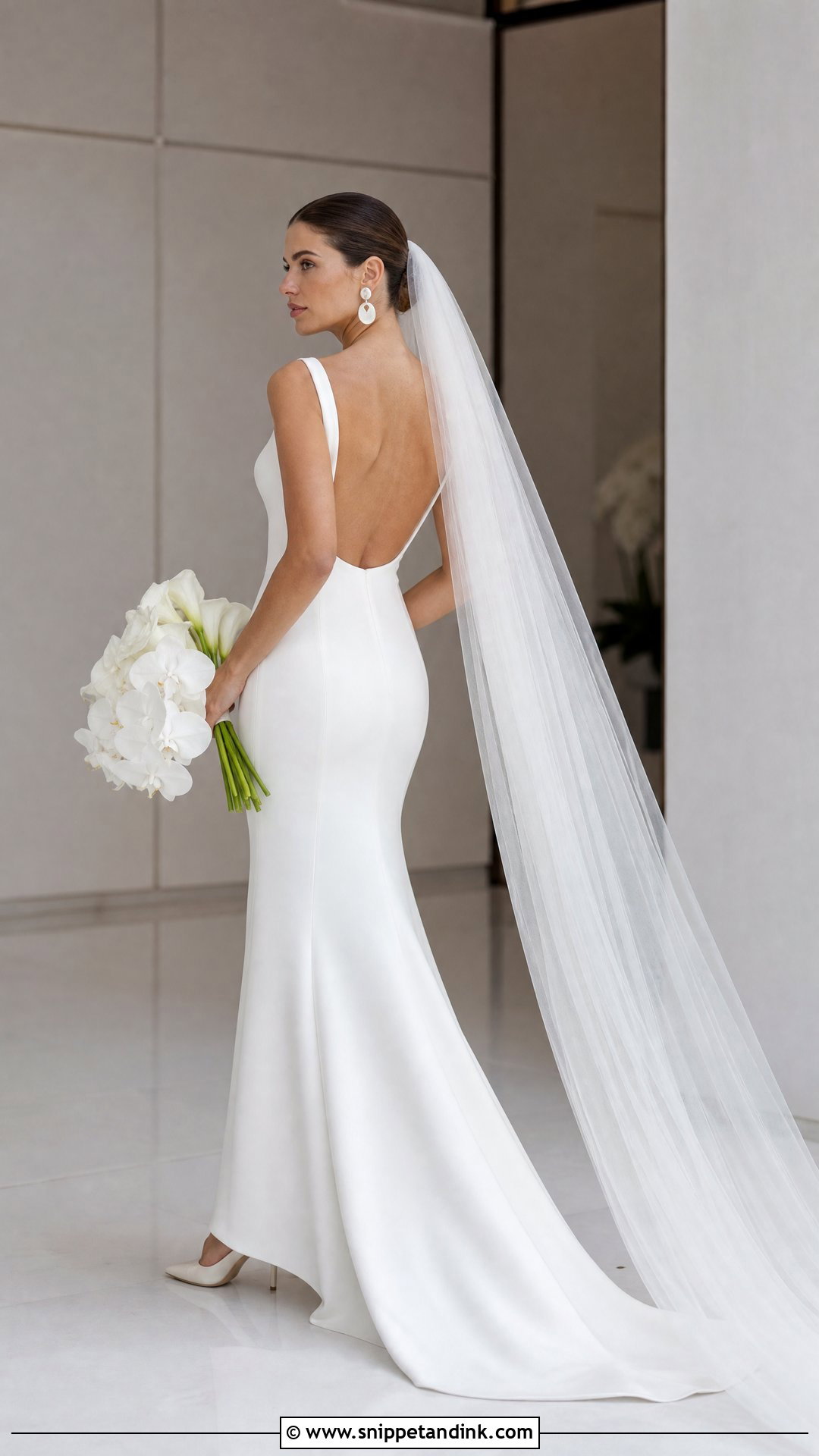
With crepe, fit is the design. There’s no lace or beading to distract the eye, so precise seams, a defined waist and a clean neckline carry the whole look. Crepe also shows undergarment lines and pulling when the fit is off, so I check these gowns in daylight and ask brides to bring smooth foundations to every fitting. Look for a column or fit-and-flare shape, and pair it with sculptural earrings, pointed pumps, a long plain veil and a structured bouquet. A sleek bun or polished waves keeps it modern. If it feels too plain, one feature such as a low back or detachable train is enough.
19. High Low Wedding Dress
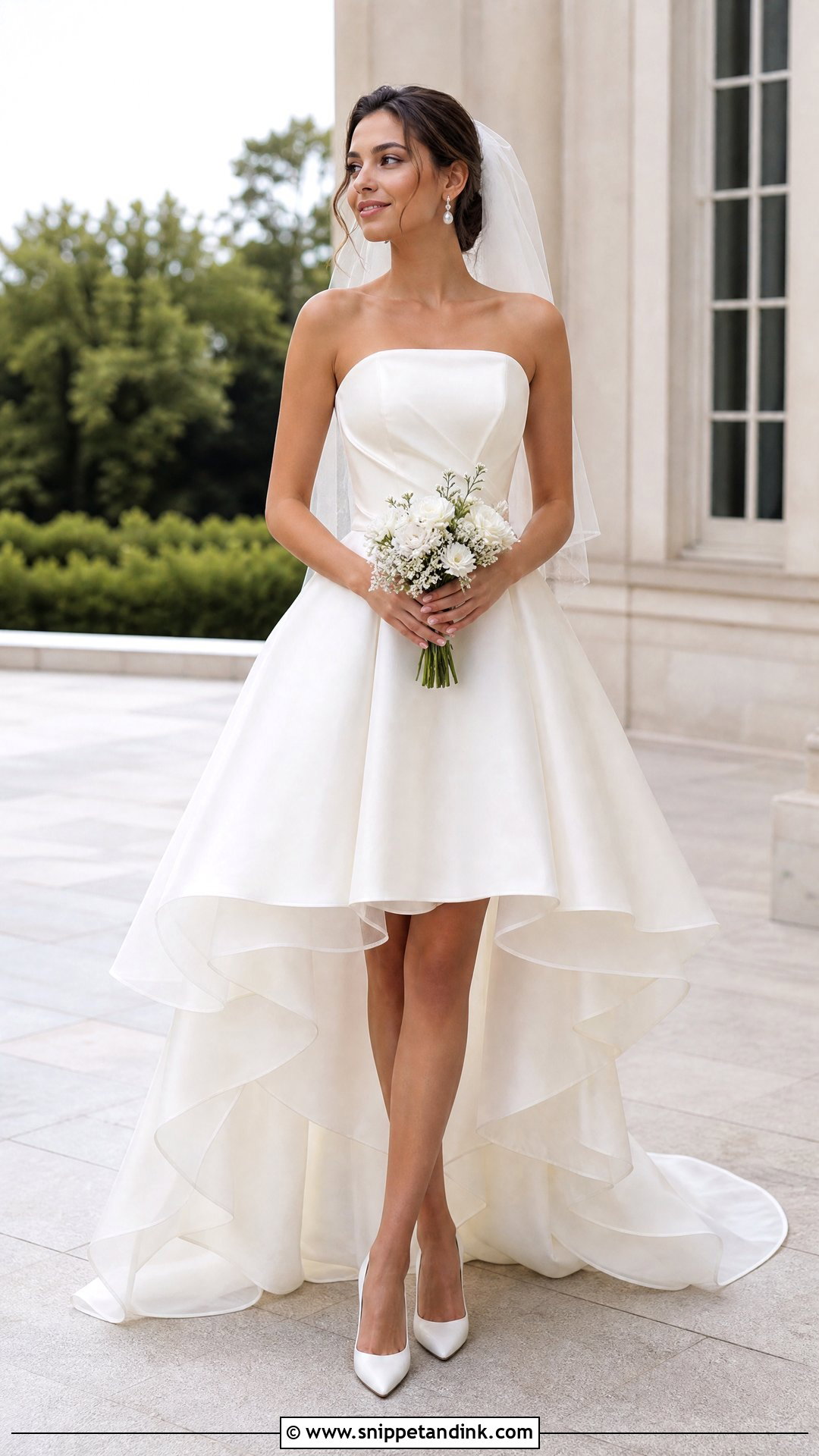
High-low hems work best when the difference is gentle. An extreme drop from front to back tends to look like a costume once you’re moving. Choose a softly structured skirt that shows your shoes at the front, with layered tulle, crisp organza or a removable train behind. Because the shoes are part of the look, match their shade to the undertone of the gown and choose comfort first; satin pumps with a little height work well. I always have brides walk up steps and across different floors in this cut, since the front hem should stay formal but never catch at the ankle. A short veil, pearl earrings and a small hand-tied bouquet finish it.


20. Blue Floral Wedding Dress
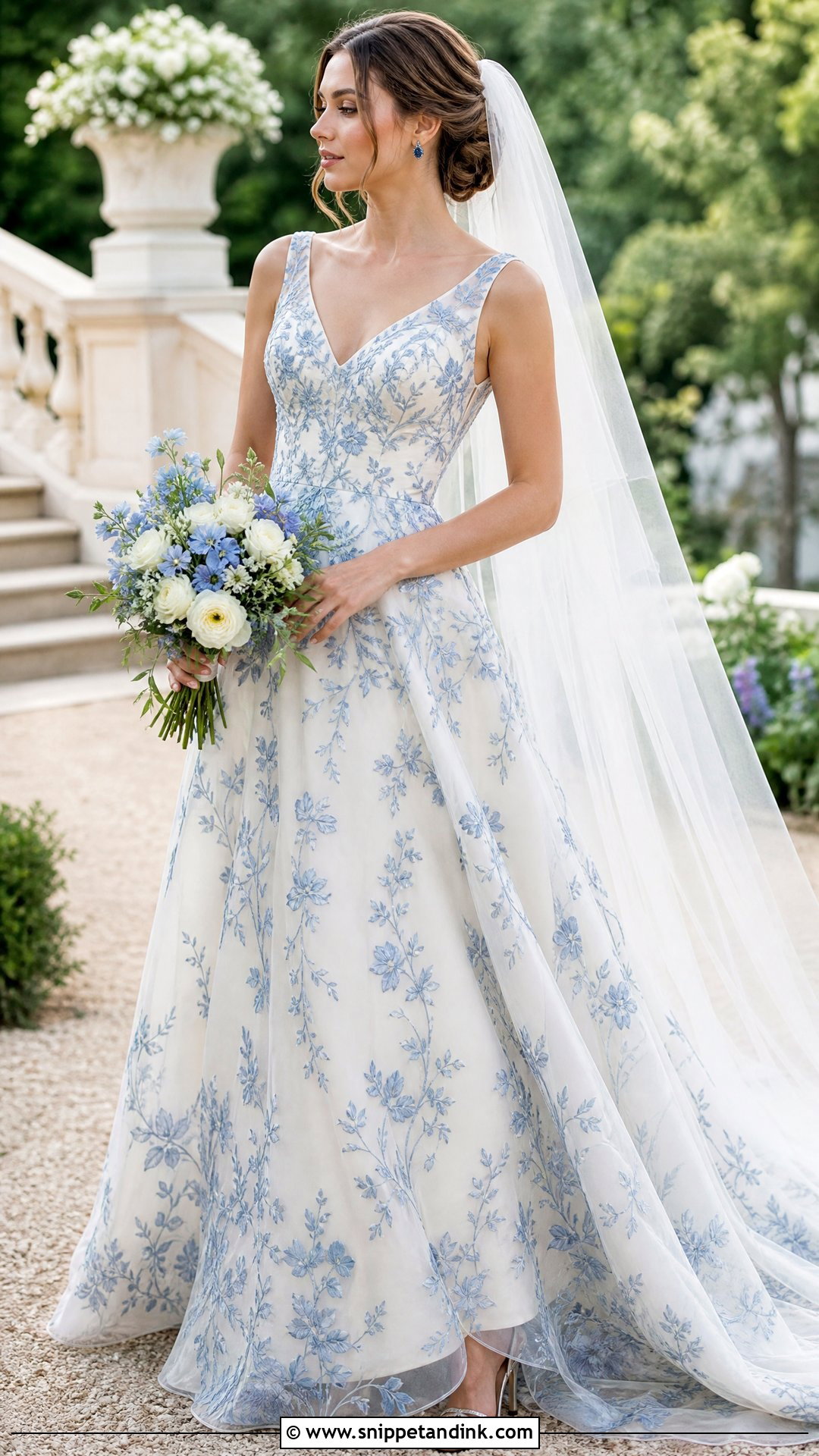
Pale blue embroidery or watercolour flowers on an ivory base bring in colour without losing the bridal feel. An A-line gives the pattern room to flow without crowding the figure. Before ordering, look at the fabric outdoors in daylight. Some blues turn grey or slightly green next to certain skin tones, and printed florals can photograph flatter than they look in person. Silver or ivory heels, small sapphire-toned earrings and a plain sheer veil are enough. Carry a bouquet that repeats only one or two of the gown’s colours, keep the hairstyle simple, and save it for a garden or estate setting where the florals feel at home.
Turning a Folder of Saves Into a Useful Appointment
A consultant can pull the right samples in minutes if you give her the right information. Twenty screenshots of different dresses tell her less than five with something in common, so edit your folder before you go and be ready to say what you like about each one.
Bring
- Three to six images, with a note on the detail you like in each: the waist, the back, the sleeve.
- A strapless or convertible bra and the rough heel height you expect to wear.
- Your venue, the season and your budget range, which narrow the rails faster than anything else.
Leave at Home
A large group with strong opinions. Two people whose taste you trust will help you hear your own reaction; six can talk you out of it.
The Months Between Saying Yes and the Final Fitting
Most bridal gowns are made to order after you buy them, and production commonly takes somewhere around four to eight months, depending on the designer and the season. Alterations usually need another two to three months after that, spread over two or three fittings. Rush options exist, but they often cost extra and limit your choice of designers.
In practice, that’s why I suggest starting appointments roughly nine to twelve months before the wedding if you can. It leaves room for delivery delays, for a fitting that needs repeating, and for changes in your body or plans without panic. If your date is closer than that, ask straight away which gowns can be bought off the rack or delivered quickly, and focus your shortlist there.
Let Your Saved Photos Show You the Pattern
Scroll back through your saves and look for the repeat. Most brides find the same waistline, neckline or fabric showing up again and again, even across very different gowns, and that repeated feature is more useful than any single favourite. Judge each look as a whole outfit, including veil length, shoes, hairstyle and bouquet shape, because all of them change how the gown reads. Take those repeating details to your bridal appointment, and stay open when a consultant suggests something you hadn’t considered. The right dress is the one you can move, sit and breathe in while still feeling like yourself.
You'll Like These Ideas:






Leave a Reply