
Dressing a bride for Scotland means planning for the romance and the rain in the same breath. The twenty looks below run from formal castle gowns to light dresses made for Highland elopements, with tartan details, flowing skirts, sleeves, warm layers and shoes that can handle stone steps and wet hillsides. Each one is styled head to toe, veil, jewelry, bouquet and outerwear included. Castle, country estate, city registry or a loch shore: the setting changes what will actually work, and I’ve noted those trade-offs as we go.
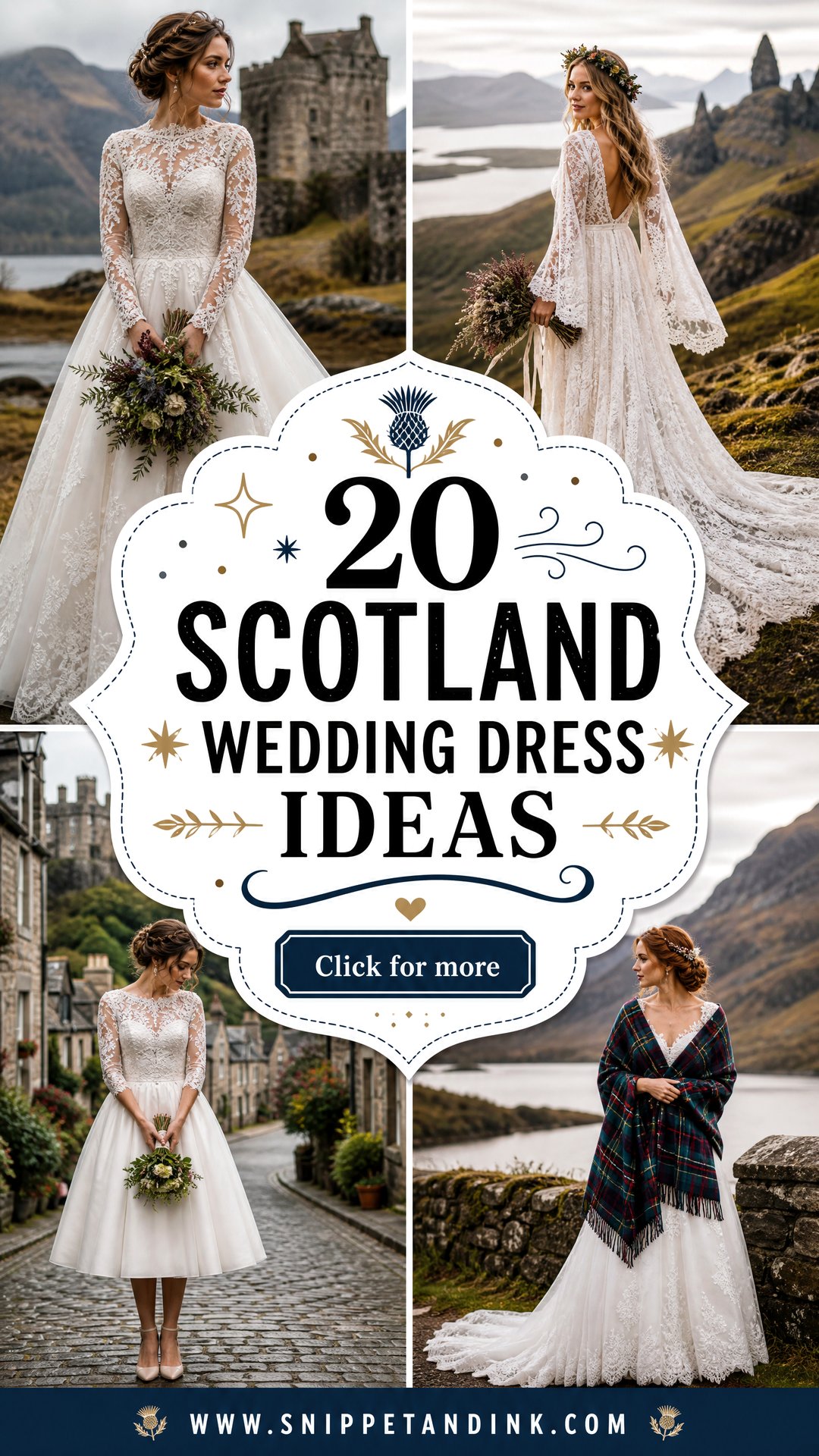
Rain, Wind and Wet Grass on a Highland Wedding Day
Scottish weather can run through sun, drizzle and wind in one afternoon, even in July, and that shapes the dress more than any trend. When I plan a Scotland look, I start with where the bride will be standing and walking, then work back to the fabric.
- Wind lifts veils, capes and chiffon. A heavier veil, a short one, or one with a weighted hem behaves better on open hillsides and castle ramparts.
- Wet ground stains hems quickly. A dress that ends just off the floor, or a bustle ready before the outdoor portraits, saves the skirt.
- Highland midges are worst on still, damp evenings from late spring through summer. A light repellent applied to arms and neck before dressing, and kept off the fabric, is worth packing.
- Old stone buildings stay cold indoors. Sleeves, a wrap or a cape for the ceremony matters even when the forecast looks mild.
- Summer daylight runs very late in the north, so evening portraits are realistic and the temperature drops sharply once the sun gets low.
Pack a small bag for the photographer’s assistant or a friend: a clear umbrella, a towel for boots, safety pins and a spare pair of dry tights. On a dry day you’ll forget it exists.
1. Scottish Tartan Ball Gown Wedding Dress
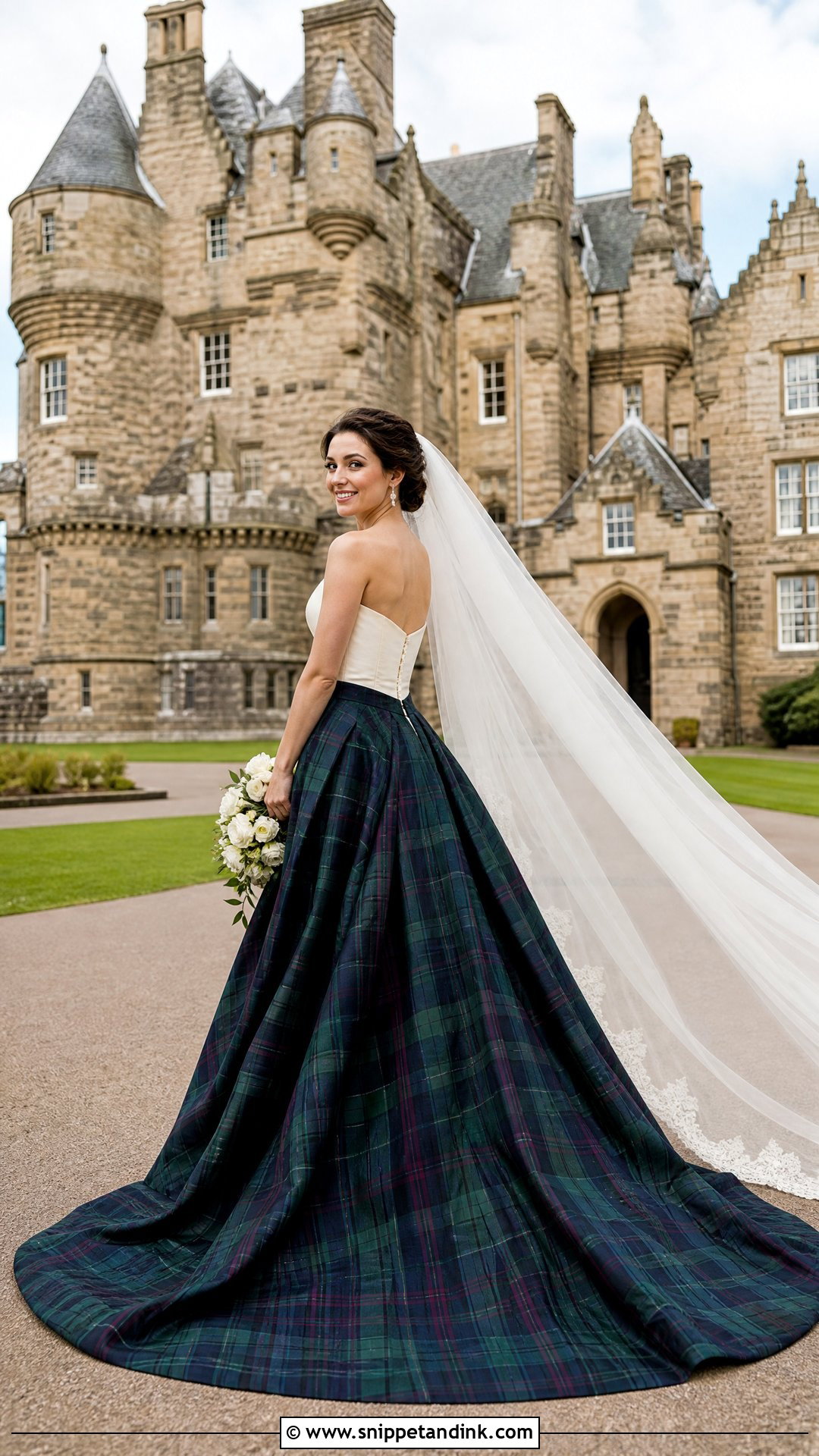
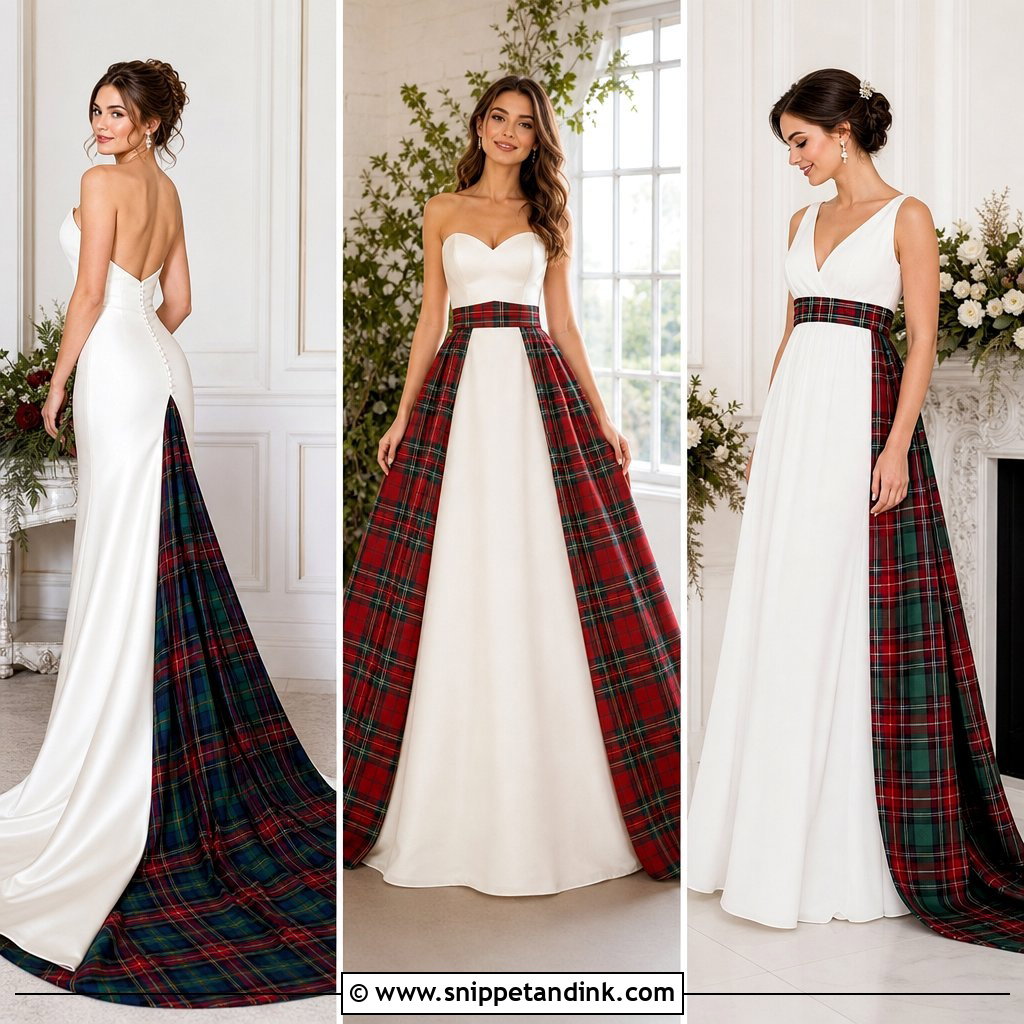
Tartan in a ball gown is the boldest way to bring Scotland into the dress. A tartan ball gown can pair an ivory fitted bodice with a full tartan skirt, or flip it, with an ivory skirt under a tartan corset top. Deep green, navy, burgundy and muted blue read richly against grey castle stone. Keep the rest simple: pearl drops, a plain bracelet, ivory block heels, and a cathedral veil that comes off for the reception. White roses with greenery and a little soft purple suit the colors. Large-scale checks need careful cutting, so ask the maker how the pattern will line up at the seams; a misaligned tartan seam is the first thing I notice.
2. Lace Cape Wedding Dress For Scotland
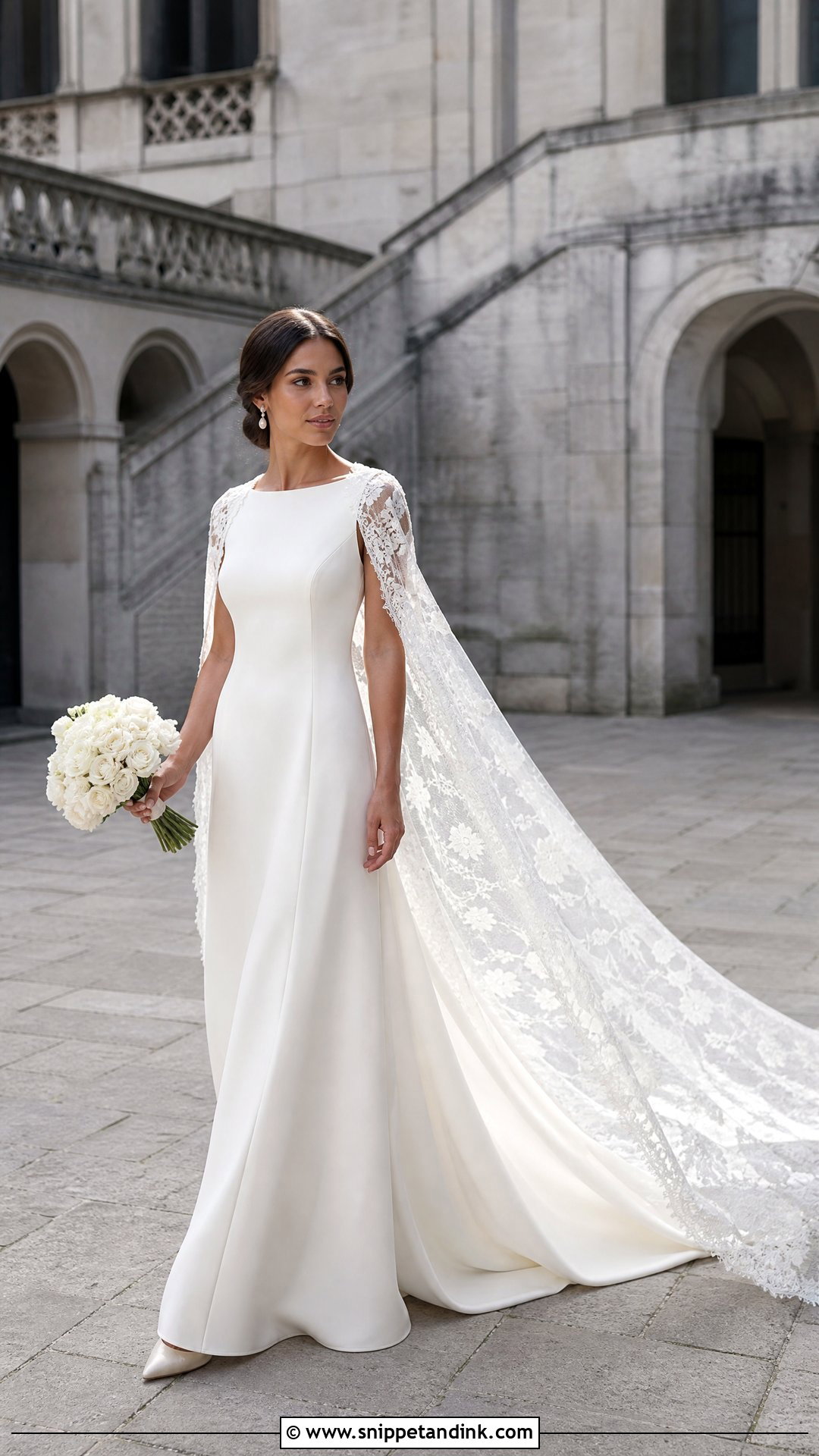
A lace cape moving behind you in a castle courtyard is the picture most brides have in mind. Start with a plain A-line or fitted crepe dress so the lace stands out. A fingertip cape is subtle, a floor-length one dramatic, and long lace panels can cover the arms lightly. Pearl earrings, low block heels, a small structured bouquet and a neat low bun keep the neckline clear. Wind is the variable. On an exposed courtyard, a floor-length cape will blow sideways, so ask for small weights or a wrist loop at the hem, and save the full sweep for sheltered spots.
3. Long Sleeve Lace Scottish Wedding Dress
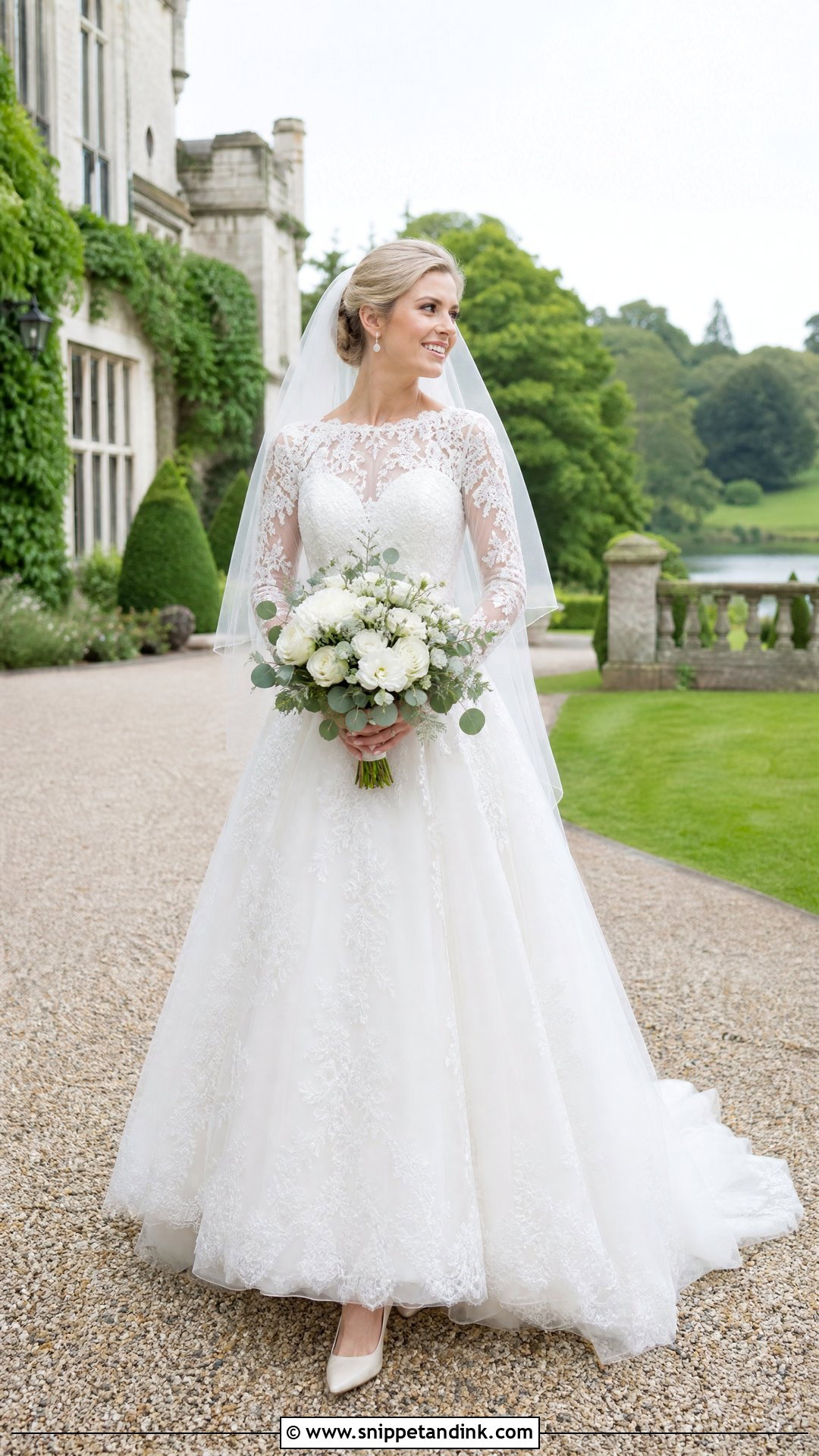
Long lace sleeves suit the cooler air and the romance of the setting. An A-line with a fitted lace bodice, defined waist and soft layered skirt is the classic shape; illusion sleeves look lighter, lined ones cover more. Closed-toe ivory heels, a medium-length veil, small crystal or pearl earrings and a loose chignon or half-up waves complete it. Bring a neutral wool wrap for outdoor photos that comes off fast. White flowers with eucalyptus or a touch of lavender finish it. With lace sleeves, I always check the cuffs after an outdoor session; damp grass and stone walls snag lace easily.
4. Flowing Chiffon Highland Elopement Dress
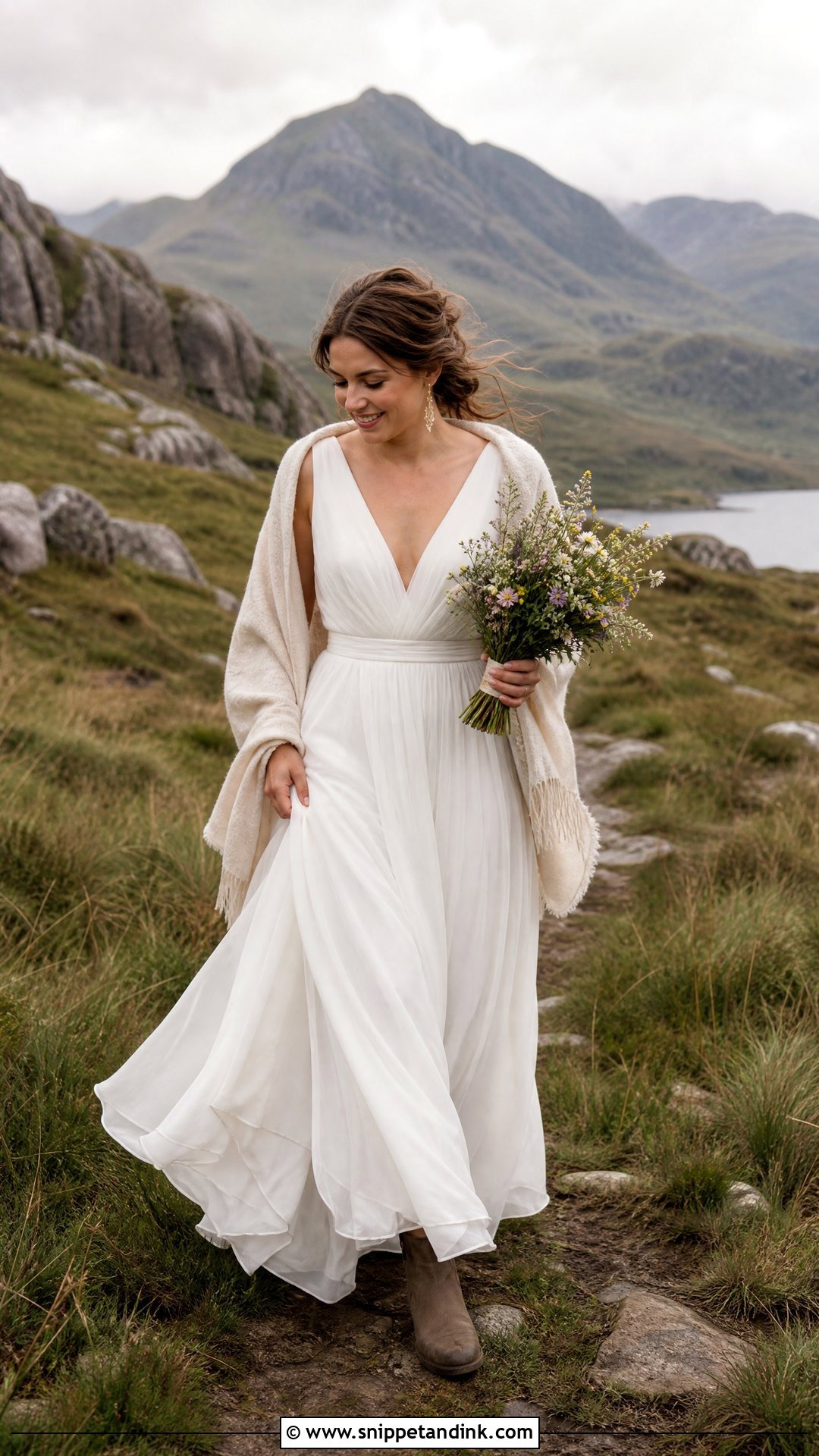
For an elopement that moves between viewpoints, walks and changing weather, chiffon is my first suggestion. Choose a light A-line with a secure bodice, a short manageable train and a skirt that swings in the wind, with a V, square or wrap neckline. Wear waterproof bridal boots or sturdy neutral ankle boots, not slim heels, which sink into soft ground. Small gold earrings, a soft shawl, a compact bouquet and a braided updo or low ponytail stay neat outdoors. Add a discreet bustle or wrist loop. Wet chiffon clings and darkens, so carry the hem when crossing long grass after rain.
5. Off Shoulder Castle Wedding Dress
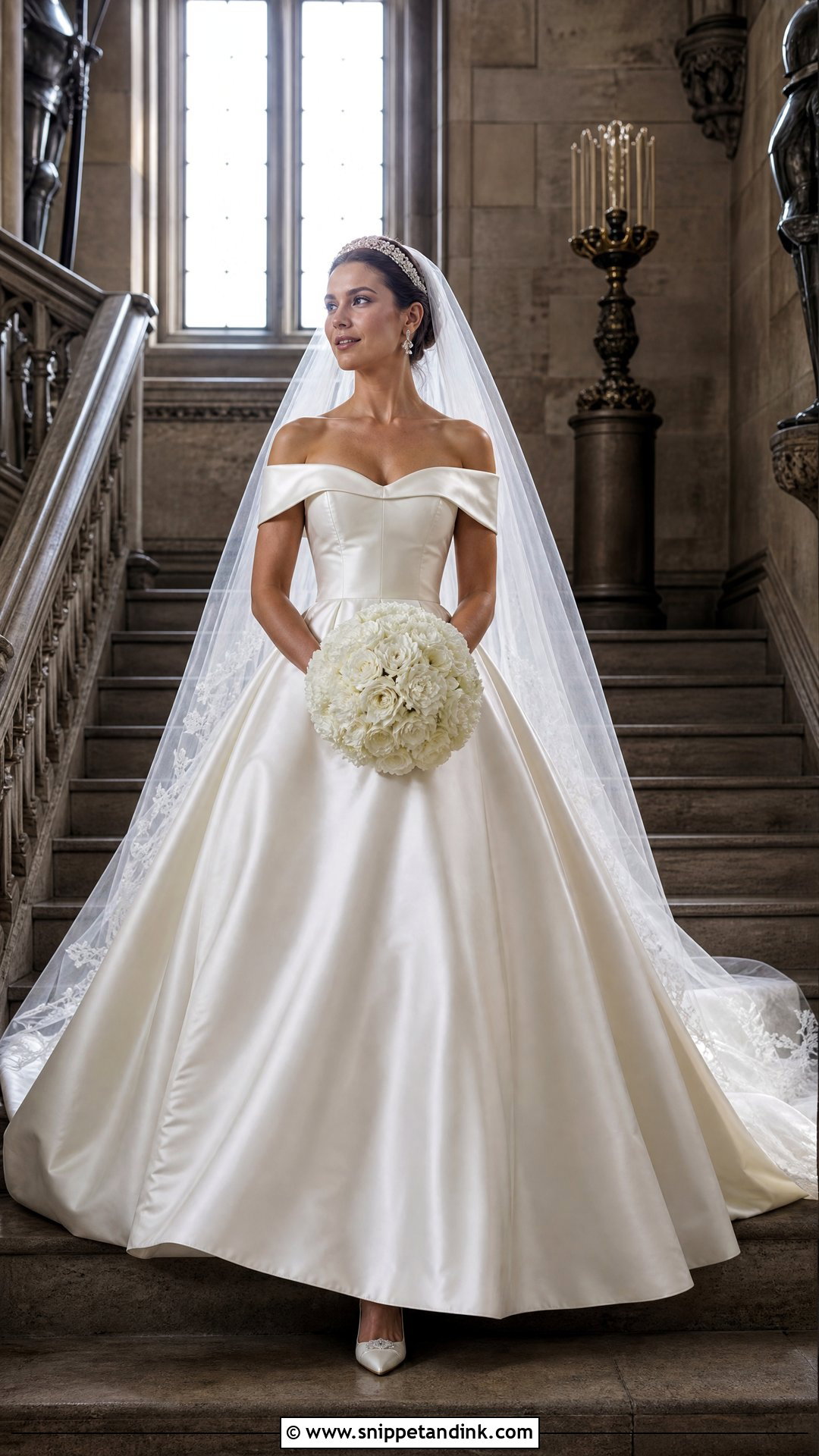
Grand staircases and formal rooms call for scale, and an off shoulder ball gown has it. A structured bodice supports the neckline while a full satin or mikado skirt fills the space. Go plain for a modern feel or with light floral appliqué for texture. A sparkly headband, drop earrings, pointed ivory heels and a long veil that comes off before dinner complete it. Castles are often cold even in summer, so plan a detachable wrap or fitted cape that sits above the neckline for outdoor moments. A round bouquet of white and pale blush finishes it.
6. Tartan Corset Scottish Wedding Dress
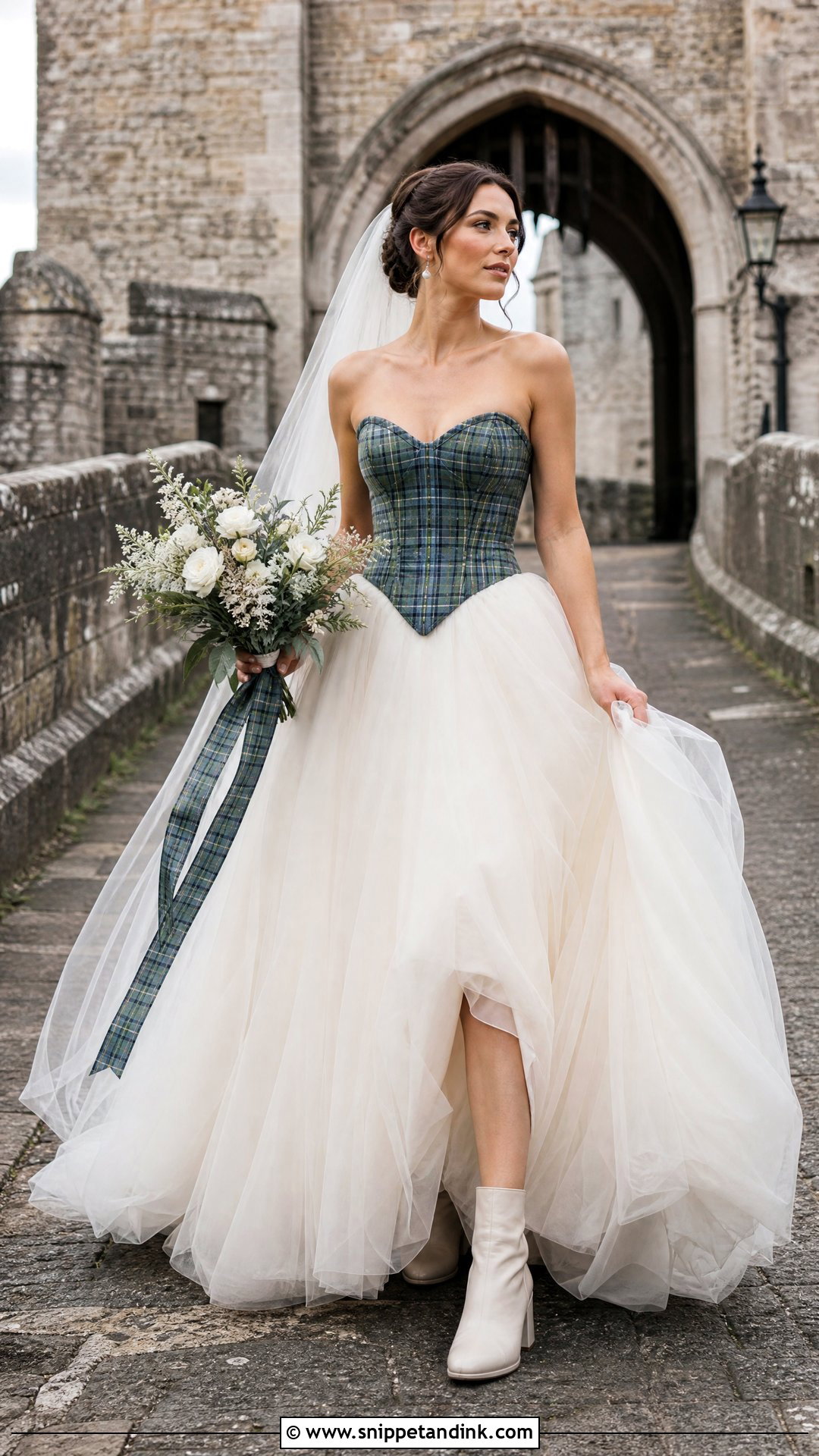
A tartan corset over a flowing ivory skirt is a bold take on Scottish bridal fashion that still reads clearly as a wedding dress. Tulle, chiffon or satin all work below. A muted family tartan feels personal, and a well-chosen fashion tartan works too. Pearl studs, a fine pendant, ivory ankle boots for castle grounds and a plain chapel veil keep the focus on the bodice, with tartan ribbon around the bouquet. Tartan woven in wool is thicker than bridal satin, so a corset made from it needs a lighter lining or it gets stiff and warm by evening.
7. Velvet Winter Scotland Wedding Dress
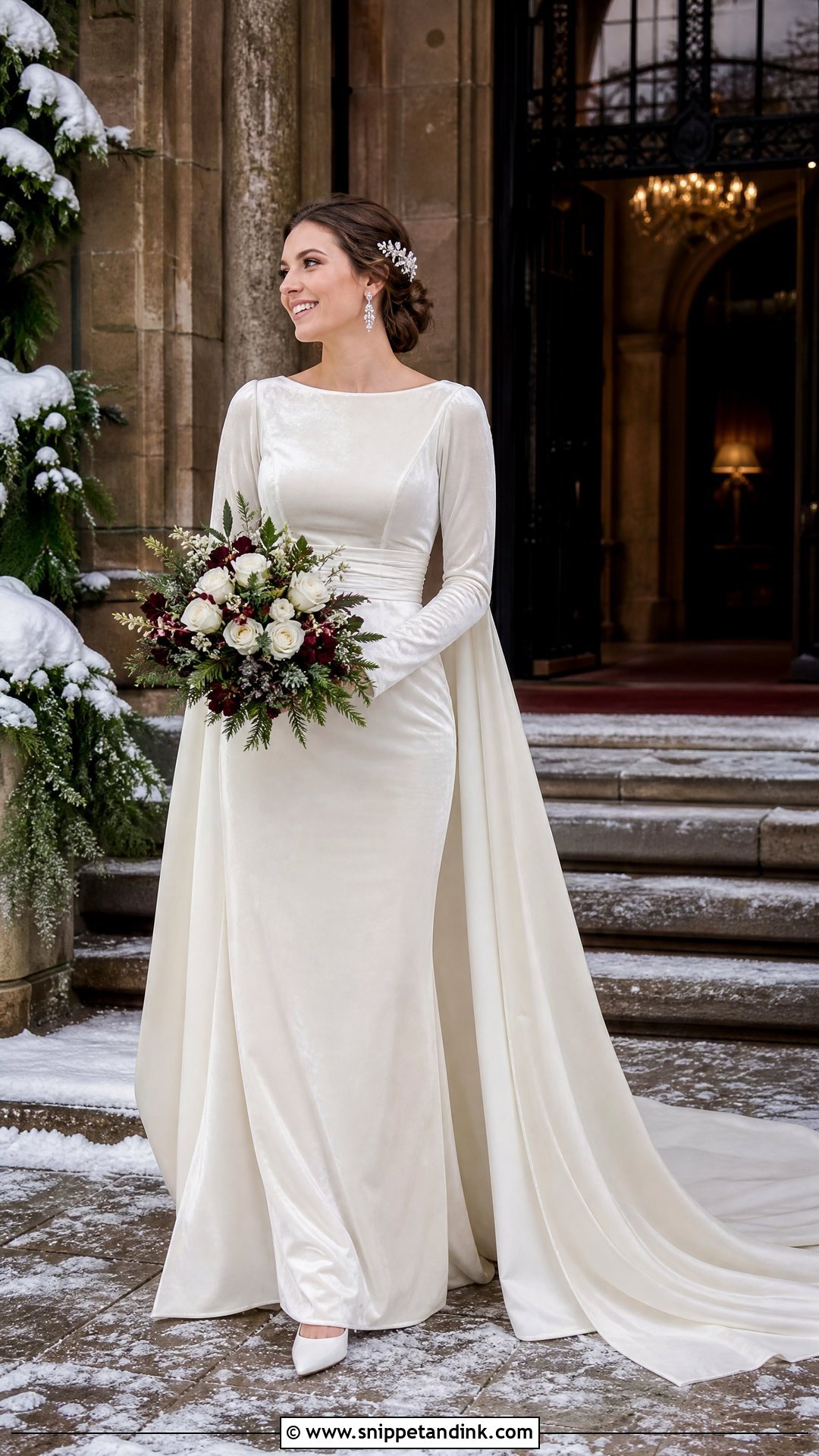
Velvet suits winter: an ivory velvet column, an A-line with velvet sleeves, or satin under a fitted velvet cape. Long sleeves and a higher neck make the base, and a defined waist stops the heavier fabric from looking shapeless. Closed-toe block heels, crystal earrings and a structured white, green and burgundy bouquet suit it, and a floor-length cape adds warmth against stone. A jeweled comb can replace the veil. Velvet crushes when you sit, and the marks show, so I tell brides to expect some shading on the skirt by dinner. Steam it from the back, never press it flat.
8. Floral Appliqué Scottish Wedding Dress
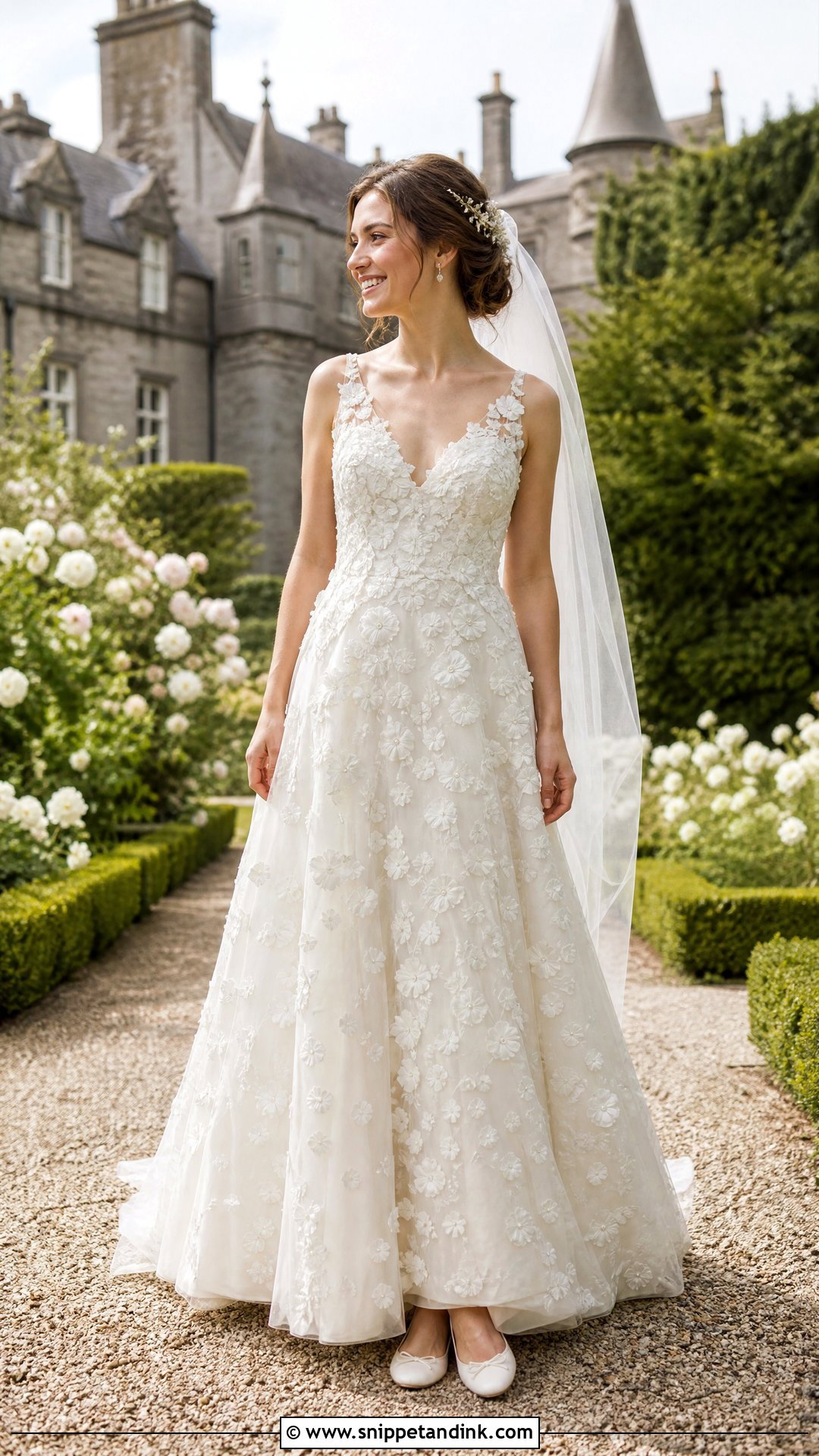
Three-dimensional flowers scattered from bodice to skirt suit a countryside wedding. Ivory on ivory gives quiet depth; touches of pale blue, lavender or blush add color. Block heels or bridal flats depending on the ground, a sheer veil with a plain edge, understated earrings and a loose updo with tiny flowers complete it, with a bouquet that echoes the dress rather than copies it. Gardens, woods, estates and relaxed outdoor parties all suit it. Raised appliqués catch on brambles and rough stone, so keep an eye on the skirt flowers when you walk through overgrown spots for photos.
9. Minimalist Satin Scotland Wedding Dress
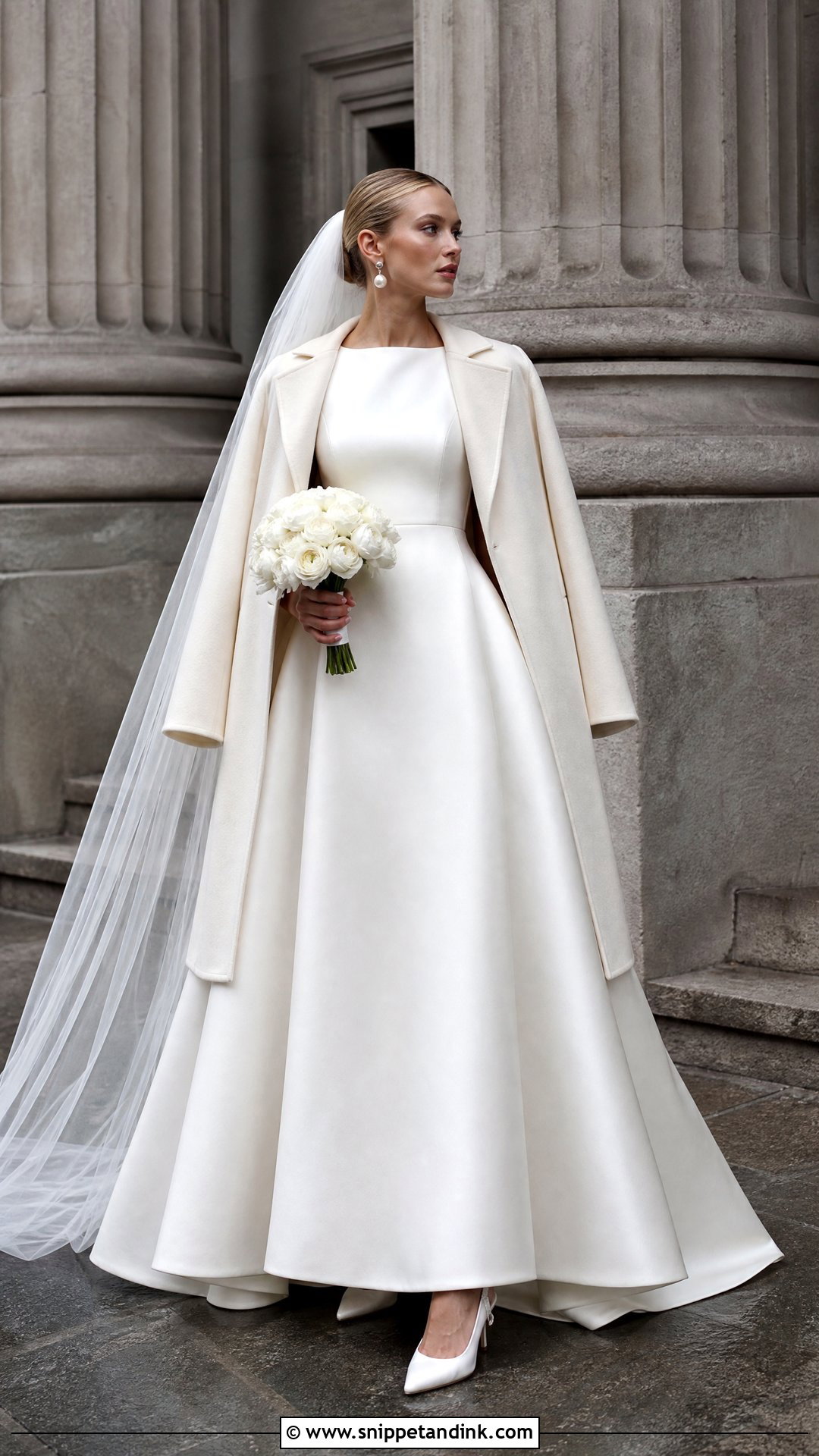
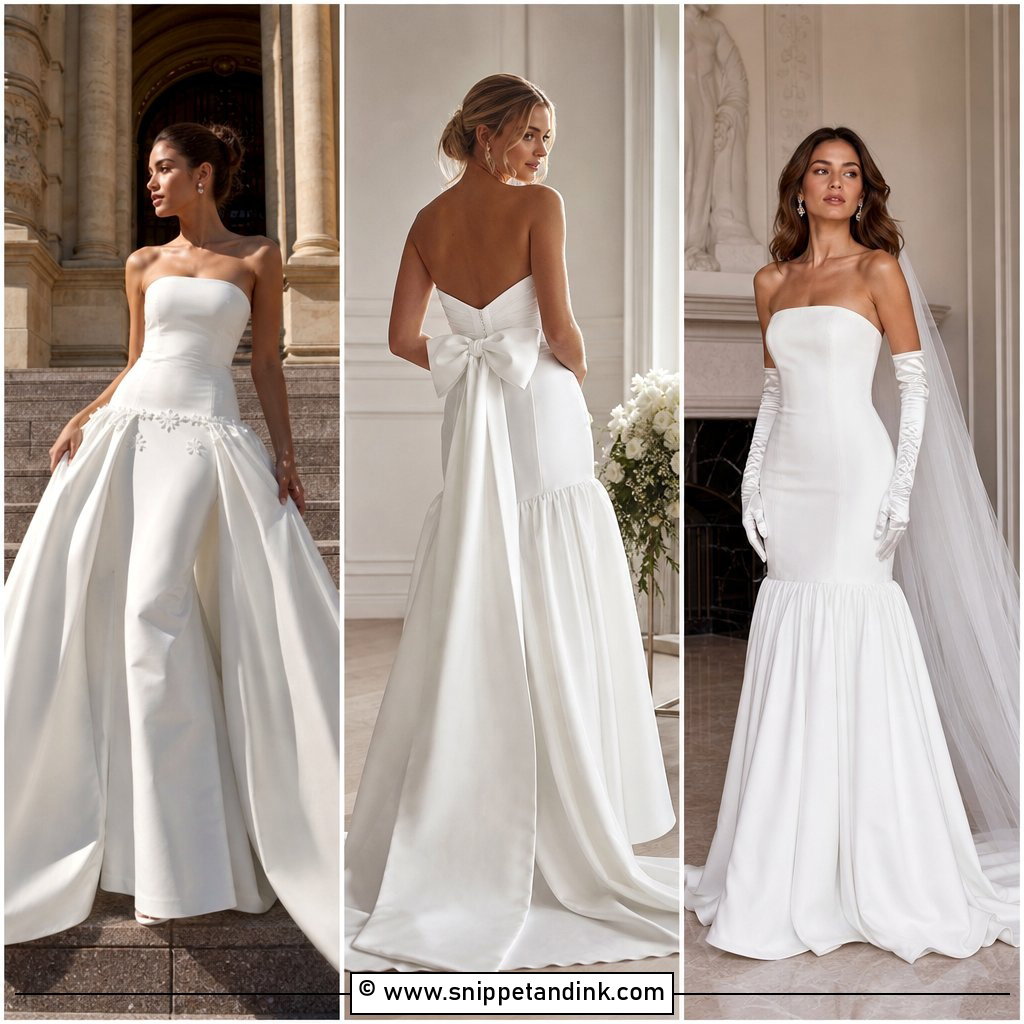
Plain satin looks striking against a big landscape because nothing competes with the view. A bias-cut slip suits an elopement; a structured A-line suits a formal venue. Sculptural pearls, a long plain veil and pointed slingbacks add interest, and an ivory wool coat or a simple tartan shawl handles outdoor portraits. A sleek bun and white flowers keep it modern. Every seam shows on minimal satin, so tailoring matters. Satin also marks with raindrops, especially silk, so pack a large clear umbrella for portraits on showery days.
10. Boho Lace Isle Of Skye Wedding Dress
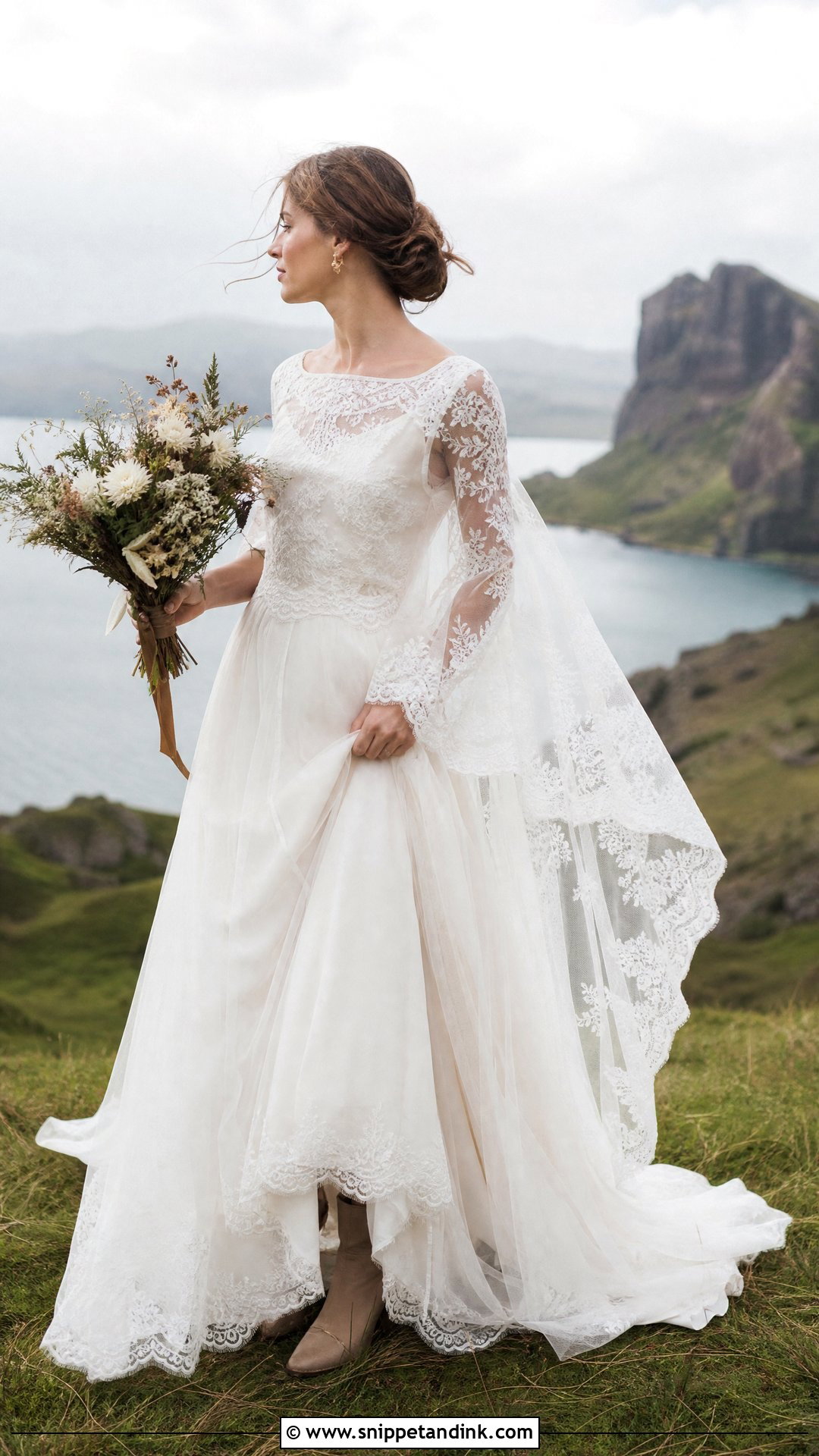
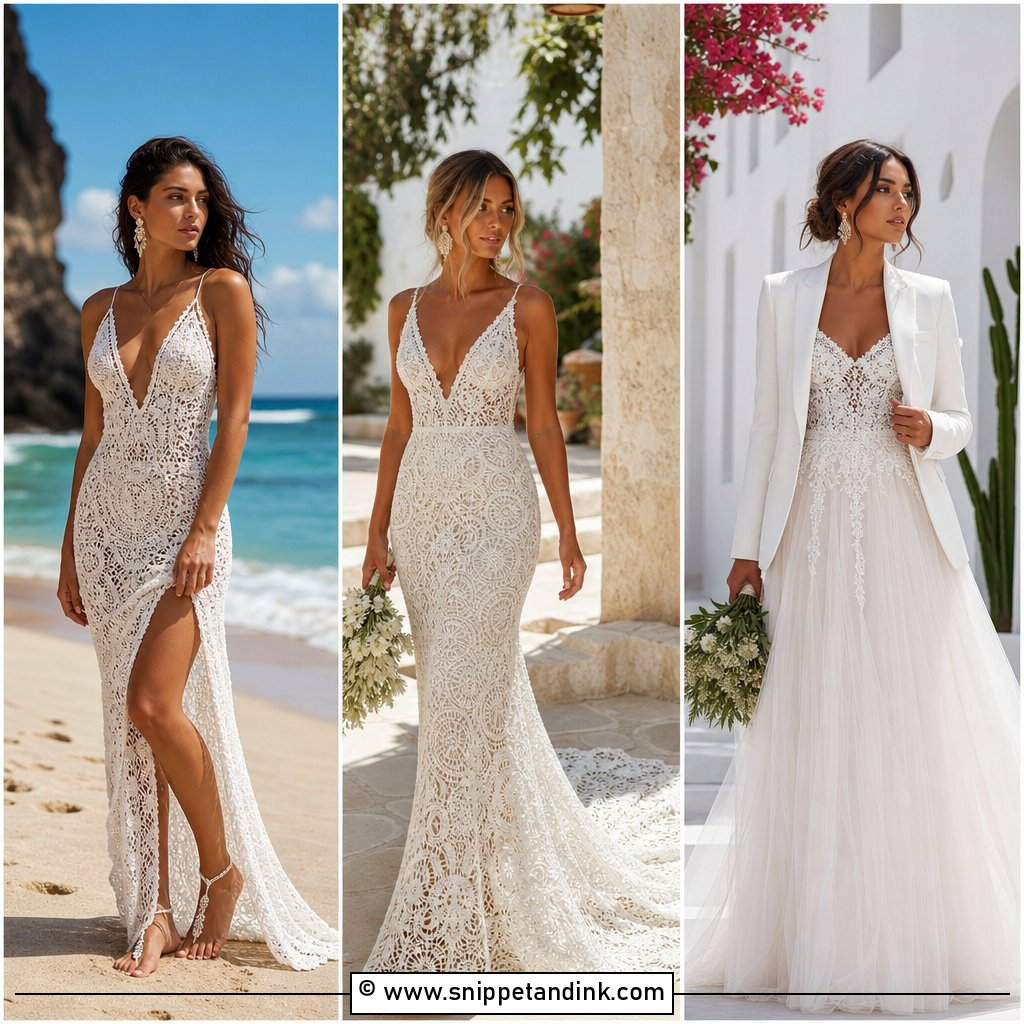
Boho lace suits Skye and other coastal elopements. A comfortable A-line with soft lining, botanical lace and sleeves you can move in, plus a modest train, handles uneven ground. Neutral leather ankle boots, a textured bouquet and small gold or pearl earrings suit it, with a lace-edged cape or a hair ribbon instead of a veil. Loose waves look pretty in still air, but on a windy headland I’d go with a braided half-up style that stays put. Bring a light waterproof layer for the drive between locations, since weather on the islands can change within an hour.
11. Bridal Suit For A Scottish City Wedding
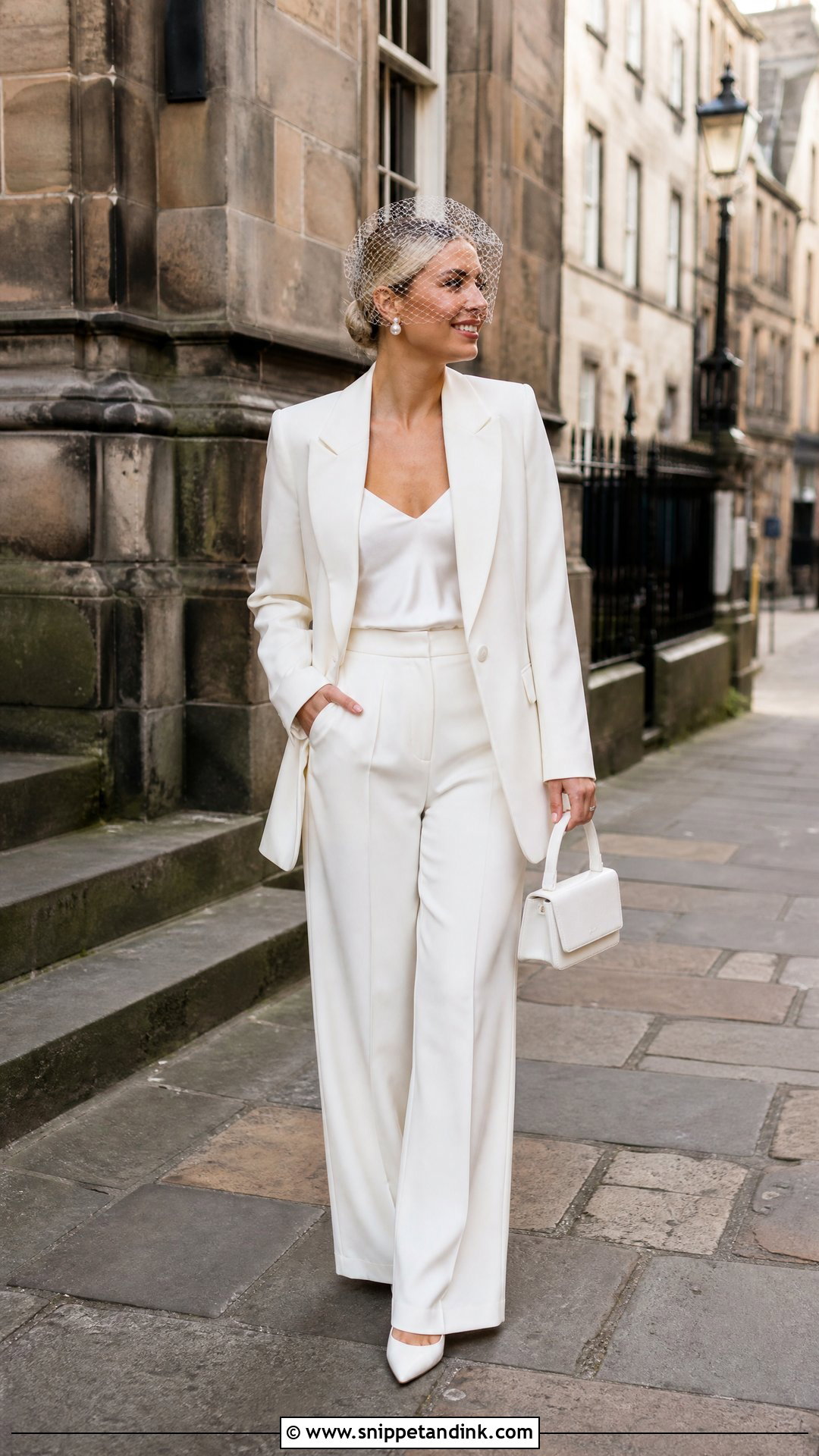
A tailored suit is a sharp choice for Edinburgh, Glasgow or any city ceremony. An ivory single-breasted blazer with straight or wide-leg trousers and a silk camisole beneath looks formal when the waist is fitted closely. Pointed pumps, a structured mini bag, pearl or gold earrings, a birdcage veil and a low ponytail finish it. Tartan can come in through the lining, a pocket square or the bouquet ribbon. It moves easily from a registry ceremony to dinner and street photos. Trousers need hemming in your exact shoes; a wide leg that brushes wet pavement darkens at the hem within minutes.
12. Tea Length Scotland Wedding Dress
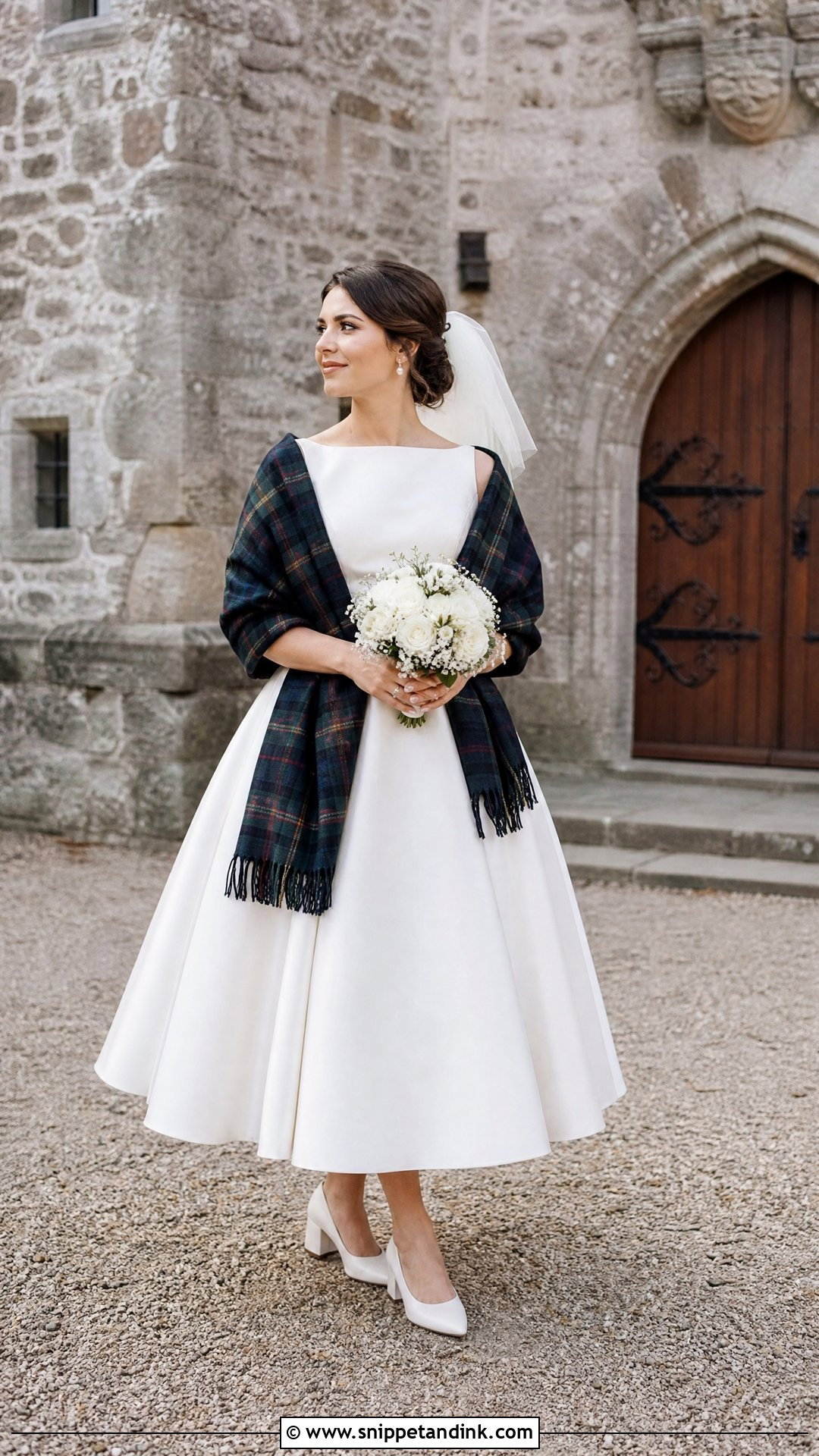
Tea length is practical for smaller ceremonies and fun to wear. A fitted bodice with a full skirt ending between knee and ankle reads classic in satin and textured in lace or floral jacquard. The hem shows your shoes, so choose polished block heels, pumps or decorative flats, with a short veil, pearl earrings and a compact bouquet. A cropped cardigan, tailored jacket or tartan wrap adds cover without swamping the shorter shape. Nothing drags on wet grass or old stone, which on a damp day is a real advantage.
13. Detachable Sleeve Castle Wedding Dress
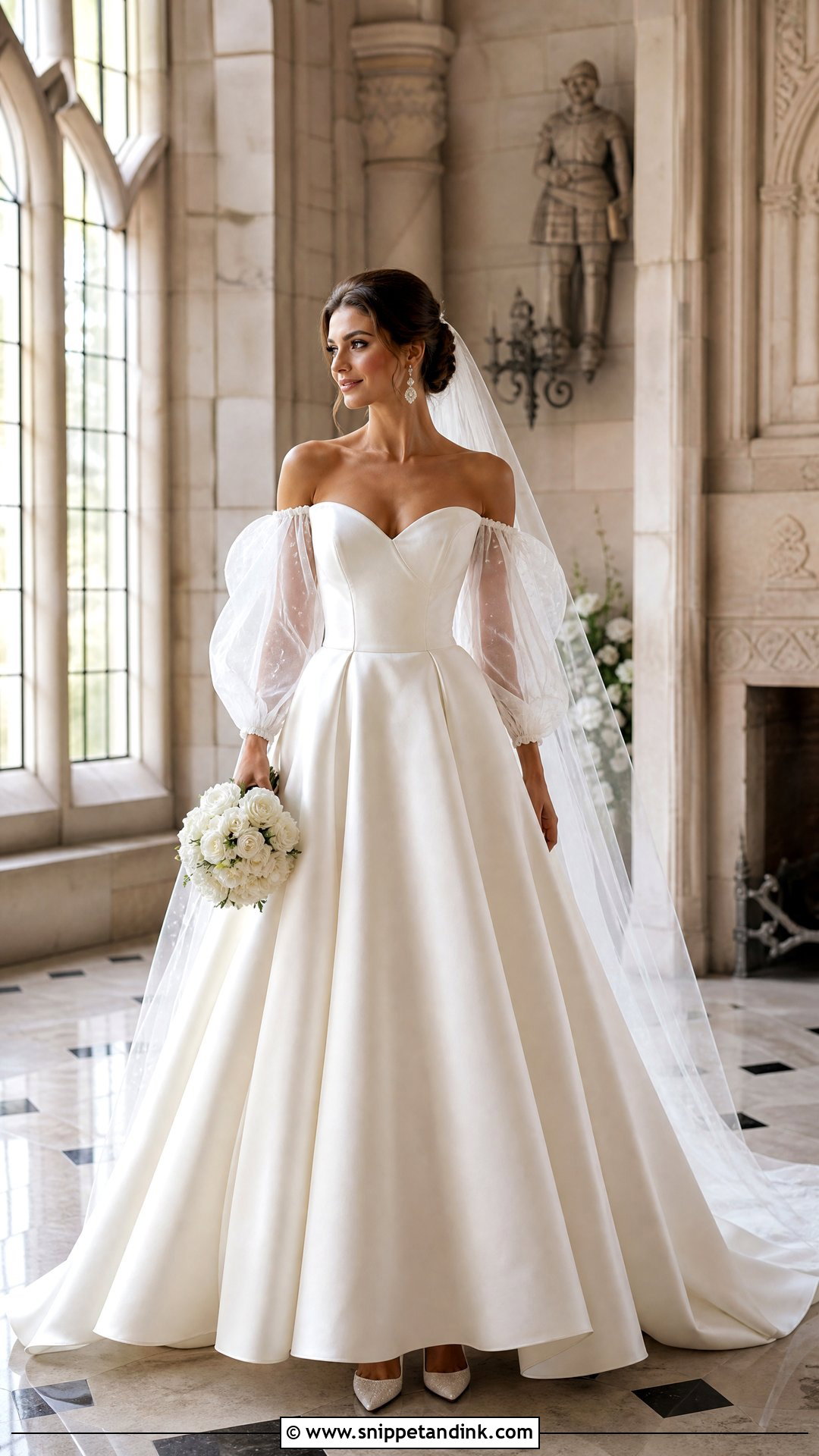
Detachable sleeves give a castle wedding two looks from one gown. A strapless or sleeveless ball gown with a structured bodice takes sheer puffs, fitted lace sleeves or off shoulder drapes for the ceremony, then comes off for dinner and dancing. Wear a long veil, crystal earrings and closed-toe heels first, then a sparkly comb or statement earrings after. A small bouquet keeps it balanced. I recommend this to brides marrying in cold old buildings. The sleeves keep you warm through a long ceremony in a stone room, and you lose them once the dancing heats things up.
14. Tartan Shawl Scotland Wedding Dress
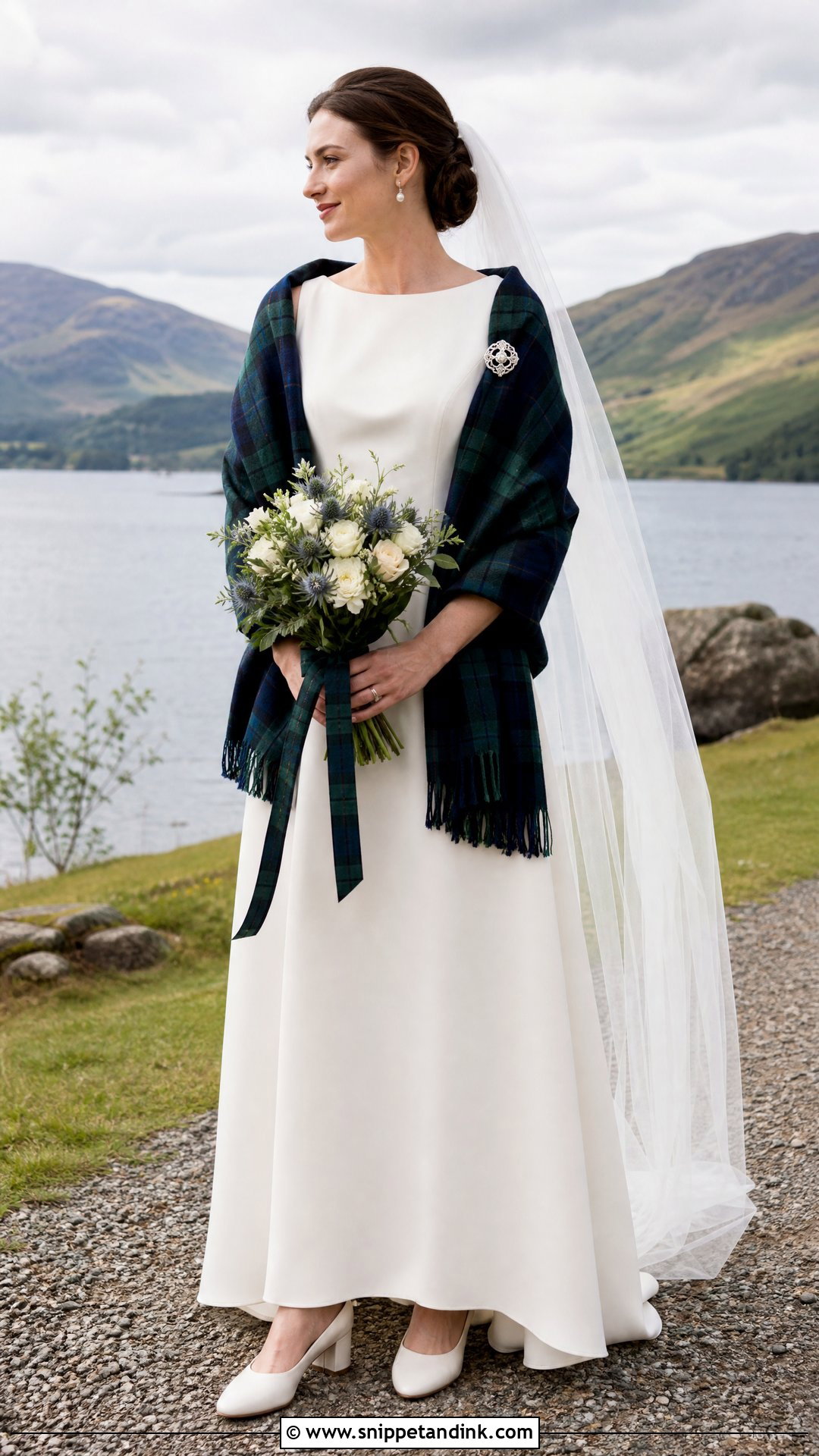
A tartan shawl turns a simple gown into something clearly connected to Scotland. Start with an ivory crepe, satin or chiffon A-line with clean lines, and drape the shawl over the shoulders outdoors or pin it with a small brooch. Pick colors that suit the palette and whatever tartan your partner wears. Ivory block heels or ankle boots, pearls, a plain veil and a bouquet ribbon in one tartan color pull it together. A full wool shawl is bulky, so pick a fine-weight one and practice two or three ways of wearing it before the day.
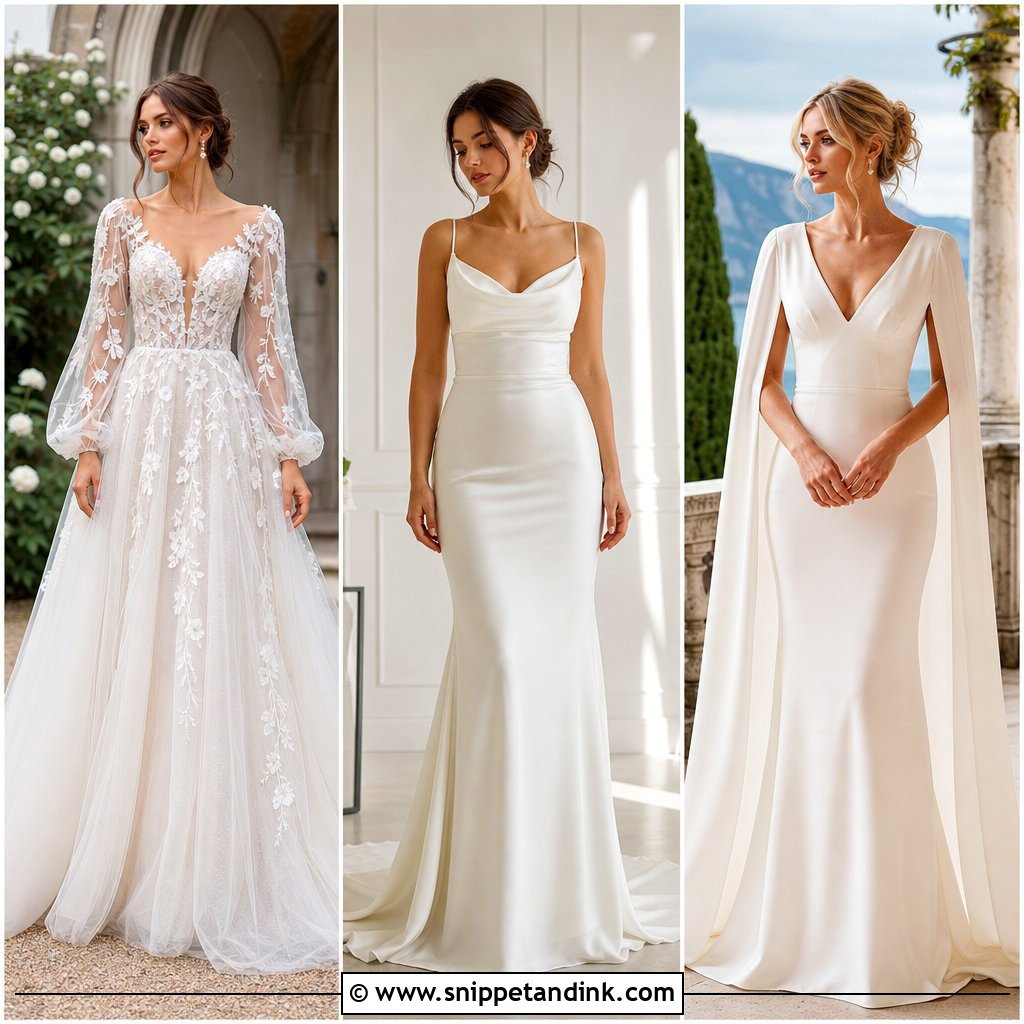

15. Square Neck Scottish Wedding Dress
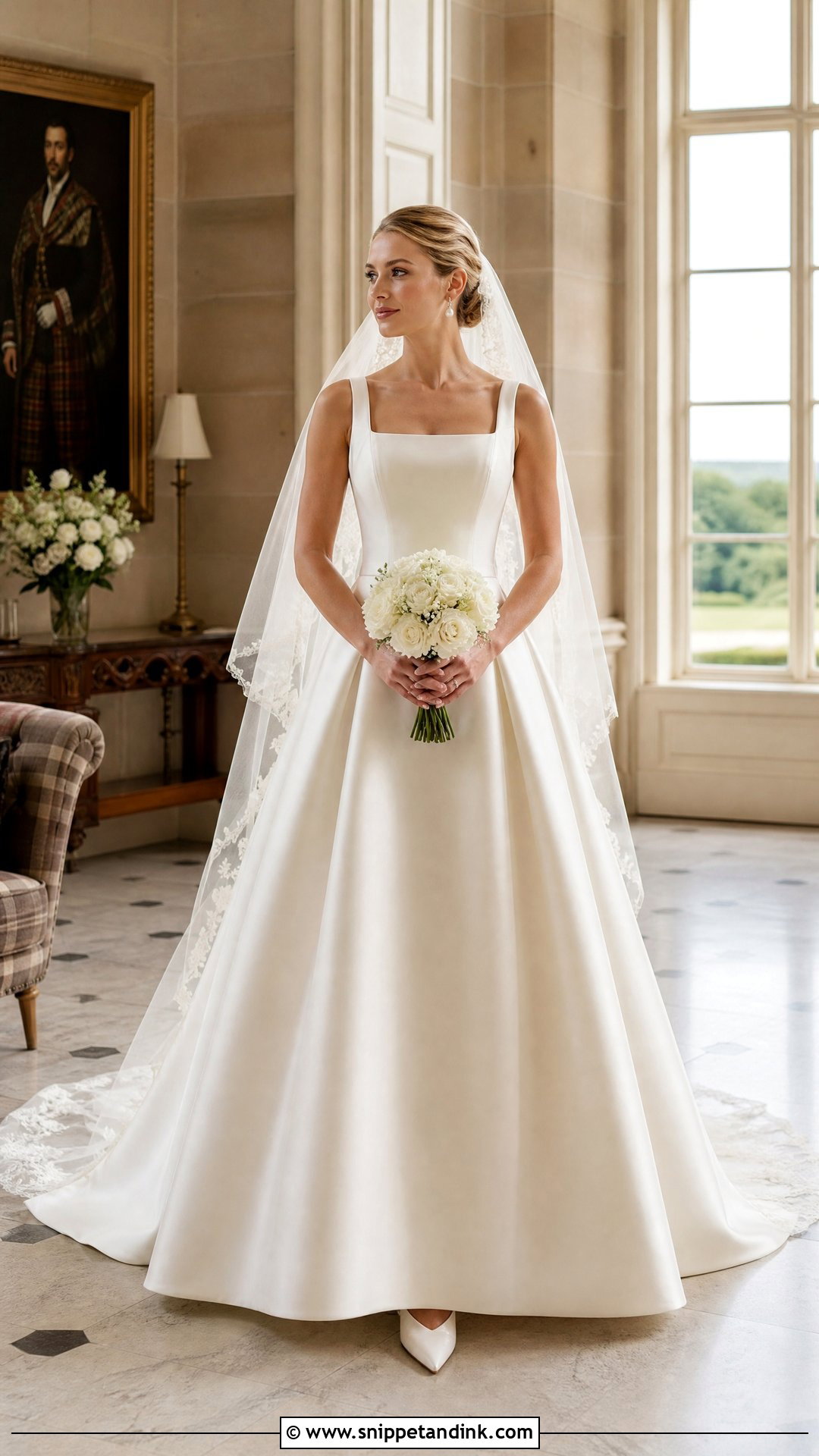
Square necklines suit both old castles and modern rooms. A fitted bodice with wide straps or long sleeves over an A-line, column or full skirt keeps it structured. The open neckline leaves room for a short pendant, though pearl earrings alone look cleaner. A chapel veil, pointed shoes, a compact bouquet and a smooth low bun complete it, with a cropped wool jacket or cape for outdoor photos. If you choose wide straps, have them checked under a jacket. Straps that slip outward look fine bare but bunch under any outer layer.
16. High Neck Lace Scotland Wedding Dress
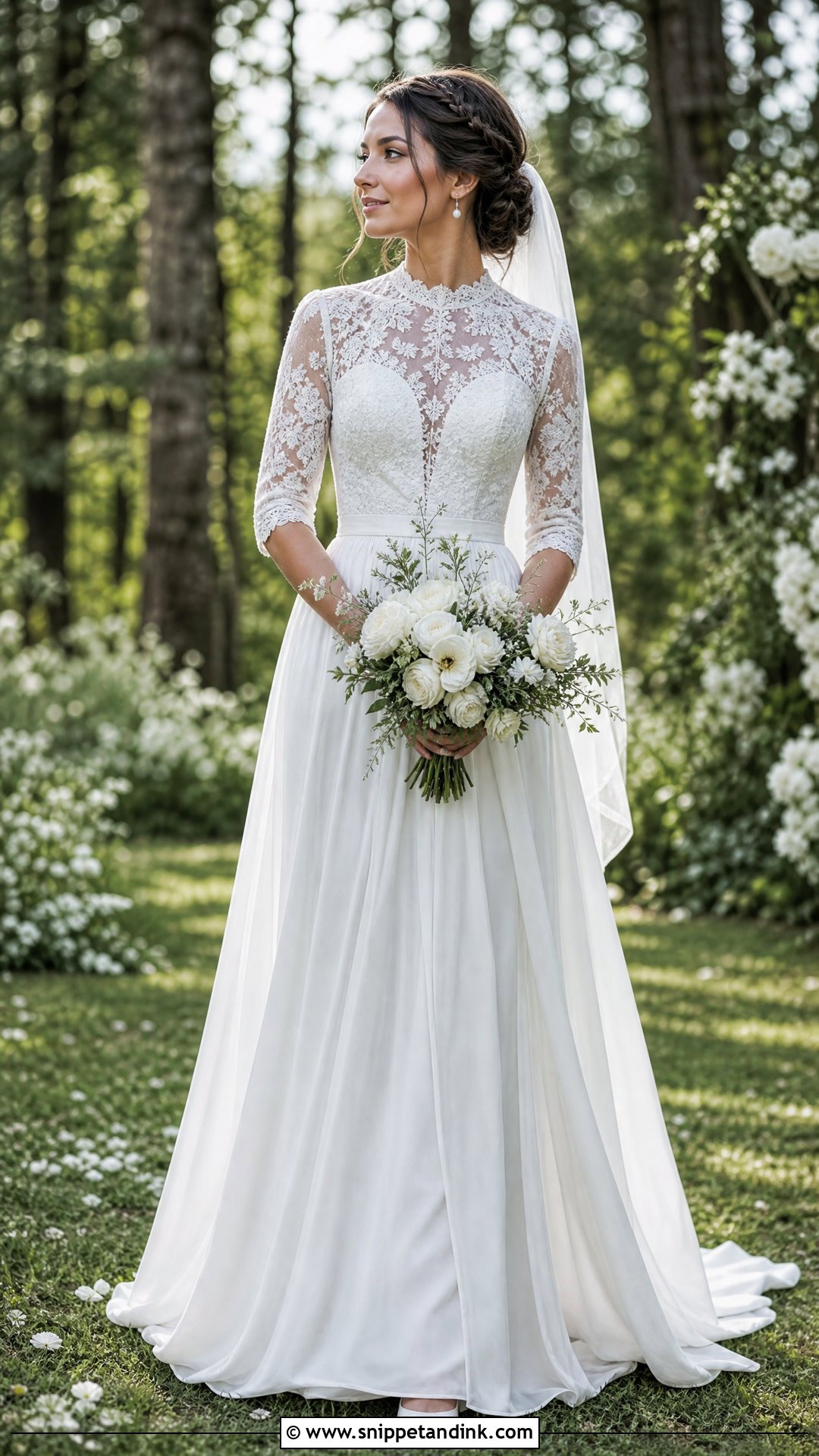
High-neck lace carries a slightly historic feel. A fitted lace bodice with a covered neckline and long or three-quarter sleeves balances well with a soft chiffon or clean crepe skirt. A low bun or braided updo shows the neckline; skip the necklace for small pearl or crystal earrings. Closed-toe heels, a plain veil and a loose bouquet finish it, with an ivory cape outdoors that doesn’t add bulk at the neck. The plain skirt is what stops it looking like a costume. Pair high-neck lace with a lace skirt, and in a castle it can tip into period drama.
17. Colored Scottish Wedding Dress
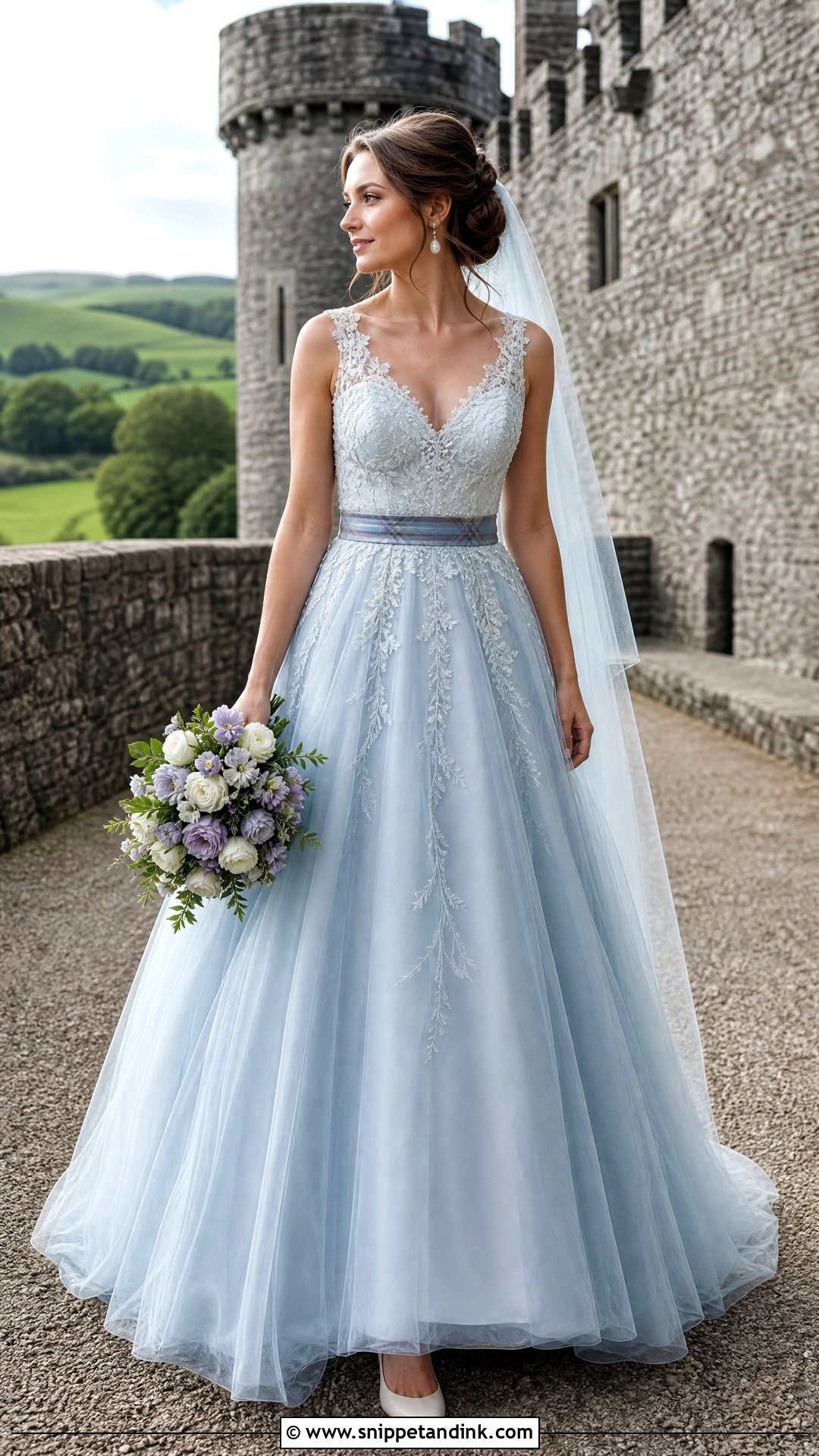
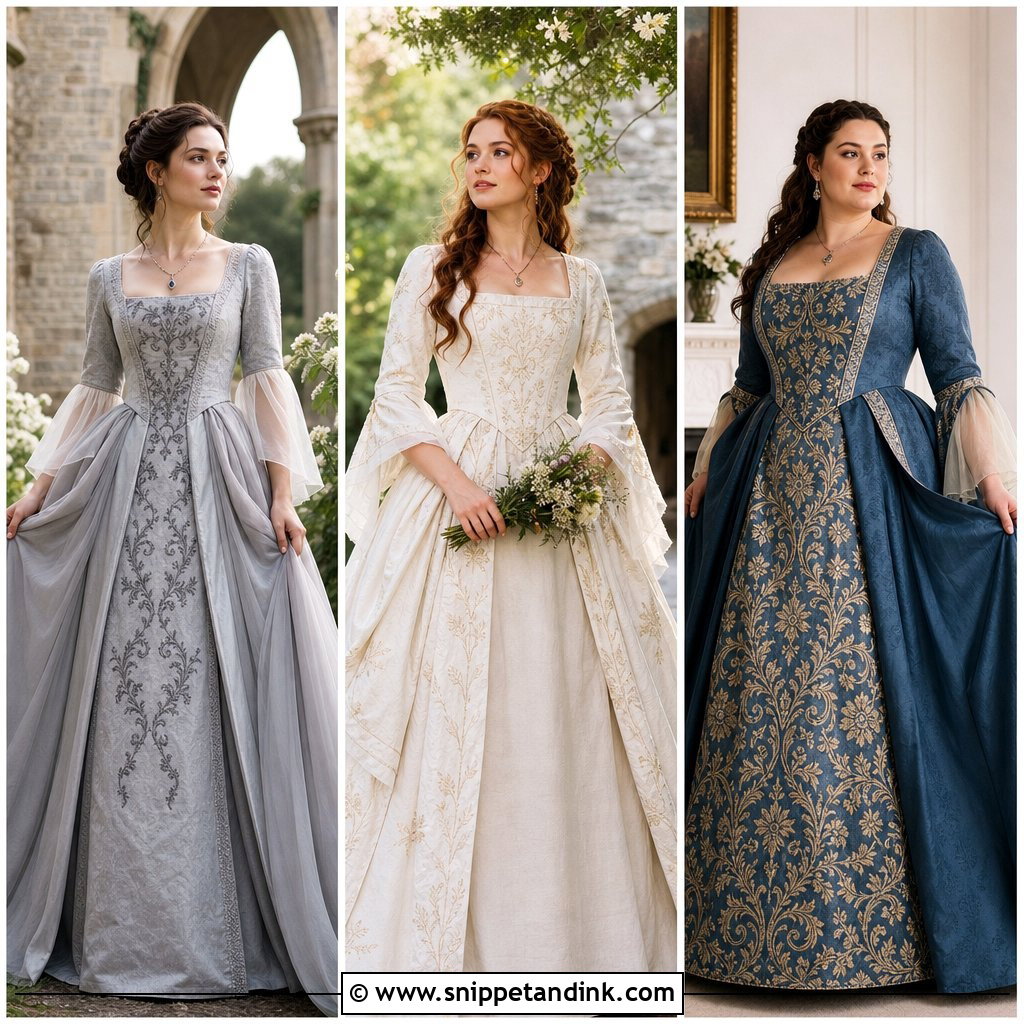
A colored gown can borrow Scotland’s palette and still look bridal: misty blue, pale grey, soft sage, dusty lavender or muted blush rather than anything bright. A flowing A-line with fine lace, light embroidery or layered tulle suits it. Ivory shoes, pearl earrings, a sheer veil in a compatible shade and white with tonal flowers complete it, and a narrow tartan sash adds a bolder note. Check it in daylight and indoor light. Sage in particular can look grey beside green hills and warmer next to candlelit stone.
18. Bridal Boots And Lace Wedding Dress
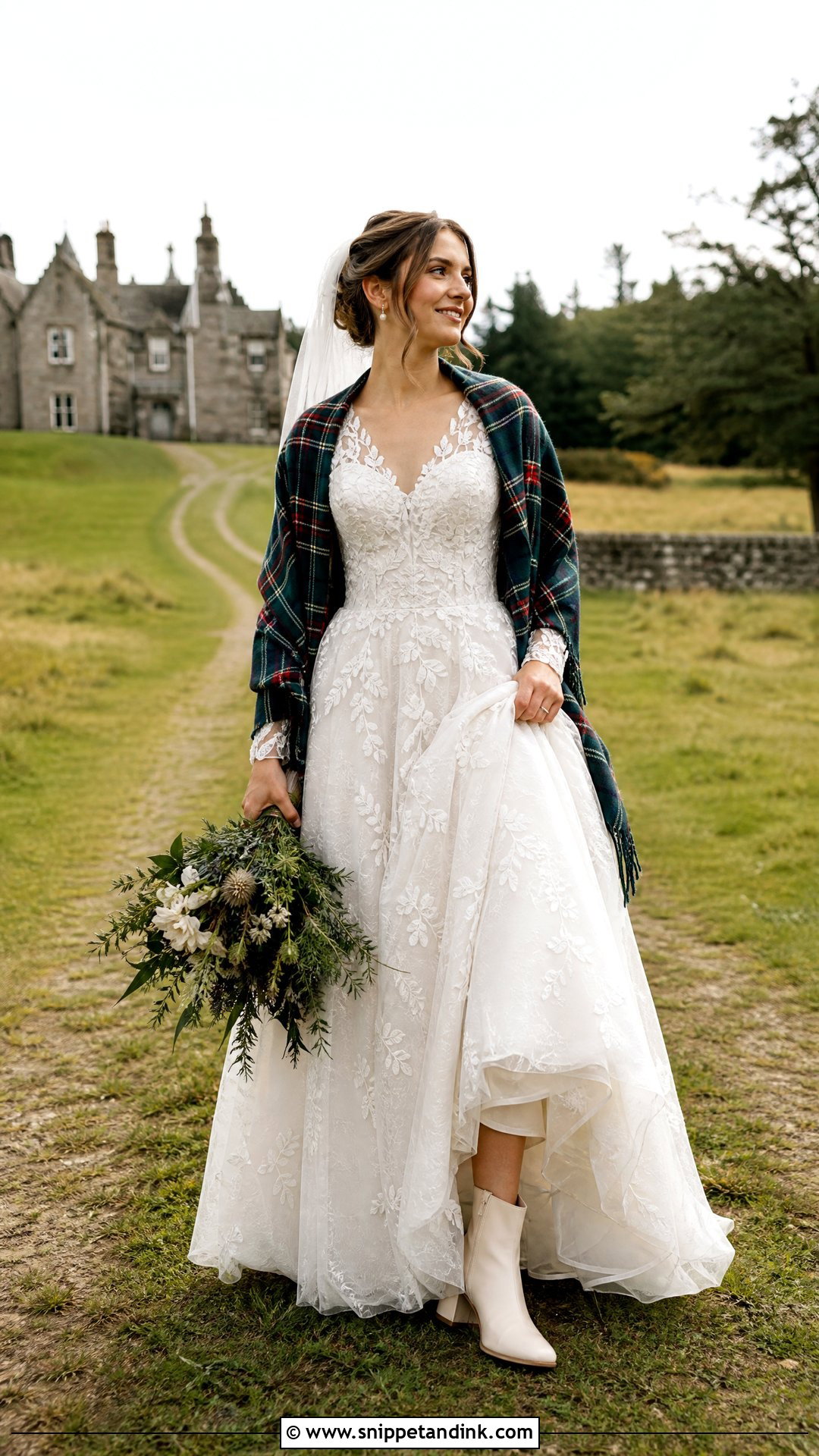
Boots make a lace dress wearable on grass, gravel and country paths. A soft A-line with botanical lace and a skirt that bustles or lifts easily pairs with ivory, cream, taupe or light brown ankle boots with a stable heel and grippy sole. A fingertip veil, small earrings, a tartan wrap, a loose braid and a natural bouquet complete it. Break the boots in properly, and walk a wet hill in them if you can. Have the hem set while wearing them; boots are usually higher at the heel than brides expect, and a hem cut for flats will look short.
19. Bridal Cape And Satin Wedding Dress
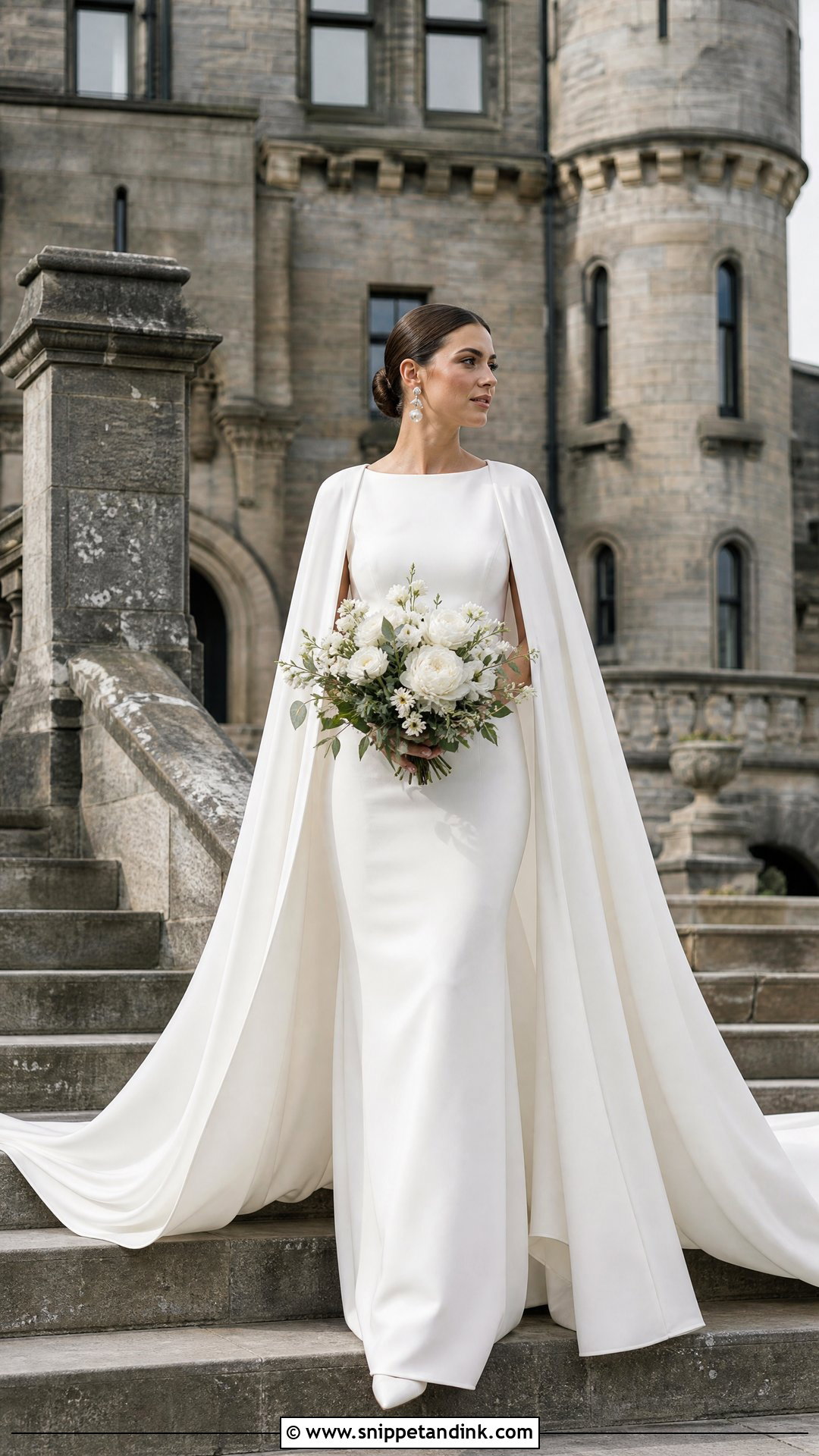
Satin under a long cape makes a strong entrance with very little decoration. A column, fit-and-flare or structured A-line with almost no detail pairs with a floor-length cape in ivory, soft wool or light crepe; a hood feels romantic, a collarless cape modern. Statement earrings, closed-toe heels, a sleek updo and a structured white and green bouquet complete it, and the cape can replace the veil. A wool cape is genuinely warm between indoor and outdoor parts of the day. It is also heavy, so I ask for the fastening to be anchored to the dress, not just hooked at the throat.
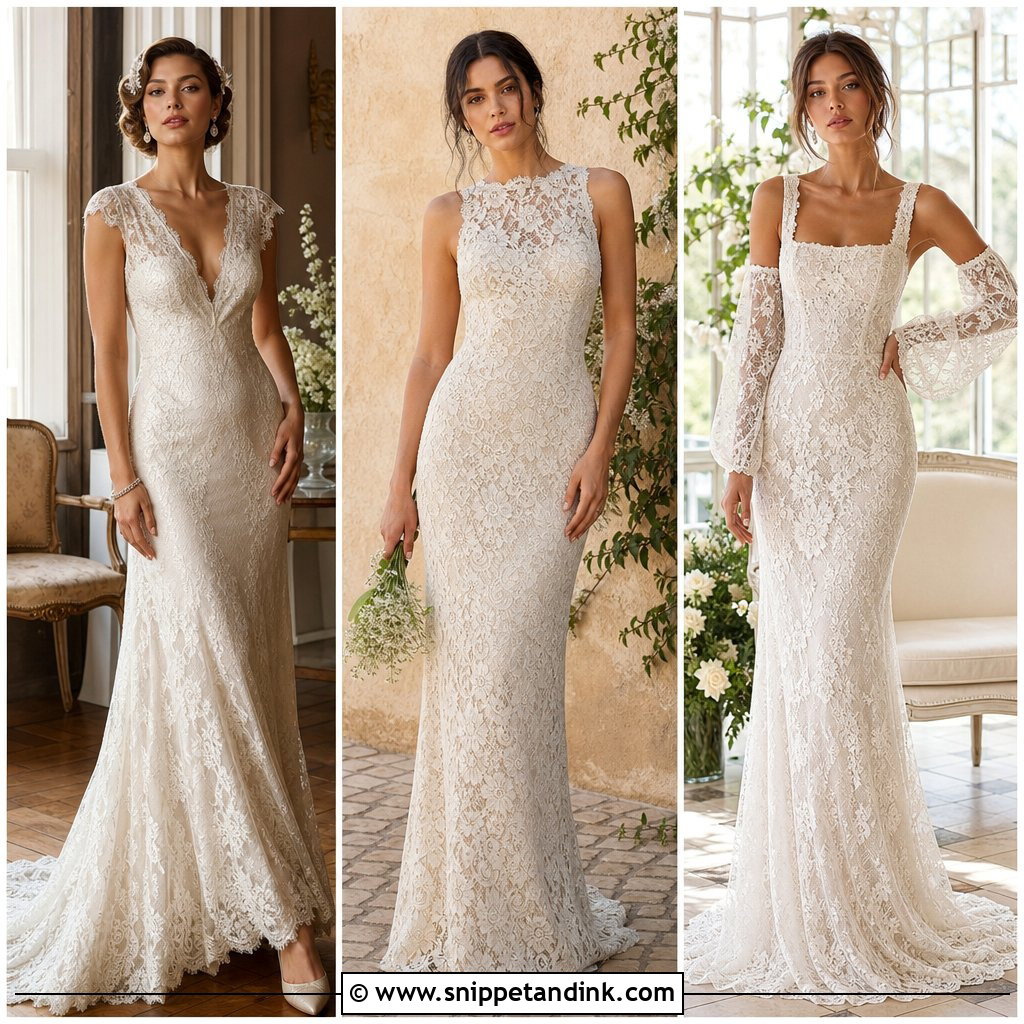
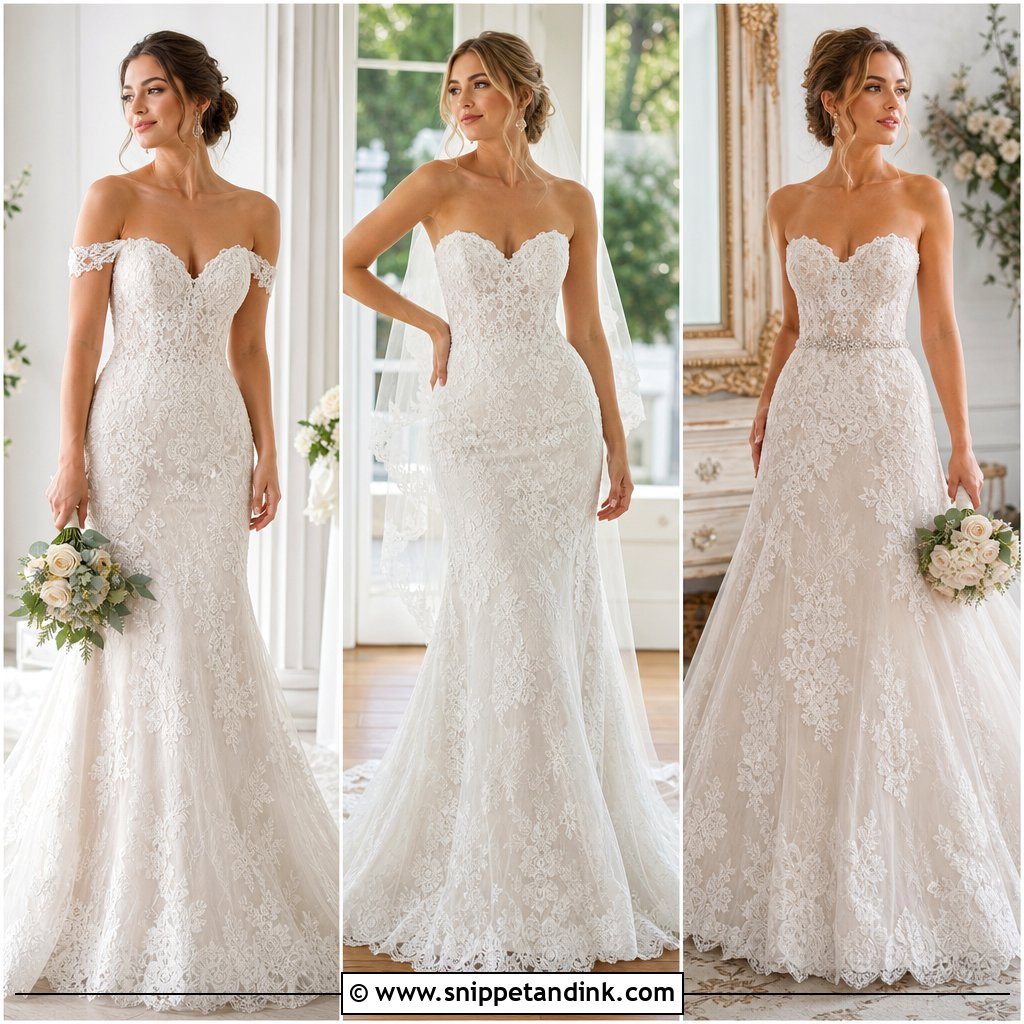
20. Short Scotland Elopement Wedding Dress
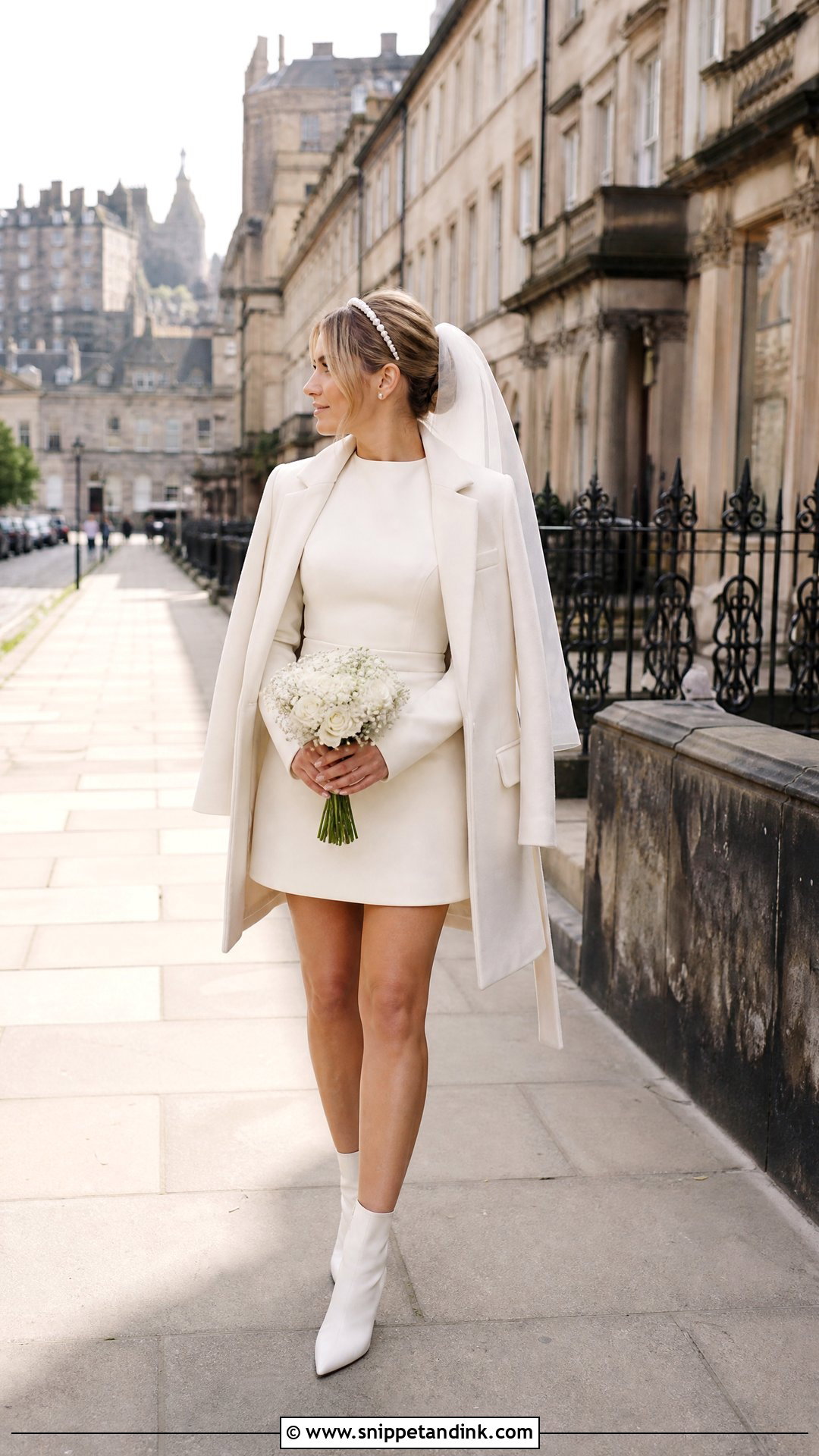
Short dresses suit informal elopements, city ceremonies and days with several stops. A tailored mini, a lace knee-length dress or a structured shape with a slightly longer back all work, and long sleeves or a high neck balance the hem. Ivory ankle boots, patterned tights if you like and a fitted wool coat handle the weather, with a short veil, headband or bow to make it bridal. A small bouquet is easier to carry on foot. Make sure the coat is longer than the dress. A coat shorter than your hem looks odd in every full-length photo.
Wearing Your Partner’s Clan Tartan Without Getting It Wrong
Many brides want to wear the family tartan they are marrying into, and families usually love it. A few conventions help it land well.
Ask before you order
Some clans have several setts, such as a dress version, a hunting version and a modern or ancient coloring, and the shades differ a lot. Ask your partner’s family which one they wear, then order a swatch before committing to yards of fabric. If no family tartan applies, there are tartans designed for anyone with a link to Scotland, and a district tartan for the wedding location is another graceful choice.
How a tartan sash sits
The usual form for a woman’s sash is over the right shoulder, pinned at the shoulder with a brooch, and many brides add it after the ceremony. A Luckenbooth brooch, the traditional Scottish love token of two entwined hearts, is a fitting pin. Ask your seamstress for a small hidden loop so the brooch doesn’t pull a hole in delicate fabric.
One Thread of Tartan Is Usually Enough
Your outfit should suit the venue, your taste and how the day will actually unfold. Tartan gowns, lace, elopement dresses, suits and warm layers all have a place. Before choosing, think about how far you’ll walk, whether the ceremony is in or out, and how easily the skirt lifts or bustles. Good boots or shoes and a shawl, coat or cape that comes off quickly make a bigger difference than any trim. Scottish style never has to look like fancy dress. One meaningful tartan detail, good fabric and a silhouette that copes with the landscape connect you to the place.
You'll Like These Ideas:




Leave a Reply