
Winter is the one season when a bride can wear sleeves, velvet, a cape and a cathedral train without anyone wilting. It’s also the season that punishes a dress chosen purely from photos. Before we look at a single gown, I ask about the venue temperature, the walk from car to door, what will be underfoot and how many minutes of portraits will happen outside. The twenty-five looks below run from classic through minimalist to openly glamorous, and with each one I’ve noted how it behaves in the cold.
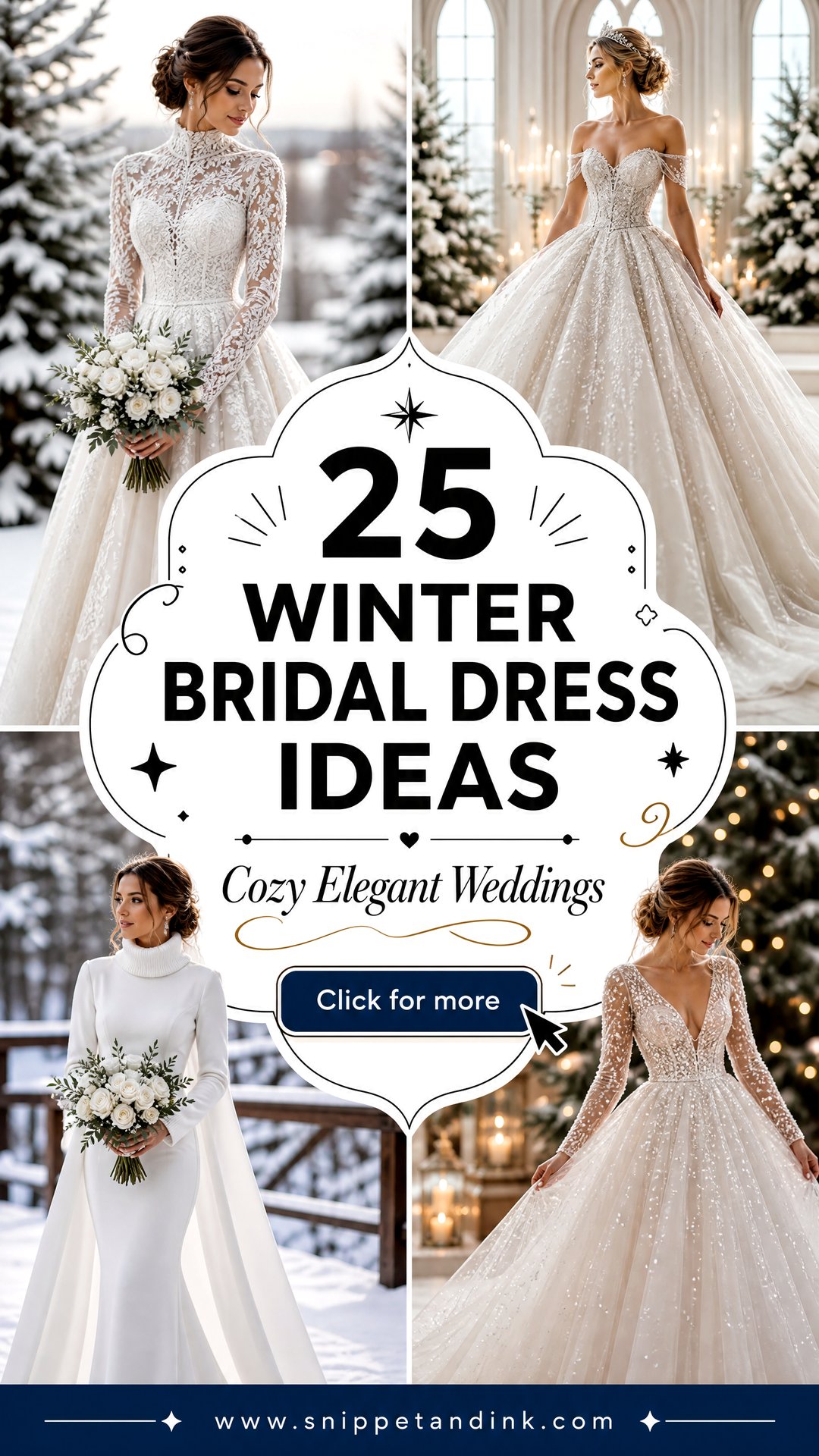
Dressing for the Twenty Minutes Outside
Most of a winter wedding happens indoors, yet the moments brides remember being cold are short ones: the walk from the car, the exit, the portraits by the trees. I plan for those minutes separately from the dress itself.
- Under the skirt: thin skin-tone thermal leggings or fleece-lined tights disappear under a ball gown or A-line. Under a column or slip they show, so skip them there.
- On the feet: closed-toe shoes with grip pads stuck to the soles. New soles are slippery on polished floors and icy steps alike.
- In the hands: gloves, a muff, or hand warmers tucked into the bouquet wrap between shots.
- Over the shoulders: the cover-up hangs by the door with one person assigned to hand it to you, rather than packed in a bag in the car.
Remember the room will be warm. A heavy velvet or long sleeve gown can feel stuffy by the second hour of a heated reception, so judge the fabric weight against where you’ll spend most of the day, not only against the photos.
1. Long Sleeve Satin Winter Bridal Dress
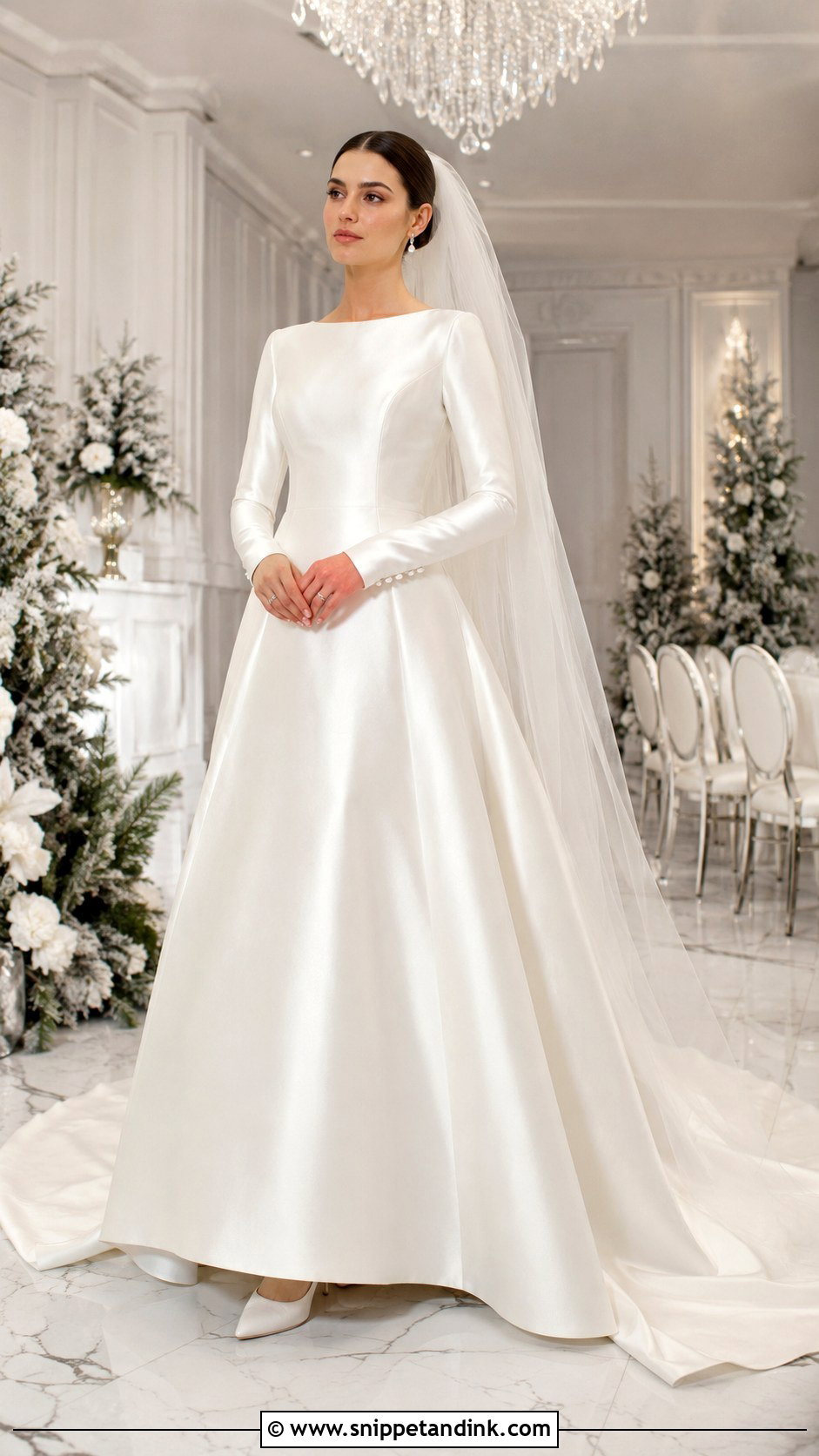
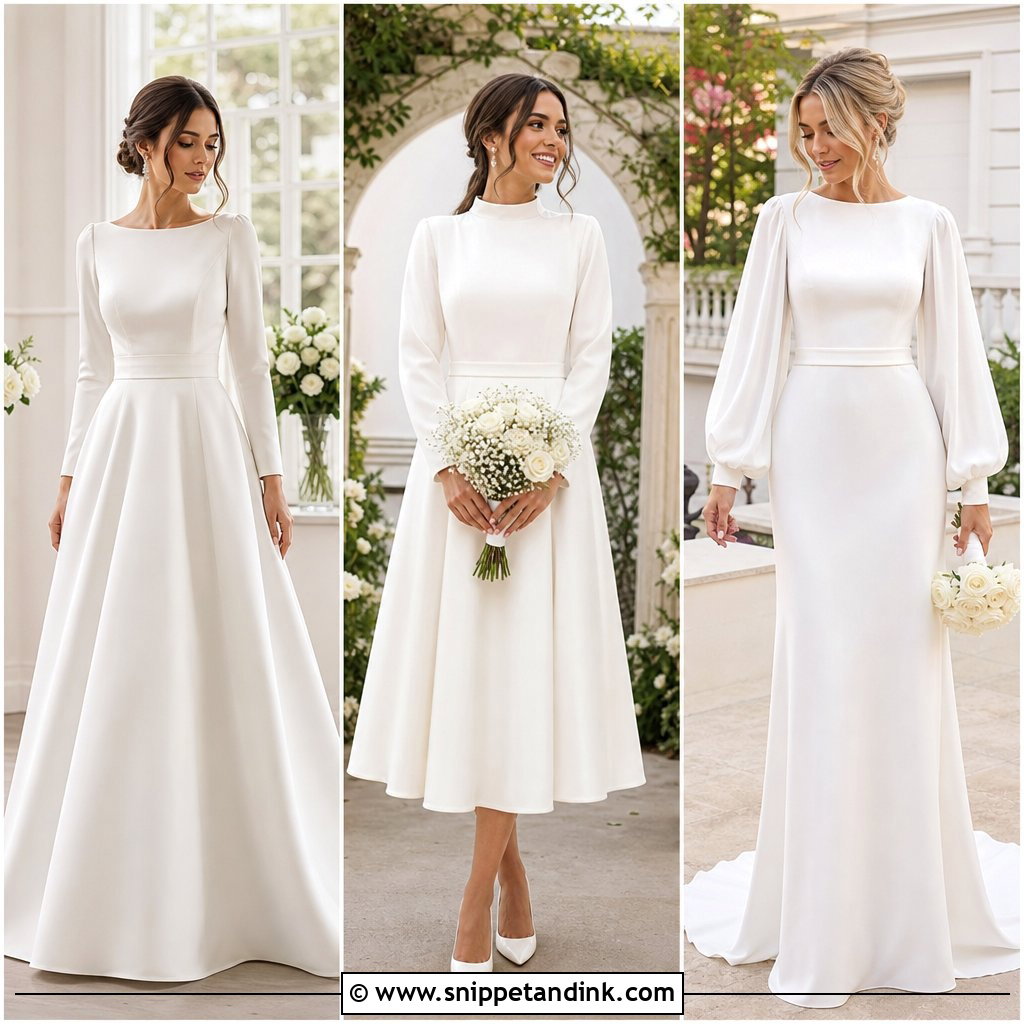
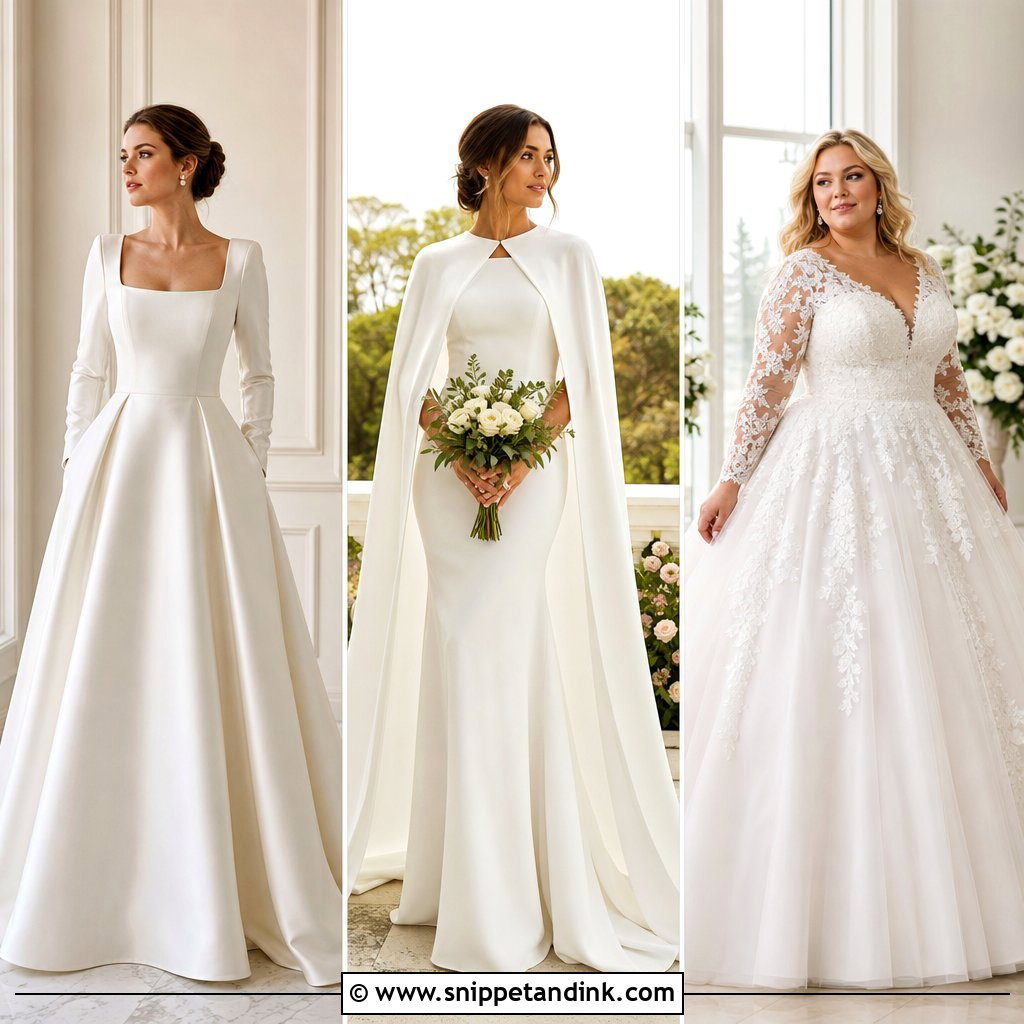
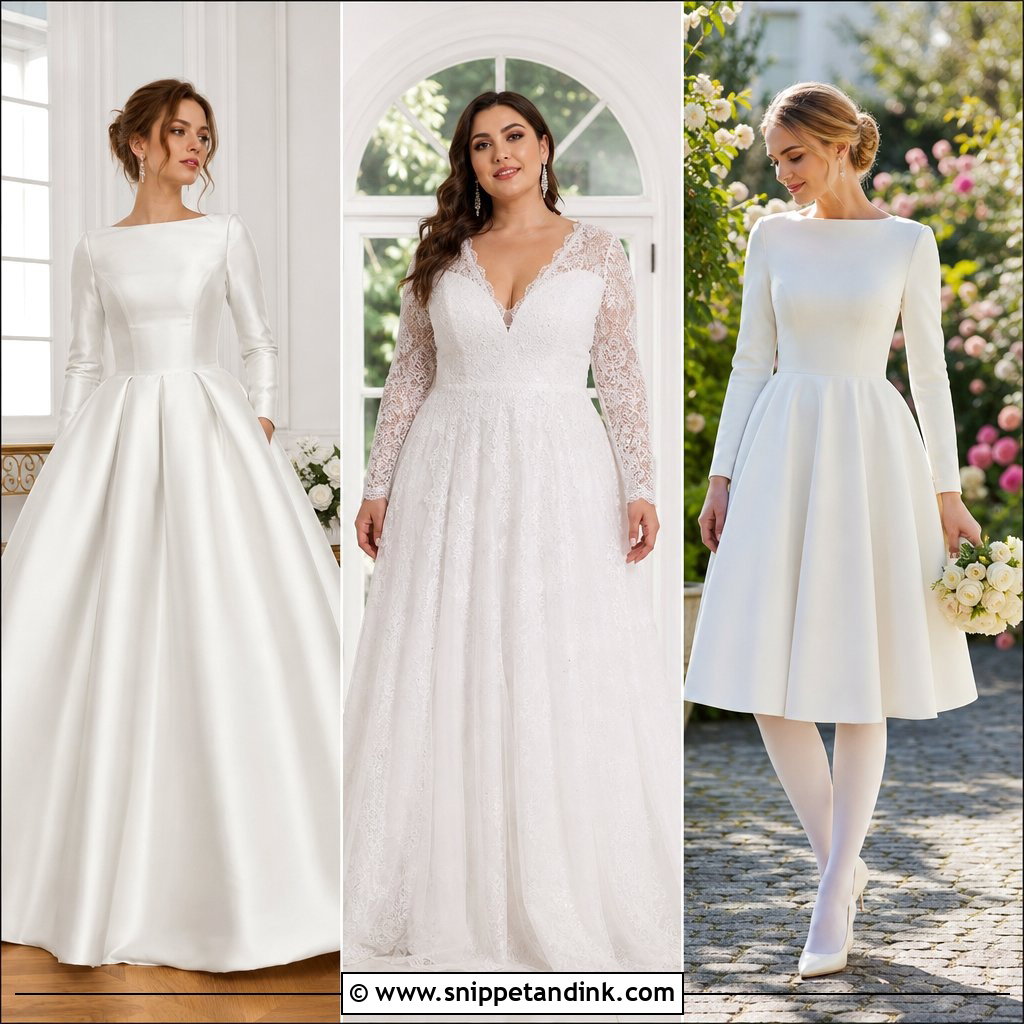
Satin with long sleeves is the classic winter pairing, and the reason is light: low winter sun and candlelit rooms make satin glow rather than glare. Ivory, pearl and soft champagne all read warm in that light. A fitted bodice over a clean A-line keeps the structure without stiffness, and a bateau, square or high neckline looks seasonal. I’d add pearl drops, a low bun, pointed satin pumps and a simple cathedral veil. For outdoor photos, a faux fur stole or tailored ivory coat stays on between shots. Satin sleeves don’t stretch, so check you can lift your arms for a hug before the hem is finished.
2. Lace Long Sleeve Winter Bridal Dress
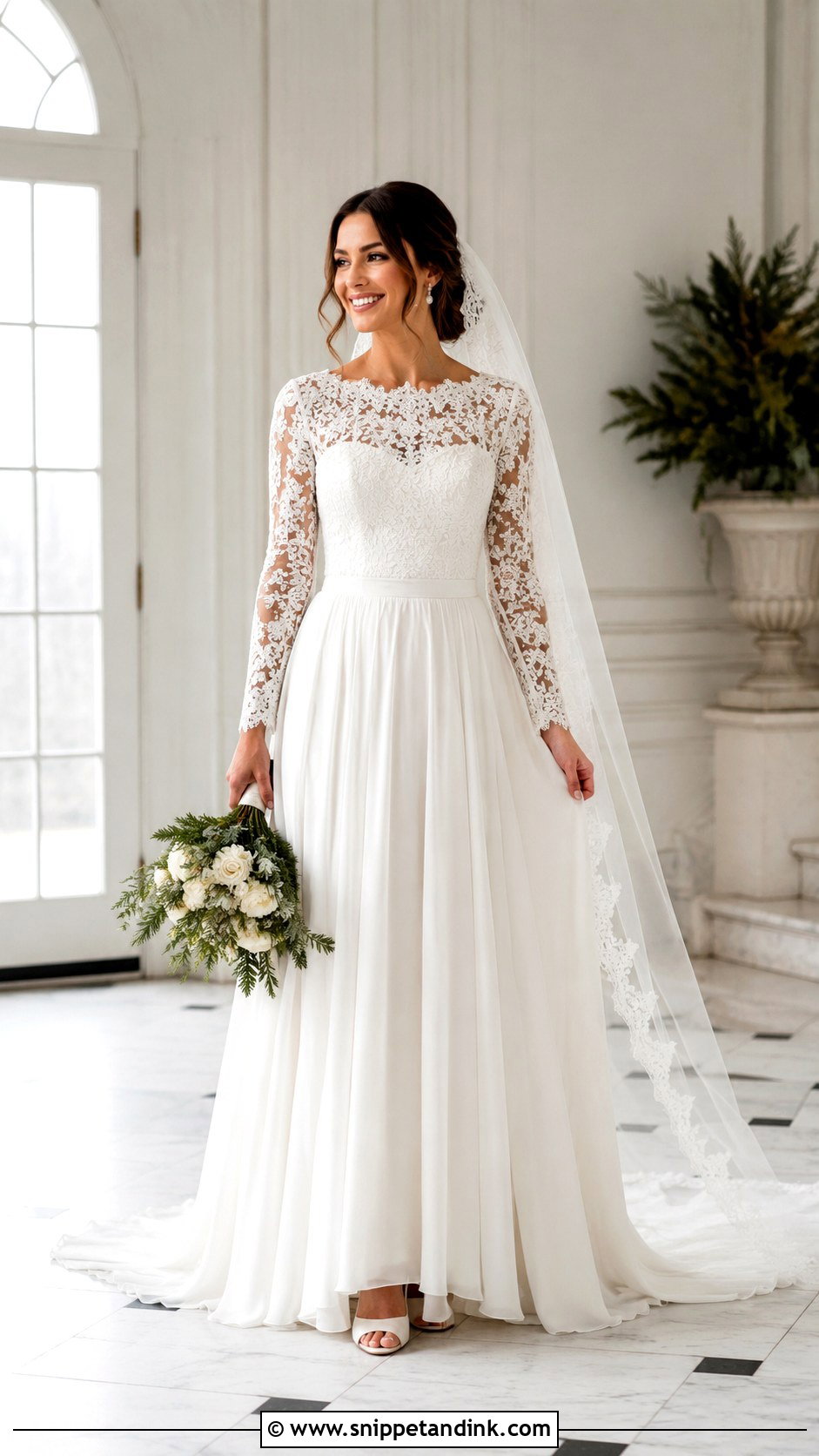
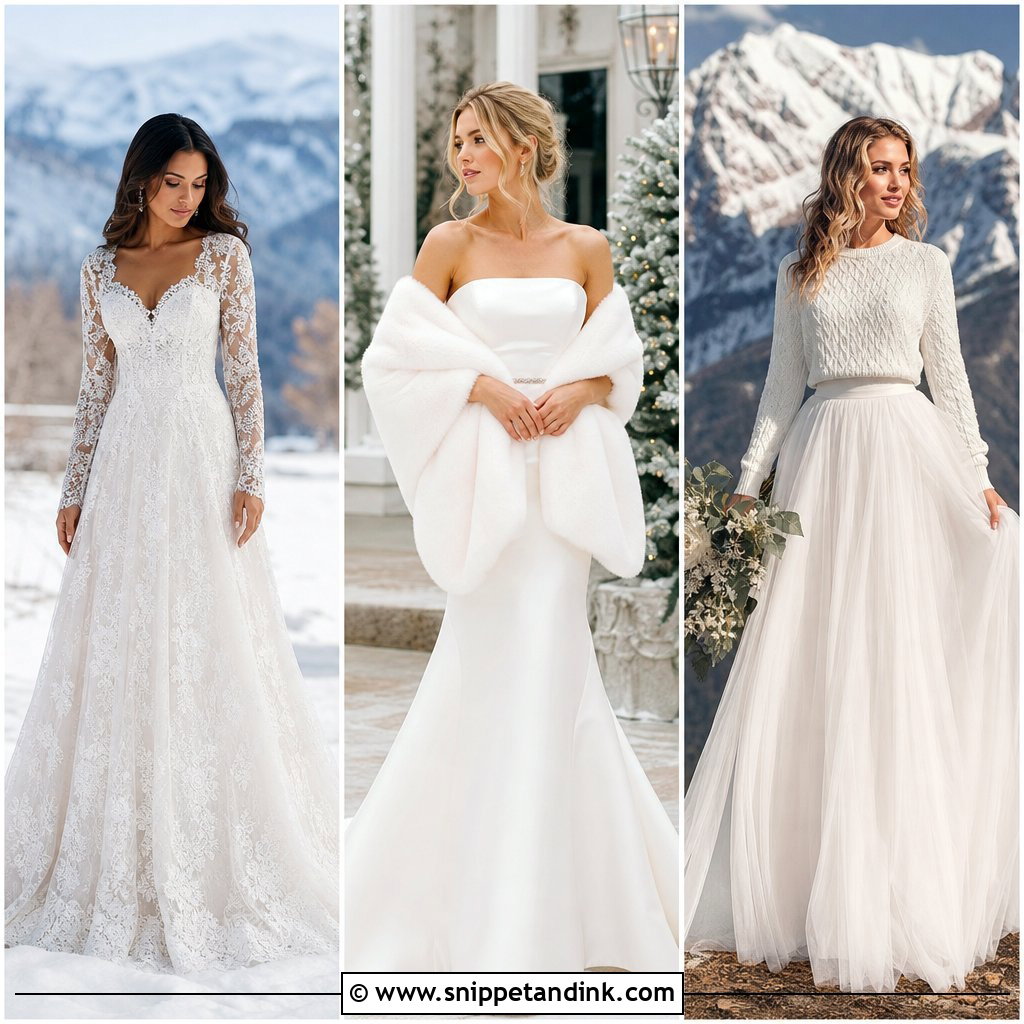
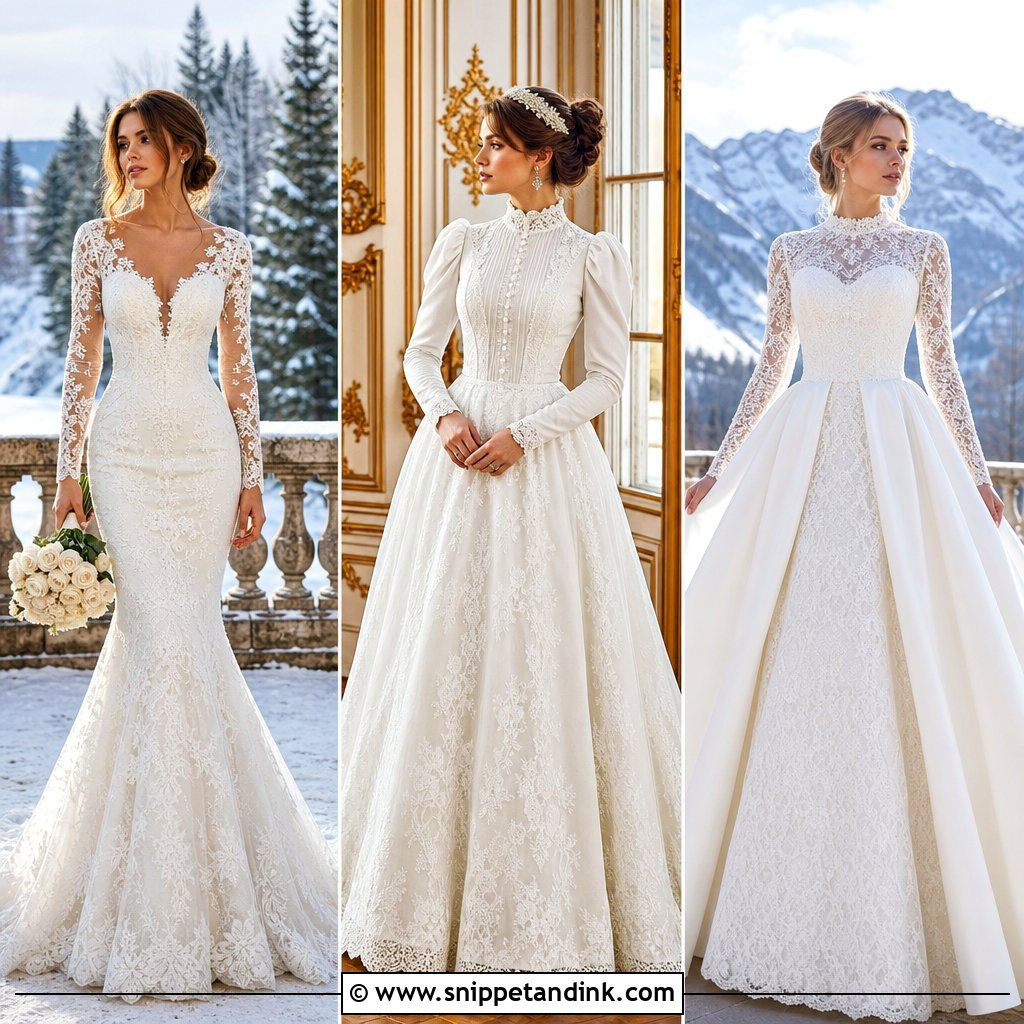
Lace sleeves look delicate, and honestly, they aren’t warm. What lace gives you in winter is coverage and texture, so I pair it with a lined bodice and plan a proper layer for outside. Floral lace reads traditional; geometric lace reads modern. A fitted waist over a flowing skirt keeps the texture from feeling heavy. Crystal studs, soft waves, ivory block heels and a veil edged in matching lace complete it. Carry a small satin clutch and keep a wool cape ready between photo locations.
3. High Neck Winter Bridal Dress
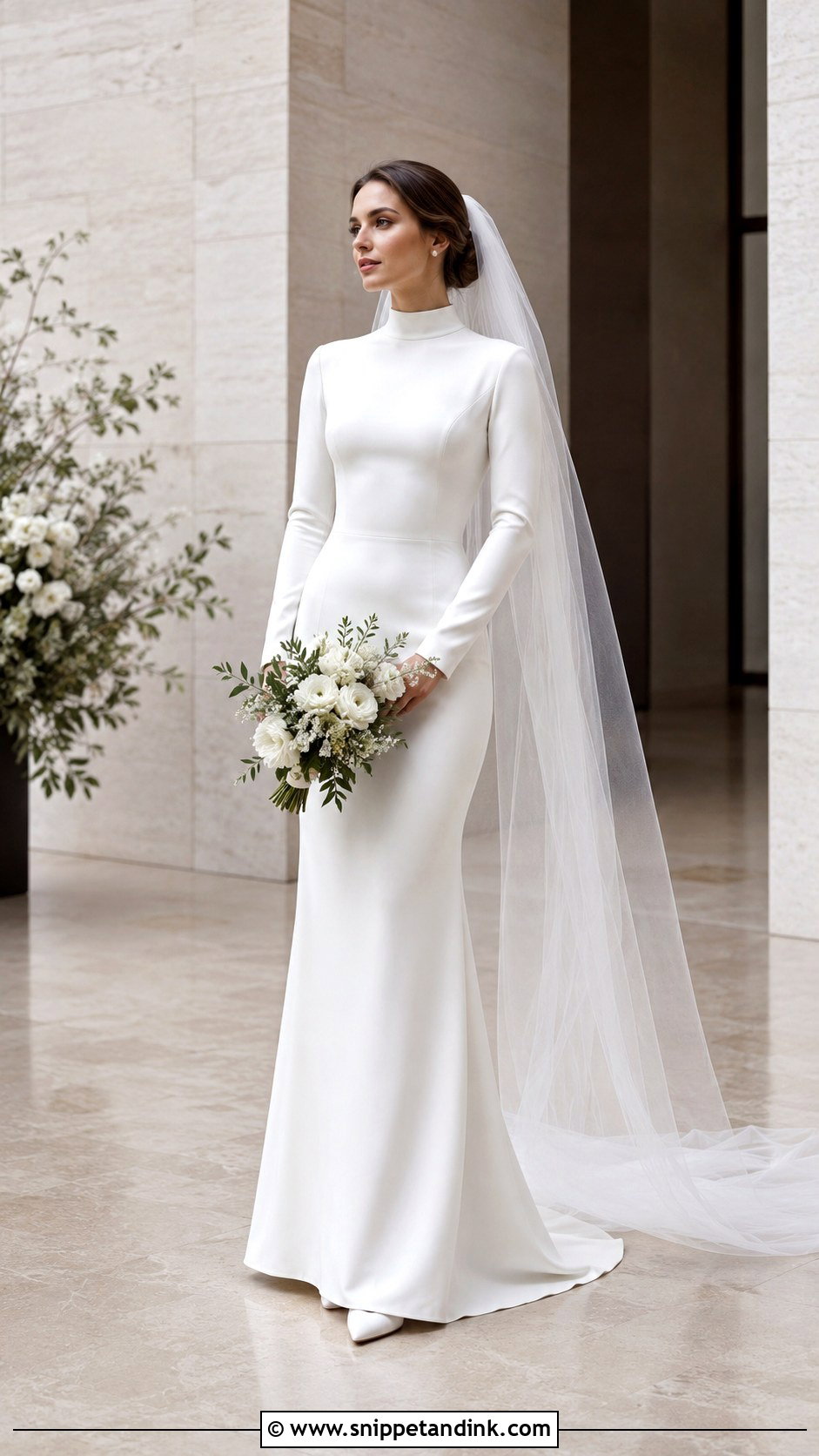
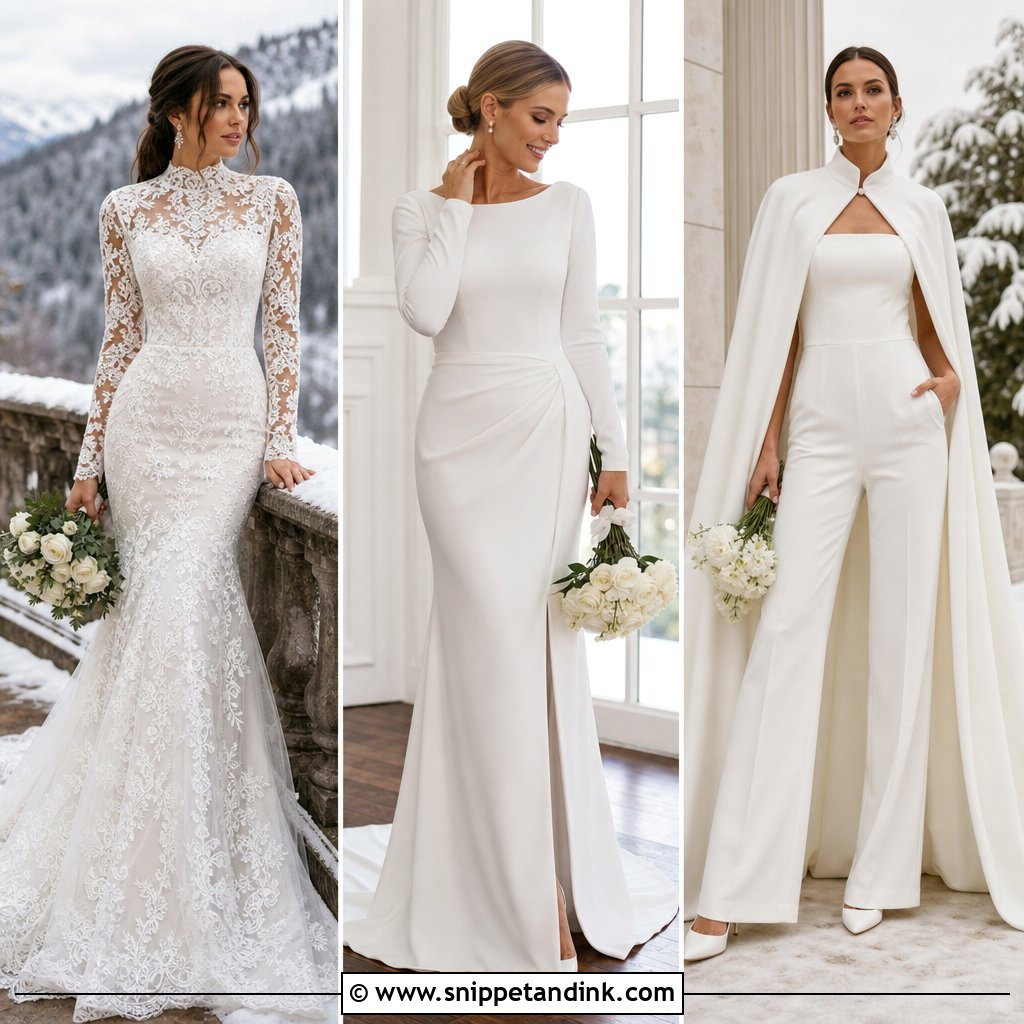
A high neckline frames the face and closes off the chest from the cold, which makes it one of the most practical winter shapes as well as one of the most refined. Crepe looks sleek, lace romantic and satin formal. It pairs well with long fitted sleeves over either a column or a full skirt. Keep jewelry to small pearls or slim studs. A smooth updo matters here, because hair falling around a high collar hides it. Finish with a clean veil and pointed closed-toe shoes.
4. Winter Bridal Dress With Cape
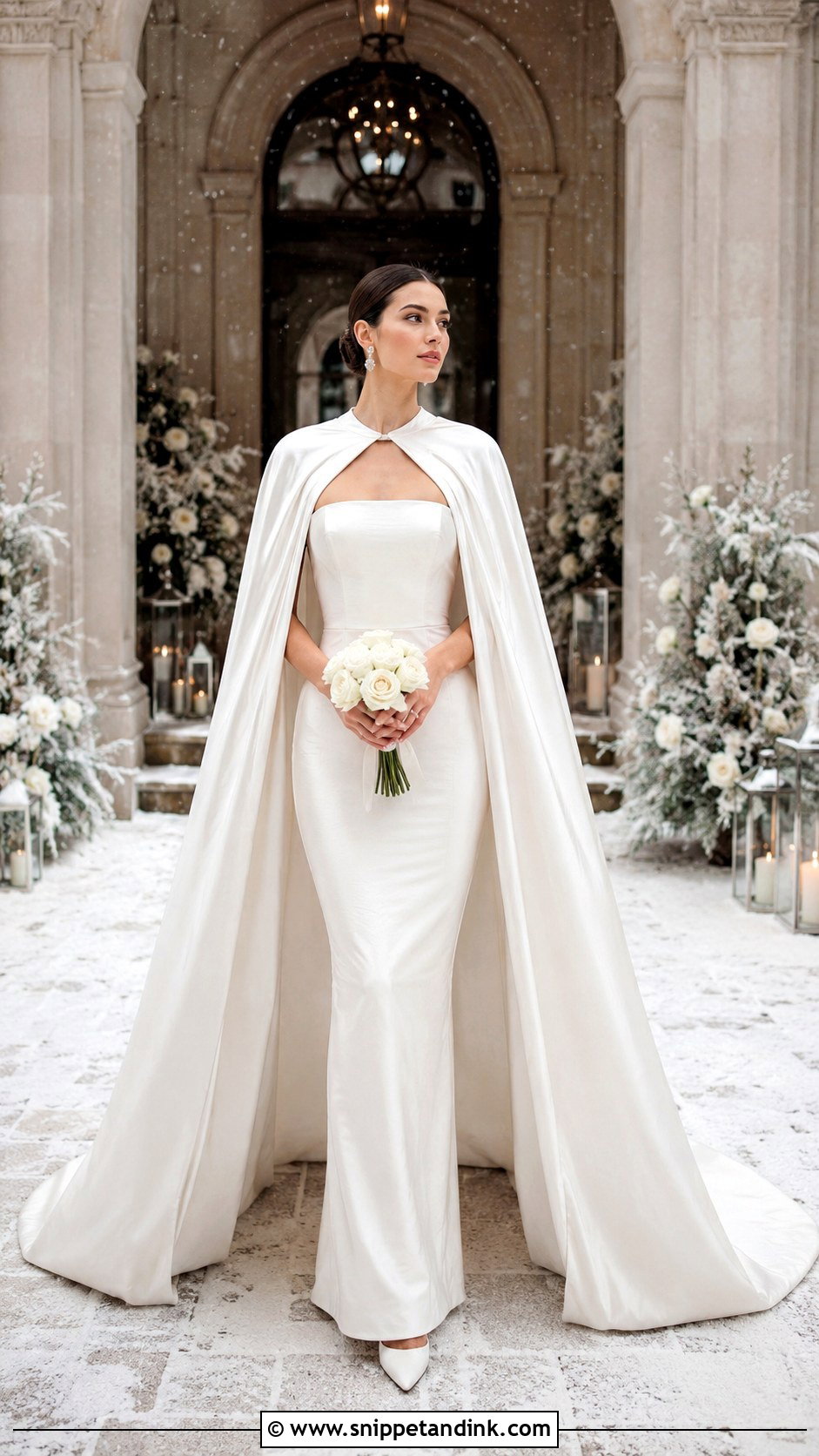
A cape is drama and a layer at once, which is why it’s so often my answer when a bride loves a strapless gown but is marrying in January. A winter bridal dress with a cape can use sheer, satin, crepe or lined fabric depending on how cold it will be. A strapless or sleeveless gown looks instantly seasonal under a floor-length cape, and a sleeved dress becomes regal. Check how it attaches; shoulder buttons or a neckline clasp should hold the weight without dragging the bodice back. Sleek earrings, a polished bun, closed-toe heels and a modest bouquet keep it clean, and many brides wear it in place of a veil.
5. Velvet Winter Bridal Dress
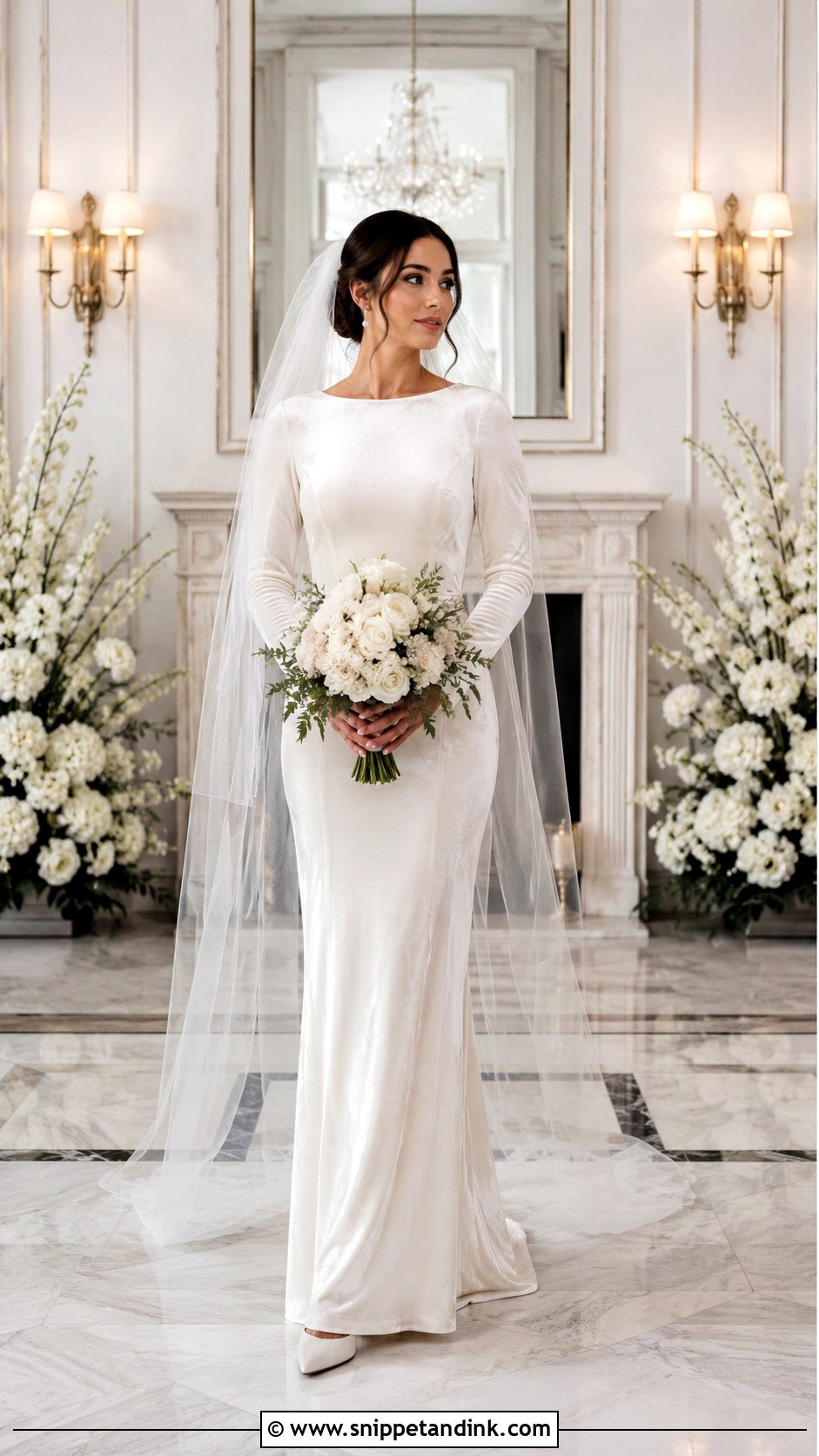
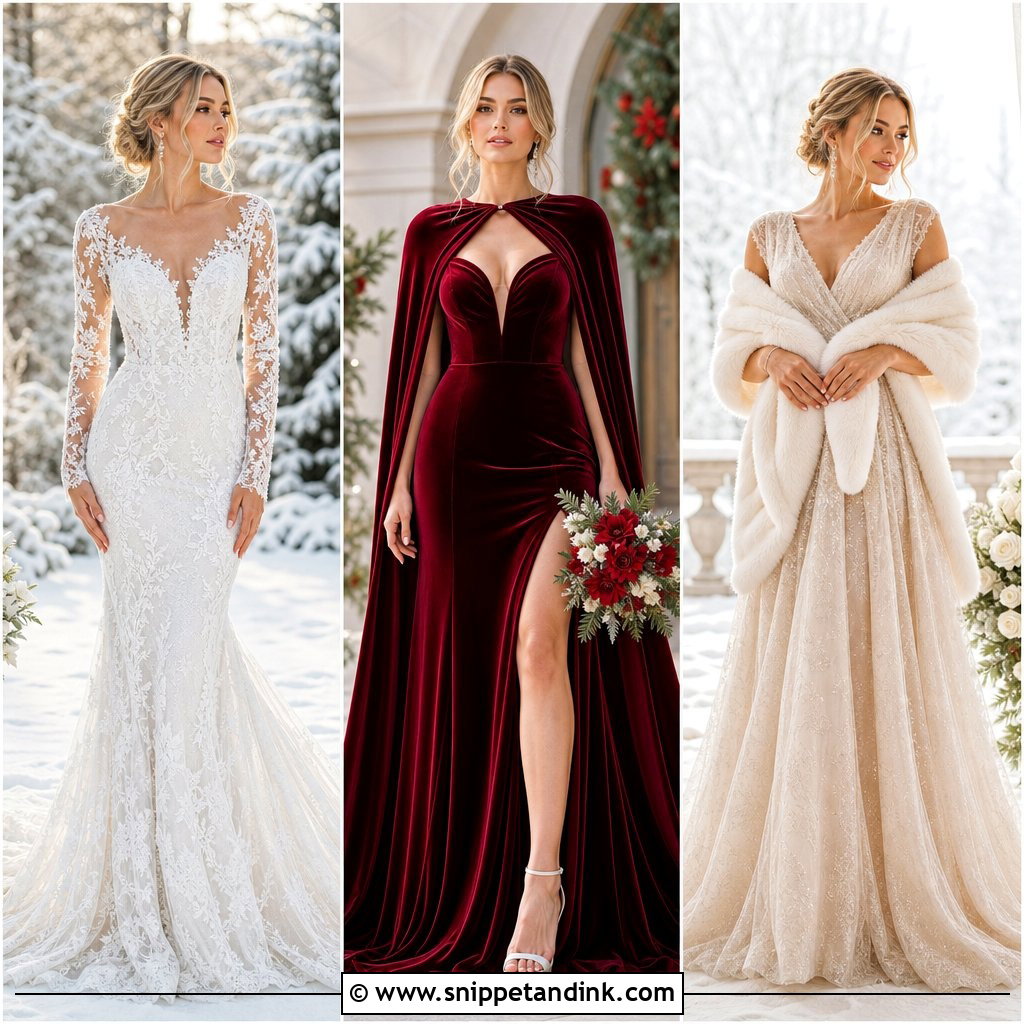
Velvet is the warmest fabric on this list and the most demanding. It has a pile, so it shows pressure marks where you’ve sat or rested a bouquet, and it reflects light differently depending on the direction of the pile, which makes alterations a job for someone who has handled it before. Ivory, cream and pale champagne keep it bridal. Simple shapes suit it best: a long sleeve column, a wrap gown or a fitted bodice with a flowing skirt. Pearl earrings, satin heels and a smooth veil are enough. Evening ceremonies and candlelit receptions are where velvet makes the most sense.
6. Off Shoulder Winter Bridal Dress
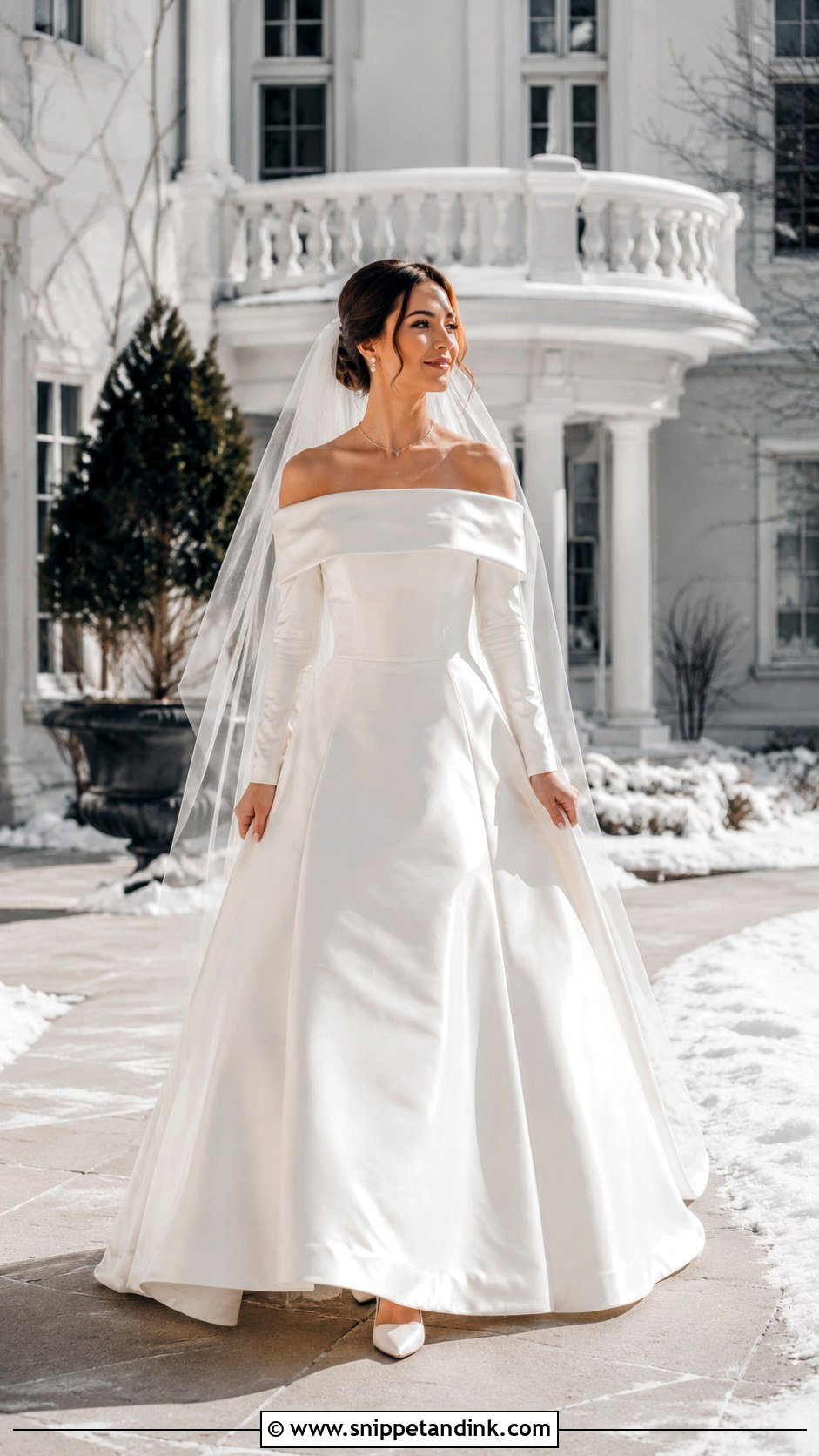
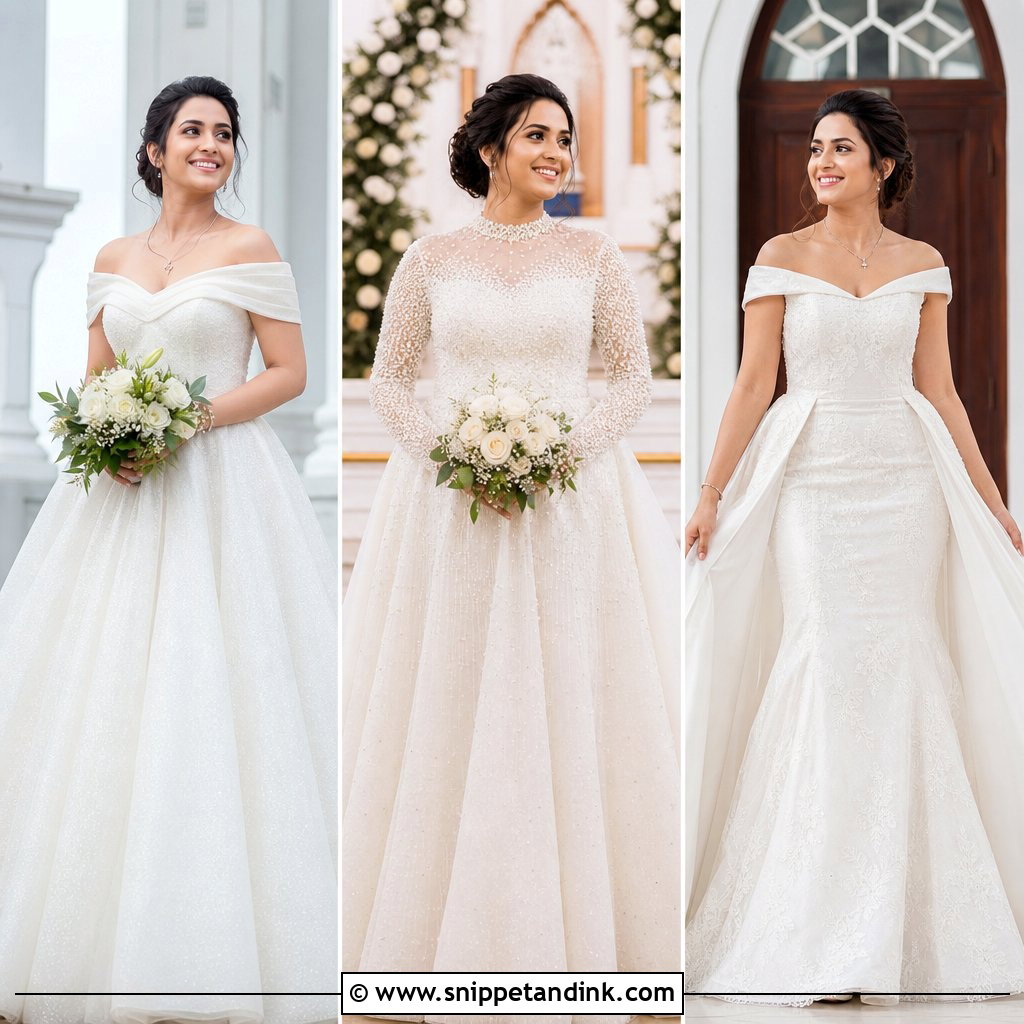
Off-shoulder sounds wrong for winter, yet it works when the fabric is structured. Satin, mikado or crepe holds the neckline in place, whereas a soft fabric lets it creep up every time you move. Long sleeves set off the shoulder keep the arms covered while leaving the collarbone open. A delicate necklace, pearl earrings, a low chignon and closed-toe pumps finish it. Between outdoor shots, a cropped faux fur jacket or ivory wrap goes over the shoulders. Fitted and full skirts both suit it.
7. Winter Bridal Ball Gown
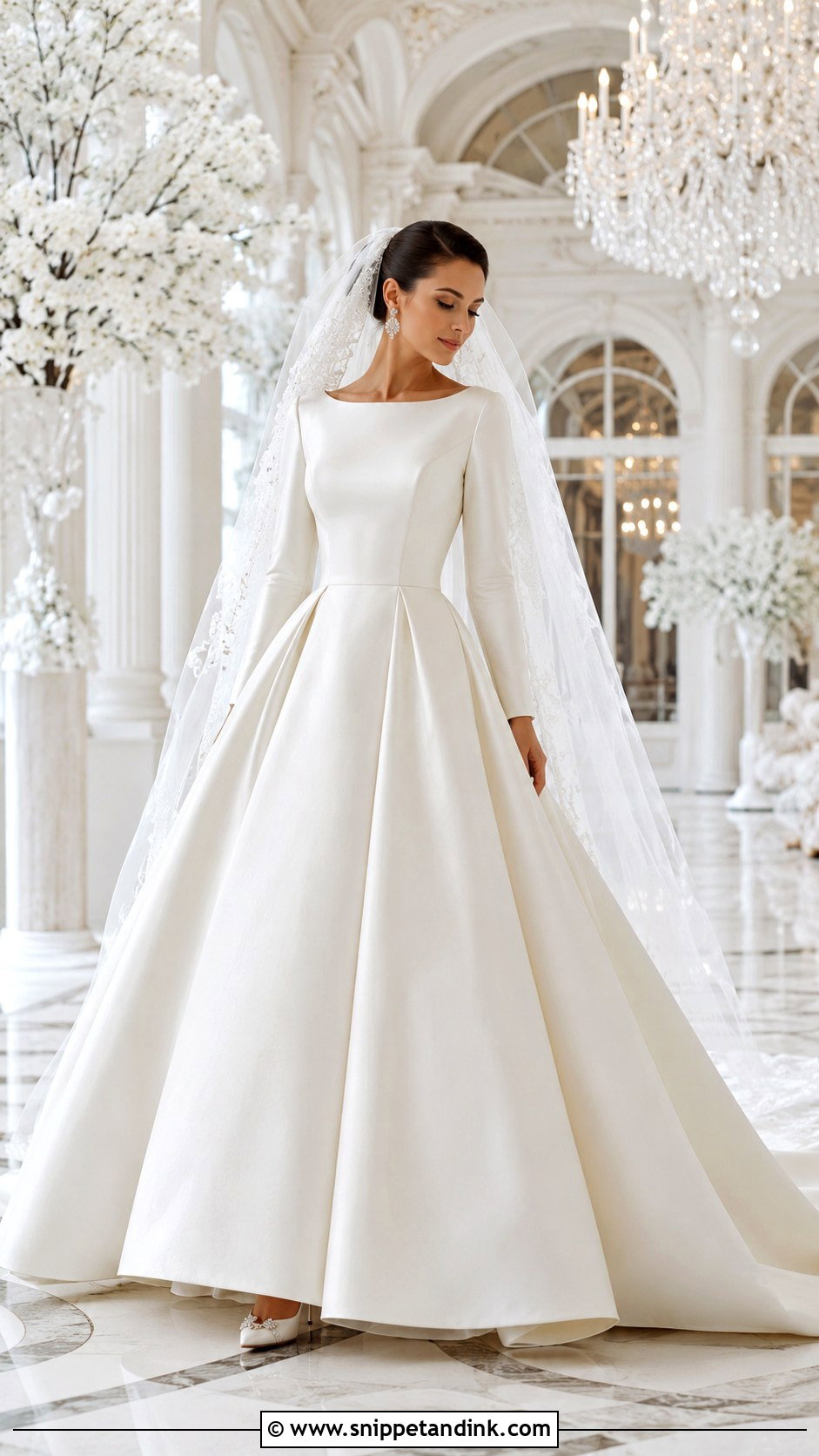
Big skirts feel right in winter, partly because a heavy gown is welcome in a cold church. Satin, mikado, tulle and organza all hold a full shape, and a structured bodice keeps the volume in check. Long sleeves, a square neck or a modest scoop keep it classic. A long veil, sparkling earrings, block heels and a neat updo complete the outfit, with the bouquet kept in proportion. One winter warning: a full skirt and a car door in sleet don’t mix, so have someone hold the skirt off the wet ground as you get in.
8. Minimalist Winter Bridal Dress
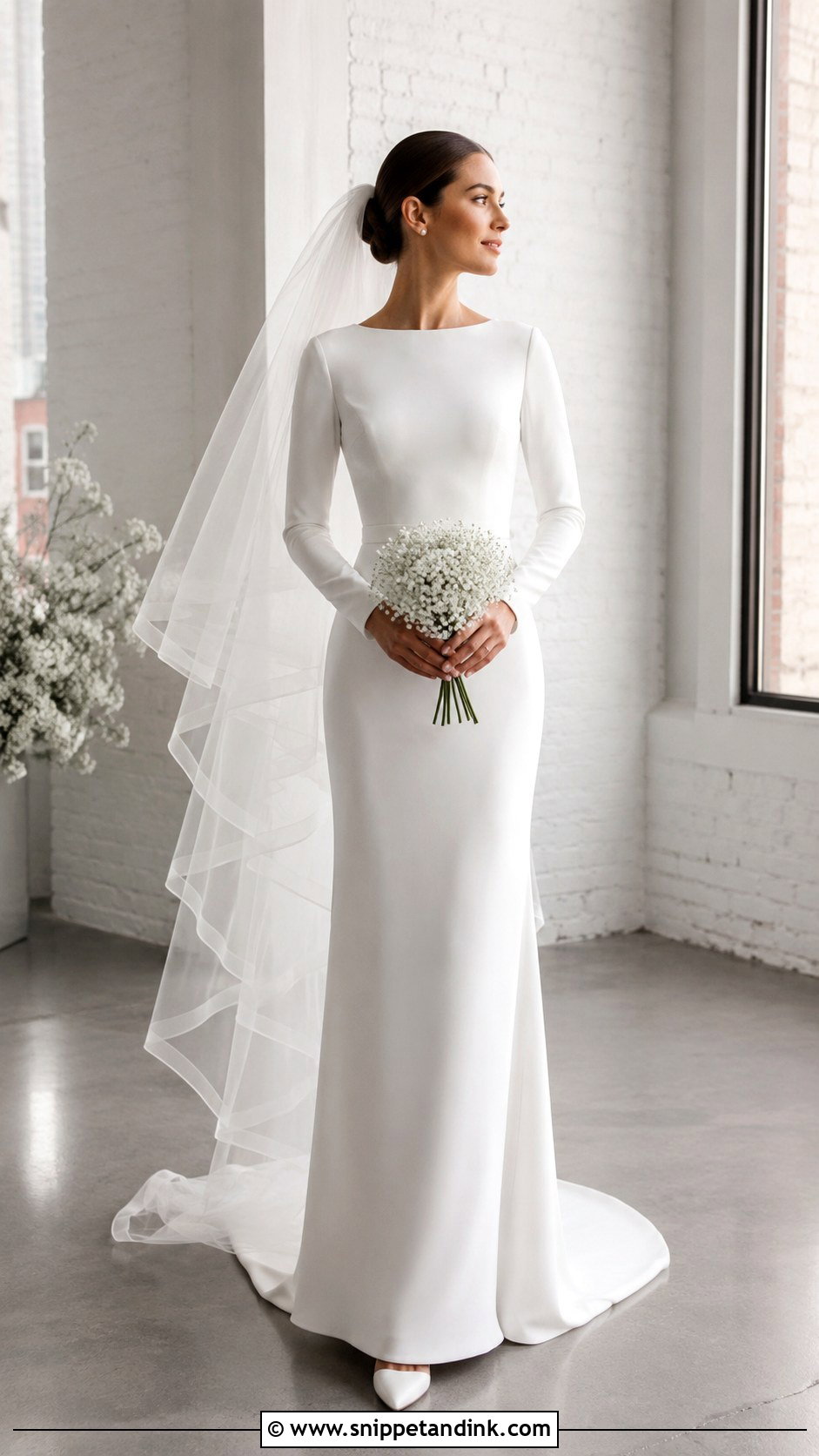
Minimal gowns depend on fit, and in winter they depend on fabric weight too, because a thin crepe feels cold where a heavier one won’t. A long sleeve crepe column, a satin slip with a coat or a square-neck A-line with almost nothing on it are all good starting points. The seams, hem and neckline have to be precise, since there’s no detail to distract from them. Pearl studs, sleek white pumps, a low bun and a sculptural veil finish it, and a tailored wool coat suits a city wedding. Of everything here, this is the look most likely to still feel current years from now.
9. Beaded Winter Bridal Dress
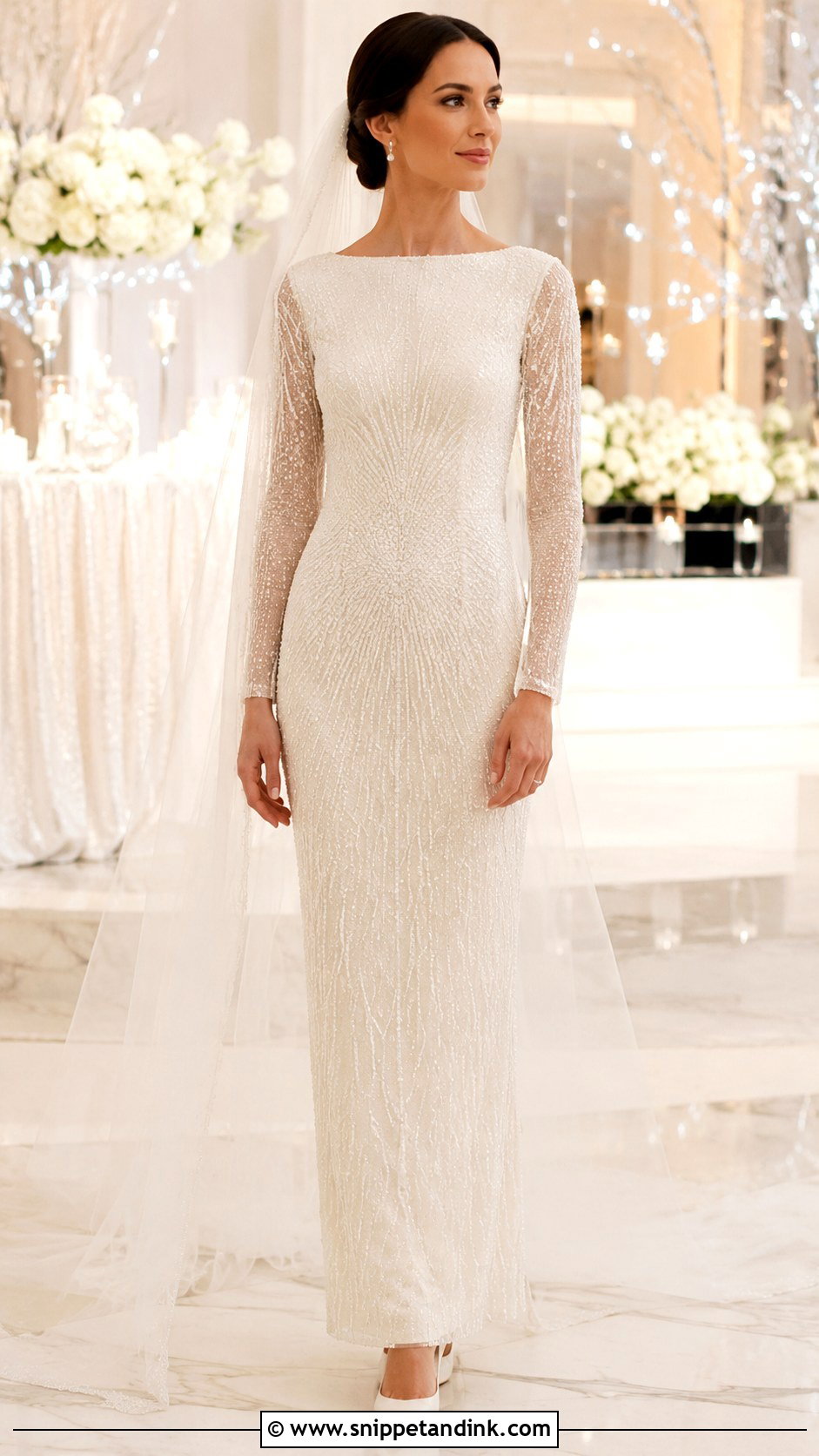
Beading catches every candle, which is why a beaded winter bridal dress suits evening ceremonies and formal rooms so well. Choose one kind of shine: scattered shimmer on tulle, pearl embroidery on the sleeves or crystals across the bodice. A heavily embellished dress wants a plain silhouette such as a sheath or soft A-line, with minimal jewelry, satin pumps and a smooth veil. A faux fur wrap adds warmth, but beads snag long fibres, so pick a short-pile wrap and lift it off rather than sliding it.
10. Winter Bridal Dress With Faux Fur Wrap
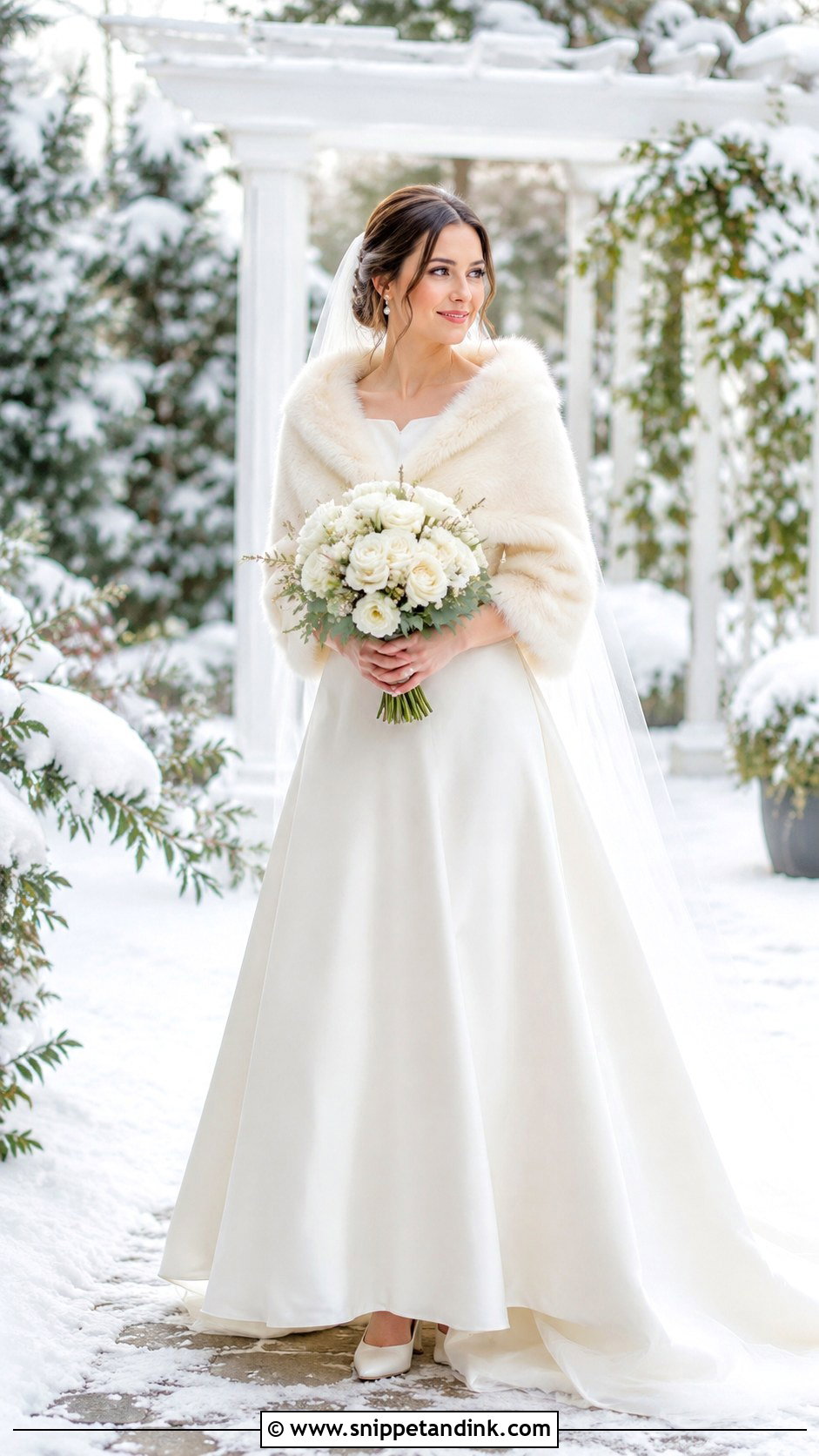
A faux fur wrap is the simplest way to make almost any dress winter-ready, and it covers the photos, the car and every outdoor moment. It works over a satin A-line, a lace sheath or a strapless ball gown. Ivory, cream and soft blush are the bridal shades, and the white of the wrap should sit close to the white of the dress. Proportion matters most. A big fluffy wrap on a big skirt makes the bride look wider than she is, so with a full gown I go shorter and neater. Pearl earrings, a simple veil, closed-toe heels and a small bouquet complete it.
11. Winter Bridal Dress With Detachable Sleeves
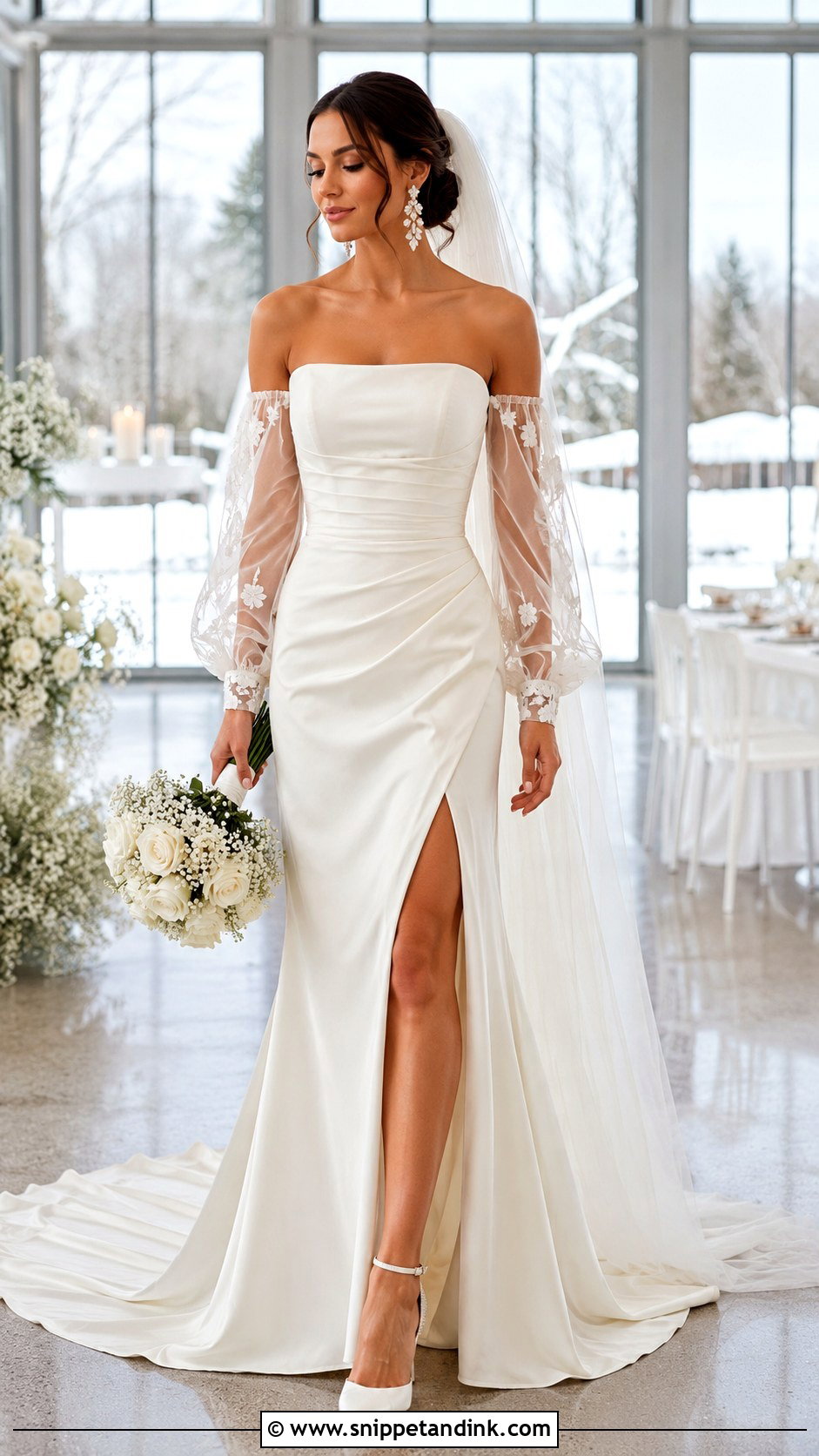
Detachable sleeves solve the classic winter dilemma: covered and warm for a church ceremony, free to dance at the reception. They suit strapless satin gowns, corset bodices and simple crepe dresses. Sleeves in the dress fabric look most like part of the gown, while sheer tulle, lace or puffed organza each shift the mood. Ask how they fasten, and whether you can take them off without help. Statement earrings, a soft veil and shoes you can stand in for hours finish it, and you get two looks without a second dress.
12. Winter Bridal Dress With Bridal Coat
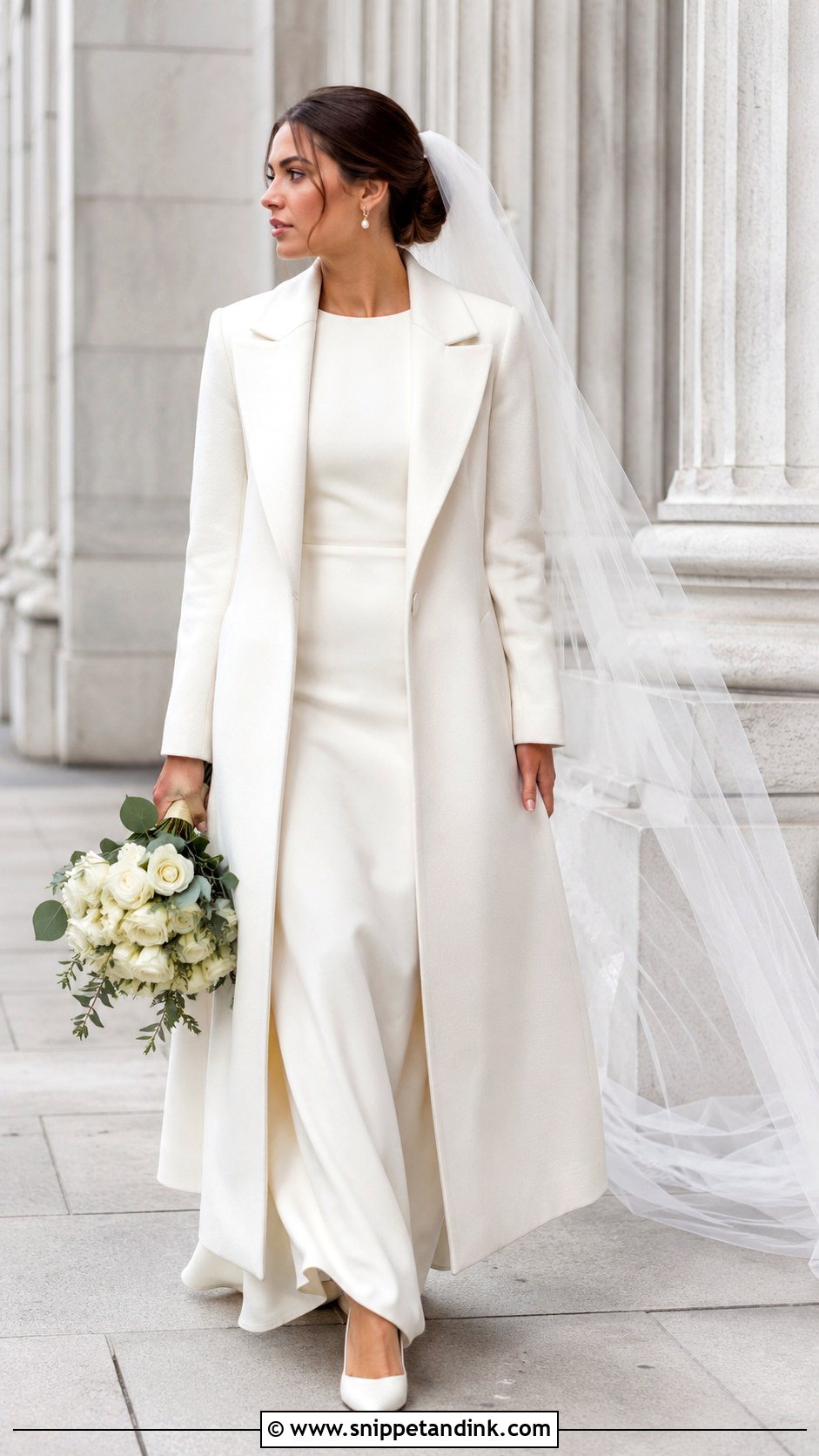
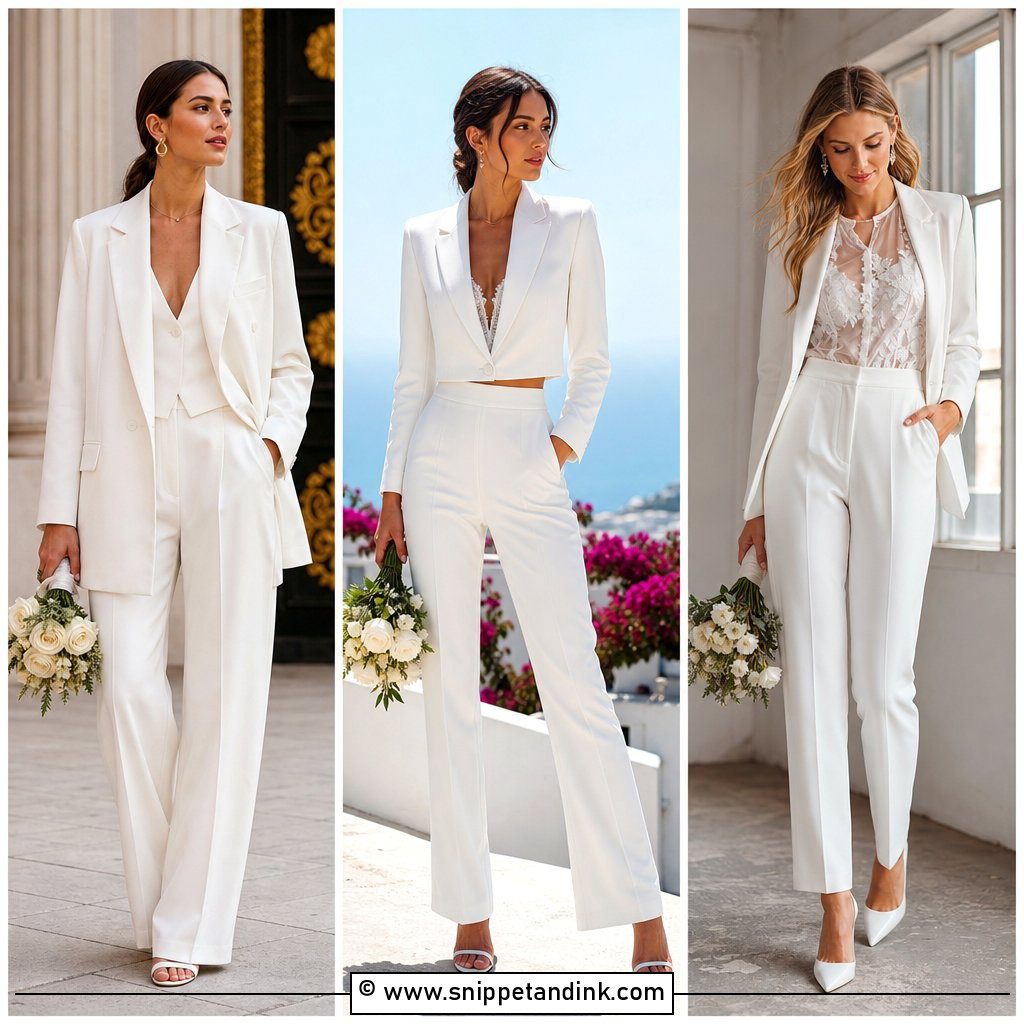
A coat turns a simple dress into a winter outfit, but only when it’s chosen with the dress rather than grabbed at the end. A tailored ivory coat, a long wool coat, a satin opera coat or a fitted style with covered buttons can all work. The hem has to clear the gown or match it exactly, and the sleeves need room to go over the dress sleeves without bunching. Decide before the day whether the veil goes over or under the coat; over looks softer, under is easier to manage. Pearl earrings, a neat bun and closed-toe heels complete it. City weddings and courthouse ceremonies suit it best.
13. Winter Bridal Dress With Turtleneck
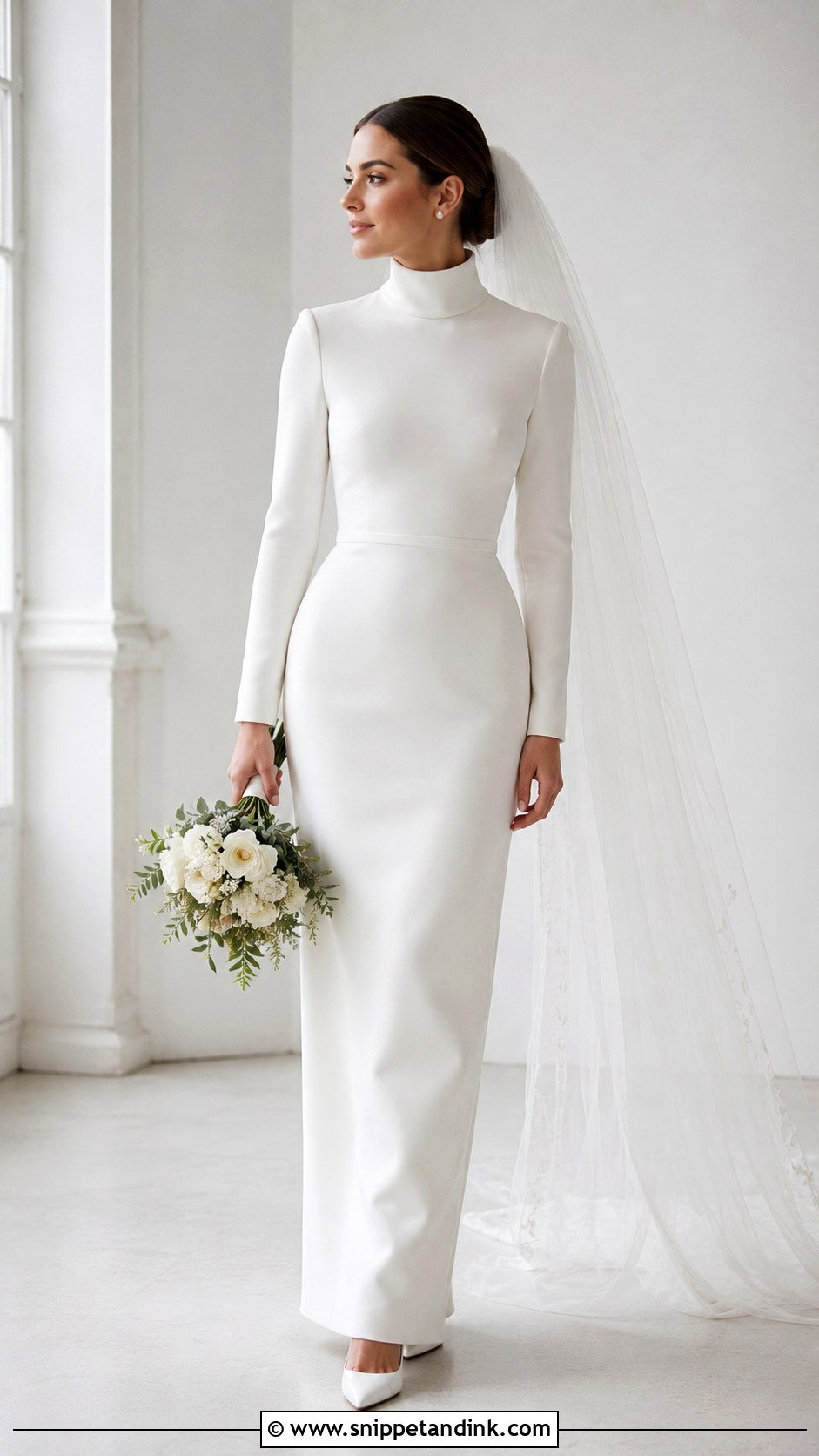
A turtleneck bridal dress is the most covered and most modern look here. Smooth crepe, soft knit, satin and lace all work, and each changes the mood: a fitted crepe turtleneck over a column skirt feels editorial, lace feels softer. With the chest covered, attention moves to earrings, hair and sleeve shape. A sleek bun, pearl studs and pointed heels keep it refined, and a long veil from the crown adds drama. Knit is wonderfully warm but can turn hot in a heated reception, so I’d only choose knit for a genuinely cold venue.
14. Sparkle Tulle Winter Bridal Dress
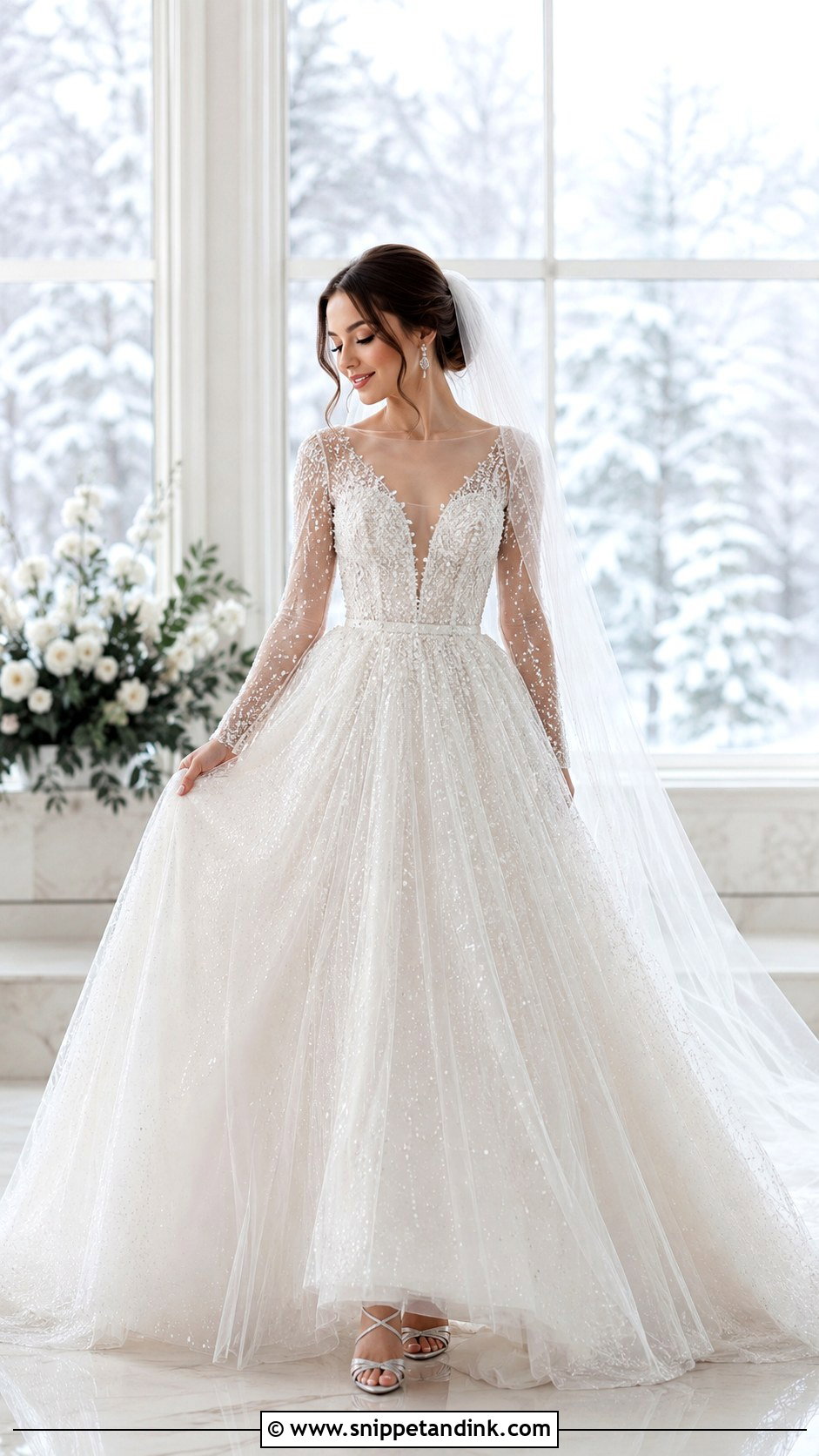
Sparkle tulle feels festive without looking like a theme. The shimmer can be subtle, glitter layered under plain tulle, or more visible through beaded stars, pearls or crystal flecks. A fitted bodice over a soft A-line gives movement, and long illusion sleeves add seasonal coverage. Delicate earrings, a sheer veil, silver or ivory heels and a soft updo complete it. Keep the bouquet simple so it doesn’t compete. Glitter tulle sheds a little, so expect some on your partner’s jacket by the end of the night.
15. Crepe Winter Bridal Dress
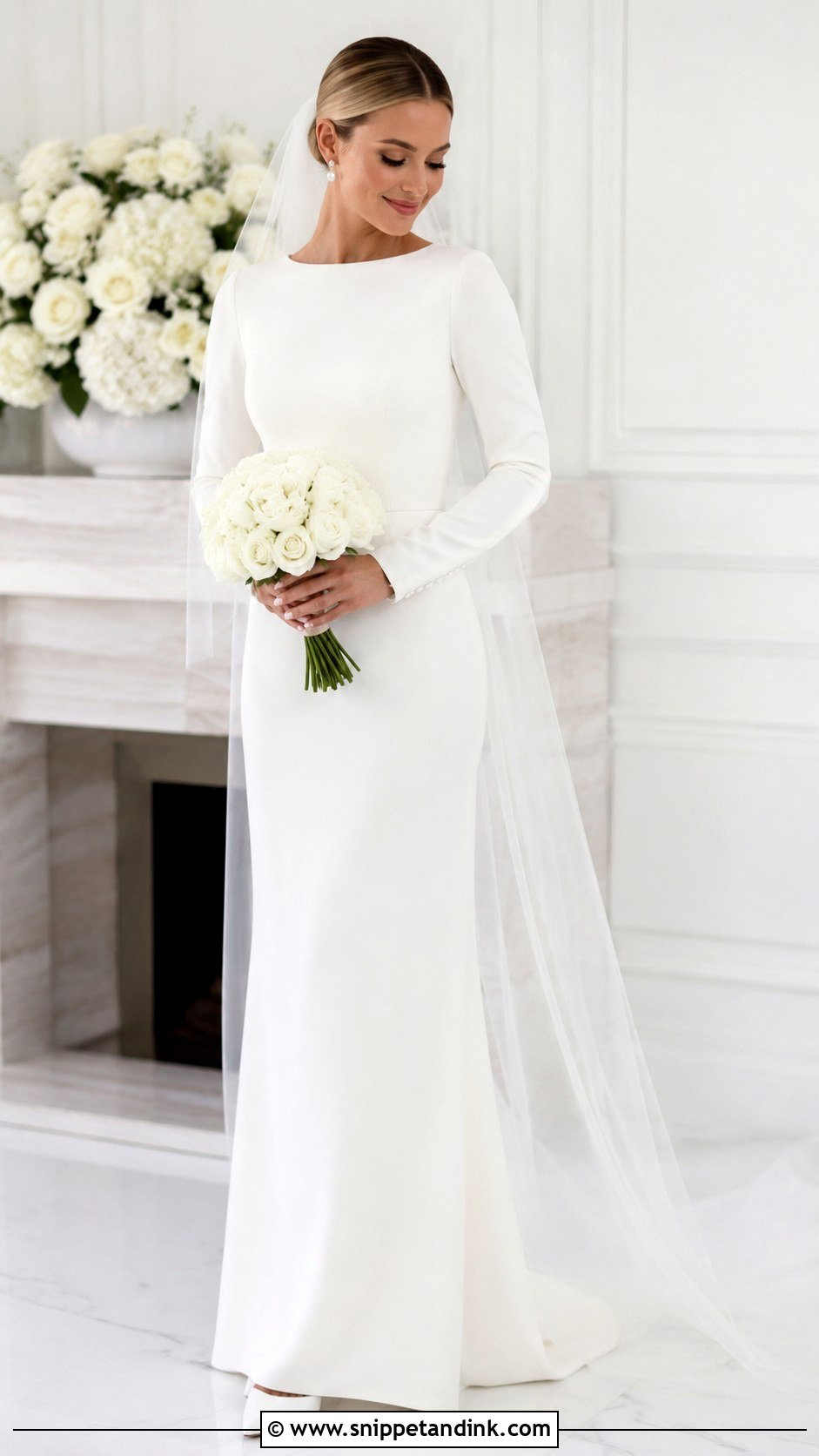
Crepe gives structure without shine. It skims rather than clings, which is why a long sleeve crepe sheath looks sleek and an A-line crepe gown looks classic. Small details carry it: covered buttons, a square neckline, a low back or a short train. Pearl earrings, a smooth veil, white pumps and a tailored coat for outdoor photos finish the look. Crepe layers well under capes and wraps because it isn’t bulky. It does reveal underwear lines, so sort out smooth undergarments before the first fitting.
16. Winter Bridal Dress With Pearl Details
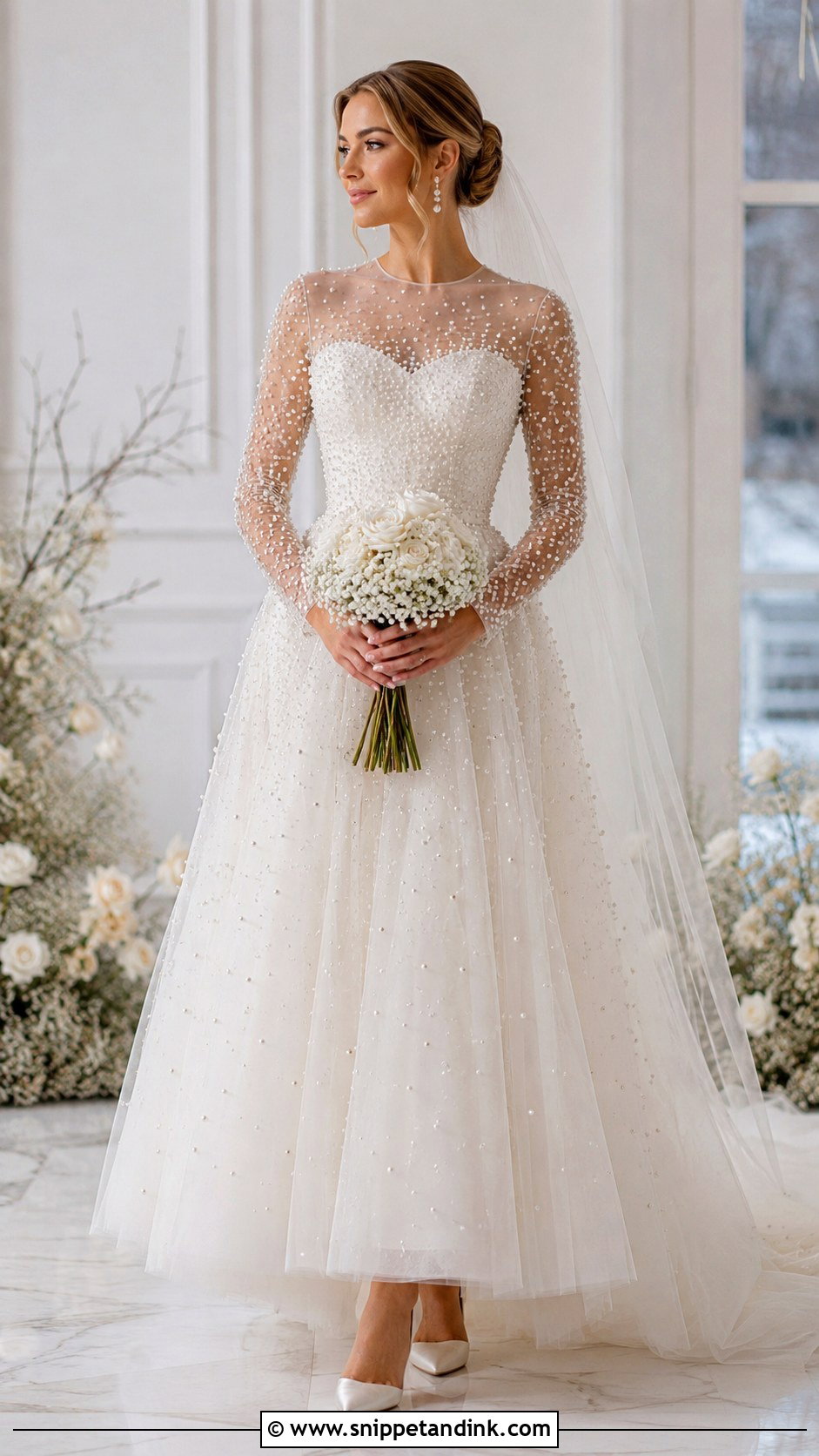
Pearls reflect light softly instead of sparkling, which suits the low light of winter. They can sit on sleeves, bodices, veils or gloves, or be spaced across the whole gown. Pearl-dotted tulle looks romantic; satin with pearl buttons looks classic. Keep the silhouette clean so the pearls don’t crowd it. Pearl drop earrings, satin heels, a neat bun and a veil with a few pearl accents finish it, with a short faux fur jacket or wool capelet for real cold. Check that the pearls are stitched on individually. When they’re strung in a row, one broken thread can lose the lot.
17. Winter Bridal Dress With Gloves
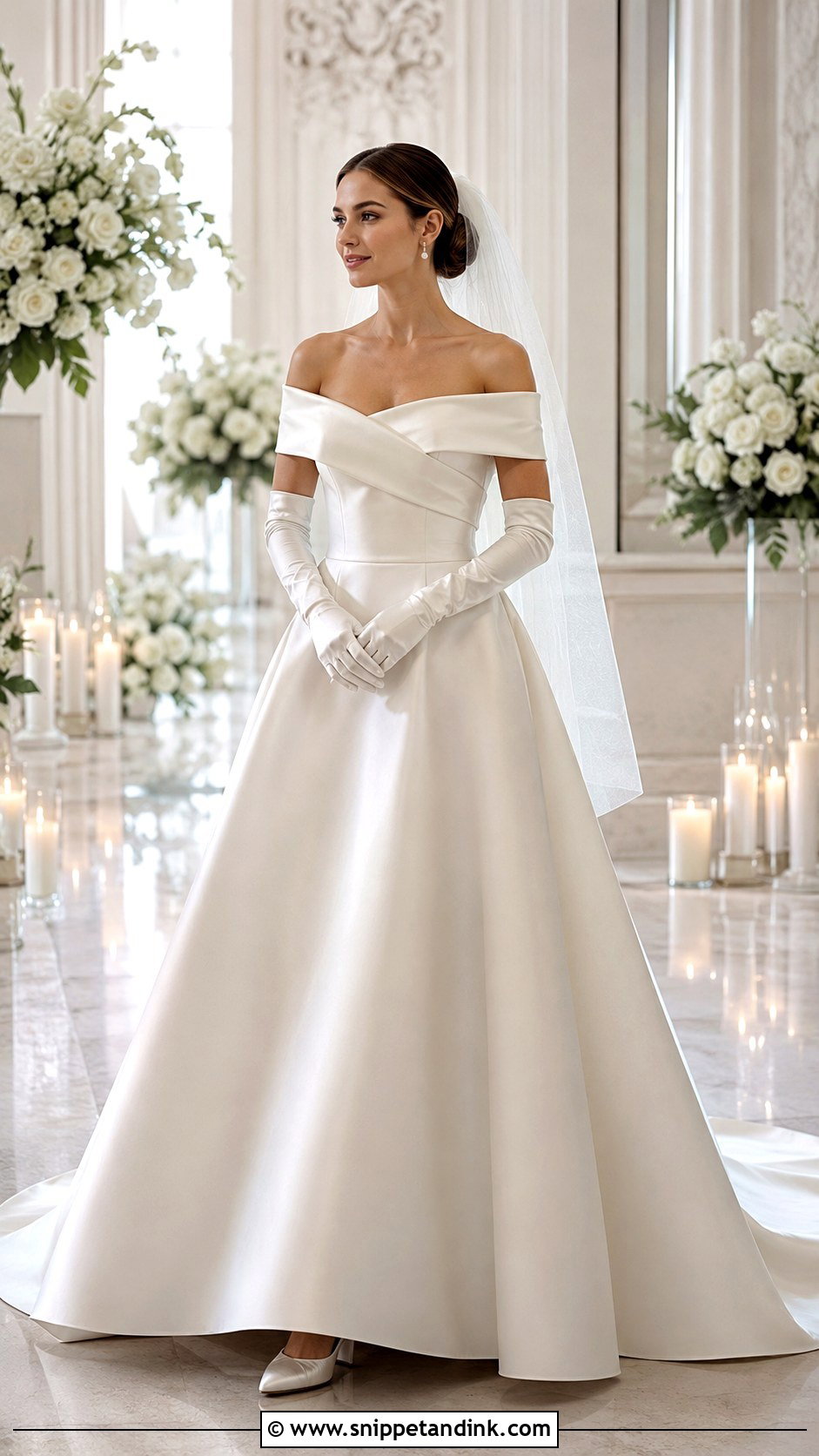
Gloves are practical in winter, and they change the whole era of a dress. Long satin gloves suit strapless or off-shoulder gowns, sheer gloves suit lace and minimalist dresses, and with long sleeves, wrist-length gloves keep it soft. Match the glove colour closely to the dress. A sleek veil, pearl earrings, closed-toe heels and a structured bouquet complete it. Plan the ring moment in advance: long gloves either come off for the exchange or have the ring-finger seam opened, and fumbling with a glove at the altar is easily avoided.
18. Winter Bridal Dress With Overskirt
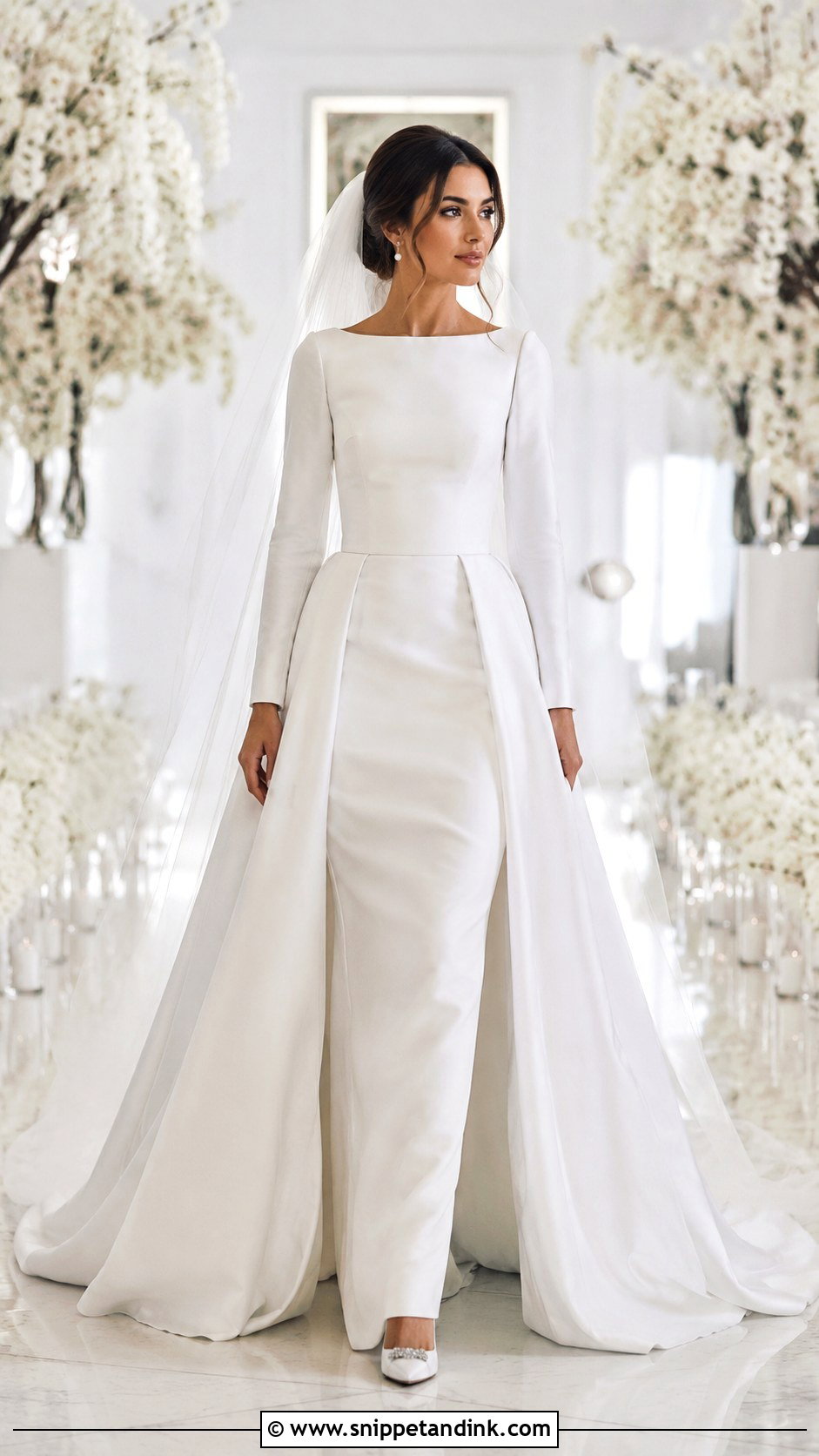
An overskirt gives you a full ceremony silhouette and a fitted reception dress in one outfit. The base can be a crepe gown, a satin column or a lace sheath, and an overskirt in satin, mikado or layered tulle adds volume for photos before coming off for dancing. Long sleeves, pearl earrings, a cathedral veil and comfortable heels finish it. For a bride torn between fitted and full, it settles the argument, and the extra layer is welcome during a cold ceremony. Have your seamstress check the waist closure, since hooks or snaps need to release quickly when it’s time to change.
19. Short Winter Bridal Dress With Coat
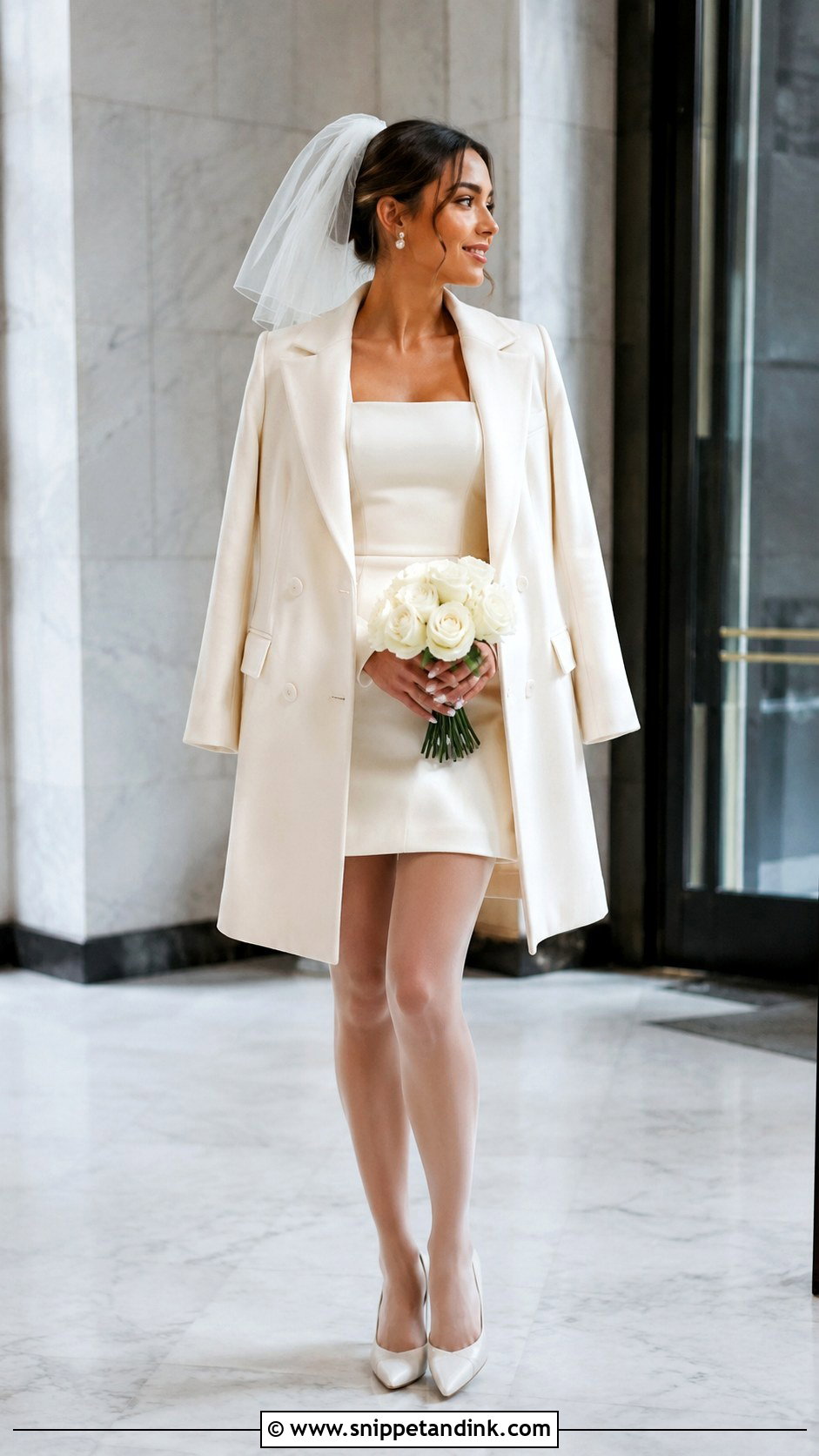
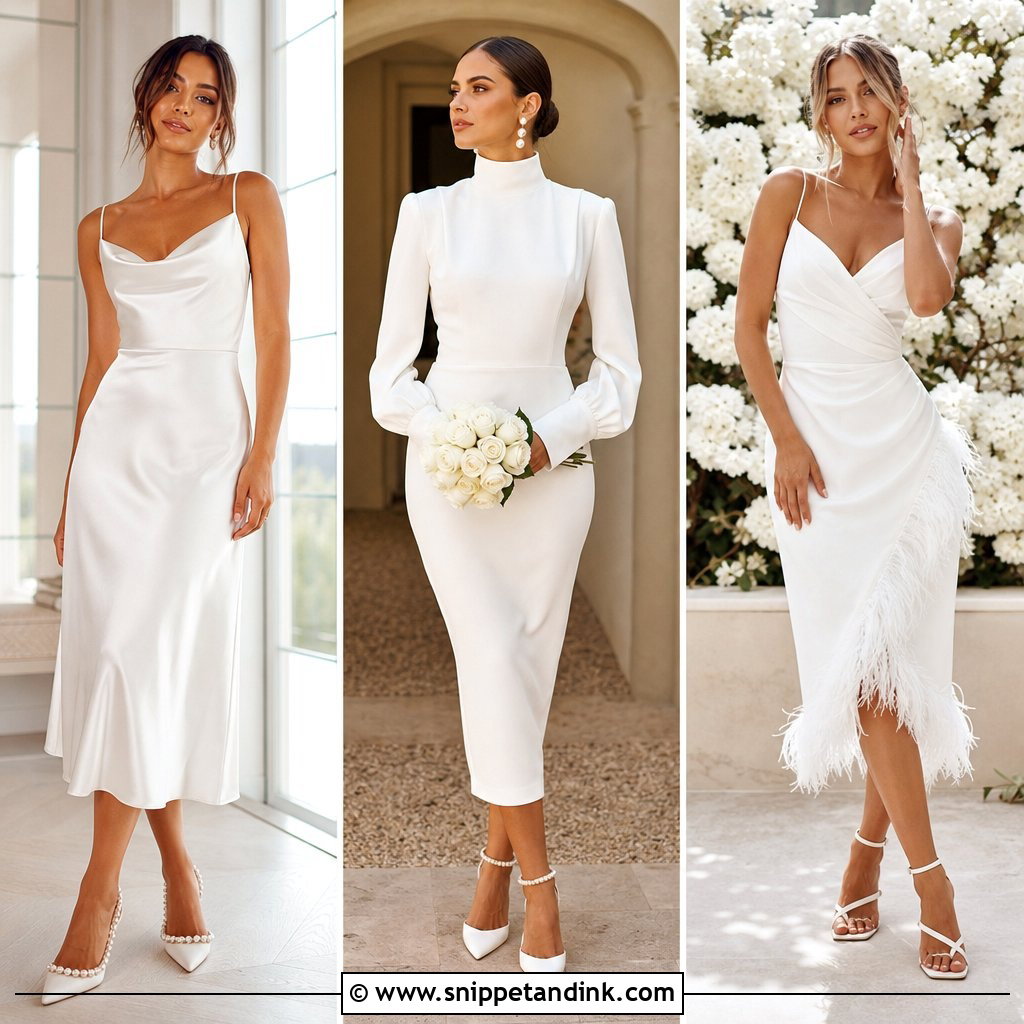
Short can work in winter when it’s styled as a complete cold-weather outfit. A structured mini or tea-length dress in satin, crepe, lace or mikado sets the base; a tailored ivory coat, sheer tights, closed-toe heels and pearl or crystal earrings build it out. A short veil or bow headpiece keeps it bridal. It suits courthouse weddings, small ceremonies and reception changes. Because the dress is short, the coat carries the polish. Sheer ivory tights also photograph far better than bare legs, which turn blotchy in a cold wind.
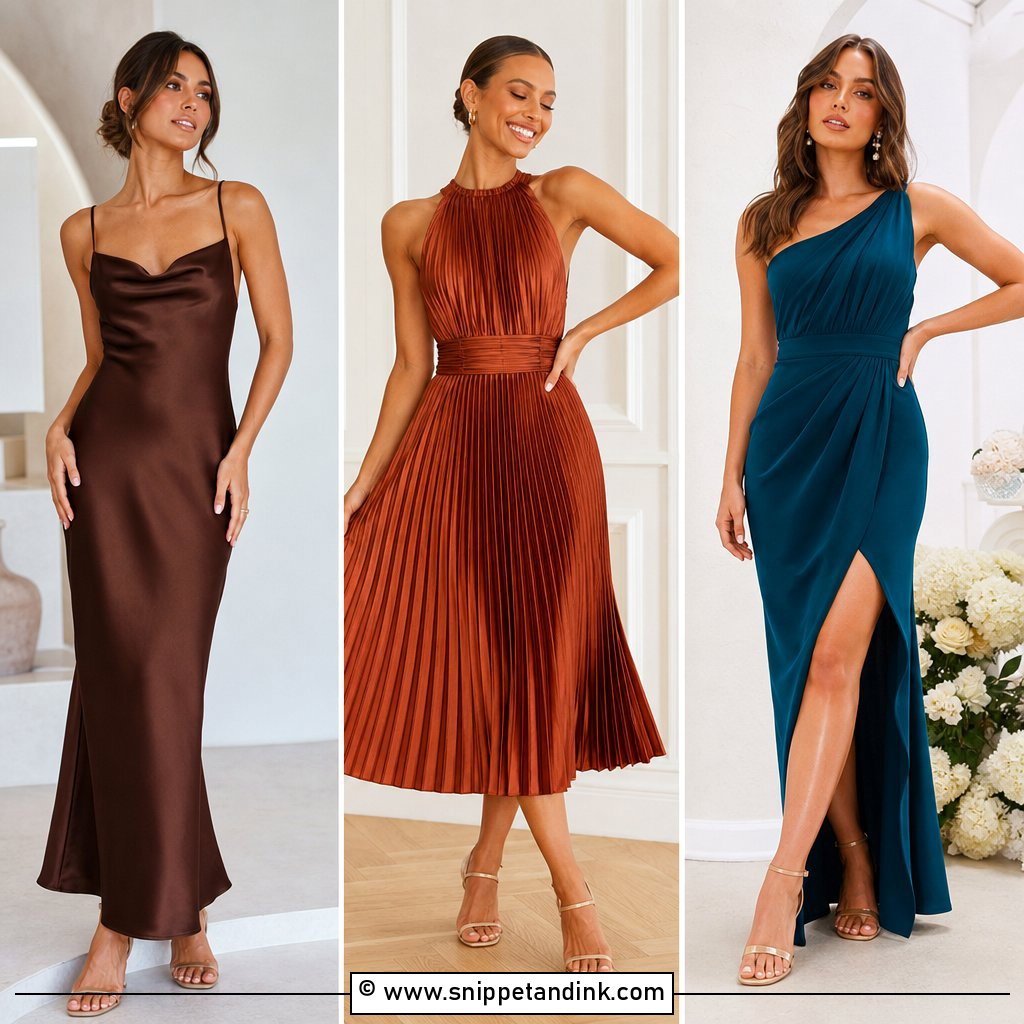

20. Winter Bridal Dress With Sheer Sleeves
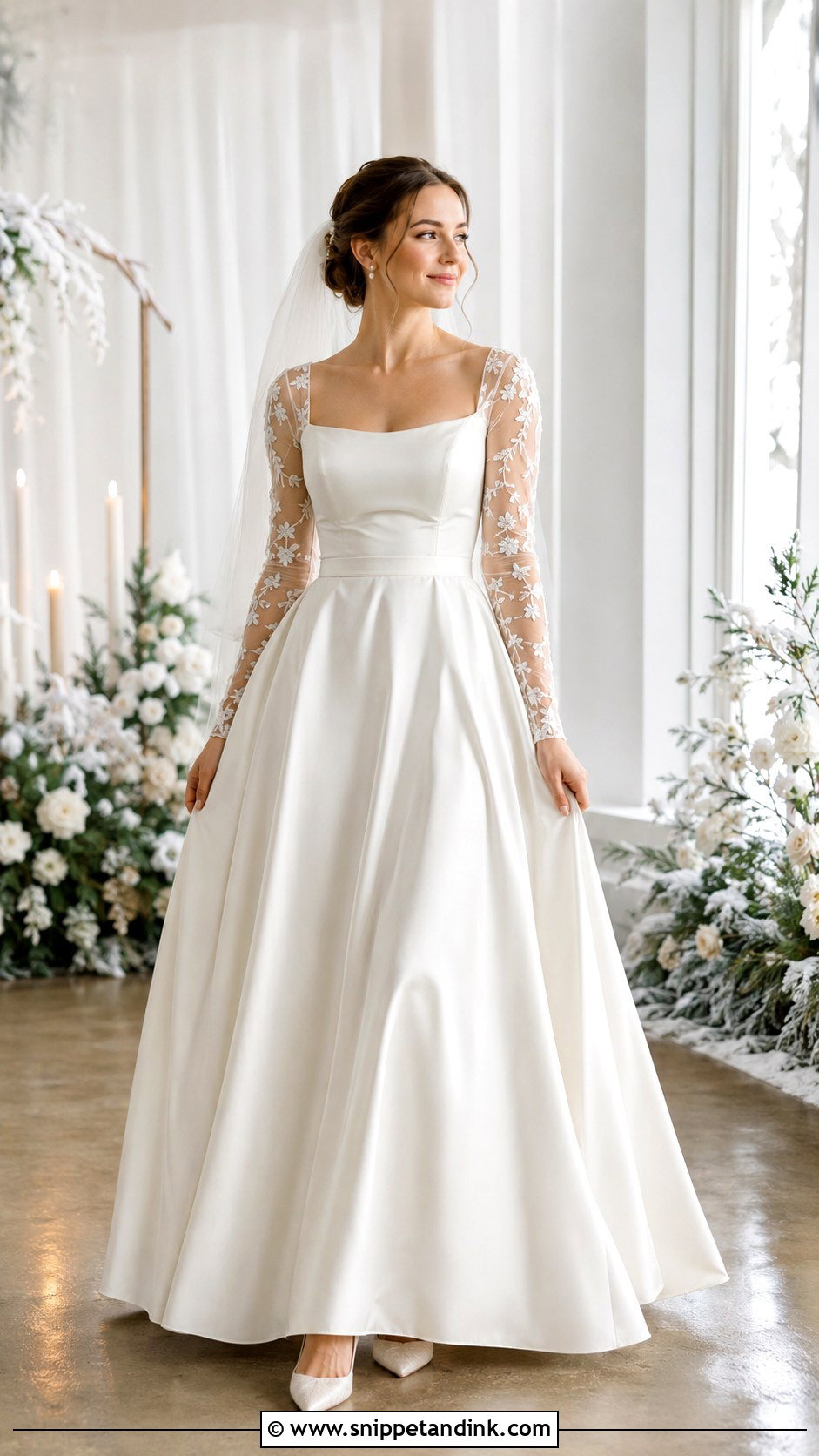
Sheer sleeves give coverage without weight, though not much warmth. Tulle, lace, organza and embroidered illusion mesh each bring their own texture. A satin bodice with sheer sleeves feels modern; lace on lace feels romantic. Fit is the real issue, because tight illusion fabric restricts the shoulders and wrists, so I have brides reach forward and overhead at the fitting. A simple veil, small earrings and classic pumps finish it, with a cape or wrap for colder photos.
21. Mikado Winter Bridal Dress
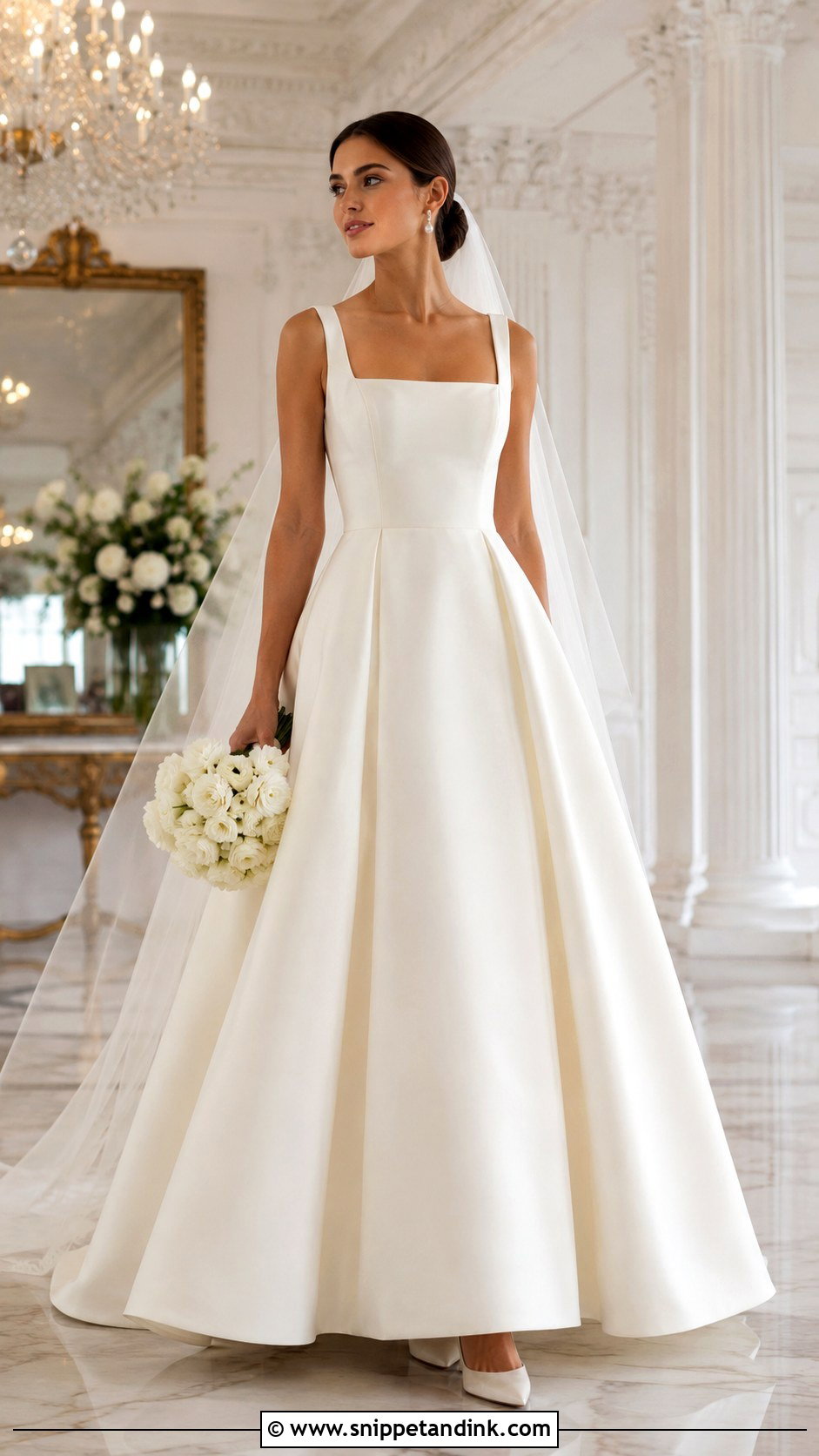
Mikado is crisp, heavy and holds its shape without help, so it suits ball gowns, A-lines and architectural bodices. It needs few embellishments because the fabric already reads formal. A square or folded neckline, long sleeves or a clean strapless bodice all sit well in it. Pearl earrings, a smooth veil, ivory pumps and a neat updo keep it refined, and a structured cape or tailored coat matches its polish if you want a layer. Mikado creases where you sit, mostly across the lap, and those lines show in portraits, so I’d have a steamer at the venue.
22. Winter Bridal Dress With Bow
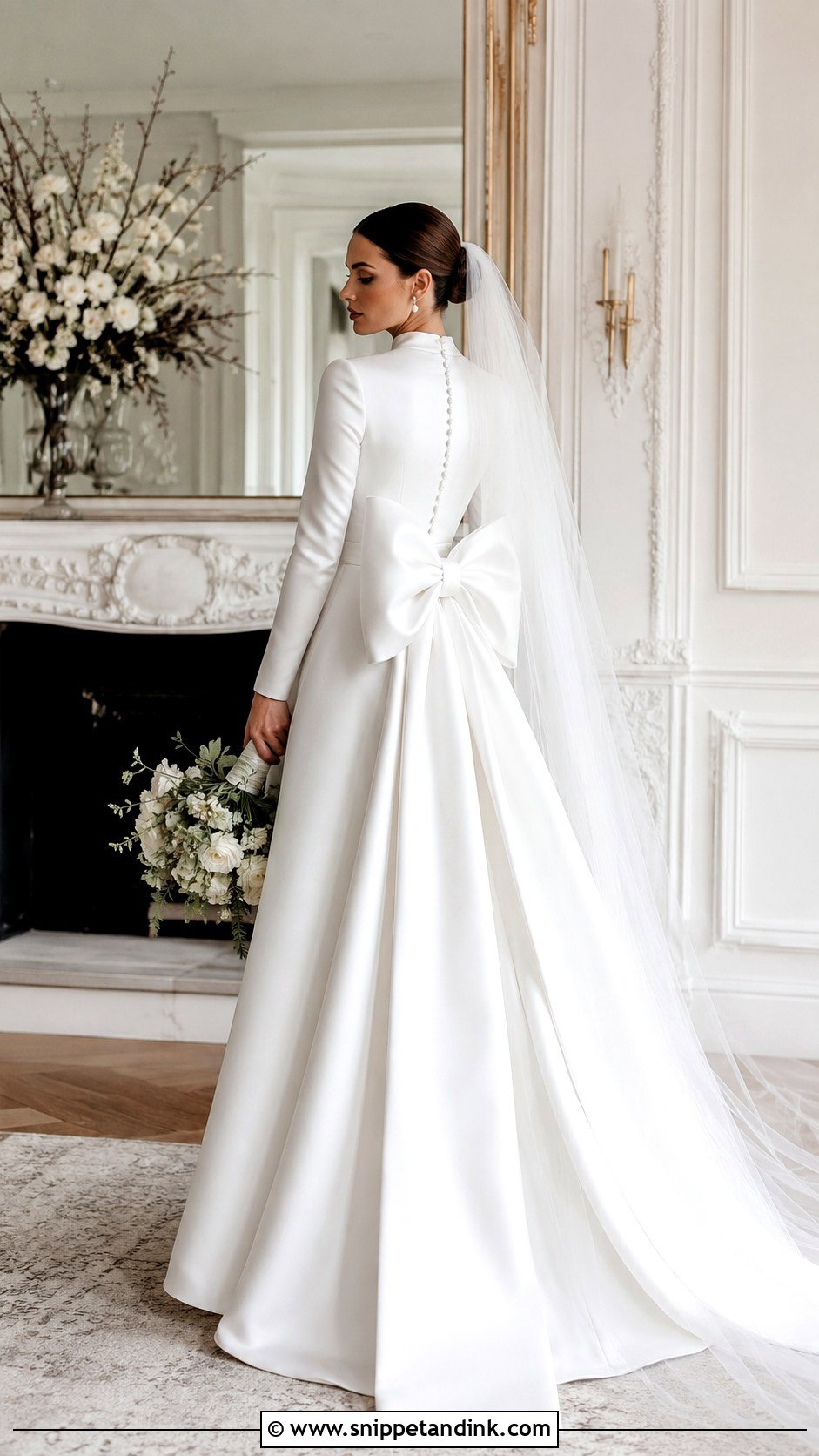
Placement decides what a bow says. A large back bow on a simple satin gown is the most dramatic, a small neckline bow feels vintage and a shoulder bow adds interest without any sparkle. Keep the rest of the outfit quiet, with simple earrings, classic heels, a smooth veil and a soft bouquet. Oversized bows and bulky wraps don’t get along, because the wrap crushes the bow. A short jacket that ends above it, or a cape cut to clear it, is the better layer.
23. Winter Bridal Dress With Long Train
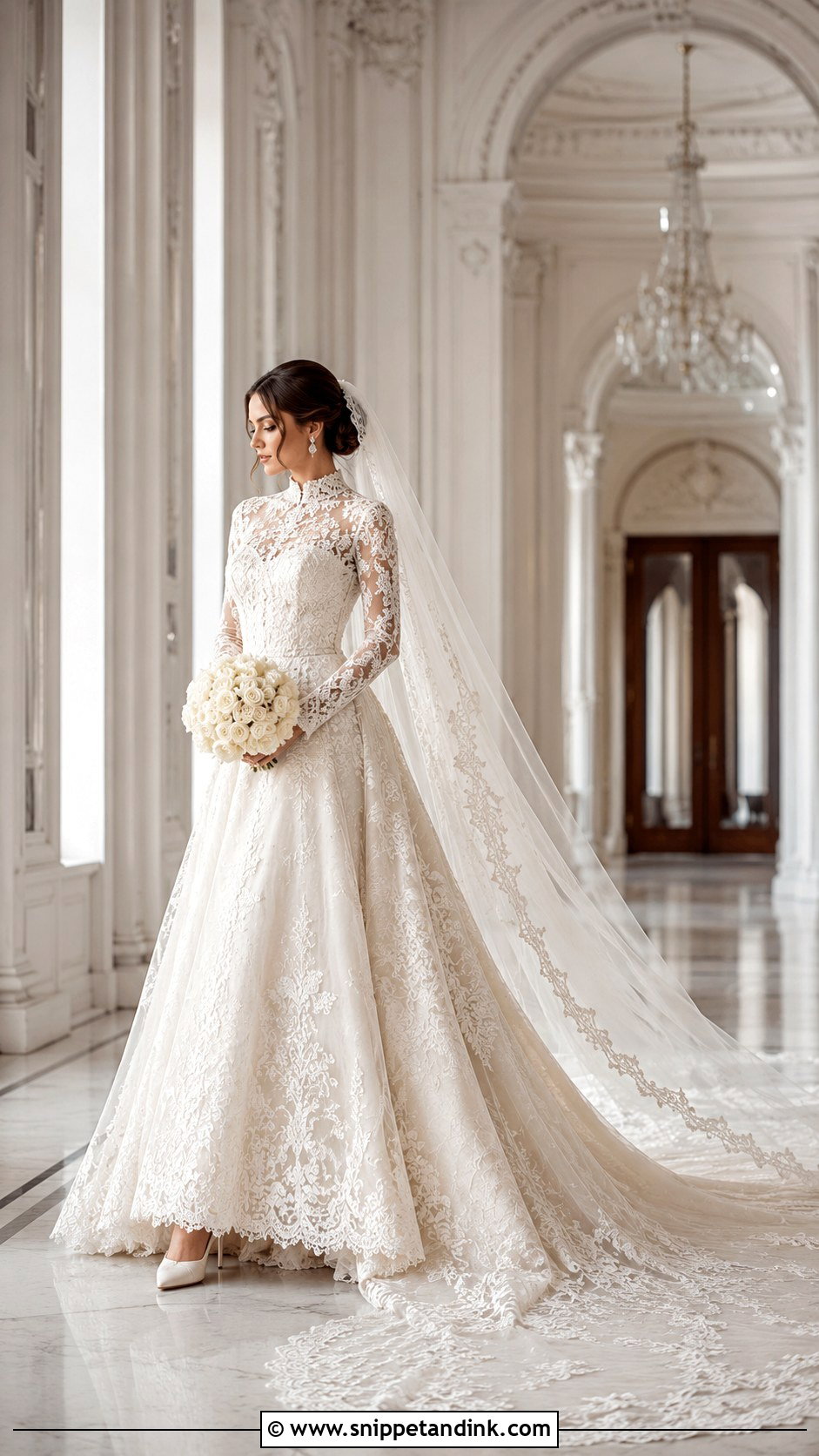
A long train is at its best indoors in winter, against a long aisle and a rich interior. Outdoors is another matter. Snow and slush soak a train, and salted pavements stain it, so for any walk outside I’d bustle it or have someone carry it. A cathedral train suits formal venues; a chapel train is easier to manage. Satin, mikado, lace and crepe all work. A long veil, closed-toe heels, simple jewelry and a warm wrap for portraits finish it, and the bustle comes back out for the reception.
24. Winter Bridal Dress With Feather Trim
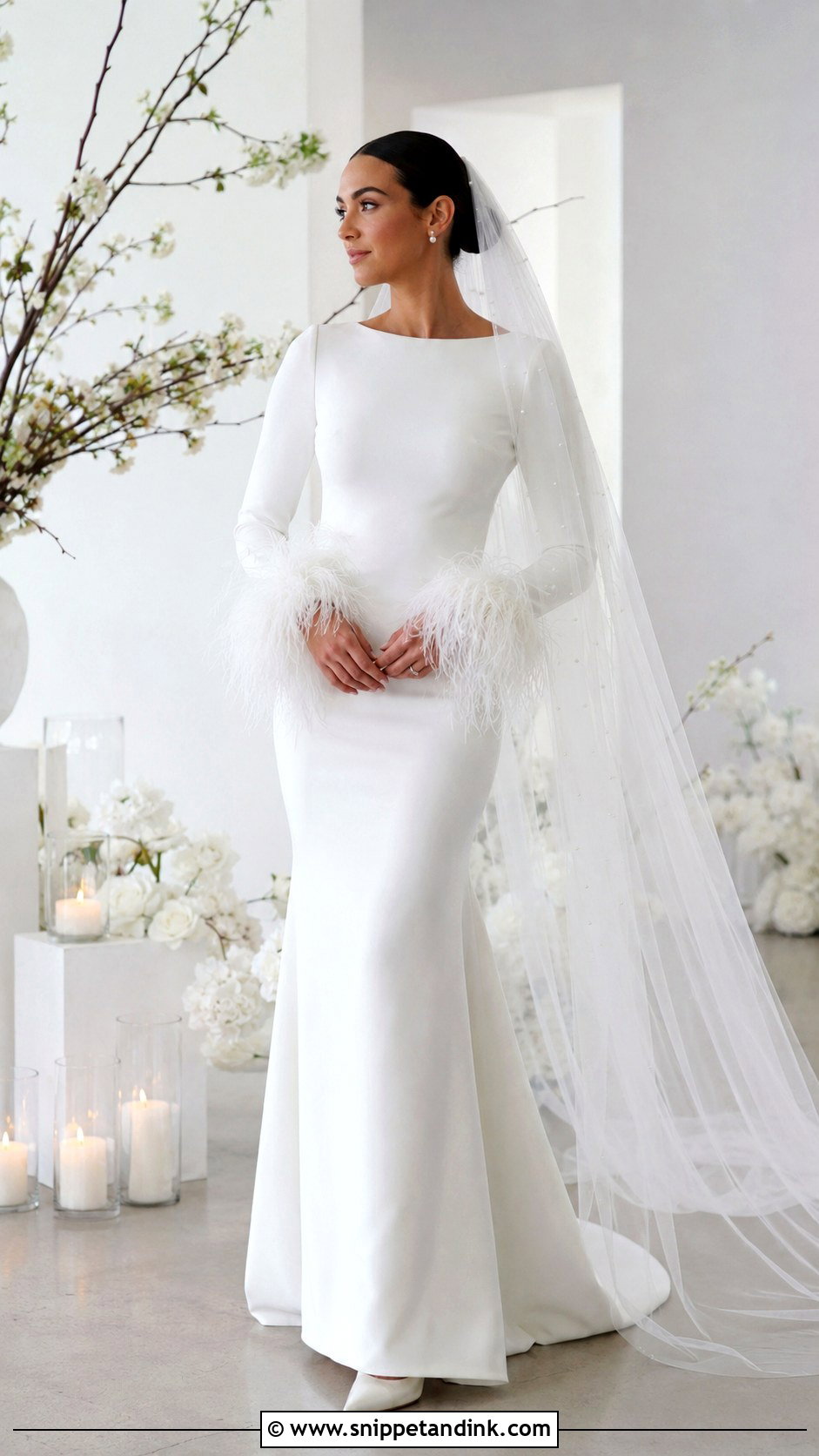
Feathers suit winter in a way they never quite do in July, because they read as warmth. Use them at the cuffs, the hem or the neckline, or on a short reception dress. A crepe gown with feather cuffs feels modern, while a satin mini with feather trim feels playful. Keep accessories minimal, pearl studs and smooth heels, with a clean veil or none. Choose a coat that won’t rub against the trim. Feathers also wilt in wet snow, so they’re better kept for the indoor part of the day.
25. Champagne Winter Bridal Dress
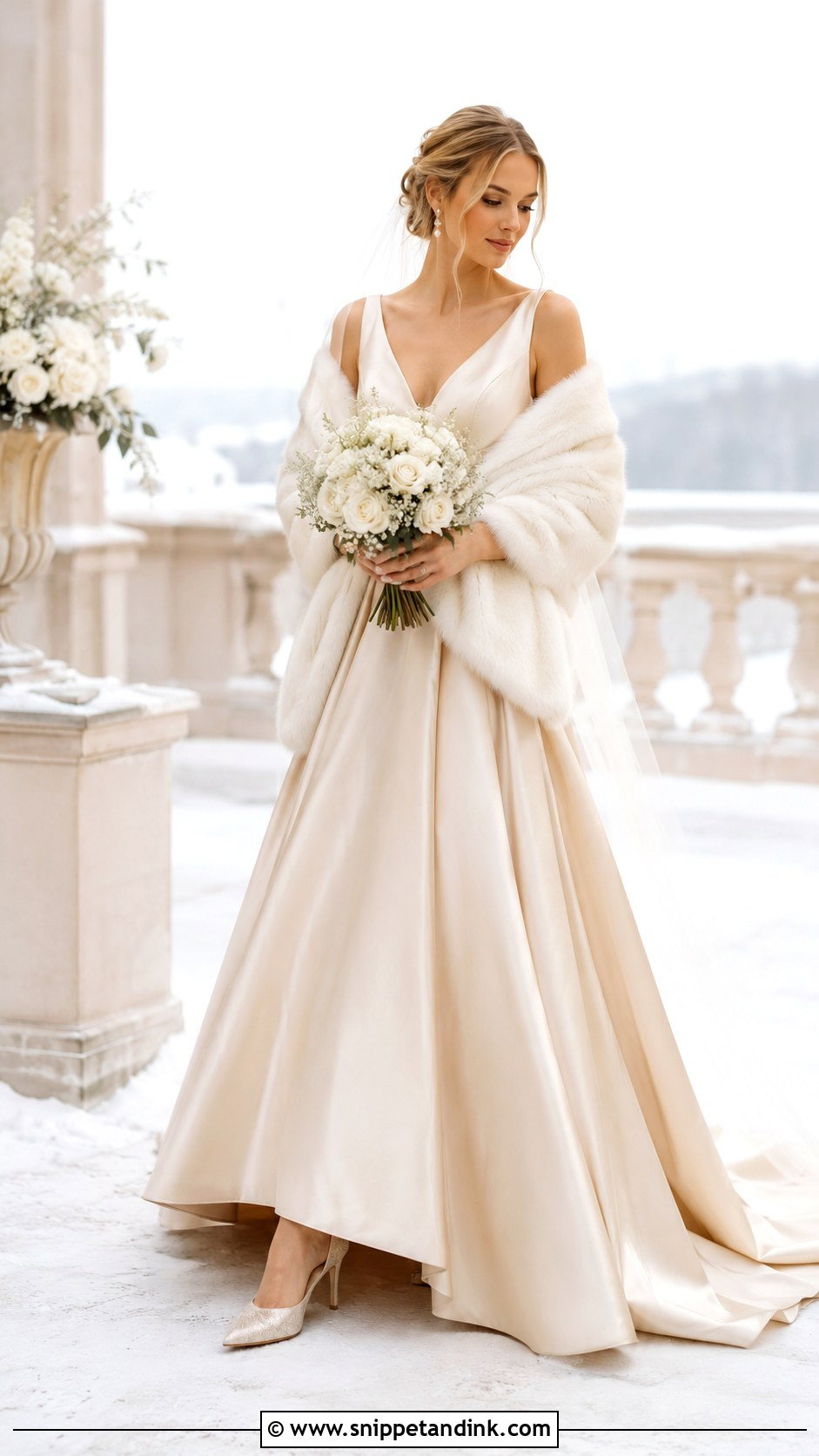
Champagne is the shade I suggest when bright white washes a bride out under grey winter light. The warm tone reads rich indoors and soft outdoors, and it suits a wide range of skin tones. Satin gives it glow, tulle gives softness and beaded lace adds dimension. Pearl accessories, ivory heels and soft metallic details go with it naturally, and an ivory faux fur wrap or cream wool coat adds a layer. Keep makeup fresh so the colour stays the focus. Look at the fabric in daylight before ordering; some champagnes turn pink or grey depending on the light.
Snow, Salt and Static on the Day
Winter weather does specific things to bridal fabric, and most of them have simple fixes if you expect them.
Wet Hems
Snow melts into a hem, and salted pavements leave a pale tide line as they dry. Bustle or carry the hem for outdoor walks. If it does get wet, blot with a clean white towel rather than rubbing, and leave salt marks for the cleaner after the wedding, since scrubbing them on the day only spreads them.
Static Cling
Dry heated air makes tulle and chiffon cling to tights and to each other. A light anti-static spray on the underside of the skirt helps, tested on an inside seam first. Touching something metal before you step into the dress also discharges the build-up.
Ordering Around the Holiday Rush
A designer gown usually takes several months to arrive, and alterations need their own block of time after that. Winter weddings add one more squeeze: the weeks before the holidays are when seamstresses are busiest with party wear. I’d aim to have the gown in hand by early autumn with fittings booked before that rush, and to buy the coat, cape or wrap at the same time as the dress so the whites can be matched side by side.
Warm Enough to Enjoy the Photos Outside
Winter lets you lean into texture, sleeves, coats and structured fabrics, and it makes practical choices like closed-toe heels and real layers look intentional. The dress has two jobs: look right in the ballroom and survive the minutes outside. Before you decide, write down your venue, your outdoor photo spots, the likely temperature and how long you’ll be out in it. Then pick the gown that moves well, fits properly and still feels like you when it’s buttoned under a coat.
You'll Like These Ideas:


Leave a Reply