
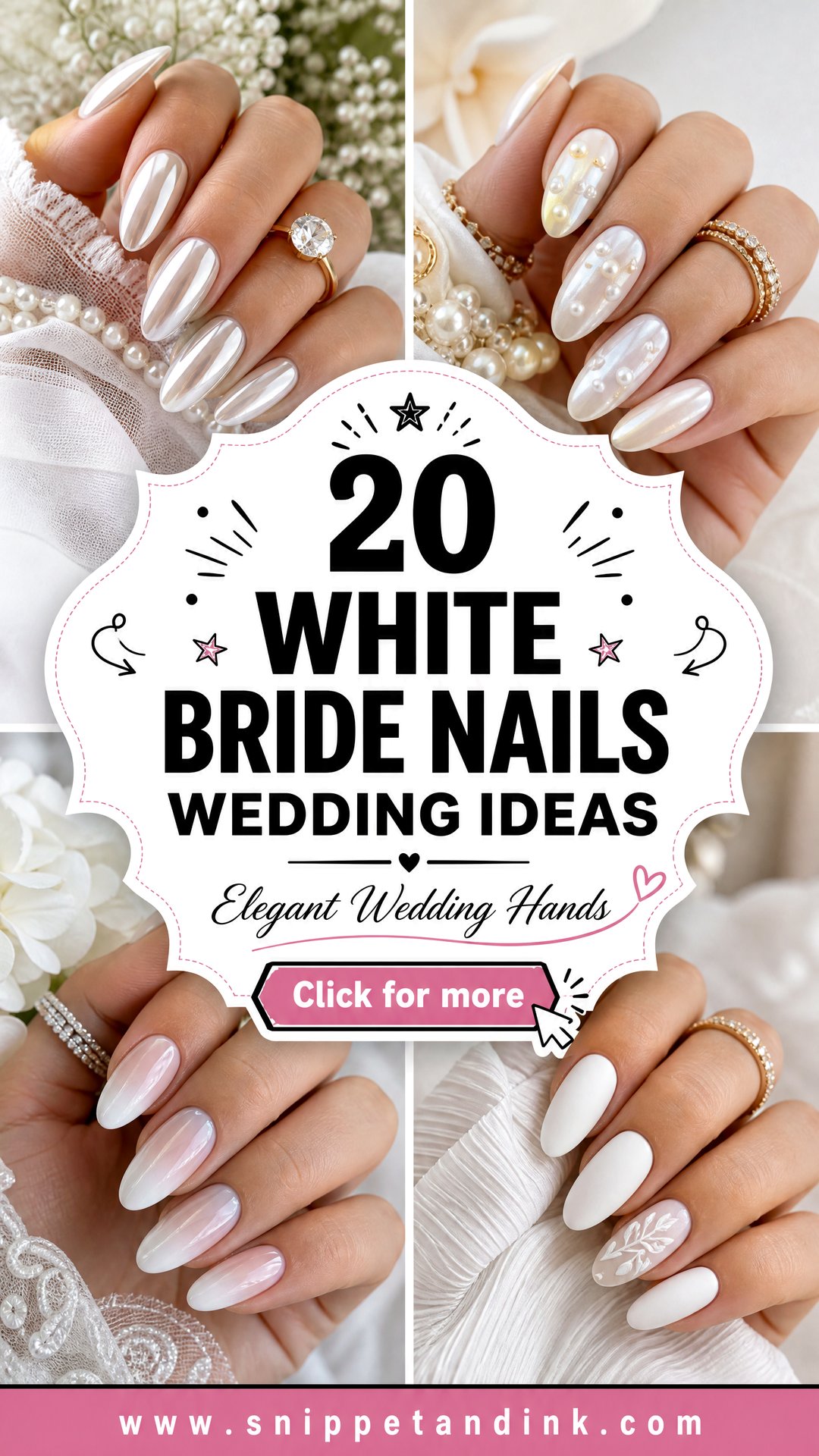
Your hands will be in more close-ups at a wedding than at almost any other event of your life: the ring exchange, the bouquet, a hand on a shoulder in the portraits. That’s why I spend as much time on nail prep as on the design itself. White in its many versions, sheer, creamy, pearly, glazed or detailed with fine art, works on short natural nails as well as on long sculpted ones. The sets I’m asked for most combine a classic idea with a fresher finish: milky polish, micro French tips, pearl accents, glazed chrome, lace art and soft ombré. Here are twenty, along with what each needs from your nails and from me.
Natural Nails, Gel Overlay or Extensions for the Wedding?
Before we talk designs, I want to know what your nails are like today. The route you take depends on how much length you have, how strong the nail is and how much time is left.
- Natural nails with regular polish or gel suit brides with healthy nails and a short to medium length. Least damage, least maintenance.
- A structured gel or builder overlay adds strength to thin or bendy nails so a medium length survives the week. It needs a soak-off or file-off removal later.
- Extensions, sculpted or tips, give you length and shape that your own nails can’t. They feel strange for a few days, so wear them before the wedding, not on the morning.
- Press-ons have improved a lot and suit a bride who wants length for one day only, but bring spares and practice applying them.
A rough timeline that works
Start cuticle oil twice a day as soon as you’re engaged to the idea. Stop picking and peeling now; a peeled layer takes months to grow out. Book a trial four to six weeks out, wear that set for a full week and notice what snags or chips. Then book the final appointment a day or two before the wedding, early enough to fix anything and late enough that there’s no visible regrowth at the cuticle.
1. White French Tip Bride Nails
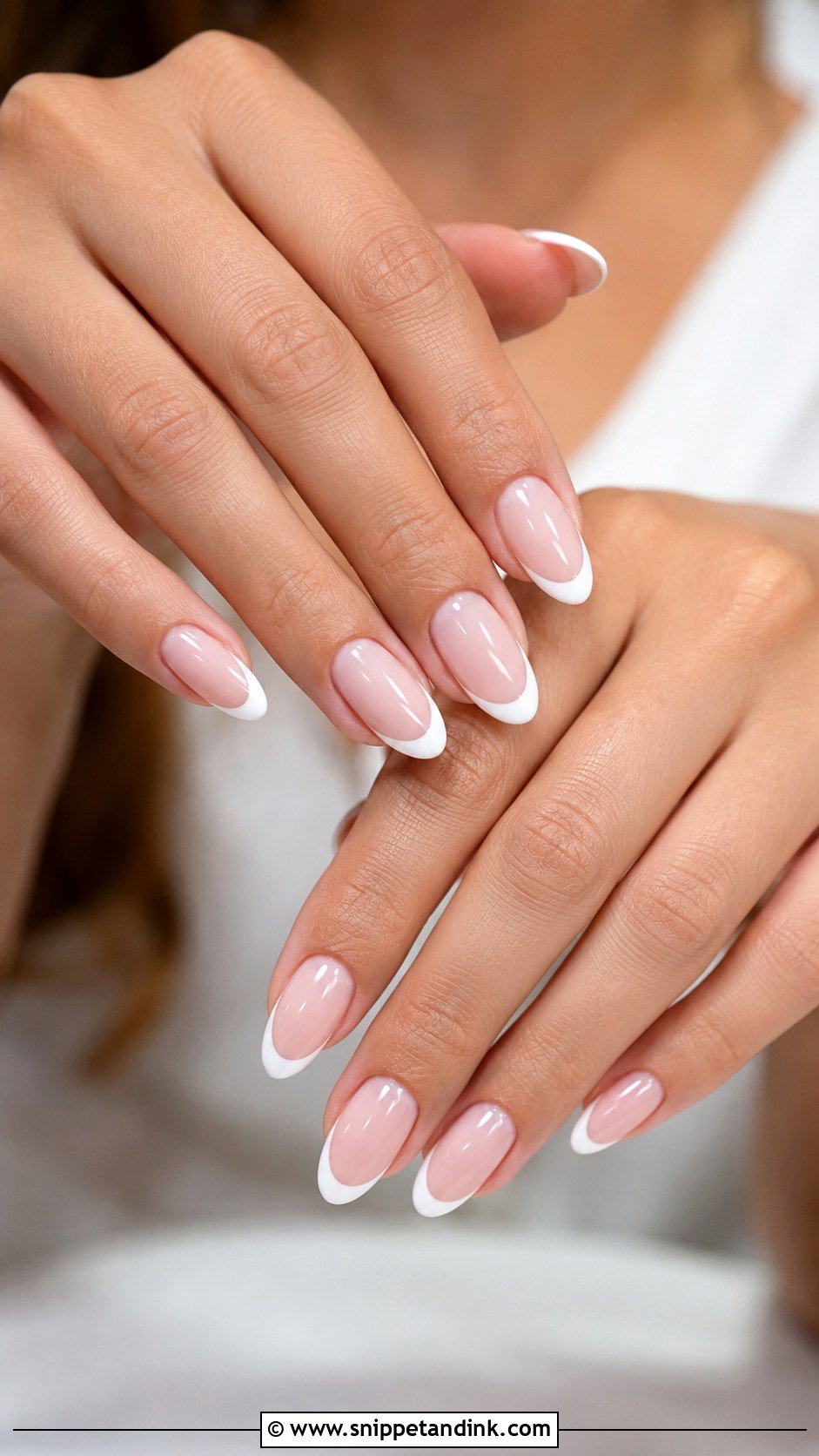
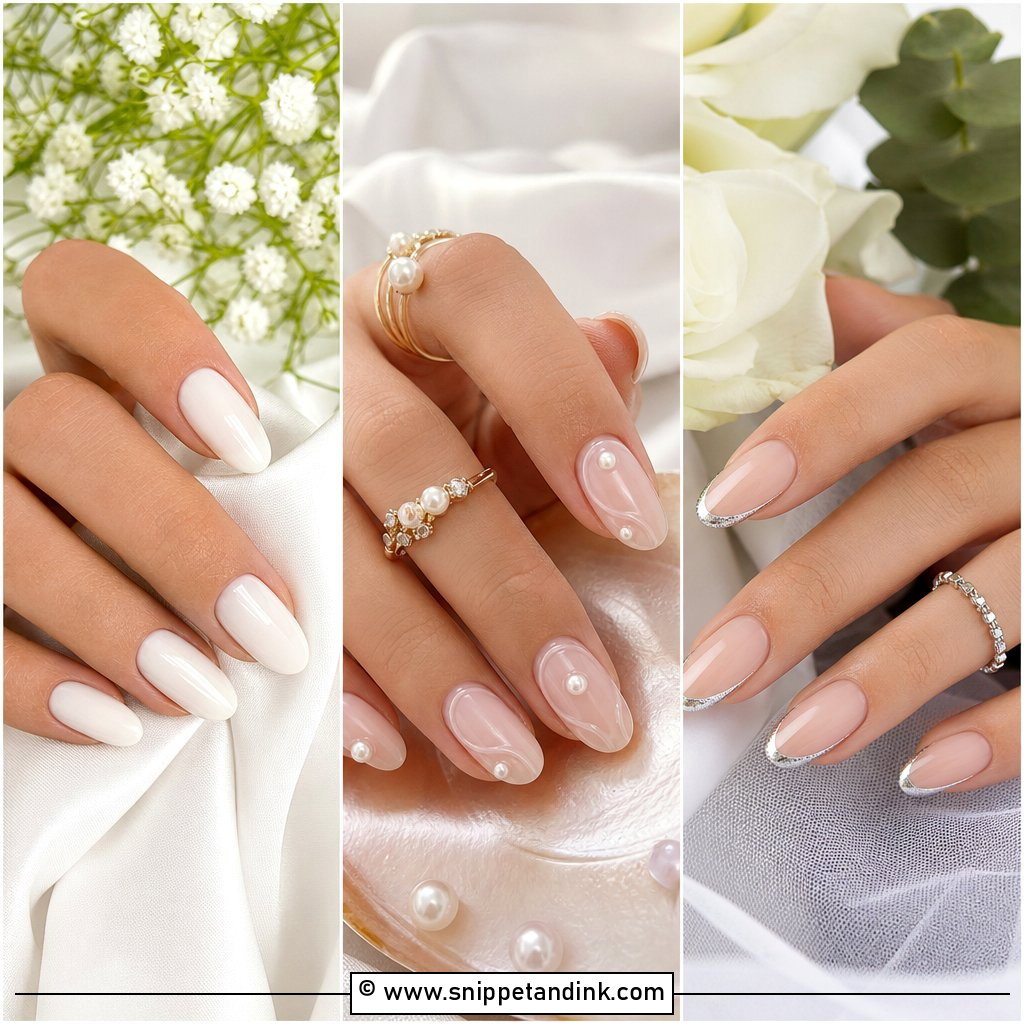
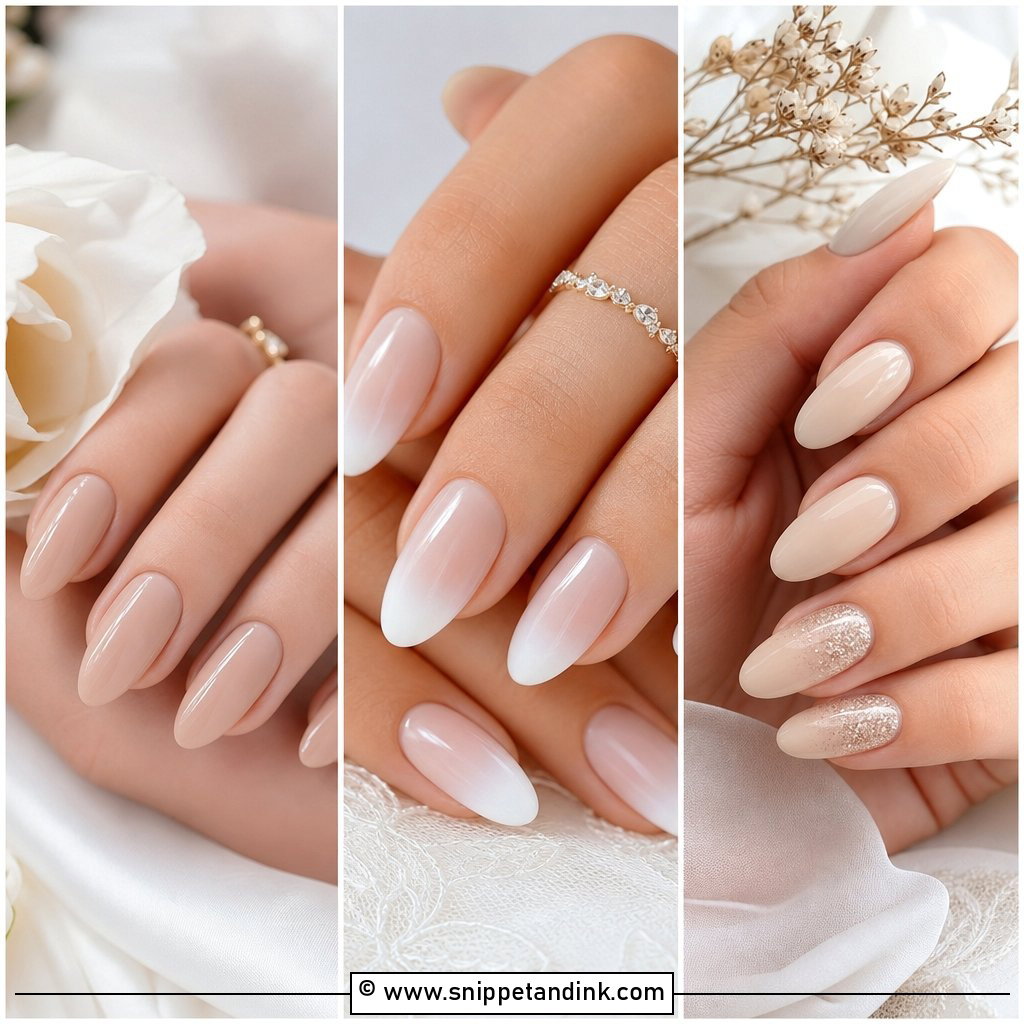
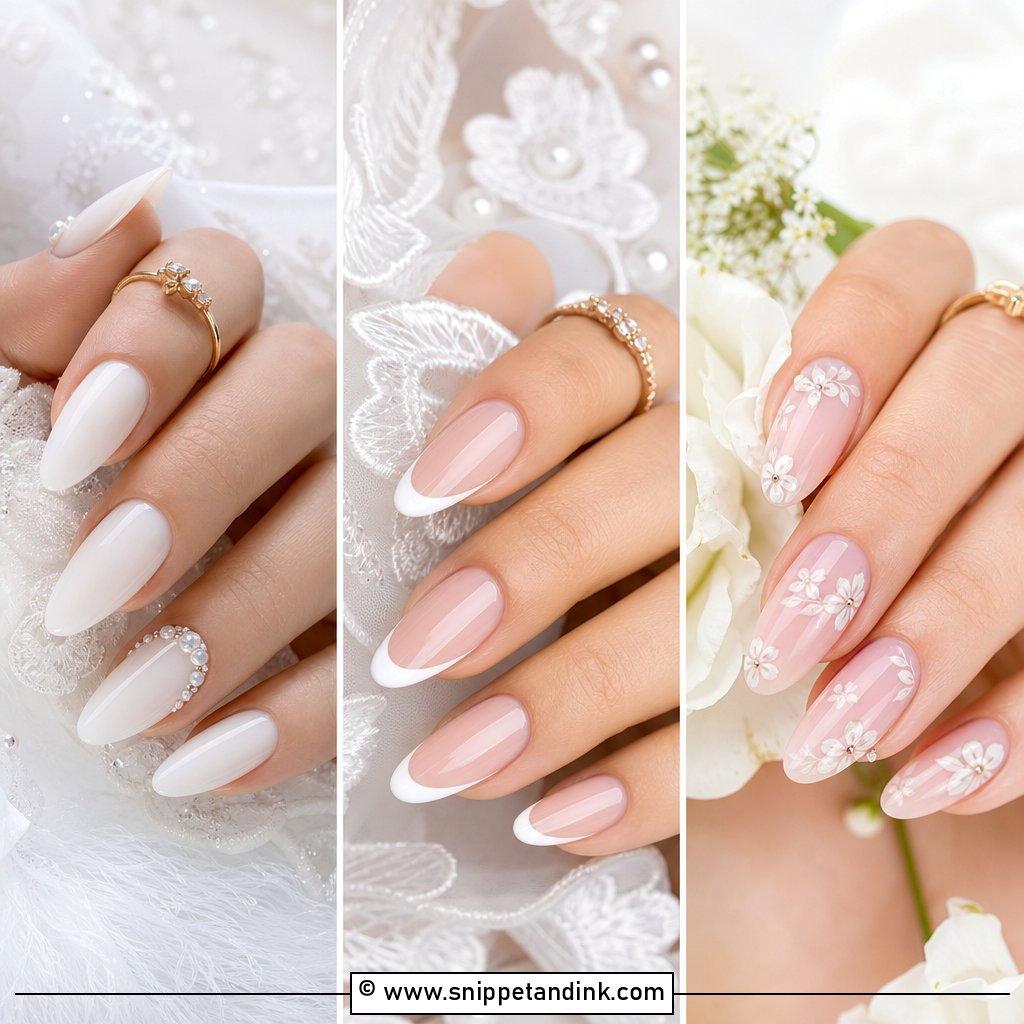
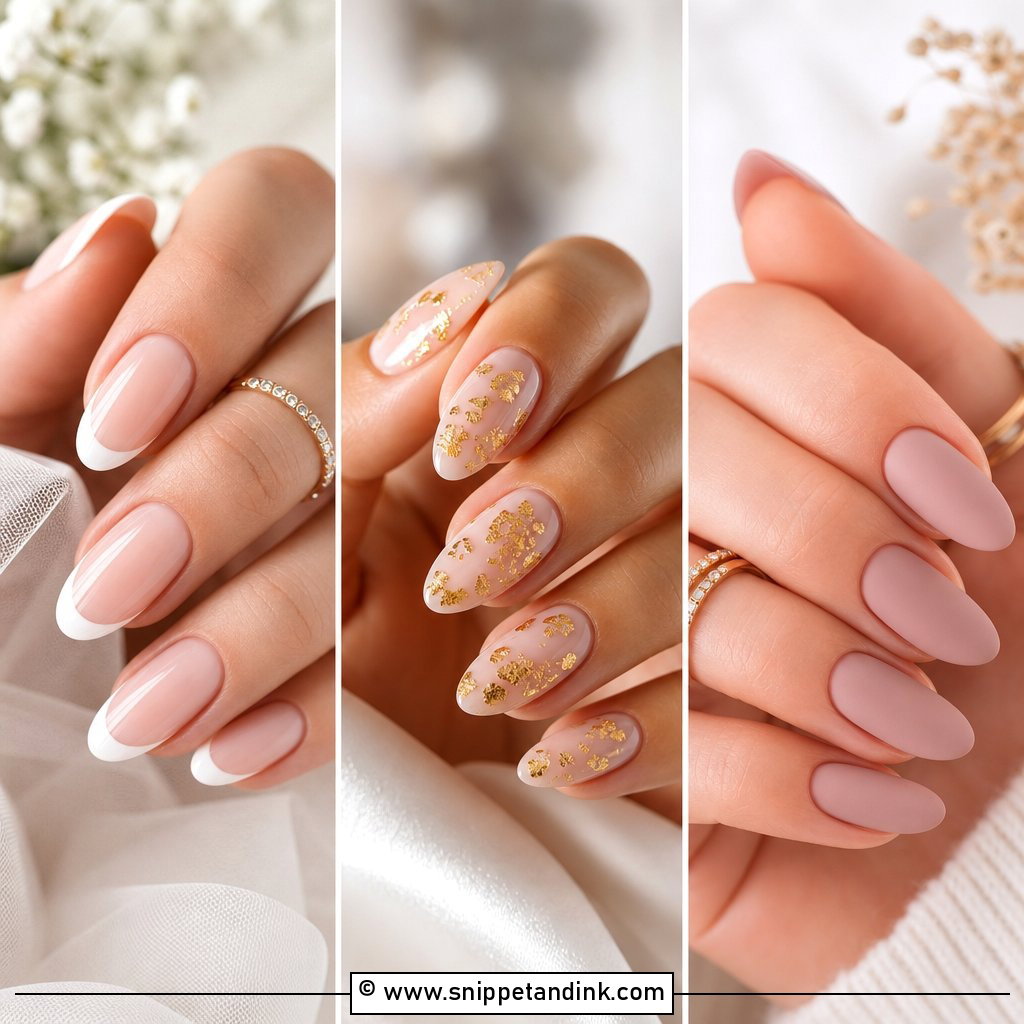
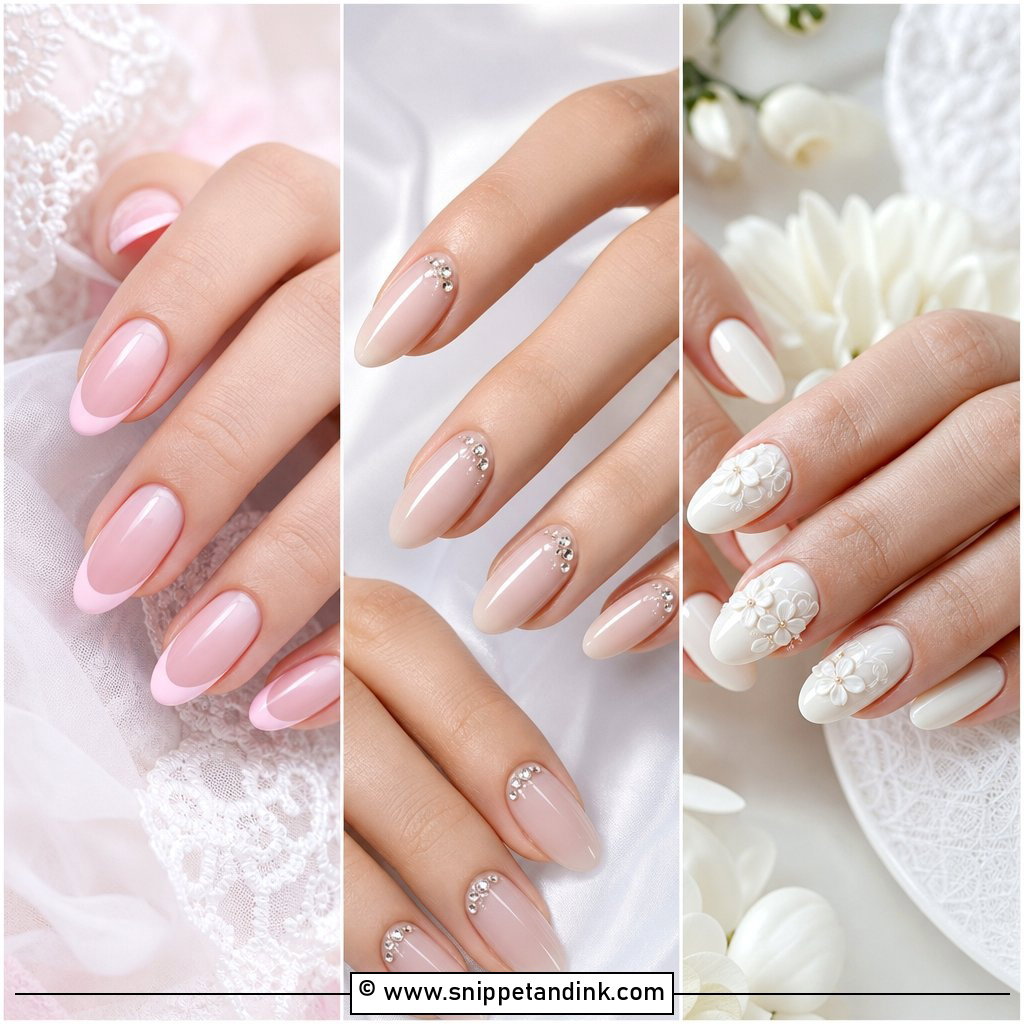
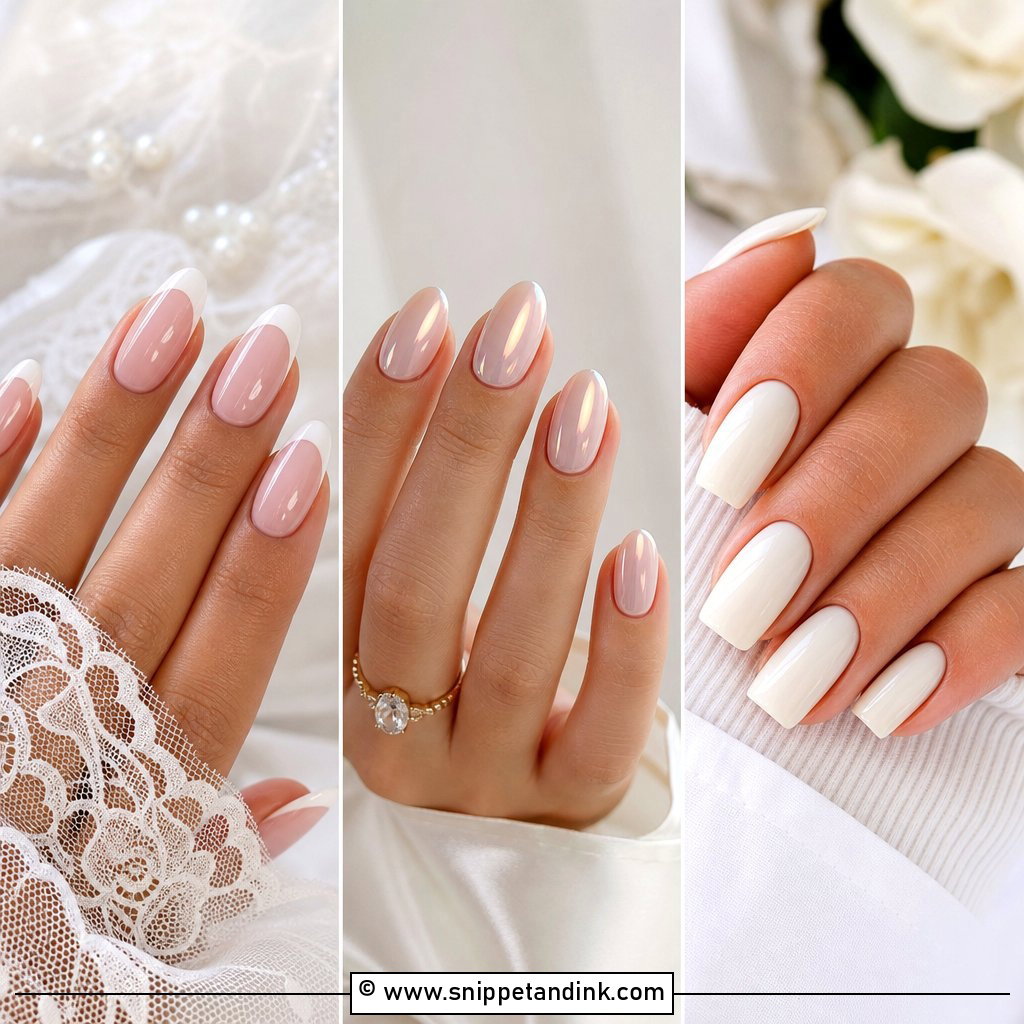
Of every white design, the French tip is the one I’d call hardest to get wrong and easiest to get almost right. A sheer pink or nude base with a crisp white edge flatters nearly any dress and any shape, almond, oval, square or squoval. The difference between good and great is the tip width: on a bride, I keep it thinner than a standard French and match the curve on all ten fingers, since uneven smile lines are obvious once the hands are side by side in a ring shot. Plain satin, lace or pearl-trimmed gowns sit happily alongside it.
2. Milky White Bride Nails
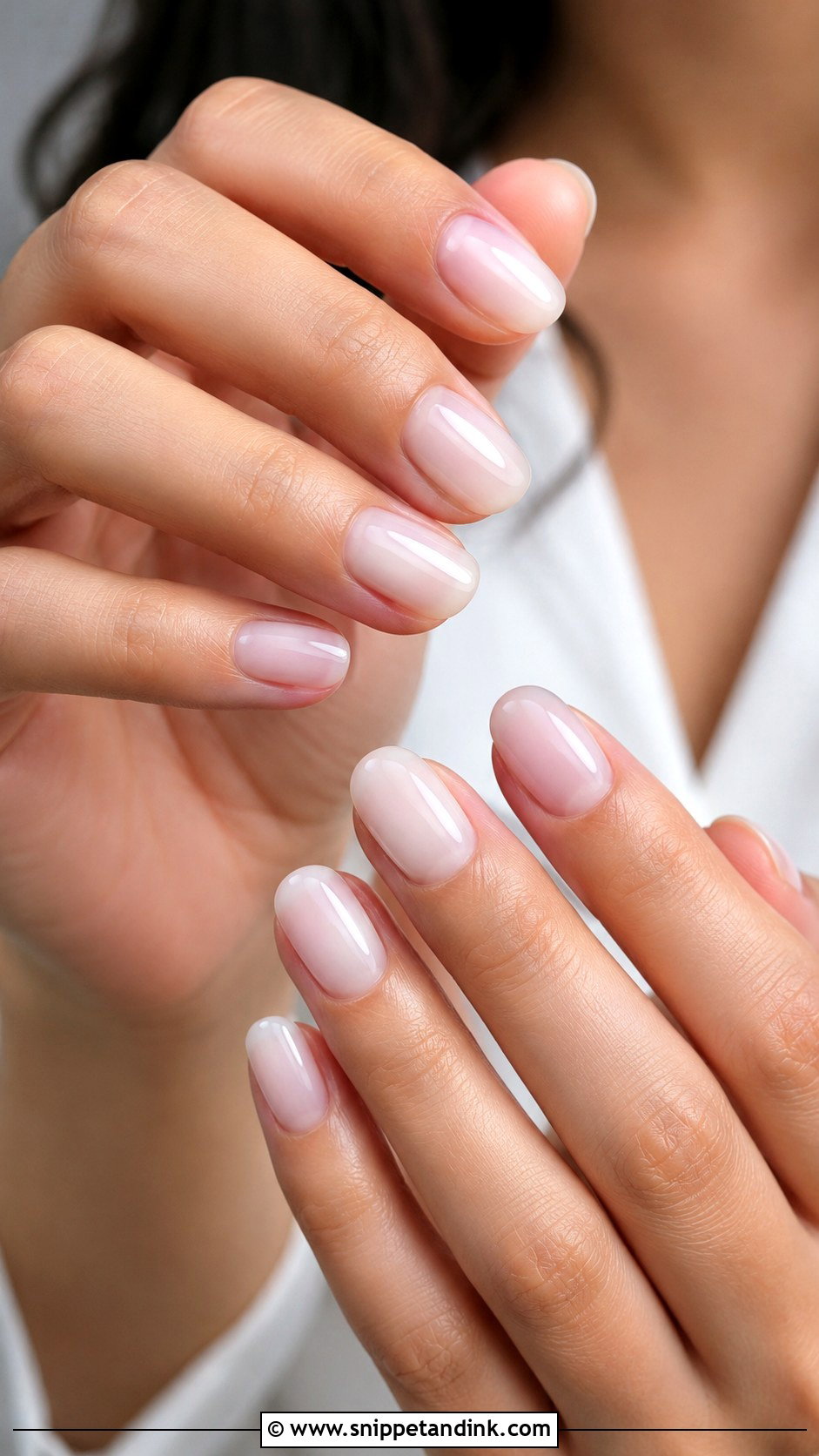
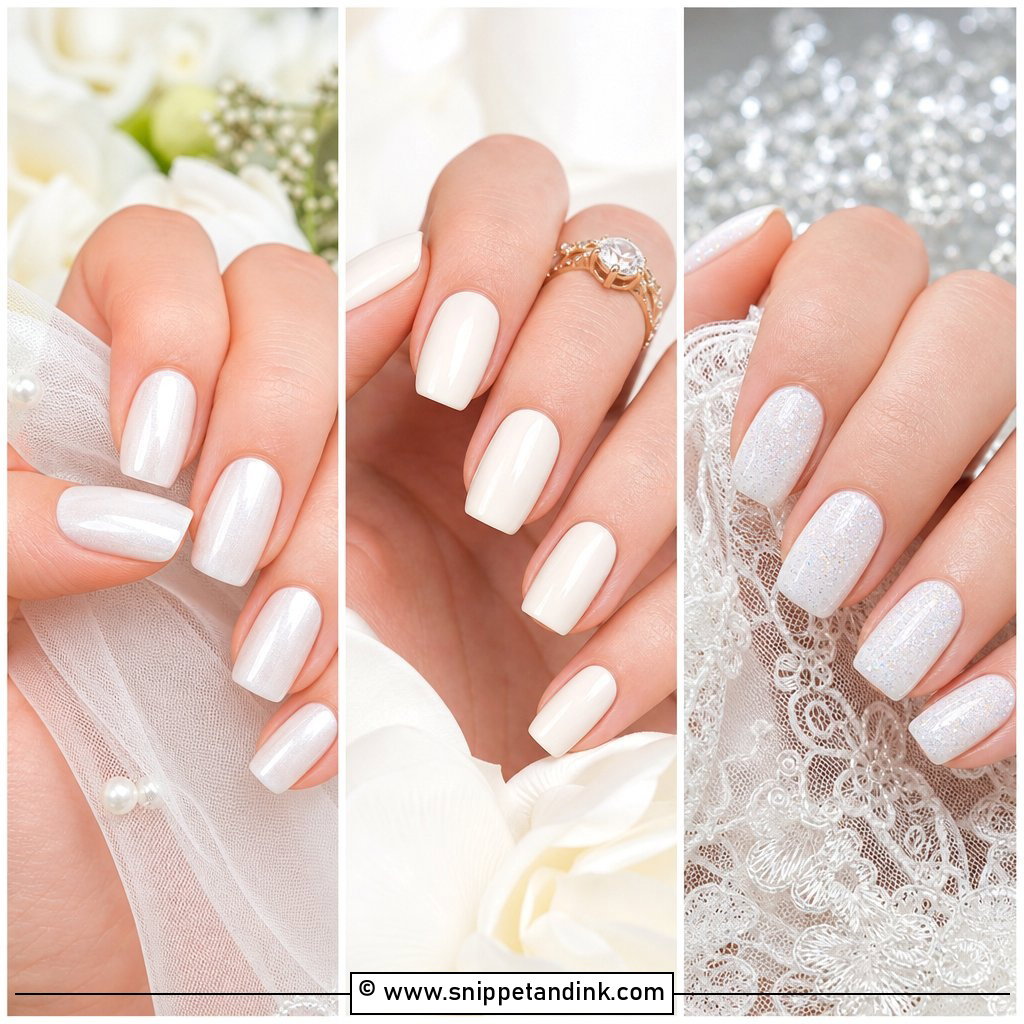
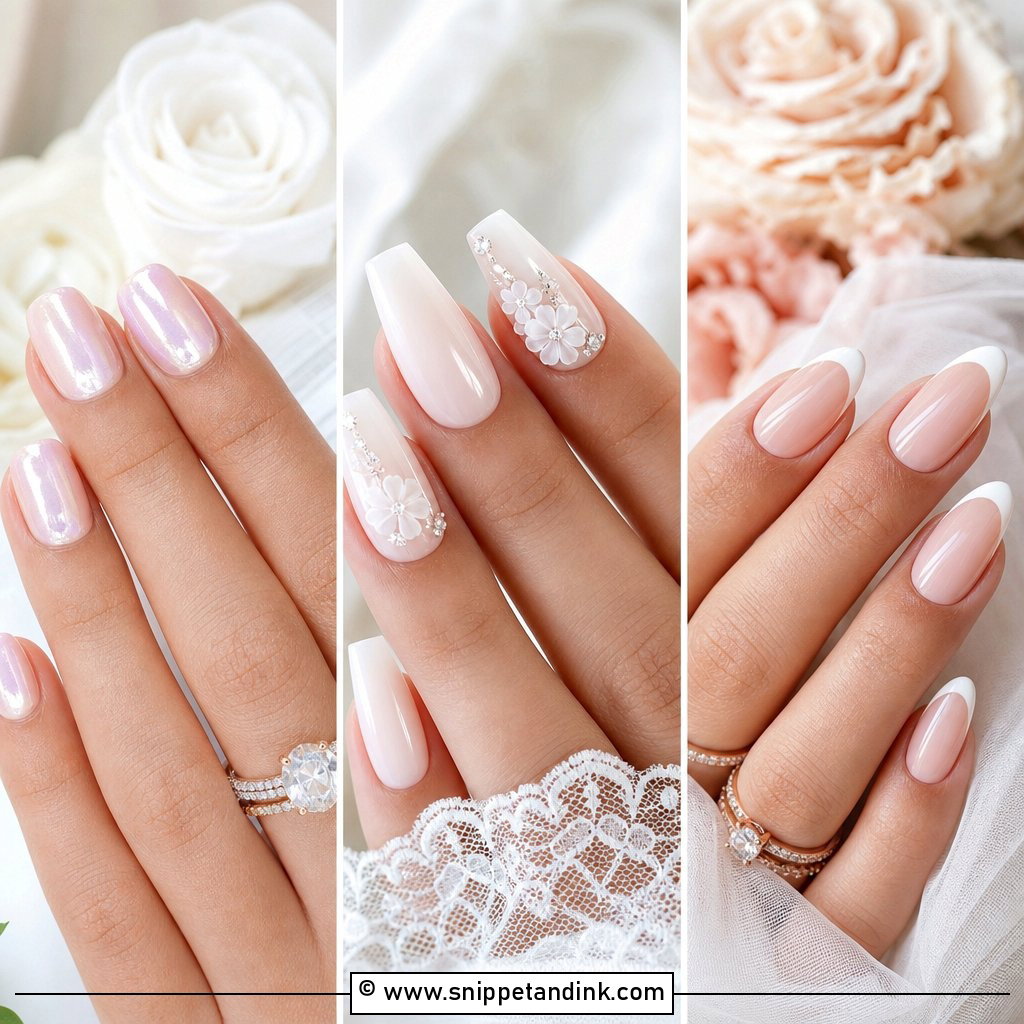
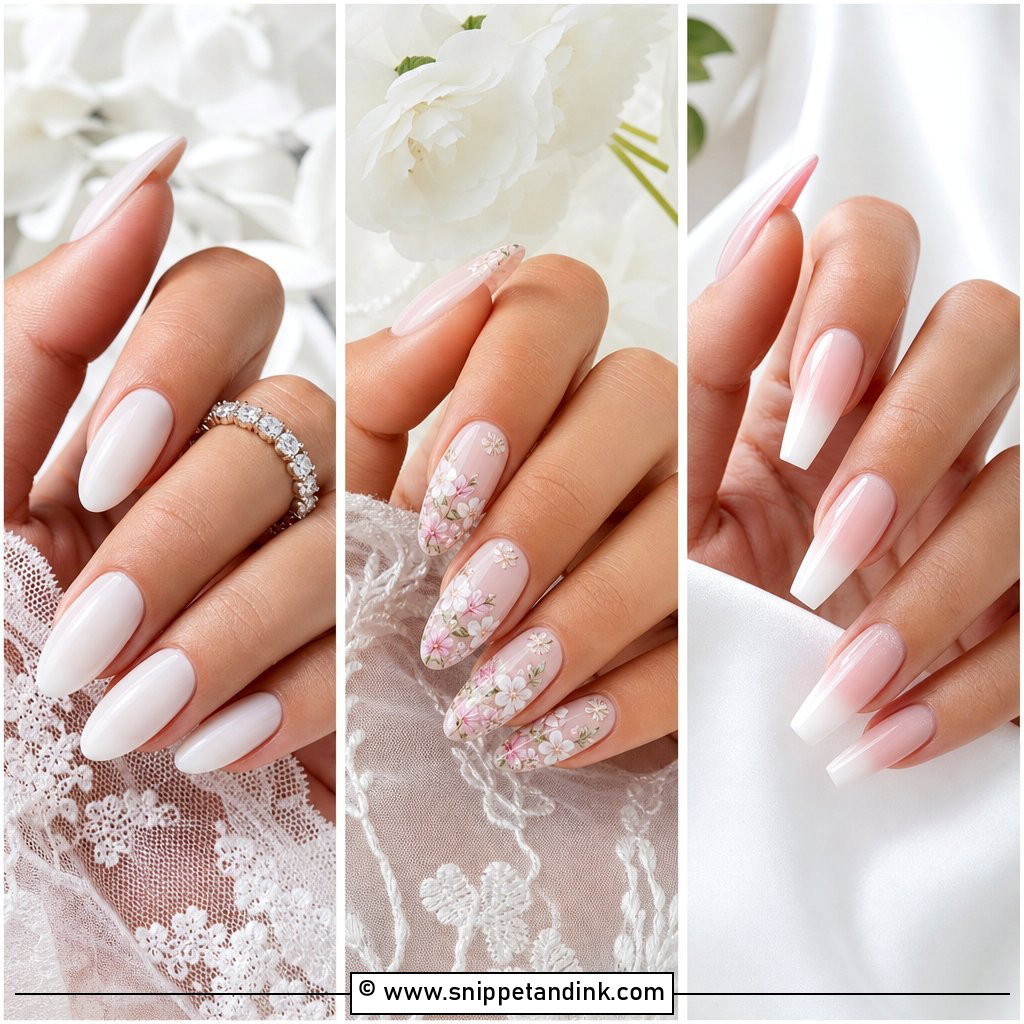
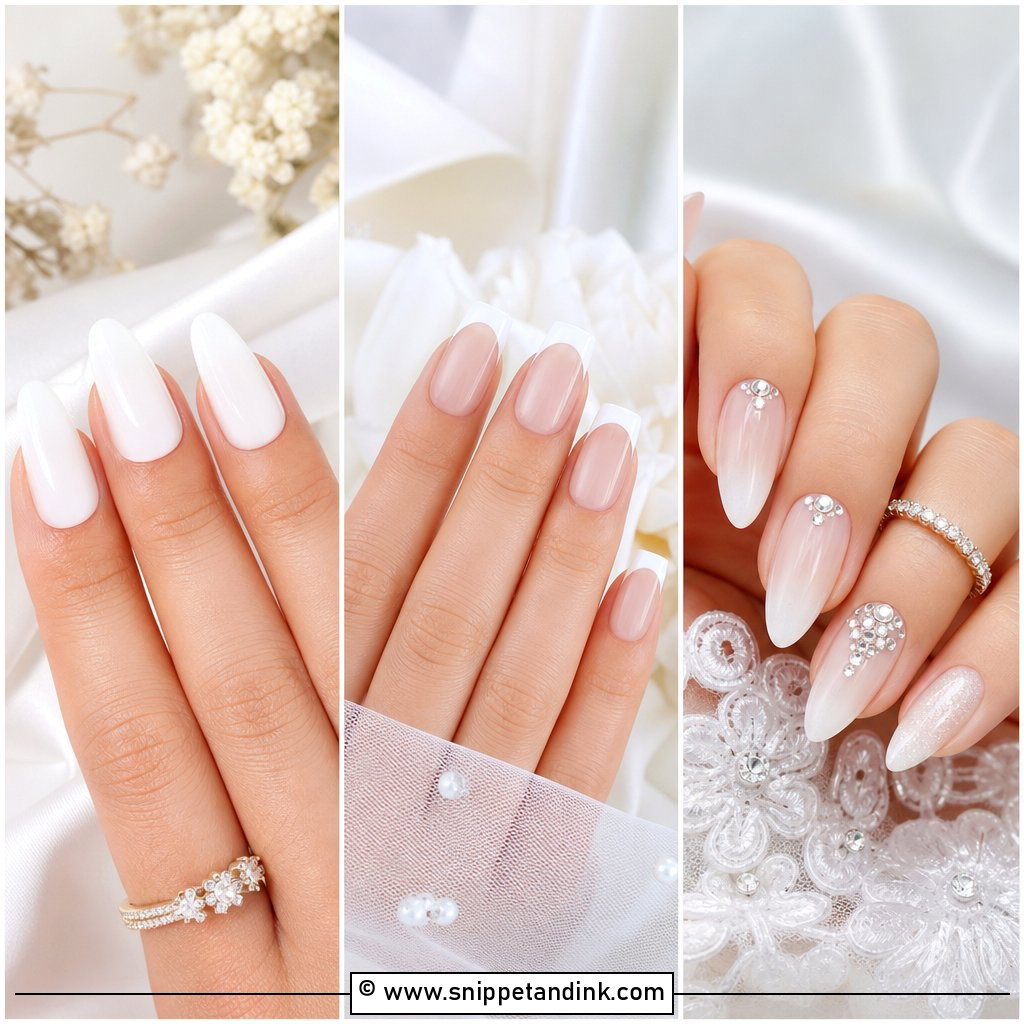
Milky white bride nails use a semi-sheer white that lets your natural nail tone show through, so the effect is soft rather than stark. I’d steer anyone with visible ridges or white spots toward a slightly more opaque milky shade, or a smoothing base first, because a very sheer white shows every bump underneath. It suits short natural nails and long coffins alike. A high-gloss top coat gives a healthy shine; a whisper of chrome adds glow.
3. White Chrome Bride Nails
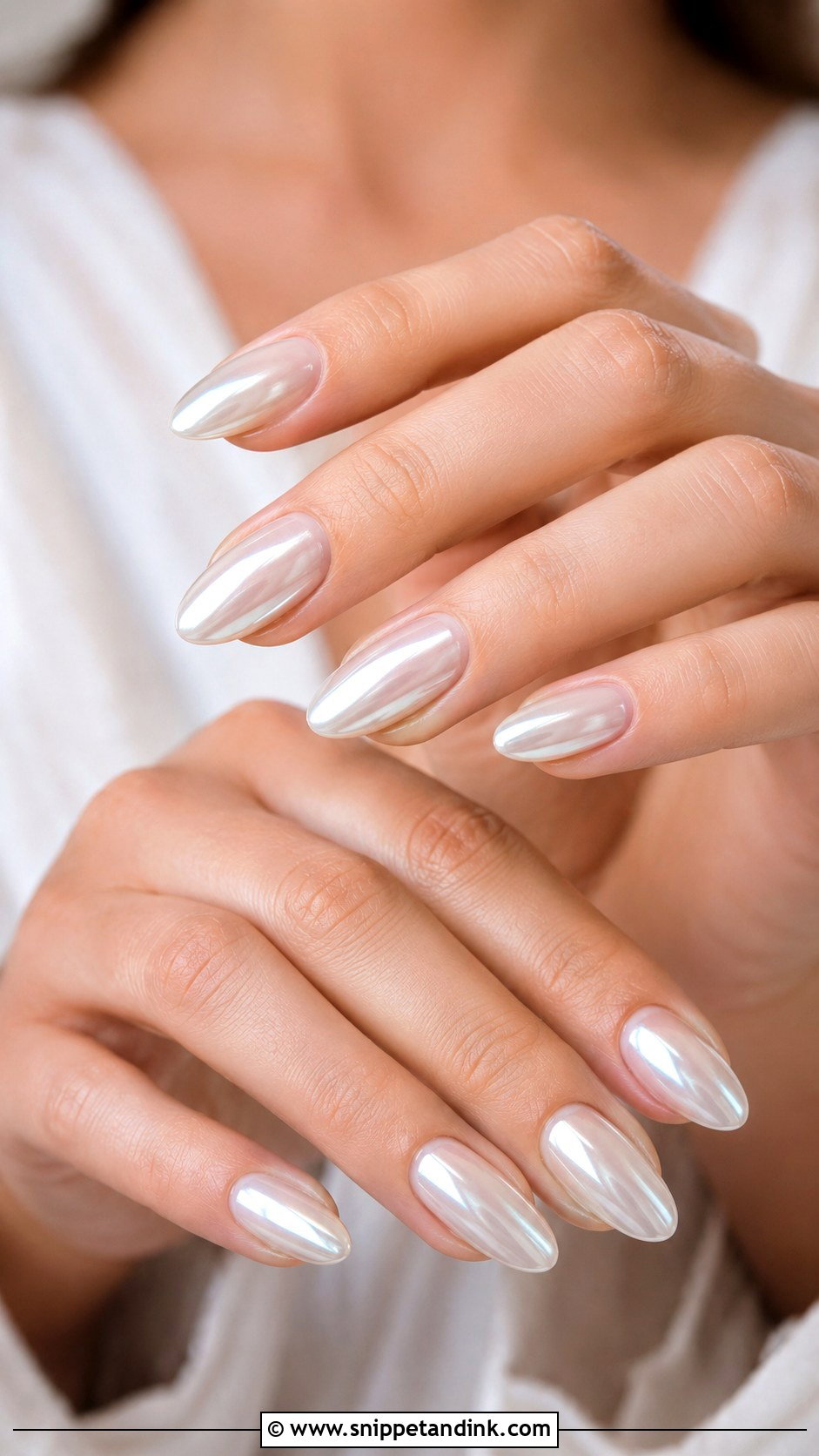
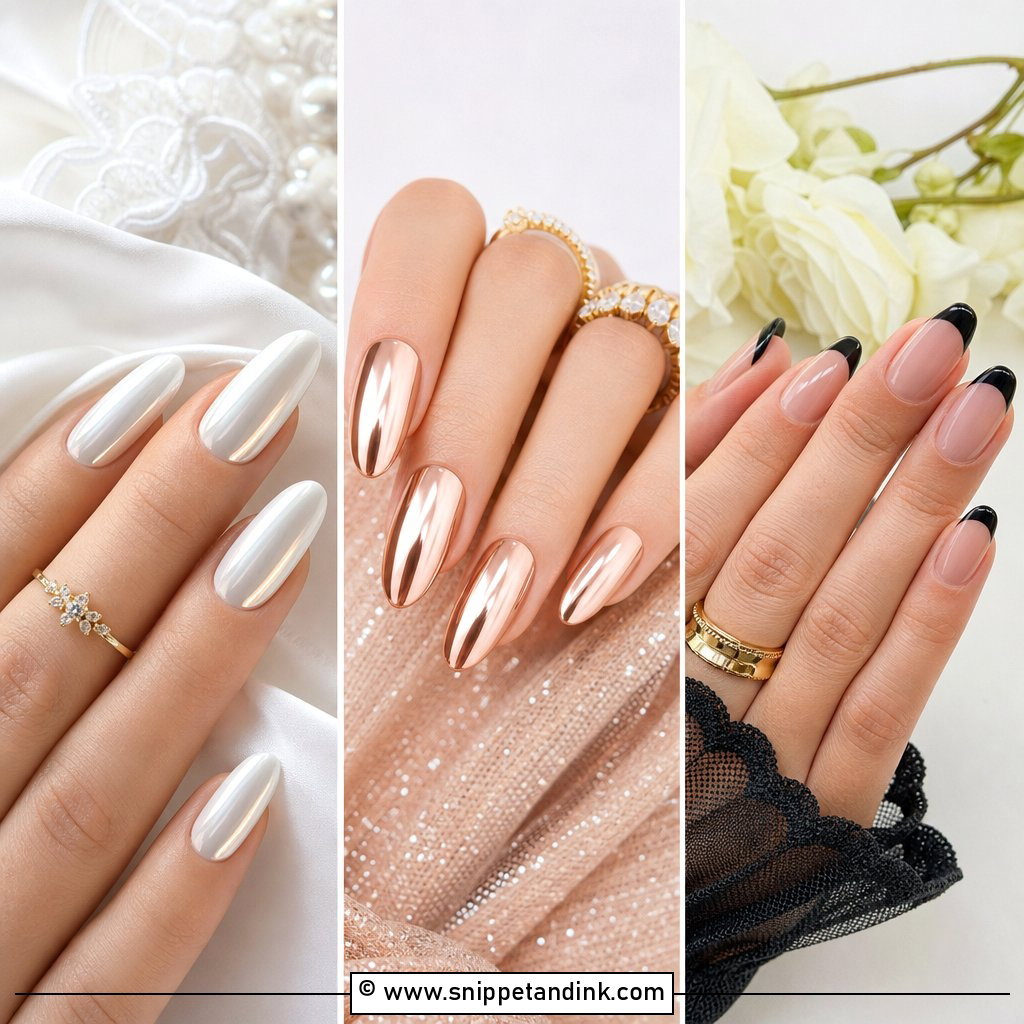
Chrome is the finish that gives a white set some luxury. The base is milky white, soft ivory or a sheer nude-white, and a fine powder is buffed over a cured top coat to make a reflective pearl effect. Pearl chrome is the bridal version; mirror chrome is far brighter and can bounce camera flash back as a white blob, so I’d only use it on a single accent nail. Satin, silk, beaded and minimalist gowns all suit it. Keep the shape simple, almond or oval, and let the shine do the talking.
4. White Pearl Bride Nails
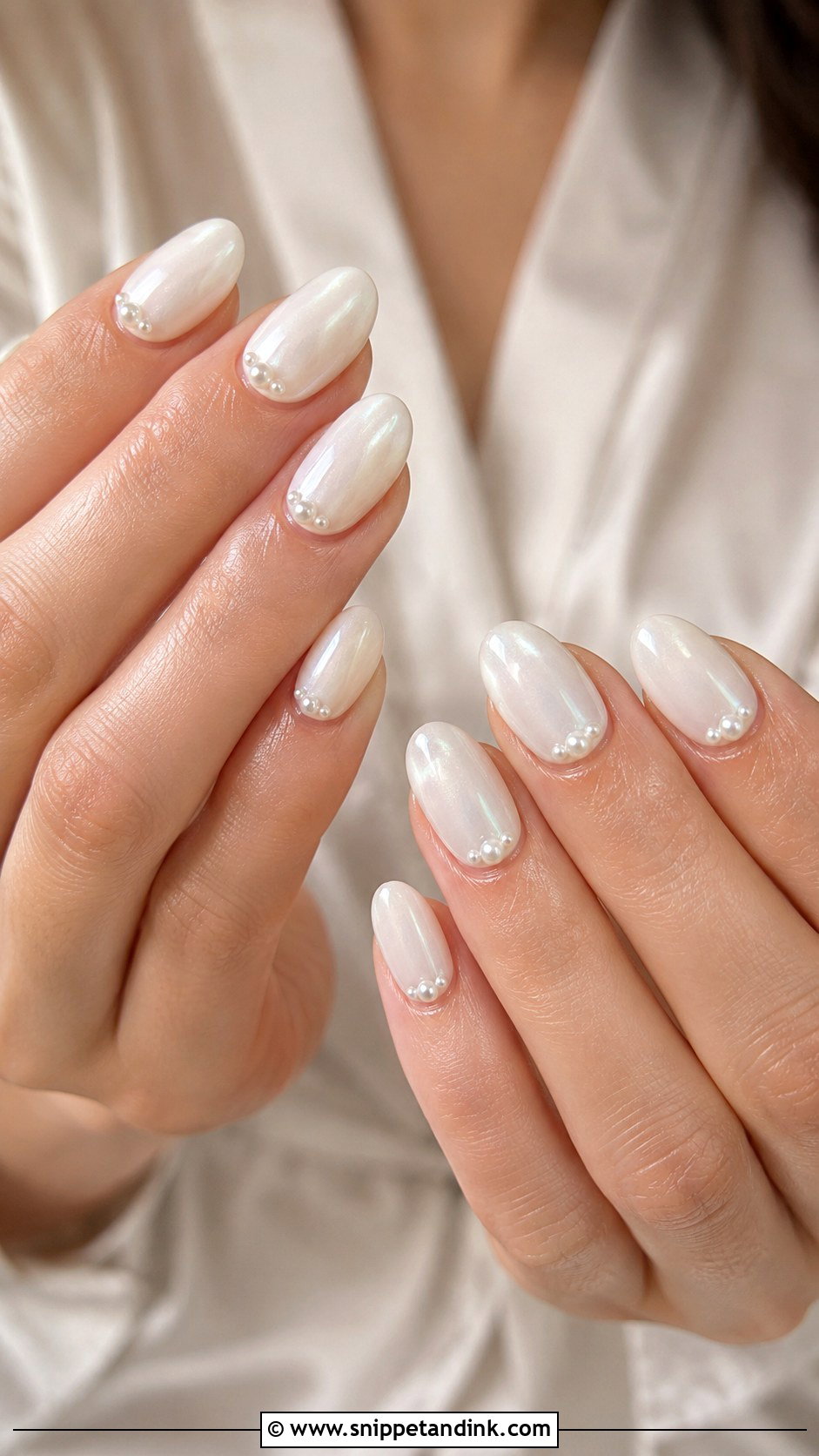
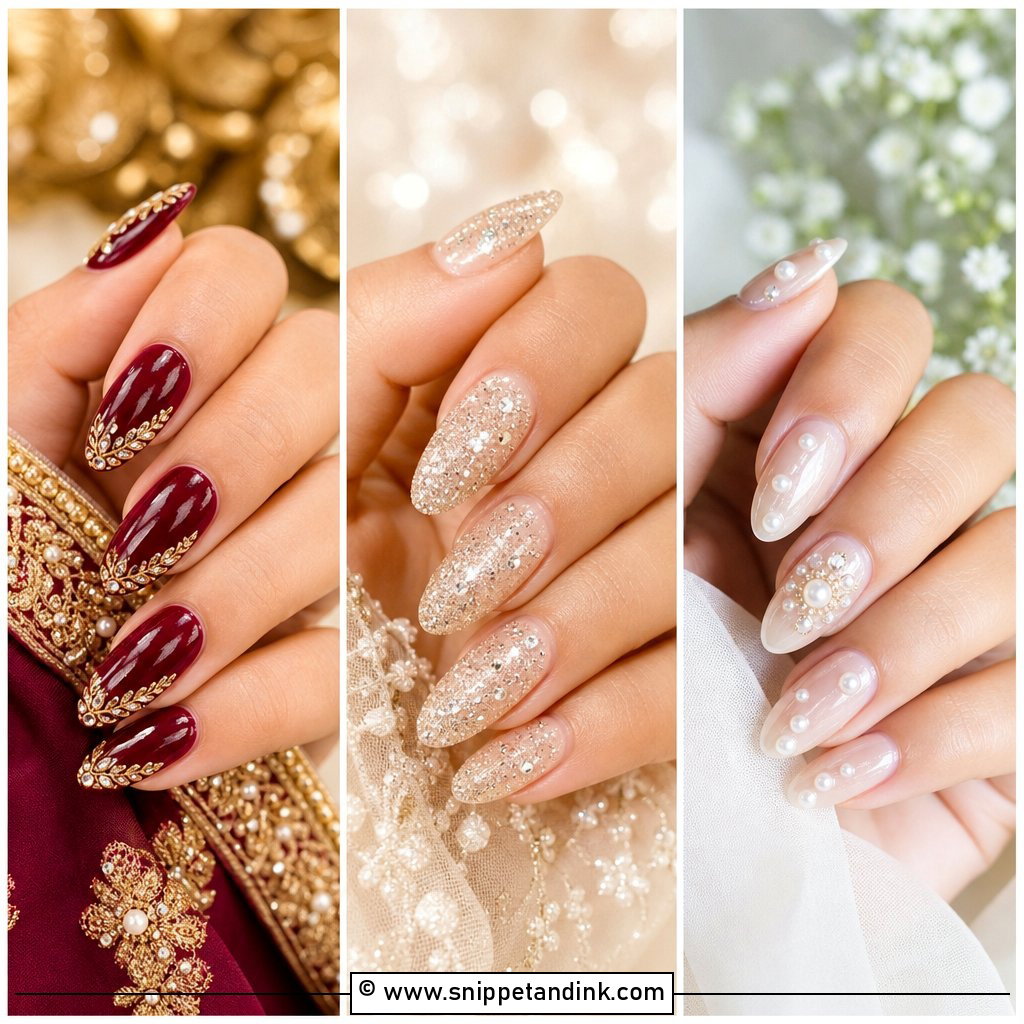
Small pearls on a sheer white or milky base look delicate, and size is the thing to get right. I use the smallest flat-backed pearls I can, bedded into gel so they sit flush; larger half-pearls look lovely in a photo but snag on knit wraps and fine tulle. They can sit near the cuticle, scatter lightly or run in a single line. Pearl earrings, a pearl-edged veil or soft beading make an obvious pairing. Medium almond, oval or coffin gives enough surface.
5. White Ombre Bride Nails
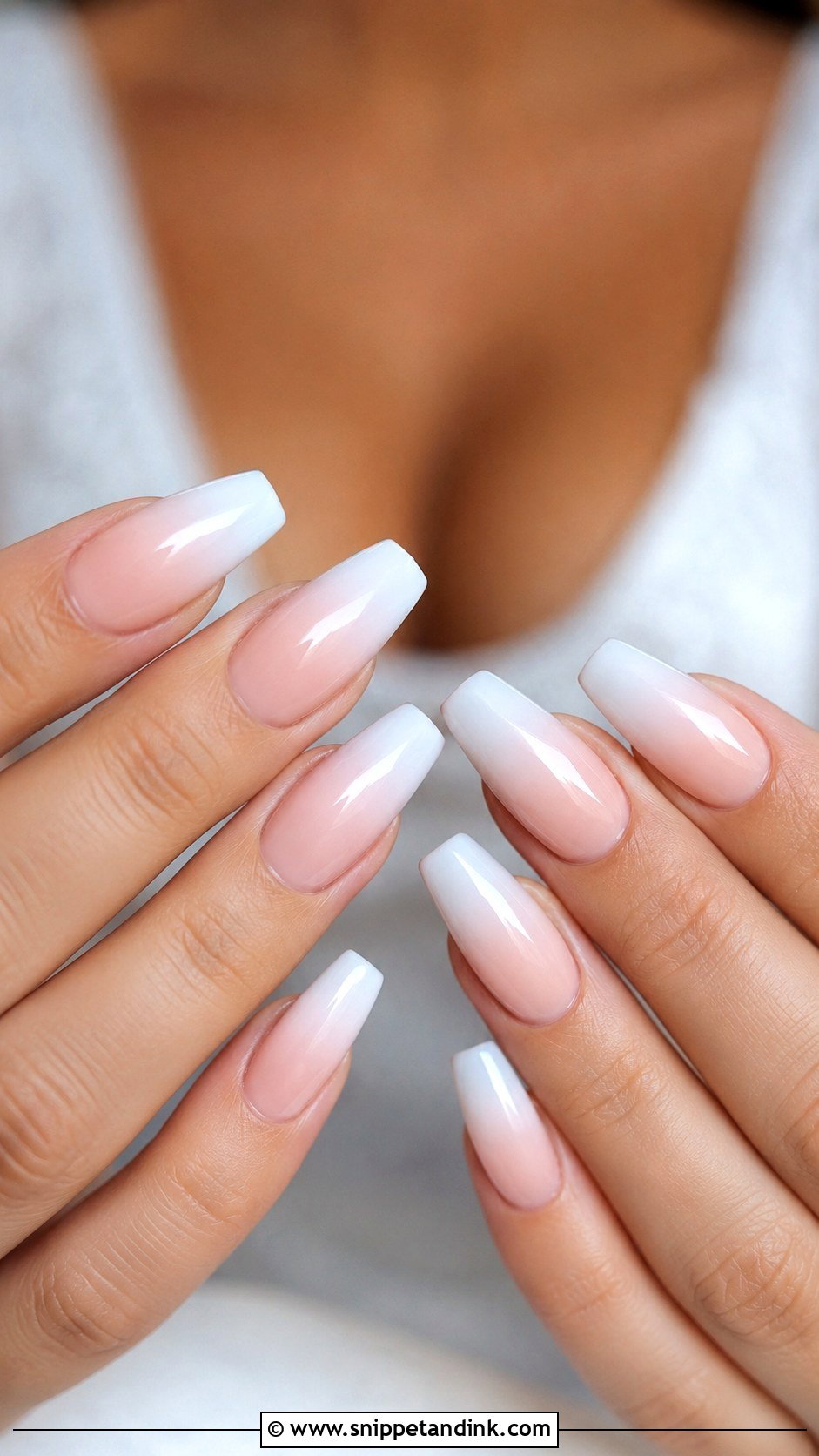
Softer than a French and more forgiving, white ombré fades from the tip toward a sheer nude, pink or beige base. It lengthens the look of the fingers, which is why it’s so flattering on almond and coffin nails. Because there’s no hard line, it also grows out gracefully, so it’s the one I’d recommend if your nails are done more than a few days before the wedding. Gloss is classic; a pearl chrome layer over the top softens it further.
6. White Lace Bride Nails
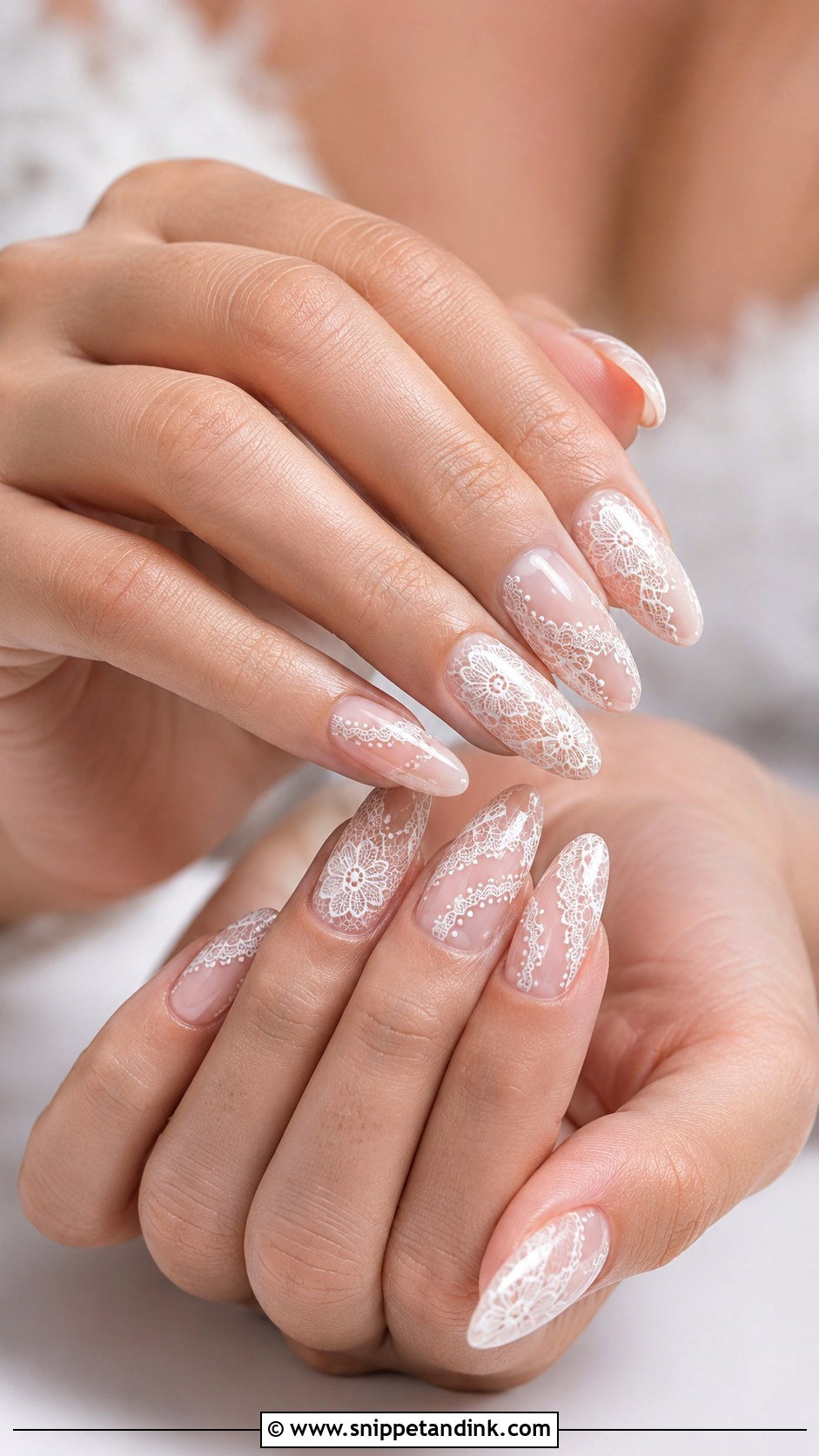
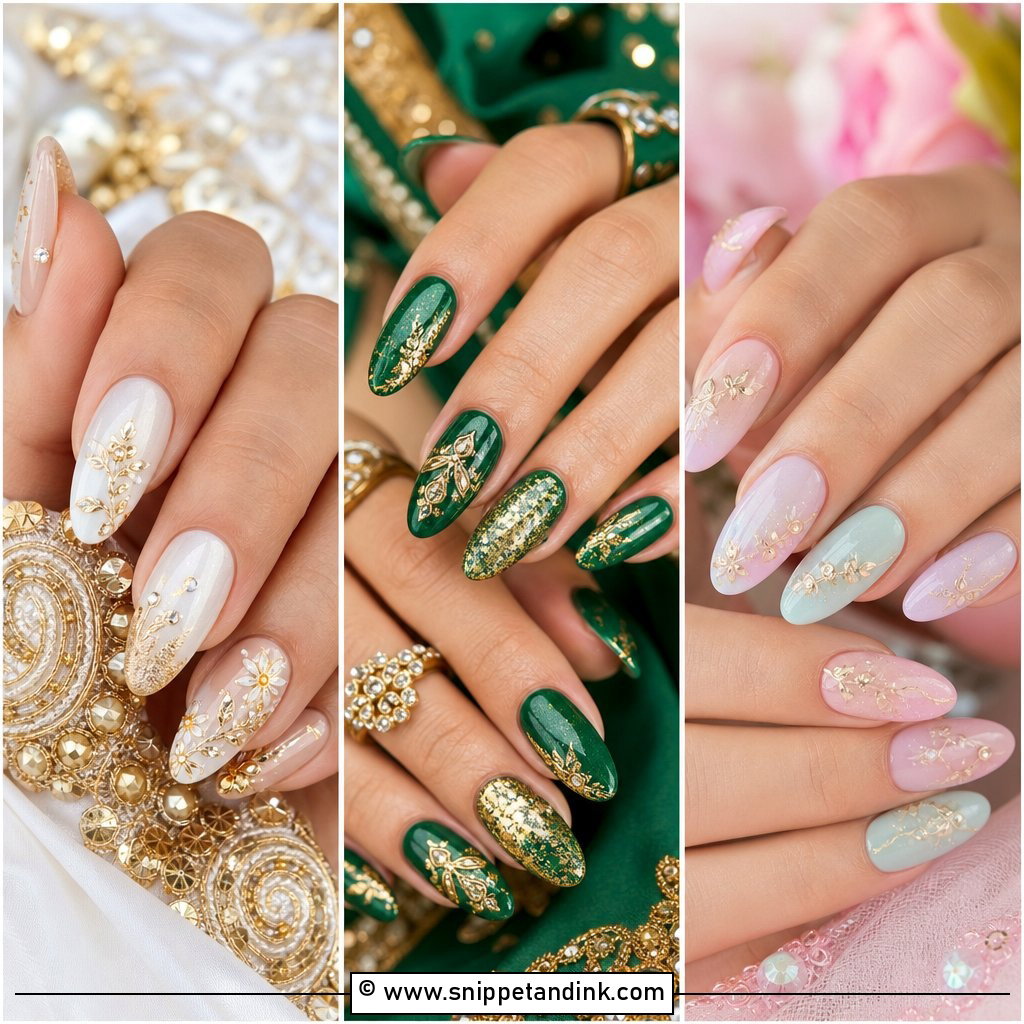
Lace art earns its place when it echoes the actual lace on your dress. Over a nude, blush or sheer milky base, I paint fine floral lines, tiny dots and scalloped edges, copying a motif from a photo of your bodice where I can. You can lace every nail for a full statement or two accents for something quieter. Freehand lace takes time, so I’d budget a longer appointment. Almond and oval suit it, with the remaining nails kept plain and glossy.
7. White Almond Bride Nails
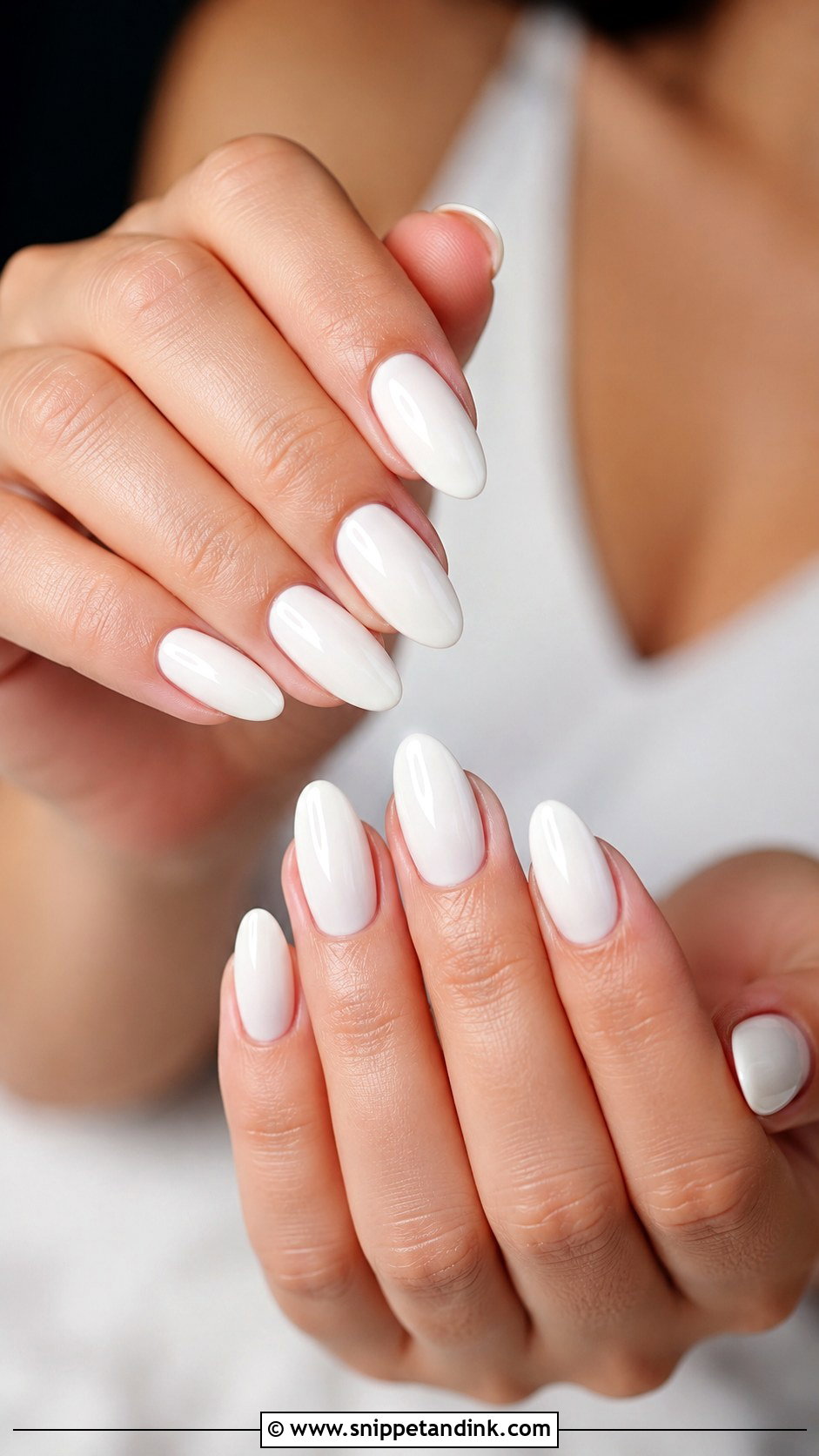
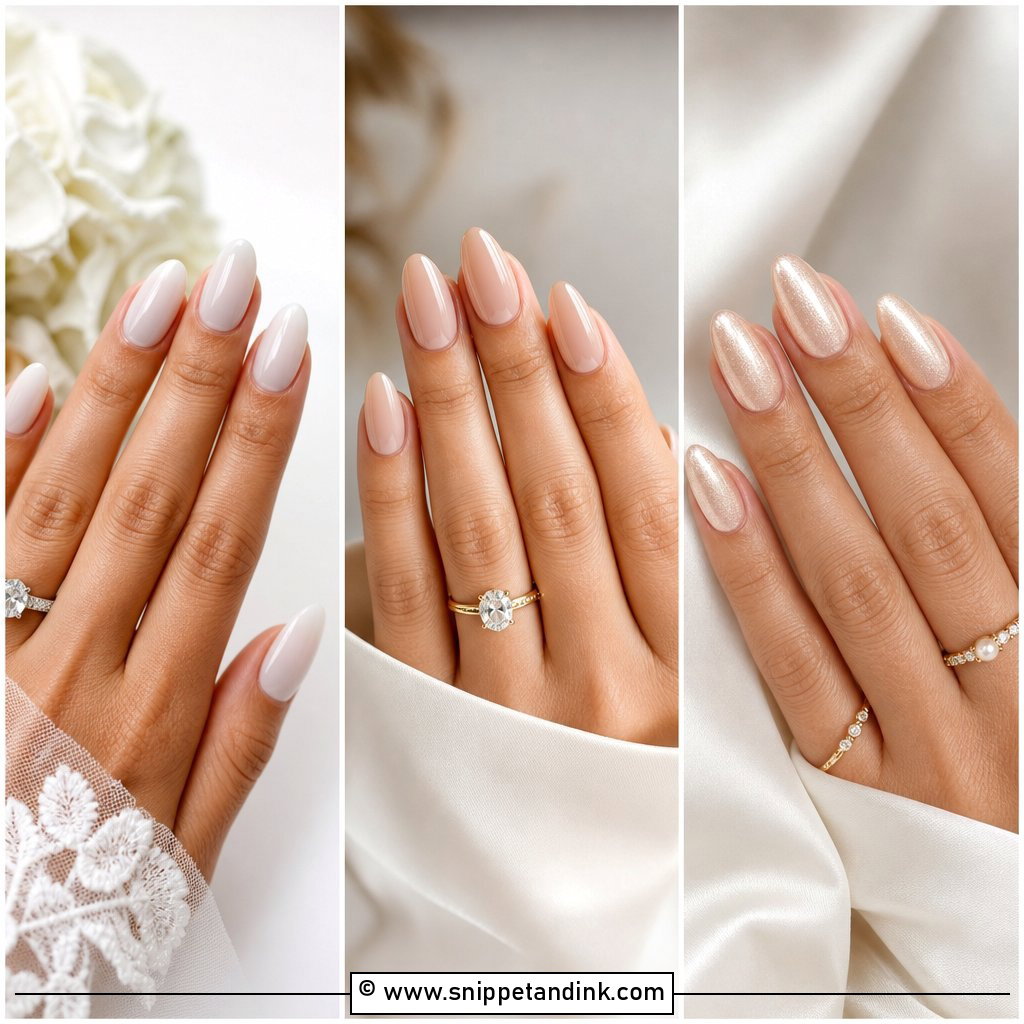
Almond is the shape I recommend most often for brides, because it lengthens the fingers without the sharp point of a stiletto. Opaque white, creamy ivory, milky white or pearl all work on it, as do French tips, chrome, minimal florals or tiny pearls. I’d keep the length medium. You’ll be holding a bouquet, gathering a train and fastening jewelry, and a medium almond does all that comfortably while still looking refined.
8. Short White Bride Nails
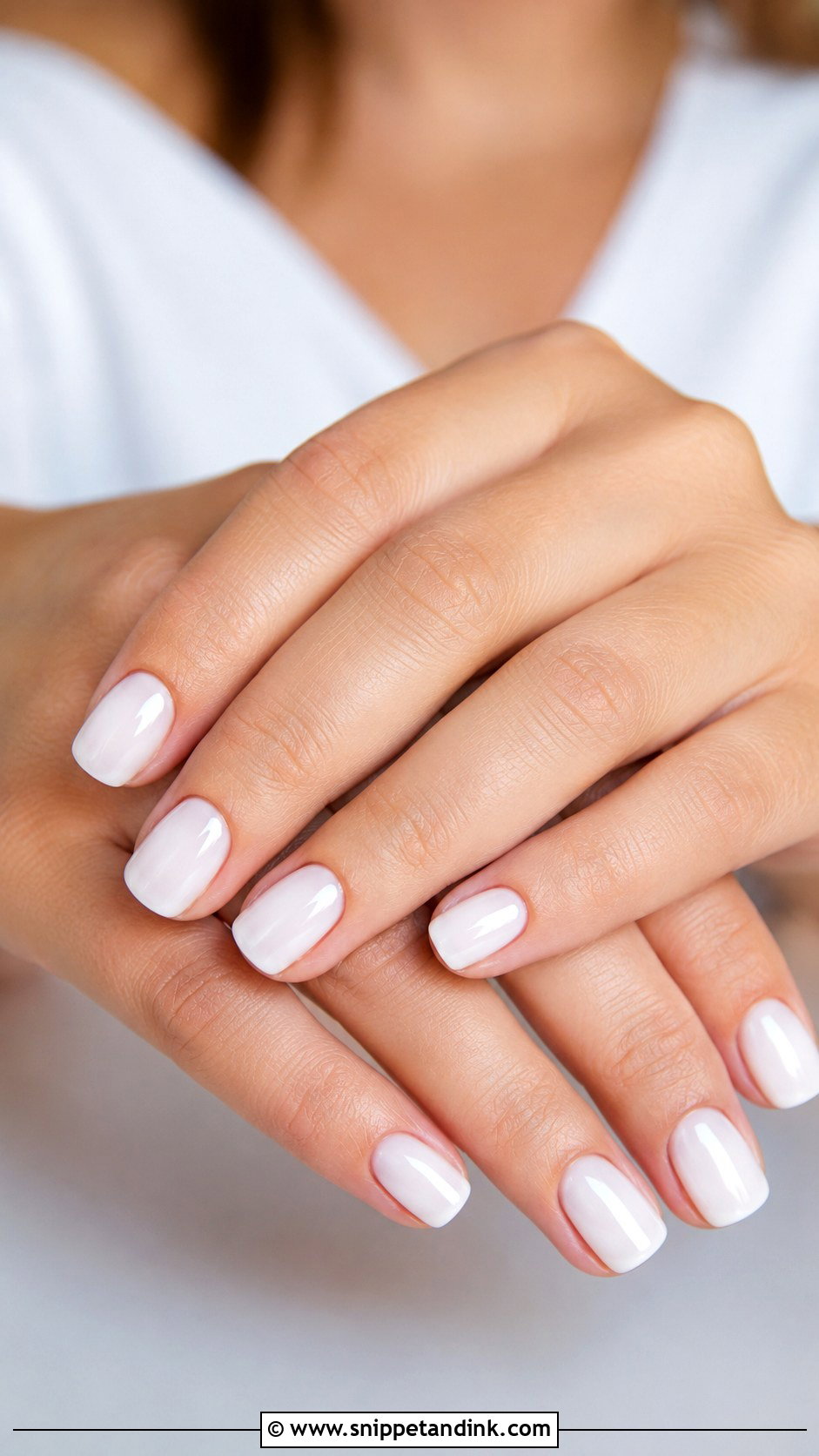
Short nails can look every bit as polished as long ones, and they’re far easier to live with on a busy day. A soft milky white gives a natural finish, a micro French adds definition, and a single pearl or lace accent is enough detail. Short square, round and squoval shapes are comfortable. If your nails are bitten or very short, I’d spend the weeks before on growth and cuticle care rather than adding length at the last minute, since even a few millimetres of healthy free edge makes white look far neater.
9. White Square Bride Nails
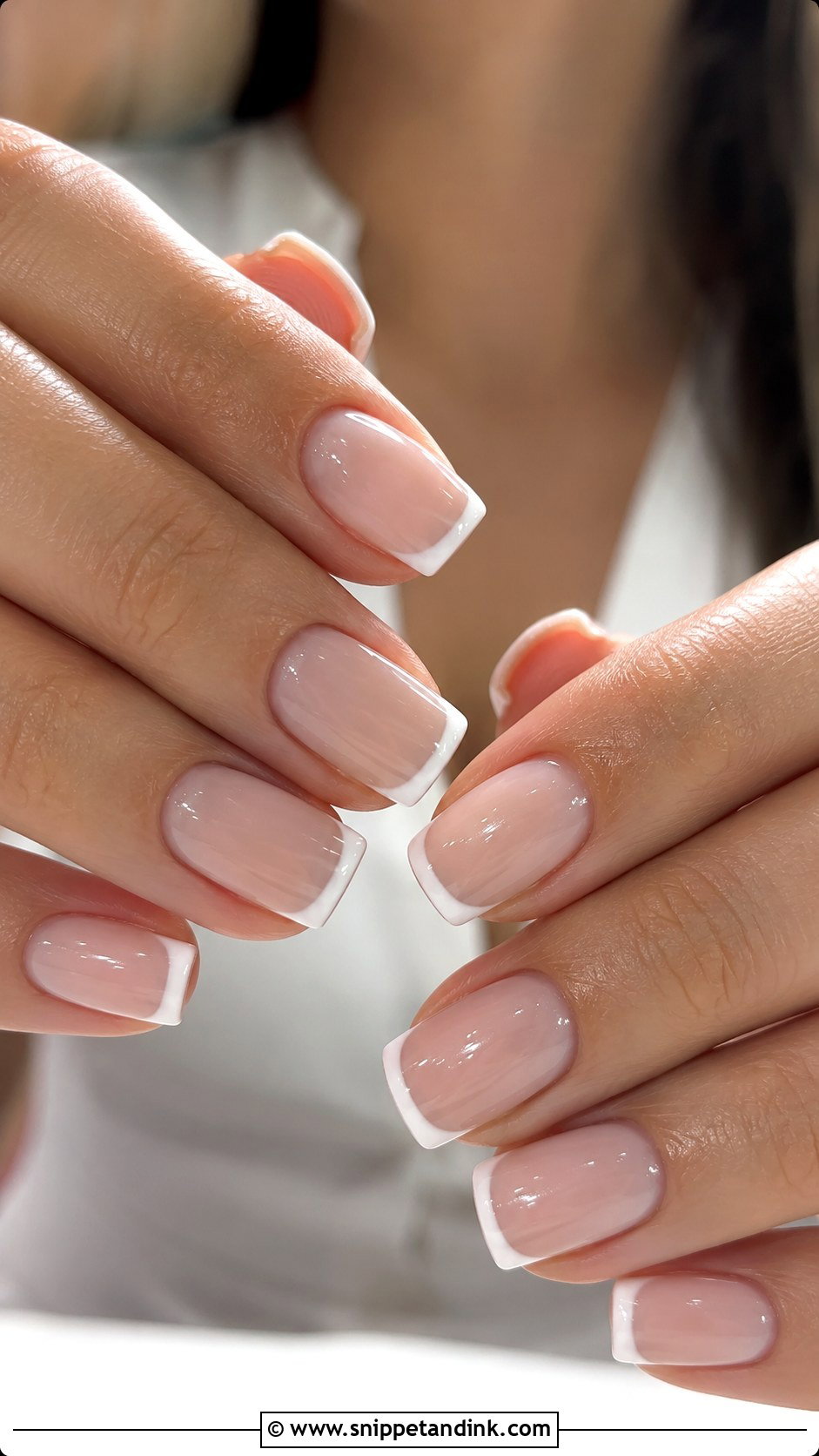
Square shapes look neat and a little modern, with a straight tip that sets off French, solid white and milky finishes. At short to medium length they feel structured without being awkward. For a bride I’d always file the corners slightly soft; a hard square corner is the first place to chip, and it catches on lace. A sheer pink base with a thin white tip or a pearl shimmer keeps it gentle. Minimalist gowns and sleek hair suit it.
10. White Coffin Bride Nails
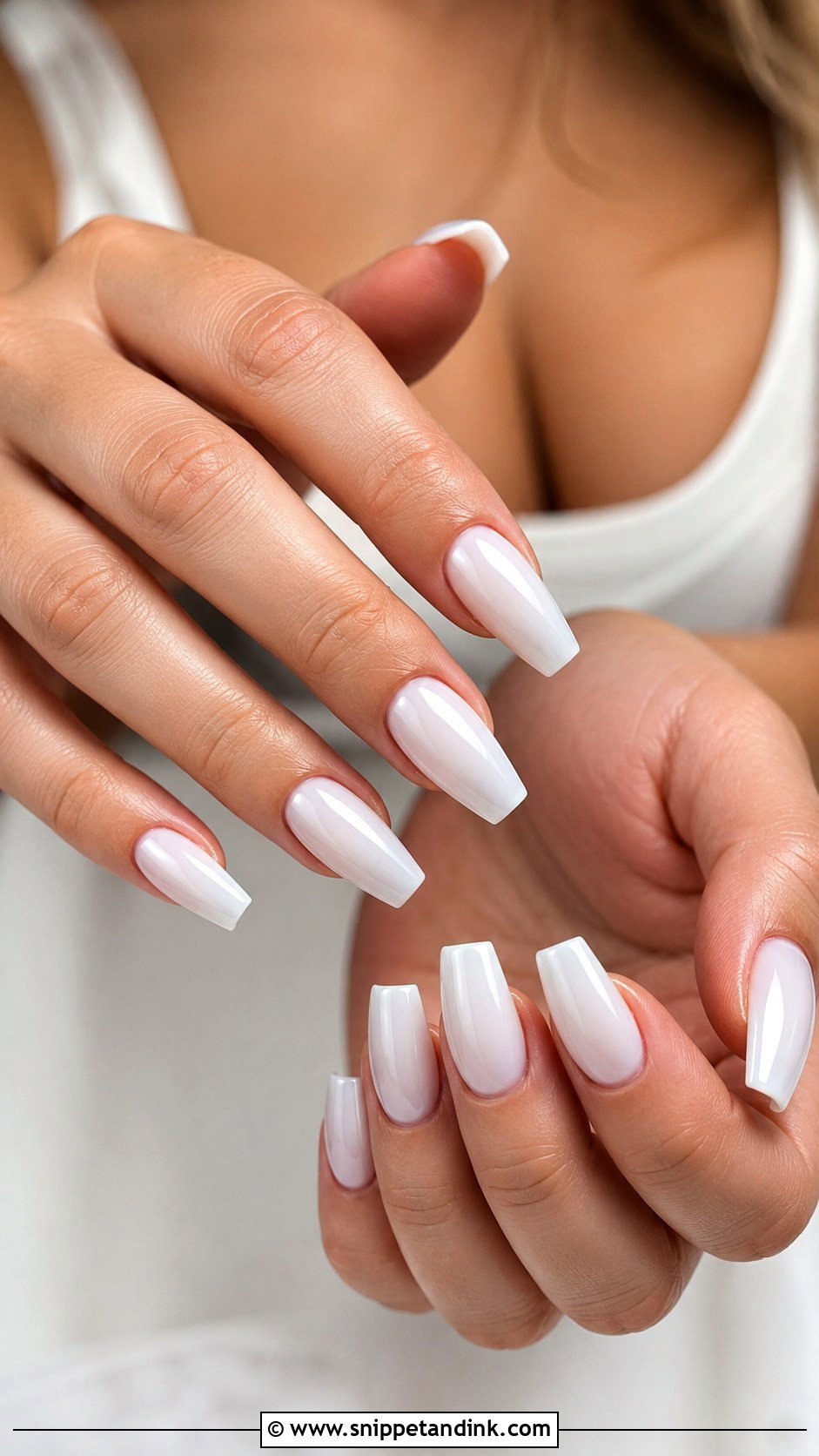
White coffin bride nails have tapered sides and a flat tip, which gives a strong, glamorous shape that white keeps bridal. Milky white softens it; chrome adds shine; ombré tips and pearls add detail. Coffin almost always means extensions or a well-grown natural nail with a structured overlay, because the flat tip on a thin nail tends to bend or break. Medium length is far more wearable than long. Pick one detail and let the white base breathe.
11. White Floral Bride Nails
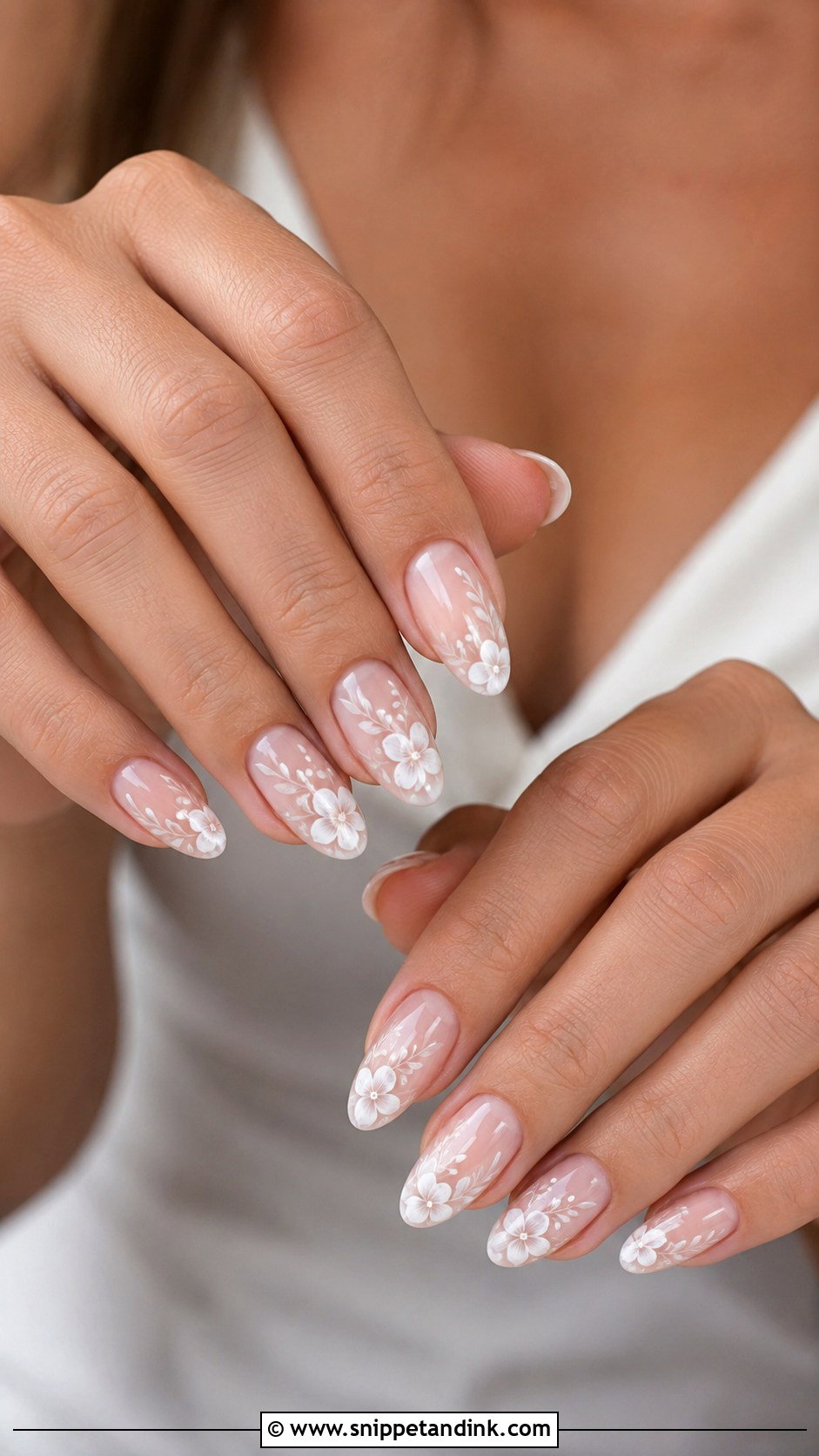
Hand-painted florals suit spring, summer and garden weddings best. Over a sheer nude, blush or milky base, I paint tiny daisies, soft roses, loose petals or fine botanical lines, keeping the color to white and the odd fleck of pale yellow at the center. Almond, oval and short rounded shapes all work. Two floral accents with the rest glossy white or sheer keeps it subtle. Floral lace gowns and natural makeup sit well with it.
12. White Glazed Bride Nails
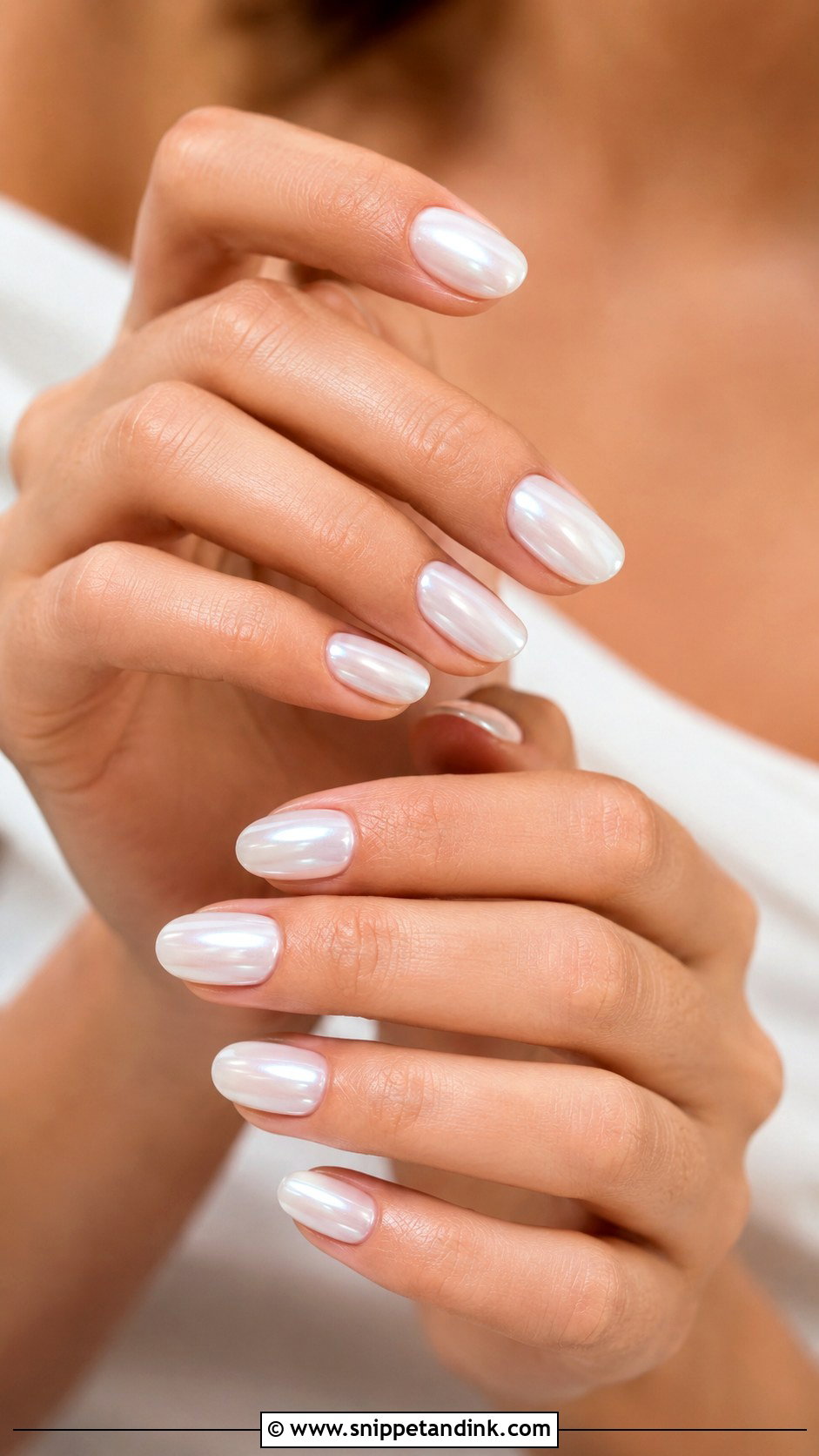
Glazed nails start with a milky white or sheer ivory base finished with a pearly chrome powder. The shine is softer than full metallic chrome, more like a pearl veil laid over the nail, and that’s why it’s become such a bridal staple. The mistake I see is too much powder, which turns the glaze icy and blue. A light hand keeps it warm. Satin gowns, pearl accessories and dewy makeup all sit well with it on short, almond, oval or coffin nails.
13. White Marble Bride Nails
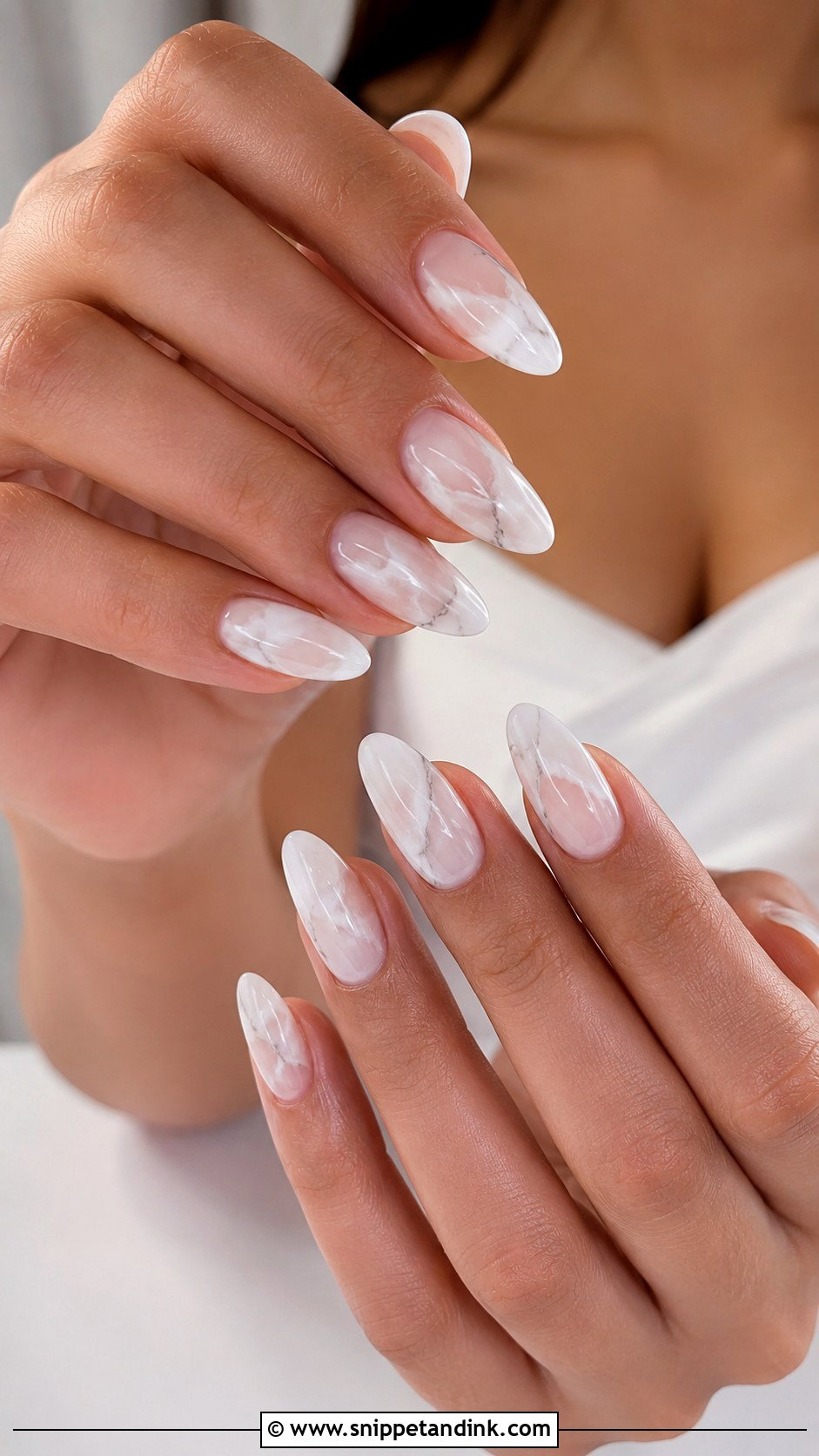
Marble blends white, sheer nude, pale grey and ivory into a soft stone effect. Thin veins look refined; thick dark ones look like cracks in photos, so I diffuse every line after I draw it. Wear it on all ten nails for a modern look, or mix it with solid milky white for balance. Almond and coffin show the pattern best. It’s a good fit for a bride who likes something artistic but wants to stay neutral.
14. White Glitter Bride Nails
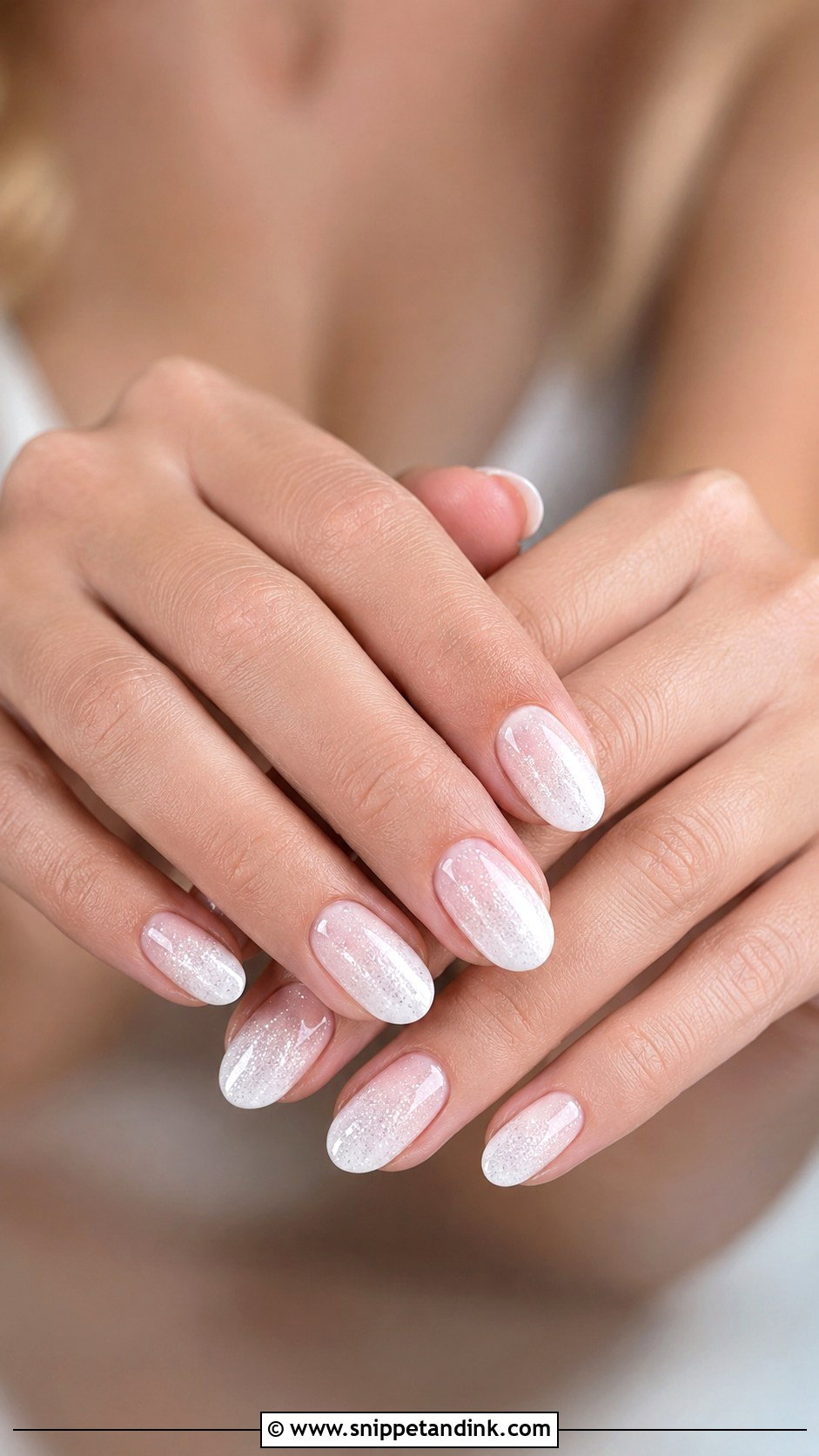
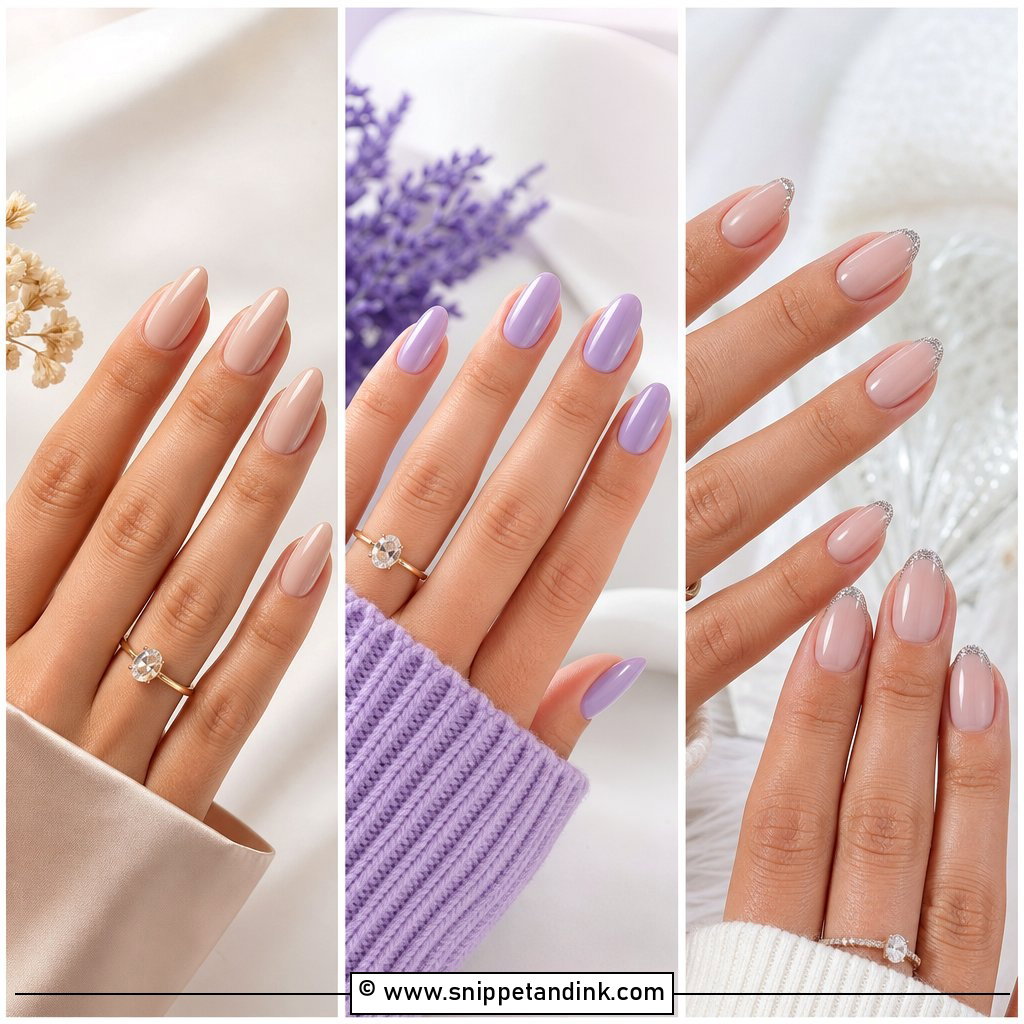
Sparkle works for a bride when it’s fine. I use a shimmer, pearl glitter or a silver-white micro glitter rather than chunky flakes, which are hard to cap smoothly and can feel rough against the dress. A fade from the tips over a sheer white base is the most refined version, or keep glitter to one or two accents with the rest milky. It catches light while dancing and during ring close-ups. Almond, oval and coffin all suit it; just keep the layer thin.
15. White Matte Bride Nails
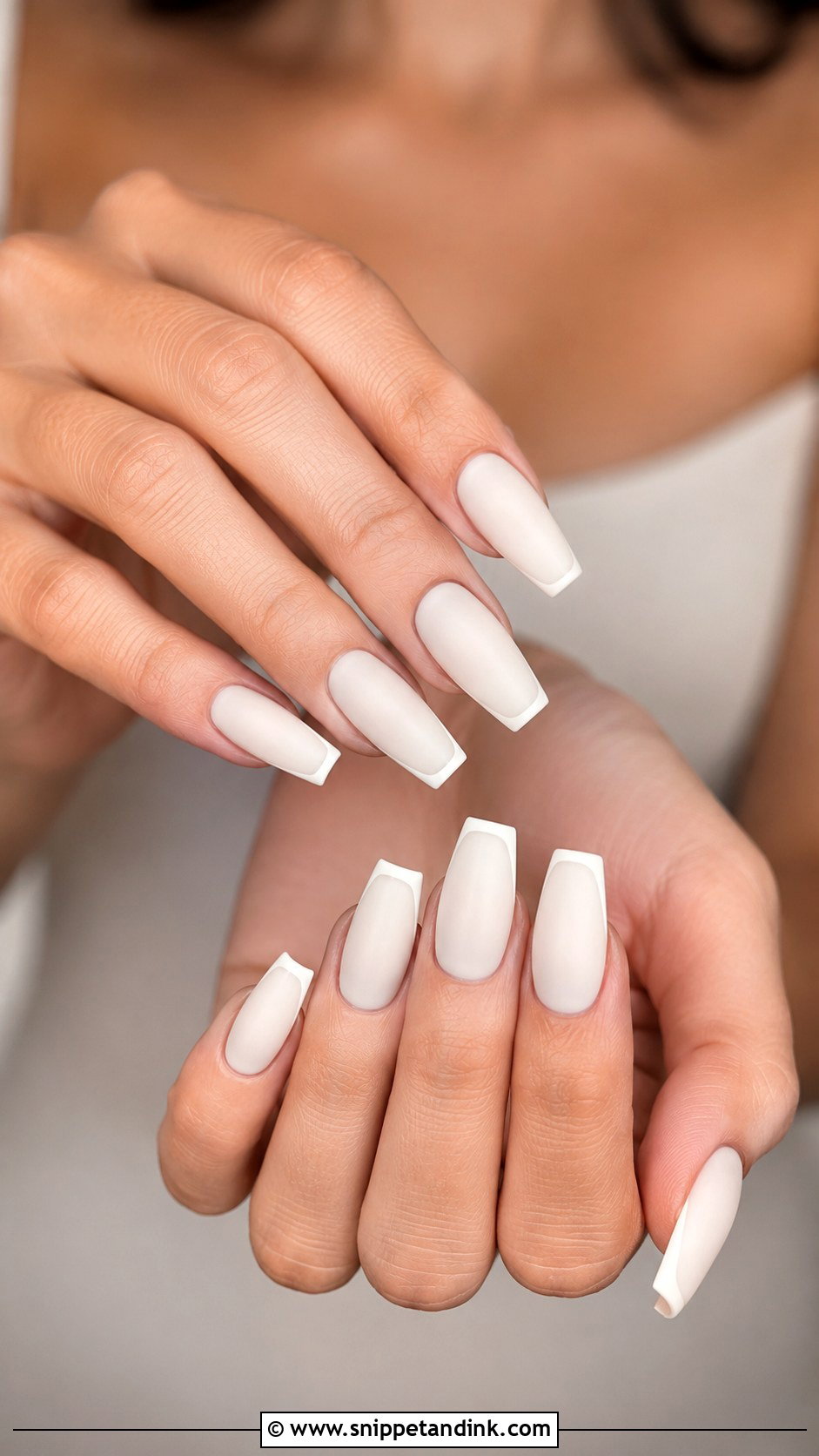
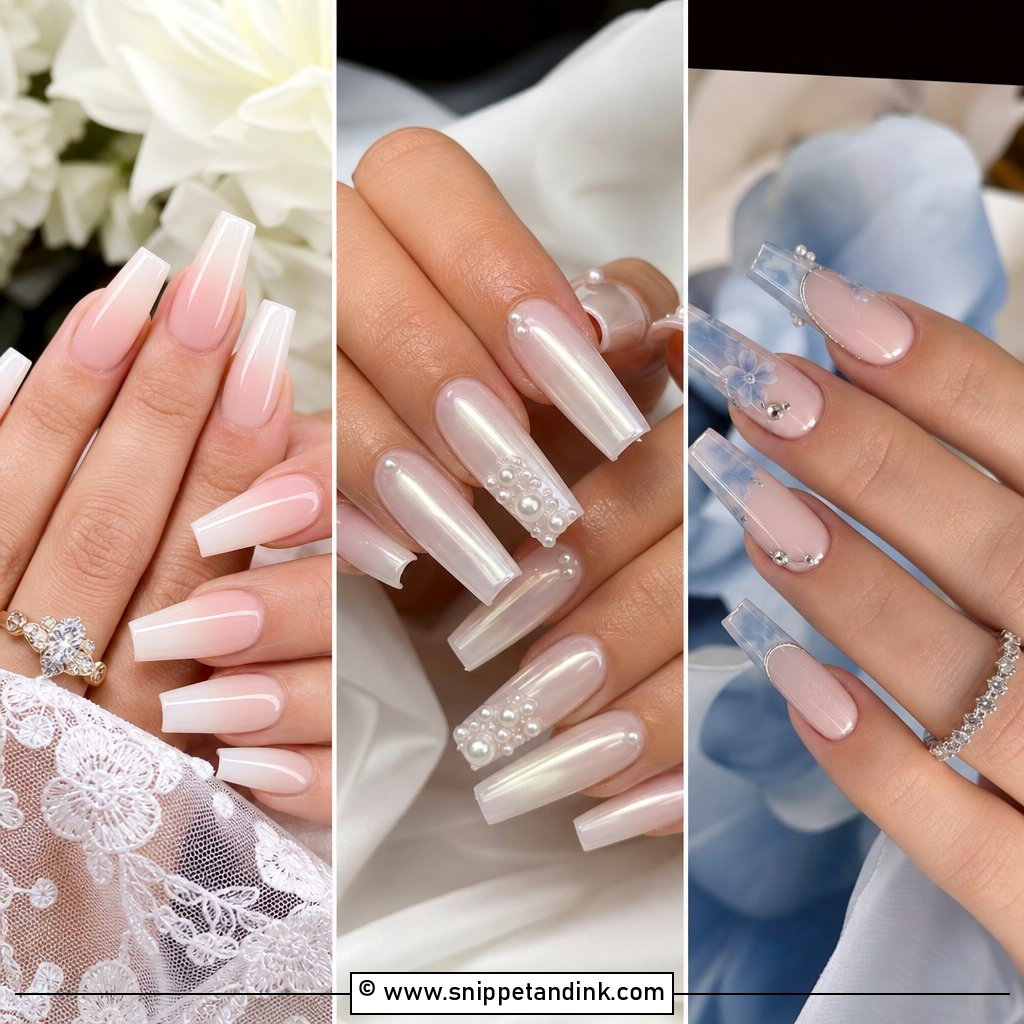
A matte top coat over white, ivory or milky polish gives a velvety, understated finish that shows off the shape of the nail. Almond, coffin and square look sharpest in matte. For a bridal touch, glossy French tips over the matte, a few pearls or fine lace bring contrast without sparkle. Two cautions: matte marks more easily from hand cream and makeup, and it can look flat in flash photos, so I’d test it at your trial under a phone flash before committing.
16. White Micro French Bride Nails
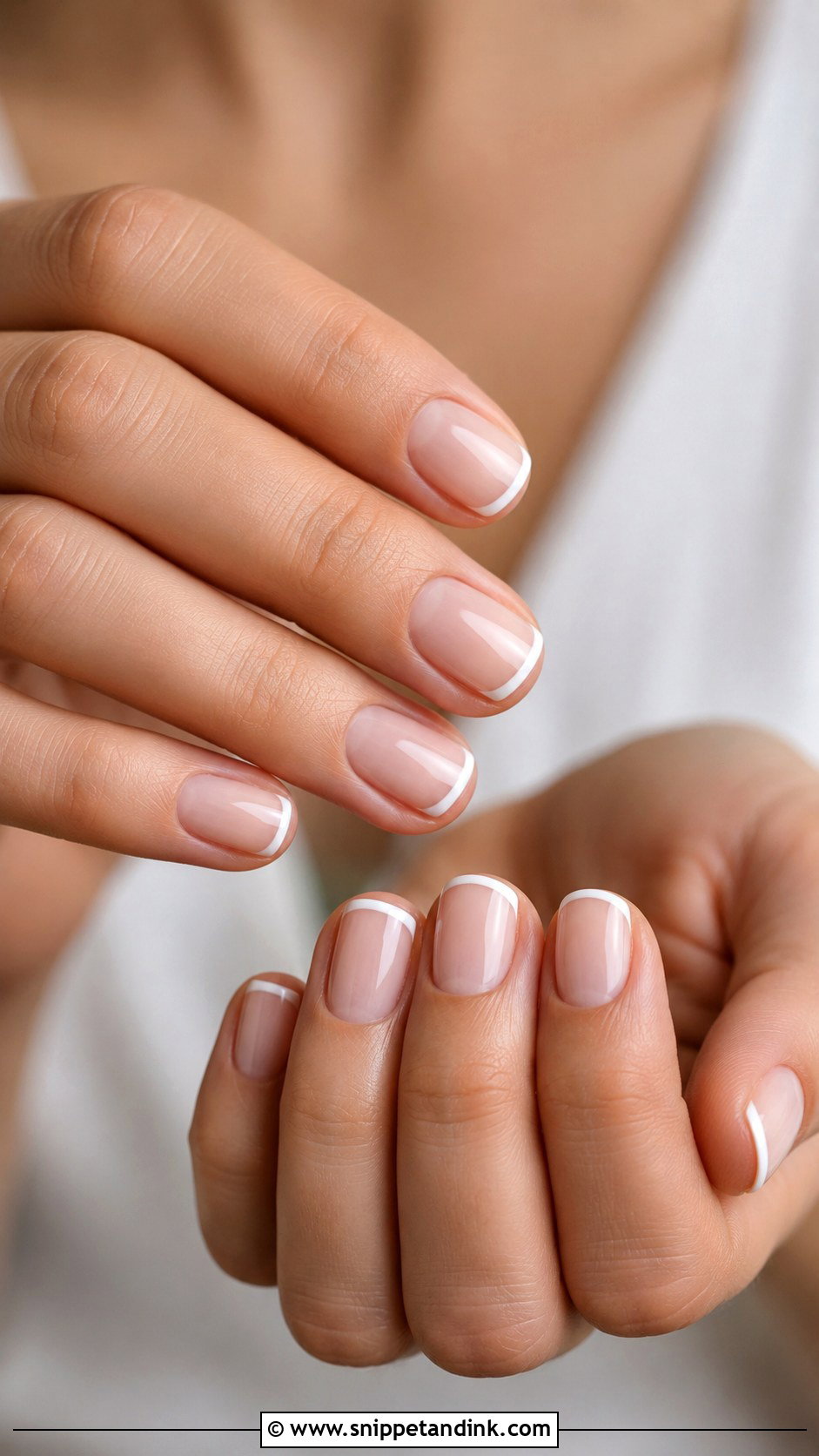
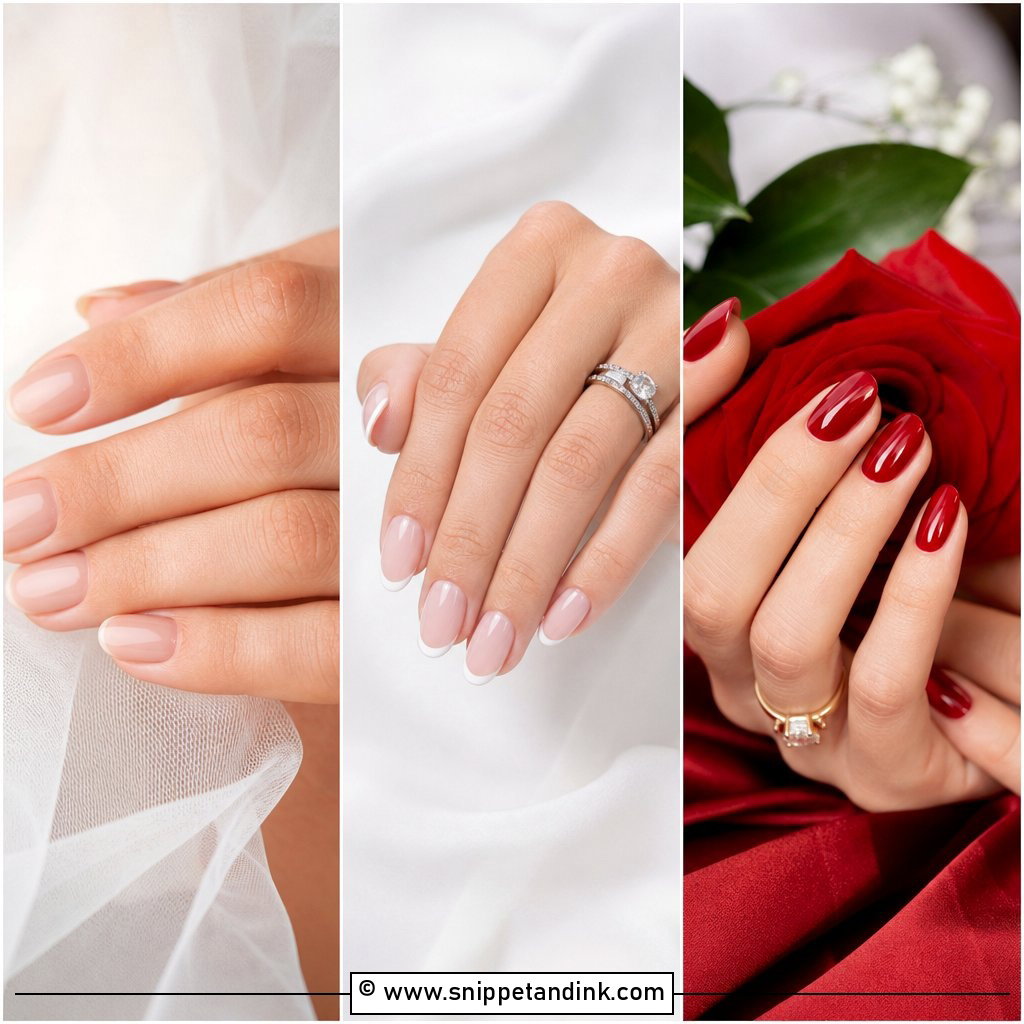
Micro French is the update I suggest to brides who love the classic French but find a thick white band dated. A hairline of white sits at the very edge over a sheer pink, nude or milky base. It suits short nails especially, since the thin line doesn’t eat into the nail bed, and it looks just as neat on almond, oval and square. It’s also the most forgiving French when the nail grows, as the tip line stays at the edge. Quiet and polished.
17. White Swirl Bride Nails
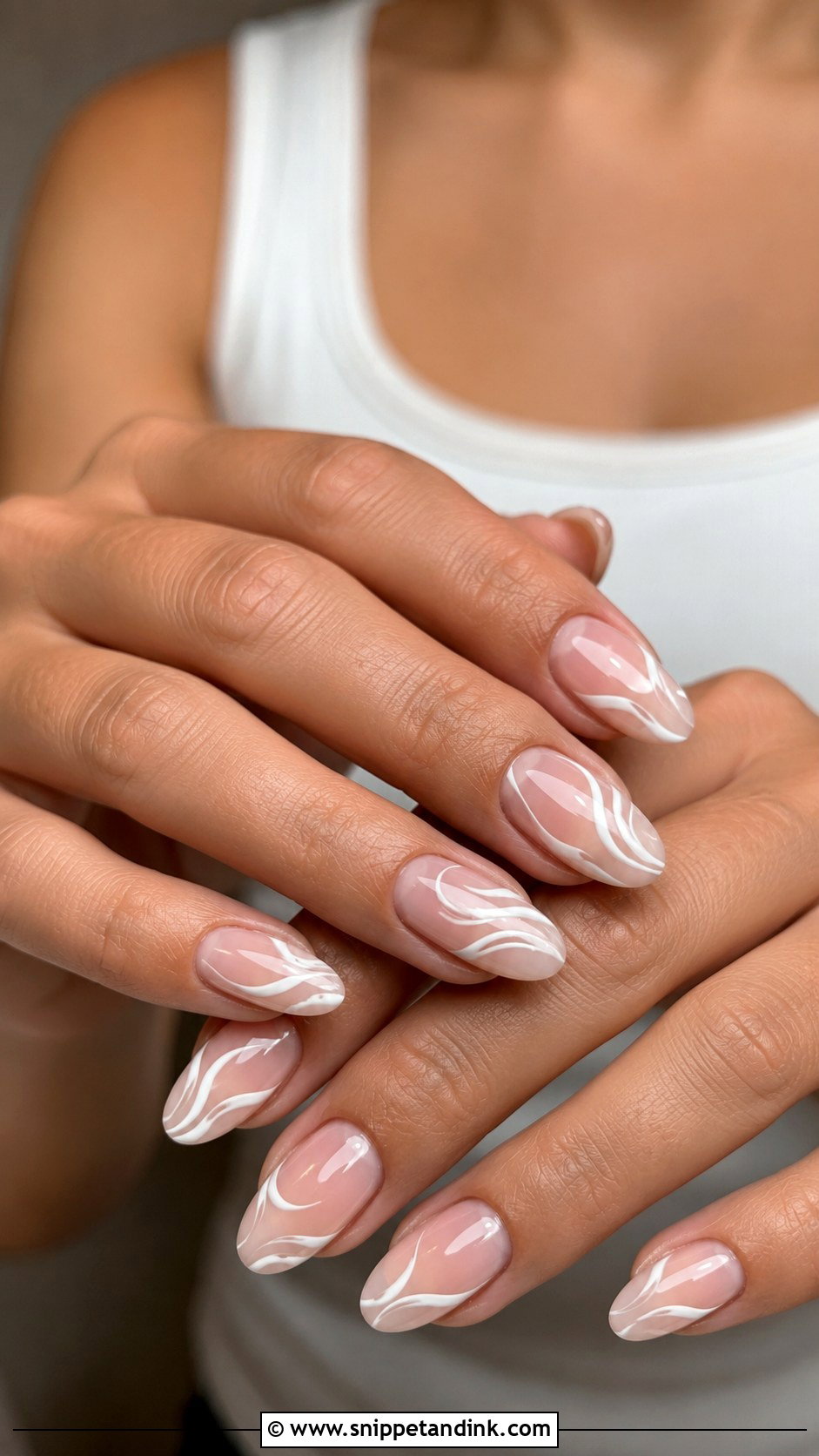
Thin white swirls over a sheer nude or milky base add movement without heavy art. The lines can run diagonally, around the tips or along the sides. I’d ask for them on almond or coffin, where there’s room for the curves to travel, and keep them thin so they read as delicate from across a table. A glossy or pearly top coat finishes the set. On short nails, a single swirl per nail works better than several.
18. White Crystal Bride Nails
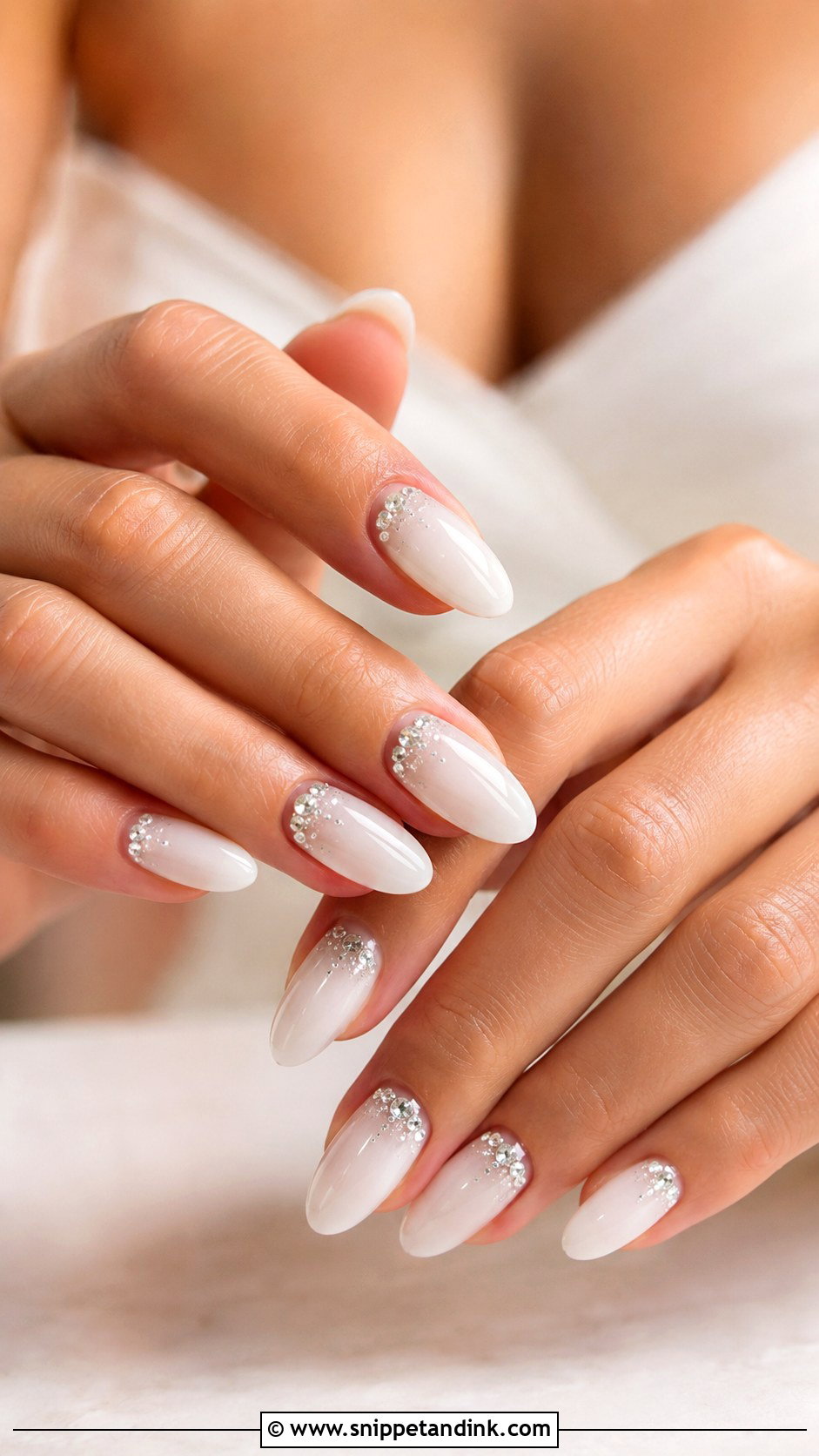
Crystals on a milky white, sheer white or French base give controlled sparkle. Near the cuticle, along the curve of a French tip or on one feature nail are the placements I’d use. Restraint matters here; a few small stones look refined, while a heavy cluster catches on hair and fabric. I seal every stone at its edge with gel and check by running a fingertip over it, which is the same test your veil will give it. Beaded gowns and crystal hair pieces pair naturally.
19. White Ivory Bride Nails
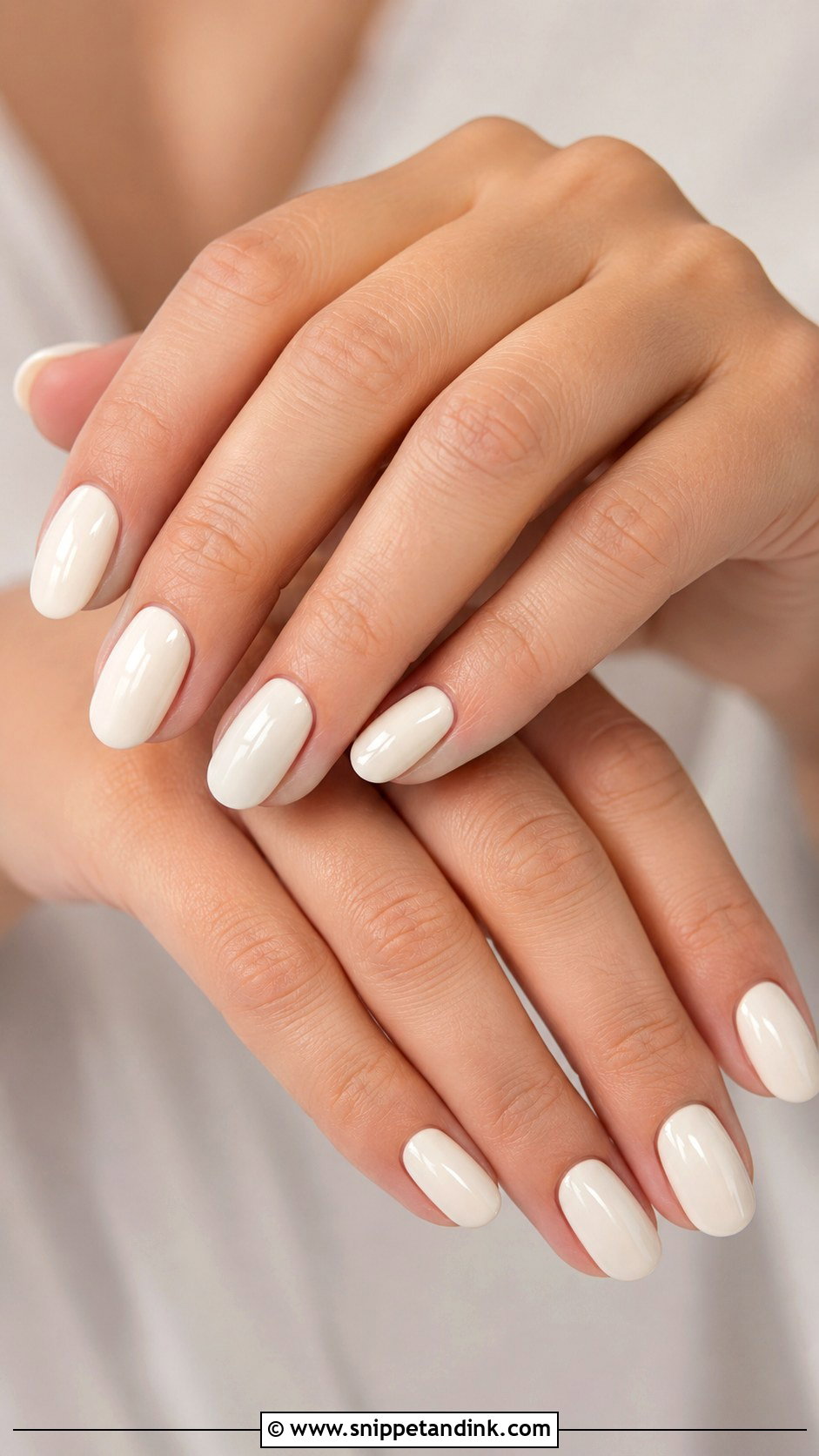
Ivory is the white I suggest when stark white looks too harsh against someone’s skin, and it sits more naturally beside off-white, champagne, cream and vintage gowns. You can wear it solid, as a French tip, as an ombré or under pearl chrome, in a glossy, satin or glazed finish. It works at every length. If your dress is not pure white, put the bottle next to the fabric before you decide; ivory nails often look like they belong to the dress, where bright white looks like a separate choice.
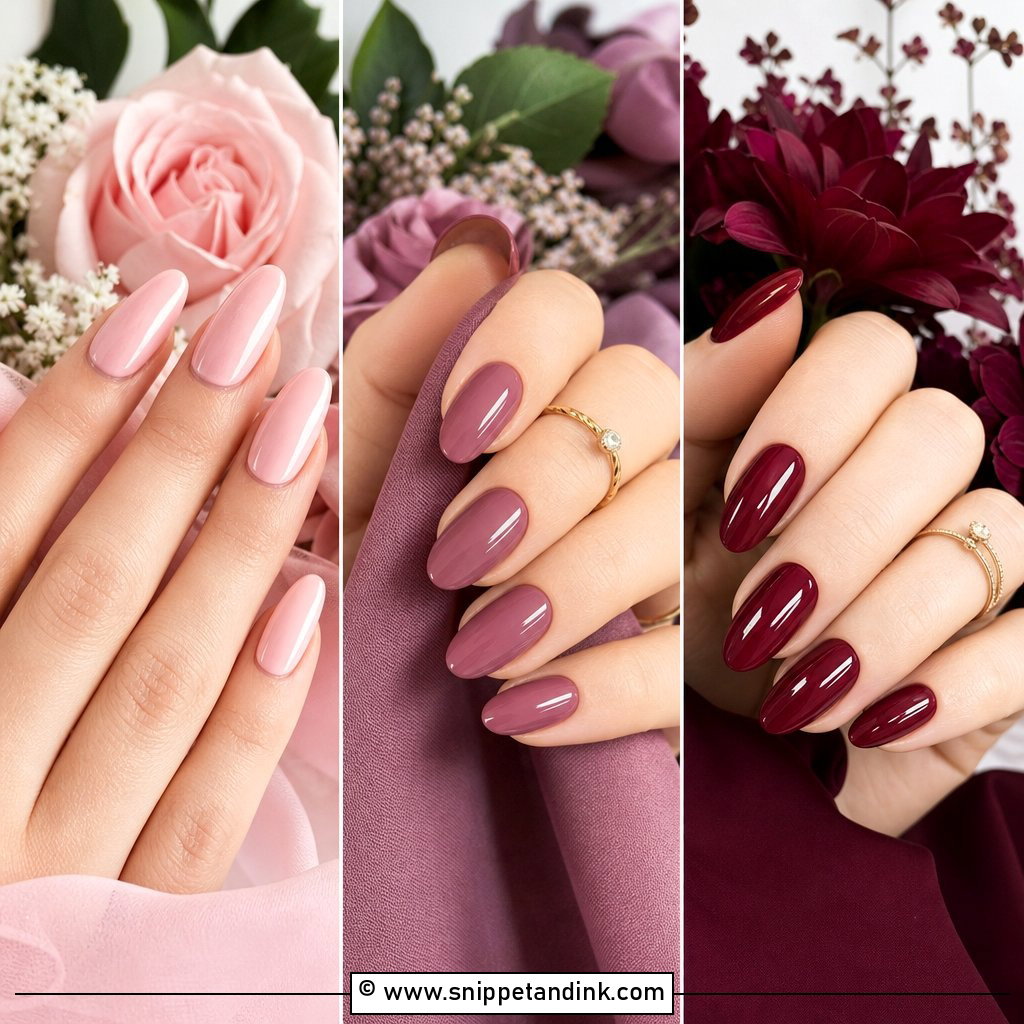
20. White Negative Space Bride Nails
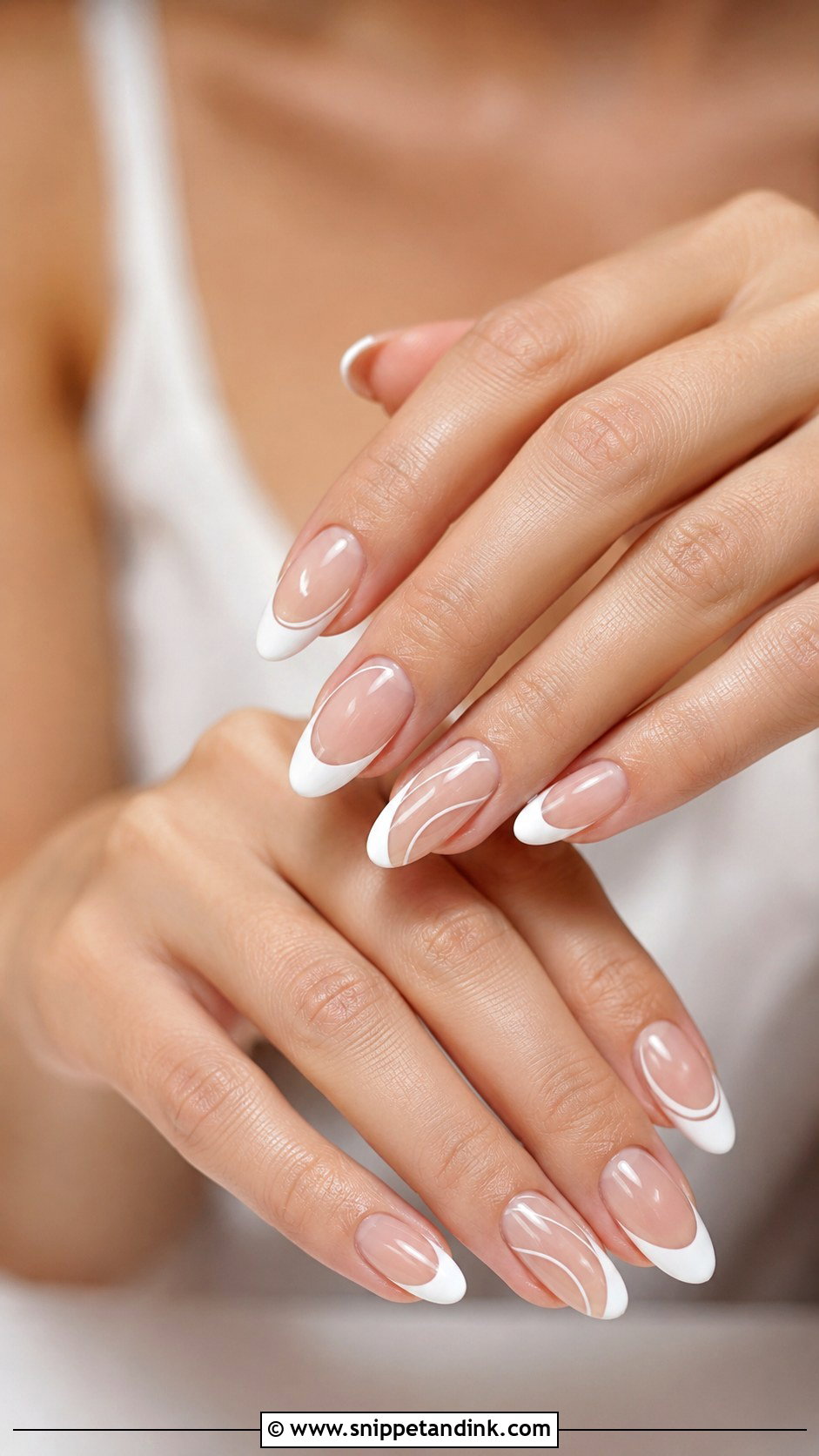
Negative space leaves part of the natural nail showing, with white curved tips, fine lines, half moons or abstract shapes over a sheer nude or pink base. It’s light and modern, and it grows out better than most art because the base is already close to your own nail color. Your natural nail needs to be in good condition though, since it’s on show; ridges, stains and dry cuticles are more visible. Almond, oval and short square all suit it.
What White Nails Go Through Between the Ceremony and the Honeymoon
White shows wear faster than any other color, so the day itself and the week after deserve a plan. The weak points are always the same: the free edge chips first, crystals and pearls catch on knitwear and lace, and glitter or chrome wears thin at the tips from hands brushing fabric.
On the day, I’d keep a small pouch with a glass nail file, a cuticle oil pen, a matching polish and a quick-dry top coat. A smoothed edge and a dab of oil before the portraits does more for close-ups than any design. Hand lotion should go on early, not right before the ring shots, or the shine on your fingers will distract from the nails.
After the wedding, resist peeling gel or picking off extensions on the flight home. Peeling lifts layers of your natural nail with it and leaves thin, sore patches for weeks. Book a proper removal, soak-off or careful filing, ideally within two to three weeks, and give your nails a short break with oil and a plain strengthener before the next set.
Ten Fingers, One Ring and a Shade That Suits Your Dress
Every set here can be classic, modern, minimal or glamorous depending on finish and detail, and French tips, milky white, pearl chrome, lace and ombré all stay elegant on camera. What makes the choice is your own nails and your dress: pick a length you can live with, a white that matches the gown, and a design that won’t snag the fabric you’re wearing. If you’re unsure, milky, ivory or sheer pearl are the most forgiving. Book a trial, bring clear photos of the designs and the dress, and give your nails the weeks of care they need beforehand.
You'll Like These Ideas:


Leave a Reply