
A bridal lehenga is three garments, a skirt, a blouse and a dupatta, plus the jewelry that sits on top, so I always look at the whole outfit before falling for a color or a motif. The designs below run from traditional reds and heritage weaves to pastels, jewel tones and modern cuts like corset and cape blouses. Brides I dress now want fine craftsmanship that is lighter to wear, a defined waist, a color that means something to them and a dupatta they can actually manage. Before you decide, think about the venue, the season, how long the ceremonies run and how much sitting they involve. Then look hard at the blouse support, the skirt’s weight and where the embroidery falls at the waist and hem.
A Lehenga Has to Survive Hours on a Low Seat
Many wedding rituals involve long stretches seated on a low platform or cushions, then standing for photos, then walking around the fire. That’s very different from trying a lehenga on in a showroom for ten minutes. A heavily worked bridal lehenga can weigh several kilos, and nearly all of that weight hangs from the waistband. When I fit one, I’m thinking about how it will feel in the fourth hour, not the first.
What I check at every fitting
- The waistband: a broad, padded band spreads the weight. A narrow drawstring on a heavy skirt cuts into the hips by evening.
- The can-can or underskirt: it should give shape without scratching. Ask for a soft lining between the netting and your legs.
- The hem: set it with your actual wedding shoes on, so the skirt just clears the floor when you walk.
- The blouse hooks or zip: test them seated and leaning forward, since a blouse that fits standing can gape when you sit cross-legged.
If the outfit feels heavy in the shop, it will feel heavier at the ceremony. Ask the designer whether some embroidery can move from the waist to the hem; weight carried lower is far easier to wear.
1. Red Zardozi Bridal Lehenga
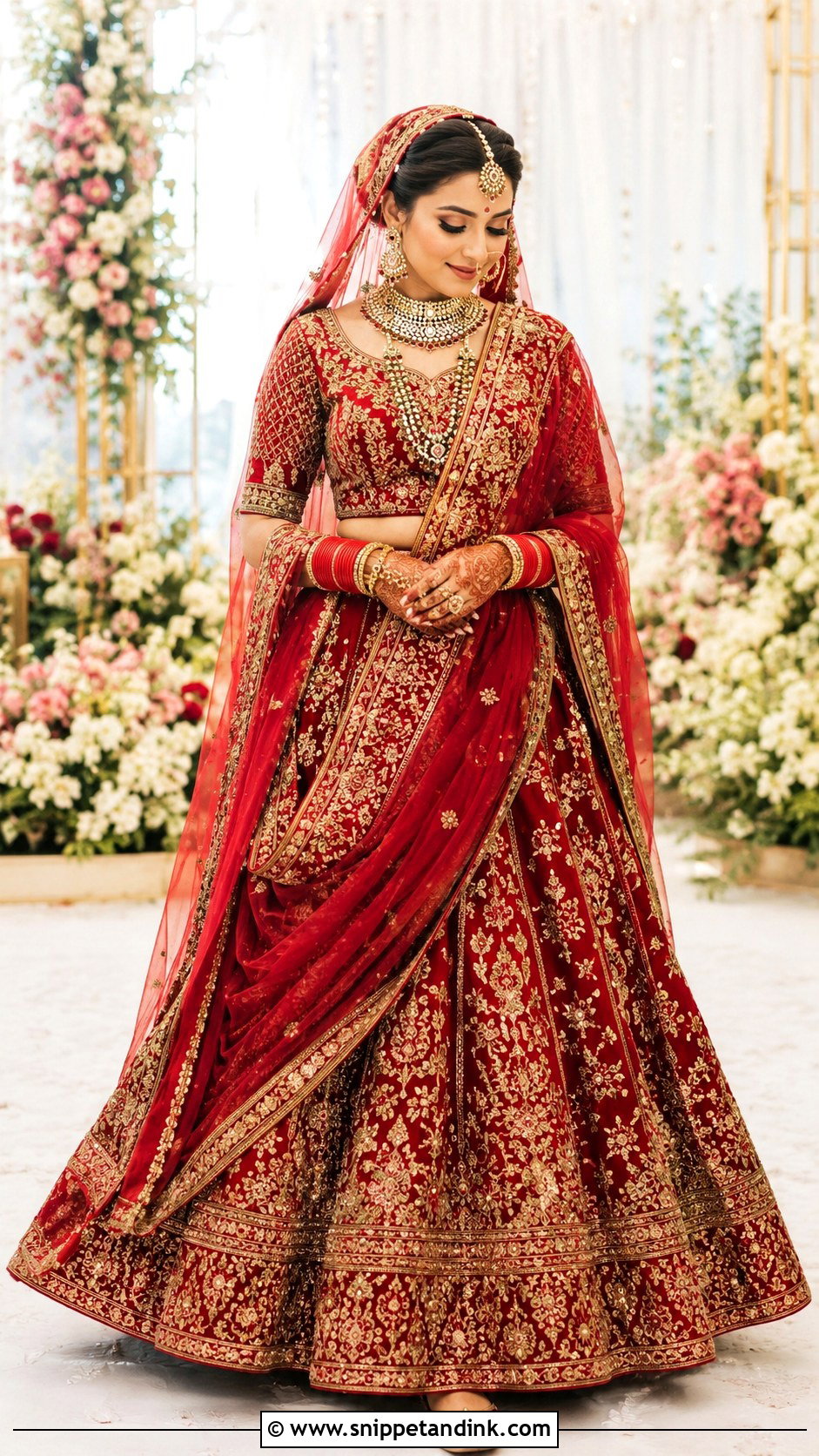
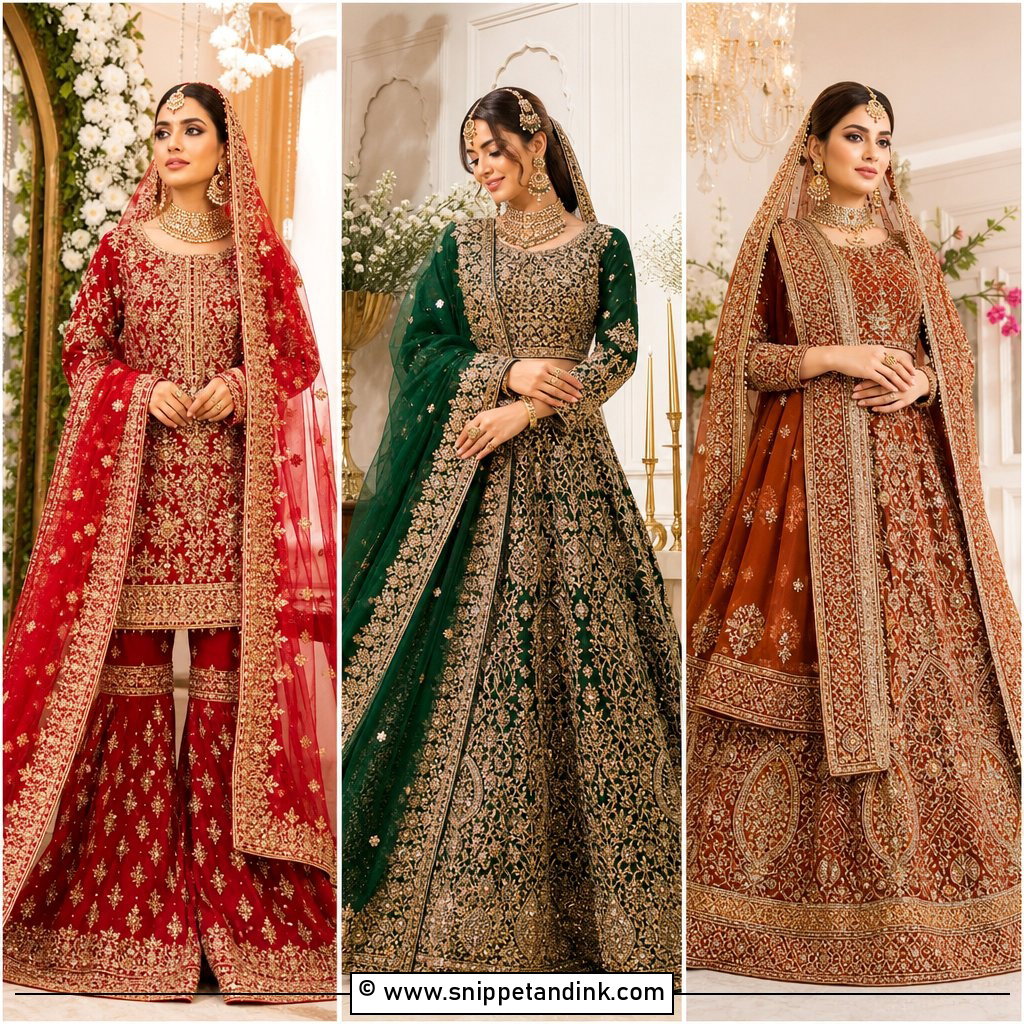
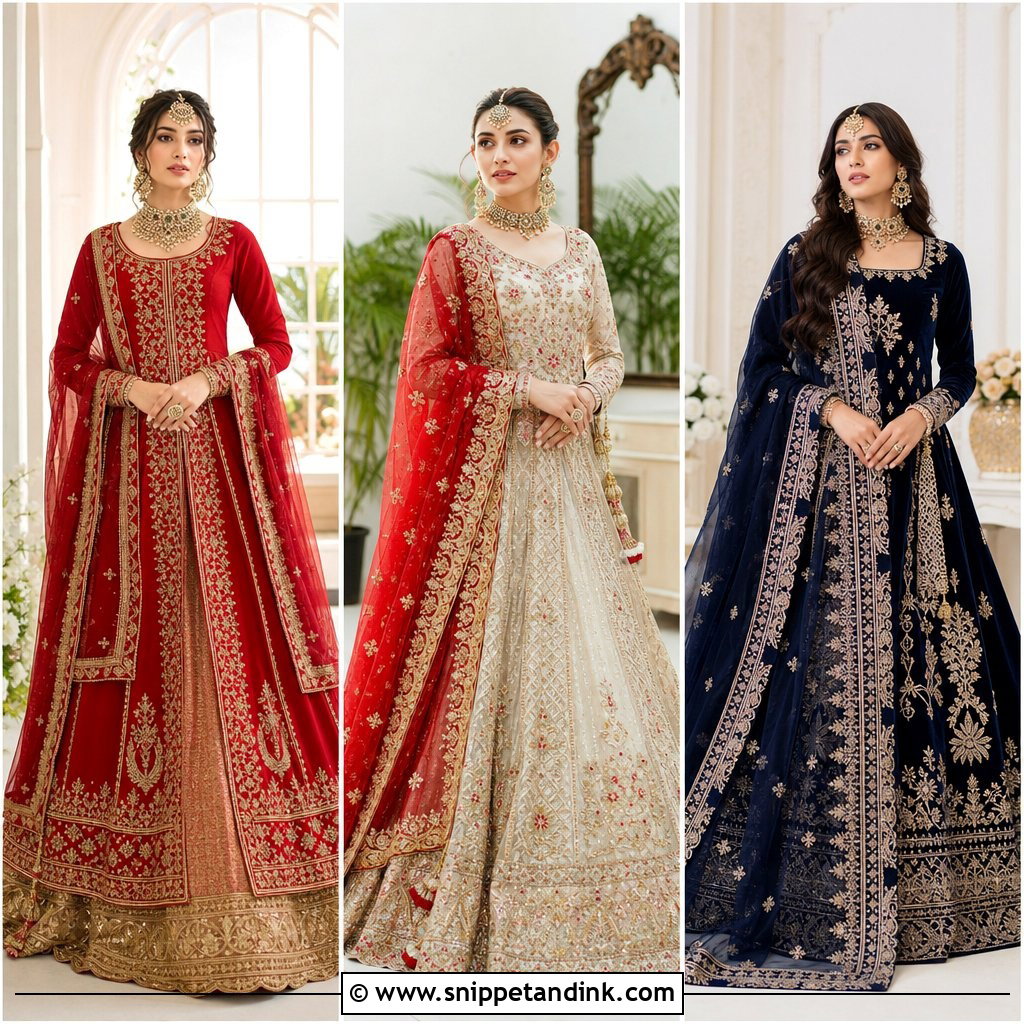
Red with gold zardozi is the lehenga most families picture first, and it earns its place. I’d choose crimson or vermilion with embroidery placed in bands and motifs, leaving some red showing, because a skirt covered edge to edge in metal thread becomes heavy and stiff. A fitted blouse with elbow-length sleeves supports the bust and frames the work. A scalloped dupatta goes over the head and a lighter one across the shoulder. Gold or polki necklace, earrings, bangles, maang tikka and embroidered juttis complete it. When the skirt is heavily worked, keep the blouse simpler so the eye has somewhere to rest.
2. Maroon Velvet Bridal Lehenga
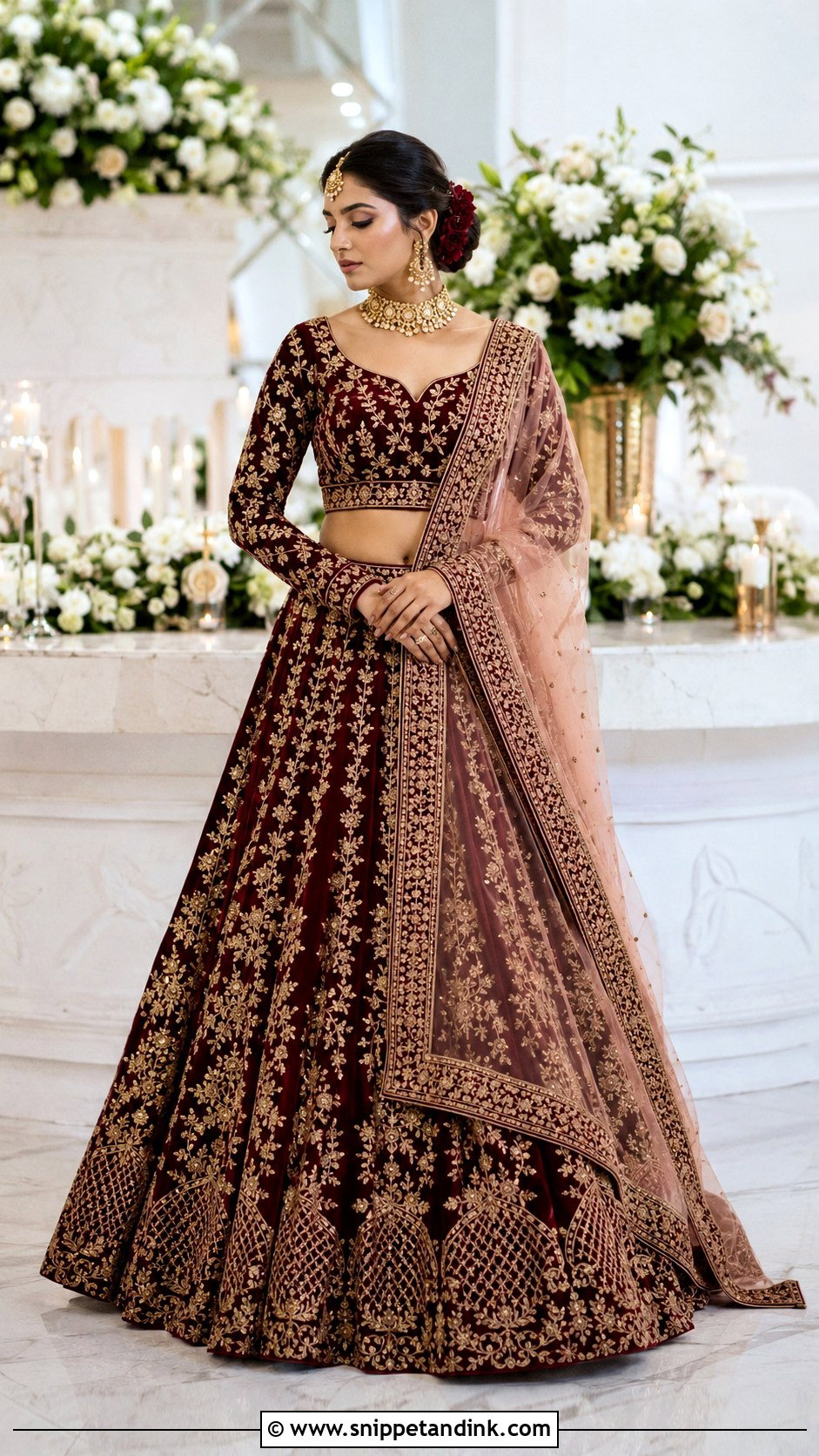
Velvet comes alive under strong ceremony lights, which is why a maroon velvet bridal lehenga suits an indoor evening wedding or a winter date. It’s warm, though, so I’d steer you away from it for an outdoor summer ceremony. Antique gold zardozi, dabka or floral motifs around the hem and panels suit the pile. A structured velvet blouse with a modest neckline, then a light net or organza dupatta, keeps the weight down. Antique gold jewelry, a choker, a nath and maroon juttis complete it, with a low bun dressed in flowers. Skip heavy sequins; velvet has enough depth, and fine embroidery reads more clearly on it in photographs.
3. Ivory Gold Bridal Lehenga
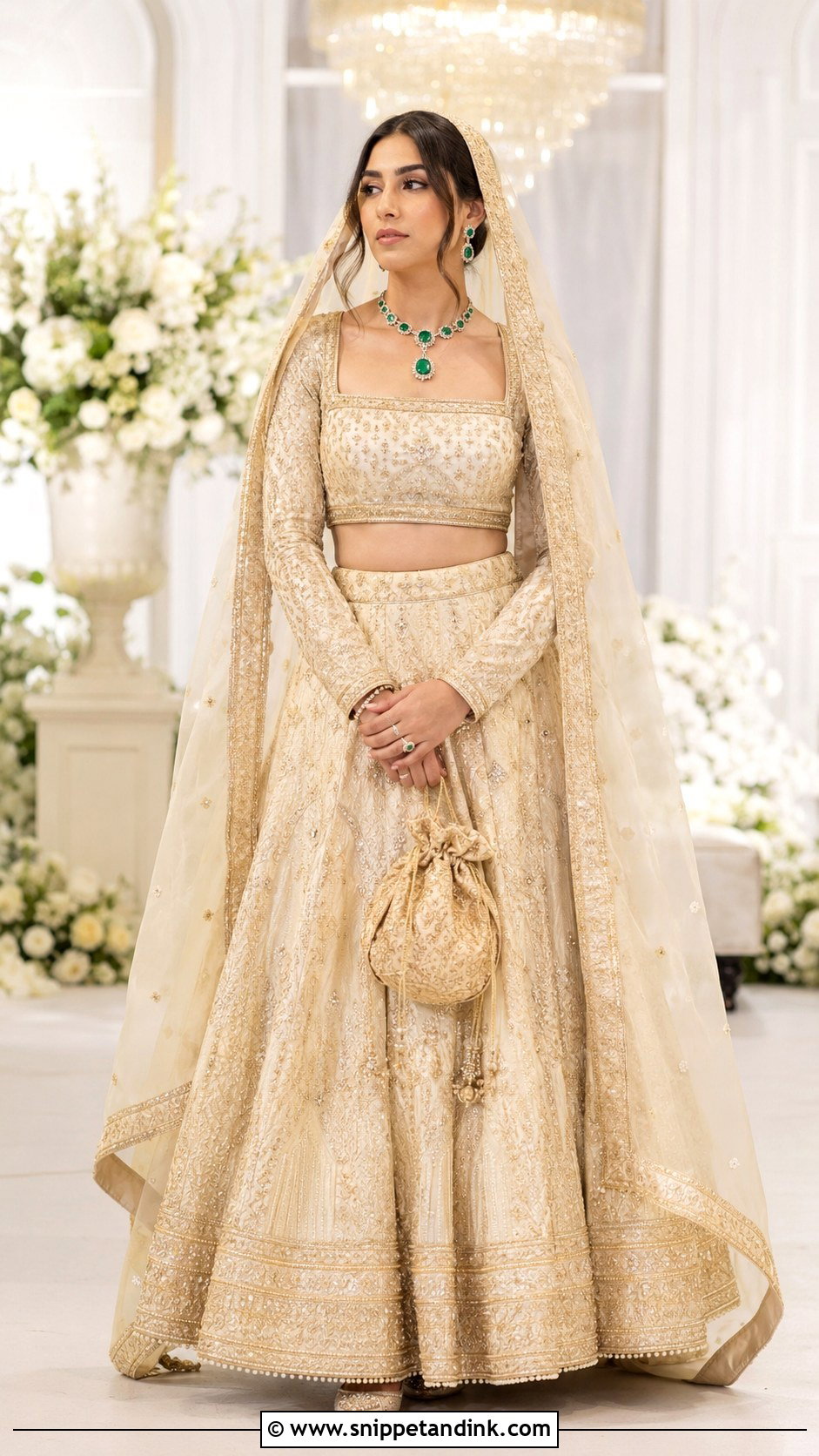
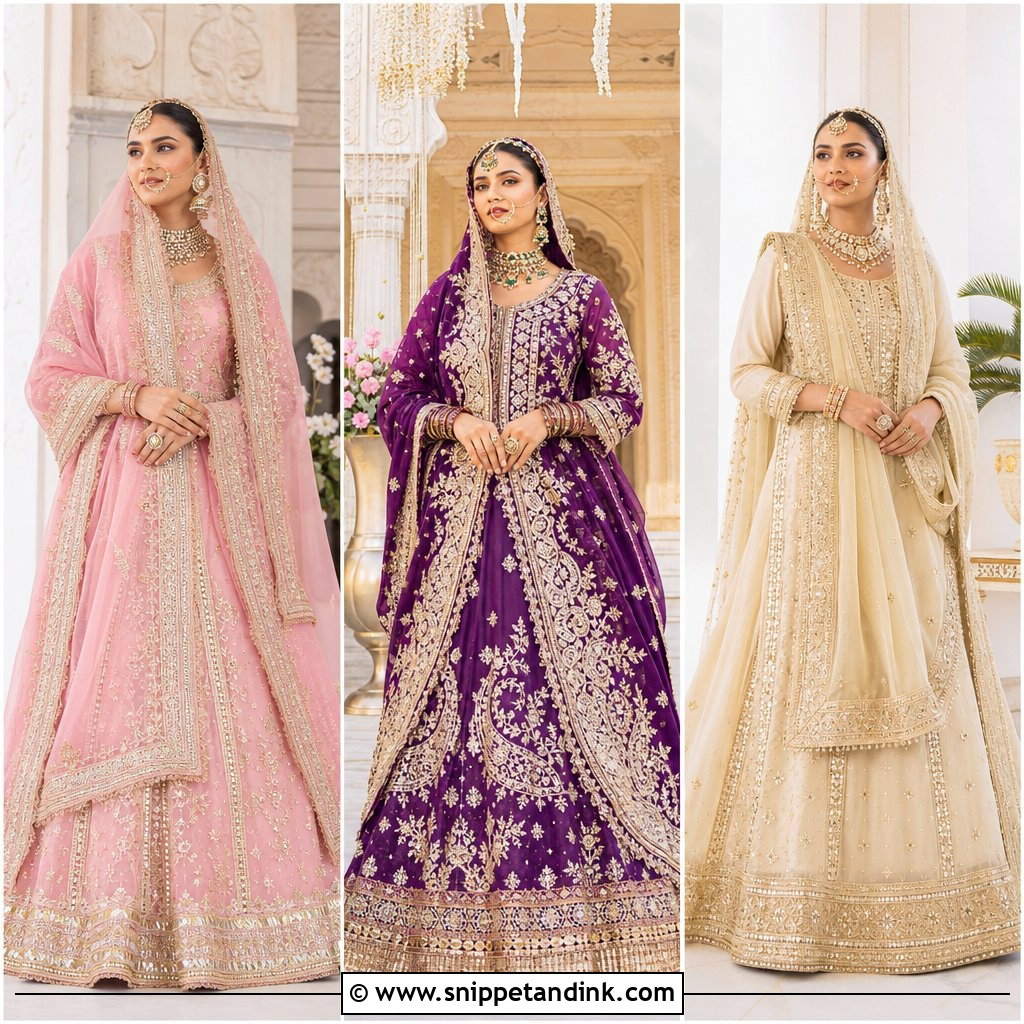
Ivory and gold glows instead of shouting. Raw silk, tissue or organza in ivory, worked with gold zari, pearls, sequins or fine thread, makes a soft base, and a fitted blouse with a square or sweetheart neck gives the pale outfit a focal point. A sheer ivory dupatta with a gold border can go over the head or pinned at the shoulders. Emerald, ruby or uncut diamond jewelry adds a controlled hit of color. The shade is the tricky part. Ivory runs from cool white to warm cream, and the wrong one makes skin look grey, so I hold the fabric under your chin in daylight before anything is ordered.
4. Blush Pink Floral Bridal Lehenga
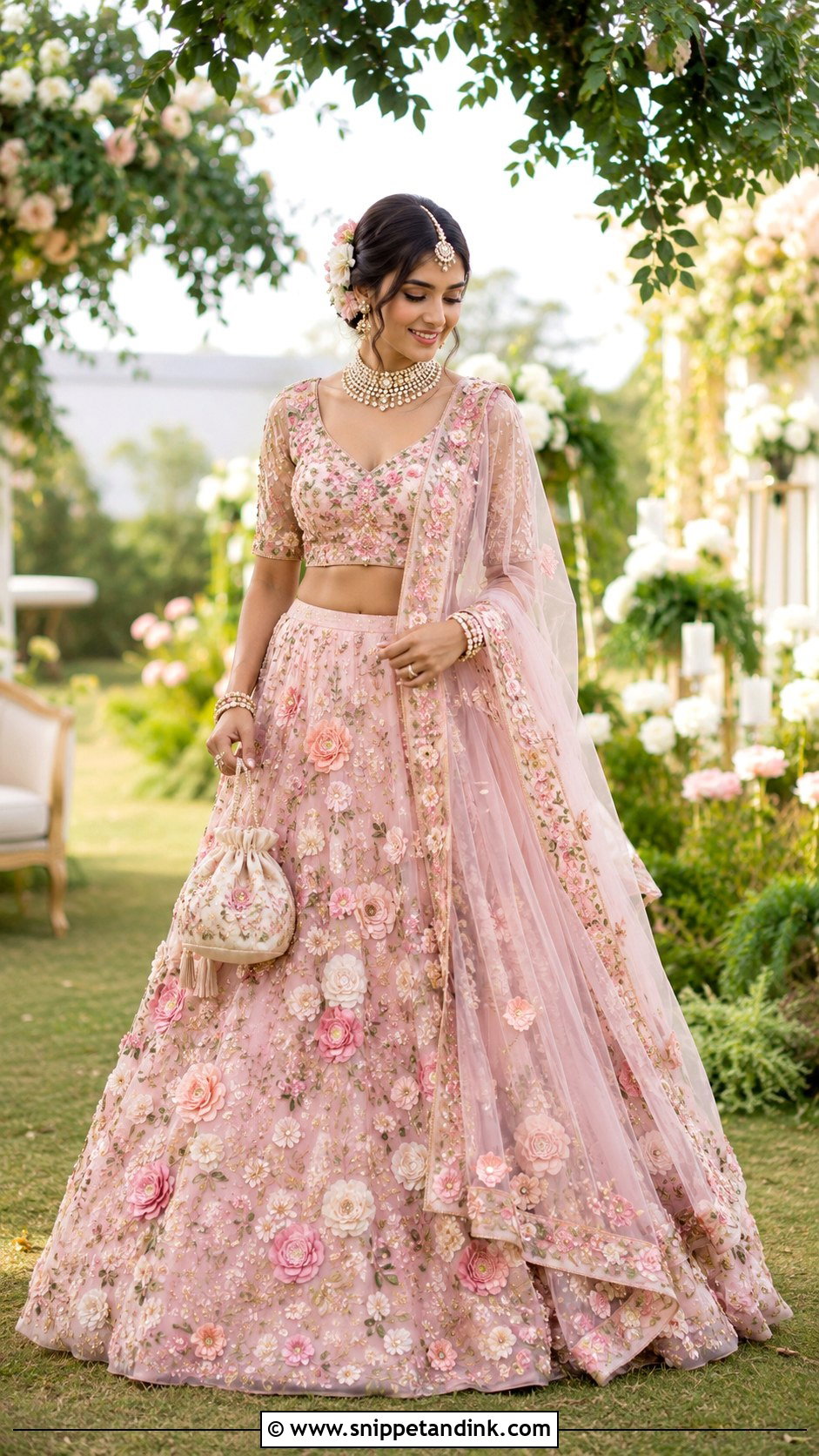
Blush pink with raised flowers is a daytime lehenga, soft and romantic in natural light. I prefer blossoms spaced across the skirt over a single crowded pattern, worked in tonal pink, peach, ivory and muted green thread so the design has depth without clashing. A blouse with supportive straps or delicate sleeves and a sheer dupatta with a narrow floral edge keep it airy. Pearl, diamond or pale kundan jewelry suits it, with blush juttis and a small potli. Three-dimensional flowers snag. Before an outdoor function, I check every appliqué is stitched down firmly, since loose petals catch on chair backs, decor and your own dupatta.
5. Rani Pink Gota Patti Bridal Lehenga
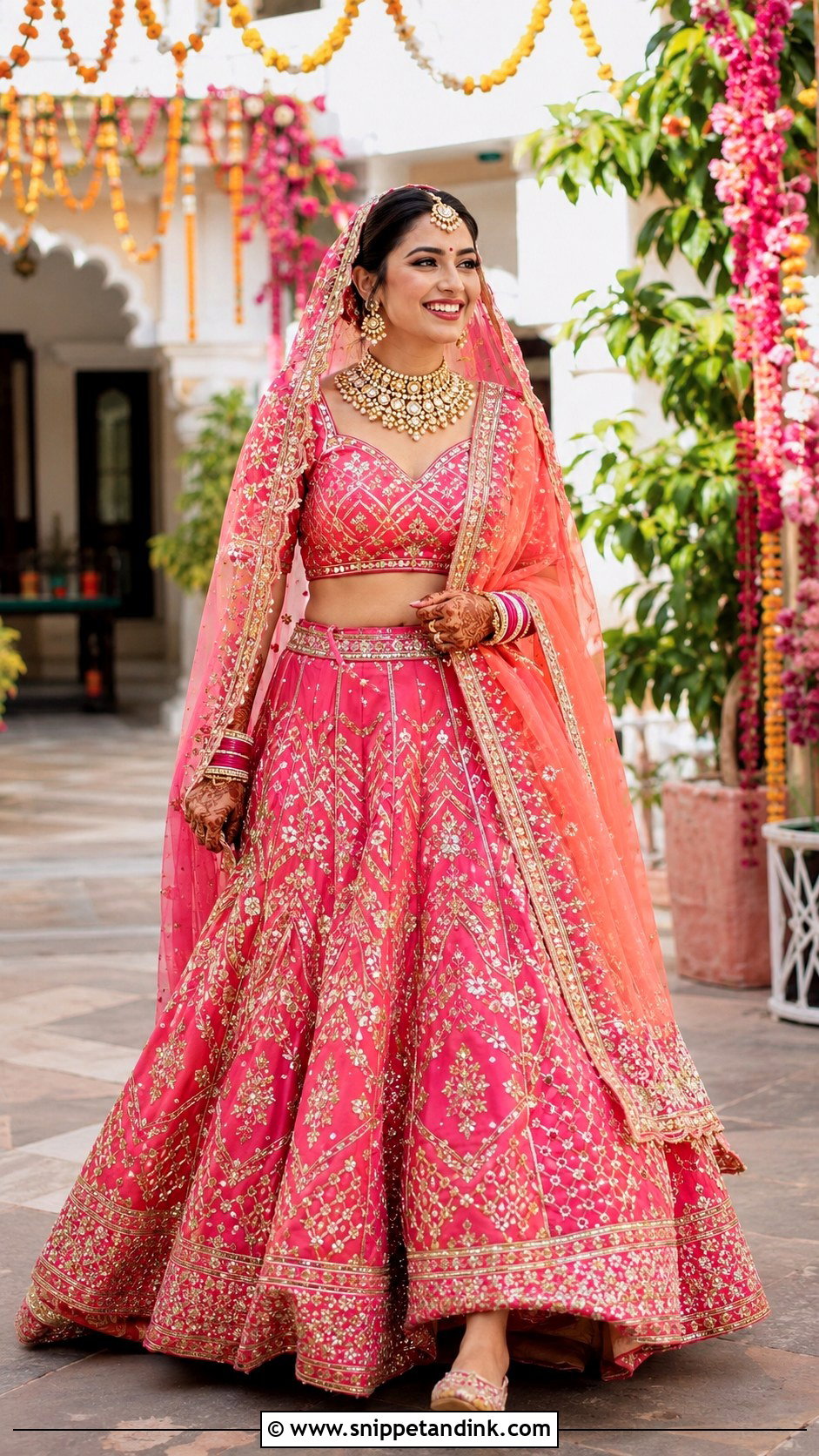
Gota patti is metallic ribbon folded and stitched into flowers and borders, and on a rani pink gota patti bridal lehenga it looks festive and joyful. A full skirt carries floral, geometric or architectural patterns, balanced by a matching blouse with a deep but secure neckline. An orange, red or tonal pink dupatta layers the color nicely. Gold kundan, stacked bangles, a maang tikka and embellished juttis keep the metals consistent. Real gota is light, but some cheaper versions use thick plastic-backed ribbon that turns stiff and scratchy along the waistband. I run my hand along the inside of the waist to check before recommending one.
6. Emerald Green Bridal Lehenga
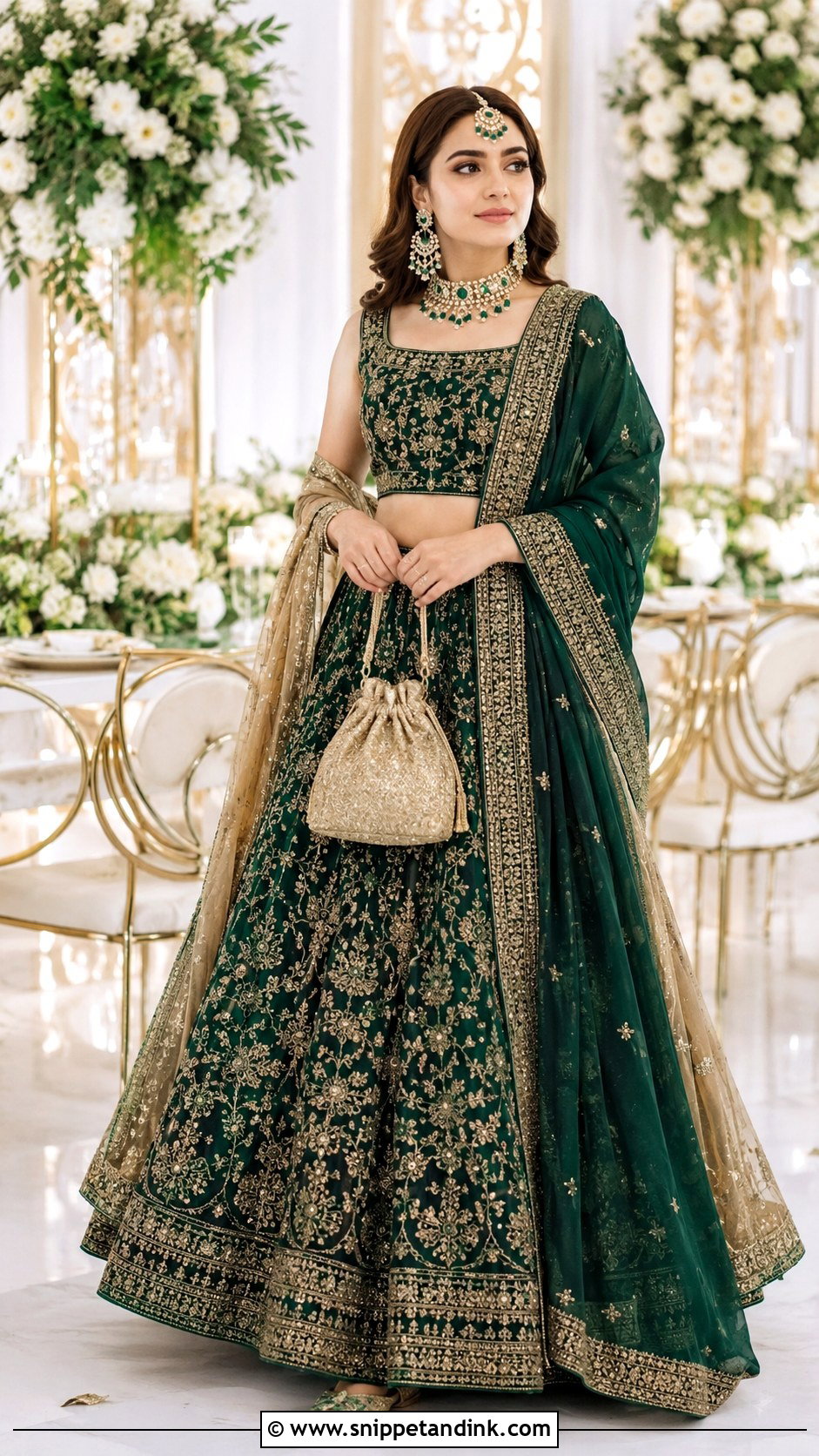
Emerald with antique gold feels luxurious at an evening ceremony or reception, and it’s a strong alternative to red. An A-line or circular skirt lets the deep green move. A structured blouse with a square neck, full sleeves or a sweetheart shape suits it, along with a green dupatta bordered in gold and, if you like, a second muted gold one. Kundan with emerald accents, a gold potli and metallic juttis complete it. Very dark greens can swallow detail in photos. I’d choose a design with some open space between embroidered areas and a slightly lighter sheer dupatta, so the outfit doesn’t read as one dark block.
7. Royal Blue Bridal Lehenga
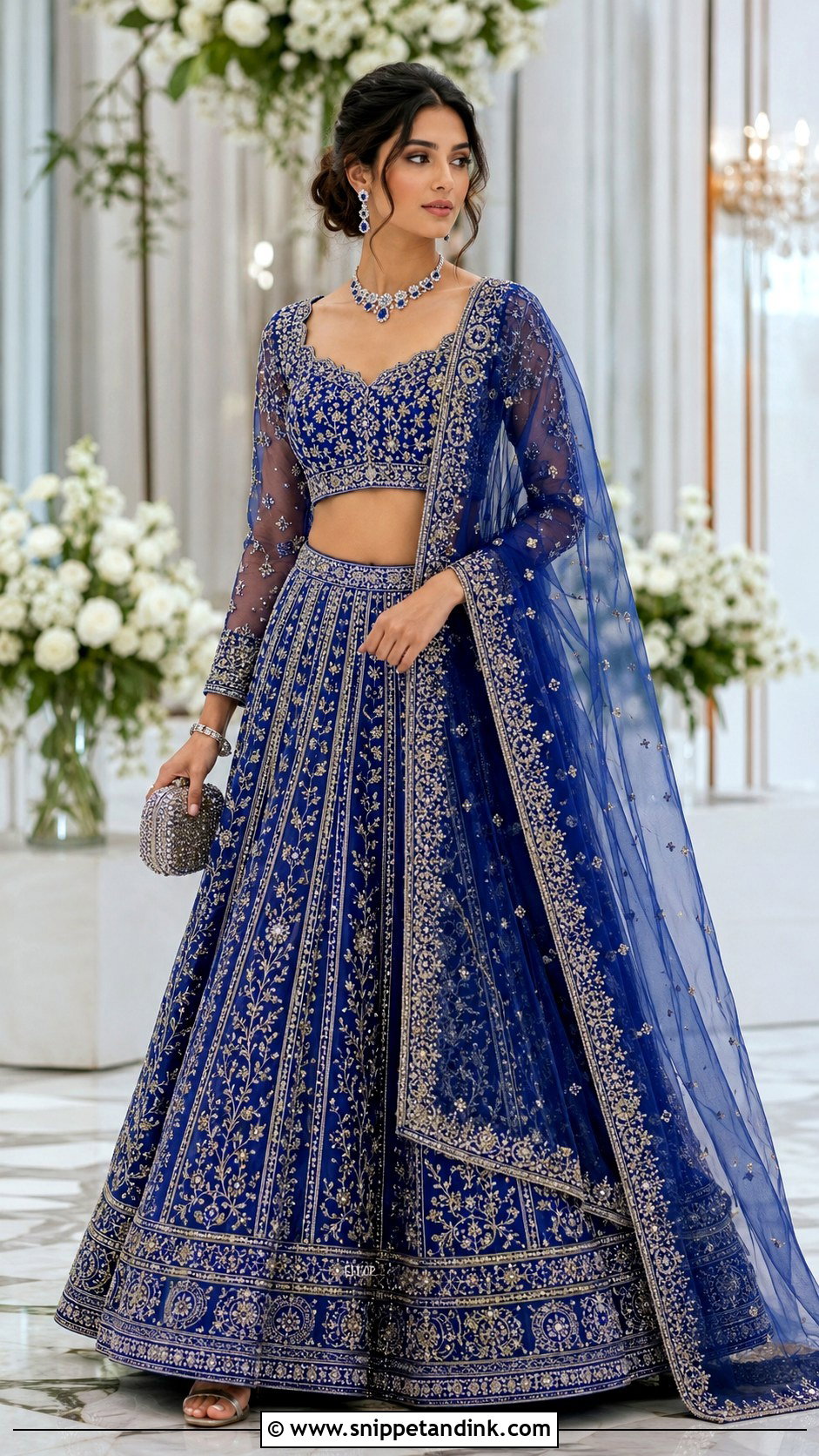
Royal blue is bold but still ceremonial. Silver thread, crystals or pale gold embroidery stand out clearly against it, and a paneled skirt spreads heavier work evenly so it hangs well. A fitted blouse with a supportive neckline and either sheer sleeves or none, plus a matching net dupatta pinned for hands-free movement, completes the base. Diamond jewelry with sapphire accents, silver heels and a beaded clutch suit it, with cool-toned makeup. Stick to one metal. If the embroidery is silver, yellow-gold jewelry fights it; I’d keep the whole look in silver, white gold or diamonds.
8. Lavender Embroidered Bridal Lehenga
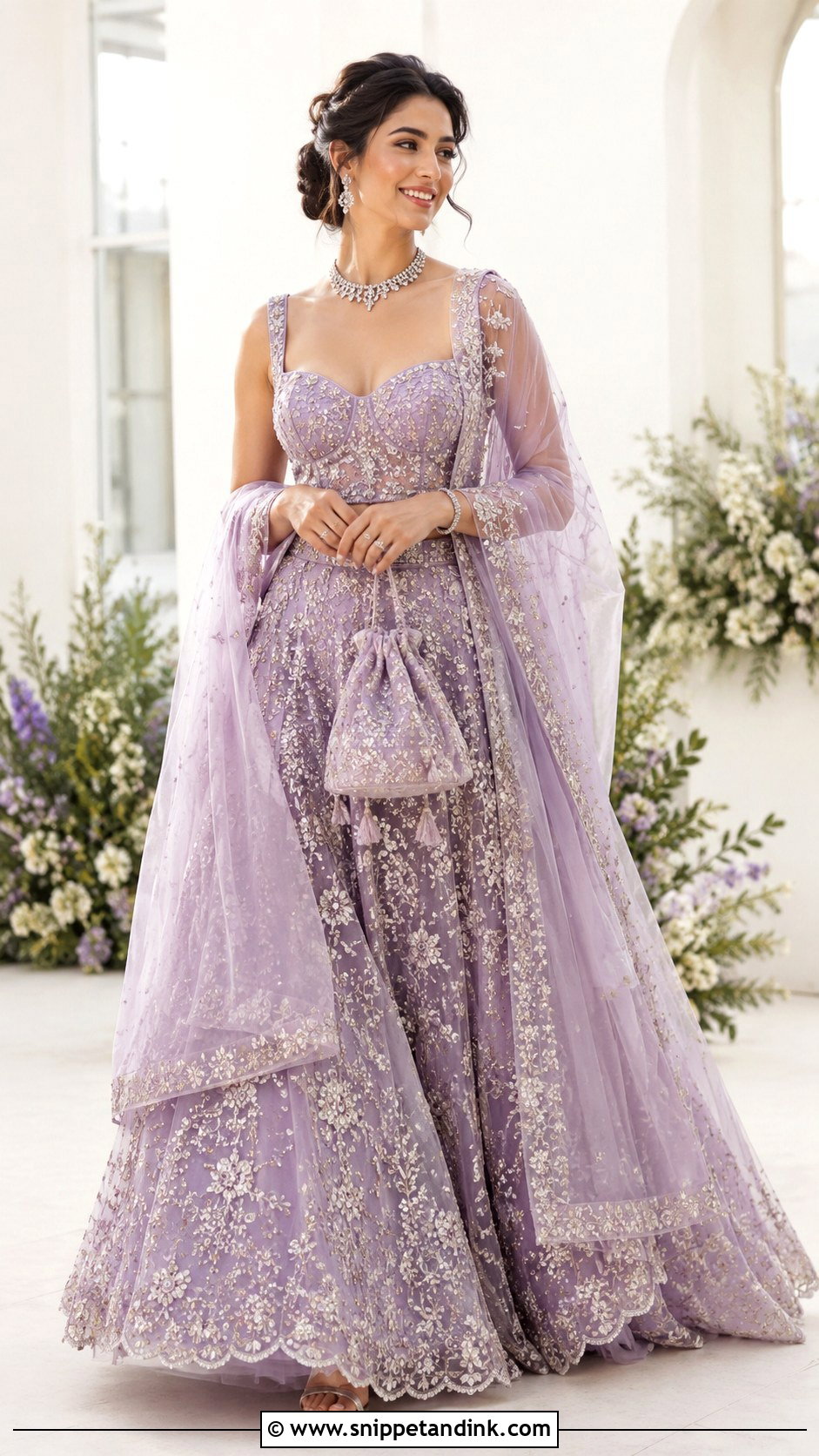
Lavender is soft and unexpected, especially for a daytime wedding or reception. A flowing organza, silk or net skirt worked with silver thread, pearls, crystals or tonal flowers keeps it light. A corset-style blouse gives modern definition, but only if it’s fitted professionally so you can breathe and sit. A sheer lavender dupatta with a fine border, diamonds, pearl drops, metallic sandals and a silver potli finish it. Keep the skirt, blouse and dupatta in one lavender family. Adding mint or peach on top turns it into a pastel mix that looks undecided rather than chosen.
9. Sage Green Bridal Lehenga
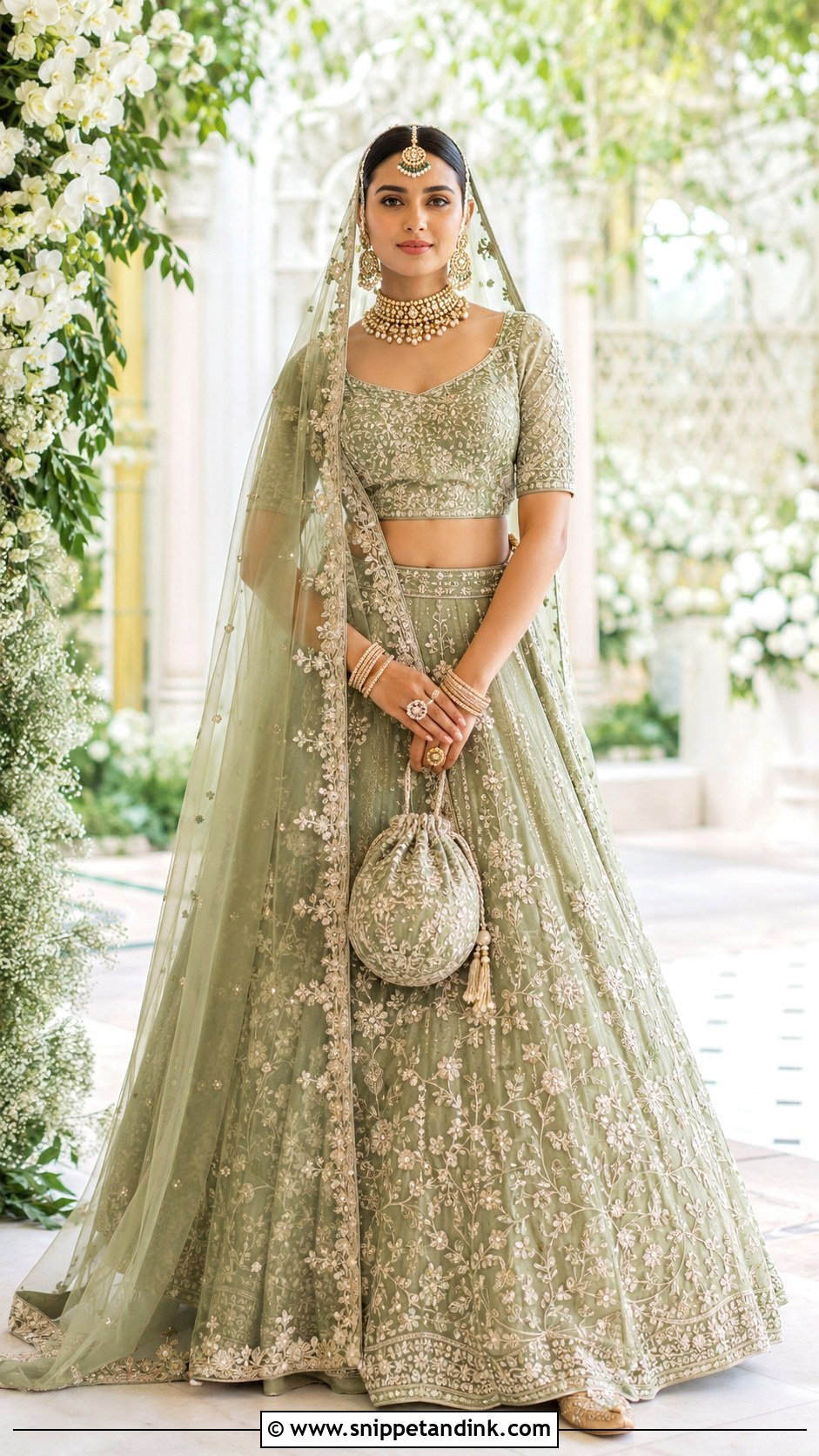
Sage green is calm, and it suits a light-filled venue in the day. A muted green skirt with ivory thread, gold zari, mirrors or small botanical motifs, a blouse in the same tone and a sheer ivory or sage dupatta create a soft, streamlined outfit. Antique gold, pearls or uncut diamonds, nude-gold juttis and an embroidered potli keep the accessories quiet. Muted greens shift a lot under different lights, grey in shade and almost mint under warm bulbs, so I compare the fabric in daylight and indoors. A clear border at the hem gives the pale skirt shape in full-length photos.
10. Champagne Sequin Bridal Lehenga
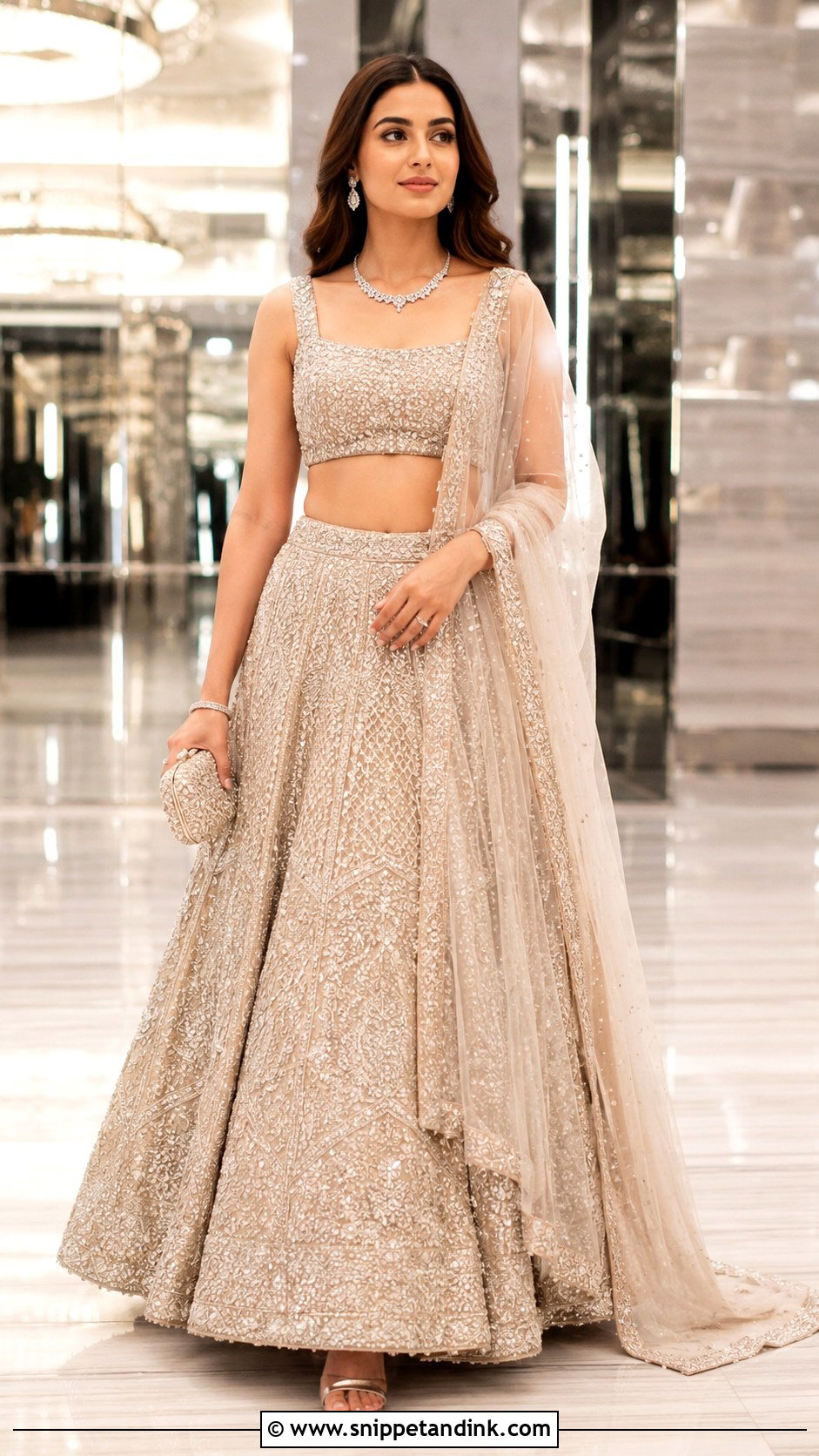
Champagne sequins are a reception choice, and they sparkle without needing a bold color. I look for fine sequins mixed with beads and thread in linear patterns, not big mirror-like discs, which flare in flash. A structured blouse with a square neck, sculpted straps or full sleeves gives the shimmering skirt a modern shape. A light matching dupatta or a draped shoulder panel suits a night of greeting and dancing. Diamond earrings, a fine necklace, metallic heels and a small crystal clutch are enough. Ask your photographer to take a test shot with flash at the trial; it shows whether the sequins glow or glare.
11. Banarasi Silk Bridal Lehenga
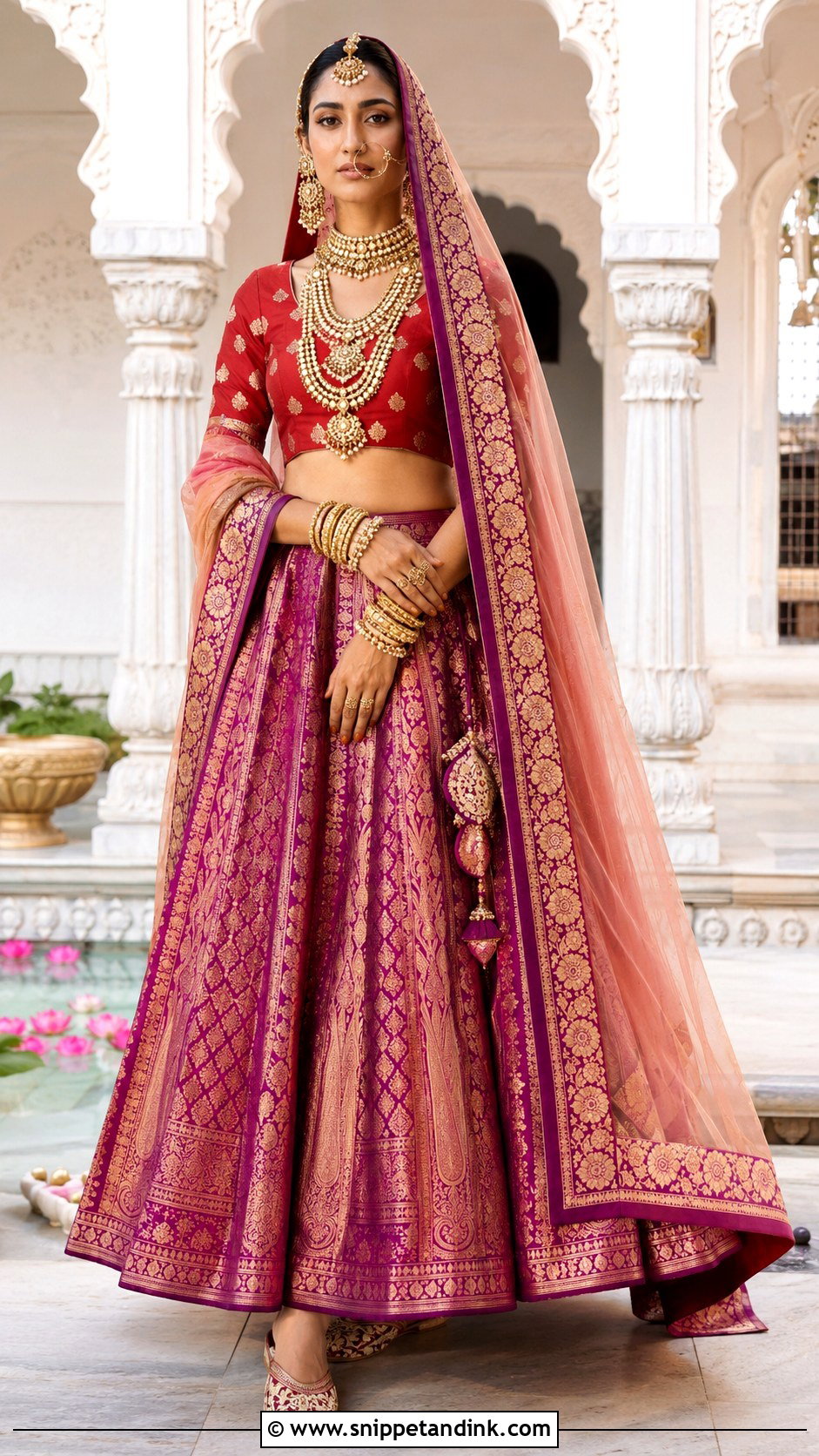
Banarasi silk is woven, not embroidered, so the pattern is part of the fabric itself. A red, magenta, green or gold skirt with brocade motifs and a deep woven border has real heritage. Pair it with a contrasting raw silk blouse with restrained zari so it supports the skirt rather than competing. An organza dupatta edged in Banarasi brocade ties the textiles together without adding weight. Temple jewelry, gold bangles, a classic maang tikka and embroidered juttis suit it. Woven silk already has body, so I’d skip extra underskirt layers and focus on the waist fitting.
12. Mirror Work Bridal Lehenga
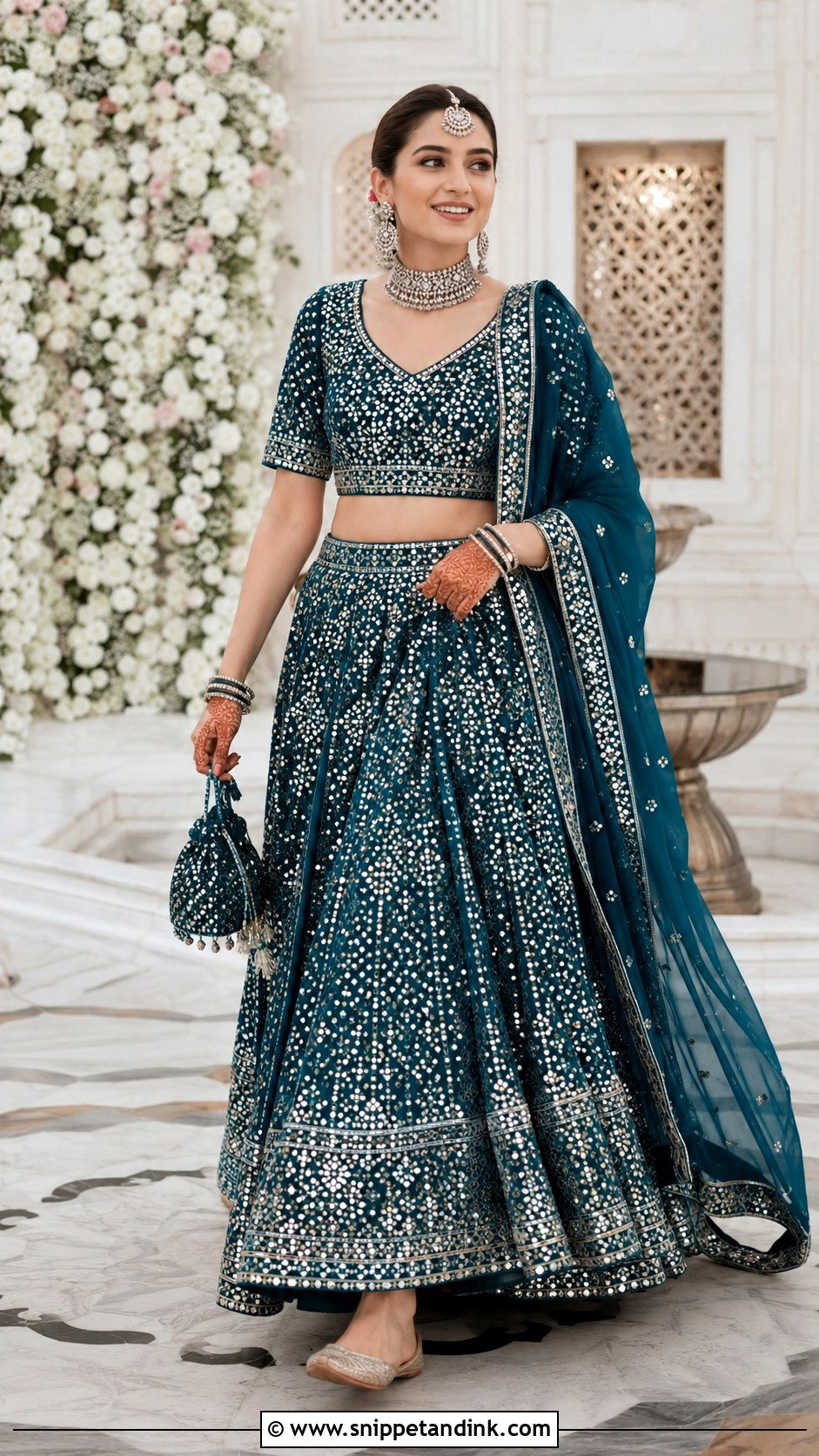
Mirror work turns every movement into flashes of light, which makes it a lively choice for sangeet or mehndi. Choose a skirt where each mirror is ringed securely with thread; loose mirrors are the first thing to fall off on the dance floor. The blouse needs a proper lining, since the back of mirror work is rough against skin. A plain or lightly bordered dupatta keeps it from feeling crowded. A choker, medium earrings, bangles and cushioned juttis are enough. Mirrors add weight, so before buying, sit, bend and walk in it. Work concentrated at the hem and lower panels is easier to wear than mirrors all over.
13. Peach Ombre Bridal Lehenga
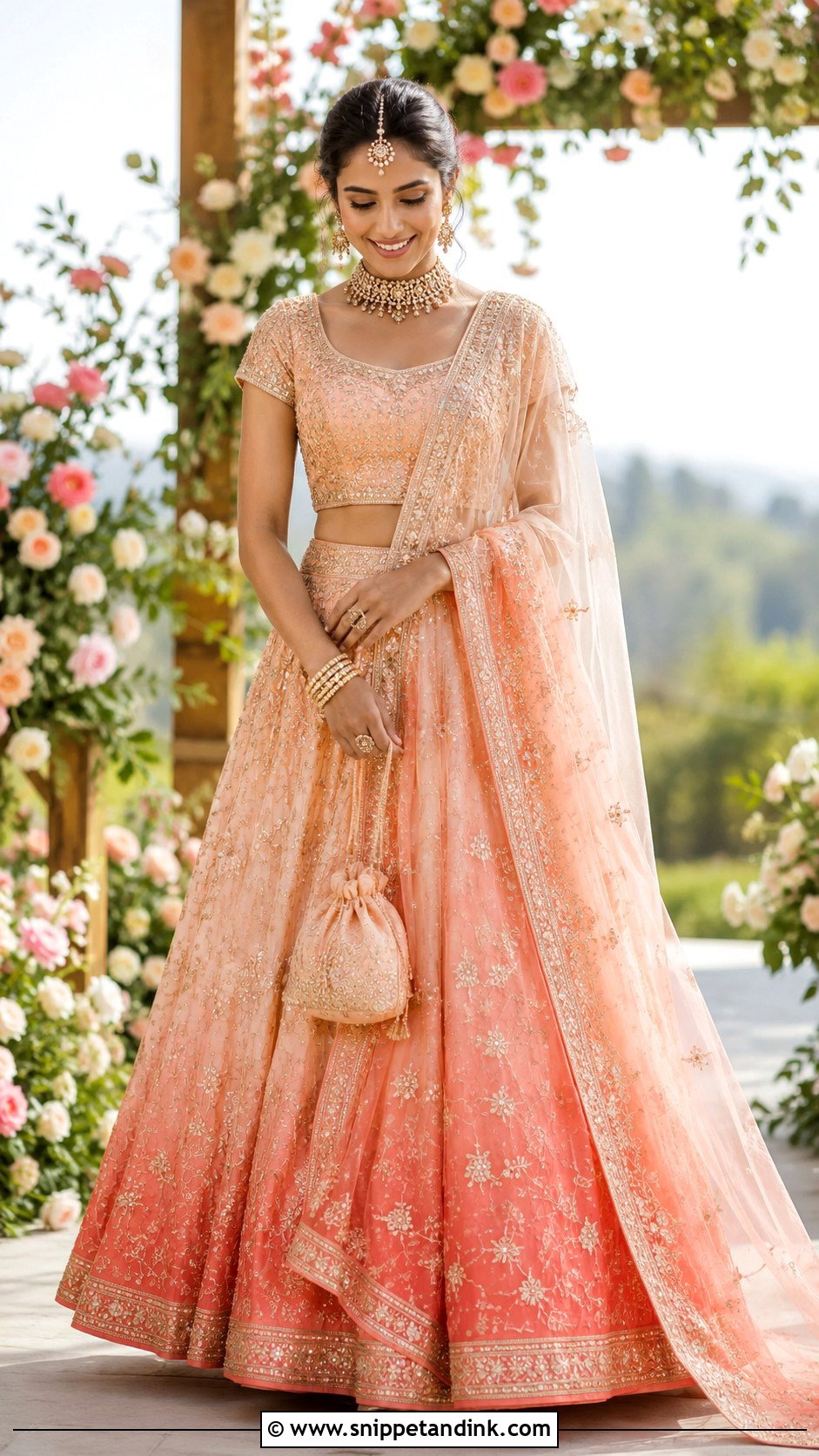
An ombre lehenga moves from pale blush at the waist to deeper coral or rose at the hem, and the effect depends on a smooth gradient. Delicate sequins, thread or floral embroidery can support it, with a blouse in one shade from the gradient and a sheer peach dupatta with a narrow border. Rose-gold jewelry, pearls, nude heels and a tonal potli suit the palette, along with peach and bronze makeup. On a paneled skirt, I check every seam where two panels meet. If the dye lines don’t match, you get visible stripes of color, which break the long, flowing effect that makes ombre work.
14. Multicolor Embroidered Bridal Lehenga
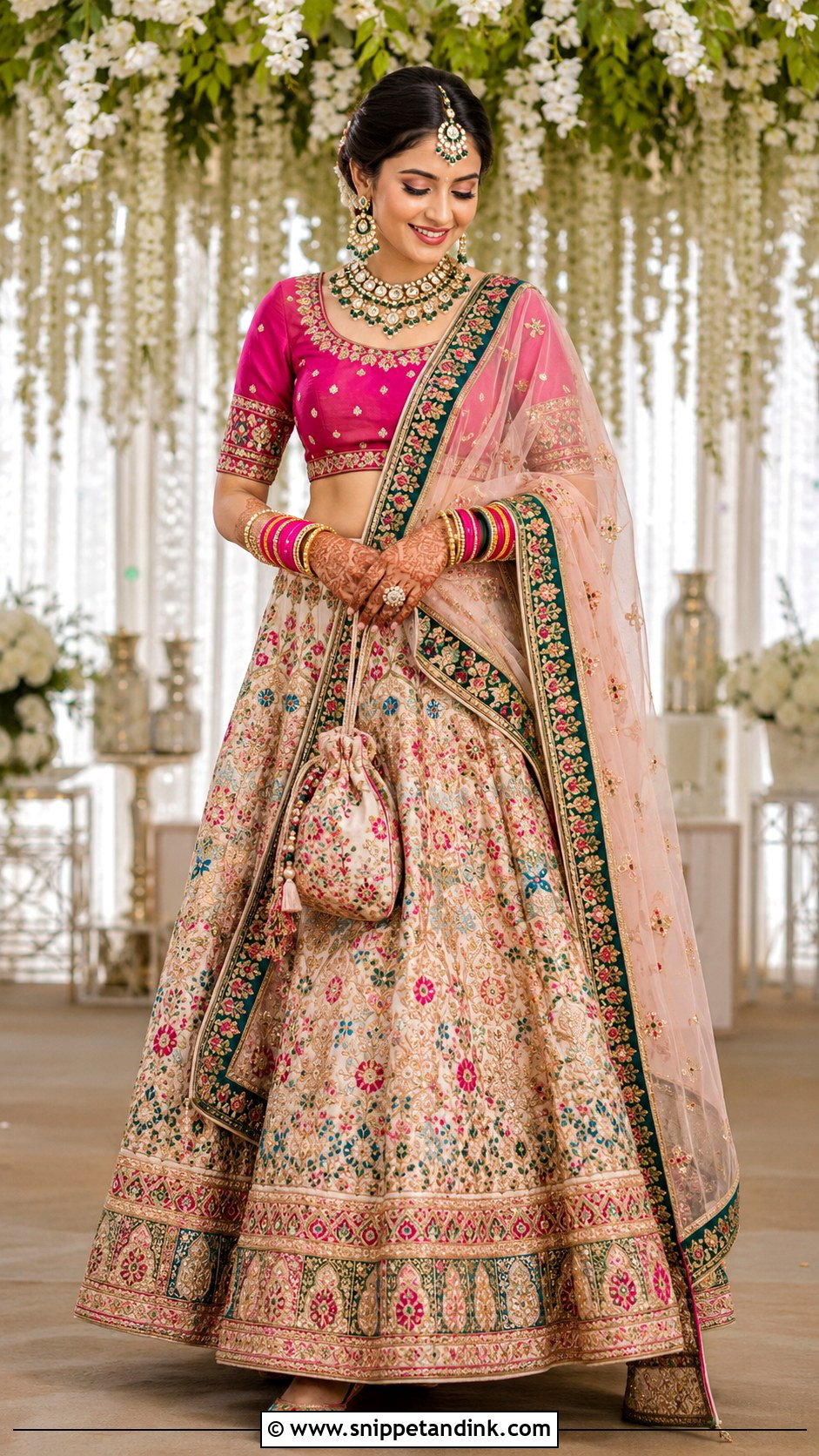
A multicolor lehenga lets you bring several meaningful shades into one outfit. Start from a neutral, red, pink or ivory base, with flowers or heritage motifs in green, blue, coral, gold and magenta, but keep one color dominant. A solid blouse pulled from the embroidery and a dupatta in a second shade organize the rest. Kundan, colorful bangles, embroidered juttis and a simple potli are plenty, with hair and makeup kept refined. My test is to stand a few steps back. If the colors form a pattern from there, it works; if you only see scattered spots, the design is too busy.

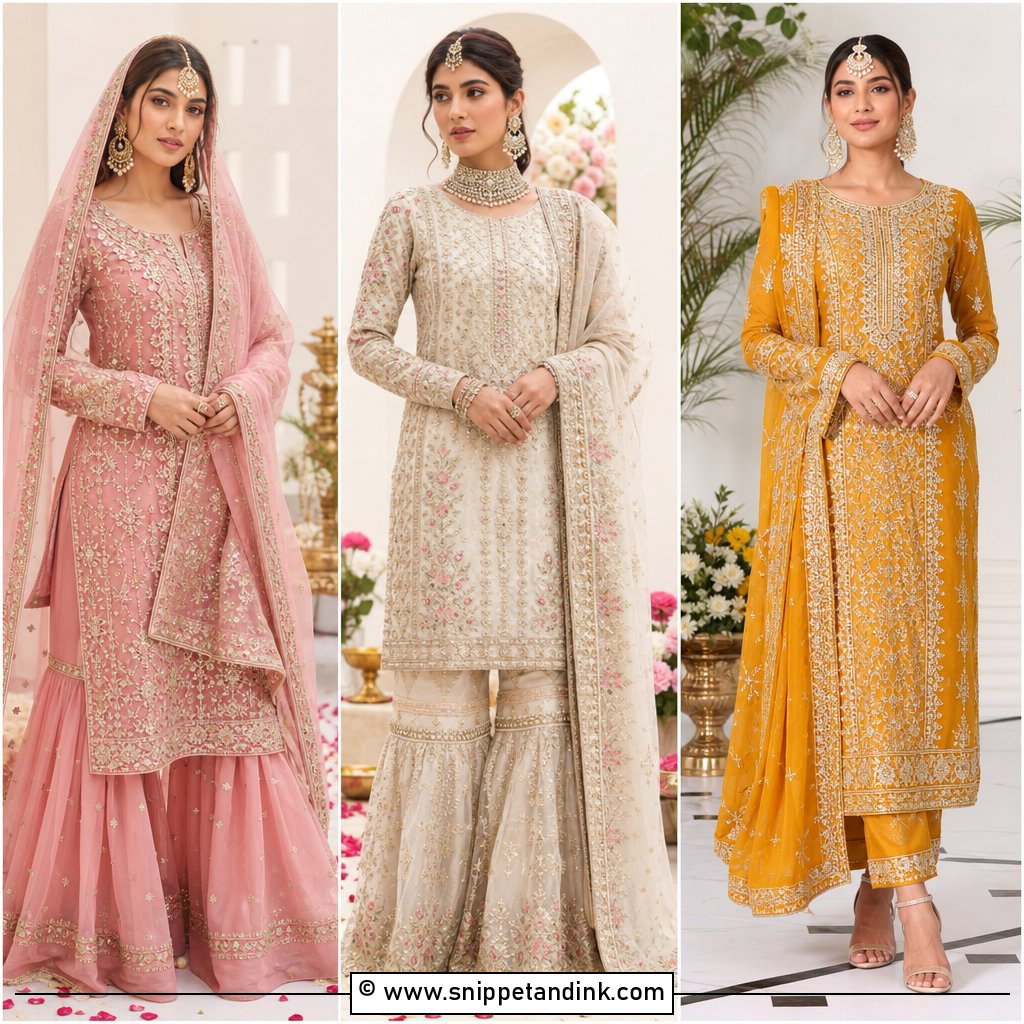

15. Corset Blouse Bridal Lehenga
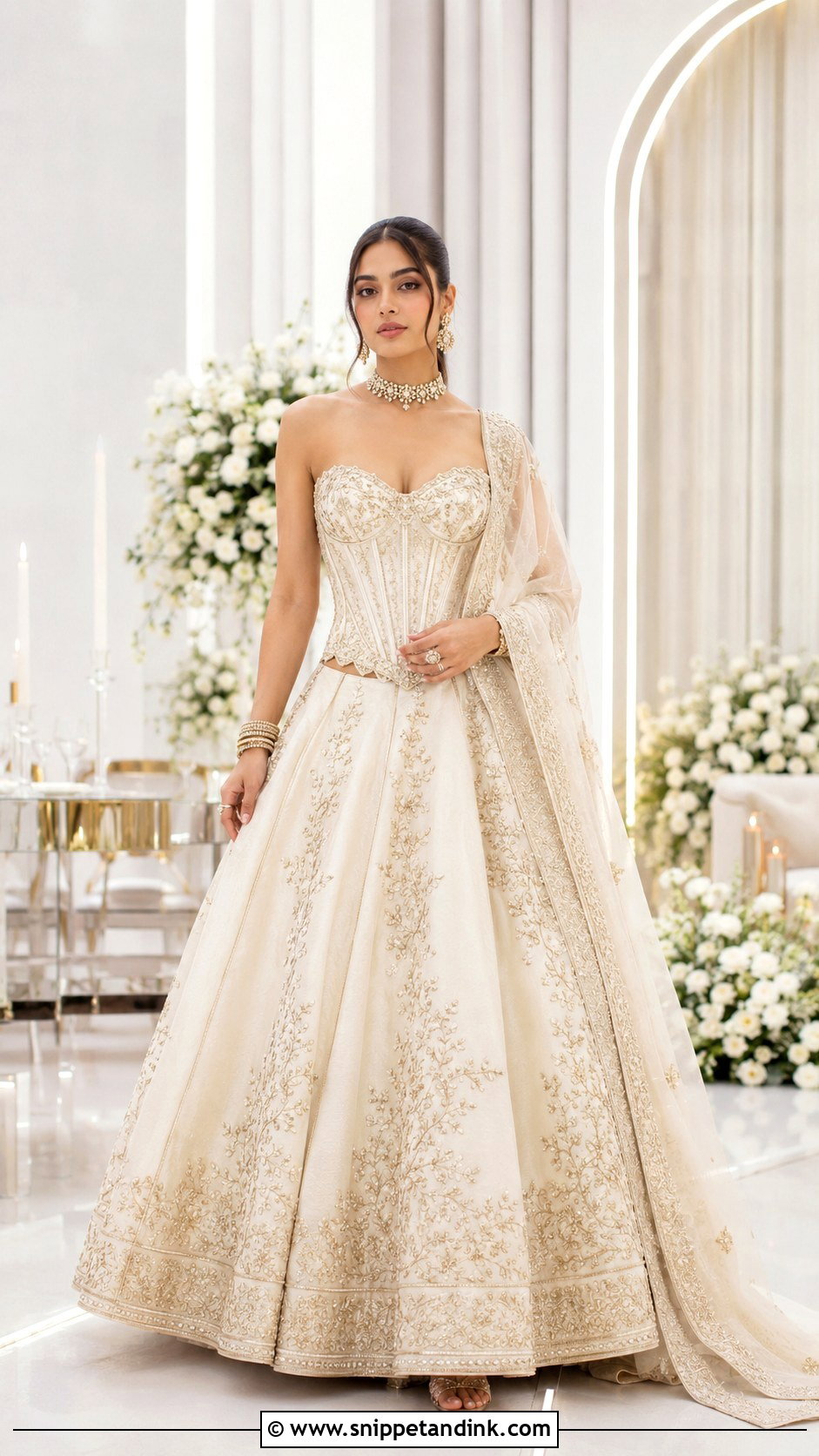
A corset blouse gives a lehenga a defined, almost Western bodice above a traditional flared skirt. Look for internal boning, cups built in, secure straps, and embroidery that flows down into the skirt. Ivory, red, pastels and jewel tones all work. A circular or paneled skirt balances the structured top, and a soft dupatta over one shoulder leaves the neckline visible. A short choker, drop earrings, a bracelet stack and embellished heels or juttis finish it. I’d always book more than one fitting. Corsets tighten in a way regular blouses don’t, and you’ll be sitting through long rituals and eating at the reception in it.
16. Peplum Blouse Bridal Lehenga
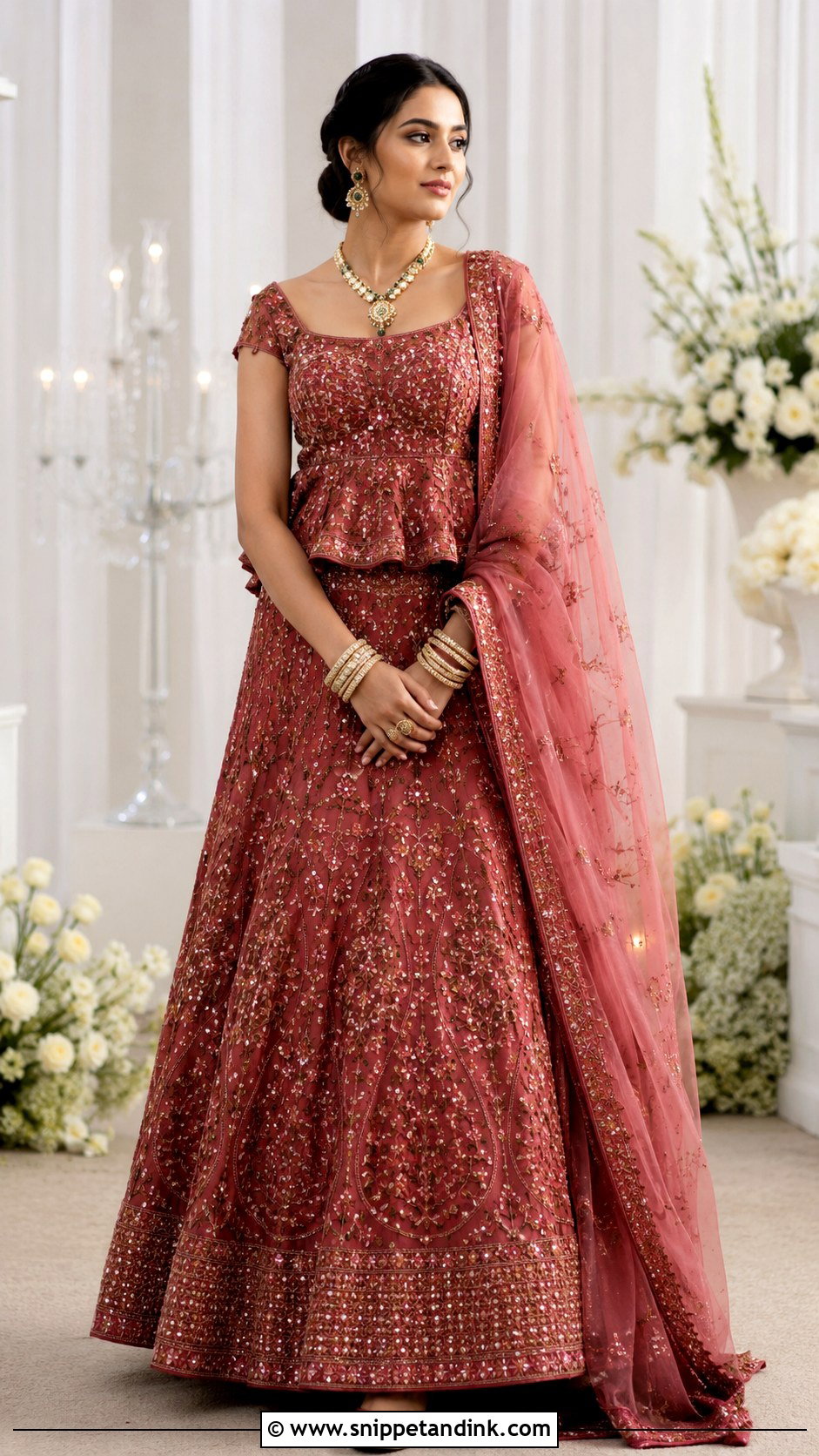
A peplum blouse covers the waist and adds a layered line, which some brides find more comfortable than a short blouse. Choose a fitted peplum that flares gently over an A-line or moderately flared skirt. I’d put the heavy embroidery on the neckline, sleeves and peplum edge and keep the lower skirt lighter, so the outfit doesn’t feel bulky. One sheer dupatta, over the head or from a shoulder, is enough. A medium necklace, statement earrings, bangles, juttis and a sleek bun suit the clean shape. Check where the peplum ends; if it stops right on the skirt waistband, the two edges stack and bunch when you sit.
17. Cape Blouse Bridal Lehenga
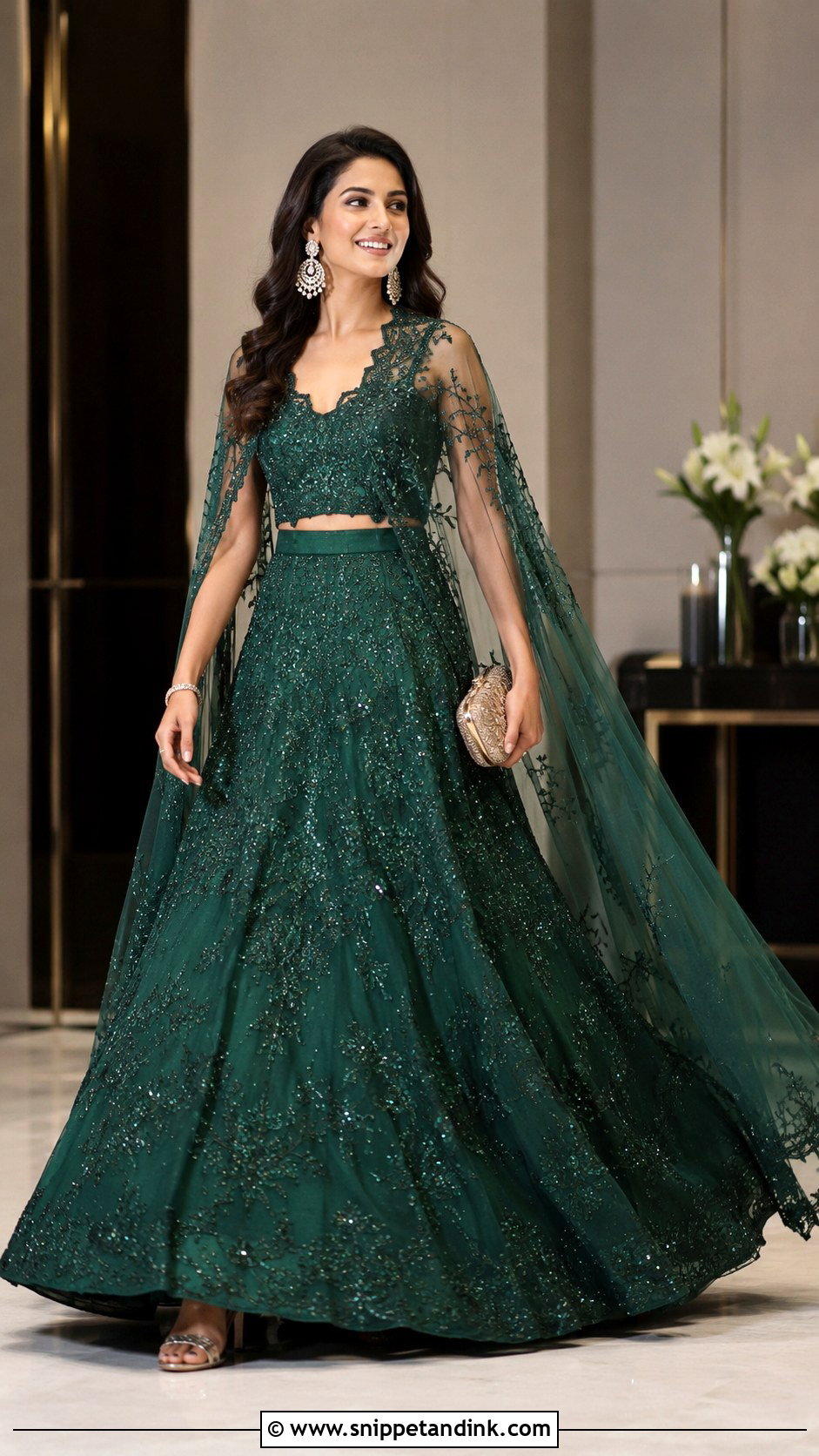
A cape blouse replaces the draped dupatta with sheer fabric falling from the shoulders, sleeves or back, which gives movement and frees your hands. Pair a fitted inner blouse and attached cape with a clean A-line skirt whose embroidery matches the cape’s border. Ivory, champagne, emerald, lavender and deep red all suit the shape. Statement earrings, a fine bracelet, metallic heels and a small clutch are enough; skip a heavy necklace if the cape is worked at the neckline. A sleek ponytail or low bun keeps the shoulders clear. Make sure the cape ends above the floor, or it’ll catch under your heels and on chair backs.
18. Double Dupatta Bridal Lehenga
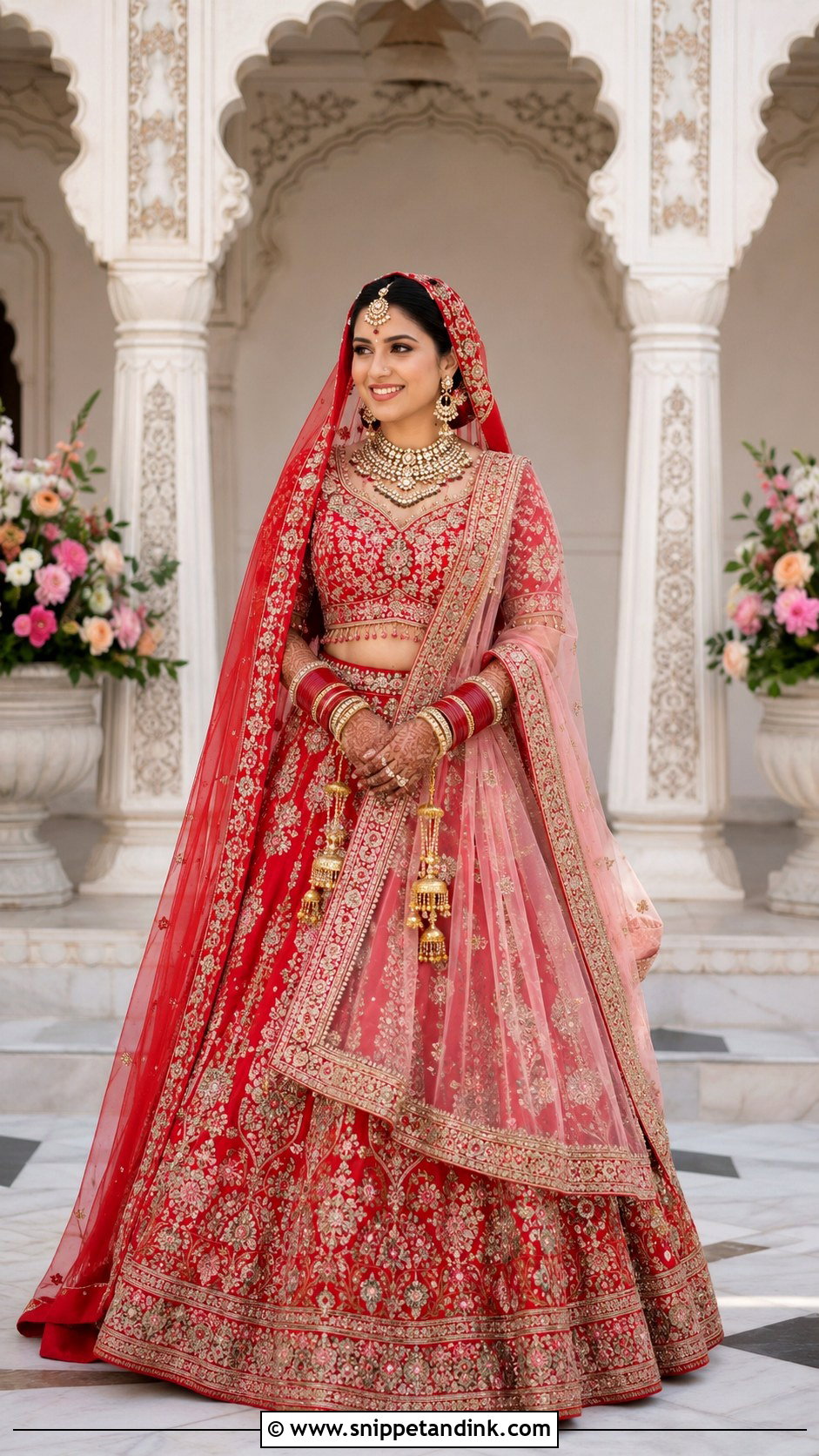
A double dupatta bridal lehenga gives the classic layered look for the ceremony while leaving the skirt and blouse visible. Start with a richly embroidered lehenga in red, pink, maroon, ivory or another meaningful shade. The lighter dupatta goes over the head; the heavier one drapes across the body or over a shoulder. Their borders should coordinate, not match exactly. Choker, long necklace, earrings, maang tikka, bangles and juttis complete it. The weight of two dupattas drags on the blouse, which is why I pin them at the final fitting. Pins placed into the blouse’s structure, not just the fabric, stop the neckline slipping.
19. Temple Motif Bridal Lehenga
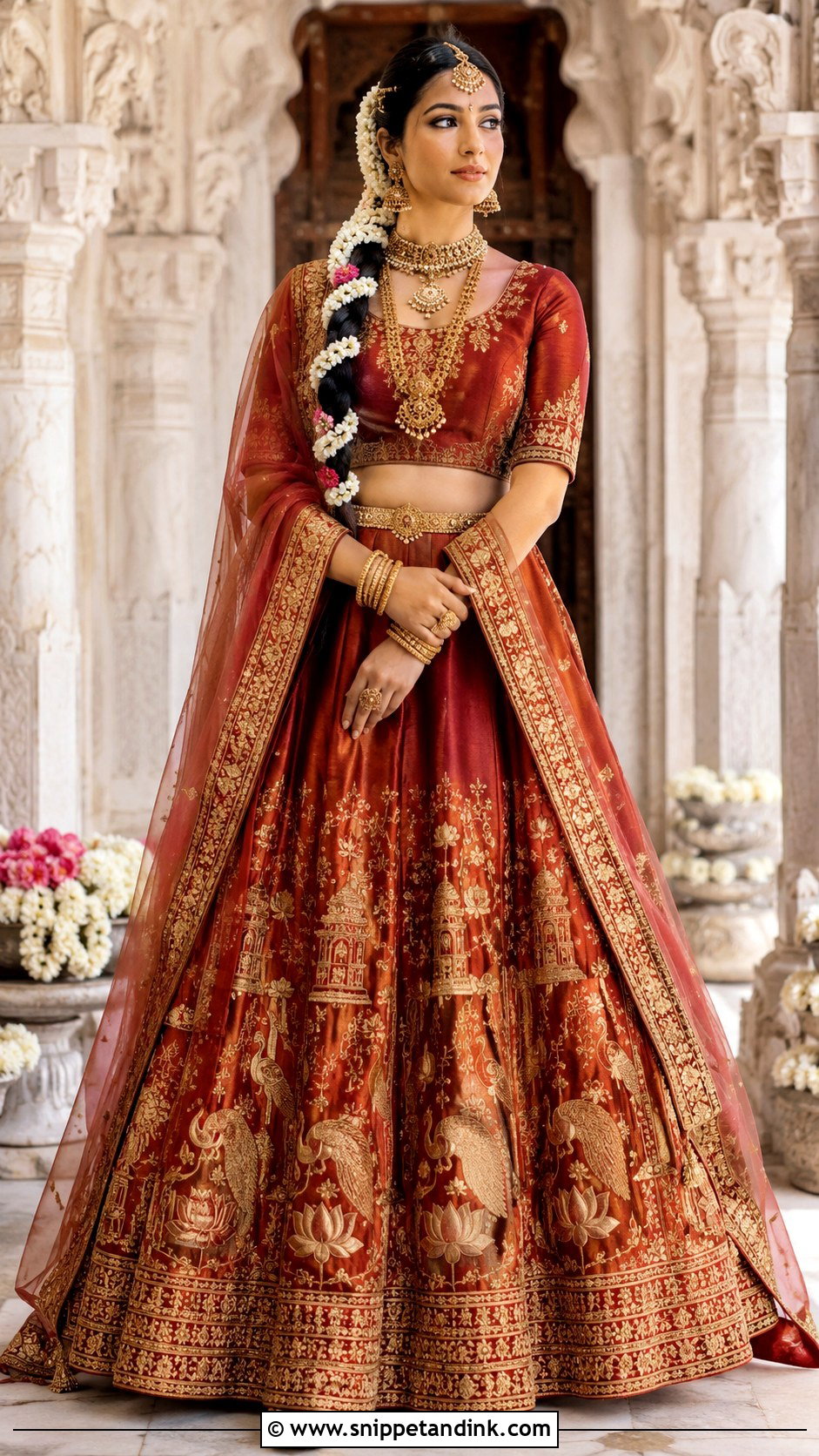
Temple motifs, such as arches, lotuses, paisleys and peacocks, bring classic South Indian imagery to a lehenga. A silk or raw silk skirt with architectural borders worked in zari and thread suits deep red, rust, maroon, green and antique gold. An elbow-sleeve blouse and a sheer dupatta with a matching border complete the base. Temple jewelry, layered gold necklaces, jhumkas, bangles and juttis complete the look, with a smooth braid or bun dressed in flowers. Keep the blouse work restrained so the skirt leads. Evenly spaced motifs read clearly in close-ups and full-length photographs alike.


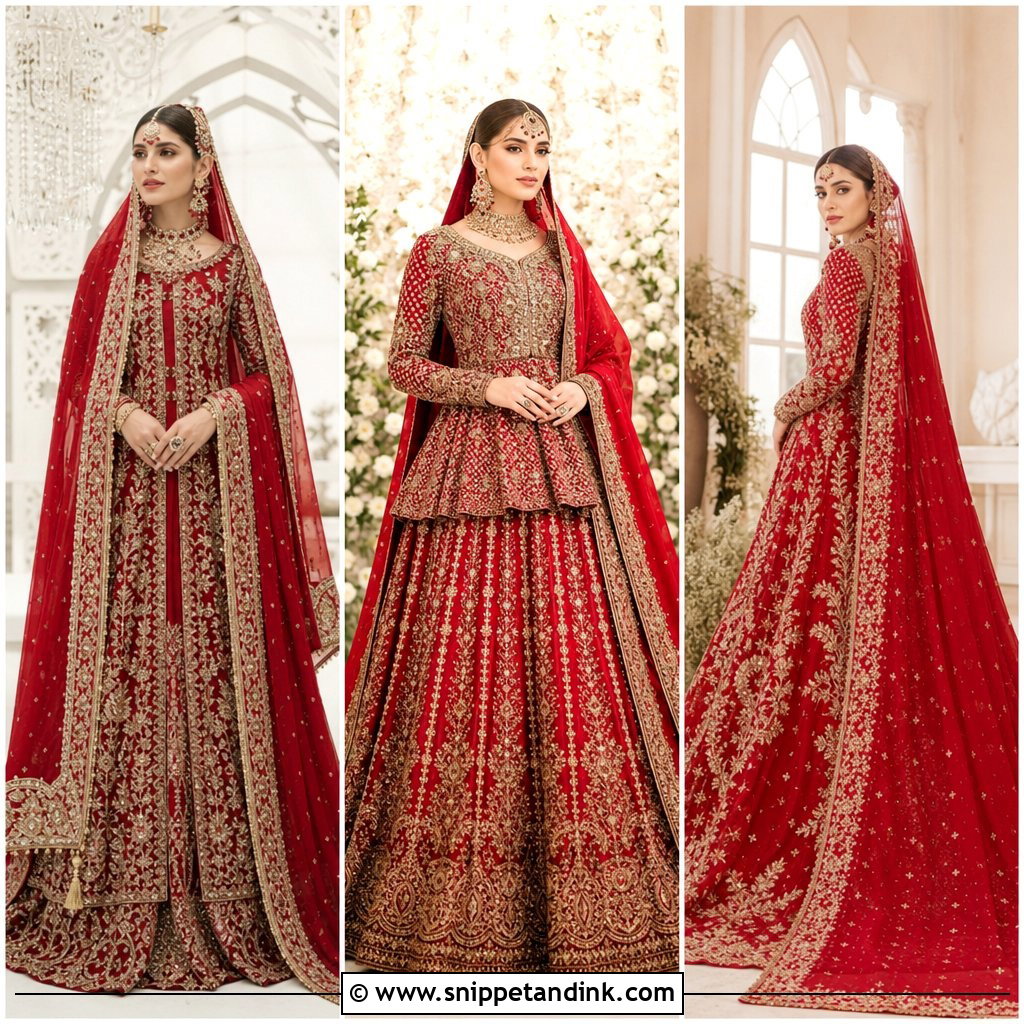
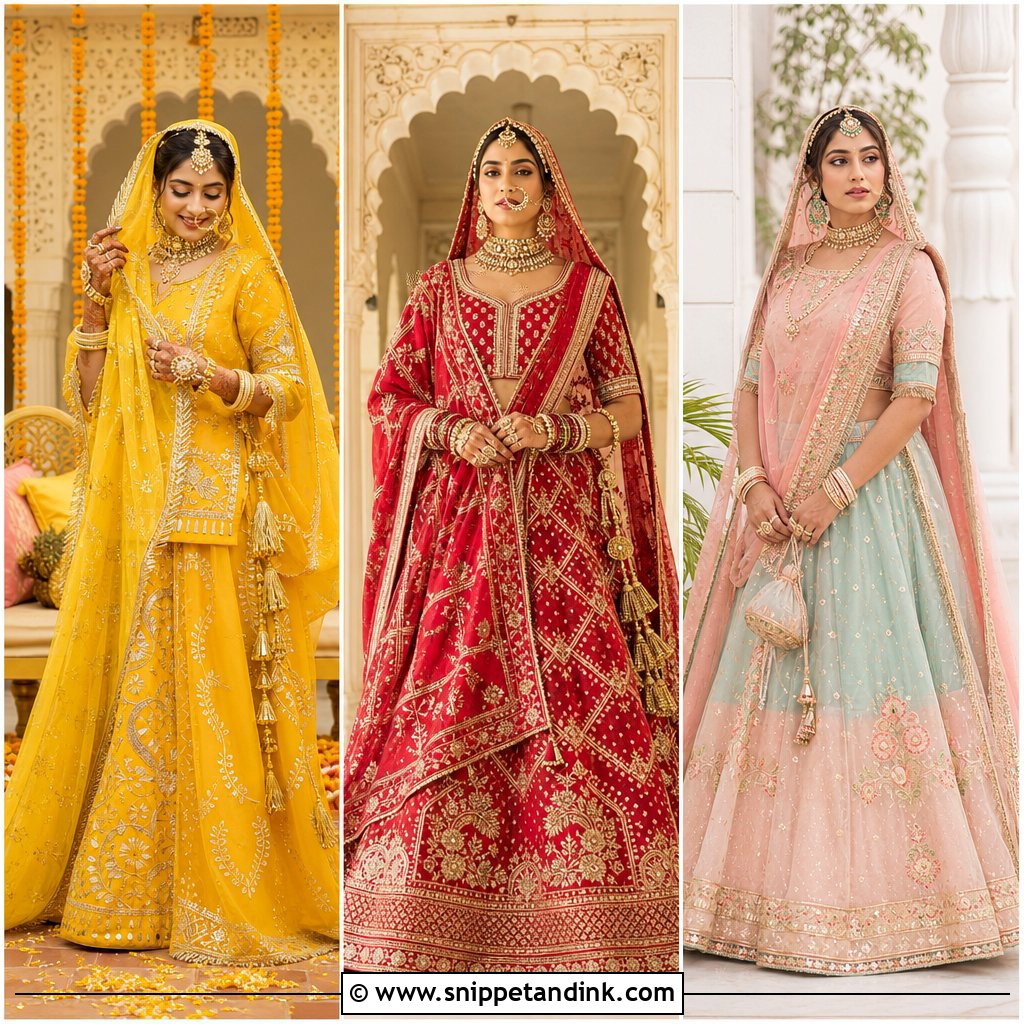
20. Minimal Monochrome Bridal Lehenga
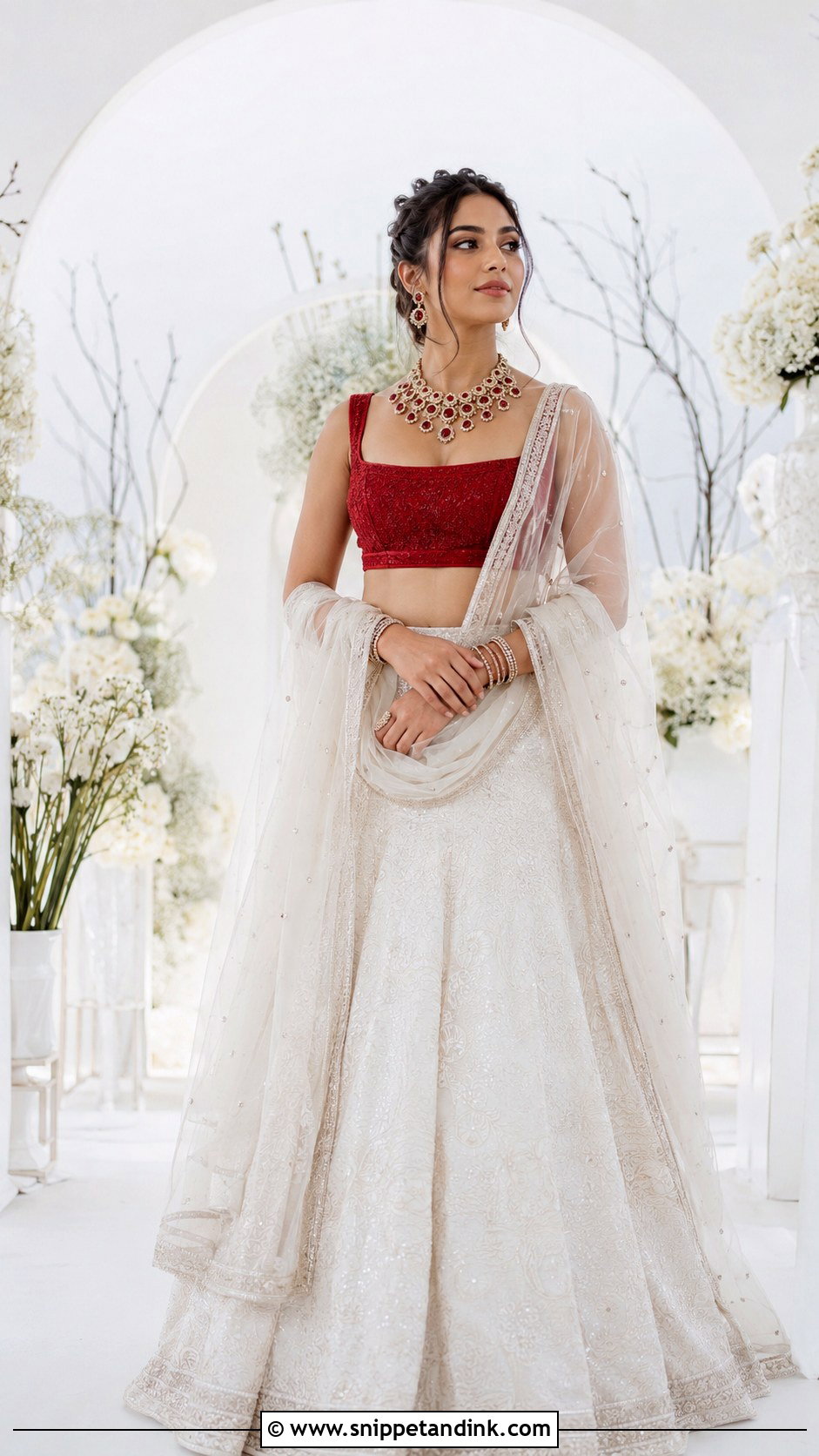
A monochrome lehenga relies on fabric and fit, not embroidery, which makes it harder to get right than it looks. Choose one rich shade, red, ivory, rose, emerald or champagne, for the blouse, skirt and dupatta, with tonal thread, fine sequins or a narrow border for depth. A defined-waist skirt, a structured blouse and a neatly draped dupatta, plus one statement necklace and simple embroidered shoes, keep it clean. With so little decoration, every seam, hem and hook shows. I’d spend the budget on the best fabric and a skilled tailor rather than on extra embellishment.
Storing Zari and Silk So the Lehenga Lasts for Your Daughter
Many brides hope to pass their lehenga on, and how it’s stored in the first few weeks decides whether that’s possible. Metallic zari tarnishes with moisture and air, silk weakens along permanent folds, and plastic bags trap humidity. A bit of care after the wedding prevents nearly all of it.
- Air the outfit for a day after the wedding, away from direct sun, so sweat and perfume can dry.
- Send it to a dry cleaner who handles bridal embroidery, and point out any food or makeup marks. Never wash zari or mirror work at home.
- Wrap each piece in soft, undyed cotton muslin instead of plastic, with tissue between embroidered layers so the metal threads don’t rub.
- Store it flat in a box or loosely rolled, and refold it along different lines every few months to prevent creases from setting.
- Keep it in a cool, dry cupboard. Avoid spraying perfume near it, since the chemicals can discolor metallic thread.
I’d also keep the jewelry separately. Pieces left on the fabric can leave marks and snag thread, and kundan or polki stored in a closed box stays brighter for longer.
Sit, Turn and Raise Your Arms Before the Final Stitch
The lehenga worth choosing looks right in the photographs and stays comfortable through every ceremony. Whether you lean toward classic red, pastels, heritage weaves, jewel tones or a clean monochrome, save the looks you love and compare their shapes, fabrics, amount of embroidery and dupatta styling. At each fitting, walk, sit, turn and raise your arms, and wear the shoes and jewelry you plan to use. Trends give you ideas, but comfort and what the outfit means to your family matter more. With careful tailoring and jewelry that balances the work, your lehenga will feel like yours rather than a copy of someone else’s.
You'll Like These Ideas:











Leave a Reply