
Aso Oke used to mean wrappers, buba and floor-length gowns. Now it is just as often cut into short dresses for engagements, receptions and family parties, and the fabric suits it better than people expect. It is hand-woven by Yoruba weavers in southwestern Nigeria in narrow strips that are sewn together, which gives it that firm body and those distinctive stripes. That firmness is exactly why a short gown in Aso Oke holds a shape a soft fabric never could. When I plan one with a client, the fabric’s stiffness decides almost everything: which necklines sit well, where seams can go, and how much volume a skirt can carry before it looks bulky. Below are twenty short styles, from fitted minis to knee-length shifts and one with a removable train, each with the fit point I would check first.

Why Aso Oke Behaves So Differently from Lace on a Short Dress
Aso Oke is woven in narrow bands, often only a few inches wide, which are then joined edge to edge into a usable cloth. That construction explains most of what happens when a tailor cuts it.
- It has almost no stretch. Measurements need a little more ease than for a stretch crepe, especially across the back, hips and upper arms.
- Cut edges fray quickly, so every seam should be overlocked or bound. Ask about this up front, because a frayed inside seam shortens the dress’s life.
- Stripes run along the strips. Your tailor has to decide whether they run vertically, horizontally or on the bias, and that choice changes your shape more than the style does.
- Thickness varies a lot between weaves. Classic sanyan, the beige wild-silk cloth, alaari, the deep red, and etu, the dark indigo, all handle differently from modern lightweight or metallic versions.
When I look at a fabric for a short gown, I fold it over my hand. If it holds a crisp fold, it will make sharp sleeves, collars and pleats. If it softens and drops, it will suit wraps, shifts and flutter sleeves better. Choose your style from the fabric you have, not the other way round.
1. Aso Oke Off Shoulder Short Gown
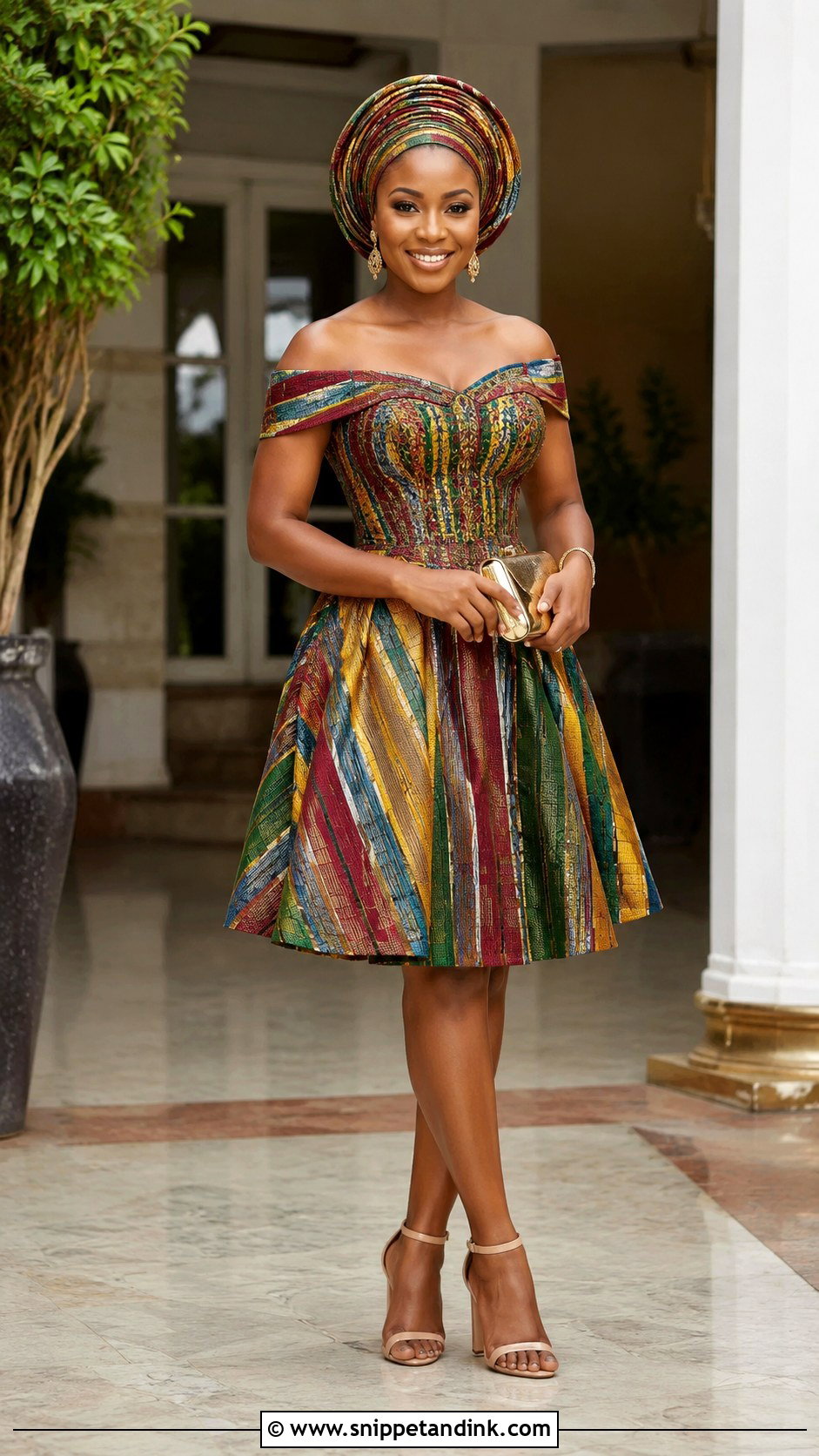
Off-shoulder is the cut I see most, and Aso Oke is good at it because the fabric is firm enough to hold the neckline in a clean horizontal line. The risk runs the other way: a stiff band that is even slightly tight digs into the upper arms after an hour. I ask for an elastic or silicone grip inside the band and test it with arms raised. A fitted bodice and gently flared knee-length skirt keep things comfortable. With a multi-coloured stripe, pick accessories from the quietest shade in the weave, not the loudest. A matching gele, small gold earrings, a metallic clutch and nude or gold block heels finish the look.
2. Aso Oke Puff Sleeve Short Gown
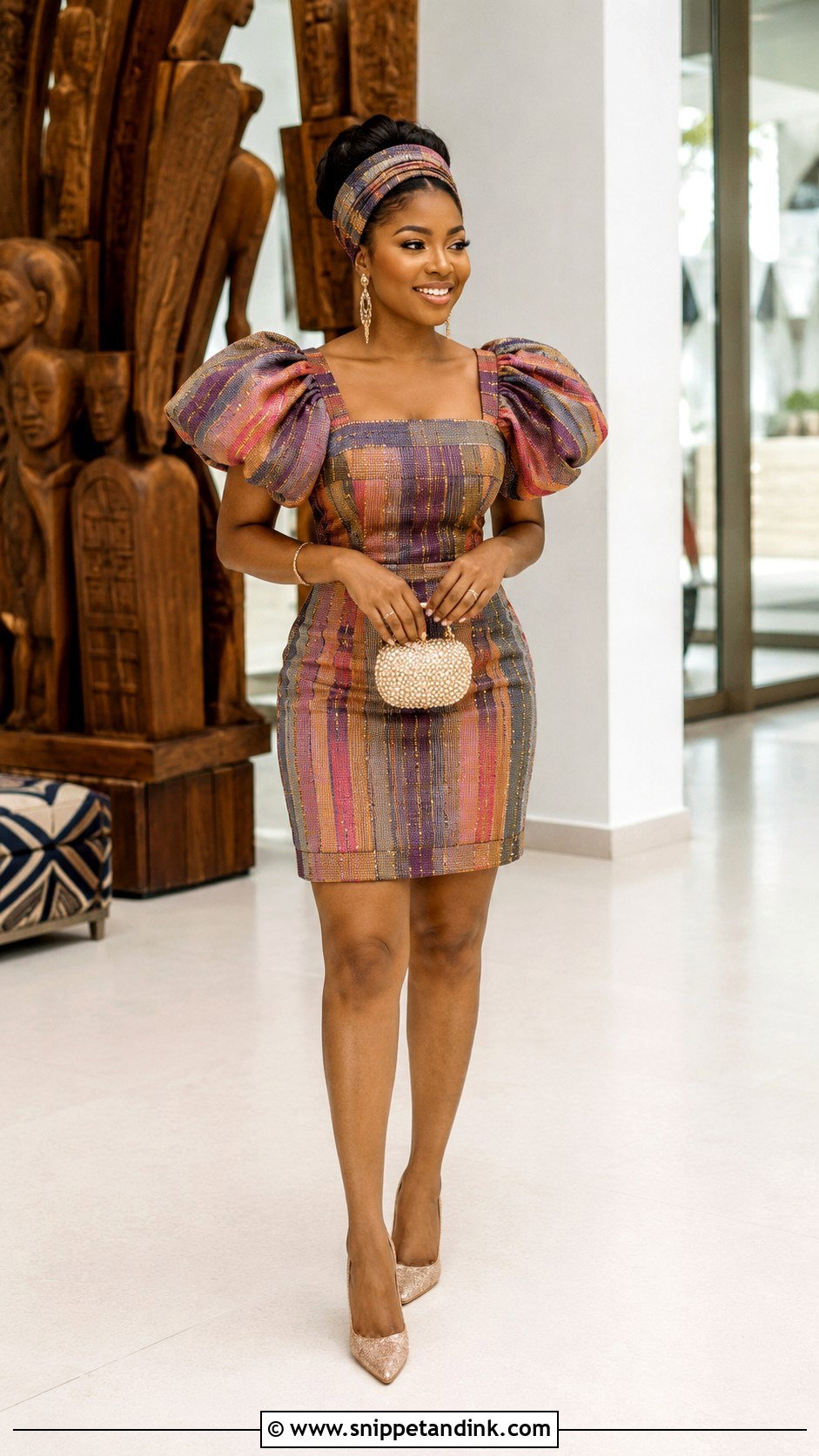
Bold puff sleeves hold their shape in Aso Oke without needing organza underneath, which is one of the fabric’s real advantages. Keep the bodice fitted so the sleeves don’t take over. Broad-shouldered women do better with smaller puffs that start a little lower on the arm; a puff sitting right on the shoulder point makes the frame look wider. A square or sweetheart neckline softens the structured fabric. Finish the hem at or just above the knee. Pointed pumps, a compact beaded purse and medium drop earrings complete it, and a slim matching headband is a lighter alternative to a full gele.
3. Aso Oke Corset Short Gown
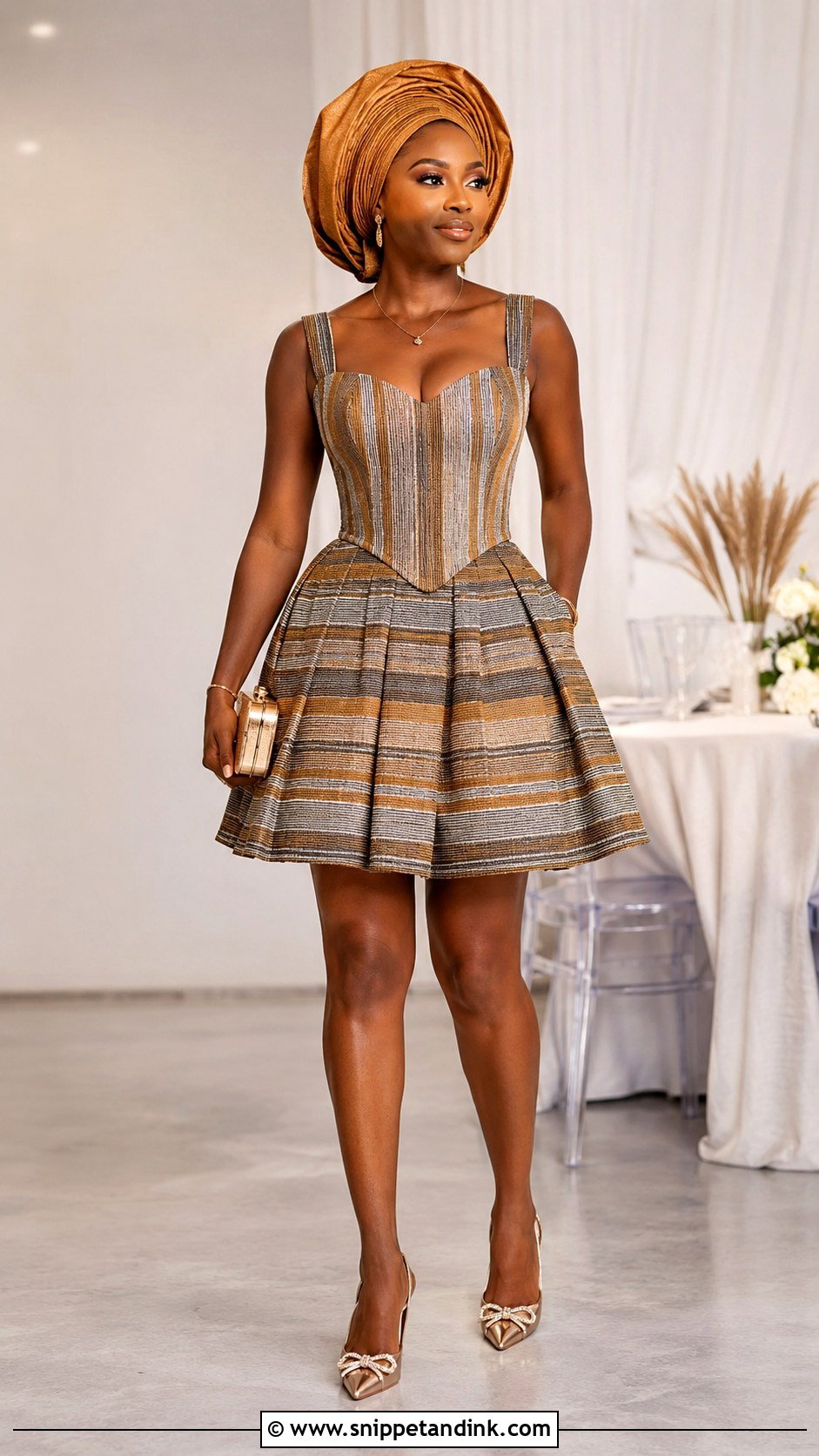
Firm Aso Oke takes a corset bodice well, since the cloth itself adds support. That means you need less boning than you would in lace or crepe. Over-boning a stiff weave is the most common mistake I see; the bodice turns rigid and gapes when you sit. Wide straps or short sleeves make it far easier to wear across a long party. Pair the fitted top with an A-line, pleated or lightly gathered skirt. Leave out beads and ruffles, because the woven texture already provides plenty of detail. Sleek slingbacks, a box clutch, understated jewellery and a folded gele that stays clear of the neckline complete the outfit.
4. Aso Oke Peplum Short Gown

A peplum needs to fall, and heavy Aso Oke sometimes sticks out like a shelf instead. If your fabric is very stiff, I ask the tailor to cut the peplum on a slight curve or line it with something softer so it drops at the hip. Start it at the natural waist and keep it in the same fabric and stripe direction as the bodice for a long line. Underneath, a straight, tapered or gently flared skirt all work. A round neck and short fitted sleeves keep the top clean. Closed-toe pumps, a structured mini bag, studs and a gele in a second colour pulled from the weave finish it.
5. Aso Oke One Shoulder Short Gown
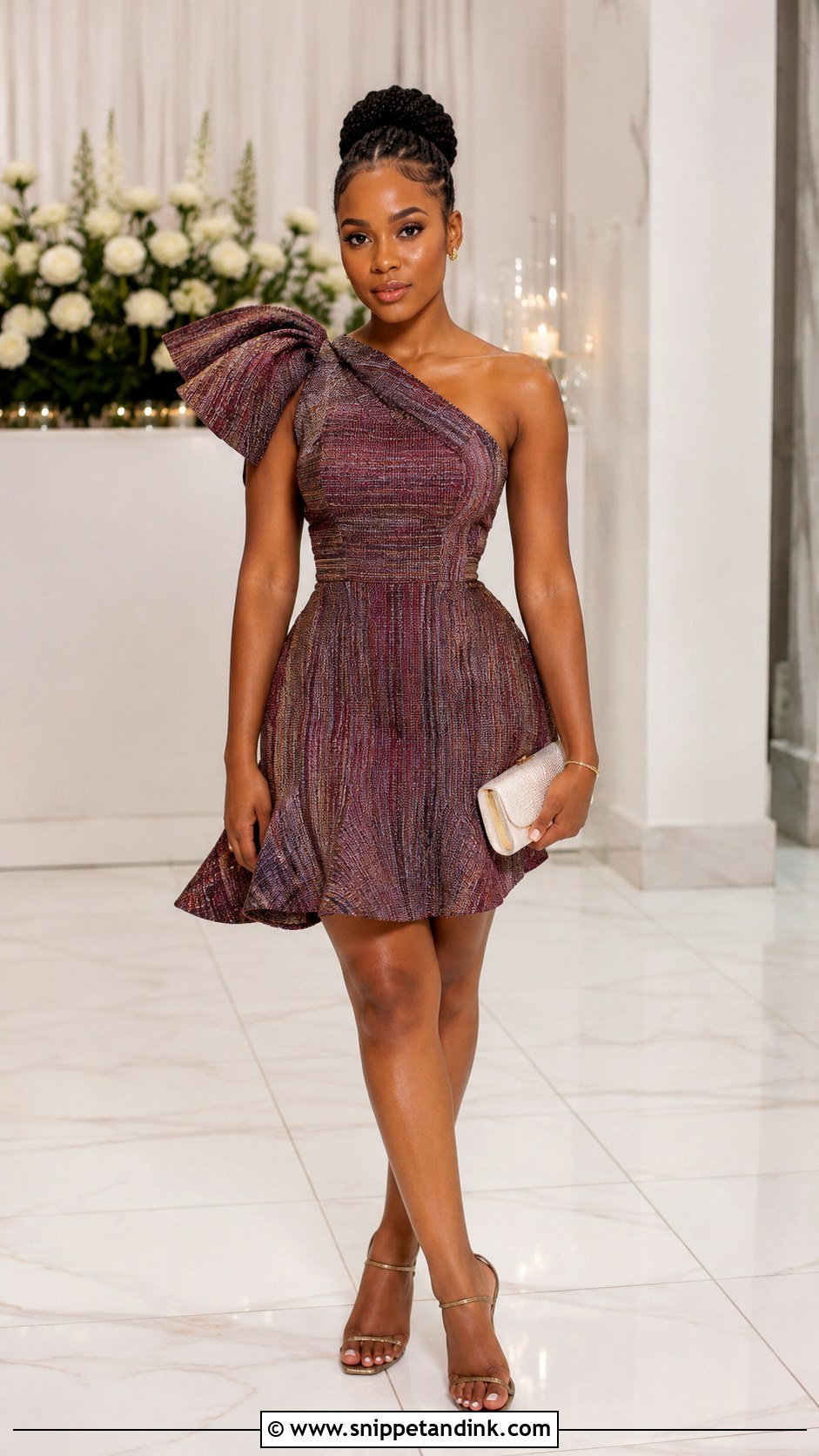
One shoulder makes a short Aso Oke gown look modern straight away, as long as the asymmetry has a single focal point. Choose one fitted sleeve, a folded shoulder panel or a moderate bow, not all three. I always check the strap side carefully, because the weight of a stiff weave can pull the neckline toward the bare shoulder; an inner stay or bra hook fixes it. Keep the skirt straight or lightly flared. Carry the clutch on the opposite side, wear strappy heels and a slim bracelet, and keep hair in a low bun or braided updo. If you add a gele, keep it compact.
6. Aso Oke Shift Short Gown
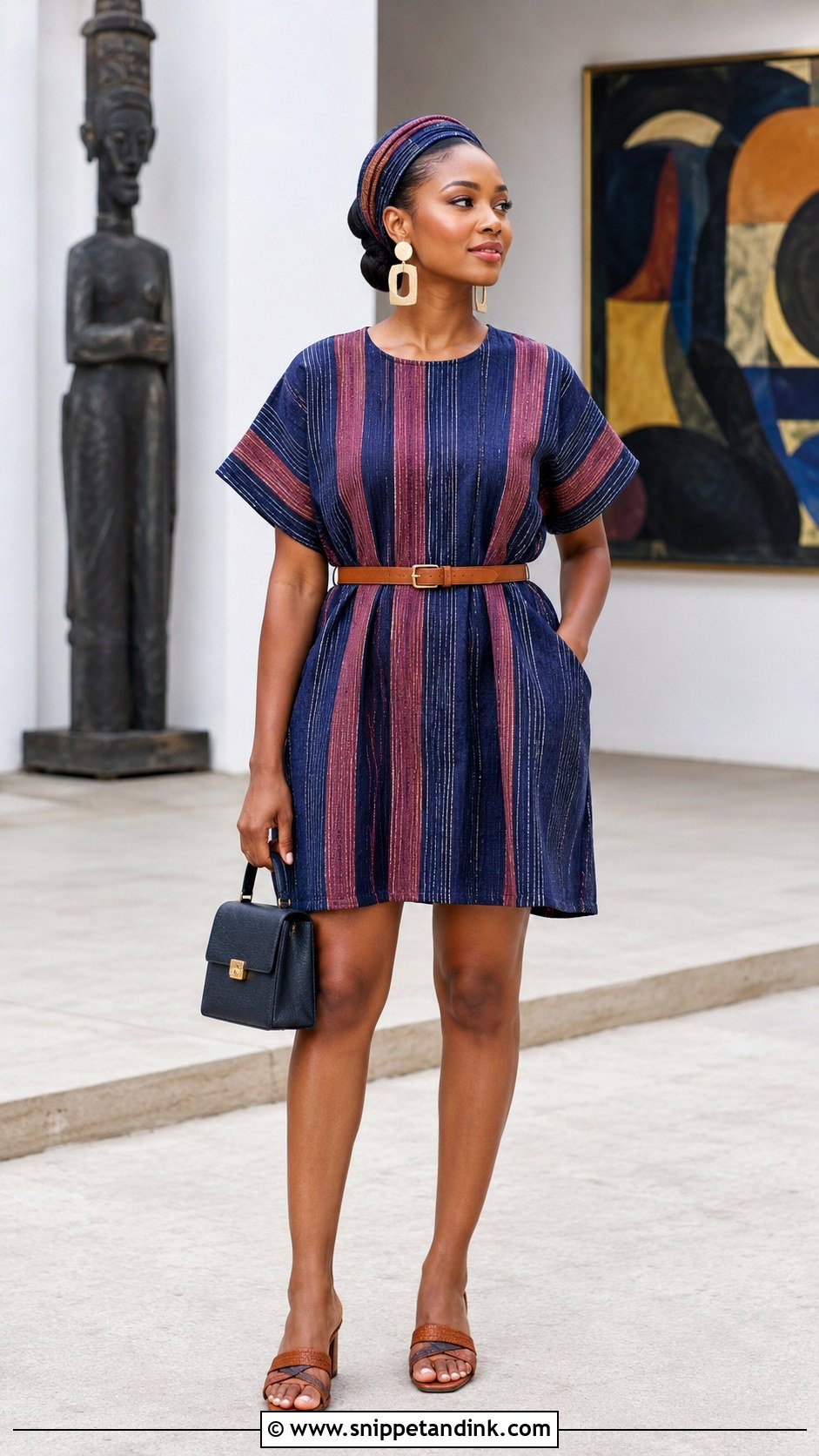
A shift is the easiest shape to wear in Aso Oke and the easiest to get wrong. Cut too straight, the stiff fabric stands away from the body like a box. I ask for subtle darts at the bust and back so it skims rather than hangs. A round neck, short sleeves and a hem just above the knee keep it modest. A narrow belt in velvet, leather or matching woven fabric adds shape when you want it. Side-seam pockets are practical if they lie flat. Low block heels, a top-handle bag, geometric earrings and a small Aso Oke headband suit daytime events.
7. Aso Oke Wrap Short Gown
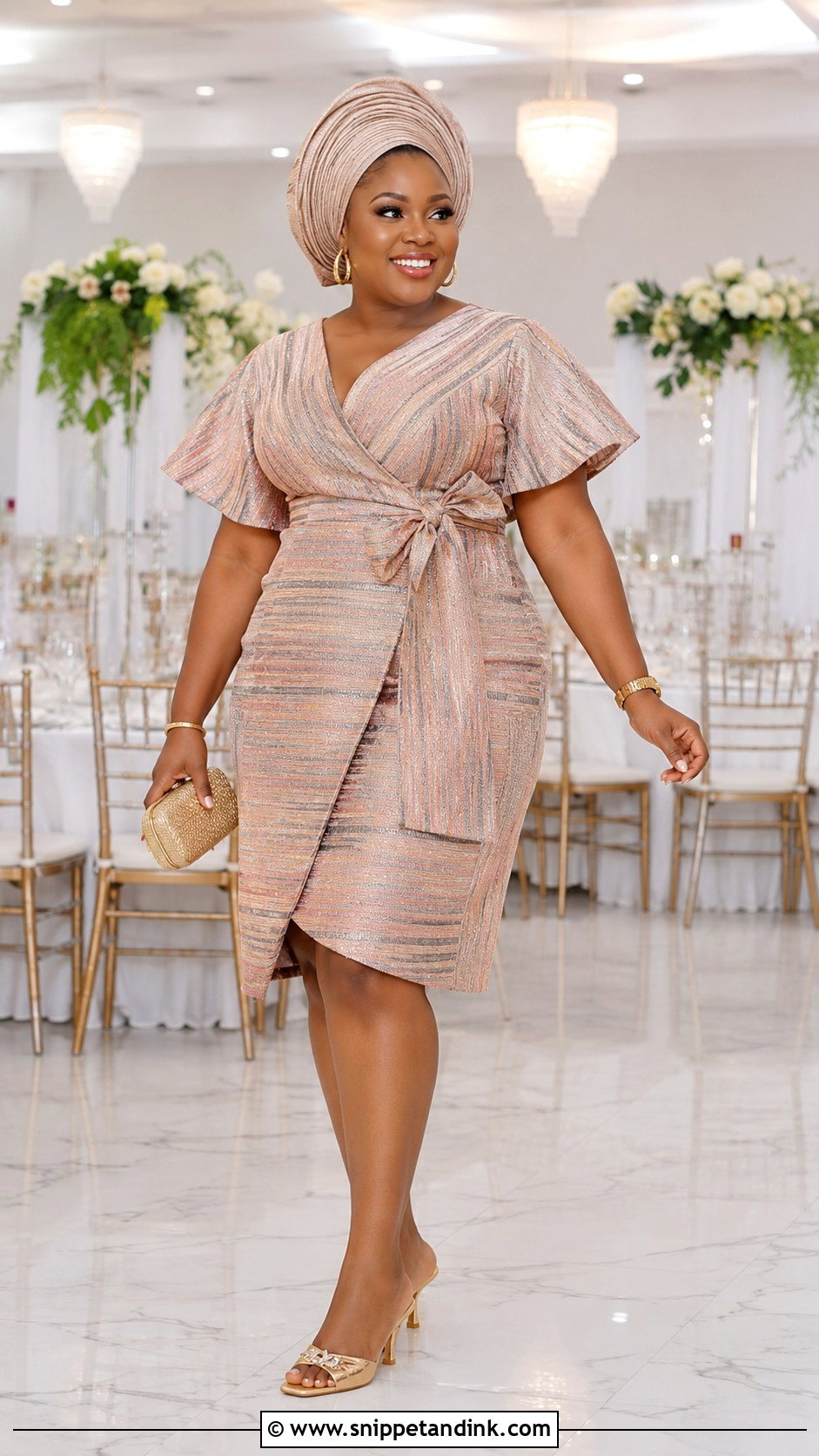
Wrap dresses usually rely on soft fabric, so in Aso Oke the overlap has to be engineered. Thick weave won’t tie in a neat knot, and a loose tie on stiff cloth springs open. I ask for a concealed hook or snap under the tie and generous overlap at the skirt so it doesn’t part when you sit. Placing the tie just above the natural waist lengthens the legs. Flutter sleeves soften the shoulders and follow the diagonal of the wrap. Kitten heels, a woven clutch, gold hoops and a plain one-colour gele keep it calm. The wrap also adjusts a little if your size changes before the event.
8. Aso Oke High Low Short Gown
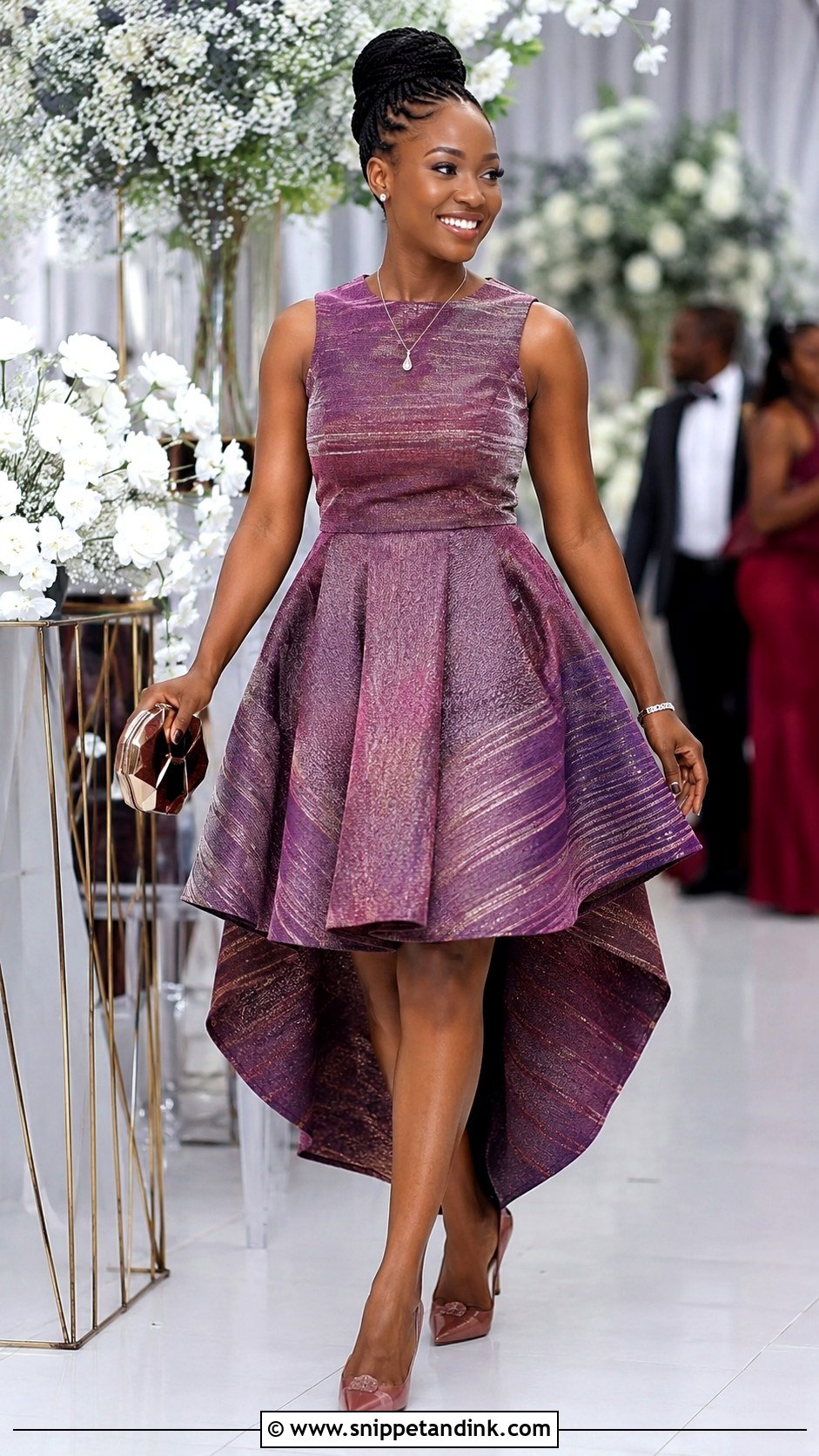
High-low hems work in Aso Oke because the fabric holds the curve of the hem without collapsing. Keep the front near the knee and let the back drop gradually toward the calf; a short front with a long back reads as a costume. The back should swing, so watch the volume. Too many gathers in a heavy weave and the back stands out stiffly. A fitted sleeveless bodice or cap sleeves balance the skirt. Wear pointed heels you are happy to show, a metallic clutch, a fine necklace and a small gele or updo so the hem stays the focus.
9. Aso Oke Bell Sleeve Short Gown
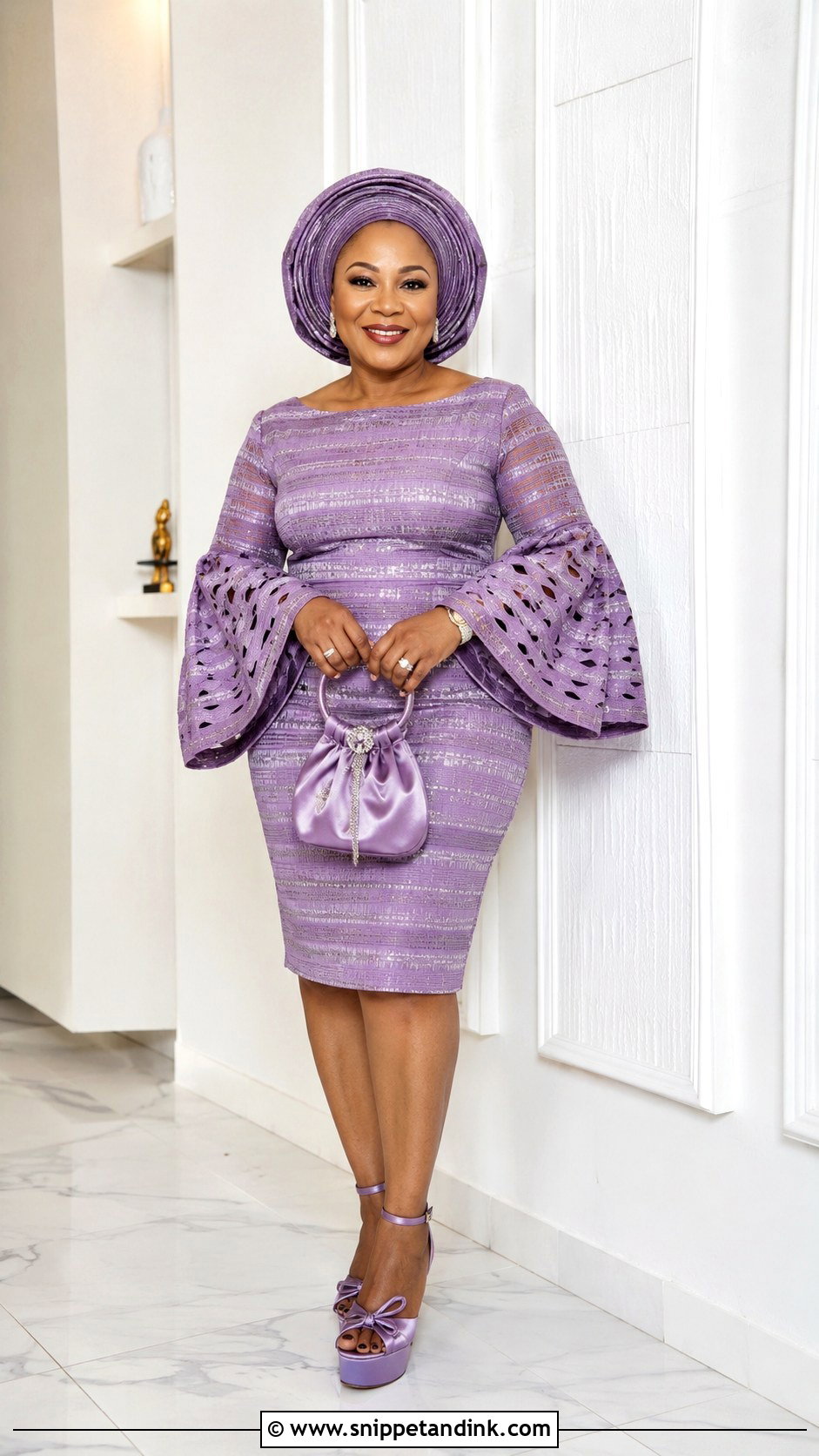
Bell sleeves in a thick weave can easily get bulky, so I start the flare below the elbow rather than at the shoulder. That keeps the upper arm slim and puts the movement where you can see it. If the Aso Oke is heavy, a lighter coordinating fabric inside the bell makes the sleeve swing instead of hanging. A fitted knee-length dress with a boat or round neck is the right base. Keep jewellery minimal so bracelets don’t catch on the sleeve edge. Platform sandals, a small satin bag and a low, neatly tied gele finish the look.
10. Aso Oke Cape Sleeve Short Gown
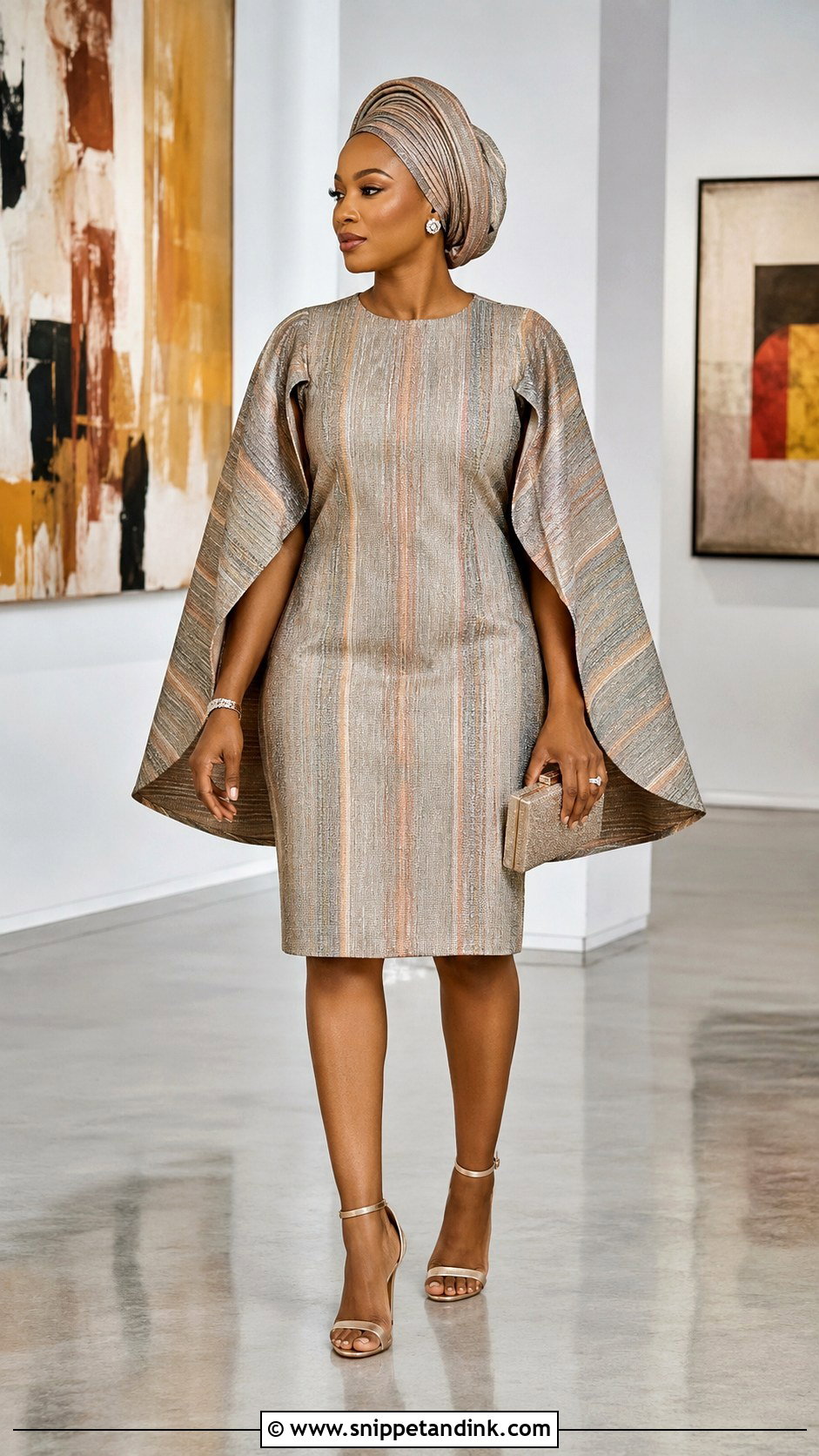
A cape sleeve gives coverage without long fitted sleeves, falling from shoulder to elbow over a straight or gently shaped dress. An all-Aso Oke cape is heavy and can drag the neckline backwards, so I often suggest lining it with sheer organza or making the underlayer from a lighter fabric. Keep the neckline simple. A mini looks current; a knee-length hem is more modest. Sleek ankle-strap heels, a firm rectangular clutch, small crystal earrings and an updo or narrow gele that leaves the cape visible complete the outfit.
11. Aso Oke Fringe Short Gown
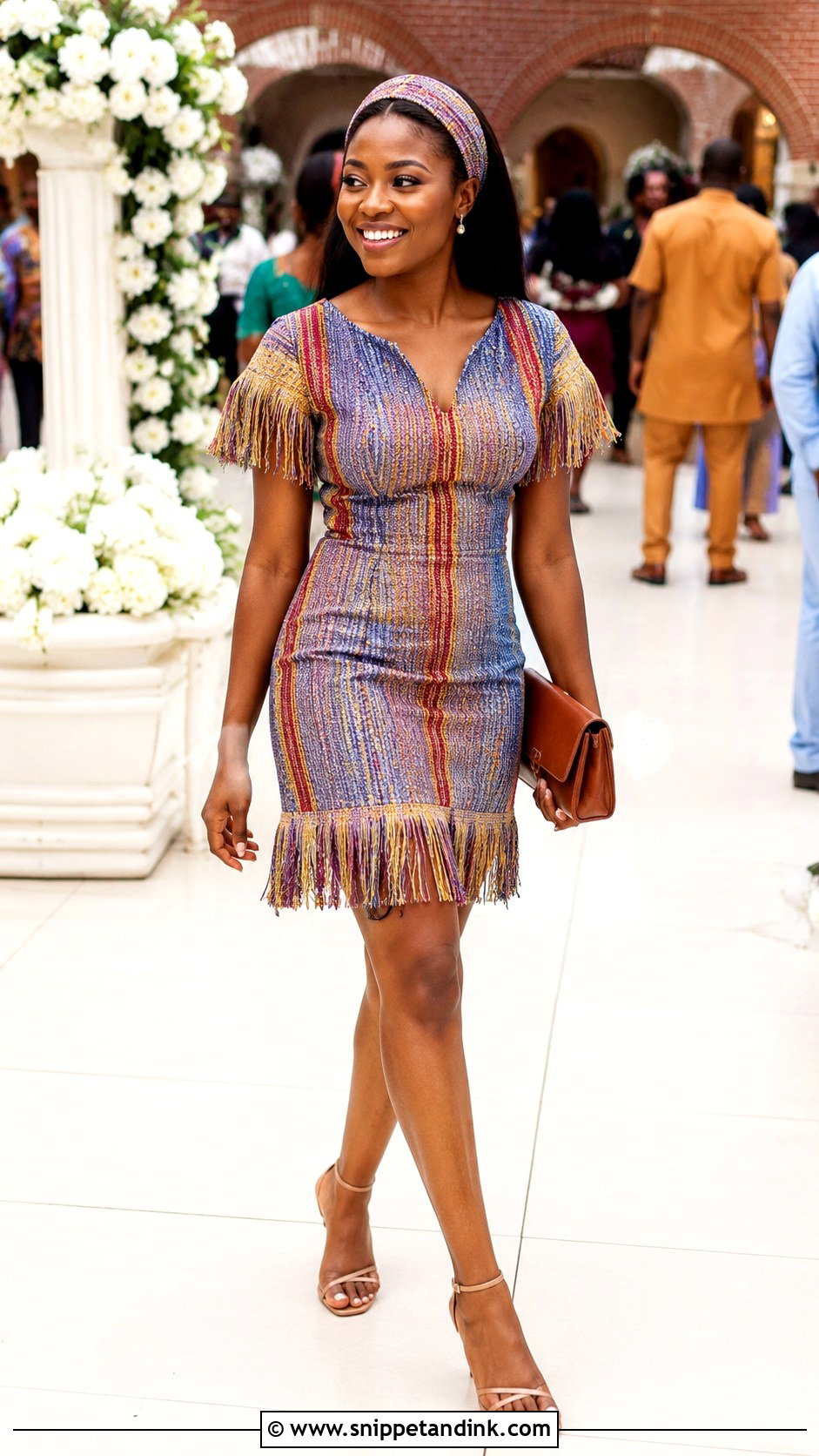
Fringe is one of the oldest Aso Oke finishes, since the weave can be unravelled into tassels at the ends. Use it in one place: hem, sleeve or a single side panel. All over, it looks busy and tangles. I keep fringe on the hem short enough that it clears the back of the knee, because longer tassels wrap around the legs when dancing. Pair it with a plain fitted bodice and straight mini or knee-length skirt. Skip necklaces if the fringe sits near the neckline. Plain heeled sandals, a smooth leather clutch, small earrings and a slim matching headband suit it.
12. Aso Oke Shirt Short Gown
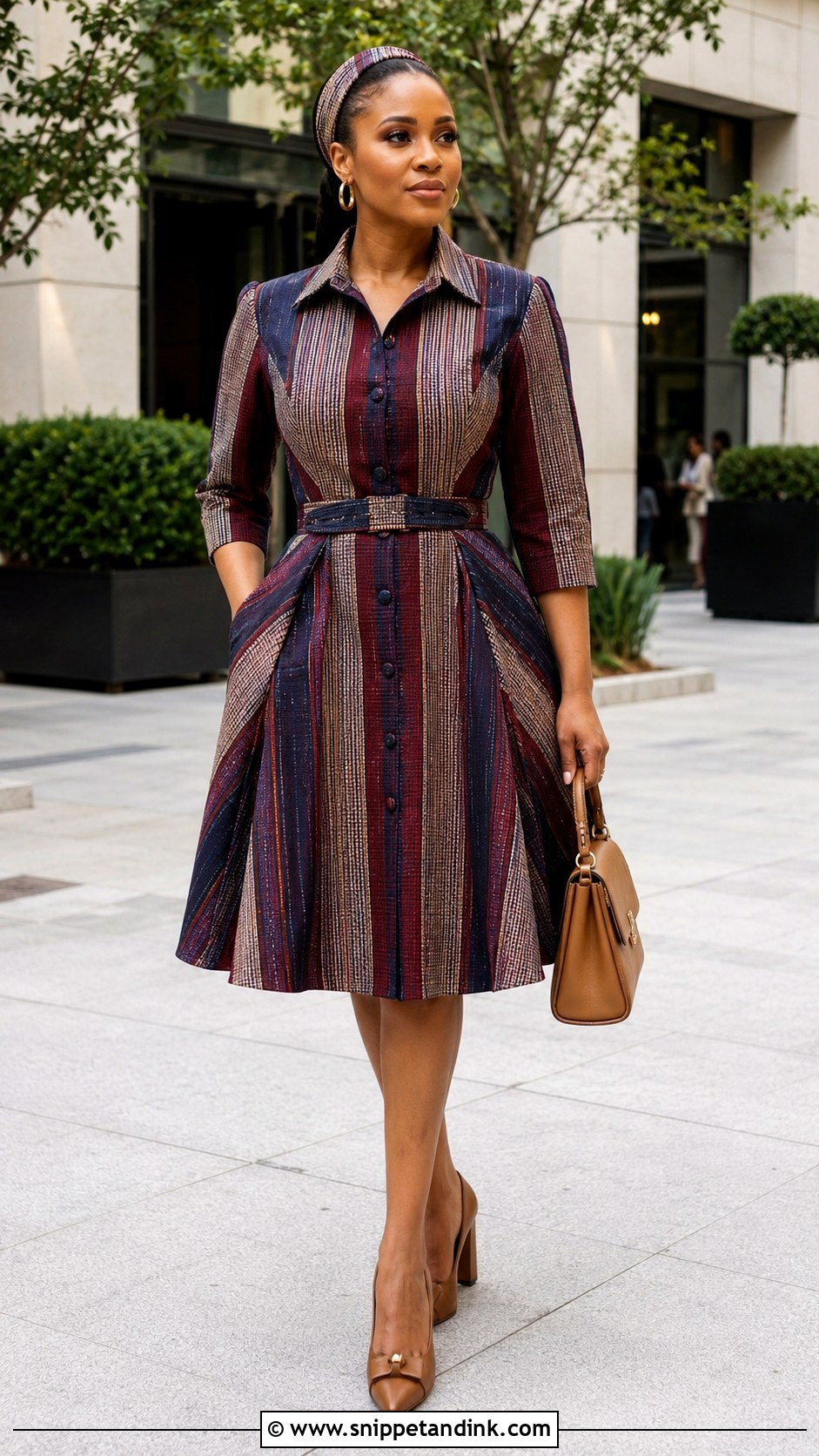
The shirt dress is the most tailored way to wear Aso Oke, and the collar is where quality shows. A pointed collar in thick weave needs proper interfacing or it curls at the tips by evening. Covered buttons in matching fabric look far better than plastic ones. The bodice should follow the body without pulling between buttons; I check that with arms forward. A flared skirt softens the look; a straight one is sharper. A matching or plain leather belt defines the waist. Loafers make it relaxed, block-heel pumps dress it up, with a structured shoulder bag, small hoops and a woven headband.
13. Aso Oke Pleated Short Gown
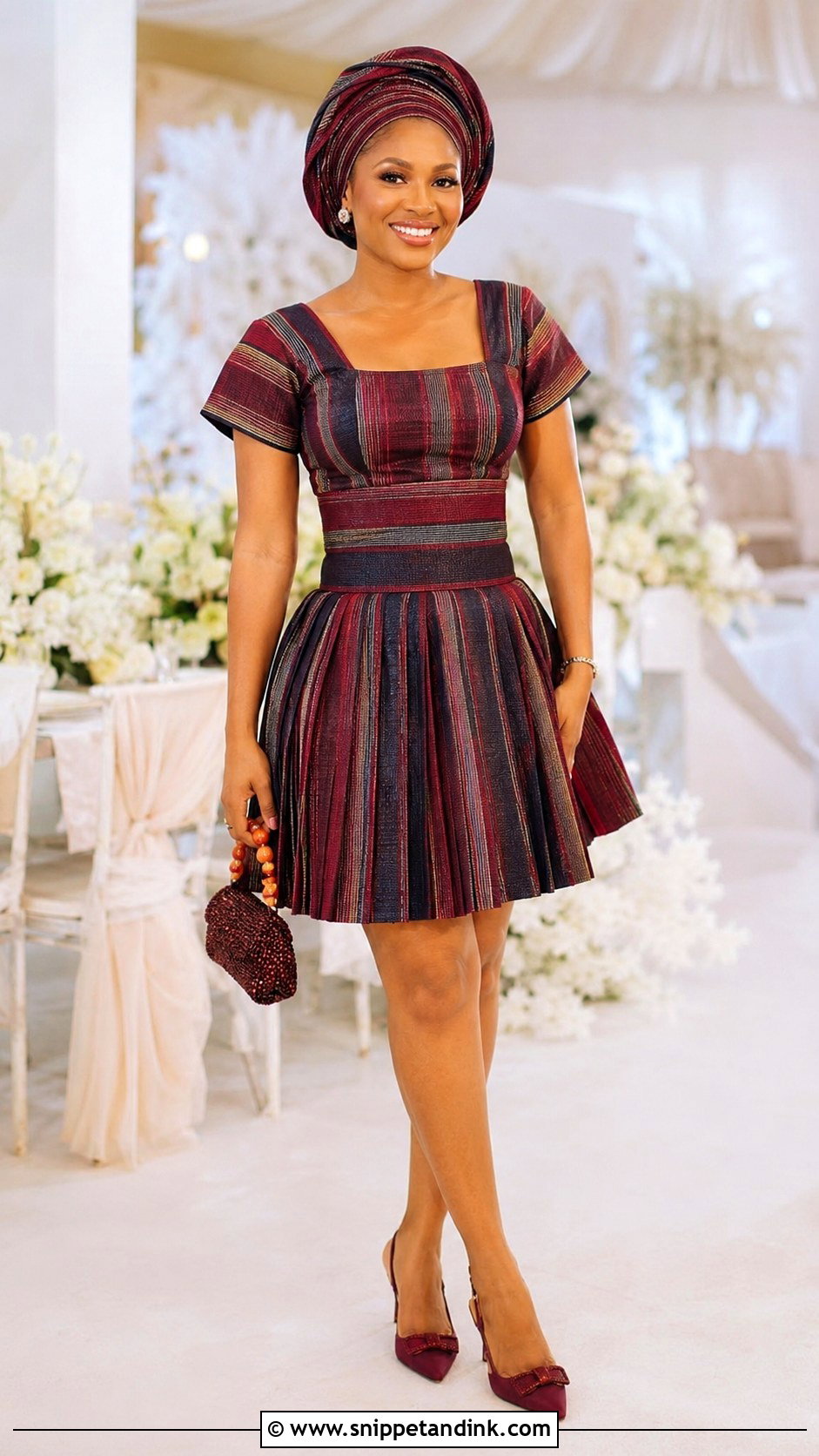
Pleats show off Aso Oke’s stripes better than any other detail, as long as the tailor plans where each stripe lands. Badly placed pleats break the pattern into random fragments. I ask for the stripe layout to be pinned and shown before cutting. Start the pleats under a smooth fitted waistband so the volume begins at the narrowest point. A sleeveless square-neck or short-sleeved bodice balances the skirt, and the hem should land at or above the knee. Pointed slingbacks, a beaded mini bag, a fine bracelet and a solid-colour gele pulled from the weave complete it.
14. Aso Oke Color Block Short Gown
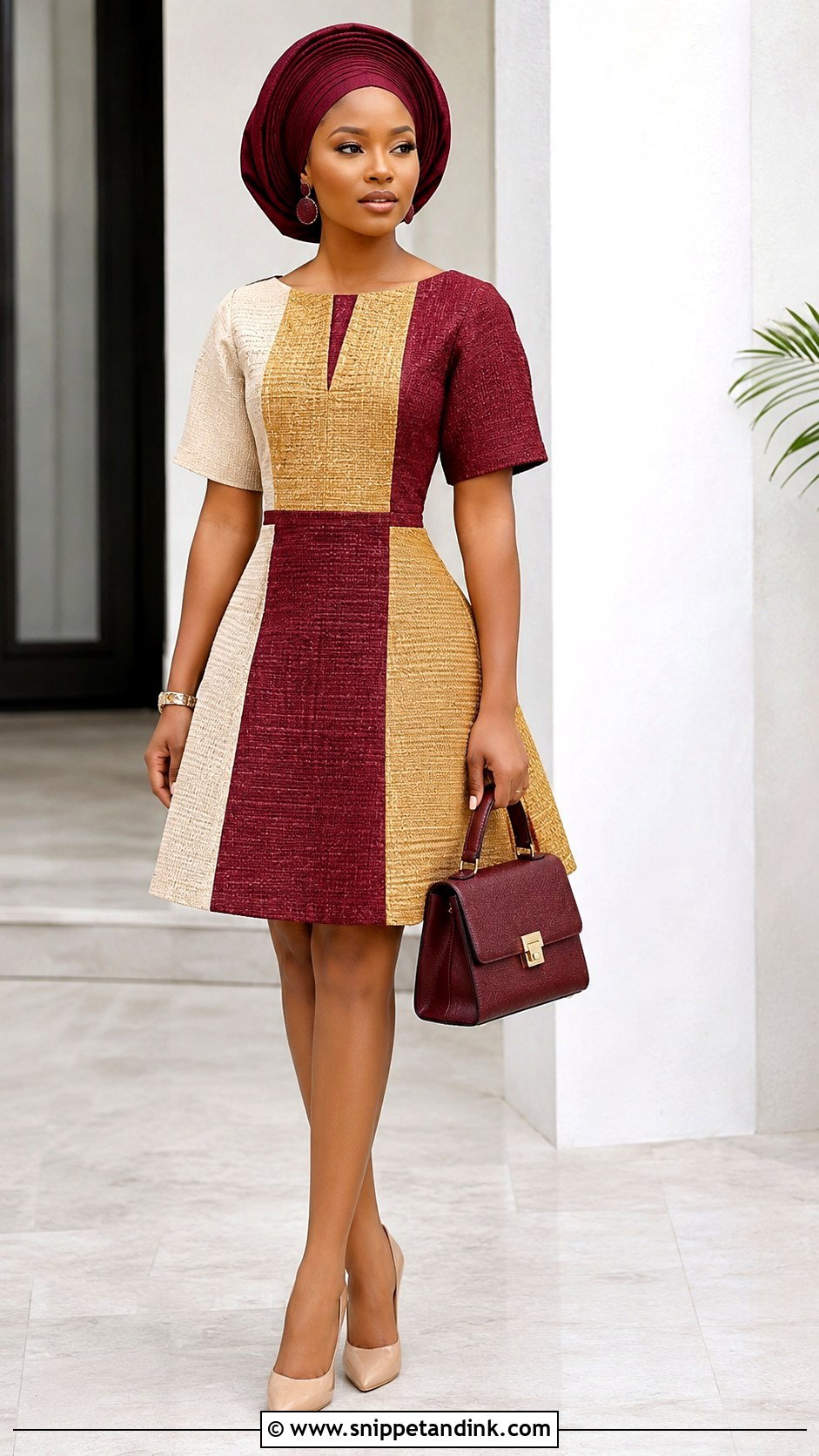
Colour blocking with two or three Aso Oke patterns is a good way to stretch fabric when one piece won’t make a whole dress. Keep the palette tight and put darker panels where you want a slimmer line, such as the sides, with the brightest weave near the face or on the skirt. A sheath, A-line or fit-and-flare keeps the panels organised. Symmetry matters: a panel that is a centimetre off on one side shows at once. Neutral pumps, one-tone earrings, a bag in the least dominant shade and a plain gele tie it all together.
15. Aso Oke Mini Gown With Gele
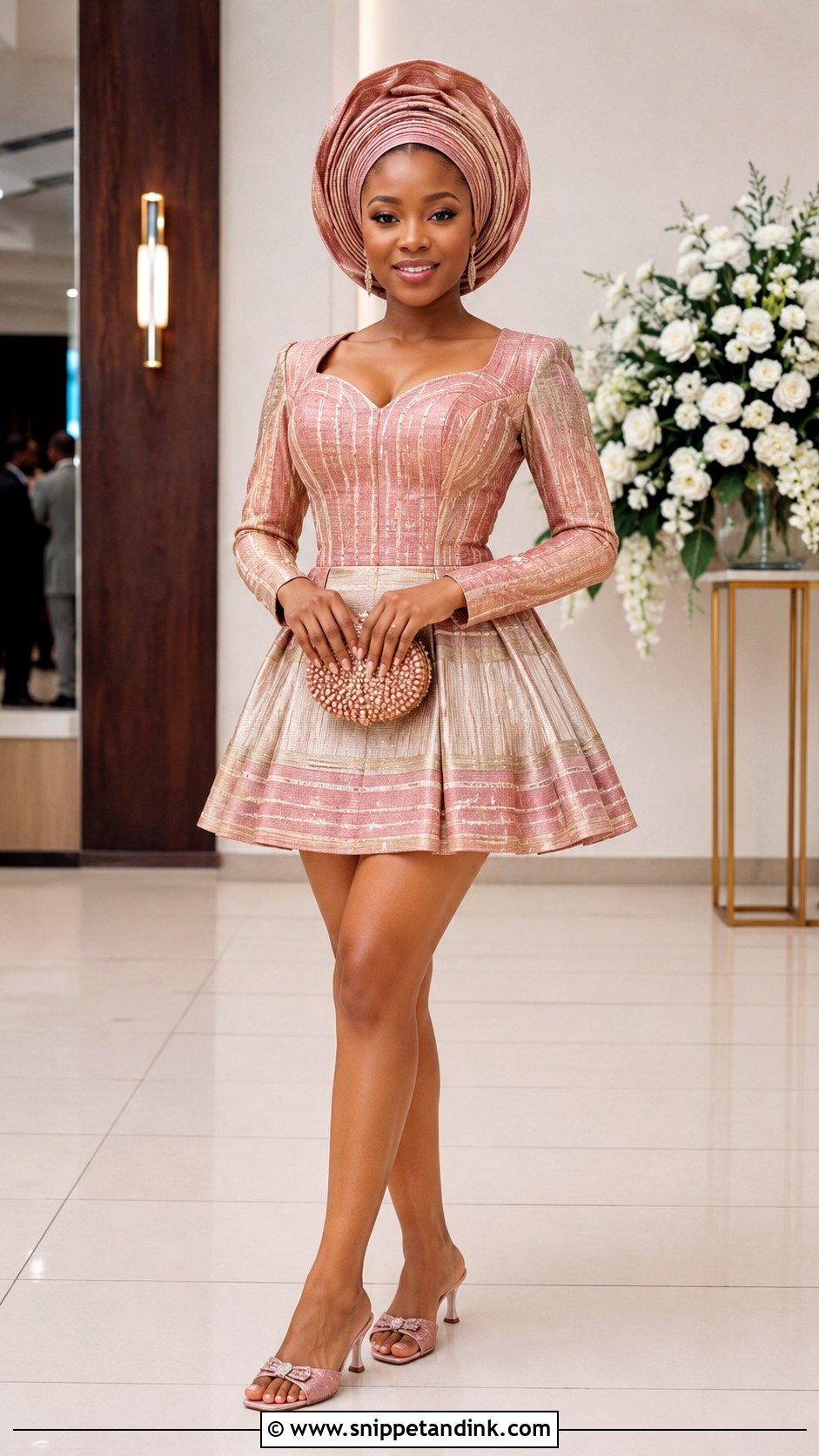
A mini Aso Oke dress with a full gele mixes a modern length with a very traditional headpiece, and it can look sharp at a reception. Aso Oke does not stretch, so a short hem rides up more than you’d expect when you sit. I test it seated and suggest fitted shorts underneath. Long sleeves, a higher neck or a softly flared skirt balance the length. Keep the gele in the same colour family and not oversized. If the weave has metallic thread, echo it in the shoes or bag. Low-heeled mules, a beaded clutch and simple drop earrings complete the outfit.
16. Aso Oke Knee Length Gown With Beads
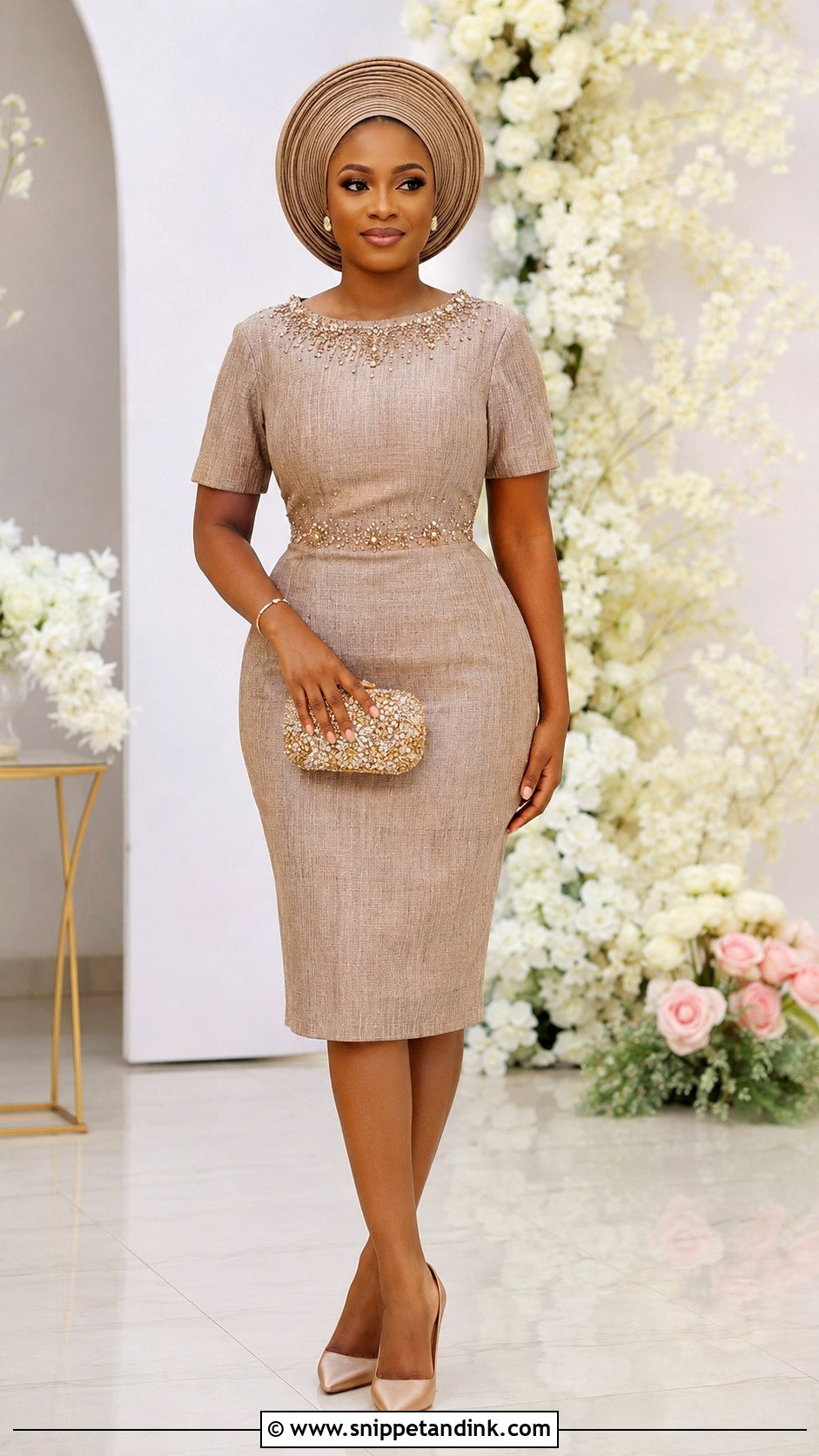
Beads on Aso Oke should frame the weave, not hide it. Concentrate them at the neckline, cuffs or waist. Covering the whole surface makes the dress heavy and buries the very texture people recognise. I check how each bead is attached, because rough-edged beads and loose threads snag the woven strands and pull them. A fitted sheath with short sleeves is the classic base; a slightly flared skirt moves more freely. Satin pumps, a compact crystal clutch, matching studs and a plain gele keep it balanced for formal family events.
17. Plus Size Aso Oke Short Gown
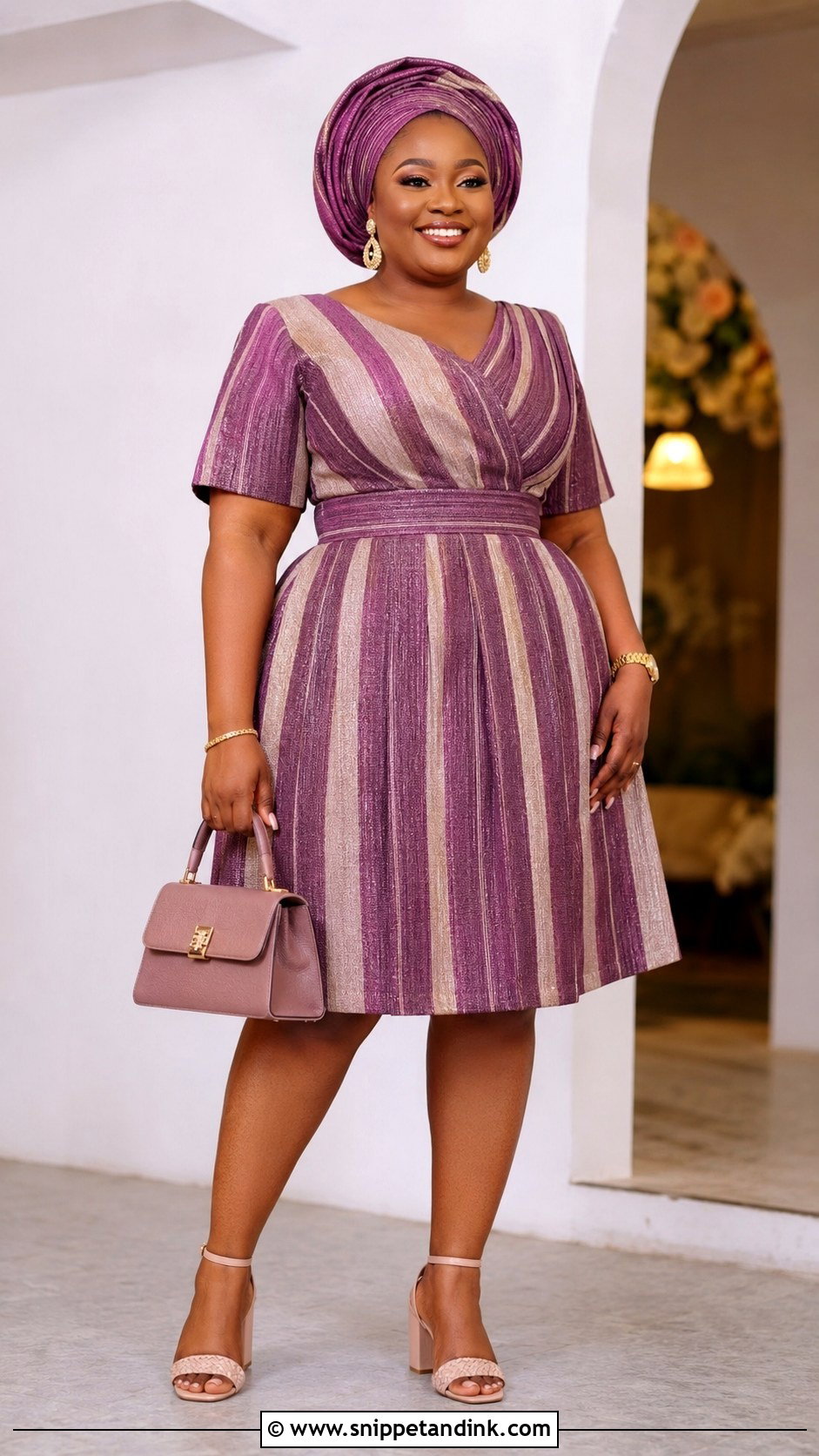
A plus-size Aso Oke short gown should follow the body, not bury it under extra cloth. Wrap fronts, raised waists, shaped princess seams and soft A-line skirts all give definition with room to move. Matched vertical stripes create a long continuous line, which is one of the fabric’s natural advantages. Avoid stiff gathers right at the waist, since thick weave adds visible bulk when bunched. The fit points I watch most are the armholes and the upper back, because Aso Oke has no give there. Stable block heels, a medium structured bag, earrings in proportion and a neatly folded gele finish it.
18. Aso Oke Short Gown for Wedding Guest
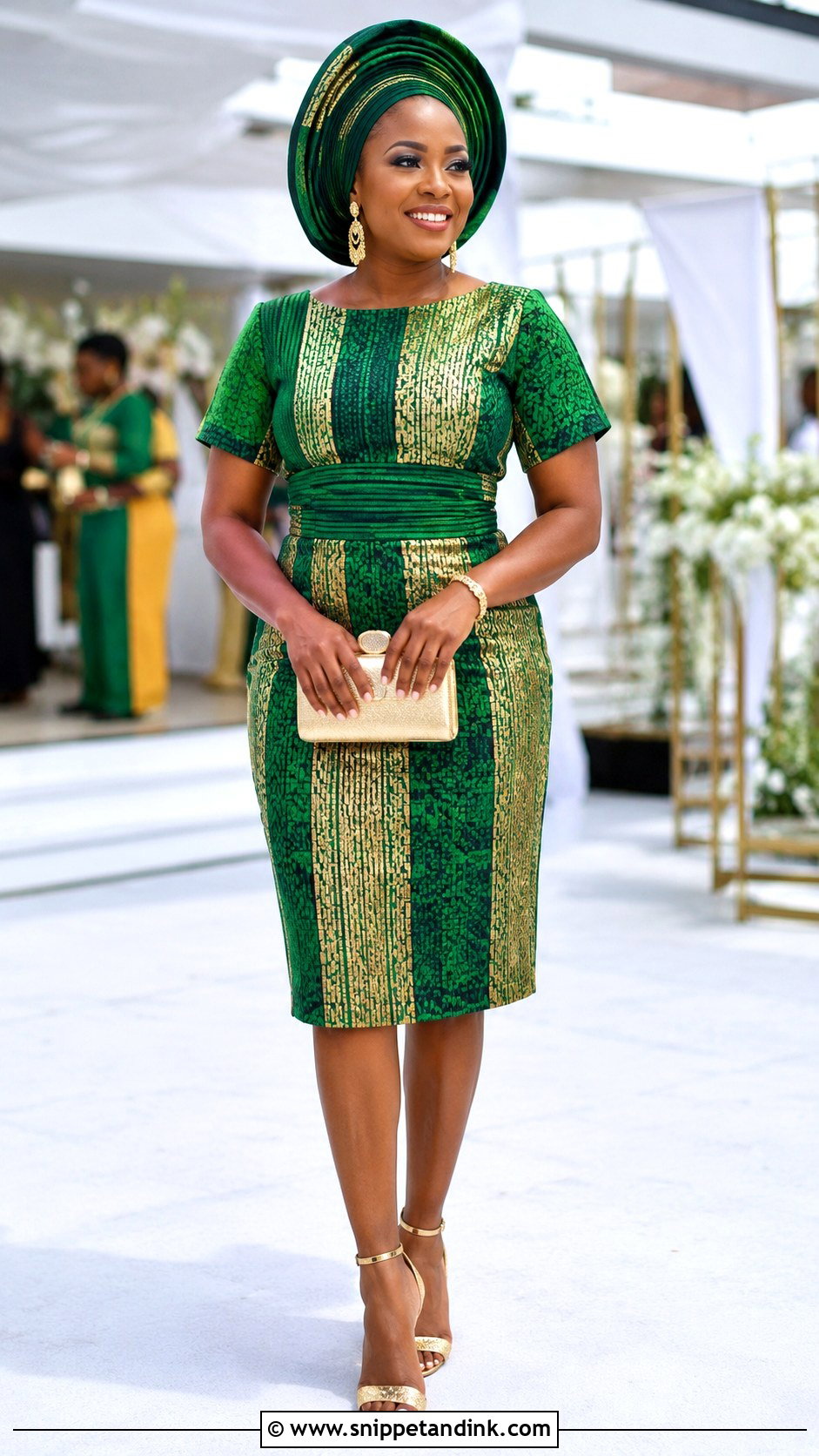
As a guest, the aim is to look celebratory without competing with the couple. A fitted midi-to-knee dress with a modest slit, short sleeves and a defined waist is a safe and flattering start. If the celebration has an Aso Ebi theme, wear the agreed fabric and colours; otherwise blue, green, coral, purple or a metallic neutral all work. Keep trains, big bows and heavy beading moderate unless the hosts have asked for very formal dress. I’d do one honest test before ordering: sit, hug someone and lift your arms to dance. Comfortable heels, a small clutch, coordinated earrings and a matching gele or woven headband complete it.
19. Aso Oke Short Gown With Detachable Train
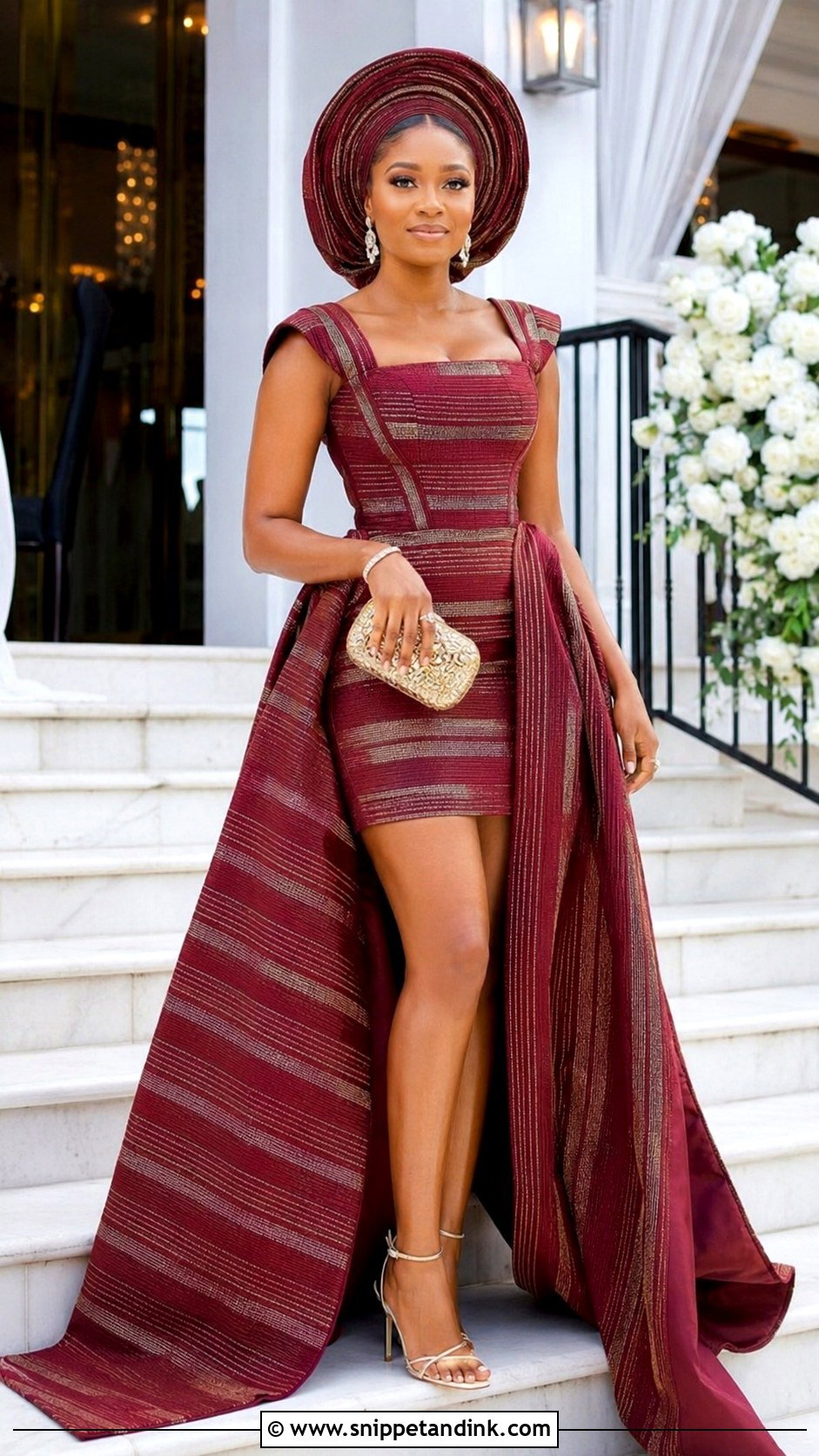
A removable train gives you a grand entrance and a dance-ready dress from one outfit. Attach it at the waist or side with hidden hooks or snaps, then take it off once the photographs are done. A fitted mini or knee-length base gives the strongest contrast. The attachment point is where I’m fussy: hooks sewn onto thick Aso Oke can create a ridge at the waist, so ask for a flat waistband with the fastenings inside it. Keep the bodice streamlined with a square, strapless or one-shoulder neckline. High heels, a sculptural clutch and a neatly tied gele suit celebrants and close family.
20. Simple Aso Oke Short Gown
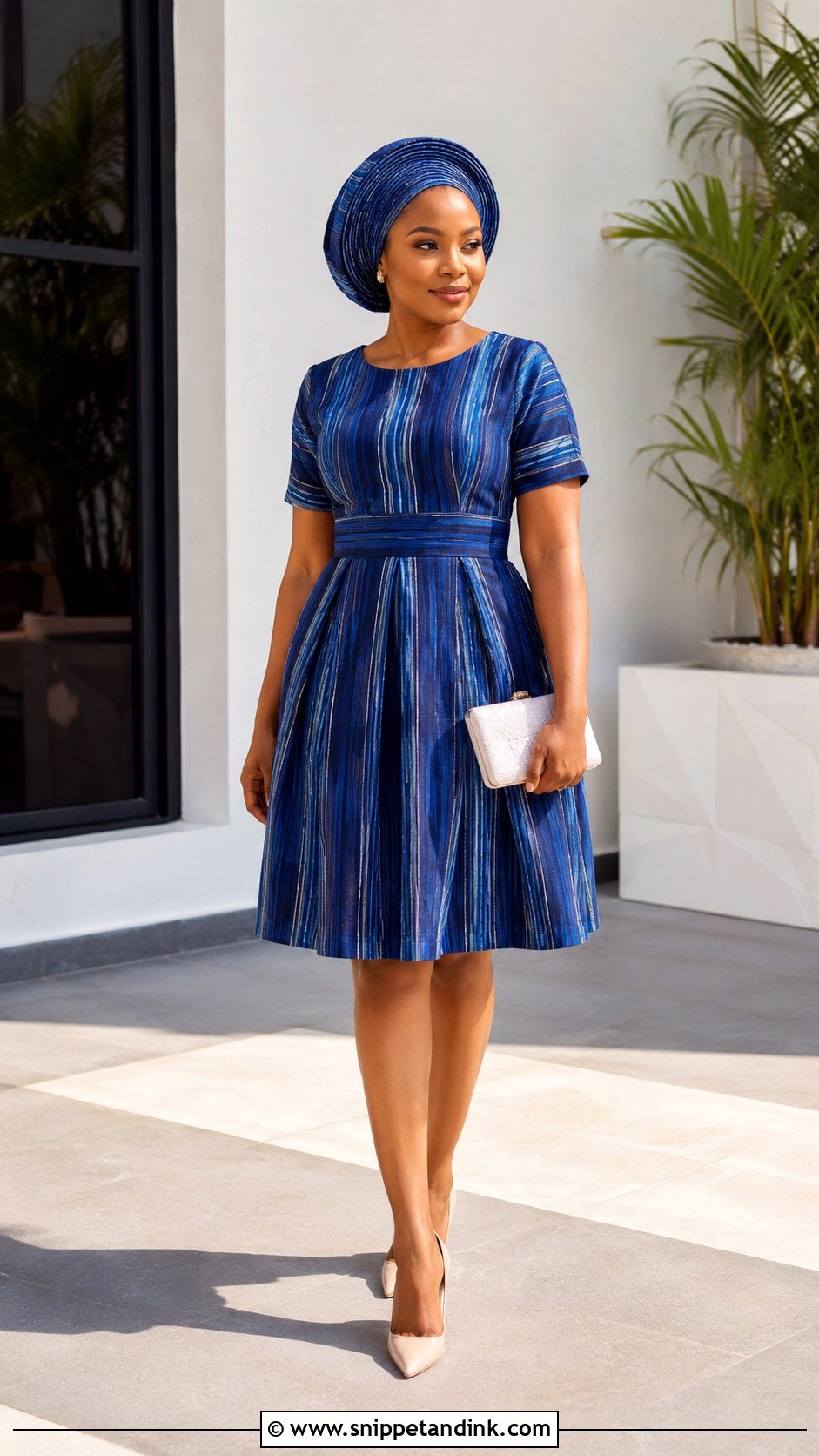
Sometimes the weave is decoration enough. A clean round neck, neat short sleeves, a defined waist and an easy A-line skirt let the fabric speak. What makes a simple dress look expensive is stripe alignment at the side seams and centre back, plus a precise fit. I’d add pockets in the side seams; they don’t disturb the line. Knee length is the most versatile. Classic pumps, a plain clutch, gold studs and a modest matching gele complete it, or swap the gele for a smooth bun and a narrow woven headband. This one suits almost any age or occasion.
Is a Short Gown Right for the Event You’re Attending?
Short Aso Oke dresses are widely worn now, but the setting still matters. At a traditional engagement where elders are present and the families are performing formal rites, a knee-length or midi hem with sleeves is the respectful choice. A mini fits better at the reception, an after-party or a younger crowd’s celebration.
If you are part of the family or the couple’s friend group wearing a shared fabric, ask before designing anything very short or very bare. Some hosts are relaxed; others expect a particular level of formality across the group photos. Many women solve this by commissioning a modest knee-length dress for the ceremony and a removable train or a separate short look for the dancing.
One last practical point: Aso Oke is warm. For an outdoor afternoon event, choose lighter weaves, sleeveless or short-sleeved cuts and a breathable lining, and save heavy metallic cloth for air-conditioned evening halls.
A Short Hem Still Needs Heritage-Level Tailoring
Off-shoulder, corset, peplum, wrap, fringe or a dress with a removable train: every short Aso Oke gown here depends on the same few decisions. Start with a silhouette that suits your comfort, proportions and preferred coverage, then let shoes, jewellery, a clutch and either a gele or woven headband support the fabric. Before approving the design, think through fabric weight, stripe placement, secure fastenings and how easily you can move. Built carefully, a short dress in this weave can look modern and still respect where the cloth comes from.
You'll Like These Ideas:




Leave a Reply