
Most of the Nigerian gowns I style aren’t for brides. They’re for the sister in aso ebi, the mother at the introduction, the friend who wants to turn heads at a reception without stepping on anyone’s moment. The range is wide: fitted lace, flowing Ankara dresses, roomy boubous and newer cuts in Adire or Aso Oke. I start every look from the same three questions. How formal is the event, how heavy is the fabric, and how long will you be on your feet? A boned gown is right for a black-tie reception and miserable at a six-hour outdoor party. Below are twenty full outfits, each with the shoes, bag and headwear I’d put with it and the tailoring point I’d raise first.
A Tailor Brief That Gets You the Gown You Pictured
Most of these gowns are sewn to order, and most disappointments I hear about come from a vague brief, not a bad tailor. Showing a single photo and saying “like this” leaves too many decisions to someone else.
- Bring the fabric with you and confirm the yardage covers your design. A full Ankara piece is usually six yards, often sold as a half piece of three; a fitted gown with big sleeves or a full skirt can need more than a half piece.
- Show two or three reference photos and point to the exact detail you want from each: this sleeve, that neckline, that hem.
- Say which body areas you want to highlight and which you want covered. It changes where seams and darts go.
- Agree on the lining, the zip or closure type, and the finished hem length in the shoes you’ll wear.
- Book at least one fitting before the final finishing, especially for lace that will be hand-cut around motifs.
Give yourself several weeks, and more during the busy wedding months near the end of the year, when tailors are overloaded and a promised date can slip. Collecting a gown the night before leaves no time to fix anything.
1. Ankara Mermaid Nigerian Gown
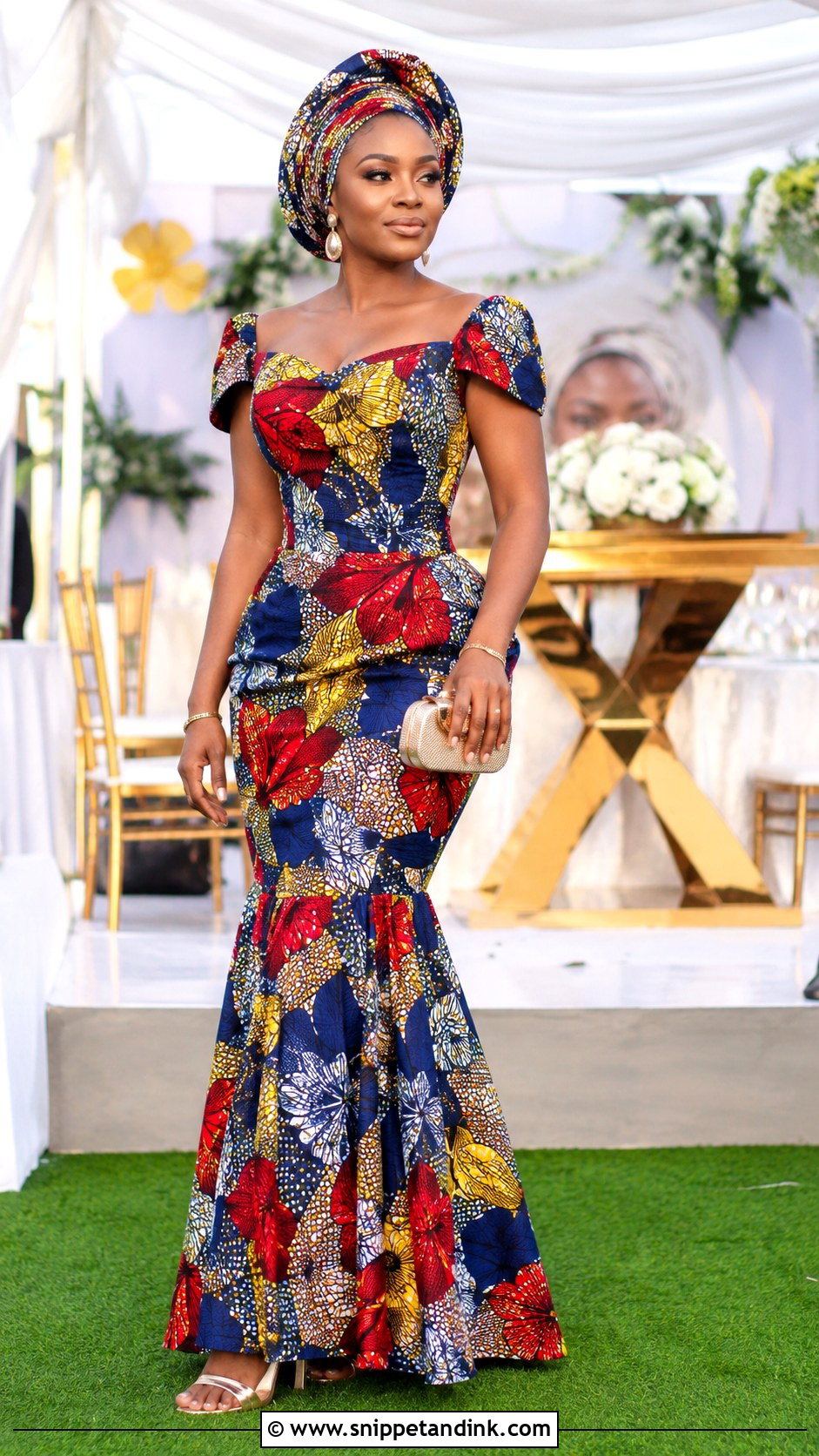
Pattern placement makes or breaks an Ankara mermaid. Wax prints have large repeating motifs, and on a fitted bodice a careless cut can land a bold circle right on the bust or split a motif at the hip seam. I lay the fabric out with the tailor before anything is cut. The bodice hugs bust and waist, the skirt opens below the knee. Short puff sleeves feel younger; three-quarter sleeves give more cover. Block-heel sandals, a small metallic clutch, simple drops, and a modest gele that doesn’t fight the skirt. Leave enough room at the knee to climb stairs and dance, or you’ll be shuffling all evening.
2. Lace Corset Nigerian Gown
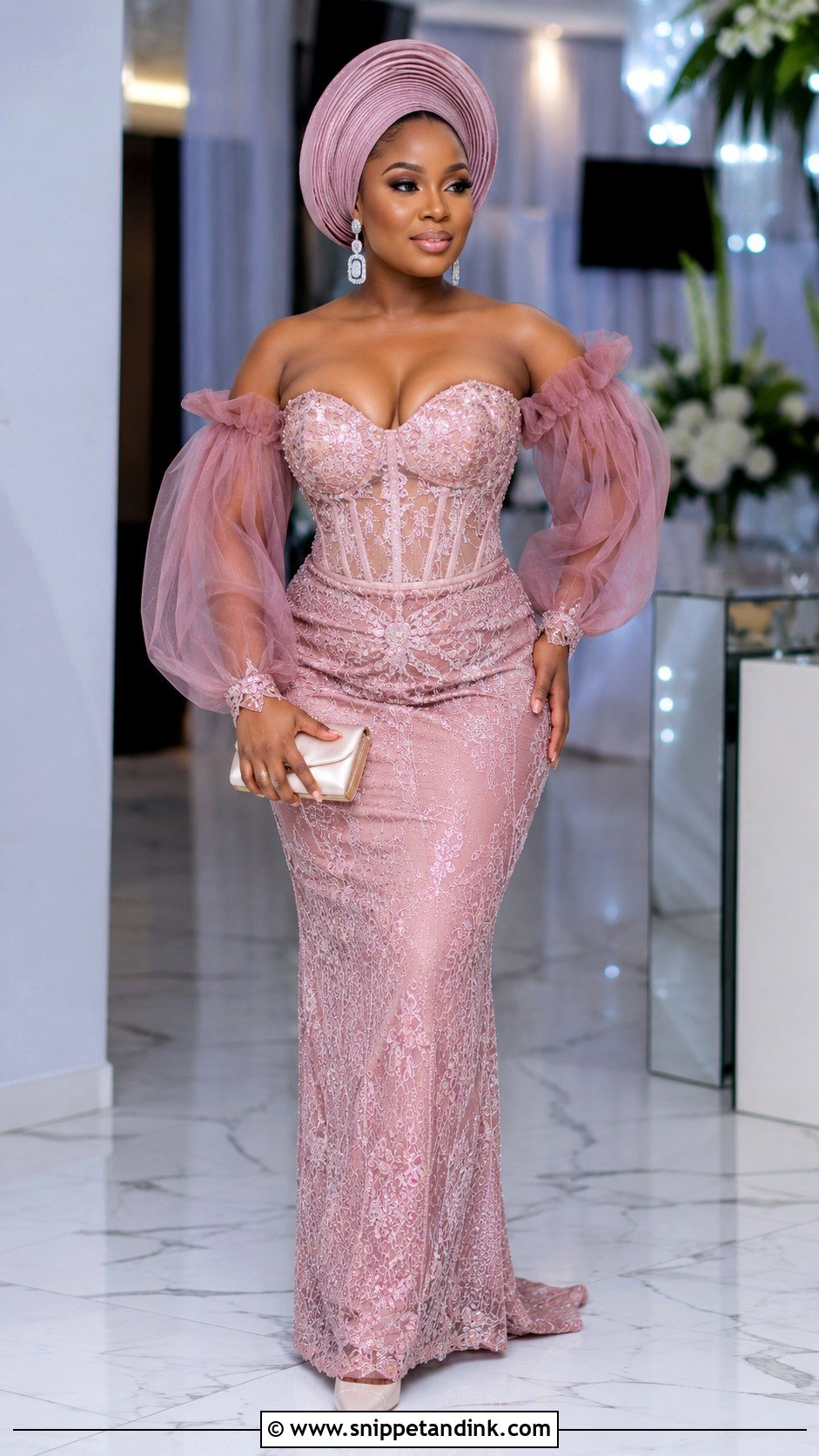
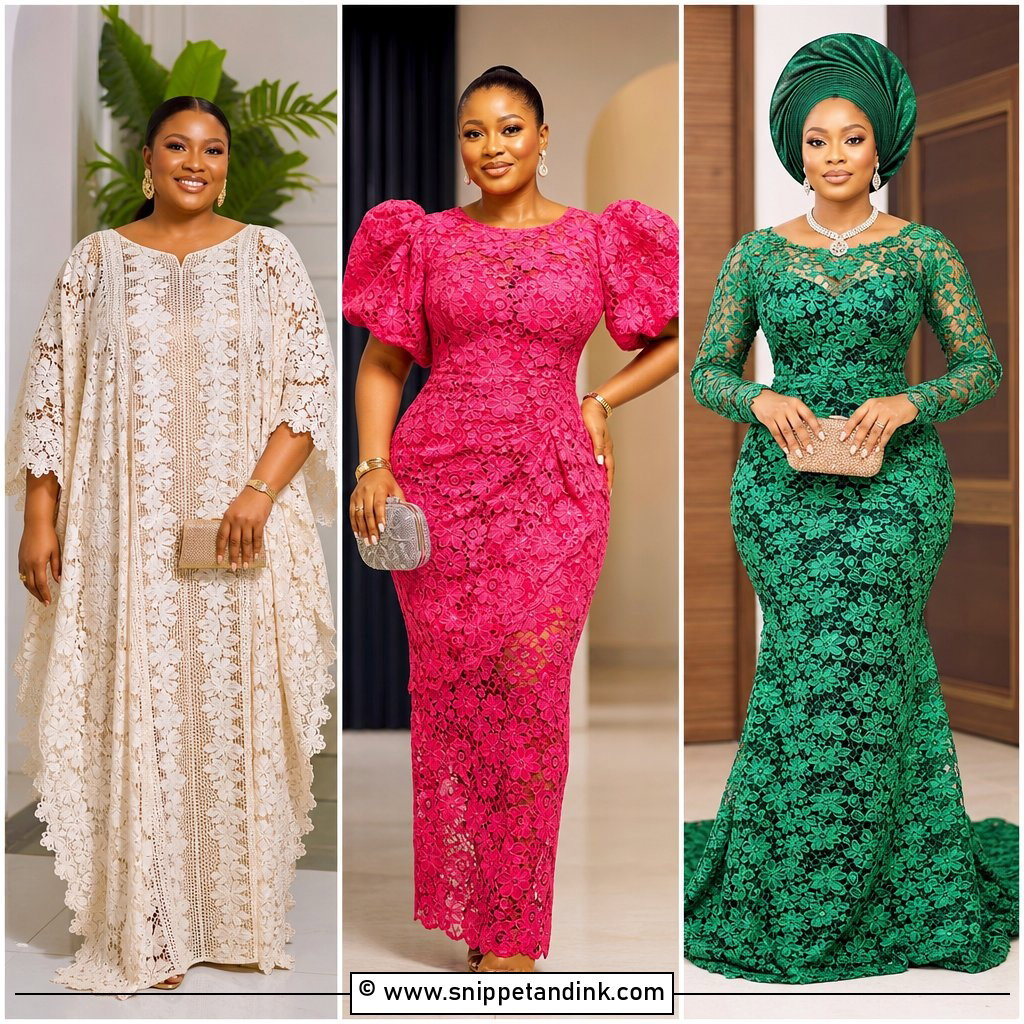
Glamour without suffocation is the whole brief for a lace corset Nigerian gown. Boning should shape the body, not squeeze it, so I ask for measurements taken over the exact underwear you’ll wear and a fitting before the lace is hand-finished. A sweetheart or soft curved neckline, then lace continuing into a straight or lightly flared floor-length skirt. Detachable tulle sleeves give you two looks from one gown. Pointed pumps, a structured satin clutch, crystal earrings and a medium gele in a coordinating shade. The lining should match your skin or the lace; a mismatched lining makes the lace look patchy from a few feet away.
3. Off Shoulder Aso Ebi Nigerian Gown
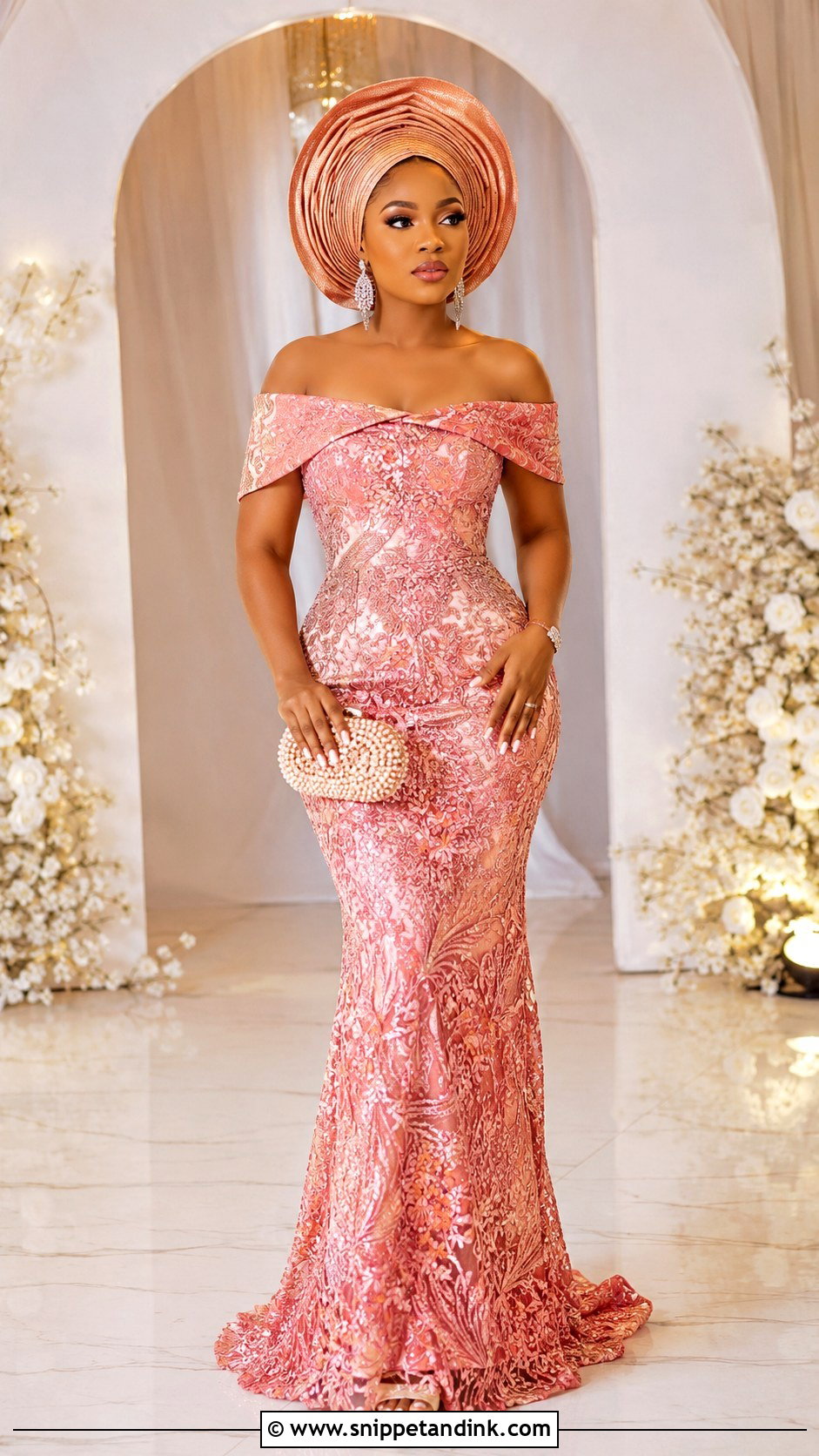
Off-shoulder necklines and aso ebi go together well, as long as the neckline stays where it was put. An off-shoulder Aso Ebi gown in lace, george or embroidered fabric needs an inner structure, usually a boned bodice or a band of silicone grip tape inside the neckline, otherwise it slides up the arm every time you clap or dance. Fitted bodice, long trumpet skirt, and a folded or scalloped shoulder band to soften it. Neat gele, chandelier earrings, beaded clutch, low platforms. Detachable sheer straps or a light matching shawl cover the shoulders for church. I’ve seen this look hold up best when the shoulder band is cut on a slight curve rather than straight across.
4. Long Sleeve Lace Nigerian Gown
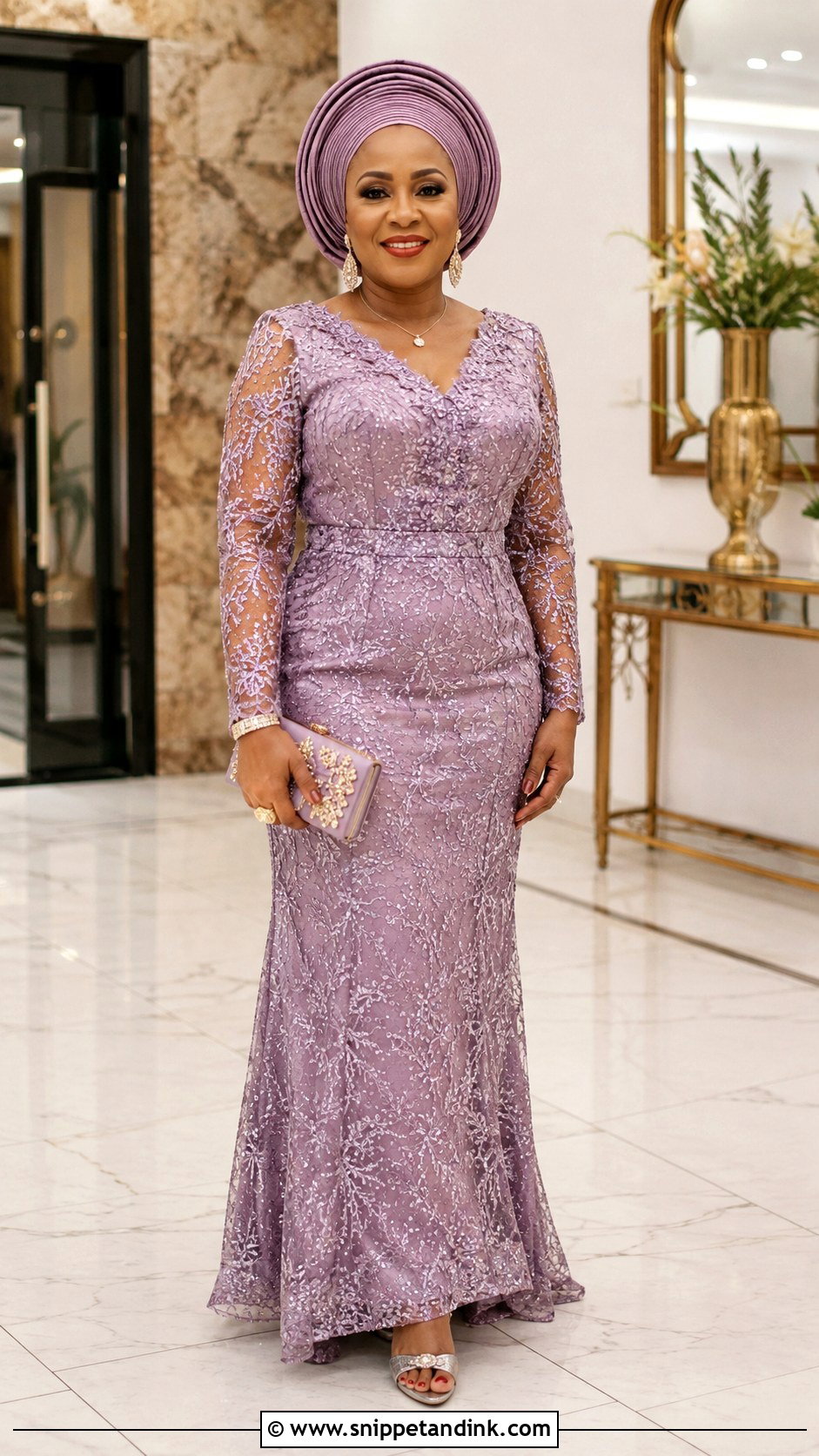
Sleeves to the wrist and lace from shoulder to hem: it’s a look that works at twenty-five and at sixty-five, which is why I recommend it so often to mothers of the couple. Pick a fitted column, trumpet or soft A-line depending on how much you’ll move. Leave the sleeves sheer and unlined so they stay light, but line the bodice and skirt in something breathable. A high round neck sits well with statement earrings; a modest V lengthens the upper body. Slingbacks, a small embroidered purse, a sculpted gele. With detailed lace, I keep the necklace minimal or skip it. Princess seams through the bodice define the waist without tightness.
5. Cape Sleeve Nigerian Gown
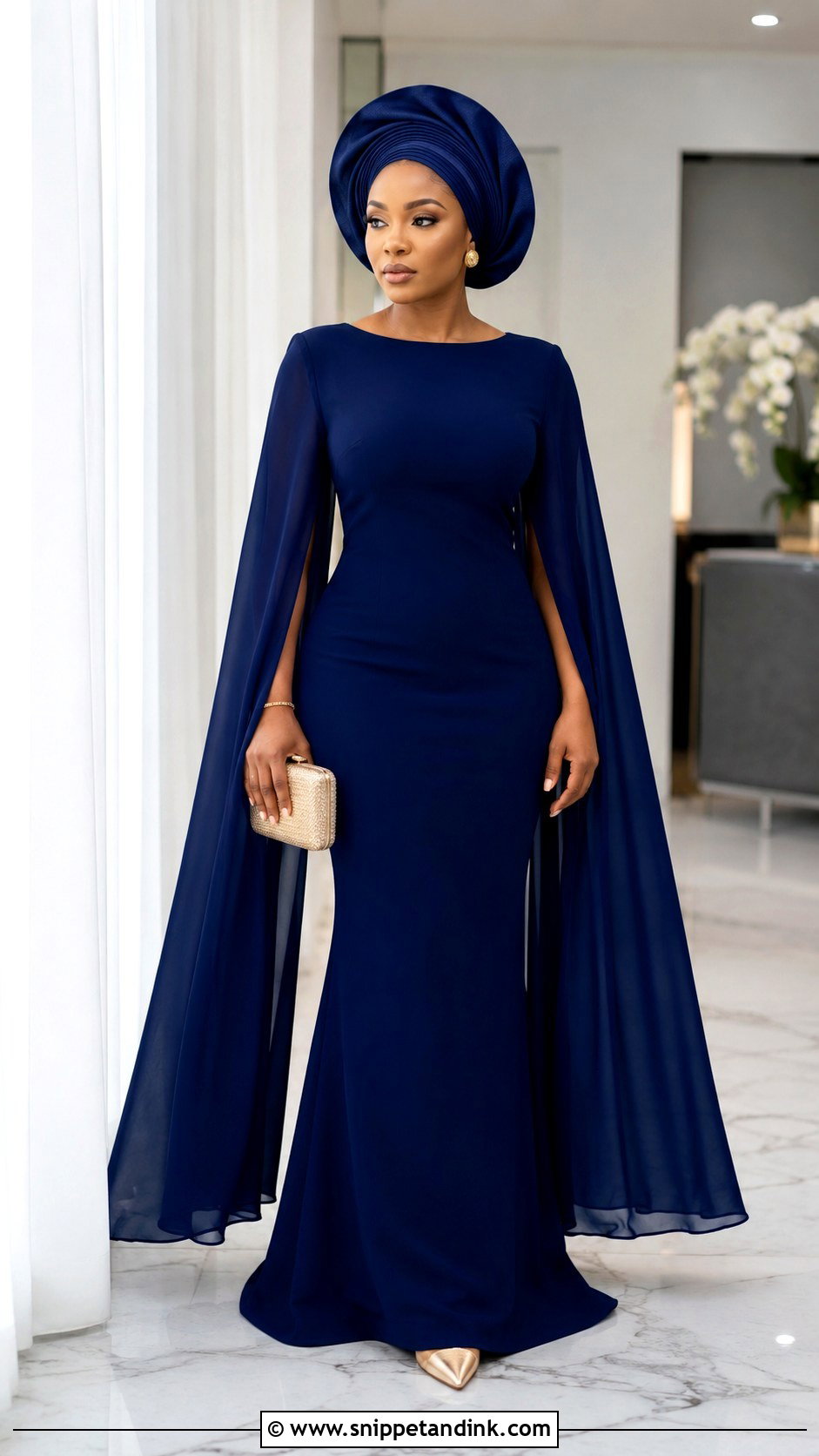
Cape sleeves are my answer for anyone who wants coverage on the upper arms and back but hates the feeling of a fitted sleeve. The gown underneath can be straight or slightly flared, in lace, crepe or embroidered mesh. A cape ending at the elbow is practical; one falling near the hem is pure drama. Pointed heels, a hard-case clutch, studs and a neatly folded gele. Keep the neckline plain so the cape stays the feature. One thing to test: lift your arms as if dancing. A cape cut from heavy lace pulls on the shoulders and drags the neckline backward, so chiffon or light mesh is usually the better choice.
6. Ankara Puff Sleeve Nigerian Gown
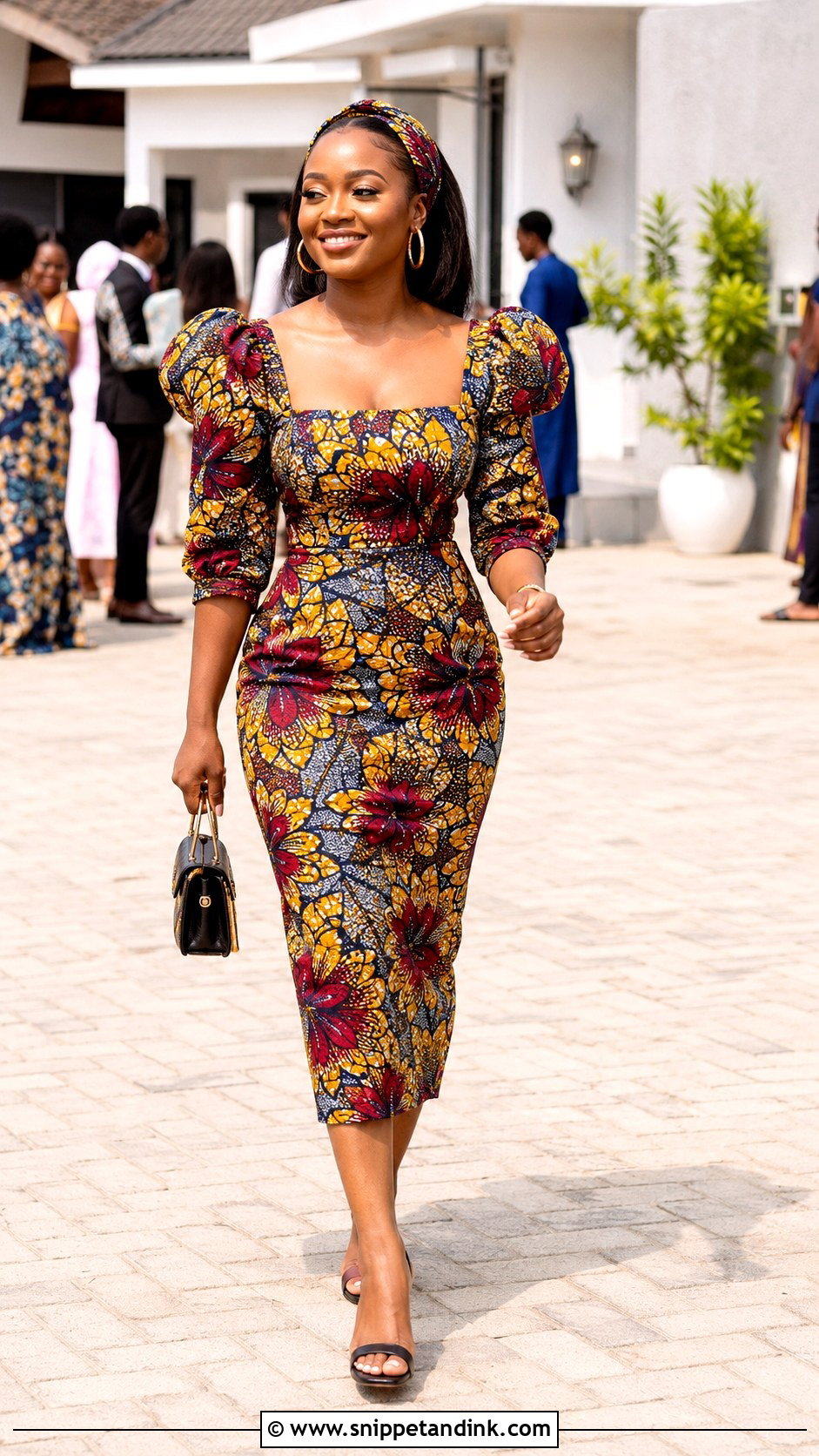
Big puff sleeves need a slim body to balance them. A fitted midi or floor-length gown lets the shoulders carry the volume without the whole outfit looking wide. With Ankara, I pick out the two or three main colours in the print and repeat one through the shoes and bag. A square neckline suits structured puffs and leaves room for a fine necklace. Block heels, a little top-handle bag, hoops and a slim fabric headband. On petite women I keep the sleeve smaller and ending above the elbow; taller women carry a longer sculpted sleeve easily. Puffs need interfacing or tulle inside to hold shape, or they collapse by mid-afternoon. Side pockets are a bonus if the skirt has fullness.
7. Ankara Boubou Nigerian Gown
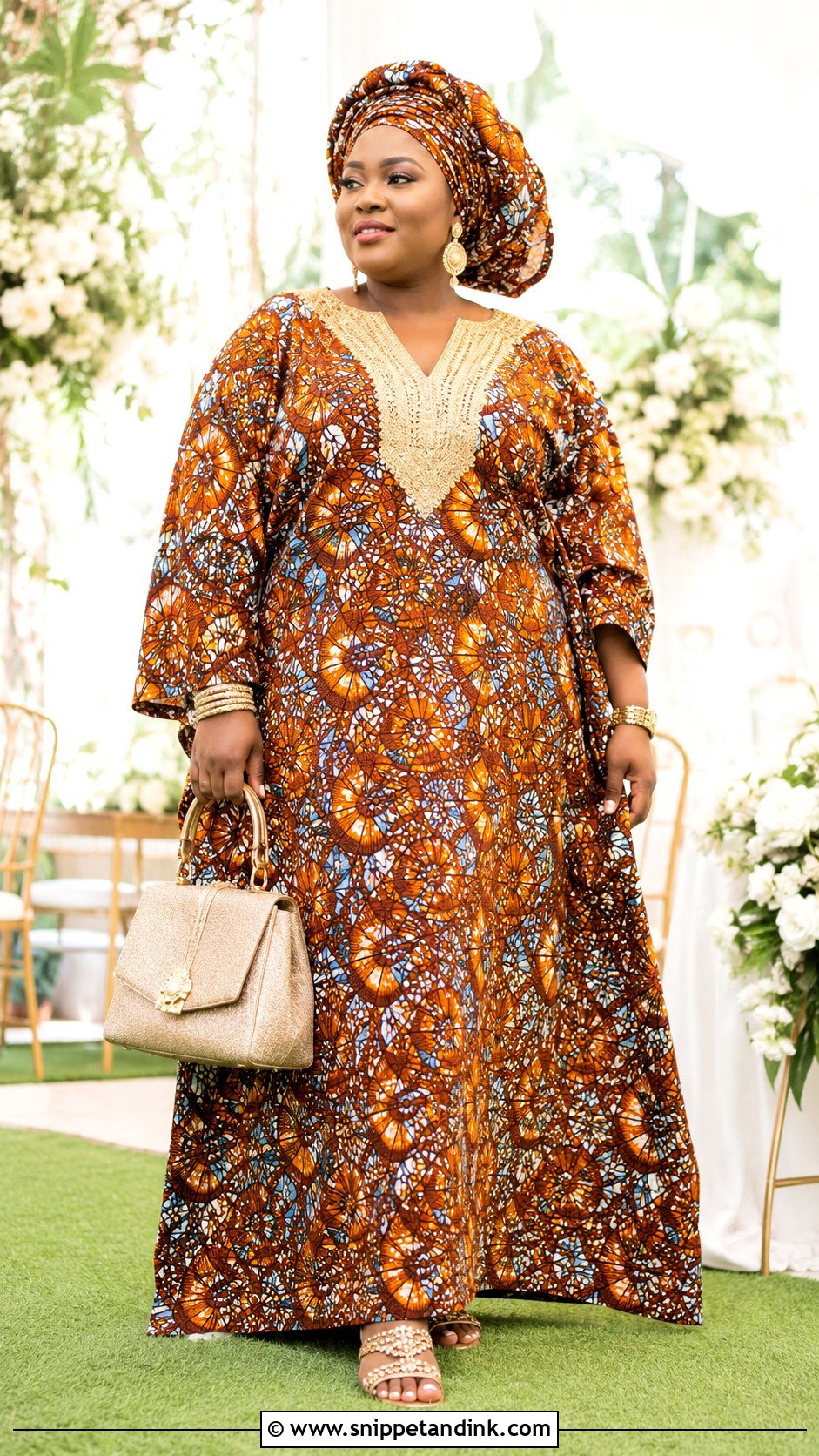
An Ankara boubou is the most comfortable thing on this list, and the fabric choice decides whether it flows or tents. Stiff, heavily waxed cotton stands away from the body; a softer, washed cotton print drapes. I usually suggest washing the fabric once before cutting so it relaxes and any shrinkage happens before it’s sewn. A V-neck with embroidery, beads or contrasting trim gives it a centre. The hem should skim the ankle, not puddle. Embellished flats or low mules, a structured bag, stacked bracelets and bold earrings. Headwrap for a traditional finish, low bun for something easier. No defined waist is needed, so it suits nearly every body shape and handles a hot afternoon well.
8. Chiffon Boubou Nigerian Gown
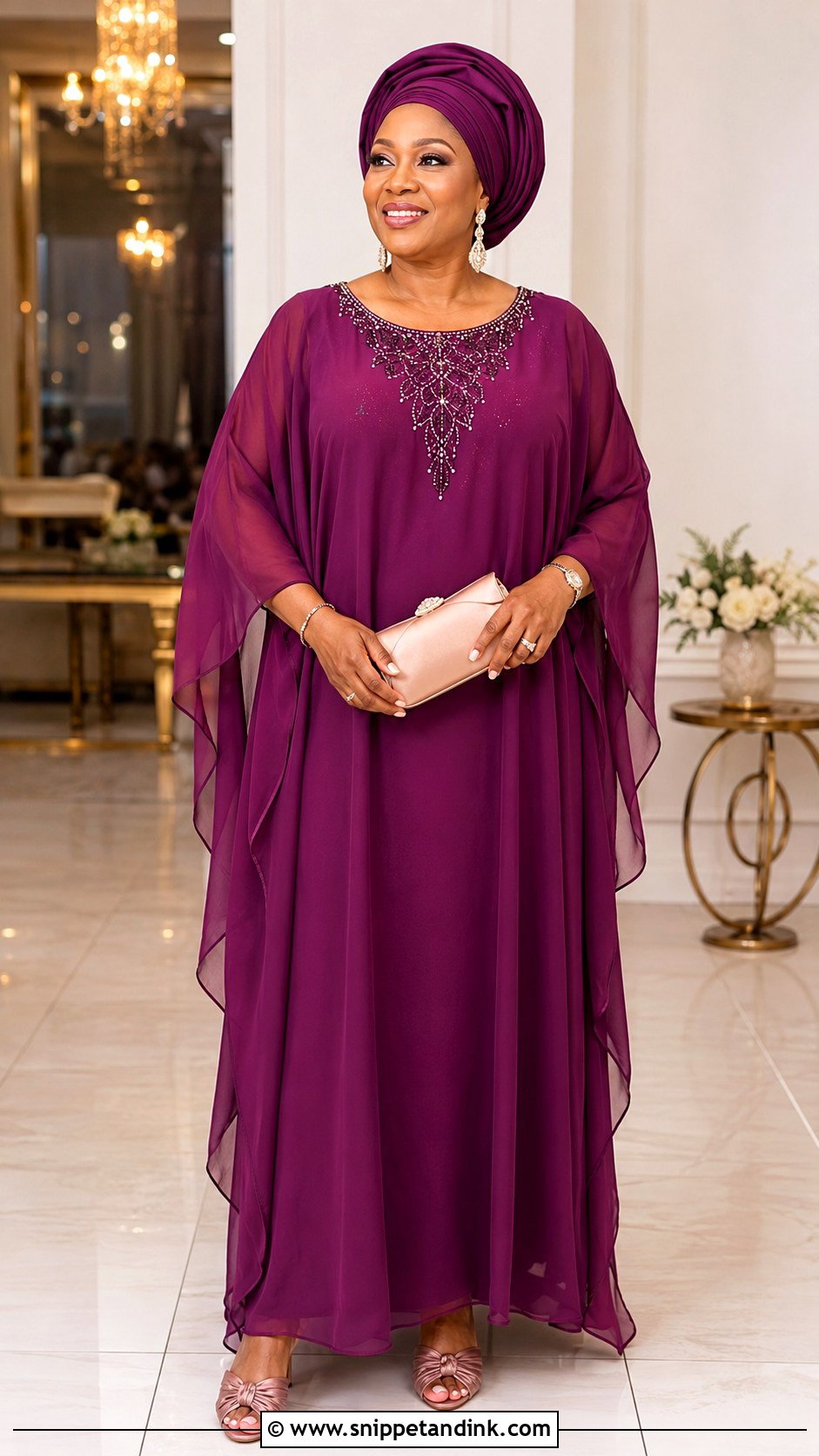
Chiffon boubous float, and they also cling and turn see-through if you skip the inner dress. I always have a smooth opaque slip made underneath. Jewel tones, pastels and rich neutrals all work, depending on how formal the day is. Embroidery or beading at the neckline and sleeve edges gives the loose shape some definition. A slightly shorter front hem shows the shoes and stops you treading on the fabric going up steps. Kitten-heel mules, a satin clutch, delicate bracelets, long earrings, and a turban-style wrap for height without a big gele. Chiffon snags easily, so avoid bags with studs, chains or rough beading that will rub against it.
9. Adire Maxi Nigerian Gown
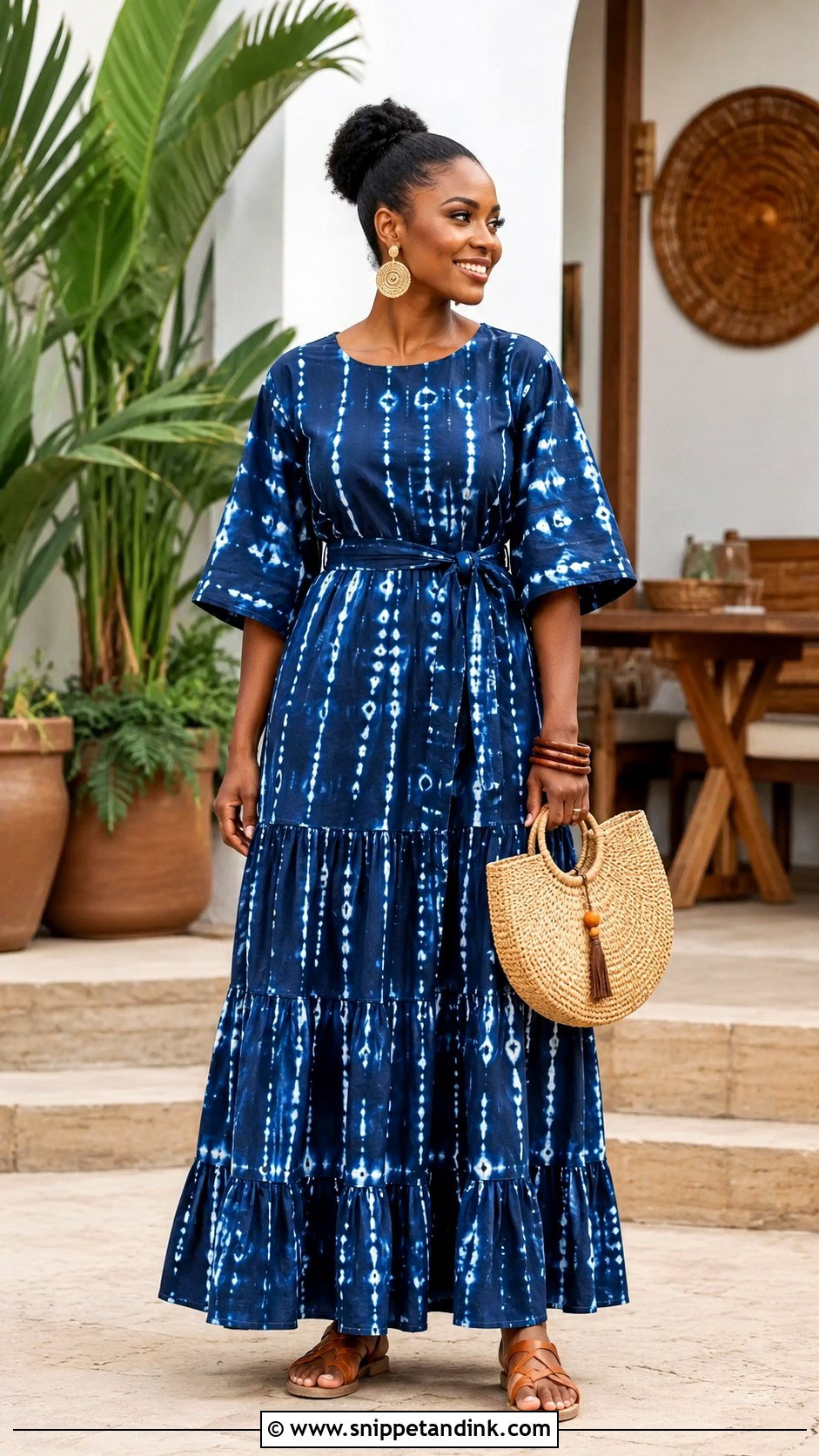
Adire is hand-dyed, so no two pieces are identical, and the indigo can rub off a little on pale shoes or skin in the first few wears. I tell people to rinse it in cold water first. A tiered A-line keeps the pattern visible and gives easy movement. Sleeveless for heat, loose elbow sleeves for more cover. Tan leather sandals, a woven bag, brass earrings and wooden bangles suit the blue without dressing it up too far. A matching fabric belt adds shape if you want it. Headwrap, natural curls, braids or a low bun all work. It’s a daytime outfit at heart: creative events, holidays, relaxed family parties.
10. Aso Oke Panel Nigerian Gown
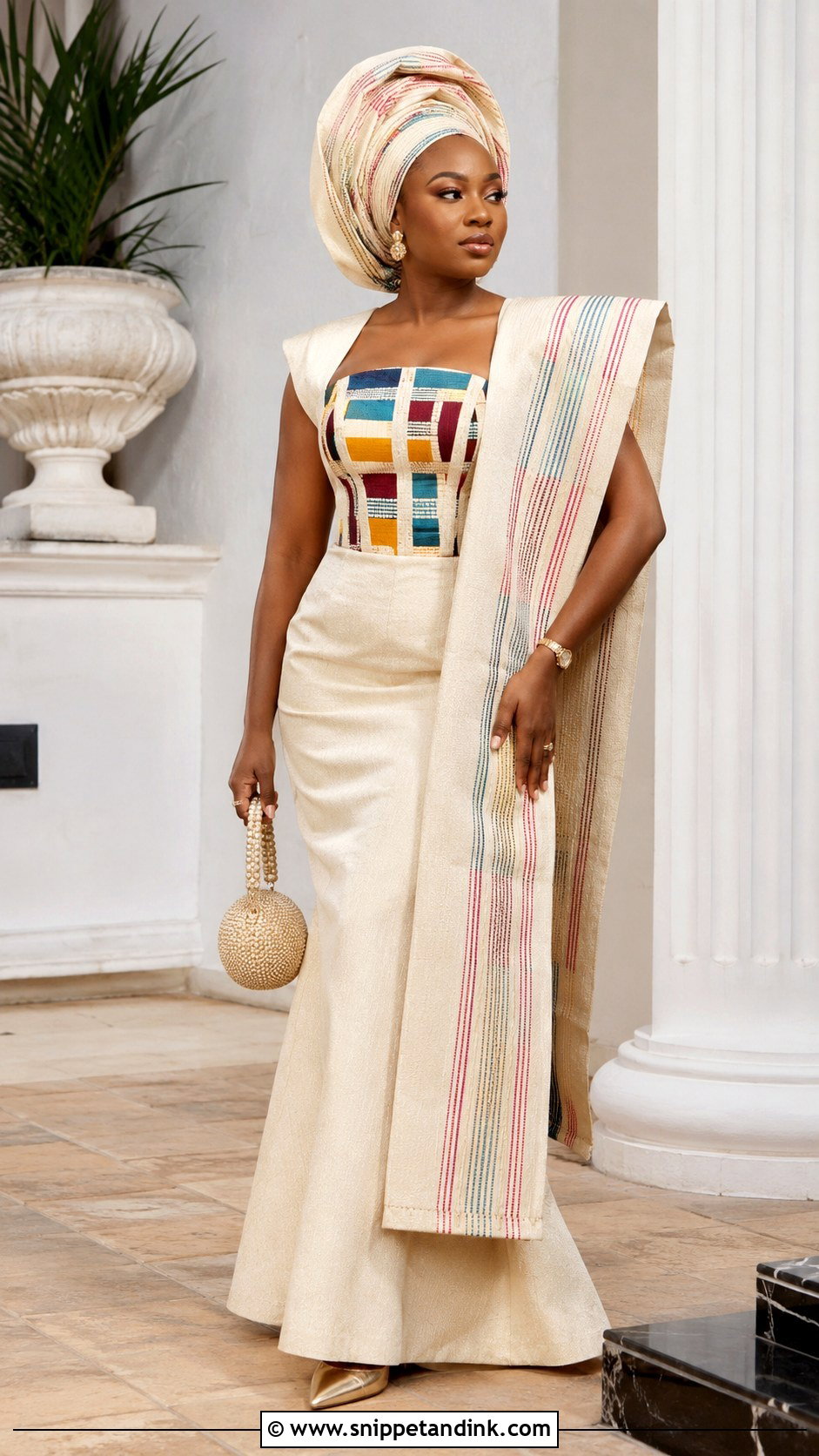
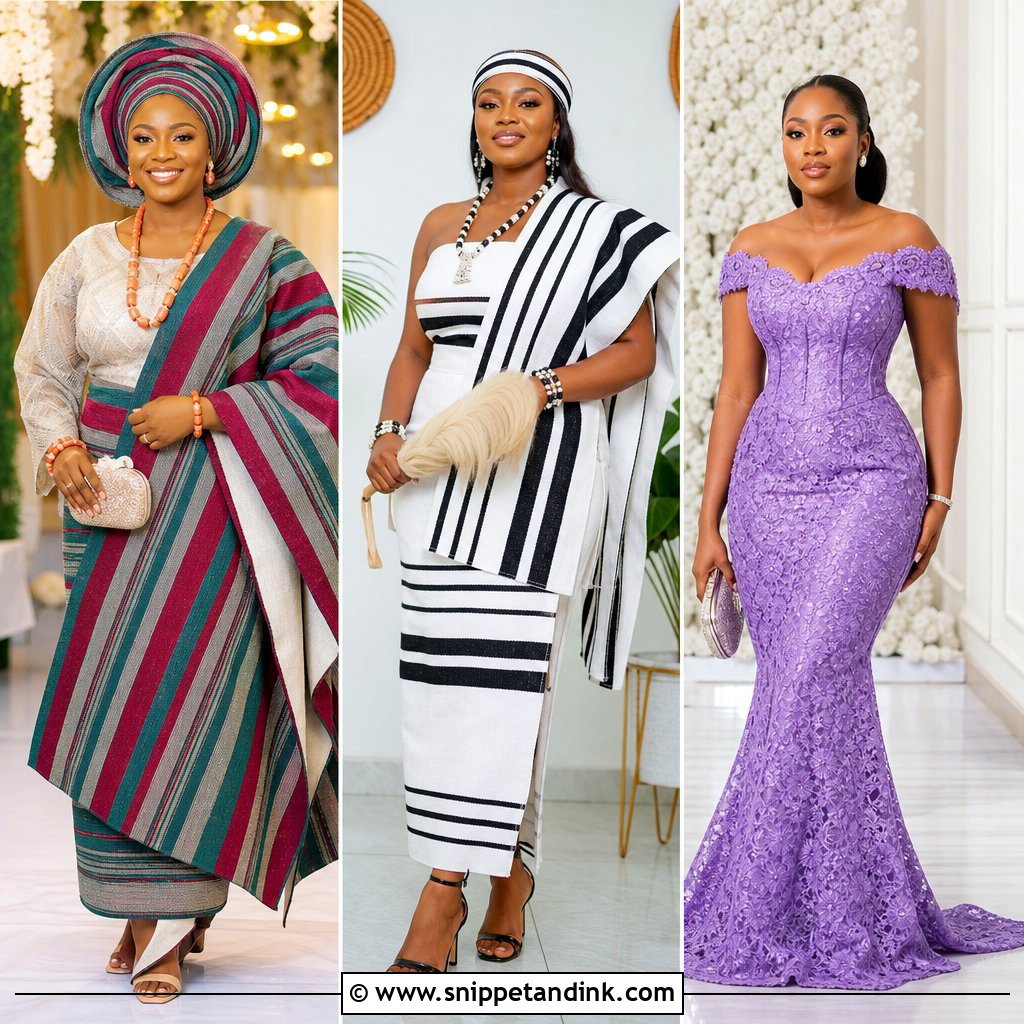
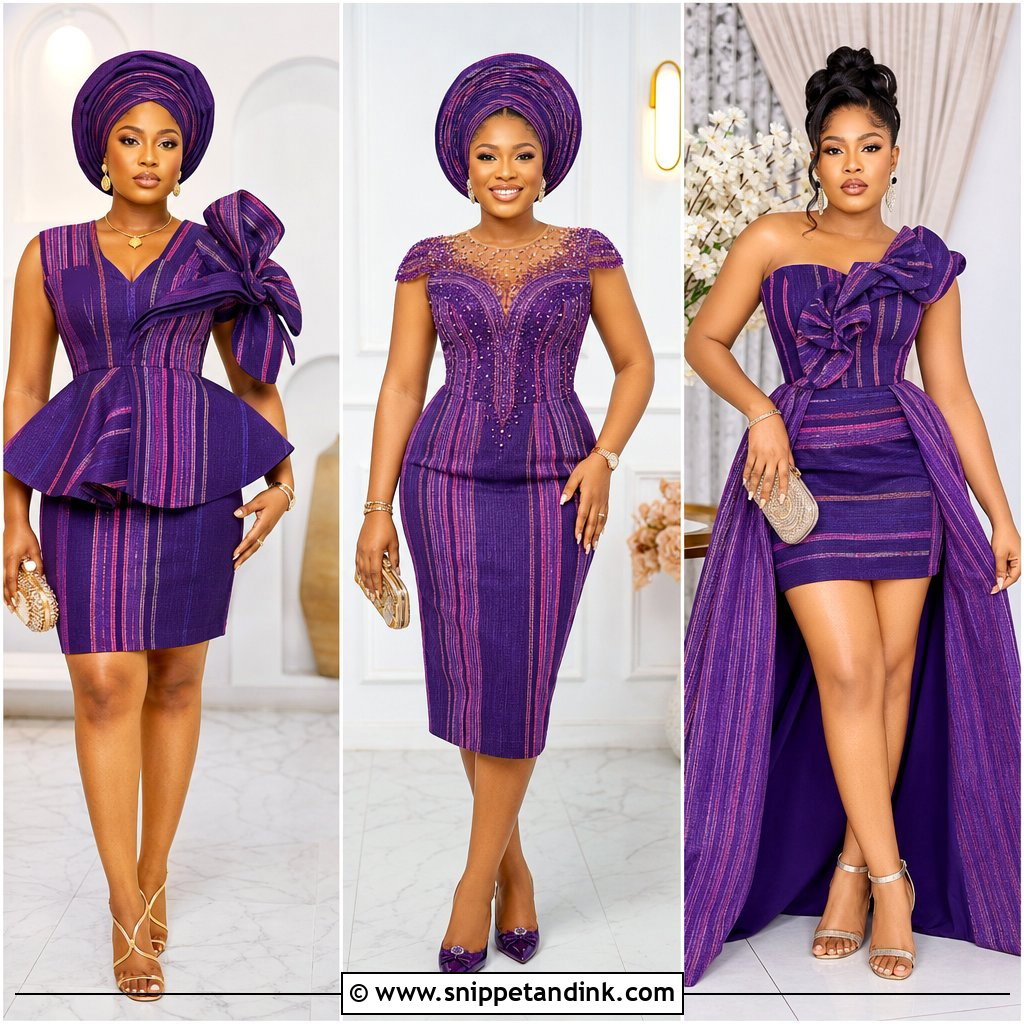
Hand-woven aso oke is stiff, and that stiffness is the design consideration. Set Aso Oke panels into a plain crepe or silk-blend gown at the bodice, waist, sleeves or centre front, where the body doesn’t need to stretch, and keep the softer fabric at the bust, hips and elbows. A fitted top and gently flared skirt balance the two textures. Matching gele and a shoulder sash for a more traditional finish. Metallic pumps, a small beaded bag, polished gold earrings. Aso oke also frays quickly at cut edges, so the tailor needs to bind or overlock every seam. I find this gown ideal for introductions and engagement ceremonies, where heritage is the point.
11. Ankara High Low Nigerian Gown
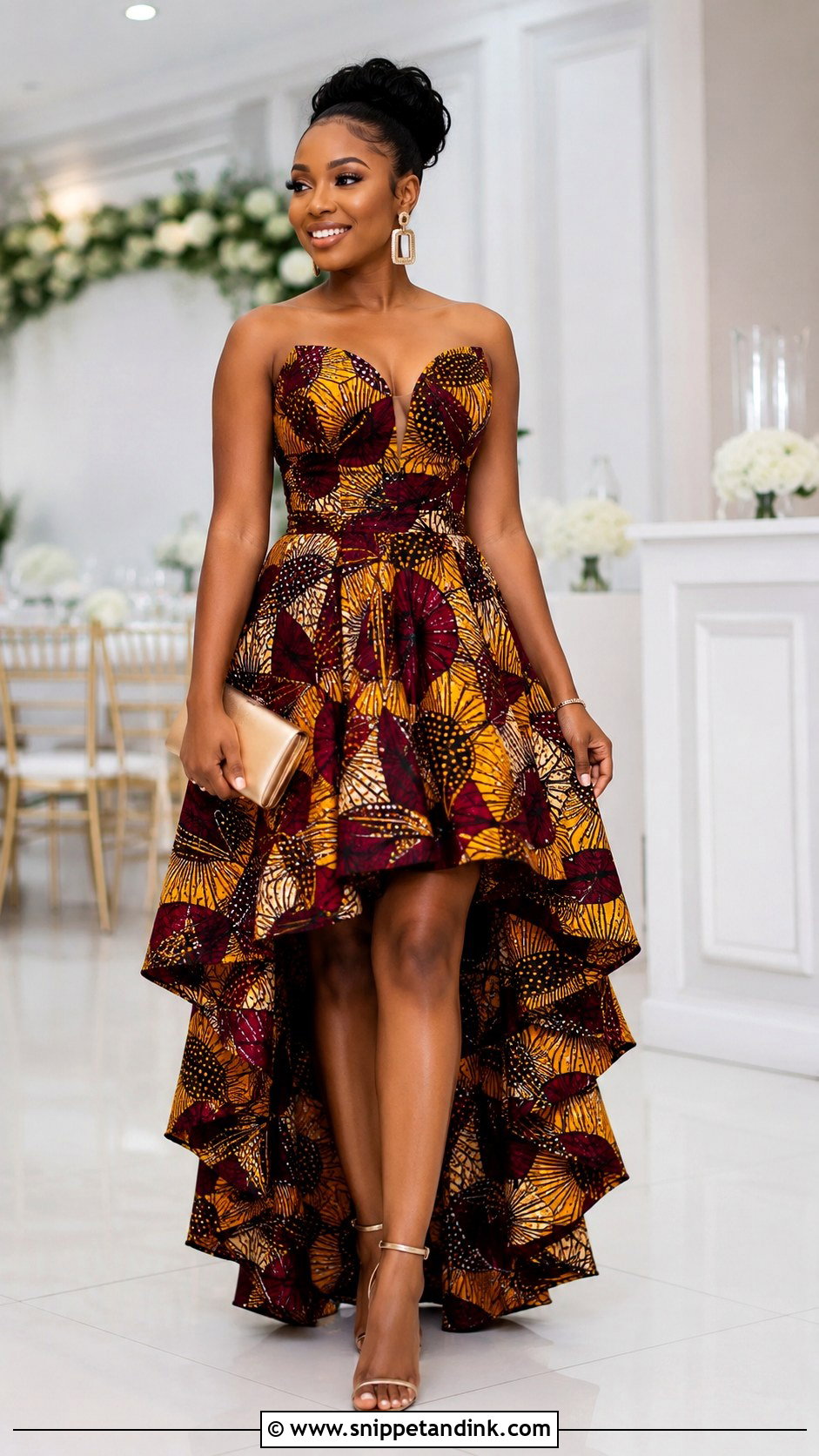
High-low hems show off the shoes and keep the front clear for walking. Fitted bodice, full skirt finishing at the knee in front and sweeping toward the ankle at the back. Halter, square or a modest V keeps the top clean. Ankle-strap heels, a solid clutch, geometric earrings and a slim bracelet. For shoes, I match a quieter colour from the print rather than reaching for black, which tends to look heavy against bright Ankara. With all that movement at the hem, leave out the oversized gele. The back hem picks up dust at outdoor venues, so if the party is on grass, keep it a little shorter.
12. Peplum Lace Nigerian Gown
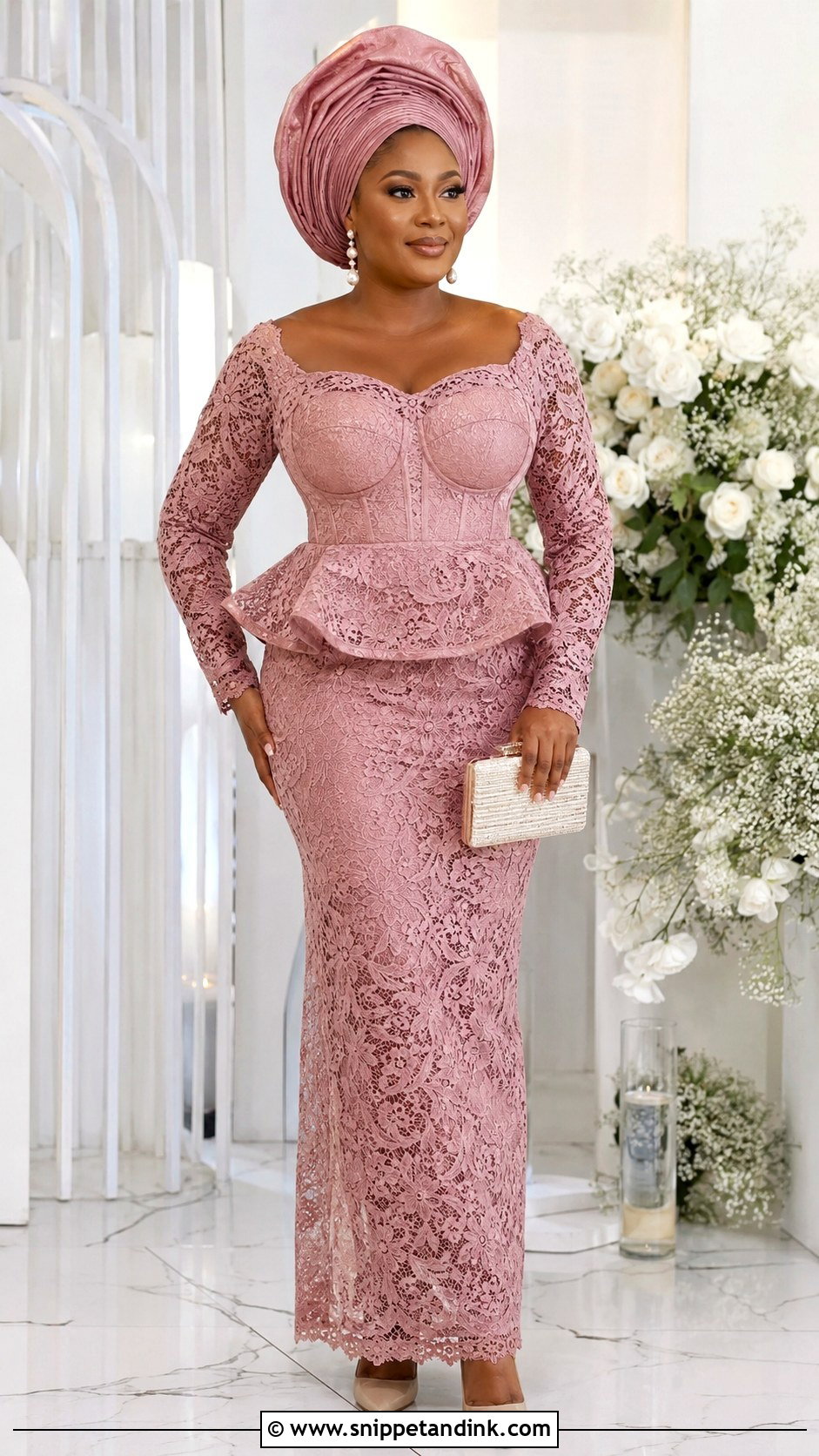
Peplums are kind to a midsection, but only if they start at the true waist. Set even an inch too low, the peplum cuts the body in half and shortens the legs. I find the waist by having the client bend sideways and marking the crease. Structured lace bodice, a narrow floor-length skirt or moderate trumpet under it. One-sided, double-layered or softly flared peplums give different amounts of volume. Pointed heels, a box clutch, pearl drops and a coordinating gele. Keep the beading at the neckline or waist, not everywhere. Proportioned well, it suits straight, curvy and hourglass figures alike.
13. One Shoulder Nigerian Gown
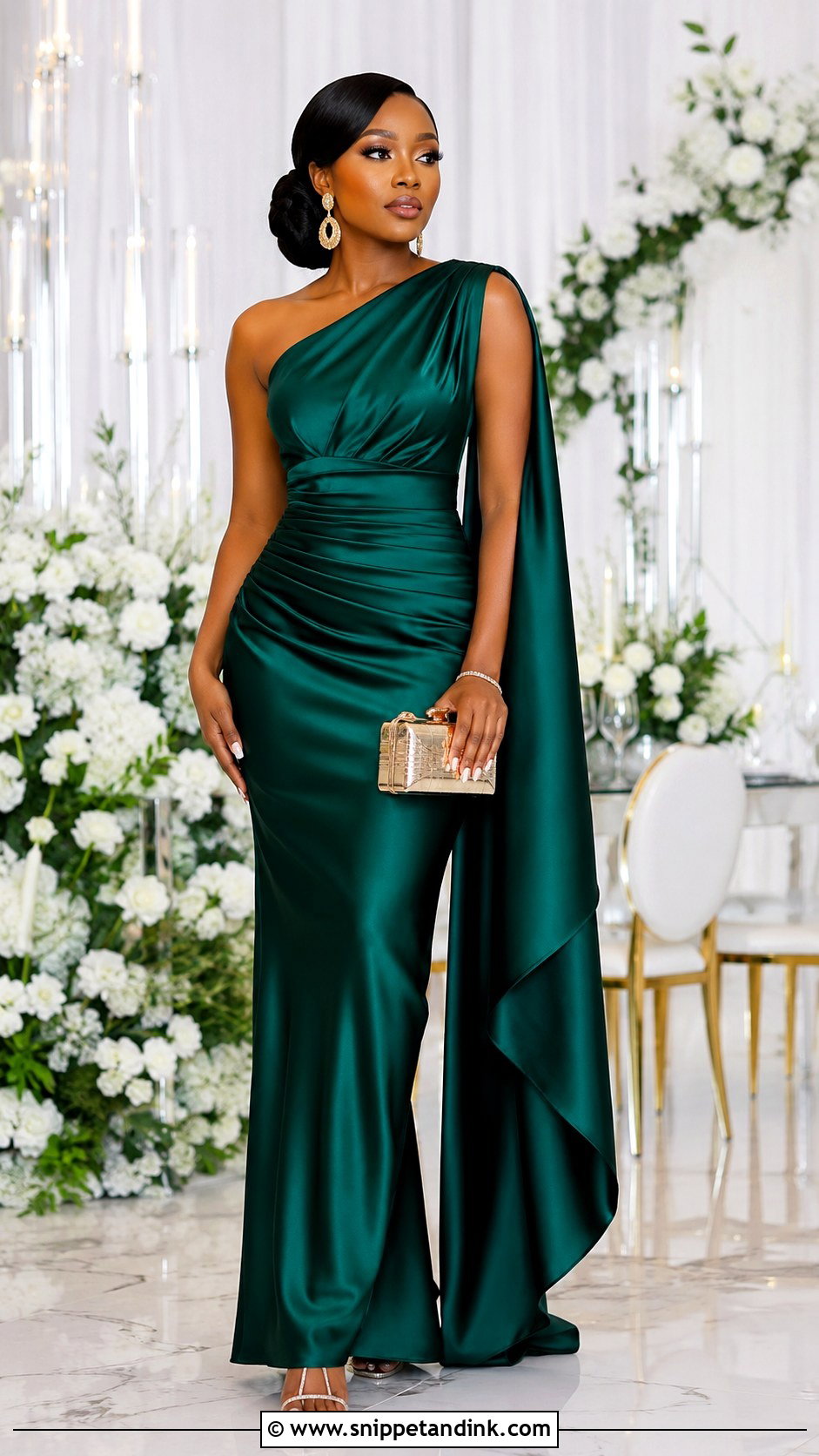
A one-shoulder Nigerian gown looks clean and modern, but the bodice is held up by a single point, so construction matters more than fabric. Lace, satin, sequins or Ankara all work if the shoulder seam is reinforced and the bodice has internal boning or a firm lining. Balance it with a long fitted skirt or a gathered A-line. A draped shoulder panel adds movement; a structured bow is sharper. Low side bun, bold earrings, metallic clutch, slim-strap heels, no necklace. A huge gele competes with the shoulder, so go moderate. Wear it for a couple of hours at home before the event to check it doesn’t twist.
14. Ankara Wrap Nigerian Gown
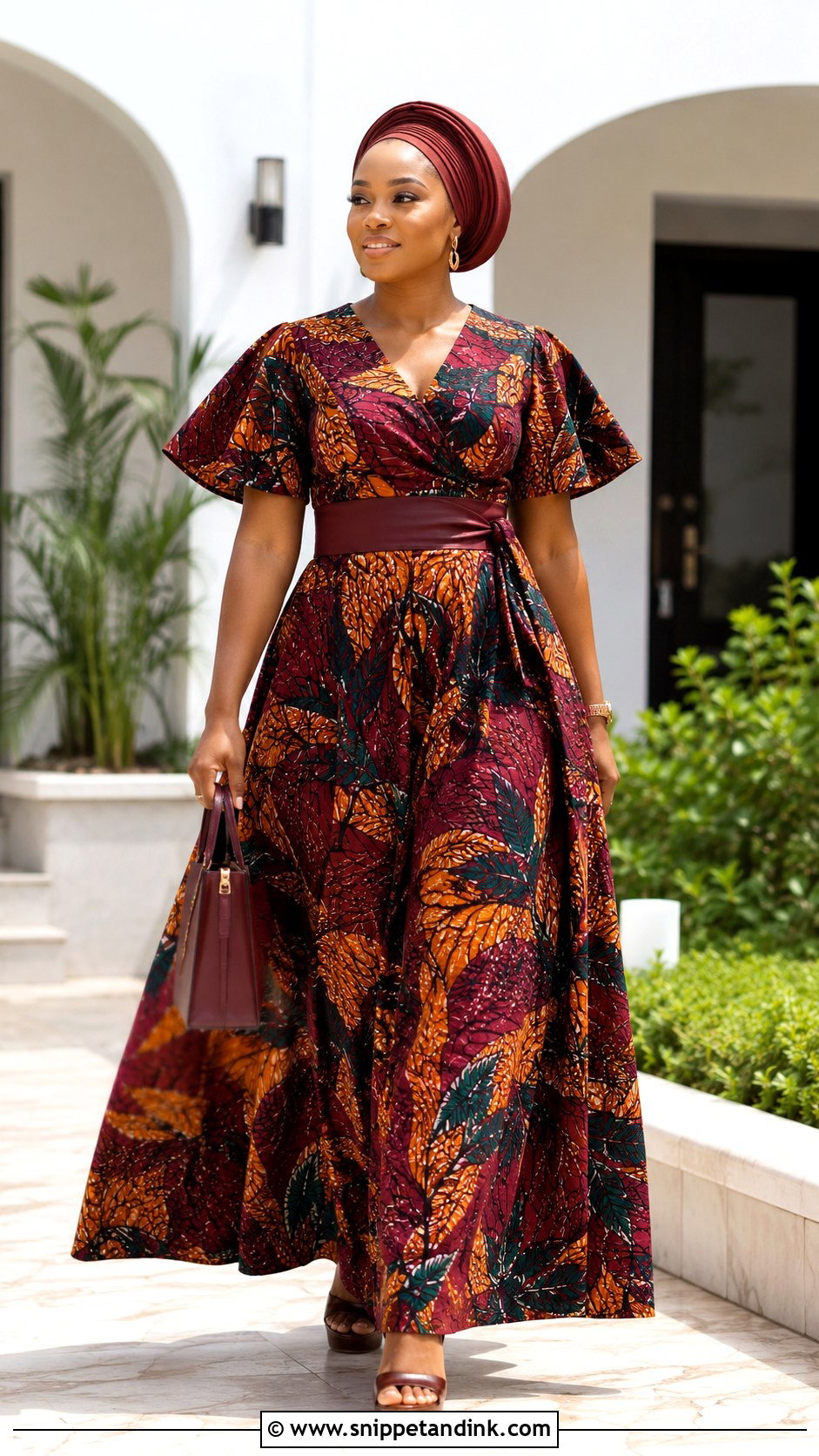
Wrap gowns forgive. They adjust if your weight shifts between the fabric purchase and the party, which happens more often than anyone admits. The bodice crosses at the front and joins a full midi or maxi skirt, giving a natural waist. Insist on an inner tie or a hidden snap at the cross point, or the neckline will open every time you lean forward. Flutter sleeves soften the shoulders; three-quarter sleeves cover more. Platform sandals, a solid leather bag, small hoops, a simple matching wrap. Make the belt wide enough to lie flat; a narrow tie twists and rolls by the end of the day.
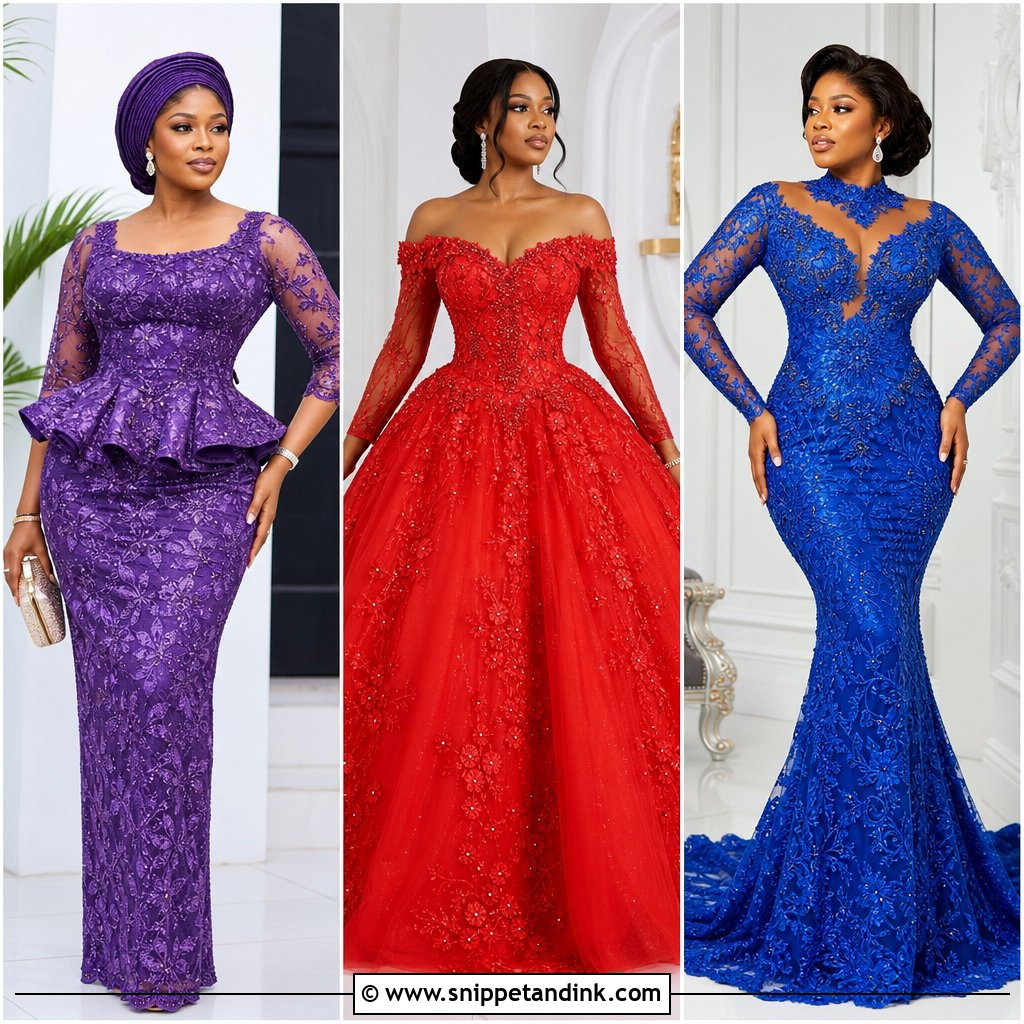
15. Velvet And Lace Nigerian Gown
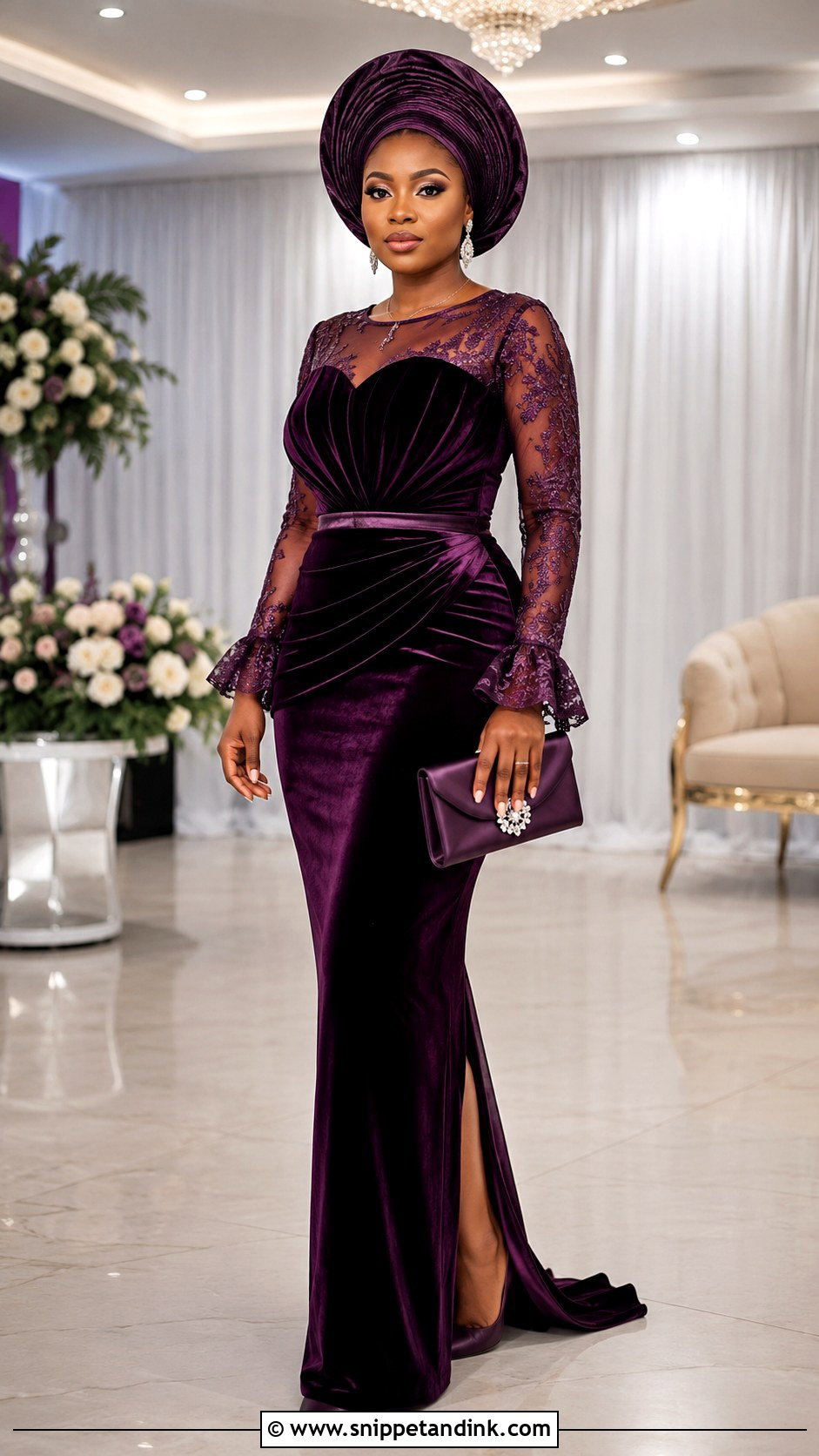
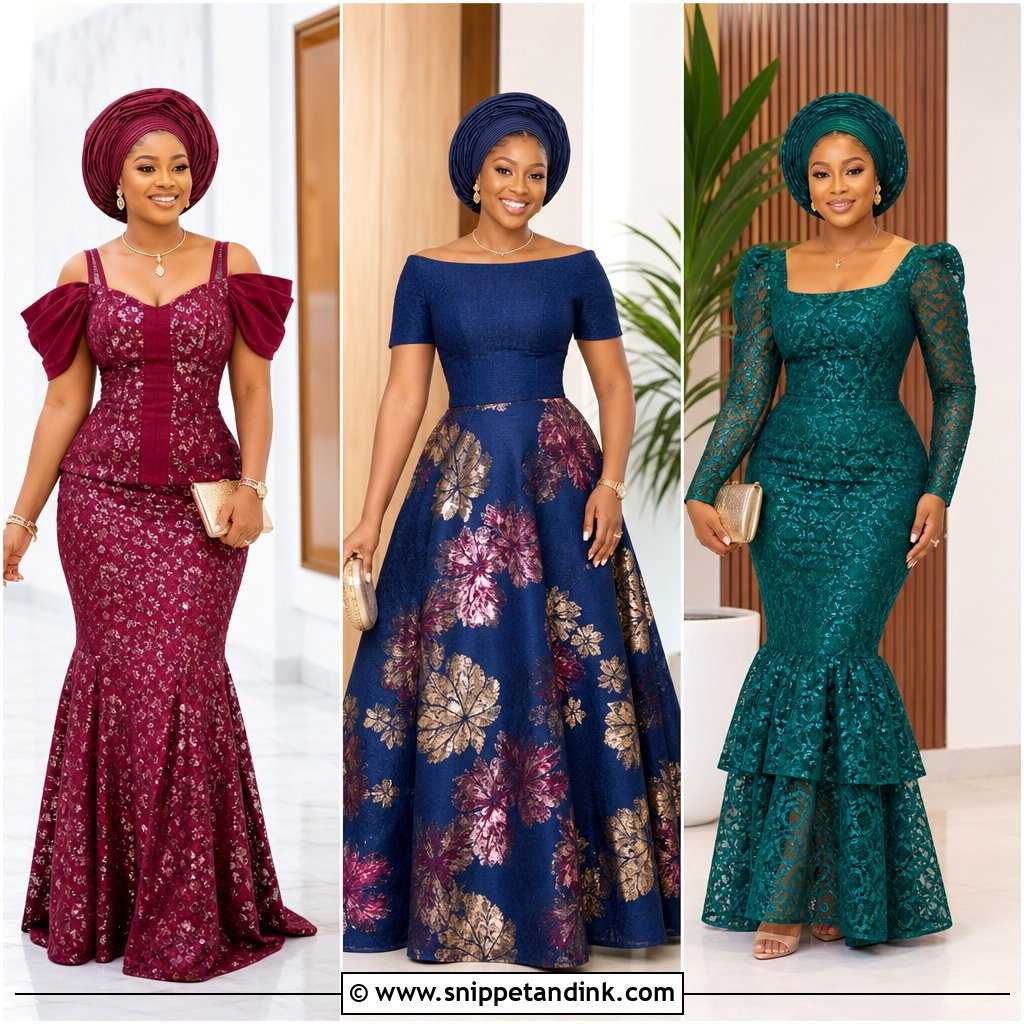
Velvet is heavy and warm, so I only suggest it for evening events in a properly air-conditioned hall. Pair a velvet bodice or straight skirt with lace sleeves, neckline or overlay. Emerald, navy, burgundy and plum look rich with gold. Closed pumps, a satin clutch, drop earrings and a structured gele. Both fabrics already have plenty of texture, so go easy on extra embellishment. A narrow velvet skirt needs a back slit to walk properly. Velvet also crushes and marks where it’s pressed, so sitting for a long reception will leave shine on the seat; stretch velvet recovers better than the traditional kind.
16. Pleated Ankara Nigerian Gown
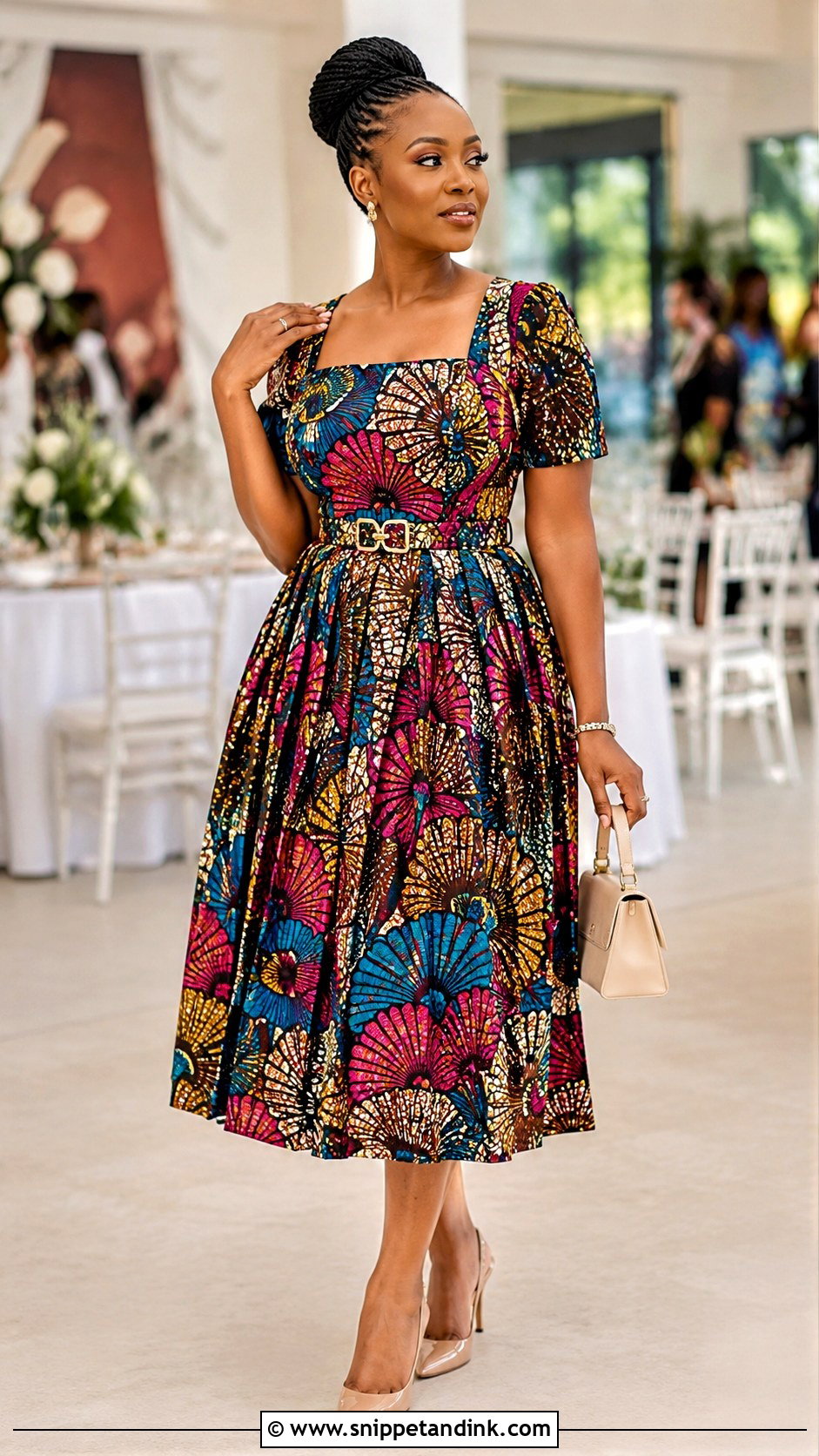
Pleats and big prints can fight each other. If the Ankara has very large motifs, fewer and wider pleats keep the pattern readable; tight knife pleats chop a big print into stripes. Box pleats give volume, narrow knife pleats a lighter swing. A fitted bodice on a pleated midi or maxi skirt, short sleeves, a modest square neck and a removable belt. Slingback pumps, a mini bag, gold studs and a smooth braided updo. Ask the tailor to edge-stitch the pleats at the waist so they hold through the day; cotton pleats soften as they warm up. Hidden side pockets make it even easier to wear.
17. Ruffle Hem Nigerian Gown
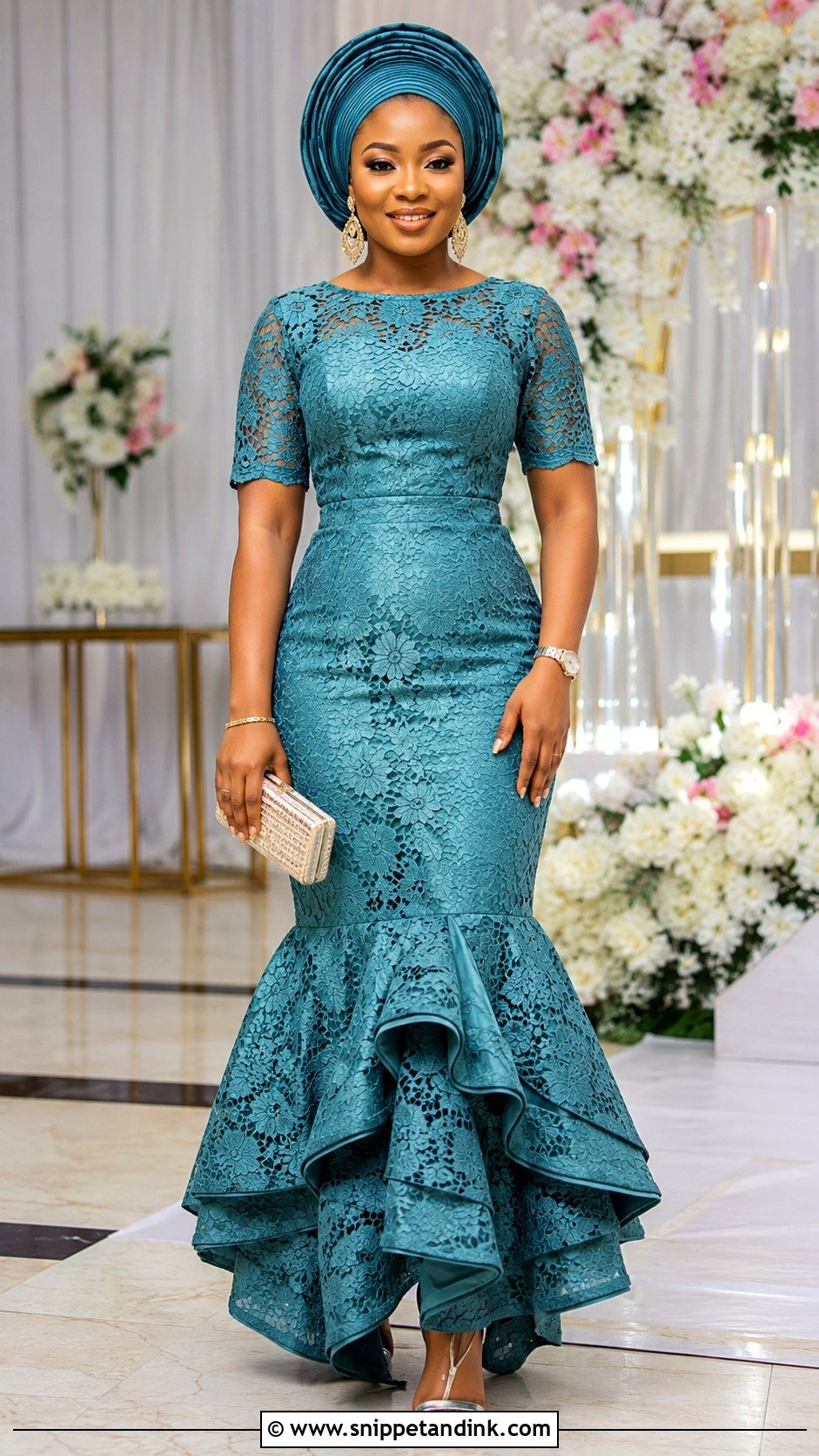
A deep flounce at the hem gives movement without adding any width up top. Start with a fitted Ankara, lace or crepe column and attach the ruffle below the knee or near the ankle, in the same fabric or a coordinating solid. Plain sleeves, so there’s one clear focus. Heeled sandals, a sleek clutch, statement earrings, a compact gele. Where the ruffle starts decides your stride. Too low, and the column above it locks your knees together. The flounce visually balances the hips on pear and straight figures as well as hourglass ones.
18. Embroidered Kaftan Nigerian Gown
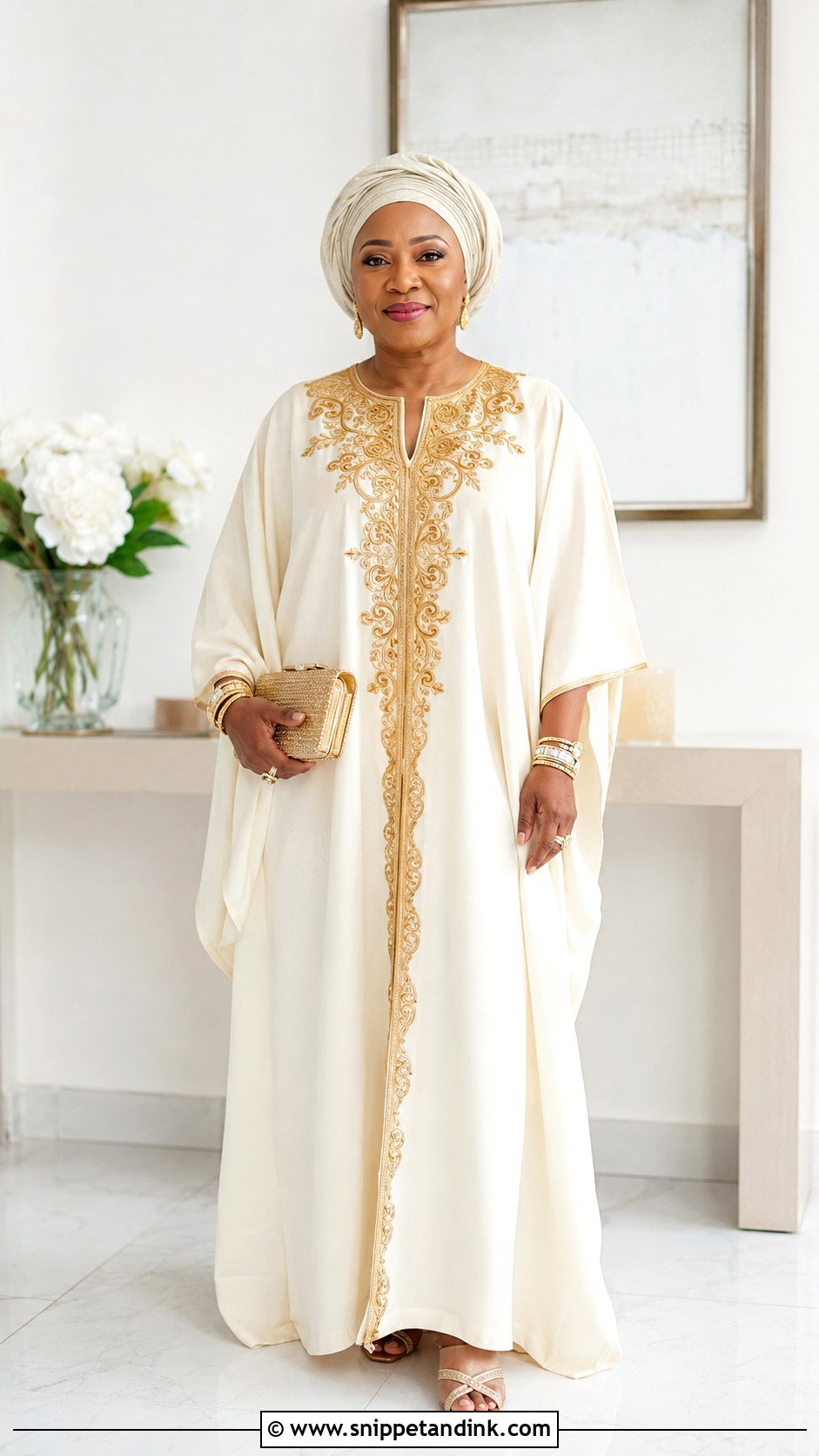
I reach for an embroidered kaftan when someone has a long day ahead and no patience for a fitted bodice. Crepe, silk, chiffon or a light brocade in one solid colour lets the embroidery show. Gold, silver or tonal stitching around the neckline and down the centre front draws the eye vertically and lengthens the figure. Low embellished heels, a small metallic bag, layered bracelets, coordinating earrings. A turban, understated gele or sleek hair, depending on the event. Before agreeing to side slits, sit down in a chair in front of a mirror; slits that look modest standing can open wide when seated. Its loose cut flatters many ages and shapes.
19. Mixed Print Ankara Nigerian Gown
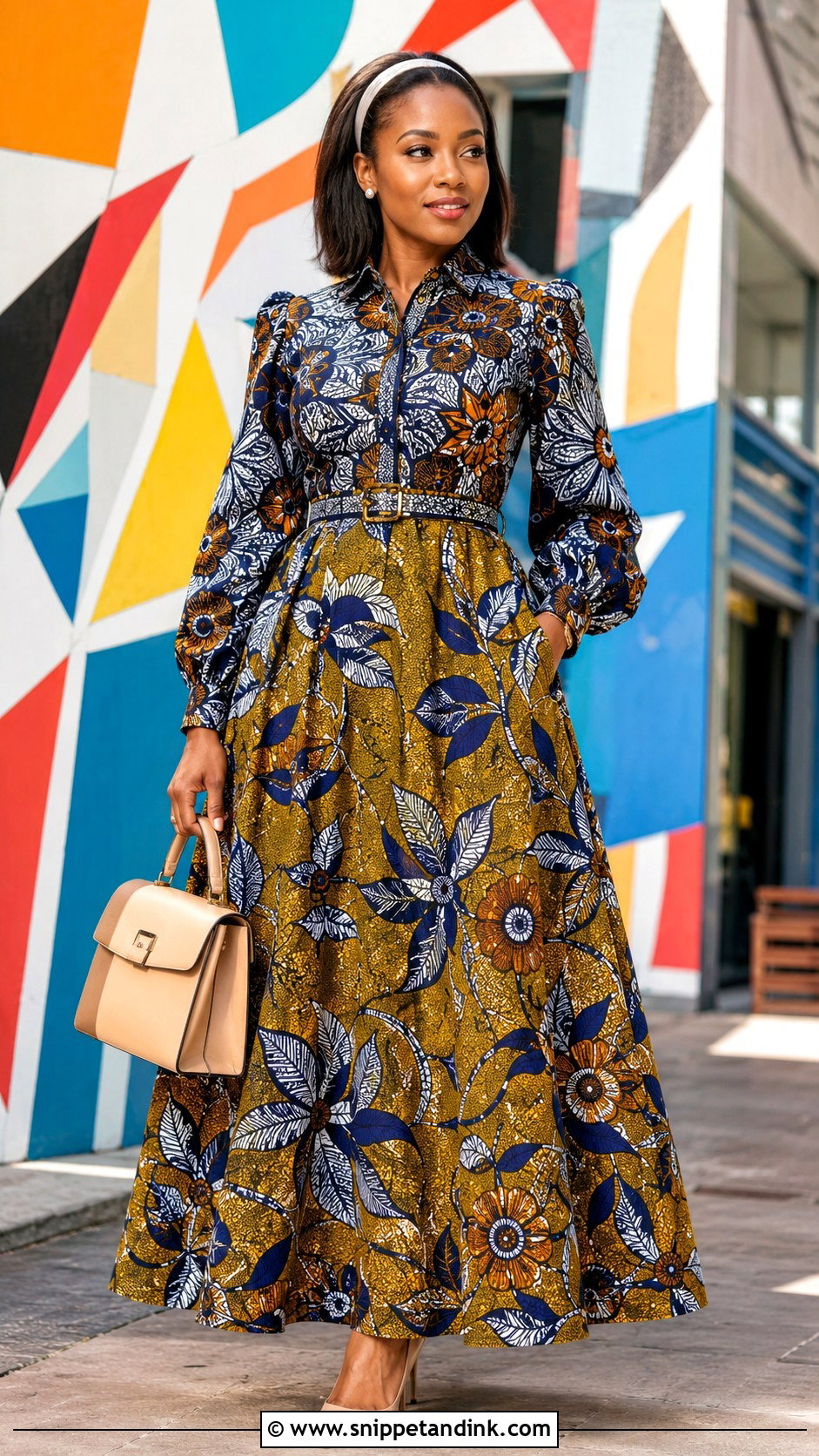
Mixing prints is easier than it looks once you follow one rule: the two fabrics must share at least one colour. Then vary the scale, a big print with a small one, so they don’t compete. Use one print on the bodice and the other on the skirt, or add the second to sleeves, side panels and a belt. A clean A-line or straight maxi shape keeps it from looking busy. Neutral heels, a single-colour bag, small earrings and a simple headband or wrap. It’s a smart use of leftover fabric. Placed well, a darker print on the hips and a lighter one on the shoulders can balance broad shoulders and fuller hips.
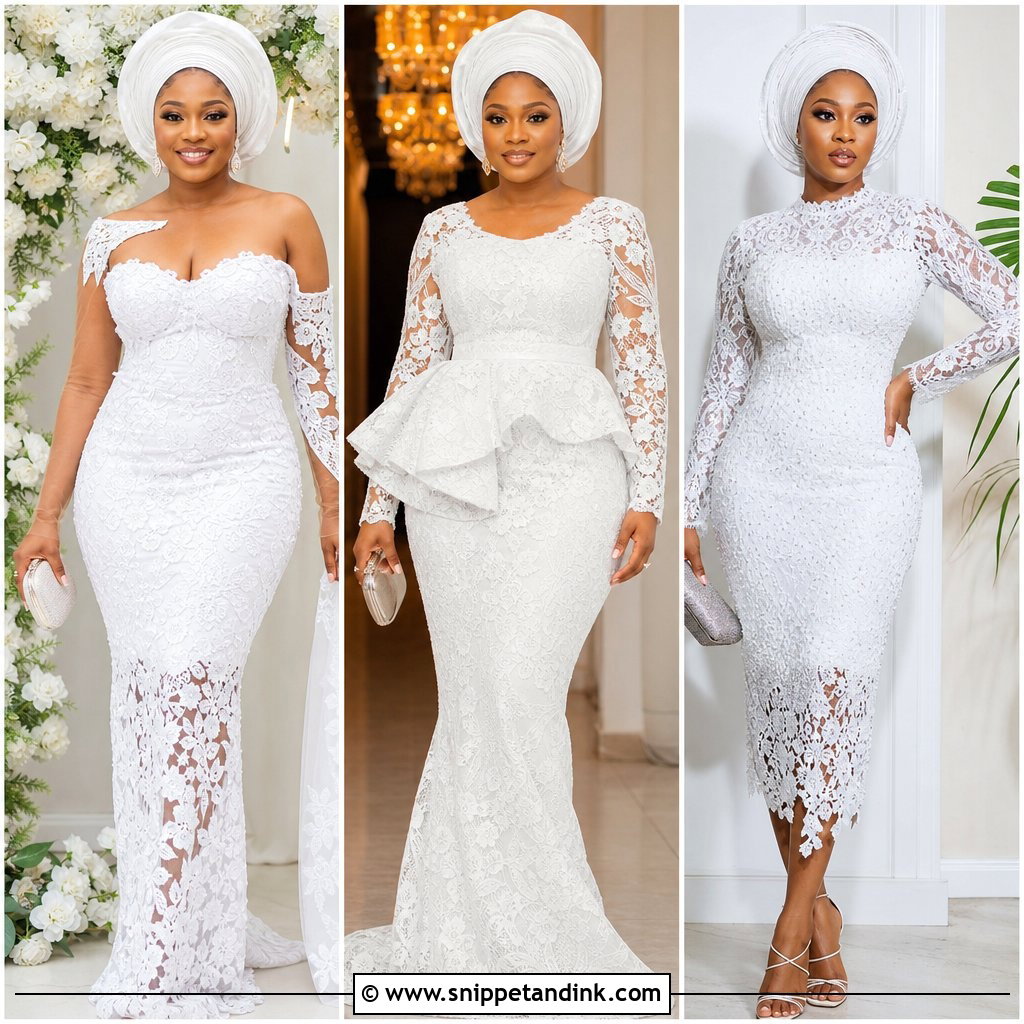
20. Beaded Aso Ebi Nigerian Gown
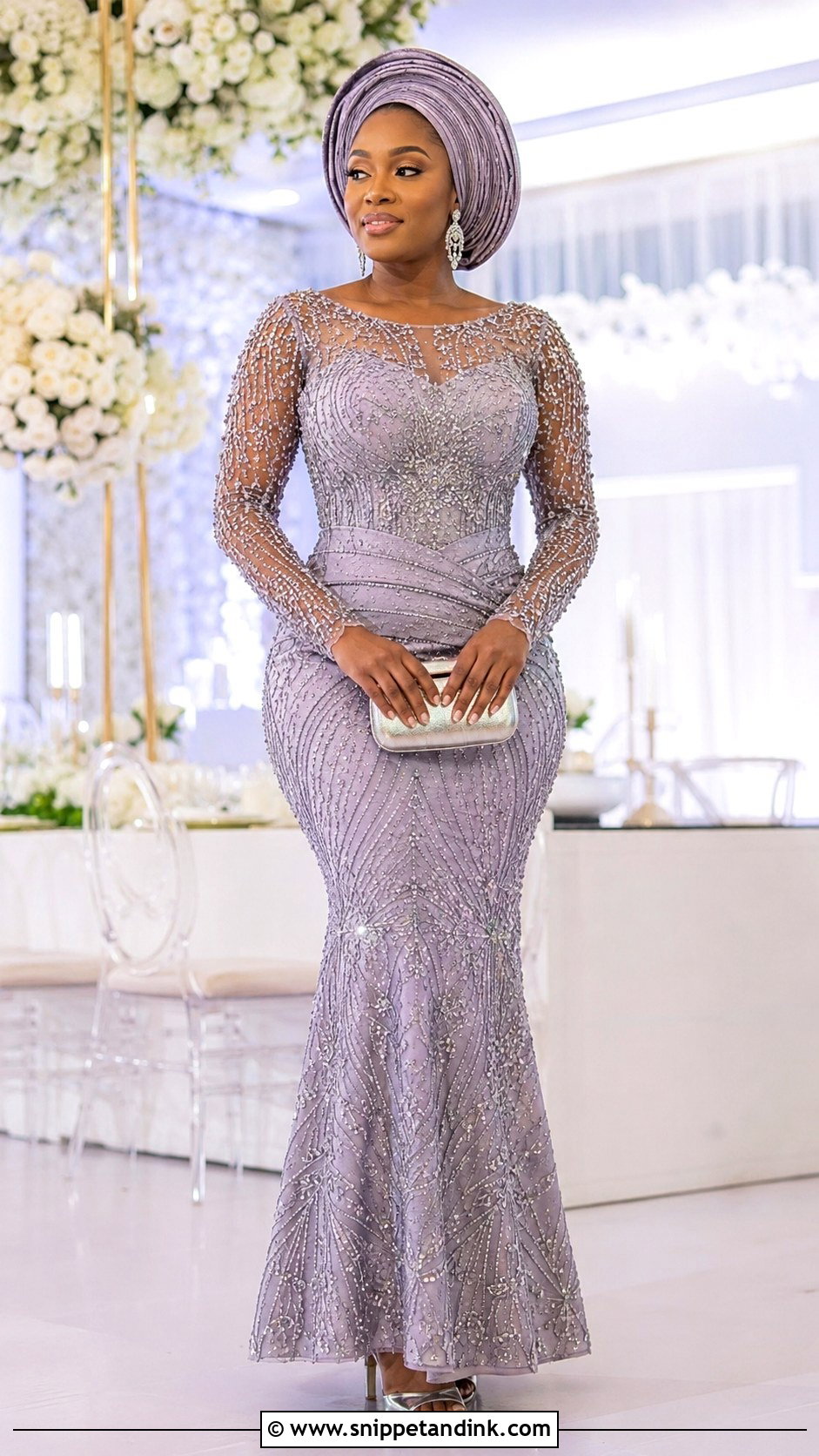
Hand-applied beading adds real weight, so a beaded aso ebi gown needs reinforced seams and a soft lining to protect the skin. Lace, tulle or smooth crepe, with beads concentrated at the neckline, bodice, sleeves or waist rather than all over. A fitted trumpet reads glamorous; an A-line is easier to move in. Plain metallic heels, a smooth clutch, small crystal earrings and a neatly tied gele. Don’t pile on extra sparkle; the beadwork is the feature. When you collect the gown, run your palm over the beaded areas and pull gently at any that feel loose. Restitching a few at home beats shedding beads across the dance floor.
Aso Ebi Manners Nobody Spells Out
If the couple or a family has asked you to wear aso ebi, the fabric isn’t just an outfit. It marks you as part of their circle in the photographs, and there are a few unwritten expectations that come with it.
- Buy and pay by the deadline given. The organiser often orders in bulk and can’t hold pieces indefinitely.
- Don’t swap the fabric for a similar colour. The whole point is that the group matches.
- The style is usually yours to choose, unless the couple has asked for a particular cut or length. Check before going very short or very revealing.
- Wear the matching gele or cap if one was sold with it. Missing headwear is the first thing that stands out in a group photo.
- Keep your look below the bride’s in sparkle. Heavy beading is fine; a white or ivory-heavy design is not.
Lace aso ebi usually shouldn’t be machine washed. Air it, spot clean carefully, and send it for dry cleaning after the event so the colour stays even for the next wear.
Which Fabric Fits the Event on Your Calendar?
Traditional textiles and good tailoring cover almost every celebration. Ankara brings colour and flexibility; lace, velvet, chiffon, Adire and Aso Oke each bring a different texture and level of formality. The most dramatic gown isn’t automatically the right one. It has to fit, let you move and suit the setting. Before cutting starts, settle pattern placement, lining, closures and hem length with your tailor. Then add shoes, jewellery, a bag and a gele or wrap that support the gown. A mermaid or a boubou can be equally right; the proportions are what make it look confident.
You'll Like These Ideas:


Leave a Reply