
Ask ten brides for beach waves and you’ll get ten different pictures, from barely bent hair to deep, glossy ripples. Most of them want tousled waves that look like they happened on their own, which is ironic, because loose waves are one of the hardest finishes to keep alive through a ten-hour day. I’ll walk through 25 wave looks here, from half-up versions to waves dressed with flowers and veils, and tell you what each one asks of your hair. Some last beautifully. A few need a plan.
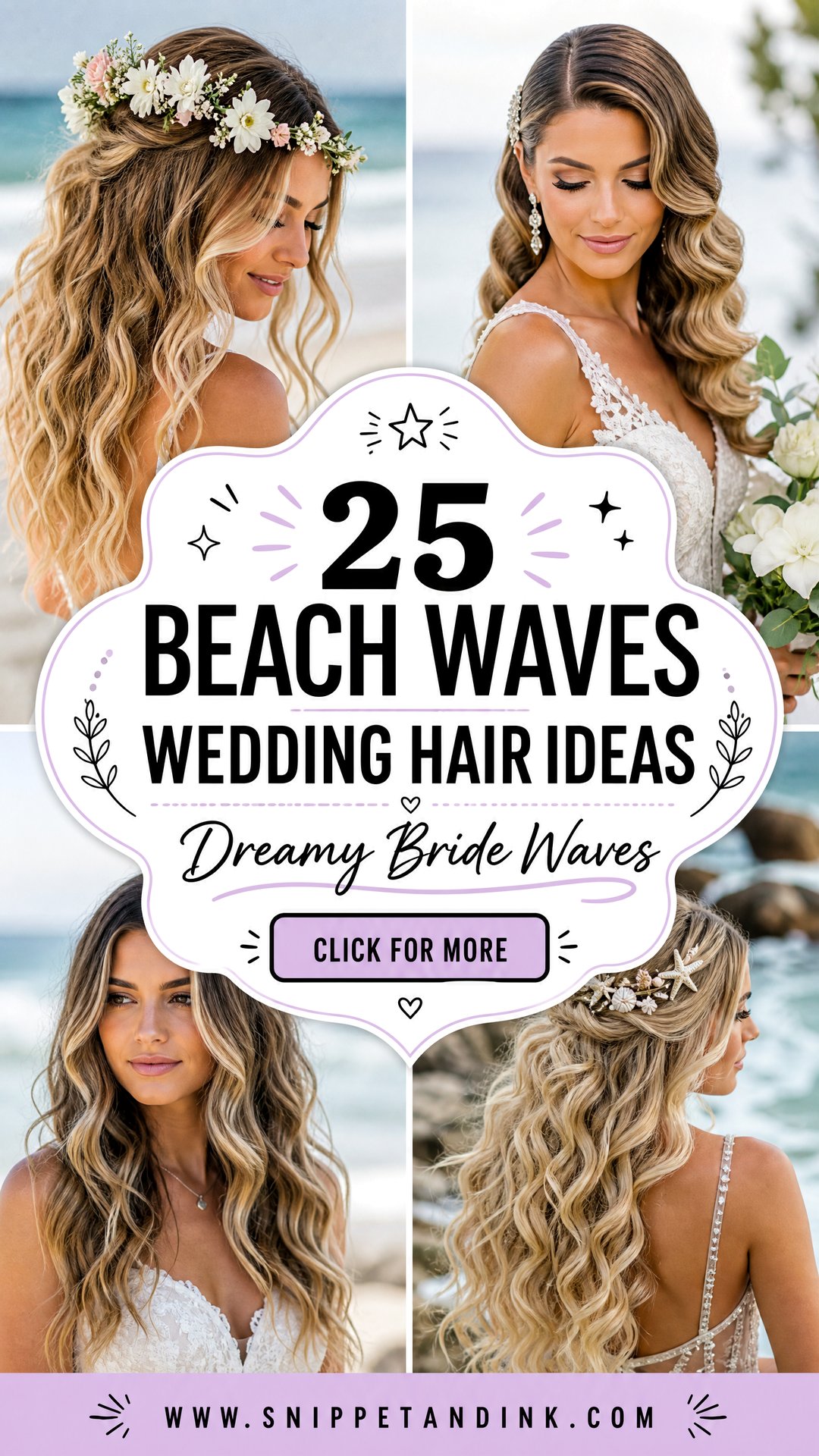
Wave Size Is the Detail Stylists and Brides Misread
The word waves covers a lot. When a bride shows me a photo, I look at three things: how wide each bend is, where the bend starts, and whether the ends are curled or left straight. Two photos that both look like beach waves can need completely different tools.
- Loose, barely there bends usually come from a large iron (1.25 inches or more) or a flat iron twisted half a turn, then brushed out.
- Defined ripples from root to tip come from a wand or a waver, and they hold longer but look more done.
- Straight ends with bends in the middle are the modern beach look; curled ends read more classic and polished.
- Waves that start at the cheekbone leave the crown smooth; waves that start at the root give more volume but frizz faster in damp air.
Bring two or three photos, not twenty, and point to the one detail you love in each. That tells me far more than a long board of different looks.
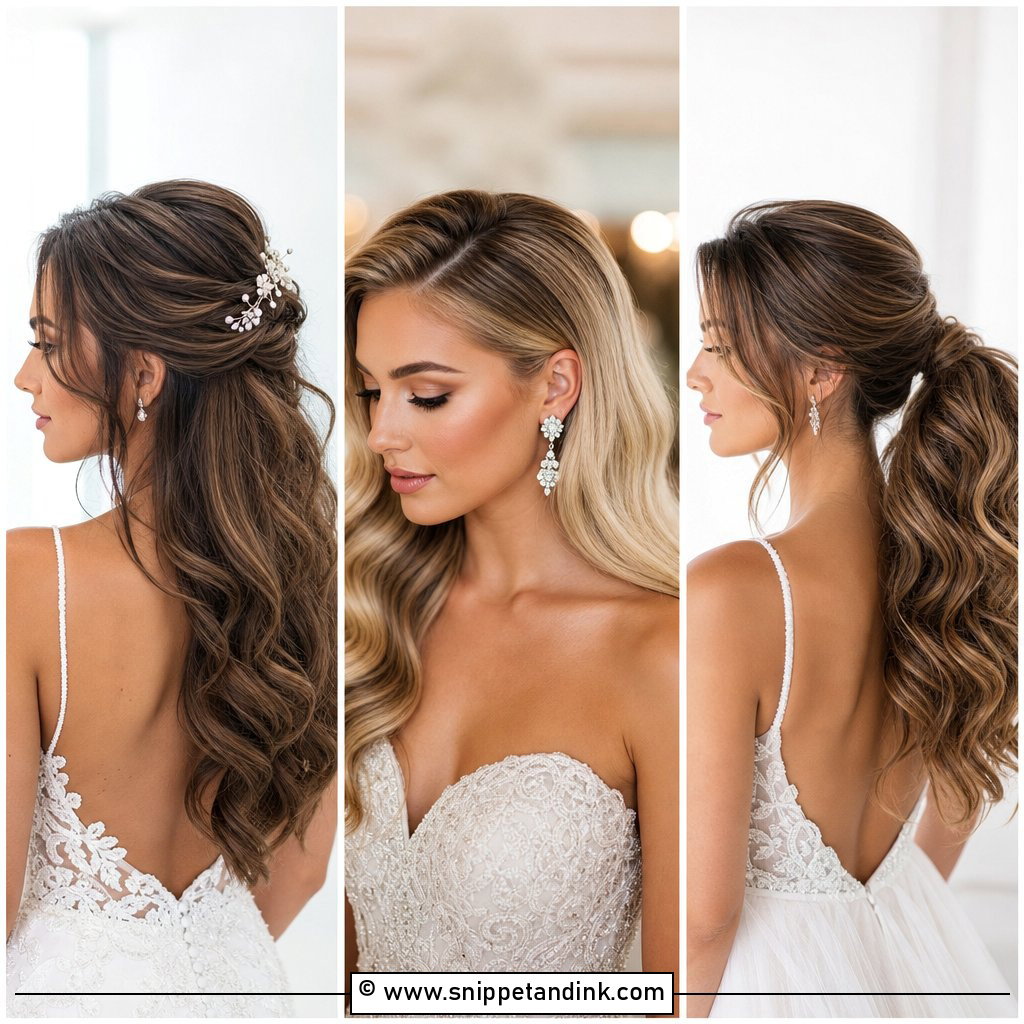
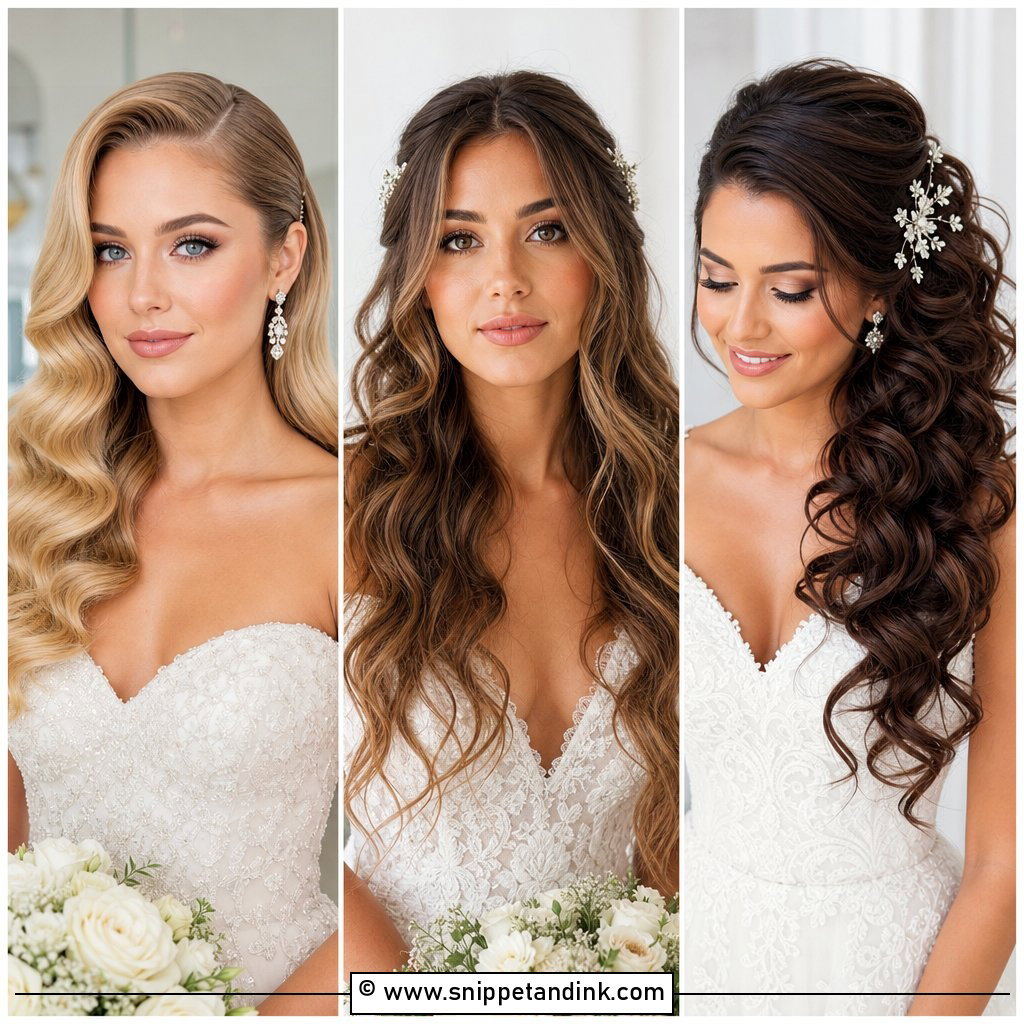
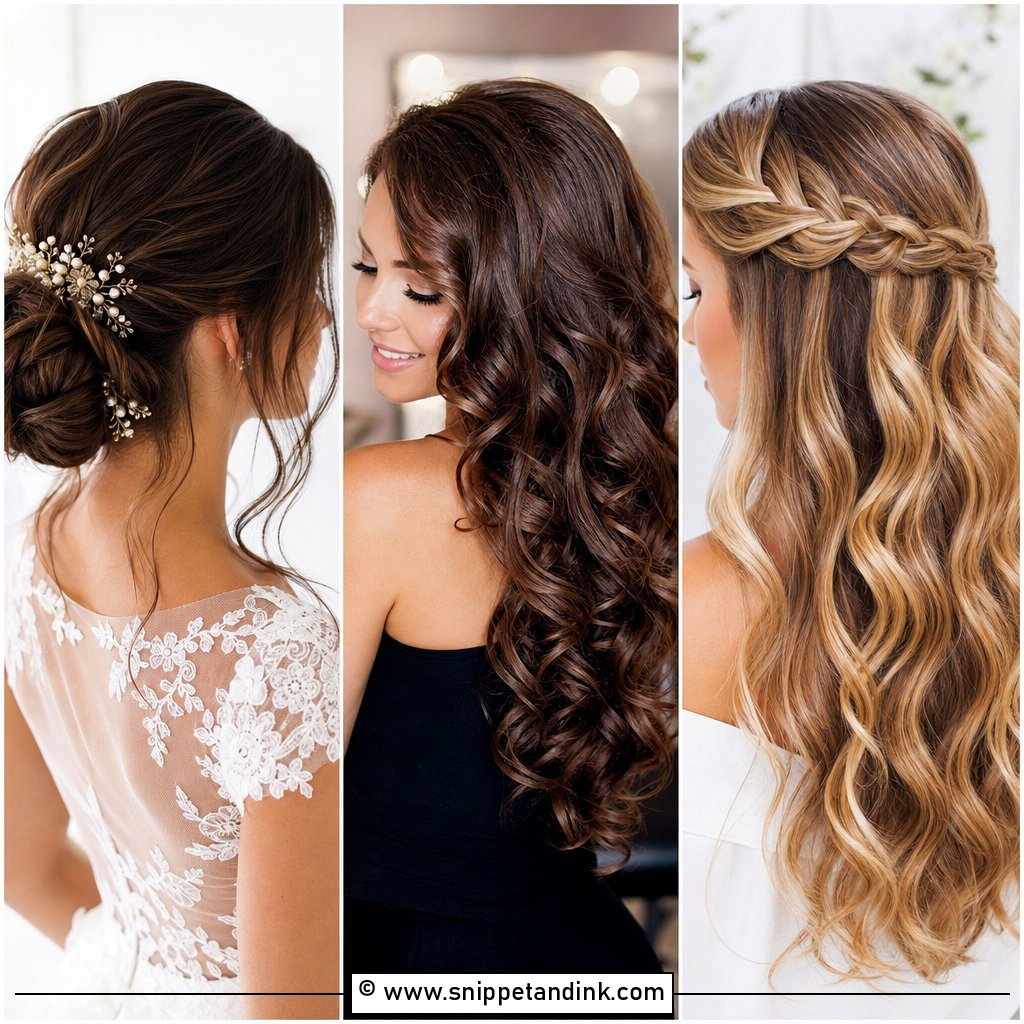
1. Long Loose Beach Waves for Brides
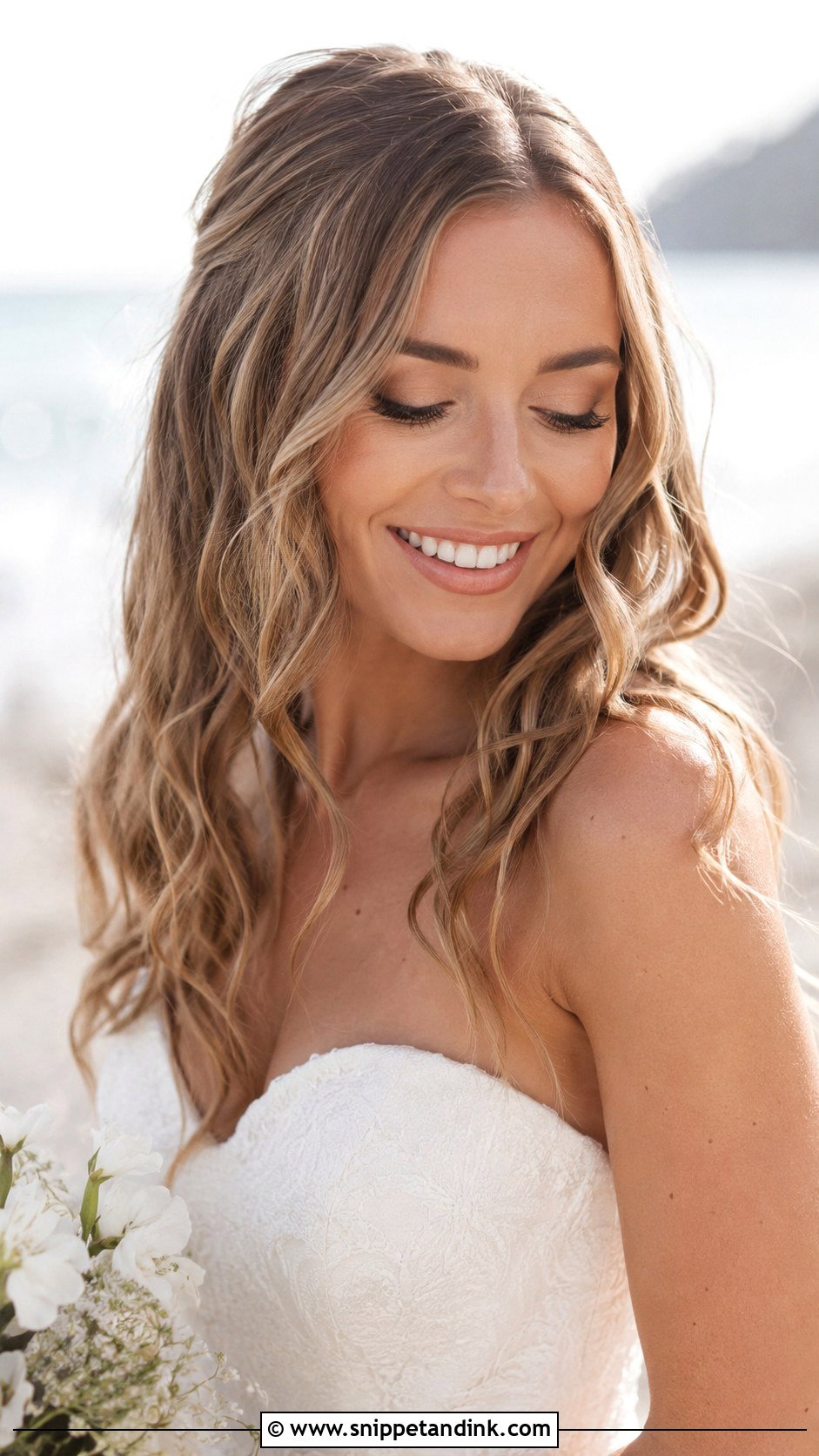
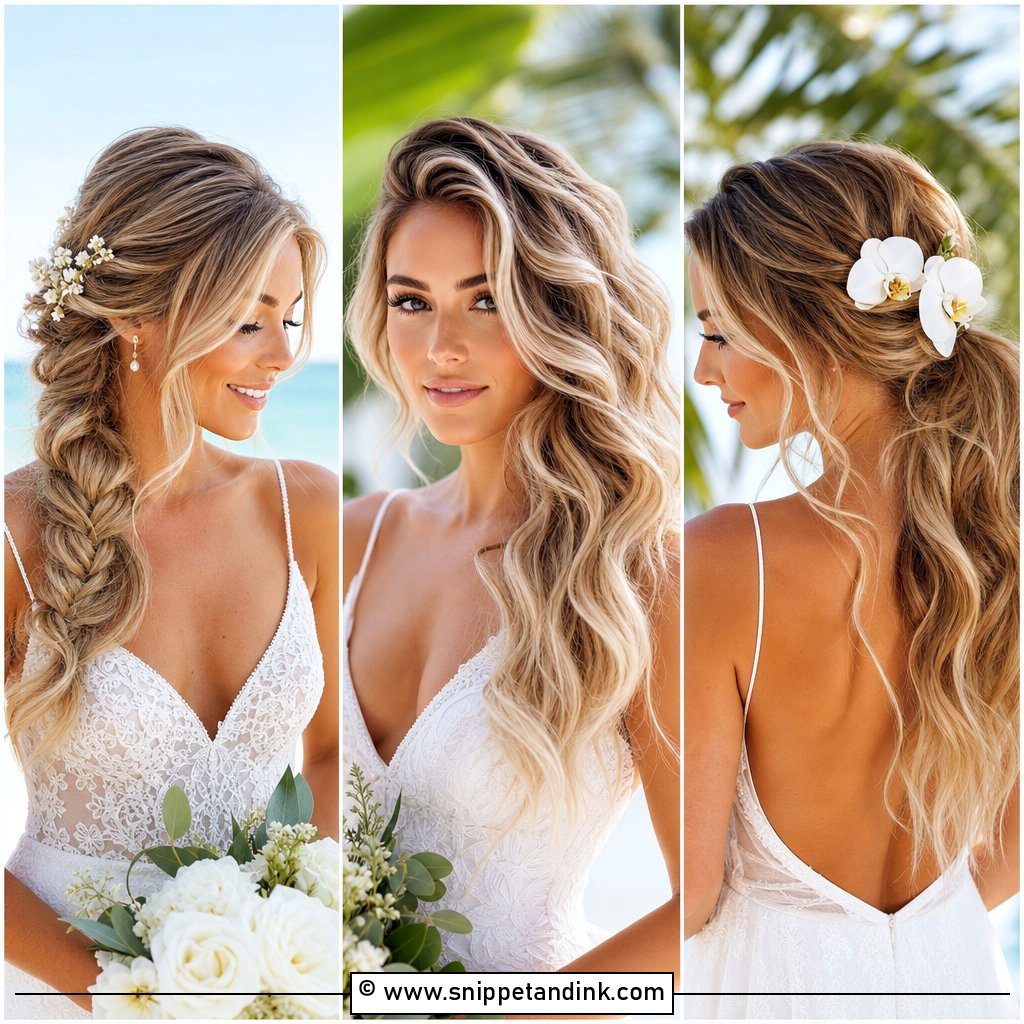
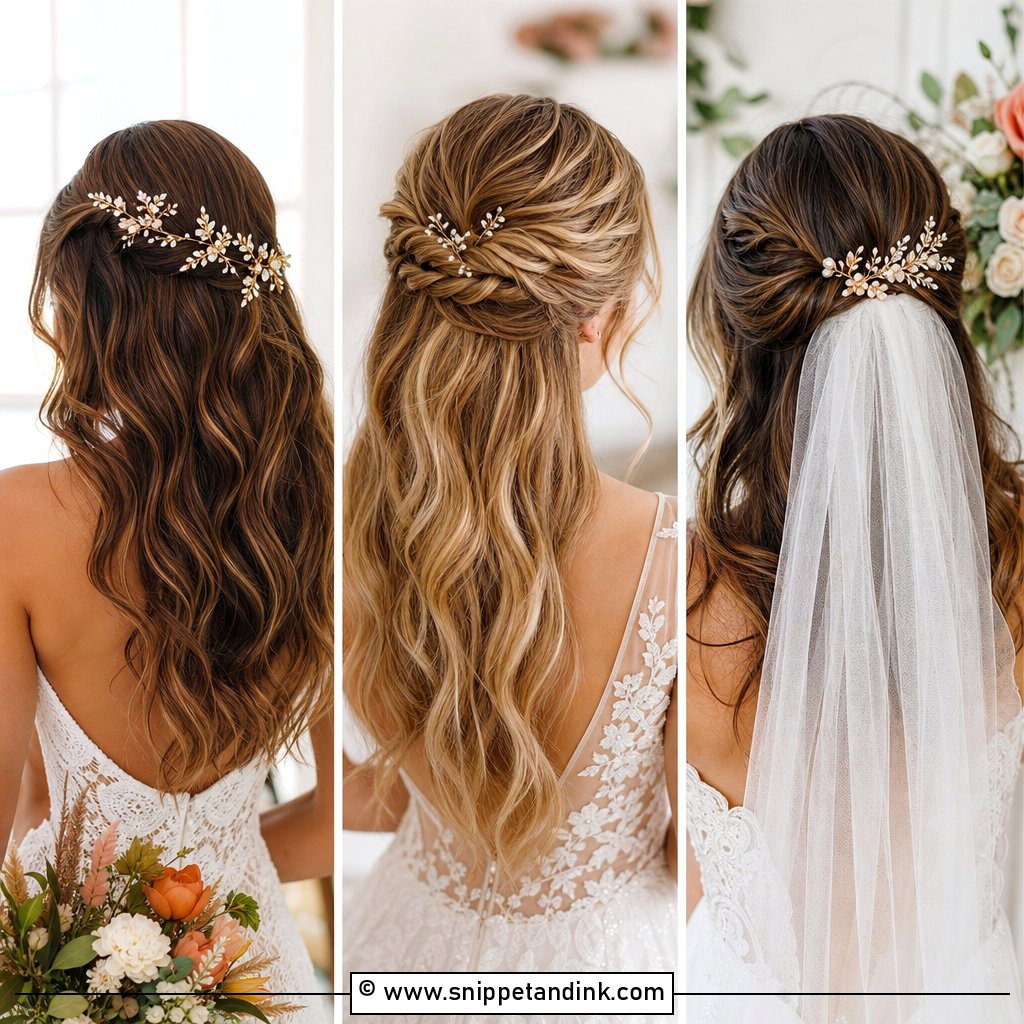
Fully down, long waves are the purest version of the look and the least forgiving. With nothing pinned, gravity and humidity pull at every bend, so I curl them tighter than the bride expects and brush them out only after they’ve cooled for ten minutes or more. Sea salt spray on the mid-lengths gives grip. A veil pinned at the crown or a flower behind one ear is all it needs. If your hair is very fine or very heavy, I’d suggest one of the half-up options instead.
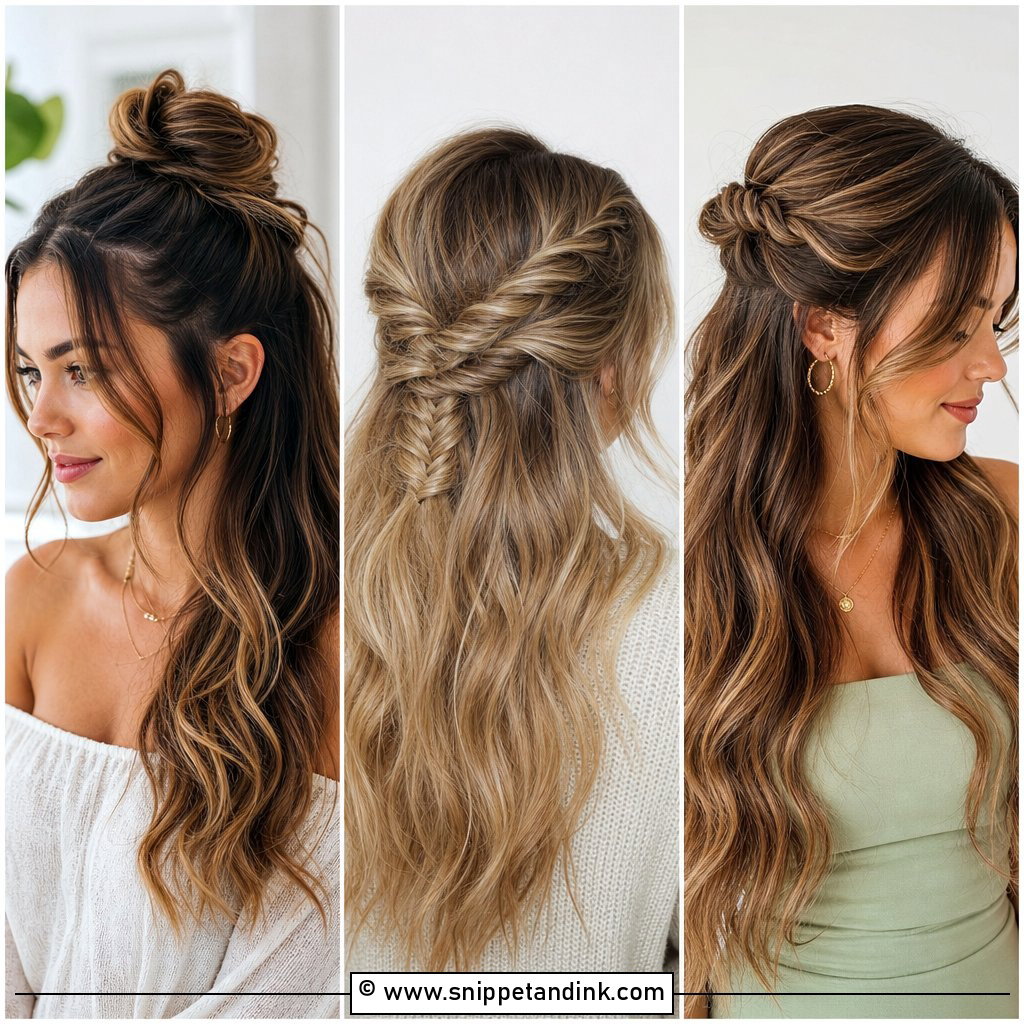
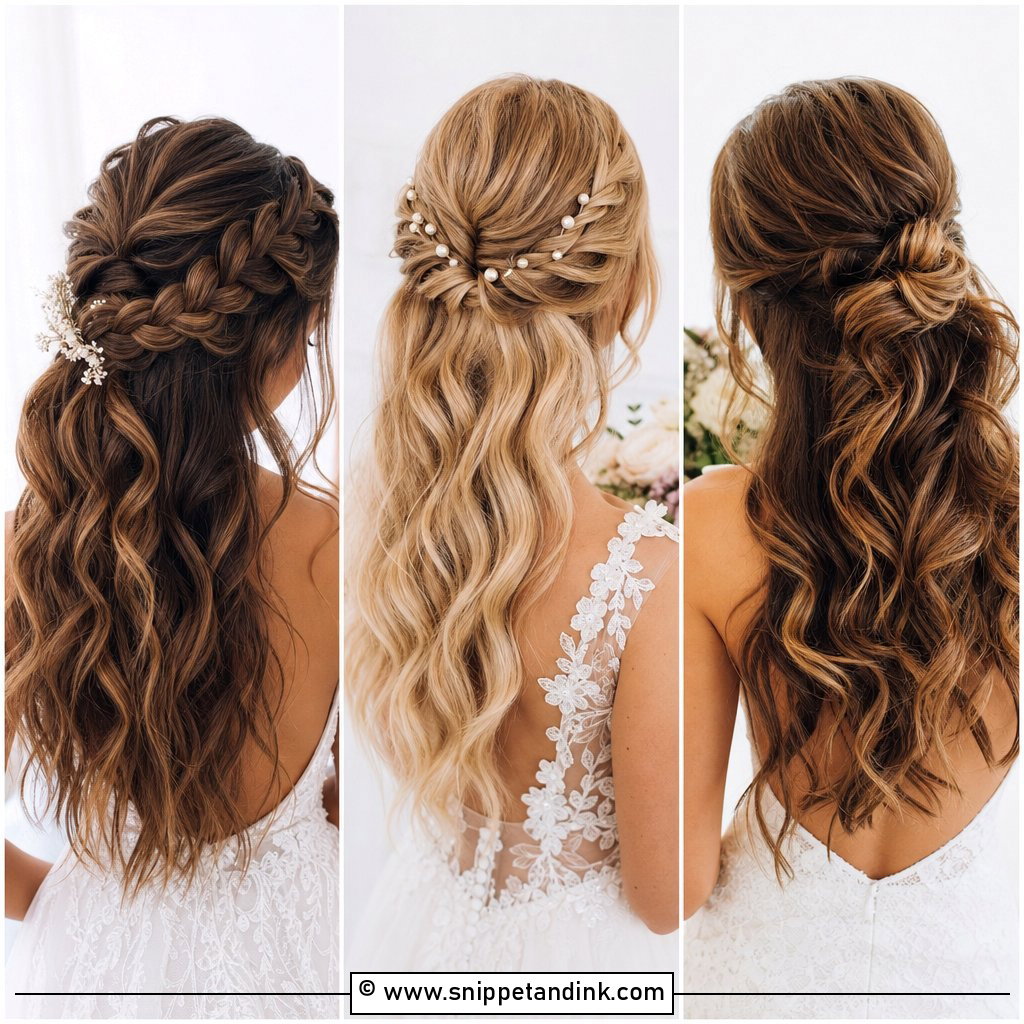
2. Half Up Half Down Beach Waves
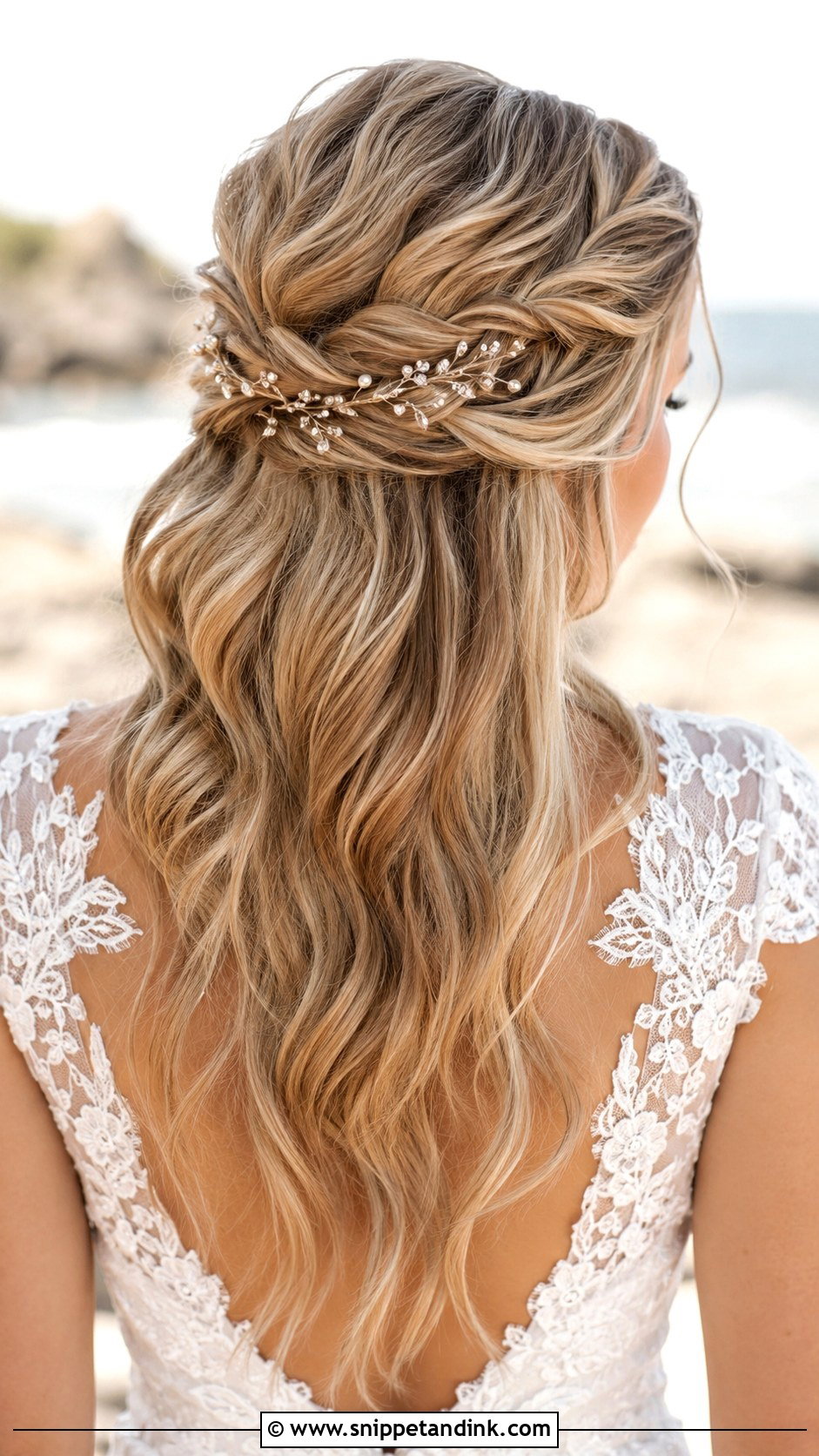
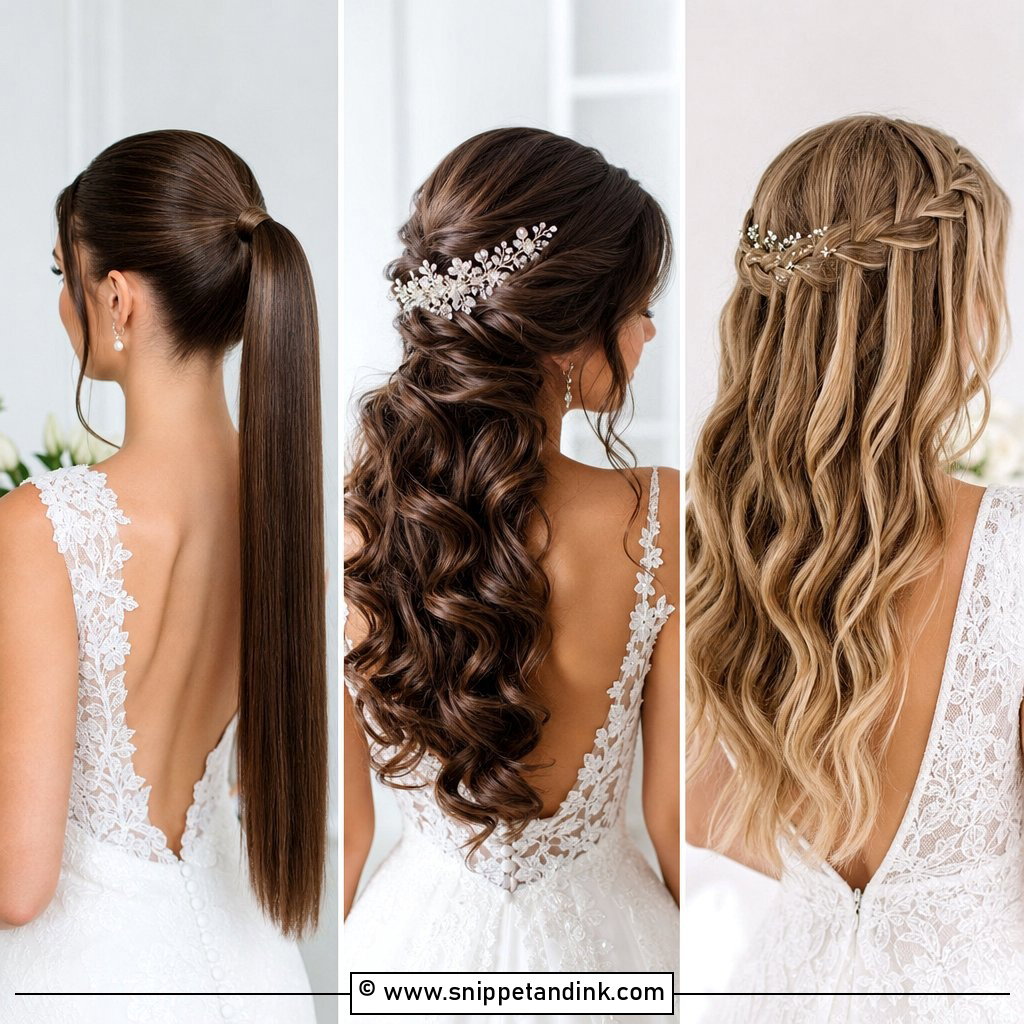
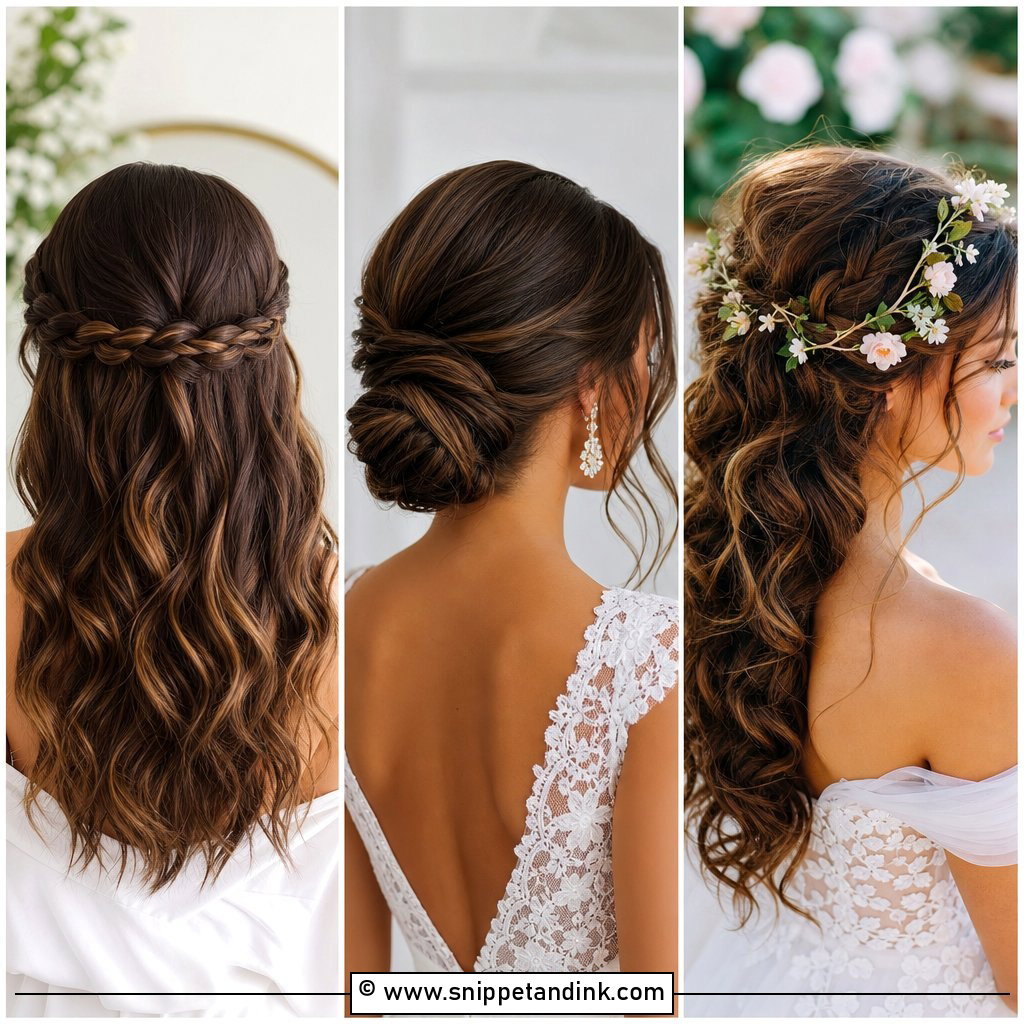
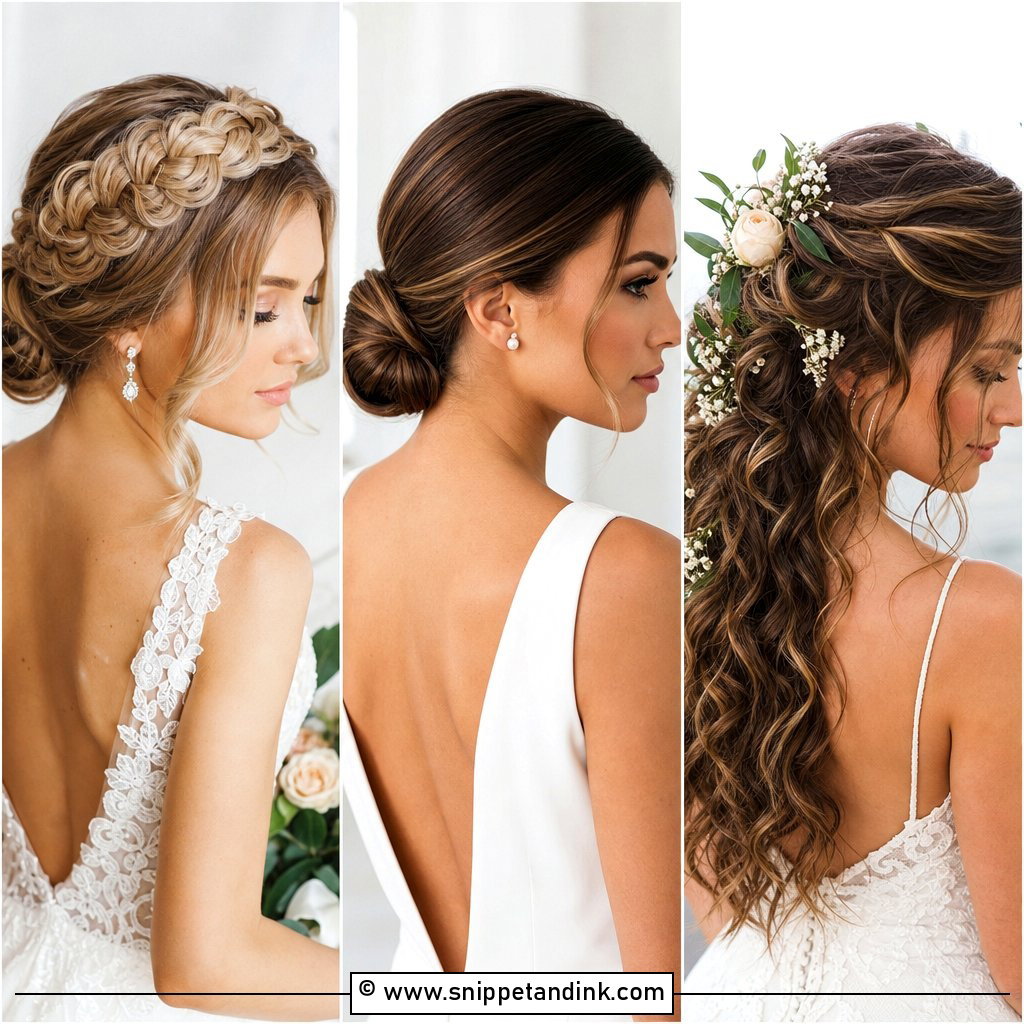
Half up, half down is popular because it solves the main problem with loose hair: the face-framing pieces end up stuck to your lip gloss. Pulling the top section back gives the waves below a clean frame. I secure the back with a small elastic hidden under a twist, then pin over it, so it can’t slide down the head as the waves soften. A small braid at the crown or a hair vine adds detail. From the back, it shows off the wave pattern clearly, which is where many ceremony photos are taken.
3. Beachy Bob With Soft Waves
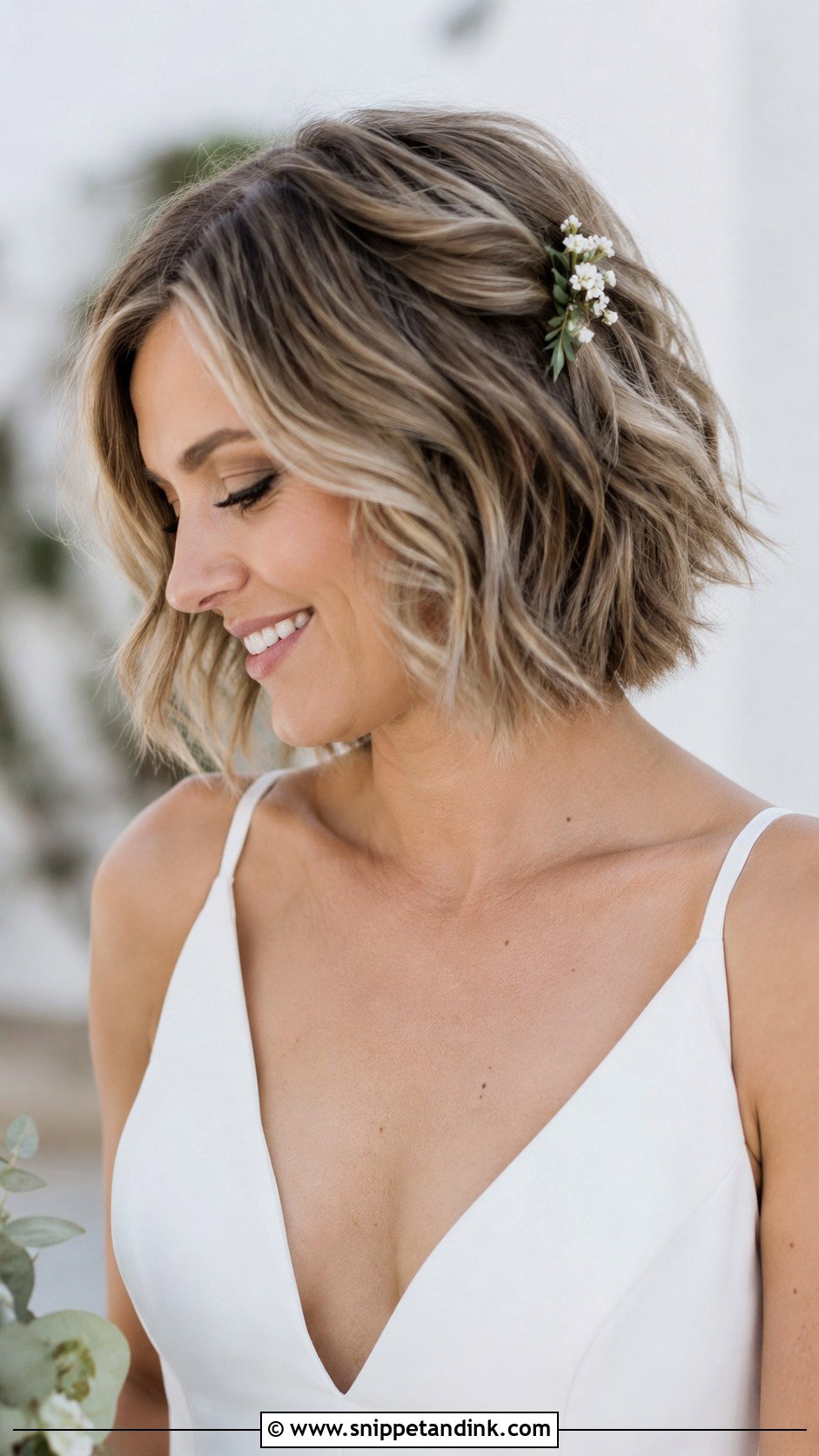
Short-haired brides can wear waves just as well, and a wavy bob is one of the easiest looks to keep looking fresh. With less length pulling on them, the bends stay put. I often use a flat iron rather than a curling iron on bobs, twisting it half a turn as I glide down, which gives a flatter, more lived-in bend. Break it up with fingers and a spritz of salt spray. A small floral pin or a birdcage veil suits the length. Just ask your stylist to avoid curling the ends under, or the bob starts looking like a 1950s set.
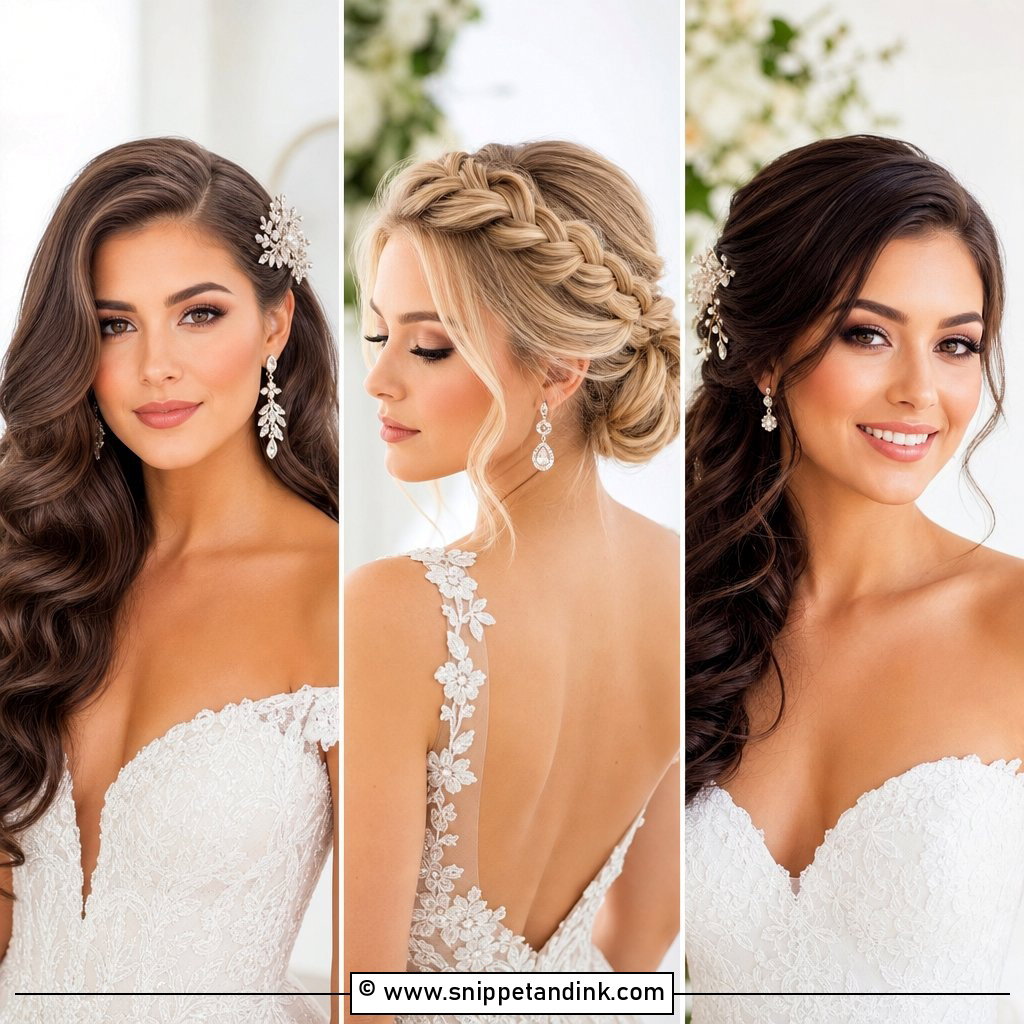
4. Side Swept Beach Waves
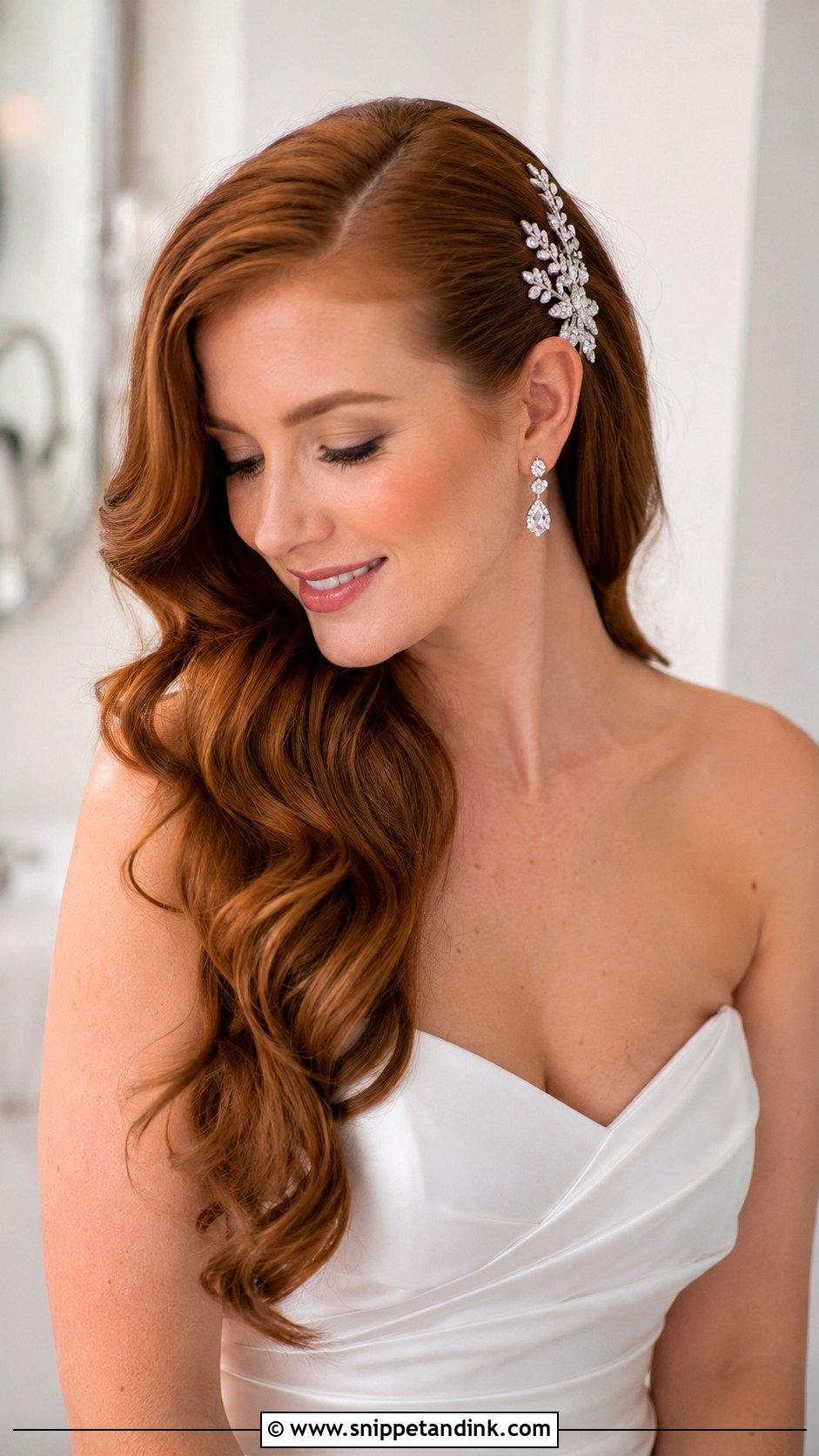
Side-swept waves are Old Hollywood with the edges loosened. The deep part goes in first, before any curling, because the hair needs to be trained in that direction. I then pin the back securely on the lighter side, criss-crossing bobby pins under the waves so they’re invisible. It’s ideal with strapless gowns, since one shoulder is left bare. A sparkling comb on the pinned side balances the weight. The thing I watch for: if the heavier side falls across the face, it will hide you in profile shots during the vows.
5. Beach Waves With a Flower Crown
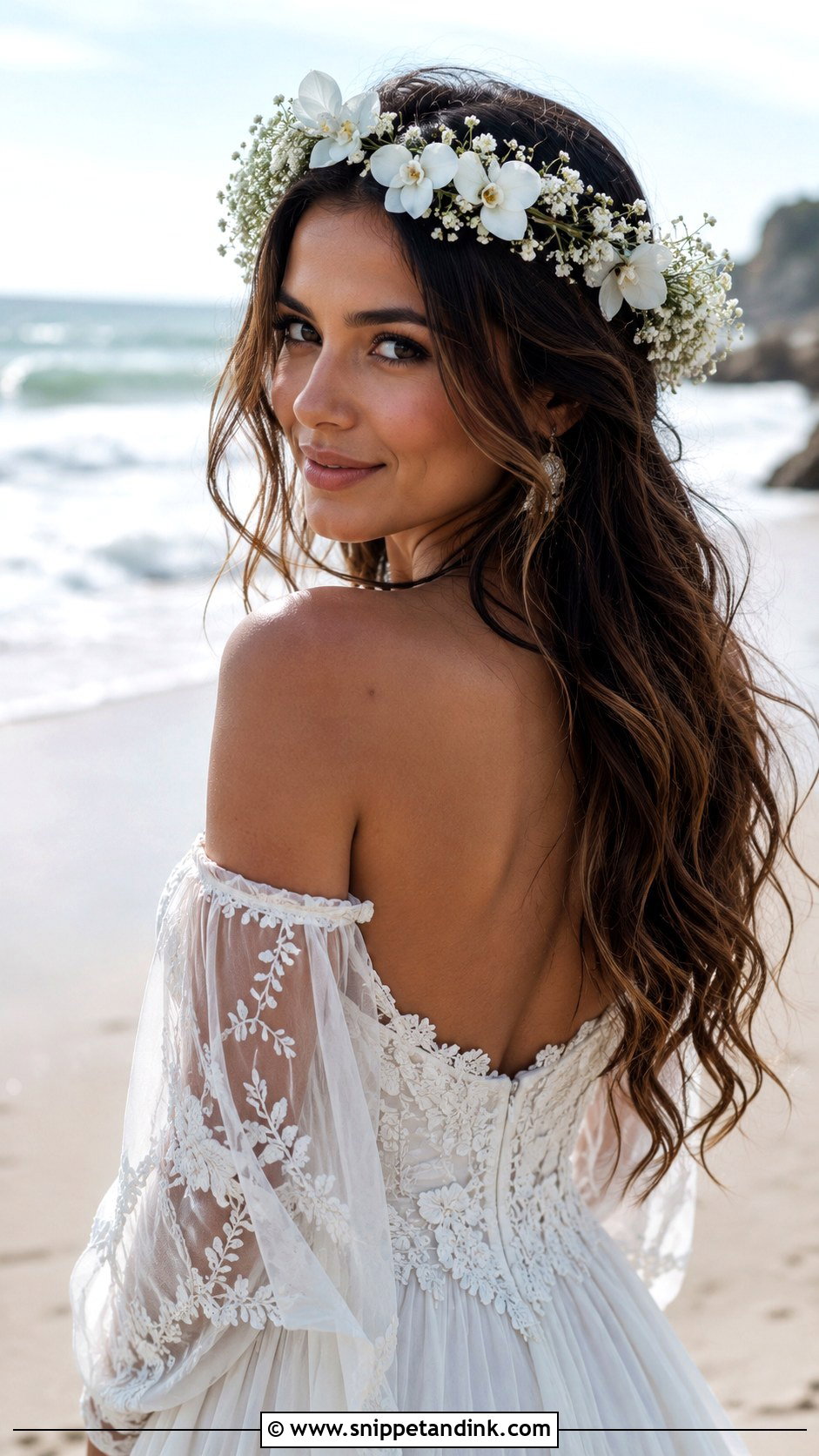
A fresh flower crown and loose waves are a natural pair for a boho wedding, but the flowers need choosing with care. Delicate blooms like gardenias bruise and brown quickly in sun, so for a crown I prefer sturdier ones: spray roses, waxflower, small orchids or baby’s breath. Ask your florist to match the bouquet. I keep the waves undone and pin the crown in at the sides and back. In the heat, it’s worth having it delivered in a cool box and put on at the last minute.
6. Tousled Beach Waves With Veil
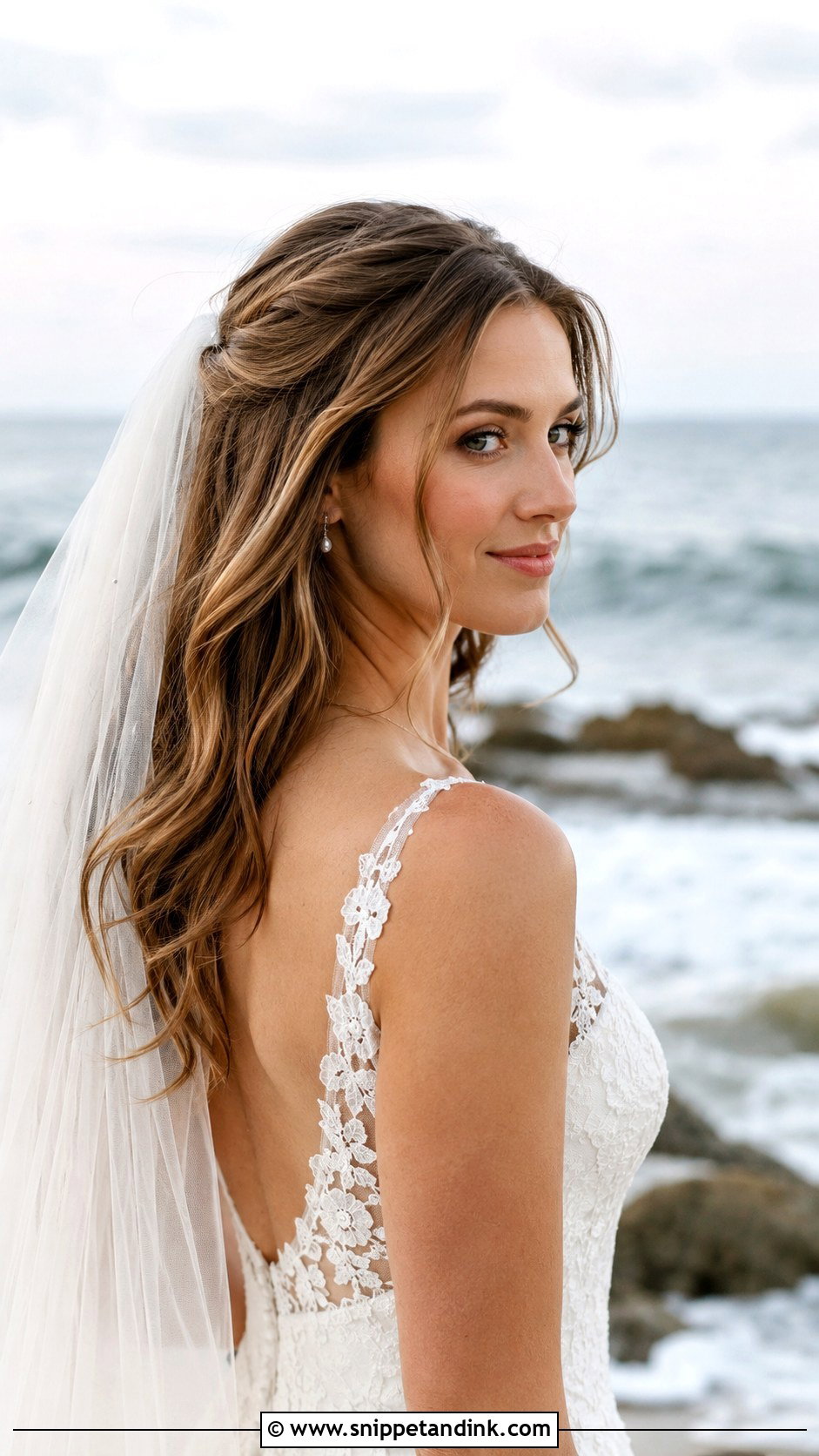
Waves worn down with a veil look relaxed, but the veil needs a base. A comb slid into loose waves has nothing to grip, and it slips back with the weight of the tulle. I pin a small section at the crown into a flat twist, then slide the comb into that. The waves underneath stay loose and move with the veil as you walk. It’s a soft look rather than a structured one. When the veil comes off, I pull the twist free and the waves look as they did before.
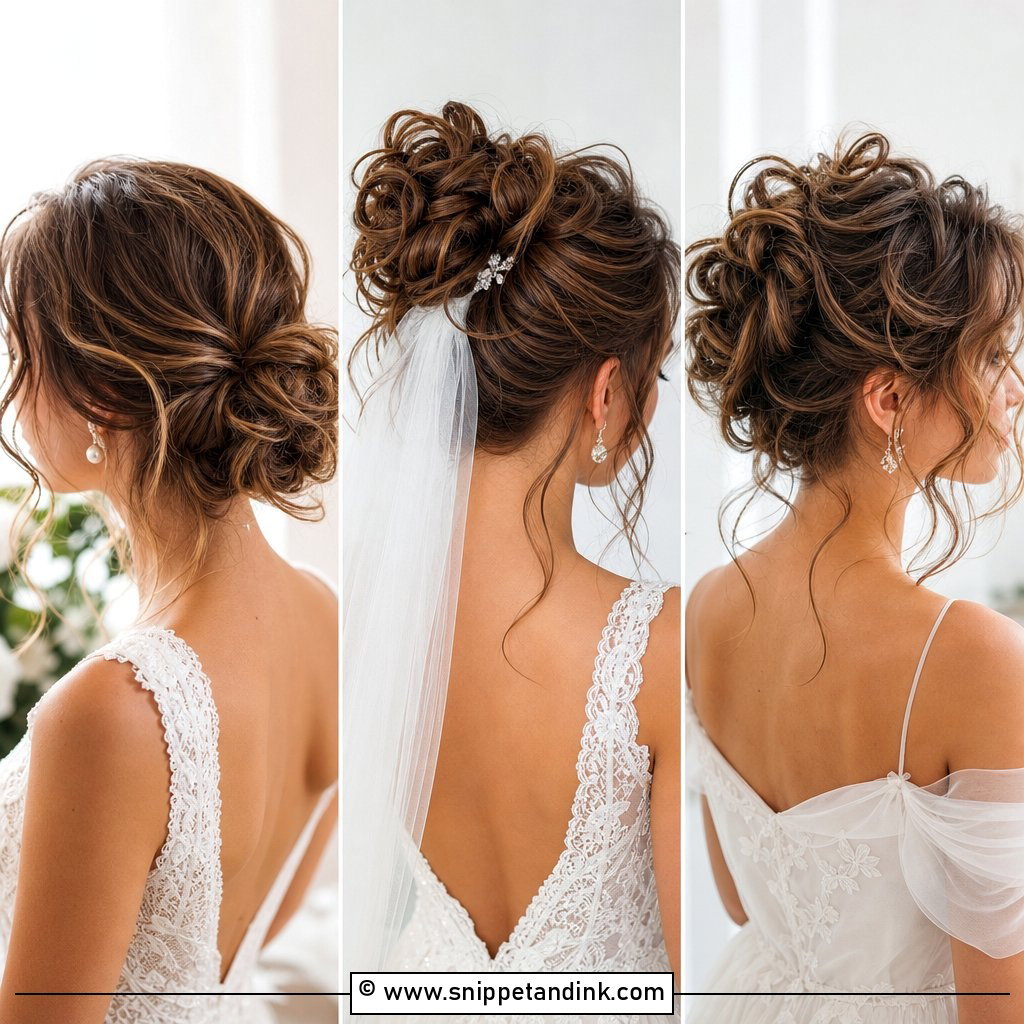
7. Low Wavy Bridal Bun
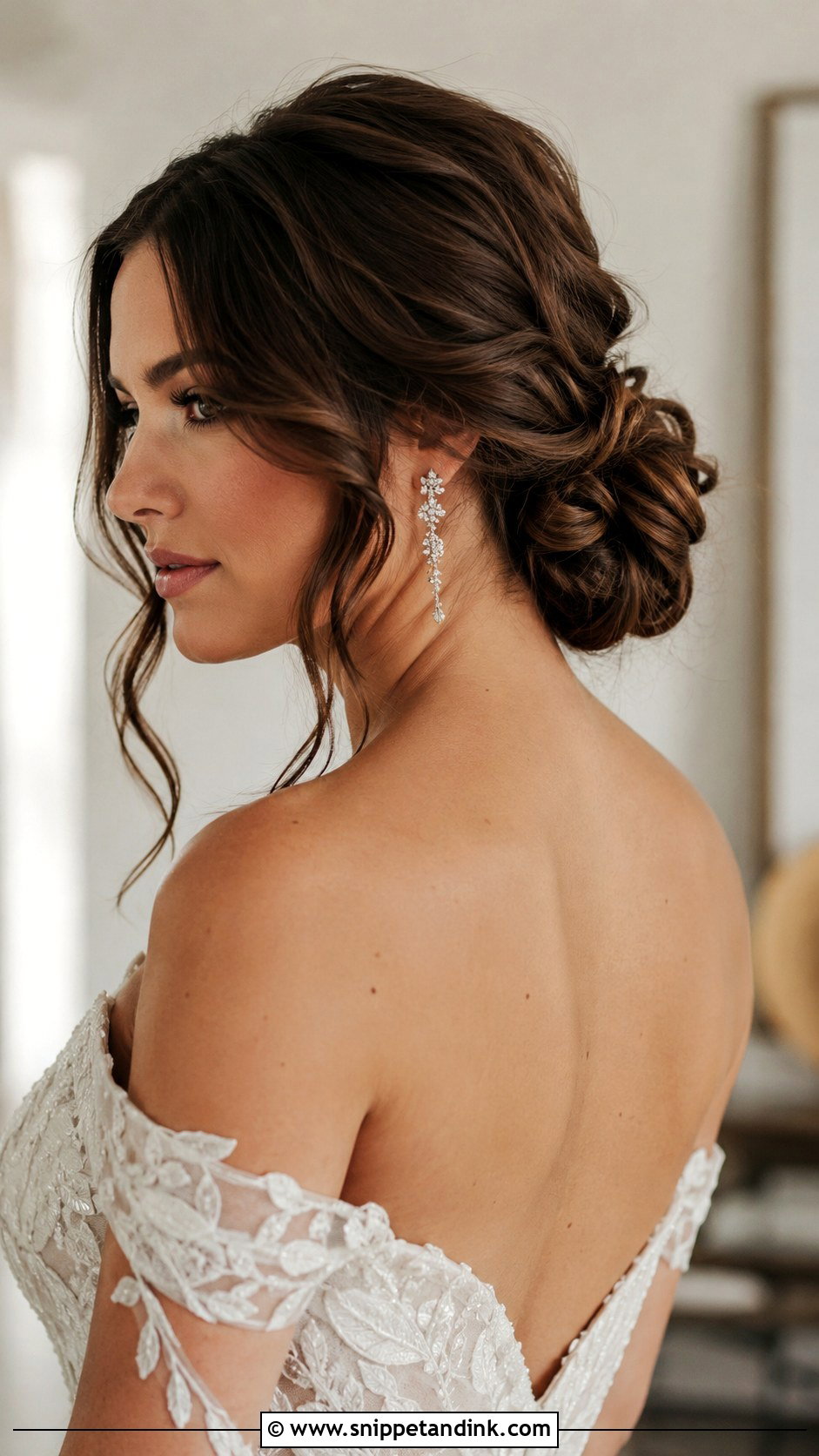
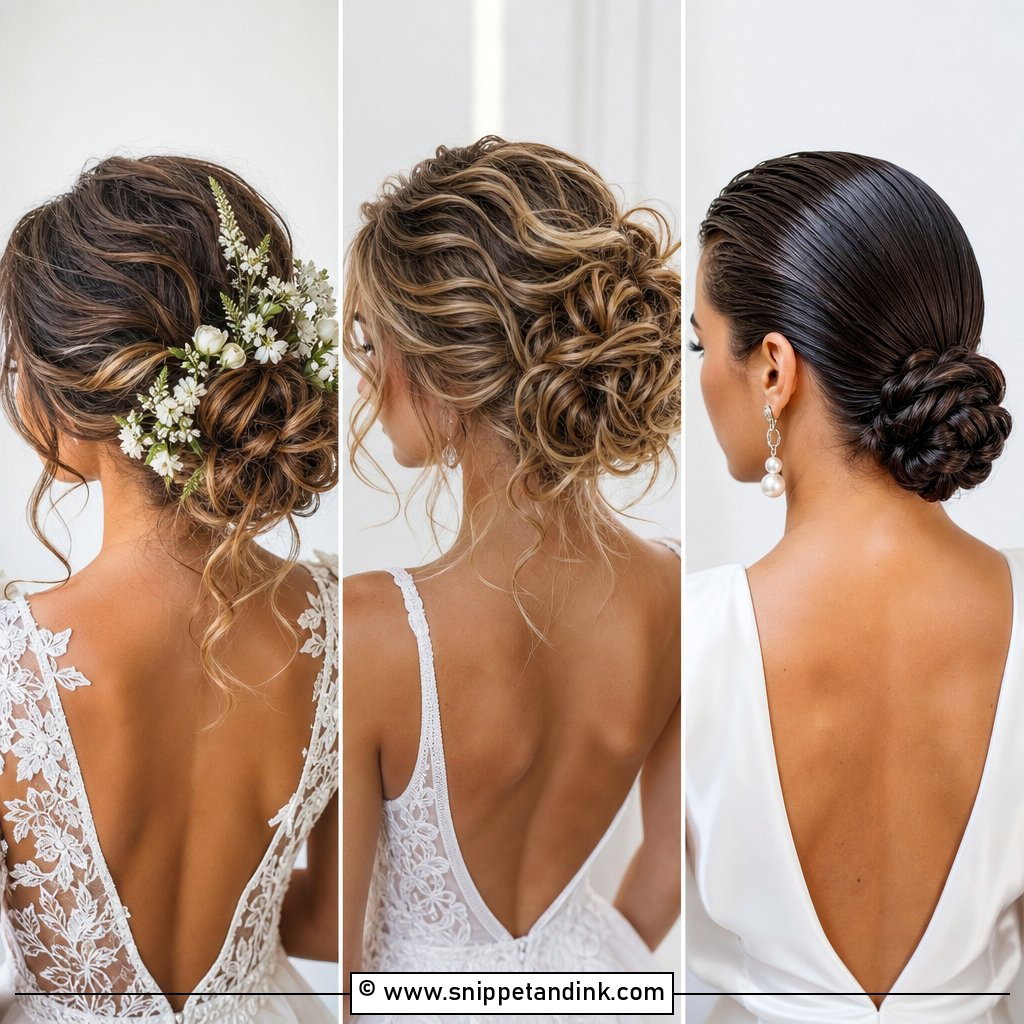
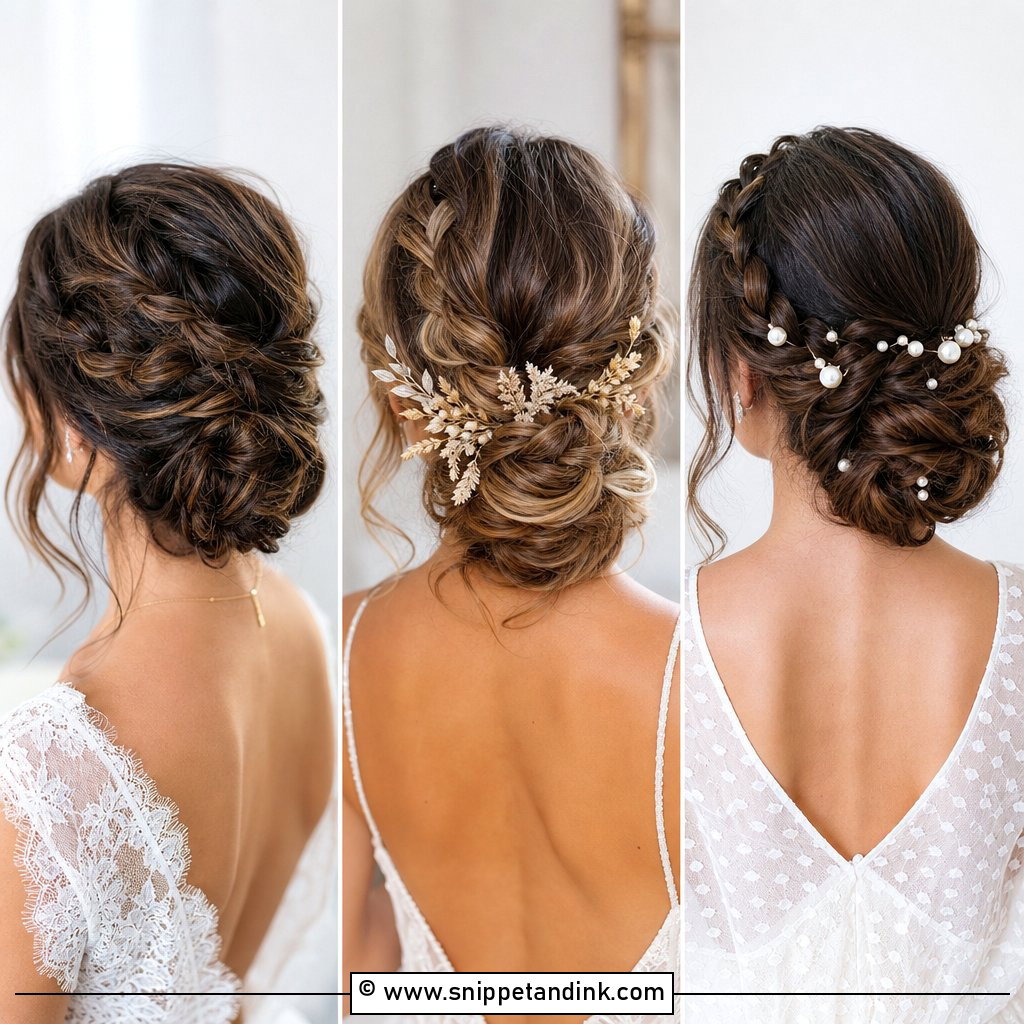
This bun is all about texture. I curl the hair first, so the bun has body, then gather it loosely at the nape and pin it rather than winding it tight. Face-framing pieces come out last. It keeps the neck cool for warm ceremonies and holds well, because the curls interlock as they’re pinned. Delicate hairpins or statement earrings fit nicely. On very thick hair, I split it into two sections and pin them one above the other, so the bun doesn’t drag down.
8. Beach Waves With Baby Bangs
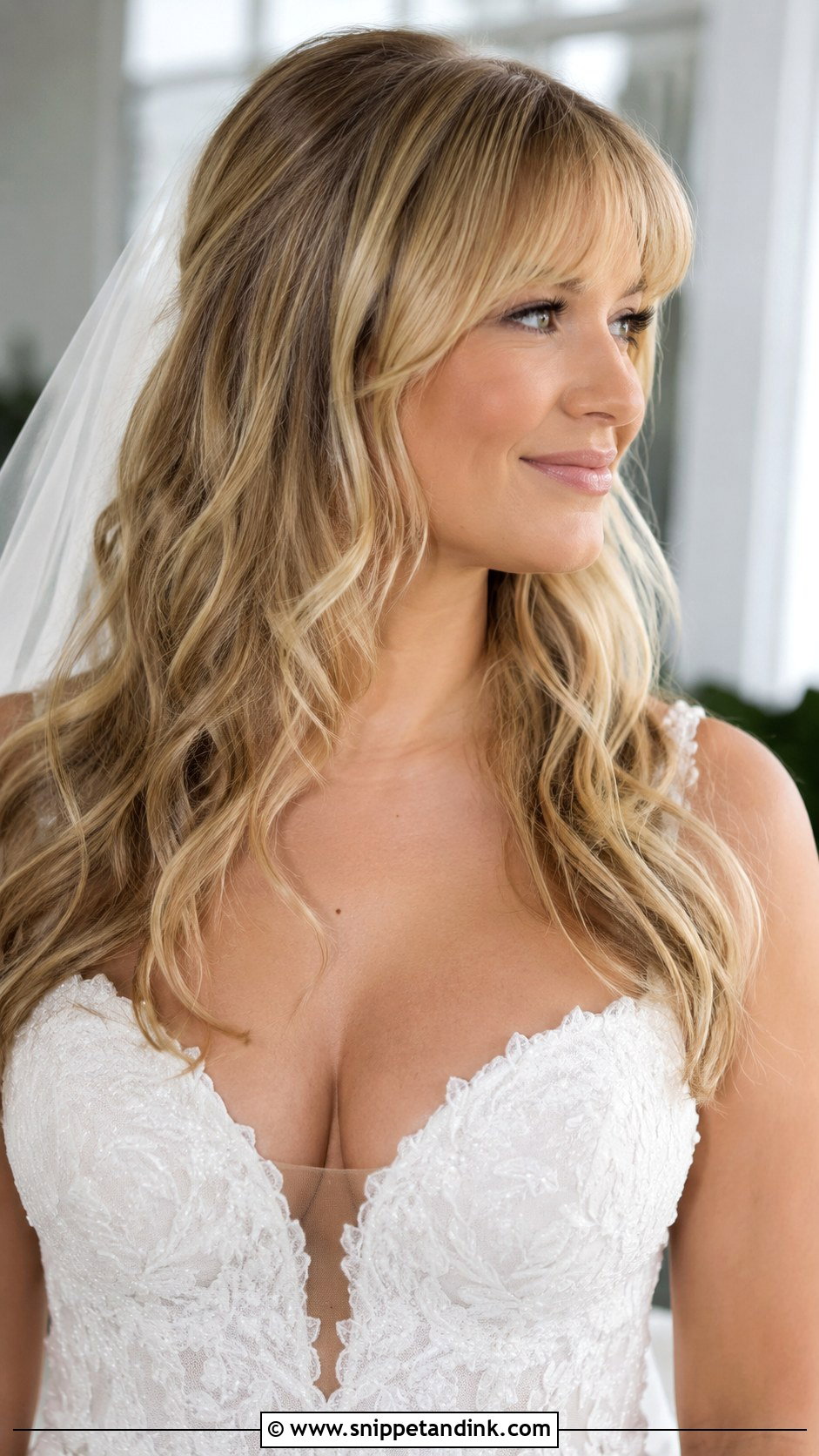
For a fresh, modern bridal look, pair flowing beach waves with wispy baby bangs. The fringe frames the eyes, and the waves add volume below. Keep the bangs light and slightly to one side. A word of warning I give every bride: don’t cut bangs within two weeks of the wedding. A fresh cut needs a week or so to settle, and the trial needs to be done with the bangs at their final length. Humidity also makes bangs separate and curl up, so a little anti-frizz cream is essential.
9. Boho Beach Waves With Braids
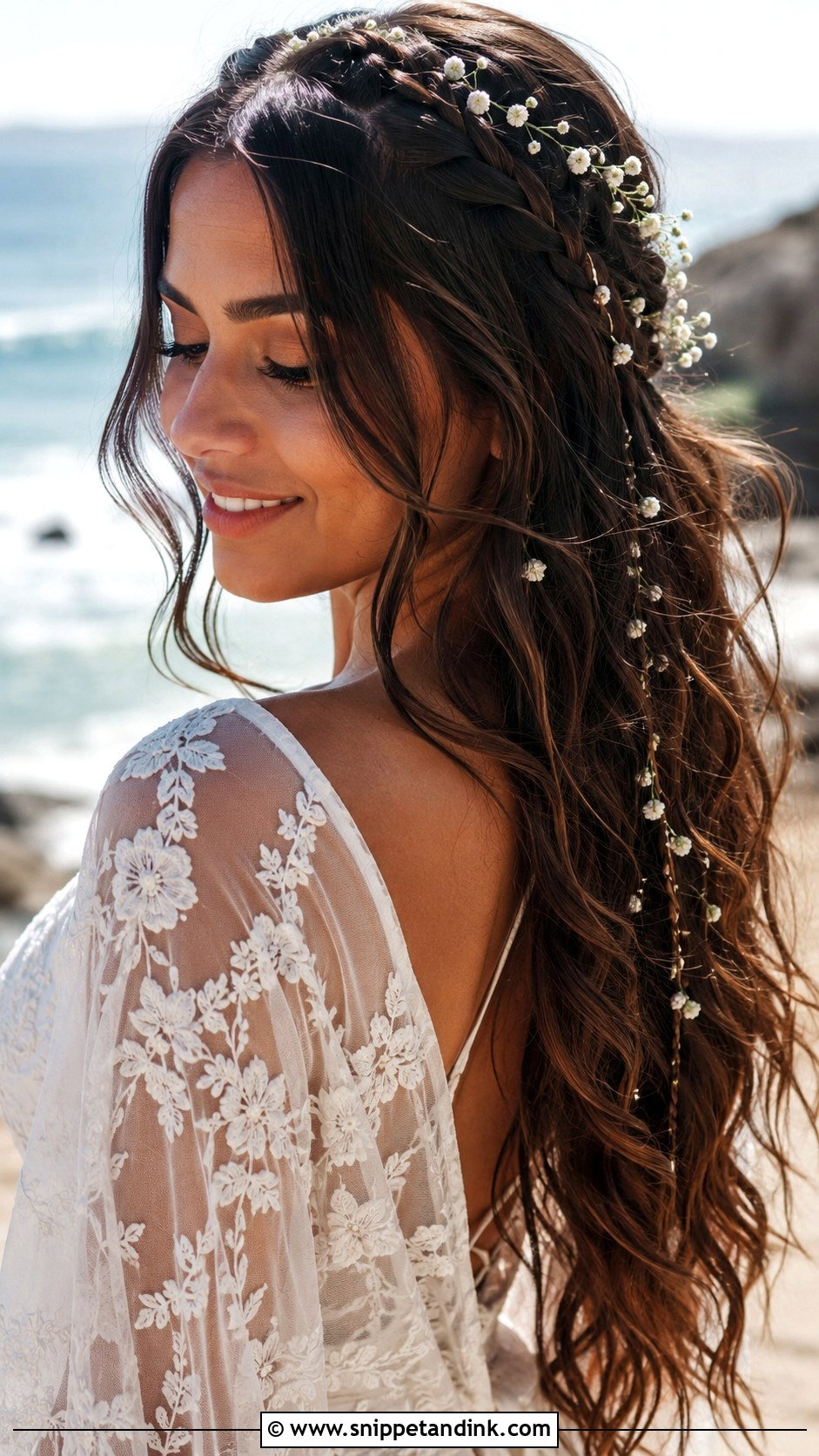
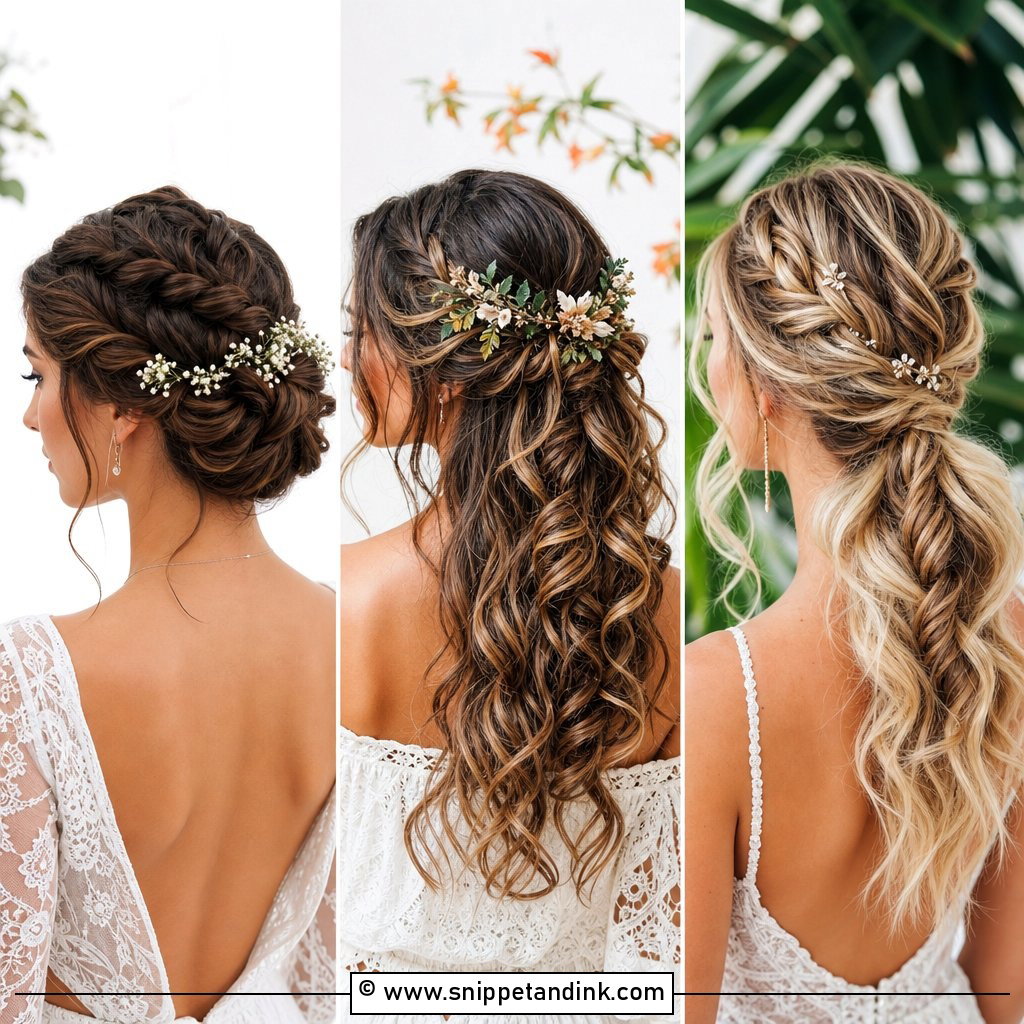
Waves and braids together give a boho bride something to look at from the back. Small braids woven through the waves act as anchors and keep the look from falling flat. One side braid or several scattered through are both options. I braid on dry, prepped hair before curling the rest, so the waves don’t get crushed. Tiny flowers or a hair vine along a braid add detail. It’s a good choice for brides with fine hair, since the braids help hold structure.
10. Hollywood Waves for Brides
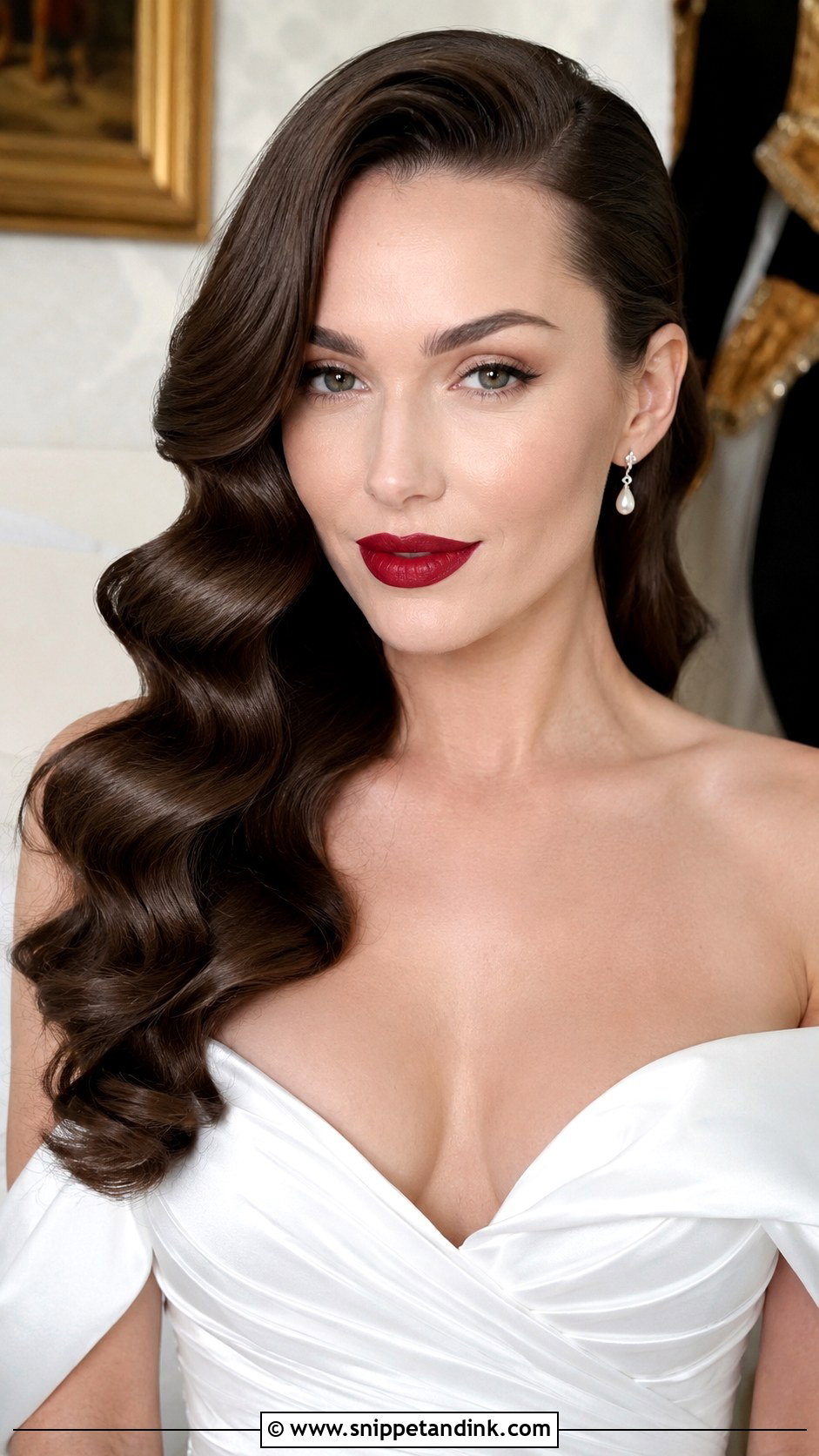
Hollywood waves are structured S-shapes brushed into one smooth, glossy pattern, and they’re a completely different technique from beach waves. I set the curls all in the same direction, pin each one to cool, then brush through with a boar bristle brush and shape the ridges with clips. It suits a formal beach wedding with a sleek gown and a bold lip. The catch is humidity: a sculpted wave relaxes quickly in damp sea air, so I’d keep this one for an evening reception or an indoor venue.
11. Beach Waves With a Hair Vine
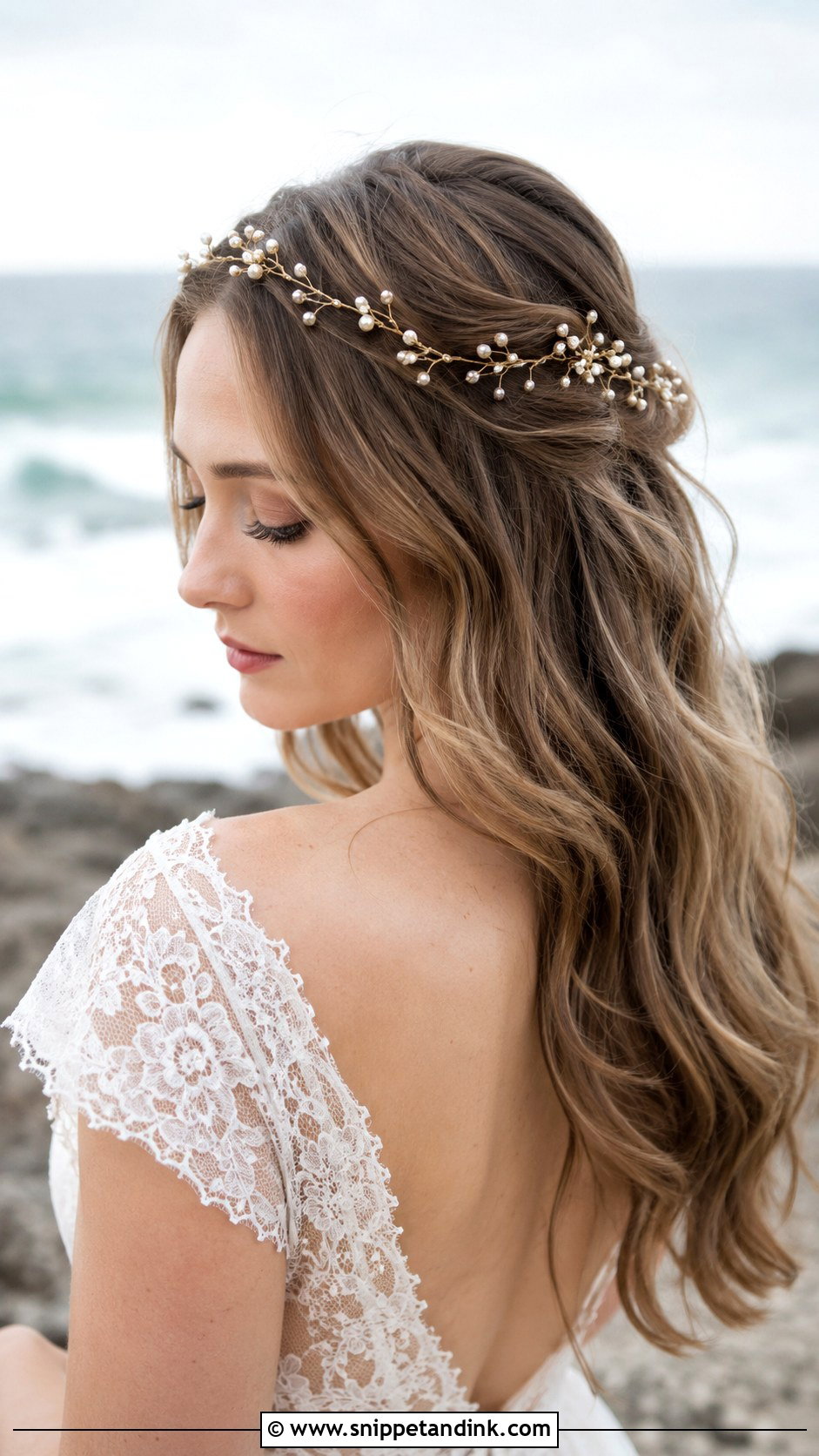
A hair vine is a thin wire of crystals, pearls or small leaves that you bend and weave through your waves. I thread it across the crown or along one side, then pin it at several points so it lies flat. It catches light as you move without dominating the look. Gold, silver and pearl versions match different jewelry and dress tones. Vines can be fiddly on very fine hair because the wire shows through, so I’ll add some volume at the roots before placing it.
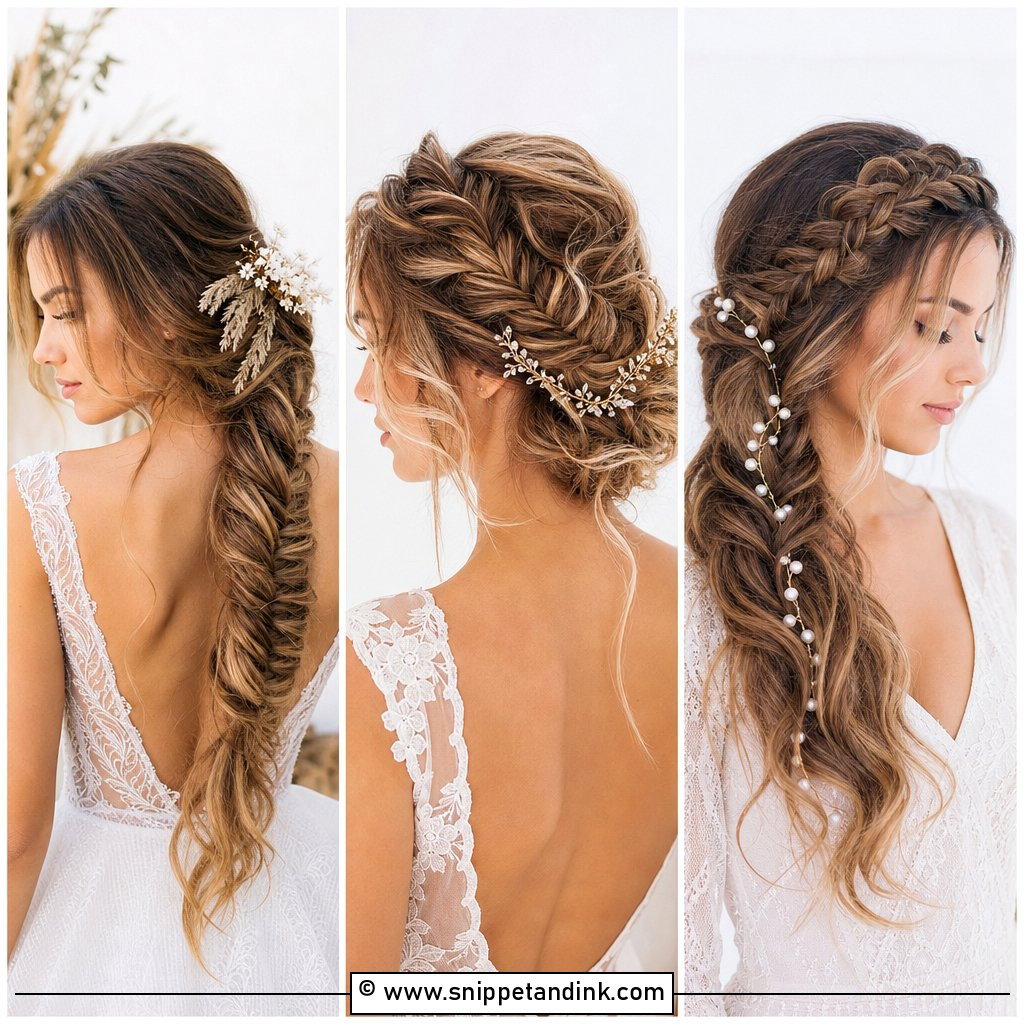
12. Wavy Side Braid for Brides
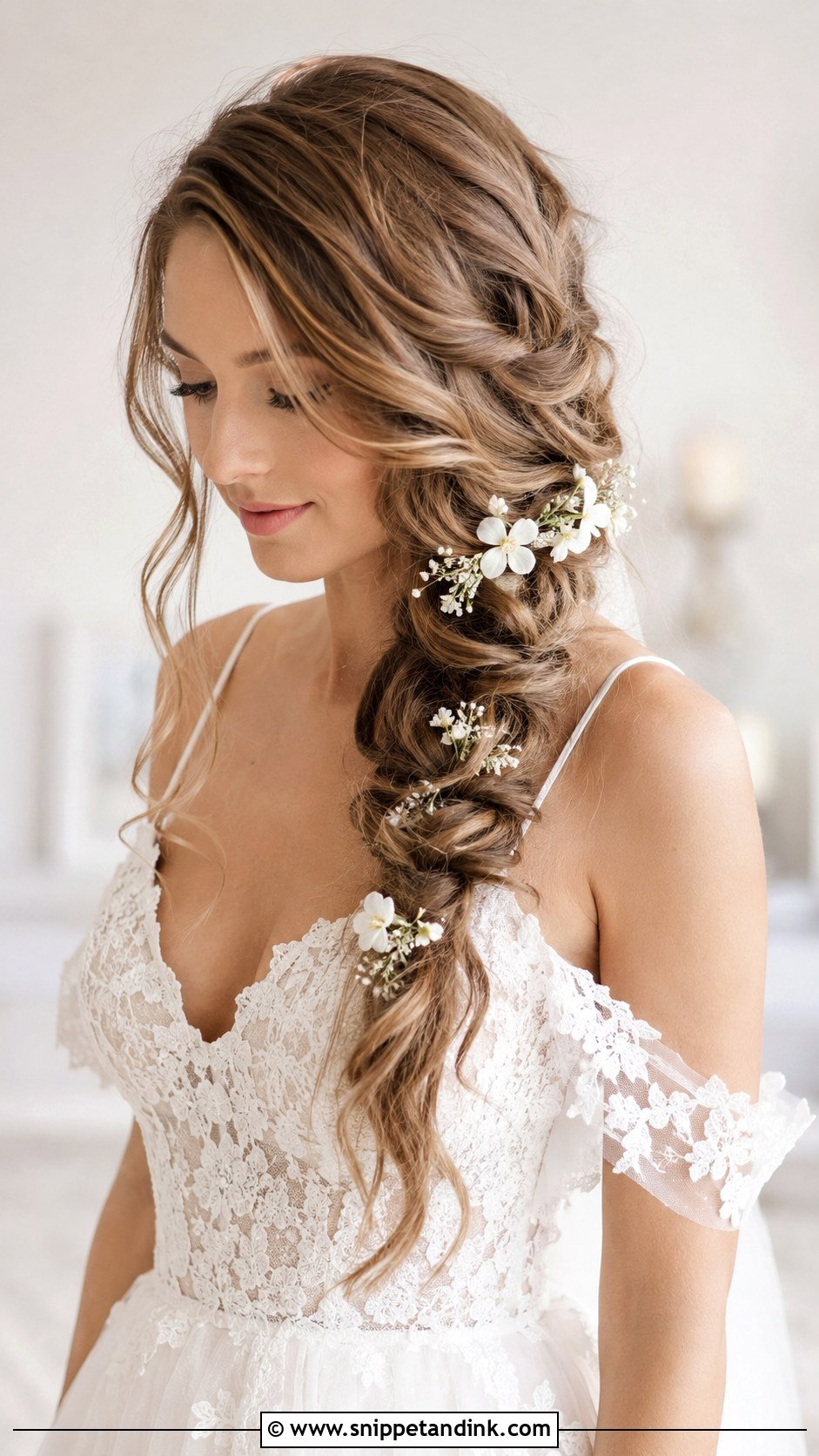
A loose side braid built from already-curled hair holds better than one made from straight hair. The waves give it grip and fullness. I sweep the hair to one shoulder, braid loosely and pull the edges out to widen it. Leaving some face-framing pieces out softens it. It’s practical in a beach breeze, since the bulk of the hair is tied down. Tiny flowers woven in give it a garden feel.
13. Beach Waves With Center Part
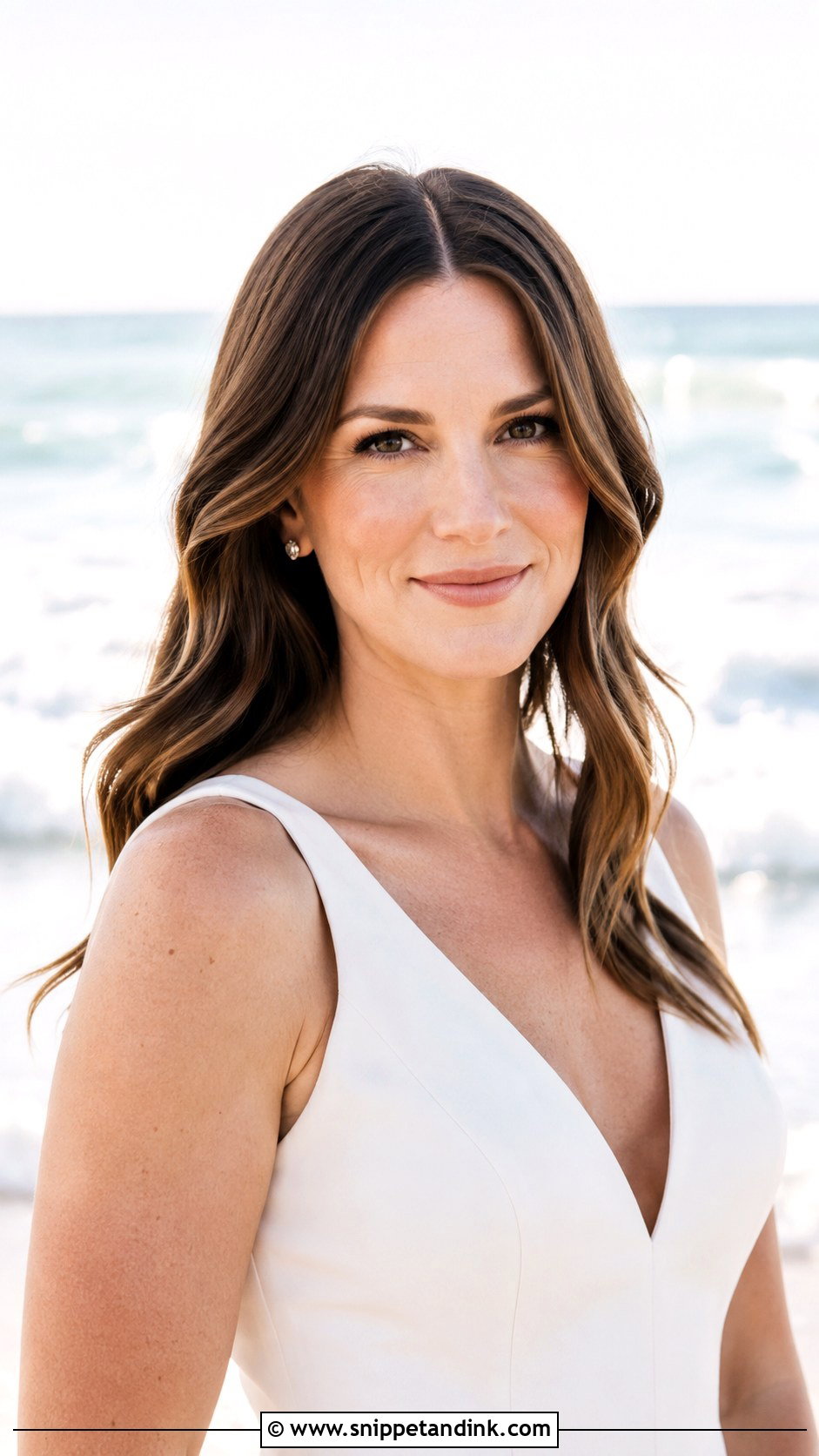
A center part is the more modern way to wear waves, and it’s a strong choice for a minimalist bride. It frames the face symmetrically. That symmetry also shows everything, so I check the part line in the mirror from a few feet back, not up close. Balance the waves on both sides so one doesn’t fall heavier than the other. Simple stud earrings suit it. It flatters oval and heart-shaped faces most; on a very round face, I’d move the part a little off center.
14. Half Up Beach Waves With Veil
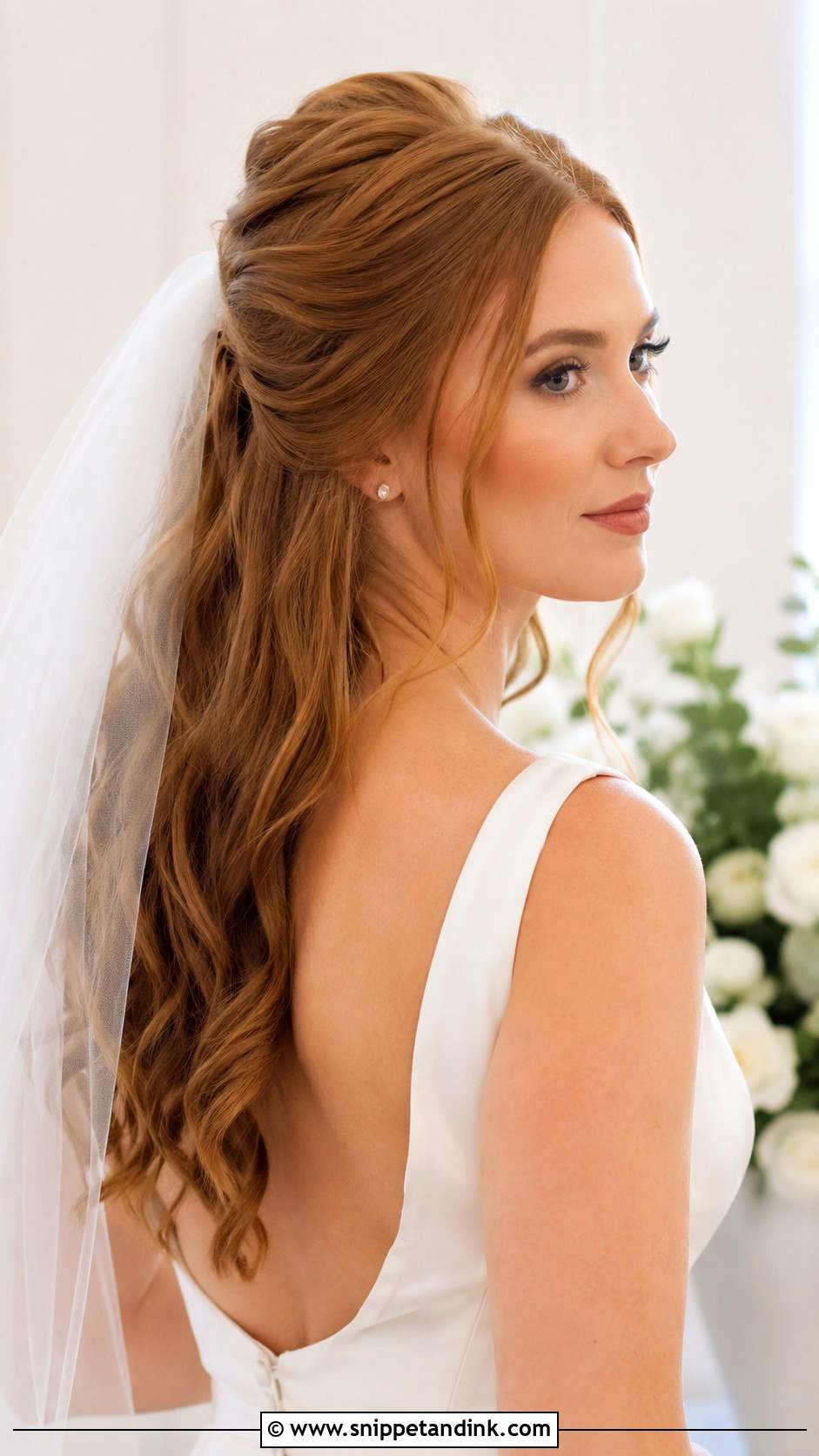
A half-up style with a veil is the most practical of the veil looks, because the half-up section gives the comb something to hold. I slide the comb in just under the pinned section so the veil falls naturally from beneath it. The waves underneath frame the face. It carries a ceremony and a reception equally well, since taking the veil off leaves a finished half-up look. Make sure your stylist knows the veil’s length and weight at the trial, as a long cathedral veil needs more pinning.
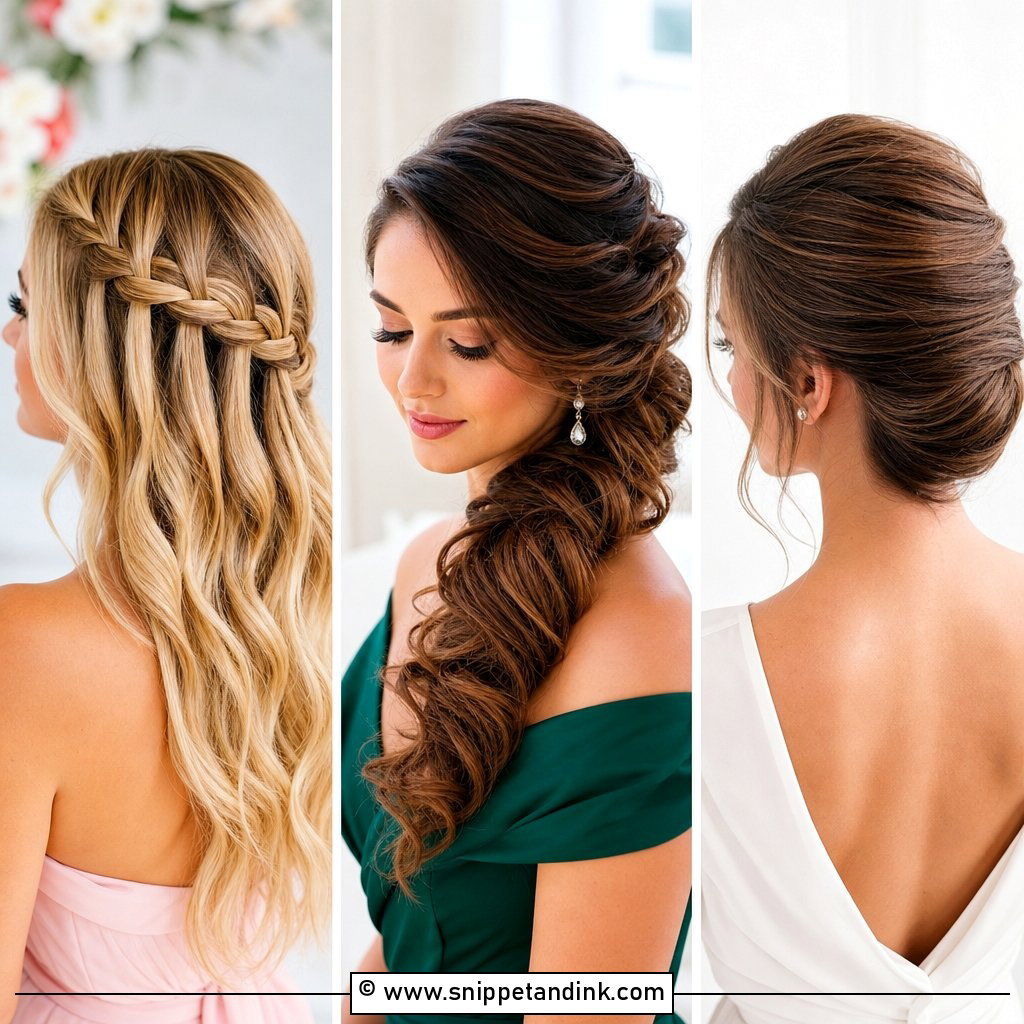
15. Beach Waves With Pearl Pins
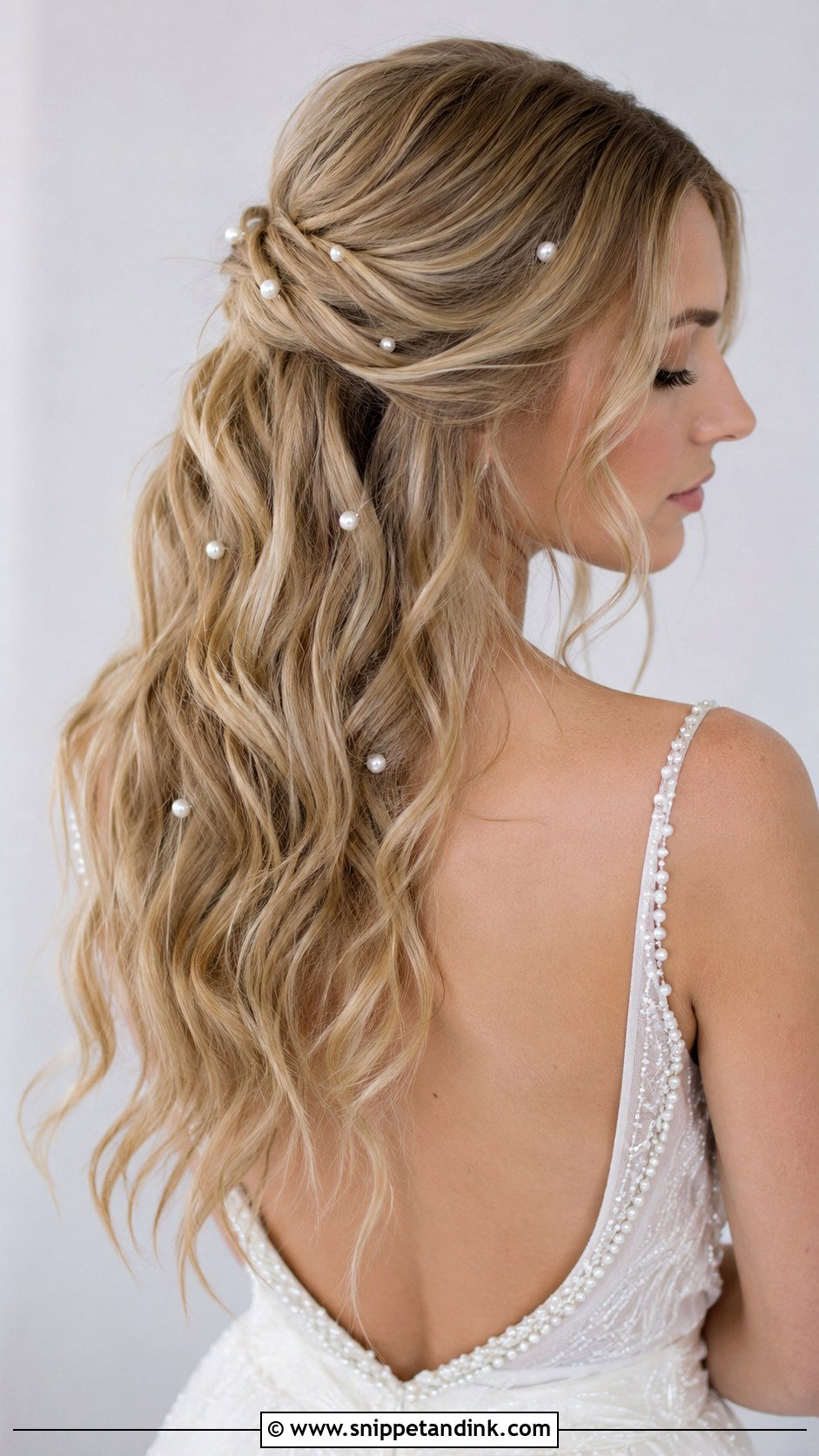
Pearl pins are an easy upgrade for simple waves. Style the waves loosely, then place the pins scattered or in a small cluster near one ear. I always put a plain bobby pin in first and slide the pearl pin over it, since the decorative ones are often too slippery to hold alone. They suit a bride who wants detail without a full headpiece. They match pearl jewelry and classic gowns and work equally well in half-up looks. Five to seven pins usually looks deliberate; more than that starts to look busy.
16. Wavy Low Ponytail for Brides
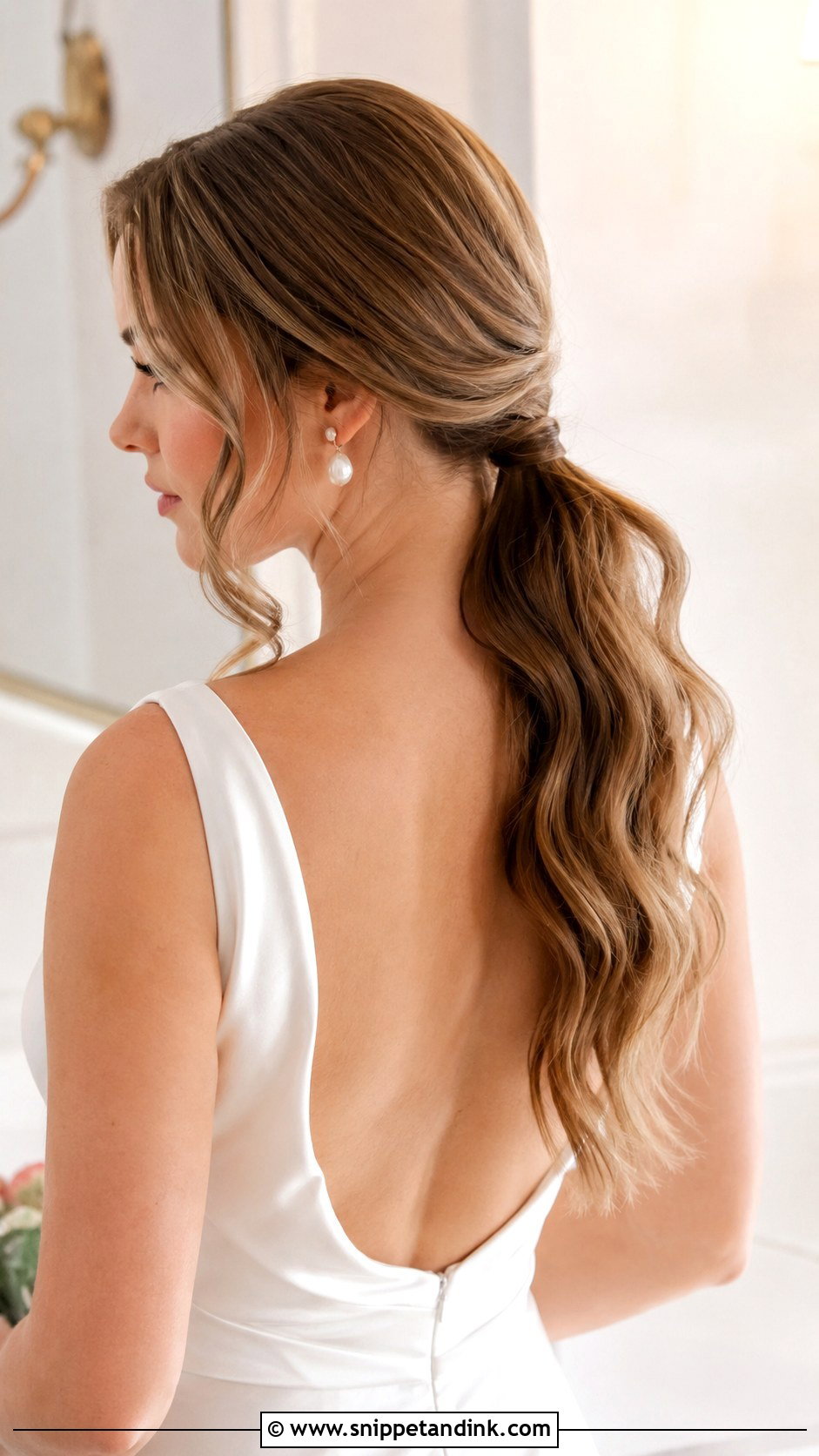
A wavy low ponytail is a modern alternative to a bun, and it’s better behaved than loose waves on a windy beach. The crown stays smooth and the length falls in waves from the tie. I wrap a small section of hair around the elastic and pin it underneath. A hair cuff or ribbon gives some detail. Pull out a few face-framing pieces for softness. It’s a good option for brides with layered hair, as the shorter pieces can be curled and left loose.
17. Beachy Waves With a Headband
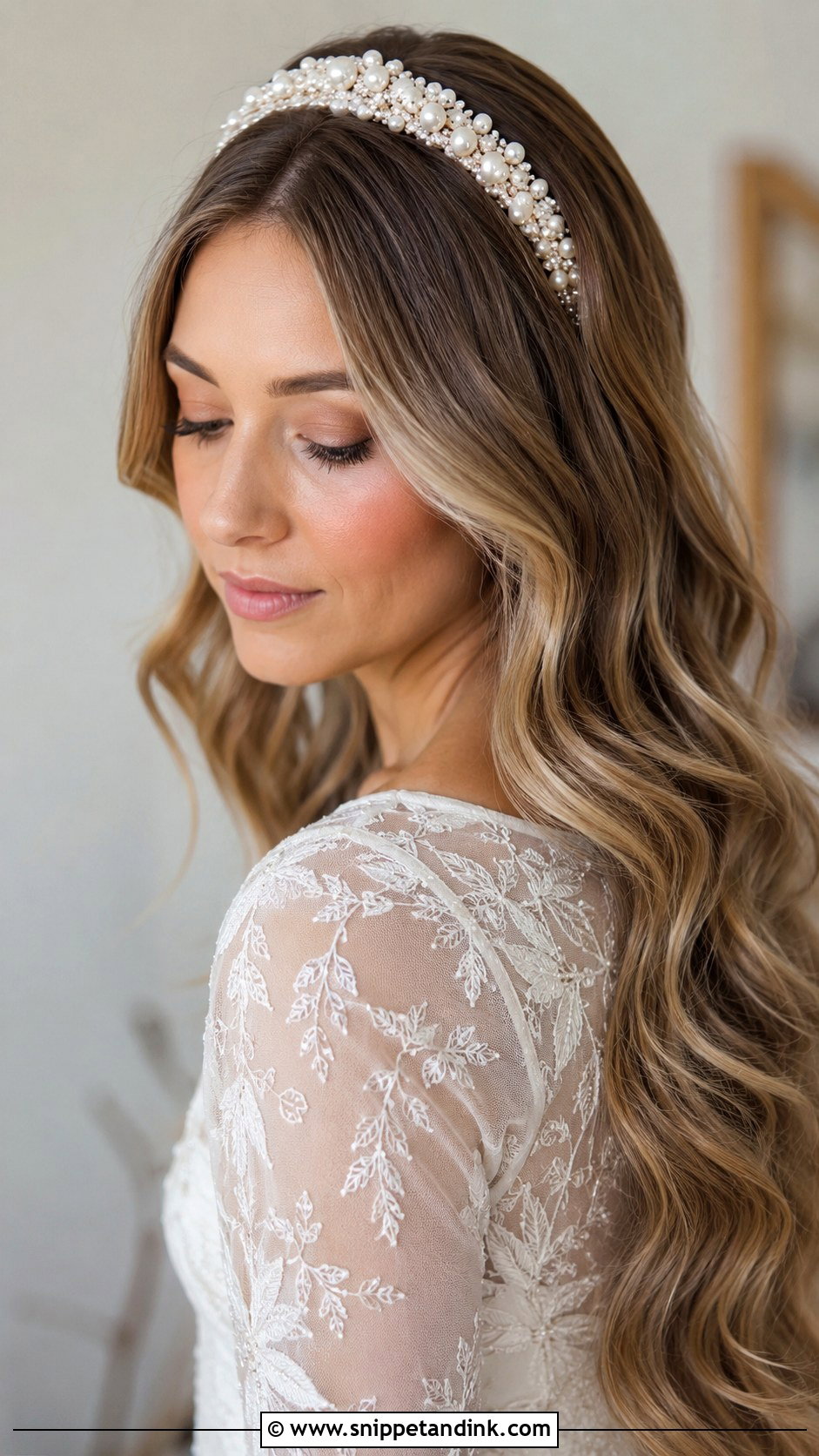
Headbands are back in bridal, and they sit well on waves. A satin, pearl or jeweled band adds detail without the weight of a veil. Style the waves first, then slide the band in. The thing I check with headbands is pressure: a tight band can give a headache within a few hours, so try it on for at least an hour before the day. I sometimes pin it at the sides too, so it doesn’t slide back. Choose a band that matches your dress fabric or jewelry for a cohesive finish.
18. Mermaid Waves for Beach Brides
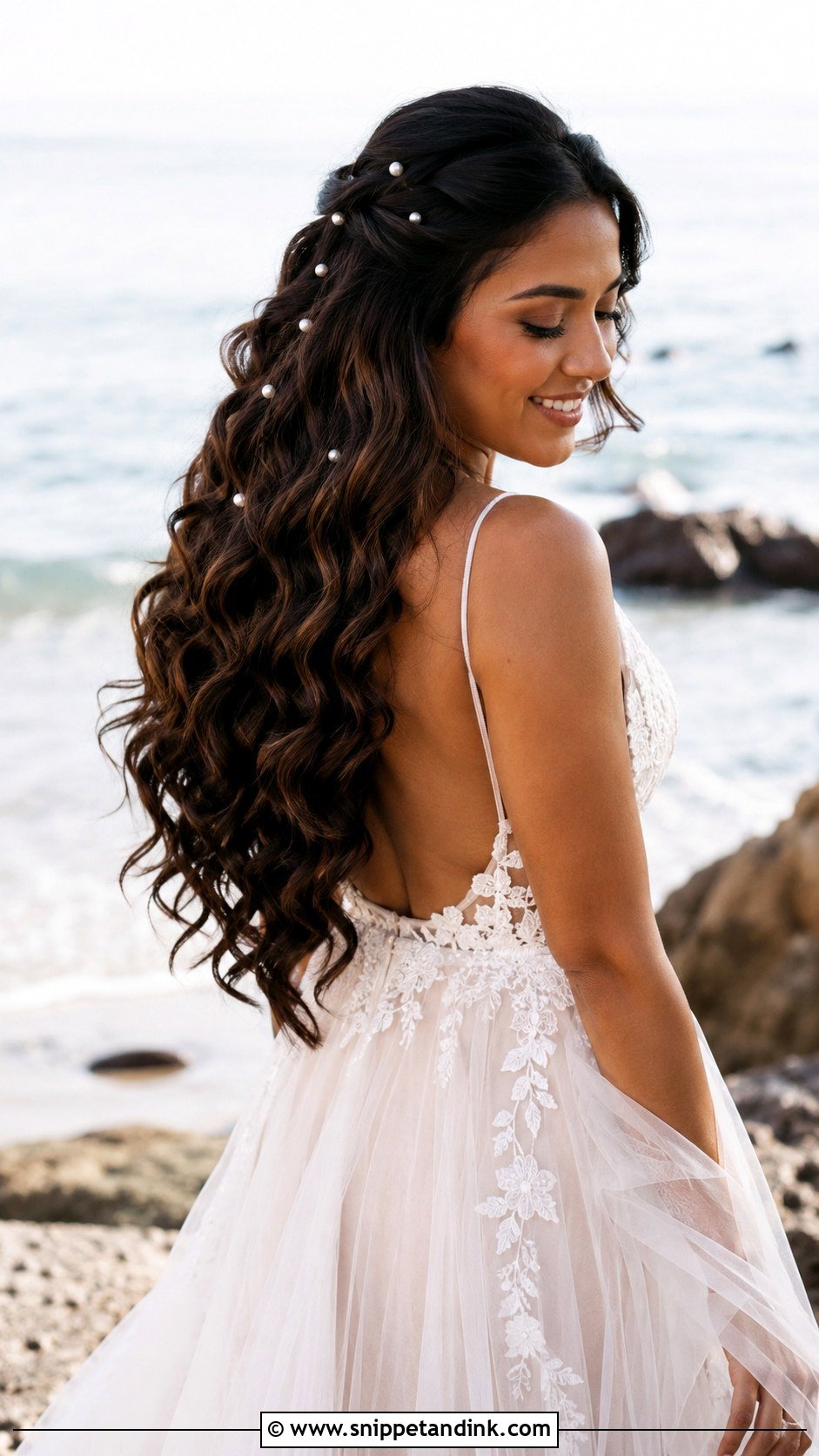
Long, flowing mermaid waves are deep, defined ripples that run all the way down the length. They’re tighter and more uniform than typical beach waves, usually done with a wand or a three-barrel waver. This look suits brides with long, thick hair. Fine hair can look sparse when it’s waved this way, so clip-in extensions help. Tiny shells, pearls or flowers add a seaside touch. Brush the waves gently with fingers only, or they’ll turn into frizz.
19. Beach Waves With Twisted Crown
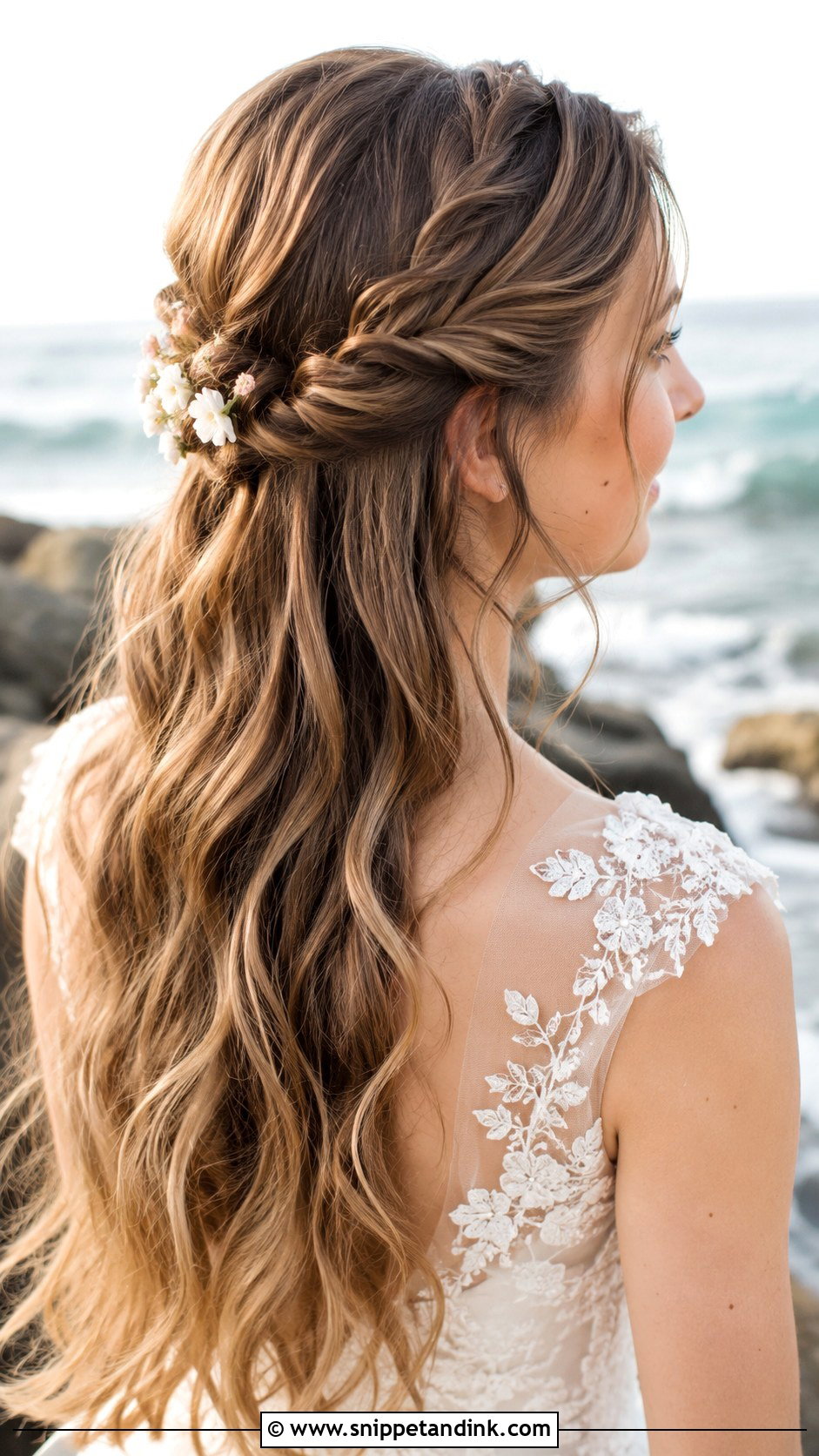
A twisted crown adds detail to soft waves. I twist sections from each side and pin them together at the back, which forms a halo shape around the head. The rest stays in loose waves below. It keeps hair off the face, which helps a lot on a windy beach. Small flowers or pearls tucked into the twist look pretty. On curly hair, I twist with the natural curl rather than against it, so the twists stay smooth.
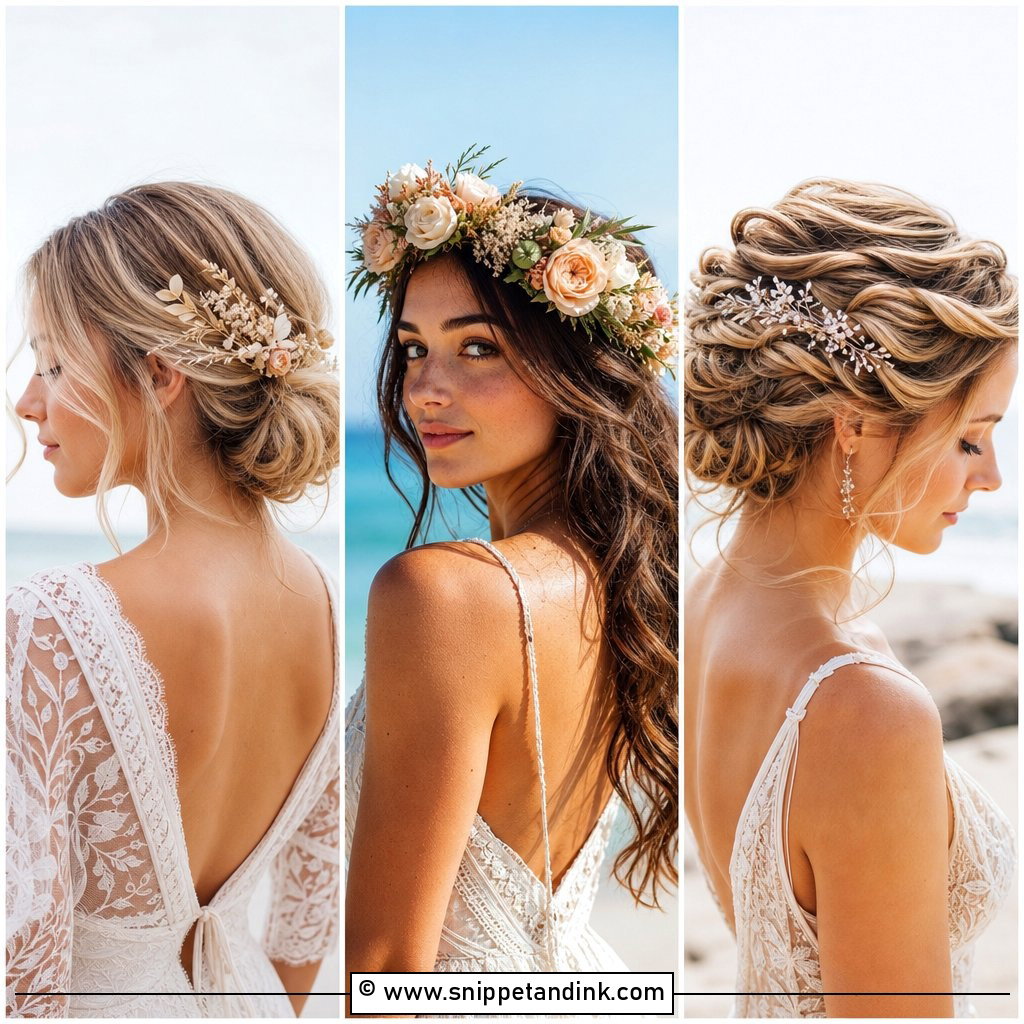
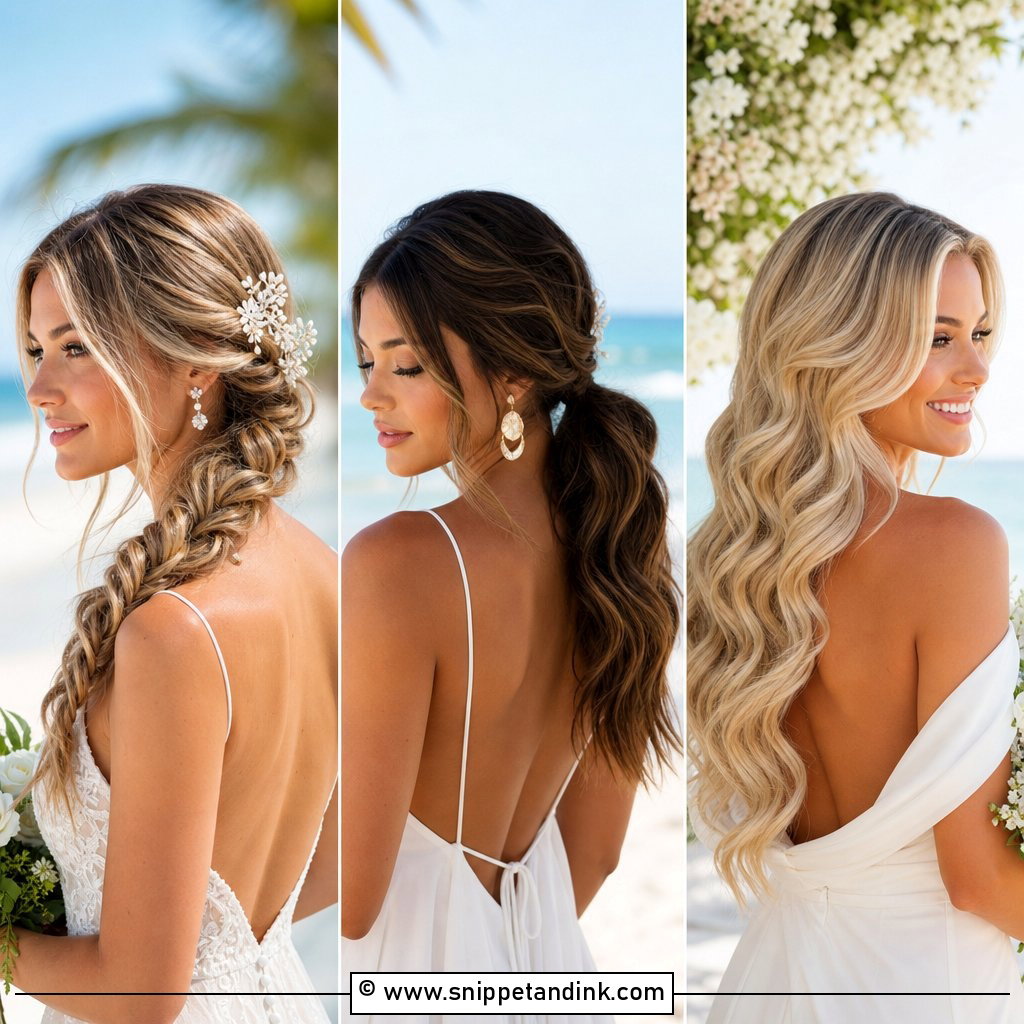
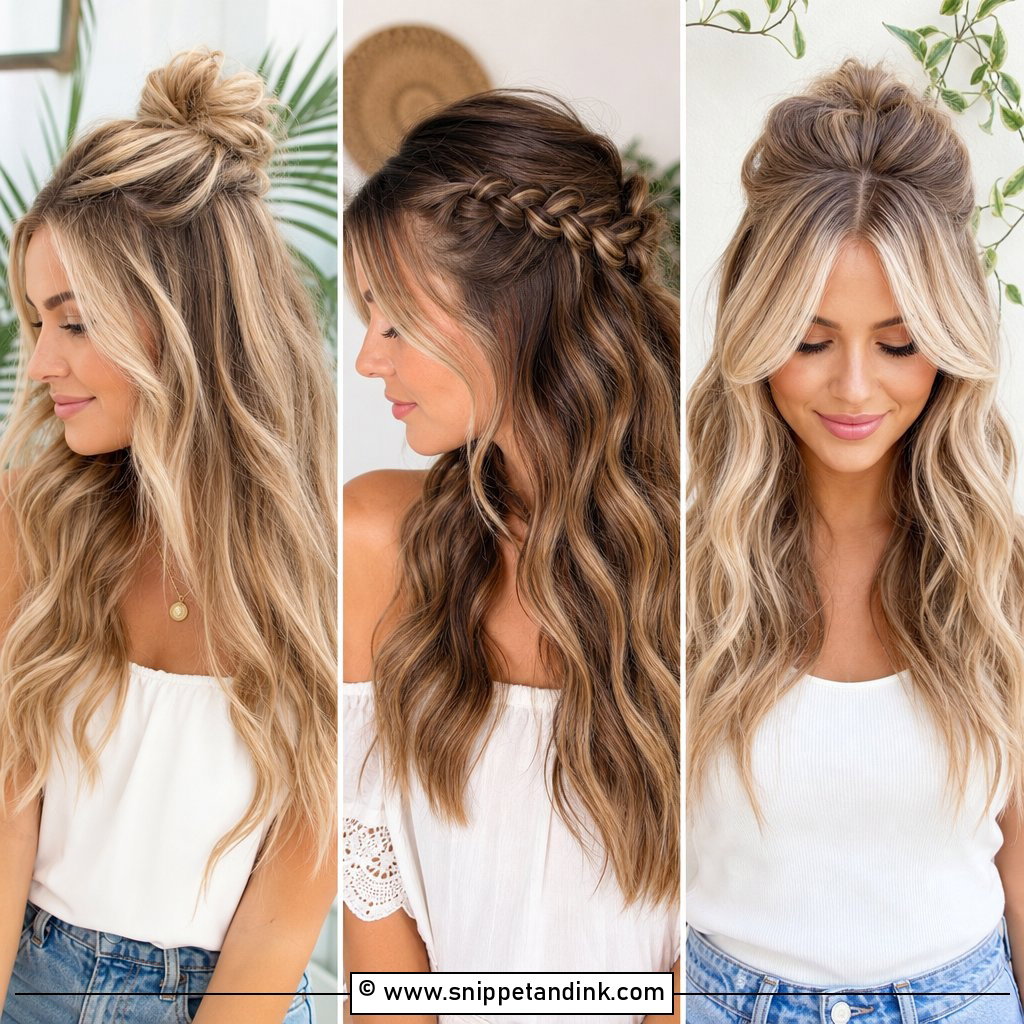
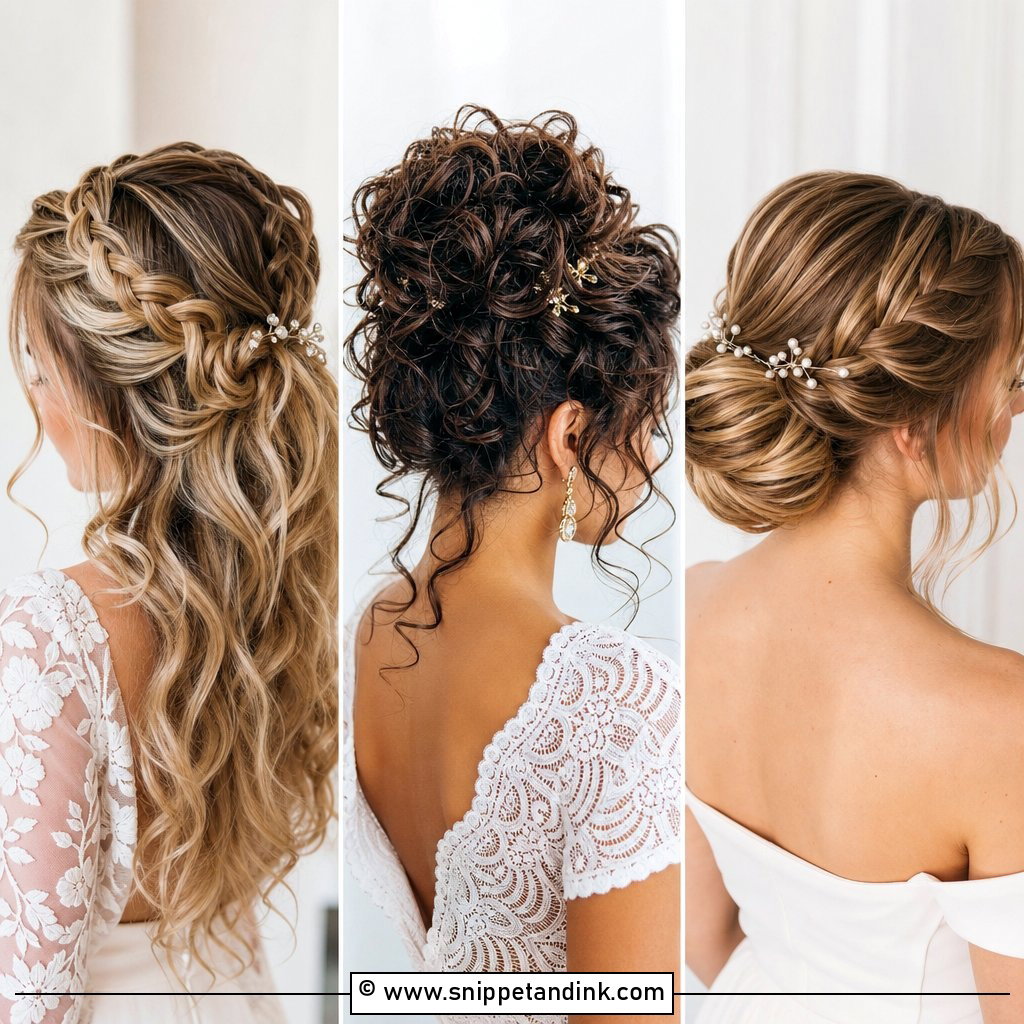
20. Wavy Updo With Loose Tendrils
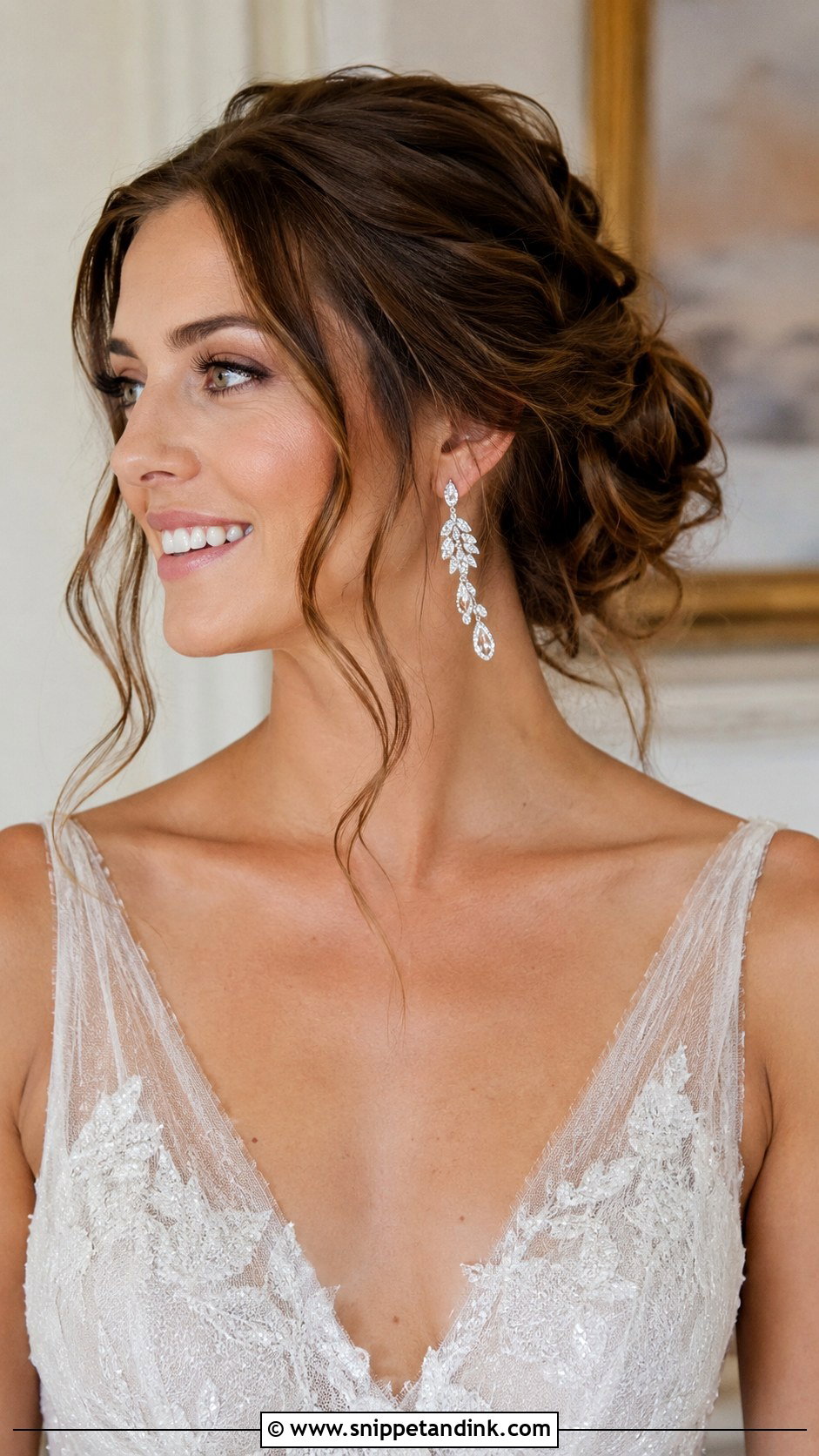
This updo uses the waves for volume, so it doesn’t need backcombing. I gather the hair loosely, pin it in sections at the back and leave wispy pieces around the face. It keeps the neck cool in warm weather. The tendrils are the trickiest part: I curl them separately with a small iron and keep the spray light, so they move instead of hanging stiff. Statement earrings work well with it. It’s a good fit for a bride who wants hair up but not formal.
21. Beach Waves With Deep Side Part
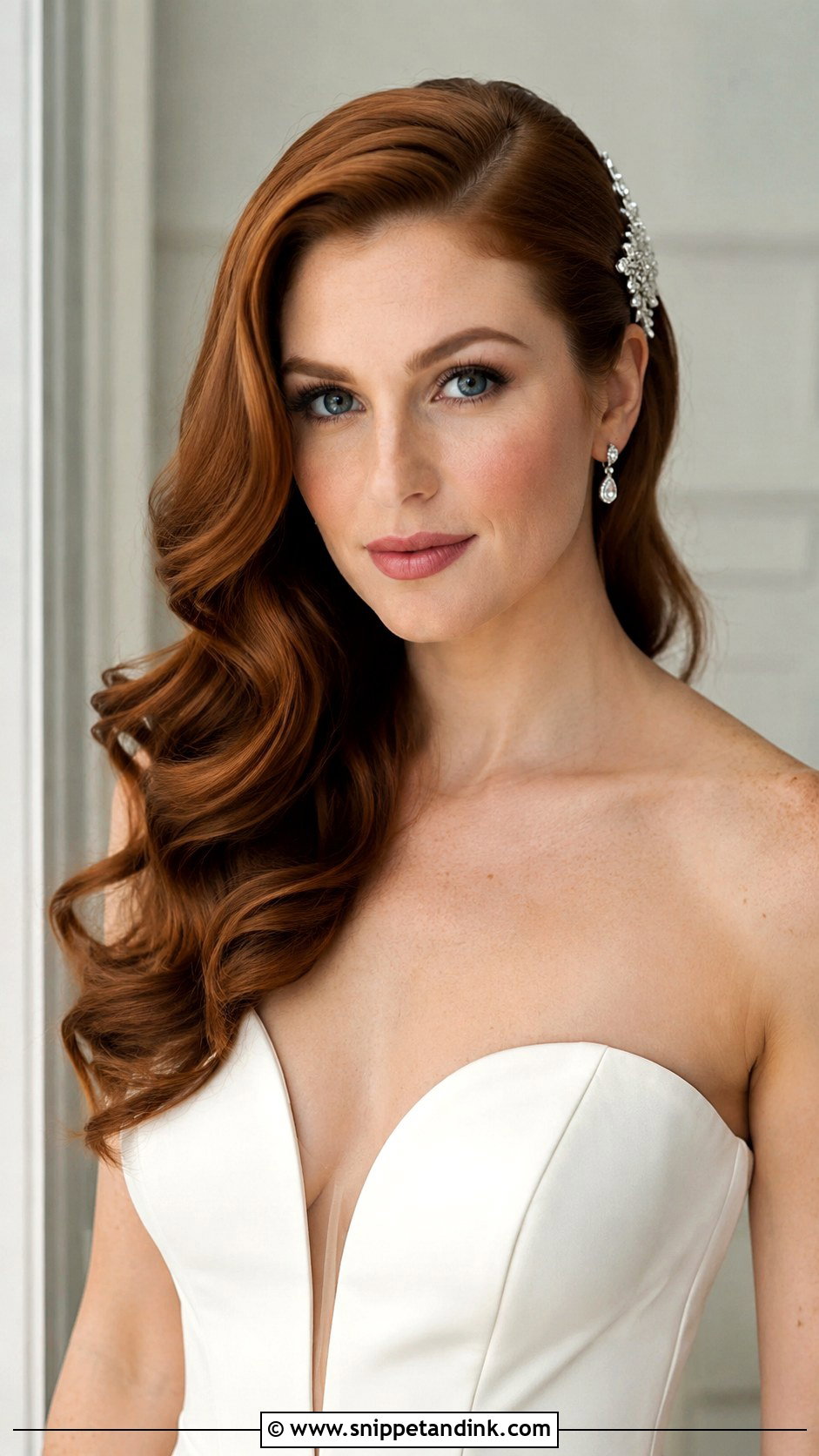
A deep side part adds instant lift at the crown, because the hair is flipped over against its natural fall. I sweep the waves over the heavier side and pin the lighter side flat with a sparkling clip. The asymmetry has a vintage feel. It pairs well with sleek gowns and statement jewelry. I check which side faces the guests during the ceremony before I set the part, so the fuller side is the one people see.
22. Textured Lob With Beach Waves
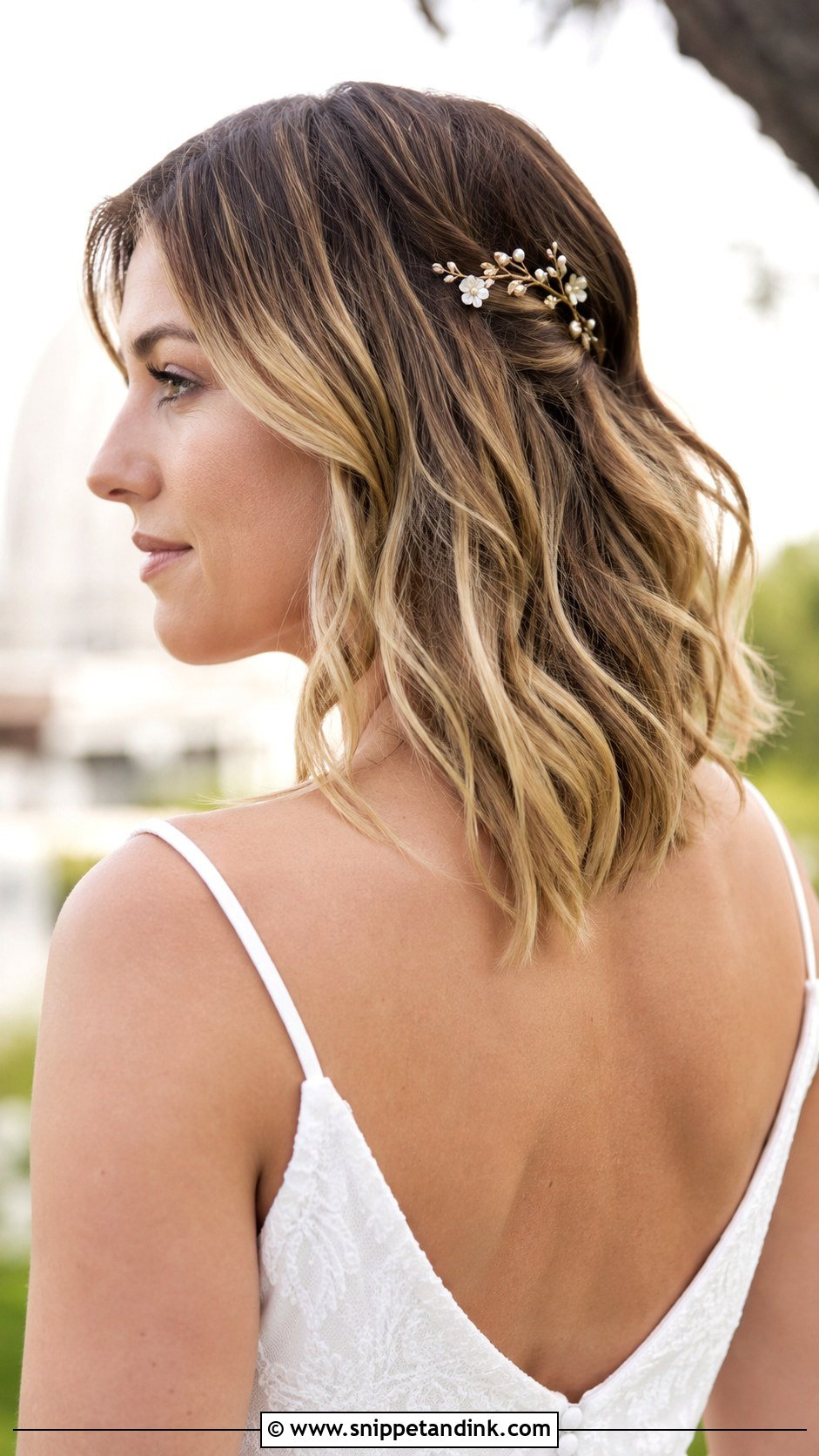
The wavy lob, or long bob, is a smart cut for a bride who wants waves that last. With less weight, the bends hold well in humidity. I create loose bends with a curling iron and break them up with my fingers. It frames the face and keeps you cool. A delicate pin or a few flowers add charm. If you’re growing out a lob for the wedding, book a trim about four weeks before so the ends are fresh but have had time to settle.
23. Beach Waves With Fresh Flowers
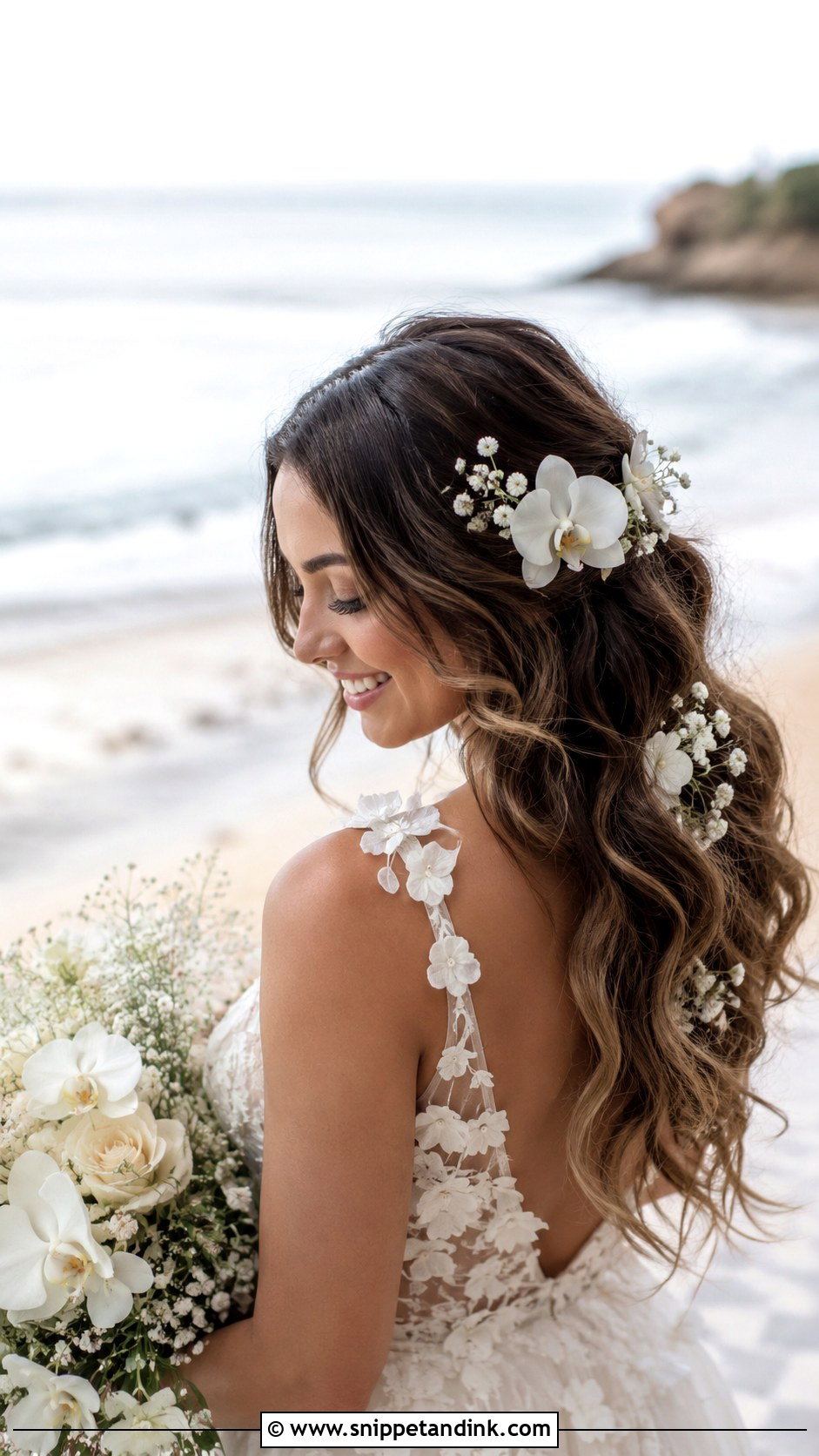
Fresh flowers in loose waves are simple, but timing matters. I add them at the very end, after hairspray, since spray can spot delicate petals. Orchids and roses hold up well; baby’s breath is sturdy and cheap. Coordinate the flowers with your bouquet, and ask your florist for a few spare stems. Small blooms behind one ear are enough for most brides. In strong sun, petals wilt within a few hours, so expect to remove or replace them before the reception.
24. Wavy Fishtail Braid for Brides
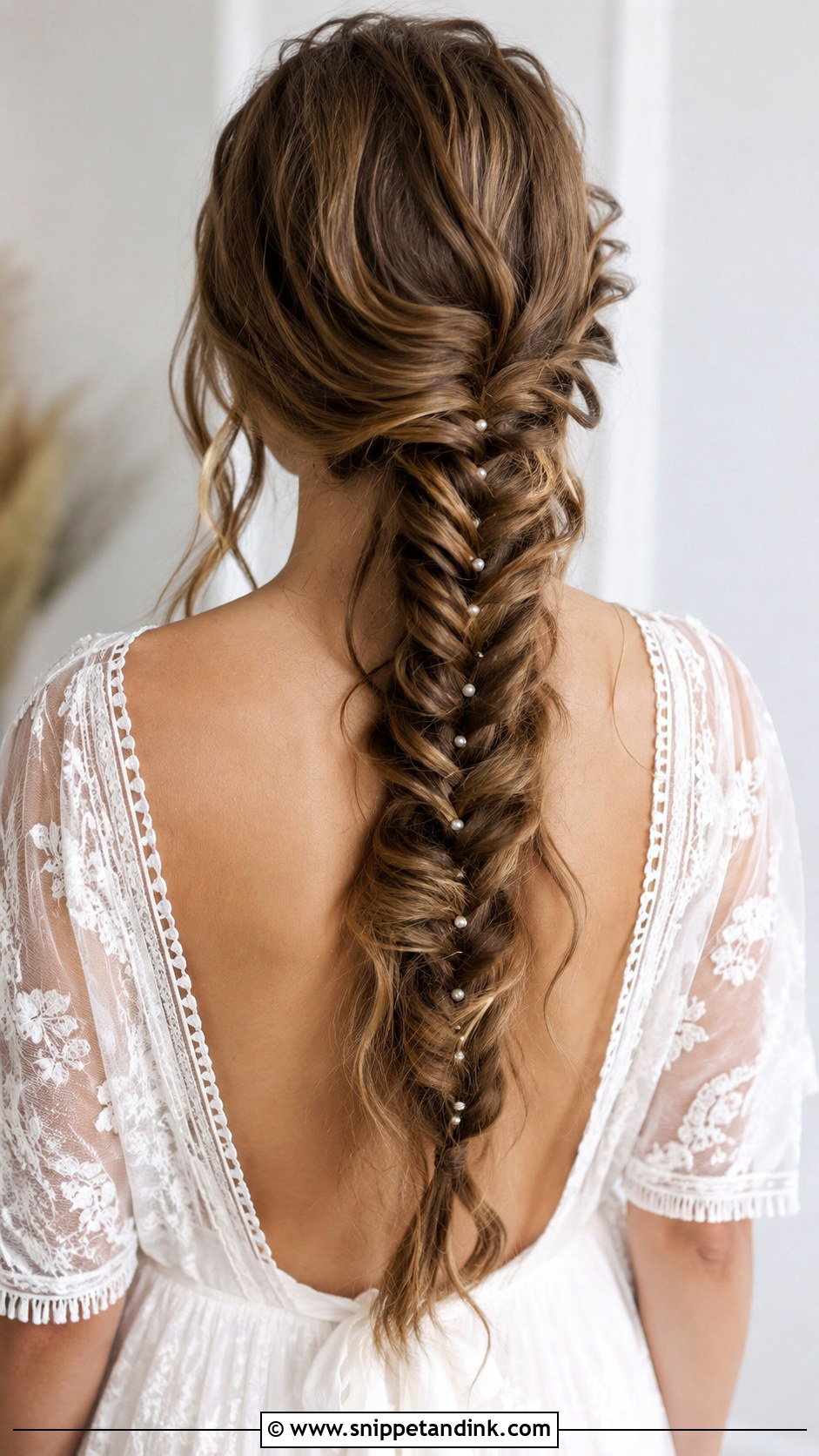
A fishtail braid built from waves has more dimension than one made from straight hair. I braid loosely, then pull the edges out for fullness. It can sit to one side or down the back. The braid keeps hair controlled on a windy beach, and the waves keep it from looking too neat. Tiny flowers or pearls along the braid add a bridal touch. It needs hair at least to the shoulder blades to show the fishtail pattern.
25. Beach Waves With Birdcage Veil
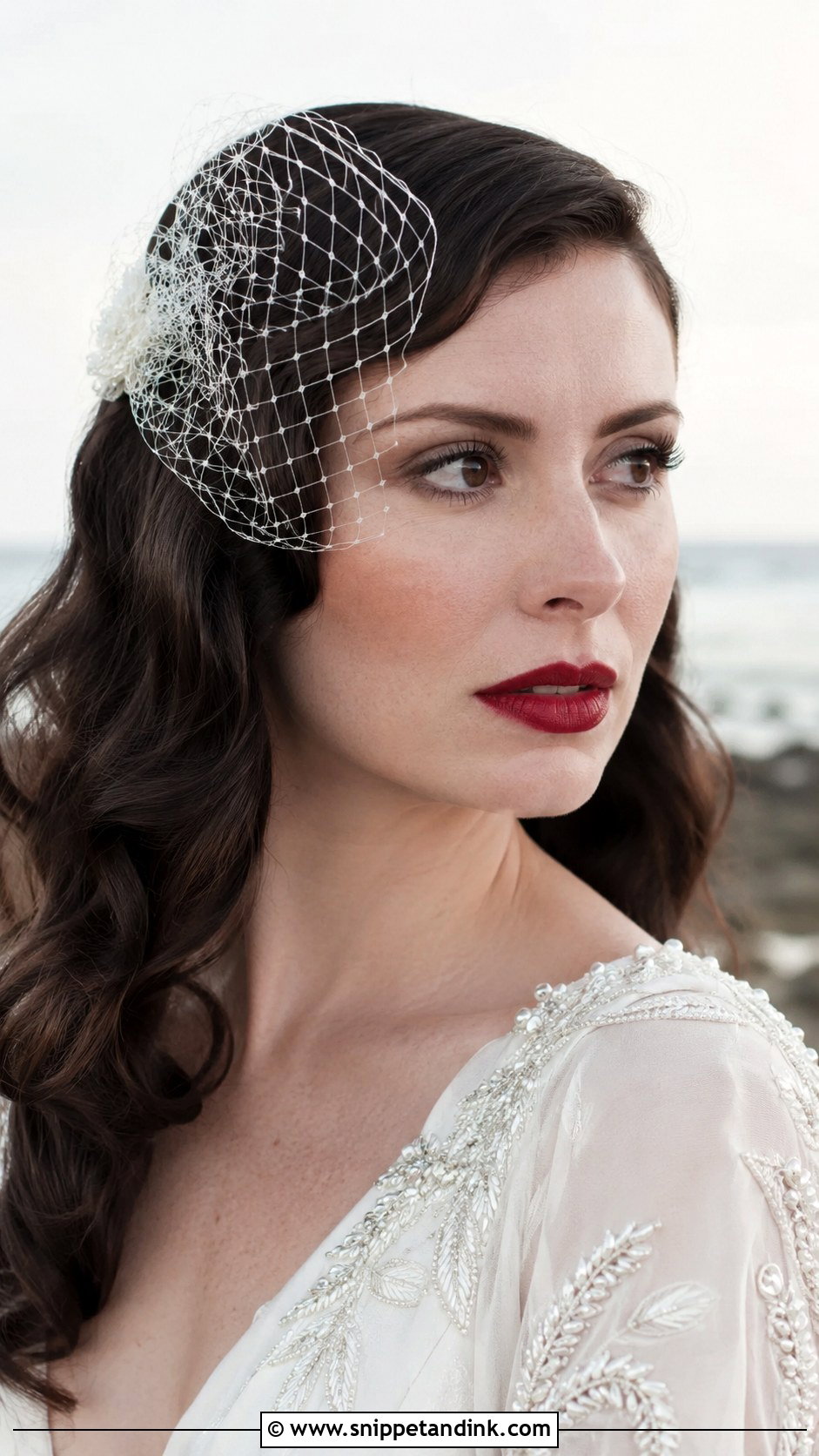
A birdcage veil is a short net that covers part of the face, and it gives waves a playful retro look. I attach it with a comb at one side or near the crown, depending on the angle the bride likes. It suits long waves and wavy bobs. Pair it with a bold lip. The only fitting question is the netting size: wide netting shows more of the face in photos, while fine netting gives a softer, hazier look.
Your Waves at Noon, at Dinner and on the Dance Floor
All waves relax over the day. That’s normal, and it’s why your hair at the trial should look a little tighter than you want for the photos. Here’s roughly how I expect waves to change, and what I do about it.
Getting ready
I curl first and leave each section pinned up or clipped while it cools, often while the bride has her makeup done. The hair sets as it cools, so pulling the pins out too early is the most common reason waves fall flat by the ceremony. The clips come out just before the dress goes on.
After the ceremony
By the time the photos are done, the waves will have softened by about a third. That’s usually when they look their best. If they’ve dropped too far, a bridesmaid can wrap a few front pieces around a finger and pin them for ten minutes.
Into the evening
After dinner and dancing, heat and sweat pull the waves out more. A dry texture spray at the roots lifts the crown again. If you’ve planned a reception change, this is a good moment to pull the hair into a low ponytail or loose bun, which hides tired waves and keeps you cooler.
Bring Three Photos and Point to the Wave You Mean
Waves can be soft and loose or polished and sculpted, and they suit nearly every hair length and wedding setting. From flowing mermaid waves to wavy lobs, each style above has its own needs. Take the photos you like to your trial and point out the exact wave size you want, since that’s where most mismatches happen. Then test the style in the conditions of your wedding: heat, wind or humidity. Waves that hold up for five hours at a trial will usually last the day.
You'll Like These Ideas:



Leave a Reply