
Waves are the style I set more than any other for brides, and the one that most often disappoints when it’s done like an everyday blow-dry. A wave that looks soft at ten in the morning can be completely straight by the first dance unless it was built to hold. Below are twenty variations, from cascading Hollywood glamour to loose beach texture, half-up styles, low buns and a few looks for short hair. For each one I’ve added what I actually do in the chair, who it suits and where it tends to go wrong, so you can walk into your trial knowing what to ask for.
Why Waves Fall Flat by the Reception, and How I Set Them to Last
Waves drop for three reasons: the hair was too clean, the curls weren’t allowed to cool, or the air was humid. All three are fixable.
Washing the Day Before, Not the Morning Of
Freshly washed hair is slippery and holds curl poorly. I ask brides to wash the day before, dry it fully and skip heavy conditioner on the lengths. A little natural oil gives the curl something to grip. If your scalp gets greasy quickly, use dry shampoo at the roots the night before rather than washing again.
The Cooling Step
Hair takes its shape as it cools, not while it’s hot. When each curl comes off the iron, I roll it back up and pin it flat to the head, then leave it until it’s cool to the touch. Brushing out warm curls is the quickest way to lose half the hold before you’ve left the room.
Products That Help Rather Than Weigh Down
- A light mousse or heat protectant spray with some hold on damp hair before blow-drying.
- A texturising or setting spray on dry hair before curling, so the curl has grip.
- A flexible hairspray to finish, misted from a distance rather than sprayed close.
- Anti-humidity spray for outdoor or beach weddings.
What I avoid is heavy serum or oil before curling. It makes the hair shine but lets the curl slide out within a couple of hours.
1. Loose Soft Waves for Long Hair
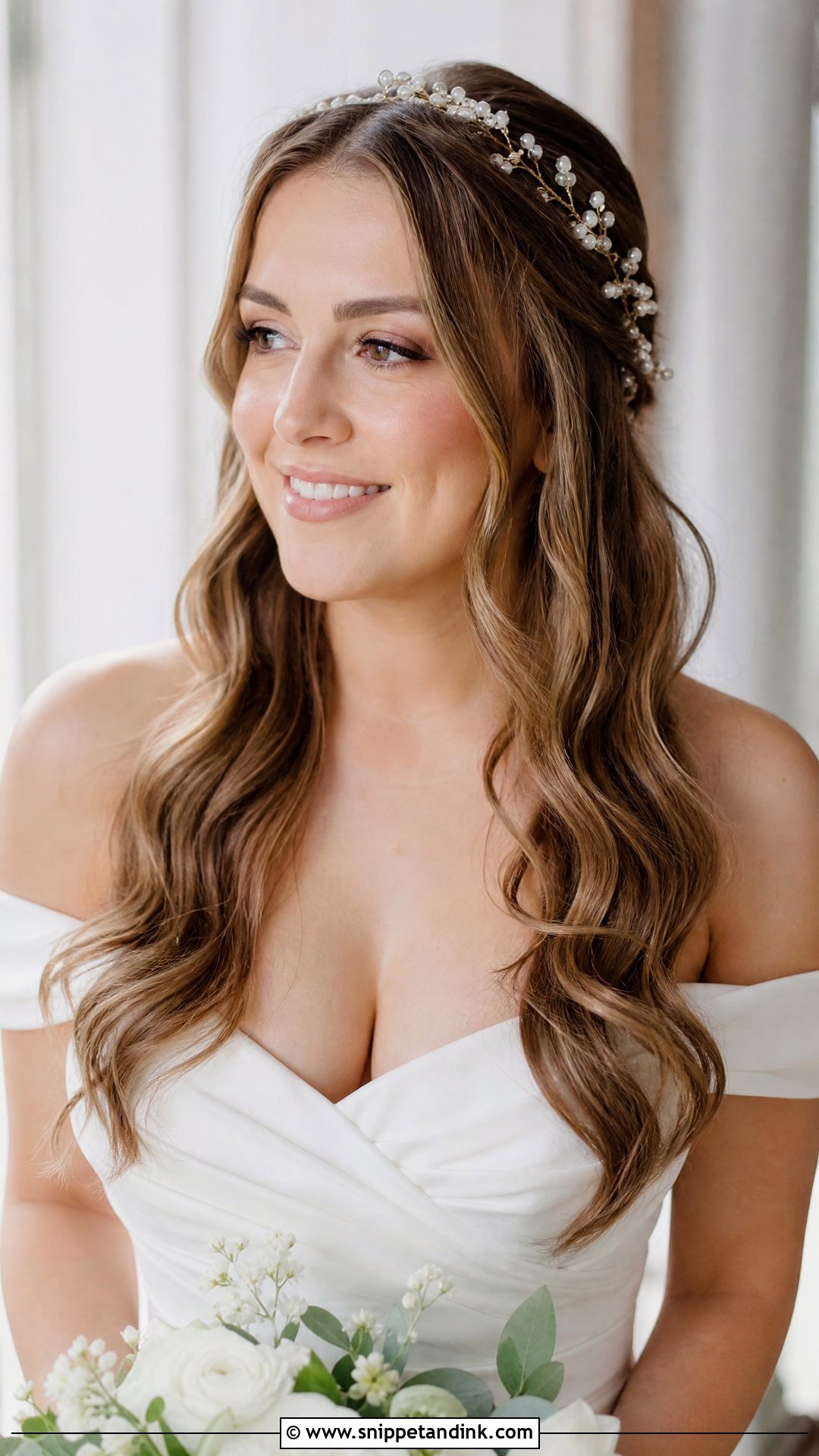
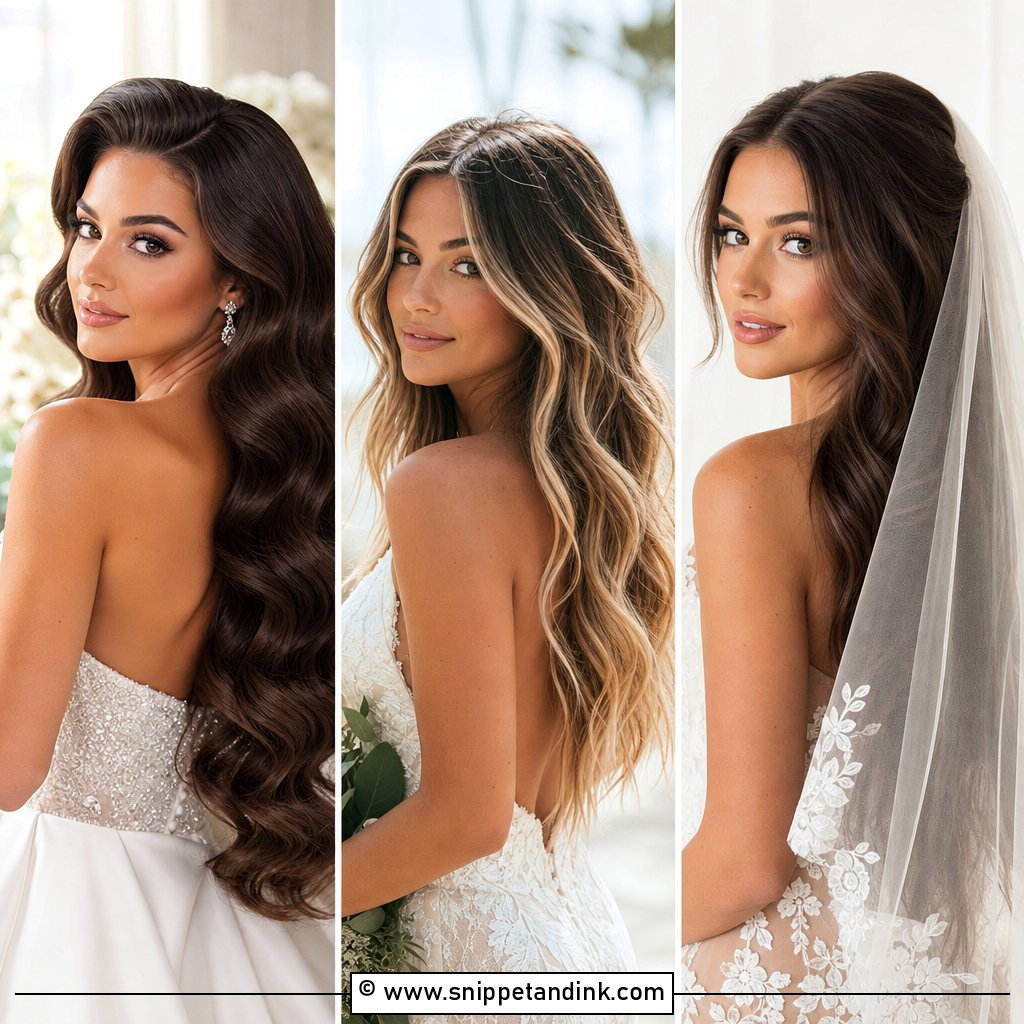
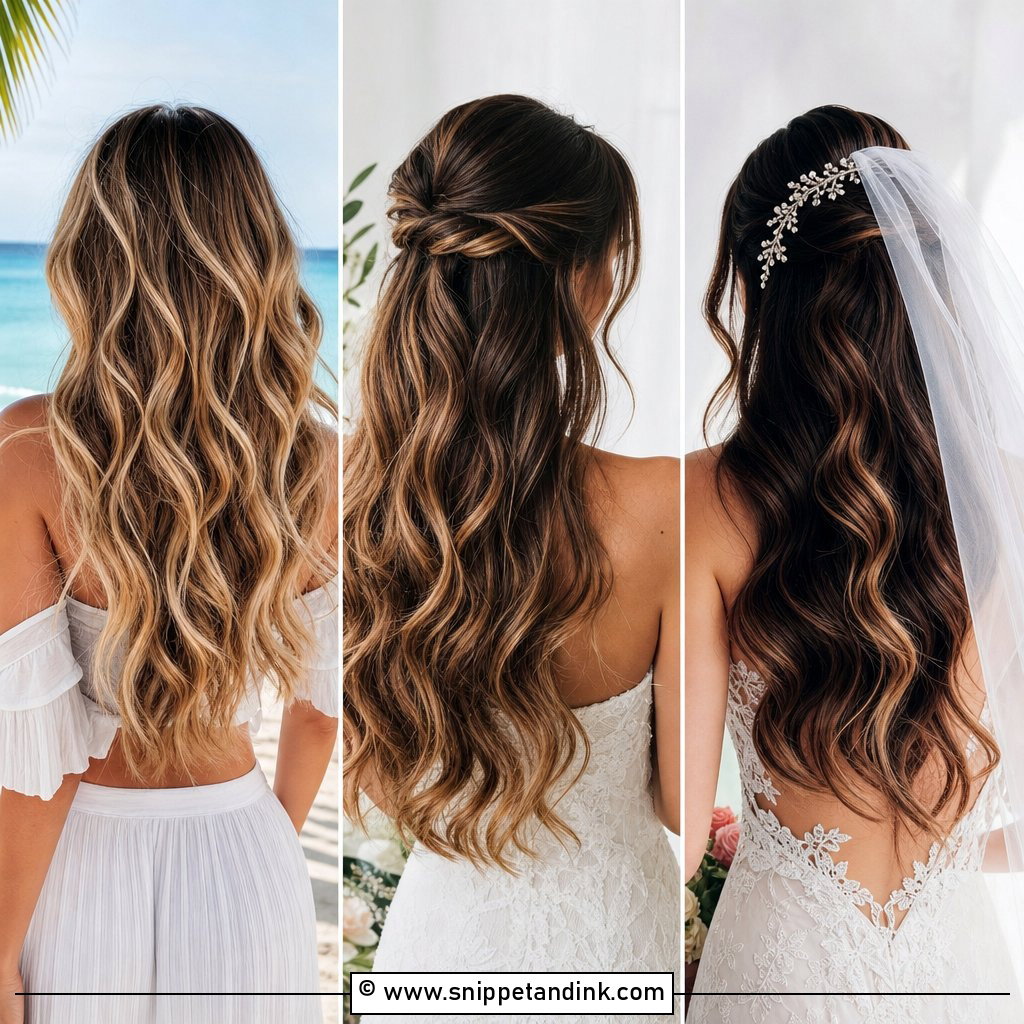
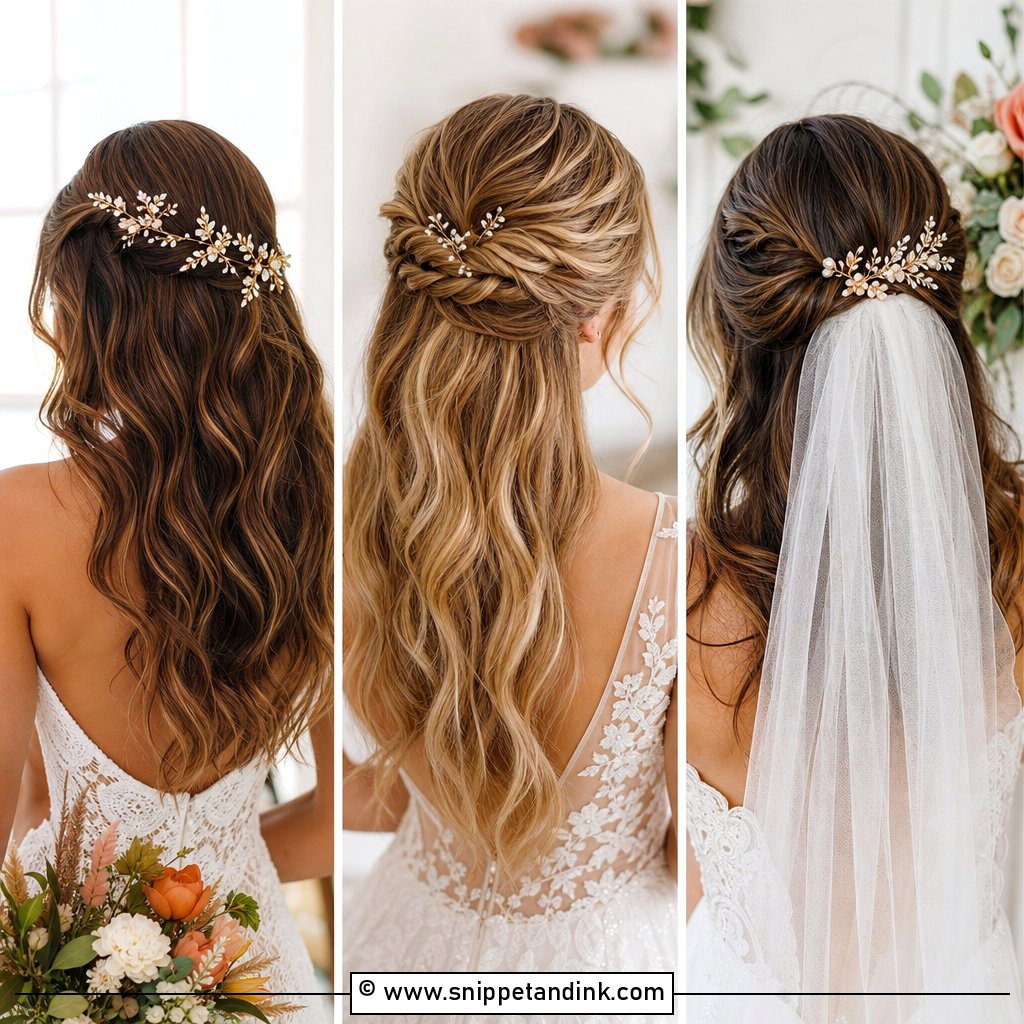
Long hair shows waves off best, but it’s also heavy, and weight pulls curl out faster than anything. I curl in larger sections with a 1.25 inch barrel, pin each curl while it’s still warm and let it cool completely before brushing out. That cooling step is where the hold comes from. The result should fall past the shoulders with movement rather than ringlets. A simple veil or a hair vine tucked along one side sits well with it, and open-back gowns show the length. Finish with a flexible spray, not a stiff one, so the hair still moves when you do.
2. Half Up Half Down Soft Waves
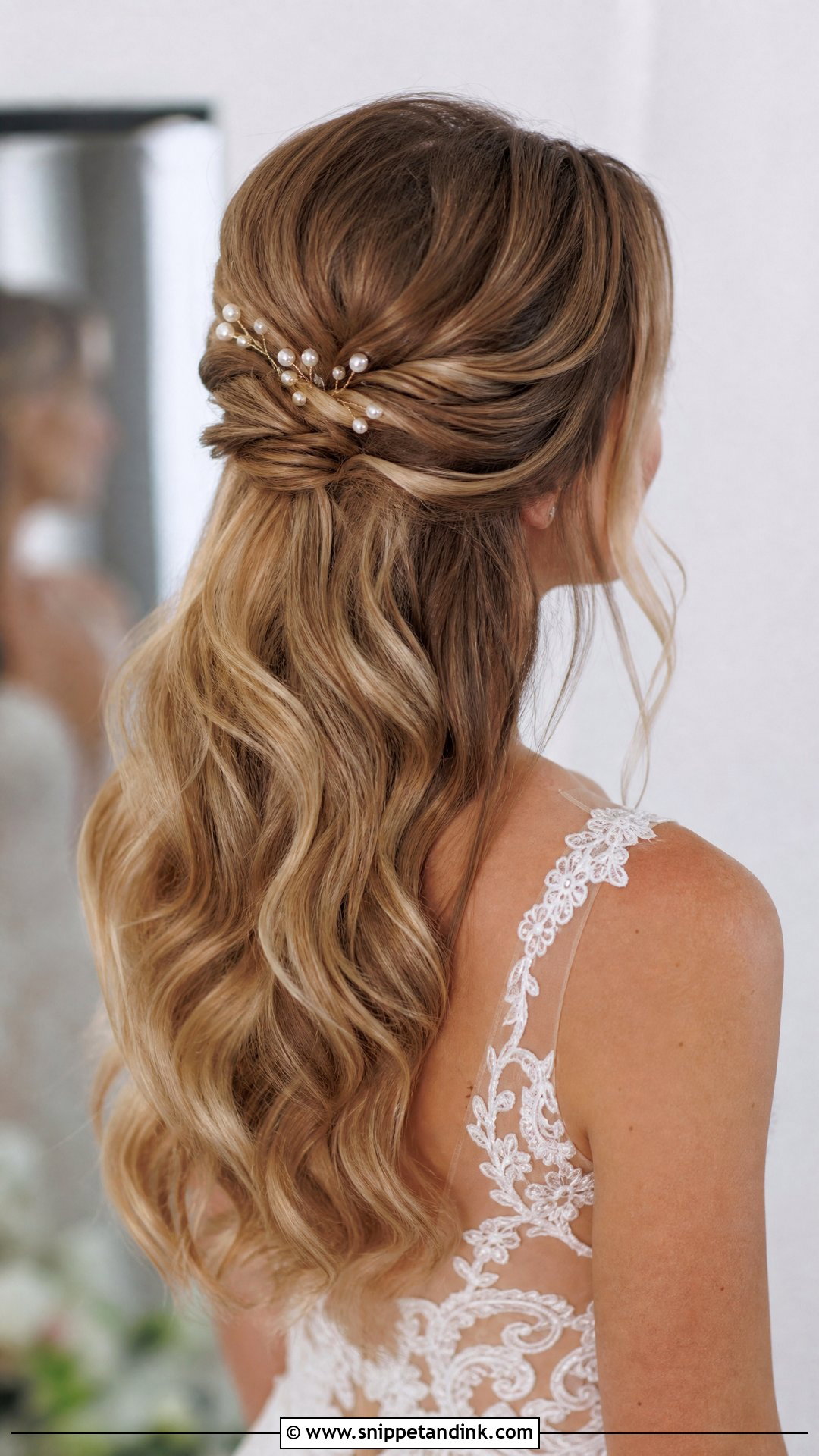
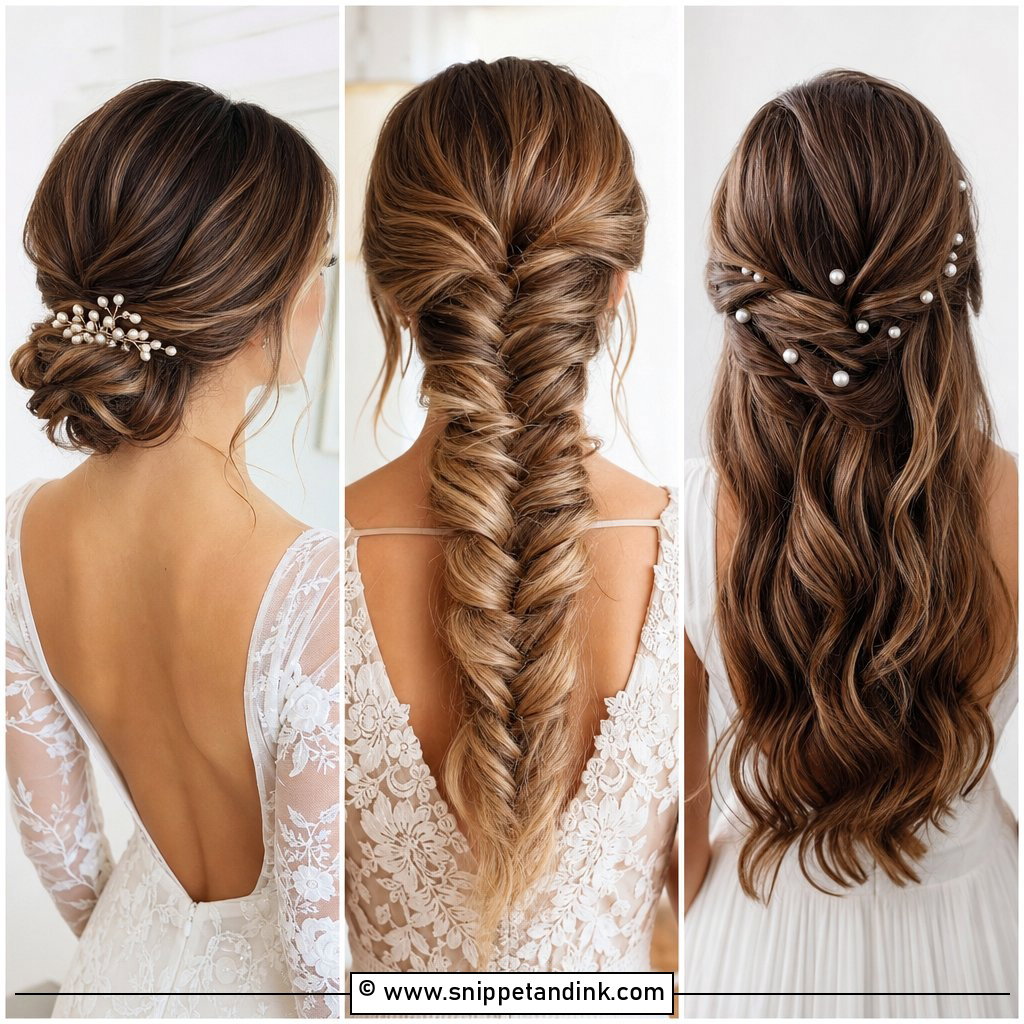
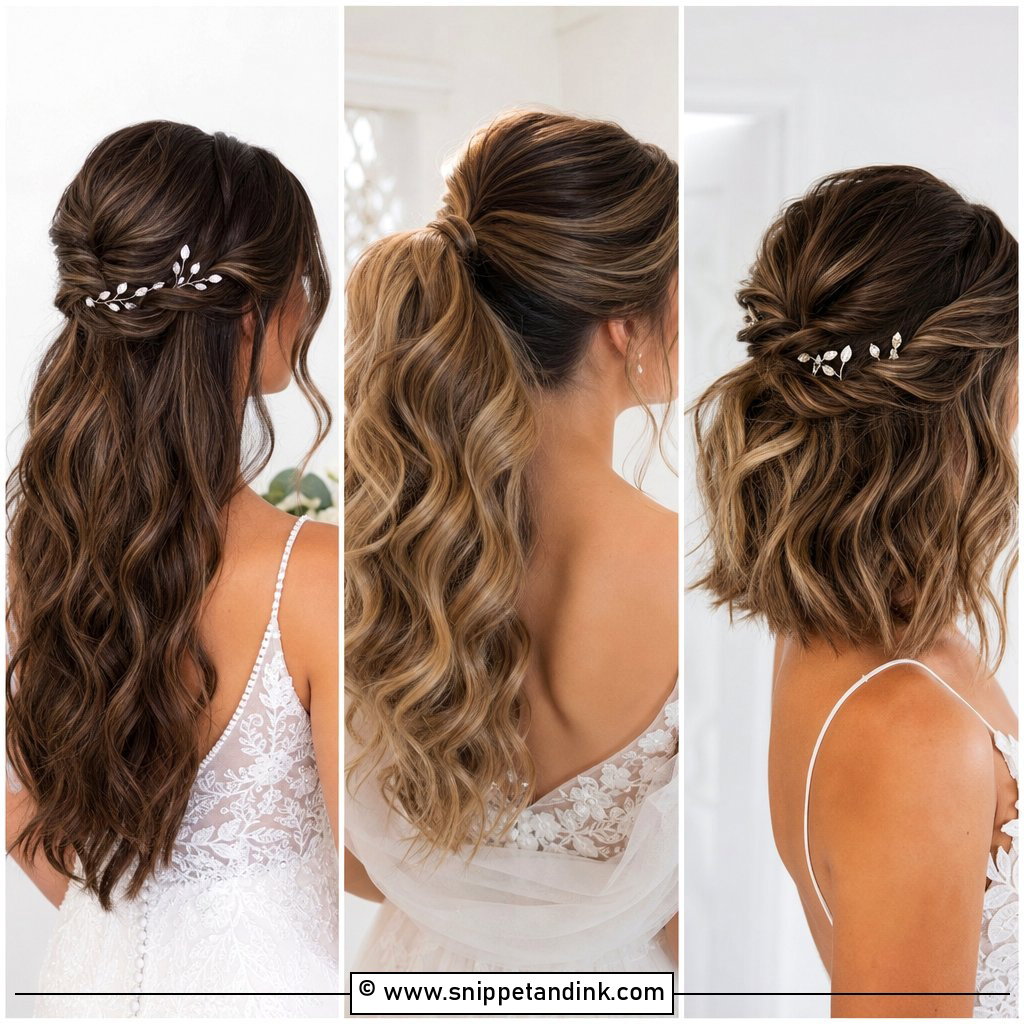
Half up, half down solves the most common indecision I hear at consultations. The front sections come back off the face, the rest falls in waves. I secure the top section on a small hidden base, a tiny ponytail or a pair of crossed bobby pins, so the twist or braid at the crown has something to anchor to; pinning directly into loose waved hair is what makes these slide by the afternoon. Pearl pins or a clip go over that anchor point. It flatters most face shapes, and it’s the style I’d suggest if you can’t picture yourself in a full updo.
3. Hollywood Soft Waves
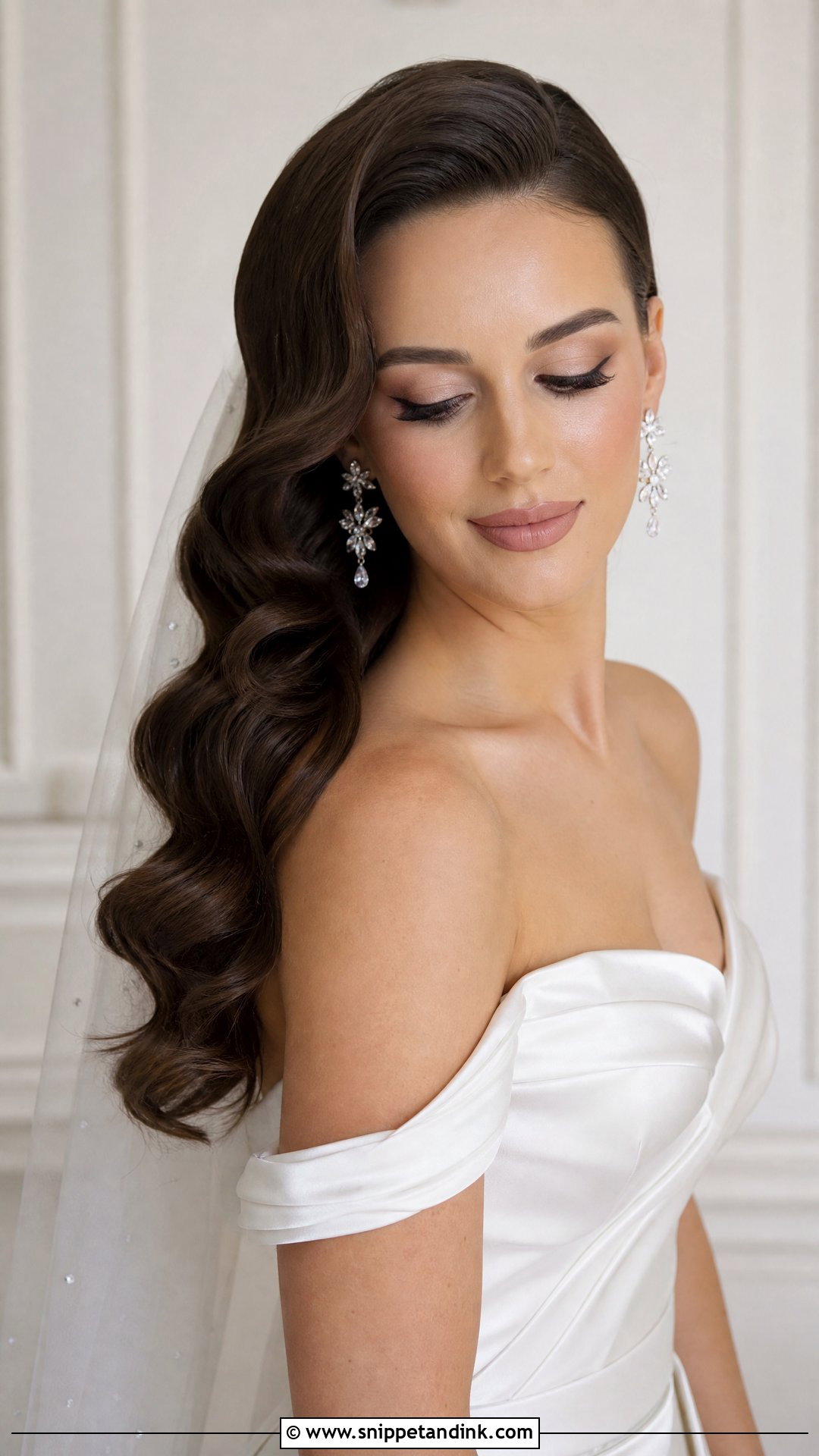
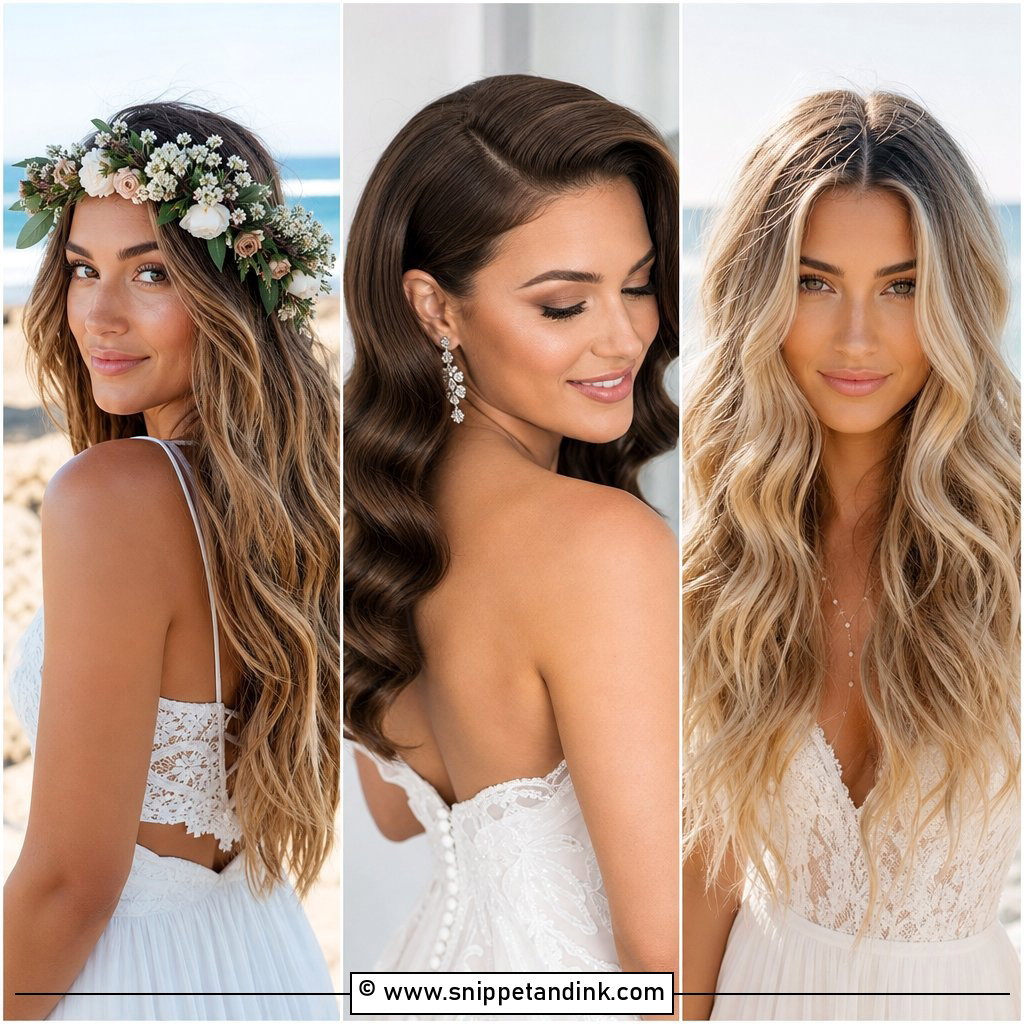
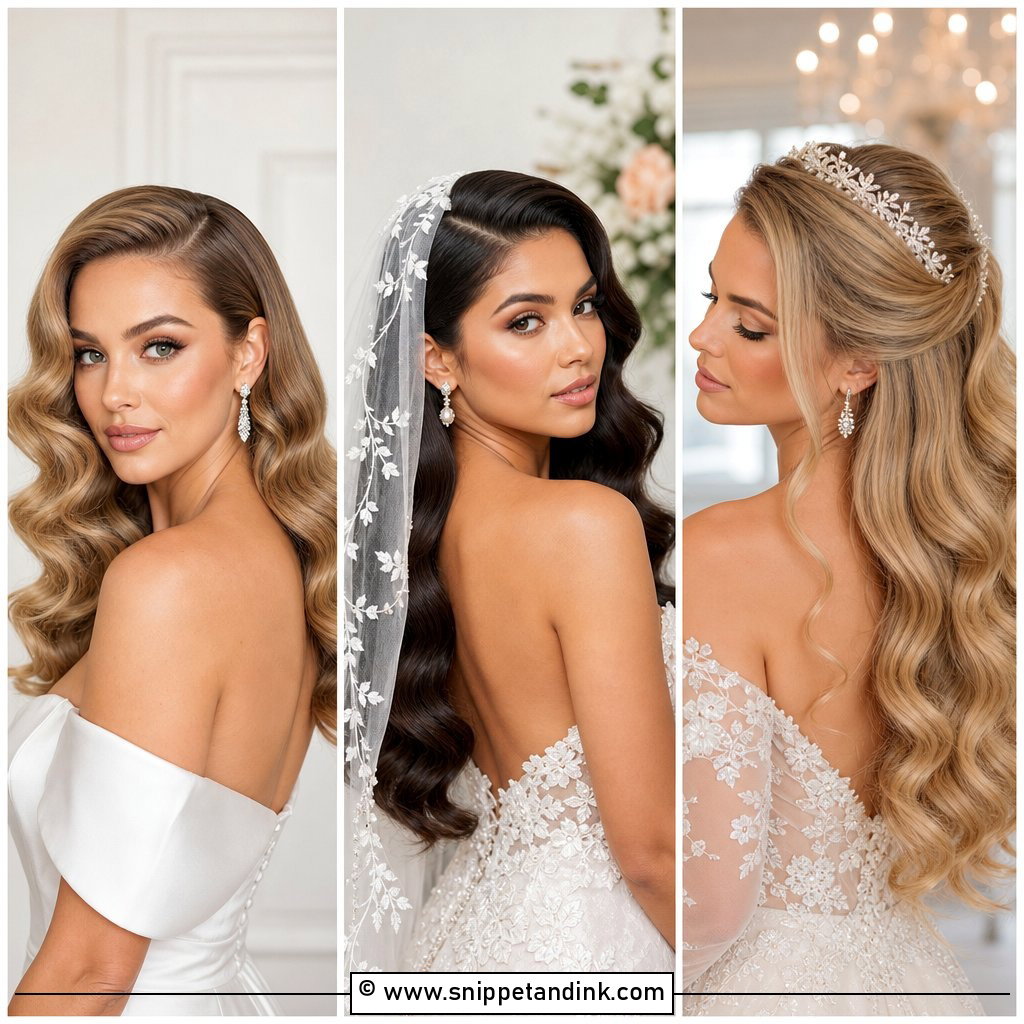
Hollywood waves are a set, not a curl. Every section is curled in the same direction, pinned flat and left to cool, then brushed out with a paddle or boar bristle brush until the curls join into one continuous S-shape. Shine spray finishes it. Swept to one side, it suits sleek satin and statement earrings at a black-tie wedding. The honest drawback: humidity breaks the pattern into frizz quickly, so I’d hesitate with this one for an outdoor summer ceremony unless your hair is naturally smooth.
4. Soft Waves With Side Part
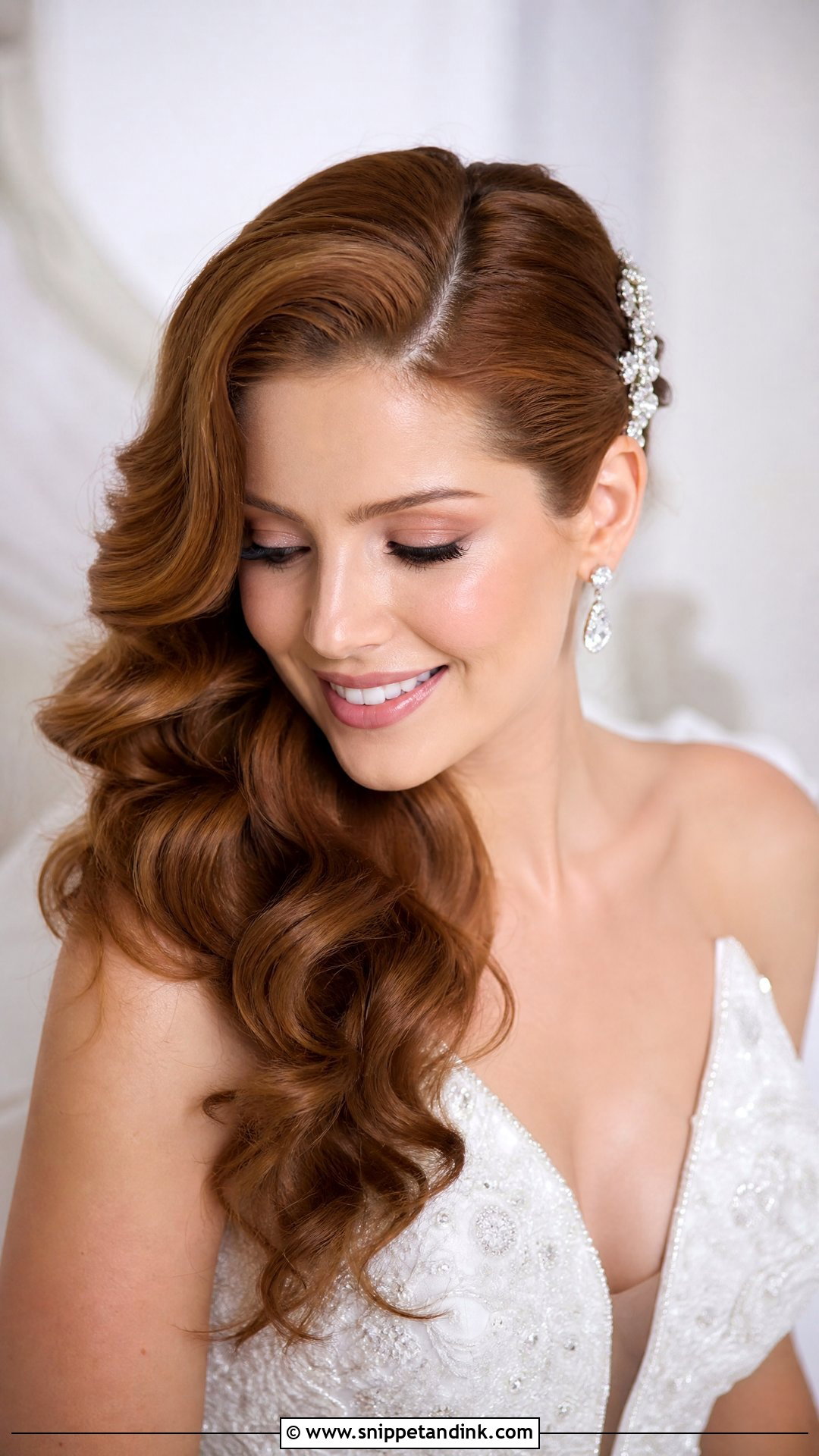
A deep side part does a lot of work for very little effort. It adds volume at the crown and angles the face, which softens round and square face shapes. I set the part before curling and blow-dry the root in the opposite direction first, so the hair lifts off the scalp instead of lying flat on the heavy side. Waves fall over one shoulder, and a sparkly clip on the full side catches light. The part also changes how a veil sits, so bring the veil to the trial and decide the comb placement around it.
5. Soft Waves Low Bun
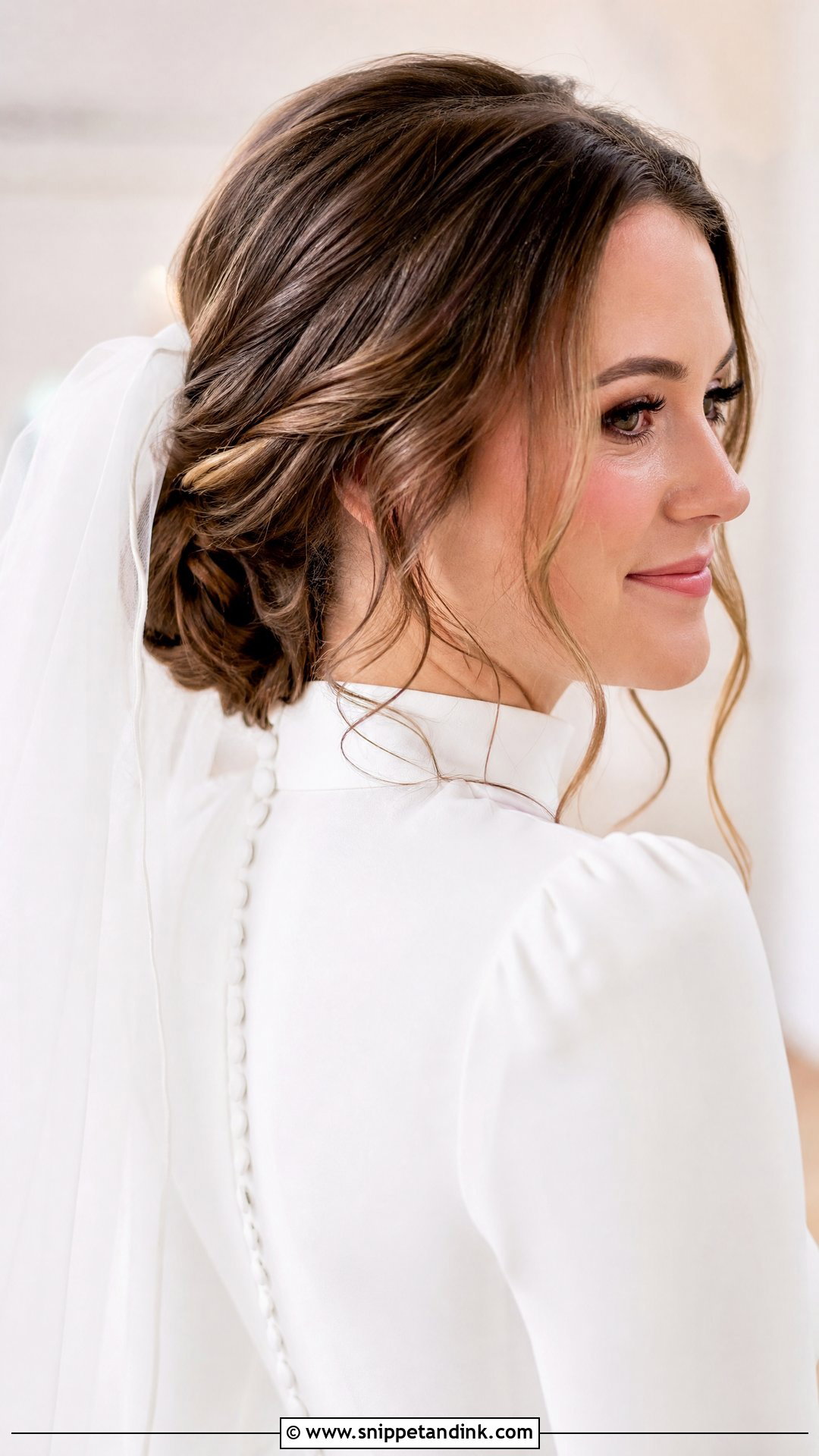
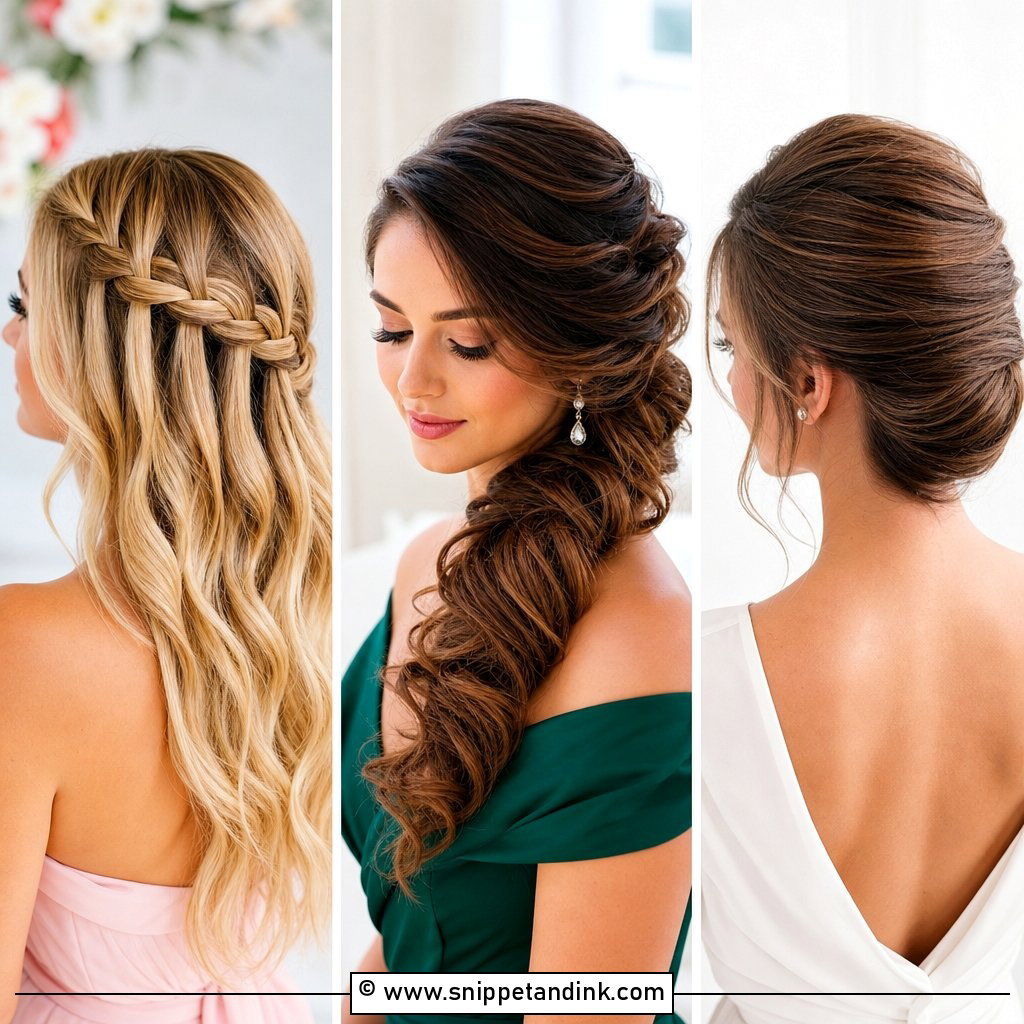
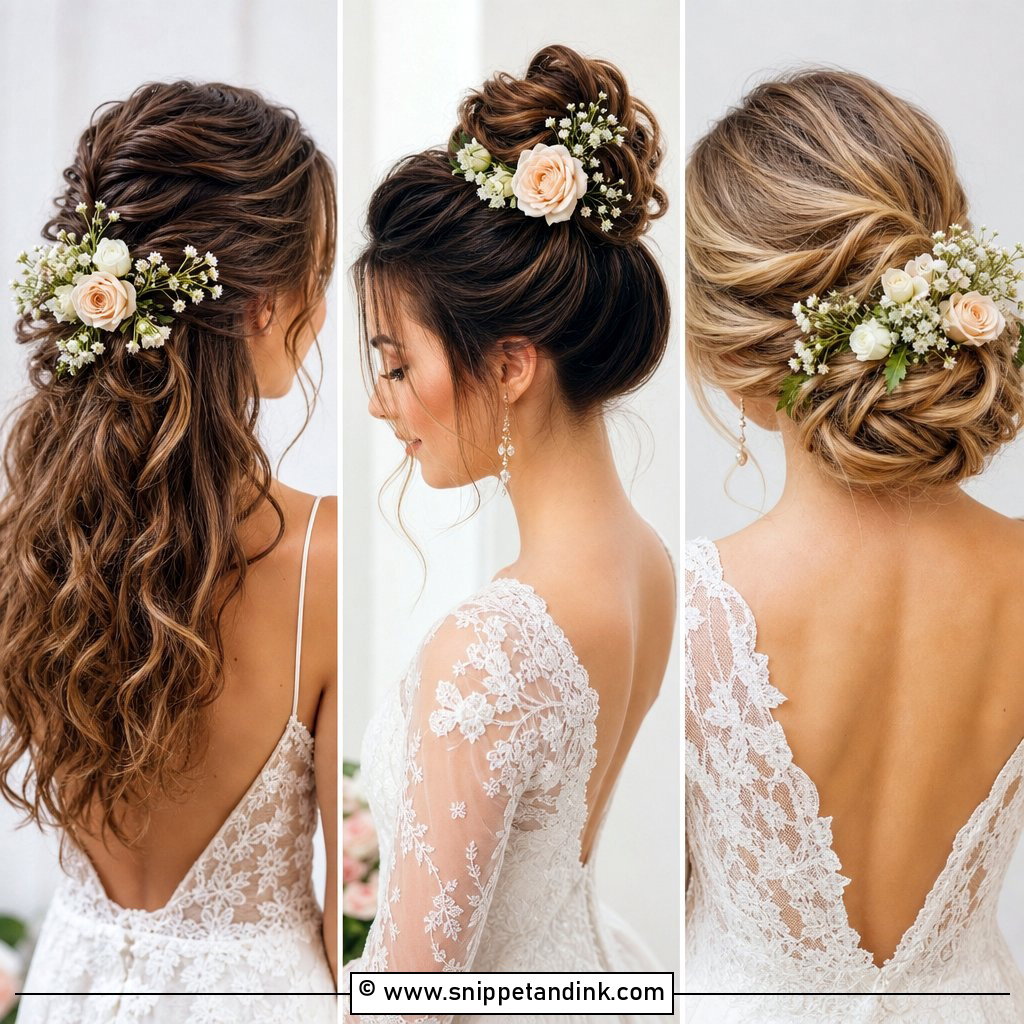
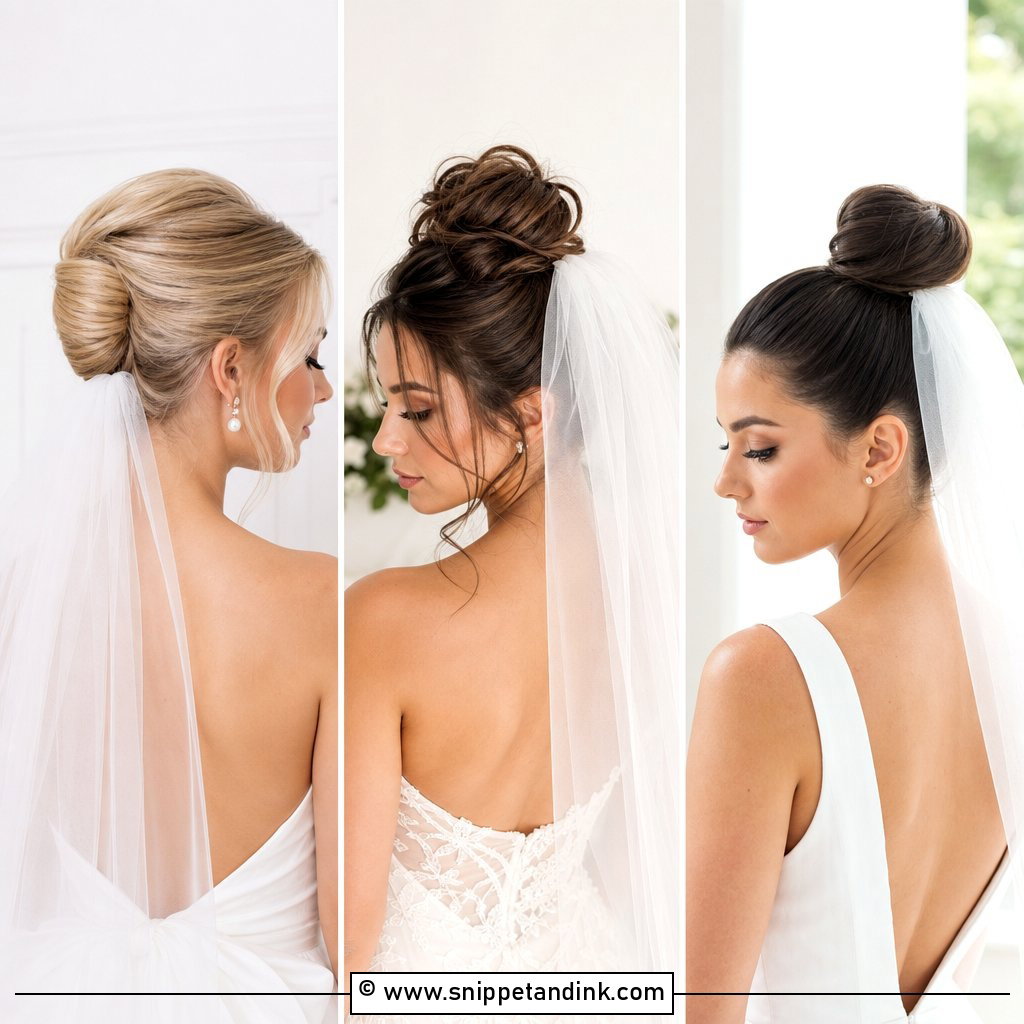
A low bun made from waved hair has far more shape than one made from straight hair, because the curl gives it grip and volume to pin into. I gather the hair at the nape, wrap it loosely and pin the wave pattern in place so the bun keeps texture, then pull a few tendrils free at the face. It sits right under a veil comb, which is why I recommend it so often to brides wearing a long veil. High necklines and open backs both suit it. If your hair is very fine, I’ll add a small padding piece or a few clip-ins so the bun doesn’t look small from the back.
6. Soft Waves With Braided Crown
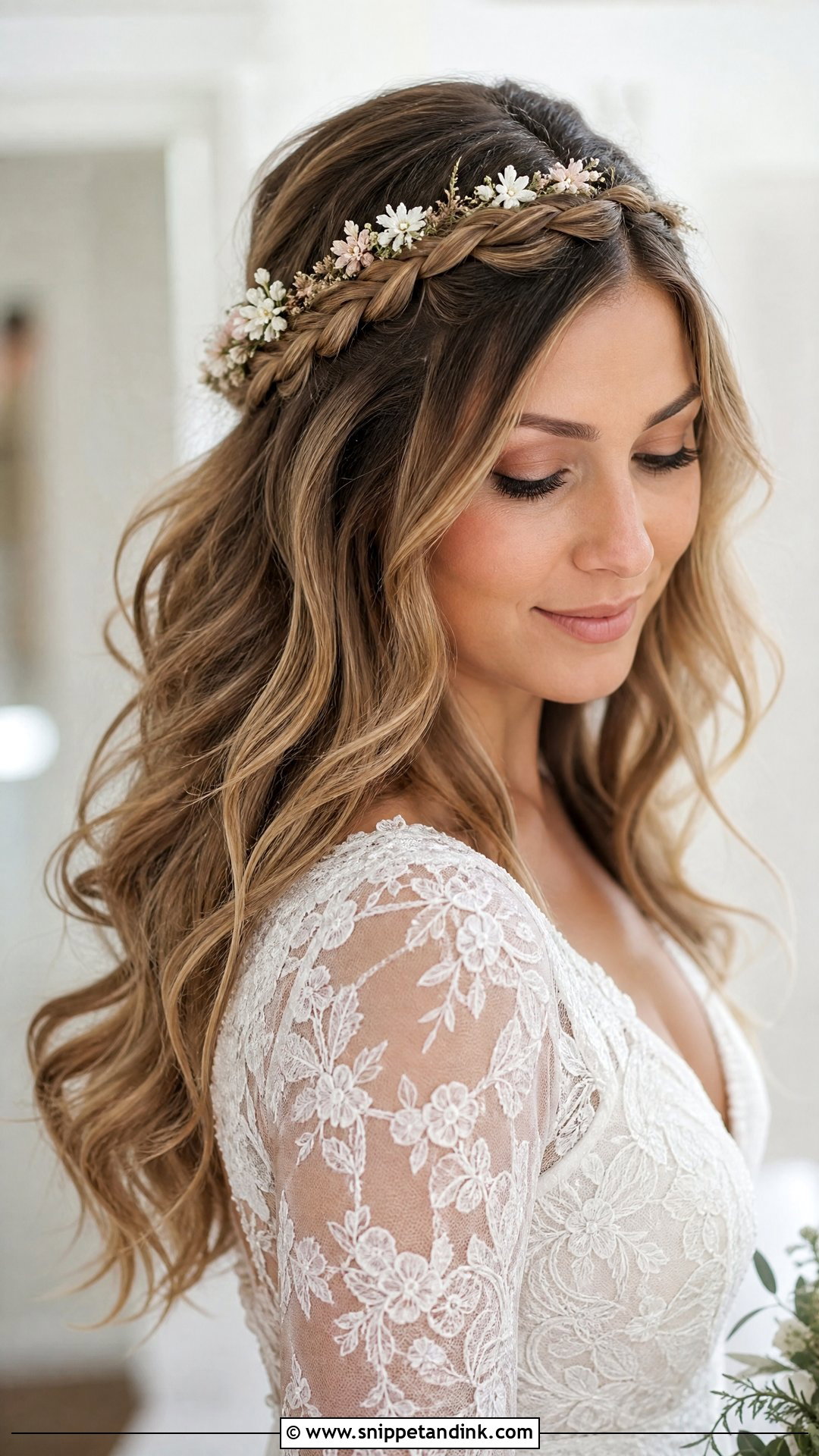
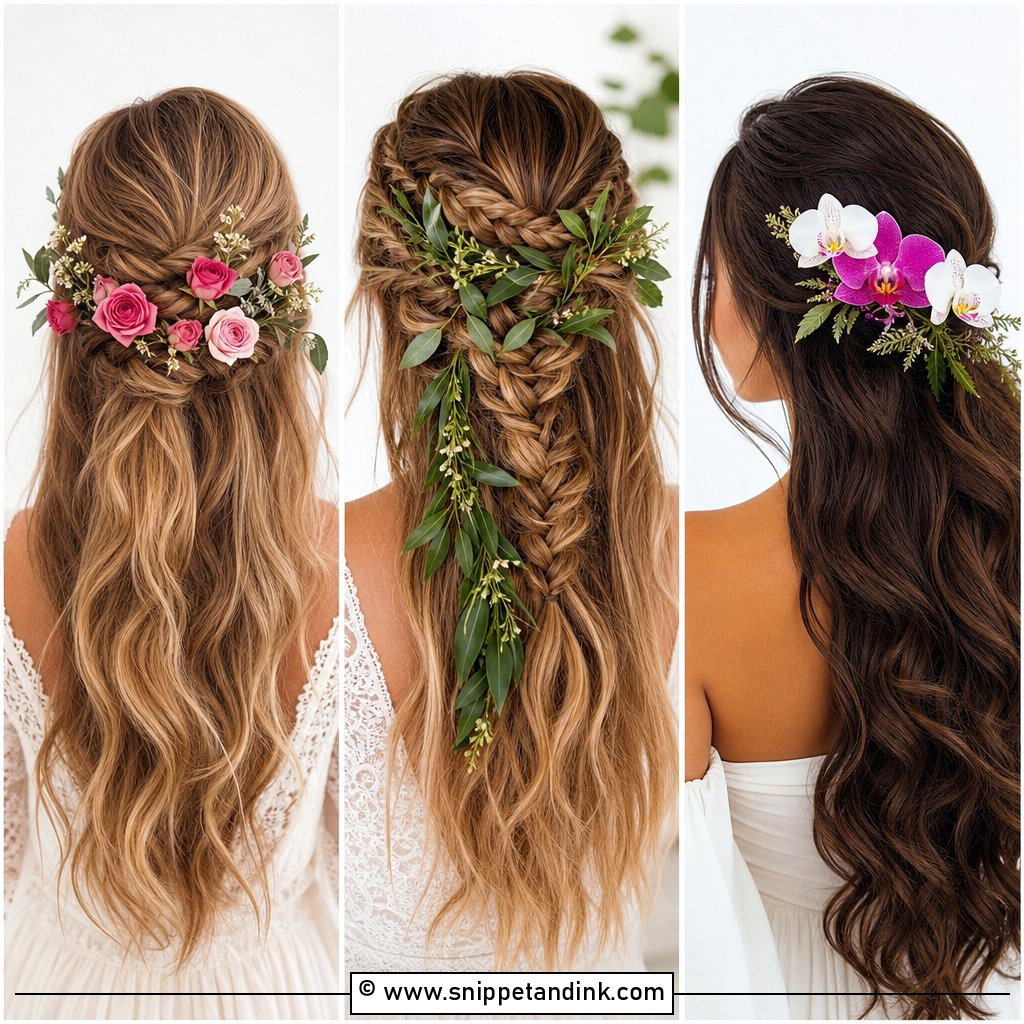
A braided crown keeps hair off the face like a natural headband while the rest falls loose in waves. I braid it on second-day hair or after texturising spray, because freshly washed hair is too slippery and the braid loosens within hours. Pancaking the braid, gently pulling the edges outward, makes it look fuller. Small flowers or pearl pins tuck into the braid easily. It needs at least medium-length hair to wrap around the head; on a bob there isn’t enough length at the sides.
7. Soft Waves Half Up With Veil
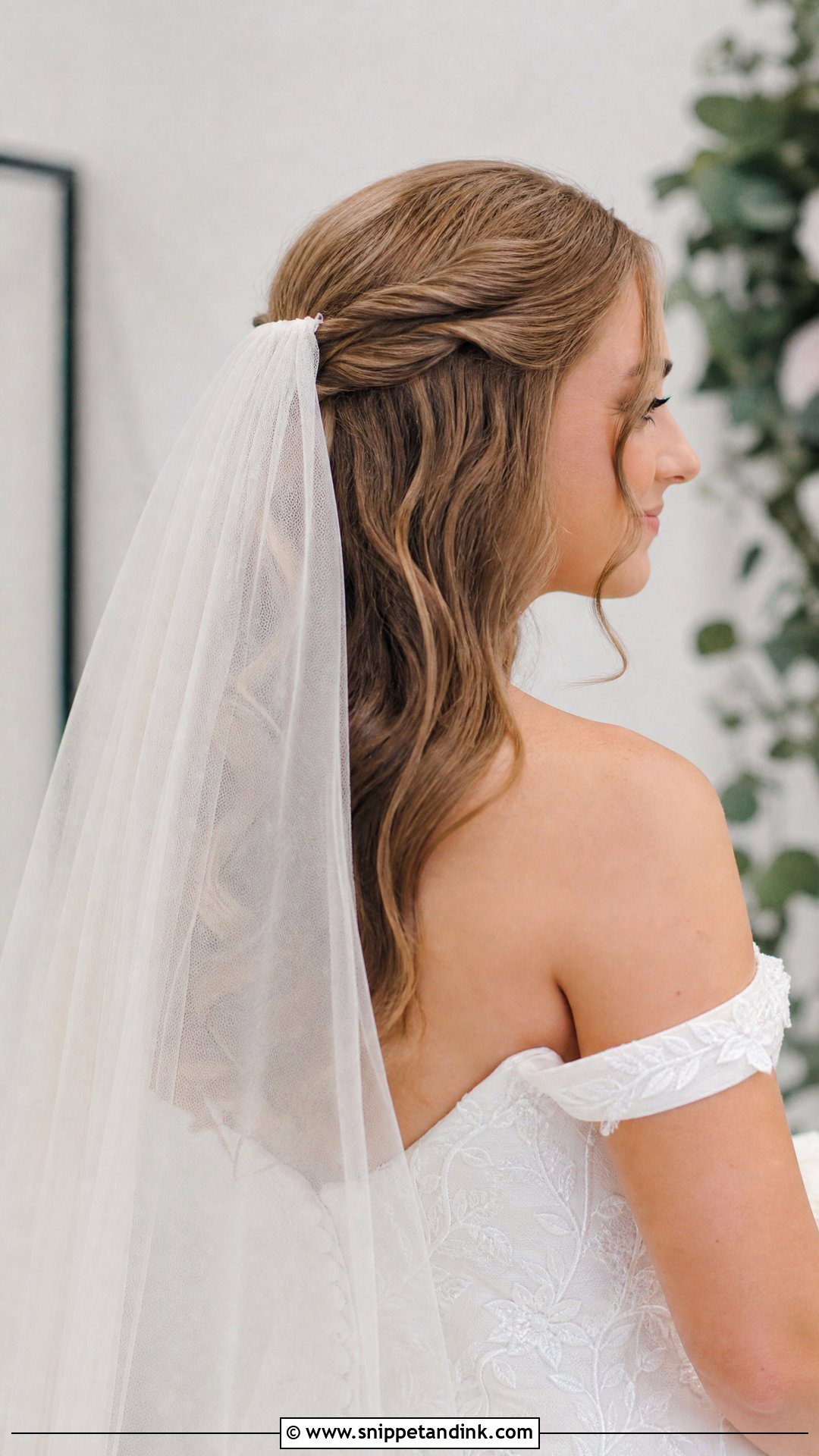
If you’re wearing a veil and want waves, this is the most practical way to do it. The veil comb slides into the pinned half-up section, which gives it something firm to grip, while the waves fall underneath and around the veil’s edges. I always place the comb at the trial with the actual veil, since a heavy cathedral veil needs to sit lower and further back than a short one. After the ceremony the veil comes out and the style still works on its own. A few pearl pins or a small tiara can go back in where the comb was.
8. Soft Beach Waves for Bride
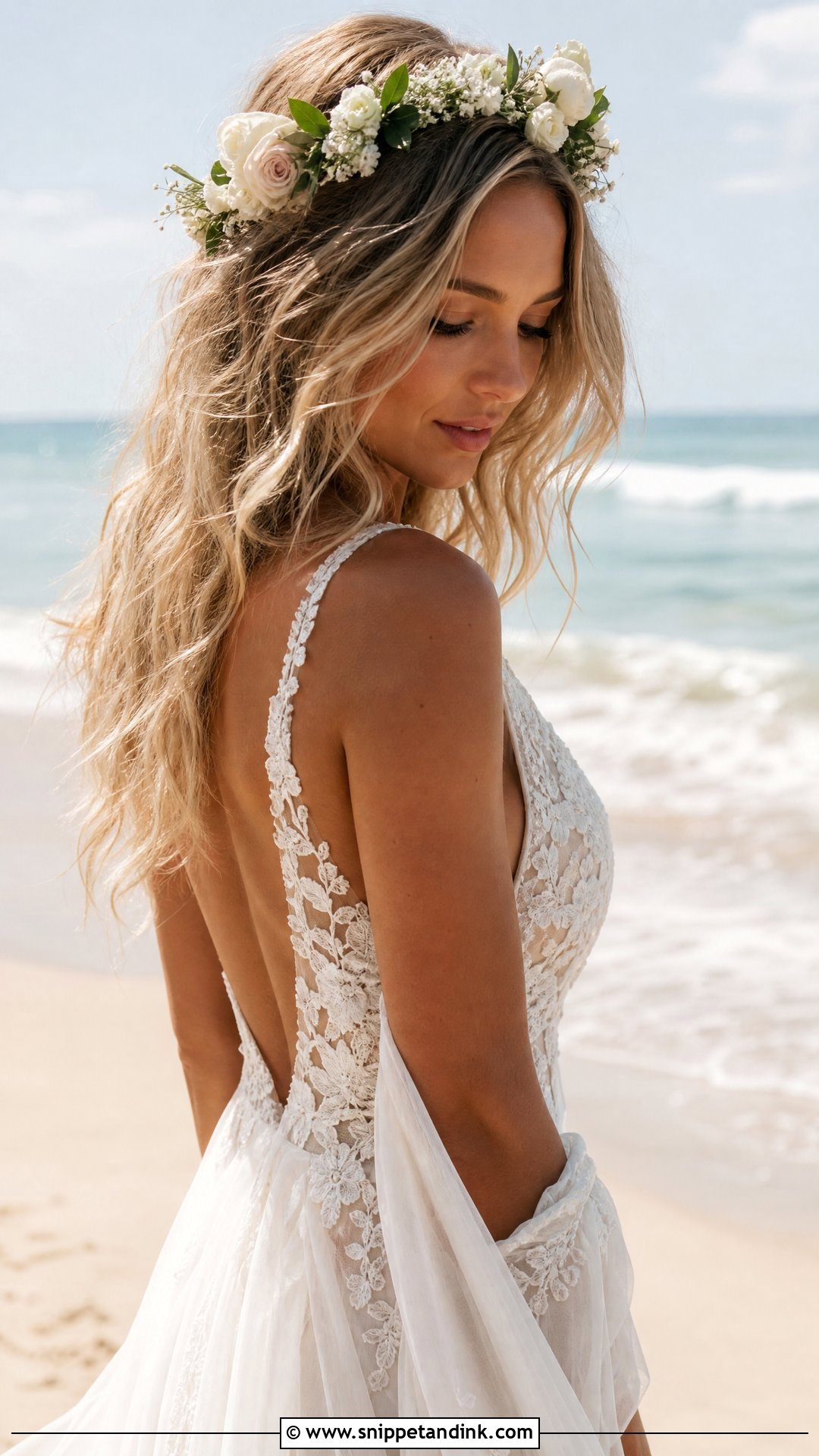
Beach waves are meant to look undone, but undone and unfinished are different things. I use a flat iron twisted through the hair or a wand, leave the ends straight and finish with texturising spray for a piecey, separated look. It suits boho gowns and coastal weddings. Humidity and wind are actually kind to this one, since a little frizz reads as intentional texture. I’d skip it for a formal ballroom setting, though; next to a structured gown it can look like a day off rather than a choice.
9. Soft Waves With Pearl Accessories
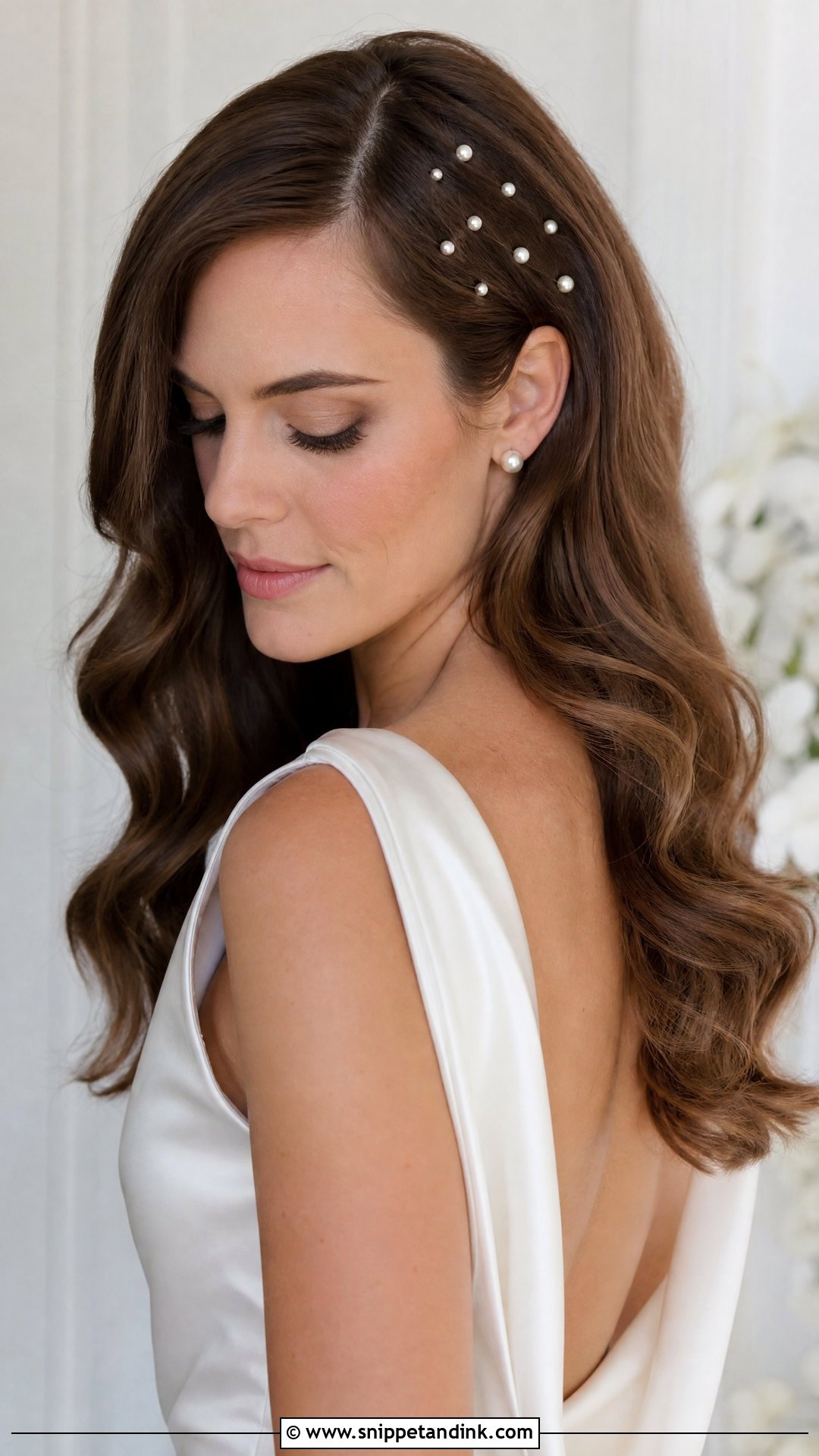
Pearl pins are small enough to scatter throughout the waves, along a part or near a twist. The thing that makes them stay put is the angle: I slide each pin in against the direction of the wave so the curl locks it in place. Placed randomly, they look like they’ve fallen there; placed in a loose diagonal line, they look deliberate, which is my preference for photos. They work with hair down, half-up or in a loose updo, and with classic gowns they echo pearl buttons or earrings.
10. Soft Waves Side Swept
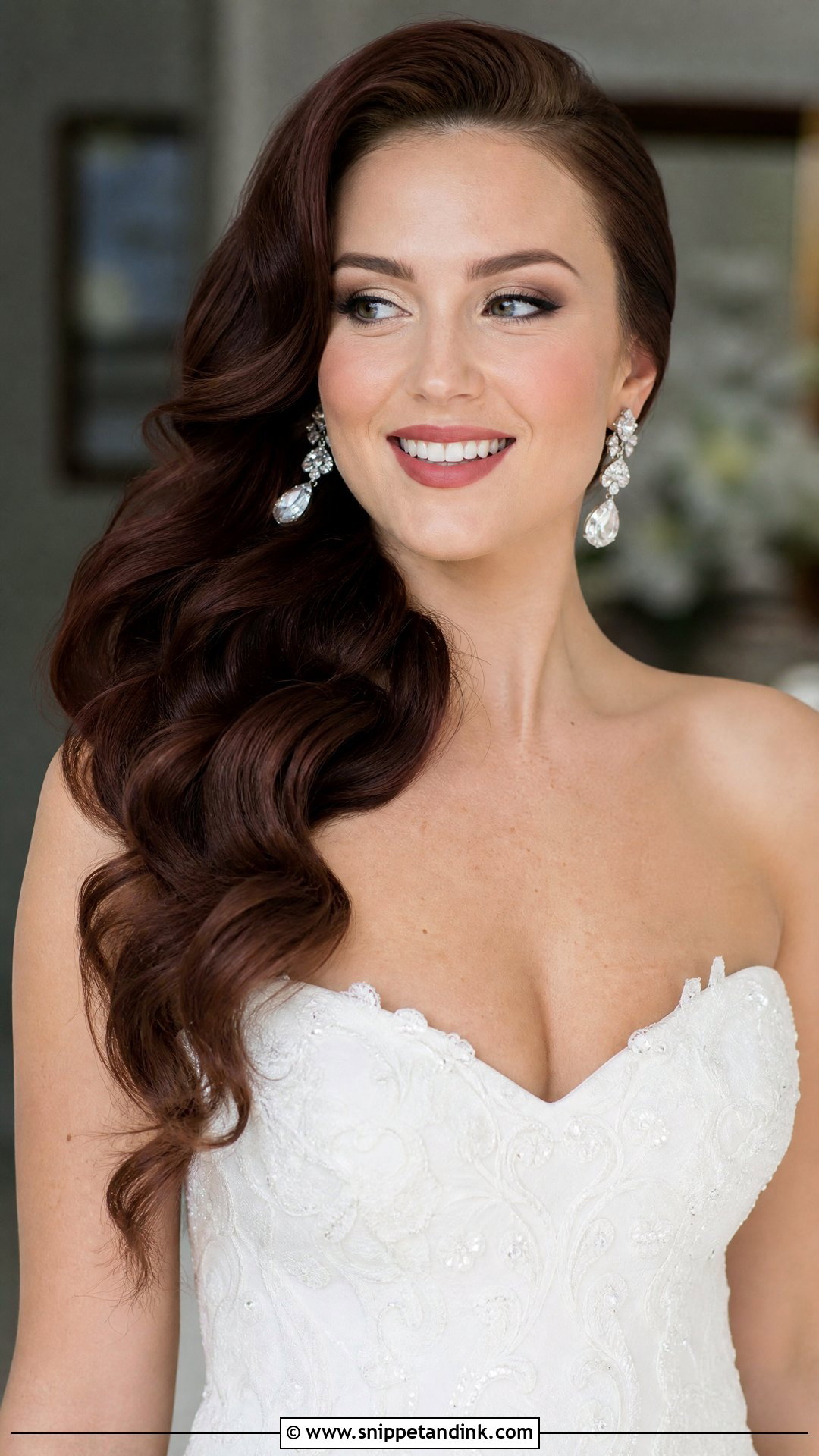
Sweeping all the waves over one shoulder shows off earrings and a neckline at the same time. I anchor the hair behind the opposite ear with a hidden row of bobby pins crossed in an X, which takes the weight off the waves. Strapless and one-shoulder gowns suit it best. You’ll want volume in the length, so I curl more hair than usual and brush it out for fullness. One thing to plan for: hugging and dancing push the hair back across the neck, so the hidden pins matter more than the spray.
11. Soft Waves Updo for Long Hair
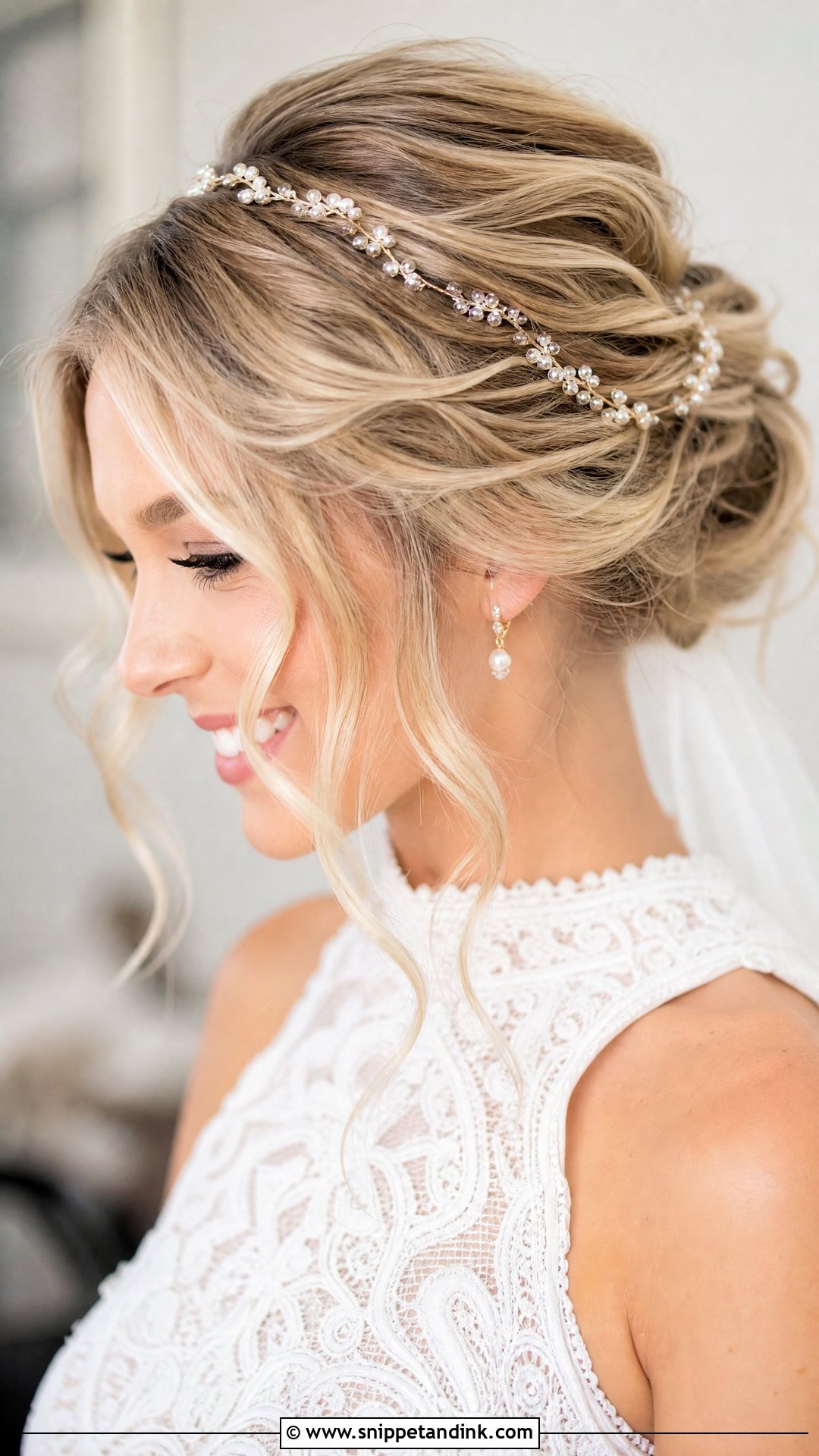
An updo made from waves doesn’t have to be tight. I curl first, then gather the hair loosely and pin sections into place, letting the wave pattern show through. I finish with soft tendrils loose around the face. For a summer wedding, getting the hair off your neck is a relief, and with a high-neck gown it keeps the line of the dress clean. Statement earrings sit well with it. The bigger the waves, the larger the pins I use, because standard bobby pins can’t hold thick waved sections.
12. Soft Waves With Curtain Bangs
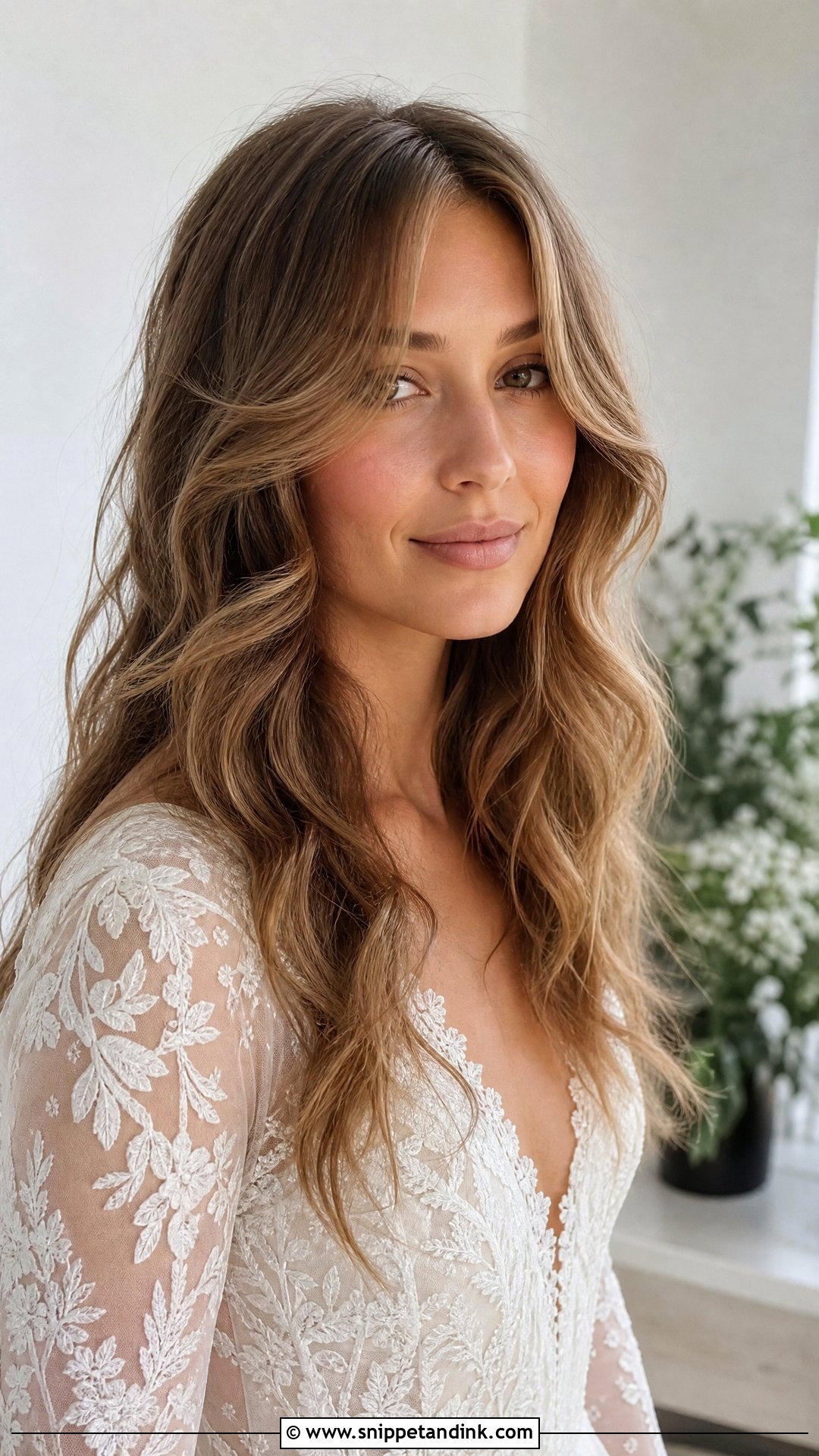
Curtain bangs change how waves frame the face more than any accessory. I curl them separately with a round brush, away from the face, and set them with a velcro roller while the rest of the hair is done, so they part in the middle and sweep outward. They soften a high forehead and draw the eye up. The one thing I’d caution: never trim bangs in the week before the wedding. If they need tidying, do it two or three weeks out so they have time to settle.
13. Soft Waves Low Ponytail
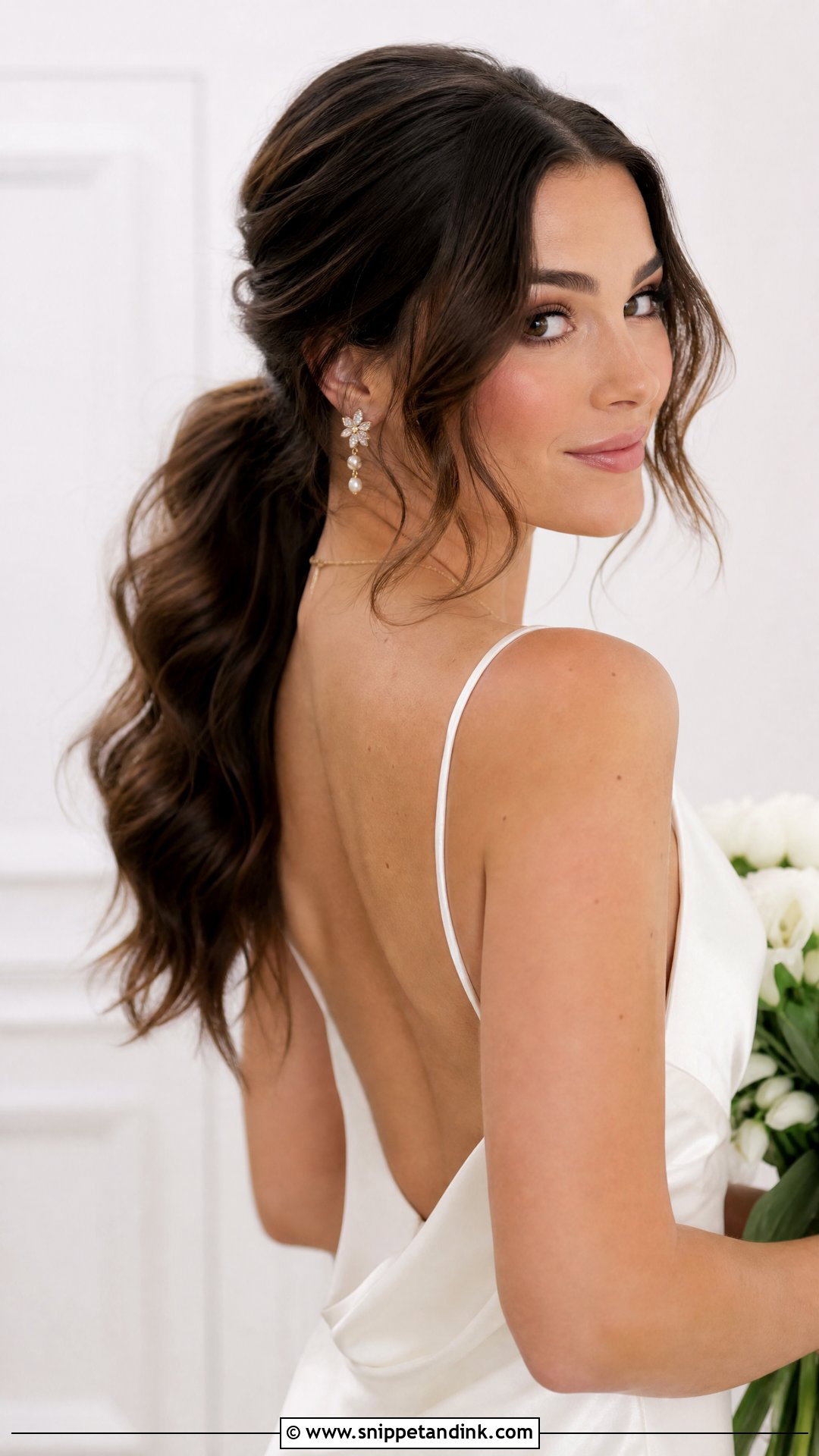
A low ponytail is one of the most reliable styles for a long day. I gather the waves at the nape, secure them with a clear elastic and wrap a small section of hair around it, pinning underneath to hide it. The waves give the ponytail movement. With minimalist gowns and statement earrings it reads modern. For extra length or fullness, I’ll add a clip-in at the base before wrapping. The base needs to be tight, or the ponytail drops lower and looser as the evening goes on.
14. Soft Waves With Flowers
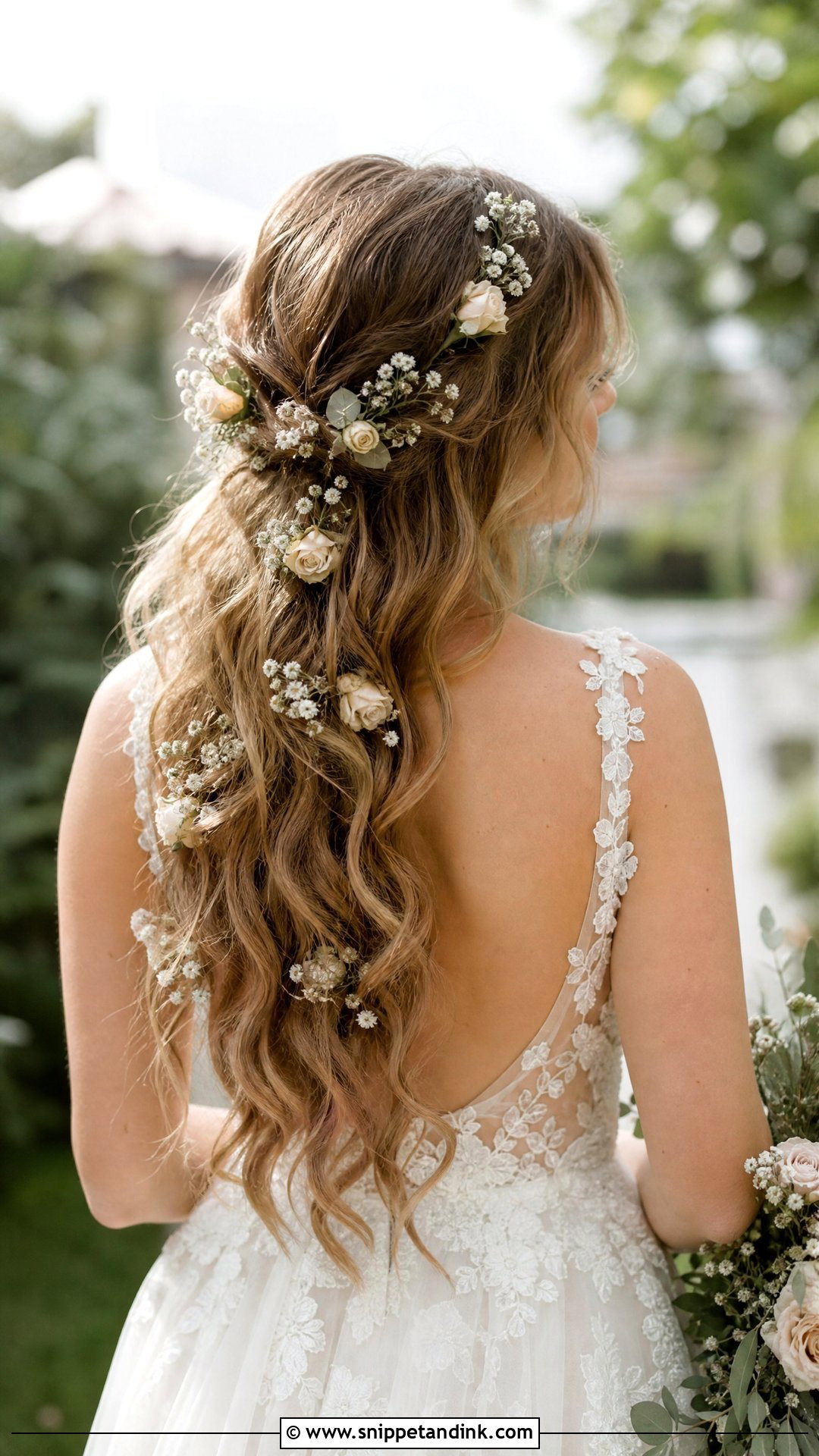
Fresh flowers in waves are pretty for a few hours and then start to wilt, so I choose blooms that last out of water: baby’s breath, waxflower, spray roses and some greenery hold up much better than soft-petalled flowers like gardenias. Ask your florist to wire them and keep them refrigerated until the last moment. I tuck them along a braid, near a twist or scattered loosely, matching what’s in your bouquet. Spring and summer outdoor weddings suit this best.
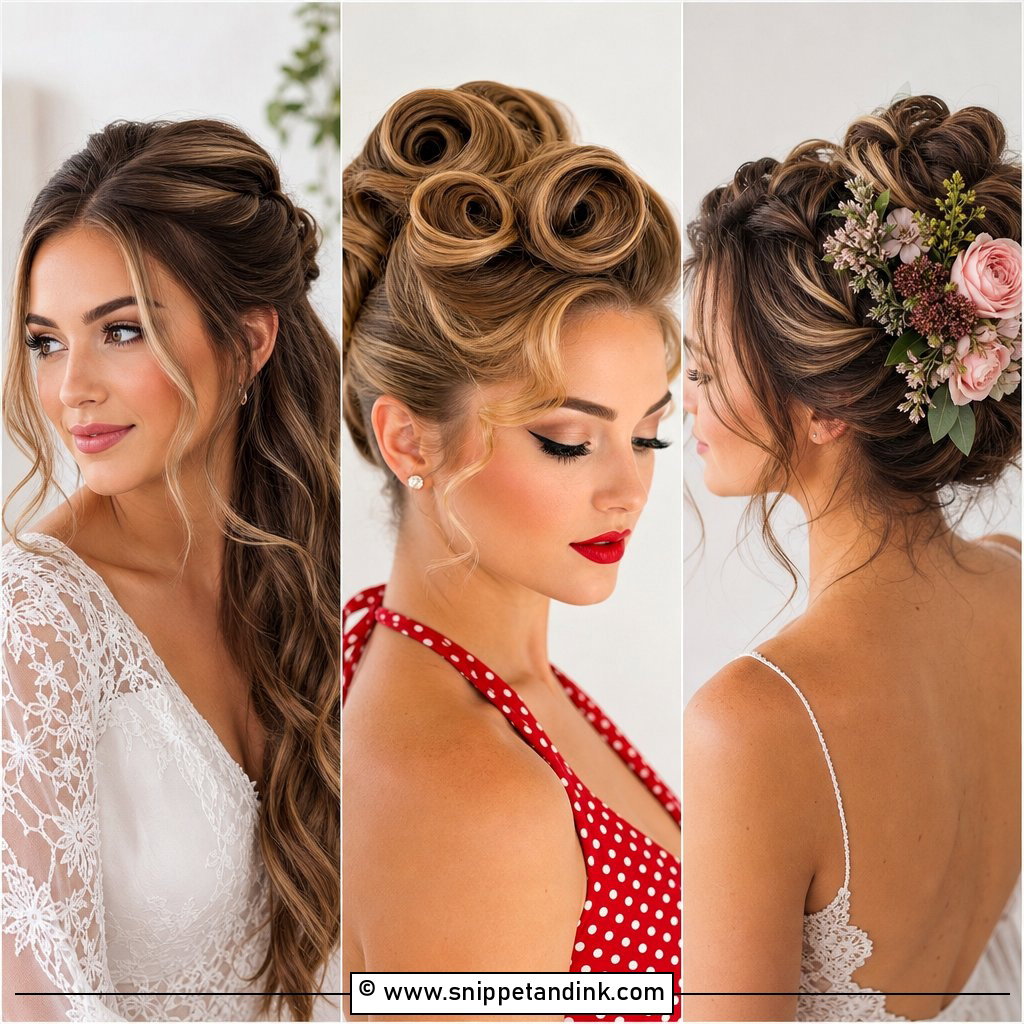
15. Soft Waves Half Up Twist
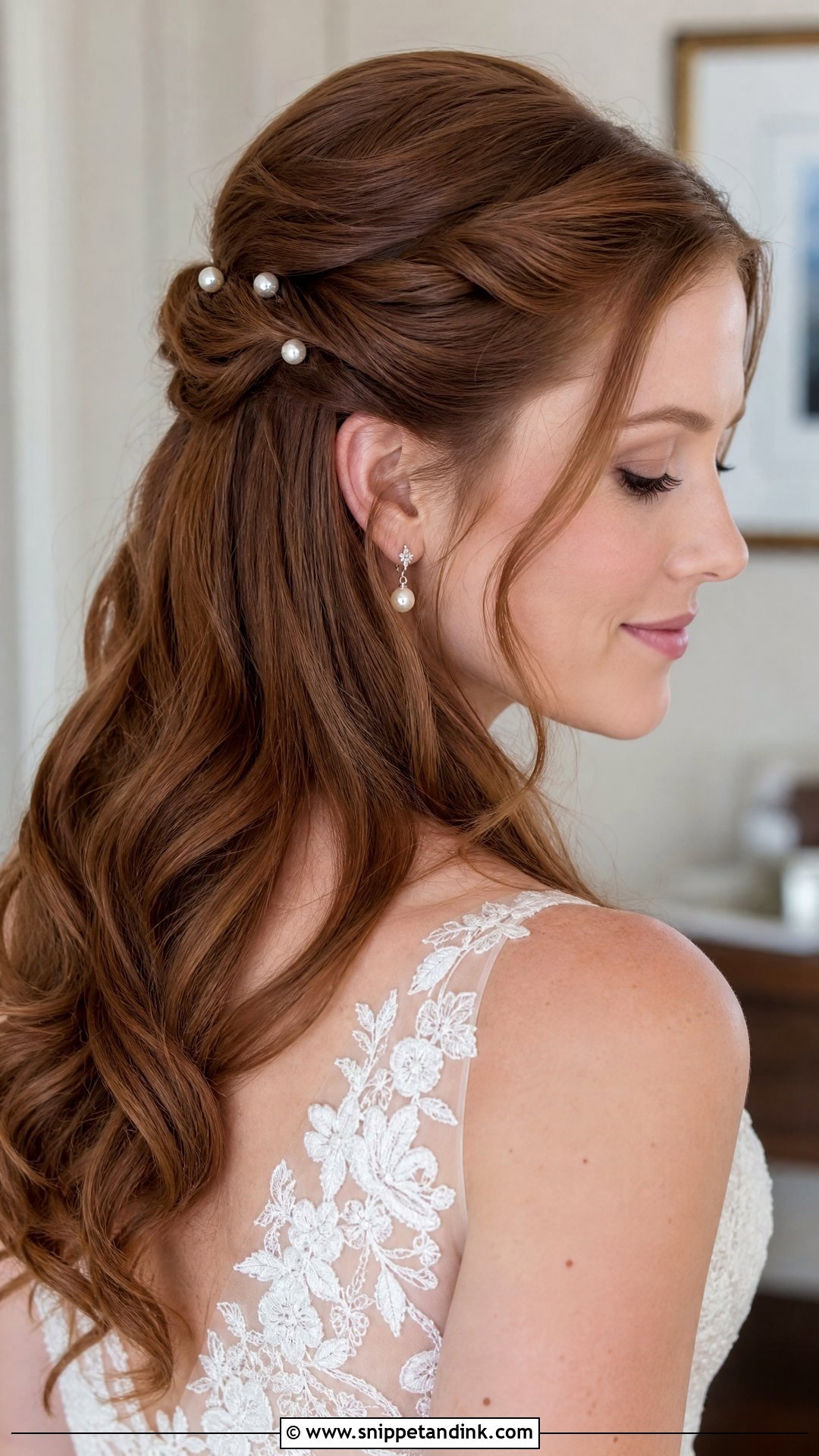
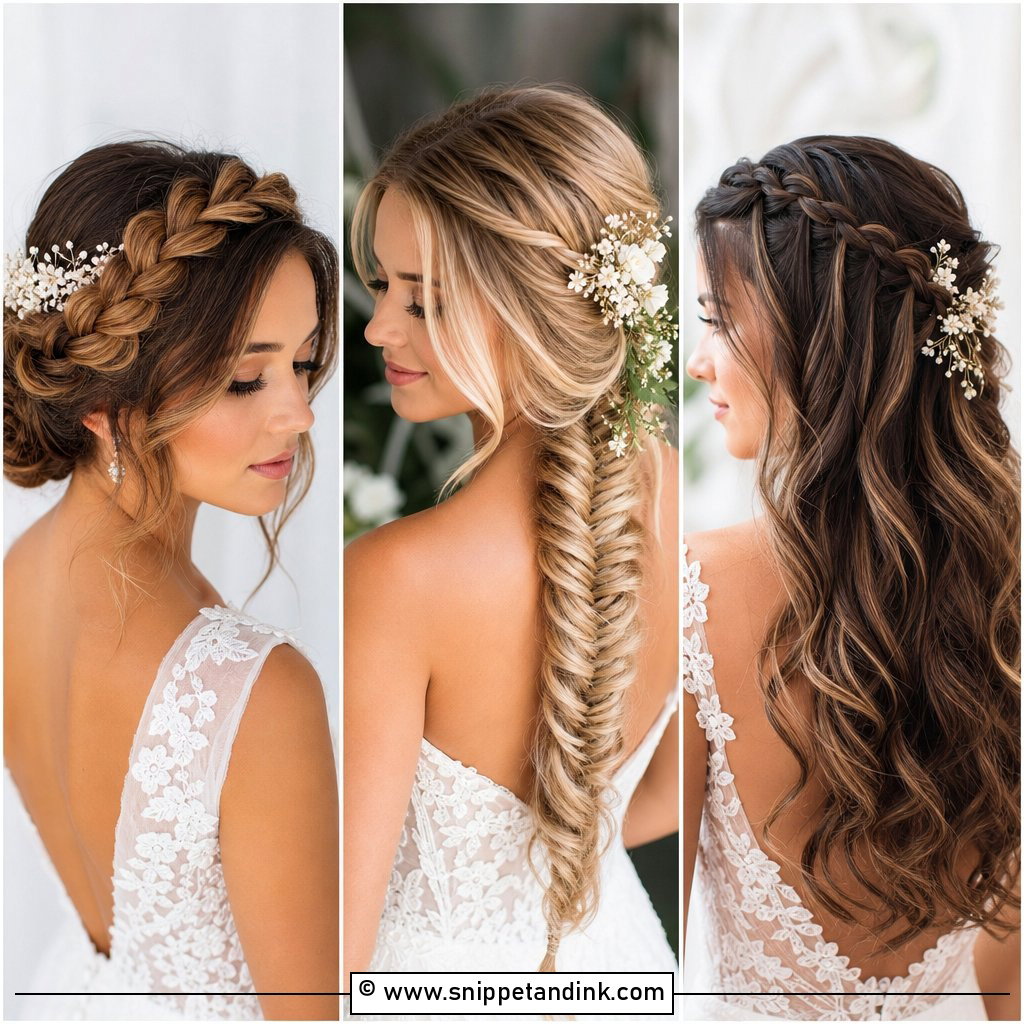
Twists that meet at the crown hold better than a single section pulled back, because the two sides support each other. I take a section from each temple, twist it back, then cross and pin the ends so the pins are hidden underneath. The rest falls in waves. A pearl pin or small clip goes where the twists meet. It suits medium to long hair, and it’s my go-to when someone asks for detail without the commitment of a full updo.
16. Soft Waves for Short Hair
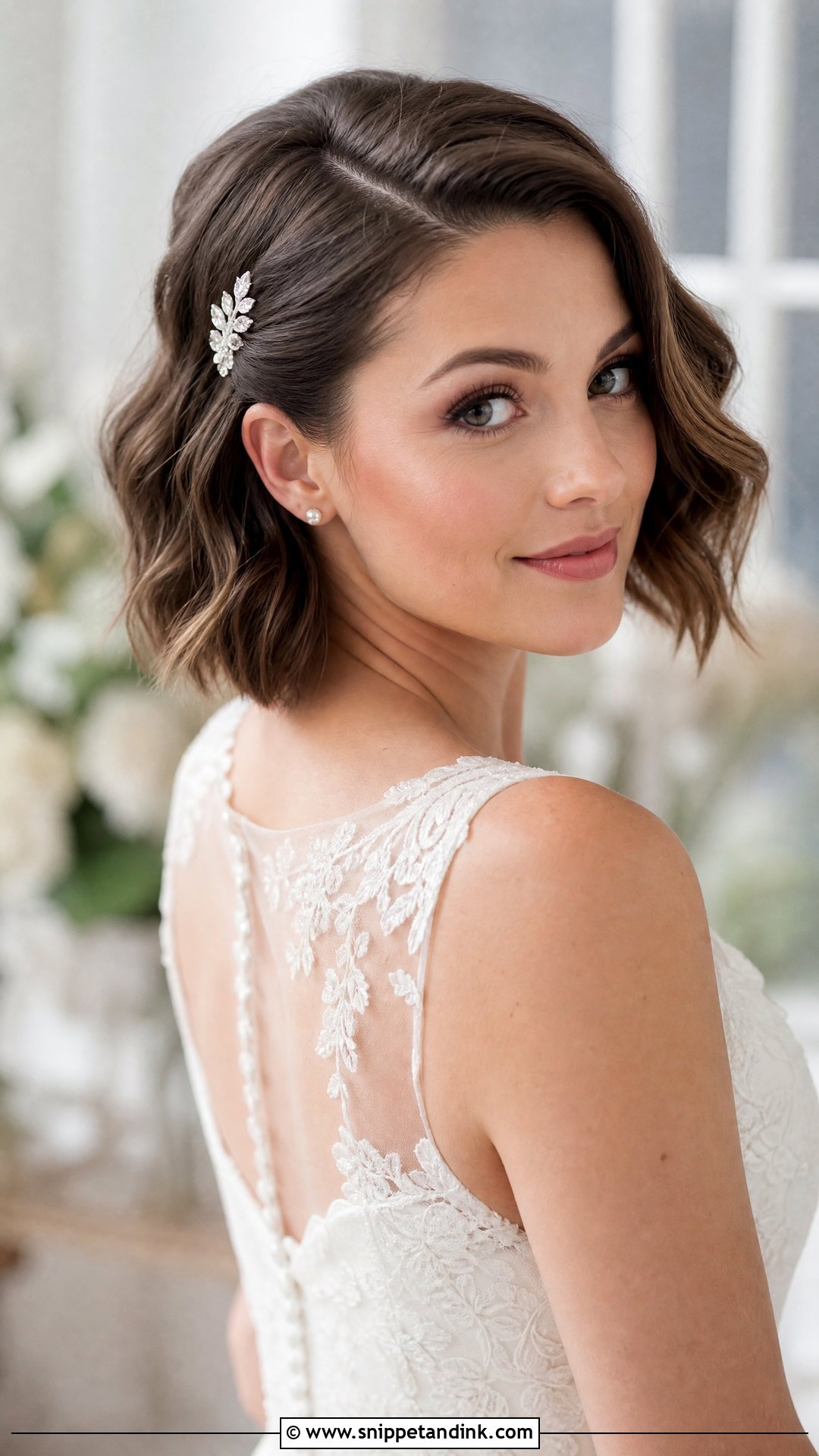
Short hair can absolutely carry waves. I use a small 1 inch iron, alternate the direction of the curl so the waves don’t clump together, and leave the last half inch of the ends straight so the bob doesn’t turn into a round curly shape. Then I break it up with my fingers. Tucking one side behind the ear with a sparkly pin adds polish. On a short cut, a veil comb needs a firm base, so I’ll braid a tiny section underneath at the crown to give the comb something to grip.
17. Soft Waves With Tiara
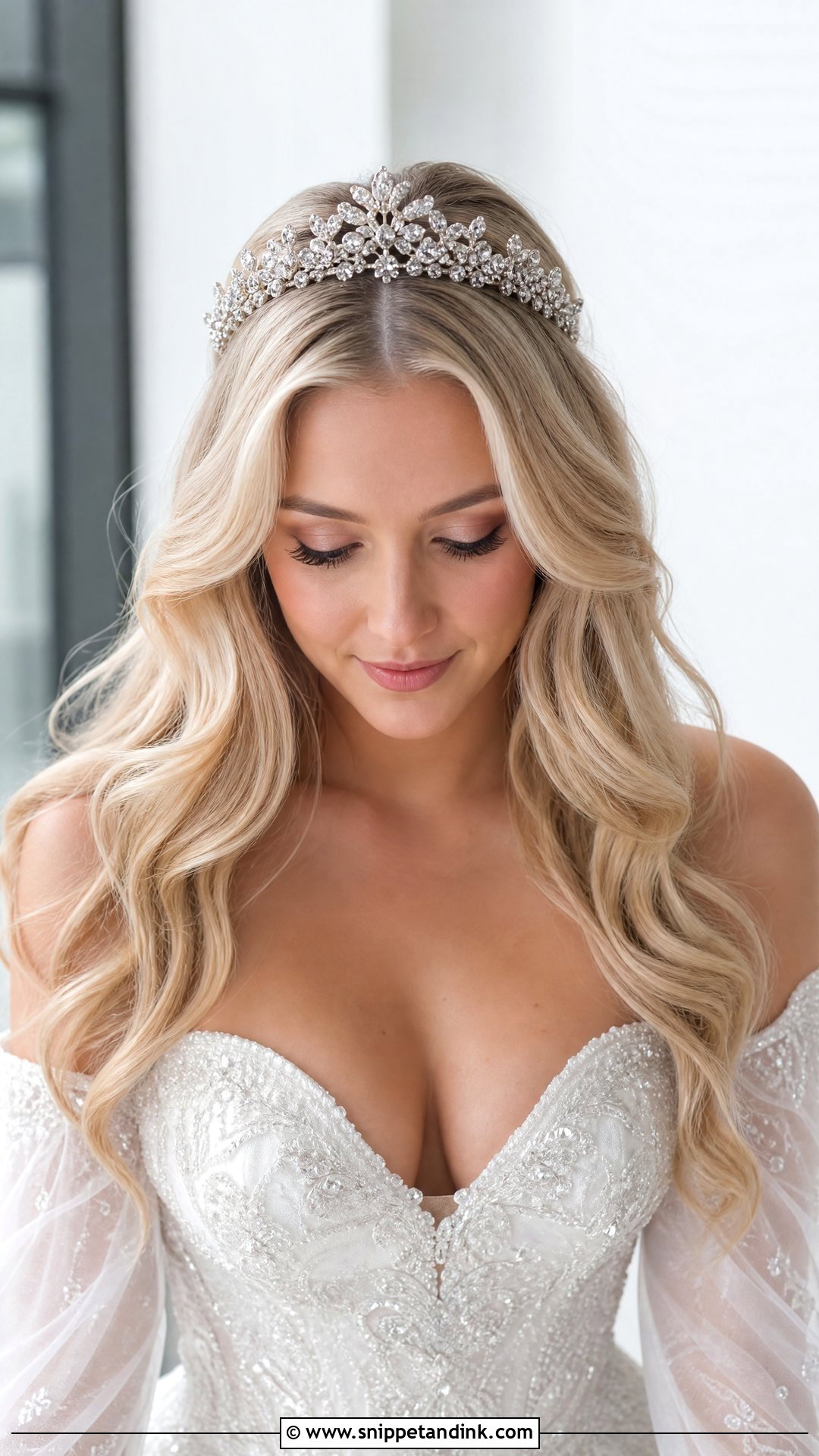
A tiara sits along the crown with waves falling beneath it, which gives fairytale glamour without any stiffness. Tiaras are heavier than they look, so I backcomb a little at the crown and anchor the tiara’s ends with small bobby pins through the loops on its sides. A dainty one suits a simple gown; a bolder one pairs with a ballgown. Wear it for an hour at home before the wedding to check it doesn’t press behind the ears.
18. Soft Waves Boho Half Up
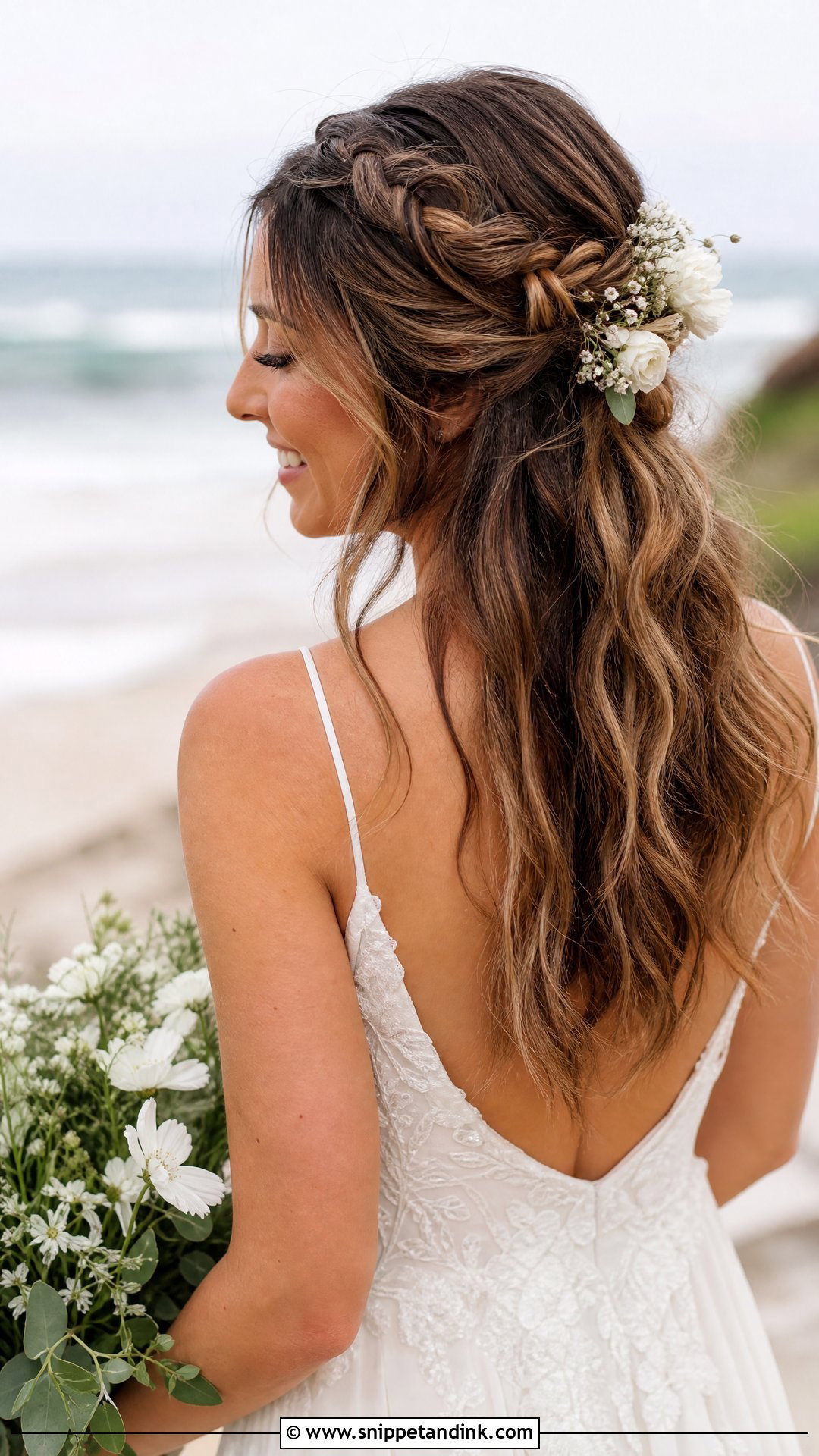
Boho half up is the loosest of the half-up styles, with face-framing pieces and relaxed volume. I pull the front back loosely, sometimes with small braids, and tuck in flowers or pearl pins. The waves should look airy rather than polished, so I brush them out more and use a light texture spray instead of hairspray. Outdoor and garden weddings with flowing gowns suit it. It isn’t a good fit for very fine hair, which can look flat and limp with so little structure.
19. Soft Waves With Deep Side Part Updo
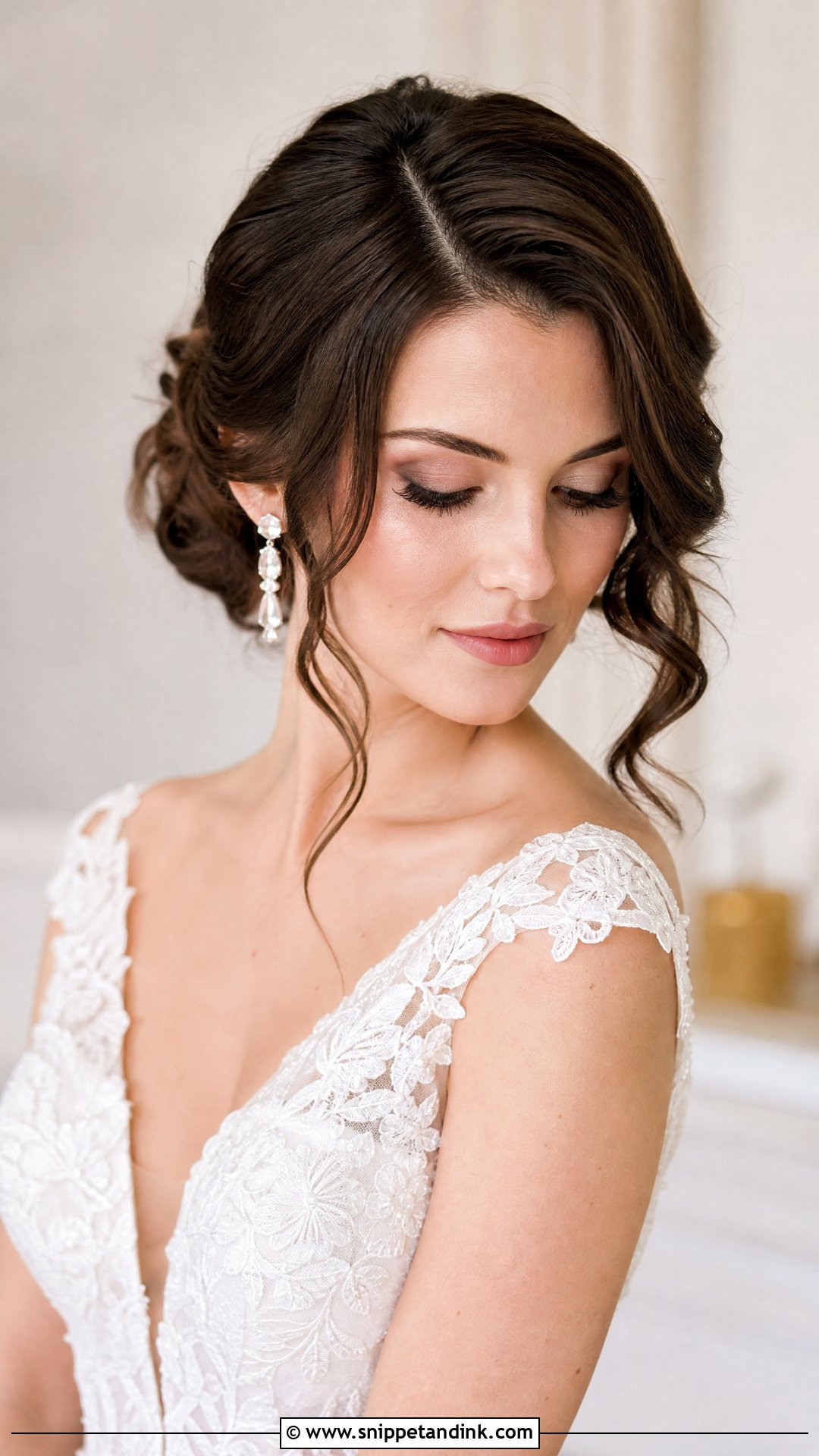
A deep side part changes an updo from classic to dramatic. I set the part first, curl the hair, then sweep it toward the part side and gather it into a loose updo at the nape. A few tendrils stay out. Statement earrings and elegant gowns show off the asymmetry. Because the weight sits to one side, I add extra pins on the heavier side, otherwise the updo can tilt by the evening.
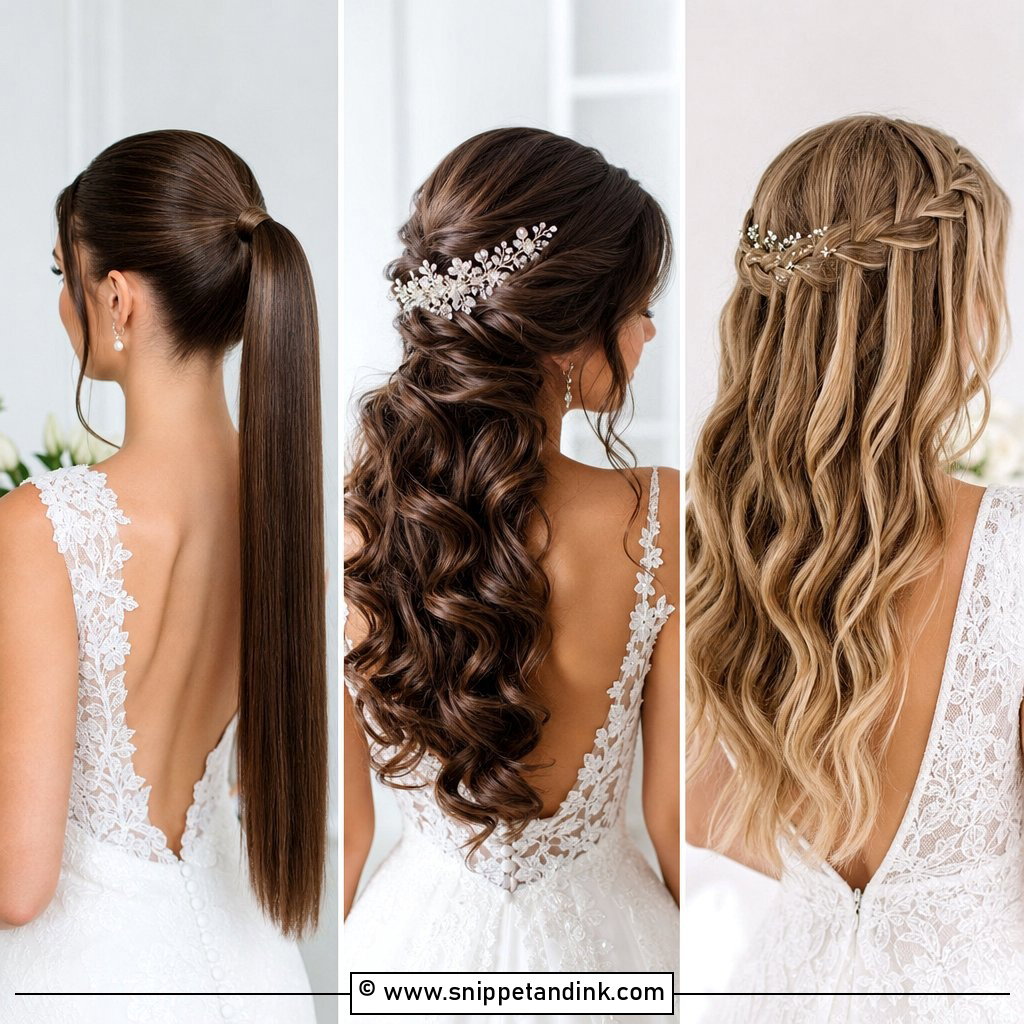

20. Soft Waves Cascading Curls
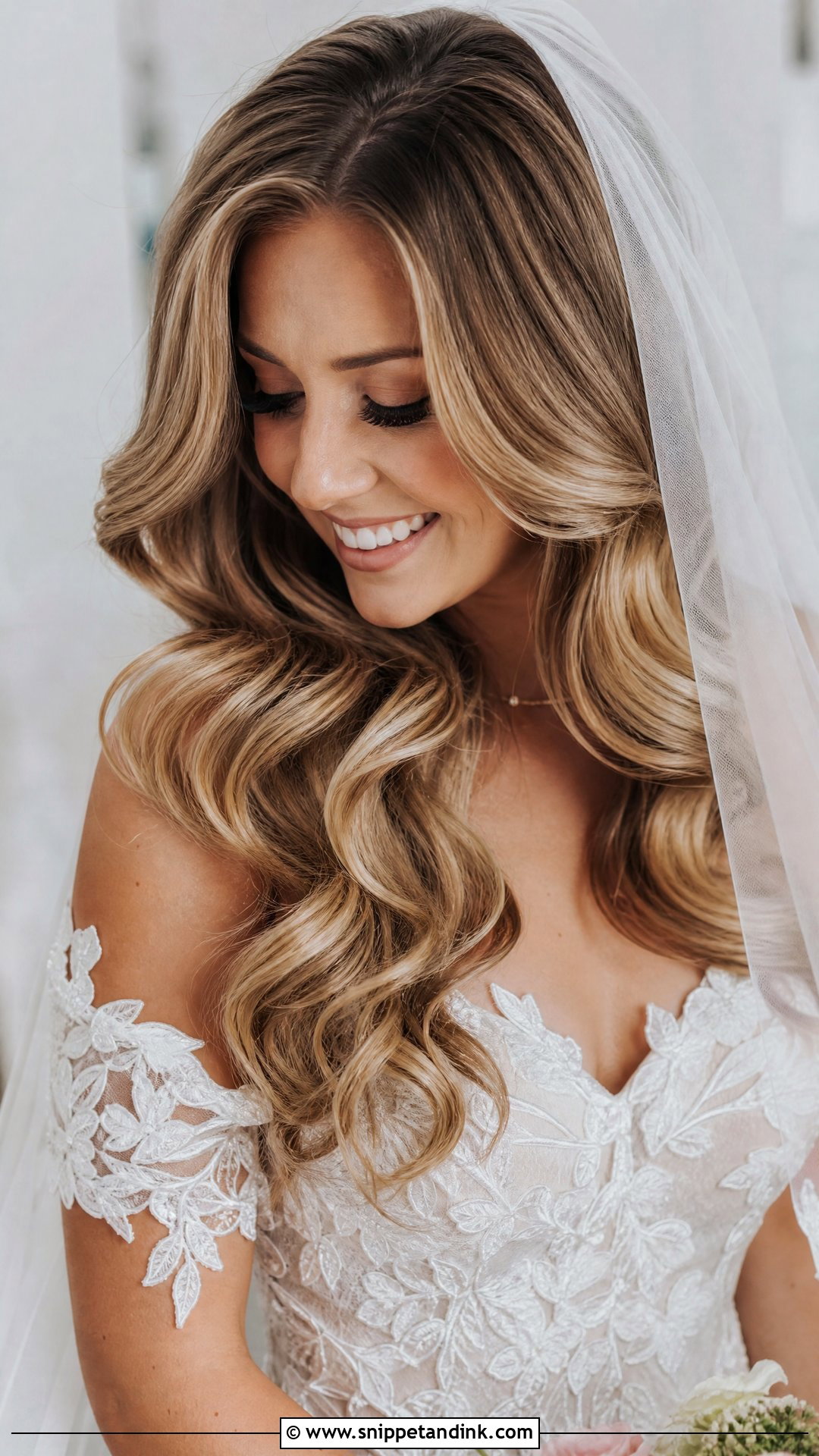
The most voluminous look here is full, cascading soft curls, curled tighter than waves and then brushed out just enough to soften. I curl smaller sections and set every curl in a pin curl while the rest is done, which gives the most hold for long or thick hair. Veils, flowers and pins all sit well with it. The trade-off is weight and warmth: a full head of curls on your shoulders through a summer reception is hot, so I’d suggest planning a half-up or low ponytail for later.
Your Hair Type Decides the Iron, Not the Photo
Brides often bring a picture of waves done on hair very different from their own. The look can almost always be adapted, but the method changes.
- Fine, straight hair: smaller sections, a smaller barrel and pin curls while it cools. Backcombing at the root under the top layer adds volume that fine hair won’t hold on its own. Half-up and updo versions hold better than all-down.
- Thick or coarse hair: larger sections take longer to heat through, so I work slowly and use larger pins. It holds curl well but can look heavy, so I brush out more to loosen the shape.
- Naturally wavy hair: often needs only a few pieces re-curled for definition, then a smoothing cream on the frizz.
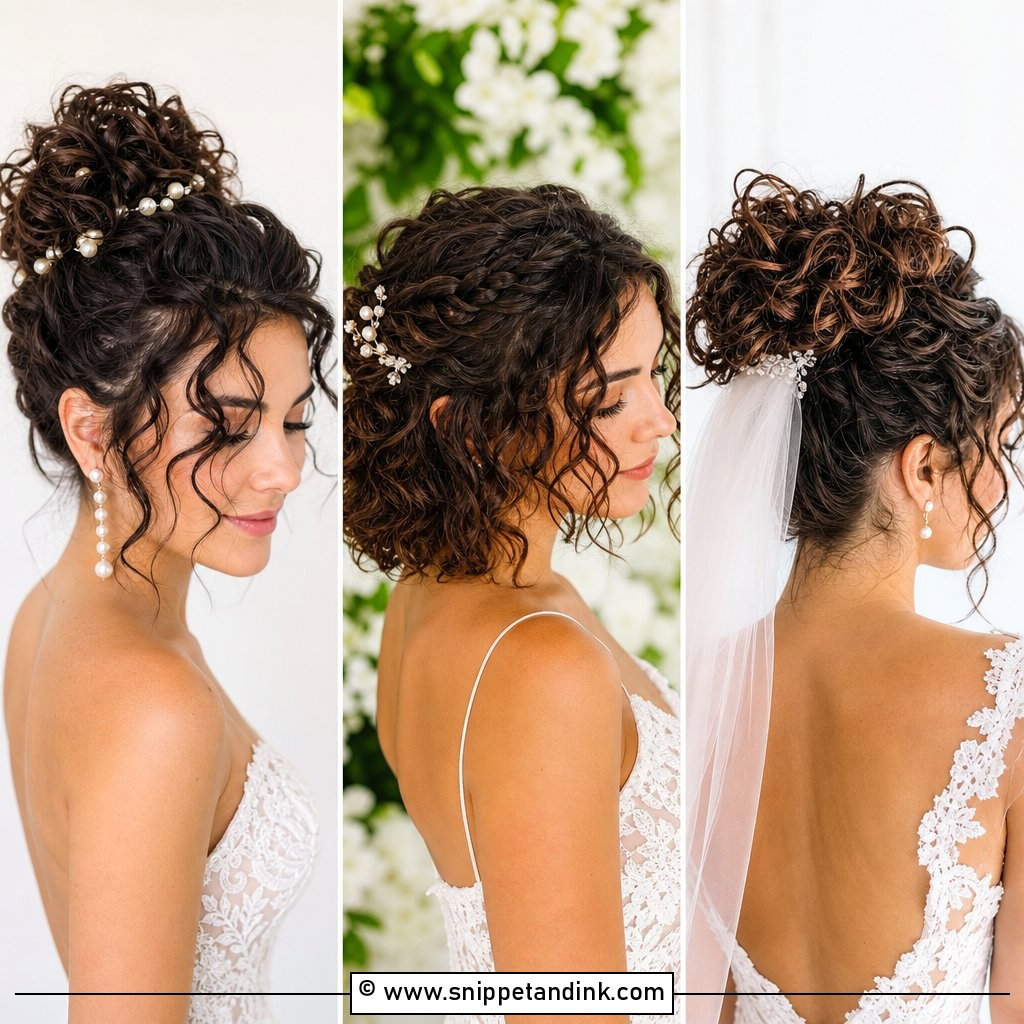
- Curly and coily hair: I work with the natural pattern. Waves can be achieved with a silk press and set, but on a humid day the hair may revert, so a defined twist-out or a textured updo can be more reliable.
- Layered cuts: short layers can stick out of an updo. Waves suit layered hair best worn down or half-up.
At the trial, wear something with a neckline similar to your gown and bring the veil and accessories. Then wear the style for the rest of the day and take a photo in the evening. That photo is the most honest guide to what will be left by the first dance.
Does Your Wave Still Hold at the Last Dance?
Waves stay popular because they suit most gown styles and adapt to nearly any length. But the photo you love is the end result of a method: day-old hair, a cooled set and the right pins for the weight of your hair. Pick the look that fits your veil, neckline and hair type, then ask your stylist at the trial how they’ll make it hold. A good answer tells you more than any picture.
You'll Like These Ideas:



Leave a Reply