
Arm coverage should be a comfort choice, never a hiding strategy, and the brides I’ve seen happiest on the day picked sleeves because they liked how they felt. The good news is that sleeves are no longer an afterthought in bridal design. You’ll find removable sleeves, toppers, stretch lace, soft draping and scoop necks that sit well with all of them. What matters more than the style is the fit at the upper arm, the weight of the fabric and how the sleeve meets the bodice. The twenty gowns below are styled head to toe, from classic lace to airy destination dresses, and for each one I’ve noted what to test at the fitting so the sleeve moves with you from ceremony to last dance.
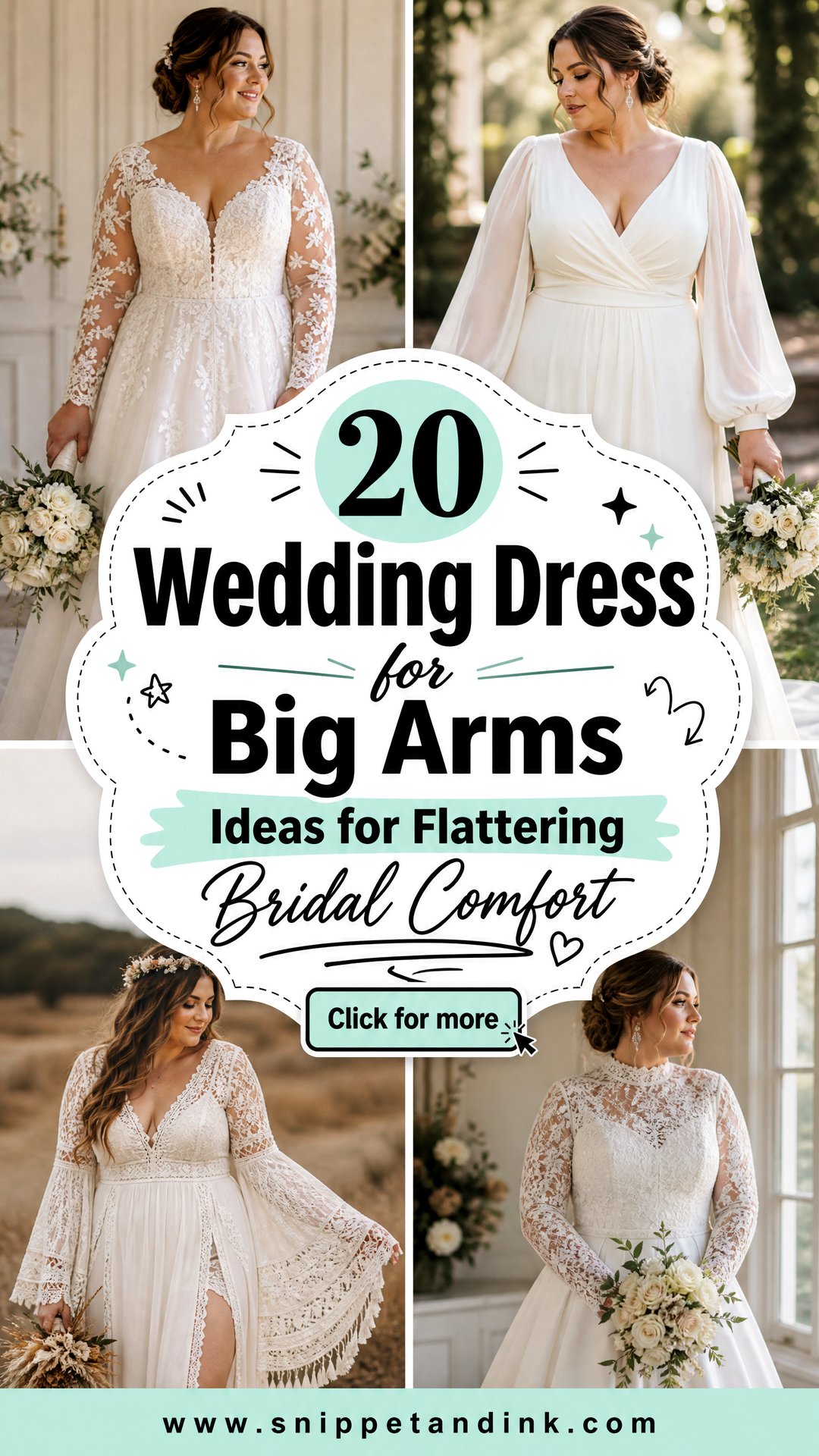
Your Upper Arm Measurement Matters More Than Your Dress Size
Bridal sizes are usually chosen from bust, waist and hip. The sleeve is then cut to a standard pattern for that size, and that’s why so many brides find a gown fits everywhere except the arms. A fitted sleeve that’s too narrow at the upper arm can’t be fixed by taking in the bodice, and some sleeves have very little seam allowance to let out.
So at the first appointment, I’d ask the consultant to measure your upper arm at its fullest point and compare it with the size chart for any style with fitted sleeves. If the arm measurement lands in a bigger size than the rest of you, ask whether the designer offers custom sleeve sizing or a sleeve in a stretch fabric. Many do, and it’s far easier to arrange at ordering than to rescue at the final fitting.
Loose styles such as flutter, bishop, cape and split sleeves sidestep the problem almost entirely, which is worth knowing if you’re on a tight timeline.
1. A-Line Wedding Dress With Lace Sleeves
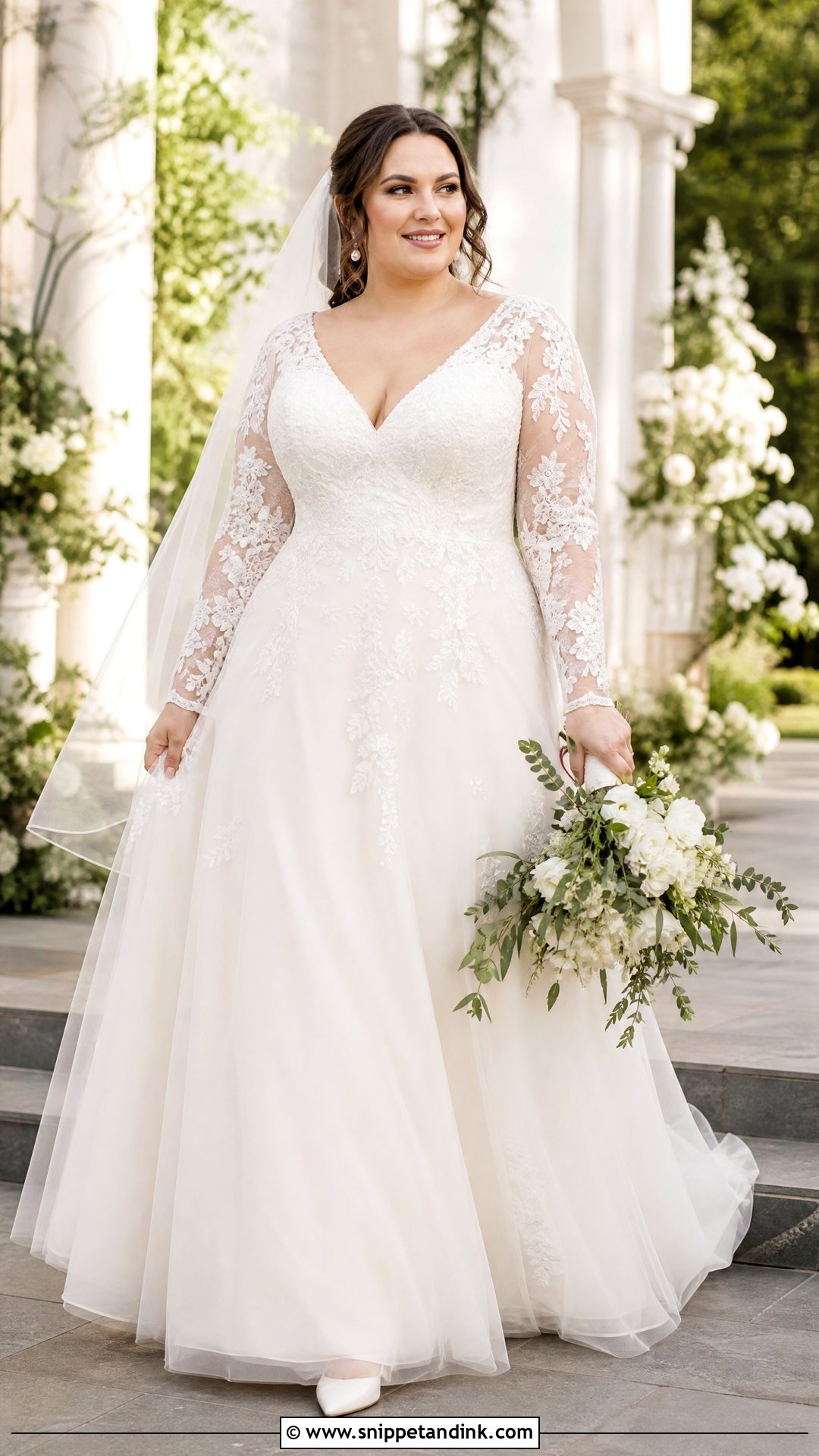
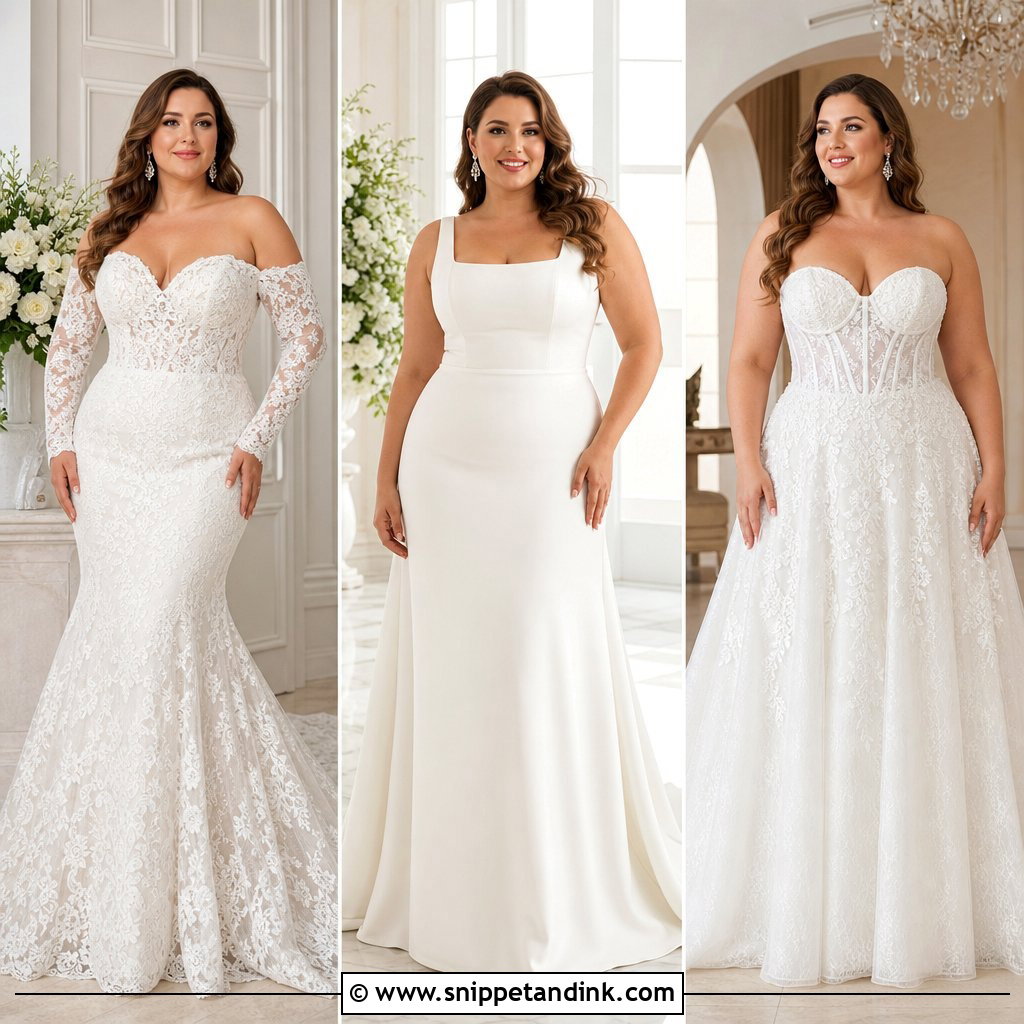
Lace sleeves on an A-line suit almost any season, and stretch lace is the version I’d look for first, since it follows the arm without the stiffness of corded lace. Pay attention to how the pattern is laid out. Appliqués running vertically along the sleeve keep the line long, while one dense band of motifs across the upper arm draws the eye straight to it. A gently structured bodice defines the waist, and a V-neck or soft scoop keeps the top of the dress open. Pointed ivory shoes, pearl earrings, a fingertip veil and a loose bouquet finish it. At alterations, raise both arms above your head and bend your elbows. If the lace strains, ask for more ease.
2. Ball Gown Wedding Dress With Illusion Sleeves
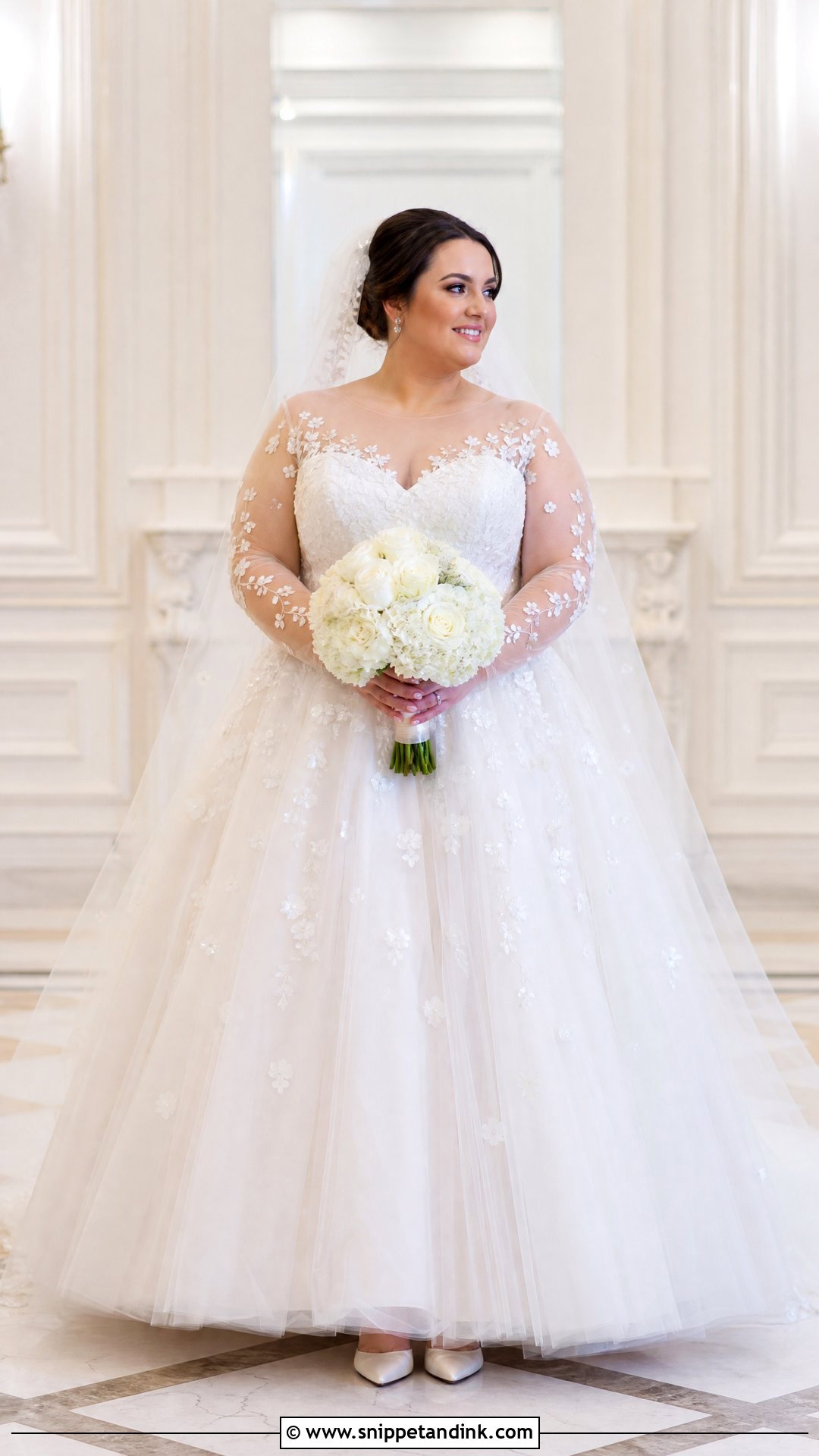
Illusion sleeves give coverage that looks almost weightless, which suits a ball gown where the skirt already carries plenty of volume. A supportive bodice and natural waist anchor the shape. Choose fine tulle sleeves with scattered appliqués, small pearls or embroidery that fades toward the wrist, so the line stays light. A sweetheart lining under an illusion neckline adds support. There’s an order to fitting these that matters: the armholes get adjusted first, then the sleeve width, because a tight armhole makes any sleeve feel too small. Ask for the mesh to be matched closely to your skin. Crystal studs, a low bun, satin pumps and a cathedral veil complete it.
3. Off-the-Shoulder Wedding Dress With Draped Sleeves
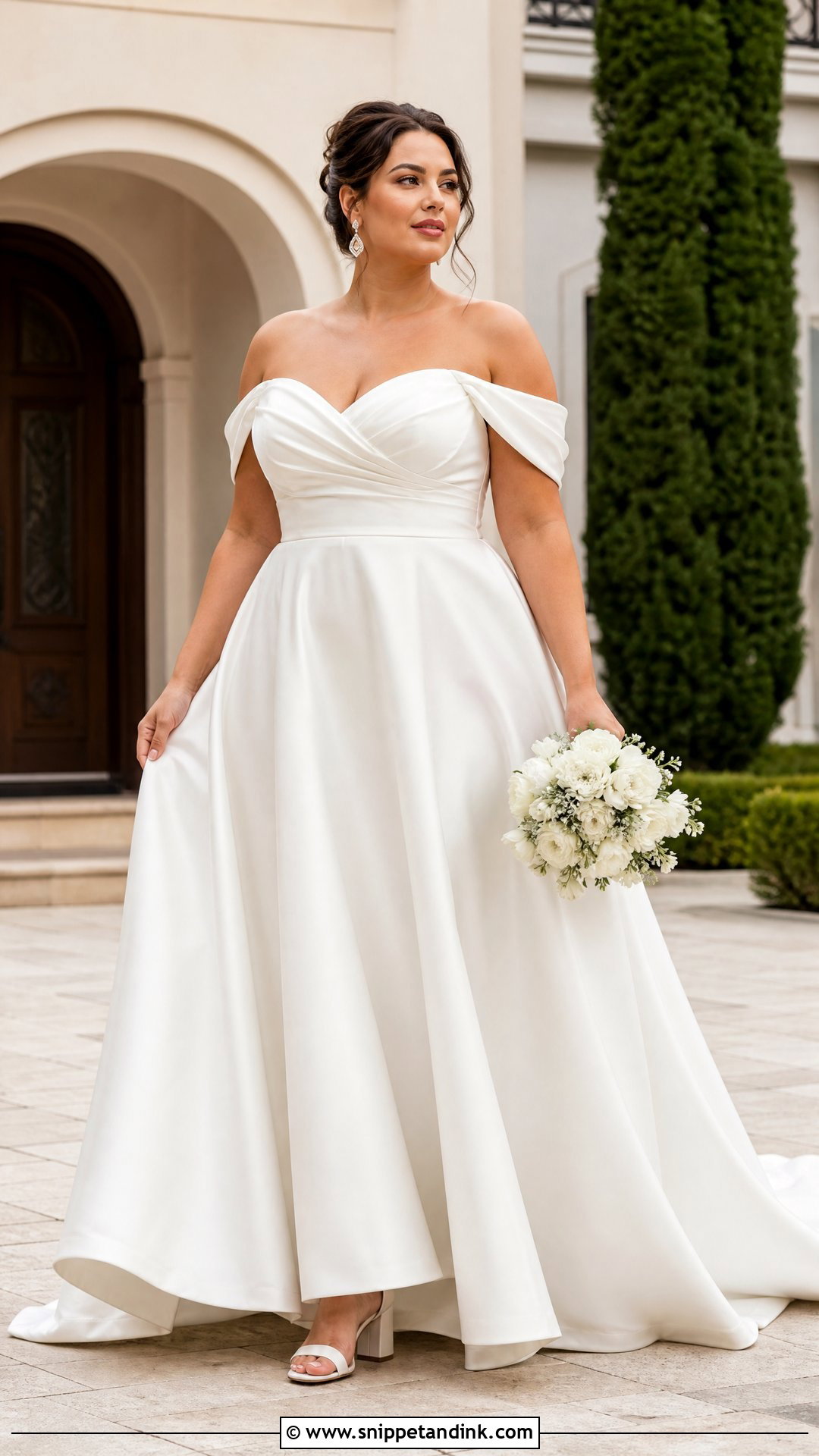
Draped off-the-shoulder sleeves frame the collarbone and cover the upper arm at once, and they look most at home on a structured A-line or ball gown. The fit has to follow the arm. A sleeve cut as a tight horizontal band squeezes, and that pressure line is exactly what you don’t want in photographs. Satin gives a sculpted drape; tulle or chiffon feels softer. The corset bodice needs to hold the dress up by itself, professionally fitted, so you aren’t pulling it up all night. A simple pendant, drop earrings, a polished updo and block-heel sandals suit it. Ask whether the drapes can be made detachable for a lighter reception look.
4. Chiffon Wedding Dress With Bishop Sleeves
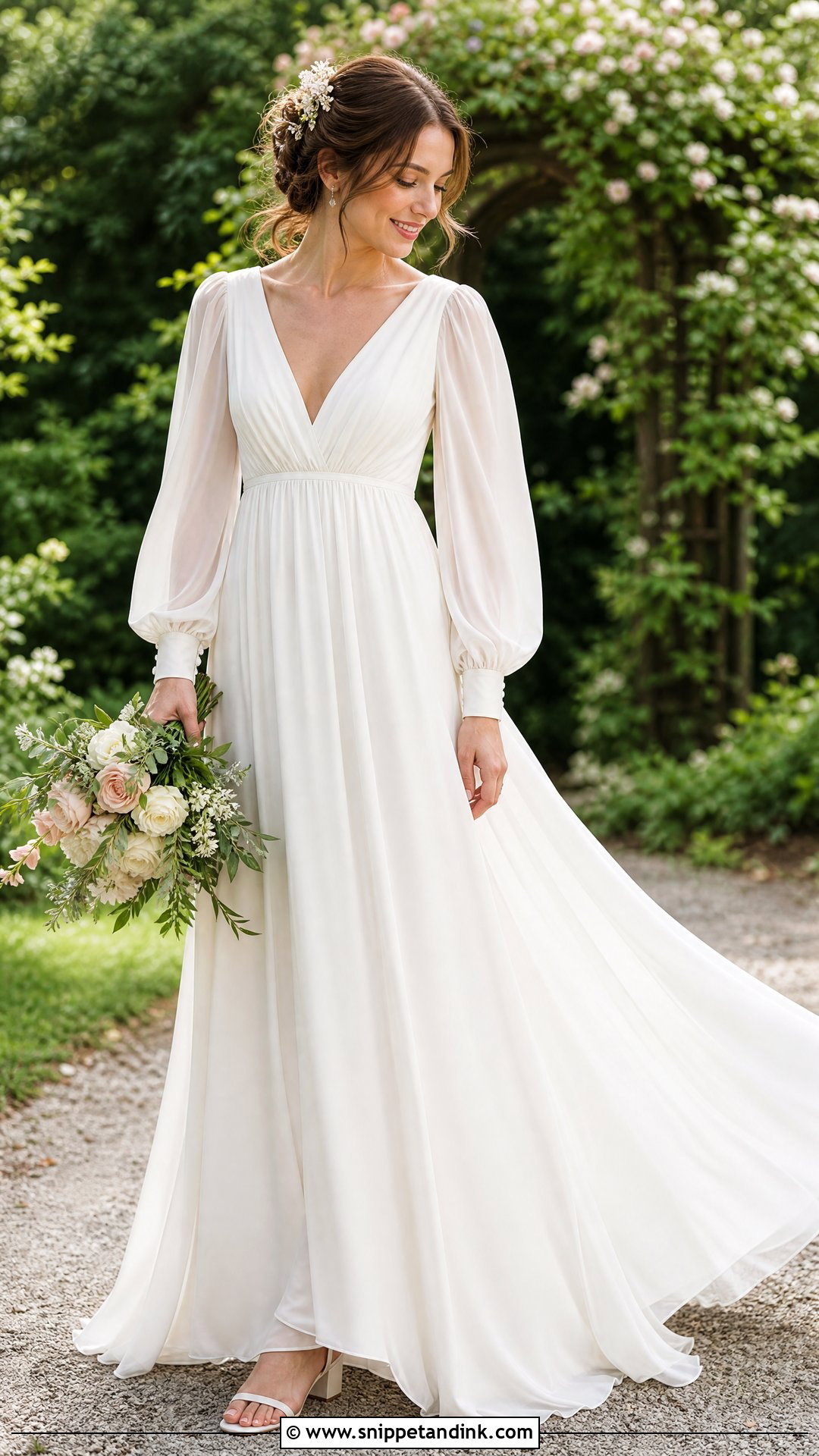
Bishop sleeves gather at the shoulder, billow through the arm and close at a cuff, so they never cling anywhere. A wedding dress with bishop sleeves in chiffon looks lovely in an outdoor breeze. Pair it with an empire waist or soft A-line and a V-neck, which stops all that sleeve volume from swamping the bodice. Check the cuff. If it’s sewn tight with a single button, it’ll pinch by evening; elastic-backed or two-button cuffs are kinder. Chiffon-covered block heels hold steady on grass, with a floral comb and fine drop earrings. Spring gardens and coastal ceremonies suit it.
5. V-Neck Wedding Dress With Flutter Sleeves
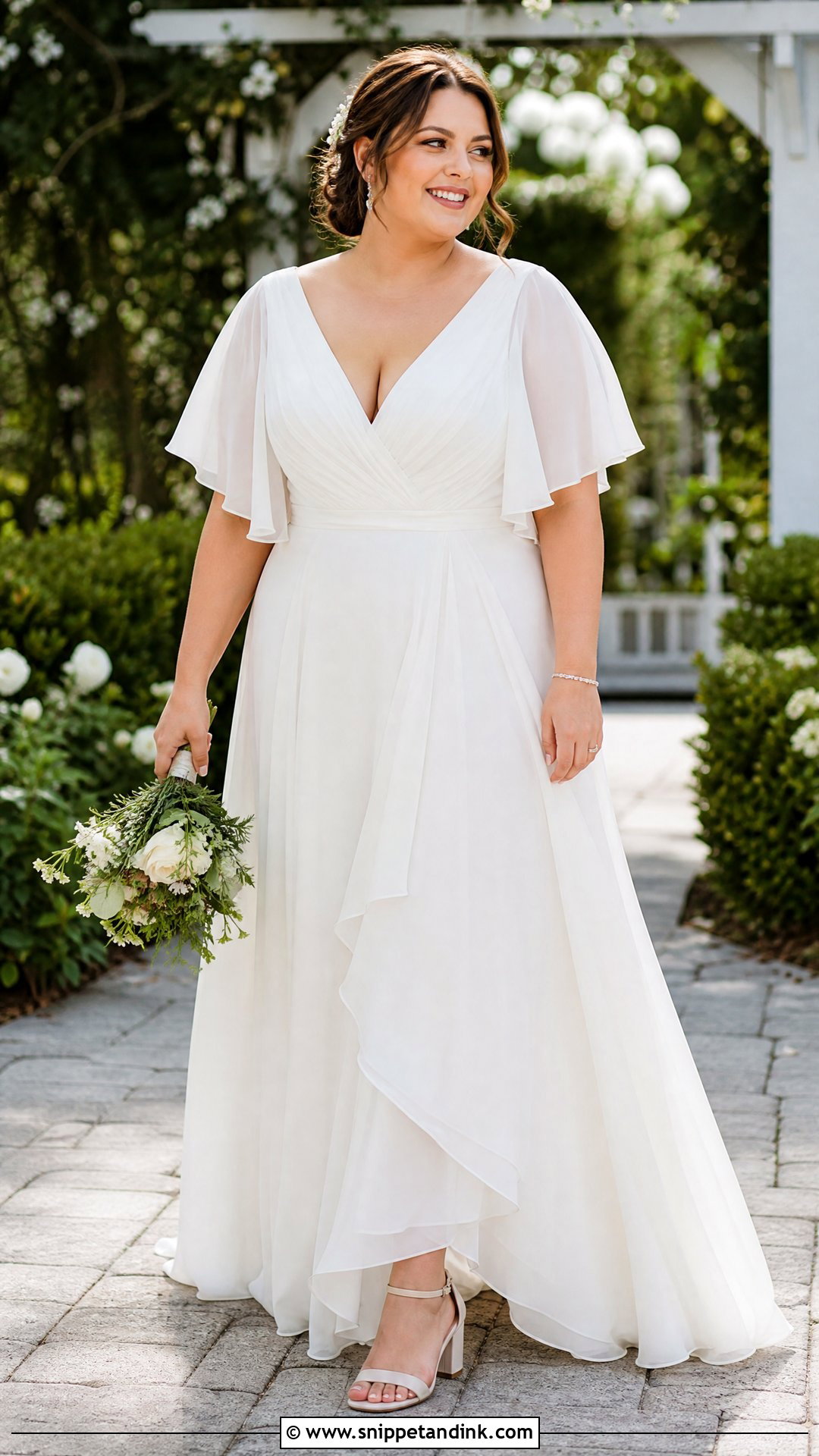
Flutter sleeves fall away from the arm instead of hugging it, which makes them cool and comfortable in summer. Decide where you want the edge to land. A sleeve ending right at the widest point of the upper arm draws attention there, while one finishing a little below gives fuller coverage and a cleaner line. Avoid very short or heavily gathered flutters, which puff at the shoulder; a smooth shoulder seam drapes better. An A-line skirt with a defined waistband and layered chiffon balances it, and the V-neck can be shallow or deep. A floral comb, slim bracelet, ankle-strap sandals and a small bouquet keep it light.
6. Boho Wedding Dress With Bell Sleeves
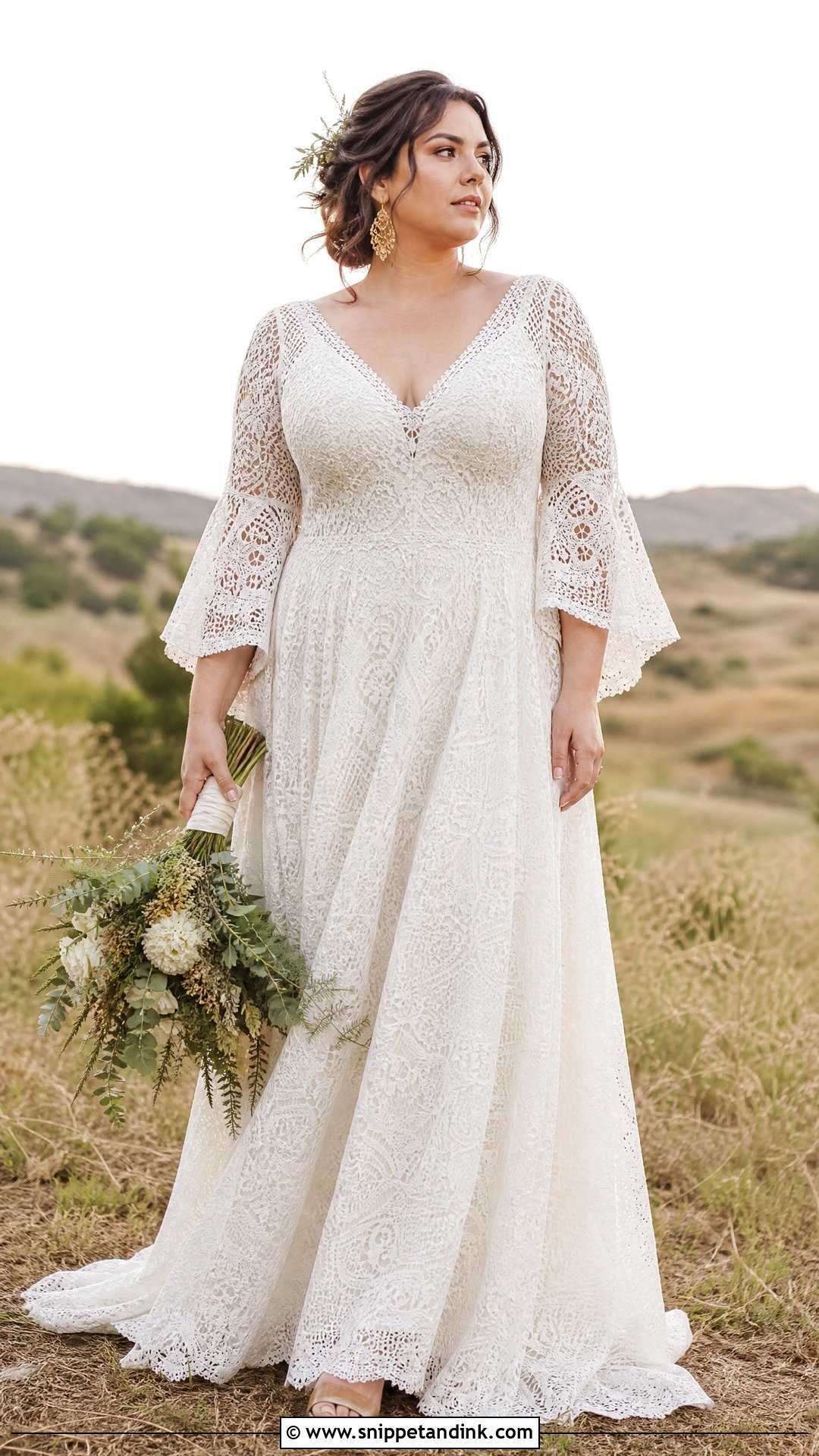
Bell sleeves bring a lot of personality, and the fabric decides whether they look relaxed or heavy. Soft crochet lace or light embroidered tulle works; thick, rigid lace makes the flare stand out like a funnel. A sleeve that stays fitted to the elbow and opens below it keeps the shoulder streamlined. Pair it with a gently shaped bodice and A-line skirt, and a modest V-neck or open boat neckline. Low suede-look shoes, a floral hairpiece, small gold earrings and a natural bouquet finish the look. Think about dinner. A long bell trails across your plate, so a slightly shorter flare often works better for eating and dancing.
7. Fit-and-Flare Wedding Dress With Three-Quarter Sleeves
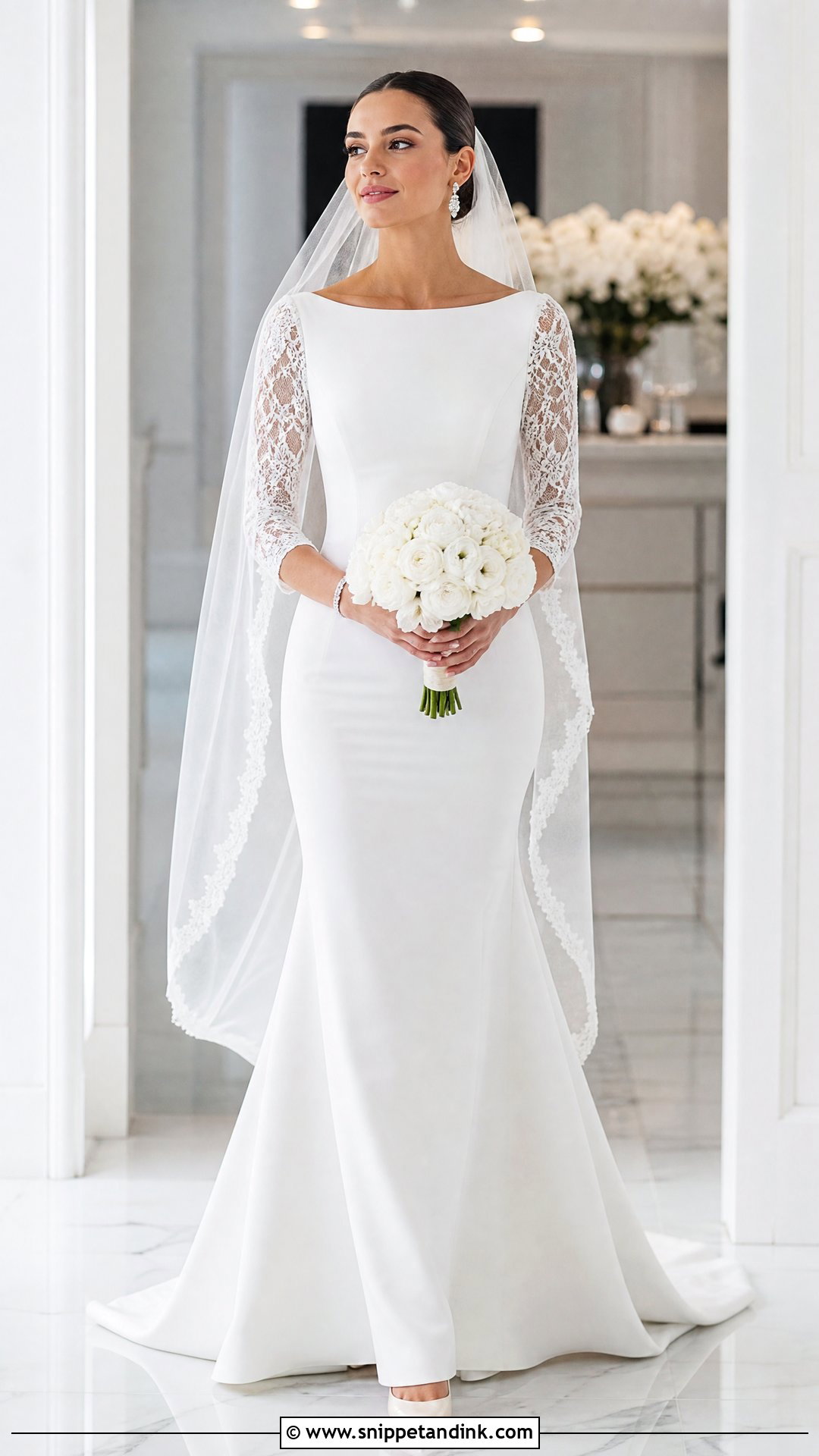
Three-quarter sleeves are a good middle ground if you want coverage but hate fabric at the wrists. Ending below the elbow, they lengthen the arm and leave room for a bracelet. On a fit-and-flare, I’d steer you toward stretch crepe or flexible lace, because a fitted skirt plus a stiff sleeve makes for a very long day. A bateau, scoop or soft V-neck balances the shape, and a skirt that flares above the knee makes walking and sitting easier. Pointed pumps, a slim bracelet, crystal earrings and a chapel veil suit it. At the fitting, hug someone, lift your bouquet and reach for a glass; small tweaks at shoulder and elbow make a big difference.
8. Column Wedding Dress With Cape Sleeves
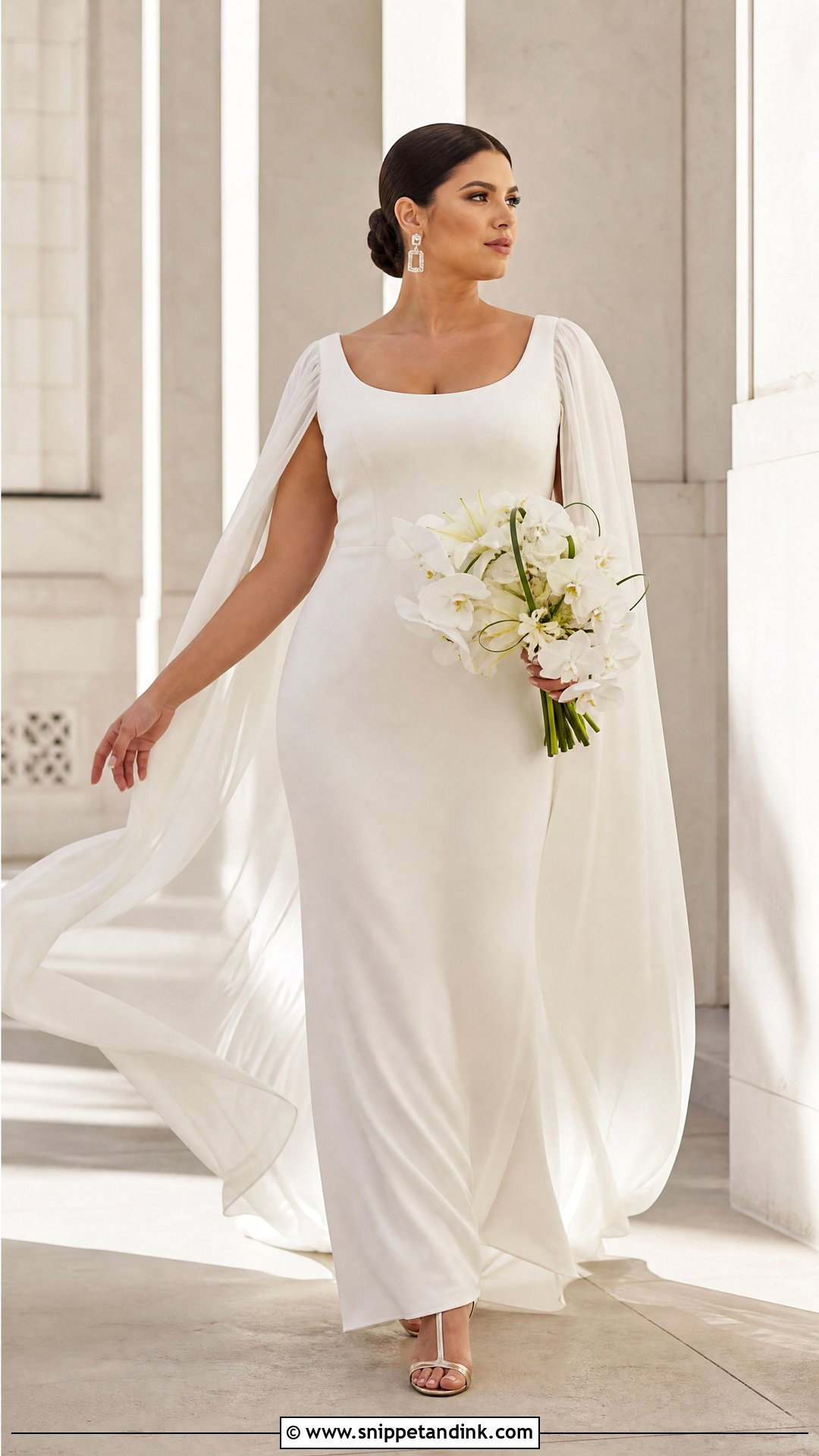
A cape covers the arms with flowing fabric instead of a fitted sleeve, so there’s nothing pressing on the skin at all. Over a sleek column dress it looks clean and modern. Capes can stop at the elbow, the wrist or the floor. Lightweight chiffon moves softly; crepe holds a more architectural shape. Keep the dress underneath plain, with a scoop, boat or modest V-neck. Metallic heels, geometric earrings, a smooth low bun and a structured bouquet complete it. Detachable capes give you two looks from one gown. I’d check the attachment closely, because a heavy cape fastened at the neckline drags it backward toward your throat.
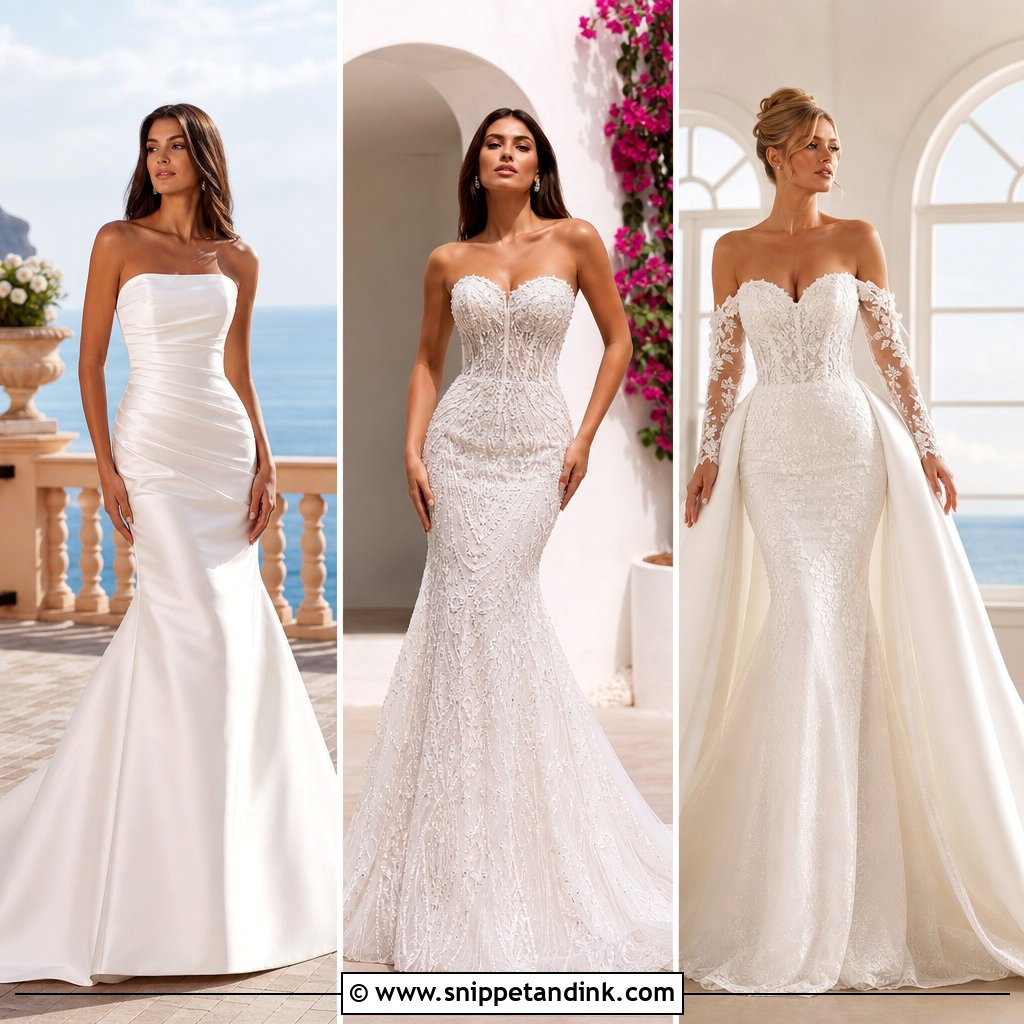
9. Satin Wedding Dress With Detachable Sleeves
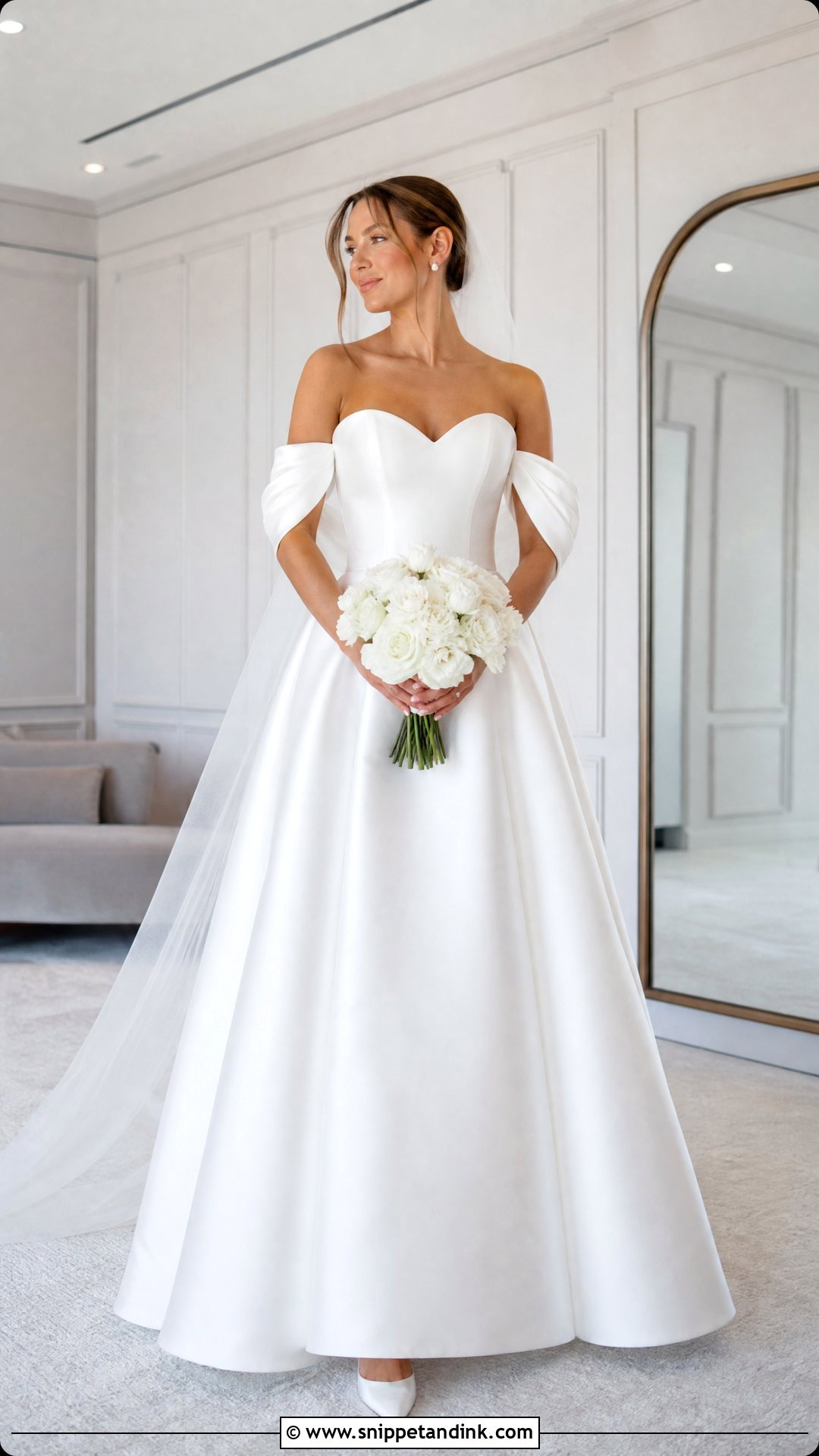
Detachable sleeves let you wear the strapless satin gown you love with optional upper-arm coverage. Start with a supportive A-line or ball gown with a clean sweetheart or straight neckline, and add matching draped satin, fitted opera or light tulle sleeves for the ceremony. Remove them for dancing. Color matching is where these go wrong. Ivory sleeves cut from a different bolt can look slightly off beside the gown, so check them together in daylight and indoor light. Ask how they attach: snaps or small covered buttons sit neater than ties. Pearl studs, a smooth veil, pointed satin shoes and a white structured bouquet keep the look polished.
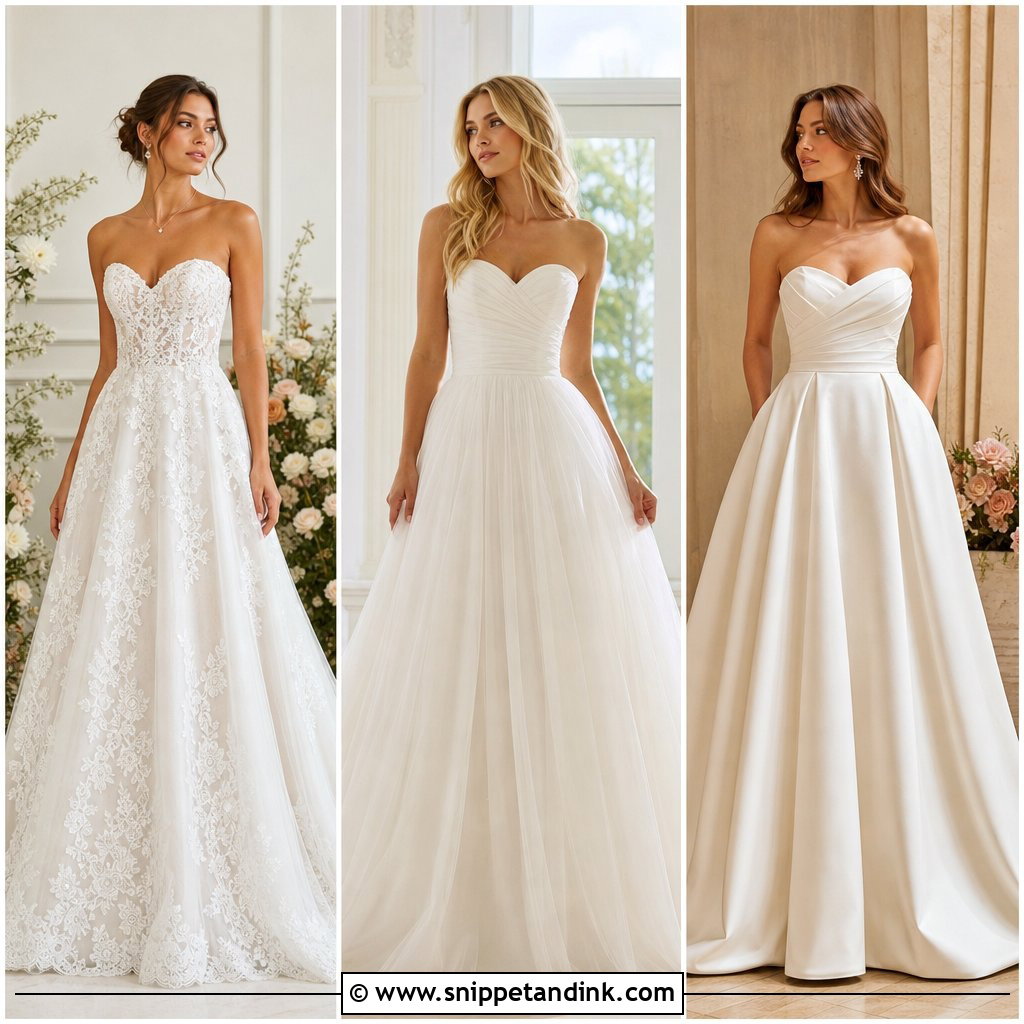
10. Wrap Wedding Dress With Short Sleeves
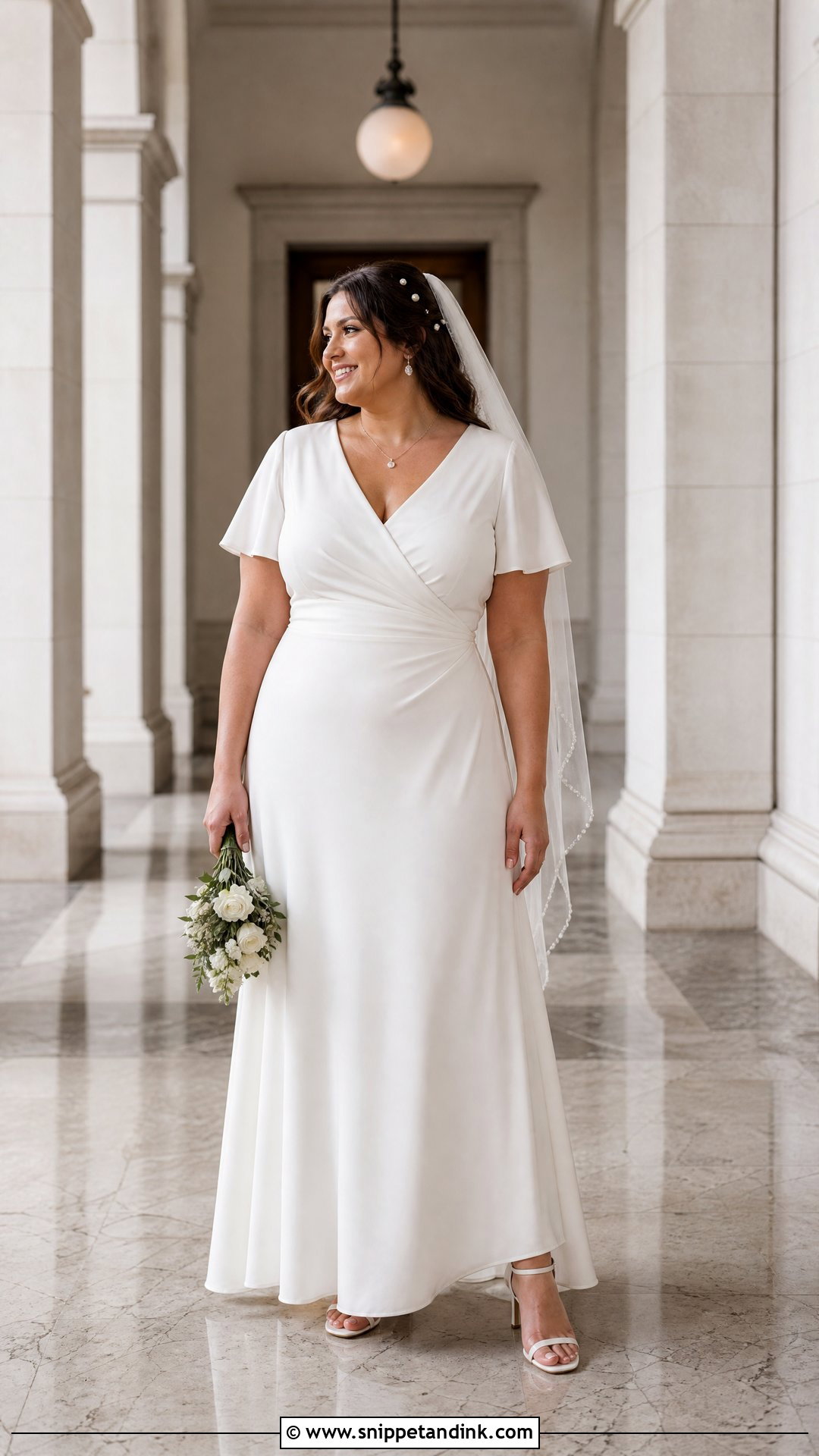
Wrap dresses define the waist and open the neckline, and for arm coverage the sleeve should reach past the shoulder point rather than stopping in a tiny cap. I usually suggest a faux-wrap bodice. A true wrap loosens as the day goes on, while a stitched faux wrap holds its shape through a long reception. Crepe, jersey-lined chiffon and soft satin all work if they don’t cling. Pair it with an A-line or gently flared skirt. Slingback heels, a delicate necklace, pearl pins and a medium veil finish it. Have the neckline tacked if it gapes, and make sure the waist tie doesn’t add bulk under the bust.
11. Empire-Waist Wedding Dress With Sheer Sleeves
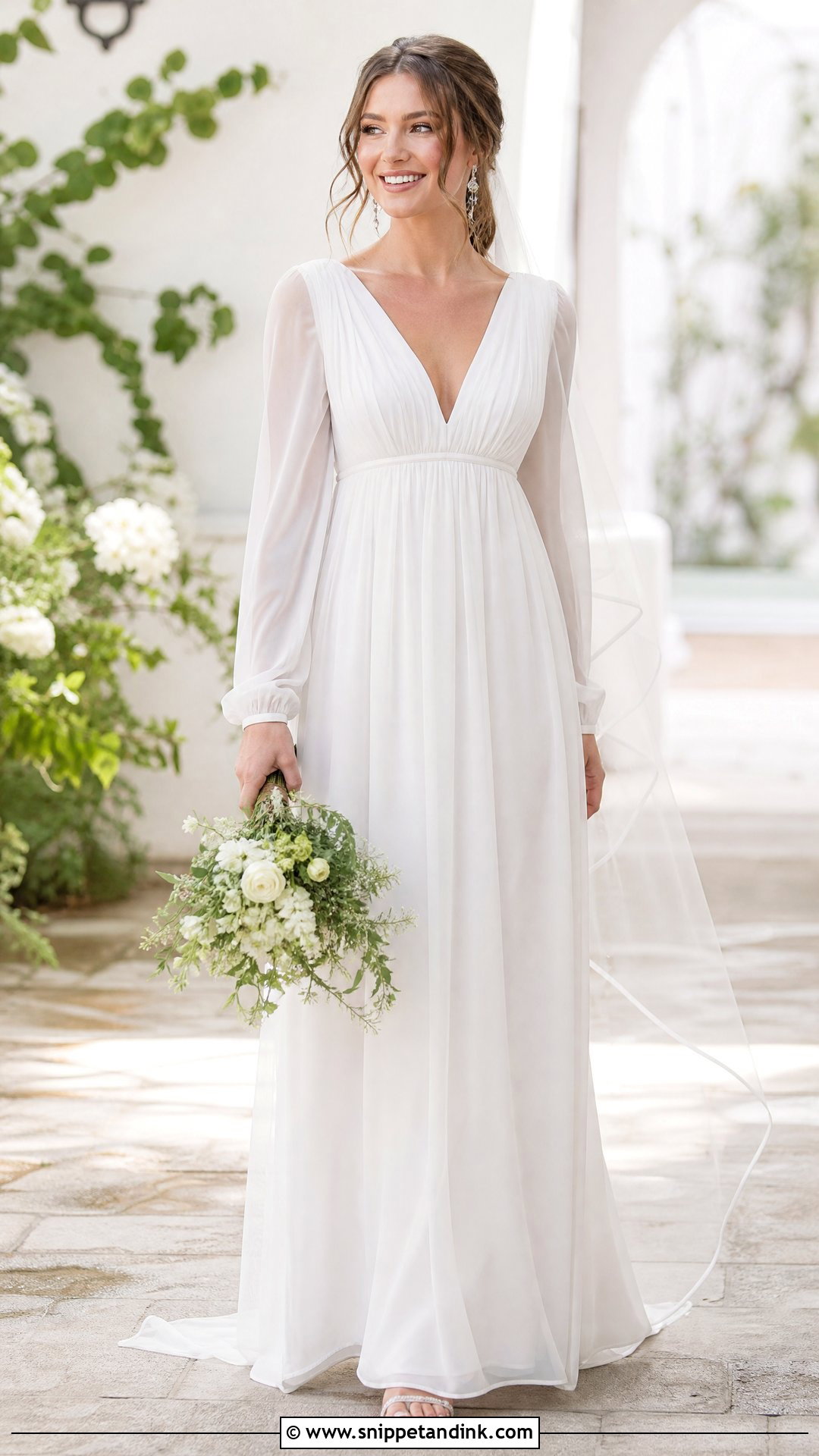
Empire waists let fabric fall loose from just under the bust, so nothing presses on the waist all day. Sheer long sleeves in chiffon, tulle or georgette add light coverage without weighing down that airy shape. Choose flexible cuffs and keep appliqués away from the widest part of the upper arm, where they’d add visual bulk. A softly gathered bodice and shallow V-neck leave room for a good supportive bra. Low embellished sandals, fine drop earrings, a ribbon-edged veil and a loose bouquet suit it. Check it from the side. Too much fabric gathered right under the bust can make the skirt tent forward.
12. Scoop-Neck Wedding Dress With Tulle Sleeves
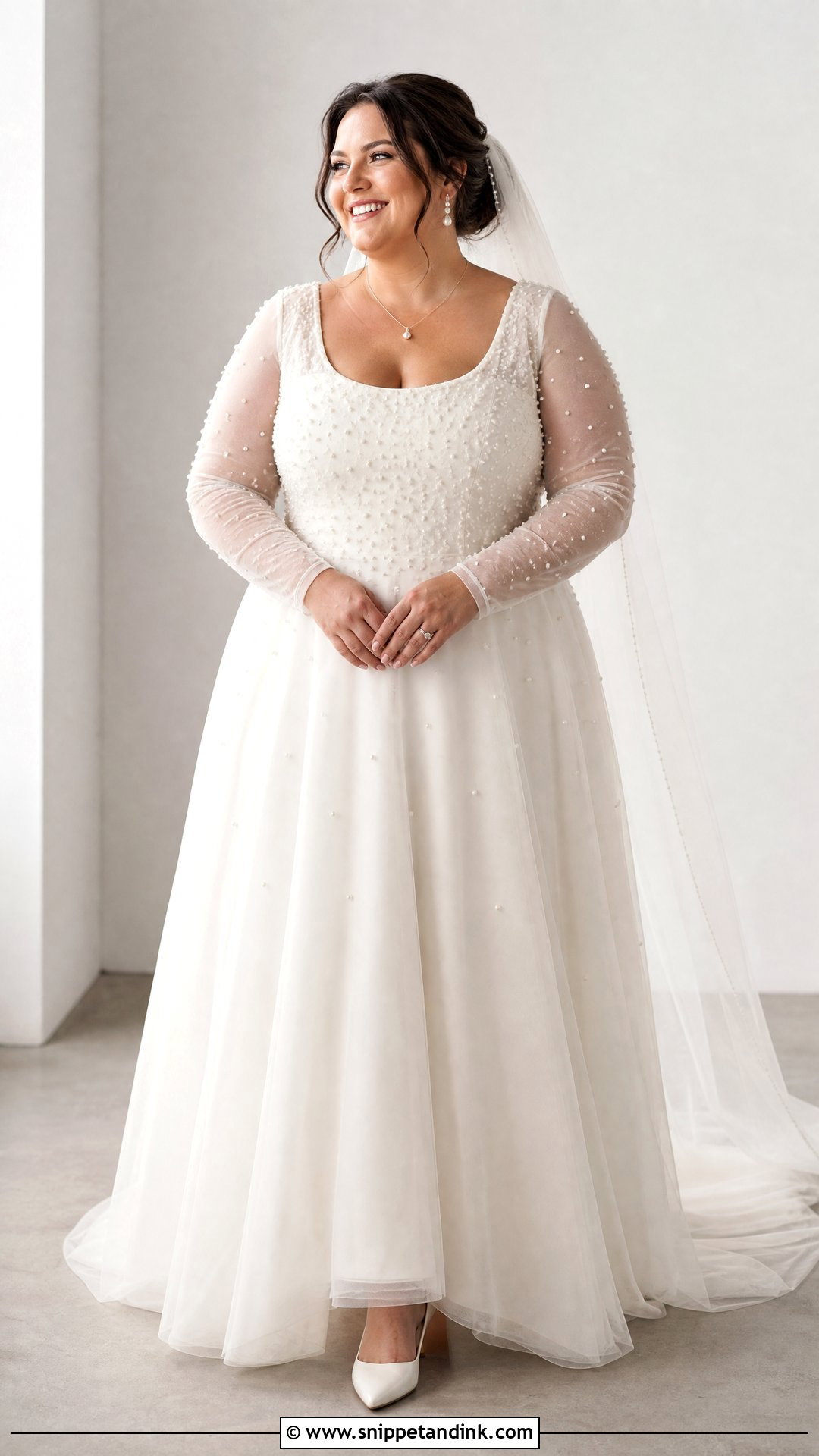
A scoop-neck wedding dress opens the face and collarbone, and fitted tulle sleeves add delicate coverage. Quality illusion fabric with some stretch moves with you; cheap mesh bags at the elbow after an hour. Sparse embroidery, tiny pearls or a few appliqués keep the sleeve from looking dense. An A-line or a clean fit-and-flare both work. Pair it with a simple pendant, pearl earrings, ivory pumps and a veil below the hair. The scoop edge should lie flat against the chest. I always have the sleeve and bodice fitted in the same session, since adjusting one changes how the other pulls.
13. Square-Neck Wedding Dress With Puff Sleeves
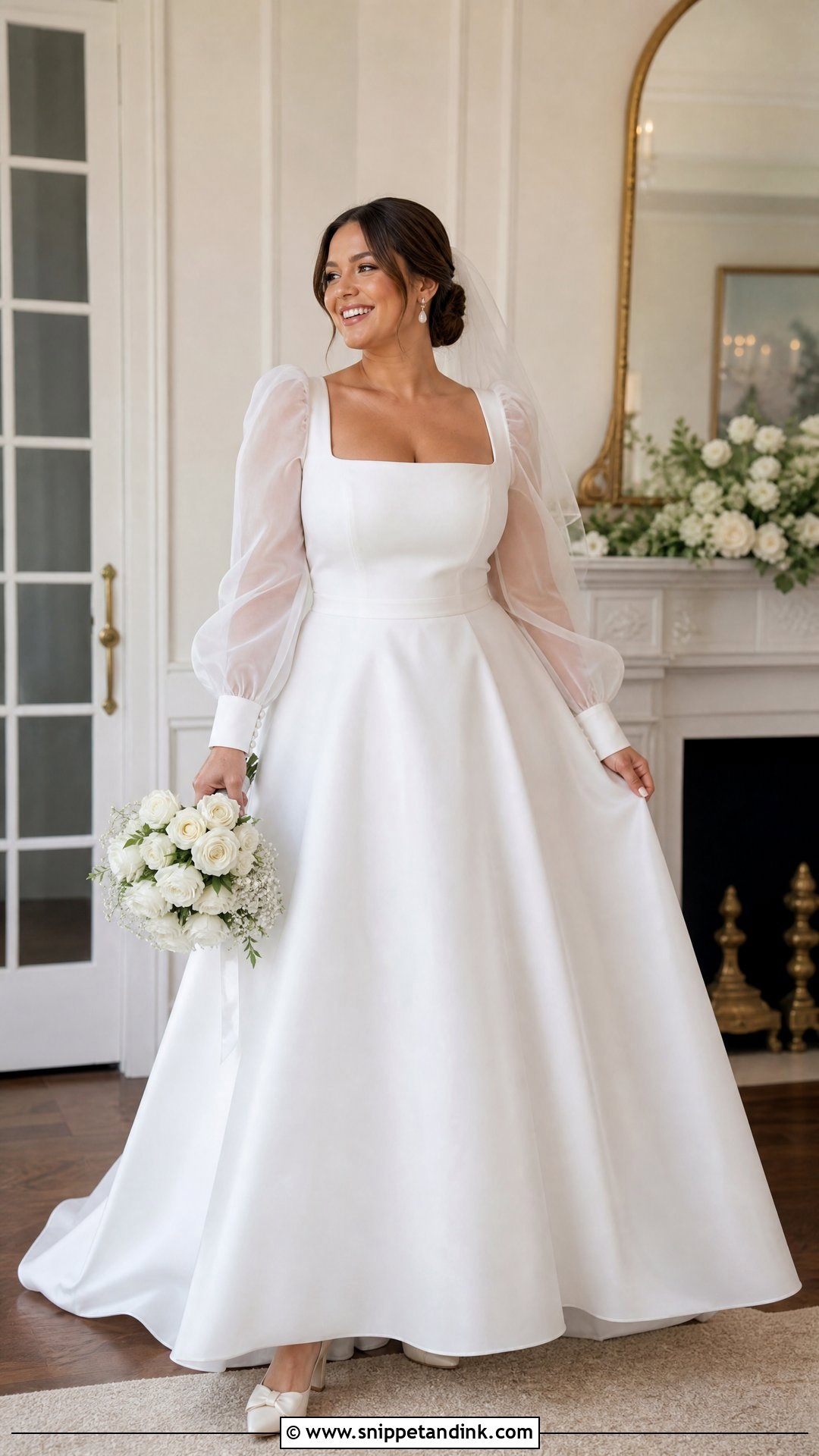
Controlled puff sleeves add structure and romance next to a square neckline. Choose a puff with volume at the shoulder that narrows before the widest part of the arm, in organza, tulle or light satin; oversized rigid puffs feel cumbersome and widen the frame. An A-line skirt and defined waist balance the outfit, with low block heels, a short veil, pearl drops and a neat bouquet. The band at the bottom of the puff is my main concern. Elastic that pinches leaves red marks visible in sleeveless moments and photos, so ask for a tailored cuff, a hidden stretch panel or a softer lining instead.
14. Tea-Length Wedding Dress With Elbow Sleeves
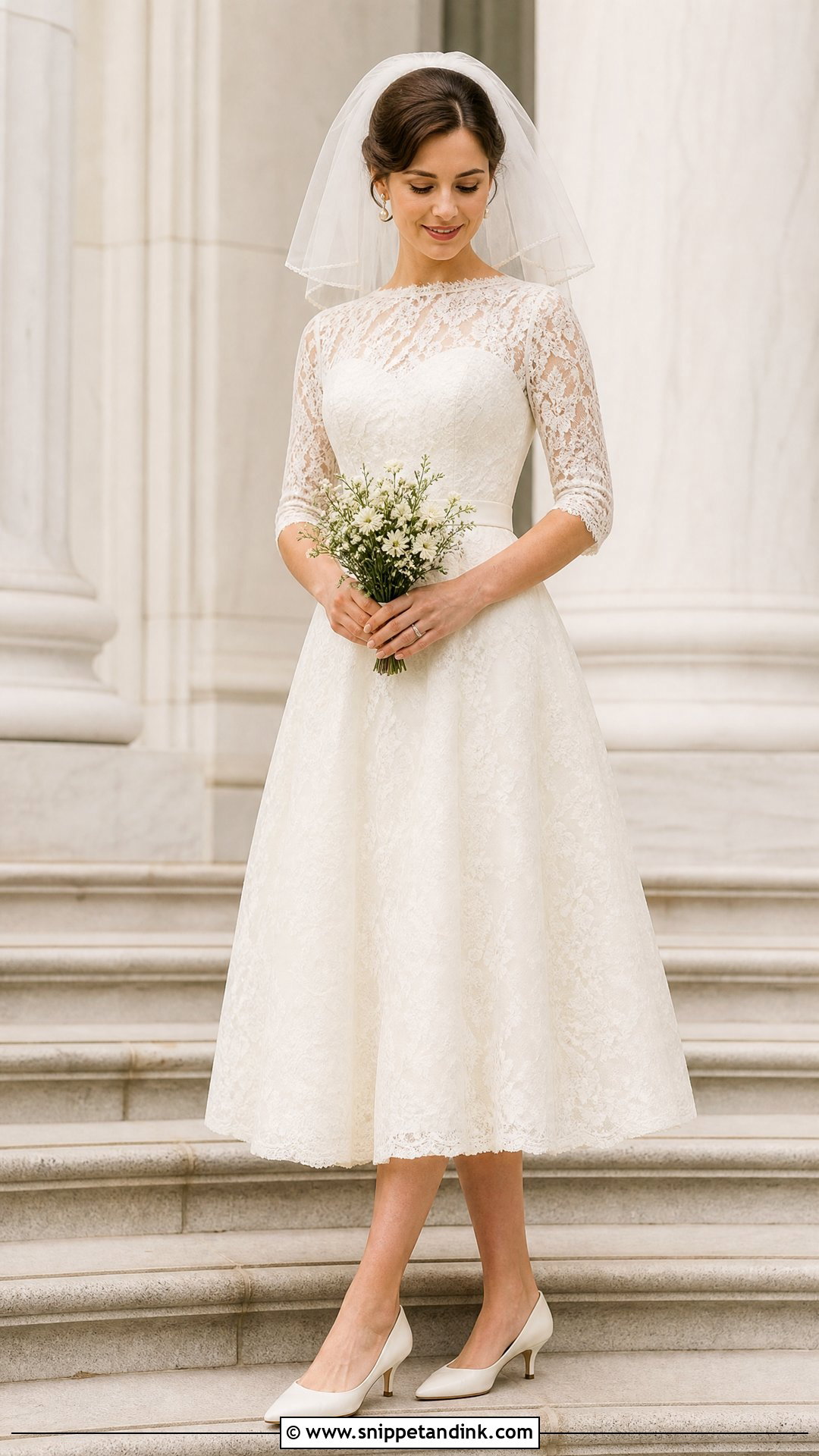
Tea length suits a courthouse ceremony or daytime party, and elbow sleeves give it a polished, slightly vintage shape. Look for a fitted bodice, defined waist and skirt falling between knee and ankle. Lace sleeves feel traditional; clean crepe feels more modern. The hem shows your shoes, so pointed kitten heels, slingbacks or embellished flats all have a role. Pearl earrings, a birdcage face veil and a compact bouquet finish it. Bring your exact shoes to the hemming appointment. And bend your elbow at the fitting, since elbow-length sleeves in fabric without stretch tend to bind right at the crease.
15. High-Neck Wedding Dress With Long Sleeves
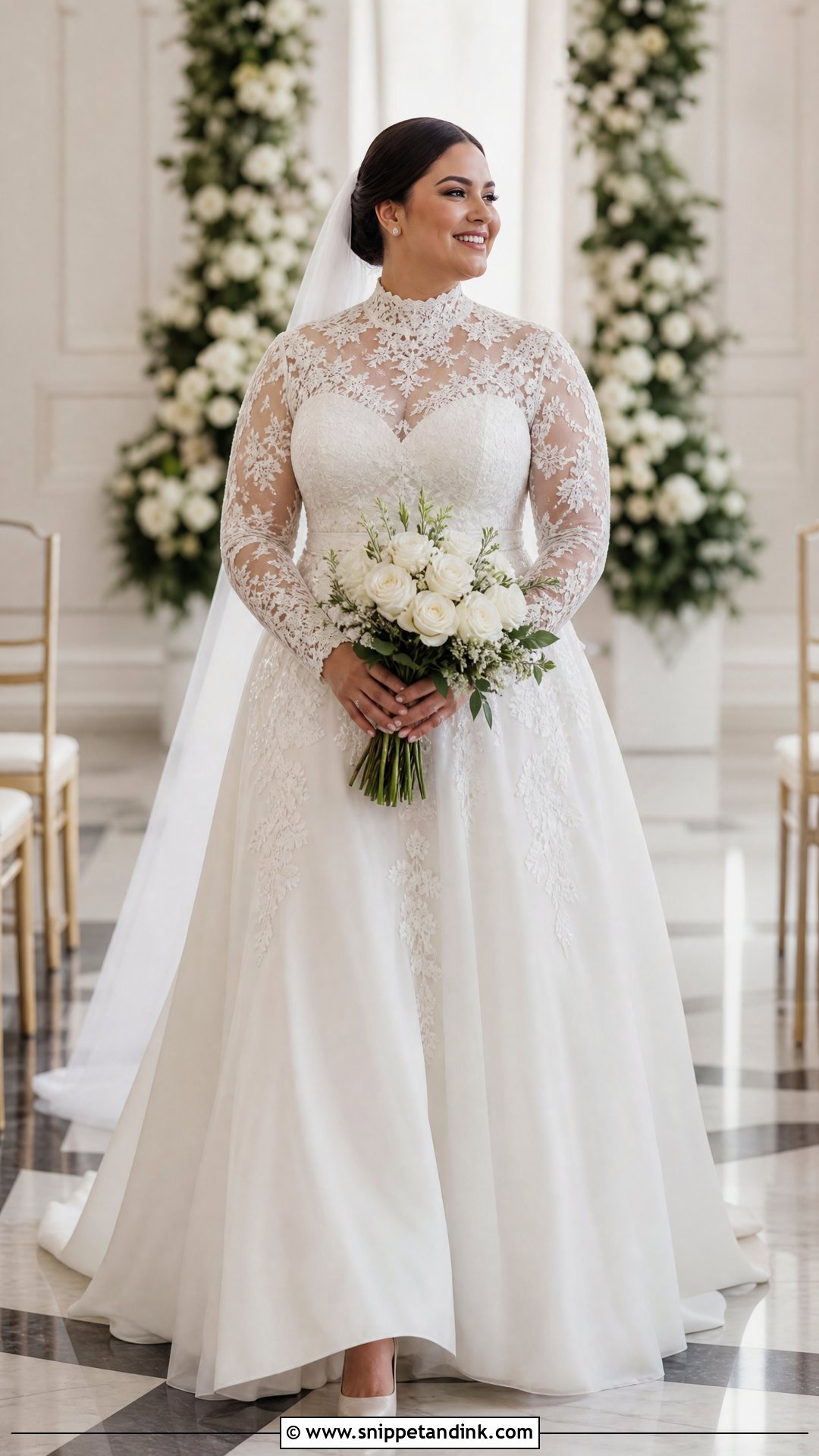
High necks and long sleeves can feel heavy if every inch is solid fabric. The trick is lightness where it counts: a sheer lace neckline over a lined sweetheart bodice keeps the upper body airy. An A-line skirt or fluid column continues the long line. Keep the sleeves fitted but not tight, with some give at the shoulders and elbows. Stud earrings, a sleek updo, closed-toe pumps and a veil beneath the hair are enough, and skip the necklace entirely. Before buying, sit, dance and lift your arms. If the high neck rides up or the sleeves pull at the shoulder seam, that tells you the armholes need work.
16. Portrait-Neck Wedding Dress With Short Sleeves
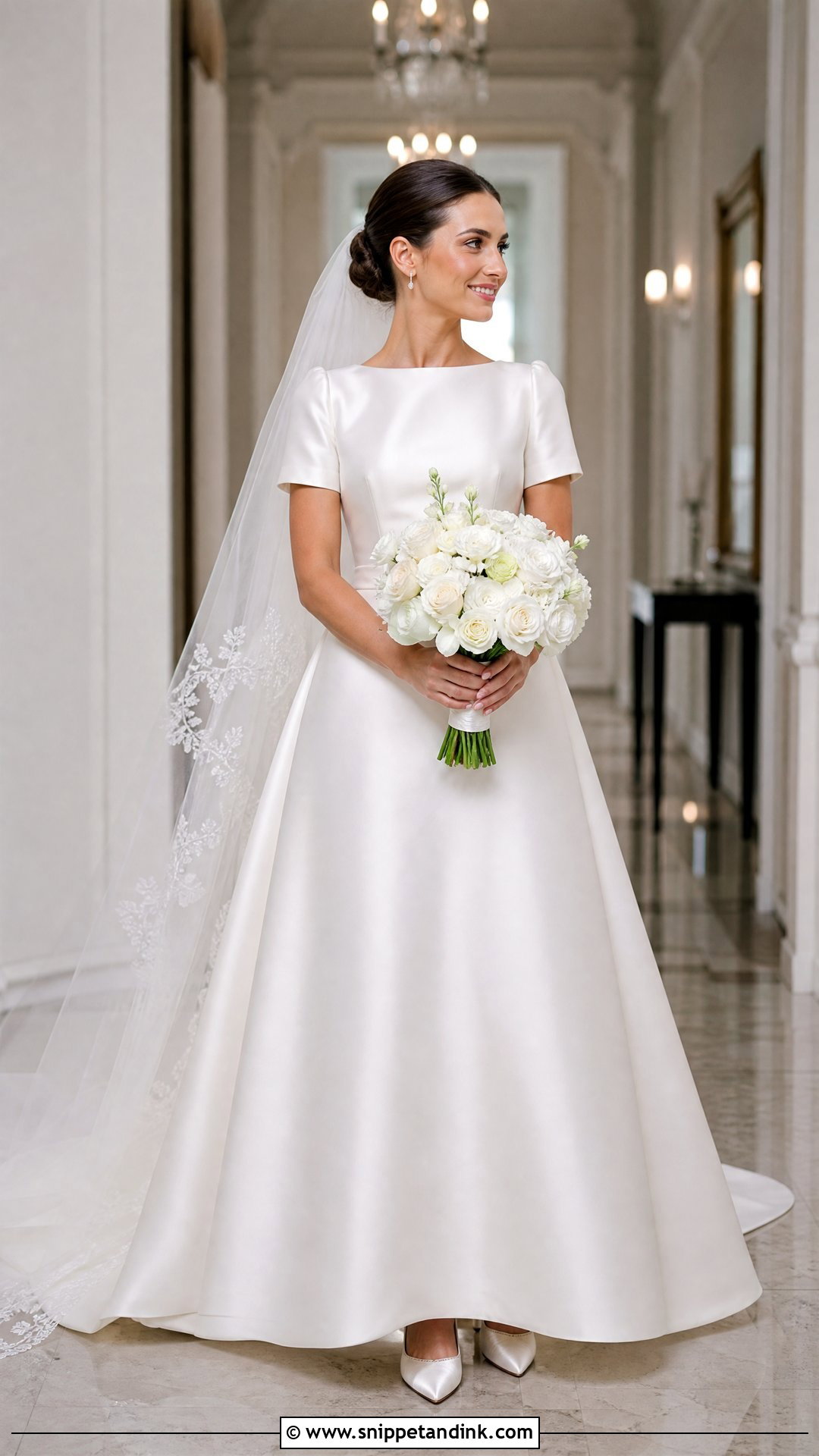
A portrait neckline sweeps wide across the shoulders and can include short sleeves that cover the upper arm. It looks best in mikado, satin or structured crepe, which hold the collar’s shape. The width needs care. A collar cut too far out pins your arms to your sides, so lift your arms forward as if hugging and see if the neckline moves with you. A fitted waist and full A-line skirt feel classic; a slimmer skirt feels modern. Pearl earrings, satin pumps, a chignon and a chapel veil suit it, and no large necklace. Ask the seamstress to check the back carefully so the collar lies flat.
17. Floral Wedding Dress With Embroidered Sleeves
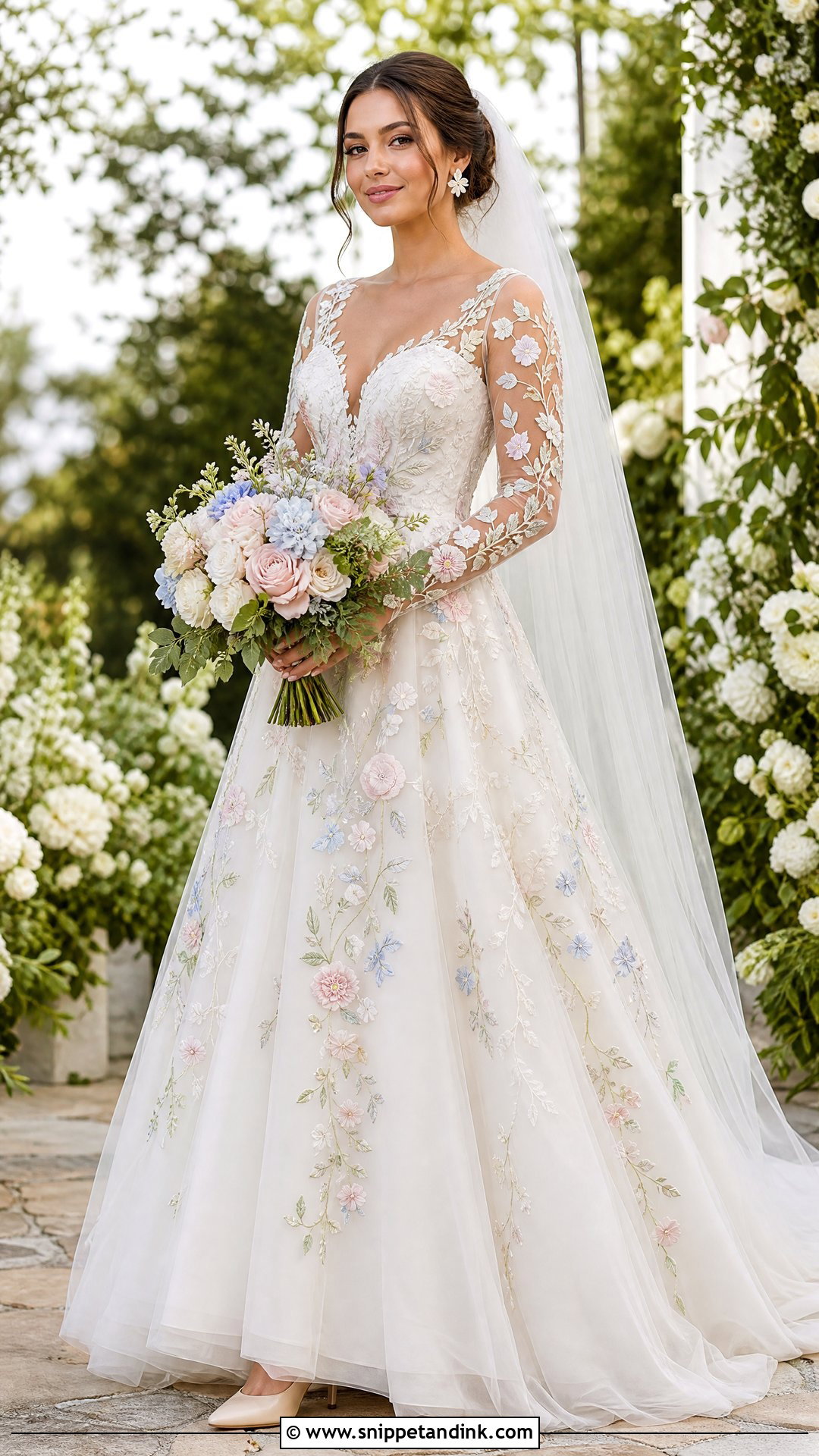
Embroidered sleeves turn coverage into the main feature of the dress. Choose embroidered tulle sleeves whose appliqués flow onto the bodice and skirt, so the sleeves look designed with the gown rather than added later. An A-line or softly layered ball gown gives the motifs room. Ivory flowers feel classic; faint blush or pastel thread feels more garden-like. Neutral shoes, small floral earrings, a simple veil and a bouquet that echoes the thread colors complete it. Run your fingertips along the inside of each sleeve during the fitting. Scratchy appliqué edges on the inner arm are the most common comfort complaint, and a soft lining fixes most of them.
18. Minimalist Crepe Wedding Dress With Fitted Sleeves
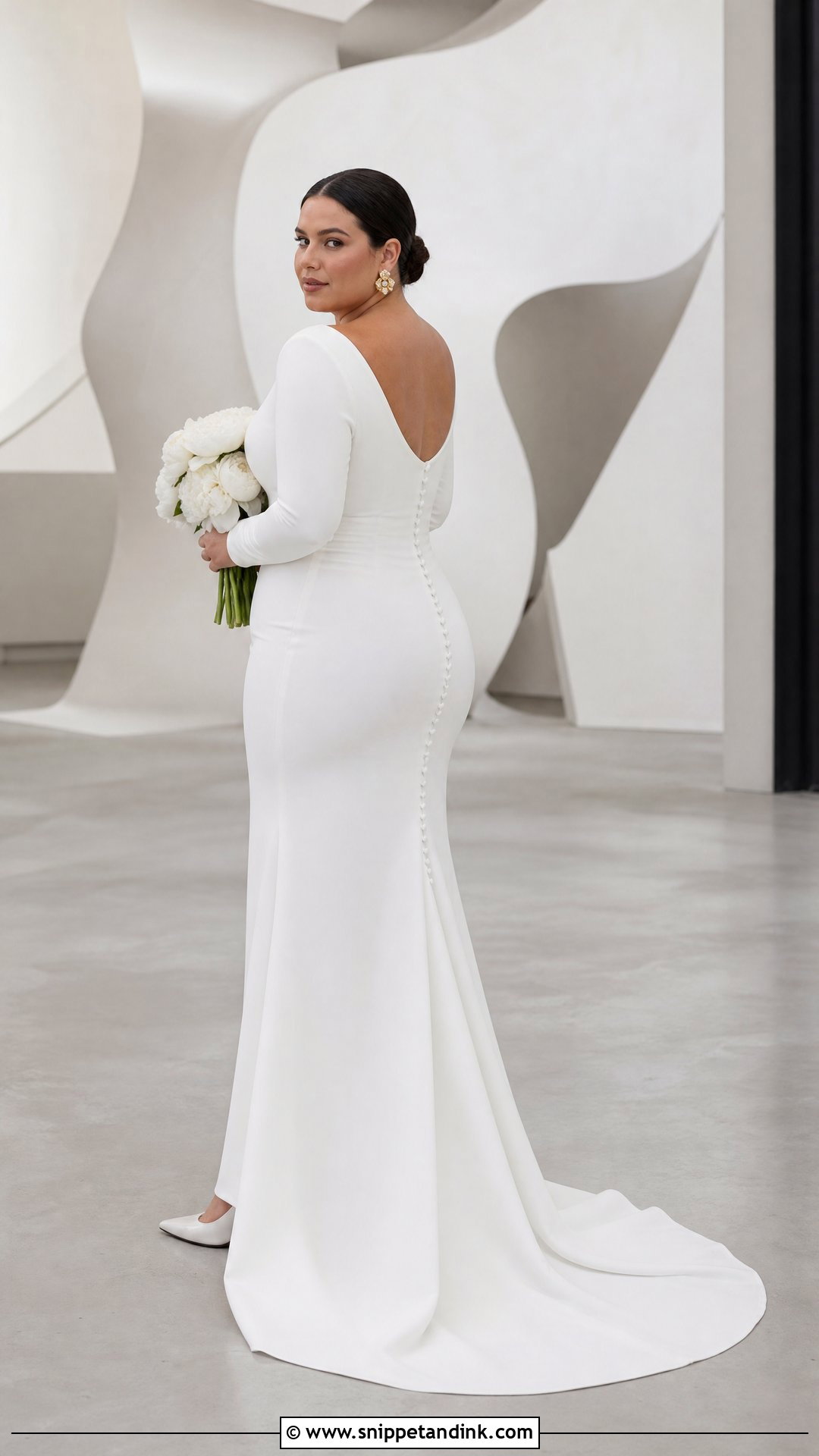
Plain crepe with fitted sleeves is sleek and modern, and it has nowhere to hide a bad fit. Choose a substantial stretch crepe that skims rather than clings, with a boat, scoop or shallow V-neck over a column or fit-and-flare skirt. Covered buttons, a low back or a detachable train add quiet interest. Sculptural earrings, pointed pumps, a smooth bun and a simple bouquet finish it. I’d put the alteration budget into the sleeves on this dress. They should lie smooth without twisting, pulling across the shoulders or bunching at the wrists and underarms, and on plain crepe every one of those faults shows.
19. Summer Wedding Dress With Split Sleeves
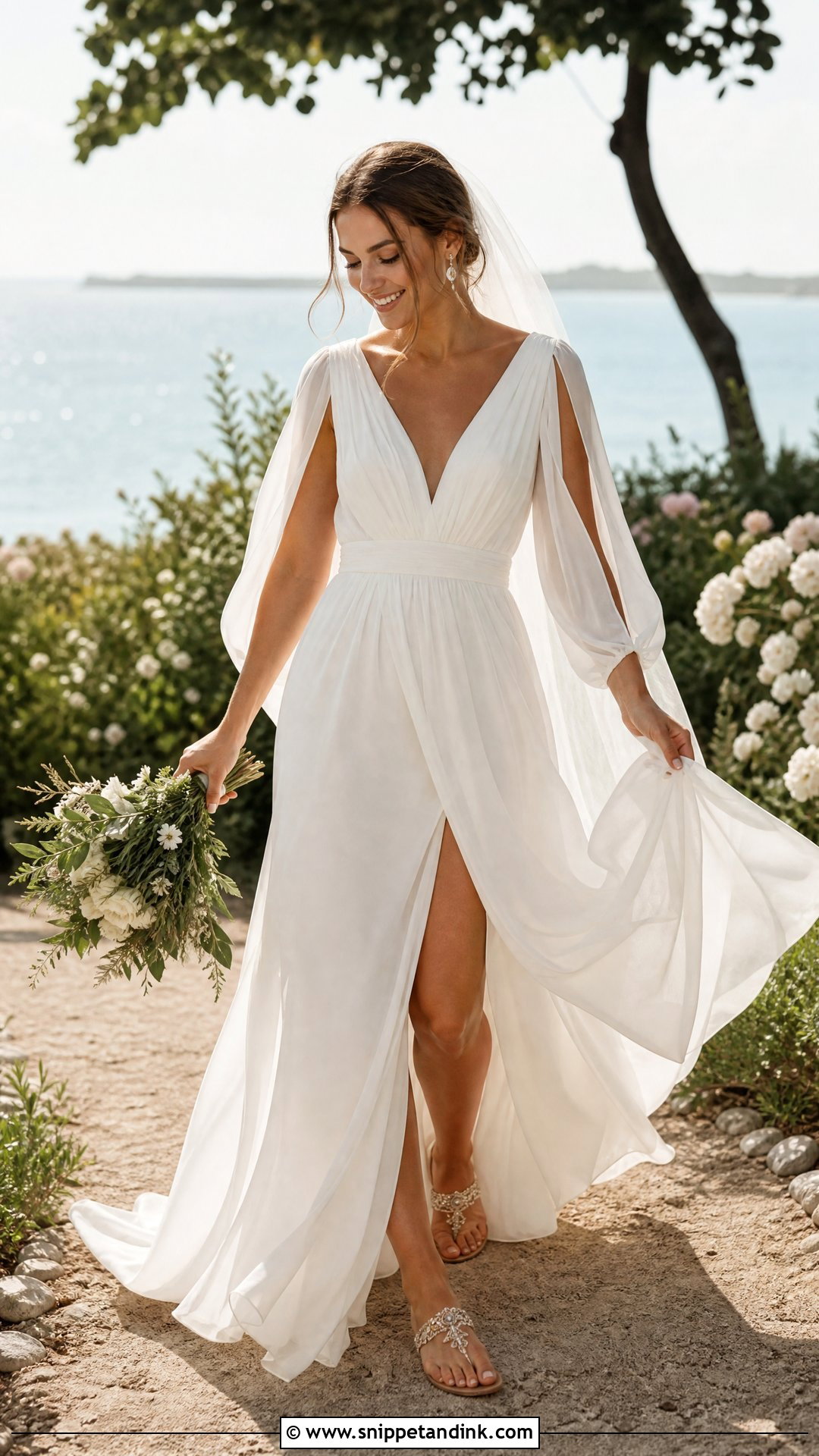
Split sleeves are hard to beat in real heat. The fabric attaches at the shoulder and opens along part of the arm, so air moves through and your hands stay free. Chiffon or georgette splits on a V-neck A-line with a softly gathered waist and light skirt look relaxed but still bridal, ideal for beaches, gardens and destination venues. Flat embellished sandals, small drop earrings, a light veil and a loose seasonal bouquet suit it. Check where the opening falls when you raise your arms, so it shows only as much as you want. In wind, a few small weights hand-stitched into the sleeve hem stop the fabric flying up.
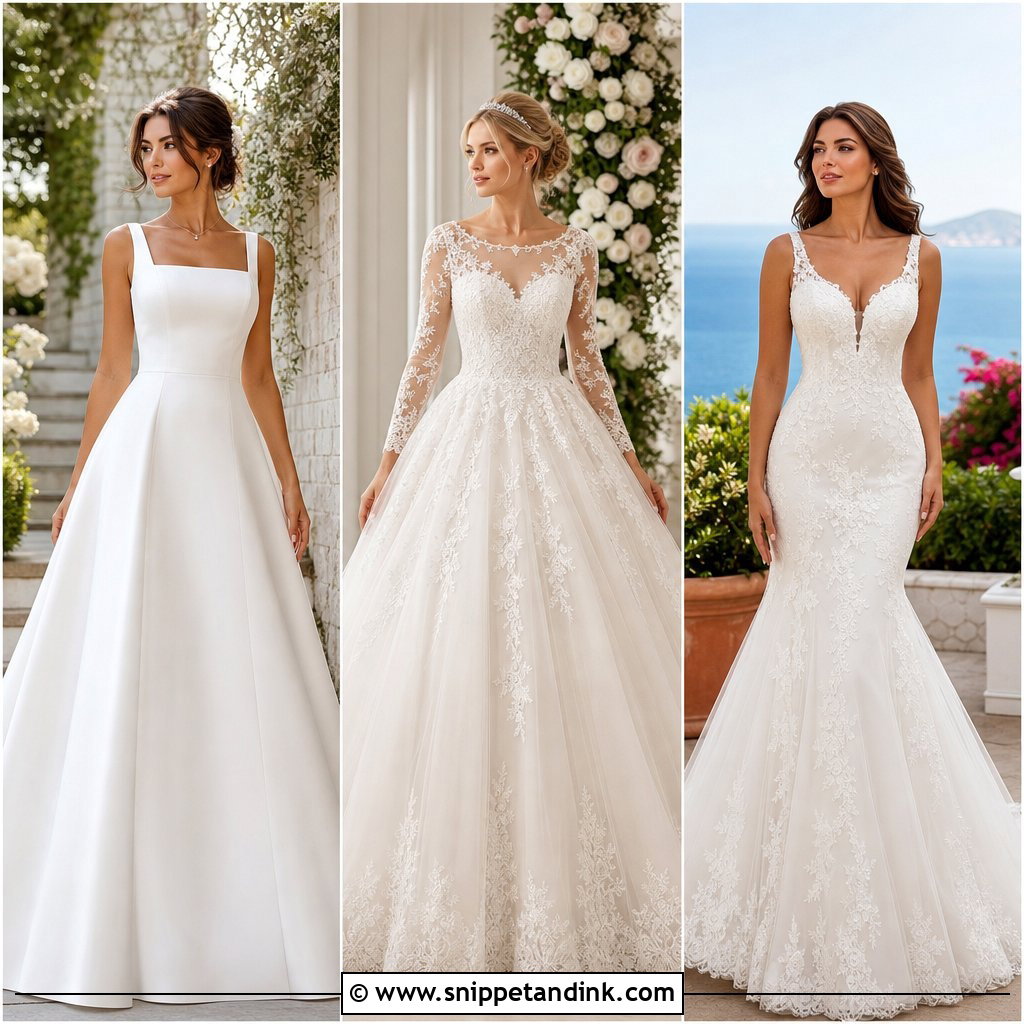
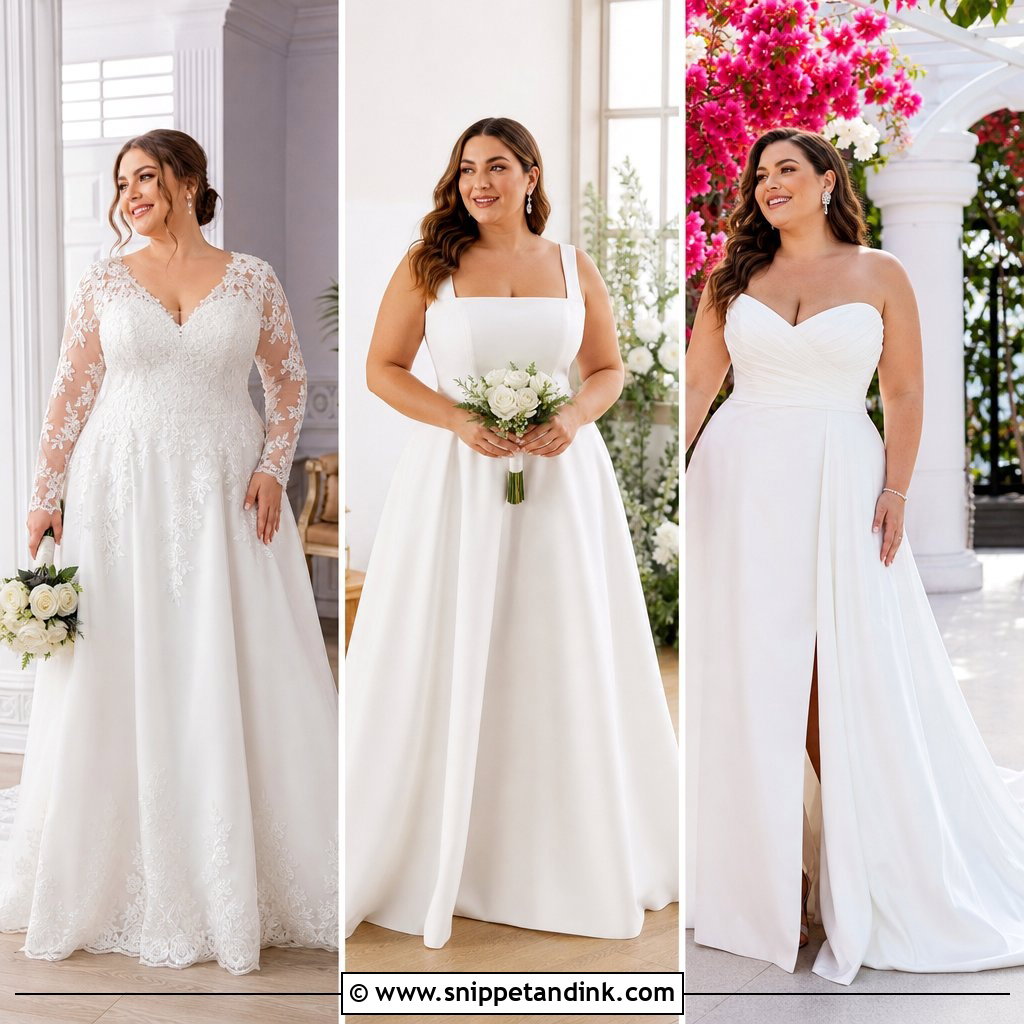
20. Winter Wedding Dress With Velvet Sleeves
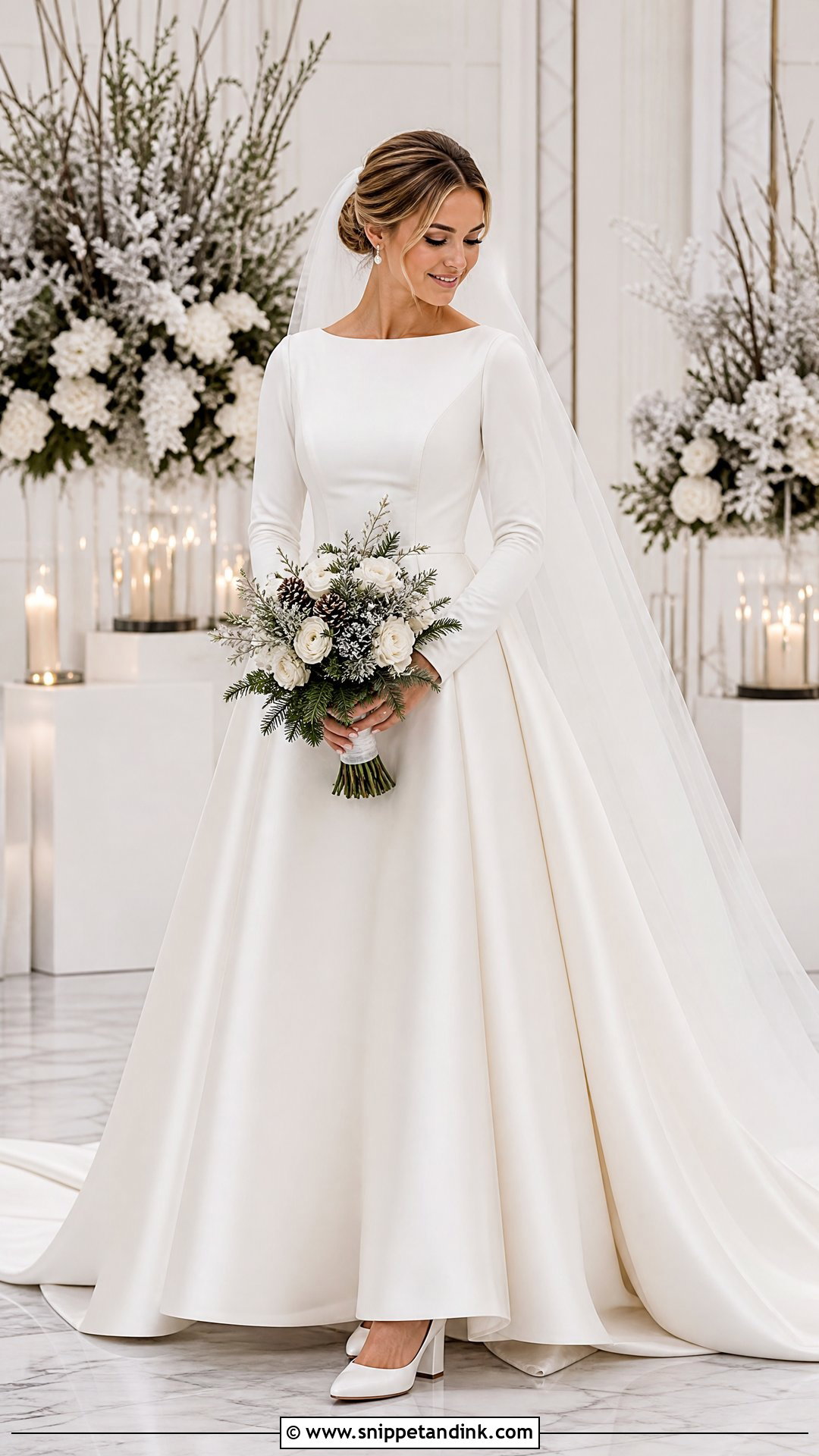
Velvet sleeves keep you warm in winter without a separate jacket. To stop the gown feeling heavy, pair fitted velvet sleeves with a clean crepe or satin bodice and an A-line skirt, or wear a removable velvet topper over a simple dress. Ivory velvet gives a single-tone look; soft champagne adds contrast. Closed-toe block heels, pearl earrings, a structured bouquet and a long veil or wrap suit it. Velvet barely stretches, so the seamstress needs precise measurements at the upper arm, elbow and shoulder. Ask for a breathable lining and enough ease to sit, dance and hug, because a velvet sleeve that’s snug in a cold fitting room feels much tighter in a warm reception.
Toppers, Boleros and Add-On Sleeves for a Gown You Already Own
Sometimes the dress is perfect and the sleeves are the only problem. Separate pieces fix that without a redesign.
Sheer toppers
A lace or tulle topper slips over a sleeveless or strapless gown and buttons or ties at the neck. It’s the lightest option, and it comes off easily for the reception. Match the ivory carefully against the gown in daylight.
Cropped jackets and boleros
A short jacket in crepe, satin or velvet gives real warmth and more structure. The hem should end at or just above your natural waist so it doesn’t break the line of the bodice.
Sewn-on sleeves
A seamstress can draft new sleeves from matching fabric and attach them to a gown’s armhole or bodice edge. It takes more time and costs more than a topper, so ask early, but the result looks like the dress was designed that way.
Holding Your Bouquet So Sleeves Fall Naturally
In portraits, arms pressed flat against the body widen the upper arm on camera, sleeve or no sleeve. Holding the bouquet at hip height with elbows relaxed and a little gap from your sides keeps the line soft. Your photographer will guide you, but practicing once in the mirror wearing the gown helps it feel natural on the day.
Sleeves That Let You Hug Everyone You Invited
No rule should decide your sleeves except your own comfort and taste. Lace, soft draping, chiffon, detachable pieces and structured necklines can all give you a complete bridal look with the coverage you want. Bring photos of gowns you like to appointments, then try a few fabrics and shapes you wouldn’t have picked. Judge each dress by what happens when you sit, walk, lift your arms and dance, not by the mirror alone. Good alterations can transform how a sleeve fits and how secure a bodice feels. Pick the dress you can celebrate in all day without once adjusting it.
You'll Like These Ideas:





Leave a Reply