
The bhabhi has one of the busiest jobs at an Indian wedding. You greet guests, sit through rituals, dance at the sangeet, pose for every family photo and still get pulled aside to fix someone’s dupatta or find the missing garland. When I dress a bhabhi, the brief is always the same: she has to look festive and clearly important to the family, without drifting into bridal territory, and she has to be able to work in it. Sarees, embroidered lehengas, shararas, Anarkalis and pre-draped modern styles all have a place. Colour and embellishment depend on the function, the venue, the season and what the bride is wearing. Footwear you can stand in and a drape that stays pinned matter as much as the fabric. Below are twenty complete looks, from traditional to modern, simple to glamorous.
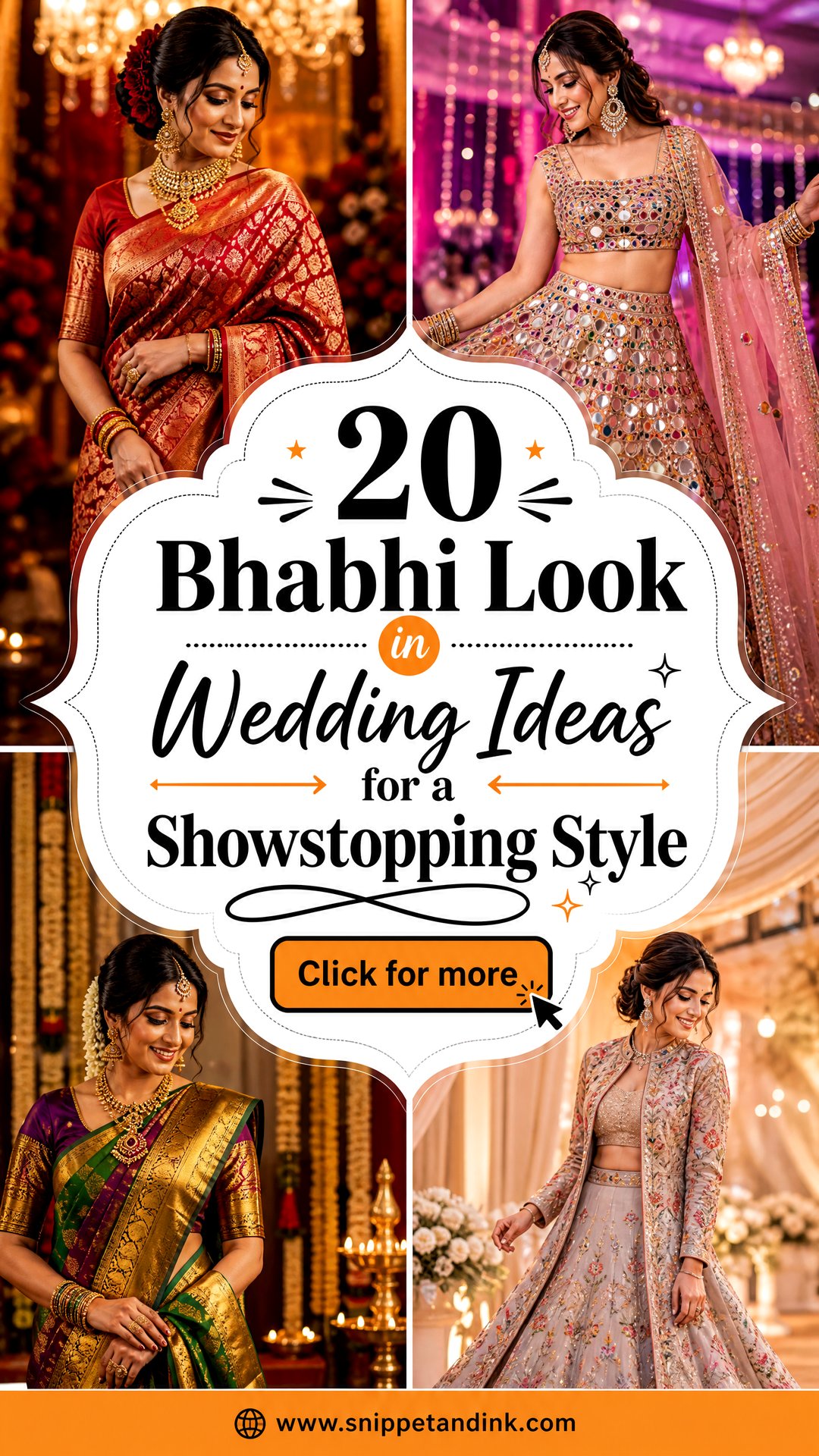
Mapping Outfits Across a Week of Functions
Most Indian weddings run over several days, and the bhabhi usually attends every function. I sit down with clients and plan the whole week before buying anything. It saves money and stops two events ending up in near-identical outfits.
- Haldi: something washable you don’t mind ruining. Yellow or a bright print, flat shoes.
- Mehndi: comfortable for sitting on the floor. Sharara, gharara or palazzo set.
- Sangeet: something you can dance in. Lighter lehenga or a structured sharara.
- Wedding ceremony: the most traditional piece. Silk saree or a richer lehenga.
- Reception: the most modern piece. Pant saree, cape lehenga or a sequin saree.
Staying a step behind the bride
Ask the bride or her family which colours she’s wearing for each event before you shop. Avoid matching her main colour for the wedding itself, and keep your embroidery and jewelry a level below hers. Many families also have their own colour traditions, such as red reserved for the bride or certain shades avoided at ceremonies, so check with an elder instead of guessing.
Jewelry can be shared across functions. One good set of jhumkas, a choker and a pair of gold bangles can carry three different outfits if the colours sit in the same family.
1. Red Banarasi Saree Bhabhi Look
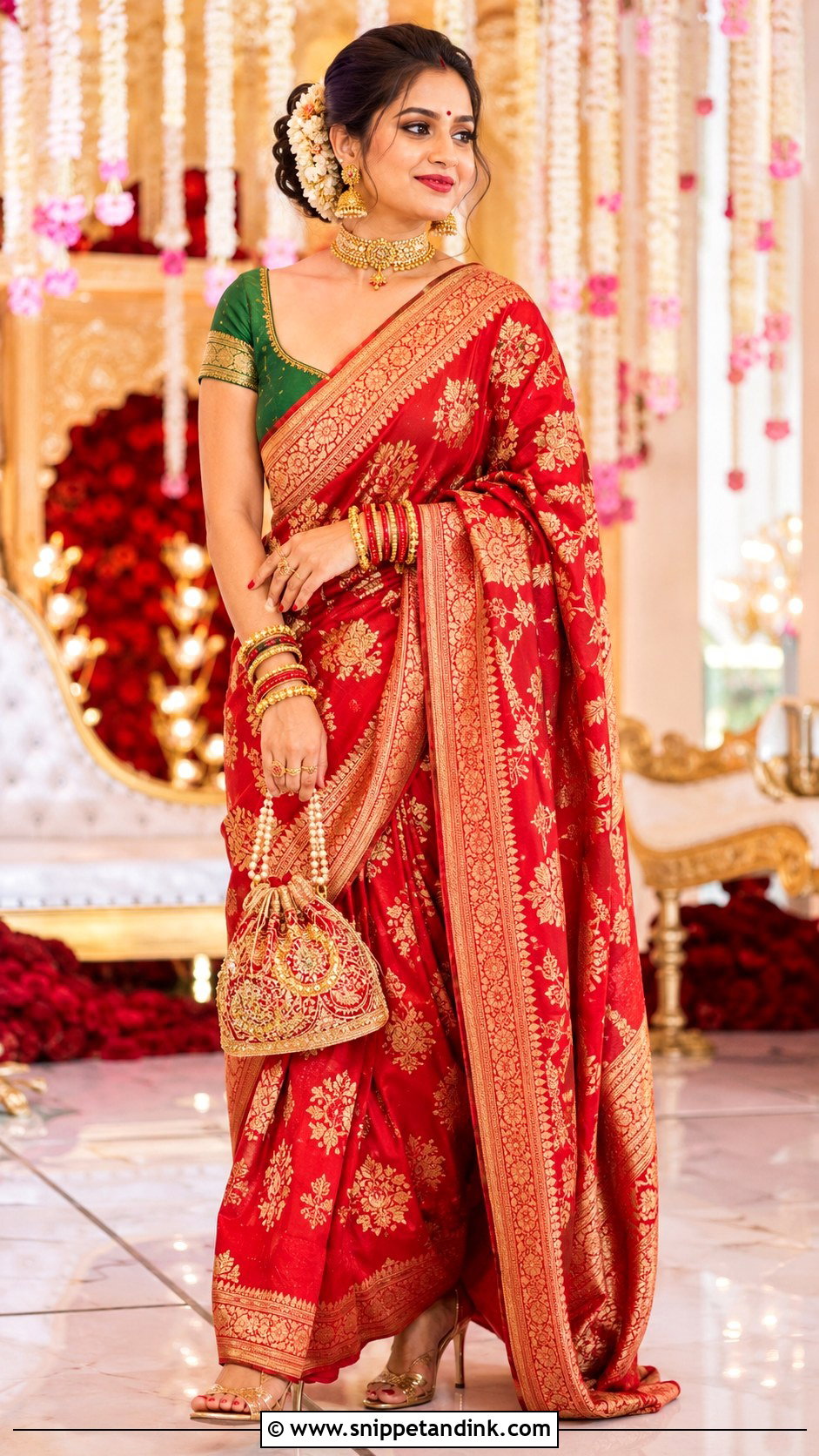
For the main ceremony, a red Banarasi is the most traditional bhabhi look there is. I’d go for maroon, vermilion or a rich red with woven gold butis instead of a densely worked bridal saree, so there’s no confusion about who the bride is. Pair it with a fitted gold, bottle-green or red blouse featuring elbow-length sleeves, a short choker, medium jhumkas, stacked bangles and a small bindi. A bun with fresh flowers suits it, or soft waves if you prefer your hair open. Banarasi silk is heavy at the pallu because of the zari, so pin it at the shoulder and again lower down at the back. Gold block heels or embellished juttis, kohl, warm blush, a muted red lip and a potli matching the border finish it.
2. Pastel Floral Lehenga Bhabhi Look
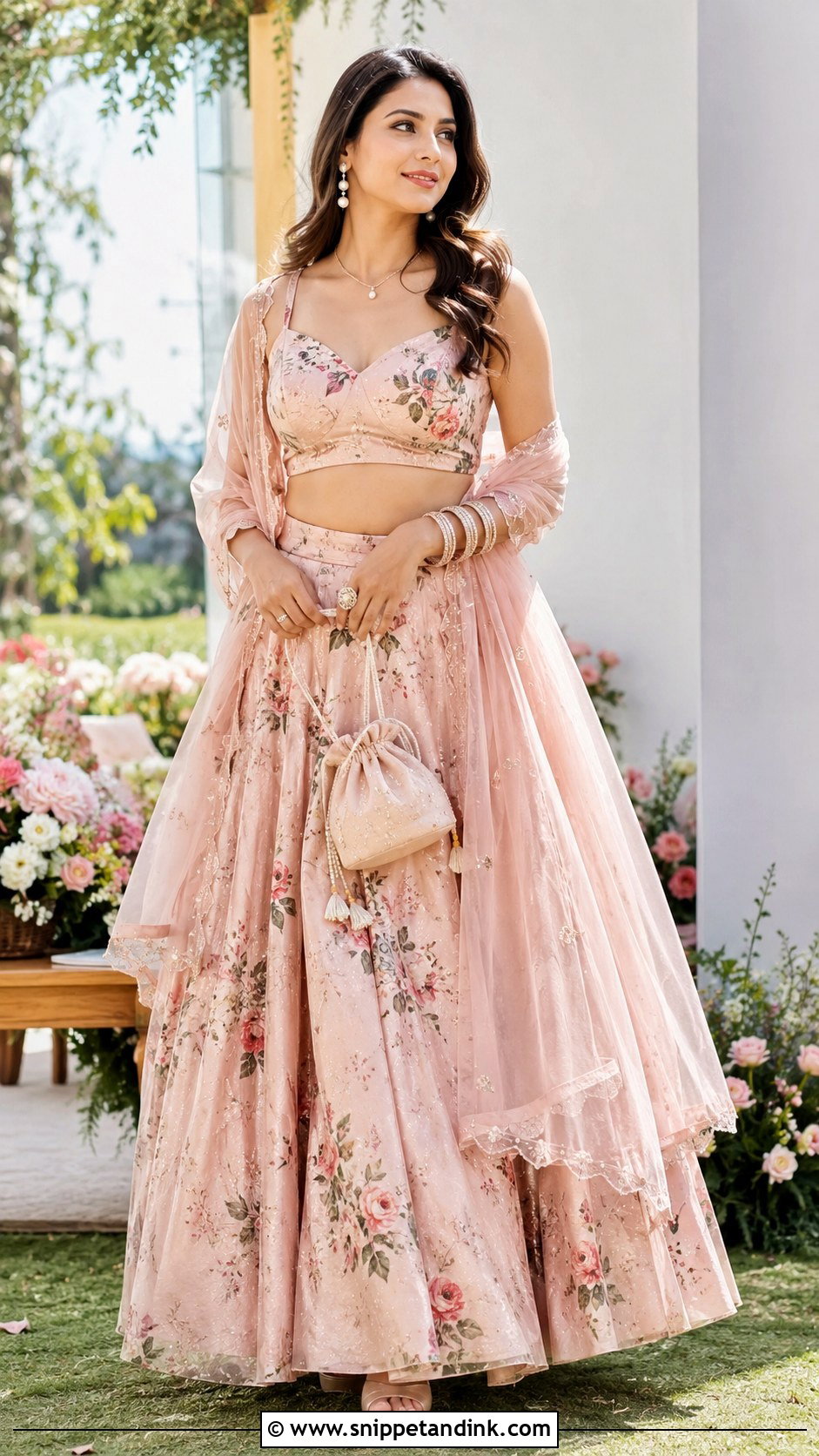
Daytime and outdoor weddings are where pastels belong. Pick blush, mint, peach or powder blue with fine floral embroidery and a light net or organza dupatta. Heavy sun washes out dark colours in photos, while pale shades glow. Throw the dupatta over one shoulder so your hands stay free. Pearl earrings, a slim necklace and a few bangles are enough; a full heavy set looks out of place in daylight. A low ponytail or soft curls suit it, with nude platforms or embroidered wedges that won’t sink into grass. Keep the makeup light and set it well, because a pastel outfit makes any oily shine on the face more obvious.
3. Green Sharara Bhabhi Look
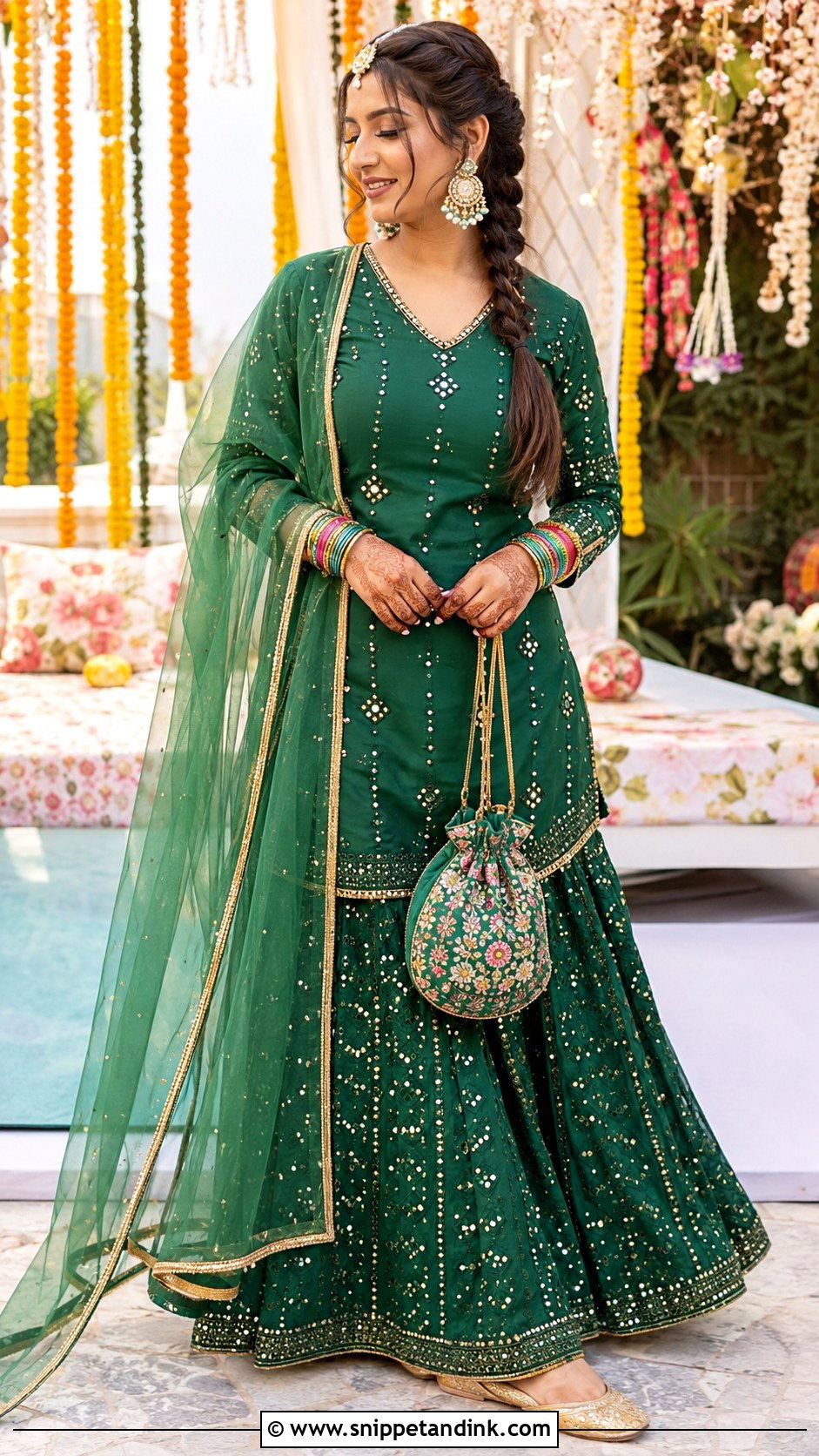
Mehndi is usually the most relaxed function, and a sharara gives you room to sit cross-legged and dance without fuss. Emerald, parrot green or sage all work, with a short embroidered kurti, wide pants and a light dupatta. Mirror work, gota borders or small florals look festive without weight. Chandbalis, colourful bangles, a statement ring and gold juttis complete it. For dancing, wrap the dupatta around your arms or pin it on one shoulder. A braided ponytail with small flower pins keeps hair out of your face. Fresh makeup, defined lashes, peach blush and a pink-nude lip, plus a small potli. If you’re getting mehndi applied yourself, choose sleeves that end above the wrist so wet paste doesn’t smudge on the fabric.
4. Yellow Anarkali Haldi Bhabhi Look
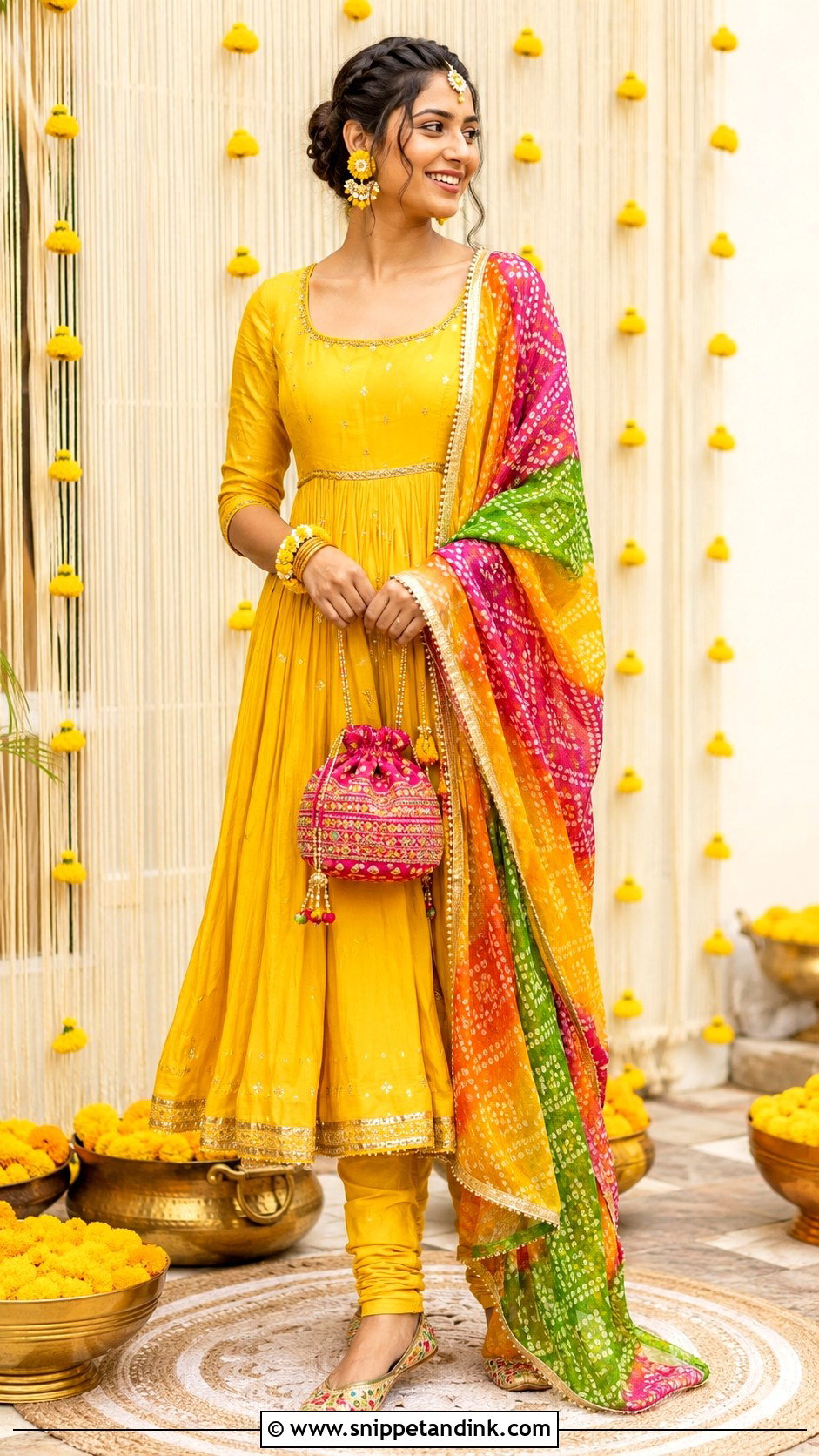
Haldi is the messiest function of the week, so dress for it. Yellow is the obvious choice, and a cotton-silk or light georgette Anarkali with modest flare and a little gota or mirror work is easy to wear. Pair it with churidar and a contrasting floral or Bandhani dupatta. Floral earrings, slim bangles and a small maang tikka are plenty. Flat juttis are a must; you’ll be sitting on the floor and stepping around wet paste. A braided bun or low ponytail stays tidy. Turmeric stains silk and pale embroidery quickly and permanently, so don’t wear anything precious. Waterproof mascara, very light base and a small bindi finish it.
5. Mirror Work Lehenga Sangeet Bhabhi Look
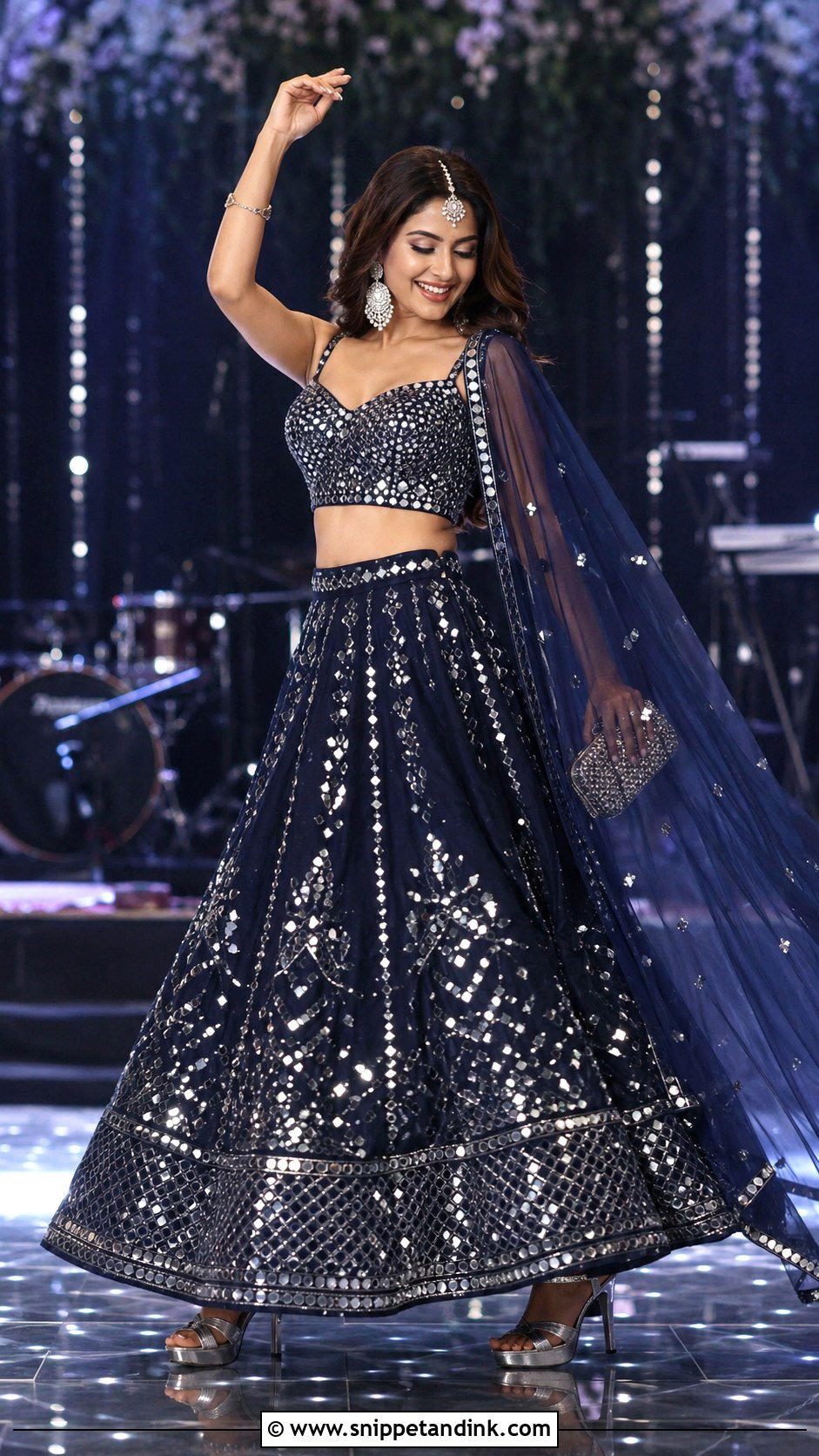
Mirror work was made for the sangeet: every turn catches the stage lights. Pick a jewel tone, such as navy, wine, teal or deep purple, with a moderately flared skirt and a blouse that actually supports you through a choreographed number. Pin the dupatta at the shoulder and tuck it at the waist so you’re not adjusting it mid-routine. Statement earrings and a slim maang tikka suit it; skip a big necklace if the blouse is heavily worked. Metallic block heels or padded juttis are the sensible choice. Mirror pieces have sharp edges, and the first thing I check is the inside of the blouse sleeves for anything that scratches. A sleek ponytail or secure braid, defined eyes and a long-wear berry lip keep it camera-ready.
6. Silk Saree Wedding Bhabhi Look
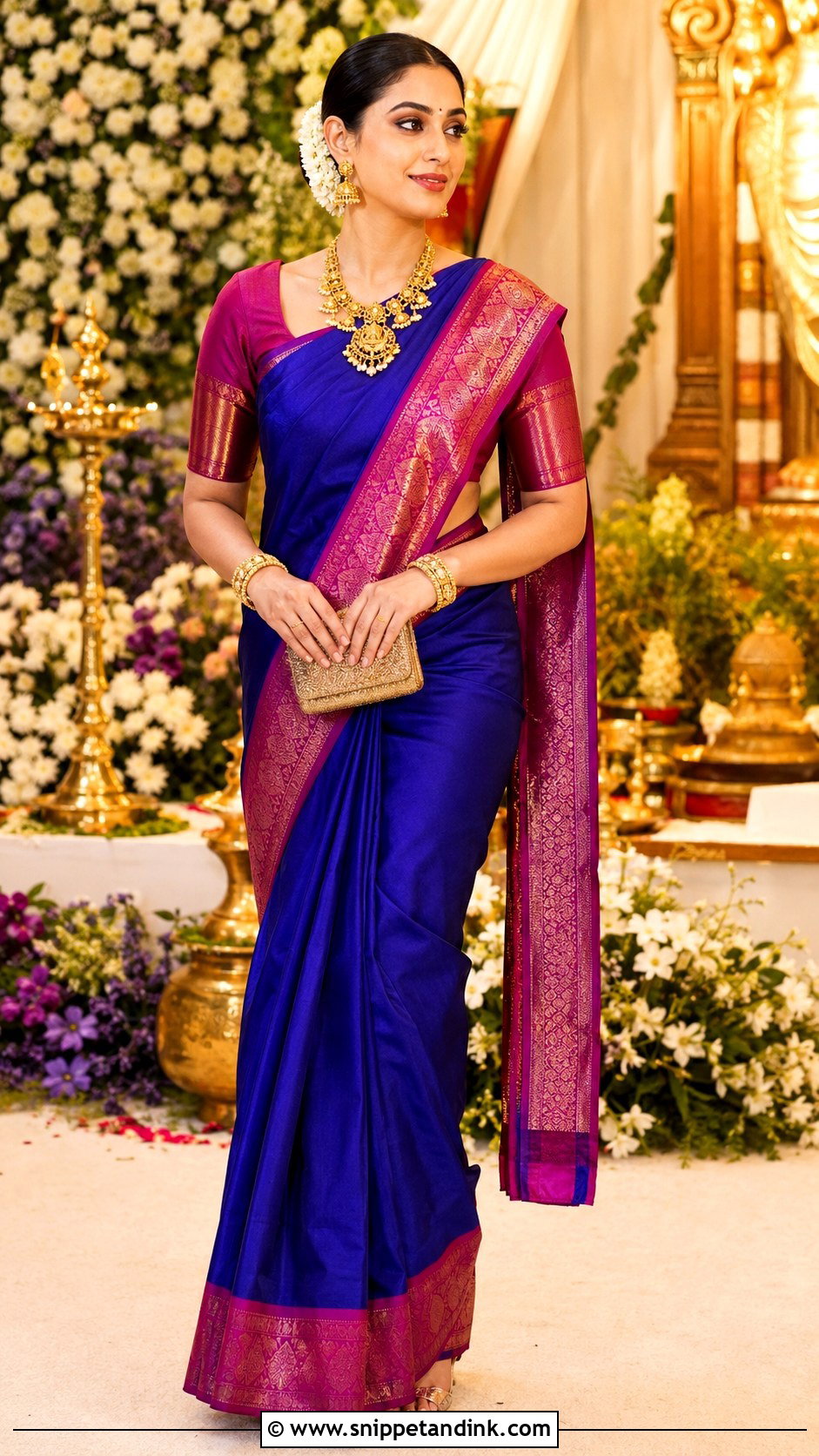
A silk saree gives you a dignified line for the rituals, when you’ll be standing near the mandap for long stretches. Jewel tones such as royal blue, magenta, emerald or rust with a contrasting woven border feel classic. A tailored blouse with a square, boat or modest V-neck updates it without losing the tradition. Temple earrings, a matching necklace, bangles and a bindi suit it, with a centre-parted flower bun. Low gold heels or embellished sandals help through long ceremonies. Pure silk pleats hold best when they’re pressed in the night before and pinned at the waist before you leave. Kohl, a warm lip and a structured clutch big enough for a phone finish it.
7. Cape Lehenga Reception Bhabhi Look
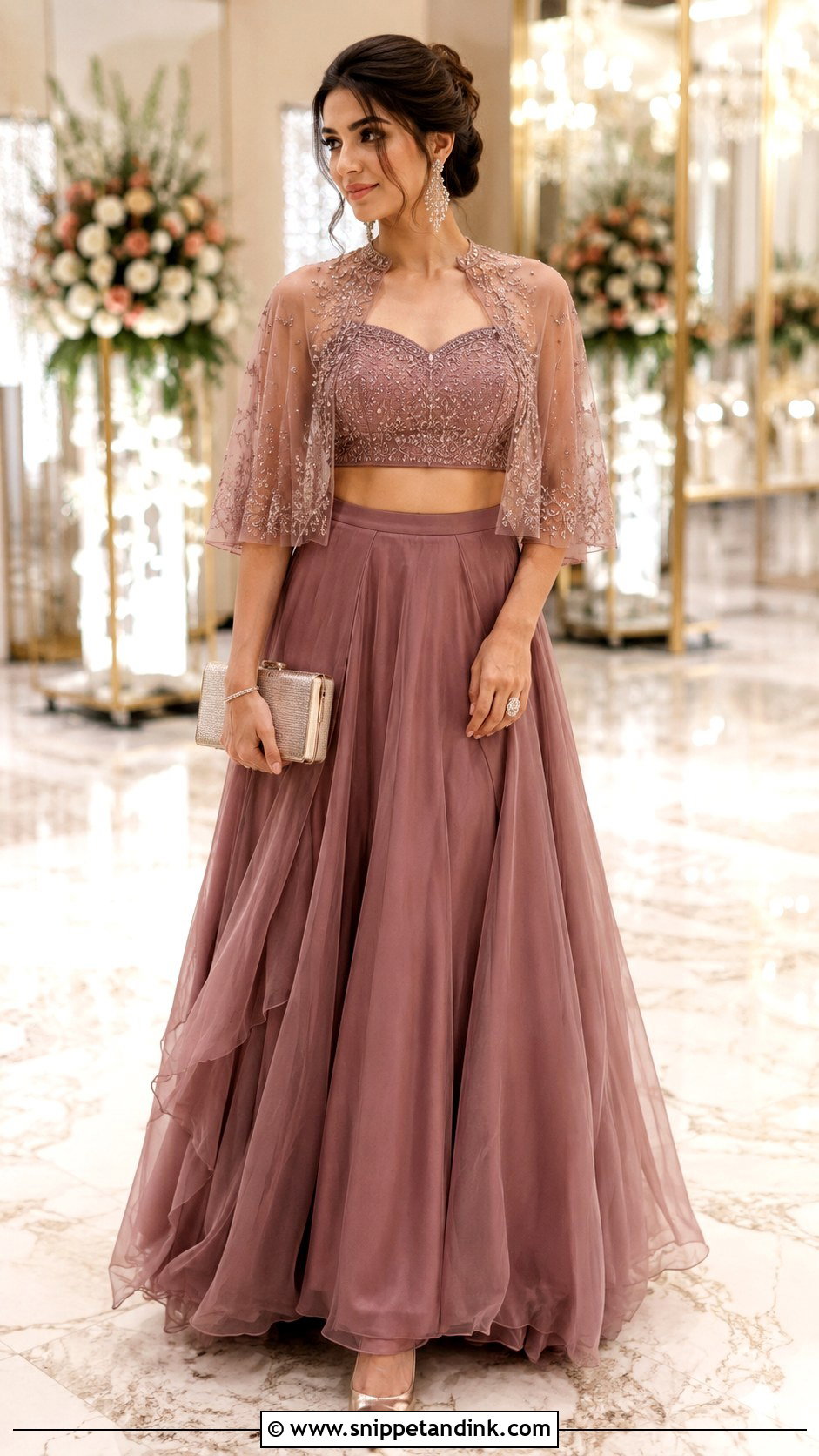
If managing a dupatta all evening sounds exhausting, a cape lehenga solves it. Champagne, mauve, dusty blue or emerald suit a reception, with a fitted blouse under a sheer embroidered cape or one with light sequins. Waist or knee length keeps the proportions balanced; a floor-length cape over a full skirt starts to swamp you. Sleek drops, a cocktail ring and a fine bracelet are enough. Pointed metallic heels and a hard-case clutch keep it modern, with smooth waves or a low bun. Try the cape on with your arms lifted, because some are cut narrow at the shoulder and restrict how high you can reach to hug people.
8. Ivory Chikankari Bhabhi Look
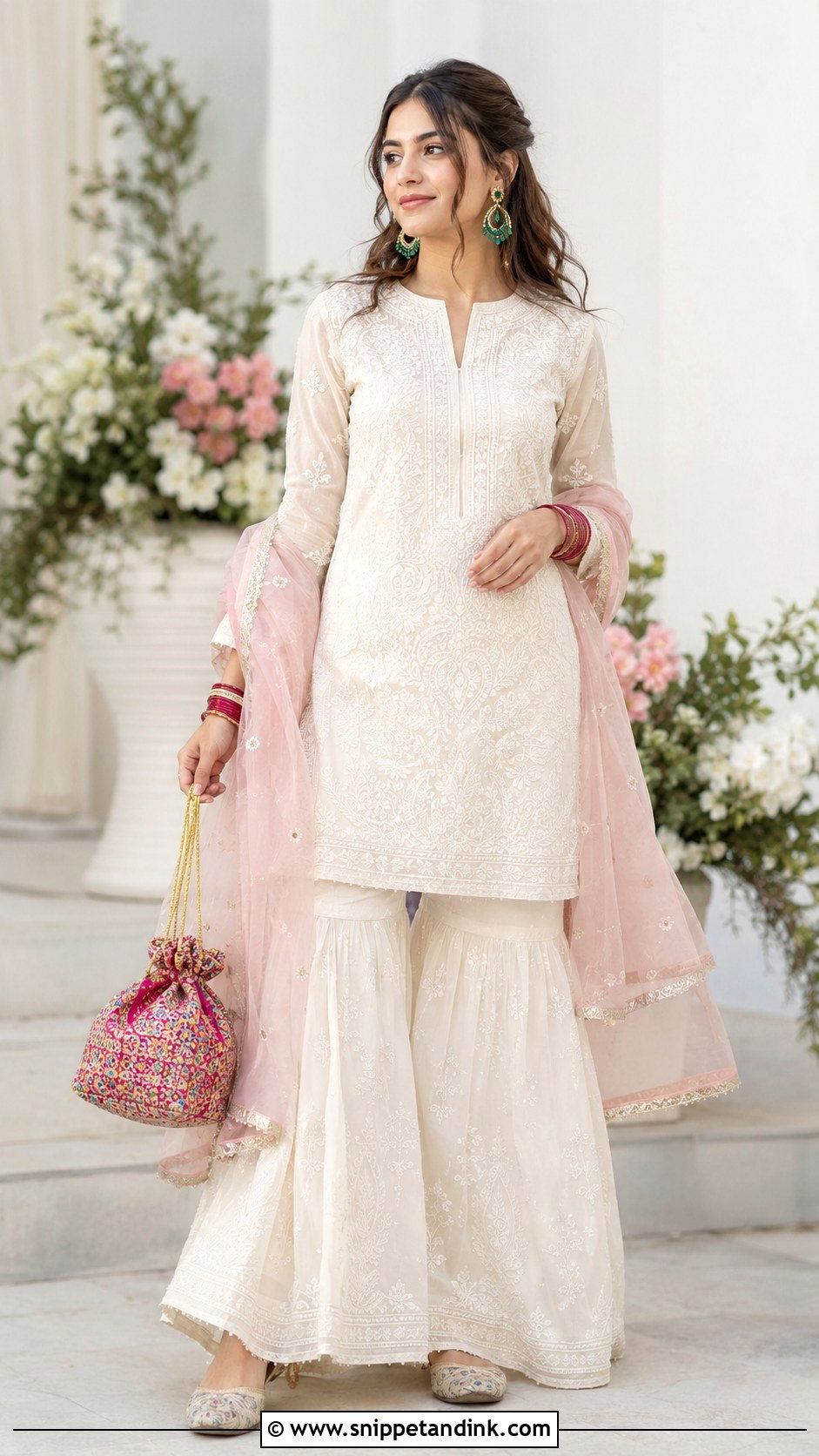
Ivory Chikankari is a lovely choice for a daytime function when you want something quiet. Chikankari is fine hand embroidery traditionally worked on light fabric, so make sure the kurta is lined or it can be sheer in sunlight. Pair it with a sharara, straight pants or a soft skirt. Bring in colour through a pastel dupatta, emerald earrings, ruby bangles or a bright potli. Silver jewelry works when the embroidery has sequins or a little mirror work. Embroidered juttis or low block heels suit it, with a loose bun, half-up hair or smooth waves. Some families avoid white at weddings, so check with your mother-in-law before you commit.
9. Pink Gharara Mehndi Bhabhi Look
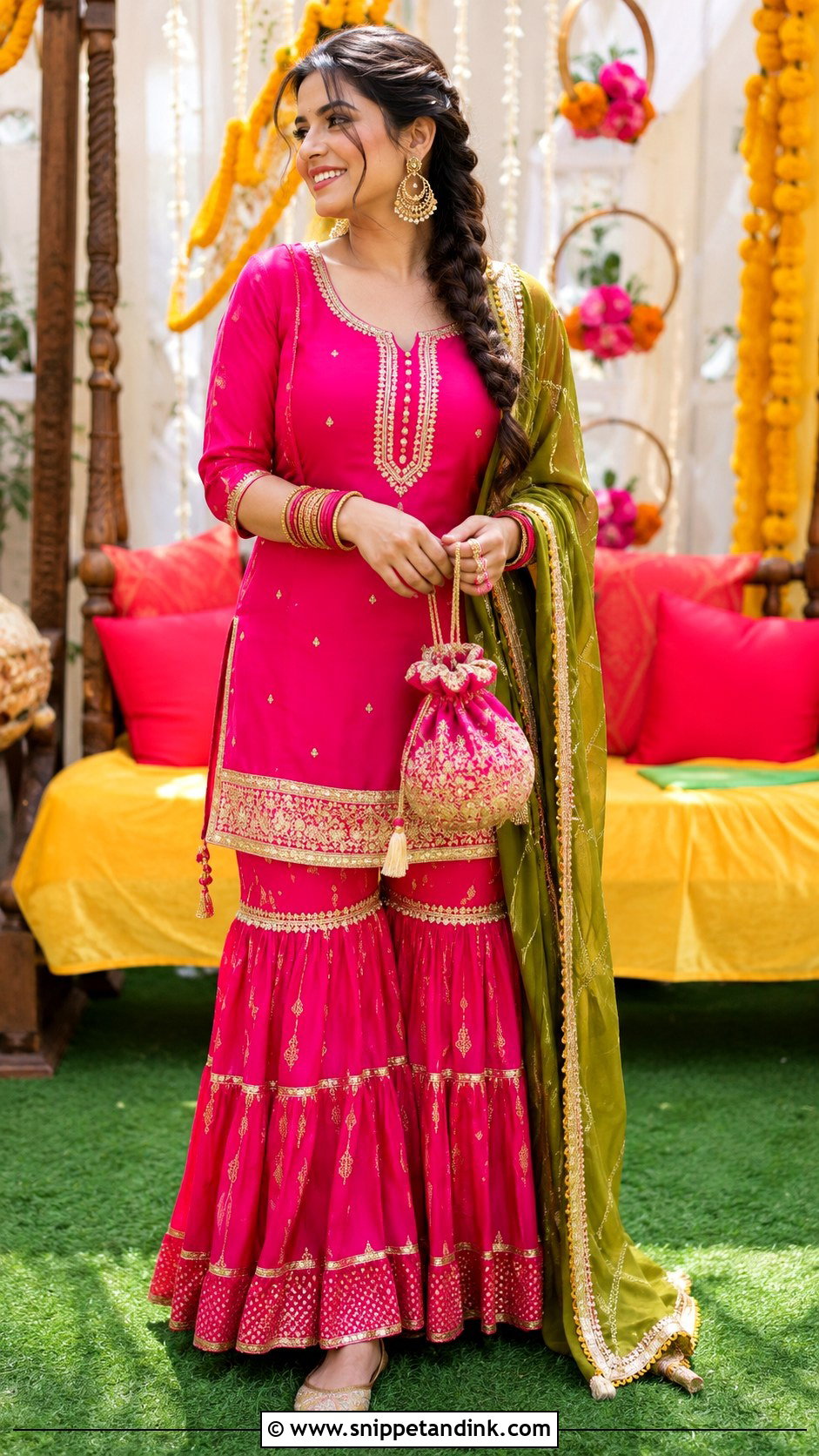
Pink gharara sets are fun enough for mehndi and still look smart on a senior family member. Fuchsia, rose or rani pink with a hip-length kurti is the classic version. A gharara differs from a sharara by its gathered joint at the knee, and gota or zari at that joint is where the eye goes. Add a light green, orange, or matching pink dupatta. Gold chandbalis and stacked bangles suit it; keep rings adjustable so they slip off easily if your own mehndi is being applied. Flat juttis help with standing and dancing. A side braid, a textured ponytail or a flower bun works, with waterproof eye makeup, a bright pink lip and a cross-body pouch so your hands stay free.
10. Velvet Lehenga Winter Wedding Bhabhi Look
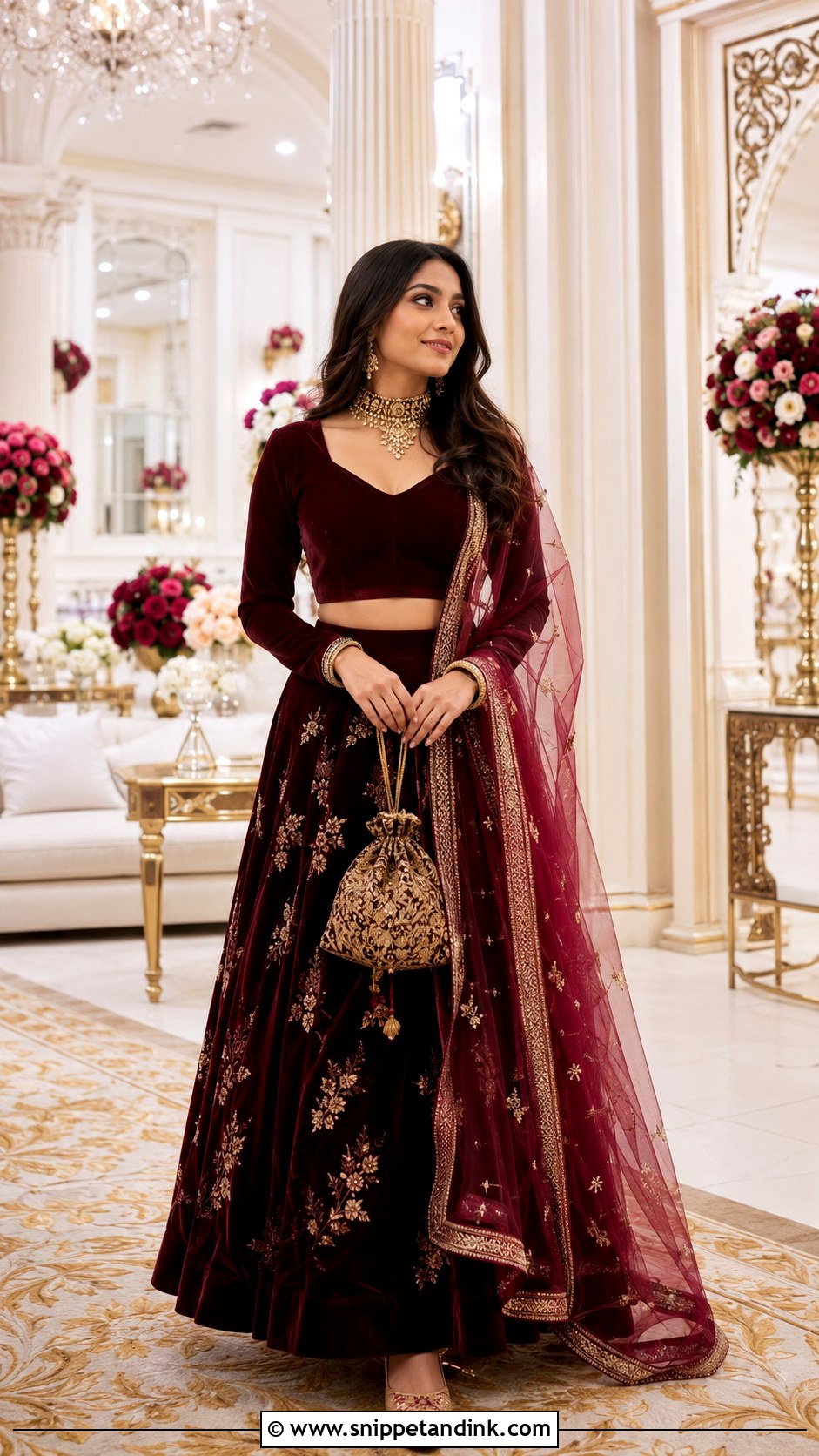
Velvet only makes sense in cool weather, but then it’s hard to beat. Maroon, forest green, midnight blue or plum with restrained gold work looks regal. A velvet blouse with elbow or full sleeves adds warmth, and a lighter net dupatta stops the whole outfit becoming heavy. Antique gold jewelry suits velvet better than shiny pieces. Closed-toe block heels or platform juttis make sense for a winter evening, with a smooth bun or set waves that hold outdoors. Velvet crushes where you sit. I always steam it on the hanger rather than ironing it flat, and avoid sitting for long in a car right before you arrive. Matte base, softly smoked eyes and a berry lip suit the deep colours.
11. Organza Saree Day Wedding Bhabhi Look
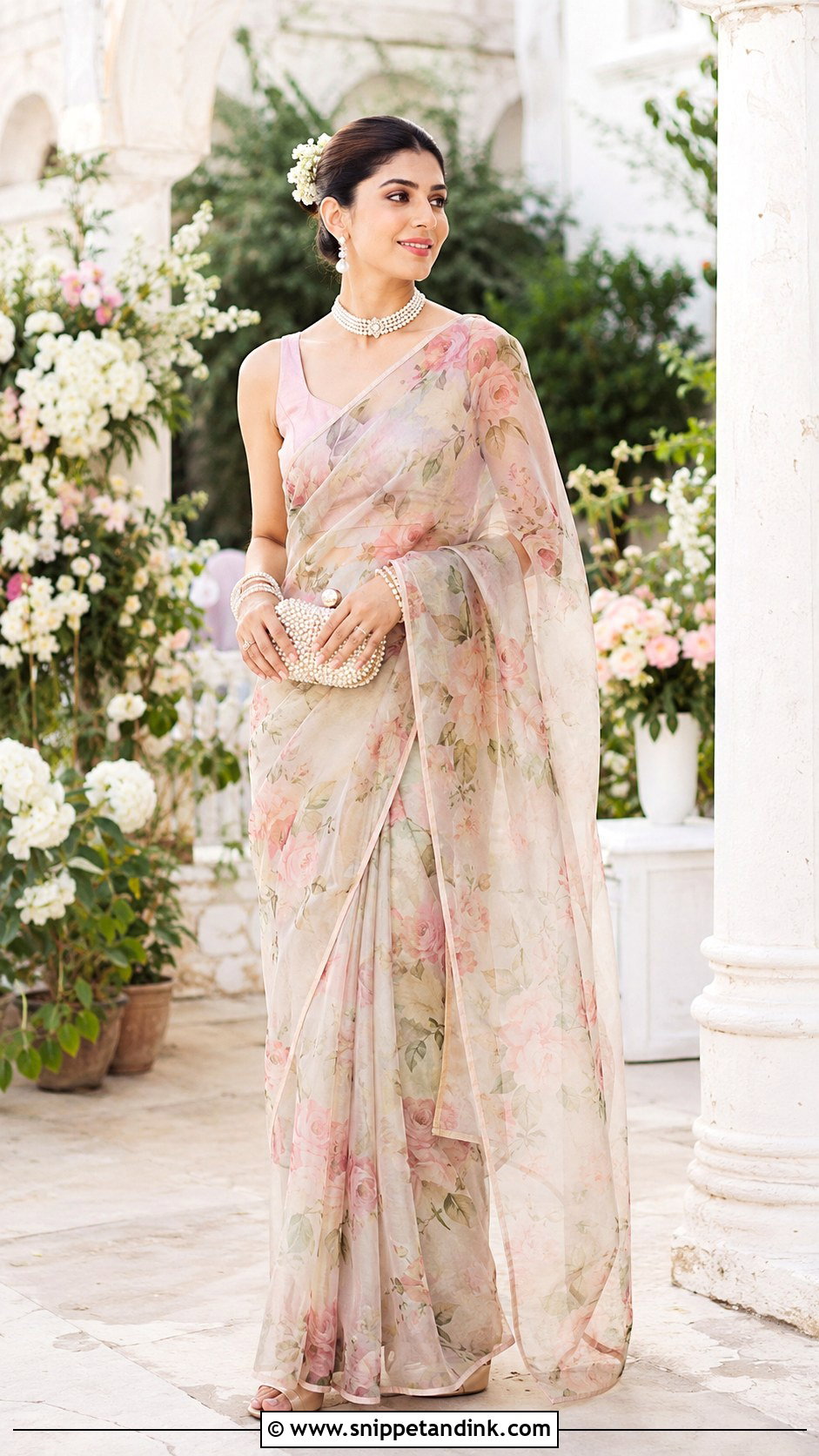
Organza is crisp and slightly sheer, so it reads light and polished in daylight photos. Choose a pastel base with florals, fine embroidery or a narrow scalloped border, and pair it with a raw-silk blouse in the same colour or one shade darker. Organza has natural body, and too many pleats make it stand away from the hip. Keep the pleats narrow, the petticoat smooth and pin them firmly at the waist. Pearl drops, a delicate choker, slim bangles and a small bindi are plenty. Nude block heels let the saree lead, with a sleek bun or half-up hair. Fresh skin, peach eyeshadow, a rosy lip and a pearl clutch or small pastel potli finish it.
12. Pant Saree Reception Bhabhi Look
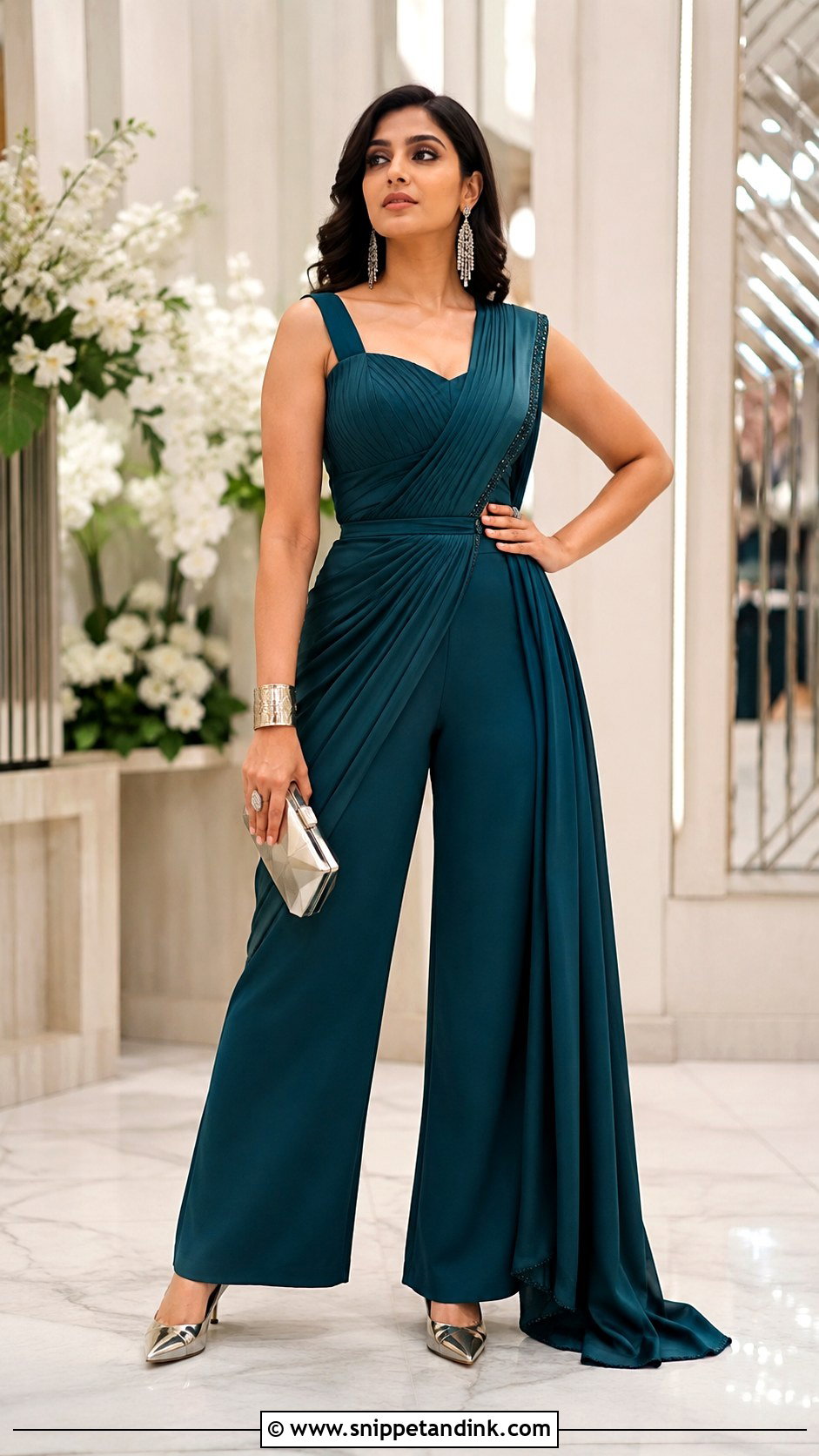
In my experience, pant sarees are the most comfortable drape I put on a bhabhi for an evening event. Fitted or wide-leg trousers, a structured blouse and a pre-stitched drape that falls like a pallu mean nothing comes untucked on the dance floor. Navy, black, burgundy, metallic grey or deep teal suit a reception. Long earrings, a cuff and a statement ring work best with a clean neckline. Pointed heels or metallic sandals keep the line long, with a sleek ponytail or low bun. A structured clutch fits the mood better than a potli. Hem the trousers in the shoes you’ll wear; a pant saree that drags loses its sharpness within an hour. Polished eyes and a mauve or berry lip finish it.
13. Bandhani Lehenga Bhabhi Look
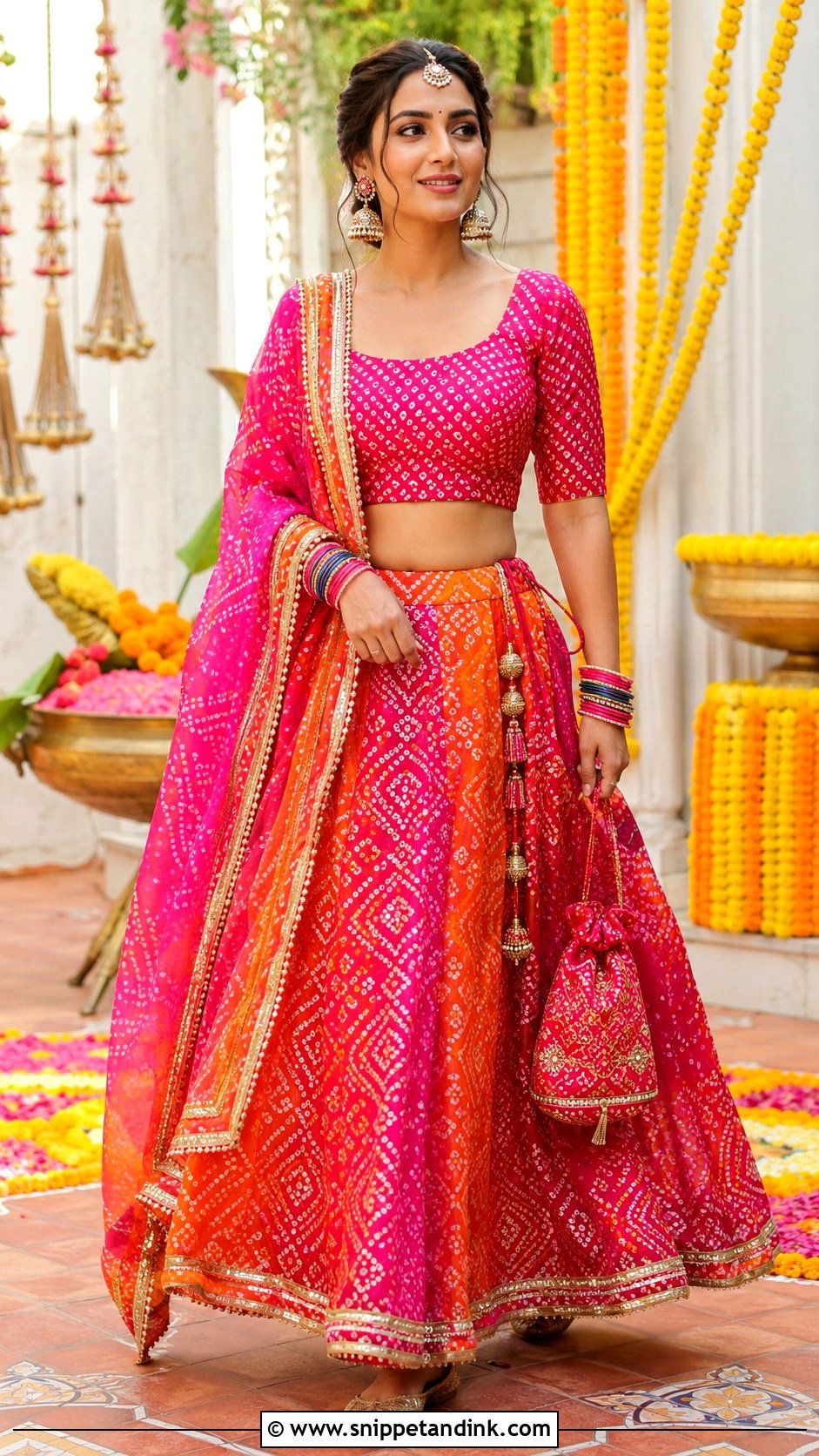
Bandhani is tie-dye with deep roots in Gujarat and Rajasthan, and it carries a lot of colour and regional meaning. Red, pink, orange or green Bandhani lehengas look cheerful with a simpler blouse and a matching dupatta. A broad gota or mirror border is enough embellishment. Drape the dupatta over one shoulder or across both arms for family photos. Jhumkas, a small maang tikka, colourful bangles and an embroidered potli suit it. Gold juttis or block heels depending on skirt length, with a braided bun or ponytail. Kohl, warm blush and a deep pink lip. Bandhani dyes can bleed if they get damp, so keep it away from the haldi and water games. It suits mehndi and other daytime functions best.
14. Kanjeevaram Saree South Indian Bhabhi Look
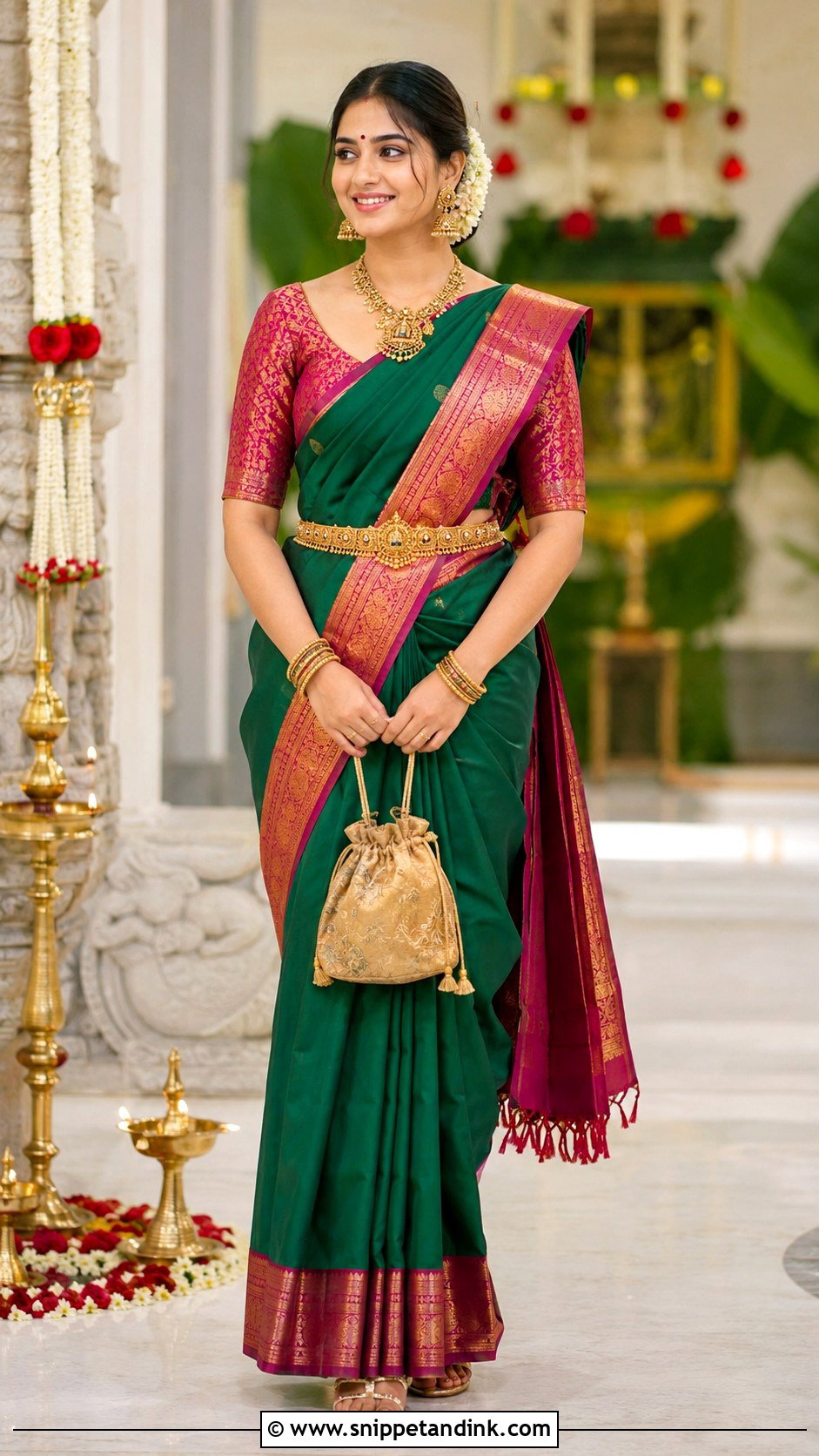
A Kanjeevaram saree is the classic choice for a South Indian ceremony. Green, purple, blue or pink with a contrasting zari border looks right. Pair it with a fitted silk blouse with elbow sleeves and a little embroidery. Temple jewelry, including jhumkas, a medium necklace, bangles and an odiyanam waist belt, defines the look; if the border is very wide, keep the necklace smaller. A centre-parted braid or bun with jasmine finishes it. Kanjeevaram silk is thick, so the pleats are fewer and bulkier than a lighter saree. A practised draper makes a real difference here. Low gold sandals, kohl, a red or berry lip, a round bindi and a silk potli matching the blouse complete it.
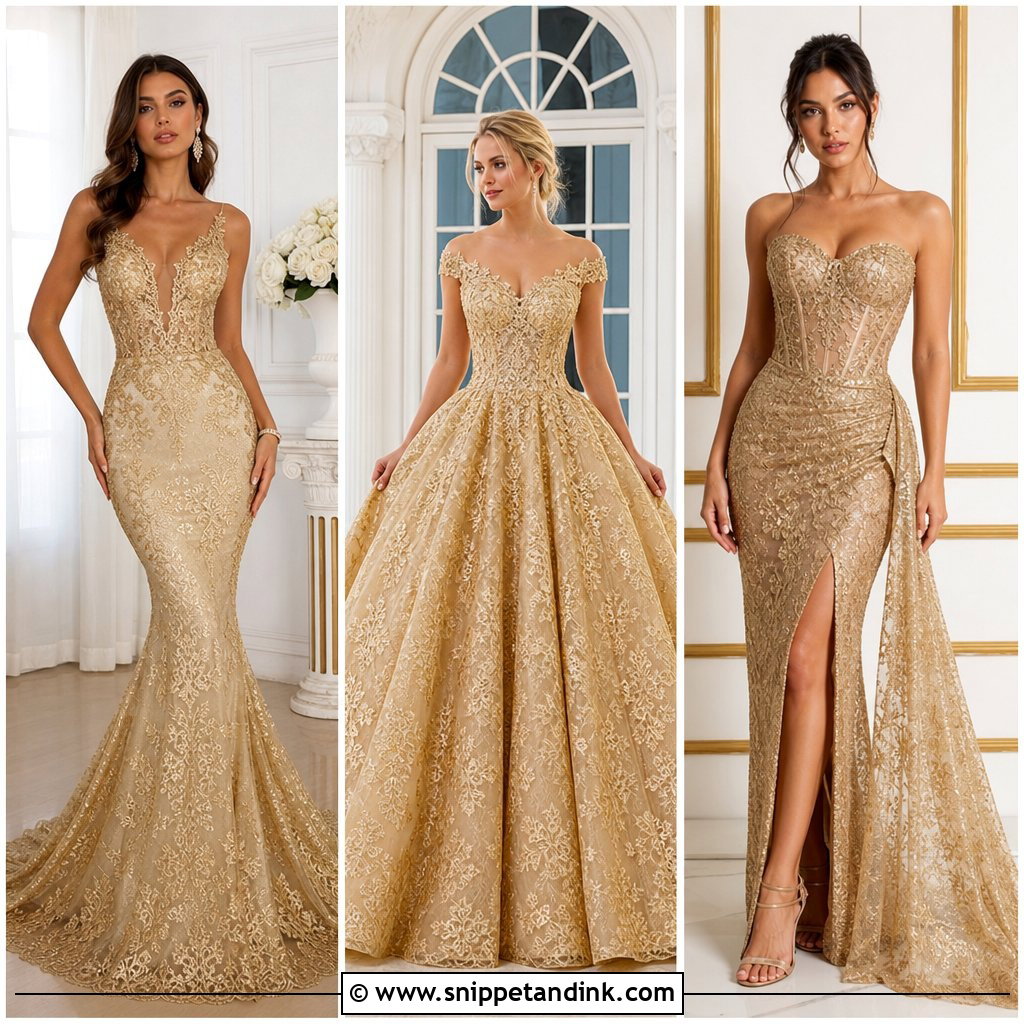
15. Palazzo Suit Bhabhi Look
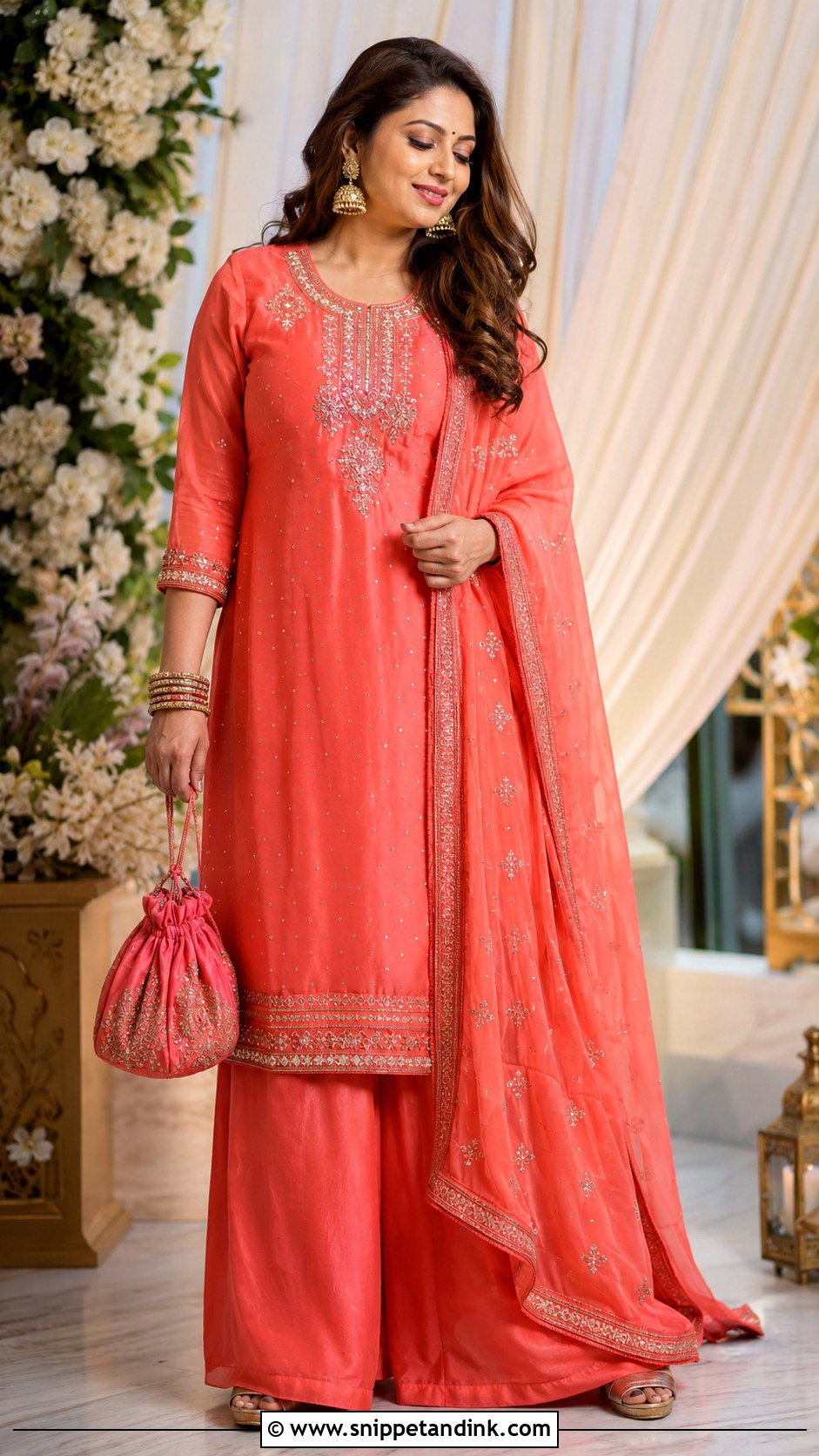
Pre-wedding functions often mean hours on your feet helping, and a palazzo suit gives you the most freedom. A knee-length embroidered kurta, flowing palazzos and a light organza or net dupatta look festive without being formal. Coral, turquoise, lavender, mustard or mint all work. Embroidery at the neckline and hem keeps the outfit balanced. Medium jhumkas, stacked bangles and one statement ring suit it. Pin the dupatta on one shoulder or drape it at the elbows. Low wedges or embellished flats are the practical pick. Soft curls, a low ponytail or a relaxed bun, fresh makeup and a coordinating potli complete it. I check that the palazzo hem clears the floor in your shoes, as wide legs catch on heels.
16. Peplum Sharara Bhabhi Look
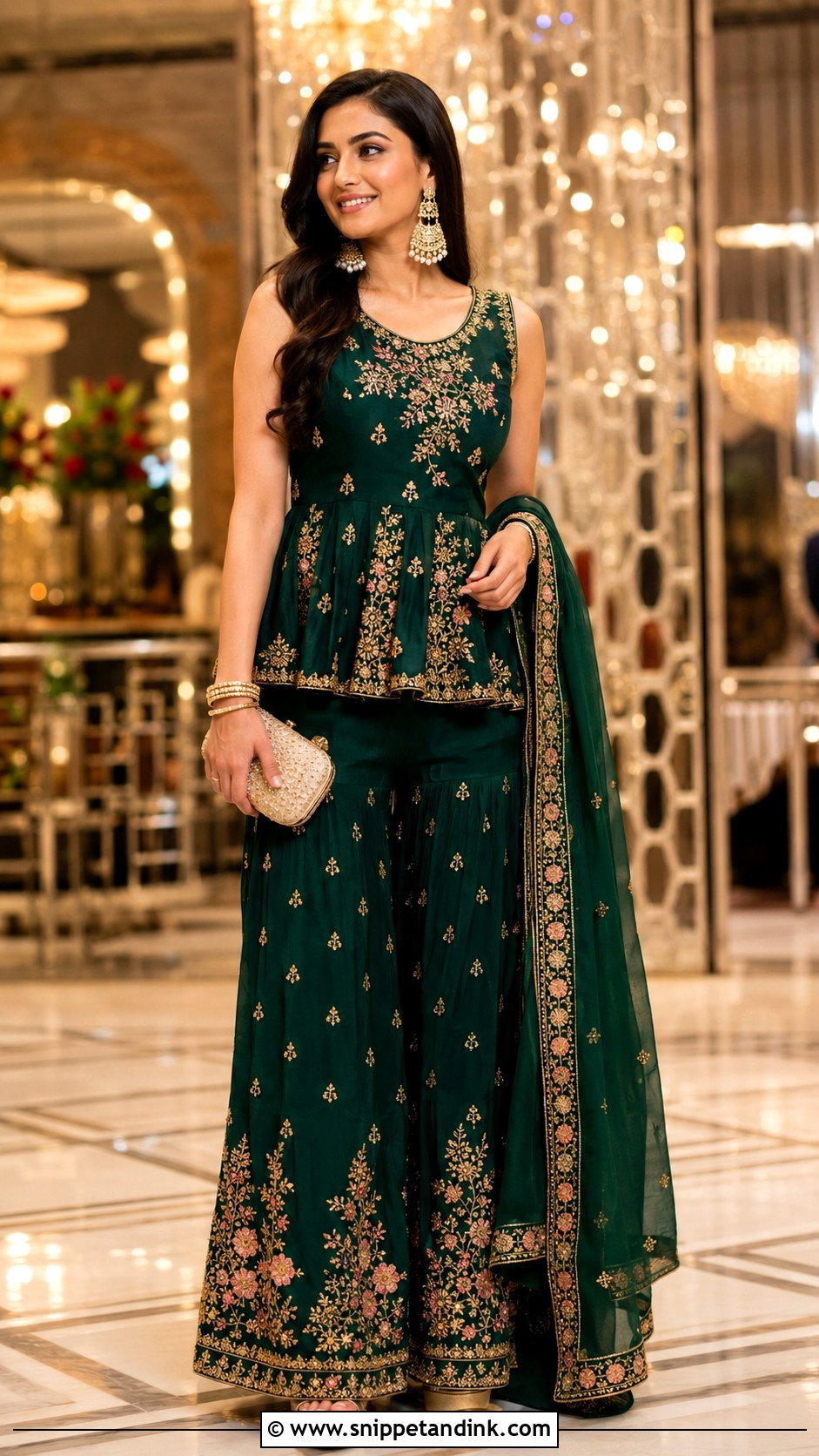
A peplum top gives the waist definition that a long kurta hides, and the sharara below still moves freely. The peplum should end just below the natural waist; longer and it competes with the sharara’s flare. Choose embroidery near the knee or hem of the pants. Jewel tones read formal; pastels suit daytime. Drape the dupatta over one arm so the peplum shape stays visible. Chandelier earrings, slim bangles and a small jewelled clutch suit it, with metallic wedges or cushioned heels to balance the wide hem. A high ponytail or side-swept hair shows the neckline, with defined lashes, a soft highlighter and a rose or berry lip. Wear it to a sangeet, engagement or reception.
17. Jacket Lehenga Bhabhi Look
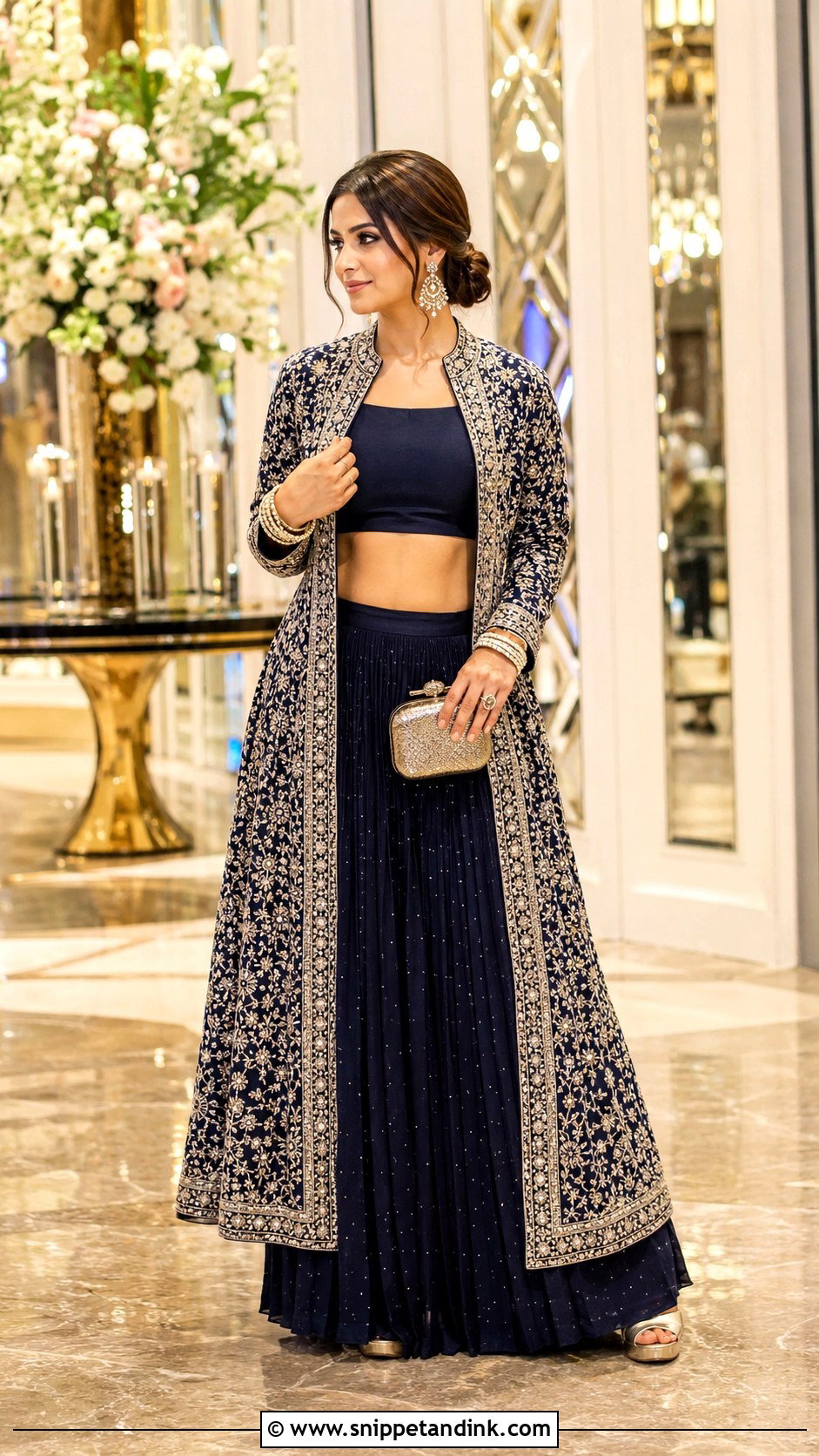
A long jacket over a lehenga gives you coverage and warmth without a dupatta. Start with a simple blouse and a moderately flared skirt, then layer an embroidered jacket that’s open at the front or lightly fastened at the waist so the lehenga still shows. Ivory with gold, navy with silver or emerald with antique work all look rich. Keep jewelry to statement earrings and bangles, since the jacket already frames the neck. Metallic block heels or pointed flats depending on the skirt length, a low bun or sleek waves, balanced makeup and a structured clutch. Jackets add a layer of heat, so for an indoor event in a crowded hall I’d choose a lighter fabric than you might for an outdoor winter wedding.
18. Black Sequin Saree Reception Bhabhi Look
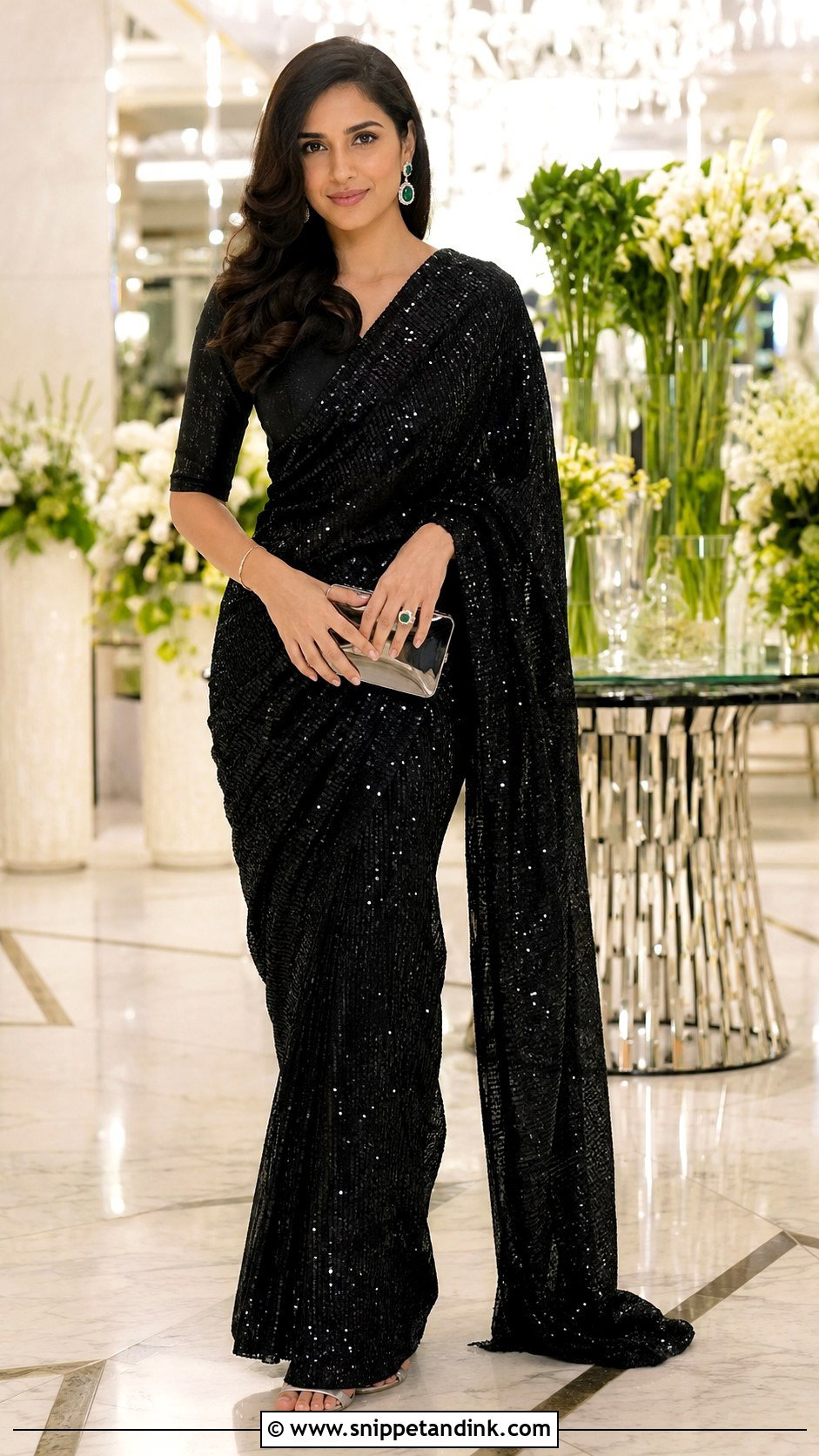
Black can be a striking reception choice, but in some families it’s considered inauspicious at a wedding. Ask first. If it’s welcome, choose a sequin saree with controlled shimmer rather than solid sequins from top to bottom. A sleeveless, short-sleeve or elbow-length blouse depends on your comfort. Emerald earrings, diamond-look studs or silver drops lift the dark colour. Add a slim bracelet and one statement ring, metallic heels and a silver or black clutch. Smooth waves or a sleek bun suit it, with luminous base, softly smoked eyes and a rose, mauve or red lip. Sequinned georgette is slippery, so I use more pins than you’d expect at the shoulder and pleats.
19. Blue Embroidered Anarkali Bhabhi Look
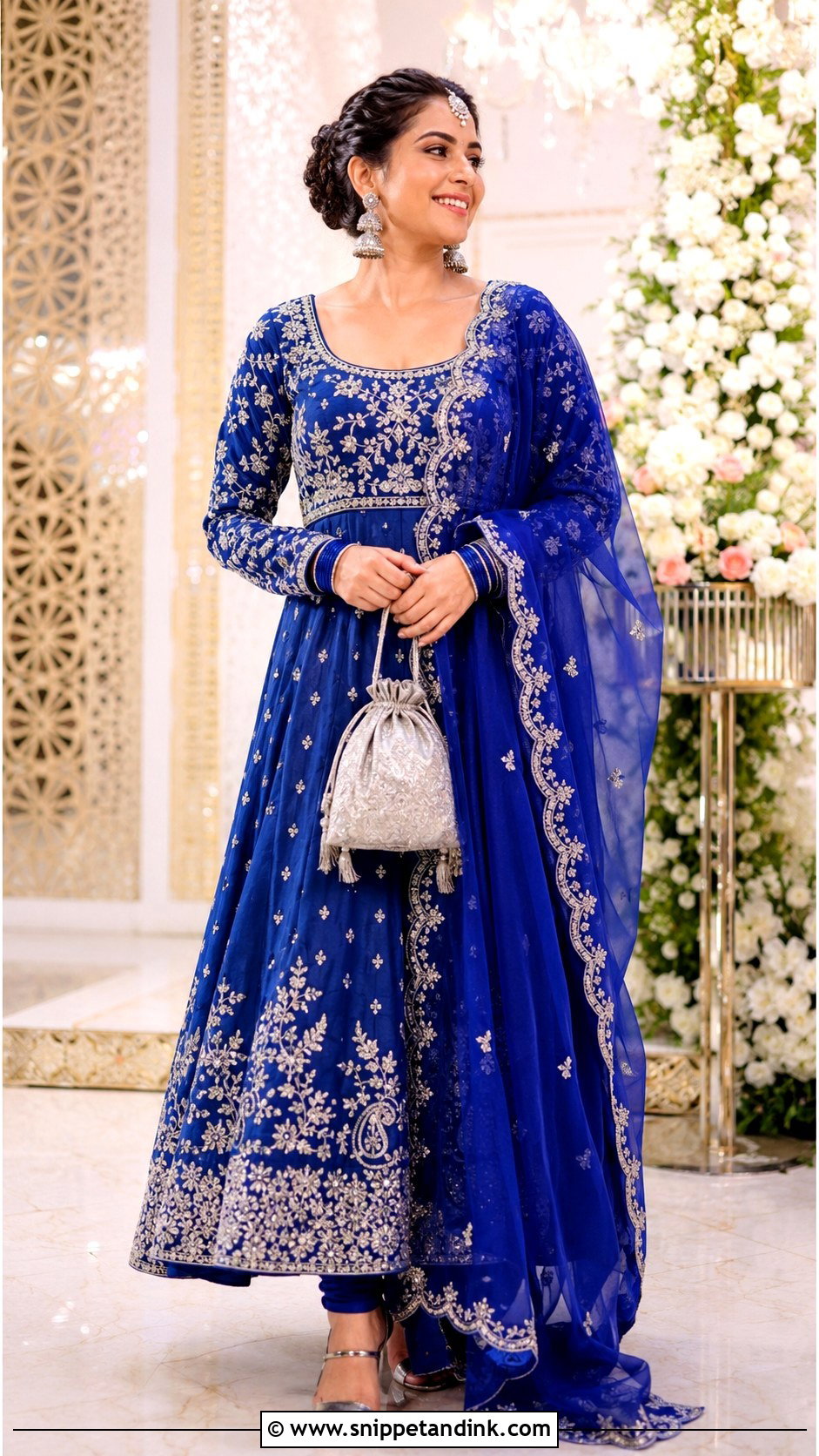
A blue embroidered Anarkali is formal without being complicated to wear. Royal blue or navy suit evening; teal or powder blue suit daytime. The fitted bodice and flared skirt give shape and room to move. Pair it with churidar and an organza or net dupatta with a fine embroidered edge. Silver jhumkas, a slim maang tikka and coordinated bangles complete it. Embellished juttis for daytime, metallic heels for evening. Anarkalis with a lot of flare are heavy at the hem, so check the weight on the hanger before you buy. A braided bun or polished curls, defined eyes, a pink-nude lip and a silver potli finish it.
20. Gold Tissue Saree Bhabhi Look
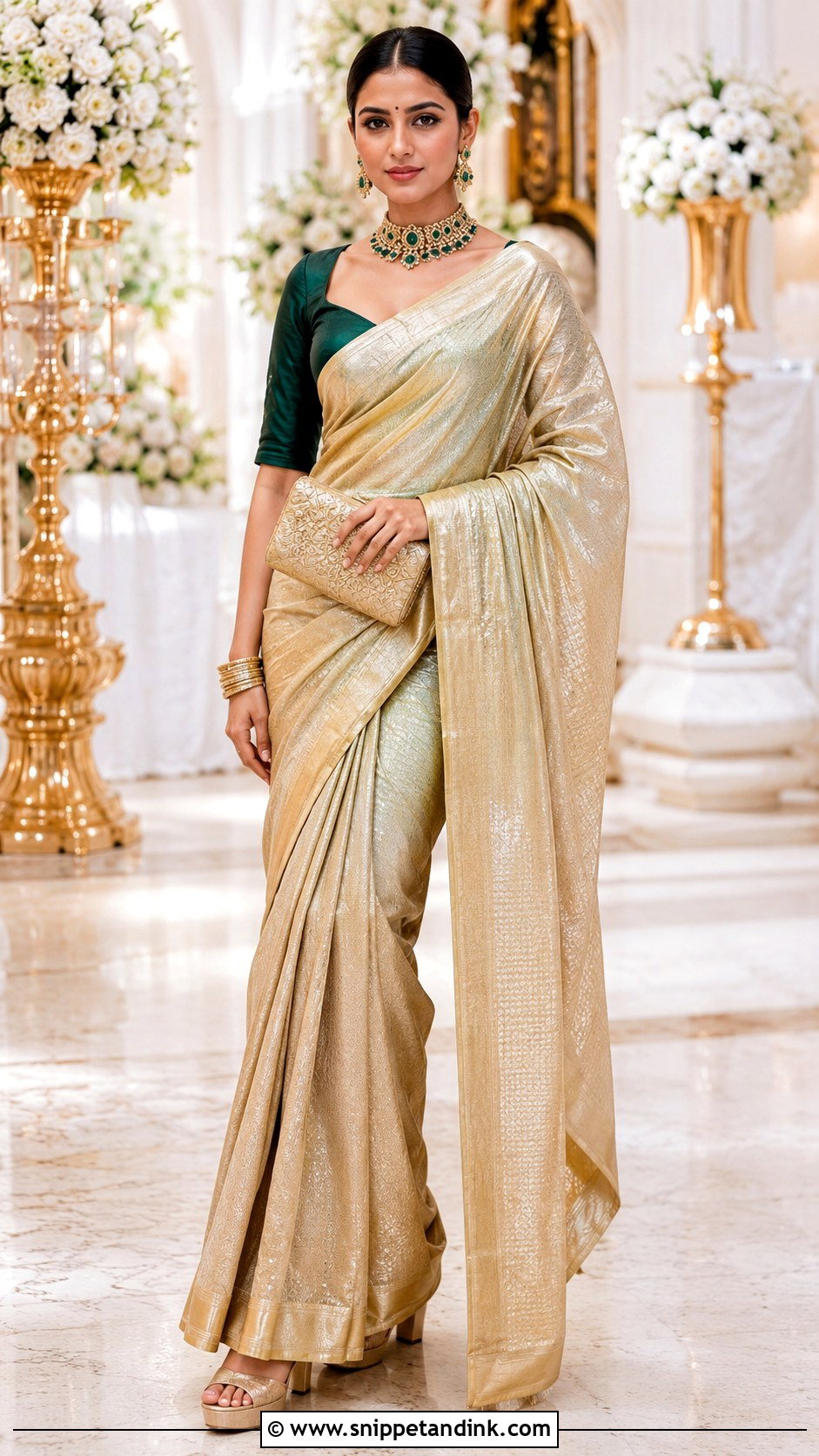
Tissue sarees are woven with metallic threads, so they shine on their own without any embroidery. Choose soft gold, champagne or antique beige and pair it with a contrasting blouse in emerald, maroon, purple or deep pink; gold on gold can look flat in photos. A gemstone choker, matching earrings, slim bangles and a small bindi complete it. Tissue is stiff and holds air, so narrow pleats and a carefully pinned pallu keep the volume under control. Gold block heels or platforms help with height and comfort. A neat bun, soft waves or a centre-parted ponytail, warm makeup, a berry lip and a brocade clutch matching the blouse finish the look.
Safety Pins, Pre-Pleating and the Saree That Stays Put
Because the bhabhi is always moving, her drape gets tested harder than anyone’s. A saree that looked perfect at 6pm can be sliding off the shoulder by the pheras. Most of that is avoidable with a bit of preparation.
If you aren’t confident draping your own saree, have the pleats pressed and stitched or pinned in place the day before. Many tailors and draping artists will box-pleat a saree so it slips on in a few minutes. Pin the pallu at the shoulder from underneath so the pin doesn’t show, then add a second pin where the pallu crosses the back of the blouse.
What to keep in your potli
- A strip of safety pins in two sizes, plus a few U-shaped hairpins
- Double-sided fashion tape for a slipping neckline or a lifting dupatta
- A small needle with ivory, gold and black thread
- Blotting papers and your lipstick
- Plasters for the backs of your heels
You’ll probably end up using half of this kit on other people, which is exactly why the bhabhi should be the one carrying it.
Dressed for Every Function, Ready to Help
From haldi to the reception, there’s an outfit here for every function. Match your choice to your role in that particular event, how formal it is and how much you’ll be running around. Sarees carry tradition; lehengas, shararas, Anarkalis and modern drapes give you movement and variety. Before the day, check the fit, test how you’ll secure the dupatta or pallu, and wear your shoes around the house for a few hours. Balance a heavy outfit with lighter jewelry, or give a simple one a single strong piece. Choose the look that lets you join in, help the family and still enjoy the celebration as yourself.
You'll Like These Ideas:


Leave a Reply