
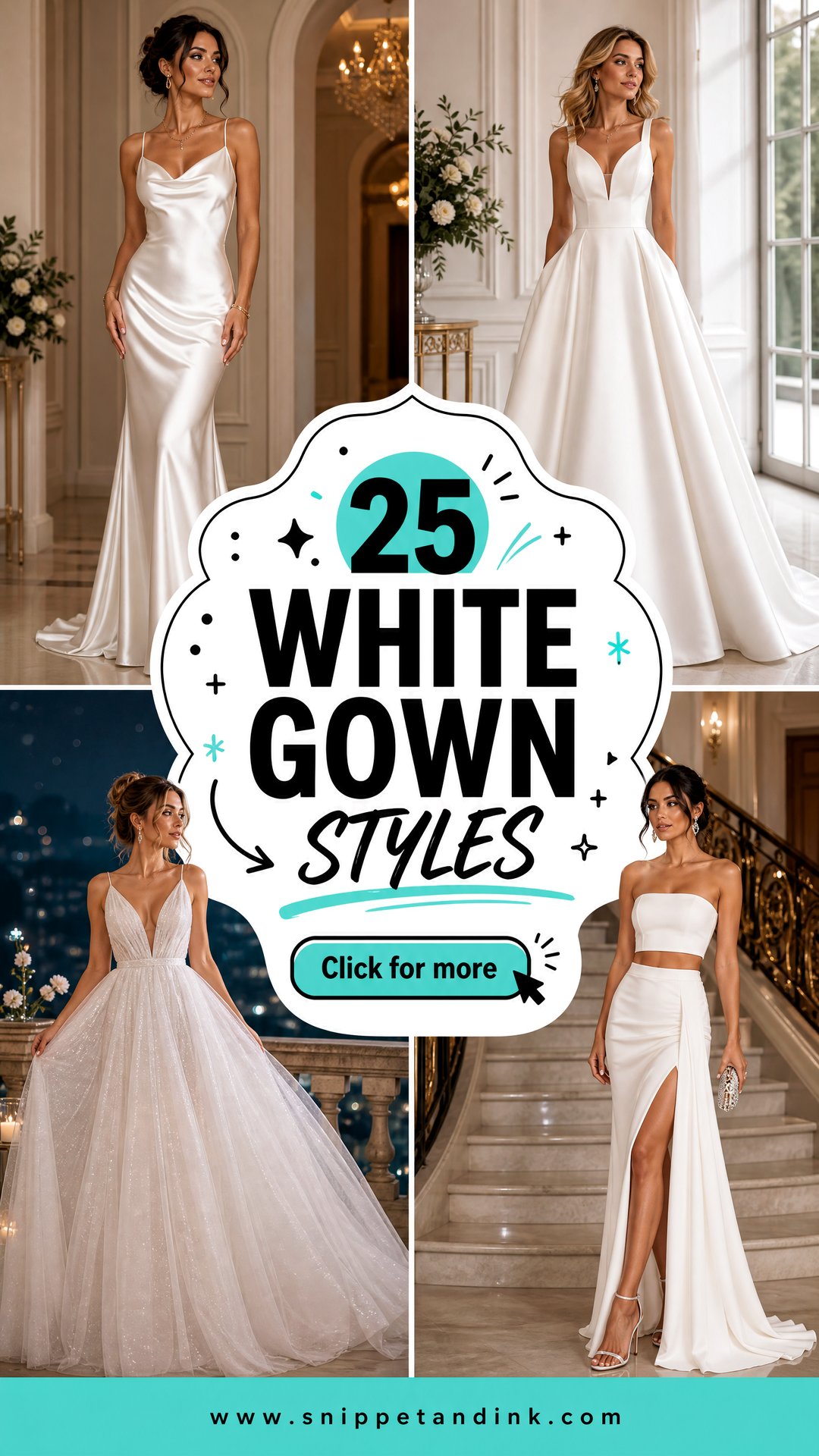
A white gown no longer means one traditional bridal silhouette. The same colour can read minimal in crepe, romantic in lace or red-carpet in sequins, and most of that shift comes from cut and fabric rather than from the dress being white. In fittings I spend more time on the neckline and how the skirt moves than on anything else, because those two decisions set every accessory that follows. The 25 gowns below cover bridal, reception, gala and evening wear, and for each one I’ve noted what I’d pair with it and where it tends to cause trouble.
Optic White, Ivory or Champagne: Reading the Shade Before the Cut
White gowns are rarely the same white. Optic white is the brightest, almost blue; natural or silk white is softer; ivory has a yellow undertone; and champagne or nude-lined gowns look white from across a room but warm up close. When a bride tries on two gowns that look identical on the rail, it’s often the shade, not the cut, that makes one feel right.
I hold the bodice fabric against the bare collarbone in daylight, near a window, before I look at anything else. Cool, rosy skin usually lights up against bright white, while olive and deeper tones often look richer in ivory or soft white. Fair skin with yellow undertones can look washed out next to optic white.
- Match your shoes, veil and gloves to the gown’s actual shade by bringing a fabric swatch, because a bright white veil next to an ivory dress makes the dress look dingy.
- Check the gown under the light you’ll have on the day. Warm indoor bulbs push ivory toward yellow; overcast daylight pushes white toward grey.
- Ask for a swatch to take home if the shop allows it, and look at it in the morning and evening.
1. White Satin Slip Gown Outfit
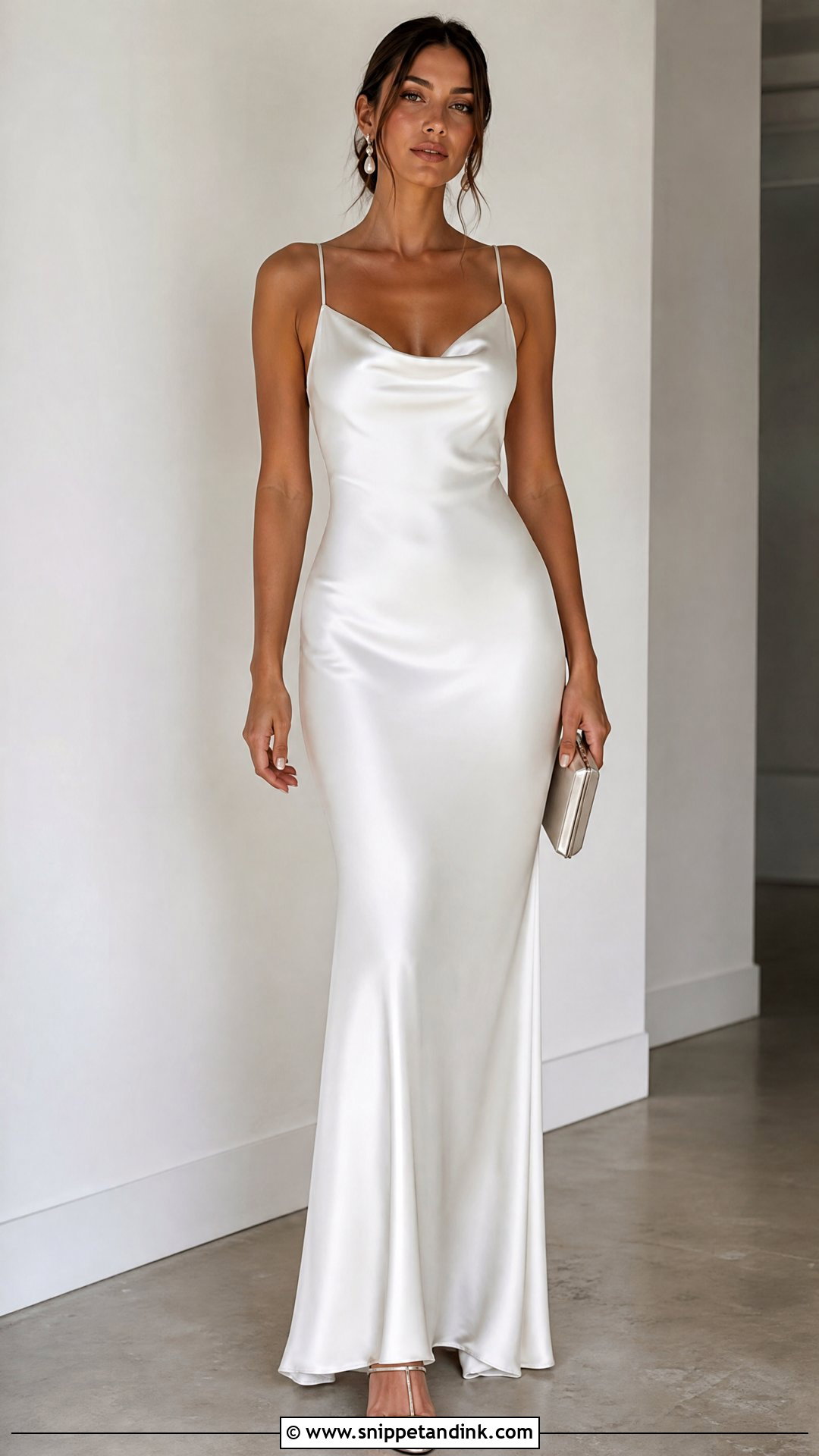
Satin slip gowns look simple on the hanger and turn out to be the least forgiving dress in the shop. A true bias cut stretches slightly over the hips, so I size for the widest point and let the seamstress take in the rest, otherwise the fabric pulls into diagonal ripples. Go for a heavier satin with a little weight; thin charmeuse shows every seam of your underwear. Metallic barely-there heels, pearl drops and a sleek clutch are all it needs, plus a cropped blazer or sheer wrap if you want coverage. I’ve styled this cut for receptions, courthouse ceremonies and engagement photos, and glossy, soft hair keeps attention on the shine.
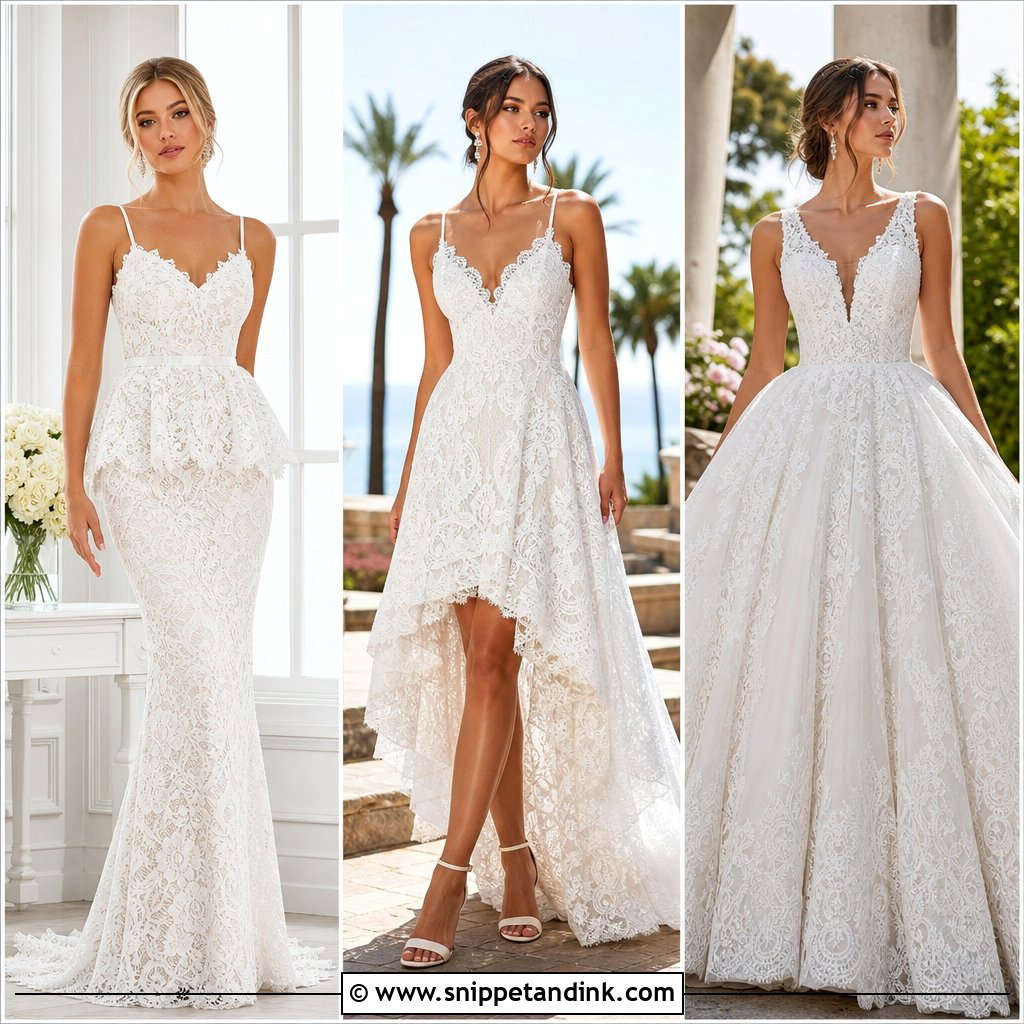
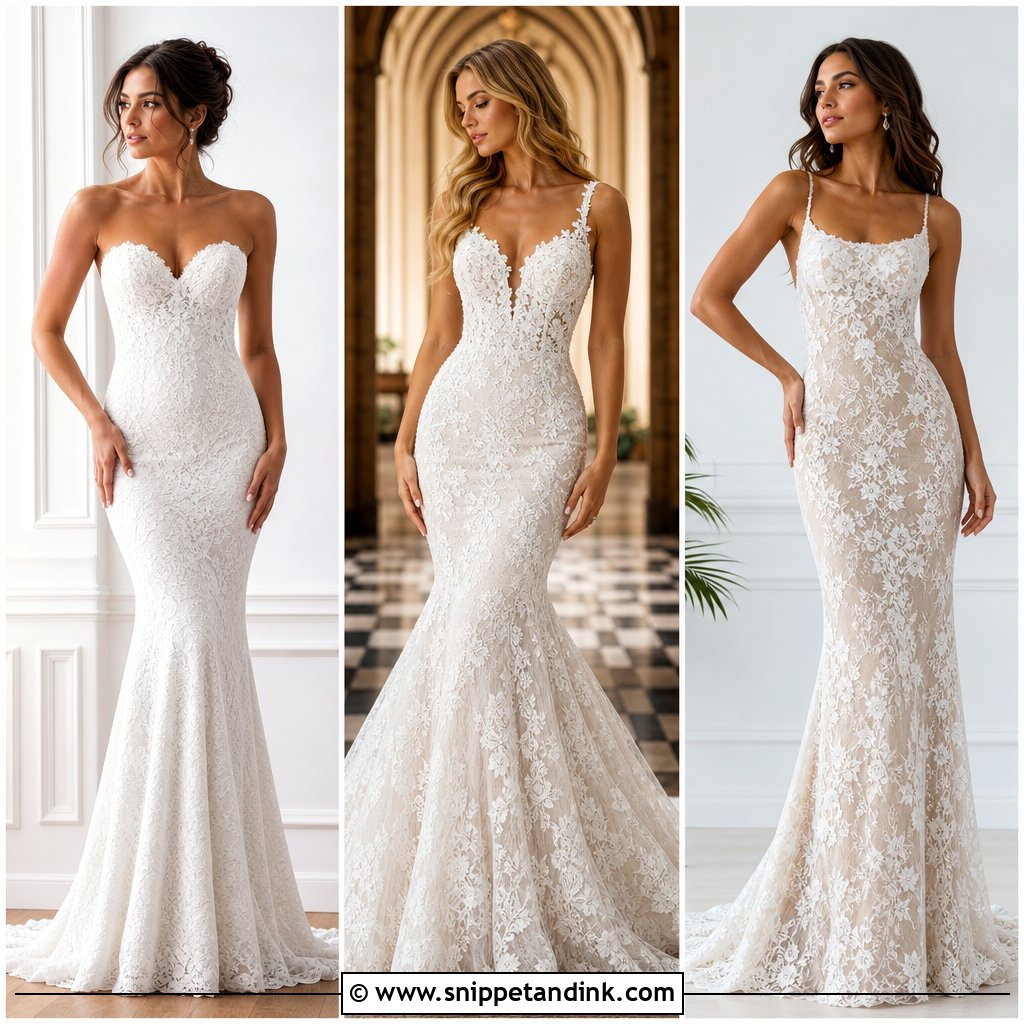
2. White Lace Mermaid Gown Outfit
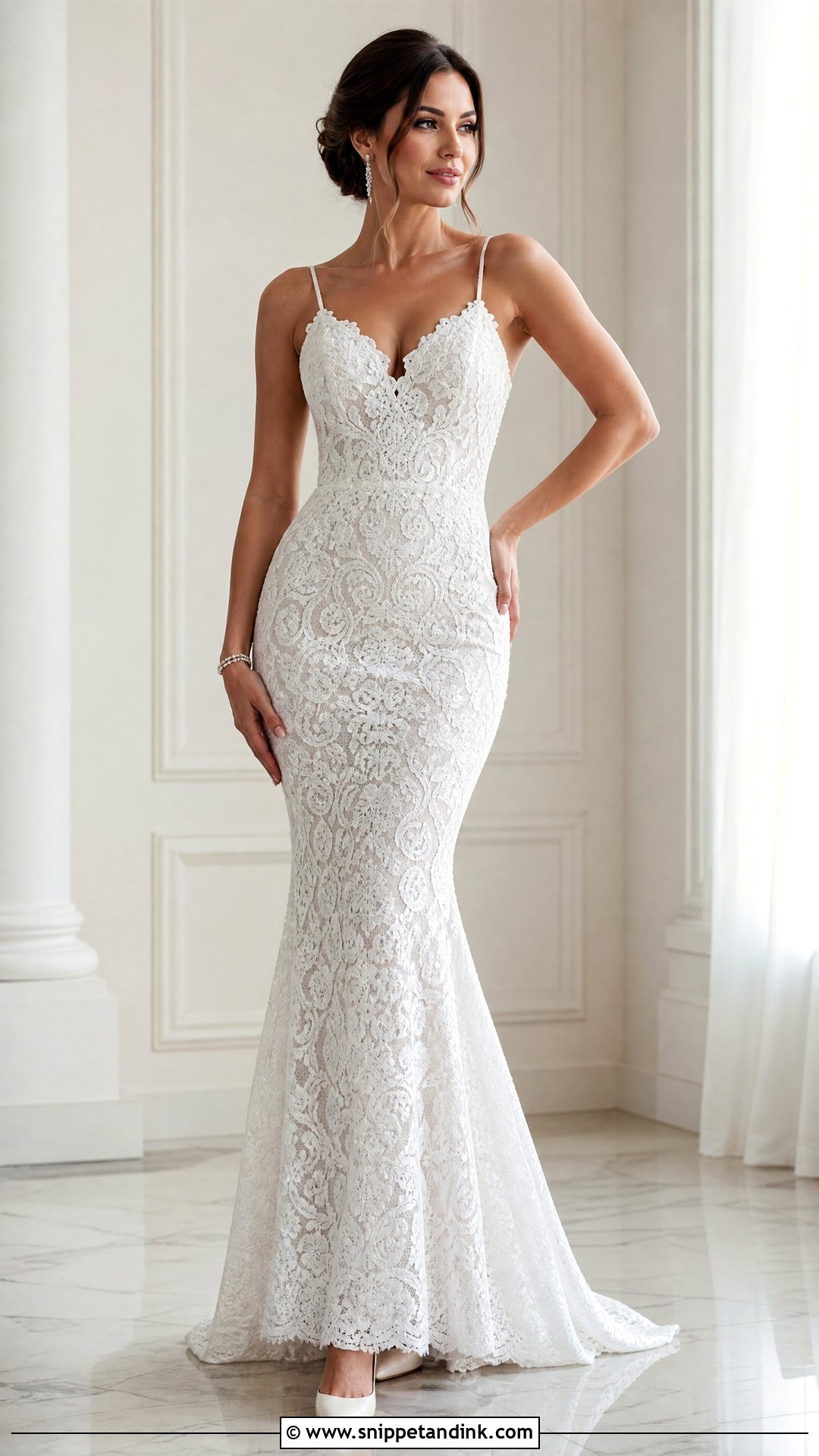
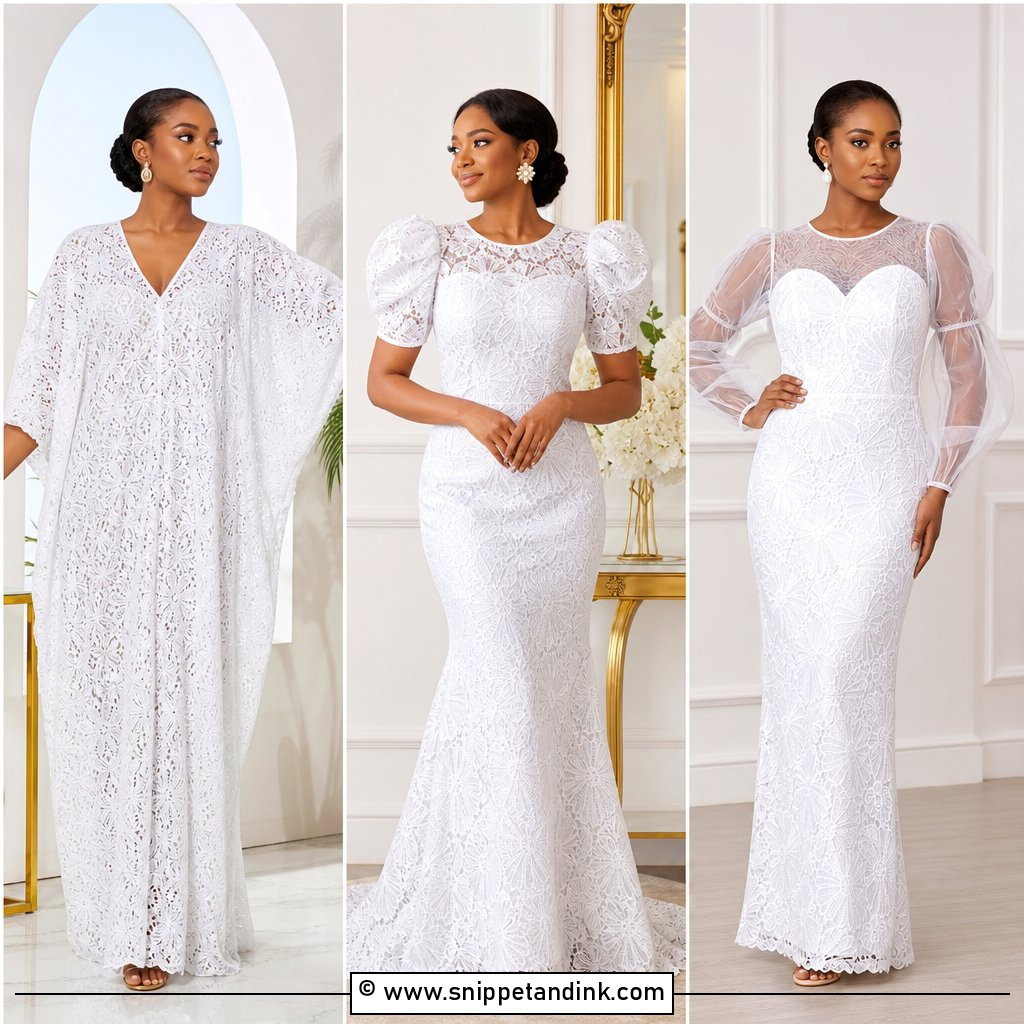
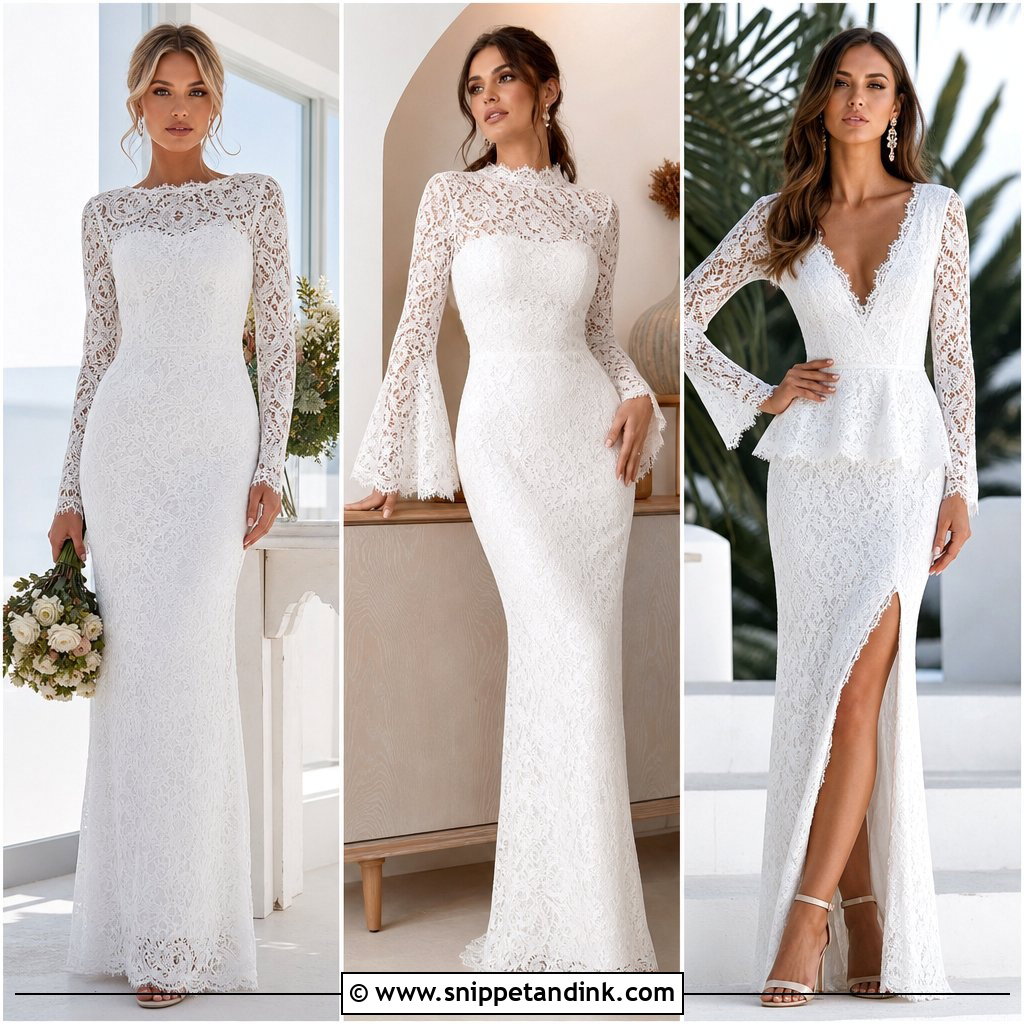
The mermaid lives or dies on where the flare starts. If the seam breaks above your knee you’ll walk freely; if it’s set low on the calf you’ll shuffle and need help on stairs, so I always have brides walk the shop floor and sit down before we commit. Pick lace with a fine, flat texture rather than heavily corded patterns, which add bulk exactly where the gown is tightest. Pointed white heels, a thin bracelet and small crystal studs are enough. A low bun or soft waves keeps the neckline in view.
3. White Off Shoulder Gown Outfit
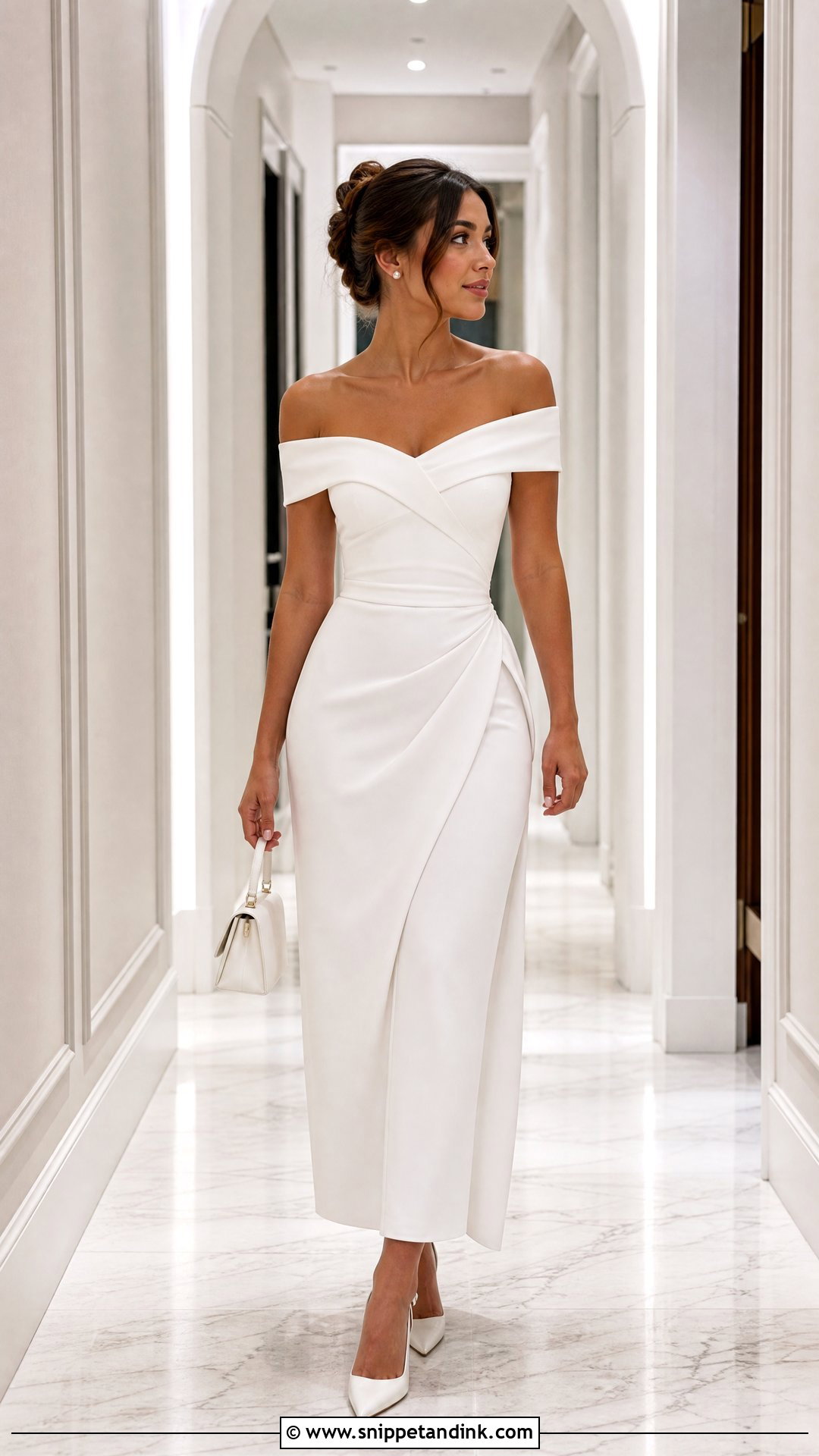
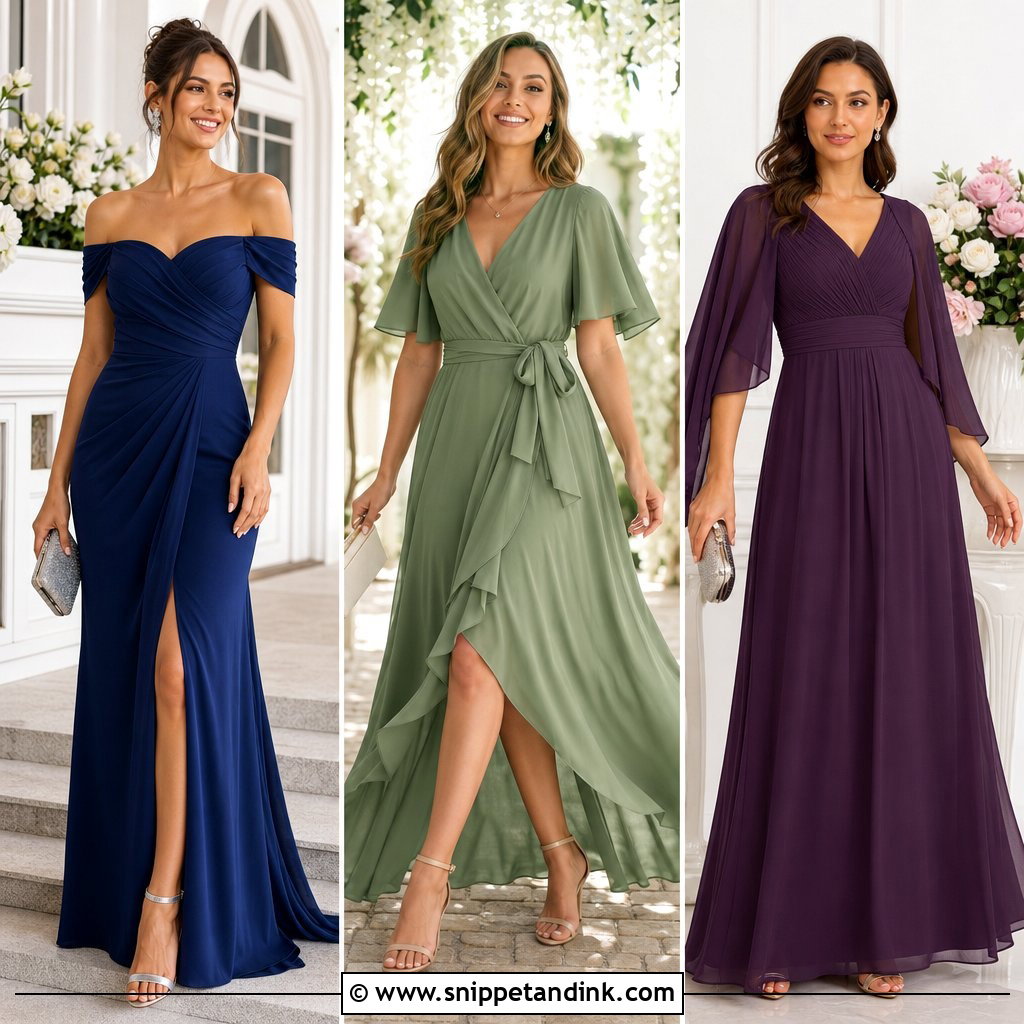
Off-shoulder necklines need structure hidden inside them. Without boning or a silicone grip strip along the edge, the band creeps up toward your neck every time you lift your arms, and you spend the evening tugging it down. A structured bodice suits brides who want support; a soft drape suits a smaller bust. I keep jewellery to studs and pair the gown with pointed slingbacks and a top-handle bag. An updo keeps the shoulder line clear, and I’d bring a sheer wrap for a church ceremony.
4. White Ball Gown Outfit
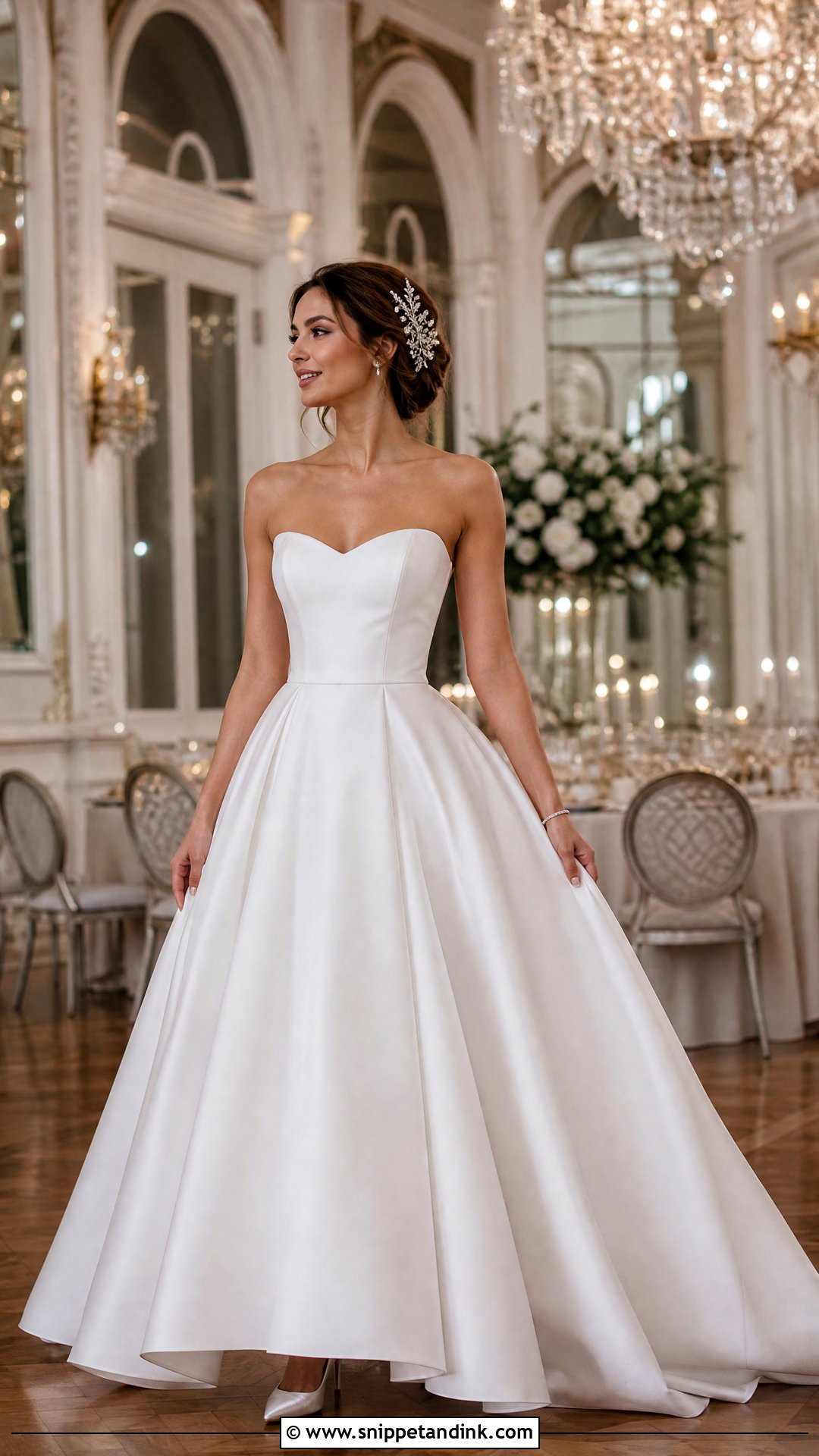
A ball gown is a commitment, mostly to your own stamina. Satin and mikado hold their shape with a modest petticoat, while tulle needs several layers to look full, and each layer adds weight you’ll carry for hours. The fitted bodice is what keeps it from swallowing a smaller frame, so I watch that the waist seam lands at your natural waist, not below it. Skip oversized jewellery; a crystal comb, pointed heels and a slim bracelet do the work. I’d steer this toward grand weddings, galas and pageant-inspired events, finished with a clean bun or soft side part.
5. White Corset Gown Outfit
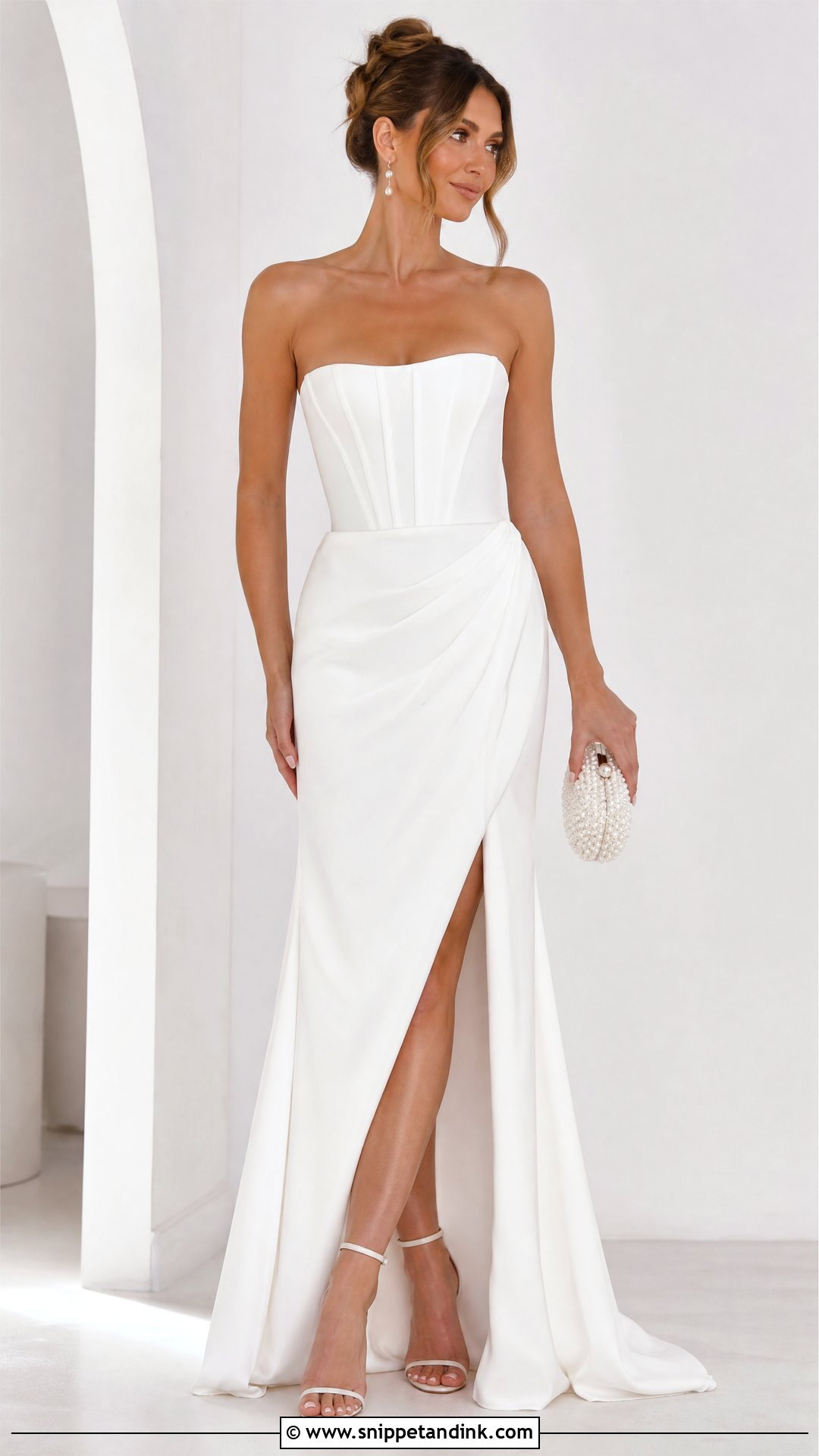
A real corset bodice, with spiral steel boning and a proper waist tape, gives support you can feel; a fashion corset with plastic boning just has the look of one and will crease across the stomach once you sit. I ask to see inside the bodice before anything else. Tulle or lace skirts soften it, satin or crepe sharpens it. Strappy heels, a small pearl clutch and simple drops keep the outfit clean. It suits bridal events, formal parties, engagement shoots and prom, as long as the rest of the look stays quiet.
6. White A Line Gown Outfit
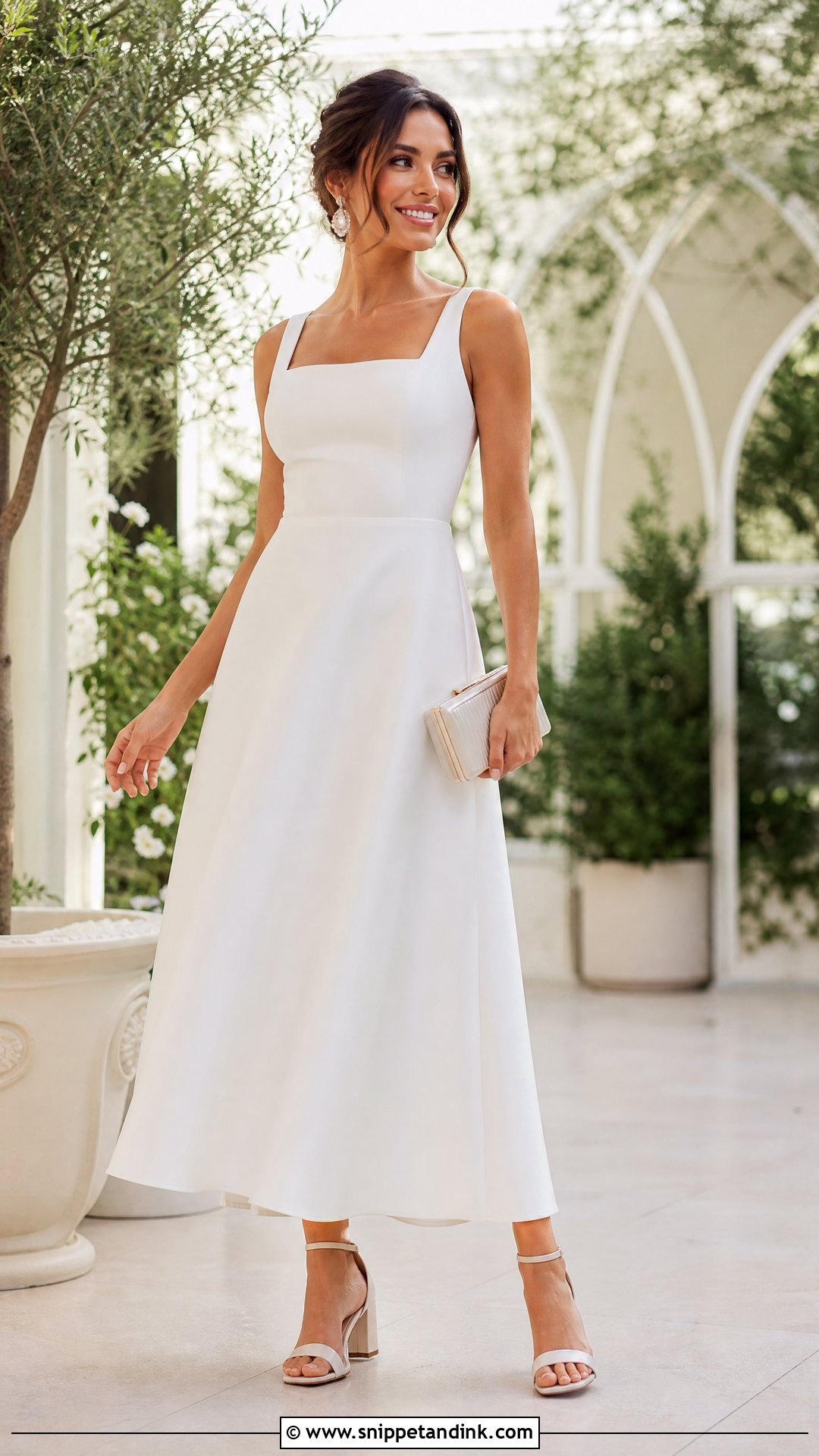
If a bride walks in unsure of her shape, an A-line is the first gown I pull. It marks the waist and then falls away from the hips, which flatters petite, tall, curvy and straight frames alike. Chiffon gives float, satin gives shine and lace adds texture. Block heels are worth considering here because nothing about the silhouette demands a stiletto. It’s easy to move and dance in, which matters more by the third hour than anyone expects.
7. White Chiffon Gown Outfit
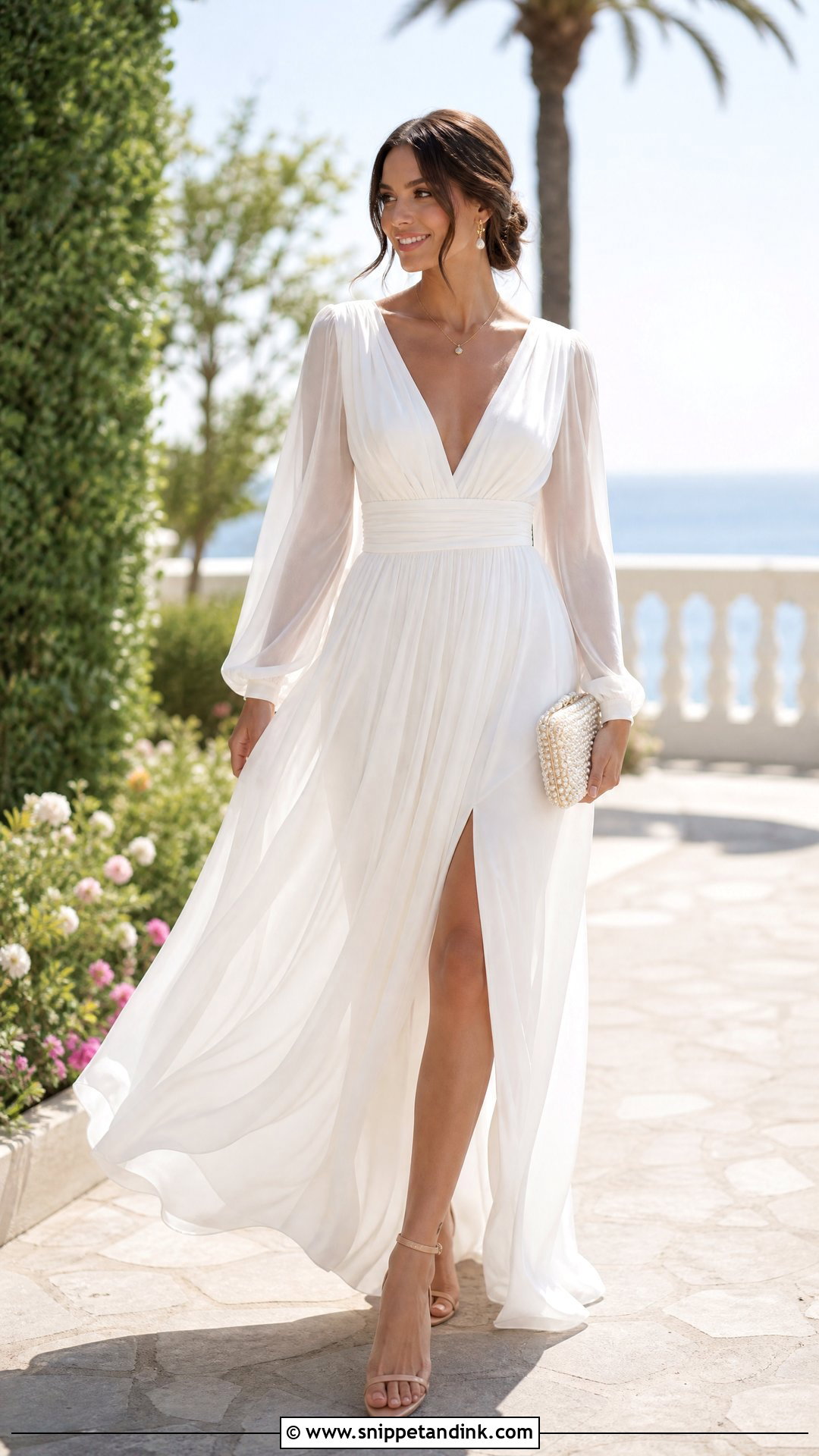
Chiffon is the outdoor fabric. It catches any breeze and moves when you walk, which is exactly what you want on a beach or a lawn. The trade-off is that it snags on rough stone, rattan chairs and even some lace on a partner’s jacket, so I tell brides to check where they’ll be sitting. A defined waist or soft V keeps the layers from looking shapeless. Nude or white sandals, a woven or pearl clutch and light jewellery suit it, with hair loose or half-up.
8. White Long Sleeve Gown Outfit
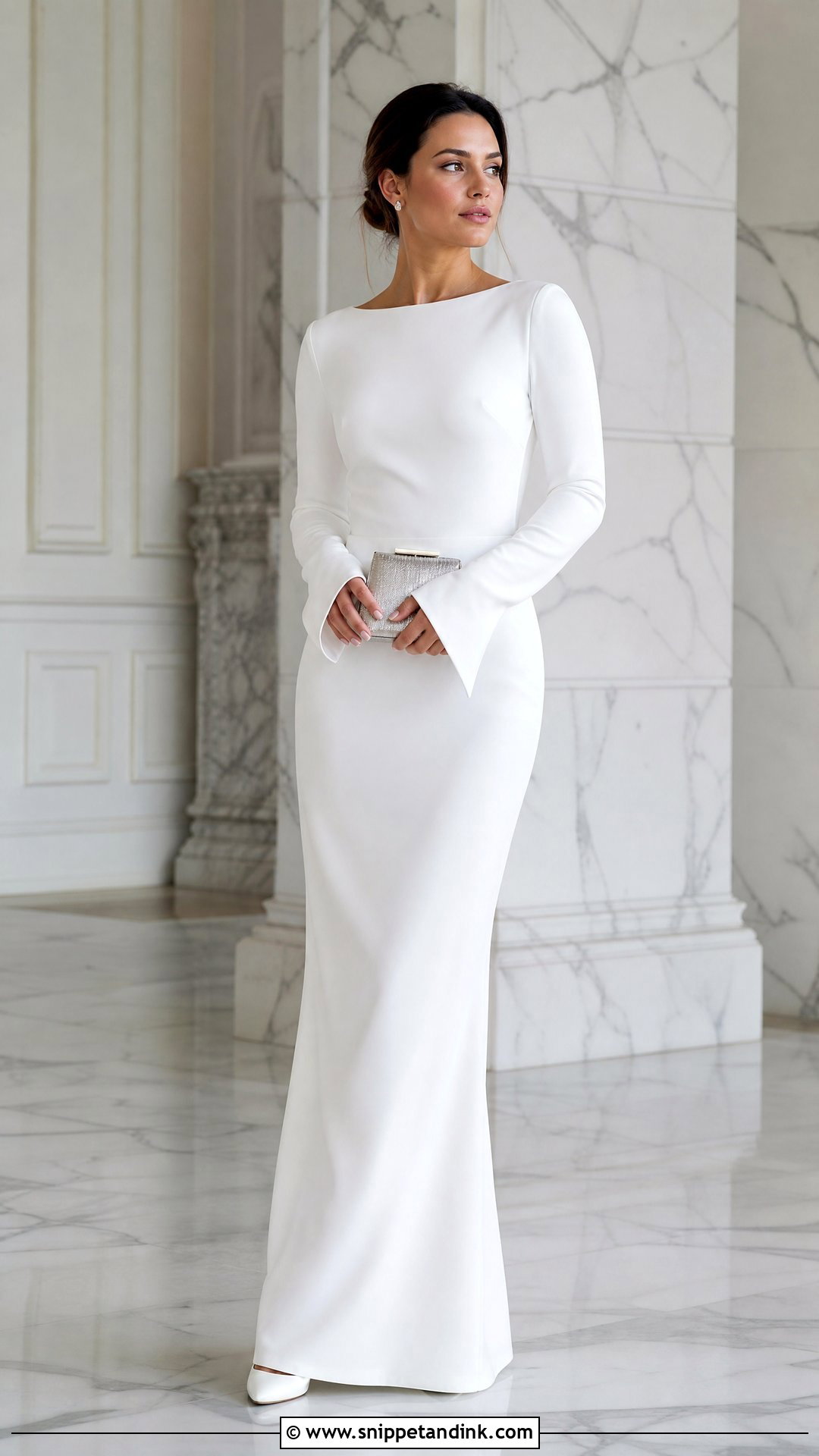
Long sleeves change how you move more than brides expect. Fitted lace or crepe sleeves need to be cut with enough room at the elbow for you to hug people and lift a glass, so at fittings I ask you to raise both arms overhead. Sheer lace reads romantic, satin reads formal and crepe reads modern. Closed-toe heels and a sleek clutch fit the mood. If the sleeves are detailed, skip bracelets; they catch on lace and pull threads. Winter weddings and evening ceremonies are where this gown makes most sense, with a low bun or tucked waves.
9. White Halter Gown Outfit
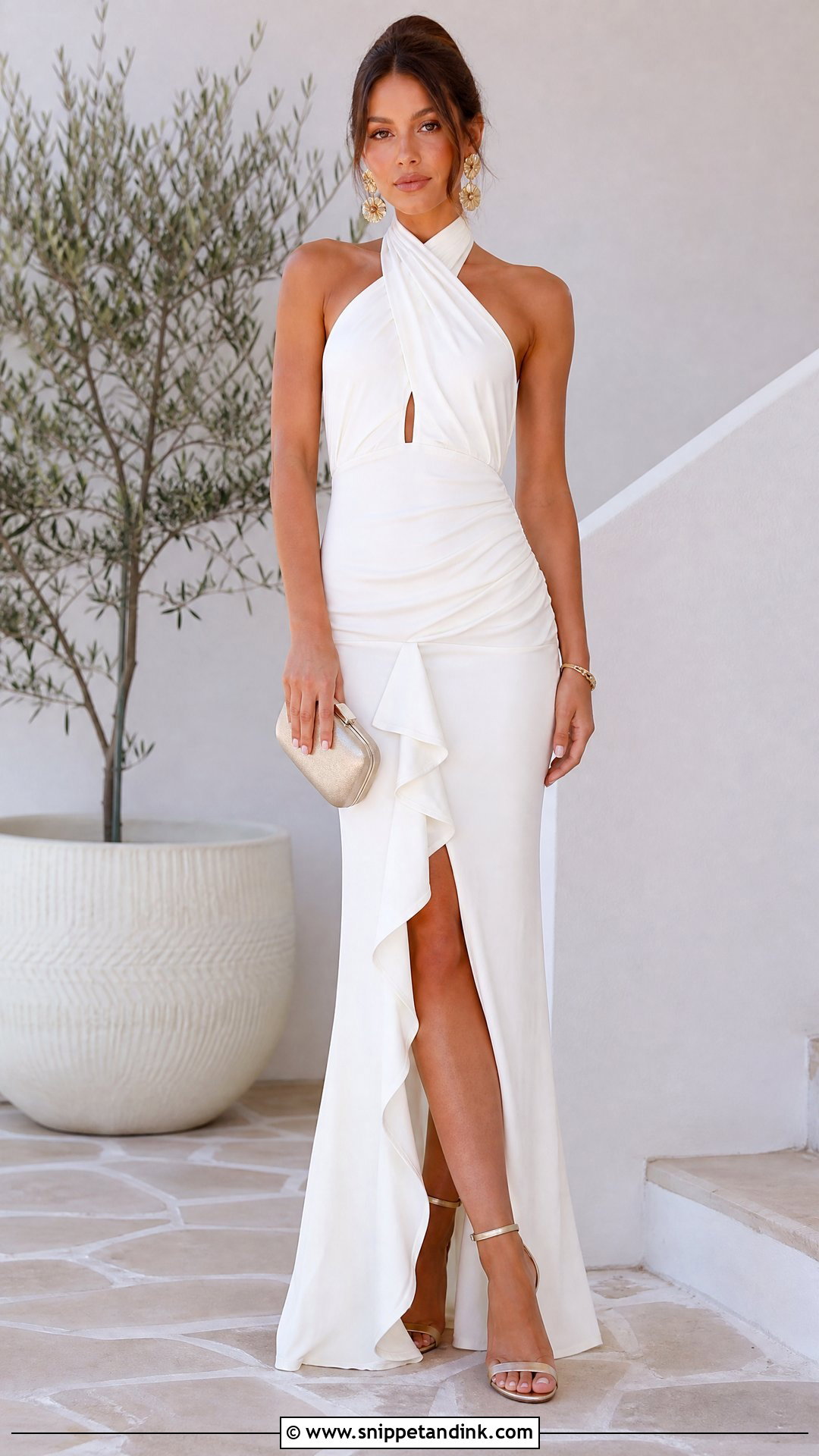
A halter carries the weight of the bodice from your neck, so I check the strap with the full skirt on, not just the top. A heavy skirt on a thin halter tie gives some brides a headache by the reception. Slim column versions look sleek; flowing skirts soften it. Since the neckline already frames the face, skip the necklace and put your effort into earrings. A smooth bun or high ponytail shows the cut.
10. White One Shoulder Gown Outfit
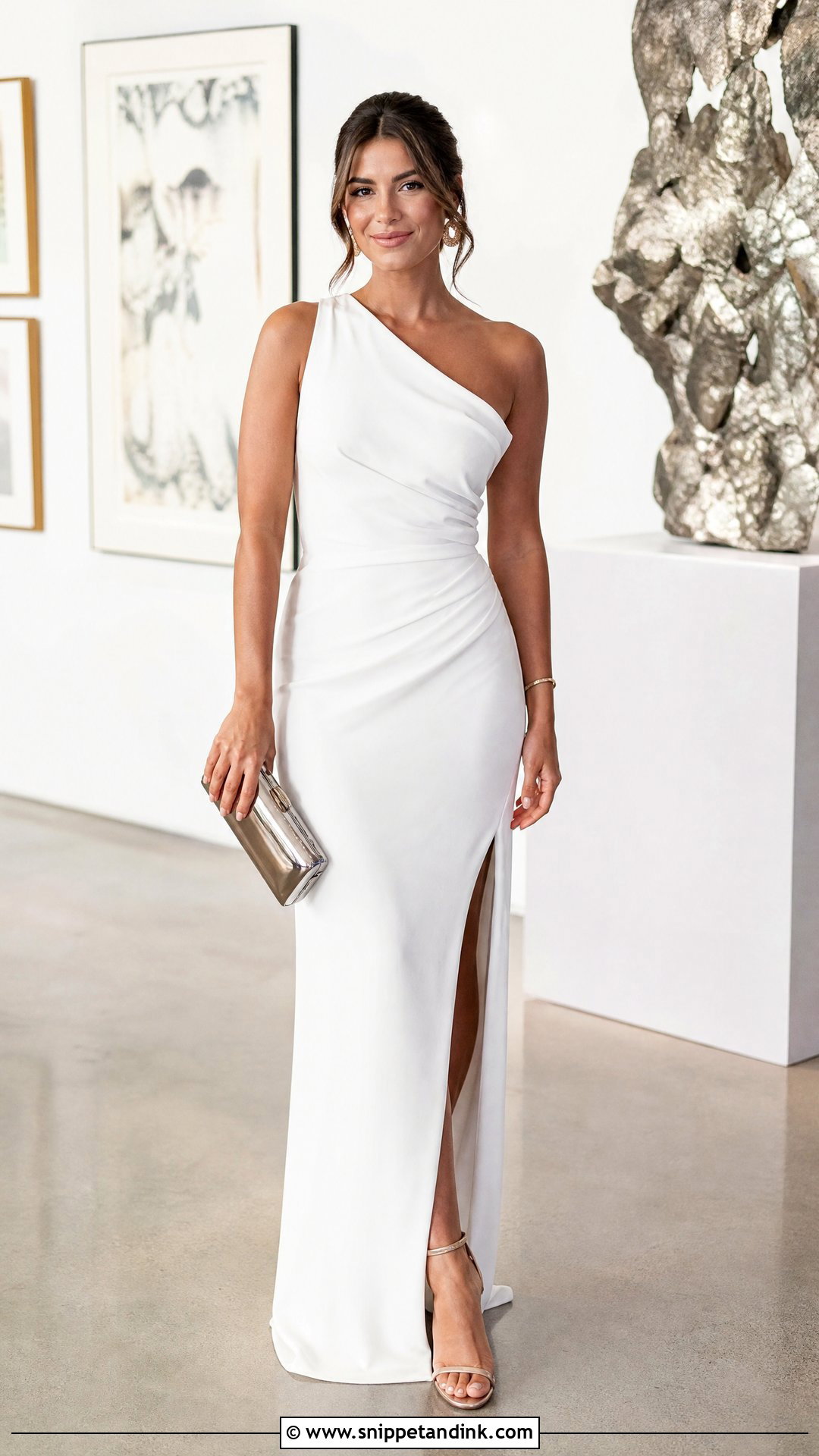
One shoulder is an easy way to get interest out of a plain fabric, because the asymmetry does the decorating. The bare side needs to sit flat; if the bodice gapes under your arm, ask for a small silicone strip or a tighter side seam. Satin or crepe looks modern, while draped chiffon is softer. Minimal heels and a metallic clutch work, and earrings should stay small enough not to fight the neckline. Sweep your hair to the opposite side so the shoulder detail stays visible.
11. White Beaded Gown Outfit
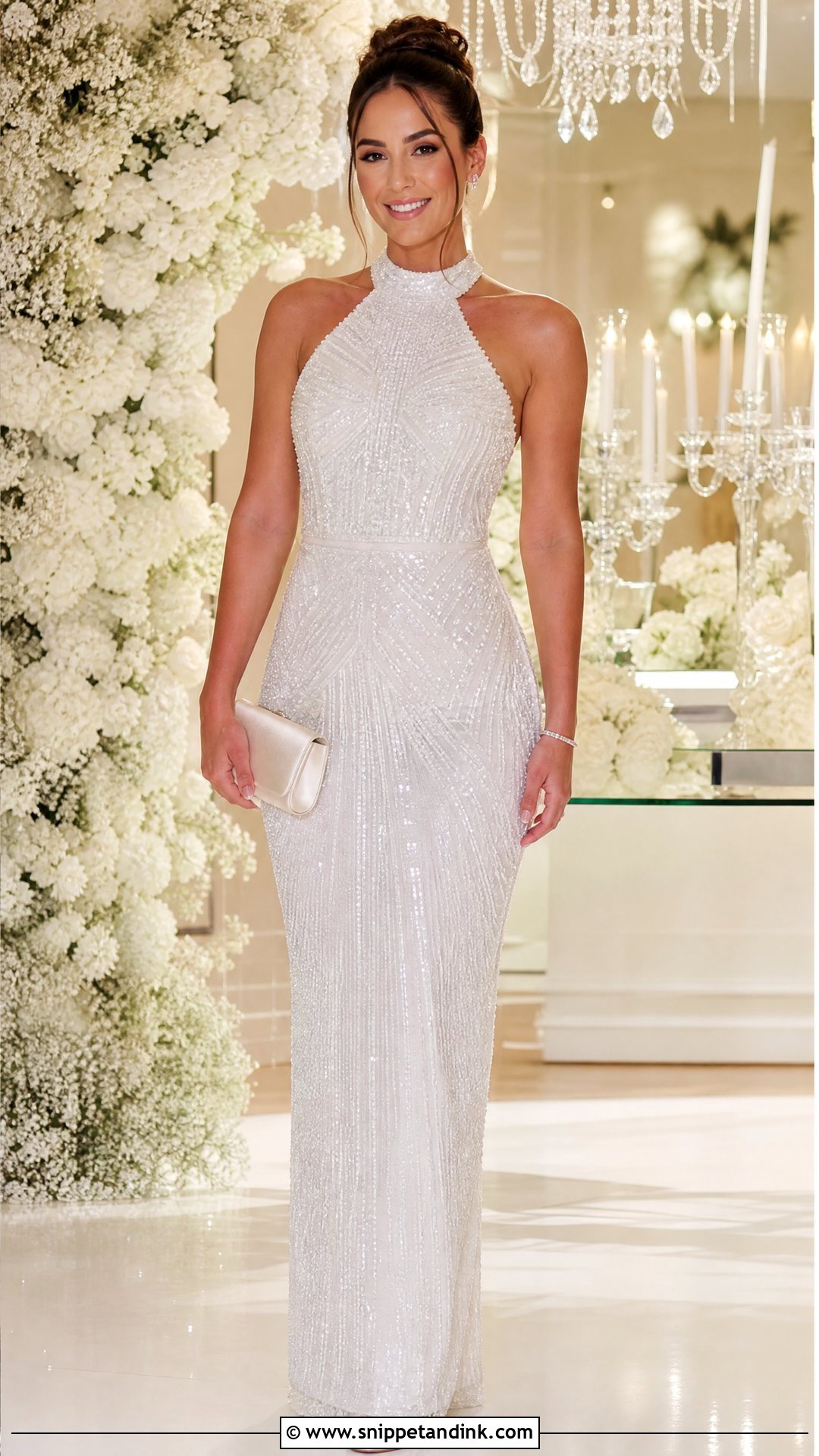
Beadwork is heavy, often far heavier than brides expect, and that weight drags on the shoulders and pulls a hem down by the end of the night. I lift every beaded gown off the rail before recommending it, and I look for designs where the beading follows the seams instead of covering everything. Fitted cuts feel glamorous; loose beaded shifts feel vintage. Keep heels, clutch and earrings plain. A soft lining matters too, since bead backings scratch bare skin after a few hours.
12. White Tulle Gown Outfit
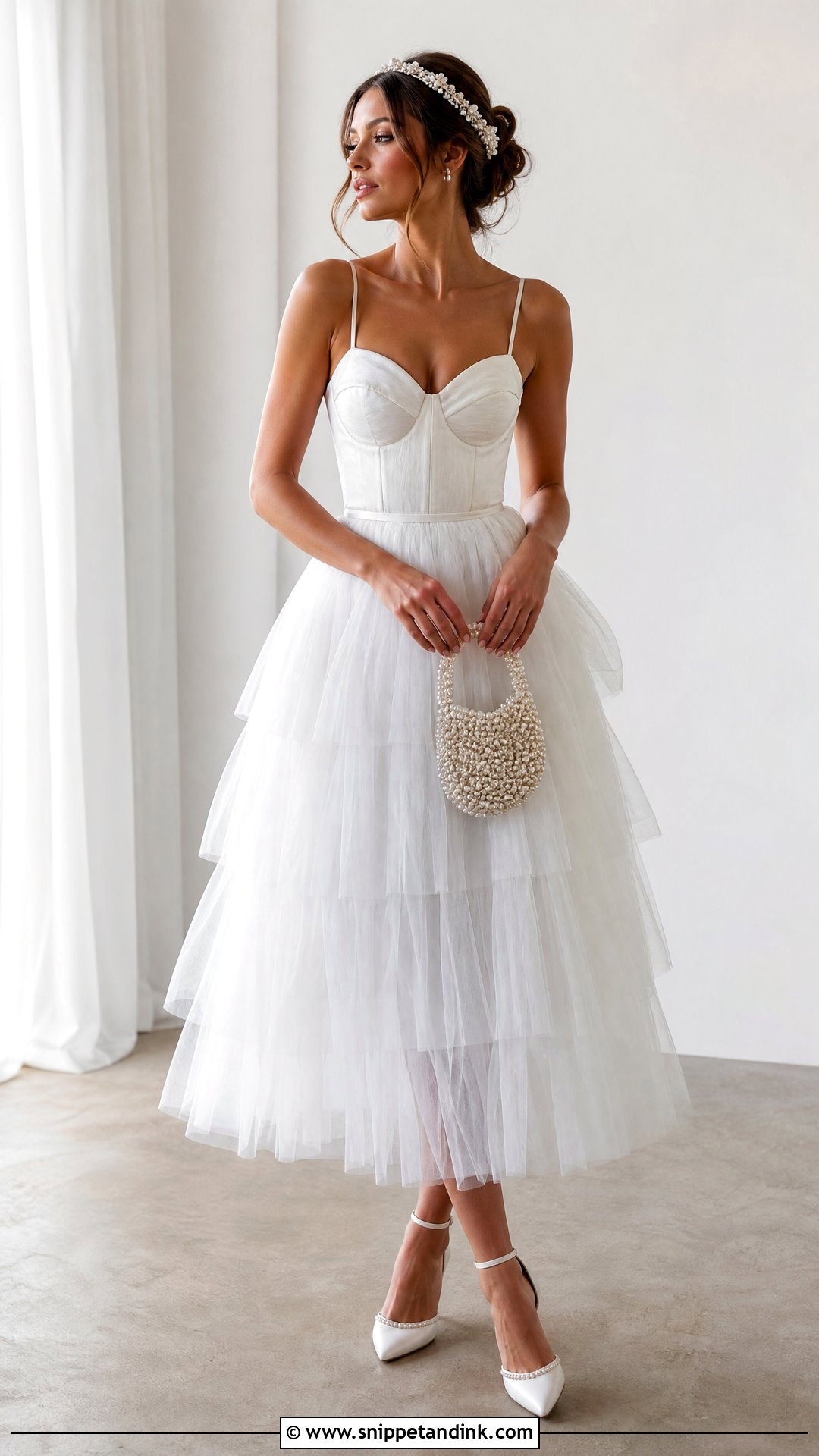
Tulle doesn’t have to mean a princess skirt. A single soft overlay floats over a slim base, and that version looks much more modern than six stiff layers. What I warn brides about is static and snagging: tulle clings to tights and catches on bouquet wire, so a slip underneath and careful flower wrapping help. Satin heels, a delicate headband and a small pearl bag keep it light. Keep the neckline simple if you don’t want it to look like a costume.
13. White Crepe Gown Outfit
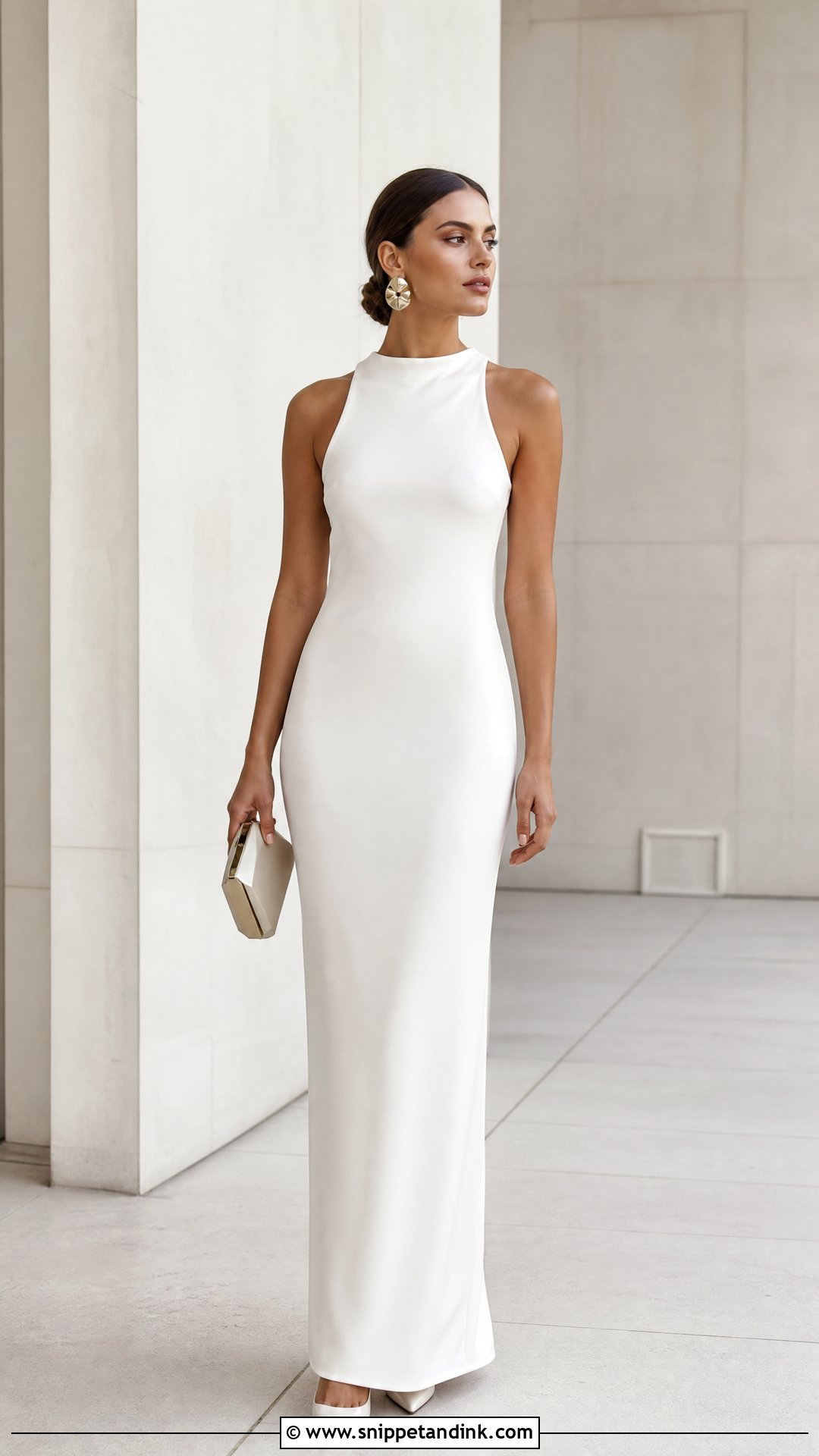
Crepe is my favourite fabric for minimalists, but it’s honest. It falls in a straight, heavy drape with a matte finish, and it shows every bump of a badly fitted seam, so budget for a good alterations appointment. Column, sheath or A-line all suit it. Pointed heels, a structured clutch and sculptural earrings finish it. Because there’s no shine, it looks crisp in daylight portraits, and I like it for courthouse ceremonies and modern dinners.
14. White Gown With Cape Outfit
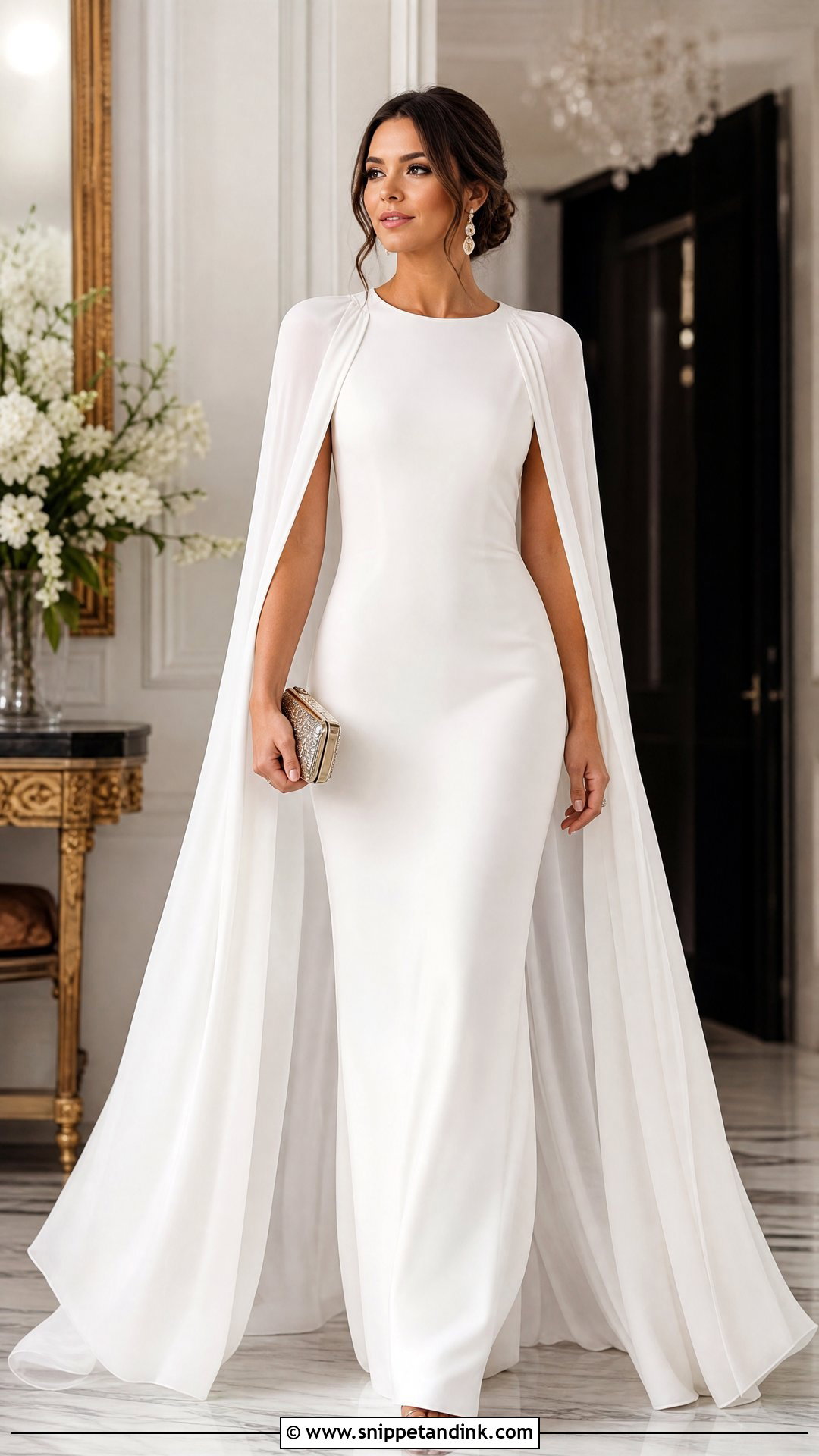
A cape can replace a veil, a jacket and a wrap at once, which is why I suggest it to brides who want one dramatic entrance and then a lighter look. Put it over a sleek base gown so the two don’t compete. Sheer chiffon capes over crepe look modern; lace capes are softer. Check how it attaches: a cape stitched to the shoulders can’t come off for dancing, while a hook-on one can. Simple heels, a small clutch and polished hair keep the cape in charge.
15. White Gown With Gloves Outfit
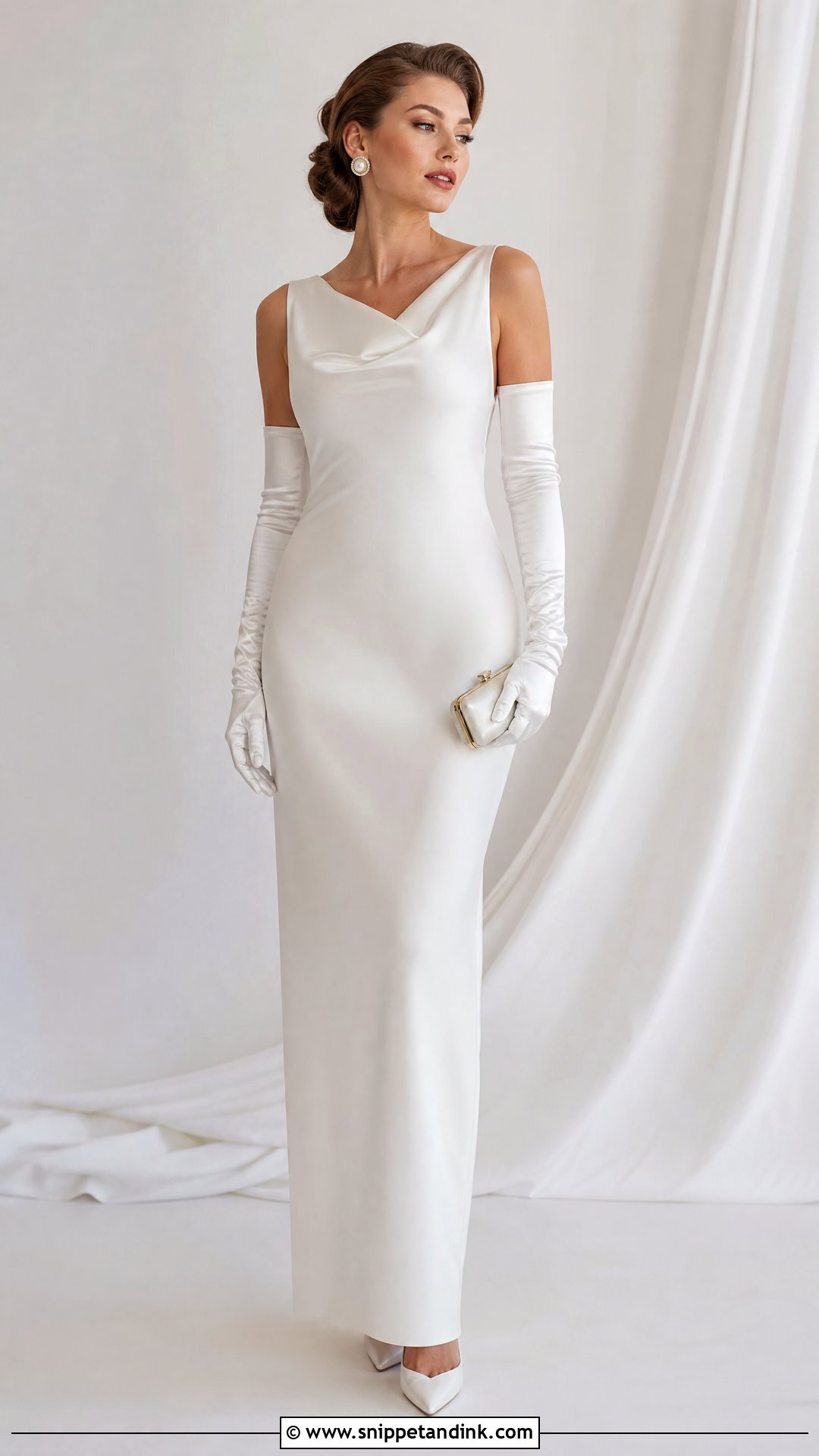
Gloves have to match the gown’s attitude. Satin opera gloves belong with structured satin, sheer gloves soften lace, and short wrist gloves feel playful. The practical problem is the ring exchange: long gloves either come off at the altar or need a slit at the ring finger, and I always ask which the bride wants before the ceremony. Keep other statement pieces out of it. A sleek updo or curled bob stops the look tipping into costume.
16. White High Neck Gown Outfit
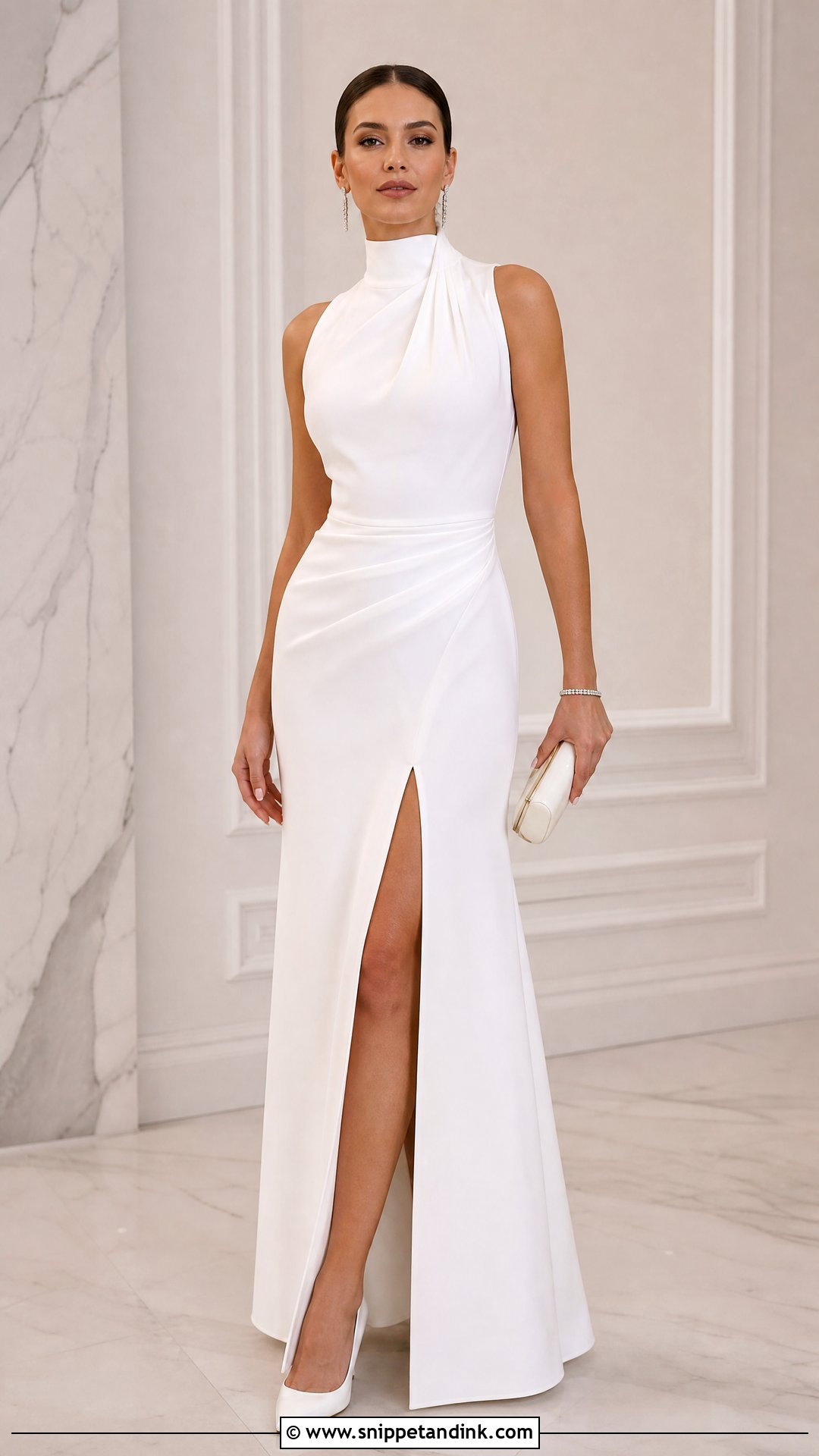
A high neckline pulls focus to the face, so earrings, sleek hair and clean makeup matter more than anywhere else on the list. Lace looks romantic, satin formal, crepe modern. The thing I check is the collar height when you turn your head; anything that rubs your jaw will annoy you all day. Since the neck is covered, add shape with a defined waist or a moving skirt. It suits formal ceremonies, winter events, engagement portraits and elegant evenings.
17. White Square Neck Gown Outfit
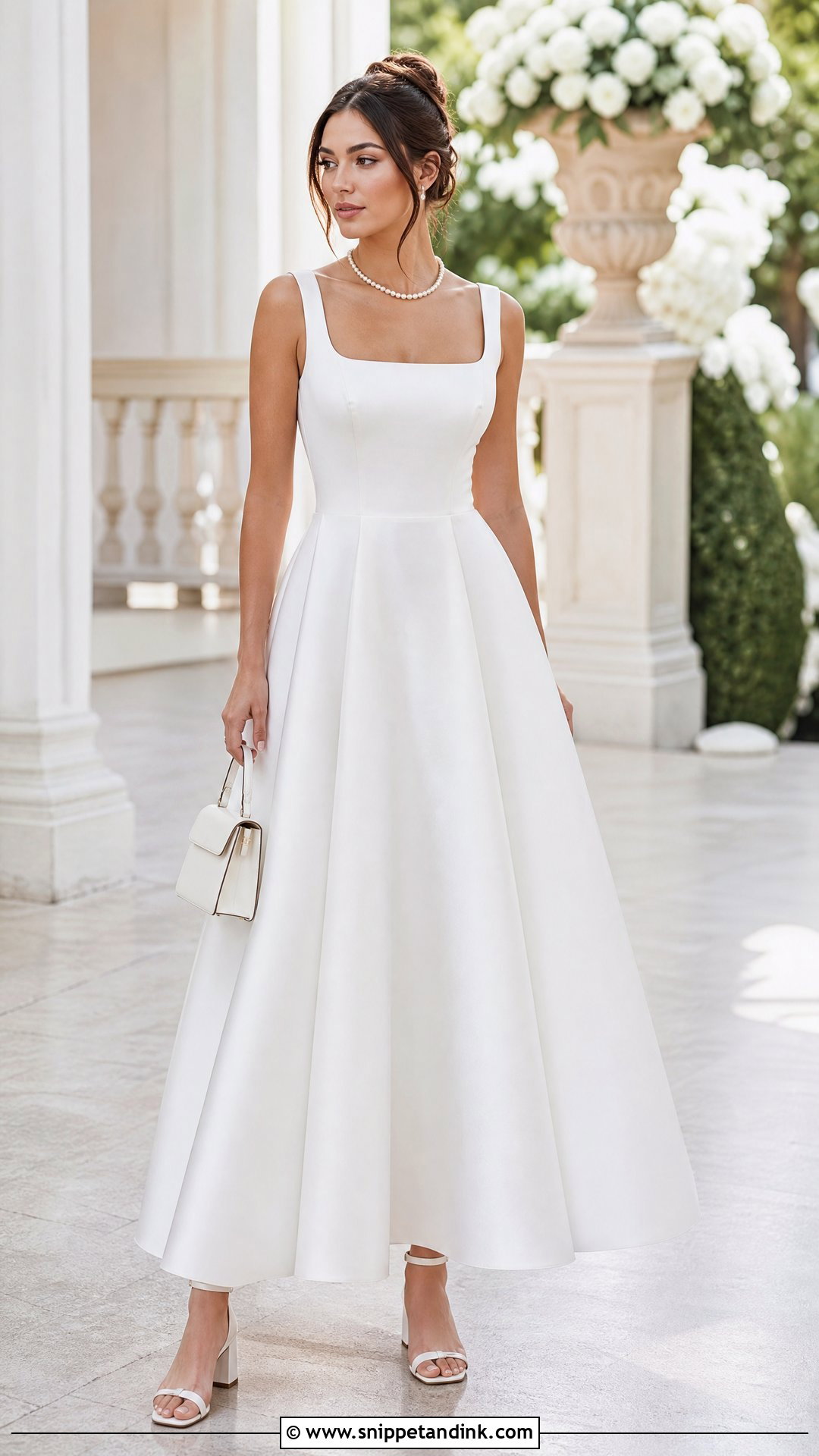
Square necklines feel secure, which is why brides who hate adjusting a strapless bodice usually end up here. The straight edge frames the collarbone and sits with straps or long sleeves. A satin A-line is romantic; a crepe column is cleaner. Here a short pearl necklace actually helps, filling the open square, with block heels and a structured mini bag. Keep everything else simple so the neckline stays the main shape.
18. White Strapless Gown Outfit
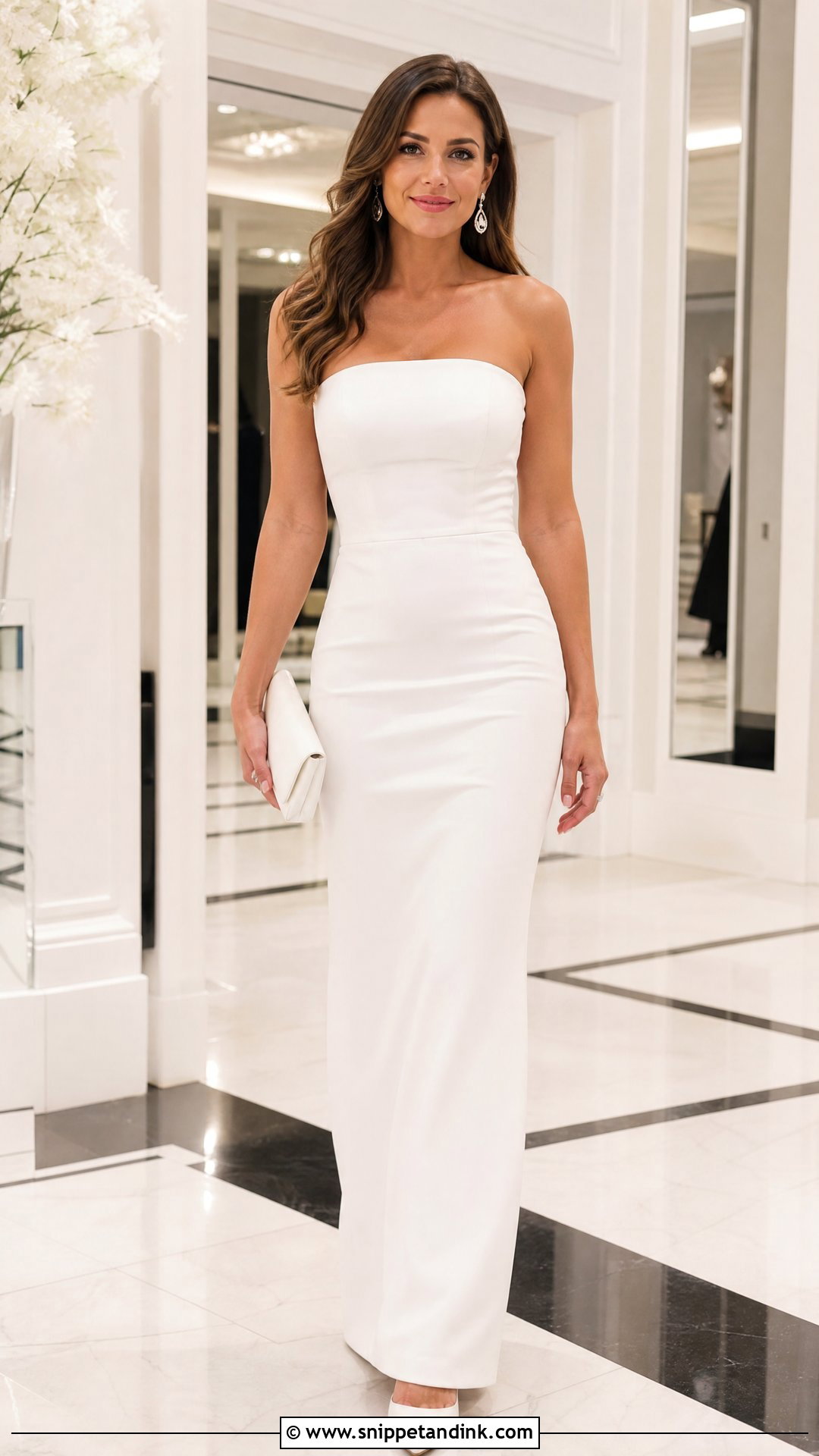
Strapless gowns depend entirely on the bodice fit. If it’s right, you can forget about it; if it’s even slightly loose, you’ll hitch it all day. I fit strapless bodices snug at the ribcage with internal boning and a waist stay, especially under a full skirt or long train, because that weight pulls downward. Pointed heels with a short necklace or drop earrings suit it. Satin feels classic, a corset version more current. Bring a bolero or wrap if you’re moving between indoors and out.
19. White Ruffle Gown Outfit
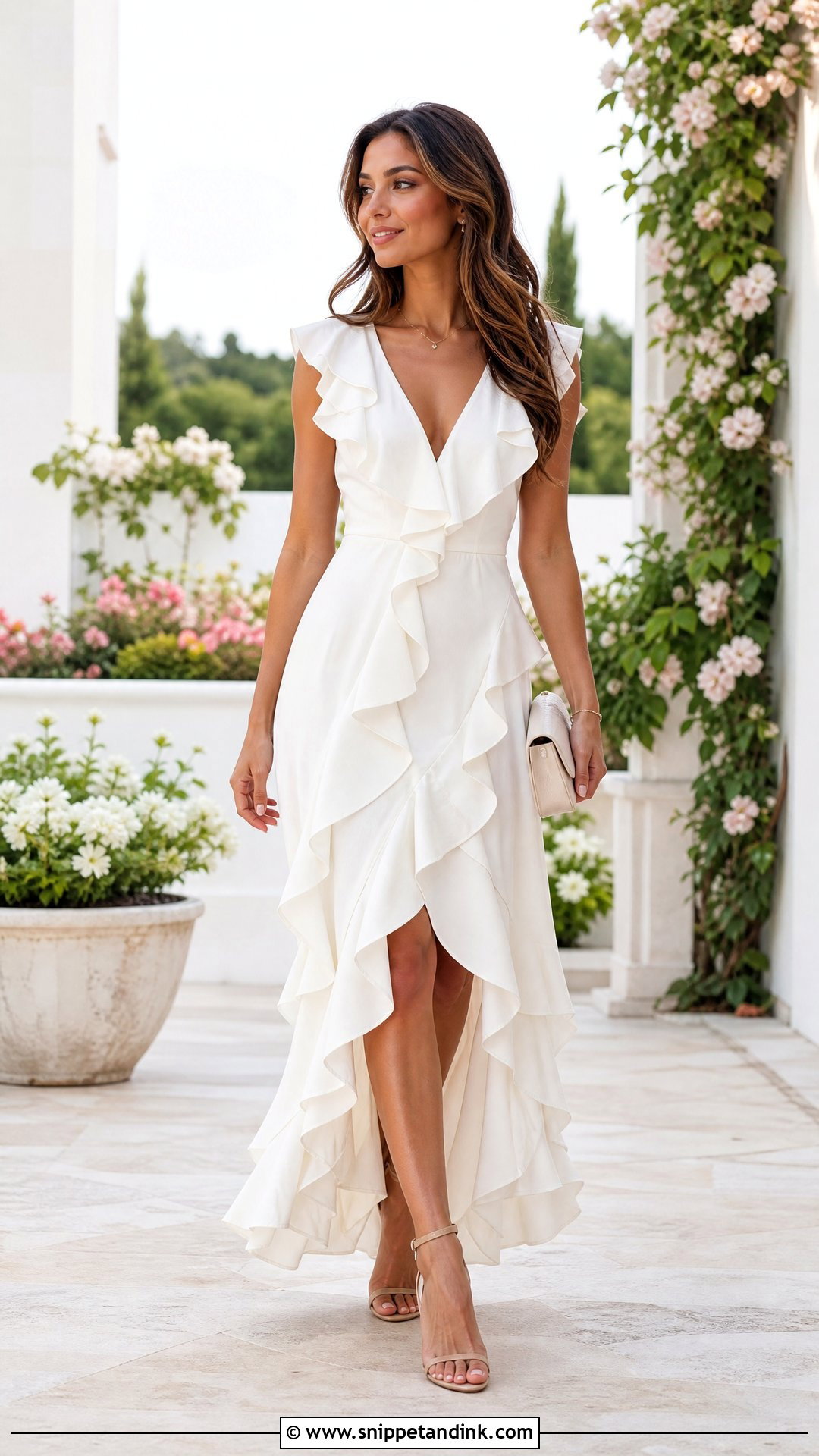
How a white ruffle gown outfit reads depends on scale. Small layered ruffles along the hem read soft; one large ruffle across the neckline reads bold. I usually recommend one area of ruffling, not several, because ruffles add visual width wherever they sit. Plain heels, a smooth clutch and minimal jewellery keep the texture from crowding. If the skirt is voluminous, keep hair neat.
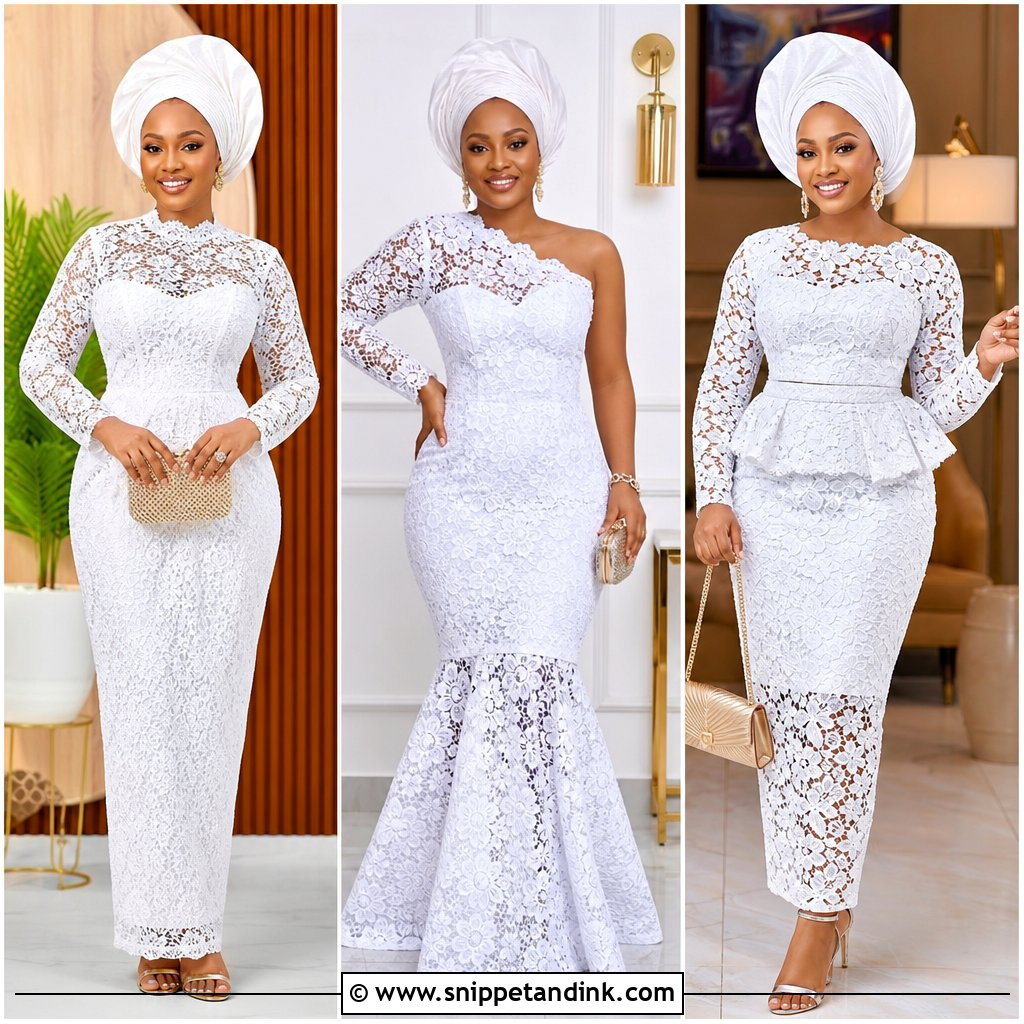
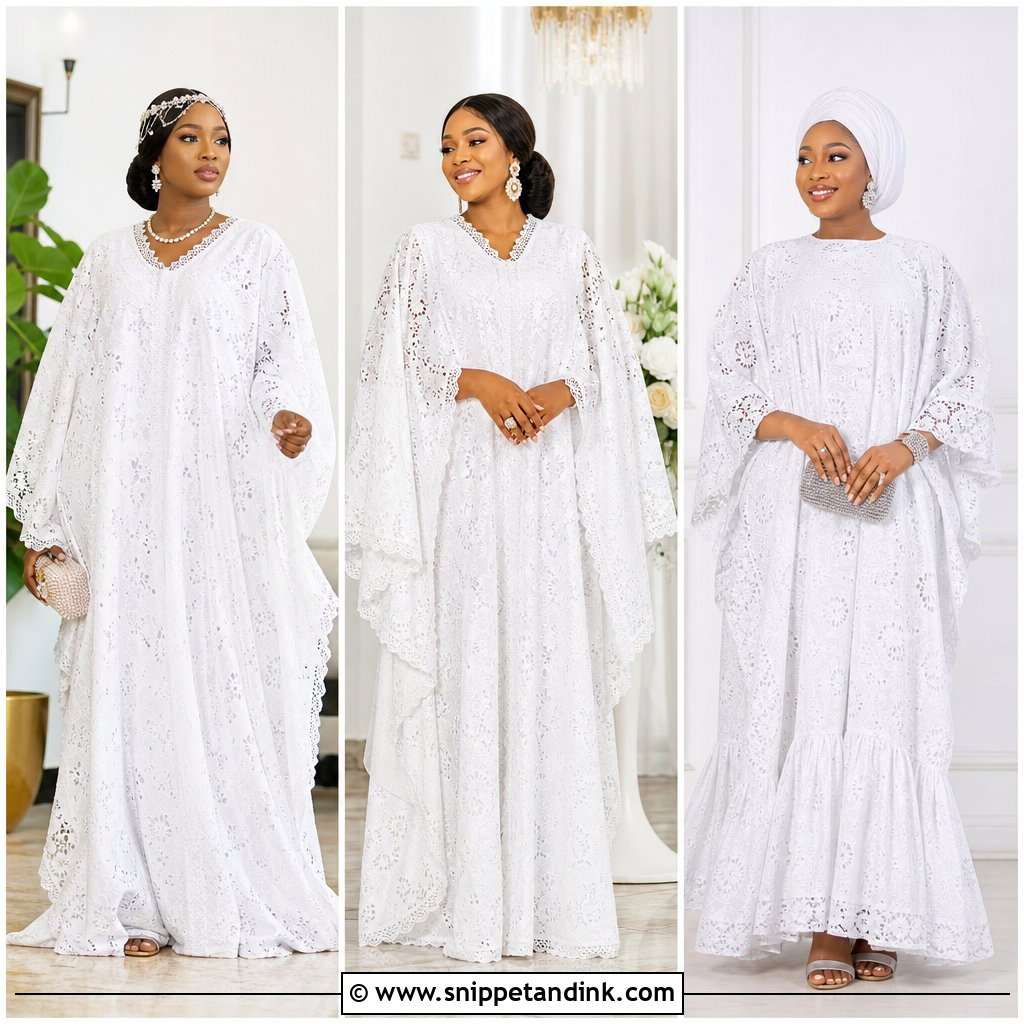
20. White Floral Applique Gown Outfit
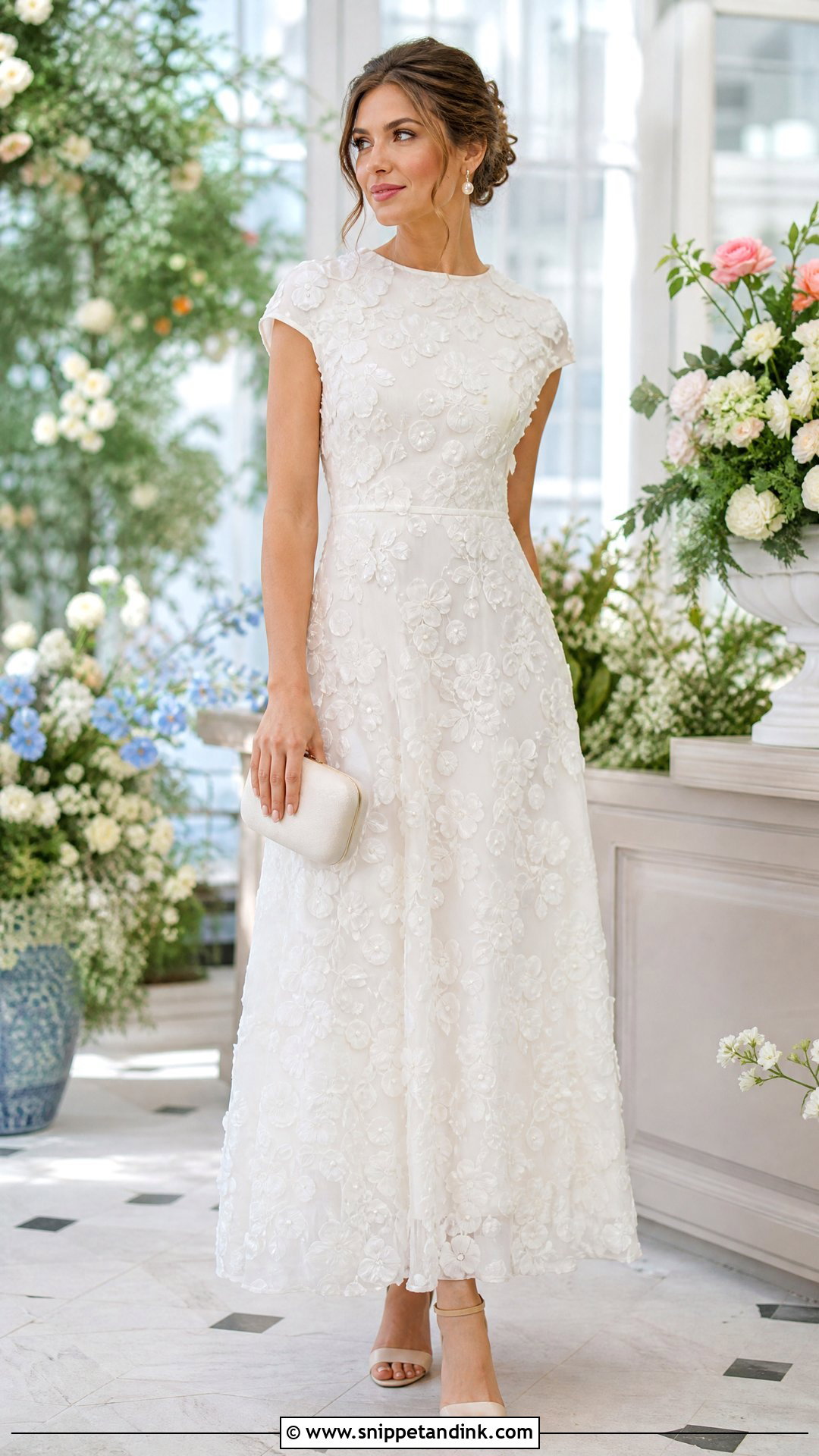
Applique gowns are about close-up texture, and the stitching quality is visible in photos. I check that the flowers are hand-tacked flat at the edges; loose petal tips lift and catch on everything. Small appliques look delicate, larger placements look dramatic. Soft heels, pearl earrings and a simple clutch suit spring and garden weddings. Loose waves or a low bun keep it soft, and heavy accessories only fight with the florals.
21. White Sequin Gown Outfit
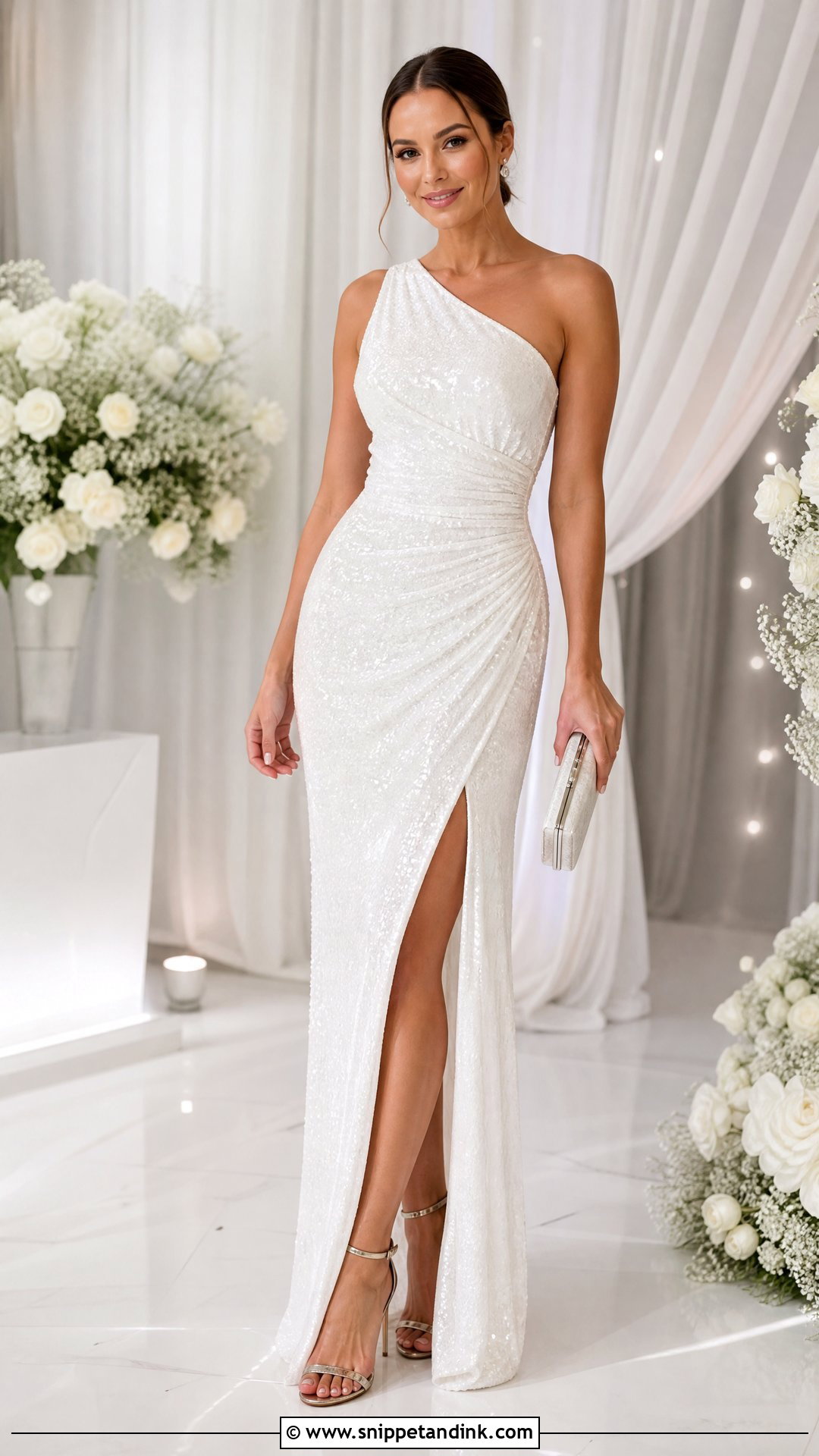
White sequins glow rather than glare, which makes them gentler than silver or black ones under flash. The catch is comfort: sequins scratch the inner arm where it rubs against the bodice, so I look for a gown with a smooth panel or lining there. A fitted column is sleek; a relaxed cut is easier to dance in. Metallic heels, a plain clutch and small earrings are enough, and fresh, non-shimmery makeup keeps the sparkle in one place.
22. White Two Piece Gown Outfit
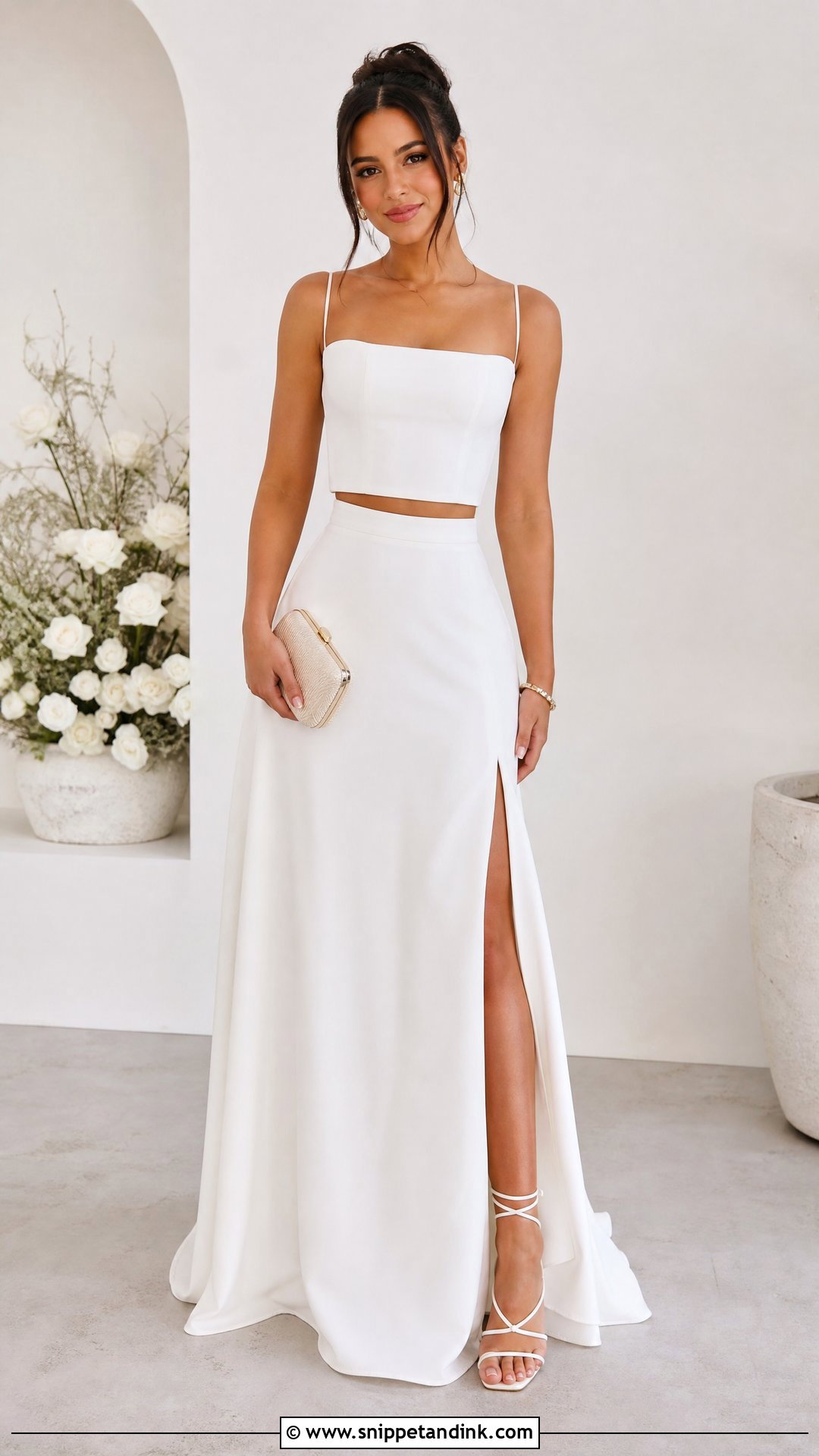
A two-piece is modern and, frankly, easier to alter than a gown, since top and skirt are fitted separately. You can match the fabrics or mix a satin skirt with a lace top. I always check the gap when you raise your arms; a cropped top over a high-waisted skirt can show more skin in photos than you saw in the mirror. Strappy heels, a small clutch and simple earrings keep both pieces in focus. A longer top or higher waist adds coverage.
23. White Gown With Overskirt Outfit
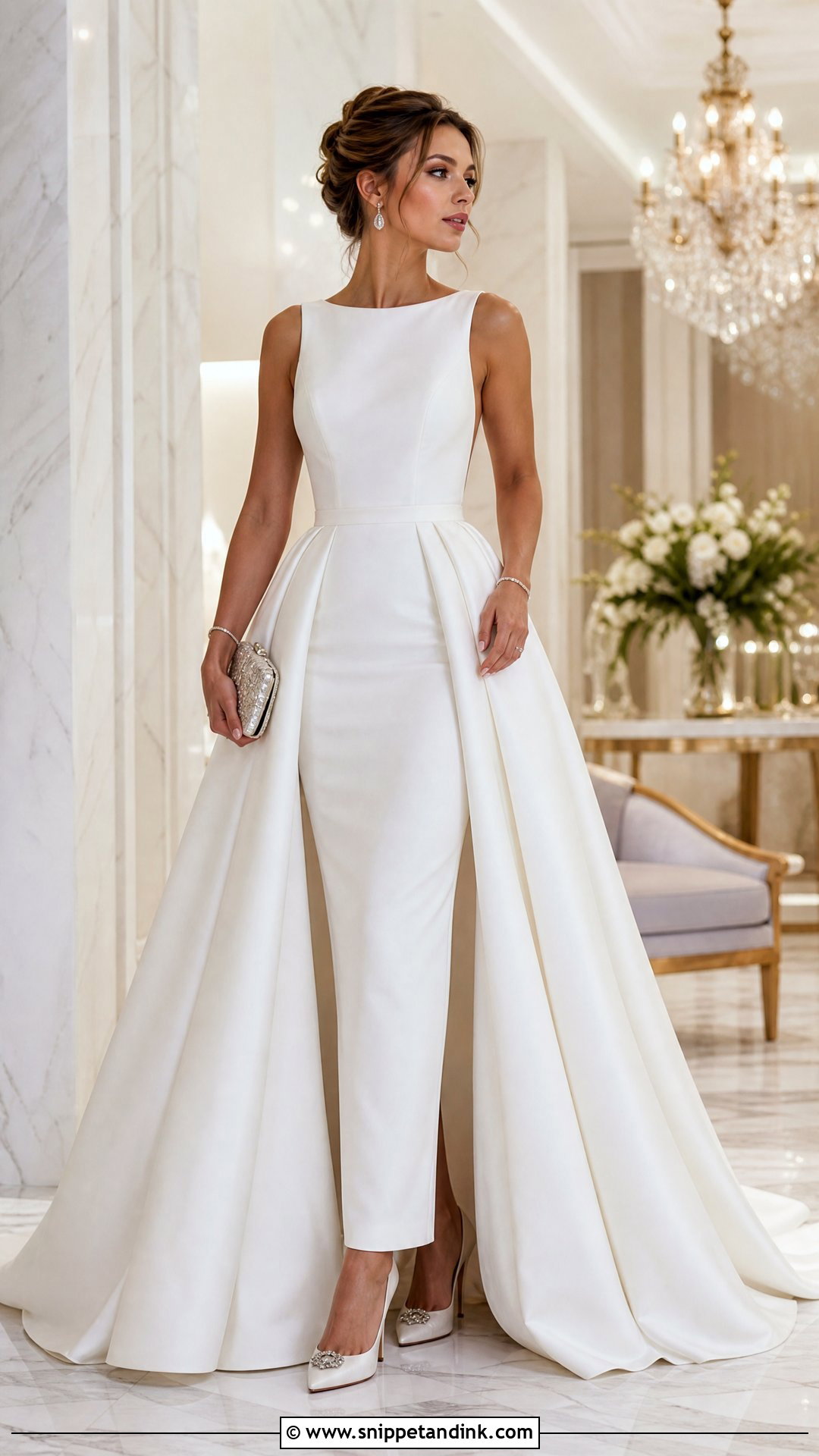
The overskirt gives you two looks in one: drama for the aisle, then a slimmer gown for dancing. How it attaches is everything. Hooks and snaps hidden along the waistband come off quickly; a skirt that ties needs someone to help. Fitted bases show a sharper contrast once the overskirt is off, and slim A-lines give a softer change. Keep heels, clutch and jewellery classic, and ask the seamstress to make sure the attachment line sits flat.
24. White Gown With Bow Outfit
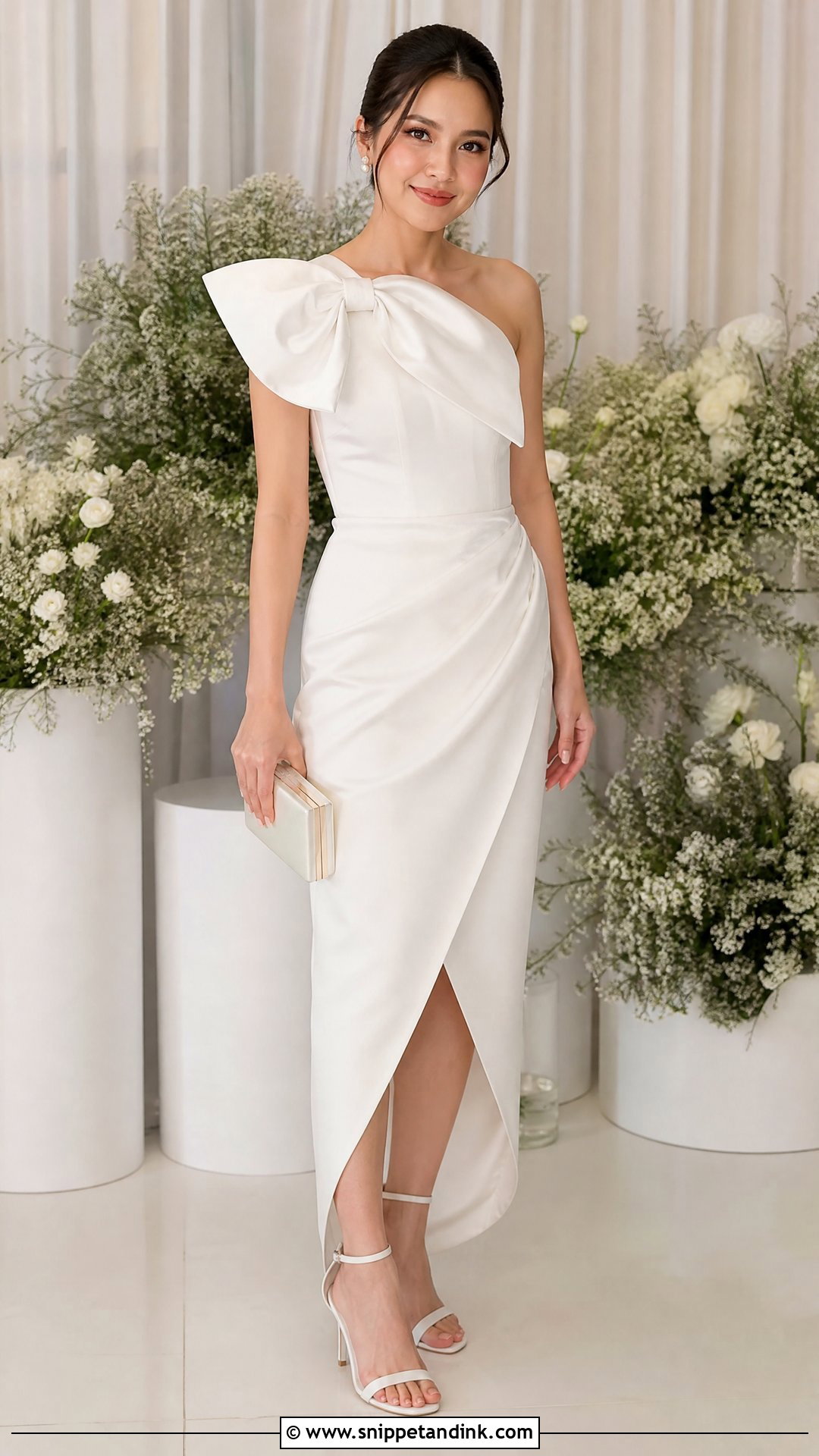
A bow works when there’s one, placed on purpose. A back bow plays to the aisle; a waist bow marks the shape; shoulder bows soften the neckline. Large bows on soft fabric droop by evening, so I ask for interfacing inside them or a stiffer fabric like mikado. Pearl studs, simple heels and a structured clutch keep it grown-up. If the bow is big, skip long necklaces and keep the hair sleek.
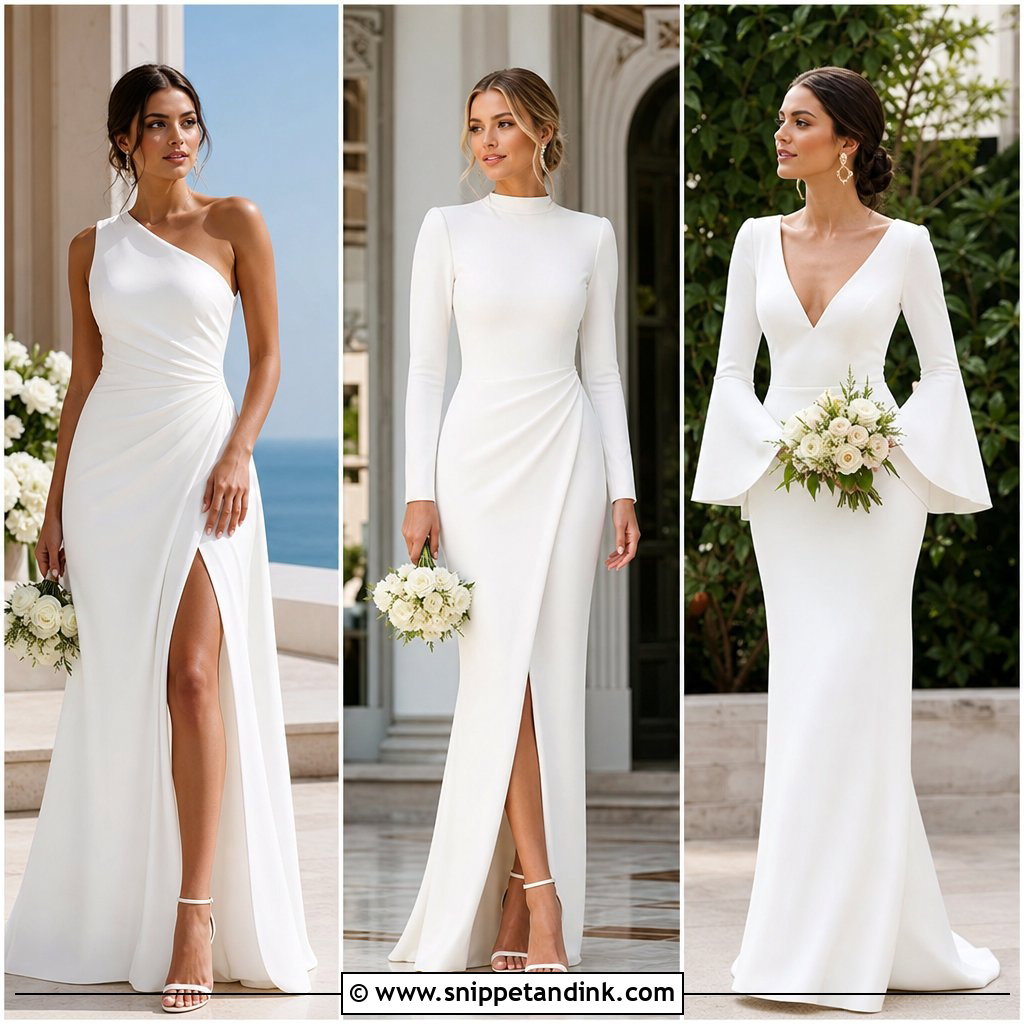
25. White Minimalist Gown Outfit
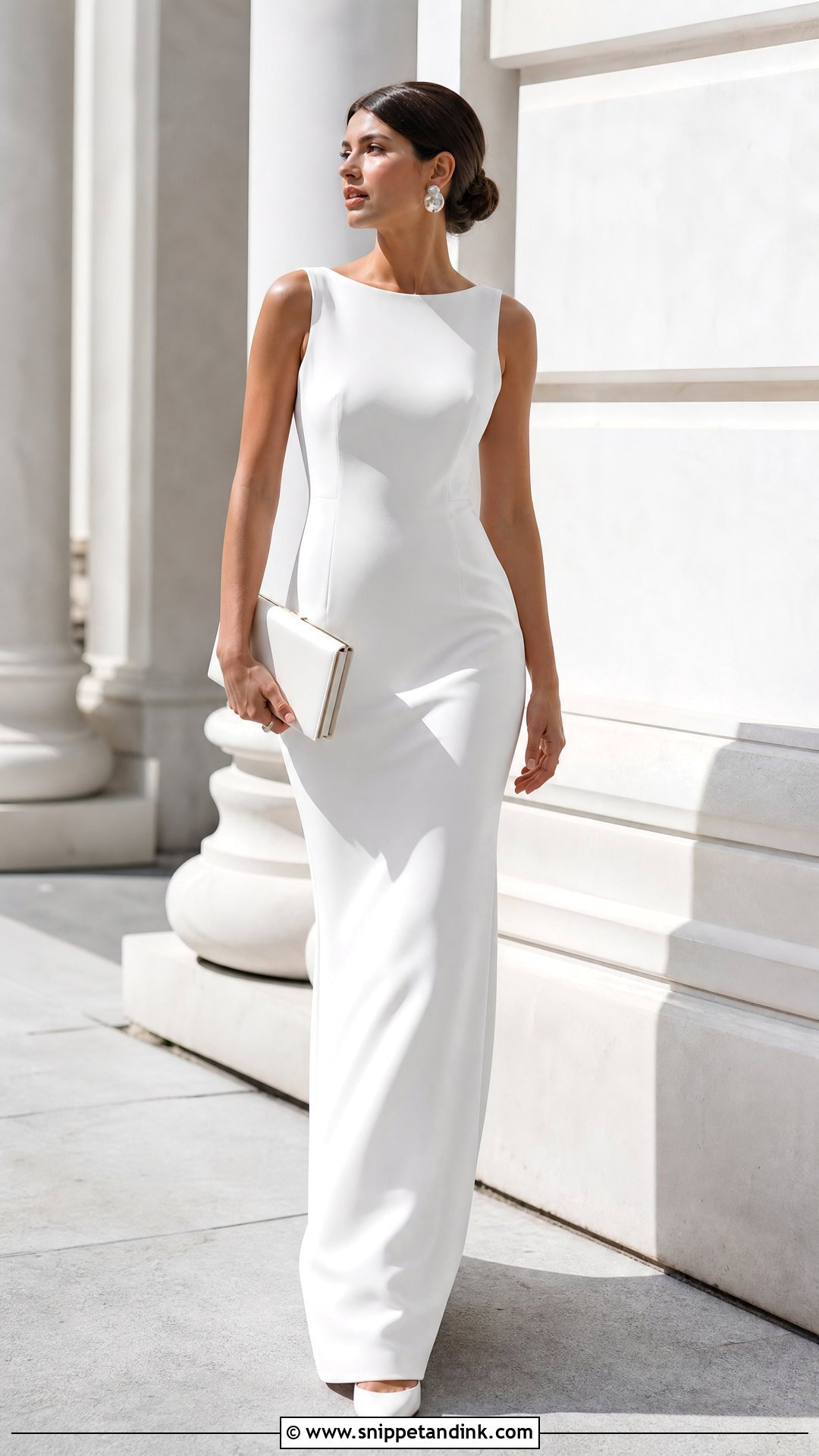
Minimalist gowns rely on fit and fabric weight more than any other style here, so this is where I’d spend the alterations budget. A straight column, slim A-line or draped sheath in crepe, satin or mikado will all do it. Pointed heels, sculptural earrings and a structured clutch finish it. The upside is that you can restyle it later with a blazer, a cape or bolder earrings. When there’s nothing else on the dress, every detail on you has to look chosen.
Alterations, Underwear and the Fittings Most Gowns Need
Almost every gown on this list needs some alteration, and the timeline is where brides get caught. Made-to-order gowns often take several months to arrive, and then I like to leave six to eight weeks for fittings, usually two or three appointments. Shop gowns bought off the rail still need that fitting window.
- Bring the exact shoes and underwear to the first fitting. The hem is set to the heel height, and a bra or shapewear line can change how a bias or crepe gown hangs.
- Wear nude-to-skin underwear, not white. White lingerie shows through white fabric much more than a shade close to your skin does.
- Ask about a bustle if the gown has a train. Satin bustles hold with a few points; heavy lace trains need more.
- Plan the last fitting close to the date, so small weight changes don’t undo the work.
Small Disasters on White Fabric and How I Handle Them
White shows everything, and something always lands on it. Makeup on the neckline is the most common; I put the gown on before final lipstick and keep a scarf over the face when it goes on over the head. A white chalk stick or a dab of plain cornflour hides small marks on matte fabrics. On satin, blot gently and never rub, because rubbing leaves a shiny patch that looks worse than the stain.
After the day, get the gown to a specialist cleaner within a few weeks. Sugar from drinks or cake turns yellow-brown over time even if you can’t see it now. Store it flat or folded with acid-free tissue in a breathable box, not in plastic, and keep it away from damp rooms.
Which of These Gowns Fits the Day You Are Planning
Each of these gowns is a full outfit decision, not just a dress. A slip gown is sleek, a ball gown grand, a mermaid sculpted and chiffon light. Corset, cape, two-piece and minimalist gowns give white a more current edge. When you narrow it down, try your favourite on and sit, walk and lift your arms in it before you fall for how it looks standing still. The one that still feels good after ten minutes of that is usually the right one.
You'll Like These Ideas:


Leave a Reply