
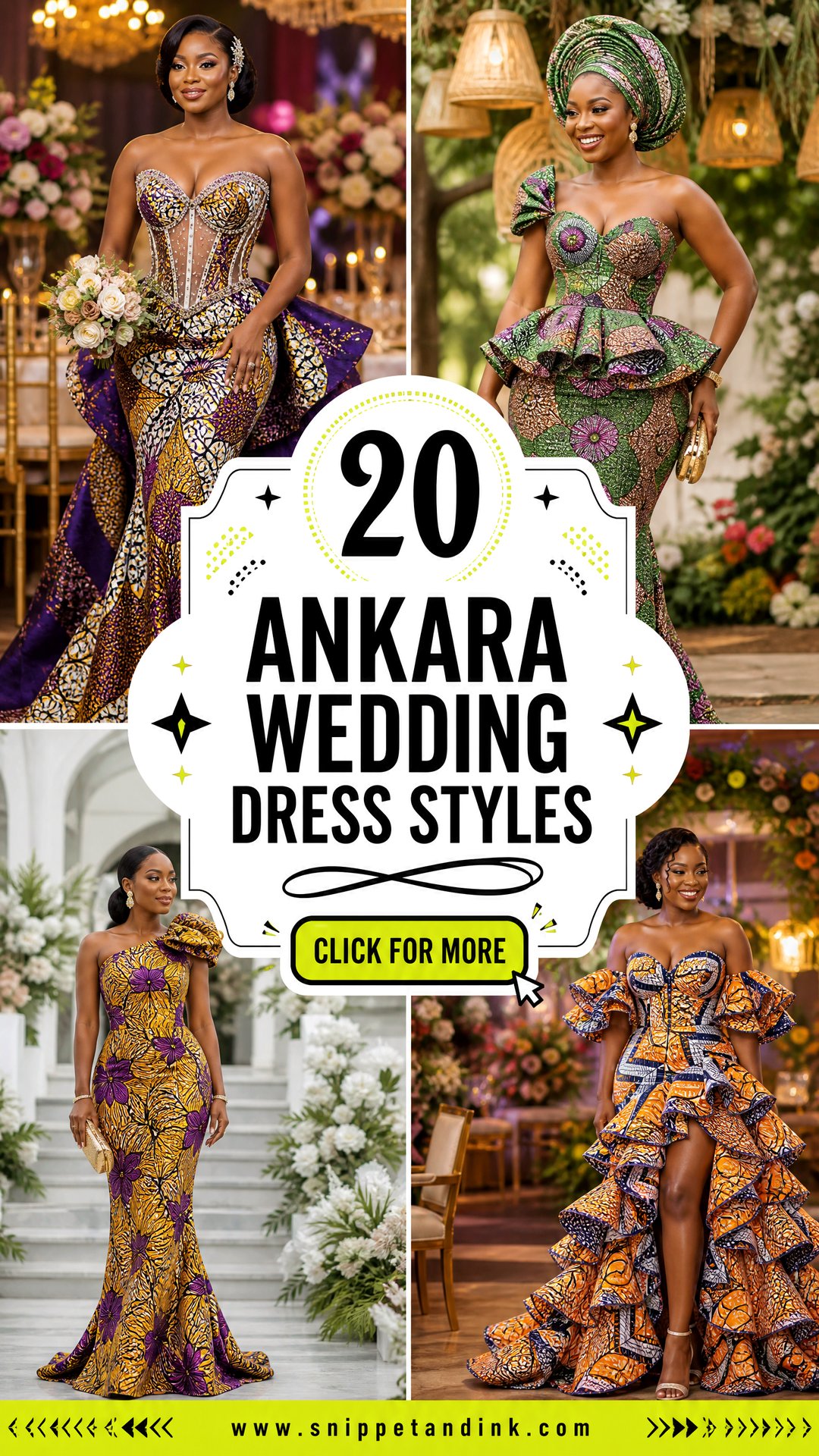
Ankara gives a bride something most bridal fabrics can’t: colour and pattern that already carry meaning for her family. The catch is that wax print behaves differently from satin or crepe, so the silhouette you pick has to suit the cloth as much as your figure. Below are twenty shapes I’d happily build in Ankara, from full ball gowns and mermaid cuts to modest long-sleeve dresses and two-piece sets, with notes on where the print should sit, what to wear with each, and the fitting checks I never skip. Structured corsets, statement sleeves and detachable layers are all popular right now, and each of them changes how much print you actually see.
Laying Out a Wax Print Before the Scissors Come Out
Most Ankara is cotton with a printed wax finish, sold in pieces of six yards and sometimes twelve. Straight off the bolt it feels crisp and slightly shiny, and that finish softens after the first wash. I want a bride’s dress to be cut from fabric that has already been through that change, so the print gets washed in cool water before the pattern goes anywhere near it. That one step tells you whether the colours bleed and lets any shrinkage happen now, not after your first dry clean.
Then comes the planning that separates a bridal gown from a party dress. Pin the paper pattern onto the fabric and stand back. Where does the biggest motif fall on the bust? Is there a bright ring sitting right over one hip? Does the print line up across the centre back zip?
- Buy more than the pattern asks for. Matching motifs across seams wastes fabric, and for a full skirt or a train I’d plan on at least one extra six-yard piece.
- Check the print’s direction. Many Ankara designs have an up and a down, and a skirt cut with half its panels upside down is hard to unsee.
- Bring the actual fabric to your first appointment, not a photo. Scale is almost impossible to judge on a phone screen.
- Ask your tailor to make a toile, a test version in plain cotton, for any fitted bodice. It costs a little more and saves cutting into print you can’t replace.
1. Ankara Wedding Dress Ball Gown
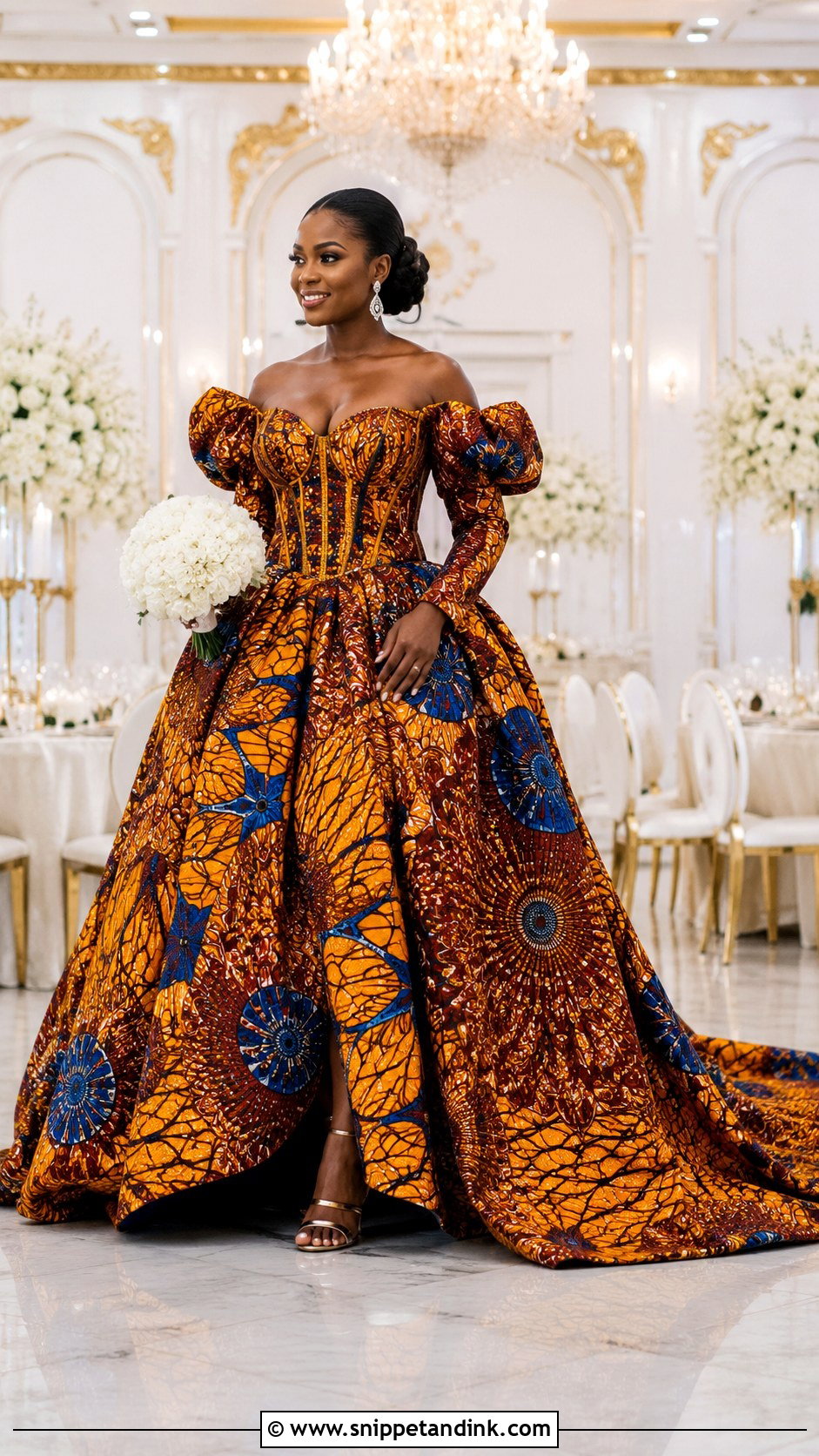
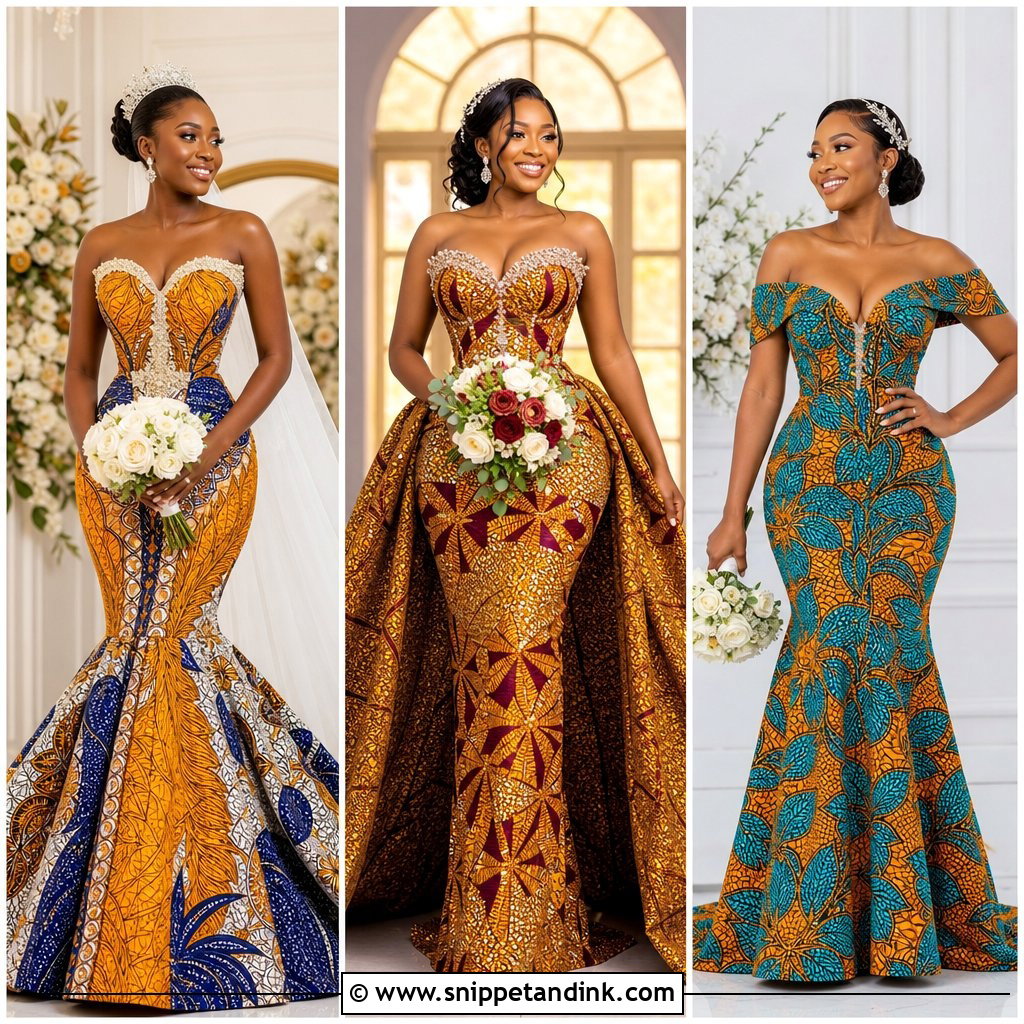
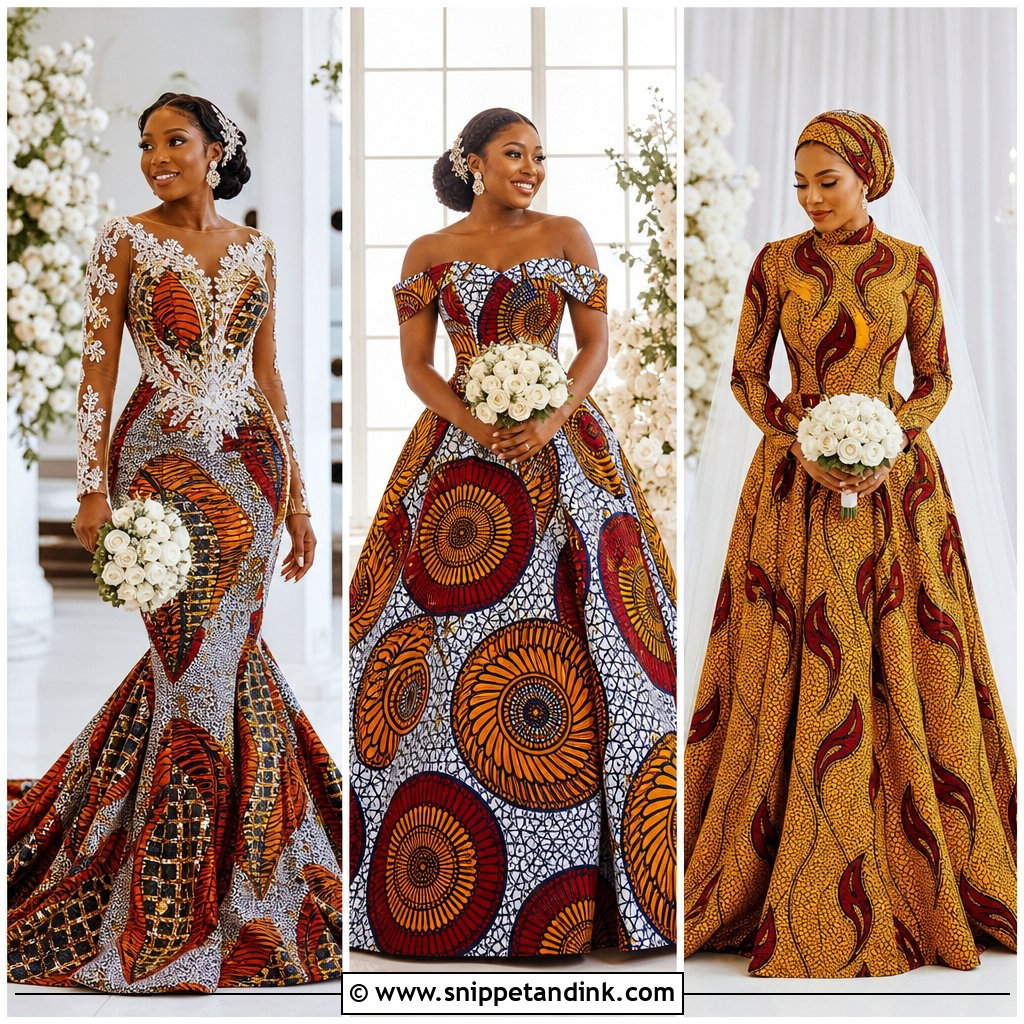
Nothing makes an entrance like a full printed skirt, but a ball gown uses a lot of fabric, and every seam is a chance for the motif to break awkwardly. I always lay the pattern out on the cutting table before a single panel is cut so the largest motif lands centre front and centre back. Underneath, a corset at the natural waist and a layered petticoat hold the volume; without them, cotton wax print collapses by the evening. Keep the extras quiet: metallic heels, a small beaded clutch, simple drops, and hair up in a neat bun or sculpted natural style so the neckline stays clear. A chapel train or a veil edged in the same print adds ceremony weight. At every fitting, sit, walk and turn in it, because a skirt this size has to be steered.
2. Ankara Wedding Dress Mermaid Gown
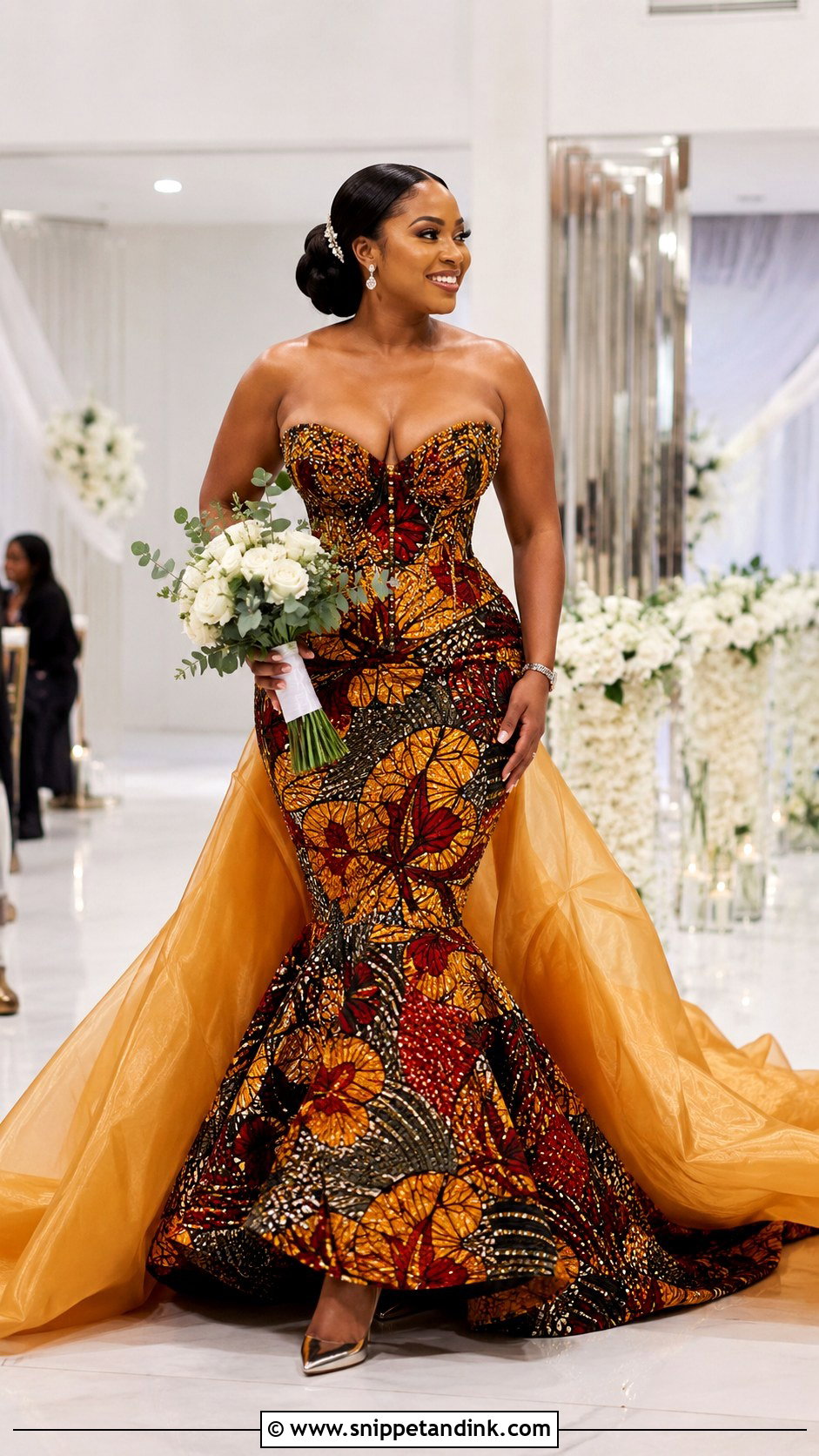
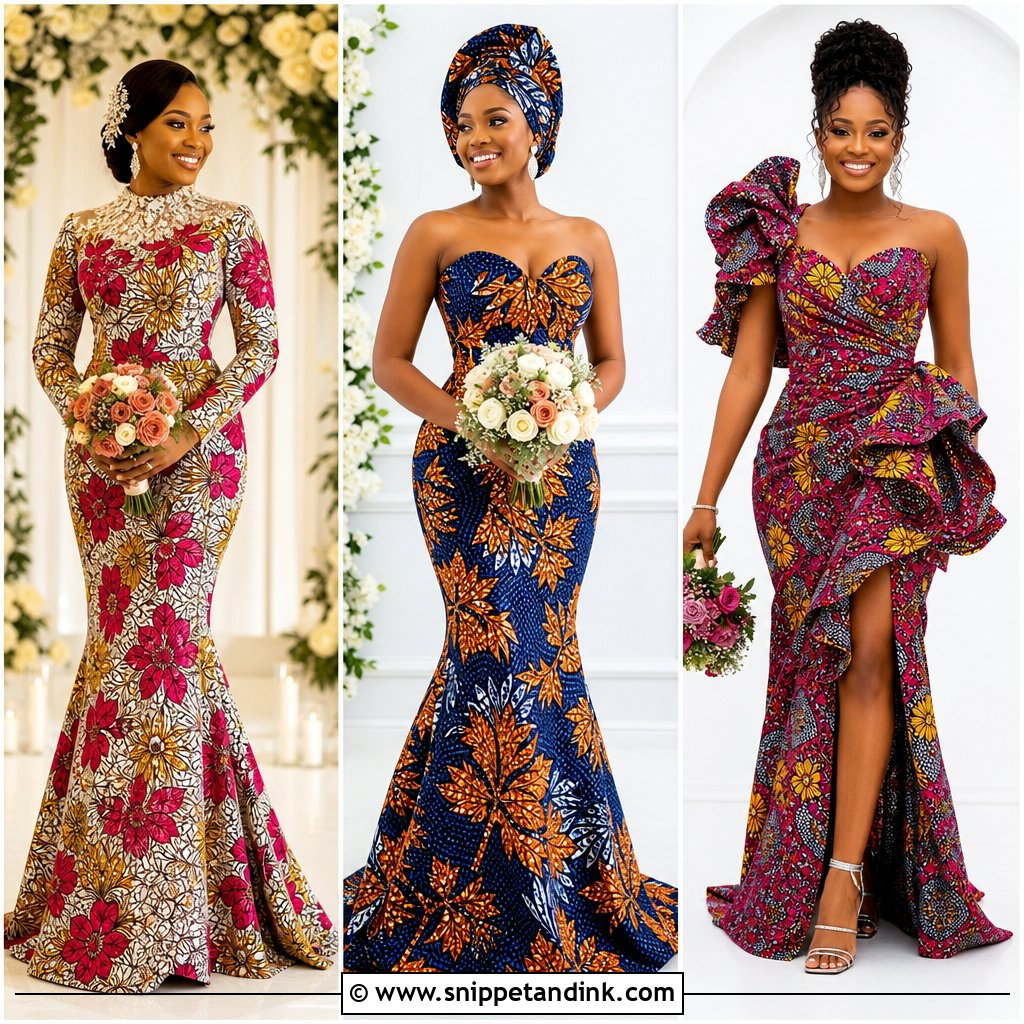
The fitted shape of an Ankara wedding dress mermaid gown follows the waist, hips and thighs closely, which is exactly why the fabric matters. A lightweight print will ripple over the hips; a firmer wax print backed with a stretch-free lining lies flat to the knee. For the flare, I like either more of the same print or solid organza or tulle pulled from one colour in the pattern. A sweetheart neckline over an internal corset finishes the top. Pointed heels and medium earrings are enough, so skip the heavy necklace. Ask for a bustle if there’s a train, and insist on a few centimetres of walking room at the knee, because the most common mermaid complaint I hear is a bride who can’t take the stairs.
3. Ankara Wedding Dress A-Line Gown
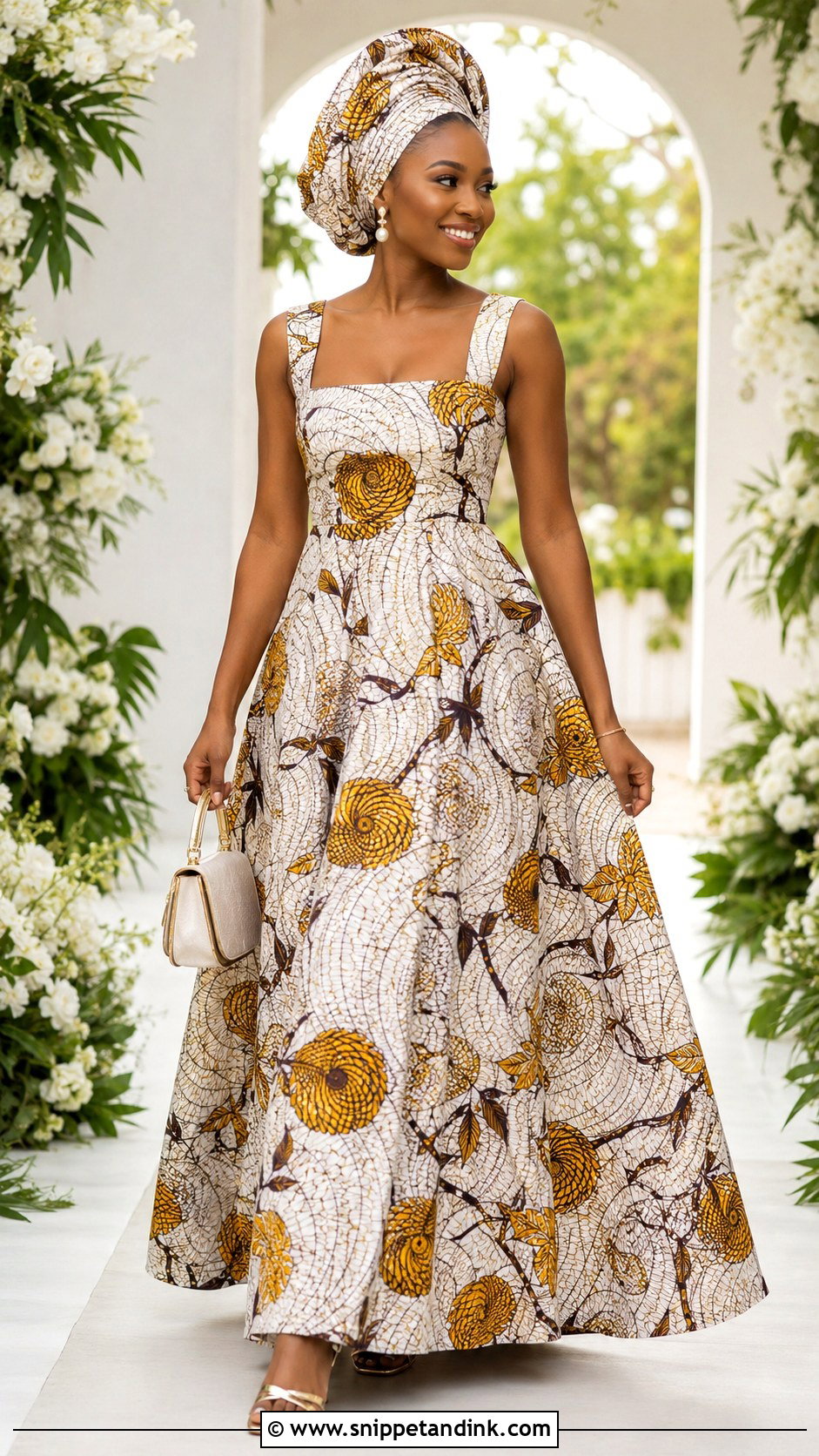
The A-line is the shape I suggest when a bride wants structure and comfort in equal measure. It’s fitted through the bodice and widens gently from the waist, so it forgives most figures and works in a church, a hall or a garden. Your neckline choice is really a support choice: a square or V-neck needs a firmer bodice than a soft scoop. Wide straps or short sleeves add security if you plan to dance hard. I keep the skirt lining light so the print moves rather than standing stiff. Gold sandals, pearl earrings and a compact bag let the fabric do the talking, and a matching headwrap or a plain veil with printed trim finishes it.
4. Off-Shoulder Ankara Wedding Dress
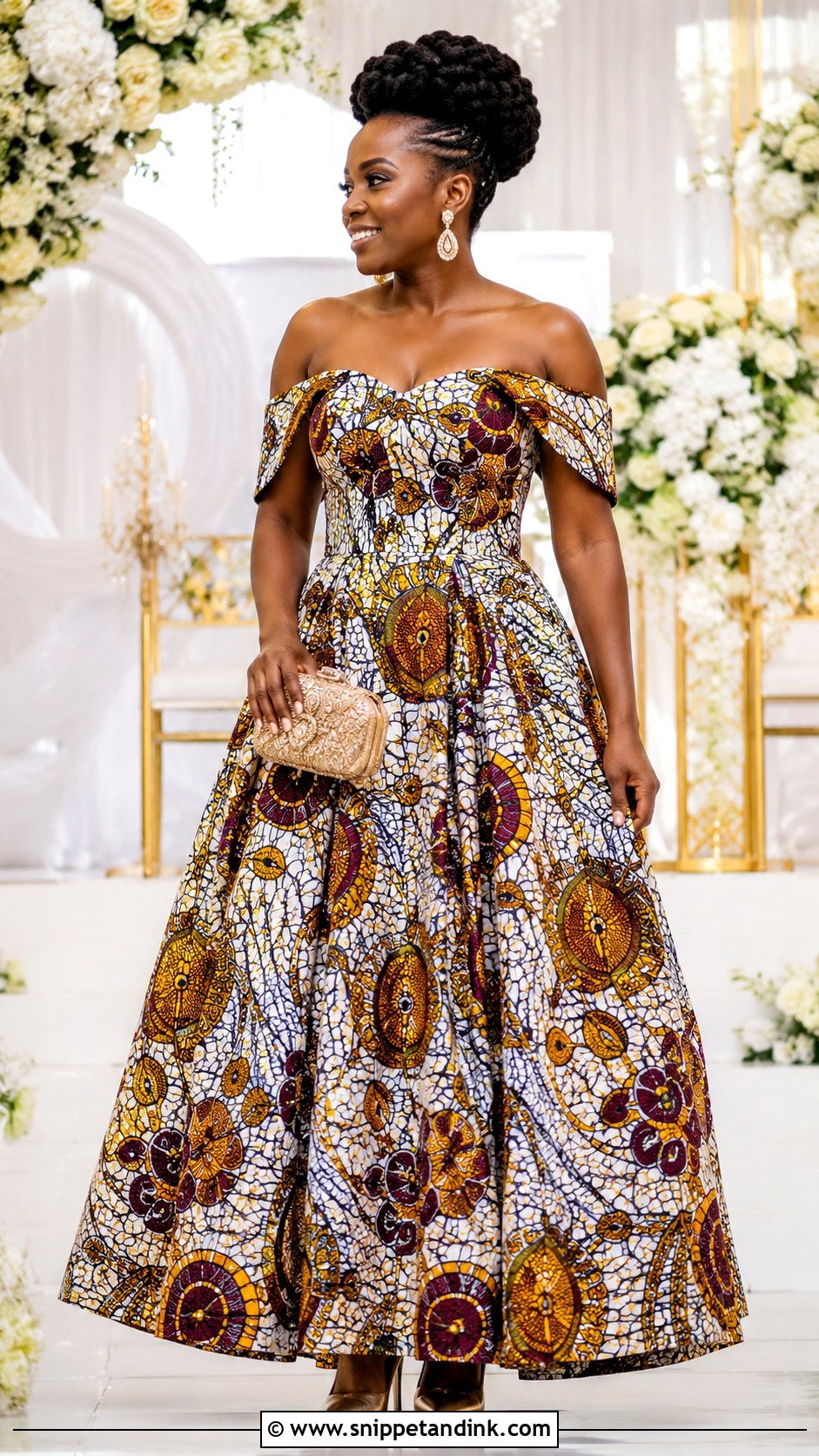
An off-shoulder neckline puts the collarbones on show, which makes it one of the most photographed parts of the whole outfit. The bands around the upper arm can be softly draped, folded or cut as structured Ankara strips. Here’s the honest part: this is the neckline I see slip most often, because a bride lifts her arms to hug someone and the bands ride up. Hidden elastic, boning in the bodice and well-fitted cups solve it, but only if you test by raising your arms at the fitting. Pair it with a fitted bodice over an A-line or soft mermaid skirt, wear elegant earrings, skip the necklace, and sweep your hair up or behind the shoulders.
5. Long Sleeve Ankara Wedding Dress
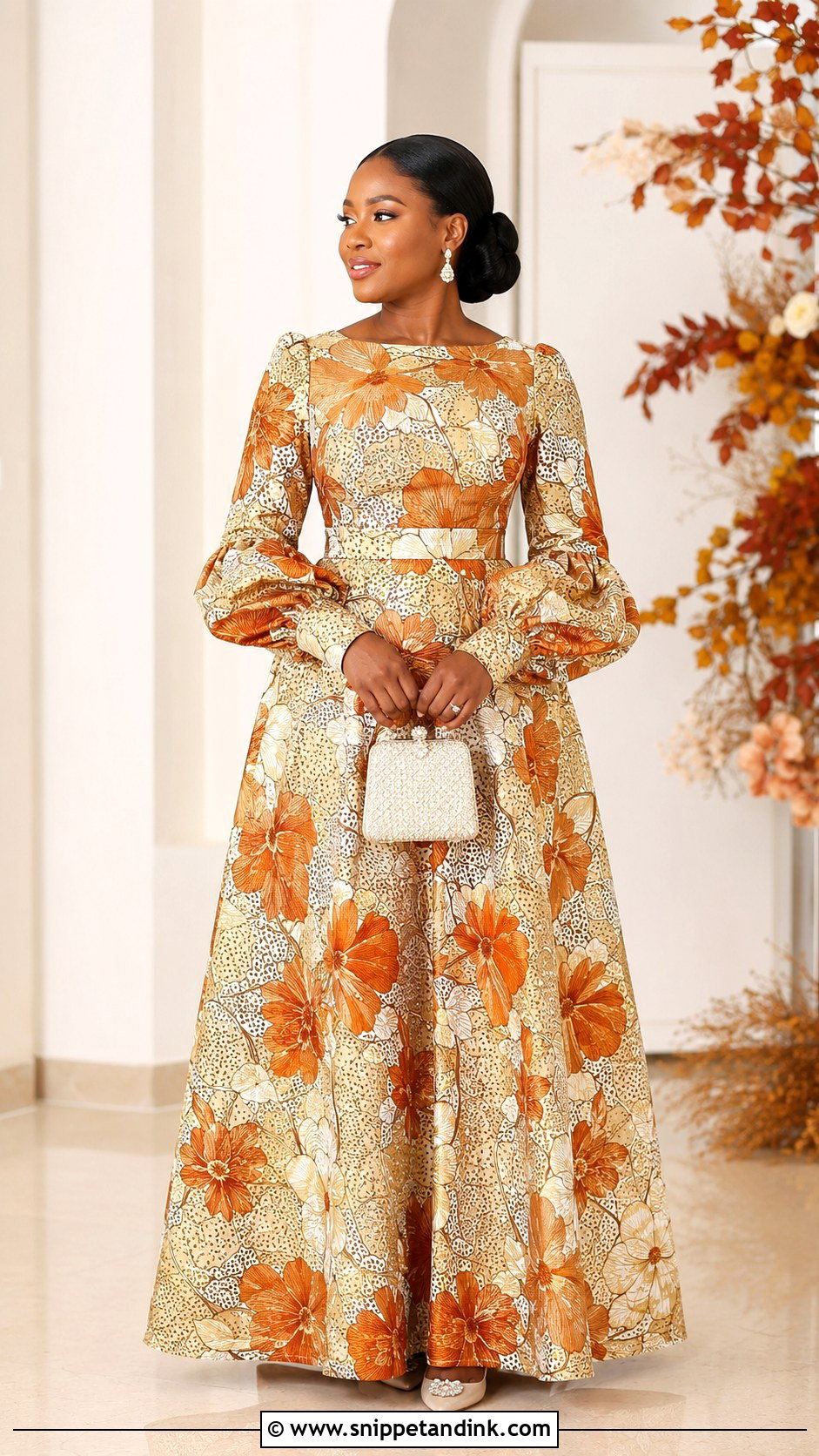
Sleeves bring coverage and presence, and a long sleeve Ankara wedding dress can look regal without feeling weighed down if the sleeve is cut well. Fitted sleeves give a sleek line; bishop sleeves add volume and movement. With a loud print, I often break things up with solid illusion mesh at the neckline or cuffs so the eye gets a rest. Balance big sleeves with a clean A-line, sheath or light flare. Closed-toe heels, delicate earrings and a smooth low bun are all it needs. The fitting detail I watch is the elbow: cotton print has almost no give, so a sleeve that looks fine standing can bind when you lift a fork. In warm weather, a breathable lining is not optional.
6. Corset Ankara Wedding Dress
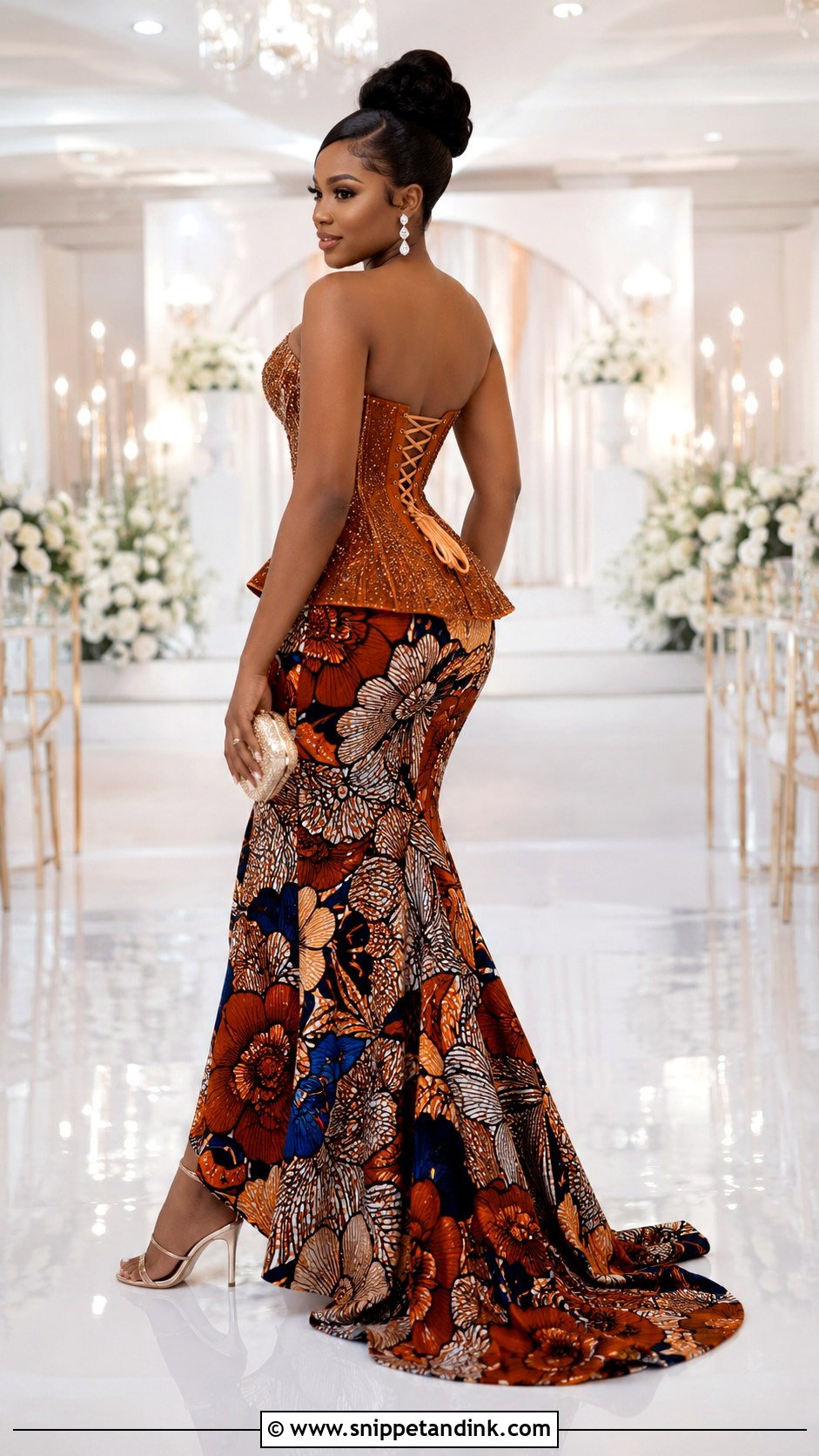
Corsetry gives the sharpest waist of any style here. The boning can show as stitched channels, sit behind a lace-up back, or hide completely under the printed fabric. I find a hidden corset suits busy prints better, since visible channels chop the pattern into strips. A basque waist, dipping into a point at the front, lengthens the torso and makes a strong line into either a full skirt or a slim trumpet. Choose accessories in one colour lifted from the print, such as drops and a clutch in the same shade, and leave it there. Book more than one fitting. A corset fitted on a day you’re bloated or anxious will fit differently on the wedding day, so test it seated and dancing before you sign off.
7. Ankara Bodice Wedding Dress With Tulle Skirt
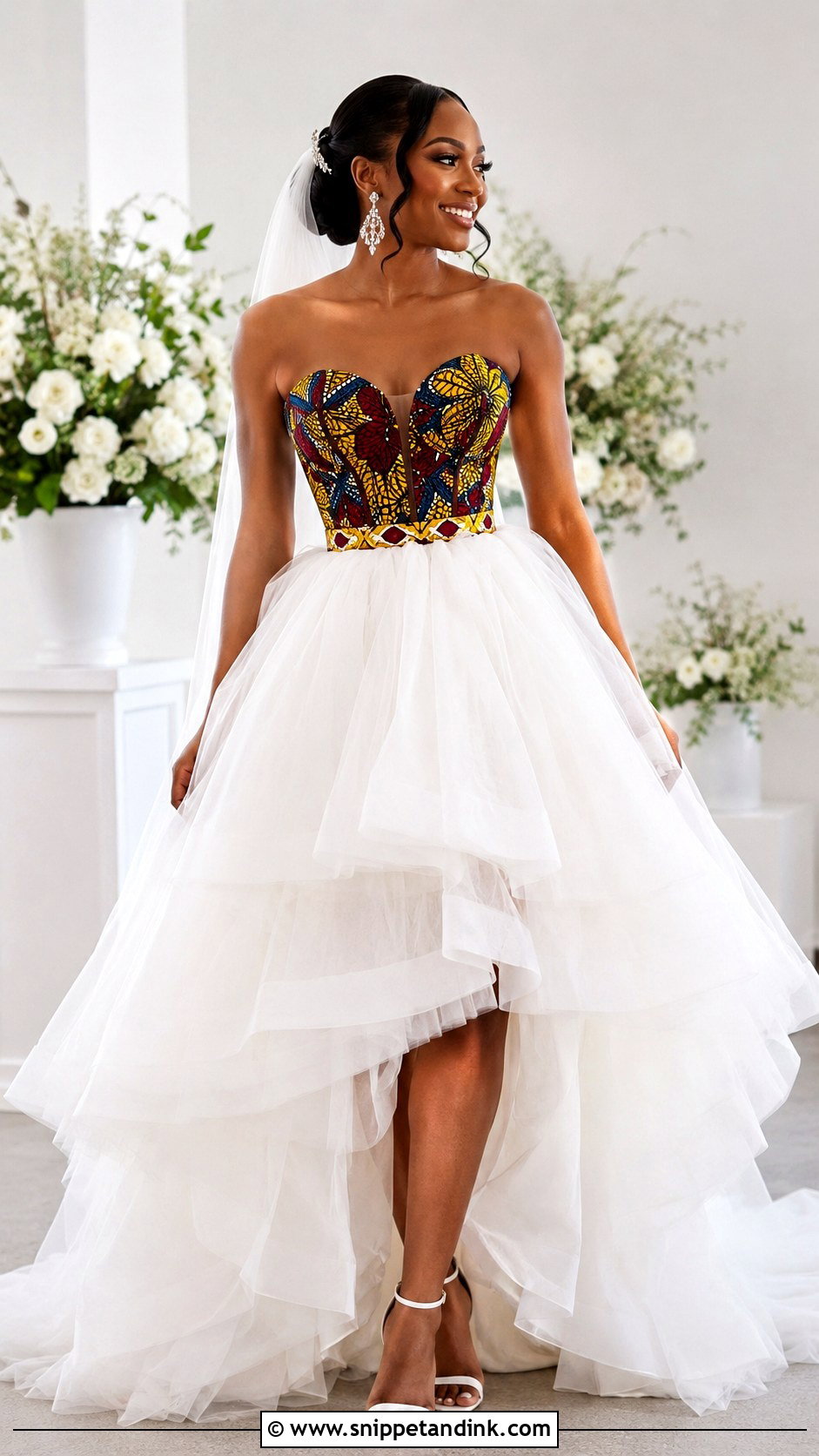
Pairing a printed bodice with a white or ivory tulle skirt is my favourite way to bring Ankara into a look that elders and friends alike will read as bridal. Build the bodice as a structured corset and let it carry one or two dominant colours. The skirt can be gathered, layered or cut as a clean A-line depending on how formal the day is. Repeat a scrap of print at the waistband, the hem or a back bow so the two halves feel related. Where the seam sits matters more than people expect: at the natural or basque waist it looks deliberate, anywhere else it looks like two garments. A smooth lining under the Ankara stops the cotton from bunching against the tulle. White heels, crystal earrings and a simple veil keep everything light.
8. White Ankara Wedding Dress With Printed Train
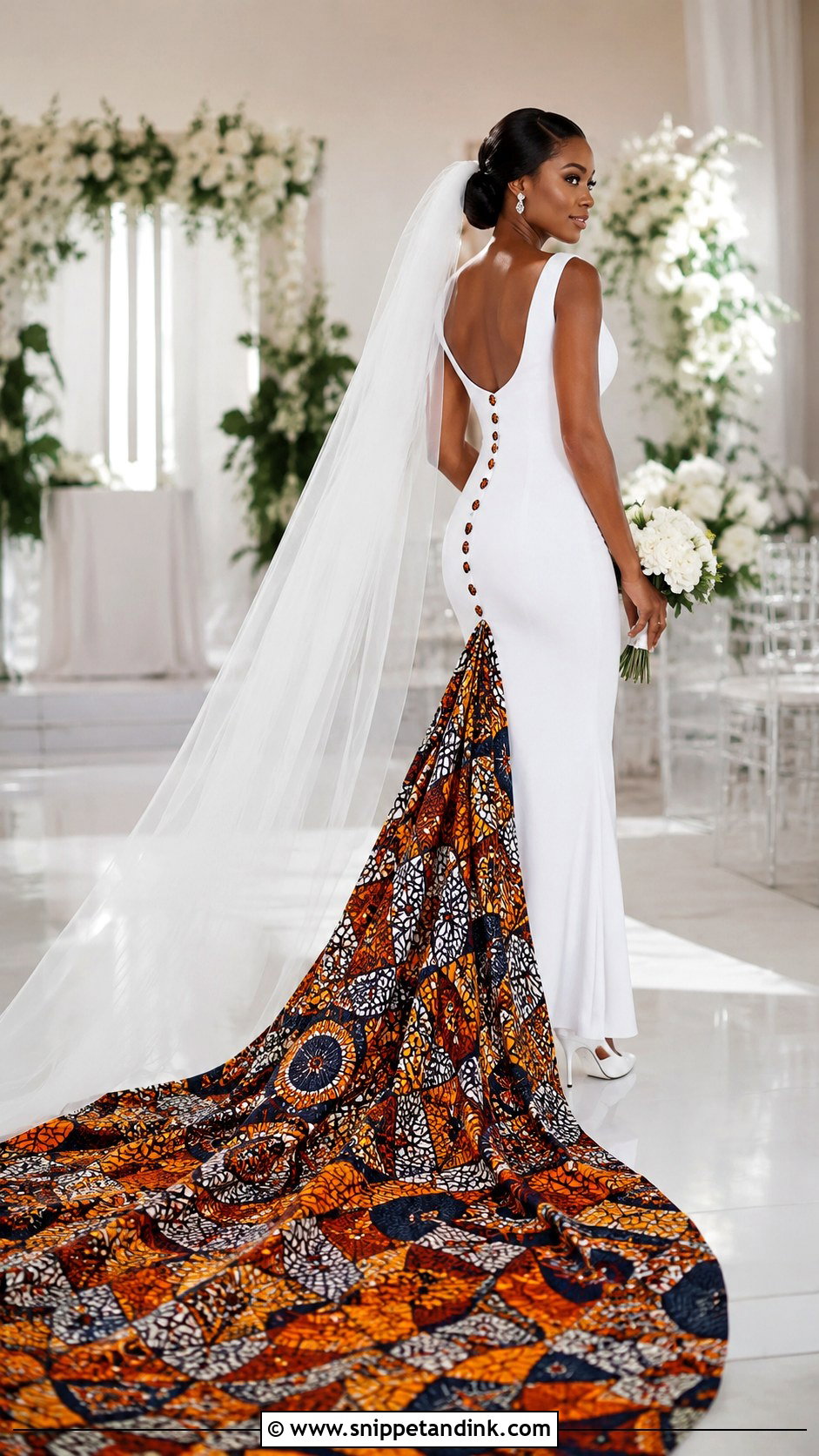
From the front, it reads as a quiet white gown. Then the bride turns, and a printed train fills the aisle. A white base in satin, crepe or mikado works best because the plain surface gives the print a clean frame. Use a fitted column, A-line or mermaid shape and attach the print from the waist or lower back. Tie the two together with Ankara-covered buttons, a narrow belt or small cuffs. One warning from experience: a white gown sitting next to a fresh wax print can pick up dye if it gets damp, so I always ask for the print to be prewashed and tested for colour bleed before it is joined to the white. Make the train detachable or bustle-friendly so you can dance later, and keep the jewellery small.
9. Ankara Wedding Dress With Detachable Overskirt
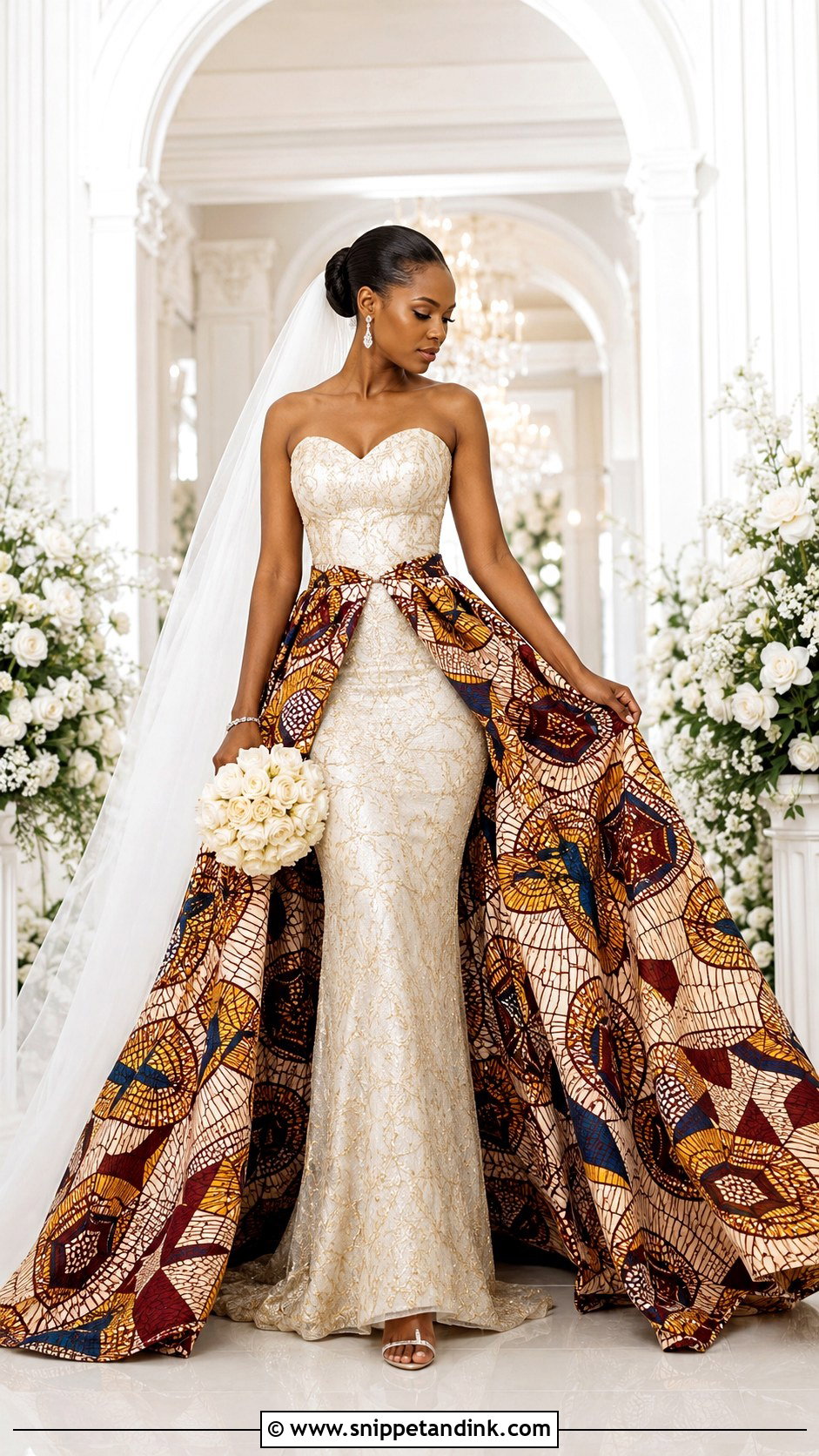
A detachable overskirt gives you two looks without a full outfit change. You wear the printed layer for the ceremony, then unhook it for the reception to reveal a fitted solid or coordinating dress underneath. The fastening is where these succeed or fail. I prefer a structured waistband with concealed hooks over snaps alone, because snaps can pop open when a heavy skirt swings. The base dress has to look finished on its own, with a clean waistline and a proper hem, or the reveal falls flat. Wear a long veil and formal earrings at first, then swap to a smaller hairpiece and shoes you can dance in. Practise taking the overskirt off with whoever will help you on the day.
10. Peplum Ankara Wedding Dress
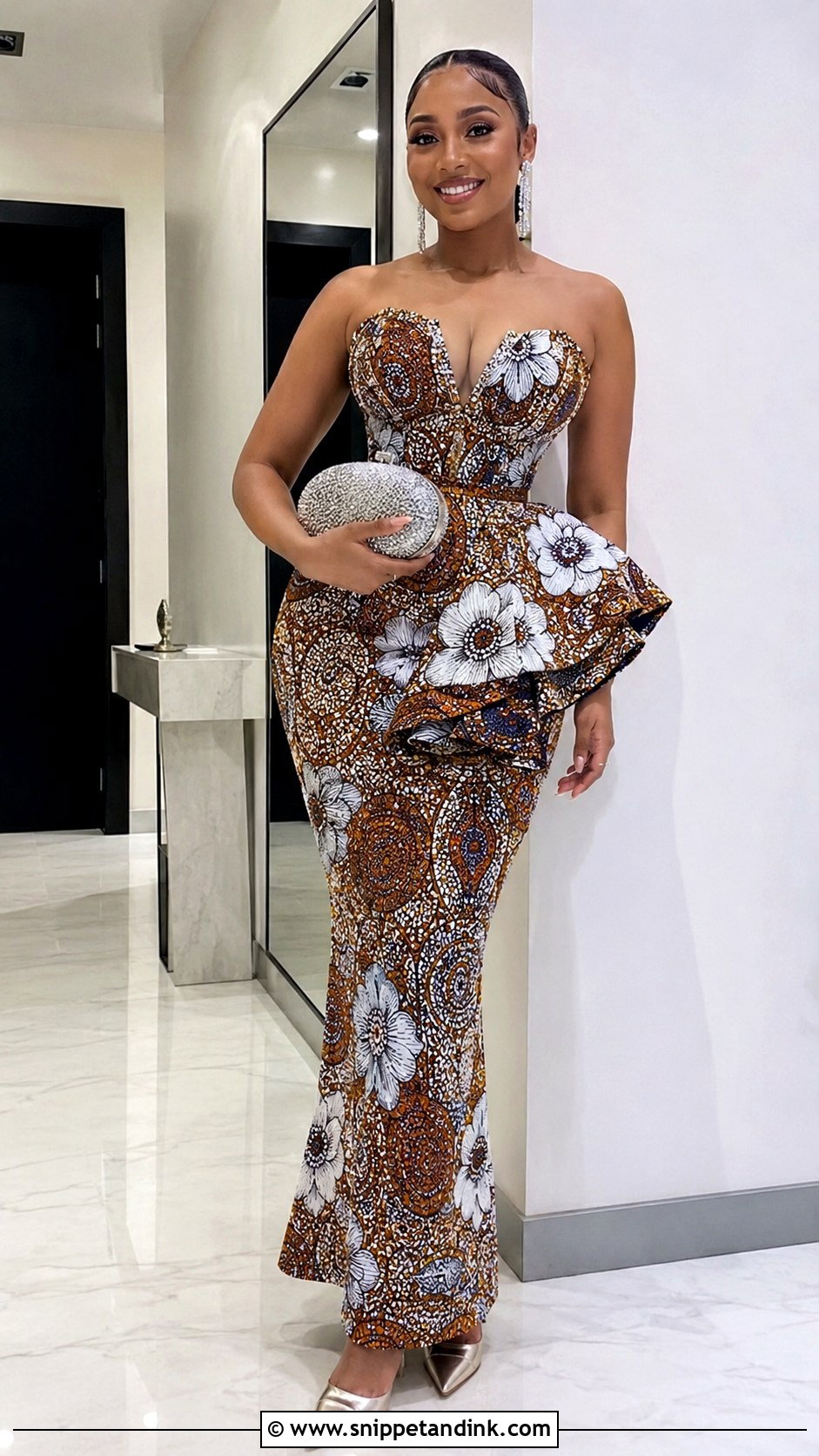
A peplum Ankara wedding dress defines the waist and adds a tailored layer over the hips. The peplum can be short and stiff, softly flared, or longer at the back for drama. Because the waist seam and the peplum edge both draw the eye, pattern placement here is fussy work, and I check that no motif is sliced in half along that edge. Over a straight skirt it looks refined; over a mermaid skirt, more sculpted. If you’d like gentle cover over the stomach, a slightly longer, asymmetric peplum does it without adding width. Choose one standout accessory and keep the rest restrained. Sit down at the fitting and look in the mirror: a stiff peplum can poke up under the arms when seated.
11. High Neck Ankara Wedding Dress
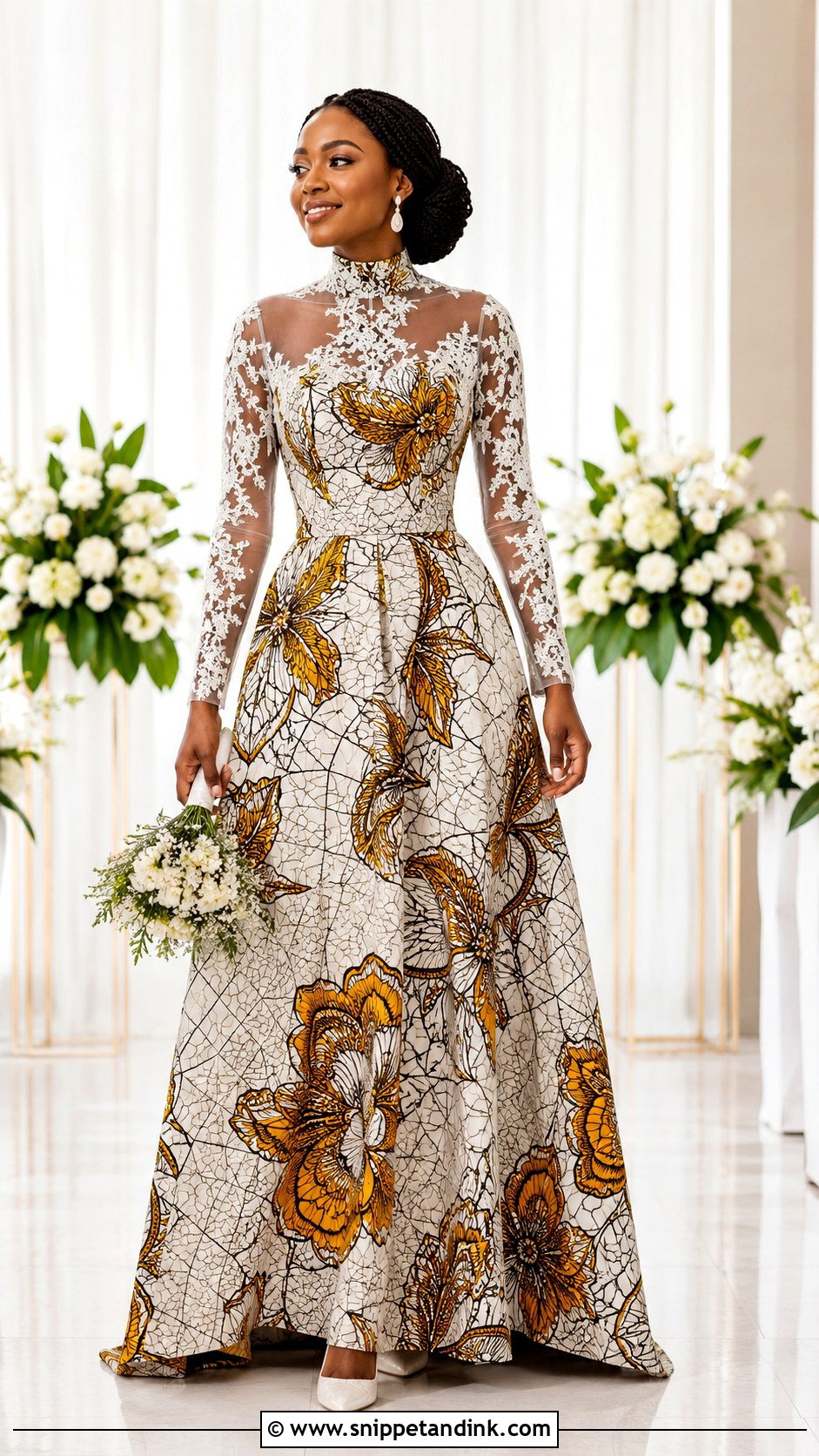
A high neck gives clean lines and covers the chest without needing sleeves. It works sleeveless, with fitted long sleeves, or with sheer mesh panels that soften the jump between skin and print. Balance the covered top with an A-line, a defined waist or a small front slit for easier walking. No necklace here; choose earrings that echo one of the print’s colours instead. A low bun, braided updo or wrapped headpiece keeps the neckline clear. The neck opening is the part I fuss over most. It should sit flat without pulling backward, and you should be able to turn your head fully to greet someone without the collar biting.
12. One Shoulder Ankara Wedding Dress
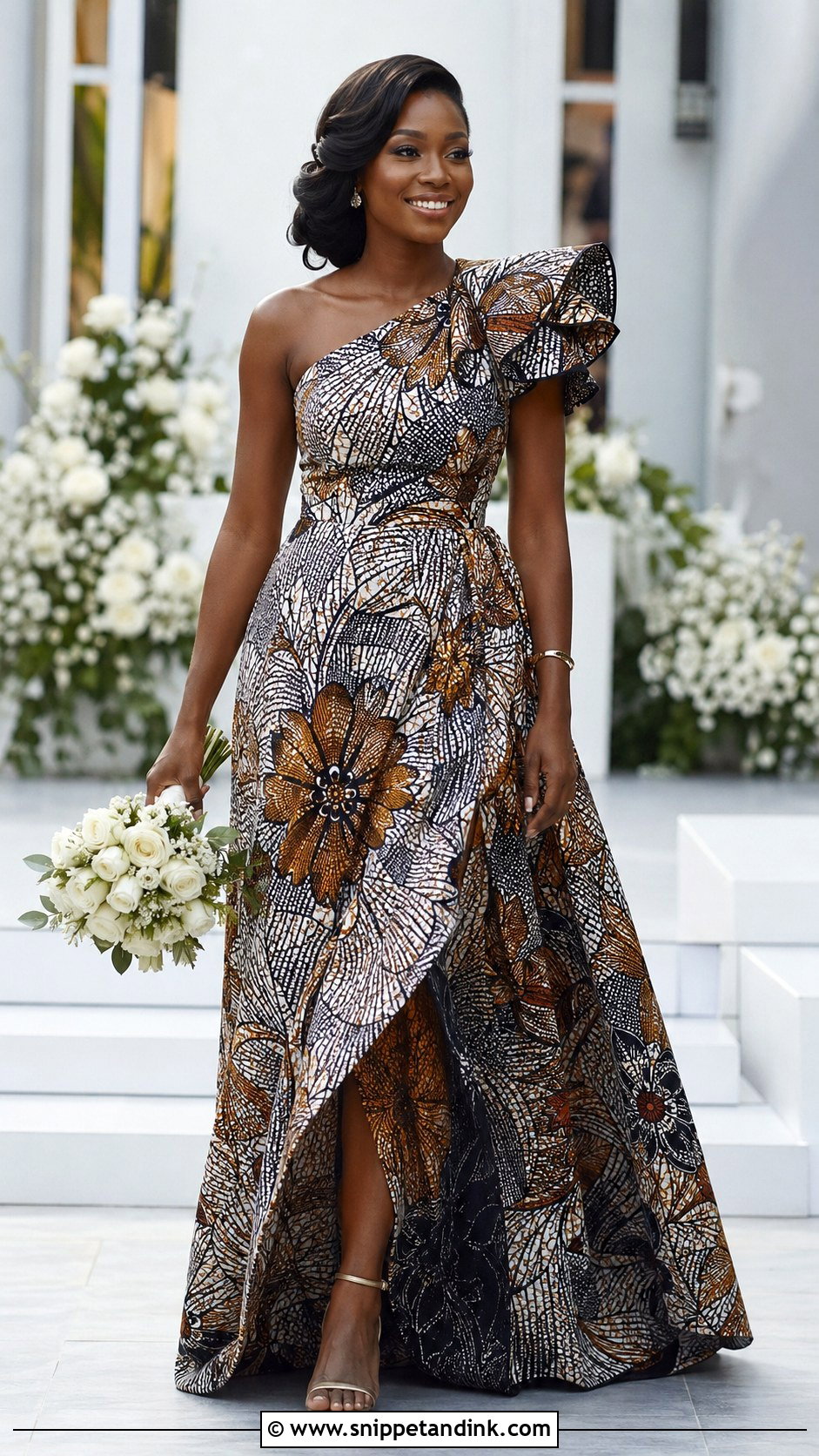
One shoulder makes the dress asymmetric, which reads modern while staying formal enough for a ceremony. The single strap can be wide and structured, pleated, or finished with a sculptural bow. I keep the other side completely clean so the strap is clearly the focus. A fitted waist over an A-line skirt gives balance, while a mermaid base adds more definition. Sweep the hair to one side or into a smooth updo so the shoulder shows. Small earrings, a bracelet and metallic sandals are plenty; a necklace would cut straight across the asymmetric line. What makes or breaks this style is the underarm on the strapless side. If it gapes or digs, you’ll feel it for hours, so get it fitted with your arms down and raised.
13. Sweetheart Ankara Wedding Dress
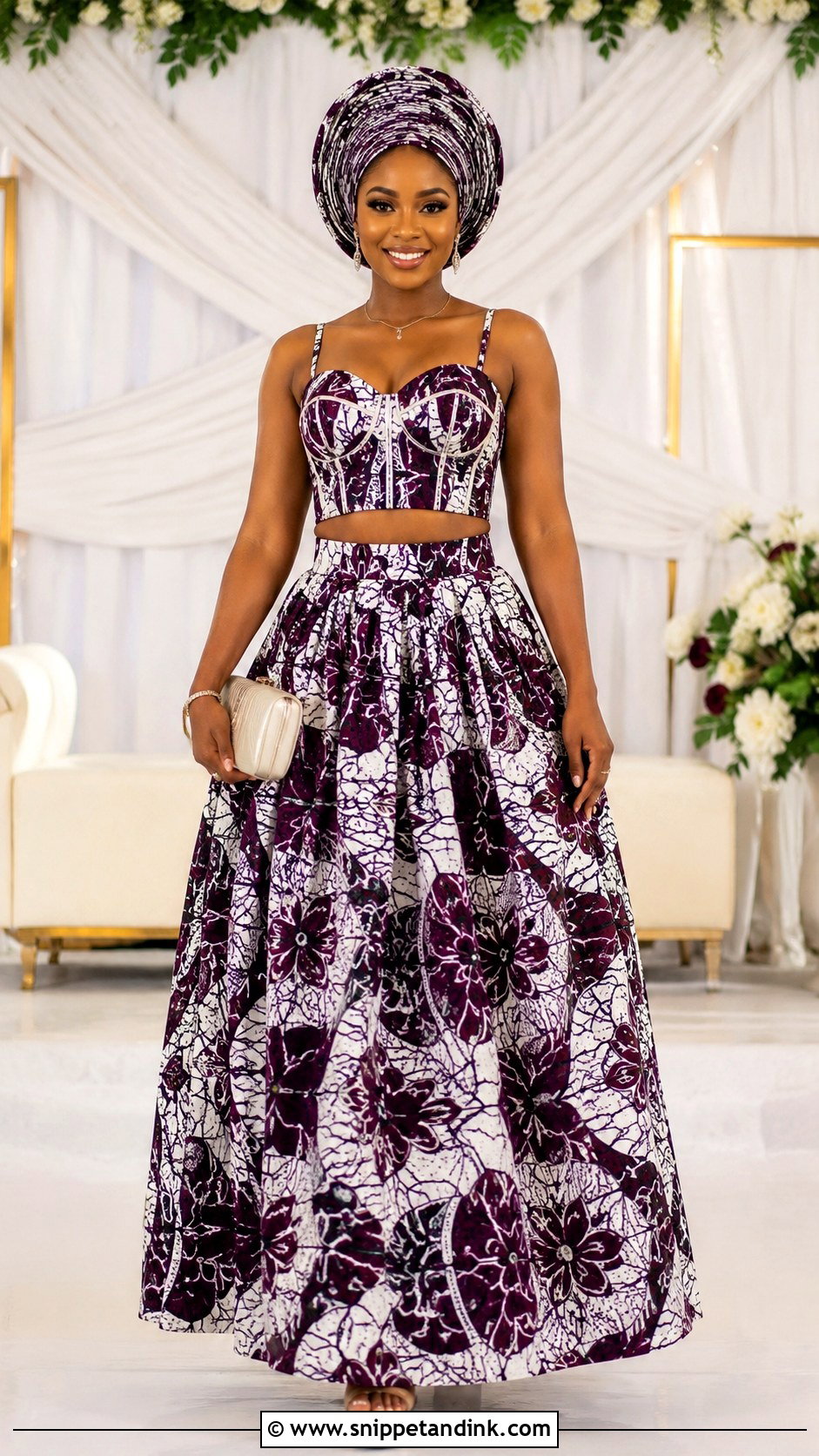
A sweetheart neckline softens a bold print and is easy to personalise. The bodice can stay strapless or take removable straps, cap sleeves or sheer long sleeves. Over a full skirt it looks traditional; with a fit-and-flare, closer and more modern. When the print has many bright colours, I add solid piping along the curve of the neckline, which gives the eye a clean edge to land on. A short pendant, studs and a bracelet supply enough shine. If you need real support, ask for moulded cups, internal boning and a firm back closure, and don’t approve the final fit until you’ve hugged, bent and sat in it.
14. Trumpet Ankara Wedding Dress
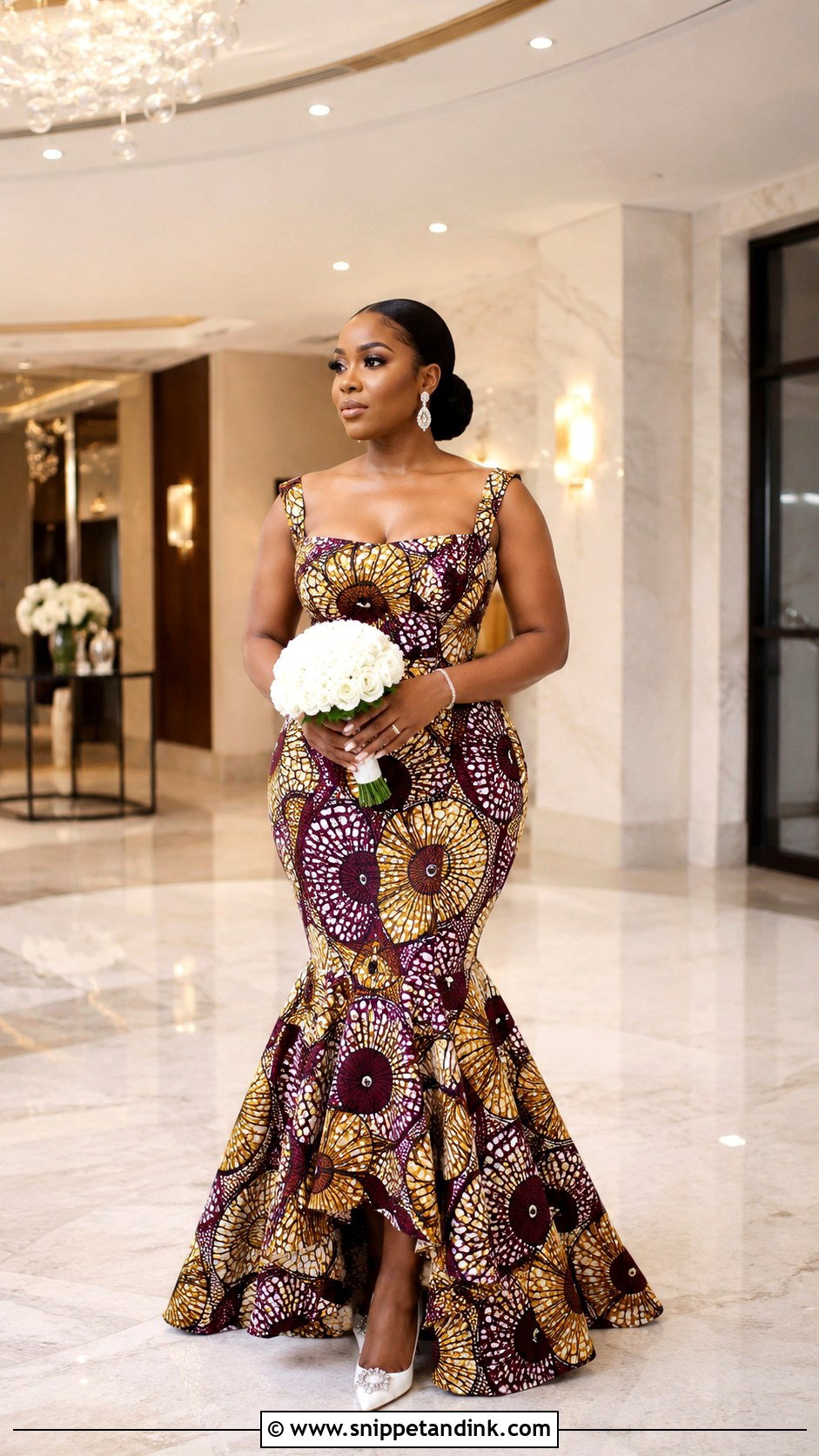
An Ankara wedding dress trumpet gown hugs the waist and hips, then flares from around mid-thigh. That higher flare point gives more walking room than a strict mermaid, which is why I steer brides toward it when they love the curve but dread the shuffle. A medium-scale print survives the curved seams of the skirt panels better than a very large one. A square neckline, wide straps and a structured bodice give a clean top half. Statement earrings, pointed heels and a small bag in a solid shade from the print finish it. At the fitting, check exactly where the flare starts on your leg; a few centimetres higher or lower changes the whole proportion.

15. Sheath Ankara Wedding Dress
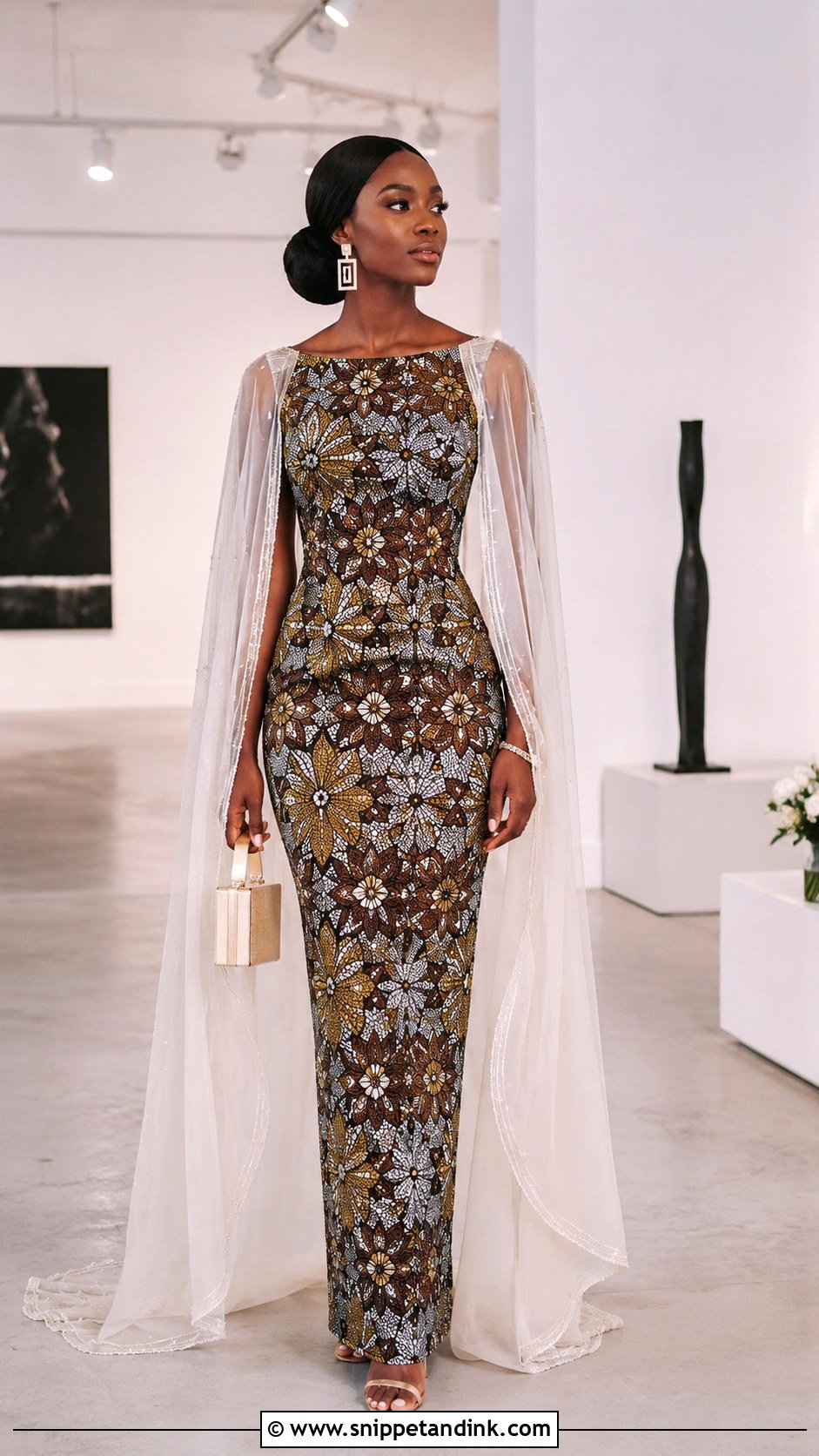
A sheath Ankara wedding dress falls in one straight line from shoulder to floor, so there’s nowhere for poor tailoring to hide. Every seam where the pattern fails to match will show. I choose prints with vertical motifs or controlled colour placement here, because they draw the eye up and down and lengthen the frame. A bateau, scoop or square neckline suits the plain shape. Sleek sandals, geometric earrings and a small structured bag keep it modern, and a detachable cape or narrow train adds ceremony weight. The dress should skim, not squeeze; ask for ease at the hips and knees, and a back slit if you want to walk at a normal pace.
16. Tea Length Ankara Wedding Dress
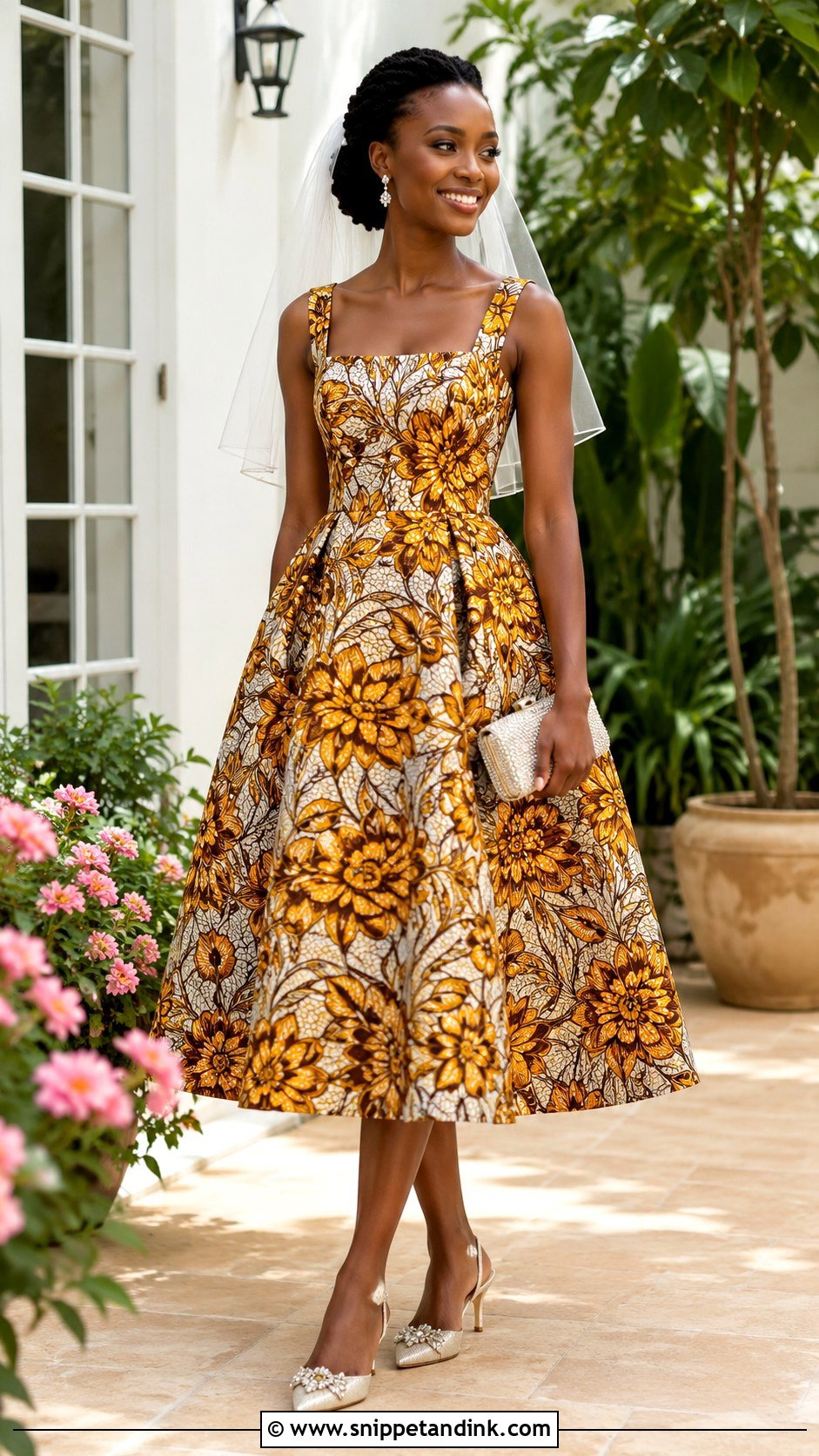
Tea length is the practical choice I’m seeing more of for registry ceremonies, intimate weddings and second outfits. The hem lands between knee and ankle, so the shoes become part of the outfit: pointed pumps, embellished slingbacks or block heels that pick up one colour from the print. A fitted bodice and flared skirt give the classic fifties shape, while a structured collar or square neck makes it more current. Add hidden pockets if the skirt has volume; brides always thank me later. Spend time on the exact hem height. A hem that cuts across the widest part of the calf makes the leg look heavier, and moving it two or three centimetres usually fixes it.
17. Cape Ankara Wedding Dress
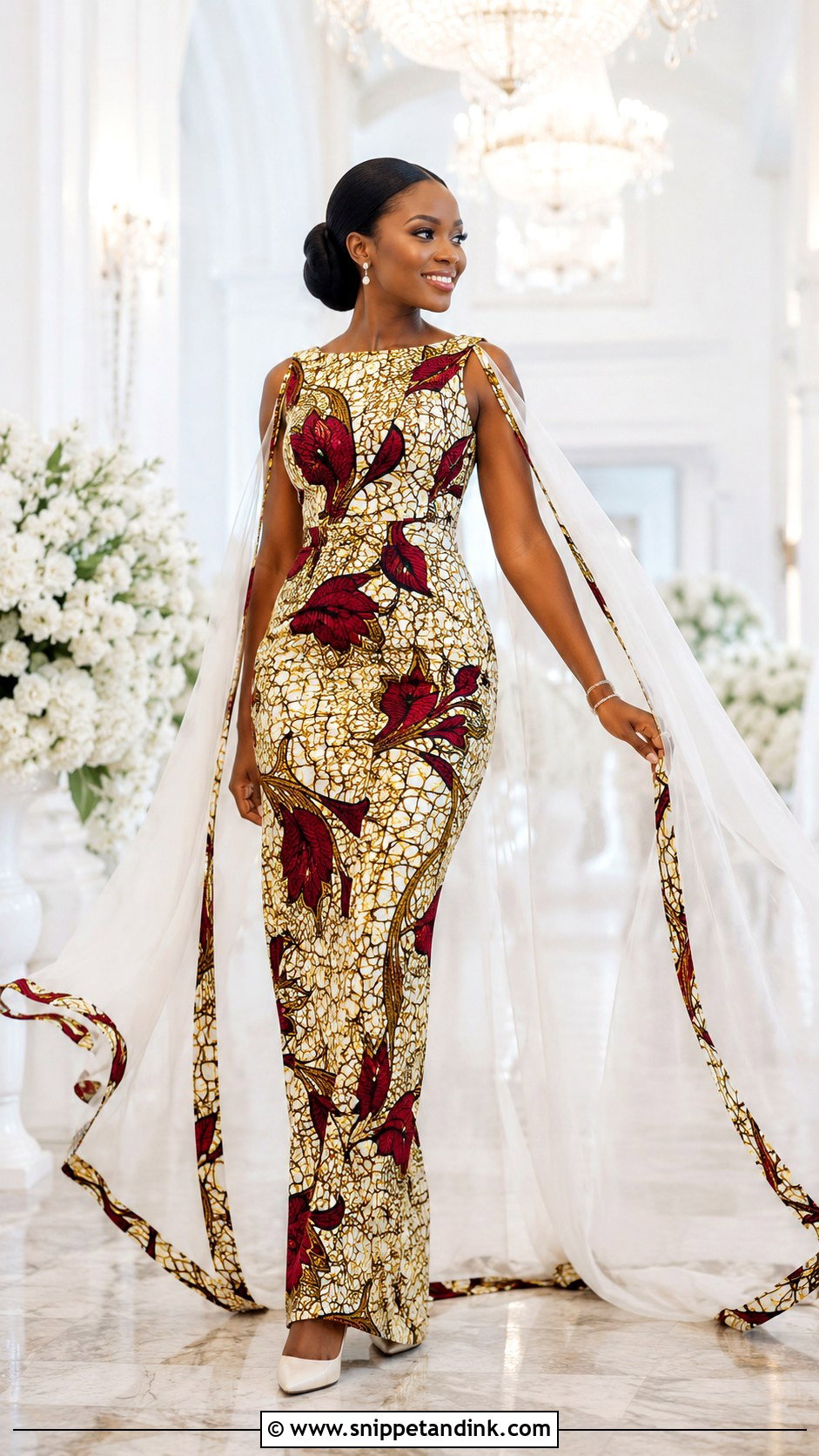
A cape changes how a bride walks; you feel it move behind you. It can be cut from matching print, solid chiffon, sheer organza, or light tulle edged in Ankara. Put it over a simple sheath, a trumpet or a sleeveless A-line so the layers don’t fight. A cape attached at the shoulders moves gently, while a floor-length one fixed at the neck works like a modern veil. Keep the jewellery restrained and the hair smooth so the attachment stays visible and doesn’t catch. I always take a cape outside at the final fitting: a light breeze shows straight away whether it floats or drags on your neck. Make it removable for the reception.
18. Ruffled Ankara Wedding Dress
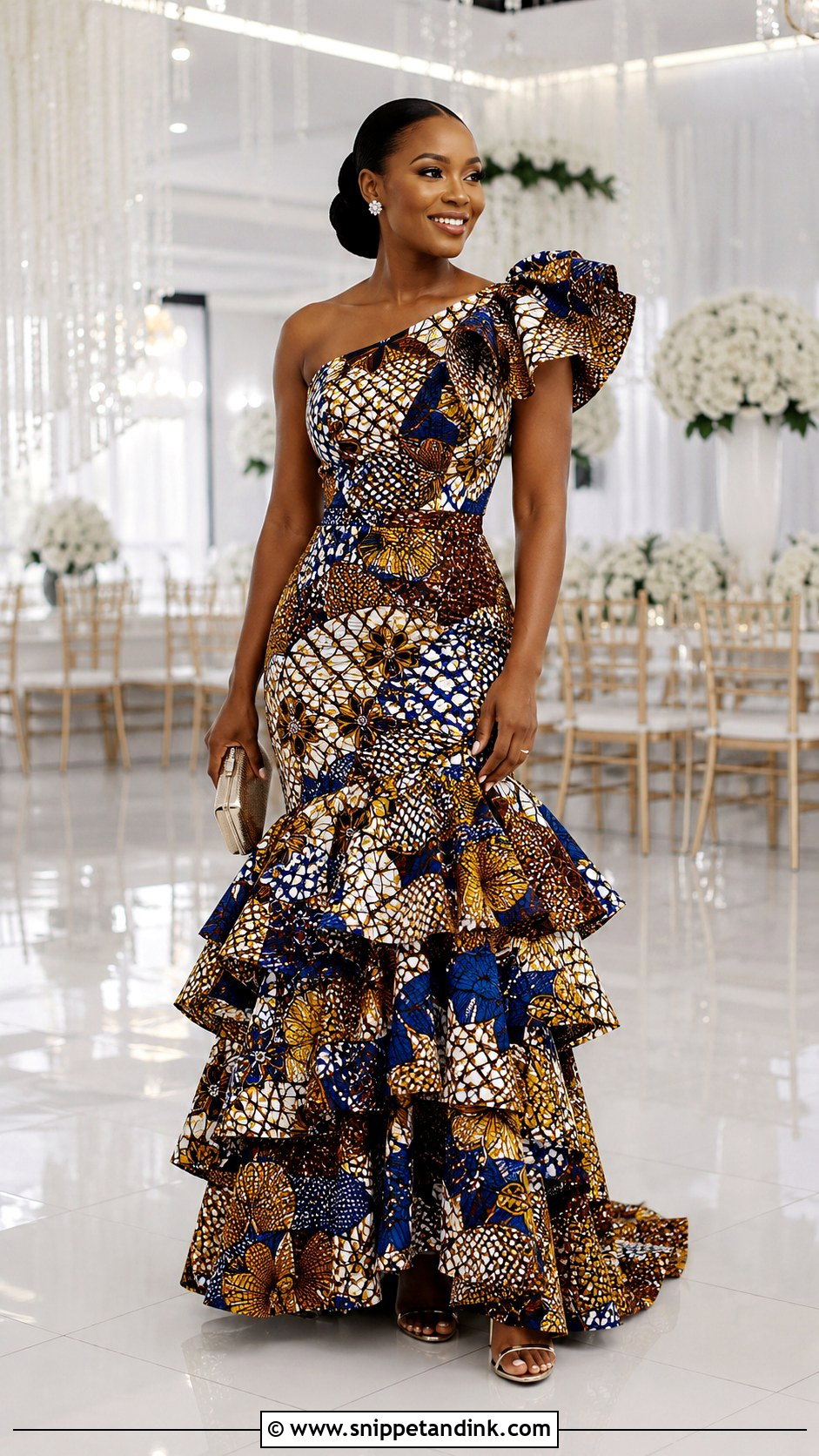
Ruffles bring movement and texture, and a ruffled Ankara wedding dress works best when they’re placed with intent. Pick one or two zones, such as a shoulder ruffle to frame the face or tiered ruffles on the skirt for motion, rather than covering everything. Gathering eats up a print. A large motif crushed into a narrow ruffle turns into coloured noise, so with big patterns I cut wider ruffles that let the design stay readable. Keep the bodice fitted and the waist defined, and pull the hair away from the shoulders. Lightweight interfacing helps the ruffles keep their shape without turning the gown heavy by the reception.
19. Two Piece Ankara Wedding Dress
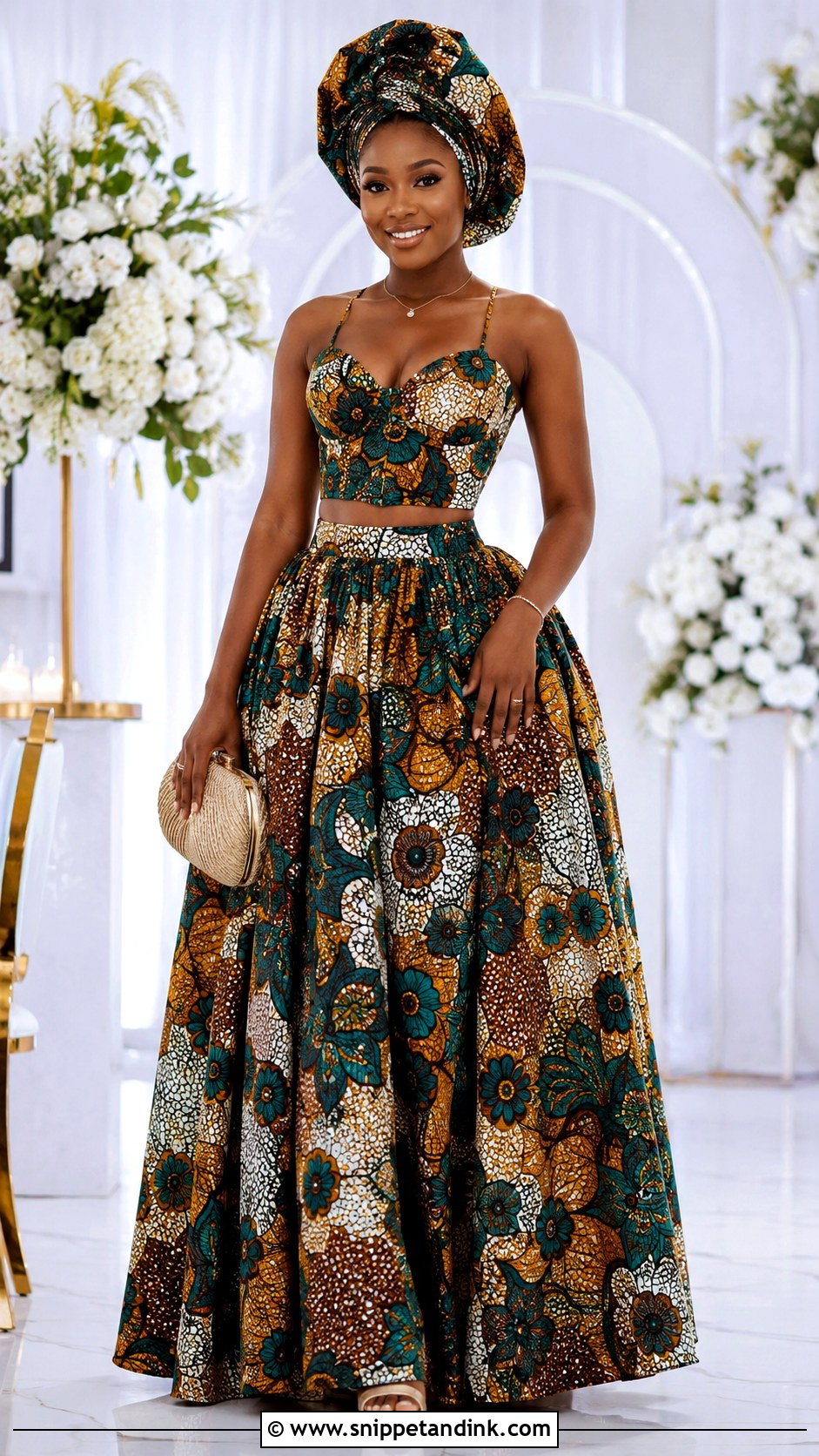
Two pieces give you control over fit and proportion, and you can wear the skirt again with a different top later. Pair a fitted crop bodice with a high-waisted full skirt, or choose a longer corset top that overlaps the waistband if you want more coverage. Use one print for both, or make the skirt solid white and repeat the Ankara in the top and accessories. A matching headwrap pulls it toward tradition; a plain veil makes it fusion. Platform sandals and a structured clutch suit the shape. I always ask for hidden hooks joining the two pieces, because a top that lifts every time you raise your arms will be all you think about during the dancing.


20. Modest Ankara Wedding Dress
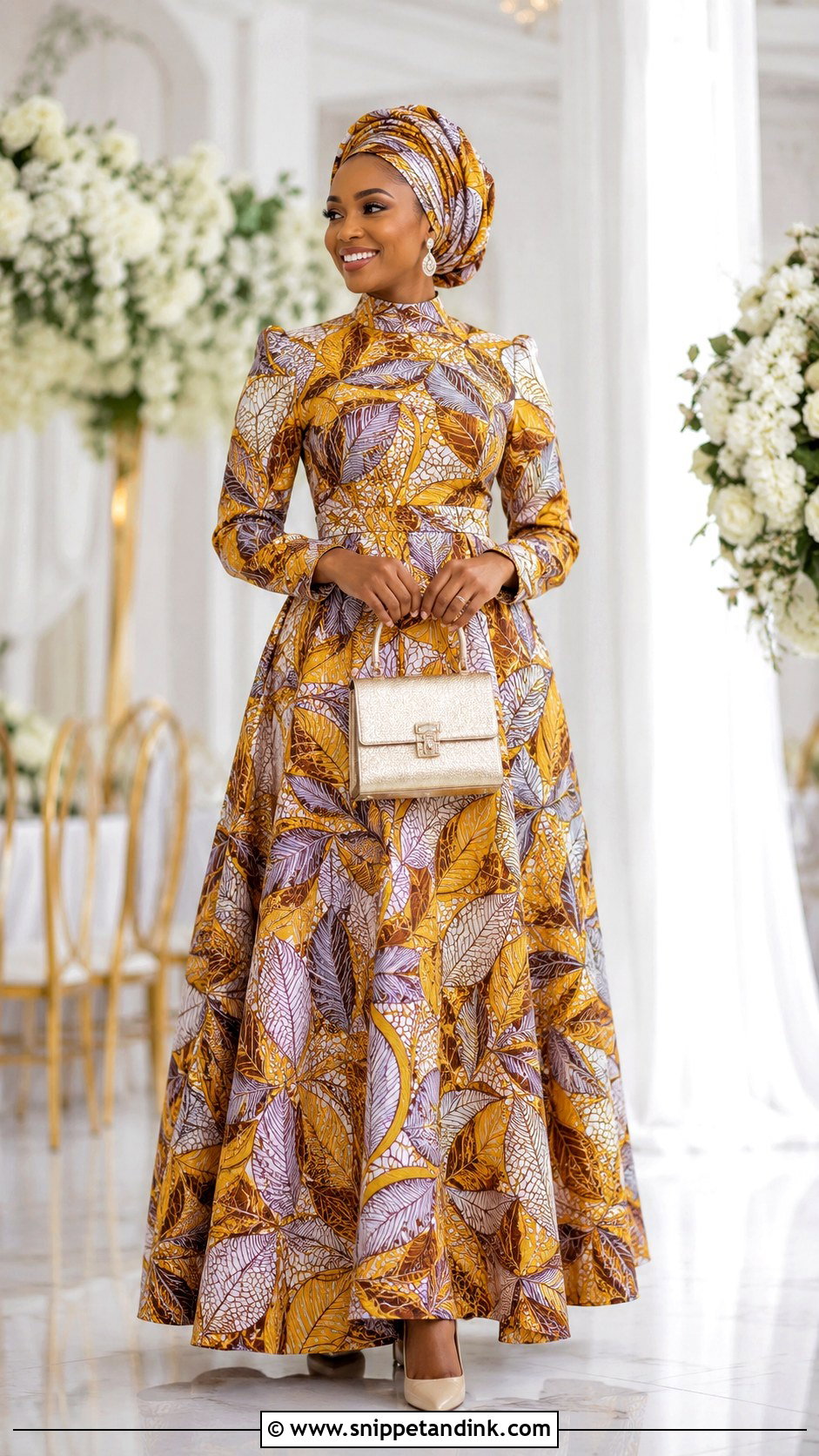
Covered doesn’t mean plain. A modest Ankara gown can have long sleeves, a high neck, a fitted waist and a floor-length skirt and still feel celebratory. The interest comes from detail rather than skin: pleats, covered buttons, shaped cuffs or panels in a contrasting print. An A-line or softly gathered skirt moves comfortably. Coordinate a matching headwrap, turban or draped scarf, depending on your tradition and preference. With this much fabric on the body, I’m strict about breathability. I choose a cotton or viscose lining over polyester and cut out any extra layers at the arms and neck. Fit the shoulders carefully, since a full-coverage gown that is tight across the back pulls every time you reach.
How Ankara Holds Up Across a Long Wedding Day
Cotton breathes, which is why I like it for hot venues, but it creases. A full skirt that looked smooth at the photos will have seated creases by the speeches. I don’t try to prevent that entirely; I plan around it. A lining in a slippery fabric helps the skirt fall back into place, and a handheld steamer kept at the venue fixes the worst of it in two minutes before the first dance.
Colour transfer and sweat
The risk people don’t think about is dye moving. A deep indigo or red print against a white lining, a white veil or pale skin in heat can leave a faint tint where it presses. Prewashing reduces it, and a light-coloured lining under the print gives you a buffer. If you’re wearing a white veil over a printed bodice, test them together on a warm day before the wedding.
After the wedding
Spot-clean food marks the next morning with cool water rather than leaving them for weeks. Hand-wash or have it cleaned by someone who knows wax print, dry it in the shade because strong sun fades the colours, and store it folded in acid-free tissue in a breathable cotton bag, not plastic. Refold it every few months along different lines so the creases never set permanently into the print.
Which Ankara Silhouette Will Carry Your Print Best?
A wedding gown has to photograph well, survive a long day and feel like you. Every shape above can do that in Ankara, from a full-print ball gown or a sculpted mermaid to a modest long-sleeve dress or a white gown with a printed train. What separates a good one from a great one is nearly always the same two things: where the print is placed and how carefully the tailor fits it. So walk, sit and raise your arms in it before the last fitting, match your shoes, jewellery and headpiece to the silhouette, and choose the dress you feel most like yourself in.
You'll Like These Ideas:





Leave a Reply