
Hands end up in more close-ups than brides expect: the ring going on, the bouquet, a hand resting on a sleeve, the toast. Most of the bridal sets I paint now lean toward milky finishes, sheer pinks, pearl chrome, micro French tips, a little lace or a few small flowers, and quiet sparkle rather than full nail art. Below are the sets I’d actually recommend, with notes on how each is built and where it goes wrong. The right one depends on your dress, ring metal, bouquet, undertone, length and how much maintenance you can tolerate in the busiest week of your year.

Warm Hands, Cool Hands and Which White Sits Next to Your Gown
Most bridal shades are whites, pinks and nudes, and the difference between a set that looks clean and one that looks slightly off is usually undertone. I check it by looking at the backs of your hands in daylight, then holding two or three bottles against your knuckles.
If your skin leans warm or olive
Ivory, champagne, peachy nudes and warm milky whites will look natural. Icy blue-whites and cool pinks can make the skin look sallow by contrast.
If your skin leans cool or pink
Soft whites with a hint of pink, rosy sheers and cool milky shades sit well. Very yellow creams can look grubby against fair, cool skin.
Deeper skin tones
Sheer pinks can turn greyish on deeper skin. Nudes a step deeper than you’d guess, caramel, warm rose or a jelly brown, look richer, and milky whites look best with a little warmth added. The dress matters too, so bring a fabric swatch and check the white against it.
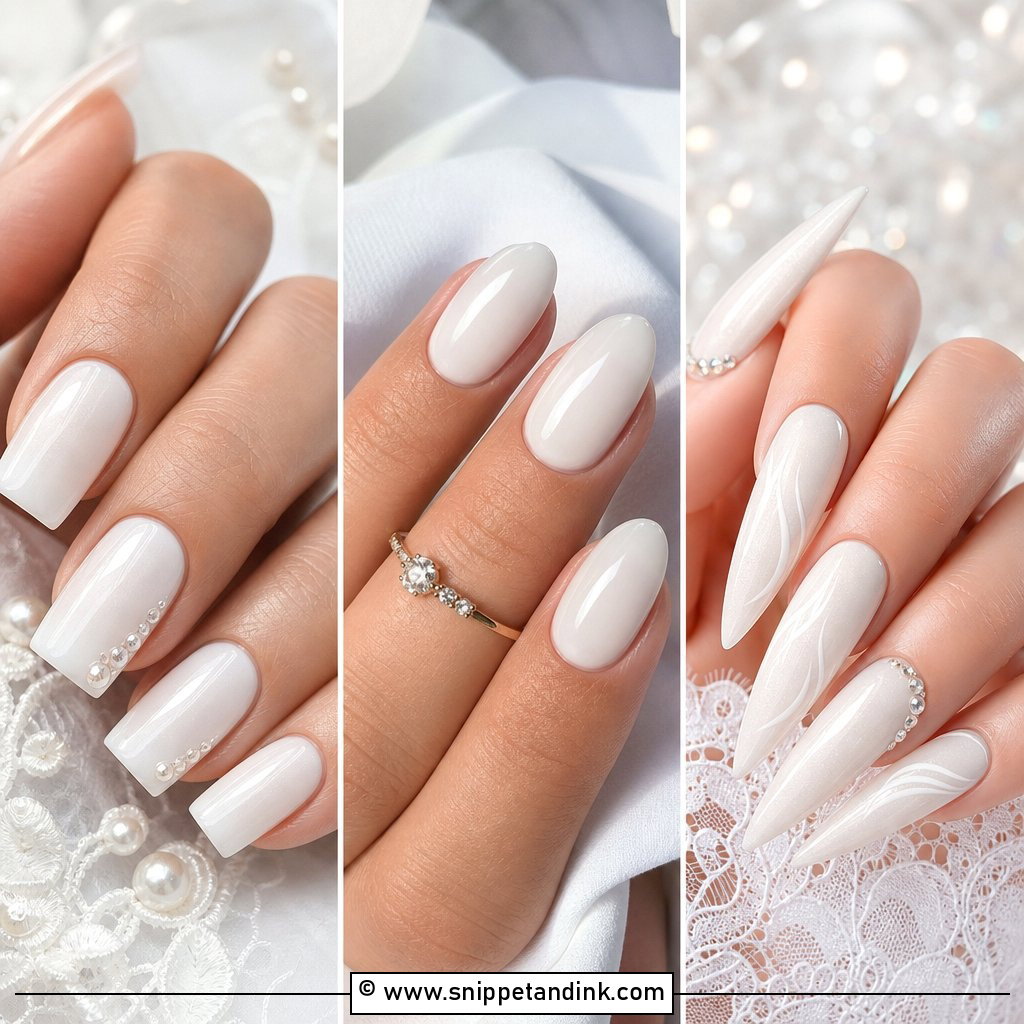
1. Milky White Bridal Nails

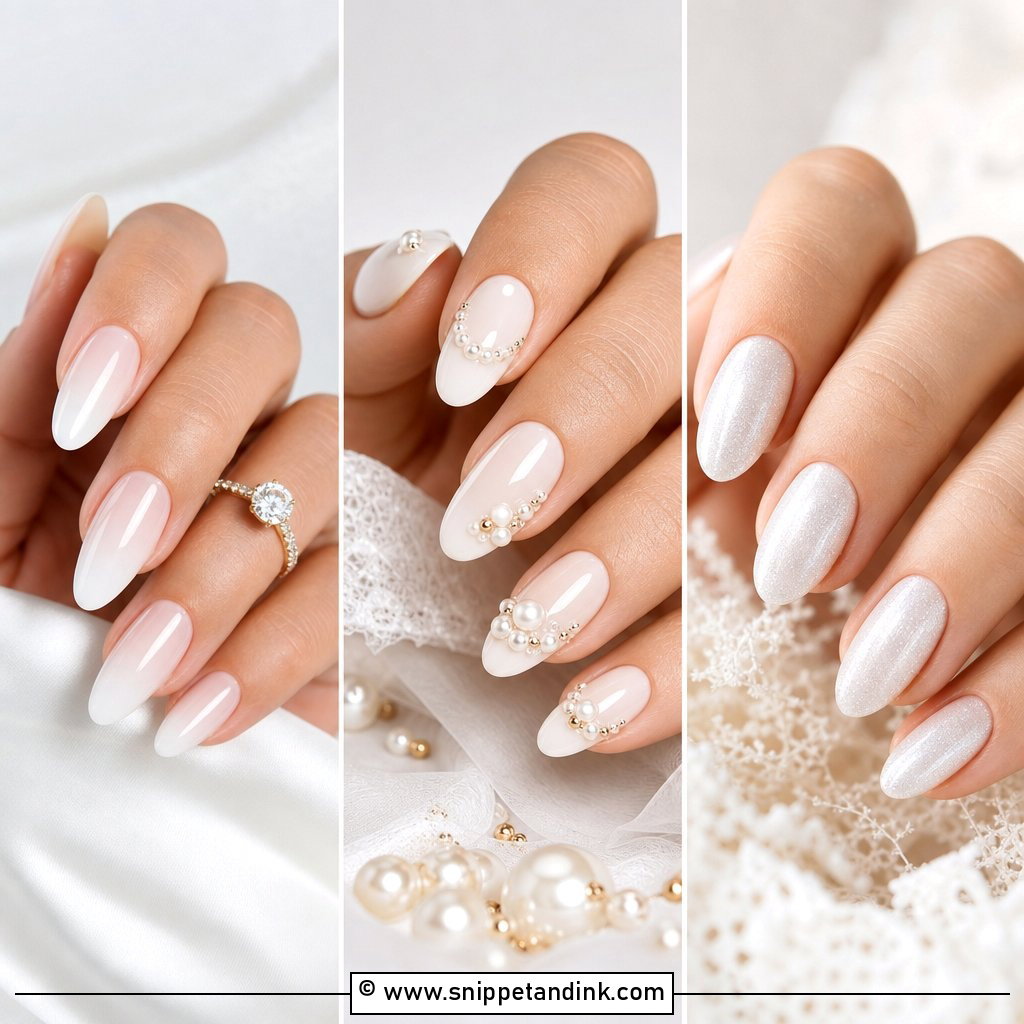
Milky white sits between sheer white and cream, so it suits most gowns without looking like correction fluid. It looks smooth and healthy on almond, oval, squoval and short round shapes. The technique matters: two or three thin coats build an even cloud, while one thick coat goes streaky and pools at the sidewalls. Finish with plain gloss for a glassy look, or a faint pearl shimmer if you want a touch more.
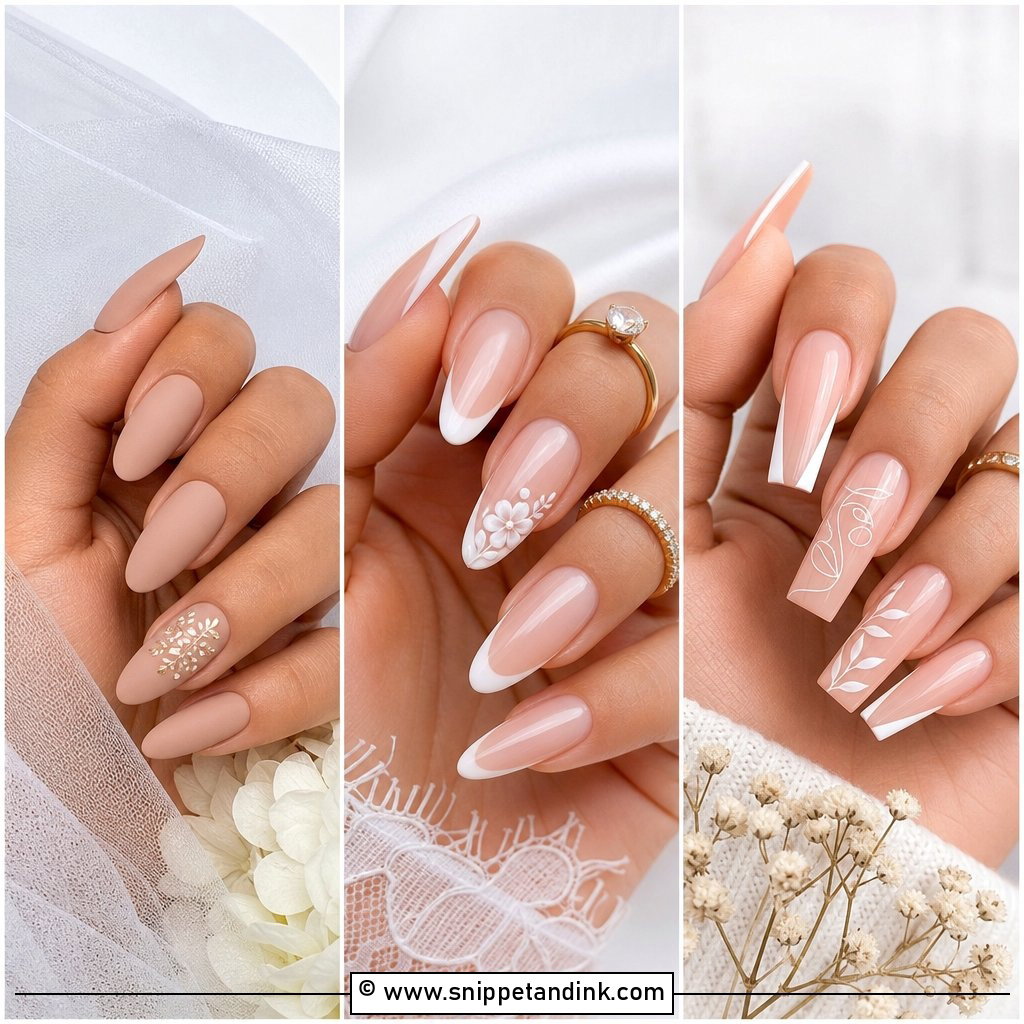
2. Classic French Tip Bridal Nails

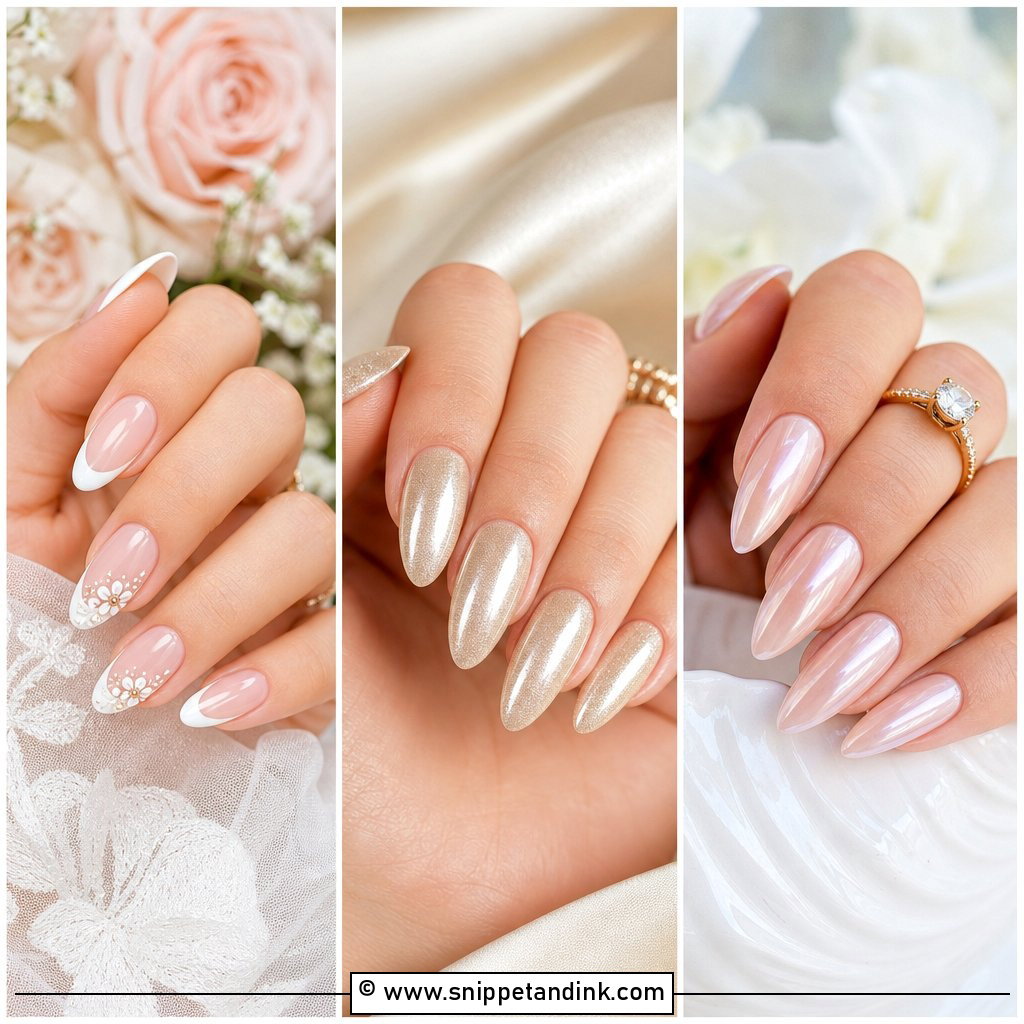
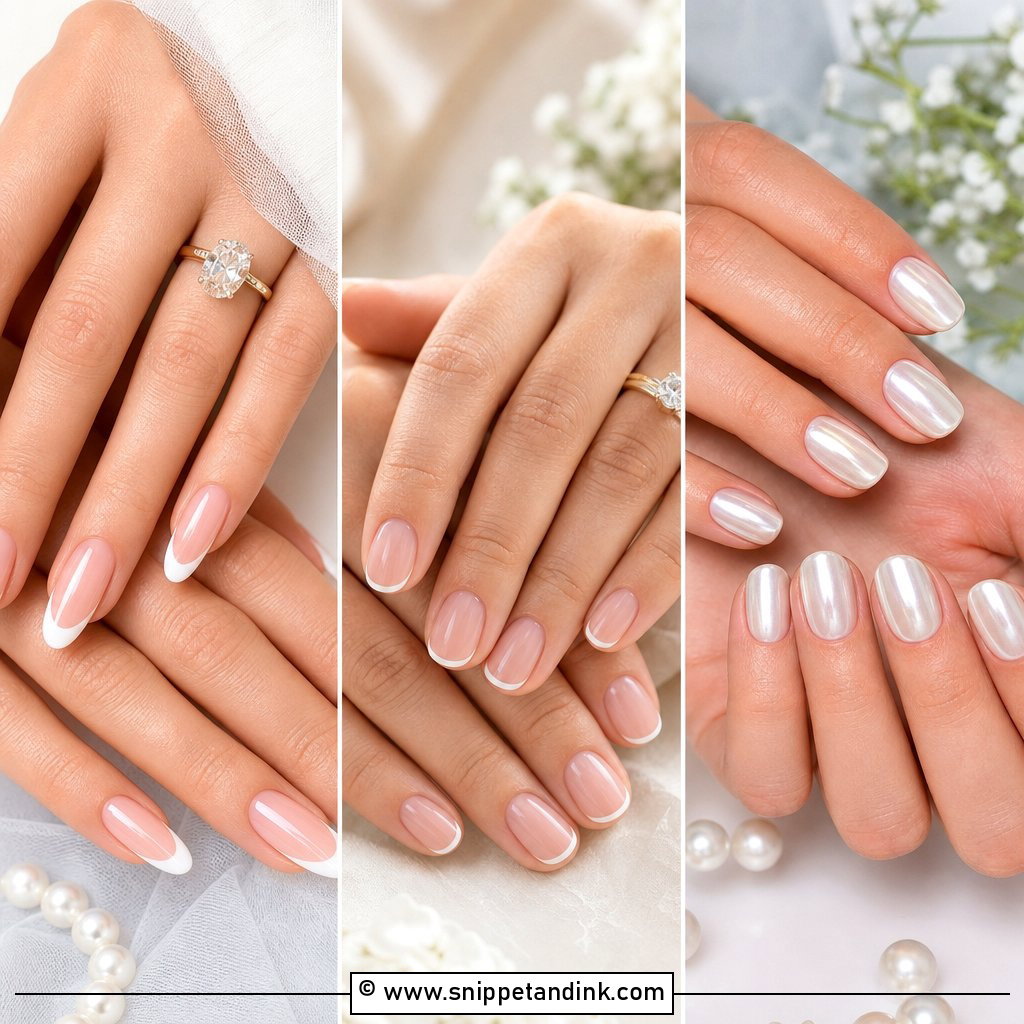
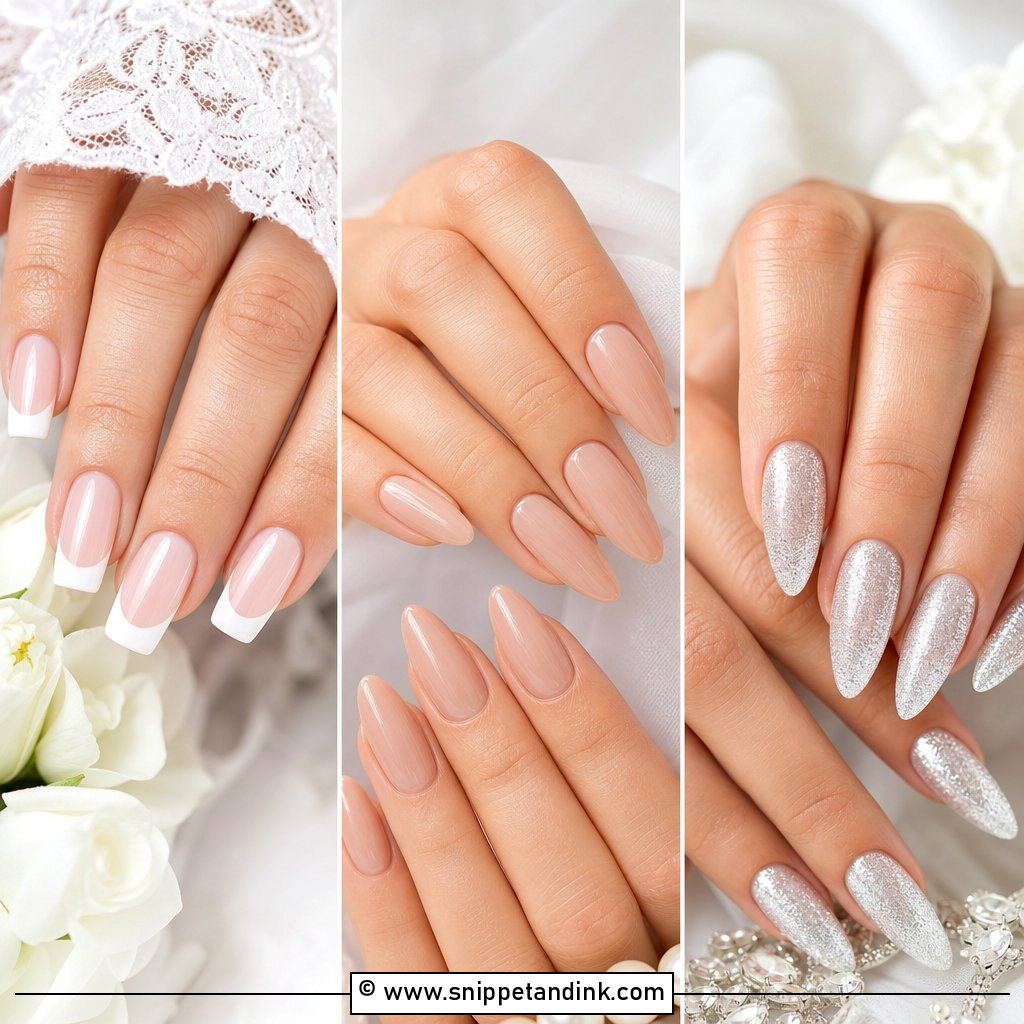
French tips have never really left. A sheer pink or nude base makes the nail bed look healthy and the white tip gives structure. What dates a French is a thick, stark tip, so I keep it slimmer and a shade softer than the old-school version. Almond and oval lean romantic, short square looks clean. A quiet bonus: the set still looks right on the honeymoon and back at work.
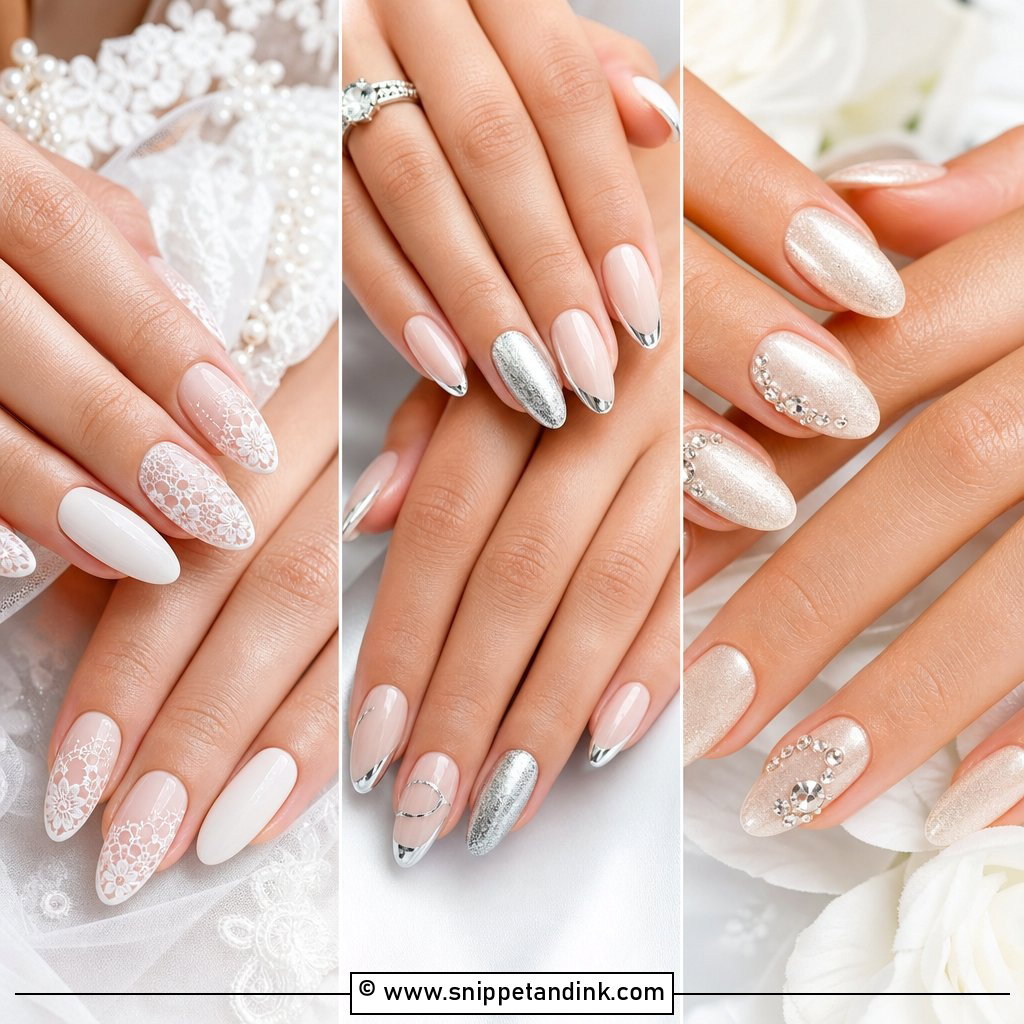
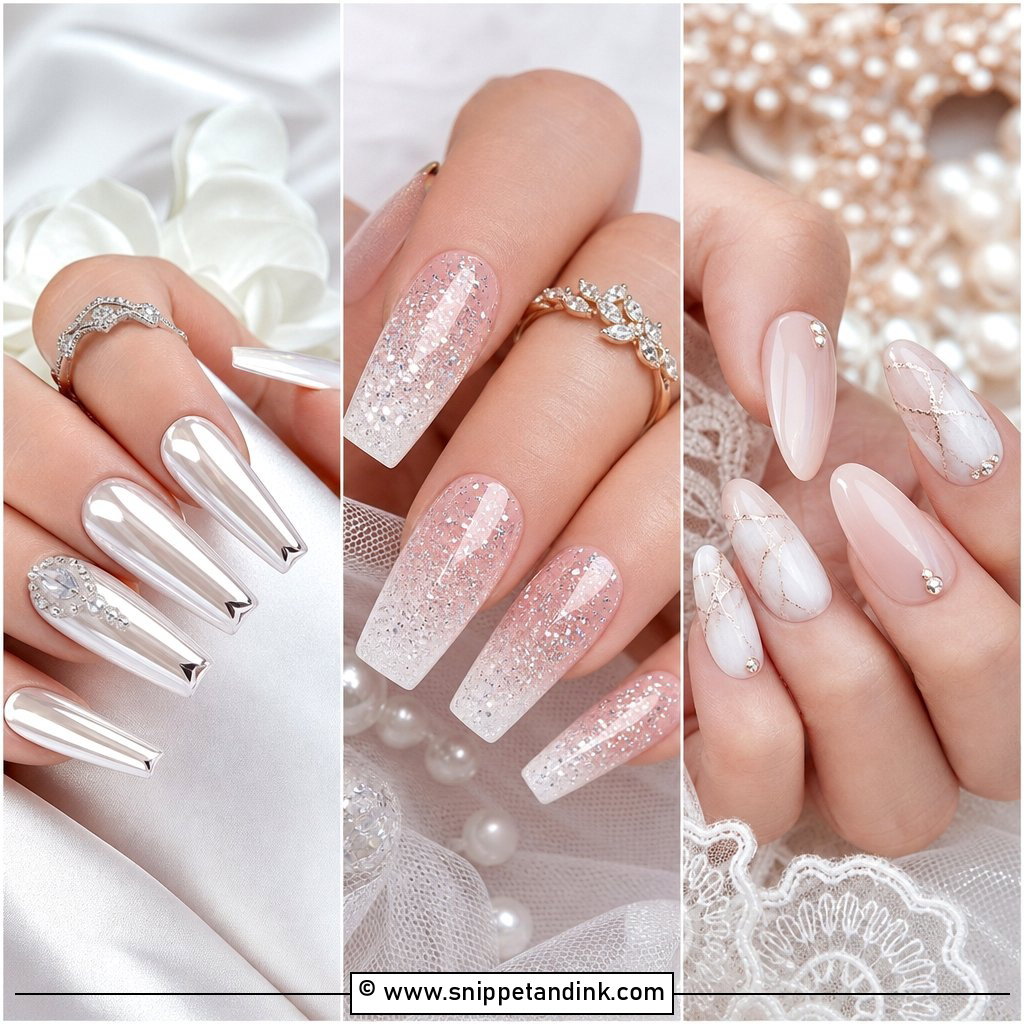
3. Pearl Chrome Bridal Nails

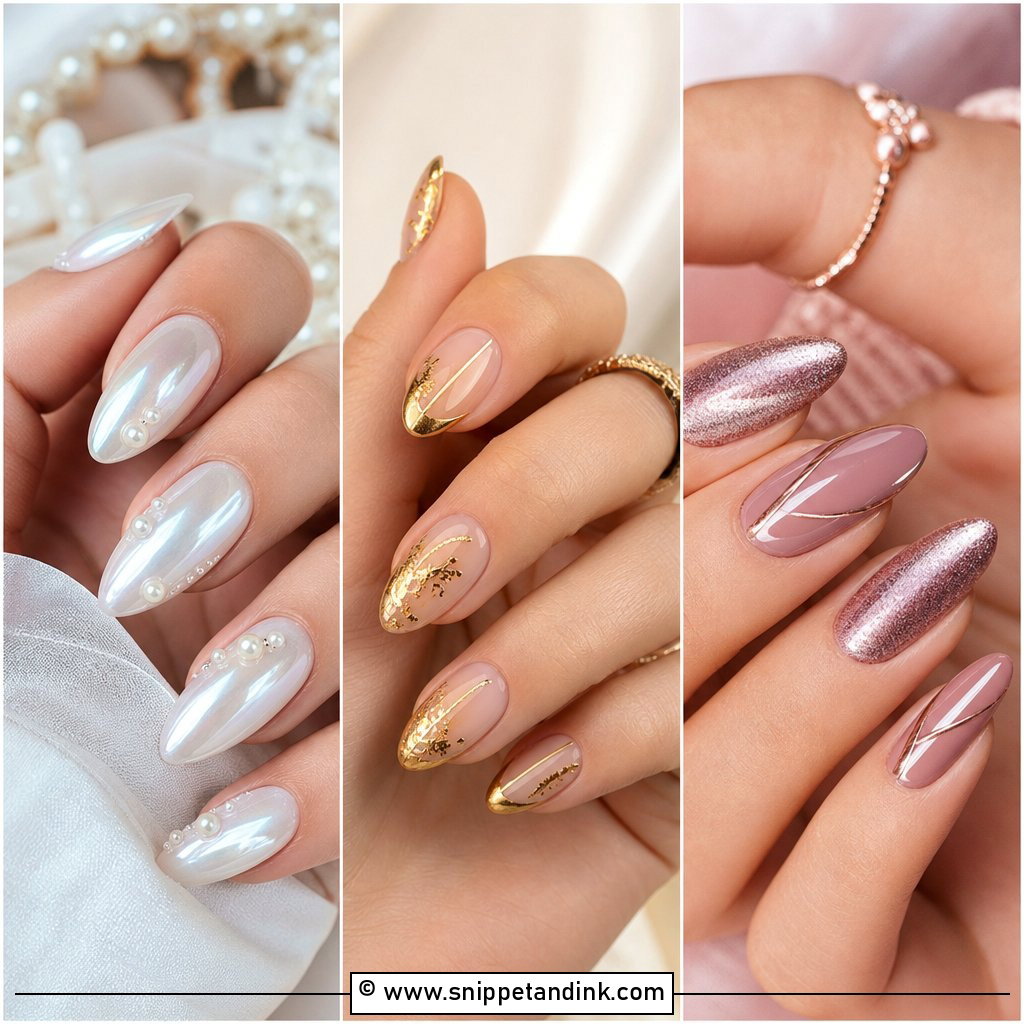
A fine pearl powder rubbed over a cured milky white, sheer pink, nude or ivory base gives a glow without a single fleck of glitter. It catches light in ring photos and suits pearl earrings, satin and soft glam makeup. The base colour changes the result more than people expect. Pink underneath warms it; ivory underneath cools it. I’d keep the shape simple, almond or oval, and make sure the free edge is capped, because chrome wears at the tips first.
4. Sheer Pink Bridal Nails

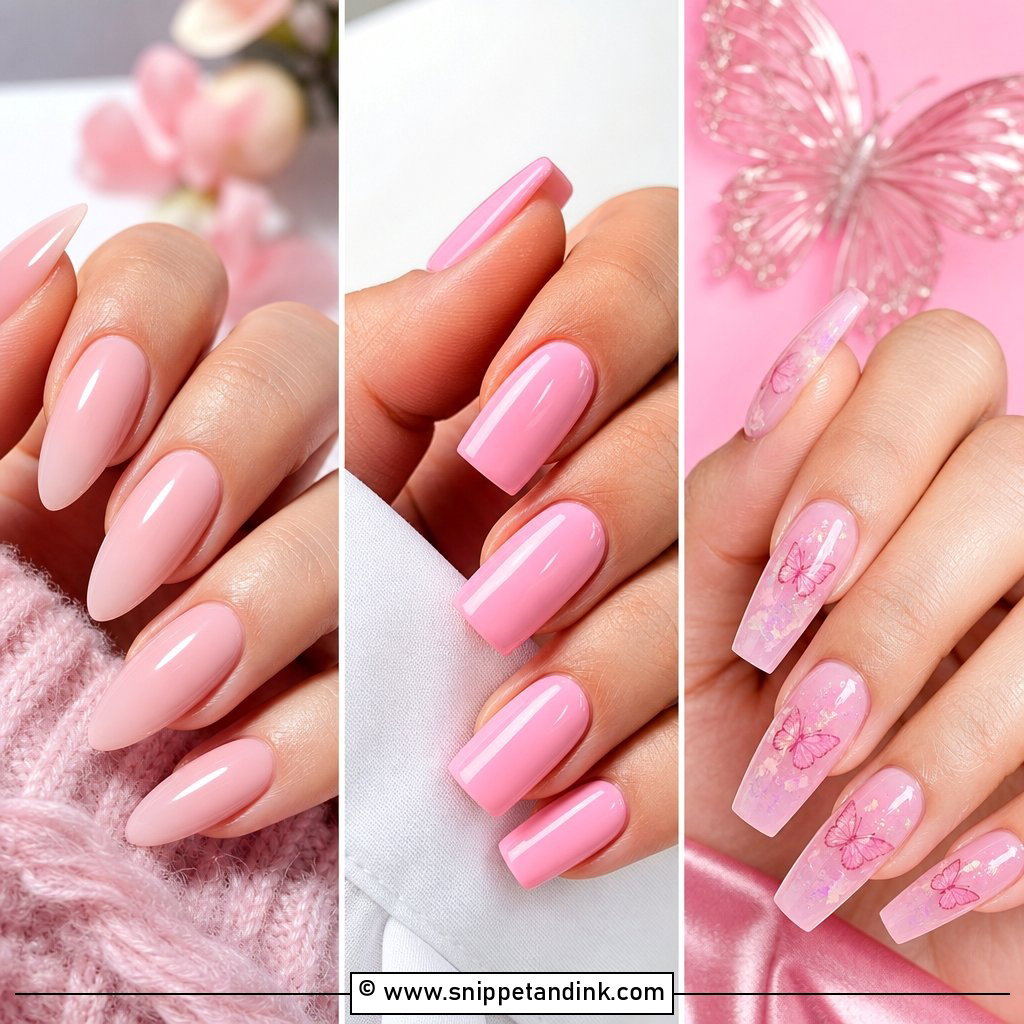
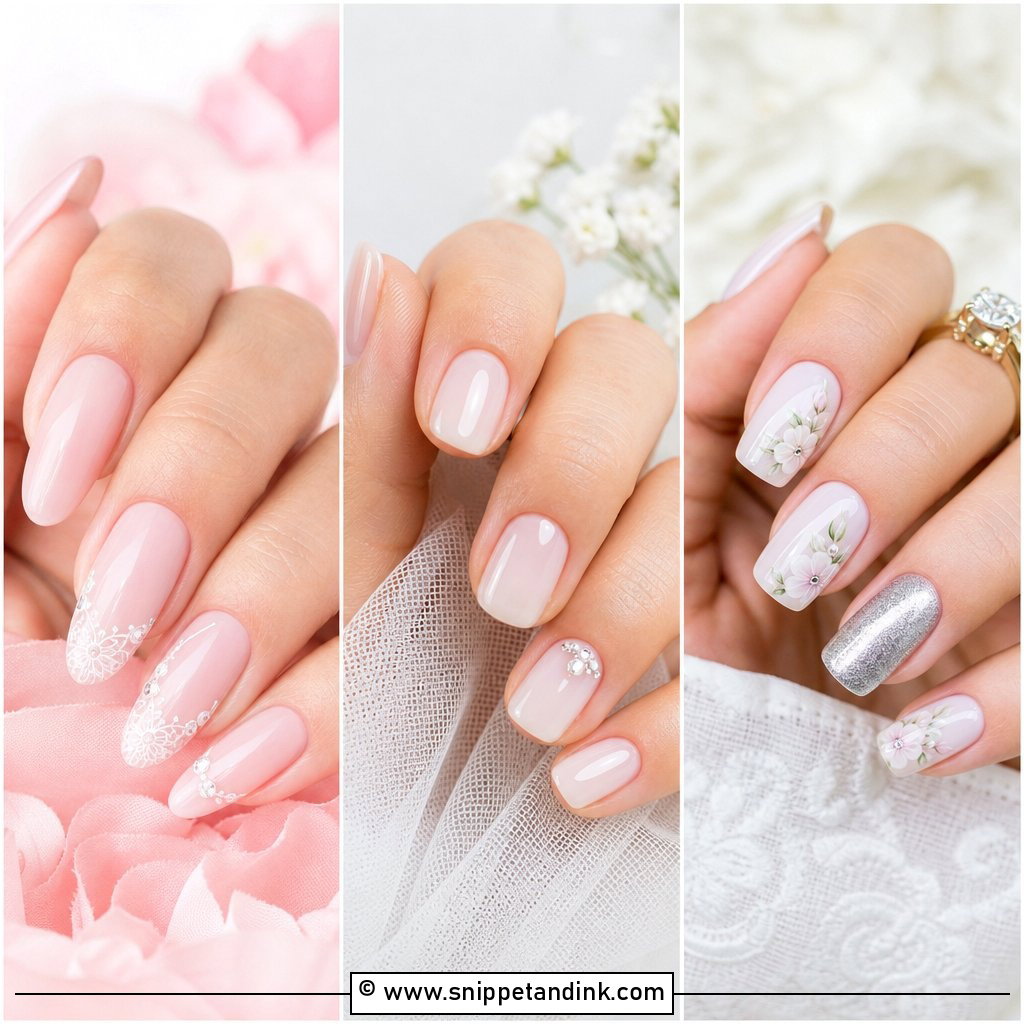
A translucent pink lets a little natural nail show through and simply makes it look smooth and well kept. It suits brides with minimal makeup and simple jewellery. Sheer colour hides nothing, so ridges, white spots and uneven free edges all show; I buff and use a smoothing base before any colour goes on. Kept plain with high gloss, it’s about the lowest-risk set you can choose. Nothing about it fights a dress, a bouquet or a palette.
5. Nude Ombre Bridal Nails

A natural pink or beige base fading into a creamy white tip, softer than the French tips it’s based on. The gradient lengthens the fingers on almond, coffin and oval nails. Choose the nude by your undertone, not the bottle: a nude that’s too pink on olive skin makes the fingertips look flushed and spoils the blend. Gloss keeps it classic; a light chrome layer modernises it.
6. Baby Boomer Bridal Nails

Baby boomer is the soft pink-to-white fade, blended until there’s no visible line. It needs a bit of length to show, so medium almond or coffin is ideal; on very short nails the gradient gets compressed and looks muddy. Ask for an airbrushed or sponge-blended finish rather than a striped one. It works with ball gowns and slip dresses alike, and grows out without the hard line a French tip leaves.
7. Micro French Bridal Nails

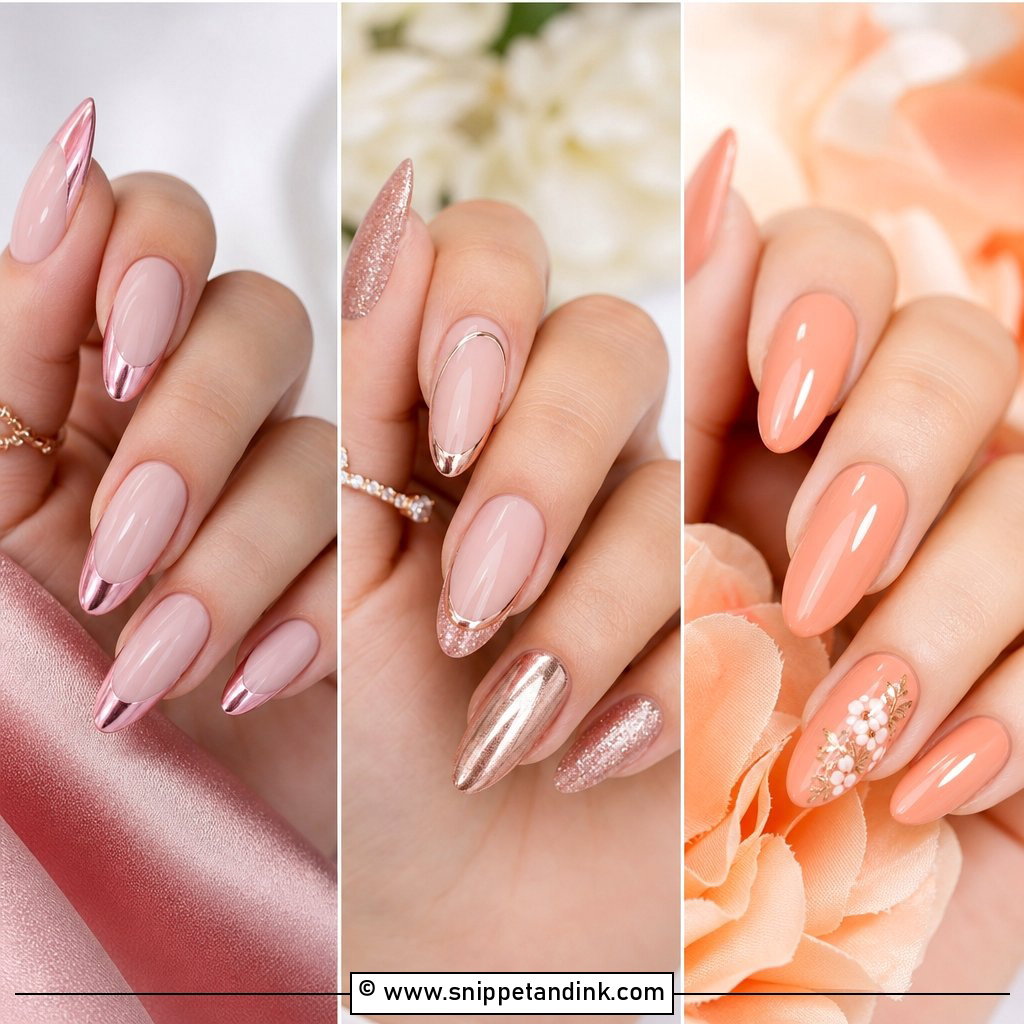
Micro French bridal nails put just a hairline of white at the edge of the nail. That thin line makes the nail look longer and cleaner without stealing attention from the ring. It’s especially good on short ovals and squovals, where a normal French would eat half the nail. An ivory tip instead of bright white softens it further. For a courthouse wedding or a minimalist bride, this is usually where I land.
8. Glazed Donut Bridal Nails

Glazed donut bridal nails are a sheer nude, pink or milky base with a light chrome powder buffed over it, giving a glossy, faintly pearly finish like sugar glaze. Keep the base sheer or it drifts toward icy metallic. It looks best on rounded almond and oval shapes, where the light rolls across the curve. Any lumps in the gel underneath show through the glaze, so this one depends on a perfectly level base.
9. Lace Bridal Nails
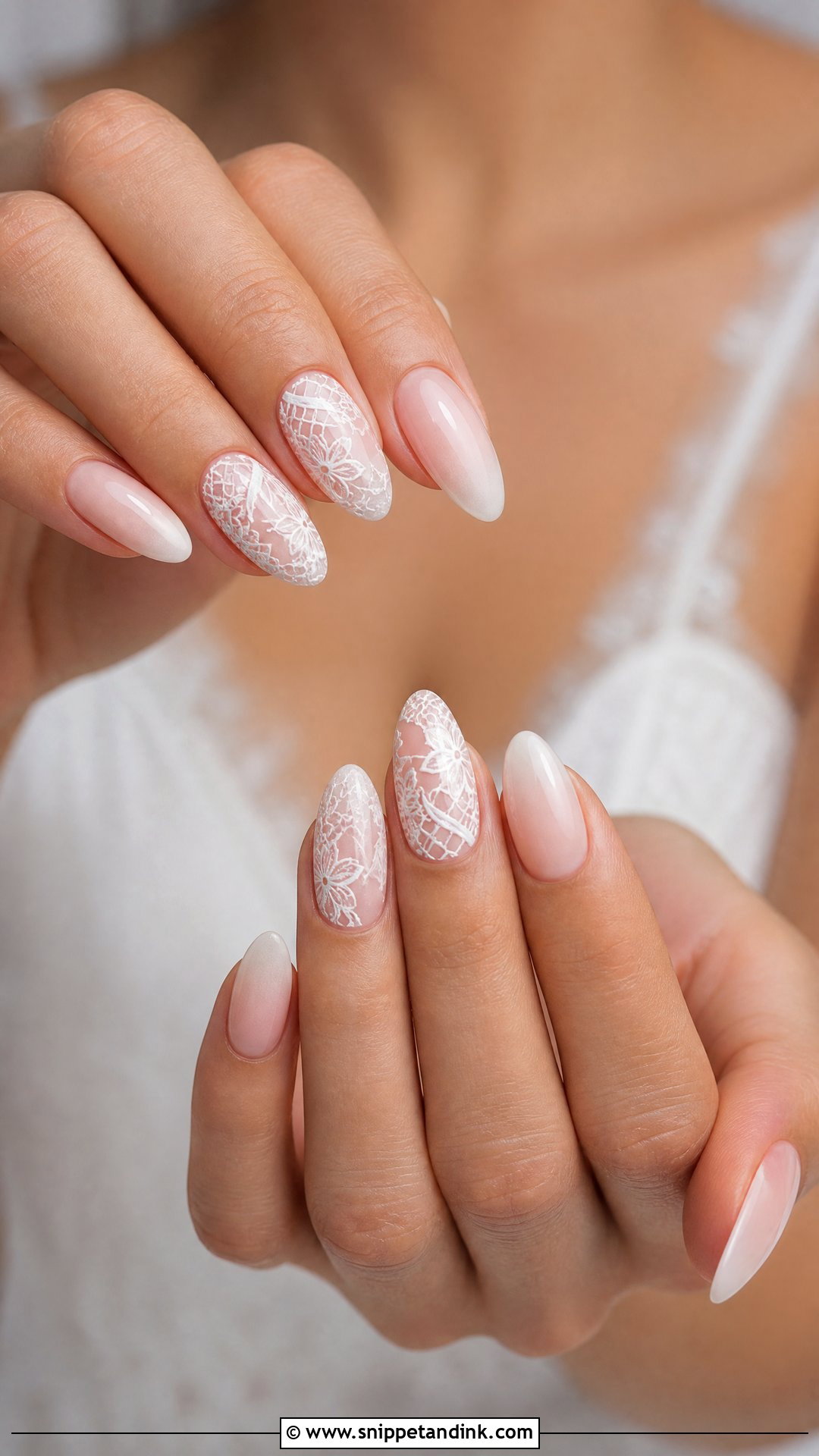
A sheer pink, milky nude or ivory base with fine white lace on one or two nails is the easiest way to tie the manicure to the dress. The lace can be hand-painted, stamped or applied as a decal. Stamping gives the crispest repeat; hand-painting lets me copy your actual lace motif. Thin lines read as fabric, thick ones read as clip-art. A matte top coat over the lace nail only gives it a soft, textile look.
10. Floral Bridal Nails
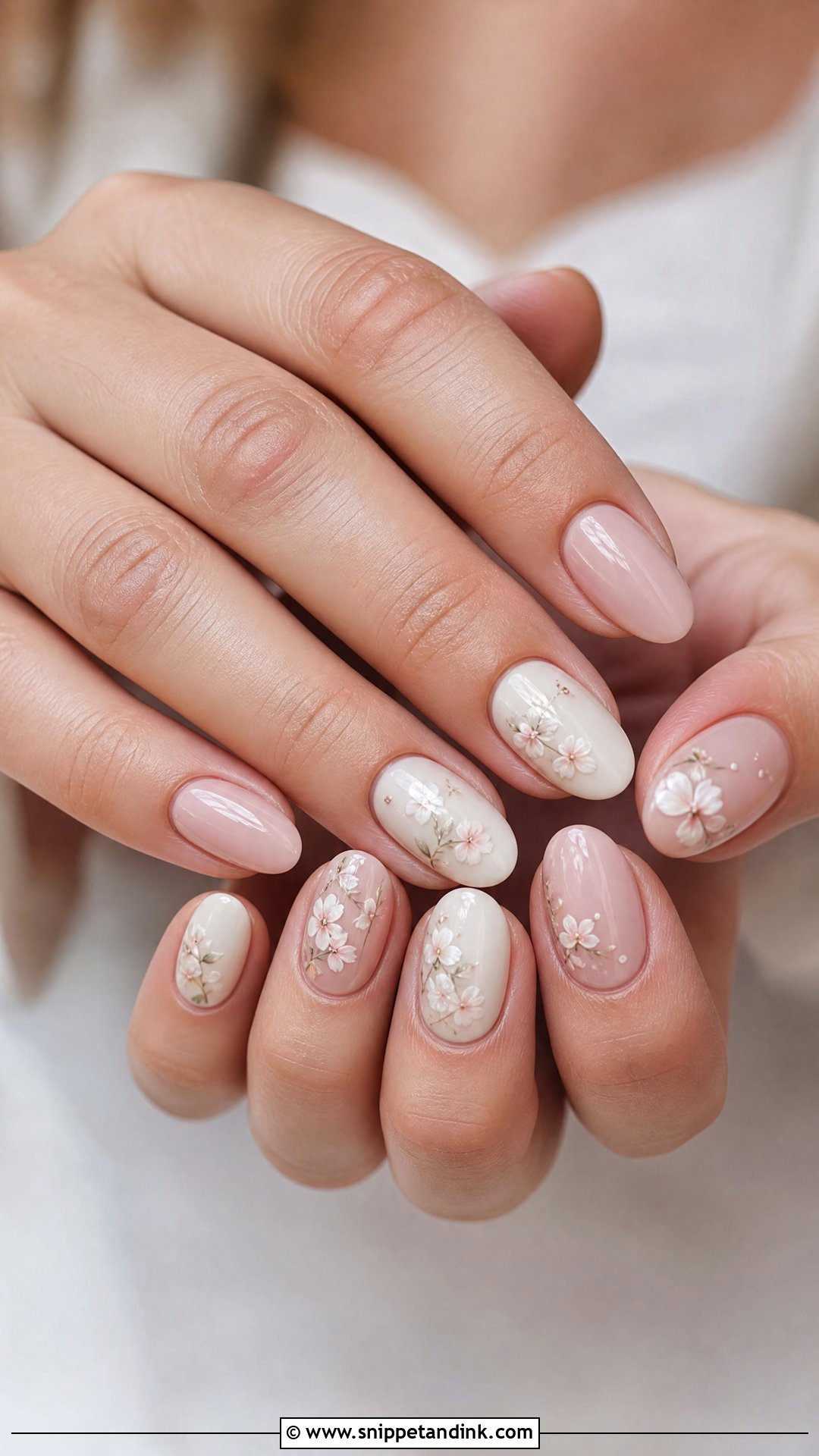
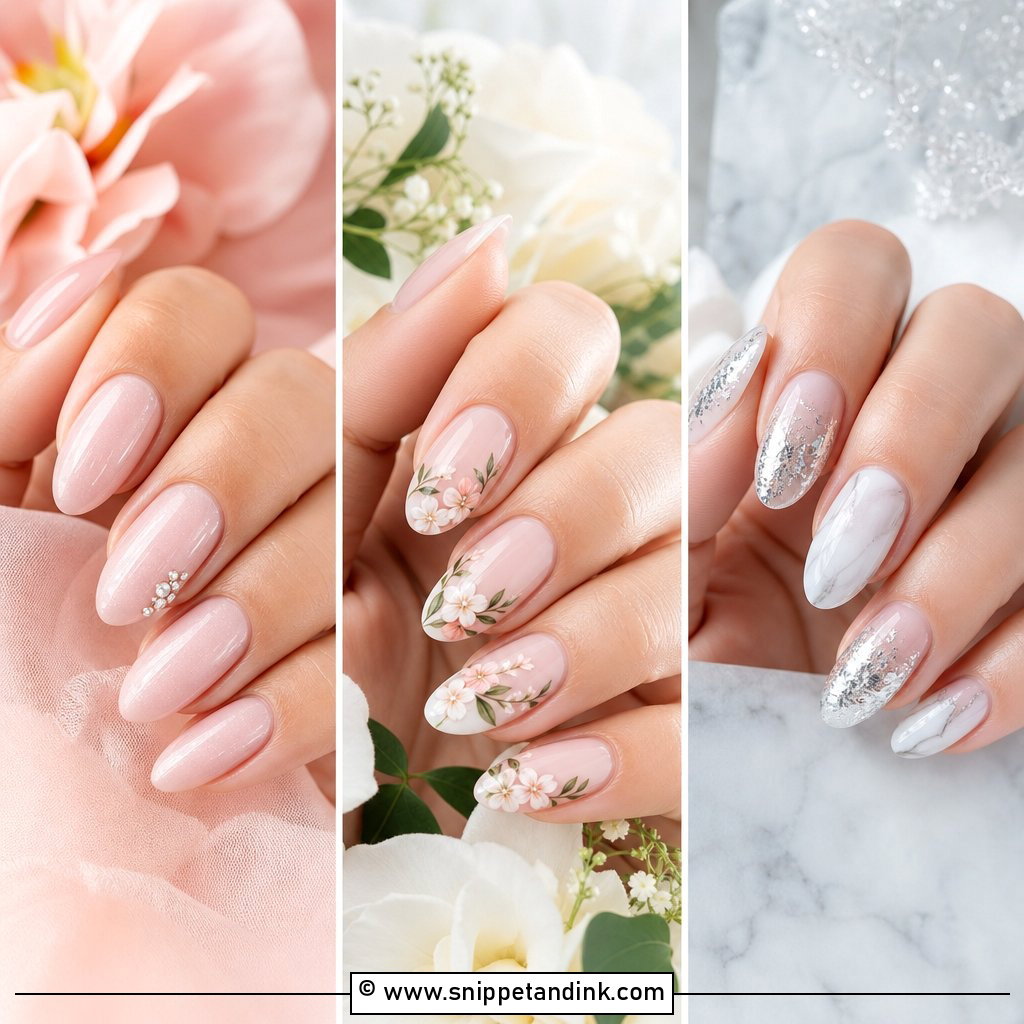
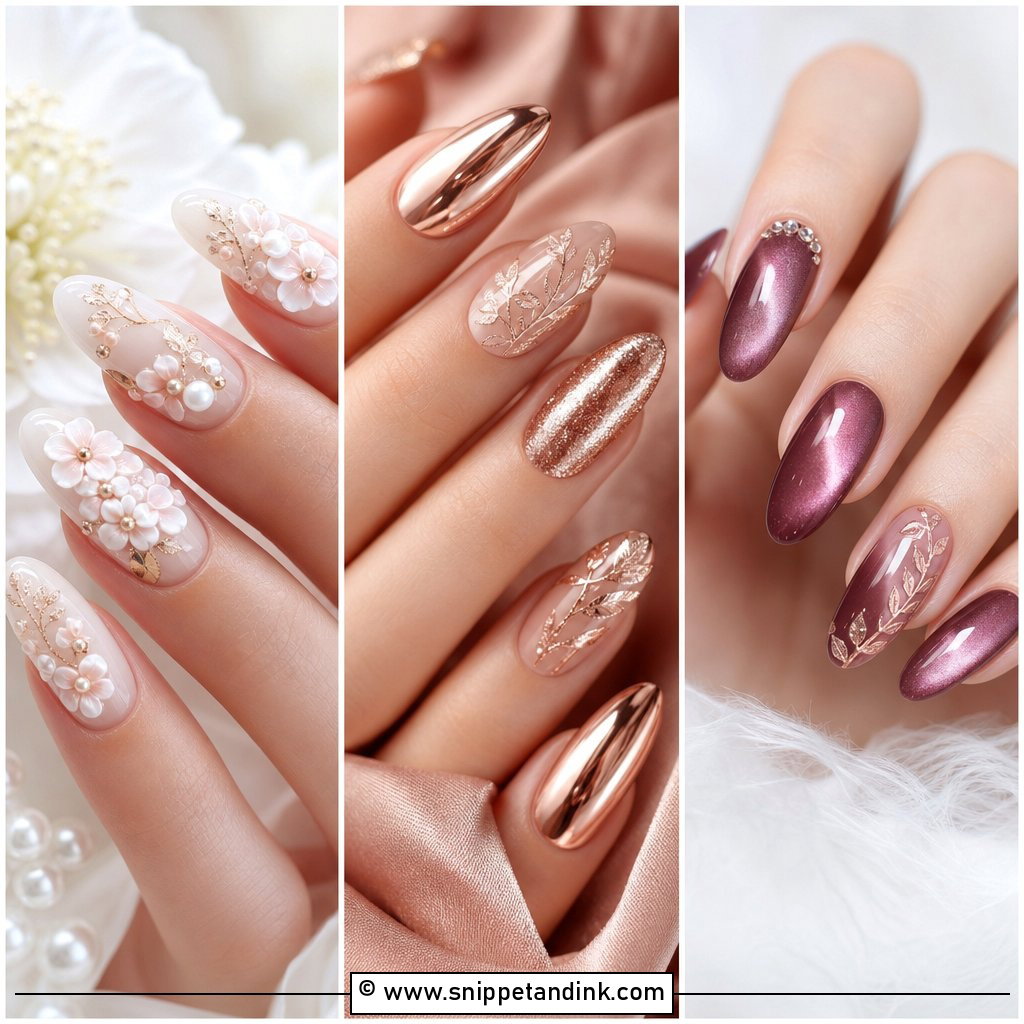
Small flowers on a sheer nude or pink base, tiny white, blush or ivory blooms near the cuticle, along one side, or on two accent nails. They suit garden ceremonies and soft bouquets. I paint petals with a few single presses of a small round brush rather than outlining them, which keeps them light. Add pearl dots or gold lines only if the rest of your look is very simple.
11. White Chrome Bridal Nails

White chrome is brighter than milky white and softer than silver: a white, ivory or milky base topped with a chrome powder. For a wedding I’d pick a pearl or satin chrome over a full mirror, which can look harsh under flash. It suits modern gowns, sleek buns and minimal jewellery. Medium almond looks elegant; short square looks crisp. It catches light from several angles, which flatters ring close-ups.
12. Blush Pink Bridal Nails

Blush is warmer than milky white and still delicate. As a full-colour gel set it’s very flattering, semi-sheer for a softer look or a creamier pink for full coverage. It sits naturally with rose gold, pink-toned makeup and bouquets of roses or peonies. If you want a small upgrade, one tiny crystal near the cuticle of the ring finger does more than a full shimmer coat.
13. Ivory Bridal Nails

Bright white can look grey and harsh beside a cream, champagne or off-white gown, and ivory solves that. I ask brides to bring a swatch from the hem or the fitting so I can hold the bottle against it. A jelly ivory, slightly see-through, has more depth than a flat opaque. It suits warm undertones and short nails as well as long almonds, and it’s very forgiving as it grows out.
14. Short Bridal Nails

Short nails look polished as long as the shape is clean and the shine is high. A short oval, squoval or rounded edge is comfortable if you’ve never worn extensions. Sheer pink, milky white, soft nude or a micro French all keep them fresh. The glossy top coat matters more on short nails than long ones; it’s what separates a bridal set from an everyday one. Short nails also make doing up buttons and handling bouquet stems far easier.
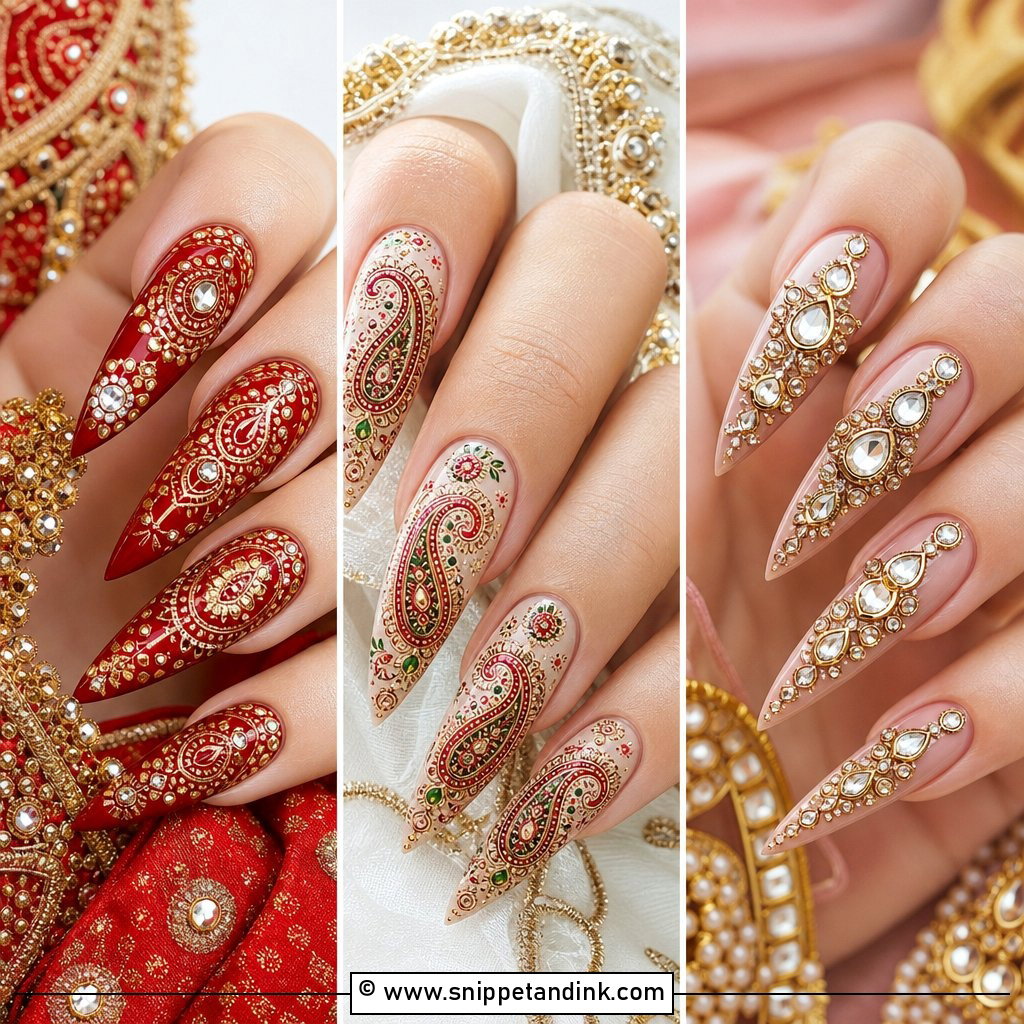
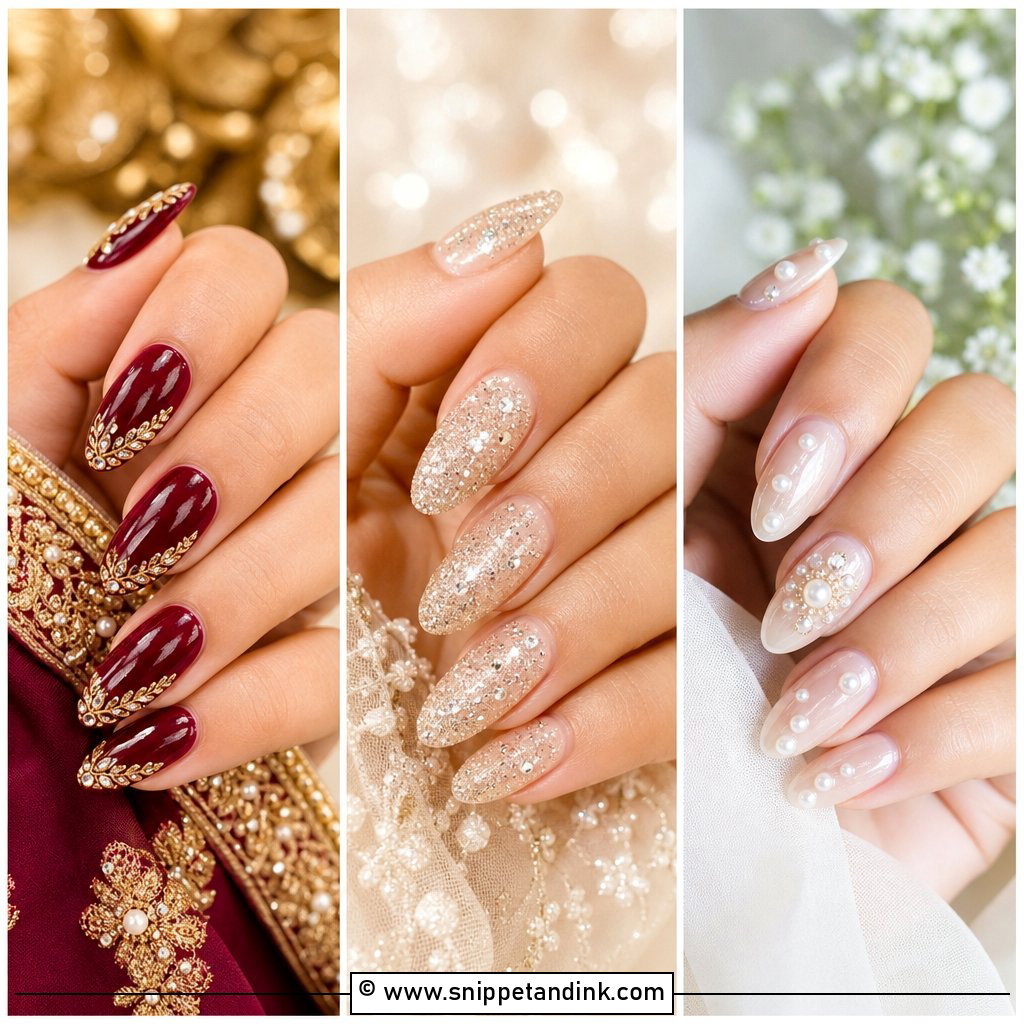
15. Almond Bridal Nails

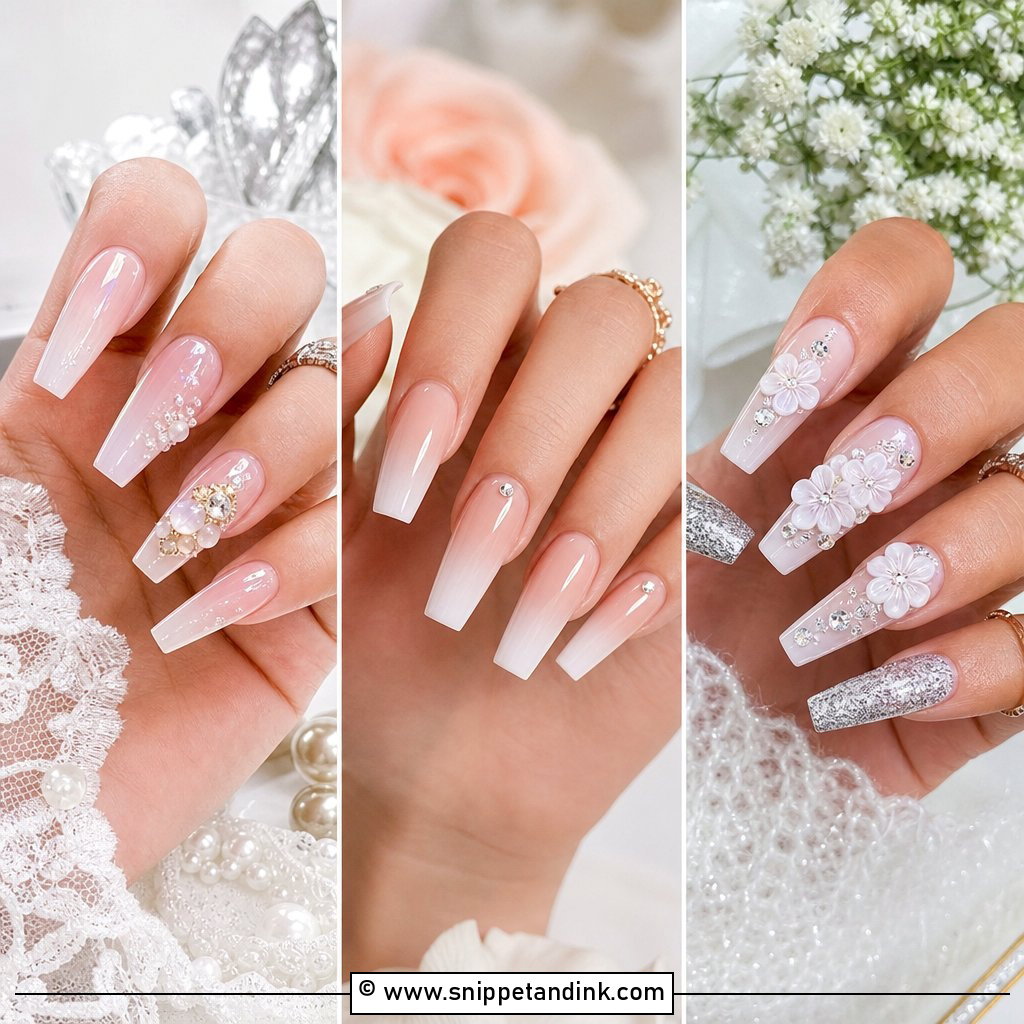
The almond shape tapers to a soft point that lengthens the fingers without looking sharp. Milky white, pearl chrome, French tips, blush and nude ombré all sit well on it. Medium length is the comfortable spot, enough canvas for a design, short enough to live with. With a detailed ring, almond frames it rather than competing. I file almonds from the sides in, checking from above, because a slightly off-centre peak shows on every finger in a ring photo.
16. Square Bridal Nails

Square nails are structured and crisp, and the straight edge makes French tips and solid colours look sharp at short or medium length. If a true square feels too blunt, I soften the corners into a squoval, which is also less likely to snag tights or lace. A soft pink with thin white tips is the classic version; milky nude or ivory is the modern one. They suit minimalist dresses and sleek hair.
17. Coffin Bridal Nails

Coffin bridal nails have tapered sides and a flat tip, which gives more room for ombré, French tips, chrome or delicate art. Medium coffin looks refined; extra-long can feel like a costume next to a gown. Stick to milky white, sheer pink, nude ombré, pearl chrome or blush, and limit art to one or two accent nails. Coffin is the shape most prone to tip breaks at length, so a builder gel overlay is worth it.
18. Pearl Accent Bridal Nails
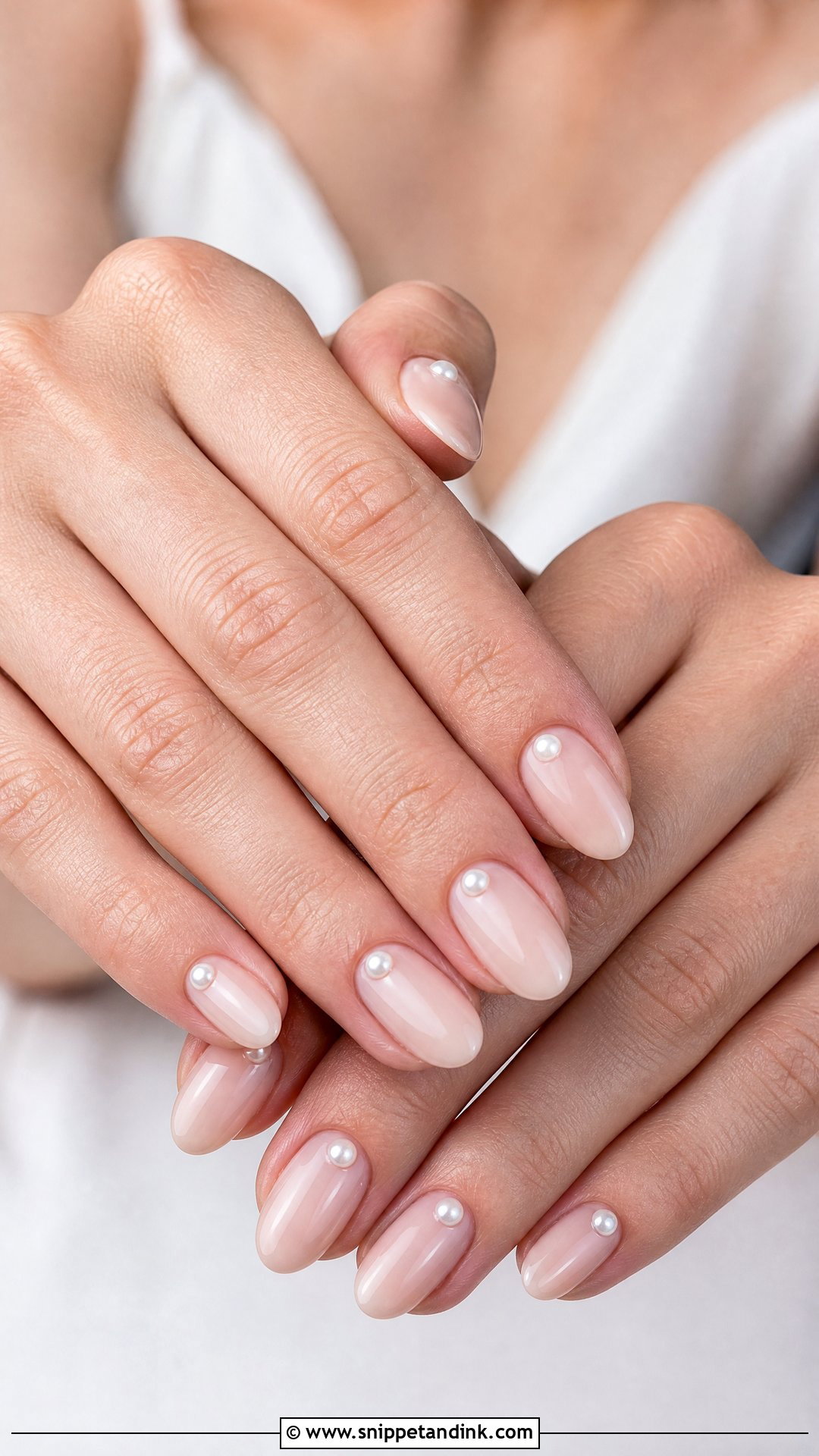
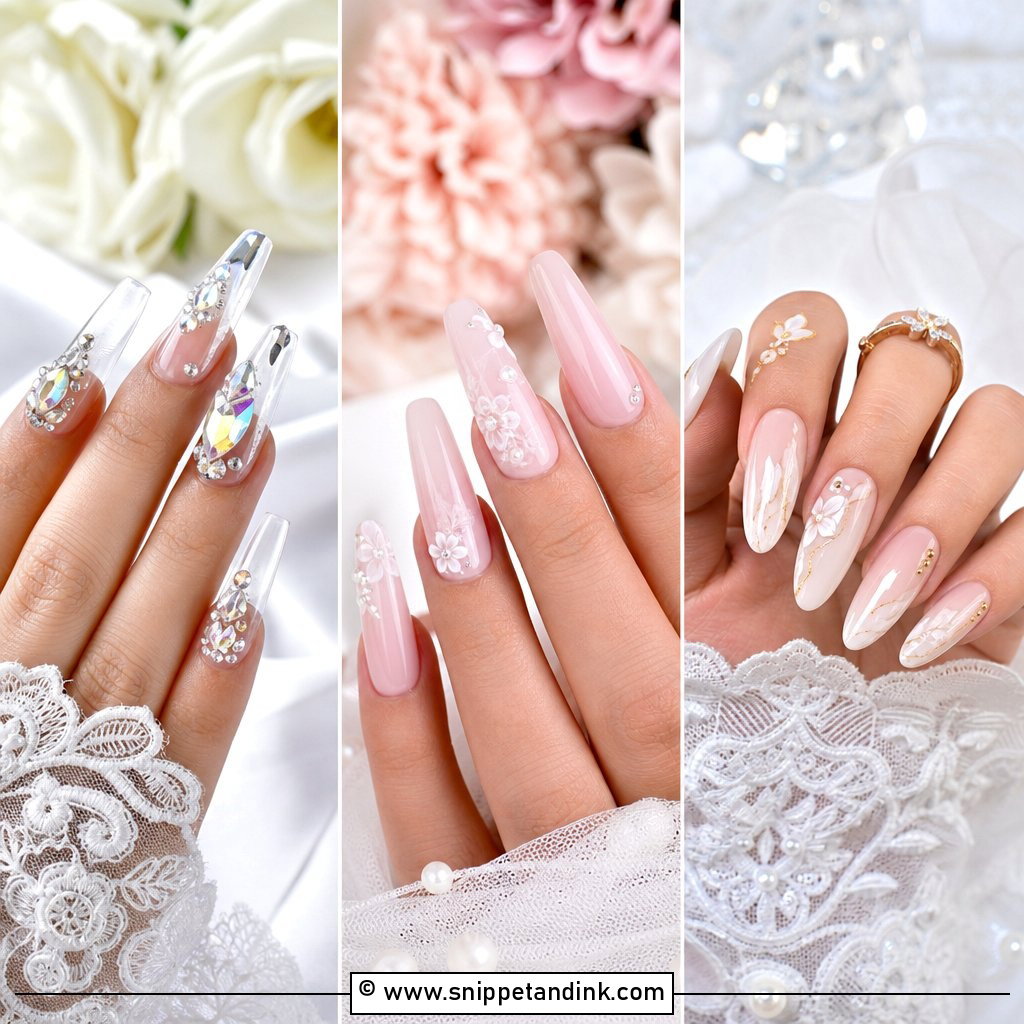
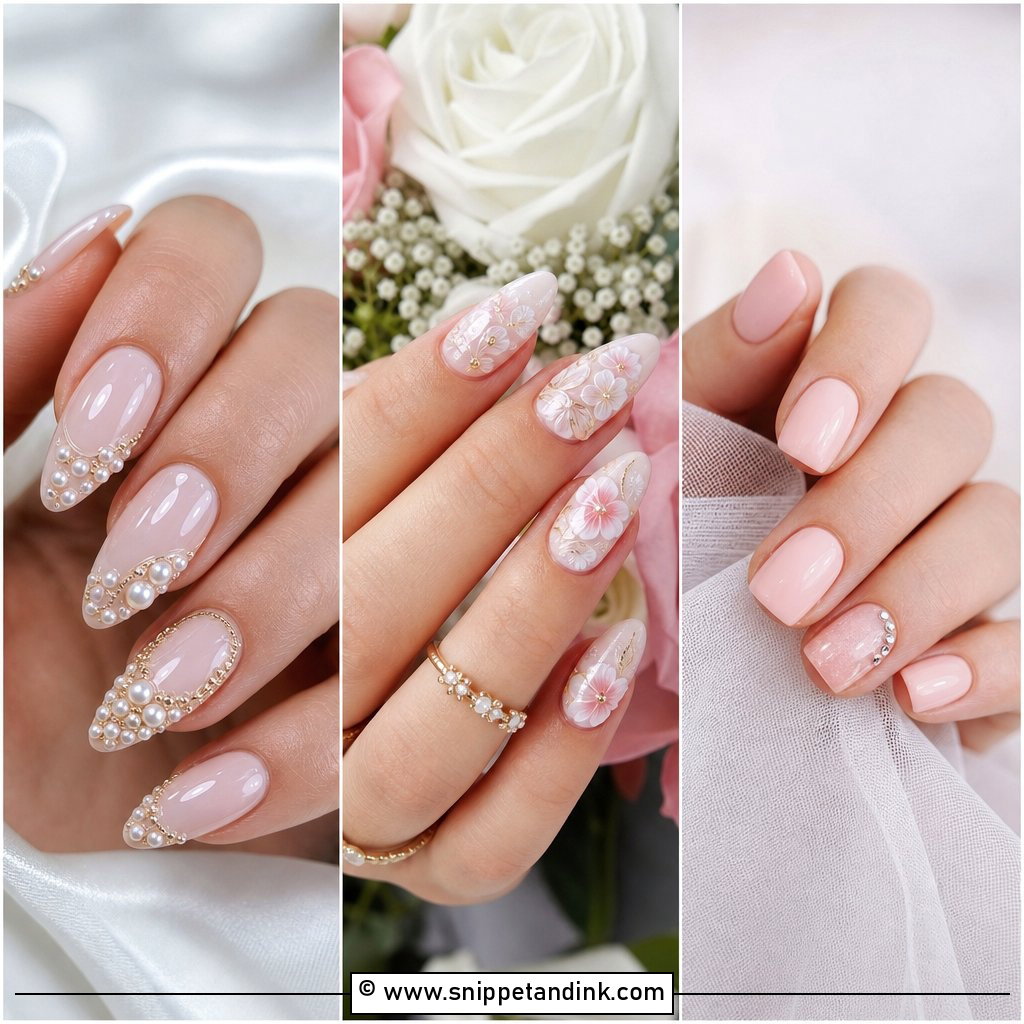
Tiny pearls placed near the cuticle or along one side of a few nails, over a sheer pink, milky white, nude or ivory base. Restraint is the design. A few small pearls look refined; too many feel bulky and catch on everything. They pair with pearl earrings, pearl buttons and beaded veils. I embed each one in builder gel and seal around it, since pearls set in top coat alone can pop off before the reception ends.
19. Rhinestone Bridal Nails

Rhinestones look tasteful when they’re small and few: tiny clear crystals at the cuticle, a slim line, or one detail on each ring finger, over a sheer pink, nude or milky base. They echo crystal earrings, embellished shoes and beaded gowns. Glass flatback crystals throw far more light than cheap acrylic stones, and they’re what I use. Each one goes into gel with the edges sealed so it won’t snag tulle or hair.
20. Gold Foil Bridal Nails

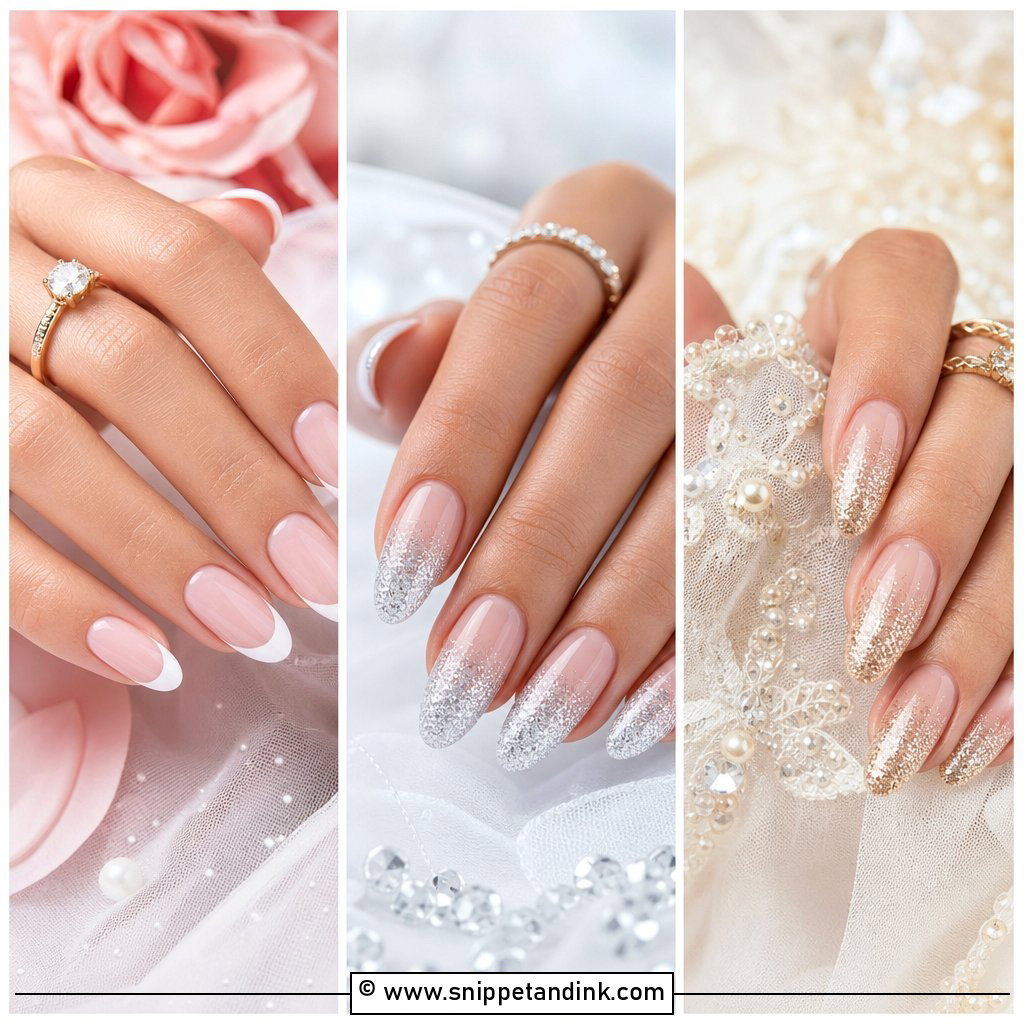
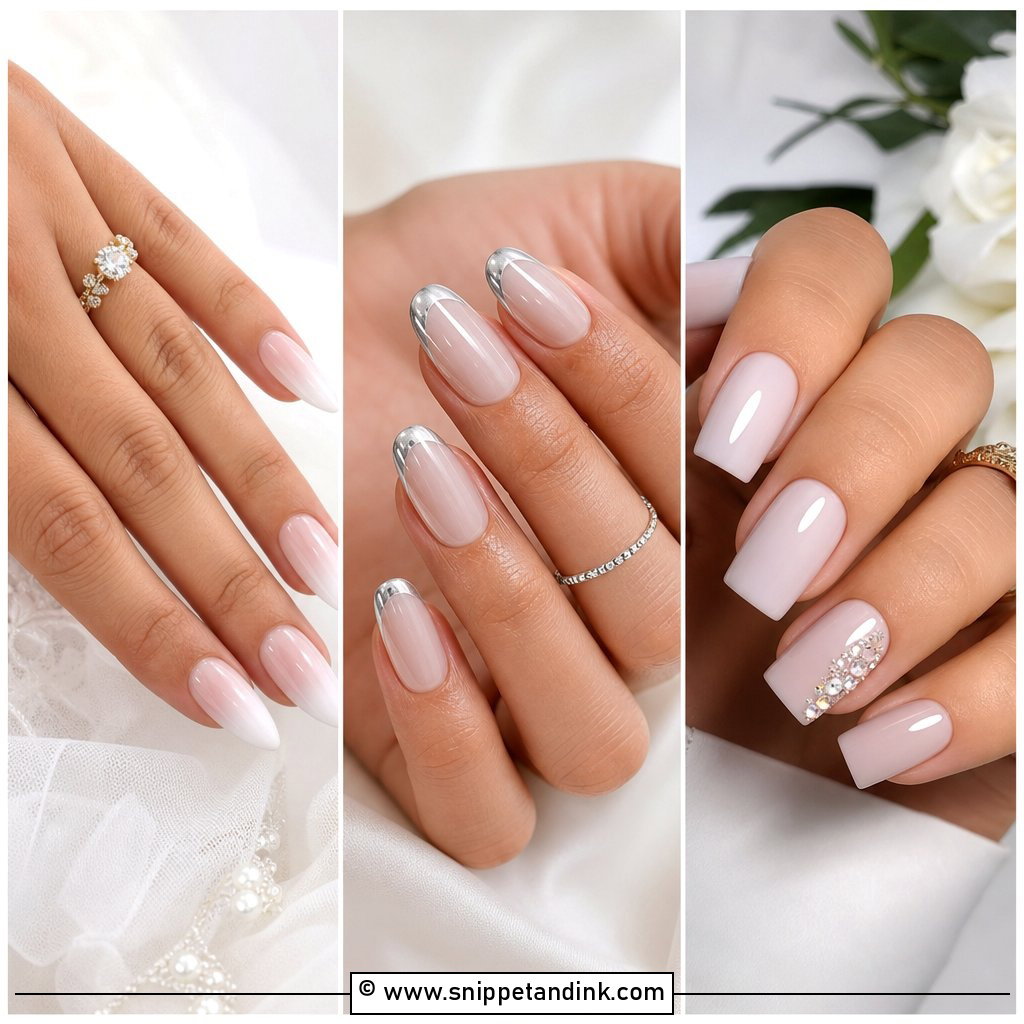
Gold foil works best with yellow gold jewellery, champagne gowns and warm bouquets. Small irregular flakes are pressed into a nude, blush, milky or ivory base, scattered rather than packed. I set the foil in gel and seal it under top coat, because exposed foil edges lift and dull within a day. One or two nails keeps it subtle; a light scatter across the set feels more custom.
21. Rose Gold Bridal Nails

Rose gold sits warmer than silver or pearl and suits blush dresses, rose gold rings and pink-toned makeup. The bridal version is a sheer nude or pale pink base with rose gold chrome, foil or fine shimmer, never chunky glitter. A rose gold French tip is a neat modern twist. Almond and oval soften the metallic finish; short square makes it look sharp.
22. Something Blue Bridal Nails
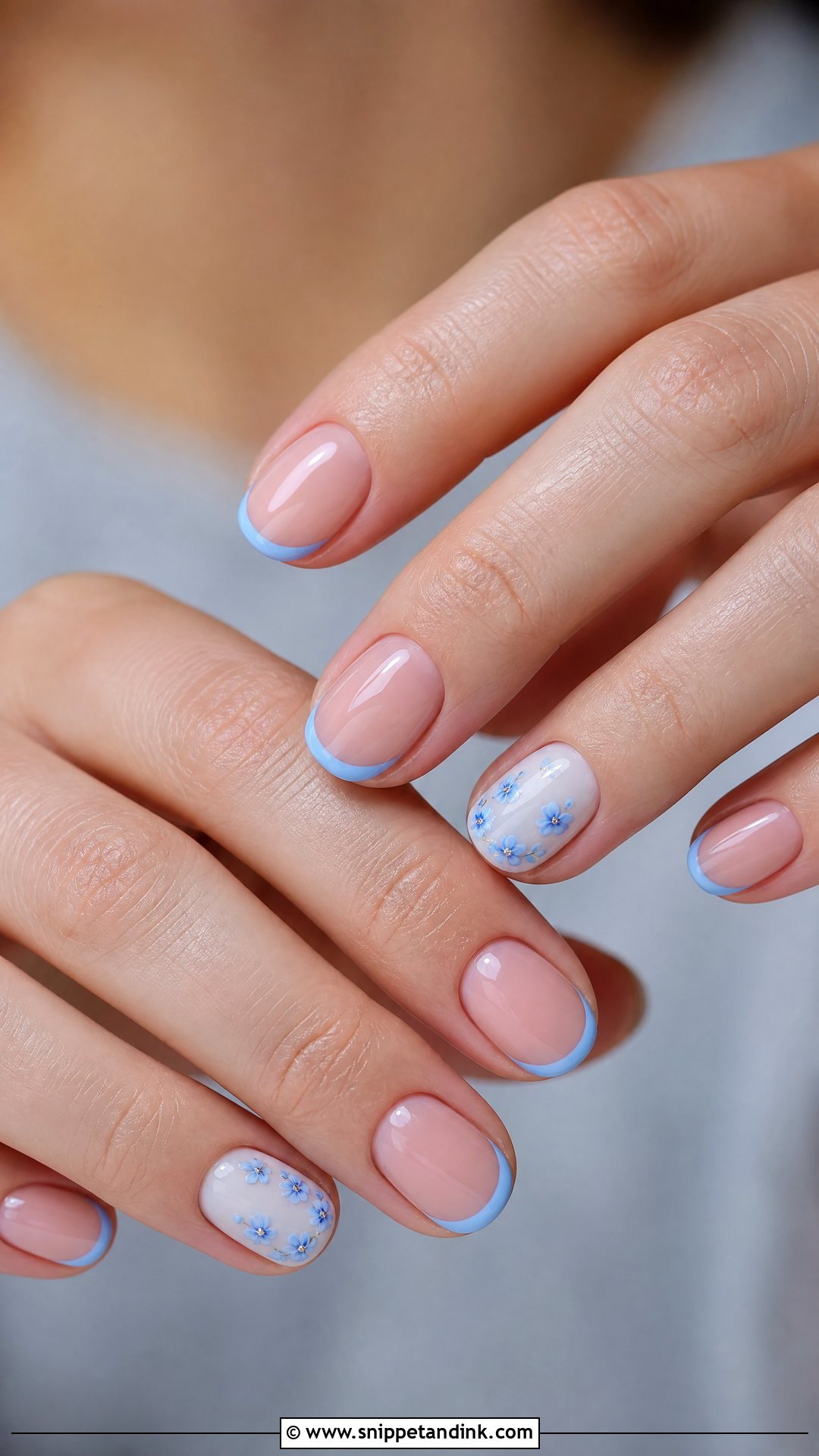
Something blue bridal nails can stay quiet: a sheer pink or nude base with pale blue micro tips, small flowers, dots, or a single hidden accent nail. Powder, baby and misty blues look the most bridal. If your bridesmaids wear blue or your bouquet has it, the detail ties in naturally. I’d keep it to the ring finger or one nail per hand, so it reads as a secret rather than a theme.
23. Cat Eye Bridal Nails

Cat eye polish contains fine magnetic particles; I hold a magnet over each nail before curing to pull them into a soft band of light that shifts as your hand moves. For a wedding, champagne, pale pink, ivory, pearl or beige shades keep it romantic. Ask for a diffused effect, not a hard stripe. It’s at its best in candlelight and evening receptions, where the movement actually shows, and less interesting in flat daylight.
24. Matte Bridal Nails

A matte top coat turns milky white, nude, blush or ivory into a velvety finish that suits crepe, clean silhouettes and minimal jewellery. On its own matte can look flat in photos, so I often add one glossy detail, a French tip or a small flower, to give the eye something to catch. Matte marks more easily than gloss and picks up stains from tanner or makeup, so book it close to the day and keep hands away from fresh self-tan.
25. Minimal Bridal Nail Art

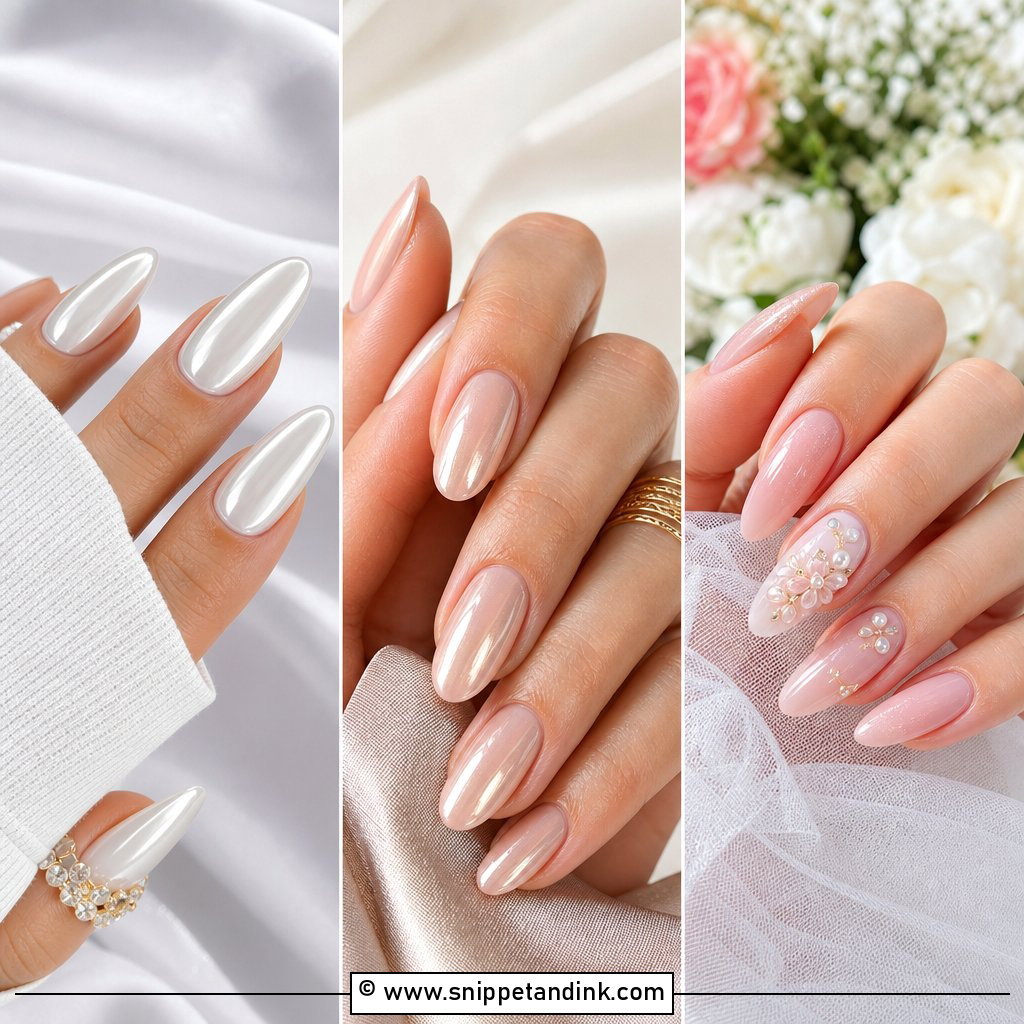
Minimal nail art is a neutral base, sheer nude, soft pink or milky, with one small idea repeated: fine white lines, tiny dots, a delicate curve, a single flower. It suits brides who normally love nail art but want something calmer for the wedding, and it goes with almost any dress. The skill is choosing one motif and placing it with the same rhythm across all ten nails so the set reads as planned.
How Long Each Finish Holds Up, and Taking It Off Afterwards
Not every finish wears the same. A rough guide to how the sets in this list behave through a wedding week and a honeymoon, from most durable to most delicate:
- Plain gel colour, French and ombré on a builder base: two to three weeks with very little change apart from regrowth.
- Milky, sheer and cat eye gel: similar wear, though sheer colours show regrowth sooner because the line at the cuticle is visible.
- Chrome, glazed and foil: the surface stays bright, but tips can wear within a week if the edges weren’t capped.
- Pearls, rhinestones and 3D details: the most likely to snag or pop off. Expect to lose one by the honeymoon unless they were set in builder gel.
- Matte: wears fine, but it scuffs and stains, and often looks shiny at the fingertips after a few days of typing.
When you’re ready to remove it, please don’t peel or pick. Gel lifts away the top layers of the nail plate with it, which leaves nails thin and bendy for months. Have it soaked off or filed down properly, then give your nails a week or two of oil and a plain strengthener before the next set.
Get the Base Shade Right and the Rest Follows
The manicure that works is the one that feels comfortable and still looks like you. French tips, milky white and sheer pink are dependable; pearl chrome, gold foil, cat eye and fine art add something more current. Decide the base by your dress colour, ring metal and undertone, then pick a length you can live with. Book a trial if you’re trying chrome, extensions, lace or anything glued on, because those are the sets that need adjusting before the real one.
You'll Like These Ideas:


Leave a Reply