
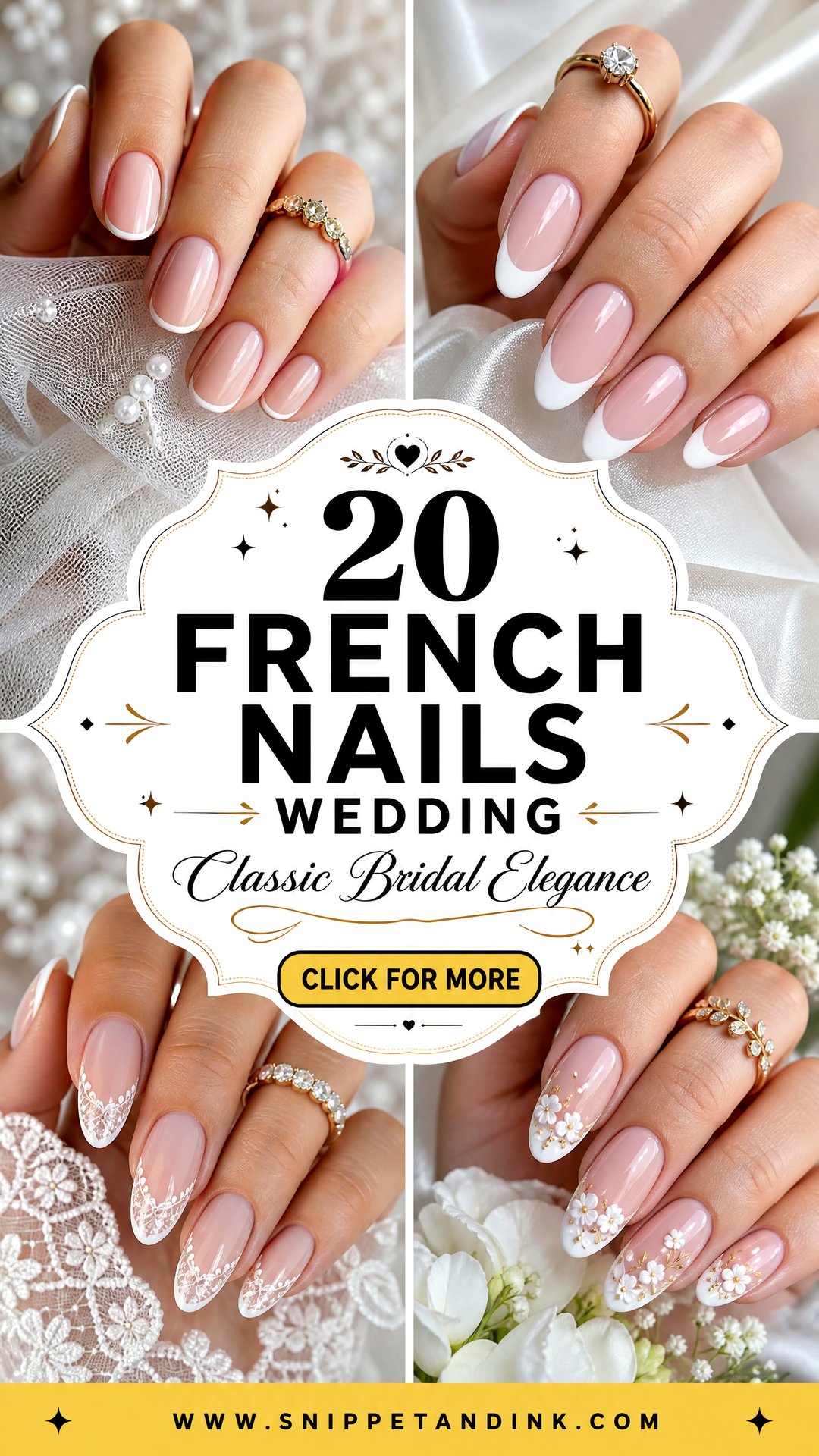
Brides still ask me for a French manicure more than any other wedding set, and I understand why. It looks finished without pulling focus from the ring, the bouquet or the dress. What has changed is the detail. The tips I paint now are thinner and glossier than the thick white bands of a decade ago, the bases are often milky or blush rather than clear pink, and there is usually one small personal touch, a pearl or a line of chrome. These French nail designs cover short squoval nails through to long coffin extensions, and I’ve added what each one asks of your natural nails.
Growing Your Natural Nails Out Ahead of a French Set
A French manicure shows the nail underneath more than almost any other design. The base is sheer, so ridges, peeling and white spots show through, and the tip sits right on the free edge, so a broken nail is obvious. A few weeks of care before the wedding makes more difference here than which design you pick.
- Stop picking or peeling off old gel. Peeling it strips layers of the nail plate, and those thin, flaky patches show under a sheer base.
- Oil the cuticles every night. A drop of cuticle oil worked into the nail fold keeps the skin soft so I can push it back cleanly instead of cutting.
- File, don’t clip. Clipping can split the free edge; a glass or fine-grit file seals it.
- Wear gloves for washing up and cleaning. Hot water and detergent leave nails soft and bendy.
- Leave the shaping to your technician. If one nail breaks, tell me rather than filing the rest to match at home, because I may be able to repair it with gel.
If your natural nails are very short or weak, a structured gel overlay can add strength without obvious length. Book it a few weeks out so you can see how your nails behave with it and still change your mind.
1. Classic French Wedding Nails
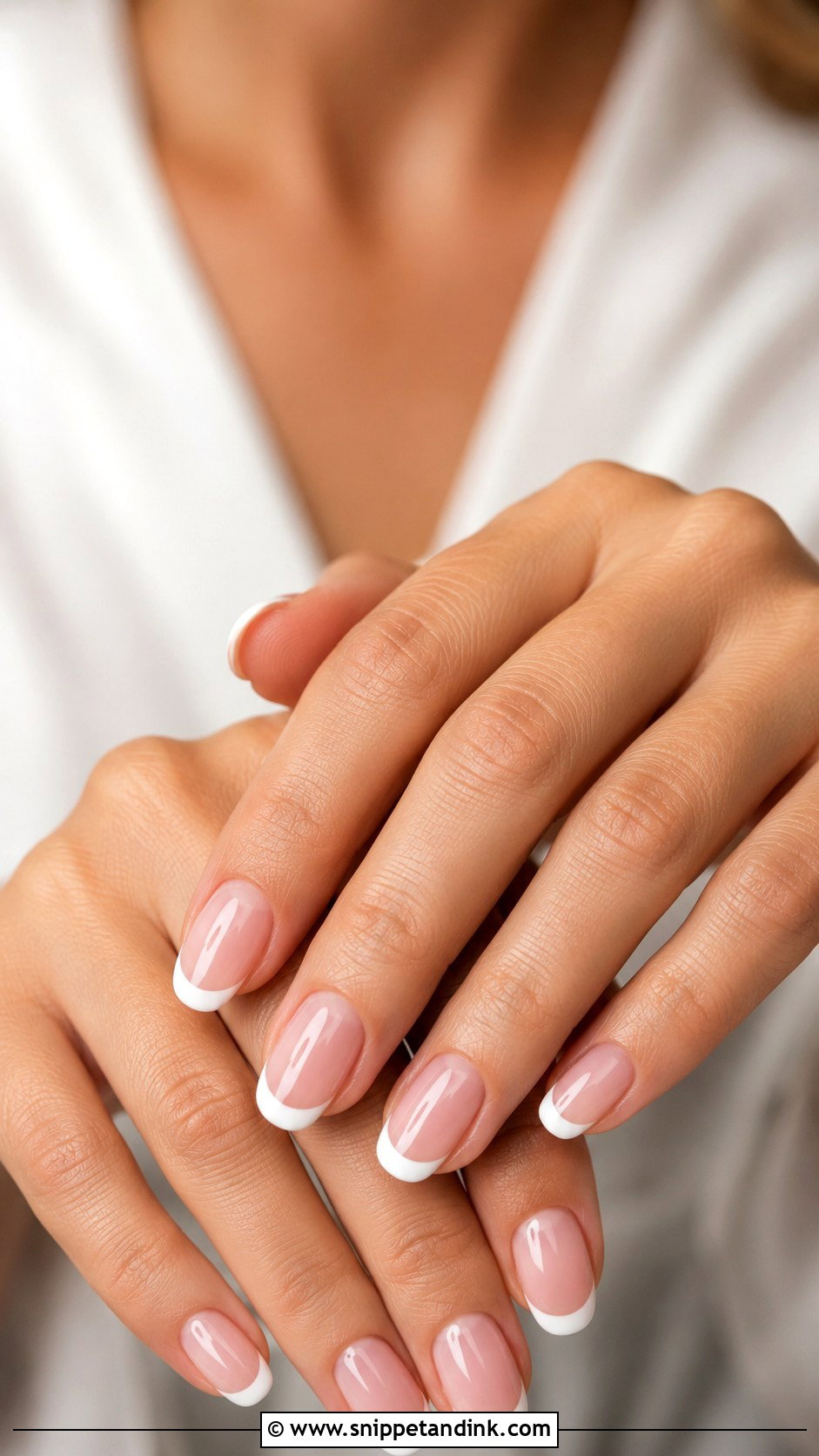
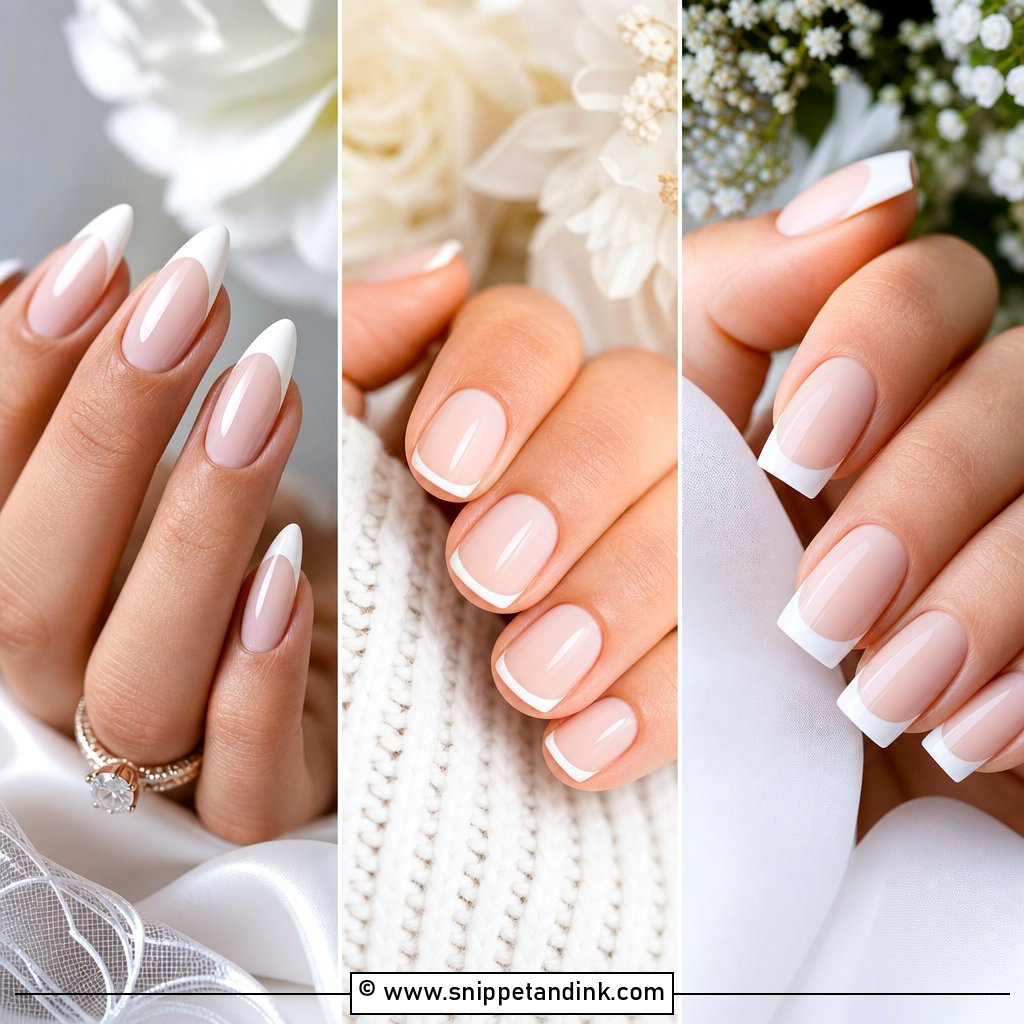
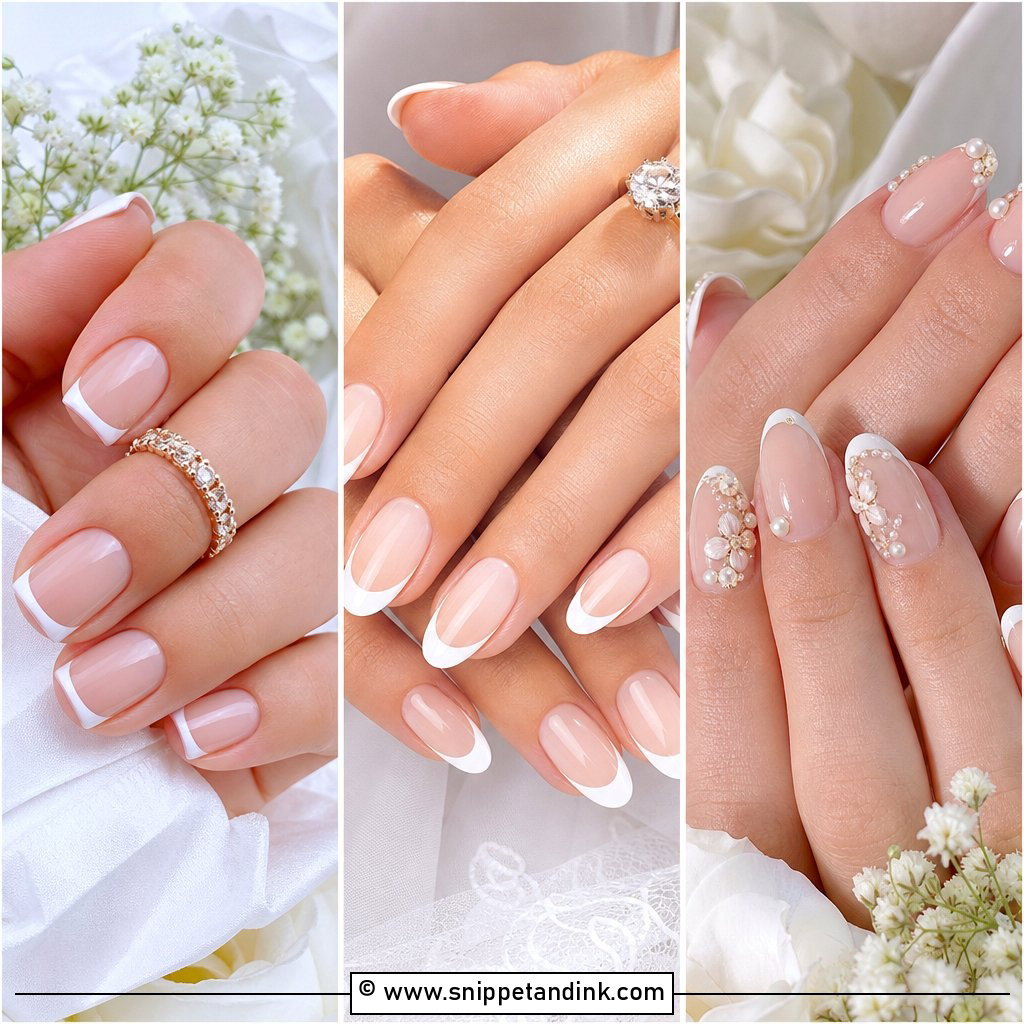
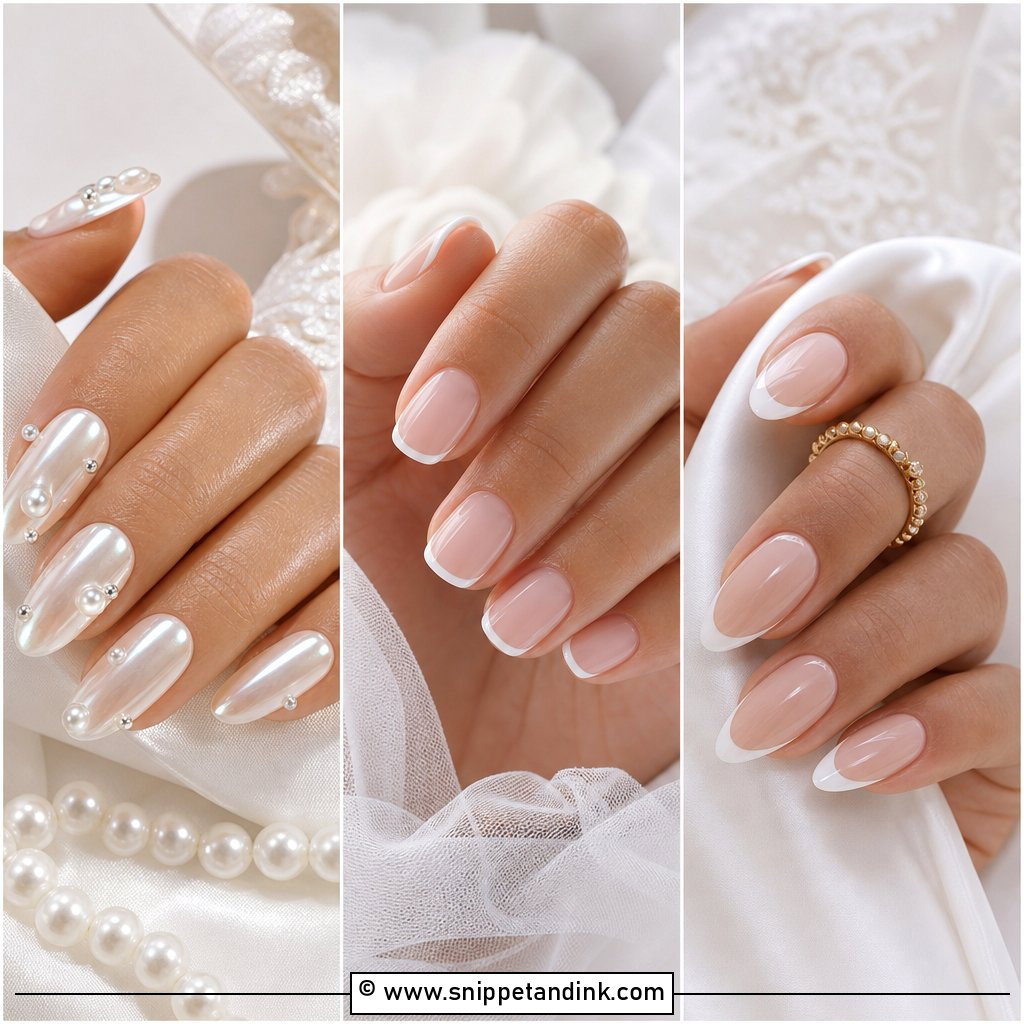
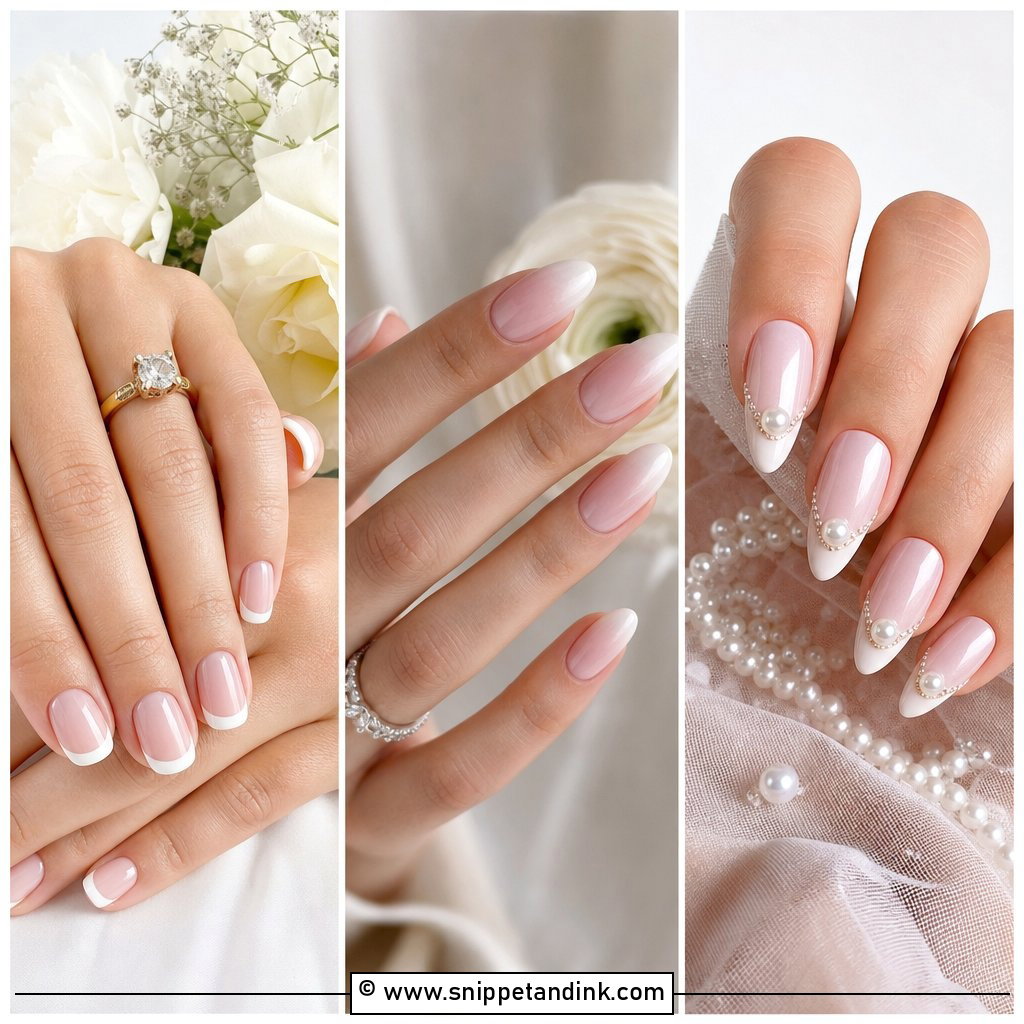
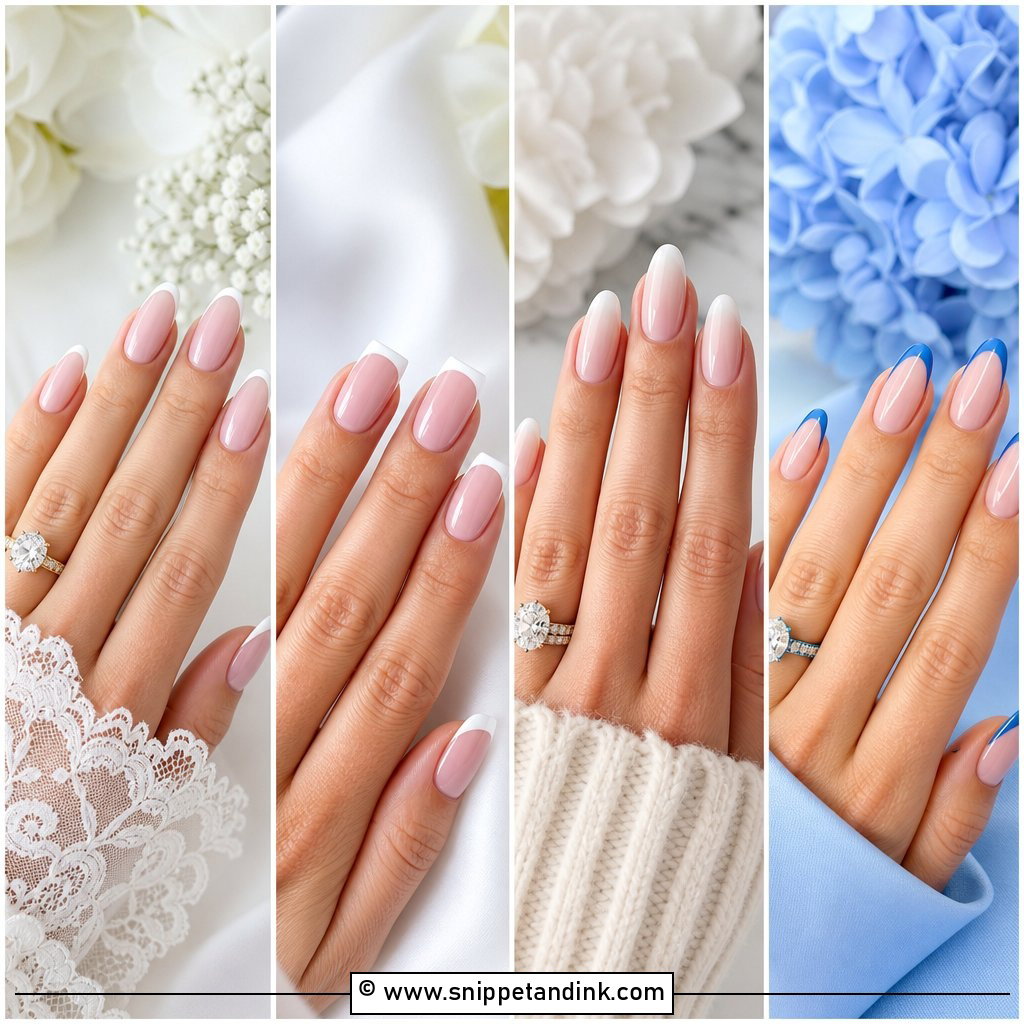
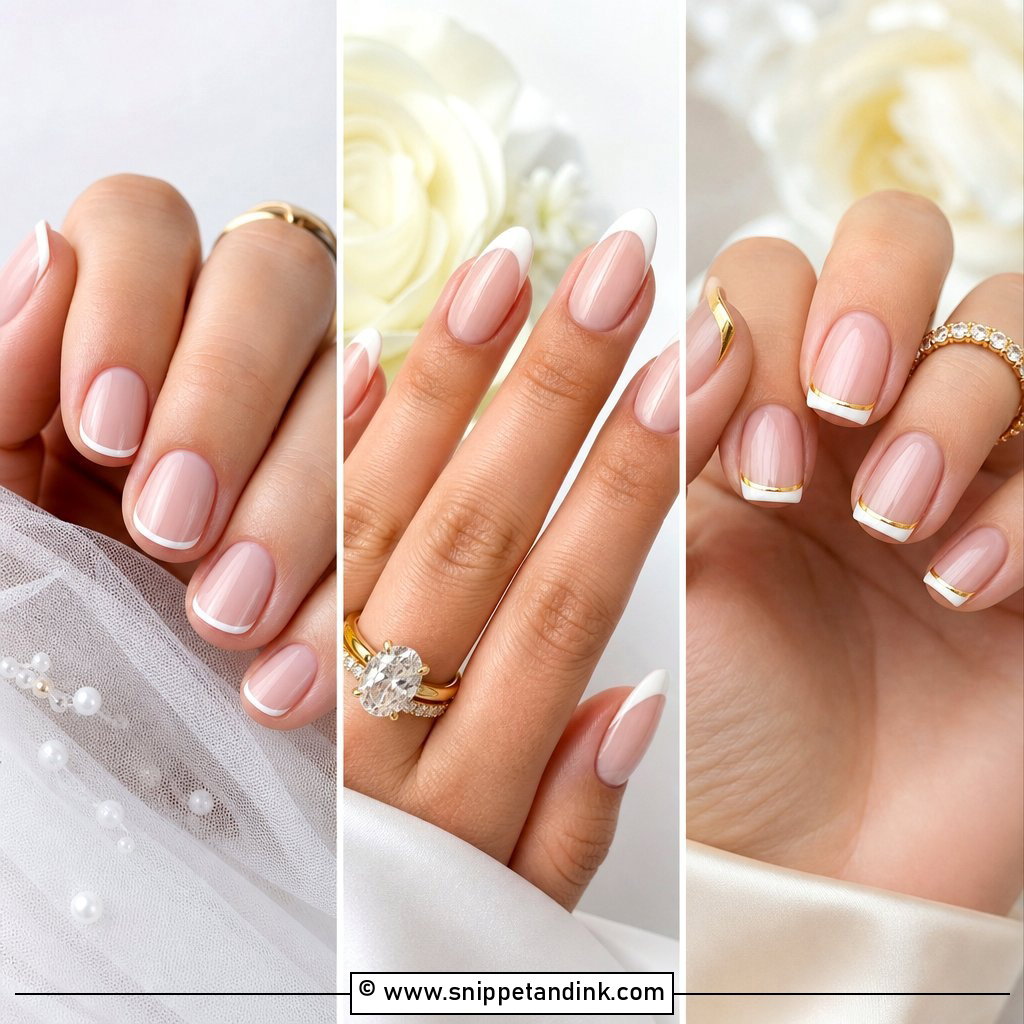
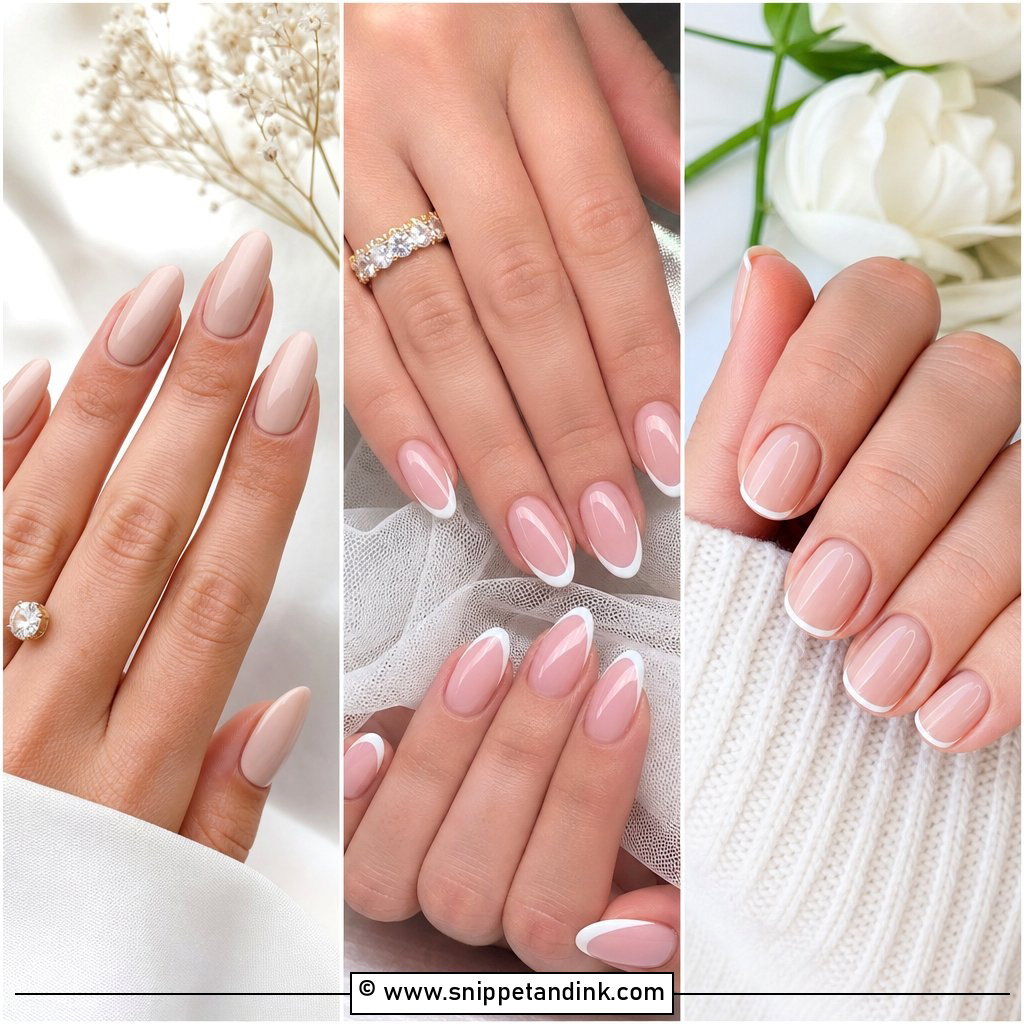
Sheer pink or nude base, white tip, high gloss. The classic set looks right on oval, almond, square and squoval, and it sits next to satin and lace without clashing. My one change from the old-school version is the edge of the tip. I pull the white slightly softer at the smile line rather than painting a thick, hard stripe, because a heavy band looks chunky in a close-up ring photo. You’ll still recognise it as a French manicure when you look back at the album in twenty years, which is half its appeal.
2. Micro French Wedding Nails
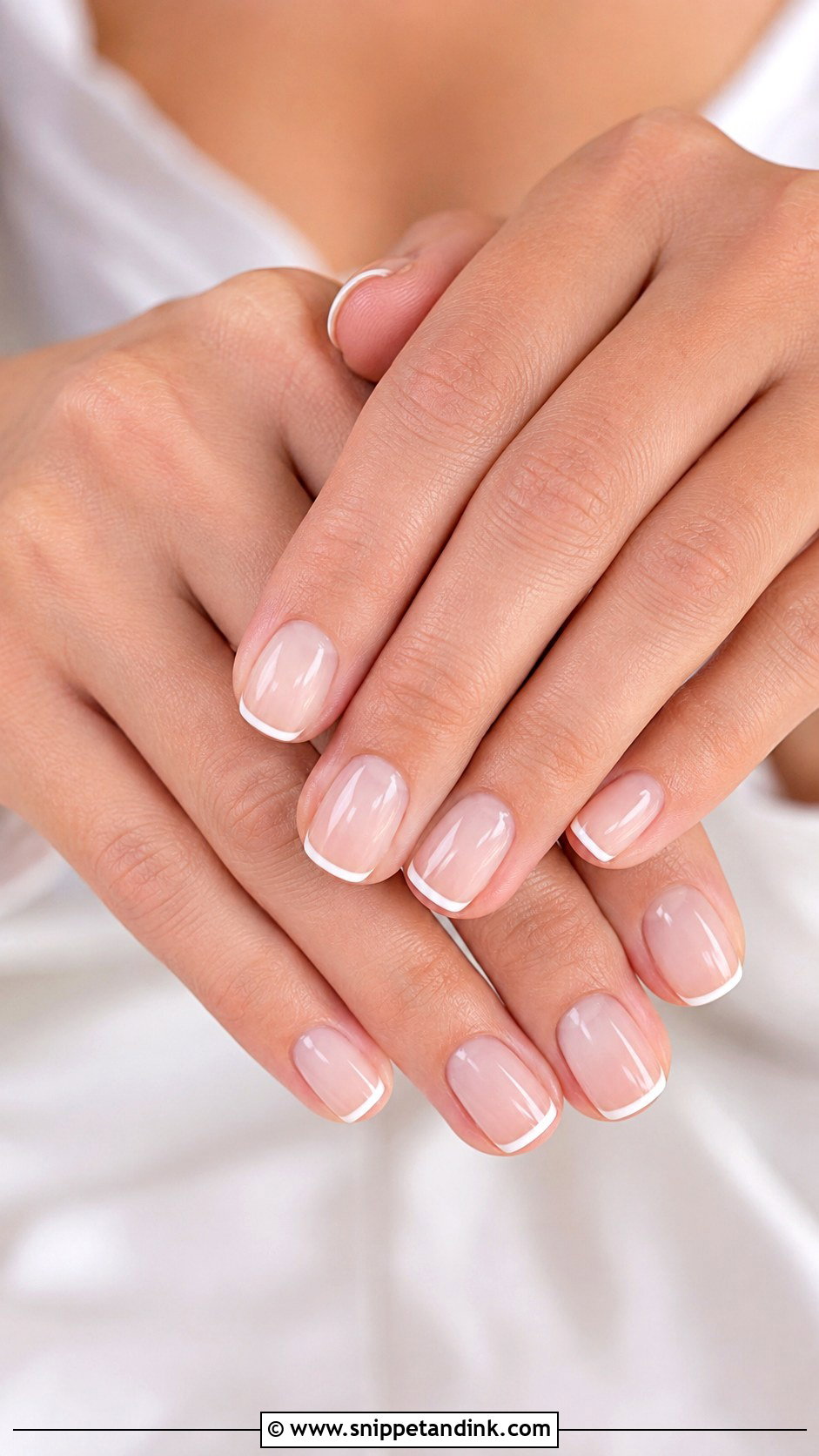
A micro tip is a single thin line along the free edge, usually over sheer pink, beige or milky base. Short nails benefit most, since the slim line defines the edge without eating into the nail bed. It also suits a bride wearing simple jewelry or a clean, minimal gown. Here’s the catch. Your free edge needs to be even across all ten nails, or the line will look wonky on the shorter ones. If one nail has broken, I’ll often file the others down to match it rather than fake the difference.
3. Milky French Wedding Nails
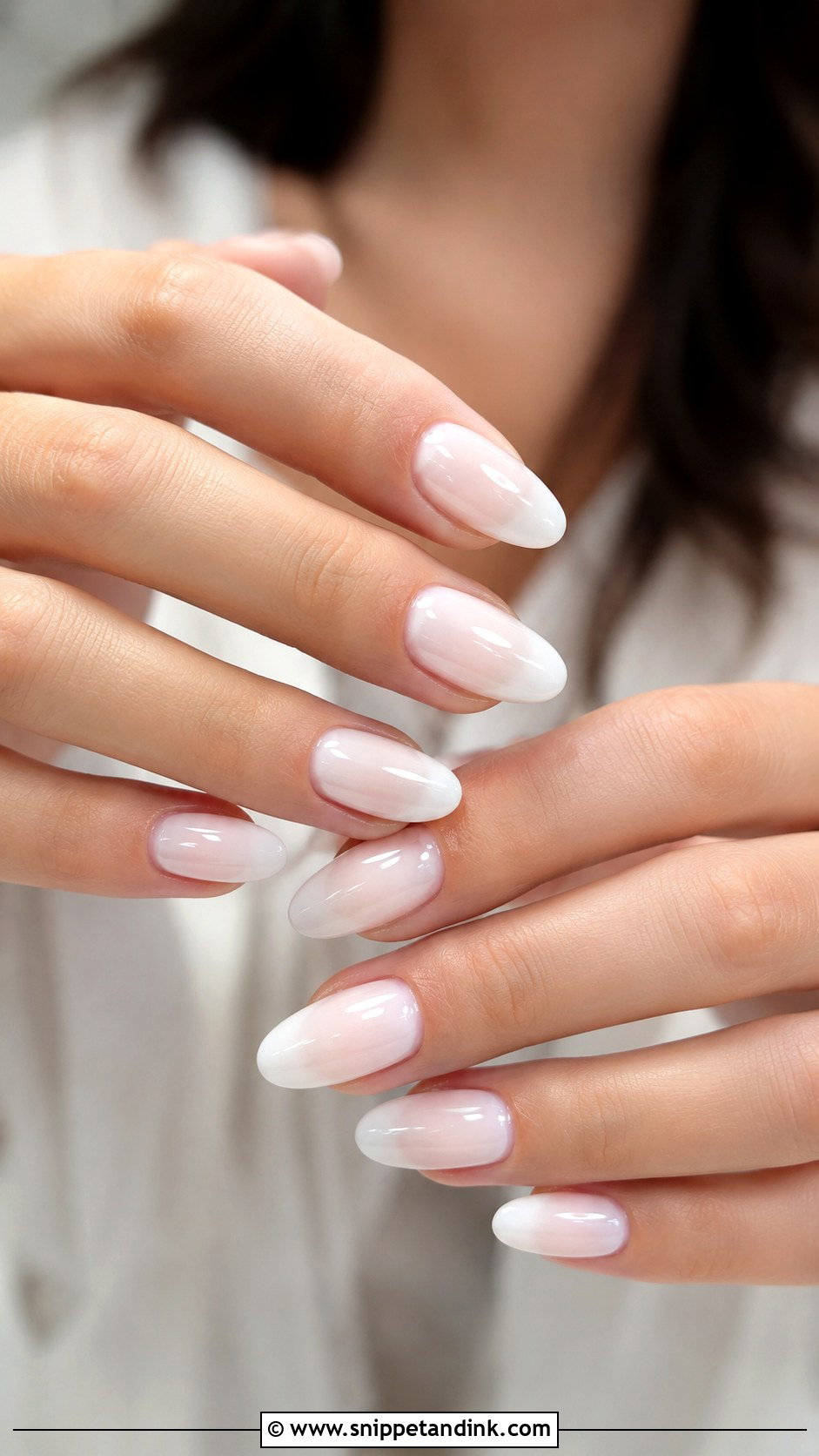
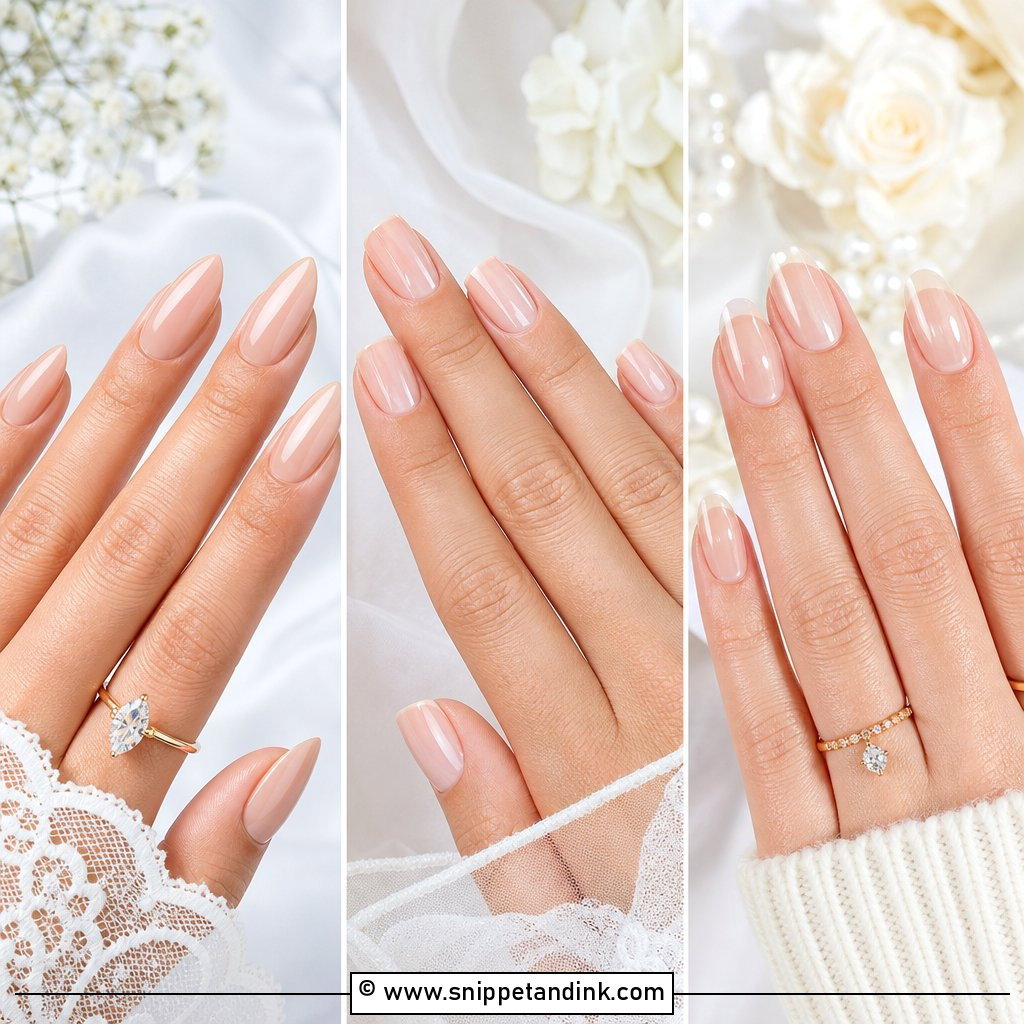
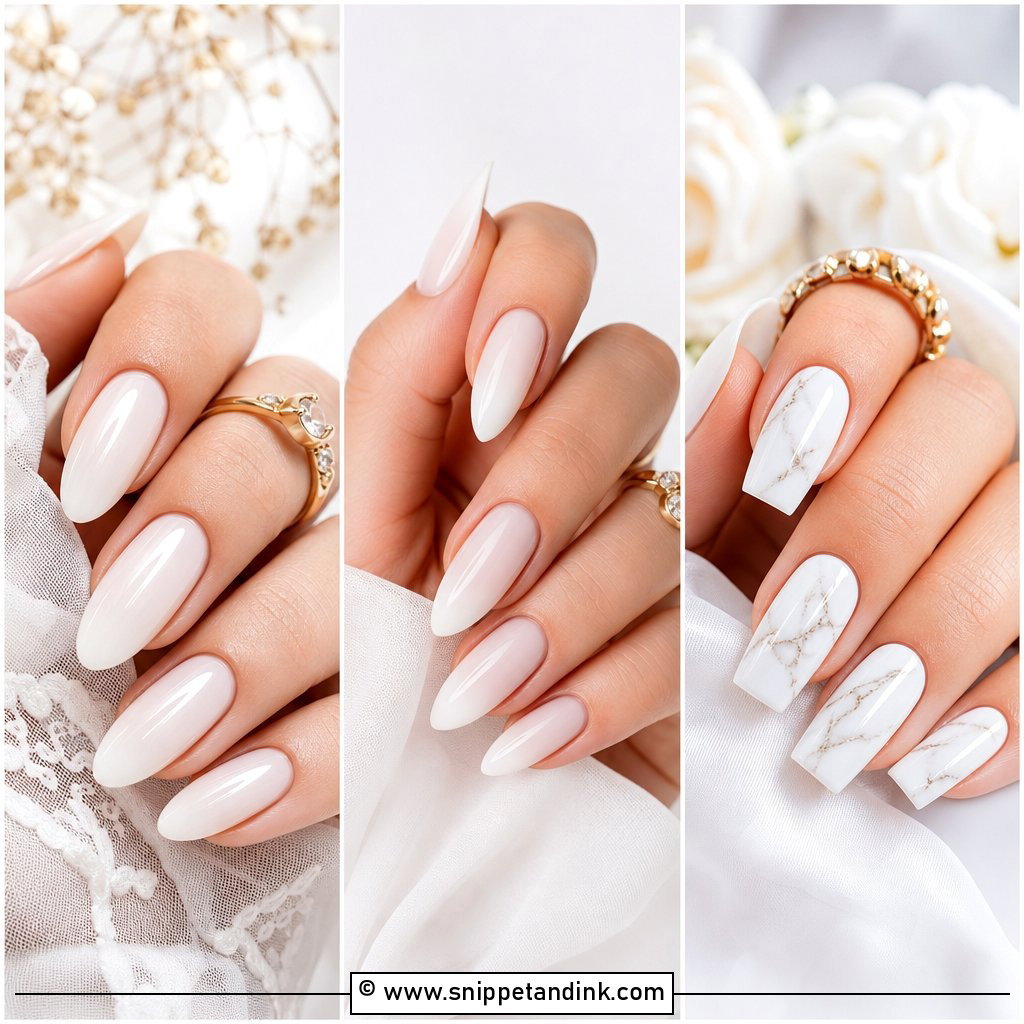
The base on a milky French is cloudy rather than clear, and the white tip is soft, so the line looks as if it glows through the polish. I suggest it most often to brides whose nail beds are uneven, ridged or a little stained, because the translucent white hides all of that. It’s also gentle on growth: a milky base disguises the gap at the cuticle better than clear pink. Almond and oval give a softer look; short squoval nails keep it practical for anyone who types all day.
4. Pearl Chrome French Wedding Nails
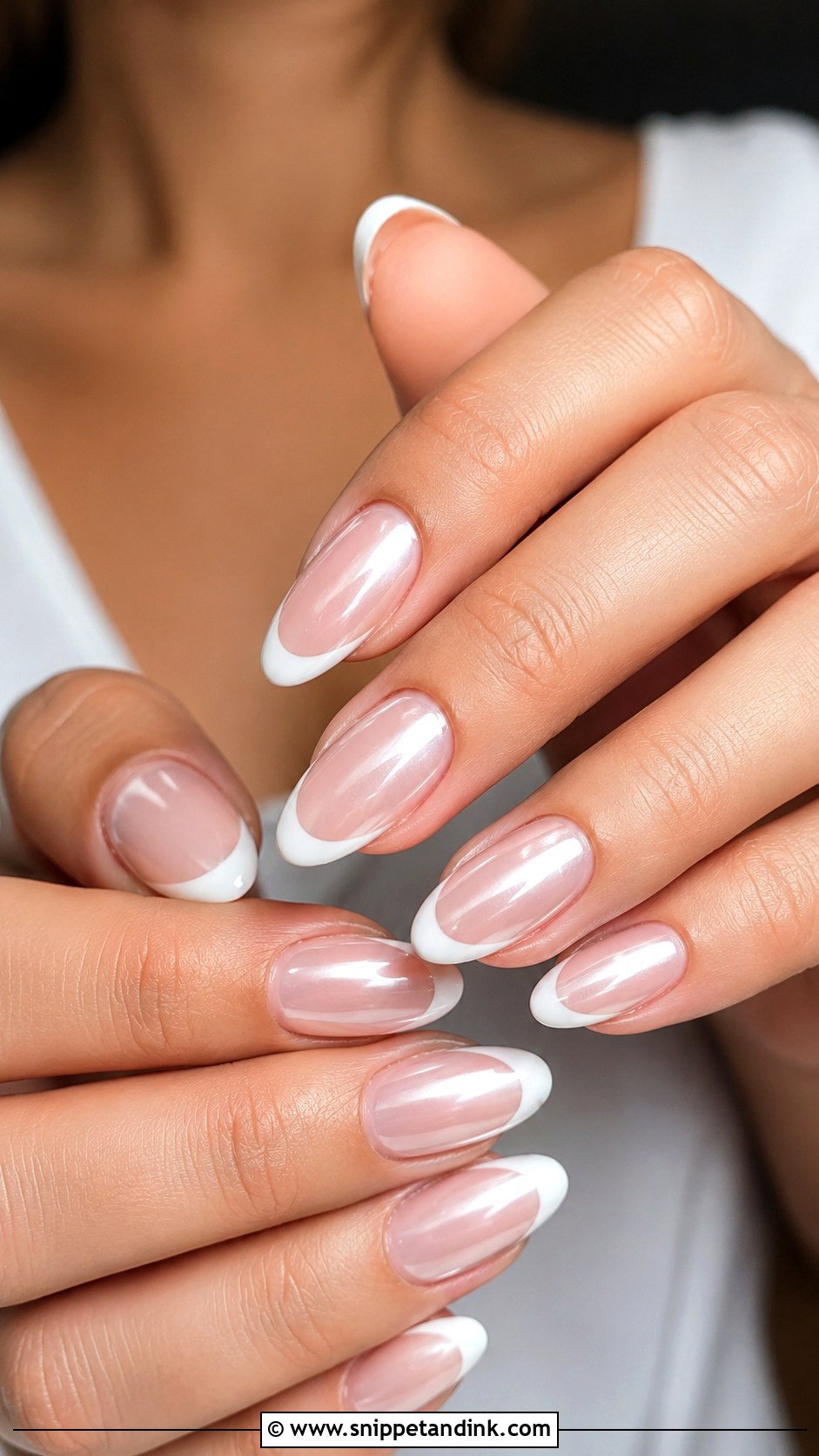
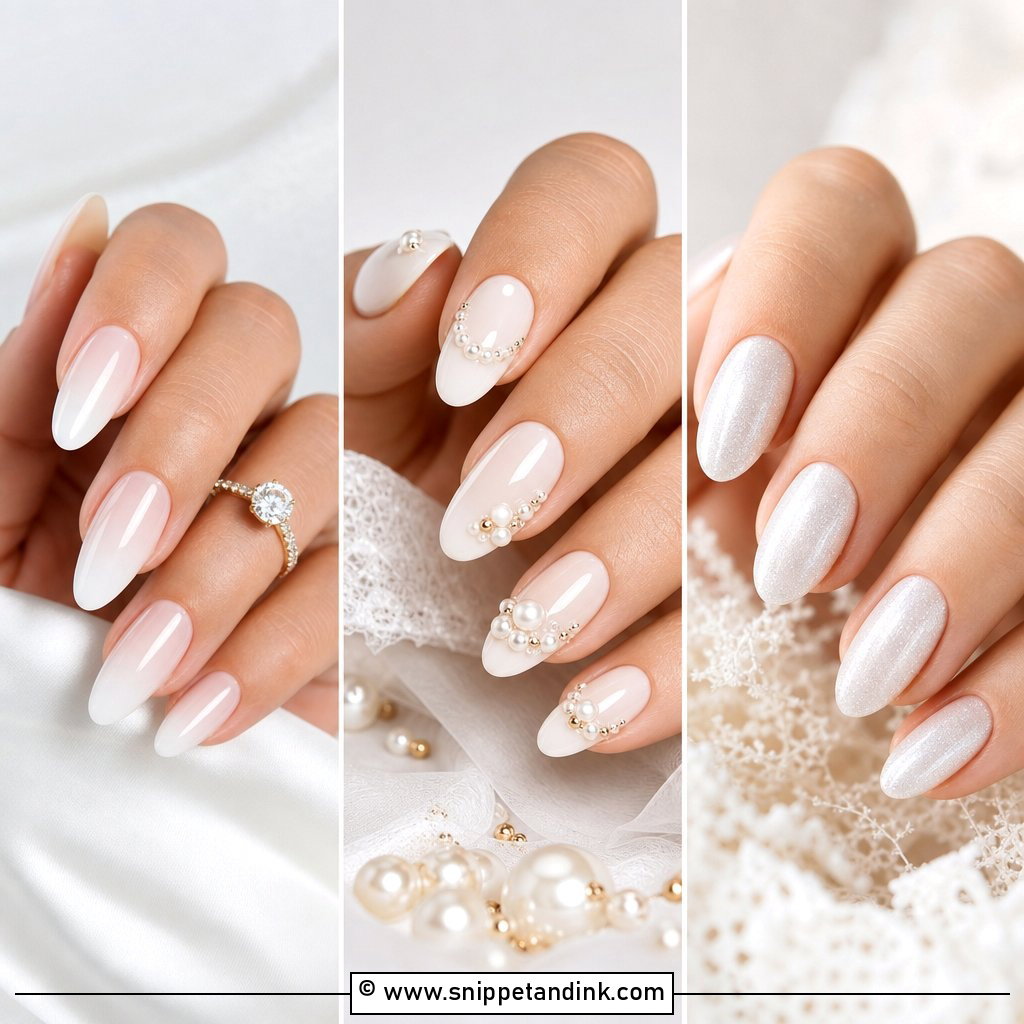
Pearl chrome French wedding nails start as a normal French set over sheer nude, blush or milky base, then a light pearl powder is rubbed over the whole nail. The result has a soft sheen rather than sparkle, which is why it sits so well in ring photos. Chrome magnifies texture, so I take extra care buffing and levelling the base first. Keep the tip slim and let the chrome be the only extra. Almond, oval and soft square all carry it.
5. Almond French Wedding Nails
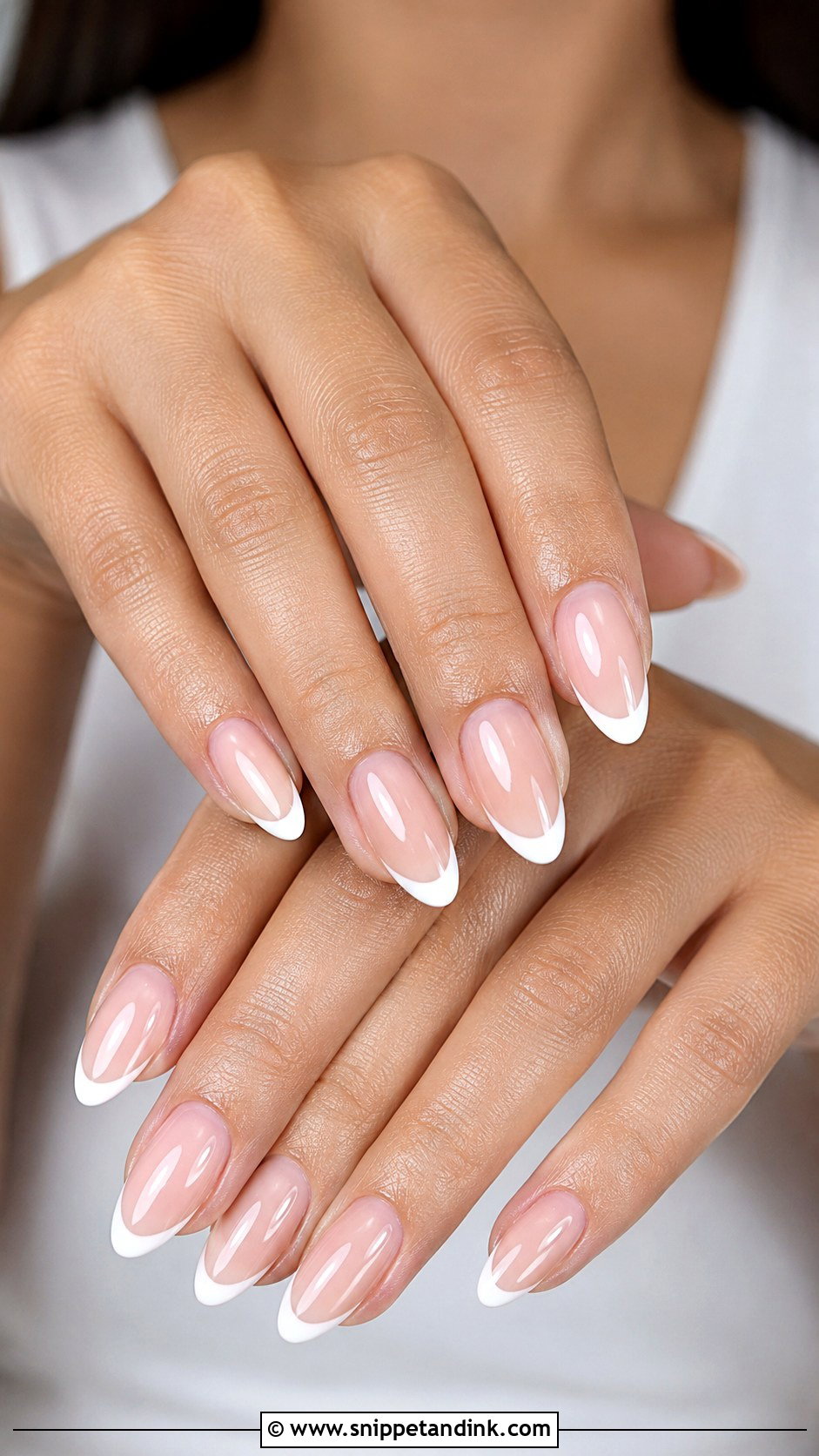
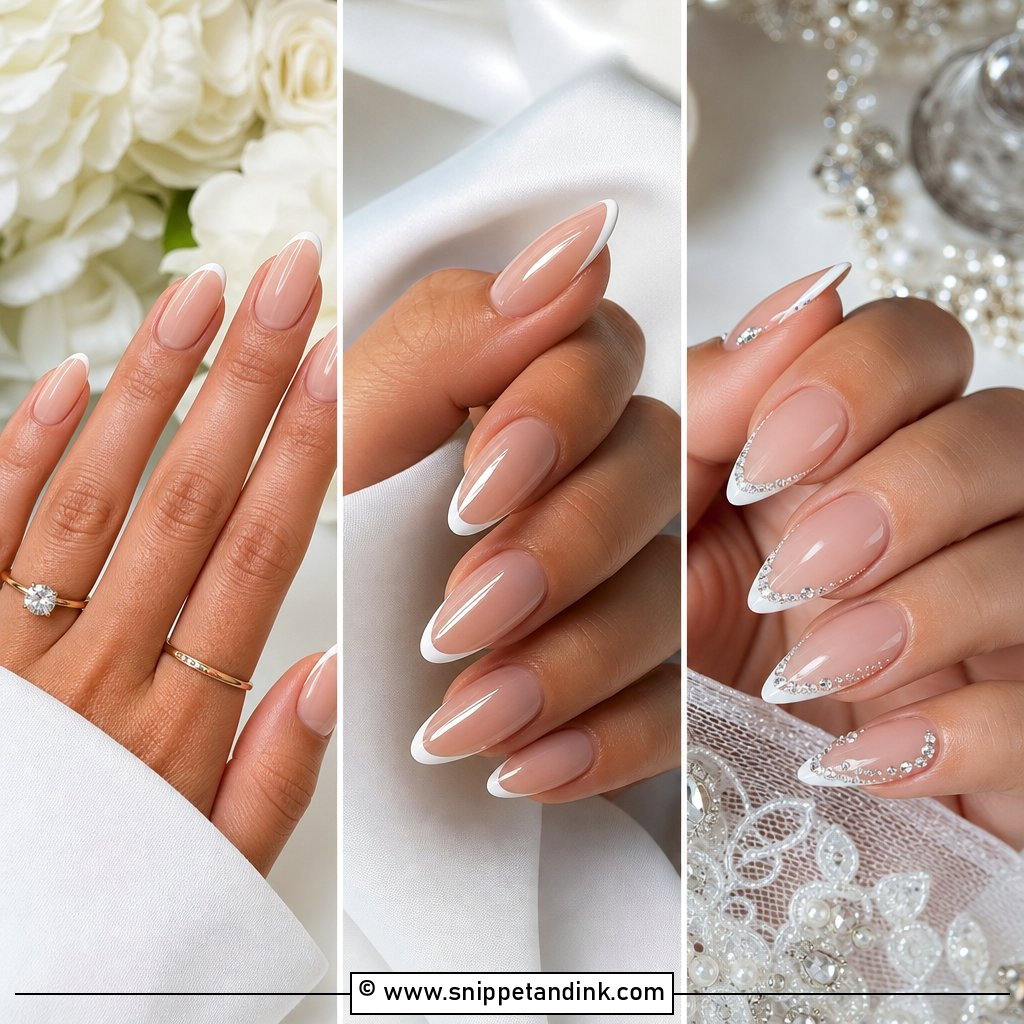
The taper on an almond nail lengthens the fingers, and the French tip follows the curve without any fuss. I steer most brides to a medium length here. Long almonds are elegant, but the narrowed tip is where the nail is weakest, and it is easy to crack one doing up hooks and eyes on a bodice. Sheer pink and white is the classic version; a milky base modernises it. A few tiny pearls, a fine chrome or one painted flower is the most I’d add.
6. Short French Wedding Nails
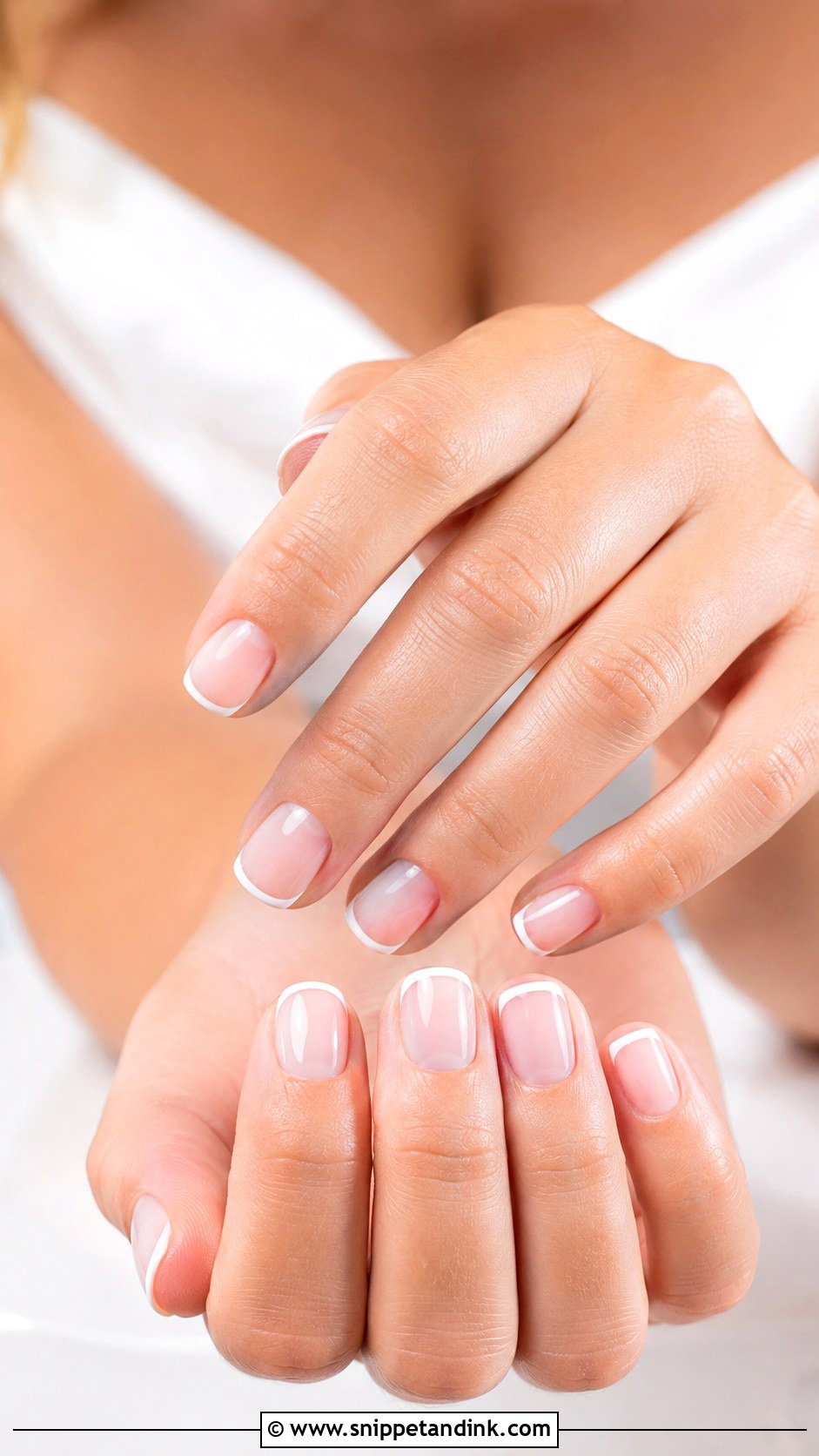
Keeping your nails short does not mean skipping the manicure. A narrow white tip on sheer nude or pale pink makes short nails look tidy and deliberate, as long as the tip stays thin enough not to swamp the nail plate. Squoval and rounded shapes are the most comfortable. Short natural nails also show cuticle condition more than any other length, so I put most of my effort into the prep: pushed-back cuticles, smooth sidewalls, a well-oiled nail fold. Finish with high gloss, or swap in a micro tip for a more current feel.
7. Square French Wedding Nails
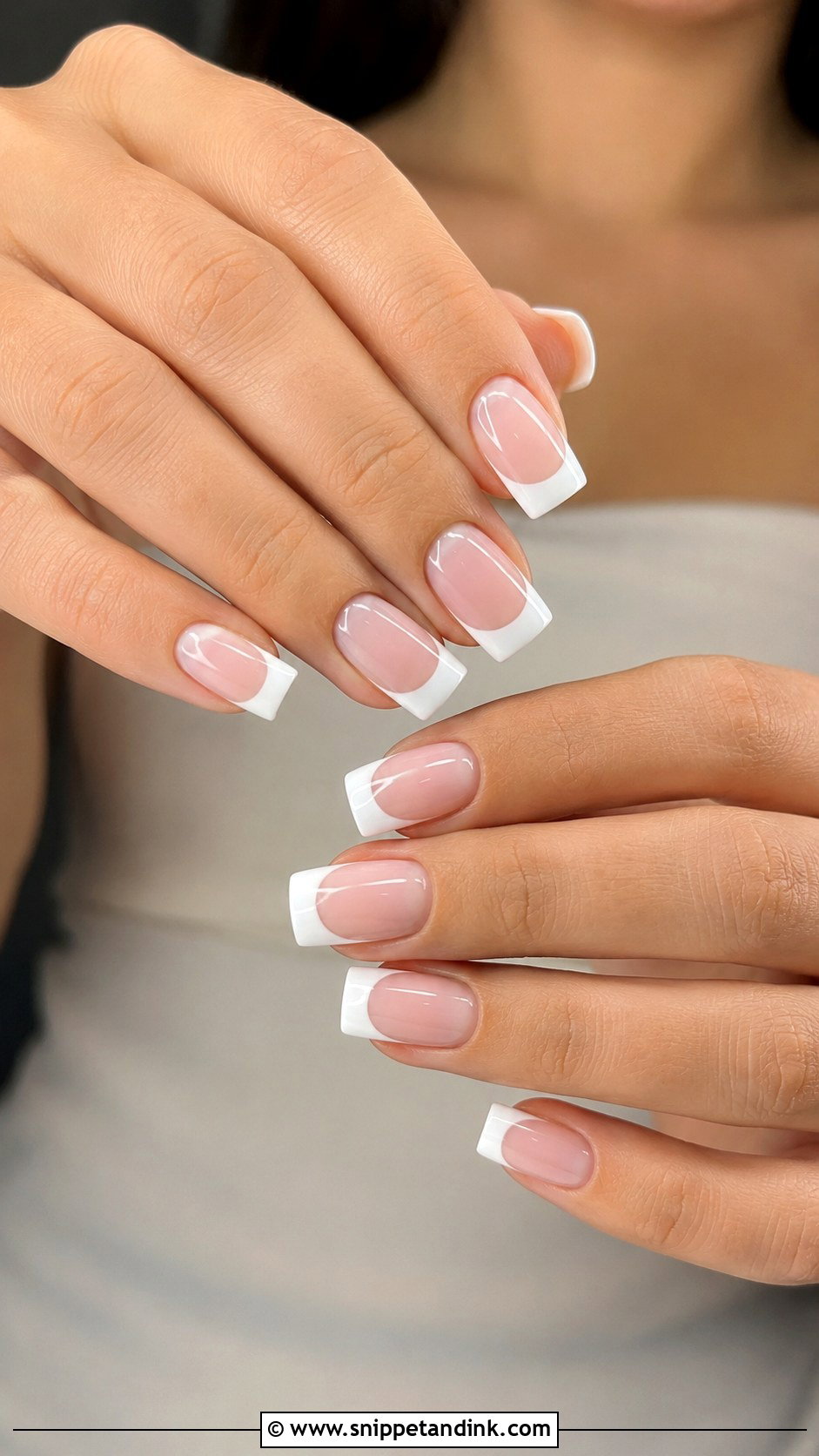
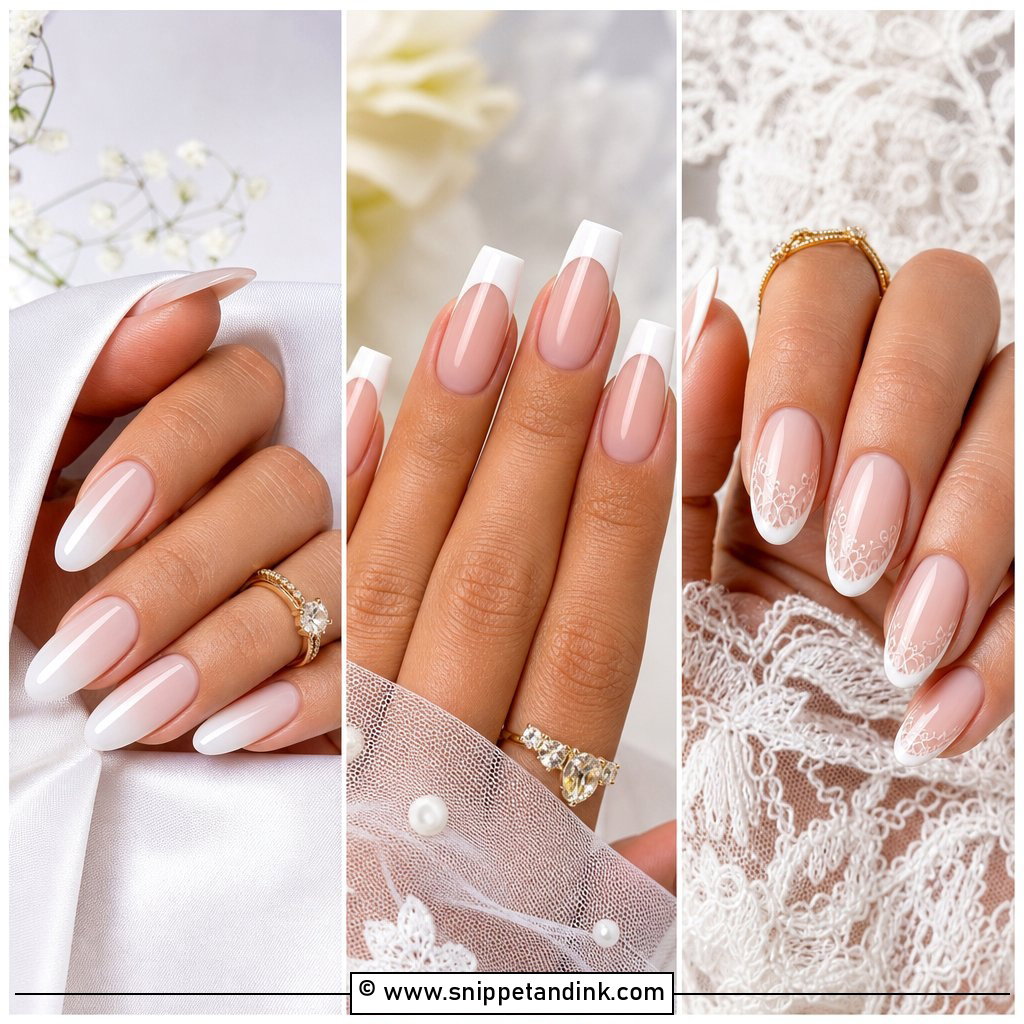
Square is the most graphic French shape. The flat free edge gives the white a ruler-straight line, and tip depth decides the mood: thin reads current, wide reads traditional. I like a sheer pink or beige base under it rather than an opaque nude, since the translucency keeps the set light. Square suits tailored gowns and clean bridal styling. One warning: sharp square corners chip and snag, so I always soften them by a hair even when a bride asks for crisp.
8. Oval French Wedding Nails
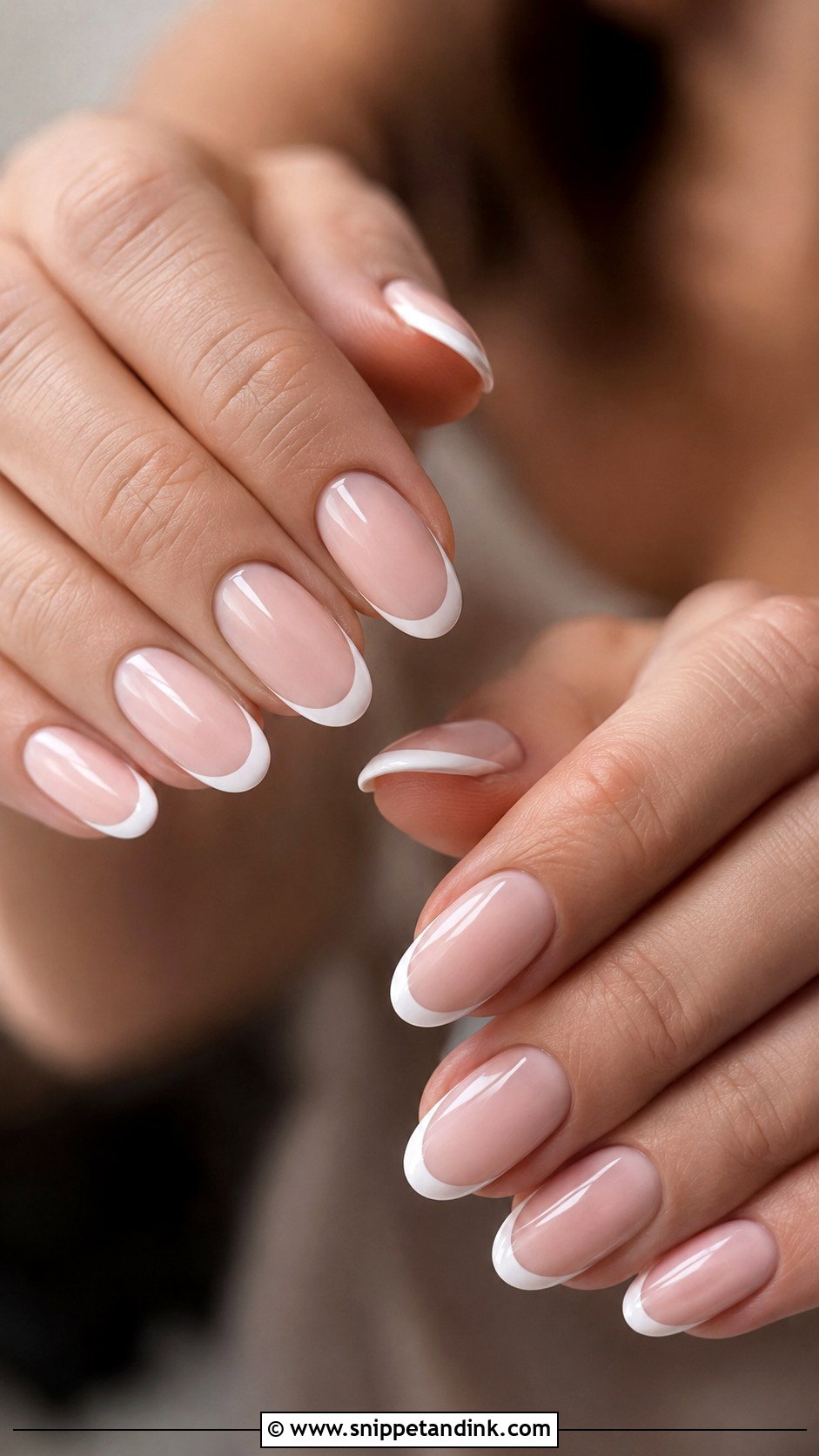
An oval nail rounds off without the point of an almond, so it looks graceful and is very hard to break. That makes it my safest recommendation for brides with thin or bendy natural nails. Sheer blush with soft white tips is the traditional choice; milky pink brings it up to date. Oval works from short natural length to medium extensions. If you’d like one personal detail, a tiny pearl on each ring finger or a faint shimmer top coat is plenty.
9. Coffin French Wedding Nails
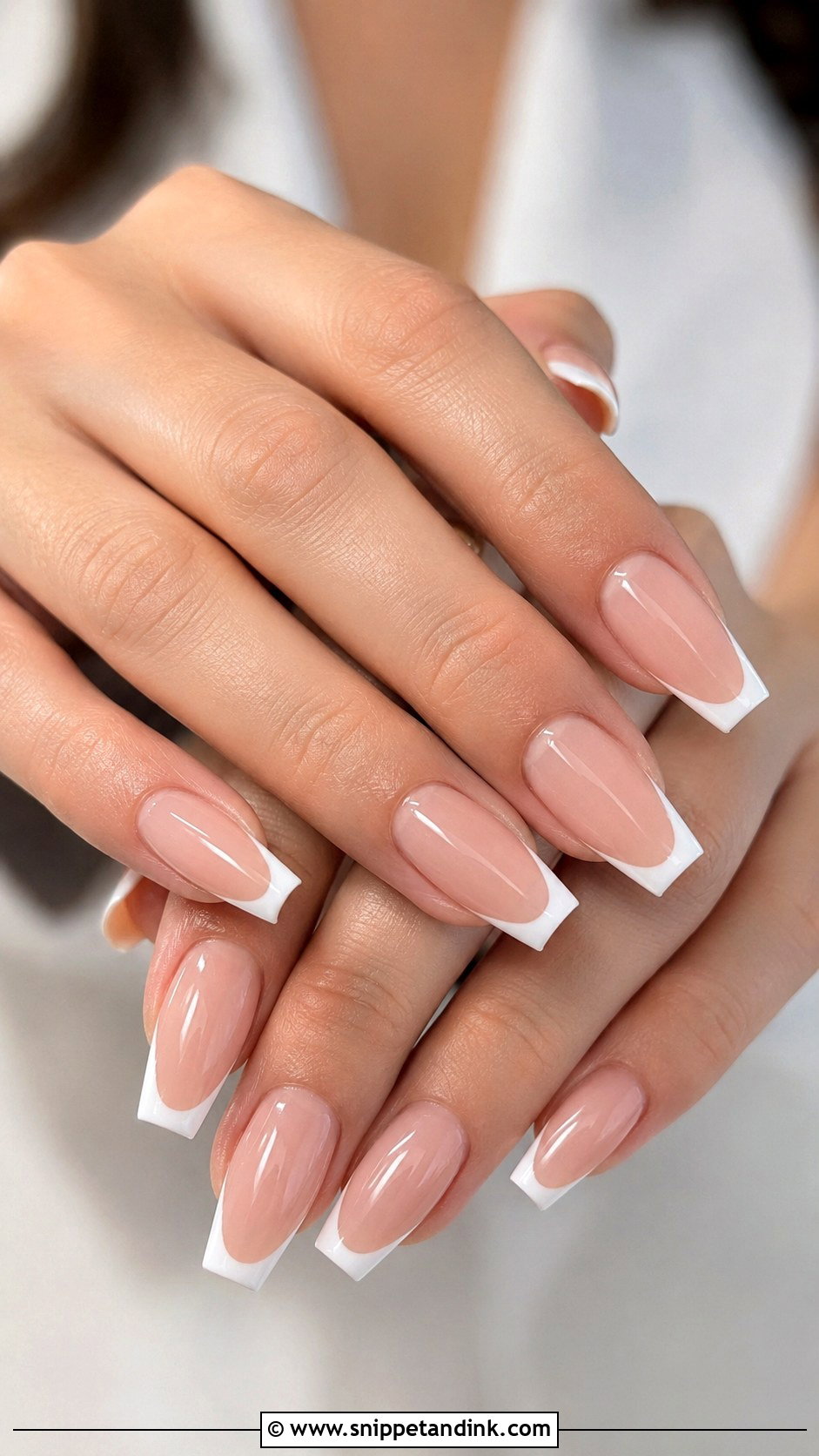
Coffin brings the glamour: tapered sides, a flat tip, and a French edge that looks framed. For a wedding I usually build it to medium length with a sheer nude base and slim white tips, which keeps the set refined. A deep French curve or pearl chrome makes it more dramatic. It looks right with fitted gowns, sleek hair and statement earrings. If your dress is heavily beaded, though, I’d keep the nails plain and glossy, because detail on both starts to compete. Coffin needs an extension on most people, so build in time to get used to the length.
10. French Ombre Wedding Nails
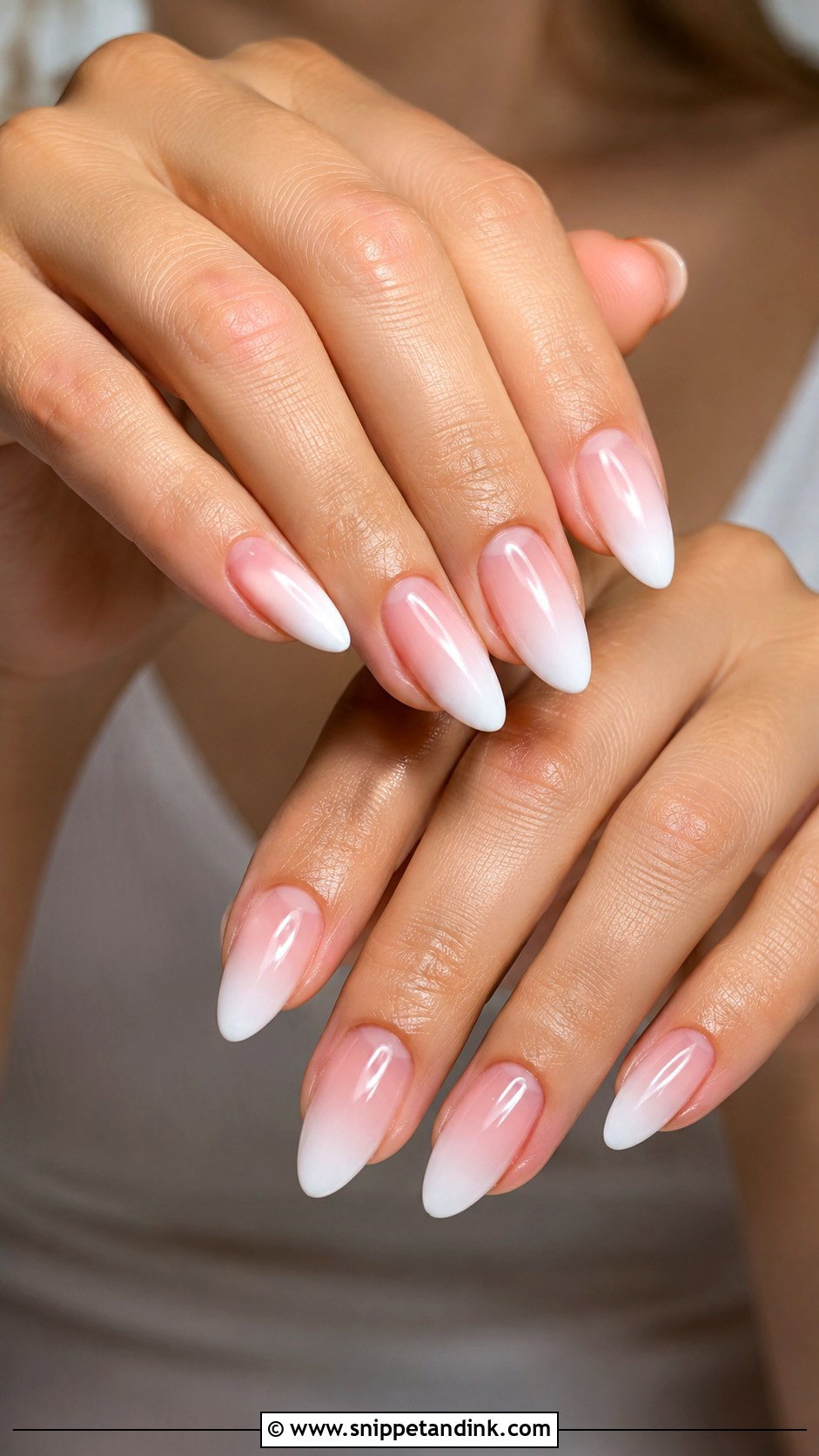
French ombre wedding nails, often called baby boomer, fade from pink or nude at the cuticle to white at the tip. Without a sharp line, regrowth is barely visible, which makes it the most forgiving French option if your appointment has to be earlier in the week. The fade needs length to travel, so almond, oval and coffin show it best. I blend it in thin layers with a sponge or airbrush; a single thick pass leaves a muddy band in the middle. A sheer shimmer or pearl top coat is a nice finishing touch.
11. Blush French Wedding Nails
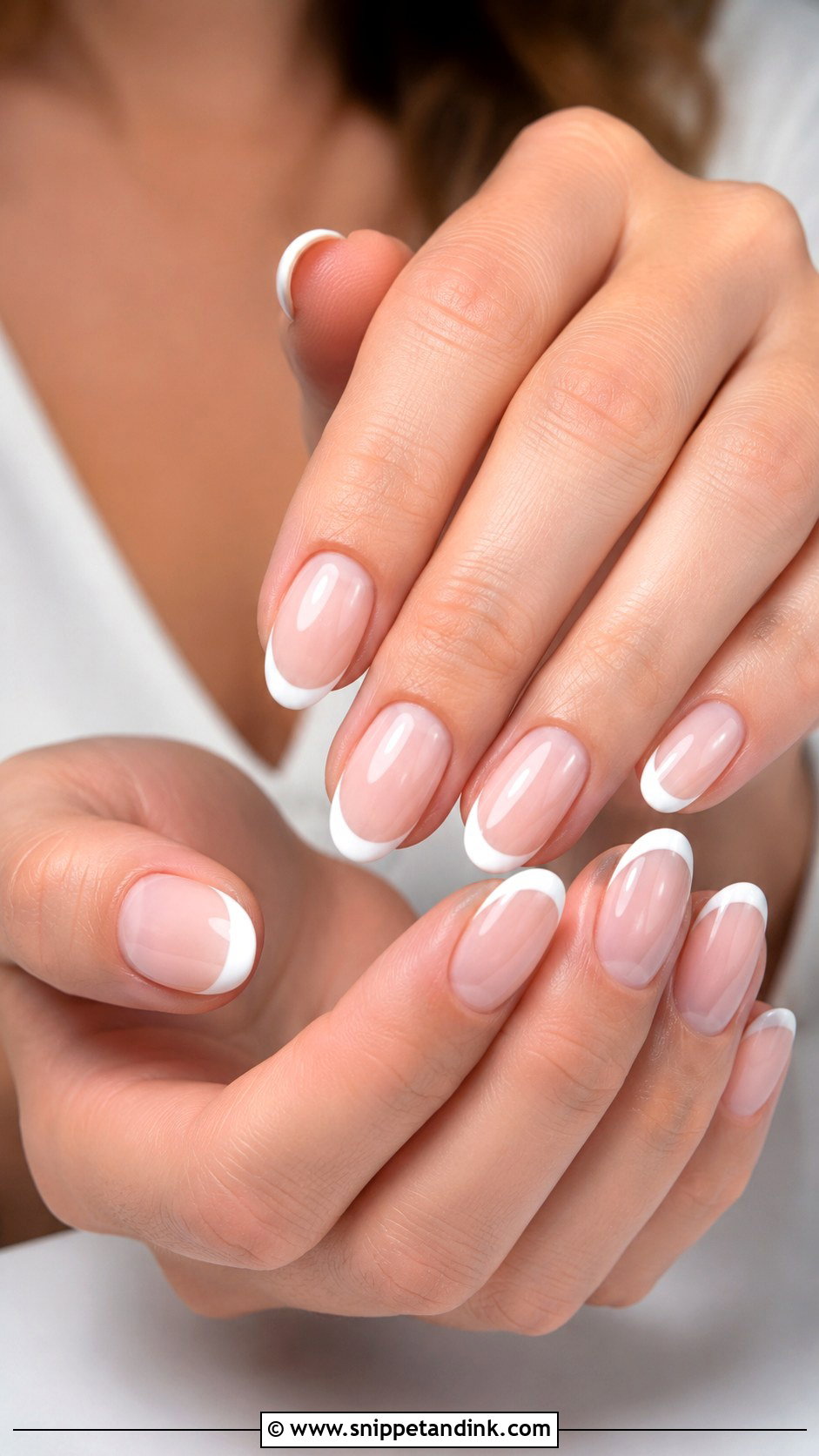
Blush French uses a warmer, rosier base than the usual pale pink, and the tips can be white, cream or a pale pinky white for a tonal look. It makes hands look healthy and slightly flushed, which is flattering if you’re pale or if your hands go red when you’re nervous, as many brides’ do. It suits rosy makeup and soft florals. Gloss is essential here; blush under a satin finish can look dull. Almond and oval are its natural shapes.
12. Nude French Wedding Nails
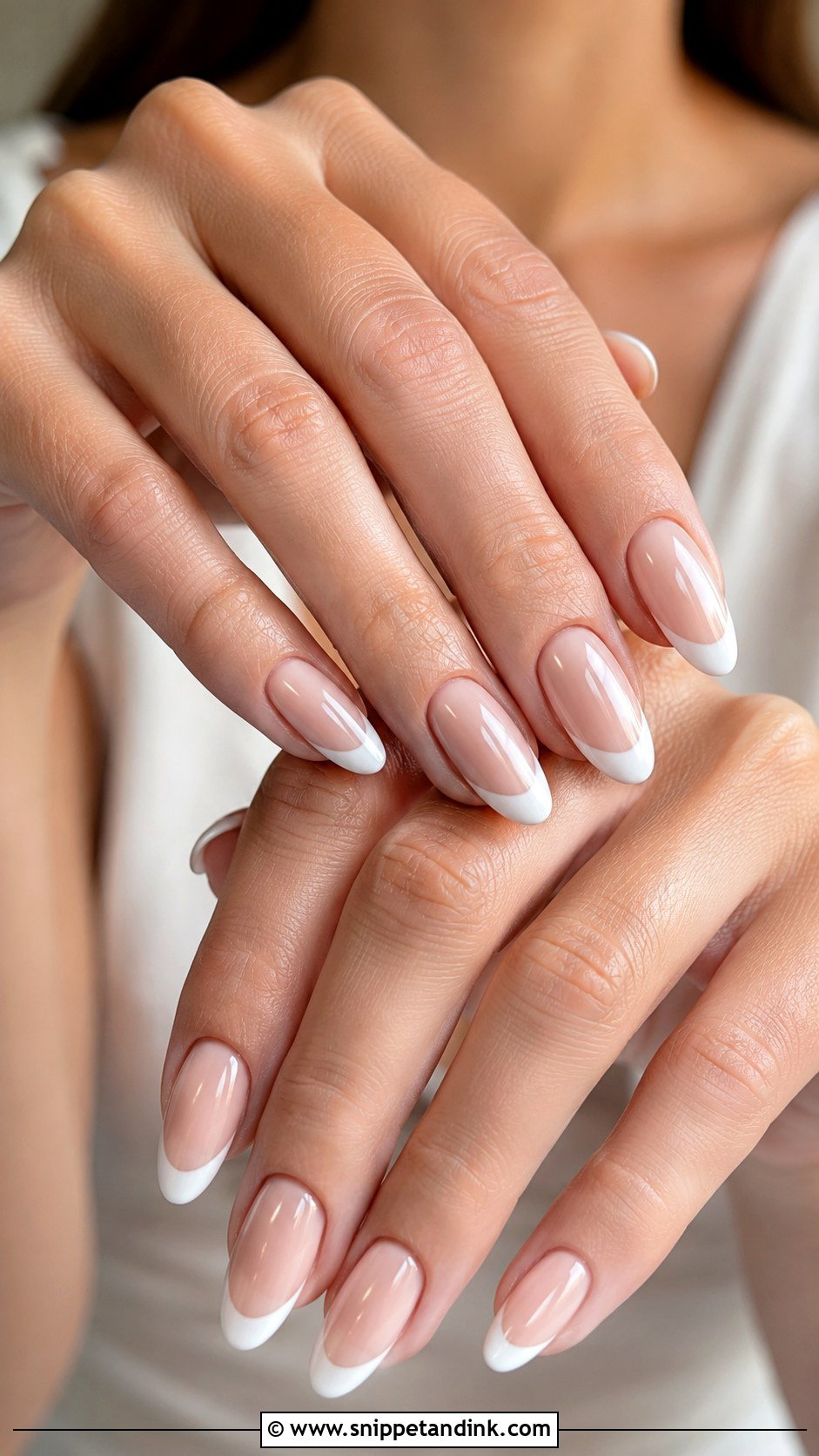
A nude French is only as good as the shade match. The base can be beige, tan, peachy nude, pink nude or a soft neutral brown, and the right one depends on your undertone, not on the bottle that looked nice in the salon. I swatch a few on the nail and check them in daylight. Creamy white tips blend better than stark white on most nudes. I recommend this set when the dress, veil or jewelry already carries plenty of detail, so the hands stay quiet. Gloss keeps it traditional; a pearl glaze makes it more current.
13. White French Wedding Nails
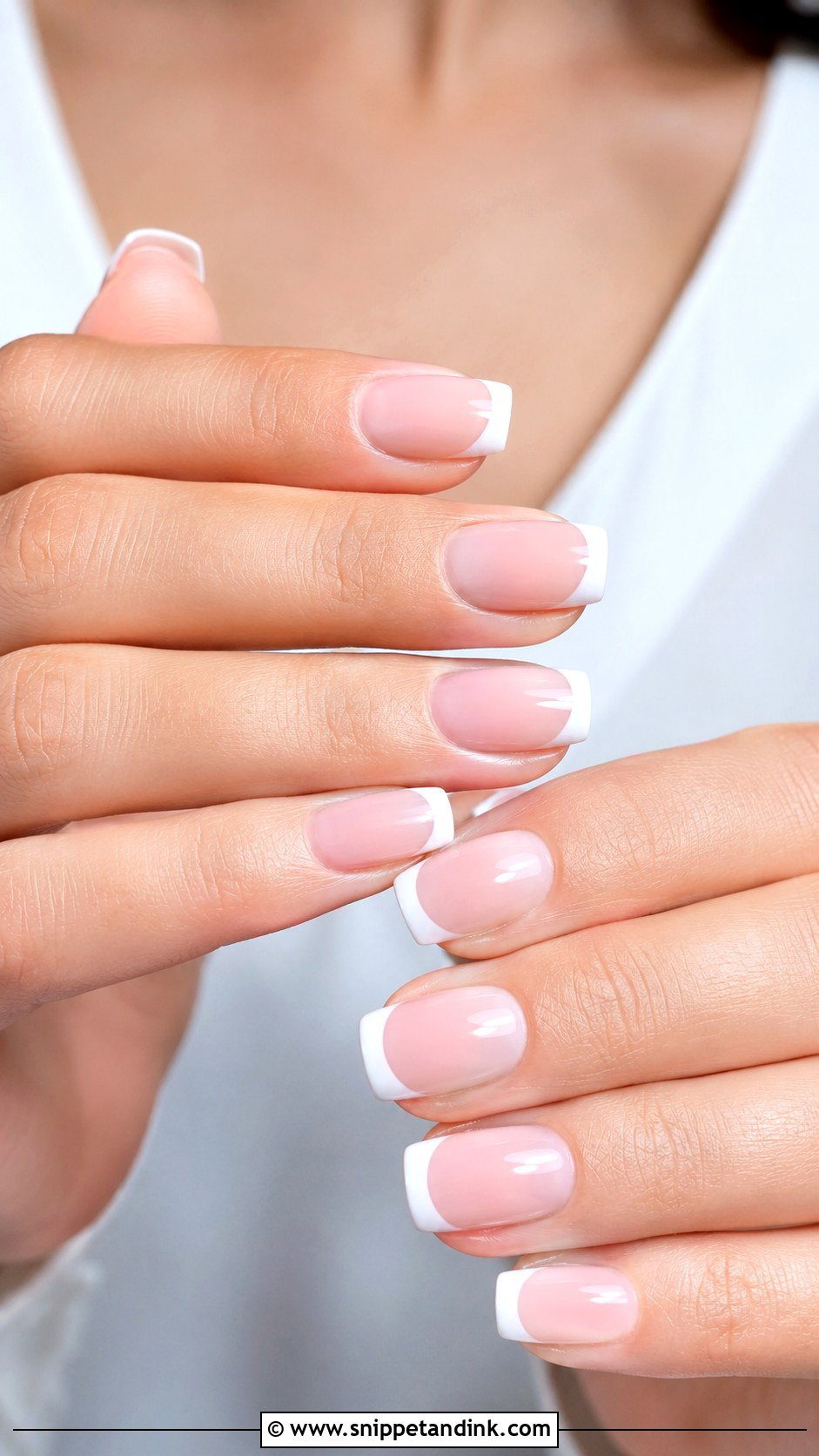
White tips on sheer pink or nude give the brightest, cleanest French. Shape and finish decide whether it looks fresh or dated: a slim tip looks modern, a deeper smile line looks classic. Keep the base translucent. When the base goes too opaque, the contrast drops and the nails look heavy. White tips sit happily next to white gowns, ivory dresses and pearls, but I sometimes warm the white slightly for an ivory gown so the tips don’t look bluer than the fabric.
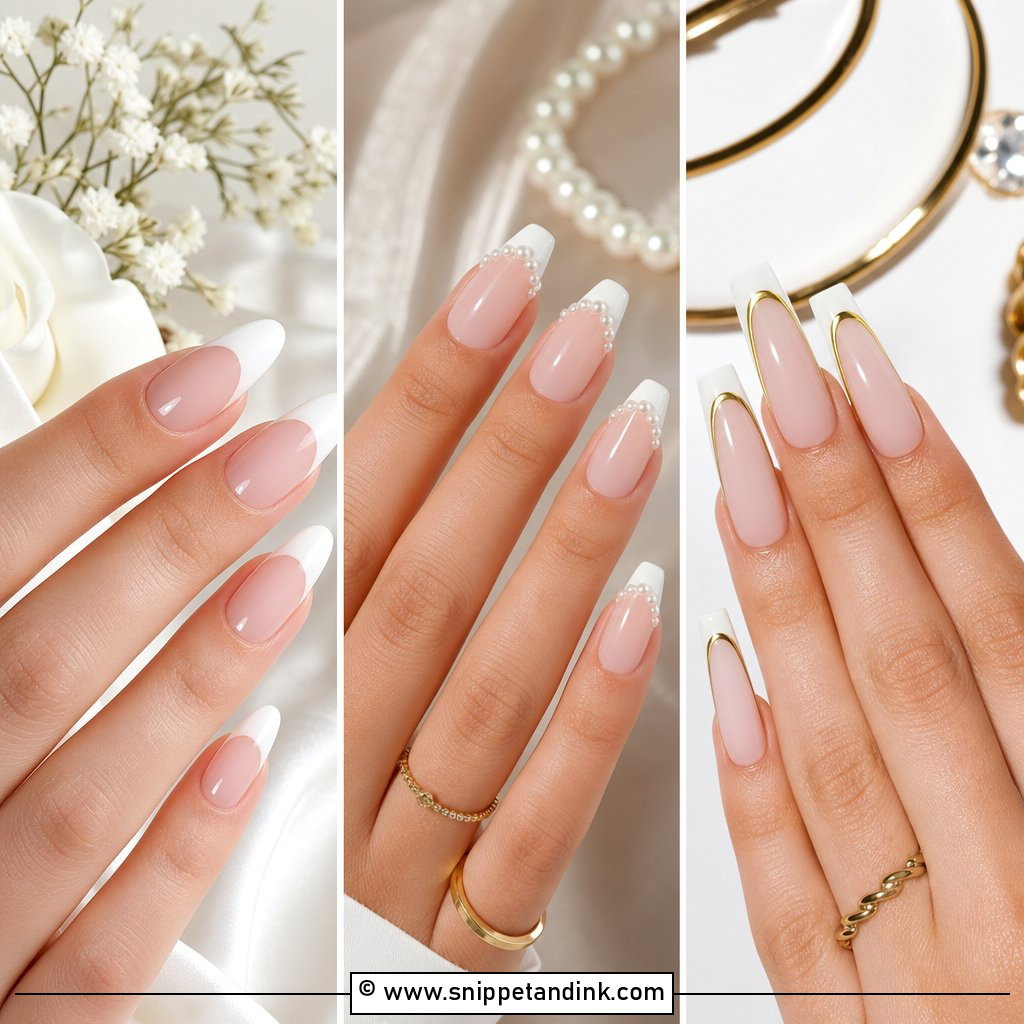
14. Pearl French Wedding Nails
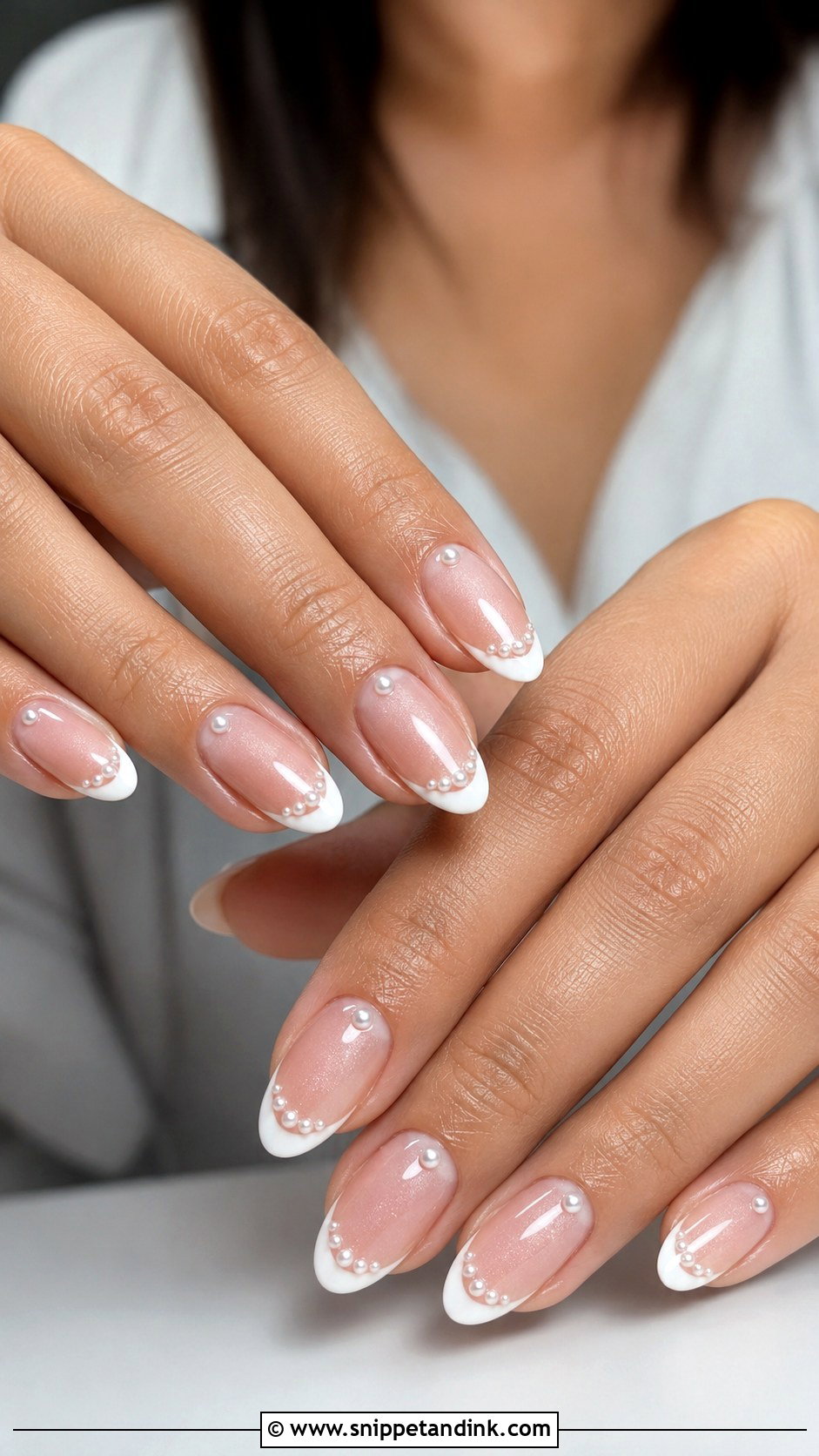
Tiny pearls along the smile line, near the cuticle or only on the ring fingers turn a French base into something more bridal without adding sparkle. They have to be small and evenly spaced. Large half-pearls look clumsy and catch on everything from veil tulle to the inside of a handbag. I set them into gel and seal around the base rather than gluing them on top. Almond and oval are the most romantic shapes here, and it pairs naturally with pearl earrings, beaded veils and satin.
15. Lace French Wedding Nails
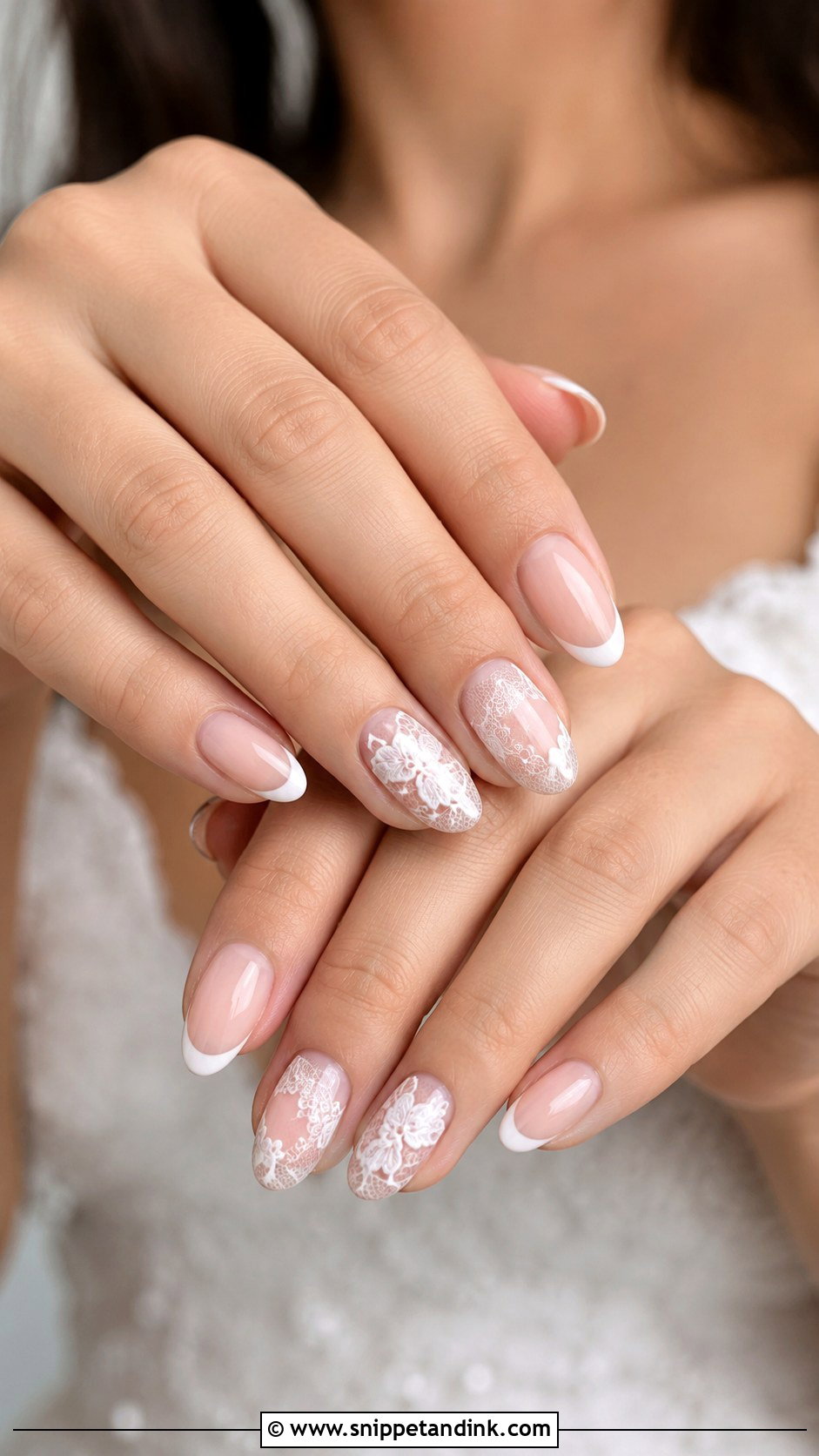
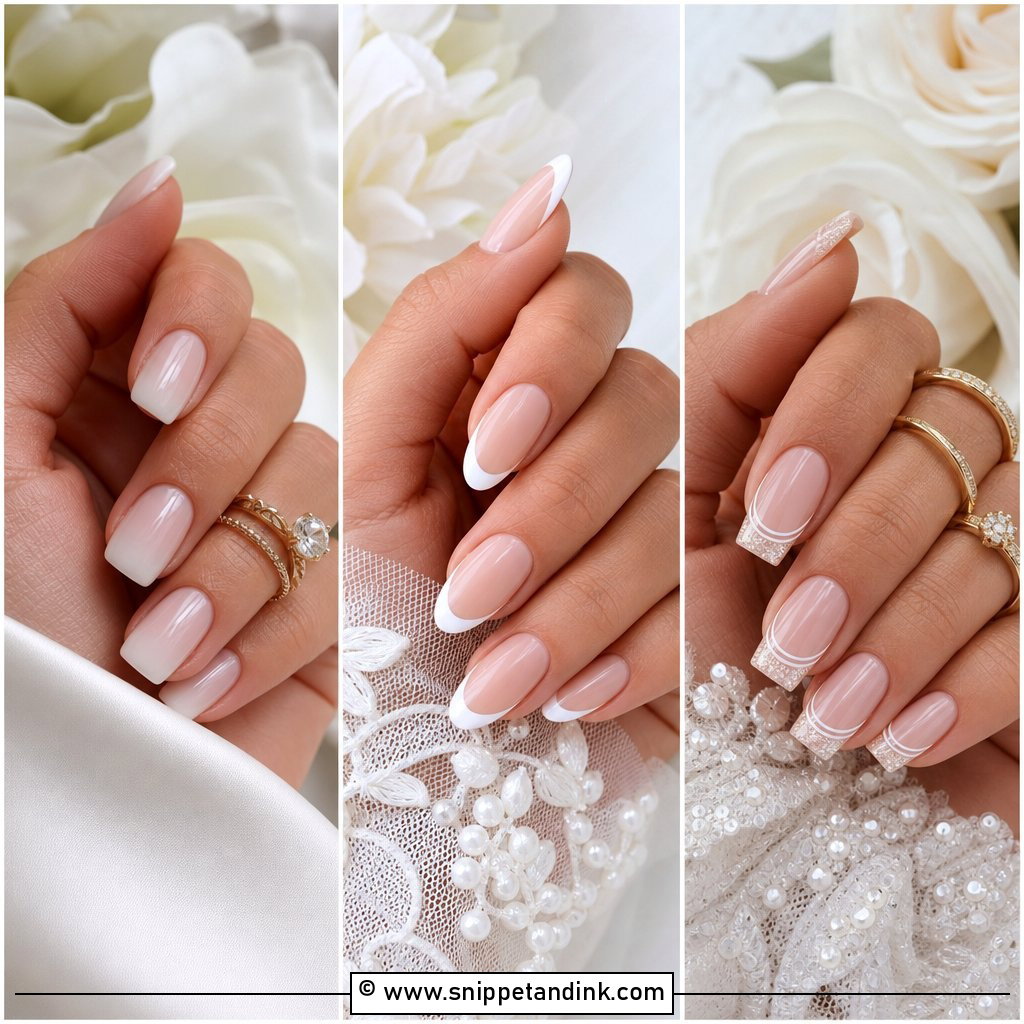
Lace art lets your nails pick up the texture of your dress: over the tip, down one side or across an accent nail, on a sheer nude or milky base with white French tips. The lines must be fine and the spaces open, or the lace turns into a white smudge from a few feet away. Bring a close-up of your dress lace to the appointment so I can copy its motif. A glossy top coat smooths the art. Almond or oval suits it better than very long lengths, where the pattern starts to look stretched.
16. Floral French Wedding Nails
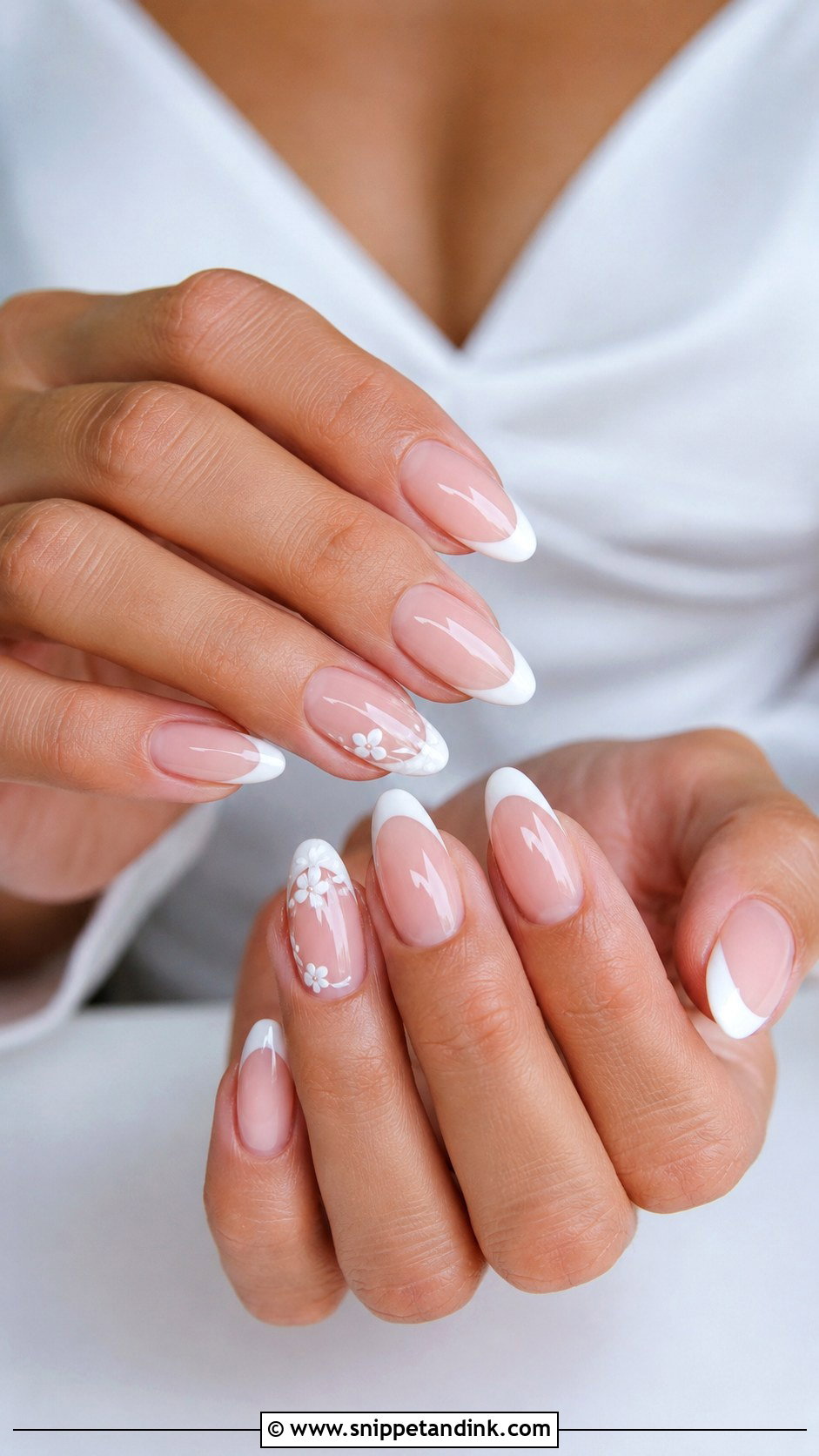
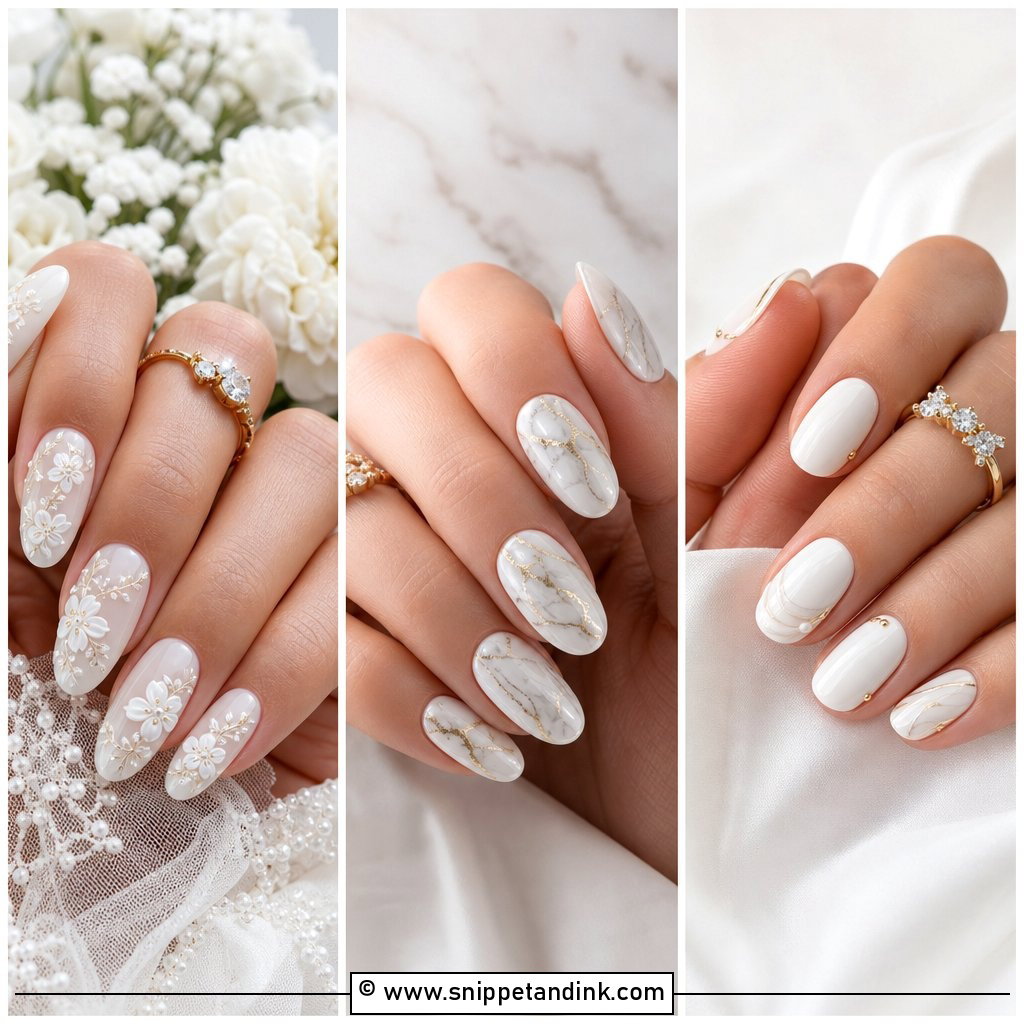
Small painted flowers sit near the tip, across the ring finger or scattered over a few nails, while the base stays sheer and the tips stay white or cream. White flowers are the classic version; pale pink or ivory petals look warmer. I keep them small, with a little air between them, because large crowded blooms flatten into blobs in photos. If your bouquet has a dominant flower, a simple five-petal version of it on one accent nail is a quiet nod to it. Garden weddings and floral appliqué gowns suit this set.
17. Glitter French Wedding Nails
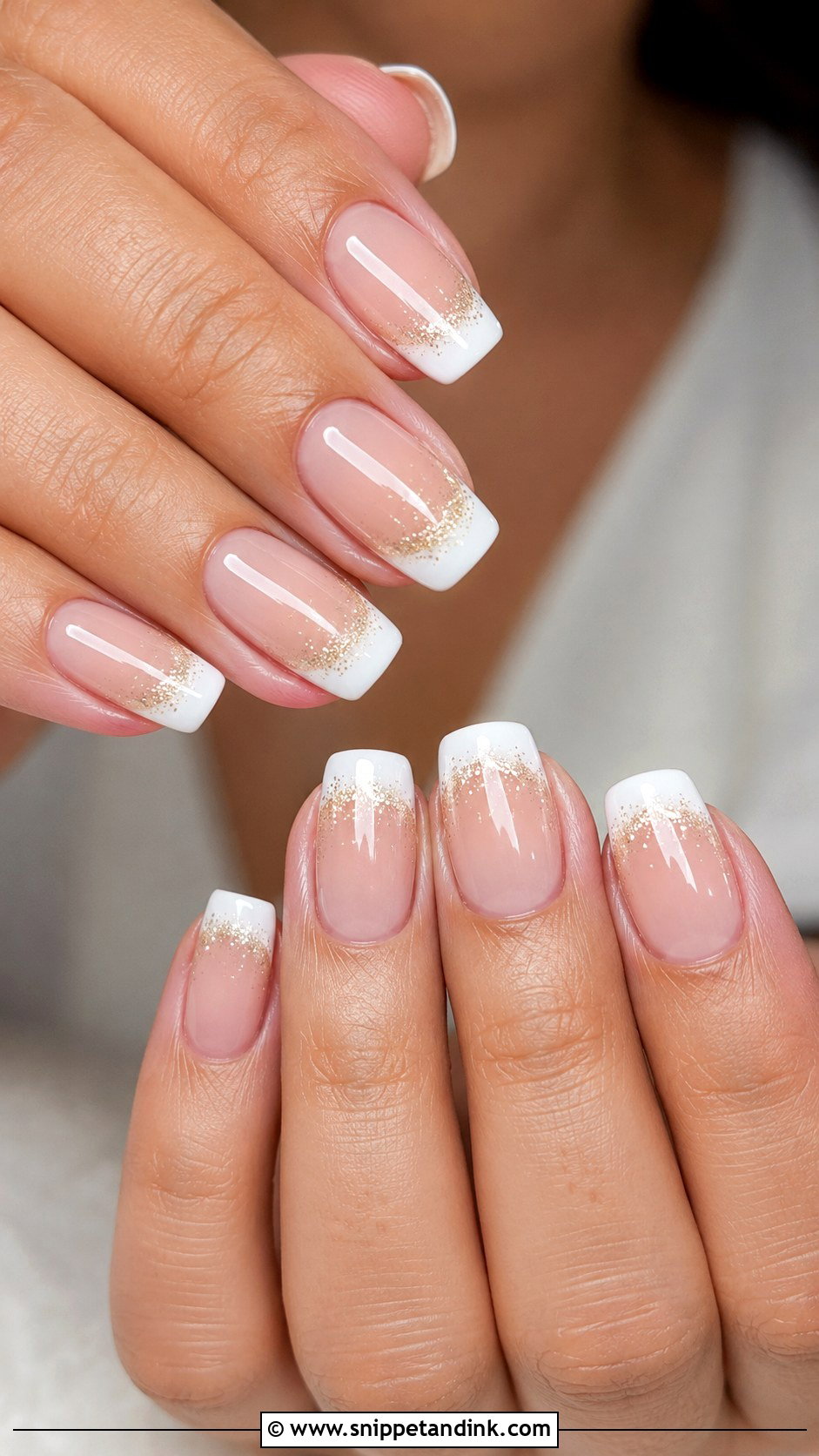
Glitter sits along the tip, over the white edge or blended into the smile line, rather than covering the whole nail. Stick to fine silver, pearl or champagne glitter. Coarse glitter looks clumpy at close range and is hard to cap smoothly, so the tips feel rough and snag hair. The sheer base keeps the sparkle in check. Short square nails look sharp with a thin glitter tip; almond nails suit a soft glitter fade. Removal is slow with glitter gel, so plan a proper soak-off after the honeymoon rather than picking at it.
18. Gold French Wedding Nails
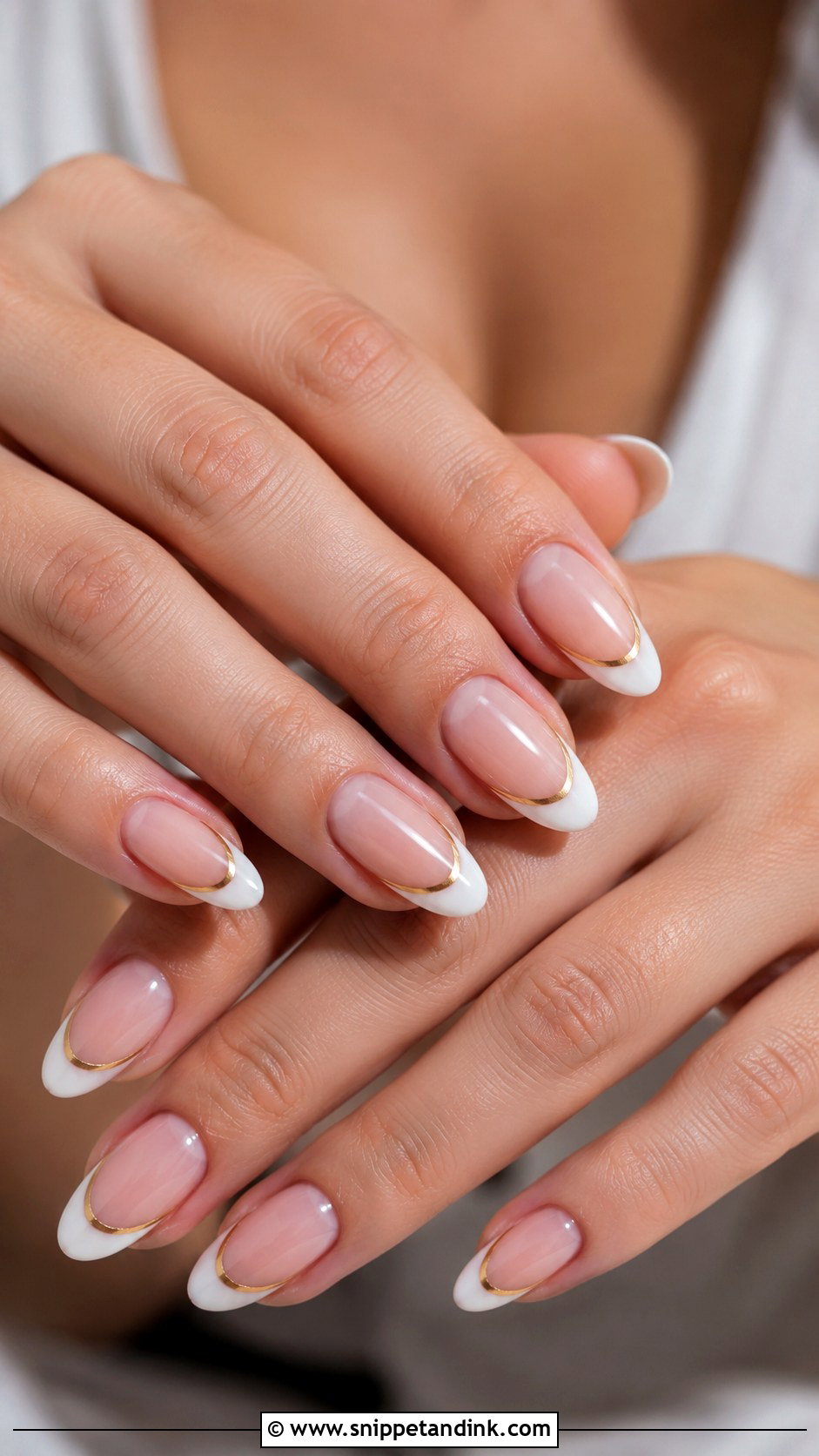
Gold French can mean a thin metallic line under the white tip, a gold micro tip or one gold accent nail. The base should stay sheer, nude or milky so the gold looks delicate. Almond, oval and coffin let the metallic line follow the curve neatly. I nearly always reach for pale champagne gold over bright yellow gold for weddings, since bright gold can look brassy under warm reception lighting. It sits best with gold jewelry and warm-toned accessories.
19. Double French Wedding Nails
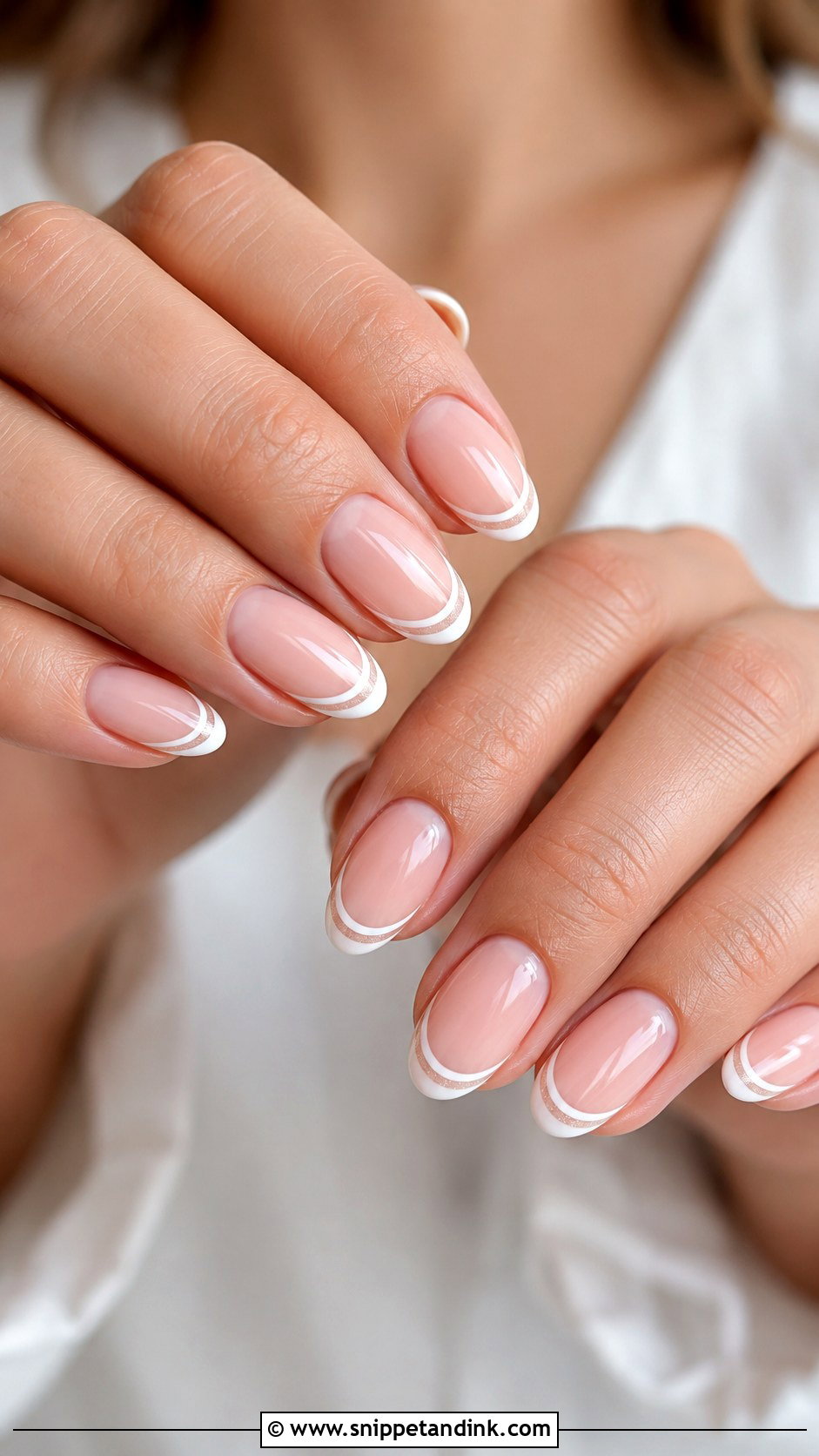
Double French adds a second fine line just below the first: white plus pearl, nude, silver, blush or soft gold. It is still minimal, but it looks more designed than a basic French set without any stones or charms to catch on fabric. Both lines have to be thin and parallel, which takes a steady hand and a long striper brush. A sheer pink or milky base keeps the lines readable. Almond, oval and square all work.
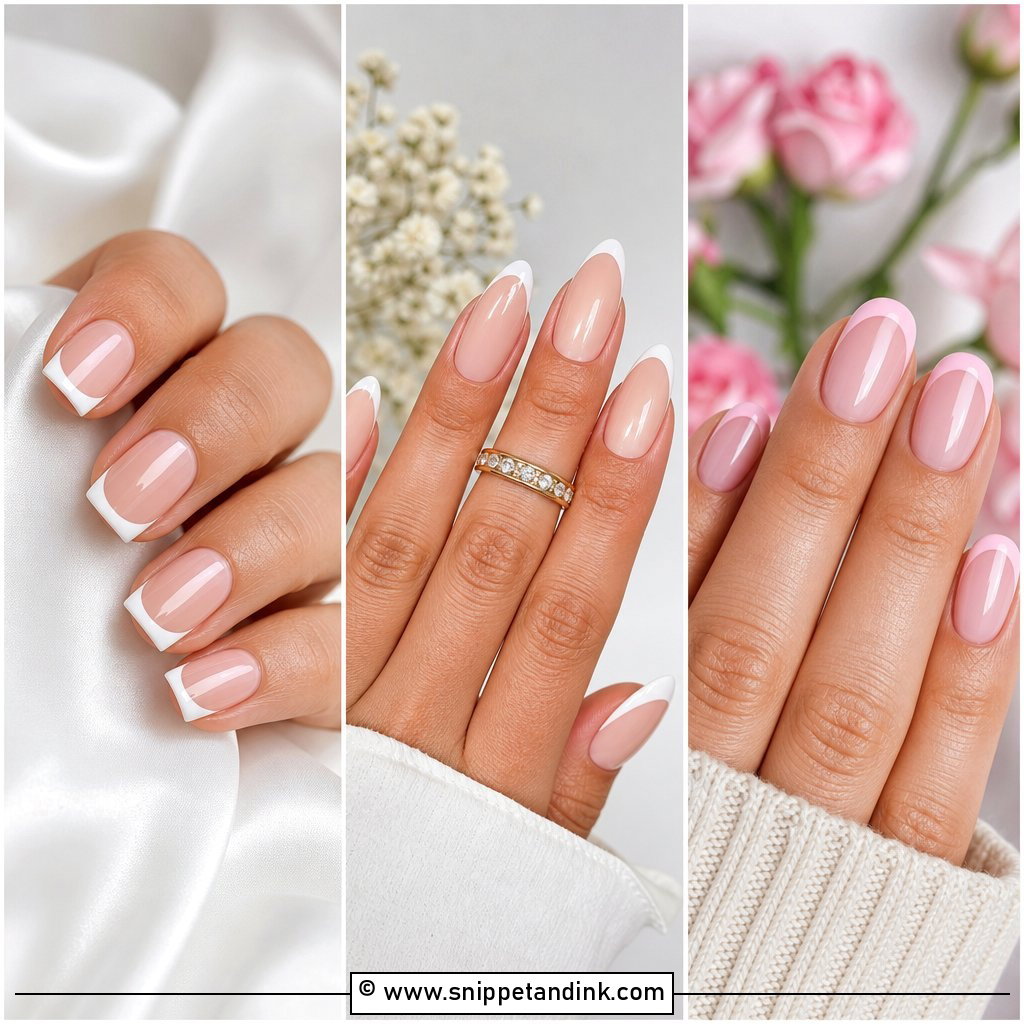
20. Rhinestone French Wedding Nails
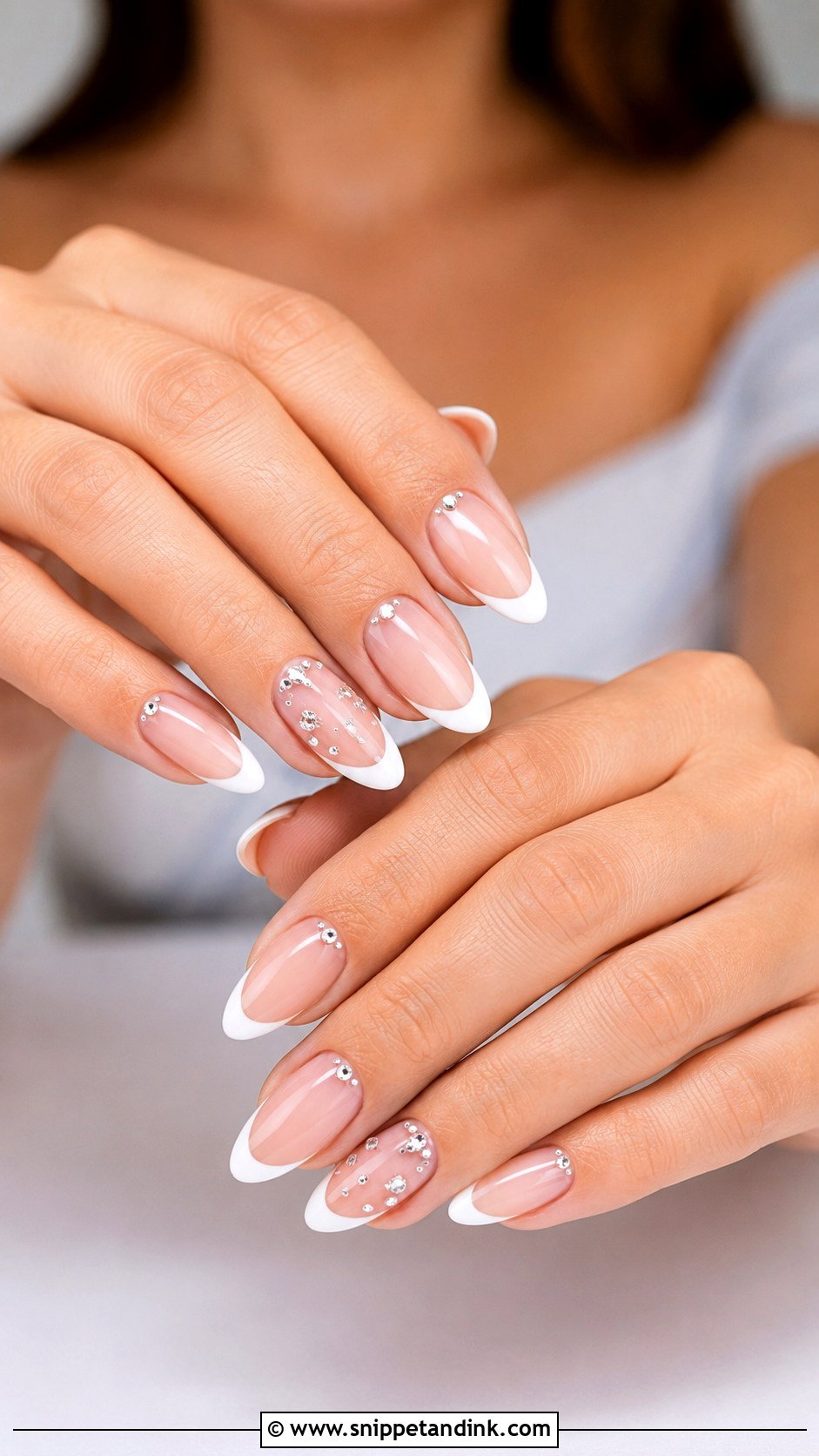
Rhinestone French wedding nails keep the French tip as the main feature and add a few tiny stones near the cuticle or on one accent nail. Spacing is everything. A handful of small stones looks like jewelry; a crowded nail looks busy next to the ring and distracts from it. Clear or pearl-like stones are the most bridal. I fix them in gel and cap the edges so they don’t lift or snag your veil. A medium almond or oval keeps the overall look soft.
How White Tips Read Under Flash and in Ring Close-Ups
The ring shot is where a French manicure gets judged. A macro lens a few inches from your hand picks up things nobody would see across a table: a flooded cuticle, a dull patch, a tip that is a touch thicker on one finger than the next. I finish wedding sets with that shot in mind.
Bright white versus soft white
A very bright white tip can blow out under flash or strong sunlight and lose its edge, so the line looks blurry in photos. A slightly softer white or ivory keeps its shape on camera and usually sits better next to the dress, which is almost never pure white. Some white gels also glow under the UV lights some reception venues use on the dance floor. That’s fun at a party, less so if you weren’t expecting it.
On the day
- Moisturise your hands the night before, not the morning of. Fresh hand cream leaves a greasy shine on the skin around the nails.
- Rub a little cuticle oil in about an hour before the ring photos and wipe off the excess.
- Keep fake tan and spray tan off the nails, or wipe them straight after. Tan stains a white tip yellow.
- Rest your hand flat and relaxed for detail shots. Curled fingers make even short nails look like claws.
Sheer Base, Soft Tip, Your Shape
There is a French set for nearly every bride: classic white tips, a milky base, pearl chrome, lace, glitter or a double line. Match it to your dress, your jewelry, your natural nail length and how you use your hands day to day. If you can’t decide, a sheer base with a soft white tip on a shape that already suits your fingers is very hard to get wrong. It will look right in the photos, and it won’t look dated when you show them to someone years from now.
You'll Like These Ideas:


Leave a Reply