
A civil ceremony asks very different things of an outfit than a church or a ballroom does. You stand at a desk, lean over to sign, squeeze through a narrow corridor, then walk out onto steps where your photographer has maybe twenty minutes of light. I dress a lot of city hall brides, and the ones who feel best on the day are rarely in the most expensive piece. They’re in something cut well enough to sit, sign and climb stairs without tugging at it. Classy civil wedding outfits tend to share one formula: a clean shape, a fabric with some weight, and one detail that says bride, like a short veil, pearl drops or a sharp ivory blazer. Below are the twenty five looks I’d actually put in front of a client, with what I check on each one before she buys it.
What a Registry Office Asks of Your Clothes
Most civil ceremonies are short, often fifteen to thirty minutes, and they happen in rooms that weren’t designed for photography. That changes how I approach the outfit. The light is usually overhead and fairly flat, which flatters matte crepe and heavier satin but makes thin, shiny polyester look cheap. Guests stand close, so the details people see are the ones within a metre of you: your neckline, your hands, your earrings.
Before a client buys anything, I run her through the actual sequence of the day. Here’s what I have her do in the fitting room:
- Sit down on a hard chair for two minutes, then stand and check for creases across the lap and at the back of the knees.
- Lean forward over a table as if signing. Anything that gapes at the neckline or pulls at the waist will do it in front of the registrar too.
- Walk up and down a staircase. Many city halls have steps at the entrance, and photographers often shoot from below.
- Raise both arms to shoulder height. You will hug a lot of people.
- Put the coat or jacket on over the outfit and take it off again. Linings can drag satin out of place.
Shoes deserve the same test. Courthouse floors are often polished stone, and new leather soles slip on them, so I scuff the soles lightly with sandpaper or add grip pads a few days ahead.
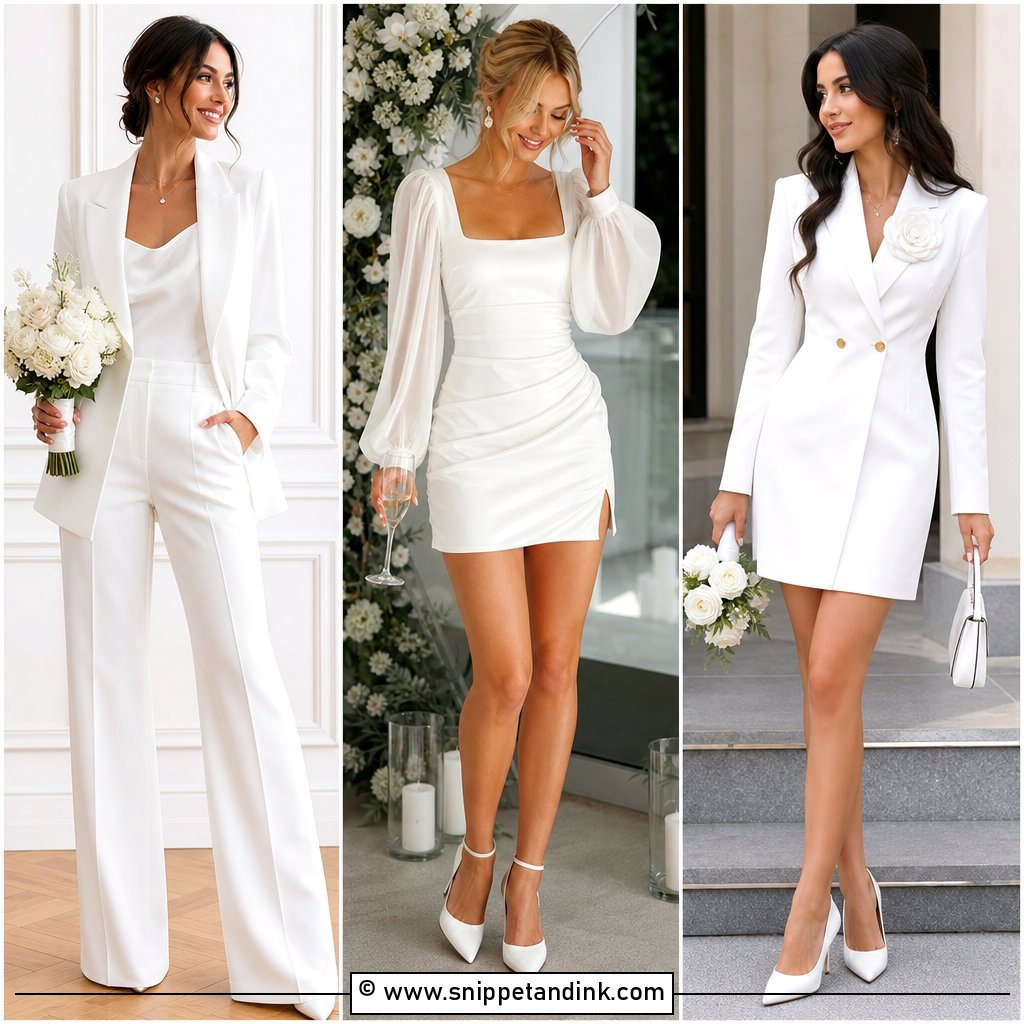
1. Civil Wedding White Blazer Suit
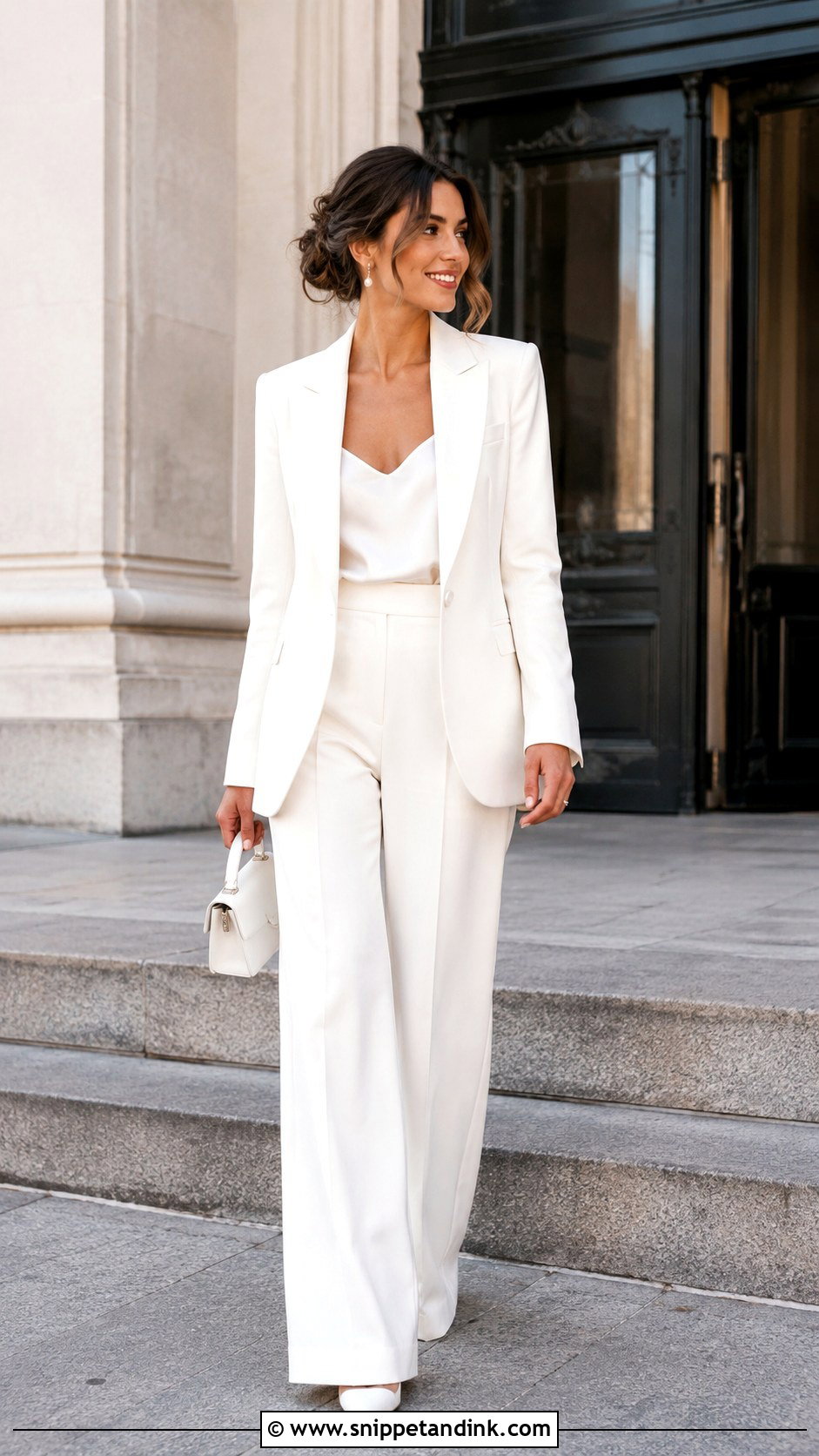
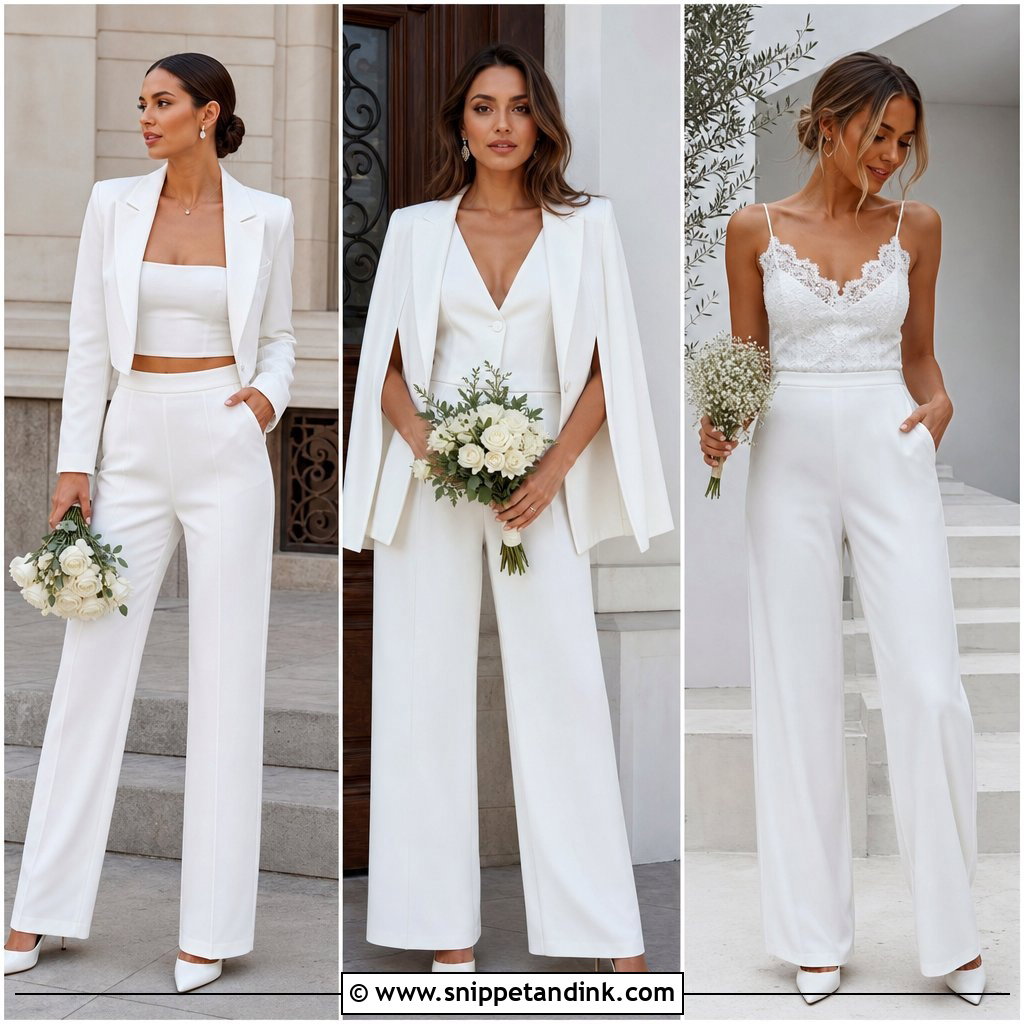
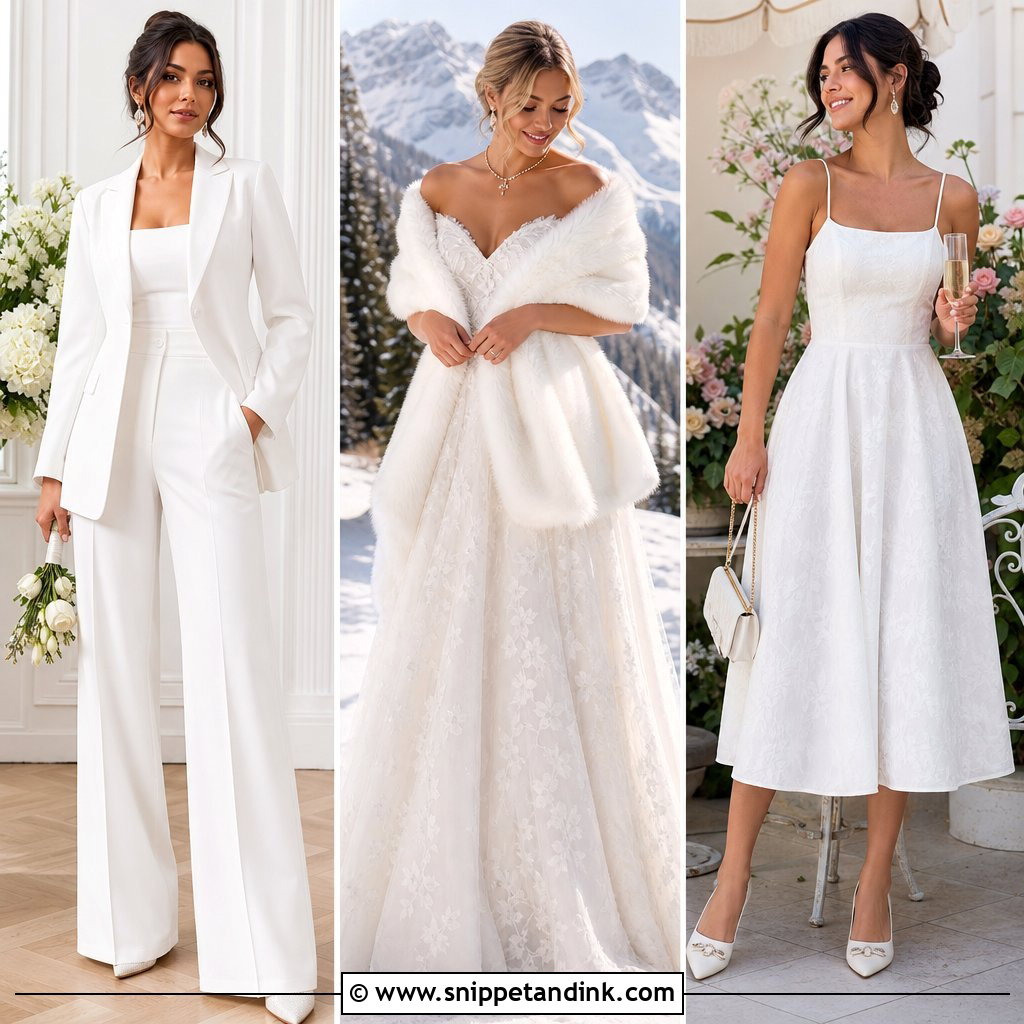
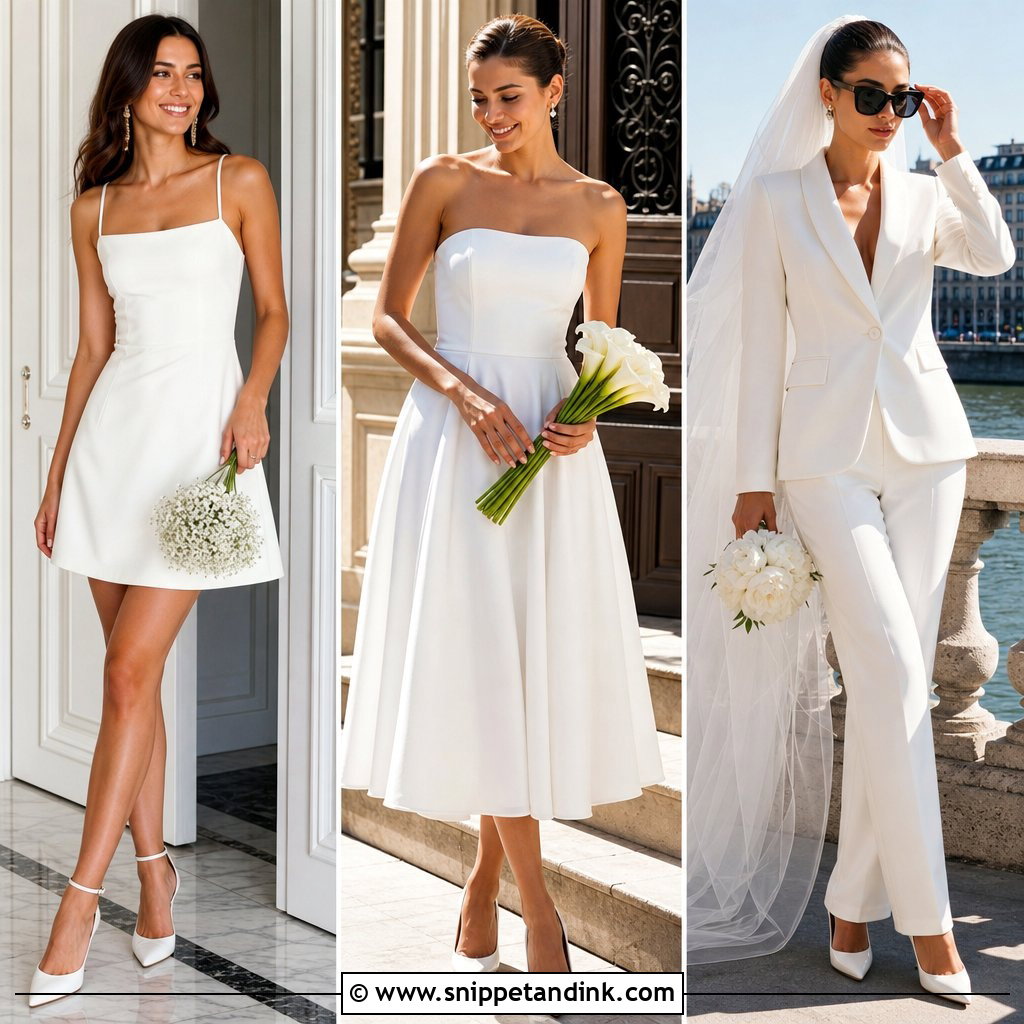
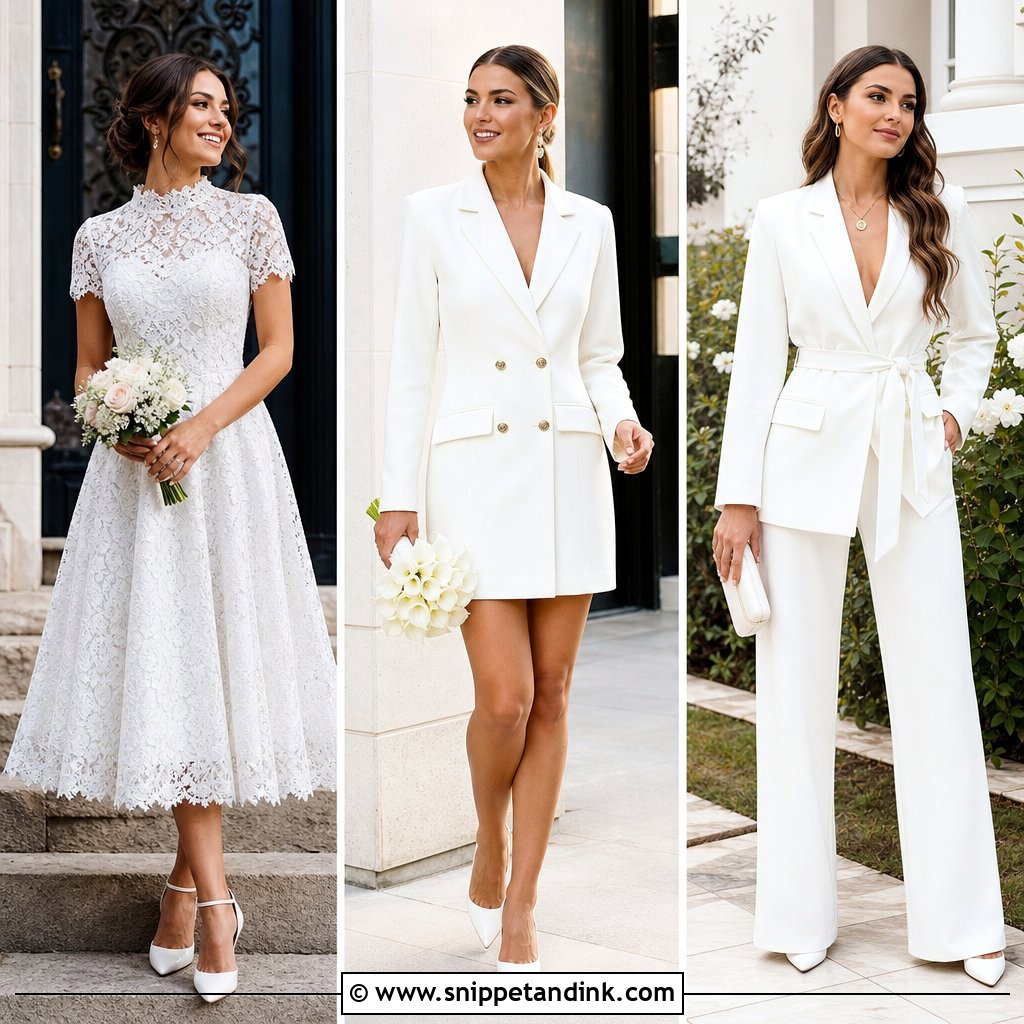
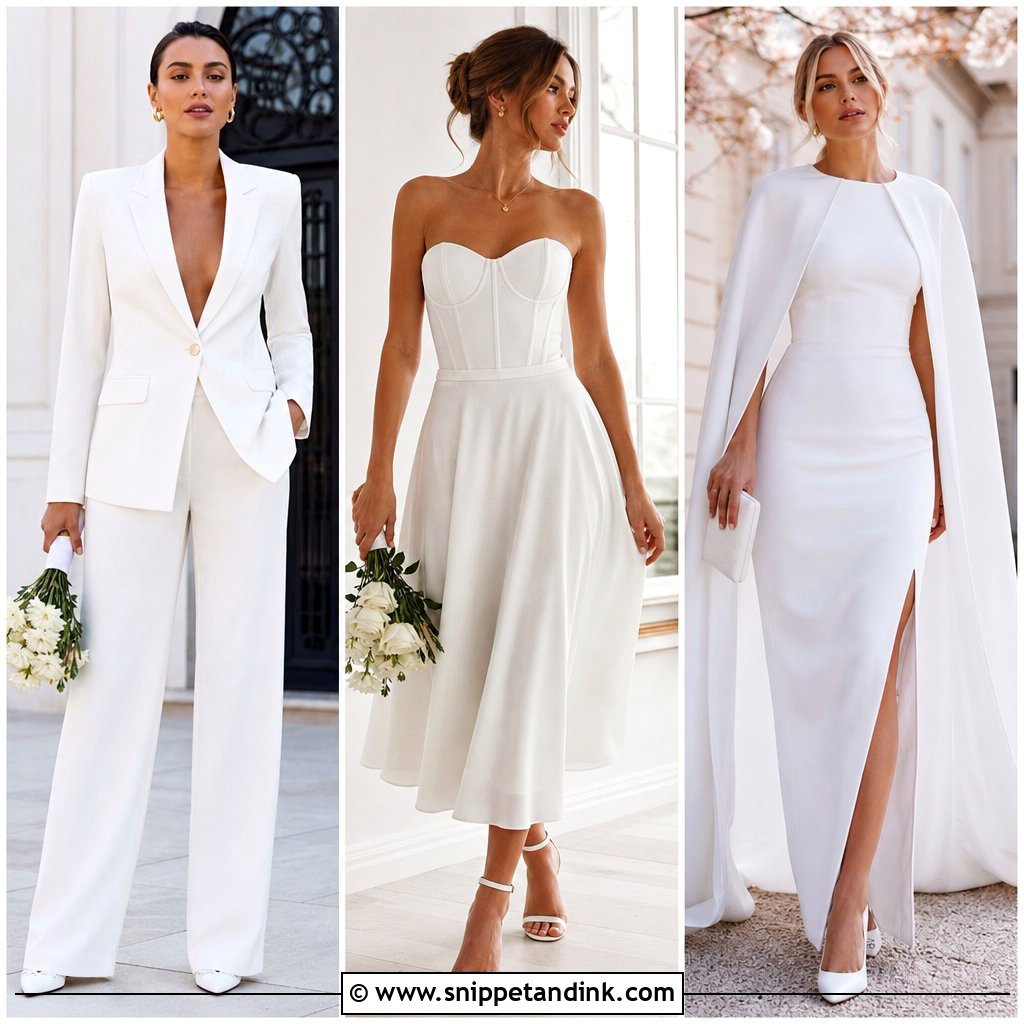
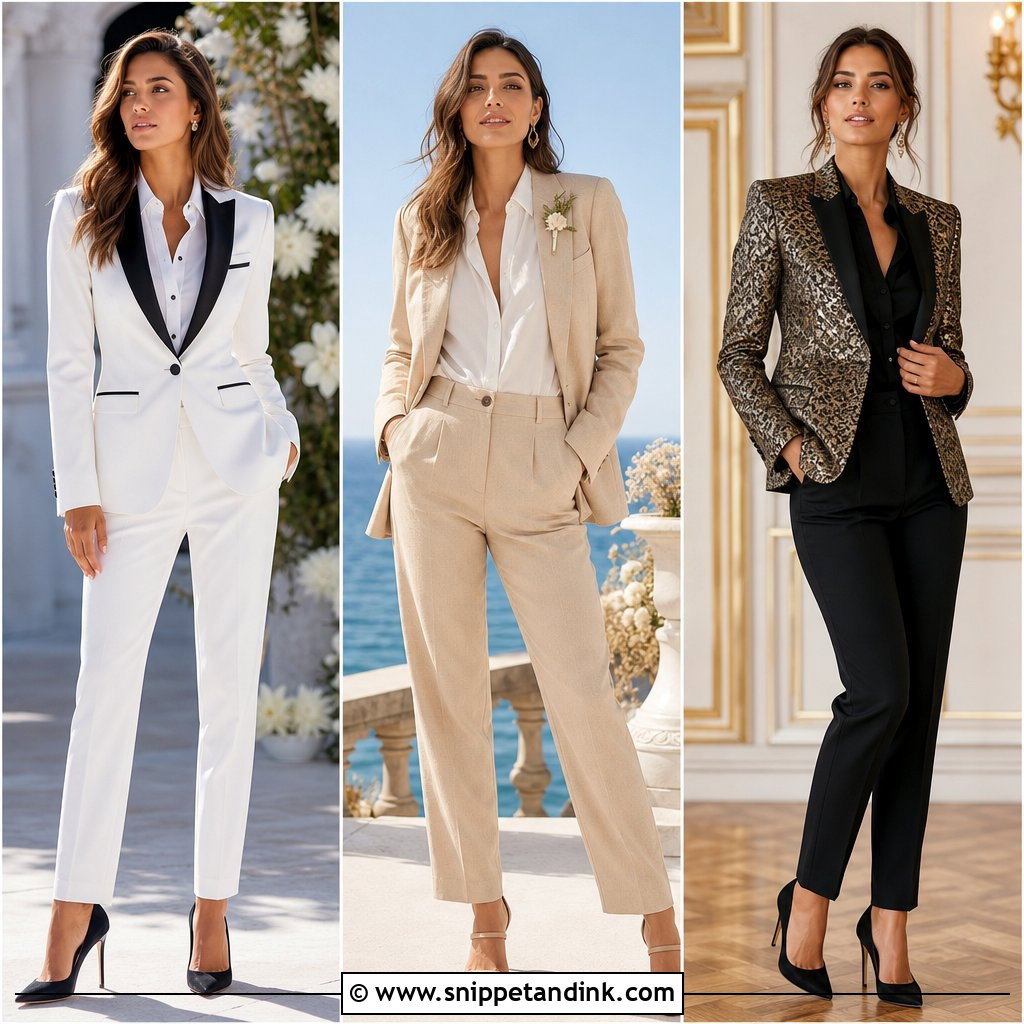
The thing I look at first on a white suit is the shoulder seam. If it sits past your natural shoulder, the jacket will look borrowed in every photo, and that’s the one alteration a tailor finds hard to fix. Get the shoulders right and everything else on an ivory blazer with slim or wide-leg trousers can be taken in. Underneath, a silk camisole or a lace-trim shell softens the tailoring so it reads as bridal rather than office. Pointed heels lengthen the trouser line, pearl studs keep the face clean, and a small top-handle bag finishes it. Ask for the trouser hem to be set with the exact shoes you’ll wear; half an inch of puddling looks sloppy on courthouse steps.
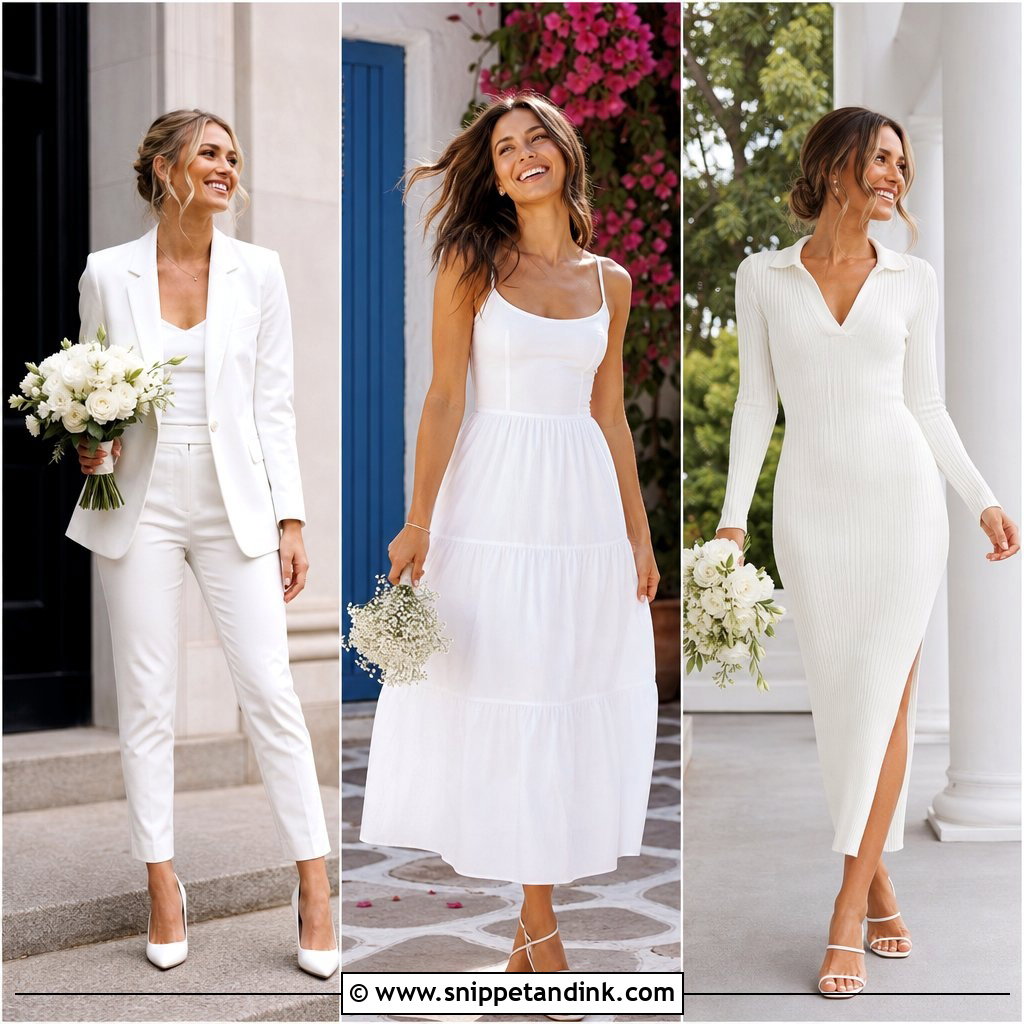
2. Civil Wedding Satin Midi Dress
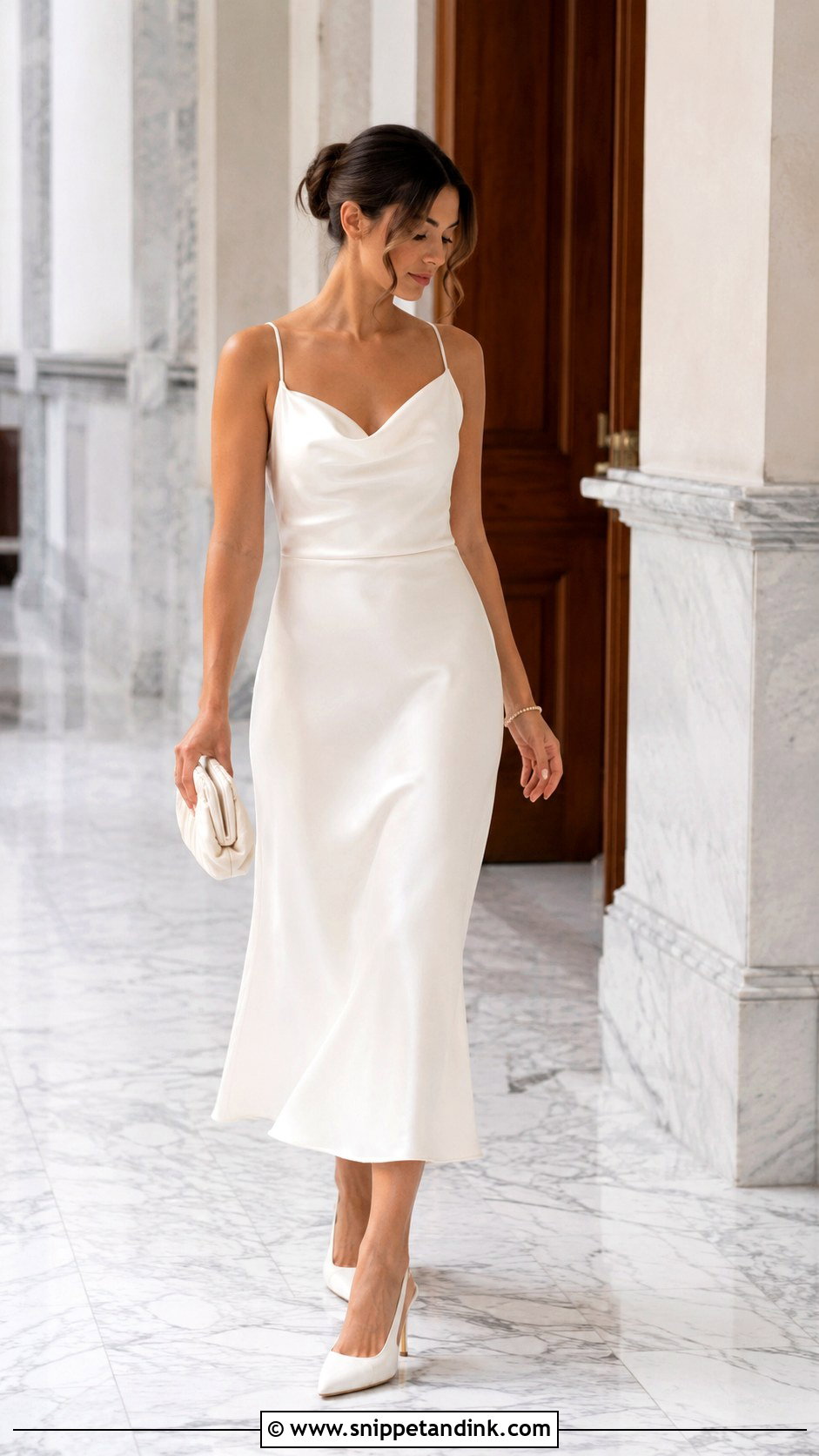
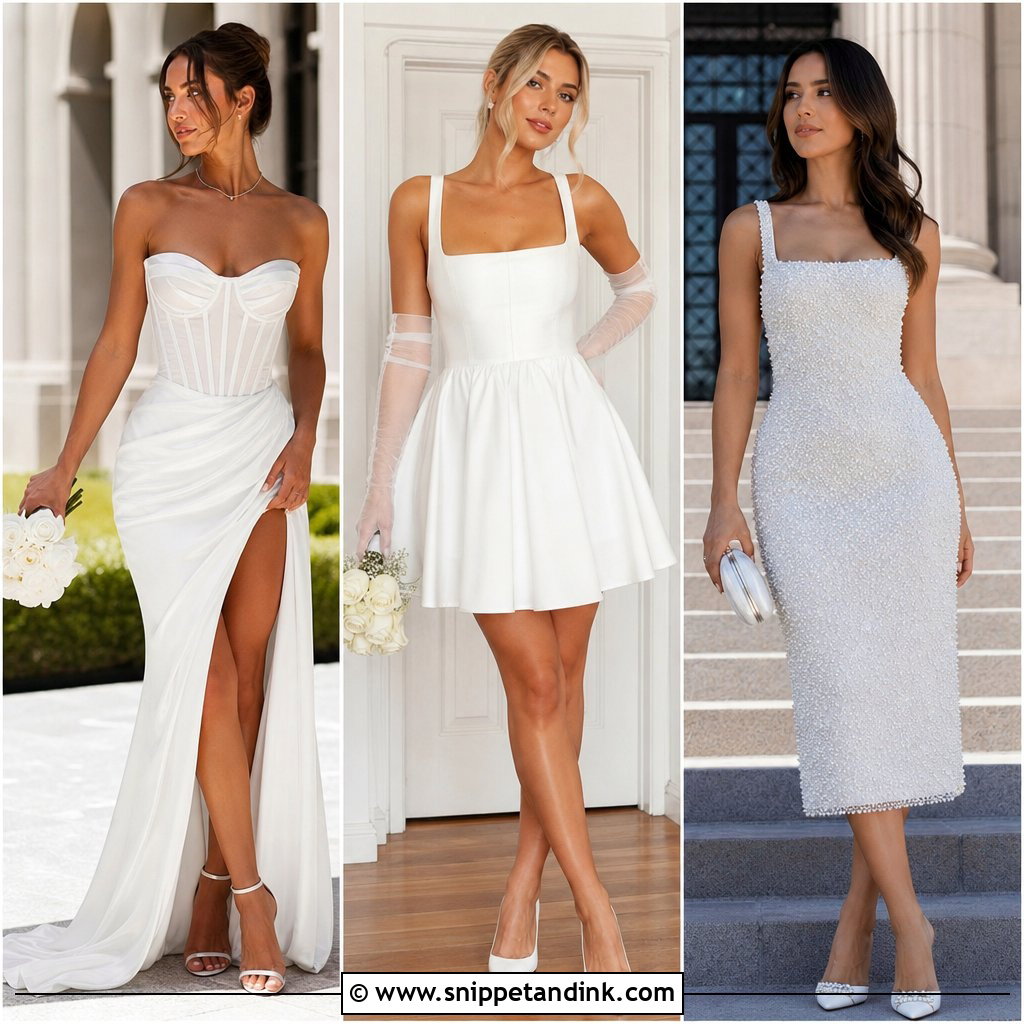
Satin is unforgiving in one specific way: it shows every ridge underneath. Before anything else, I have a bride try a satin midi dress on with the underwear she plans to wear, then sit down in it for a minute, because a bias cut creases across the lap when seated and those lines stay for the walk out. A heavier, slightly structured satin in ivory, pearl or champagne holds up better than a thin, slinky one. Slingbacks and a small clutch keep it light. If your arms get cold in a stone building, a cropped blazer over the top looks deliberate rather than like an afterthought. Wear your hair up or in smooth waves so the neckline stays visible.
3. Civil Wedding Mini Dress With Blazer
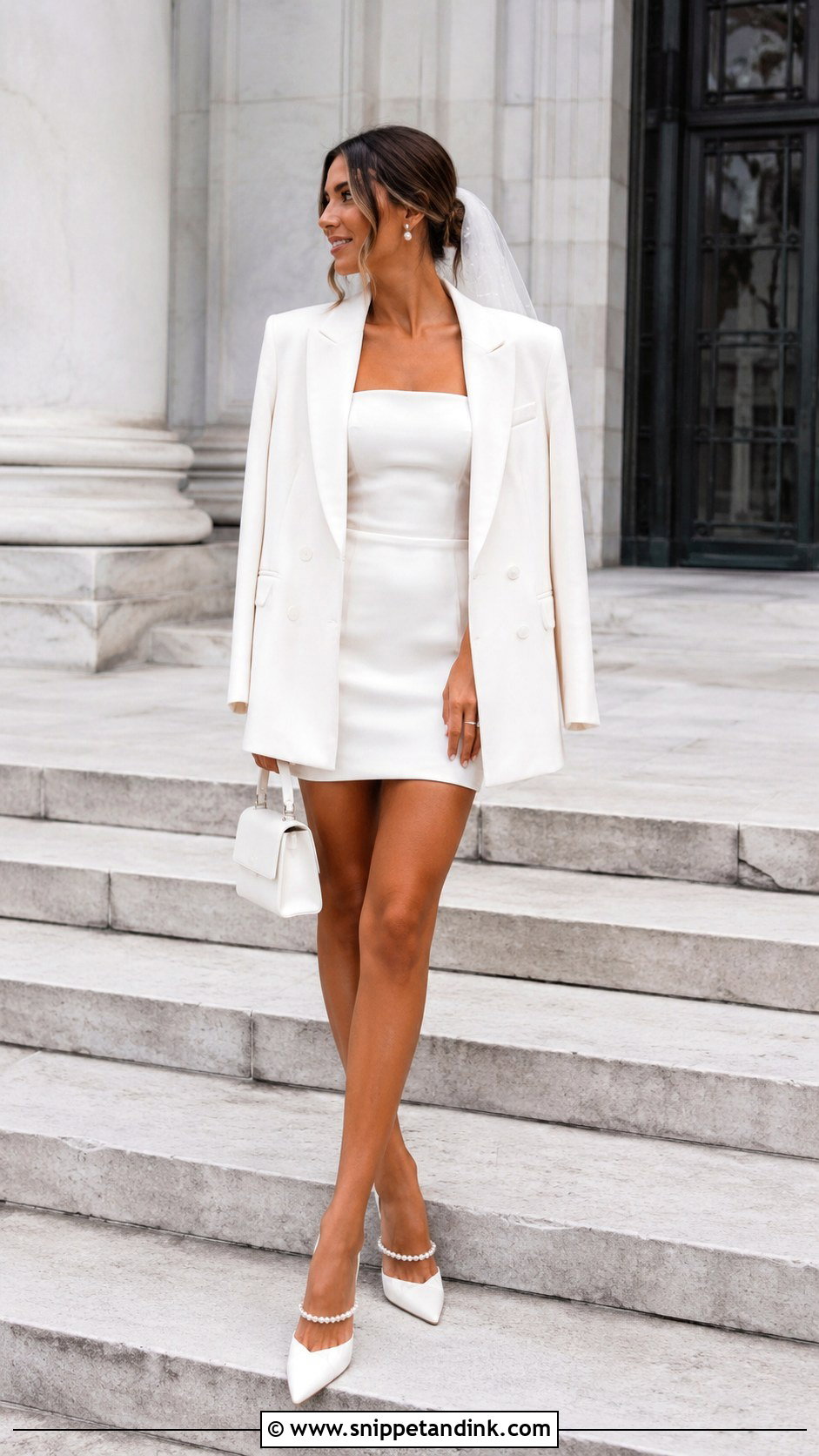
A short white dress needs a little structure to read as a wedding outfit and not a summer party dress, and a blazer is the quickest way to add it. I’d steer you toward a mini with a clean neckline and a gentle A-line or a subtle texture like crepe or bouclé; a clingy jersey mini under a blazer looks casual however you accessorise it. Check the length when you sit and when you go up stairs, since many city hall entrances have a flight of them and photographers love shooting from below. Pointed pumps or pearl-trimmed shoes dress it up. A bow clip, small veil or pillbox-style headpiece does the rest, and this pairing suits warm-weather ceremonies with a handful of guests best.
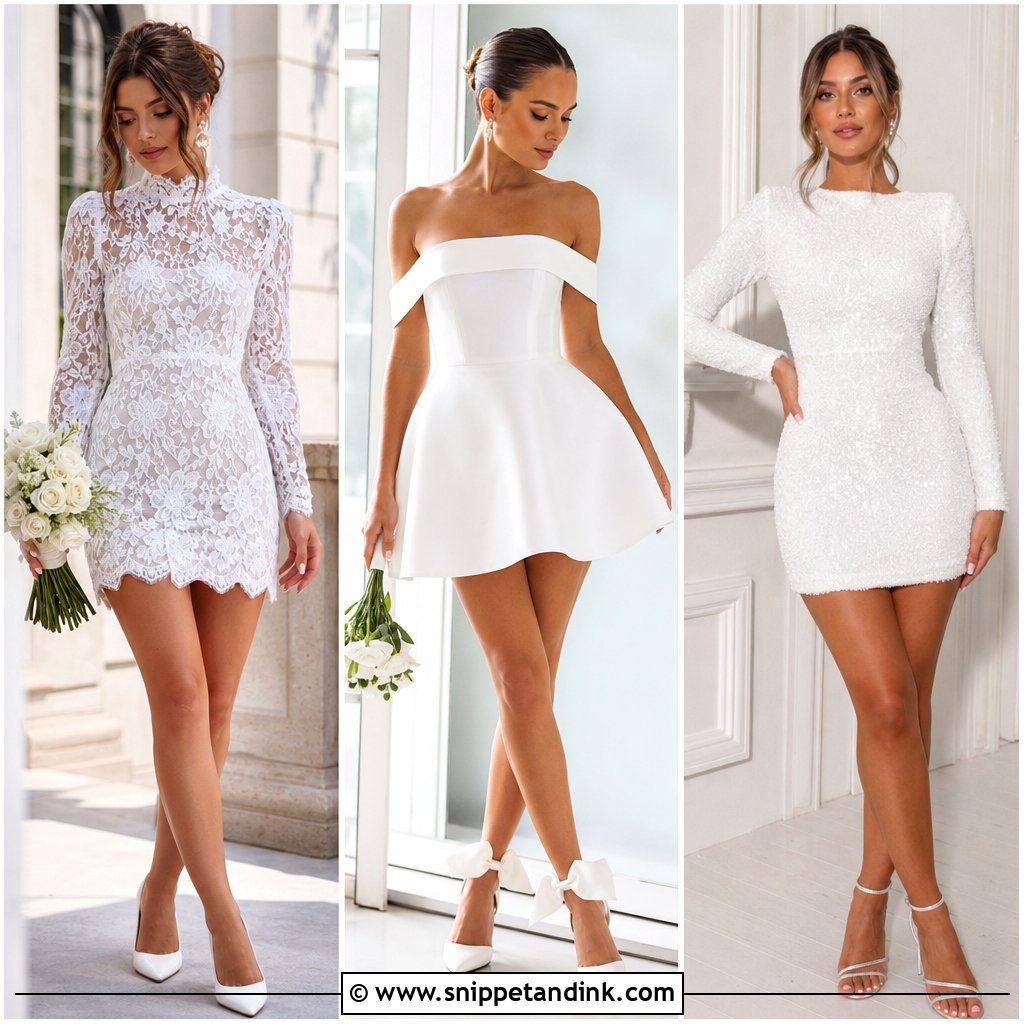
4. Civil Wedding Lace Midi Dress
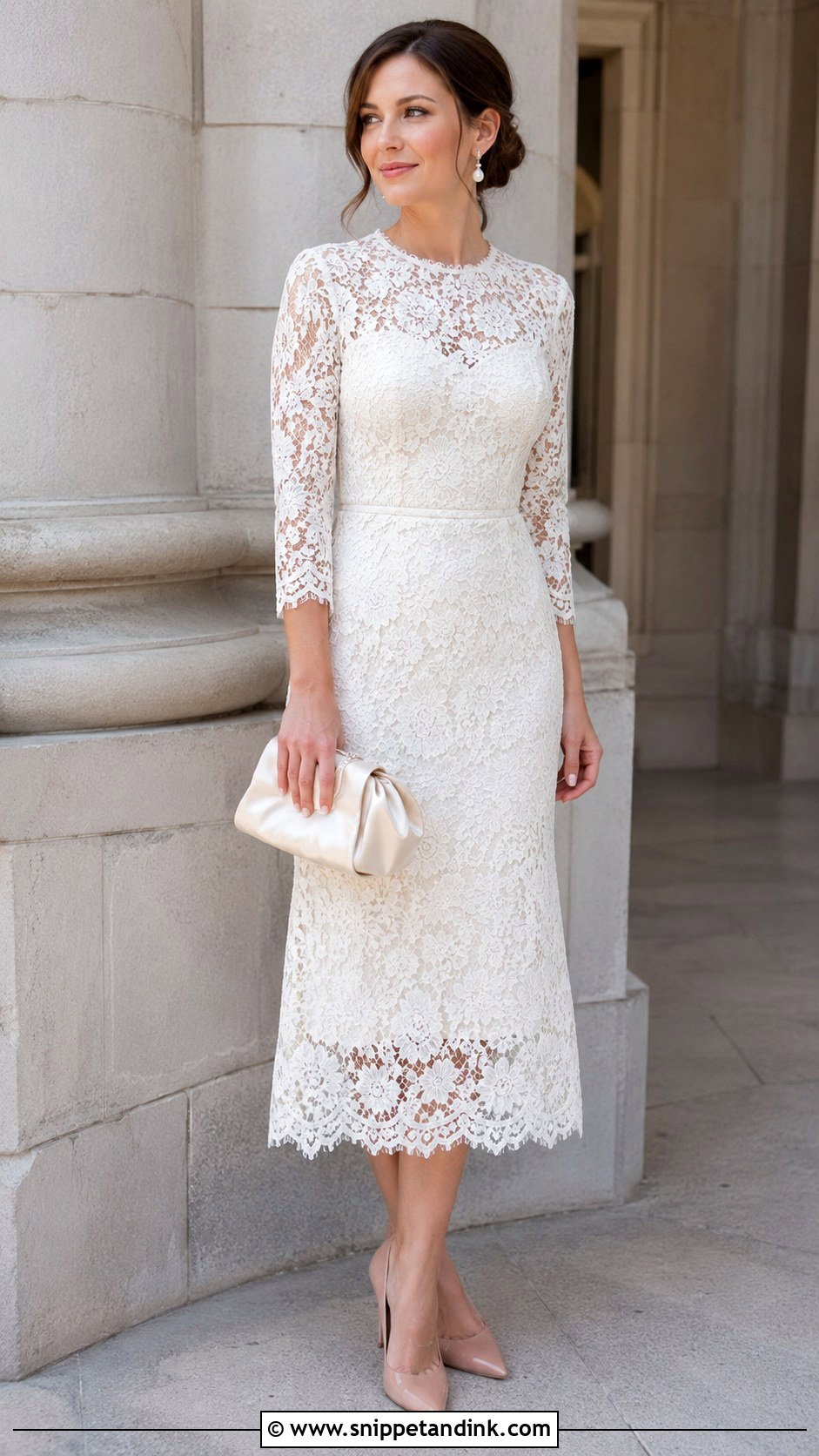
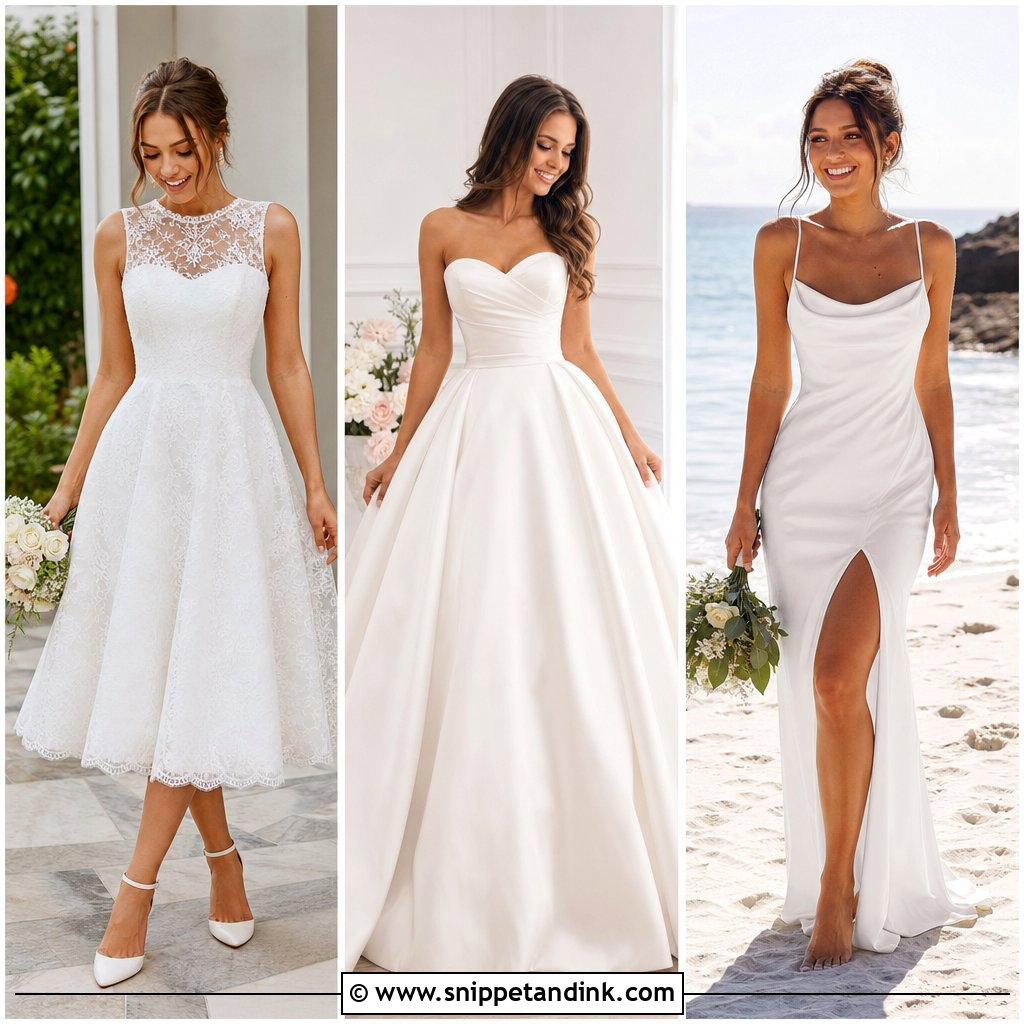
Lace on a midi length is where I see the most budget mistakes. Cheap lace often comes on a thin, shiny lining that shows through in flash photos, so turn the dress inside out and look at the lining before you look at the pattern. A sheath, fit-and-flare or straight midi shape keeps it light; heavy corded lace with a lot of beading tends to look like a gown that got shortened. Nude, ivory or soft metallic heels let the lace lead. Pearl earrings and a smooth clutch are enough. In colder months a tailored coat over the top works well, provided it’s a clean wool that doesn’t compete with the lace texture.
5. Civil Wedding White Jumpsuit
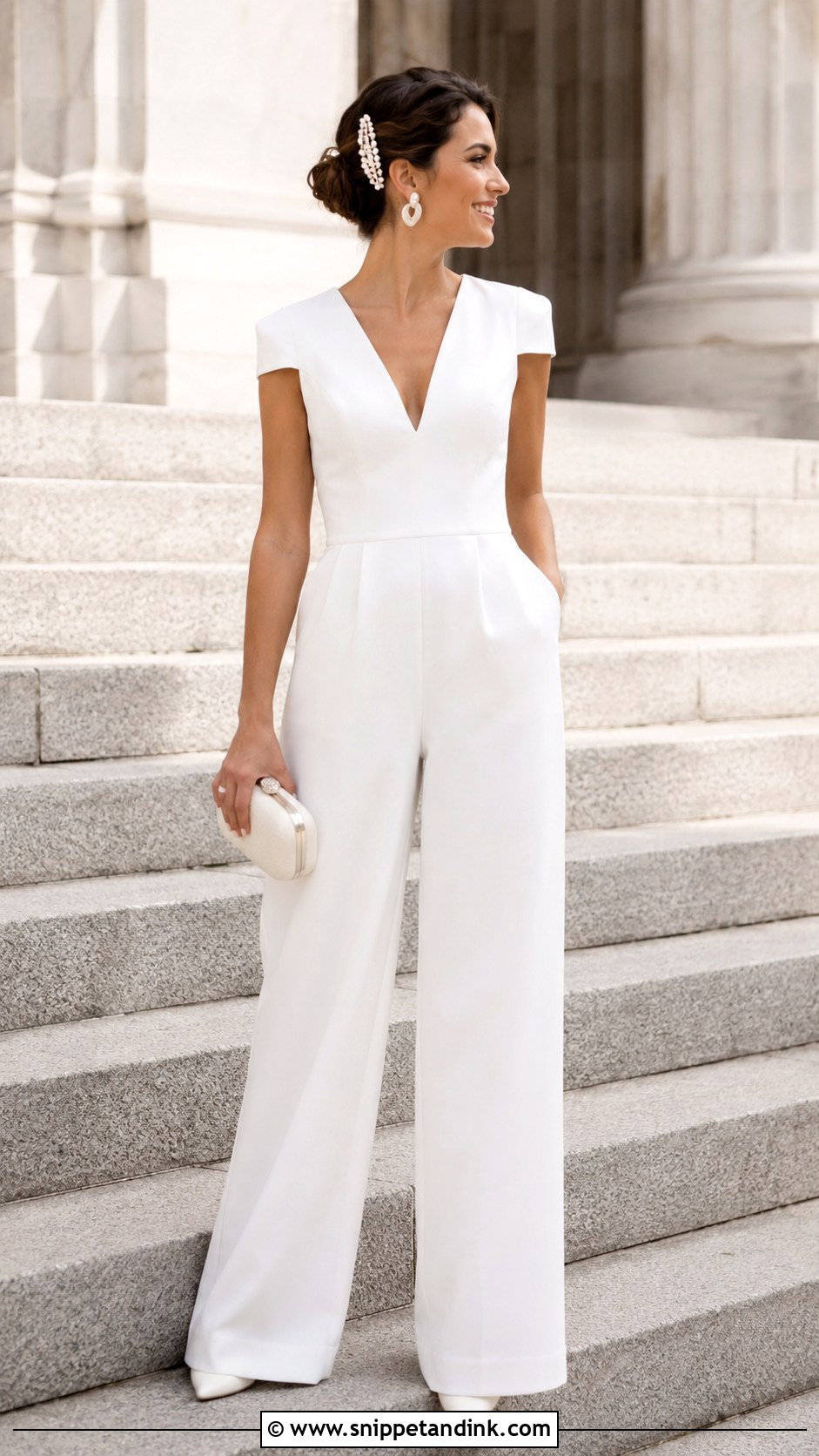
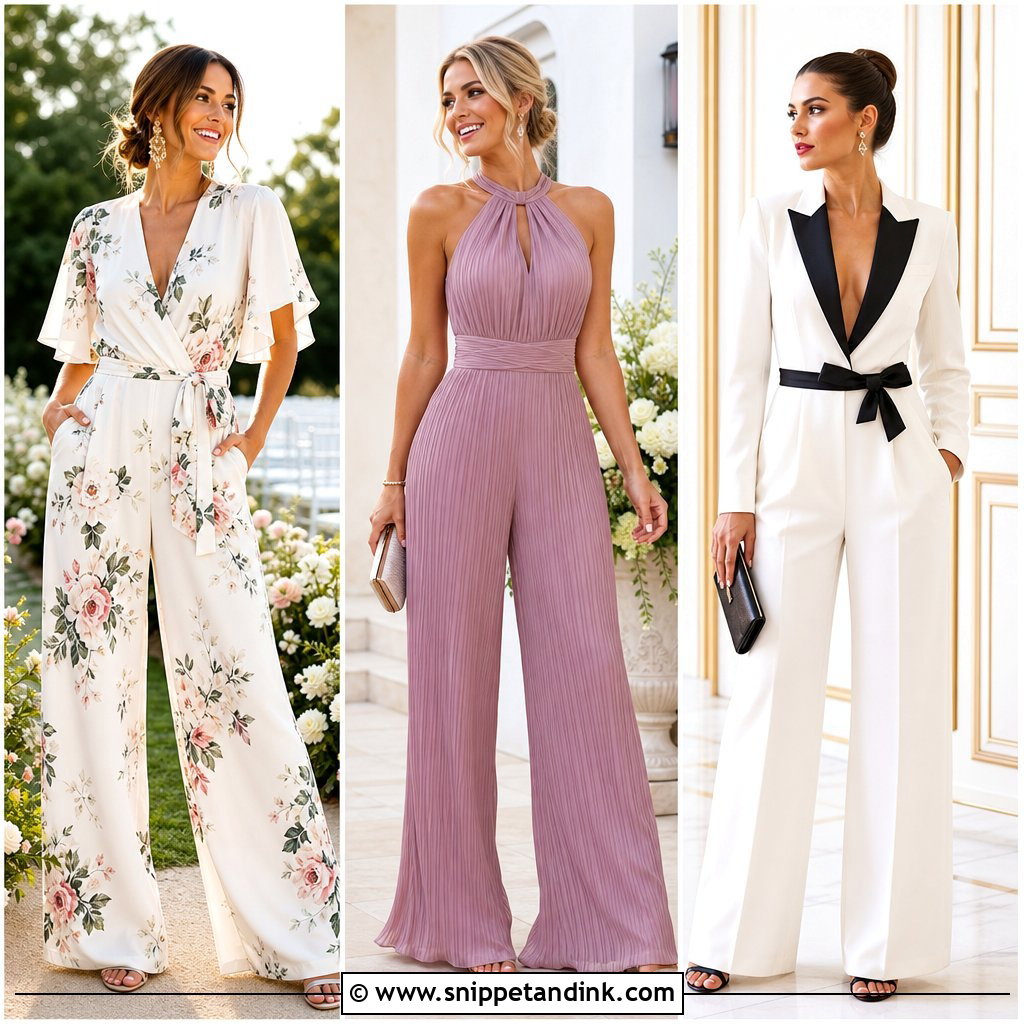
Jumpsuits live or die by the rise. Too short in the body and you’ll feel the seam pulling every time you bend to sign the register, so I always ask brides to sit, raise their arms and lean forward in the fitting room. A structured bodice, defined waist and wide leg give the most bridal shape, and crepe, satin or a suiting fabric hangs far better in photos than thin jersey. Pointed heels or platform sandals keep the leg line long under that wide hem. A pearl comb or short veil adds the ceremony feeling. One practical note: plan your bathroom trips, because a back zip on a jumpsuit usually needs a second pair of hands.
6. Civil Wedding Column Dress
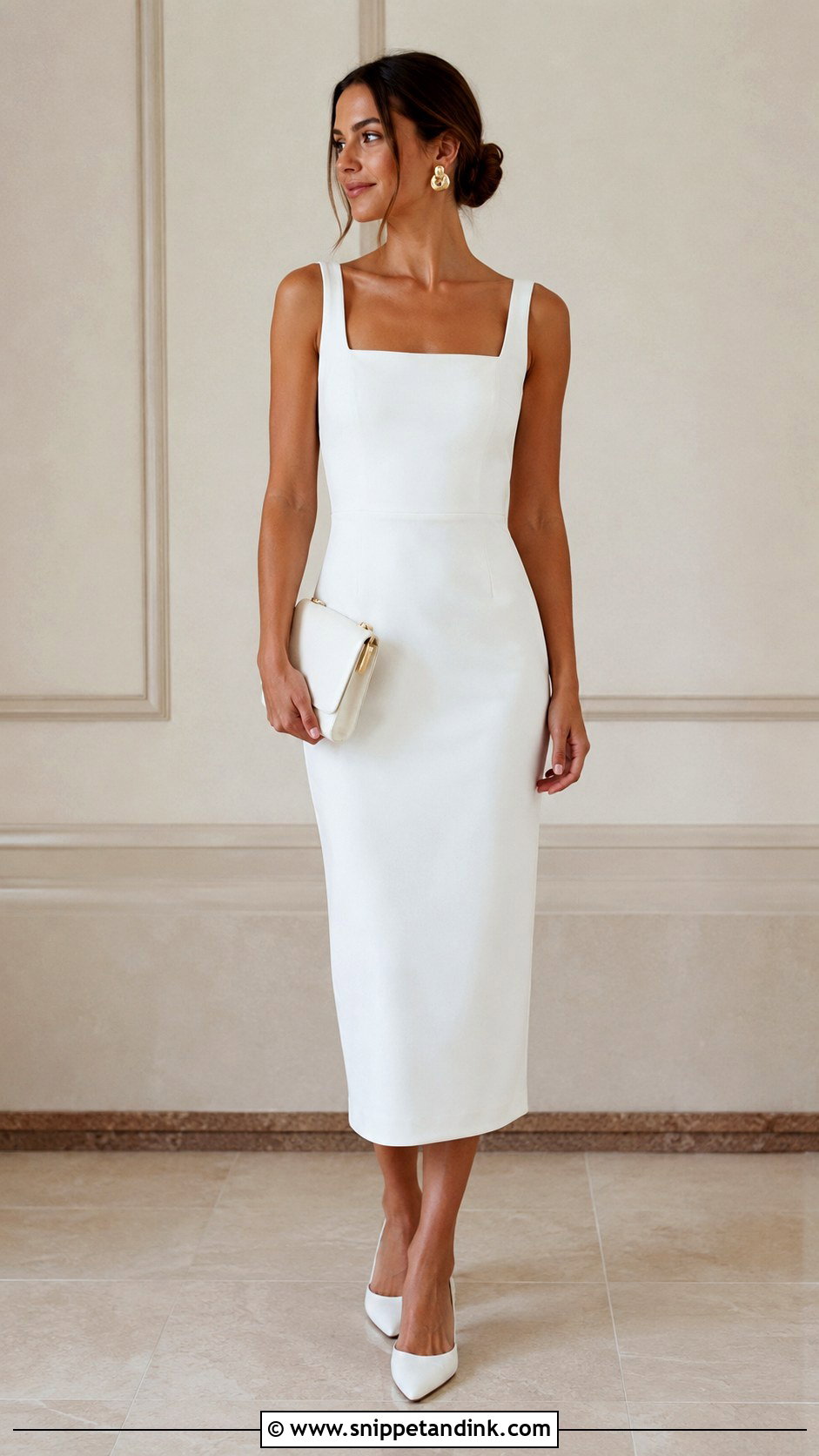
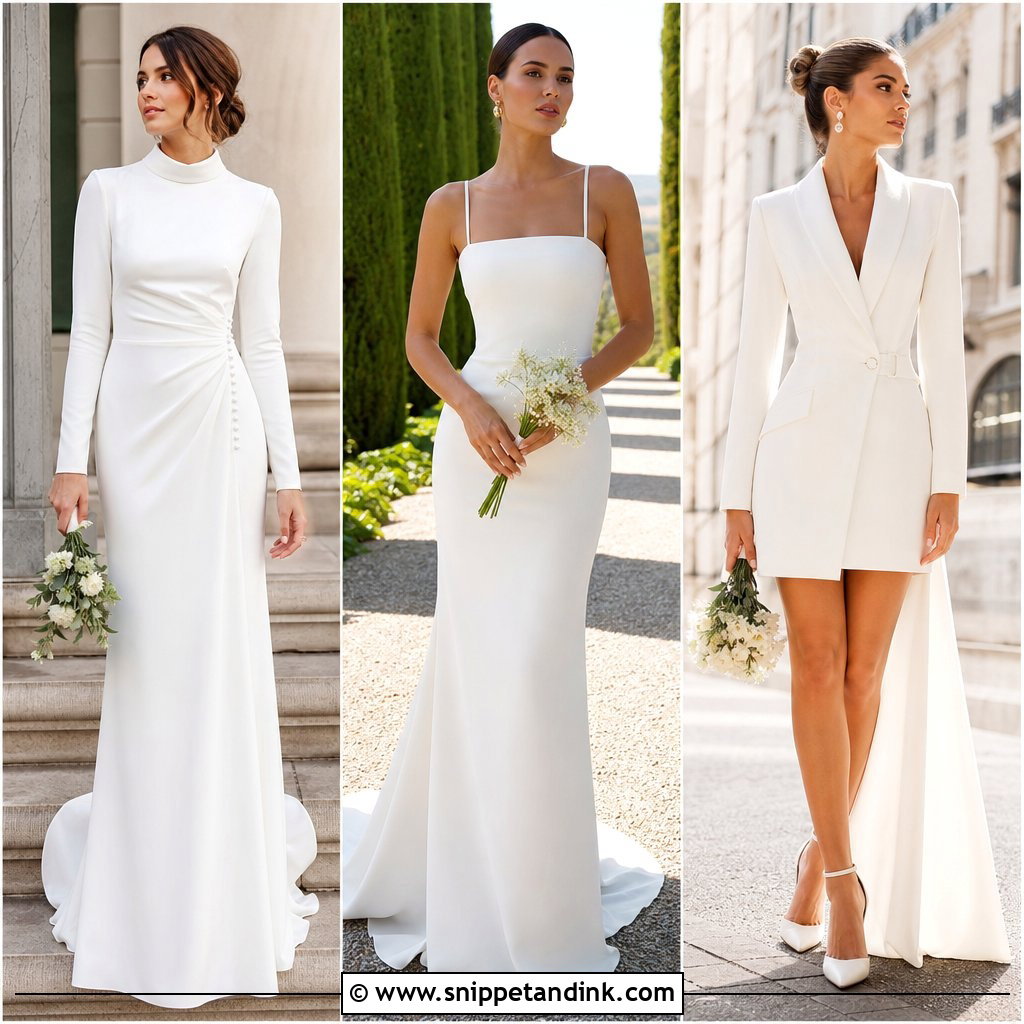
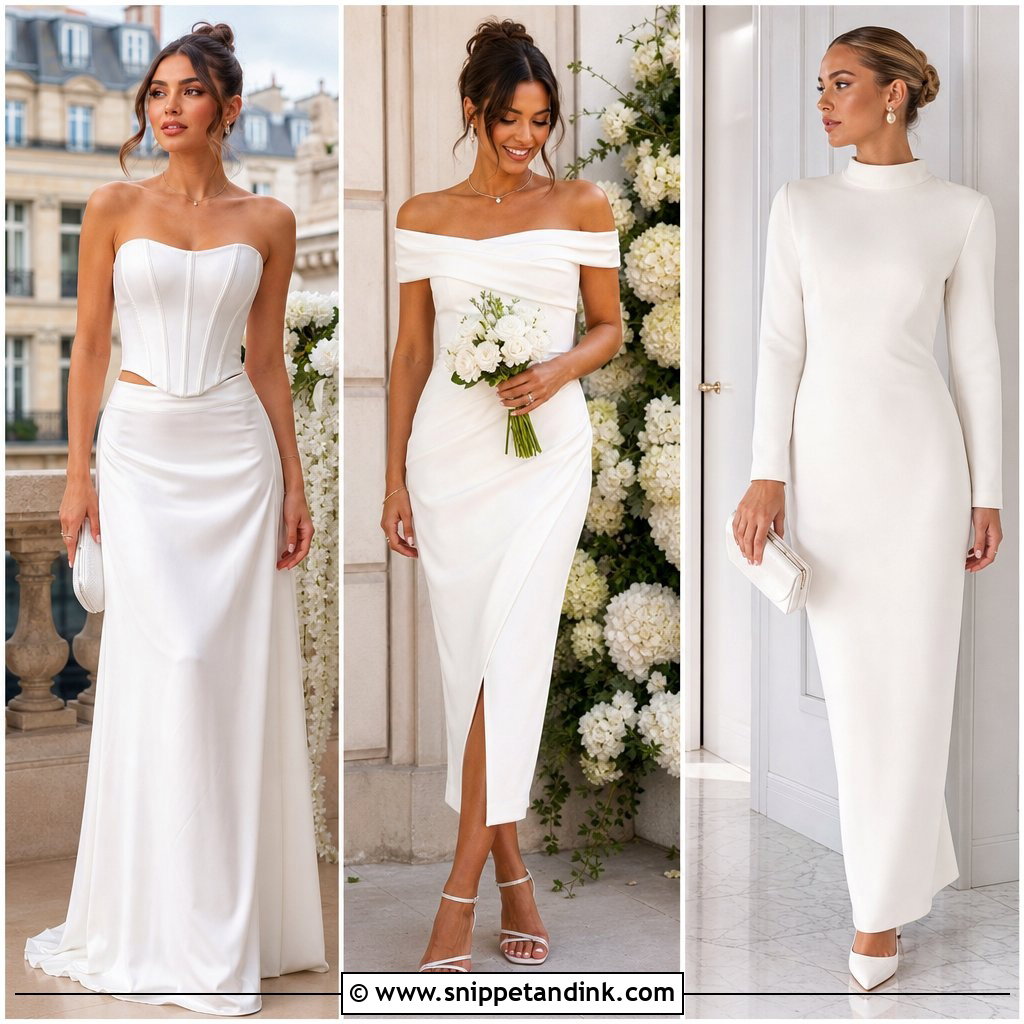
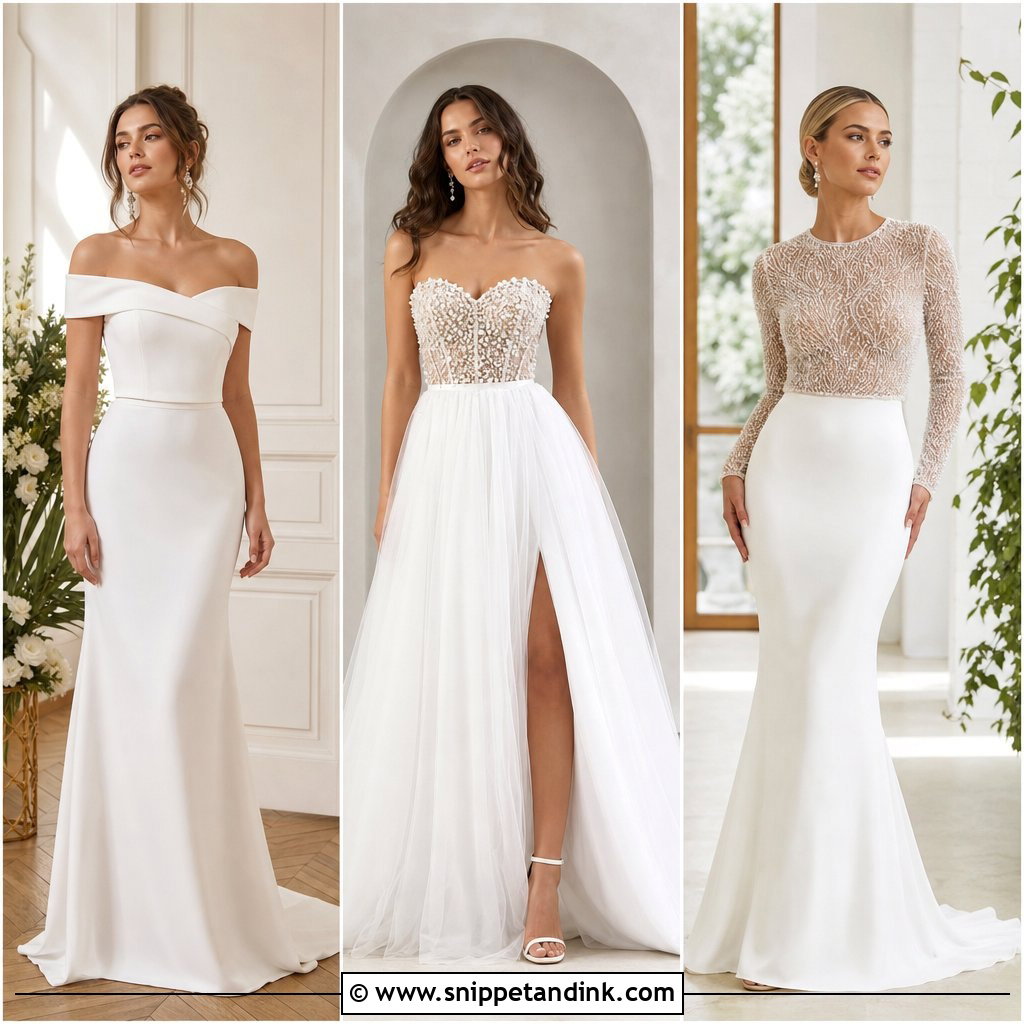
A column has no volume to hide behind, so fit is everything. I’d only recommend one to a bride willing to do a proper fitting, because a straight dress that’s slightly too big at the hip just looks like a long tube. In crepe, satin or a silk blend, at midi or ankle length depending on your height, it’s quietly the most grown-up dress on this list. Square, bateau and strapless necklines all suit the shape. With so little going on in the cut, accessories carry the look: sculptural earrings, a low heel and a small structured bag. A cropped jacket or long coat covers you for cooler weather.
7. Civil Wedding Two Piece Skirt Set
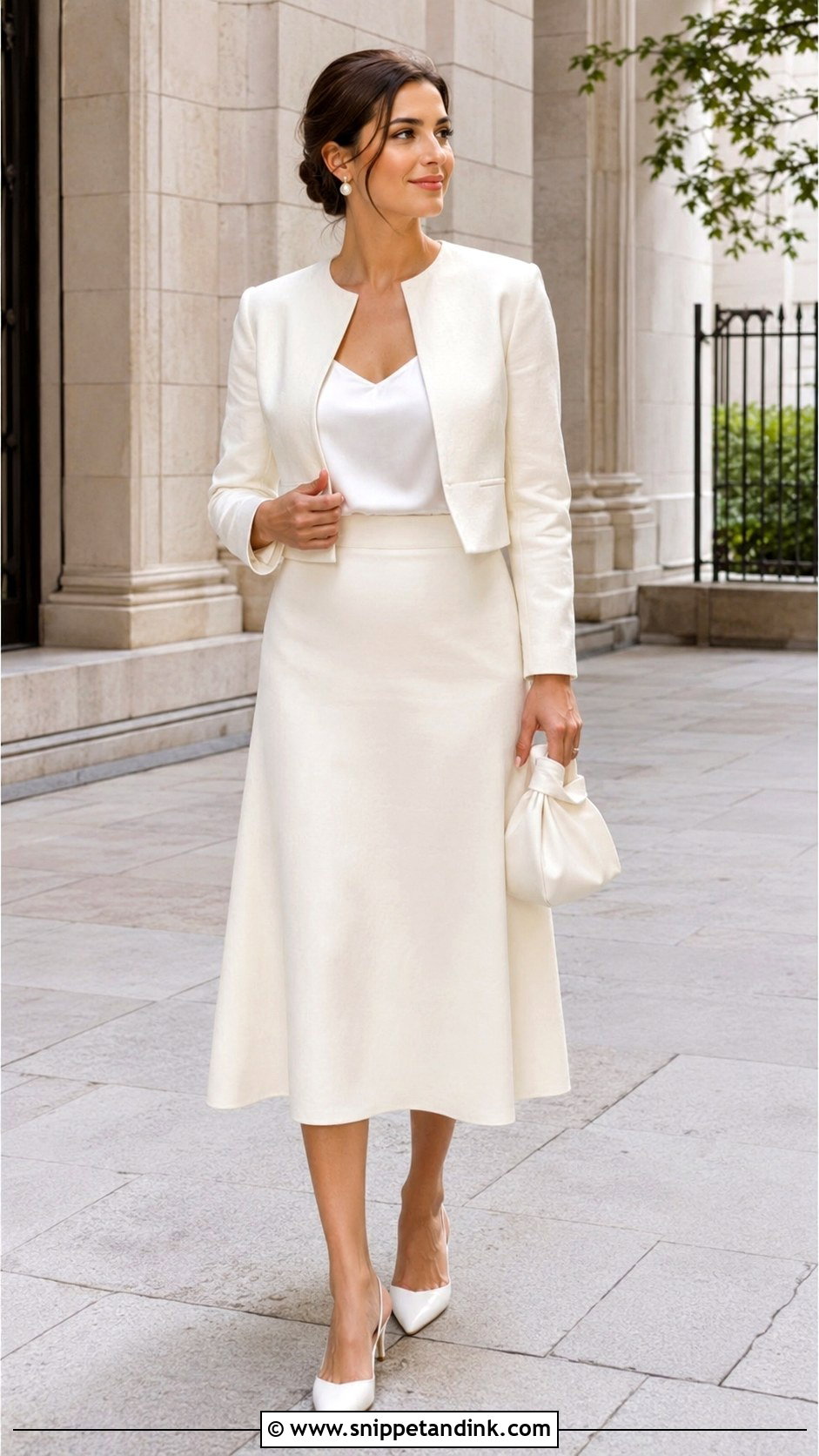
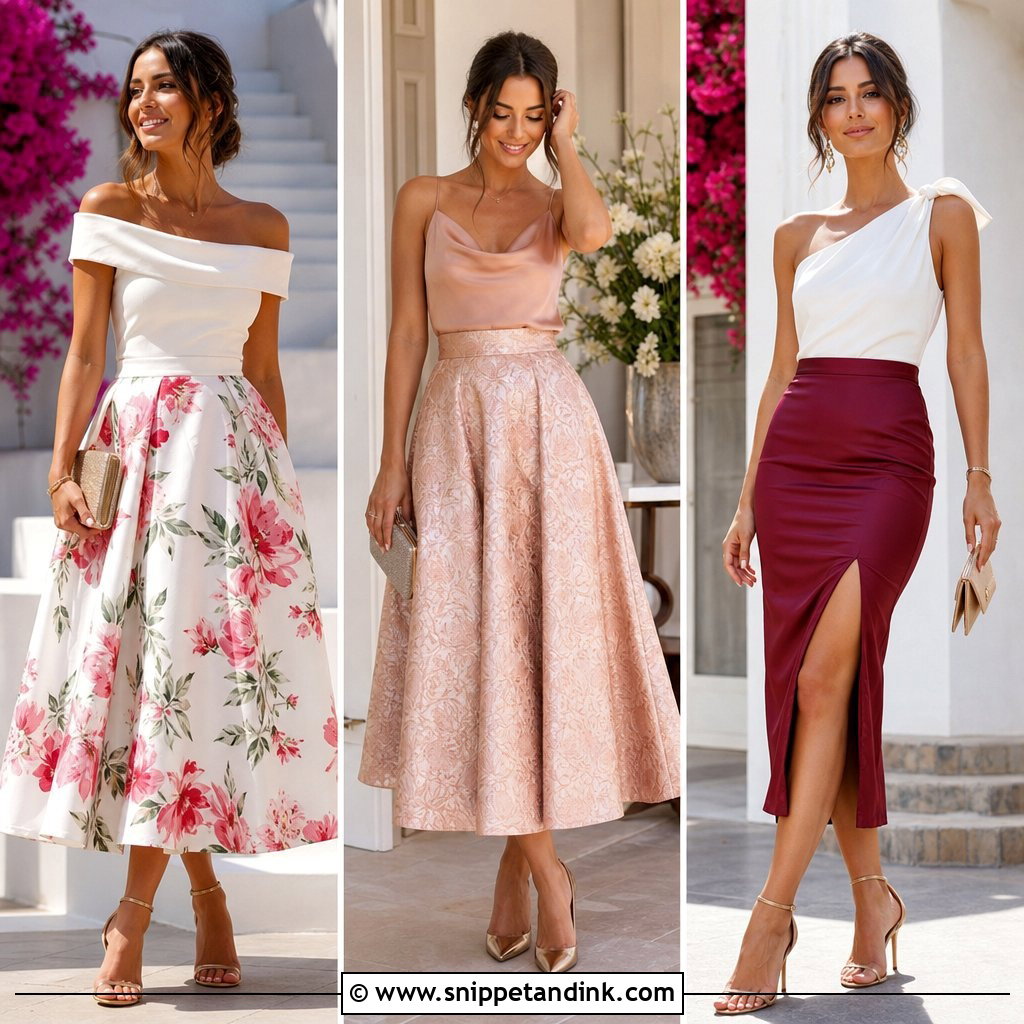
Separates solve a very common fitting problem: a top half and a bottom half that are different sizes. Buying a matching ivory top and skirt in satin, crepe, textured jacquard or a fine knit means each piece can be fitted on its own. A fitted top with a midi skirt gives a softer shape; a boxy cropped jacket over a pencil skirt is sharper. Check that the two pieces come from the same dye lot, since ivory varies a surprising amount and the difference is obvious once you’re photographed in daylight. Slingbacks, pearl studs and a small bag finish it, and you’ll get real use out of both pieces later.
8. Civil Wedding Slip Dress And Coat
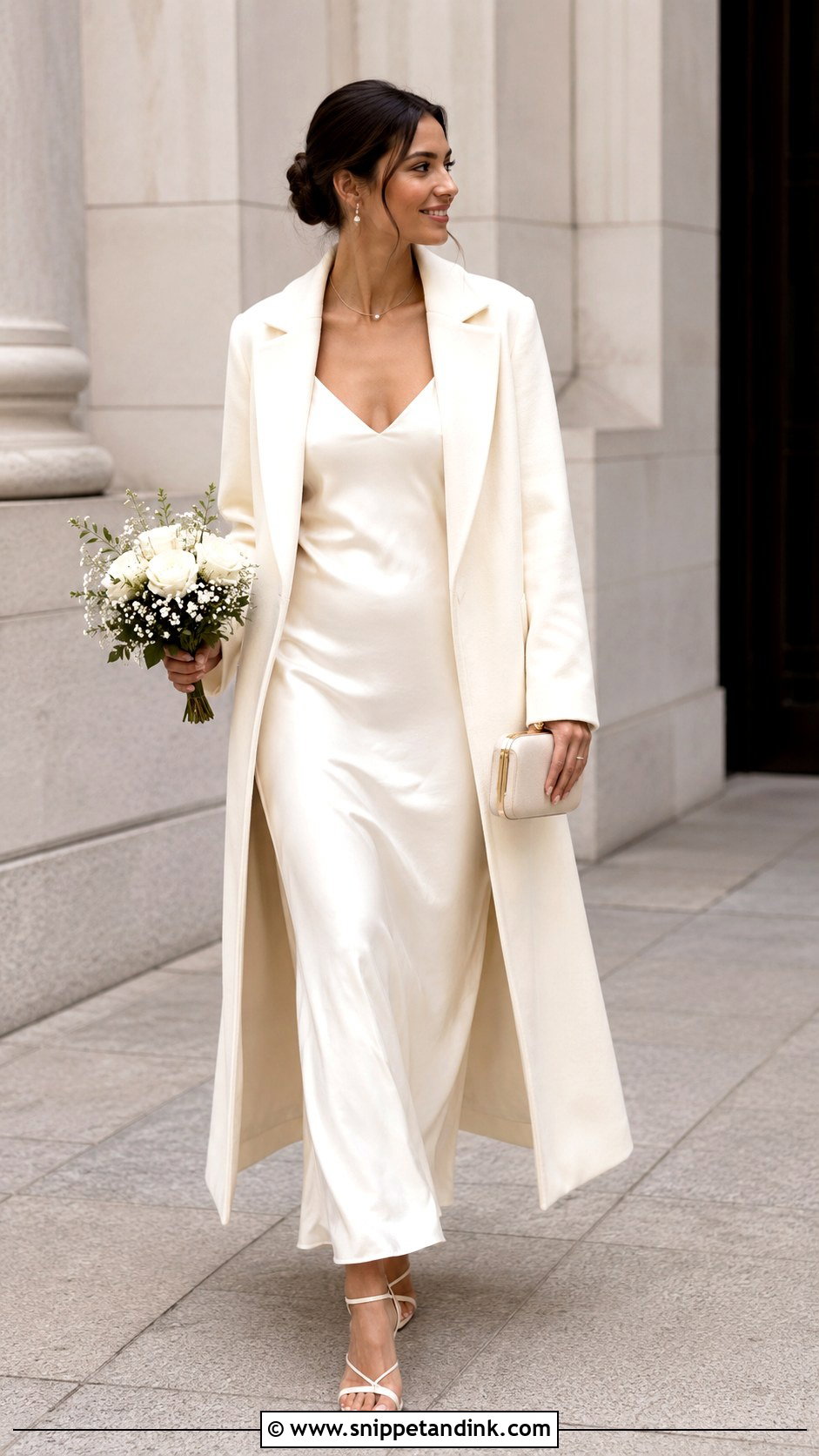
For an autumn or winter ceremony, this is the pairing I reach for most. An ivory satin or silk-style slip at midi or ankle length keeps the bridal softness, and the coat over it does the practical work of keeping you warm between car and steps. Cream wool, a longline white blazer or a light trench all work depending on the temperature. Wear the coat open for photos so the dress still shows down the front. The one thing I’d check is whether the coat’s lining grips the satin; some linings drag the slip sideways as you move, so try them on together before the day. Simple heels and a sleek clutch keep it understated.
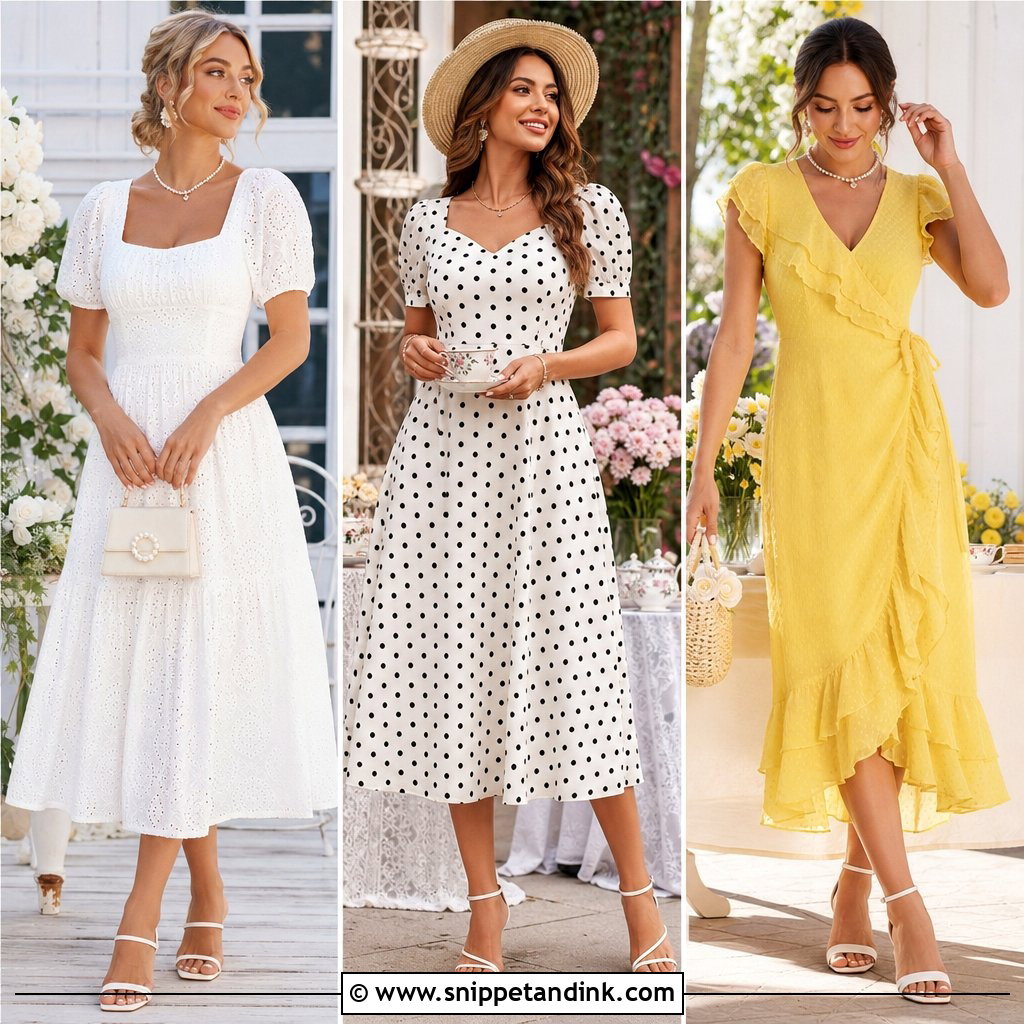
9. Civil Wedding Tea Length Dress
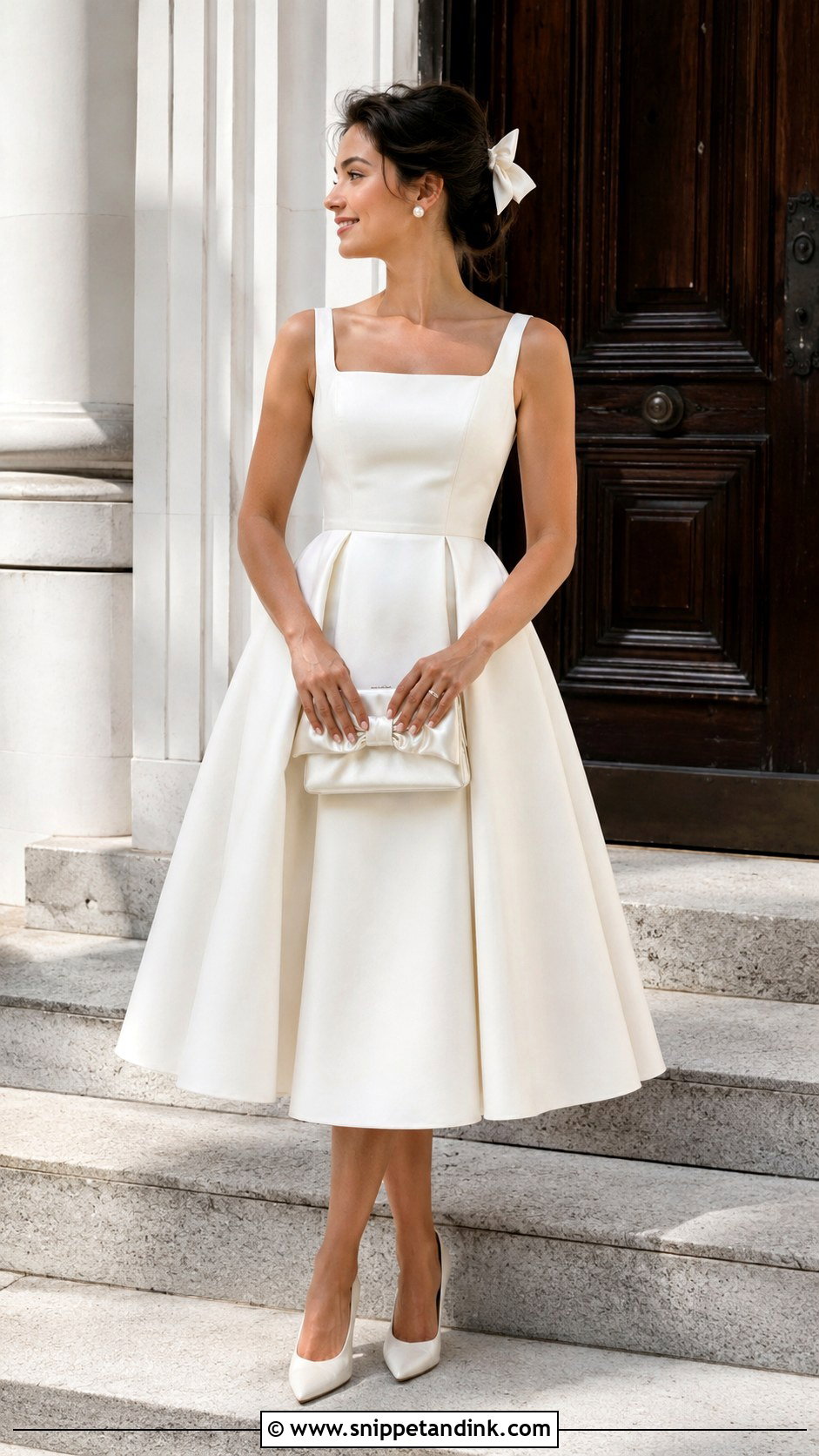
Tea length sits between knee and ankle, and that hem is the reason I like it for civil ceremonies: you can walk briskly, climb steps and still show off your shoes. A structured bodice with a clean A-line skirt gives the classic 1950s shape, while a soft satin version feels more relaxed. Get the hem measured with your shoes on, because a tea length that lands at the widest part of the calf can look heavy. Pointed pumps, ankle straps or slingbacks all suit it. A small veil or satin headband makes it feel ceremonial, and the look leans a little vintage, which some brides love and others find too costume-like.
10. Civil Wedding Tuxedo Dress
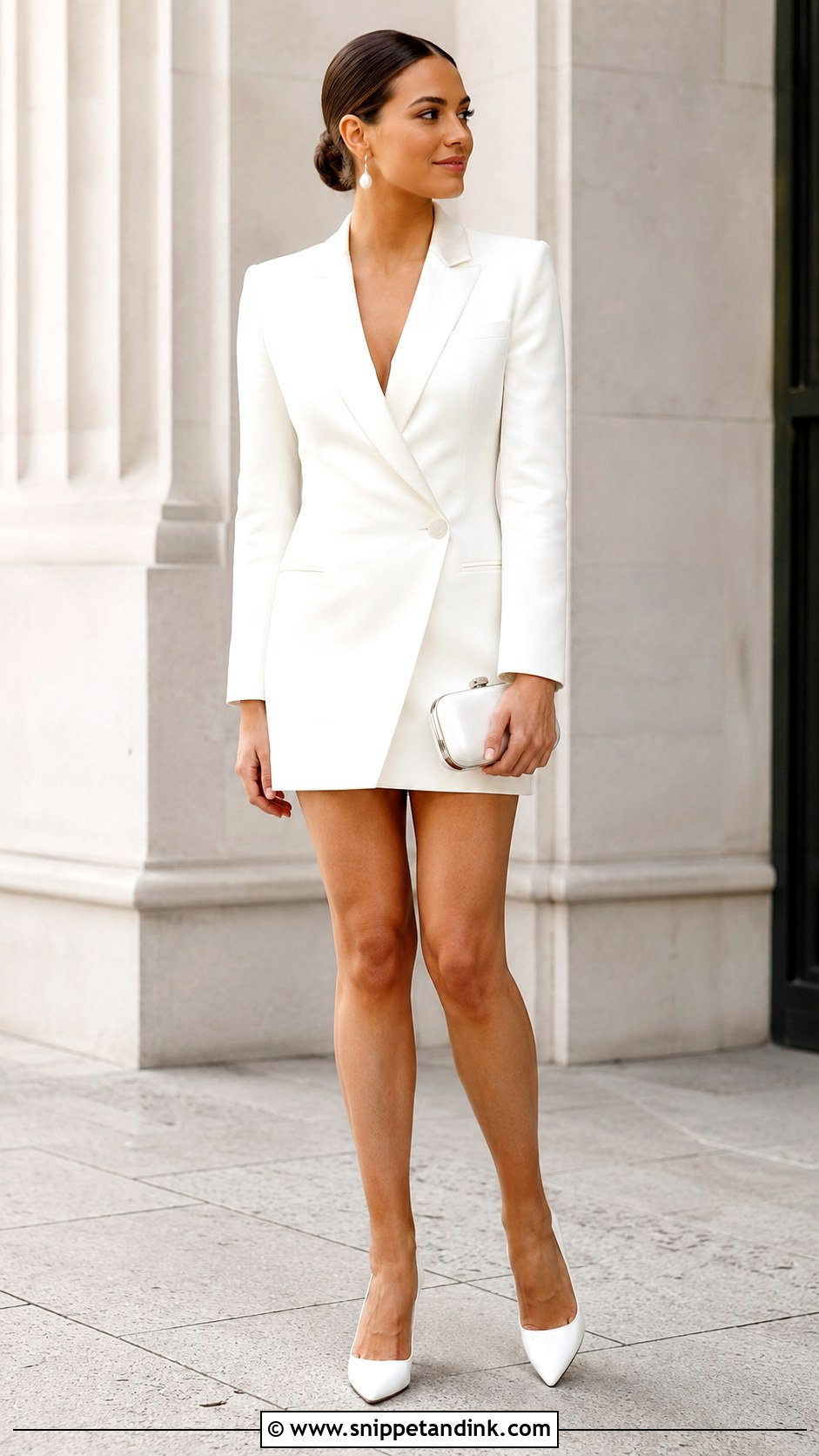
A tuxedo dress is basically a lengthened blazer, and the closure is what I check before anything else. A single button or a shallow wrap can gape when you lean forward to sign, so look for a secure fastening or ask a tailor to add a hidden hook. Ivory or white, with strong lapels and a clean fit, at longer mini or knee length reads most appropriate in a registry office. Pointed heels, sheer hosiery if you want it, a structured clutch, then pearl drops or small gold hoops. A sleek bun or polished bob keeps the neckline sharp. You get the edge of a suit with the ease of a single piece.
11. Civil Wedding Off Shoulder Dress
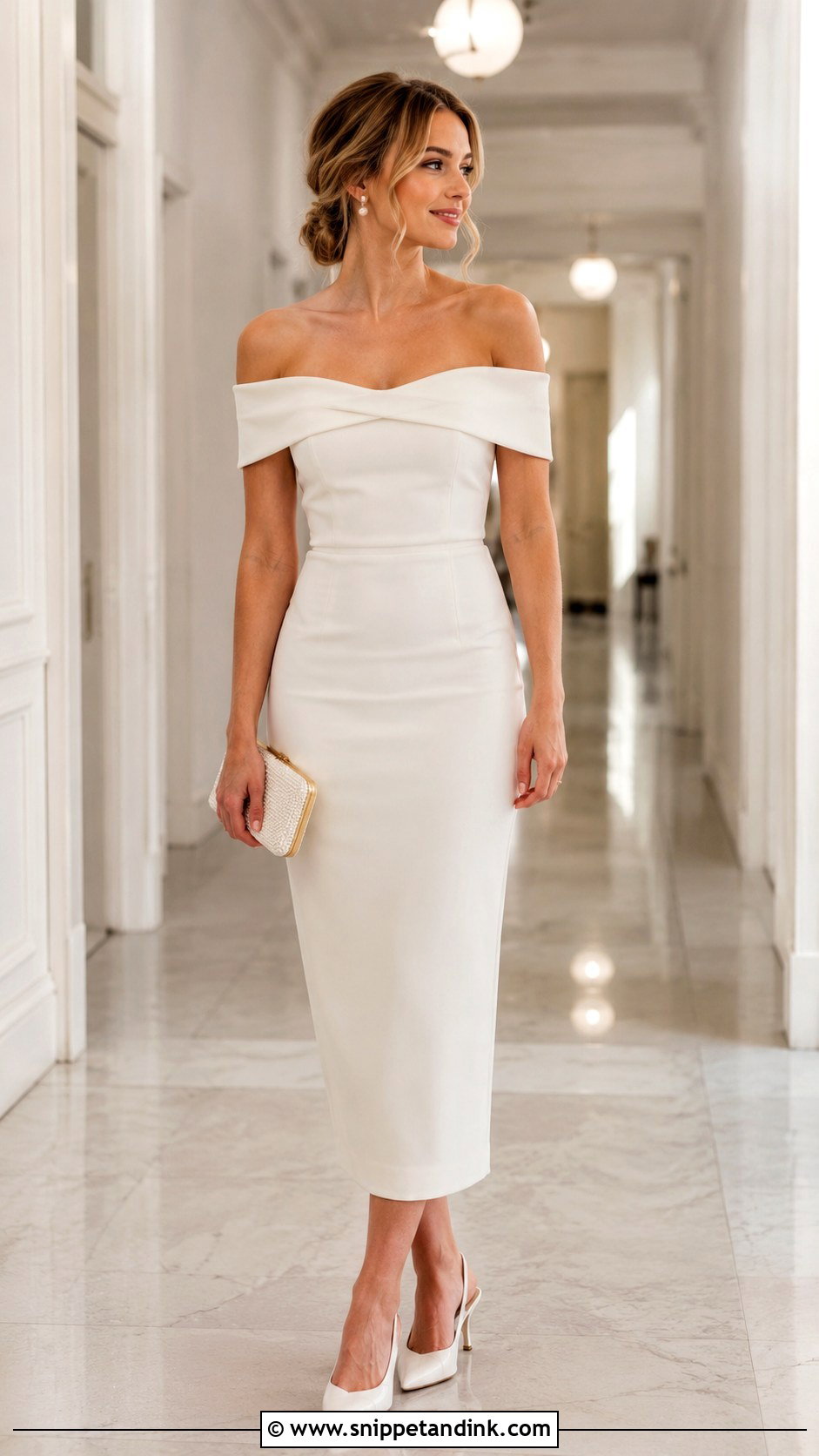
Off-shoulder necklines need to stay put through a lot of arm movement: hugging guests, holding a bouquet, signing. The ones that work have an internal elastic or a boned band; the ones that don’t slide up toward your neck within an hour. I’d ask about that before falling for the cut. In satin, crepe or a structured cotton blend, at midi or knee length, with a fitted bodice and a straight or slightly flared skirt, it shows off the collarbone without much else needed. Keep jewelry to earrings. If you need a layer for the walk in, pick a coat you can slip off quickly for photos rather than a fitted jacket that crushes the neckline.
12. Civil Wedding Wide Leg Pants Outfit
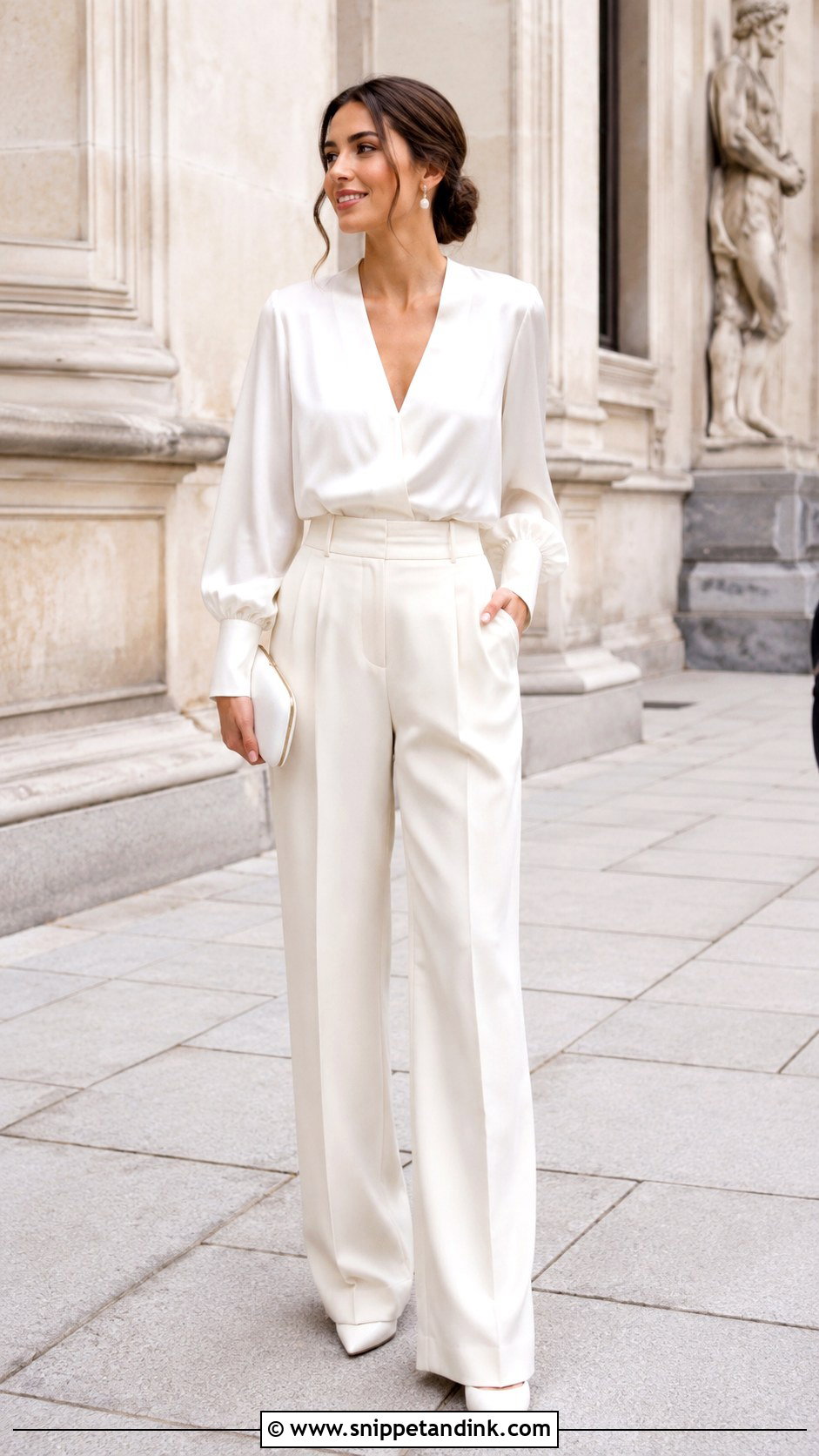
Plenty of brides never feel like themselves in a dress, and wide-leg trousers are often where they end up looking most at ease. The trousers need a high waist and a fabric with enough weight to drape straight down; lightweight polyester flaps and creases at the knee. Balance them with a silk blouse, a structured corset-style top or a sleeveless crepe shell. The hem should almost touch the floor in your pointed heels so the leg looks endless. A small clutch, pearl earrings and a sleek hairstyle complete it. I’d avoid pleated fronts here; they add bulk across the stomach when you’re seated at the signing table.
13. Civil Wedding Square Neck Dress
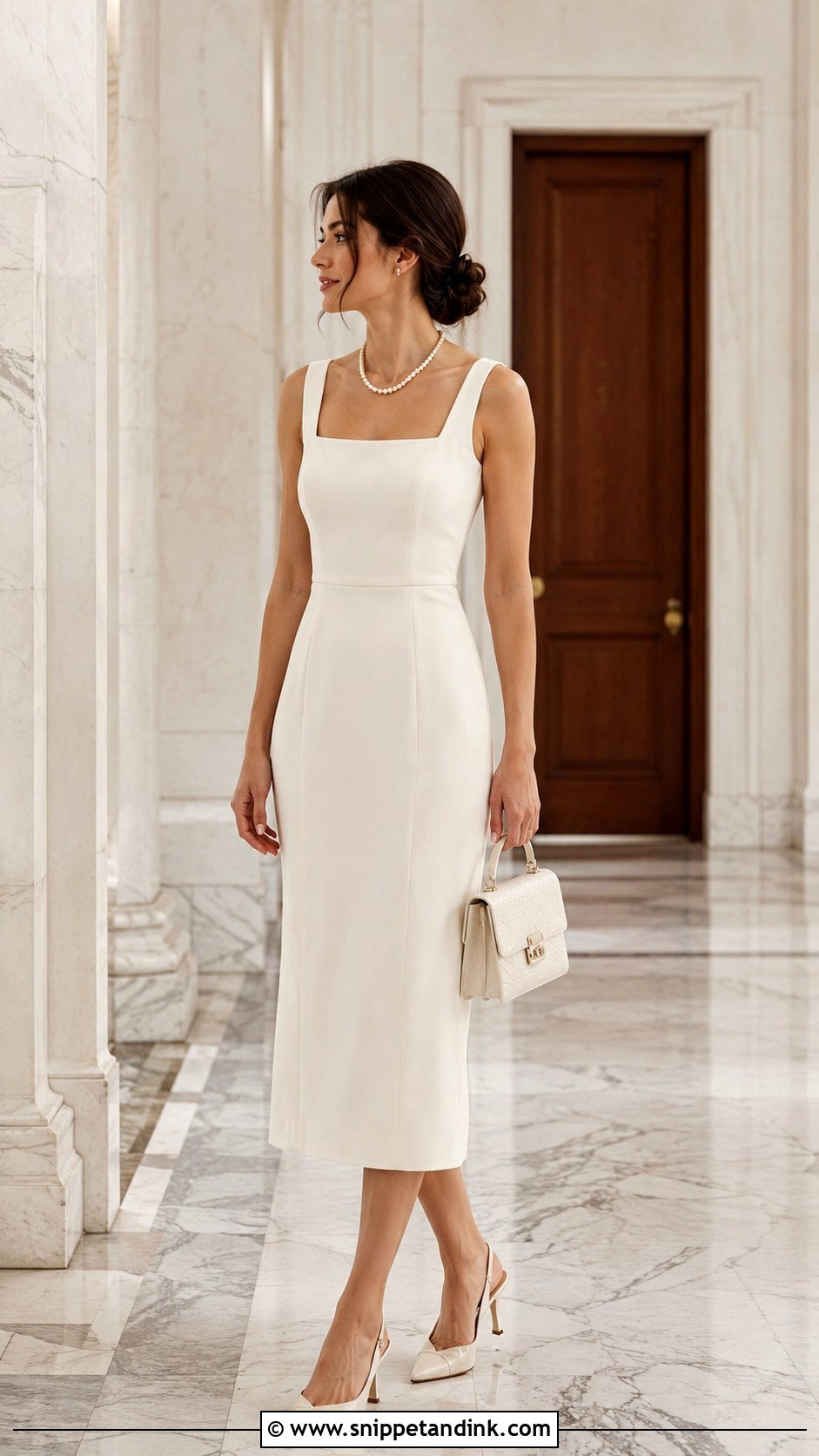
Square necks are one of the most forgiving shapes I fit. They suit broad and narrow shoulders alike, and they leave room for either a pearl necklace or nothing at all. In ivory or soft white, a fitted midi, an A-line mini or a straight knee-length cut all work. Since the neckline is plain, fabric texture matters more than usual: crepe, satin or a subtle jacquard keeps a simple dress from looking flat in photos. Check that the corners of the neckline sit flat when you breathe in; if they bow outward, the bodice needs taking in at the side seams. Slingbacks and a small structured bag finish it.
14. Civil Wedding White Shirt Dress
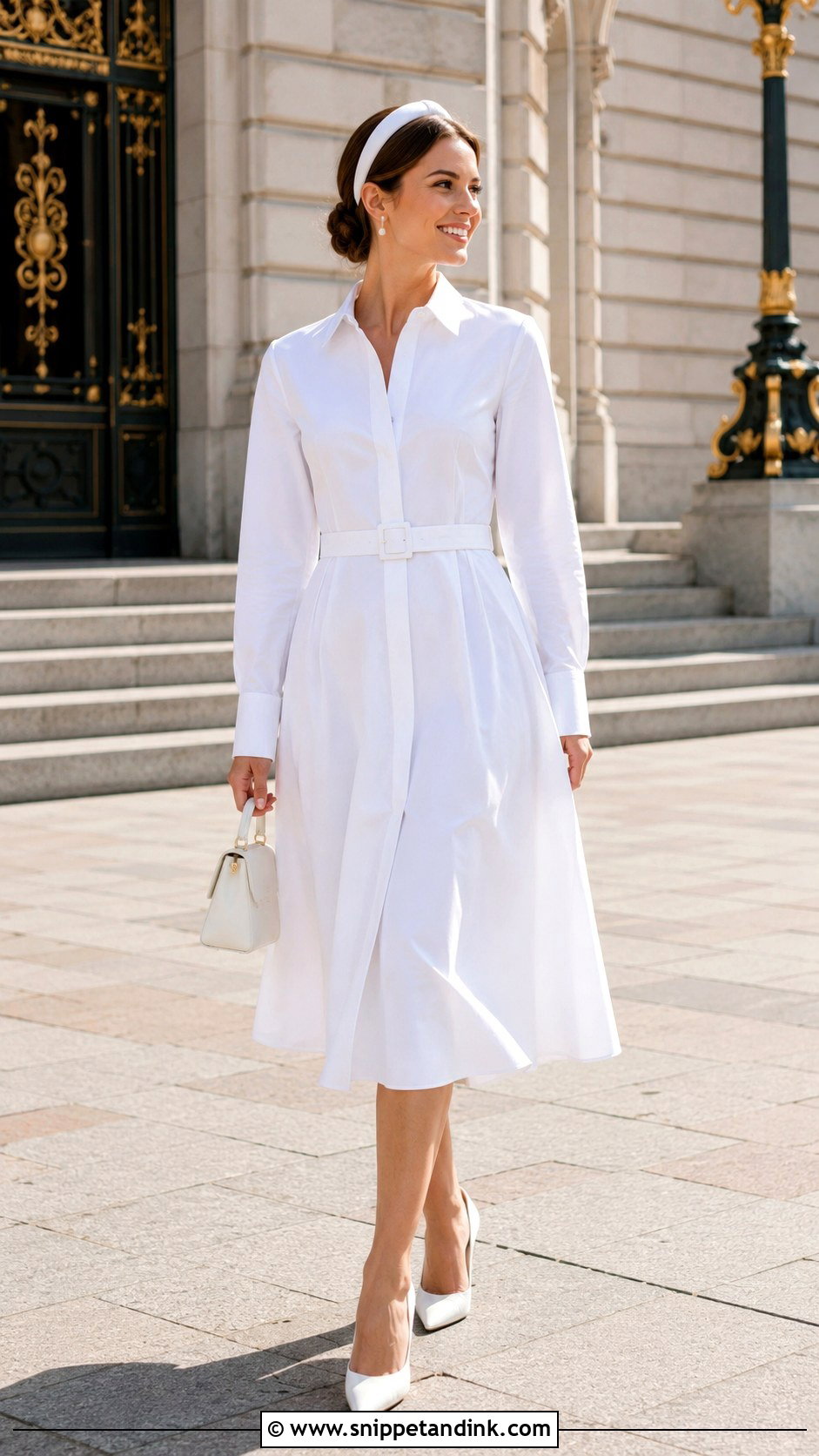
A shirt dress only reads as bridal when the fabric and fit are taken up a level, and I’d be honest that it’s the easiest look on this list to get wrong. Crisp cotton poplin wrinkles within the first hour, so I steer most brides toward a silk blend or a structured midi with a defined waist. A wrap belt, pearl buttons or a fuller skirt makes it feel like an occasion. Pointed heels and refined jewelry are a must here; flats push it back toward everyday. A short veil, satin bow or sleek headband adds the ceremonial touch, and daytime spring or summer ceremonies suit it best. Pack a small travel steamer for the morning.
15. Civil Wedding Long Sleeve Mini Dress
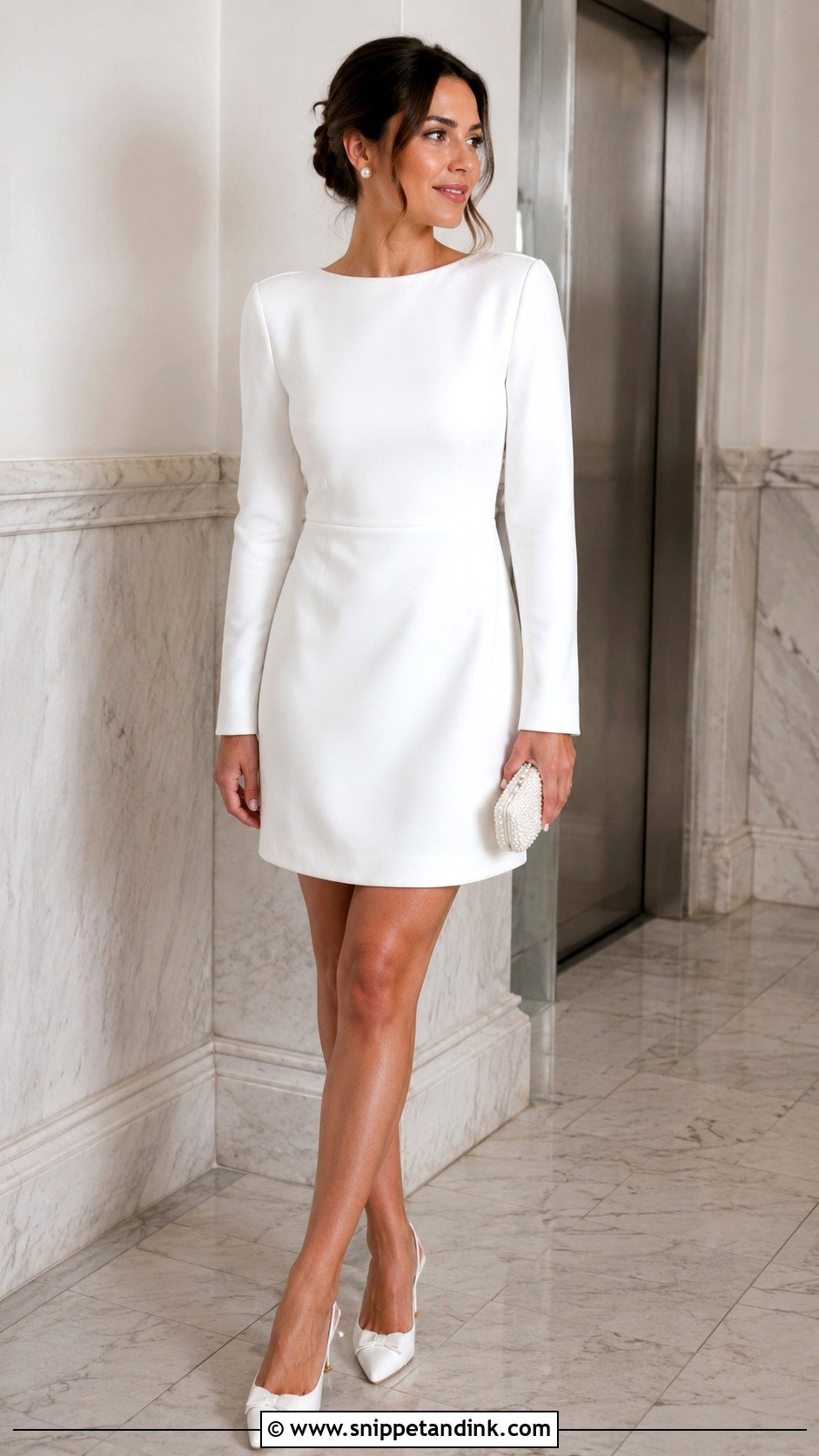
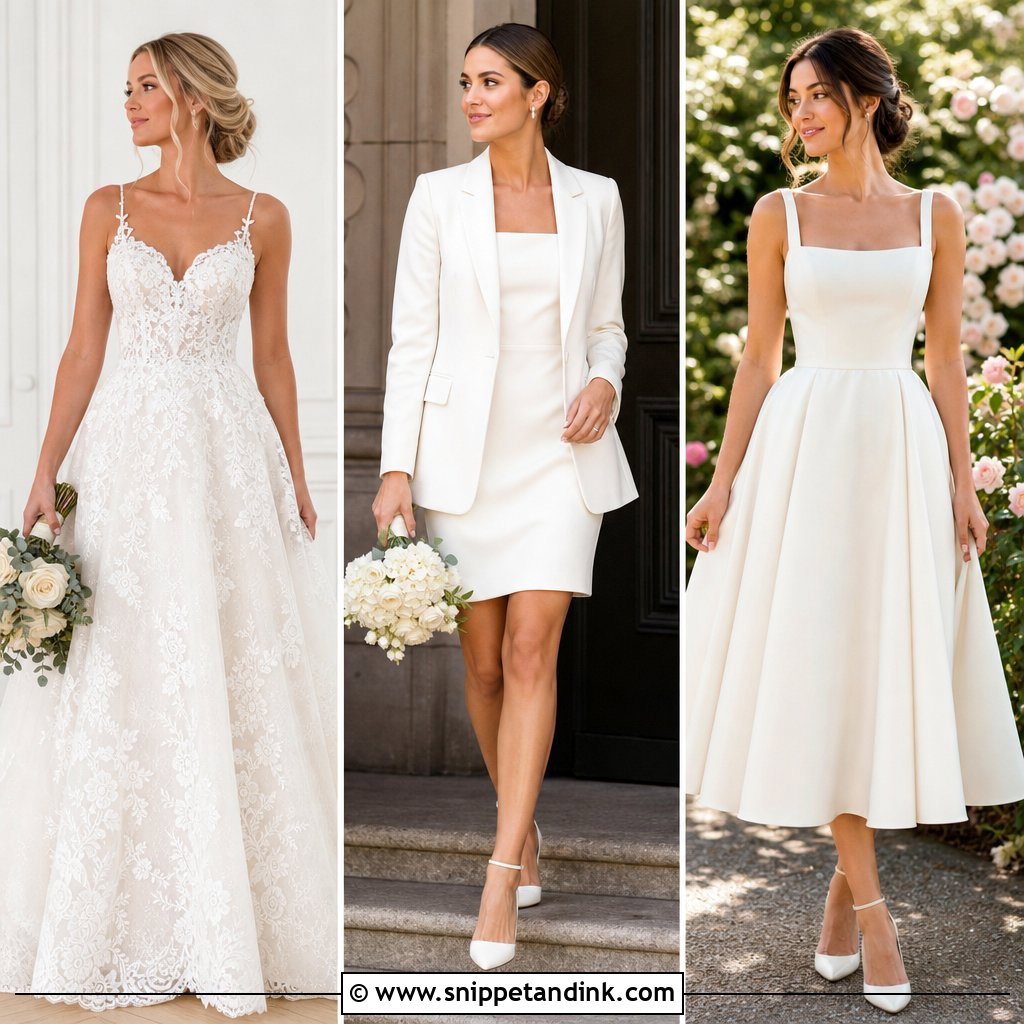
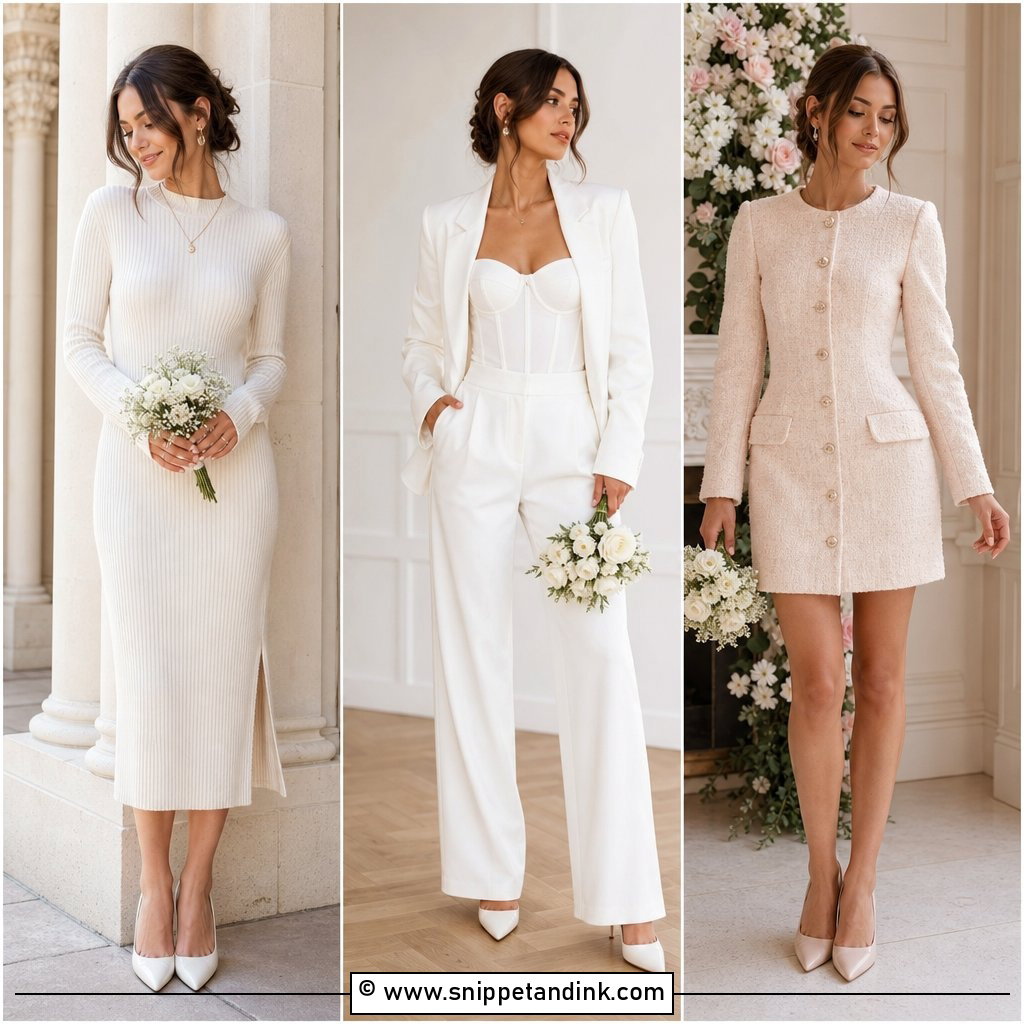
Covered arms and a short hem balance each other out, which is why a long sleeve mini suits city hall so well. The sleeves are what I check: fitted sleeves in a stiff crepe can restrict you when you reach across the desk, so raise your arms fully in the fitting room. Structured crepe, satin or a lace-trim design with a simple neckline all work. If you’ll walk between locations, low block heels are kinder than pointed pumps on cobbles. Pearl earrings, a small bag and a neat updo keep it polished. It’s my usual pick for autumn, winter and early spring ceremonies.
16. Civil Wedding Wrap Midi Dress
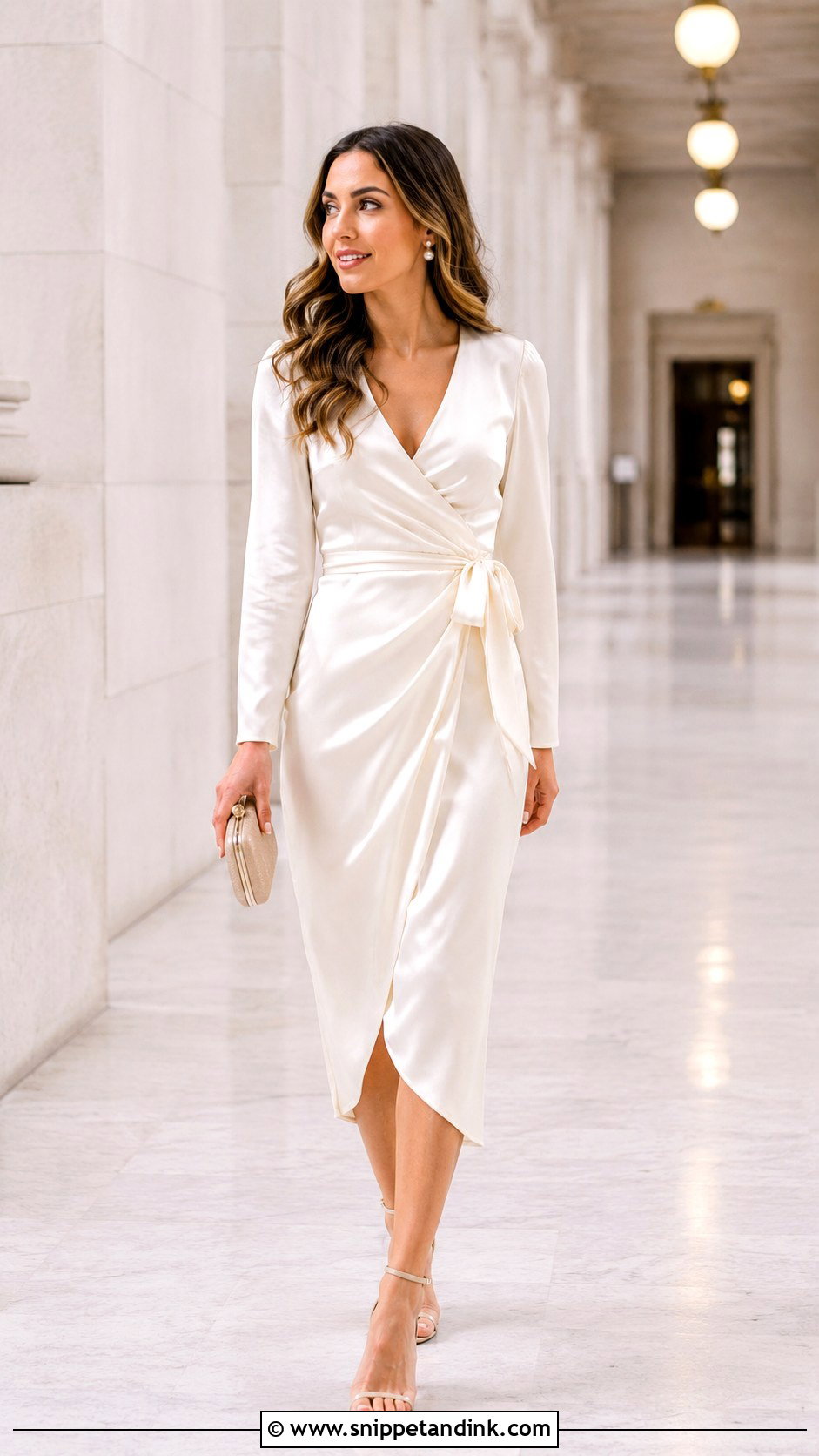
Wrap dresses are adjustable, which makes them one of the safest buys if you’re ordering online without a fitting. The wrap midi dress shape defines the waist on most bodies and moves well. Ivory satin, crepe or a soft matte fabric gives the cleanest finish. True wraps can open at the skirt when you sit or step out of a car, so I usually add a small snap or a stitch at the overlap; faux wraps avoid that problem entirely. Delicate heels, pearl earrings and a small clutch finish it. A cropped blazer or tailored coat adds polish if the day is cool.
17. Civil Wedding Pleated Midi Skirt Outfit
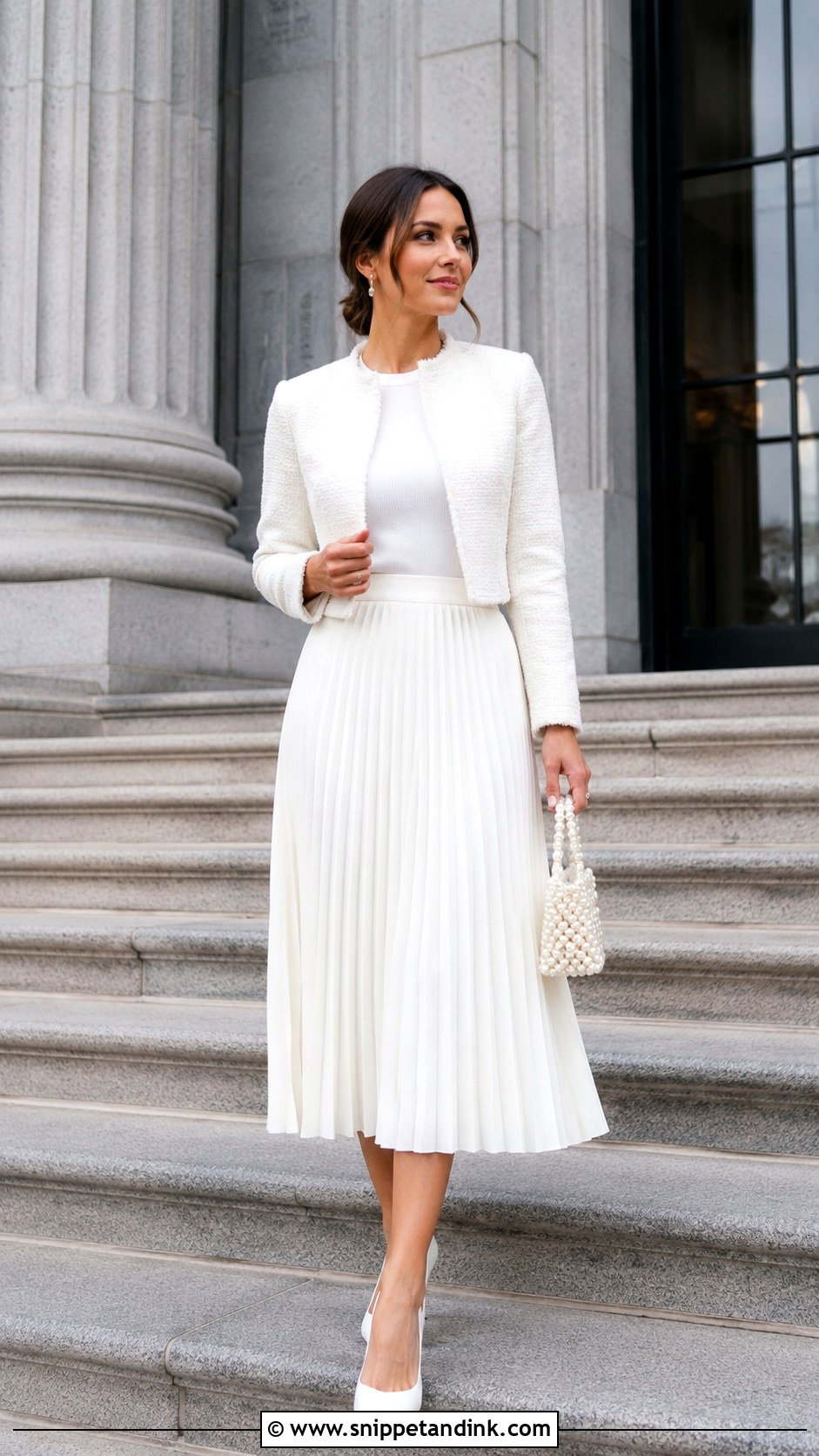
Pleats give movement in photos that a straight skirt can’t, especially on steps or a breezy pavement. The catch is that pleats need to be pressed properly the morning of; a skirt that’s been folded in a suitcase arrives with the pleats splayed. An ivory pleated midi works with a fitted knit, a silk blouse or a cropped bridal jacket, and I’d keep the top fitted so the skirt carries the volume. Pointed pumps or slim ankle straps keep it clean. A pearl bag or satin clutch adds texture. Separates like this suit brides who’d rather not wear a dress at all.
18. Civil Wedding Cape Dress
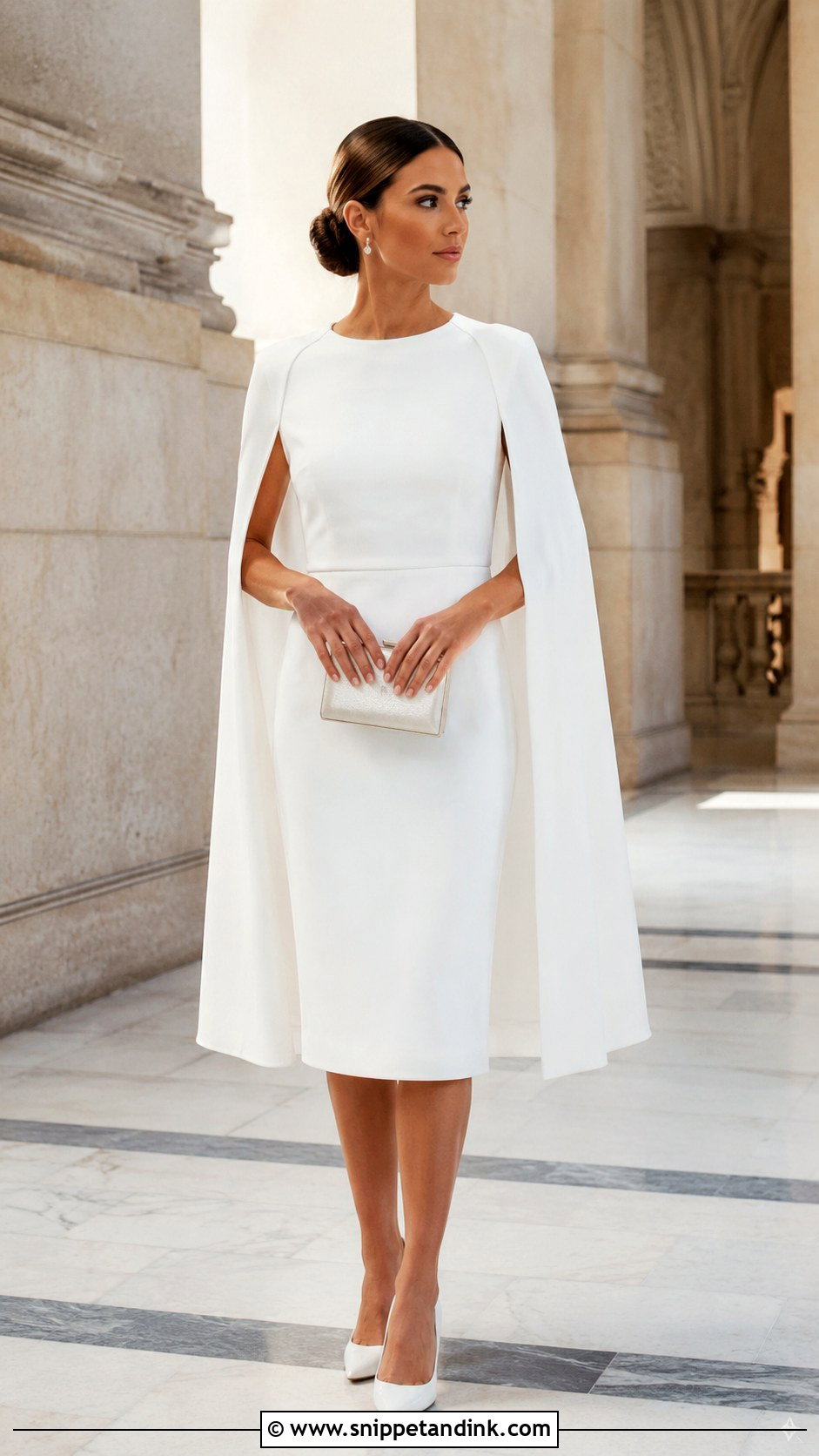
If you want a moment when you walk in but don’t want a gown, a cape does it. Look for a short, midi or column dress with a built-in cape, cape sleeves or a detachable shoulder cape. I prefer detachable ones, because capes can get in the way when you sign and when you hug people, and it’s nice to take it off for the meal. The base dress should stay plain so the cape is clearly the feature. Simple heels, minimal jewelry and a sleek clutch keep things in proportion. It suits formal town halls and winter ceremonies especially well, where the extra layer earns its place.
19. Civil Wedding Blazer And Midi Skirt
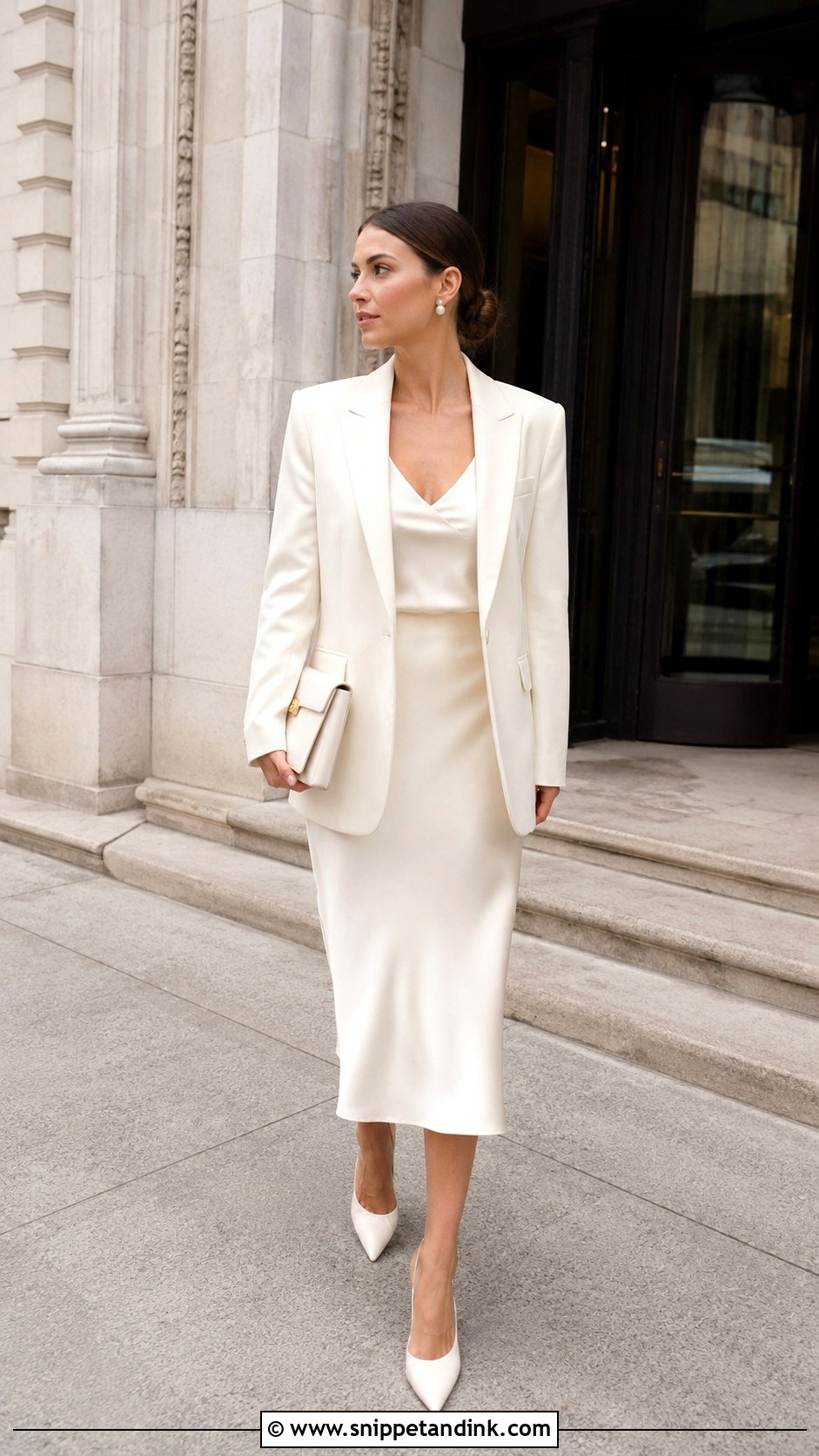
This pairing gives you tailoring on top and a softer line below. An ivory blazer, fitted or softly oversized, goes over a matching satin, crepe or pencil midi skirt, with a silk camisole underneath. My rule on oversized blazers for brides: the sleeve should still end at the wrist bone, or the whole jacket looks a size too big in photos. Worn buttoned it’s sharp; worn open it relaxes. Pointed heels, pearl earrings and a small clutch finish it. It adapts to most body shapes because you can swap the skirt cut without changing the jacket.
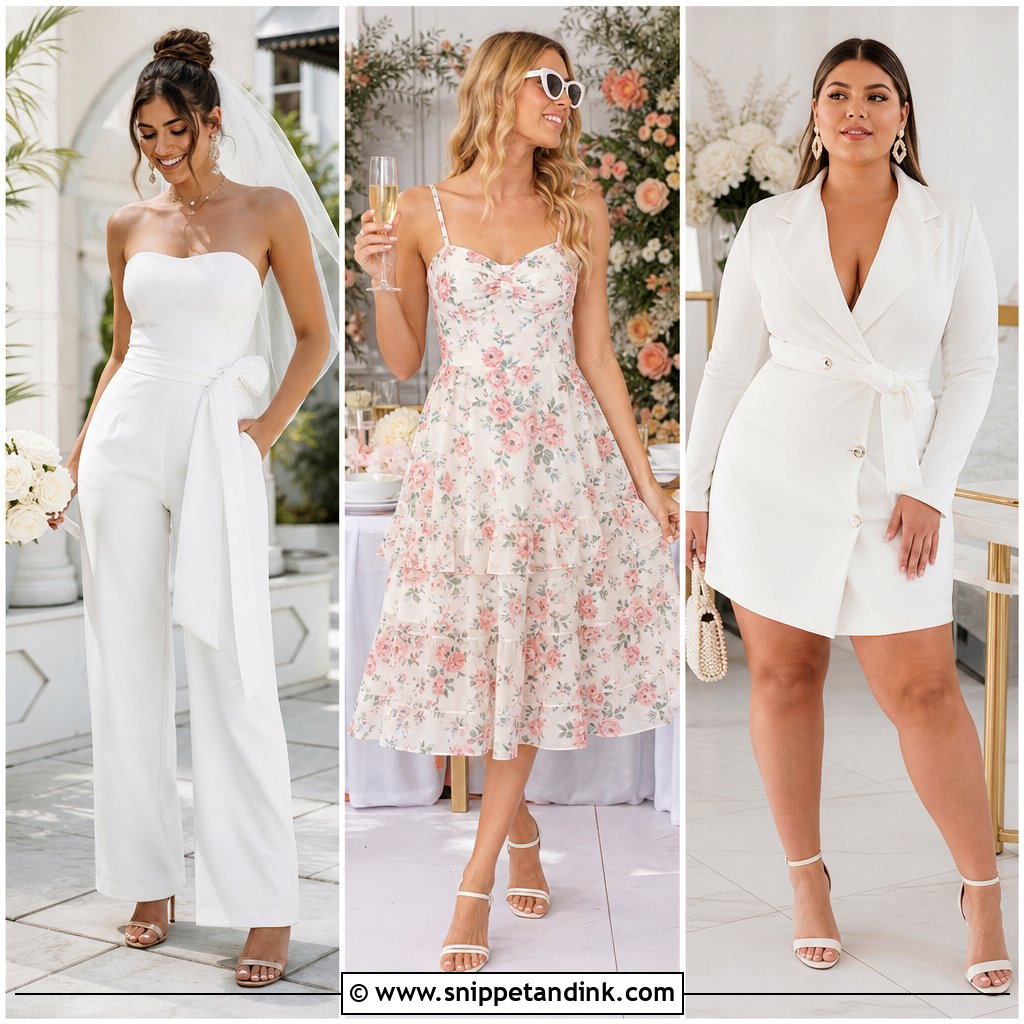
20. Civil Wedding Halter Dress
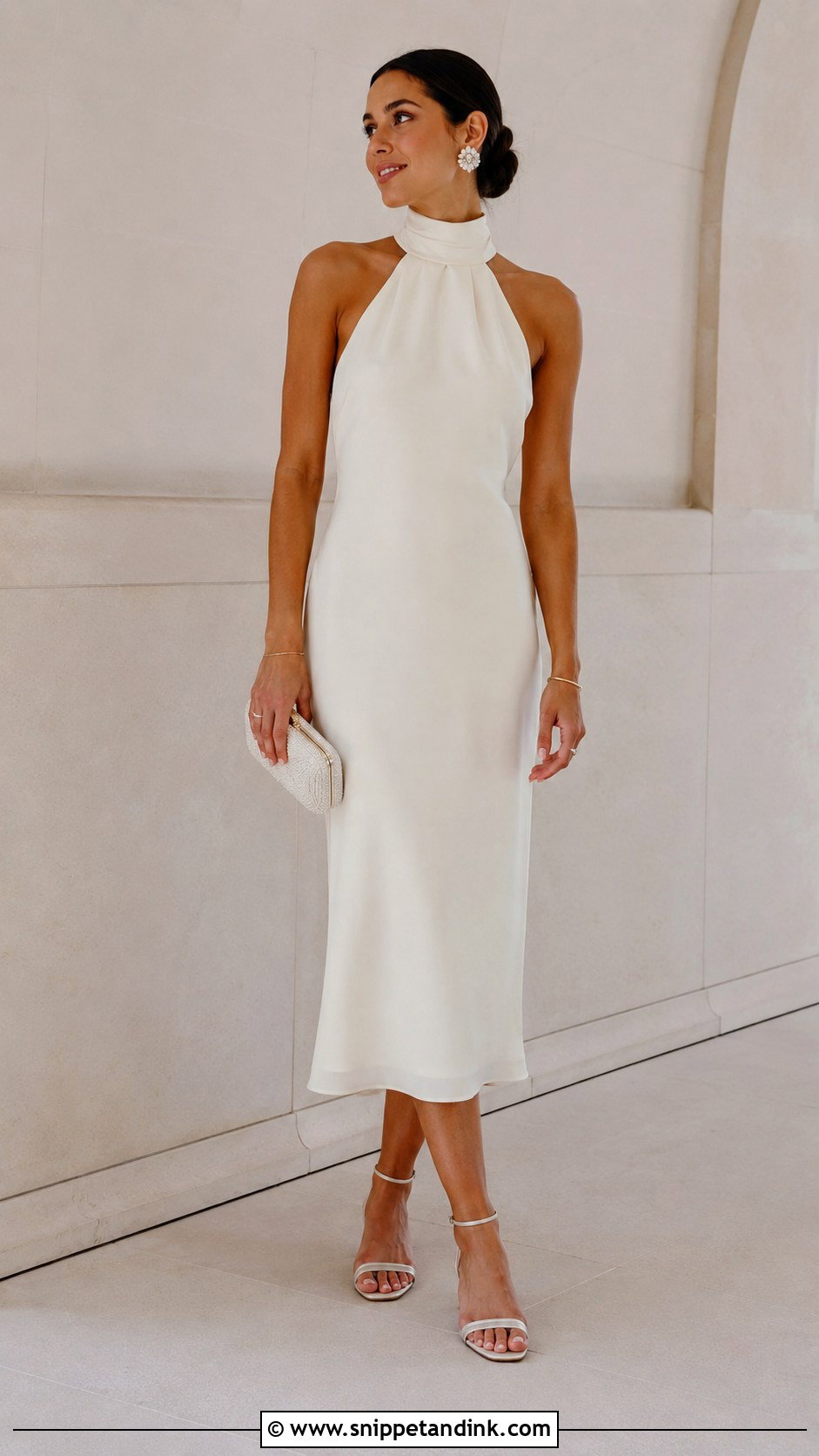
A halter draws the eye straight to the shoulders and face, so I’d ask how comfortable you are with your upper back being on show from behind as you sign. If you are, a midi or ankle-length halter in satin or crepe is a clean, modern choice. Skip the necklace and wear earrings instead. Most halters tie or hook at the neck, and that point carries the dress’s weight, so check it doesn’t dig in after an hour. A smooth bun or ponytail keeps the neckline clear. Have a light blazer or long coat for before and after the ceremony, especially in an air-conditioned building.
21. Civil Wedding A Line Mini Dress
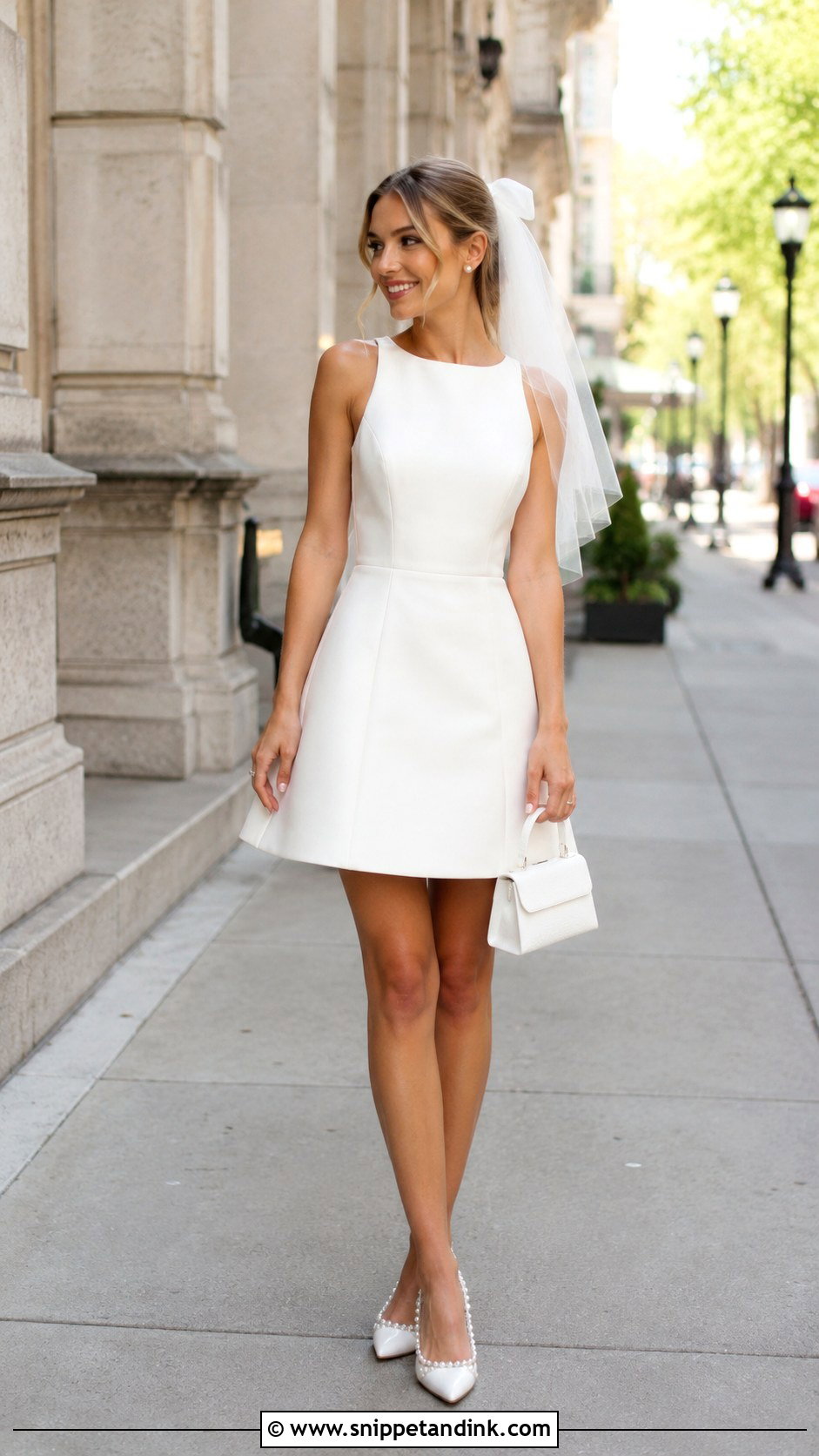
A fitted top with a gently flared skirt gives a short dress real shape, and it’s flattering on more figures than a straight mini. The fabric needs enough body to hold the flare: structured satin, crepe or a textured weave. Soft fabrics just collapse. Pointed heels or slingbacks, a small top-handle bag and pearl jewelry suit it, and a bow veil or headband adds the bridal note. My one caution is wind: an A-line mini catches every gust on open steps, so if your portraits are outdoors in spring, a slightly weighted hem or a lining with some heft saves a lot of skirt-holding in photos.
22. Civil Wedding Pearl Detail Dress
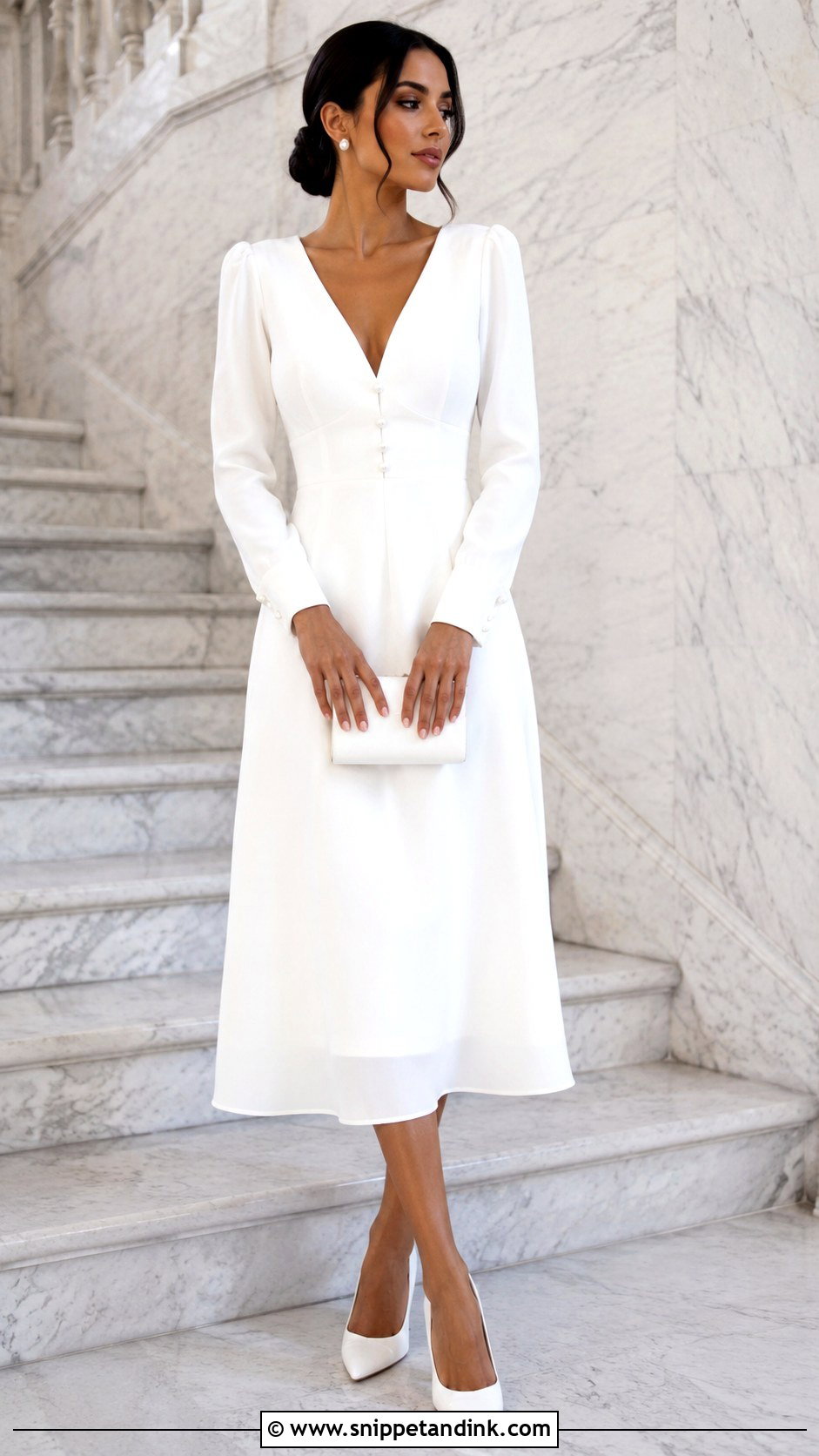
Pearls are the easiest way to make a plain dress feel bridal, and the restraint is the skill. Pearl buttons down the back, pearl straps or a fine pearl trim on a white mini, midi or column is plenty. I check how the pearls are attached, since glued pearls pop off when they rub against a bag strap or a coat lining, while hand-stitched ones survive the day. With detail on the dress, keep the heels and clutch smooth, and size your earrings down. Close-up shots pick pearl detail up very well, so mention it to your photographer.
23. Civil Wedding Satin Skirt Outfit
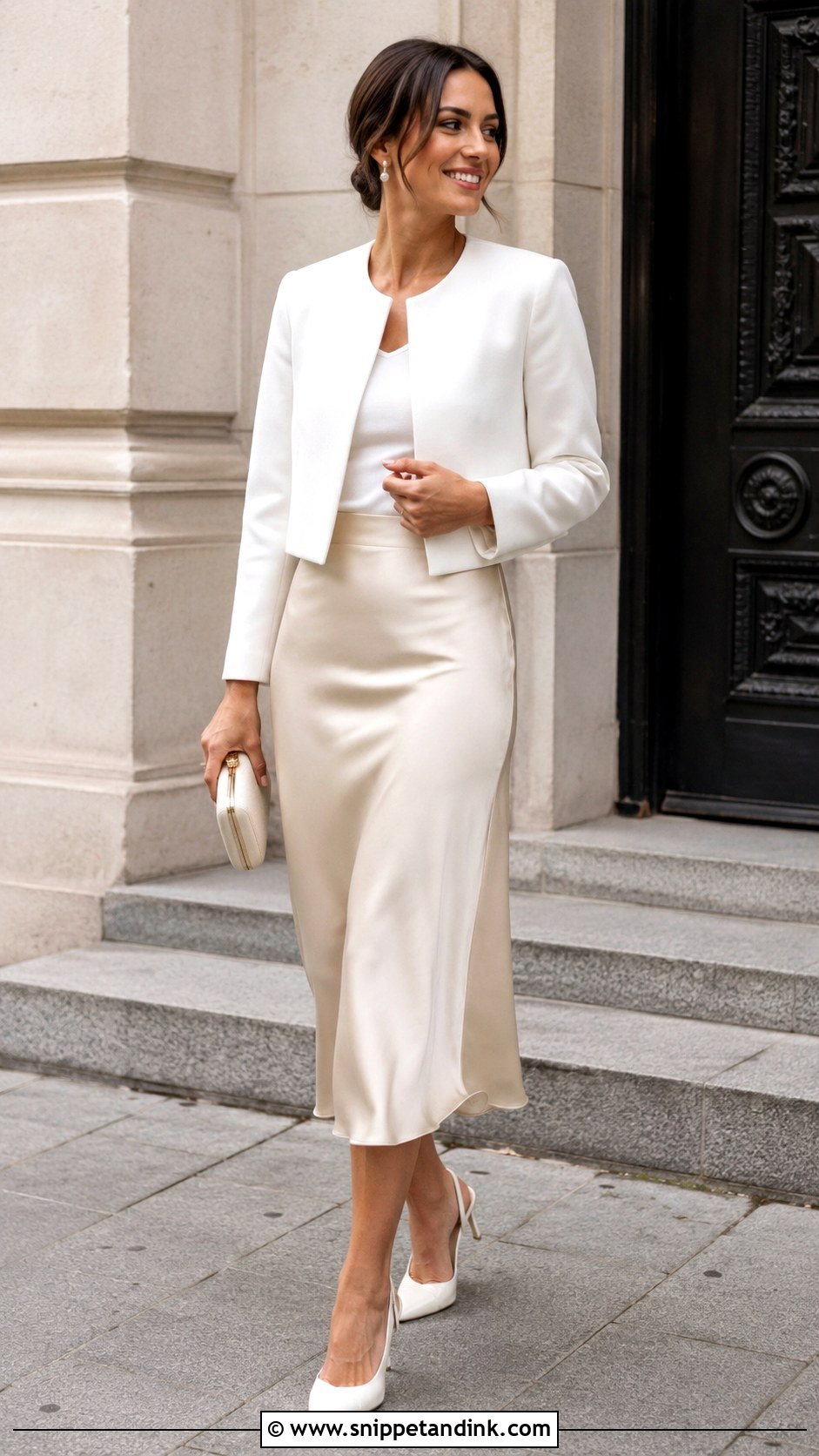
Start with an ivory or champagne satin midi skirt and build around it: a fitted white top, a silk blouse or a tailored cropped jacket. Satin next to a matte knit or crepe gives contrast without adding colour. For a more formal feel I’d pick a high-waisted skirt with a structured top; for something relaxed, a fine knit tucked in smoothly. Slingbacks, delicate earrings and a small clutch complete it. One practical point: satin skirts show static cling in cold, dry buildings, so a slip underneath or a quick anti-static spray before you leave the house is worth it. You’ll wear both pieces again.
24. Civil Wedding Minimal Maxi Dress
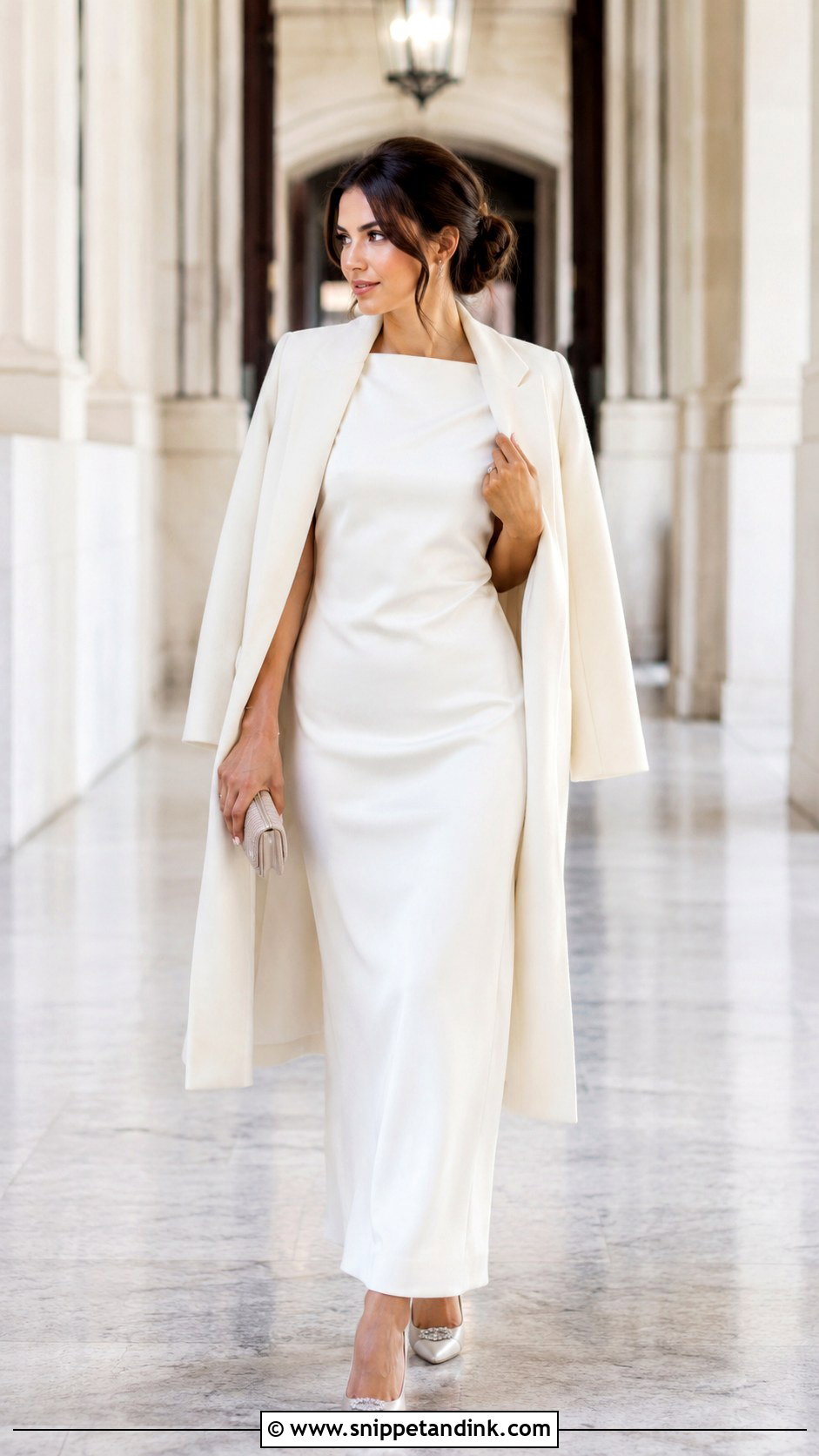
A maxi gives you full length without the structure, train or weight of a gown. Look for clean seams, a straight skirt and very little decoration. Square, high and strapless necklines all suit the shape. Because there’s nothing to distract, fabric quality shows immediately; a thin maxi looks like a nightdress under bright lights, so hold it up to a window and check whether you can see through it. Refined heels, a small clutch and simple jewelry finish it. Have it hemmed to clear the floor by a centimetre in your shoes, since city hall stairs are not kind to a long hem, and add a sleek coat or blazer for the walk in.
25. Civil Wedding Short Veil Outfit
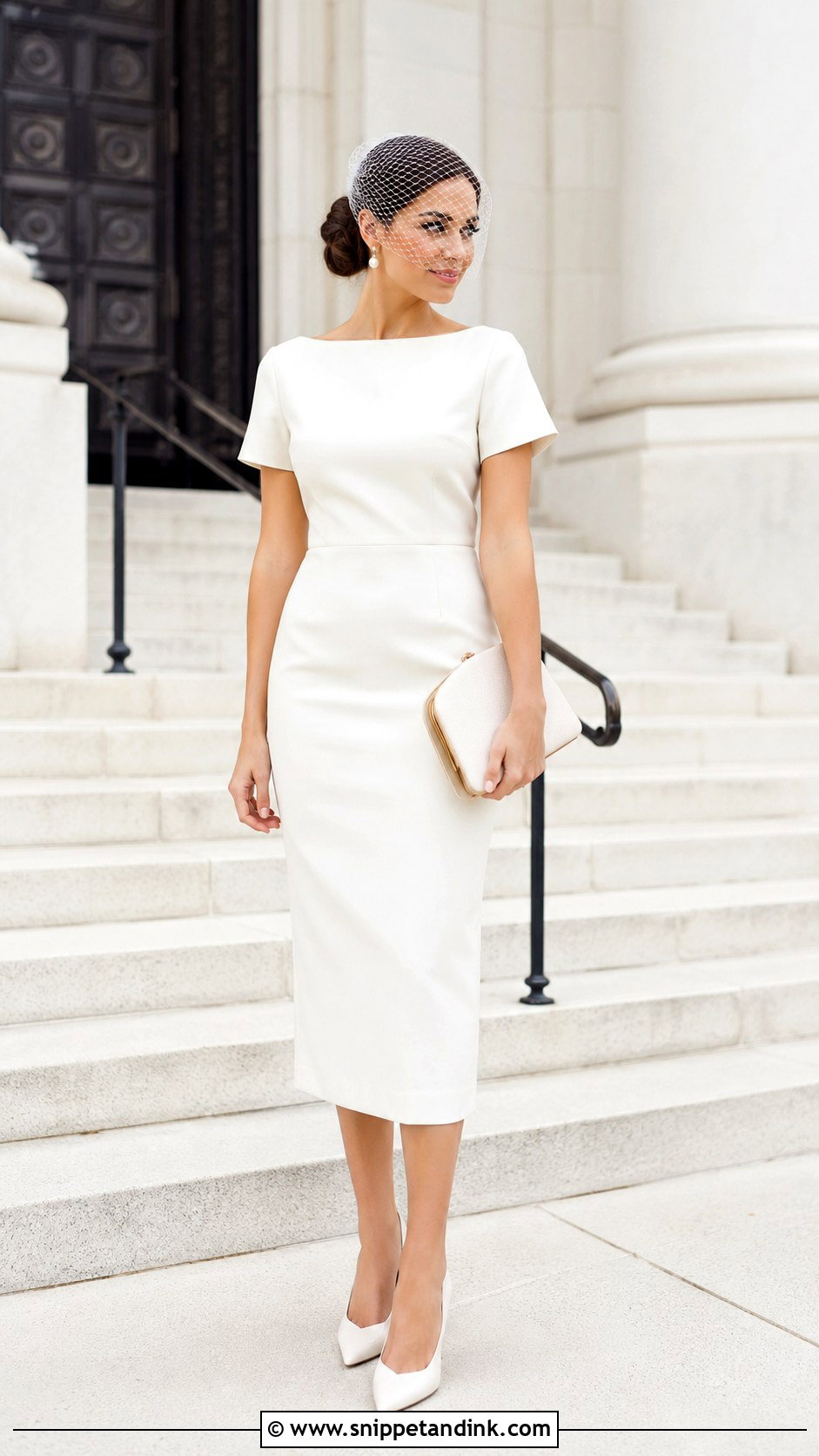
A short veil turns a simple civil wedding outfit into an unmistakably bridal one, and it’s the accessory I suggest most often to brides in suits or jumpsuits. Birdcage, shoulder length and bow veils all work; birdcage suits a sharp, retro outfit, shoulder length is softer. Keep everything else simple so the veil looks chic rather than costume. Ask your hairstylist to anchor the comb into a section of backcombed hair or a small pinned base, since short veils are light and lift in the wind. Pointed heels, pearl earrings and a structured clutch complete the look, and it’s easy to remove after the ceremony.
Alterations on a Suit or Midi Still Need Lead Time
Brides often assume a non-gown outfit can be bought the week before. Sometimes that works, but most of the looks above need at least one visit to a tailor, and good tailors get busy in spring and early autumn. I’d plan on buying around eight to ten weeks before the ceremony, with one fitting about a month out and a final check a week before.
The common jobs are simple ones: trouser and skirt hems set to your exact heel height, jacket sleeves shortened, a waist taken in, straps adjusted on a slip or halter. Prices vary widely by city and by fabric, and satin and silk usually cost more to alter than cotton or crepe because they mark easily under the needle.
The night before and the morning of
Hang everything on a padded hanger the night before, away from a radiator. Steam rather than iron, especially satin, which shines permanently if a hot iron touches it directly. Pack a small kit for the day: a lint roller for dark coats, a few safety pins, clear nail polish for hosiery ladders and a stain pen. If there’s drinks or a meal afterward, a white napkin over your lap is not unglamorous; it’s what keeps an ivory skirt ivory.
Wearing It Again Without It Feeling Like a Costume
One quiet advantage of a civil outfit is a second life. A white suit can be split up: the blazer over jeans, the trousers with a black knit. Satin skirts and slip dresses take colour well if you’d like them dyed later, though silk and polyester behave differently in a dye bath, so ask a professional first. Have the outfit cleaned within a couple of weeks so any spills don’t set, and store it in a breathable cotton bag rather than the plastic it came home in, which traps moisture and can yellow ivory fabric over time.
The Outfit That Still Looks Right After the Signing
You don’t need a gown to look and feel like a bride. A sharp suit, a satin midi, a lace dress, a jumpsuit, a skirt set or a minimal maxi can carry the same weight when the fit is right and the fabric has some substance. Think about the room you’ll be married in, the weather, how far you’ll walk for portraits and how often you’ll sit. Then add one bridal detail you love. If I had to give one piece of advice, it would be to do your final try-on by sitting, signing and climbing a flight of stairs in the full outfit, shoes included.
You'll Like These Ideas:



Leave a Reply