
Very few brides I work with now walk in asking for “a wedding dress” and nothing else. They ask what will work on a beach, in a registry office, in a ballroom that’s freezing in January, or through a sangeet and a reception on the same weekend. A bridal outfit today might be a bias-cut slip, a tailored suit, a lace A-line, a lehenga or a mini for the evening. What decides the right one is less about trend and more about how long you’ll wear it, where you’ll stand and how you want to move. Below are 25 bridal looks I’d put on a rail for a client, with the fit and fabric notes I’d give her in the fitting room.
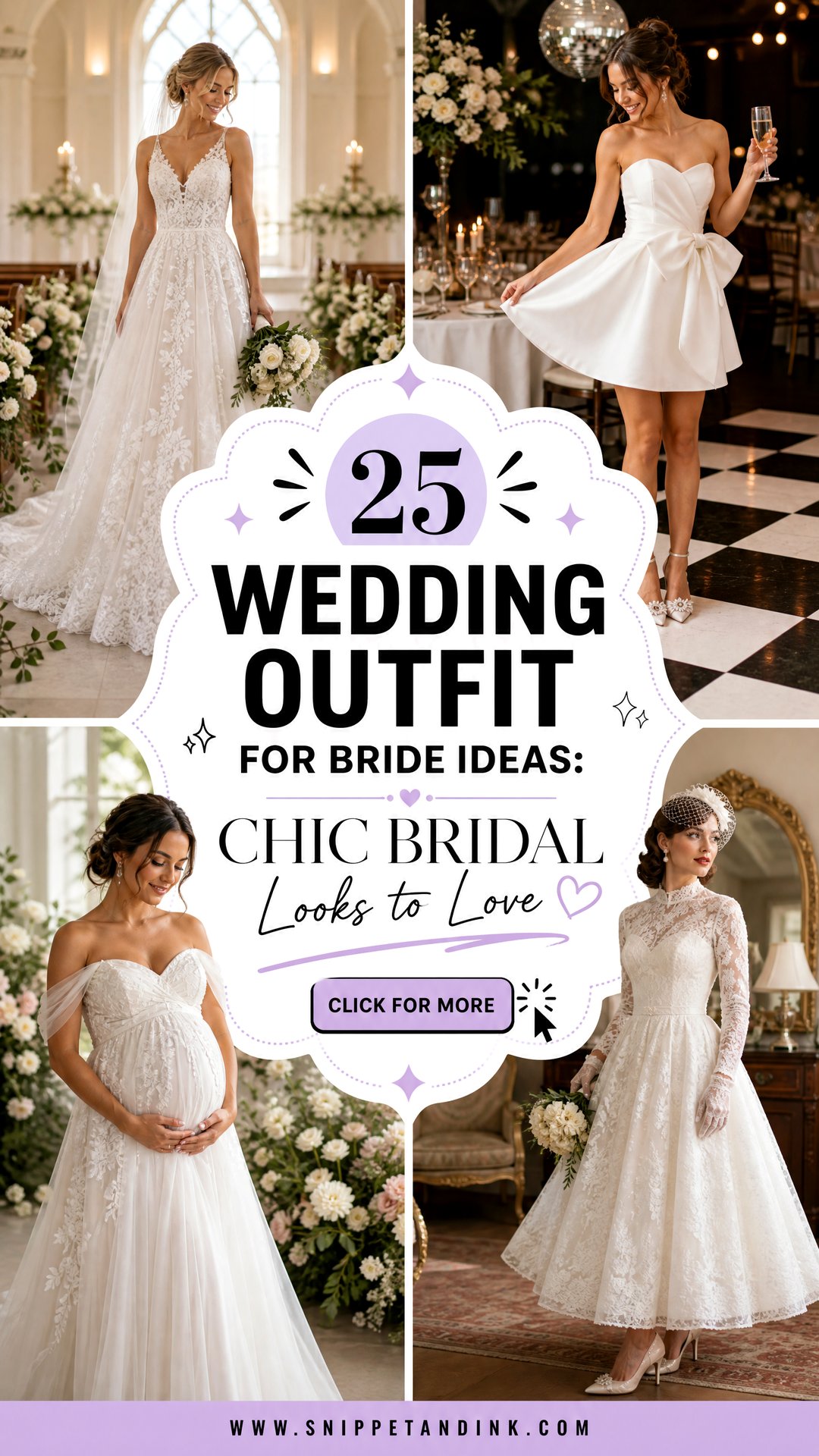
Three Answers I Want Before Your First Appointment
Brides often arrive with a saved folder of dresses, and that’s helpful, but these three answers narrow the rail much faster:
- Where you’ll stand and walk: sand, grass, stone steps, a carpeted ballroom.
- The season and how much of the day is outdoors.
- How many hours you’ll wear it, and whether you’ll change for the evening.
Timing matters as much as style. Many made-to-order gowns take several months to arrive, often four to eight depending on the designer, and alterations add another two to three months. That’s why I suggest shopping around nine to twelve months before the wedding. Off-the-rack and ready-to-wear pieces can work on a much shorter timeline, which is worth knowing if your date is close.
Budget for alterations separately. Hemming, bustles and bodice adjustments are rarely included in the dress price, and costs vary widely by gown and region.
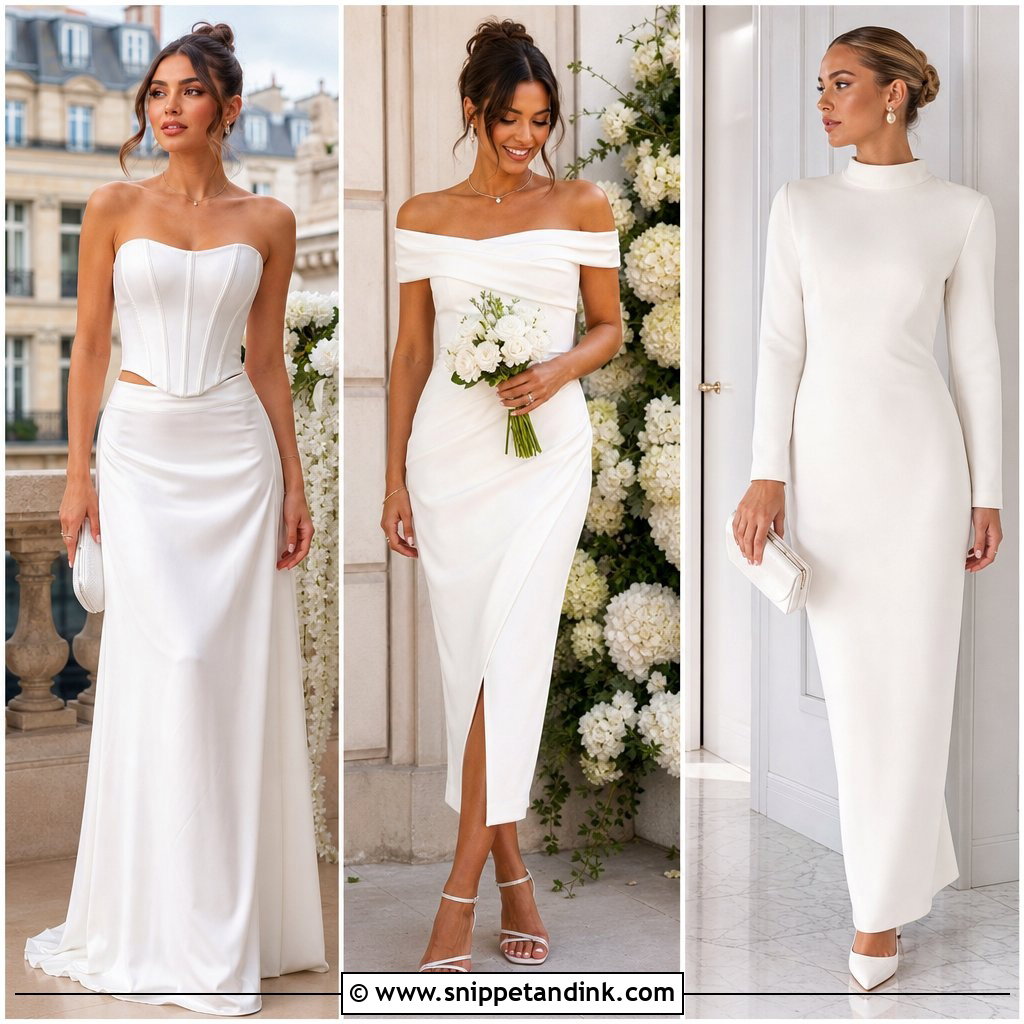
1. Satin Slip Wedding Dress Outfit
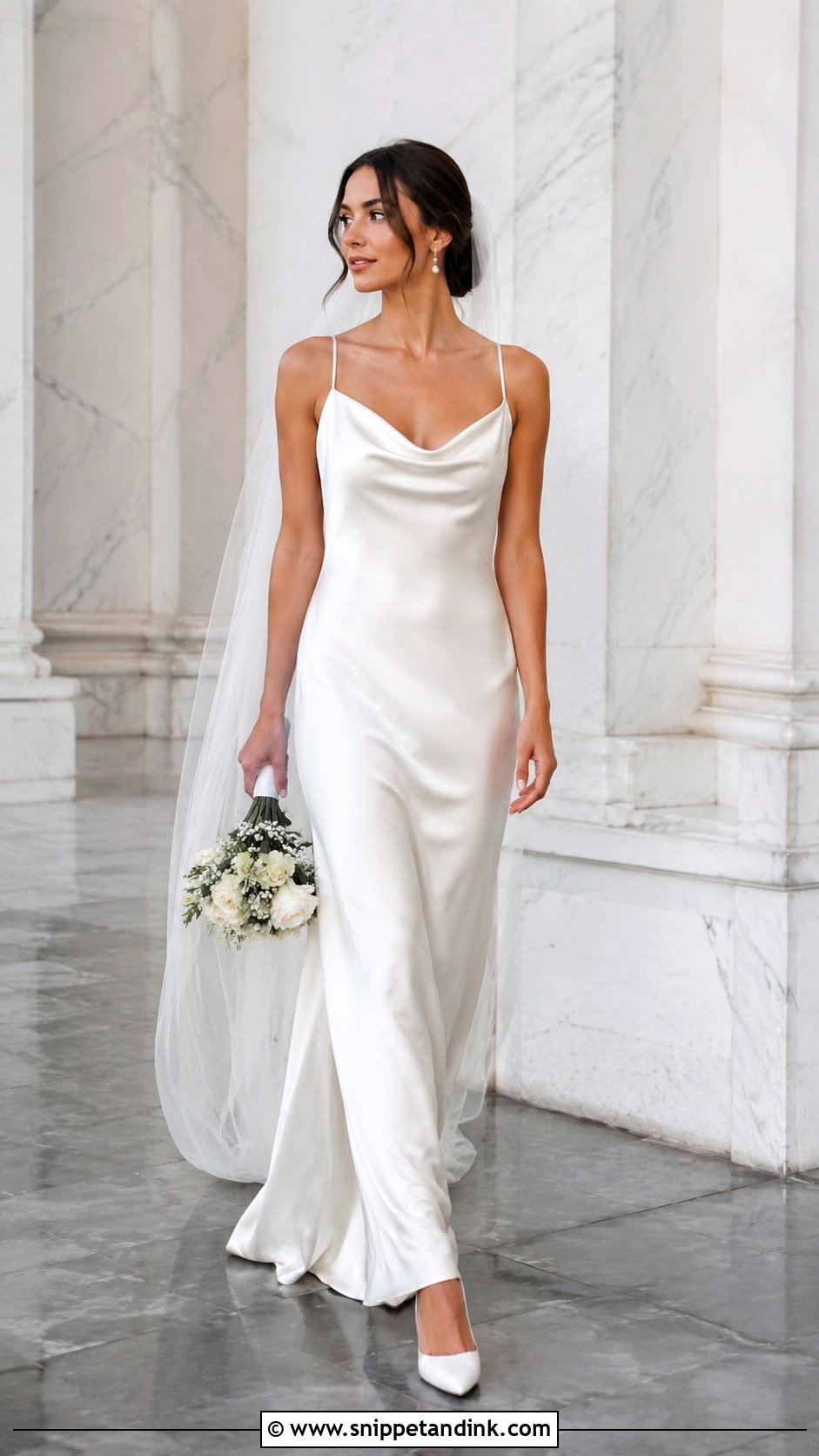
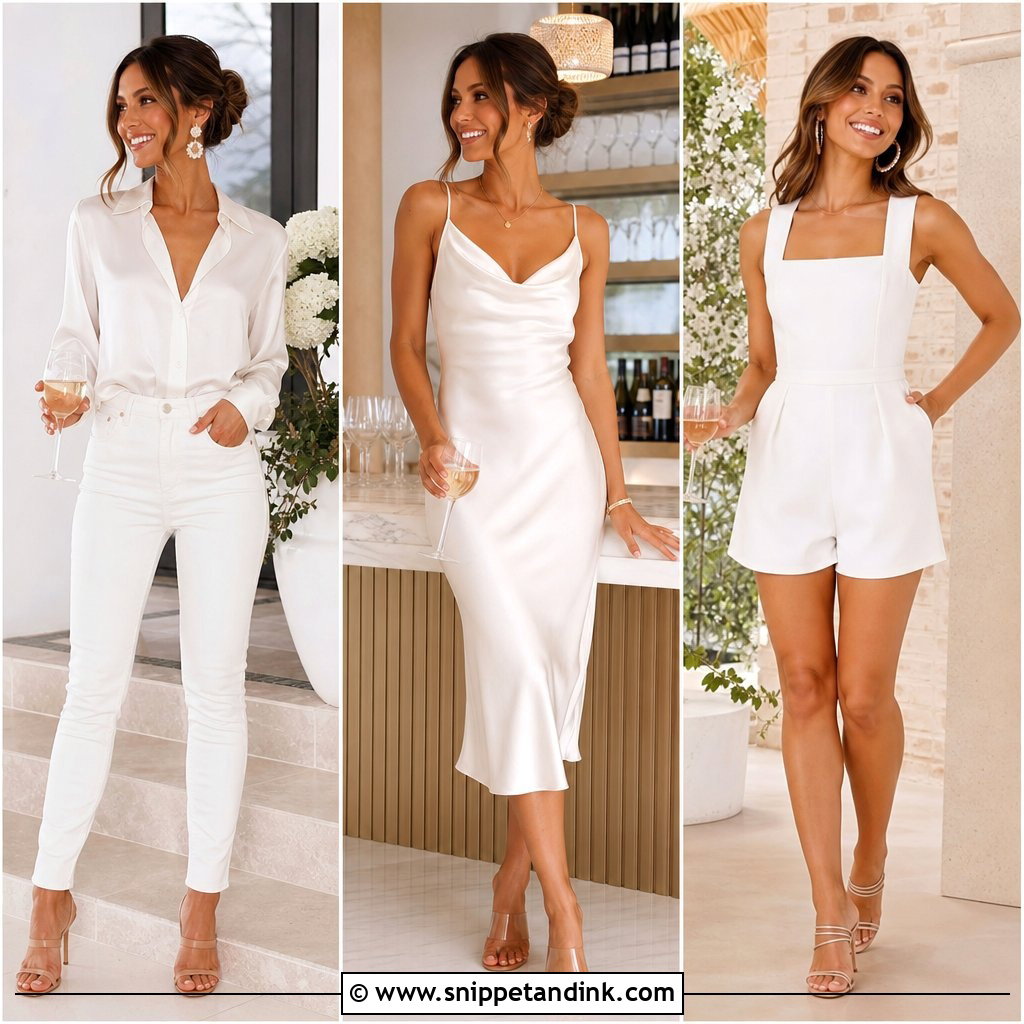
Bias-cut satin is the dress I’d steer some brides toward and quietly talk others out of. Cut on the diagonal, the fabric drapes and moves like water, but it also reveals every line underneath, so the fitting has to be done over the exact underwear you’ll wear. Ivory or pearl satin with a simple veil and pointed heels suits city and destination weddings. If you want coverage, a cropped satin jacket over the shoulders keeps the line clean. Expect it to crease a little at the hip once you sit, which is normal for satin.
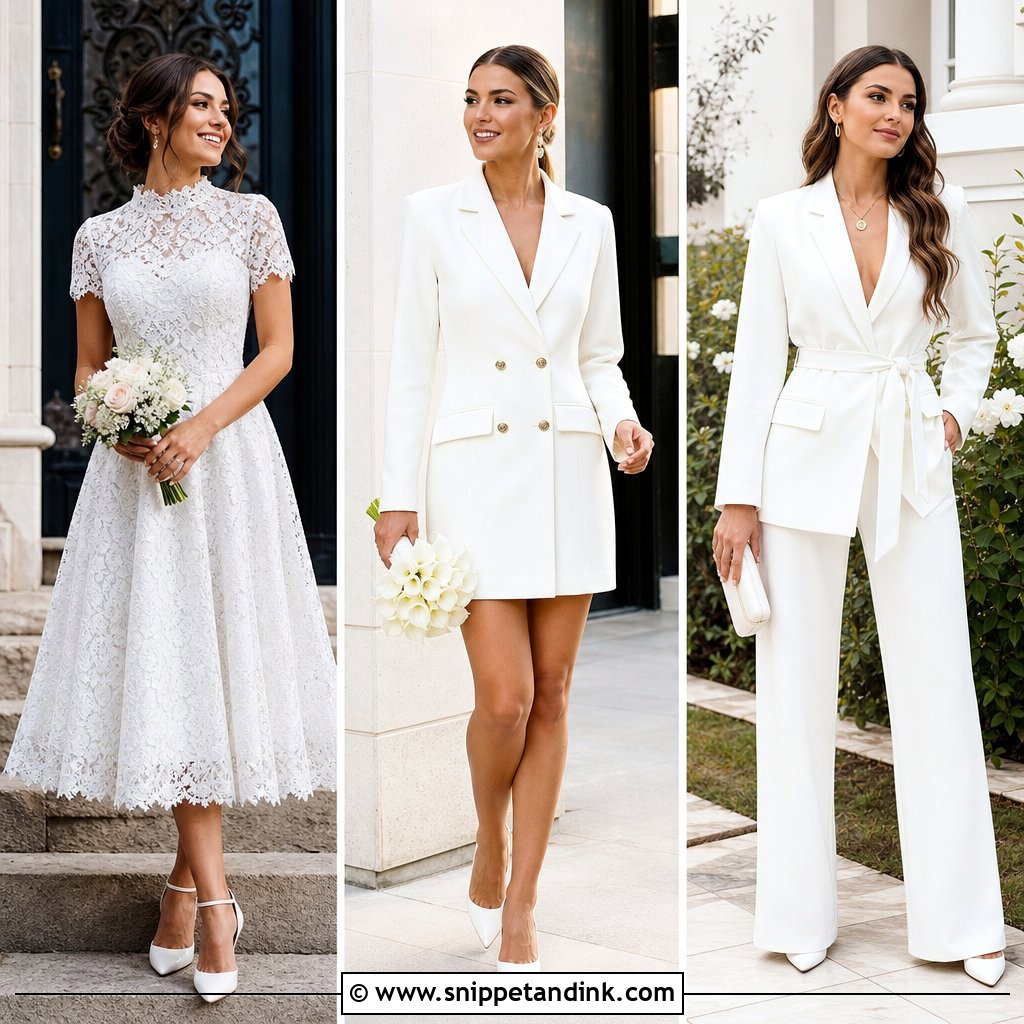
2. Lace A Line Wedding Dress Outfit
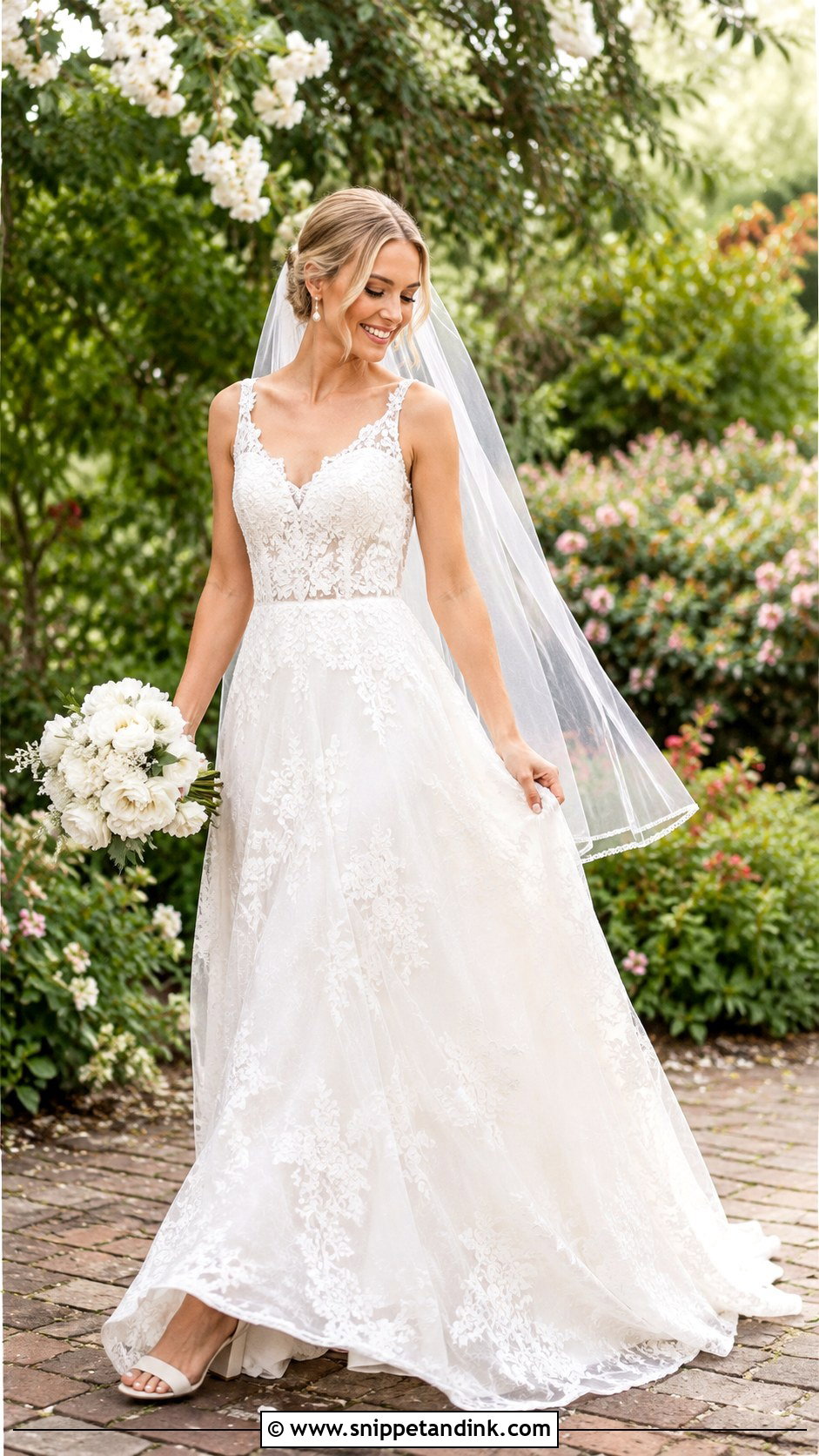
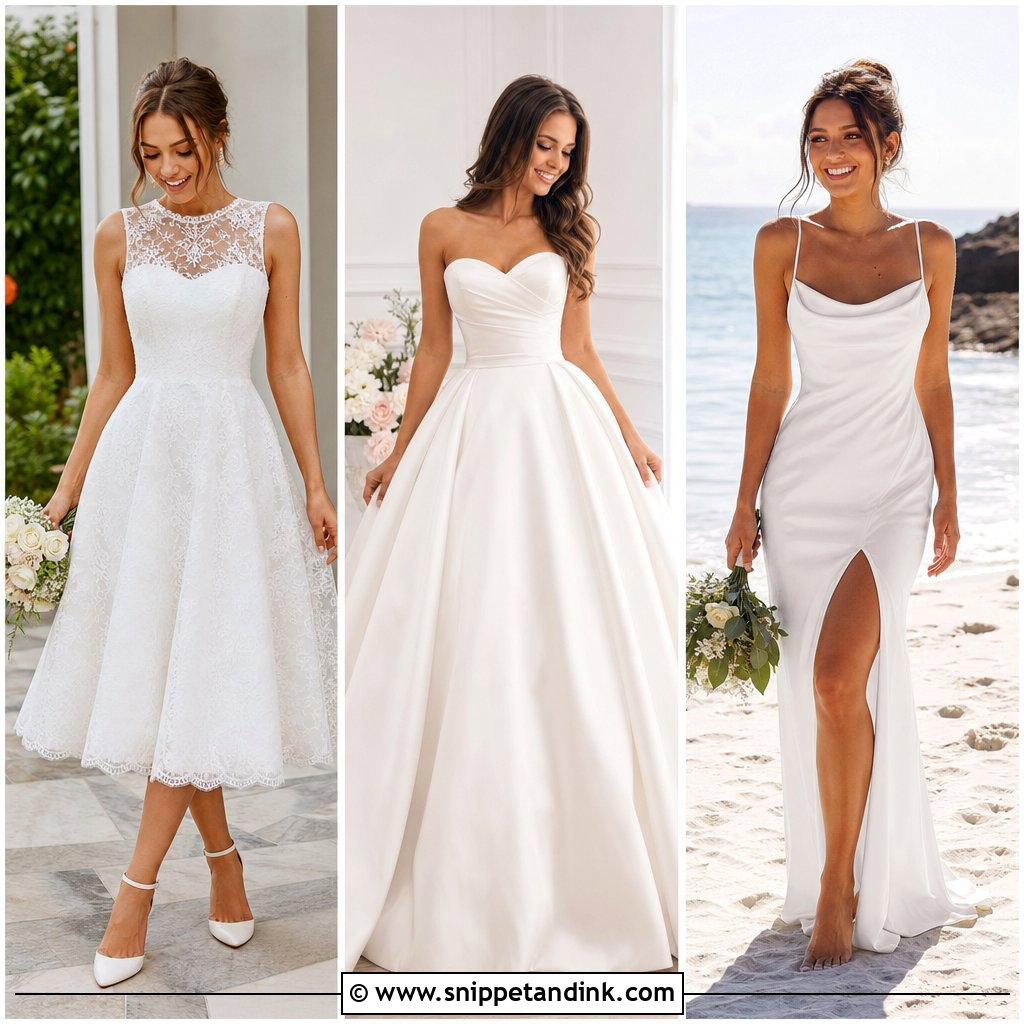
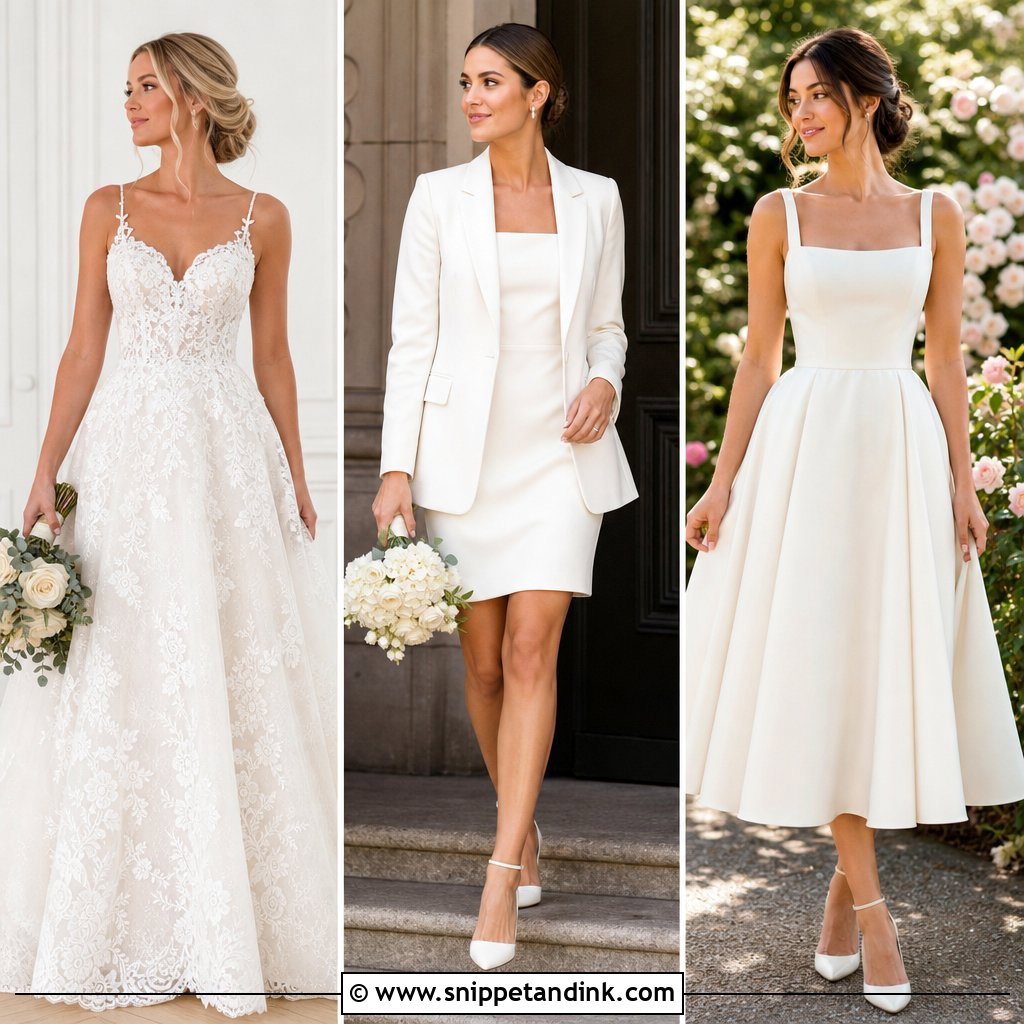
The lace A-line is still the shape I see suit the widest range of bodies. A fitted bodice sets the waist, then the skirt falls away from the hips without clinging. Floral lace reads soft and garden-like; geometric lace looks more modern. I check the lace placement at the hemline, because good gowns have the motifs cut around the edge rather than sliced through. Block heels give extra stability if you’ll be on lawn.
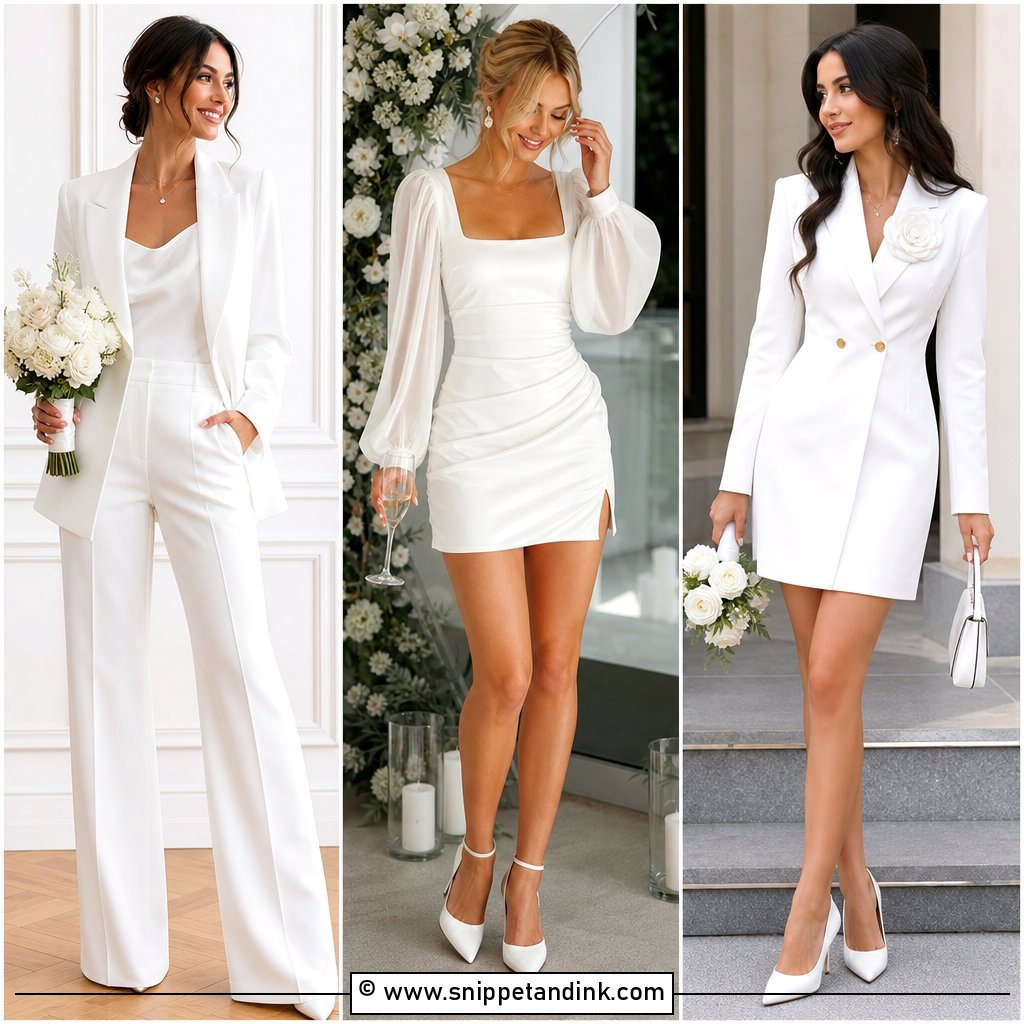
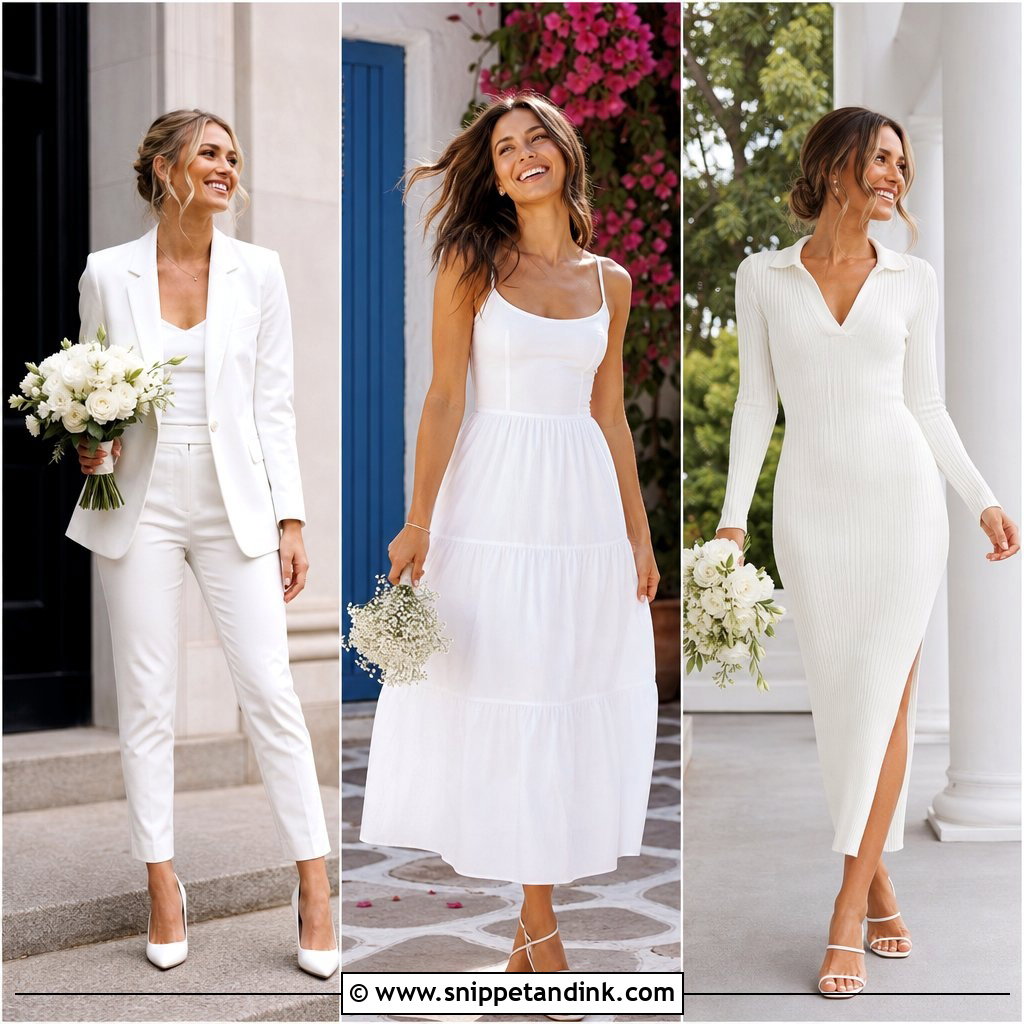
3. Bridal Pantsuit Outfit
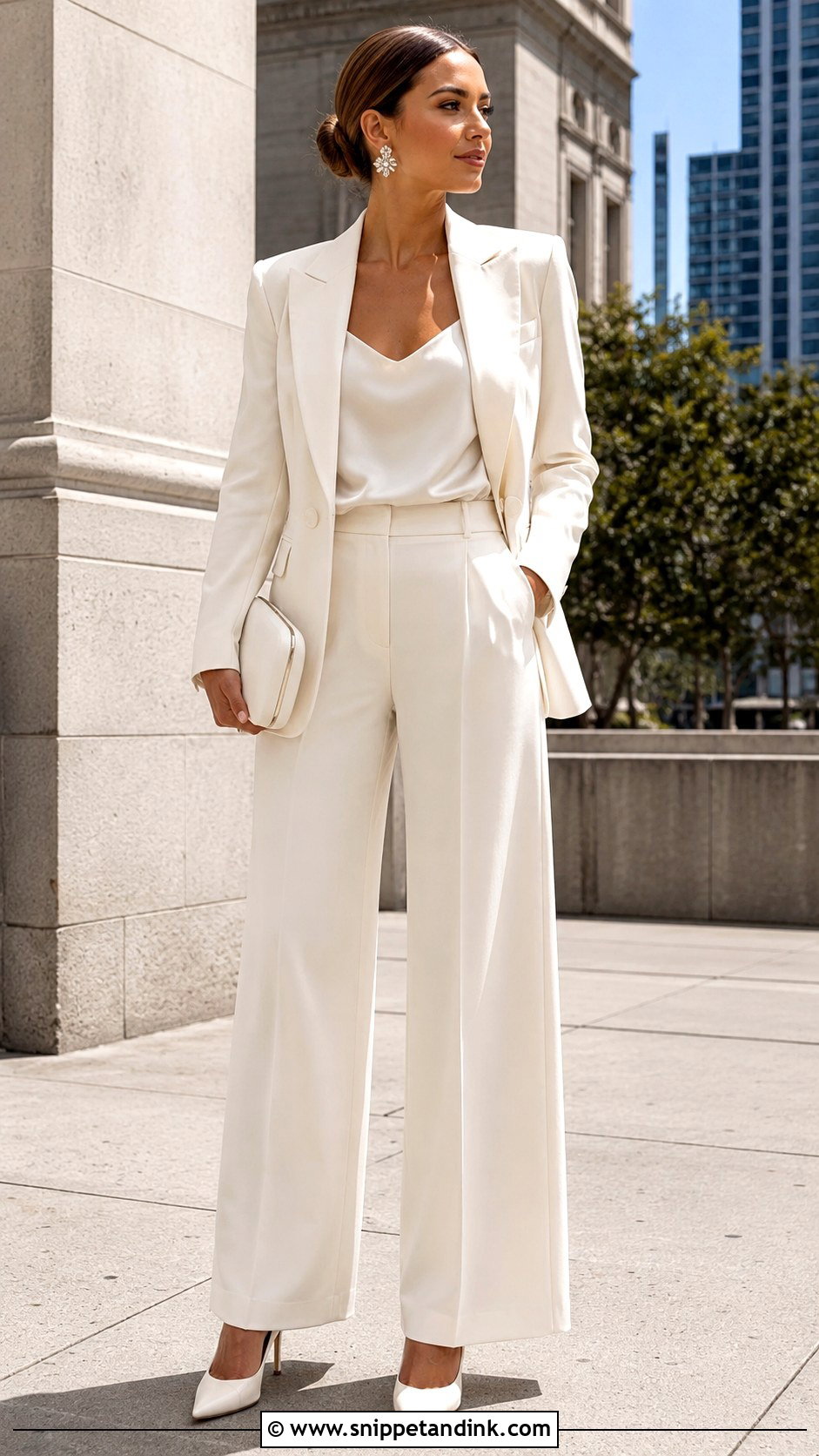
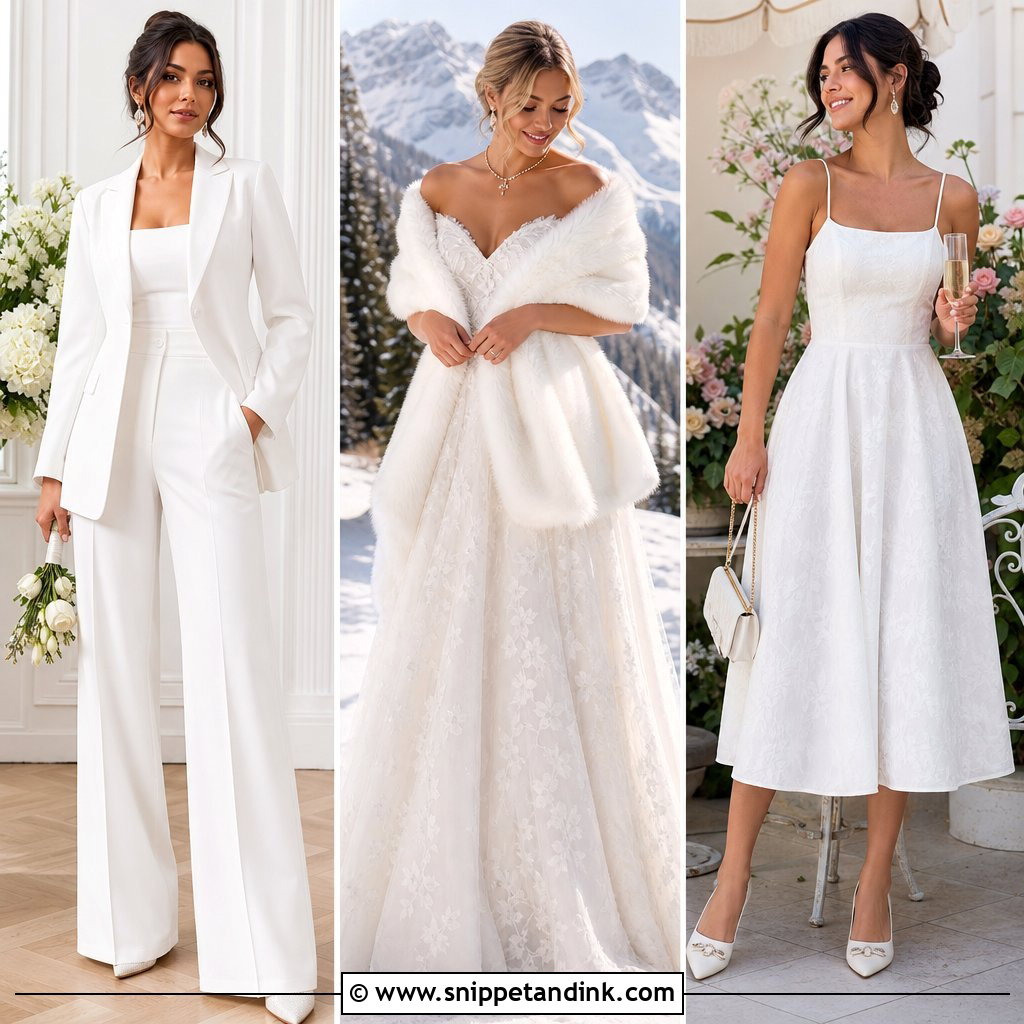
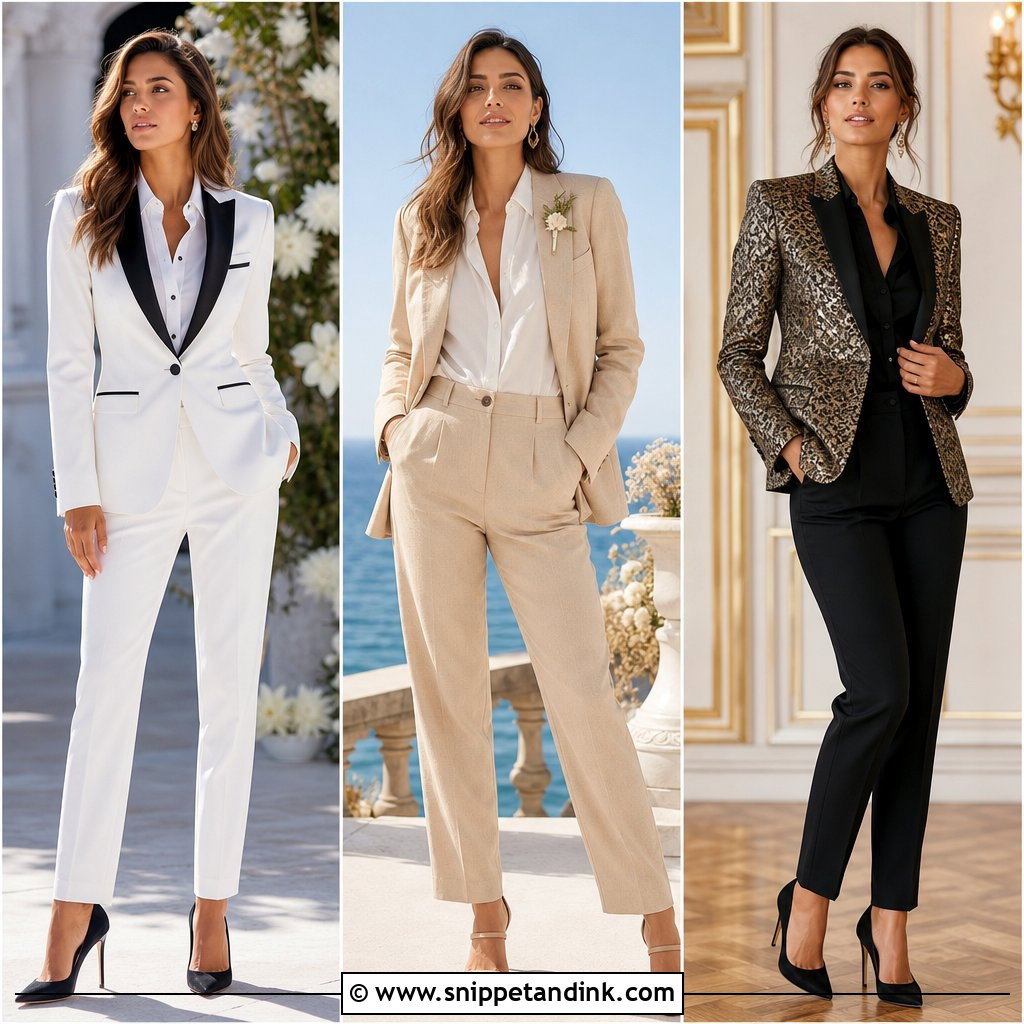
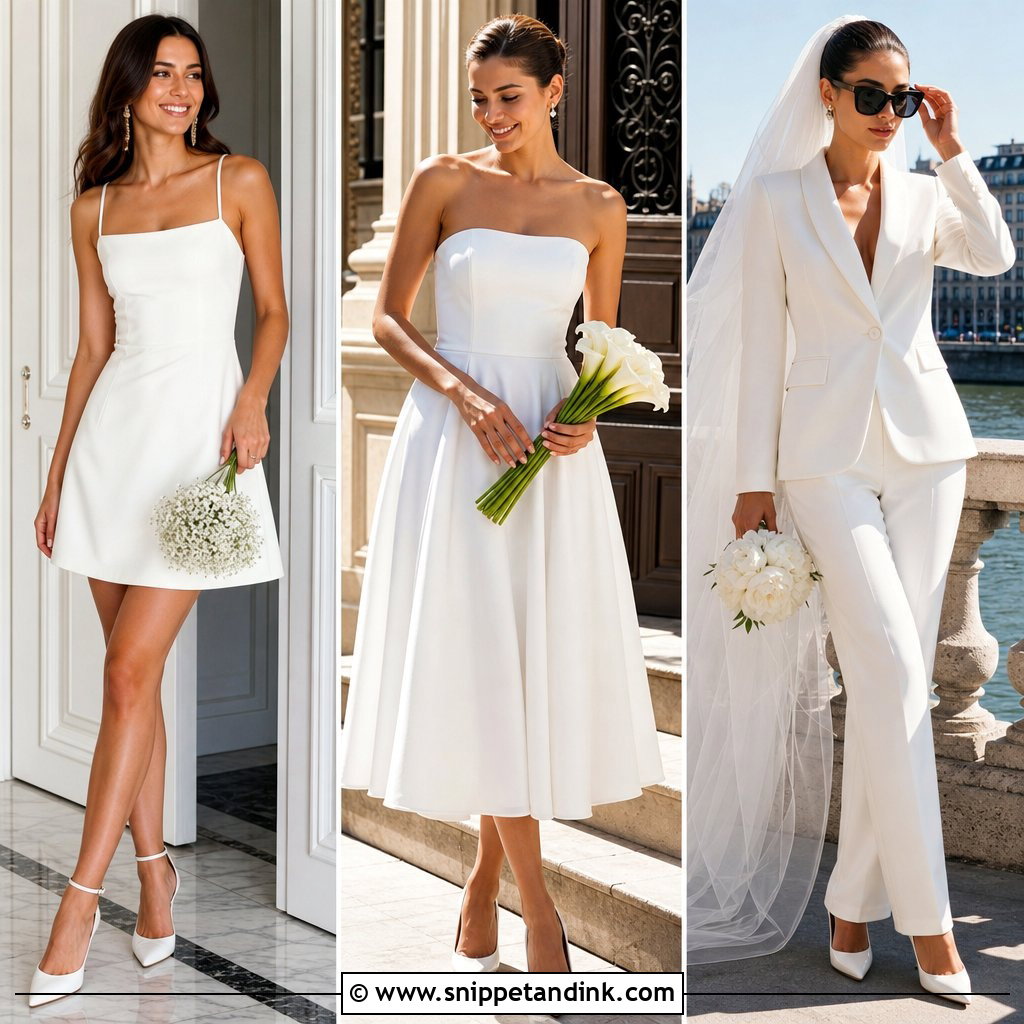
A bridal pantsuit suits brides who feel like themselves in tailoring. A sharp ivory blazer with wide-leg trousers over a silk camisole, lace bodysuit or bandeau shifts from minimal to romantic depending on what’s underneath. Tailoring needs more fittings than people expect: shoulders first, then sleeve length, then a trouser hem set with your exact shoes. It works for courthouse ceremonies, rooftops, rehearsal events and second looks, and a veil, cape or brooch makes it unmistakably bridal.
4. Ball Gown Wedding Dress Outfit
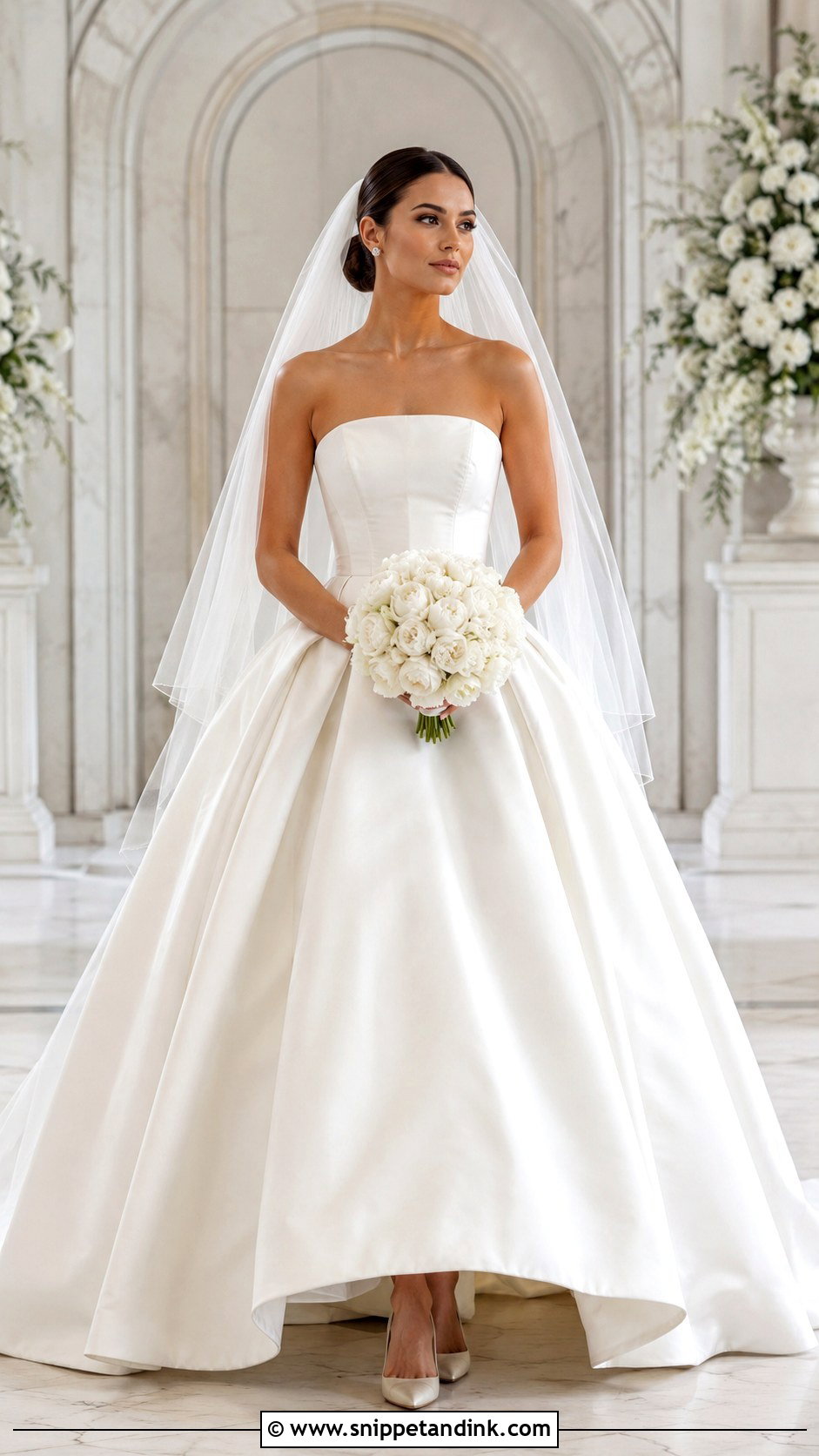
A ball gown is about the entrance. The fitted bodice and full skirt suit large venues and black-tie weddings where the space can hold that volume. It’s also heavy, and many full gowns carry several layers of tulle or a stiff mikado skirt, so I ask brides to walk, sit and climb a step in the sample before deciding. Plain mikado or satin can take a sparkling necklace or hairpiece; a beaded or lace bodice wants crystal studs and nothing more.
5. Off Shoulder Wedding Dress Outfit
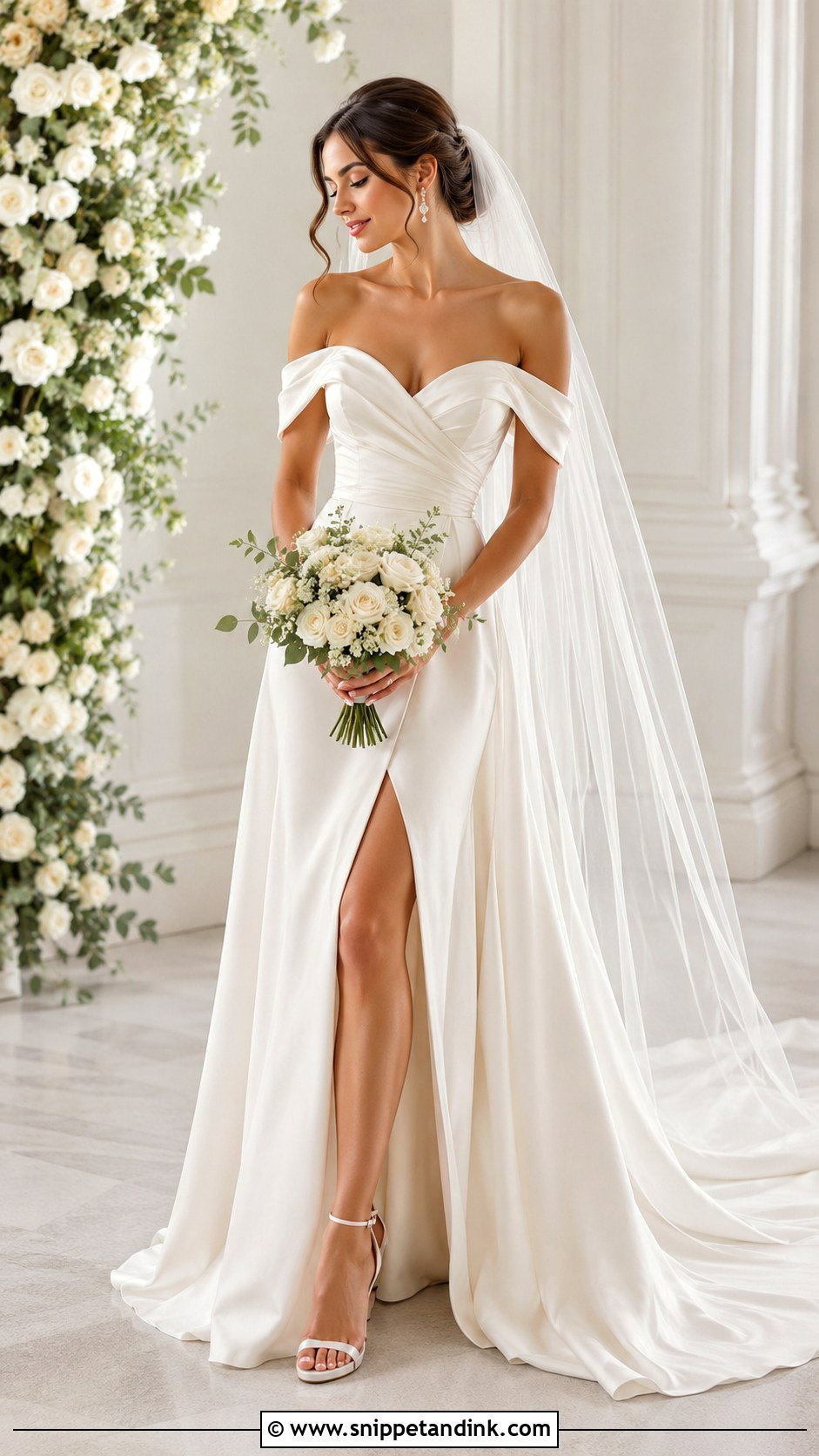
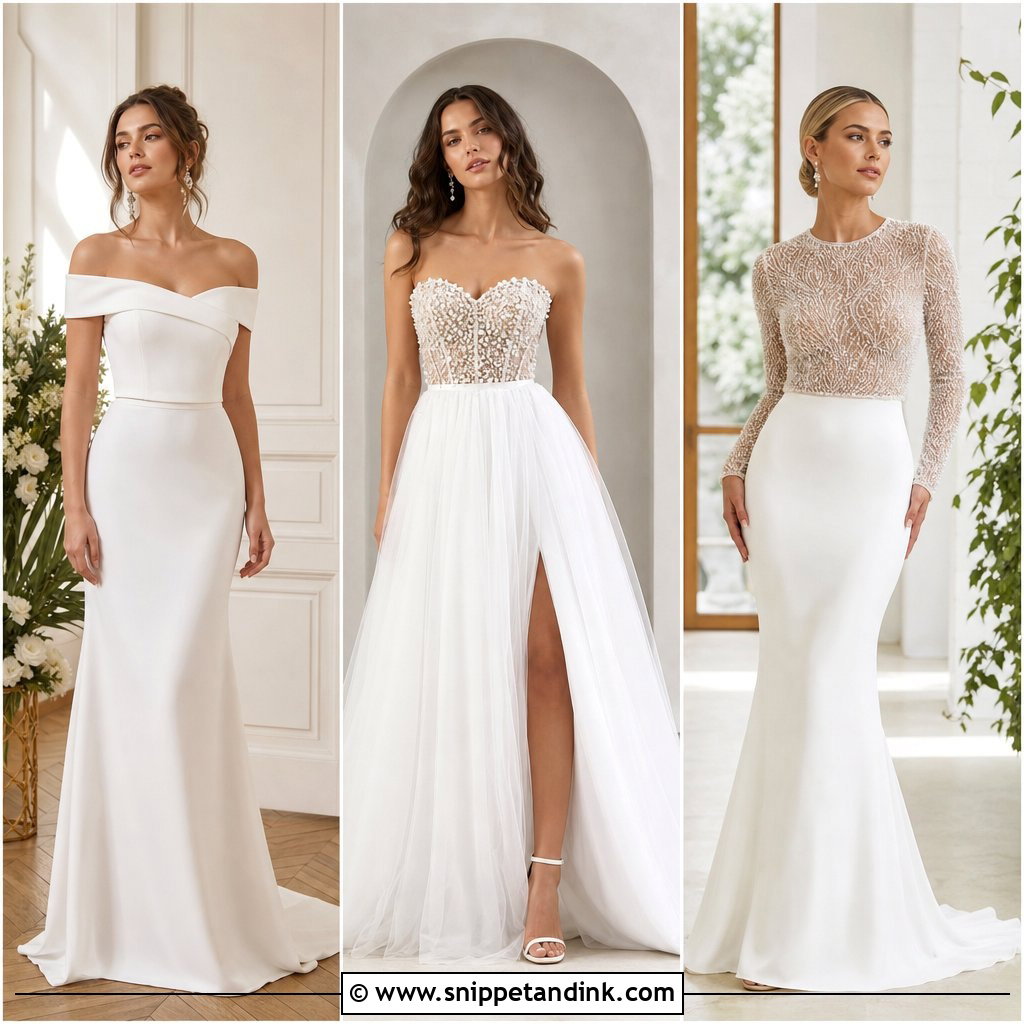
Off-shoulder necklines frame the collarbones and work across fitted, A-line, mermaid and ball gown shapes. Everything depends on grip. A band sitting across the upper arms will slide or restrict movement if it isn’t fitted precisely, so I always have the bride hug someone and raise her arms during the fitting. A smooth updo shows the neckline; choose either a fine necklace or statement earrings, not both.
6. Long Sleeve Wedding Dress Outfit
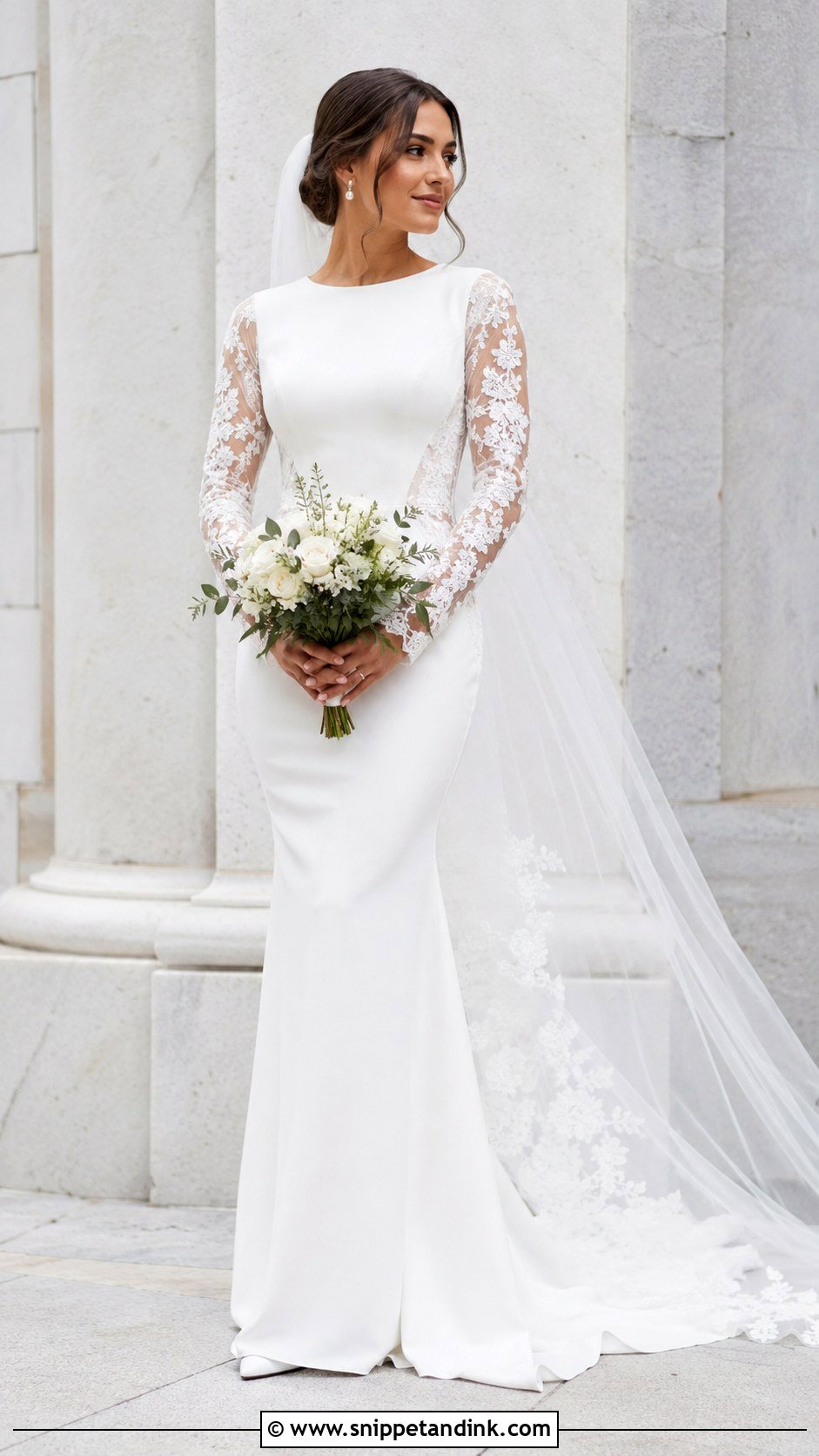
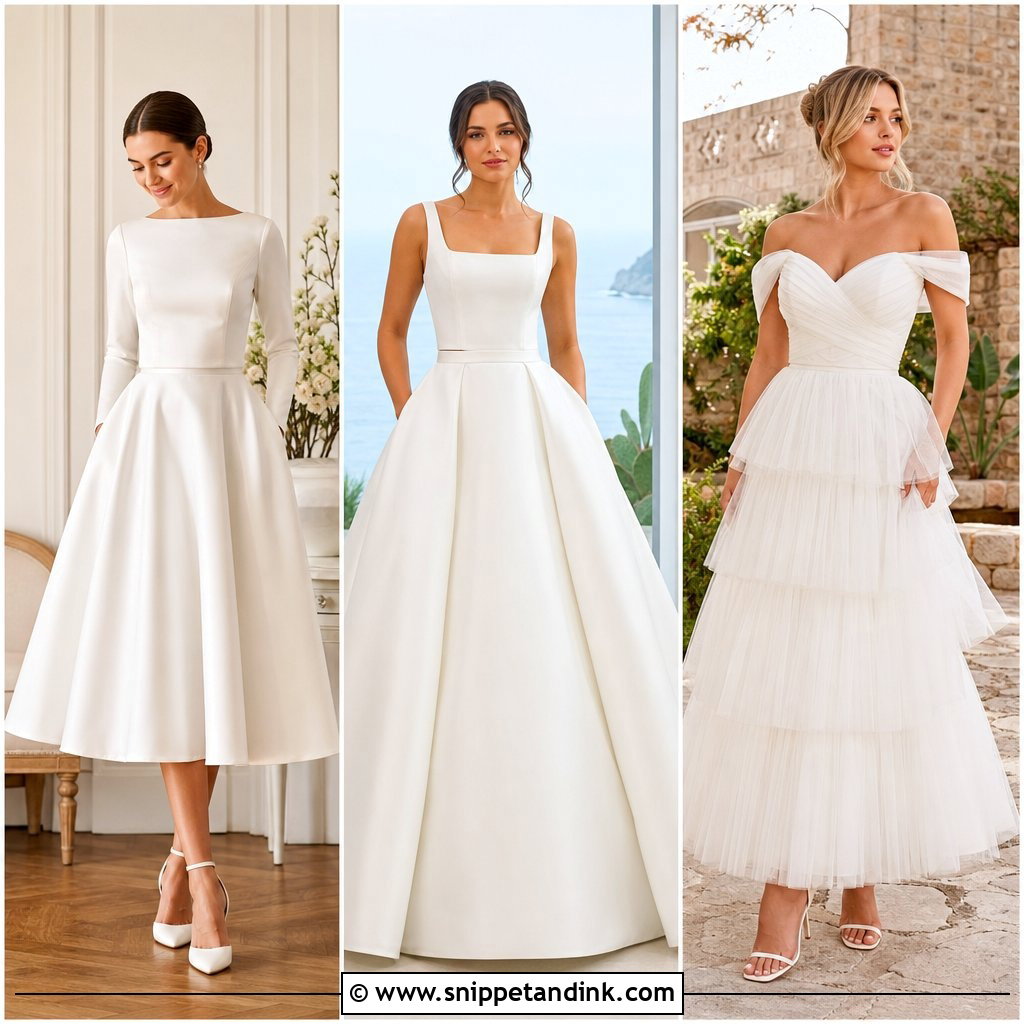
Sleeves can be sheer, lace, crepe, satin or embroidered, and each changes the mood. A structured crepe sleeve suits fall and winter; sheer lace feels lighter in spring. The fitting detail that matters most is the armhole. Long sleeves set too high or too tight stop you lifting your arms for a hug or the first dance, so I test the reach before we finalize. A low chignon and cathedral veil complete a modest, polished look.
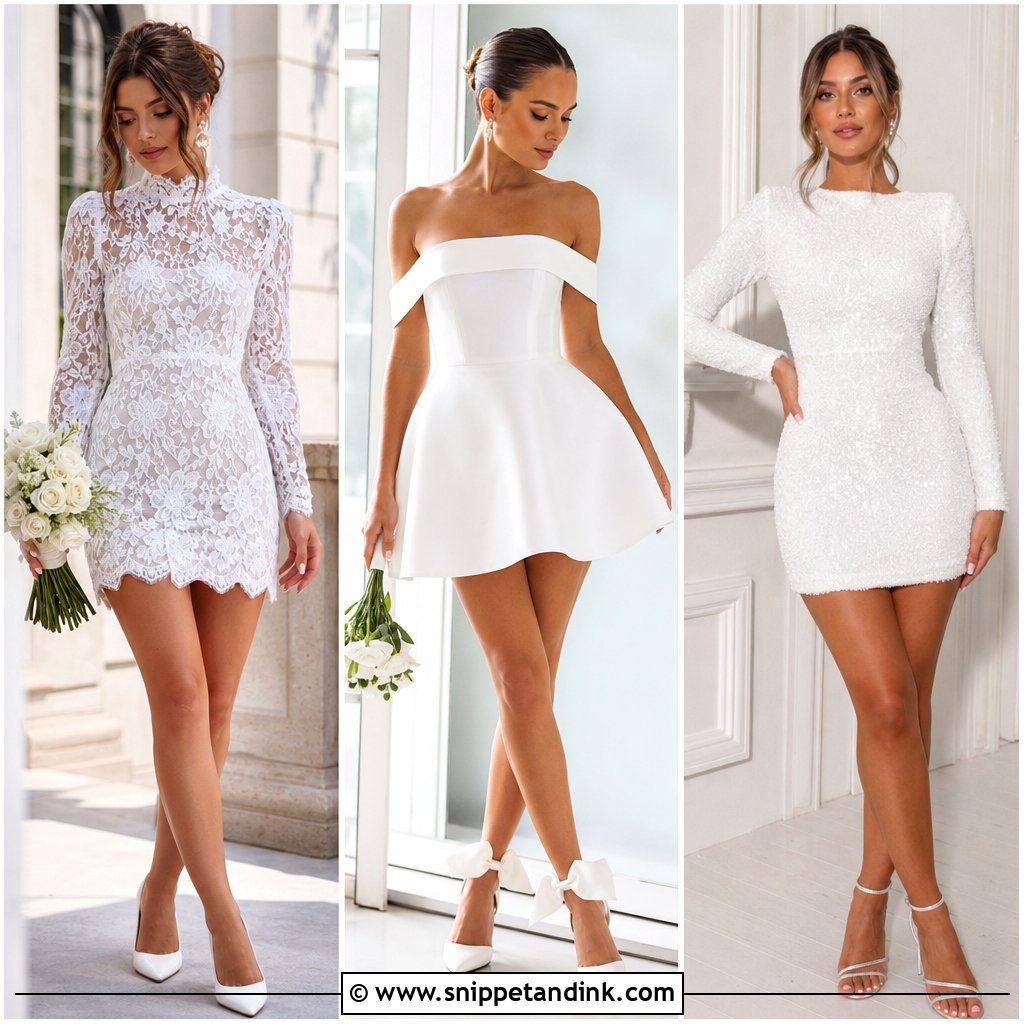
7. Short Wedding Dress Outfit
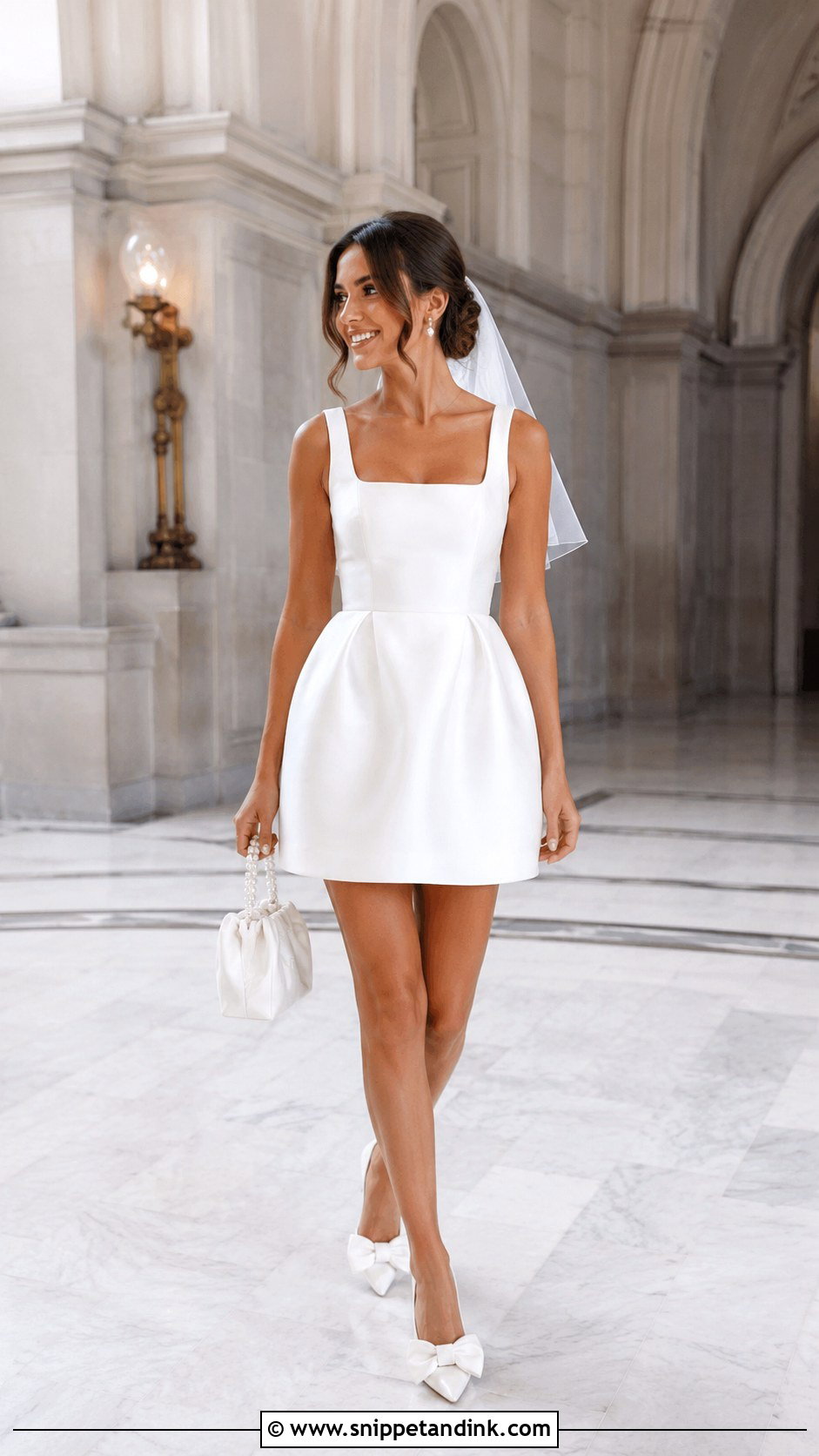
A short dress gives freedom: courthouse ceremonies, elopements, summer weddings and after-parties all suit it. Structure keeps it bridal rather than casual, so look for a tailored bodice, a full skirt or a crisp shift. Pointed heels or bow heels, pearl earrings and a short veil are enough. It’s also a great second outfit for dancing after a formal ceremony. Hem length is personal, but sit down in it before buying; a mini that looks right standing can ride up a lot in a car.
8. Mermaid Wedding Dress Outfit
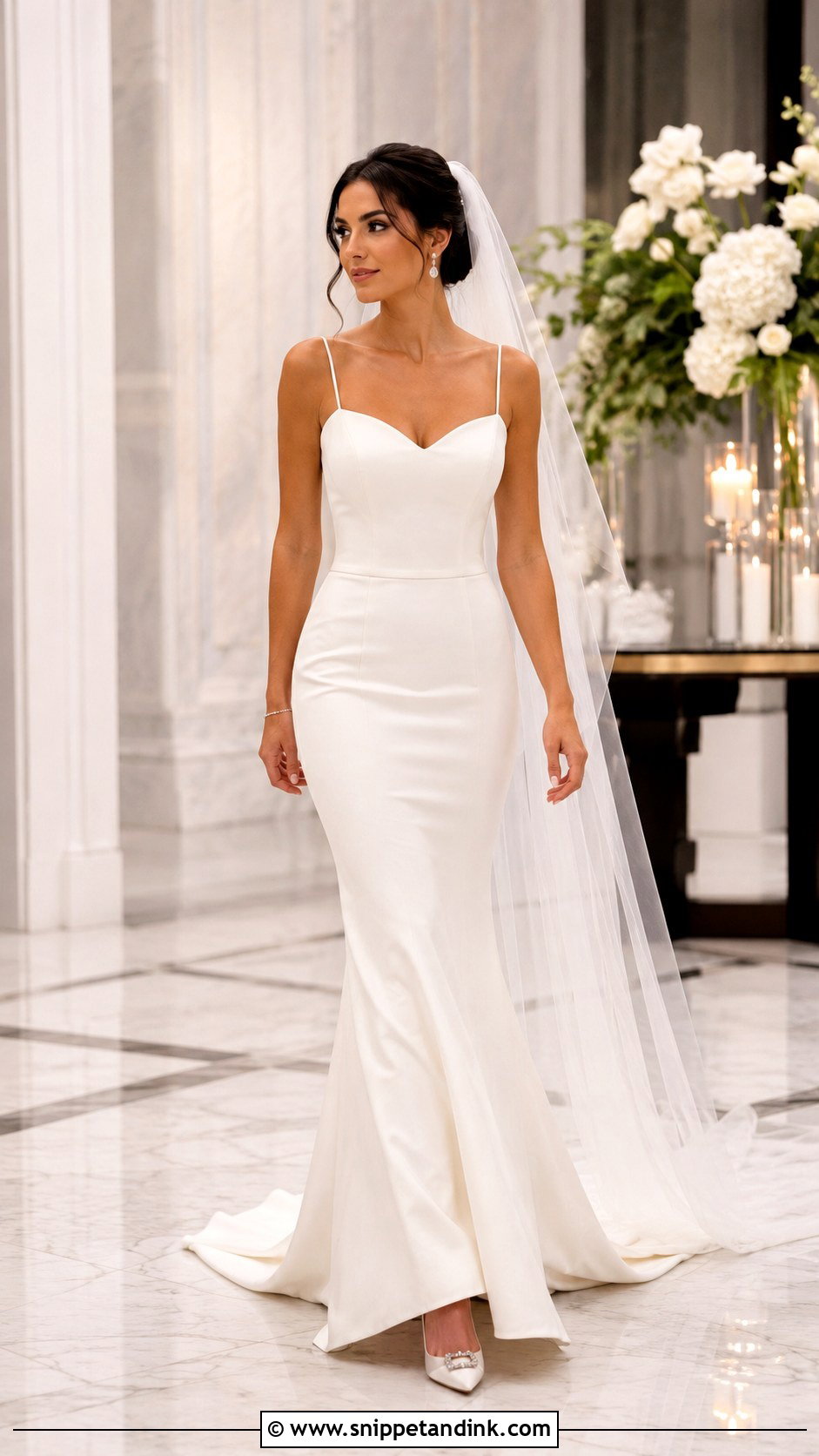
Mermaid gowns hug the body to the knee and then flare. Stretch crepe looks sleek and modern; lace appliqué is more romantic. This is the silhouette where fit matters most, and also the one where walking and sitting take practice, since the flare point limits your stride. I’d ask the seamstress where the flare should start on your leg; set too low, you’ll shuffle all day. Comfortable shapewear and a simple veil suit it.
9. Boho Wedding Dress Outfit
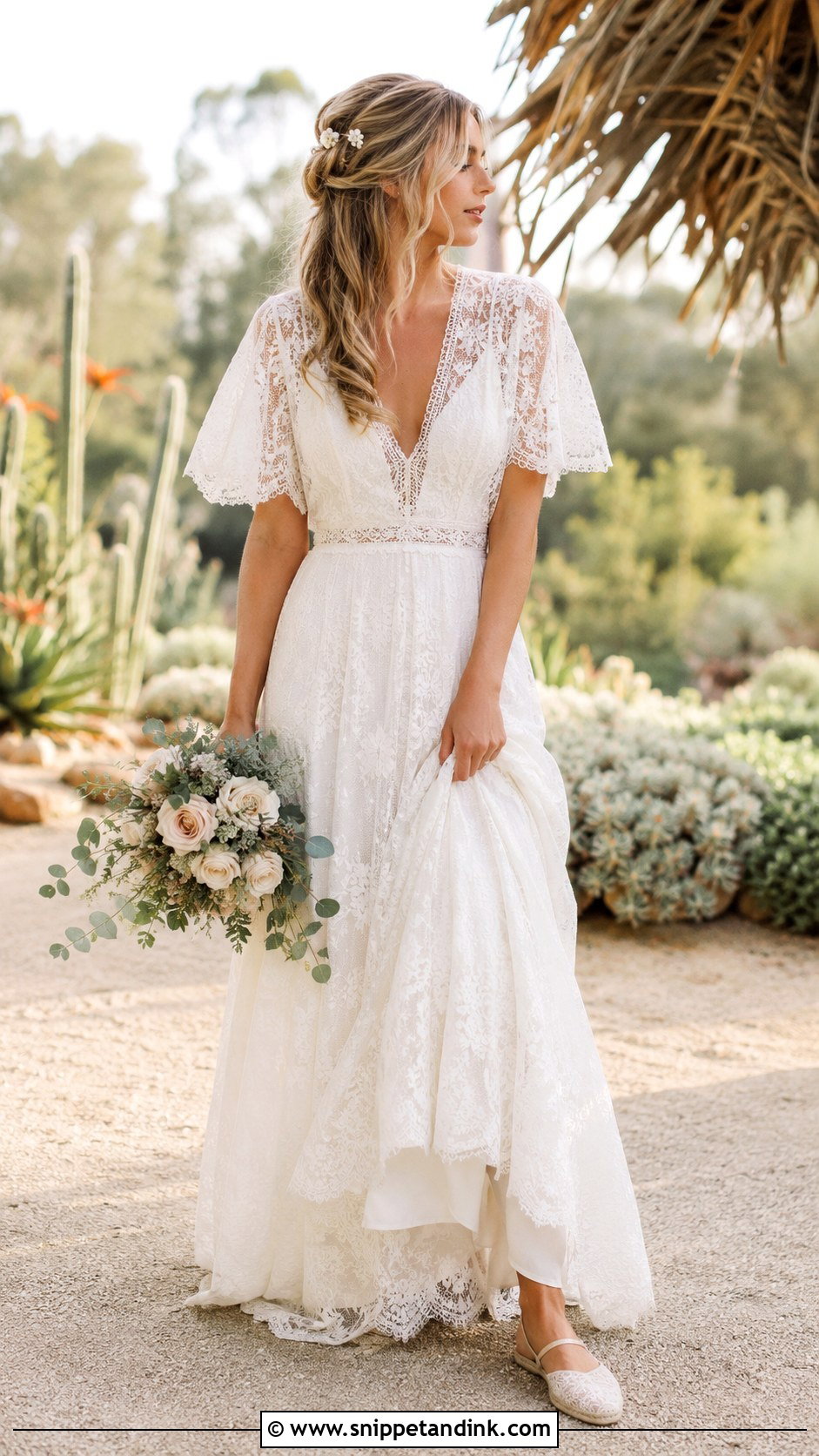
Boho dresses are relaxed: soft lace, flowing chiffon, flutter sleeves or an empire waist. Earthy details like pearl pins, a flower comb or woven sandals suit them better than heavy sparkle. A loose braid or half-up style matches the mood. For gardens, deserts and beaches, flats or block heels are far more practical than stilettos. Lightweight chiffon catches every breeze, which looks lovely moving in photos but can be a nuisance with a long veil.
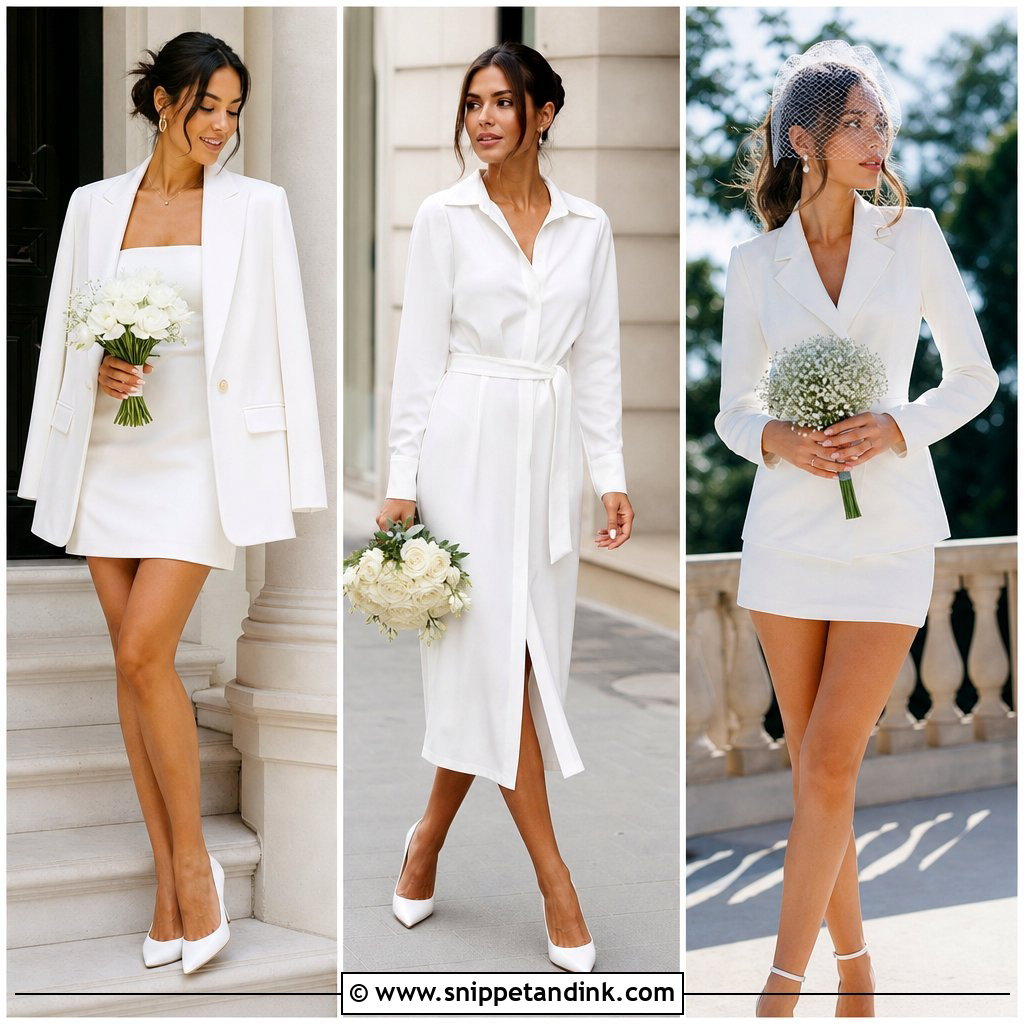
10. Courthouse Wedding Dress Outfit
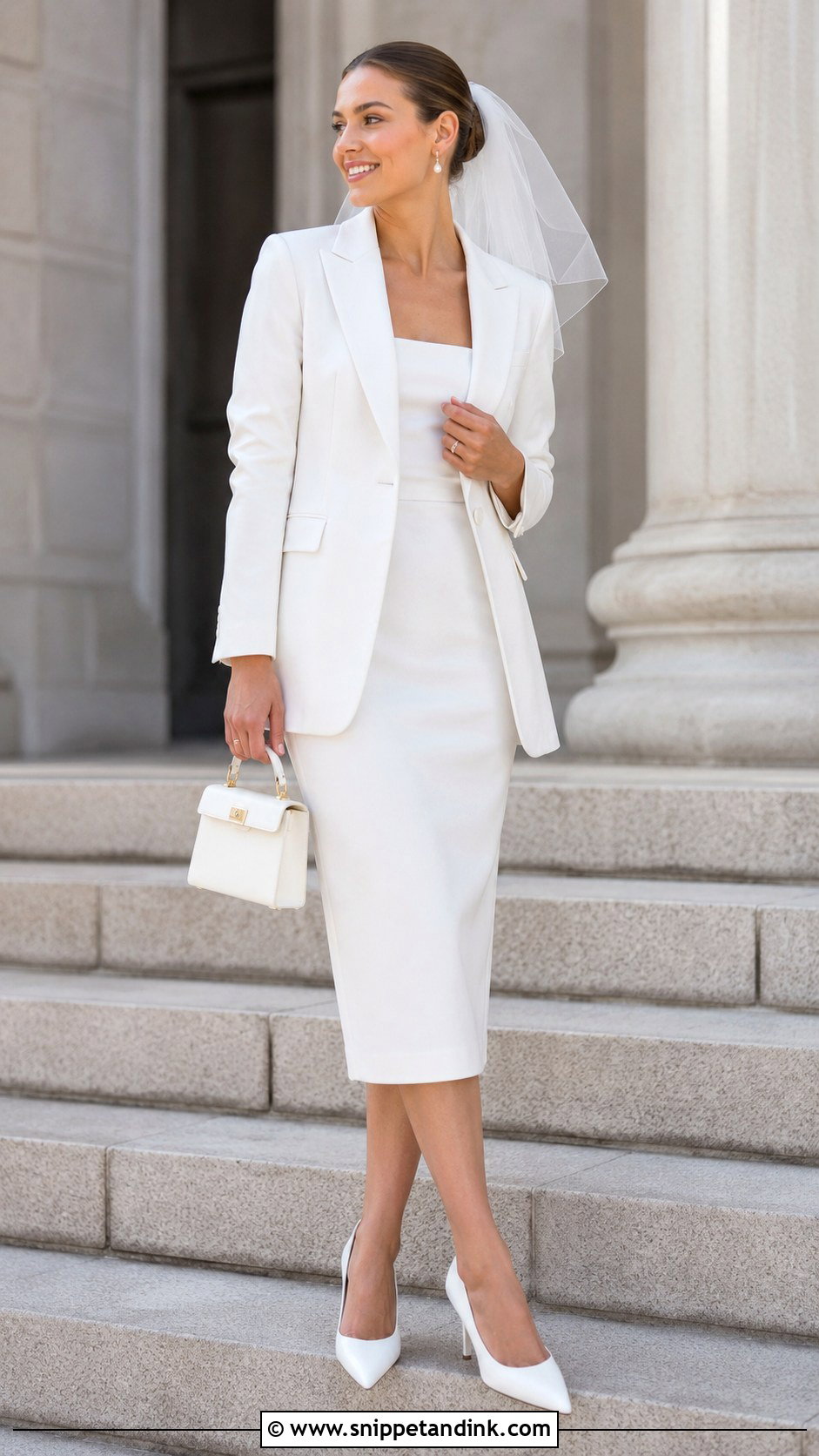
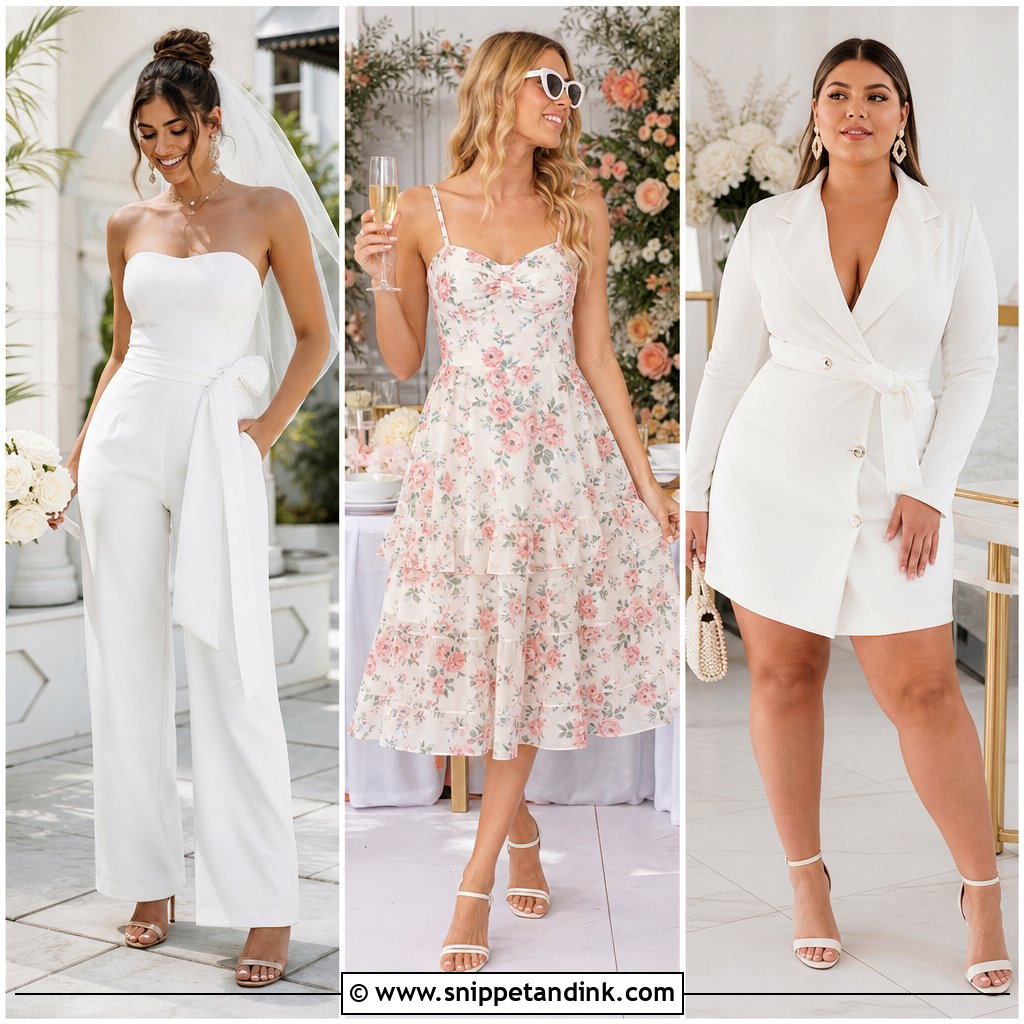
A courthouse wedding dress outfit needs to look polished at close range, since civil ceremonies are small and guests stand near you. A white midi, a blazer dress or a simple sheath works, with pointed pumps, a structured mini bag and a short veil or bow clip. A white suit with a lace top is the modern alternative. Most civil weddings include walking, photos outside and a meal after, so I’d choose shoes you can wear for all of it.
11. Beach Wedding Dress Outfit
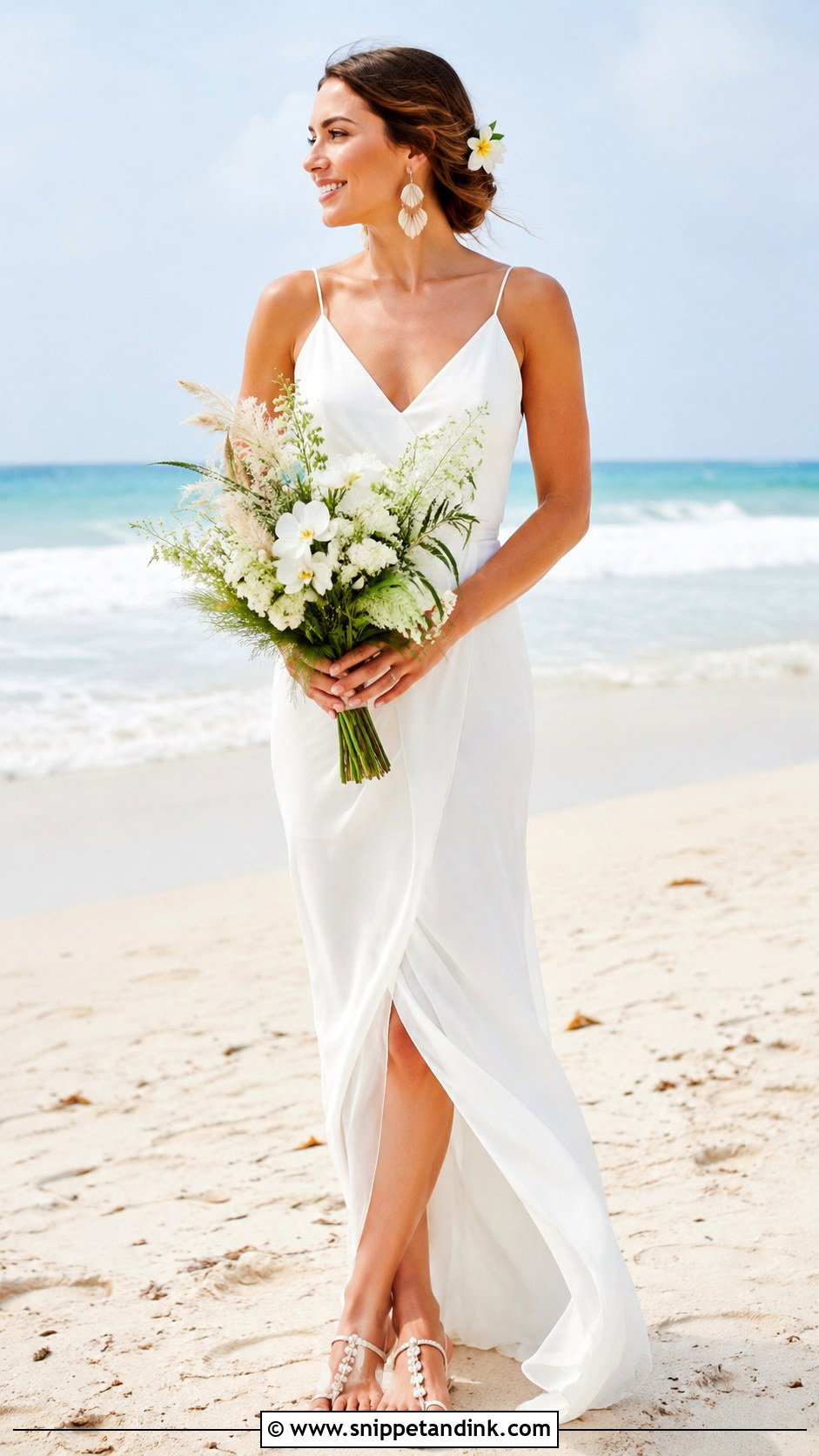
Beach dresses need to breathe and move. Chiffon, light crepe, organza and soft lace work; heavy satin and dense beading drag in the sand and trap heat. A slip, a sheath or a soft A-line is easiest. Wind is my main concern on a shoreline, so I suggest a short, light veil secured with extra pins, or a flower in the hair instead. Flat sandals or barefoot sandals beat heels on sand.
12. Garden Wedding Dress Outfit
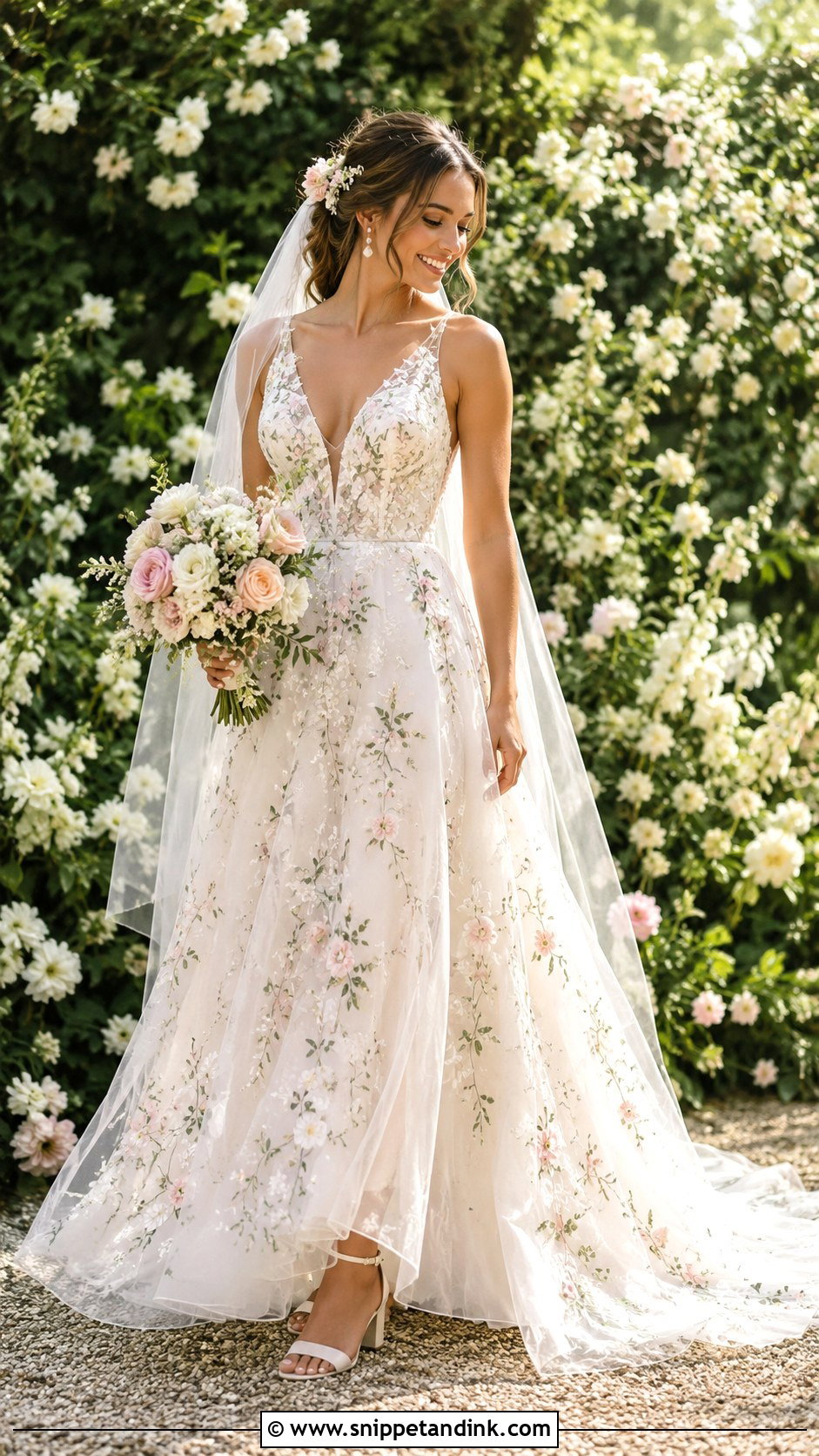
Garden weddings suit floral lace, embroidered tulle and flowing A-lines in ivory, soft white, blush or champagne. Wedges or block heels keep you from sinking into grass. One thing I always mention: long trains and pale hems pick up grass stains and pollen quickly outdoors. A detachable train or a bustle done straight after the ceremony protects the hem for the rest of the day.
13. Simple Crepe Wedding Dress Outfit
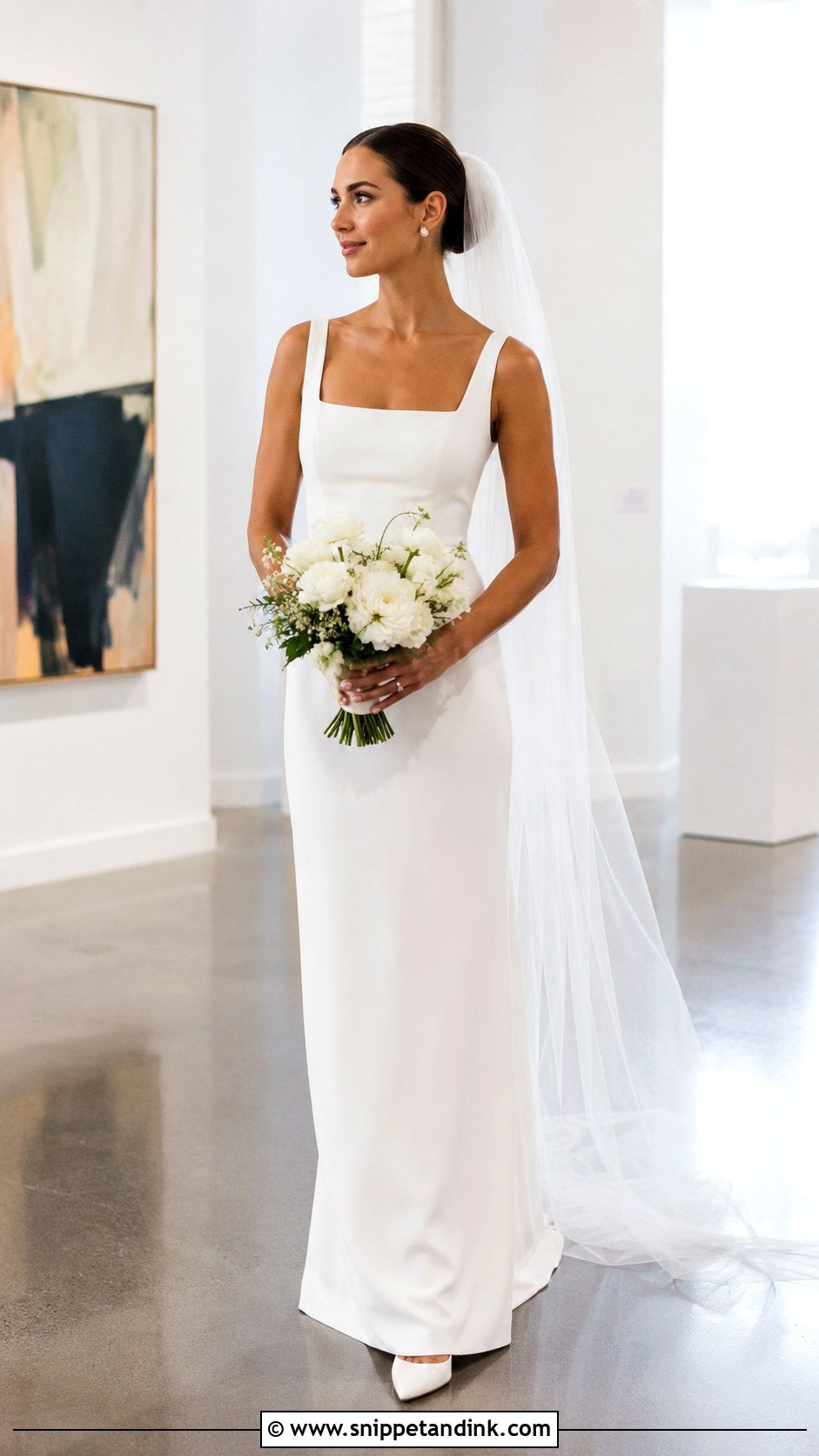
Crepe is the fabric I hand to anyone who wants nothing but line and fit. It has enough weight to smooth the body and hides minor creasing better than satin. A square neck, bateau neckline or strapless column suits it. Because there’s nothing to distract the eye, the fit has to be exact; any pulling at the seams shows immediately. A detachable cape or overskirt adds drama for the ceremony and comes off for the evening.
14. Tea Length Wedding Dress Outfit
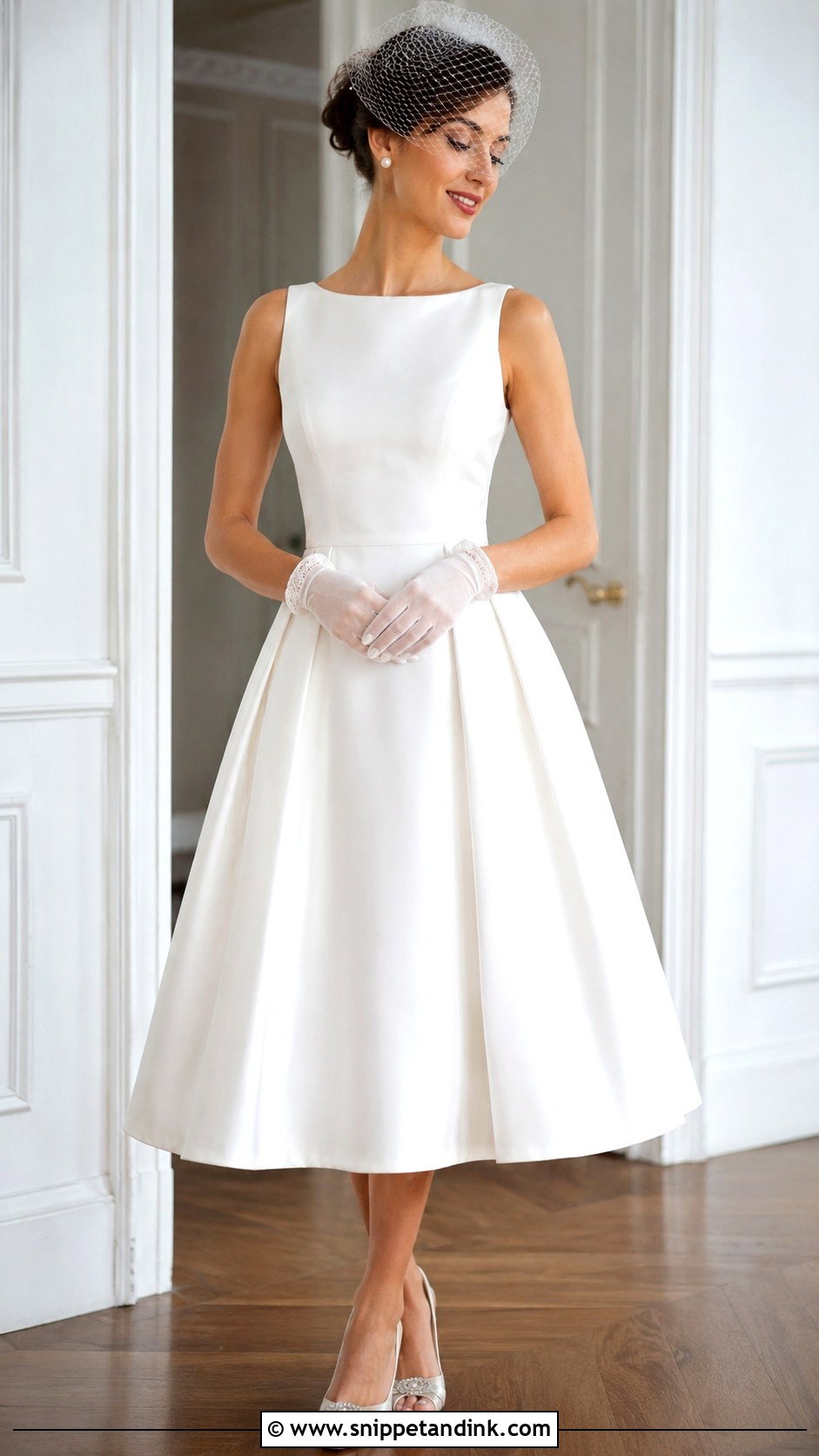
Tea length falls between knee and ankle, so your shoes become a real part of the outfit. Satin pumps, bow heels or embellished slingbacks all suit it. A fitted bodice with a full skirt is the classic version; a straight cut looks more minimal. Short gloves or a birdcage veil add a retro note. I like it for courthouse weddings, garden ceremonies and brunch receptions where a train would just get in the way.
15. Bridal Jumpsuit Outfit
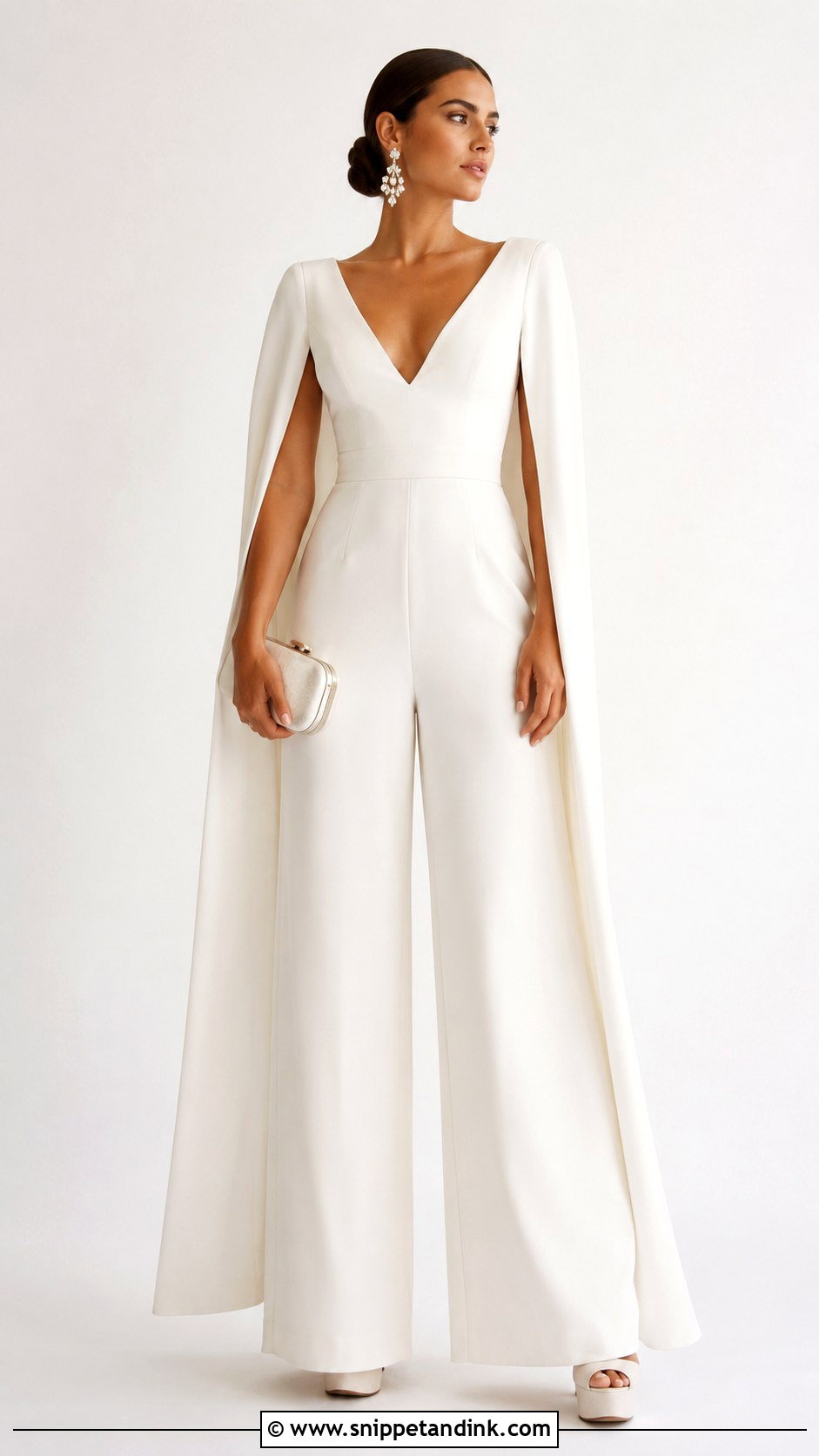
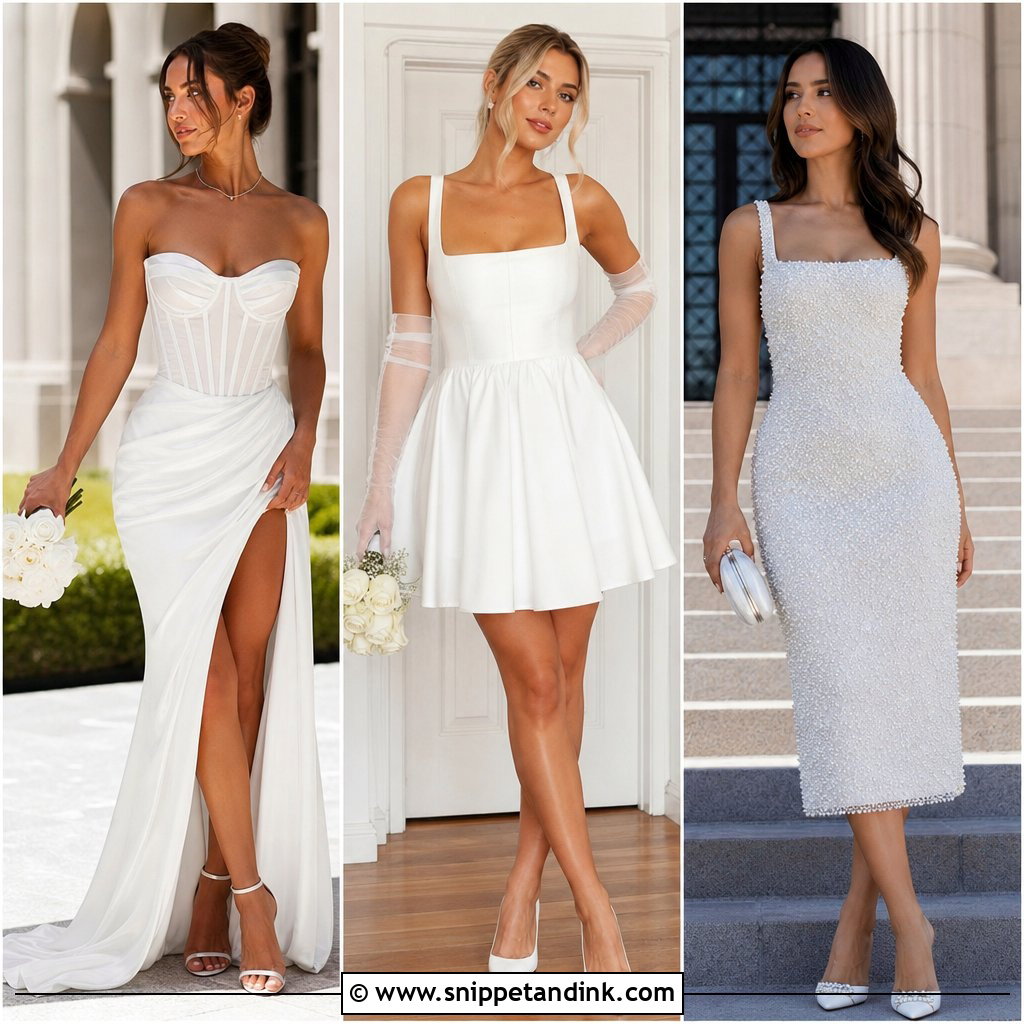
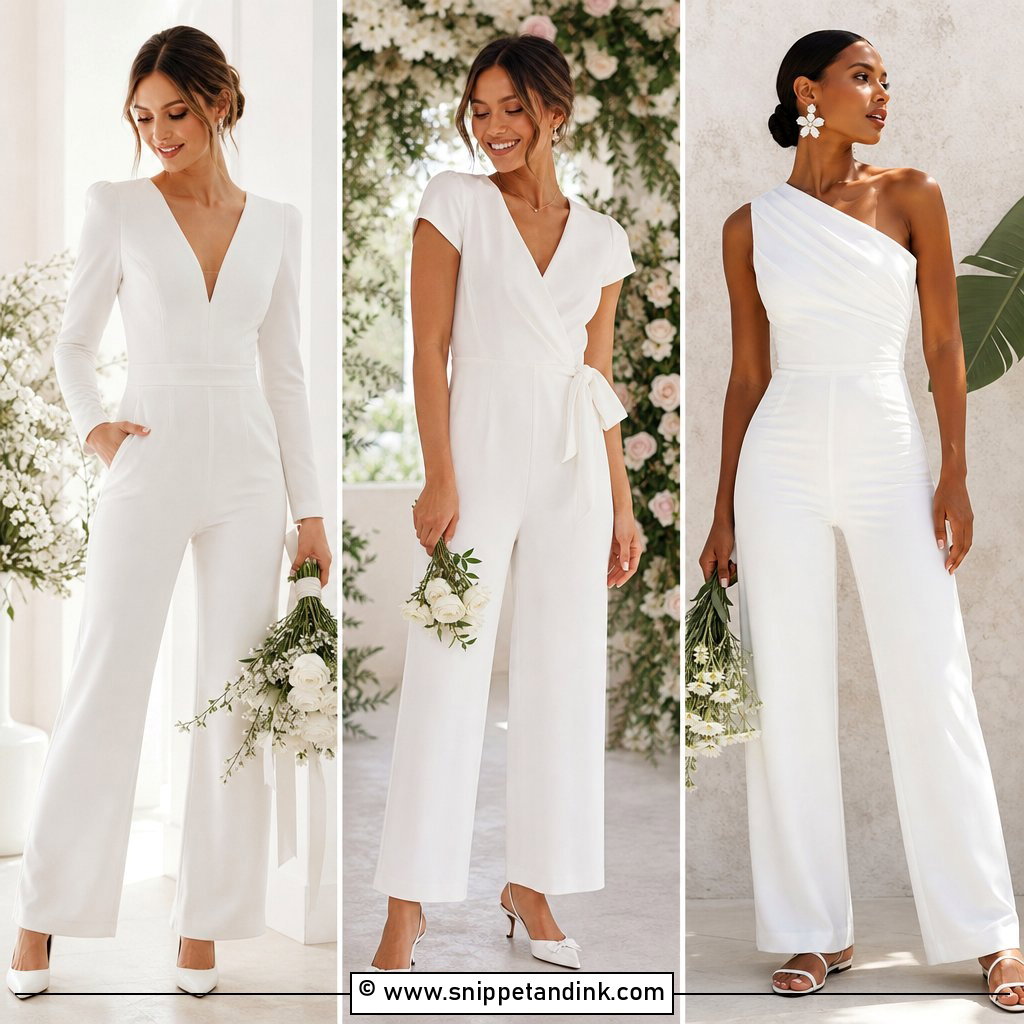
A bridal jumpsuit gives comfort and movement with a fashion edge. Wide legs, a defined waist and a structured bodice keep it formal; a cape sleeve, overskirt or lace panel makes it more bridal. The torso length is the critical fit: too short and it pulls when you lift your arms, so I’d test it with a full stretch. It suits brides who never felt right in a traditional gown.
16. Reception Mini Dress Outfit
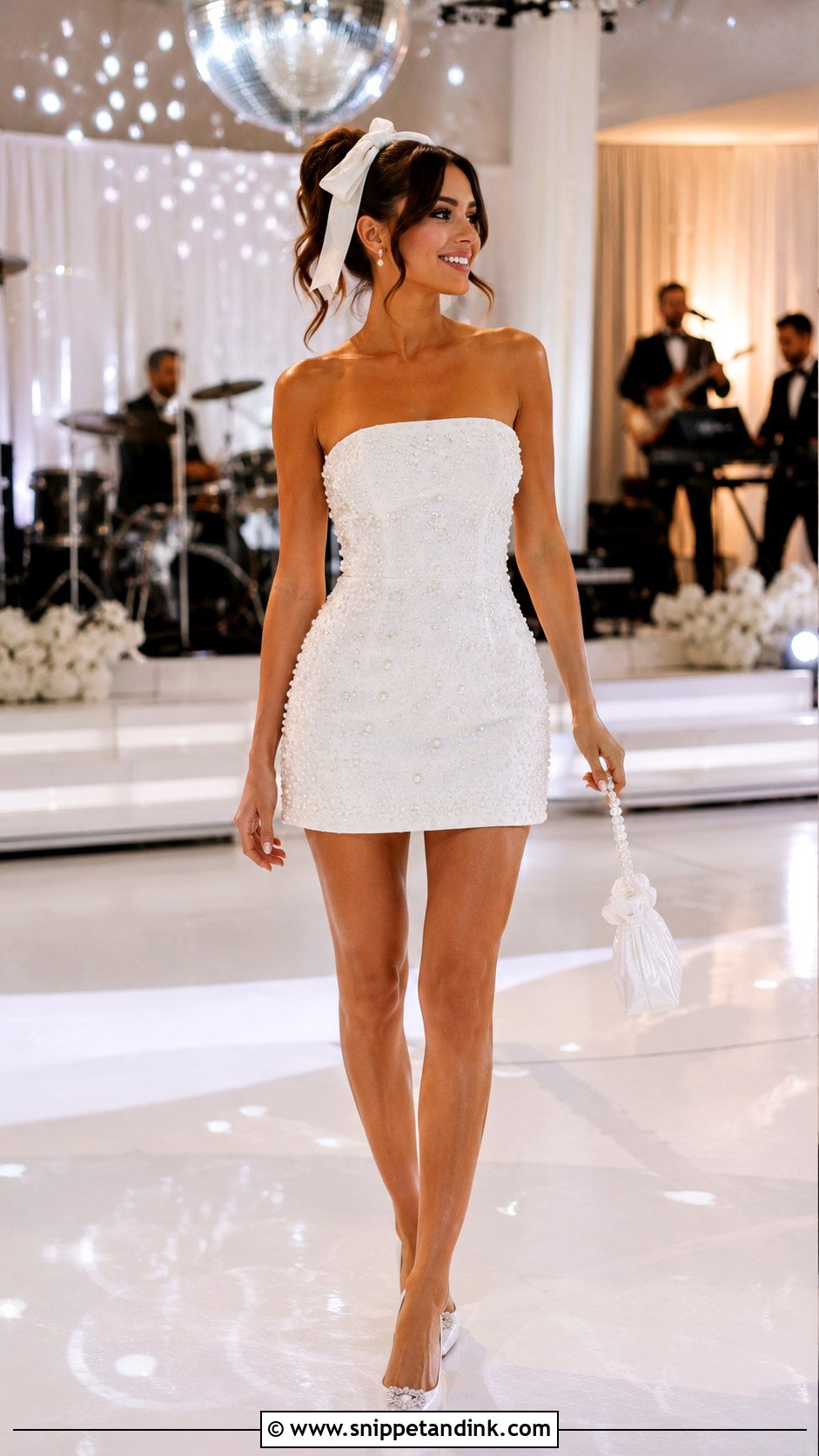
A reception mini is the fun part: feathers, pearls, bows, sequins or a sculpted bodice. Balance it with clean heels and simple earrings if the dress is busy, or add embellished shoes and a hair bow if it’s plain. Most brides change after dinner, so have it steamed and hanging in the changing room from the afternoon. The mini lets you dance freely after a heavier ceremony gown.
17. Two Piece Bridal Set Outfit
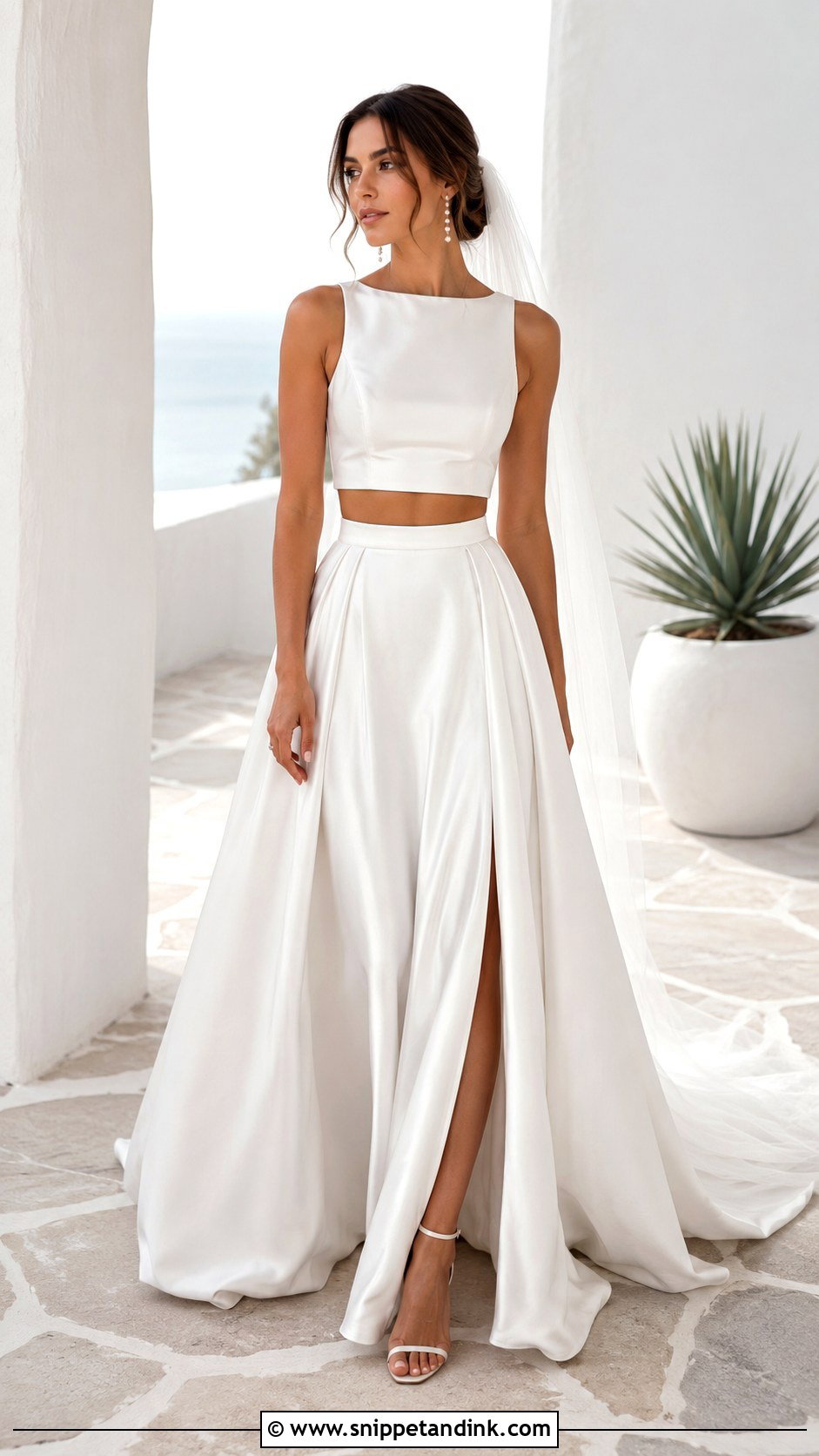
A two-piece set offers flexibility, and the pieces can sometimes be worn separately later. A cropped top with a high-waisted skirt looks refined in satin, lace, crepe or textured organza. For coverage, choose a long-sleeve lace top with a flowing skirt; for a sleek line, pair a structured bandeau with a column skirt. Make sure top and skirt come from the same fabric batch, since two ivories rarely match exactly in photos. It’s light to wear at destination and warm-weather weddings.
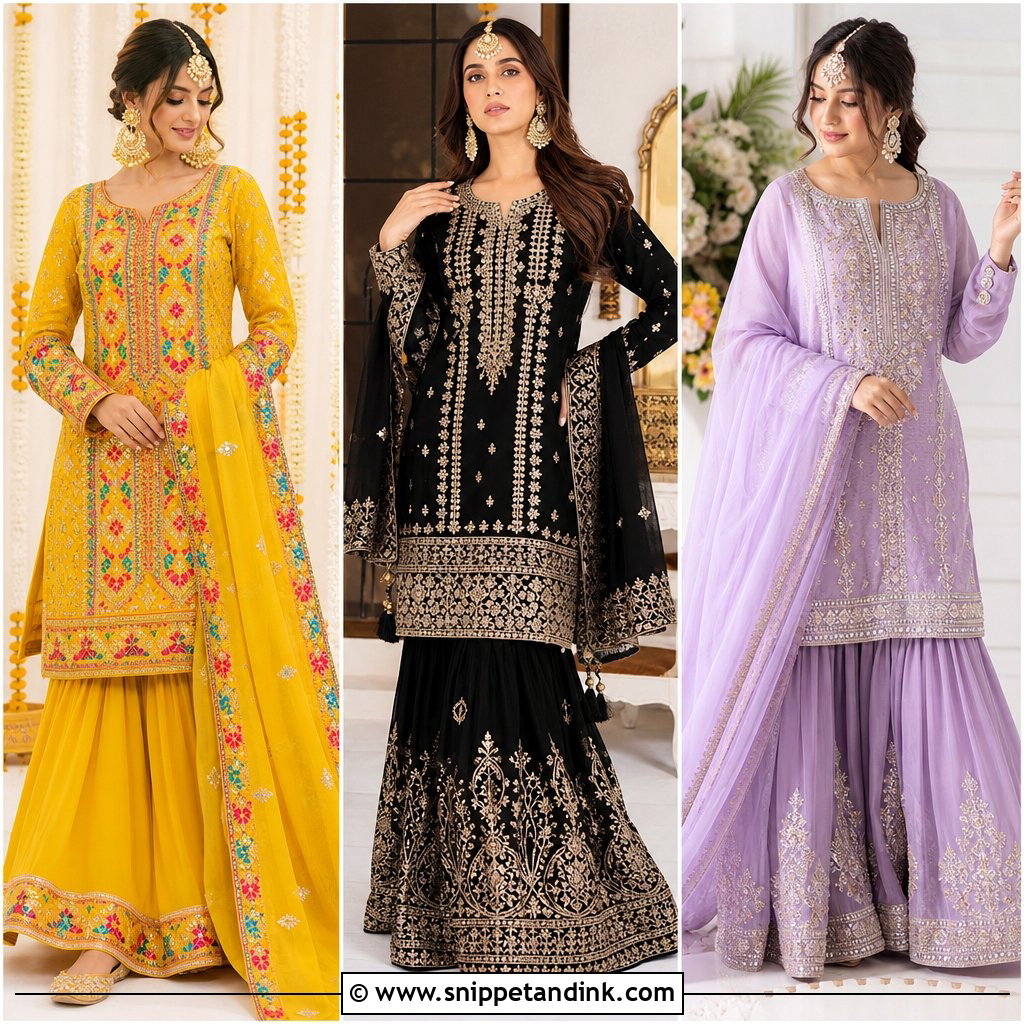
18. Bridal Lehenga Outfit
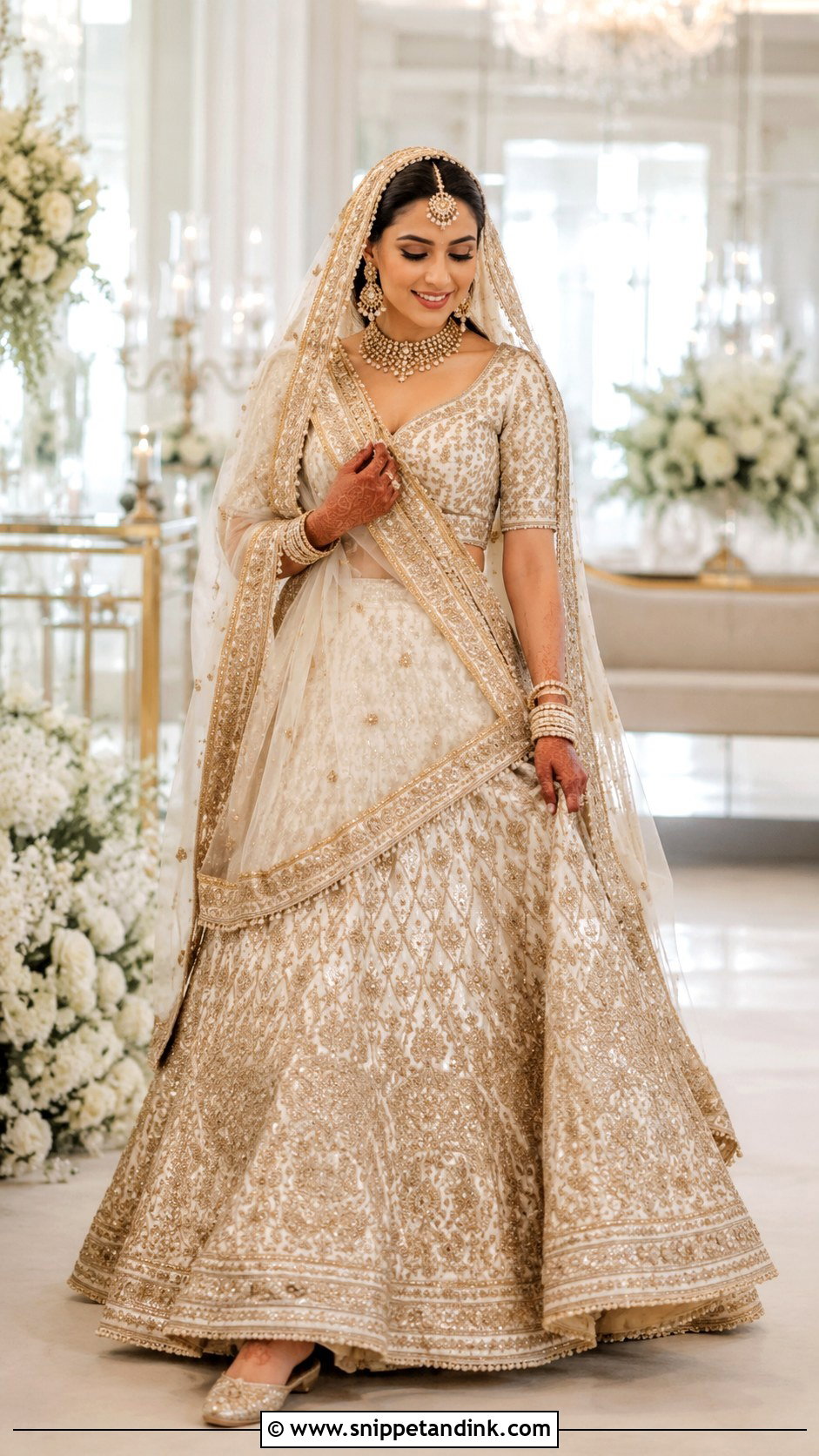
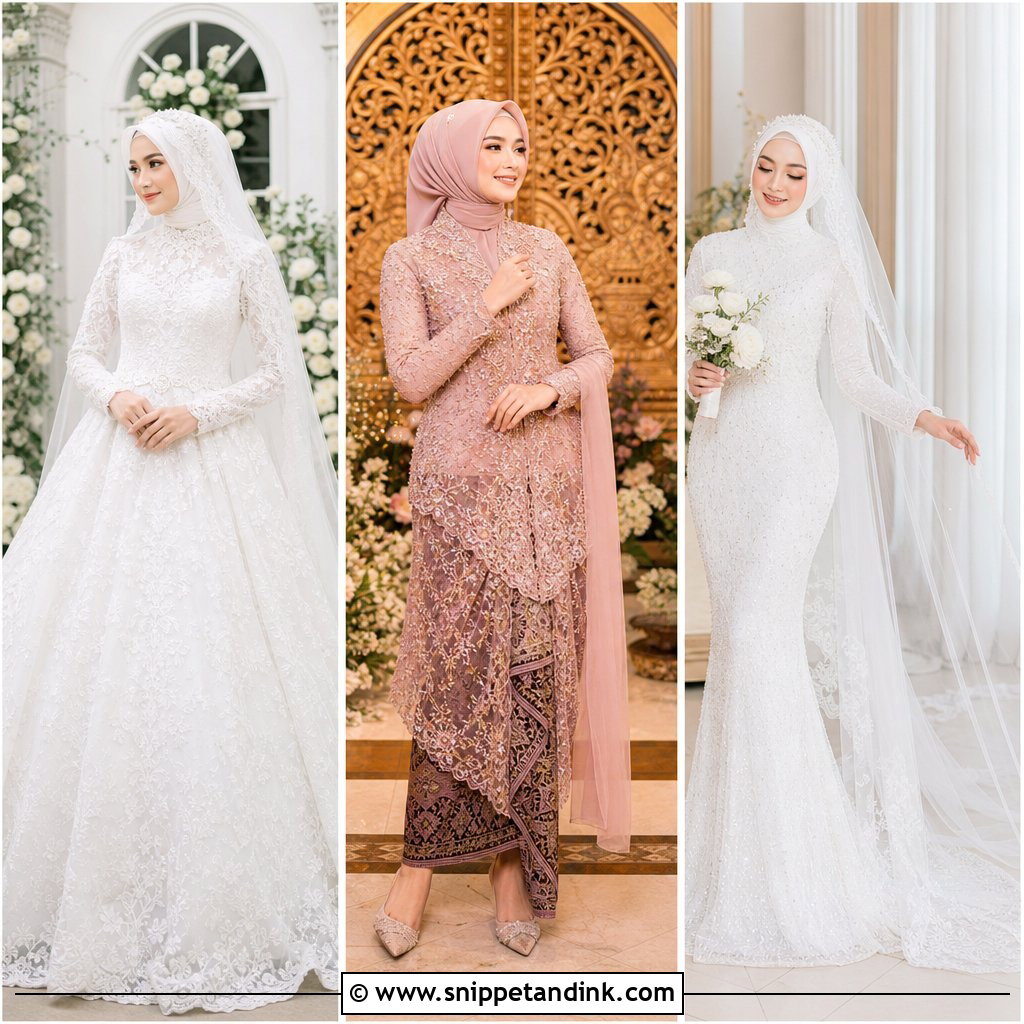
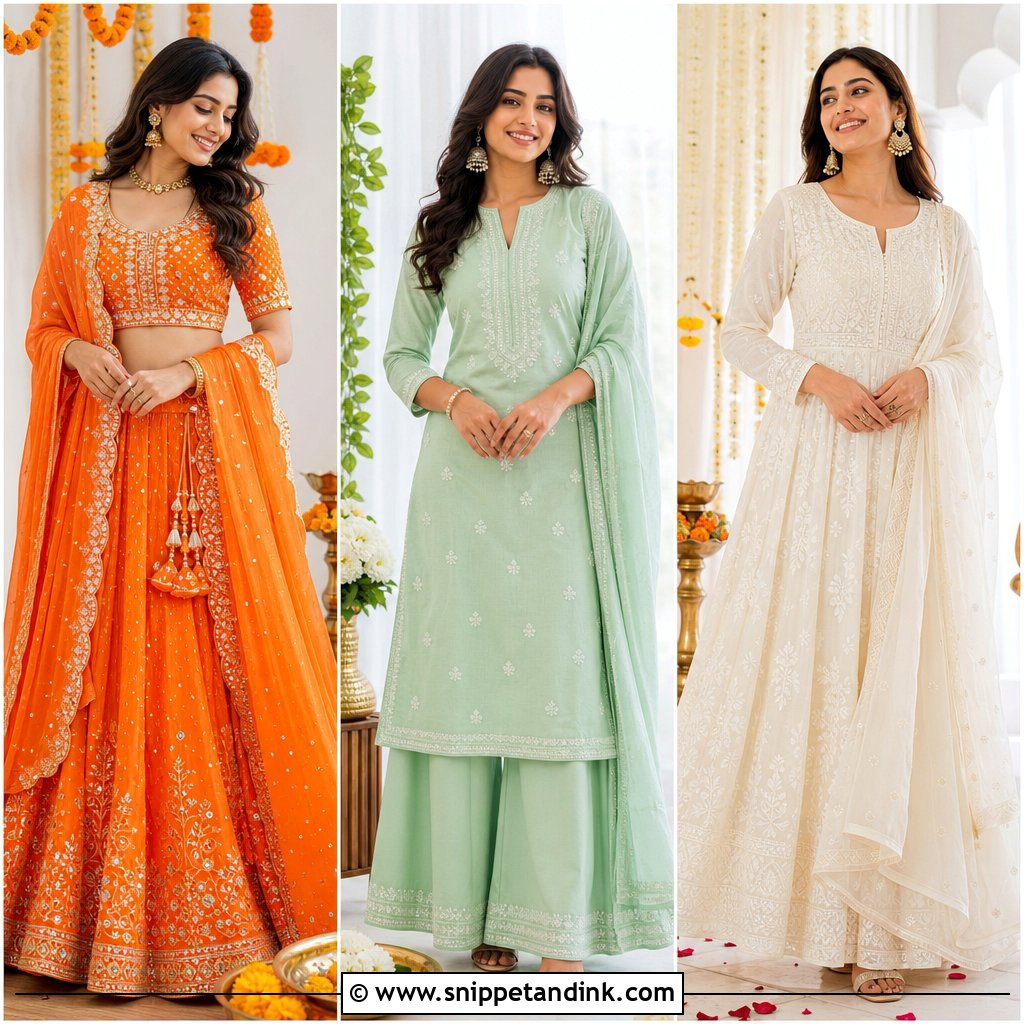
A bridal lehenga combines an embellished skirt, a fitted blouse and a dupatta, and every layer adds weight. Heavy zardozi or stone work can make a skirt very heavy, so I ask brides to wear the full outfit for an hour at a fitting before the day. Ivory, gold, blush, red, champagne or pastels depend on your tradition and taste. The dupatta placement decides the hair: a bun anchors a dupatta pinned over the head; soft waves or a braid suit one draped over the shoulder.
19. Modest Wedding Dress Outfit
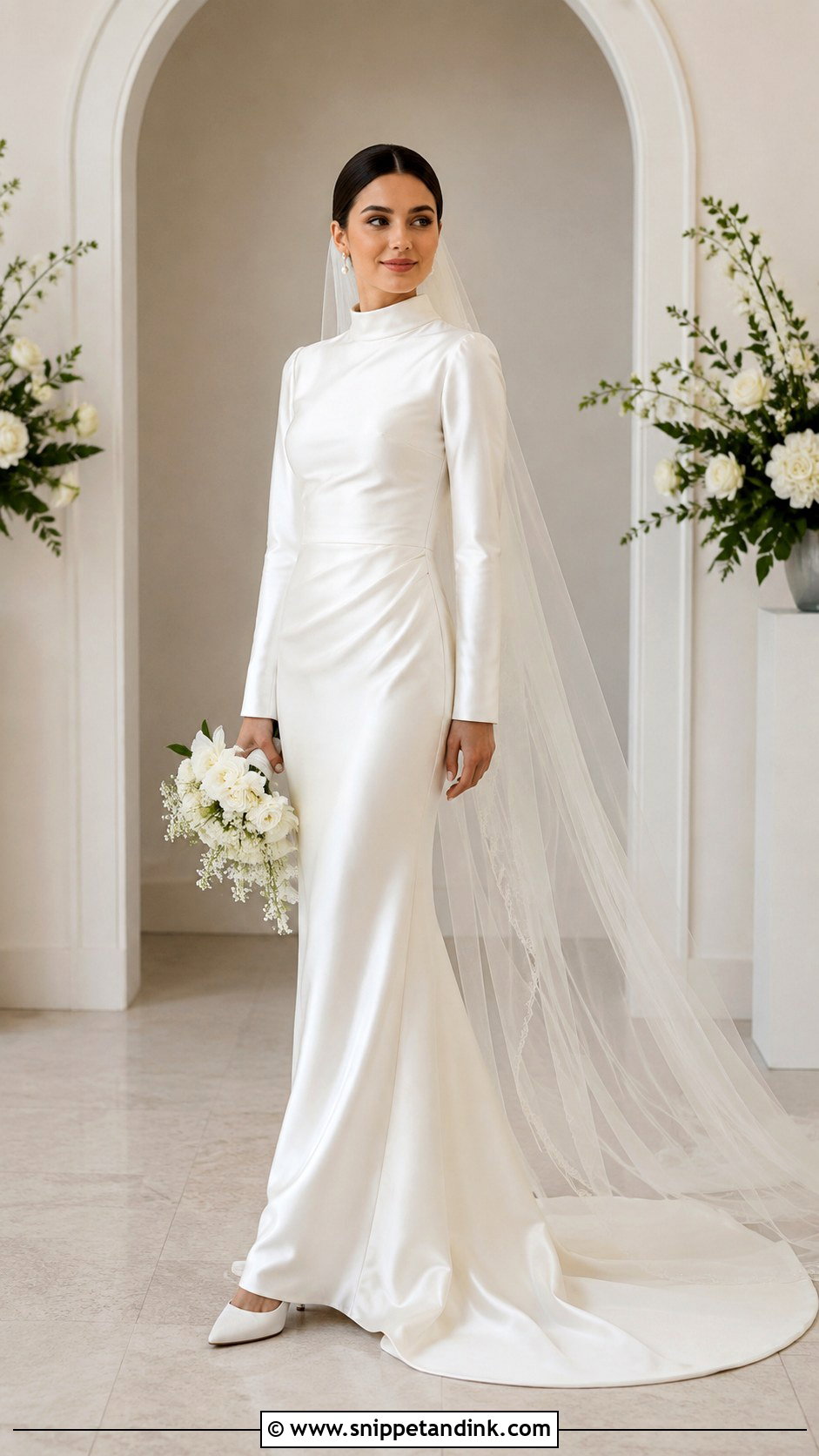
A modest gown can be modern and deeply flattering. Higher necklines, long sleeves, lined bodices and skirts with graceful movement are the starting points, in crepe, satin, lace or mikado. Lace sleeves soften the look; a high-neck satin gown with a defined waist is more structured. Check the lining under bright light, since some lace sleeves look opaque indoors and sheer outside. The veil should complement the neckline rather than cover it.
20. Plus Size Wedding Dress Outfit
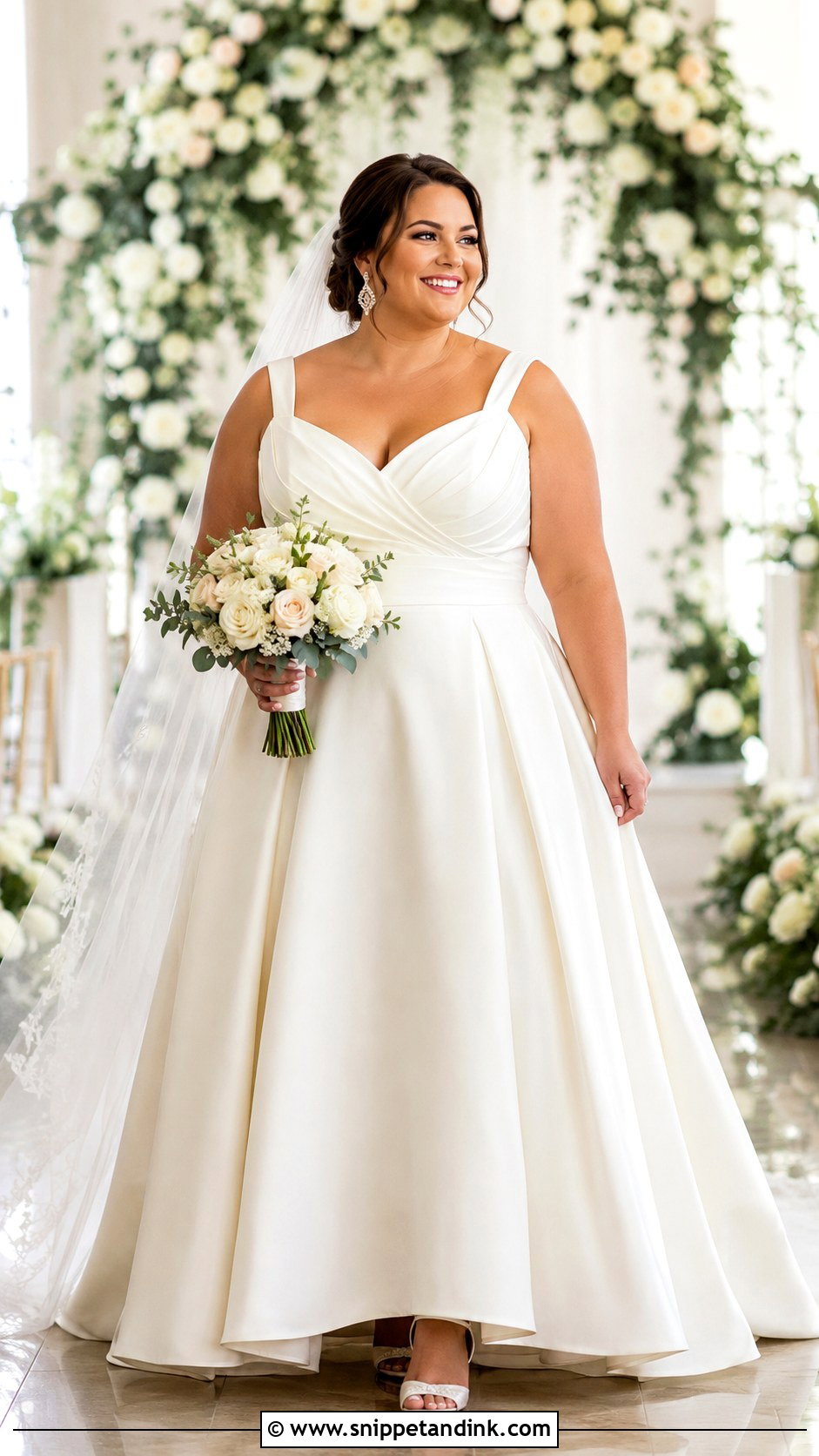
For a plus size bride, I start with support: a corset or boned bodice, comfortable straps and fabric that moves with you. A-lines, wrap styles, fit-and-flare and structured crepe can all work, and nobody should feel limited to one “flattering” shape. Sample sizes in many bridal shops are smaller, so ask whether the boutique carries extended samples before you book. Good tailoring makes the biggest difference; the right alterations make any dress feel made for you.
21. Maternity Wedding Dress Outfit
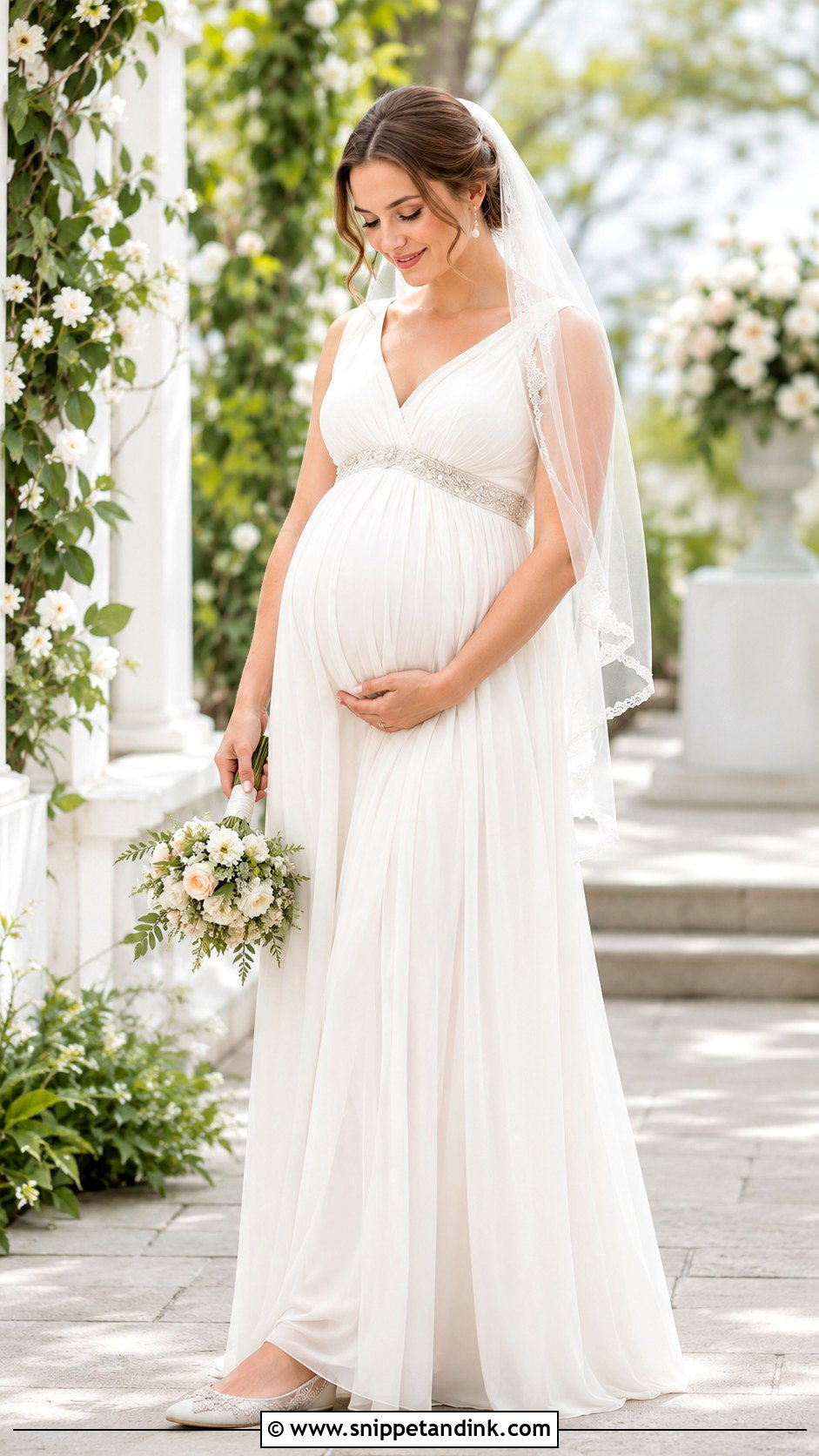
Maternity gowns need to allow for change between ordering and the wedding. Empire waists, wraps, stretch crepe and flowing chiffon are the comfortable options. A supportive neckline and secure straps matter more than usual. I schedule the final fitting as close to the date as the seamstress allows. Cushioned sandals or low block heels help through the ceremony and photos, and I’d plan a chair for you during the speeches.
22. Winter Wedding Dress Outfit
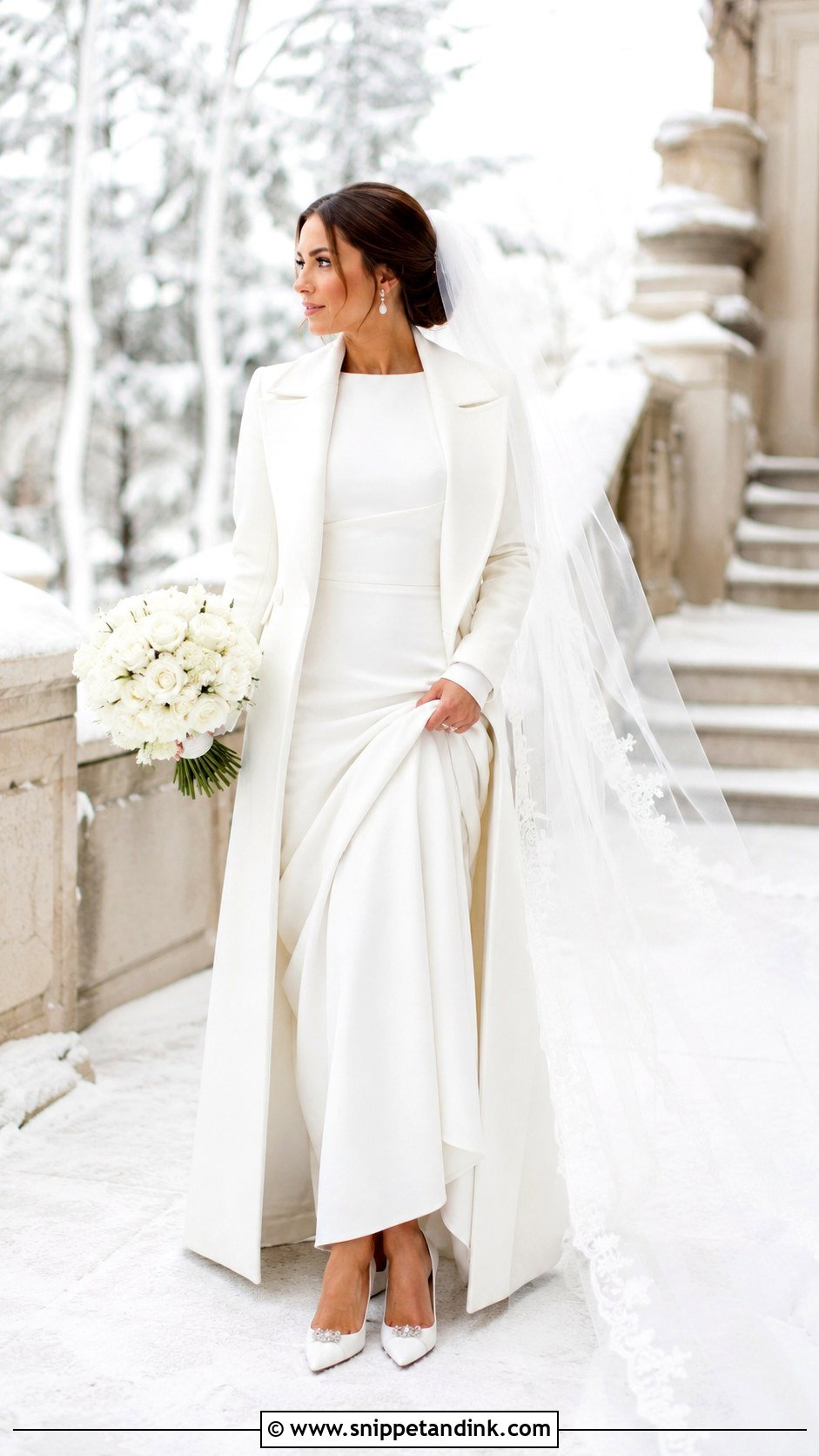
Winter gowns call for long sleeves in satin, crepe or mikado, plus a planned layer for outdoor photos and moving between buildings: a faux fur wrap, a tailored bridal coat or a cape. Choose that layer at the same time as the dress so the whites match; a stark white coat over an ivory gown looks mismatched in every photo. A cathedral veil works well against winter scenery, and a white suit with a long coat is the modern alternative.
23. Summer Wedding Dress Outfit
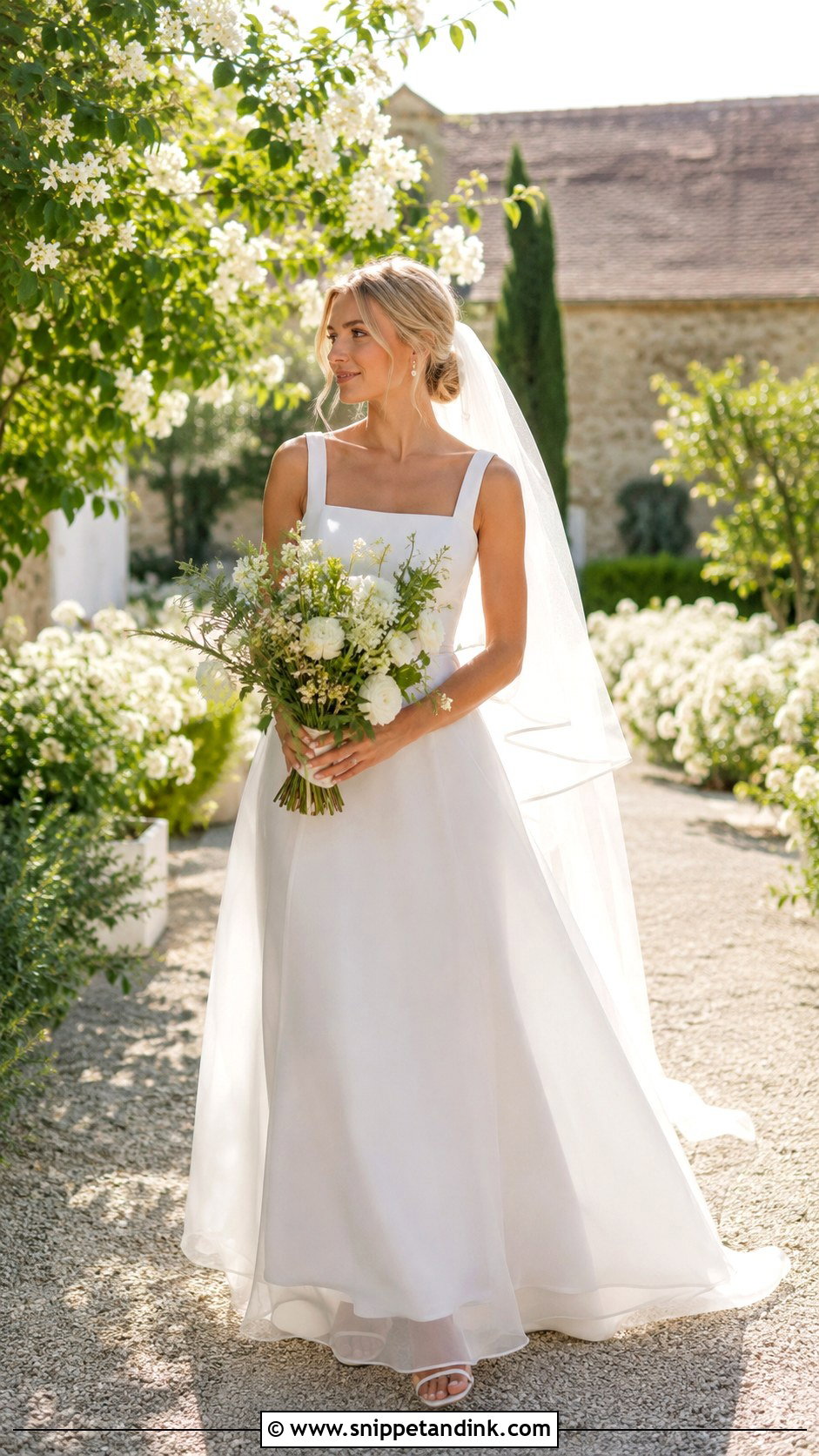
Heat changes everything. Organza, chiffon, tulle, lightweight crepe and soft lace keep you cooler than satin or heavy beading. Strapless, halter and square-neck shapes are good if they stay secure as you warm up. Heavy trains outdoors drag dust and grass, so a shorter train or a bustle helps. A soft updo keeps hair off the neck, which makes a real difference in afternoon sun.
24. Vintage Inspired Wedding Dress Outfit
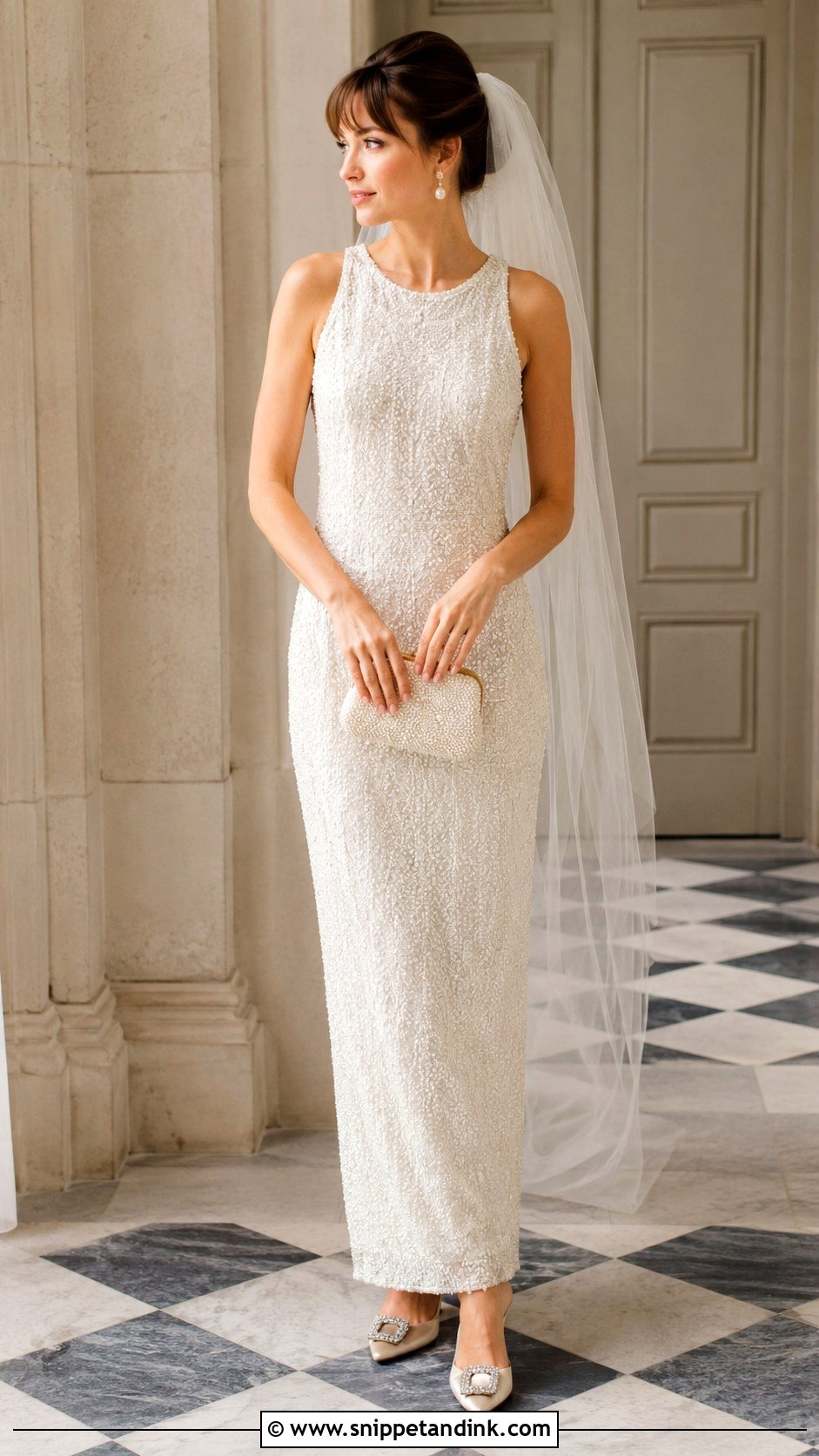
Vintage-inspired gowns bring character: a 1920s beaded column, a 1950s tea-length gown, a 1970s lace-sleeve dress or a 1990s minimal slip. The trick is choosing one era and styling it lightly, so it reads as inspired rather than costume. Original vintage gowns are often fragile and sized very differently, so budget extra for repairs and alterations. A red lip suits some eras; soft neutral makeup keeps others modern.

25. Convertible Wedding Dress Outfit
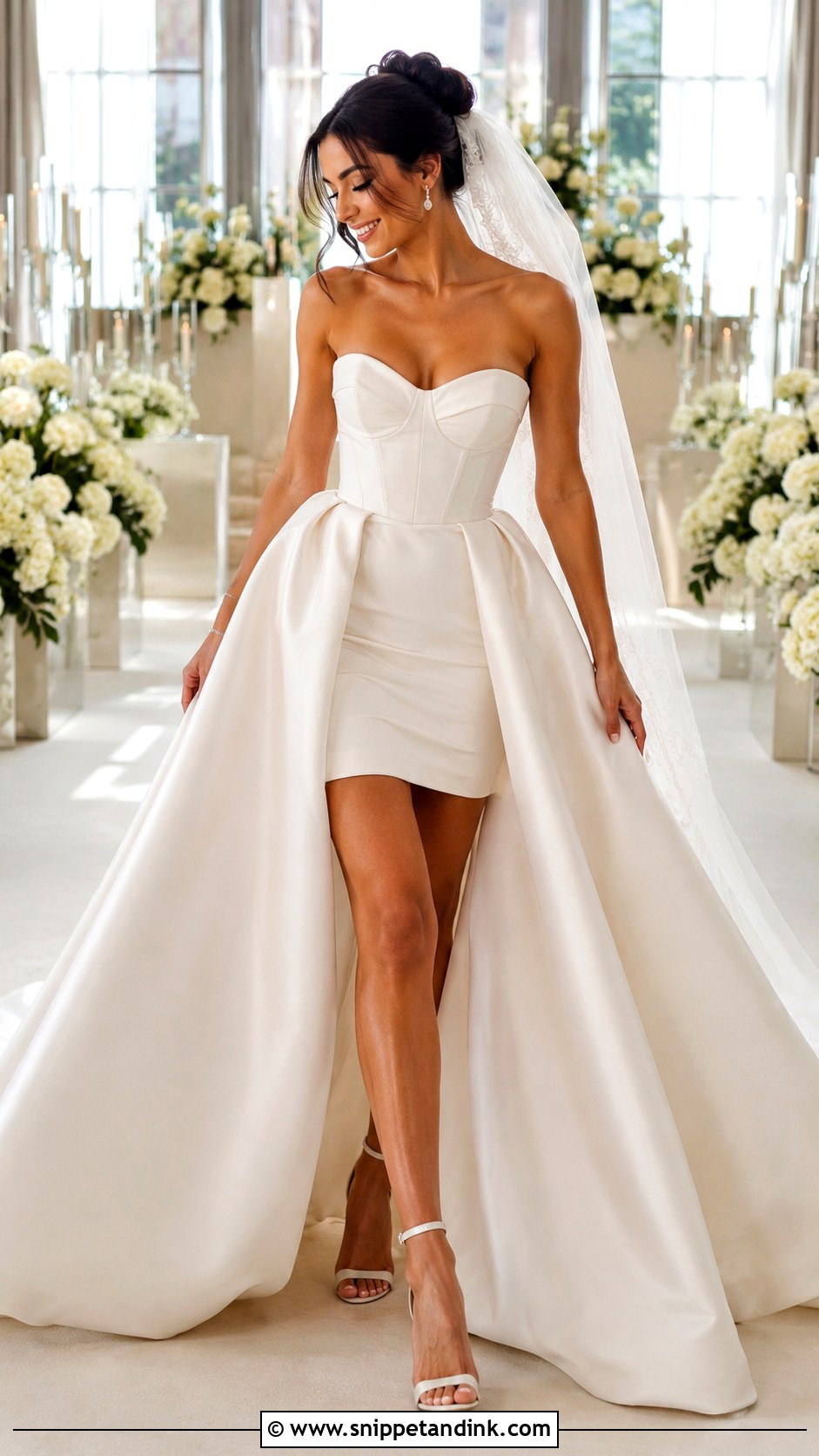
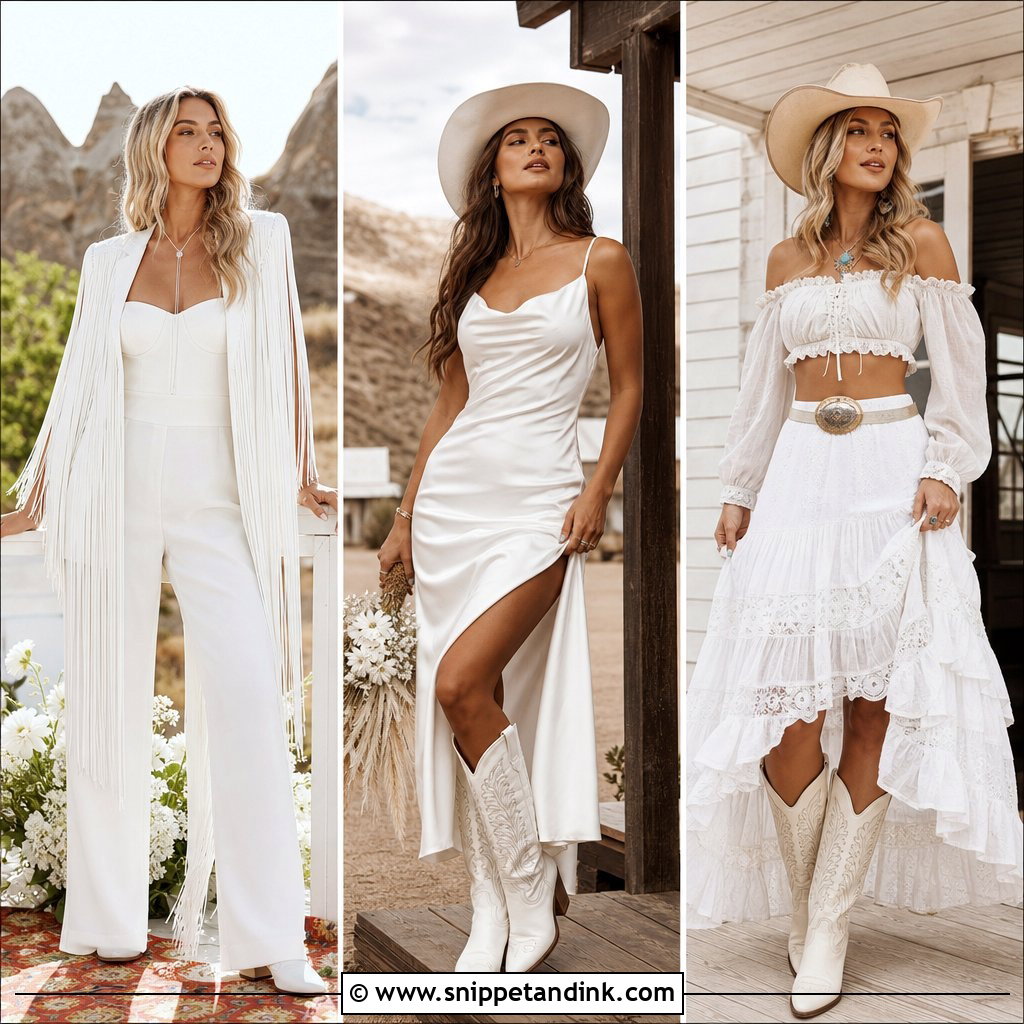
A convertible wedding dress outfit gives two looks without a full change: a detachable overskirt, removable sleeves, a cape or a train that comes off for the reception. Practice the conversion at your final fitting with whoever will help on the day. Snaps and hooks can be fiddly in dim light, and this is the step that most often runs long when nobody has rehearsed it. Keep accessories simple so both versions feel connected.
How the Fittings Usually Run
Most gowns need two or three fittings. The first is usually about eight to twelve weeks before the wedding, and the last around two weeks out. Here’s what I’d bring and check each time.
Bring the real shoes and underwear
Hems are set to your shoe height, and bodices are fitted over your actual bra or shapewear. Borrowed shoes at the first fitting can mean a hem that’s wrong by a few centimeters.
Move like it’s the wedding
Sit, walk a few steps, raise your arms, hug someone. A dress that only works standing still will tell you so in this room, where it can still be fixed.
Learn the bustle with your helper
Bring the person who’ll bustle your train at the reception to the final fitting. Have them do it twice while the seamstress watches.
After the wedding
Have the gown cleaned by a specialist within a few weeks, since sugary drinks and sweat can leave marks that yellow over time. Store it in breathable acid-free tissue and a cotton bag, out of plastic and away from light.
The Dress That Still Feels Right at the Last Dance
The right bridal outfit fits your plans, your comfort and your sense of yourself. Some brides find it in a classic lace gown, others in a suit, a jumpsuit, a mini, a lehenga or a satin slip. Think about the venue, the season and how many hours you’ll wear it, and decide on shoes, layers and hair accessories early, since they shape the whole look. Whatever the style, a gown that’s been properly fitted and tested will let you forget about it and enjoy the day.
You'll Like These Ideas:


Leave a Reply