
Jaago is the one wedding night where I tell everyone to dress from the feet up. It runs late, with dhol, boliyaan, glowing lights and the whole family dancing, and in many homes the nanke still carry a lit, decorated gaagar through the street. Yellow, rani pink, orange, green, royal blue and deep red are the classic colors, while ivory, lavender and soft pastels look fresh against them. The details that decide whether you enjoy the night are less glamorous: fabric that breathes, a dupatta you can pin, and juttis you’ve already broken in. Below are complete outfits for the bride, her sisters, cousins and guests.
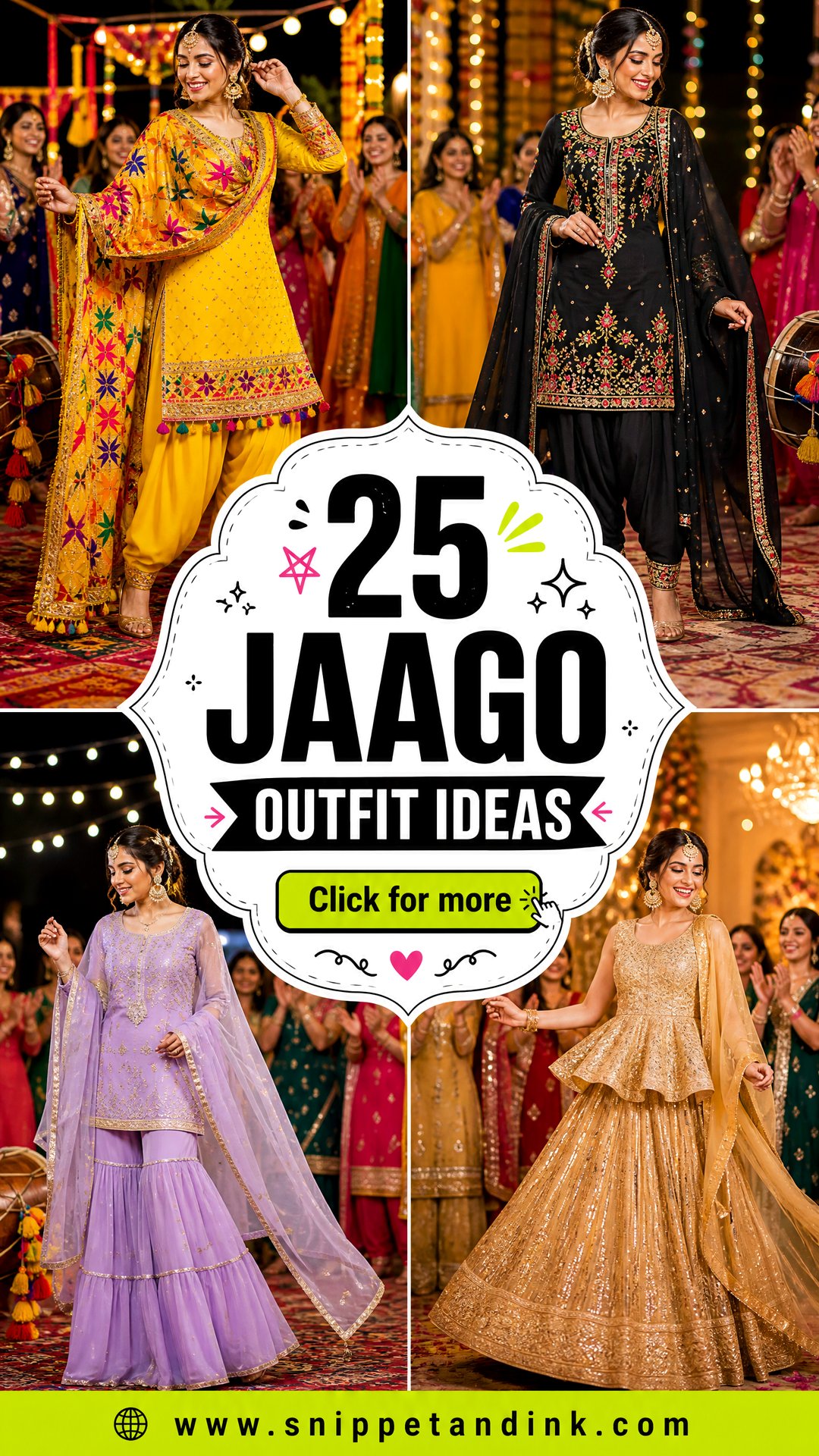
Dressing for a Lit Gaagar, a Late Walk and Hours of Giddha
Jaago means wake up, and the night lives up to it. Traditionally the bride’s maternal family arrive with a brass or steel gaagar decorated and topped with lit diyas, one of the women carries it on her head, and the group dances through the neighborhood singing boliyaan and banging a decorated stick hung with bells. Plenty of families now hold it in a banquet hall or back garden, but the same three things affect what you wear.
Open flame
Whoever carries the gaagar, or dances close to it, should keep the dupatta pinned well back over the shoulders. Net, organza and polyester georgette catch quickly, and a loose end swinging near a diya is the most common close call I hear about. If you’ll carry the pot yourself, a cotton dupatta pinned flat is the safer choice.
Walking outside after dark
If the procession goes down a street or across a lawn, floor-length hems pick up dirt and heels sink. Ankle-length shararas, Patiala salwars and juttis handle it best. Spring and autumn nights cool down fast, so a shawl or a light velvet jacket over the outfit is worth bringing.
Giddha and bhangra
Both are high-energy, with arms overhead, clapping and quick turns. Raise your arms above your head in the fitting room. If the kurta lifts at the waist or the blouse pulls at the armholes, ask the tailor for a little more ease before the night, not a tighter fit.
1. Yellow Phulkari Jaago Suit
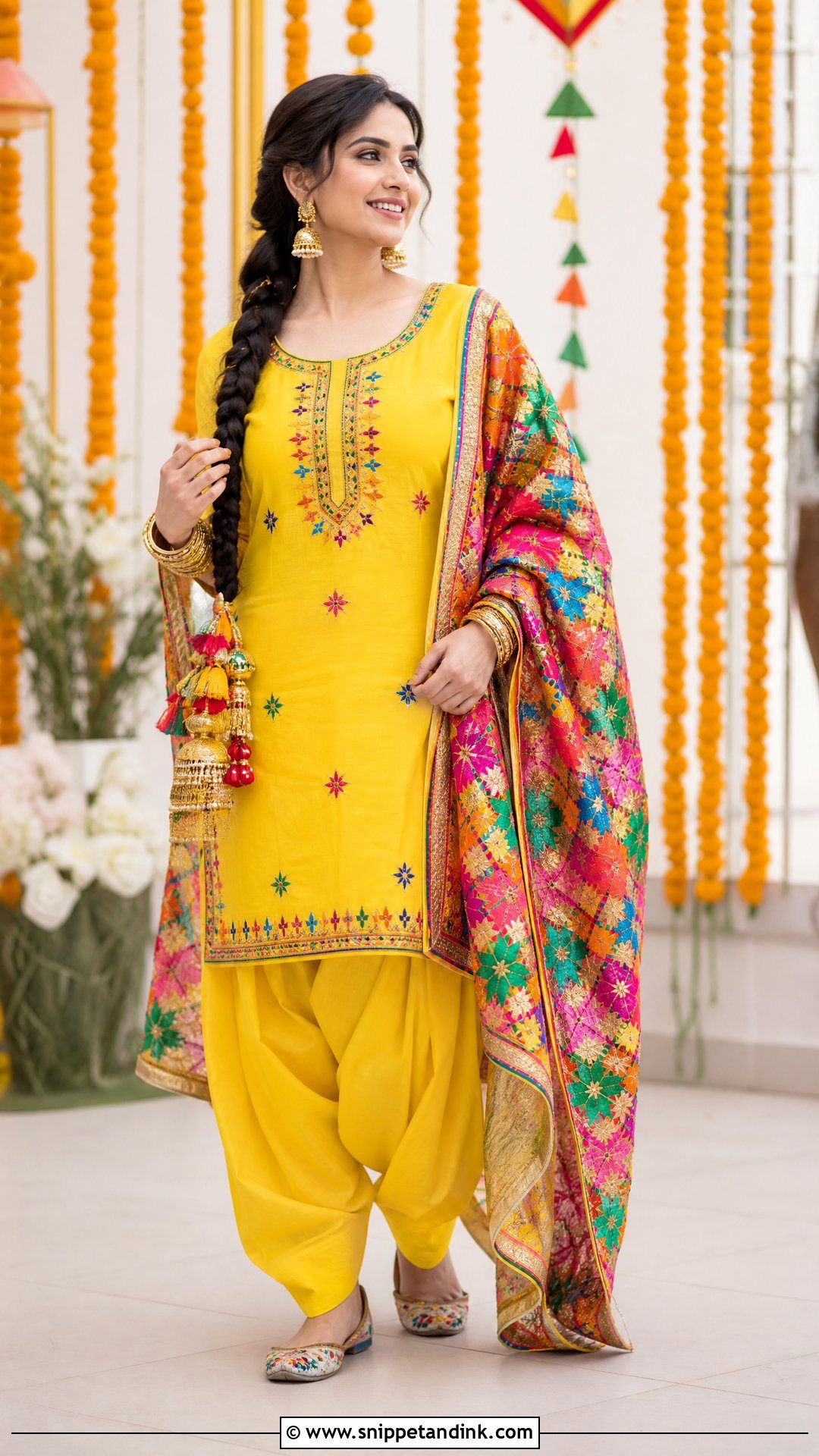
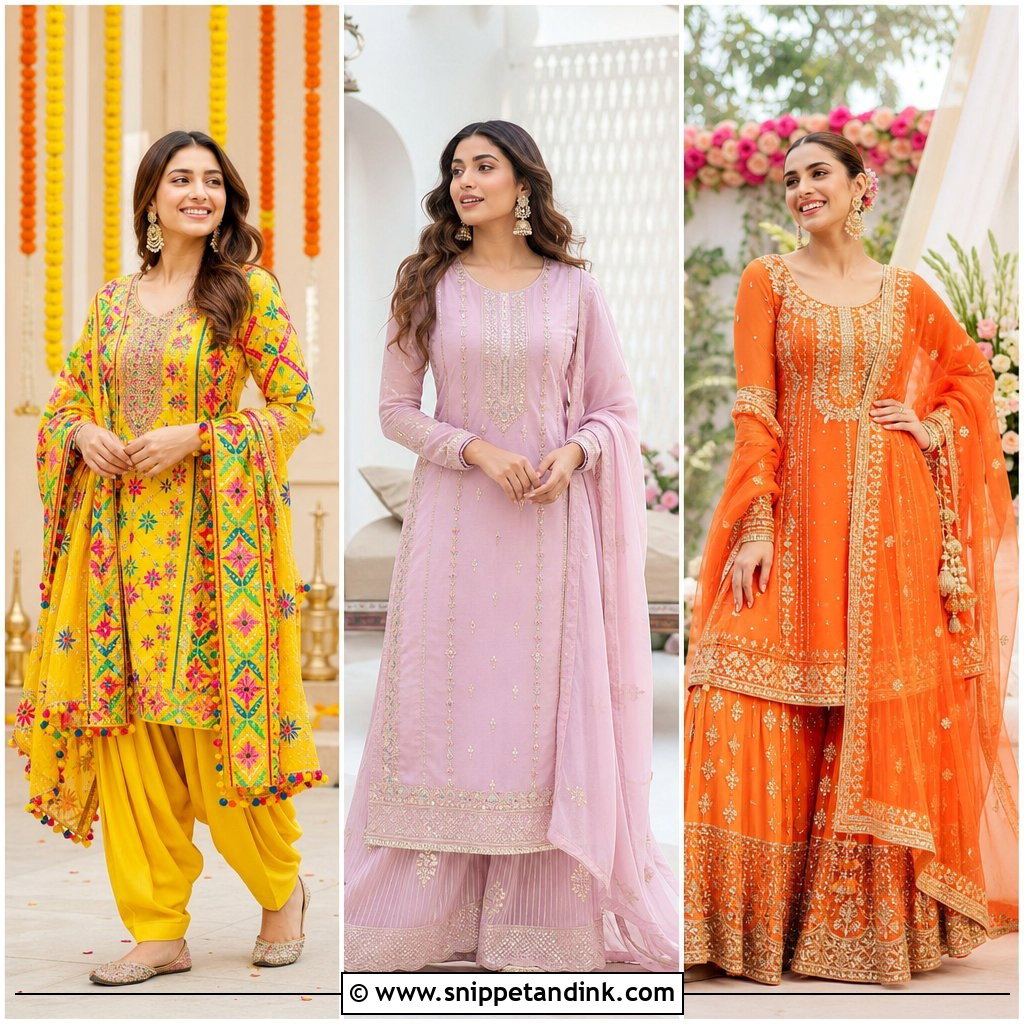
Yellow with a phulkari dupatta is about as cheerful as Jaago dressing gets. Keep the kurta plain and knee-length so the embroidery has room, and give it a Patiala salwar with enough fullness to dance in. A real hand-worked phulkari is heavier than it looks, so I pin it at one shoulder and loop the other end around the wrist; draped loosely, it slides off by the second song. Embroidered juttis, gold jhumkas and stacked multicolor bangles finish it, and a long braid with a traditional parandi adds the detail every Punjabi auntie will notice. Sisters and close family wear this one well.
2. Rani Pink Sharara Jaago Outfit
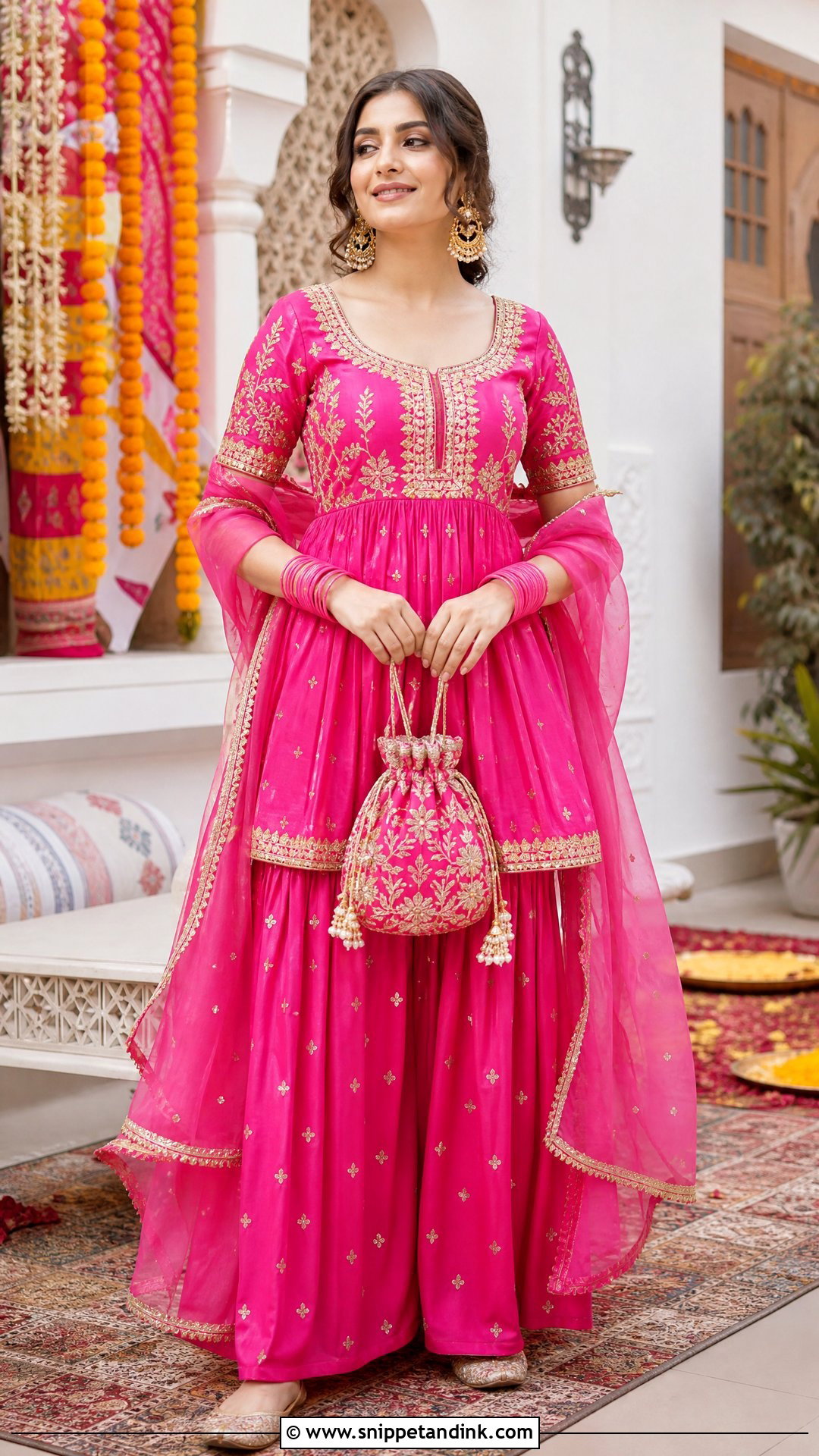
Rani pink holds its color under bright venue lights better than most shades, so a sharara in this tone reads festive even from across a crowded room. Pair a short embroidered kurti with flowing sharara pants and a lightweight organza dupatta. The fit point I check is where the kurti ends: near the natural waist, with the flare starting cleanly below it, the shape looks deliberate; any longer and the two pieces fight. Gold gota or small mirrors add detail without much weight. Finish with metallic juttis, chandbalis and a small potli, plus a sleek ponytail or center-parted braid. Brides can take the embroidery heavier, guests lighter.
3. Orange Patiala Suit For Jaago
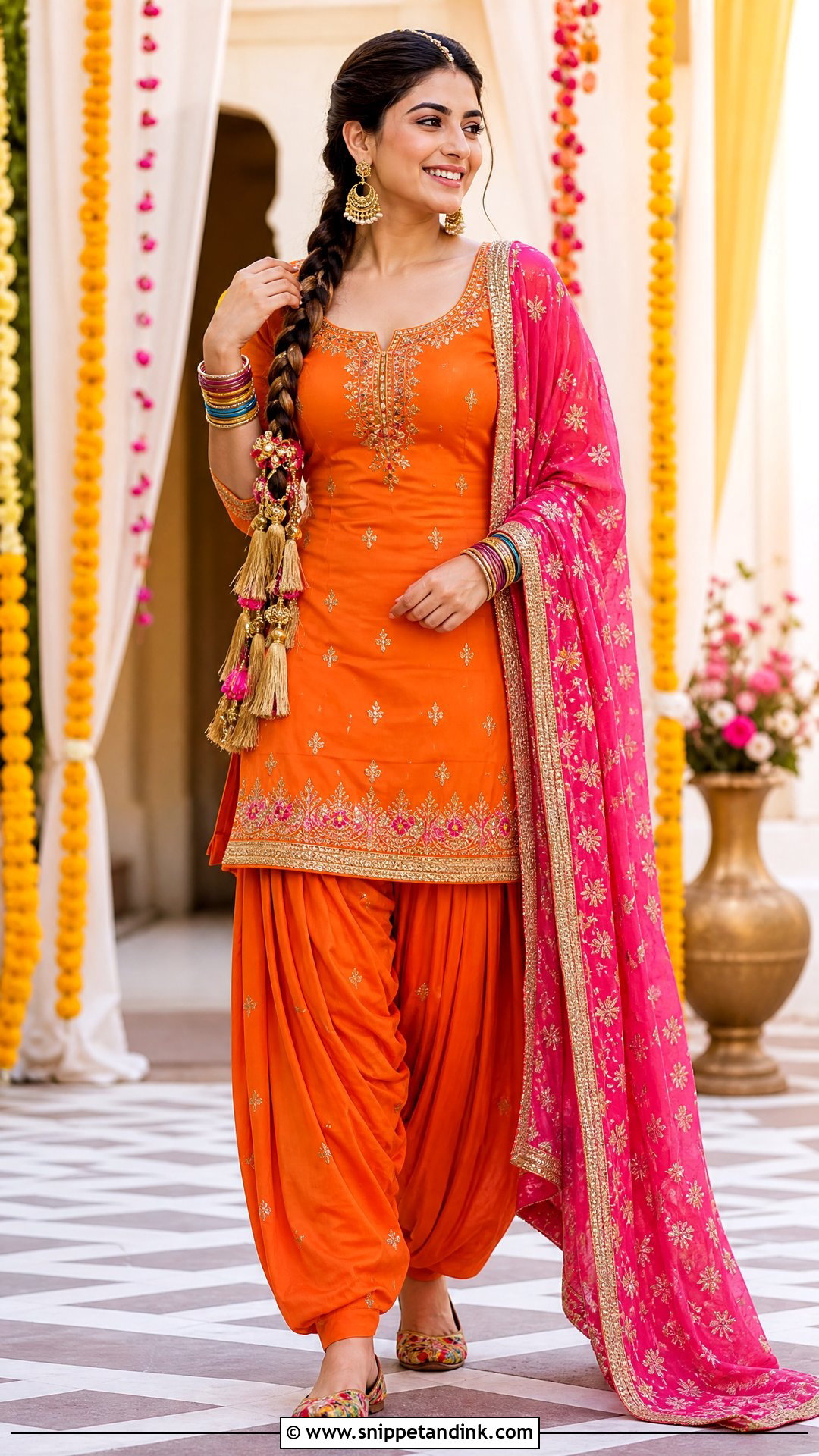
Orange is pure Jaago energy, and a bright orange Patiala suit carries it without any fuss. A fitted kurta with an embroidered neckline gives structure, and the deeply pleated salwar does the rest. Contrast with a pink, green or turquoise dupatta edged in narrow gota. On petite frames I take the kurta up an inch or two above the knee, because a long kurta over all those Patiala pleats swallows a short figure. Gold jhumkas, glass bangles and embroidered juttis complete it, and a tasseled parandi in one of the dupatta colors ties the hair in. Keep the bag small and hands-free if you plan to dance every round.
4. Green Gharara Jaago Outfit
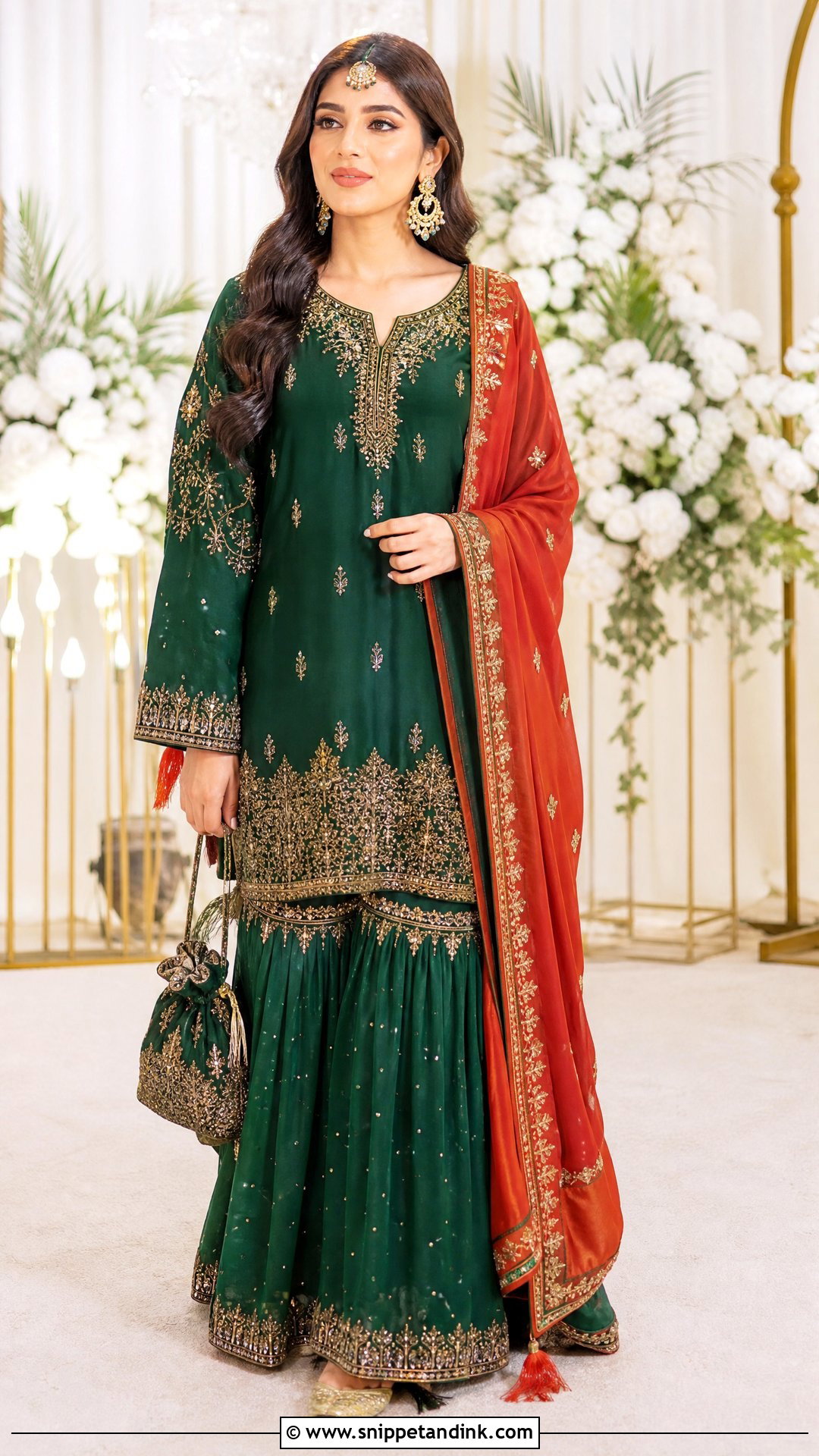
Deep green gives you an evening look without leaning on red or pink. Wear it as a short kurti with antique-gold embroidery around the neckline, sleeves and hem over a full gharara. Green this dark can disappear in dim courtyard lighting, so I always add a warm dupatta in rust, mustard or peach to bring some light back to the face. Use a lightweight fabric for the gharara, since the extra panels below the knee add up fast. Gold juttis, a matching potli, statement earrings and a delicate maang tikka complete the outfit for brides, older sisters and guests who like richer colors.
5. Red Anarkali Jaago Outfit
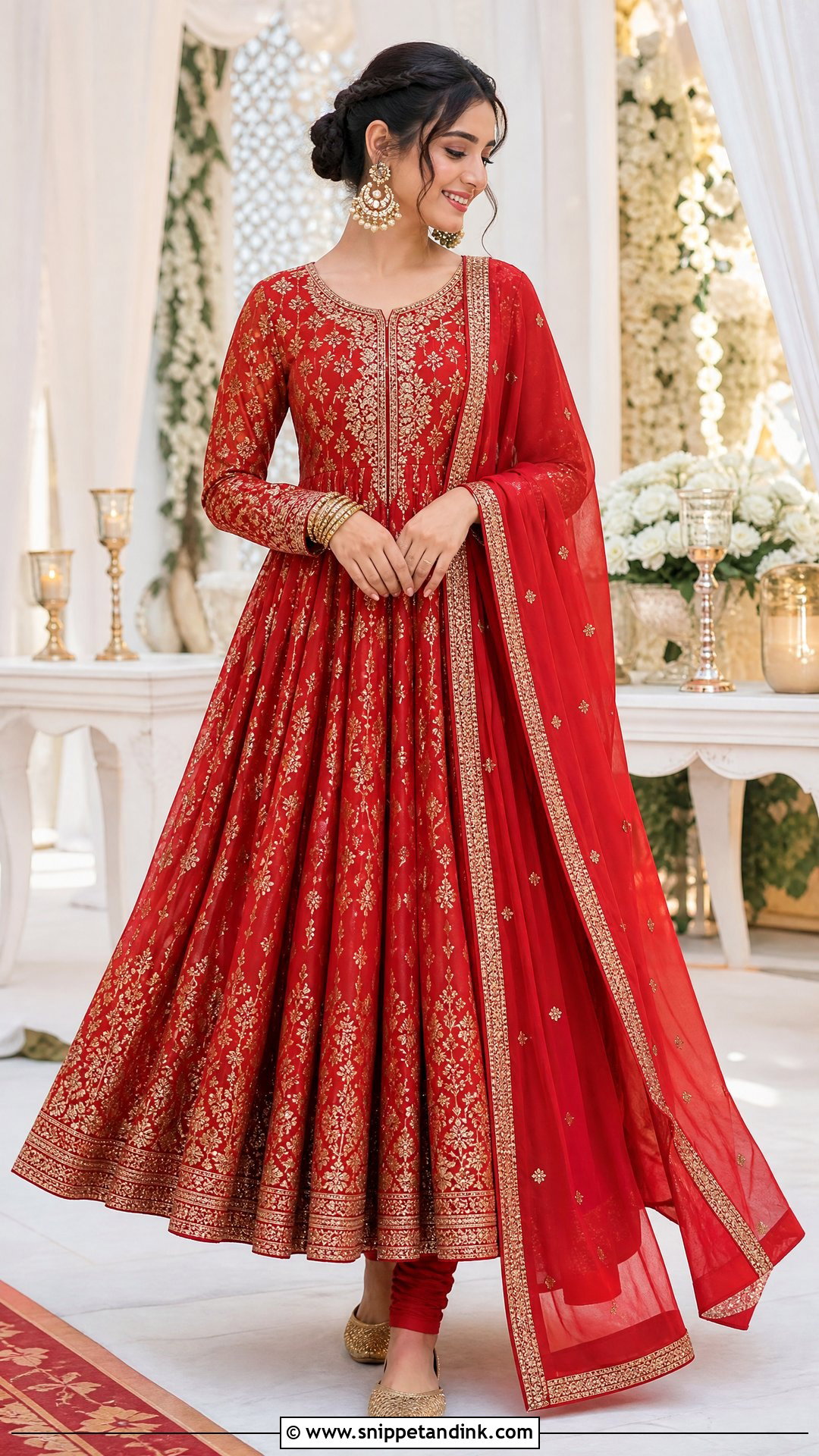
Spins are where an Anarkali earns its place. Go calf or ankle length with enough flare to open when you turn, but nothing that sweeps the floor; on a packed dance floor somebody will step on a trailing hem. Gold embroidery, small mirrors or scattered sequins bring solid red to life. Fitted churidar, a light embroidered dupatta and gold juttis keep the lower half tidy. Chandbalis and a low braided bun finish it. Brides can add a maang tikka and heavier bangles, while guests should keep the jewelry lighter than the bride’s.
6. Royal Blue Sharara Jaago Outfit
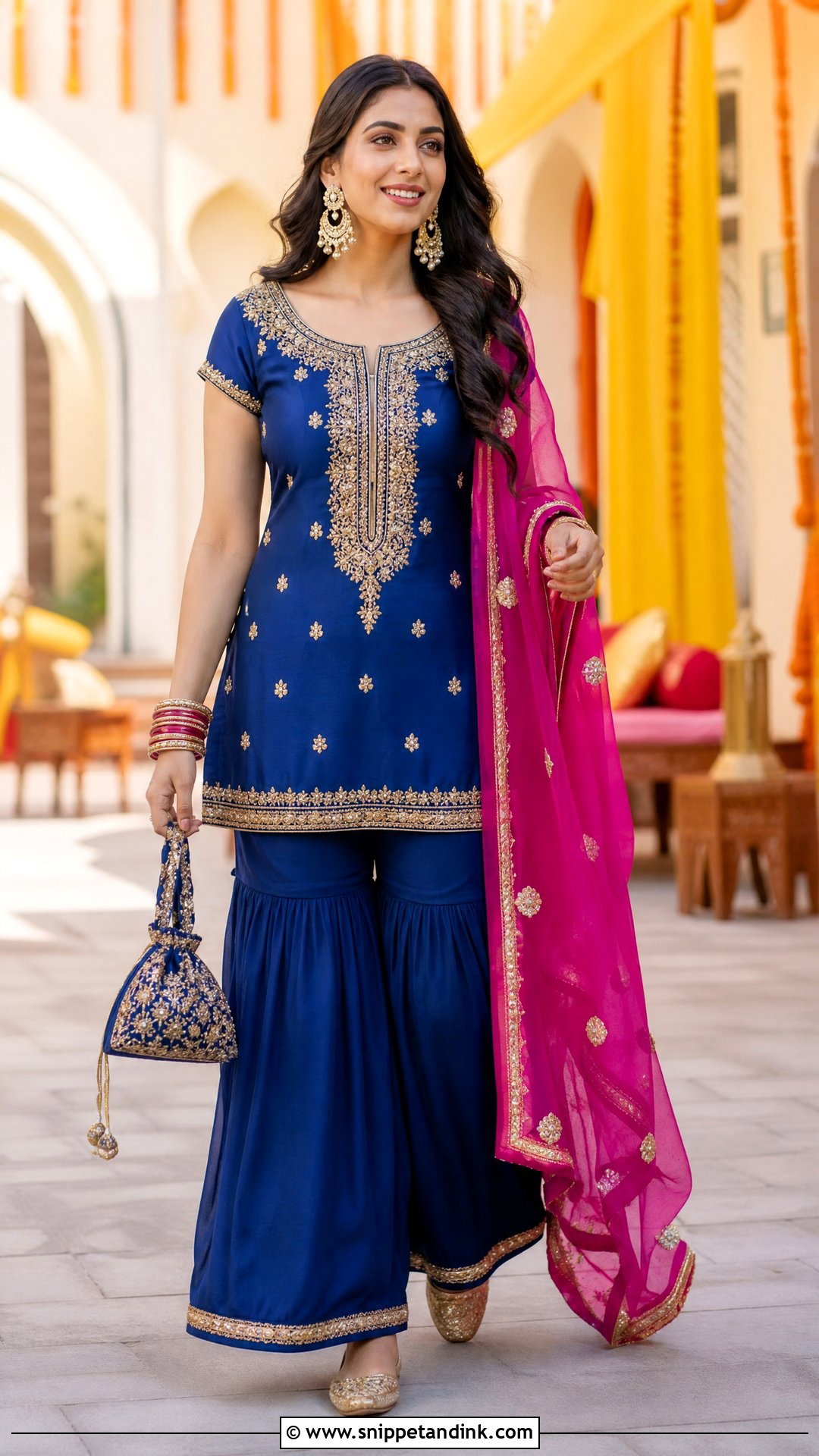
Royal blue against gold or silver embroidery looks rich at night, especially under warm string lights. Build it from a short kurti and wide, fluid sharara pants; check the hem width at the fitting, because a sharara that’s too narrow at the ankle catches your stride. A matching sheer dupatta looks coordinated, while a magenta one turns playful. Wear embellished juttis rather than heels, which sink into lawns and wobble on uneven paving. Crystal or kundan earrings, stacked bangles and a compact potli finish it, with a loose braid or softly curled ponytail. Bridesmaids who want to stand out without looking bridal tend to love this one.
7. Magenta Gharara With Green Dupatta
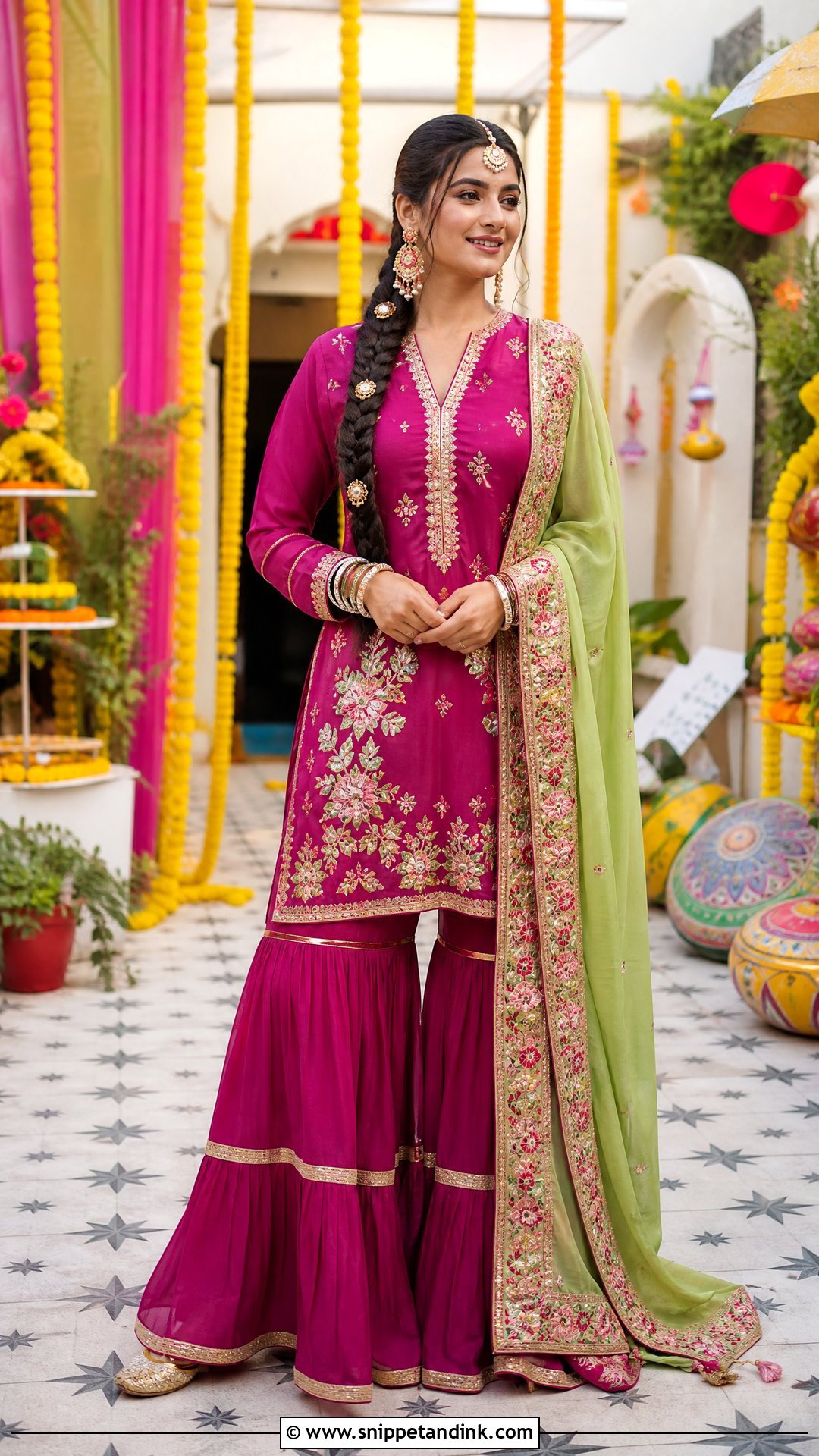
Magenta with pistachio green is one of the oldest color pairings in Punjabi dressing, and it still works. Start with a magenta short kurti and matching gharara in floral threadwork or gold gota, then break up all that saturation with a soft green dupatta. Metallic juttis, gold earrings and mixed magenta-and-green bangles pull it together. My one rule here is restraint with the extras: the color is doing the talking, so a coordinated small bag beats an oversized one. A center-parted braid with small gold accessories keeps it traditional. It suits the bride’s sister or a close cousin who wants a memorable Jaago look without appearing bridal.
8. Ivory Mirror Work Jaago Lehenga
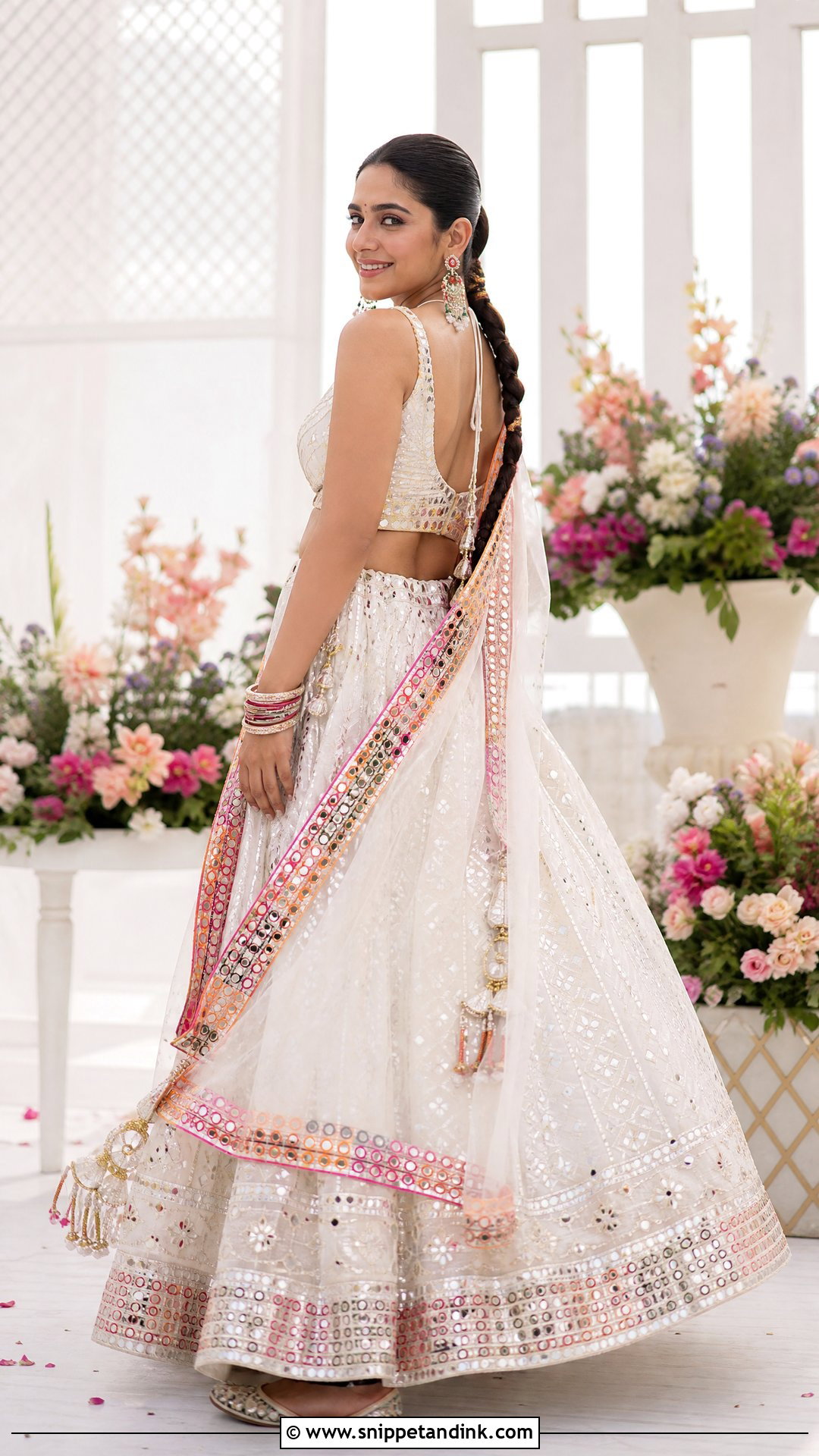
Ivory is the surprise at a Jaago, and it can look luminous among all the brights. Pick a lightweight mirror-work skirt with a manageable flare, a fitted blouse with secure coverage, and a dupatta edged in pink, orange and green so the neutral base doesn’t fall flat. Mirror-work juttis and colorful bangles carry the theme down to the hands and feet. Real mirror pieces have sharp-ish edges and some weight, so I check the blouse lining under the arms before a night of dancing. Statement earrings with a sleek braid or low ponytail finish it. Brides can go fuller in the skirt; guests should pick spaced mirrors and a simpler blouse.
9. Mustard Salwar Suit For Jaago
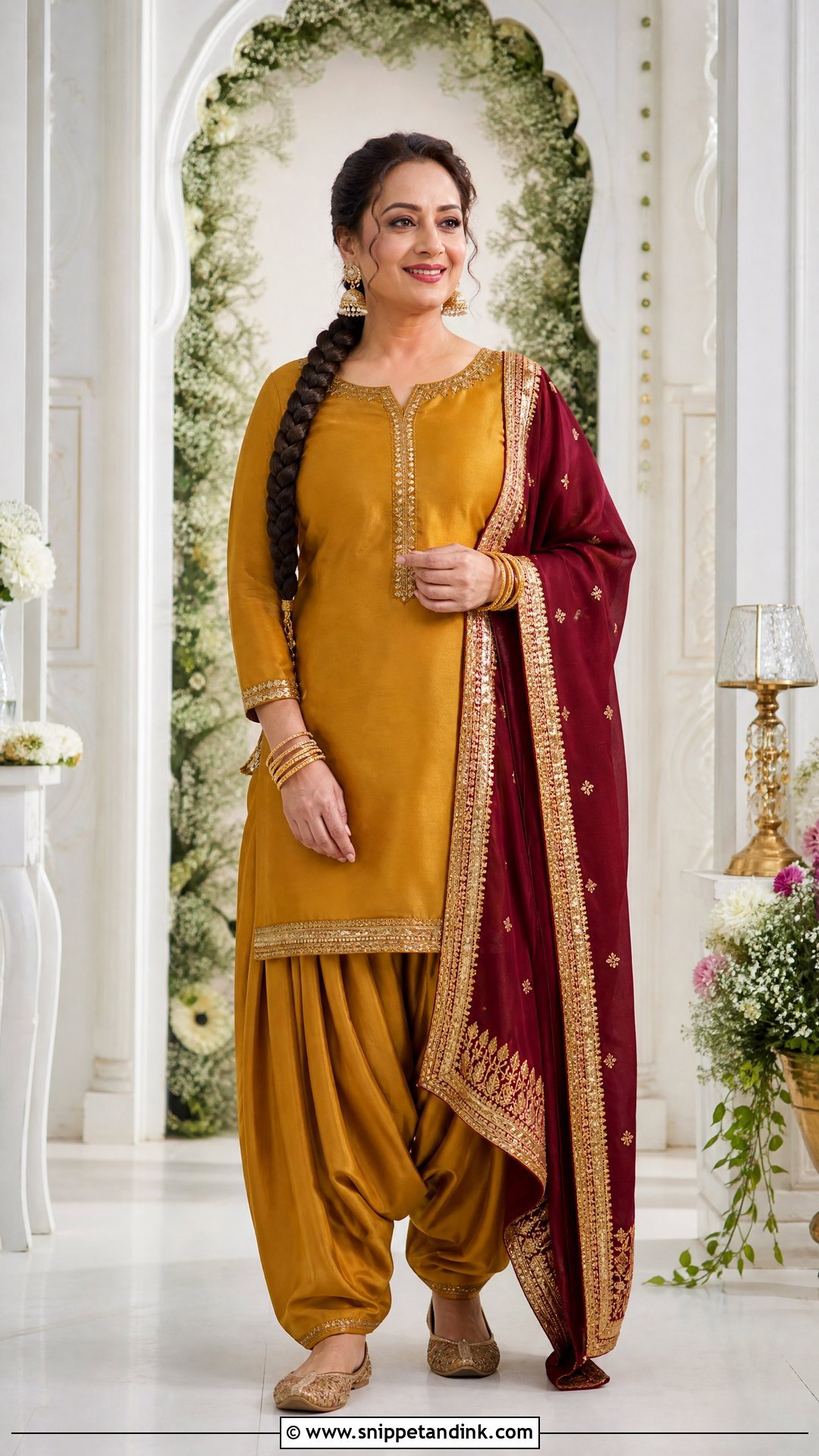
Mustard flatters warm and deep skin tones in a way bright yellow sometimes doesn’t, and it photographs rich rather than loud. Pair a straight or slightly flared kurta with a salwar softly pleated through the hips. An embroidered maroon or deep green dupatta adds contrast for an evening event. Antique-gold jhumkas, matching bangles and tan or gold juttis finish it, with a long braid and subtle hair accessories. It looks best in silk blends, cotton silk and lightly textured fabrics. Older women can take the kurta longer and drape the dupatta like a shawl, while younger guests can go shorter with brighter accessories.
10. Teal Peplum Sharara Jaago Outfit
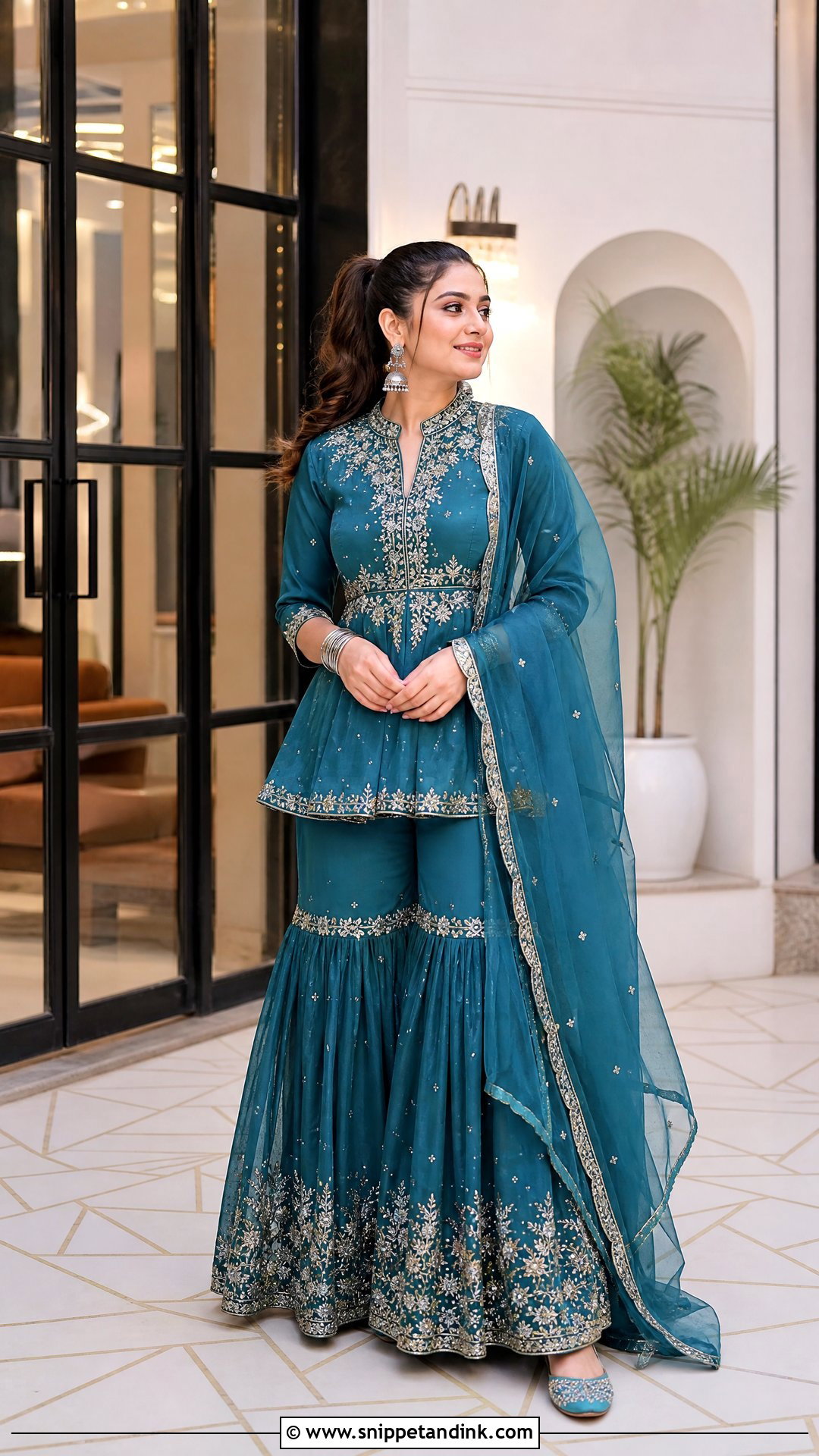
Peplum tops look modern, but the cut is unforgiving at one point: where the peplum flares. If it starts above your natural waist, it adds width; set it right at the waist and it defines it. Choose a structured teal peplum that doesn’t fit too tightly and pair it with high-waisted sharara pants with light embroidery near the flare. Pin a matching net or organza dupatta over one shoulder to free your hands. Silver jhumkas, cool-toned bangles and blue or silver juttis keep the palette consistent, and a high ponytail shows off the neckline. Skip extra layers; the shape already has enough volume.
11. Purple Velvet Jaago Suit
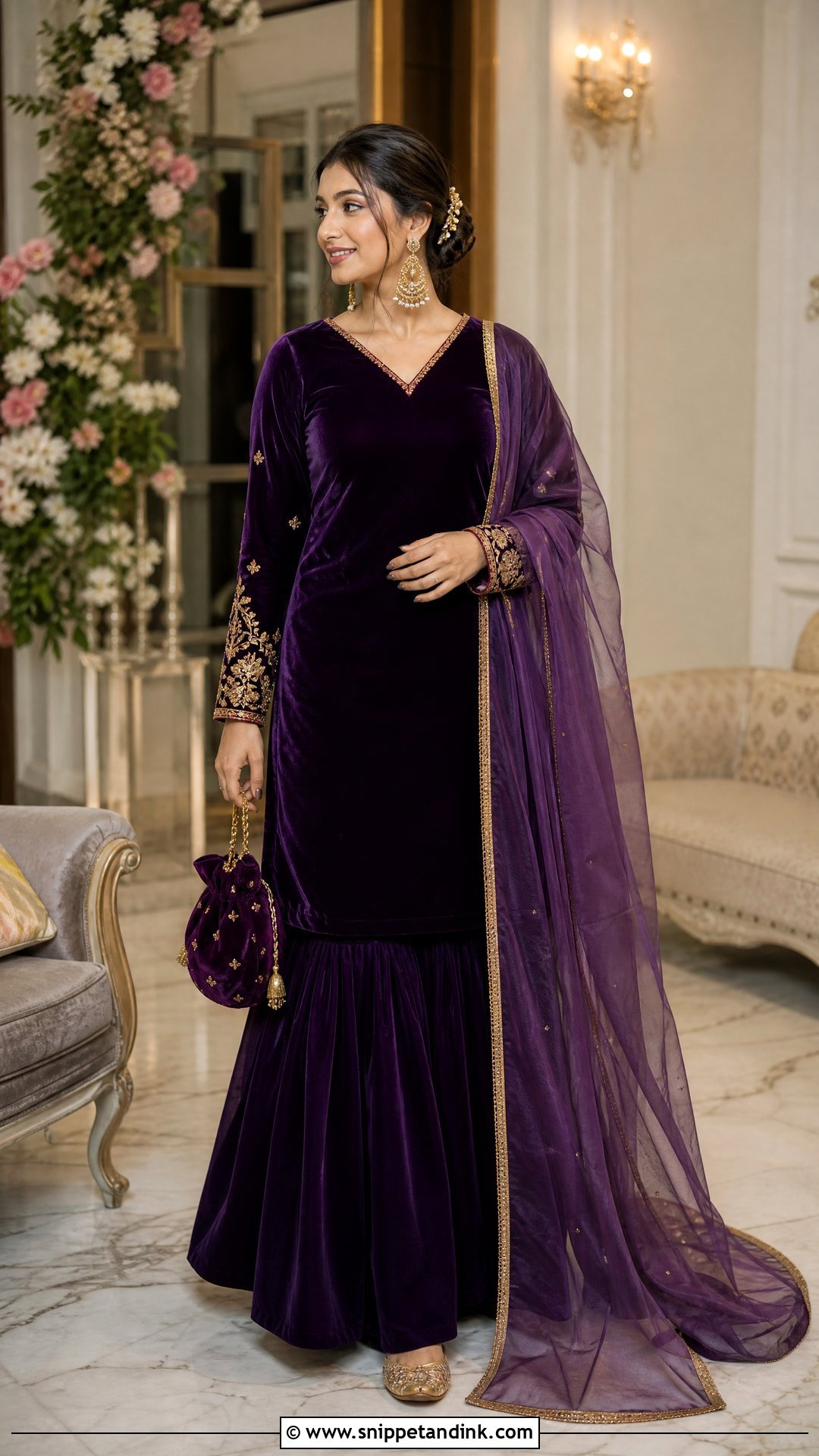
Velvet only makes sense for a cool-weather Jaago. In a heated hall in summer you’ll be miserable within an hour. For a winter night, though, deep purple velvet is hard to beat. Choose a streamlined kurta with gold embroidery concentrated at the neckline, cuffs and side slits, and pair it with a plain salwar or softly flared gharara. A tissue or organza dupatta lightens the whole outfit, which is important, because velvet absorbs light and can look heavy in photos. Gold juttis, chandbalis and a velvet potli match it, with a polished braid or low bun. Mothers, winter brides and close relatives wear it well.
12. Peach Embroidered Jaago Sharara
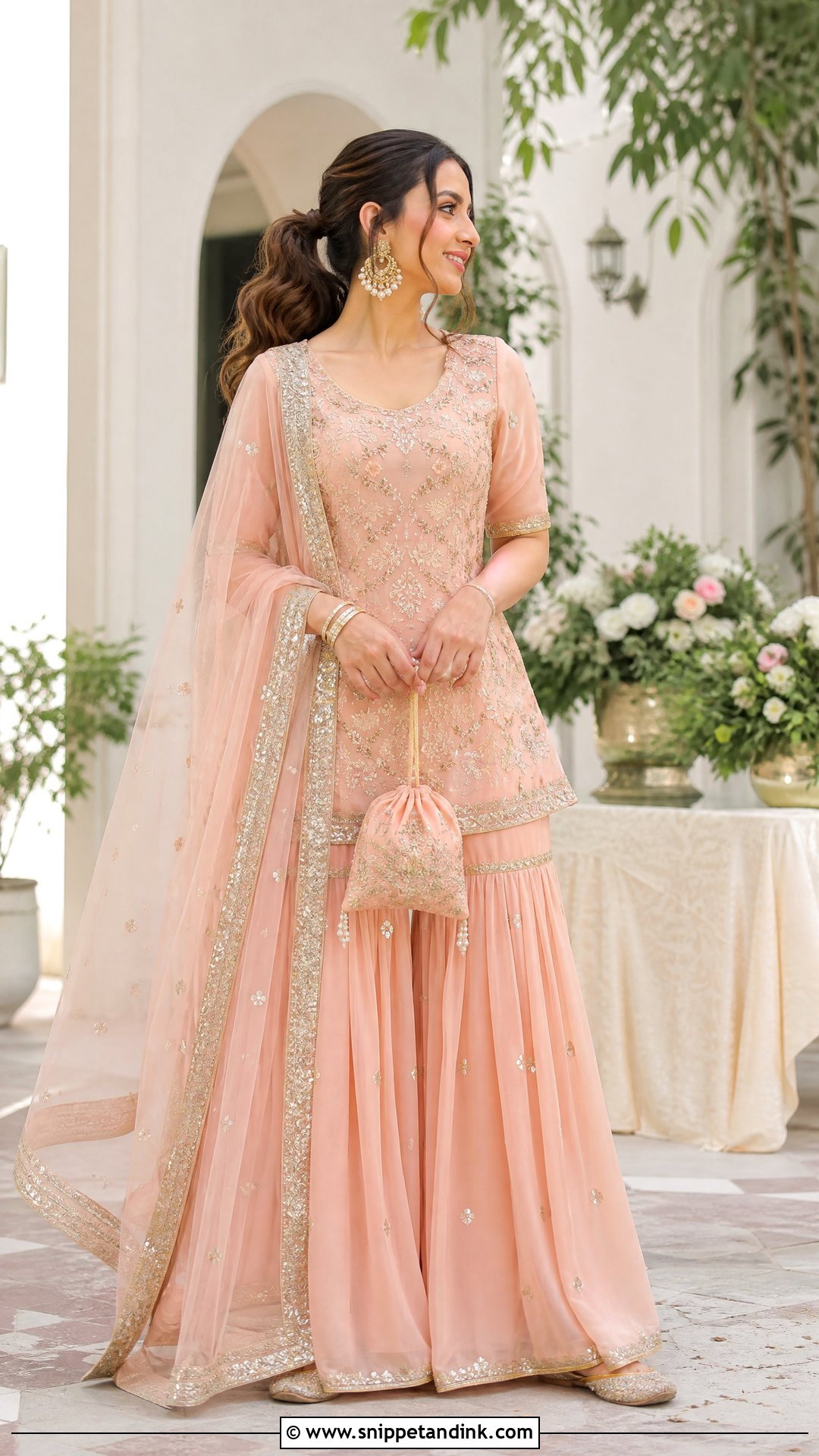
Peach is my suggestion for anyone who finds jewel tones too loud. A lightly embroidered short kurti, matching sharara and sheer dupatta with a delicate border keep it gentle, and gold, pearl or soft pink details add depth without changing the palette. Champagne juttis, pearl chandbalis and a small embroidered potli finish it. Loose curls gathered into a low ponytail look relaxed. One caution: pale peach next to a fair complexion can wash out under white LED lighting, so add turquoise or magenta through the bangles and border if the venue is brightly lit.
13. Multicolor Phulkari Jaago Lehenga
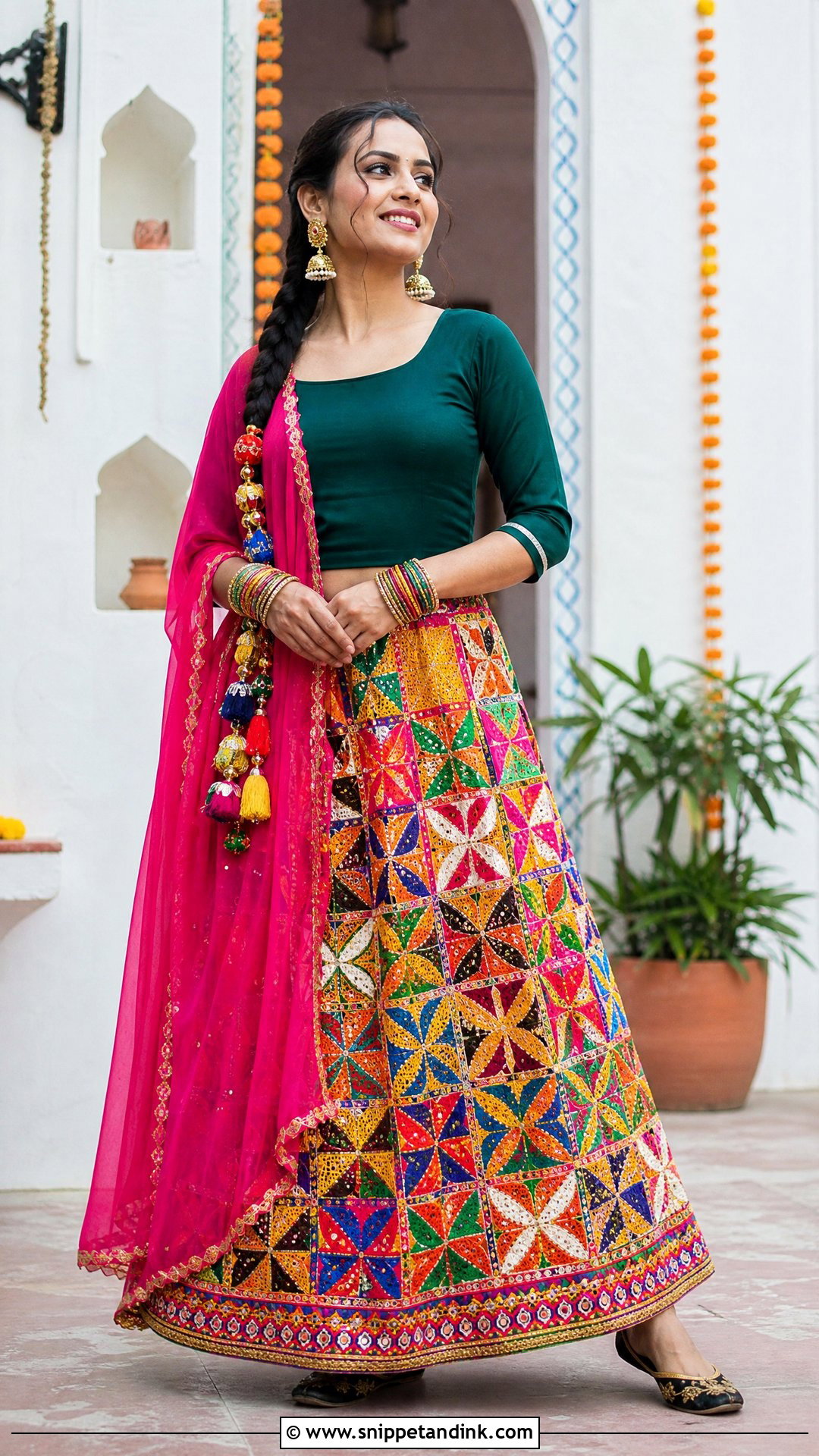
A phulkari skirt is all pattern, so everything around it should be solid. A plain black, deep green or hot pink blouse keeps it balanced. Add a lightweight dupatta in one of the embroidery colors and secure it across the torso or over a shoulder. Black or gold juttis ground the palette, and large jhumkas with mixed bangles keep the mood loud and happy. Embroidery this dense adds real weight to a skirt, so I go for a moderate flare and a breathable cotton lining rather than layers of can-can. Finish with a parandi braid. It’s a natural choice when the bride’s friends and cousins want to coordinate as a group.
14. Hot Pink Lehenga For Jaago
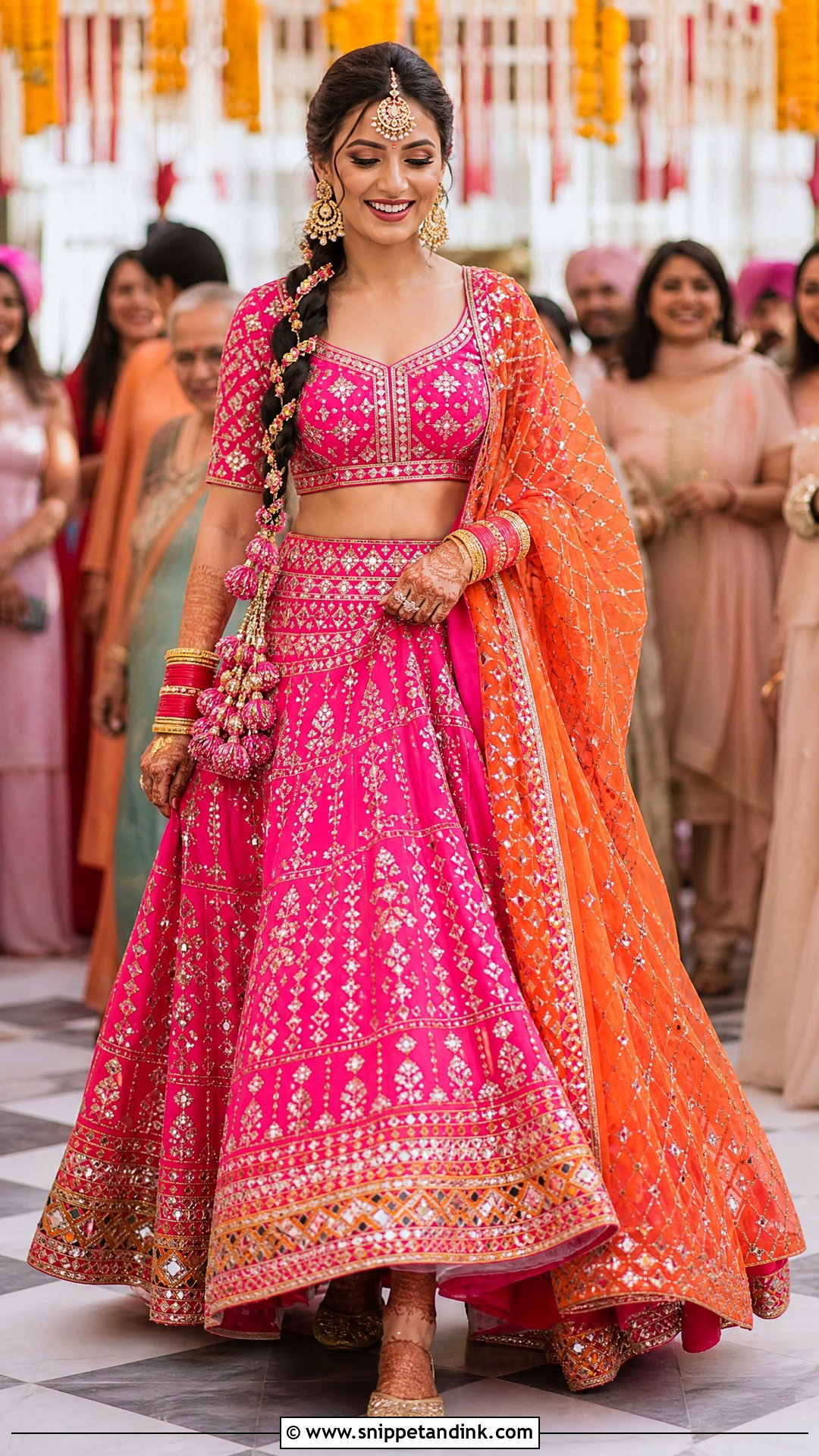
A hot pink lehenga is the bride’s chance to wear color, sparkle and movement all at once. Choose a lightweight skirt with mirror work, gota or scattered floral embroidery, a secure short blouse, and an orange or yellow dupatta for a proper Punjabi color story. Embroidered juttis, gold chandbalis, a maang tikka and coordinated bangles complete it, with a high braid and statement parandi to keep the face clear. I ask every Jaago bride to wear the full skirt around the house for an hour before the event: sit, climb stairs, dance a little. Weight that feels fine in the shop can drag by midnight. Pin the dupatta firmly so you’re not adjusting it all evening.


15. Black Embroidered Jaago Suit
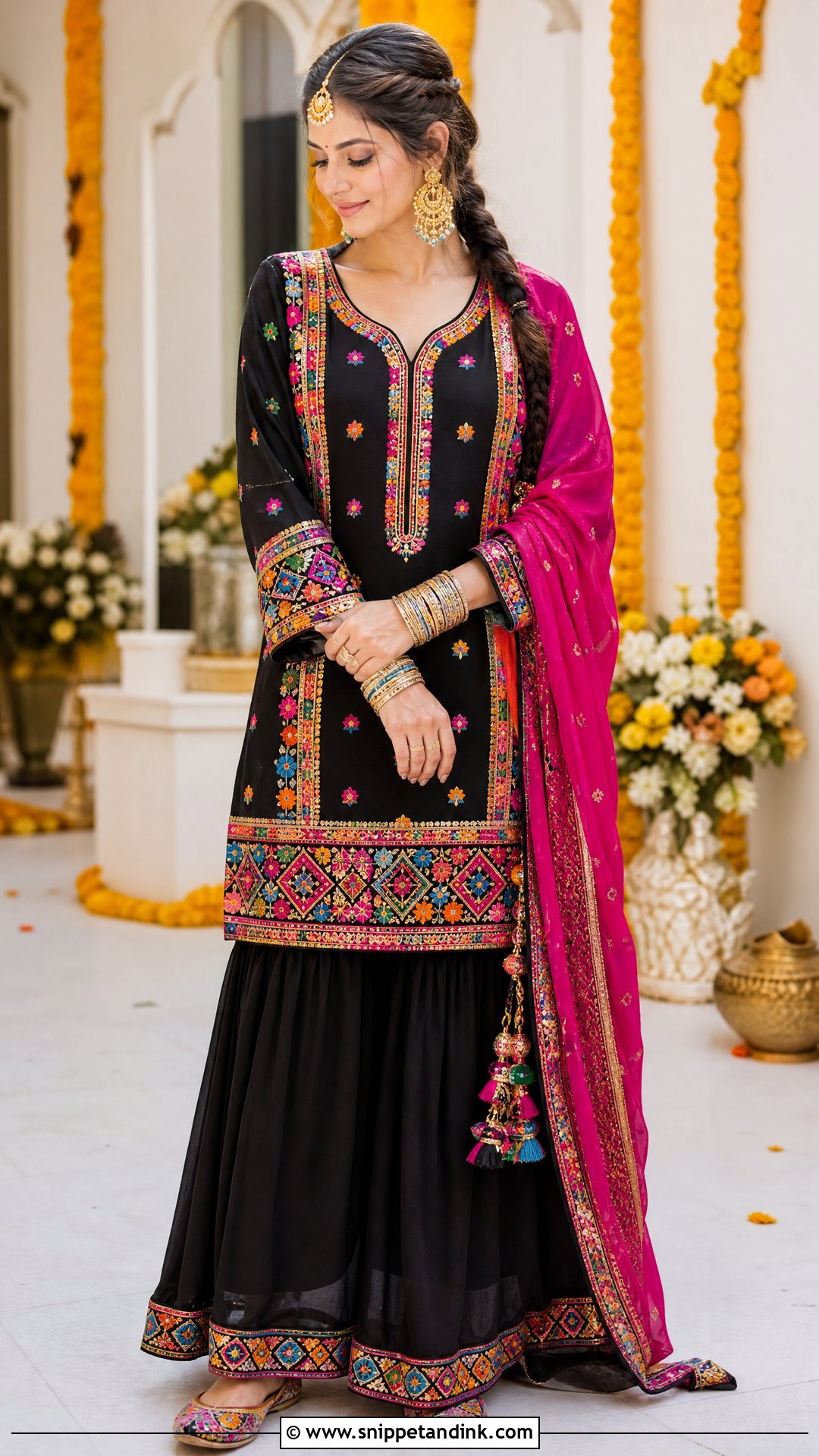
Black at a Jaago works when the color comes from the embroidery. Choose a black kurta with vivid phulkari motifs, mirrors or multicolor threadwork, and pair it with a flowing black sharara or Patiala salwar plus a bright magenta, orange or green dupatta. Some families still avoid black at wedding events, so if you’re a guest it’s worth a quiet check with the bride first. Embroidered juttis, large gold earrings, glass bangles and a colorful parandi keep the look celebratory instead of severe. It’s strongest at evening venues where the threadwork catches the light. Keep makeup fresh and skip extra black accessories.
16. Turquoise Gota Patti Jaago Outfit
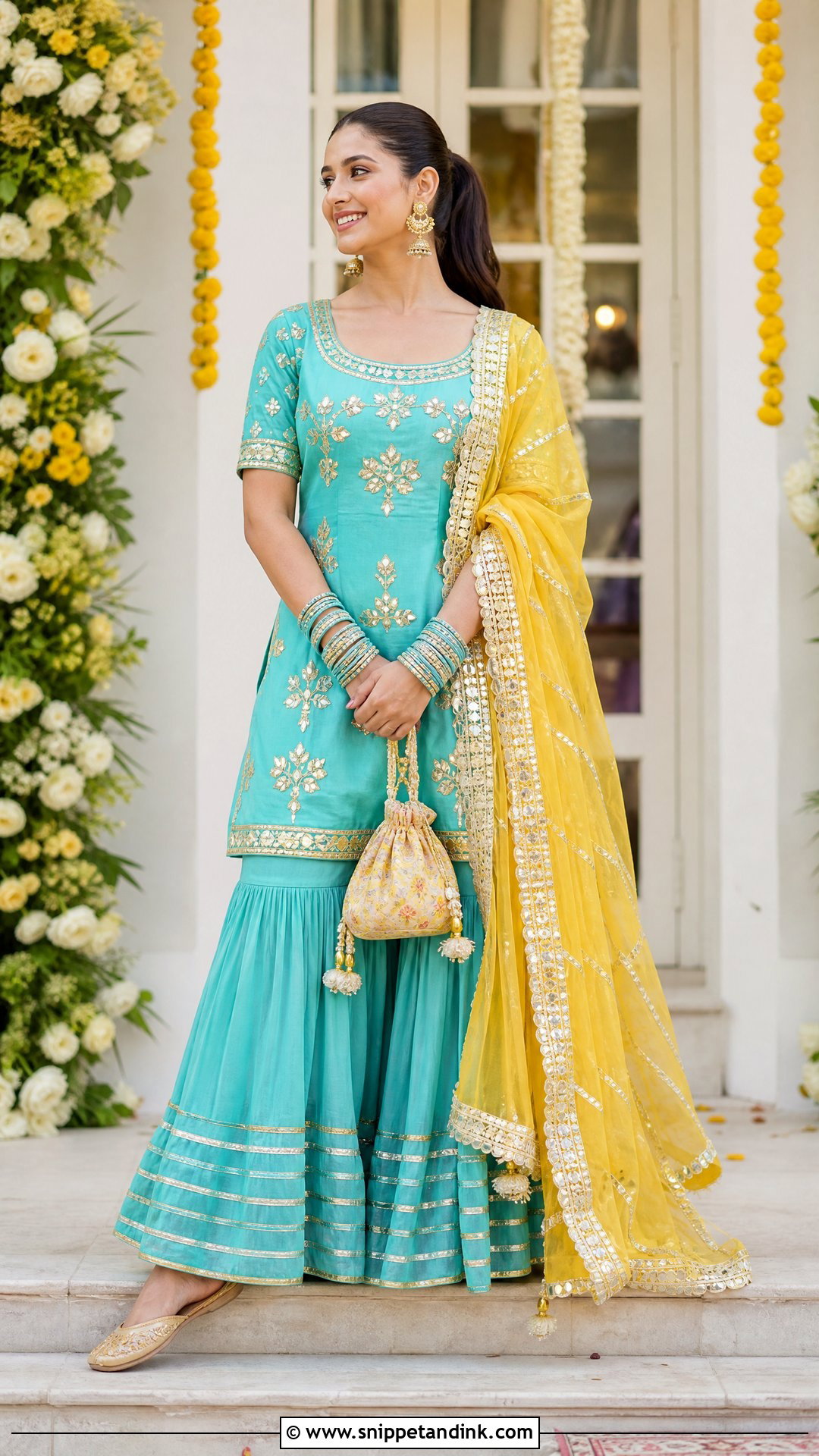
Turquoise stands out in crowded group photos without clashing with the pinks and oranges around it. Build the outfit around a short gota patti kurti with matching sharara or a traditional salwar, then add a pink, yellow or orange dupatta for contrast. Gota is metallic ribbon appliqued onto the fabric, so it’s light and catches every flash, but it can crease sharply if folded tight; I store these outfits rolled rather than folded. Gold juttis, medium jhumkas, stacked bangles and a matching potli finish it, with a sleek ponytail or braid. Straight pants can replace the sharara for anyone who wants less volume.
17. Maroon Gharara Jaago Outfit
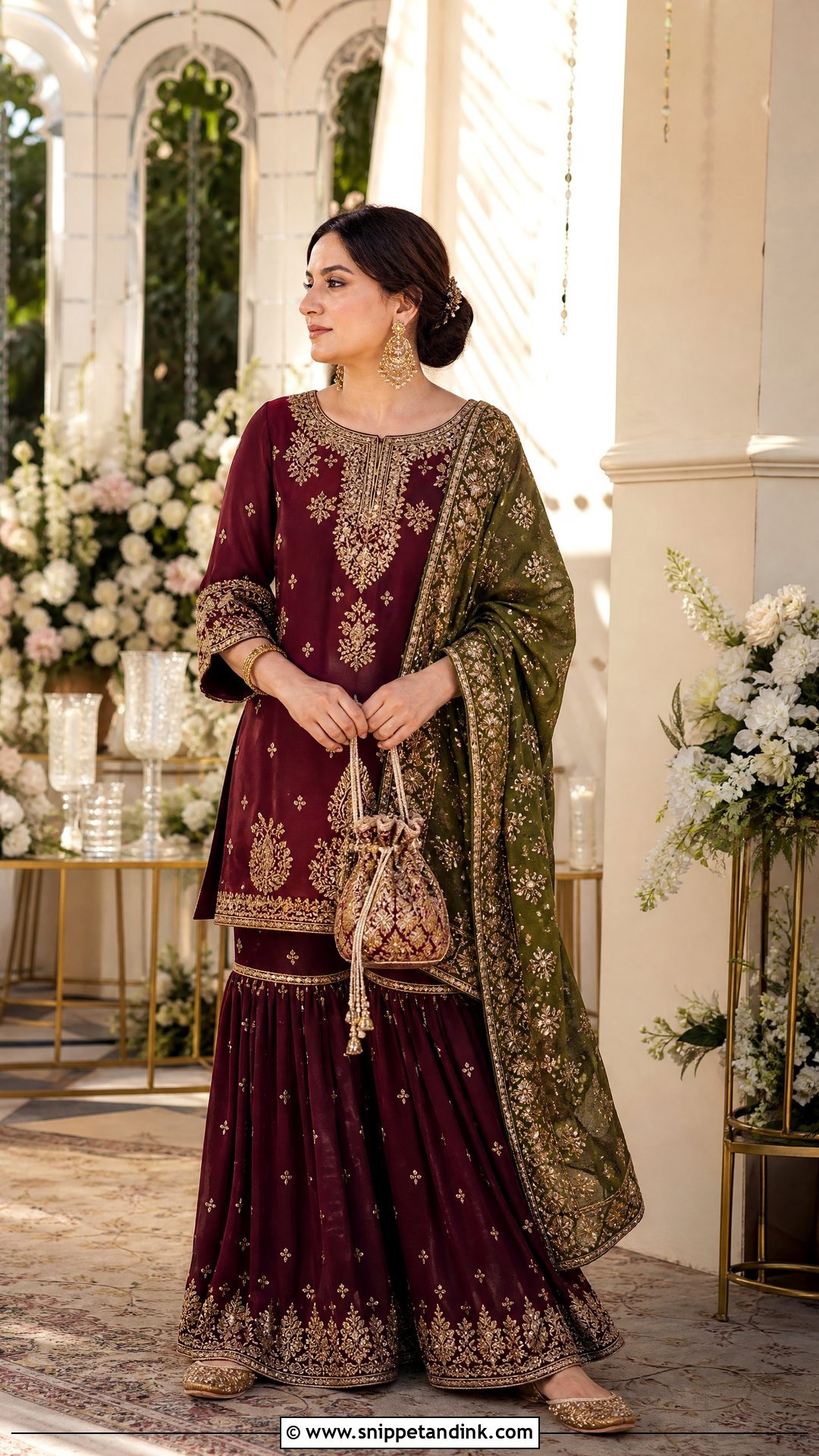
Maroon gives a gharara depth, and it suits women who want a grown-up festive look. Wear a short kurti with antique-gold zari or dabka work over a matching flared gharara, and lift it with an olive, blush or mustard dupatta. Dabka is coiled metal wire embroidery, heavier than thread, so I keep it concentrated at the neckline and hem rather than covering every panel. Gold juttis, a structured potli, chandelier earrings and classic bangles complete it, with a center-parted braid or low bun and small gold pins. Brides, mothers and older sisters can all wear it and still dance comfortably.
18. Lavender Sharara Jaago Outfit
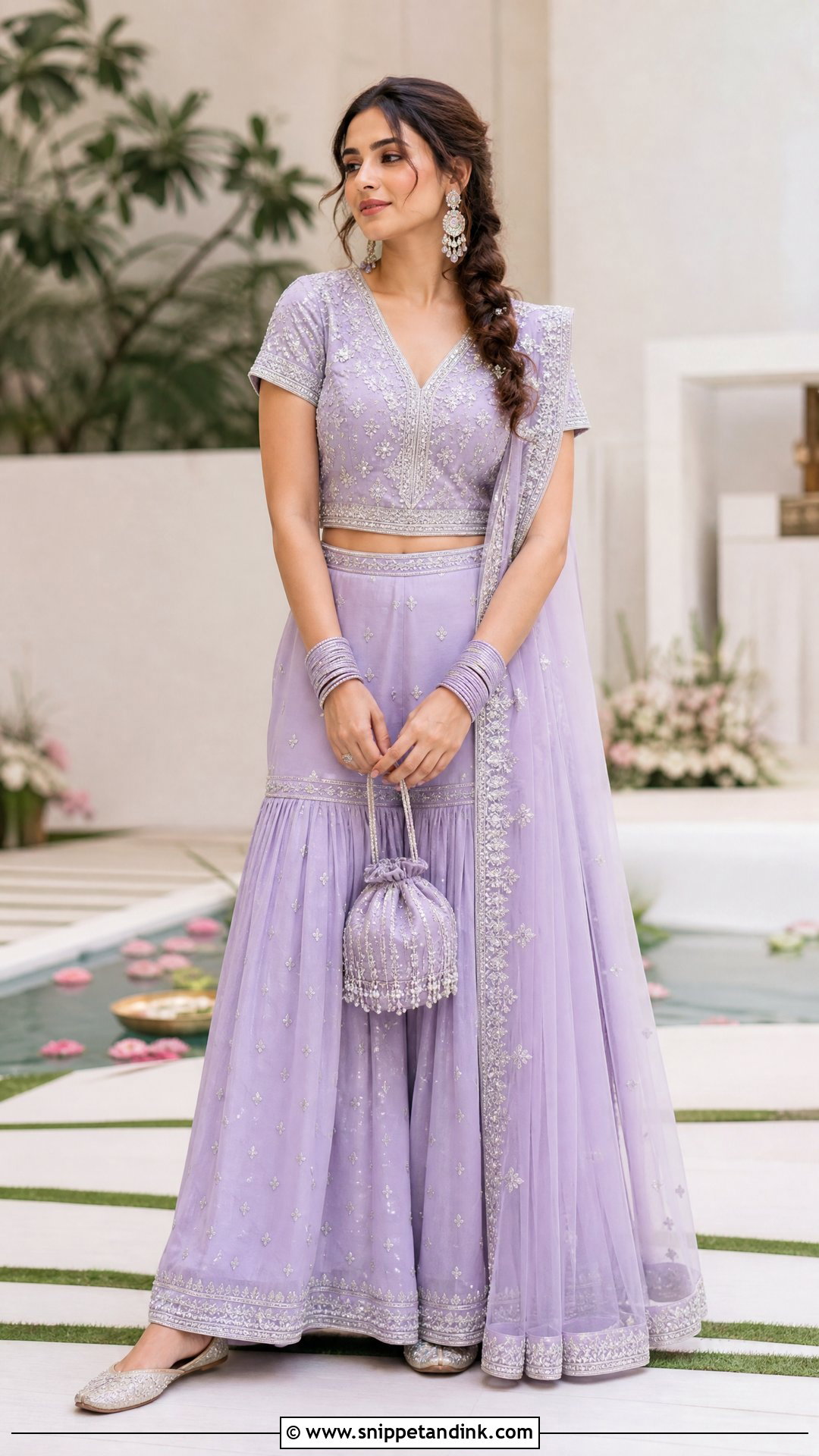
Lavender is cool-toned, which makes it the easiest pastel to pair with silver. Look for a short kurti with silver embroidery, tiny mirrors or delicate threadwork, a high-waisted sharara, and a lightweight matching dupatta pinned securely. Silver juttis, crystal earrings, lavender bangles and a beaded potli keep the palette consistent, with a polished ponytail or loose braid. On its own, lavender can look a little quiet among all the Jaago brights, so I’d bring in a hot pink or turquoise border to give it some punch.
19. Red Patiala Suit With Parandi
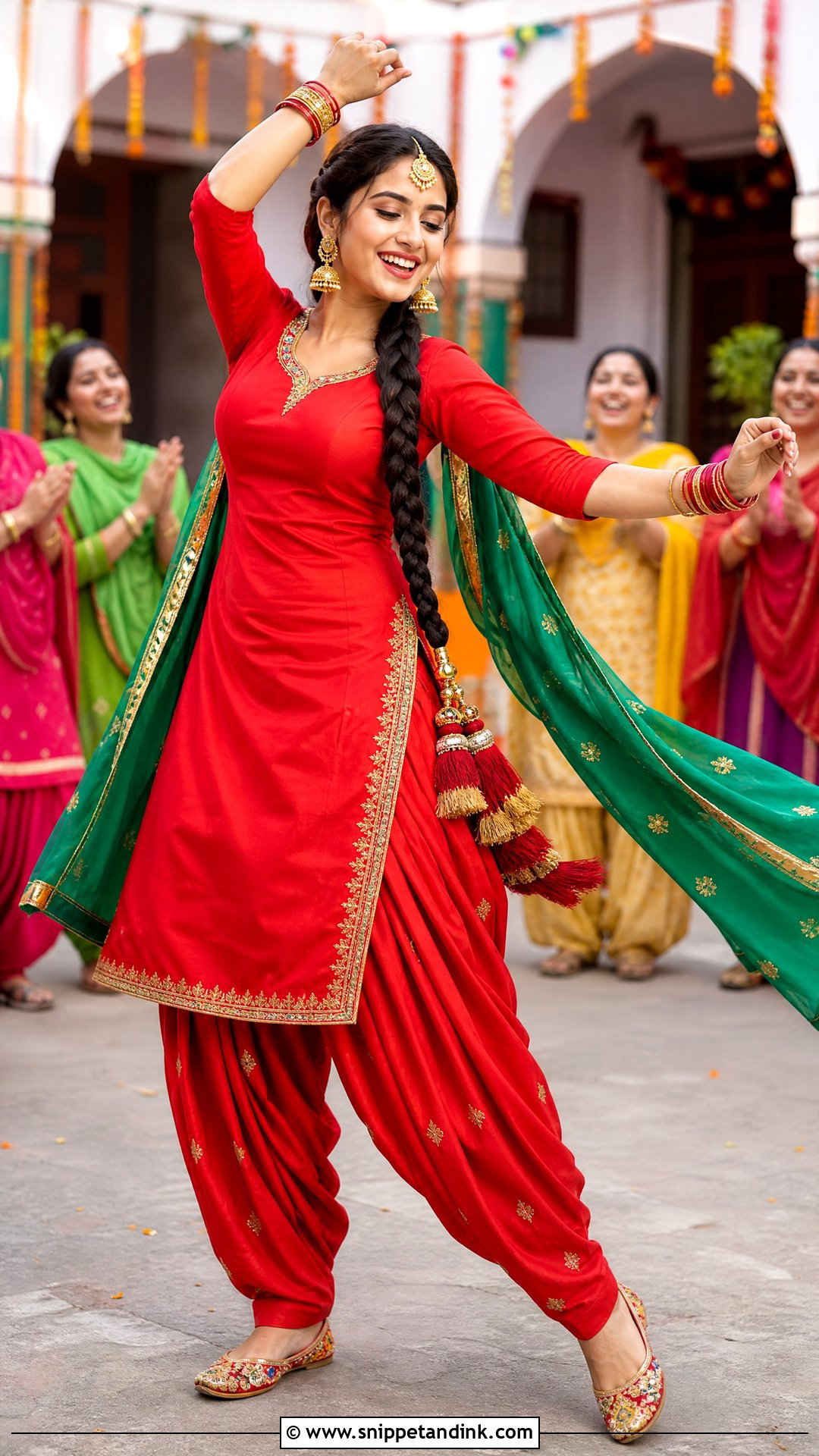
Few outfits feel more Punjabi than a red Patiala suit with a long parandi braid. Choose a fitted knee-length kurta with gold around the neckline and sleeves, a generously pleated salwar, and a green or mustard dupatta. Embroidered juttis, gold jhumkas and stacked bangles complete it. Fit the kurta comfortably through the shoulders and armholes, since giddha is all raised arms and clapping overhead, and a tight armhole will rip or ride up. A parandi with tassels matching the dupatta swings as you dance. Hosts, sisters and brides who’d rather skip a heavy lehenga can all wear it.
20. White Kurta With Phulkari Skirt
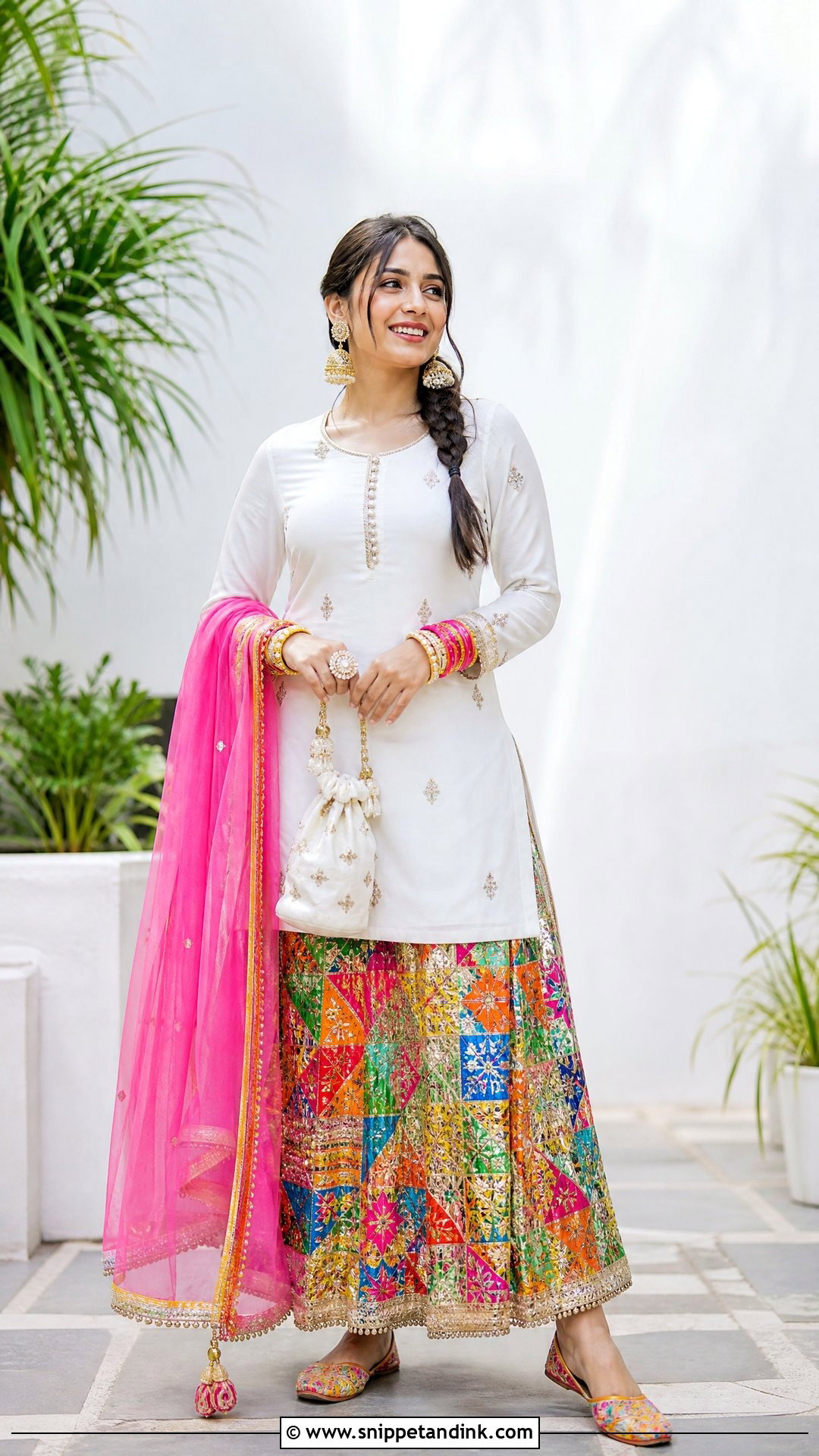
Pairing a crisp white kurta with a bright phulkari skirt is a smart way to rewear pieces you already own. Keep the kurta fitted and hip-length with only subtle gold piping so it doesn’t compete with the embroidery below. Drape a pink, orange or green dupatta securely across one shoulder. Multicolor juttis, gold hoops or jhumkas, bright bangles and a small potli finish it, with a side braid or high ponytail. Where mixed separates usually go wrong is the waist: if the kurta hem and skirt waistband don’t meet cleanly, it looks thrown together, so tuck or belt it until the line is neat.
21. Orange And Pink Jaago Lehenga
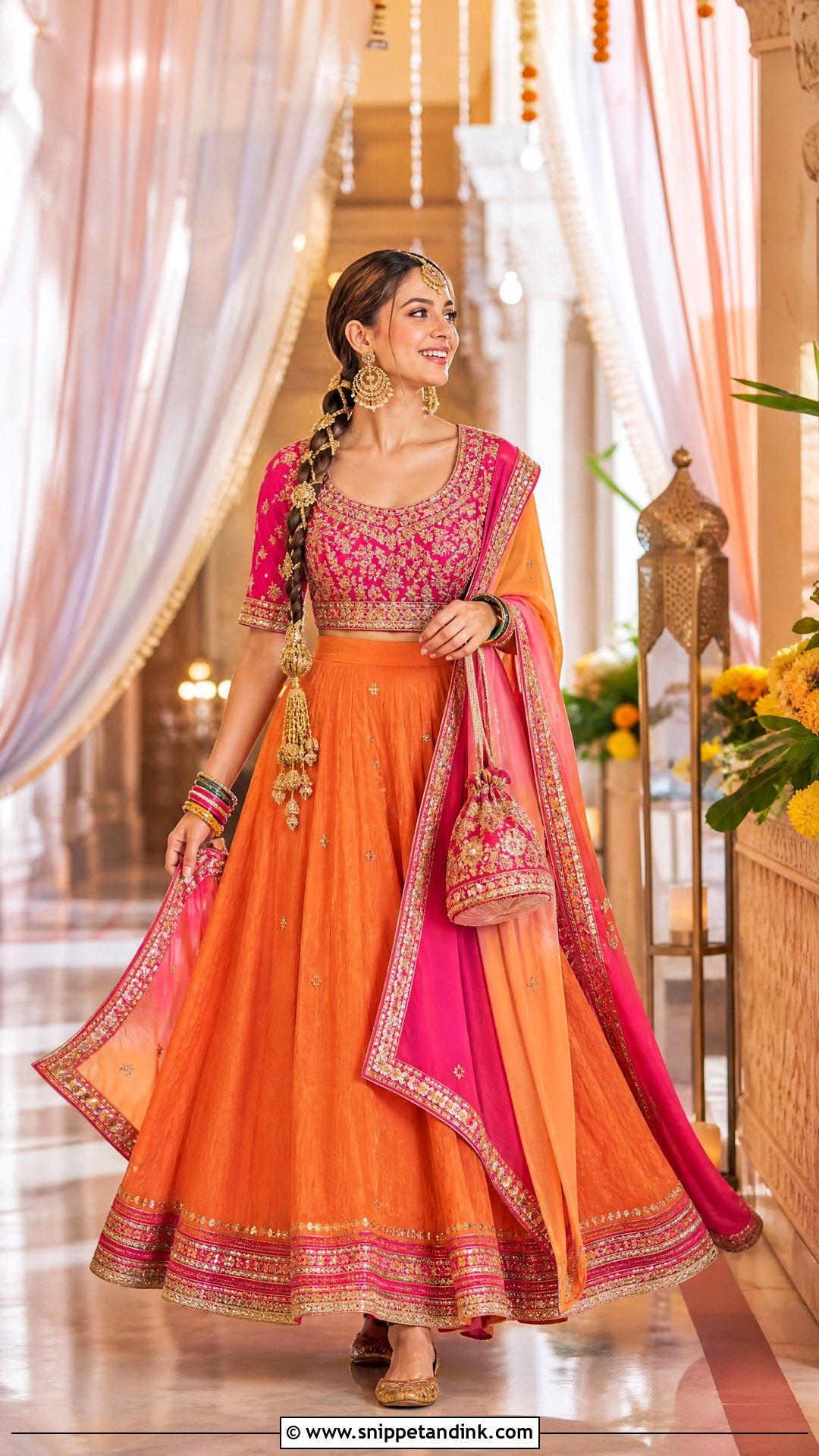
Orange and pink is a loud, happy pairing that belongs at a Jaago. Start with an orange lehenga with a comfortable waistband and moderate flare, then add a pink embroidered blouse and a dupatta combining both colors. Georgette, crepe or soft silk blends move freely without bulk; stiff raw silk in this shape stands away from the body and feels warm. Gold juttis, colorful bangles, a potli and medium chandbalis finish it. Brides can add a maang tikka. A braided ponytail with small gold accessories stays put through the dancing, and the colors hold up indoors and out.
22. Emerald Green Anarkali Jaago Outfit
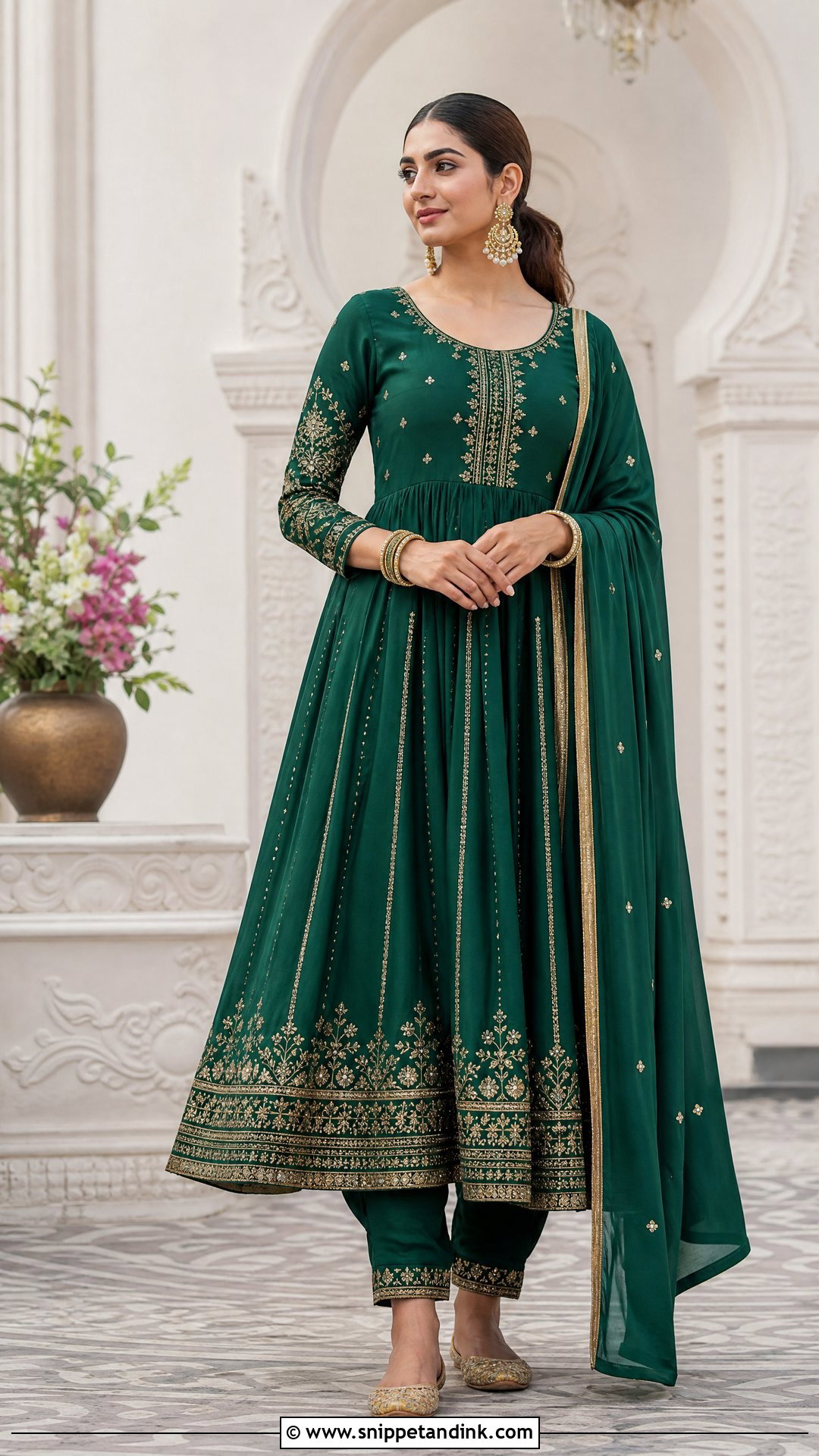
Emerald is a jewel tone that suits almost every skin tone, and an ankle-length Anarkali gives it room to swirl. Look for gold embroidery along the neckline, waist and hem, and pair it with fitted pants, an embroidered dupatta and flat gold juttis. A few statement earrings and bangles are enough. With a very full skirt, I keep the dupatta light and the bag small, because three bulky pieces at once make it hard to move through a crowd. Wear the hair in a low ponytail, braid or bun depending on the neckline. It suits brides and guests who prefer longer silhouettes.
23. Blue And Pink Phulkari Jaago Suit
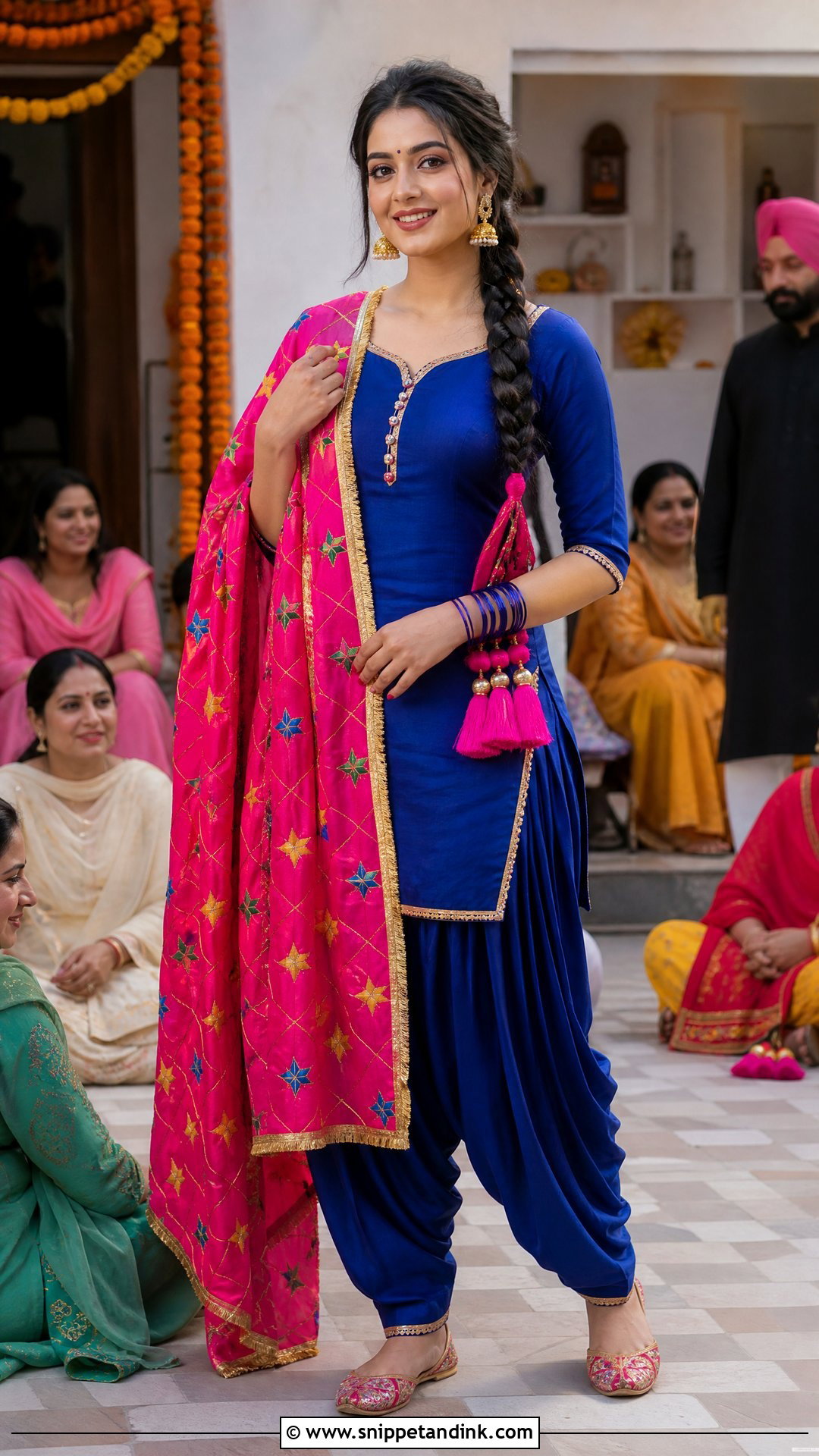
Blue and pink look cheerful together, especially when the dupatta does the decorating. Wear a cobalt or royal blue kurta with a matching salwar and add a pink phulkari dupatta in colorful embroidery. A shorter kurta gives the traditional Patiala shape; a longer one adds coverage. Pink-and-gold juttis, gold earrings and blue bangles link the two colors, and a braid with a pink parandi adds movement. Since the dupatta is the decoration, the kurta can stay simple, which also makes the outfit easy to adapt by age: change the kurta length, jewelry size and embroidery level and it works for a teenager or her grandmother.
24. Gold Peplum Lehenga For Jaago
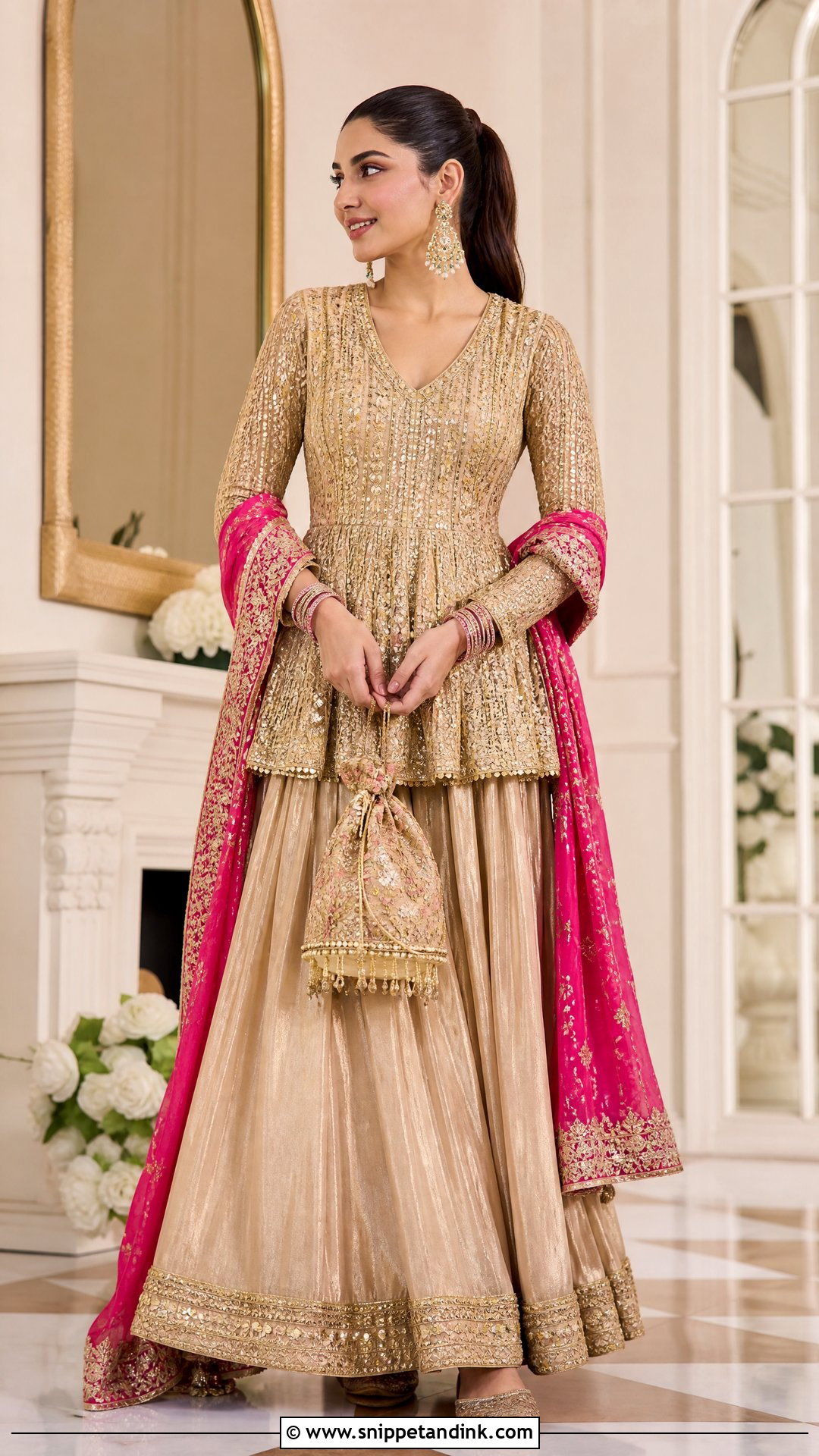
Gold shines without any help, and the peplum gives more coverage than a cropped blouse. Choose a fitted peplum top with a comfortable waist and a lightweight skirt in matching gold or soft champagne, then add a rani pink, emerald or orange dupatta for the color Jaago calls for. Highly reflective tissue or lamé bounces camera flash, so I limit the jewelry to kundan earrings and matching bangles. Metallic juttis and an embroidered potli finish it, with a sleek ponytail balancing the structured top and full skirt. Brides and close family who want polish without layers will find it simple to wear.
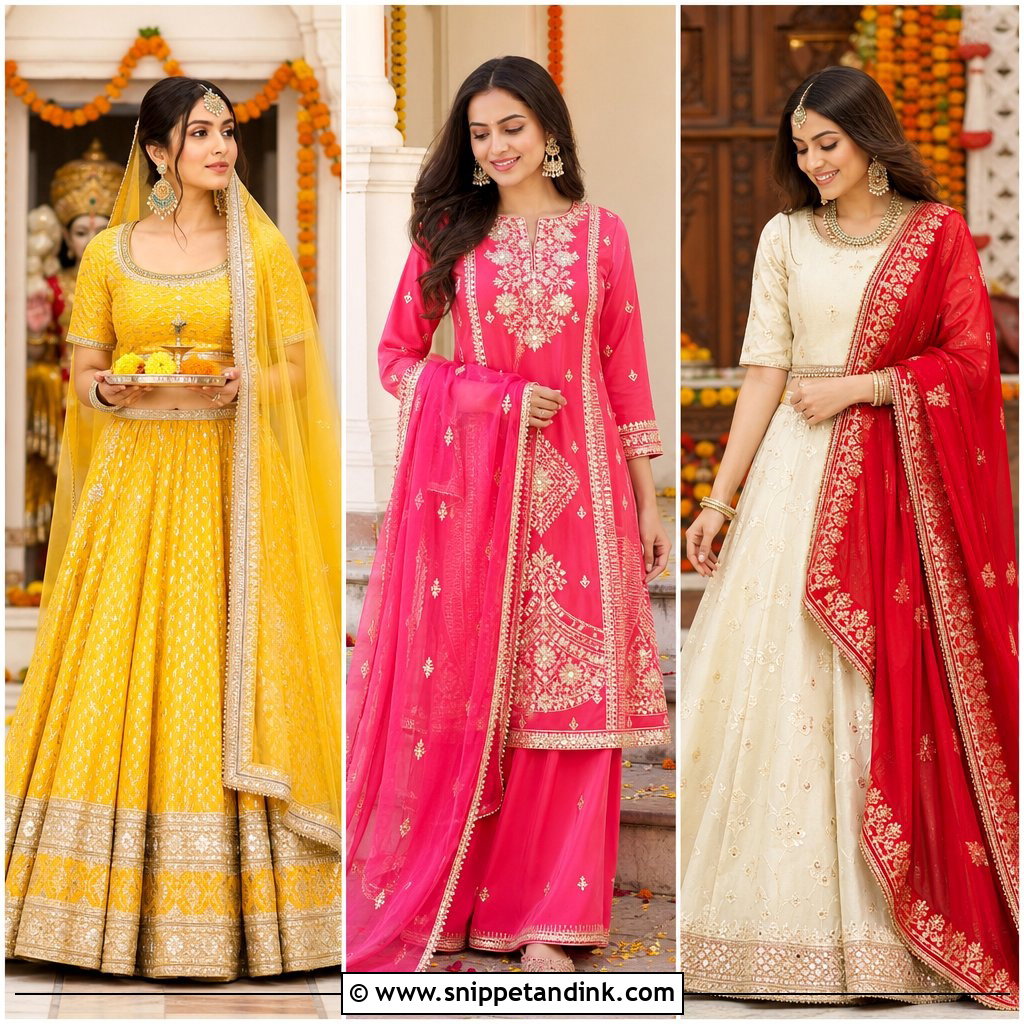

25. Colorful Punjabi Jaago Co-Ord Set
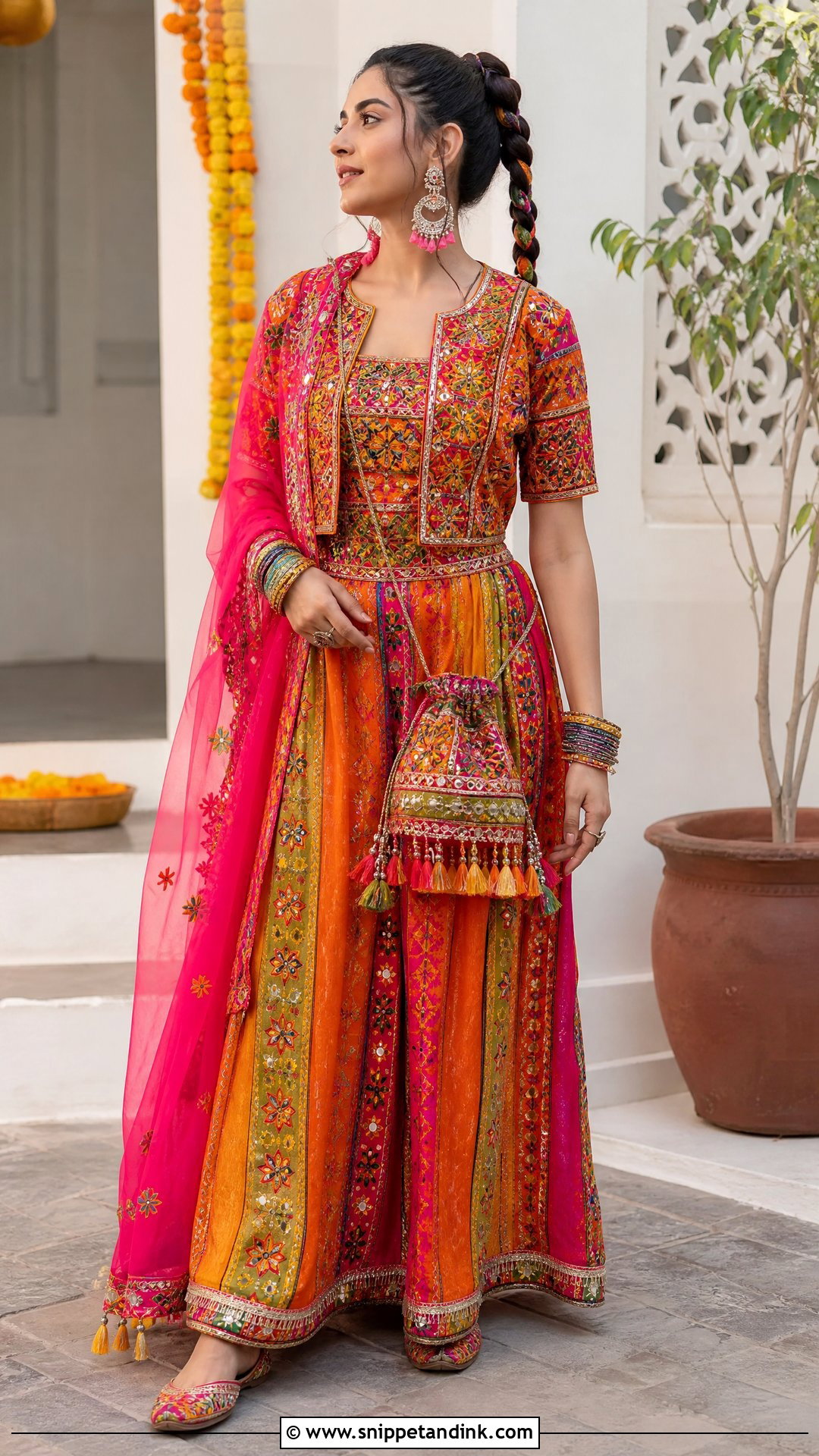
A colorful Punjabi co-ord set with a short embroidered jacket, fitted top and wide-leg pants is the modern option. Phulkari panels, mirror details or gota borders keep the Jaago feel. Add a light dupatta if the family prefers a traditional finish. Embroidered juttis, statement earrings, stacked bangles and a crossbody potli keep your hands free for clapping and dancing. A high ponytail or contemporary braid suits the cut. I recommend it to guests who prefer pants, and it has the best rewear value on the list: the jacket, top and pants can each be styled separately later.
Juttis, Pins and Bangles That Last Until the Dhol Stops
The outfit is rarely what fails at a Jaago. It’s the accessories, usually around the third hour. These are the fixes I pack or suggest for every family I dress.
- New juttis are stiff leather and rub the back of the heel. Wear them around the house for a few evenings first, and put a soft gel strip or cushion inside the heel before you leave.
- Pin the dupatta with small safety pins through the blouse or kurta seam at the shoulder, never through the embroidered border, where the pin pulls threads. Bring a strip of spare pins in your potli.
- Glass bangles should slide over your knuckles with a little squeeze but not fall off your wrist. Too loose and they shatter against each other while you clap; I like a couple of metal kadas at each end to protect them.
- Heavy jhumkas and chandbalis drag the earlobe after a few hours. Ear chains (sahare) that clip into the hair take most of the weight, and clear lobe patches on the back help too.
- Keep the potli small enough to wear crossbody. You won’t want to put it down, and you’ll need both hands free once the dancing starts.
One last thing for the bride. Jaago often falls the night after the mehndi, so your stain is still developing. Slide bangles on gently rather than forcing them over the hand, and keep your palms away from water and hand sanitizer for the evening, because the color keeps deepening for a day or two after the paste comes off.
Dress for the Dancing, Then Add the Color
A good Jaago outfit lets you move for hours. Patiala suits, shararas, ghararas, Anarkalis and lightweight lehengas all suit the night when they’re styled as complete looks. Choose the colors that make you happy, then back them up with broken-in juttis, a pinned dupatta, a hands-free bag and earrings that won’t pull. Phulkari, gota patti, mirror work, parandis and glass bangles bring Punjabi character even to a modern cut. Bride, bridesmaid, auntie or guest, the outfit that works is the one you forget you’re wearing once the dhol starts.
You'll Like These Ideas:




Leave a Reply