
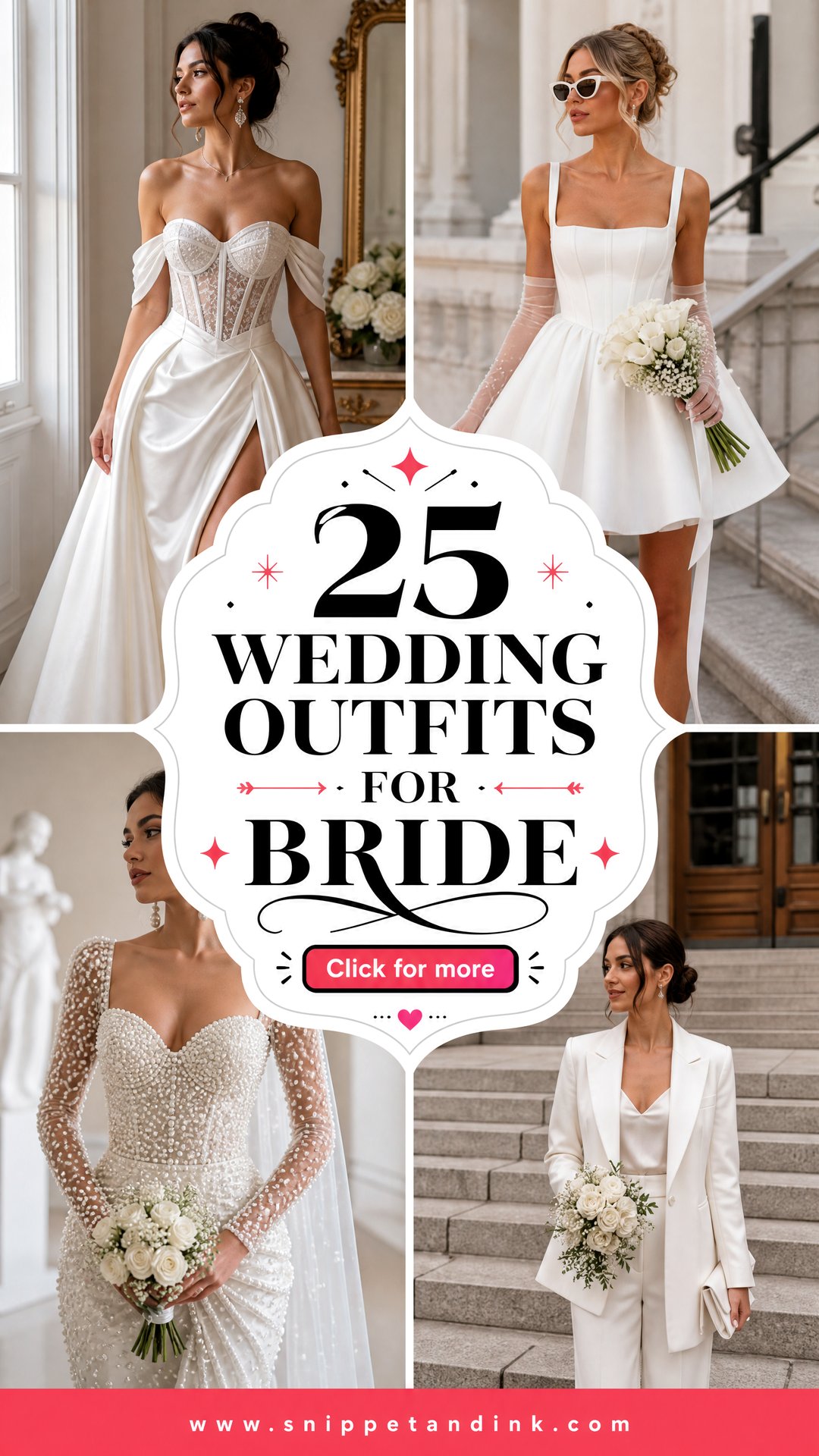
Plenty of the brides I dress aren’t looking for one dress anymore. They’re putting together a complete wedding wardrobe: something for the ceremony, something lighter for the reception, maybe a suit for the courthouse or a mini for the after-party. Below are 25 bridal outfits, from classic gowns and romantic lace to sharp suits, minis and convertible pieces, each with the fit and fabric notes I’d give at a first appointment. Your venue, season and how much you plan to move should do the narrowing, and the shoes and accessories deserve as much thought as the dress.
Ordering Your Gown Early Enough for Alterations
The calendar shapes your options more than most brides expect. Many gowns are made to order after you choose them, and production alone commonly takes four to six months, longer for some designers. Then alterations need their own window. Timelines vary by shop, so ask for theirs at the first appointment, but this is the rough rhythm I plan around.
- Start trying on gowns nine to twelve months out if you want a made-to-order dress.
- Order by about eight months before the wedding to leave a buffer for delays.
- Book the first alteration fitting roughly two to three months ahead; most brides need two or three fittings.
- Keep the final fitting within the last two weeks, and bring the person who will bustle you.
Short on time? Sample gowns, off-the-rack dresses and many of the suits, jumpsuits and minis below can be bought and altered within weeks. That flexibility is one reason I suggest a separate reception or courthouse outfit from a ready-to-wear line.
Bras, Shapewear and Shoes to Bring to Every Fitting
A seamstress hems and takes in a gown around what you’re wearing that day. Change the shoes or the bra later and the fit changes with them. I ask every bride to bring the exact wedding shoes, or at least shoes of the same heel height, plus the undergarments she’ll actually wear, to every appointment.
If the gown has built-in cups, test them early; some brides need them moved or removed. If you’re planning shapewear, wear it from the first fitting, because even a light slip can change how a fitted crepe or satin gown sits at the hips.
1. Lace Wedding Dress Outfit
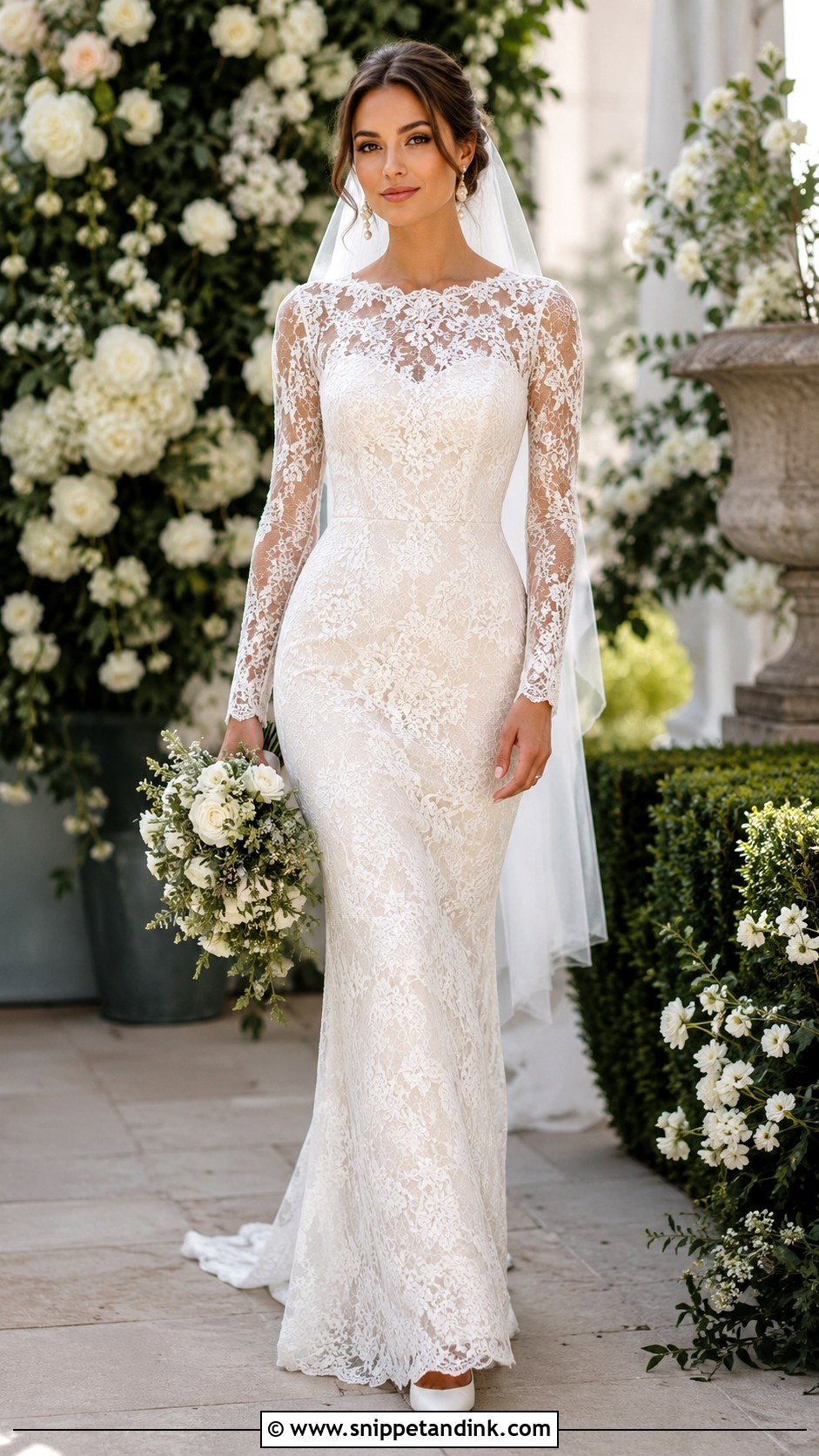
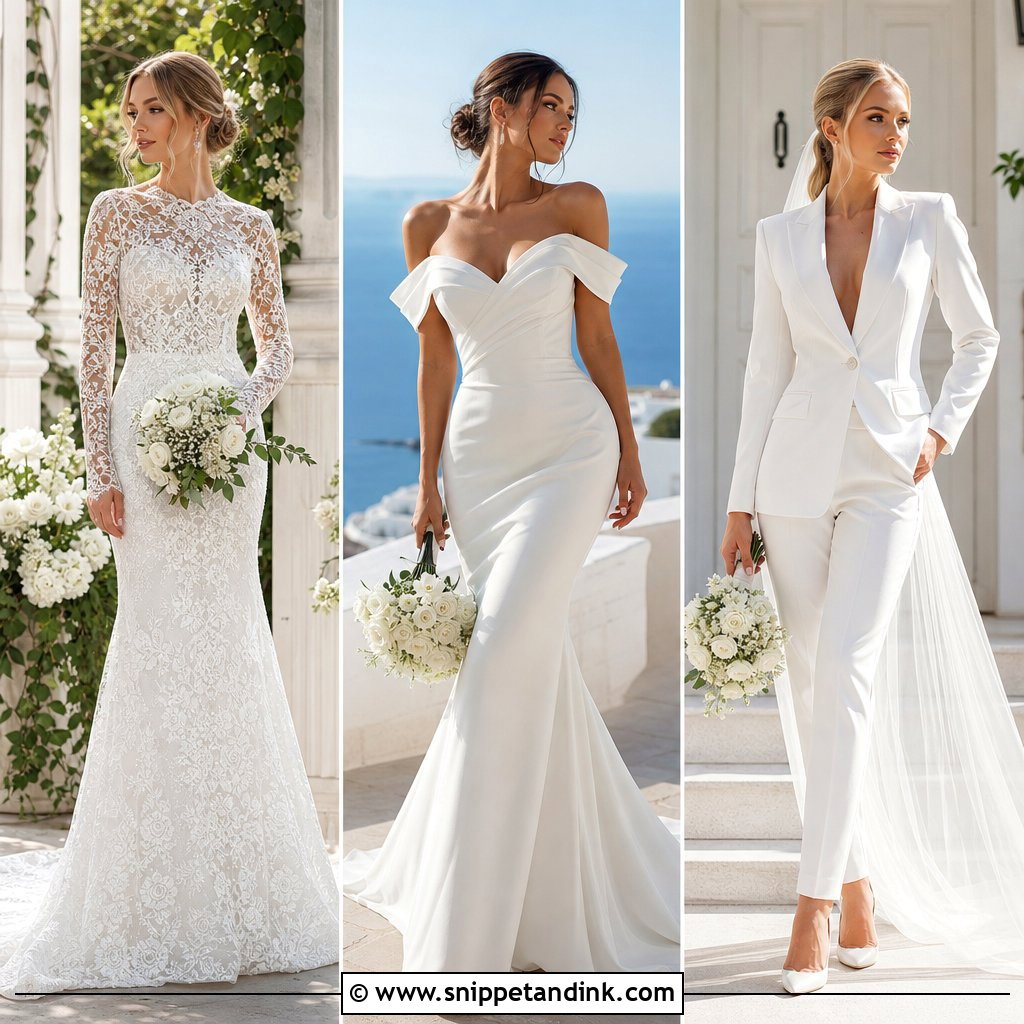
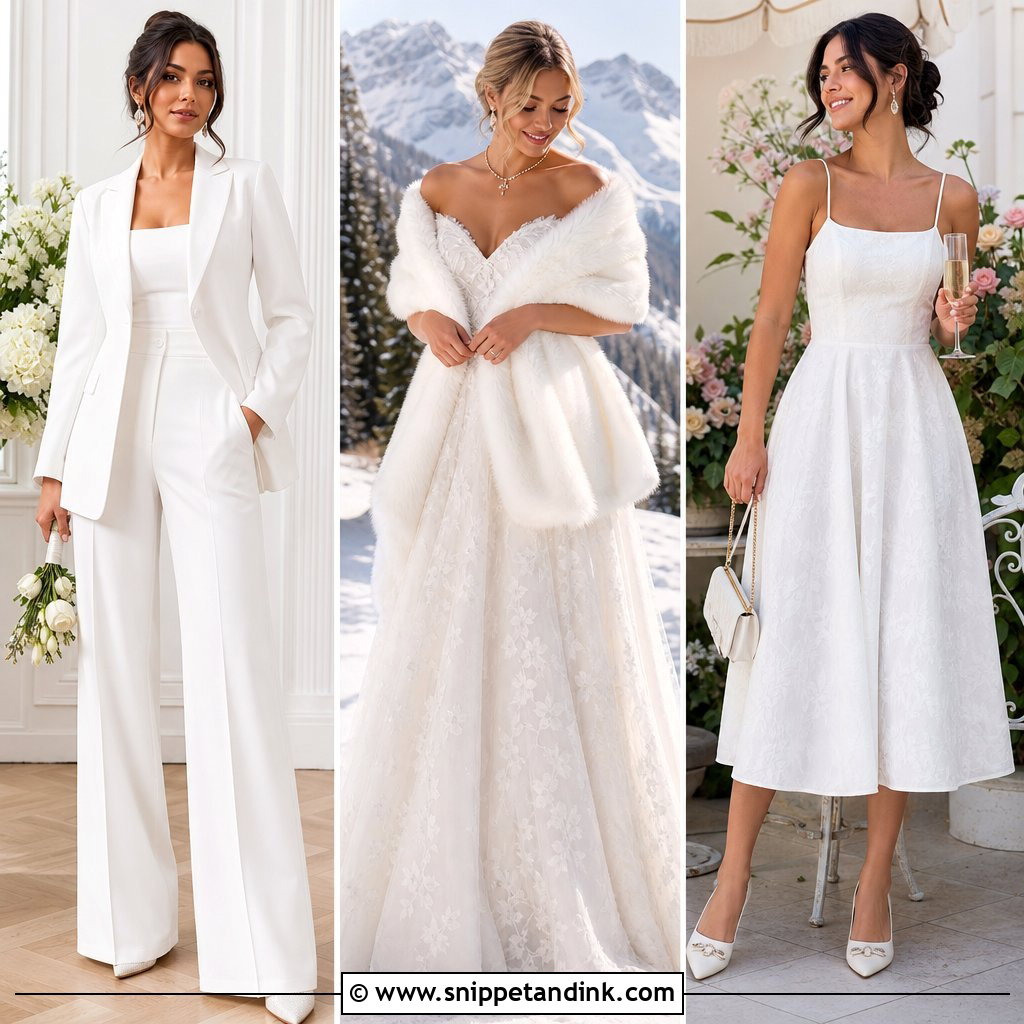
Lace reads romantic without looking dated when the fit is clean and the lining is right. Nude lining under ivory lace makes the pattern stand out; white lining softens it. One thing I tell lace brides early: a good seamstress can lift appliqué motifs and re-place them after taking in a seam, so a slightly loose lace bodice is very fixable. Keep the veil plain so it doesn’t fight the pattern, and watch the veil comb, which loves to hook into lace at the back of the head. Pointed satin heels and pearl earrings suit a garden or a classic indoor ceremony.
2. Satin Ball Gown Wedding Outfit
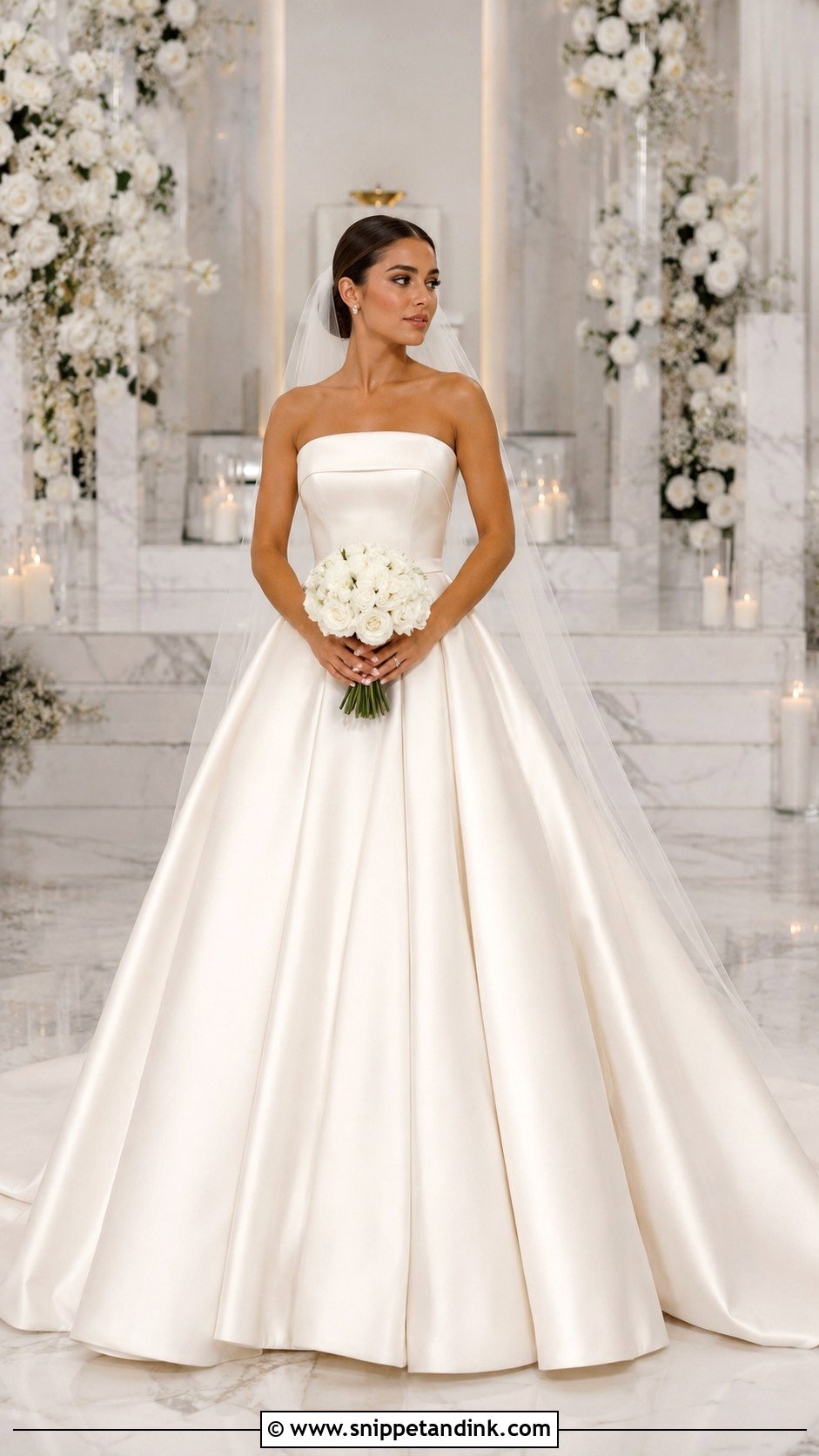
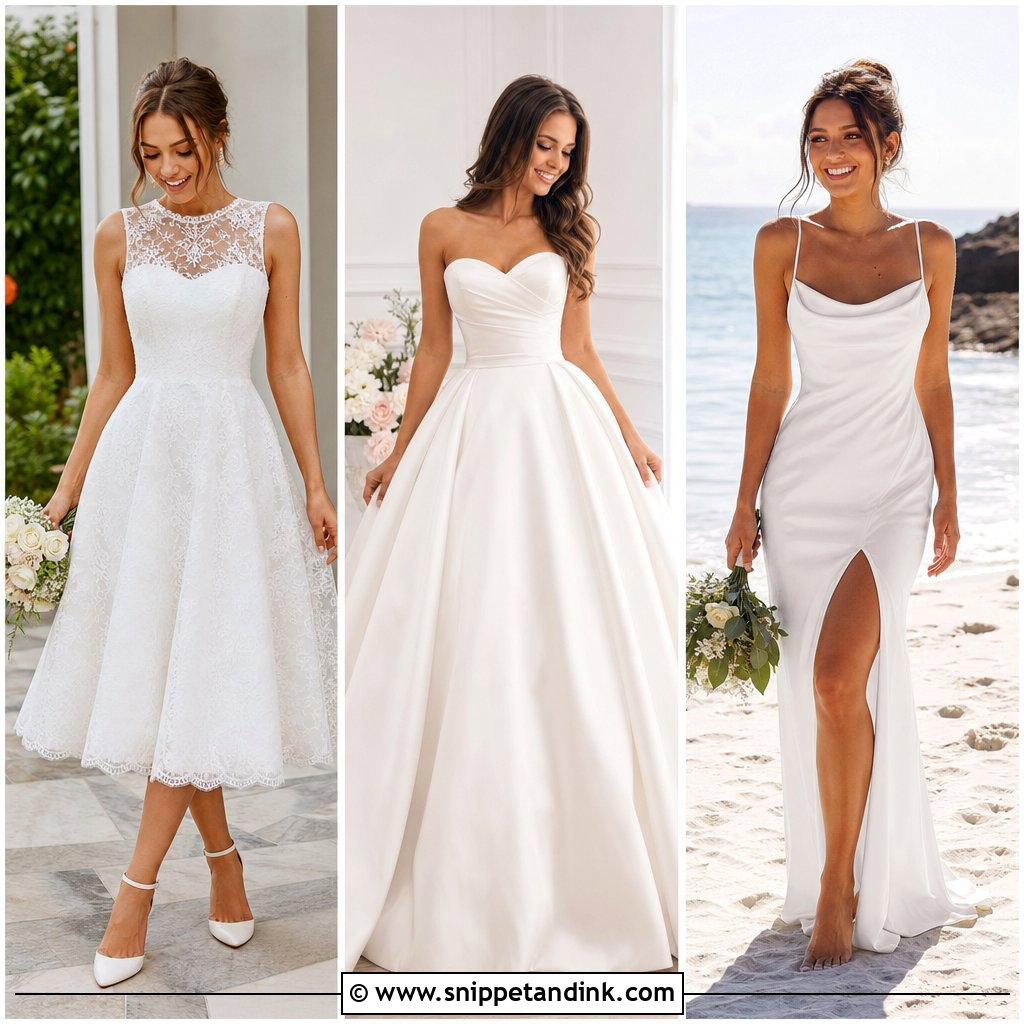
Satin ball gowns make an entrance, and the structure comes from what’s underneath: layers of crinoline or a hoop, plus boning in the bodice. That weight is real, so I have brides walk and sit in the full gown at every fitting. Satin also creases in the car, so sit on the skirt as little as possible on the way and have someone fluff and steam it at the venue. Strapless, square-neck or off-shoulder bodices all work if they feel secure. Crystal studs, a clean veil and a structured updo balance the volume, and satin catches soft light in portraits.
3. Slip Wedding Dress Outfit
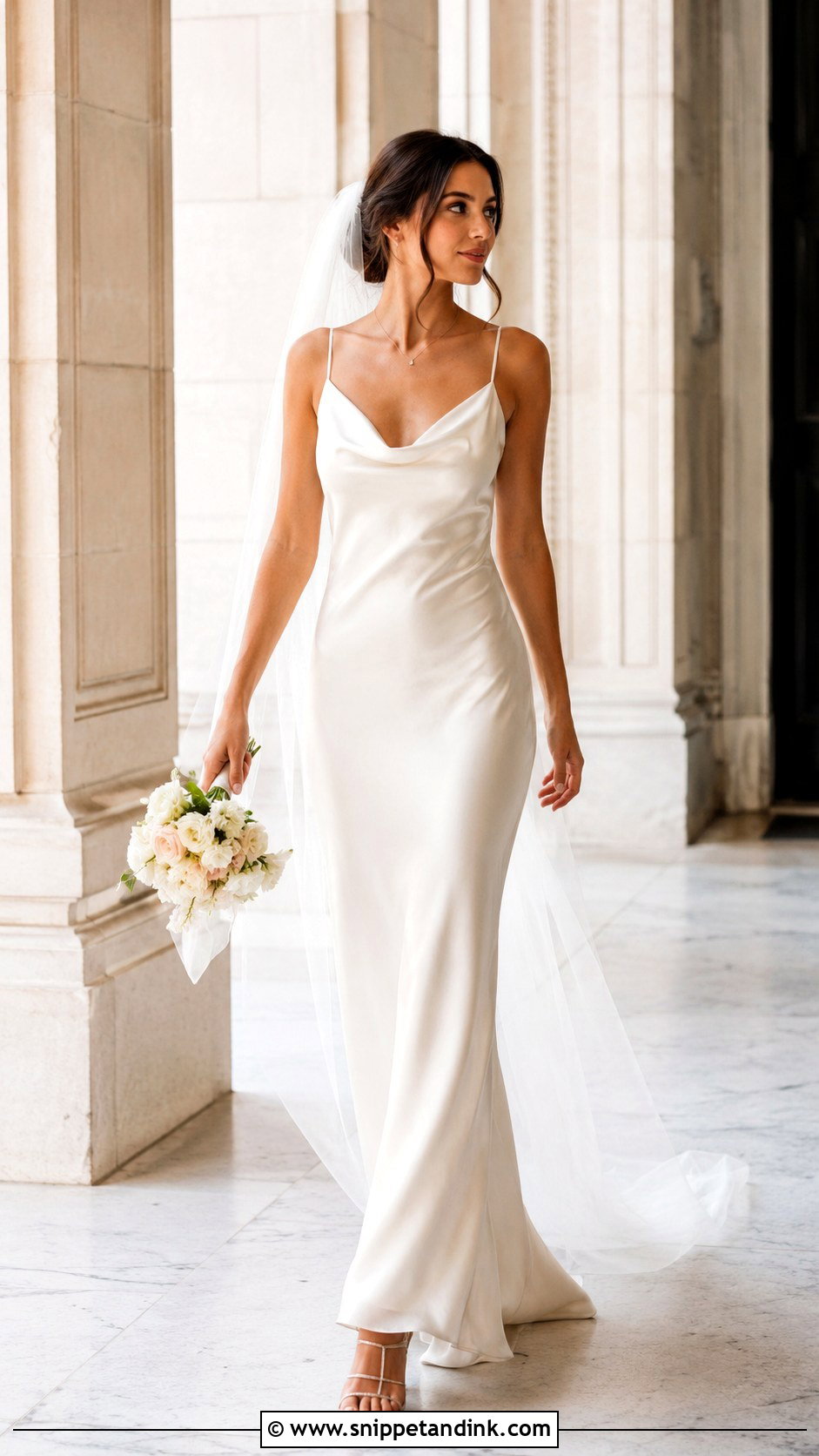
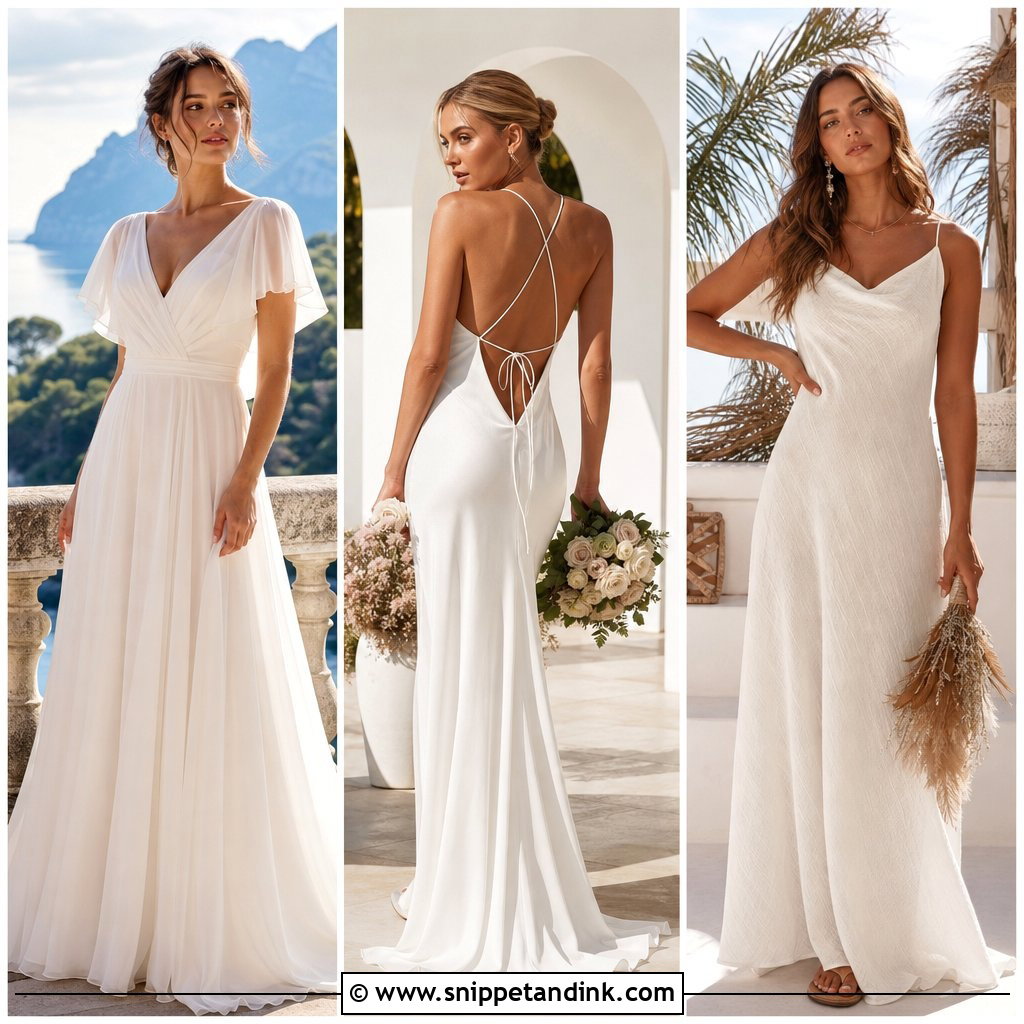
Slip dresses are the most honest bridal shape I fit. Bias-cut satin skims the body and shows every line underneath, so the undergarment plan matters more than the dress size. I bring laser-cut briefs and, for some brides, a light shaping slip in a matching tone to the first fitting. Strappy heels, a fine necklace and a soft veil or hair bow keep it bridal. A tailored blazer covers you at a courthouse or on a cool evening. Intimate weddings, city venues and beach ceremonies all suit it, and it’s one of the few bridal dresses you can wear again.
4. Long Sleeve Wedding Dress Outfit
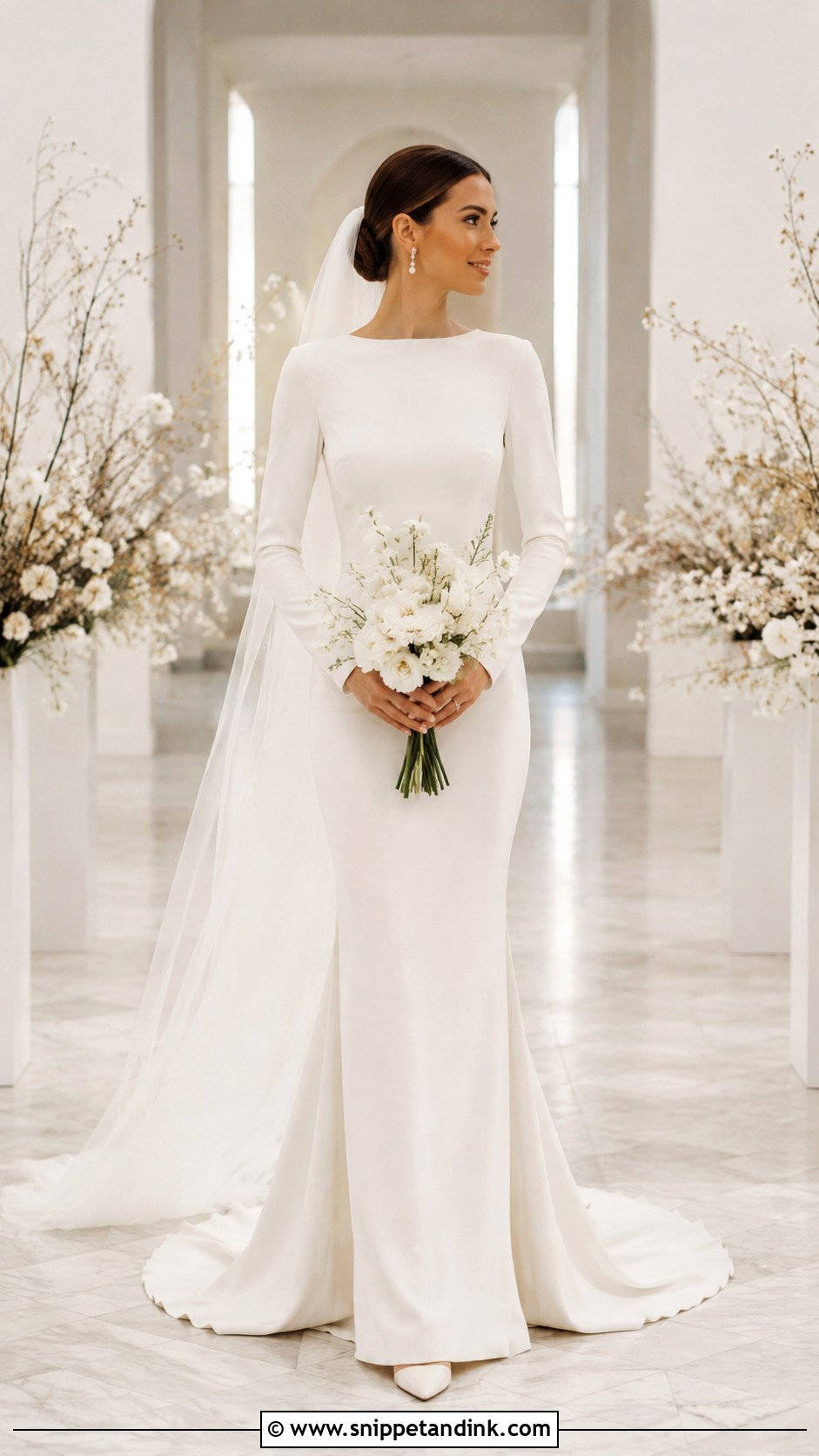
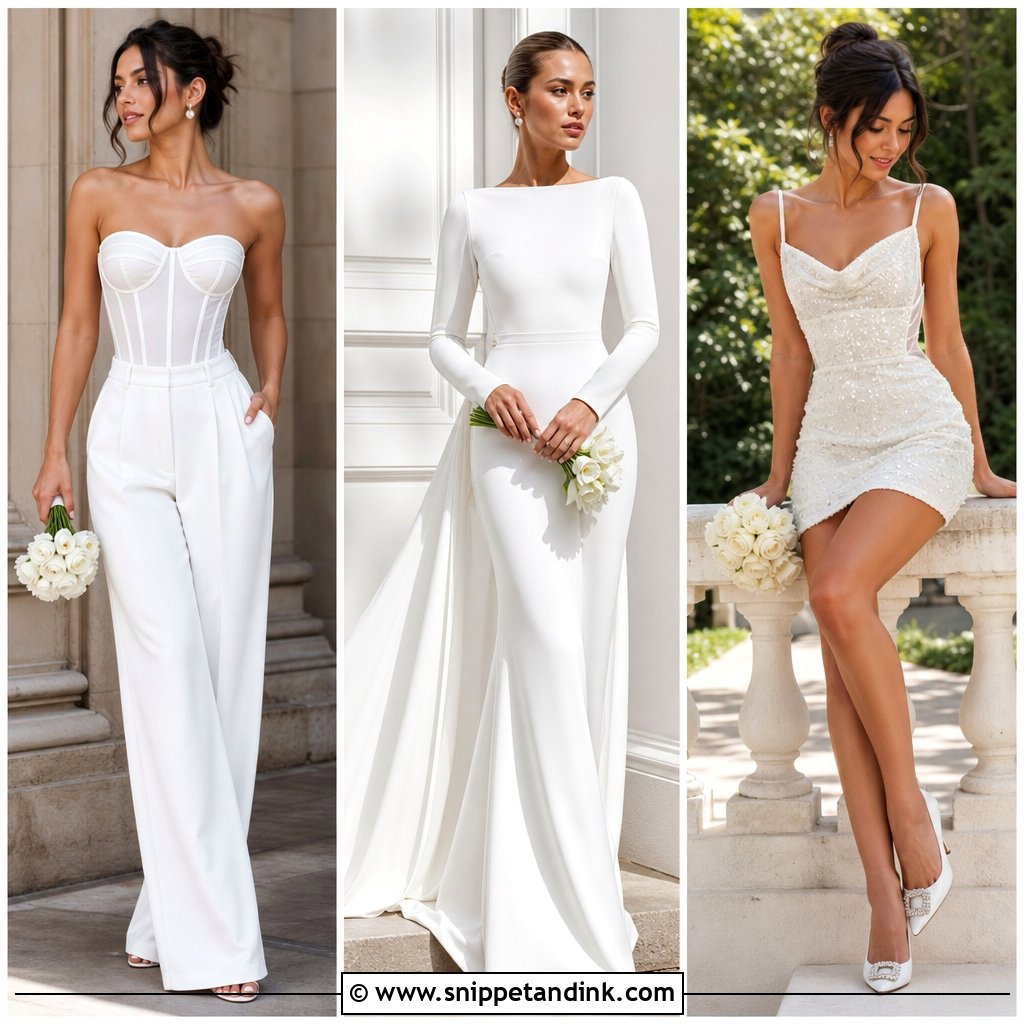
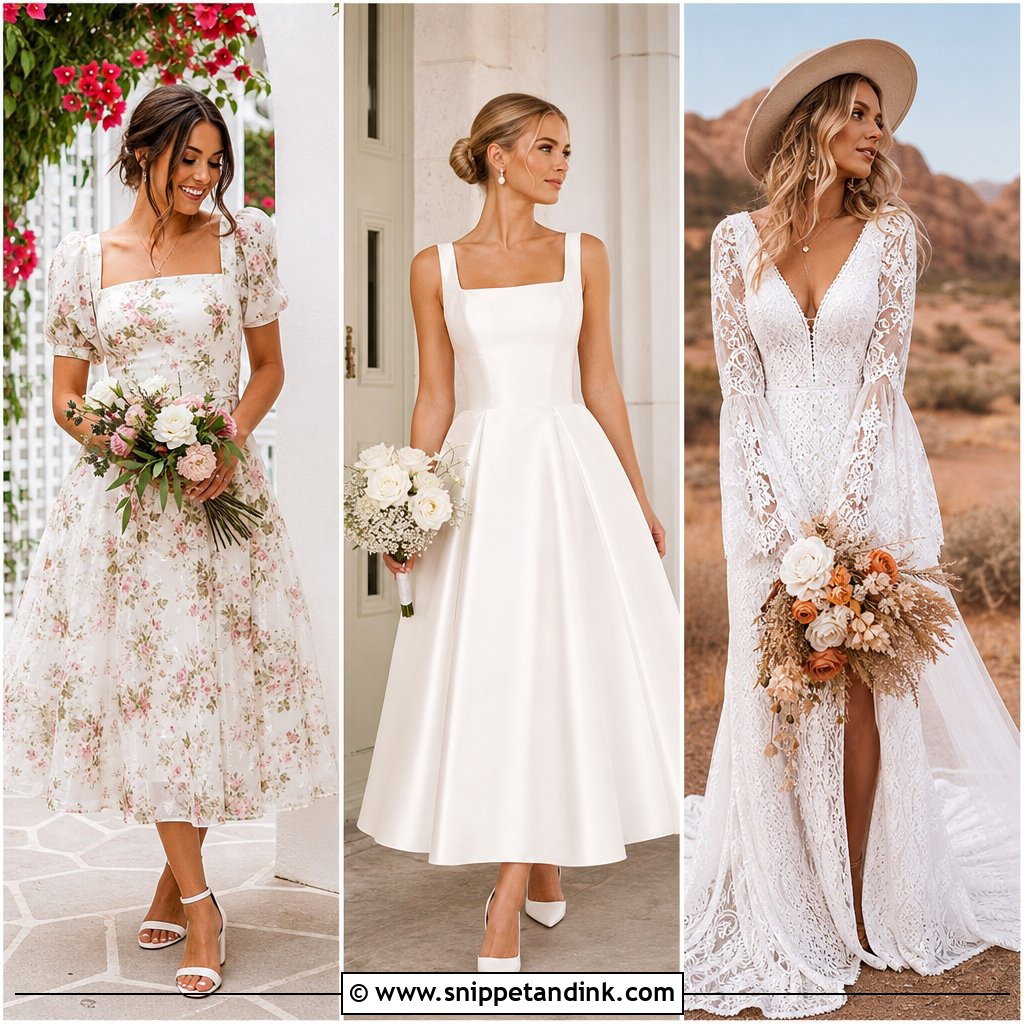
Sleeves change how a gown feels across a season, and fall, winter and formal weddings suit them best. Sheer lace, sleek crepe, puffed, fitted or draped sleeves can read classic or modern. My fitting check is the hug: raise your arms around someone taller, and if the bodice lifts or the sleeve seam cuts into your armpit, it needs more ease. Sleeves should end at the wrist bone, since longer ones catch on the bouquet. An open neckline or low back balances covered arms. Closed-toe heels and drop earrings finish it.
5. Off Shoulder Wedding Dress Outfit
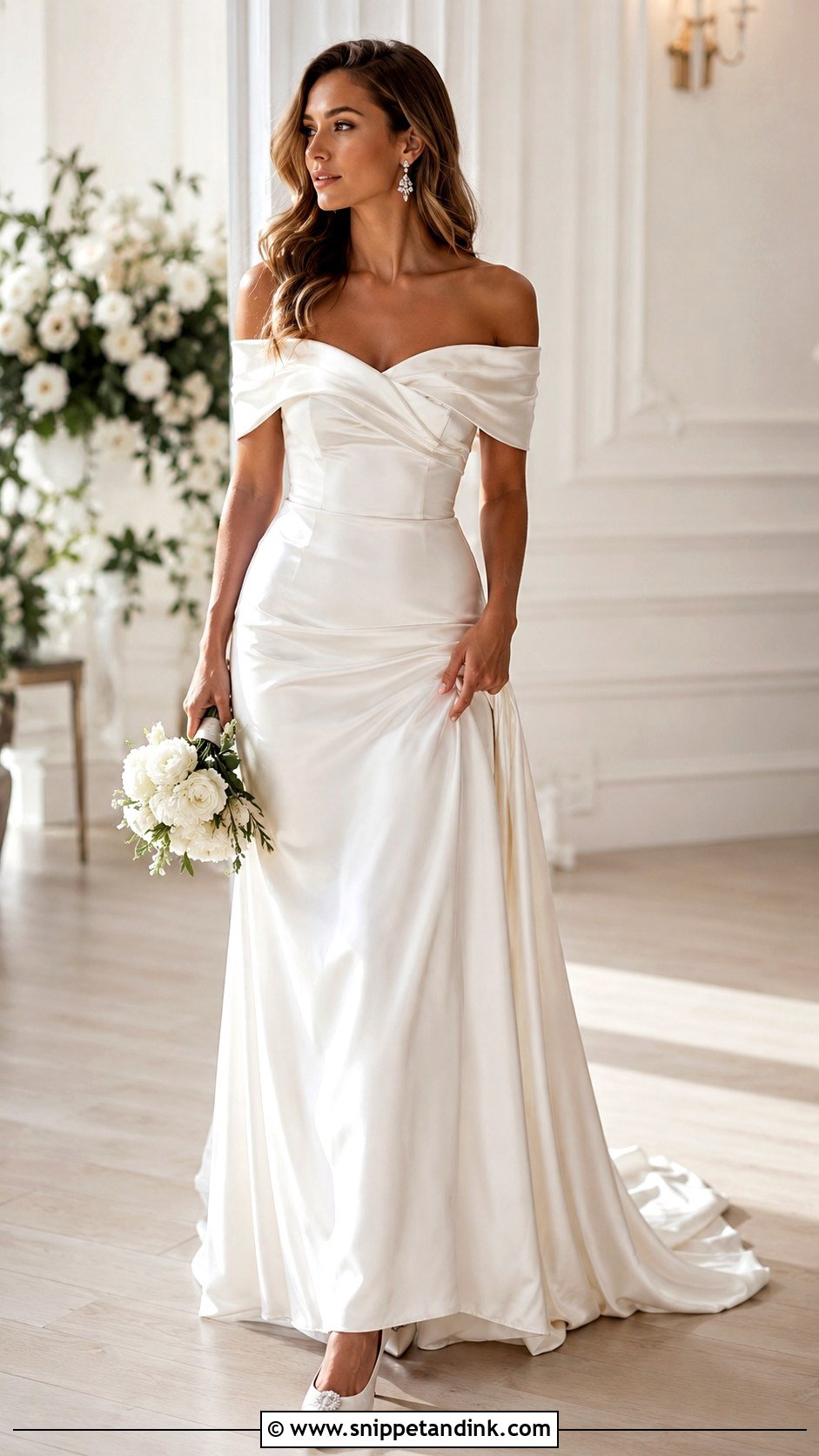
Off-shoulder necklines frame the collarbones, but the dress has to hold itself up without straps. In a well-made gown that’s internal boning and a grippy band at the top of the bodice; without them, the neckline creeps down every time you hug someone. I have brides lift their arms and hug me during the fitting so we can see it happen. Satin, lace, tulle or crepe all work, fitted or full. Skip the necklace and choose statement earrings, then wear the hair in a low bun or soft waves so the shoulders stay visible.
6. Corset Wedding Dress Outfit
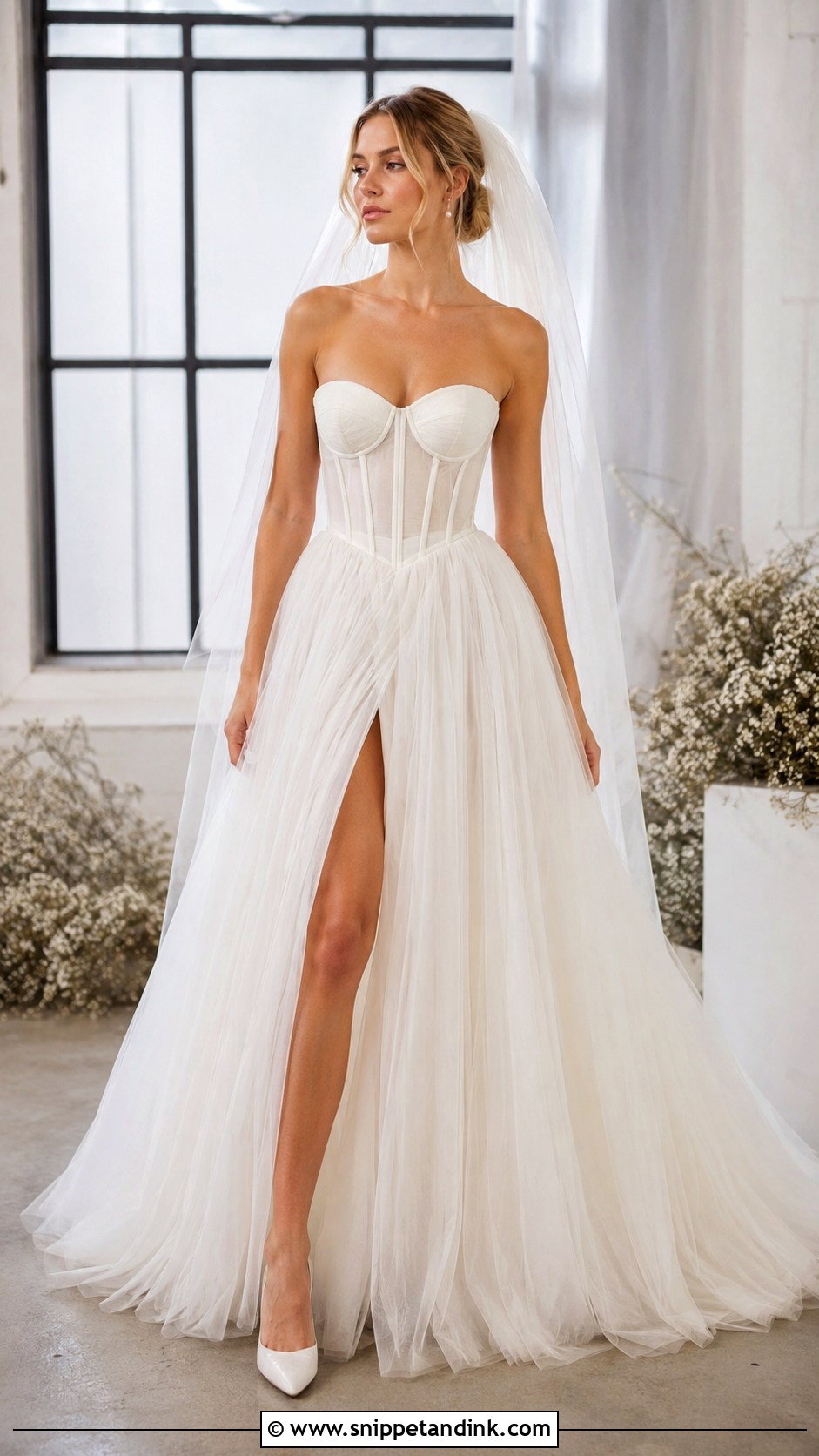
Corset bodices give real shape, and modern ones are built with flexible boning so you can breathe and eat. A structured bodice over a soft tulle skirt reads romantic; a satin corset with a straight skirt reads sleek. I like a lace-up back for brides whose weight may shift in the final weeks, because it adjusts a little without another alteration. Sit down and take a deep breath at every fitting. If the bottom edge of the boning digs into your hips when seated, it will hurt by the speeches. Minimal jewelry and a delicate veil.
7. A Line Wedding Dress Outfit
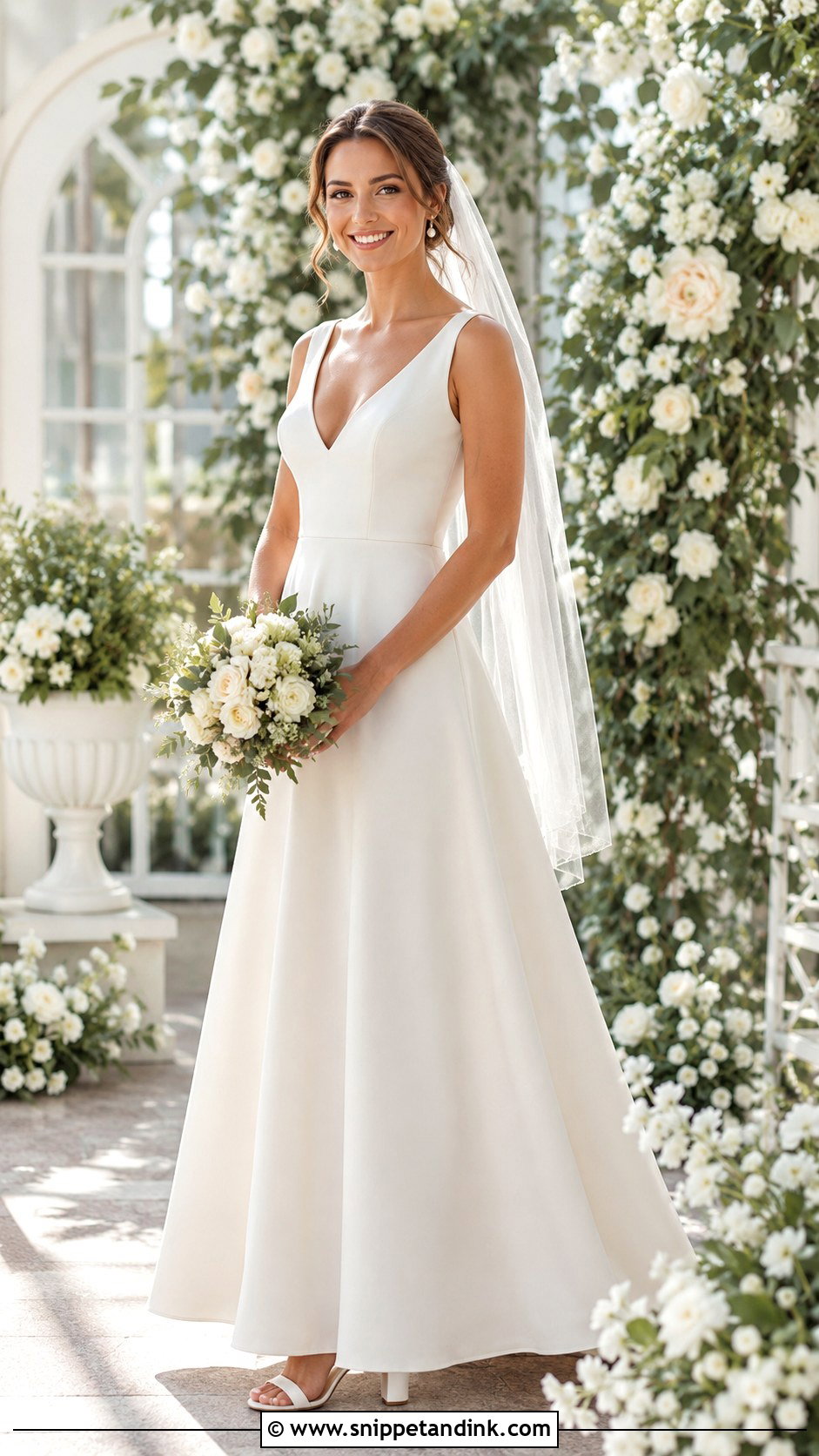
A-lines suit more brides than any other shape I fit, because the skirt marks the waist and falls away from the hips. Choose lace for romance, satin for polish, tulle for softness or crepe for a clean modern line. They’re also easy to bustle and to walk in, which matters on lawns and stairs. Block heels for outdoor settings, pointed pumps for formal venues, then a veil, pearl earrings and a small bouquet. If you’re undecided at your first appointment, I usually start here to give you a baseline.
8. Mermaid Wedding Dress Outfit
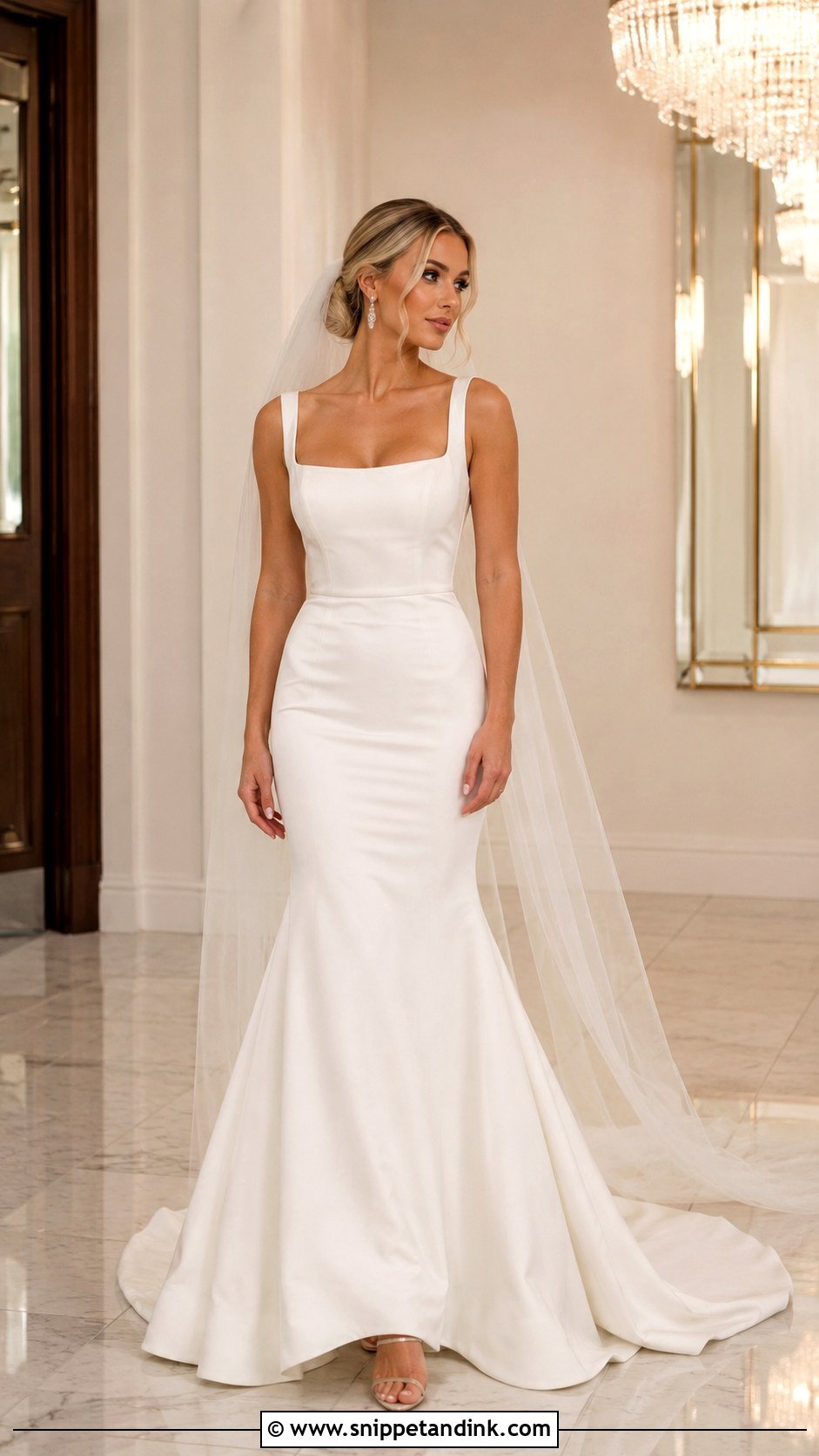
Mermaid gowns fit closely through the bodice, waist and hips and flare at the knee or just below. Where that flare starts decides how well you move. A true mermaid flaring at the knee looks dramatic but makes stairs and sitting hard; a trumpet flaring mid-thigh is much easier for a long day. I make brides climb steps in the fitting room. Crepe, satin, lace or beaded fabric all suit the shape. Keep accessories sleek: crystal earrings, a fitted veil and heels that you’ve broken in.
9. Tea Length Wedding Dress Outfit
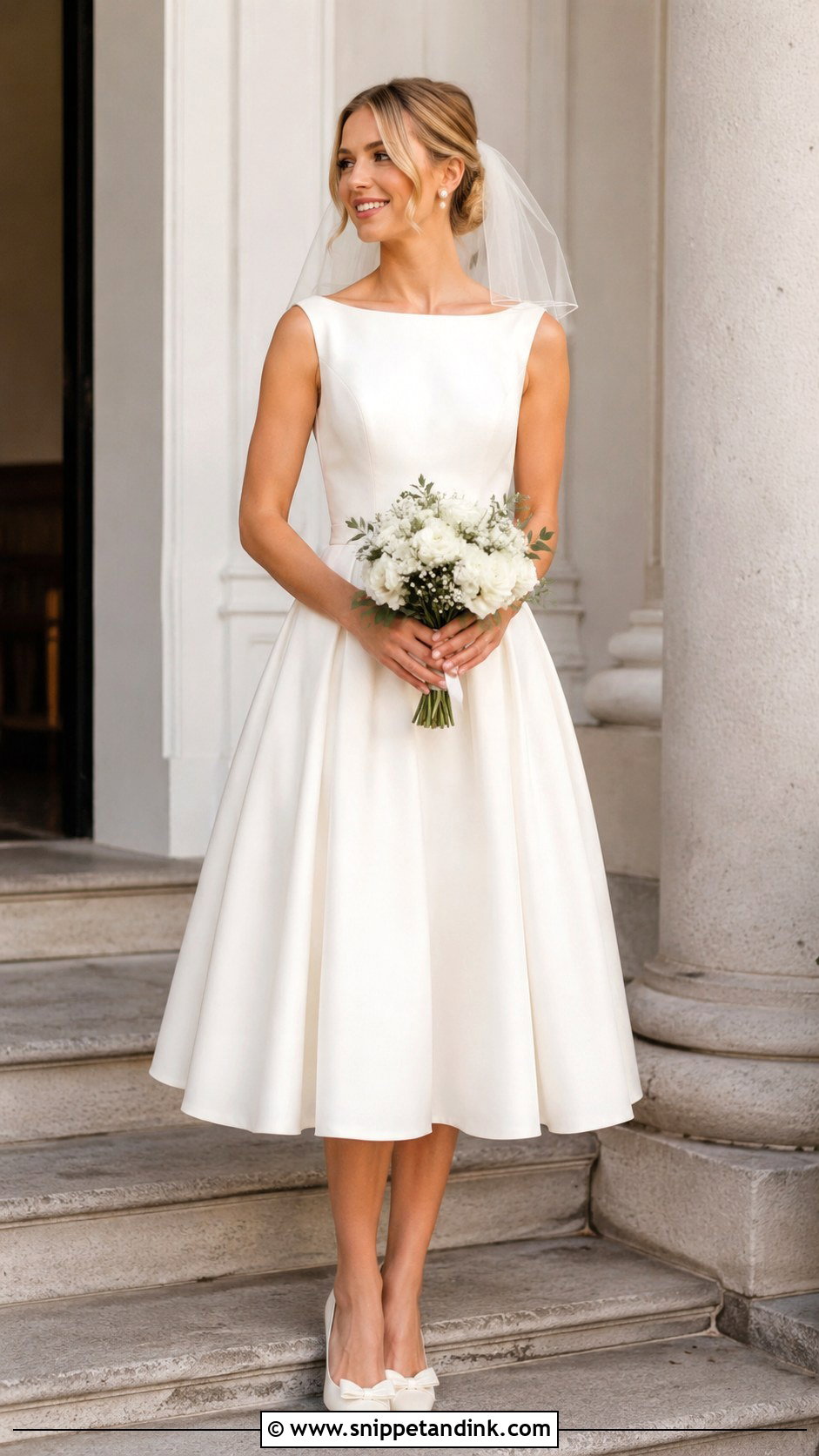
Tea length falls between knee and ankle, which puts your shoes on show all day. Satin pumps, bow heels, embellished sandals or pointed flats all work, and I’d treat them as part of the outfit rather than an afterthought. A fitted bodice and flared skirt feels vintage; a sleek straight cut feels current. Pearl earrings with a short veil or headband complete it. The hem barely needs altering and there’s no bustle to deal with, so tea length is a good fit for a courthouse ceremony or a reception change.
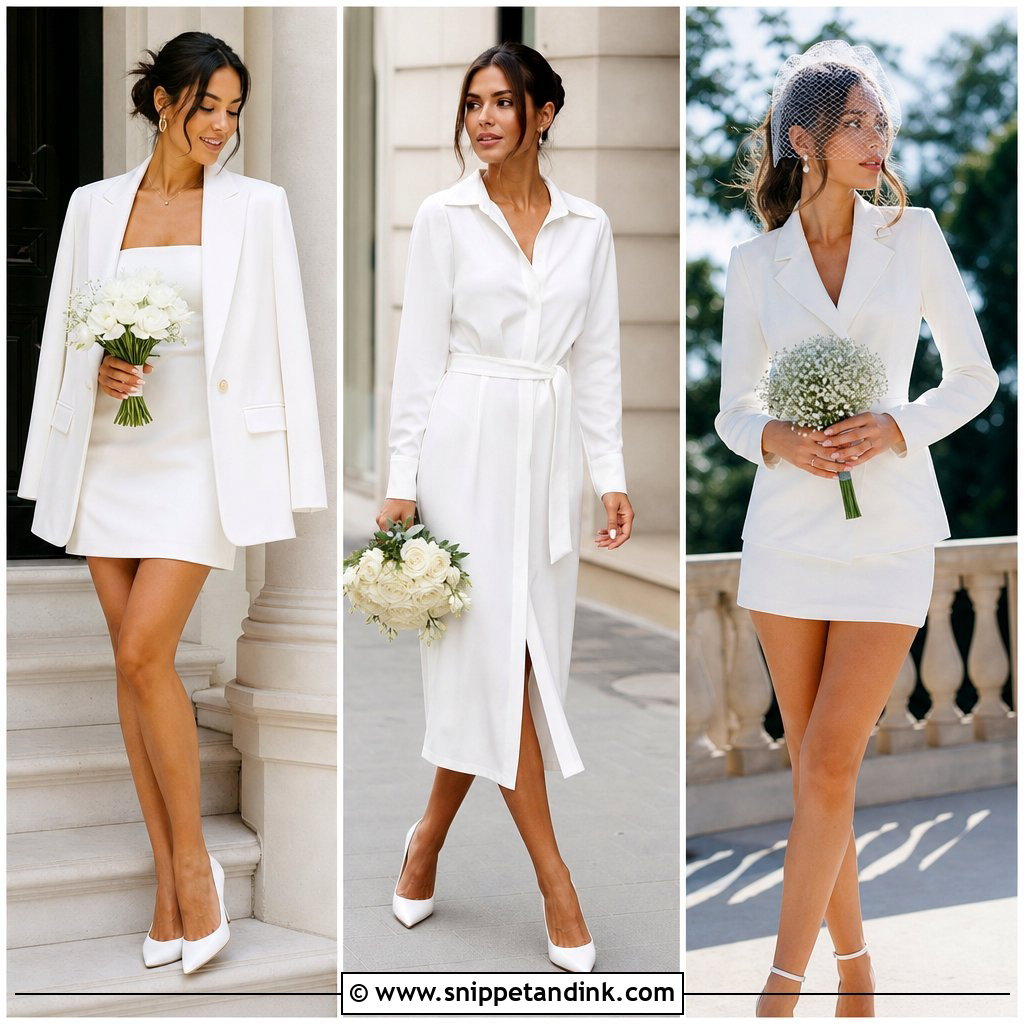
10. Mini Wedding Dress Outfit
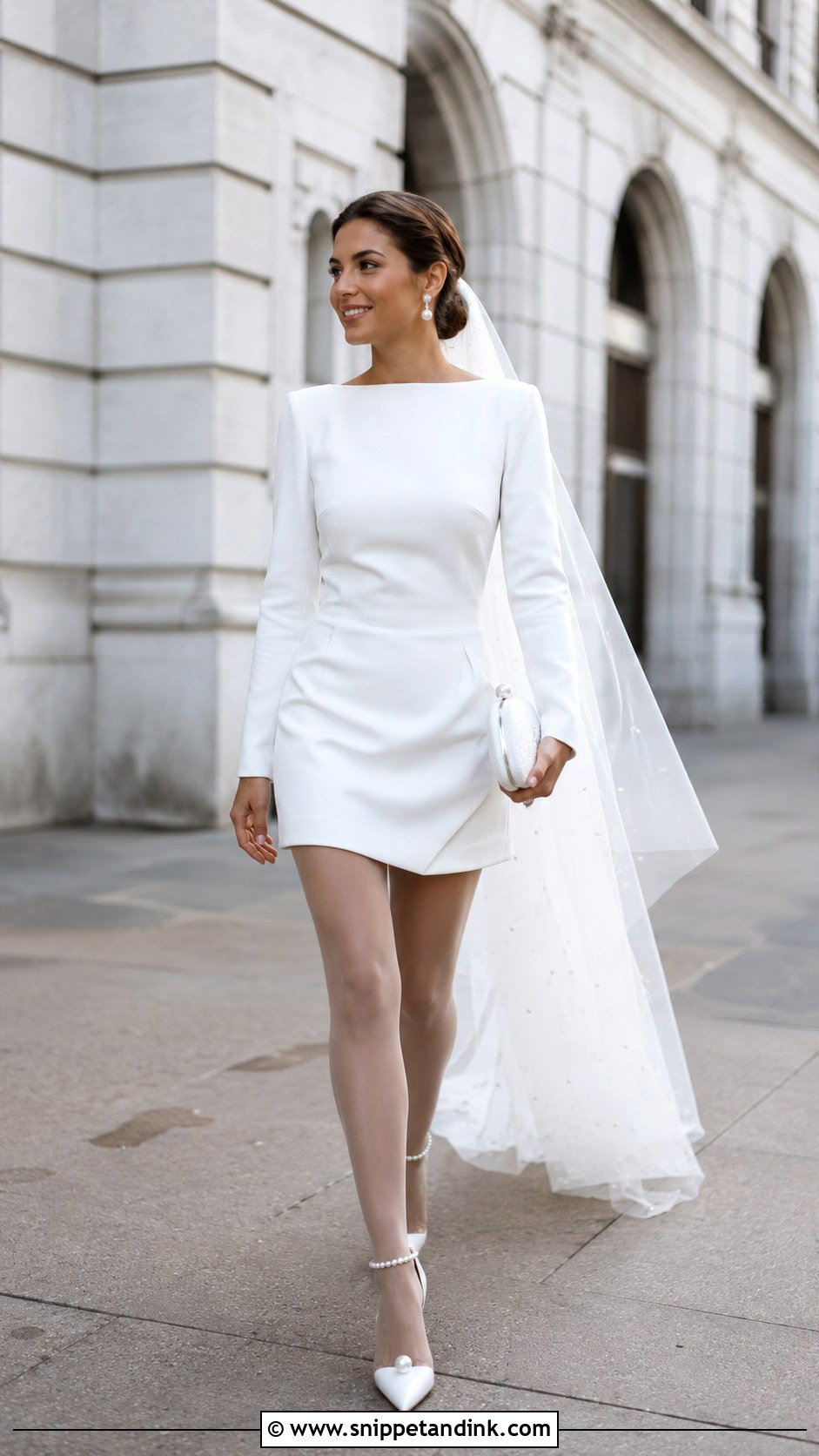
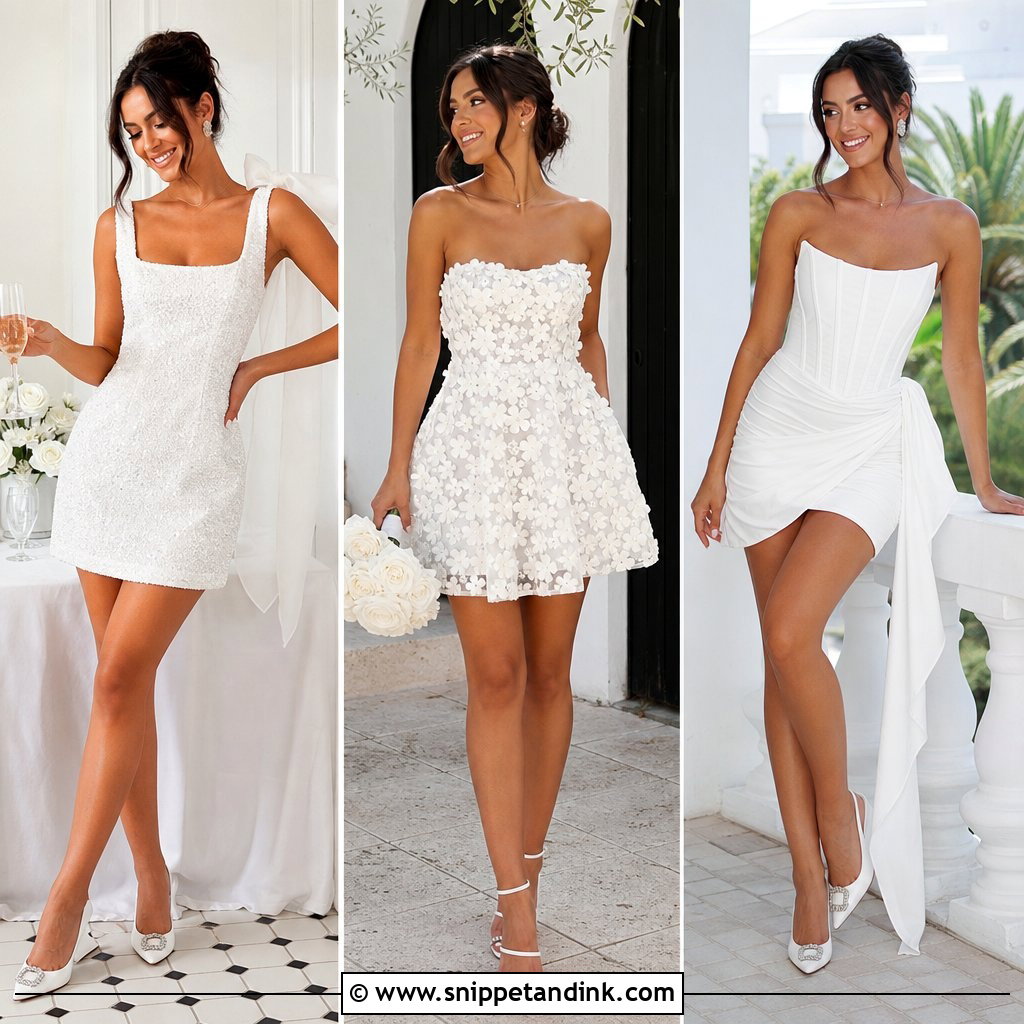
A mini is the easiest bridal outfit to dance in and the hardest to photograph well when you sit. Before committing, I sit brides on a low chair in front of a mirror; a hem that’s fine standing can ride very high in seated portraits. Structured minis with long sleeves, feather trim, pearls, bows or clean satin all look intentional. Statement heels, sheer tights for a cold evening and a small clutch. Polished hair stops it reading like a party dress, whether it’s your courthouse look or a second outfit.
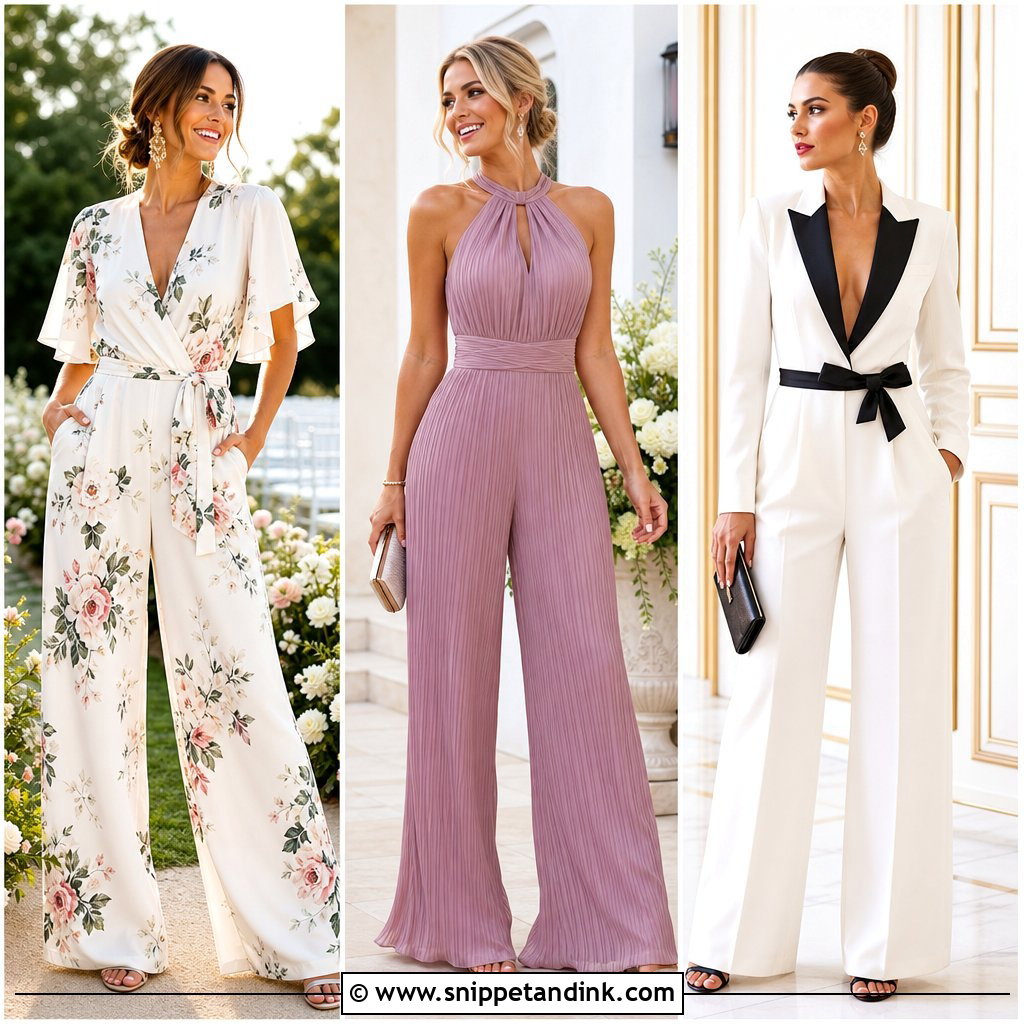
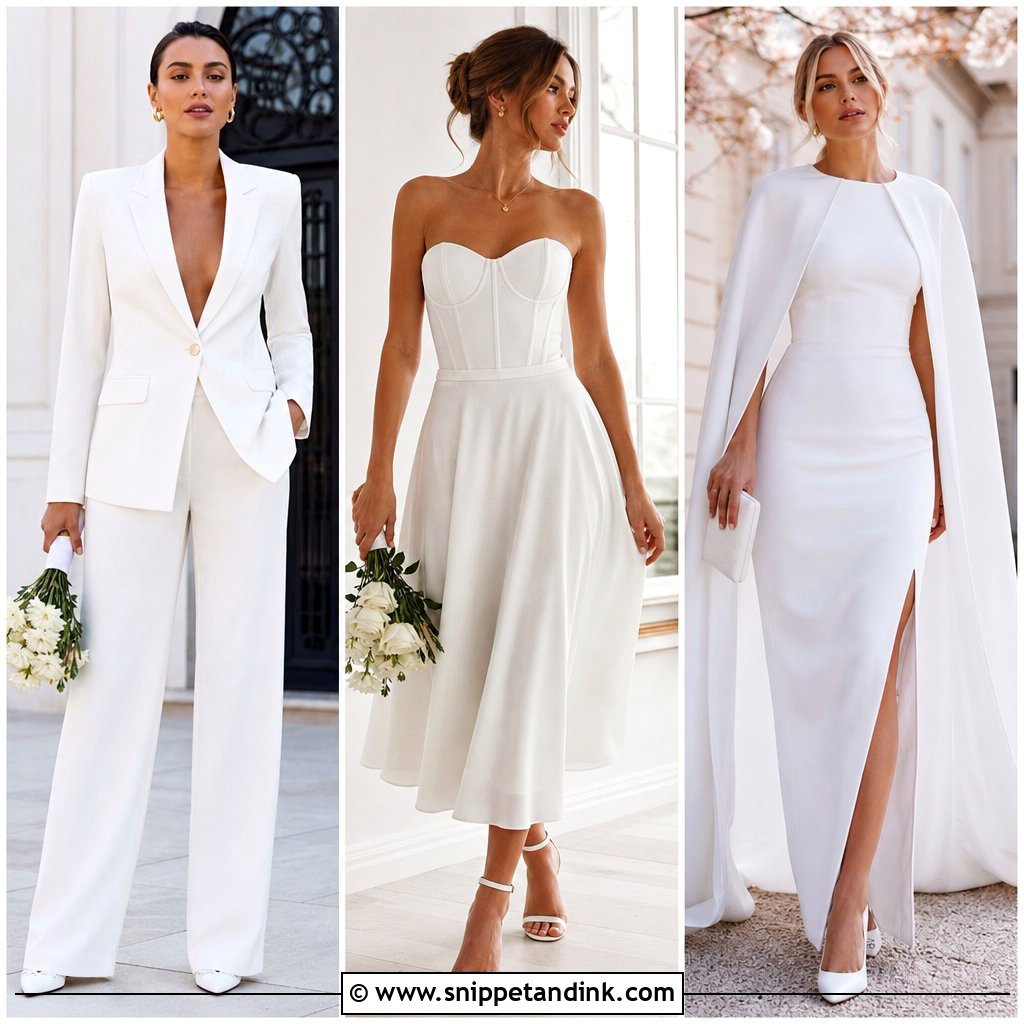
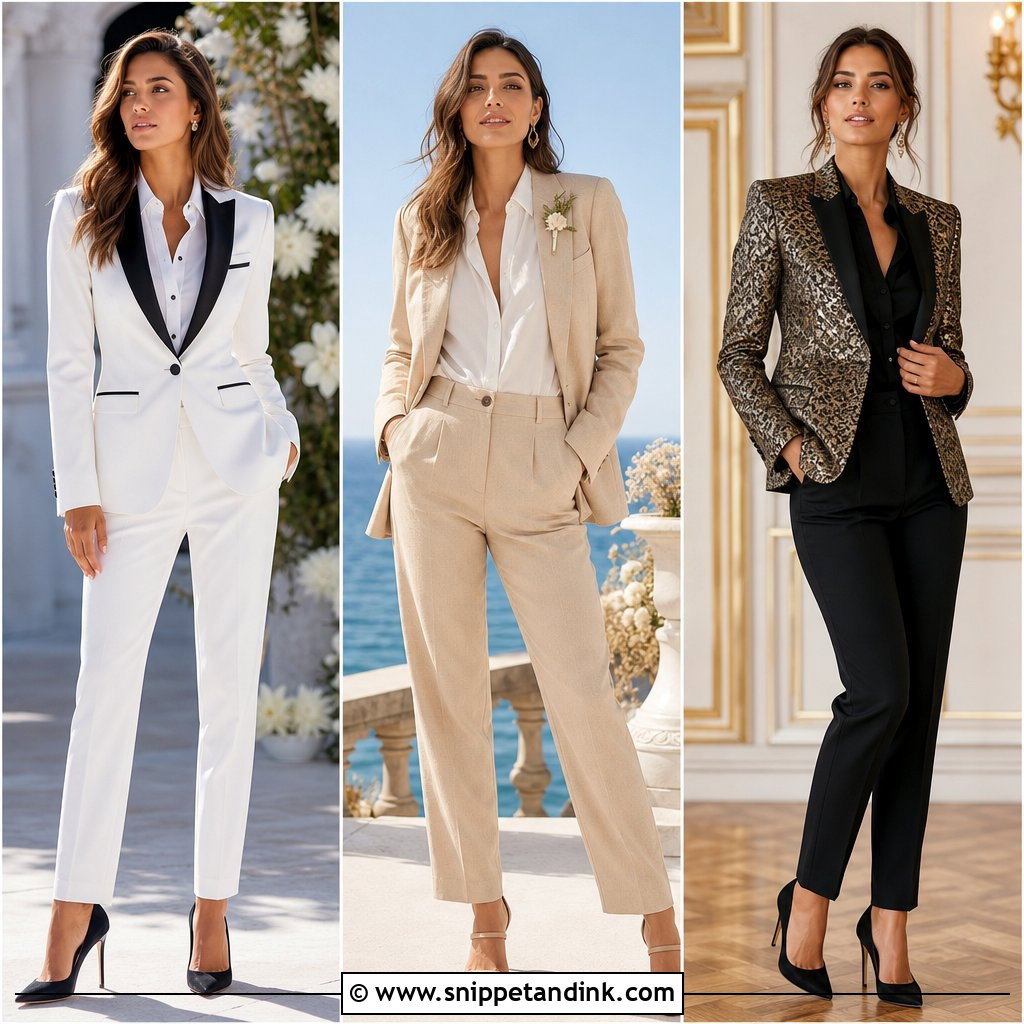
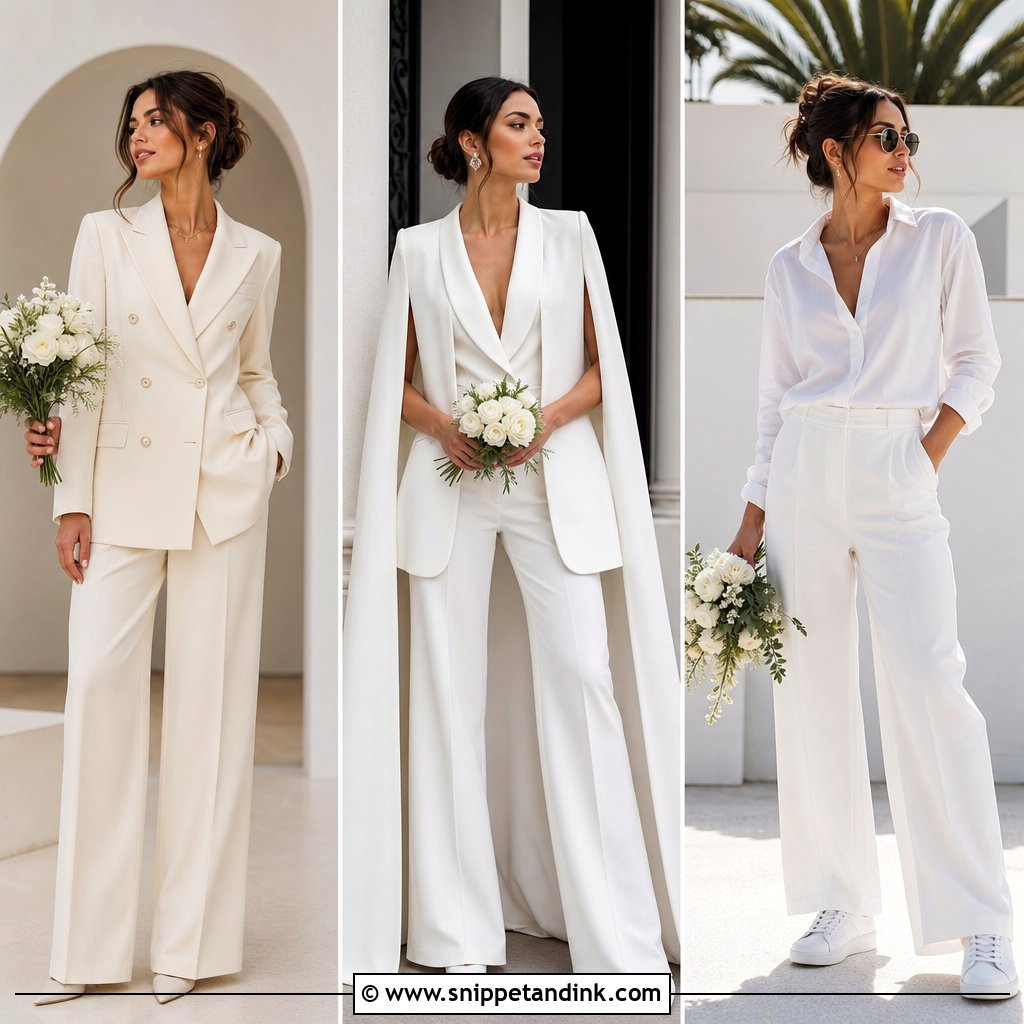
11. Bridal Pantsuit Outfit
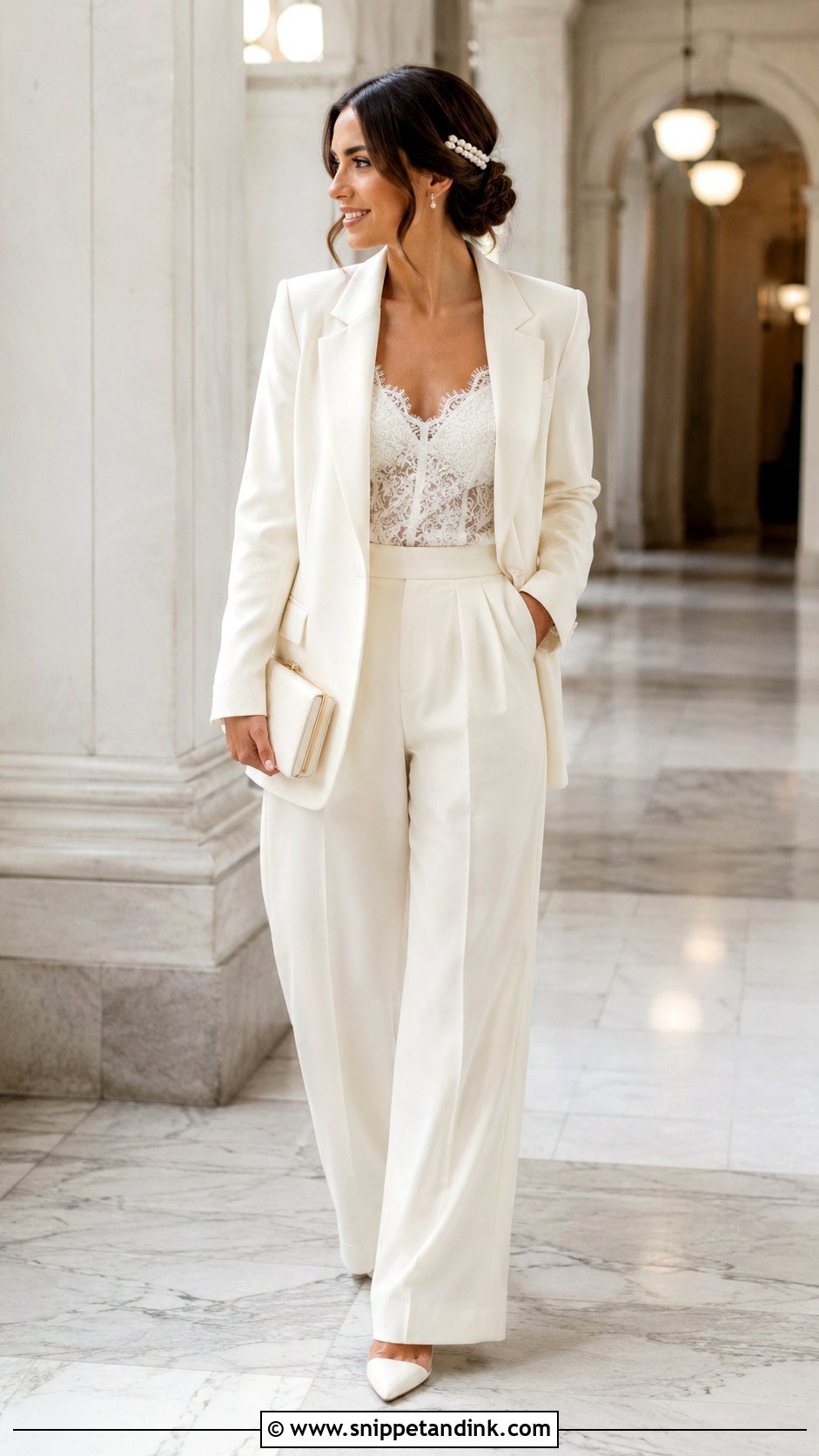
Pantsuits give you structure and the freedom of trousers. Choose a white or ivory tailored blazer with matching trousers, then a lace cami, satin top or clean bodysuit underneath. A dressing tip I always use: white tailoring picks up foundation at the collar, so put a scarf over your face as you put the jacket on after makeup. Pointed heels, sculptural earrings and a sleek clutch keep it bridal, and a veil, bow or pearl hair piece softens the tailoring. It suits courthouse ceremonies, city weddings and modern receptions.
12. Bridal Jumpsuit Outfit
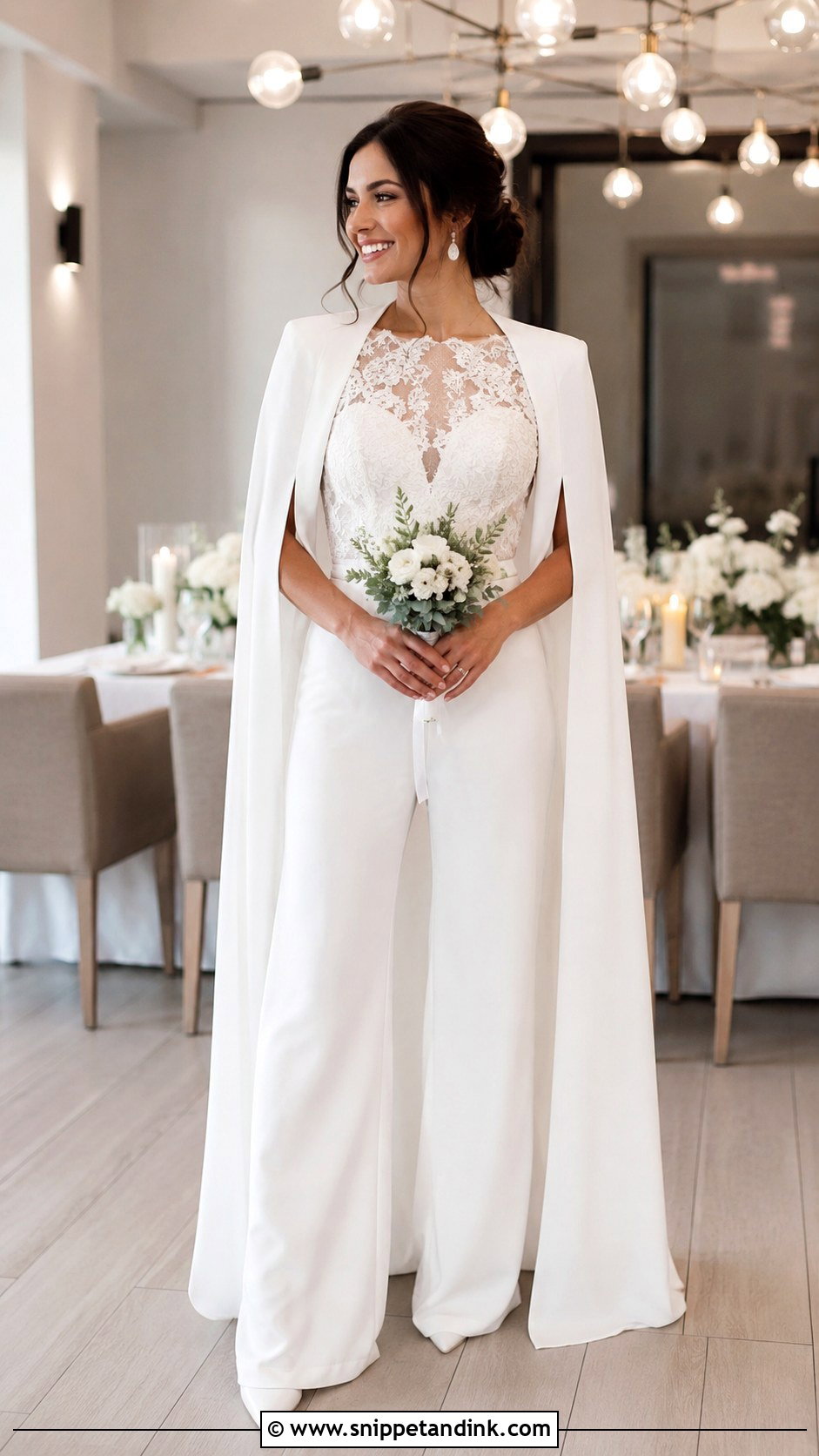
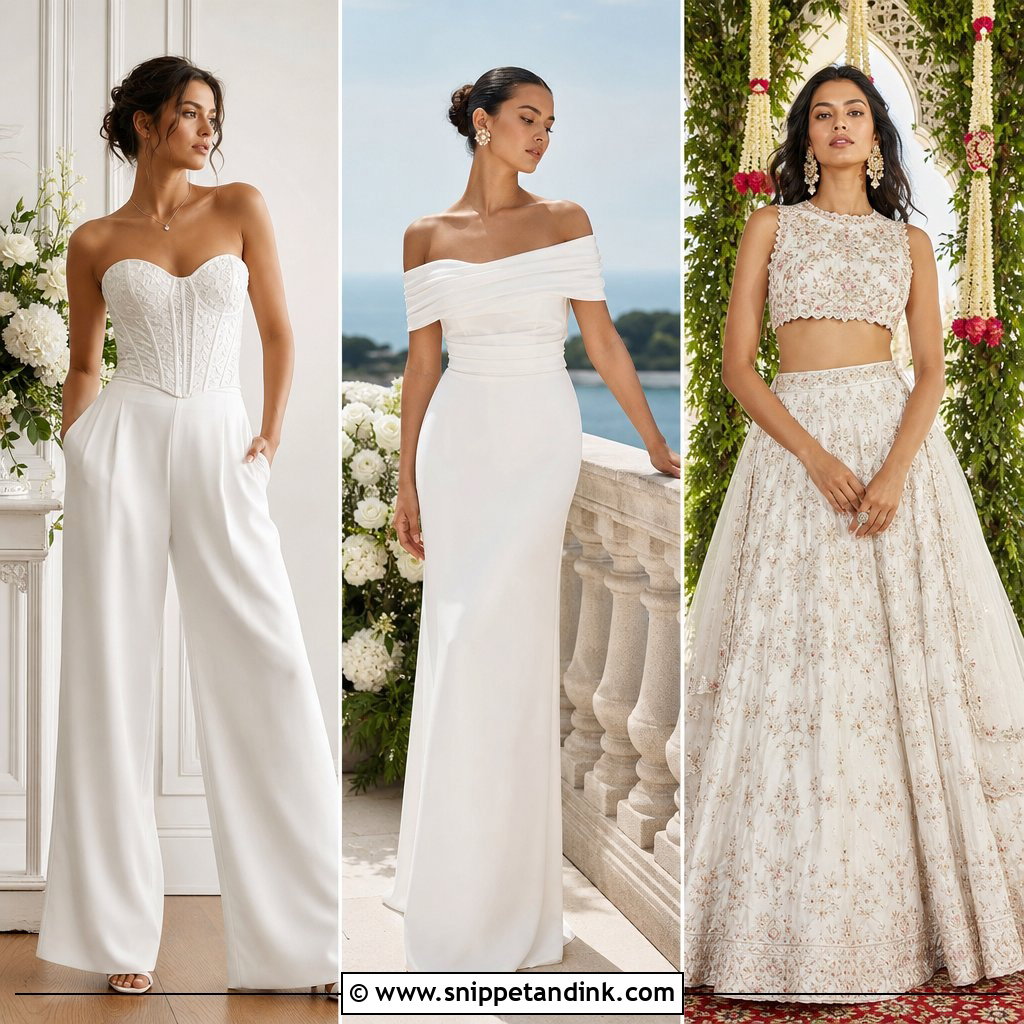
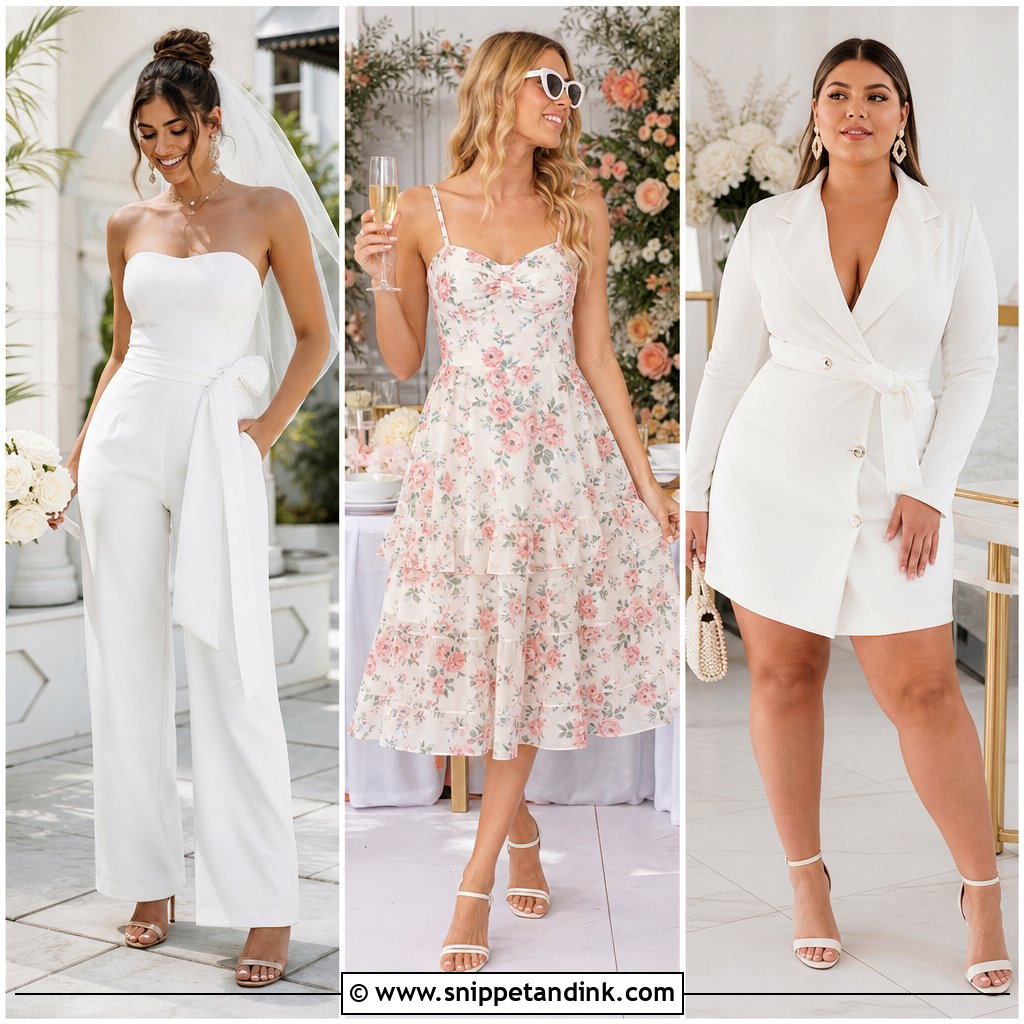
Jumpsuits give you the ease of trousers in a single piece. Wide-leg jumpsuits lengthen the line, fitted ones look sleek. A cape overlay, lace bodice, pearl buttons or an open back make it bridal. The practical question I always raise is the restroom: a long back zip means you’ll need help every time, so check the closure before you fall for one. Platform heels or pointed pumps, drop earrings and soft waves or a low bun for a destination or courthouse wedding.
13. Two Piece Wedding Outfit
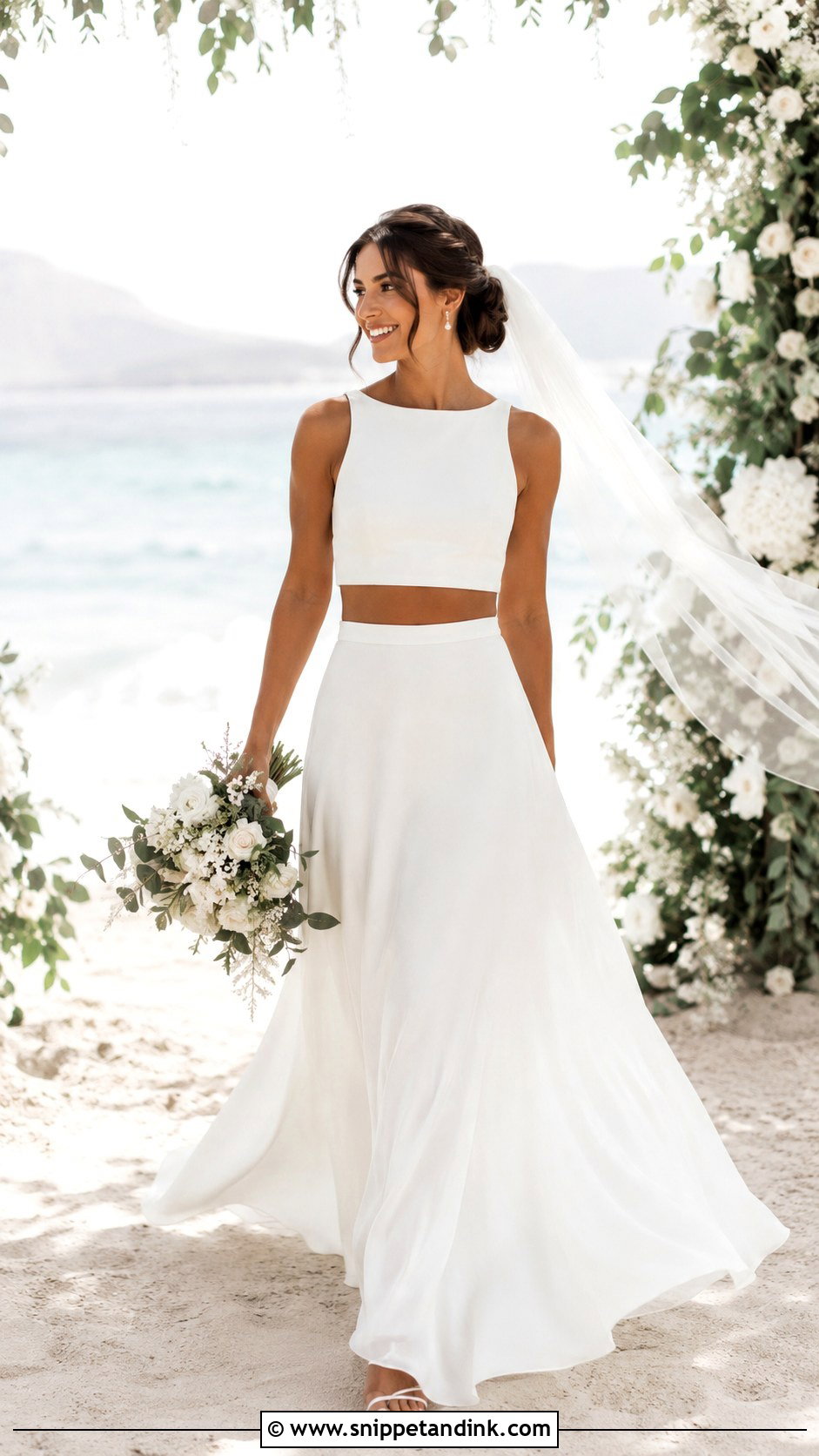
Two-piece bridal outfits let you choose each half separately, which helps if your top and bottom sizes differ. A crop top with a high-waisted skirt reads romantic; a lace blouse with tailored trousers reads practical. A structured bodice with a full skirt can look like a gown. I check the gap at the waist when you raise your arms and when you sit, because that’s where two-piece outfits show skin you didn’t plan on. Delicate heels and a veil or bow keep it bridal for beach weddings and casual ceremonies.
14. Convertible Wedding Dress Outfit
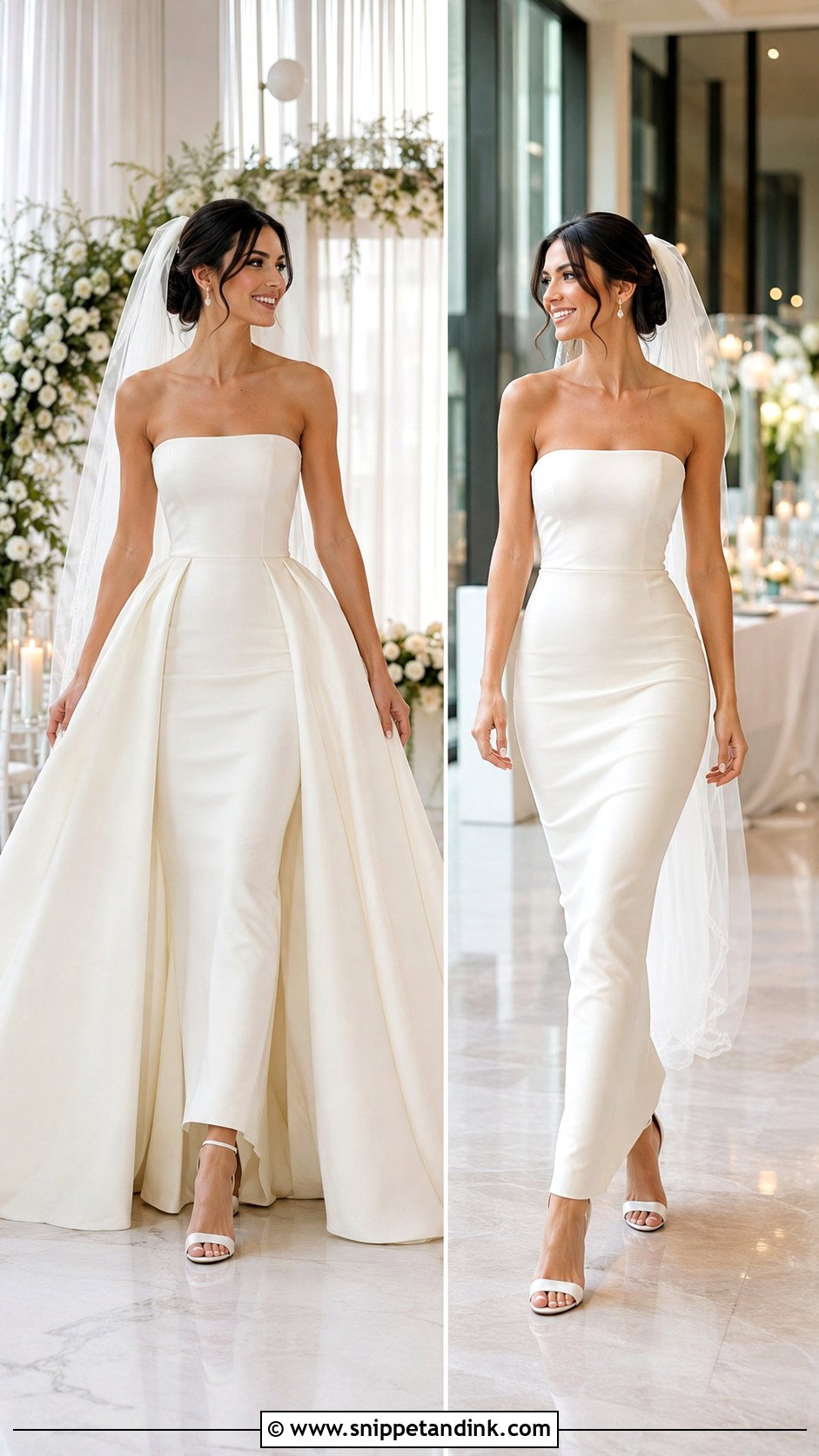
A convertible wedding dress outfit gives you two looks from one purchase: a detachable train, removable overskirt, cape sleeves or a bolero for the ceremony, then a lighter dress for dancing. Ask how each piece attaches. Hidden snaps and hooks are quick; a long row of buttons needs a helper and takes time. I practise the change at the last fitting with whoever will help on the day, and I make sure the shoes and jewelry work with both versions.

15. Cape Wedding Dress Outfit
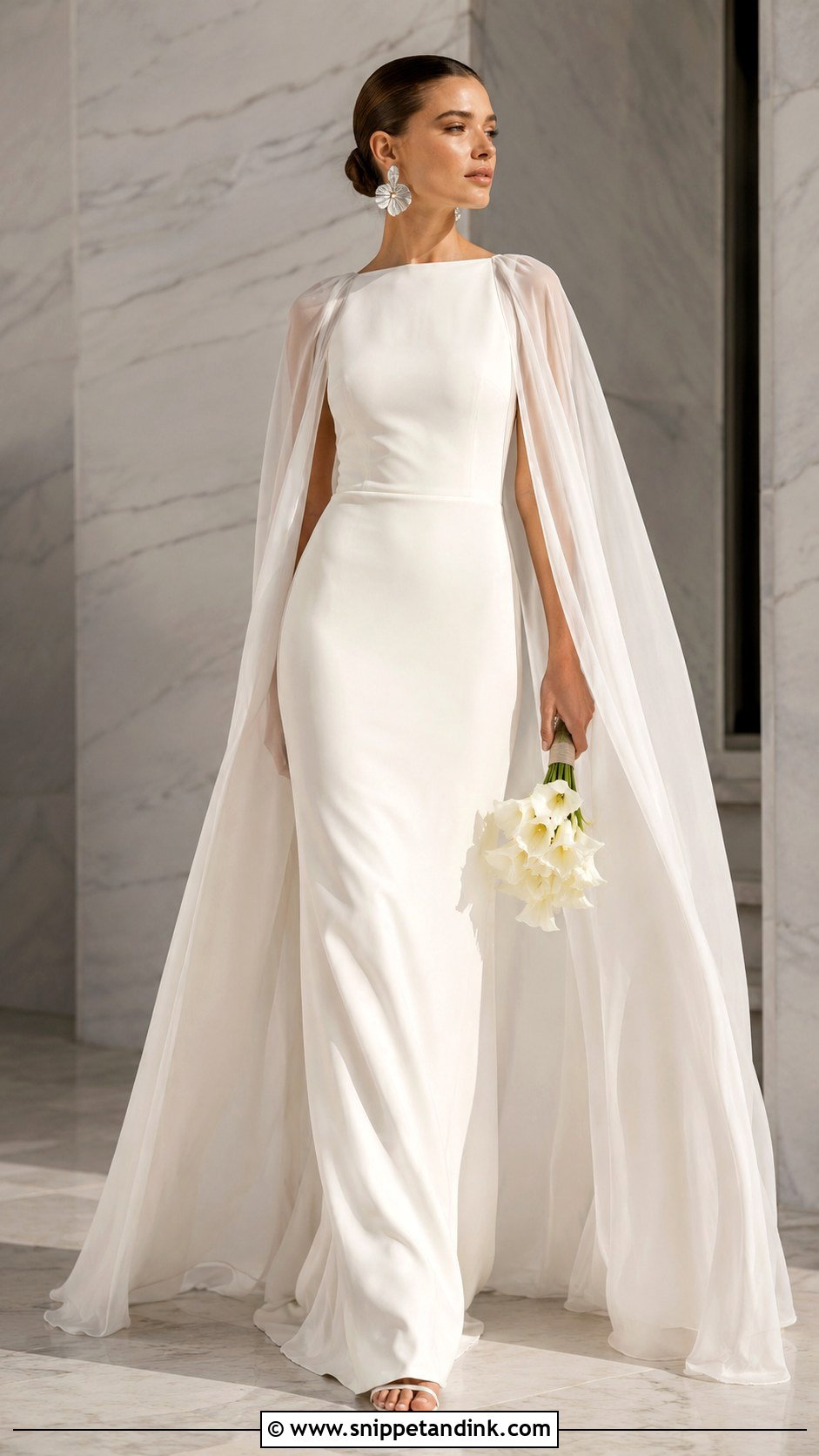
A cape gives you movement and presence without a veil. Sheer capes feel soft; structured ones make a strong shoulder line. They usually attach at the shoulders or neckline with hooks or snaps, and I check they hold when you hug, because a cape pulls backward with every arm movement. Wind is the other test: a long sheer cape on a rooftop will fly, which can be lovely in photos and awkward during vows. Pair it with a simple column, jumpsuit or strapless gown, clean heels and minimal jewelry.
16. Bow Wedding Dress Outfit
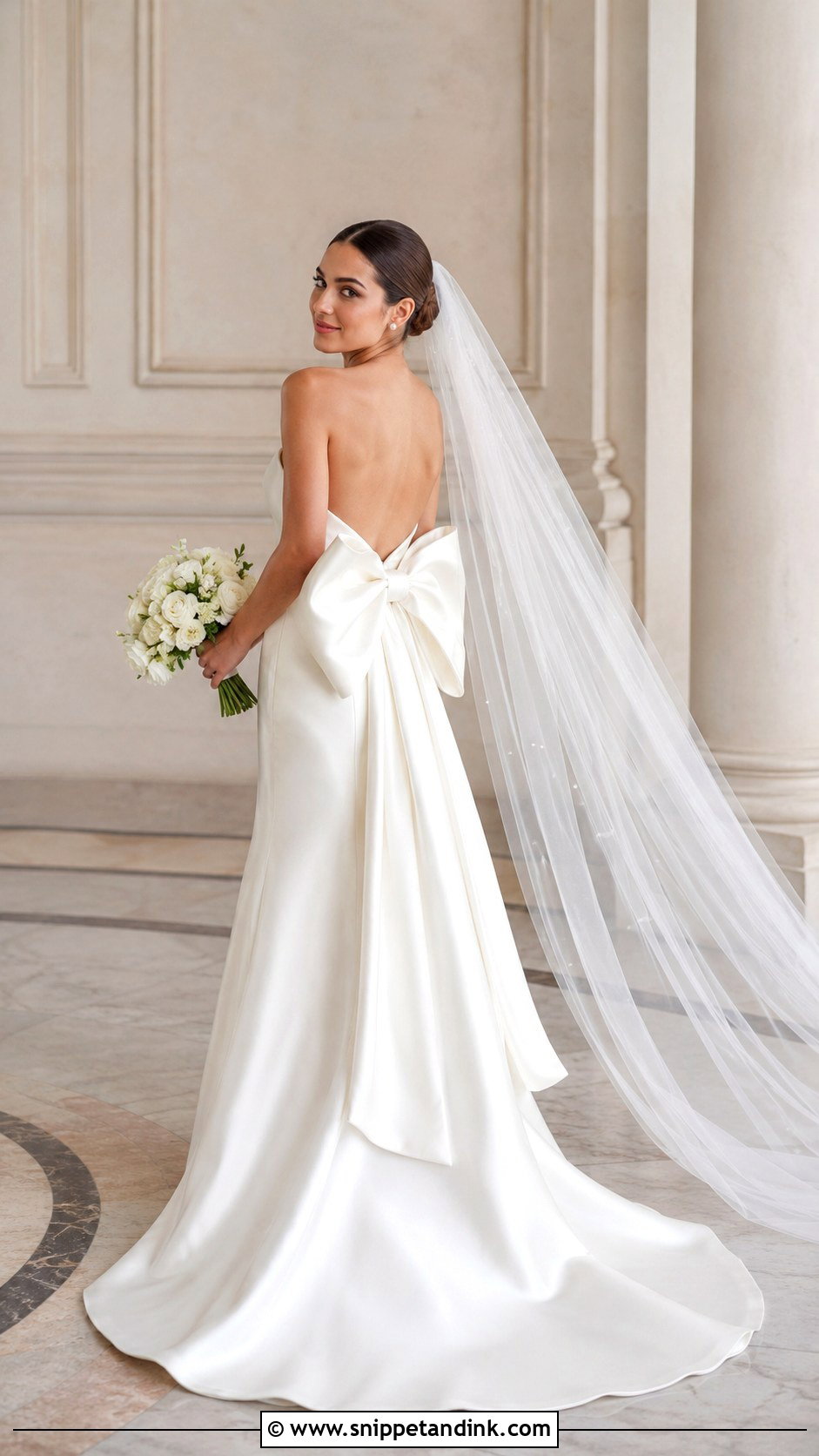
Bows look charming when there’s just one. A back bow, shoulder bow, waist bow or bow veil gives the outfit a focal point; the rest should stay plain. Large back bows do get crushed when you sit through dinner, so I add a little interfacing or tulle inside to help them spring back and ask a bridesmaid to fluff it before portraits. A satin gown with a back bow feels classic, a mini with shoulder bows feels playful. Simple heels, pearl studs and a sleek hairstyle.
17. Pearl Wedding Dress Outfit
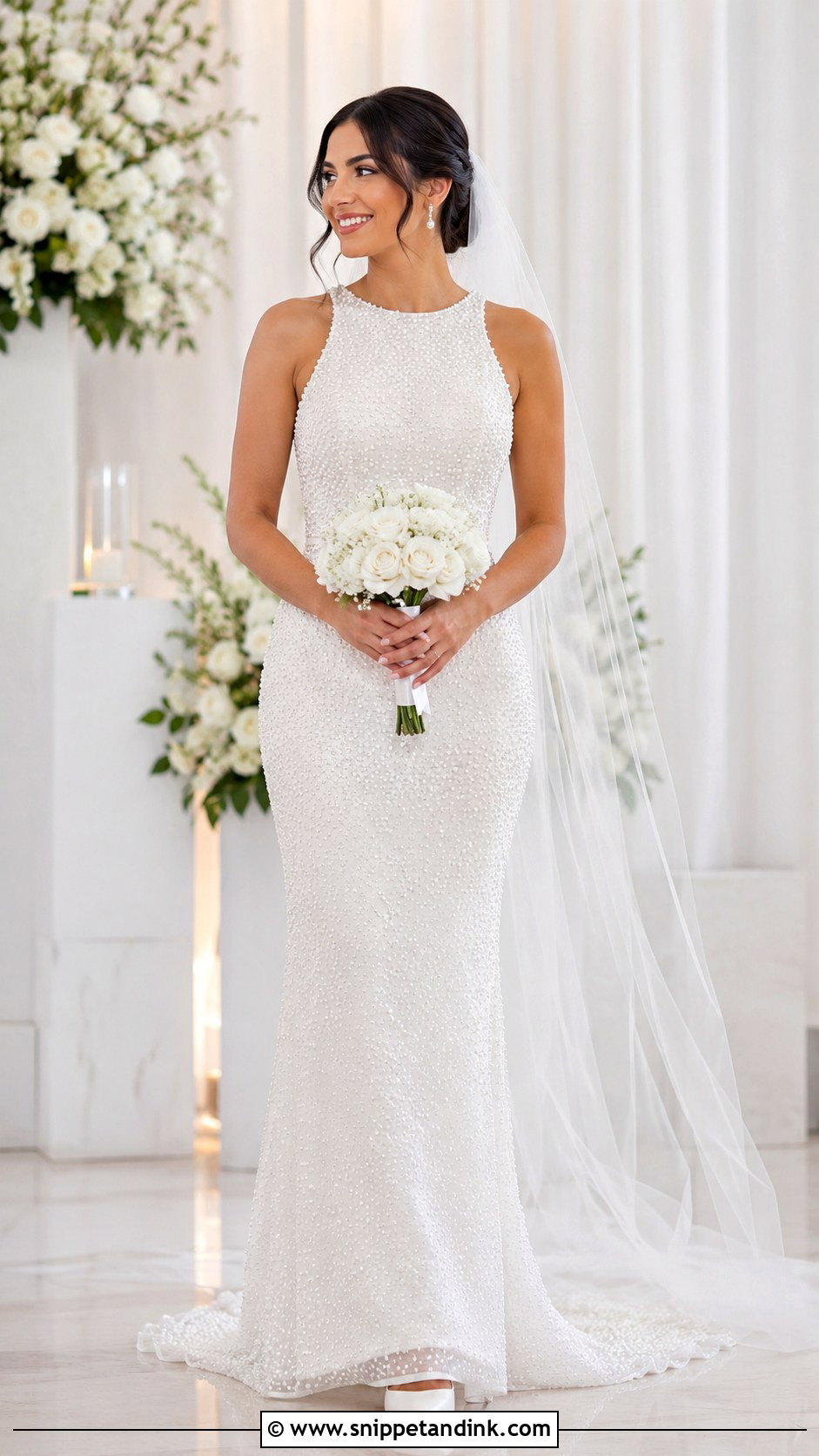
Pearls add a soft glow, but they’re heavier than they look. A pearl-edged cathedral veil pulls on its comb, so I anchor it with extra pins or a second comb. Choose one or two pearl elements, across the gown, veil, shoes, bag and jewelry, rather than all of them. A pearl-embellished dress with plain heels looks refined; a clean gown with a pearl veil or pearl gloves looks current. Dewy makeup and a simple bouquet keep it fresh for an indoor ceremony or reception.
18. Beaded Wedding Dress Outfit
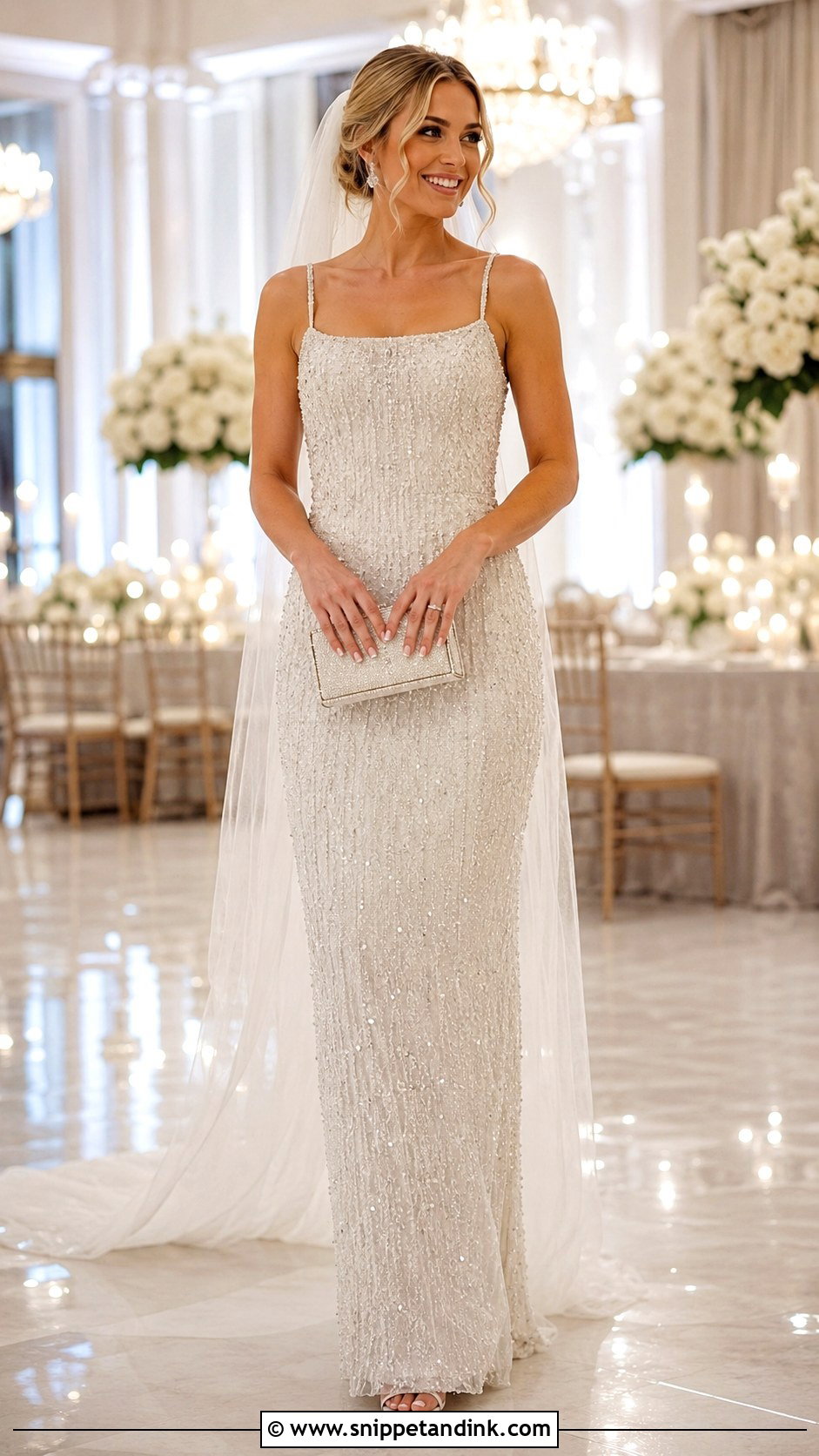
Beading gives a gown sparkle that moves with you, but it has two costs: weight and scratch. Heavy beading under the arms and at the waist can rub raw over a long evening, so I check the inside of every beaded gown for smooth lining across those points. A beaded sheath feels sleek; a beaded A-line feels romantic. Beaded hems also make alterations slower and pricier, since beads must be removed and re-sewn by hand. Simple shoes, a clean veil and understated jewelry for an evening ballroom reception.
19. Tulle Wedding Dress Outfit
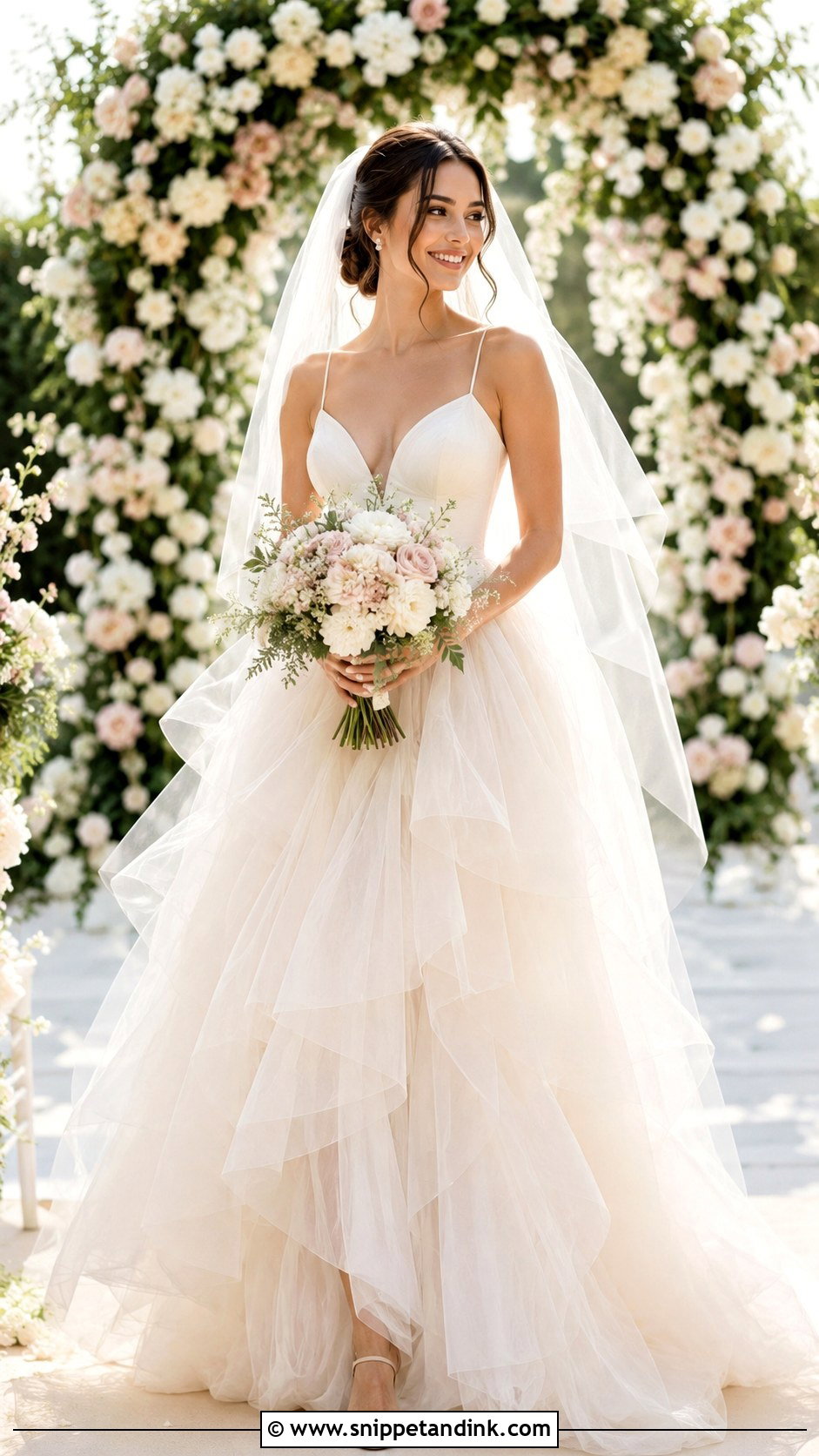
Tulle is airy and moves well, and it snags on almost everything: bracelet clasps, watch edges, the hook side of a garter, even rough bouquet wraps. I tell tulle brides to keep their wrists plain. A layered tulle skirt with a fitted bodice gives the classic silhouette, while a soft single-layer tulle dress feels fresh. If the skirt is full, keep the bouquet and hair simple. Tulle steams easily, so wrinkles from transport are a quick fix at the venue. Delicate heels and small earrings for a garden or outdoor ceremony.

20. Crepe Wedding Dress Outfit
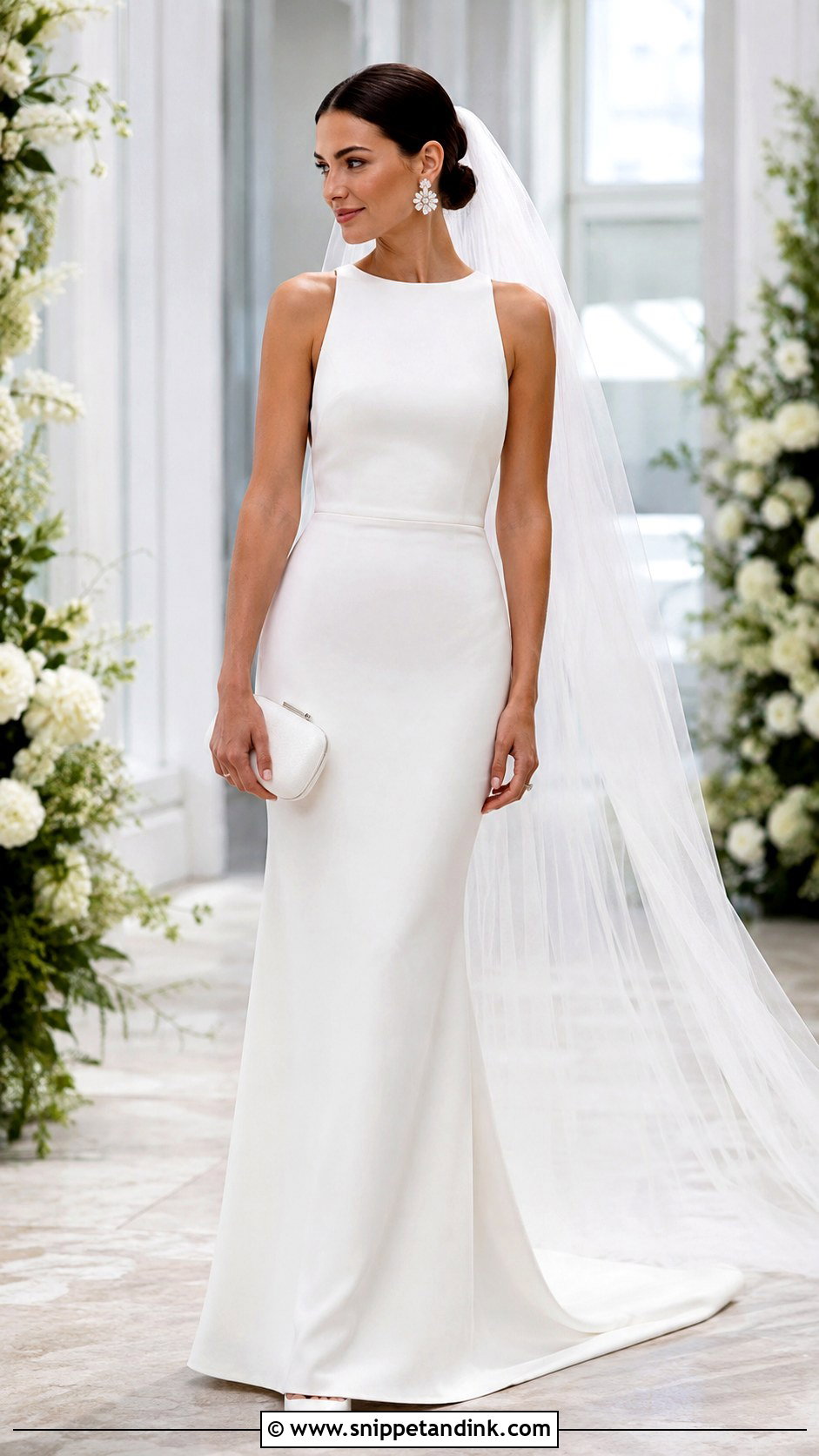
Crepe has enough weight to skim the body and hold a clean line, which makes it my first suggestion for sheaths, long sleeves and minimalist designs. That same smoothness shows bra lines, so plan undergarments early. Stretch crepe is kinder for a long day than a rigid weave. A long veil adds drama without busying the outfit. Pointed heels, a structured clutch and sculptural earrings give it a modern finish for brides who don’t want lace or sparkle, in a city venue or a formal ceremony.
21. High Neck Wedding Dress Outfit
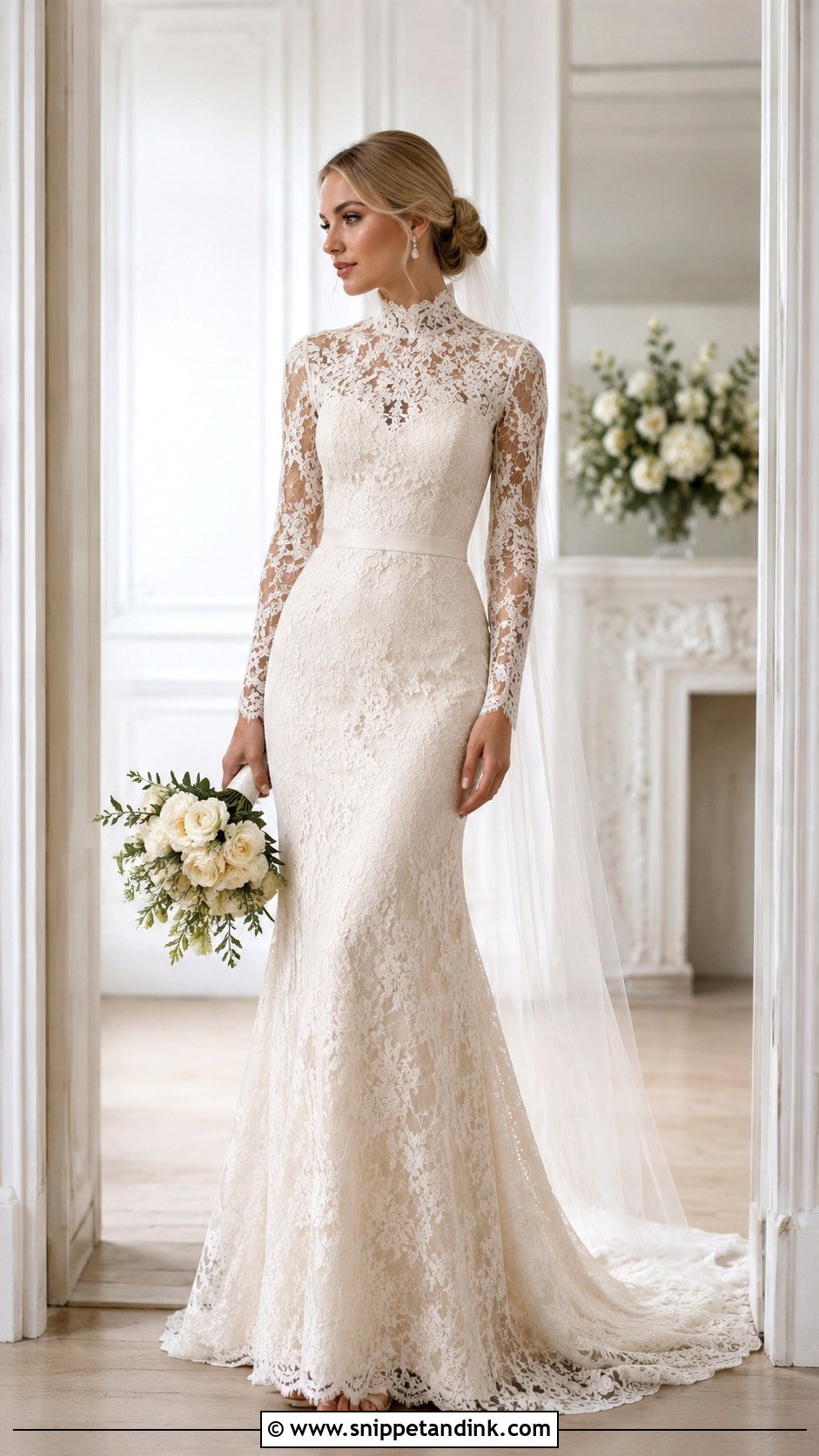
High necklines sit right next to your makeup, so foundation transfer onto the collar is the risk I watch for most. Brides should step into the gown rather than pull it over the head, and I set makeup with powder at the jaw. Lace, satin, crepe or a lined sheer fabric all work. Balance the coverage with a defined waist, open back or sleek skirt. Skip the necklace and let earrings frame the face, then wear a low bun or clean ponytail so the neckline stays visible. A soft veil adds extra bridal detail.
22. Open Back Wedding Dress Outfit
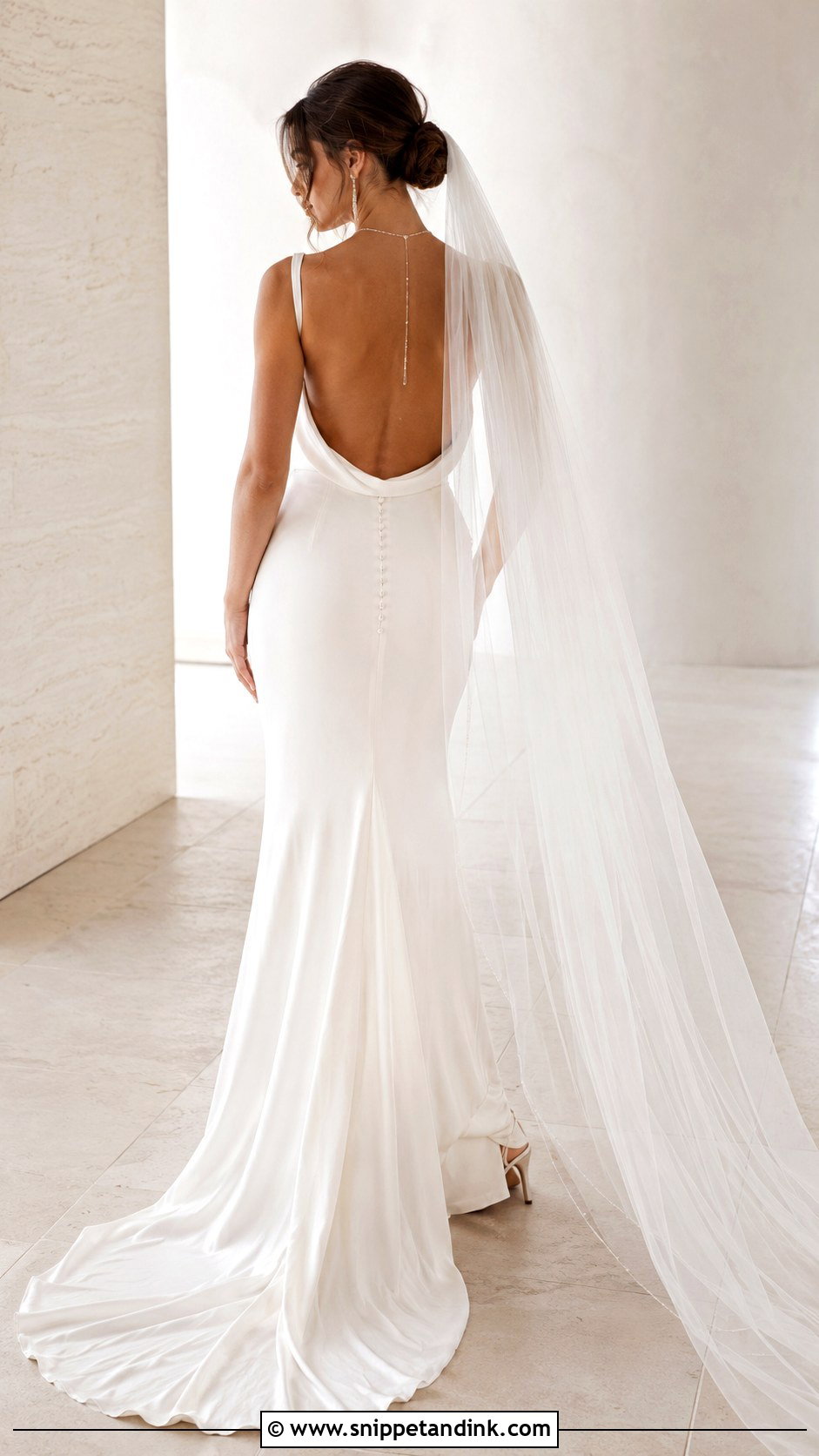
An open back is about what holds you in from the front. Built-in cups, a low-back bra or adhesive cups each work for different bust sizes, and I settle that before the first alteration, not after. Slip dresses, lace gowns, crepe dresses and fitted silhouettes all take an open back. A low bun, back necklace or simple veil frames it without clutter. Keep shoes sleek and accessories minimal, and make sure the back edges are finished smoothly, since that’s what the camera sees during the ceremony.
23. Courthouse Wedding Outfit
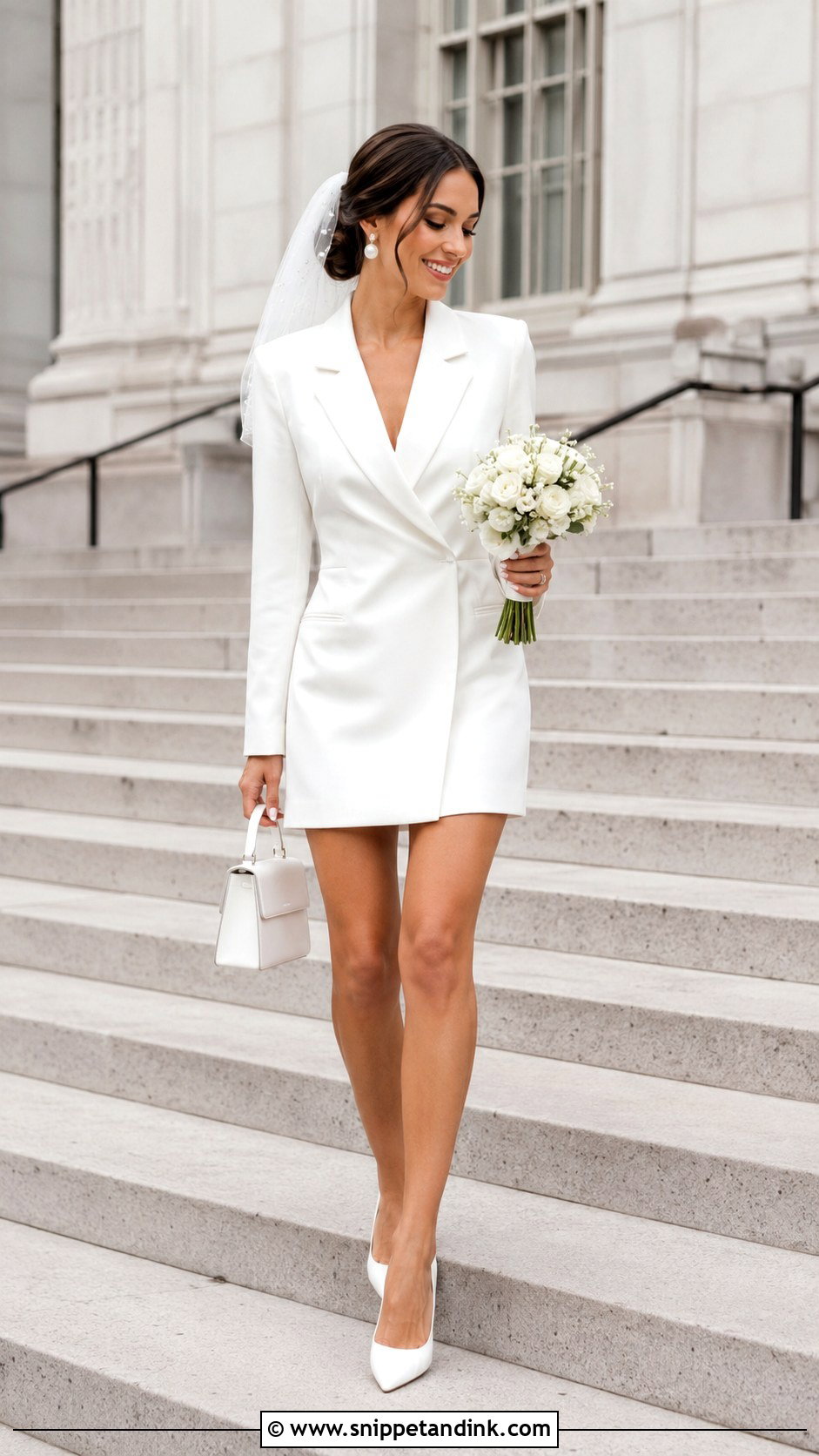
Courthouse ceremonies are short, often standing, and photographed close up, so fit and fabric matter more than volume. A white blazer dress, tailored suit, midi, jumpsuit or simple slip dress all work. Block heels or pointed pumps, a small bouquet and a structured handbag. Pearl earrings, a short veil or a bow clip add a bridal touch. If you’re planning city portraits afterward, I’d choose a hem that clears pavements and a shoe you can walk a few blocks in.
24. Beach Wedding Dress Outfit
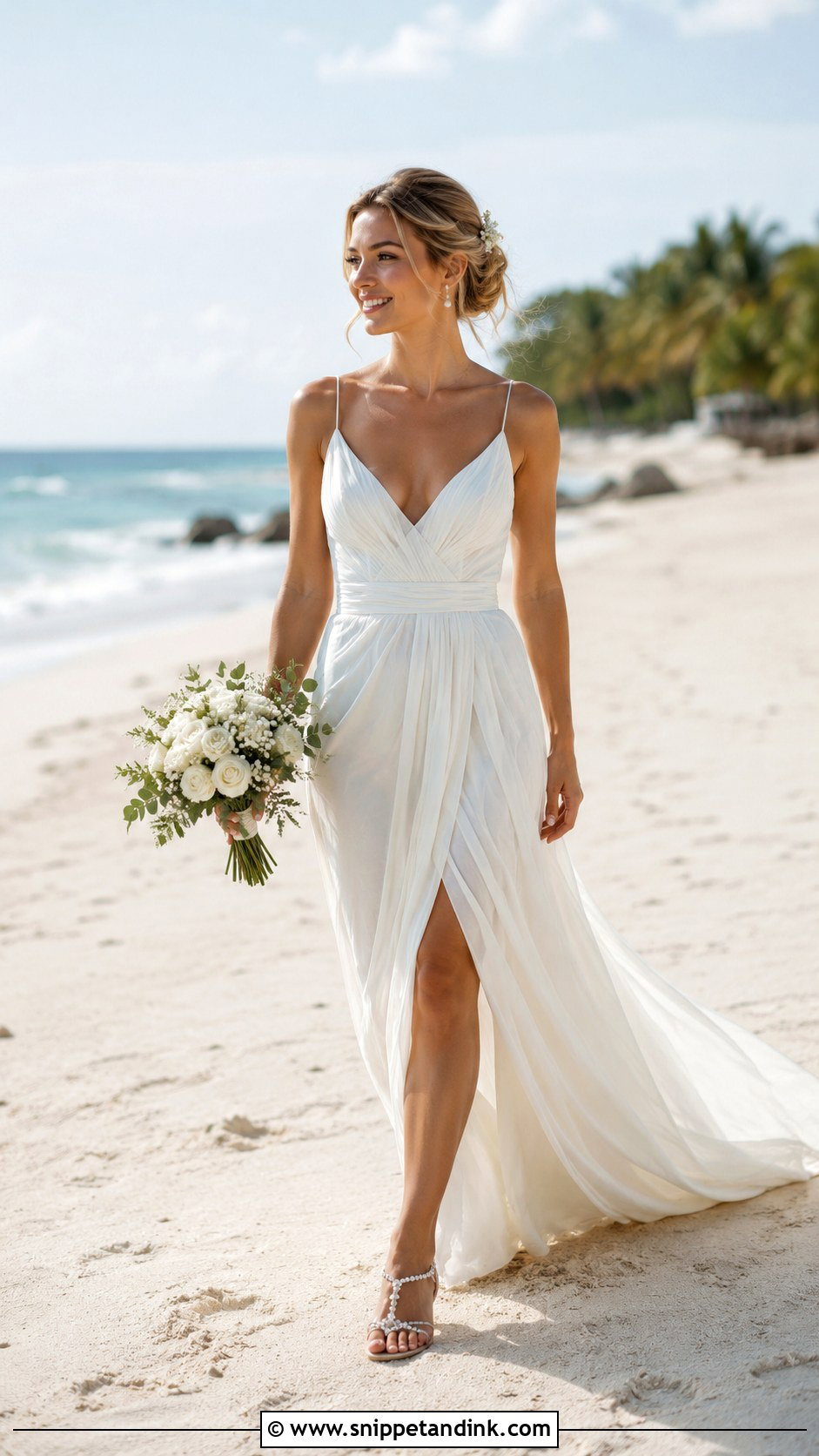
Sand and wind rule a beach wedding. Chiffon, soft tulle, lightweight lace or a simple slip dress won’t weigh you down near water. A long train collects sand quickly, so I suggest either a short train or a bustle done straight after the ceremony. Flat sandals, barefoot sandals or low block heels beat stilettos, which sink immediately. Keep accessories minimal: shell-inspired earrings, pearls or a delicate anklet. A cathedral veil becomes a sail in wind, so a hair flower or a short veil with extra pins is easier.
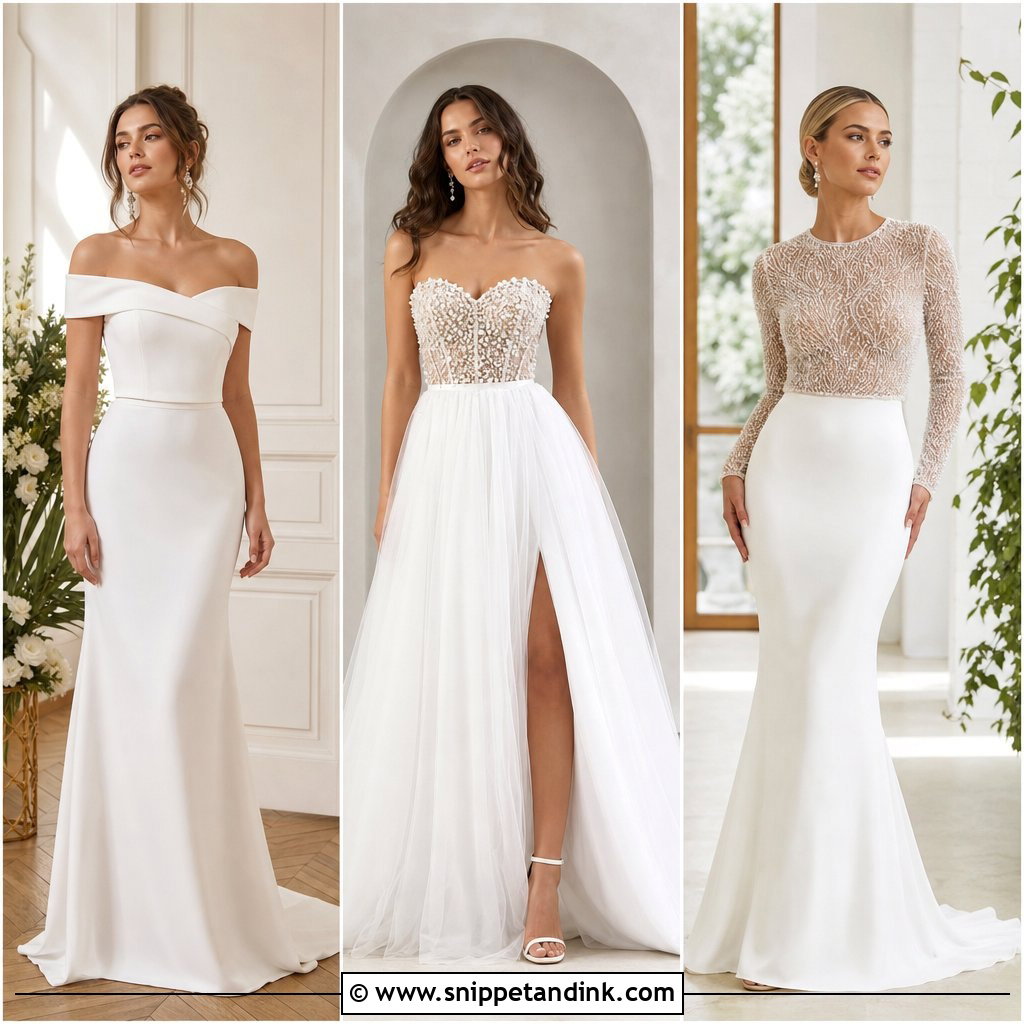

25. Reception Wedding Outfit
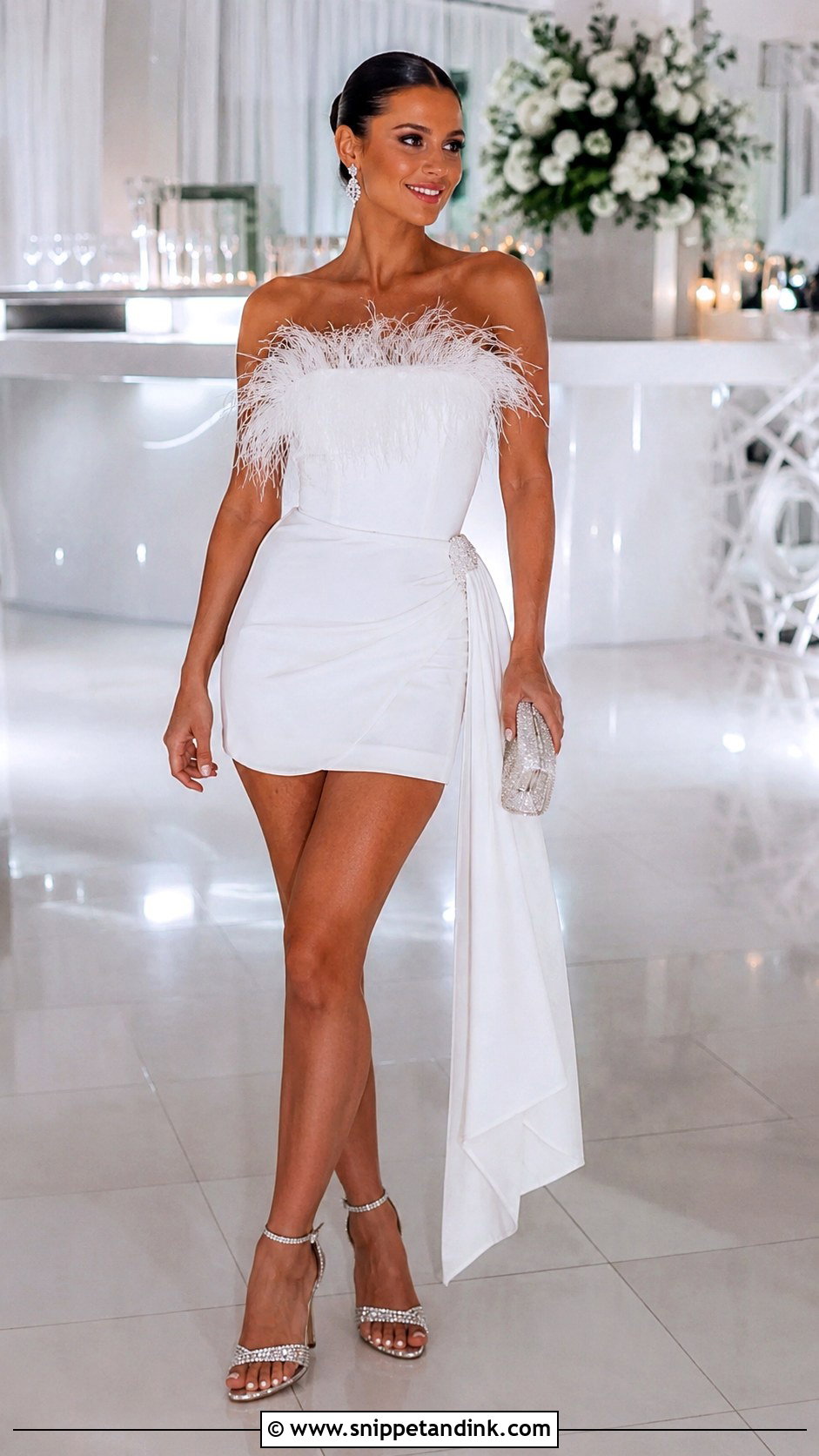
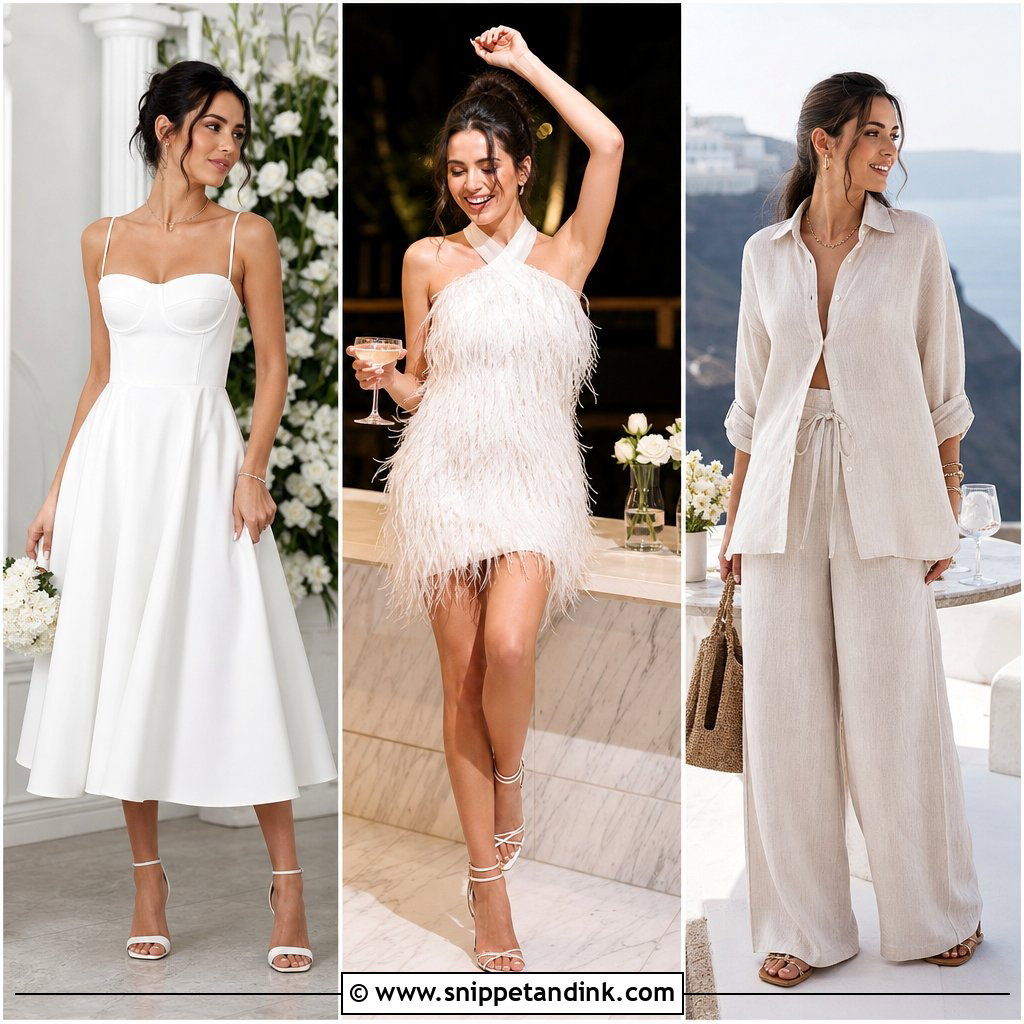
The reception outfit is where many brides finally relax. A mini, tea length dress, jumpsuit, feather-trim dress or sleek second gown all work, ideally lighter than the ceremony look if that one has a long train or heavy fabric. I time the change for after dinner and before the first dance, so guests see both looks and you dance in the comfortable one. Comfortable heels, a small clutch and statement earrings. This is the moment for more personality: sparkle, texture or a shorter hem.
Bustling a Train and Timing the Outfit Change
Any gown with a train will need a bustle for the reception, or you’ll be stepping on it and so will everyone else. The style depends on the fabric and how long the train is.
- Over bustle: the train lifts and hooks up onto the back of the skirt. Quick, and good for lighter fabrics and shorter trains.
- Under or French bustle: the train folds under and ties inside the skirt with ribbons. It suits satin and heavier trains and keeps the back smooth.
- Wrist loop: a loop you hold. Fine for a short train, tiring for a long evening.
Ribbon bustles are often color-coded or numbered, and I have the maid of honor practise at the final fitting while I watch. Ten minutes of rehearsal saves a frantic corner of the reception room. If you’re changing into a second outfit instead, plan where you’ll change, who zips you and where the first gown goes afterward, ideally hung on a padded hanger inside its bag.
Dress for the Hours You’ll Actually Spend in It
The right bridal outfit is the one you forget you’re wearing by the time the speeches start. Some brides feel most themselves in a lace gown and classic heels; others in a pantsuit, jumpsuit, mini or convertible look. Weigh your venue, season, how much you’ll move and how many hours you’ll spend in each outfit, then let accessories support the look rather than crowd it. Bridal fashion now runs from classic to bold, so pick the outfits from this list that fit your celebration and still feel right in the last photo of the night.
You'll Like These Ideas:



Leave a Reply