
When couples ask me to make them match, I almost never put them in the same outfit. Two people in identical colour and embroidery tend to merge into one block in photos. What works is a shared thread: the same shade in different fabrics, an embroidery border repeated on a collar, a stole that picks up the colour of a dupatta. The pairings below run from a saree with a kurta to a lehenga with a Nehru jacket to plain cotton sets, and they cover haldi, mehendi, engagements, receptions, festivals and the photoshoot in between. Pastels, ivory, jewel tones and mirror work all appear, with notes on where each one is easy and where it goes wrong.
Getting Two Tailors to Land on the Same Shade
The most common problem I fix is colour drift. Her lehenga comes from one designer, his kurta from another tailor, and on the day the two “peaches” are clearly different. Dye takes differently on silk, cotton and georgette, so the same dye bath can give three shades.
- Settle her outfit first, since it usually has more colour and embroidery to work around.
- Cut a small swatch from her fabric, ideally from the inside of a seam allowance, and give it to his tailor.
- Compare the finished pieces together in daylight and again under indoor light, because warm bulbs shift pastels and reds.
- If the shades won’t agree, keep his outfit neutral and match only the stole or jacket.
Allow extra time for this. Custom dyeing and embroidery often take several weeks, and wedding season stretches every workshop.
1. Matching Kurta And Saree Outfit
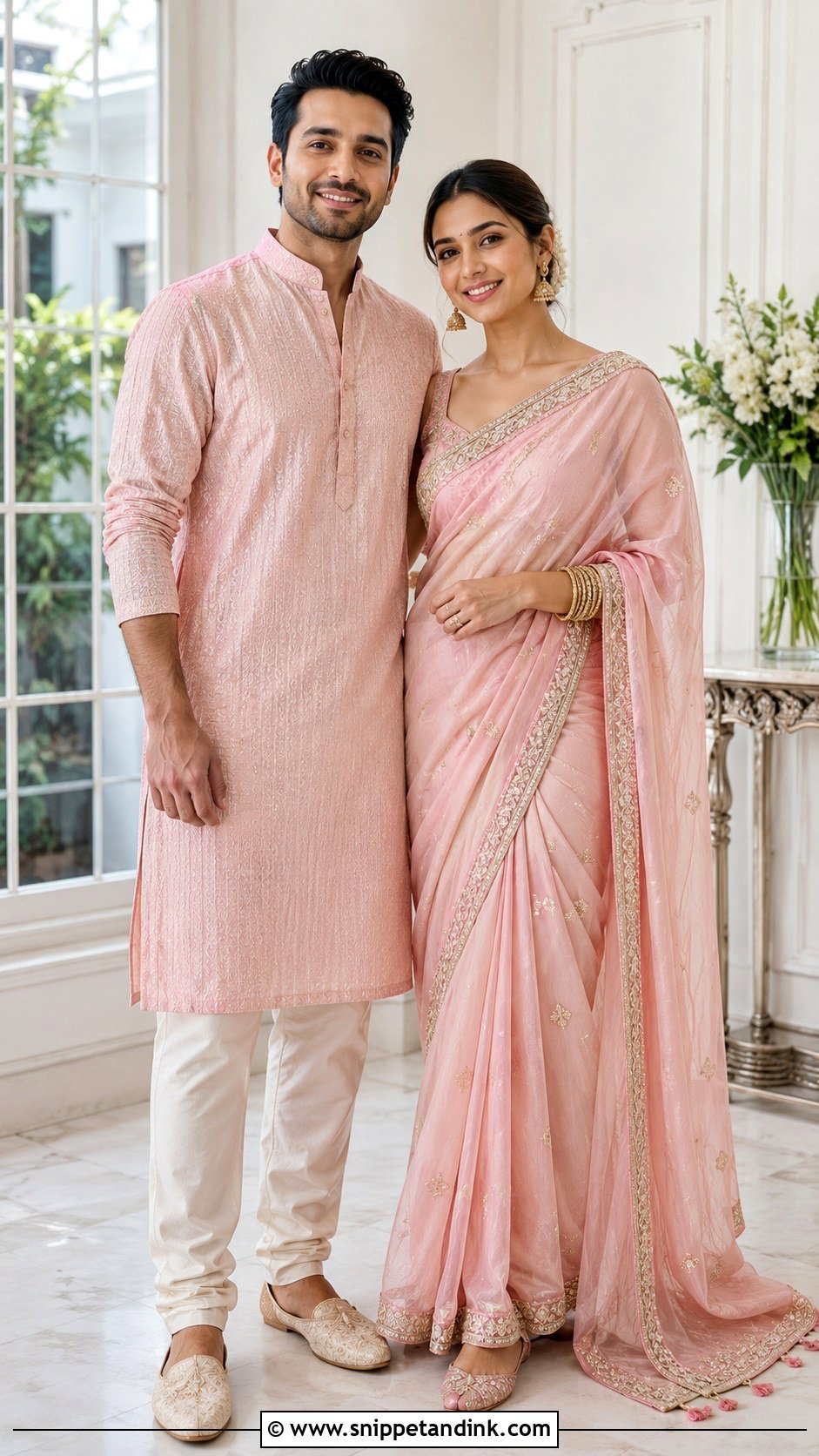
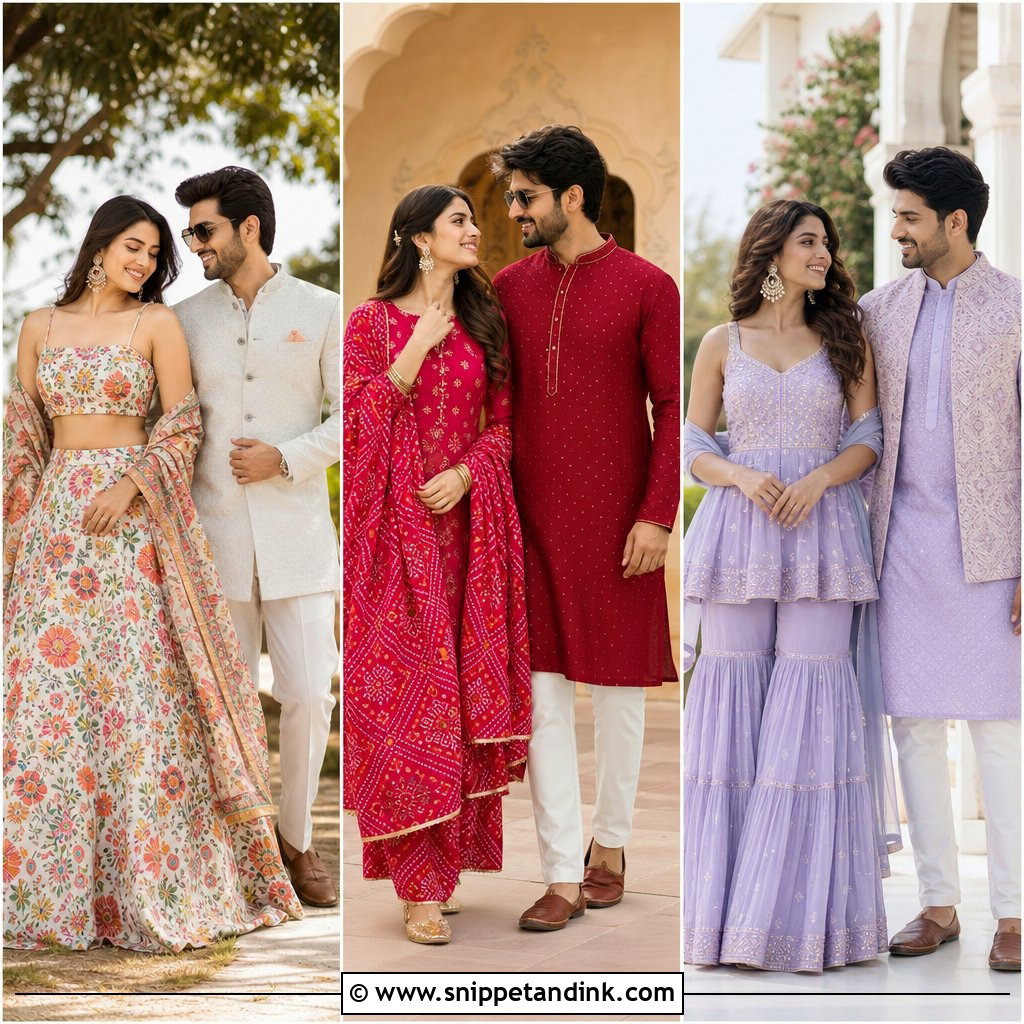
Saree and kurta is the pairing I suggest for a couple’s first coordinated outfit, because it’s forgiving. Her saree can be silk, georgette or cotton; his kurta just needs to sit in the same family, so a blush saree works against blush, ivory or dusty rose. The one thing I check is weight. A heavy silk saree beside a thin cotton kurta looks mismatched even if the colours agree, so match the sheen as well as the shade. Jhumkas and bangles for her, straight pants and mojaris for him, and it’s ready for a puja, a festive dinner or a small family event.
2. Matching Lehenga And Sherwani Outfit
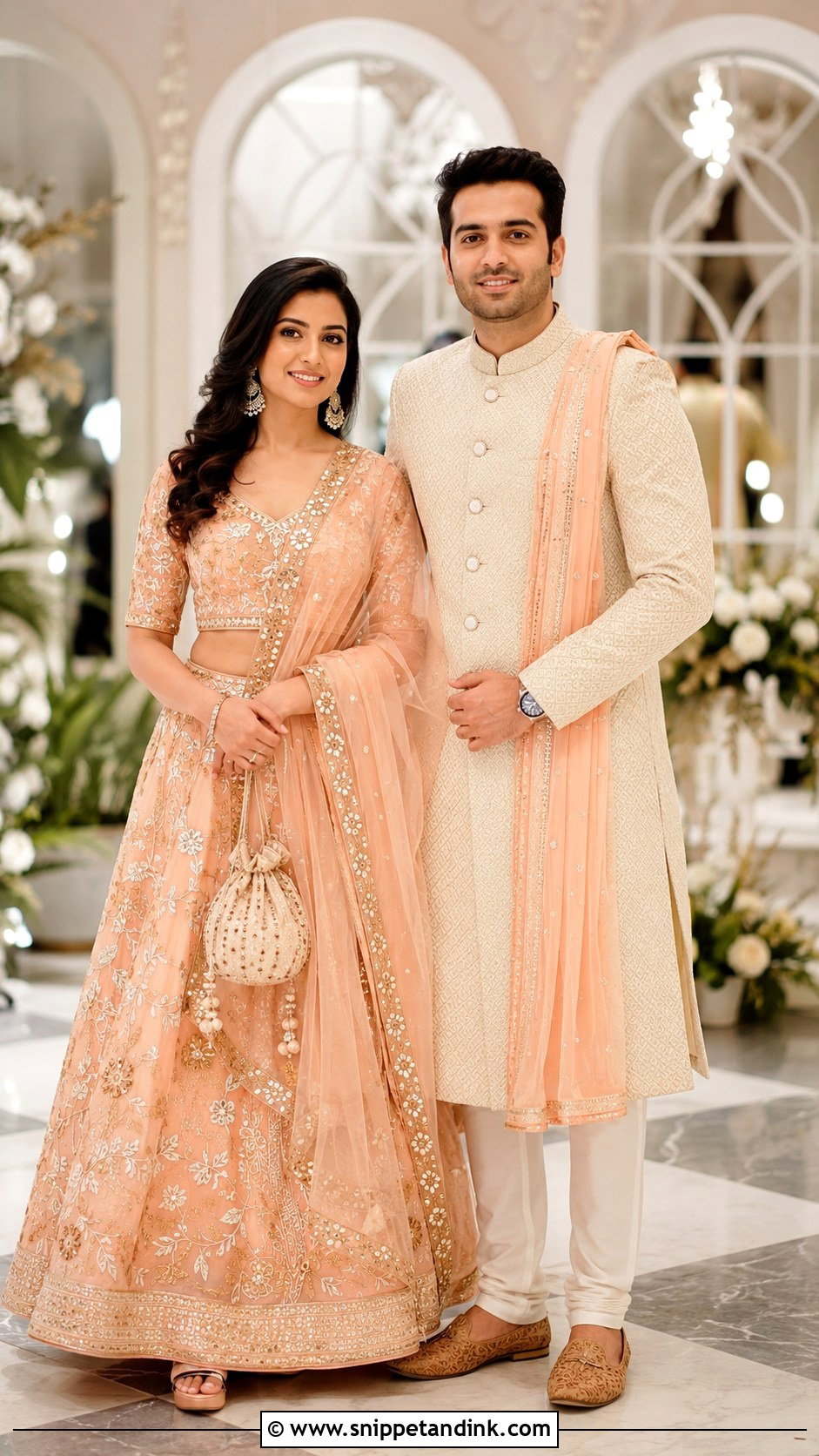
For a dressed-up event, lehenga and sherwani carry the most formality, and the match doesn’t need to be exact. I usually let the sherwani stay neutral and pull one colour from her lehenga into his stole or pocket square: a peach lehenga with an ivory sherwani and peach stole, or wine with beige and a wine pocket square. That keeps him from looking like he’s wearing her outfit. Watch the embroidery levels. If her zari work is dense, his sherwani should be quieter, or the pair competes in portraits.
3. Matching Anarkali And Kurta Outfit
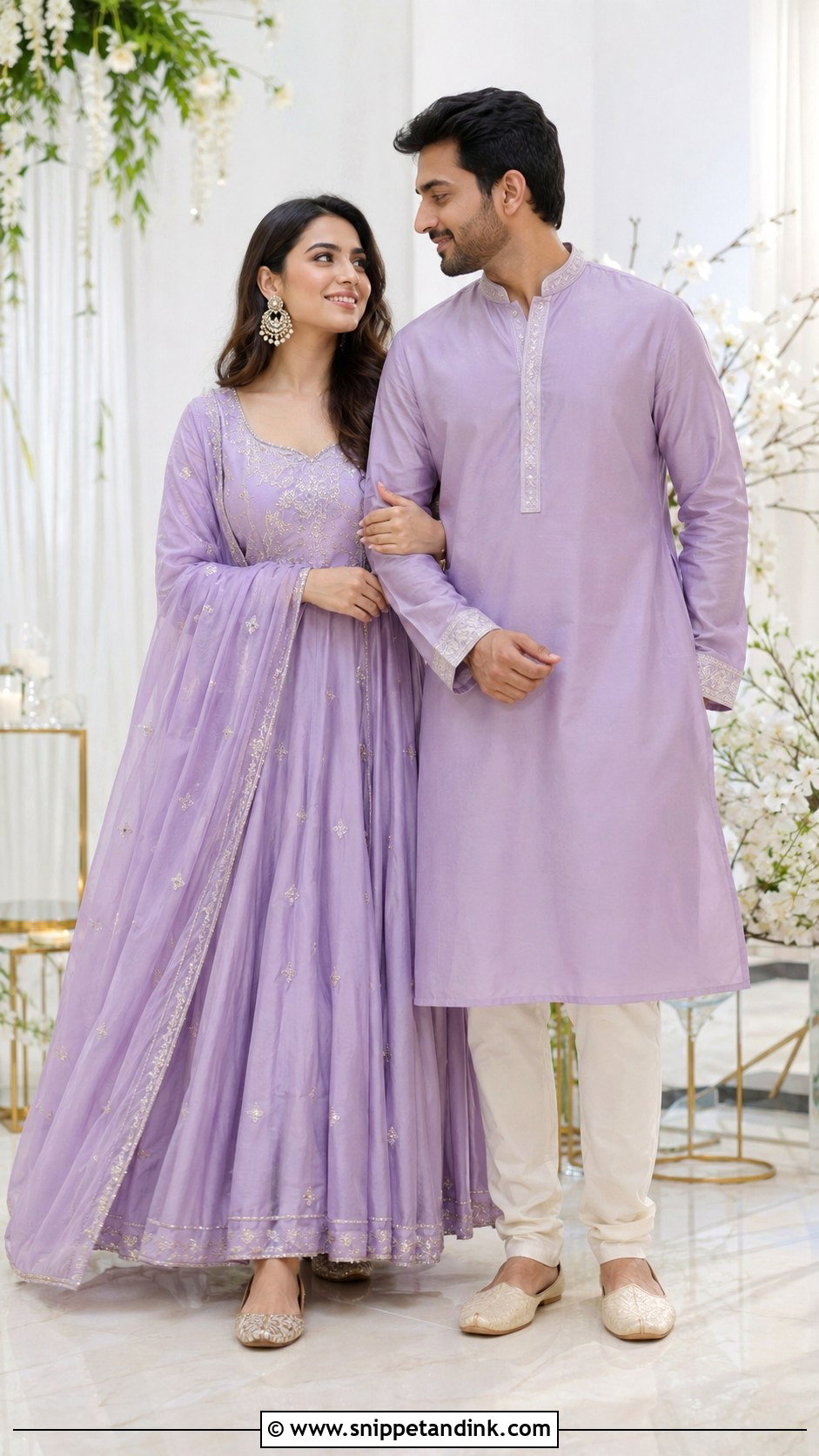
Anarkali and kurta share a long, vertical line, which is why they look so natural standing together. Her Anarkali can be chiffon, silk, organza or cotton; his kurta stays in the same colour family. The easiest way to link them is embroidery placement: if her neckline or hem is worked, repeat a narrow band of the same motif on his collar or cuffs. Flowy Anarkalis do catch on chairs and steps, so a hem that just clears the floor in juttis is worth asking for. Roka events and daytime festivals suit it well.
4. Matching Pastel Indian Couple Outfit
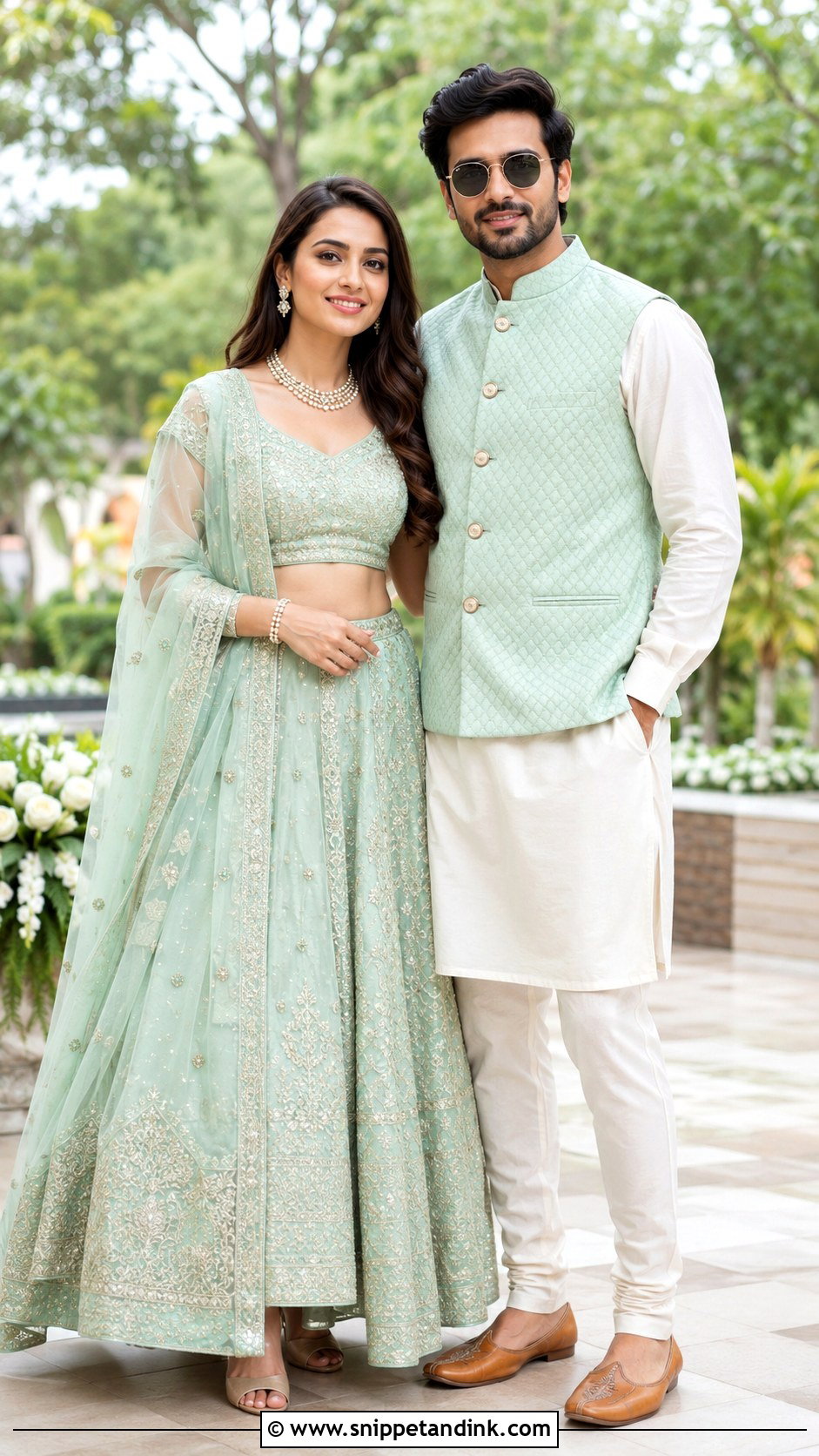
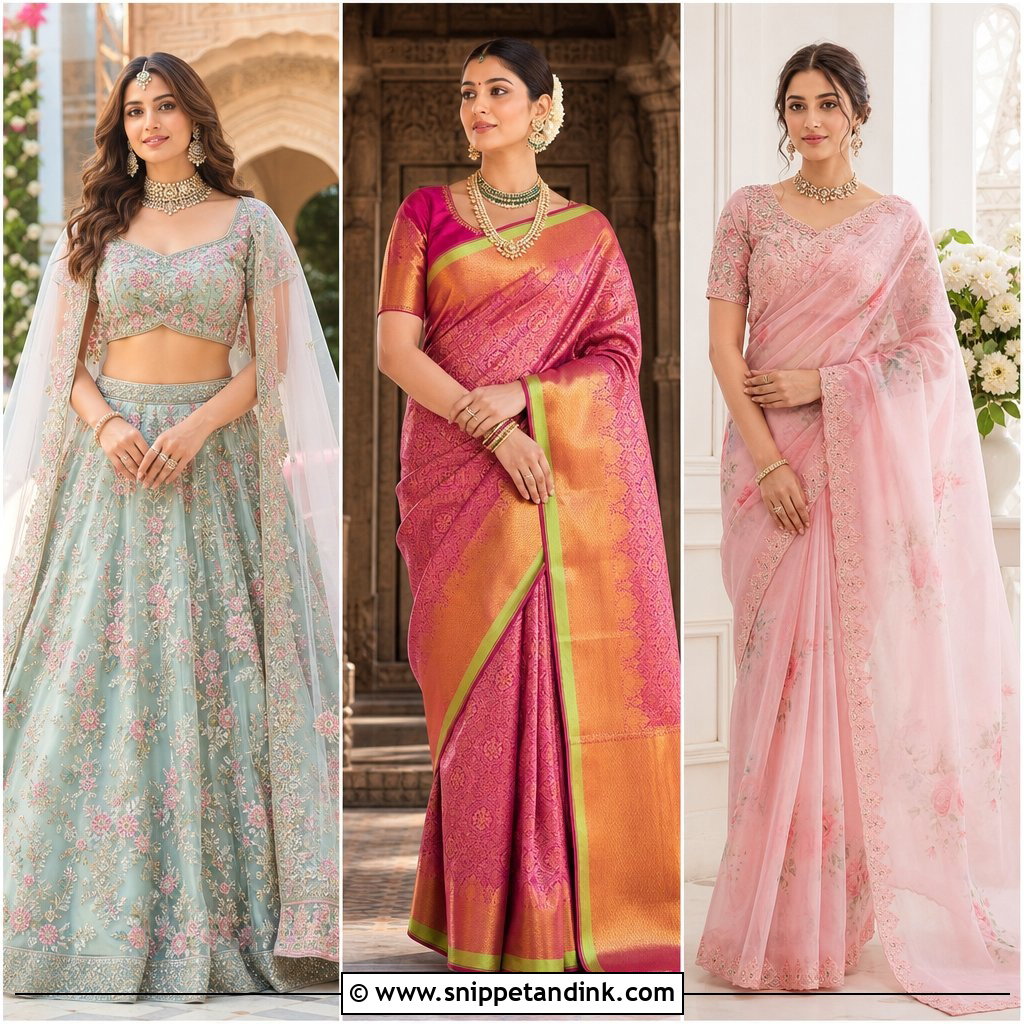
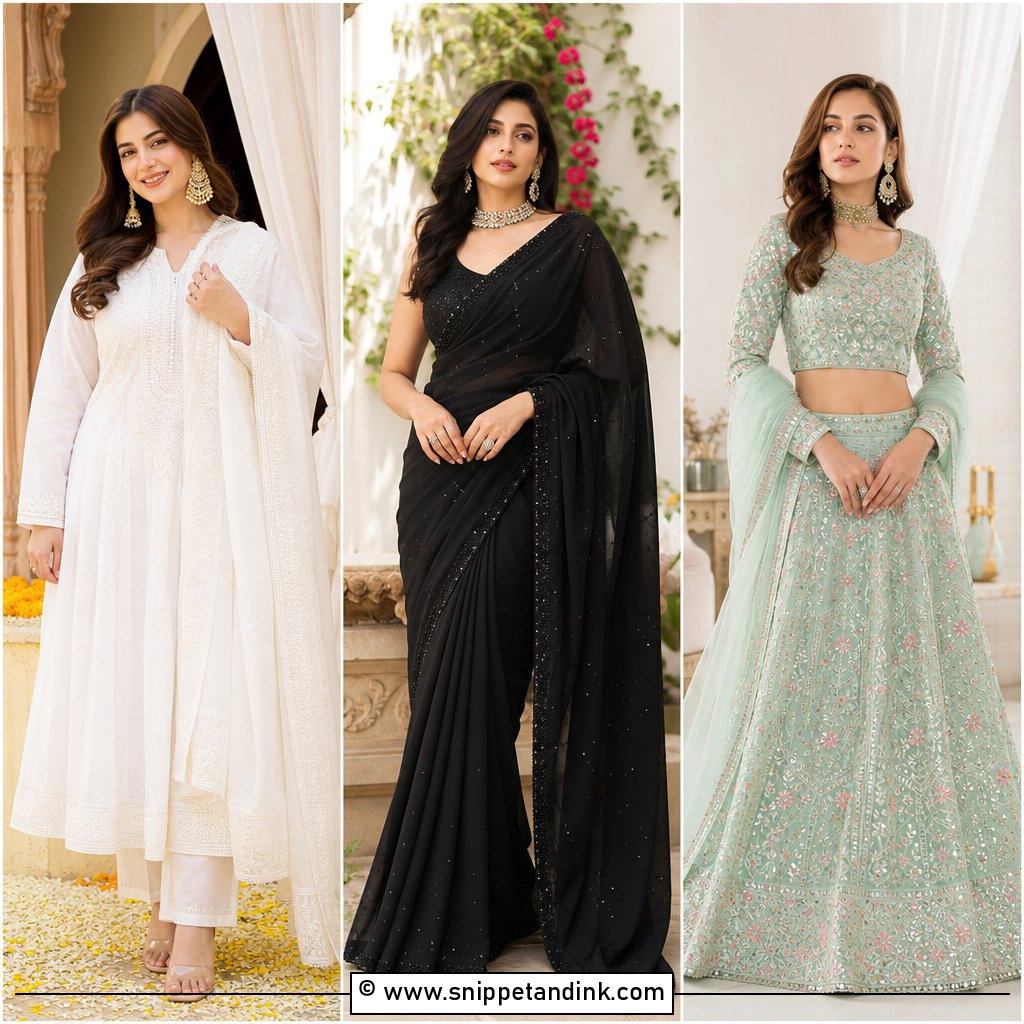
Pastels photograph softly in daylight, but they also wash out under warm indoor bulbs, so I keep them for daytime functions and garden events. Mint, powder blue, lavender and peach are easy for both partners. She might wear a pastel saree or sharara; he can match with a kurta, bandhgala or Nehru jacket. To stop pastels looking too young, I anchor them with ivory, beige or gold rather than adding brighter contrasts. Pearl jewelry and embroidered juttis finish it.
5. Matching Ivory Indian Couple Outfit
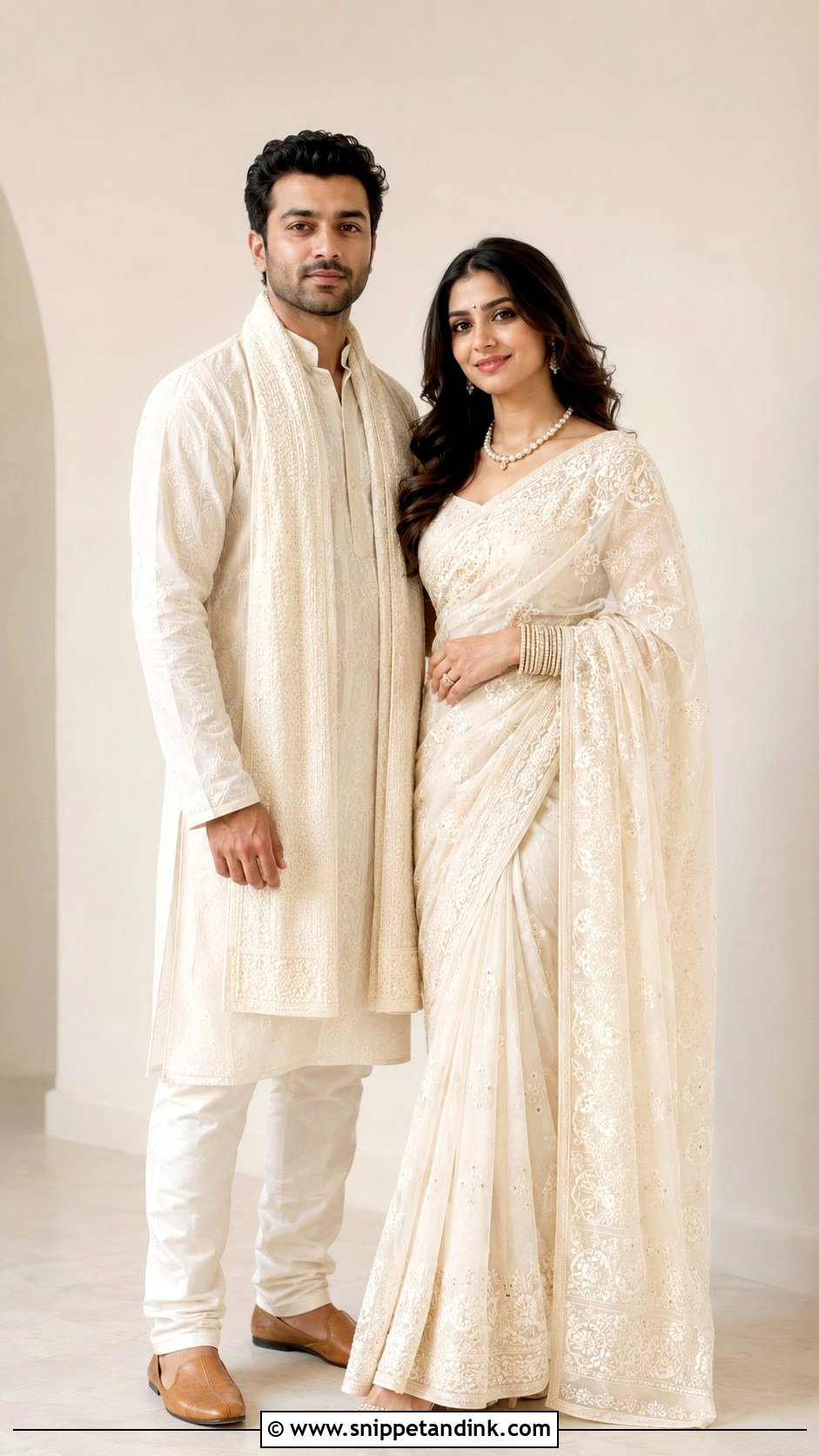
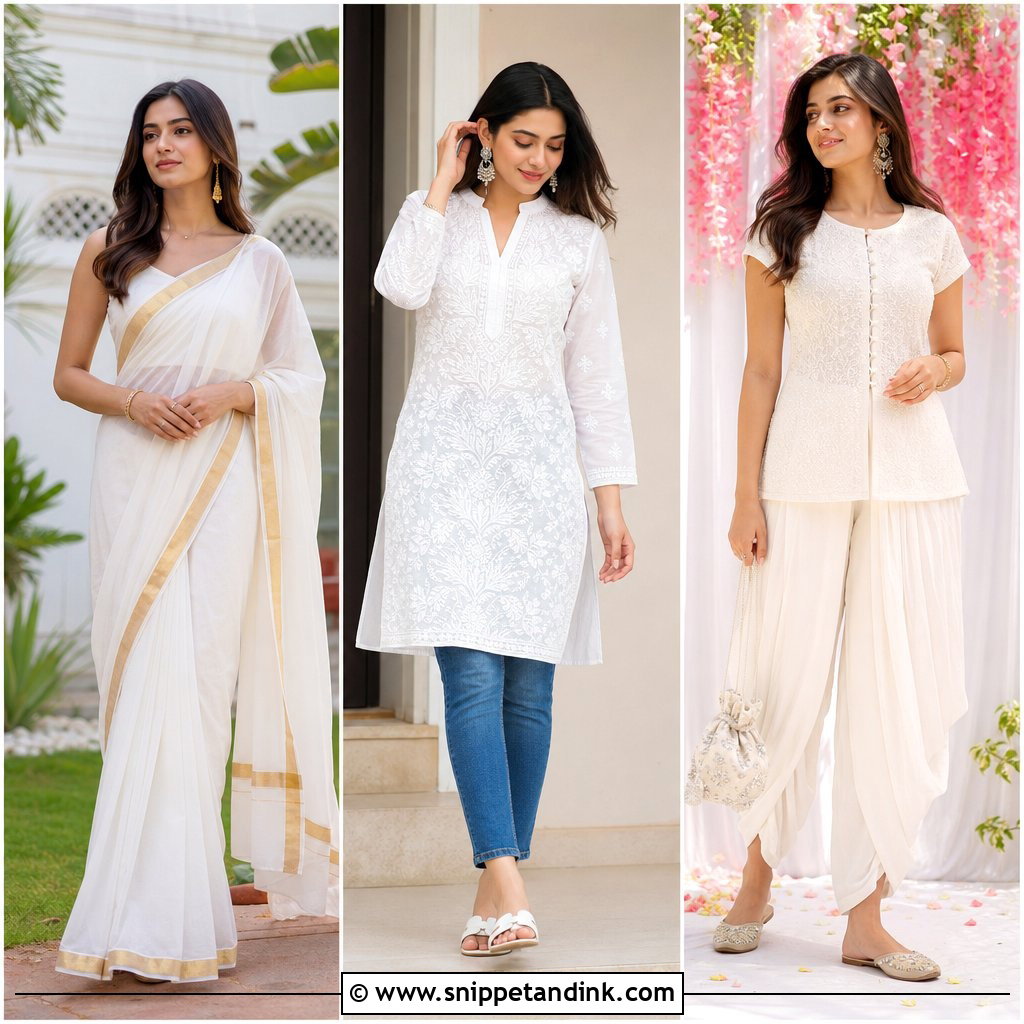
Ivory is the colour most likely to look flat, because two plain ivory outfits side by side lose all definition. The fix is texture: a gold-bordered saree, a chikankari suit or subtle lehenga embroidery for her, and an ivory kurta pajama, sherwani or bandhgala for him with a woven or embroidered fabric. Also check that the two ivories are actually the same. One leaning yellow and one leaning grey shows clearly in photos. Kundan or pearls for her, tan mojaris and a stole for him.
6. Matching Black Indo Western Couple Outfit
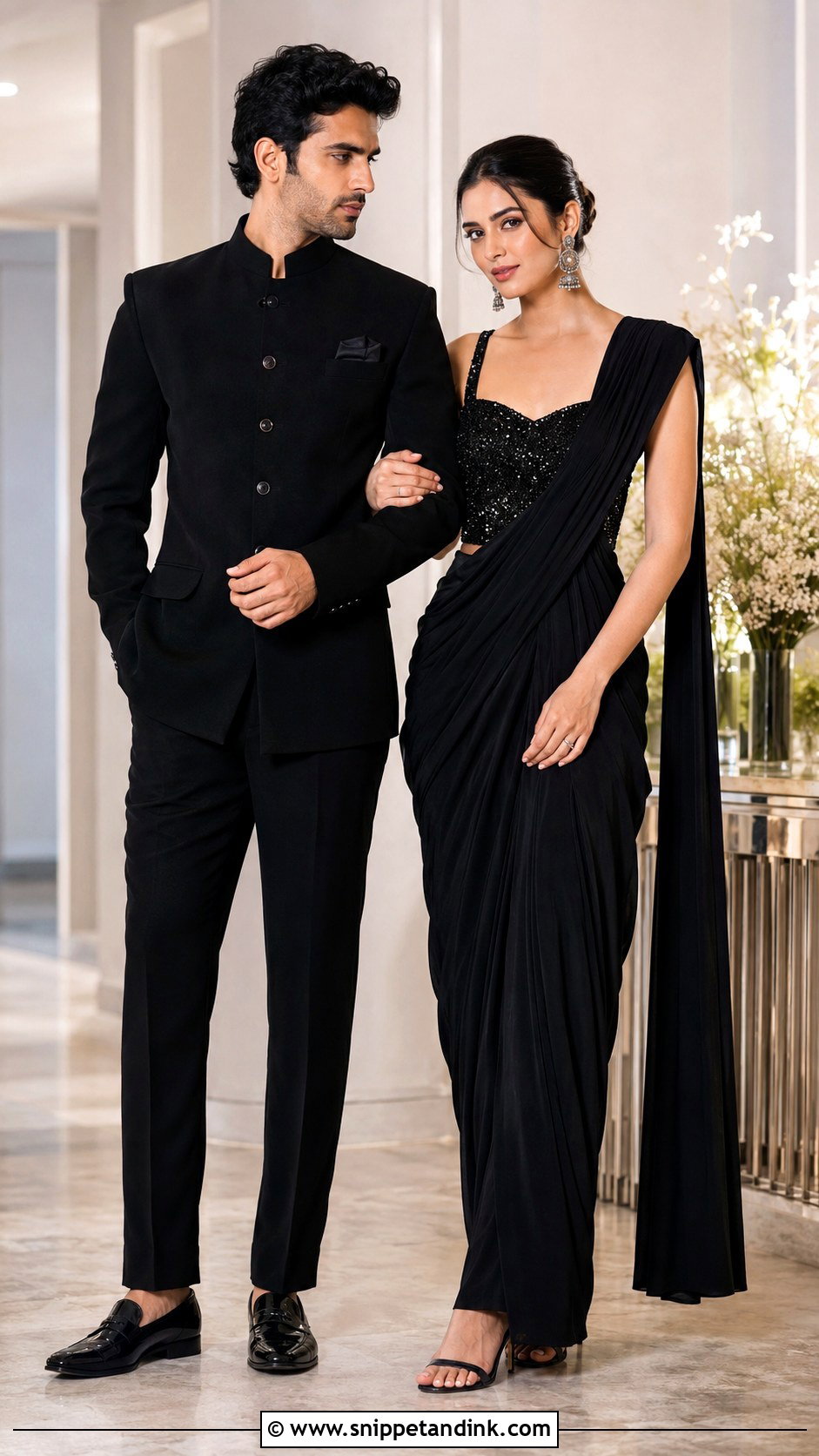
Black needs something reflective or it reads as plain rather than festive. For Indo Western evenings, I pair a black saree gown, draped skirt set or embroidered jumpsuit for her with a black bandhgala or jacket set for him, then add silver, antique gold or mirror work to both. Keep the trim on the same metal so the outfits connect. Statement earrings and sleek heels for her, polished loafers for him. It suits receptions and formal parties more than daytime rituals.
7. Matching Red Saree And Kurta Outfit
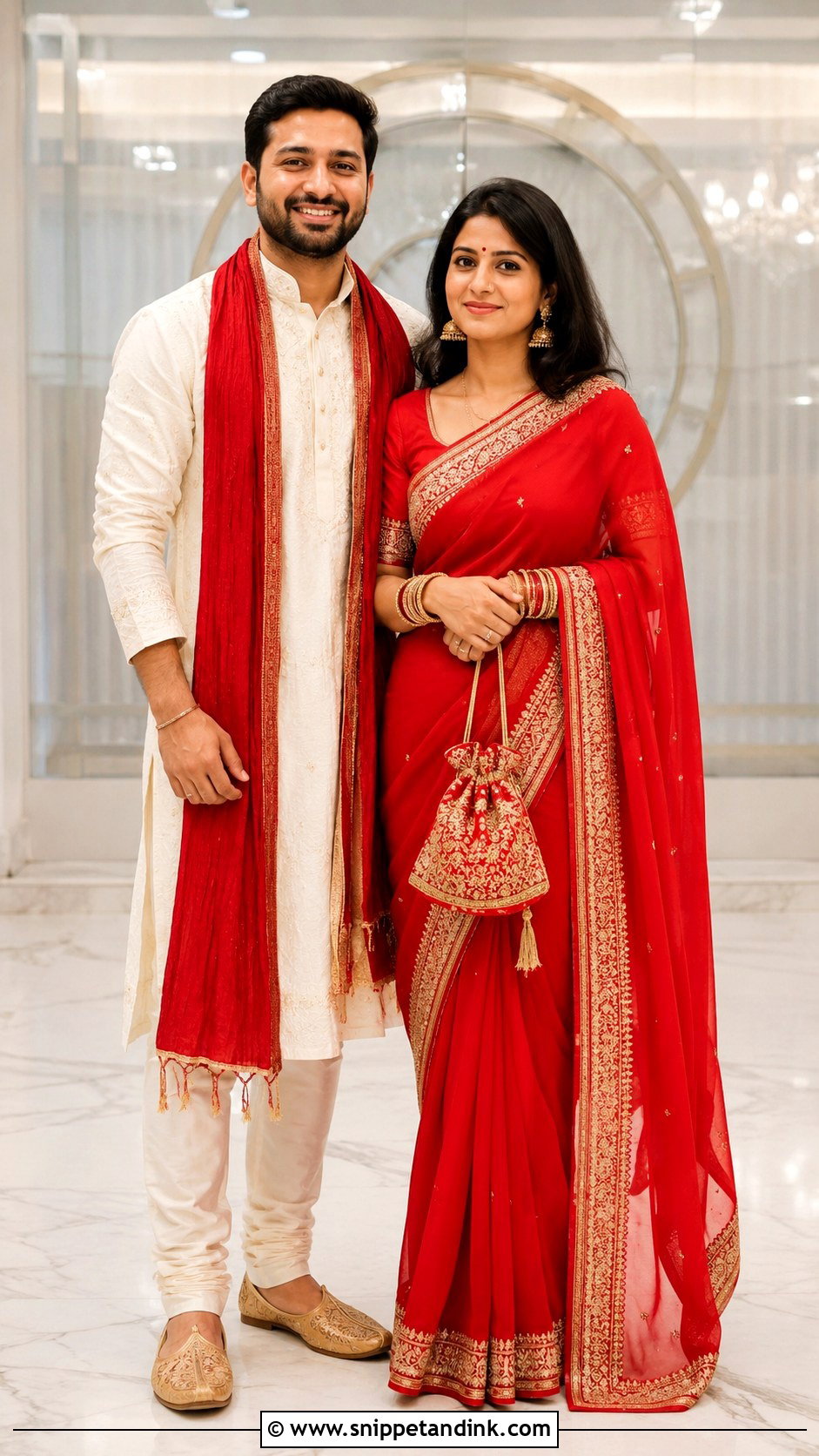
Red is heavy when both partners wear it in full, so I usually split it: a red silk, chiffon or georgette saree for her, and either a red kurta or, more often, an ivory kurta with a red stole for him. That balance keeps photos from turning into a single red block. Red dyes vary widely between fabrics, so compare his and her pieces side by side before the tailor finishes anything. Gold jewelry and a potli bag for her, cream pants and tan mojaris for him.
8. Matching Yellow Haldi Couple Outfit
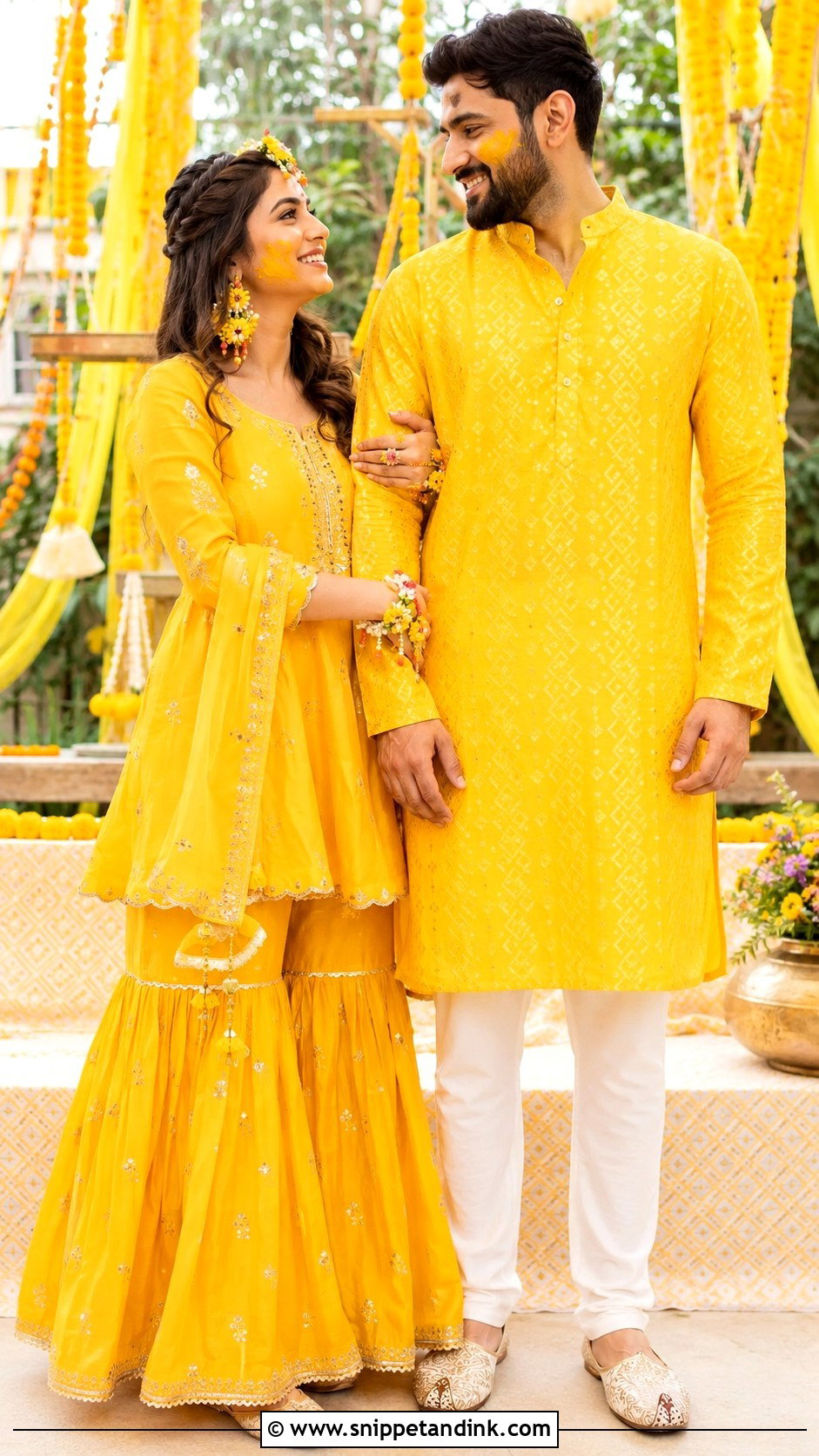
Haldi paste stains, and turmeric on cotton is close to permanent, so a yellow haldi couple outfit should be something you’re happy never to wear again. Cotton, linen and light silk blends are practical because the ceremony is messy and active. She can wear a yellow cotton saree, sharara or kurta set with floral jewelry; he can wear a yellow kurta with white pajamas or an ivory kurta with a yellow Nehru jacket. Keep anything heirloom away from the paste. Marigold and green accents suit the setting.
9. Matching Green Mehendi Couple Outfit
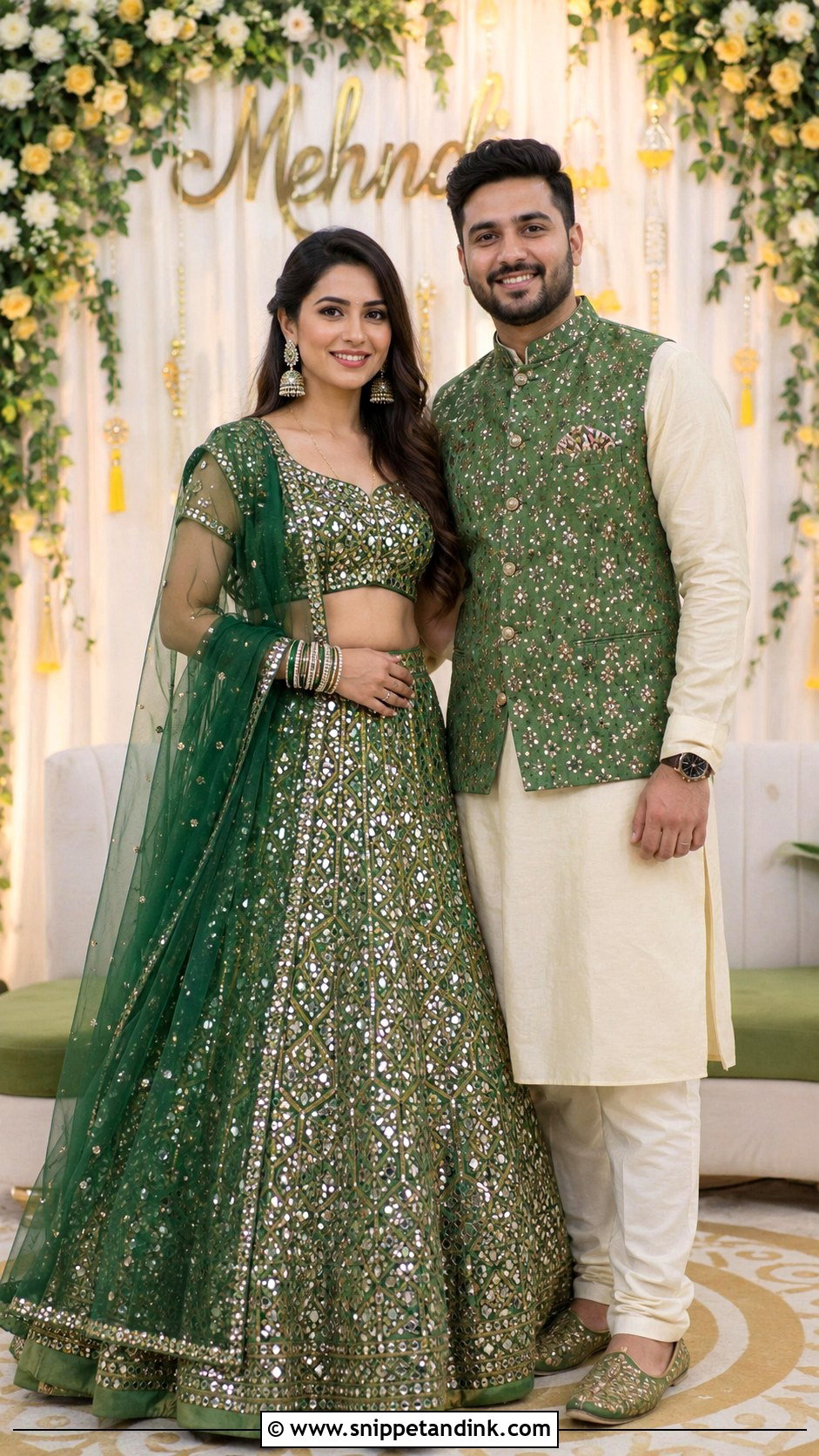
Wet mehendi smudges onto fabric, so I keep the bride’s sleeves short or loose at this function. Green suits the occasion, whether that’s a green lehenga, sharara or Anarkali with mirror work or gota accents for her. He can wear a green kurta, a printed jacket or an ivory kurta with a green stole. Sage, mint or olive give a gentler version than bright emerald. Gold or floral accessories keep it balanced, and he can add mojaris and a pocket square.
10. Matching Blue Indian Couple Outfit
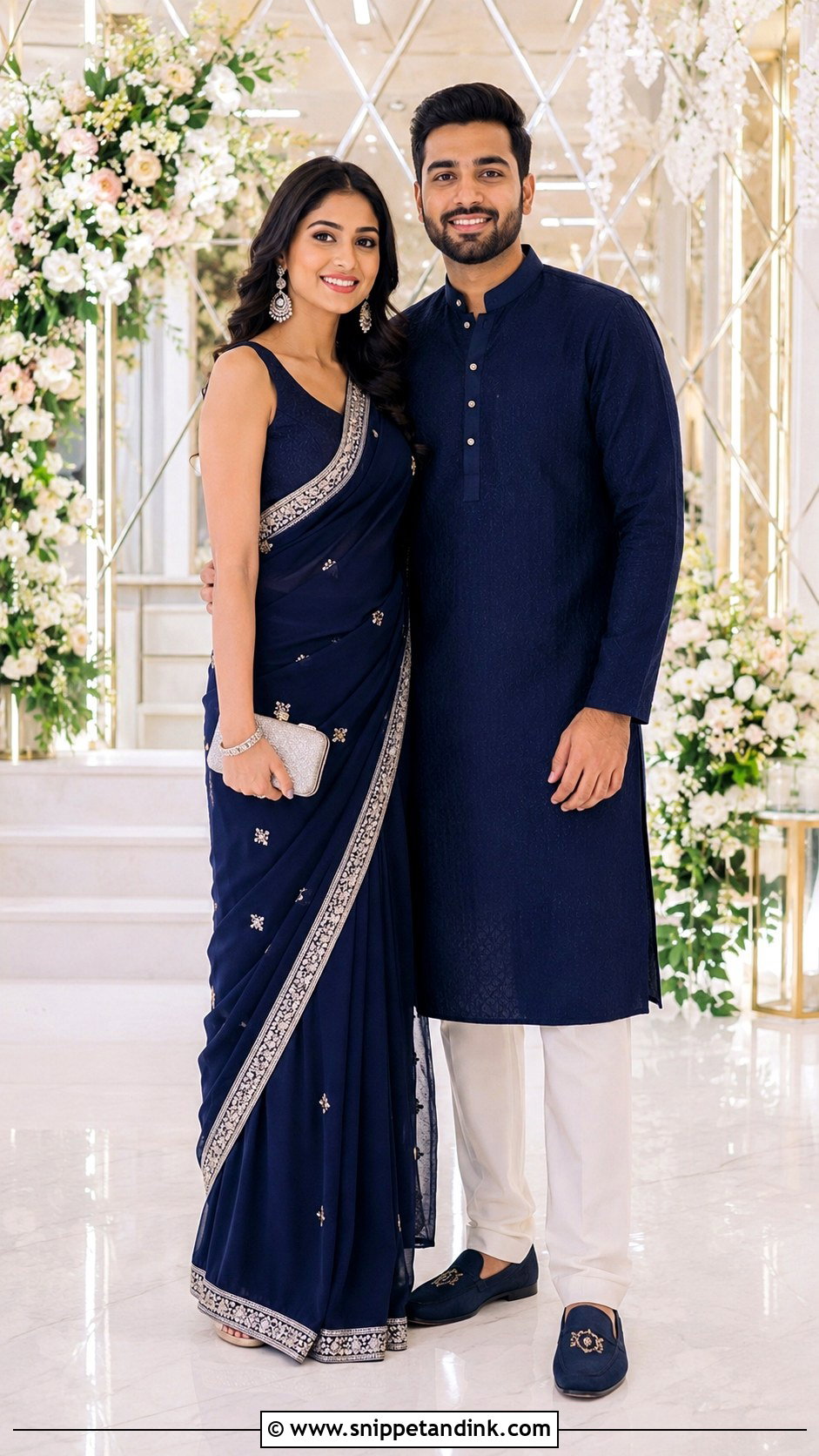
Shade decides the mood of a blue Indian couple outfit: navy reads formal, powder blue soft, royal blue bold. She can wear a blue saree, lehenga or suit set, and he can wear a kurta, sherwani or jacket in the same tone. Two full blue outfits need a break, so I add ivory, silver or beige accessories. The simpler route is to put one partner in solid blue and let the other carry it only through a stole, dupatta or border. It works for engagements, sangeet nights and receptions.
11. Matching White Kurta Couple Outfit
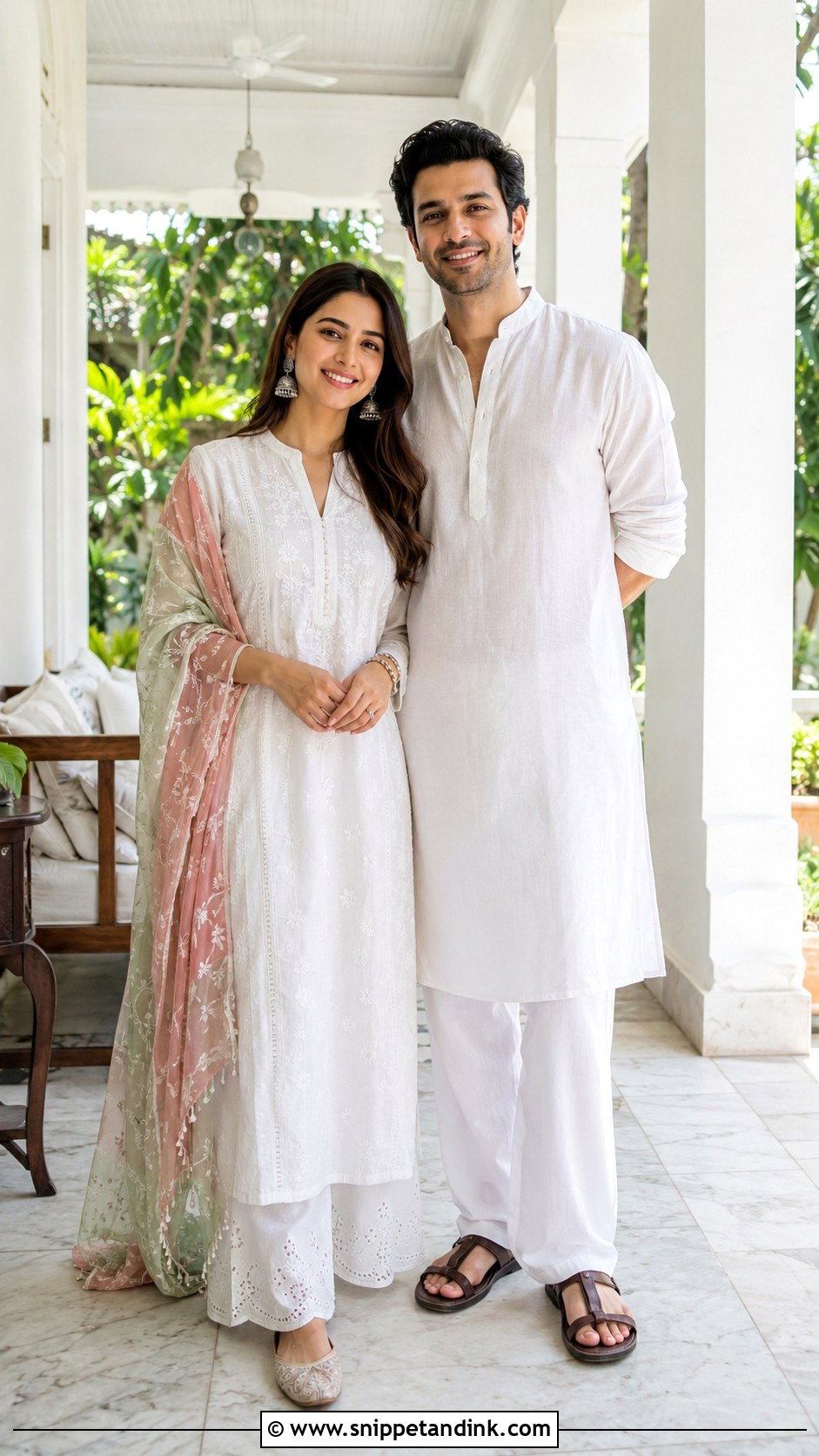
White kurta sets are the coolest option for summer daytime events, and the hardest to keep clean. I pick chikankari or linen for both partners because they breathe, and add colour through a dupatta, stole or juttis in pastel pink, mint or gold. She might wear a white chikankari kurta with palazzos, he a white kurta pajama with subtle embroidery. Sheer white needs a proper slip underneath; check it outdoors in daylight before the day.
12. Matching Floral Indian Couple Outfit
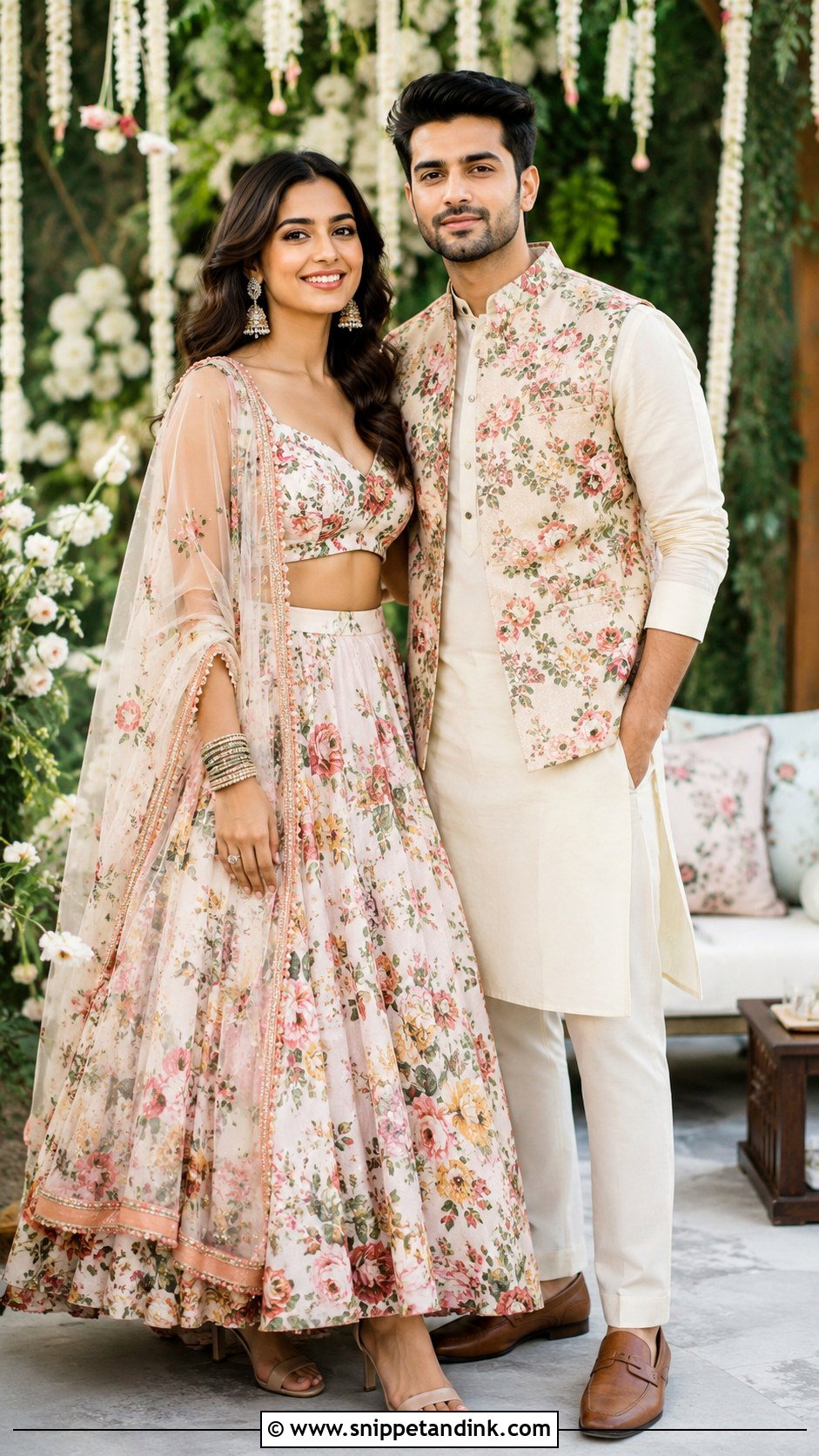
Two florals side by side usually clash. My rule is that only one outfit carries the bigger print. If her lehenga or Anarkali is floral, his jacket uses the same base colour with a much smaller motif, or stays solid. Delicate earrings and juttis for her, neutral pants and plain footwear for him. Mehendi events, spring celebrations and garden functions suit floral pairings best.
13. Matching Mirror Work Couple Outfit
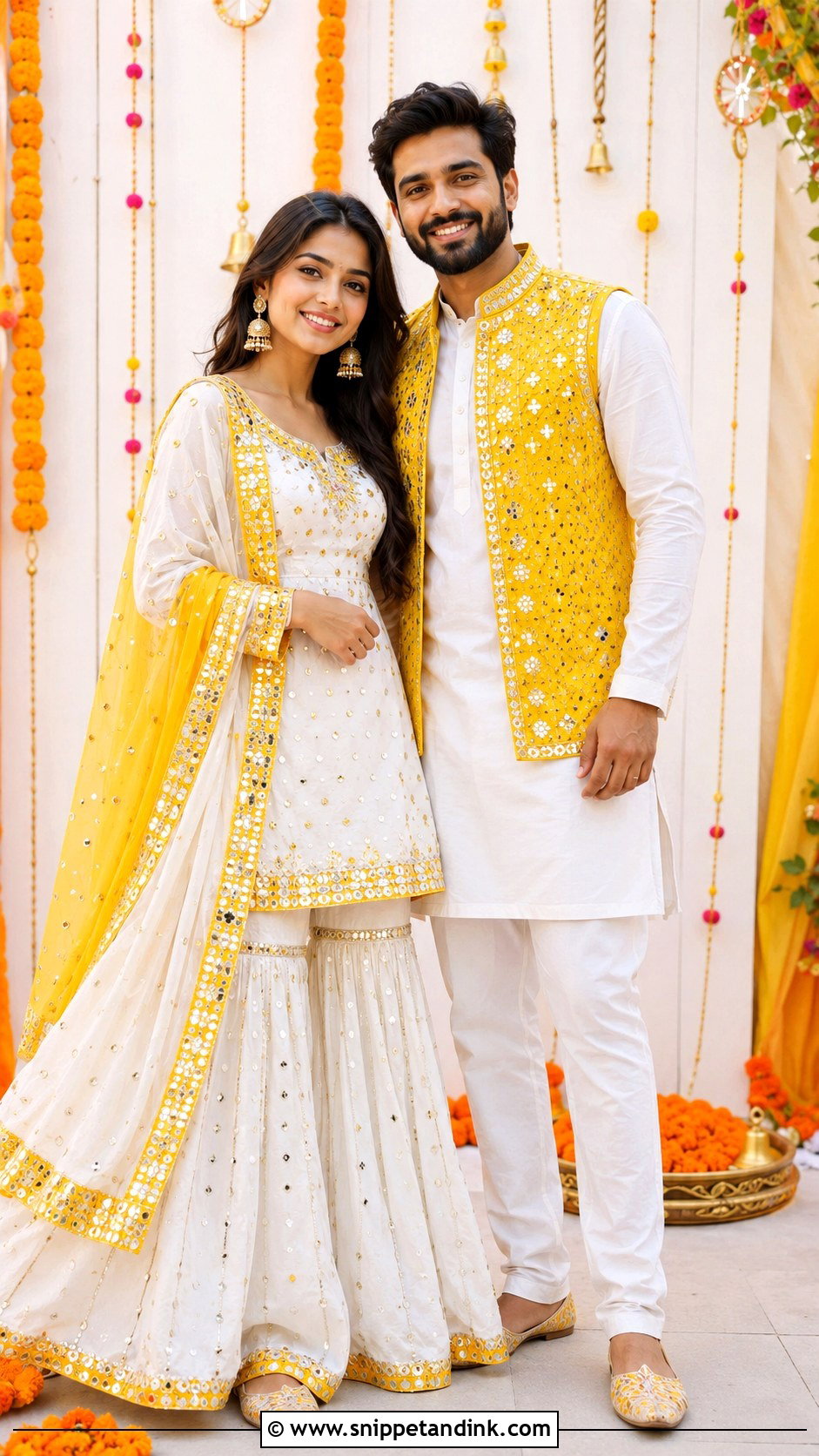
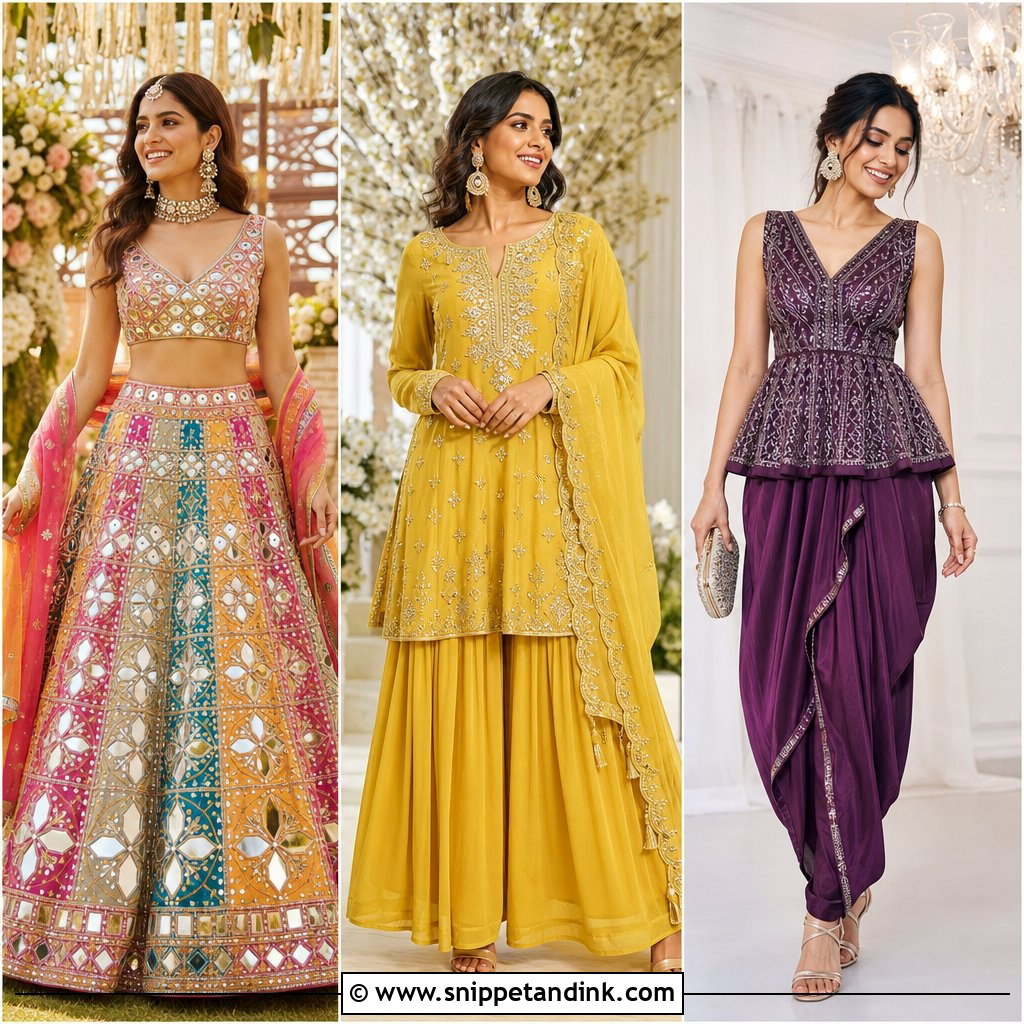
Mirror work bounces light, which makes it festive and also makes it heavy. Real mirror embroidery adds weight to a lehenga skirt and can catch on lace or net in a dupatta. I keep it balanced between partners: if her lehenga, sharara or kurta set carries heavy mirror work, his kurta or jacket gets small accents at the collar, front panel or cuffs. Green, yellow and pink take mirrors especially well. Garba nights and mehendi are where it belongs.
14. Matching Silk Saree And Dhoti Kurta Outfit
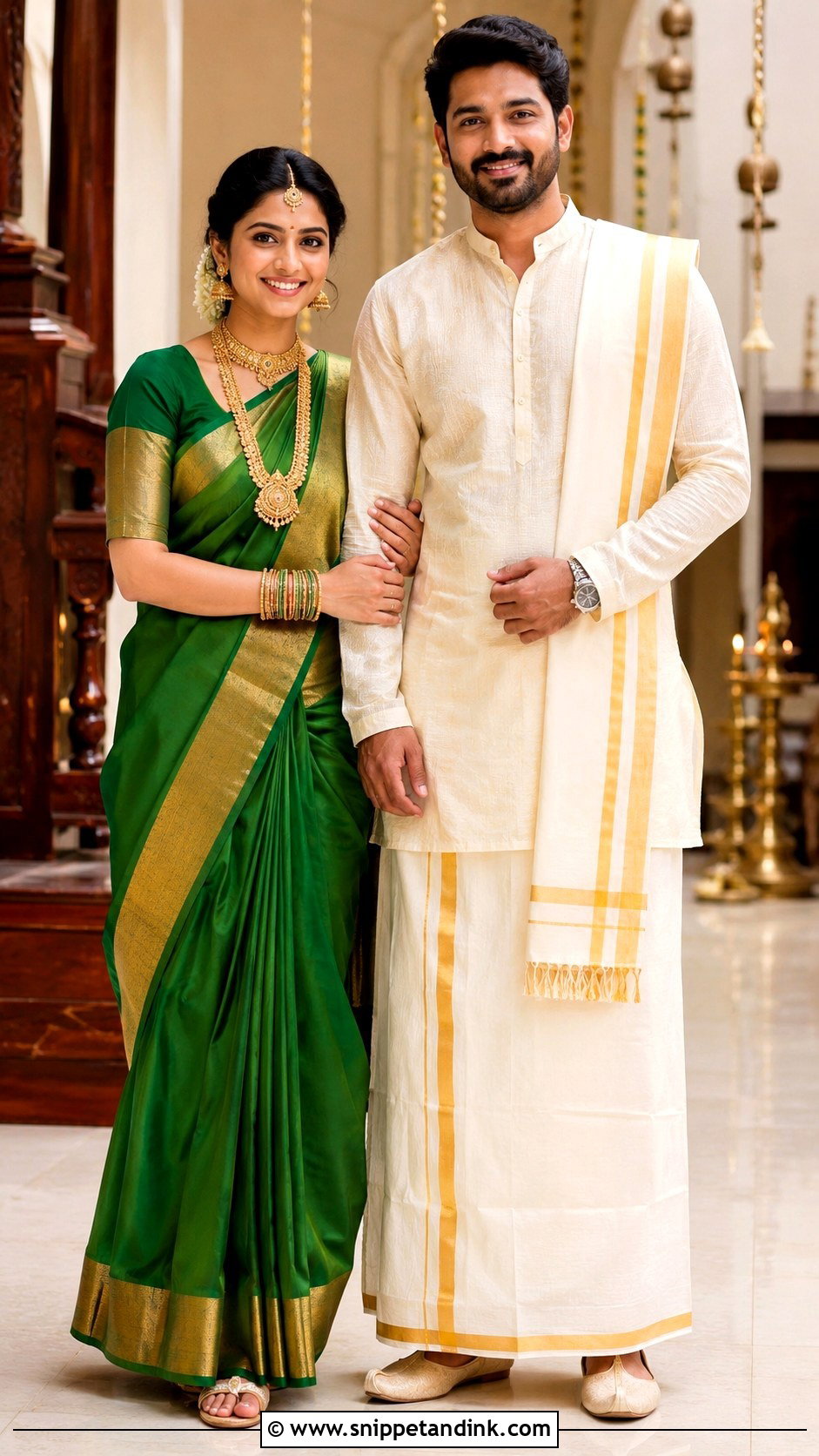
Silk saree and dhoti kurta suits South Indian ceremonies and morning rituals. A gold-bordered saree in gold, green, red, pink or cream pairs naturally with an ivory kurta and gold-bordered dhoti, and an angavastram ties the two together. Pure silk sarees with heavy zari borders are weighty, so allow time for pleating and pinning before the muhurtham. Temple jewelry, jasmine in the hair and traditional sandals complete her look. It reads respectful and rooted for family rituals and formal portraits.
15. Matching Kurta And Sharara Outfit
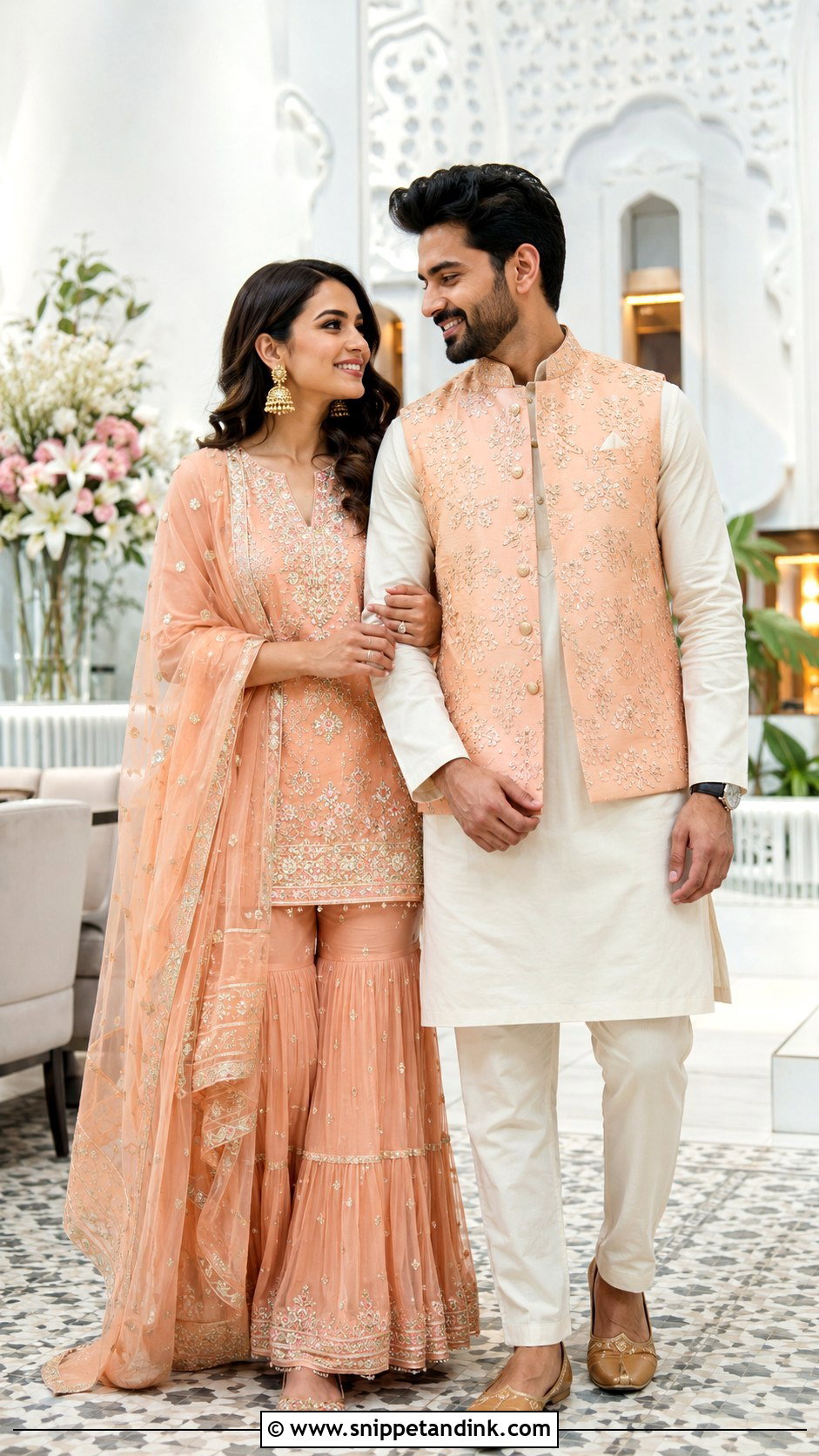
Shararas give real freedom of movement, which is why I suggest them for mehendi and engagement lunches where you’ll be sitting on floor cushions. She wears a sharara with a short or long kurta and dupatta; he coordinates with a kurta in the same colour or an ivory kurta with a matching jacket. If her sharara is embroidered, repeat that detail lightly on his piece. Pastels, yellows, greens and jewel tones all suit this pairing. Statement earrings finish it.
16. Matching Nehru Jacket Couple Outfit
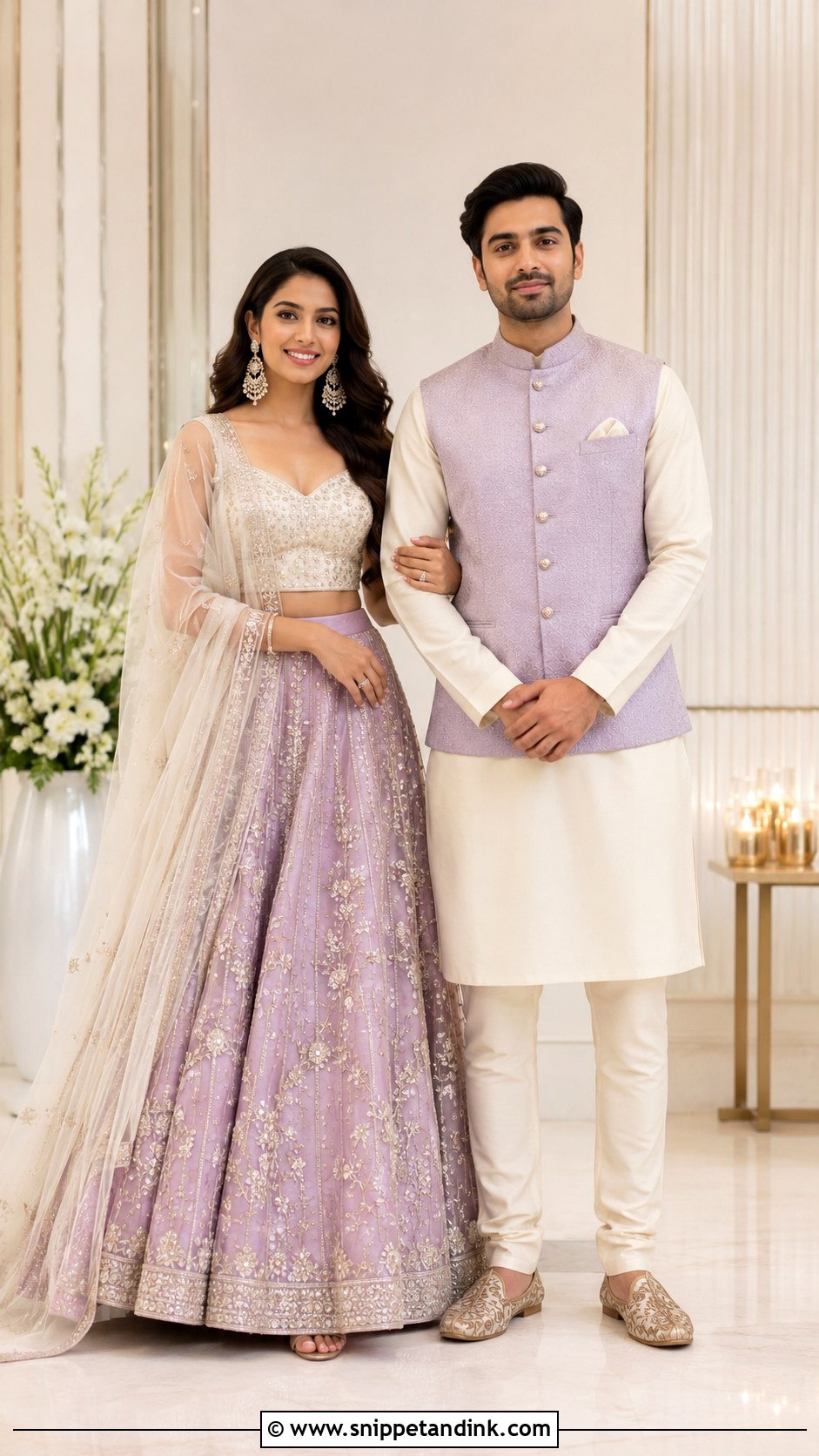
A Nehru jacket couple outfit is how I get a groom to match without wearing the bride’s colour from head to toe. He stays in a neutral kurta, and only the jacket takes her shade: a lavender lehenga with an ivory kurta and lavender jacket, for example. Have the jacket made from a remnant of her fabric if the tailor can, since bought jackets rarely match a dyed lehenga exactly. Printed or textured jackets add interest. It works for roka ceremonies, festivals and guest outfits.
17. Matching Bandhgala And Lehenga Outfit
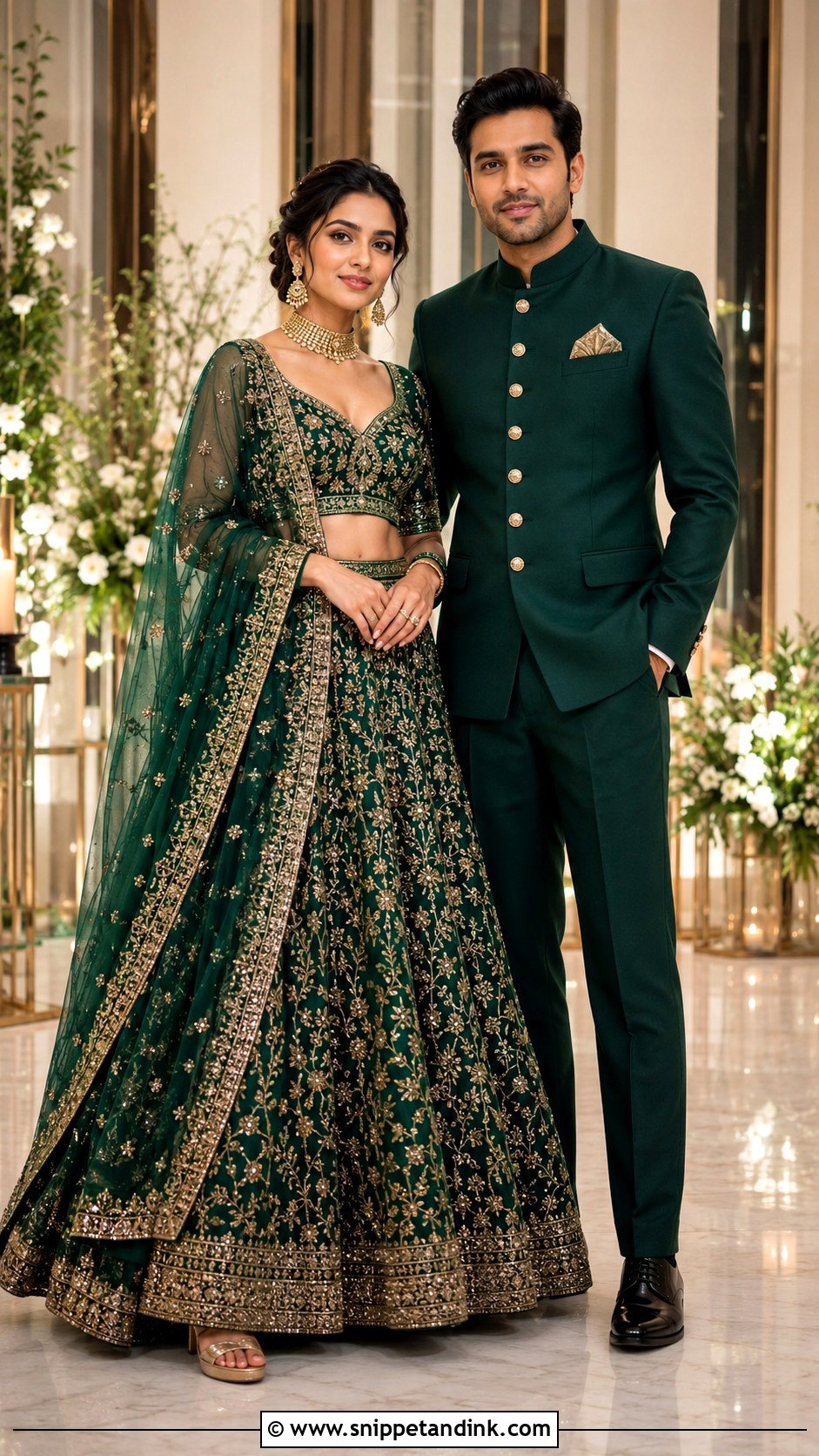
Bandhgalas are structured and warm, which suits evening receptions and cooler months more than a summer afternoon. She wears a lehenga with blouse and dupatta; he wears a bandhgala in her shade or a neutral that picks it up through buttons, embroidery or a pocket square. Emerald, maroon, navy and champagne all carry well. Get the bandhgala fitted at the collar; a closed neck that’s too tight is miserable by the third hour. A choker or long earrings for her, polished formal shoes for him.
18. Matching Printed Kurta Couple Outfit
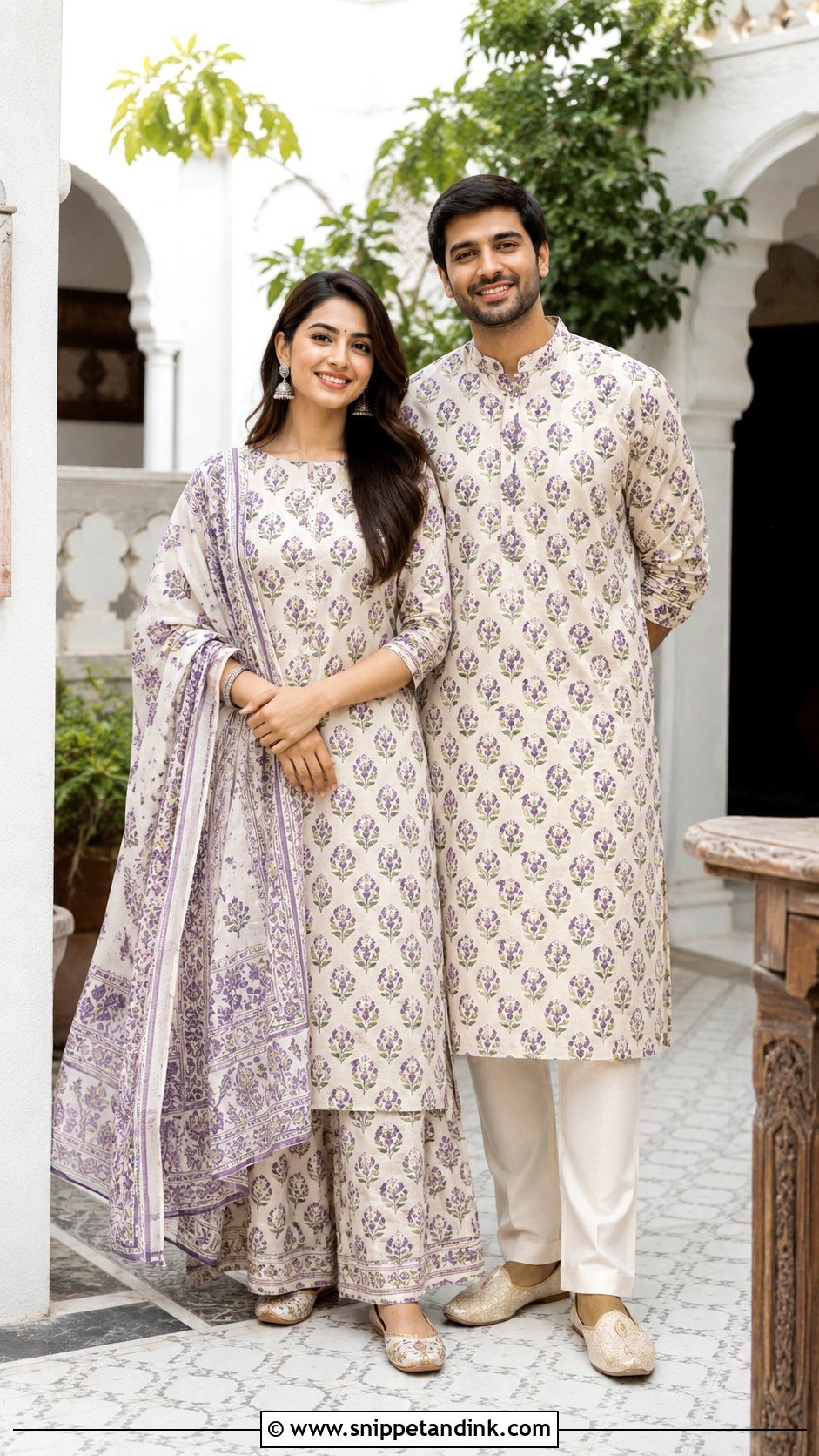
Same print, different cut. That’s how printed kurtas stay coordinated without looking like a uniform. She can wear a printed kurta with palazzos and dupatta; he wears a straight printed kurta with solid pajamas. Block prints, paisley, ikat and small geometrics all suit it. Buy both from the same batch of fabric if you can, as hand-block prints vary in colour between runs. Casual festivals, family lunches and travel suit this pairing.
19. Matching Maroon Indian Couple Outfit
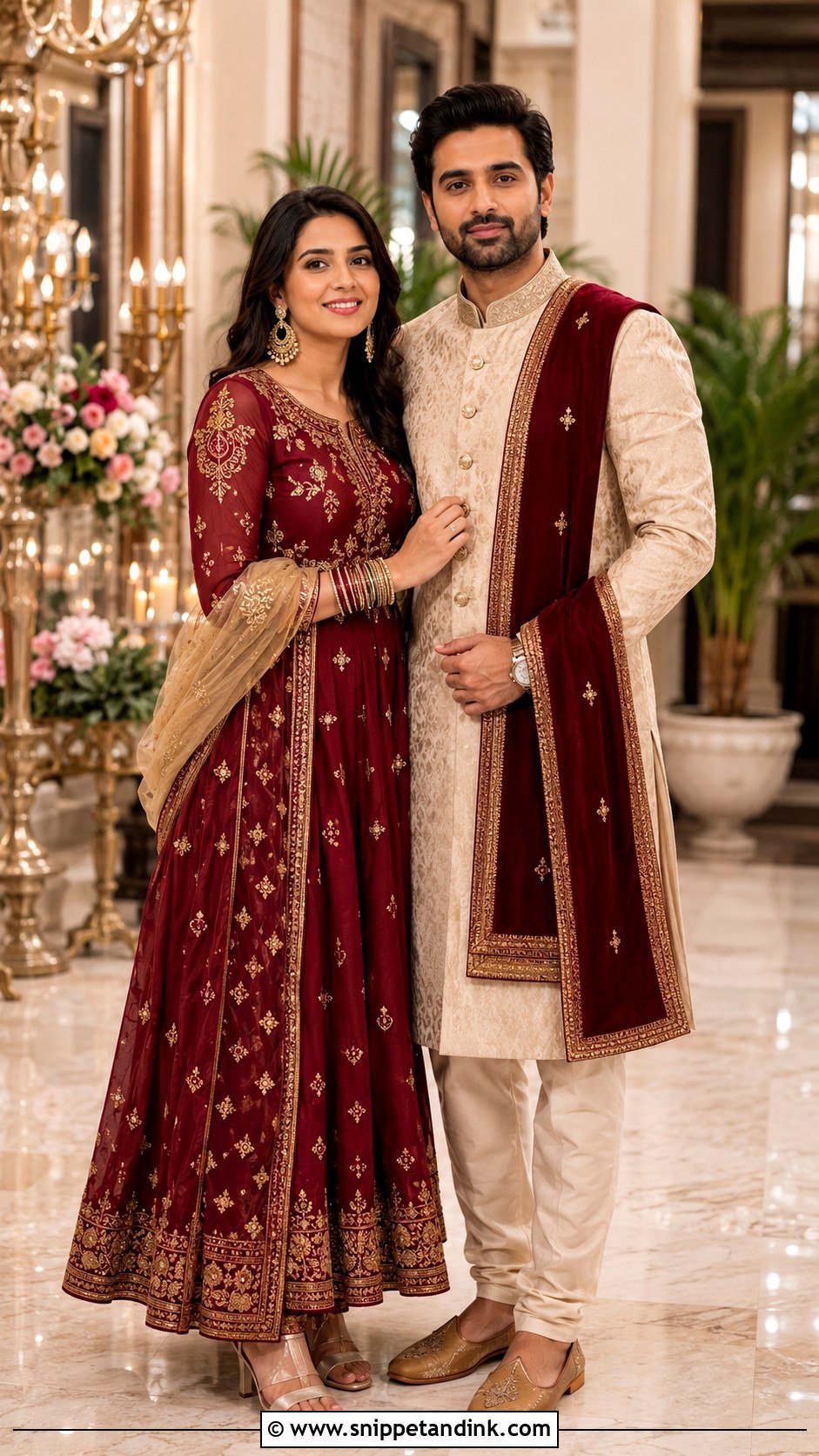
Maroon gives you the richness of red without its brightness, and it holds up well under evening light. She can wear a maroon saree, lehenga or Anarkali with gold or antique embroidery; he can match with a maroon kurta, a maroon stole or a beige sherwani with maroon accents. Maroon velvet and maroon silk look very different, so decide on the fabric family together. Kundan earrings and a potli bag for her, tan or brown mojaris for him.

20. Matching Peach Indian Couple Outfit
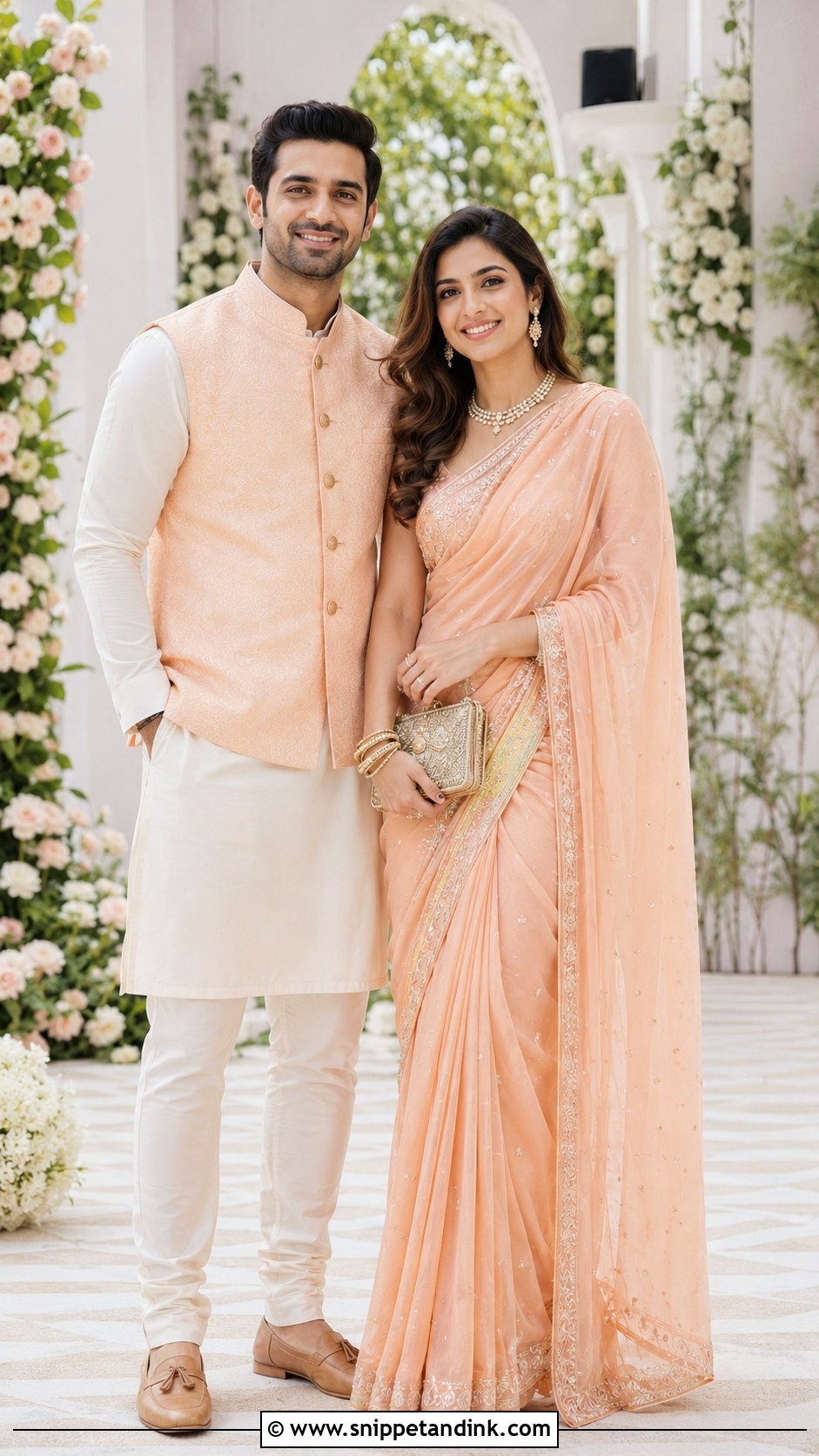
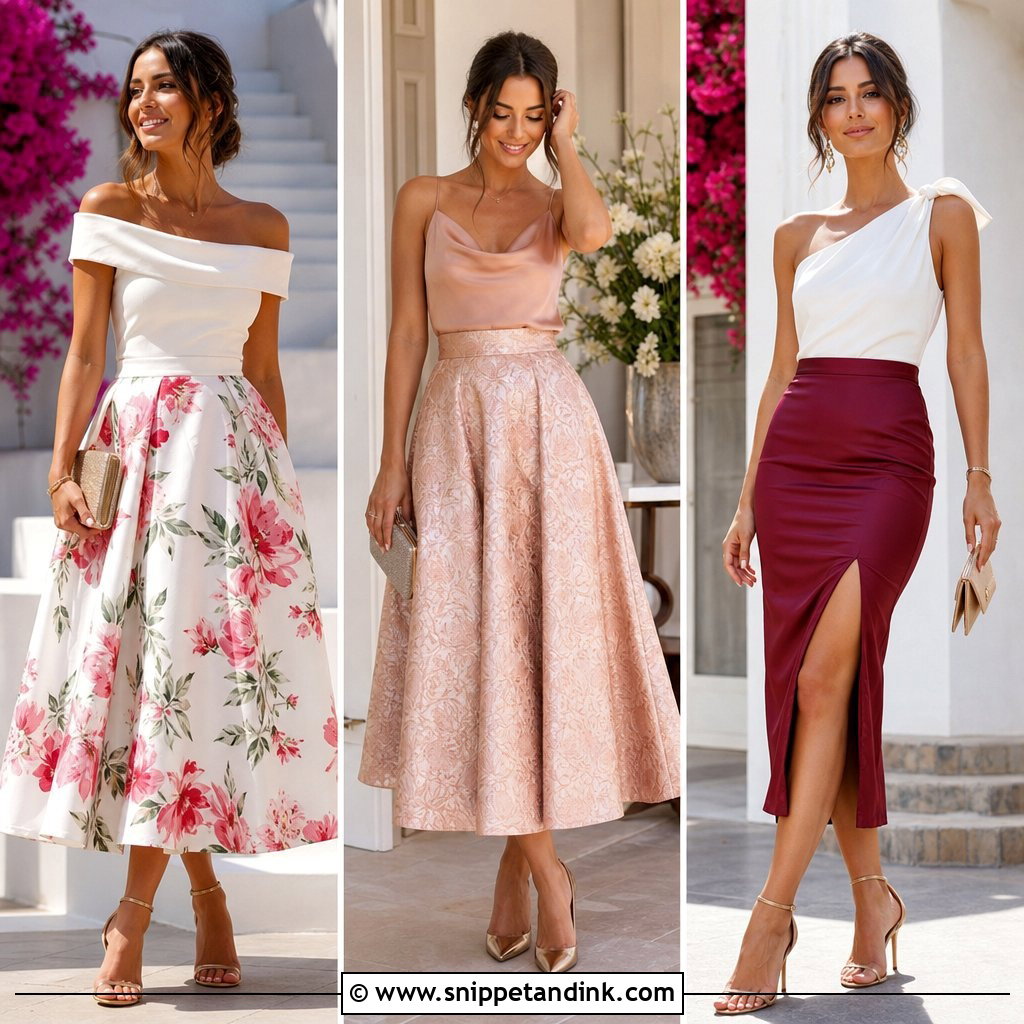
Peach is my quiet favourite for daytime engagements because it flatters most skin tones without the sweetness of pink. She might choose a peach lehenga, saree or Anarkali with light gold, pearl or thread work; he can wear a peach kurta, an ivory kurta with a peach jacket, or a beige sherwani with a peach stole. Keep makeup and jewelry fresh: pearls, gold bangles, embroidered juttis. Cream pants and tan footwear finish his look.
21. Matching Gold Indian Couple Outfit
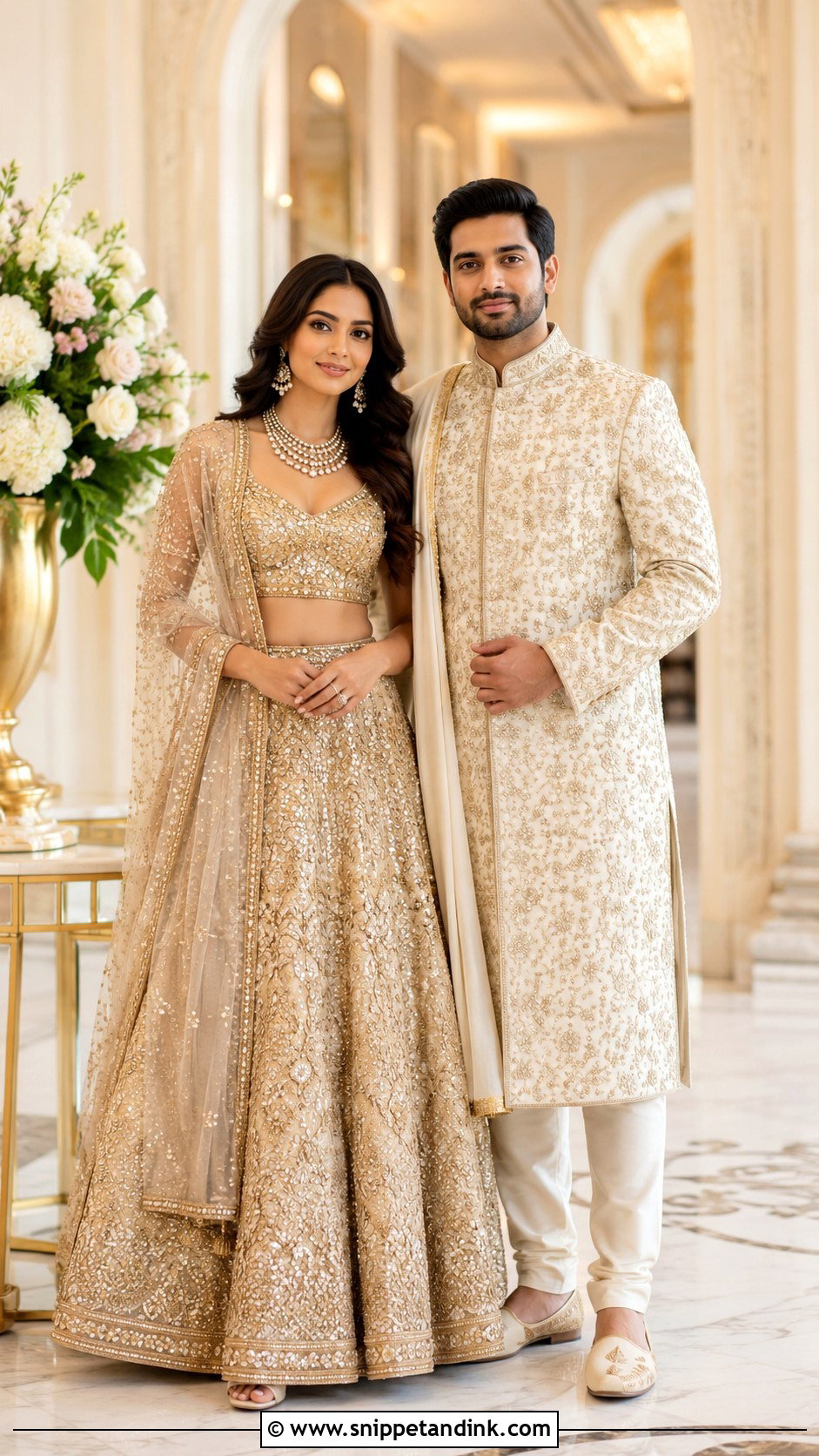
Gold works when both outfits sit at one shine level. A bright metallic lehenga next to a matte gold kurta looks accidental, so I pick either all matte, all champagne or all antique, then add pearl or kundan jewelry. She can wear a gold saree, champagne lehenga or beige-gold Anarkali; he can wear an ivory sherwani, gold kurta or beige bandhgala with metallic details. Receptions and festive evenings suit it.
22. Matching Cotton Kurta Couple Outfit
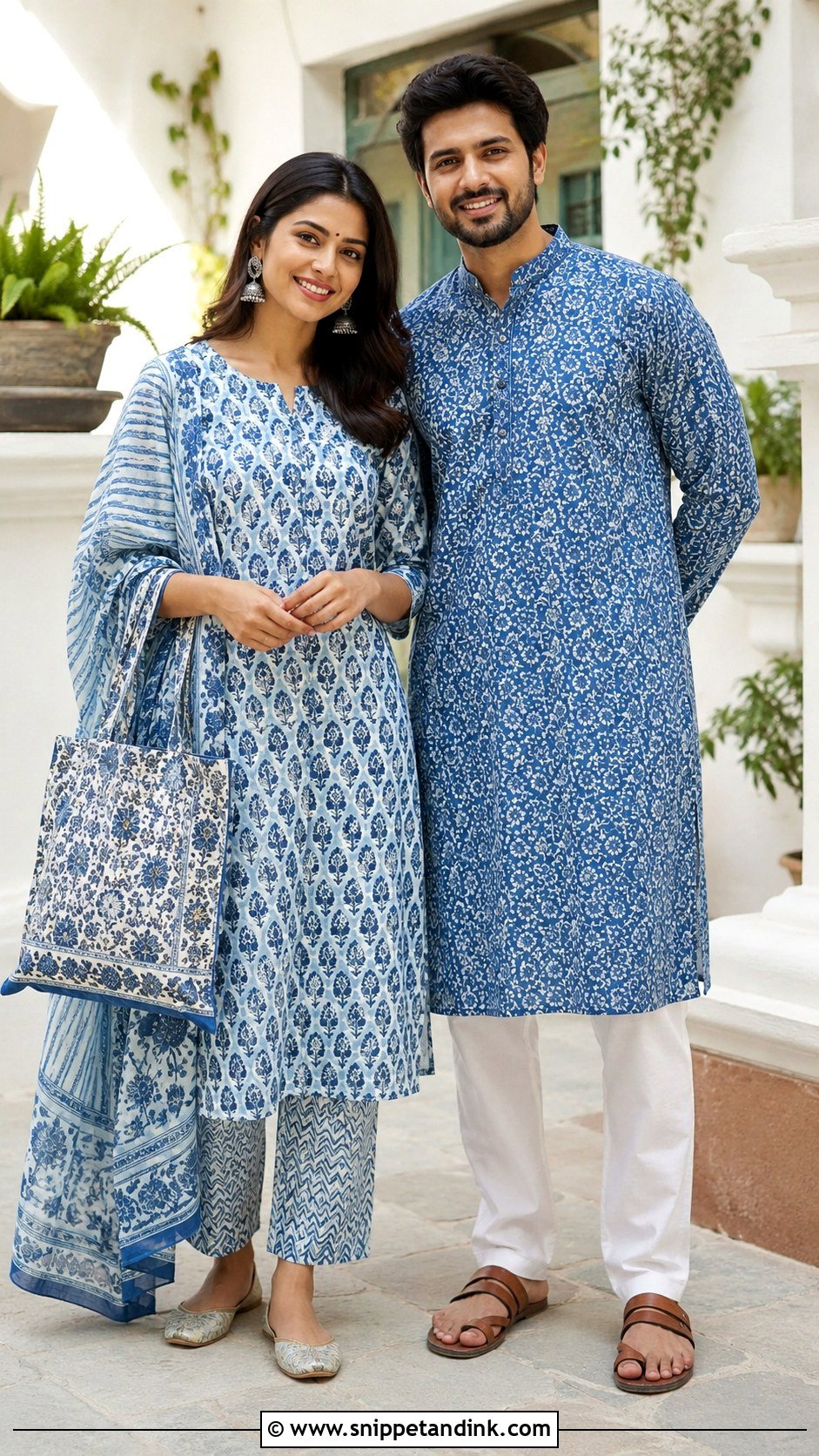
Cotton kurta sets are the outfits couples actually rewear after the wedding. She can wear a cotton kurta set with straight pants or palazzos; he wears a cotton kurta pajama in the same colour, a similar print or a complementary shade. Hand block prints, stripes and small florals all work. Pre-wash both before tailoring if possible, because cotton shrinks and the two pieces may not shrink equally. Juttis, silver earrings and simple mojaris suit daytime rituals and family visits.
23. Matching Jacket Lehenga And Kurta Outfit
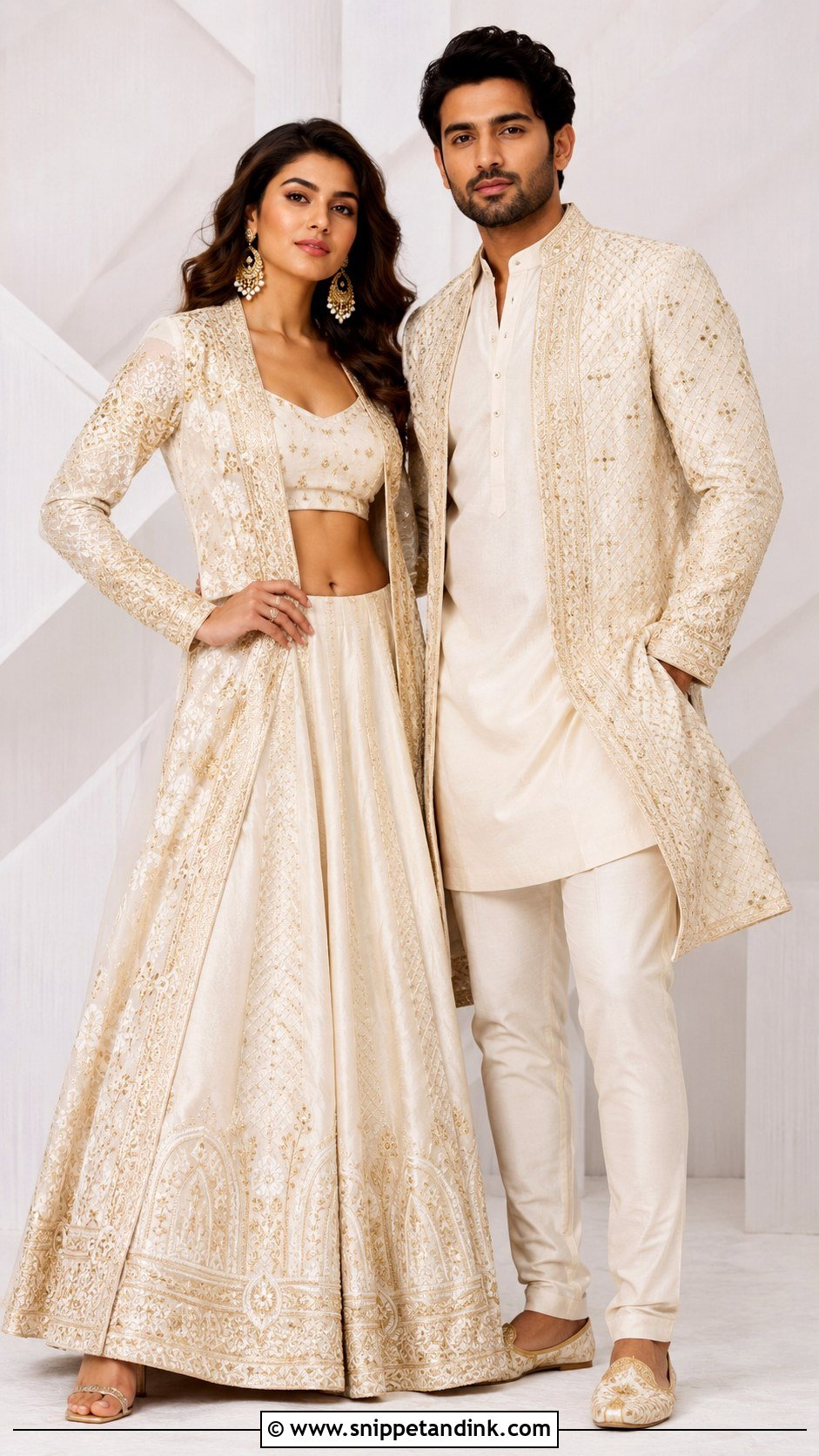
A jacket lehenga replaces the dupatta with a long embroidered, cape or short structured jacket, and that frees her arms for dancing at a sangeet. He coordinates with a kurta and jacket in the same fabric or embroidery style. Ivory with gold, blush with beige, navy with silver and green with cream all pair well. Because the jackets add structure, keep accessories neat. Long jackets are warm, so it’s better suited to evening events or air-conditioned venues.
24. Matching Indo Western Couple Outfit
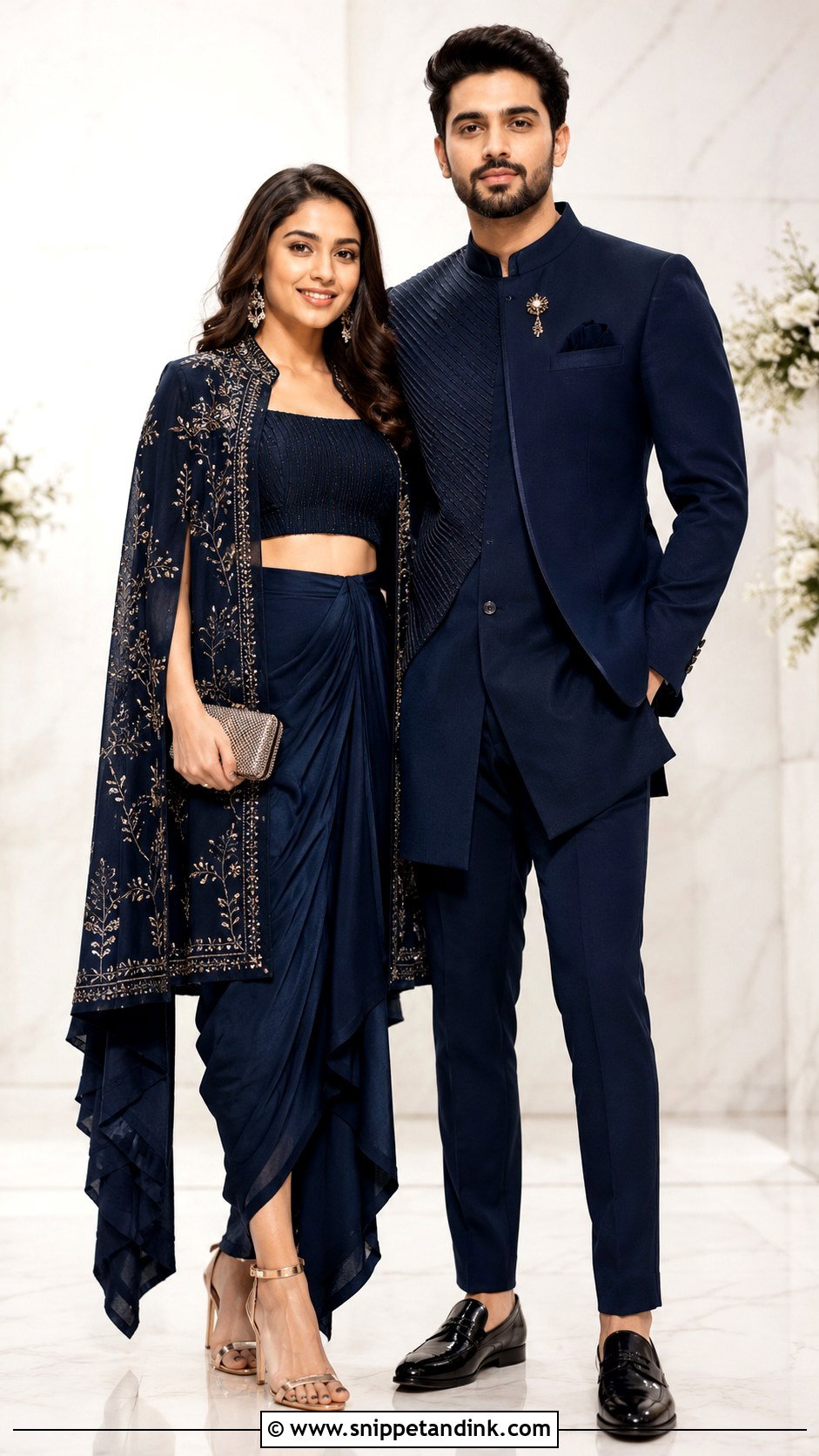
A matching Indo Western couple outfit connects through one element: colour, fabric, a border or metal trim. She can wear a draped skirt set, saree gown, crop top with palazzos or embroidered cape outfit; he can wear a structured kurta with trousers, an asymmetric jacket or a bandhgala-style set. I keep the palette to one main colour plus a neutral so the pair doesn’t look busy. Black, ivory, navy, emerald and blush all suit receptions and sangeet nights.


25. Matching Festive Family Function Outfit
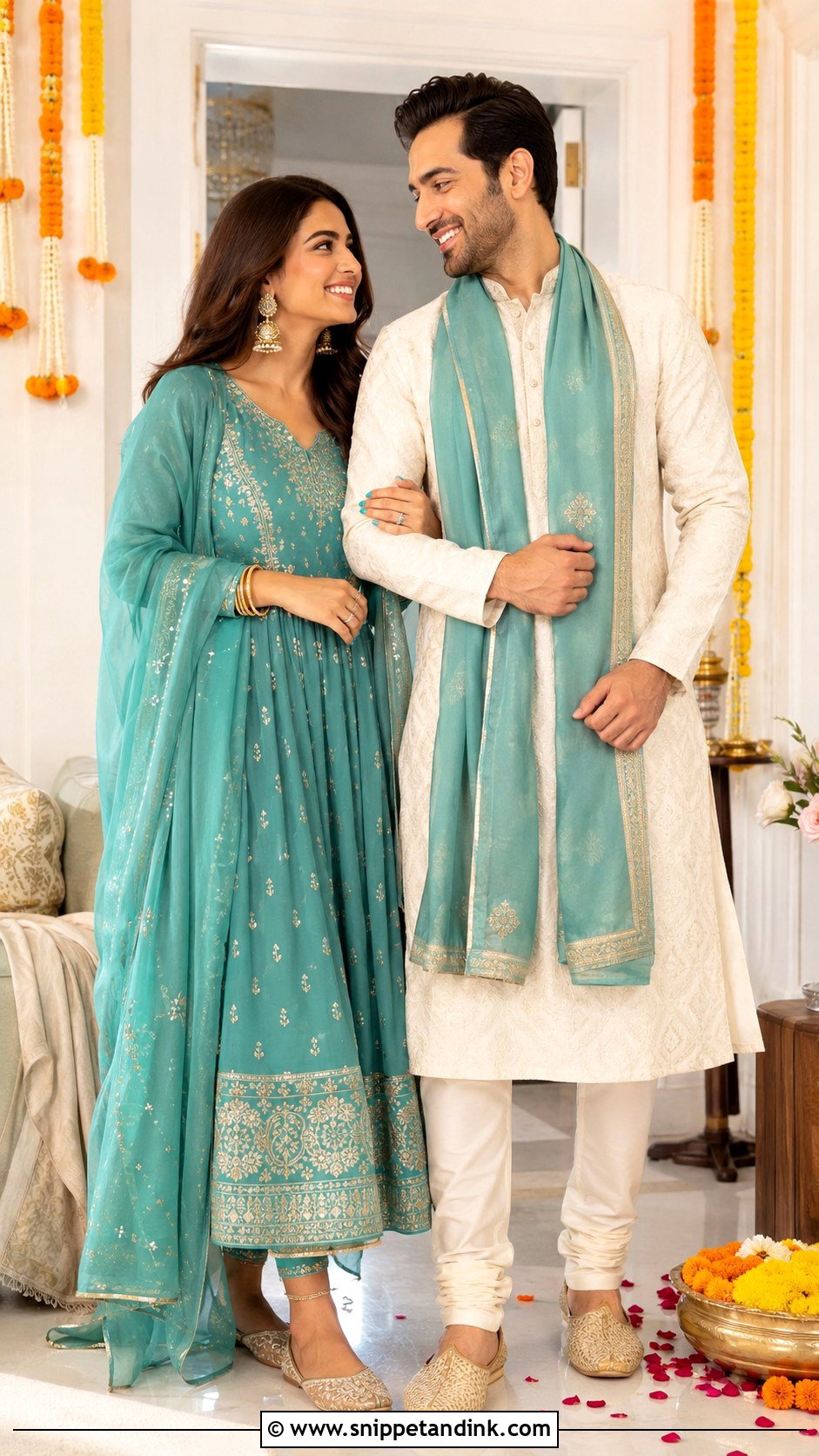
For family functions, practicality wins. You’ll be greeting relatives, serving food, touching feet and posing for endless group photos, so comfort beats grandeur. She can wear a kurta set, light saree, Anarkali or sharara in a cheerful colour; he matches with a kurta pajama, Nehru jacket or stole in the same family. Avoid anything that looks more bridal than the occasion calls for. Soft embroidery, block prints, light silk and georgette all work, with footwear you can stand in. Diwali gatherings, house ceremonies and anniversaries suit it.
Planning Pairings Across Haldi, Mehendi, Sangeet and Reception
Couples often plan matching outfits for every function, and then everything looks the same in the album. I map the events first and give each one a different job. Haldi gets cheap, washable cotton you can sacrifice to turmeric. Mehendi gets short sleeves and shararas you can sit in for hours while the paste dries. Sangeet needs movement, so jacket lehengas and Indo Western sets win. The reception is where the richest fabrics and the heaviest embroidery belong, under evening light.
Vary how you match from event to event too. Full same-colour outfits for one function, a single stole for the next, a shared print for a third. The photos then show a progression rather than one idea repeated four times.
Standing side by side in photos
Before the day, take a quick phone photo of both of you together, outfits on, in the same kind of light as the event. It shows instantly if one outfit overpowers the other, if the shades clash or if two prints fight. Adjusting jewelry or swapping a stole at that stage takes minutes.
One Shared Thread Is Enough
Matching as a couple comes down to colour, fabric, embroidery and occasion, and you only need one of them to connect. A stole that repeats her shade, a print shared across two cuts, the same border on a collar and a hem: any of these ties two outfits together without making them identical. Use breathable fabrics for daytime, richer textures for evening, and footwear you can stand in for the long functions. Then each of you still looks like yourself in the photos.
You'll Like These Ideas:







Leave a Reply