
Names change how guests look at a cake. Without them it is dessert; with them it is the thing everyone photographs on the way to their seat. Lettering can be piped in buttercream, cut from fondant, painted in edible gold, worked into old-style Lambeth piping or held up on an acrylic topper, and each method behaves differently on the day. First names feel relaxed, a shared surname with the date feels formal. I keep a running file of Write Name on Cake Ideas for couples who want the cake to feel custom without turning it into a greeting card, and these twenty are the ones I return to.
Spell It Out in an Email, Accents Included
The most common problem I see with lettered cakes is not the piping. It is a name spelled the way someone heard it over the phone. Once the icing is written, fixing a letter means rebuilding that part of the tier, so I only letter from names the couple has typed out themselves.
- Send names exactly as they should appear, with capitals, hyphens and any accents such as é, ñ or ü. Accents are tiny on a cake and easy to forget.
- Say whether you want nicknames or full names. Plenty of couples are surprised to see Elizabeth when everyone calls her Beth.
- Confirm the order of names. Some couples care which name comes first, and it should match your invitations.
- Ask for a written proof or a sketch of the layout before the cake is made, and check it slowly.
If one of your names is in a non-Latin script, tell your baker early. Hand-lettering a script you do not read is hard, and a printed edible transfer of your own artwork is often the more accurate route.
1. Wedding Cake With Couple Names
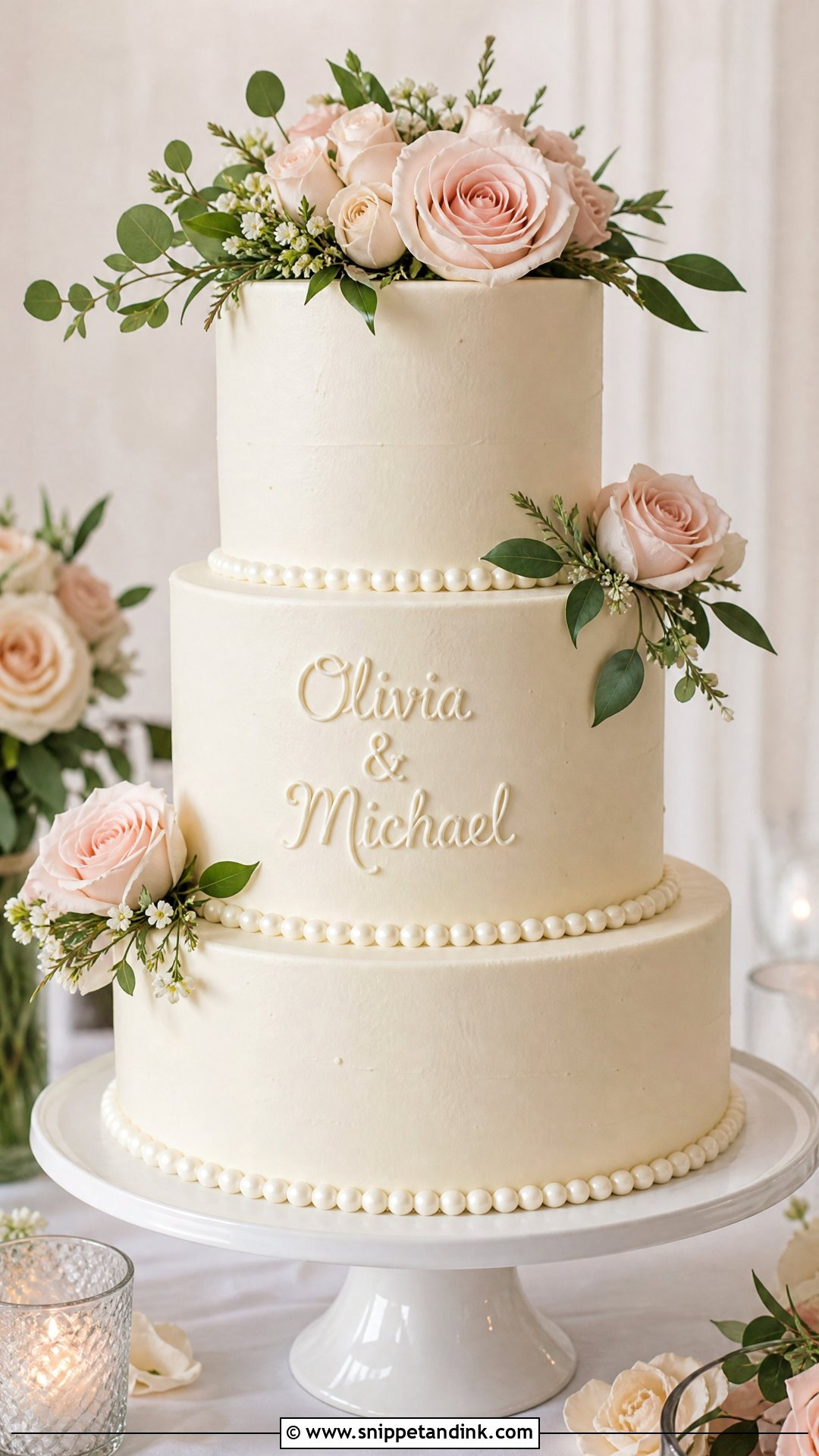
Couple names are the most flexible option because they suit any theme. I usually put them on the middle tier, where they sit at eye level for most guests, piped in buttercream or written on a fondant plaque. A slim topper above the cake does the same job without touching the icing. Ivory frosting with pearls and roses at the base is the classic pairing. My test is simple: stand a few steps back. If you cannot read the names from there, the lettering is too thin or too fancy.
2. Wedding Cake With First Names
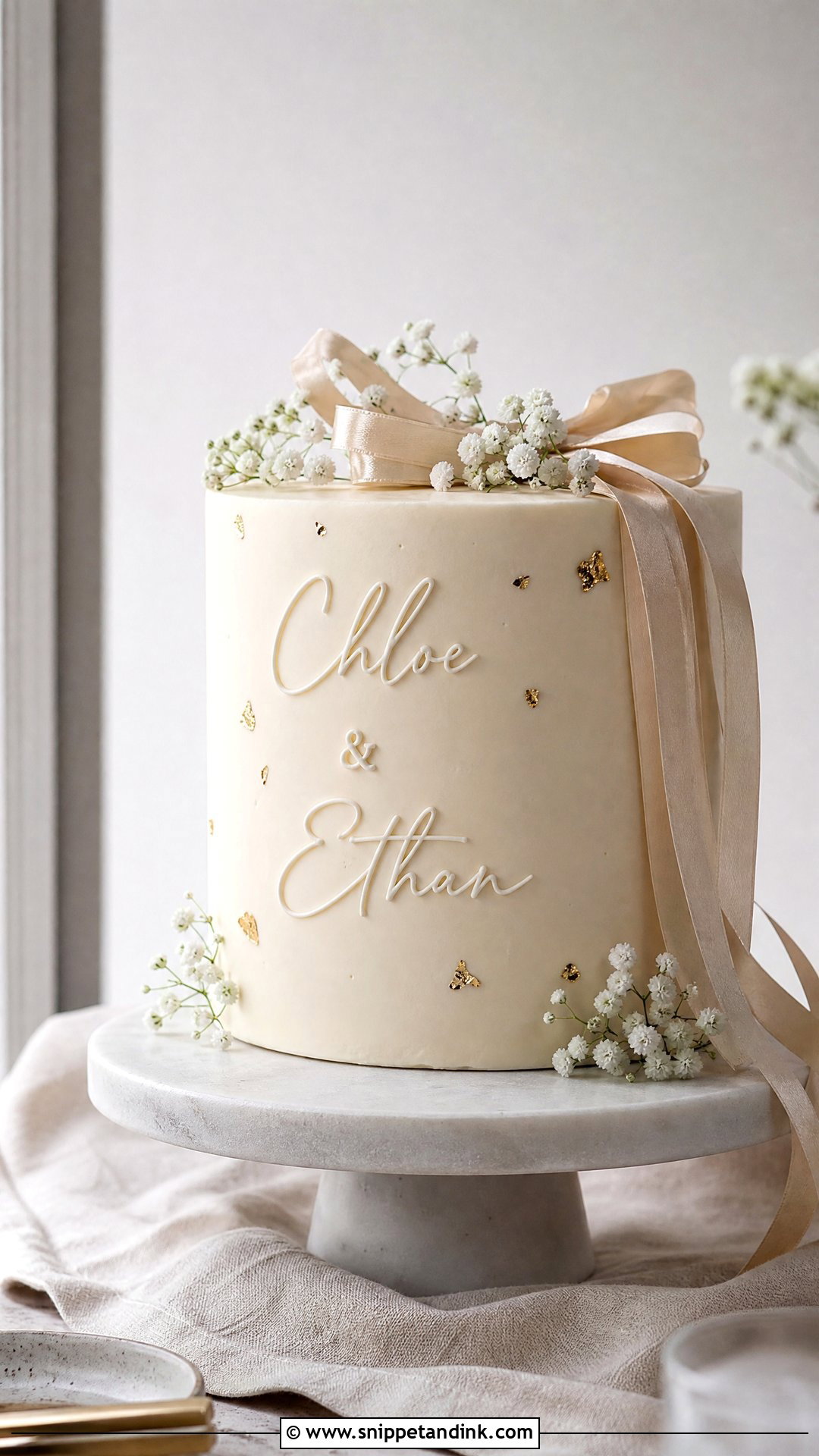
First names are warm and easy. They suit couples who want something personal without the formality of a surname. I write them in script across one tier or curve them gently round the top tier, which takes careful spacing so the letters don’t bunch on the bend. Smooth buttercream gives the cleanest line. A handwritten script reads romantic; a clean sans-serif reads fresh. Match it to your invitation if you can.
3. Wedding Cake With Last Name
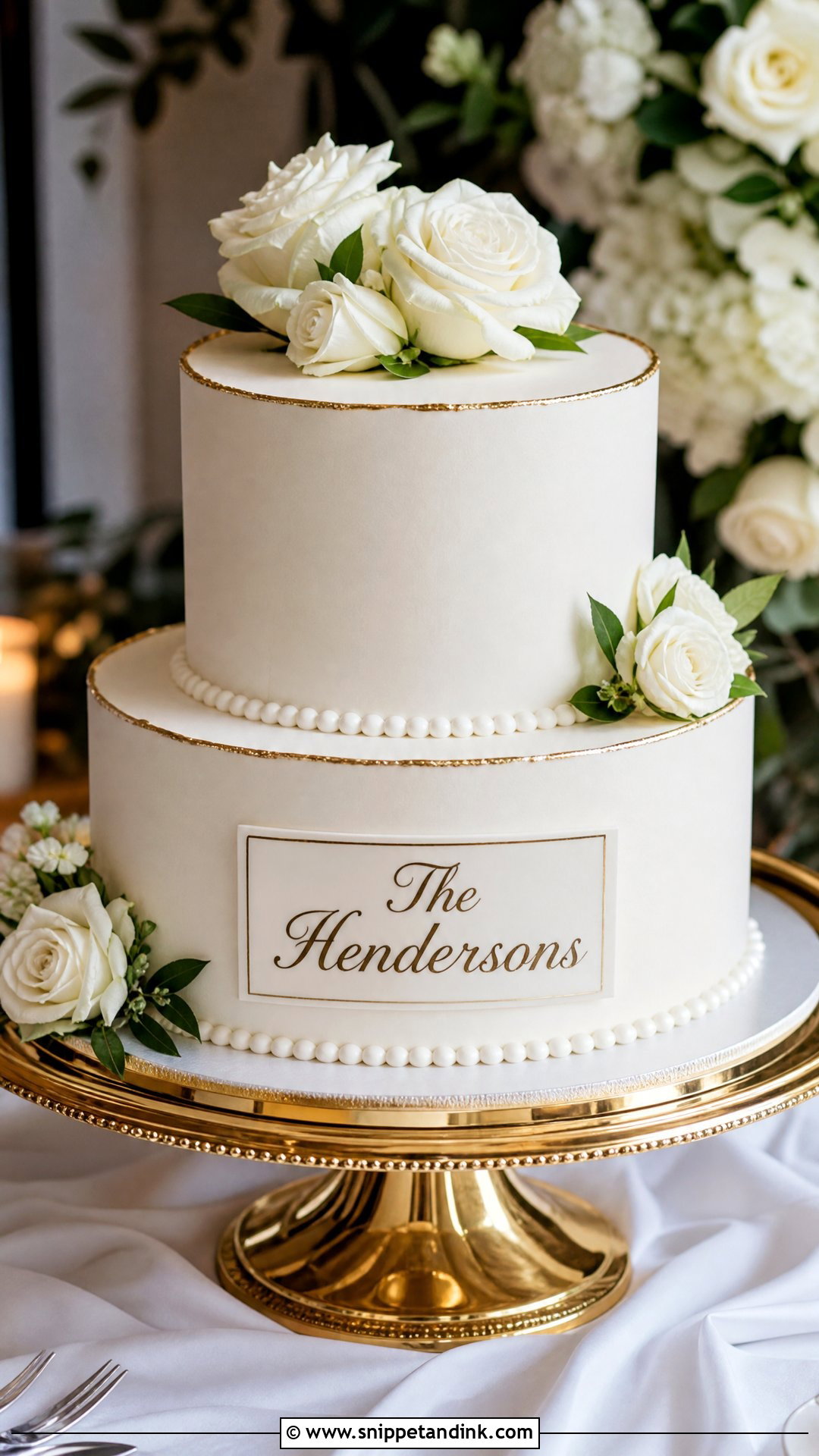
A shared last name makes a strong statement and needs the most space. On a tall cake it has room; on a small one, a long surname can crowd the tier. That is the first thing I check: count the letters, measure the tier, and decide whether it fits as edible lettering or works better as an acrylic topper or a pressed fondant nameplate. Soft flowers or metallic accents round it out. If the name is long, scale the lettering down rather than squeezing it.
4. Wedding Cake With Initials
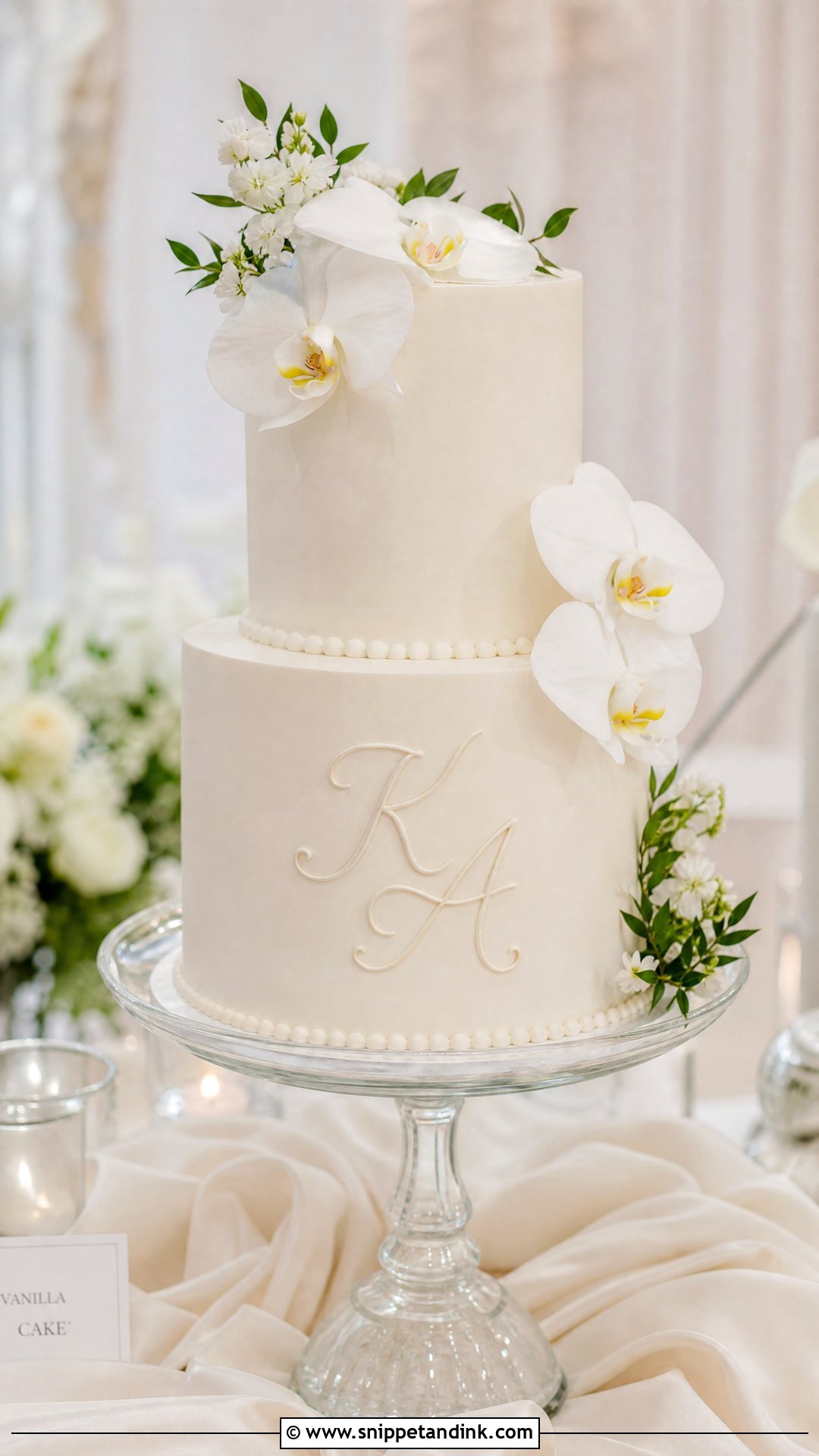
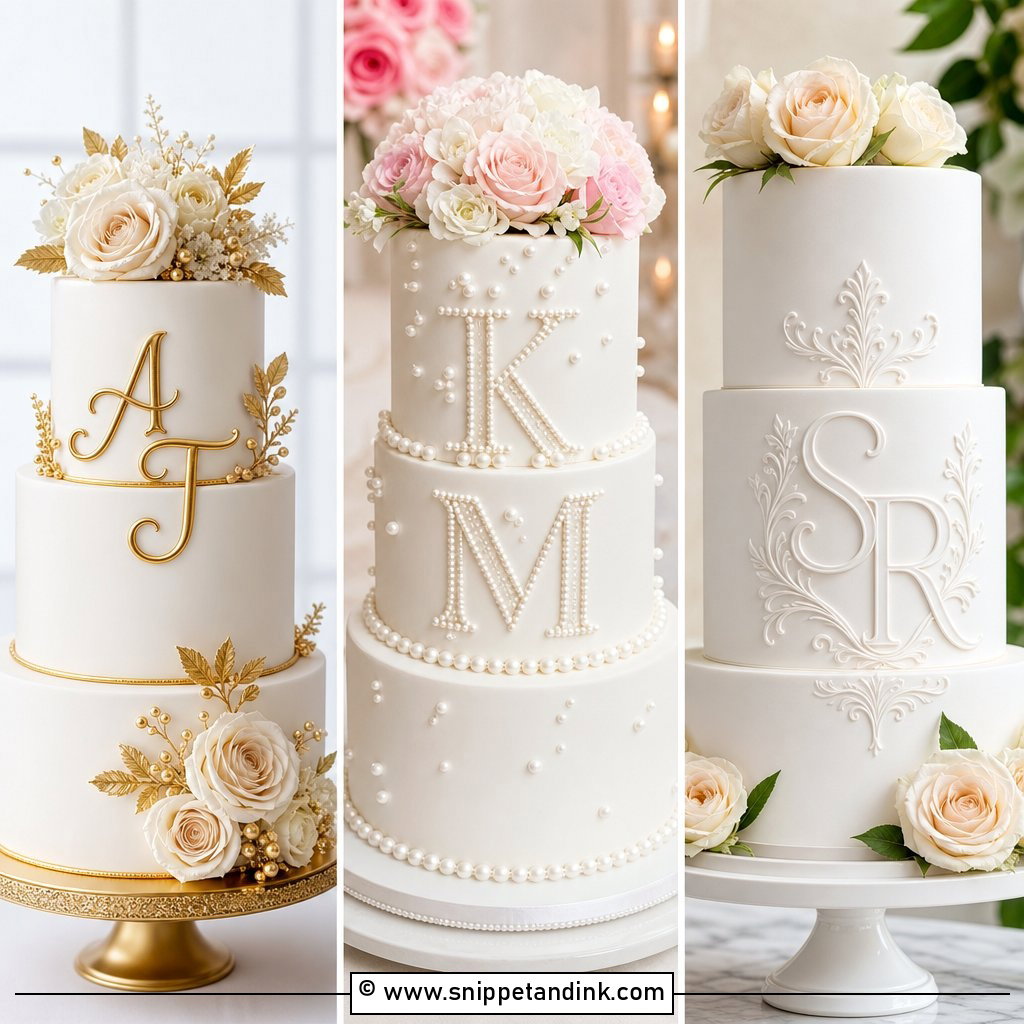
A wedding cake with initials gives you the personal touch with very little writing, which helps if your names are long or your cake is small. I place initials as a monogram on the front tier, pipe them inside a delicate floral frame, or set them on top as a topper. Both first initials, a shared last initial or a three-letter monogram all work. With so little lettering, the rest of the cake should stay calm: pearls, white flowers and a gold edge are enough.
5. Wedding Cake With Monogram
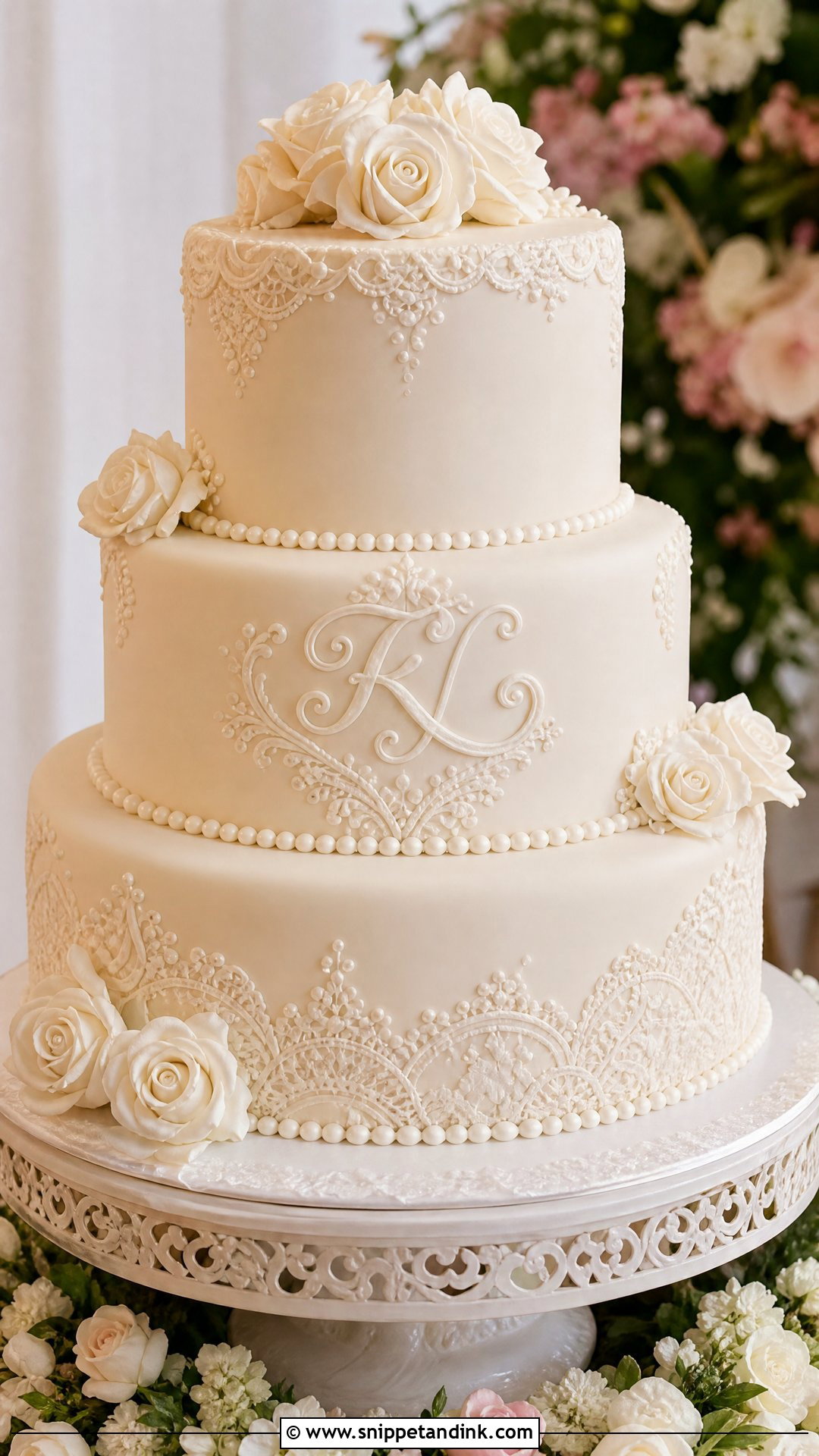
Monograms are where I spend the most time on layout. An embossed fondant monogram is pressed with a custom stamp, so it needs a firm covering and cool hands; painted gold sits on top; royal icing piping gives a raised effect that catches light. All three want a smooth white or ivory surface. Sugar lace or subtle quilting suits it. The real advantage is coordination: if your stationery designer has already drawn a monogram, send it to your baker and the cake will match the invitations exactly.
6. Wedding Cake With Name Topper
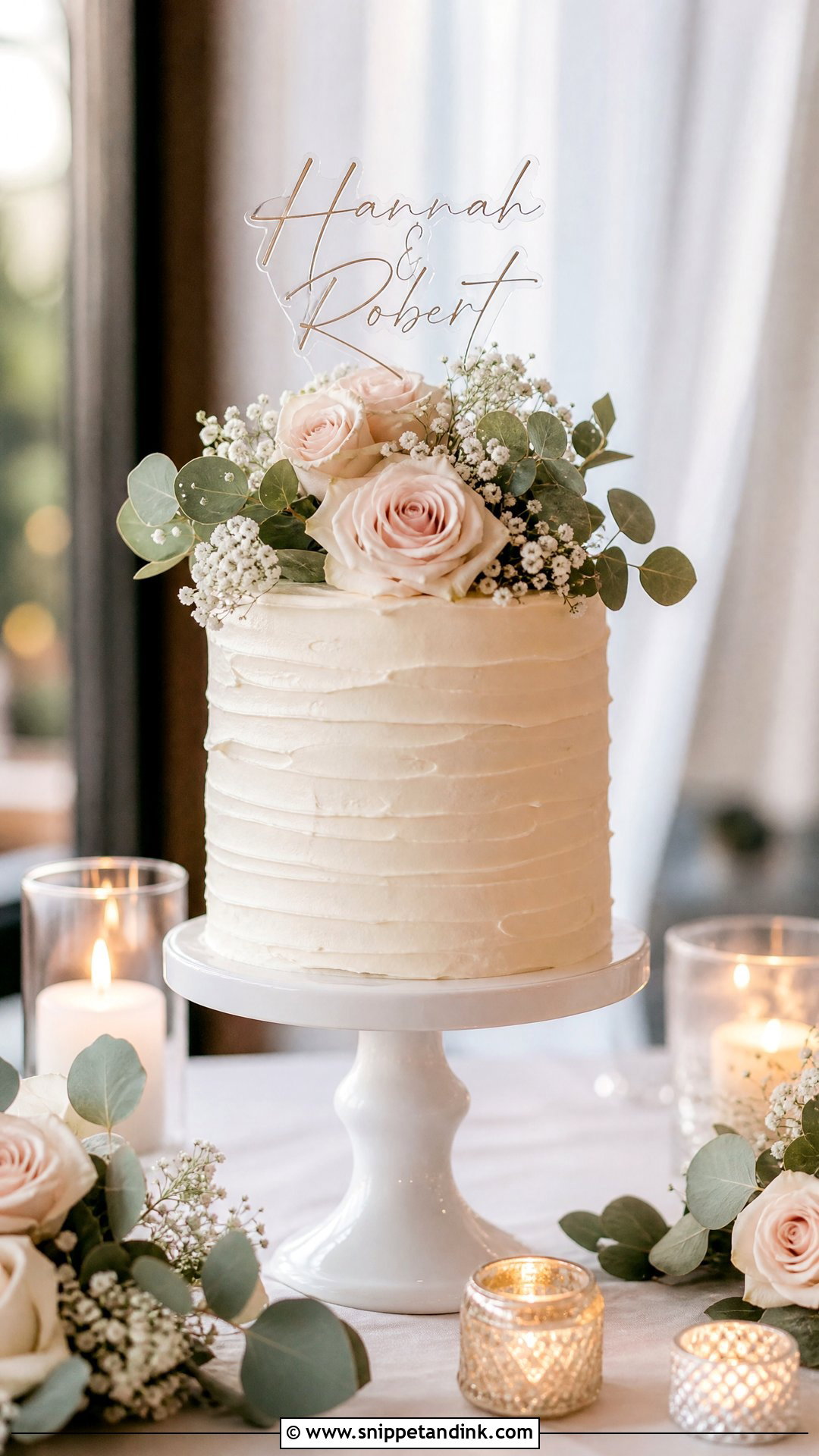
A name topper personalises the cake without any writing on the icing at all, which is useful if your cake is semi-naked or textured and has no smooth surface to write on. Acrylic, wood and mirrored gold are the usual choices. Ask for a topper with a long enough stake; a short one tips in soft buttercream, and I sometimes sit it in a straw for support. Roses or a little greenery round the base soften it. Afterwards, it wipes clean and goes home with you.
7. Wedding Cake With Gold Names
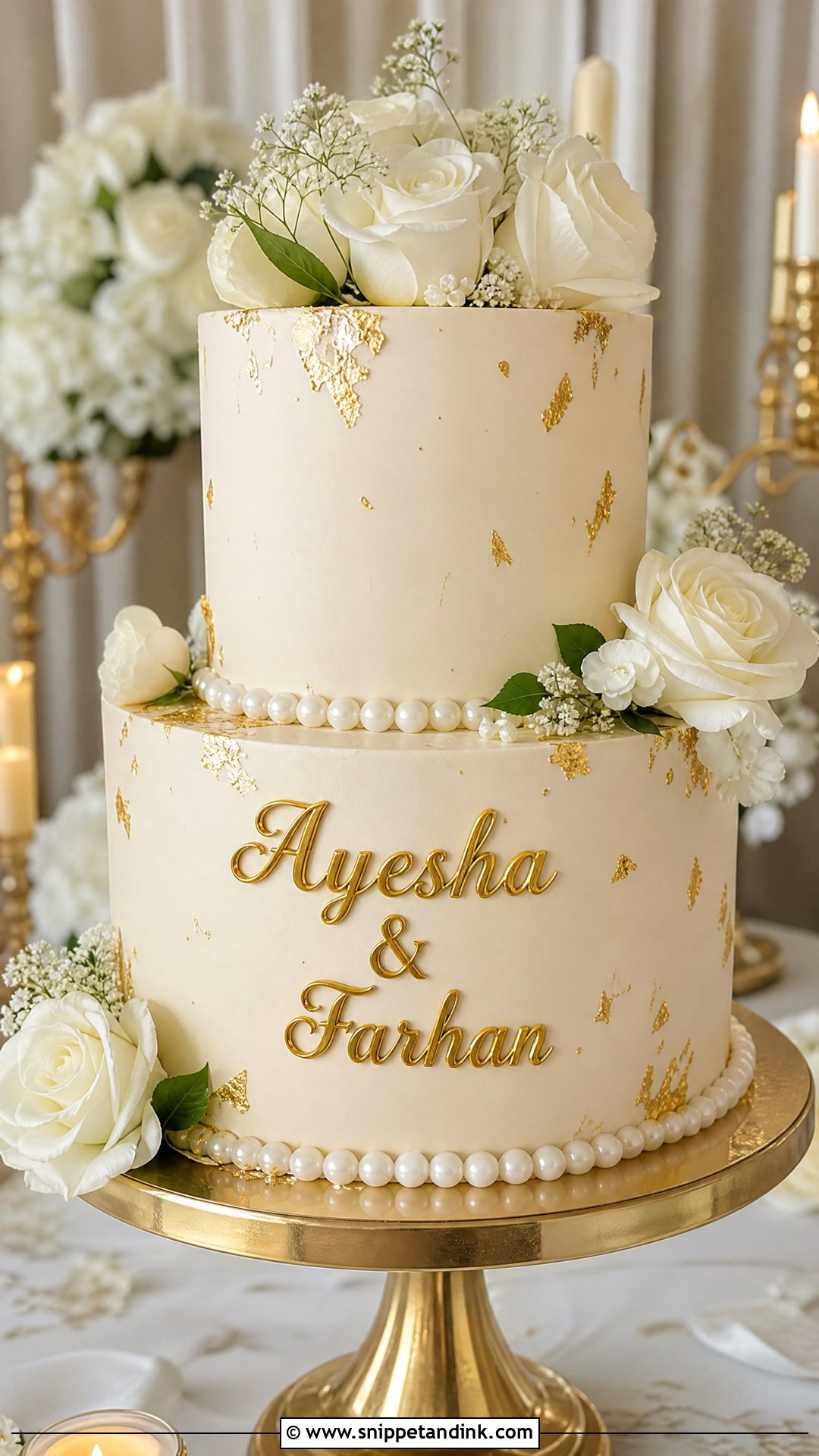
Gold names look polished, and the method matters. Hand-painted gold uses edible lustre mixed with a little alcohol, which dries quickly but scuffs if anyone brushes against it, so I paint lettering last. Gold leaf letters and cut edible paper hold up better to handling. White, ivory, blush and deep green cakes show gold best. Keep the font simple; ornate script in metallic paint loses its edges in photos.
8. Wedding Cake With Silver Names
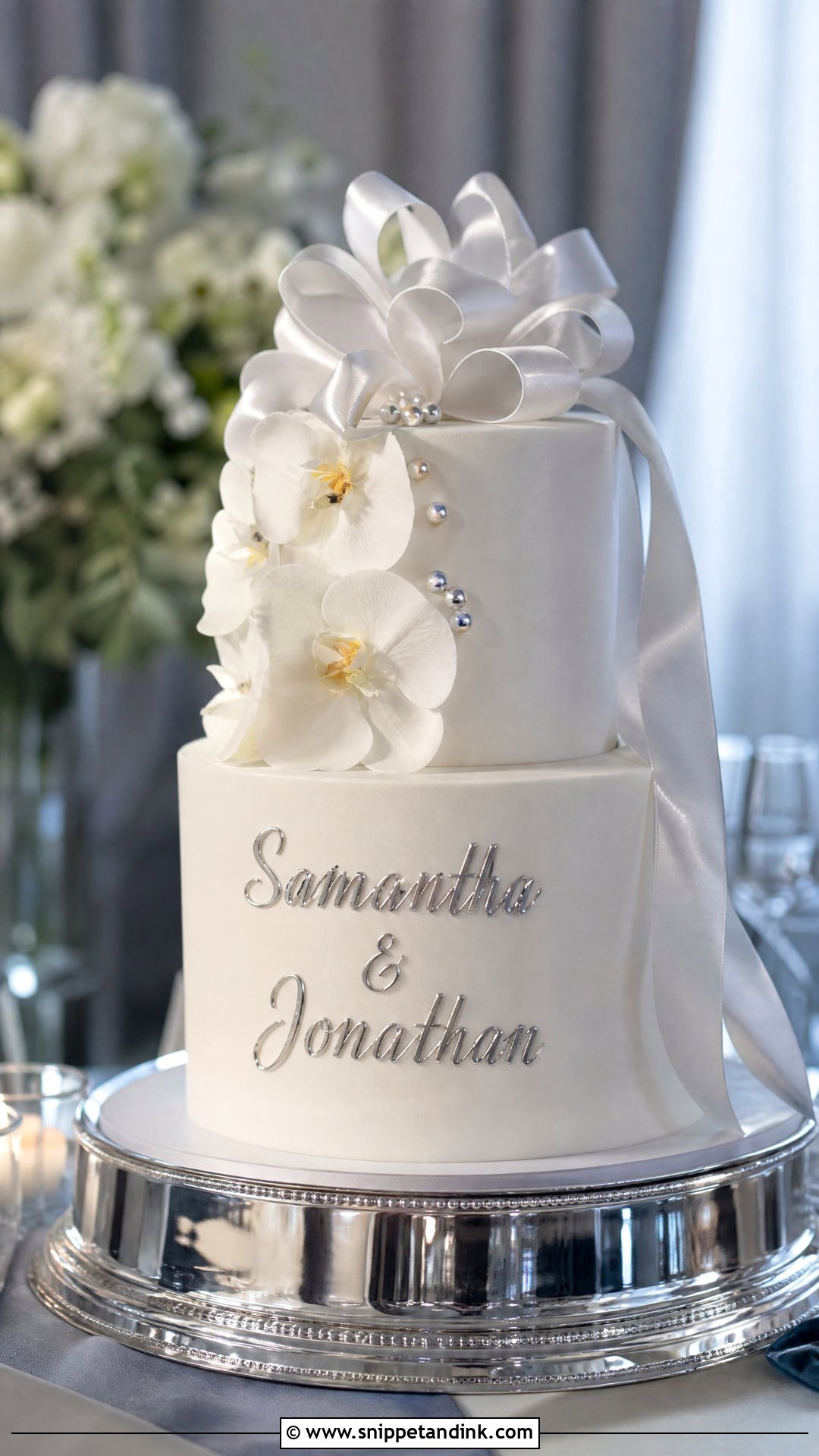
Silver feels cooler and more modern, and it suits white, dusty blue, lavender or grey cakes. One caution: plenty of silver paints and dusts are labelled non-toxic, which is not the same as edible. I only letter in products marked edible, and if that limits the shade, a silver acrylic topper or tiny metallic letters on a fondant band is the honest alternative. Crystal accents, orchids and satin ribbon suit it. Keep the sparkle on the names and let the rest of the cake stay quiet.
9. Wedding Cake With Floral Name Frame
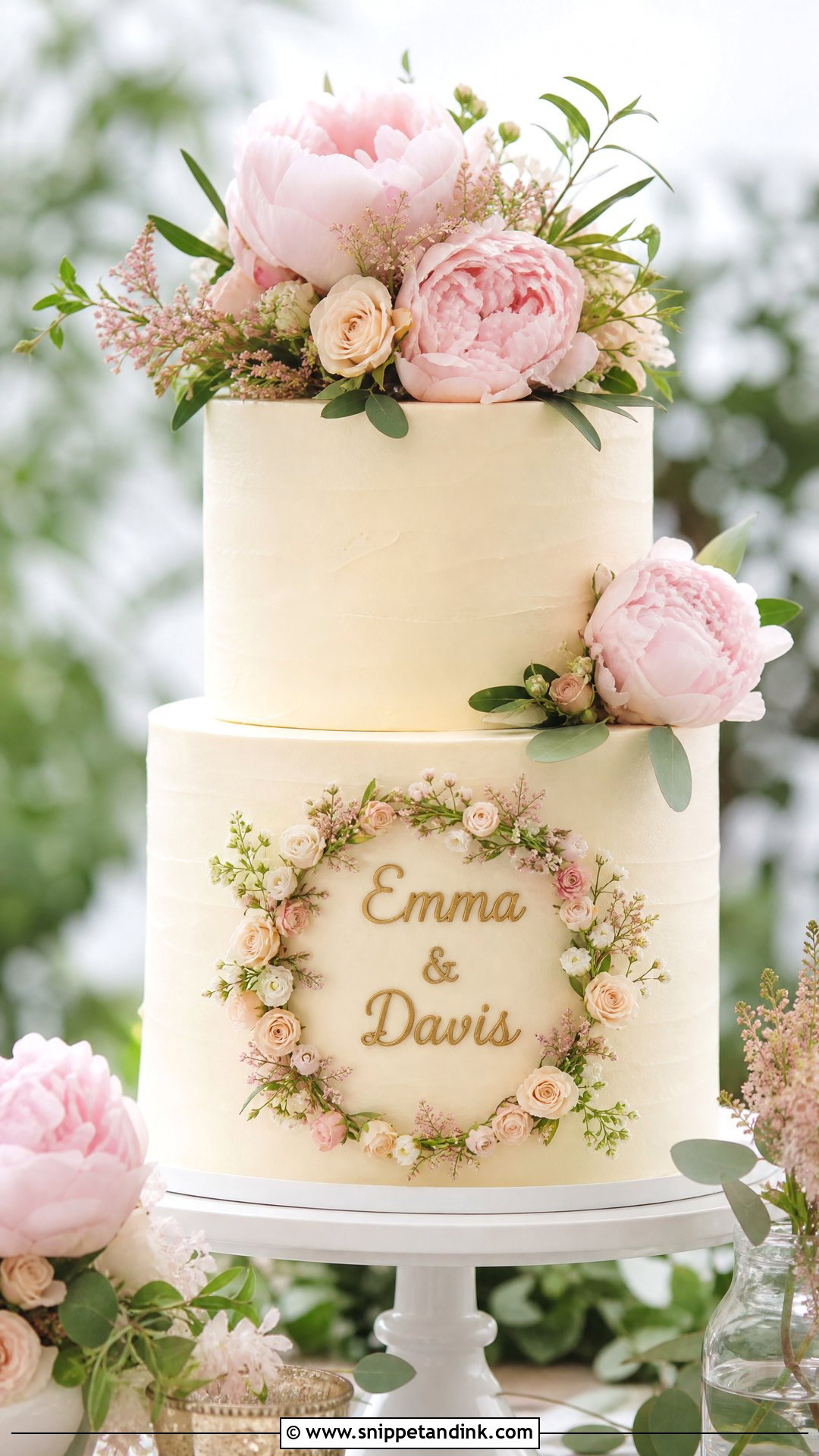
A floral frame gives the names a focal point and makes the cake look fully dressed. The names sit inside a wreath of buttercream flowers, sugar petals or fresh blooms on the front tier. I write the names first and build the flowers around them, never the other way round, because a wreath that is slightly off-centre is easy to fix but a name squeezed into the leftover space is not. Matching the flowers to the bouquet ties it together.
10. Wedding Cake With Heart Name Design
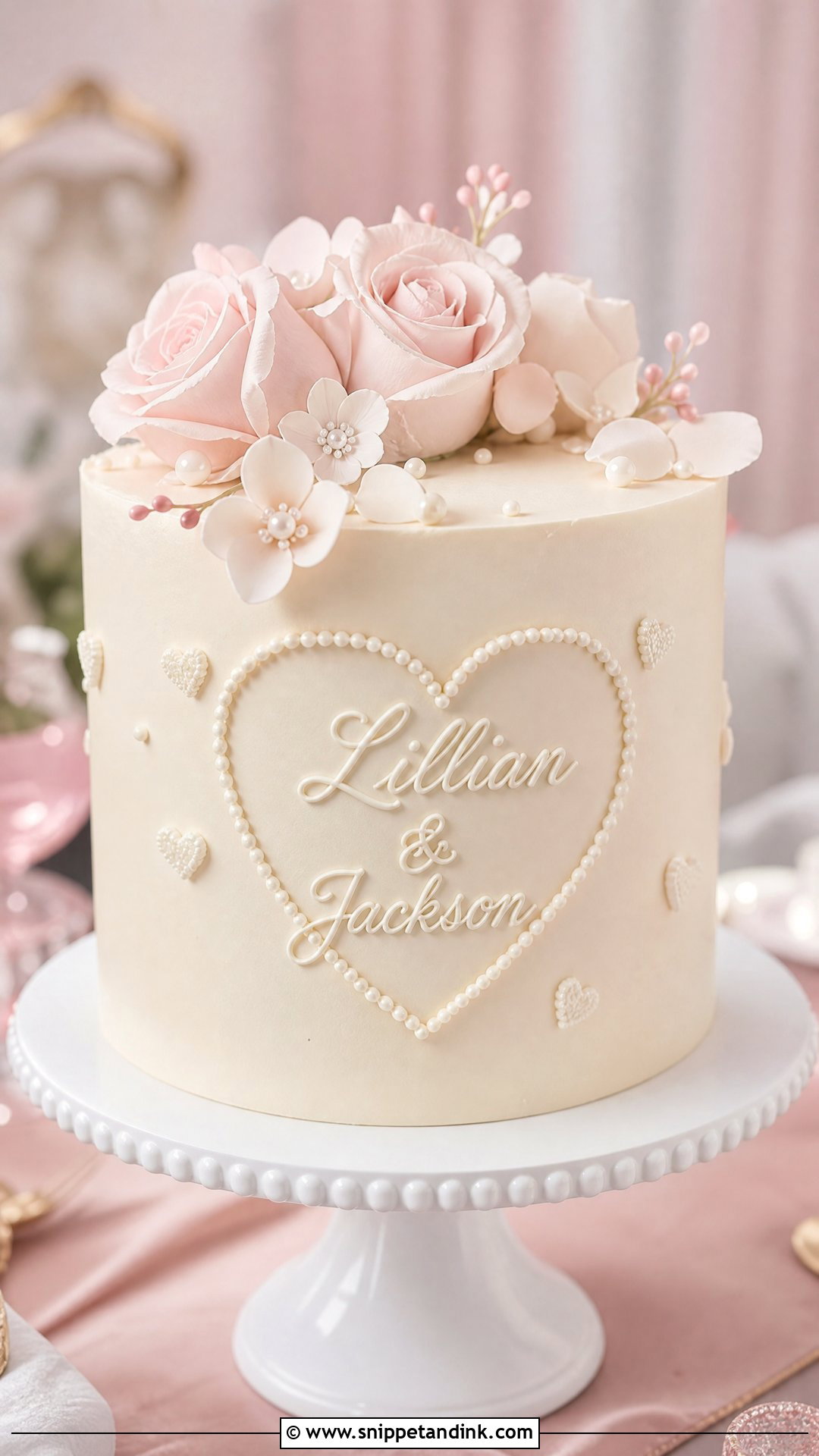
Hearts can go childish quickly, so I keep them thin and small. The names sit inside a fine heart outline, under two joined hearts, or wrapped round a heart-shaped topper. Ivory, blush and pearl piping keep it grown-up. A round tiered cake handles this better than a heart-shaped cake with hearts all over it; one symbol is enough.
11. Wedding Cake With Vintage Names
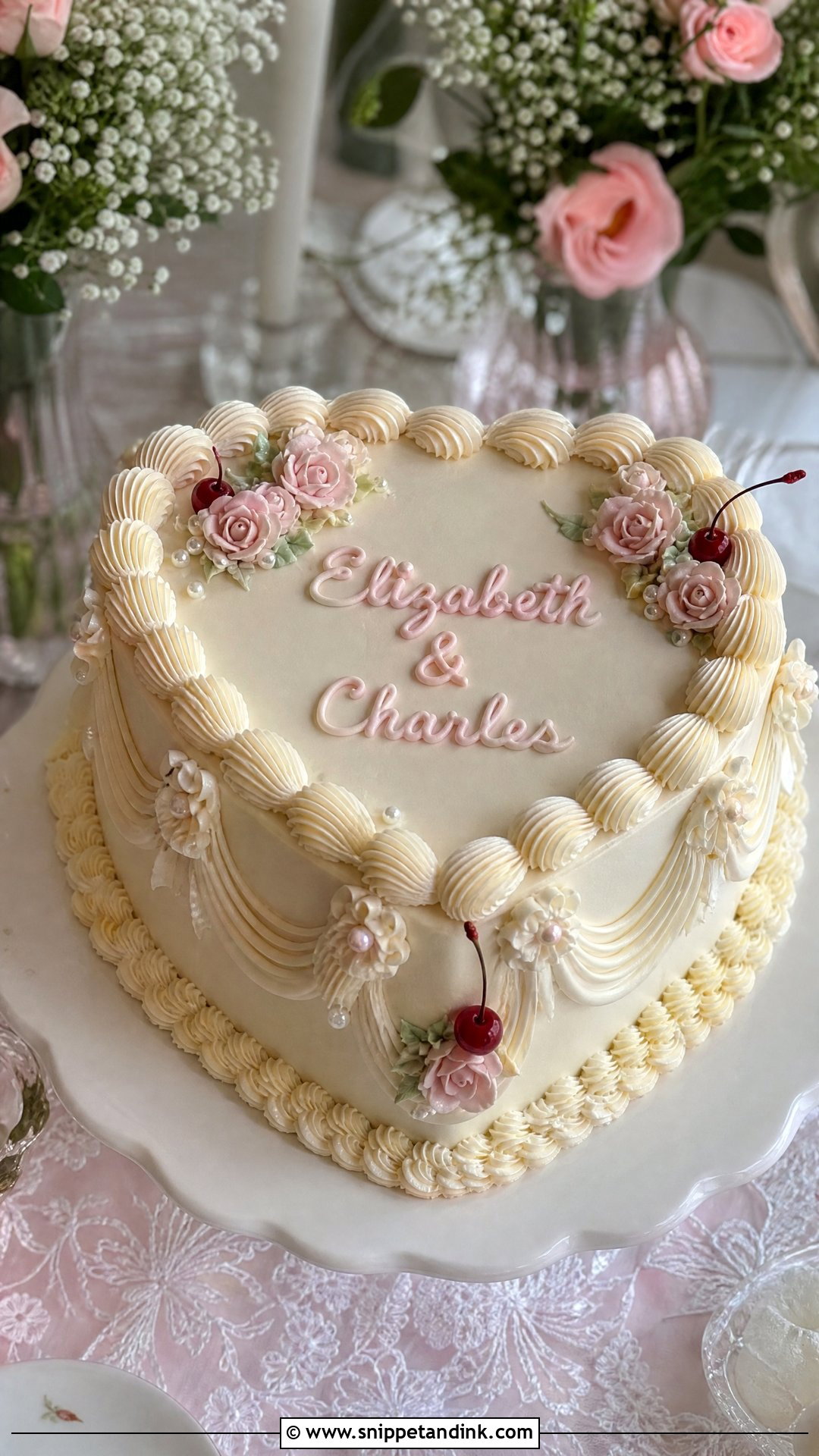
Vintage piping is having a long moment, with buttercream swags, shell borders and names in gentle script across the top or front. It looks right on a heart-shaped cake or a round two-tier with pastel accents, finished with cherries, pearls or piped roses. This style is all piping, so the buttercream has to be stiff enough to hold ridges; on a hot day soft frosting loses its definition before the speeches. Centre the lettering carefully, because every border points toward it.
12. Wedding Cake With Calligraphy Names
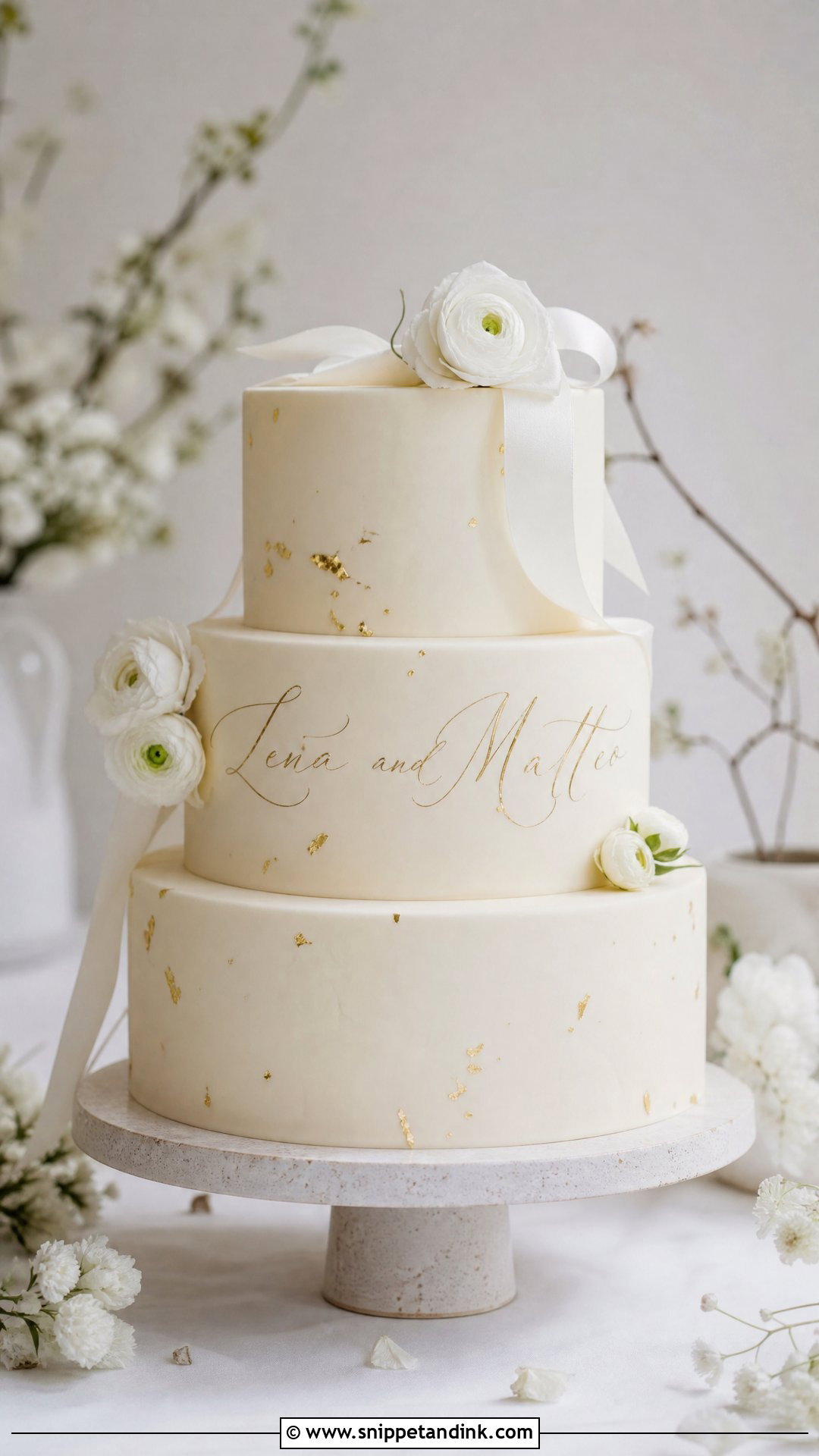
Calligraphy on a cake is closer to stationery than to piping. I either paint it freehand with a fine brush and edible paint, or pipe a thin raised line with royal icing, and both need a smooth, firm surface; on soft buttercream the brush drags. The lettering can flow down one tier, sit on a plaque or curve round the side. If a calligrapher did your invitations, ask for their name artwork. A baker can transfer it onto the cake far more accurately than they can copy it by eye.
13. Wedding Cake With Edible Name Plaque
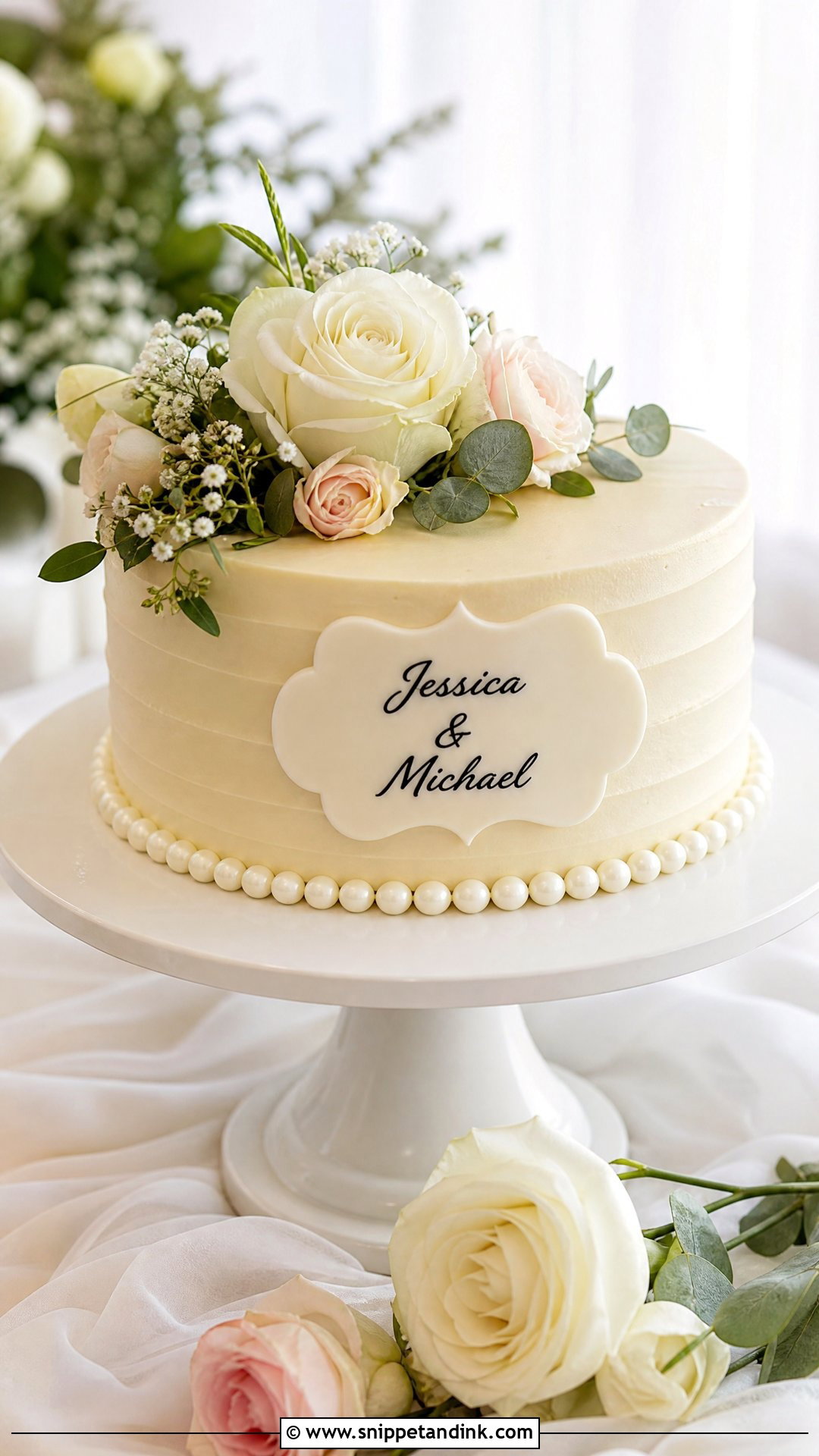
A plaque gives me a perfect writing surface, which is why I suggest it for long names or a date and a short phrase. Fondant, chocolate, wafer paper and a sugar cookie all work, and the plaque can be lettered days ahead in calm conditions, then attached on the day. Flowers round the edge frame it naturally. It looks right on one-tier and multi-tier cakes, and it is often the piece couples keep.
14. Wedding Cake With Name And Date
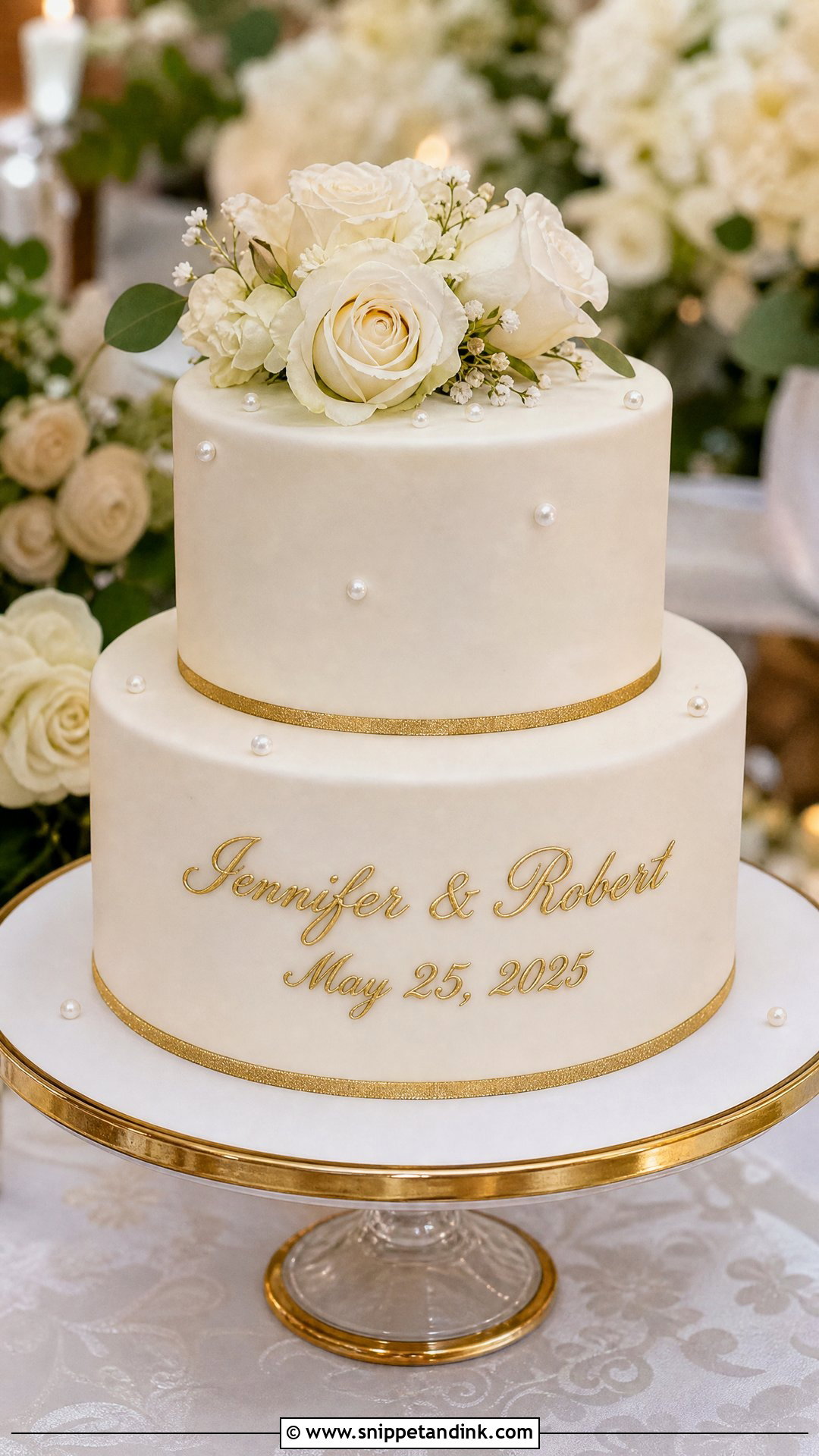
Names with the date make the cake a record of the day. I write the names across the main tier and put the date underneath in smaller lettering, so the eye reads them in order. Pick one date format and use it on everything: a cake that says 06.07 means different days in different countries, so if your guests are international, spell the month. A clean white cake with thin gold trim and a few seasonal flowers keeps it simple.


15. Wedding Cake With Name And Mr Mrs
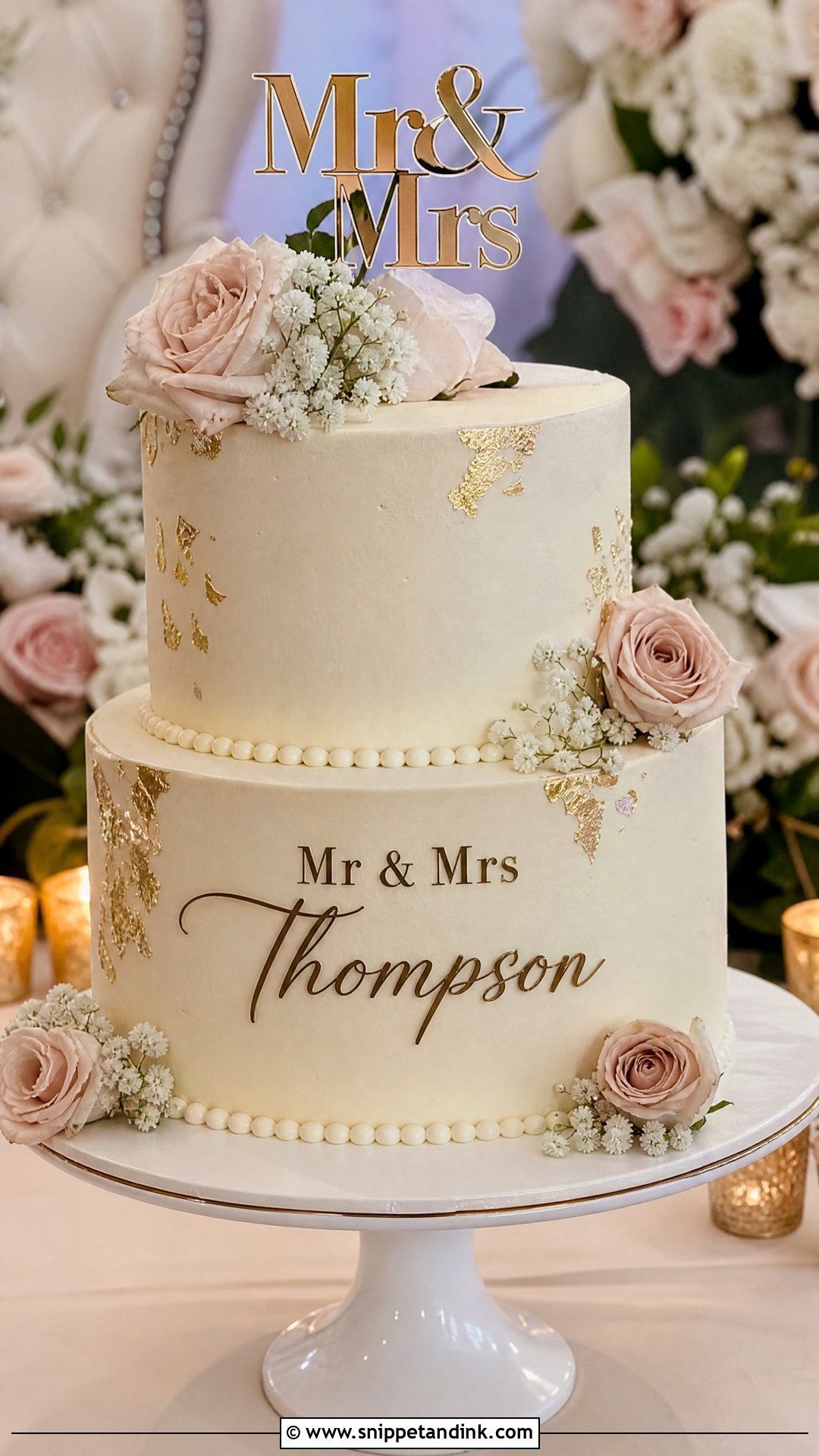
“Mr & Mrs” is the traditional newlywed touch, set above the shared name, on a topper, or piped along a fondant band. Keep it smaller than the names themselves. If you are not both taking the same last name, “Mr & Mrs” with one surname will read wrong, so first names or initials work better. White buttercream, soft roses and a hint of gold keep it classic.
16. Wedding Cake With Name On Top Tier
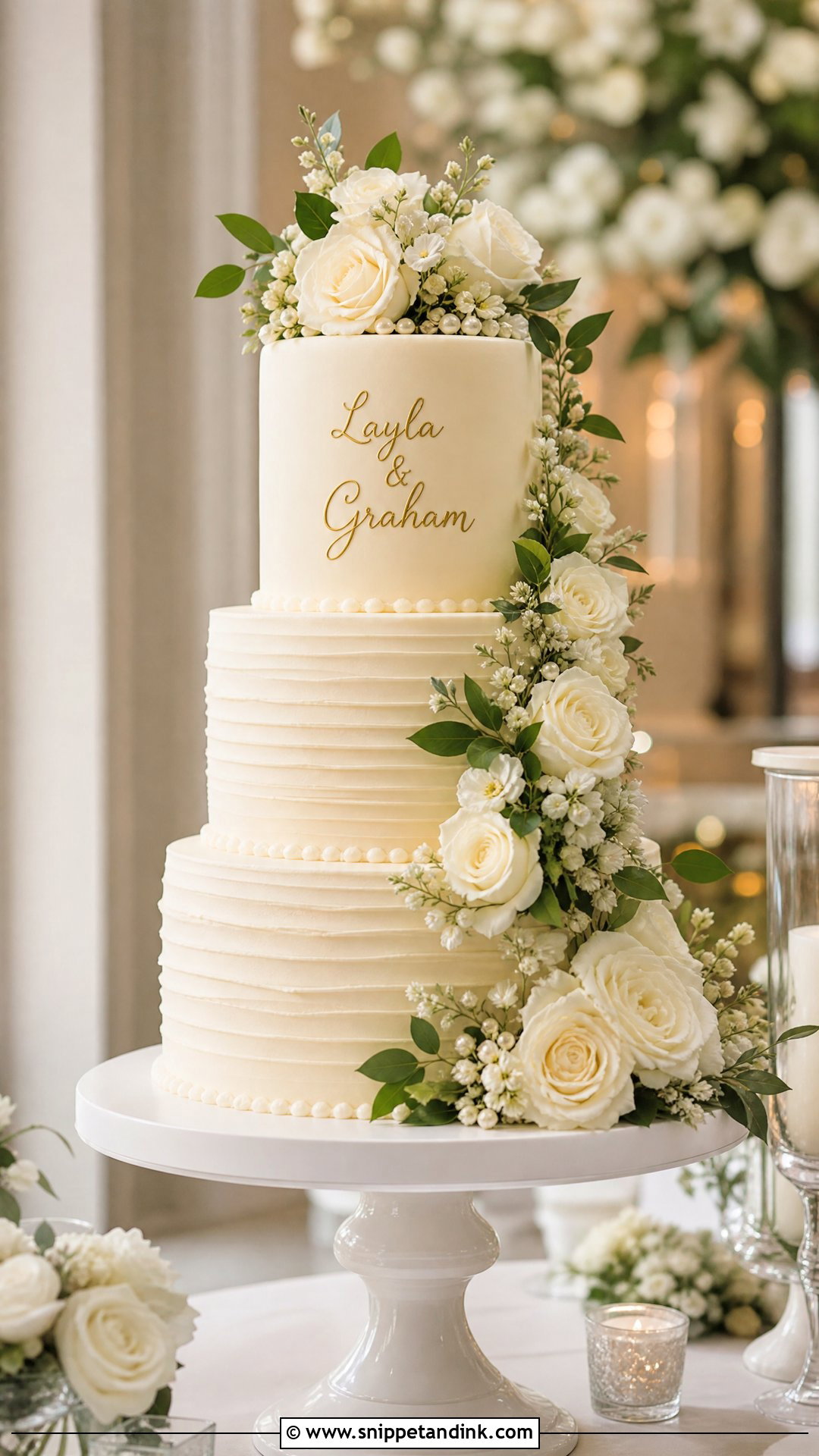
The top tier is the most visible spot on a tall cake, since guests see it above the flowers on the lower tiers. It is also the smallest tier, so I keep the writing short: first names, initials or a compact surname in script. Keep that tier smooth and put the texture, florals, pearls or lace lower down. That way the names finish the cake instead of fighting for space.
17. Wedding Cake With Name On Front Tier
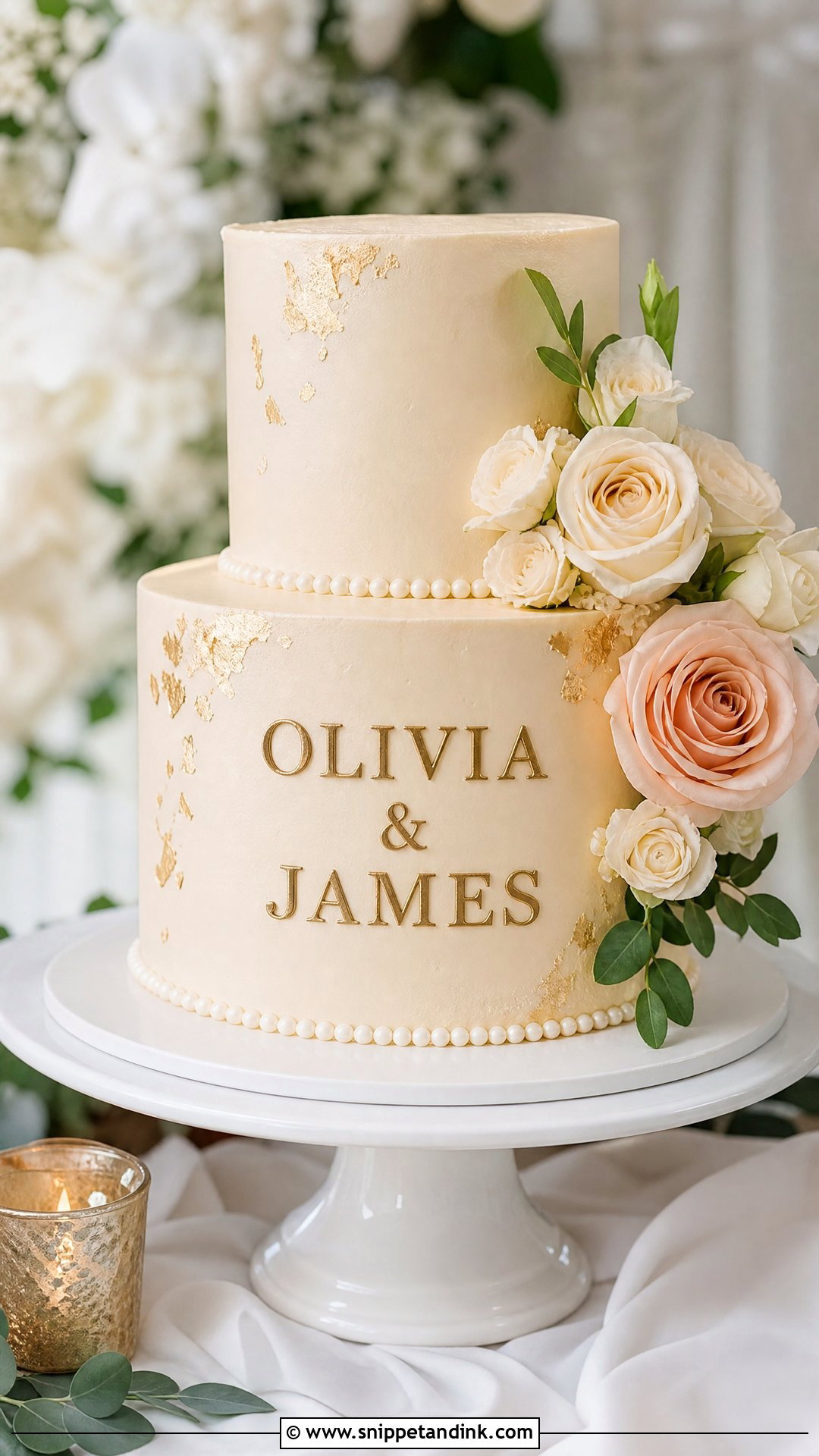
The front tier faces the camera at the cutting, which makes it the photographer’s favourite spot for names. They can be piped directly on buttercream, painted on fondant or attached as cut sugar letters. Remember which side is the front when the table is set: I mark it on the board so whoever places the cake doesn’t turn the names toward the wall. Keep the front plain and put flowers to the side.
18. Wedding Cake With Name Around The Cake
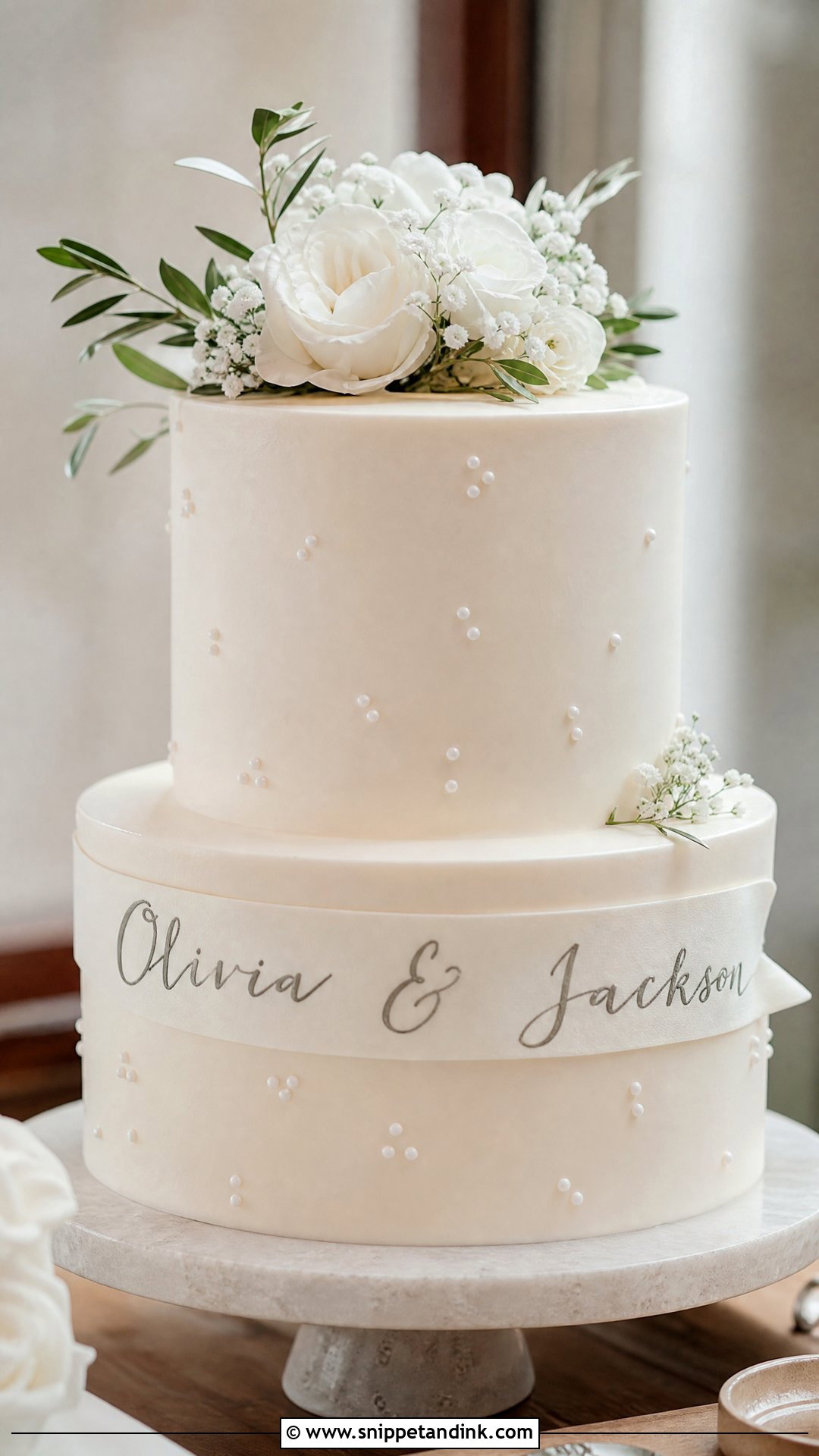
Wrapping the names round the tier like a ribbon means guests read them from every side of the room. It suits a table in the middle of the floor rather than against a wall. I mark guidelines in the fondant before lettering, because writing that drifts upward around a curve shows clearly once it meets itself at the back. Thin script or block lettering both work. Keep everything else minimal so the band stays clear.
19. Wedding Sheet Cake With Names
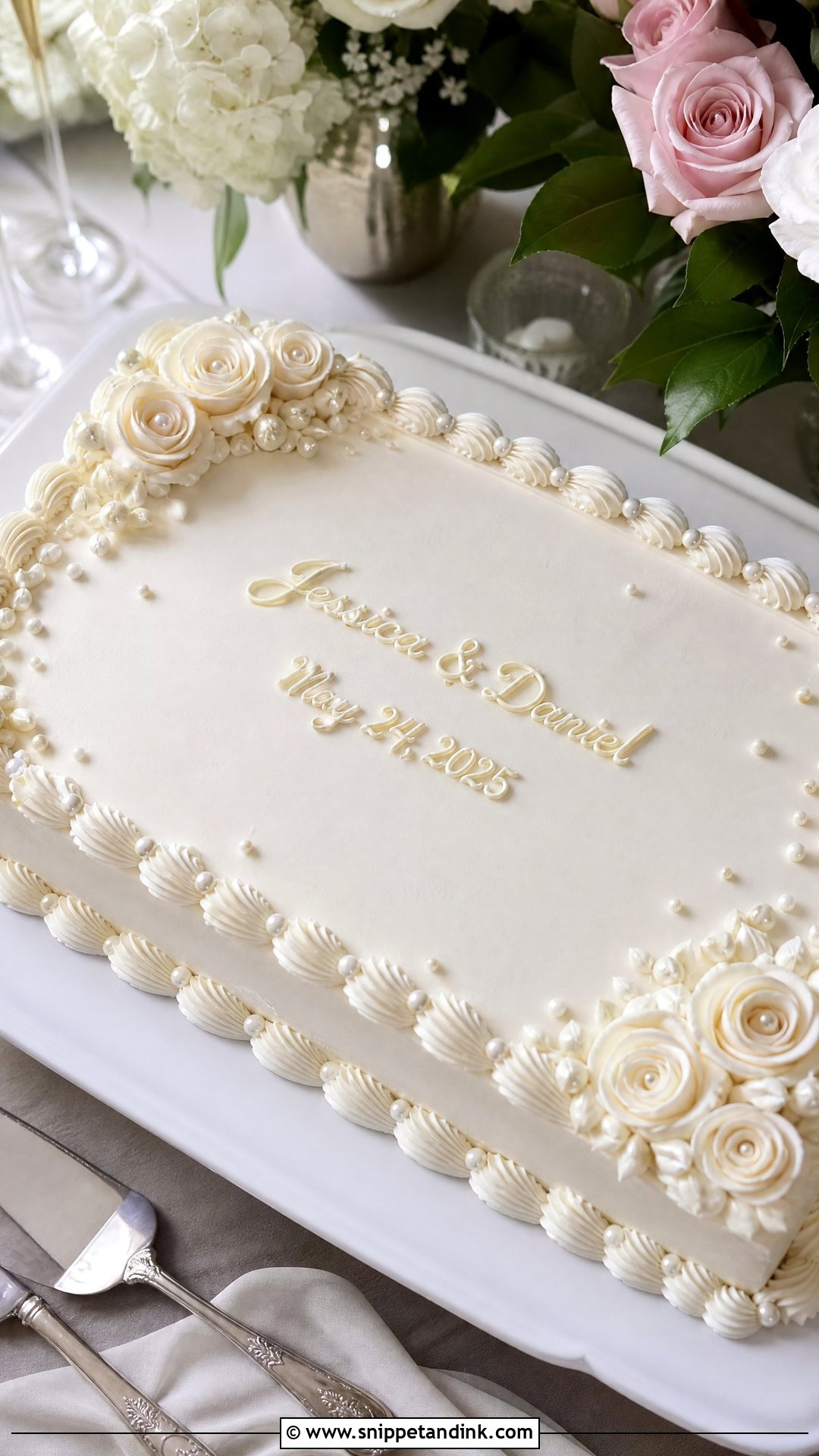
Sheet cakes are the practical choice for a large crowd, and the flat top gives lettering a lot of room. That room is also a trap: names written too small on a big surface look lost. I centre them, size them to the cake, and finish with a border in your colours. White buttercream with piped roses keeps it classic; smooth icing with fresh flowers in the corners reads modern. It cuts quickly and keeps catering costs down.



20. Small Wedding Cake With Names
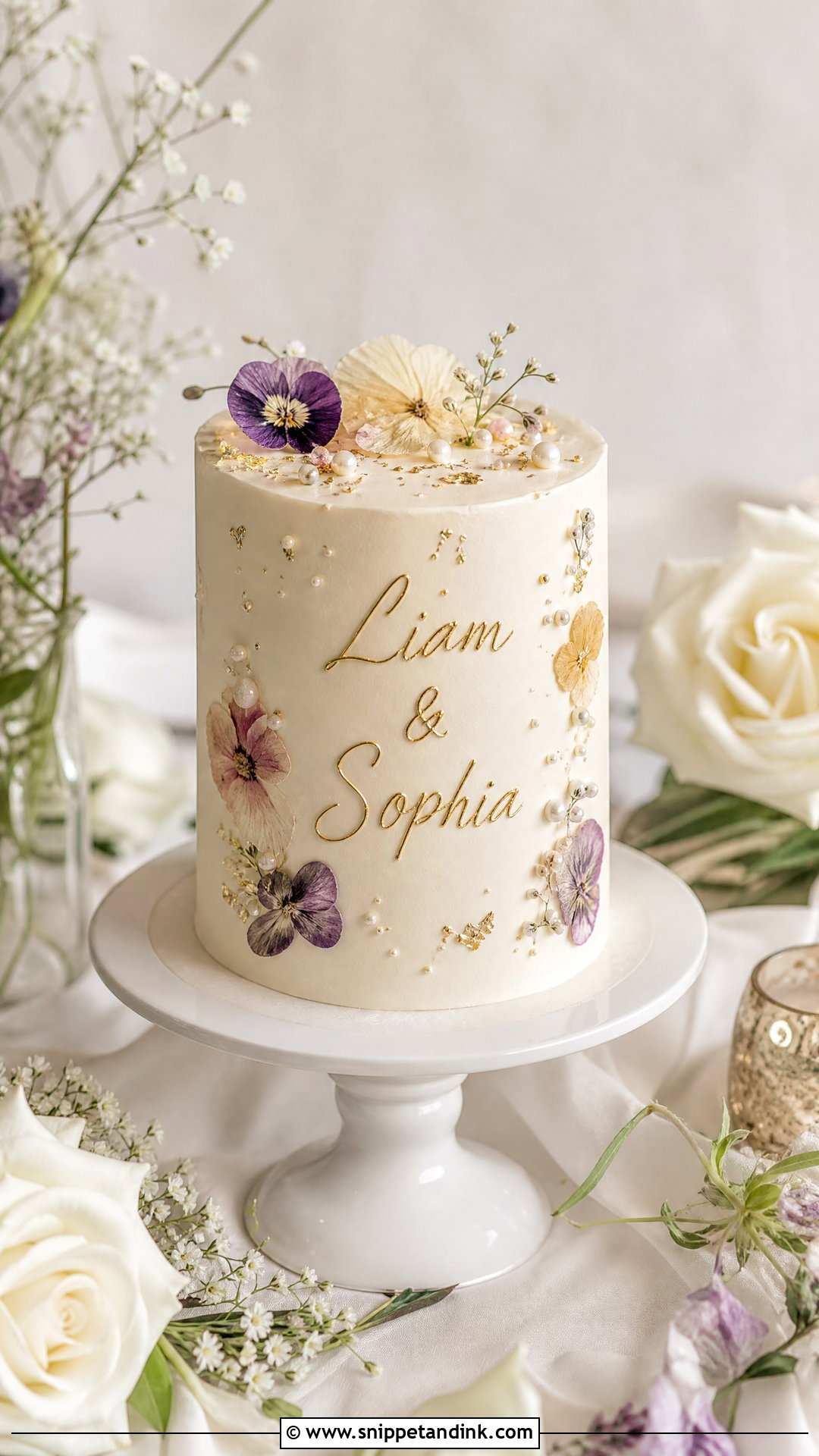
Small cakes suit elopements, courthouse weddings and intimate dinners, and a single-tier cake can carry first names, initials or a tiny topper. Height helps: a taller single tier gives more side space for writing than a wide, short one. Keep the decoration in scale, with pressed flowers, pearls or a touch of gold. The names should be the main event.
How Many Letters Fit on a Six-Inch Tier
Couples often pick the lettering style first and the cake size second, then find the two don’t agree. A six-inch top tier gives you roughly the width of a hand across its front, which suits a pair of short first names in script but not a long surname with a date. Before you fall for a layout, ask your baker to mock it up at actual size on paper.
The finish matters too. Buttercream lettering is soft and slightly rounded, so thin hairline scripts lose detail; royal icing and fondant hold finer strokes. Humidity softens royal icing and makes painted metallics tacky, so for an outdoor summer wedding I lean toward plaques and toppers, which are lettered indoors and attached at the venue.
Cutting From the Back So the Names Stay in Photos
Your names are usually still being photographed long after the ceremonial cut. Ask your caterer to take the first slices from the back of the cake, out of sight, and leave the lettered front standing until the end. If you are keeping the top tier, a topper or plaque comes away cleanly; names piped directly on the icing usually don’t survive freezing, so take a close-up photo of them before the cake is cut.
Readable From Across the Room, or It Isn’t Working
Names on a cake are a small detail that changes the whole design. A monogram reads formal, calligraphy romantic, an acrylic topper modern and Lambeth piping nostalgic. Underneath each one is the same question I ask at every consultation: can a guest read it from where they are standing? Match the lettering to the size of the tier and the finish of the icing, and the cake will look personal rather than busy, whether it is a grand tiered piece or a small cutting cake.
You'll Like These Ideas:









Leave a Reply