
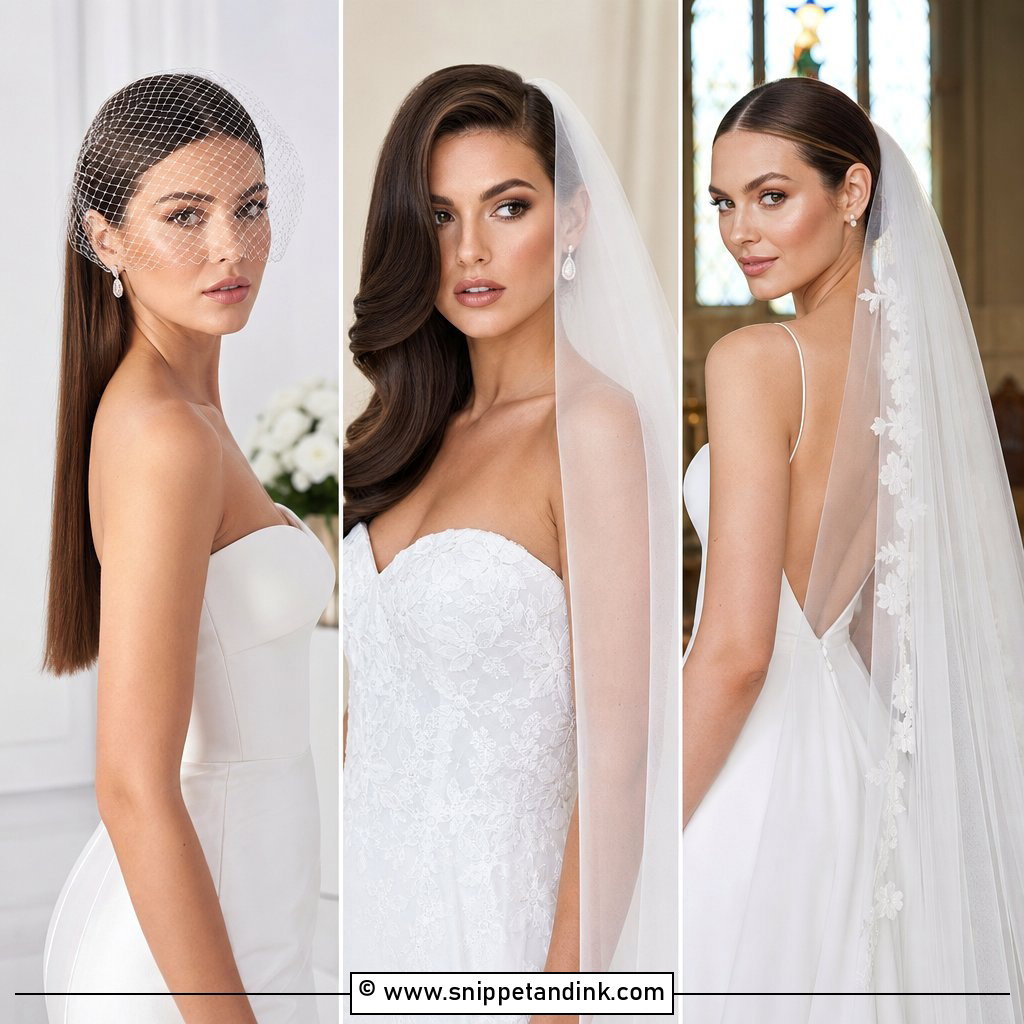
Wearing your hair down under a veil keeps the movement and length you’re used to seeing in the mirror, and it still looks unmistakably bridal. The hard part is invisible: loose hair gives a veil comb very little to bite into. Most of my work on a hair-down bride happens underneath, building a base the veil can hold without the style looking pinned. Waves, curls, half-up sections, braids, clips and headbands can all give that support. The ideas below suit garden, beach and formal venues as well as a quick courthouse ceremony, and I’ve added notes on how each one holds the veil so you can take them to your trial and your dress fitting.

The Hidden Anchor Under Loose Hair
A veil comb holds by tension: its teeth push against hair packed firmly enough to push back. Loose, freshly curled hair doesn’t do that on its own, which is why so many hair-down veils slide backward during the vows. Every look in this list relies on one of a few hidden bases.
- Teased cushion: a small section at the crown backcombed at the root and smoothed over on top. Quick, invisible, best for medium-weight veils.
- Crossed pins: two or three bobby pins set in X shapes, with the comb slid underneath so the teeth hook the pins. Useful on short or very fine hair.
- Mini braid or twist: a thin braid or twisted section across the crown. The strongest option and the one I use for heavy or long veils.
- Half-up gather: the pinned section of a half-up style doubles as the anchor.
Veil weight decides which base you need. A single layer of soft tulle at elbow length is light; two tiers, beaded edges or cathedral length is heavy enough to pull a comb straight out of smooth hair. Many veil makers will sew a small loop or a second comb onto the veil if you ask, and that extra anchor point is worth it for a long one.
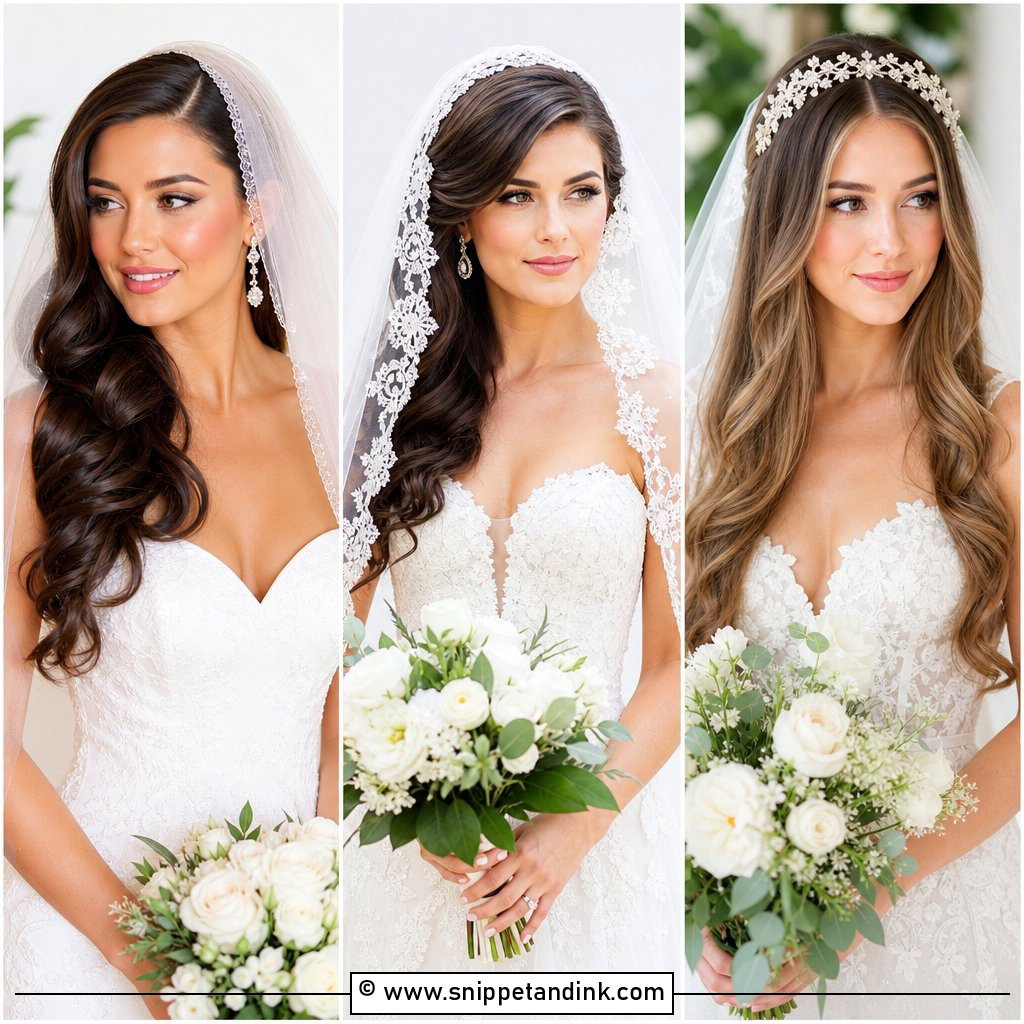
1. Hair Down With Cathedral Veil
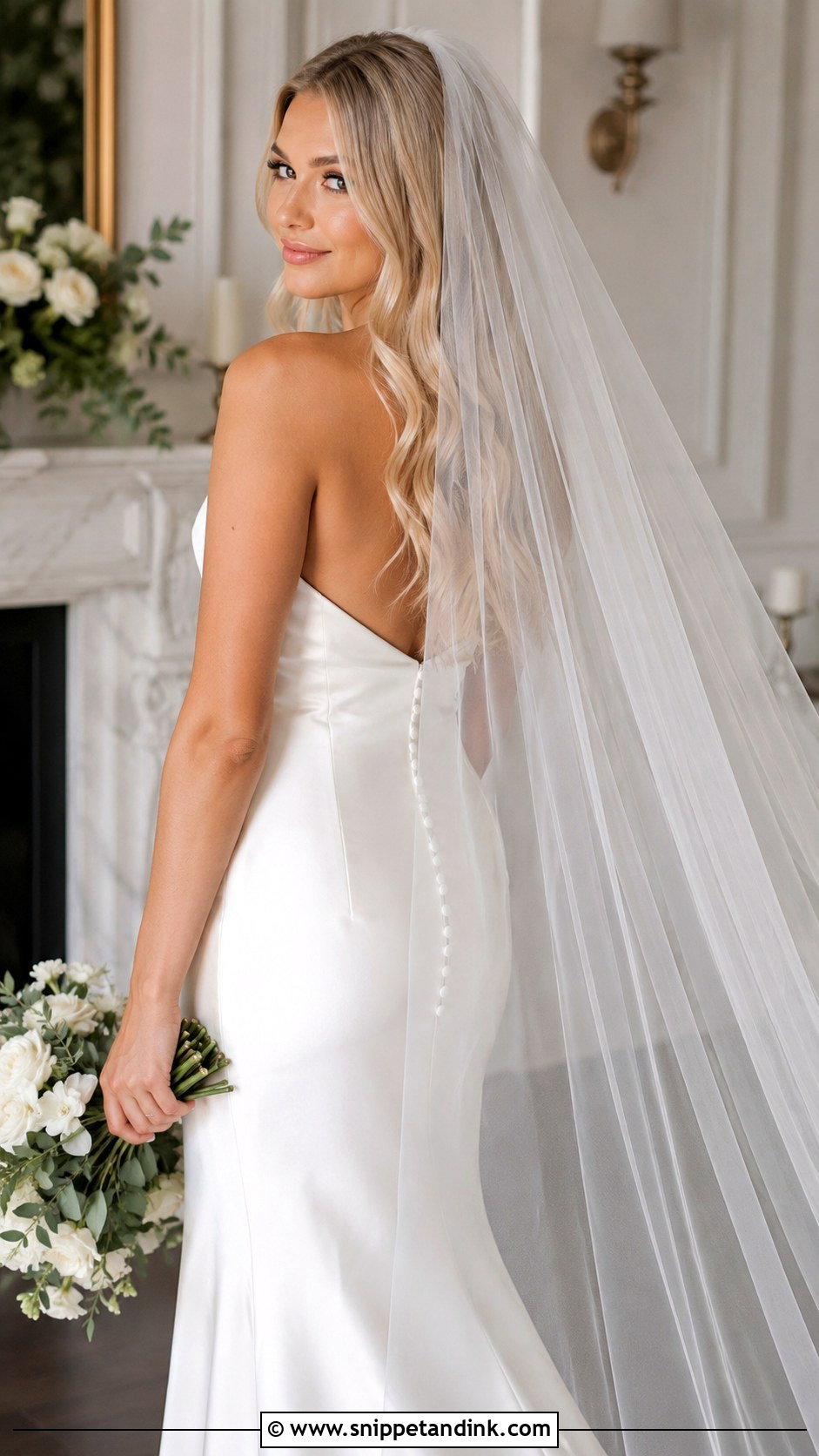
A cathedral veil is the heaviest veil you can put on loose hair, so the anchor has to be serious. I build it at the crown with a small concealed braid or a cushion of teased hair crossed with pins, then slide the comb in so it locks under that base. Shape the mid-lengths and ends with loose waves, curls or a sleek blowout so the tulle falls cleanly down the back. It suits formal gowns, long trains and chapel aisles. The trade-off is weight: after an hour, some brides feel the pull at the scalp, and that’s when the veil comes off for the reception.
2. Hair Down With Fingertip Veil
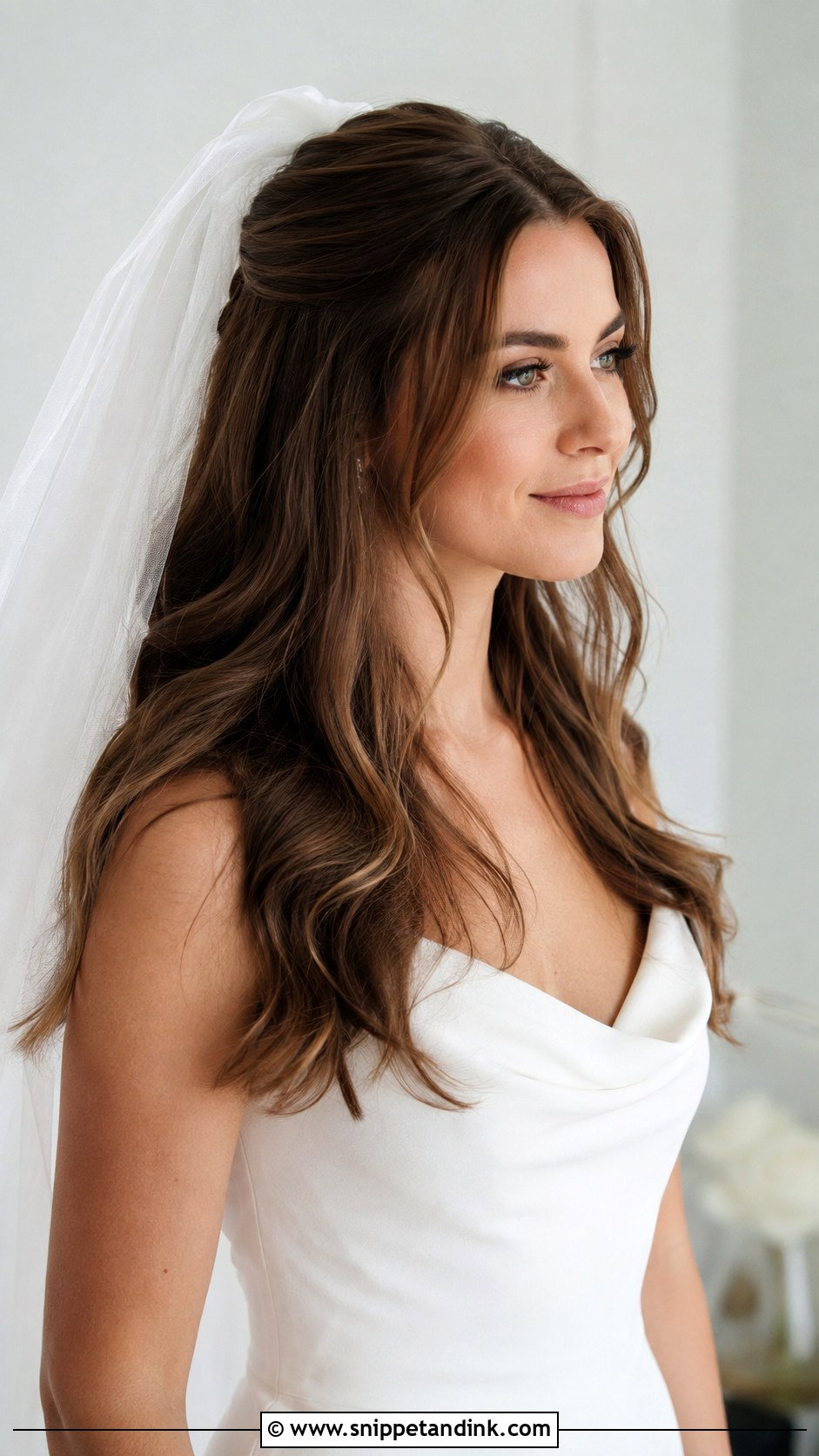
A fingertip veil lands around the hands, long enough to read as a veil from every angle but light enough that it doesn’t drag at the comb. That lightness is why I suggest it for brides who are nervous about loose hair holding up. Brushed-out waves, long layers or soft face-framing pieces sit nicely under it. Crown placement looks traditional; set it lower for something more relaxed. I finish with a light-hold spray rather than a strong one, because tulle snags on stiff, crunchy hair.
3. Hair Down With Pearl Veil
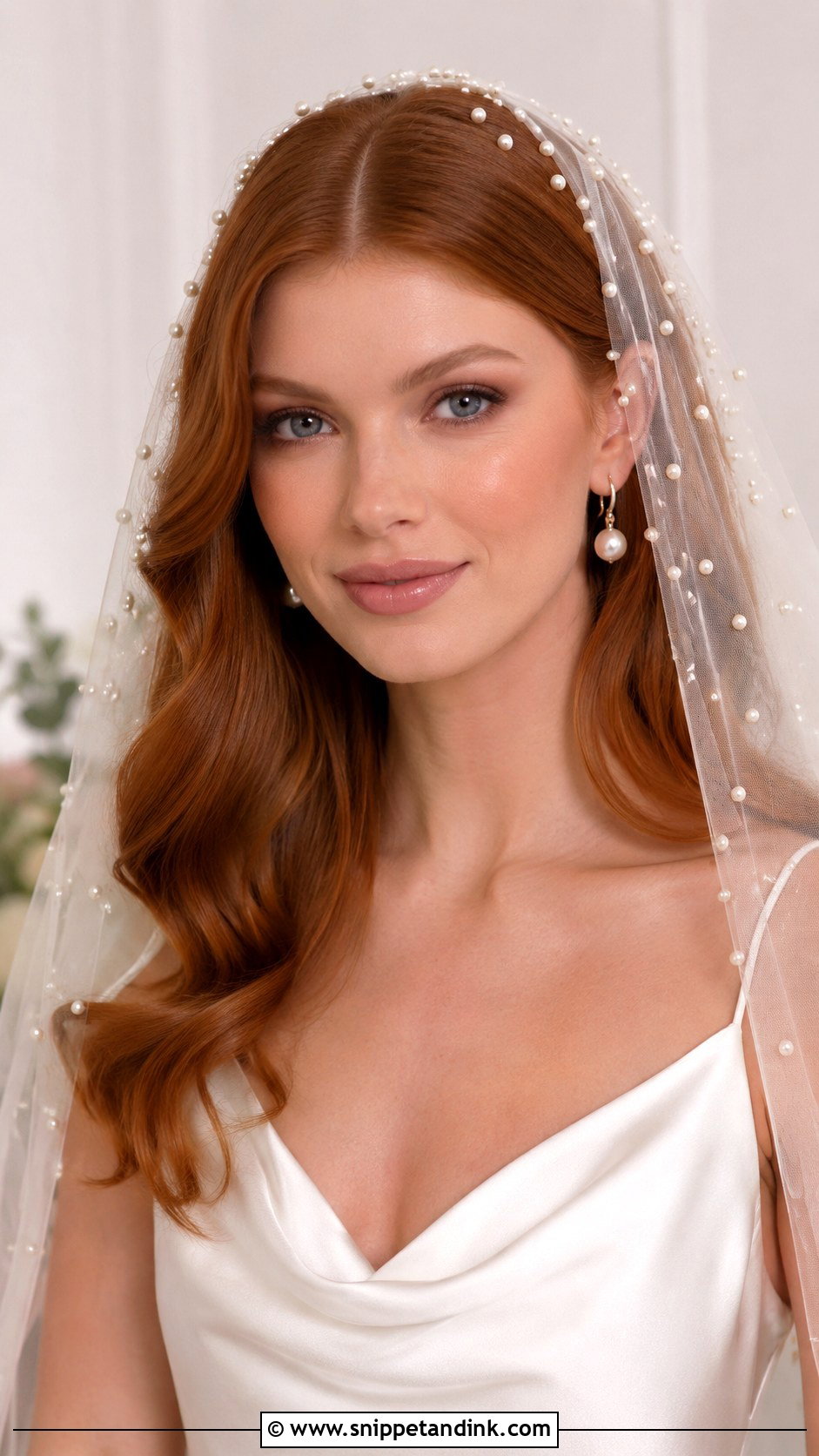
Pearls scattered over tulle are already the detail, so the hair underneath should be quiet. Smooth, loose waves echo the drape of the veil without fighting it. A middle part looks modern; a soft side part looks classic. One thing to check at the fitting is how the pearls catch: sewn-on beads can grab at curls when you turn your head, so I keep the surface of the hair smooth and the waves brushed. Skip other hair accessories. It pairs with satin, crepe and square necklines.
4. Hair Down With Lace Veil
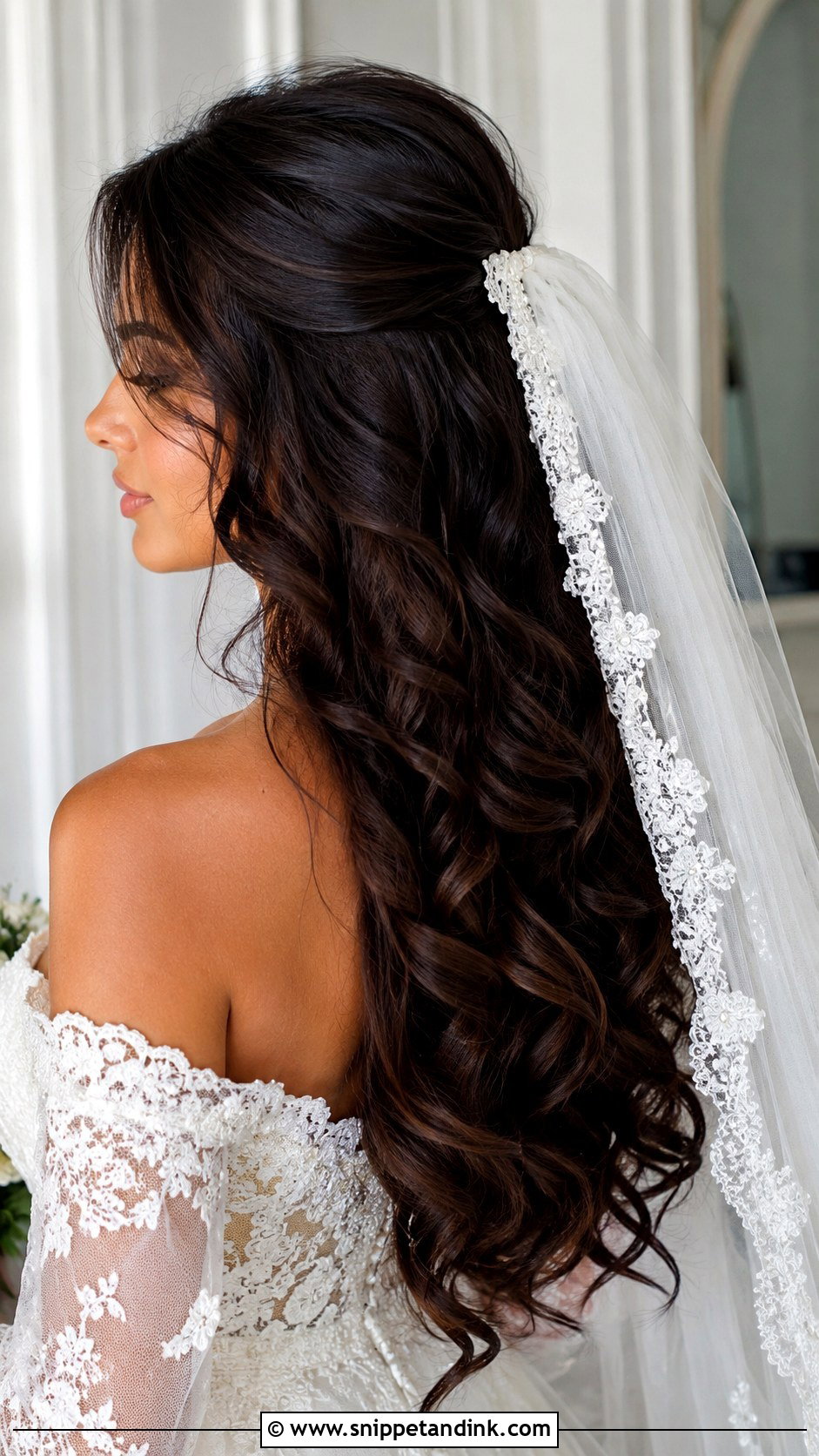
A lace-edged veil frames the hair and shoulders, and the lace is where the eye goes. If the border is heavy, keep the crown smooth so volume there doesn’t push the lace off its line. I usually set the comb a little lower on the head with lace, which lets the edge fall over the back rather than flare out to the sides. Smooth waves or defined curls both sit well under it. Heavier lace also swings less in wind, which helps at outdoor ceremonies.
5. Hair Down With Mantilla Veil
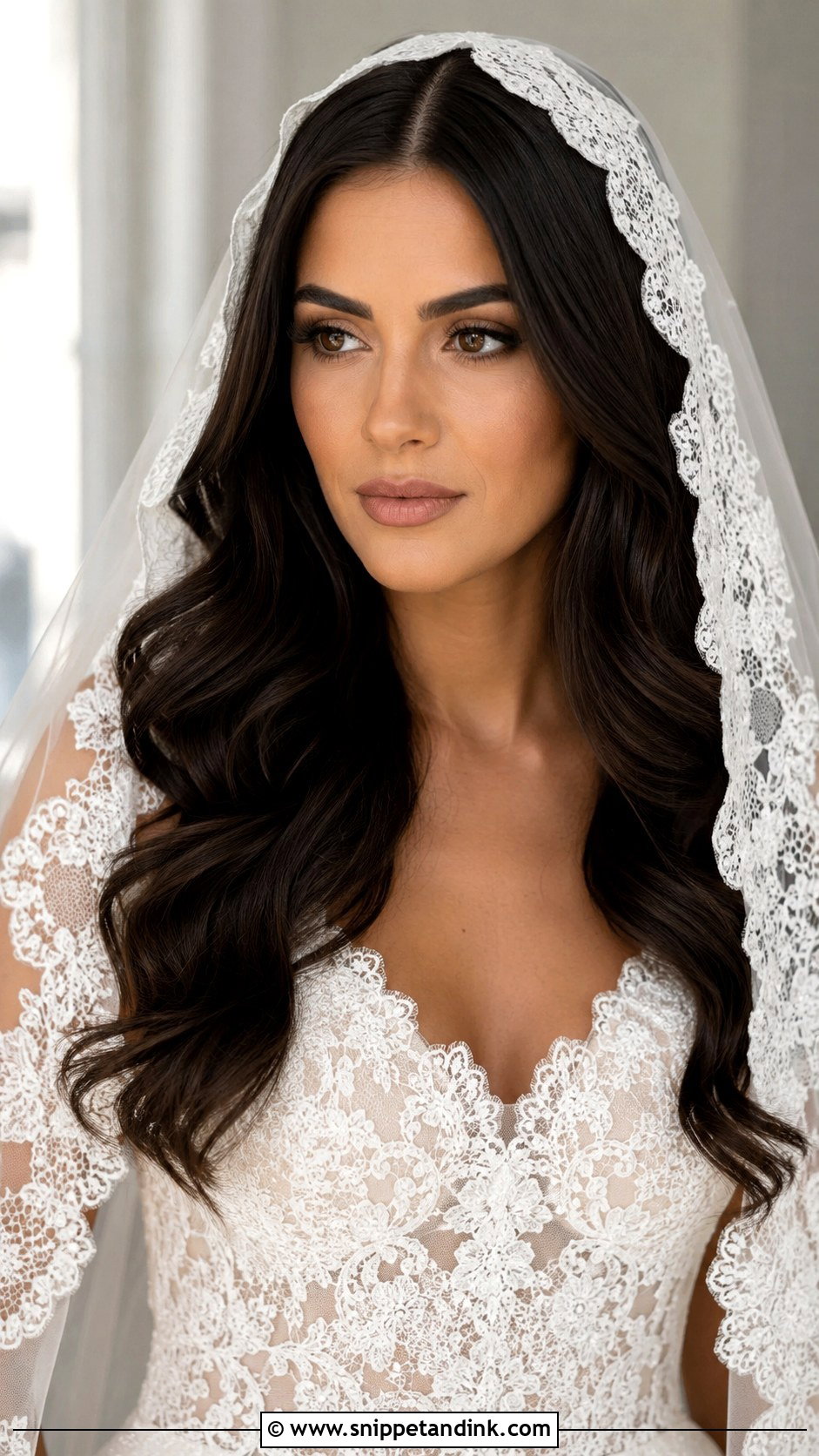
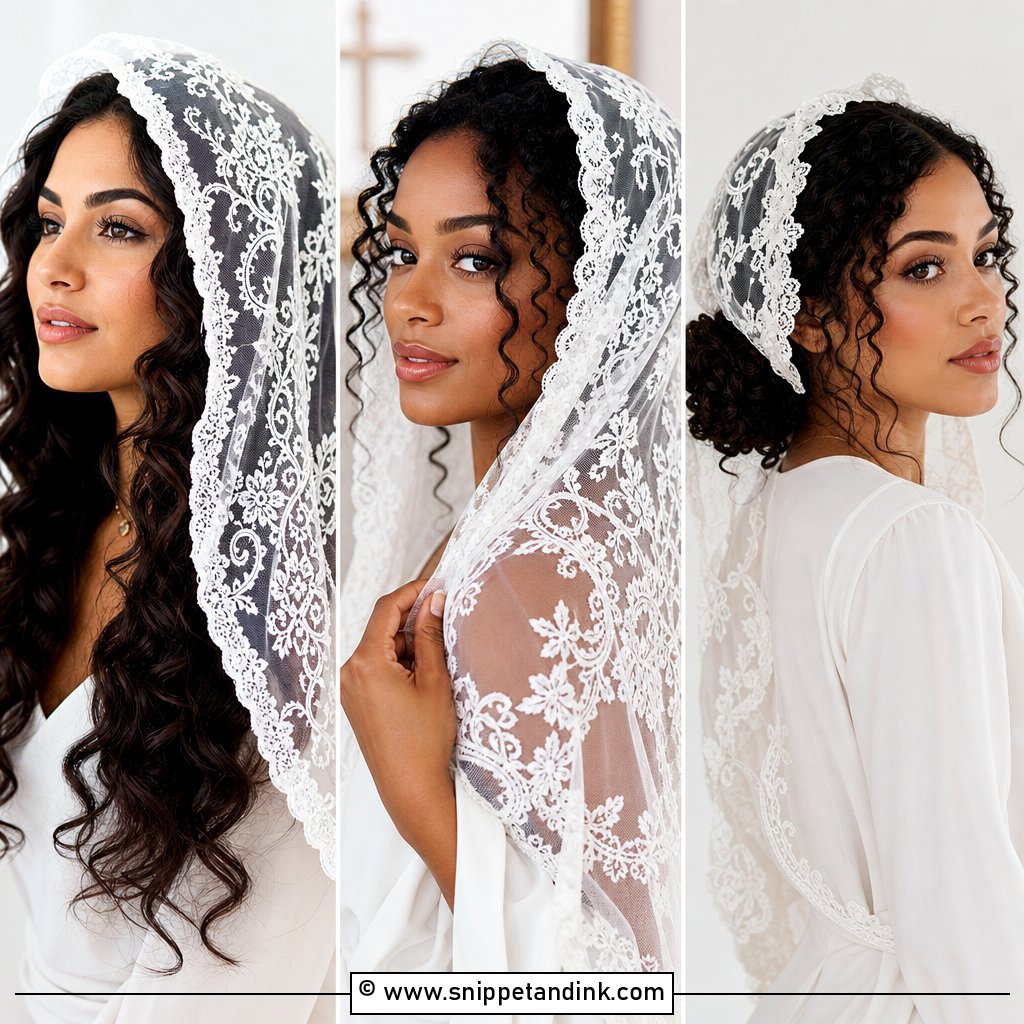
A mantilla sits close to the head and frames the face with its lace edge, which is why the crown and part must be smooth. Long, soft waves or a polished straight finish let the border show. Mantillas are notorious for shifting because many have no gathered comb, so I hold the lace with a small clear comb underneath and a few pins hidden in the lace pattern. A centre part is symmetrical and formal; a few face-framing layers stop it looking severe. It belongs naturally in church ceremonies and with lace or heritage-style gowns.
6. Hair Down With Blusher Veil
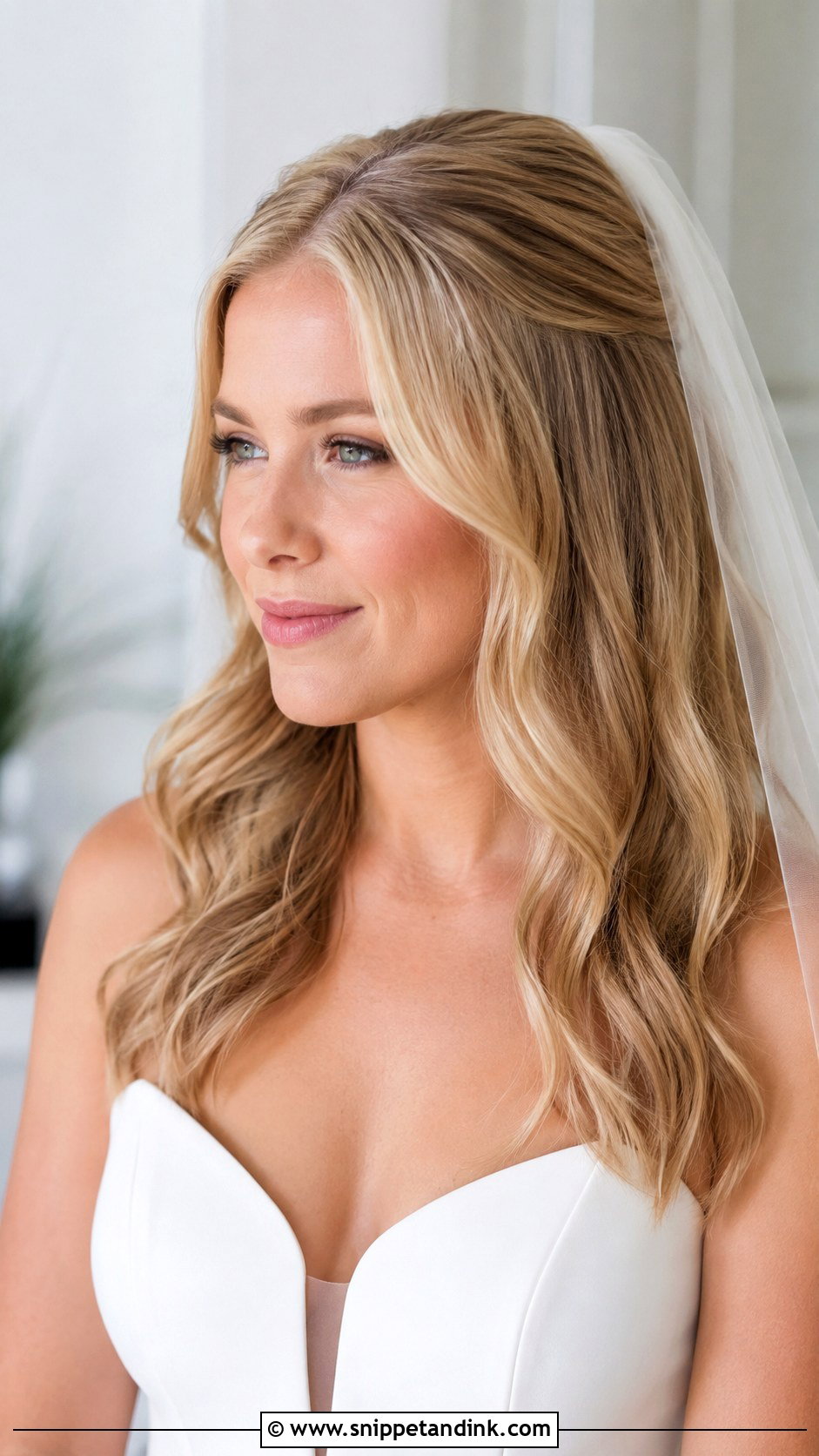
A blusher veil comes over the face, so whatever’s happening around the cheeks and neckline has to stay neat. Soft waves are easiest because they don’t add bulk near the face. Bangs and front layers get caught when the blusher is lifted, so I smooth them with a little styling cream and pin anything long behind the ear. Crown placement suits a full blusher; slightly further back softens it. Practise the lift once with whoever is doing it, so it doesn’t drag the front of your hair with it.
7. Half Up Hair Down With Veil
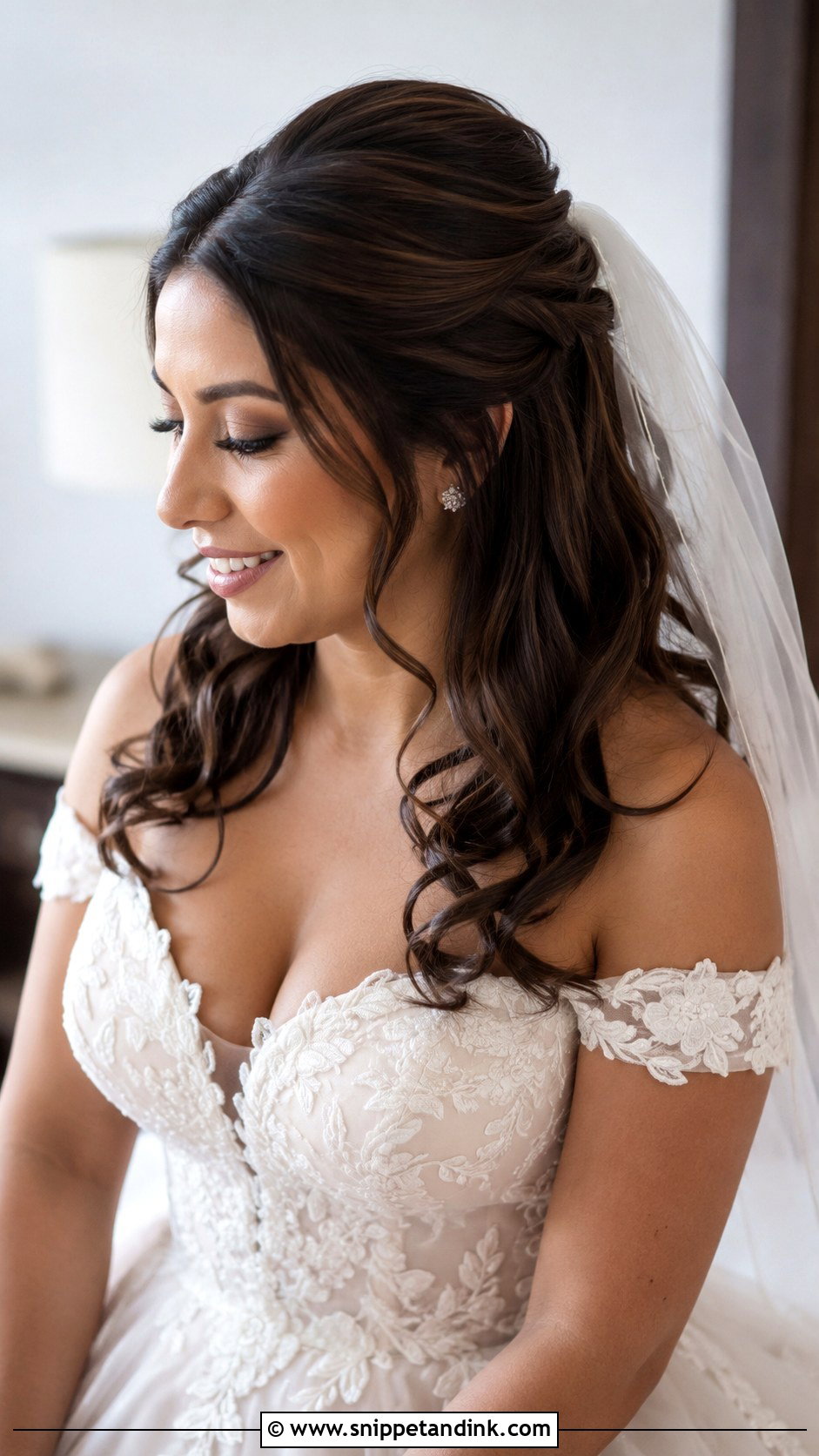
Half-up is my first suggestion for a bride who wants hair down and can’t risk the veil slipping. The gathered section is a ready-made anchor, and the comb sits just under it. You keep curls or smooth waves through the lengths, and face-framing pieces stay soft at the front. Pearl pins or a small comb can decorate the pinned section, though it often needs nothing at all. It’s comfortable for a full day because the comb’s grip is shared with the twist above it.
8. Hair Down With Veil And Headband
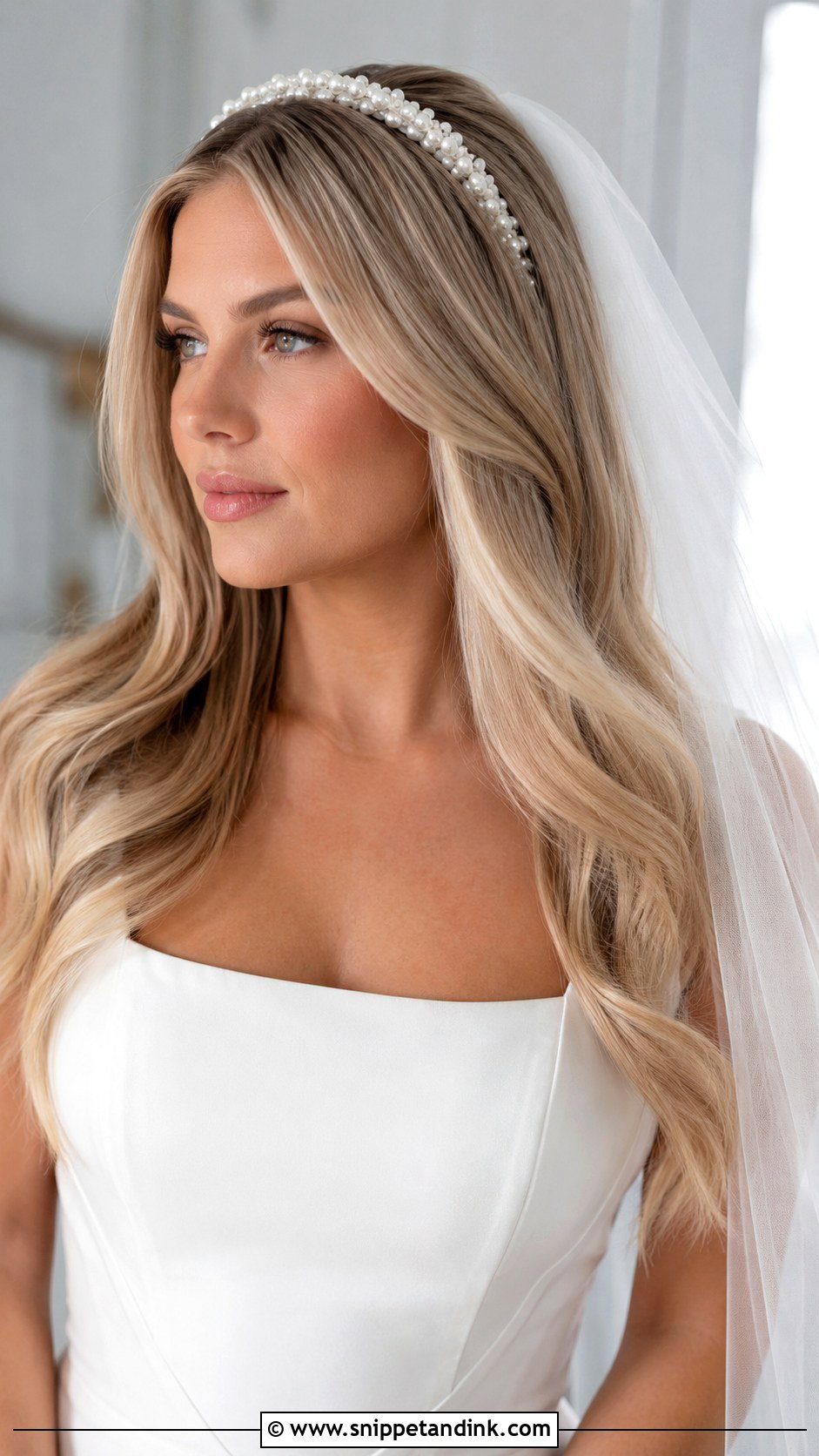
A headband gives loose hair structure without an updo and holds the hair back so the veil sits cleanly behind it. I place the band first, then set the veil comb just behind it so the two pieces touch and read as one. A pearl headband is soft, crystal brings sparkle and plain satin looks modern. It suits loose waves, smooth blowouts and shoulder-length hair. On very fine hair, a band can slide back over the hours, so I pin it behind each ear through the hair underneath.
9. Hair Down With Veil And Side Part
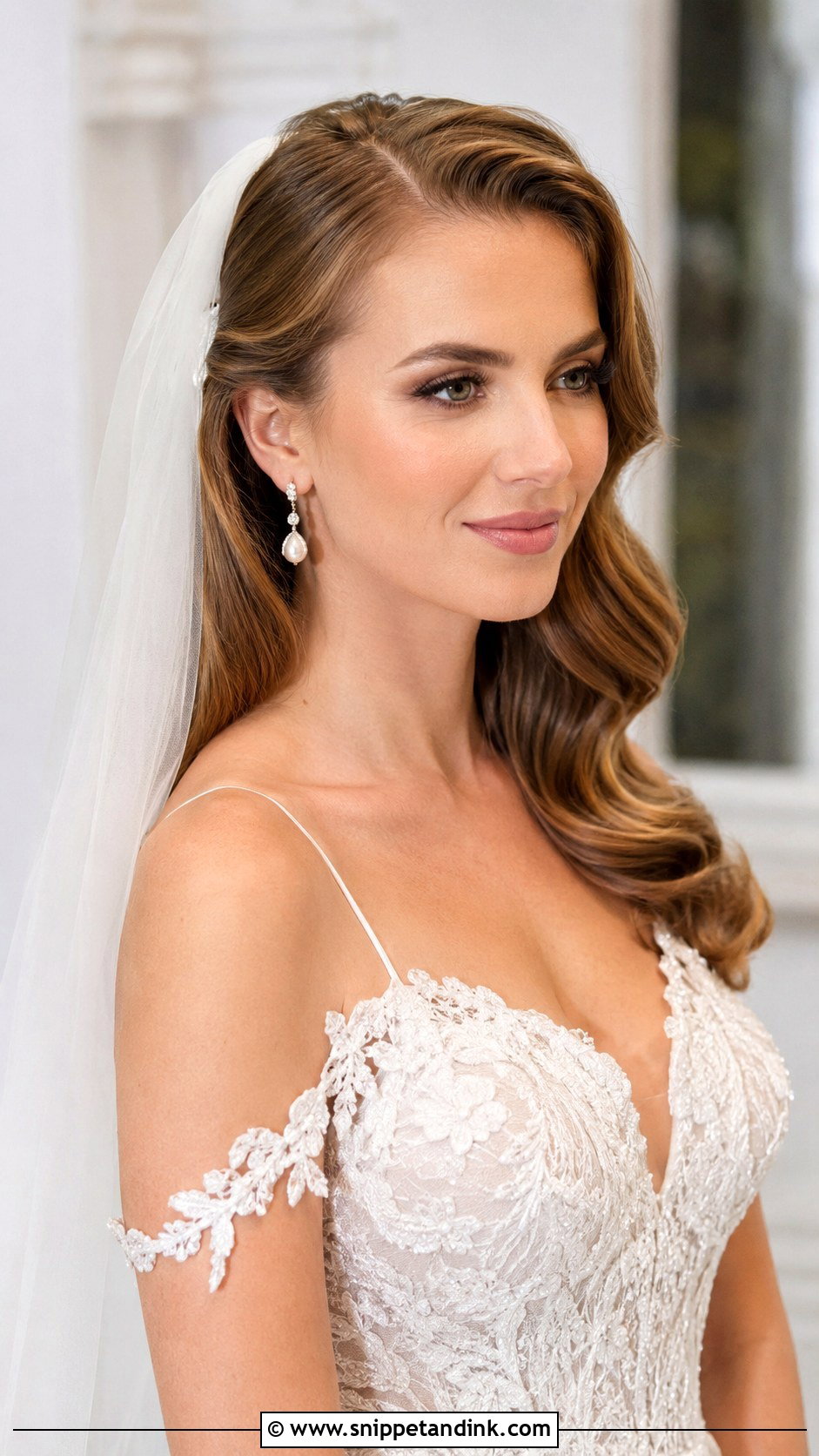
A side part gives lift at the front and shape around the face. It pairs with Hollywood waves, loose curls or a smooth layered blowout, and tucking the lighter side behind one ear shows off earrings. The detail people miss: the veil goes on the heavier side of the part, slightly off centre, where there’s more hair to anchor into. A veil centred on a side part tends to slide toward the lighter side through the day.
10. Hair Down With Veil And Middle Part
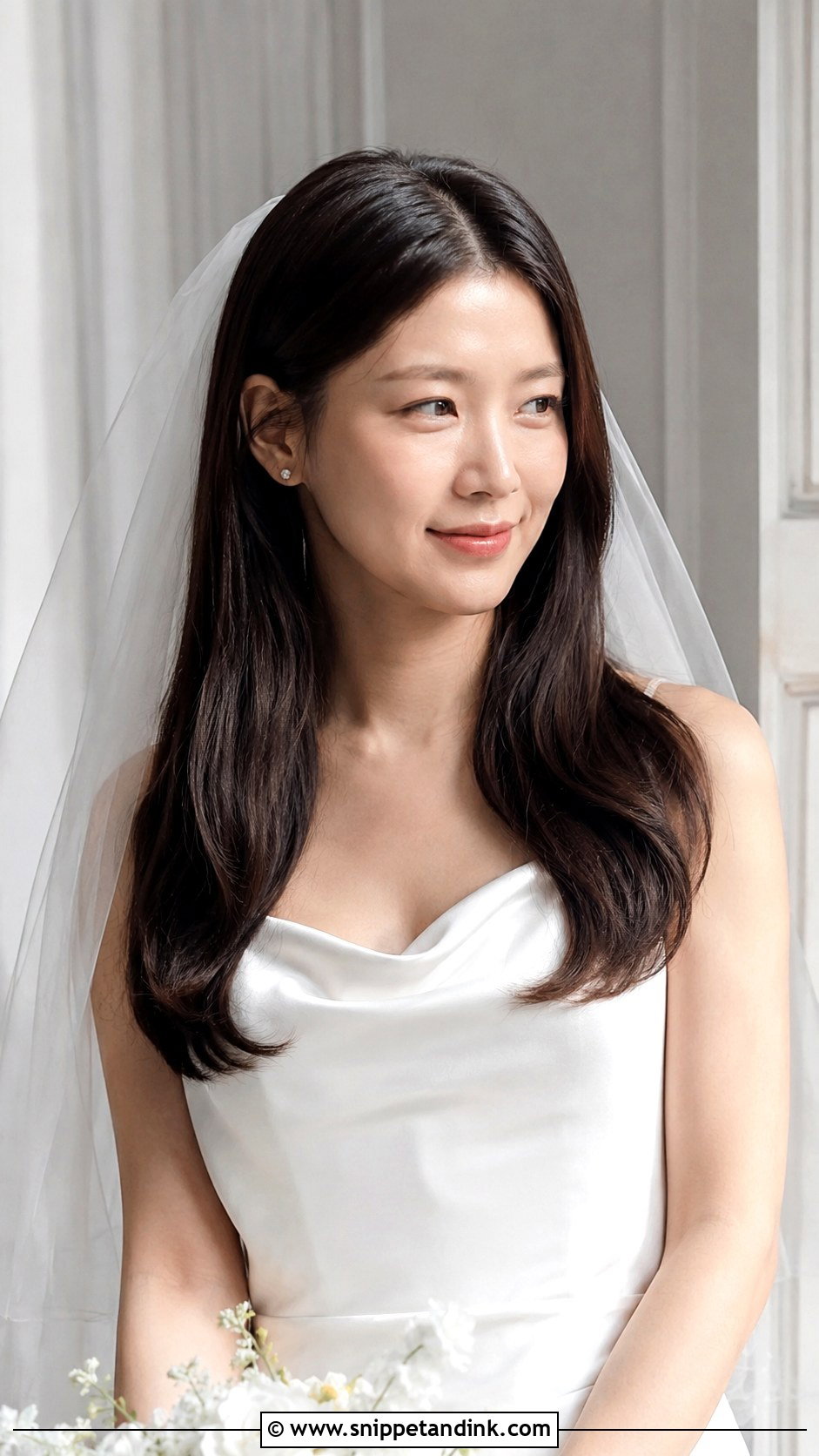
The middle part is clean and symmetrical, and it suits simple veils, pearl veils, mantillas and sleek gowns. For a softer version I add loose bends and keep the ends smooth; for polish, a glossy straight finish with a little root lift. Straight, slippery hair is the hardest base for a comb, so even when the finish is sleek I backcomb a small hidden patch at the crown to give the teeth something to hold. The veil can sit at the crown or lower at the back.
11. Hair Down With Veil And Loose Waves
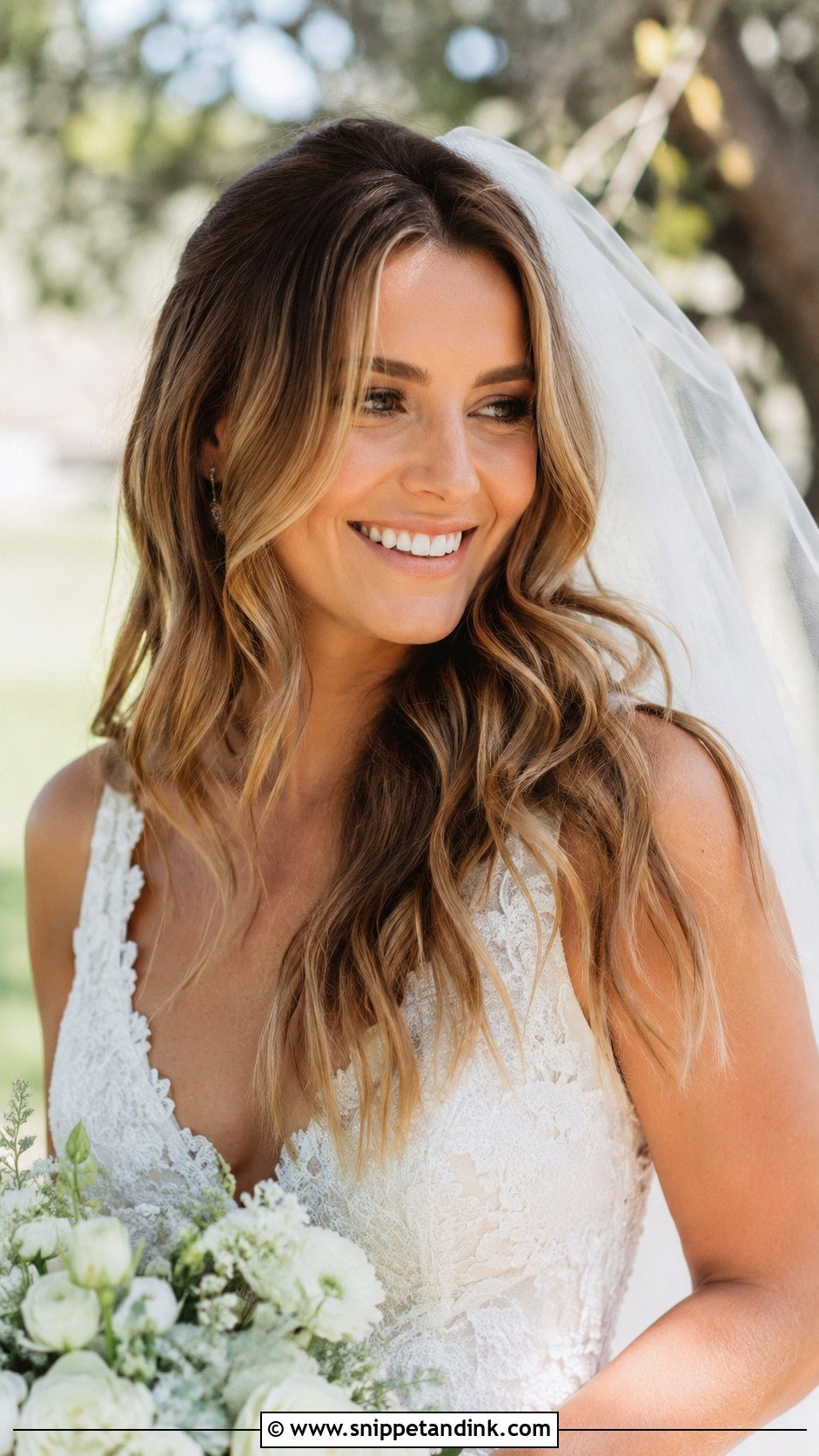
Loose waves stay the most requested hair-down look for good reason: they have movement and they don’t compete with the veil. I curl in alternating directions, let the hair cool, and brush through so the waves blend rather than sit as separate ringlets. Ask for root lift at the crown, since that’s what the veil grips. On fine or heavily layered hair, waves relax over the day. If yours drop quickly, set them tighter than you want them at the start, knowing they’ll open up by the ceremony.
12. Hair Down With Veil And Hollywood Waves
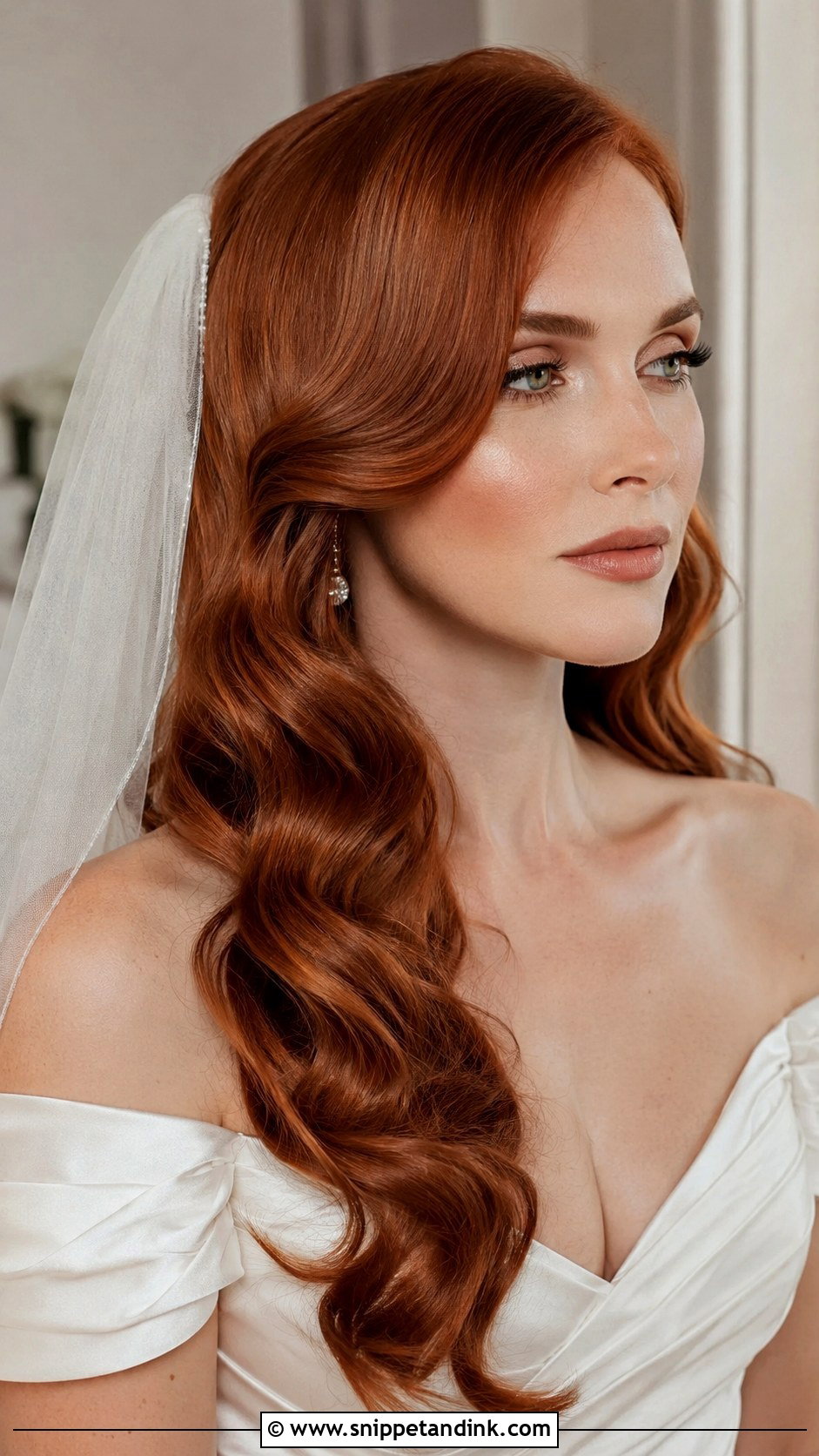
Hollywood waves are sculpted, glossy and usually swept to a deep side part. I set them with heat, pin each curl to cool, then brush them into a single uniform ripple. The veil goes slightly behind the crown so it doesn’t break the wave line at the front. Keep the veil plain, since the hairstyle is already doing a lot. Humidity is the risk: in a damp outdoor setting, the ripple softens into loose curls within a few hours. Indoors, with fitted gowns and off-shoulder necklines, it holds well.
13. Hair Down With Veil And Soft Curls
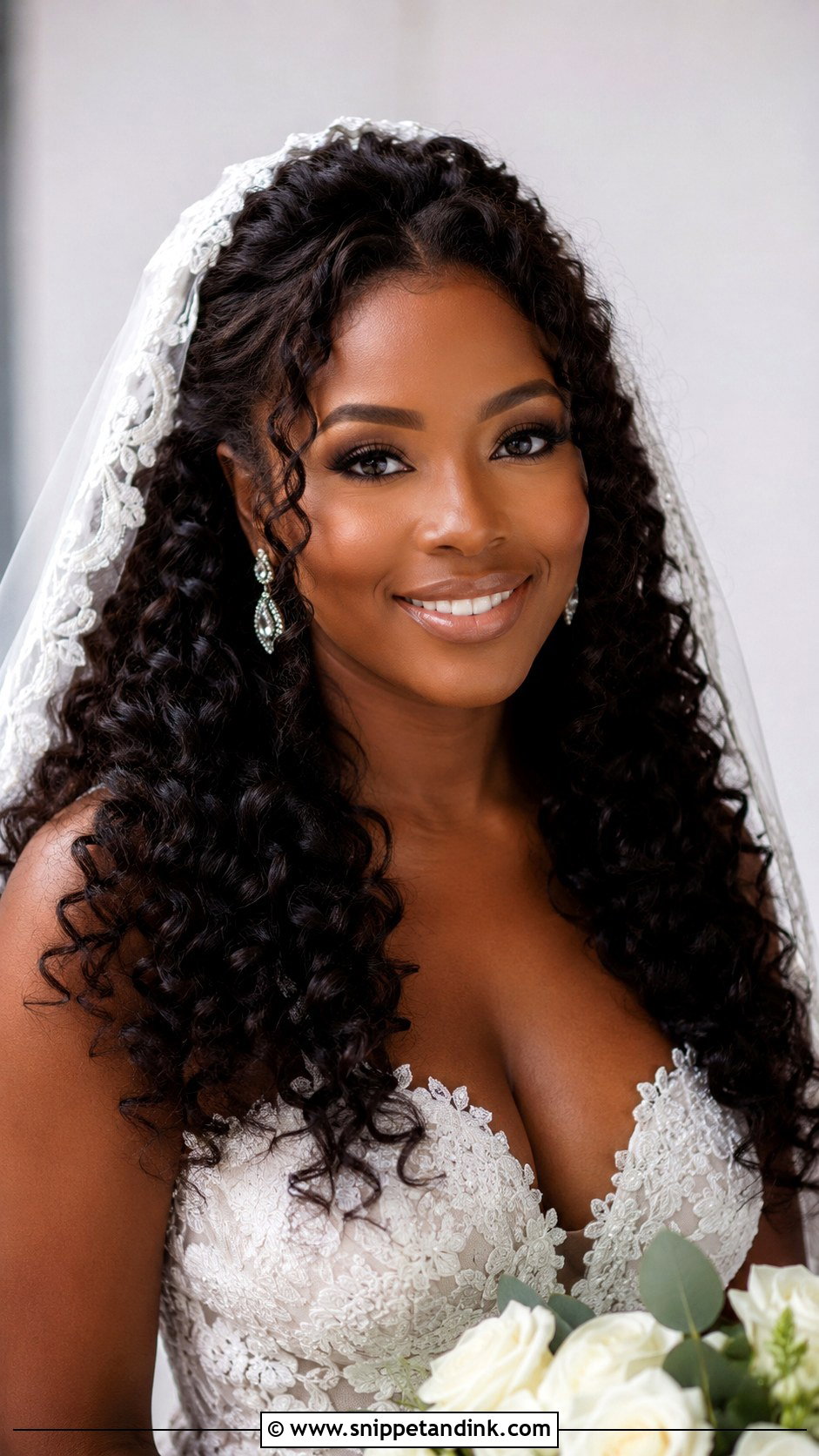
Soft curls add body, and body is what helps loose hair support a veil. They can be airy for a garden or defined for a formal room. I curl and pin the crown section separately first, which gives the veil a firm, textured base while the rest stays loose. A few front pieces curled away from the face keep it soft. Lace, pearl and fingertip veils all sit well on curls, so this one adapts to most dresses.
14. Hair Down With Veil And Braid
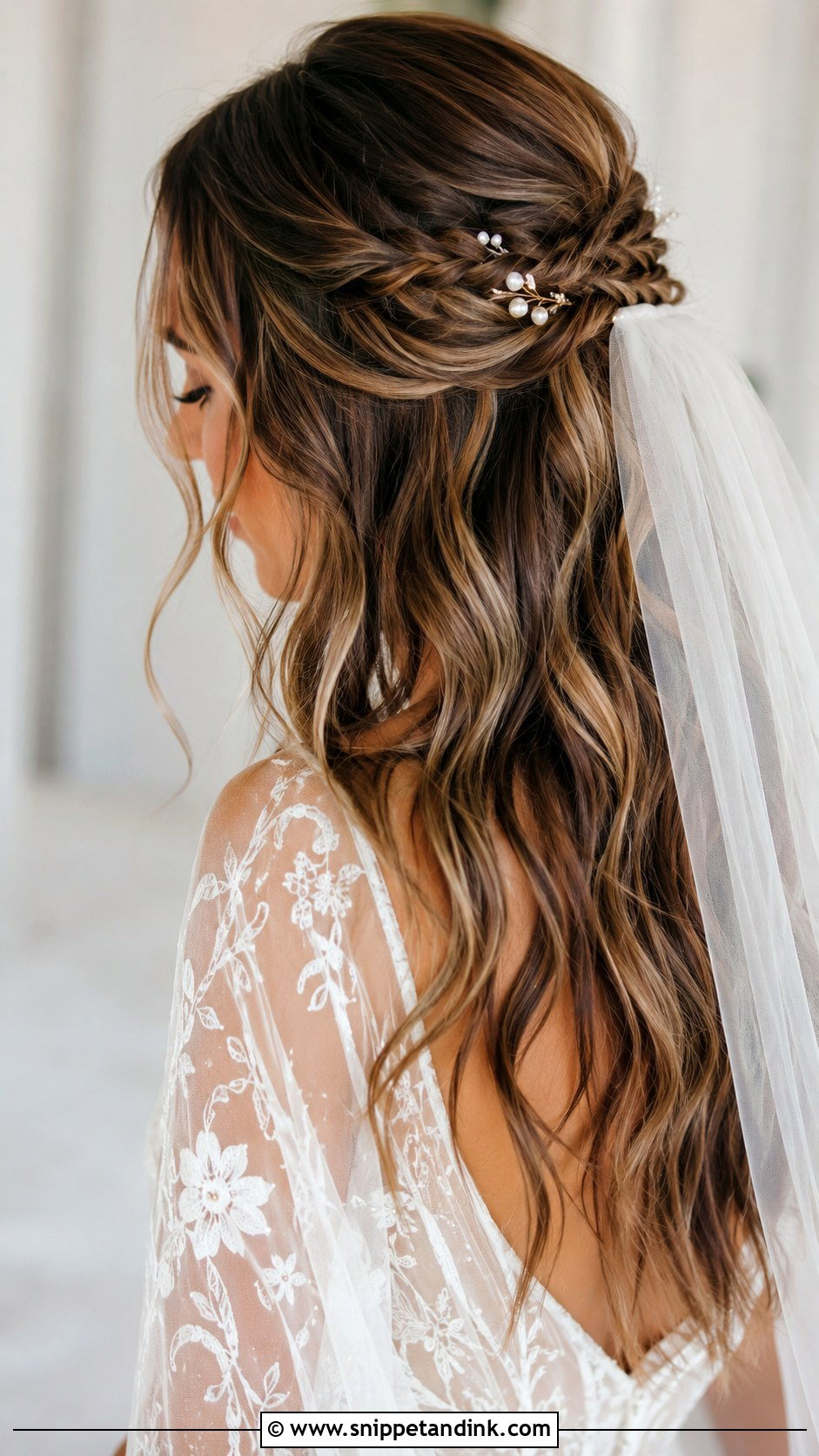
A braid is the most secure anchor you can hide under loose hair. A small horizontal braid across the crown, or a hidden plait just behind the hairline, gives the veil comb something solid to slide under while the rest stays down. Bigger braids look boho; thin ones disappear. With waves, the braid blends in; on smooth hair it shows more. For outdoor weddings and long ceremonies, this is the one I trust most.
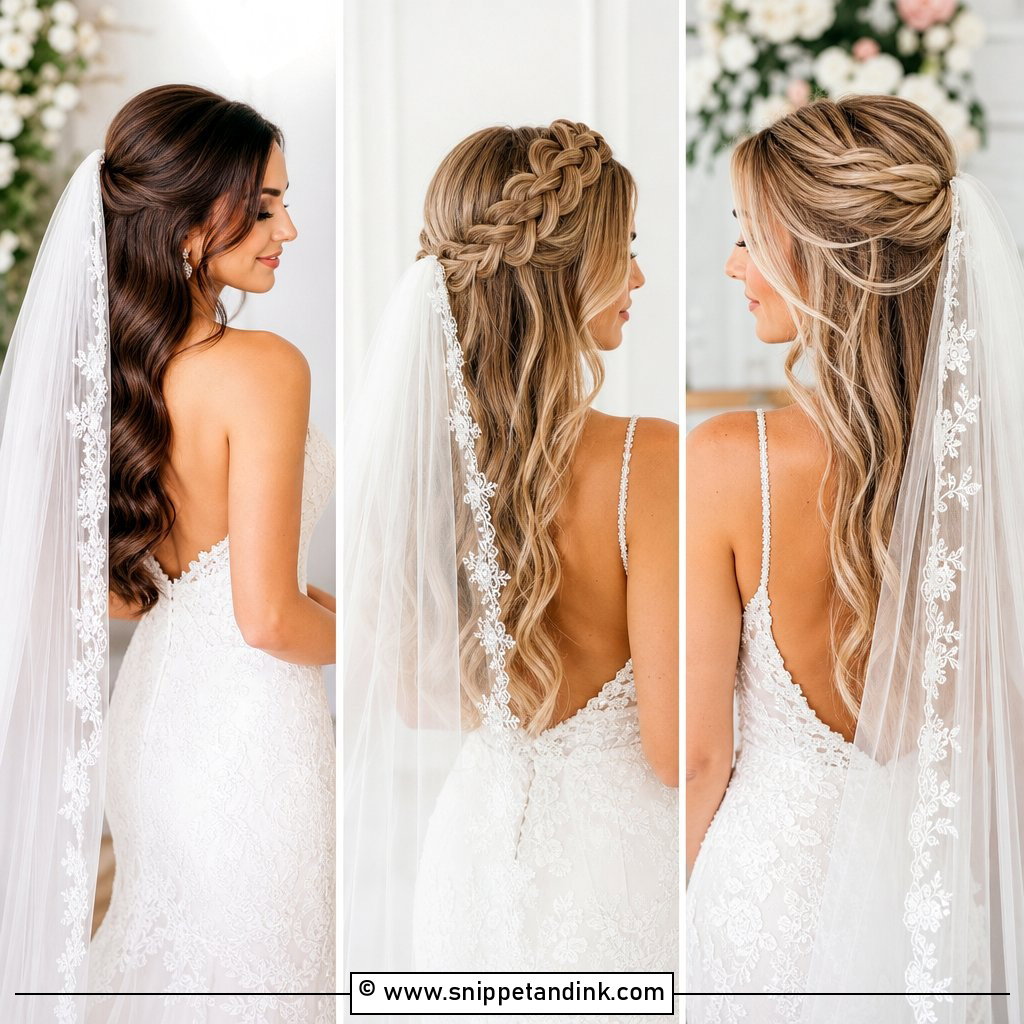
15. Short Hair Down With Veil
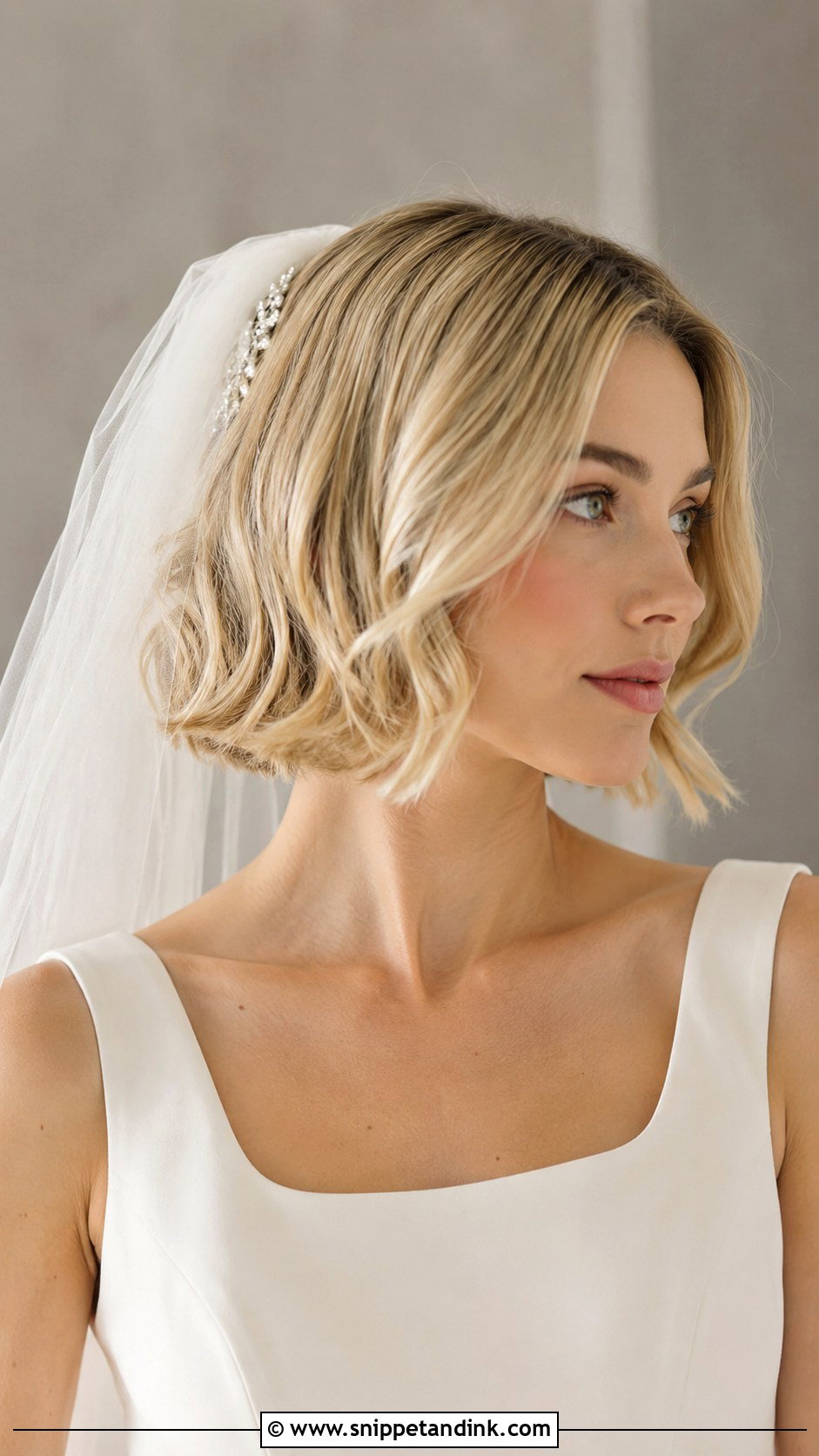
Short hair can carry a veil just as well when the shape is polished. A bob, lob, or shoulder-length cut takes a veil at the crown or behind a headband, comb or decorative clip. Very short hair can’t be teased enough to hold a heavy comb, so I use pins crossed in an X as a ladder for the comb to sit on, and I keep the veil light. Match veil length to the cut: shoulder, elbow or fingertip length rarely overwhelms a bob.
Tulle, Wind and Loose Waves Don’t Always Get Along
Loose hair and tulle rub against each other all day, and a few things happen that brides don’t expect.
Static is the first. In dry, heated rooms or in cold weather, tulle clings to the back of the hair and lifts strands with it. I mist an anti-static spray on the inside of the veil, never on the hair itself, and keep a dryer sheet in the emergency bag to smooth over it. Snagging is the second: textured curls catch on soft tulle and on beading, so a smoother finish on the lengths helps, and a hug from behind is where it usually happens.
Wind is the third. On a beach or open hillside, a long veil acts like a sail and loose hair blows across the face. Ask the planner which way the wind usually blows at your ceremony time and stand so it comes from behind. A few hidden pins at the temples keep front pieces out of your eyes without anyone noticing.
Lifting Off the Veil Without Flattening the Waves
Most brides take the veil off before the first dance, and that moment can undo the hair if it’s rushed. Have someone who knows where the pins are slide the comb out in the same direction it went in. Pulling it straight back drags the waves with it. Then fluff the crown with your fingers, not a brush, to lift the area where the anchor was.
Ask your stylist at the trial what your hair will look like with the veil off. The teased base or mini braid may need covering. A decorative pin, a small comb or a flower dropped into the same spot fills it in a few seconds and changes the look for the evening.
Bring the Real Veil, Not a Photo of It
A veil over loose hair comes down to balance: hair that moves naturally, and a base under it that doesn’t. Crown placement, hidden pins, a little teasing, lightweight products and the right veil length do the work, and waves, half-up sections, curls, braids, headbands and short polished cuts can all carry it. Please bring the actual veil to your hair trial, not a photo of it. Weight changes everything, and it’s the only way I can tell you honestly how your style will hold.
You'll Like These Ideas:



Leave a Reply