
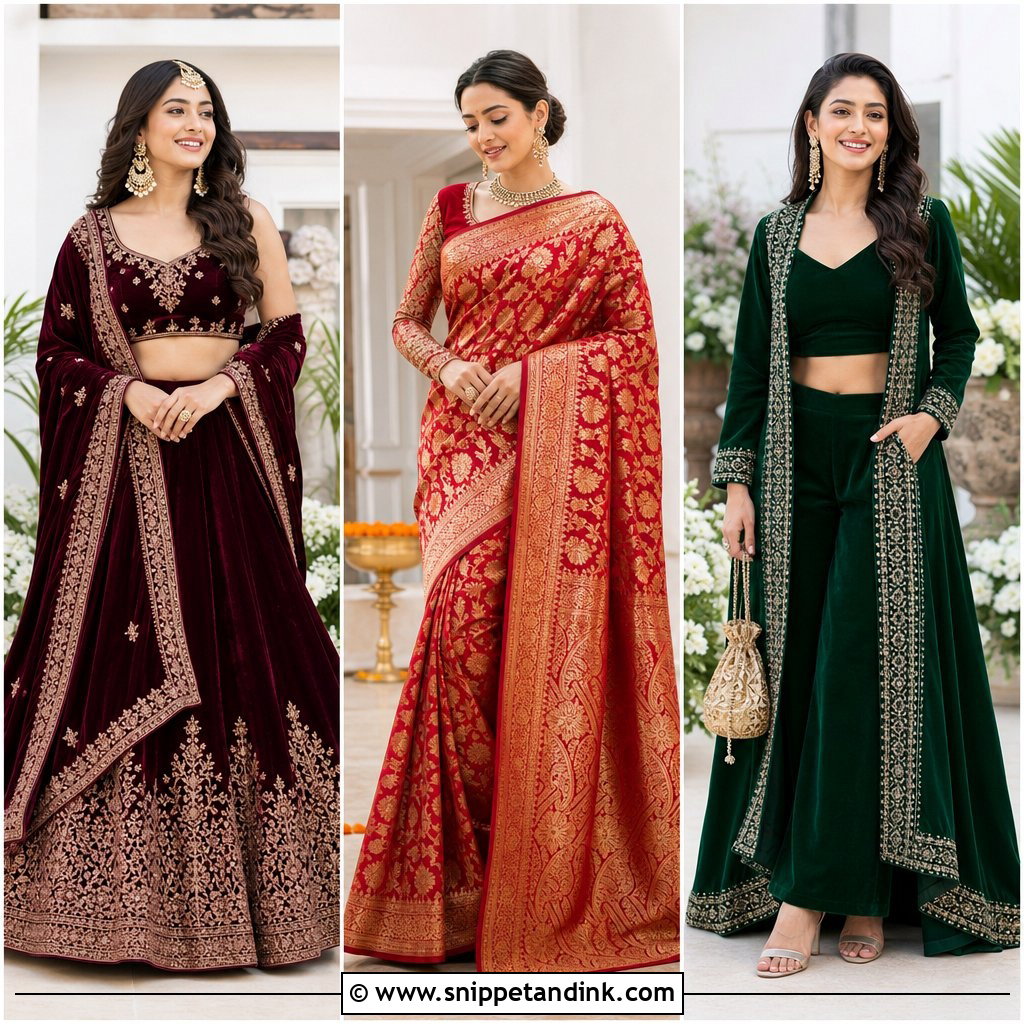
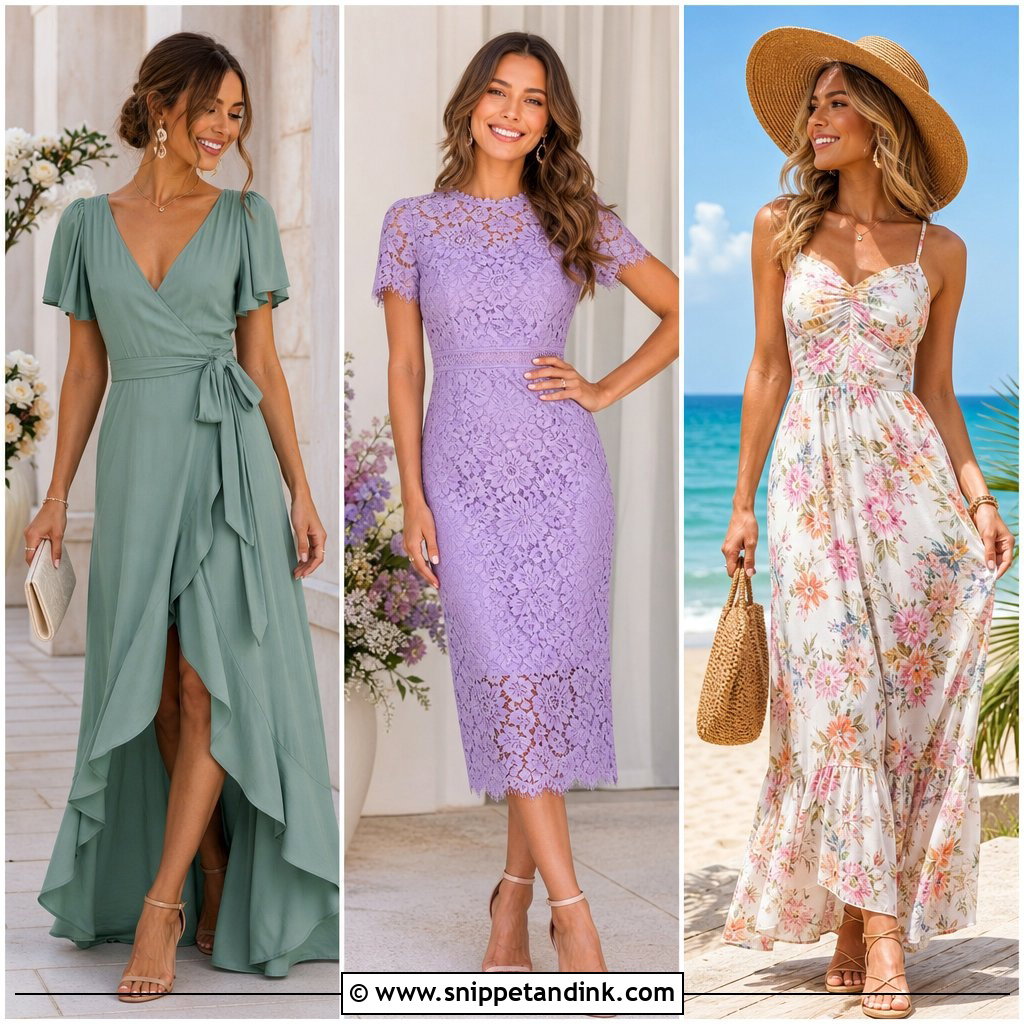
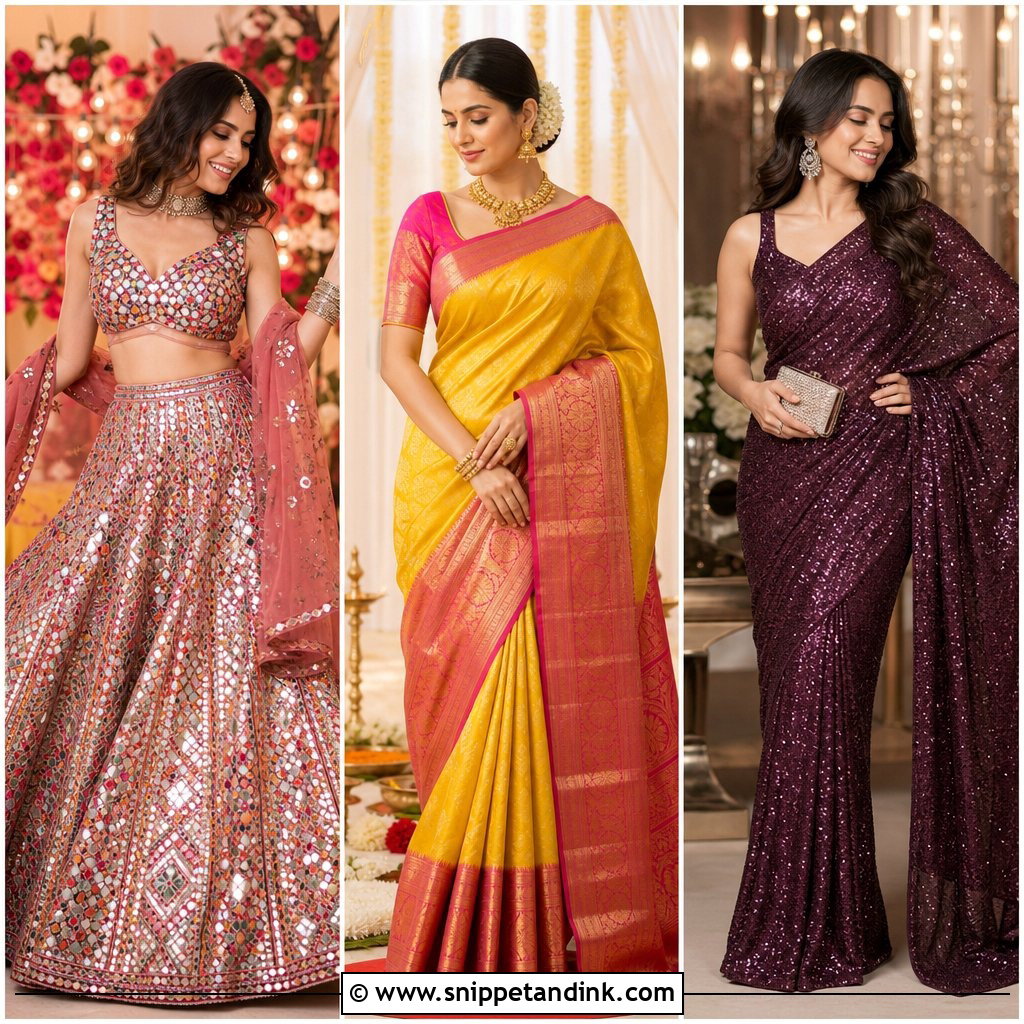
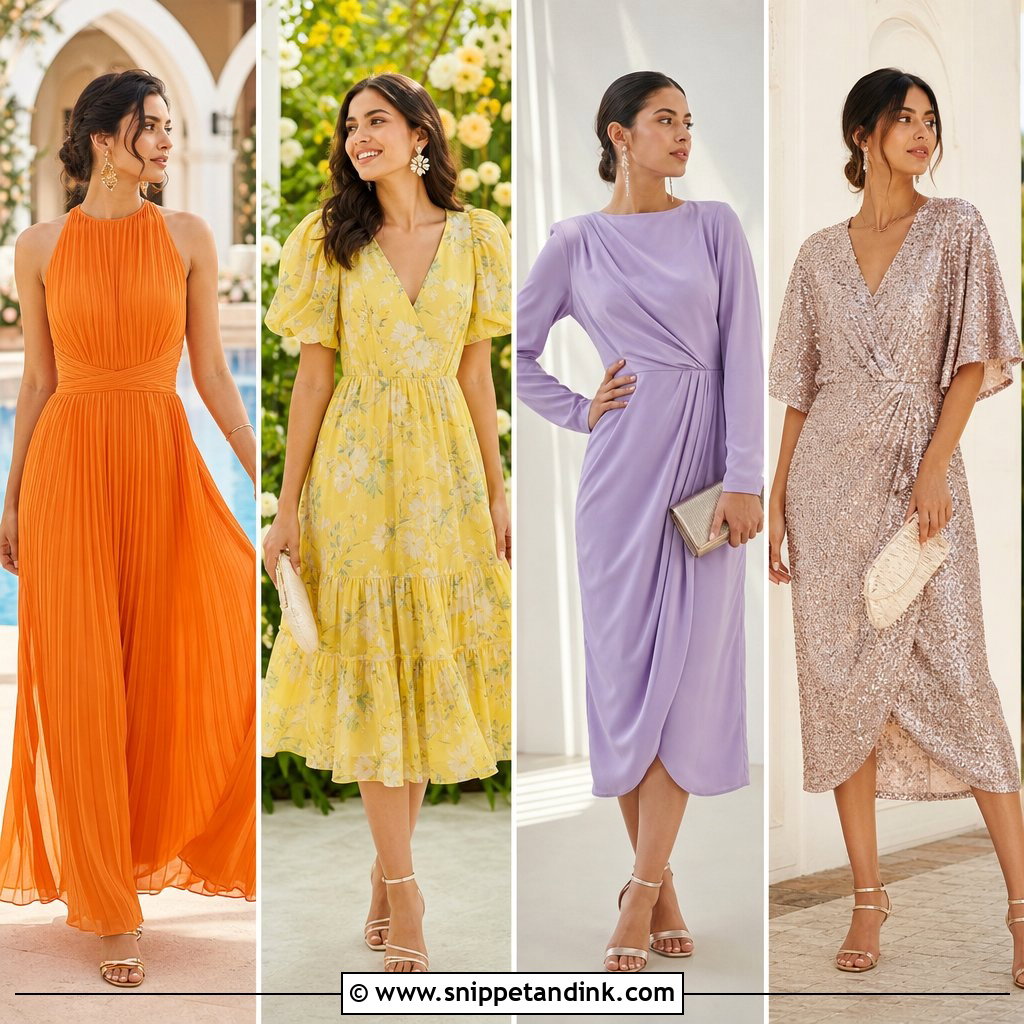
A good wedding frock has to answer to four things at once: the dress code, the venue, the weather and how long you’ll be wearing it. I’ve put together twenty complete outfits here, from garden-party midis and satin maxis to an embroidered Anarkali and a frock with its own jacket, each with shoes, jewellery, a bag and a layer worked out. There are modest cuts, bold colours and shapes chosen for petite and plus-size figures. Read the invitation before you shop, and leave white and ivory to the bride unless the couple has asked otherwise.
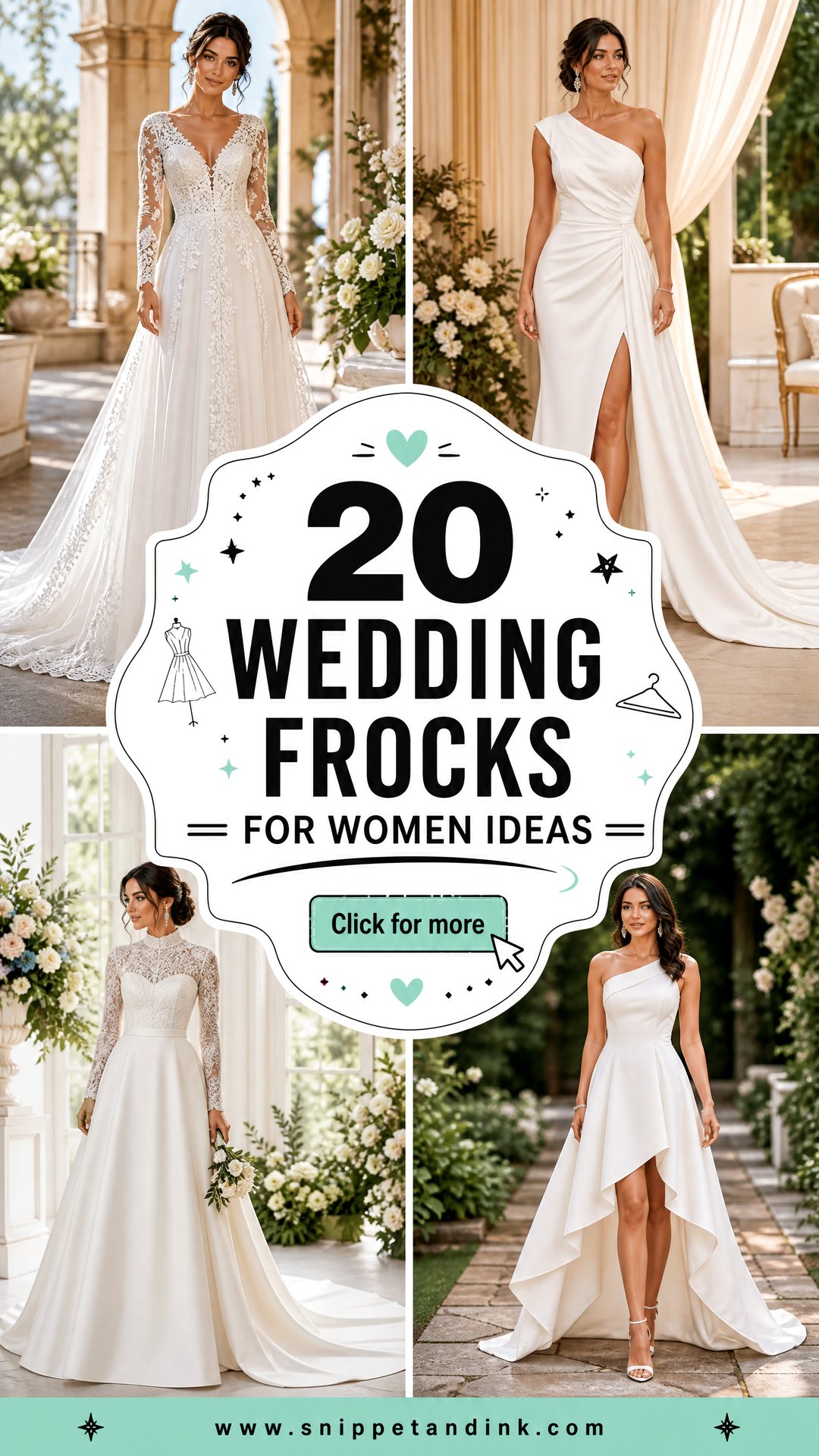
One Frock or Three? Dressing for a Wedding That Lasts Several Days
Many weddings, especially South Asian ones, run over two or three days: a mehndi or dholki, the main ceremony or baraat, then a walima or reception. Each event has its own mood, and repeating the same frock across all of them can feel off, even if no one says it.
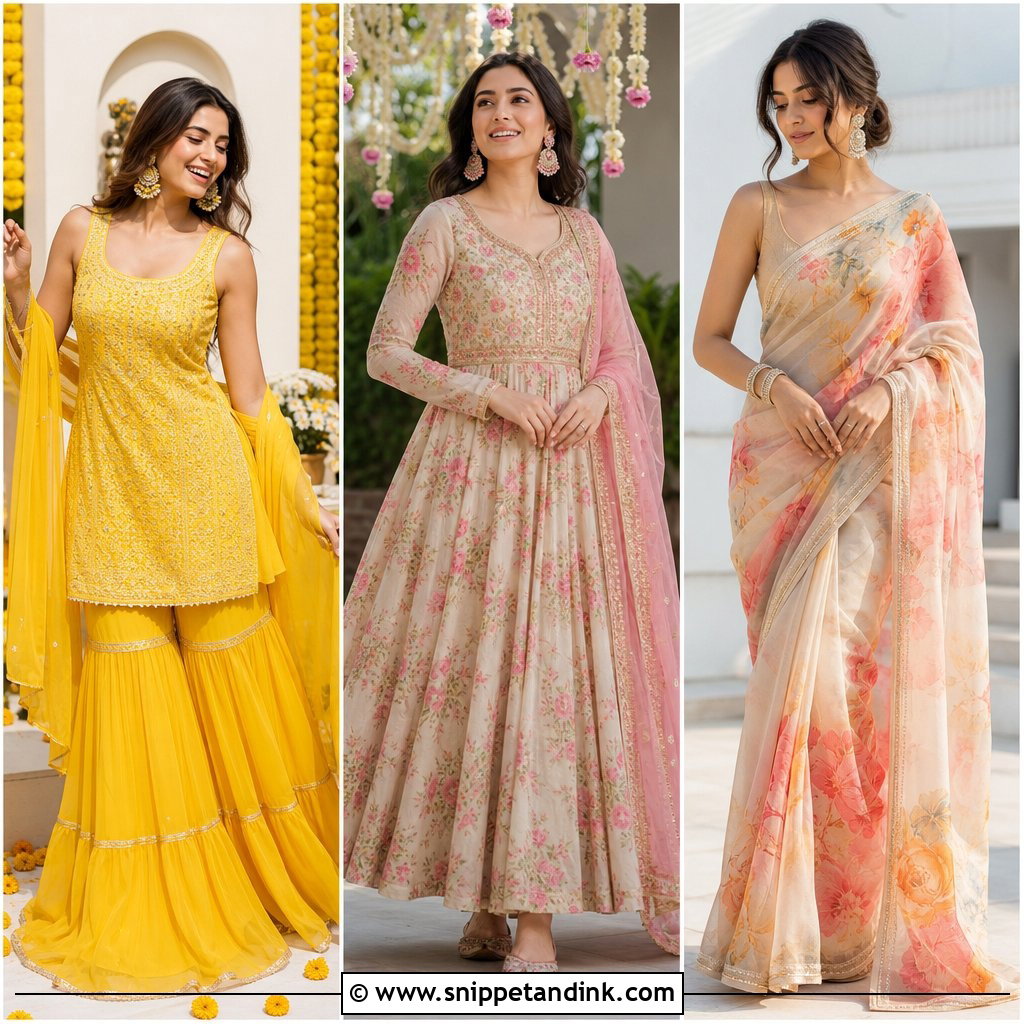
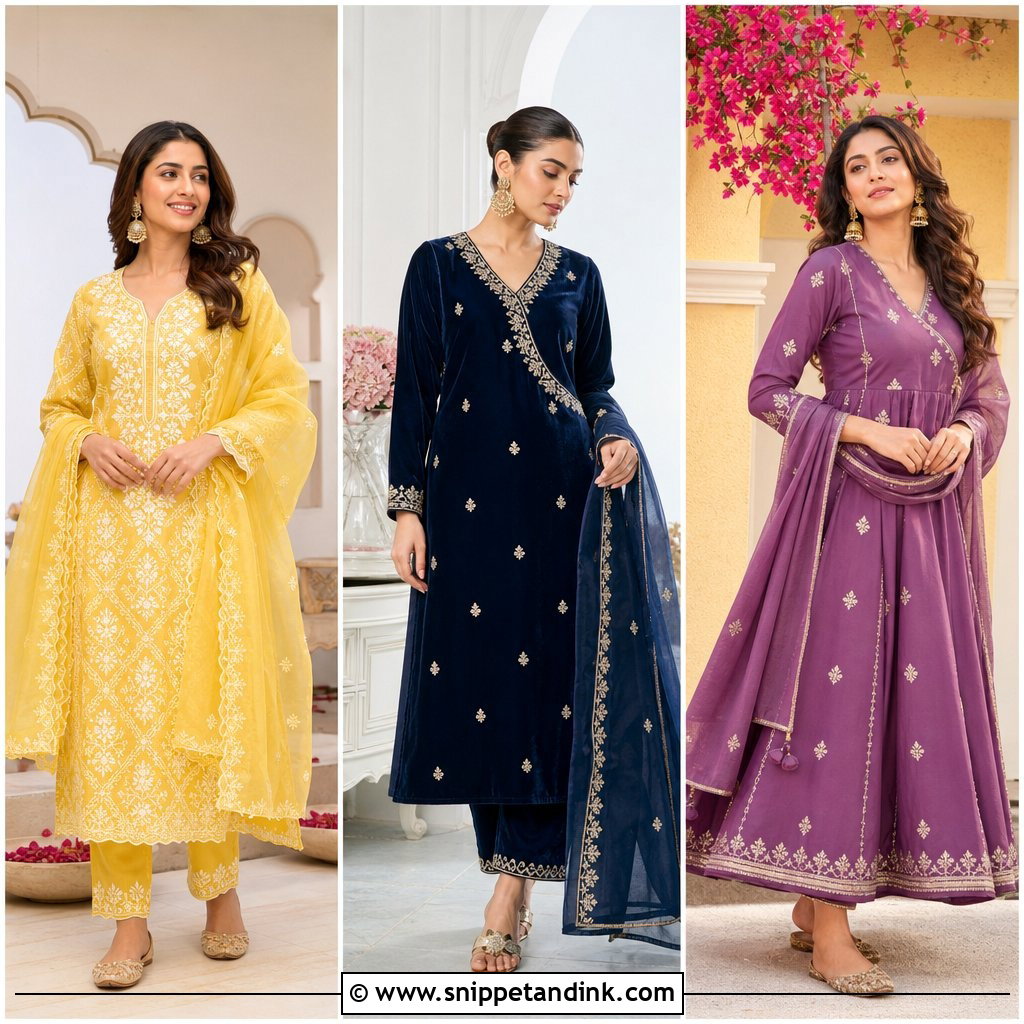
- Mehndi and sangeet: brighter colours, lighter fabrics and flat shoes, because there’s usually floor seating and dancing. Yellow, green and orange are traditional.
- Main ceremony: your most formal outfit, with heavier embroidery or rich fabric. Avoid red, which is often the bride’s colour.
- Reception or walima: often pastel or jewel-toned evening wear, a satin or sequin frock fits well here.
If you don’t want to buy three outfits, buy one plain frock and change the dupatta, jewellery and shoes for each event. A navy or emerald base can look completely different with a gota dupatta for the mehndi and crystal earrings for the reception.
1. Floral Midi Wedding Frock
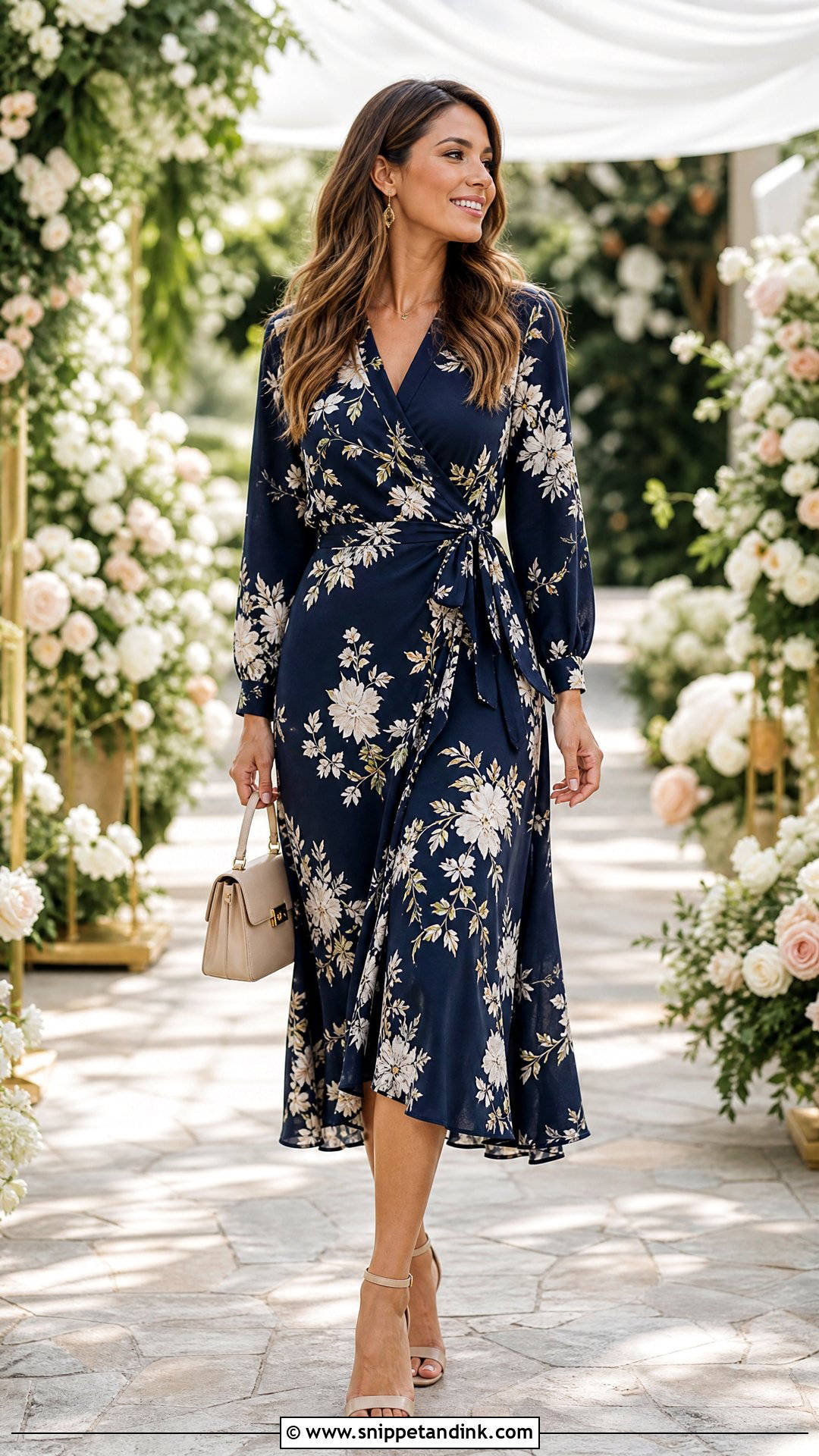
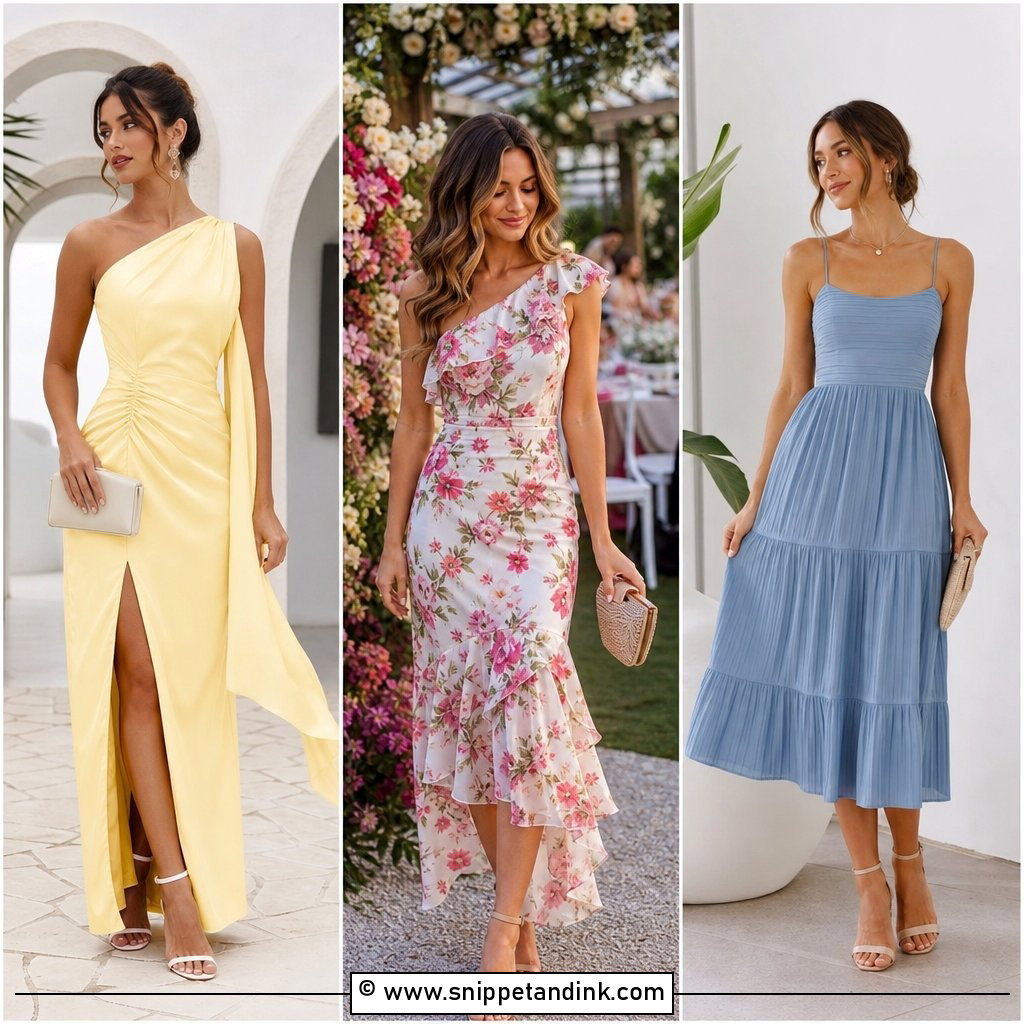
With florals, the background colour of the print decides how dressy the frock looks. A floral midi wedding frock on navy, sage, coral or dusty blue looks polished; the same flowers on a white ground look like a picnic. A wrap waist or softly fitted bodice gives shape and the full skirt moves well at a spring garden ceremony. Nude block heels, a structured mini bag and fine gold earrings keep it neat, and a cropped blazer or light shawl covers you when the sun goes down. Loose waves or a low bun suit it. Keep the print medium-sized; very large blooms can swallow a smaller frame.
2. Satin Maxi Wedding Frock
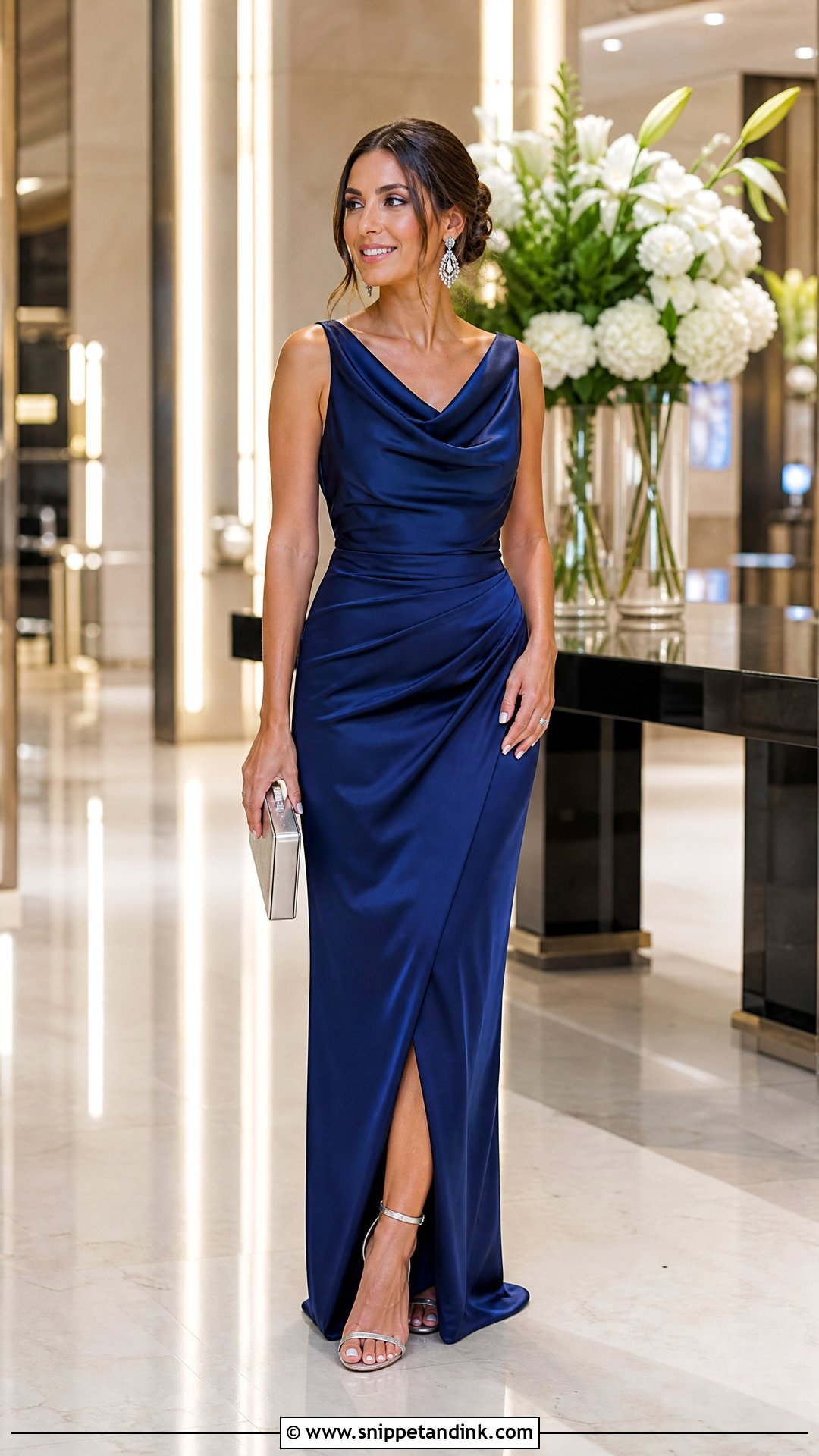
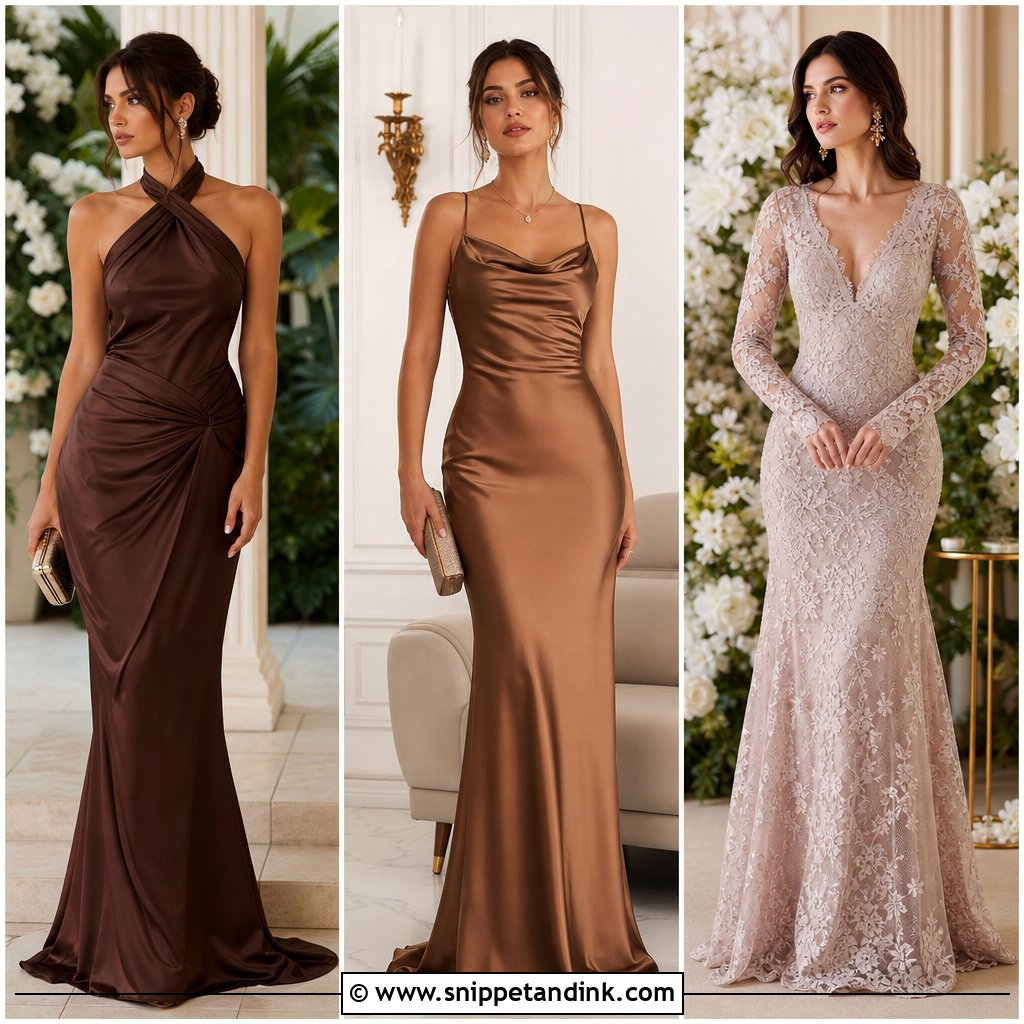
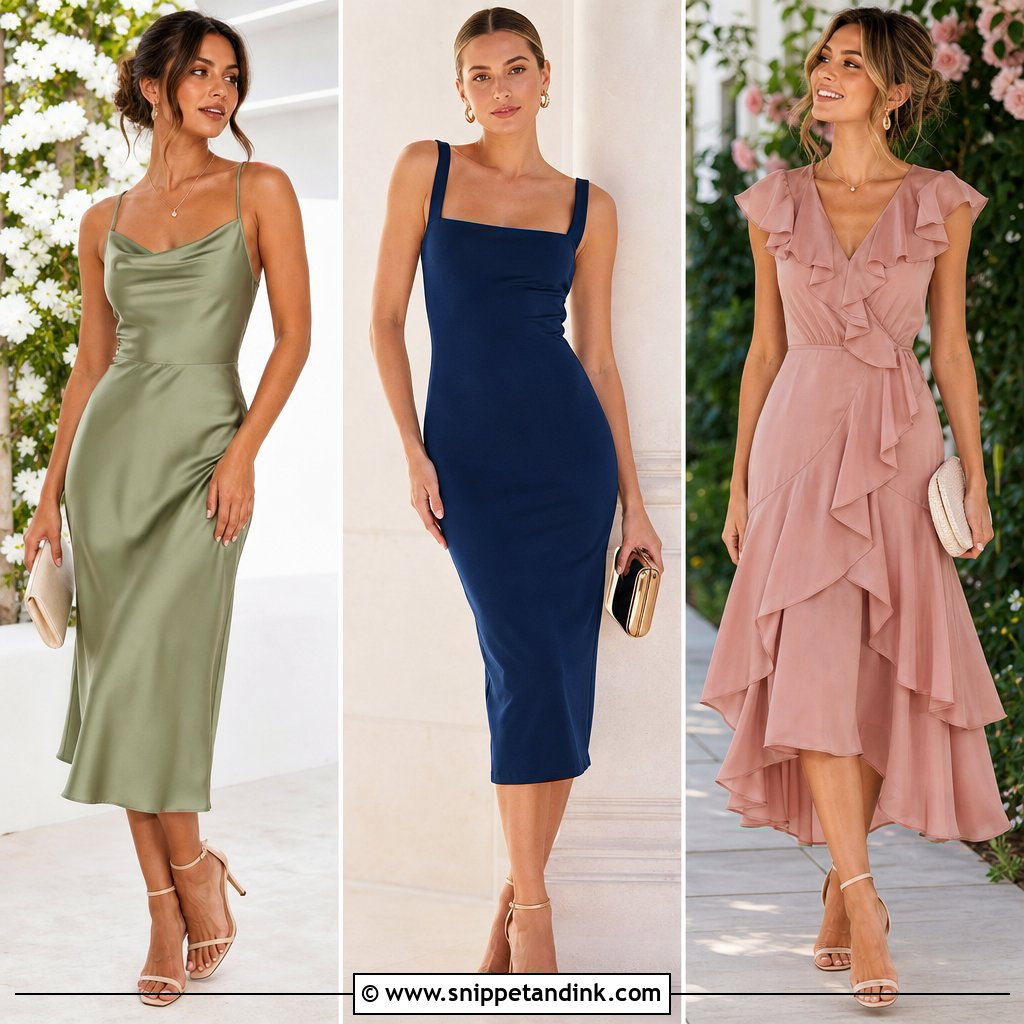
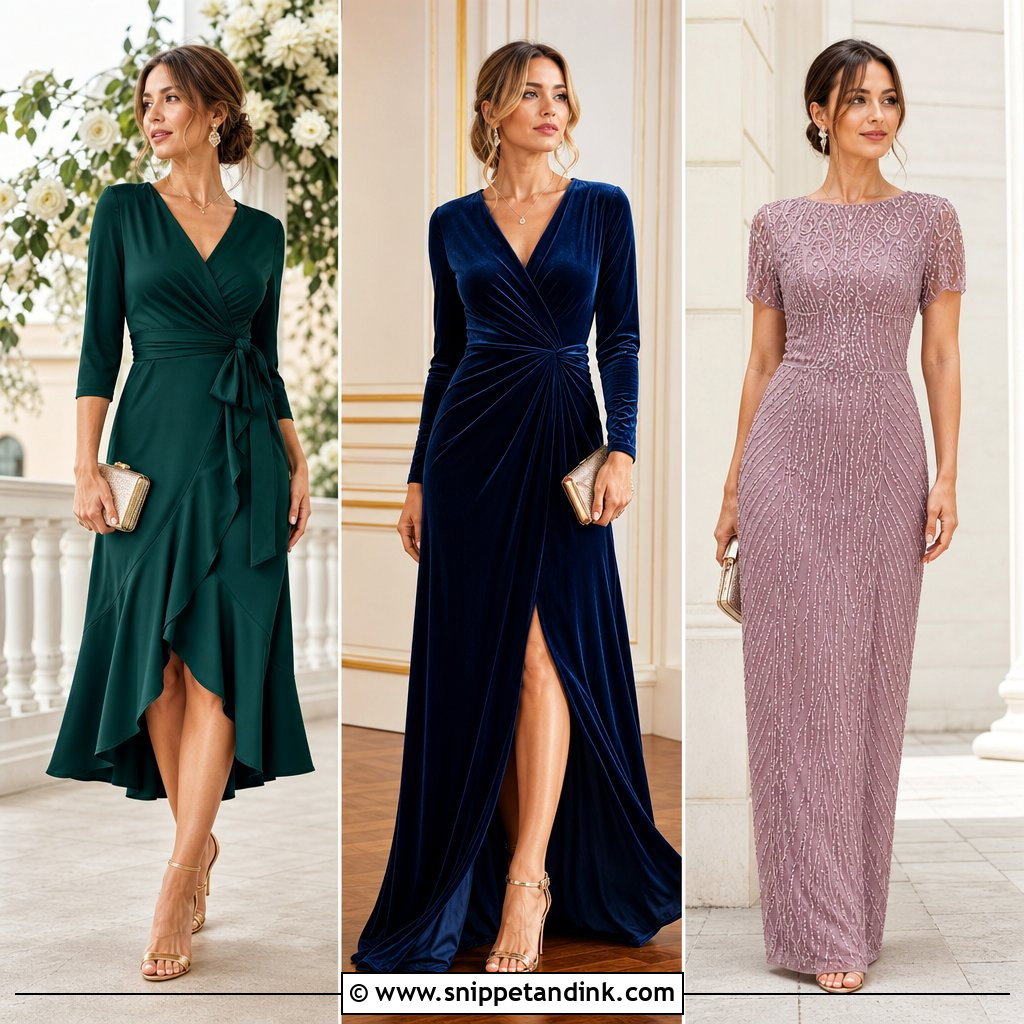
Satin does a lot on its own, so the job is mostly restraint. A maxi with a cowl neck, soft draping or a gathered waist in sapphire, emerald, plum or deep rose looks rich in evening light. Slim metallic heels, a small box clutch and crystal drops are enough; satin plus heavy sparkle starts to look like stage wear. This fabric shows every line underneath, so no-line underwear matters, and it marks with water, so be careful with drinks. A tailored wrap, a sleek ponytail or polished bun, and you’re done.
3. Lace Sleeve Wedding Frock
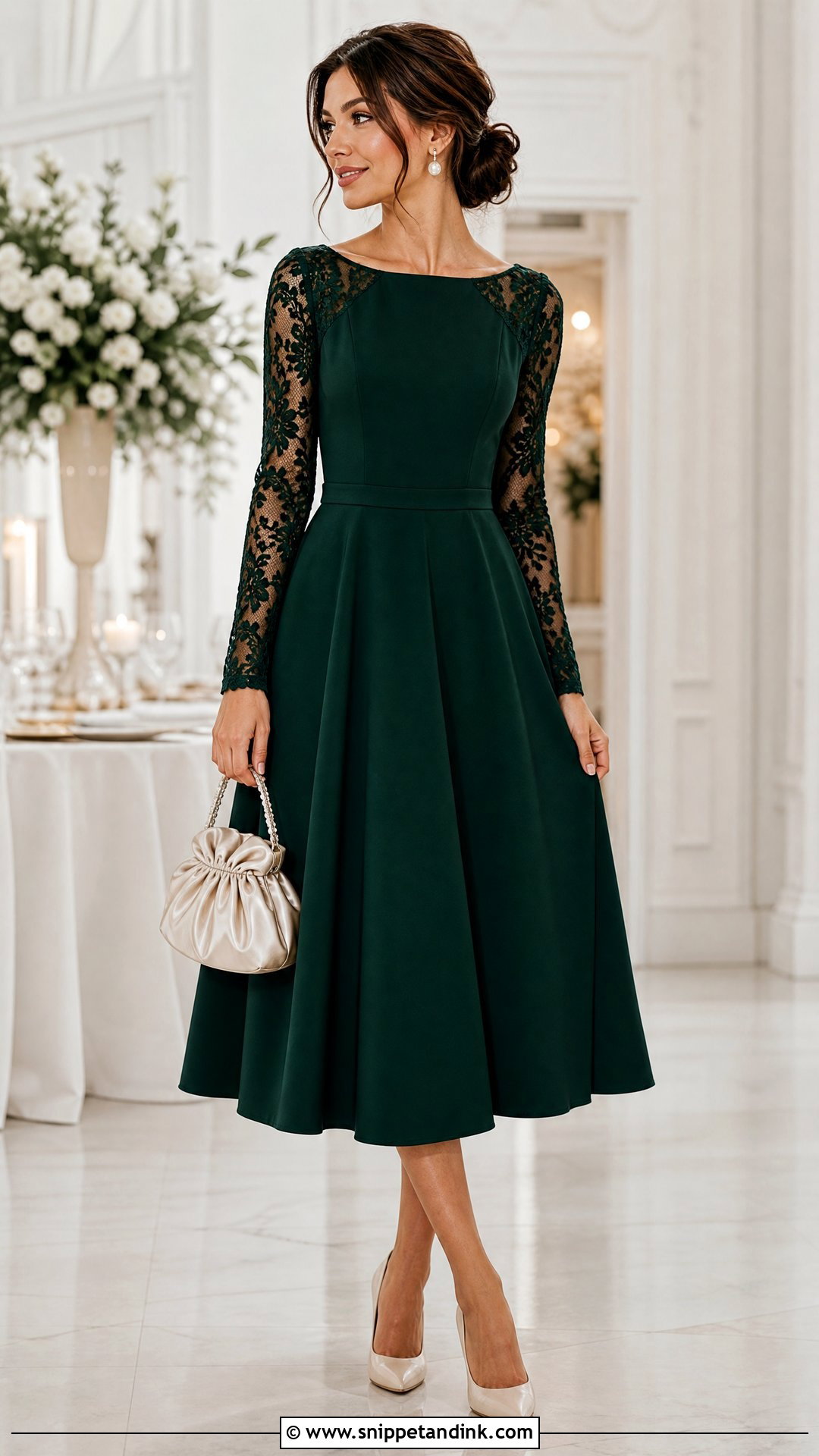
Lace sleeves are my favourite way to add coverage without adding weight. Look for a lined bodice with sheer or half-lined sleeves; fully lined lace sleeves get hot and stiff. A fit-and-flare midi stays comfortable for hours and suits transitional weather and dressier invitations. Pointed pumps, pearl earrings and a small satin bag go with it. Soft mauve, navy, burgundy and forest green all wear well. The lace already gives texture, so keep other jewellery small. A neat chignon and natural makeup let the sleeves be the detail. Check the cuff edge too: scratchy lace at the wrist is annoying by the second hour.
4. Chiffon Wrap Wedding Frock
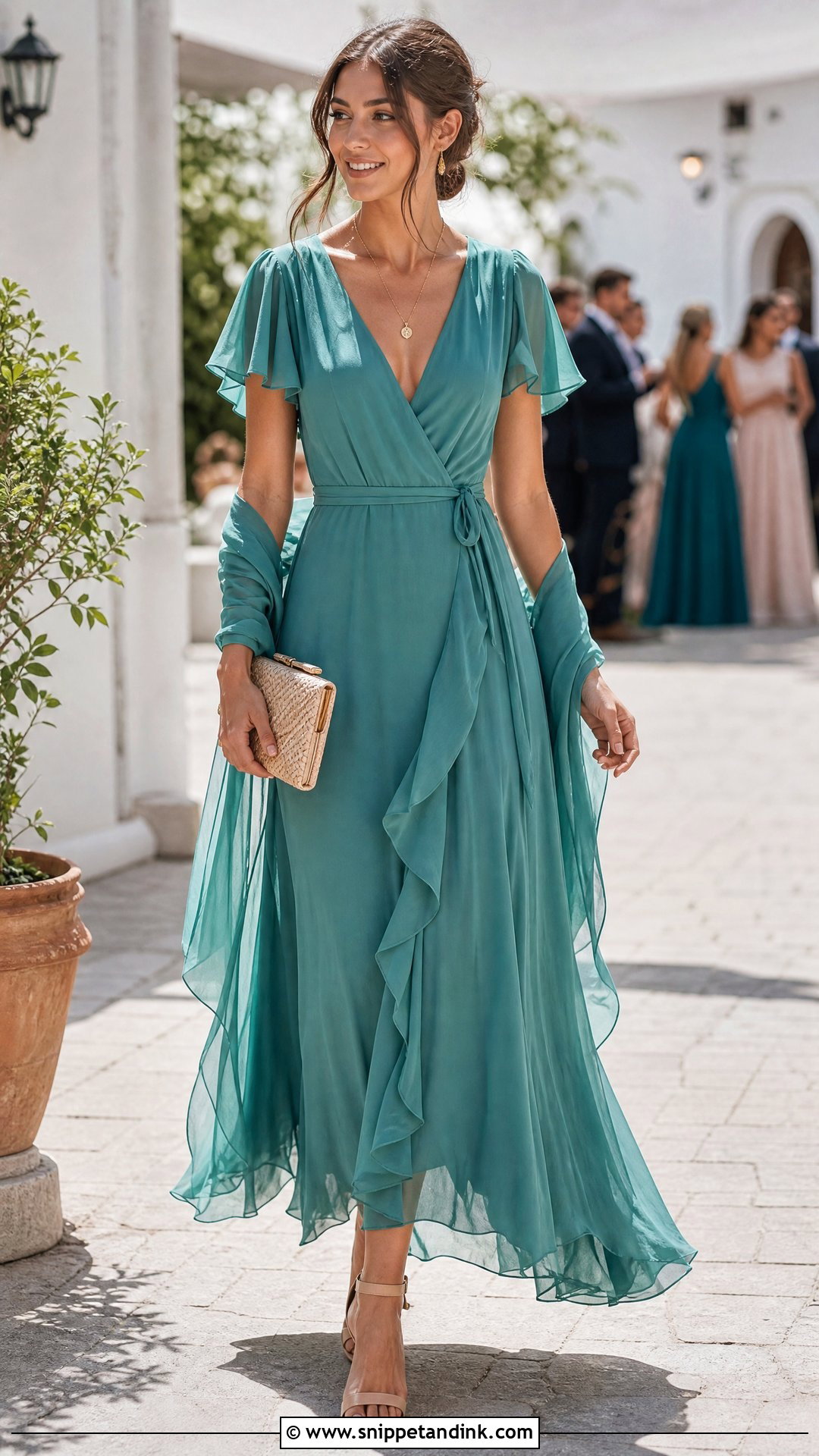
Chiffon is the coolest fabric on this list on a hot day, but it’s sheer, so a lined skirt is essential. A wrap frock with flutter sleeves and a defined waist, midi or ankle length, in lavender, teal, rose or a small botanical print, moves nicely in a breeze. Block-heel sandals won’t sink into a lawn the way stilettos do. A woven clutch, fine pendant and small hoops keep it relaxed. Wrap necklines can open as you move, so a small strip of fashion tape or a matching camisole helps. A soft updo and a light wrap carry you from an outdoor ceremony to an air-conditioned hall.
5. Velvet Winter Wedding Frock
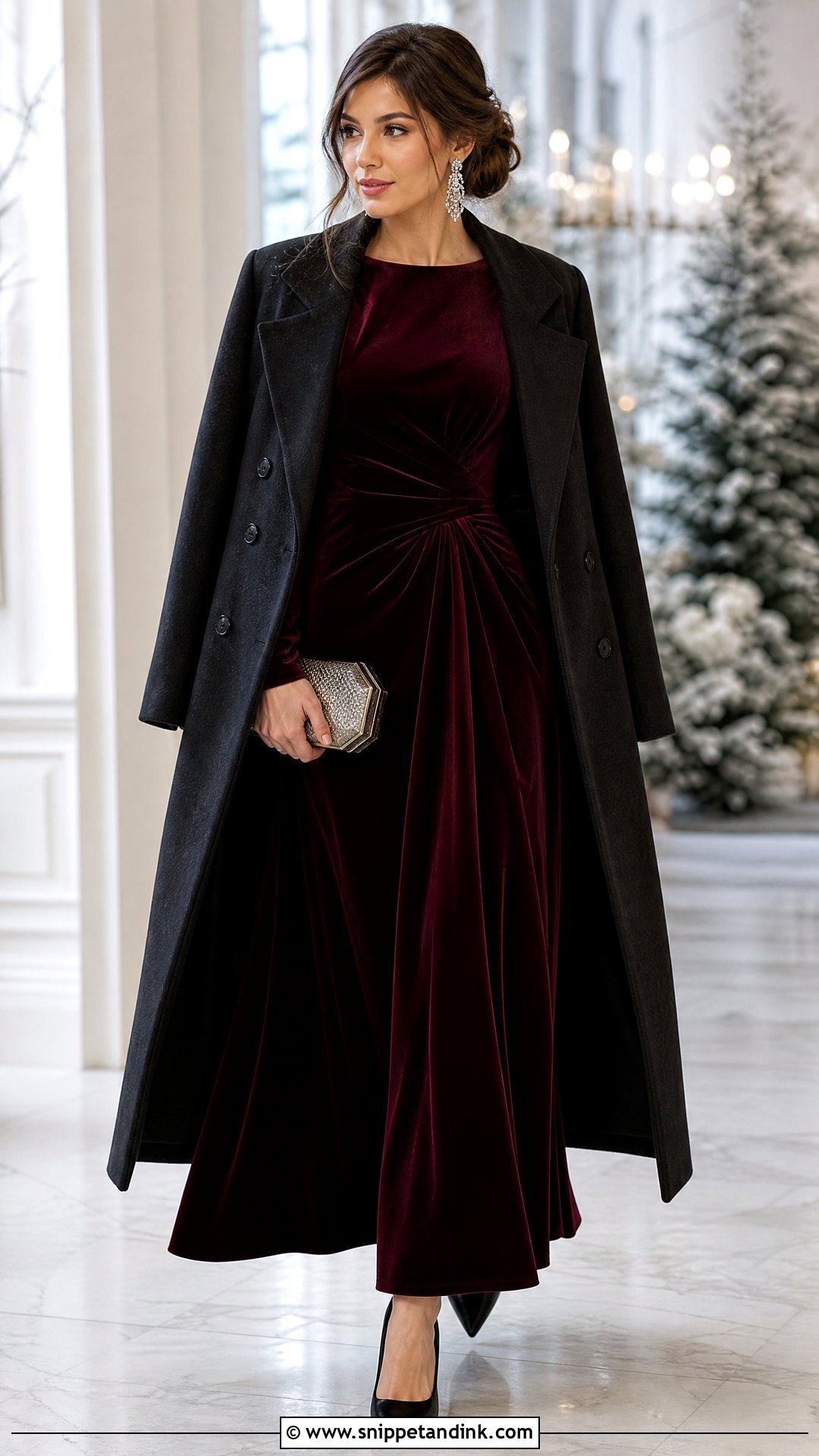
For a winter wedding, velvet is warm enough that you may not need a coat inside at all. A long-sleeve midi or floor-length frock in burgundy, midnight blue, emerald or aubergine looks formal straight away. Closed-toe pumps, a structured metallic clutch and one pair of strong earrings suit it; add sheer black tights under a midi on cold days. Wear a tailored wool coat over it, never a puffer, which crushes the pile. Velvet is visually heavy, so keep hair sleek and jewellery controlled. Hang it in a steamy bathroom to lift any creases rather than ironing.
6. One-Shoulder Wedding Frock
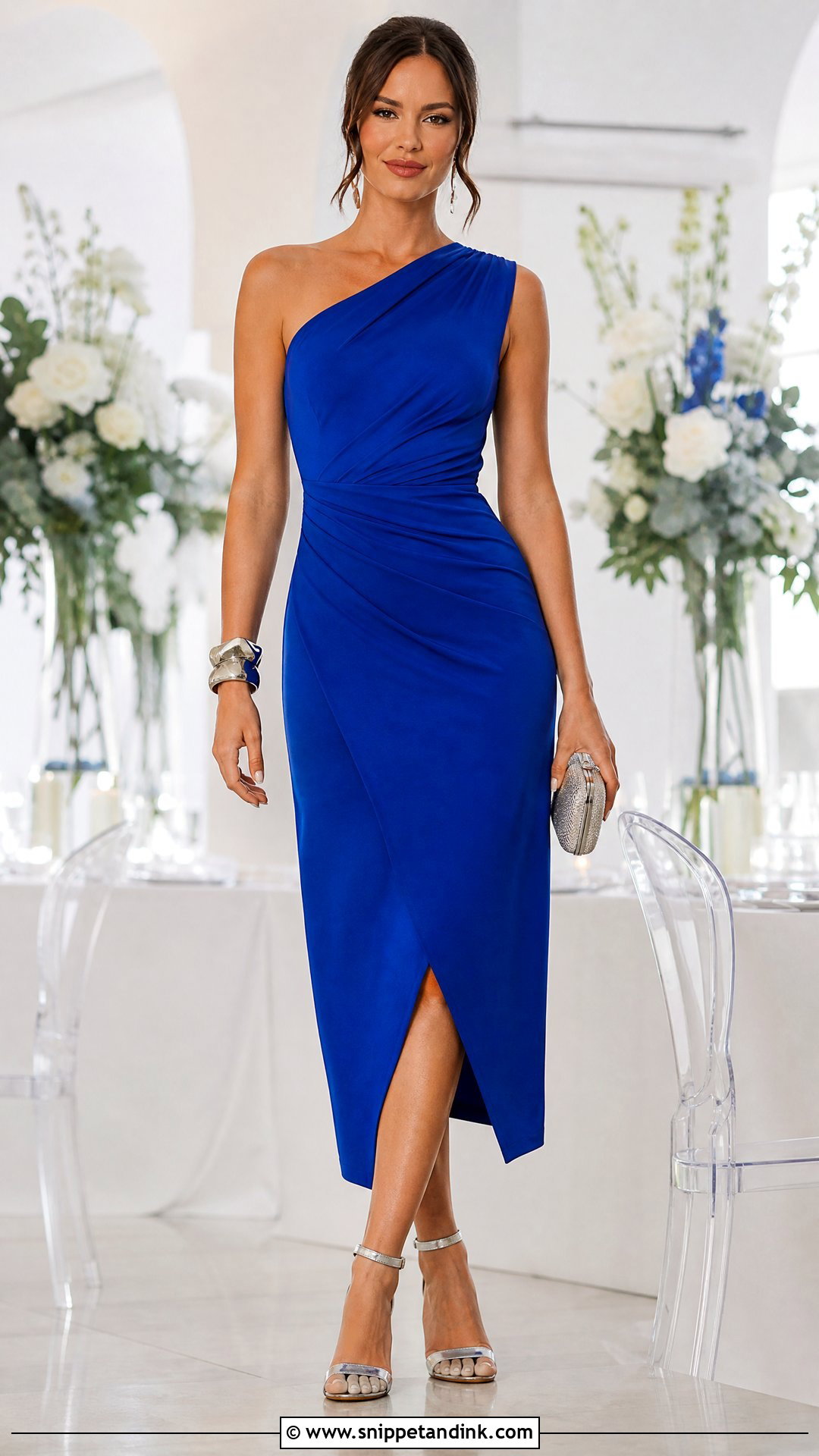
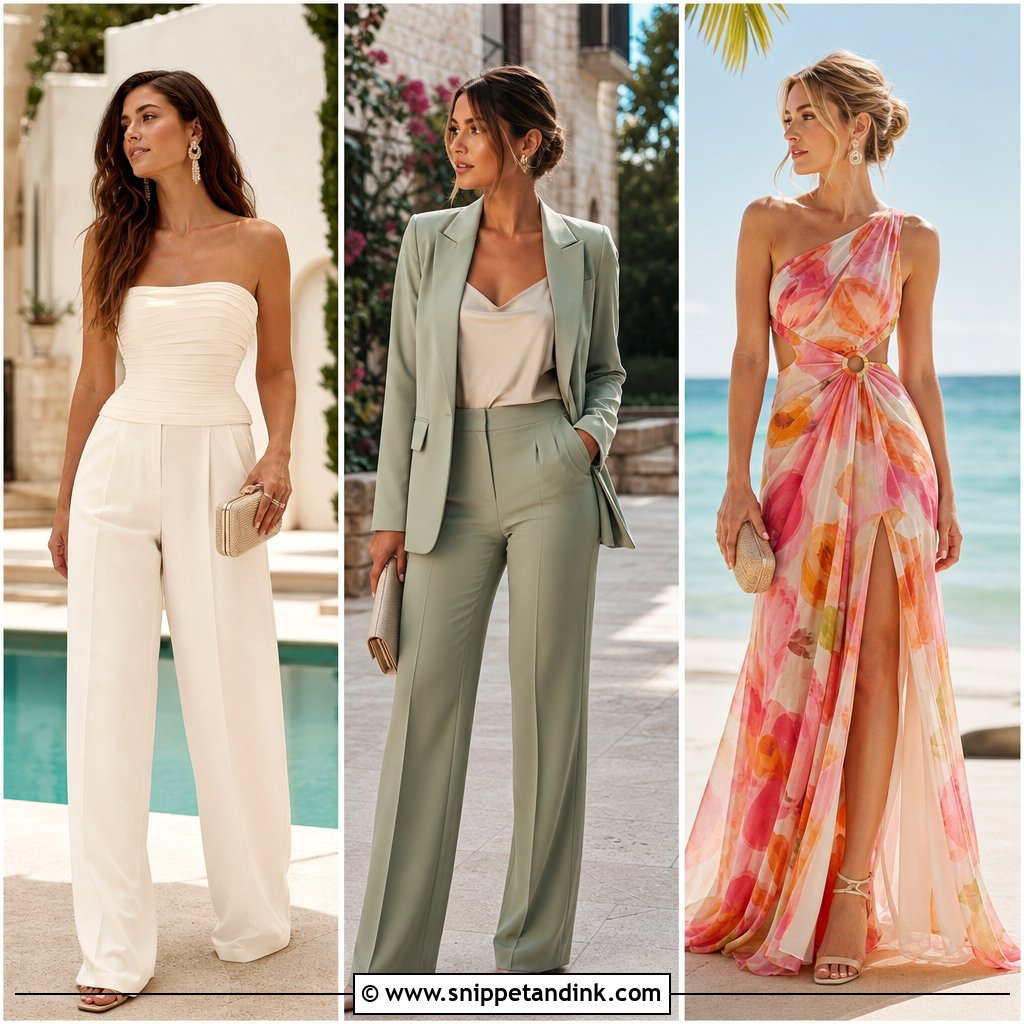
A one-shoulder neckline looks clean and current, and it fits cocktail and formal dress codes as long as the fabric and length stay dressy. Try a structured midi or flowing maxi in cobalt, magenta, terracotta or deep green. Pull your hair into a neat bun or sweep it to the opposite side so the shoulder stays visible. Slim ankle-strap heels, a compact clutch and one bold bracelet replace a necklace. Support is the real question: if the frock has no built-in structure, try it with a strapless bra before the day, because one-shoulder cuts slip if the bodice is loose.
7. Pleated Midi Wedding Frock
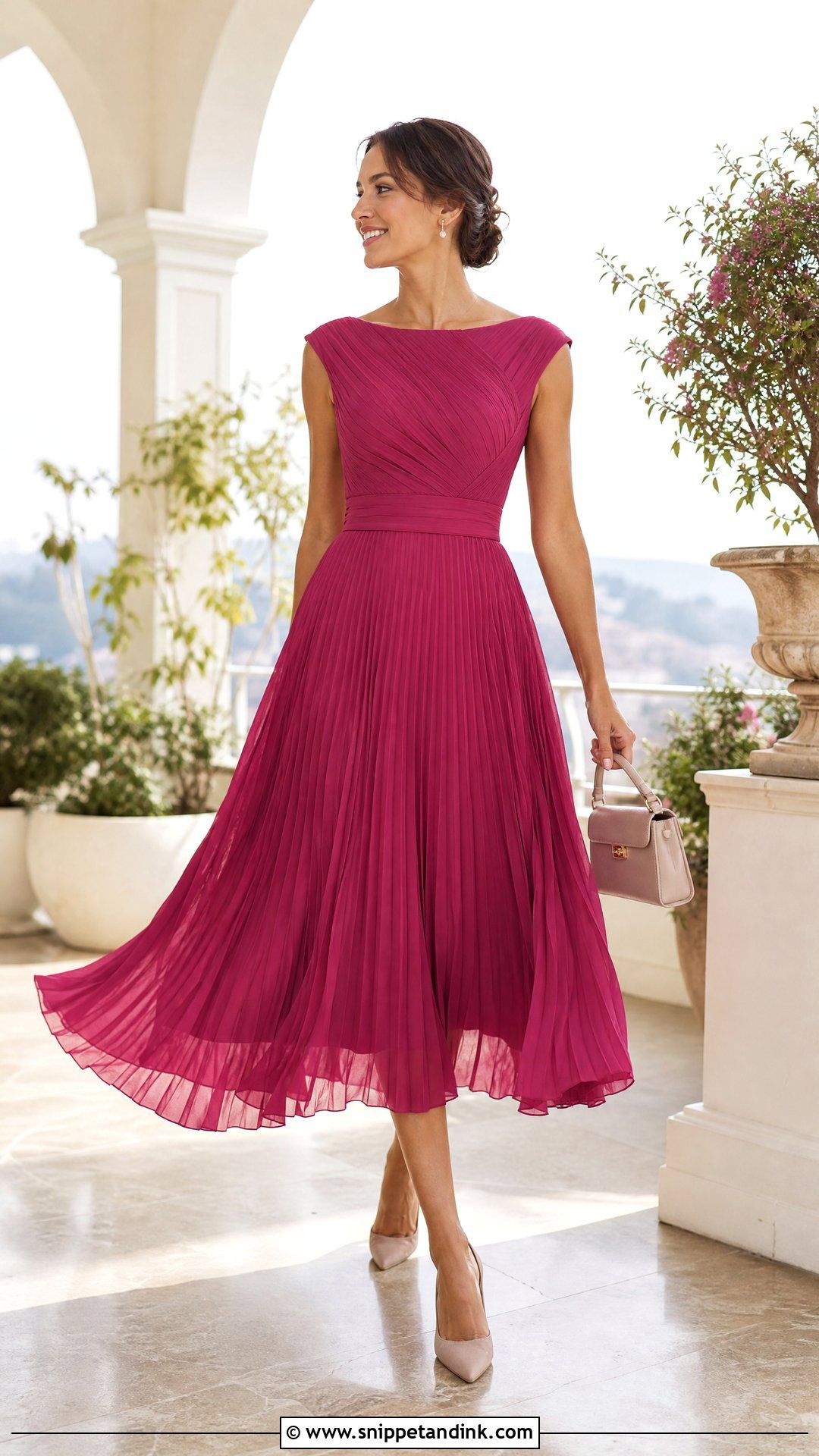
Pleats give a plain frock movement without any embellishment, and they’re kind to most figures. A fitted waist with a pleated midi skirt suits daytime ceremonies, hotel receptions and semi-formal events. Solid raspberry, teal, soft blue or marigold looks bright but grown-up. Pointed slingbacks, a small top-handle bag and studs finish it, and a narrow belt helps if the waist feels loose. Steam the pleats from a short distance before you leave; pressing them flat with an iron can leave shiny lines. A smooth blowout or low ponytail keeps it tidy.
8. Embroidered Anarkali Wedding Frock
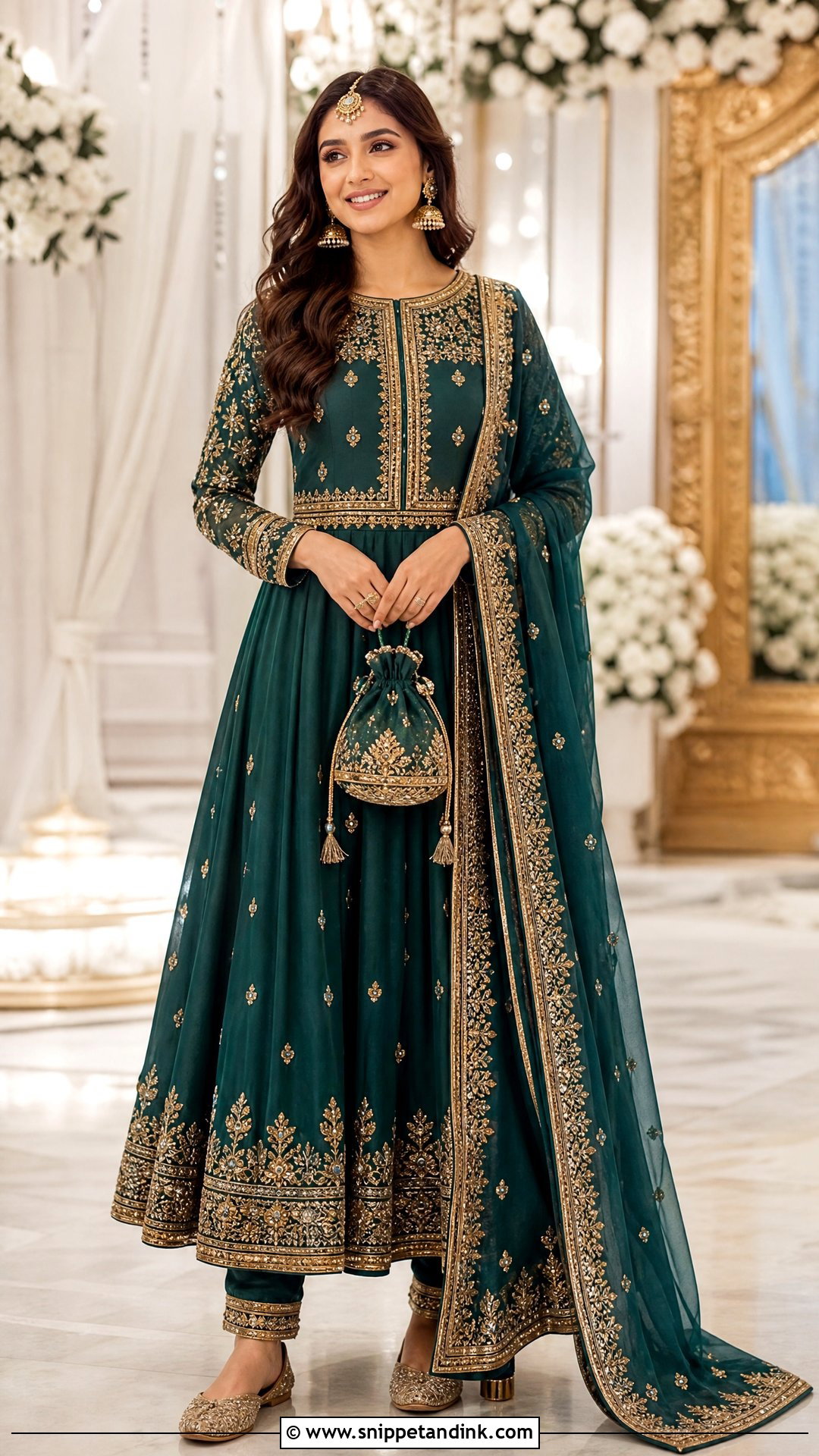
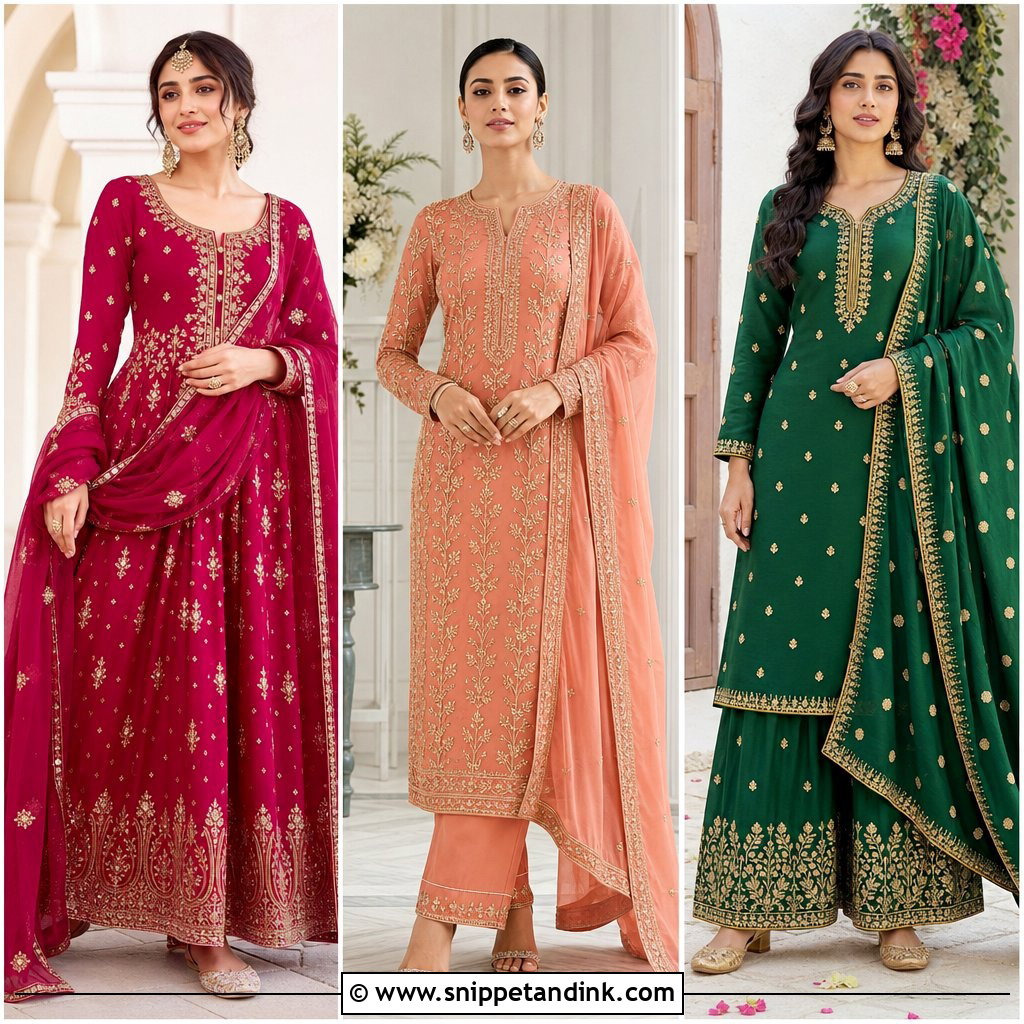
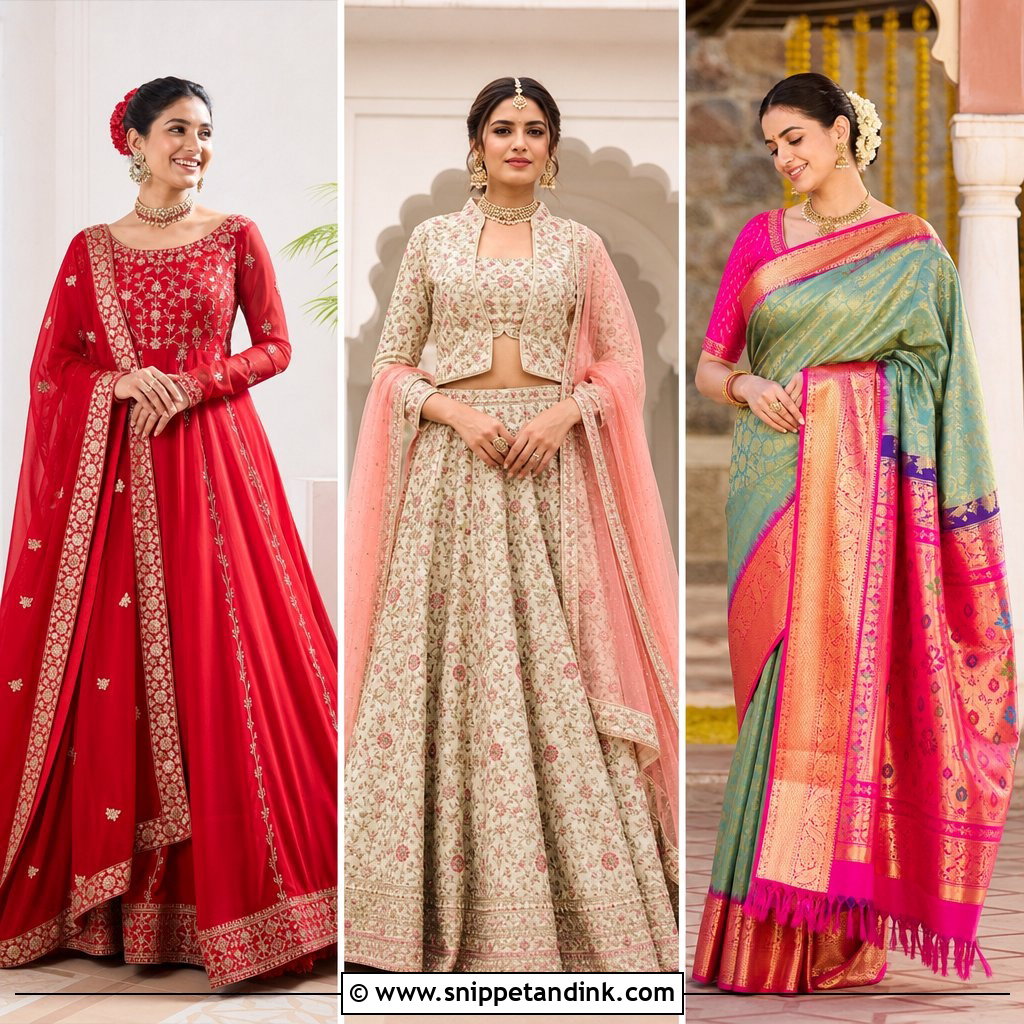
An Anarkali is a natural choice for South Asian ceremonies and multicultural weddings where traditional dress is welcome. The floor-length cut with a fitted top and flared skirt is flattering on almost everyone. Balance the embroidery: heavy work at the neckline, sleeves or hem, not everywhere. Wear the matching churidar or slim pants and pin the dupatta at the shoulder with a safety pin underneath, so it doesn’t slide off during greetings. Embellished juttis or low block heels, a small potli bag, jhumkas and a few bangles complete it. A very full skirt is heavy by the end of a long night, so try sitting and climbing stairs in it. If you’re a guest from outside the culture, a quick word with the hosts about colours is always welcome.
9. Sequin Evening Wedding Frock
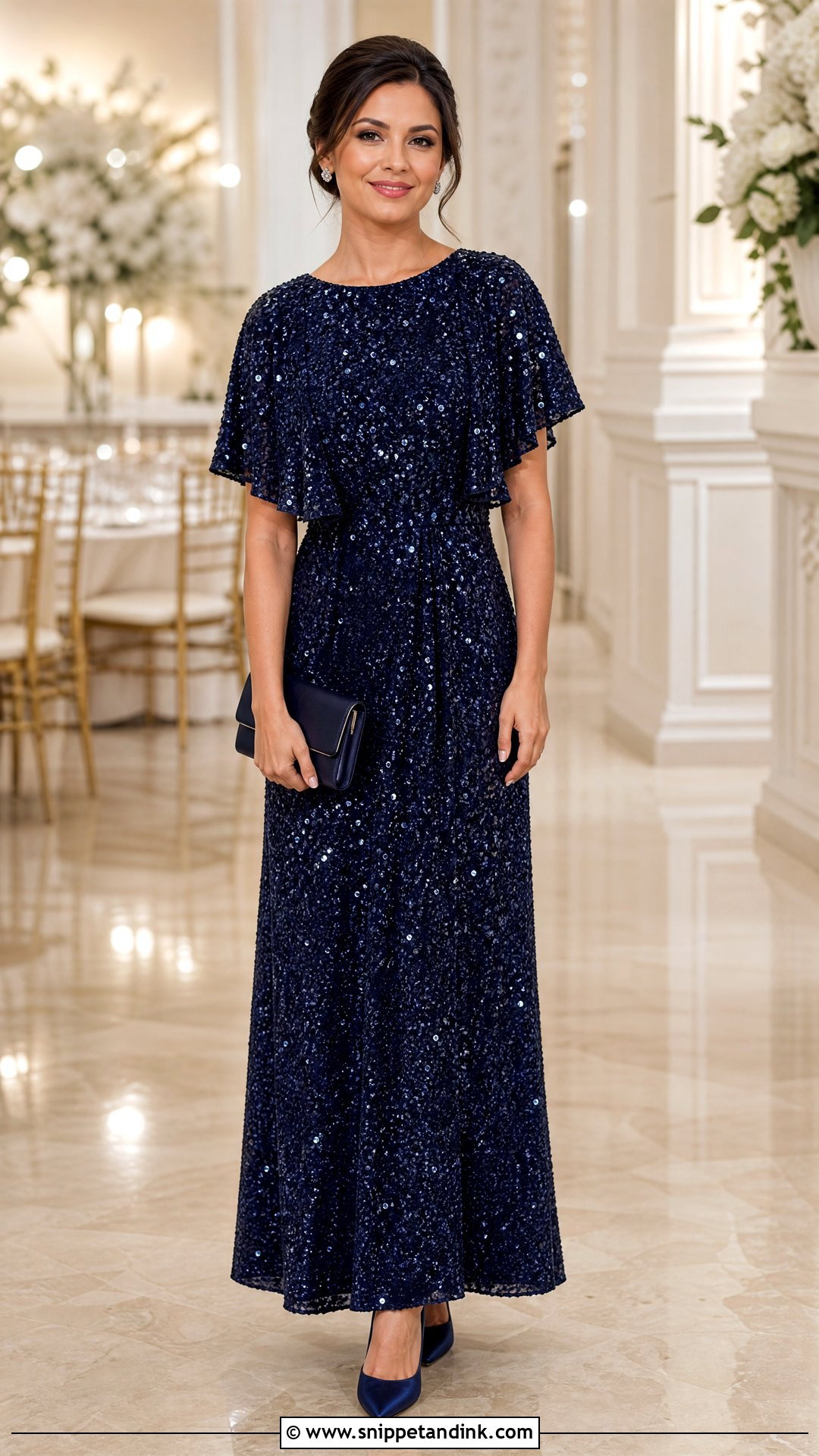
Sequins at a wedding work when the shape stays modest. A sequin evening wedding frock in a midi or maxi length, with fine sequins in navy, bronze, dark green or berry, looks festive without tipping into nightclub. Simple satin pumps, a plain clutch and small studs are enough; skip the necklace if the neckline is densely worked. A solid-colour coat adds warmth without more shine. Check the underarms and inside of the sleeves before buying, since sequin backing can scratch. A sleek bun or smooth waves and soft makeup keep it balanced.
10. Puff Sleeve Wedding Frock
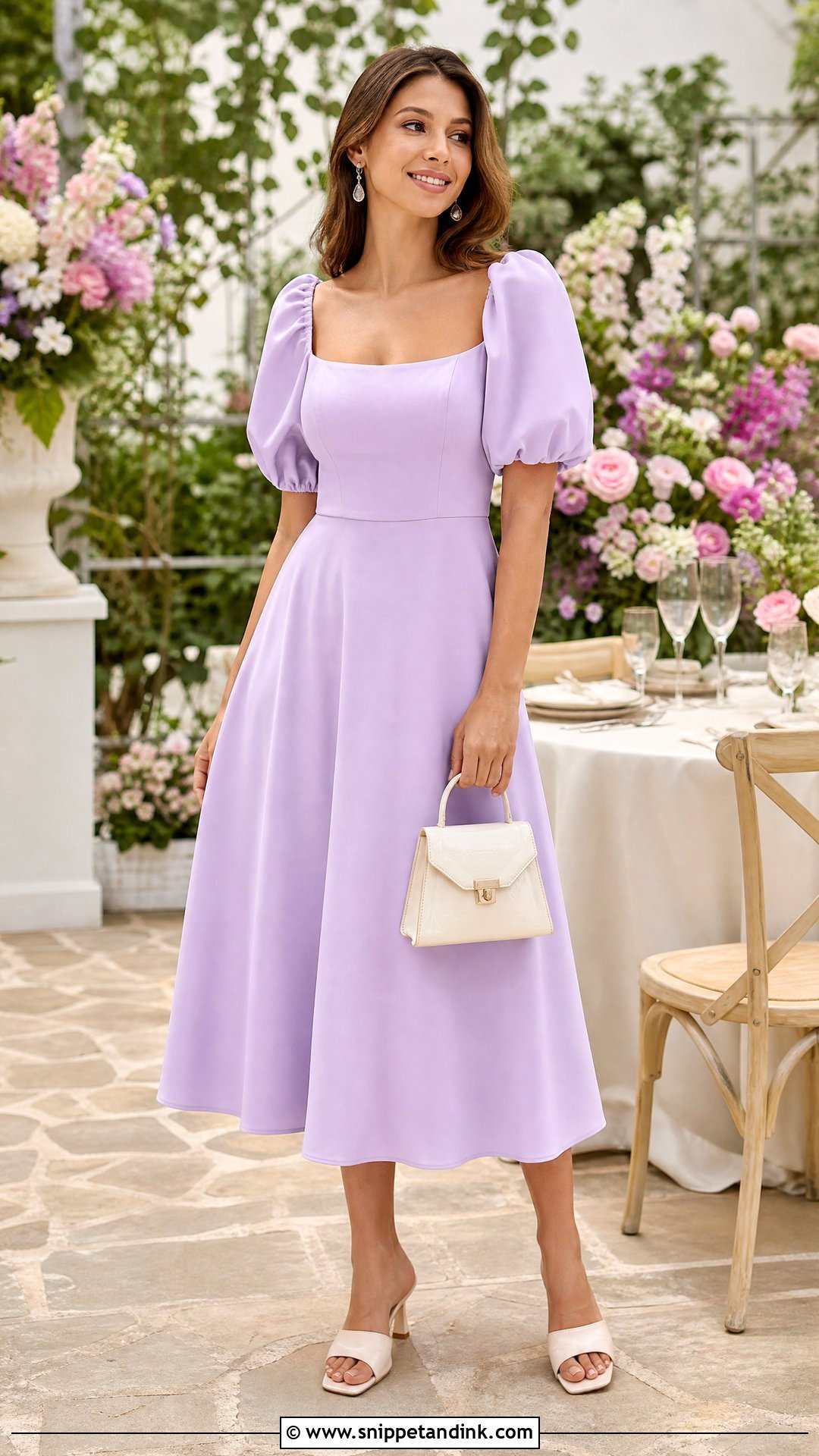
Puff sleeves add volume at the shoulder, so everything below should stay streamlined. A square-neck midi in lilac, coral, cornflower blue or a delicate print is the classic version. Low-heeled mules, a structured handbag and fine drop earrings suit it, and a big necklace would only crowd the neckline. If your shoulders are broad, choose a soft gathered sleeve over a stiff, structured puff, which can make the upper body look wider. A half-up style keeps the neckline visible. It’s at its best at daytime receptions and garden venues in spring.
11. High-Neck Modest Wedding Frock
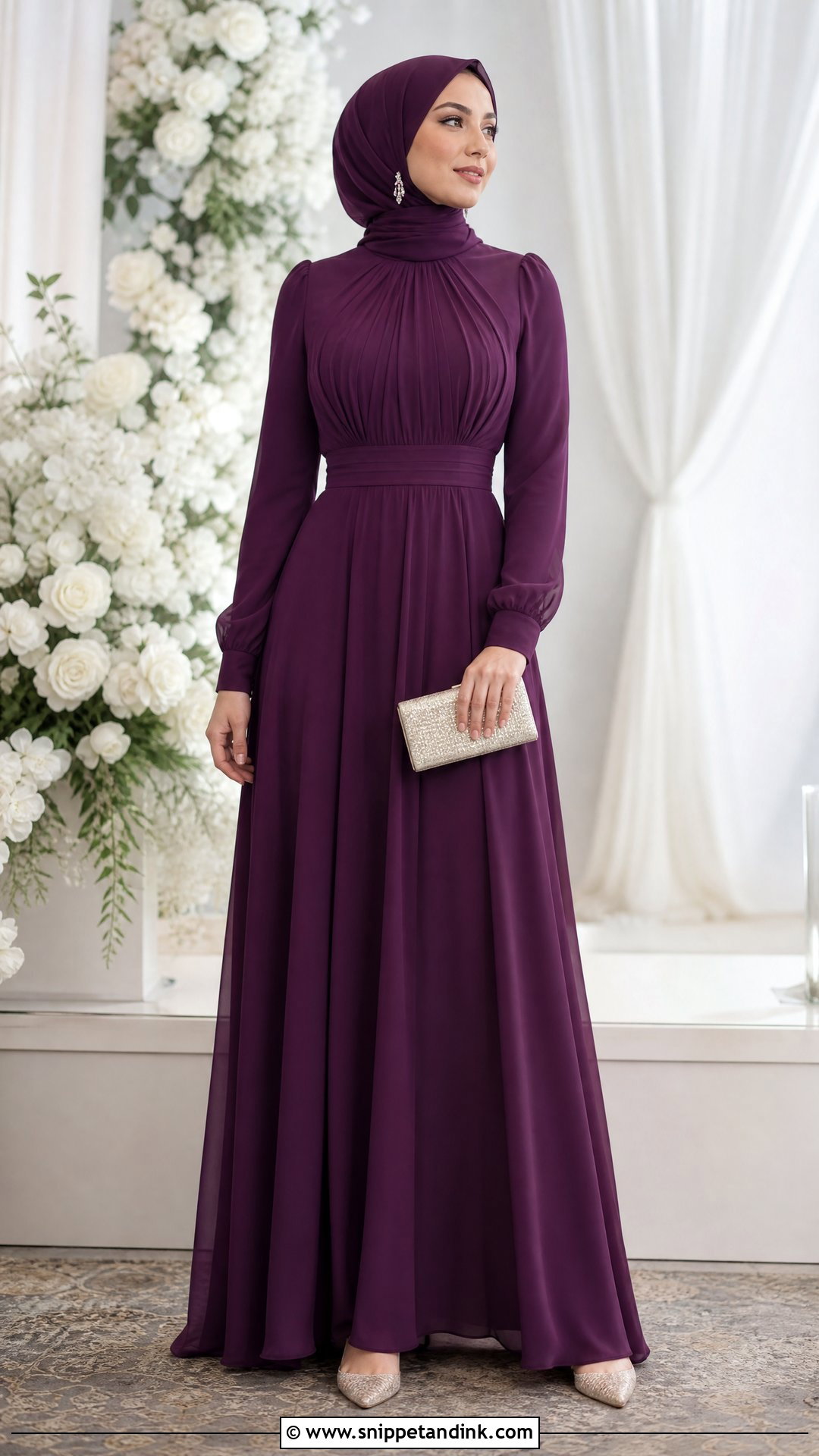
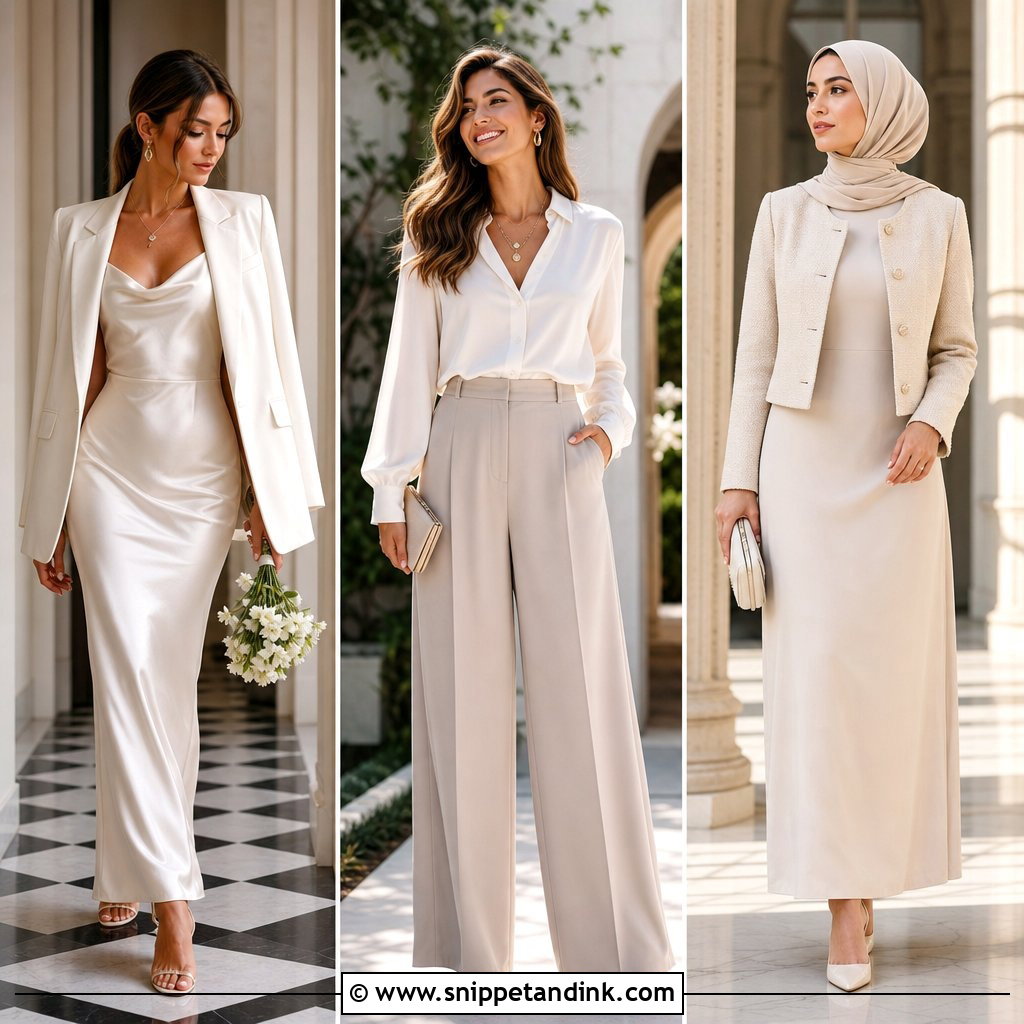
Modest dressing at a wedding doesn’t mean plain. A high neck with long sleeves, a shaped waist and a flowing midi or maxi skirt gives full coverage, and pleating, light embroidery or gathered cuffs add interest. Dusty rose, navy, olive, plum and soft blue all work. Pointed flats or low block heels, a polished clutch and good earrings finish it; if the neckline is embellished, move the sparkle to a bracelet or ring instead. A coordinating scarf can be wrapped neatly over the hair if you wear one. Check the armholes when you try it on, since high-necked, long-sleeved frocks are often cut tight there and limit how much you can raise your arms.
12. Off-Shoulder Wedding Frock
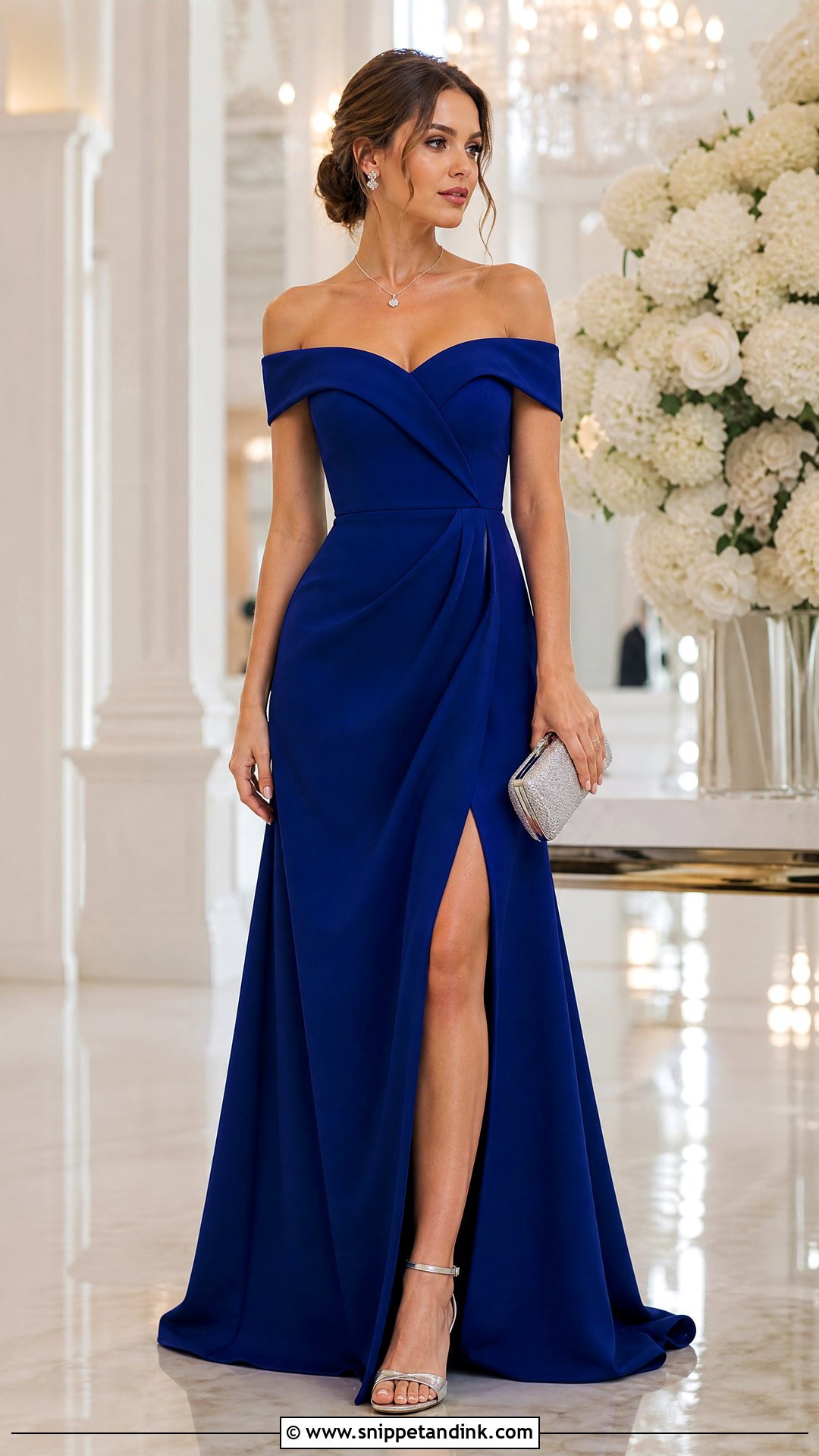
Off-shoulder frocks need a bodice that holds itself up. Look for internal structure, light boning or a grippy band inside the neckline, and enough room through the ribs to breathe after dinner. Rich pink, royal blue, sage and burgundy keep you well away from bridal neutrals. A short pendant, sparkling studs, a small clutch and sleek heels suit it. Wear your hair up or behind the shoulders. Bring a fine shawl for cold halls or a more conservative part of the day. In the fitting room, sit down and lift both arms; if the neckline rides up, it’ll do it all night.
13. Tiered Garden Wedding Frock
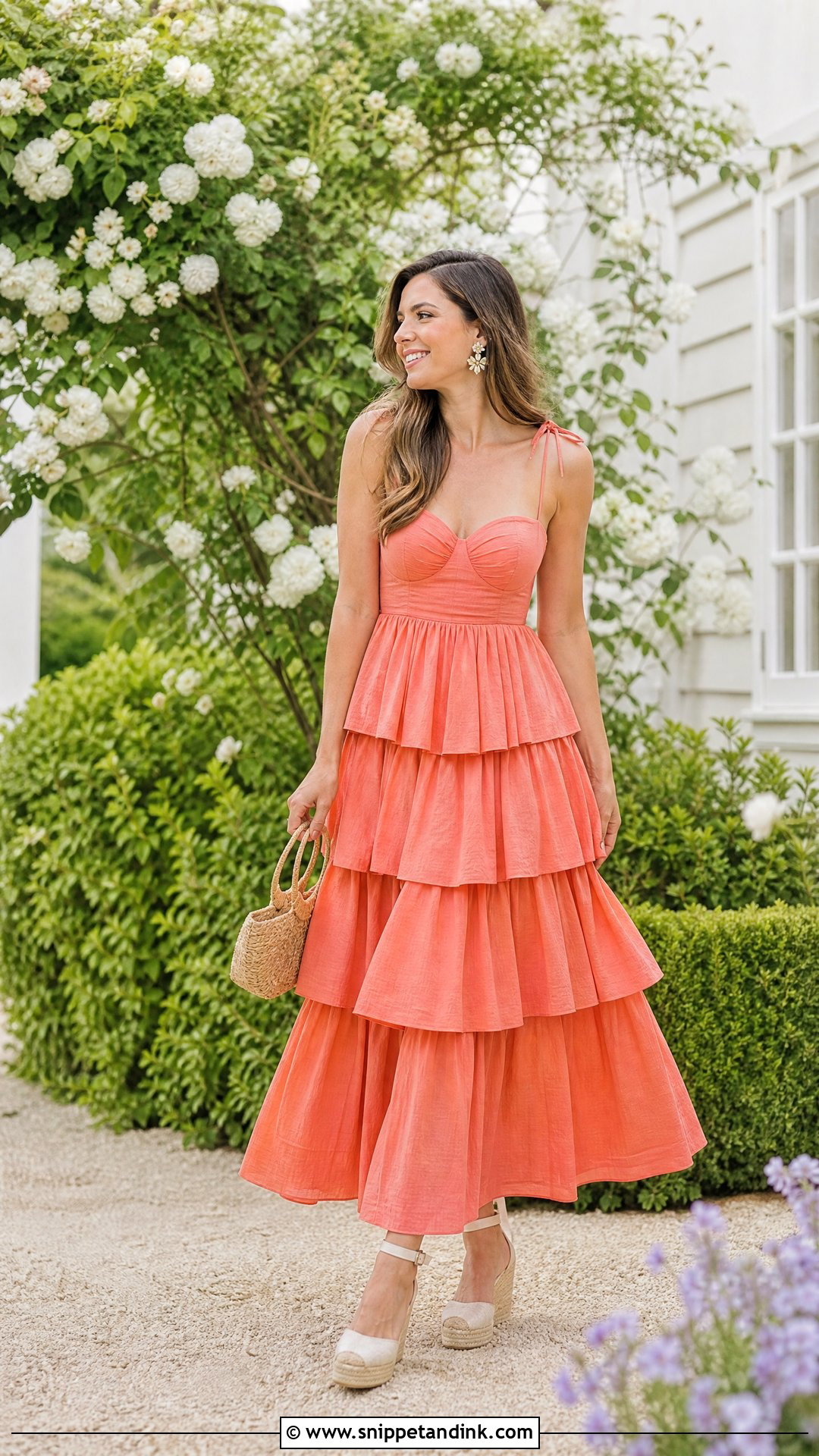
Tiered skirts belong outdoors, where they catch the breeze. A midi or ankle-length frock in a soft floral, a fresh pastel or a strong summer colour, with a fitted top half so the tiers don’t swamp you. Espadrille wedges or block-heel sandals beat stilettos on grass. A small woven bag, delicate earrings and a light cardigan suit it, and a polished ponytail stops your hair whipping across your face in the photos. Cotton tiers crease when you sit, so look for a fabric with a little synthetic in it if the frock has to last through a long reception.
14. Cobalt Blue Wedding Frock
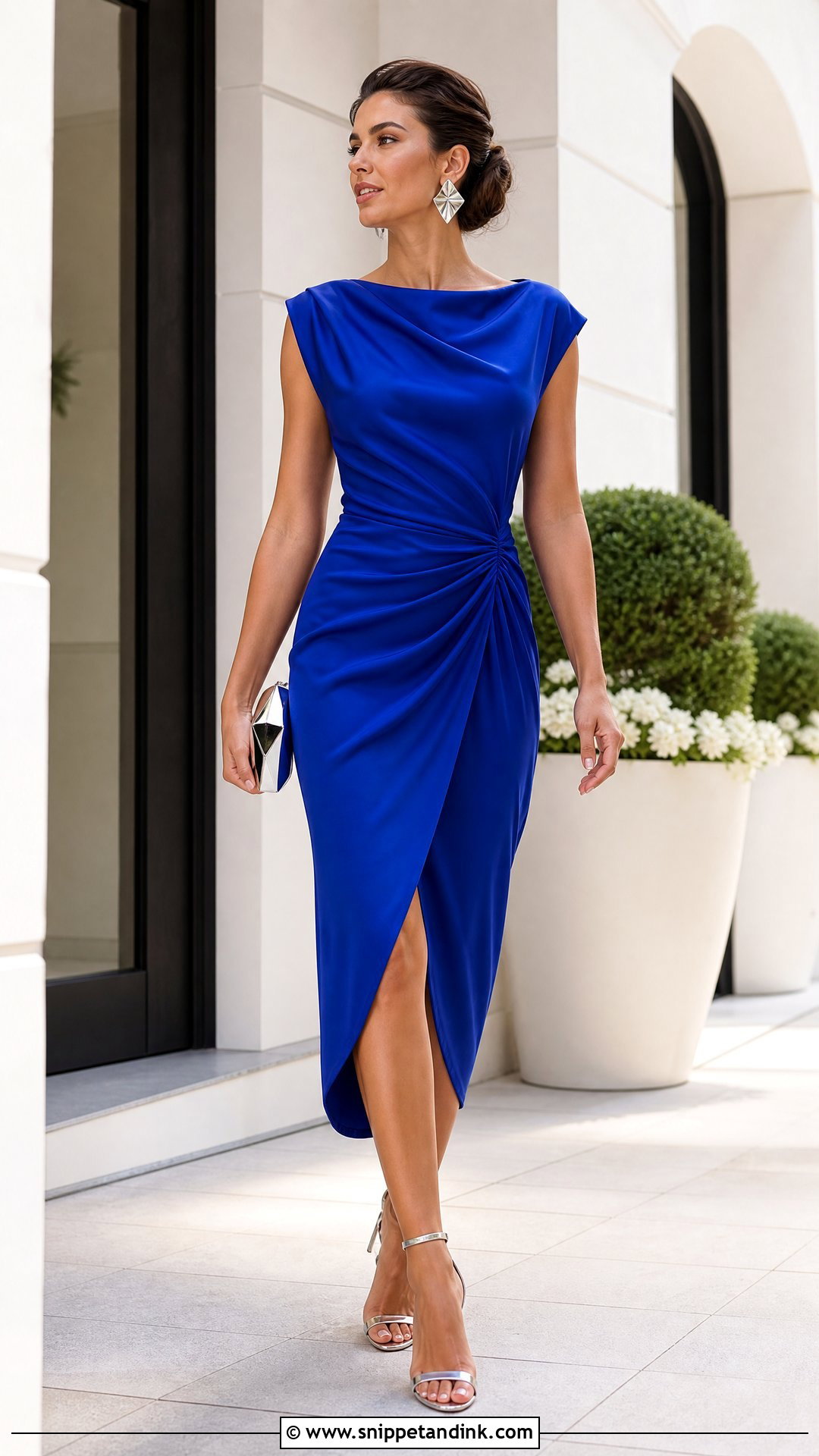
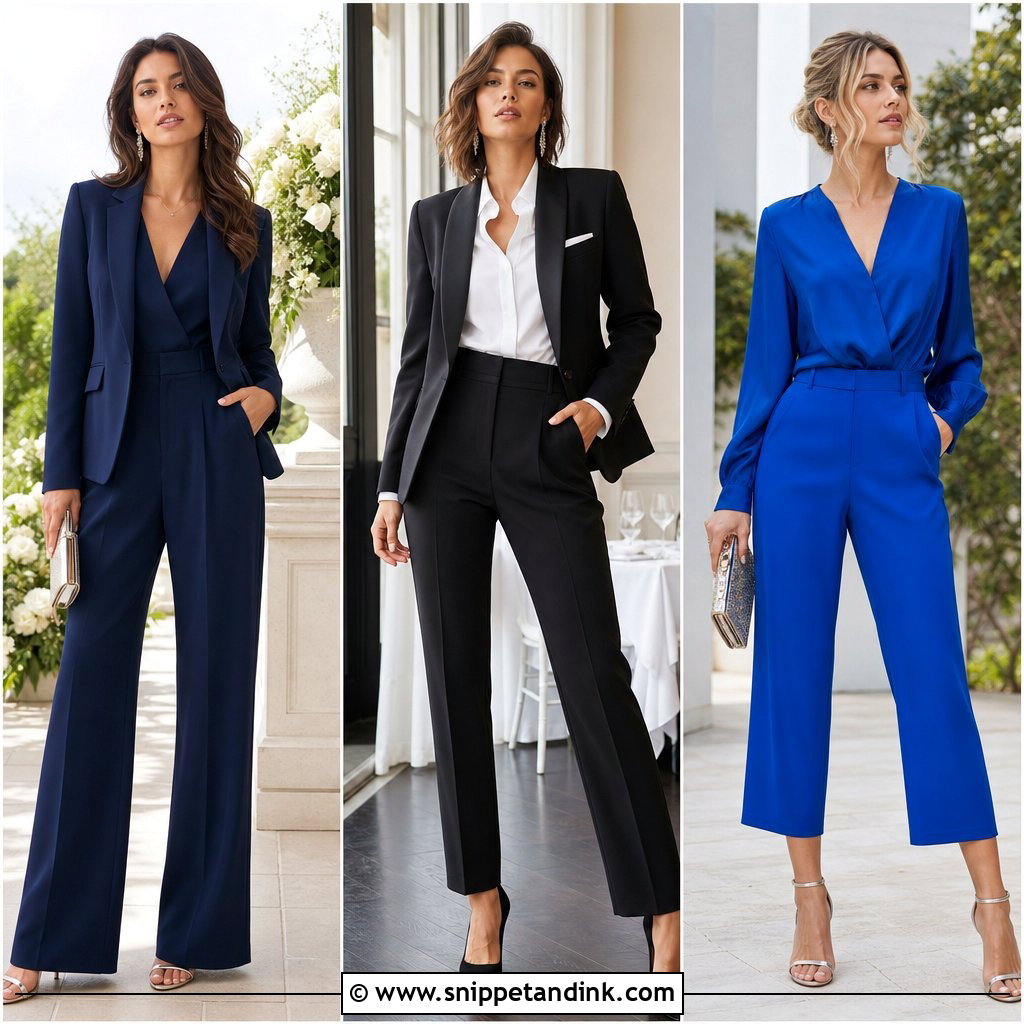
Cobalt is strong enough to need no print and no fuss. Choose a draped midi, fitted A-line or flowing maxi depending on how formal the invitation is. Silver heels and a metallic clutch give it a cool finish; gold works for warmer contrast, but pick one metal and keep it consistent. Sculptural earrings and a bare neckline are enough. A sleek low bun or smooth shoulder-length hair keeps it modern. With a colour this bright, I’d keep makeup neutral with one defined feature, usually the eyes or the lips, not both.
15. Emerald Green Wedding Frock
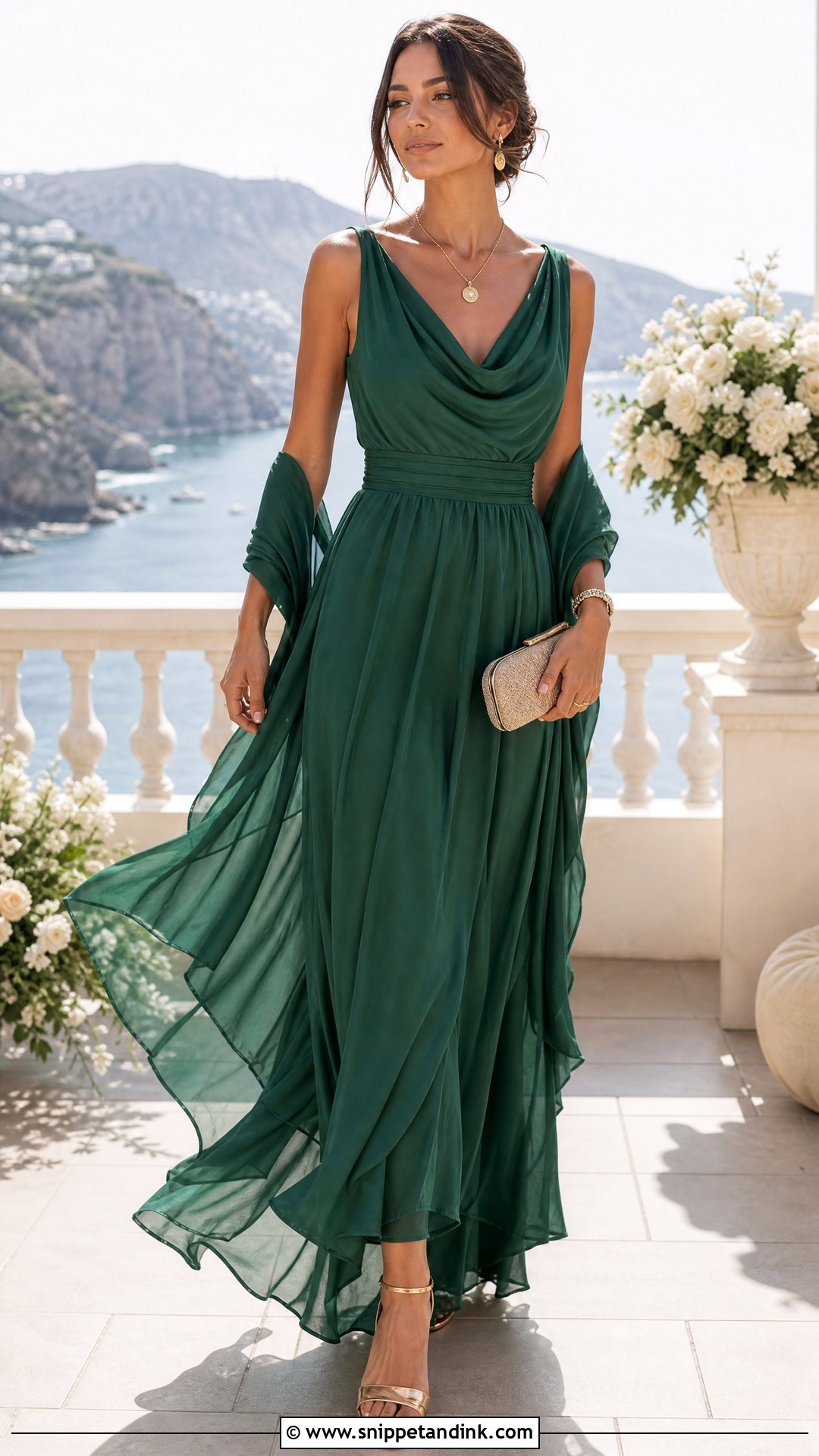
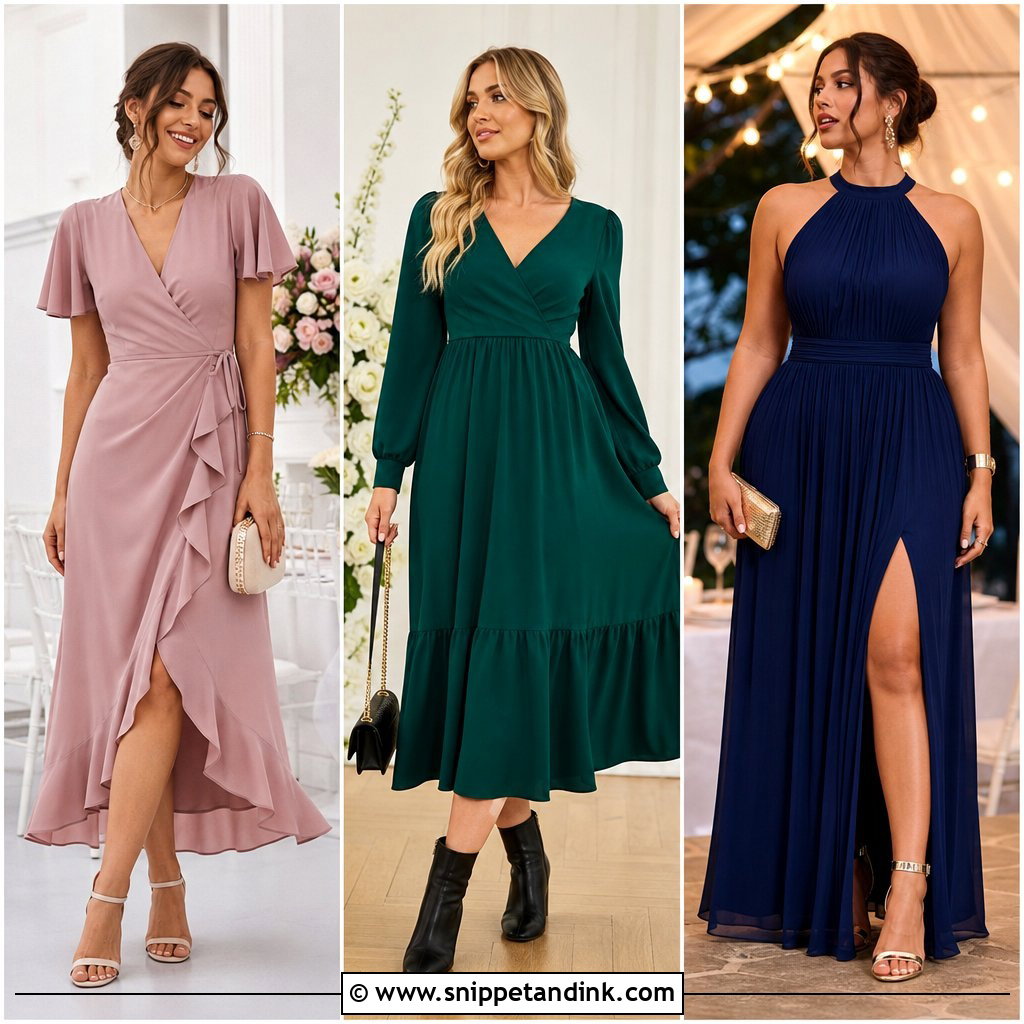
Emerald moves between day and evening more easily than most colours, and the fabric is what sets the season: chiffon for summer, crepe or satin for spring and autumn, velvet for winter. A midi or maxi with a defined waist or soft drape, gold sandals, a small neutral clutch and fine gold jewellery make a complete look. If you need a layer, choose dark green or a warm cream, but avoid very pale wraps that could read as bridal next to the dress in photos. Soft waves or a smooth updo suit it. It flatters a wide range of complexions.
16. Burgundy Long Sleeve Wedding Frock
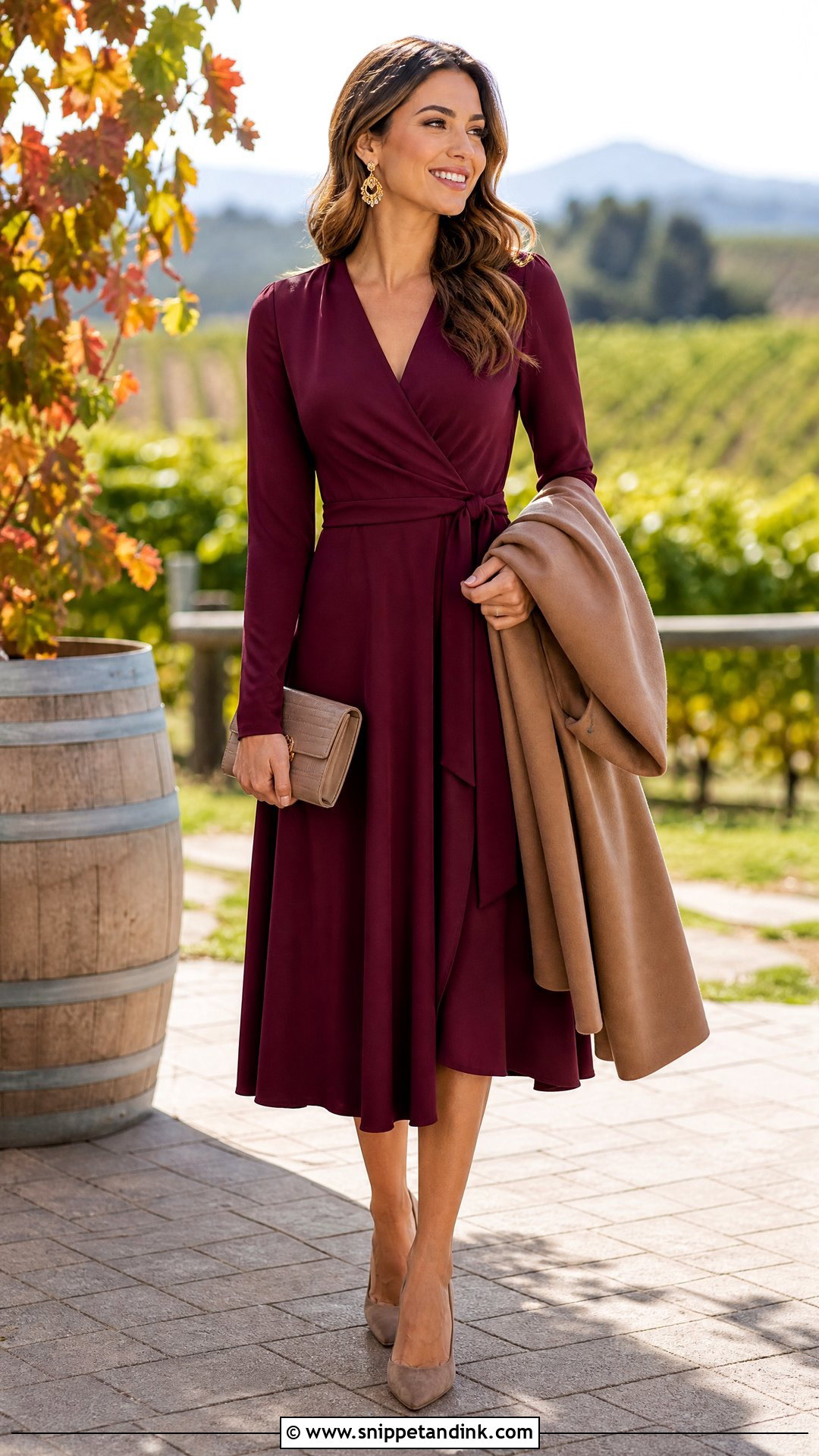
Burgundy with long sleeves is my default autumn suggestion. A wrap waist, gathered bodice or gently flared midi or maxi skirt keeps it comfortable. Taupe, black or metallic closed-toe heels and a structured clutch go with it, gold earrings warm it up, and a fitted wool coat keeps the arrival outfit smart. Check the cuffs: long sleeves that sit tight on the wrist end up in the soup and on the cake, so a slightly looser cuff is more practical. A berry lip can match the dress if the rest of the makeup stays soft. It suits vineyards and formal indoor receptions alike.
17. Pastel A-Line Wedding Frock
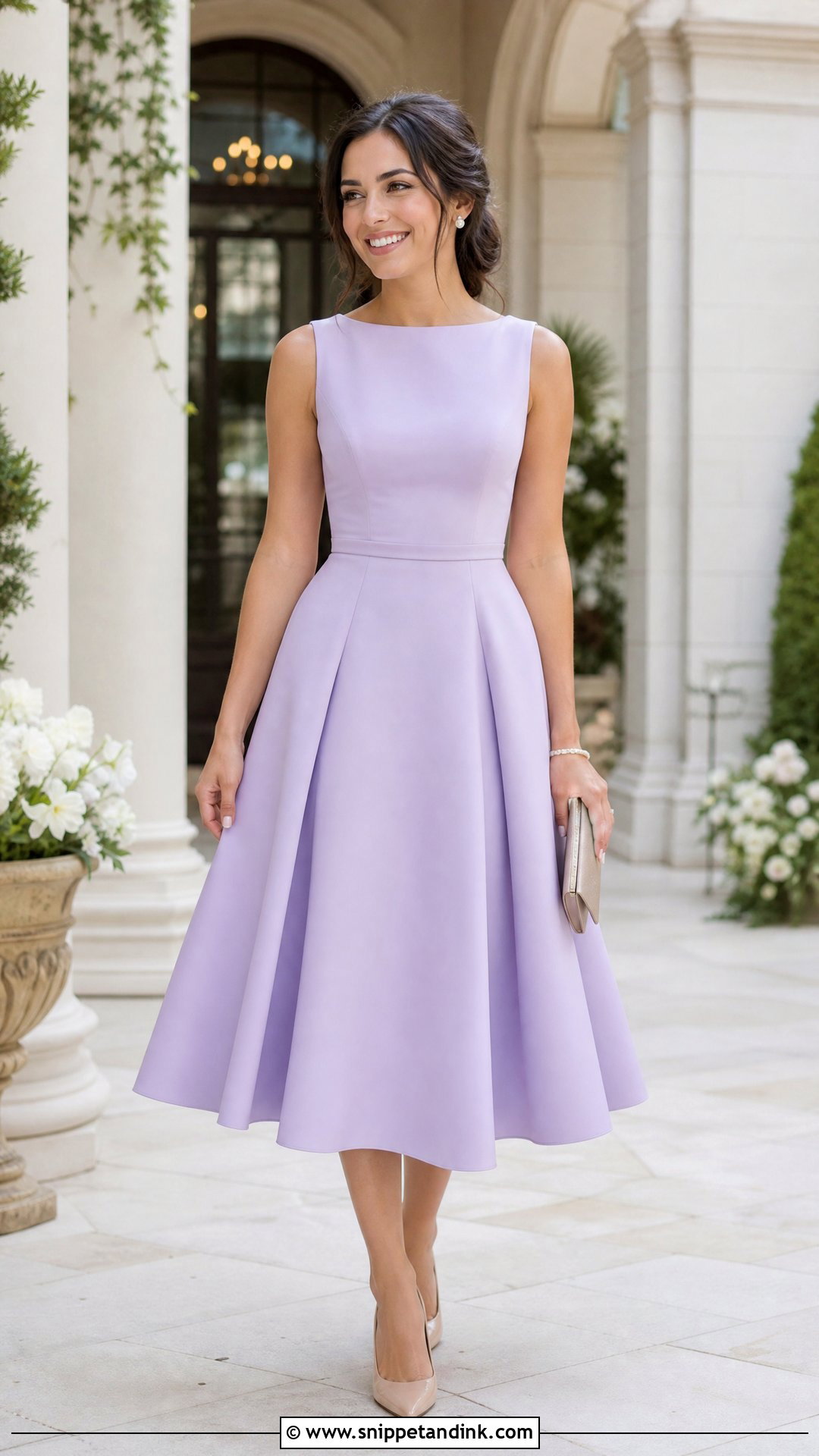
Pastels are where guests most often get into trouble with photos. A shade that looks clearly lavender in a shop can turn almost white under flash, so choose colours with some depth: lavender, powder blue, mint, peach or rose, never the palest version. An A-line with a fitted bodice is easy to wear for any age. Nude pumps, a soft-coloured clutch, pearl studs and a fine bracelet suit it, and a cropped jacket adds structure without hiding the waist. A low bun, smooth waves or a neat shoulder-length style finishes it for a daytime or spring ceremony.
18. Plus Size Empire Waist Wedding Frock
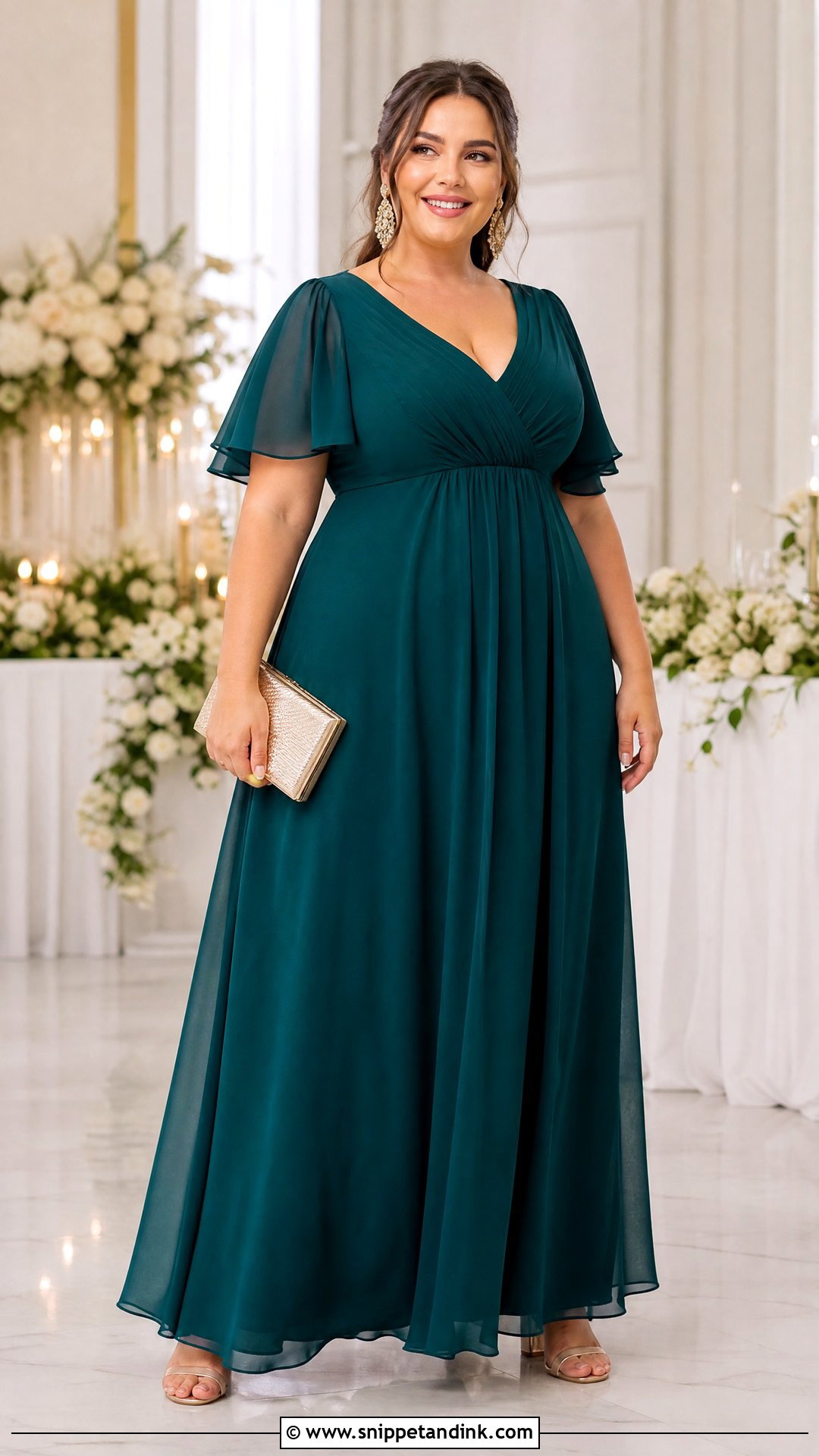
An empire waist sits just under the bust, so it skims everything below without clinging. On a plus-size figure, the fit at that seam is what makes it work: too loose and it tents, too tight and it digs. Avoid frocks with yards of extra fabric in the skirt, which only add volume. A V-neck or scoop opens up the neckline and flutter sleeves give light coverage. A saturated colour or medium print, supportive block heels, a structured clutch and earrings that frame the face complete it. Anti-chafing shorts are a genuine comfort over a long day of standing and dancing. Wear what you feel good in; there are no rules here worth following over that.
19. Petite Asymmetrical Wedding Frock
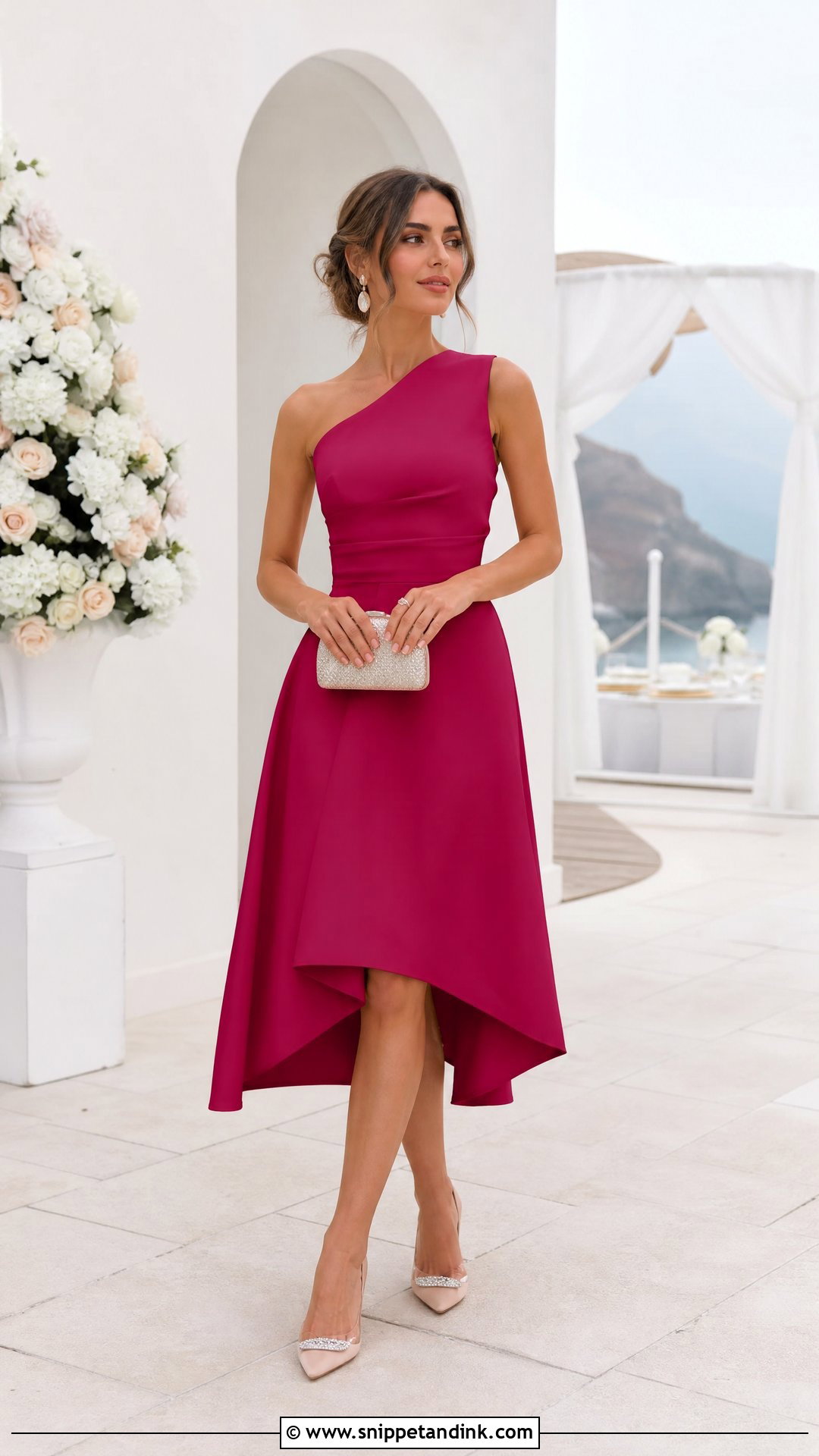
Petite women can wear dramatic shapes if the proportions are scaled down. A petite asymmetrical wedding frock, with a shorter front hem, angled neckline or soft drape, gives movement without drowning you in fabric. Buy from a petite range where you can, because the waist, shoulders and hem are already placed for a shorter torso; altering a standard size to fit rarely gets the waist right. Pointed heels or low-cut pumps keep the leg line long. A small clutch and refined earrings suit it, oversized bags and wide belts do not. A neat updo or sleek bob keeps it clean.
20. Wedding Frock With Matching Jacket
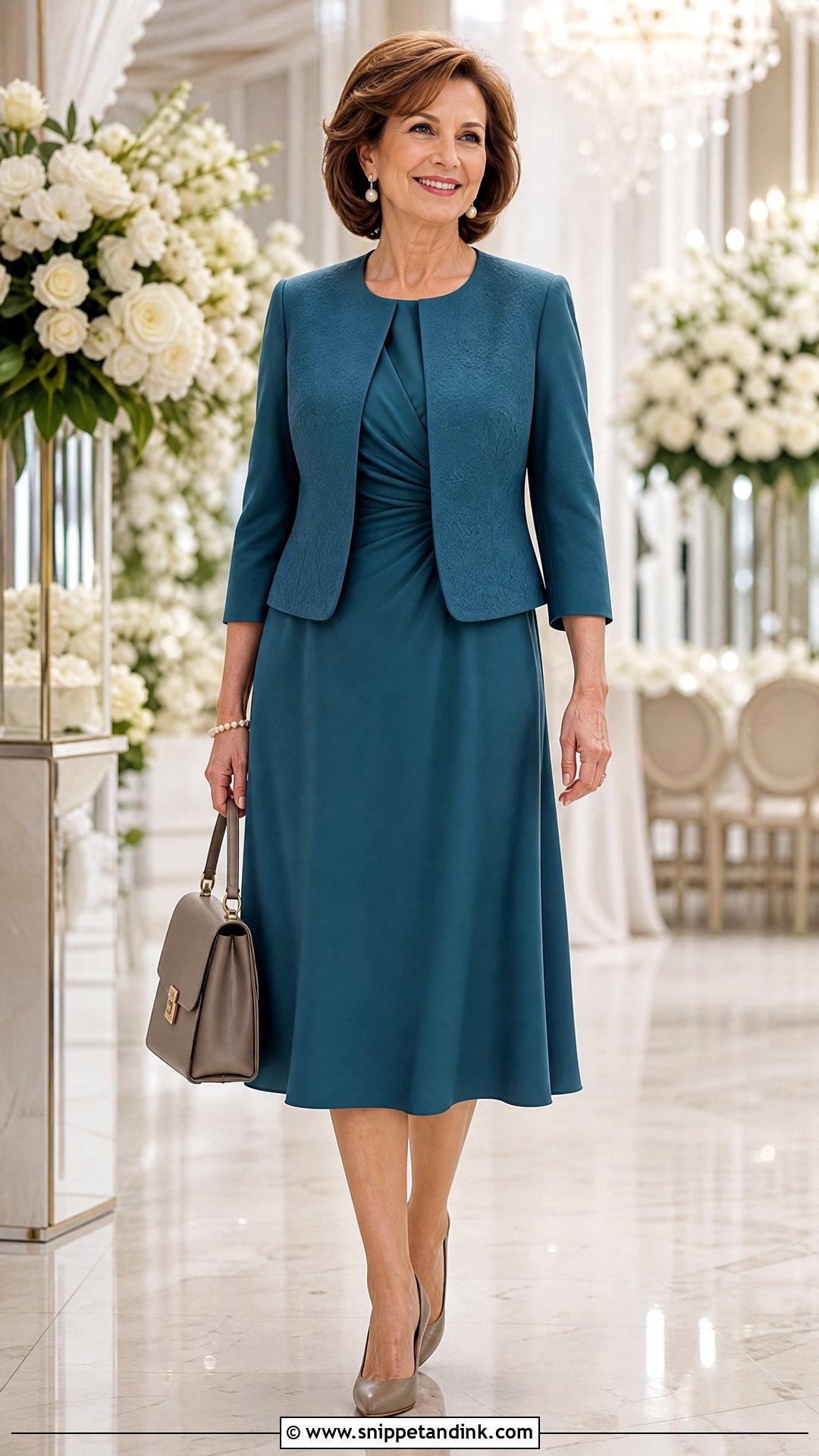
A wedding frock with a matching jacket is the outfit I suggest most often for mothers, grandmothers and anyone who wants their arms covered for a religious ceremony. A knee-length or midi frock with a softly tailored jacket ending at the waist or upper hip looks smart; boxy jackets that hit mid-thigh tend to age the outfit. Navy, mauve, teal, plum and soft grey-blue all suit it. Comfortable pumps, a structured handbag, pearl or crystal earrings and a simple bracelet finish it. Make sure the frock looks complete without the jacket, so you can take it off once the dancing starts.
Having a Frock Stitched Instead of Bought
Stitching a frock gives you the fit, length and sleeves you want, and it’s often the only way to get an embroidered piece in your exact size. The catch is time. Tailors get booked solid in wedding season, so I’d hand over fabric at least six weeks before the event, and longer for heavy hand embroidery.
What to take to the tailor
- A frock that already fits you well, so they can copy the bust, waist and armholes
- Photos of the neckline and sleeve you want, from the front and back
- The shoes you’ll wear, so the hem is cut to the right length
- Extra fabric for lining; ask whether the main fabric needs to be washed first, since cotton and some silks shrink
Book a trial fitting at least a week before the event. That leaves time to take in a seam or lift a hem without rushing it the night before.
When you collect it, check the inside as well as the outside. Seams should be finished so they don’t fray, the zip should run smoothly without catching the lining, and embroidery should have no loose threads at the edges. Those are easy to fix at the shop and a nuisance to sort out on the morning of the wedding.
A Dress Rehearsal at Home Saves the Evening
A wedding frock should suit the invitation first and your own taste second, and comfort decides whether you enjoy wearing it. There’s something here for every season, venue, figure, culture and level of formality. Before the day, put on everything together: frock, shoes, underwear, jewellery, bag and outer layer. Walk around, sit down, raise your arms, climb some stairs. Small fixes like a strap adjusted, a hem taken up or a different bra do more for an outfit than extra embellishment ever will. Do that, and the floral chiffon, the velvet or the Anarkali will feel as good at the last dance as it did at the ceremony.
You'll Like These Ideas:


Leave a Reply