
Dressing a Muslim bride in India usually means planning for more than one event: the Nikah, often a mehndi or manjha before it, and the Walima after. Each asks for a different weight of outfit, but the same questions come up every time. How will the dupatta stay on? Will the sleeves be long enough? Can she sit through the ceremony comfortably? Indian Muslim bridal fashion covers everything from red lehengas and velvet ghararas to the Hyderabadi khada dupatta, soft saree drapes and modest gowns. Below are thirty bridal looks, and for each one I’ve noted how I’d handle coverage, drape and fabric so it works through a long day.
Head Coverage That Holds Through the Nikah and the Rukhsati
Most bridal dupattas slip because they’re pinned straight onto smooth hair. The fix I rely on is a base layer. For a bride wearing a hijab, a snug underscarf or cap gives the pins something to grip. For a bride with hair styled underneath, a bun placed slightly higher than usual creates an anchor, and the dupatta pins into the bun rather than into loose hair.
- Pin at the crown first, then at each side just above the ears, so the weight hangs evenly.
- Heavy borders pull backwards. Add one or two pins behind the bun to stop the dupatta sliding off as you look down.
- Use small straight pins or U-pins near the face and save safety pins for hidden spots on the shoulder and blouse.
- With a double dupatta, pin the lighter one on the head and let the heavier one carry its weight from the shoulder.
Where the passa and matha patti go
Decide early whether jewelry sits over or under the dupatta. A passa usually sits on one side of the head and looks best over the fabric, so it shows in photos. A matha patti can go under the dupatta edge if the drape starts at the hairline. I do this at the trial, with the actual dupatta, because a heavy border changes everything.
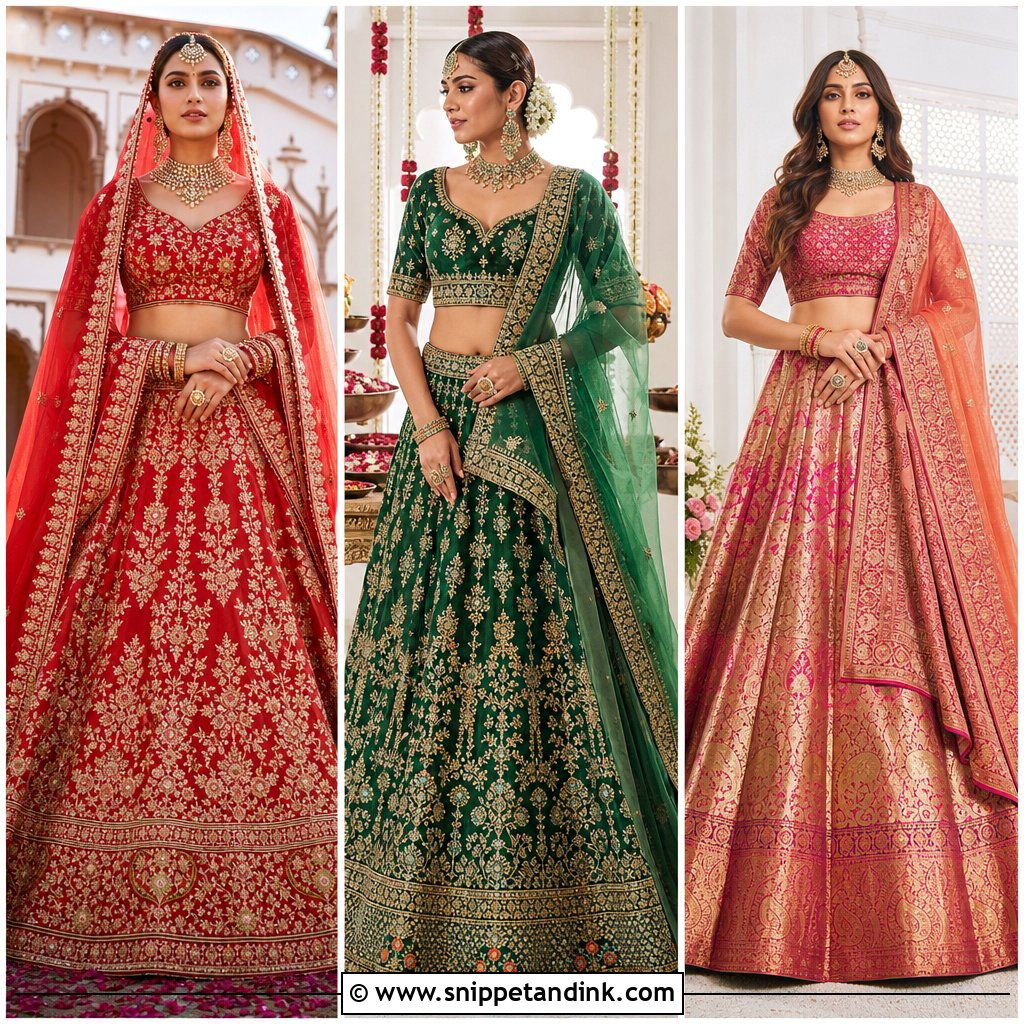
1. Red Bridal Lehenga With Double Dupatta
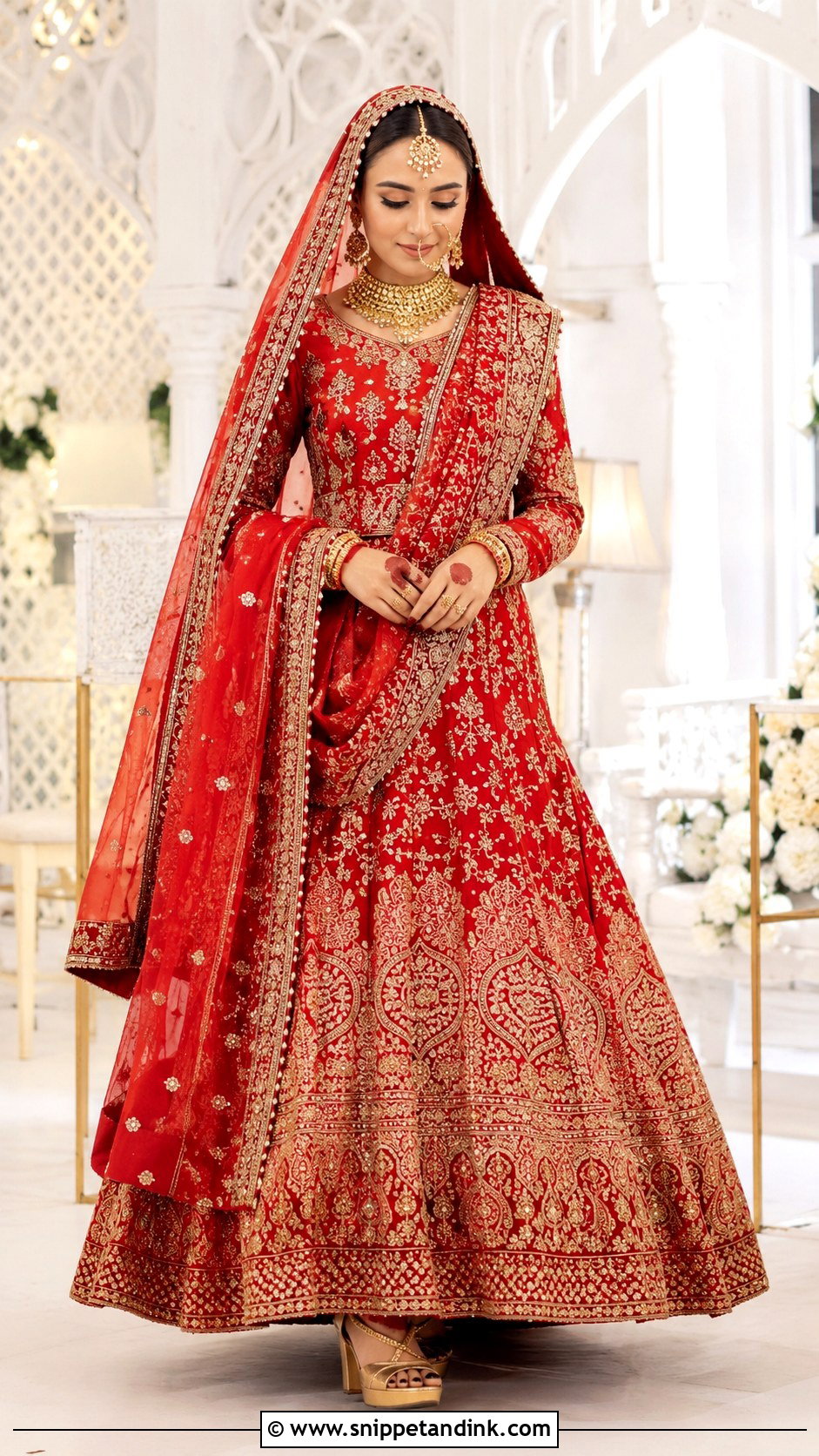
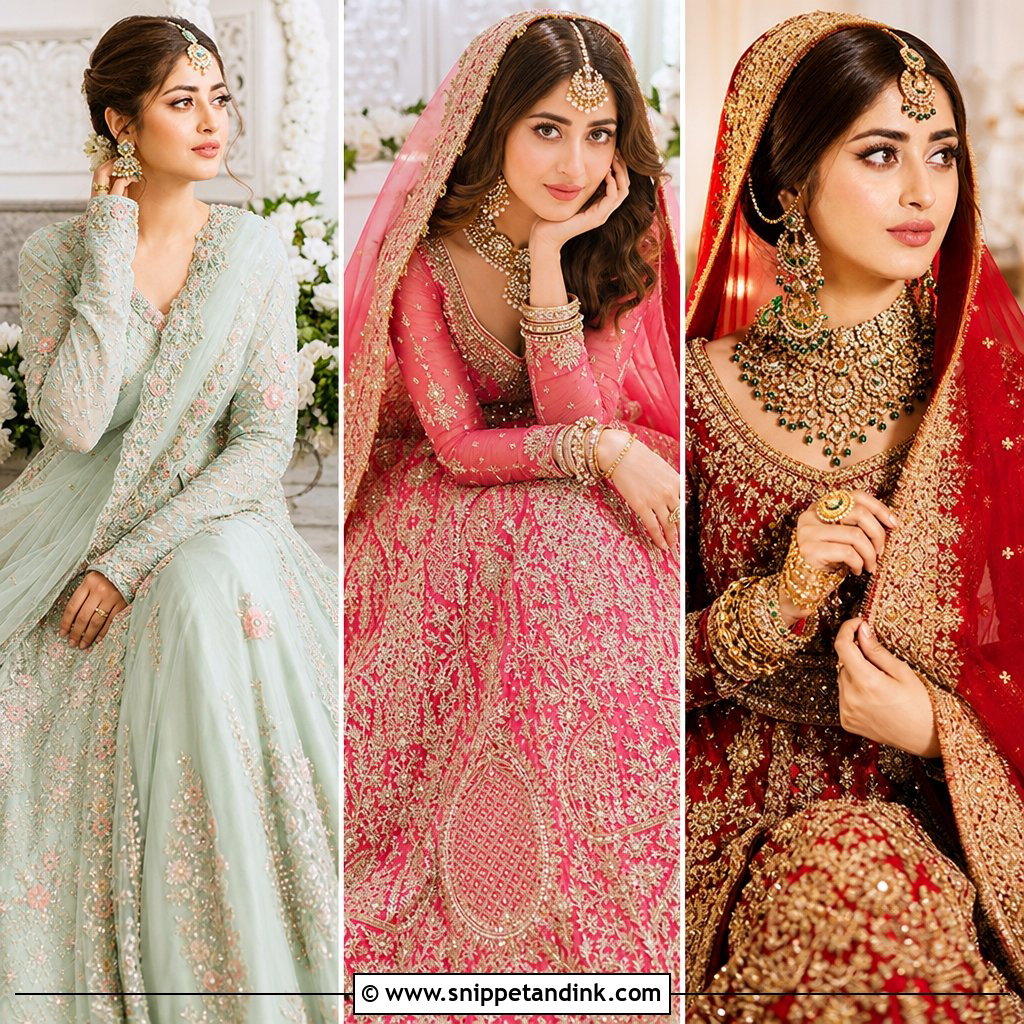
The double dupatta is the most practical way I know to keep a red lehenga both bridal and covered. One dupatta goes over the head and is pinned at the crown; the second drapes across the front, over one shoulder, or wraps around the arms. Pair it with a full-sleeve blouse, a higher neckline and a structured A-line skirt in zari or zardozi. Two embroidered dupattas add real weight to the head and shoulders, so I’d keep one of them lighter in net. Kundan jewelry, a passa and embroidered juttis suit a Nikah or main wedding ceremony.
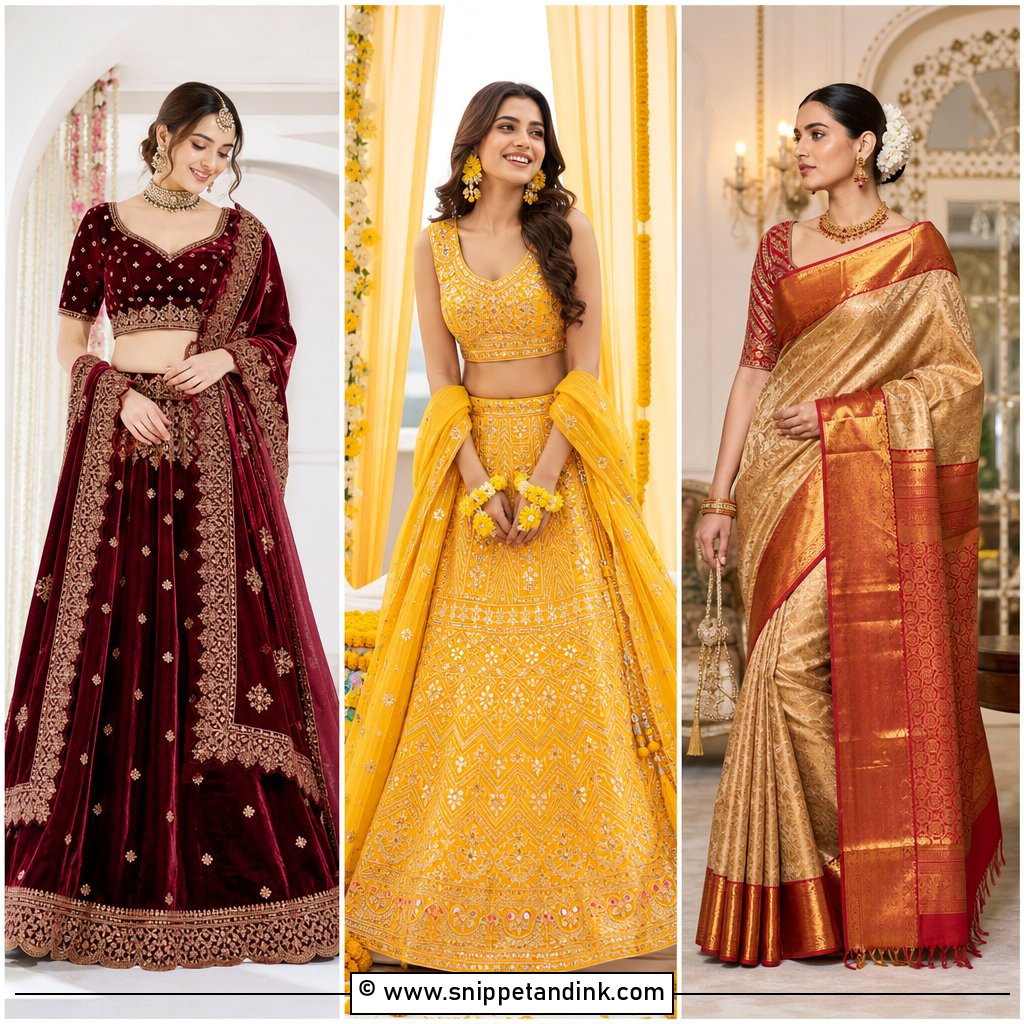
2. Maroon Velvet Gharara Bridal Dress
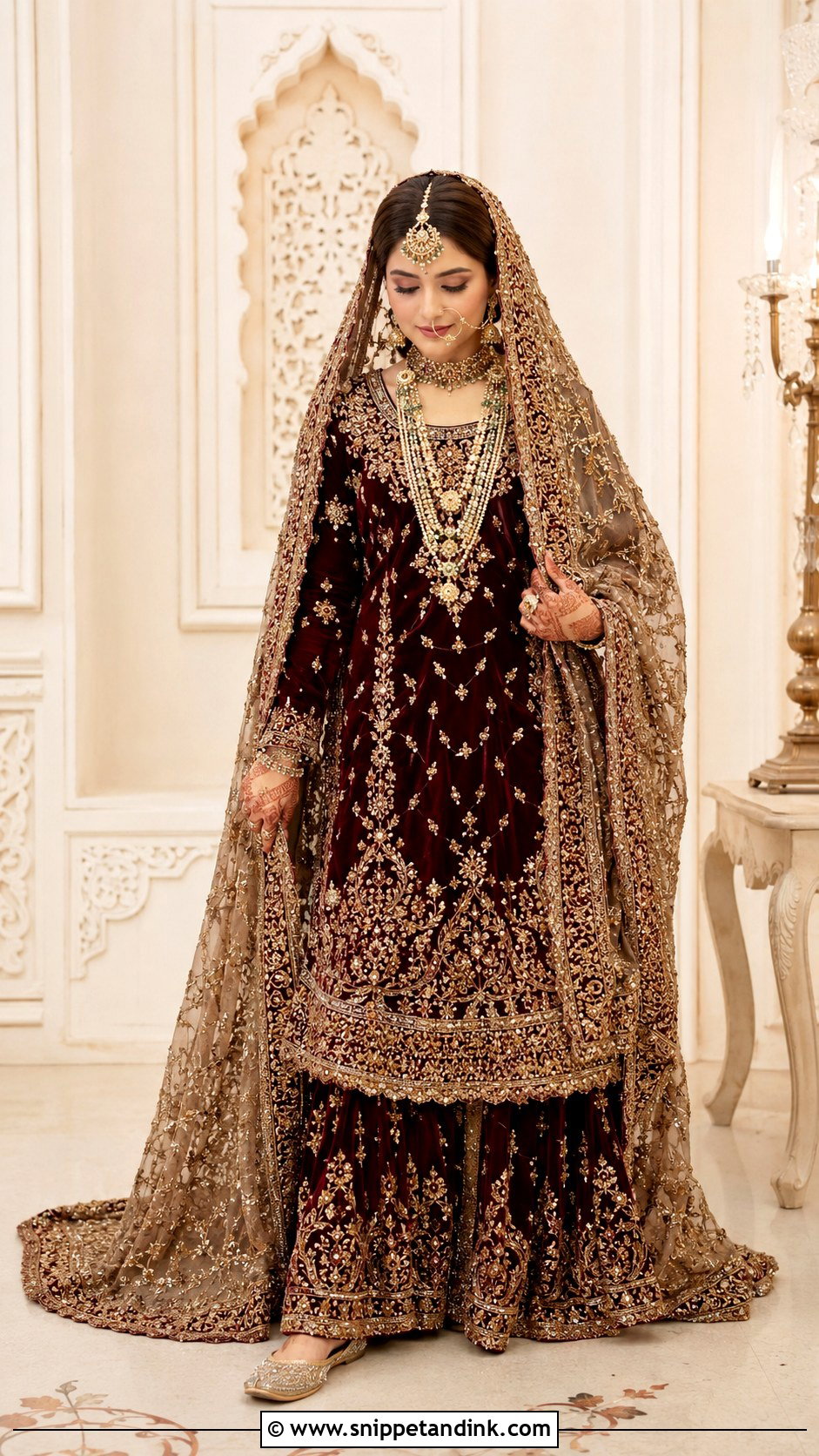
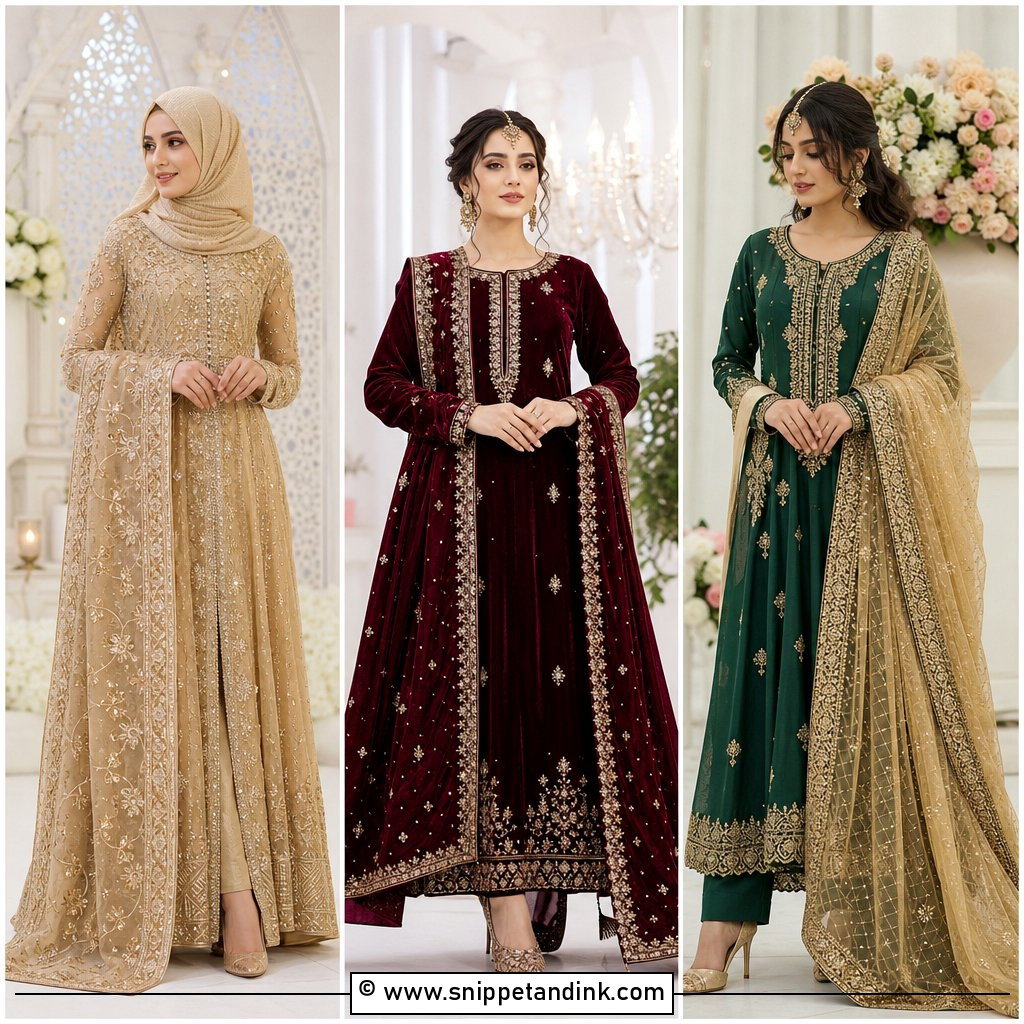
A velvet gharara belongs to winter evenings. The pile absorbs light, so antique gold dabka and borders at the hem and sleeves stand out sharply, and the fitted kurta with the gharara’s flare below the knee gives shape without revealing much. Velvet is heavy and warm, though; in a packed hall with no air conditioning it becomes a burden, which is why I check the venue before recommending it. A broad-bordered dupatta over the head and one shoulder, a choker, long haar, matha patti and passa complete the heritage look.
3. Ivory Bridal Sharara With Gold Dupatta
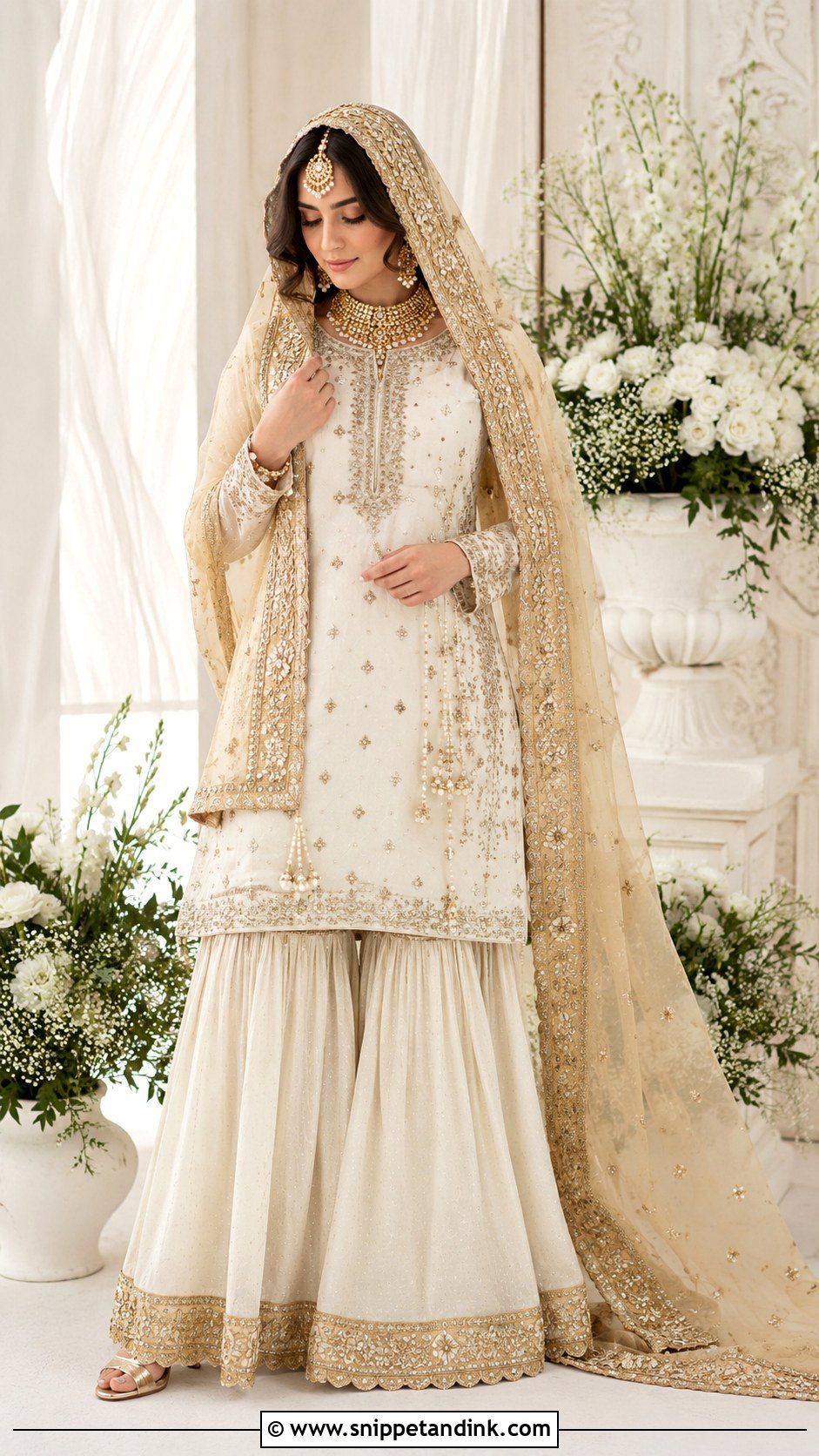
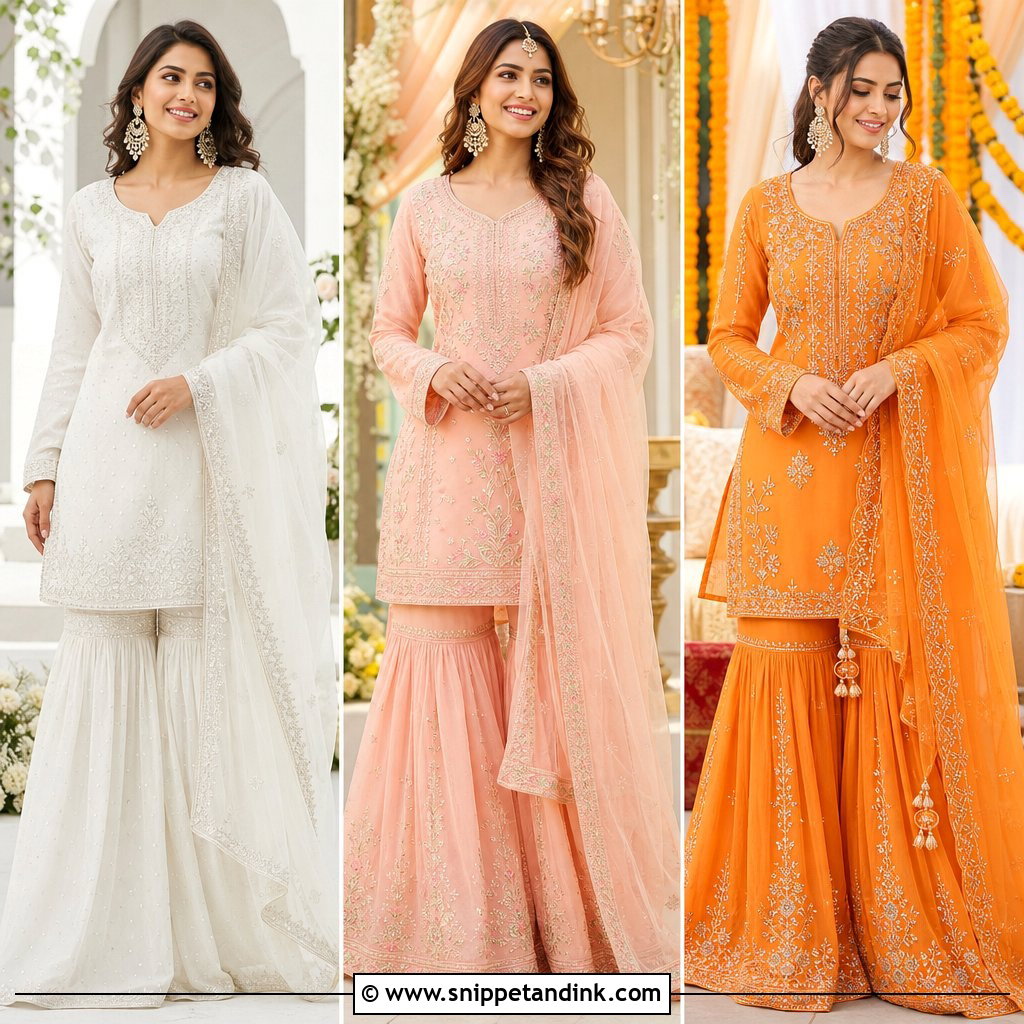
Ivory with a gold dupatta is quiet and refined. A long embroidered kurta over wide sharara pants keeps it modest, and ivory silk, organza or brocade with zari, pearls or mukaish gives it texture. The gold net or tissue dupatta pinned over the head is what frames the face, and I’d choose it a shade warmer than the ivory so the bride doesn’t look washed out. Polki jewelry and gold heels suit a Nikah, Walima or small daytime wedding.
4. Emerald Green Lehenga With Full Sleeve Blouse
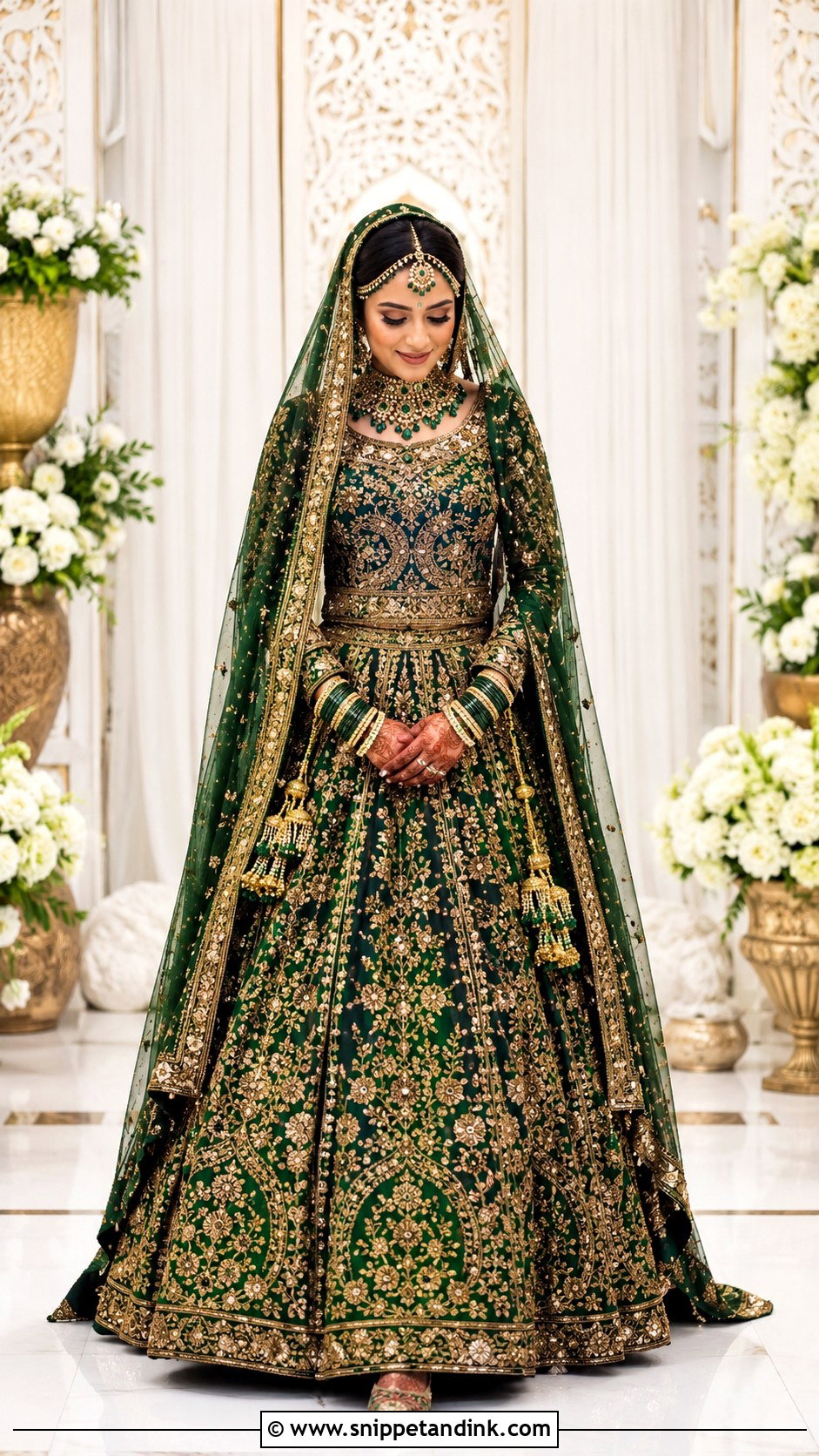
Emerald suits many Indian Muslim brides who want something regal that isn’t red. Paired with a full-sleeve blouse, a structured skirt and gold zardozi or sequins, it reads unmistakably bridal. A matching or champagne dupatta over the head finishes it. Full sleeves are where I spend most time at the fitting: they need ease at the elbow, or the bride can’t lift her hands comfortably during the ceremony. Green-stone jewelry and a passa suit it.
5. Pastel Pink Muslim Bridal Lehenga
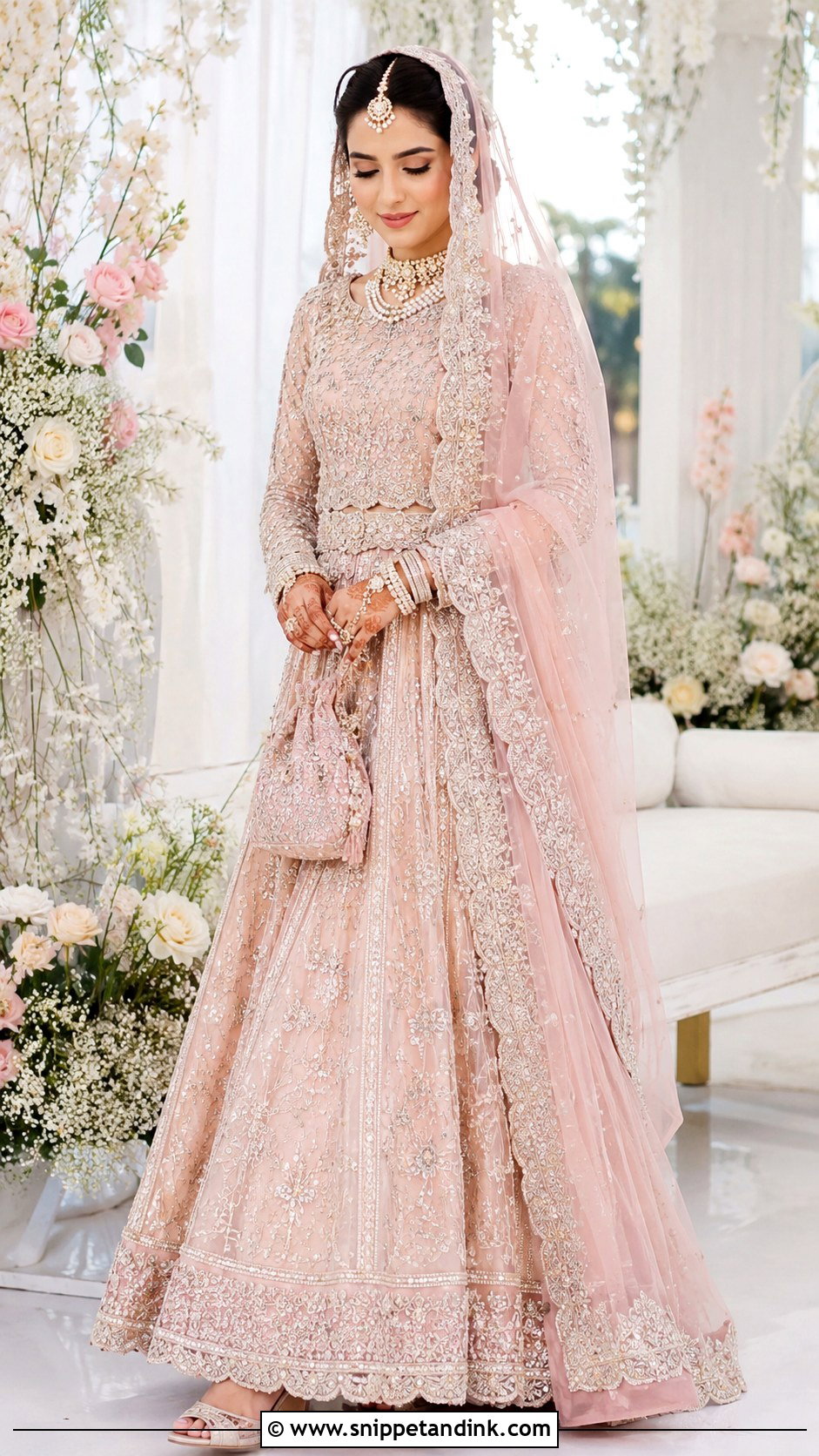
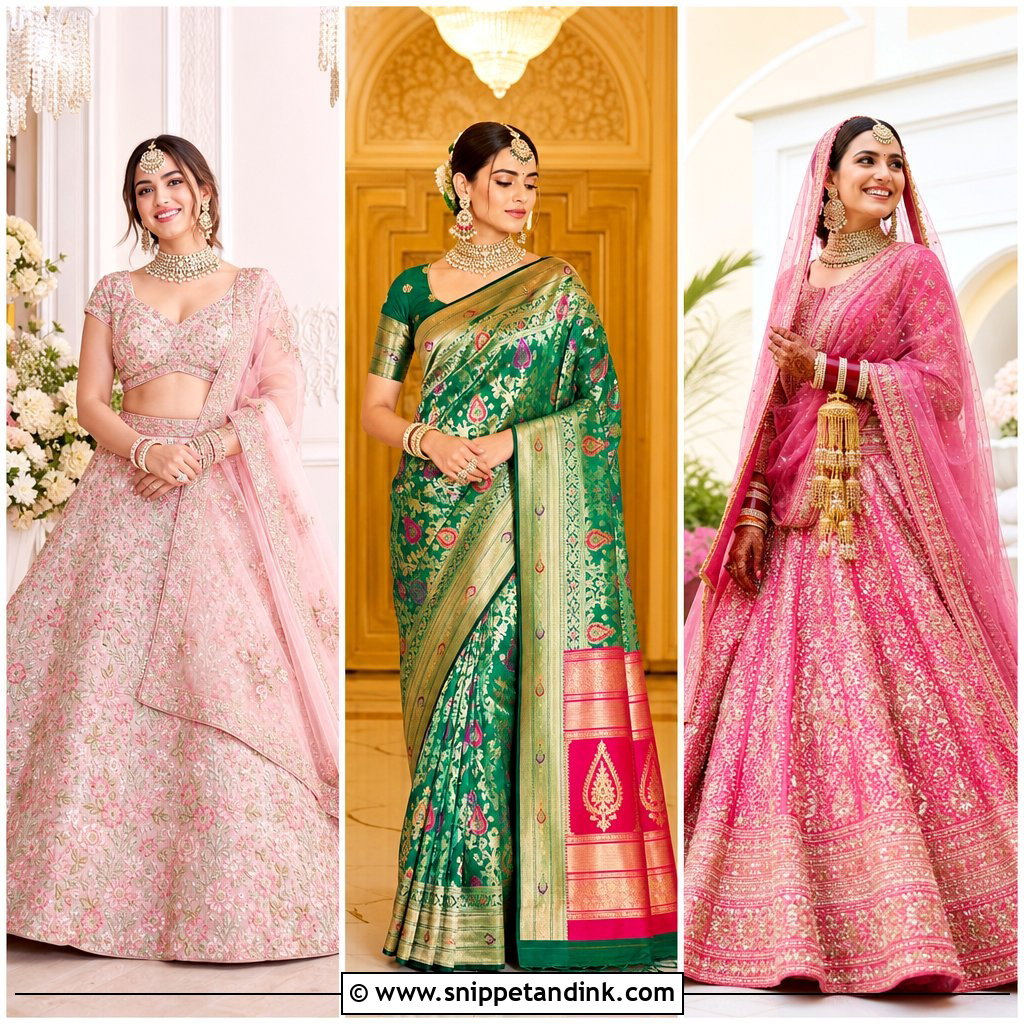
Pastel pink only looks bridal when the embroidery carries it. Pearl work, silver zari or tone-on-tone embellishment does that; a plain pastel lehenga looks like a guest outfit. A long-sleeve, high-neck blouse balances the color. Add a sheer dupatta over the head, and a second across the front for more coverage. Diamond, pearl or polki jewelry suits it, and I’d keep it for a daytime Nikah or Walima, where natural light shows the pearl work.
6. Hyderabadi Khada Dupatta Bridal Dress
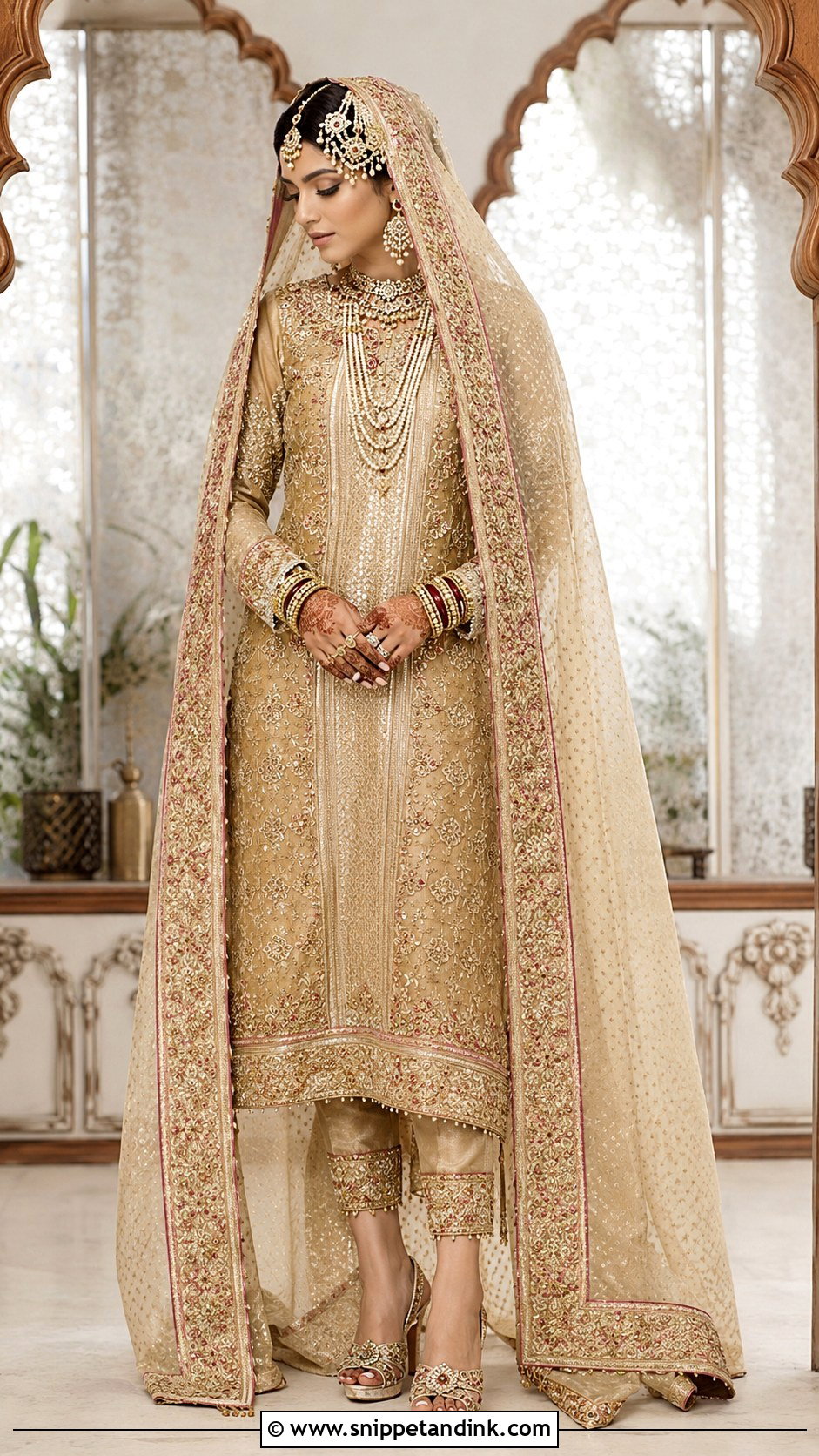
The khada dupatta is Hyderabad’s own bridal tradition: a fitted kurta, churidar and a very long dupatta, often around six yards, pleated and draped over the head and shoulder so it falls in a tall, upright line. It takes an experienced hand to drape, and I’d book someone who has done it before rather than learning on the day. Silk, brocade or tissue with zardozi or gota gives the dupatta enough body to hold. A passa, matha patti, layered necklaces such as a satlada, and bangles complete it.
7. Gold Tissue Saree Bridal Look
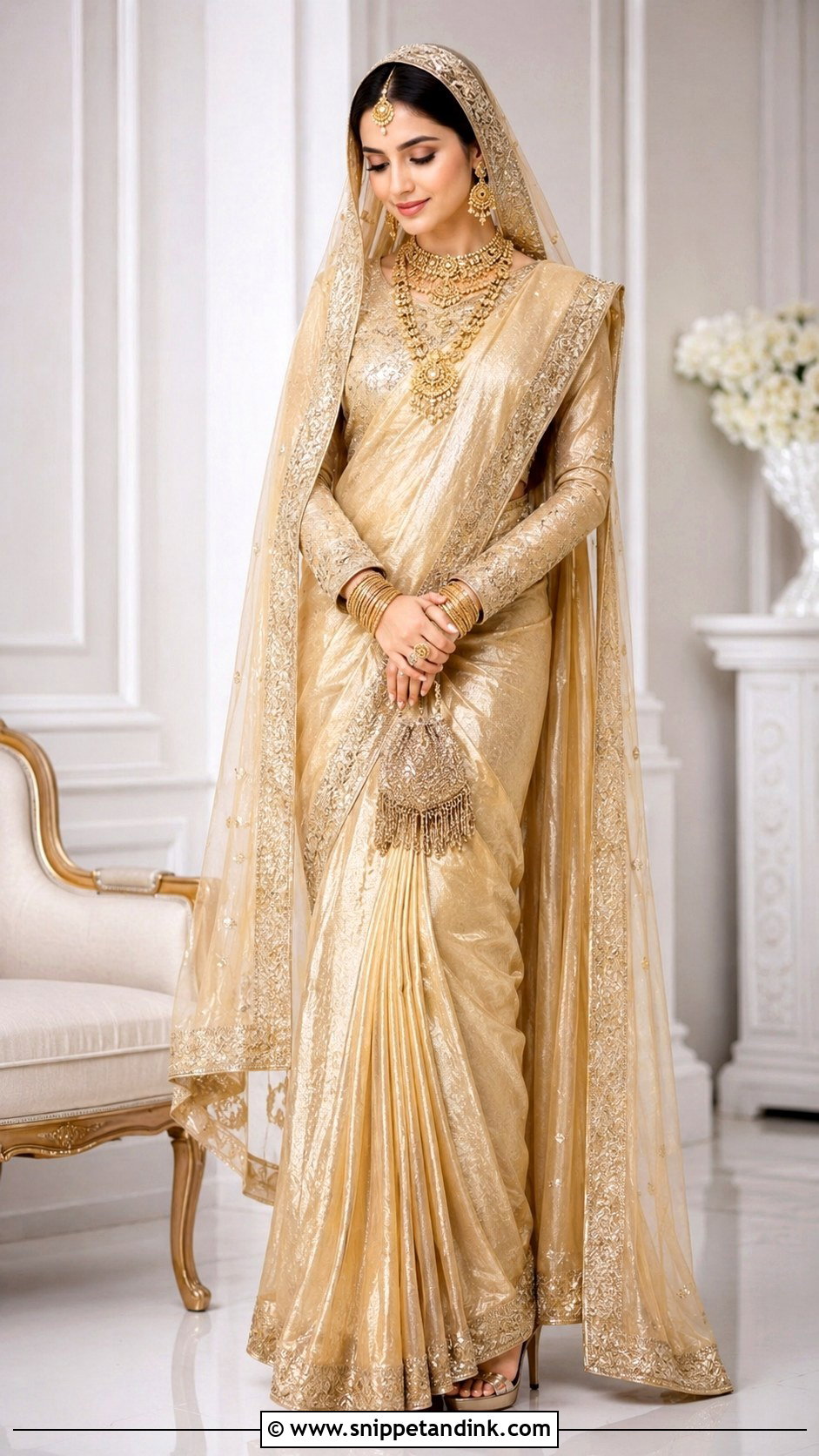
A gold tissue saree gives shine without volume. Tissue has metallic threads in the weave, so it catches light and feels slightly stiff, which helps the pleats hold. A modest full-sleeve blouse is essential here, and the drape needs extra care around the waist for coverage; a second sheer dupatta or veil can go over the head. Temple-inspired, kundan or polki jewelry suits gold on gold. It is a natural pick for South Indian Muslim brides or a Walima.
8. White Nikah Gown With Hijab
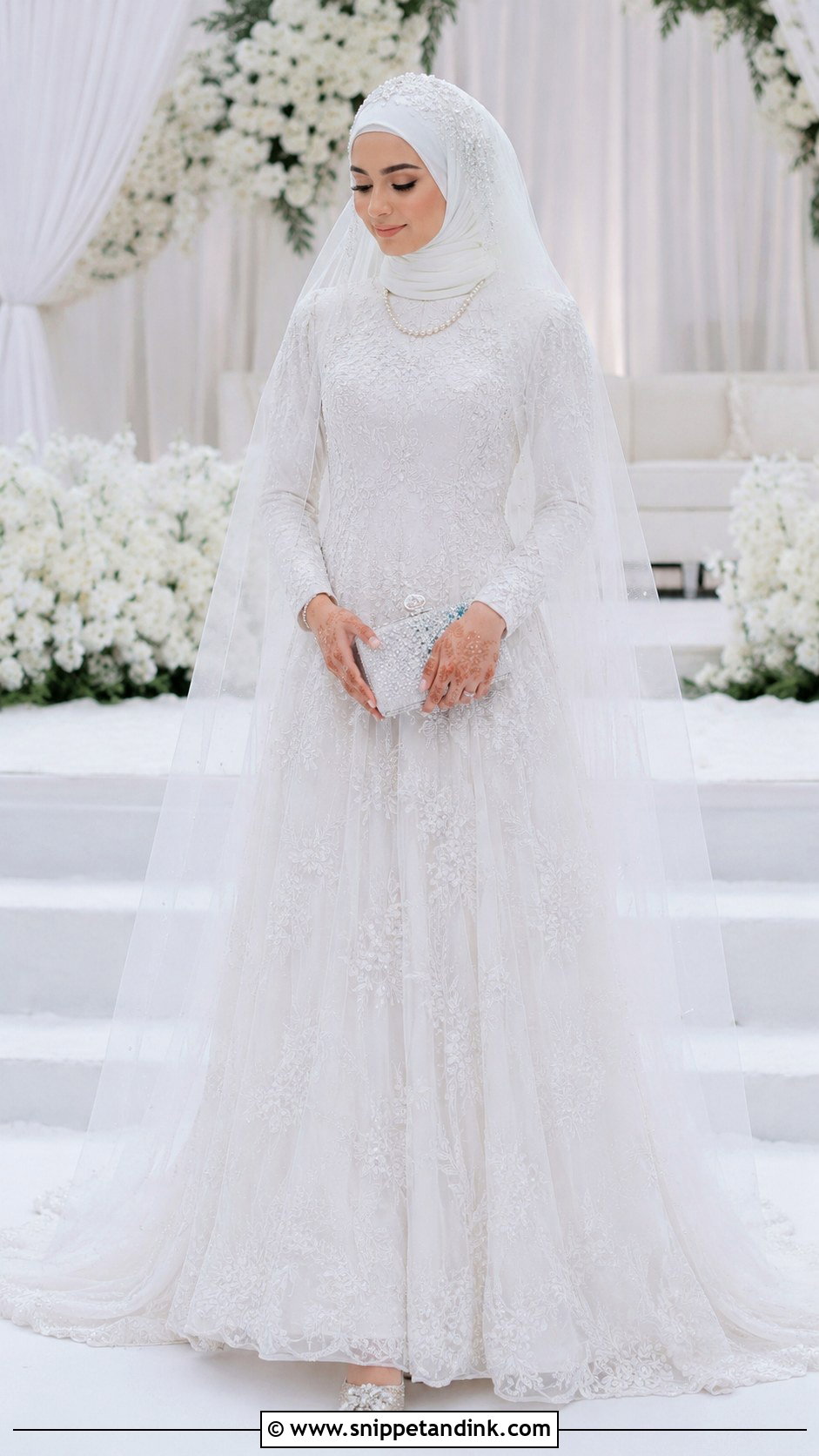
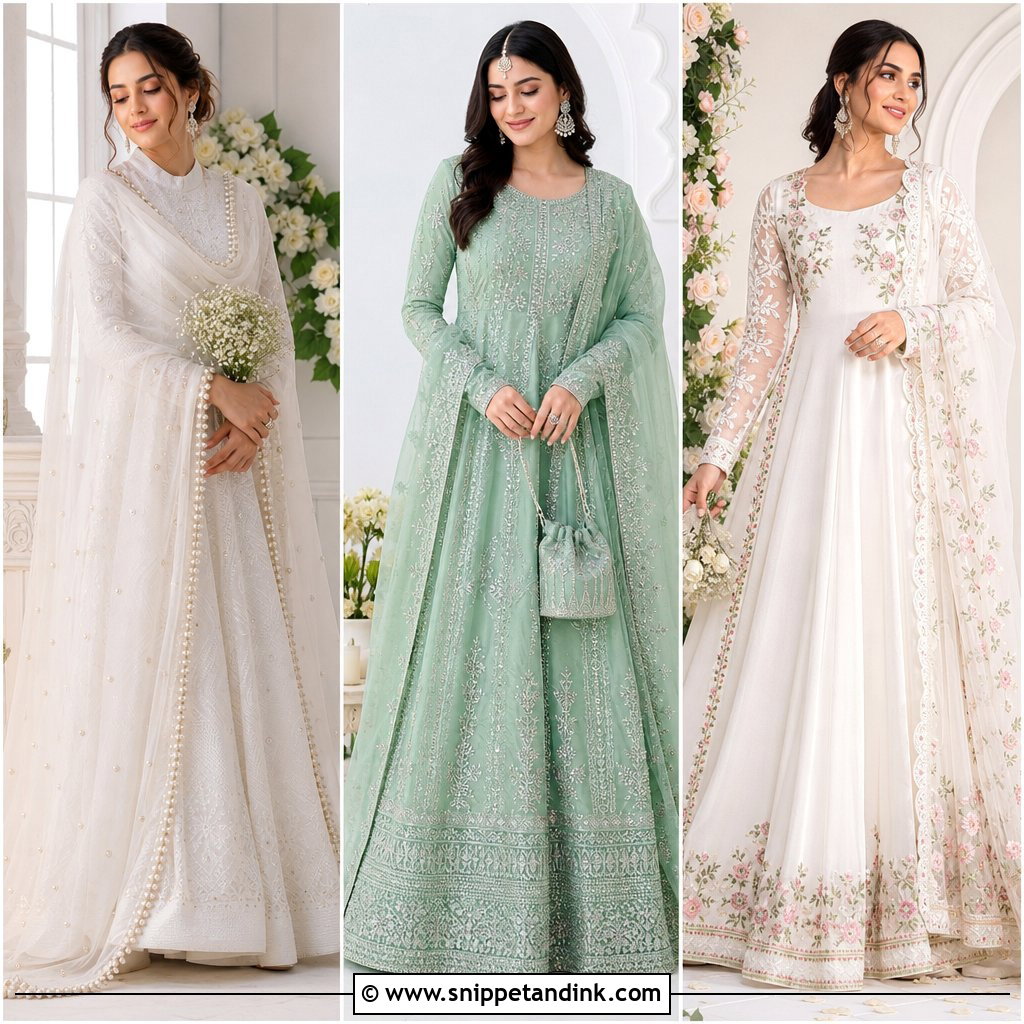
A white Nikah gown keeps the ceremony serene. Long sleeves, a defined waist and delicate embroidery at the bodice, cuffs and hem are what make it bridal. The hijab matters as much as the gown: chiffon is light but slippery, silk is smooth, georgette grips better, so for a long ceremony I’d choose georgette over an underscarf. A sheer dupatta or cape over the top adds the veil effect. Pearl jewelry and a small clutch are enough.
9. Sage Green Bridal Lehenga With Organza Dupatta
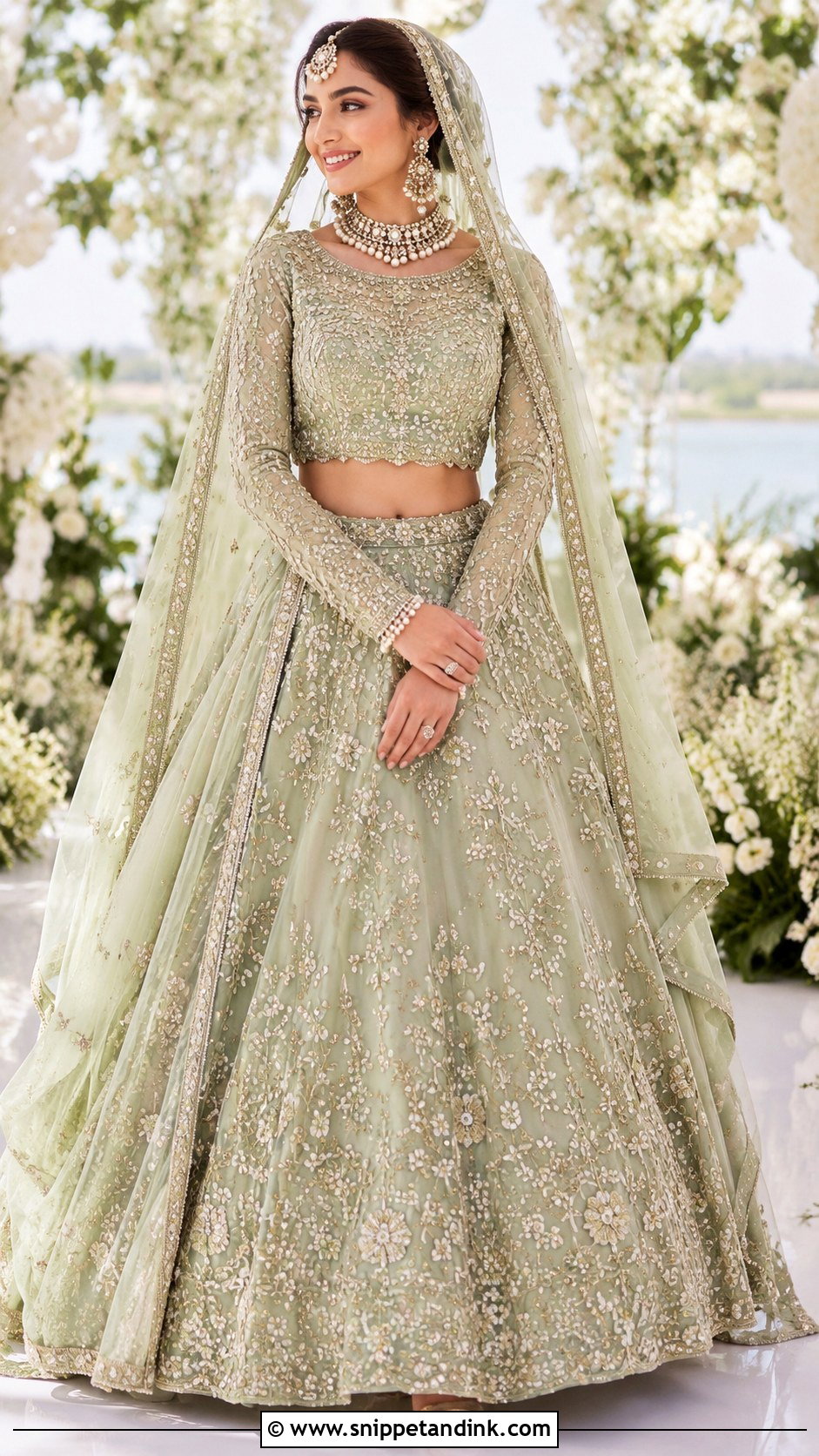
Sage green is soft enough for tradition and current enough to feel new. With an organza dupatta it suits daytime and garden venues. Gold, silver or pearl embroidery keeps it bridal, and a long-sleeve, modest blouse keeps it practical. Organza is crisp and holds its shape on the head, though it creases where it’s pinned, so I steam it right before the drape. A second dupatta across the shoulder adds coverage. Pearl-polki jewelry and soft glam makeup suit it.
10. Royal Blue Anarkali Bridal Dress
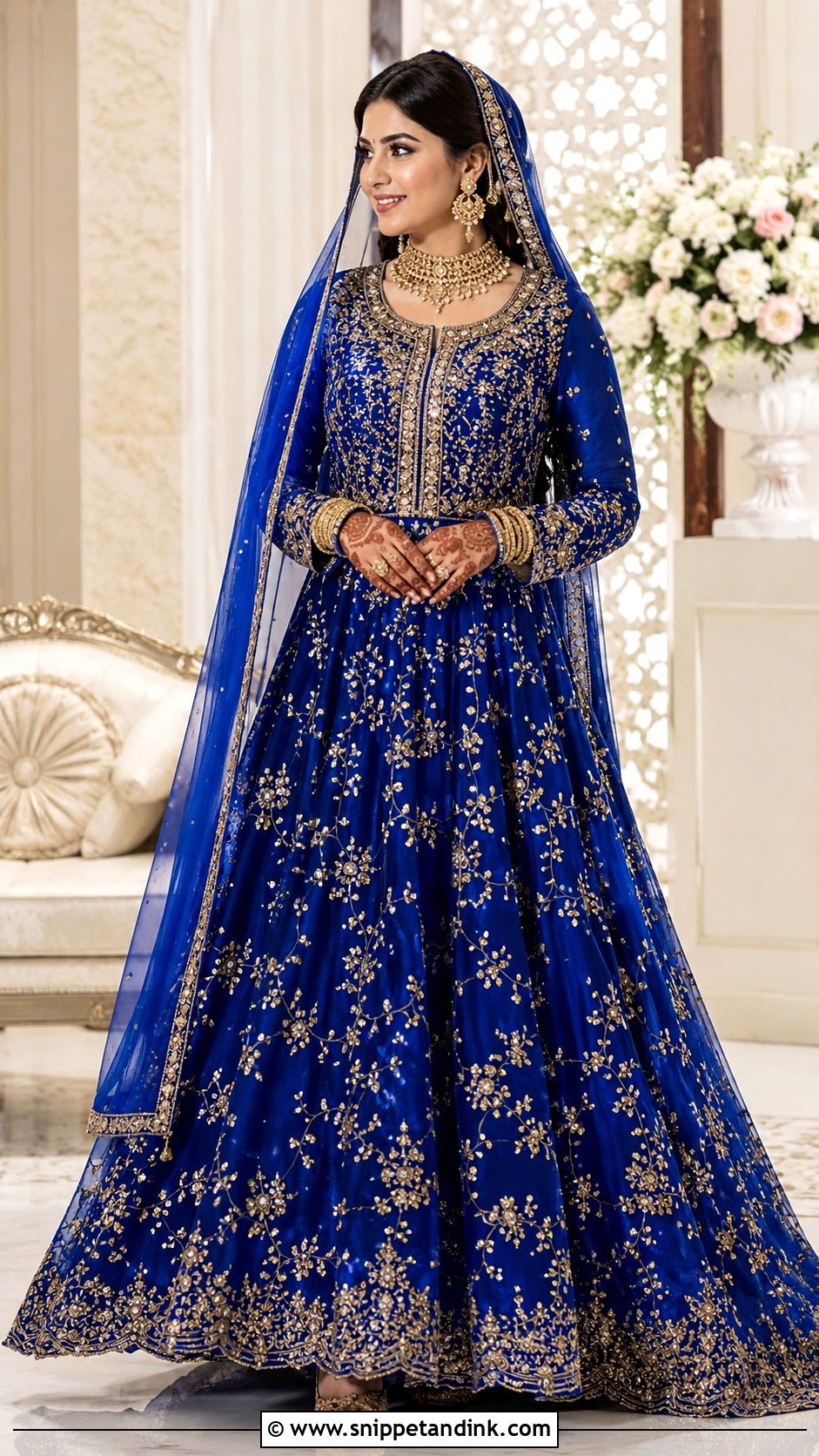
A royal blue Anarkali gives full coverage and movement in one piece, without a separate skirt or heavy can-can. Royal blue looks rich under evening lights, so I’d steer it toward a reception or Walima. Gold embroidery at the cuffs and border keeps it bridal. The dupatta pins over the head or drapes around the shoulders. Gold jhumkas, a choker and bangles complete it, and it’s one of the easiest outfits on this list to sit and greet guests in.
11. Peach Sharara Bridal Dress With Pearl Work
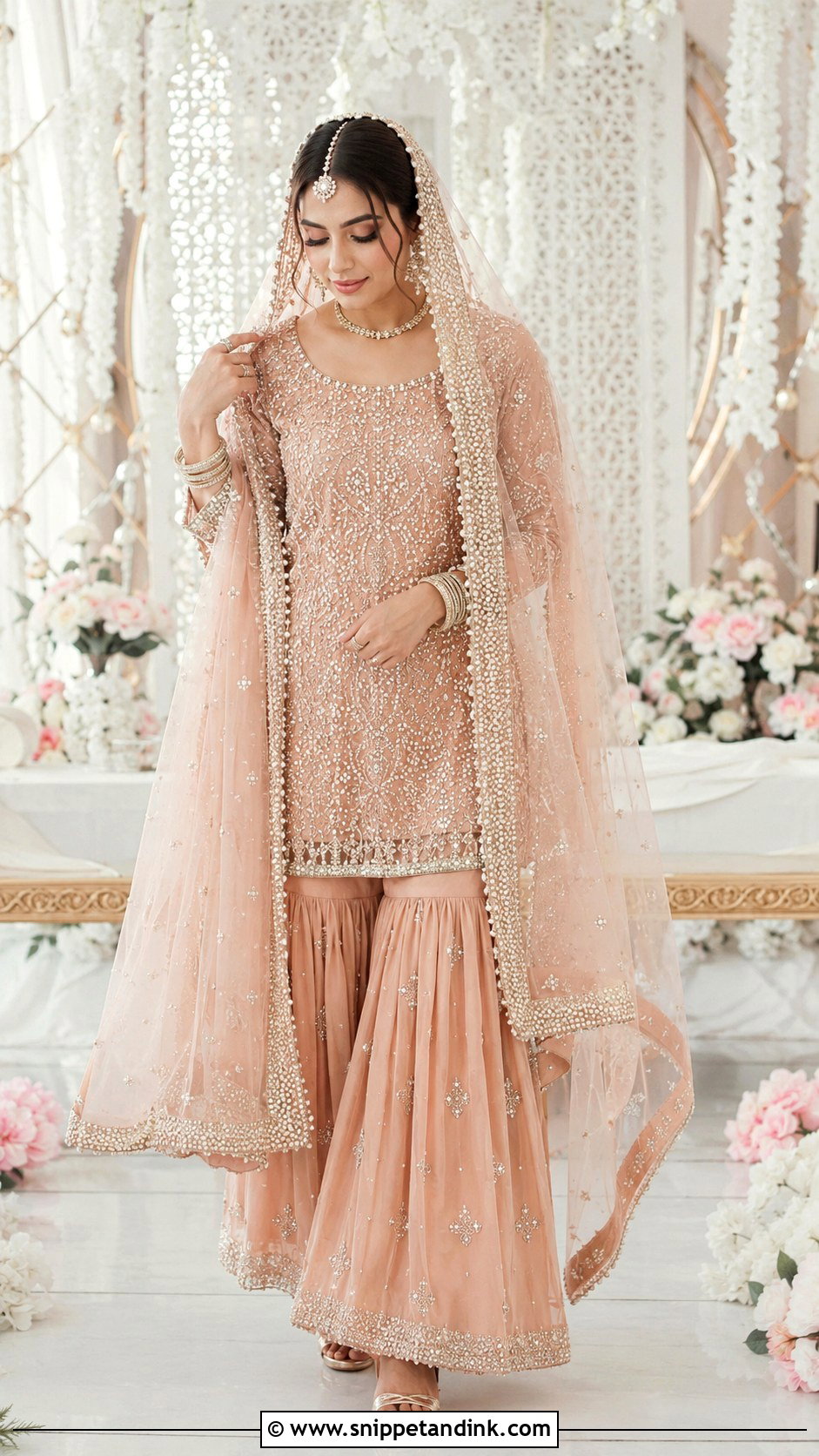
Peach sits well against most skin tones, and in a sharara with a long kurta it reads soft and modest. Pearl work, light zari and sequins give it occasion without weight. A sheer peach or champagne dupatta over the head finishes it. Pearl jewelry, a small passa and nude or gold heels suit a daytime Nikah or Walima. If your hair is covered, I’d let the passa sit over the dupatta so it shows in photos.
12. Black And Gold Reception Lehenga
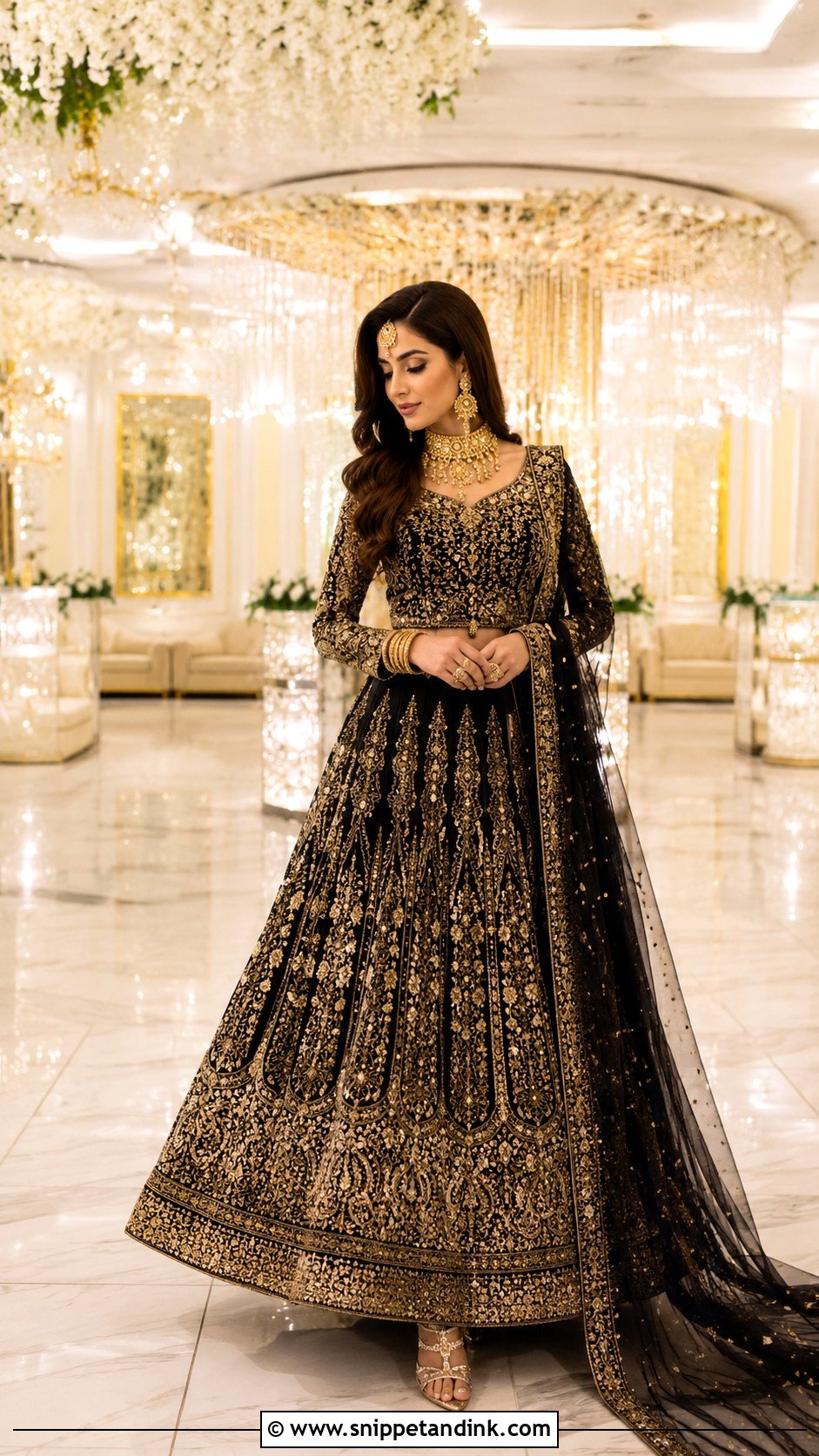
Black is a choice some families embrace for a reception and others avoid at weddings, so I’d raise it with the elders first. If it’s welcome, black and gold is dramatic and modest at once: full sleeves, a high neck, a flared lehenga with antique gold motifs and a black net dupatta with a heavy gold border. Keep the makeup smoky but soft. It is a reception or Walima look, never the Nikah.
13. Cream Gharara With Red Dupatta
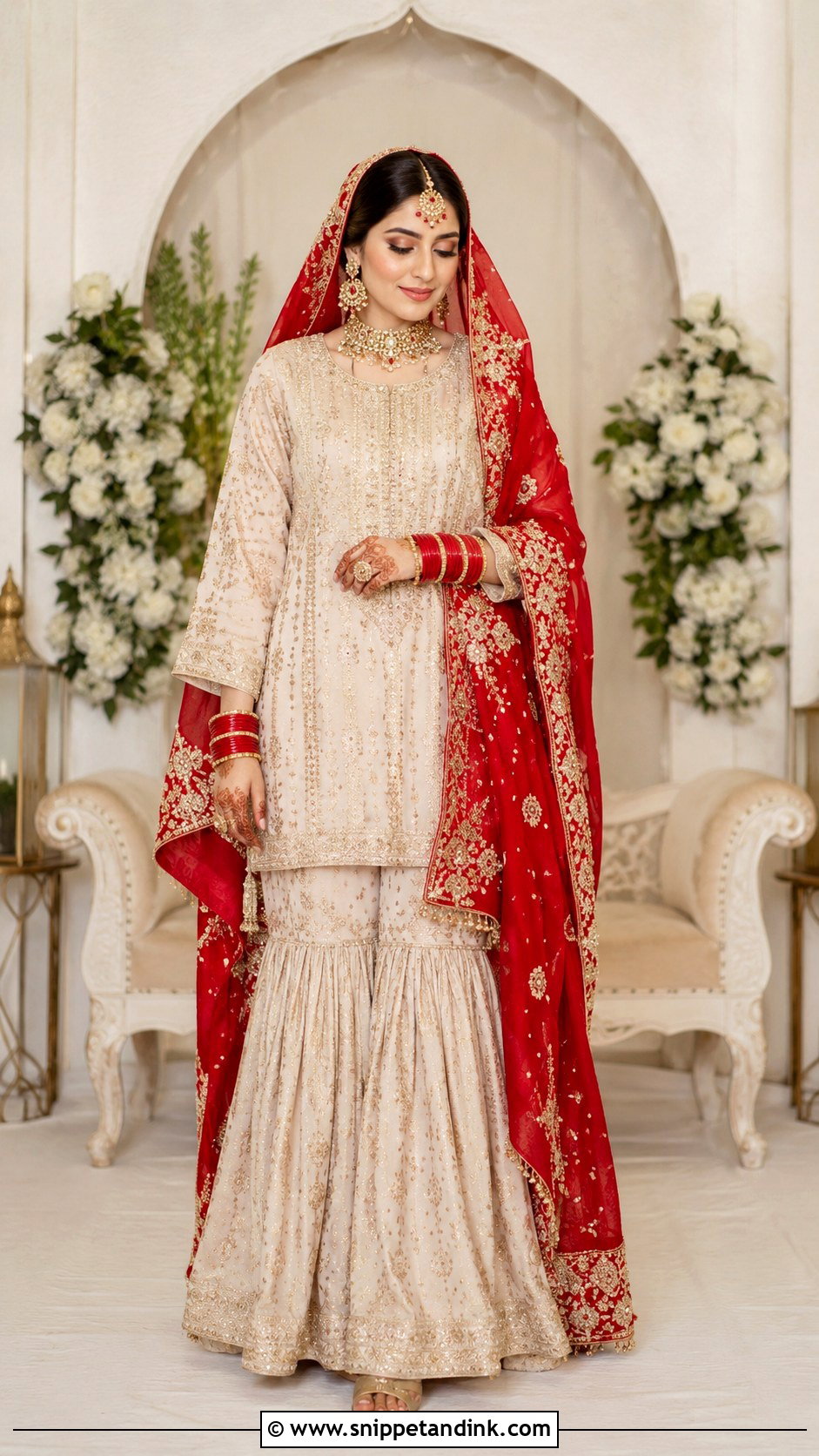
Cream with a red dupatta gives you bridal red at the face, where it matters in photographs, without a fully red outfit. A long embroidered kurta, flared gharara and borders in gold or maroon zari set it up. Pinned over the head, the red dupatta frames the face. I’d match the red of the dupatta to the red bangles and any red stones in the kundan, because two different reds side by side look accidental.
14. Mint Green Walima Gown With Dupatta
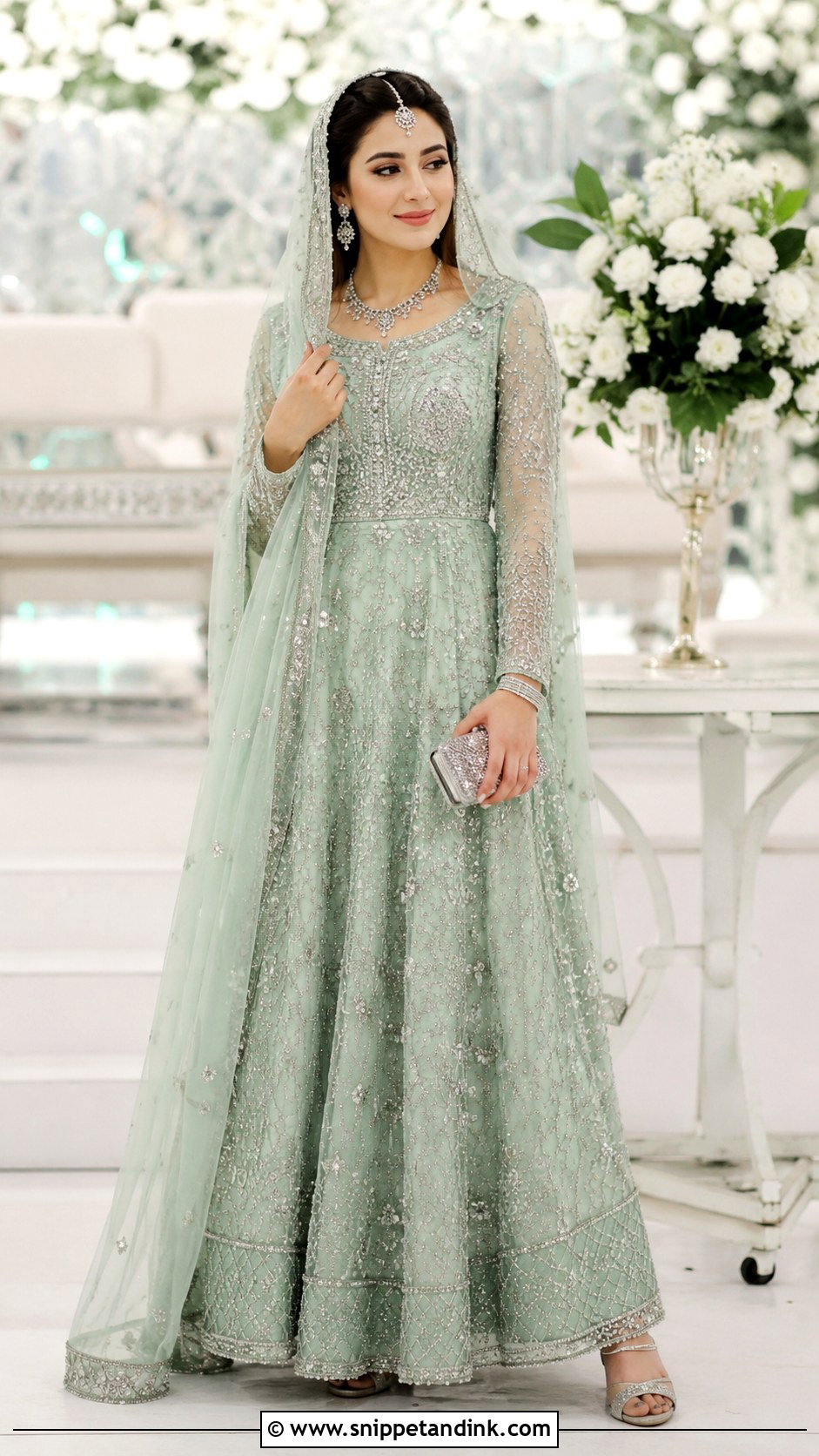
After a heavy wedding outfit, many brides want something lighter for the Walima, and a mint gown does that. Long sleeves, a structured bodice and a gentle flare keep it modest and comfortable. Silver, pearl or crystal embroidery suits mint. A matching dupatta or veil-style drape over the head finishes it. Jewelry can stay delicate: diamond-style earrings, a bracelet and a fine necklace.


15. Burgundy Bridal Lehenga With Jacket
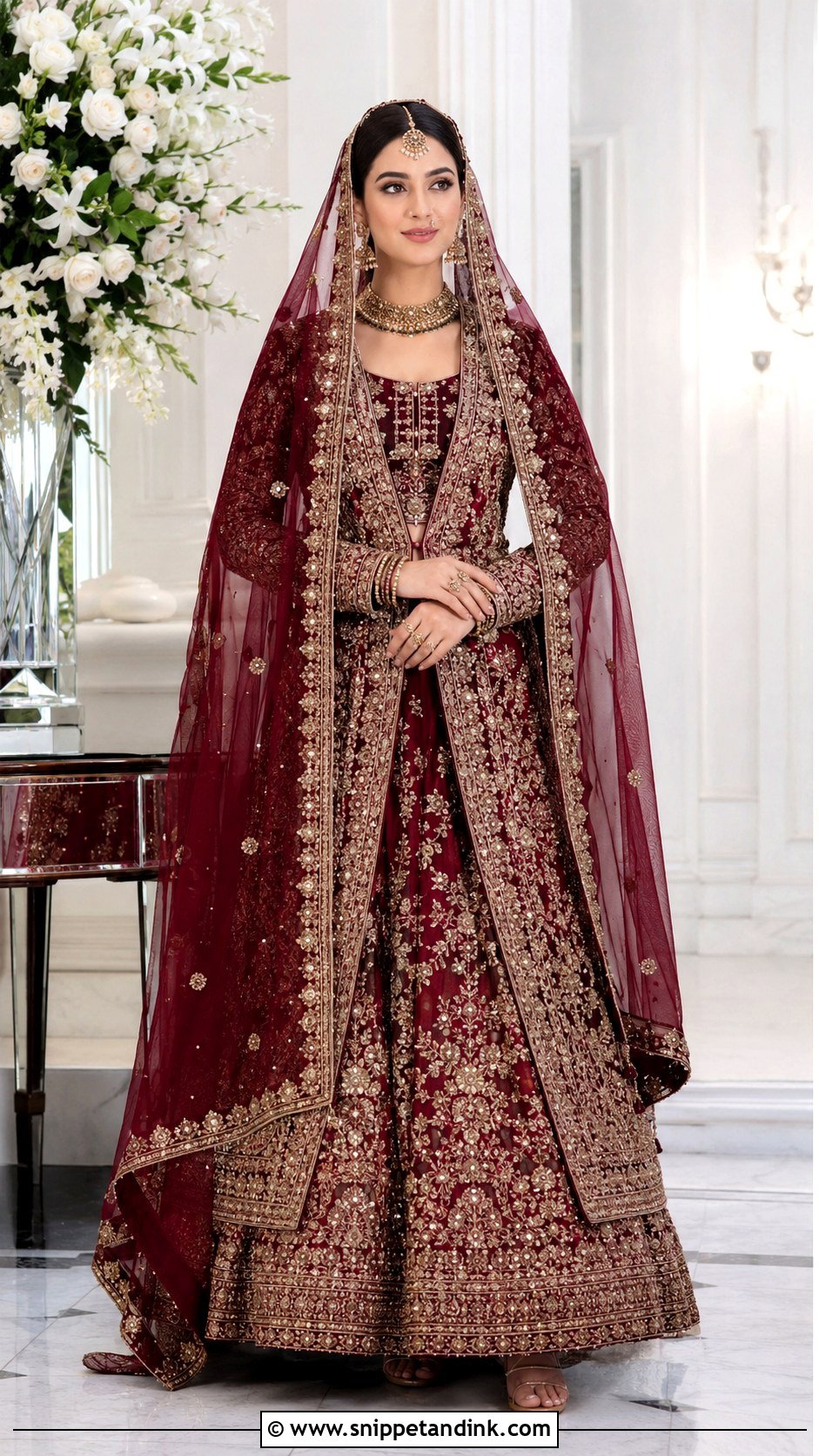
A long embroidered jacket gives coverage without relying entirely on the dupatta, which is why I suggest it to brides who find dupattas fiddly. Wear it over a lehenga and blouse in burgundy, wine or deep maroon, in velvet, raw silk or brocade. It can be open at the front or lightly fastened. A head dupatta can still go on for the ceremony itself. Antique gold jewelry and a passa suit winter weddings and evening receptions.
16. Blush Pink Gharara With Heavy Dupatta
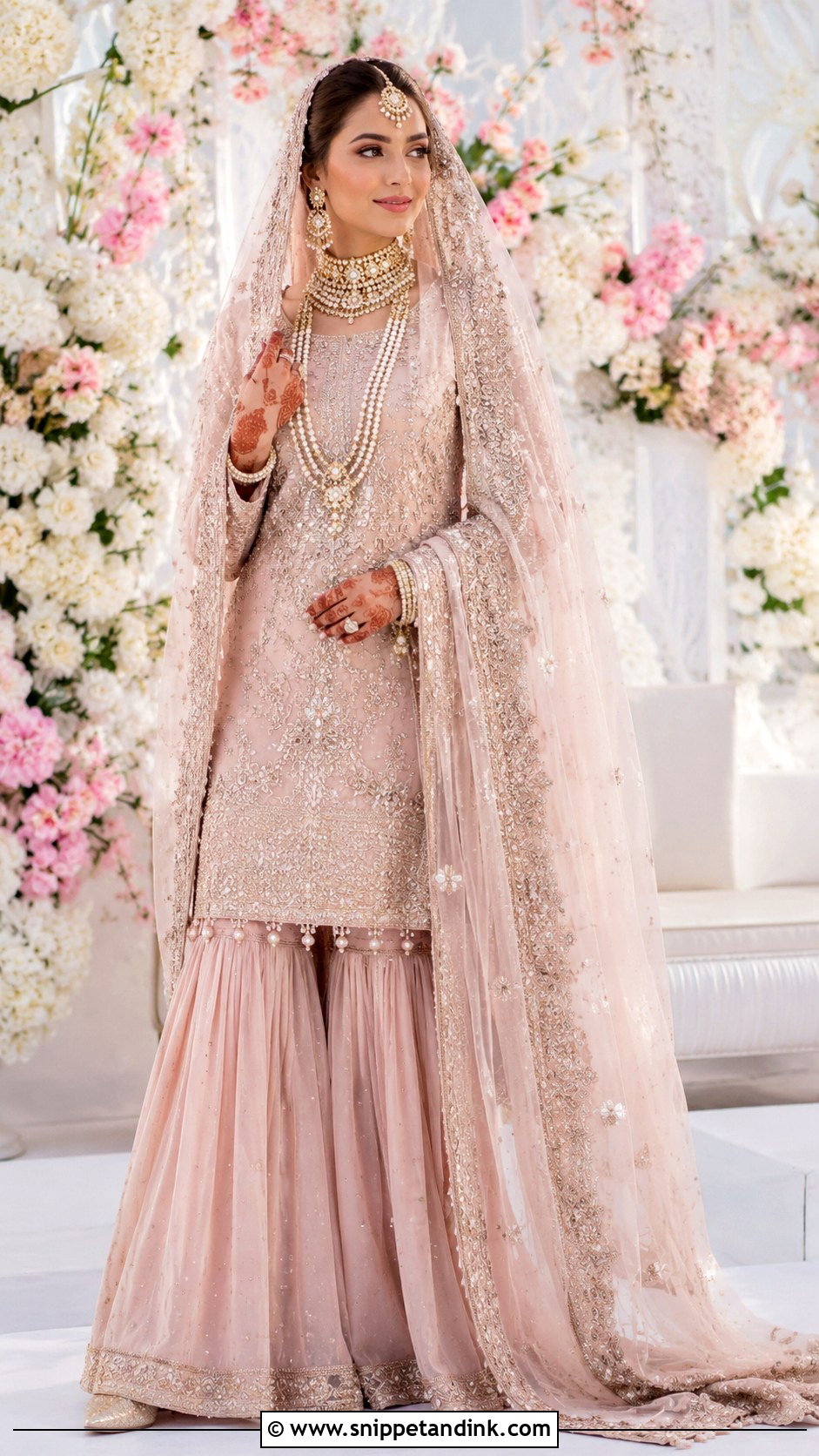
With a blush gharara, the dupatta carries the bridal weight. I’d pick one with rich embroidery, scalloped edges or a wide embellished border, and pin it over the head so it falls on one side. A long kurta with flared gharara pants in silk, net or organza, full sleeves and a modest neckline complete it. Heavy dupattas pull backwards, so a few pins along the crown are needed. Pearl, polki or rose-gold jewelry suits the tone.
17. Mustard Yellow Mehndi Sharara
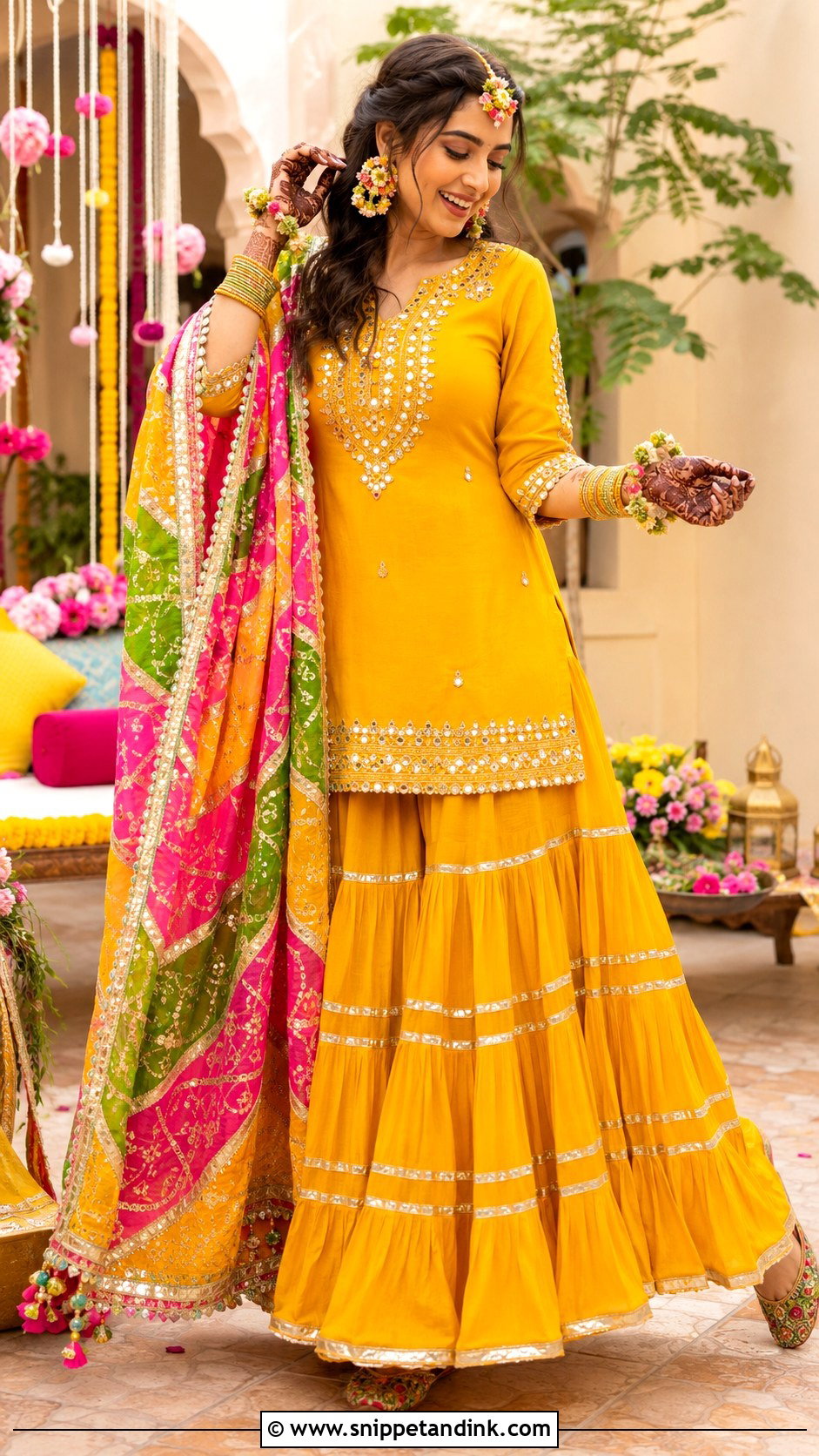
A mustard yellow Mehndi sharara is made for the evening you sit for henna. A short or mid-length kurta, wide sharara pants and a dupatta with pink, green or orange accents keep it bright. Three-quarter sleeves are better than full here, since the mehndi artist needs to reach your forearms. Mirror work, gota patti and tassels make it festive. Floral jewelry, jhumkas and juttis suit dancing and sitting for hours.
18. Champagne Bridal Saree With Veil Dupatta
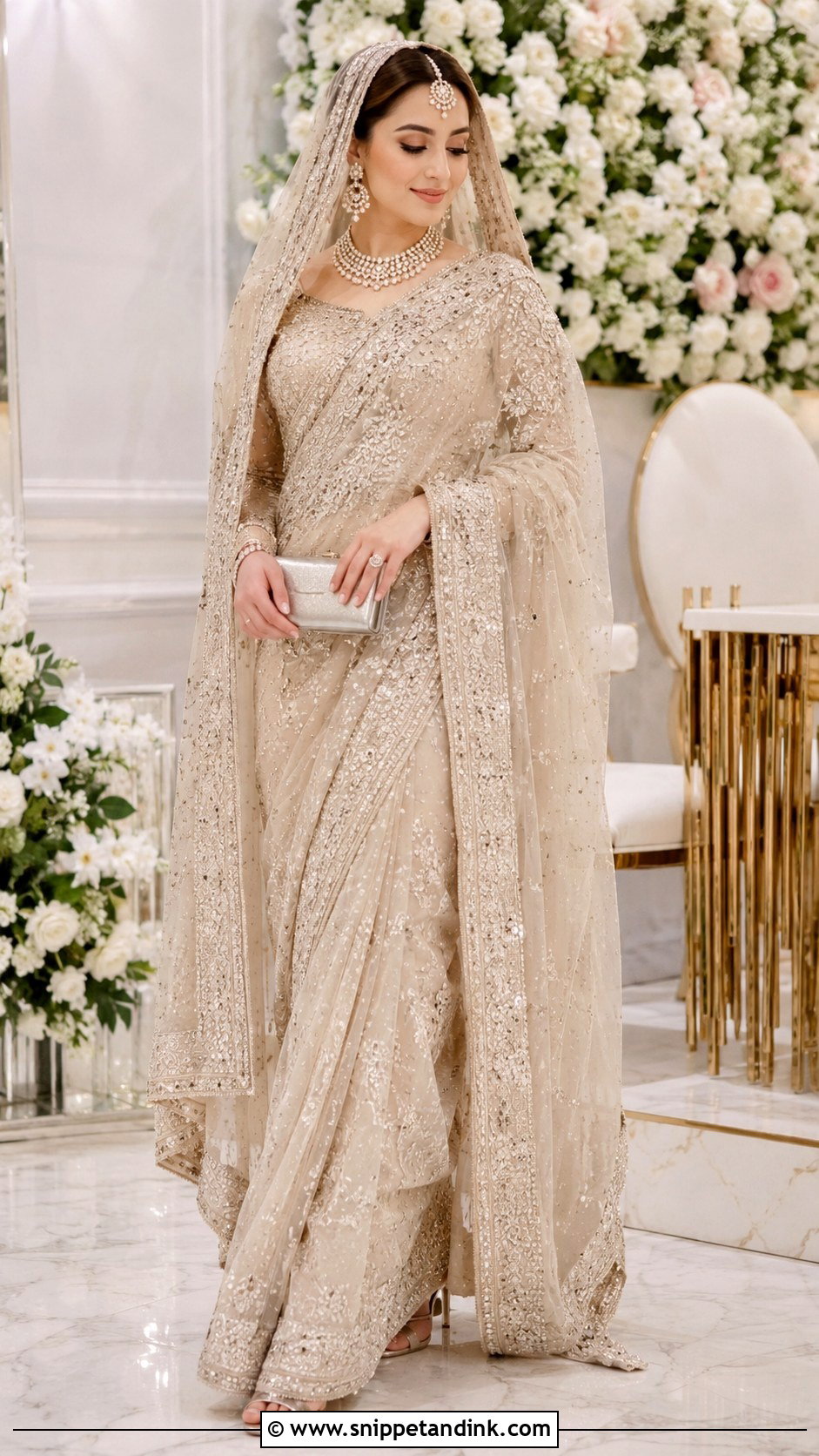
Champagne is a soft metallic that flatters warmer skin and looks luminous under evening lights. A silk, tissue or embellished saree with subtle gold or silver work, plus a full-sleeve blouse, gives structure and coverage. A separate sheer dupatta over the head works like a veil and makes the saree bridal and modest. Diamond-style, pearl or polki jewelry depends on how formal the event is. It suits a Walima, reception or formal Nikah.
19. Teal Bridal Anarkali With Dupatta
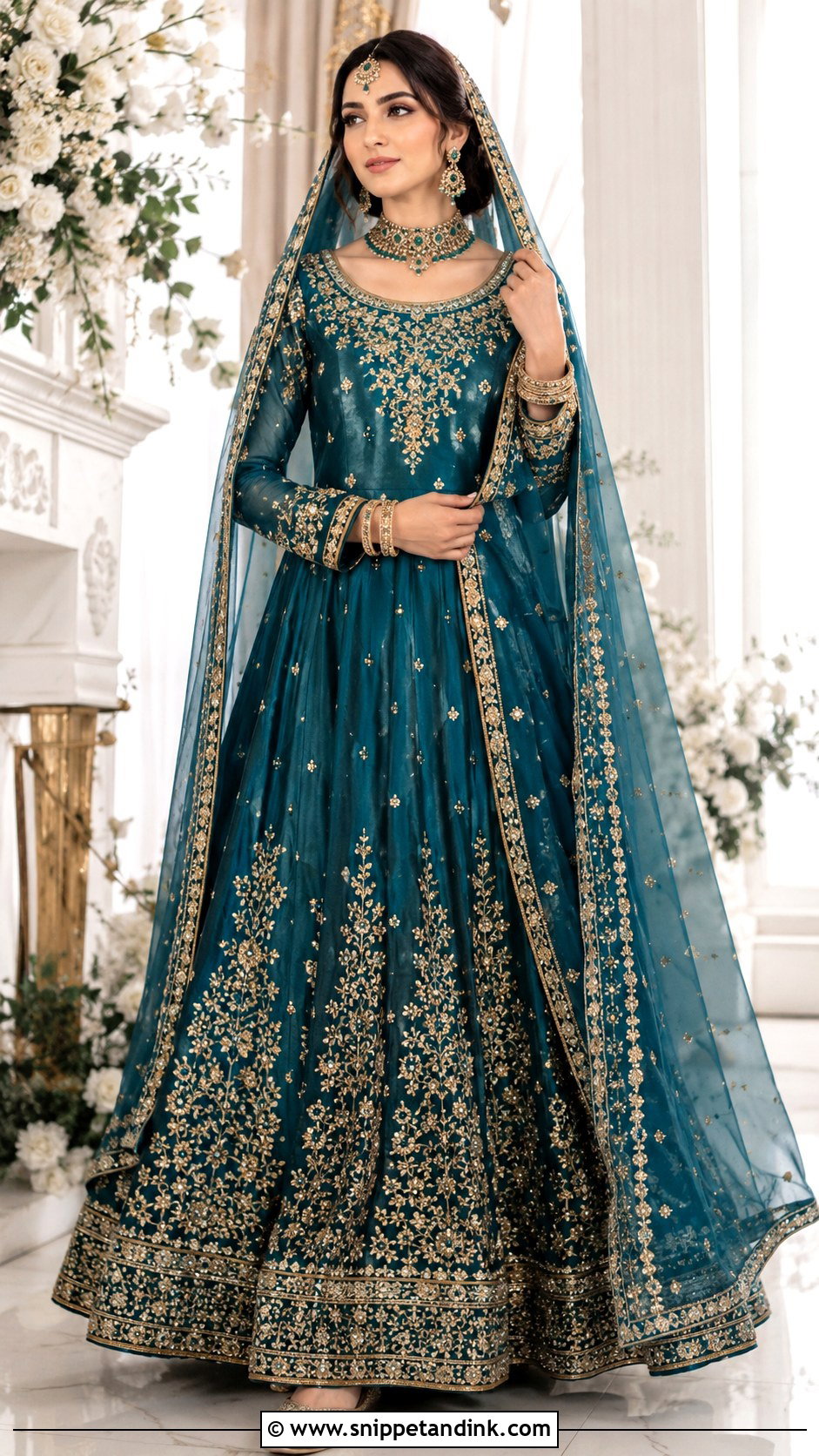
Teal sits between green and blue, and it’s less common at weddings, so it stands out without shouting. A floor-length Anarkali with gold or antique embroidery at the neckline, sleeves and hem moves gracefully. The dupatta can match, go gold or go a shade lighter. Pin it over the head for the ceremony. A choker, statement earrings and bangles suit it, especially at receptions and intimate weddings.




20. Rust Orange Bridal Lehenga With Gold Work
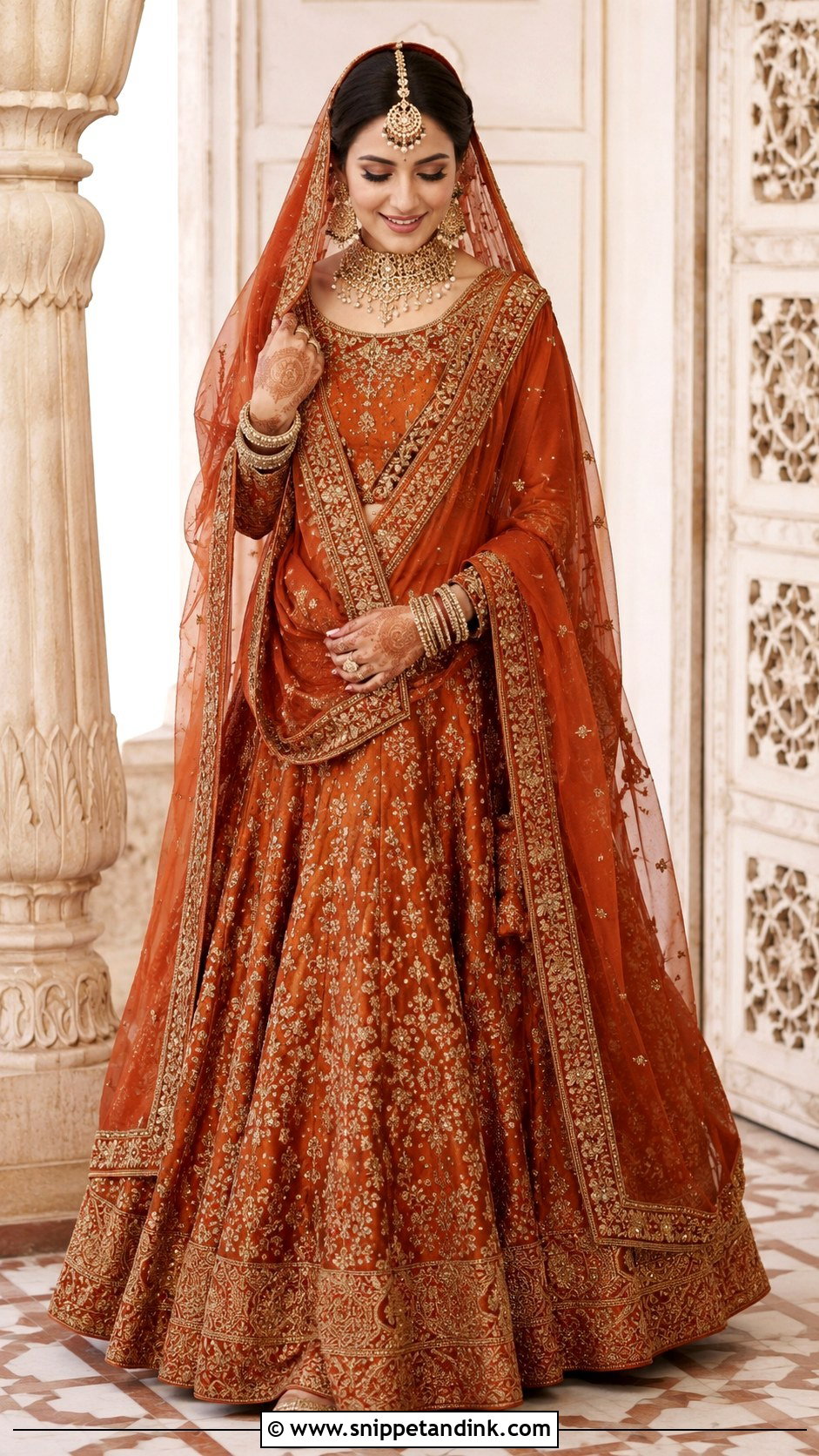
A rust orange bridal lehenga has bridal presence without being red. Raw silk, brocade or velvet with antique gold embroidery, mirror details or zardozi borders give it craft. A full-sleeve blouse and double dupatta keep it modest. Rust is a warm color that glows in daylight and warm indoor light, though it can look brown under cool white LEDs, so I’d check the venue’s lighting. Gold jewelry and a passa complete it.
21. Lavender Bridal Lehenga With Silver Embroidery
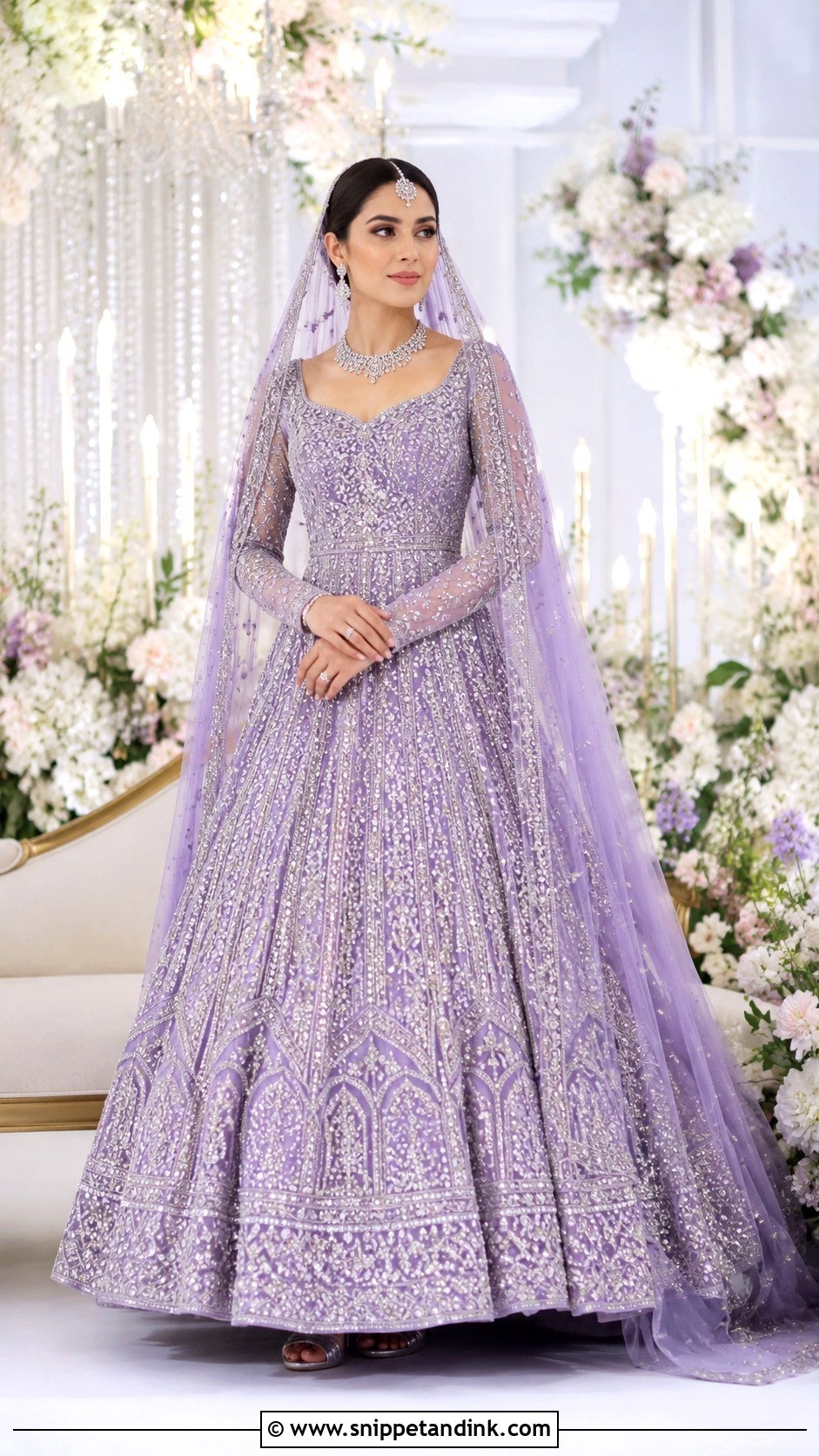
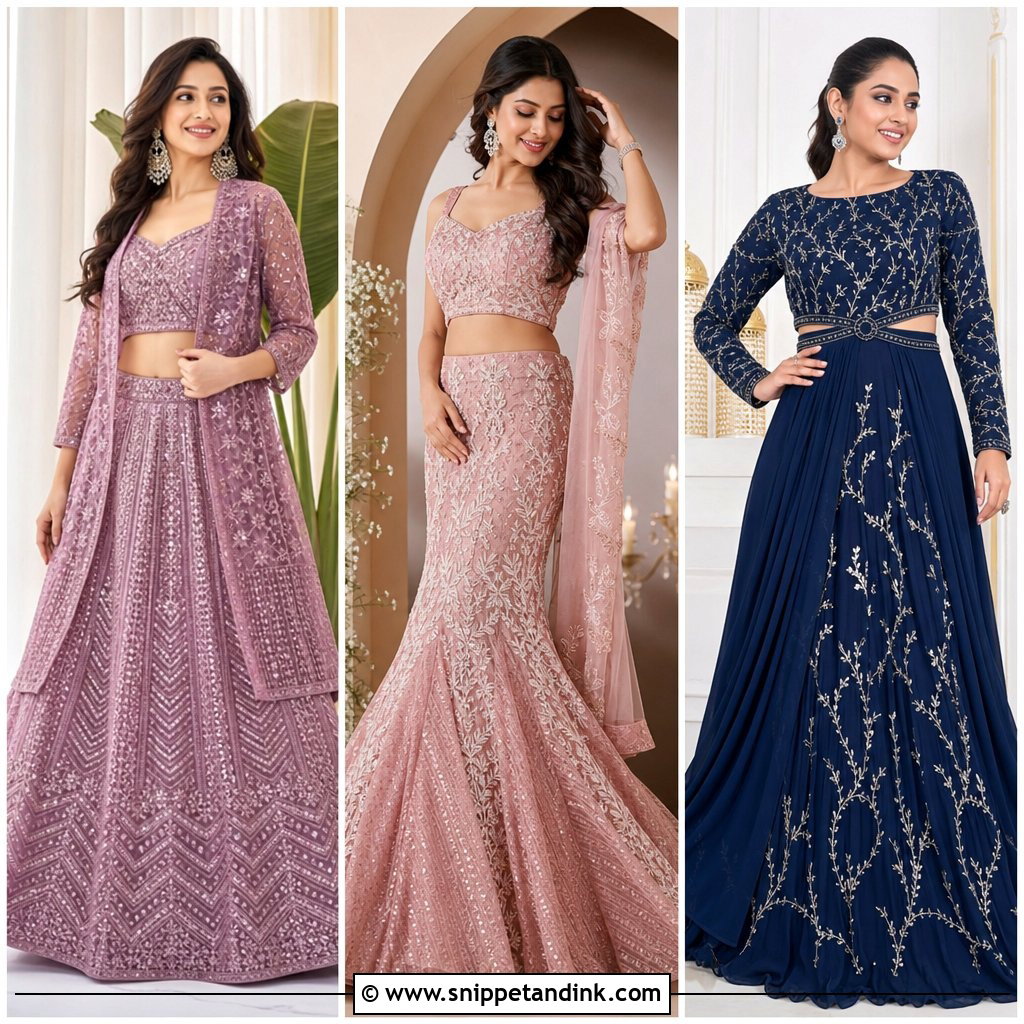
Lavender needs structure to look bridal rather than soft and casual: a structured lehenga, detailed silver zari, crystals or sequins, and a modest long-sleeve blouse. A matching net dupatta over the head, and a second drape for more coverage. Silver-toned, diamond-style jewelry and soft makeup suit it. It suits a Walima, engagement or daytime Nikah.
22. Navy Blue Gharara With Antique Gold Jewelry
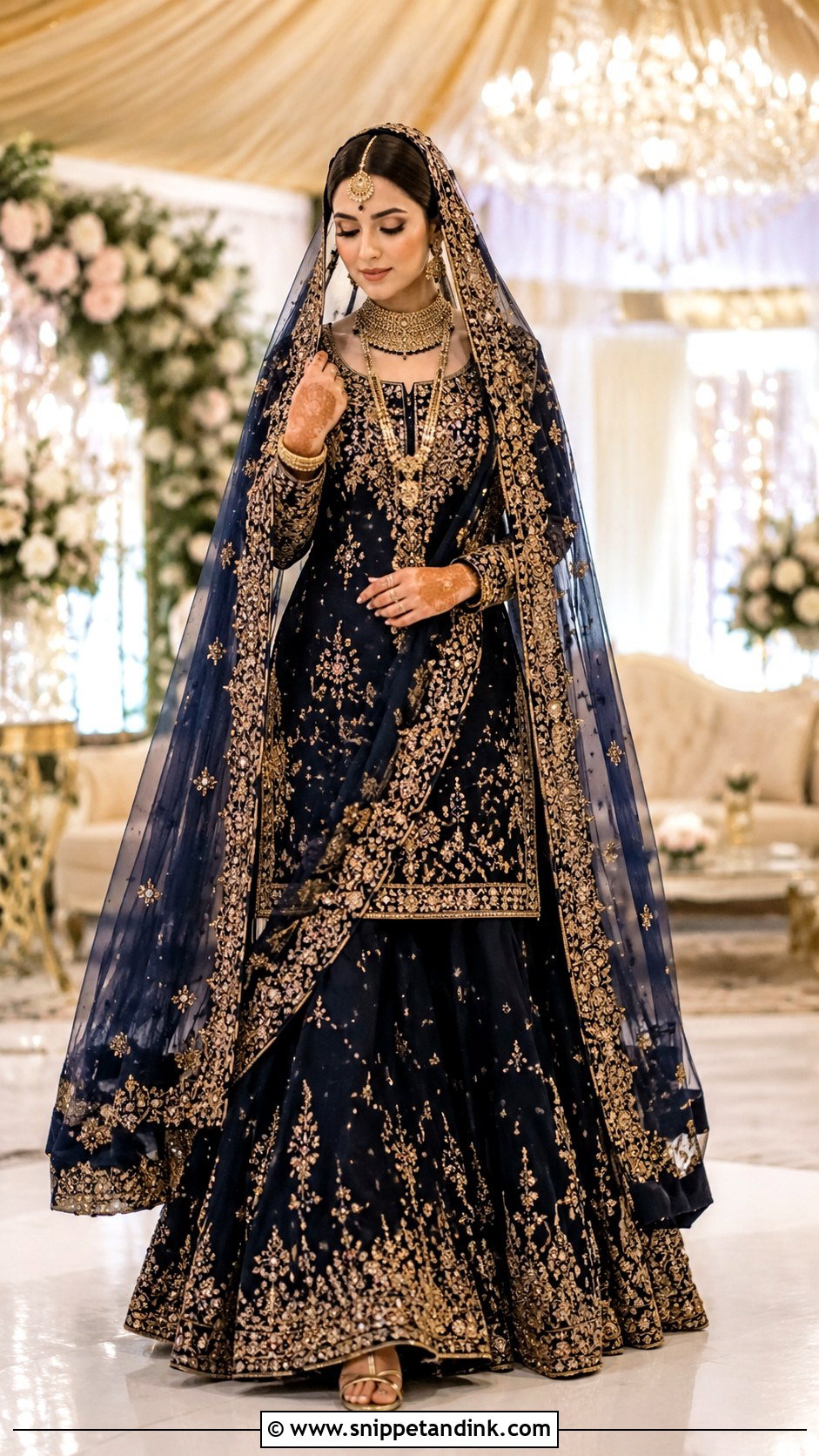
Navy and antique gold is the combination I’d suggest to a bride who loves deep colors but wants something other than maroon. The fitted kurta and full gharara keep it traditional. Antique gold embroidery, velvet borders or brocade create depth. The dupatta should be pinned securely, because a heavy border on a slippery fabric slides. A gold choker, layered necklace, passa and bangles finish it for an evening ceremony or winter wedding.
23. Coral Bridal Sharara With Long Kurta
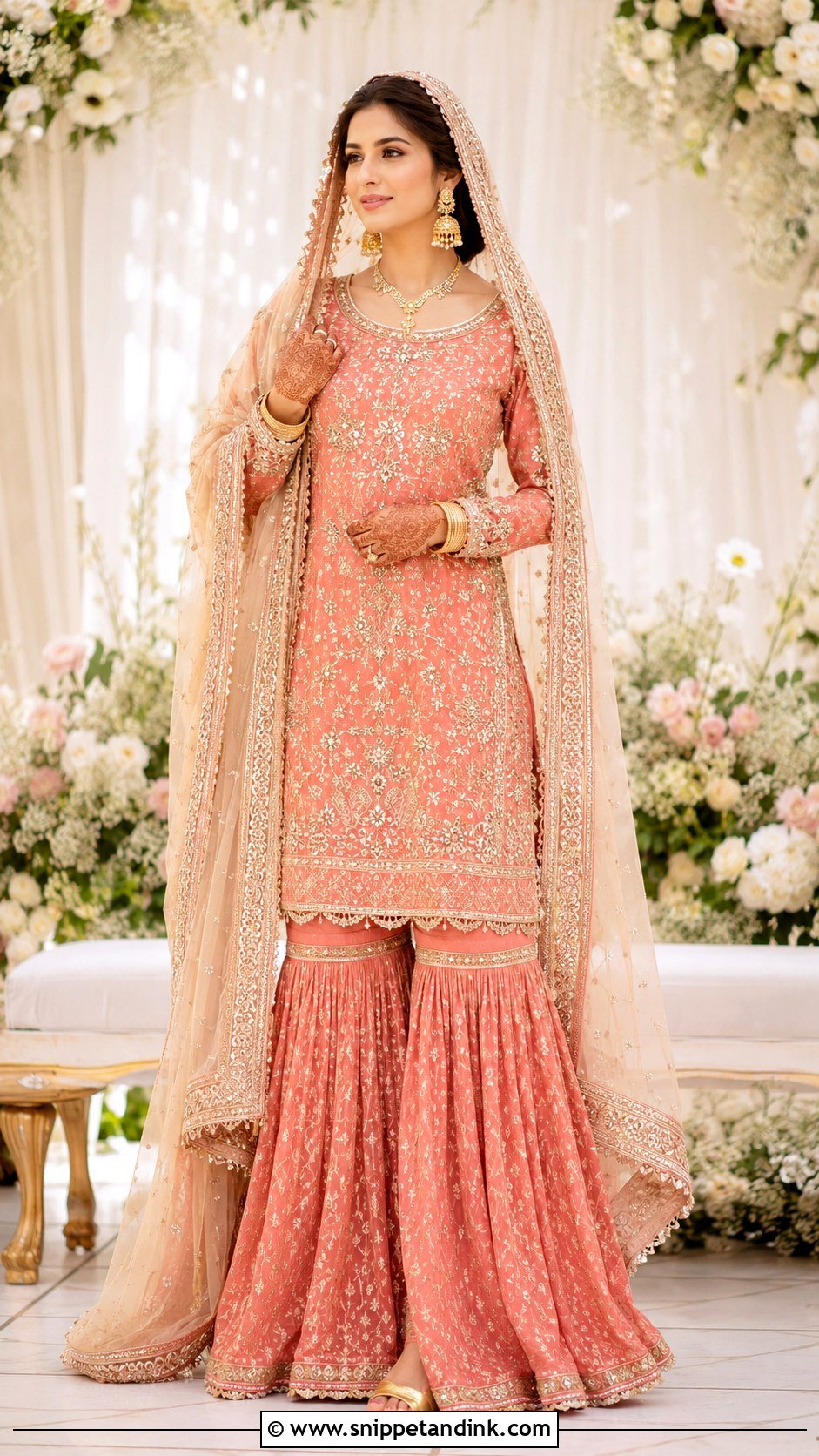
Coral is bright without being bold. A long kurta gives coverage, sharara pants give movement, and gold thread, pearls or floral embroidery keep it festive. A coral or champagne dupatta can go over the head and across the front. Gold heels, jhumkas and bangles suit it. It’s one of the easier outfits to wear through a long day, which matters at a daytime Nikah or reception.
24. Silver Grey Walima Lehenga
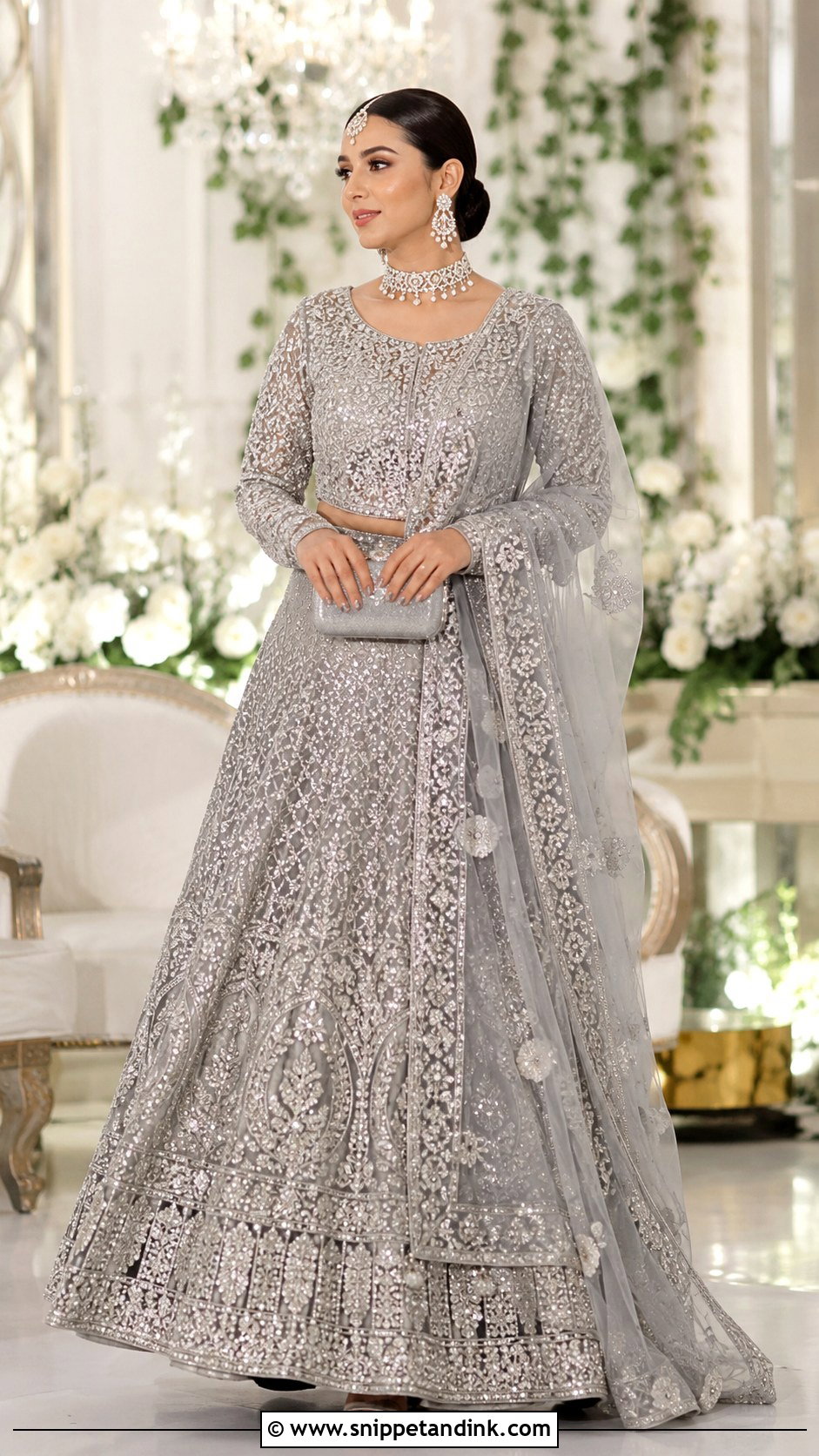
Silver grey makes the Walima look clearly different from the main wedding. A soft grey or silver base with crystal, pearl or metallic embroidery, a long-sleeve blouse or jacket-style top and a sheer embroidered dupatta pinned lightly over the head or shoulder. Grey is cool, so I keep the jewelry cool too: diamond-style pieces, pearls and silver heels. Soft makeup with defined eyes keeps the face from fading against the grey.
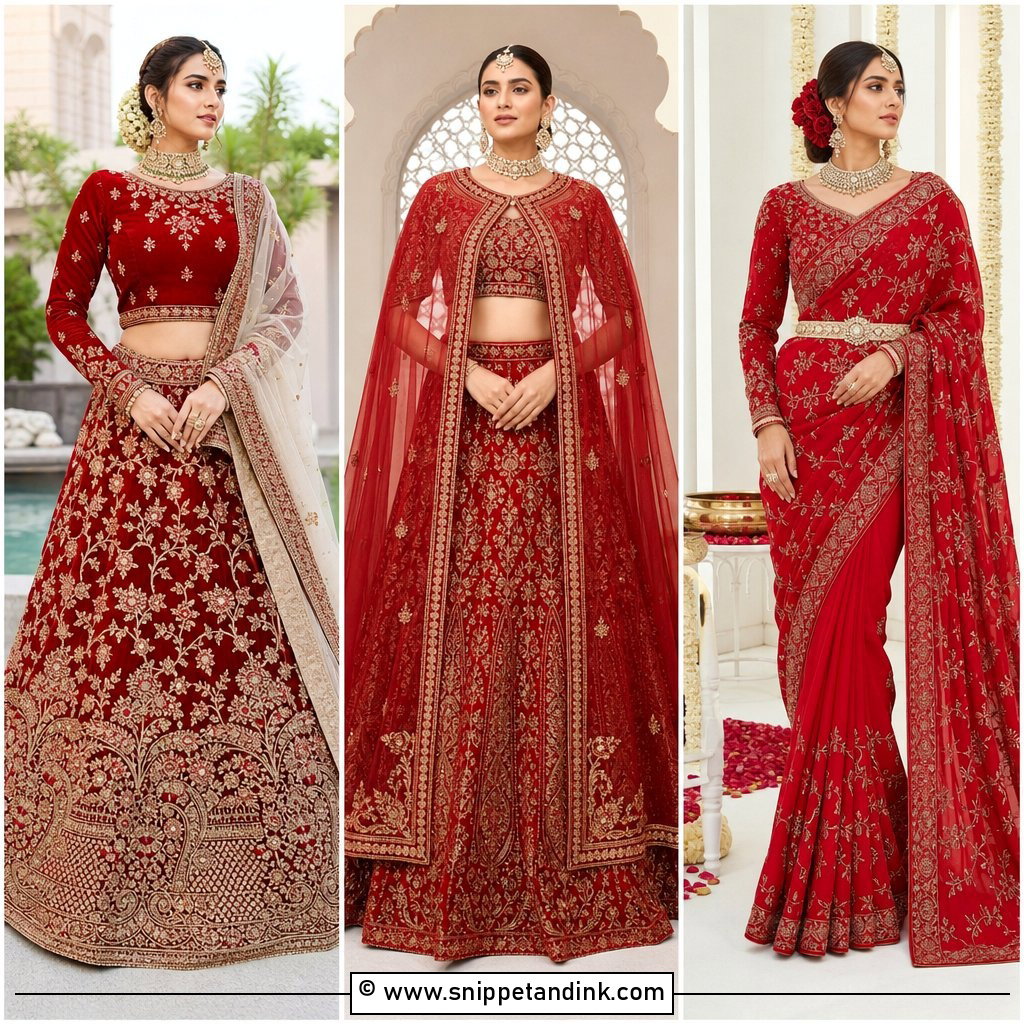

25. Traditional Red Gharara With Passa
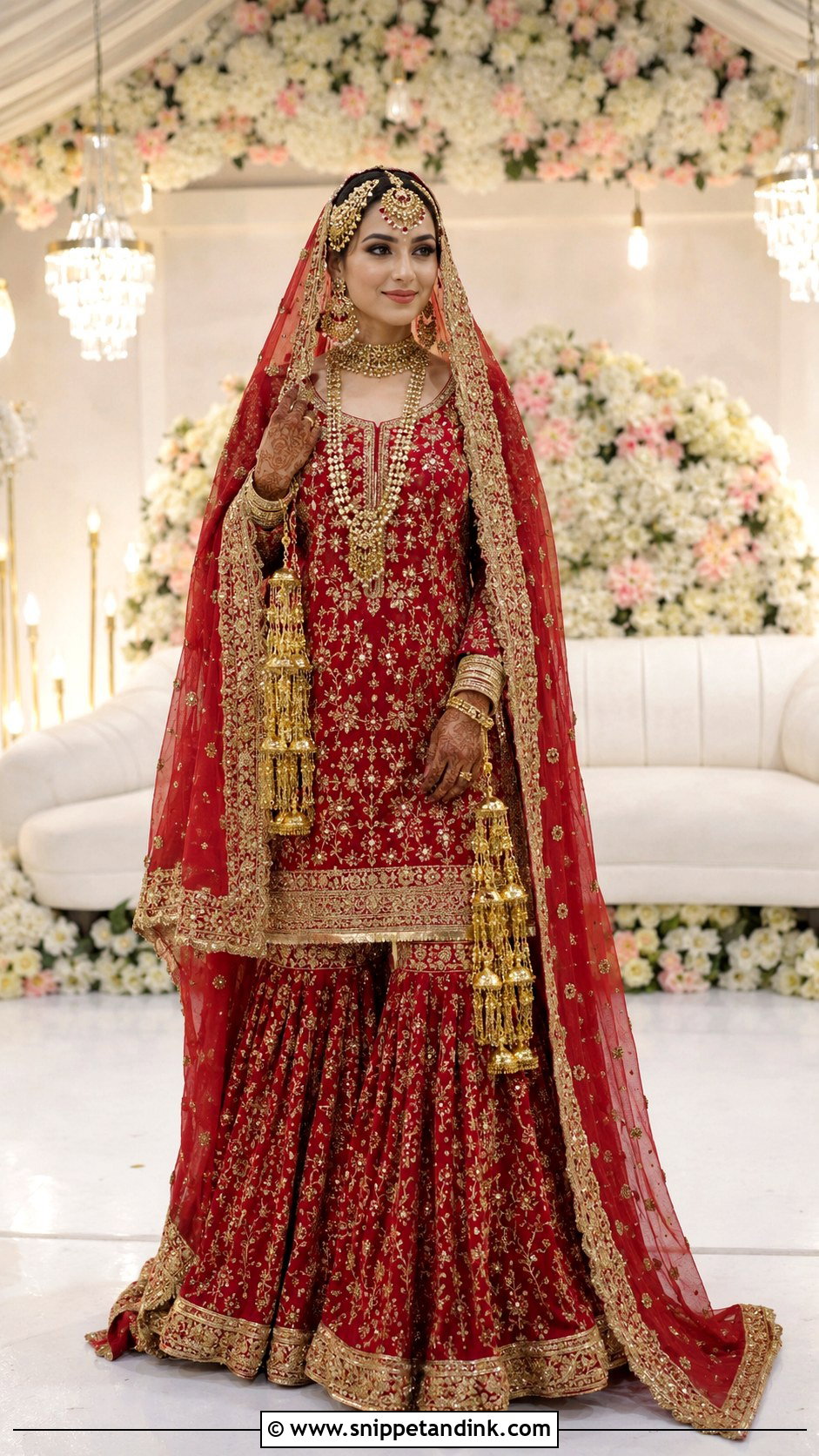
Red and a passa is the classic Muslim bridal signature, and it doesn’t date. The gharara gives the heritage silhouette, and a long kurta with heavy gold embroidery, wide gharara panels and a detailed dupatta keep it formal. The passa is worn to one side of the head, and I’d fix its placement at the trial so the dupatta drape works around it rather than covering it. A matha patti, choker and long necklace complete it for the Nikah.
26. Off White Bridal Lehenga With Red Border
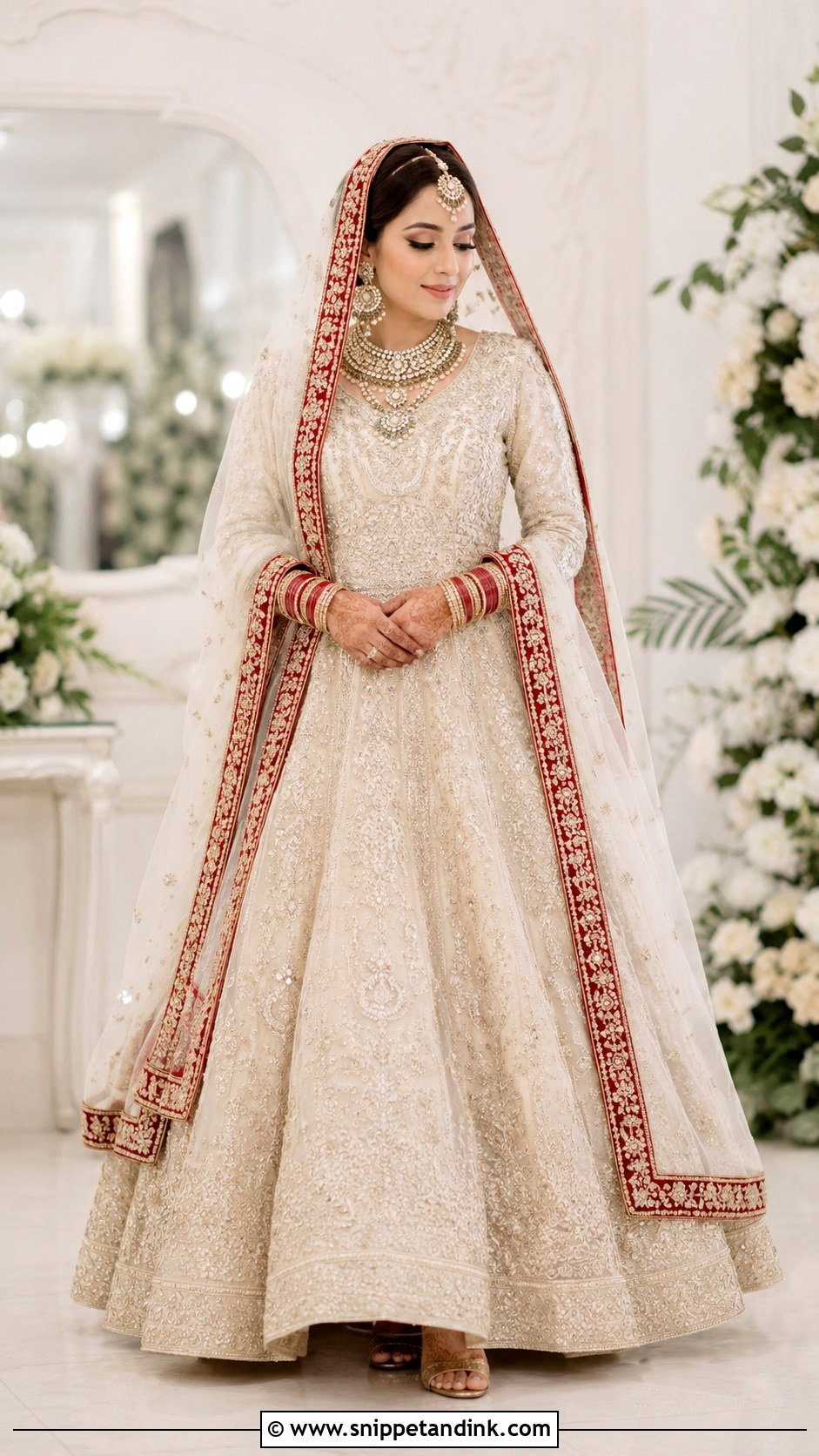
Off white with a red border is a softer route to bridal red. Gold embroidery, red thread accents or zardozi across the skirt and dupatta give it detail. A full-sleeve blouse and a head dupatta keep it modest, and a second red dupatta strengthens the bridal effect. Kundan jewelry, red bangles and gold sandals suit it. It gives you classic wedding energy without a full red lehenga.
27. Mauve Bridal Gown With Hijab
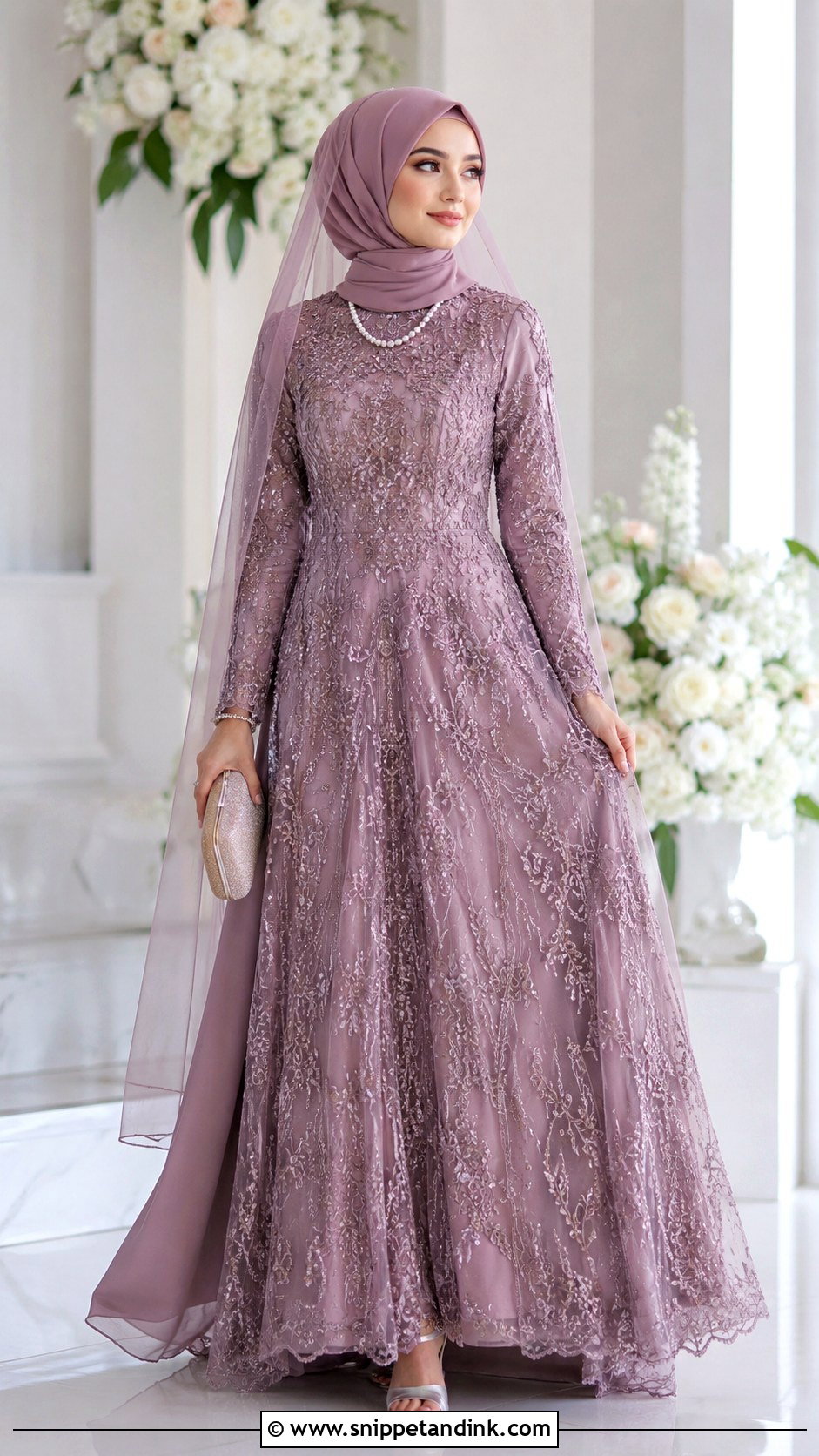
Mauve is muted and flattering on many skin tones, and in a floor-length gown with long sleeves it gives full coverage with easy movement. Beadwork or embroidery at the bodice and cuffs adds detail. A matching hijab in chiffon or silk, smoothed around the face, with a light veil or dupatta layered over it, finishes the look. Pearl or crystal jewelry and metallic heels suit a Walima, reception or contemporary Nikah.
28. Rani Pink Lehenga With Green Dupatta
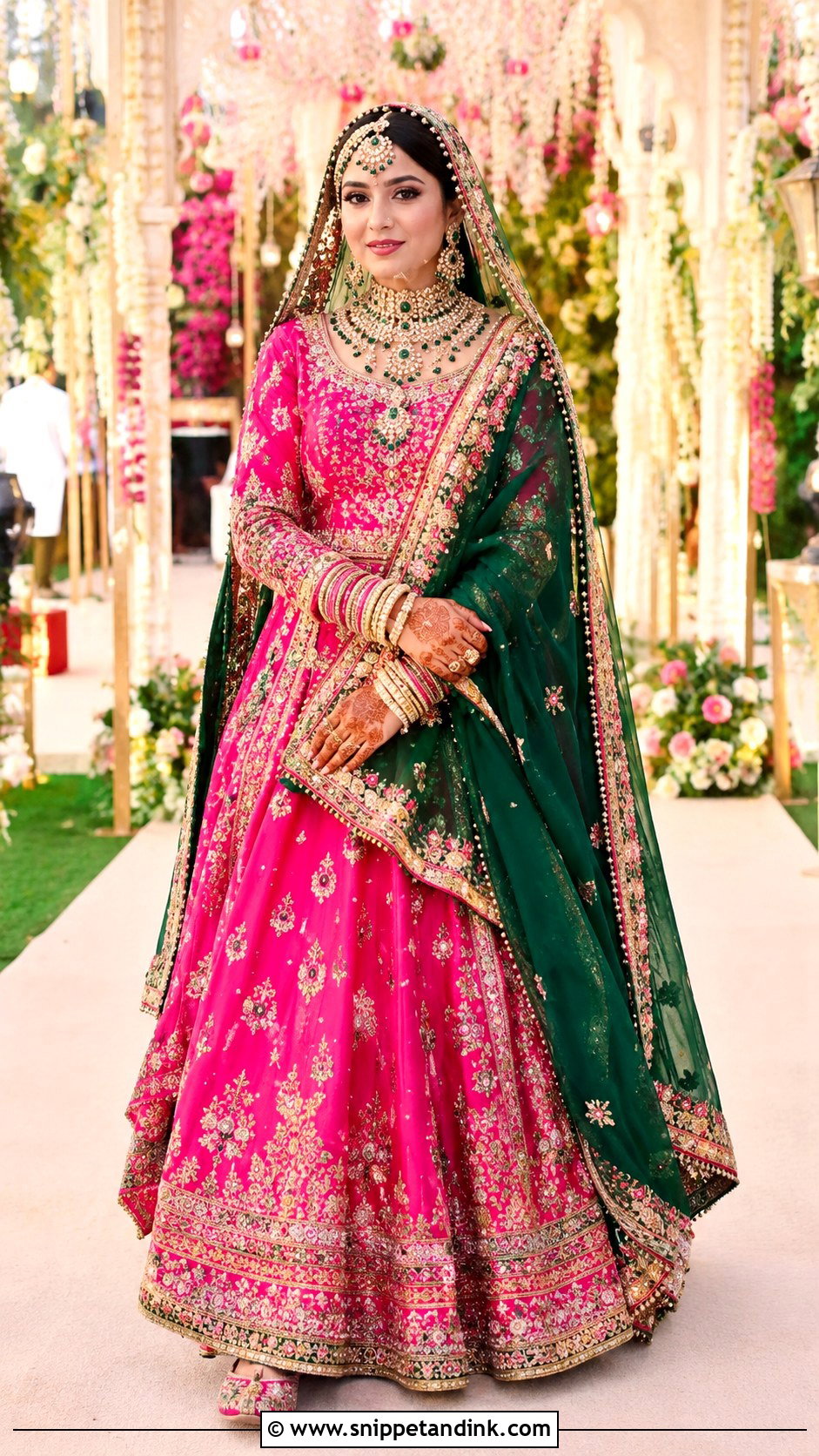
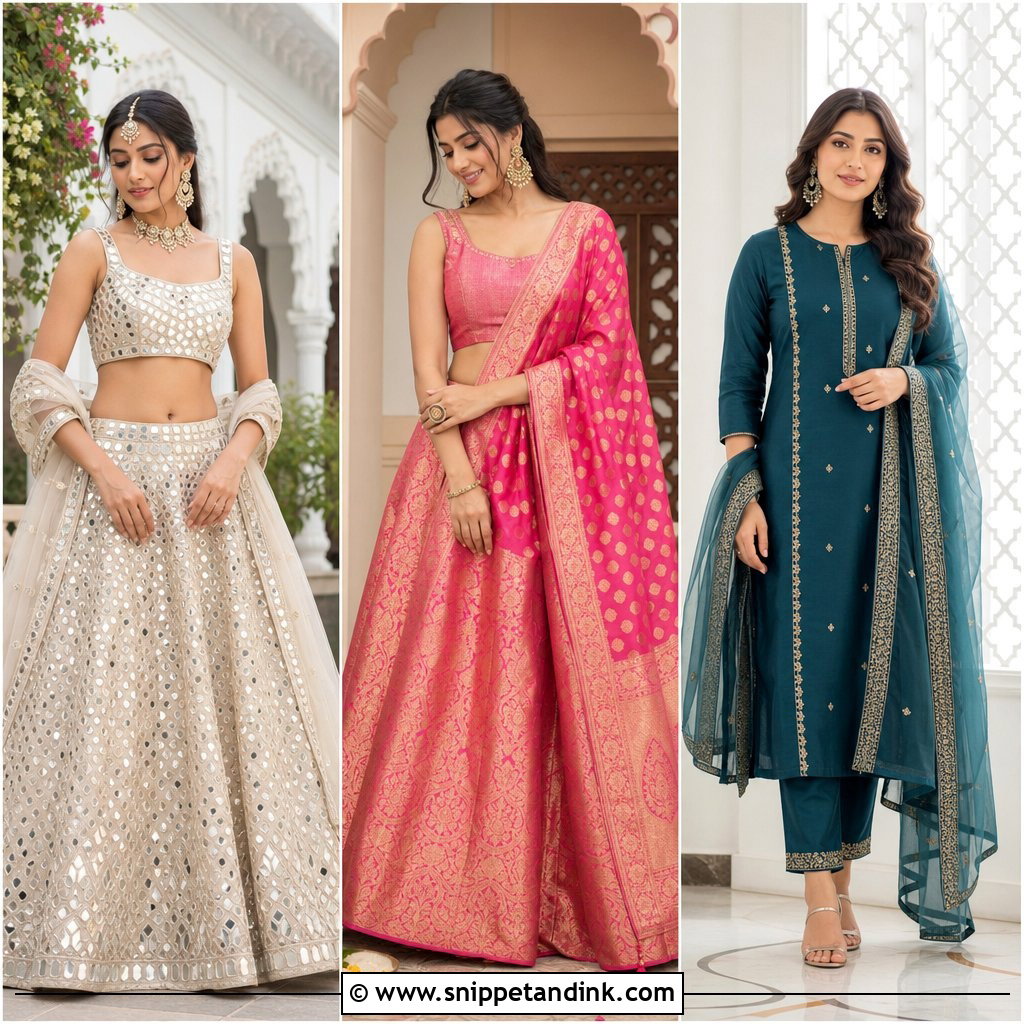
Rani pink with a green dupatta is the brightest pairing here, and it’s a traditional one. The green border pinned over the head frames the face against the pink. Gold embroidery, mirror work or traditional motifs keep it rich. A long-sleeve, high-neck blouse balances the color. Kundan jewelry with green stones, bangles and embroidered juttis suit the Mehndi, Nikah or a lively wedding.
29. Beige Bridal Sharara With Zardozi Work
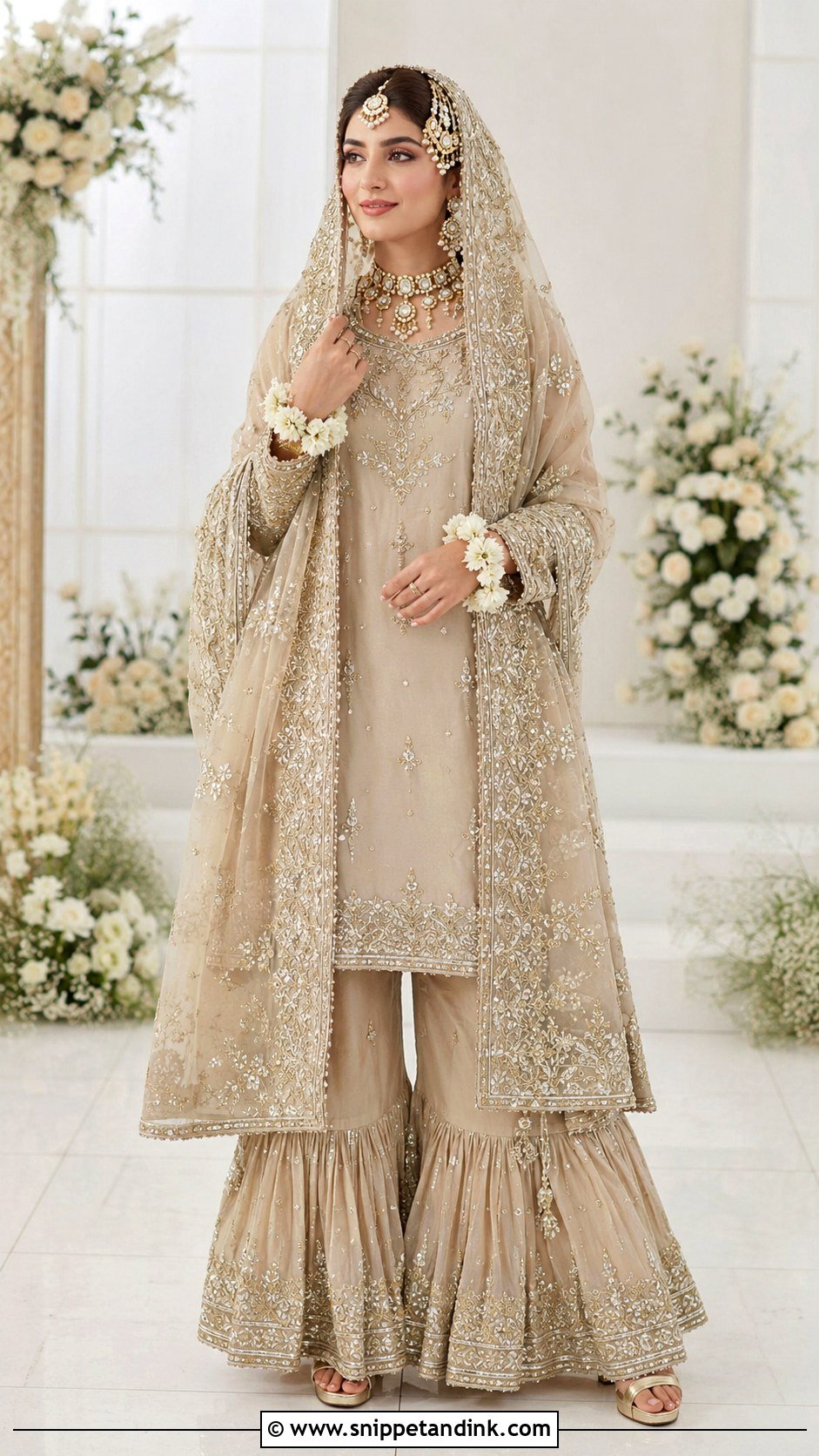
Beige lets the zardozi do all the talking, especially when the thread is antique gold, copper or champagne. Zardozi is metal thread work and it’s heavy, so I’d look at the weight of the dupatta border before buying; it’s what you’ll carry on your head all day. A long kurta, wide sharara and modest cut make it comfortable through long ceremonies. Polki, a passa and maroon or emerald stones add color if you want it.
30. Dusty Rose Lehenga Saree Bridal Dress
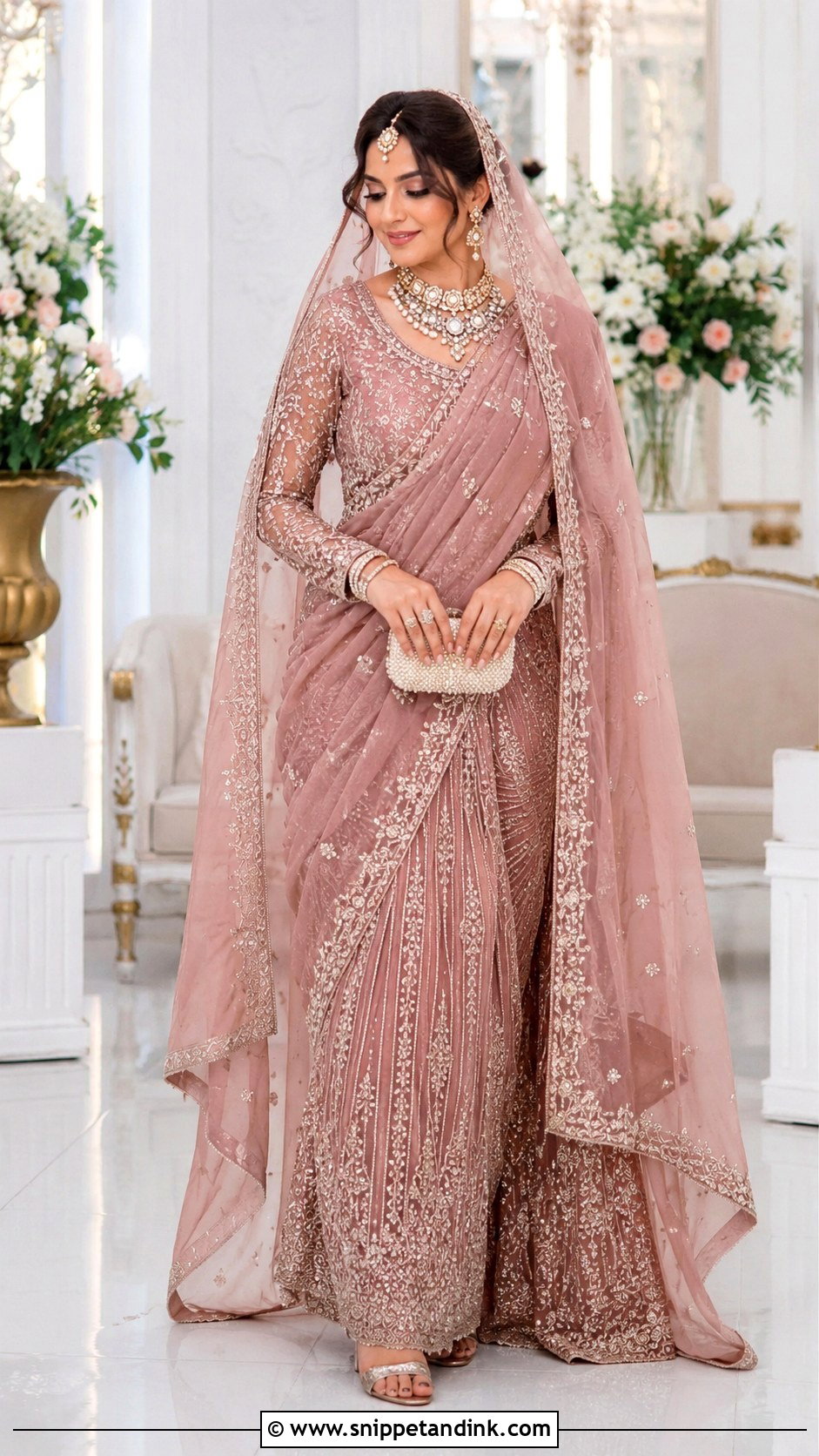
A lehenga saree is pre-draped: a structured skirt with an attached or separate pallu, so you get the saree line without pleats. Dusty rose with silver, rose gold or champagne embroidery is soft and current. A long-sleeve modest blouse and a head dupatta make it traditional. Pearl-polki jewelry, heels and a sleek clutch complete it for a Walima, reception or modern Nikah.
Zardozi, Velvet and Tissue After the Walima
Many of these outfits become family pieces, and the first week after the wedding decides how well they last. Metal thread embroidery tarnishes with moisture and perfume, velvet crushes under its own weight and tissue cracks along hard folds.
- Air the outfit for a day before packing it, so sweat and damp leave the lining.
- Spot-clean food or makeup stains through a dry cleaner who handles bridal work. Don’t rub zardozi with water.
- Wrap it in soft cotton or muslin rather than plastic, which traps moisture.
- Fold with tissue paper between the layers, especially across embroidery, and refold along new lines every few months so no crease sets permanently.
- Spray perfume before dressing, never directly on zari or tissue.
Velvet should be laid flat or rolled rather than folded tightly, and kept away from the heaviest items in the trunk, since the pile flattens where it is pressed.
Modesty, Movement and the Right Dupatta for Each Event
A Muslim bridal outfit has to work for the ceremony, for modesty and for comfort all at once. Some brides feel most themselves in a red lehenga; others in an ivory sharara, a velvet gharara, a soft gown or a Hyderabadi khada dupatta. Whatever you pick, you’ll need to sit, walk and greet family without feeling restricted. Use the dupatta drape, sleeve length, jewelry and embroidery to make it bridal, and test the head covering at the trial, not on the morning of the Nikah.
You'll Like These Ideas:






Leave a Reply