
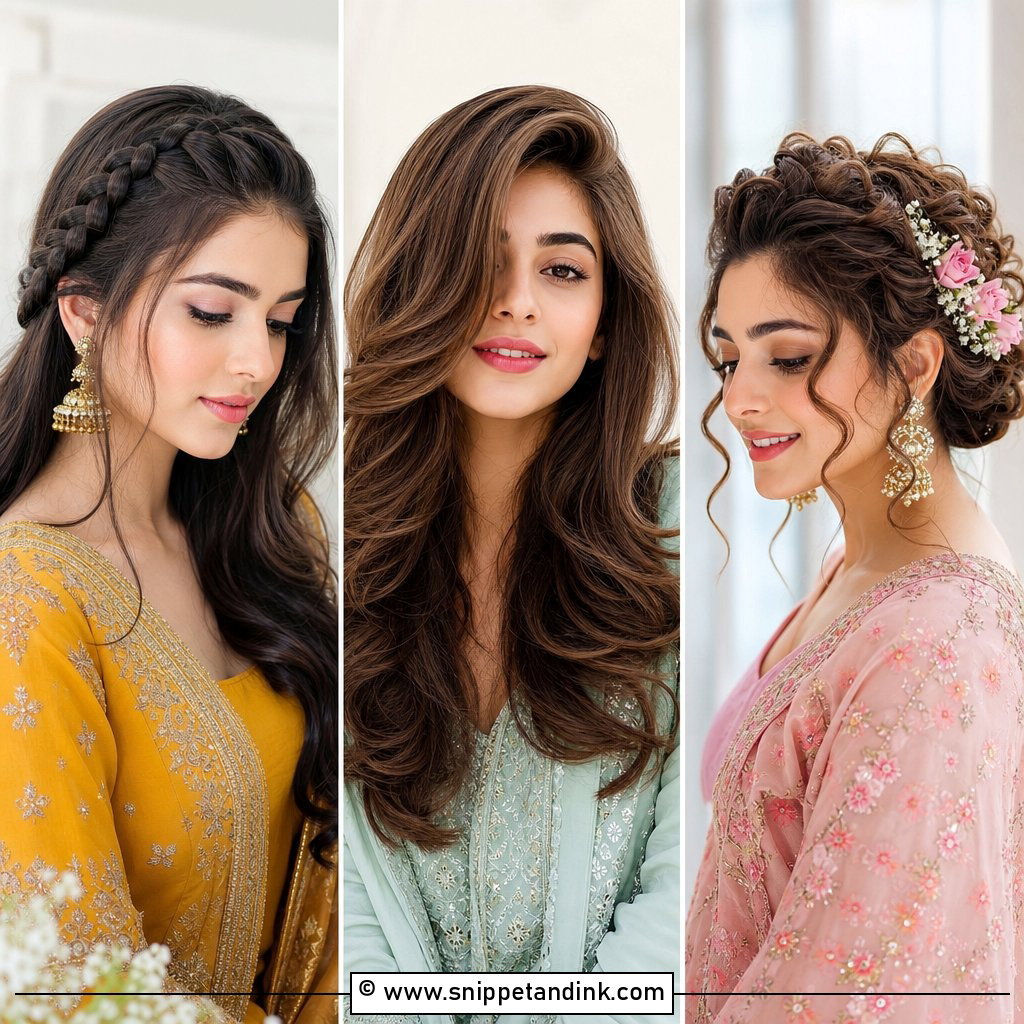
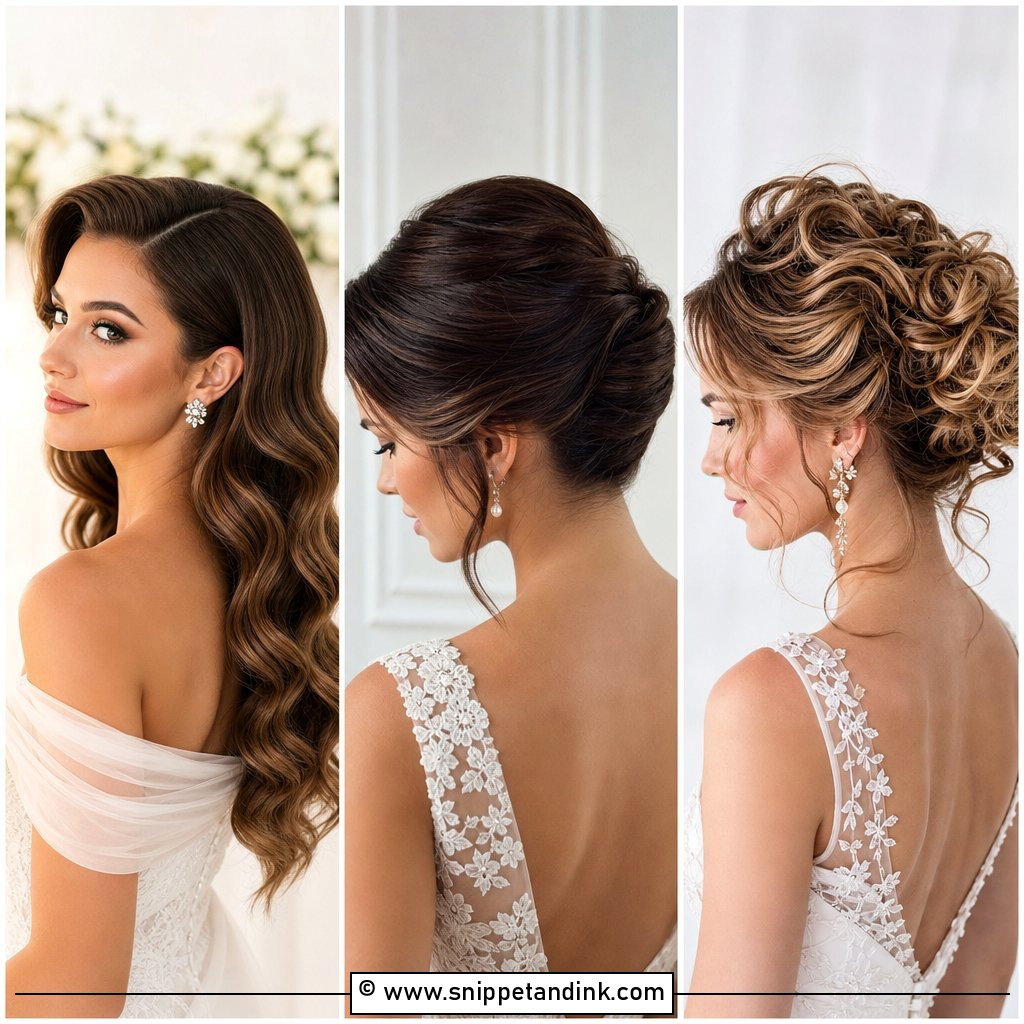
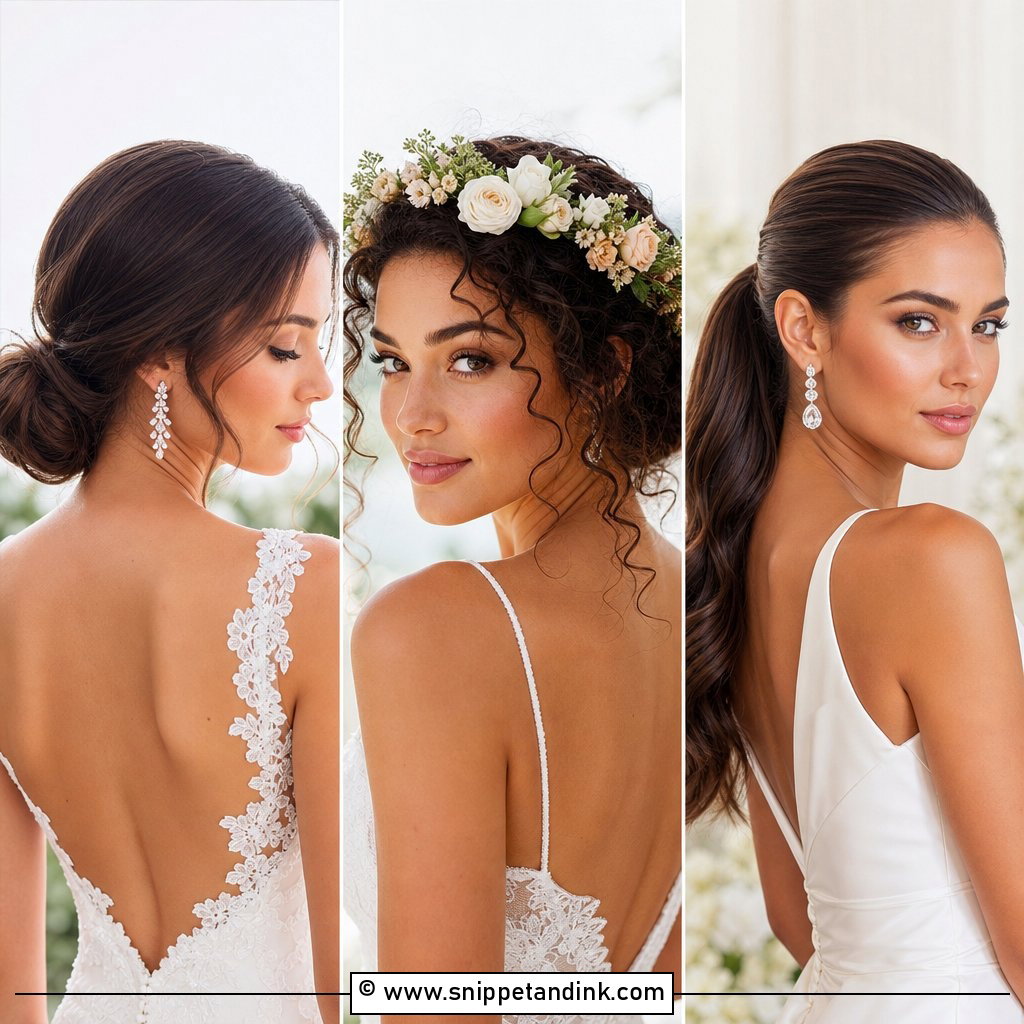
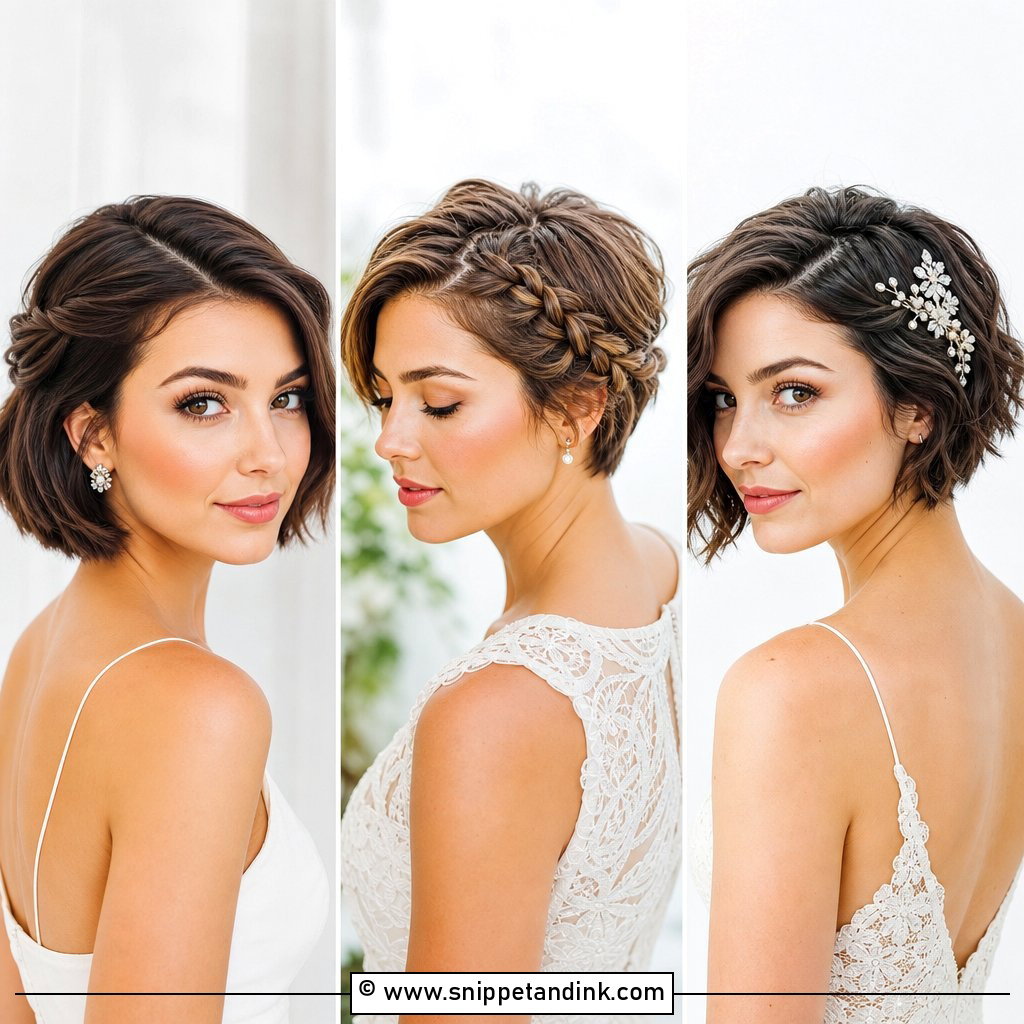
Your sister’s mehndi asks a lot of your hair. You’ll be dancing to the dholki, hugging aunties, ducking under a dupatta and probably sitting for your own henna, all while the photographer keeps finding you at the bride’s elbow. As the bride’s sister, you need a style that looks festive at hour one and still looks intentional at hour six. When I plan hair for a sister, I start with two questions: how long is her hair, and how much will she be moving? Below are 25 looks I’d actually put on a sister, from flower-threaded braids and gajra buns to open waves, with notes on which ones hold and which ones need help.
Gajra, Marigolds and Gota in Hair Over a Long Evening
Most mehndi styles are finished with something tucked in, and each trim behaves differently once it’s in your hair for six hours. I plan the decoration as carefully as the style underneath, because a slipping flower or a scratching gota edge will bother you more than any flyaway.
- Jasmine gajra smells wonderful but browns at the edges in heat. Keep it wrapped in a damp cloth in the fridge until you leave, and pin it on last.
- Marigolds are heavier than they look and shed petals. Cut the stems short and pin them into the core of a braid or bun, not just the surface.
- Gota strings are light and shine under lights, but the wired edges scratch. Pin the ends under the style so nothing touches your neck.
- Roses wilt quickly out of water. Pick tight buds rather than open blooms; they last longer and hold their shape in photos.
Whatever you choose, use pins that match your hair colour and cross them in an X. A single pin holds a flower when you’re standing still; the X holds it when you’re dancing.
1. Loose Side Braid With Fresh Flowers
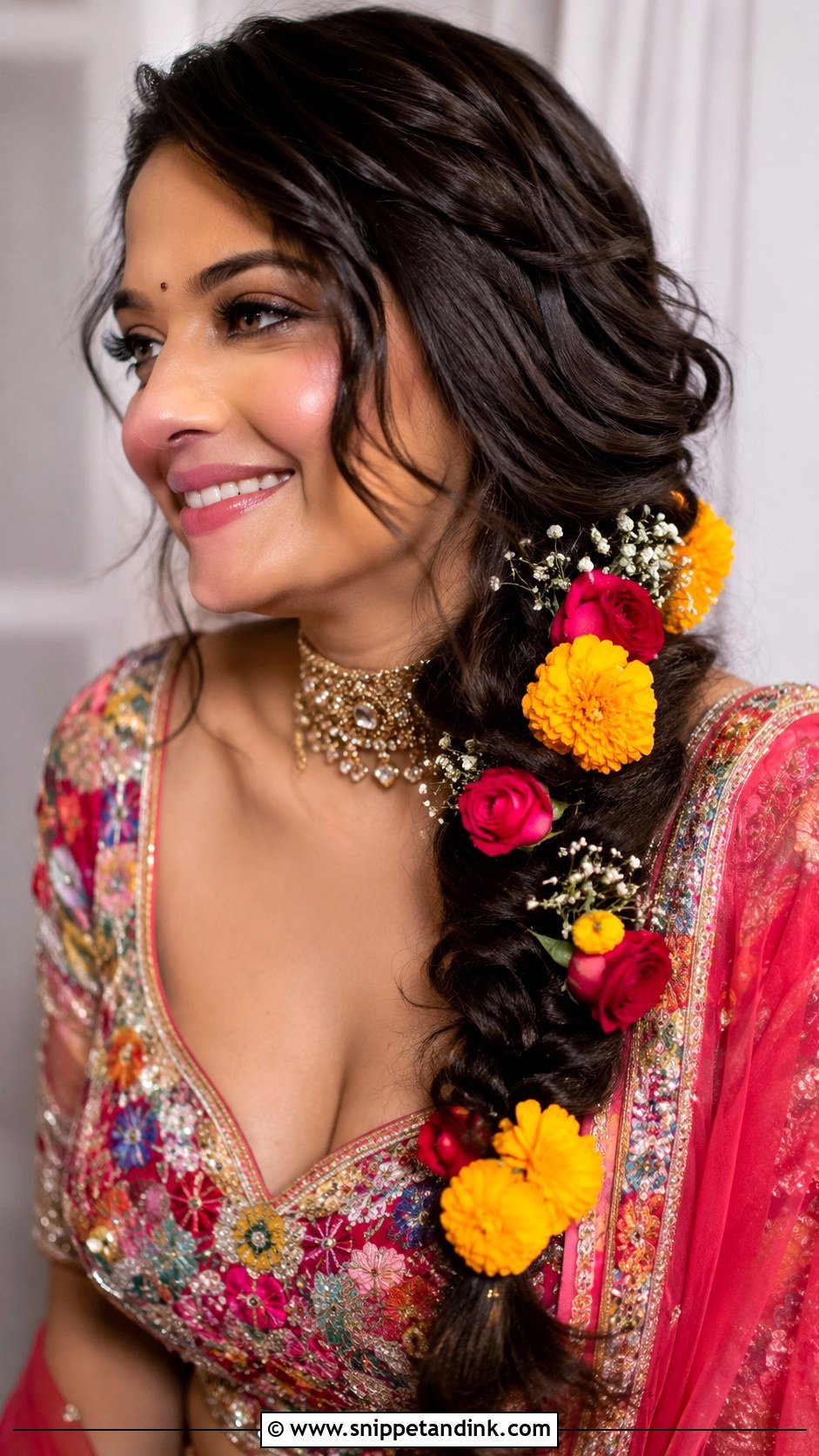
A loose side braid threaded with marigolds and small roses is the style I reach for when a sister wants her hair down but knows she’ll be dancing. I put soft waves in first, because a braid made from flat, freshly washed hair slides apart within the hour. Then I braid loosely over one shoulder and pull a few pieces out at the crown. Flowers tuck into the gaps between sections, and I anchor each stem with a bobby pin pushed into the braid itself rather than just wedging it in. You need hair past the collarbone for this one; on shorter lengths the braid ends too high and looks stubby against a heavy lehenga.
2. Floral Bun With Gajra
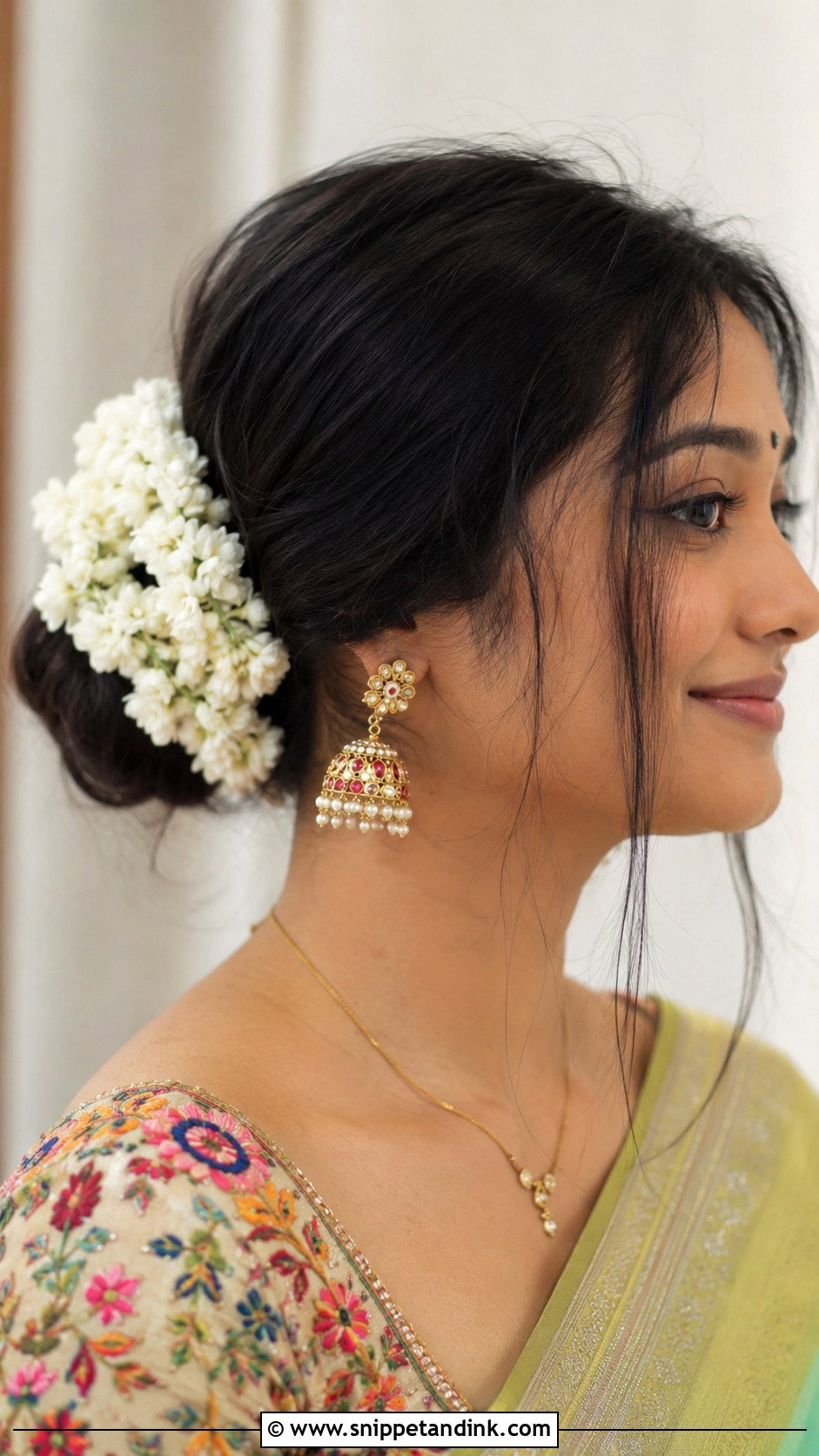
A low bun circled with gajra is the oldest trick for a mehndi afternoon, and it earns its place. I build the bun slightly loose at the nape and leave a few wisps at the temples, then wrap jasmine or marigold strands around the base and pin the ends underneath where nobody sees them. Jasmine gives you that scent through the evening, but it browns on the edges within a few hours in heat, so I’d rather pin it on shortly before you leave the house. Pair it with jhumkas and the bun stays the quiet part of the outfit, which is exactly where a sister’s hair should sit next to the bride.
3. Messy Fishtail Braid
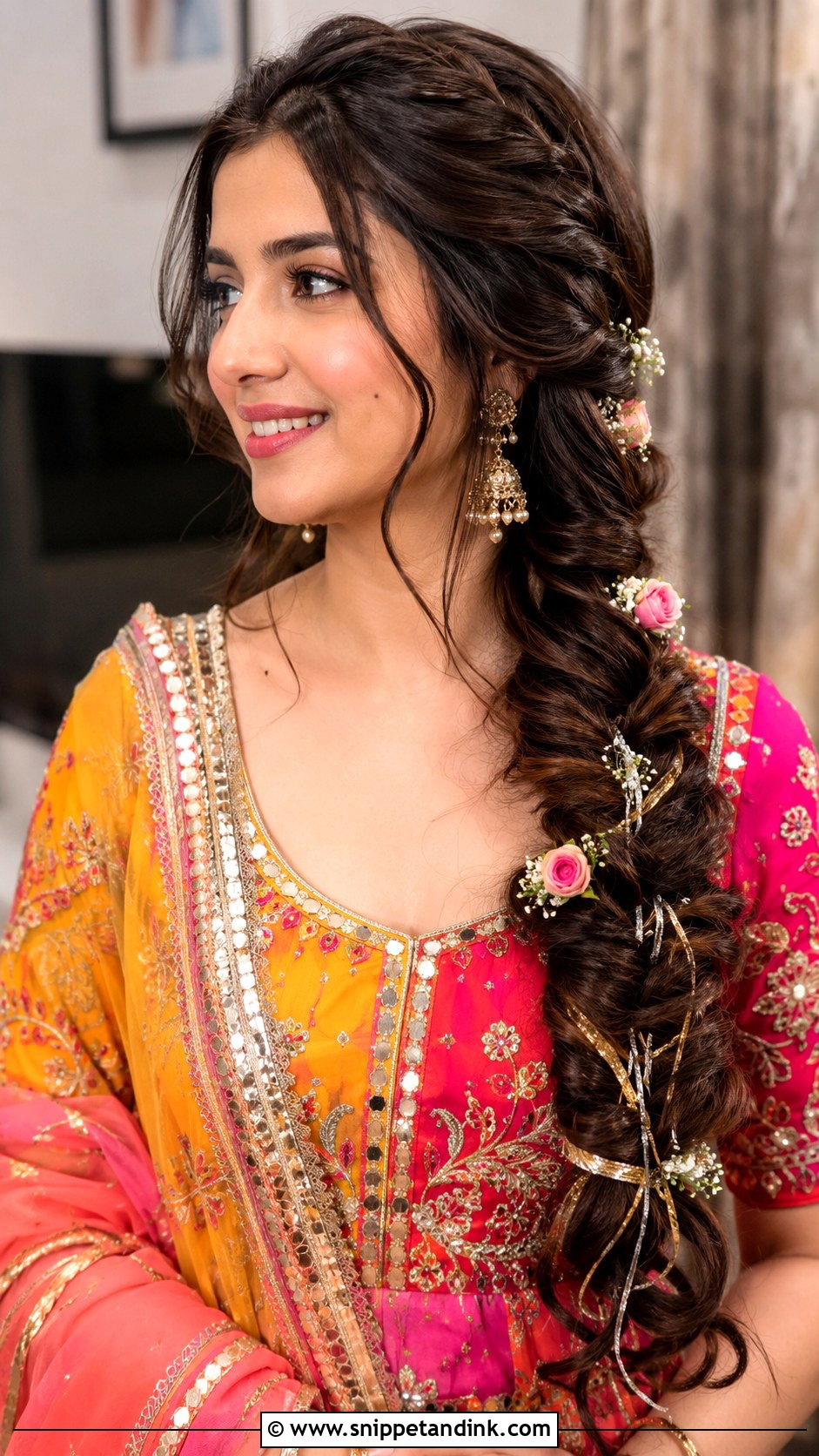
A messy fishtail looks far more complicated than it is, which is why I like teaching it to sisters who want to do their own hair. Curl loosely first for grip, braid by crossing tiny pieces from the outside of each half, then pinch and tug the edges outward once it’s secured. The smaller your crossing pieces, the more woven it looks. A few gota strings or floral pins near the tail add the festive note. I’d only suggest it on hair well past the shoulders; on layered hair the short pieces poke out along the braid, so a light pomade on your fingers as you go helps.
4. Curly Open Hair With Floral Tiara
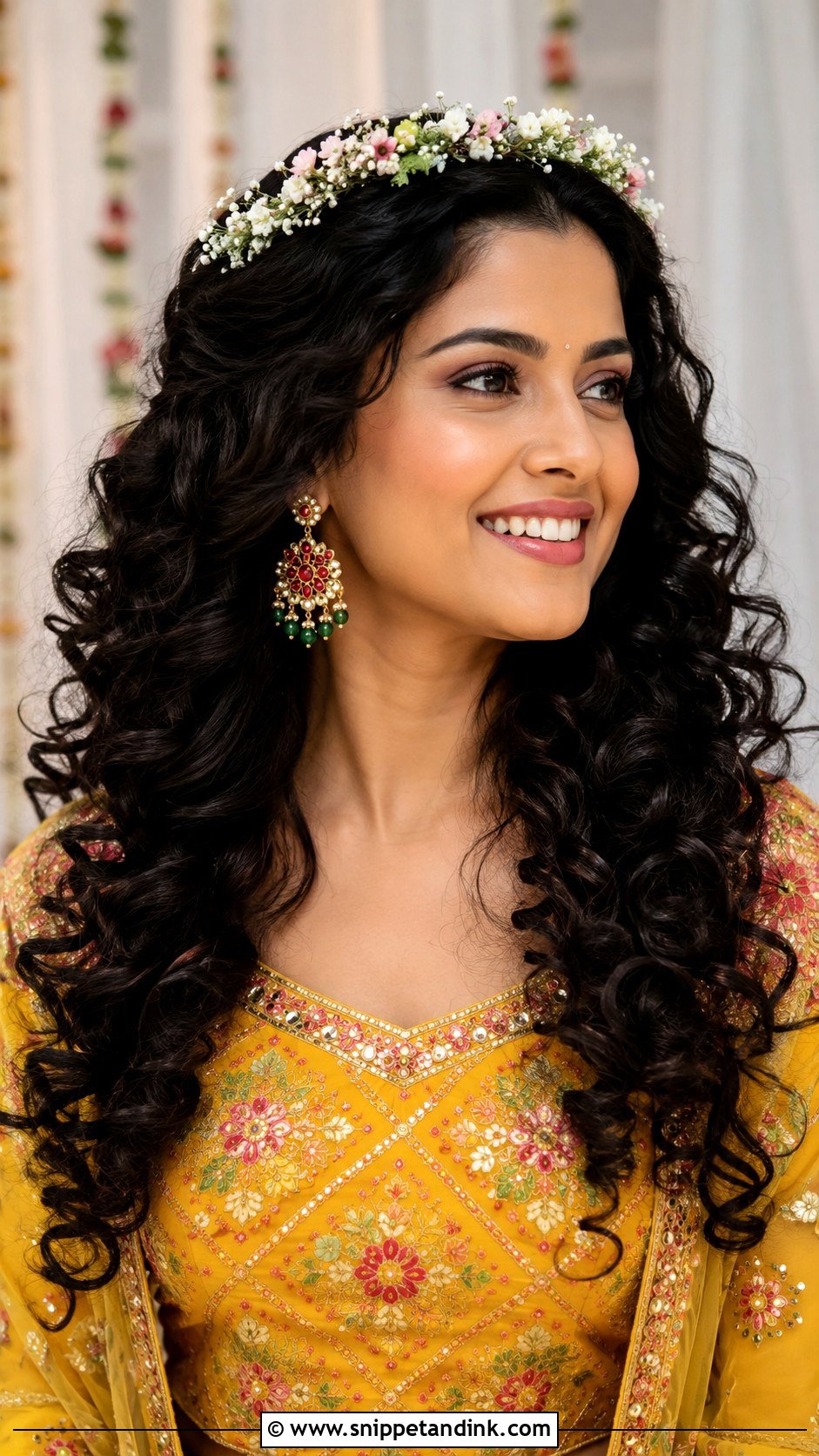
Open curls with a floral tiara are the simplest look on this list and the one most likely to fall flat if you skip one step. After curling each section with a wand, let the curl cool in your palm or pinned in a loop before you touch it. Hot curls brushed out straight away drop within an hour, especially in a crowded, humid tent. Once cool, rake through with your fingers and set the tiara or flower band last, pinning behind each ear so it doesn’t slide forward when you dance. It works on short and long hair alike and shows off a heavily worked neckline.
5. Braided Crown Updo
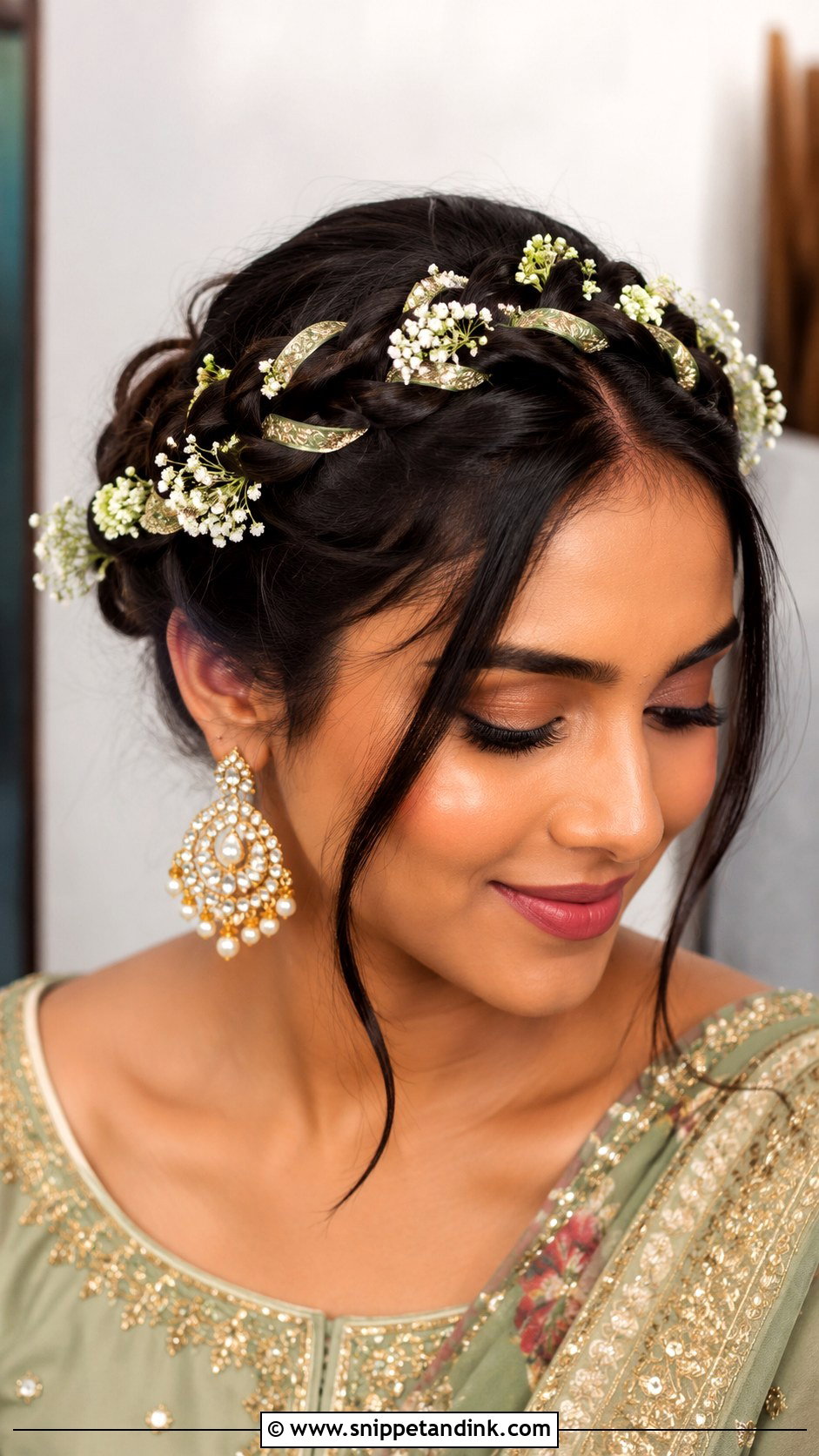
A braided crown updo is my answer for the sister who will be on the dance floor all night and doesn’t want to think about her hair once. Part down the middle, braid each side, and wrap the braids up and over the crown, crossing the ends at the back. I pin with pairs of bobby pins crossed in an X along the braid, because a single pin will walk out with movement. Tiny flowers or gota accents slip between the braid loops. On medium hair the two braids may not meet over the top, so I add a thin matching braid from a clip-in piece to close the gap.
6. Double Dutch Braids
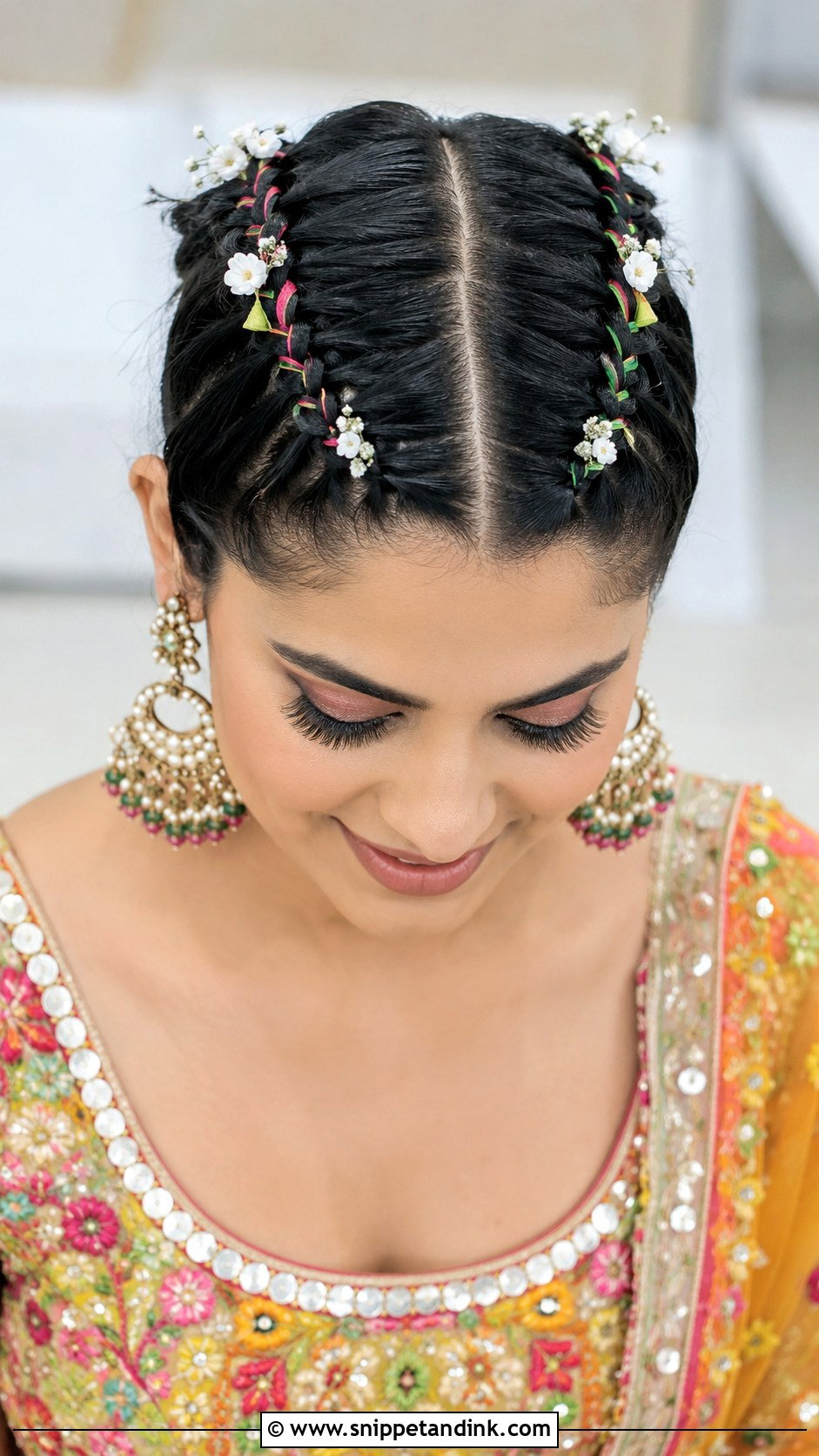
Double Dutch braids are a favourite with younger sisters, and they hold up better than almost anything during games and dancing. Each braid is crossed under rather than over, so it sits raised on the scalp. I braid them tight at the root and loosen only the outer edges, which keeps the structure while softening the shape for photos. Coloured threads or small flowers woven through suit the mehndi mood. Thick and textured hair takes these brilliantly; very fine hair can look sparse along the part, so I’d add a little texture spray before braiding.
7. Voluminous Low Bun With Roses
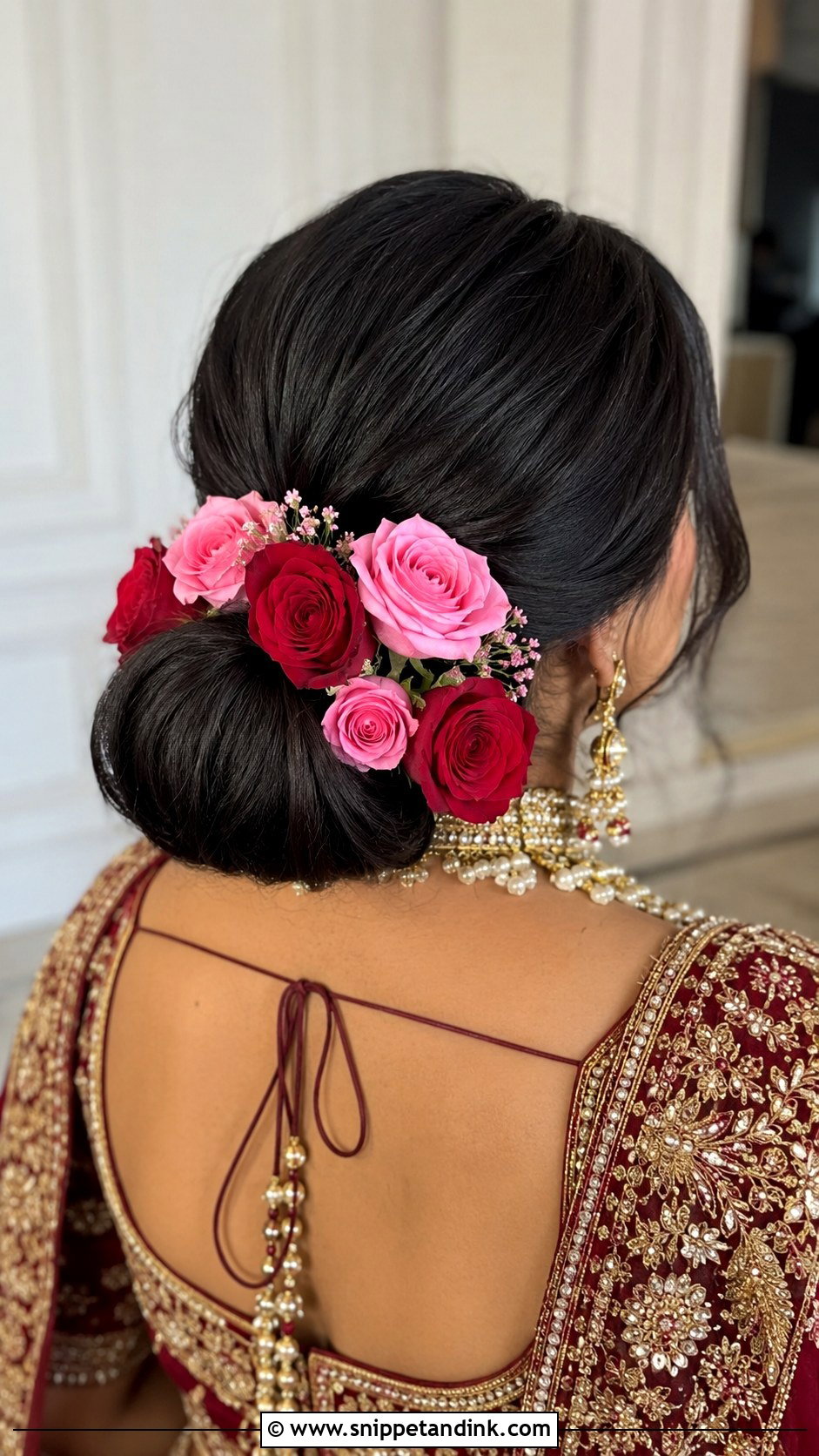
This one is a full, rounded bun at the nape with red or pink roses tucked around its base, and it suits the heavier pre-wedding outfits. The volume comes from backcombing the underside of each section, not the top, so the outer surface stays smooth. I’d use a bun donut or padding if your hair is shoulder length, otherwise the bun ends up small and the roses swallow it. Roses are heavy, so each stem gets cut short and pinned into the bun’s core rather than the surface. It’s a dressy look; save it for the sister who loves an evening outfit with a lot of embroidery.
8. Waterfall Braid With Soft Waves
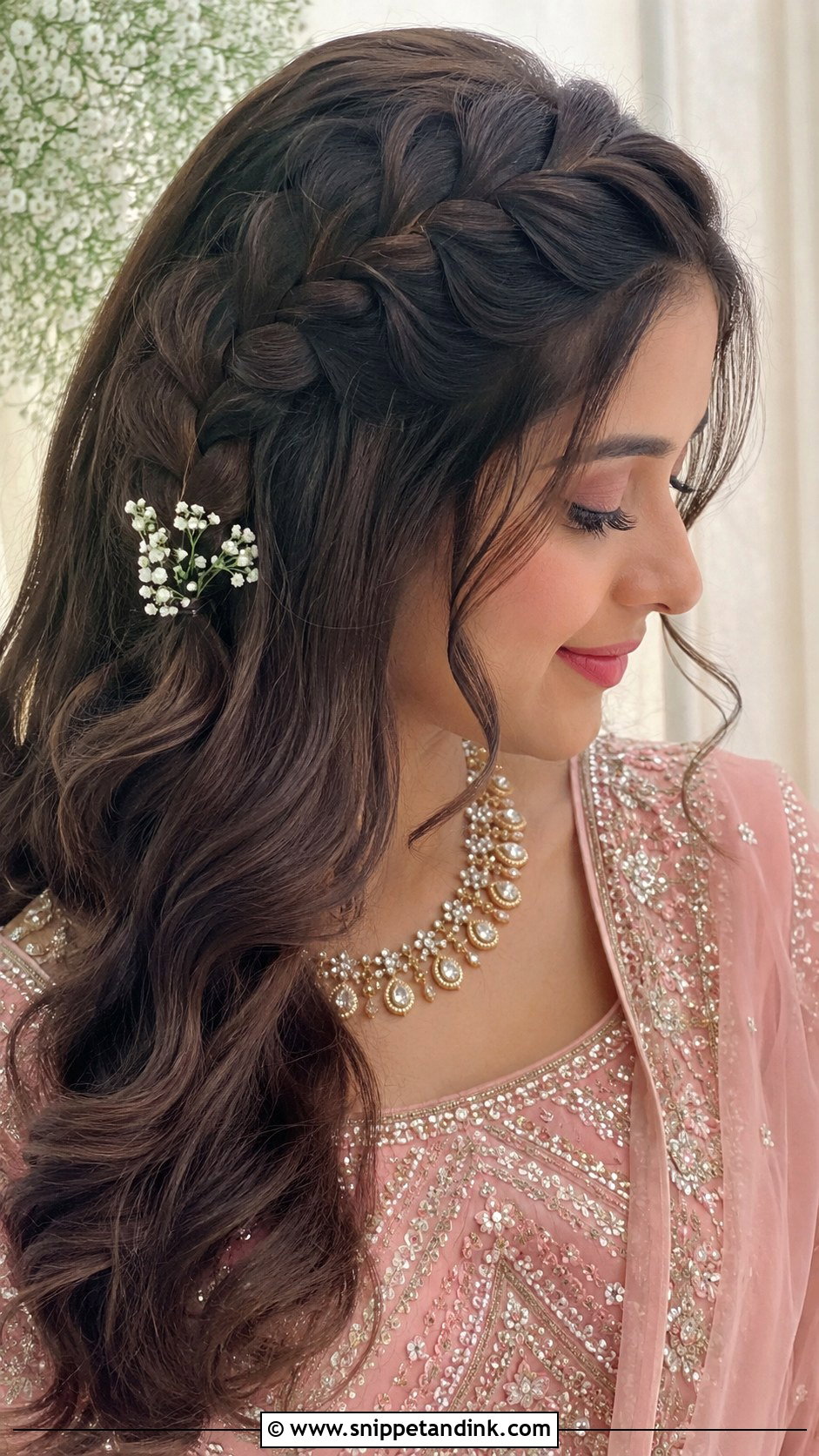
A waterfall braid is a sideways braid that drops one strand each time you cross, so loose hair falls through it like water. I start at the temple and work back toward the opposite ear, then pin the end under the hair behind it. The rest stays open in soft waves. The detail is fine and can disappear on very dark hair in low evening light, so a small flower where the braid begins helps the camera find it. Medium to long hair gives the falling strands enough length to read clearly.
9. Braided Bun With Gota Accents
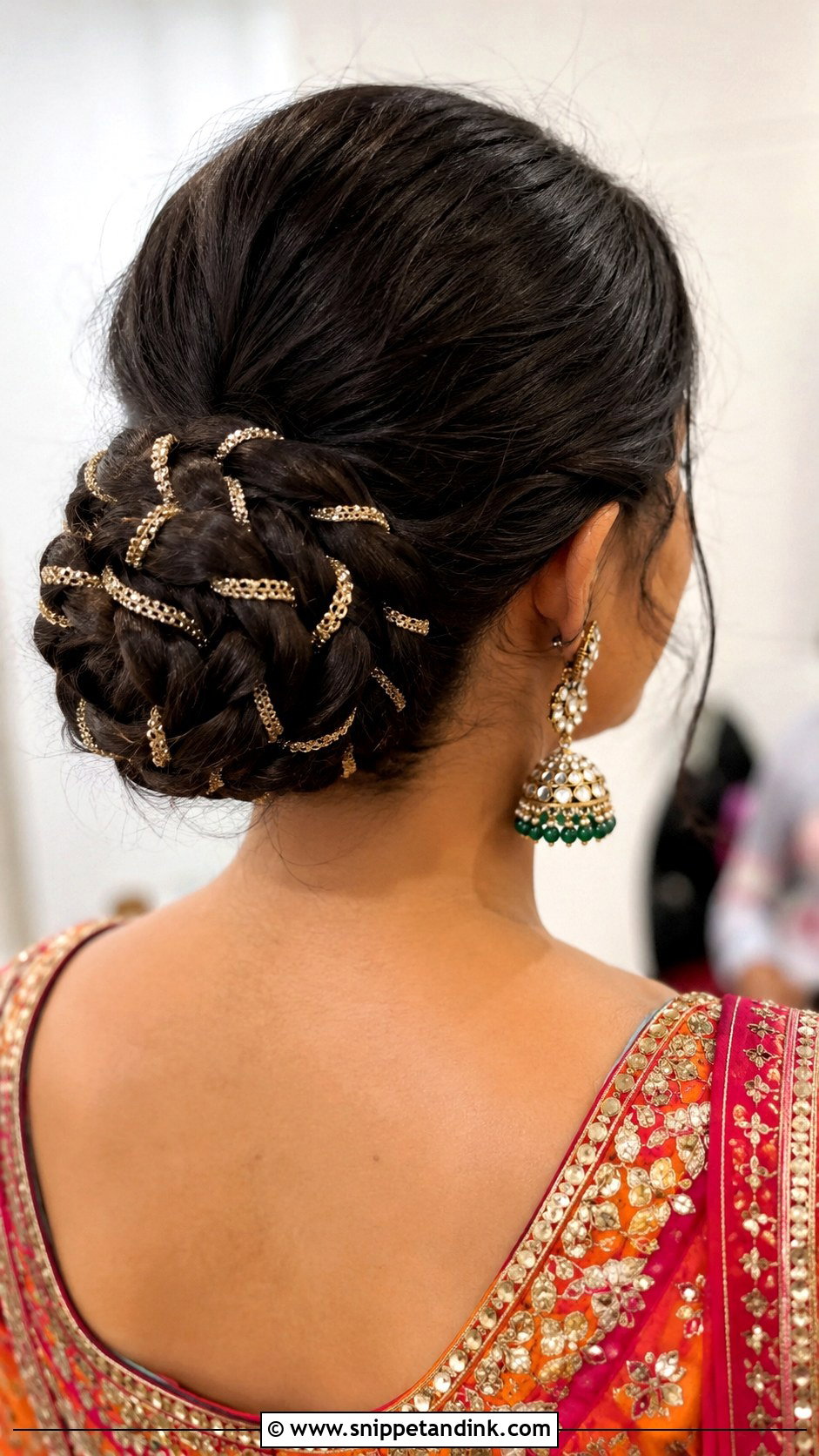
A braided bun decorated with gota is one of the most secure styles you can wear to a mehndi. I braid two or three sections first, then coil each braid around the base and pin as I go, so the bun is built from braids rather than loose hair. Gota strings wrap around the outside and get pinned under, where their wire edges can’t scratch your neck. It needs medium to long hair. On thick hair it can get heavy by evening, so I keep the bun a little off the nape to spread the weight.
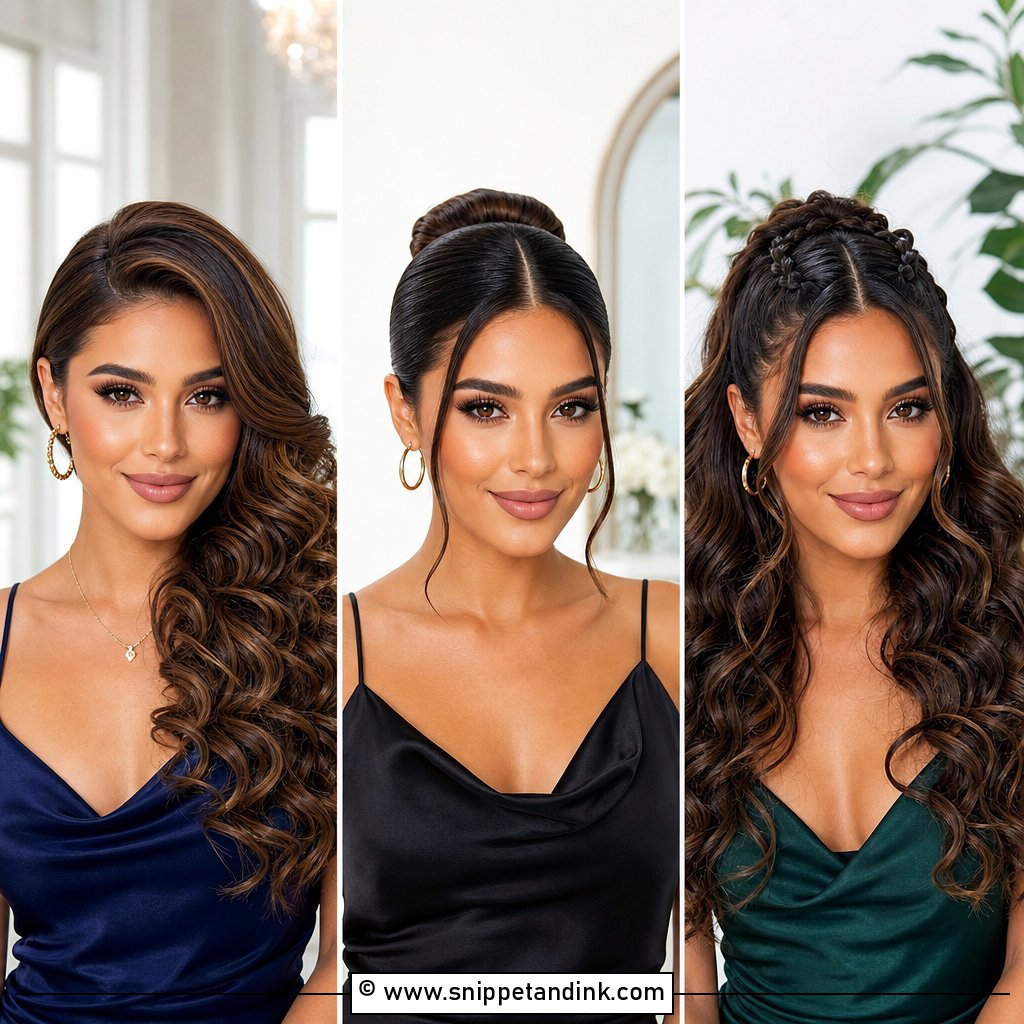
10. Half-Up Half-Down With Flowers
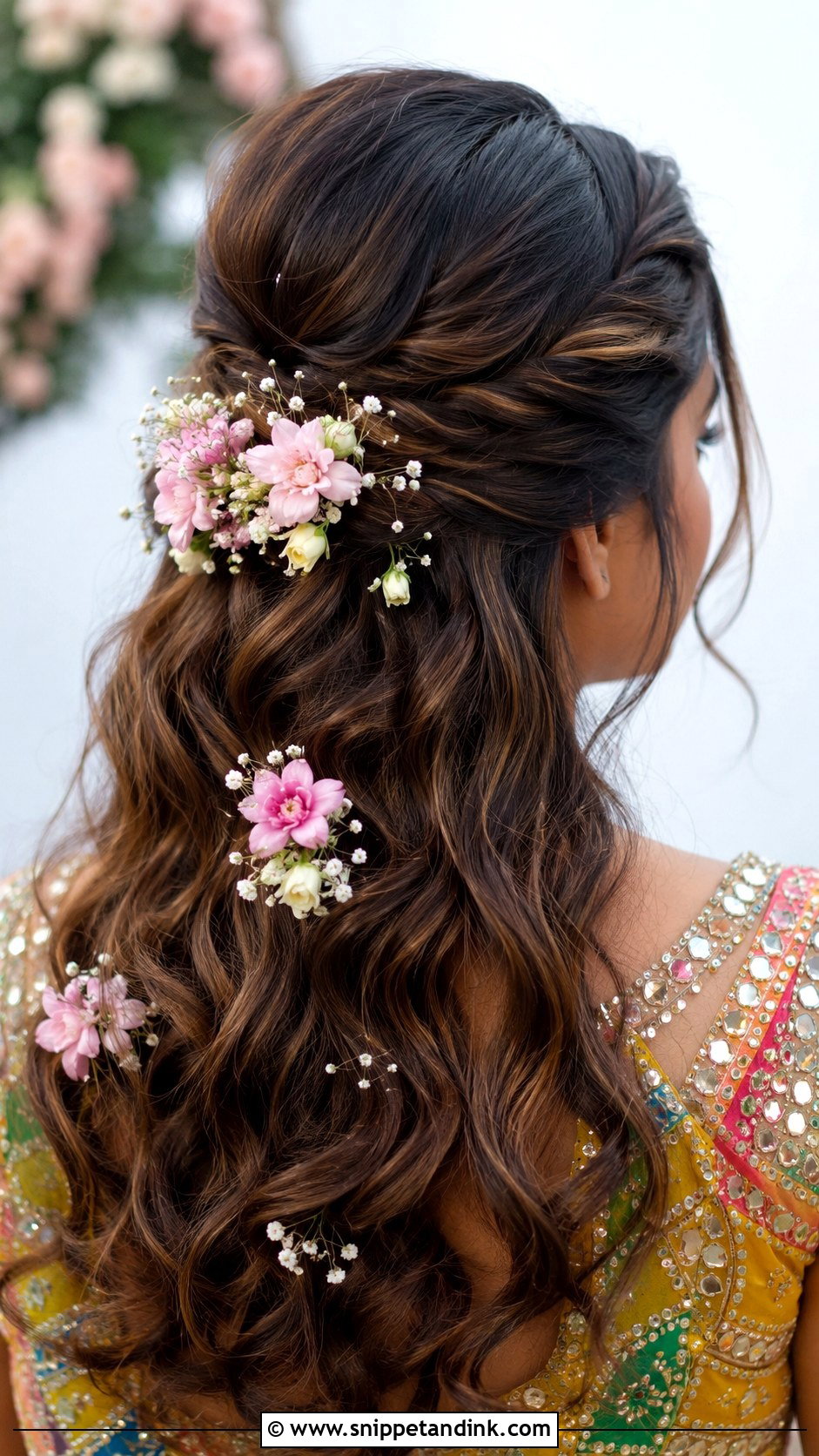
Half up, half down settles the open-or-tied debate. I pull the top section back and secure it with a small twist or braid, leaving the rest in loose waves, and tuck a few flowers where the two sections meet. The part I care about most is the anchor: a small clear elastic under the twist plus two crossed pins, because the weight of flowers drags a half-up style down by evening. It keeps hair off your plate at dinner and out of your eyes while dancing, and it suits nearly every length and texture.
11. Side Swept Curls With Hair Vine
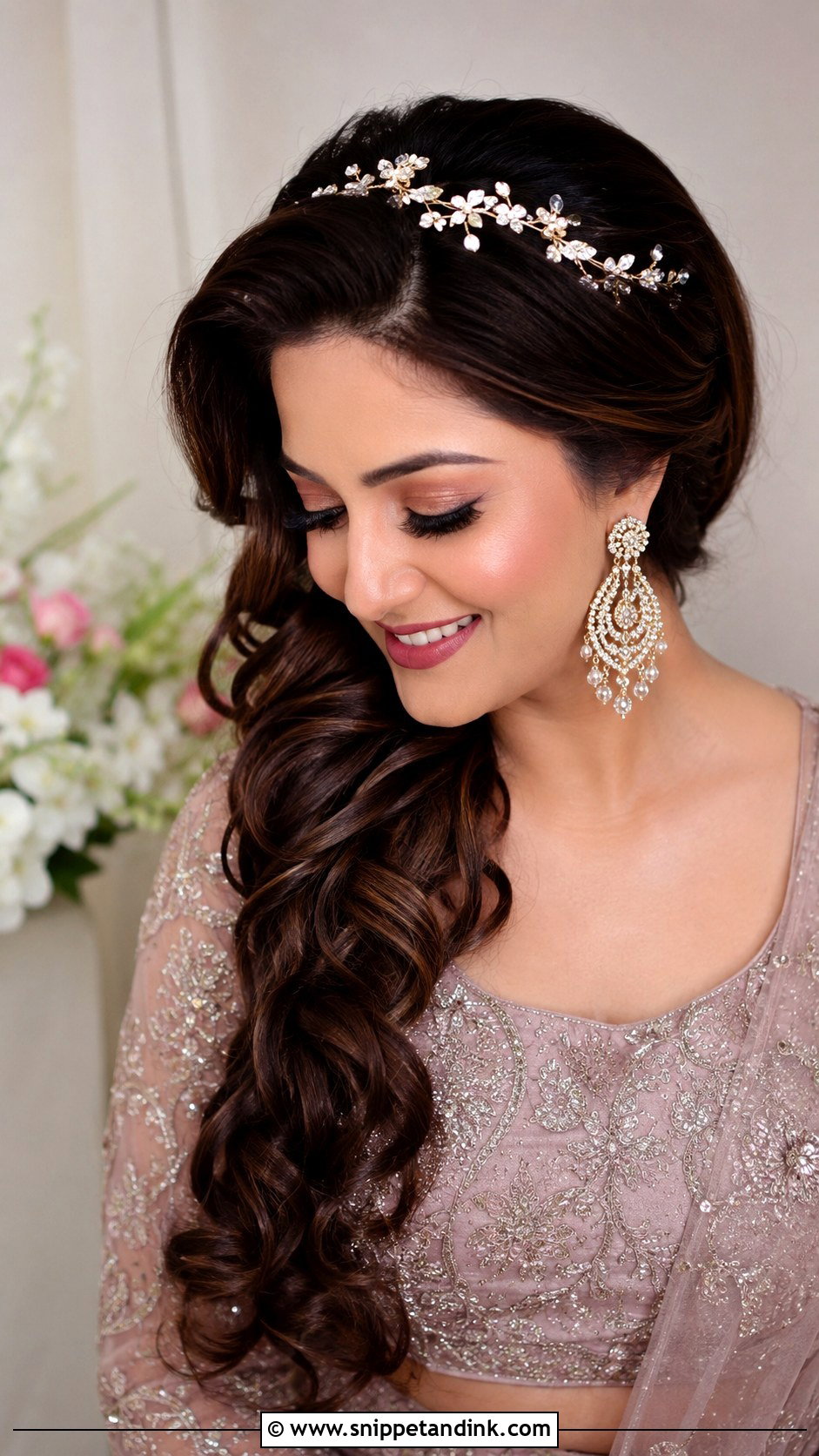
Side-swept curls with a hair vine are soft, and they work hard for you in photos because one ear and earring stay fully visible. I curl loosely, sweep everything to one side and hide a row of pins behind the opposite ear to keep the hair from creeping back. The vine follows the part line and gets pinned at both ends and once in the middle. Watch the side you choose: if your dupatta drapes over one shoulder, sweep the hair to the other, or the two will fight all night.
12. Dutch Braid Into Low Bun
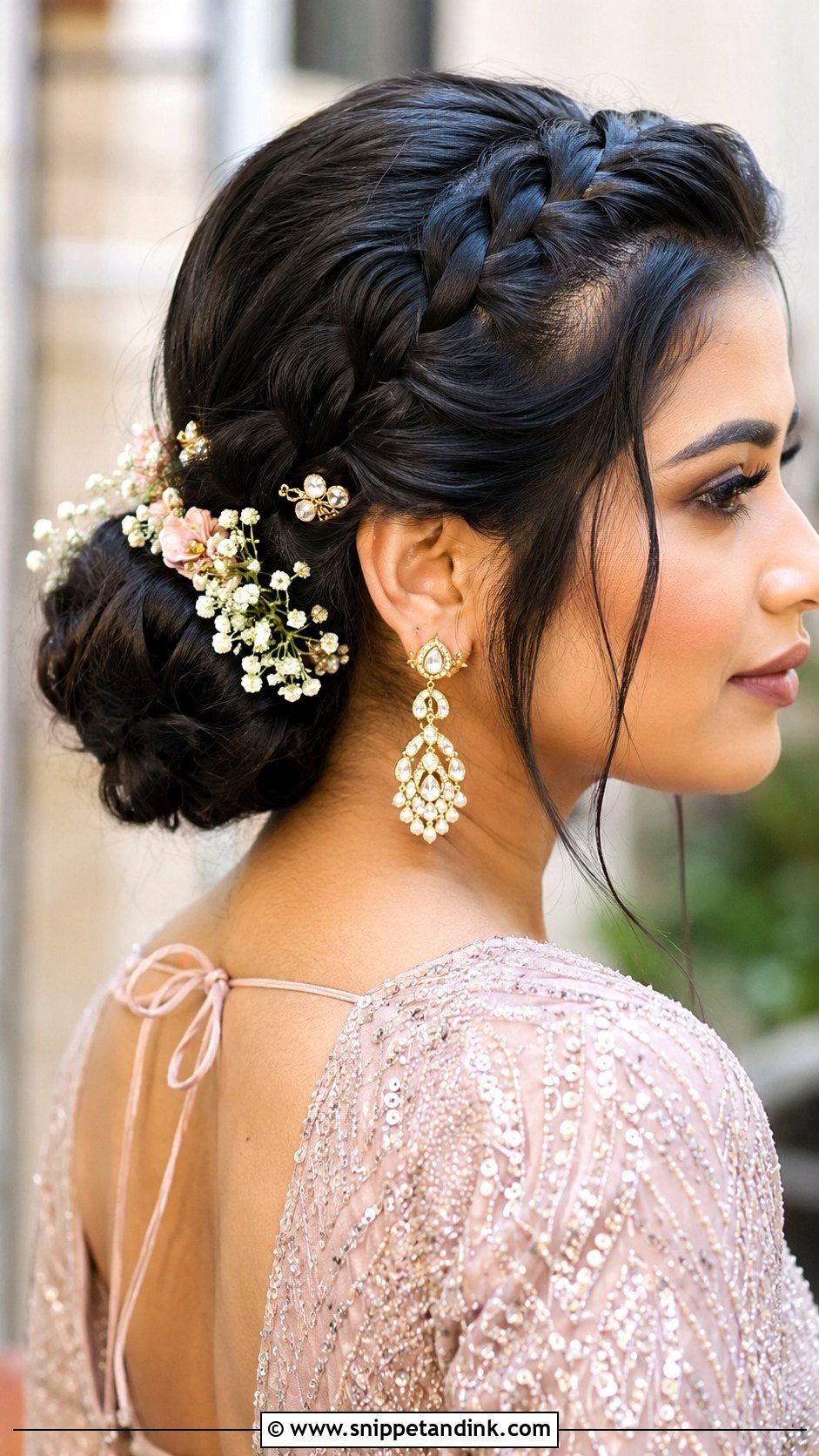
A Dutch braid leading into a low bun gives you detail on top and security underneath. I start the braid at the hairline or crown, braid until it reaches the nape, then fold the remaining length into a soft low bun. Tiny flowers or gota pins along the braid make it festive. This is the style I trust on sisters with layered hair, because the braid captures the short layers before they can escape. Ask for the bun a touch lower if you’re wearing a dupatta over your head, so the fabric drapes smoothly rather than catching on it.
13. Open Waves With Maang Tikka
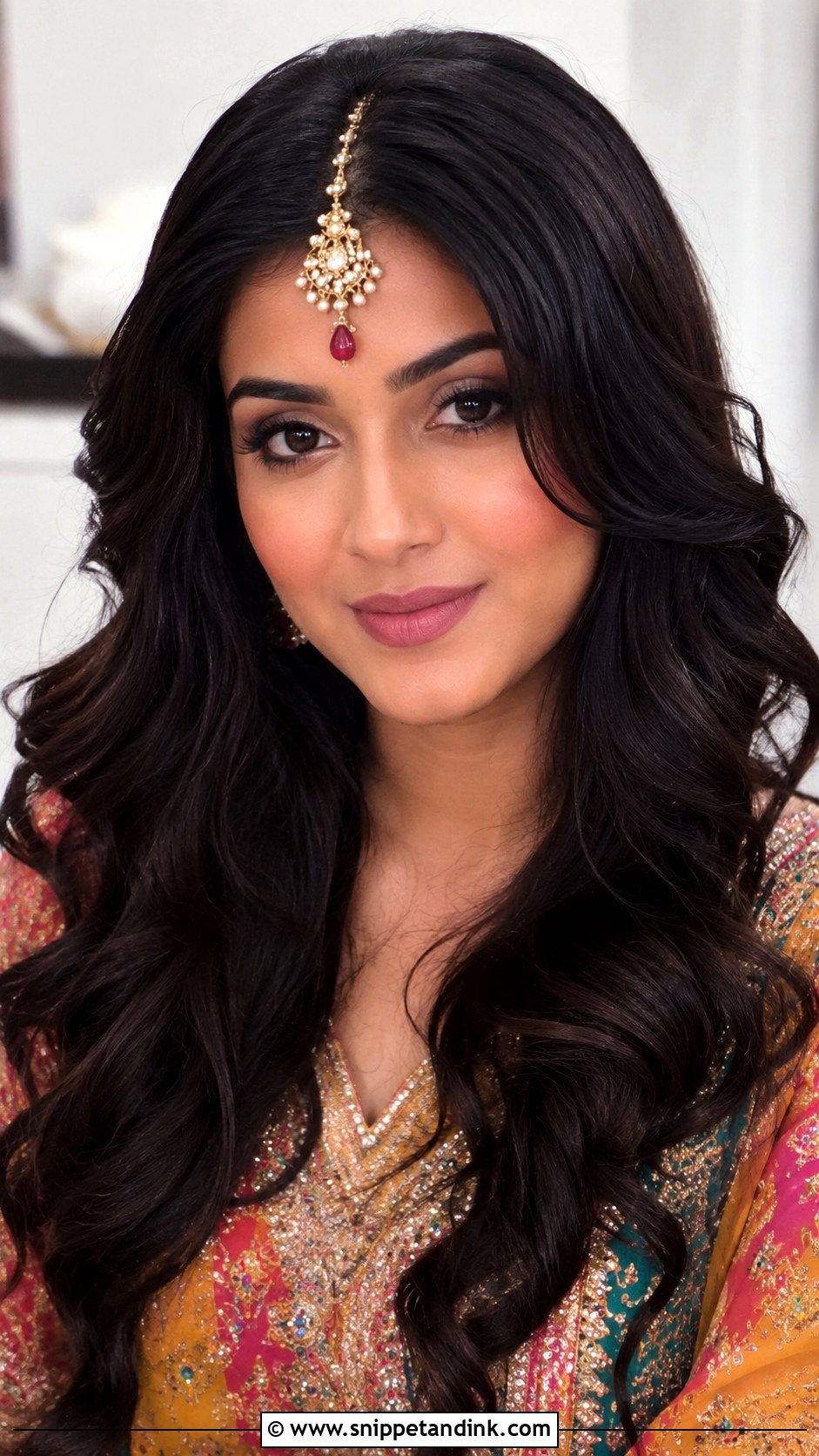
Open waves with a maang tikka are the look I suggest for a sister who wants little hair fuss and a lot of jewellery. The waves give movement and the tikka draws the eye straight to your face. A beautiful maang tikka hangs best from a center part, and I always pin its chain into the hair at two points, not just the hook, so it doesn’t swing off-center when you lean over for photos. It’s quick to do and suits any length, which matters on a morning where the bride’s hair will take priority.
14. Thick Braid With Floral Trail
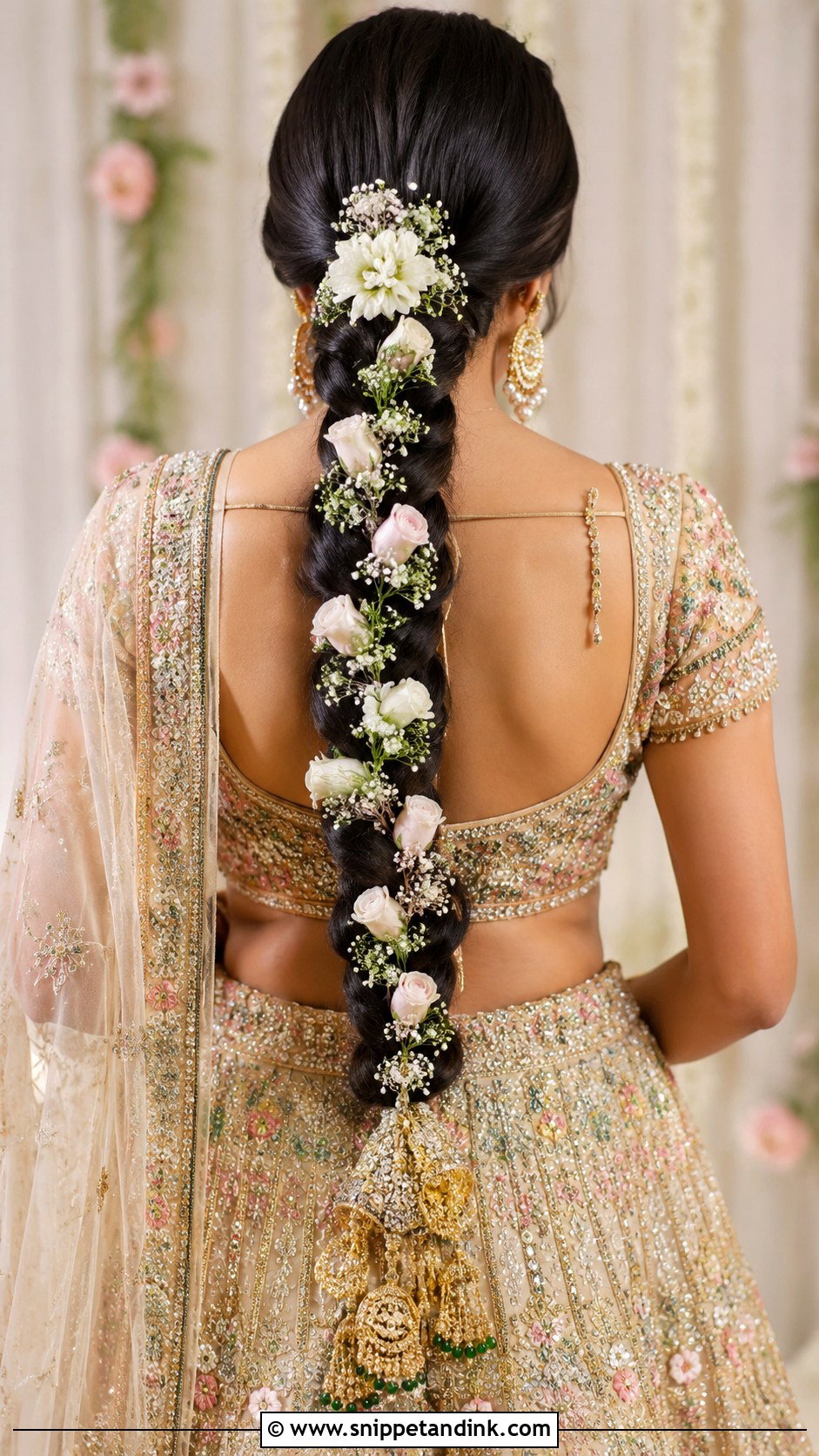
A single thick braid with a trail of flowers down its length is a mehndi classic. I braid the hair into one full plait, then sew or pin the flowers on with a thread running down the back of the braid, which is far more secure than pinning each bloom. Finish the end with gota latkans. It needs long, thick hair; on thinner hair I’d add a braid extension underneath so the flowers have something to sit on. Be aware that a long floral trail gets sat on, so it’s not a style for someone who’ll spend the night on floor cushions.
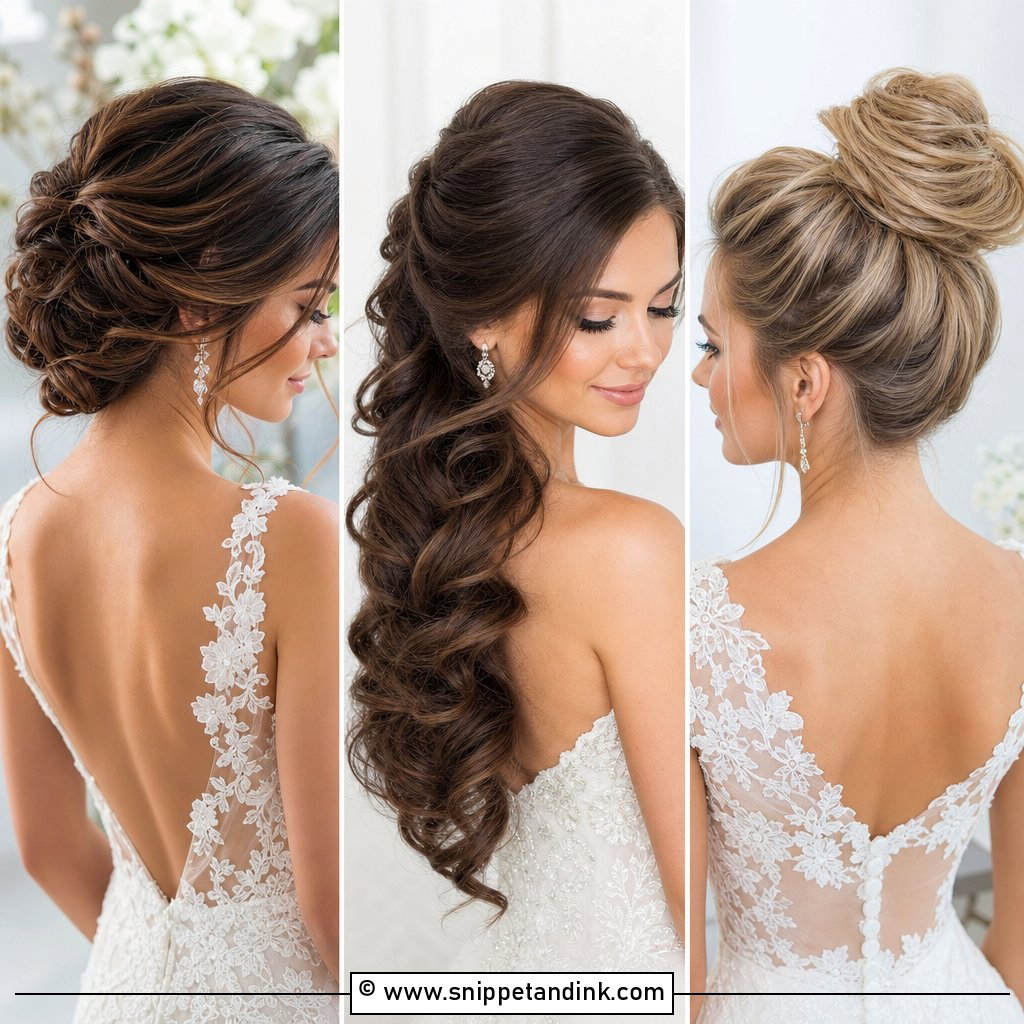
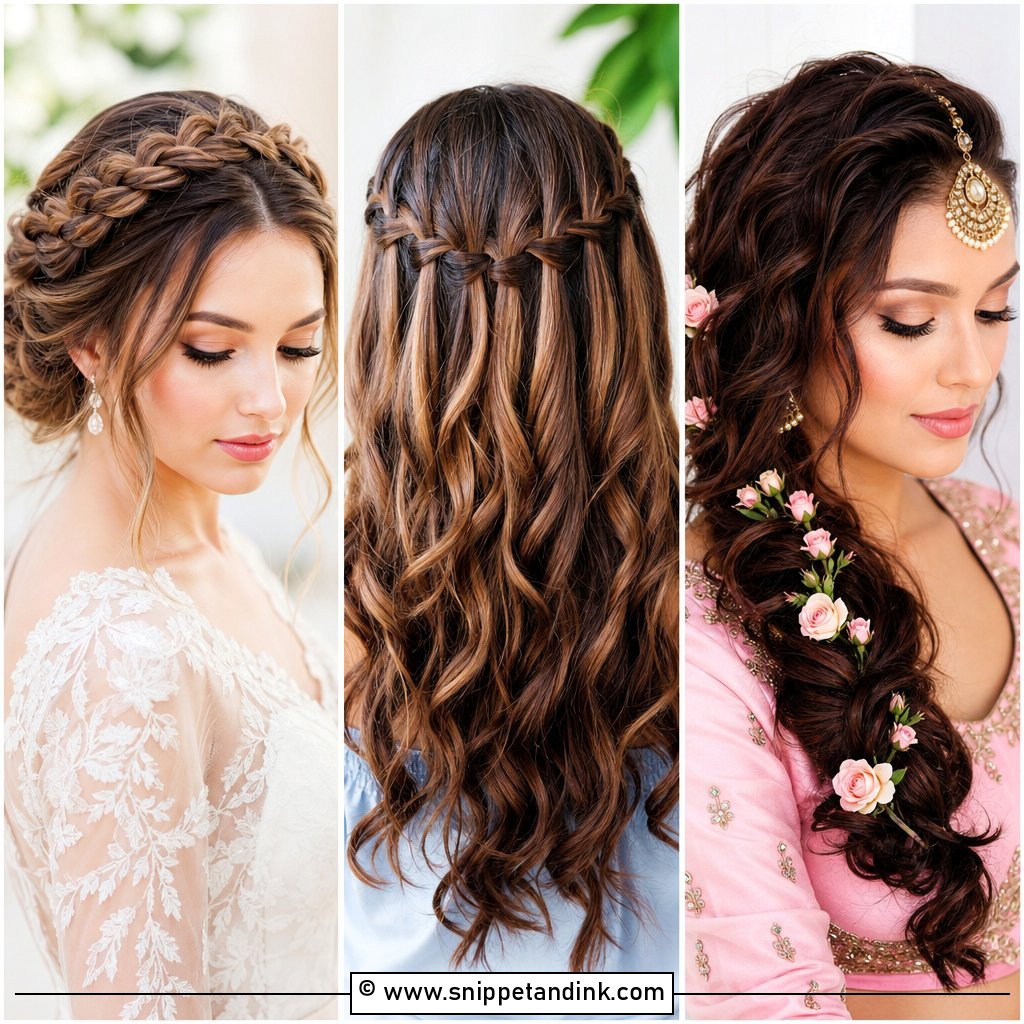
15. Messy Bun With Loose Tendrils
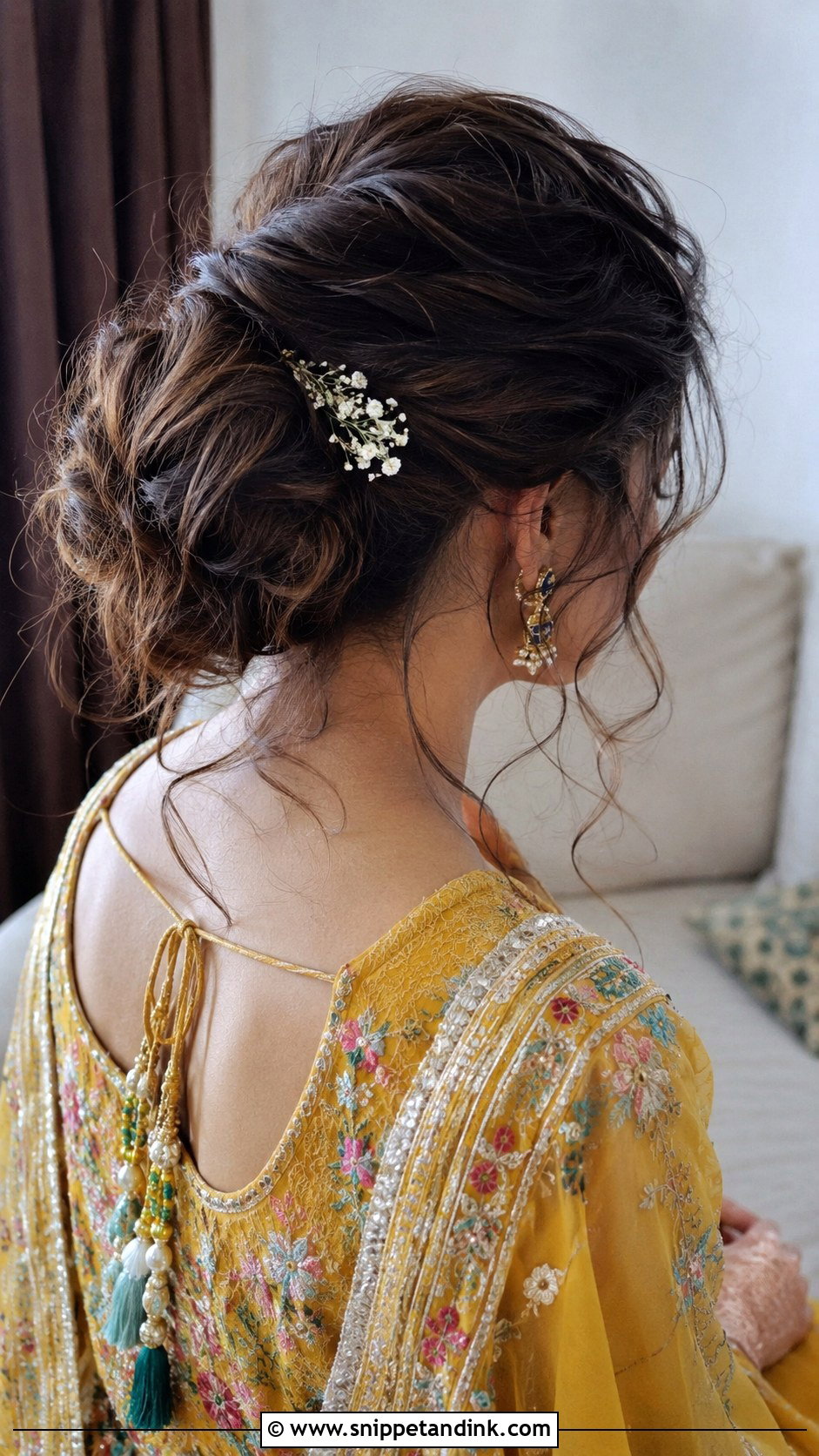
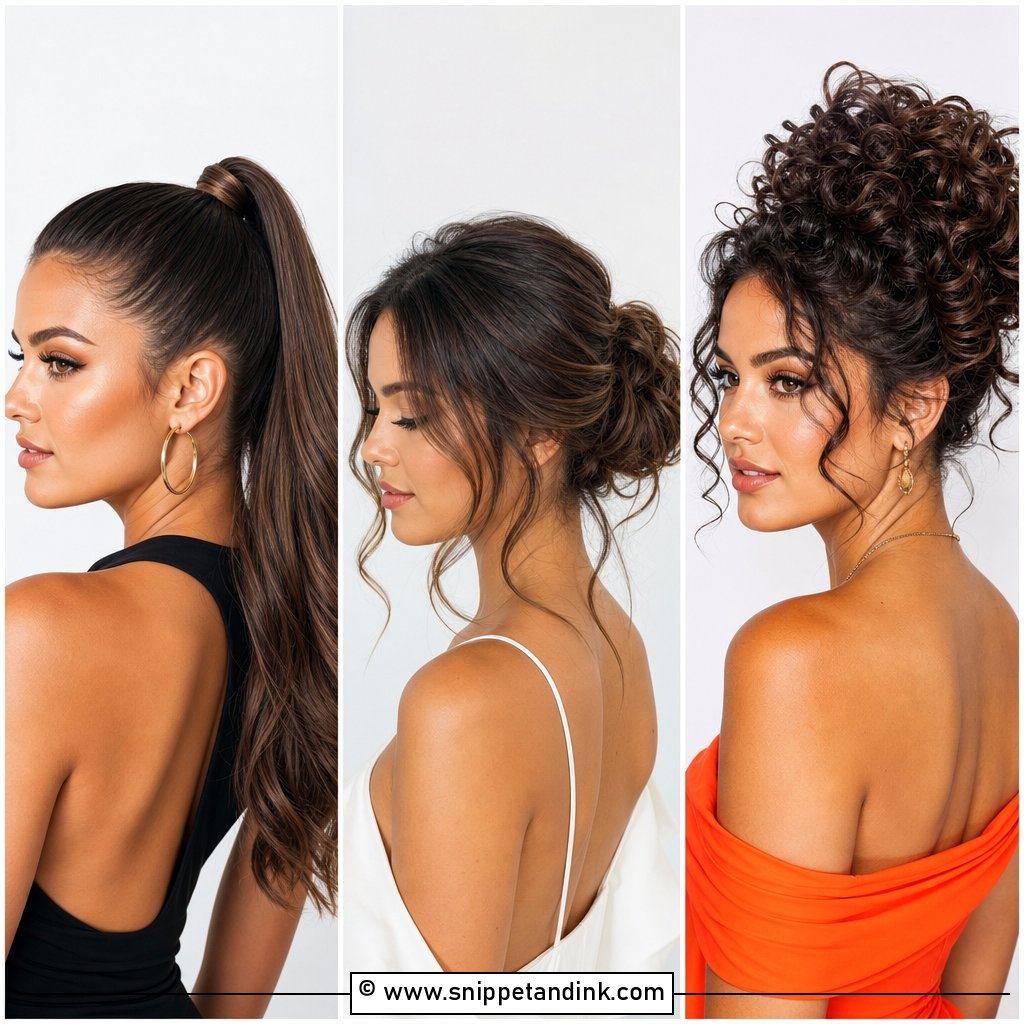
A messy bun with loose tendrils looks casual, but the mess should be placed. I make a soft bun, then pull out two or three tendrils on each side, and give each one a loose bend with the wand rather than leaving it straight. Straight tendrils look like hair that fell down; bent ones look styled. A small flower or decorative pin finishes it. It keeps your neck cool in an afternoon function and suits most lengths from the shoulders down.
16. Crown Braid With Open Back
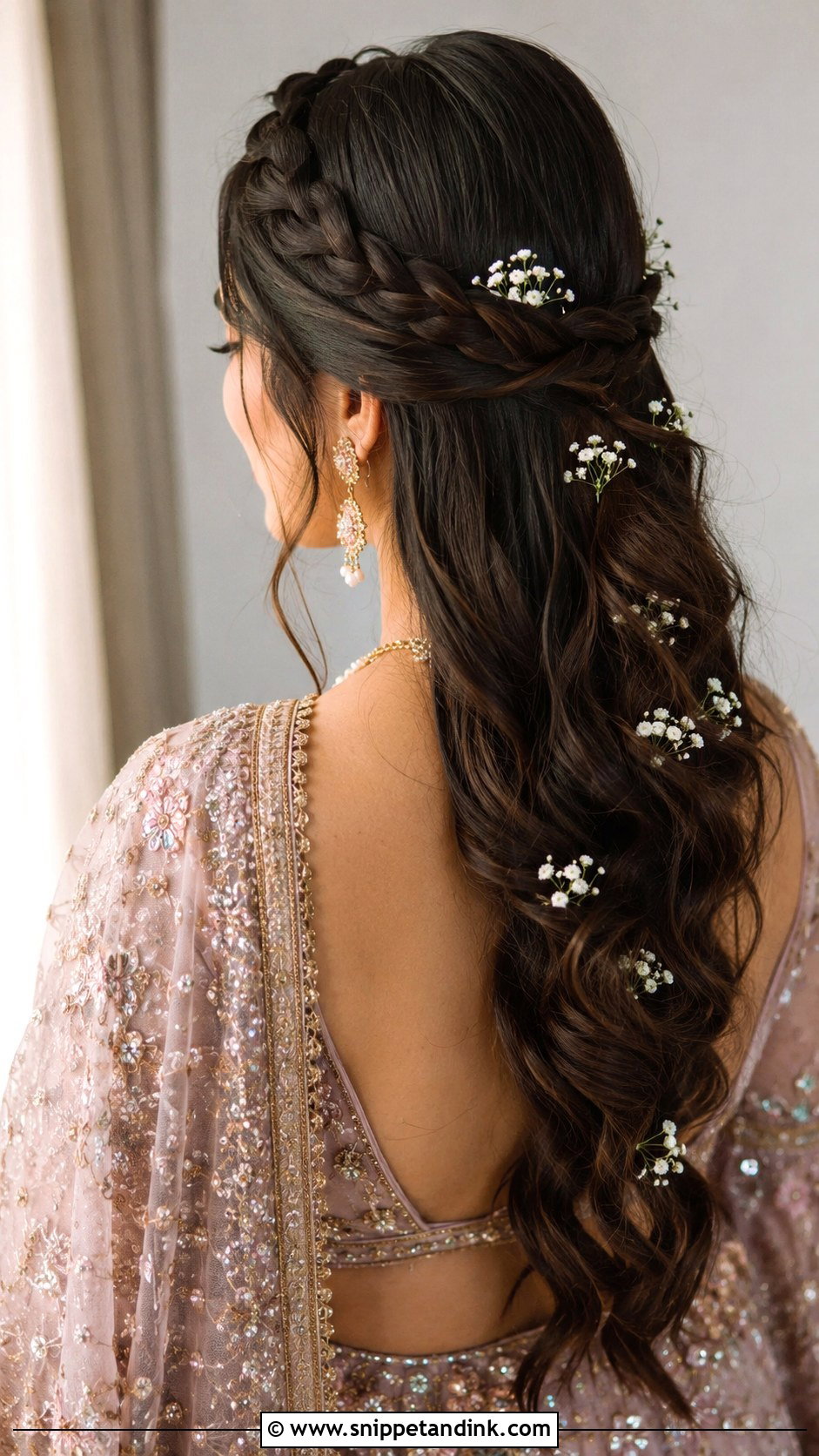
A crown braid with the back left open wraps a braid over the top of your head and lets the rest hang loose. I braid from one ear, around the crown to the other side, and pin the end under the braid’s start. Small fresh flowers go along the braid. It keeps hair away from your face while still showing off length. If your hair is very straight, curl the open back first, otherwise the braid looks heavy compared to the flat lengths beneath it.
17. Twisted Updo With Gajra
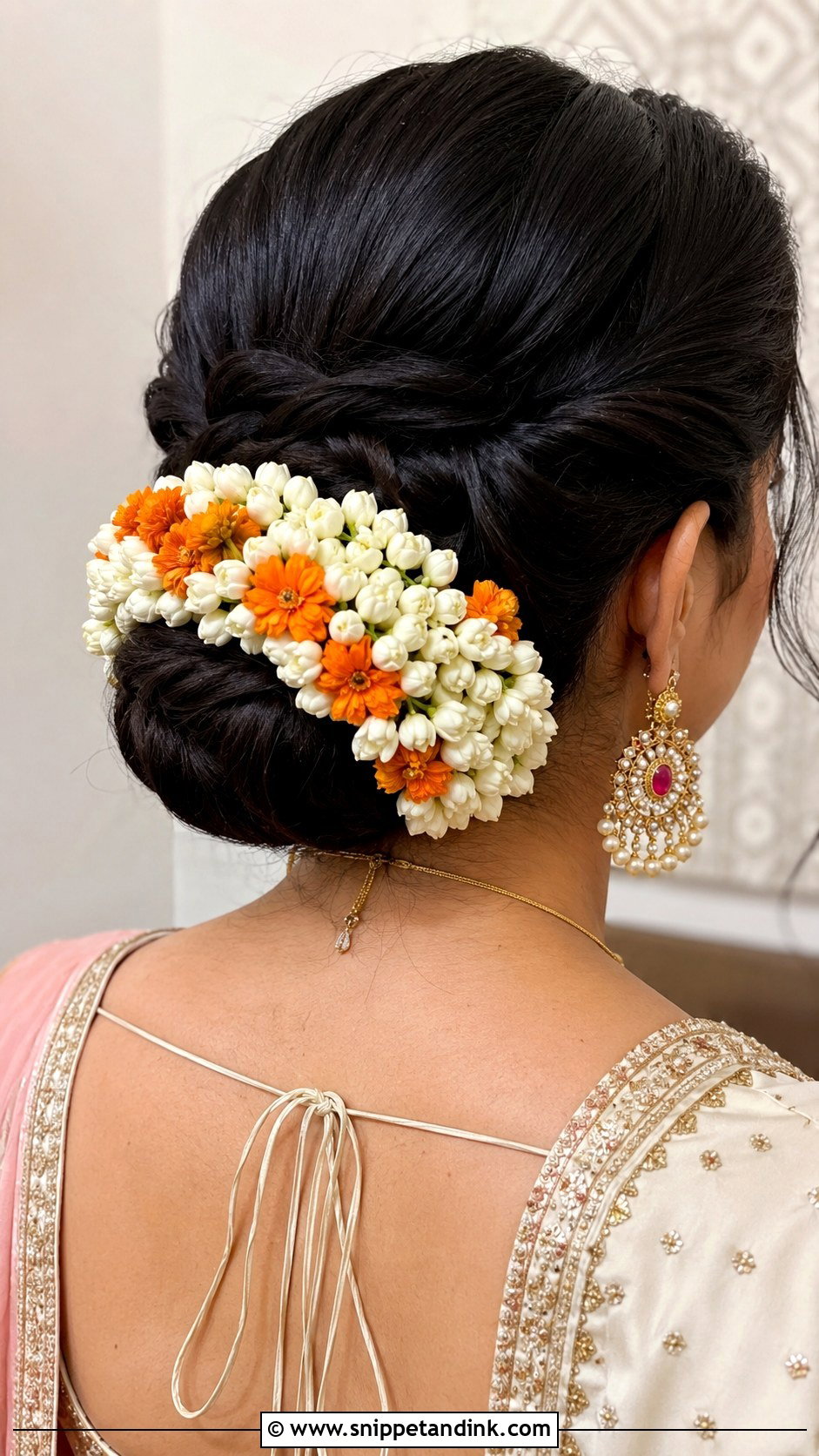
A twisted updo wrapped with gajra is a soft, sculpted shape at the back of the head with flowers circling it. I twist sections and pin each one as I go, building the shape from the bottom up so the top sections hide the pins underneath. Jasmine or marigold gajra wraps around the finished shape. Marigold petals can leave yellow marks on pale fabric, so if your outfit is ivory or pastel I’d stick with jasmine. It suits medium to long hair and sits nicely with heavy earrings.
18. Bubble Braid With Flowers
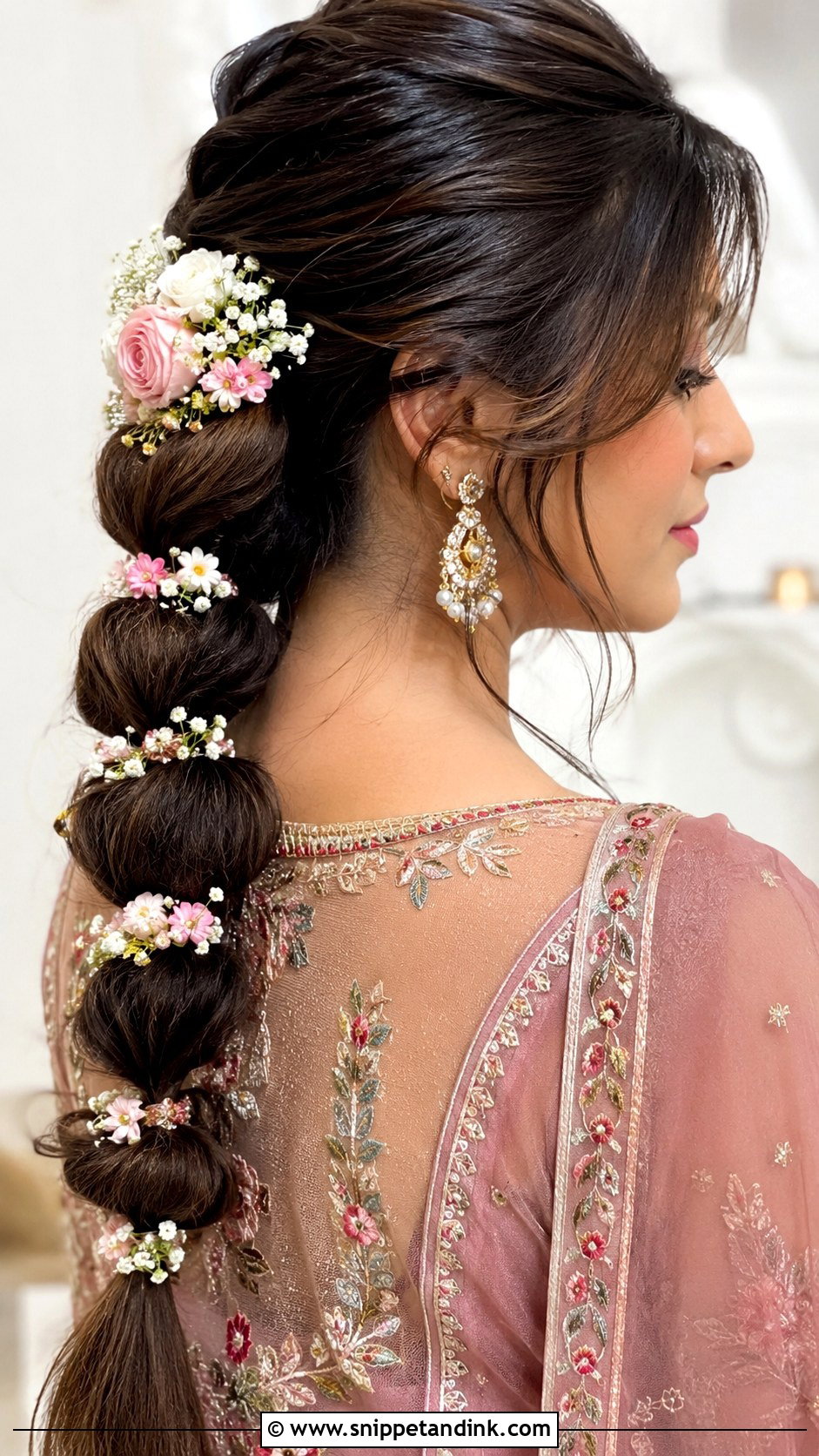
The bubble braid is a playful, modern option that younger sisters love. It isn’t a braid at all; you tie the ponytail at intervals with small elastics and gently pull each section wider to form bubbles. Clear elastics disappear; coloured ones can match the outfit. Tuck tiny flowers between the bubbles. It’s quick and holds well during dancing. On fine hair the bubbles stay small, so tease each section slightly before pulling it out to get a rounder shape.
19. Soft Curls With Side Braid
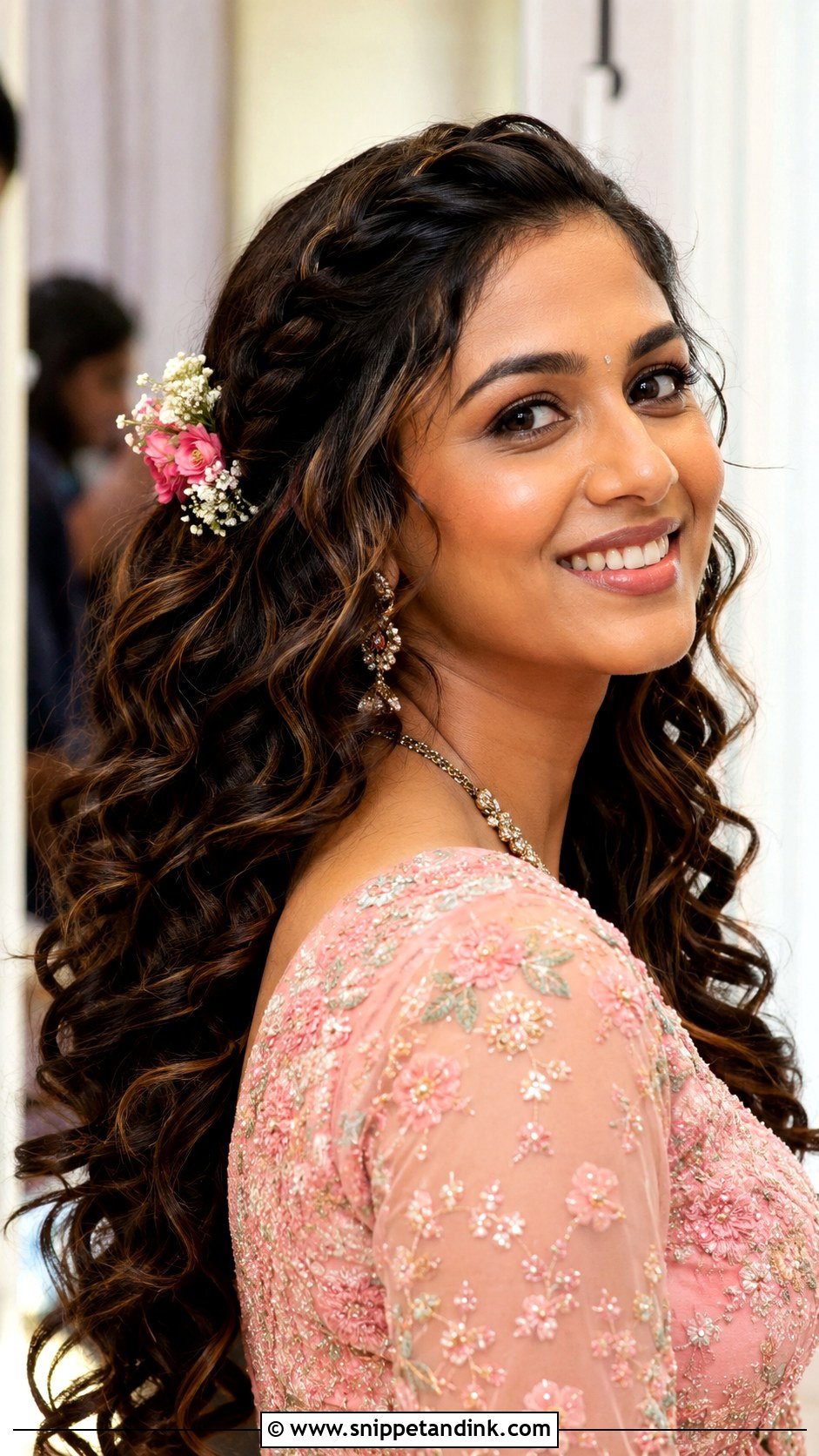
Soft curls with a small side braid keep hair out of your eyes without putting it all up. I curl first, then braid a thin section from the part along one side and pin it behind the ear. The rest stays open. A flower or two where the braid ends gives it the festive touch. Keep the braid thin; a chunky one on the side tends to look like a separate style rather than a detail.
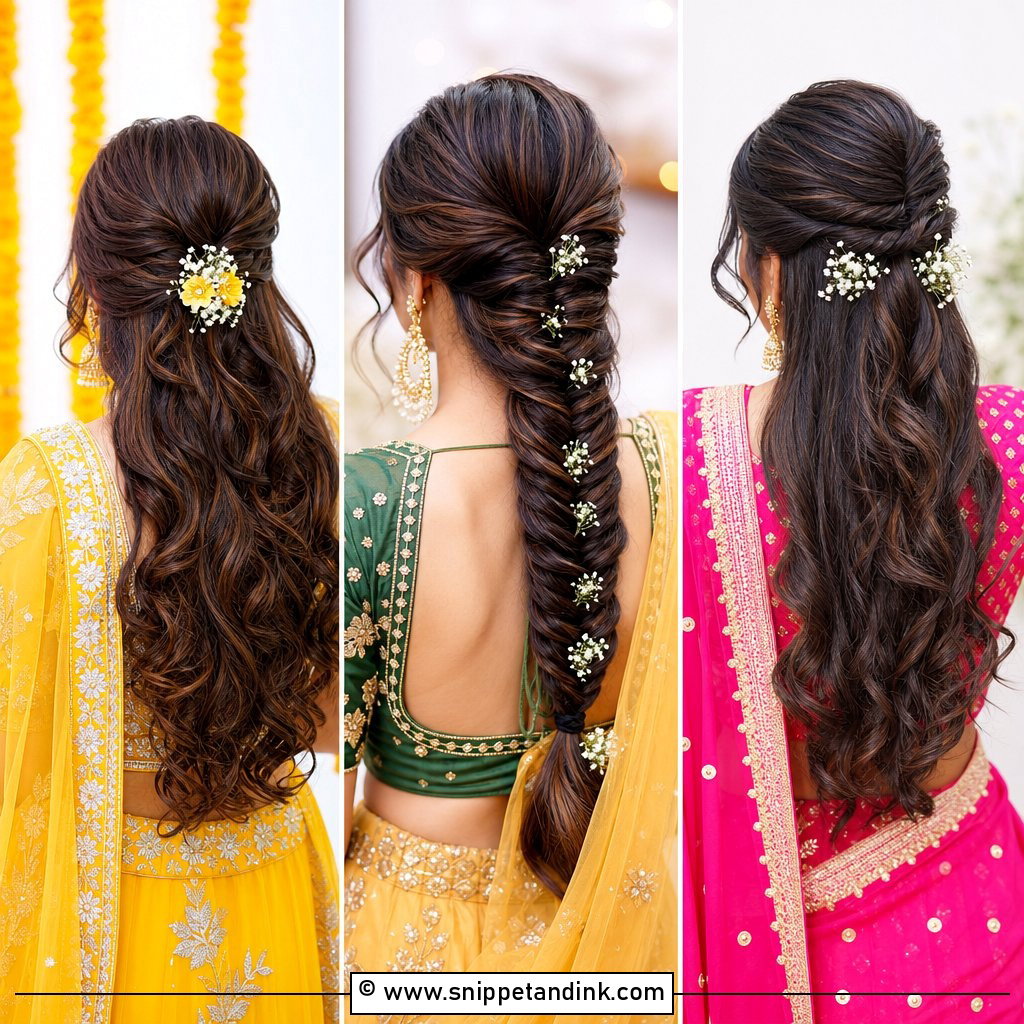
20. Low Side Bun With Gota Strings
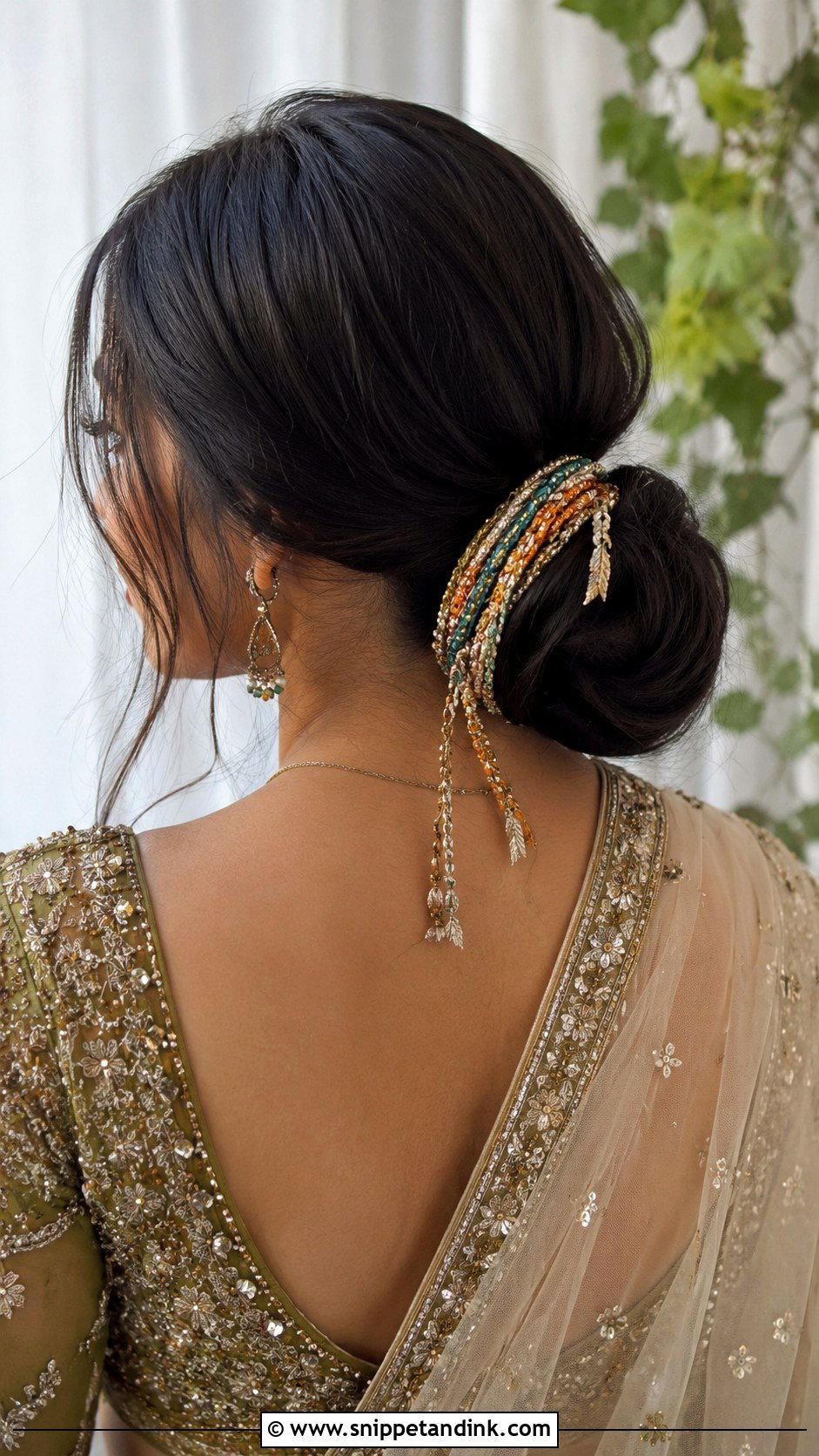
A low side bun with gota strings moves the bun off-center for a more modern shape. I gather the hair to one side at the nape, leave a few wisps loose, and wind gota strings through the bun. The off-center position flatters most face shapes, especially in three-quarter photos. Place the bun on the side opposite your dupatta drape so both get seen. Medium to long hair works best.
21. Curly Ponytail With Flowers
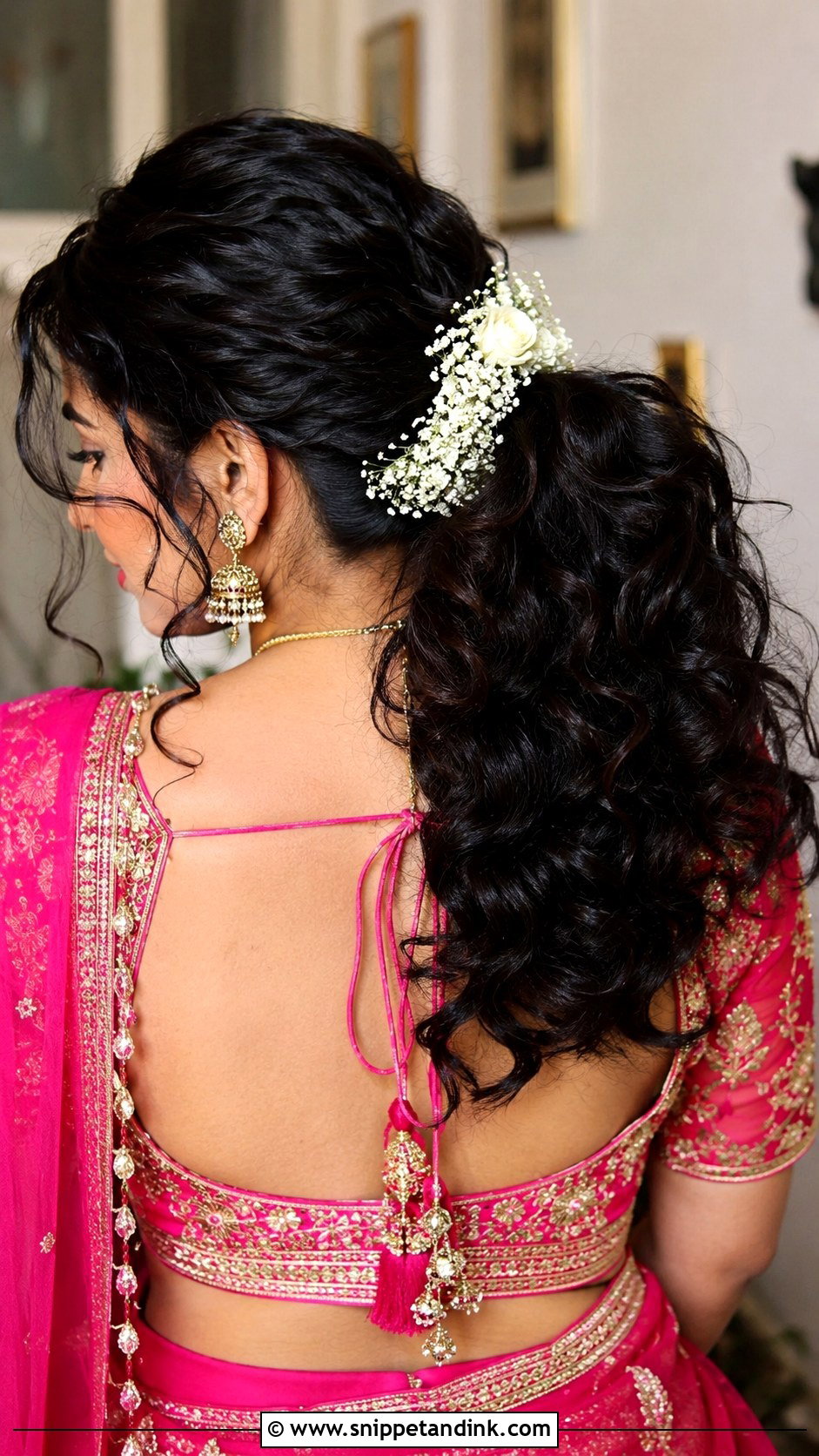
A curly ponytail is full of bounce and keeps your face clear for the whole night. I curl the hair with a wand, let it cool, then gather it into a mid or high ponytail and wrap a strand of hair around the elastic to hide it. A flower garland or small blooms around the base finish it. High ponytails can pull and cause a headache by evening, so if you’re sensitive to tension, I’d sit it at mid-height. It needs medium to long hair.
22. Braided Halo With Open Curls
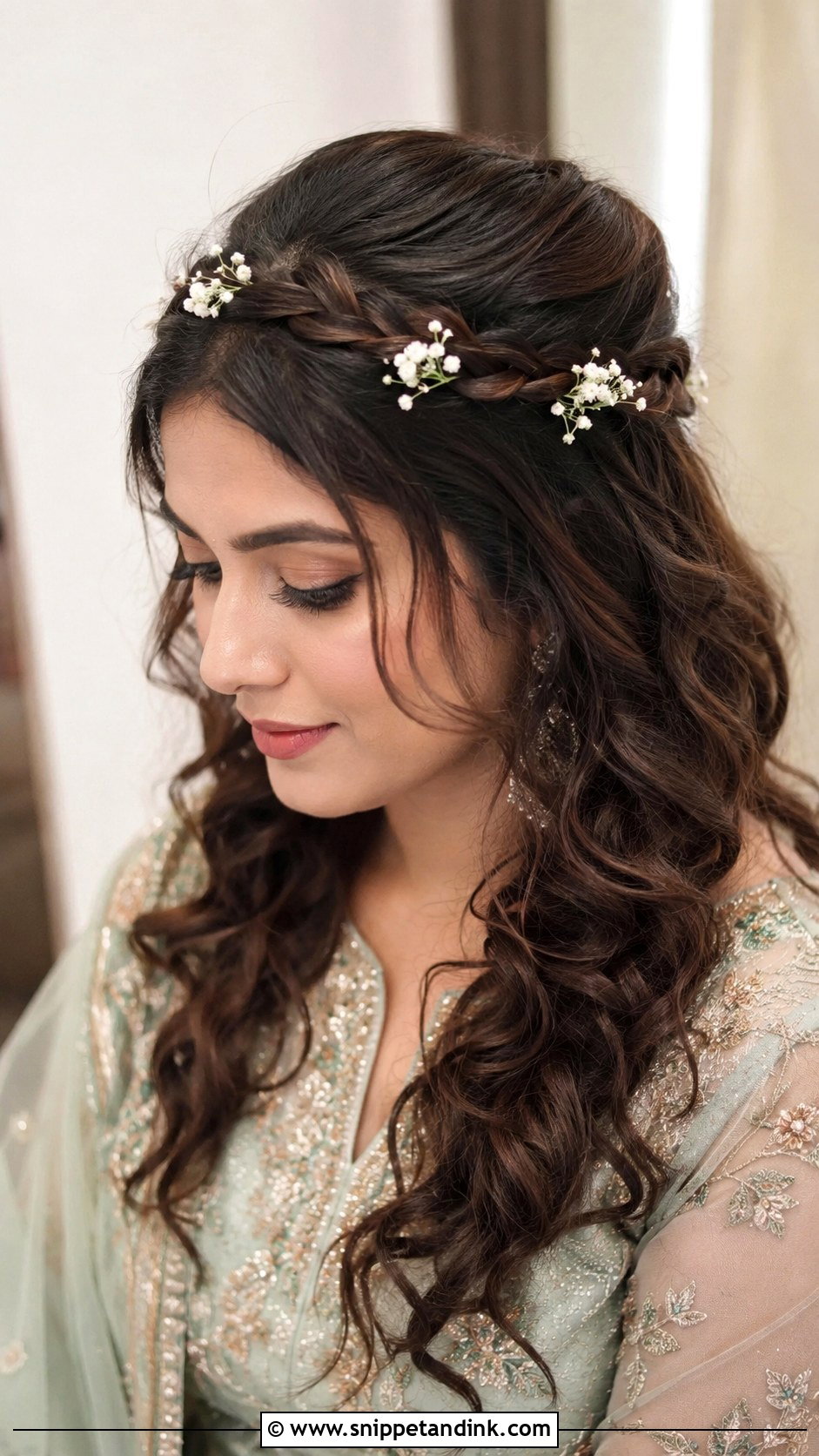
A braided halo with open curls pairs a thin braid wrapped around the head with loose curls below. I braid a thin section from behind one ear, wrap it across the top like a headband, and pin it behind the other ear. The rest stays open in curls. Tiny flowers along the braid add the mehndi note. The braid keeps the front tidy while the curls give volume, and it suits medium to long hair.
23. Sleek Low Ponytail With Hair Accessory
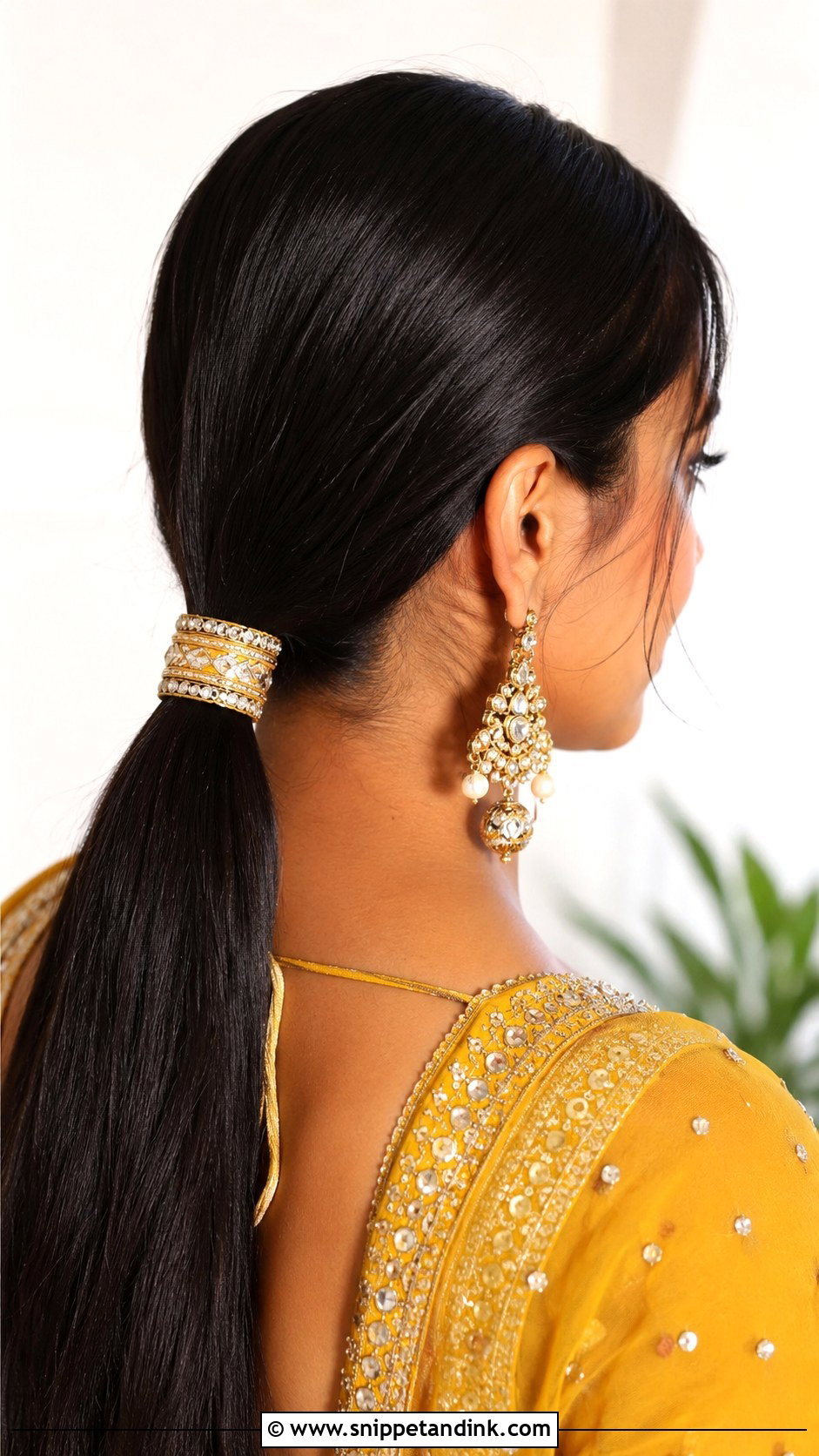
A sleek low ponytail with a statement accessory is the most modern look here. I smooth the hair back with a little serum and a boar-bristle brush, tie it at the nape, then add a decorative clip, gota band or floral pin at the base. The sleekness is what makes it work, so I’d skip it on very humid days when frizz can creep in. It works with nearly any length that can reach the nape, and it lets earrings and a heavy neckline do the talking.
24. Floral Braided Headband
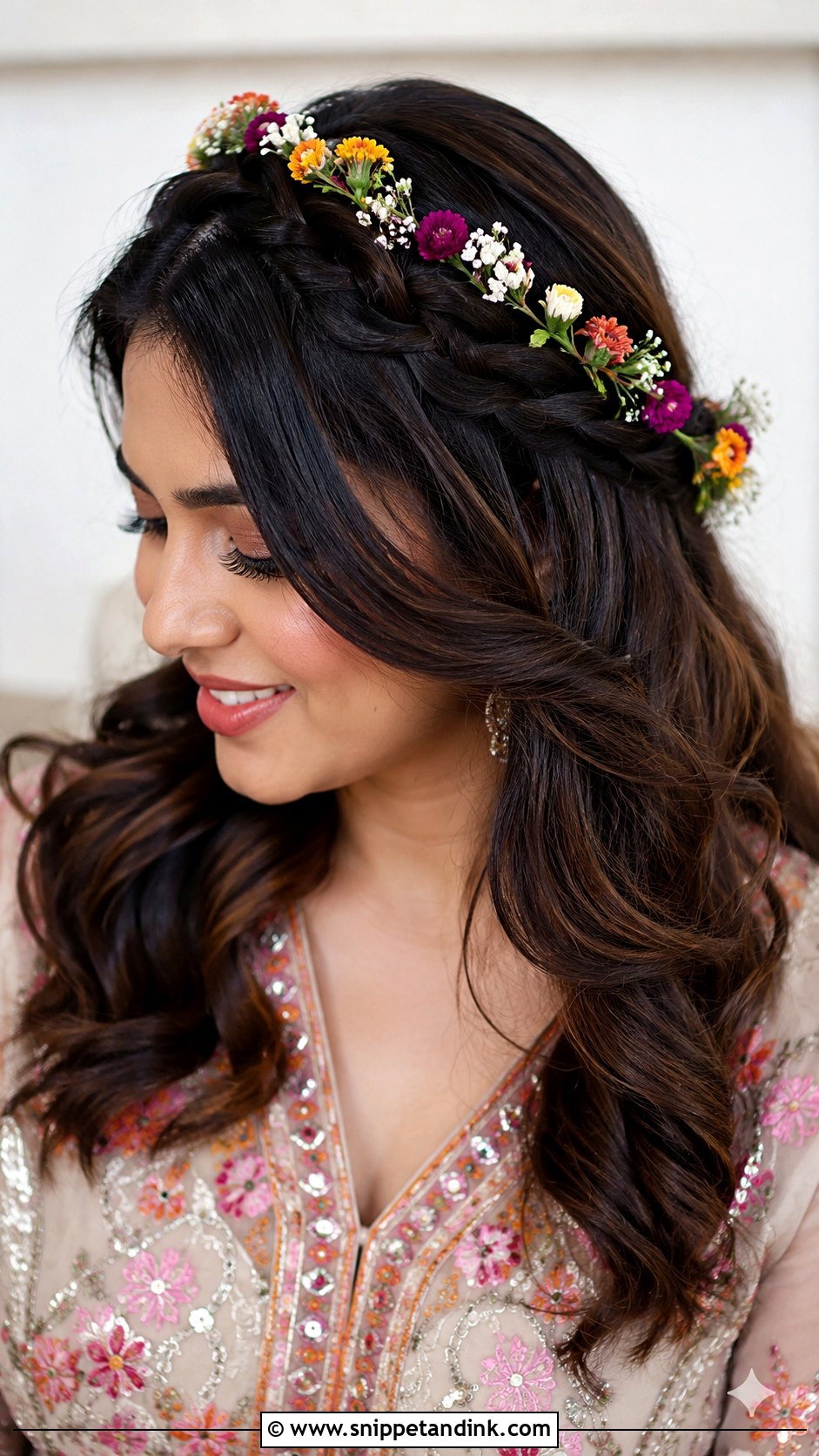
A floral braided headband runs a braid across the top of your head, with the rest left open or curled. I braid from just behind one ear across the hairline to the other side and pin it in place. Small fresh flowers woven into the braid make it festive. It keeps strands off your face and works on most lengths. If your hair is shorter than your shoulders, the braid can be thin, so add a small clip-in braid to give it more presence.
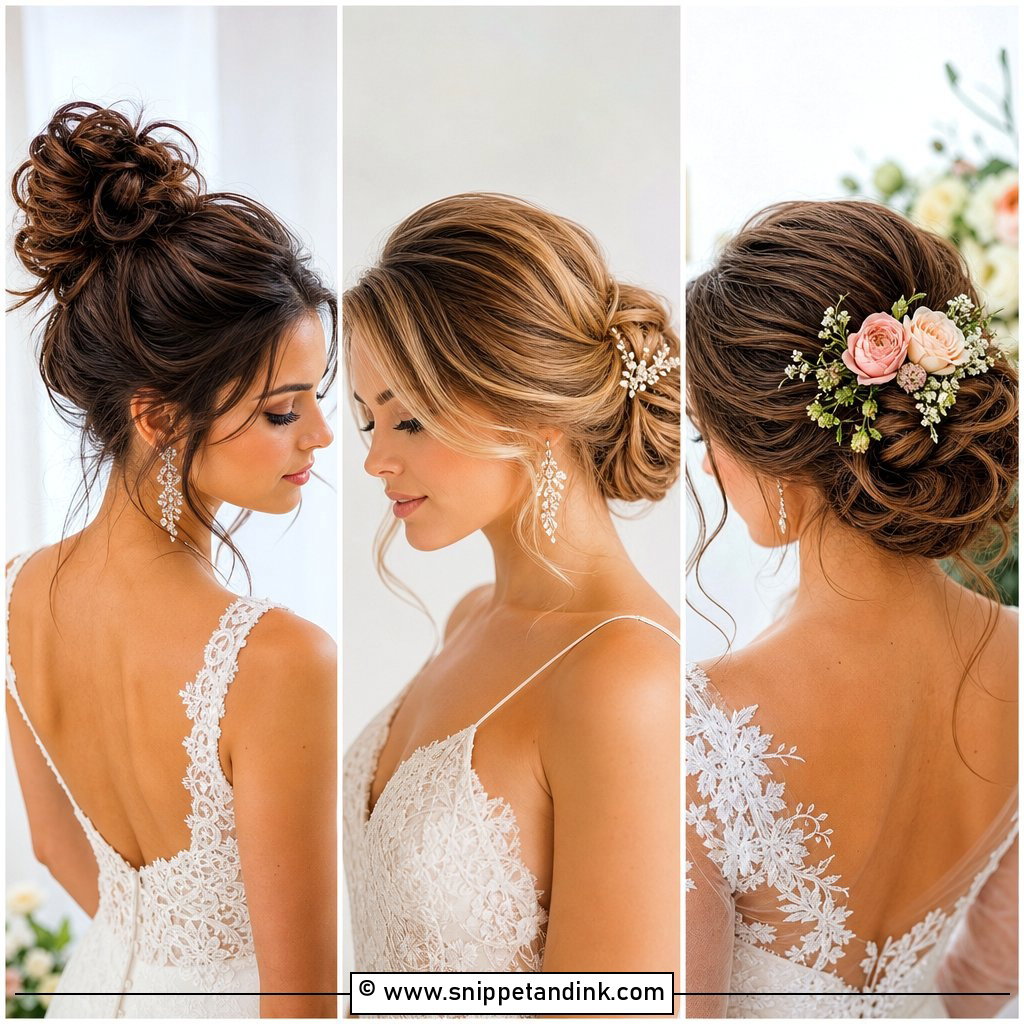
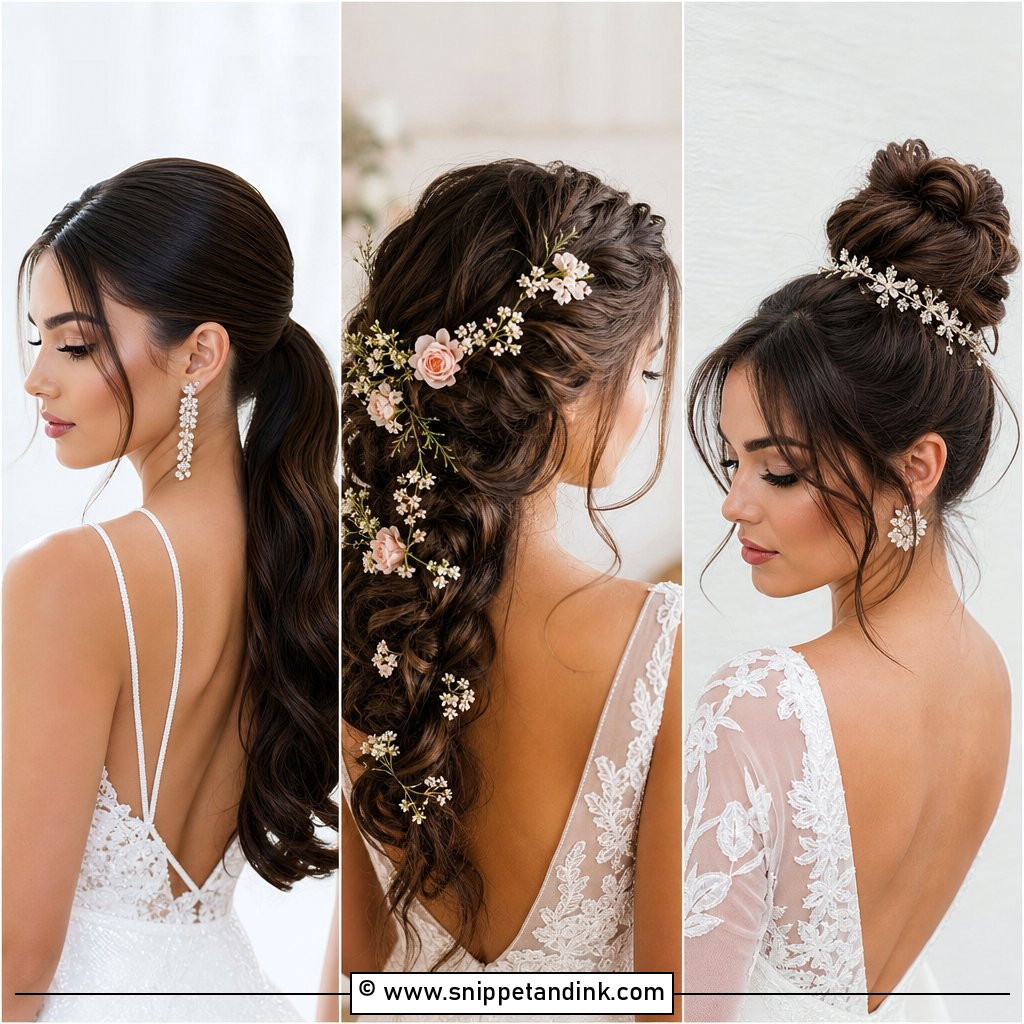
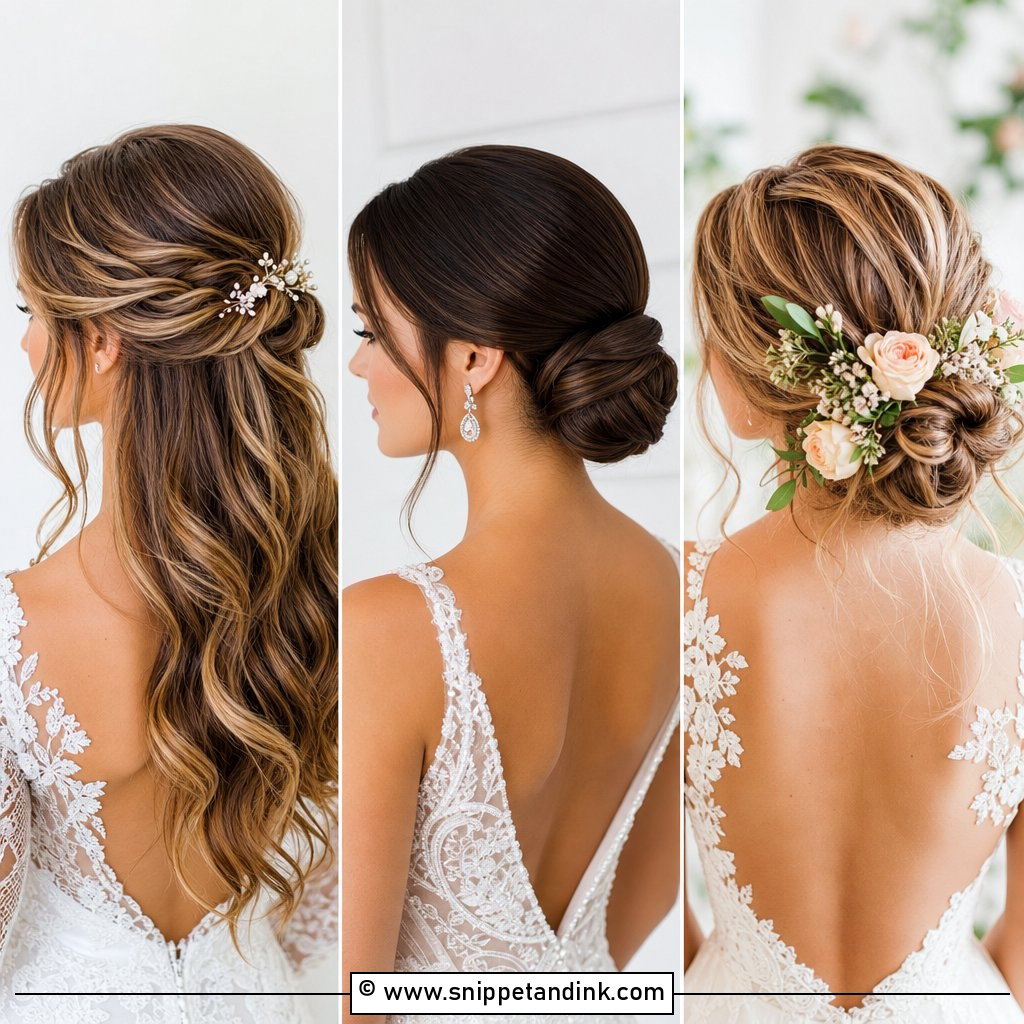
25. Wavy Open Hair With Center Part
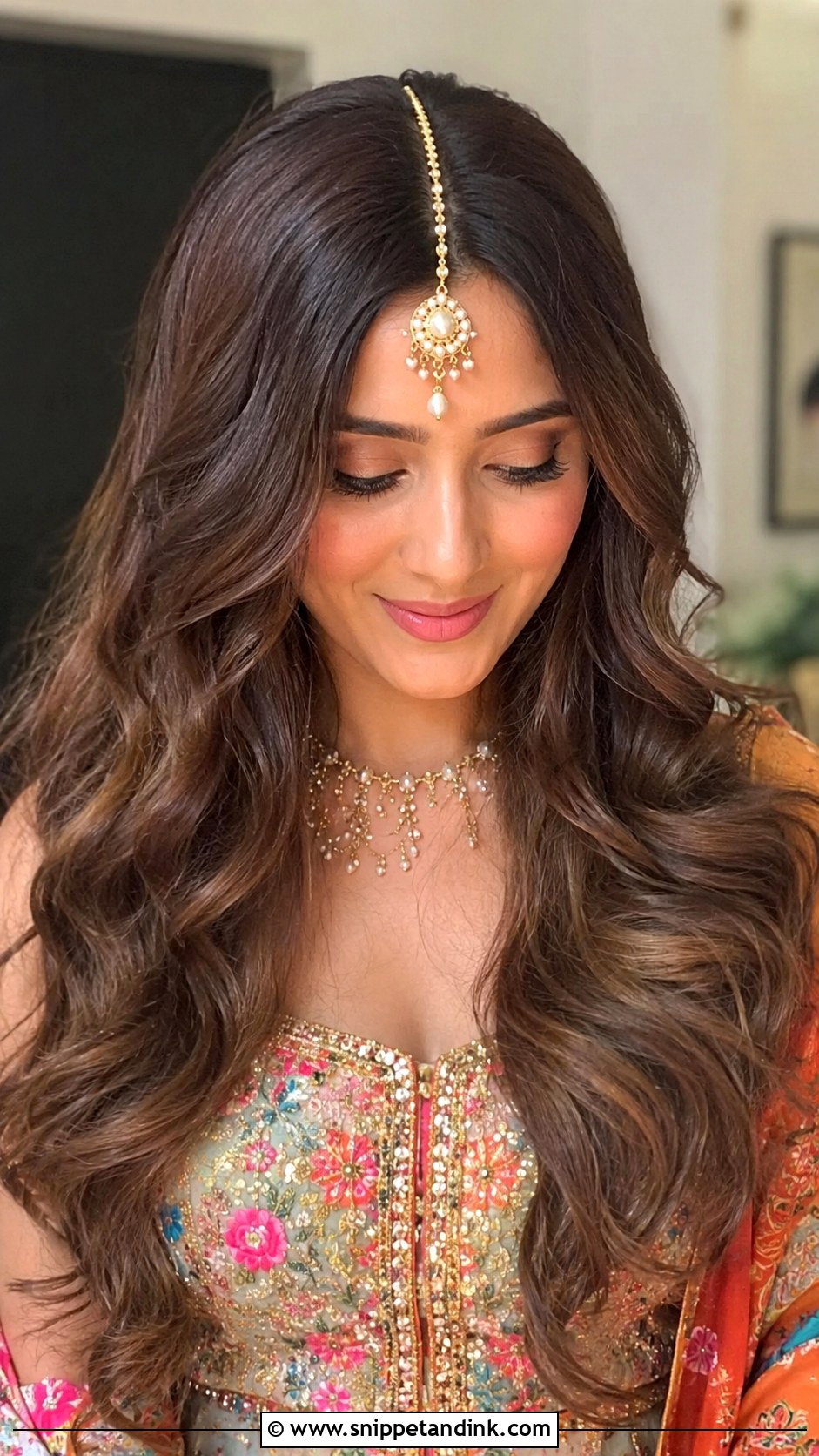
Sometimes the simplest look is right. Wavy open hair with a center part keeps the focus on your face and your outfit. I style the hair in soft waves and part it straight down the middle with the tail of a comb. A delicate maang tikka or small flower pins add the festive detail. The center part is unforgiving if your hairline has a cowlick, so do a test before the day to see if it sits flat. It suits any length and stays comfortable through a long evening.
Sequence the Henna After Your Hair, Not Before
Most sisters get their own mehndi at the function, and once the paste is on your hands you can’t touch your hair for hours. That changes how I plan the day. Your style needs to be fully finished, flowers included, before you sit down with the henna artist.
This is also why I lean toward braids and buns for sisters who’ll have full-hand designs. Open hair falls forward when you lean over to have your palms worked on, and you can’t push it back without smudging the paste. If you love open hair, a single pin or small clip behind each ear will keep it out of the way while you sit.
A small kit for the evening
- A few spare bobby pins in your hair colour
- A travel-size hairspray for the curls that start to drop
- Spare flowers in a damp tissue in a small box
- A clear elastic in case a braid end comes loose
Hand the kit to a cousin or friend whose hands are free. With wet henna on yours, you’ll need someone else to do the fixing.
Standing Next to the Bride Without Matching Her Hair
The best mehndi hairstyle for a sister is the one that lets you forget about it once the music starts. From flower-threaded braids and gajra-adorned buns to bouncy curls and sleek ponytails, there’s a shape here for every length and texture. Check with the bride before you settle on one, because two sisters in near-identical buns look accidental in the group photos. Pick something that holds through the dancing, add your flowers or gota last, and then go enjoy her night.
You'll Like These Ideas:


Leave a Reply