
Braids are my favorite insurance policy at a wedding. A plait locks hair in place in a way pins alone never do, so a braided style tends to look the same at midnight as it did at the ceremony. They also add detail that shows from behind, which matters more than people think: guests spend most of the vows looking at the back of your head. Here are 30 braided looks, from loose fishtails to cornrow updos, with what each braid needs from your hair and where I’ve seen it struggle.

French, Dutch or Fishtail: What Each Braid Asks of Your Hair
Most bridal braids are one of three structures, and each behaves differently.
French braids
Strands cross over the top, so the braid lies flat into the hair. It looks softer and more blended. French braids suit fine hair and soft, romantic styles.
Dutch braids
Strands cross underneath, so the braid sits up on the surface. It stands out more and holds very firmly. Pulled wider, a Dutch braid looks fuller than the same hair would in a French braid, which is useful if your hair is thin.
Fishtails
Two sections, many small crossovers. A fishtail gives the finest texture but takes the longest. Short layers tend to poke out of fishtails more than other braids, so a smoothing balm helps.
Layers shorter than the braid’s path are the most common problem. If your shortest layers barely reach your chin, a crown or halo braid will need pins or clip-in pieces to keep them from popping out.
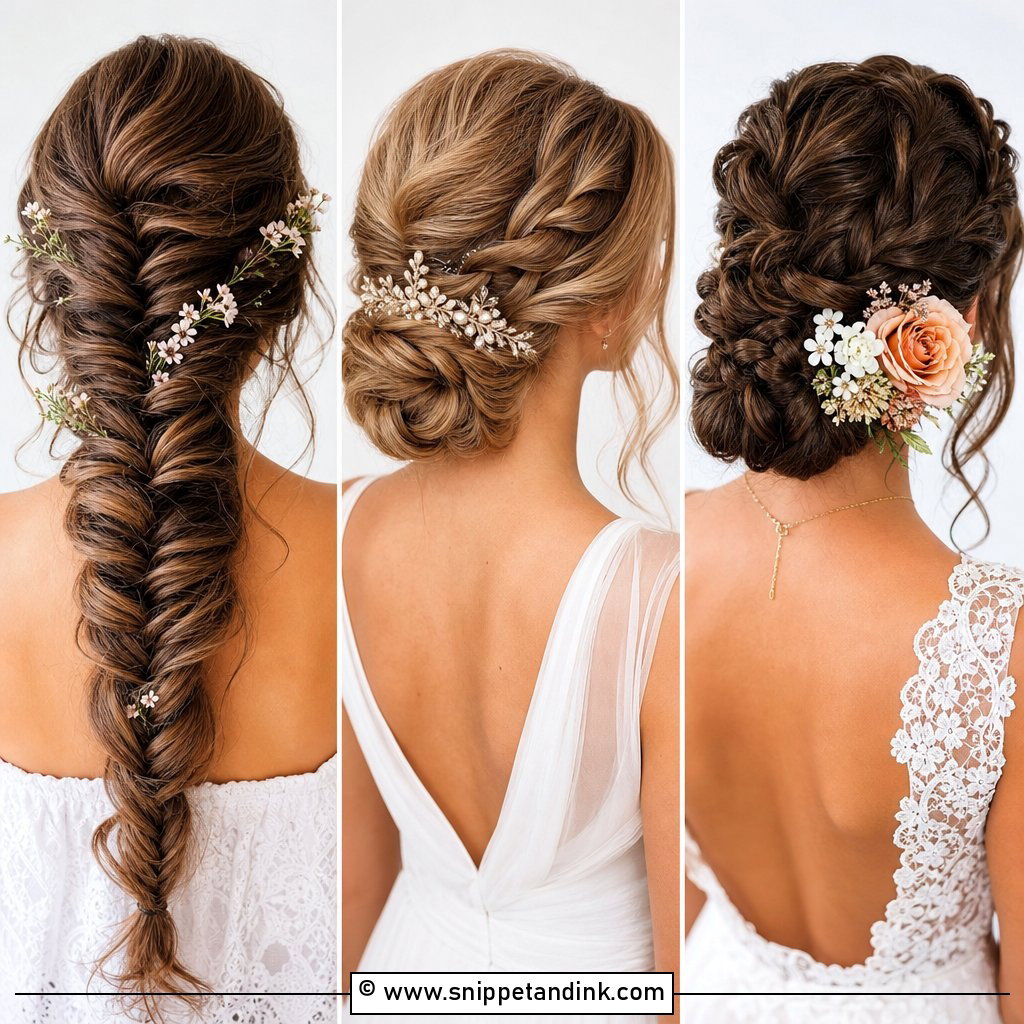
1. Loose Boho Fishtail Braid

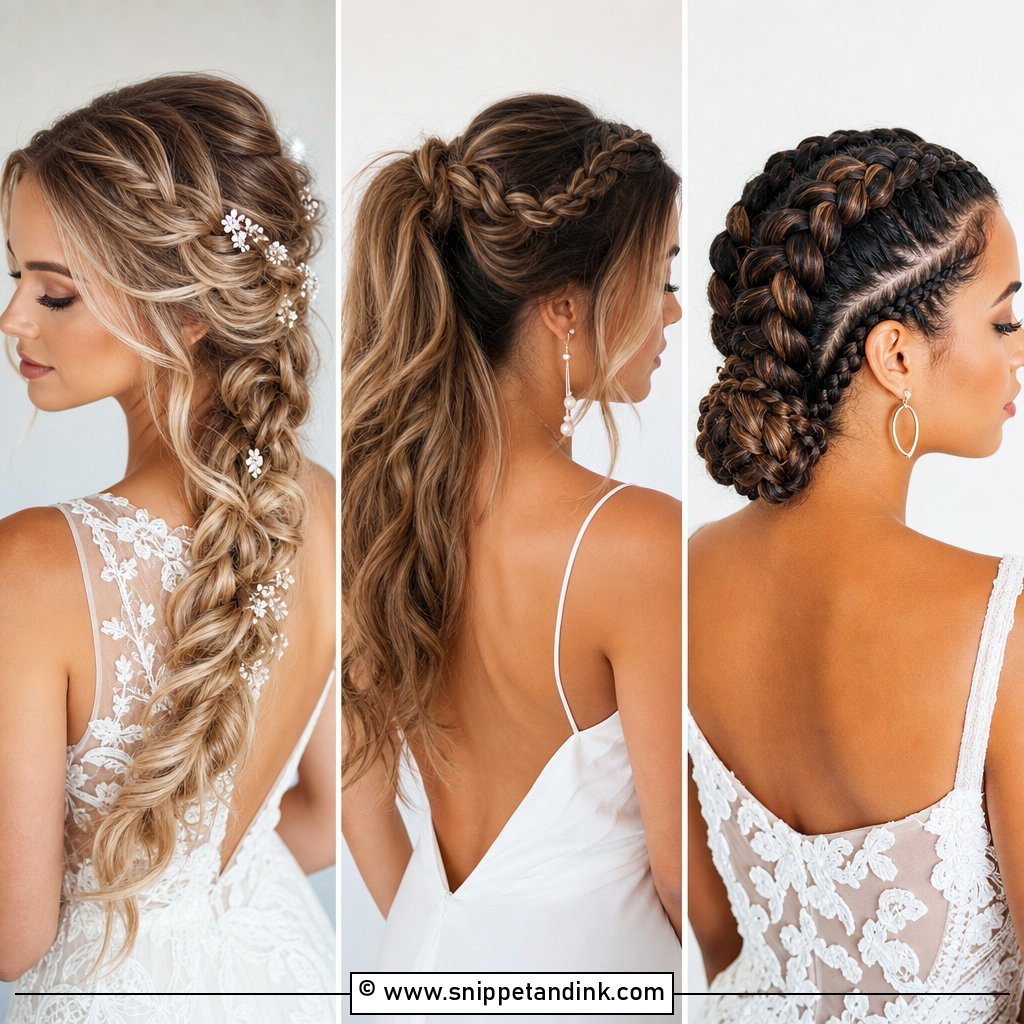
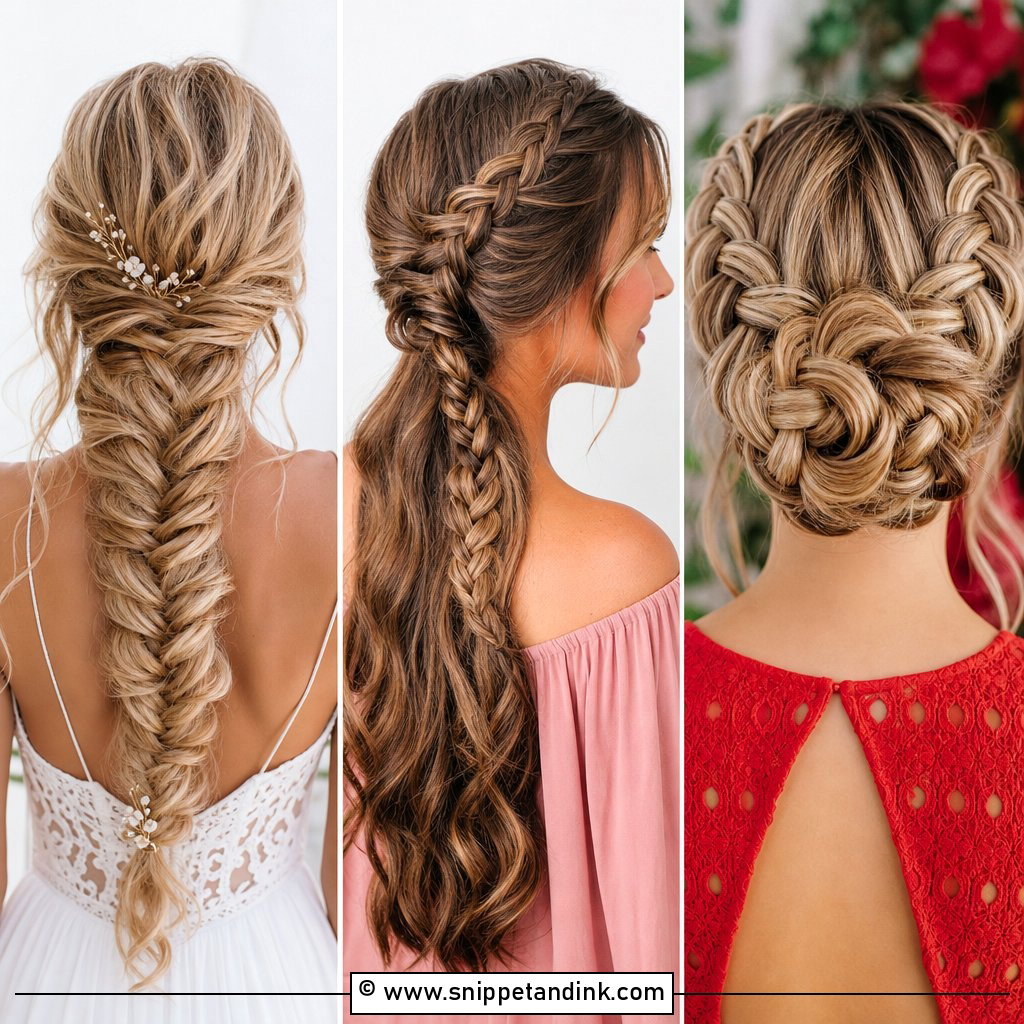
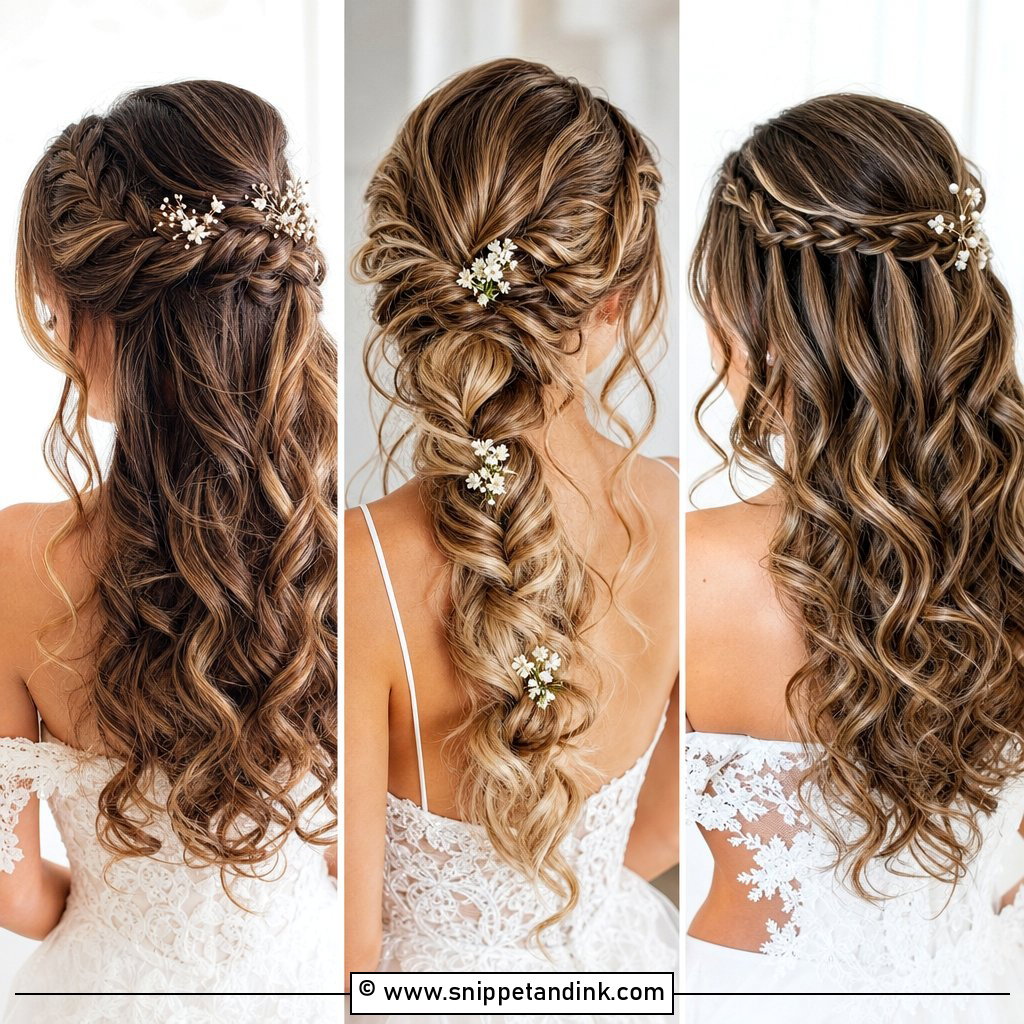
Draped over one shoulder, this fishtail is braided fairly tight first and only then pulled wider at the edges. If you braid it loose from the start, it falls apart rather than relaxing. I leave a few tendrils and soft waves out at the face. It suits outdoor and barn venues, and small dried flowers or baby’s breath push easily into the crossovers. Because it’s already undone, it hides the little shifts that happen over a long day.
2. French Braid Crown

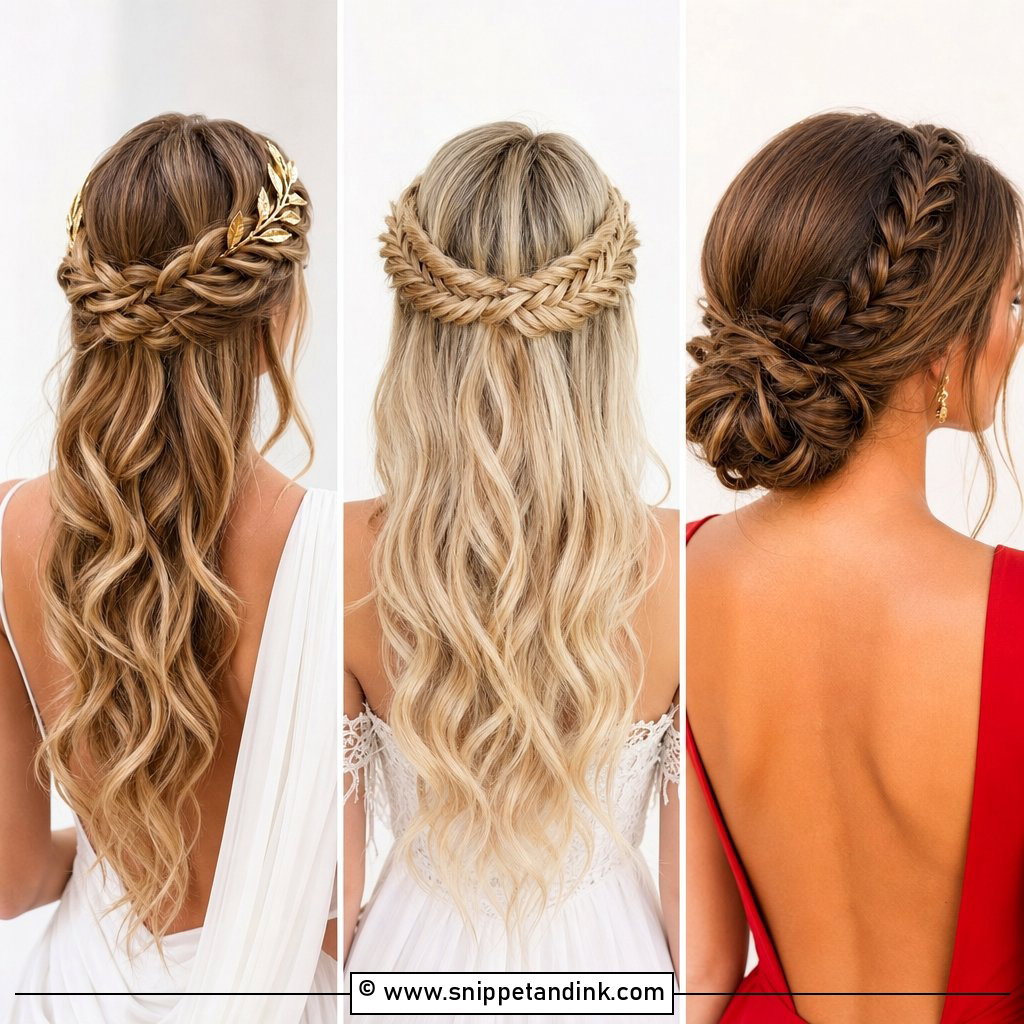
A French crown starts at one ear and works around the hairline to the other, adding hair at every crossover, which is why it holds so firmly. The tricky part is the nape, where the braid has to turn the corner; I pin it there with two crossed pins before carrying on. A veil can slide in under the back of the crown. You’ll need hair at least to the shoulders, ideally longer, or the braid runs out before it meets itself.
3. Waterfall Braid With Loose Waves

In a waterfall braid, one strand is dropped at every pass and a fresh one picked up, so the dropped pieces fall through like water over the lengths. It’s a way to wear your hair mostly down with a single line of detail. I curl the whole head before braiding so the dropped strands match the waves below. Straight, fine hair can make the pattern almost invisible, so this needs some wave and length to read.
4. Dutch Braid Updo

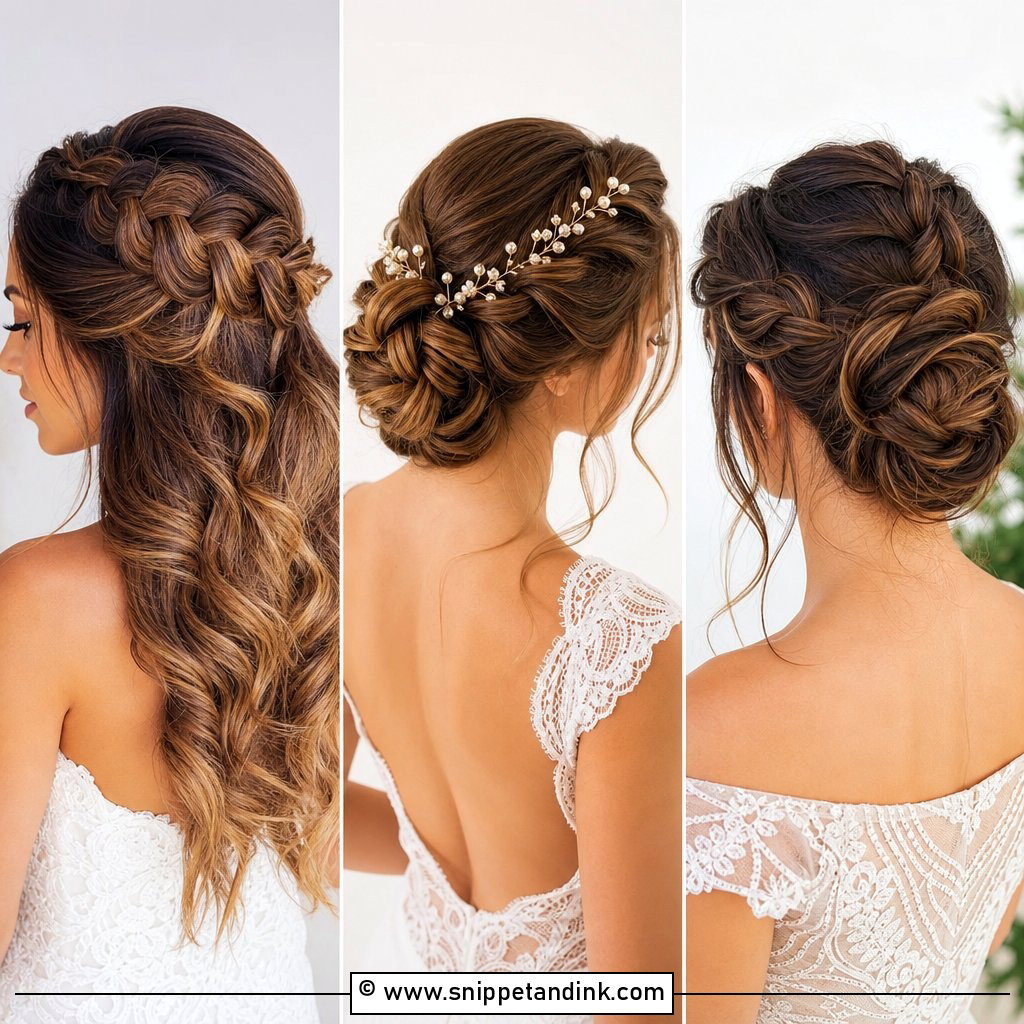
Dutch braids cross strands underneath instead of over the top, so the plait sits on the surface of the hair and stands out in three dimensions. That raised shape is what makes this updo show from across a room. I braid each side, then twist and pin the tails into a bun at the back. With the neck fully clear, it’s a smart choice for hot weather. Thick or medium hair gives the boldest braid; very fine hair benefits from texture spray first.
5. Braided Low Bun

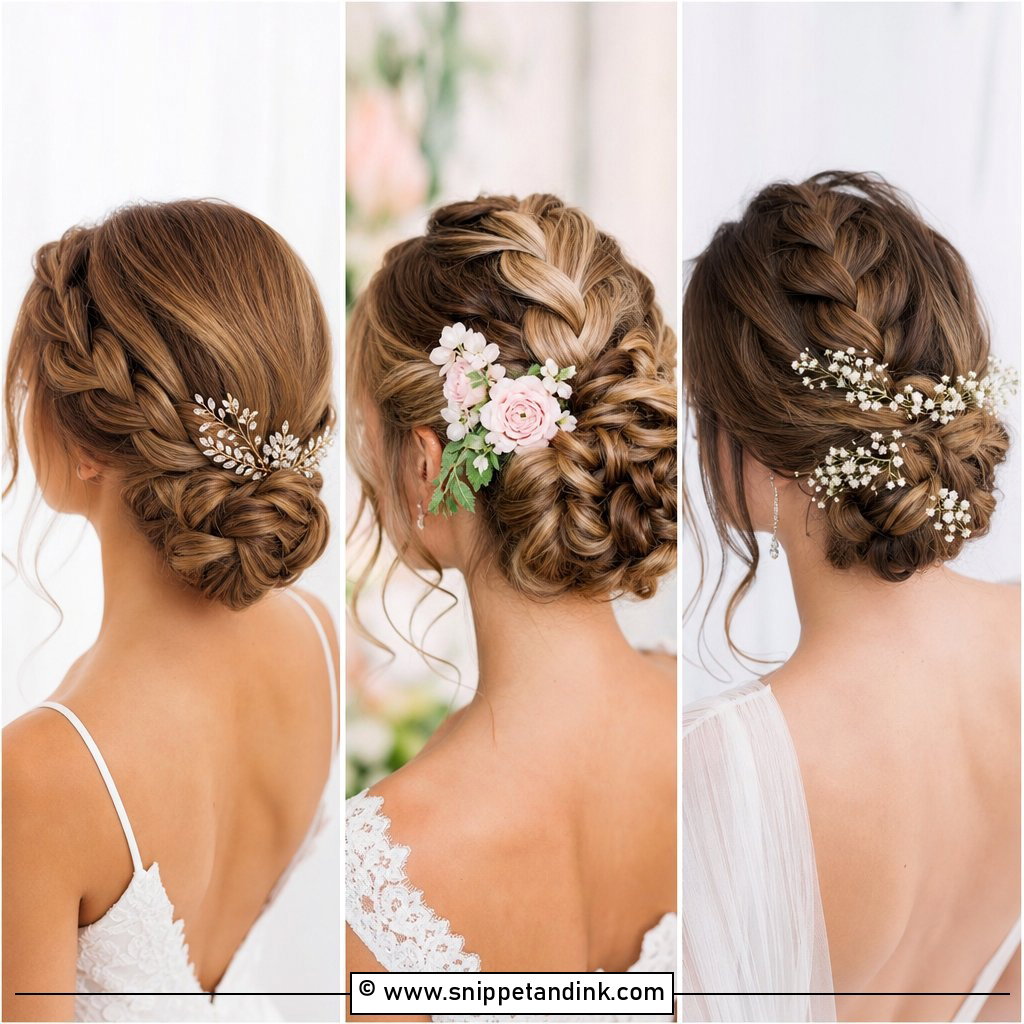
Here a soft braid wraps the base of a low bun at the nape, or runs from one ear into it. The braid is useful as much as decorative: it hides the elastic and the pins. I keep the braid small so the bun stays the main shape. Statement earrings and structured gowns suit its clean outline. It can be sleek and formal or slightly loosened.
6. Half-Up Braided Crown

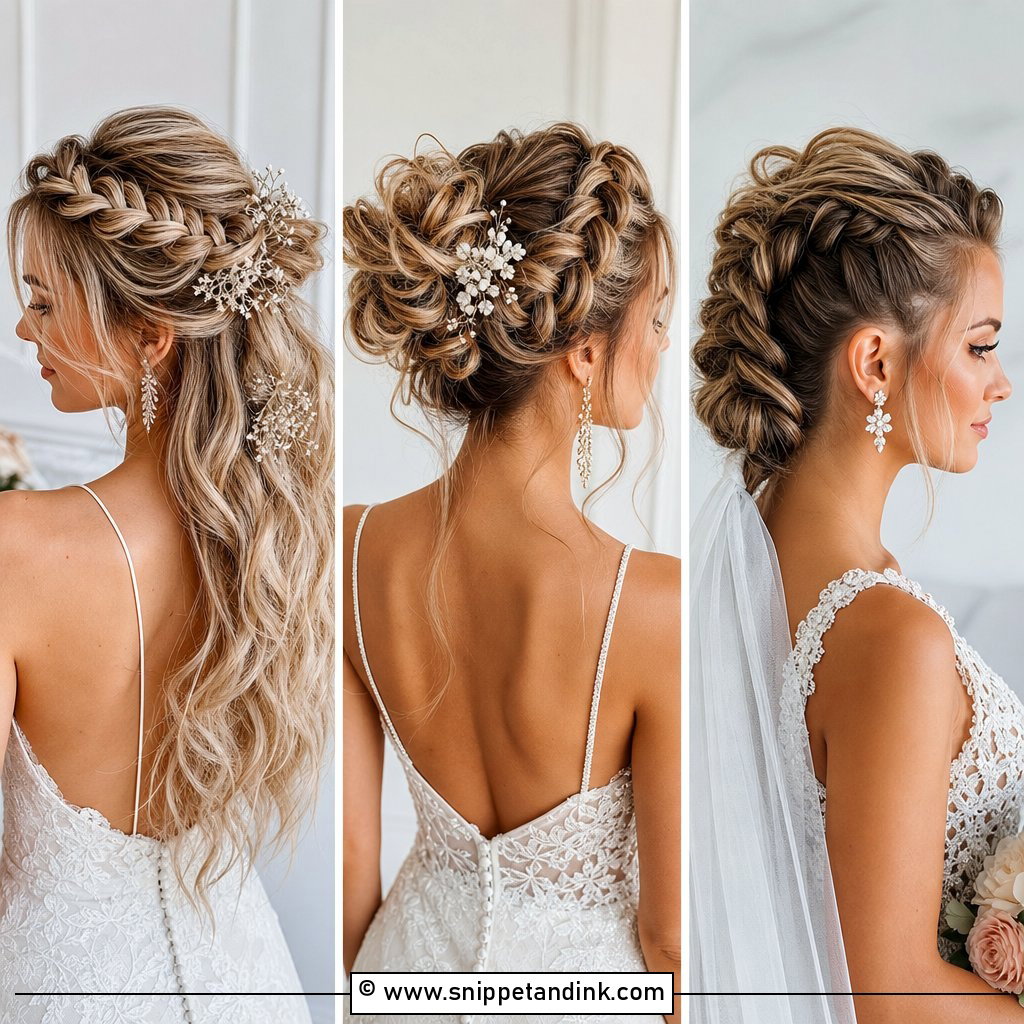
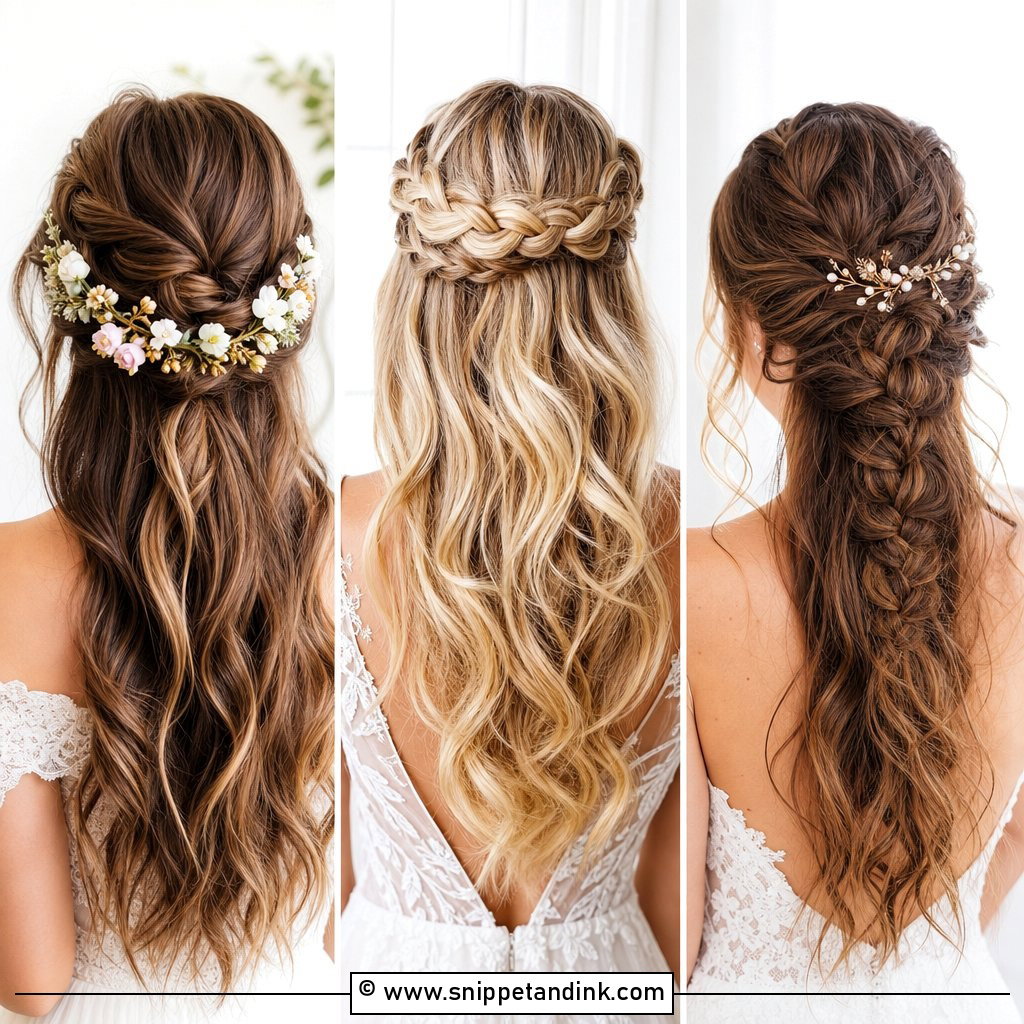
This is the compromise between up and down. Two small braids start at the temples and meet at the back of the head in a half crown, while the rest of the hair falls loose. The braids should be pinned where they meet with crossed pins under the join, otherwise the weight of loose hair pulls them down. I add curls or waves to the lengths. Flowers or pearls can follow the line of the braid.
7. Side Swept Fishtail Braid

Sweeping everything to one side puts the fishtail on show and leaves the back of your gown clear. The crossovers in a fishtail are small, so it takes longer than a three-strand braid but gives a finer texture. I anchor the hair behind the ear on the far side so the weight doesn’t drag the whole style across. Tighter looks polished; looser looks boho. Either works for beach and garden weddings.
8. Braided Chignon

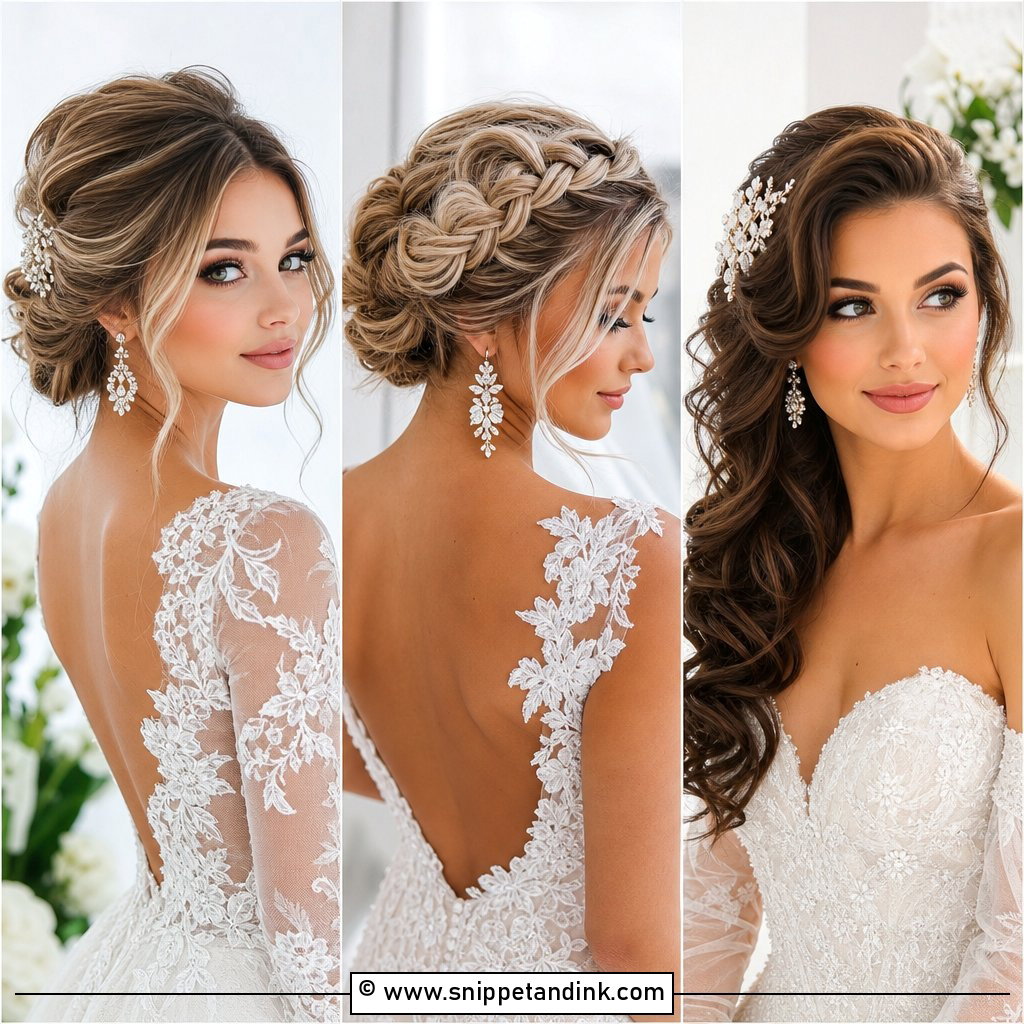
A braided chignon coils several small braids into a rounded shape at the back of the head. The braids give the chignon texture, and they’re easier to pin than smooth hair because the pins grip the crossovers. It suits formal, vintage-leaning weddings and works with a veil, tiara or delicate hairpins. The chignon is very secure, so it’s a good choice for a long day with a lot of dancing.
9. Boho Braided Half-Up

Boho half-up uses a few delicate braids in the top section, secured loosely at the back, with the rest left in natural waves. I braid slightly off the scalp so they look soft rather than tight. Wispy strands at the face complete it. Long, wavy hair suits this best. Ribbons, dried flowers or small pearls can be tucked into the braids.
10. Crown Braid With Flowers

A crown braid makes a ready-made frame for flowers. I build the braid first, then push stems into it from the front so they sit flat against the head. Real flowers should be sturdy types that last out of water; silk flowers are the safer choice for a hot day or a long celebration. Matching the bouquet ties it together, and the braid holds them firmly all evening.
11. Fishtail Braid Updo

A fishtail updo folds a long fishtail braid up into a textured bun or twist. Because fishtails are dense, they make a full bun even from medium-thick hair. I braid it, pancake it, then wrap and pin it, so the braid pattern stays visible on the surface. It keeps the neck clear and suits formal weddings and hot days. Long, thick hair gives the most dramatic shape.
12. Braided Ponytail

A ponytail with braids is quick to wear and easy to move in. You can braid the pony itself, or run braids from the hairline into it. A strand of braided hair wrapped around the base hides the elastic. It works for modern venues and city weddings. If you’re wearing it for many hours, a low or mid-height pony puts less strain on the scalp than a very high one.
13. Milkmaid Braid

Two braids, one from each side, are crossed over the top of the head and pinned where they meet. That’s the whole milkmaid. It needs long hair, roughly to the middle of the back, because the braids have to reach across the head. I pin each braid’s end under the other so no ends show. It keeps hair off the face and neck, which suits warm weather and rustic venues.
14. Double Dutch Braids Into Bun

Two raised plaits along the scalp, joined into one bun, give a structured look with strong lines. These double Dutch braids need clean, even partings, because a crooked part shows straight down the middle. I braid close to the scalp and keep the tension even on both sides. Thick or long hair gives the best result. The bun can be sleek or loosened.
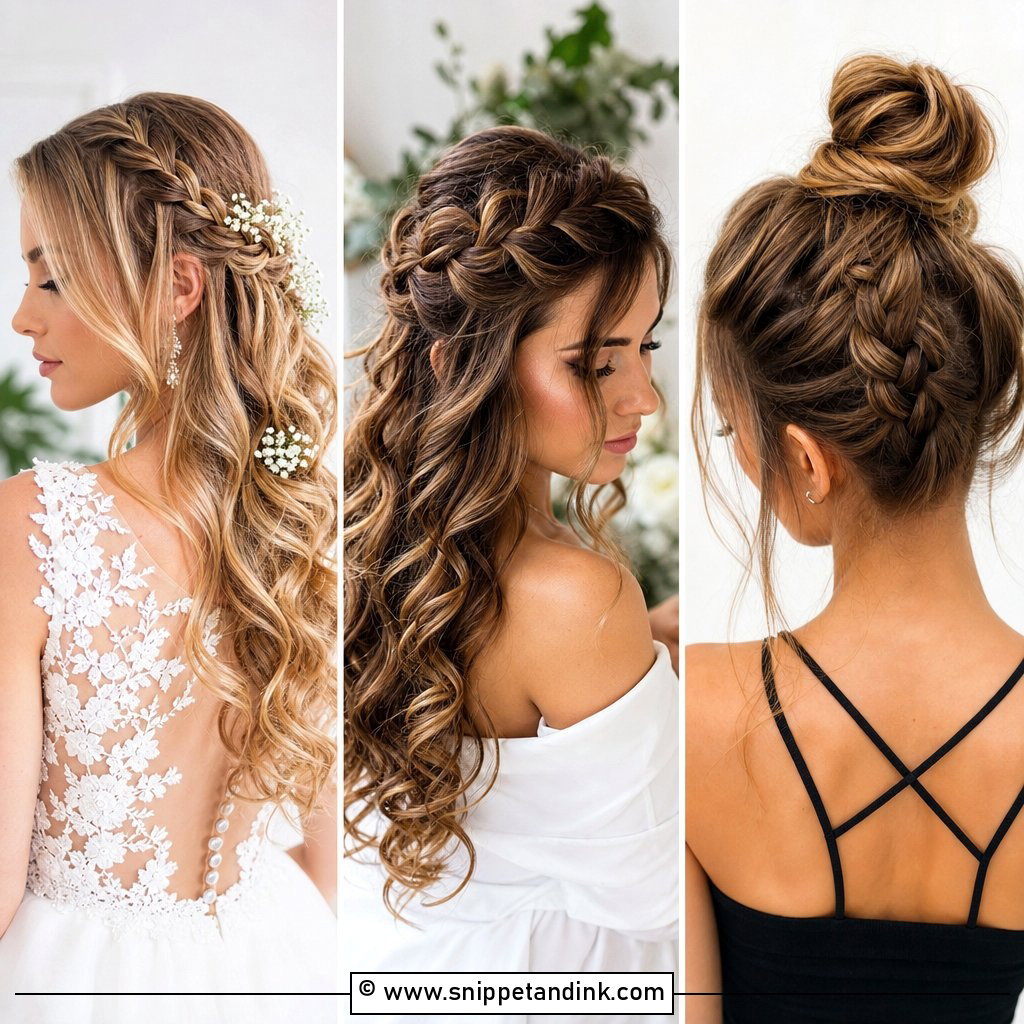
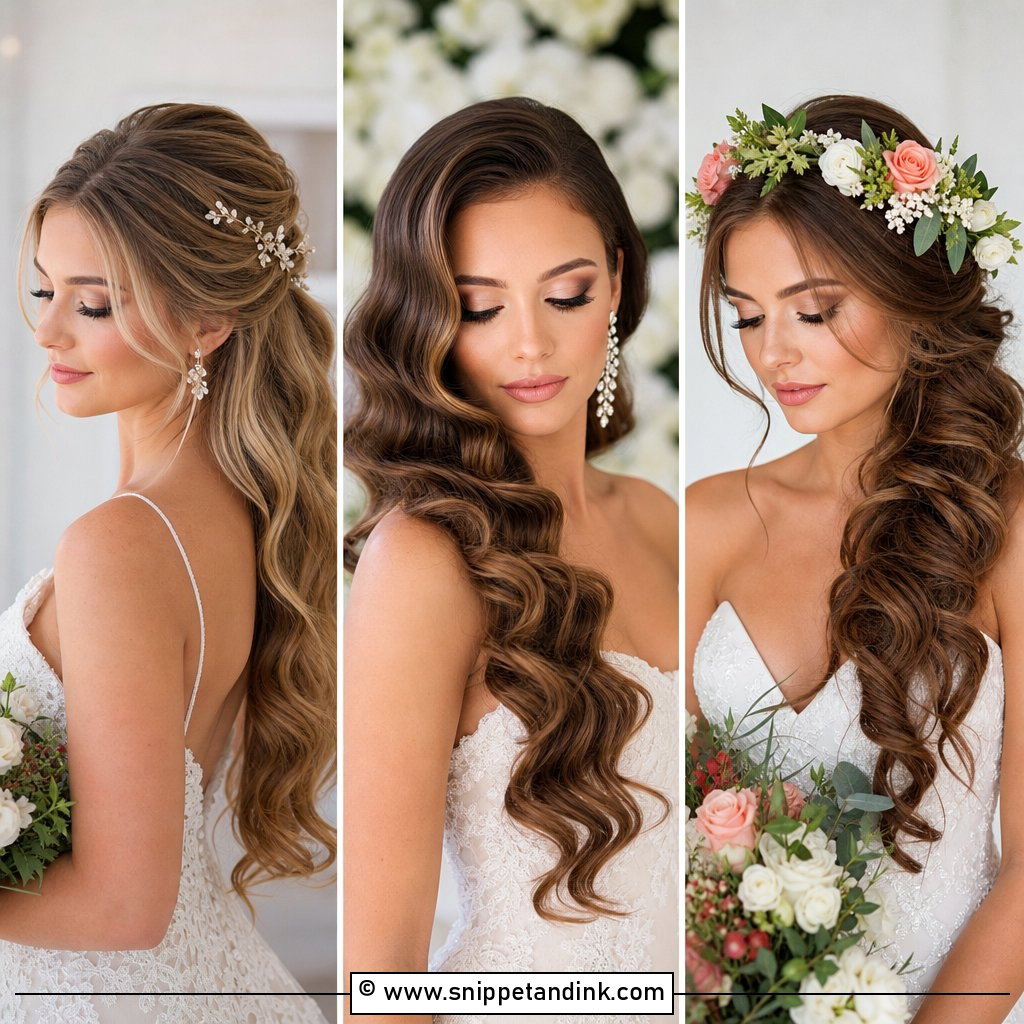
15. Loose Side Braid With Waves

A loose side braid falls over one shoulder with waves and tendrils around the face. I curl the hair first and braid gently, so the waves still show through the braid. Wind and humidity make it look more relaxed, which suits a beach or garden wedding. Long, wavy hair gives the most movement. Small flowers or nothing at all both work.
16. Braided Updo With Veil

Braids under a veil give the comb something to grip, which is the big practical advantage of this combination. I plan the braids around where the veil will sit, usually putting the comb just above or below the main braid. After the veil comes off, the braided updo stands on its own. It suits formal gowns and structured necklines.
17. Halo Braid

A halo is one long braid running all the way around the head, starting at the nape. It’s a bigger job than a crown braid, and it really needs long hair. The braid starts at the back of the neck and travels around the hairline. Flowers or pearls can be added along the braid. I’d keep it slightly loose so it looks soft, but secure the start and end with crossed pins.
18. Twisted Braid Half-Up

Twisted braids combine rope twists and braids in the top section, pinned at the back, with the rest falling in waves. The twists add texture and are faster to create than braids. Medium to long hair works best. Pearl pins or small flowers can be placed where the twists meet. Twists can loosen over the day more than braids, so I set them with a light spray as I go.
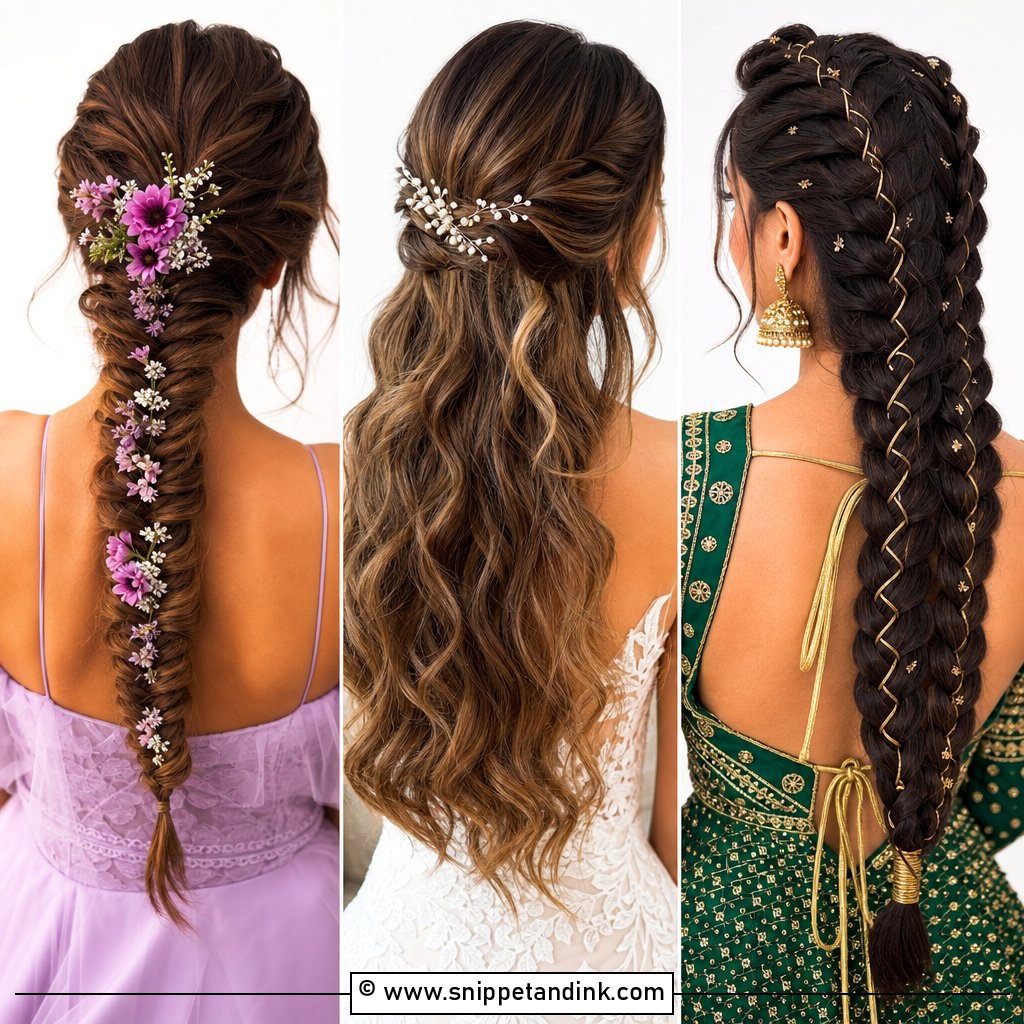
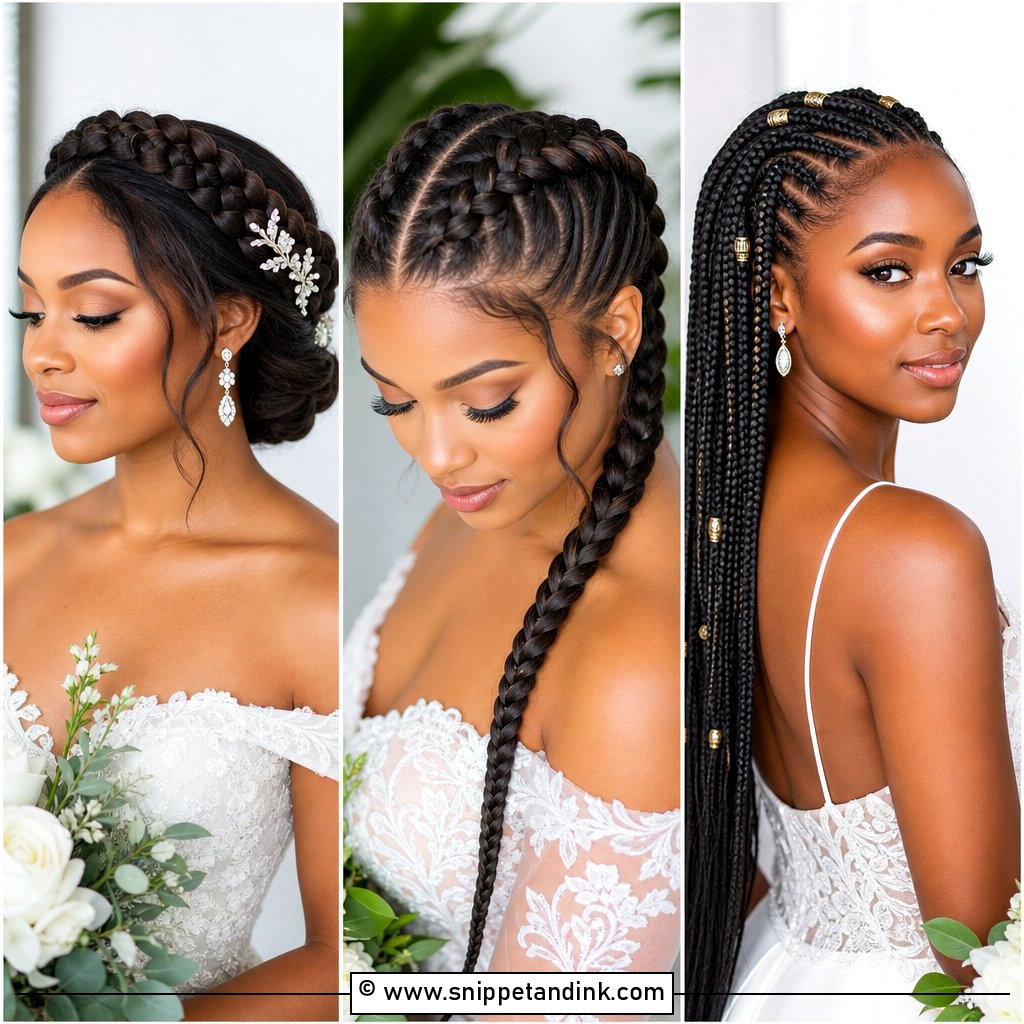
19. Cornrow Braided Updo

Done with care, Cornrow braided updos are some of the most detailed bridal styles I know. Cornrows are braided flat to the scalp in lines or patterns, then gathered into a bun or updo. They take hours, so they’re usually done a day or two before the wedding, and they double as a protective style. I keep tension gentle at the hairline to protect the edges. Beads, gold cuffs or pearls can decorate the rows, and the clean lines photograph sharply.
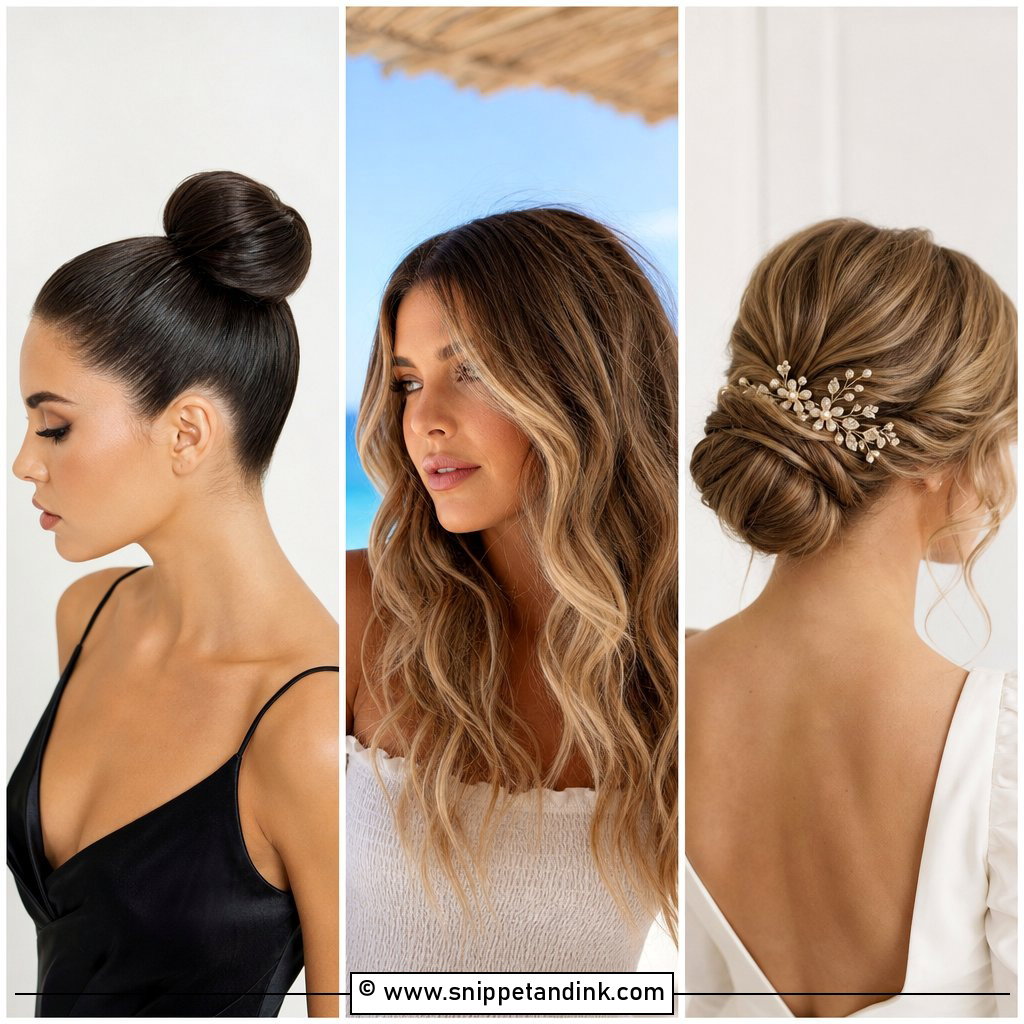
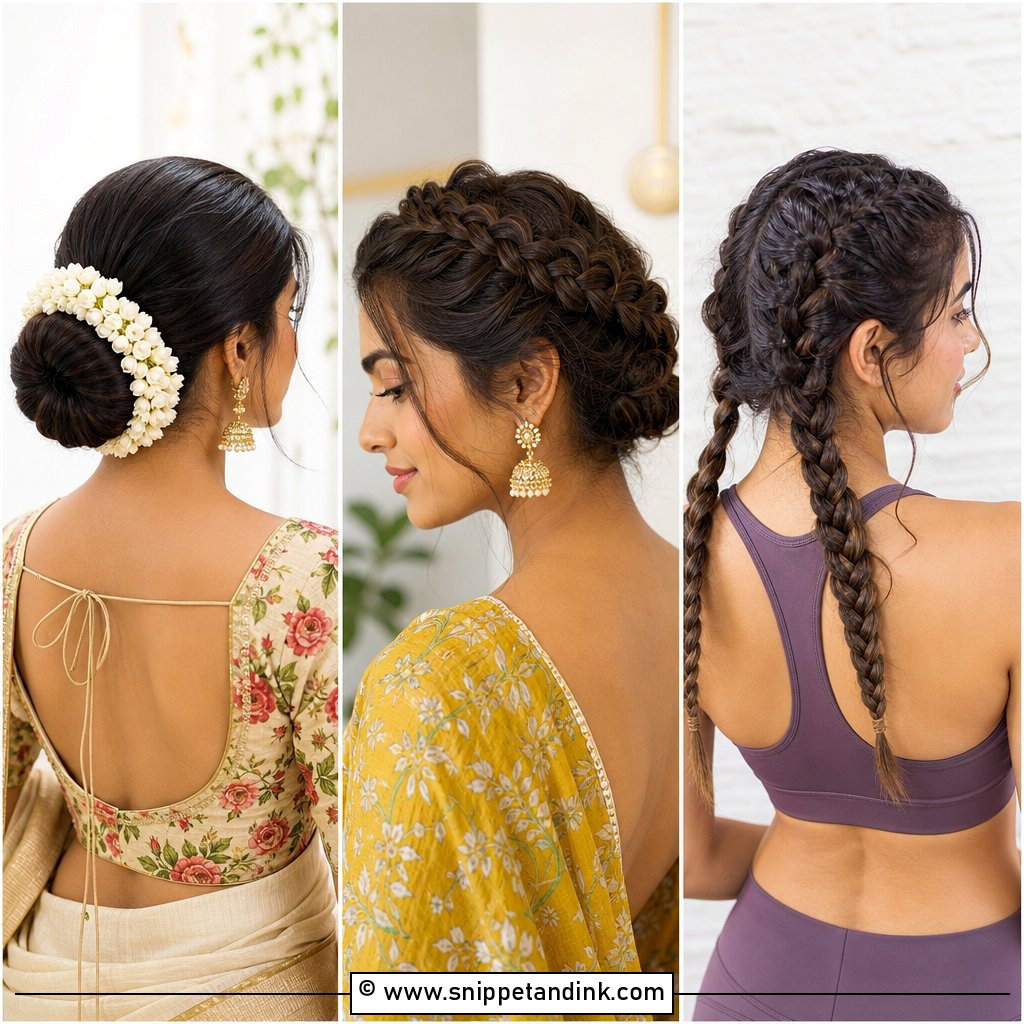
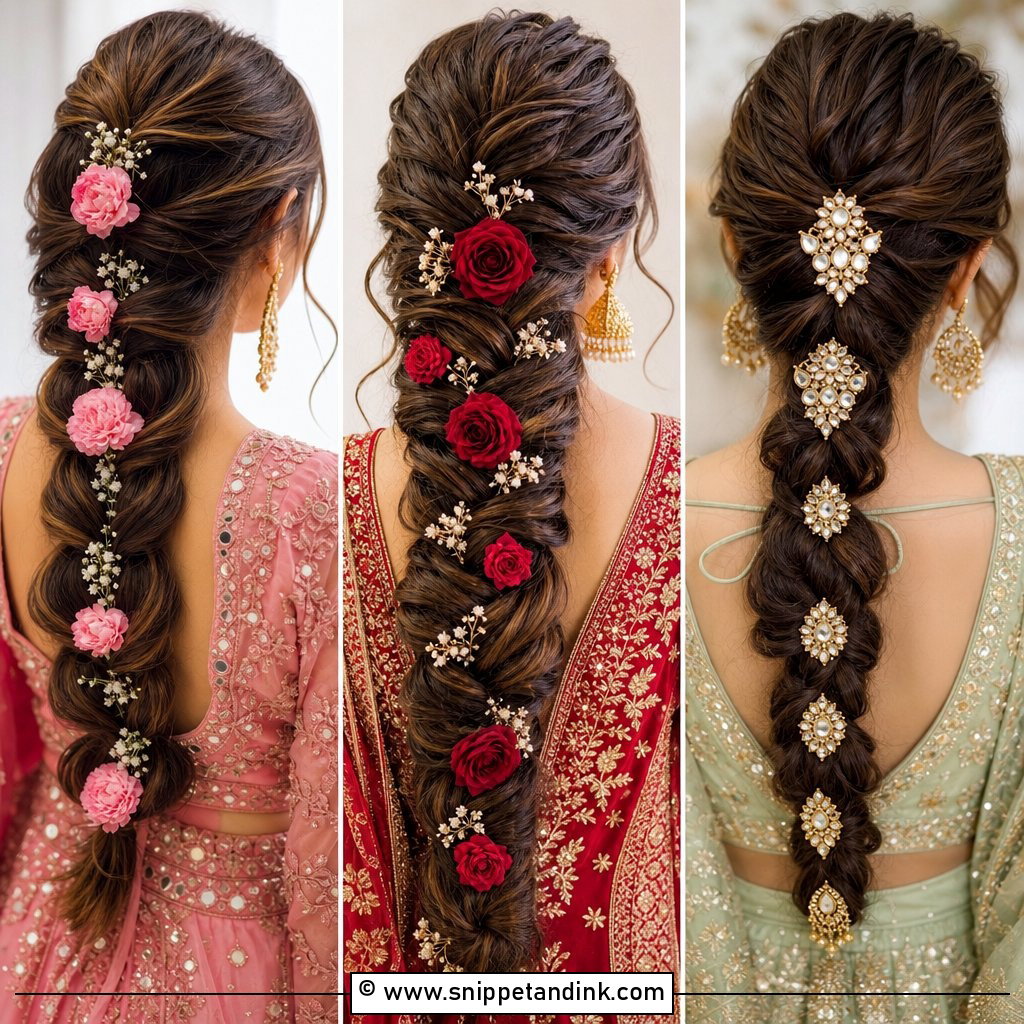
20. Fishtail Braid With Pearls

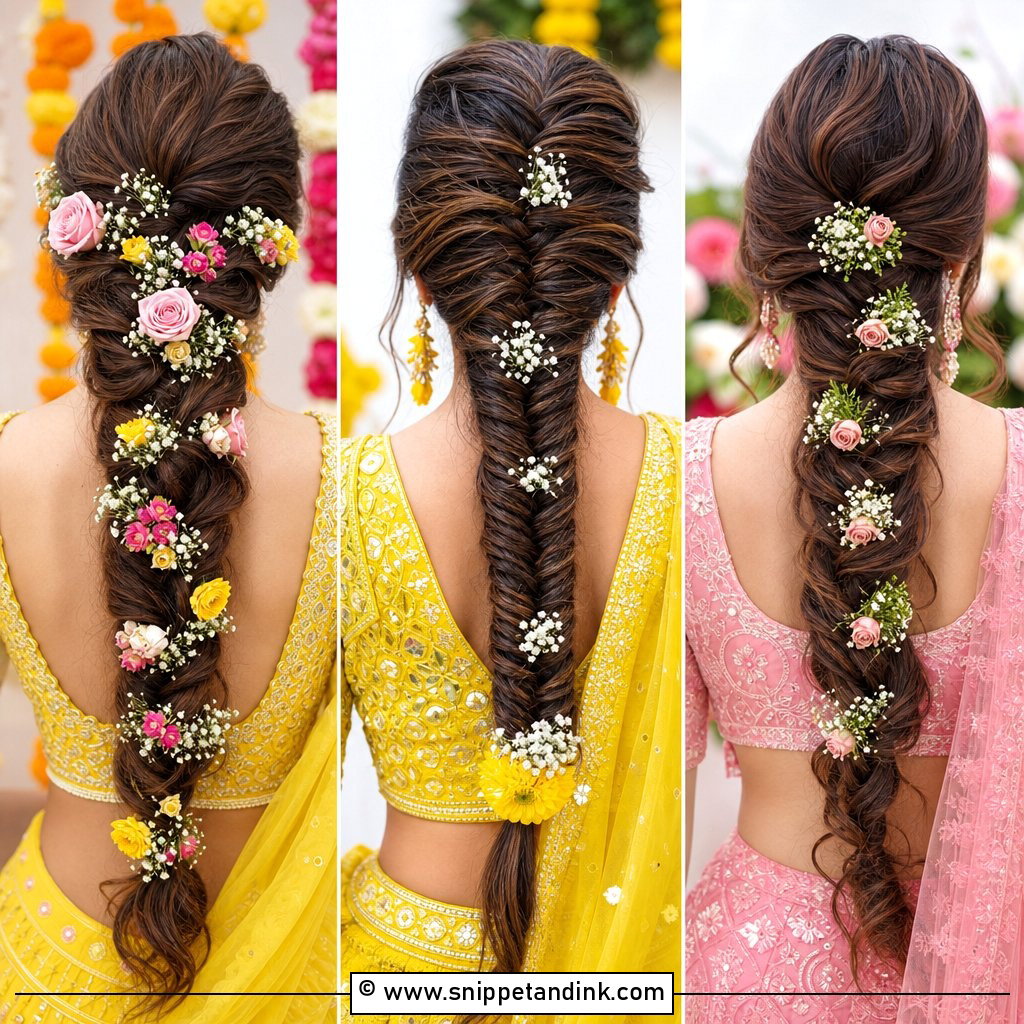
Pearls threaded through a fishtail catch the light in a quiet way. I use small pearl pins pushed into the crossovers, or a pearl strand braided in as one of the sections. Over one shoulder or down the back, the pearls stay visible. Long, wavy hair suits this best. Match the pearl tone to your jewelry and dress; bright white pearls can look grey against an ivory gown.
21. Braided Bun With Flowers

A braided bun with fresh flowers coils braided sections into a bun, then tucks blooms throughout. I place the flowers last, so the heat of styling doesn’t wilt them. Choose blooms that hold up out of water. The bun keeps the neck clear, which suits garden ceremonies and warmer weather. Matching a few flowers to the bouquet keeps it cohesive.
22. Infinity Braid

An infinity braid creates a figure-eight pattern along its length. It’s done by passing strands around each other in loops, not by crossing them in the usual way, and it takes practice. Pull it gently afterward so the loops show clearly. It works as a half-up detail or folded into an updo. Ask whether your stylist has done this braid before; it isn’t one to try for the first time on the morning.
23. Messy Braided Updo

A messy braided updo uses loose braids pinned into a soft, textured shape, with wisps left around the face. The mess is placed: I pull out loops and strands on purpose after pinning. Because it’s already undone, small changes over the day don’t show. It suits relaxed and outdoor weddings, and medium to long hair.
24. Braided Crown With Curls

This combines a crown braid with curls left loose below or around the face. The crown holds the top in place, so even if the curls relax a bit, the style keeps its shape. I braid on curled hair so the crown has texture, then curl the loose lengths again at the end. Pearls or flowers can be added along the braid. Medium to long hair works best.
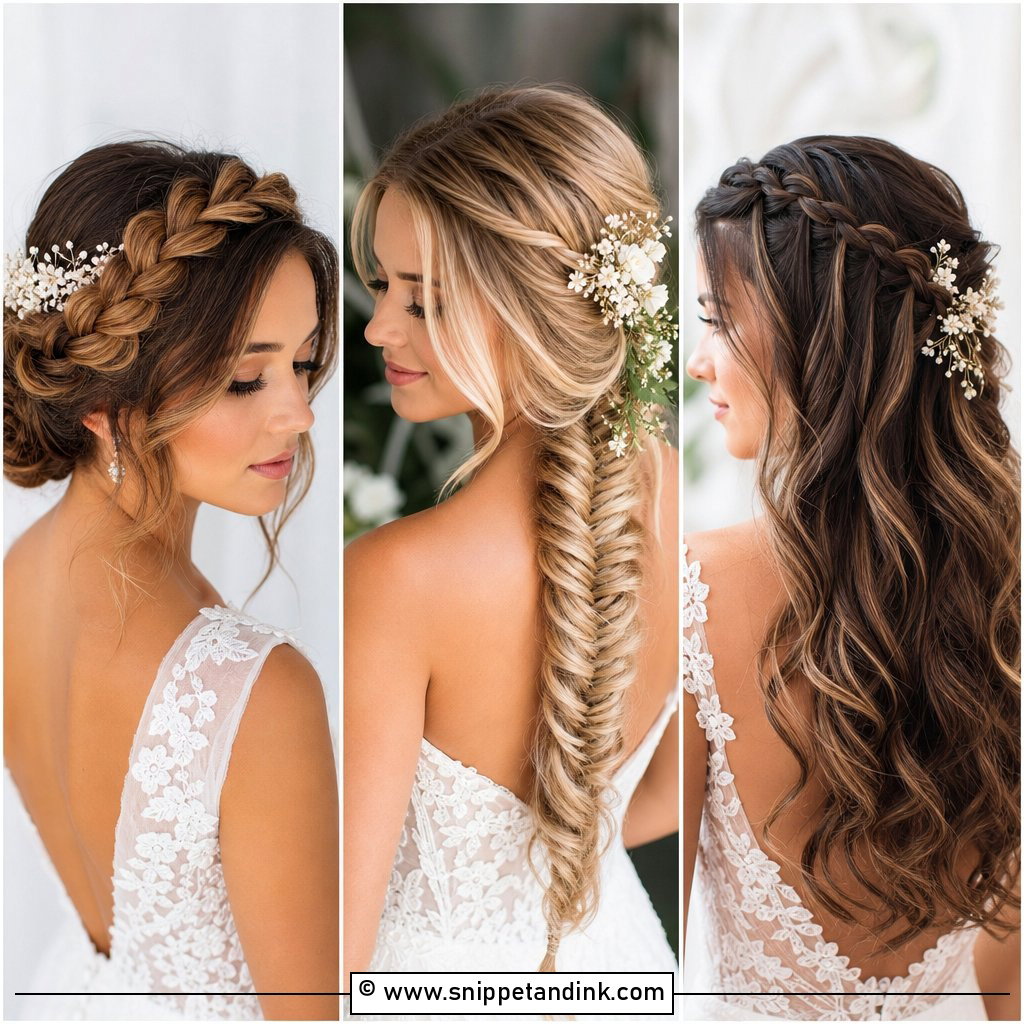
25. Side Dutch Braid

A side Dutch braid runs along one side of the head, raised on the surface, and then continues down or into an updo. It shows off one ear and an earring, and the braid looks bolder than a French braid on the same hair. Keep it tight for a sleek look or pull it loose for softness. Medium to long hair suits it.
26. Braided Top Knot

A braided top knot is a high bun with braids worked in, either braiding the bun itself or running braids up from the nape. It gives height and keeps the neck clear. The weight sits on top of the head, so if you’re sensitive to tension, a mid-height bun is kinder over a long day. Crystal pins or a clean finish both suit it.
27. Loose Braided Half-Up With Tendrils

The top section is braided loosely and pinned, the rest falls free, and a few soft tendrils frame the face. I curl the tendrils separately with a smaller iron so they hold. It shows off long hair while keeping it out of your eyes. Flowers or pearls can be added. Long, wavy hair gives the best result.
28. Braided Ballerina Bun

Braided sections coiled into a smooth round bun, high or low, give the ballerina shape some texture. I use a bun donut underneath on finer hair to keep the bun round. It suits formal weddings and works with a veil, tiara or delicate hairpins. Once pinned, it barely moves.
29. Boho Braided Crown With Greenery

A soft braid around the head with greenery and small blooms tucked in suits forest weddings, gardens and outdoor celebrations. Greenery like eucalyptus or ruscus lasts well out of water, better than many flowers. I tuck it in last, after styling. Medium to long hair works best, and the braid holds the greenery in place all day.
30. Cascading Braid With Loose Curls

Curls falling down the back with a delicate cascading braid running through them give the hair detail while it stays down. I braid loosely, so the curls still show around the braid. Long, thick hair gives the fullest result. Pearls or small flowers can sit along the braid. Like any down style, the curls will relax a little over the day.
Making a Braid Show Up in Photos
A braid that looks detailed in the mirror can look like a plain band in pictures. That happens most with very dark, solid-colored hair, because there’s no light and shade between the strands. Pulling the edges of each loop outward, called pancaking, makes the pattern bigger and catches more light. Dimensional color with highlights also makes braids show more clearly.
- Use a texture spray or dry shampoo before braiding so the loops hold their shape when pulled.
- Pancake from the bottom of the braid up, a little at a time, holding the end.
- Ask your photographer for at least one shot from behind and one from the side, where braids look best.
- Check the braid in a photo at your trial, not only in the mirror.
Natural, coily and very thick hair often holds braids longest of all. For textured hair, braiding is usually done on stretched hair, and I’d keep the tension moderate so the scalp is comfortable through the whole day.
One more thing I watch for: braids that look loose and airy at noon can flatten under a heavy veil by the time you reach the altar. If you’re wearing a long veil, I braid a touch firmer and pancake again after the veil goes in.
Which Braid Can Your Hair Carry?
The right braid depends on your hair’s length and texture, your veil and how much detail you want guests to see from behind. Braids hold better than most styles, which is why I suggest them so often for long days. Bring photos of two or three braids you like to your trial, and ask your stylist which one your hair can actually carry.
You'll Like These Ideas:


Leave a Reply