
When your sister’s Nikkah day arrives, you’ll spend most of it right beside her: at the signing, in the family photos, through dinner. Your hair gets looked at for hours and, for part of that time, covered by a dupatta. Before I pick a shape for a bride’s sister, I ask three things: how heavy her outfit is around the neck, whether she’ll cover her head during the ceremony, and how much her hair weighs. The twenty styles below run from sleek buns to open waves, and I’ve noted where each one holds up and where it struggles.
Will a Dupatta Sit Over Your Hairstyle?
Many Nikkah outfits come with a dupatta that goes over the head during the ceremony, then moves to the shoulders for photos and dinner. That one habit decides more about your hairstyle than face shape or hair length. I ask every sister at the start whether she’ll cover her head, because it changes the shape I build.
- Covering your head: go low. A low bun, chignon or knotted bun gives the dupatta a smooth curve to rest on, and the shape survives being covered and uncovered several times.
- Pinning the dupatta: I fix it with small bobby pins hidden at the crown and behind each ear. Two pins on each side hold far better than one large brooch pin at the top.
- Height at the crown: braided crowns, bouffants and high ponytails push a dupatta up and back. They work best when you won’t cover your head at all.
- Open hair: curls under fabric frizz from friction. If you love waves, cover only for the ceremony and finger-comb them back into shape afterward.
If you wear a hijab
Under a hijab, the style matters for comfort rather than show. I’d keep a low, flat bun or a soft braid tucked under, which lets the hijab sit evenly and avoids the lump a high bun creates. The festive detail then moves to your hijab pins and earrings.
1. Low Bun With Side Parting
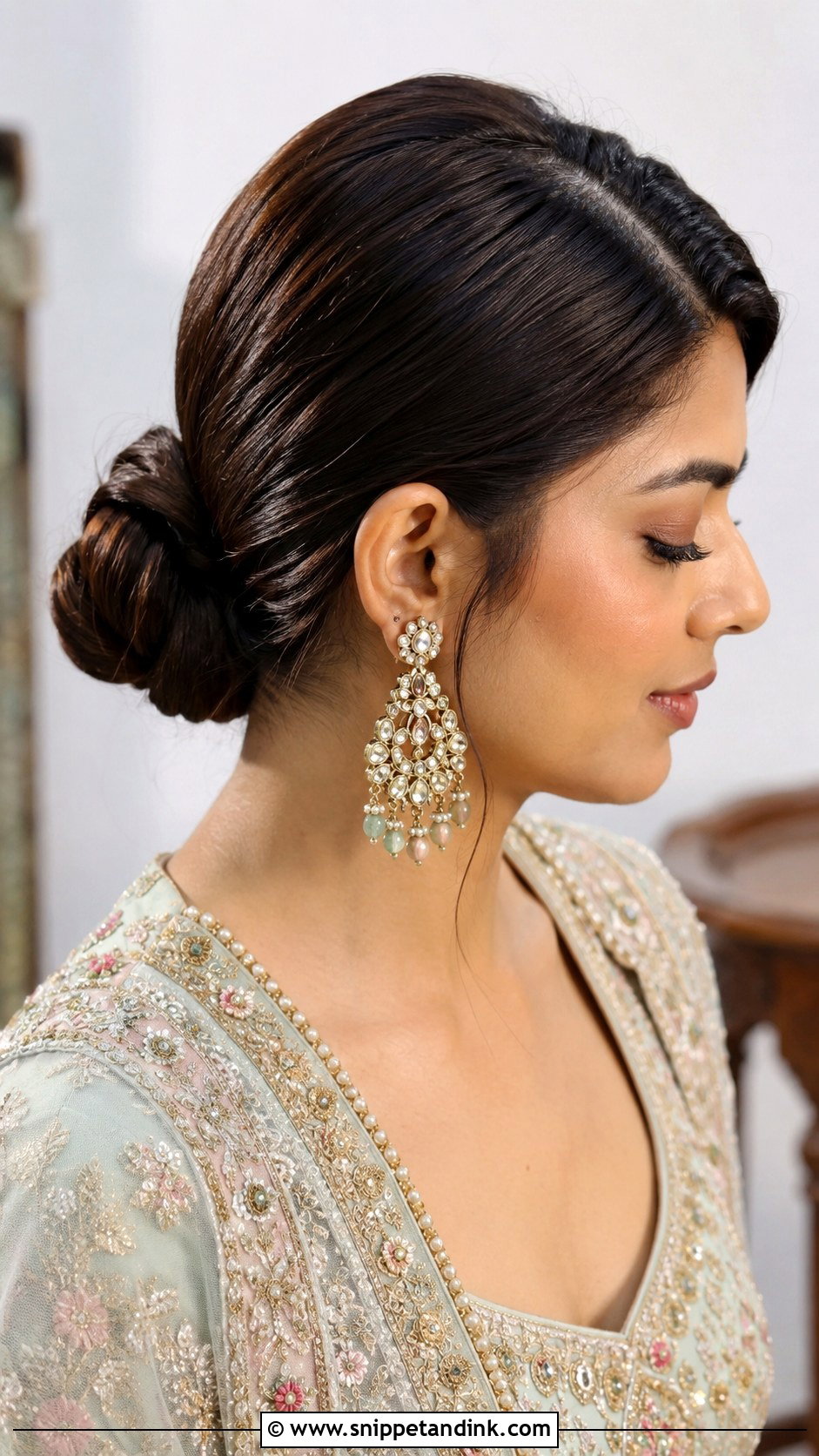
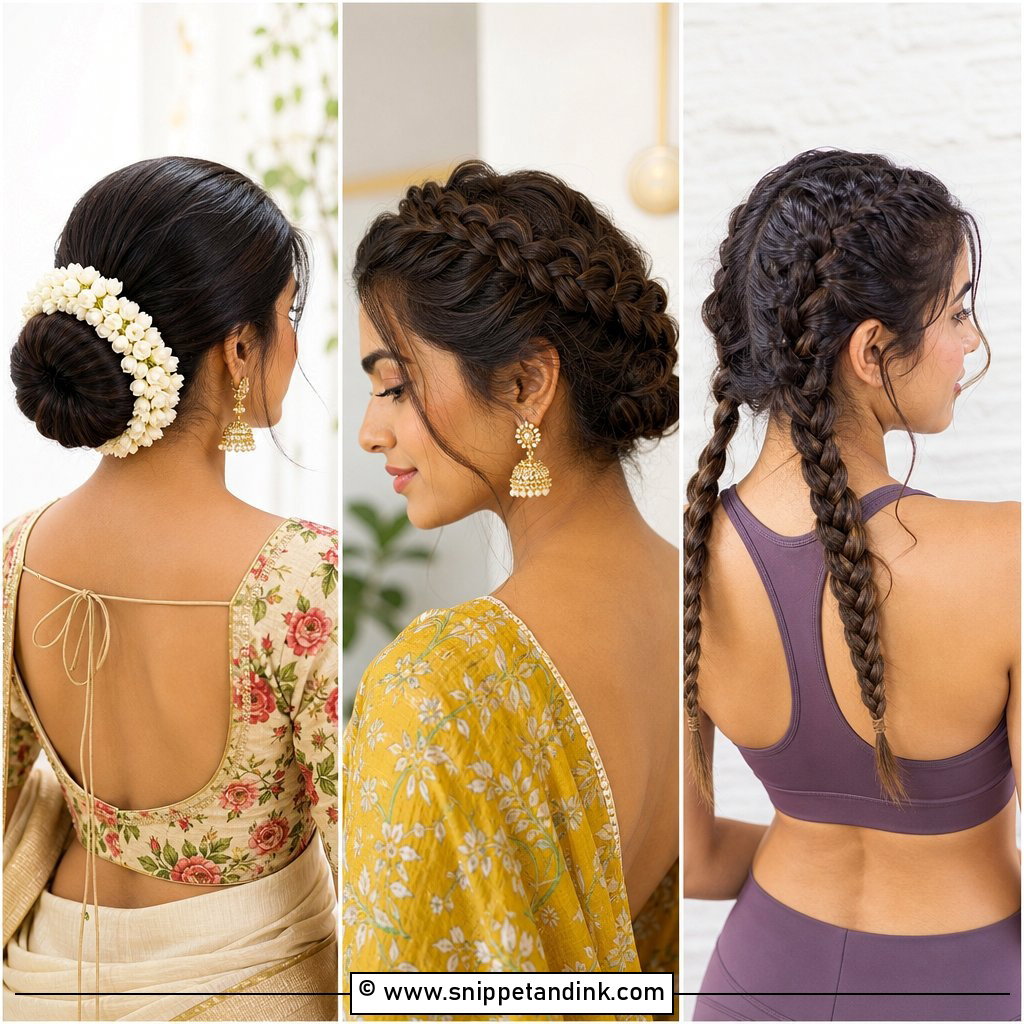
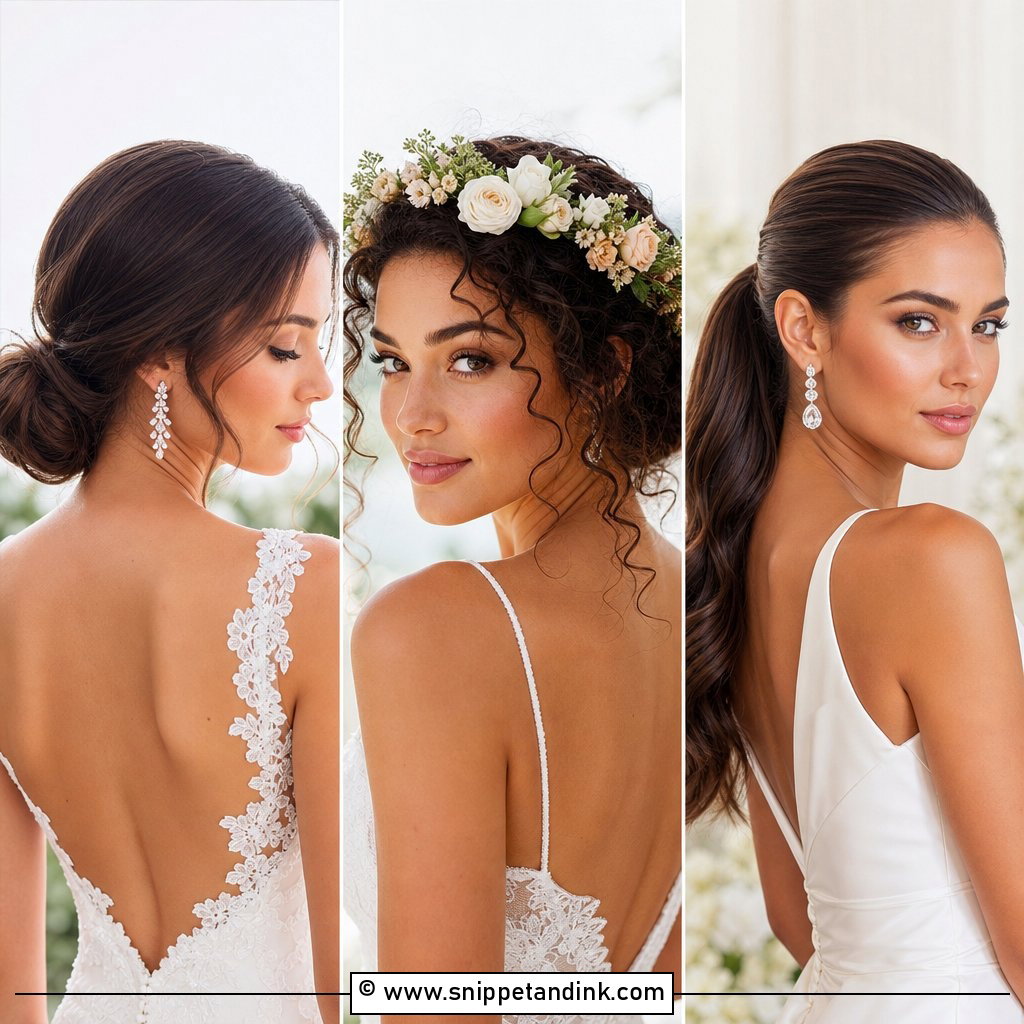
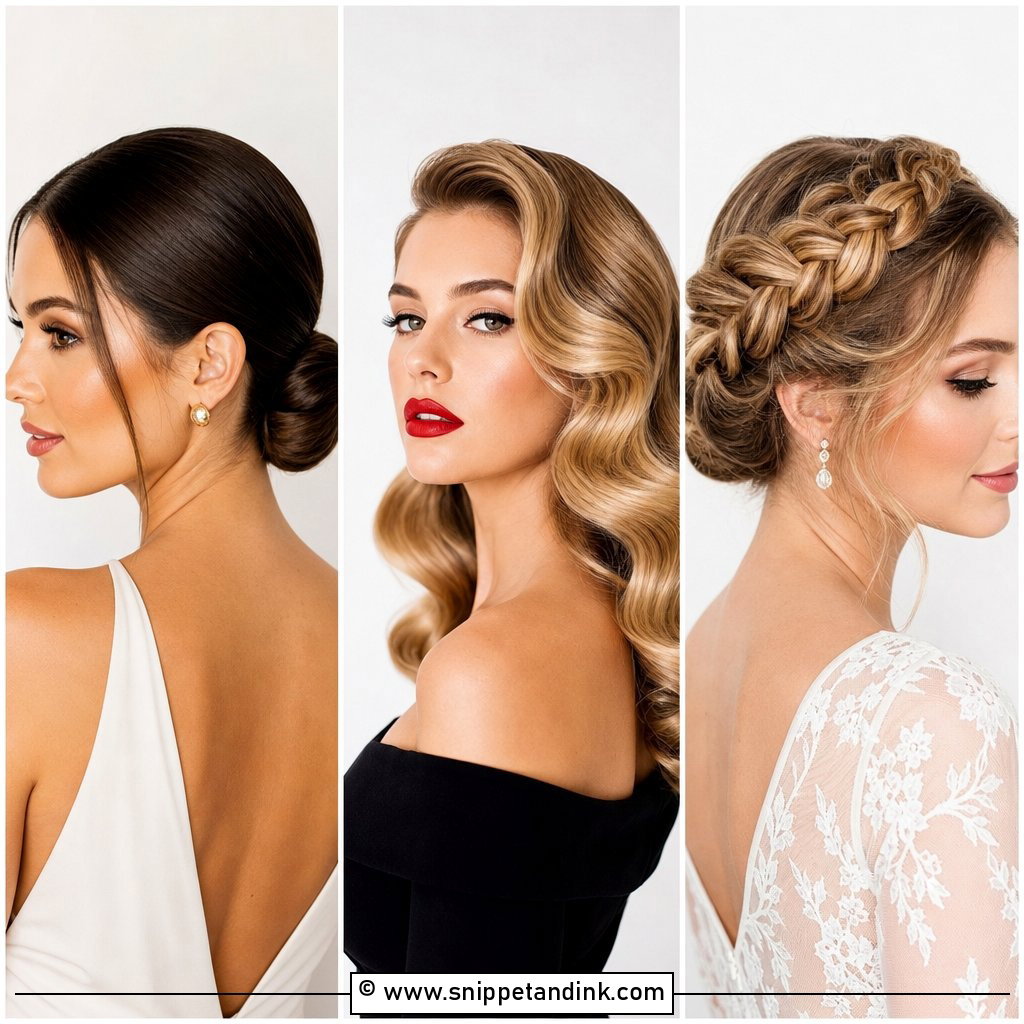
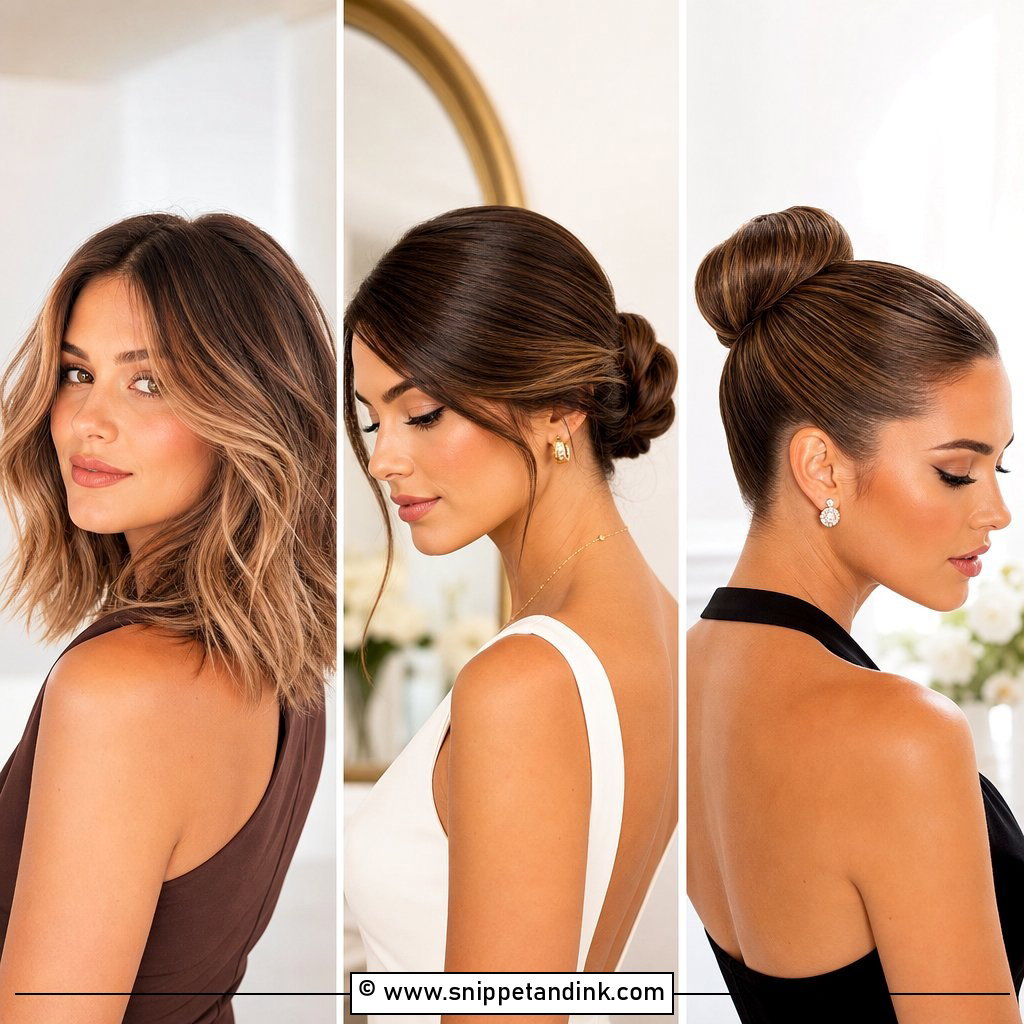
This is the style I reach for most often at Nikkahs, mainly because a dupatta drapes over a low bun without pushing it out of shape. Set a clean side parting first, then twist the length into a smooth bun at the nape. I pin it with U-pins pushed in toward the scalp rather than bobby pins dragged across the surface, so it doesn’t loosen every time the dupatta gets adjusted. Sleek or slightly textured both work. With heavy jhumkas and a traditional gharara or saree, the earrings stay fully visible from the side.
2. Braided Crown Updo
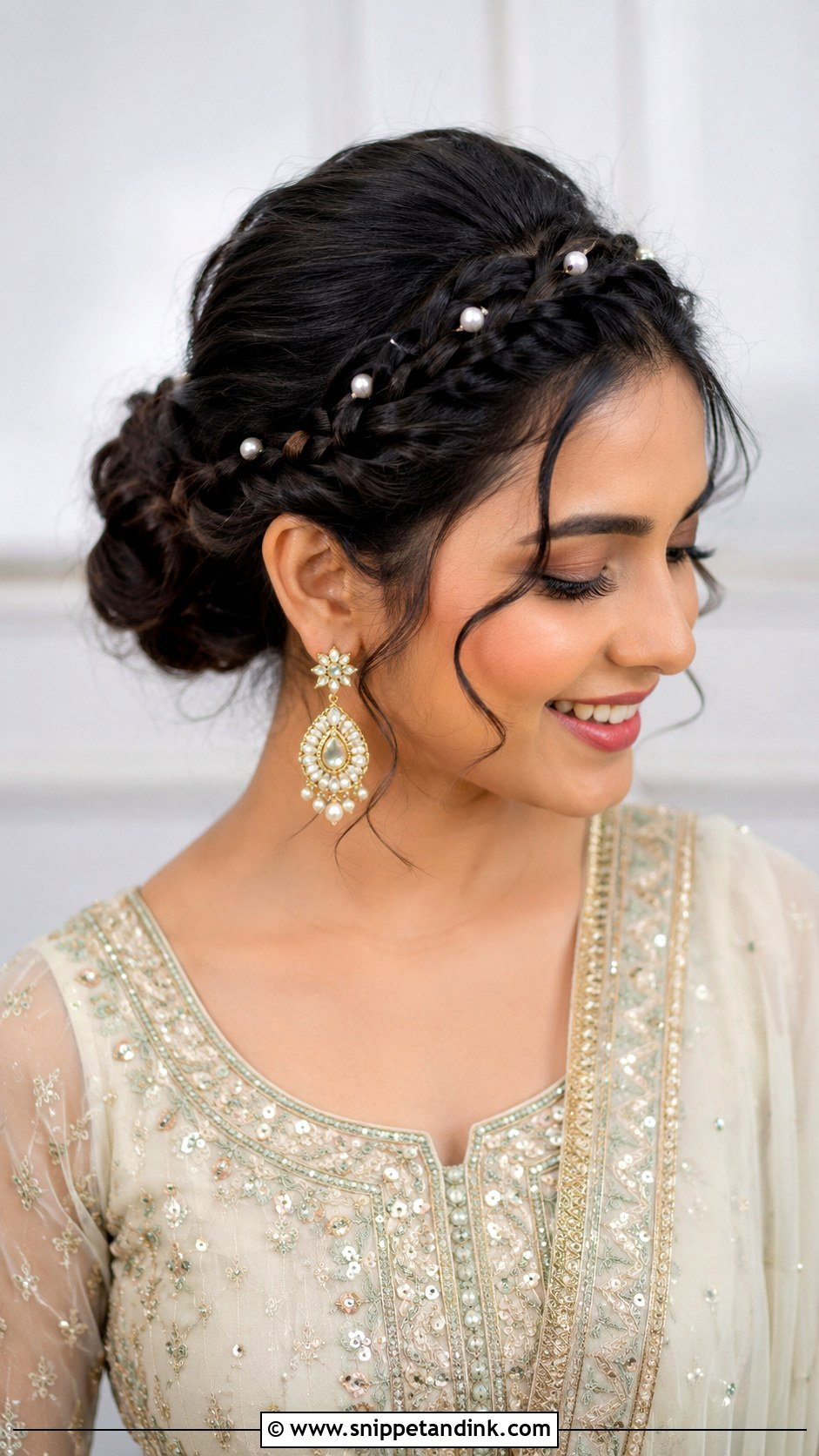
A braid wrapped around the head like a halo keeps every strand off your face all evening. It needs real length, though. On hair shorter than mid-back, I build it from two braids that meet at the back instead of one long plait. Fresh flowers or small pearl pins sit neatly in the grooves of the braid. The catch is the dupatta: a crown adds height on top, and a heavy georgette dupatta can slide straight off it. I’d save this for a sister who isn’t covering her head, and as the bride’s sister standing in the second row of group photos, the braid still reads clearly over shoulders.
3. Half Up Half Down With Curls
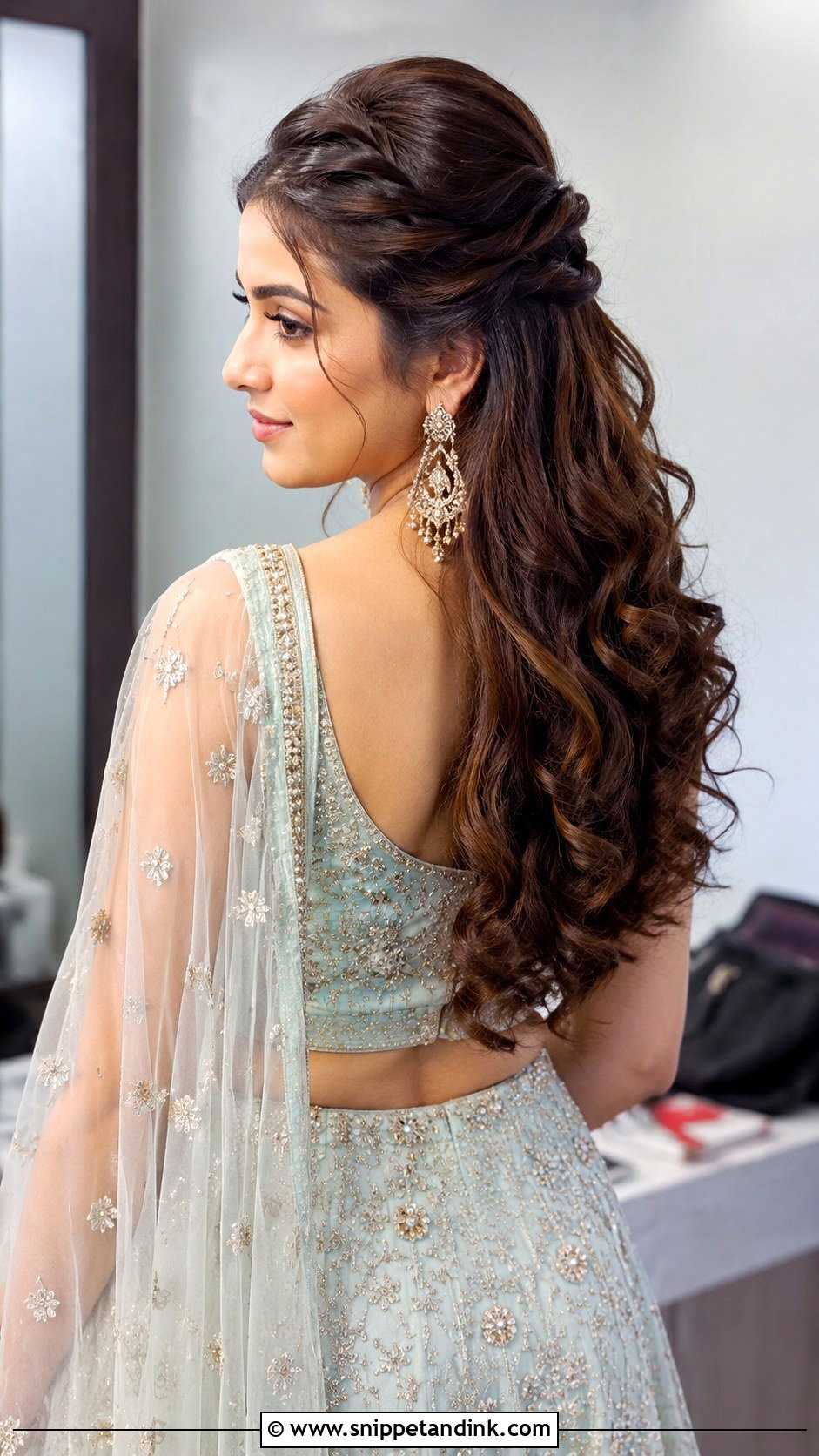
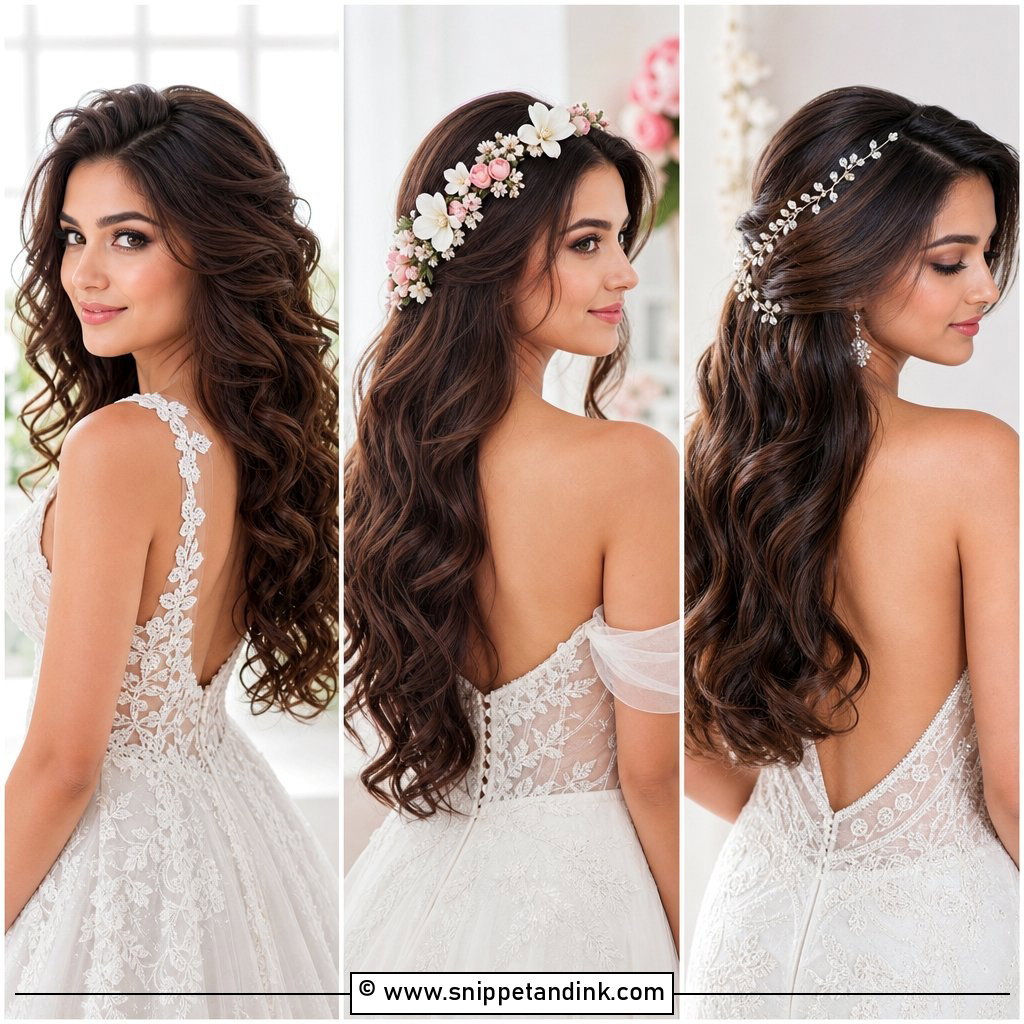
Can’t decide between an updo and open hair? This does a little of both: the top section is pinned back and the rest falls in curls. My warning is about friction. Open curls under a dupatta get flattened and frizzy, so I set each curl with a hot tool, let it cool completely in a pin curl, and brush out only right before you leave the house. A small braid or a decorative clip anchors the crown section better than one slide. It suits pastel shararas and hair from shoulder length down.
4. Sleek Low Ponytail
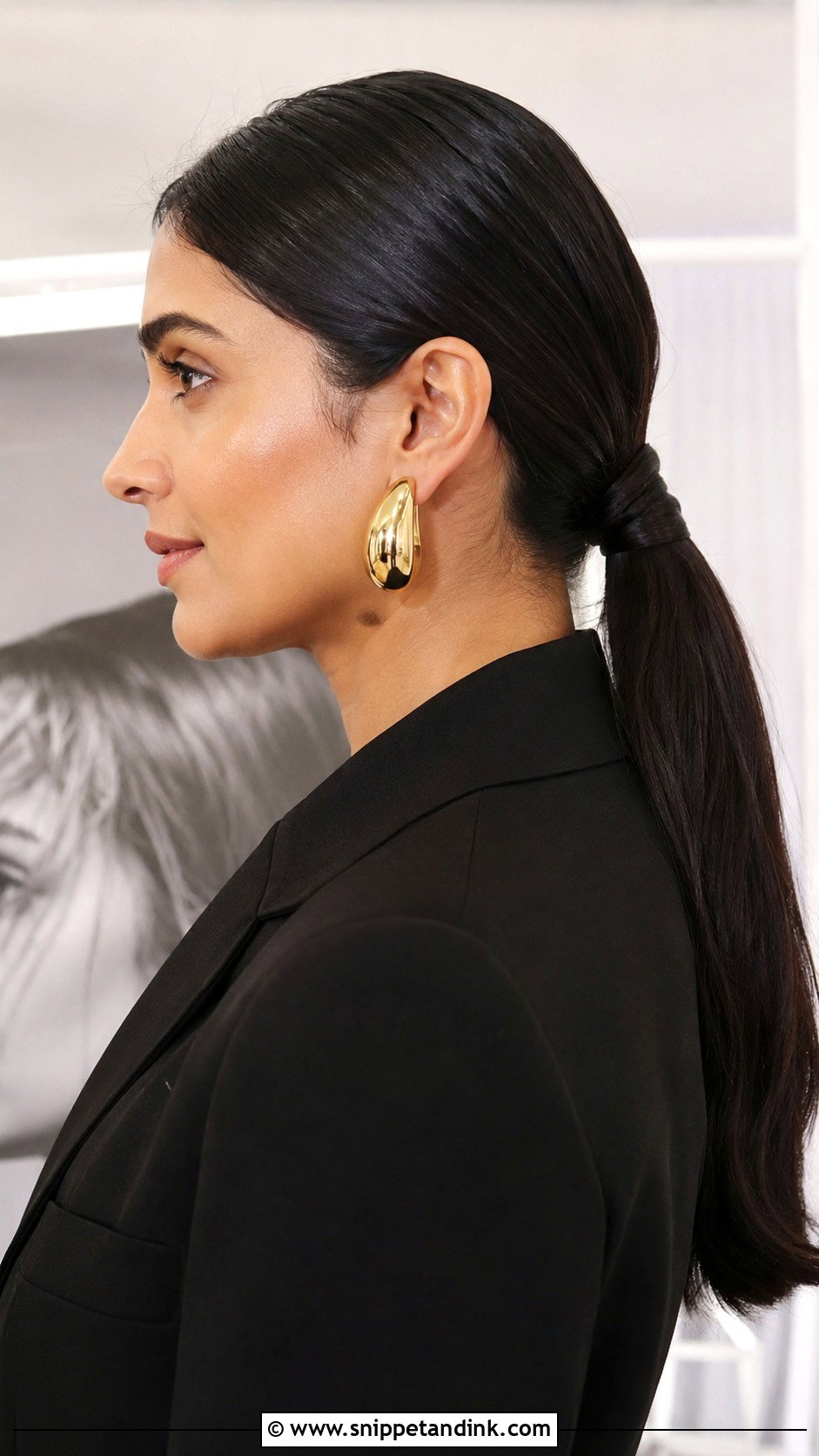
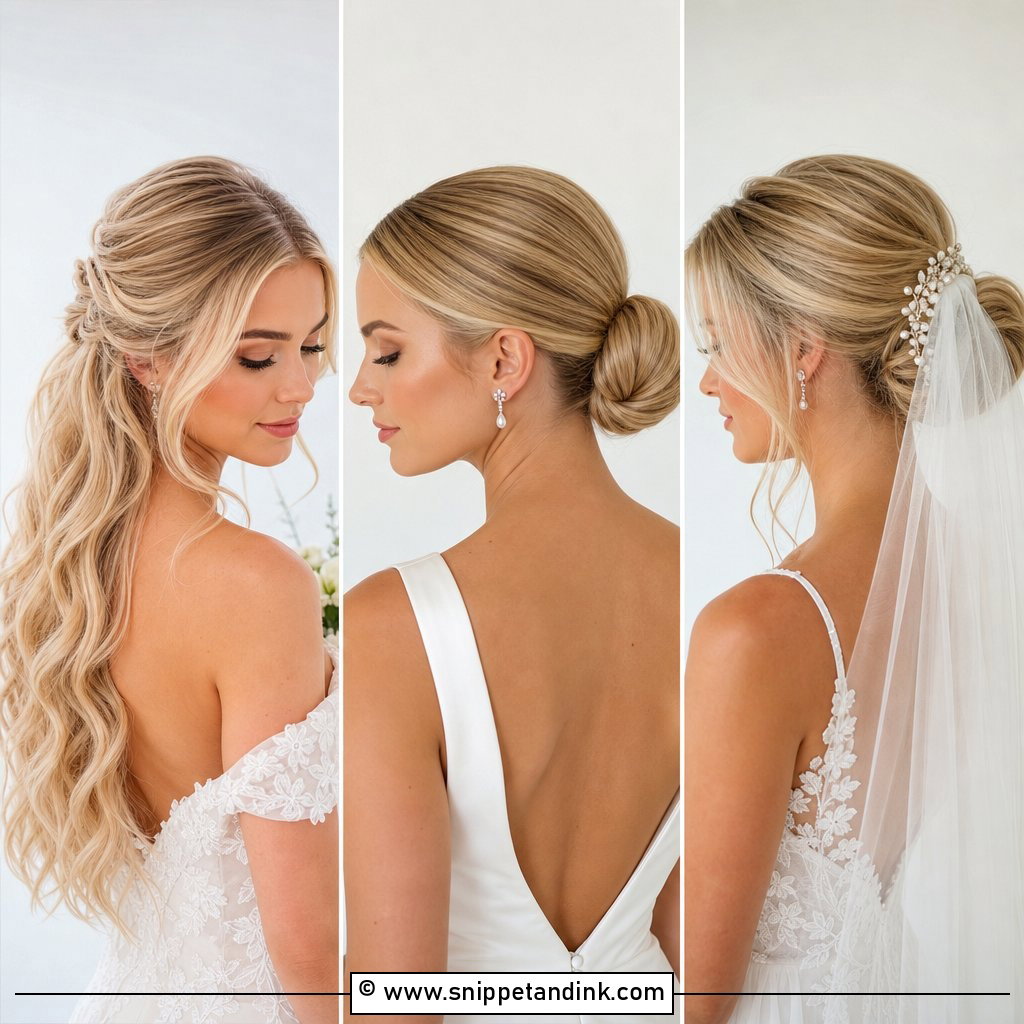
Simple, and harder than it looks. A sleek low ponytail only works if the hair is genuinely smooth, so I blow-dry it straight first and brush a small amount of gel through with a boar bristle brush. Tie it low at the nape, wrap a strand around the base to hide the elastic, and pin that strand underneath. All the attention goes to your face and earrings. On coarse or curly hair in humid weather, expect the hairline to puff up again by evening; a flyaway stick in your clutch fixes it in seconds.
5. Floral Side Bun
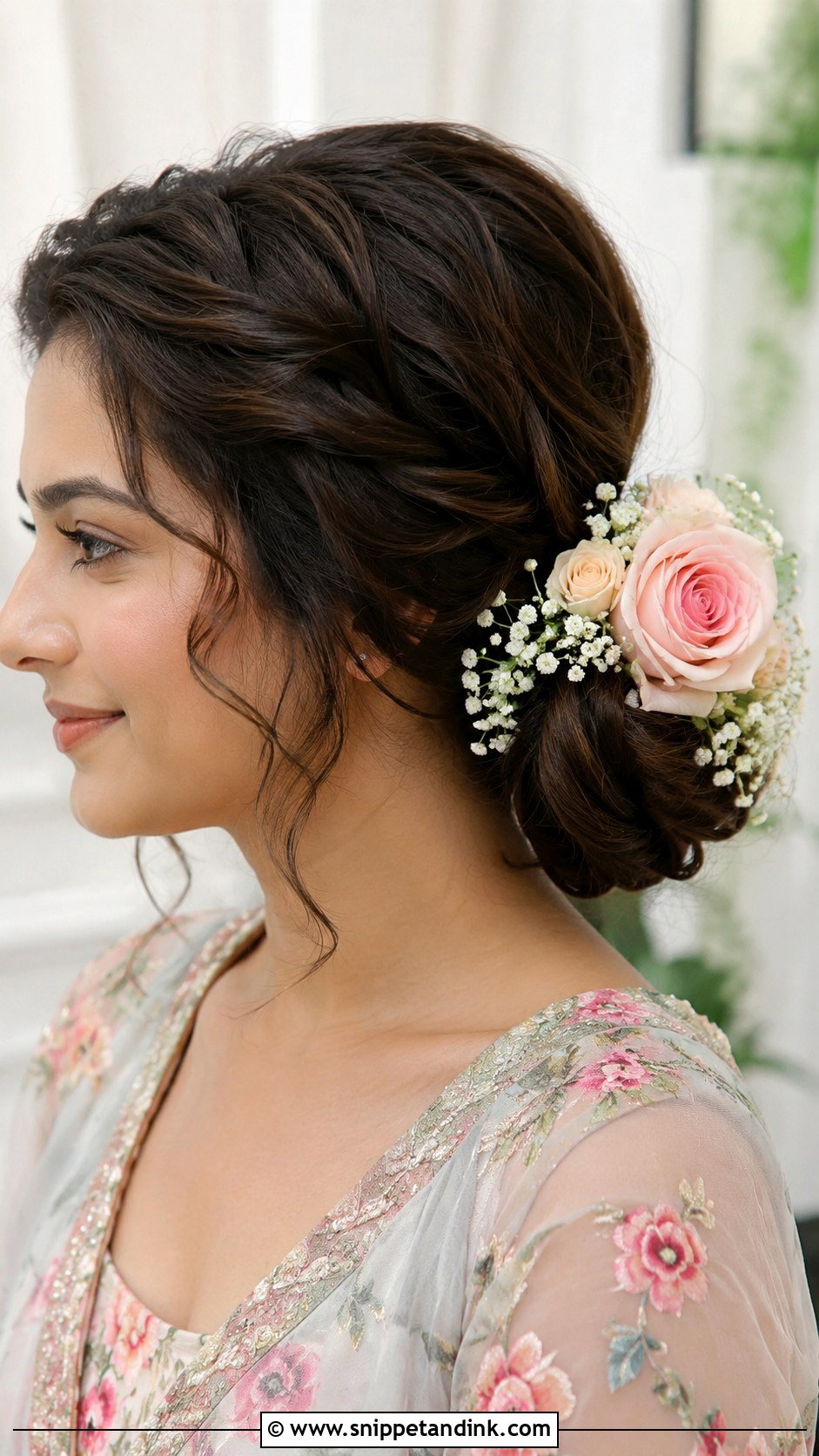
Garden and daytime Nikkahs suit a floral side bun. Gather the hair to one side, twist it into a rounded bun, and tuck in roses, jasmine or baby’s breath. I pin every bloom on its own instead of trusting the bun to grip the stems, because flowers loosen as they wilt. Jasmine browns quickly in heat, so it always goes in last. Put the bun on the side opposite your heavier earring so the two don’t crowd each other, and it will sit comfortably with pastel and floral prints.
6. Messy Bun With Loose Strands
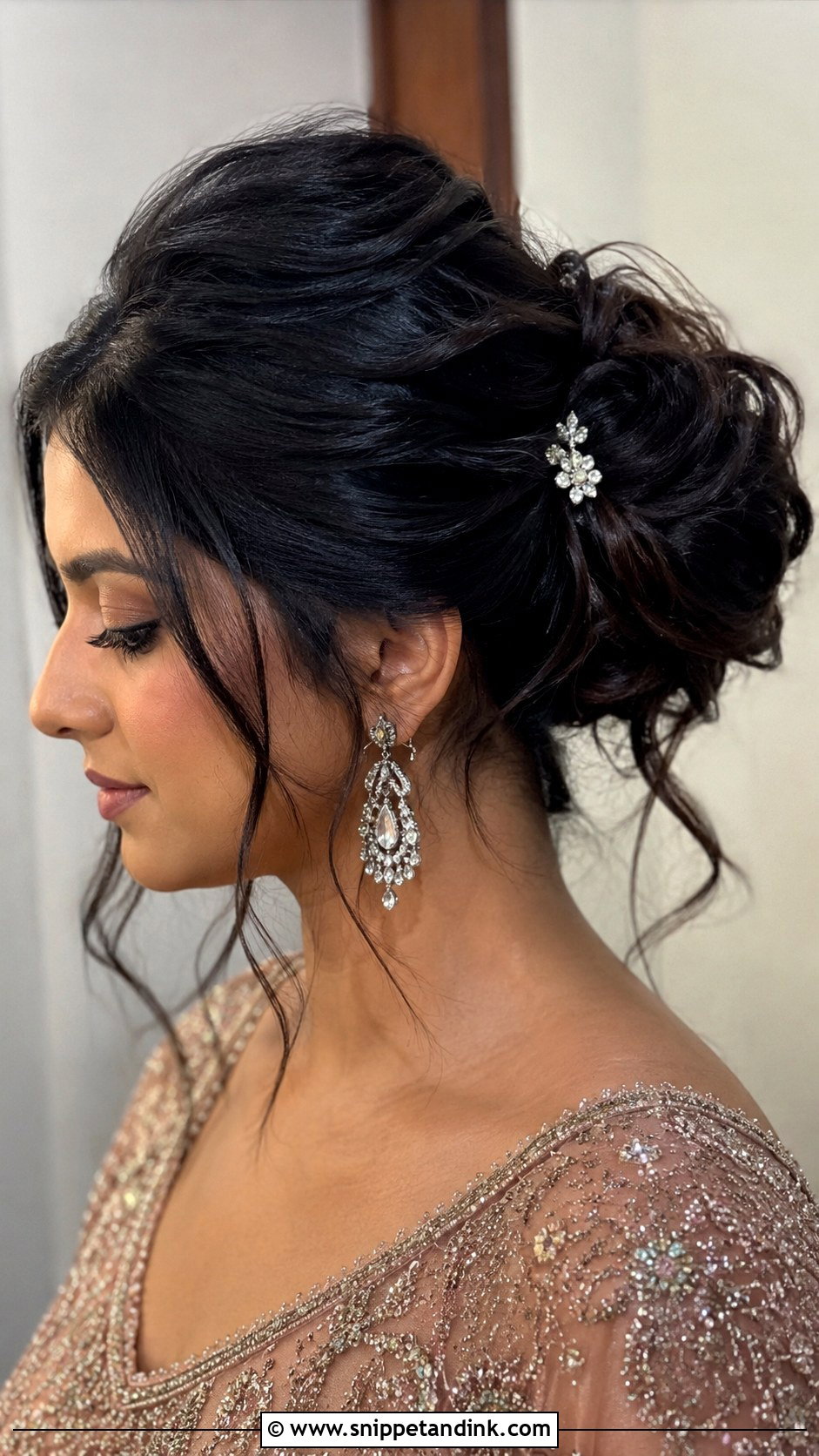
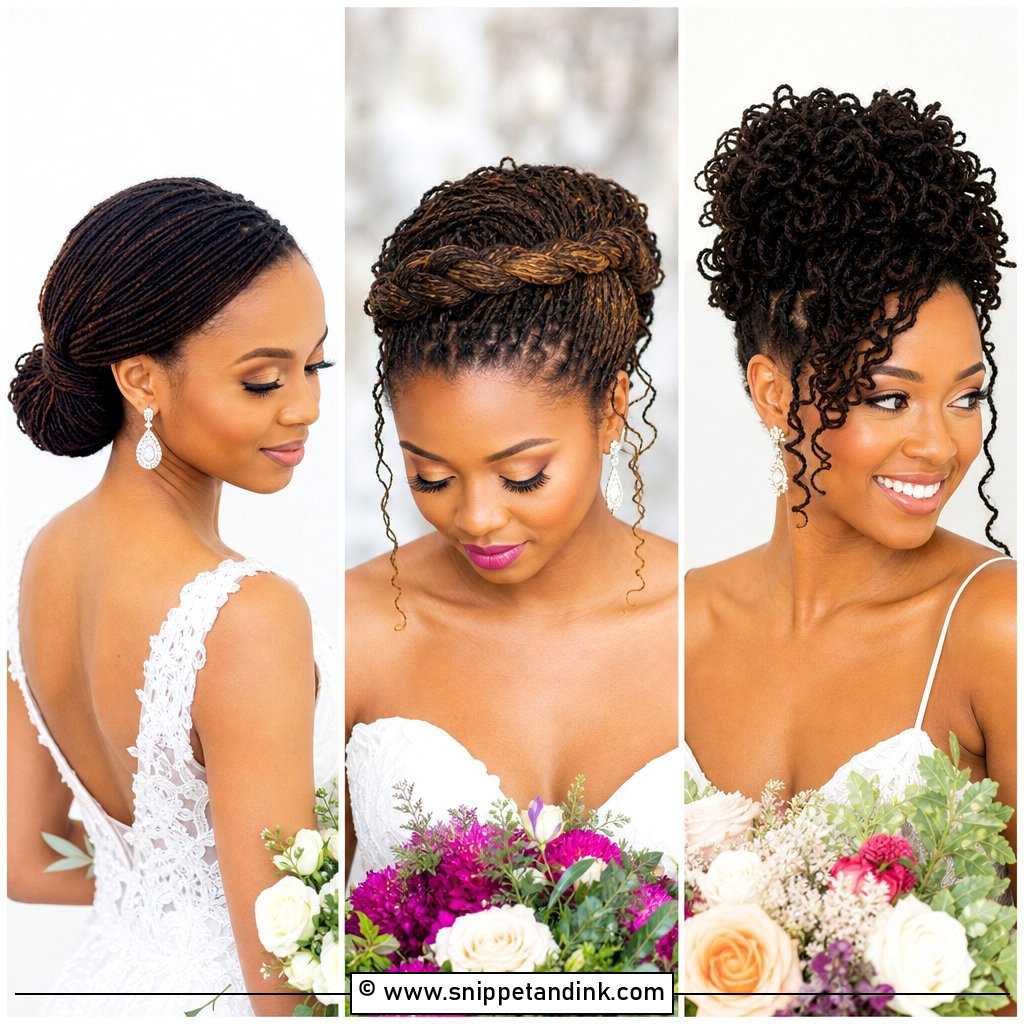
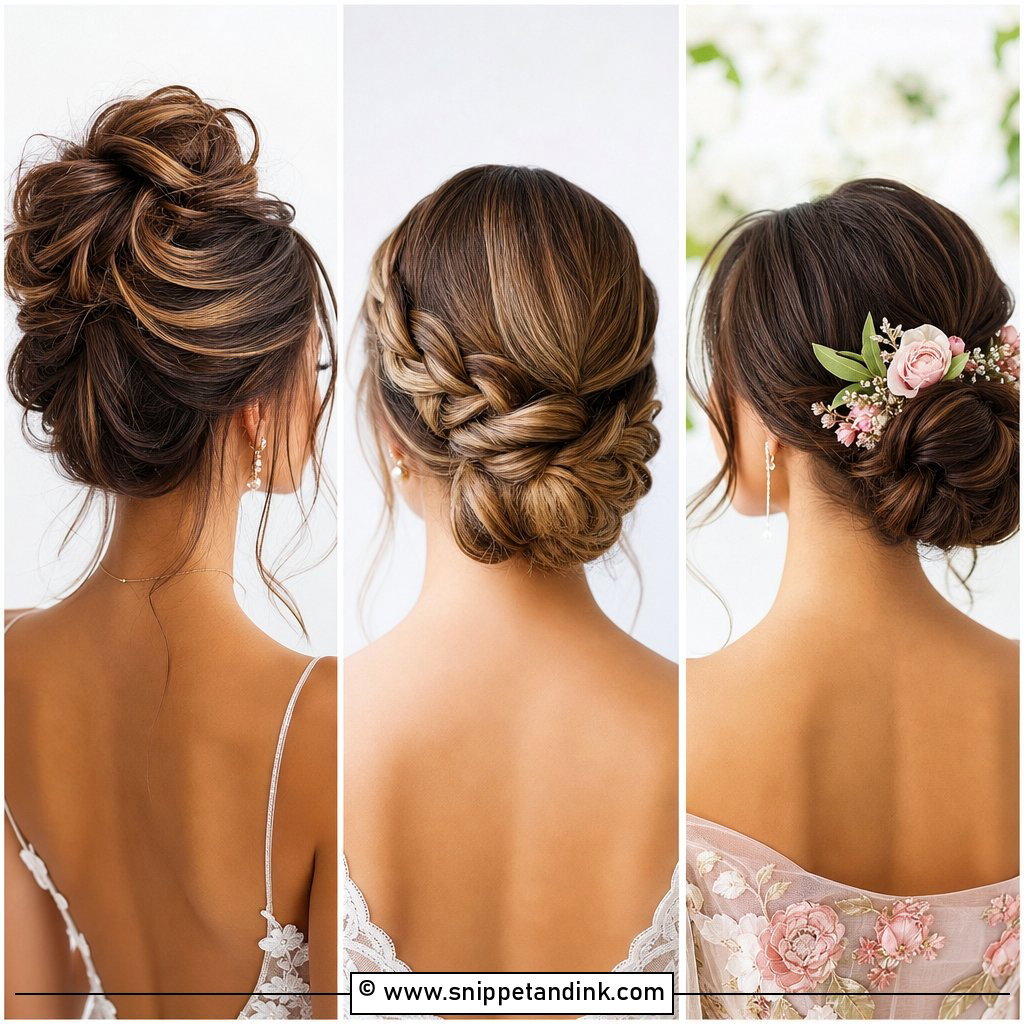
A messy bun is still a structured style; it just hides the structure. I build it on a firm base ponytail, loosen the bun by hand, then pull out a few face-framing pieces. Wavy and curly hair does this best because the texture is already there. On very straight, silky hair I add texture spray or crimp the mid-lengths first, otherwise the messy part collapses into flat strands within an hour. Add a sparkly pin or a few flowers, and a younger sister can dance all night without constant fixing.
7. Fishtail Braid With Volume
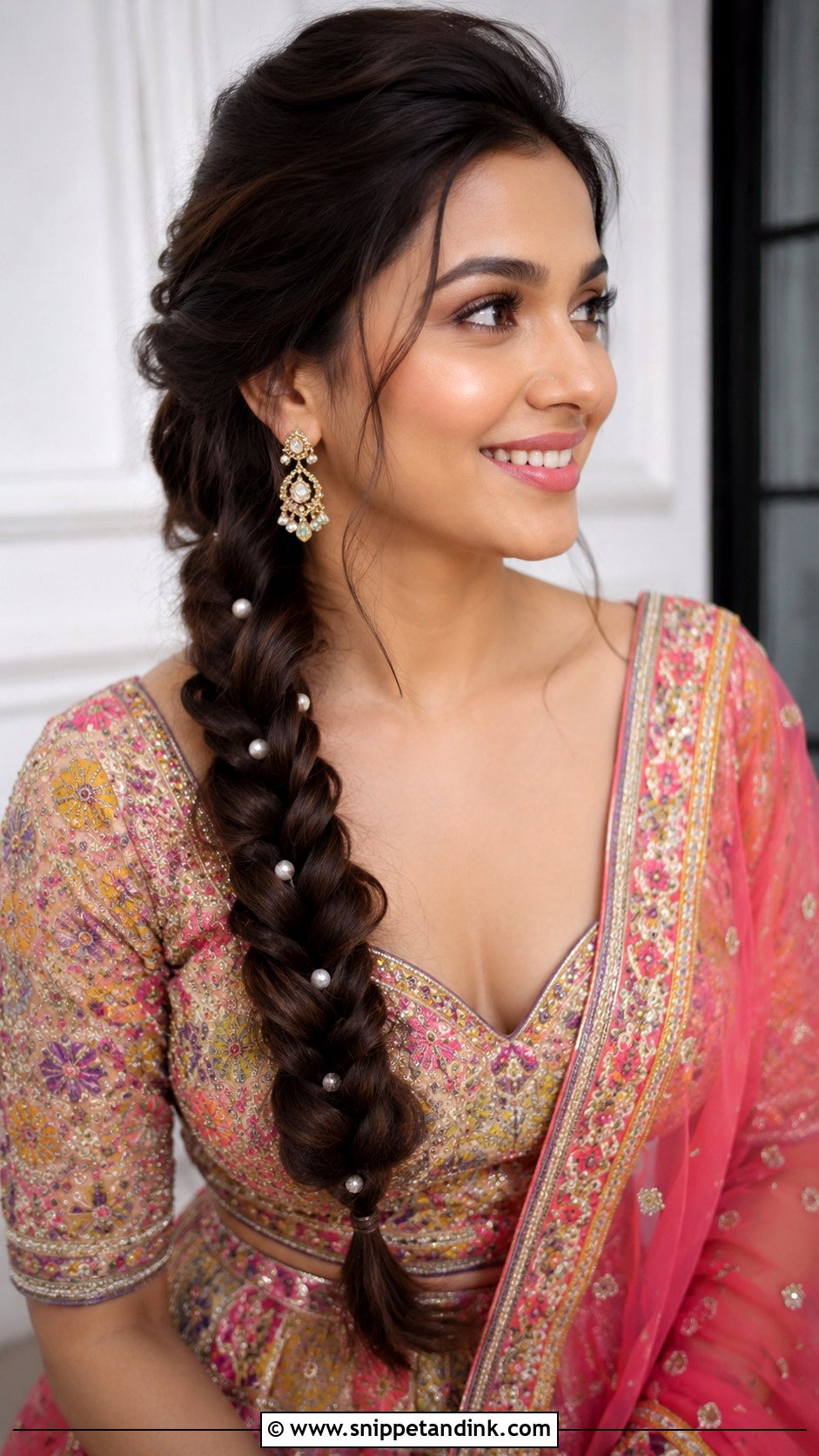
It looks intricate, but a fishtail is just two sections crossed over in tiny pieces. I tease the crown slightly for lift, braid down one side, then pull the edges apart gently to widen it. The thinner the pieces you take, the more detailed it reads in photos. Long, thick hair gives the fullest result. On finer hair I add a clip-in weft underneath so the braid doesn’t taper into a thin tail. Small pearls or flowers can be pushed into the woven sections, and it looks right over a lehenga or sharara with the dupatta draped on the opposite shoulder.
8. Voluminous Open Waves
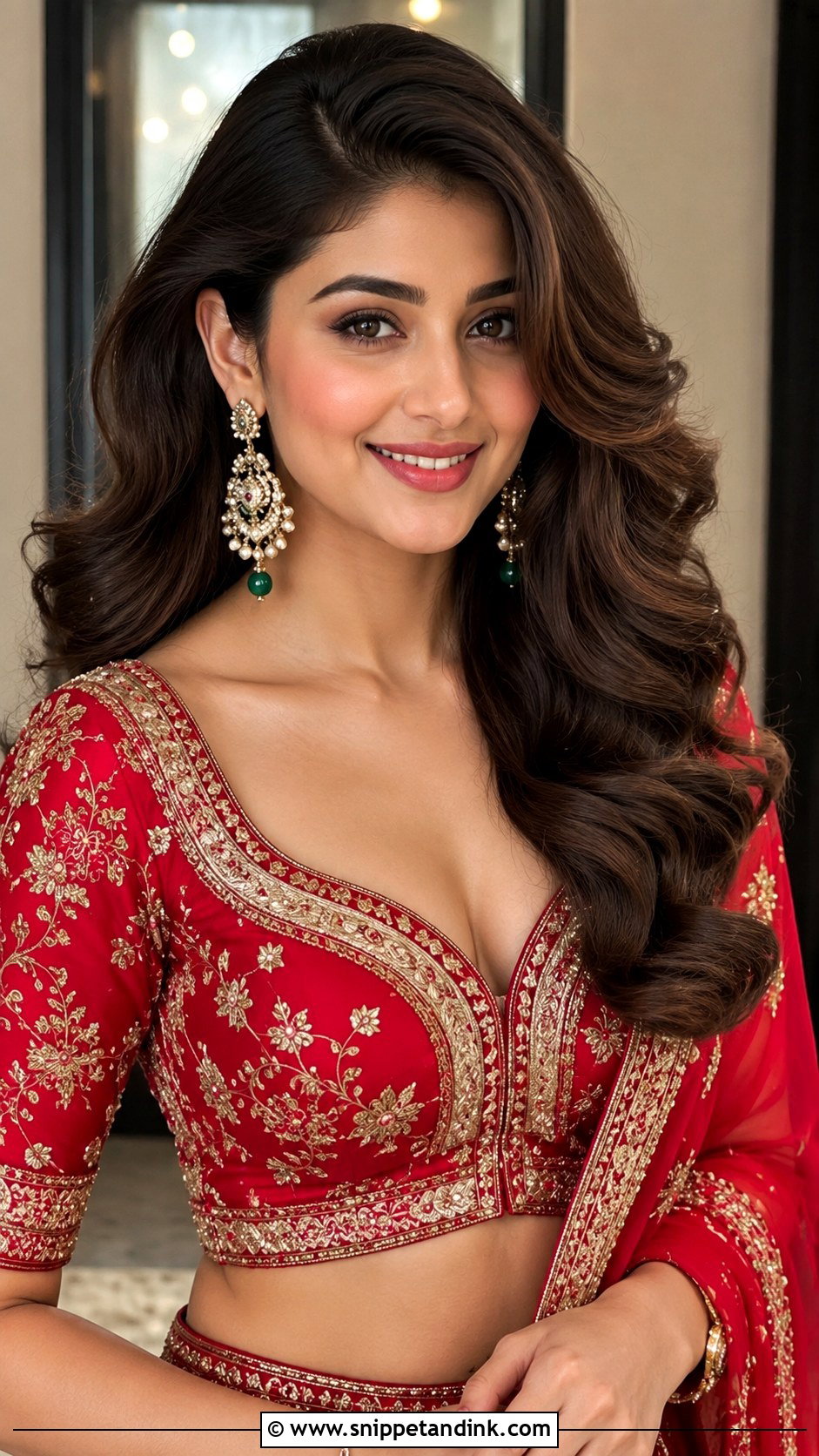
Open waves bring movement and look full in photos, but on a long day they’re the most fragile style here. I curl in sections with a wand, pin each curl to cool, then brush through for a softer wave, with a deep side part for shape around the face. Two honest drawbacks: a dupatta over open hair causes frizz at the crown, and heat makes curls drop. For a warm or outdoor venue, I go one barrel size smaller than you’d expect, because the waves relax as the hours pass. Medium to long hair and big earrings suit them.
9. Twisted Low Chignon
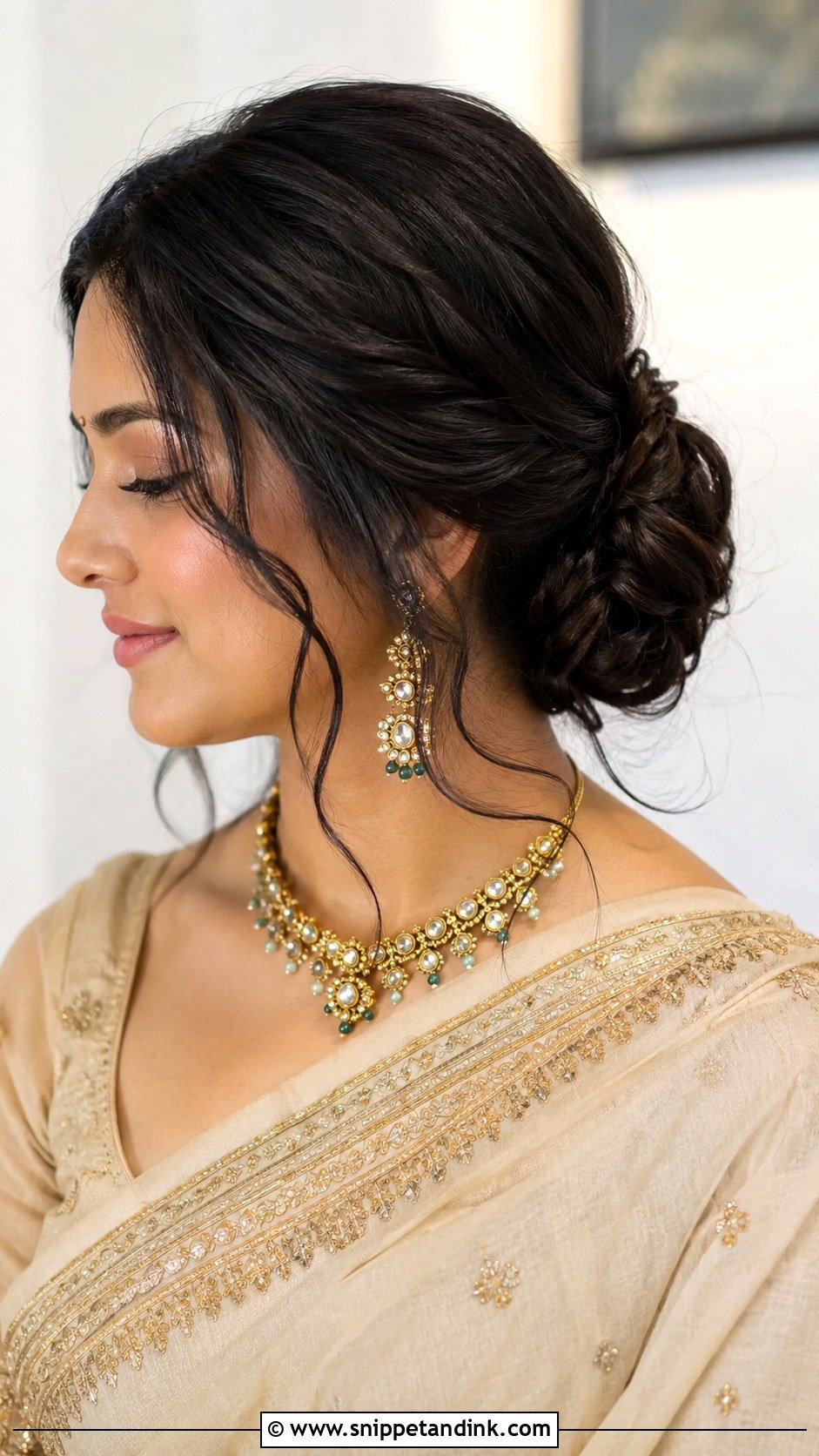
Here the hair gathers into a low, twisted knot at the back, and the folds of each twist give it depth. I like it for evening Nikkahs because it keeps the neck and shoulders clear for a necklace set. The trick is to pin each twist as you make it, rather than twisting everything and pinning at the end, which is exactly how chignons sag by dinner. A few loose tendrils near the face soften it. With a saree or a formal gown, this is the most grown-up shape on the list, and it never fights a dupatta.
10. Side Swept Curls
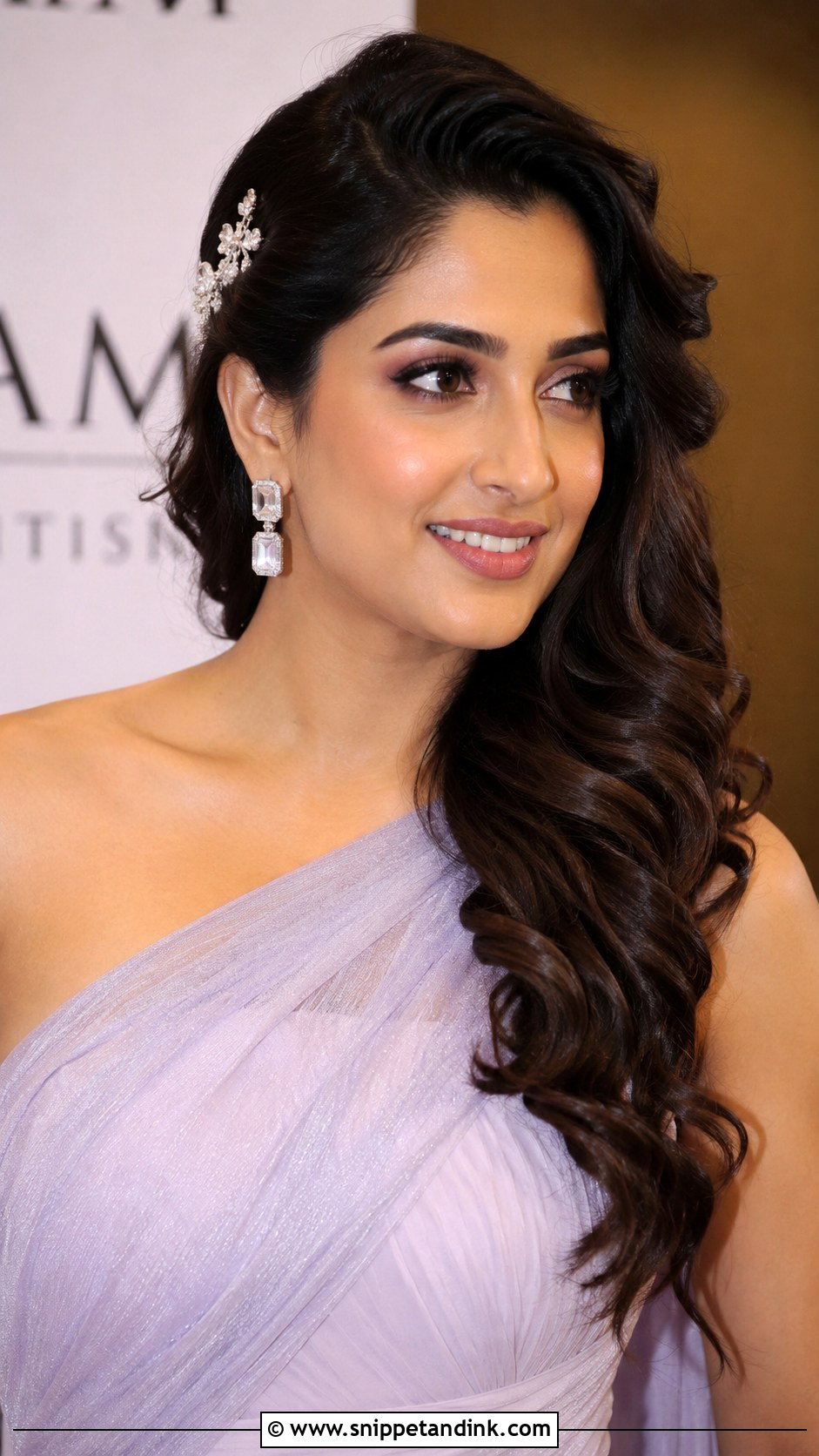
Sweeping everything to one shoulder leaves the other side of the neck bare for a statement earring. I anchor the sweep with a row of crossed bobby pins behind the ear on the bare side; without them, the hair creeps back to center within an hour. A decorative pin can cover that anchor point. Long, thick hair suits it, and it follows off-shoulder or one-shoulder necklines naturally. I’d skip it if your dupatta will be pinned on the same shoulder, since the fabric will crush the curls.
11. Dutch Braid Bun
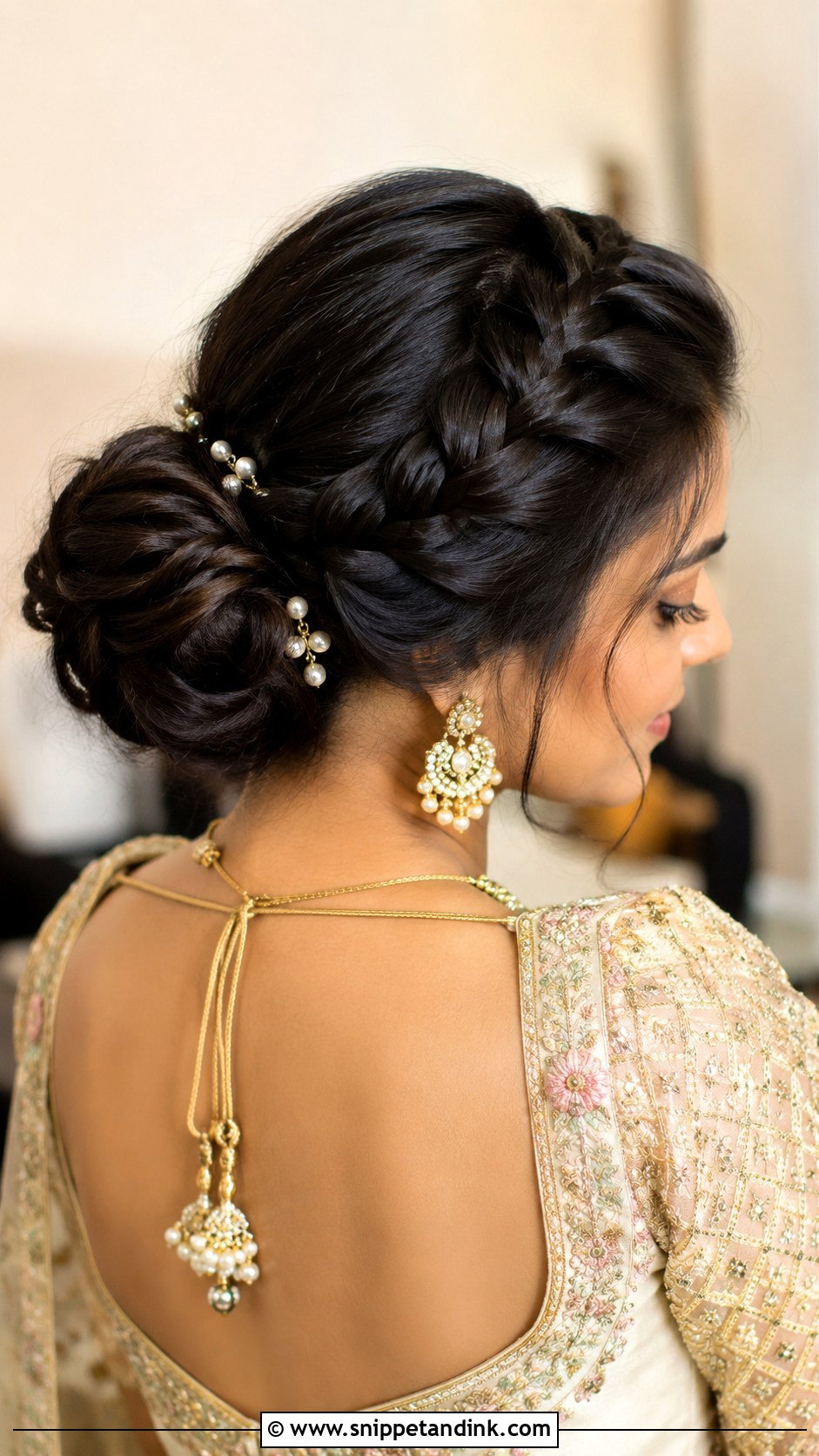
The Dutch braid bun starts with a braid plaited under rather than over, so it stands raised from the head, then finishes in a soft bun at the back. Because the braid grips along the scalp, this is one of the most secure styles here, which matters if you’re the sister running around organizing relatives. Tiny pearls or fresh flowers sit nicely along the raised edge. On layered hair, short pieces poke out of the braid, so I smooth them with a little pomade as I go. Ghararas and lehengas both suit it.
12. Soft Curls With Hair Accessories
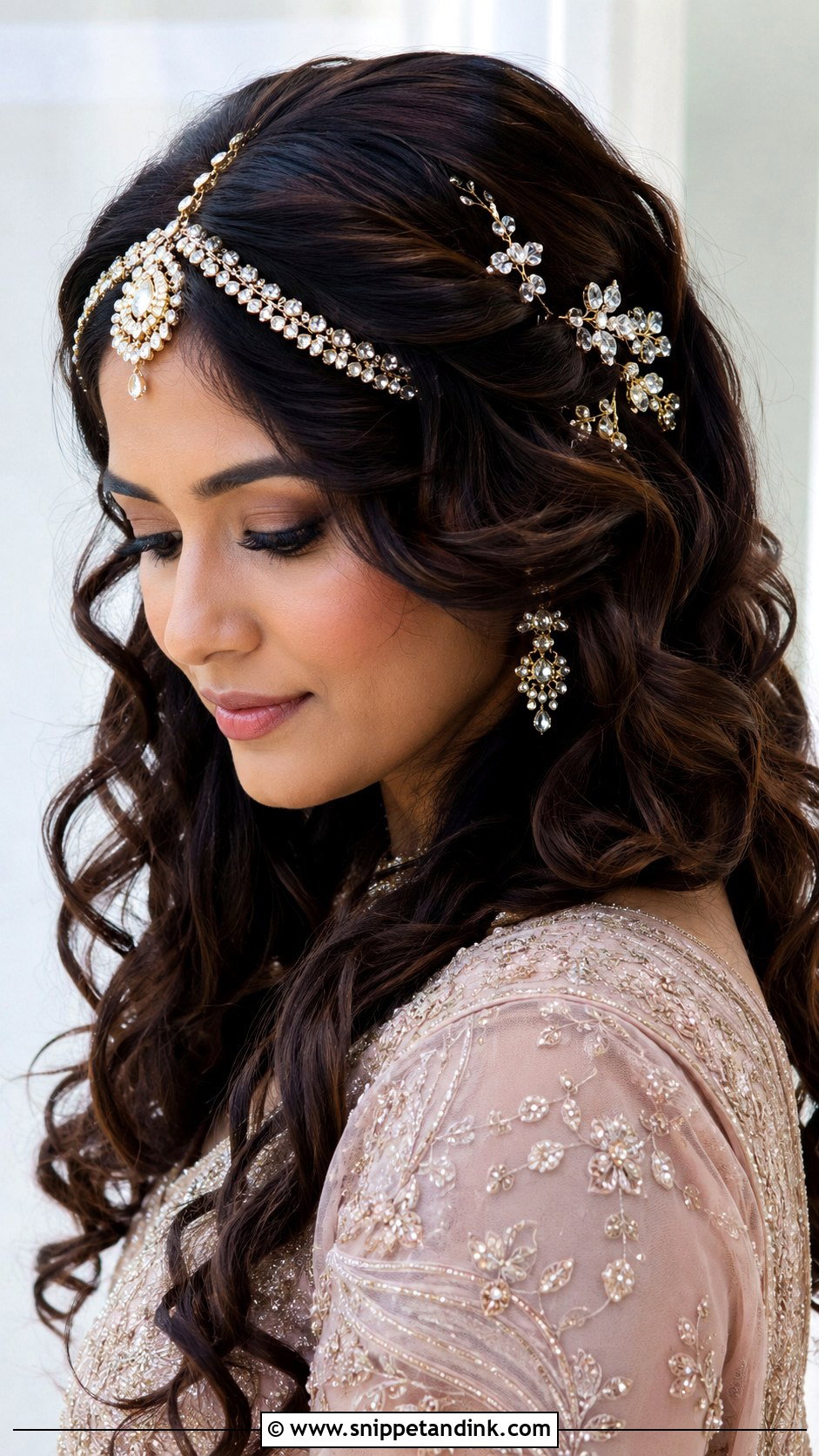
Soft curls make a good base for jewelry: a sparkly headpiece, matha patti, or jeweled pins. With a matha patti, I set the parting first and curl afterward, because the chain needs a perfectly straight center part to hang evenly. I also pin the side chains into the hair behind the ears so they don’t swing forward when you lean in for photos. Open curls or a half-up arrangement both work at most lengths. Keep the curls looser near the accessory so it isn’t buried.
13. Sleek Bun With Center Parting
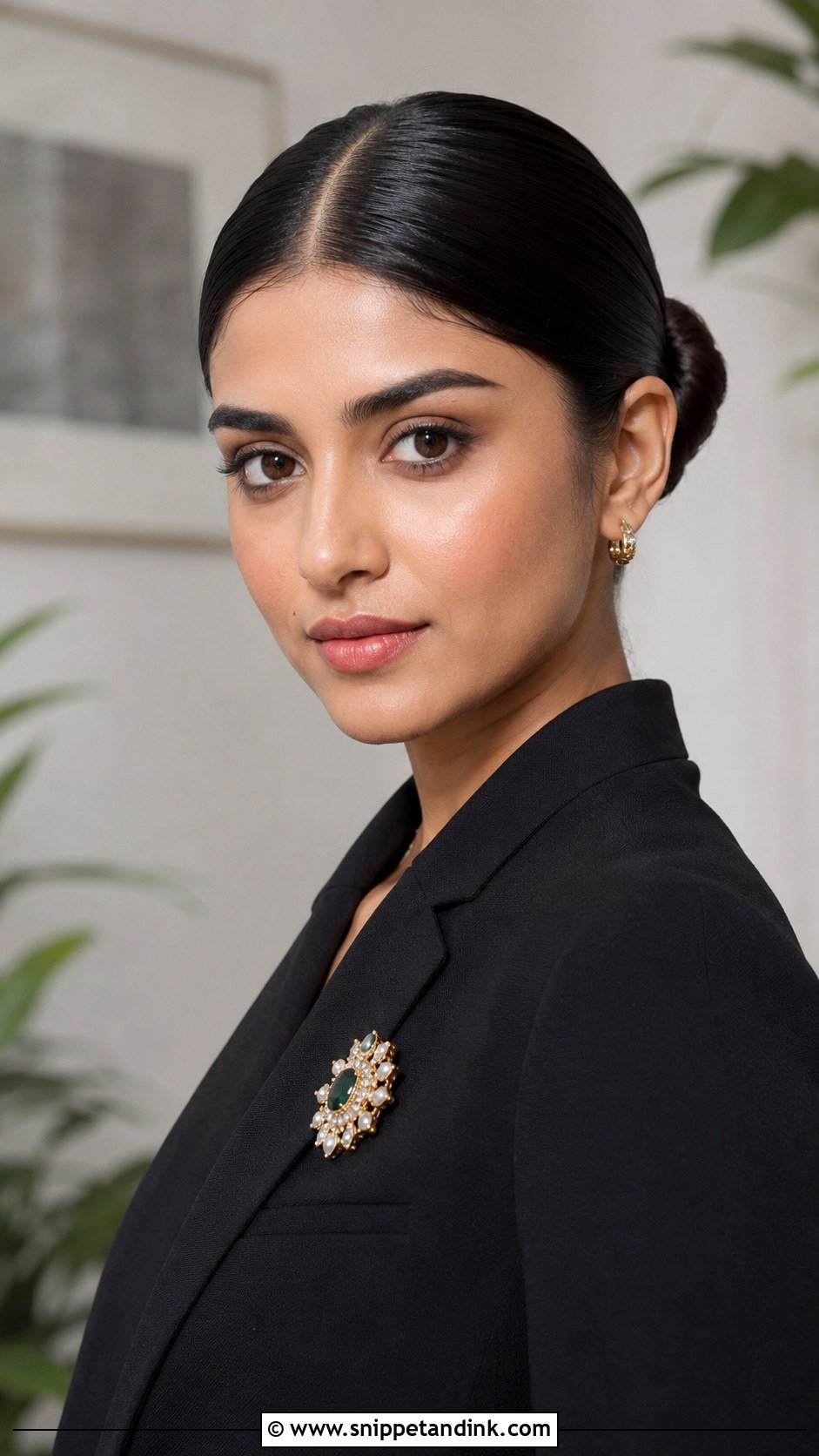
Part straight down the middle, smooth everything back with gel and a fine-tooth comb, and coil it into a tight bun. Clean and modern. I always check the part from above with a hand mirror, because a slightly crooked center part is the first thing that shows in a front-facing photo. This shape shows off cheekbones and earrings and suits structured outfits. It is unforgiving on a high forehead or a very round face, though; a soft side part would be kinder there. One tiny embellished pin adds a festive note without breaking the sleek line.
14. Curly Half Updo With Braids
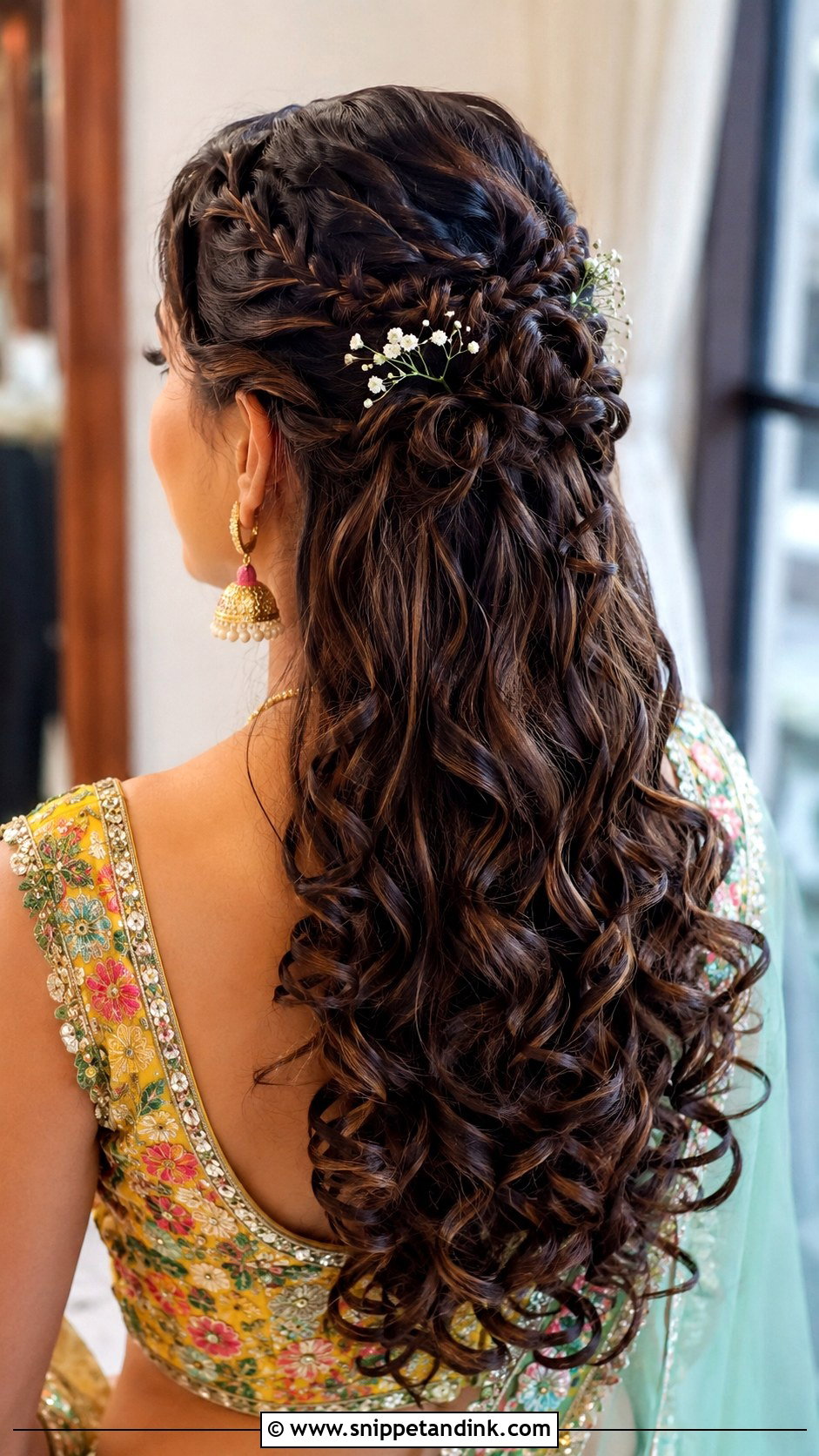
Small braids pin the top section back while curls stay free below. It’s busier than the plain half-up style, so I keep the braids thin and close to the head, two at most, so the curls stay the focus. Natural waves or curls suit it best, and I’d work with your own curl pattern rather than flat-ironing and re-curling. Small flowers woven into the braids keep it fresh. It holds better than a loose half-up because the braids grip, and it sits well with colorful traditional outfits.
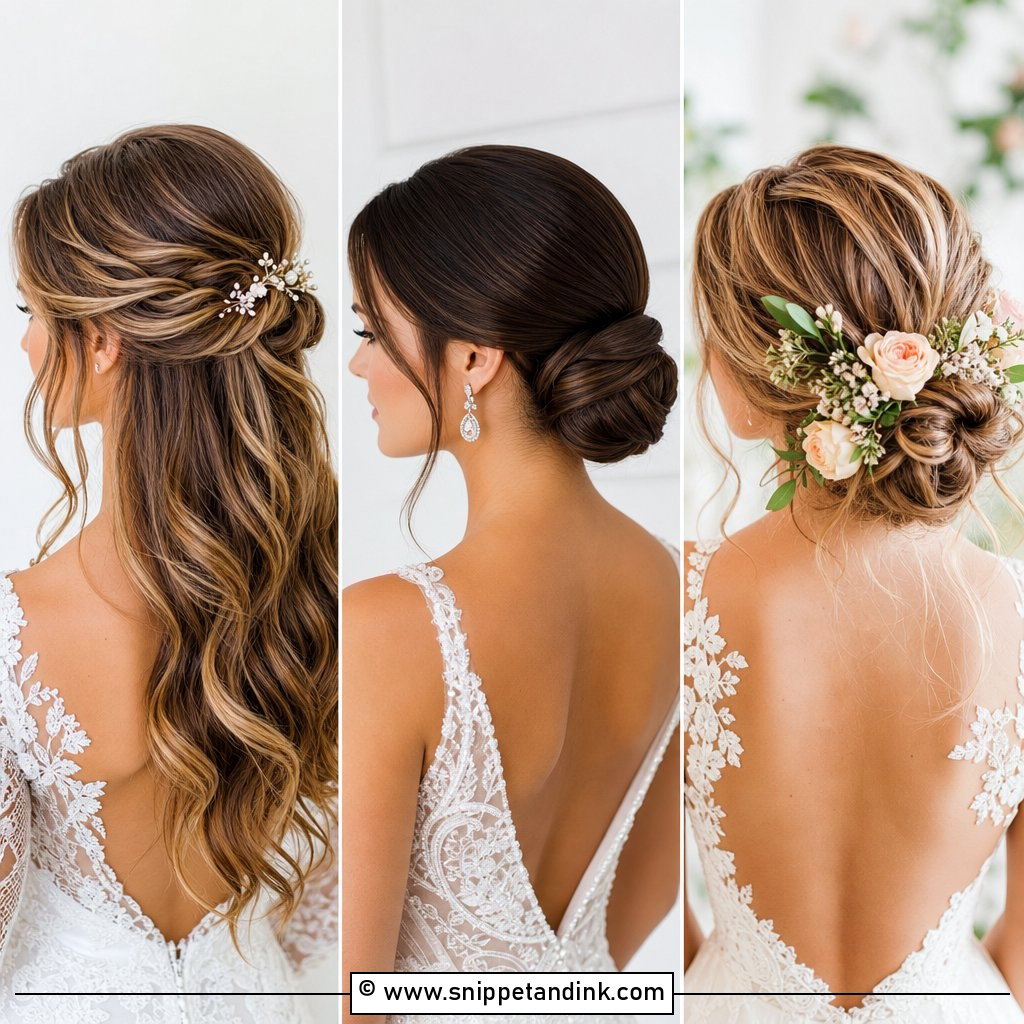
15. Bouffant With Open Hair
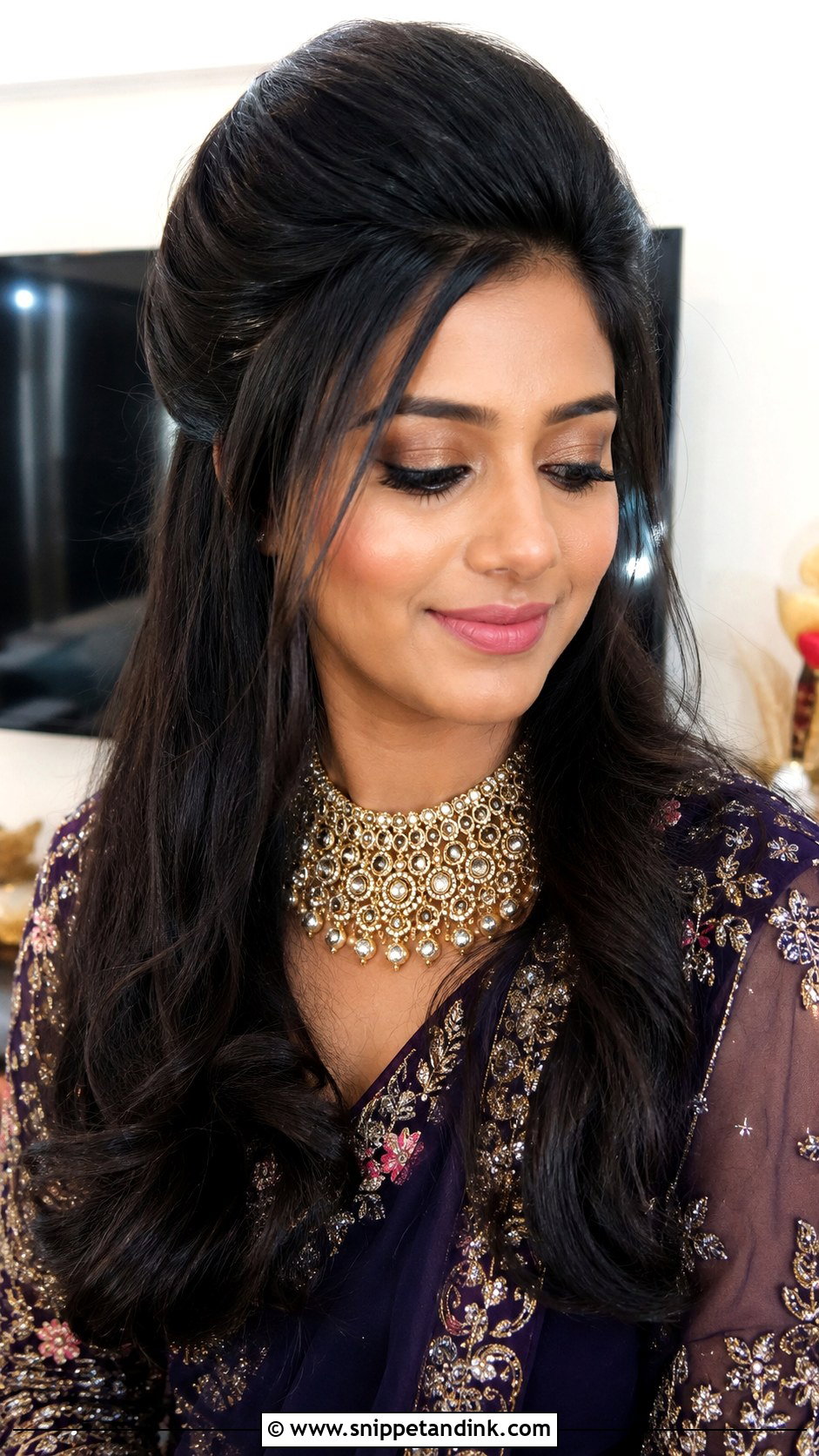
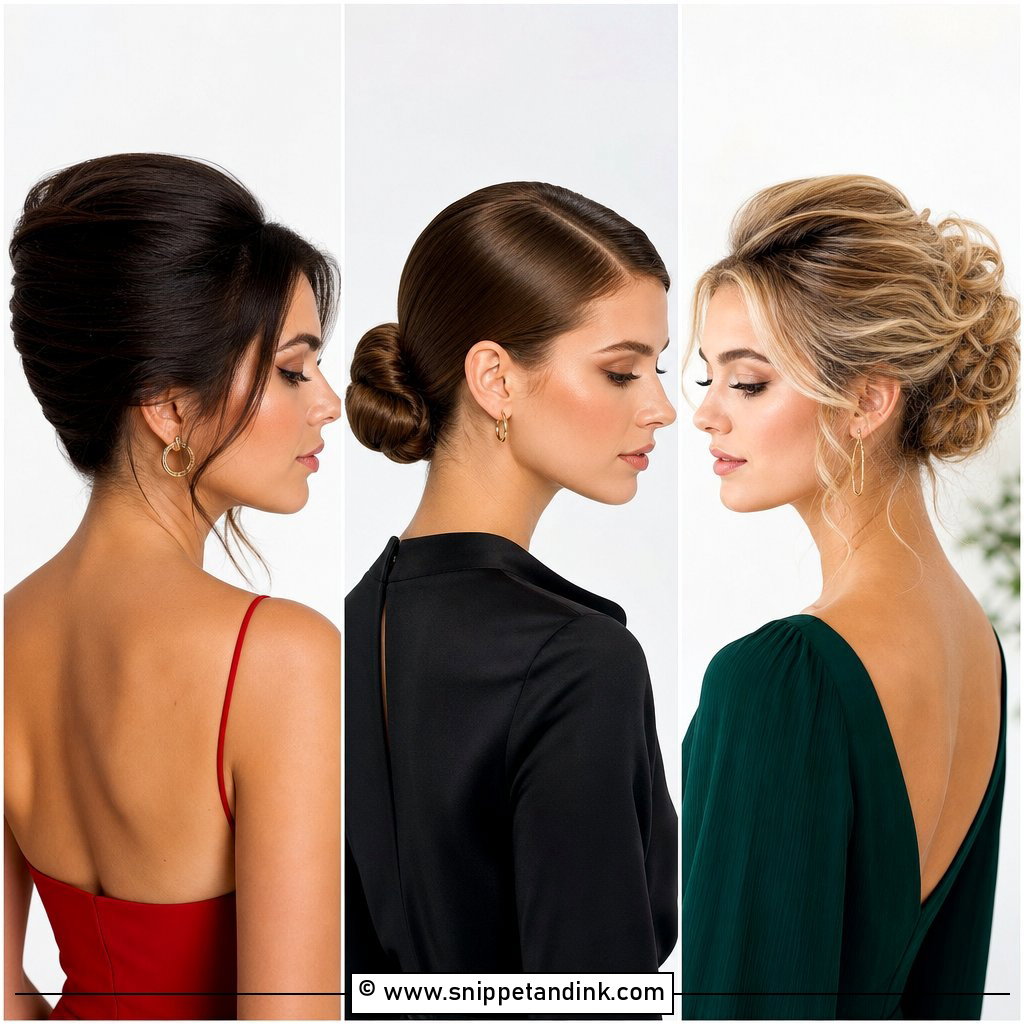
A bouffant adds height at the crown with backcombing, then lets the rest fall in waves or straight. Done well, it lengthens the face and balances a heavy necklace. I backcomb only the underside of the crown section, smooth the top layer over it, and secure the base with crossed pins so it doesn’t flatten by evening. Long hair gives the best proportion. If you’ll cover your head for the nikkah itself, the dupatta will press the height down; lift it again afterward with your fingers, never a comb.
16. Twisted Side Braid
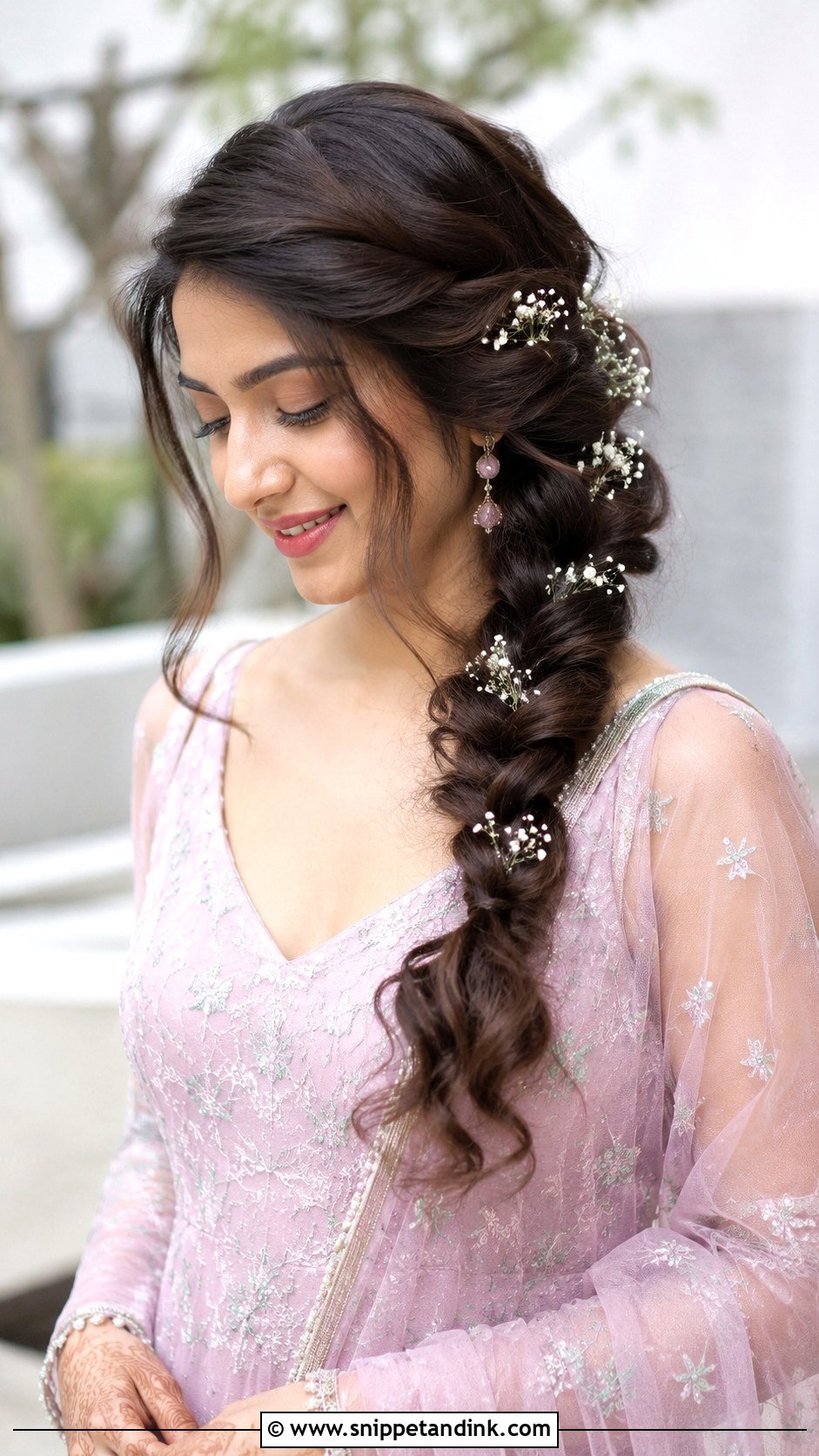
A rope braid is two strands twisted the same way, then wrapped around each other in the opposite direction. That counter-twist is what stops it unwinding, and it’s the step people skip at home. Gather the hair over one shoulder, twist loosely, then pull the strands apart a little for fullness. Wavy or thick hair fills it out nicely. Flowers or pearls tuck in easily, and the open side shows off your earring. I like it for daytime ceremonies with pastel outfits.
17. Low Knotted Bun With Pearls
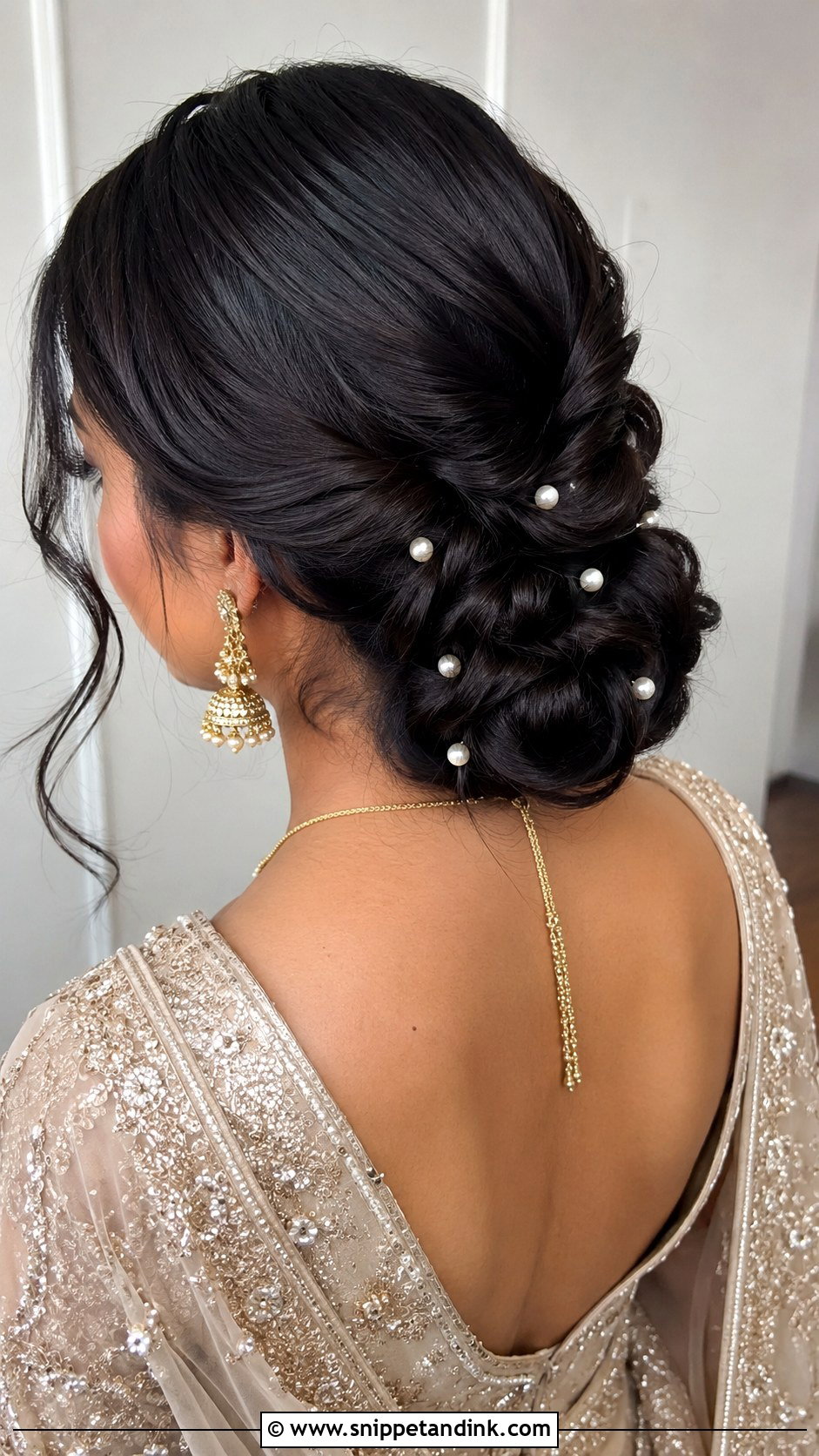
Tying sections of hair into small knots and gathering them into a bun gives a lot of texture without heavy backcombing. Pearl pins finish it. I place the pearls in a loose arc, not evenly spaced in a row, because a ruler-straight line looks stiff from behind. It’s secure, suits medium to long hair, and goes with sarees, gowns and ghararas at an evening Nikkah. On very fine hair the knots can look thin, so I’d add a bun donut underneath for body.
18. Wavy Ponytail With Volume
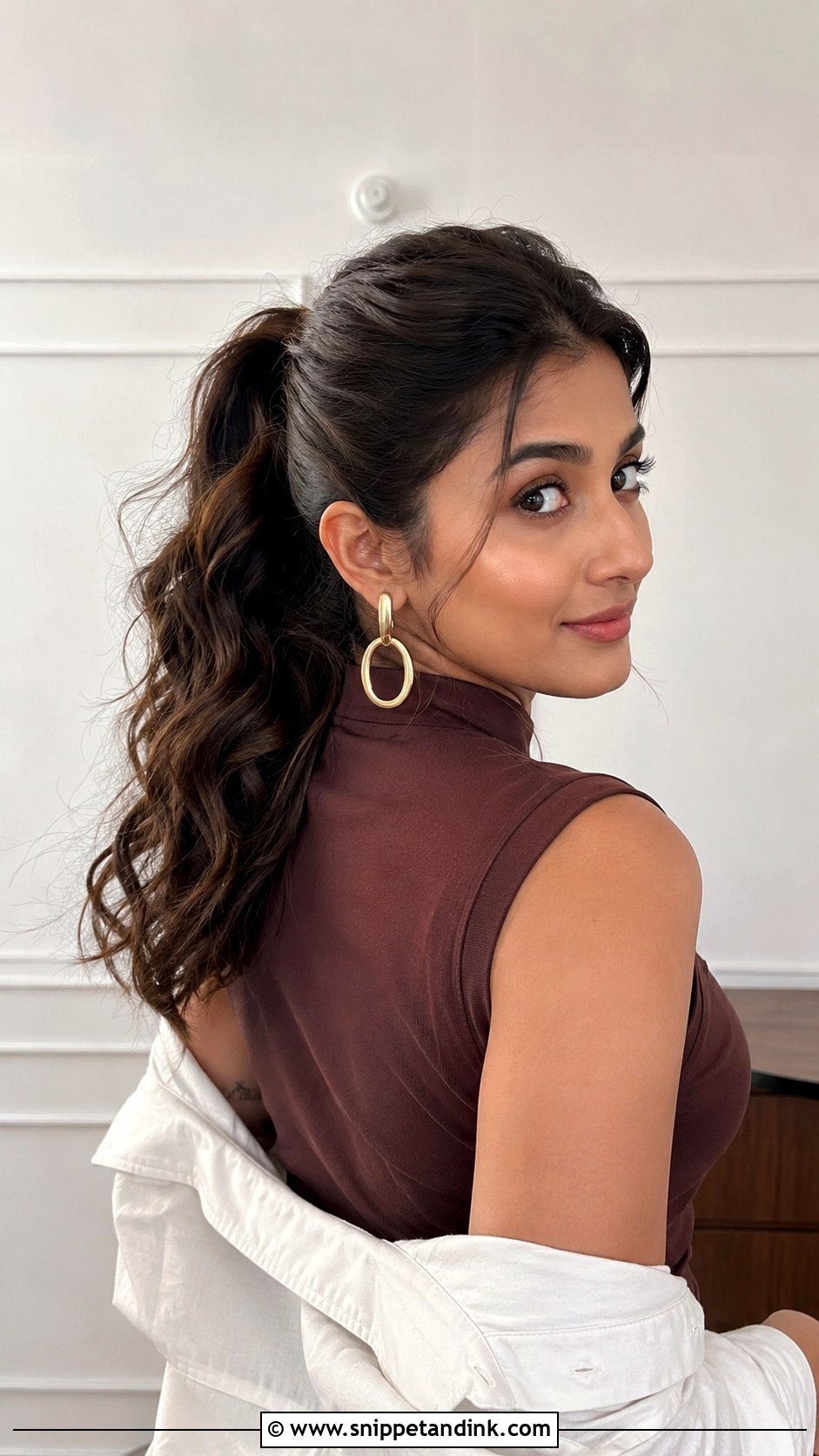
Lift at the crown and waves through the length make this ponytail feel young and lively. Tie it high or at mid-height, wave the length, and tease the crown slightly. The weight of a long curled ponytail drags on the elastic, so I secure it with two elastics or a bungee band, then wrap a strand over them. A high ponytail will clash with a head-covering dupatta during the ceremony; a mid-height one sits under it more comfortably. Long hair and modern outfits suit it.
19. Braided Bun With Flowers
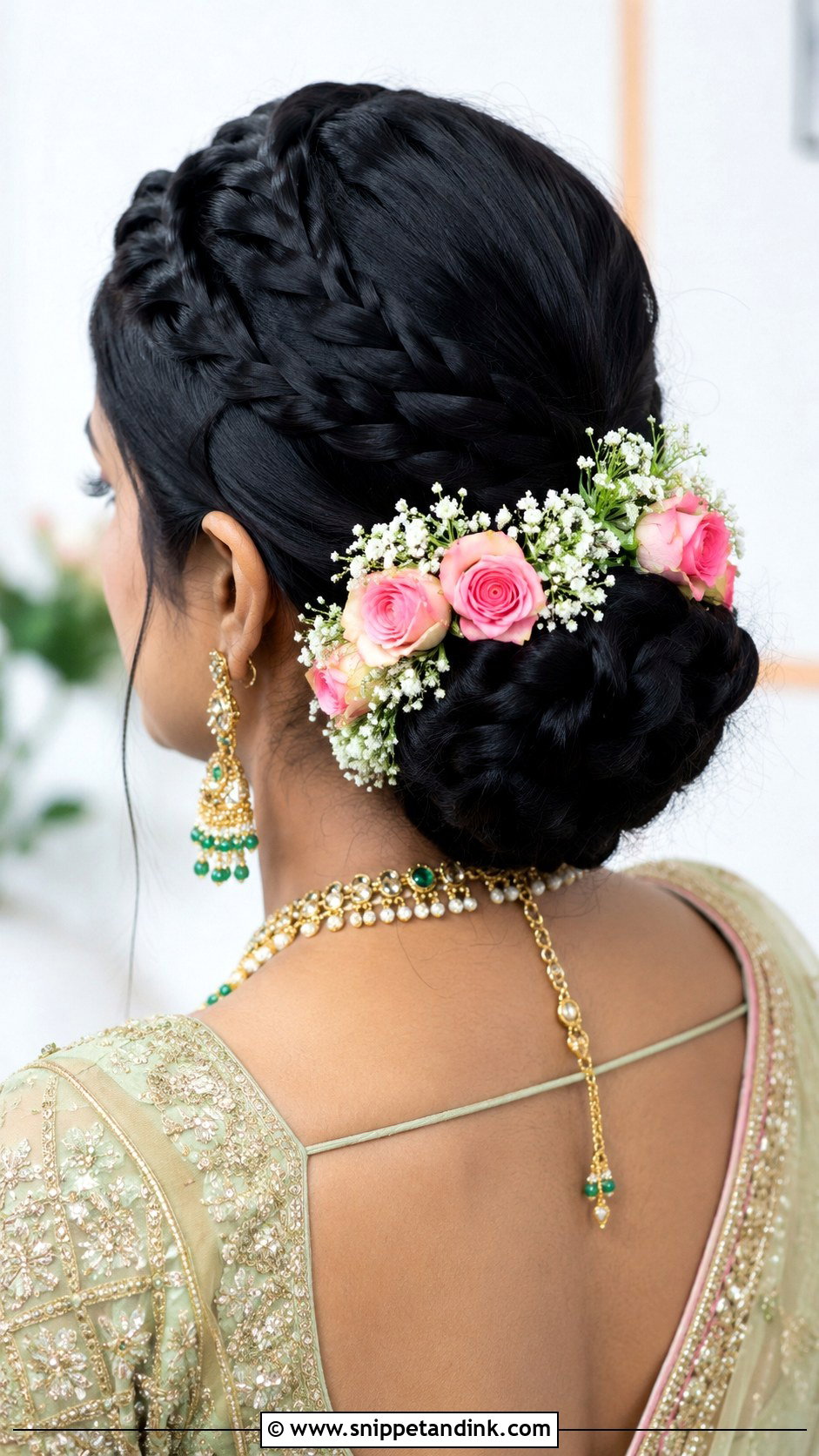
One or several braids wrapped into a rounded bun, with fresh blooms filling the gaps. It’s among the most traditional shapes here and one of the most durable, since braids don’t drop the way curls do. I braid on slightly textured hair rather than freshly washed hair, because clean, silky strands slide out of pins. Gajra or small roses work well. It goes with lehengas, shararas and sarees, and it stays tidy from the first photo to the last.
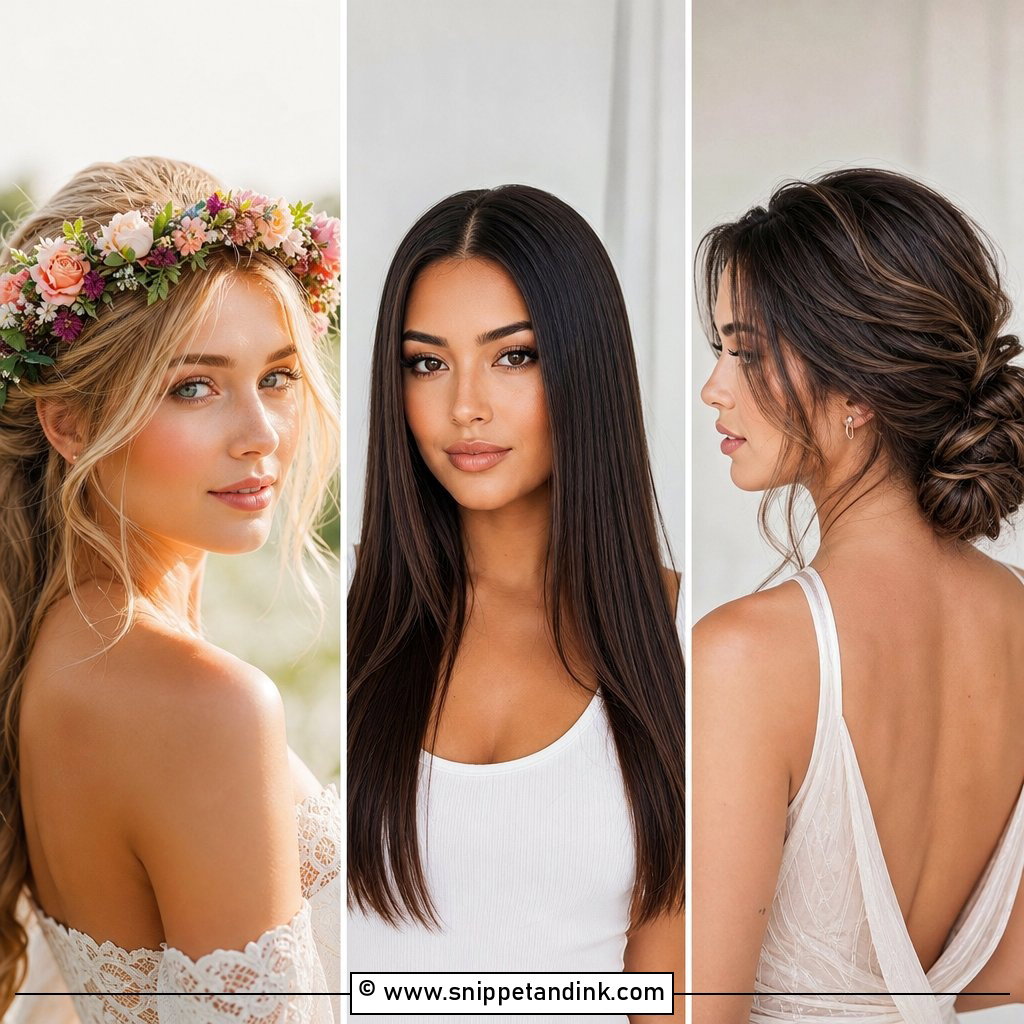
20. Soft Glam Blowout
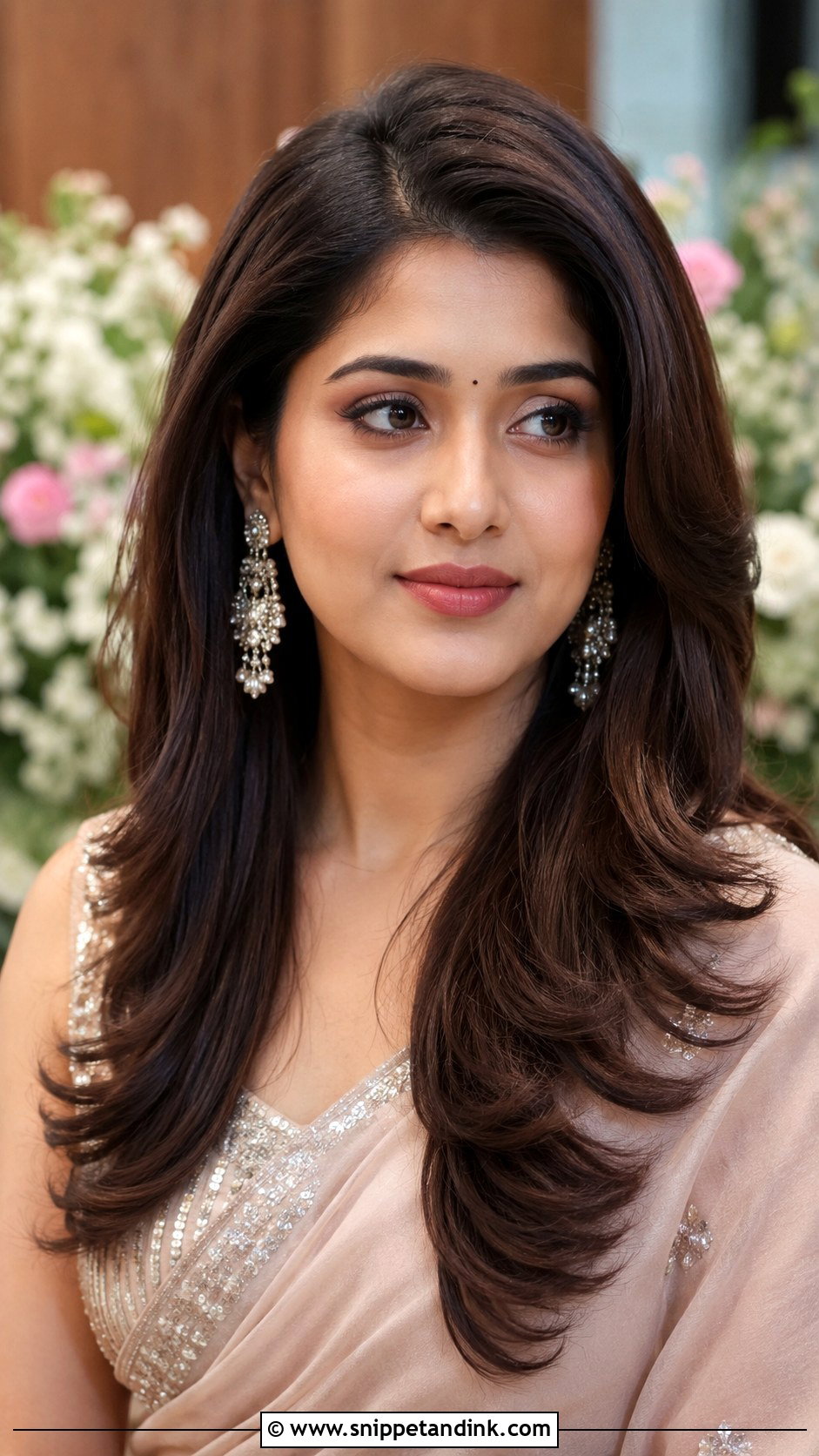
A soft glam blowout is a round-brush blow-dry with volume at the roots and curved ends. It looks simple, and that’s the point: glossy, healthy hair is the whole style. I finish with a few large velcro rollers while makeup is being done, then take them out last. A center or deep side part both suit it, and it goes with any outfit. The weakness is humidity. A blowout reverts in damp heat faster than curls set with a hot tool, so I’d keep it for an air-conditioned venue.
When the Bride Gets the Stylist First
On most Nikkah mornings, the bride is in the chair first and longest. Sisters often get squeezed in at the end or end up doing their own hair. A bit of planning keeps you from being rushed out the door with half a style.
Getting onto the schedule early
Ask the bride’s stylist, at the time she books, whether she takes family members and how long she needs per person. A sleek bun or ponytail takes far less time than a braided crown or full curls, so if your slot is short, choose a quicker style rather than having a complicated one hurried. I would always rather do a neat low bun properly than leave a braid half-finished.
Arriving with hair that’s ready to work with
Wash your hair the night before, not that morning, unless it gets oily quickly. Day-old hair holds pins and curls much better. Arrive with it fully dry and free of oil treatments, and wear a button-up top so nothing gets pulled over your finished hair. If your outfit has a heavy dupatta, bring it along so the stylist can pin it in place at the end.
What goes in your clutch
- A few bobby pins in your own hair color
- A travel-size hairspray for the crown and edges
- A small comb for lifting the crown after the dupatta comes off
- Spare elastics if you’re wearing a ponytail or braid
Matching Your Hair to the Way You’ll Spend the Nikkah
The right style for your sister’s Nikkah depends less on the photo you saved and more on the day you’ll actually have: whether you’ll cover your head, how long you’ll be on your feet, and how your hair behaves in heat. Braided and knotted buns are the most secure. Open waves and blowouts need a cooler room and a touch-up. Flowers, pearls and pins are easy to add at the end. Pick the shape that suits your hair and your outfit, and you’ll spend the evening next to your sister instead of in front of a mirror.
You'll Like These Ideas:


Leave a Reply