
Indian weddings rarely mean one hairstyle. There’s the haldi, the mehendi, the sangeet, the ceremony and the reception, each with a different outfit and a different amount of dancing. The styles brides bring to me now swing between two poles: flower-heavy buns and braids rooted in regional tradition, and sleek ponytails and waves borrowed from the runway. I’ve rounded up 25 current looks below for brides, bridesmaids and guests, and with each I’ve explained what it takes to make it last, which hair it works on and where it struggles.
Fine, Curly or Shoulder-Length? Adjusting These Styles
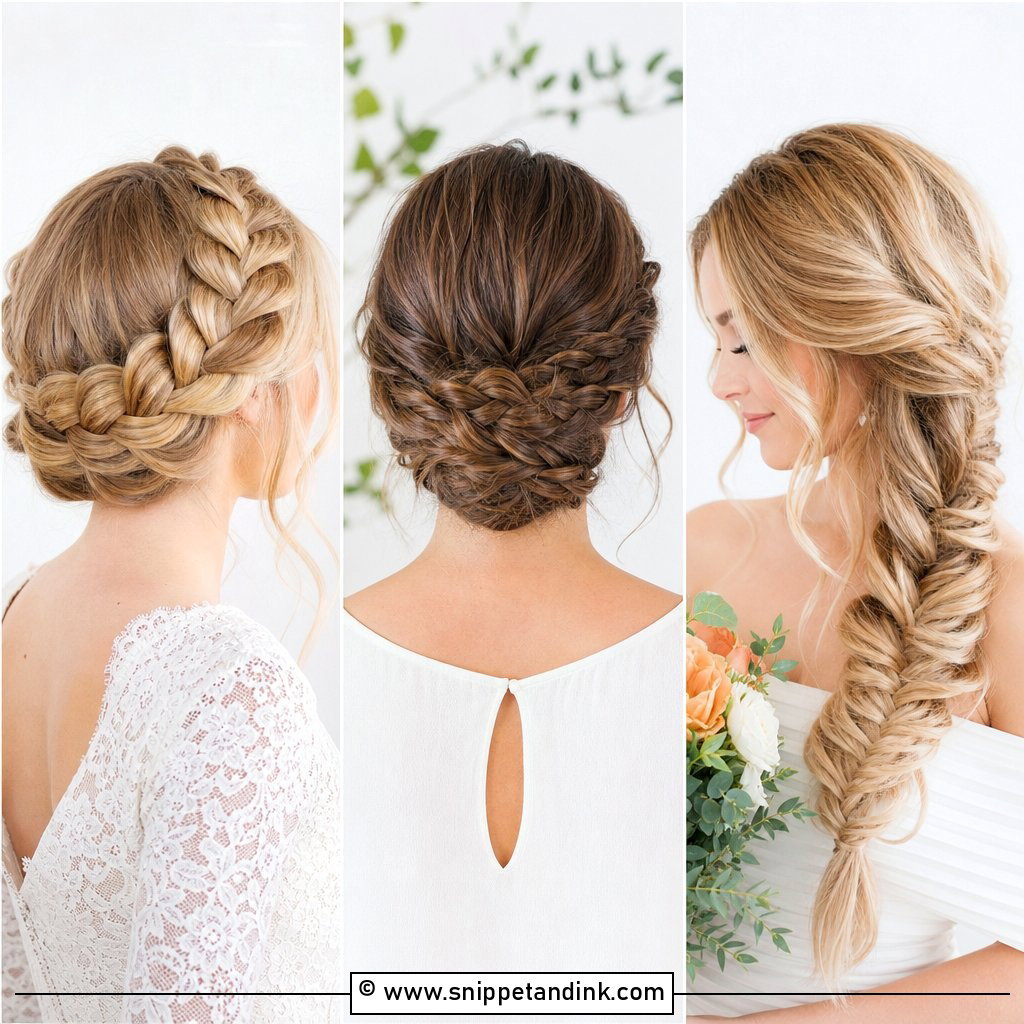
Almost every photo here shows long, thick, straight hair. Plenty of brides don’t have that, and most of these styles can still be done with a few adjustments.
Fine or thin hair
Fine hair struggles to hold a bun’s size and lets pins slip. I prep it with a volumizing mousse and texture spray, use a padded donut or filler under buns, and choose braided styles over smooth ones, because braids give pins something to grip. Clip-in extensions add bulk to braids without anyone knowing.
Curly or coily hair
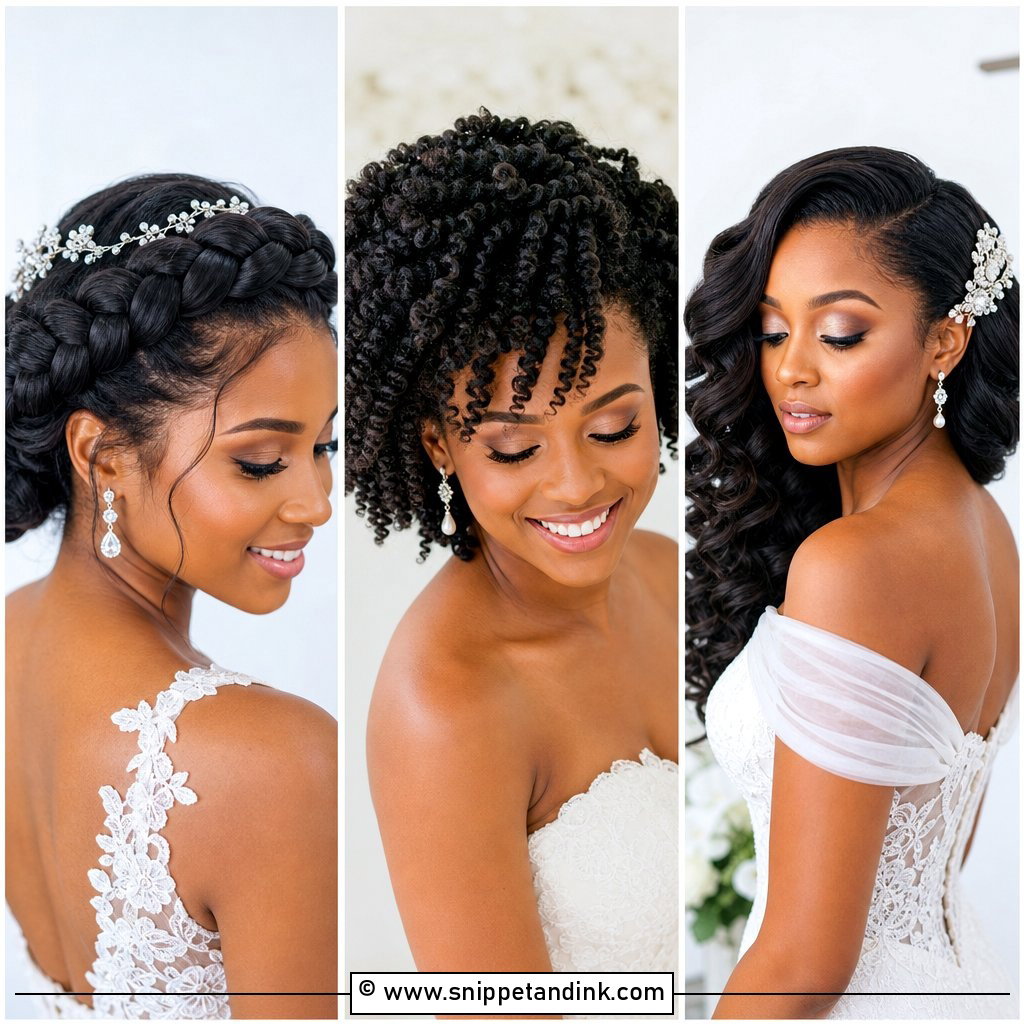
Curly hair often holds a style better than straight hair. Curly buns, braided crowns and twisted updos suit natural texture; sleek ponytails and finger waves need straightening first. If you want the sleek look, have your hair blow-dried the day before so the morning is spent on styling, not straightening.
Shoulder-length hair
Low buns, half-up styles and crown braids all work at shoulder length. A full jada, a long fishtail or a big floral donut bun needs extensions. Tell your stylist early so they can be color-matched before the wedding.
1. Low Bun With Middle Parting
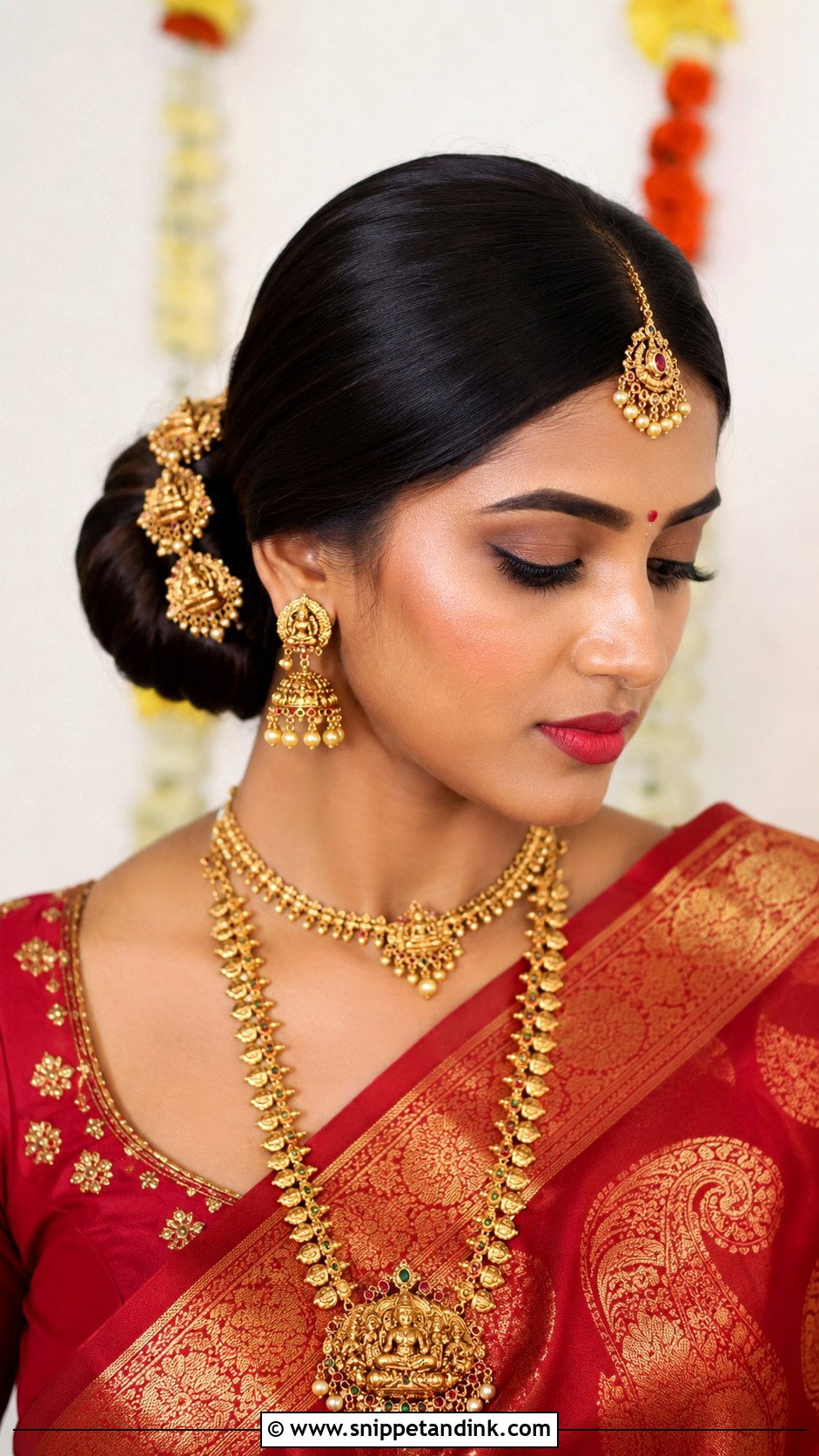
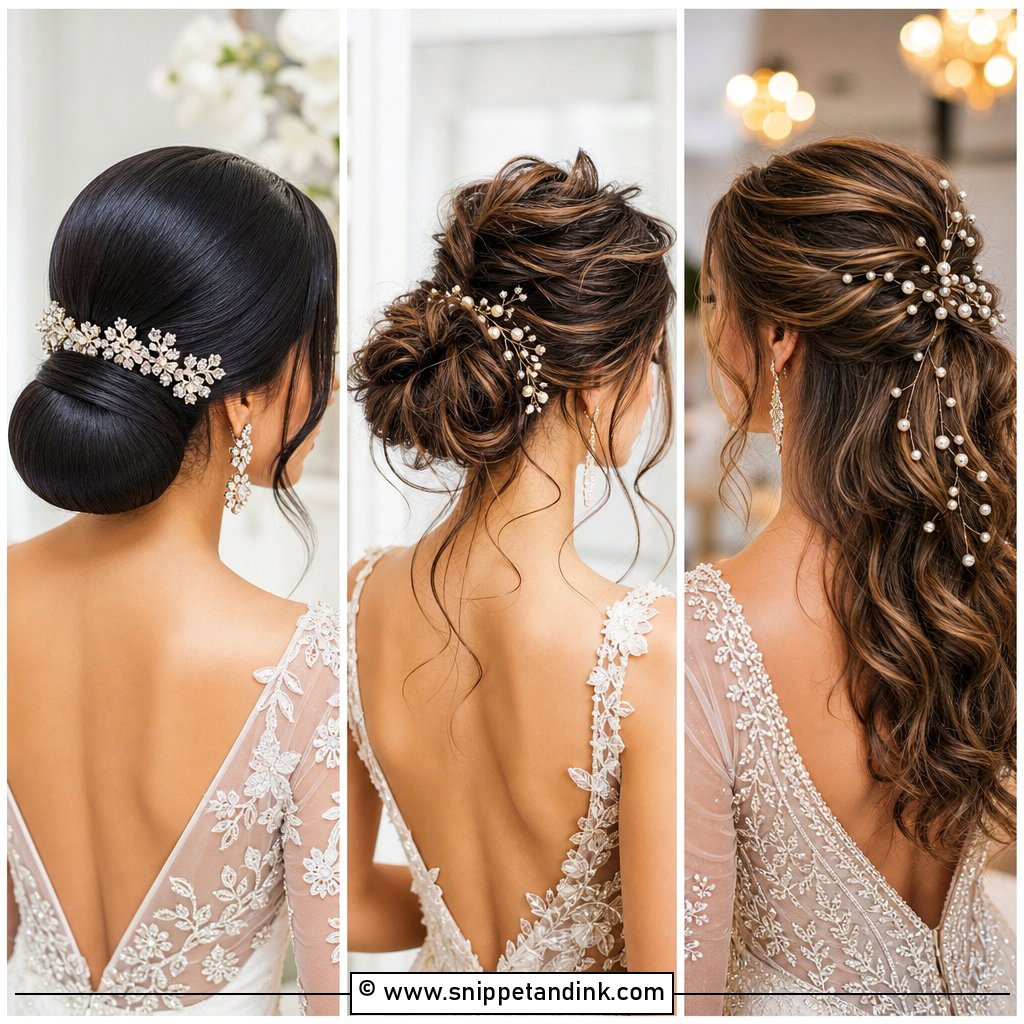
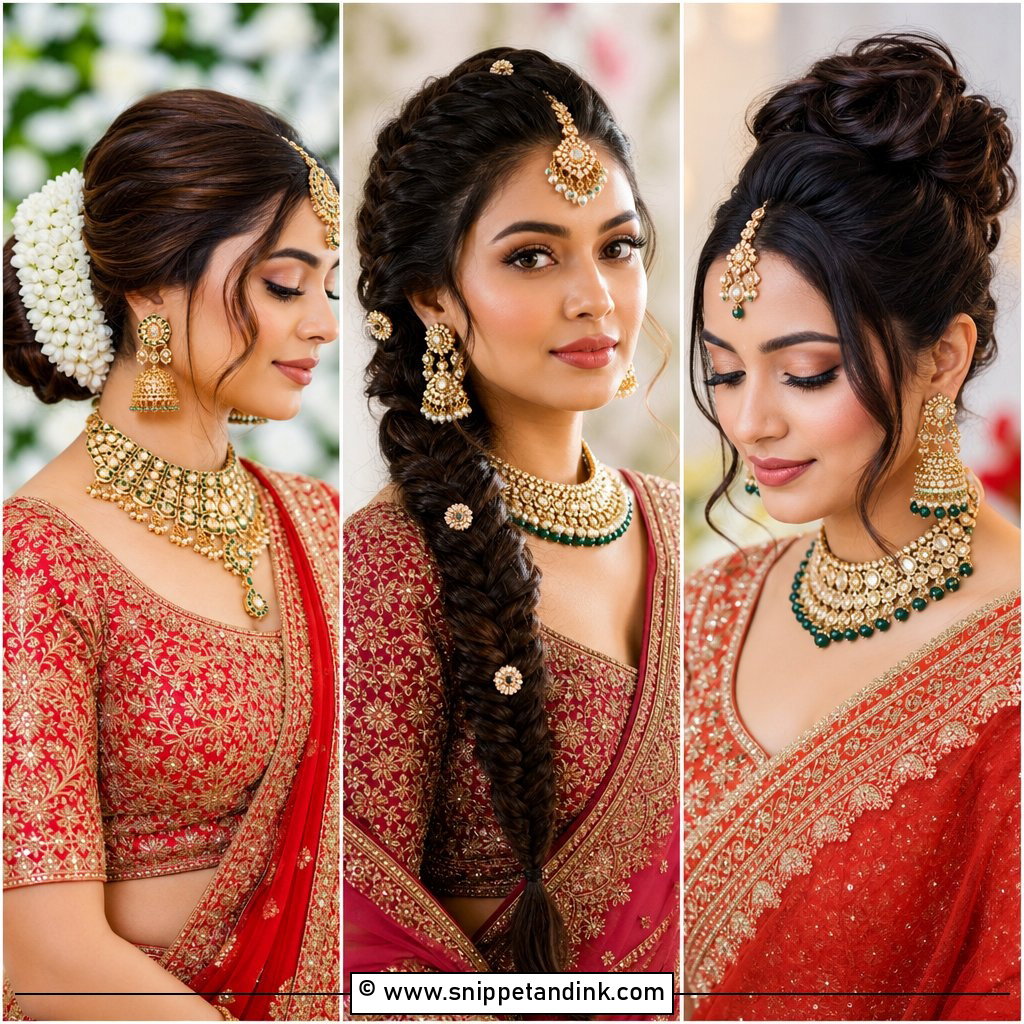
A center-parted low bun is the style I’d call the safest bet for the main ceremony. It sits at the nape, frames the face symmetrically and leaves room for a maang tikka to hang straight down the part. Sleek suits a temple ceremony; a few loosened strands suit a softer look. Many brides finish it with a gajra or temple hair pins around the base. The part has to be dead straight, so I set it on damp hair rather than trying to fix it once the hair’s dry.
2. Floral Donut Bun
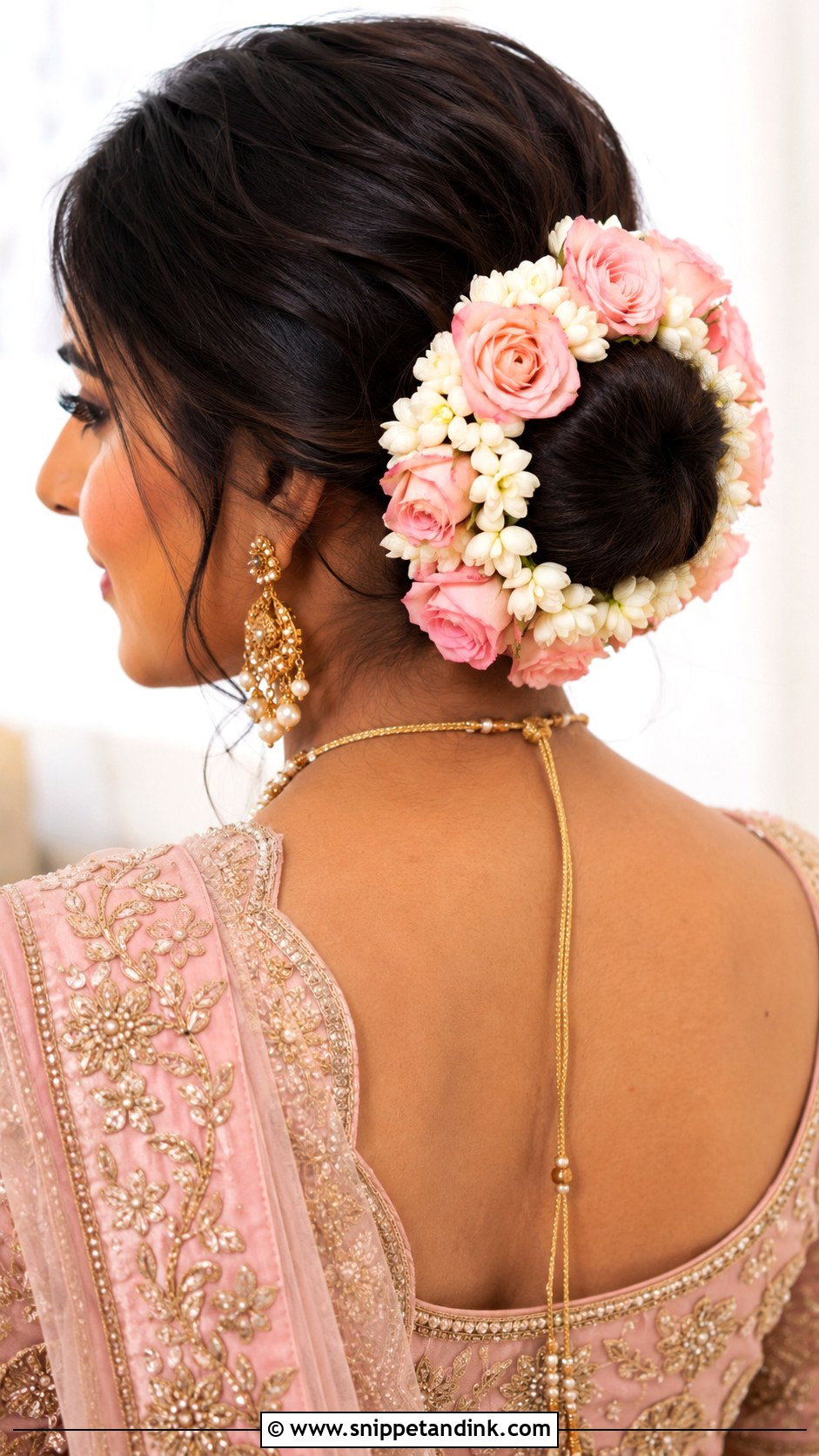
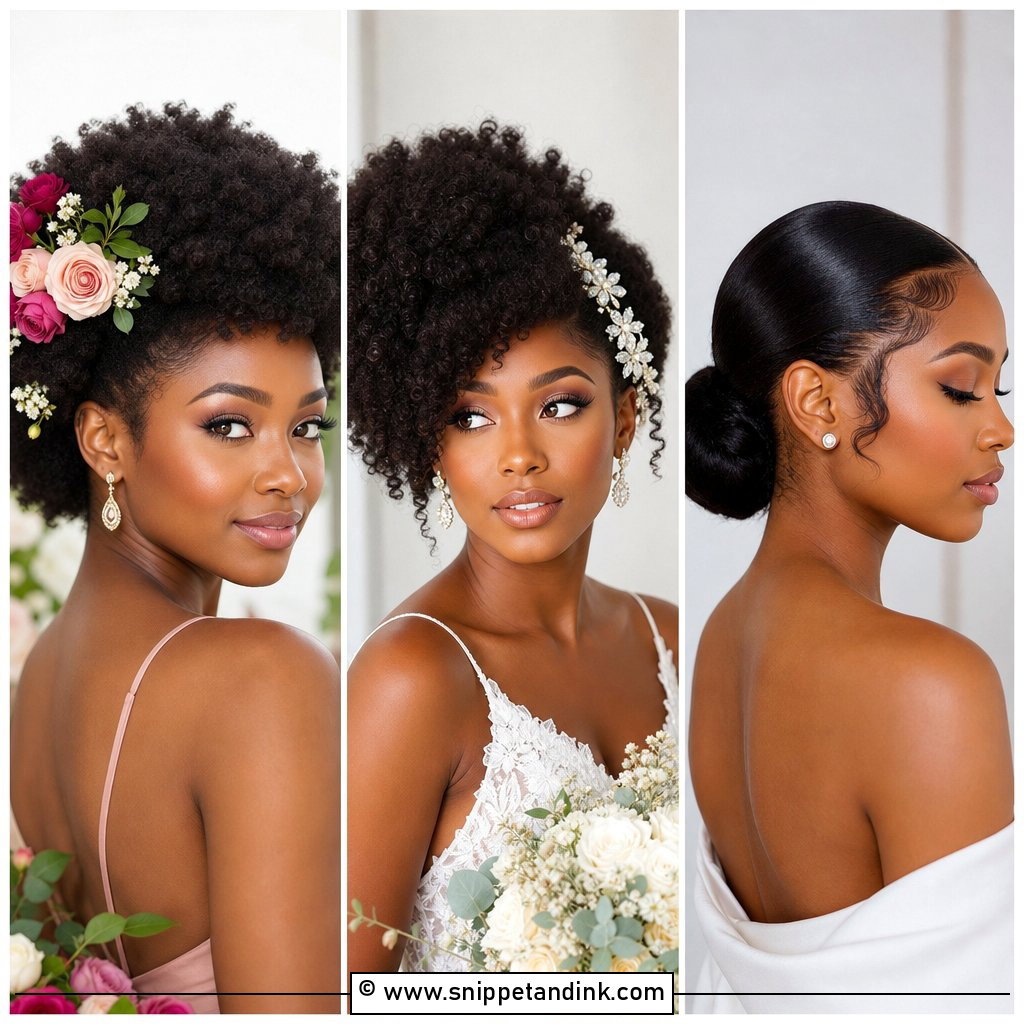
Picture fresh roses and jasmine circling a perfectly round bun. Getting that round shape usually means a foam donut underneath, especially if your hair is fine, and I pick a donut close to your hair color so nothing shows through gaps between the flowers. Roses and jasmine together add scent and color. I’d keep this for a morning haldi or an outdoor mandap, since in a hot afternoon the roses start to droop within a few hours.
3. Fishtail Braid With Flowers
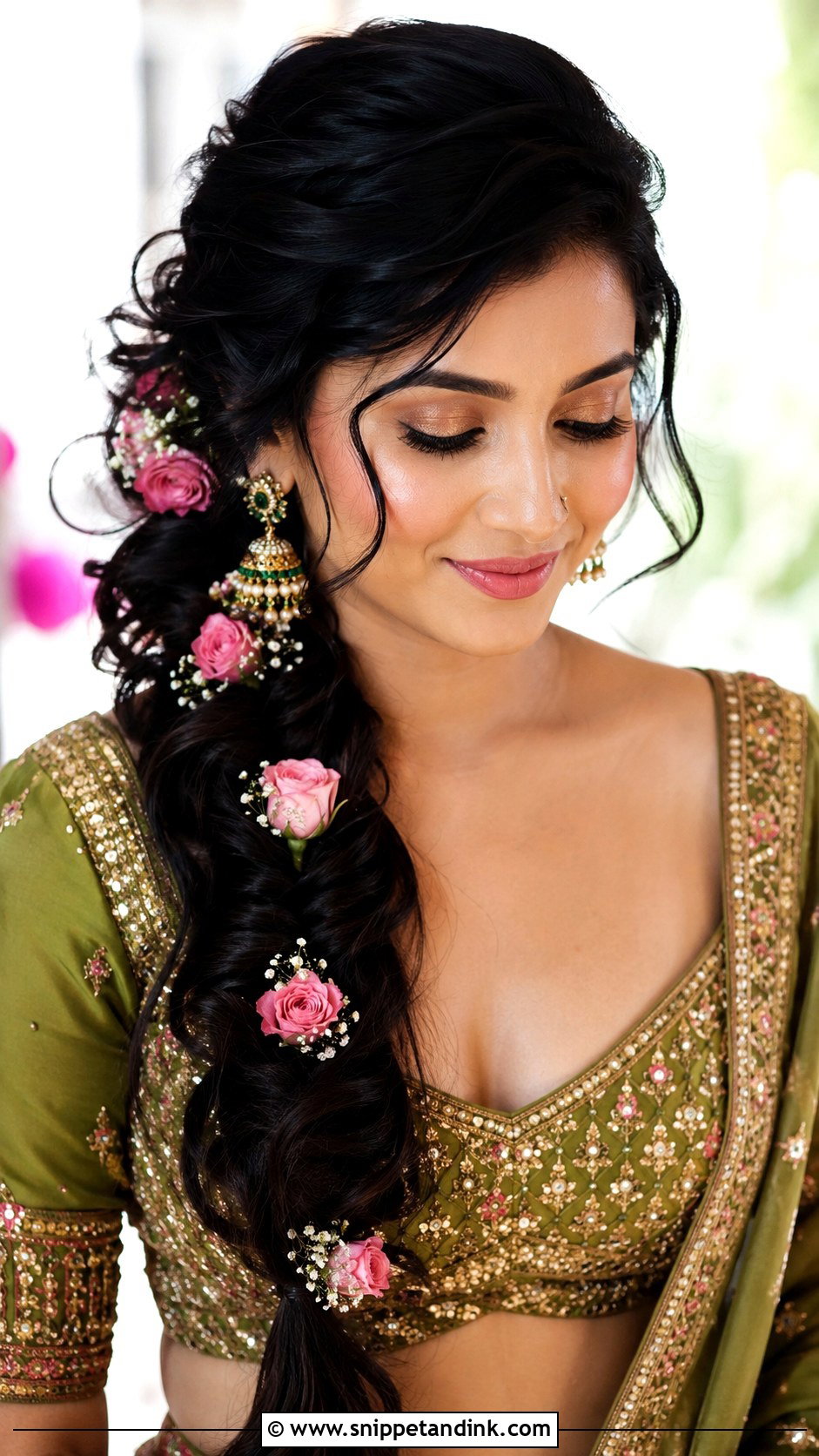
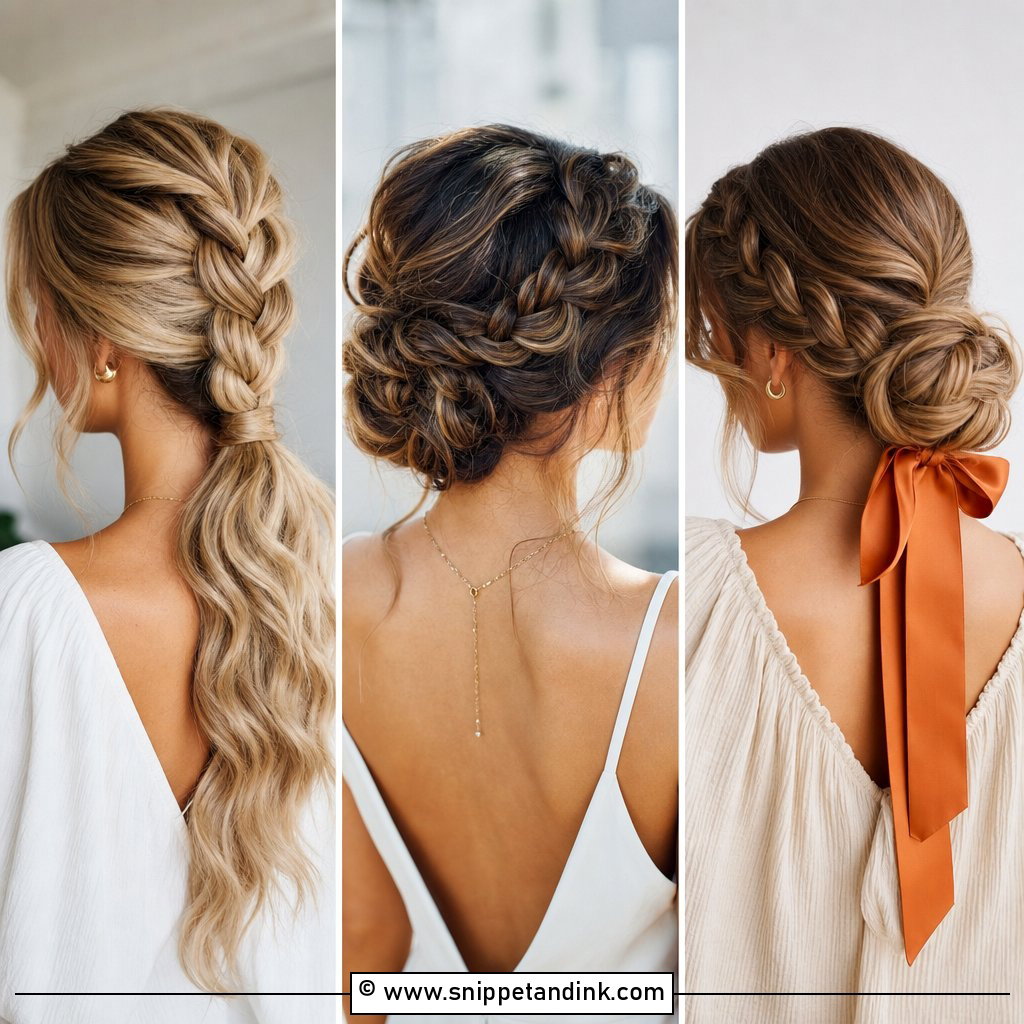
Red or pink roses woven into a fishtail give the braid color along its whole length. Because a fishtail uses very small sections, it takes time, and on layered hair the shorter ends escape, so I smooth each crossover with a touch of cream. Loosen it after braiding, then push small flowers in along the edges. Worn over one shoulder at the mehendi or sangeet, it shows the weave in every photo. Clip-in extensions add length and fullness if your braid comes out thin.
4. Messy Braided Bun
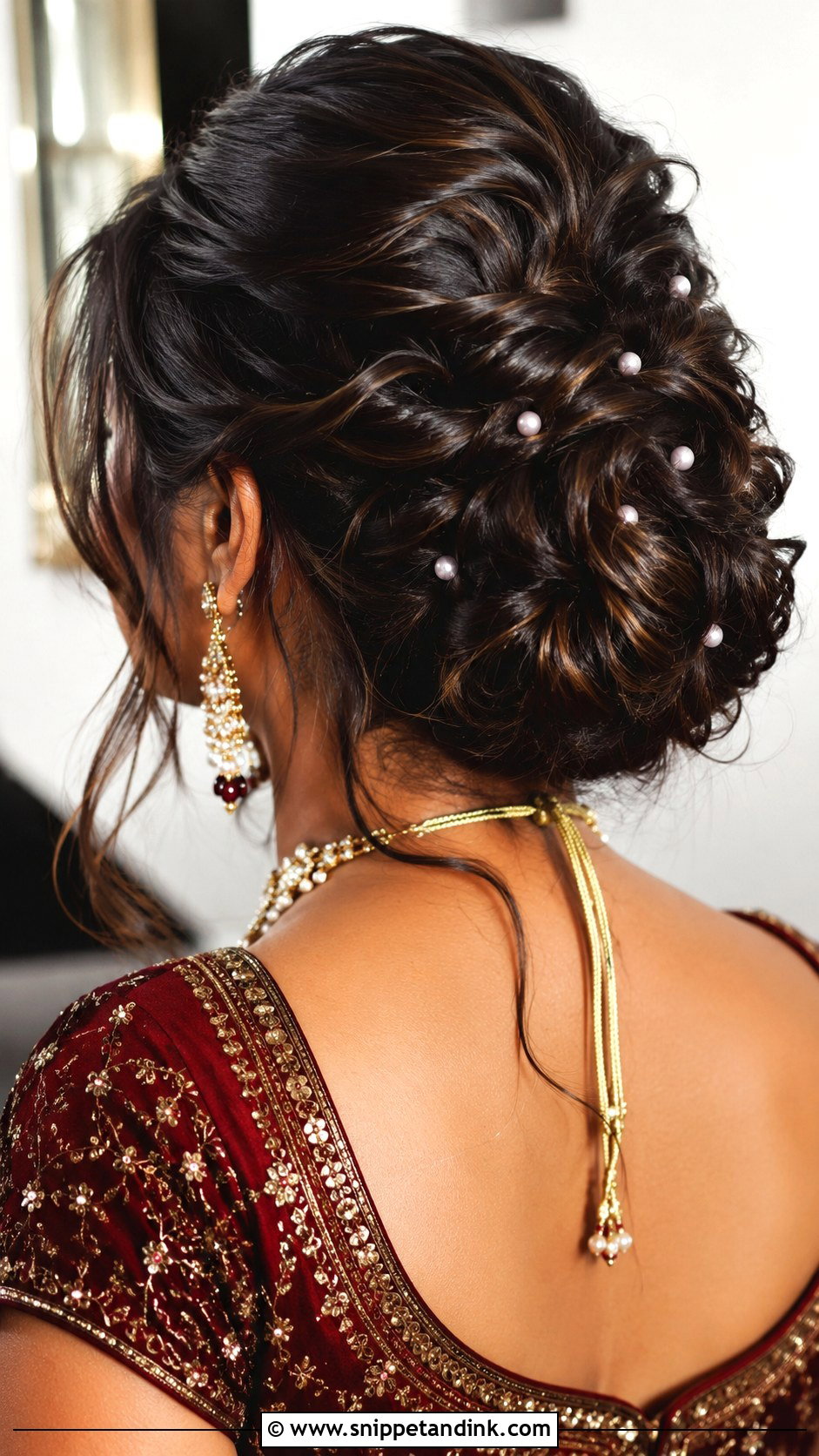
This one is built on purpose to look undone. Braid first, coil the braid into a bun, then pull a few strands loose so it looks lived-in. The braid underneath is what keeps it secure through a sangeet full of dancing, which a plain messy bun can’t promise. Juda pins, pearls or a small gajra all sit well in the coils. I pull the loose strands out at the very end, so they don’t loosen the base.
5. South Indian Jada Braid
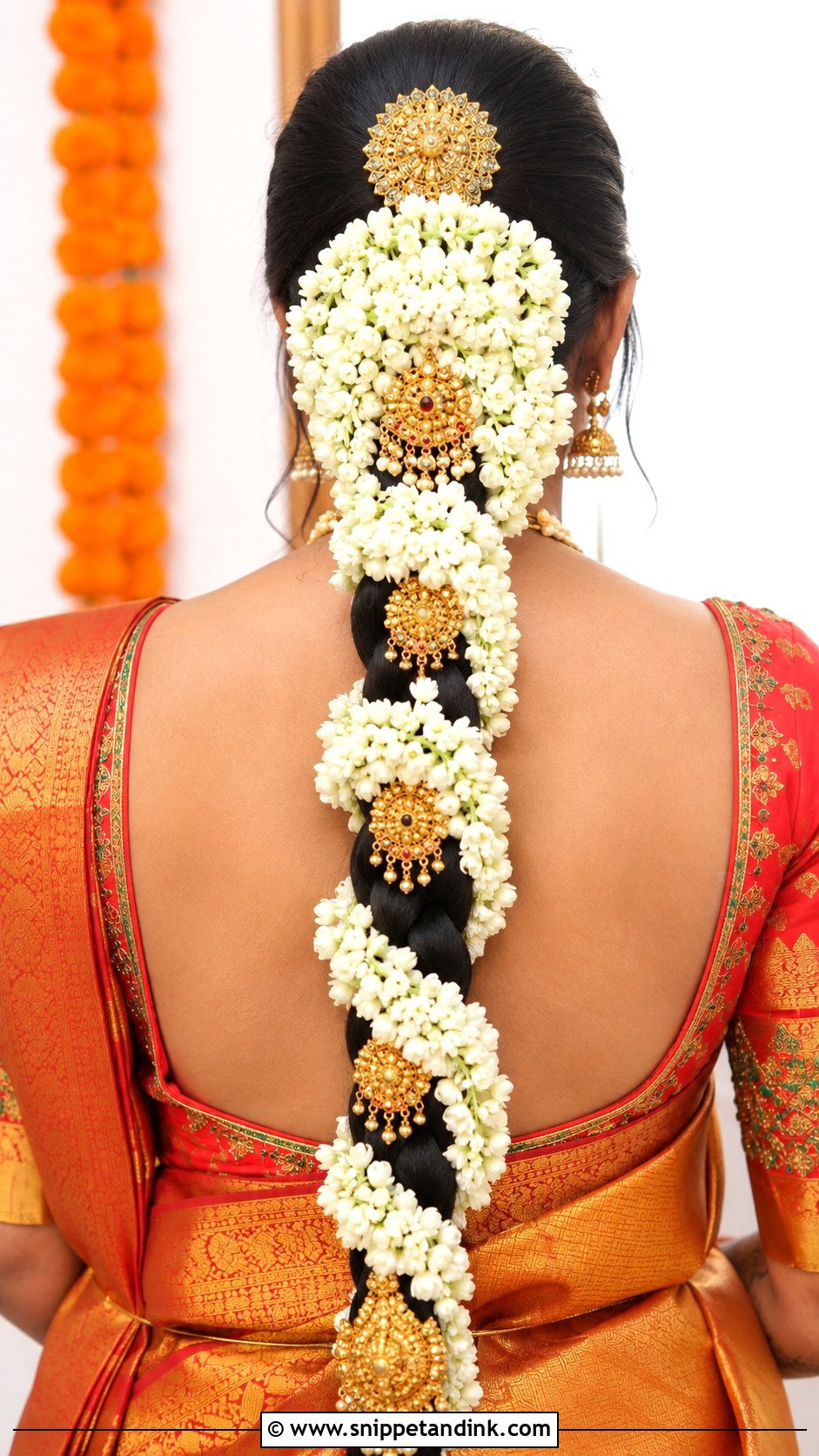
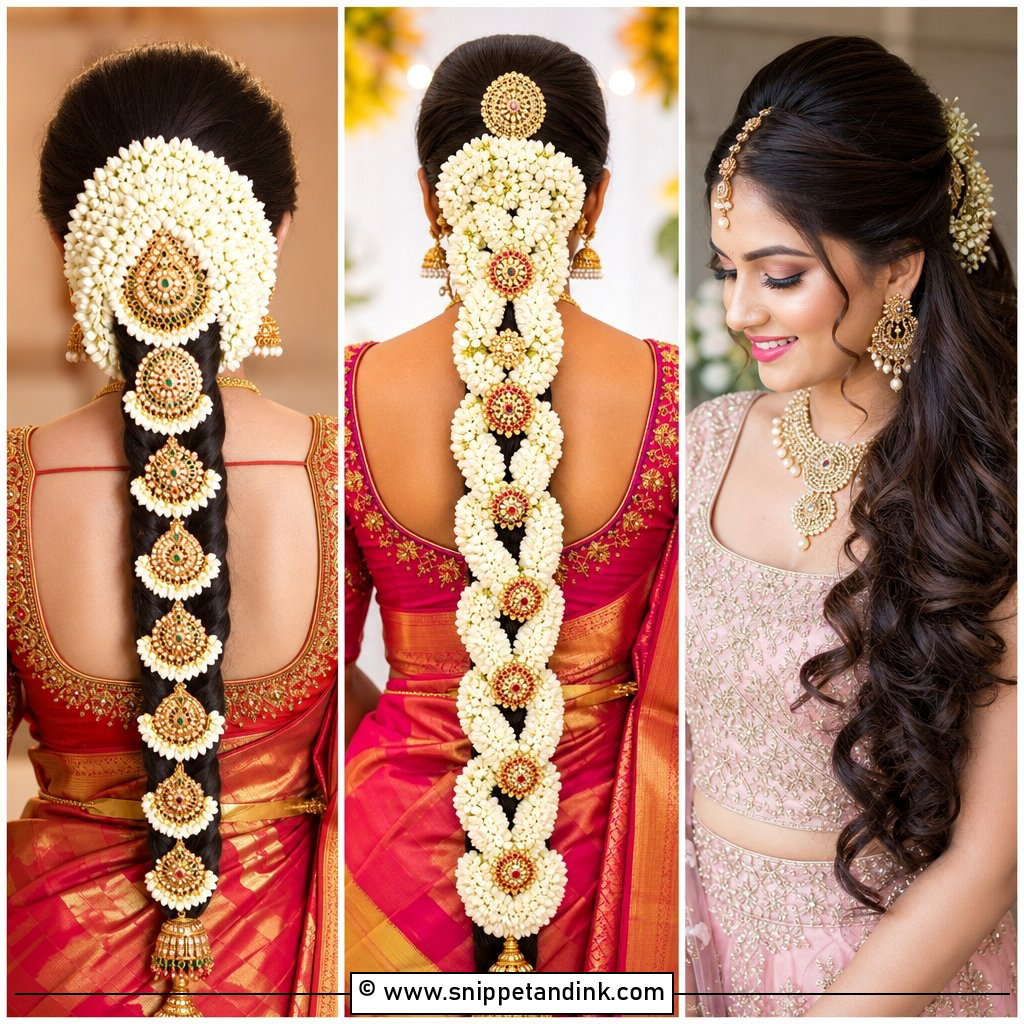
The South Indian jada, or kondai braid, is a long, thick braid running down the back, dressed with cascading flowers and gold hair jewelry. A jada billa usually sits at the top, with jasmine strands wrapped down the length. It belongs with a Kanjeevaram saree and temple jewelry. Few brides have hair long enough to fill a full jada, so I often braid in a matching extension and use the flowers to cover the join. The gold pieces are heavy, so each one is sewn or pinned to the braid, not just clipped on.
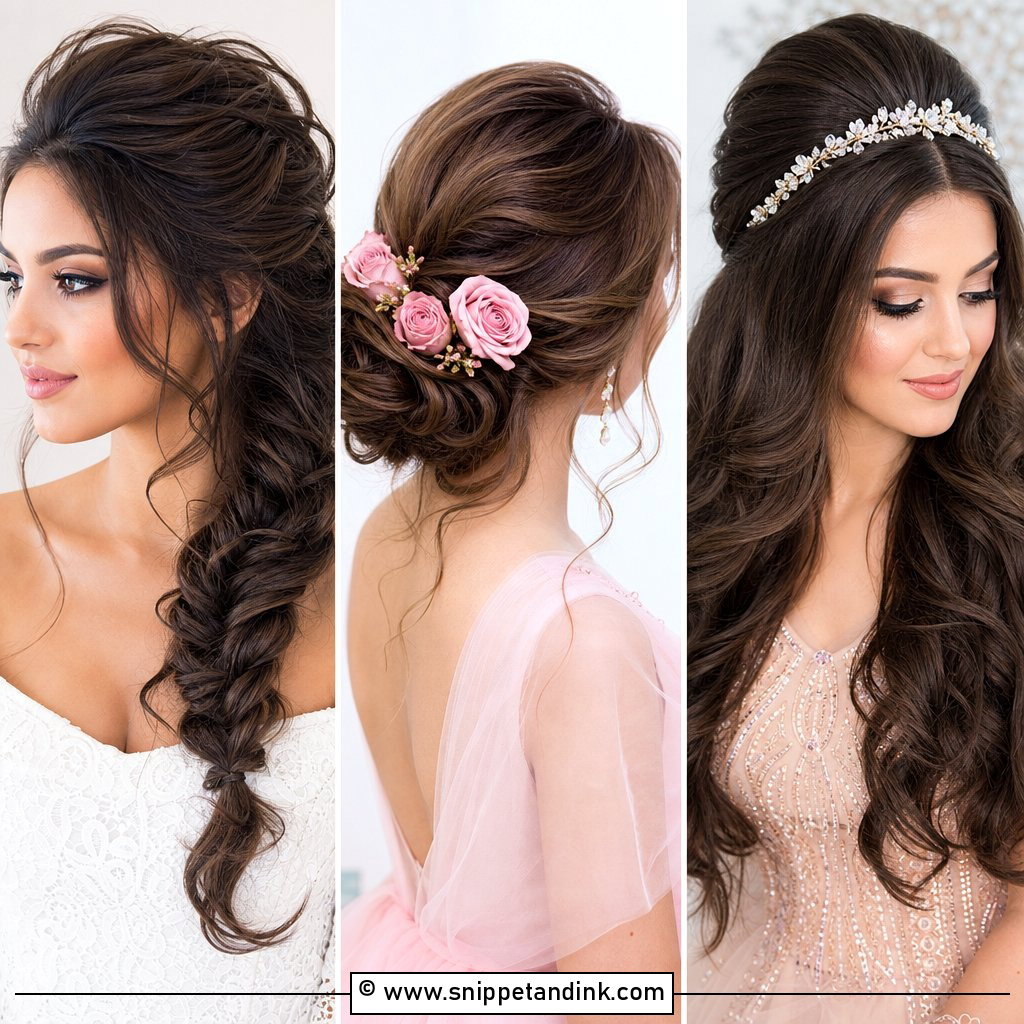
6. Half-Up Half-Down With Waves
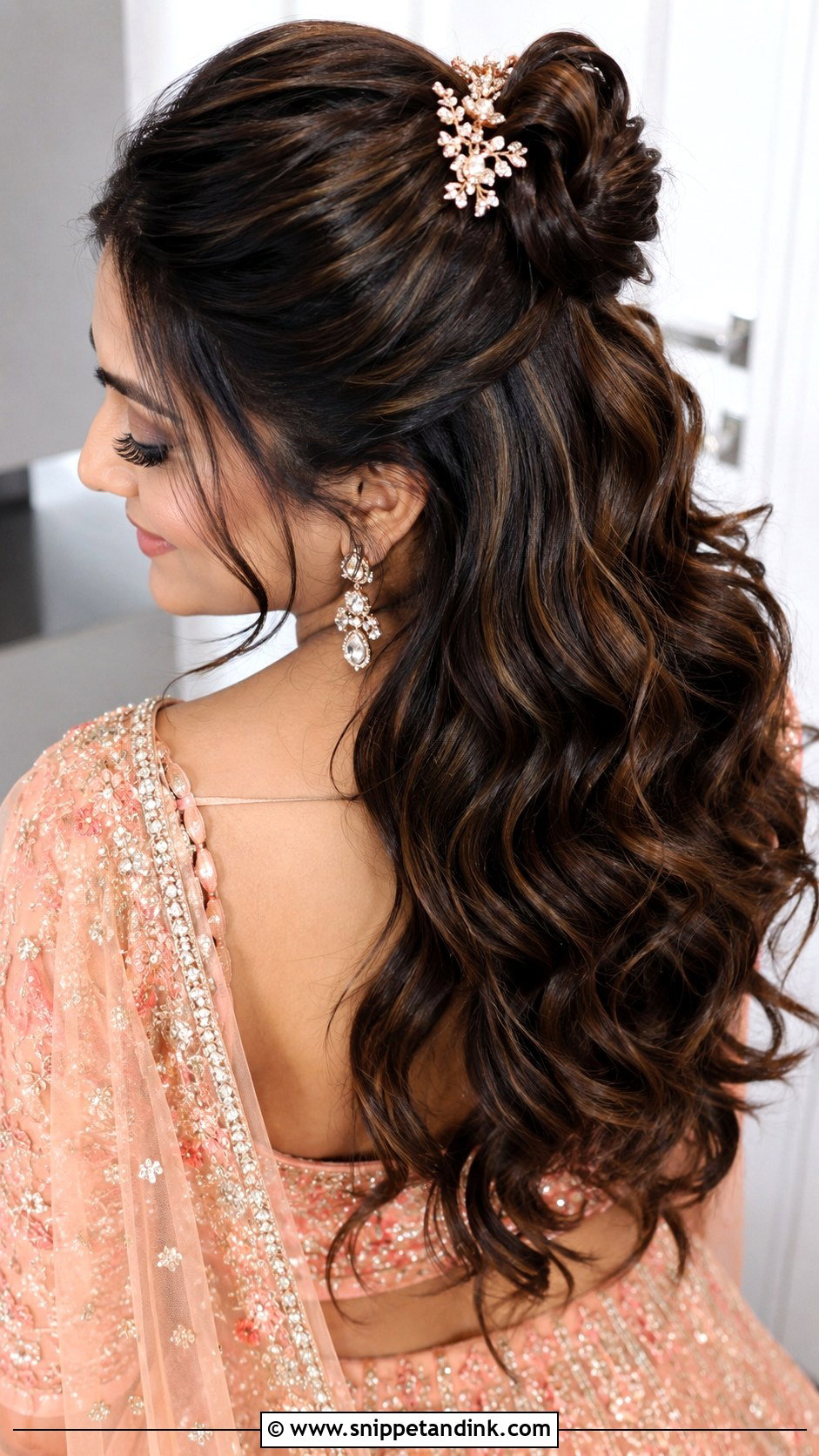
Can’t decide between up and down? Half-up gives you volume at the crown and waves below. I pin the top half into a small bun or a ponytail, secure it with crossed pins, then add the jeweled clip or flowers over that anchor. It’s at home at the sangeet, reception or cocktail evening, and it works on most lengths from collarbone down. In humidity the loose waves are the first thing to drop, so I curl them tighter than they’ll finally sit.
7. Sleek High Ponytail
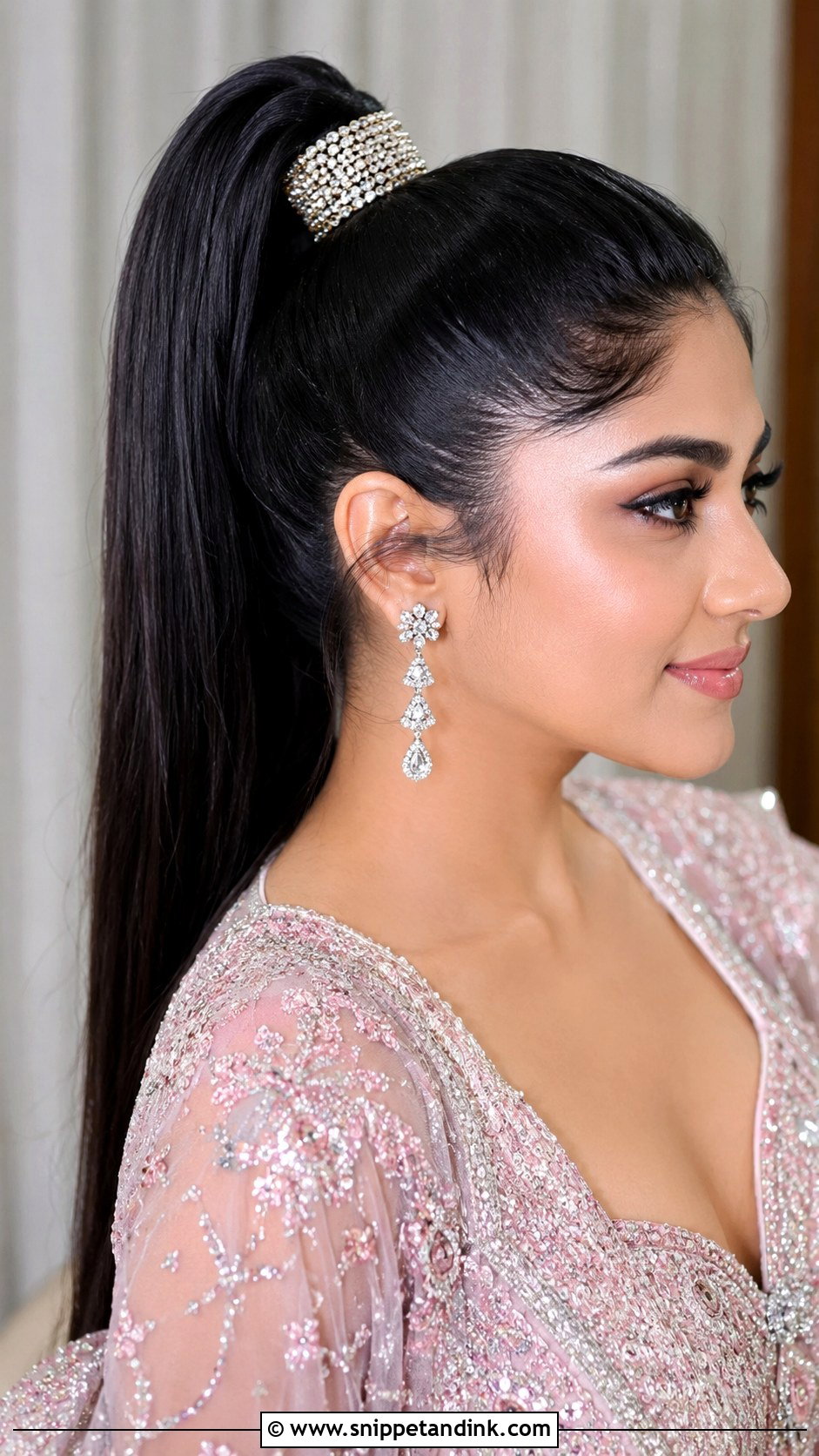
A sleek high ponytail draws the eye upward, which is why it flatters round faces. The gloss comes from blow-drying each section flat with a paddle brush, then a light gel or wax stick on top. It pairs with gowns and Indo-western reception outfits, finished with a strand wrapped around the elastic or a jeweled cuff. It’s not for everyone: a very high, tight ponytail can give you a headache by the second hour, and heavy hair pulls it lower over the evening. I’d test it at your trial for at least a couple of hours.
8. Side-Swept Curls
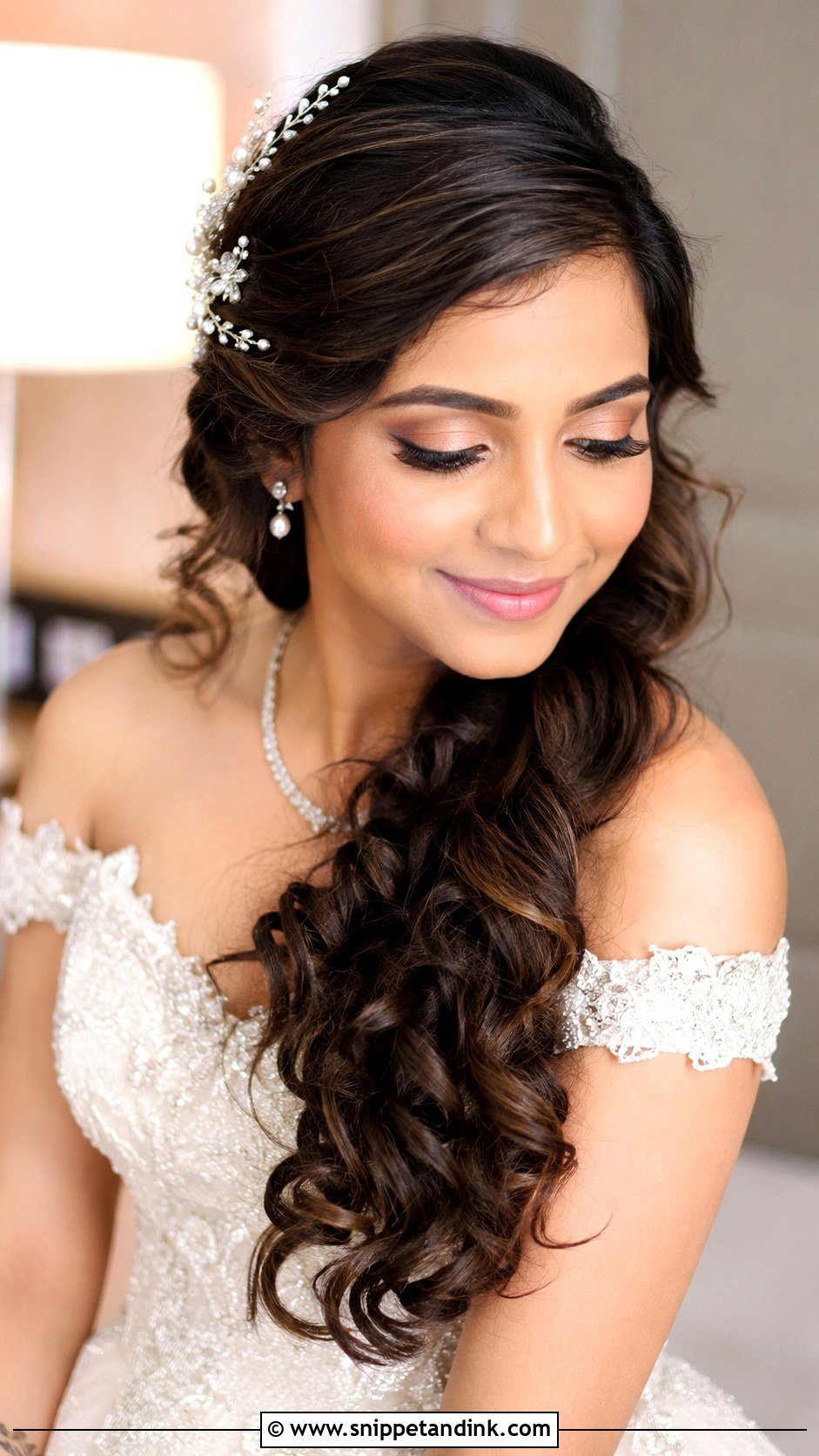
Curls swept over one shoulder give a reception that old Hollywood feel. The secret is the pinning you can’t see: a line of crossed pins behind one ear holds the hair in place so it doesn’t creep back. A pearl or crystal accessory over that point finishes it. It softens angular features and shows a strapless or off-shoulder neckline. I wouldn’t do it for a ceremony where a dupatta sits on the head, because the two fight each other.
9. Pearl-Lined Braid
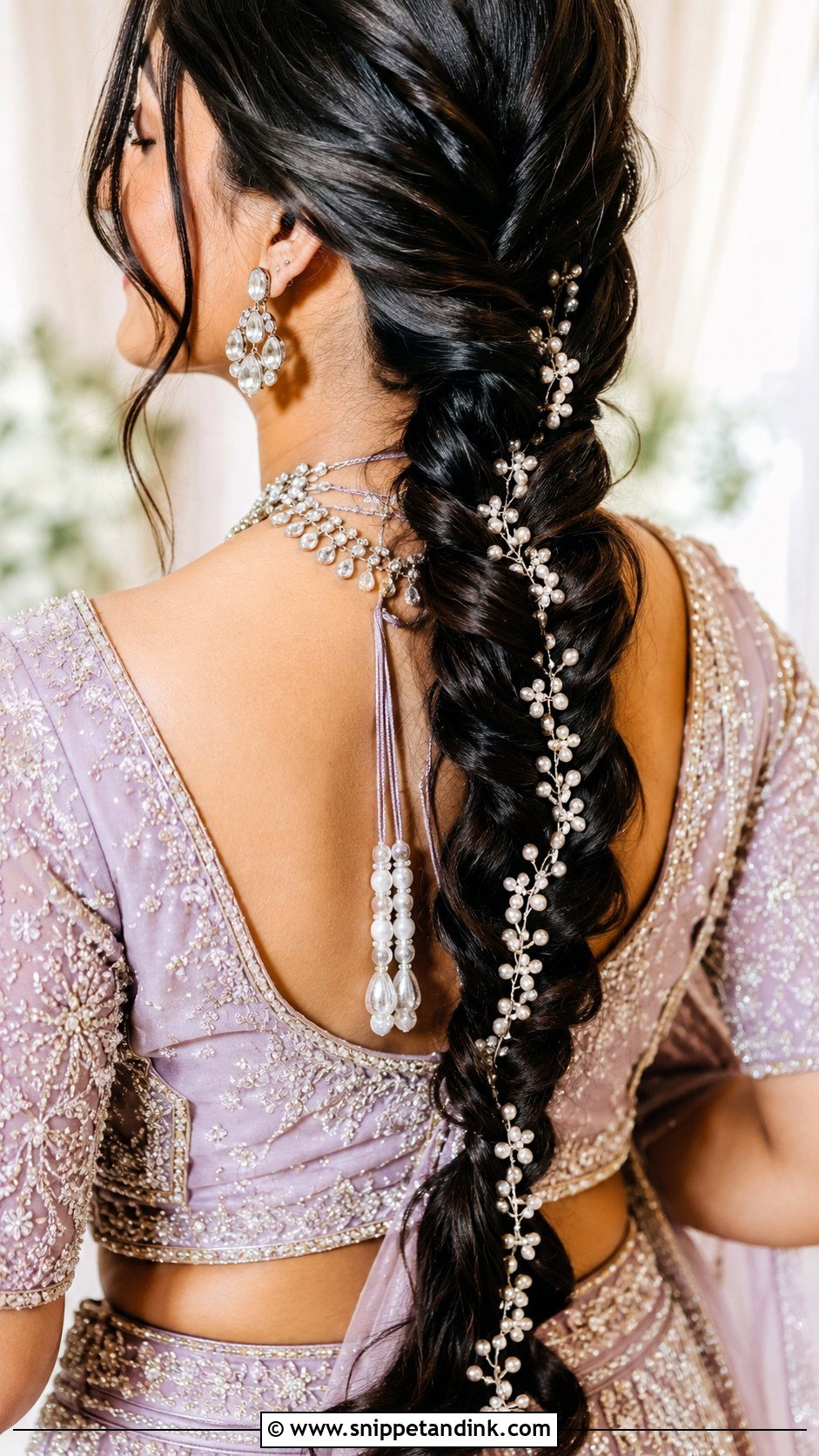
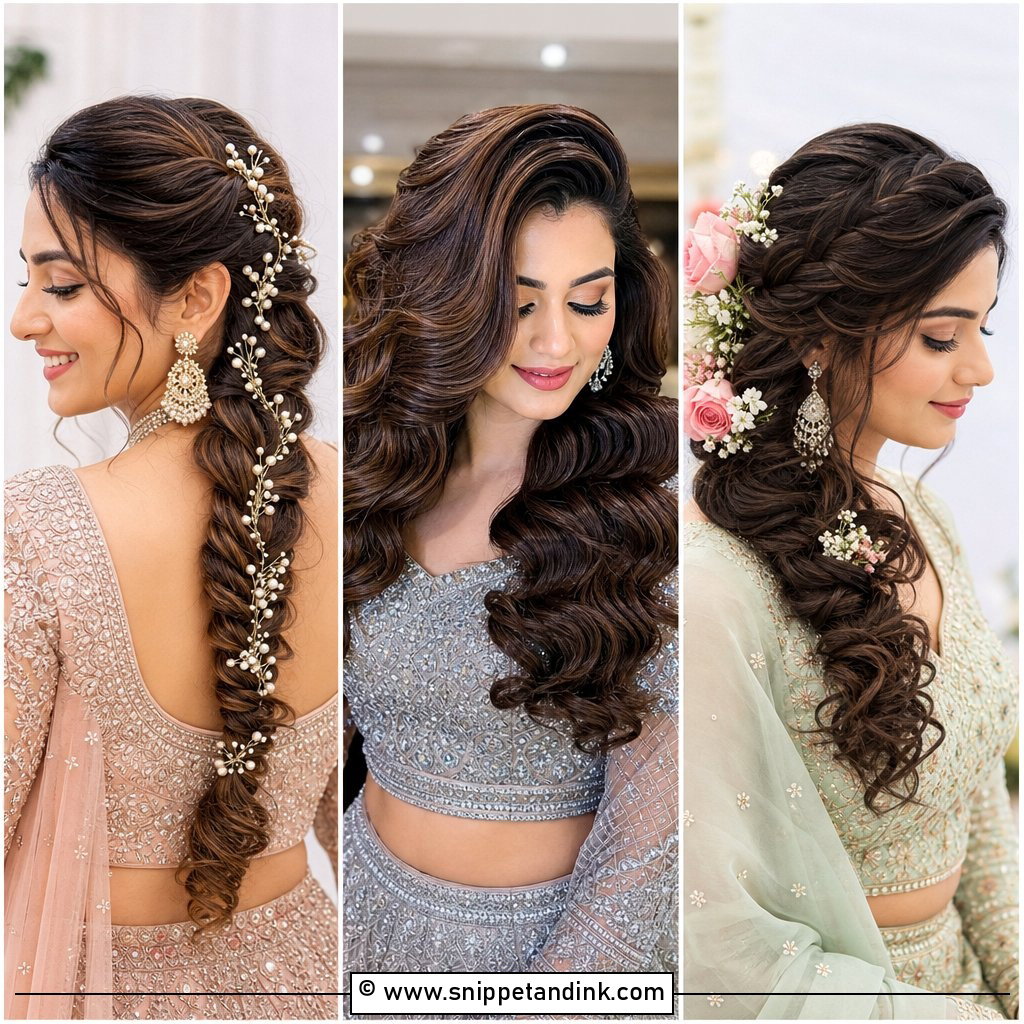
Pearls woven through a braid add shine without the weight of flowers. I thread pearl strands or individual pearl pins through a classic braid or a fishtail, attaching them every few crossovers so they can’t slide. Pastel lehengas and diamond jewelry suit it, especially for brides who don’t want fresh flowers at all. Pearls on very smooth, silky hair tend to migrate, so a little texture spray first gives them something to grip.
10. Glamorous Open Waves
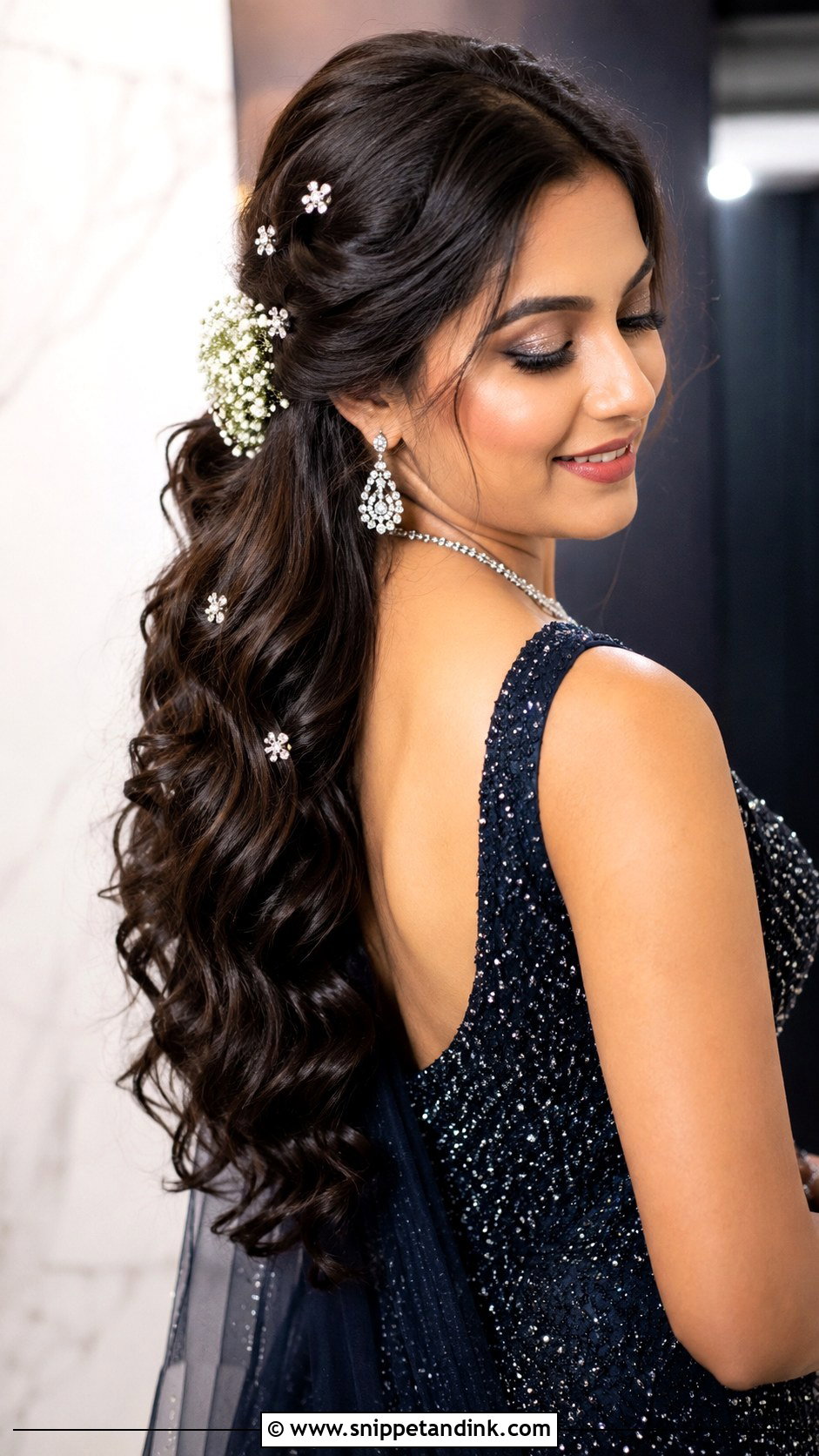
Open waves for the reception or cocktail night need more prep than they look. I set wide curls with a large barrel, let them cool, brush them into waves and add a light shine spray. A diamond pin or a small gajra behind one ear adds a traditional touch. It shows off long hair best. If your hair drops a curl within an hour, I’d take a half-up approach instead so some of the shape is pinned.
11. Braided Crown
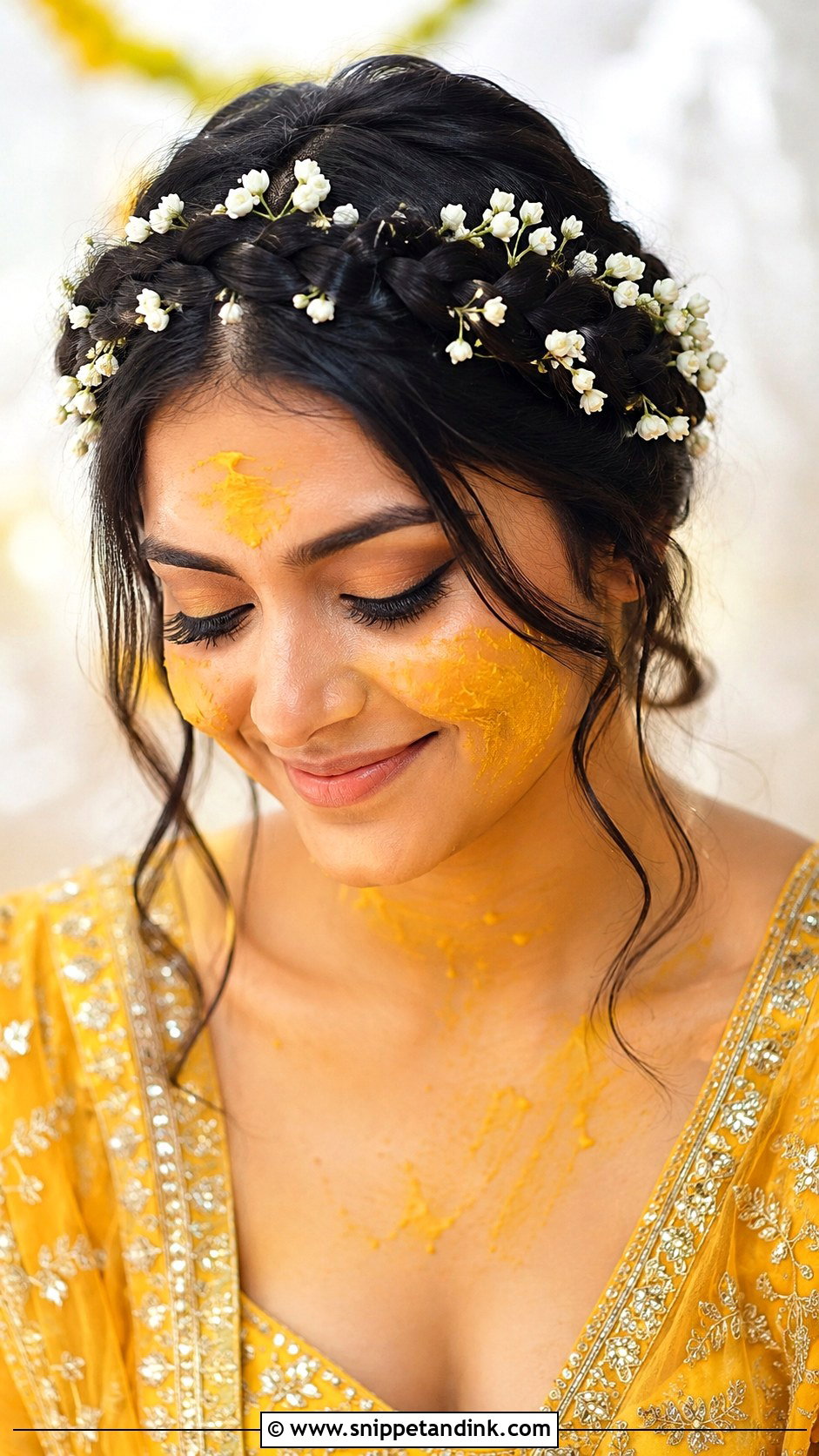
A crown of braids works like a halo and keeps hair off your face all day. I build it from braids running along the hairline and around the head, often decorated with small flowers or gajra. It’s suited to daytime ceremonies and haldi functions, where turmeric paste goes everywhere and you want hair well out of the way. Below it, leave open waves or tuck the ends into a small bun.
12. Messy Low Bun
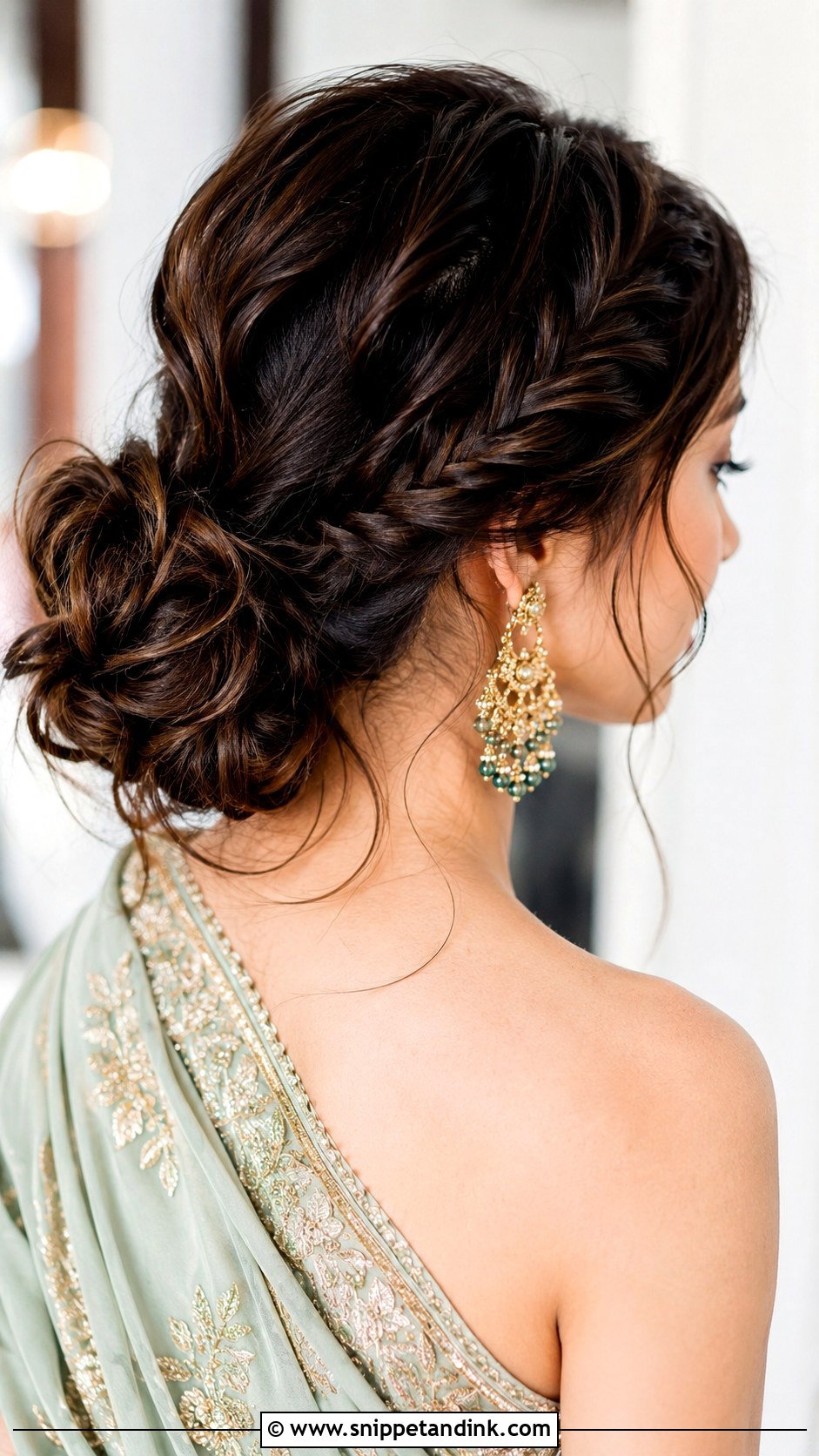
A messy low bun forgives a lot. It sits soft at the nape with loose strands, which takes the edge off square and diamond face shapes. I build it from loosely pinned sections rather than one twisted knot, so it keeps shape even after hours of dancing. Side braids add a boho touch, a gajra a traditional one. It suits gowns and sarees alike and is one of the most comfortable styles to wear all evening.
13. Gajra-Wrapped Bun
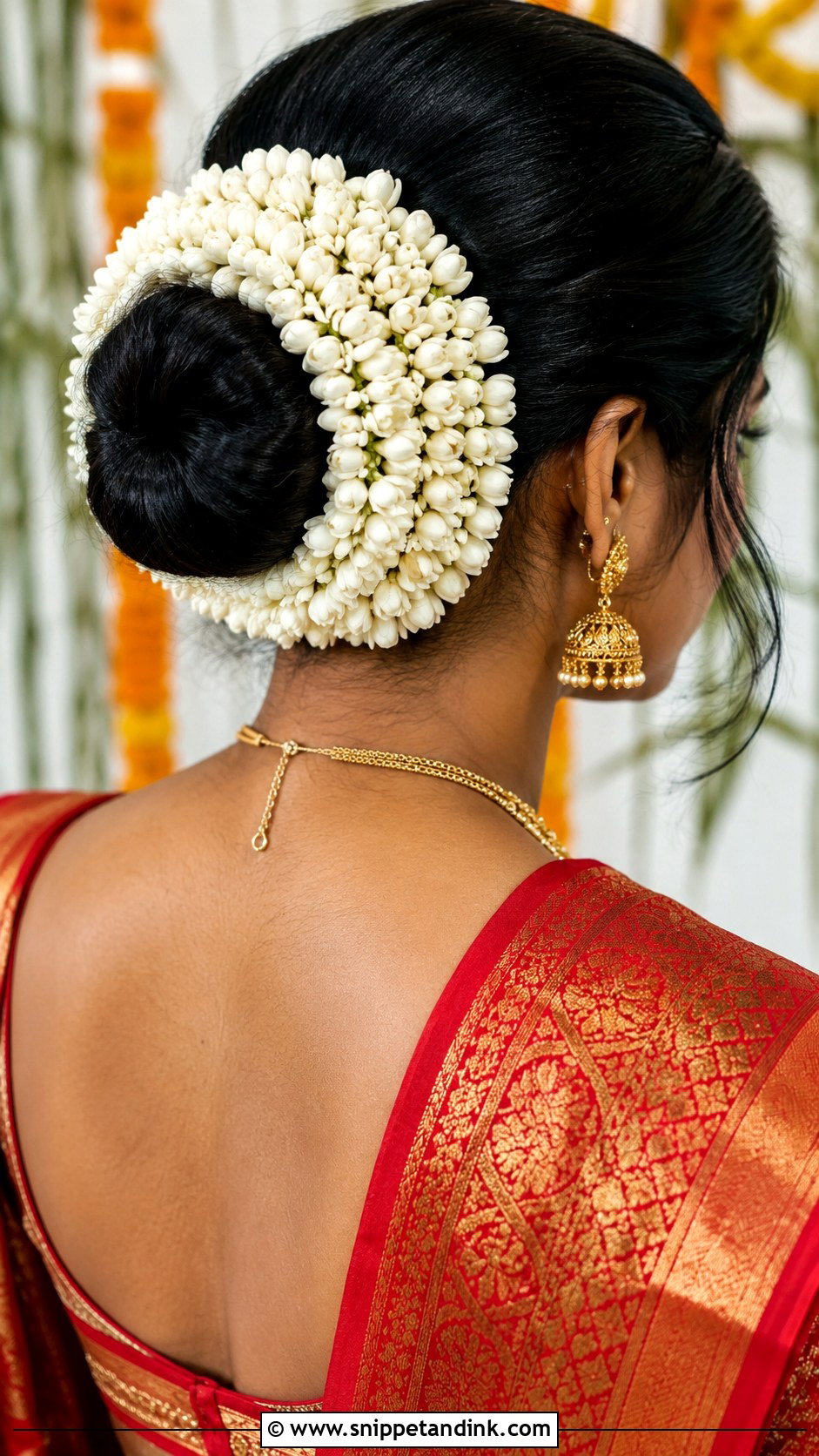
Few things say traditional Indian bride as clearly as a bun wrapped in fragrant gajra. Fresh jasmine coils around the bun, and the white against dark hair reads clearly from across a hall. It’s a favorite with South Indian and Maharashtrian brides in silk sarees and embroidered lehengas. A thickly piled gajra is heavy, so the bun underneath must be firm. I pin gajra through its thread with U-pins, which hold far better than bobby pins pushed through petals.
14. Dutch Braid With Gold Threads
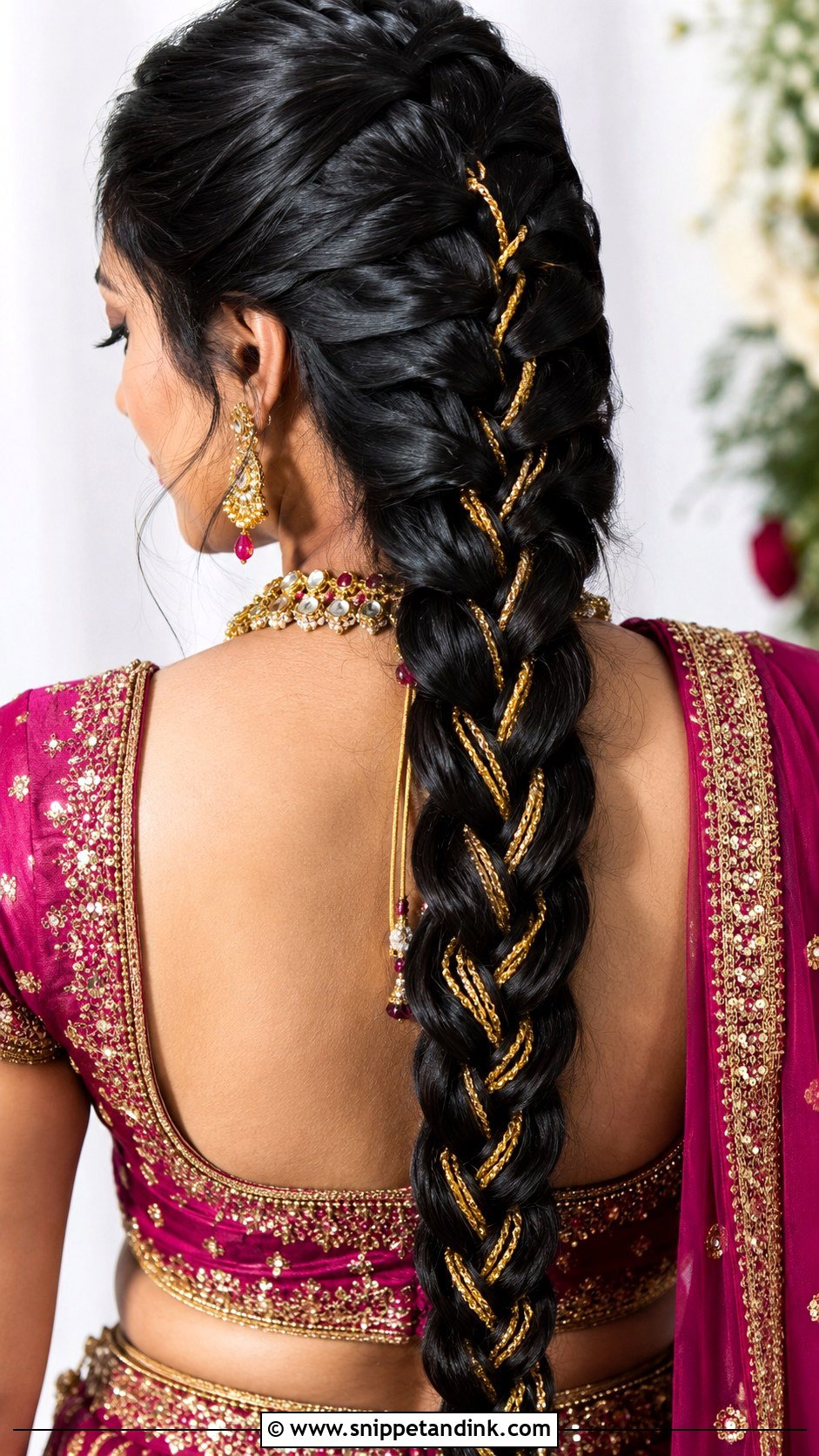
Gold thread woven into a Dutch braid adds festive shine that matches traditional jewelry and zari work. I feed the thread in at the start of the braid and pick it up with each crossover, so it shows on the raised surface. It’s eye-catching at the sangeet and mehendi, worn down the back or wrapped into a bun. The raised braid structure holds through hours of dancing. Ask your stylist to bring the thread, since craft-shop thread is often too stiff to braid neatly.
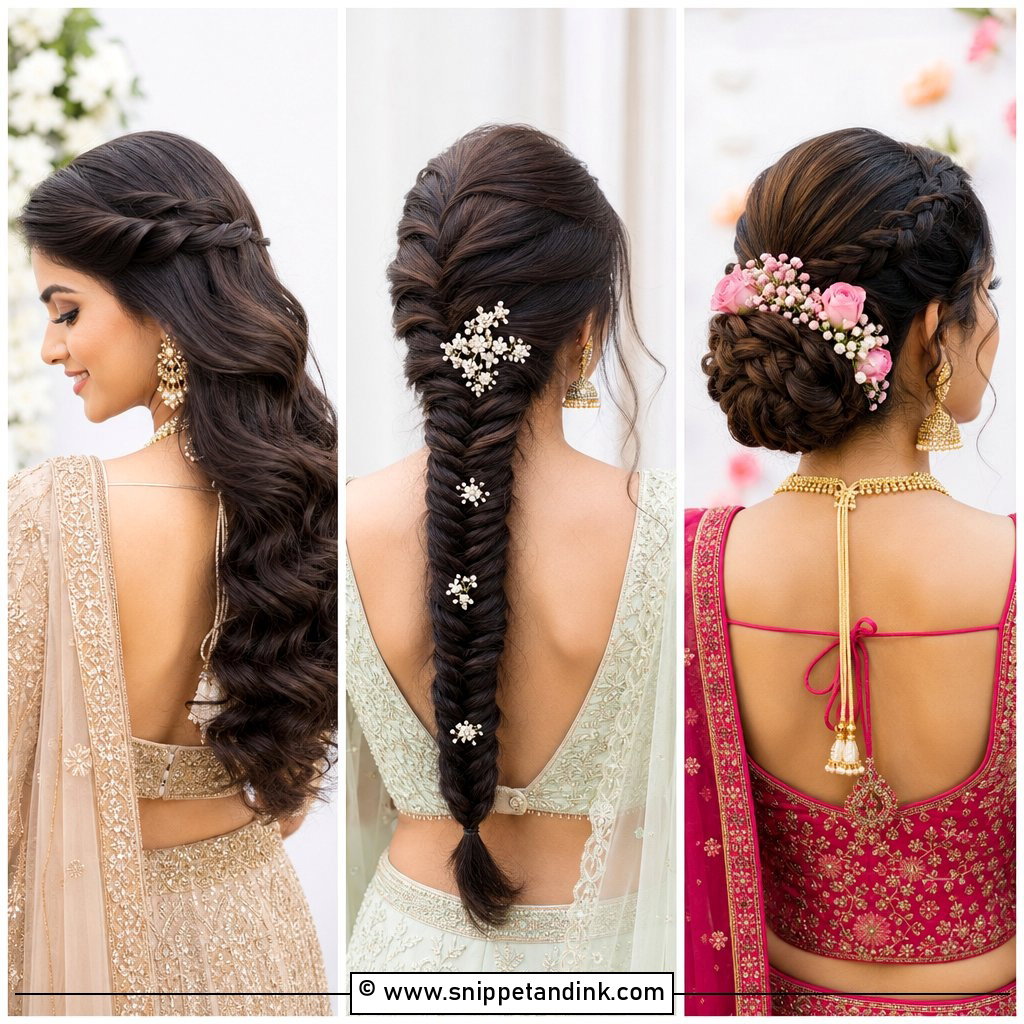
15. Bridal Bun With Maang Tikka
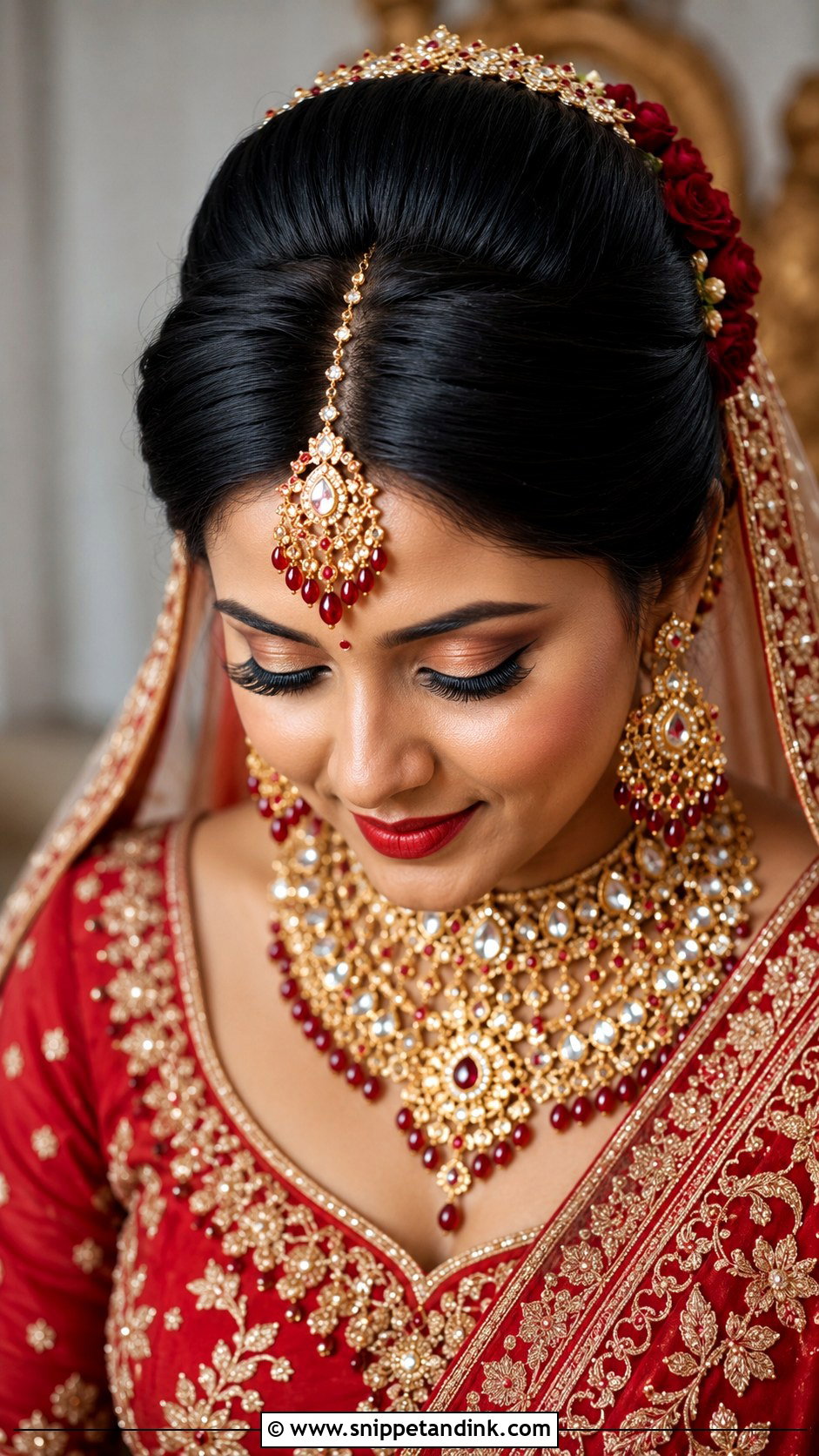
A smooth, structured bun gives elaborate forehead jewelry a clean backdrop. With a statement maang tikka, the tikka chain needs its own anchor pin at the back of the parting, or it shifts every time you bow your head during rituals. The bun can be sleek or textured. Temple hair pins or a gajra add detail at the base. It goes with heavy lehengas and sarees alike, and it’s been a bridal staple for generations because it holds.
16. Loose Side Braid
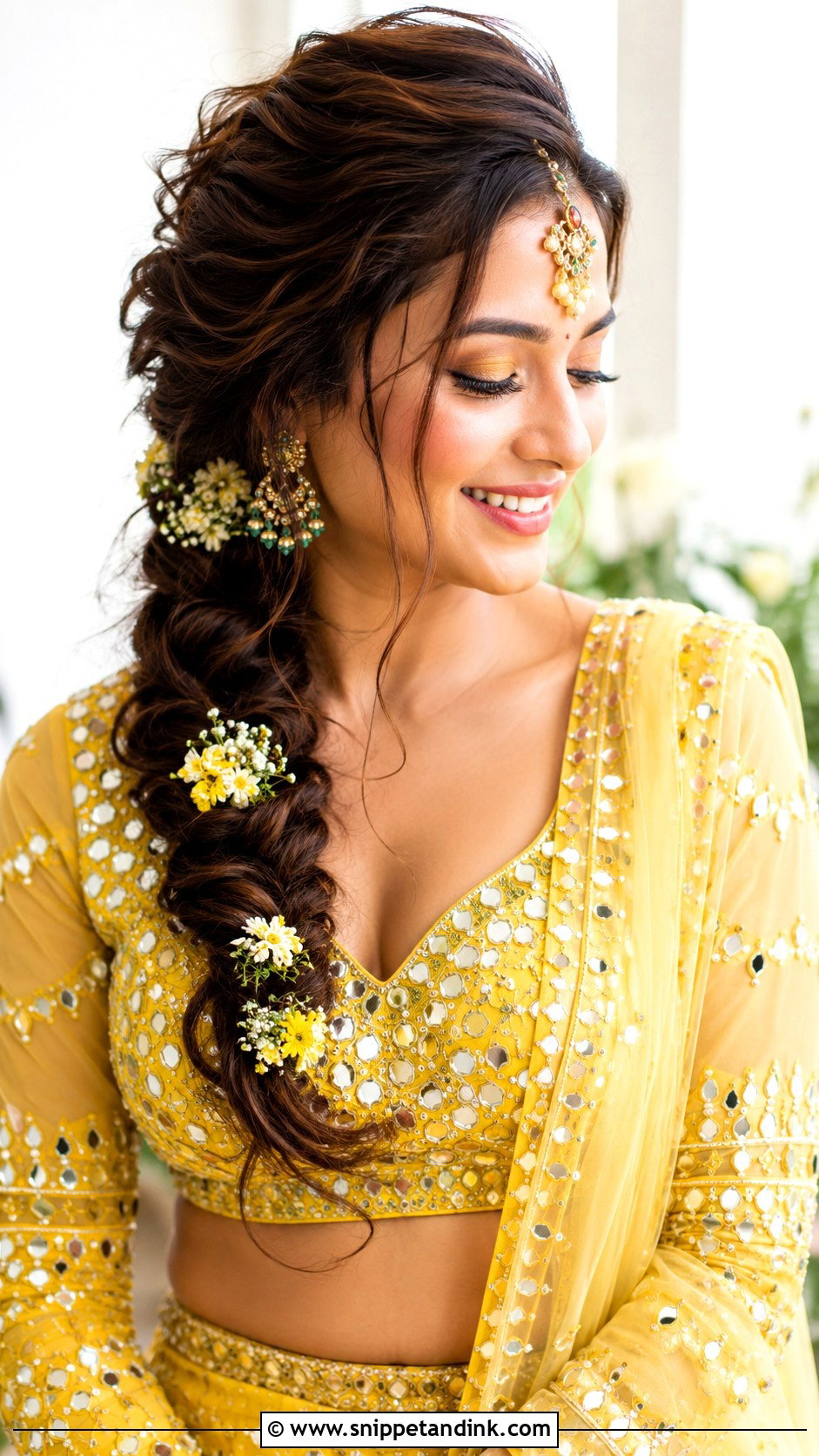
A loose side braid looks relaxed, and it suits the mehendi and haldi where you’ll be sitting and moving. I braid it firmly first and then pull the edges apart for fullness, rather than braiding loosely from the start, which falls apart. Small flowers, pearls or a gajra slip into the gaps. Worn to one side, it leaves a neckline or blouse back on show. Long, thick hair gives the fullest result.
17. Sleek Center-Part Low Ponytail
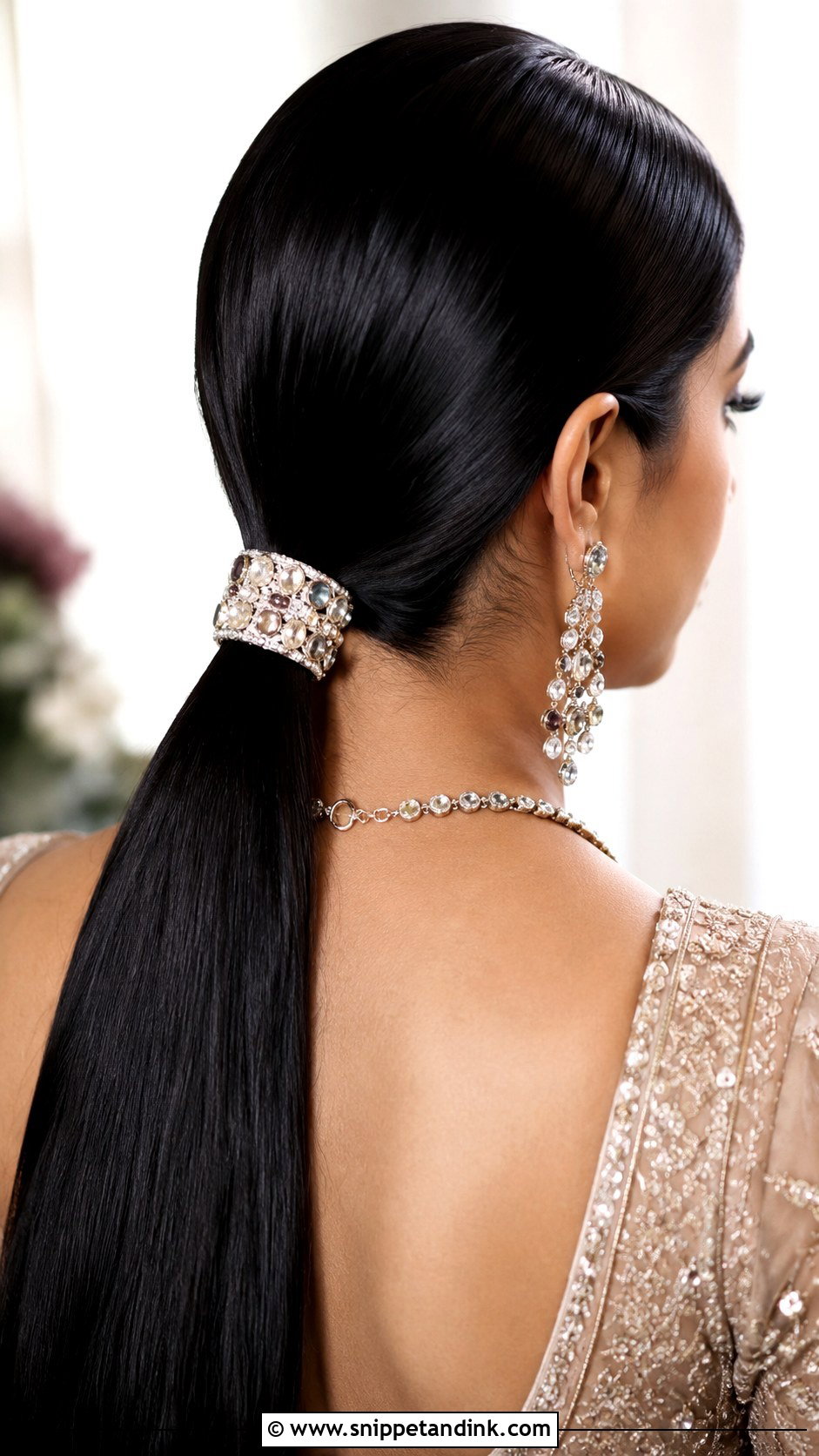
A center-part low ponytail is about precision: a sharp part straight down the middle and glossy hair pulled to the nape. It’s the minimalist choice for a reception in a contemporary gown or a structured Indo-western outfit. A jeweled cuff or a wrapped strand hides the elastic. Glass-smooth hair shows every flyaway, so I finish with a small brush and a little wax stick. Very curly hair needs a full blow-dry the day before to get this finish.
18. Floral Half Bun
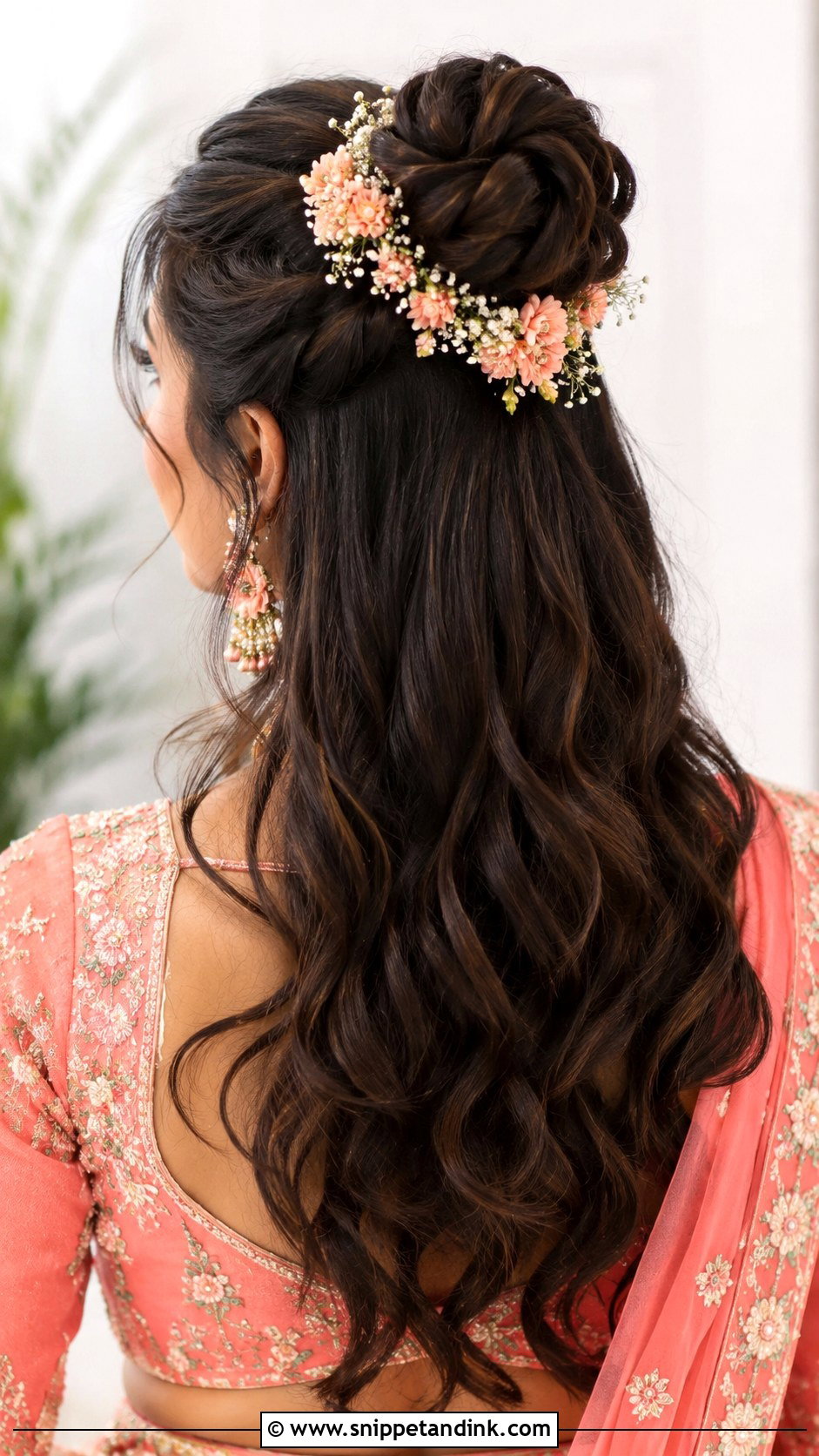
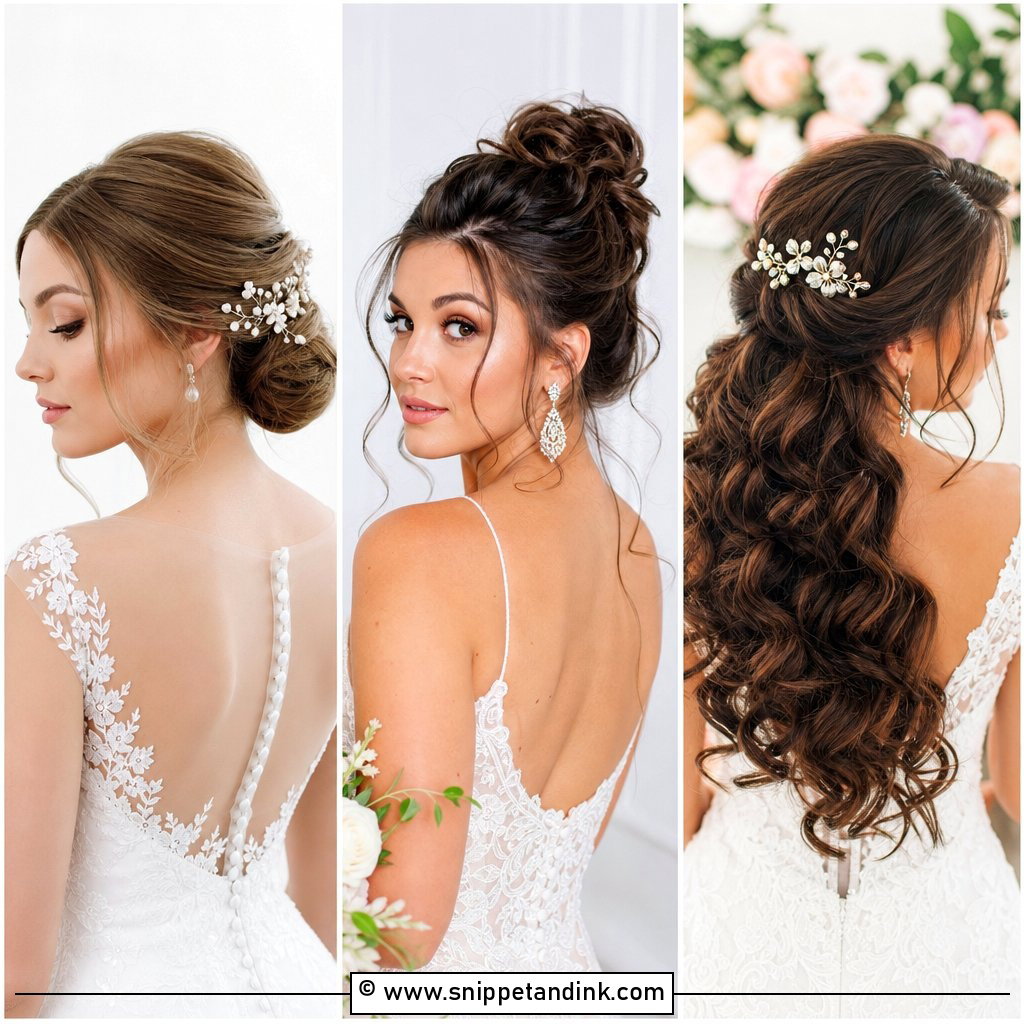
A small bun on top, fresh flowers around it, and loose waves below. The half bun gives you crown volume while keeping hair down, and it suits medium to long lengths. Daytime ceremonies and outdoor mandaps suit it best. The bun section needs to be big enough to hold the flowers’ weight, so I take more hair into it than you’d expect.
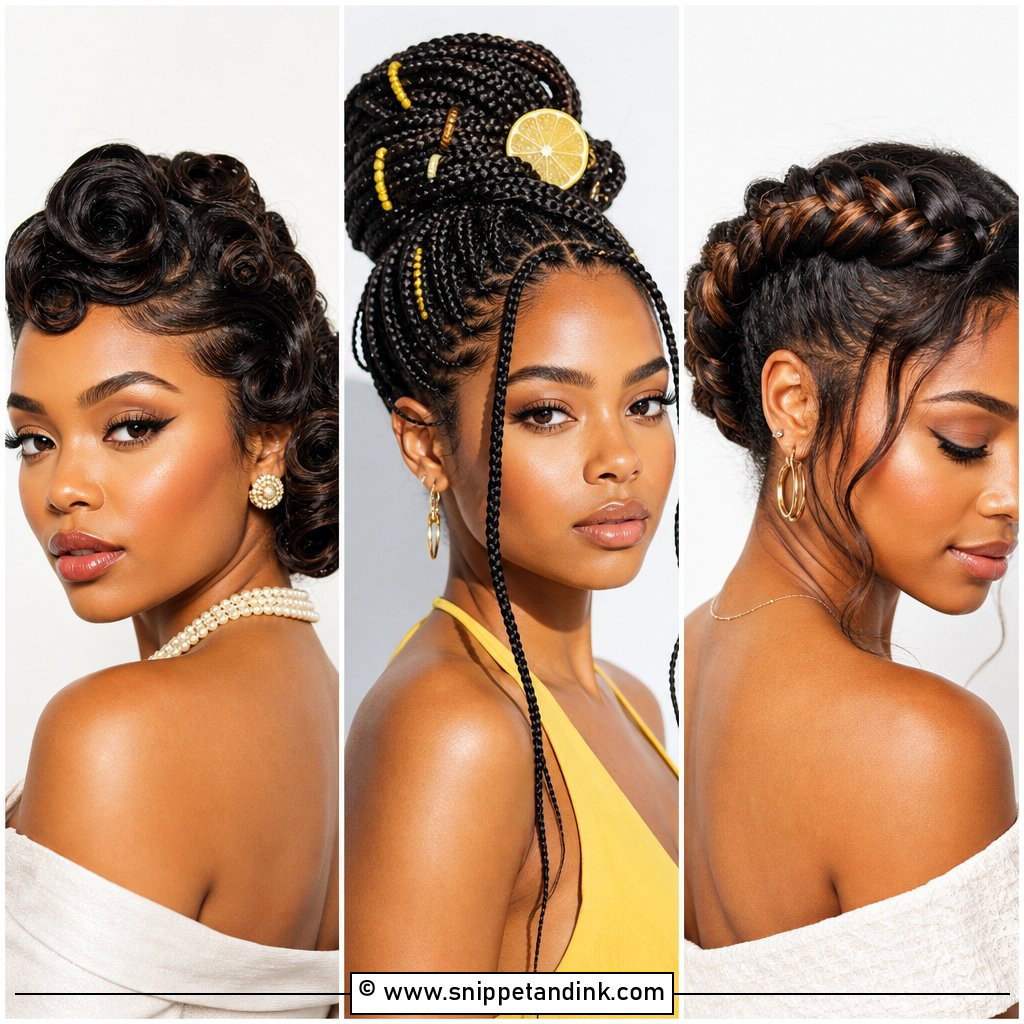
19. Vintage Finger Waves
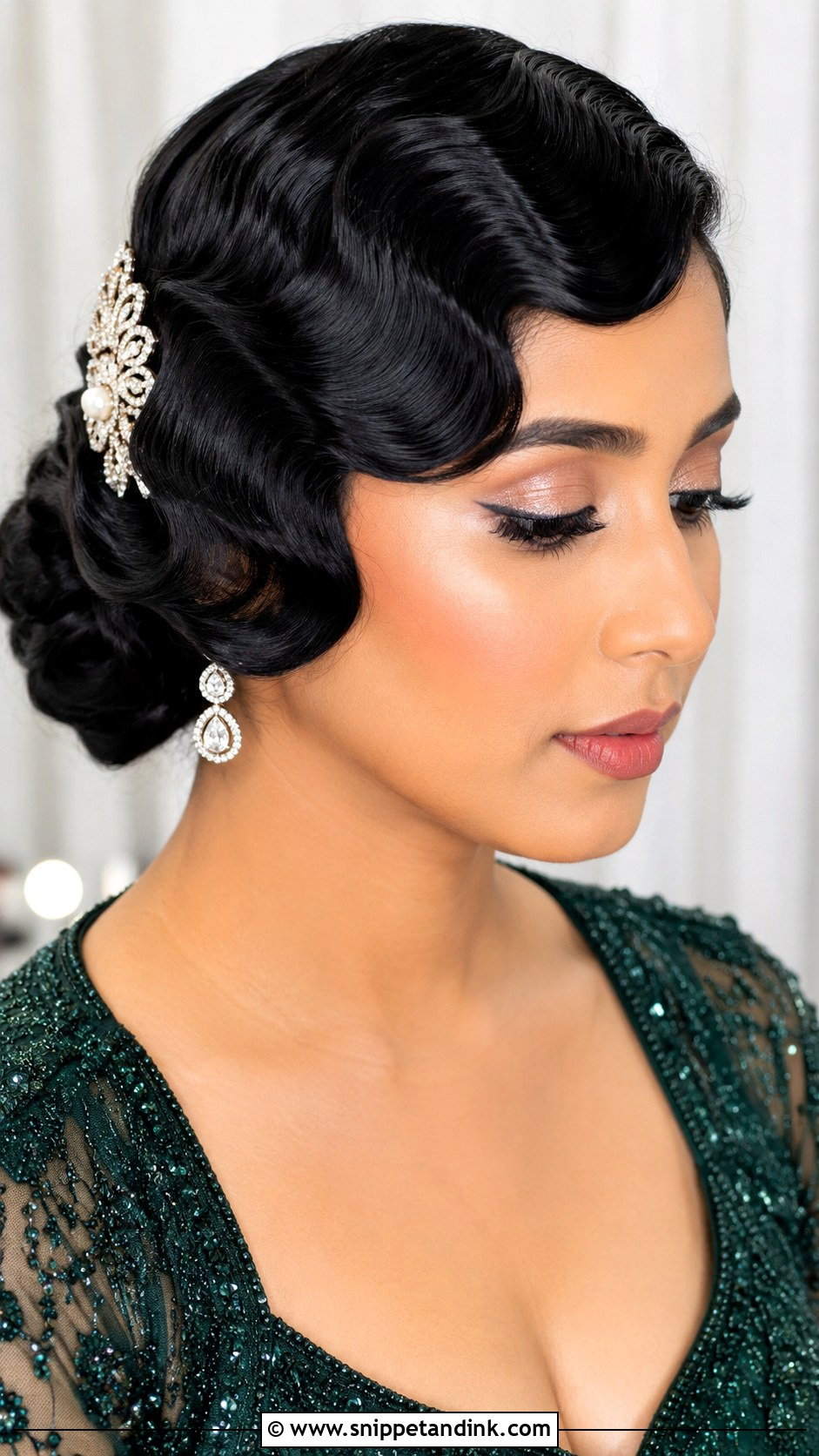
Finger waves are sculpted S-shaped ridges set close to the head, and they’re the most technical style here. Traditionally they’re shaped in wet hair with gel and fingers, then left to set; modern versions often use a flat iron for speed. They suit a reception in a gown or Indo-western outfit and set you apart from typical bridal looks. Waves can run through all the hair or drop into soft curls below. Humidity is their enemy, so I set them firmly and send you off with a small comb and gel for touch-ups.
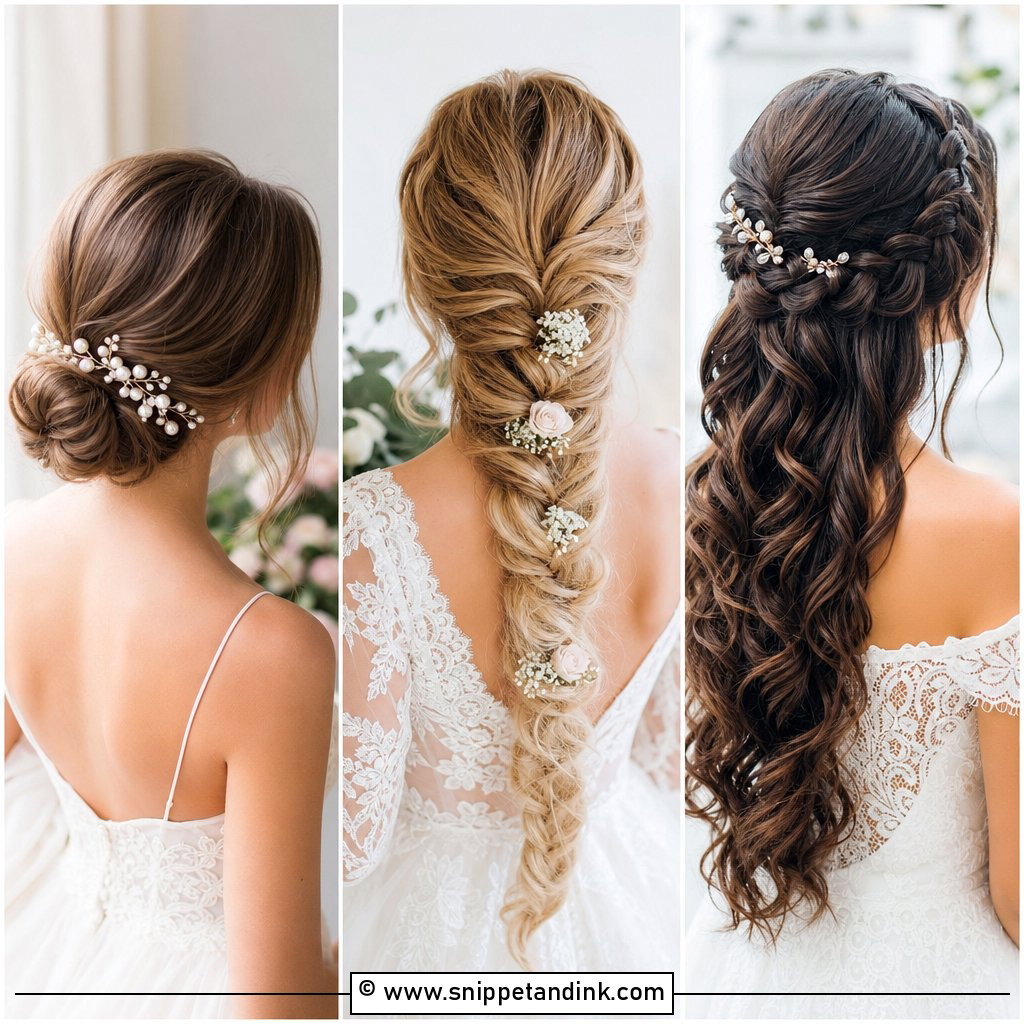
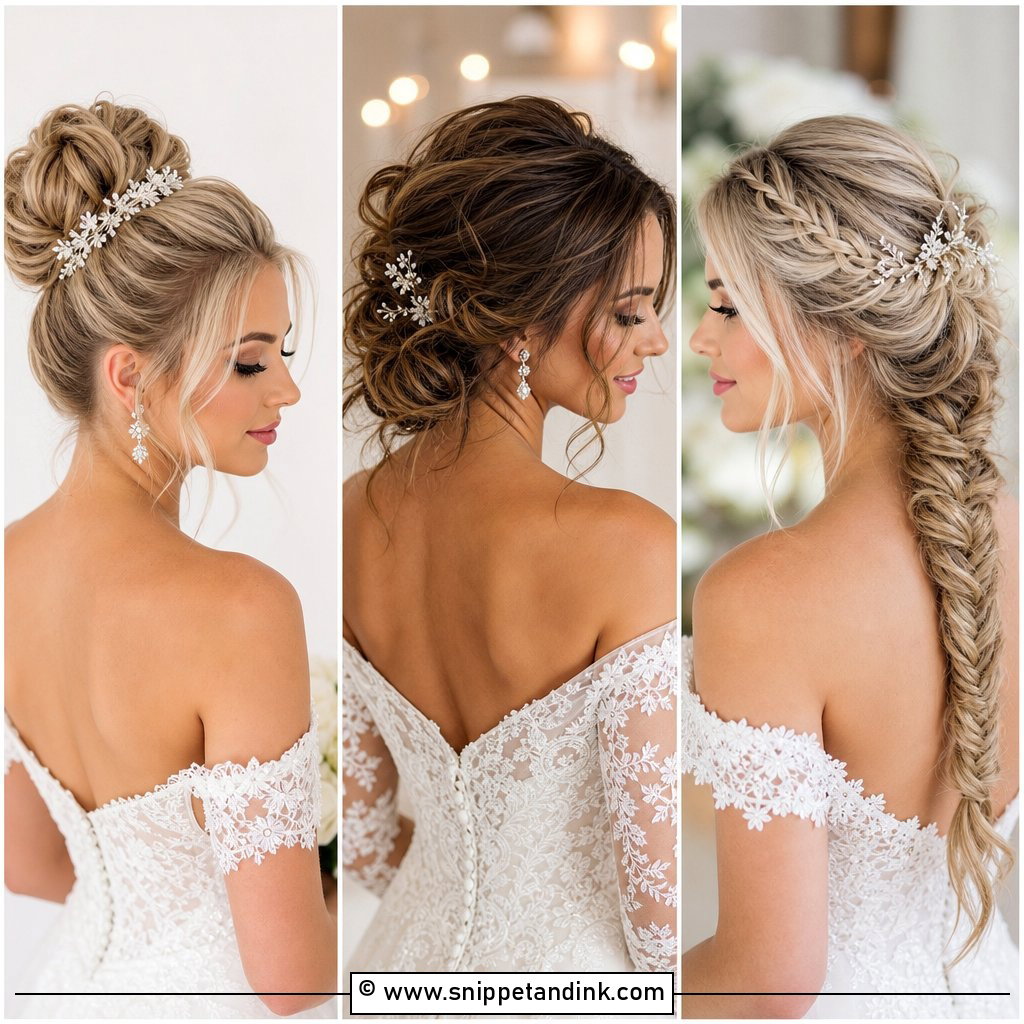
20. Braided Bun With Pearls
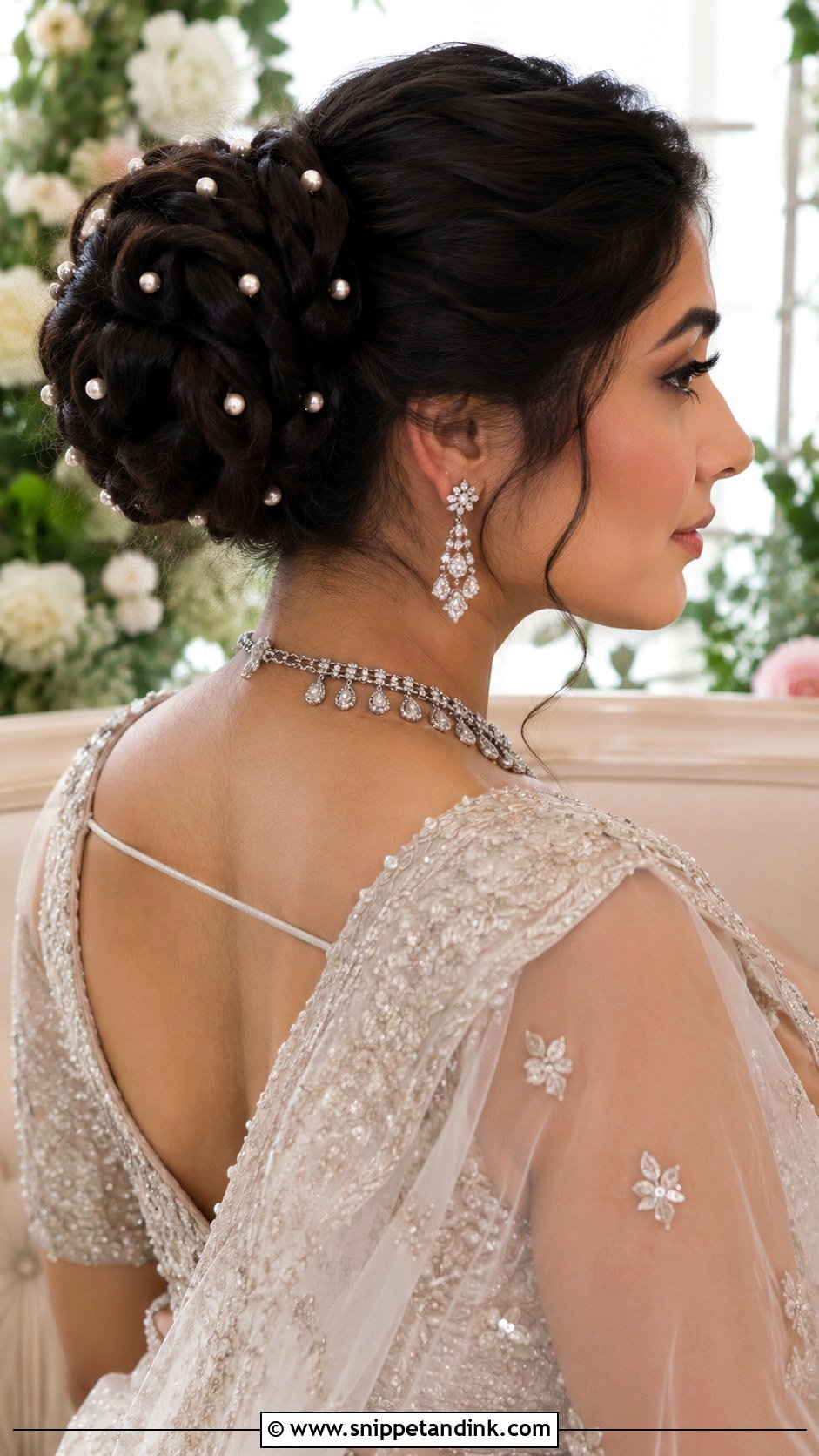
Braid, coil into a bun, then thread pearls through it. That’s the method, and the braid is what lets the pearls sit securely, because their pins lock into the woven hair. It suits pastel and ivory outfits, receptions and engagements, especially if you’d rather skip flowers. Pearls pair naturally with diamond jewelry. The structured base keeps everything in place for hours.
21. Wavy Open Hair With Maang Tikka
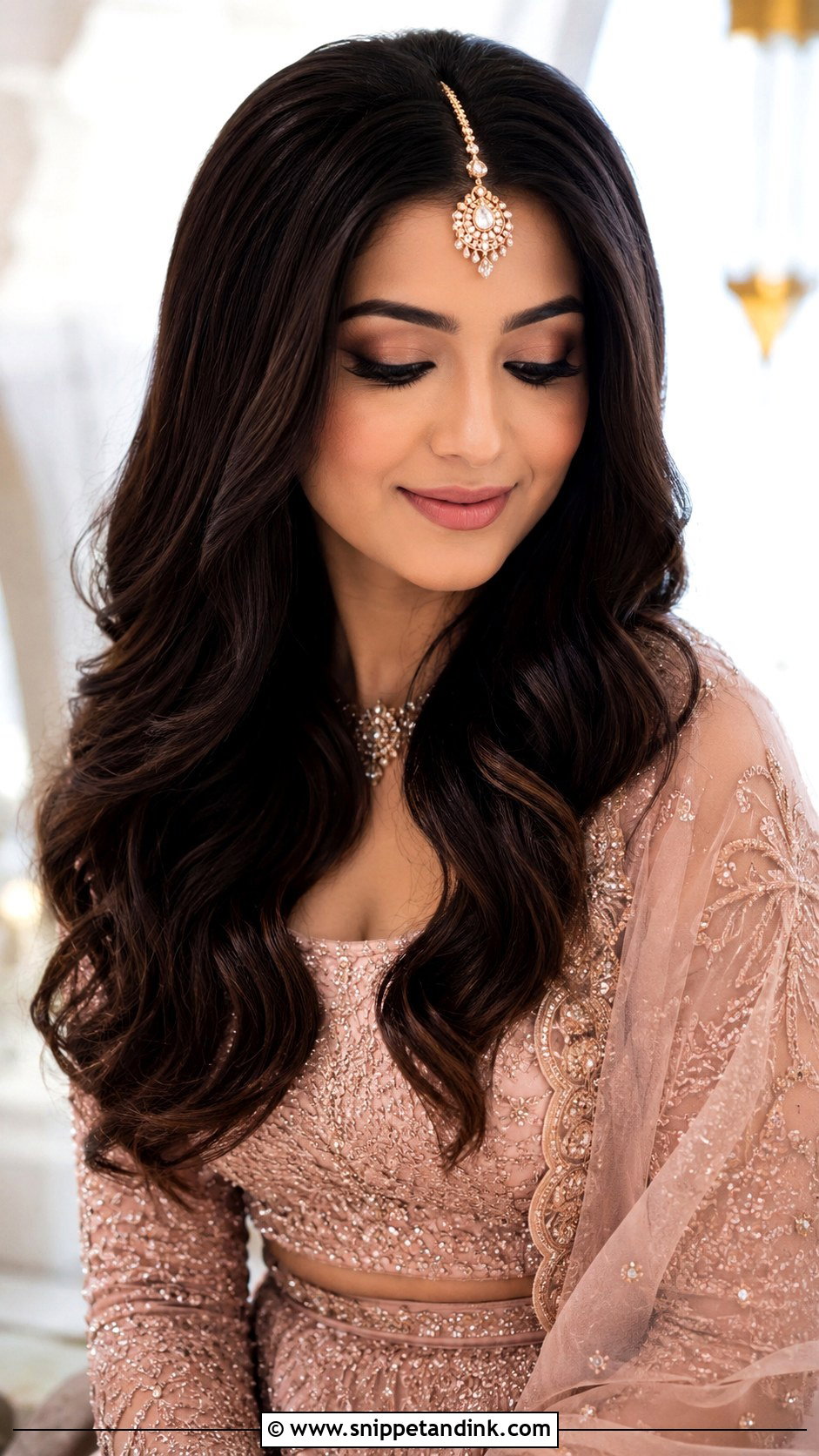
Waves with a maang tikka keep a traditional touch even with the hair down. The tikka hangs at the center part and needs a small pin behind it, since there’s no bun to anchor its chain. It works for engagements and smaller functions and shows off your length and texture. A gajra behind the ear adds a bit more tradition. On fine hair, waves flatten fastest at the crown, so I backcomb lightly at the roots there.
22. Twisted Updo
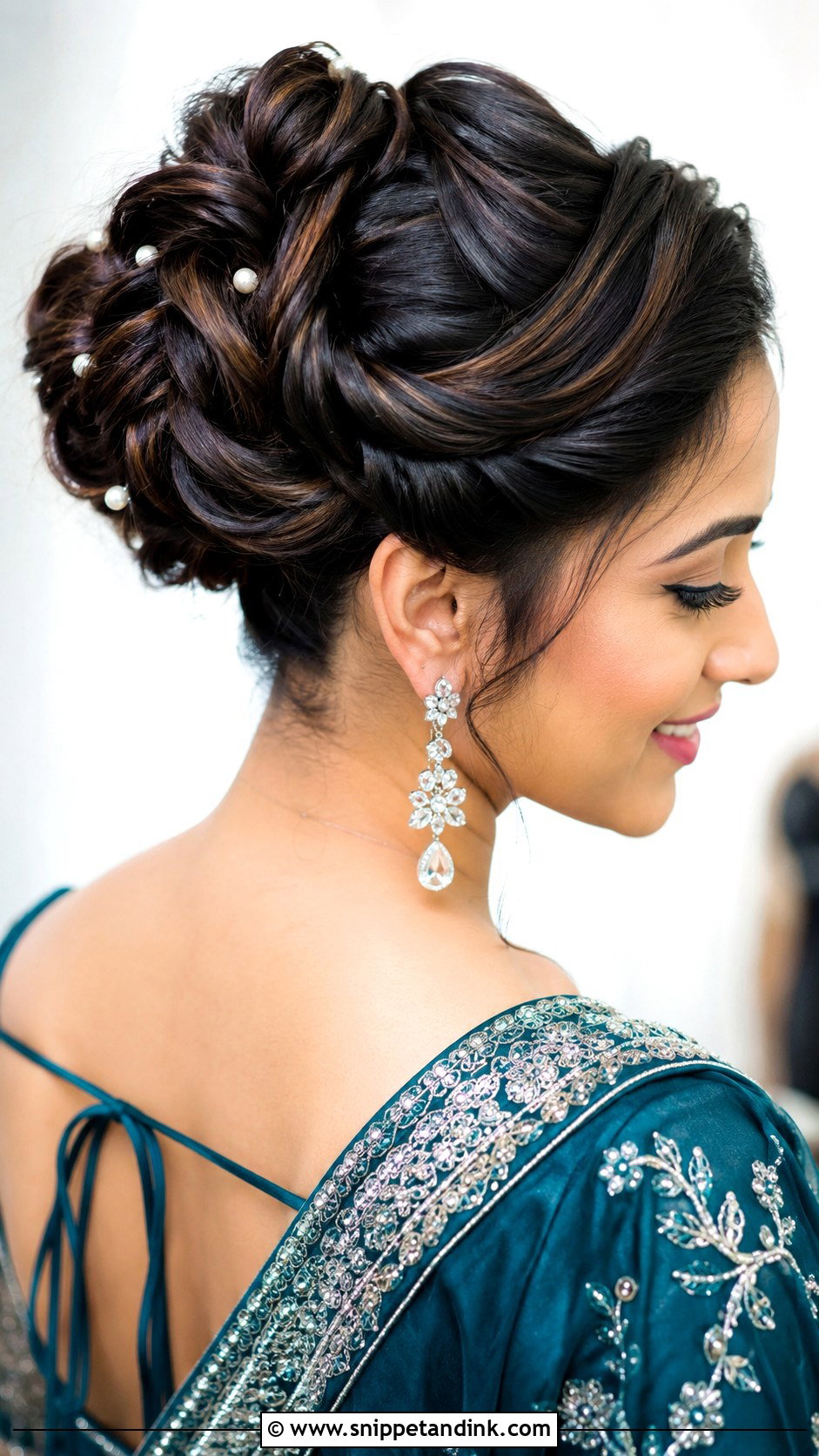
A twisted updo is built from sections twisted and pinned into coils, so it looks sculpted without needing many accessories. It’s a good fit for formal events and warm-weather ceremonies, since every strand is off the neck. A few pearls, crystals or small flowers are enough. It works with sarees and gowns. Each twist is pinned separately, which makes it secure but also slow to take down, so allow time if you’re changing styles later.
23. Boho Braided Half-Up
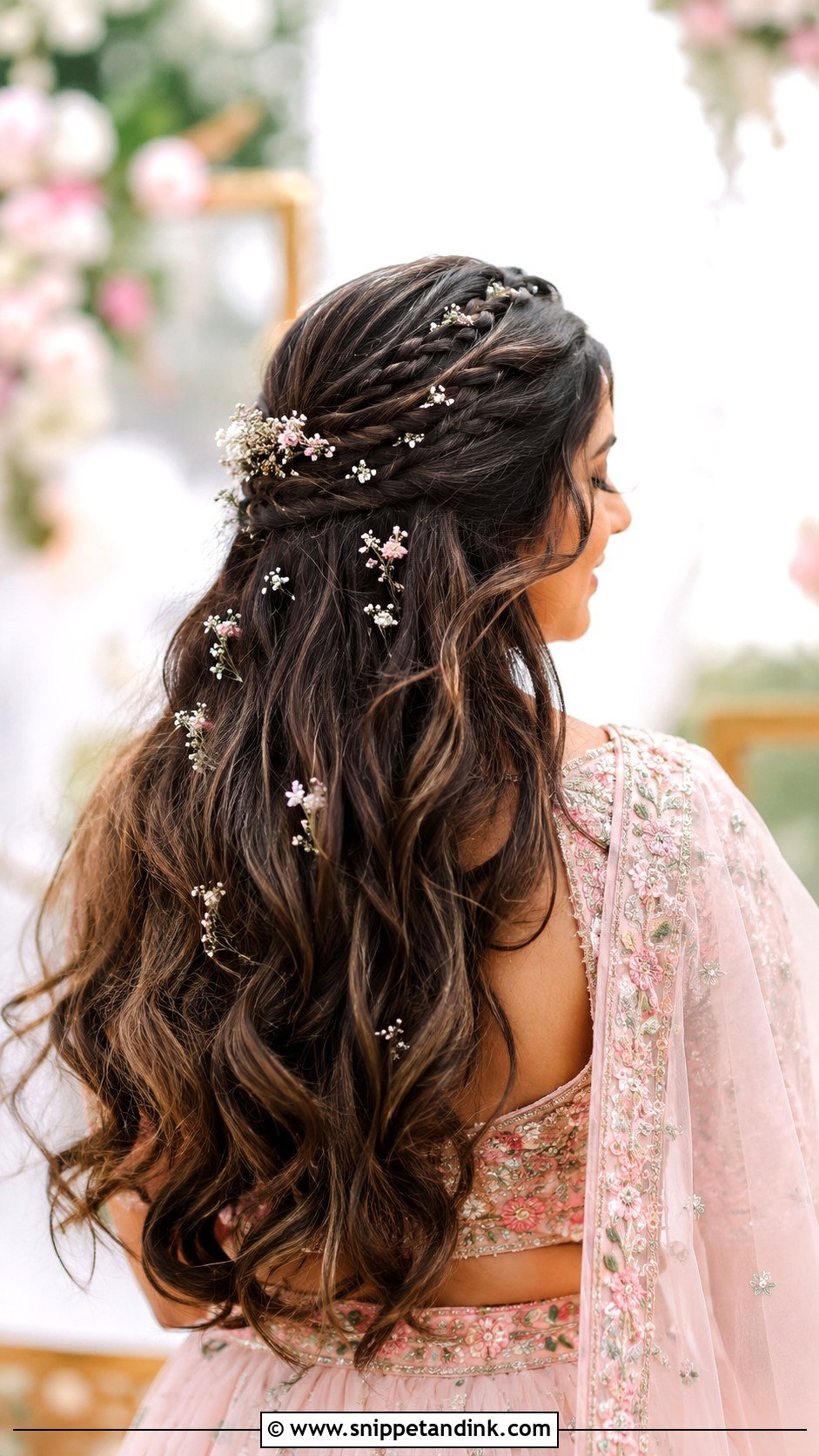
Small braids pulled back from the face with soft waves below give a relaxed, free-spirited look. Tiny flowers or beads can be woven in. It fits outdoor weddings, the haldi and boho-themed events. I keep the braids thin and pin them crossed at the back, which stops them sliding down the head. For brides who’d rather look natural than polished, it’s one of the easiest styles to wear.
24. Curly High Bun
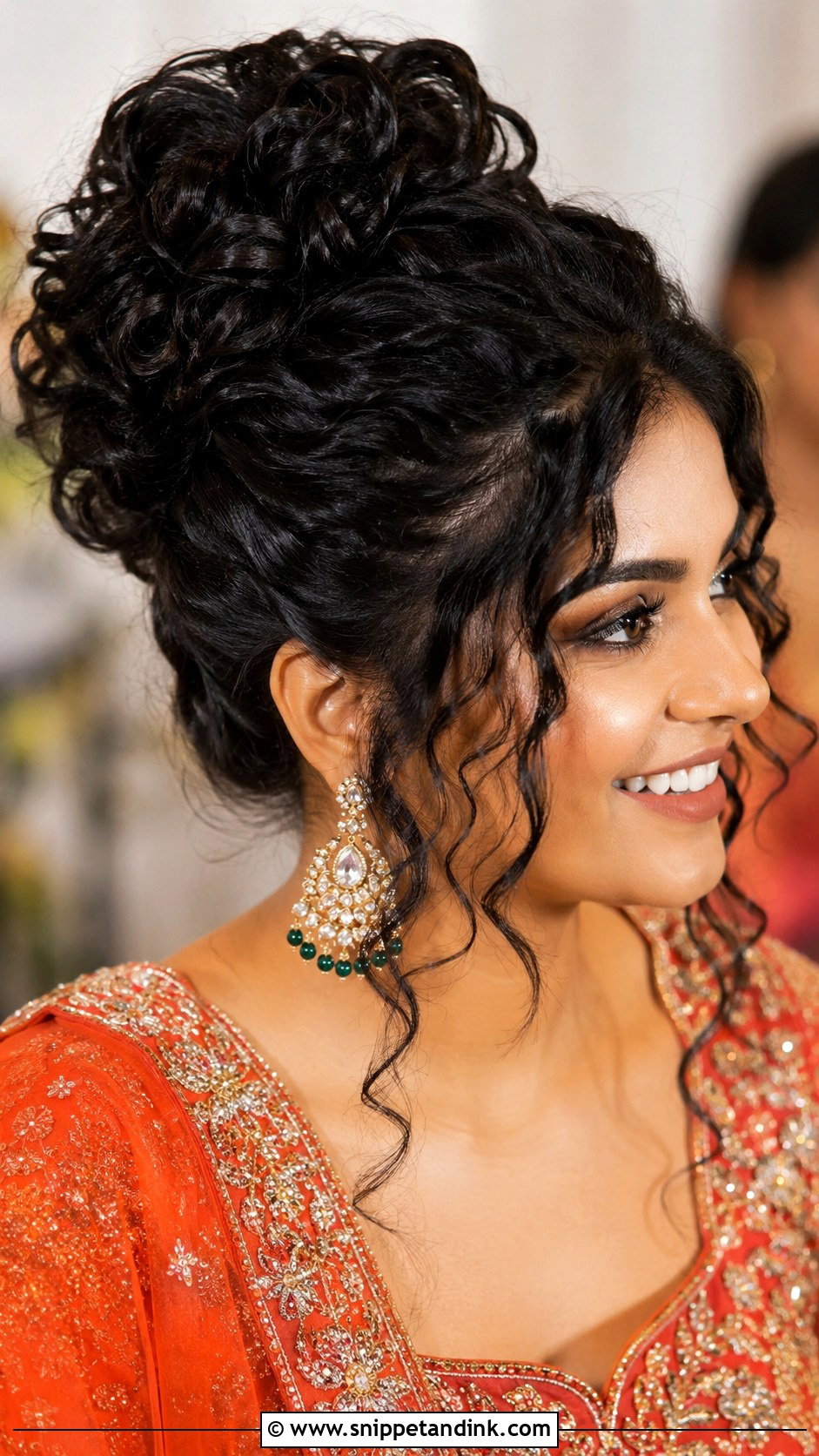
A high curly bun adds height, which lengthens a round face, and keeps your neck clear for a night of dancing. I pin each curl into place rather than twisting the whole length, so the volume stays defined. Bold earrings and reception outfits suit it. Naturally curly or wavy hair works best here, since its own texture holds the shape; I’d style with your curl pattern rather than fighting it with a straightener first. A few curls left loose at the front soften it.
25. Open Hair With Statement Accessory
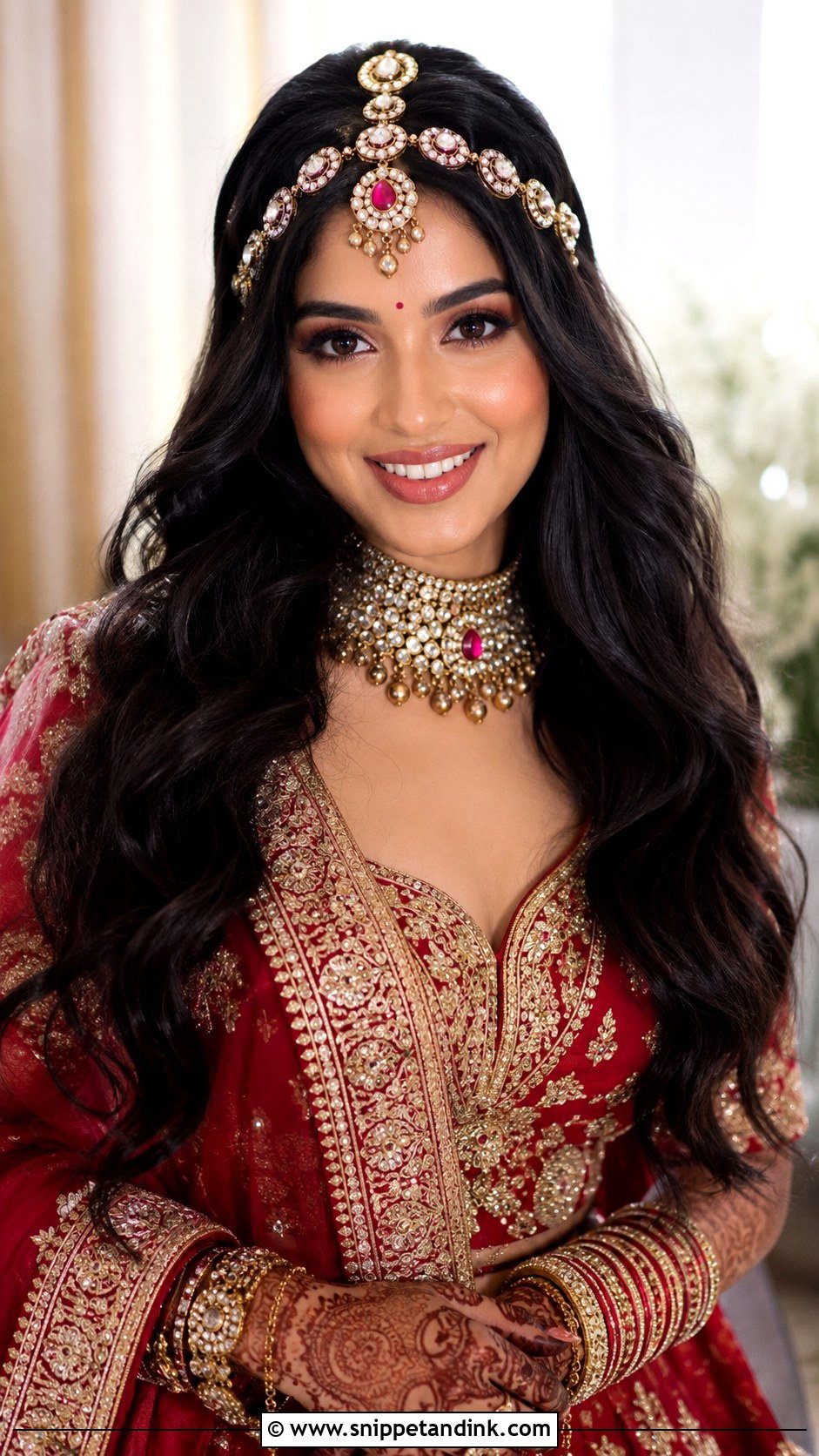
Sometimes one strong piece is all open hair needs: a jeweled headband, a matha patti or a floral crown over soft waves. It lets your hair flow while the accessory ties into your jewelry and embroidery. Matha pattis and headbands need anchor pins hidden at the sides, or they slip forward on smooth hair. It works with both traditional and modern outfits and is the lowest-maintenance look on this list, since the accessory does most of the work.
Scheduling Hair Across a Multi-Day Wedding
When you’re styled three or four days in a row, the order and timing matter as much as the looks themselves.
- Plan the most heat-heavy styles, like sleek ponytails and tight curls, for different days, so your hair isn’t straightened and curled back to back.
- Wash after the haldi, since turmeric paste and oil left in the hair make it hard to style the next day.
- Give a detailed bridal bun or jada an hour to an hour and a half of chair time; simpler guest styles take less.
- Hair before makeup or after depends on your stylist’s routine, but jewelry and the dupatta always go on last.
I’d also put the most secure style on the day with the longest ceremony. Save open hair and sleek ponytails for the evenings, when you’re mostly standing, greeting and dancing, and a quick touch-up is easier.
Between functions, sleep on a silk pillowcase with your hair in a loose braid. It keeps yesterday’s texture without knots, and second-day hair grips pins better than freshly washed hair on most heads.
Screenshots Help, but Your Schedule Matters More
From gajra-wrapped buns to sleek ponytails, these Indian wedding hairstyles cover every function and most hair types. The right one is the style that suits your outfit, jewelry and face shape and still looks right after hours of rituals or dancing. Share your saved photos with your stylist, but also tell her what you’ll be doing at each event and how long you’ll be wearing the look. That conversation shapes the result more than any picture.
You'll Like These Ideas:




Leave a Reply