
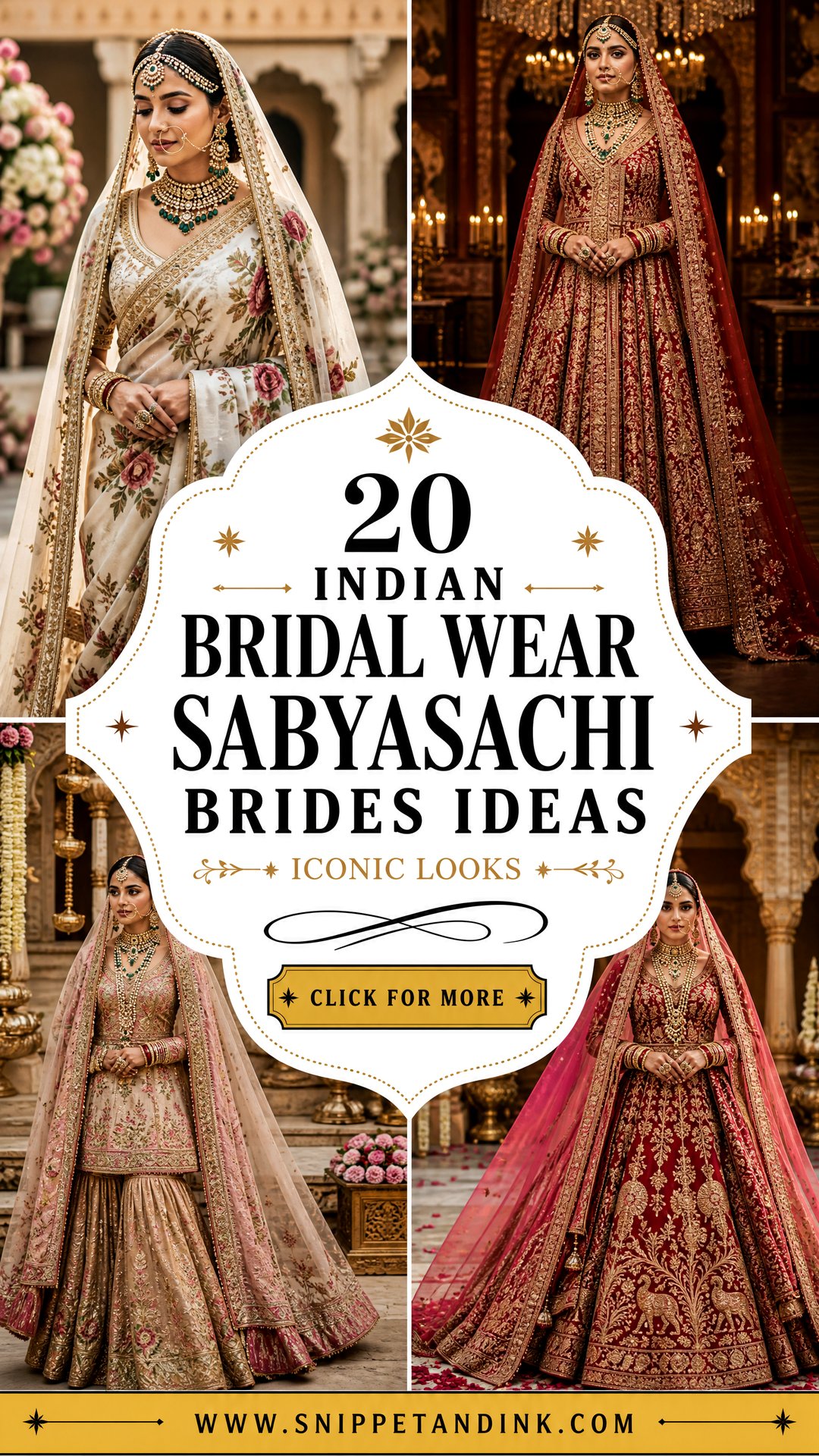
The Sabyasachi bride is recognisable from across a room: heavy zardozi, layered polki, a dupatta pinned over the head and a palette borrowed from old textiles rather than from a trend board. Below are twenty complete looks in that spirit, from classic red lehengas and Banarasi sarees to pastel day outfits, velvet for winter and lighter shapes for the mehndi or sangeet. For each one I’ve noted what I’d pair with it as a stylist: blouse, dupatta, jewelry, footwear, hair and makeup. Treat them as starting points. The outfit that works is the one that respects your family’s customs and still lets you sit, eat and walk around the mandap without being rescued every ten minutes.
How a Heavy Zardozi Lehenga Actually Feels by the Seventh Hour
Couture bridal lehengas in this style are heavy. Dense zardozi, a can-can layer and a lined skirt can add up to several kilos, and almost all of it hangs from the waistband. That weight is fine for photographs and hard on the hips by evening. When I’m fitting one, the first thing I check is where the waistband sits: on the natural waist, with a wide, padded band, it spreads the load; slung low, it digs in.
- Ask for the can-can to be stitched in rather than worn separately, so it doesn’t twist when you sit.
- Have the skirt hemmed with the exact shoes you’ll wear. A finger’s width off the floor is safer than a puddle.
- Wear the full outfit, dupattas pinned, for at least an hour at your last fitting. Sit on a low stool the height of a mandap seat.
- Give your stylist U-pins and small safety pins in the dupatta’s shade. Head dupattas are anchored to the bun, not just to the hair.
Couture houses usually quote several months from order to delivery, with alterations on top, so if you’re commissioning a similar look from a local karigar instead, give it the same lead time. Embroidery done in a rush shows.
1. Red Sabyasachi Bridal Lehenga
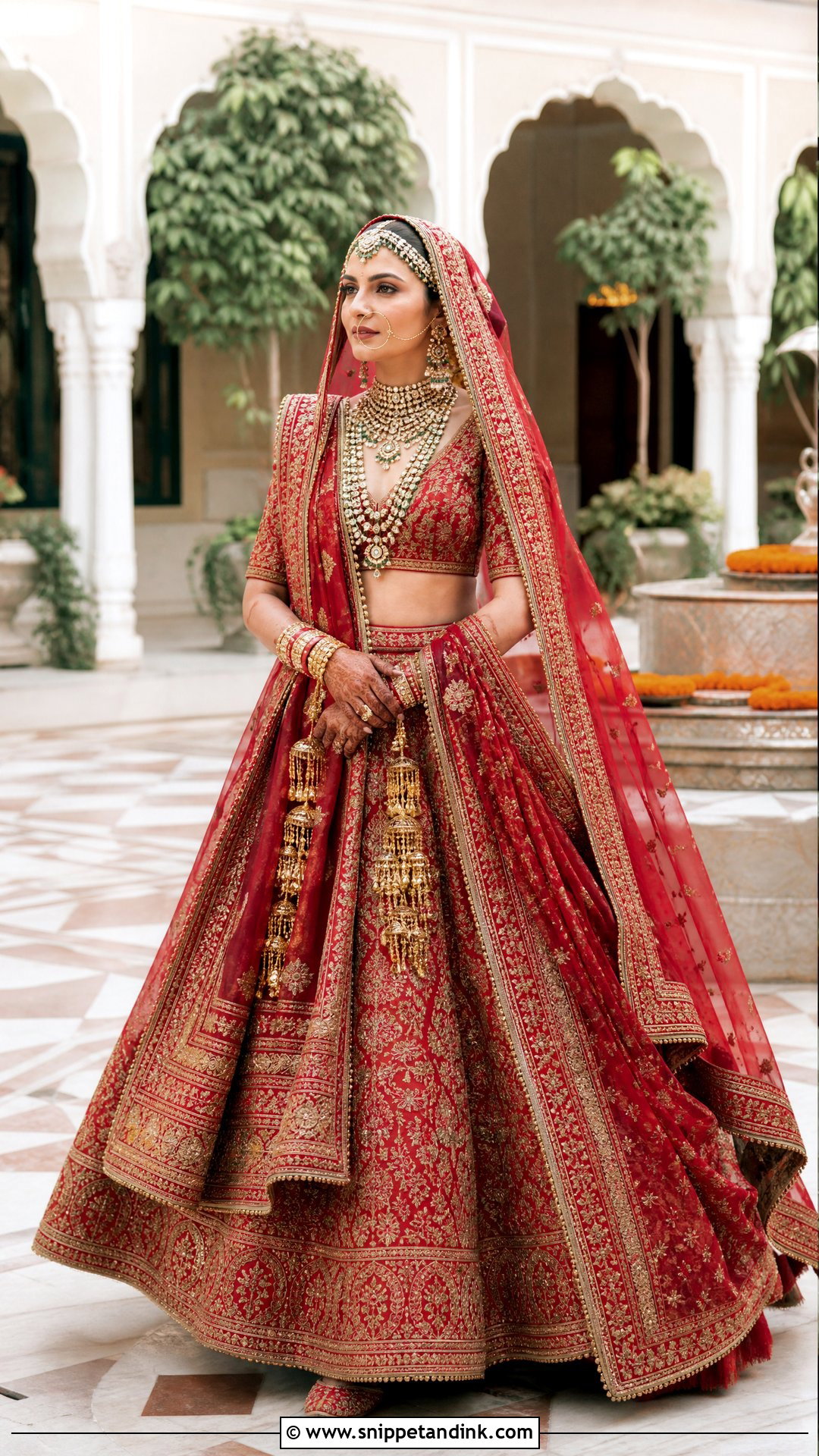
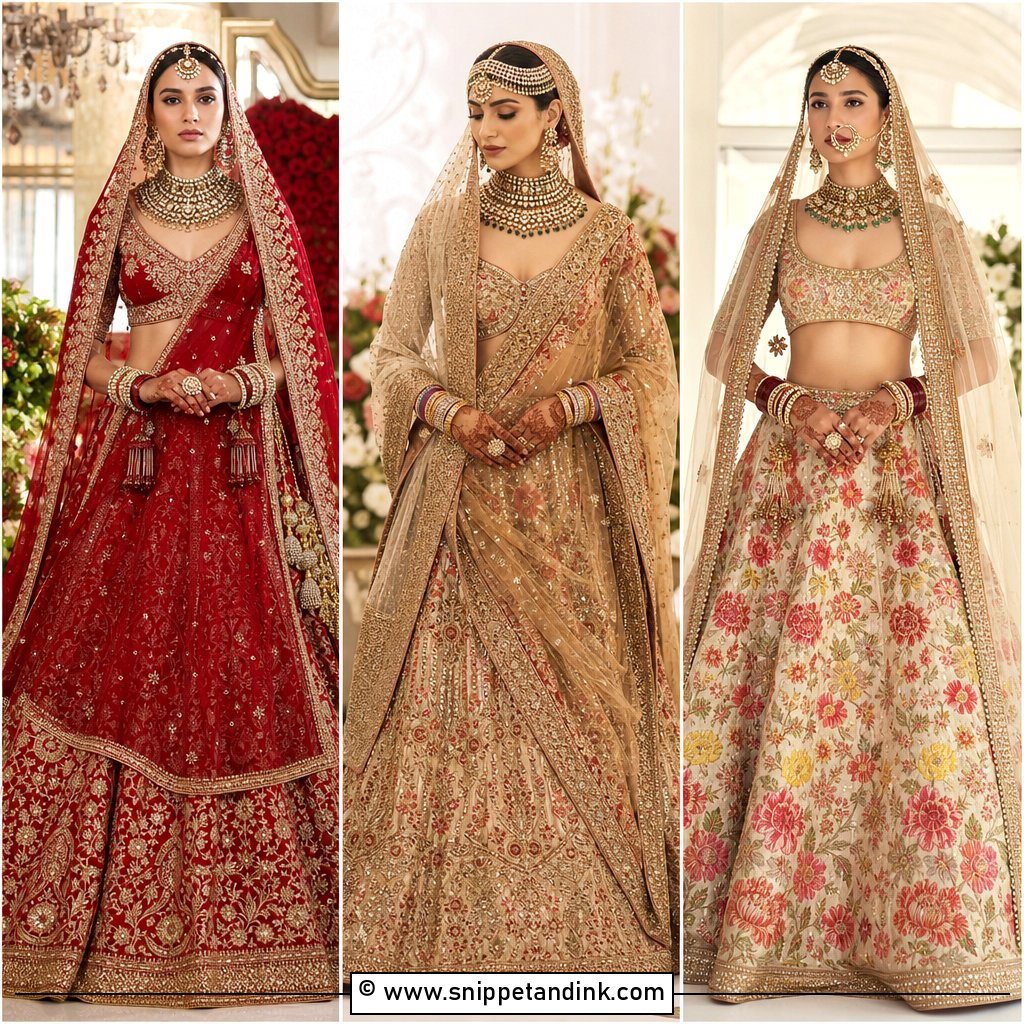
Red is still the colour most families picture for the pheras, and a vermilion or sindoor skirt with antique-gold zardozi and a deep border carries that weight in every photograph. I’d pair it with a fitted blouse featuring elbow-length sleeves and a neckline cut to sit just under the choker, so the two never fight. Use a matching dupatta over the head and a lighter one across the shoulder. Kundan choker, rani haar, matha patti, nath, bangles and embroidered juttis complete it. One practical note: red zardozi reflects onto the face under warm mandap lights, so ask your makeup artist to keep the base a touch cooler than usual and finish with a rose-red lip and a flower-dressed low bun.
2. Maroon Sabyasachi Bridal Lehenga
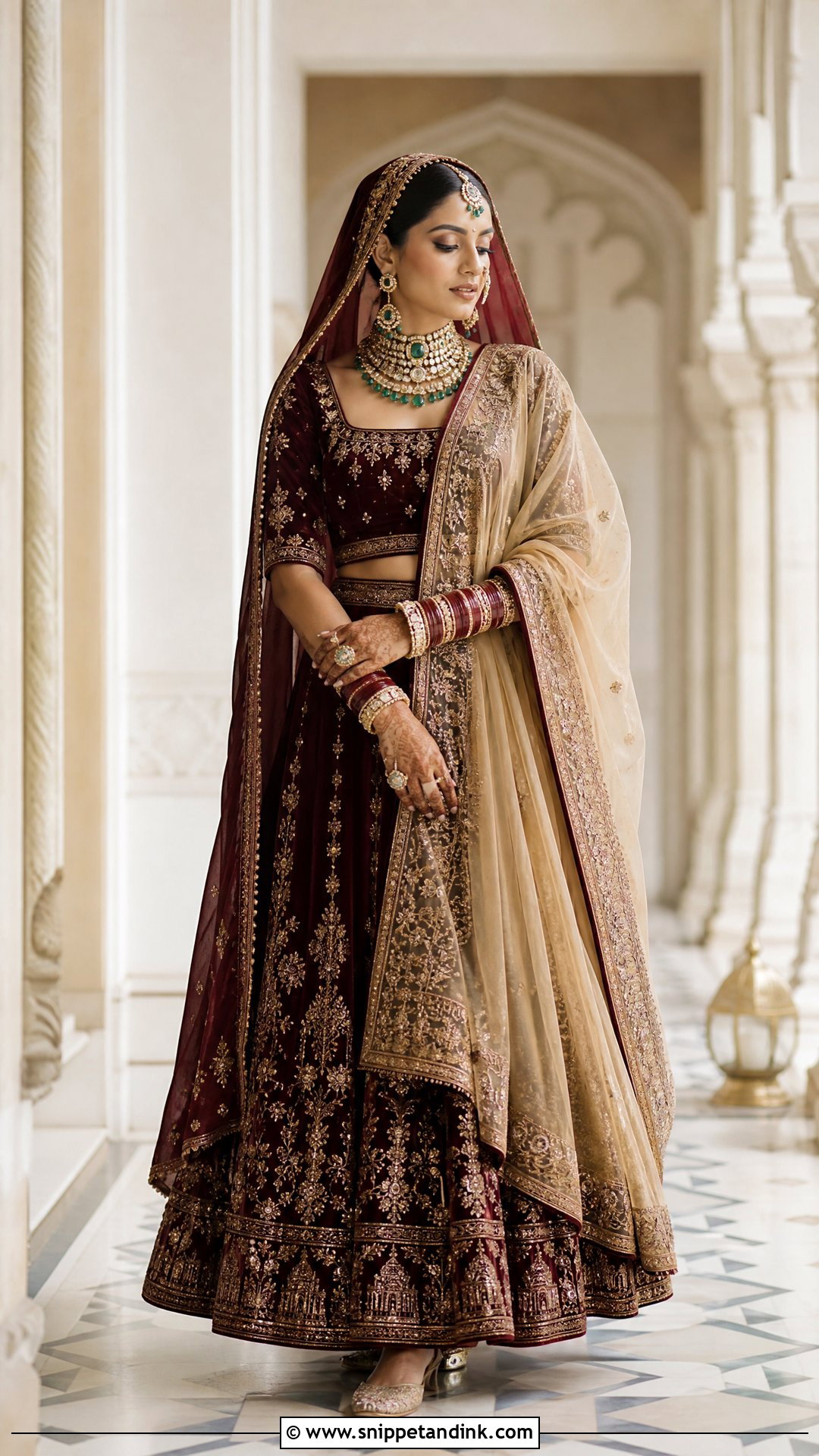
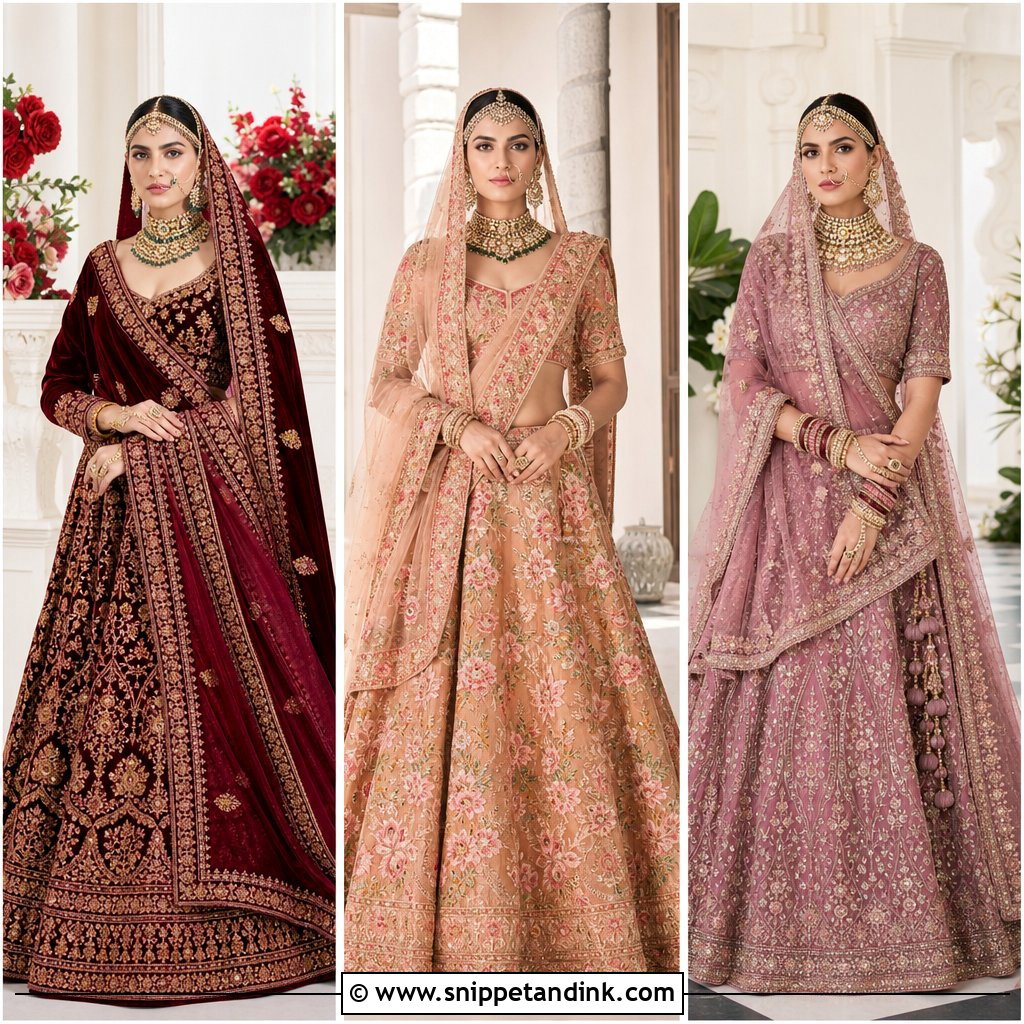
Maroon gives you the ceremony feel of red with less glare, which I find kinder on deeper skin tones and on cameras at night. Velvet or heavy silk with muted gold embroidery is typical here. Because maroon velvet swallows detail, the blouse needs structure: a square or sweetheart neck with proper cups and boning keeps the top half from looking flat beside a dense skirt. Put one maroon dupatta over the head and an antique-gold one across the torso so there’s a break in colour. Polki with emeralds, maroon chooda, gold kaleere and block-heel juttis finish it, with smoked brown eyes and a berry lip.
3. Ivory Sabyasachi Bridal Lehenga
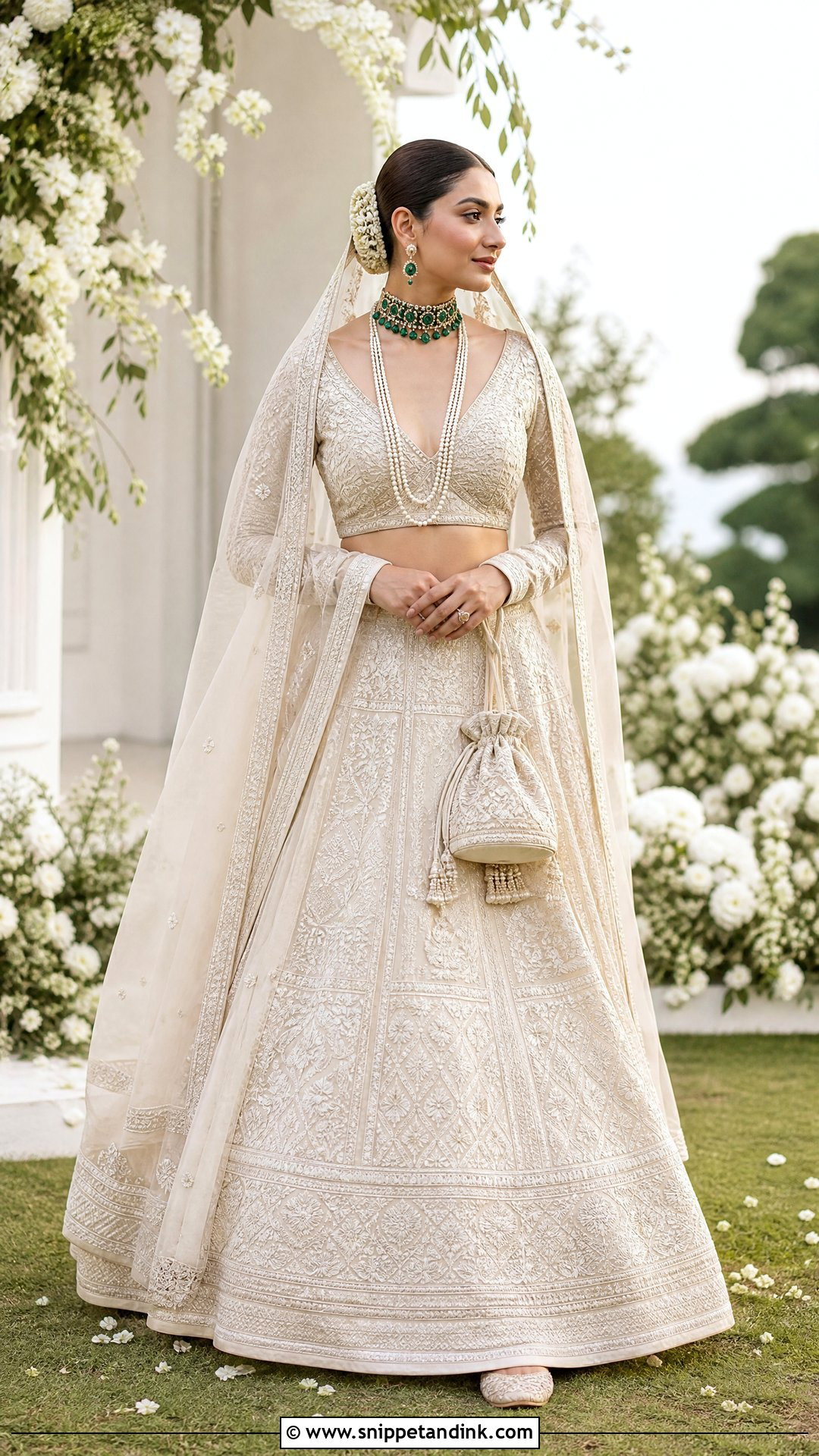
Ivory belongs to the daytime ceremony and the destination wedding, and it is the colour I fit most carefully. Tonal threadwork, pearls and restrained gold read as refined in daylight, but ivory silk shows every crease and every smudge of foundation at the neckline, so I tell brides to dress after makeup and keep a white cotton scarf over the blouse until the last minute. A modest V-neck with half sleeves suits most frames. Emerald jewelry gives the outfit its contrast, pearls soften it, and white flowers in the hair keep it fresh. Choose brown liner and a muted rose lip rather than black and red, which can look harsh against so much pale fabric.
4. Blush Pink Sabyasachi Bridal Lehenga
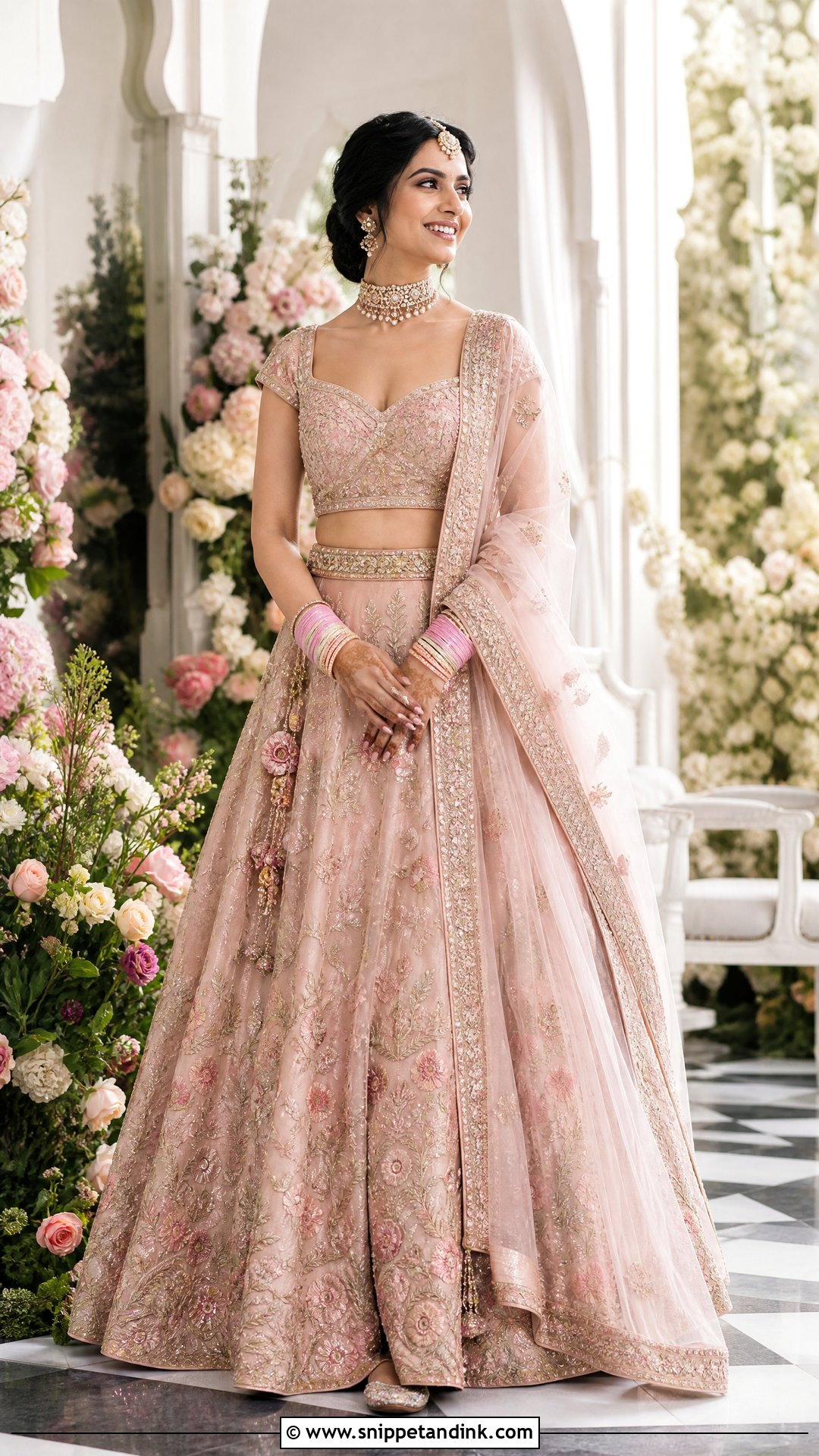
Pink is where I send brides who want colour but don’t feel like themselves in red. In organza or light silk with floral threadwork, the skirt has air in it, which matters in a warm month. The risk is that blush washes out under yellow lighting, so I always look at the fabric swatch next to the bride’s face in the actual evening light before ordering. A sweetheart blouse with real support, a sheer floral dupatta and a slim embroidered belt to hold the shoulder drape keep it tidy. Polki choker, pearl drops and pink-and-gold bangles suit it, along with metallic juttis, a textured low bun with pink flowers and a dusty-rose lip.
5. Pastel Floral Sabyasachi Bridal Lehenga
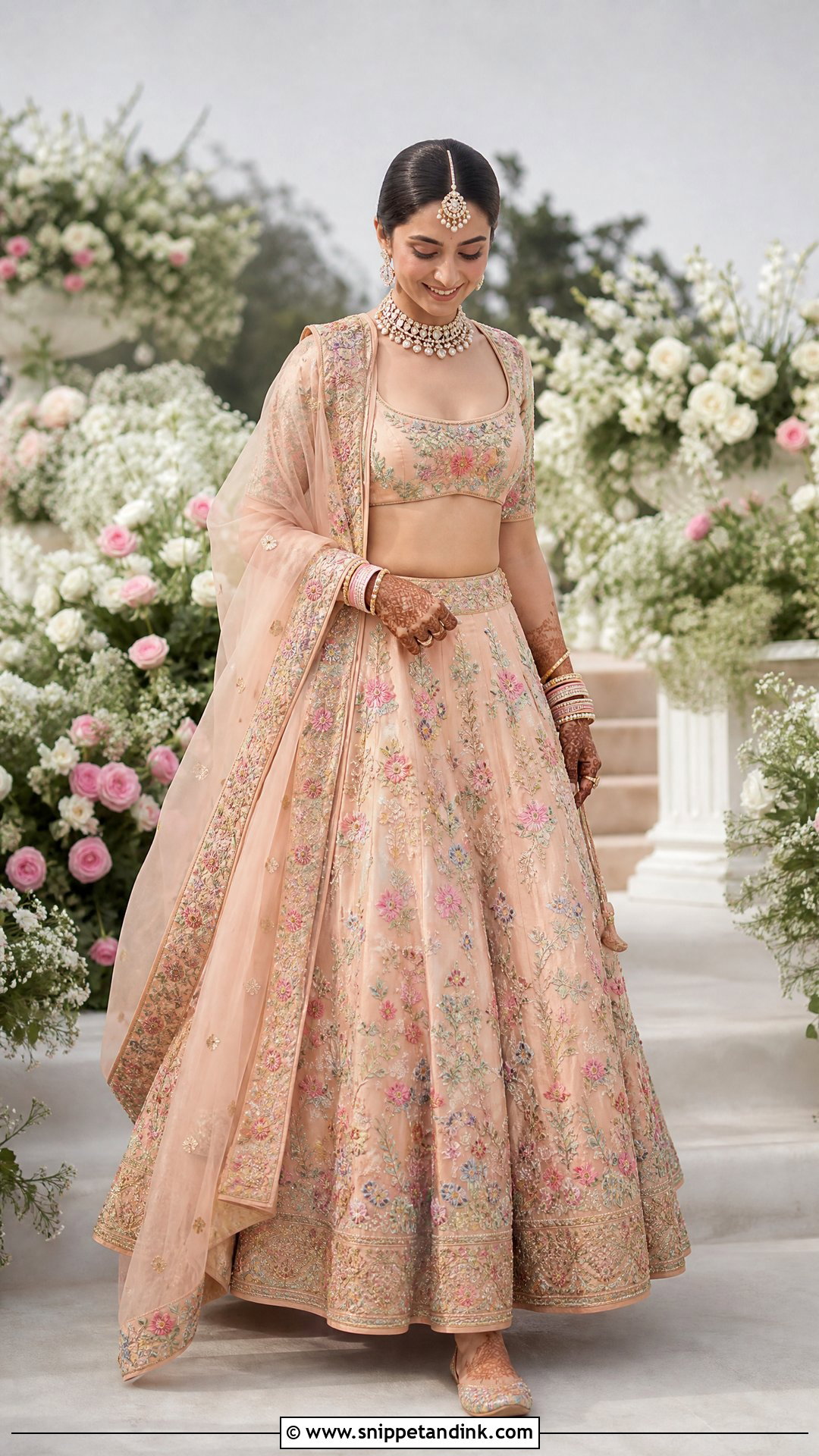
Picture a garden ceremony and a skirt covered in faded blooms. Pale peach, powder blue, mint or cream bases with floral embroidery all fall into this family. The mistake I see is a heavily contrasting blouse that cuts the outfit in half; keep the blouse coordinated and let the skirt speak. A lightweight organza dupatta lets the print show through. Pearl-and-polki jewelry and a floral maang tikka are enough. Wear embroidered flats if there’s grass, because heels sink and drag the hem into wet lawn. Loose waves or a floral bun and a soft pink lip finish it.
6. Gold Sabyasachi Bridal Lehenga
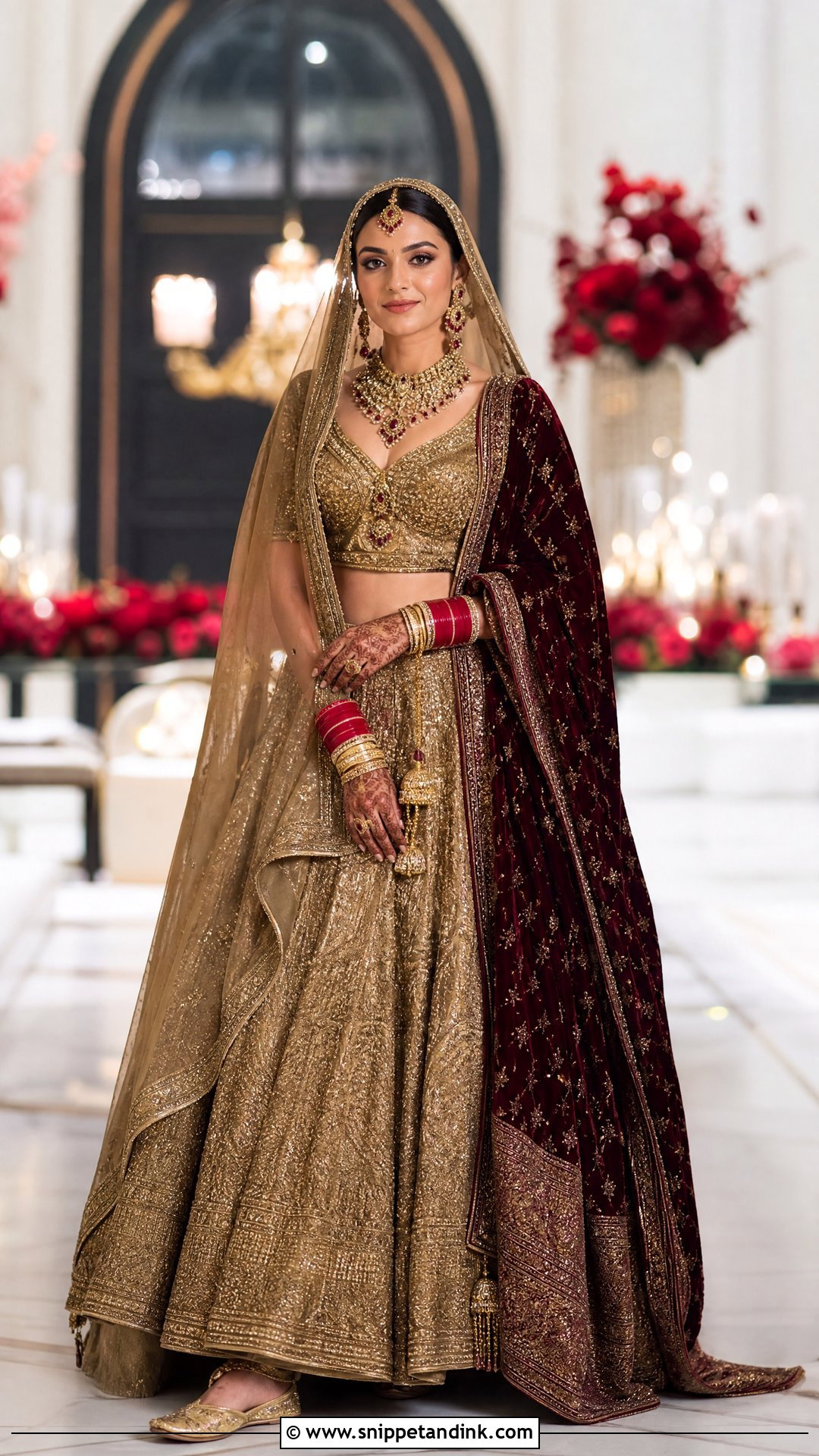
All-gold looks rich under evening lights and flat in daylight, so the work is in texture. I mix raw silk, velvet borders, metallic thread and sparse sequins so the camera sees layers instead of one shiny block. Choose the blouse by coverage: a deep square neck for a choker, or a high neck with worked sleeves if you’d rather wear long earrings and skip the necklace. A sheer gold dupatta goes over the head, and a burgundy or emerald second dupatta stops the outfit from becoming monotone. Antique-gold jewelry with red stones, a smooth centre-parted bun, bronze eyes and a brick-red lip give the palette some edges.
7. Green Sabyasachi Bridal Lehenga
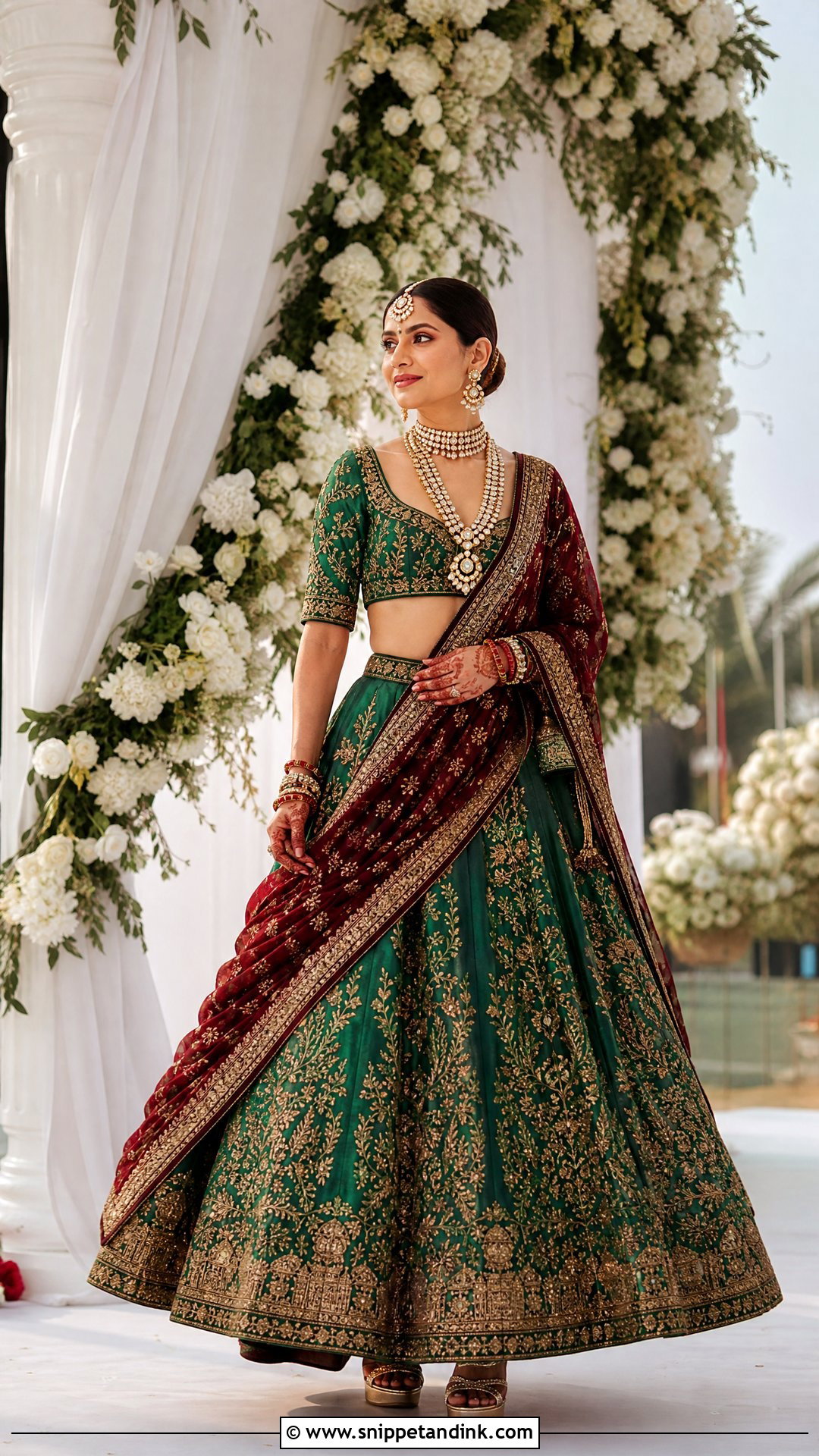
Emerald suits a reception, sangeet or night ceremony, and it flatters warm undertones more than almost any other jewel tone. Look for silk with antique-gold borders and threads of maroon or navy worked into the pattern. A matching blouse gives one long line; a maroon dupatta brings back the traditional contrast, or a sheer green veil with a gold edge keeps it coordinated. Uncut diamonds, a layered necklace and statement earrings carry it. Gold block heels or platforms are steadier than stilettos under a heavy skirt. Glossy waves or a rose-dressed bun work, and the makeup should stay warm, with bronze eyeshadow, kajal, and a deep nude lip.
8. Royal Blue Sabyasachi Bridal Lehenga
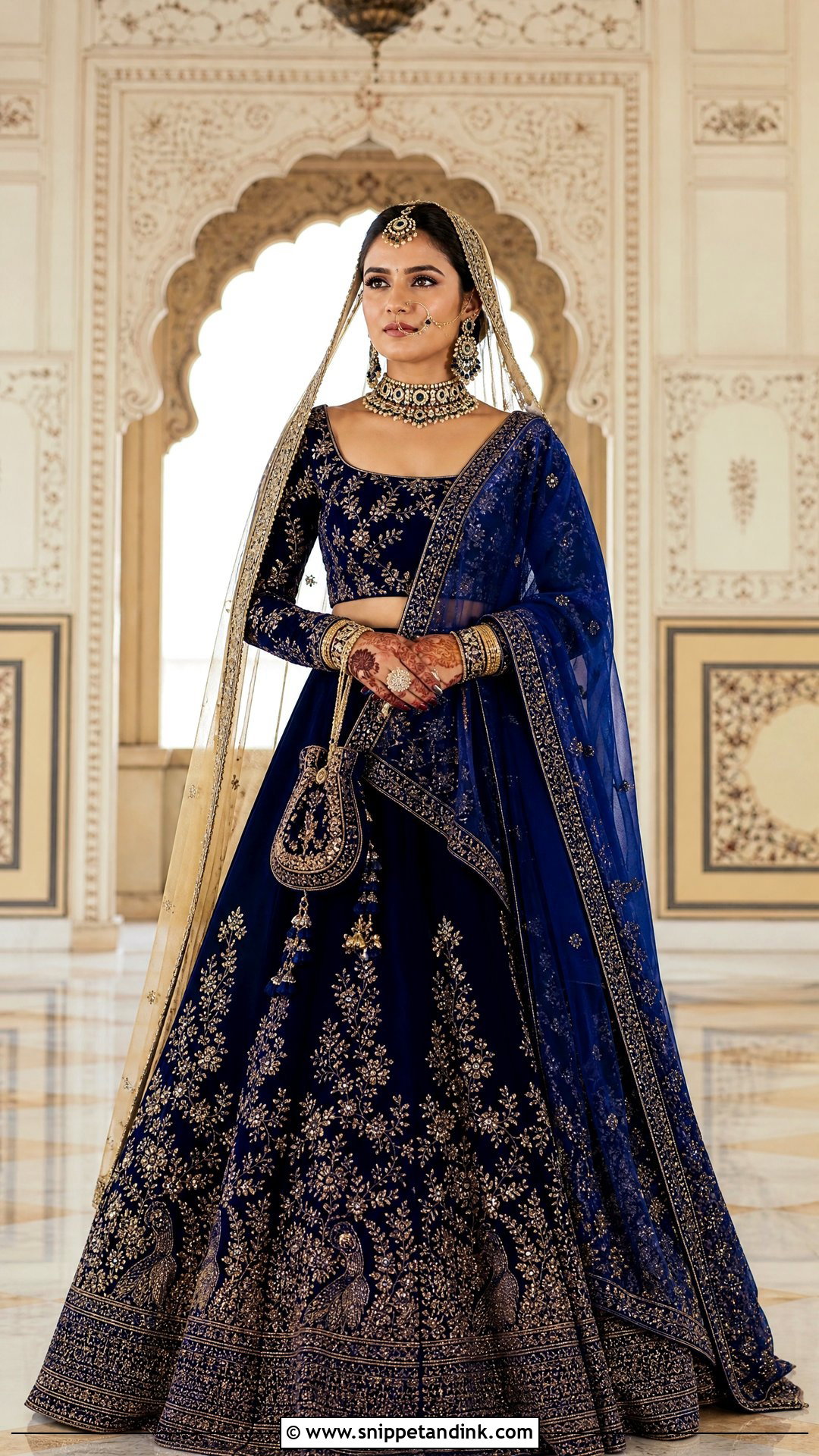
Royal blue is for the bride who is tired of hearing which colours are allowed. Velvet or silk in a deep blue with a wide architectural gold border looks commanding at an evening event. Full or three-quarter sleeves balance a heavily worked skirt. The second dupatta is where you soften it: muted gold, dusty pink or deep red all sit well. Watch the jewelry here, because plain gold can disappear against navy at night; polki with sapphire or pearl details holds its own. A smooth bun, strong eyeliner and a berry lip complete it.
9. Purple Sabyasachi Bridal Lehenga
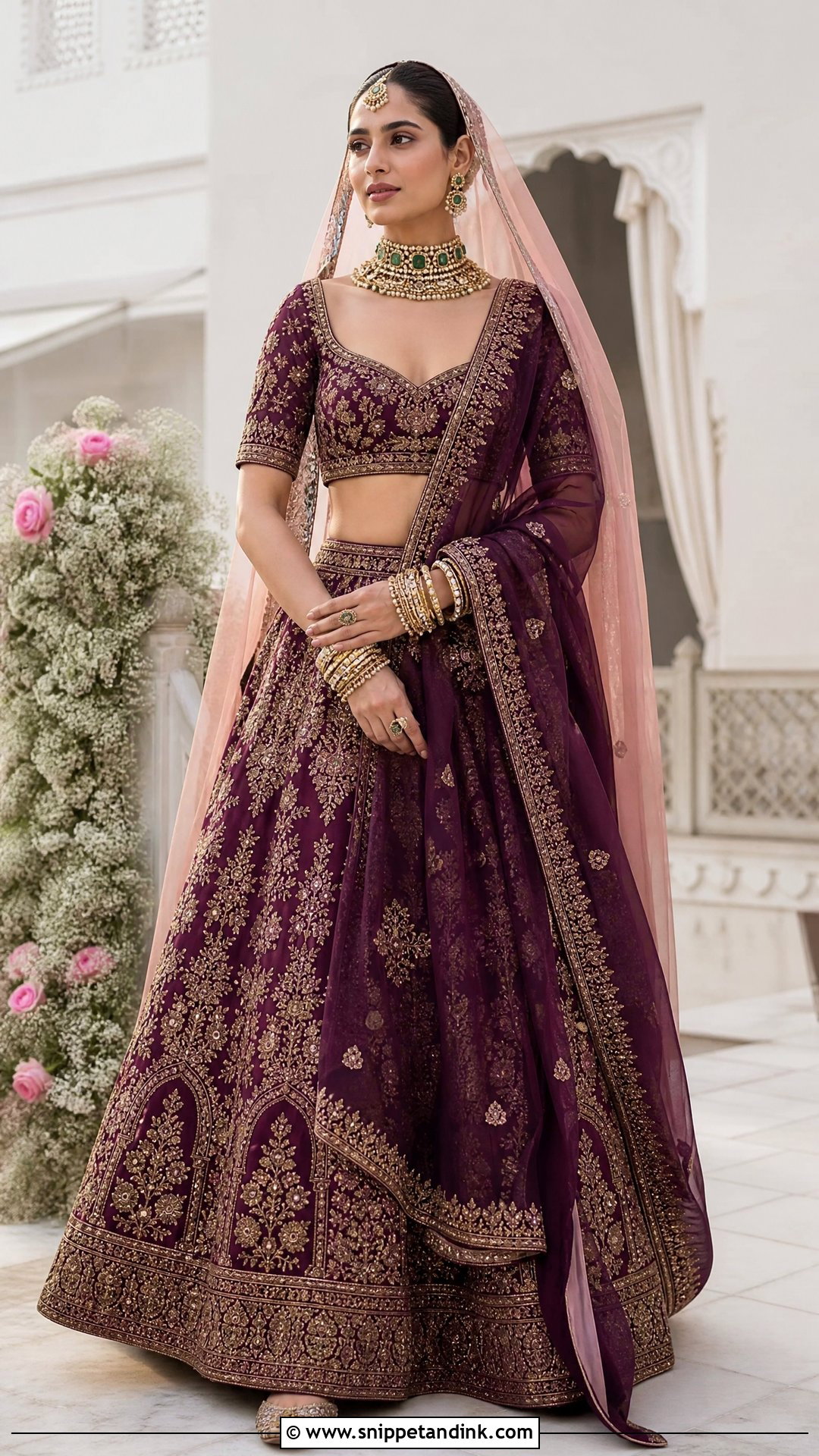
Plum, aubergine and dusty lilac all read as regal with antique-gold embroidery, and purple photographs more evenly than people expect. Keep the skirt full, the blouse closely fitted and the dupatta carrying the same border as the lehenga so the pieces belong together. I’d add a muted pink or deep red head veil for contrast rather than matching everything. Polki with green stones is the classic pairing; if you prefer lighter accessories, a single choker with pearls is enough. Satin-finish lip colour lasts better than matte through a long ceremony, and mauve blush ties it back to the fabric.
10. Black Sabyasachi Reception Lehenga
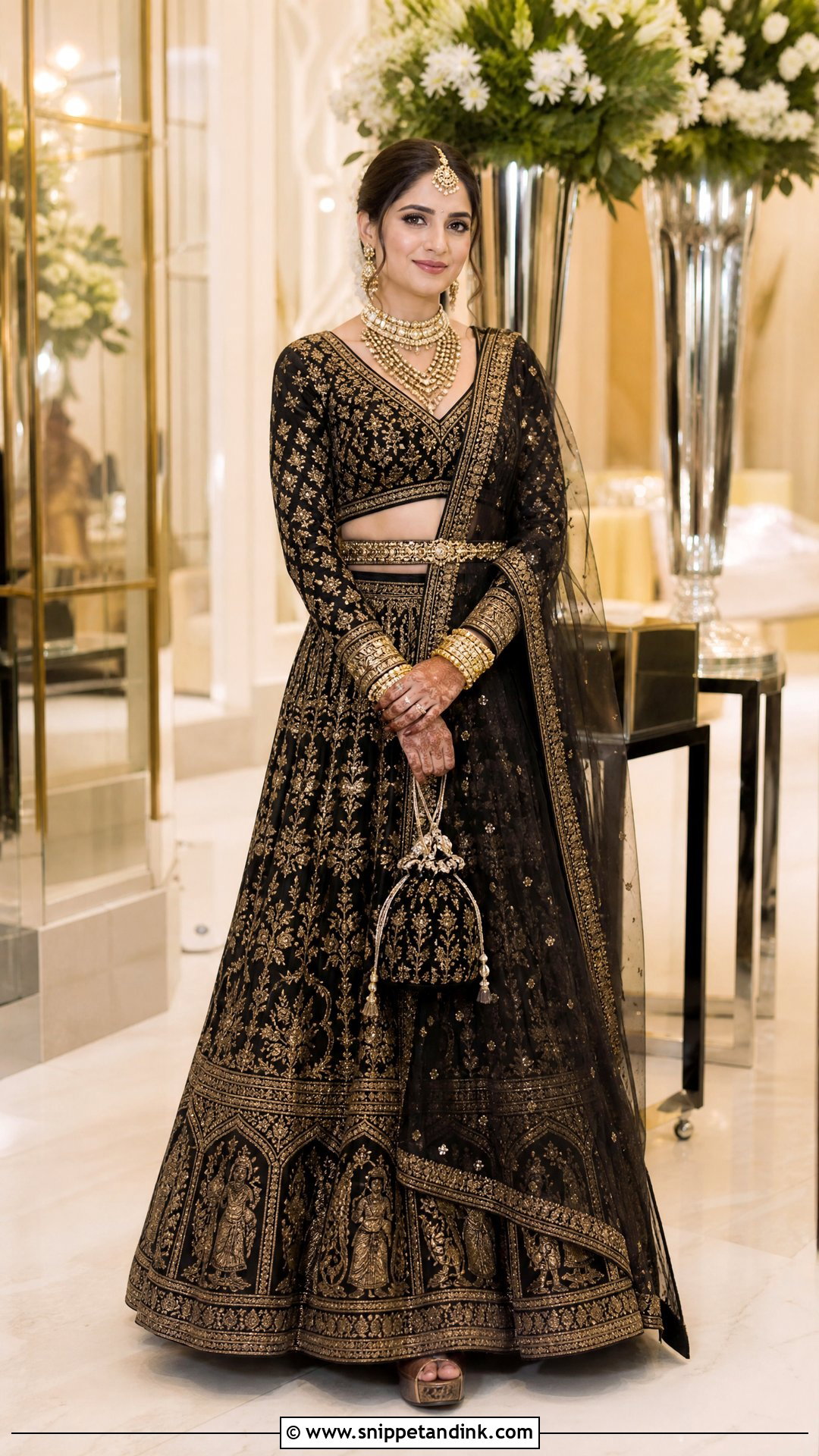
Black only works where your families are comfortable with it, so ask before you fall for one. In velvet or silk with antique-gold motifs, sequins and a heavy border, it makes a strong reception look. Choose a structured blouse with full sleeves, a square neck or a modest deep V. Skip the head covering; drape a sheer black dupatta over one shoulder and catch it with a belt. Layered gold necklaces, stacked cuffs and a compact potli suit the night. Black velvet under flash picks up every speck of lint and face powder, so keep a lint roller with whoever is minding your bag. Finish with kohl, bronze shadow and a deep rose or classic red lip.
11. Red Sabyasachi Bridal Saree
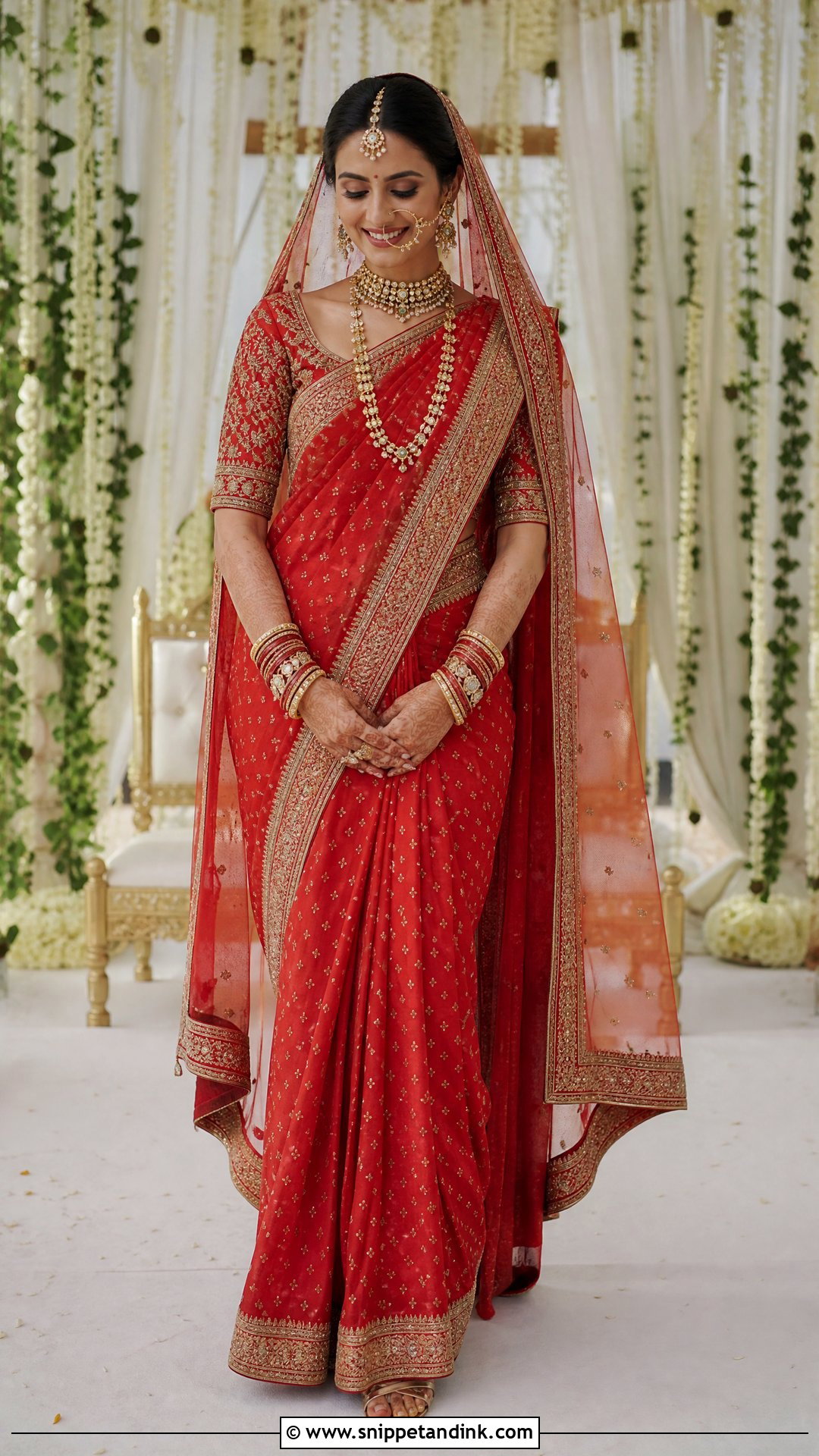
A red saree gives the ceremony the same impact as a lehenga while weighing far less. Silk or organza with zardozi and spaced motifs drapes well; heavily embroidered fabric all over can make the pleats bulky at the waist. The blouse has to fit securely at shoulder and bust because the pallu pulls on it every time you lift your arm. I pin the pleats in two places, one at the waist and one lower down, so they survive the pheras. A sheer red veil over the head adds grandeur without hiding the border. Kundan choker, nath, maang tikka, bangles and gold sandals, a jasmine-wrapped low bun, kajal and a rich red lip complete it.
12. Ivory Sabyasachi Bridal Saree
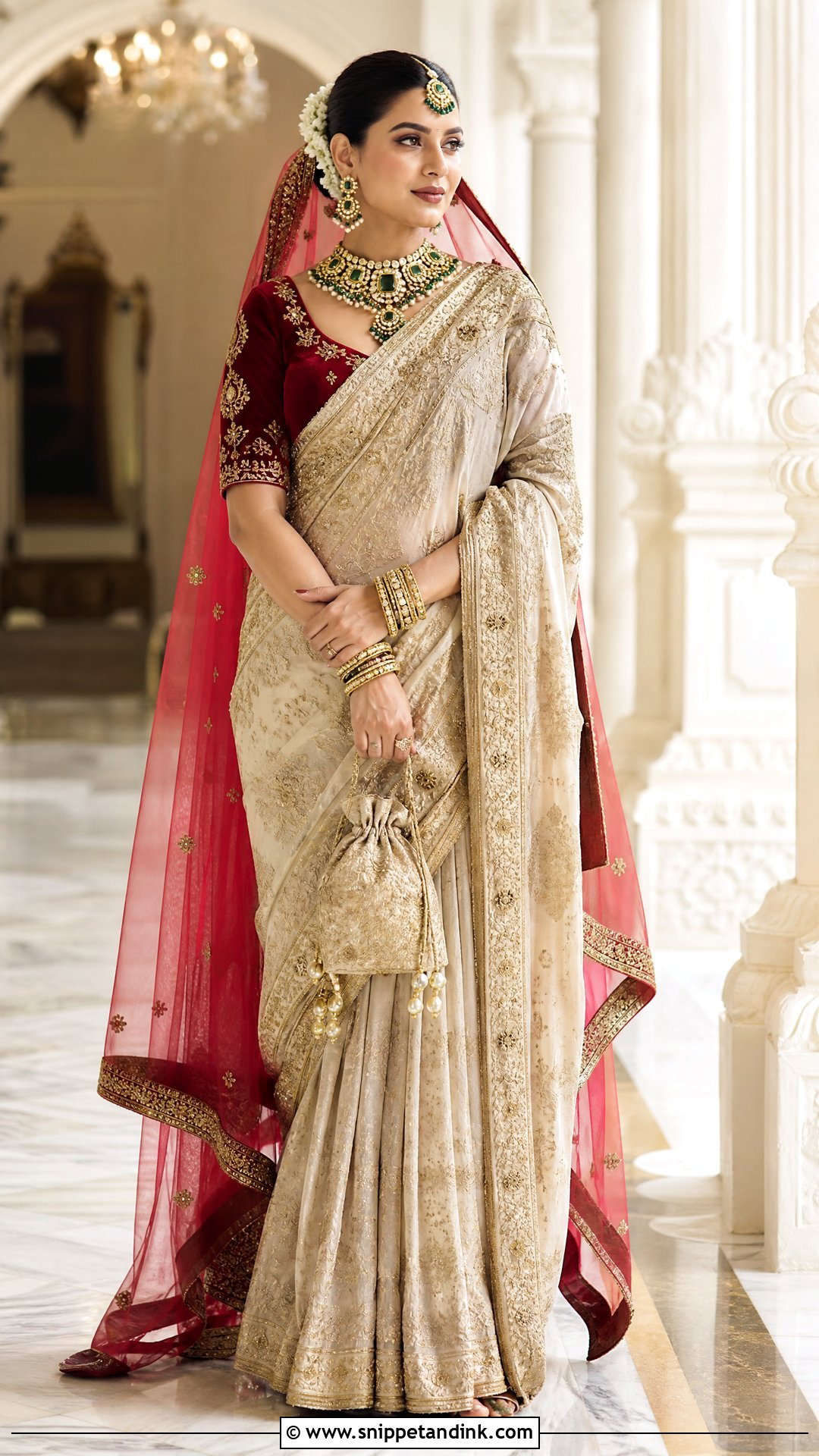
An ivory saree leaves room for family jewelry, which is often why brides choose it. Silk or organza with antique-gold embroidery and a defined border is the base. You can keep it monochrome with an ivory blouse or wear red velvet for contrast, which also hides the faint sweat marks pale silk shows at the underarm. Let the embroidered pallu fall naturally and add a red or gold veil for the ceremony itself. Emerald-and-polki jewelry, stacked gold bangles and metallic sandals pair well. A sleek bun with jasmine, brown-gold eyeshadow and a warm rose lip keep the face soft.
13. Red Banarasi Sabyasachi Bridal Saree
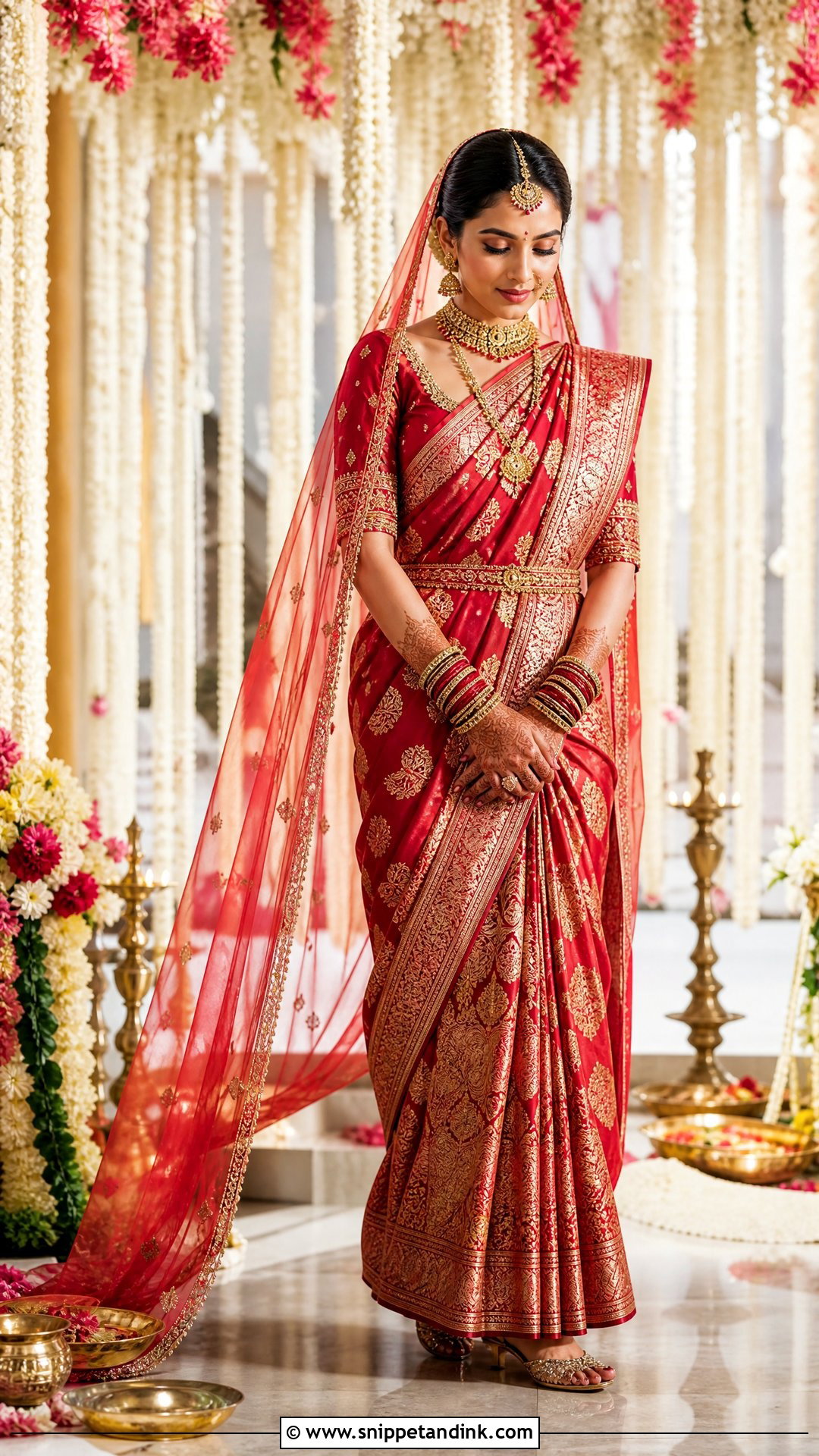
Banarasi silk has body of its own, so a red bridal saree in this weave holds pleats crisply and catches light at the zari. Choose a broad border, because a narrow one disappears once the pleats are folded in. A fitted red blouse with elbow sleeves is classic; a green or maroon blouse makes it more personal. Real Banarasi is heavier than it looks, so I’d keep any added veil light. Temple, kundan or antique-gold jewelry all suit it, depending on your family’s tradition, along with red bangles, a waist belt and low gold heels. A centre-parted floral bun, winged kajal and a warm red lip finish the look.
14. Pink Sabyasachi Bridal Saree
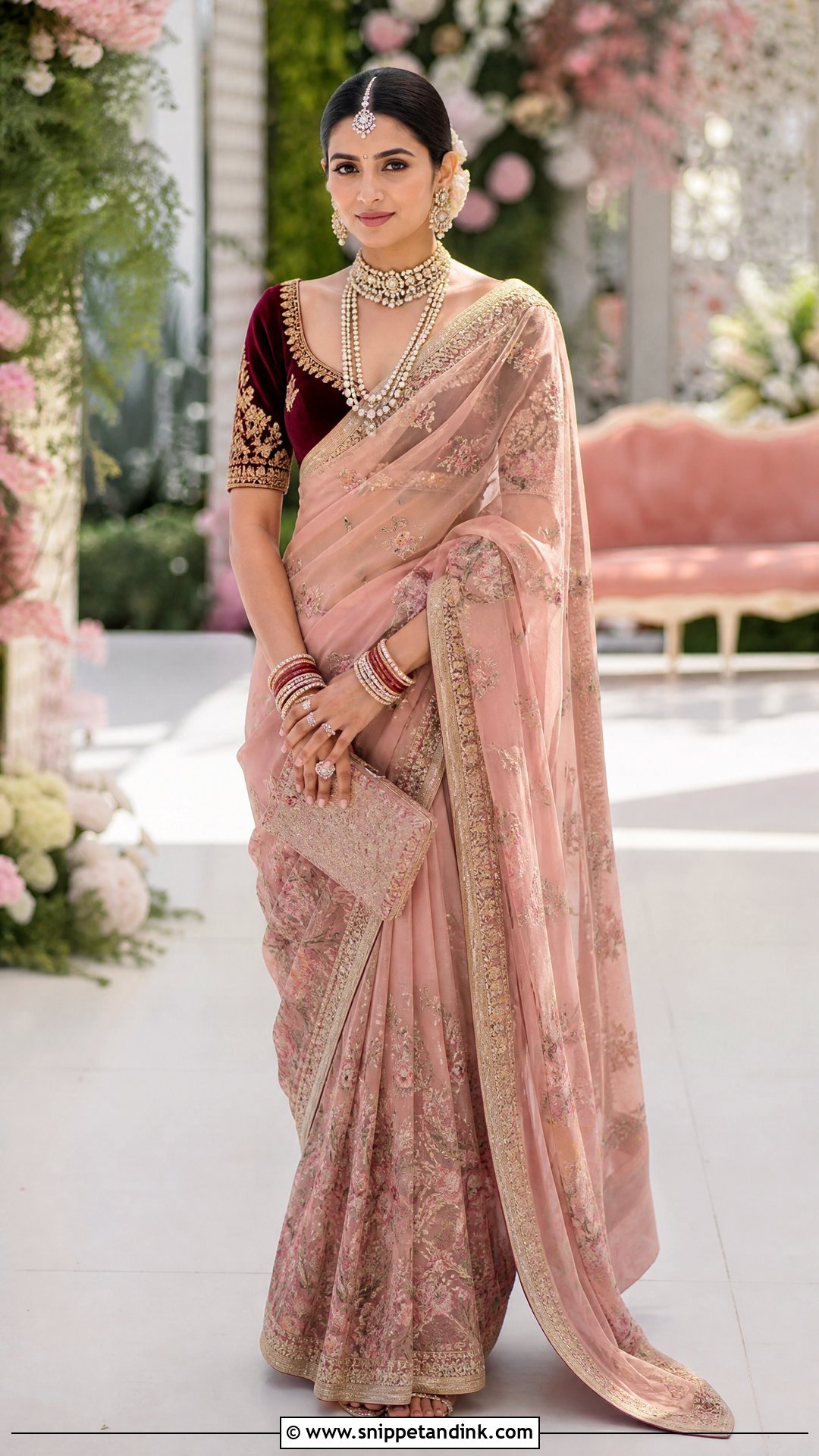
Pink sarees move easily from engagement to wedding to reception, and the shade decides which. Baby pink belongs in daylight, dusty rose suits a quieter look, and fuchsia holds up at night. In silk or organza with floral embroidery and a detailed border, a matching blouse gives a clean line while a burgundy blouse adds depth. Pin the pallu at the shoulder with a safety pin hidden under the border; a loose pallu is the thing guests step on. Polki choker, pearl strands and a small maang tikka are plenty. Soft waves or a floral bun and a pink-brown lip finish it.
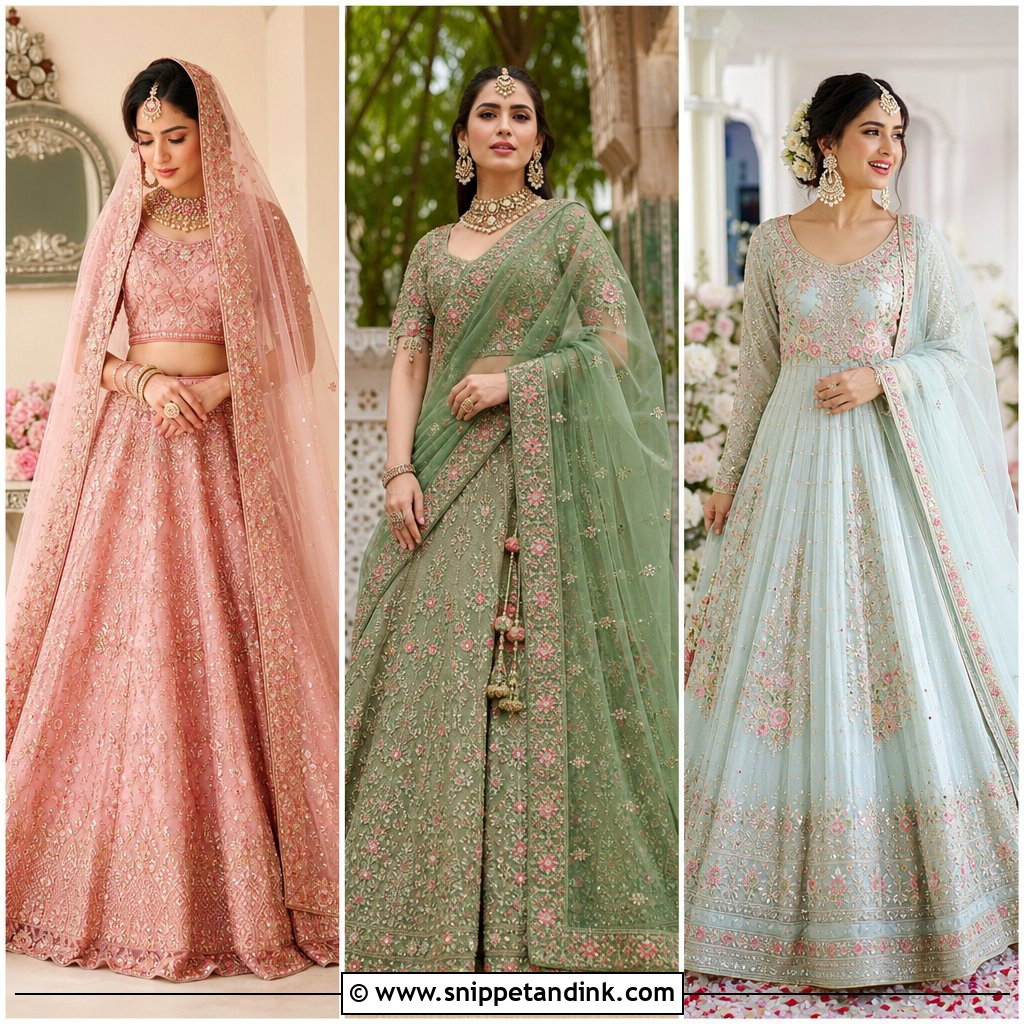
15. Gold Sabyasachi Reception Saree
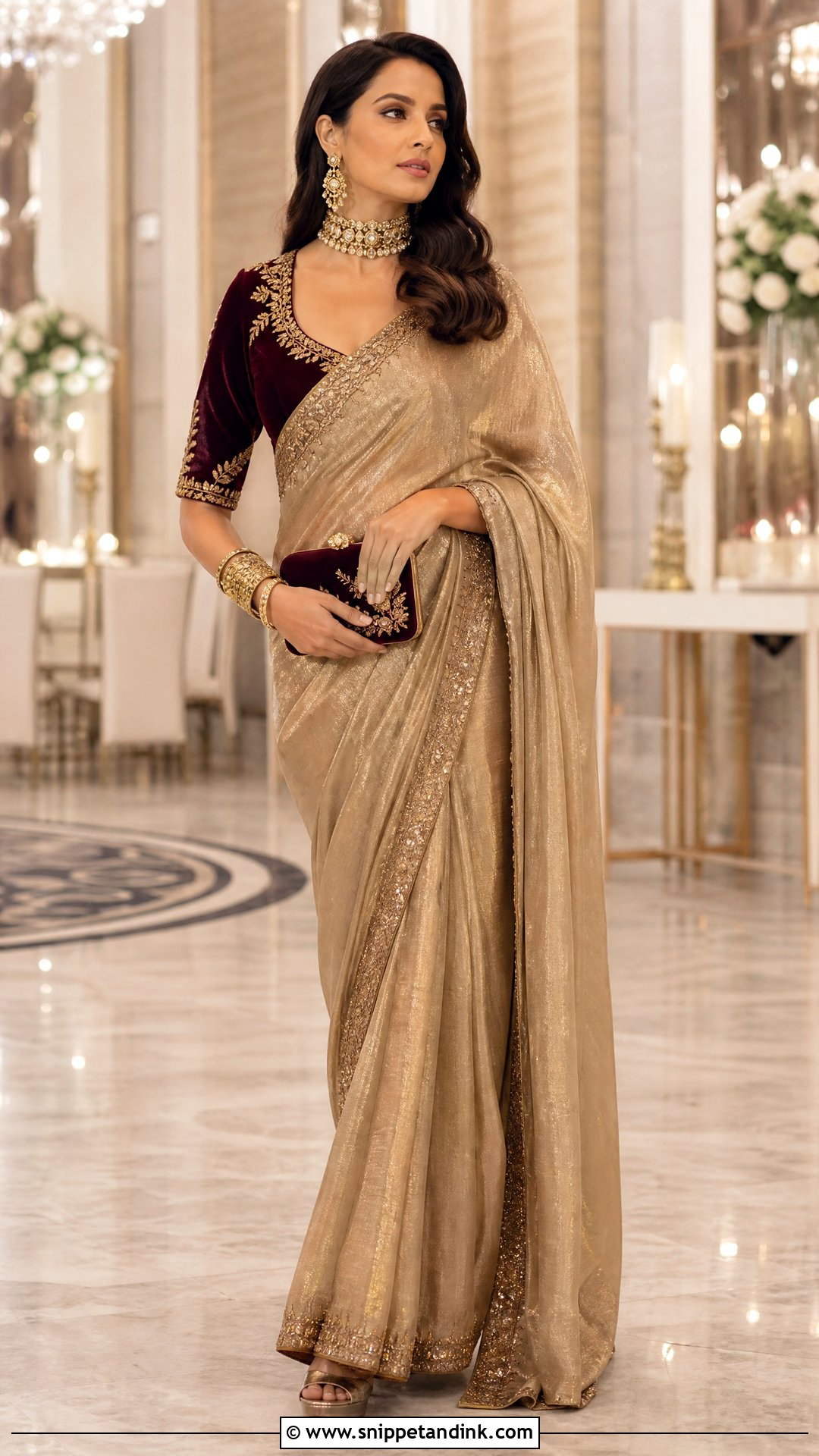
For a reception you want something you can dance in, and a gold saree gives sparkle without the volume of a lehenga. Sequined, tissue or embroidered fabric with a fluid fall and a defining border all work. Sequins snag on each other, so keep the pleats narrow and press them with a cool iron through cotton before the day. Pair with a fitted gold blouse, or deep maroon velvet for contrast and more coverage. A choker, long earrings, a cocktail ring and stacked cuffs are enough ornament. Carry a structured clutch, wear stable platforms, and finish with bronze eyes, highlighted skin and a deep berry lip.
16. White Floral Sabyasachi Saree
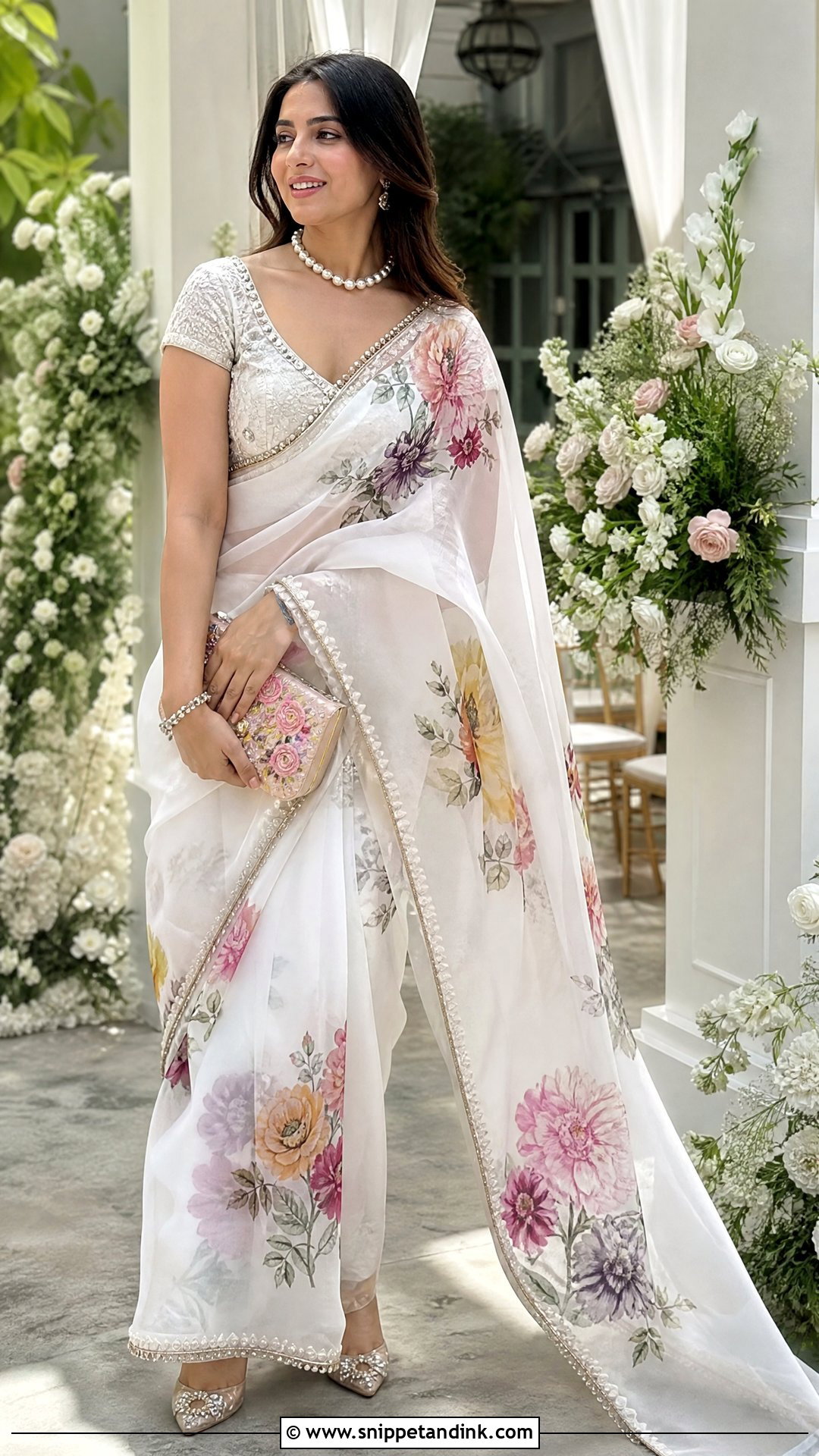
A white floral saree belongs at an engagement, welcome lunch or daytime pre-wedding event rather than the main ceremony. Lightweight organza with hand-painted or embroidered flowers in pink, red, green and yellow keeps it fresh. Pull one colour from the print for the blouse if white on white feels too plain. Organza creases at the knee when you sit, so I’d steam it on the day and avoid long car rides in it. Pearls, small polki earrings and a slim bracelet suit its weight. Embroidered flats, a soft bun or ponytail and a rose-toned lip keep everything light.
17. Velvet Sabyasachi Bridal Lehenga
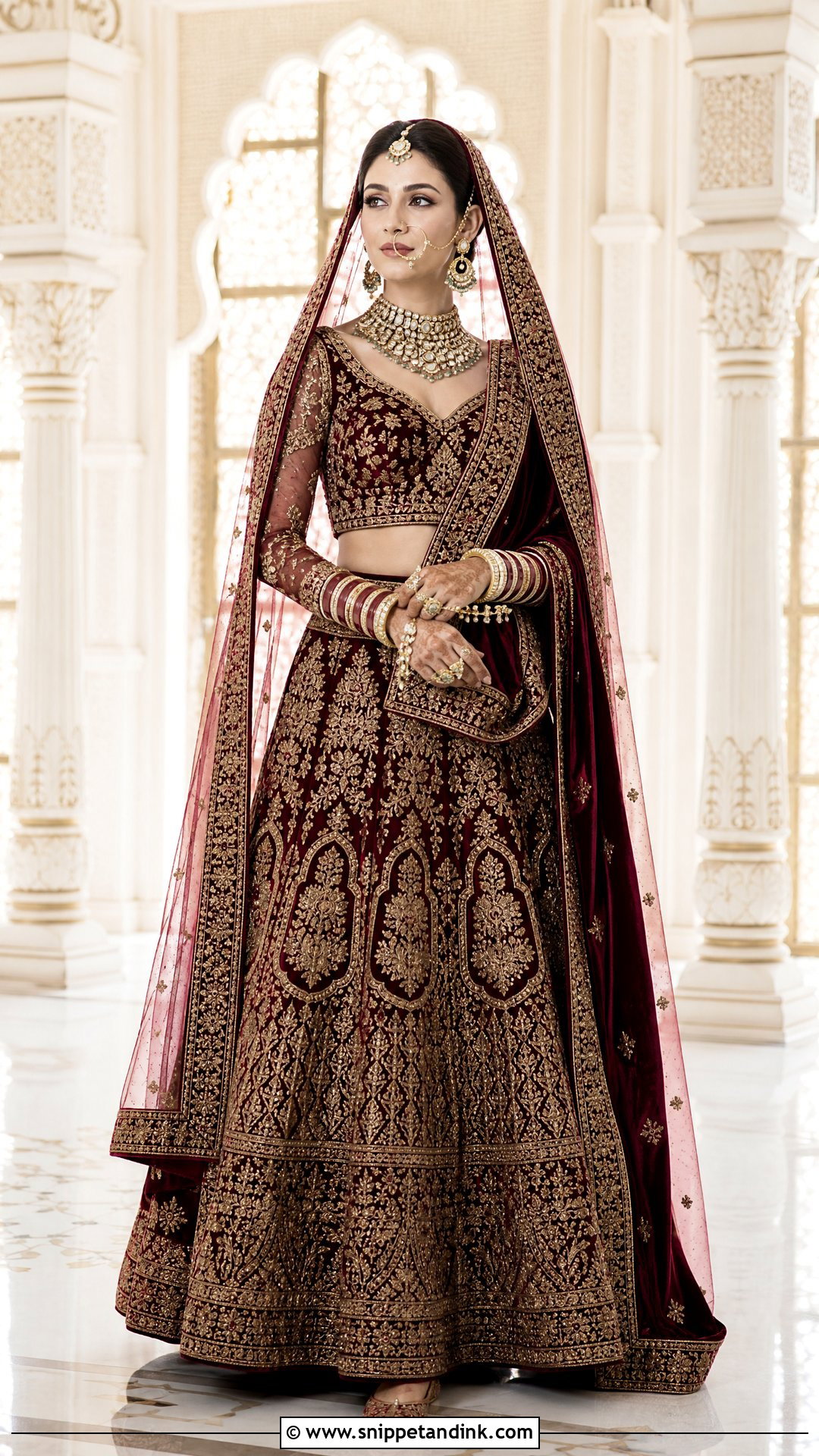
Velvet is a winter fabric. In a warm venue it is genuinely uncomfortable, and I’d steer you away from it for any outdoor afternoon ceremony. In deep red, burgundy, forest green, navy or plum with antique-gold zardozi, it looks richer than any other base. Ask for a velvet blouse with sheer or lighter sleeves so you can lift your arms. A net dupatta keeps the whole outfit from feeling dense, and a second velvet-bordered veil can frame the face. Kundan or polki, a statement nath and closed juttis suit it, with a well-pinned floral bun and a deep satin lip.
18. Sabyasachi Bridal Anarkali
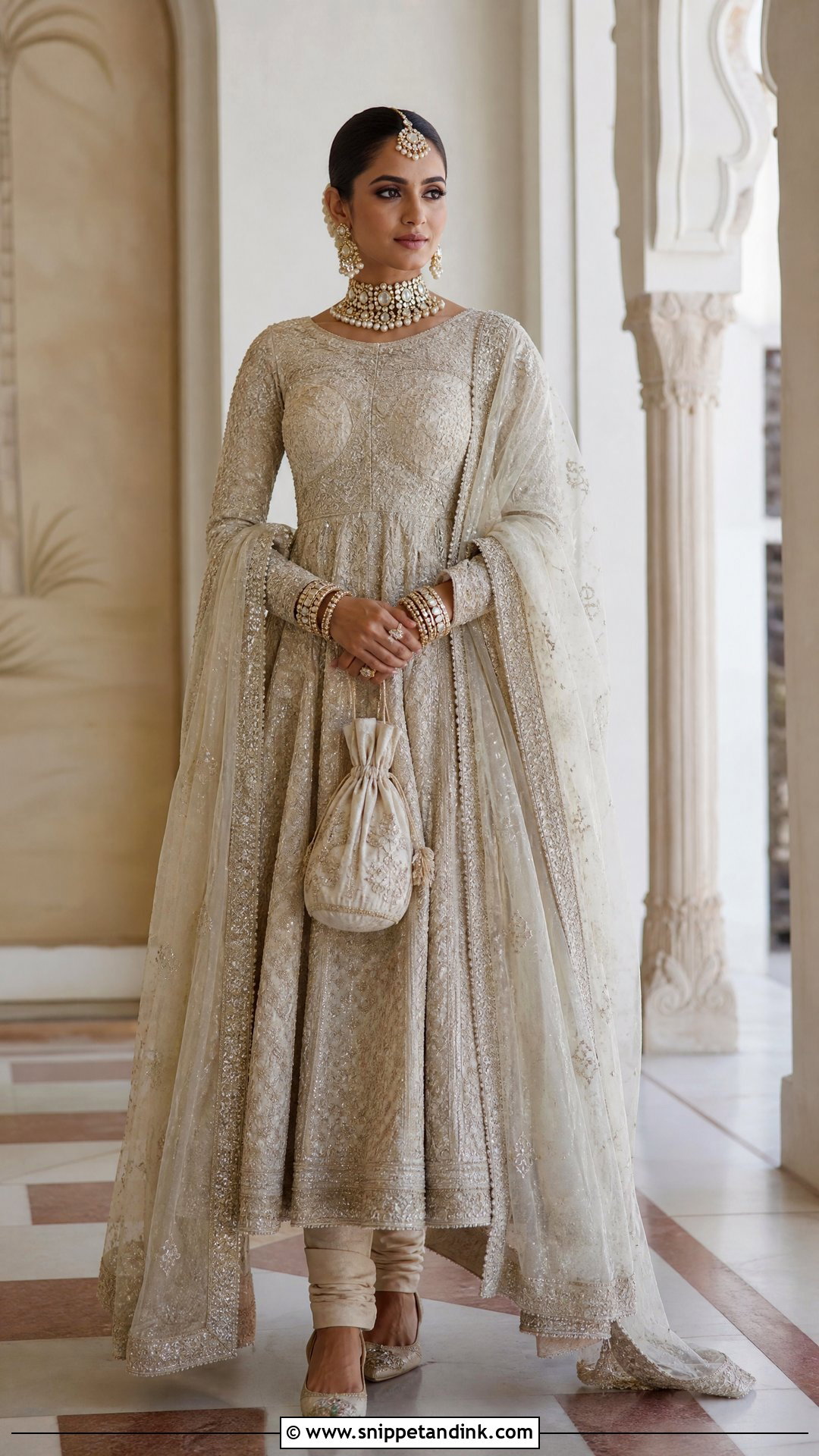
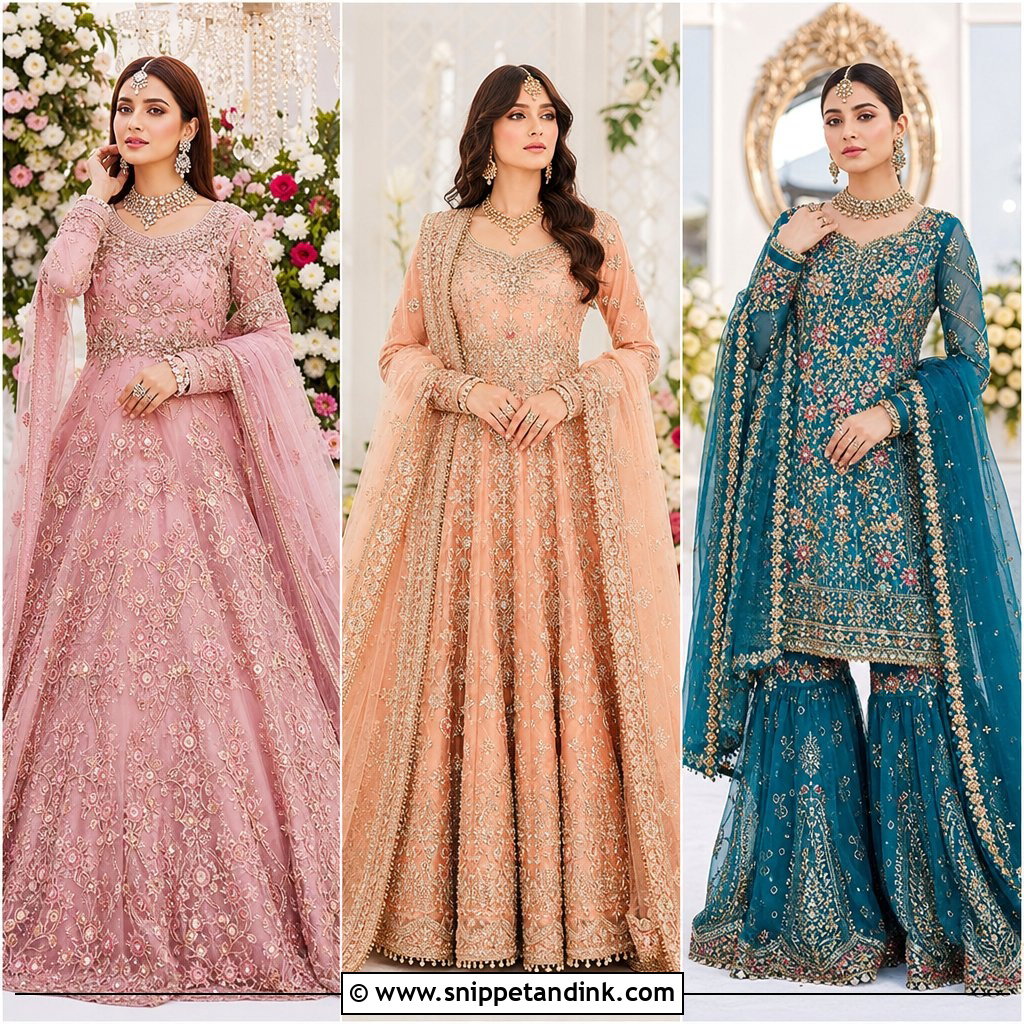
A bridal anarkali suits a nikah, engagement or intimate ceremony, and many brides find it easier to wear than a lehenga because the weight hangs from the shoulders instead of the waist. Look for a floor-length style in ivory, red, emerald or blush with a fitted bodice and a full flare. Have the bodice fitted while seated as well as standing, since anarkalis ride up at the waist when you sit. Churidar underneath and a long embroidered dupatta over the head finish the shape. A polki choker, jhumkas and an embellished potli are enough. Pointed juttis or block heels, a centre-parted bun and a rose or berry lip complete the look.
19. Sabyasachi Bridal Sharara
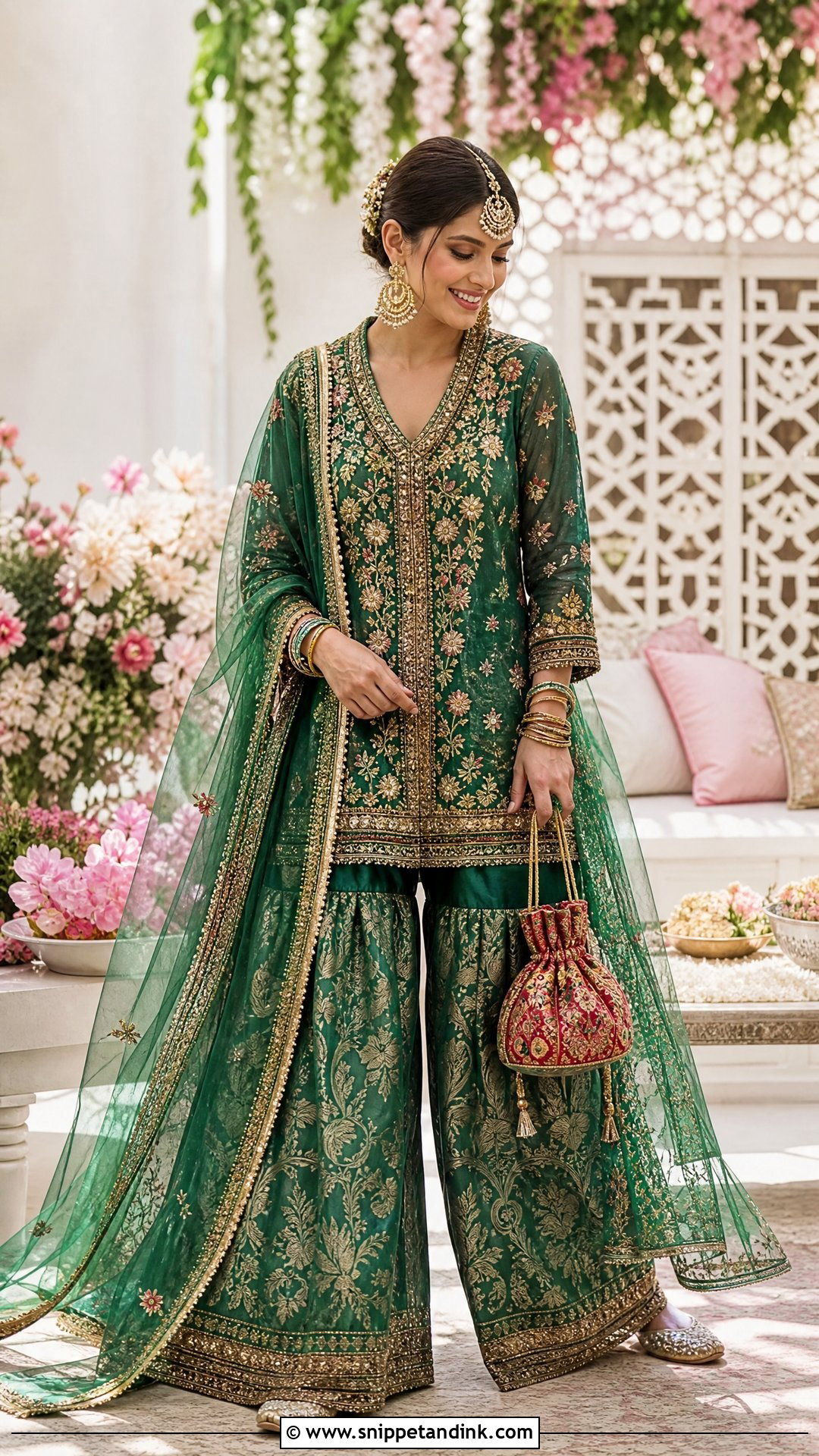
Shararas are the outfit I recommend for a mehndi or sangeet, because you can actually sit cross-legged and dance in them. Wide-legged silk or brocade pants with a short fitted kurta worked at the neckline and hem give it shape. Hem length matters more than people think: the flare should just brush the top of your shoe, or you’ll trip on the stairs. A long sheer dupatta over one shoulder keeps it formal. Emerald, maroon, mustard and deep pink all suit the cut. Chandbalis, a maang tikka, layered bangles, juttis and a matching potli finish it, with a braided bun and kohl-lined eyes.
20. Sabyasachi Bridal Lehenga With Double Dupatta
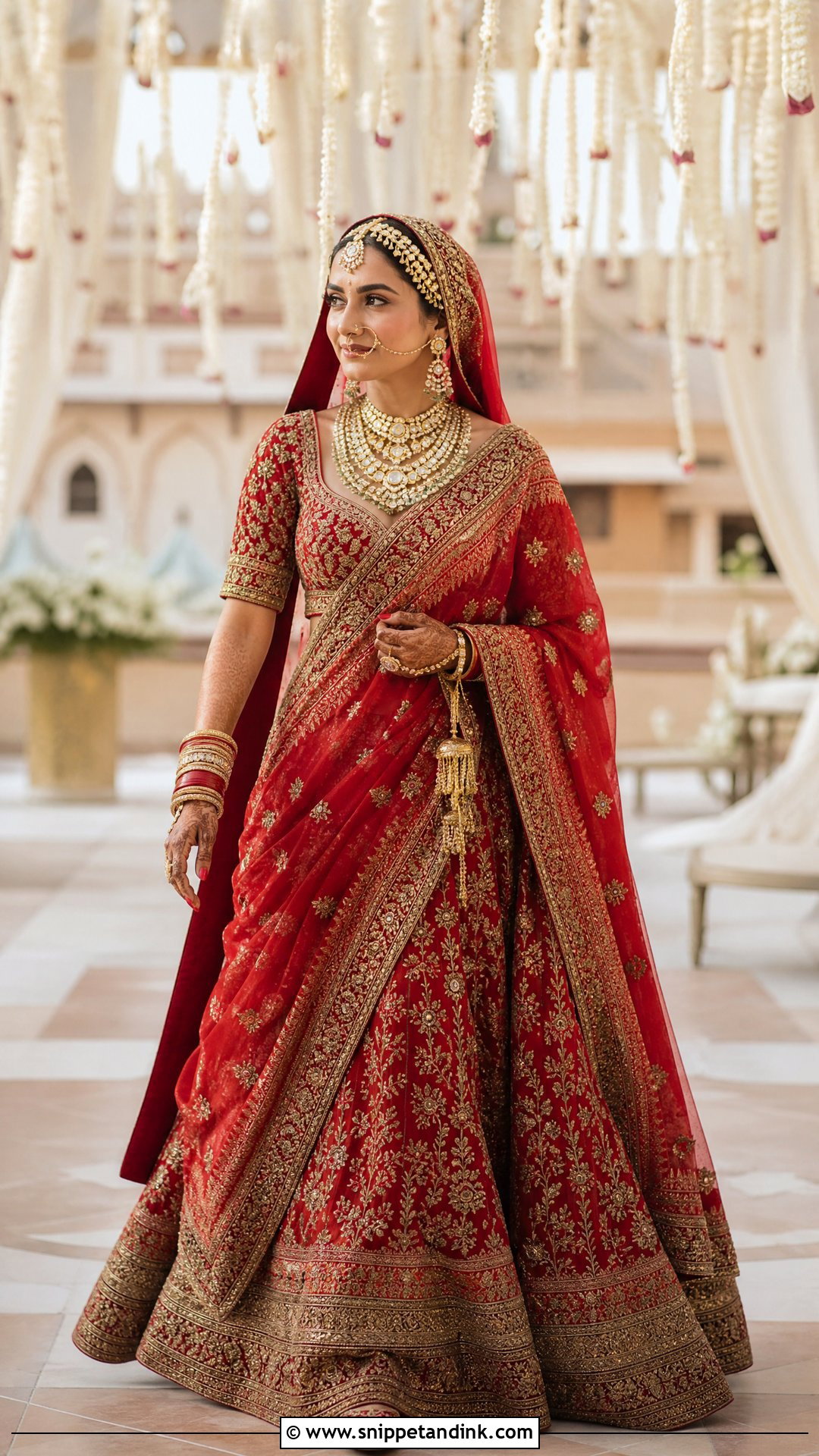
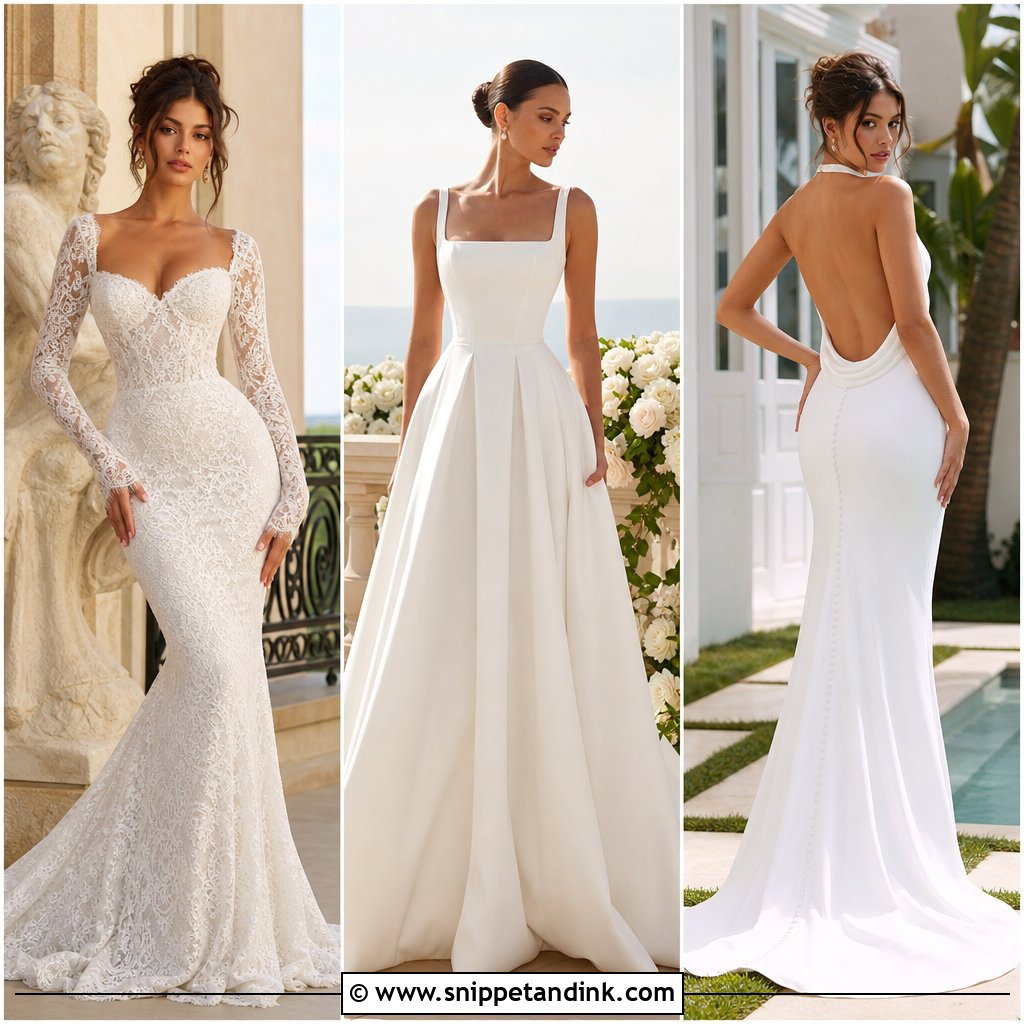
A double-dupatta lehenga frames the bride beautifully, but only if each drape has one job. Choose a red, maroon, pink or ivory lehenga and a blouse that feels secure under the layers. The lighter dupatta goes over the head with its border around the face; the heavier one runs diagonally across the torso and is pinned at waist and shoulder. Before the day, raise both arms and turn round while fully draped. If the cross-body drape pulls, re-pin it lower. A neat low bun anchors the head dupatta, and the jewelry can stay classic: choker, long necklace, matha patti, nath and juttis.
After the Wedding, Zardozi Needs Muslin and Air
Metallic thread tarnishes, and silk weakens along the folds, so how you store the outfit matters as much as how you wear it. Air it on a padded hanger for a day after the wedding, away from direct sun, before you put it away. Perfume and deodorant marks are best handled by a dry cleaner who works with embroidered bridalwear; don’t rub them at home.
Folding and storing
- Wrap the skirt in soft white muslin or cotton, never plastic, which traps moisture and dulls the zari.
- Lay acid-free tissue between embroidered layers so sequins and threads don’t catch each other.
- Refold along different lines every few months to stop permanent creases.
- Store flat in a dry cupboard, and tuck a few neem leaves or cloves nearby instead of mothballs, whose smell clings to silk.
Many brides rewear the dupatta or blouse with other outfits later, which is a good reason to choose pieces that work on their own.
Red, Ivory or Velvet, the Last Fitting Decides
The heaviest outfit is rarely the right one. The right one suits your ceremony, your family’s customs and the hours you’ll spend in it. Pick the colour and silhouette from the looks above, then let the venue, season and jewelry settle fabric and drape. Book fittings early, and at the final one, walk, sit on the floor, climb a step and lift your arms in the full outfit with the dupattas pinned. Whatever pinches or slips then will be worse on the day, and there’s still time to fix it.
You'll Like These Ideas:


Leave a Reply