
Wearing tulle over your face for the walk down the aisle is one of the oldest bridal gestures, and plenty of brides are bringing it back. It isn’t limited to the gathered blusher your mother might have worn, either. A drop veil, a lace-edged mantilla, a pearl-scattered net or a vintage birdcage veil can all come forward over the face. When I style a bride for this, I start with the dress, because the veil sits on top of everything else. A plain gown can carry an embellished blusher, while a heavily worked bodice usually wants the lightest, cleanest tulle we can find. Below are the pairings I keep coming back to, plus what I’ve learned about getting that front layer to hang, lift and photograph well.
How Far the Front Layer Should Hang
A blusher is simply the front layer of tulle that flips forward over your face, and its length changes the whole look. I measure it with the bride standing in her dress: from where the comb will sit, up over the top of the head and down the front to wherever the tulle should end. Do this with your hair styled roughly the way it will be on the day, because a high bun adds height and quietly eats into the length.
- Chin to shoulder: birdcage nets and short blushers for minis, tea-length dresses and courthouse looks.
- Collarbone to just below the bust: the usual choice, long enough to cover the face without hiding the bodice.
- Waist or longer: dramatic and traditional, but it covers most of the neckline, so it suits plainer bodices.
Ask the shop whether the veil is one piece folded forward or a two-tier design with a separate blusher. A single-layer drop veil gives the smoothest line over the face. A gathered two-tier veil has more volume at the crown and needs a firmer hairstyle underneath it, so tell your hairstylist which one you’ve bought before the trial.
1. Blusher Veil With Satin Ball Gown
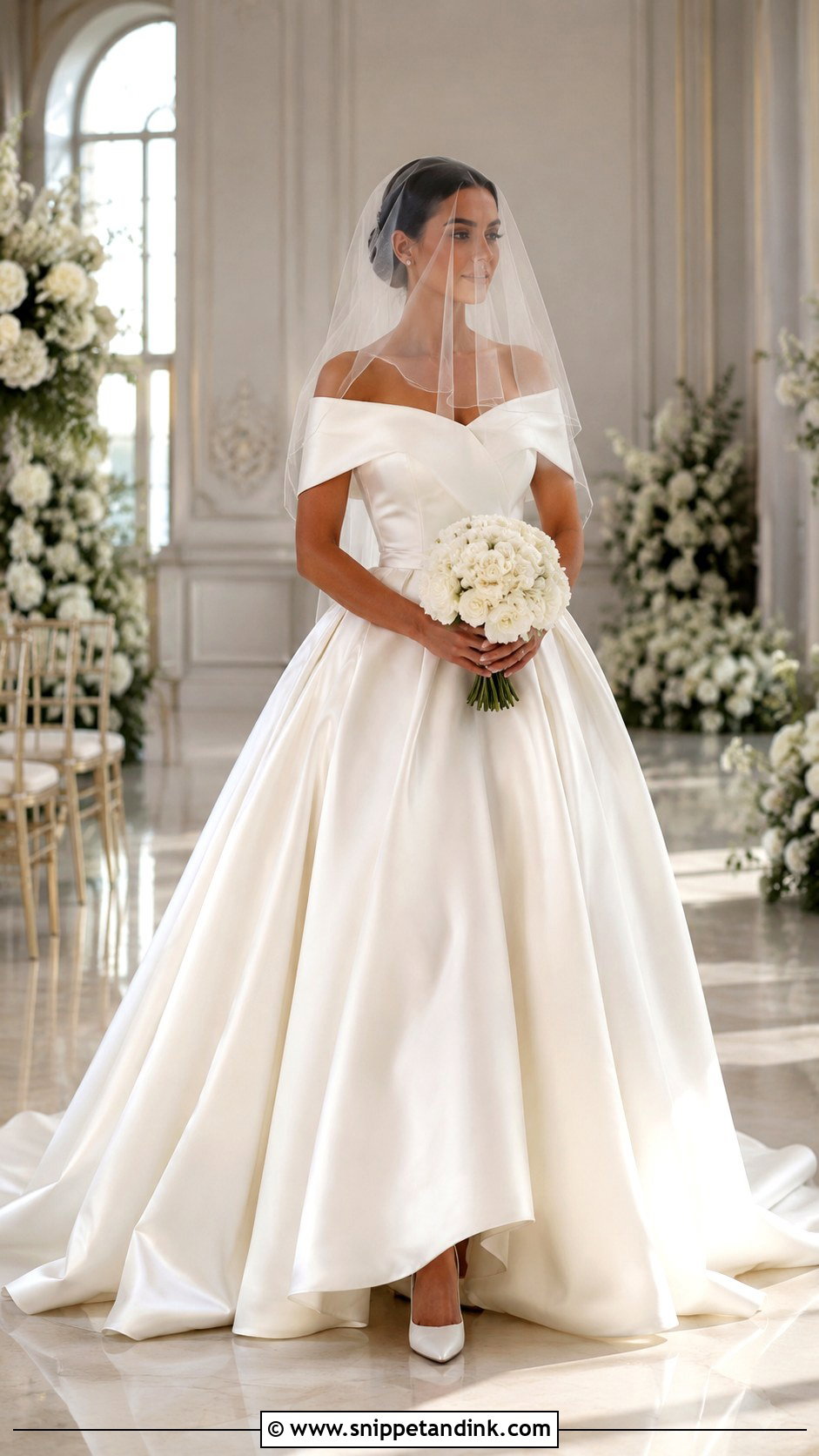
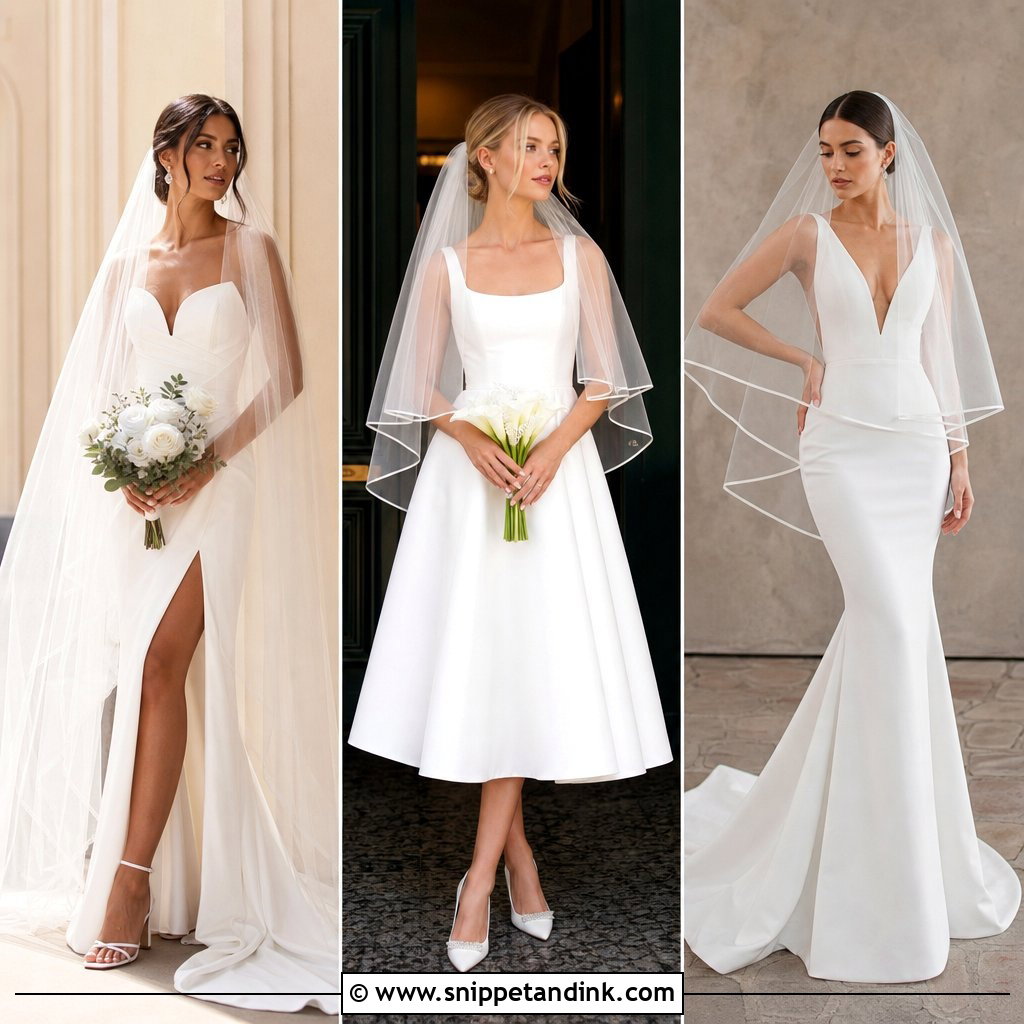
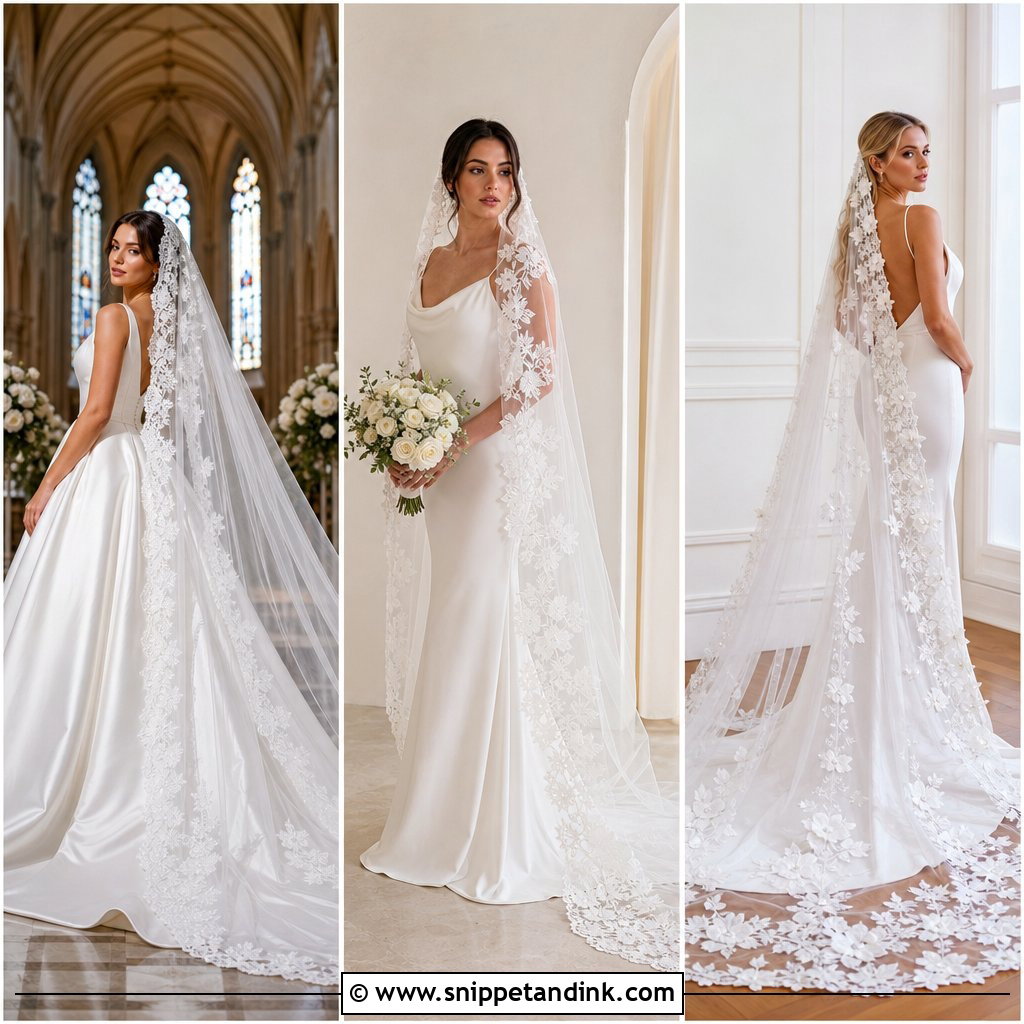
Satin and a blusher are the classic pairing for a reason. The smooth skirt gives the sheer front layer a plain backdrop, so the eye goes straight to your face and neckline. I’d pair it with a structured bodice, pointed-toe heels, pearl studs and a simple bouquet. A raw-edge blusher reads lighter, and a satin-trimmed edge draws a crisp line across the chest that shows up clearly in photos. The first thing I check is the comb: a ball gown veil is often two tiers, and the weight of both has to sit in a low bun or firm updo at the crown, not in loose hair.
2. Drop Veil With Simple Crepe Dress
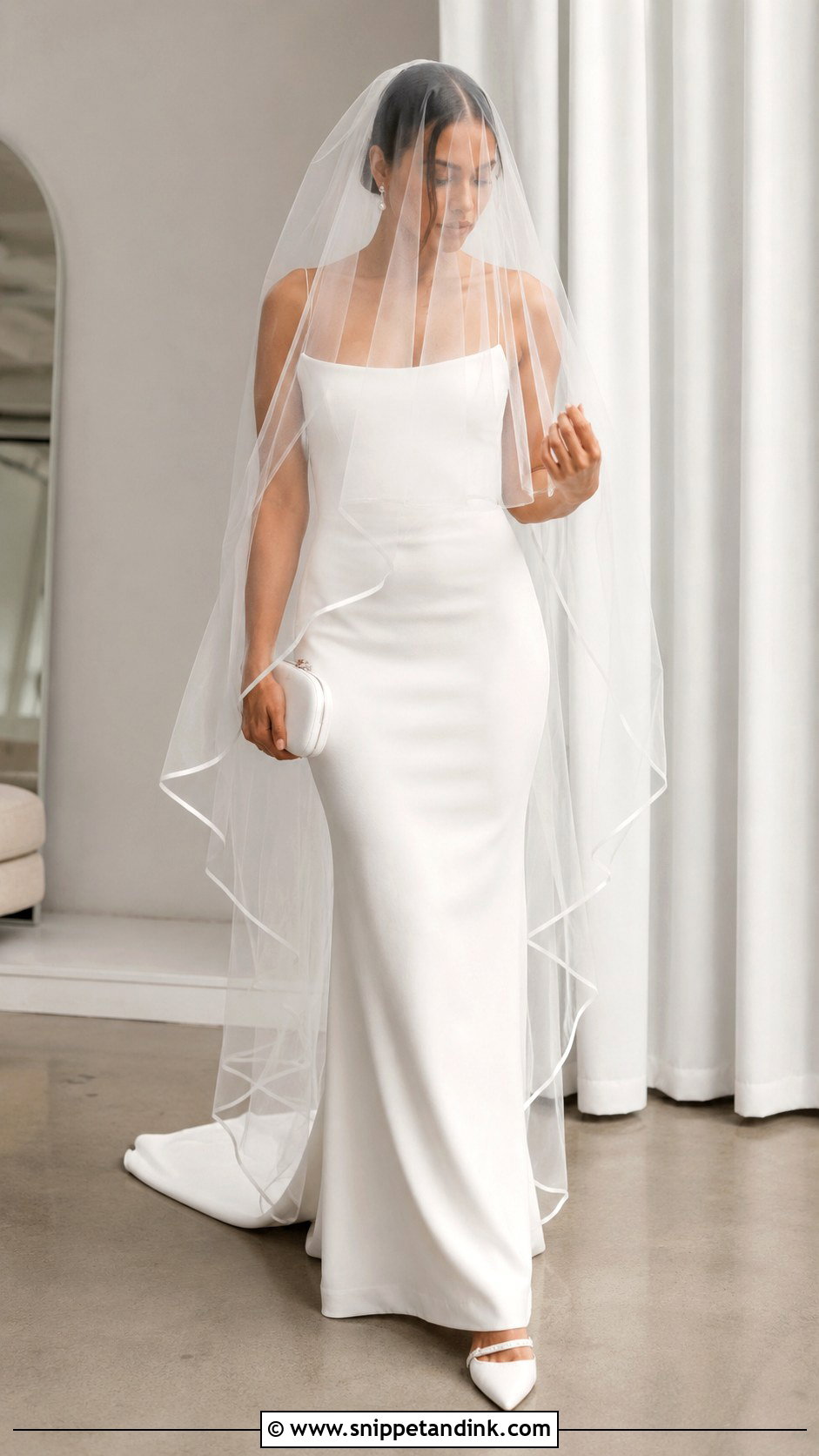
A drop veil has no gathering at the comb. It’s a circle or oval of tulle laid over the head, so it falls in one smooth sheet over the face, and that smoothness is why I like it on a fitted crepe gown with slingbacks, a small clutch and barely-there jewelry. The catch is grip. With nothing gathered to anchor it, a drop veil relies on a small hidden comb or pins, and it slides on silky, freshly washed hair. I ask brides to come with second-day hair or have their stylist add texture at the crown. Because the dress is so minimal, you can go a little longer at the back without it feeling fussy.
3. Lace Blusher Veil With A-Line Dress
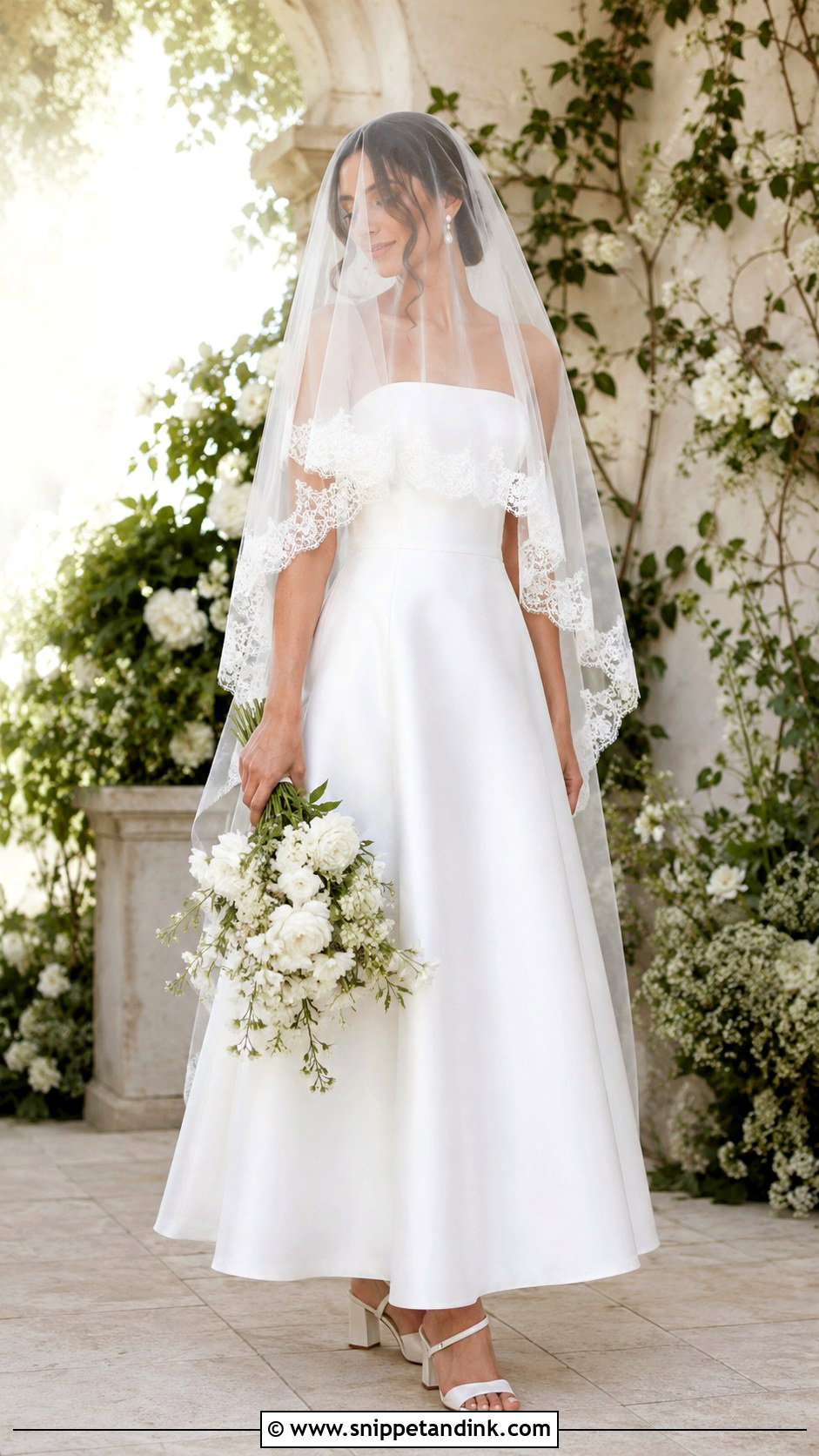
Lace edging does most of the framing here. When the blusher comes forward, the scalloped border lands around your cheekbones and collarbones, and an A-line skirt keeps the rest easy to move in. Look for a fitted bodice with a little appliqué so the veil has something to echo, then add block heels, pearl drops and a loose bouquet. What I tell brides is to match the lace in tone, not necessarily in pattern. Ivory lace held against a bright white gown reads noticeably creamier in daylight, and that’s the mismatch people spot in photos. A textured bun or half-up waves gives the comb something to hold.
4. Cathedral Veil With Face Blusher And Mermaid Dress
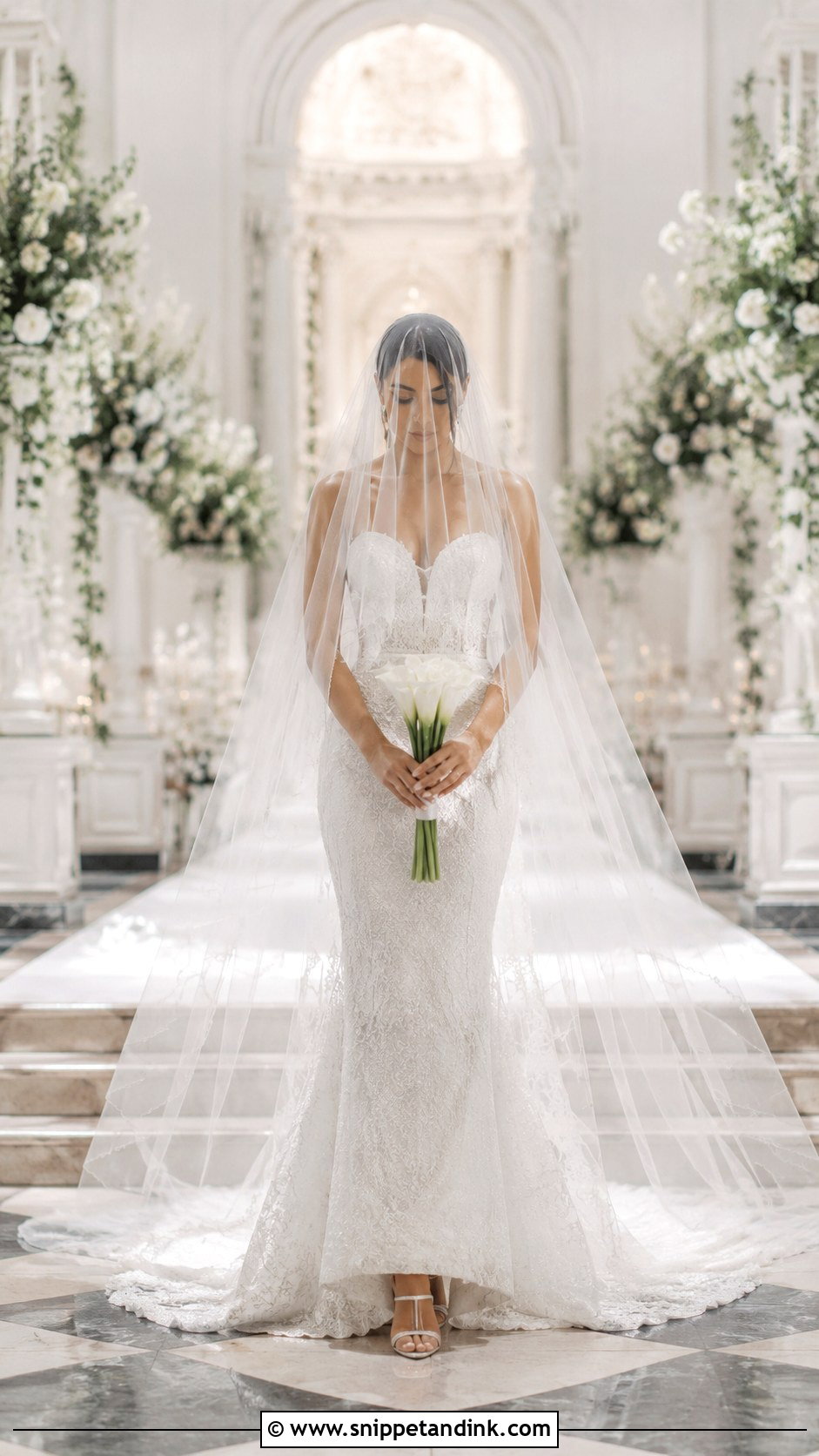
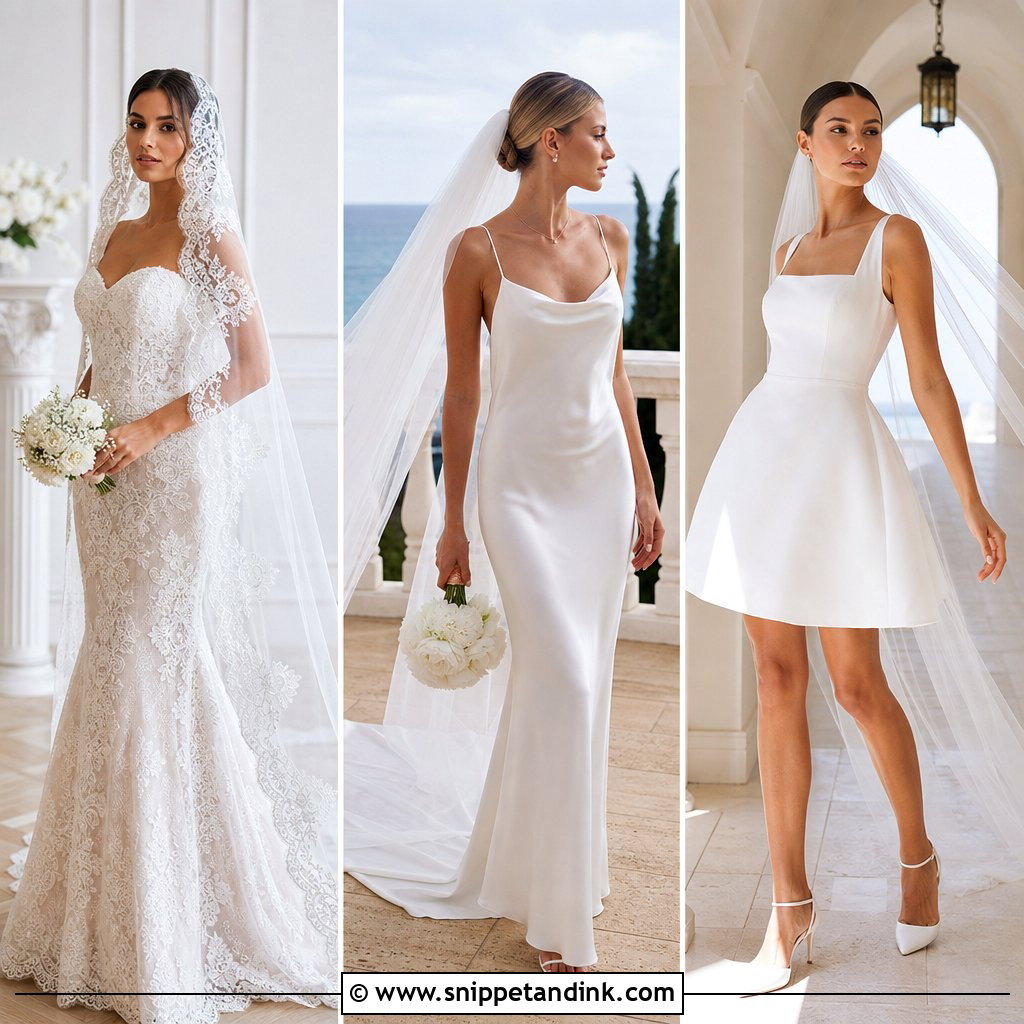
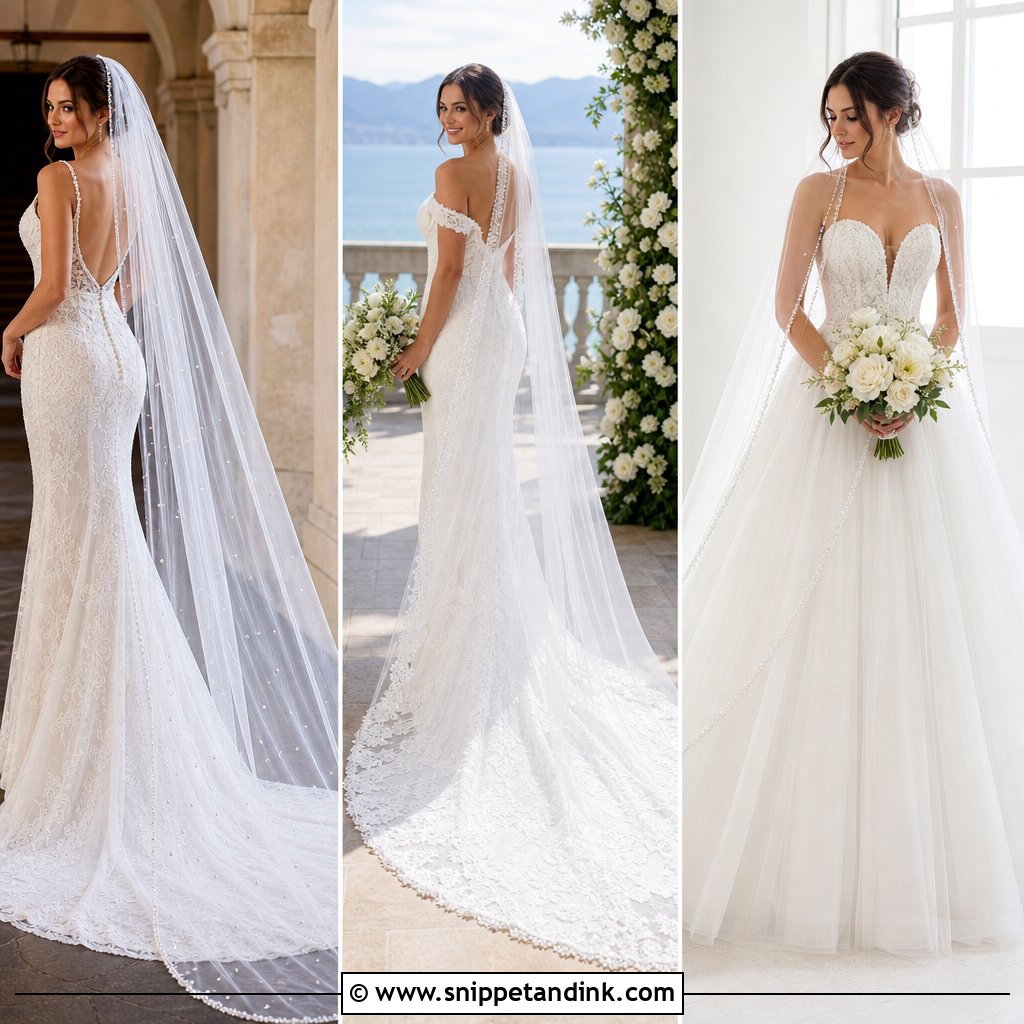
A mermaid gown hugs the body, so the cathedral length does the moving for you, trailing well past the train while a sheer blusher covers the face lightly. I keep the blusher short and fine with this silhouette. A heavy front layer on a fitted dress starts to look like a costume. Strappy heels, a slim bracelet and a sleek bouquet are enough. Cathedral tulle catches on everything, so plan for someone to straighten it each time you stop. Clean seams or subtle beading let the veil stay the dramatic layer, and a low chignon or smooth Hollywood waves keep the comb steady under all that length.
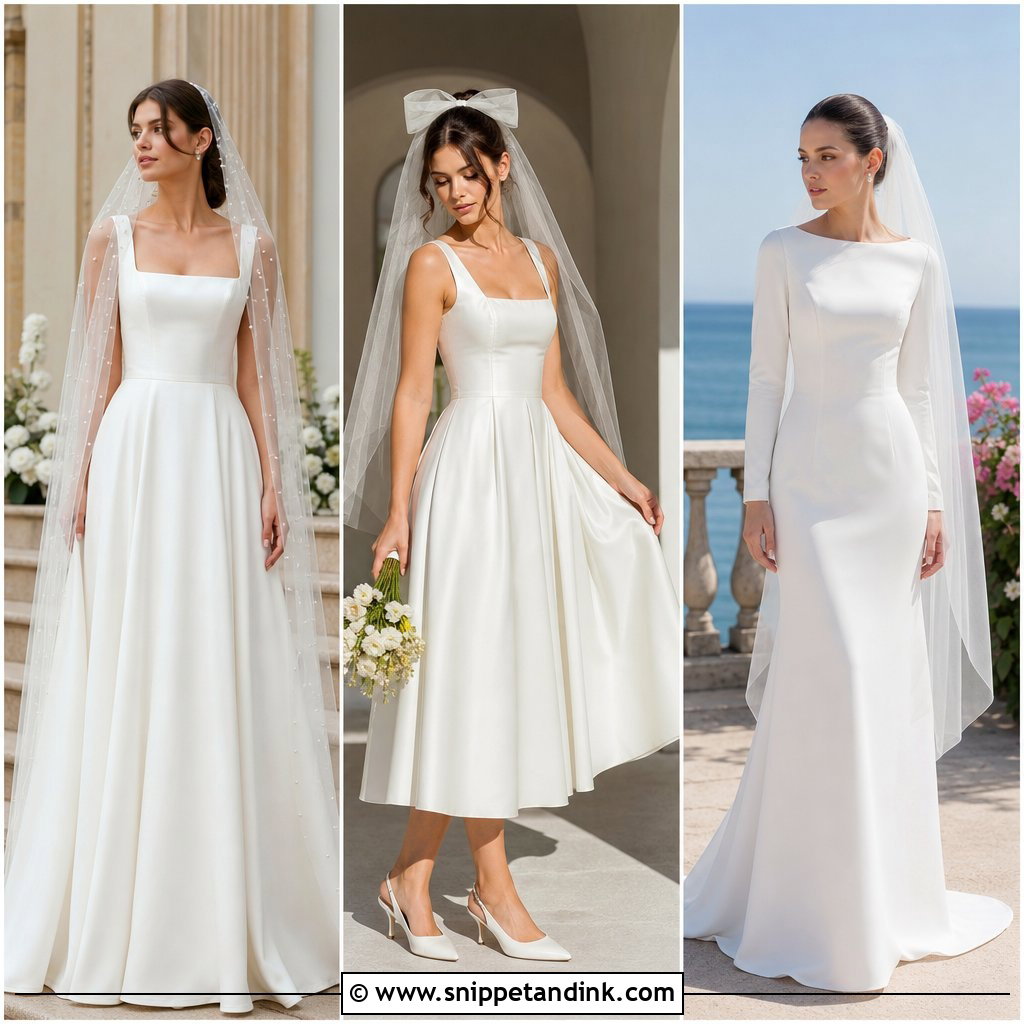
5. Birdcage Veil With Tea Length Dress
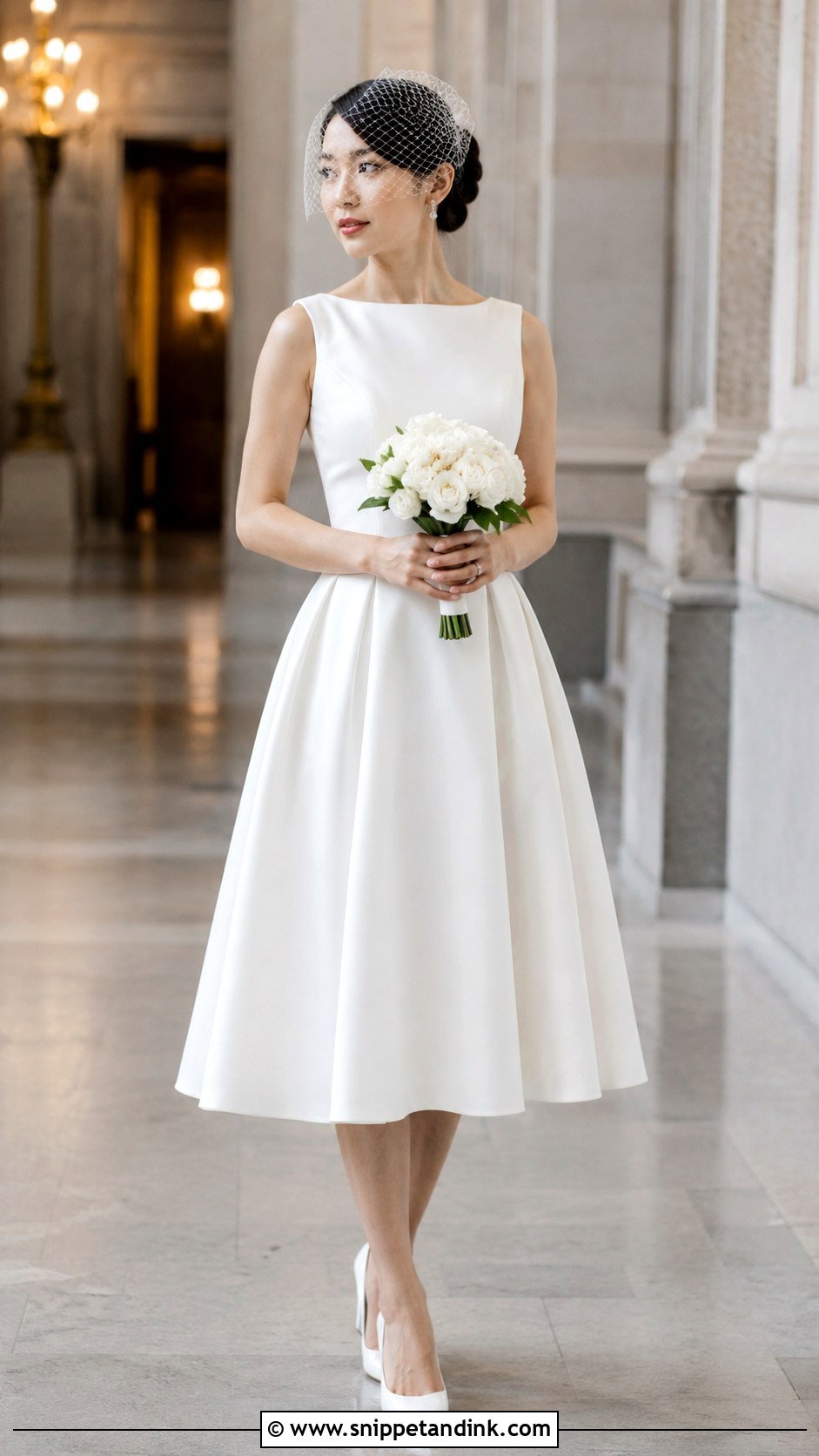
Birdcage net is stiff, open and short. It usually covers the eyes and upper cheeks rather than the whole face, so it shows your expression far more than tulle does. It suits a fitted-waist tea-length dress, pointed pumps, short gloves if you like them and a compact bouquet. Since the netting sits right against your skin, I keep makeup clean and earrings small. Mikado or satin holds its shape the way the net does, which is why those fabrics pair so well with it. A sleek bob or side-parted updo gives the little comb a firm base, and soft curls work too if they’re set firmly on the side where the comb goes.
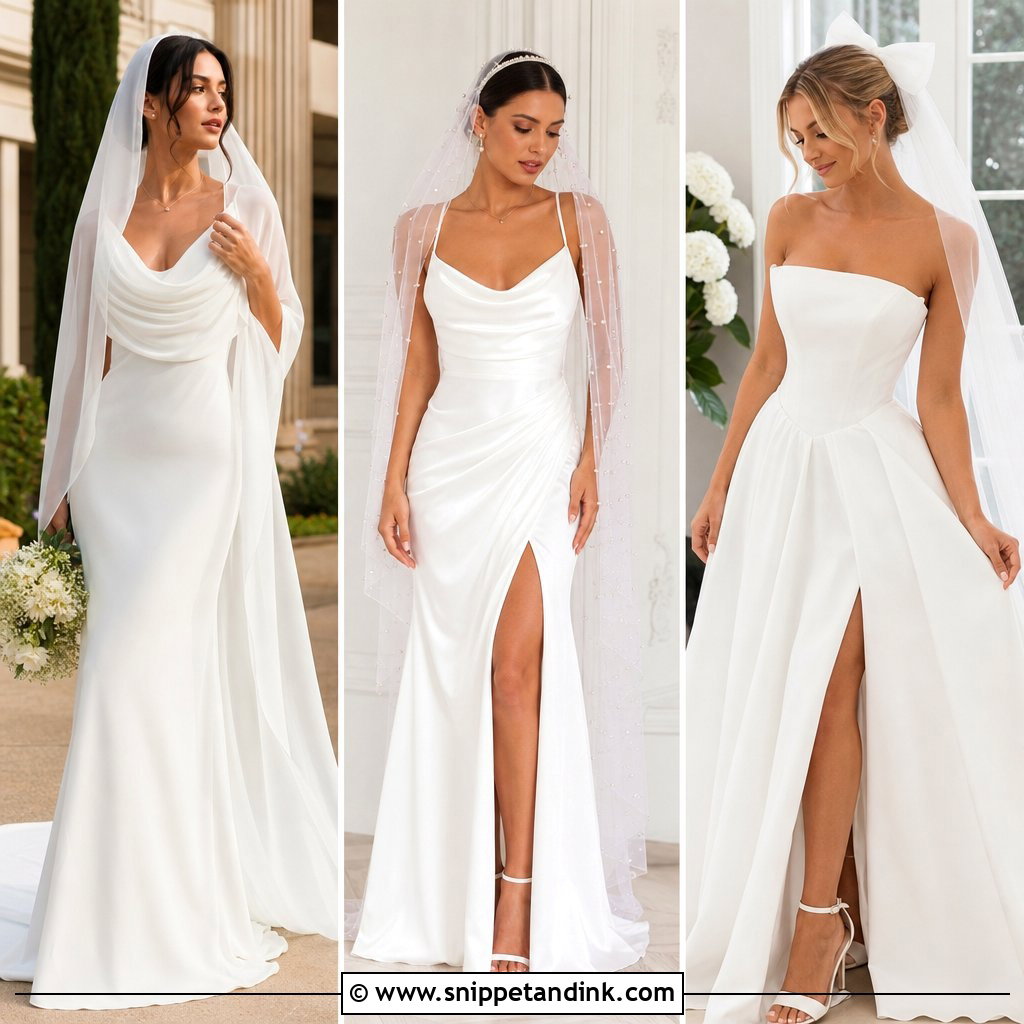
6. Pearl Blusher Veil With Strapless Dress
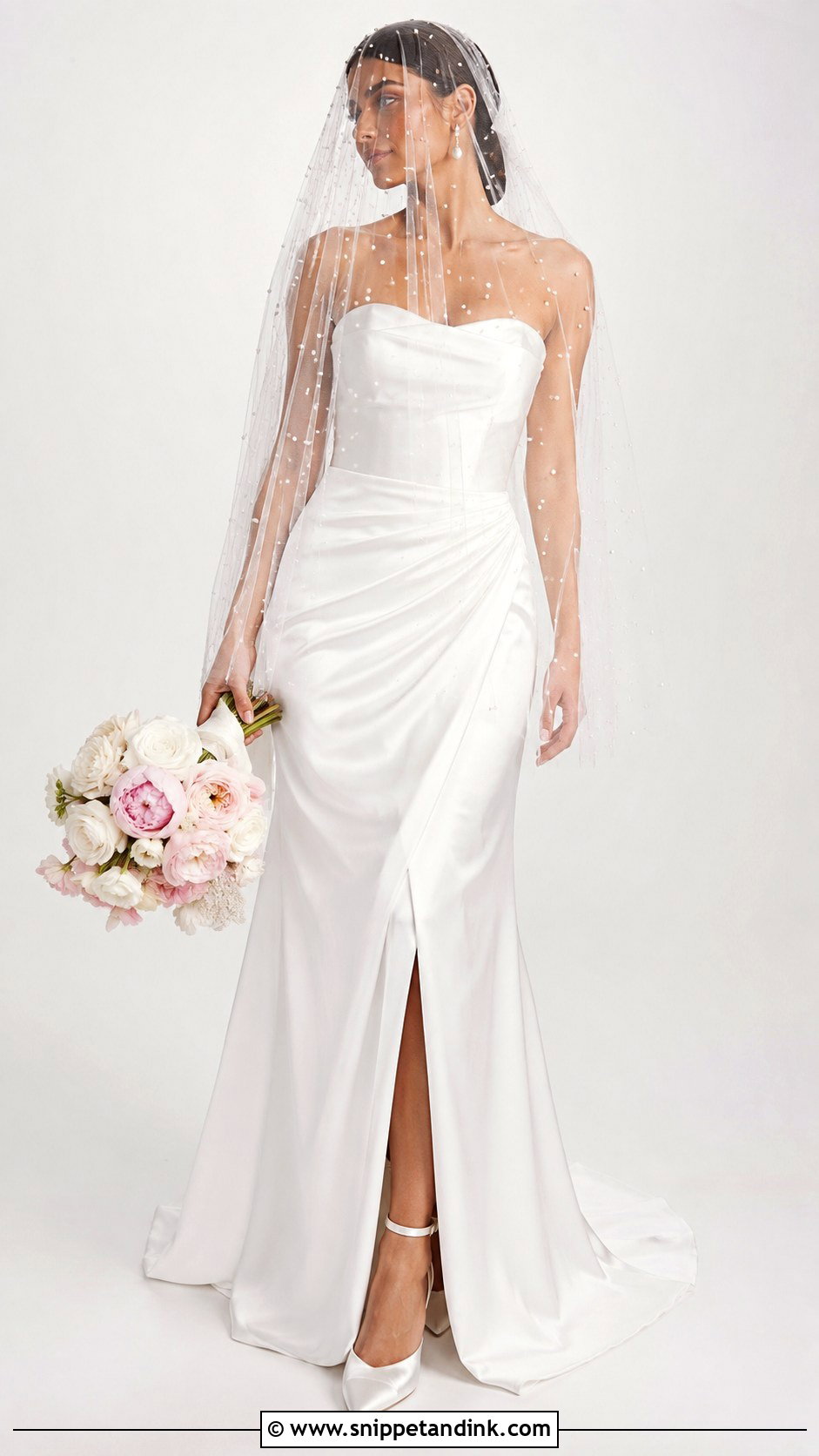
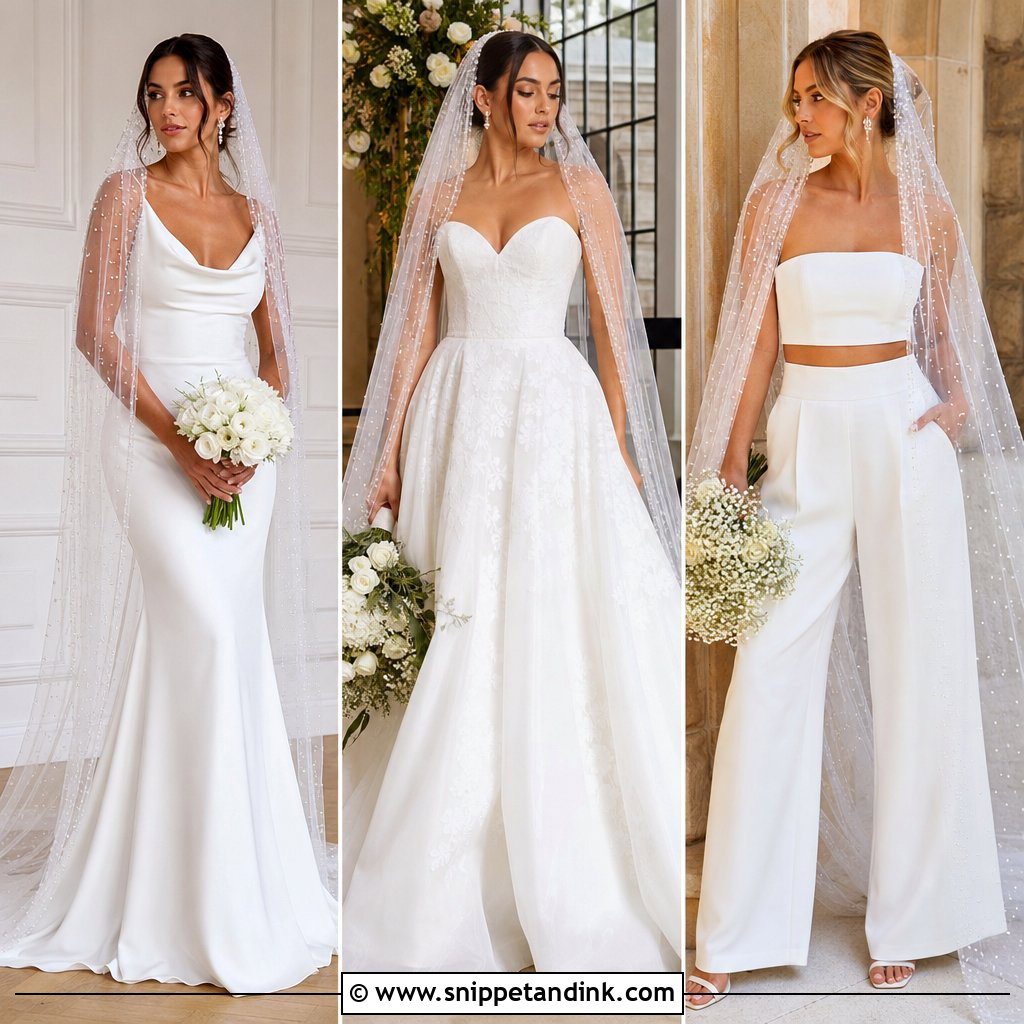
Pearls on a blusher add texture without blocking your view, as long as they’re scattered rather than clustered. With a strapless gown the open neckline gives them room, so I keep everything else to pearl earrings, satin heels and a soft white or blush bouquet. One practical warning: pearls add weight to the front edge, and that weight pulls the comb forward. A smooth bun or tidy half-up style anchors it, and tucking loose strands away stops the pearls snagging hair every time you turn your head. This works best on a dress that’s simple or only lightly detailed.
7. Ribbon Edge Veil With Square Neck Dress
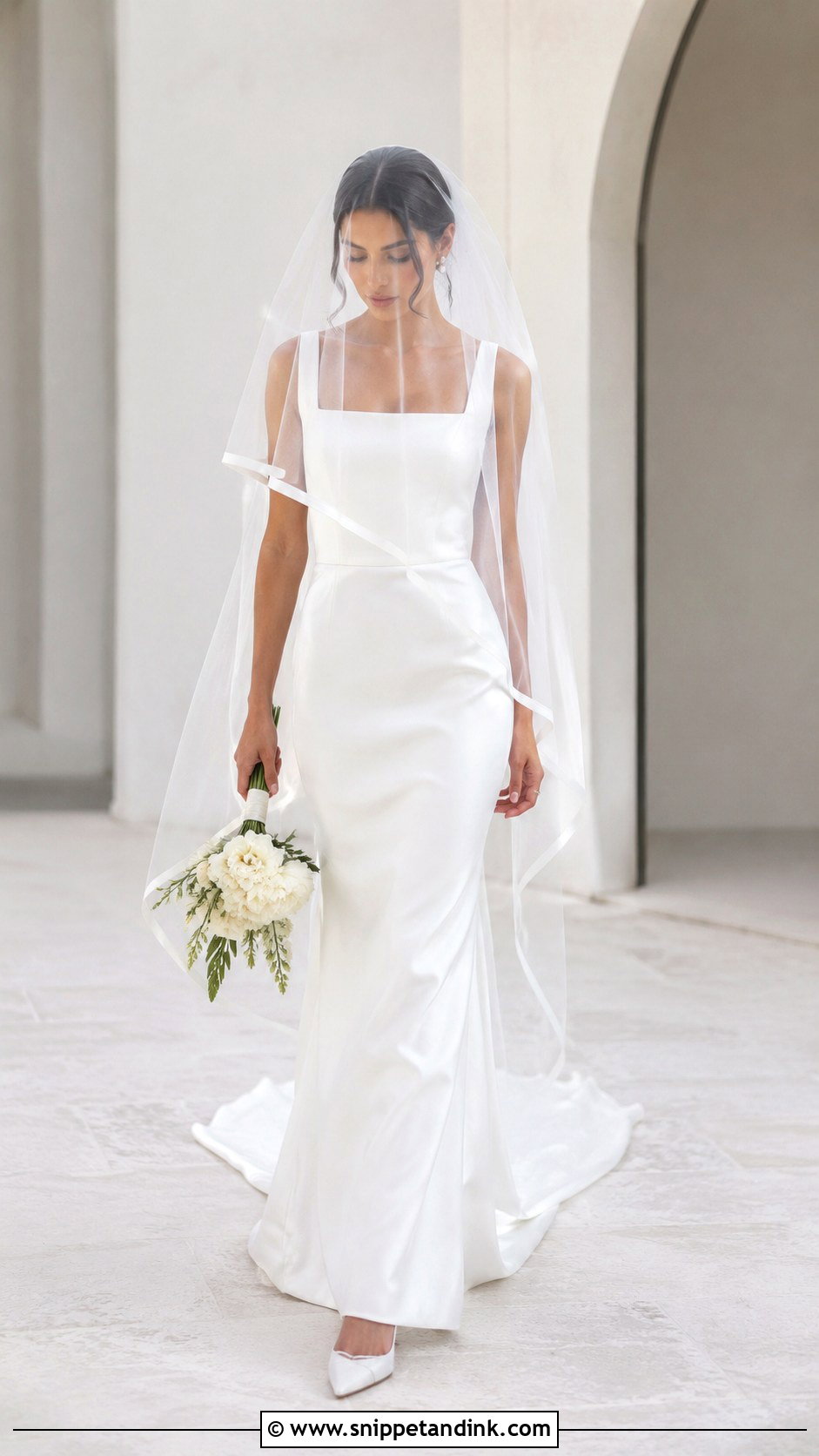
A ribbon border draws a clean line around your face when the veil is down, and that graphic edge sits well against the straight line of a square neckline. Narrow ribbon is subtle. A wider band gives a much stronger outline, almost like a picture frame. I’d go with a fitted or A-line gown in plain fabric, pointed heels, a sleek bun and small studs. Ribbon-edged tulle is a little heavier at the hem, so it hangs straighter and is less likely to blow up in a breeze, which matters at an outdoor ceremony. Keep the bouquet simple and let the neckline and trim be the design.
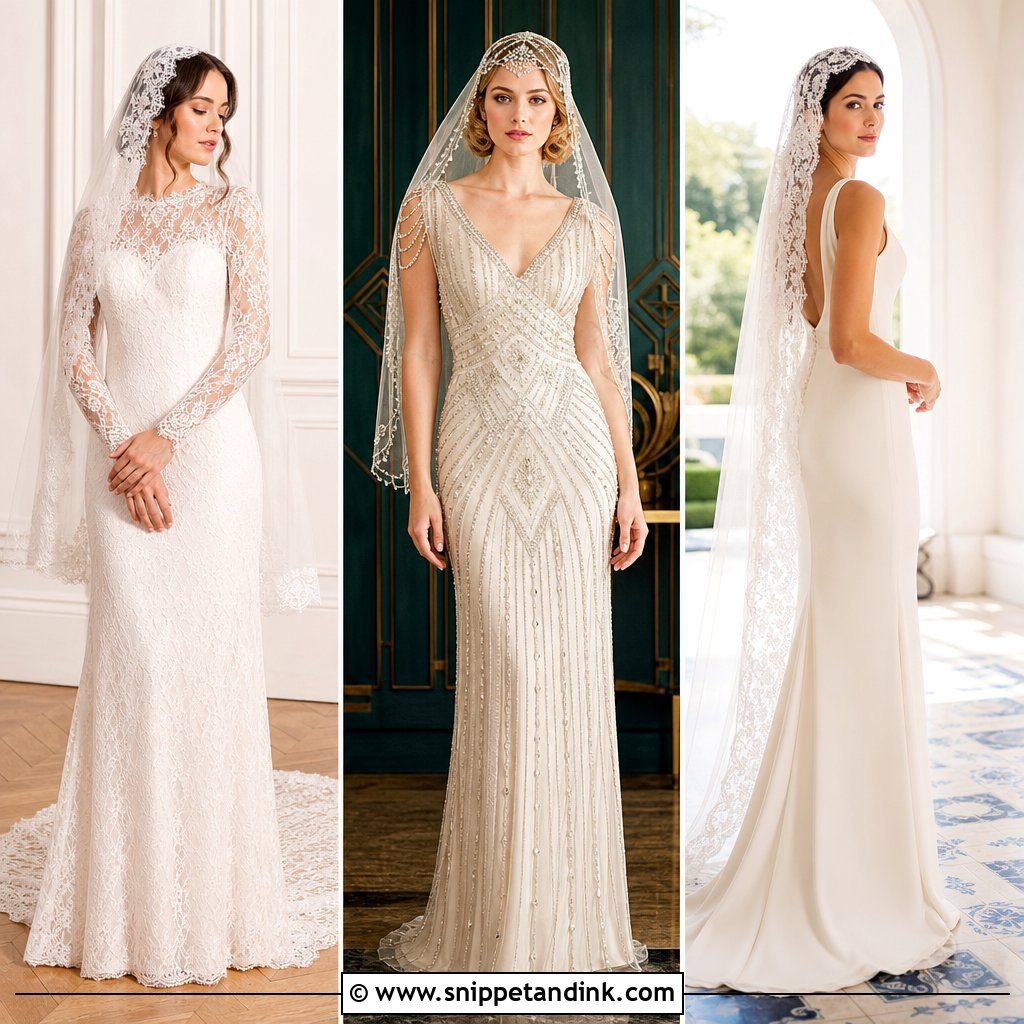
8. Mantilla Veil Over Face With Lace Dress
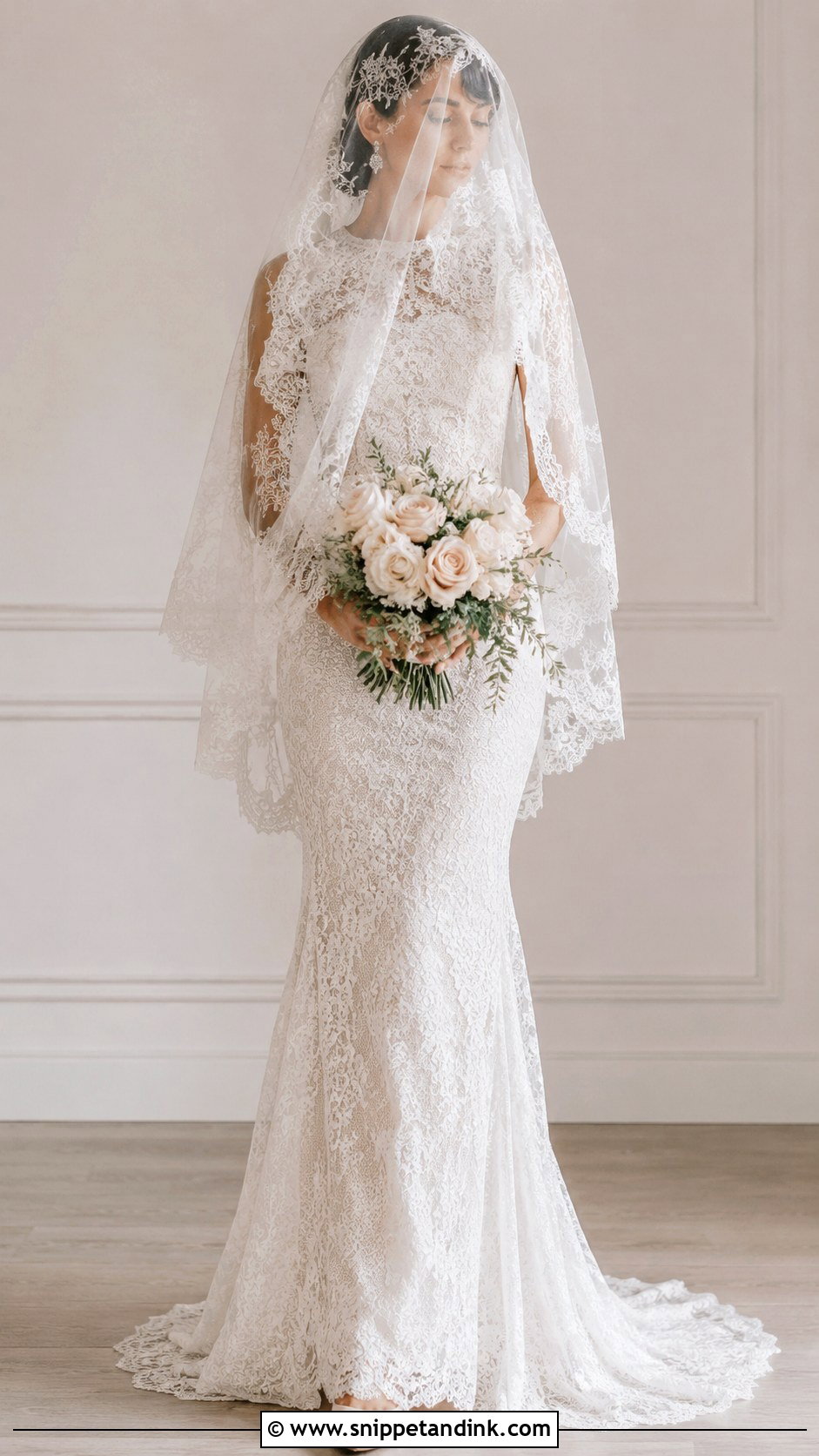
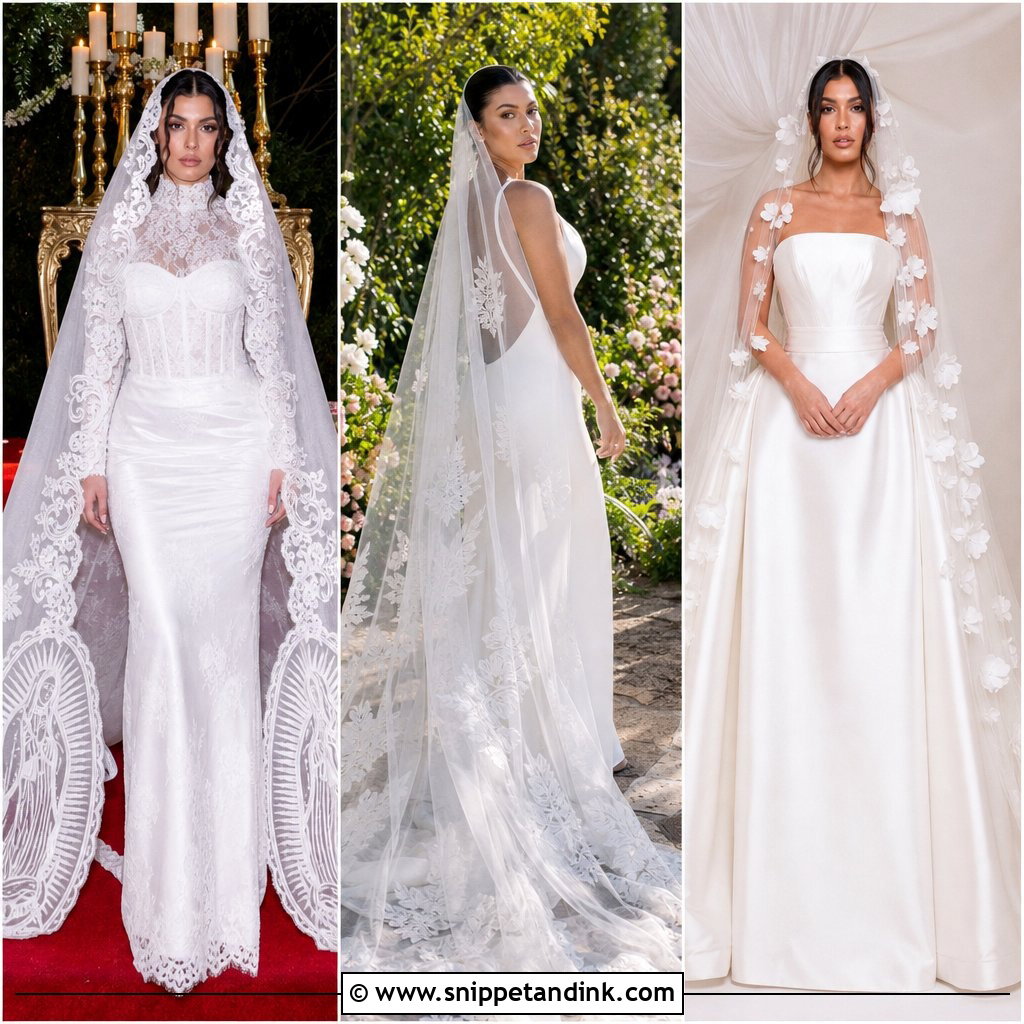
A mantilla veil worn over the face is a single layer with lace running all the way around, so when it comes forward the border frames your forehead, cheeks and shoulders at once. It sits naturally with a fitted or A-line lace dress, closed-toe heels and delicate earrings. A mantilla lies flatter than a gathered veil and is usually set a little further back on the head, which is why smooth hair, a center part or a low bun suits it. I’d skip extra hair accessories. The lace edge is already the detail, and anything else crowds it.
9. Tulle Blusher Veil With Off Shoulder Dress
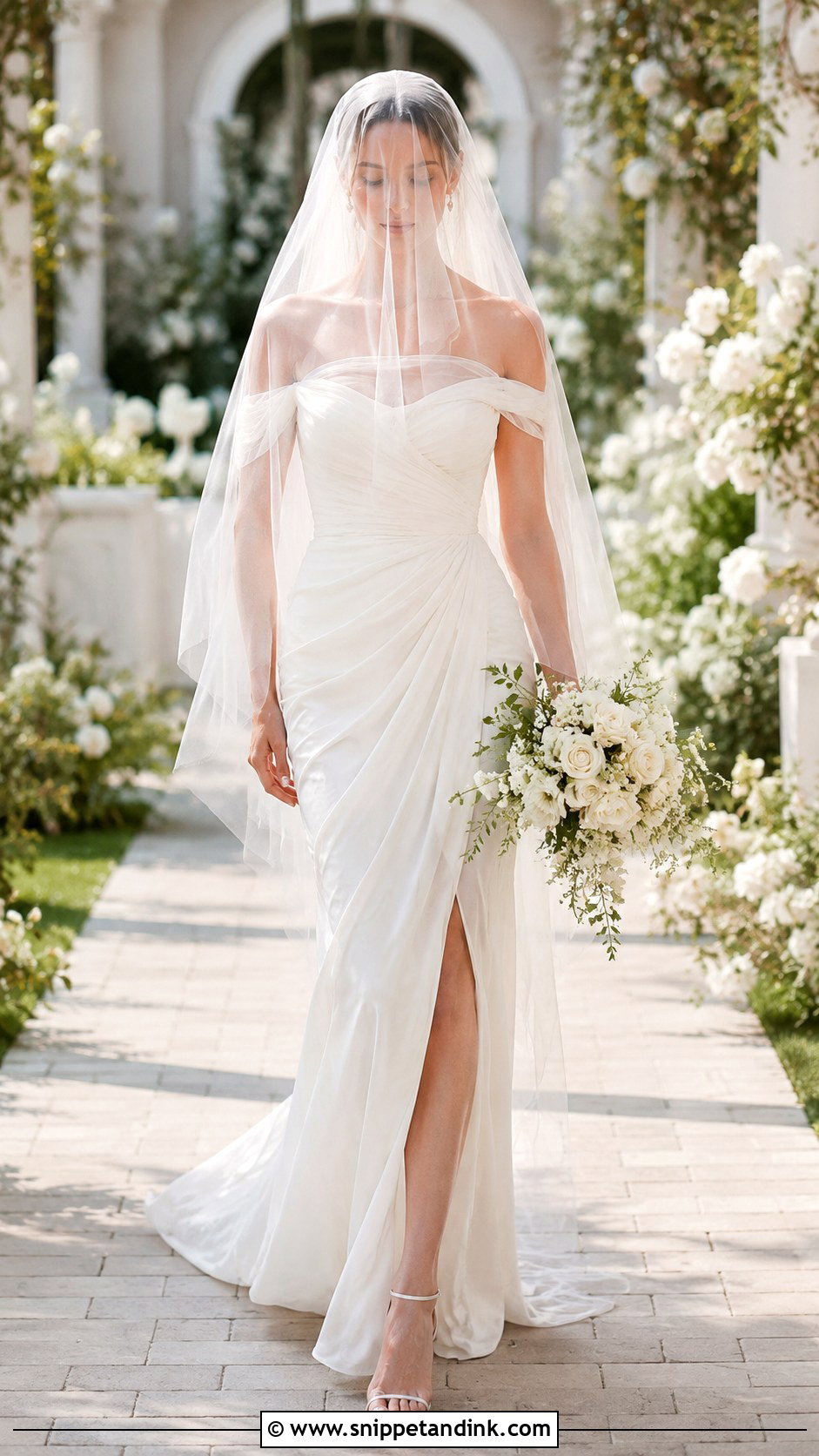
Bare shoulders and a sheer blusher balance each other. The skin gives the eye somewhere to rest, so the front layer feels light instead of heavy. Choose a gown with gentle draping at the arms and a fitted waist. I use a soft, fine tulle here rather than a crisp diamond net, because stiffer net stands away from the shoulders and hides the neckline you picked the dress for. Small earrings, delicate heels and an airy bouquet finish it. A loose low bun or brushed waves tucked behind the ears keeps hair out of the veil’s way in close-up portraits.
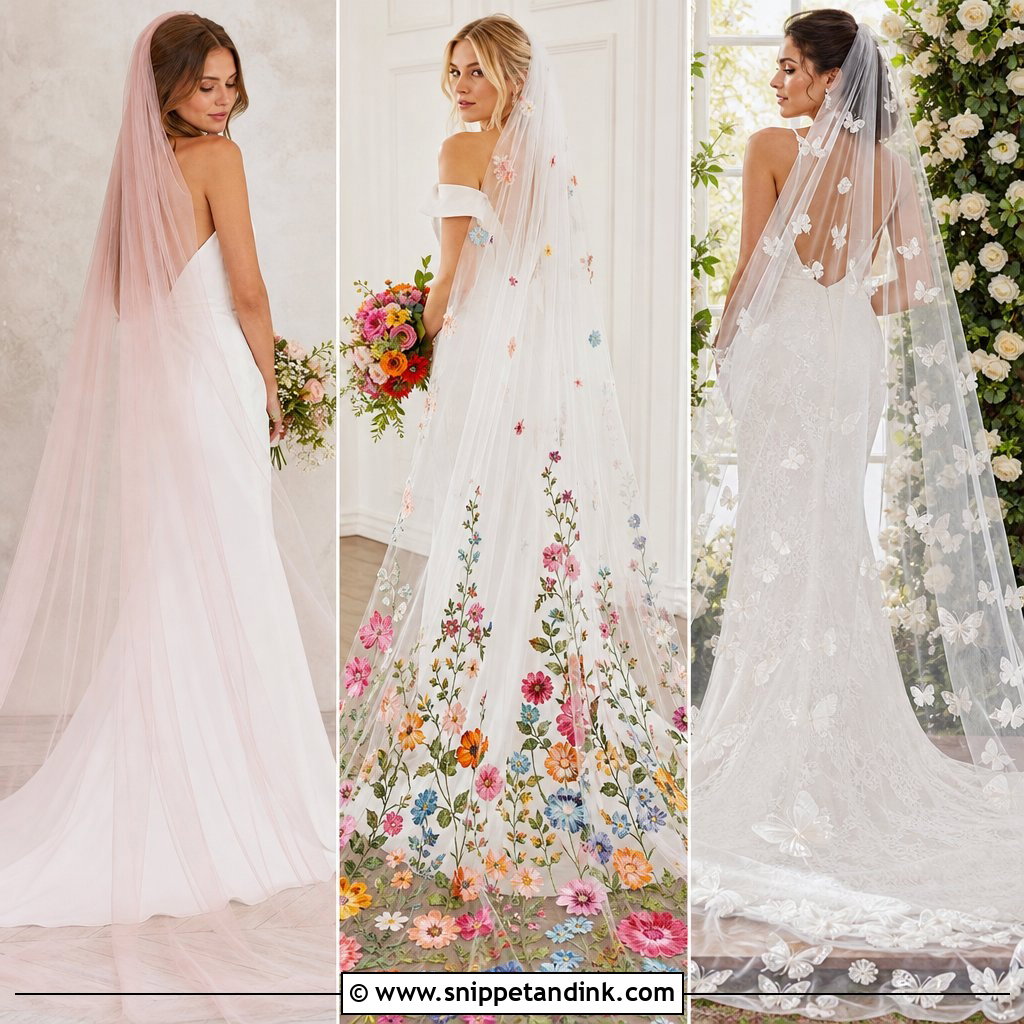
10. Embroidered Veil With Plain Wedding Dress
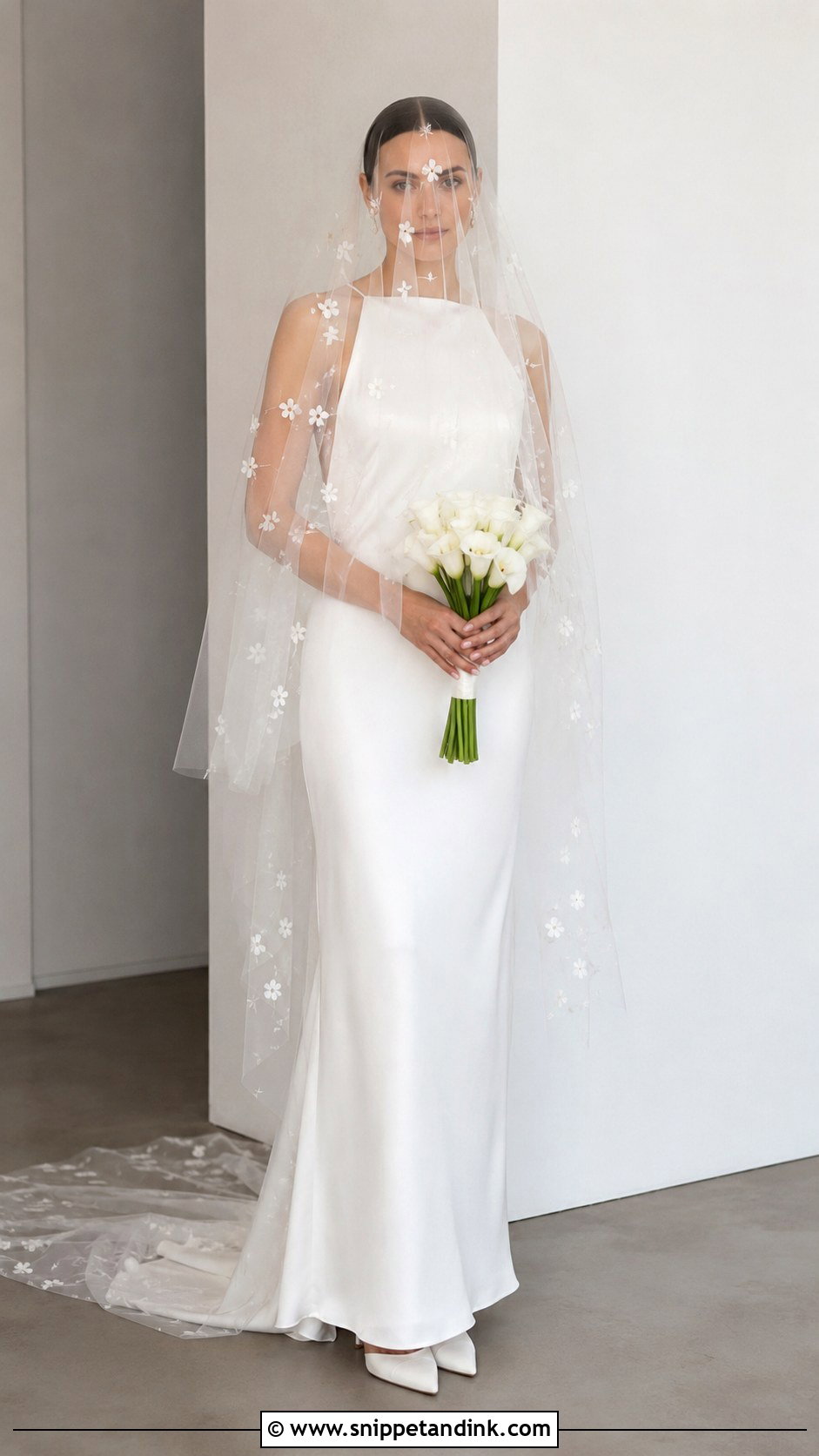
Embroidery belongs on the veil when the dress stays quiet. A sleek sheath, column or minimalist A-line gives it the blank space it needs, whether the motifs are florals, trailing vines or tiny stars. The thing I check on an embroidered blusher is spacing over the face. Dense stitching at eye level hides your features in photos and is tiring to look through, so I want the motifs to thin out around the face and gather toward the hem. Keep shoes understated, satin pumps or barely visible sandals, and let simple jewelry make the veil look intentional rather than busy.
11. Beaded Blusher Veil With Beaded Gown
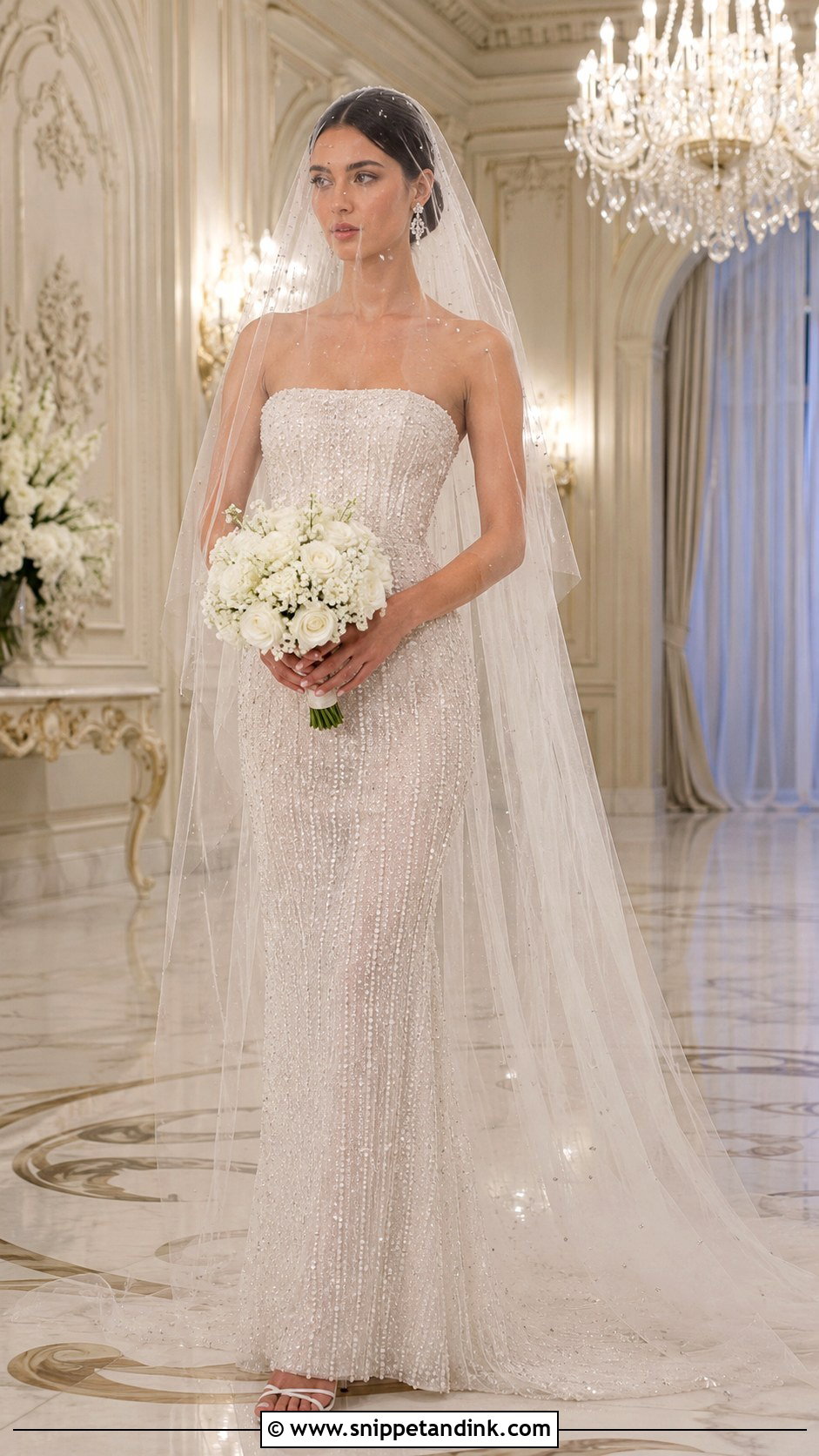
Beading on beading can look glamorous, but only if one piece leads. A beaded blusher veil should read as fine scattered shimmer when the gown is heavily worked, and it can carry a more detailed edge only when the dress is lightly beaded. Hold the veil against the bodice at a fitting before you commit, because two different bead finishes can clash under warm evening light in a way you won’t notice in a bright shop. Metallic or satin heels, small crystal earrings and a neat bouquet are plenty. I always put this one on a smooth updo, since bead edges catch on loose curls.
12. Floral Veil With Minimalist Slip Dress
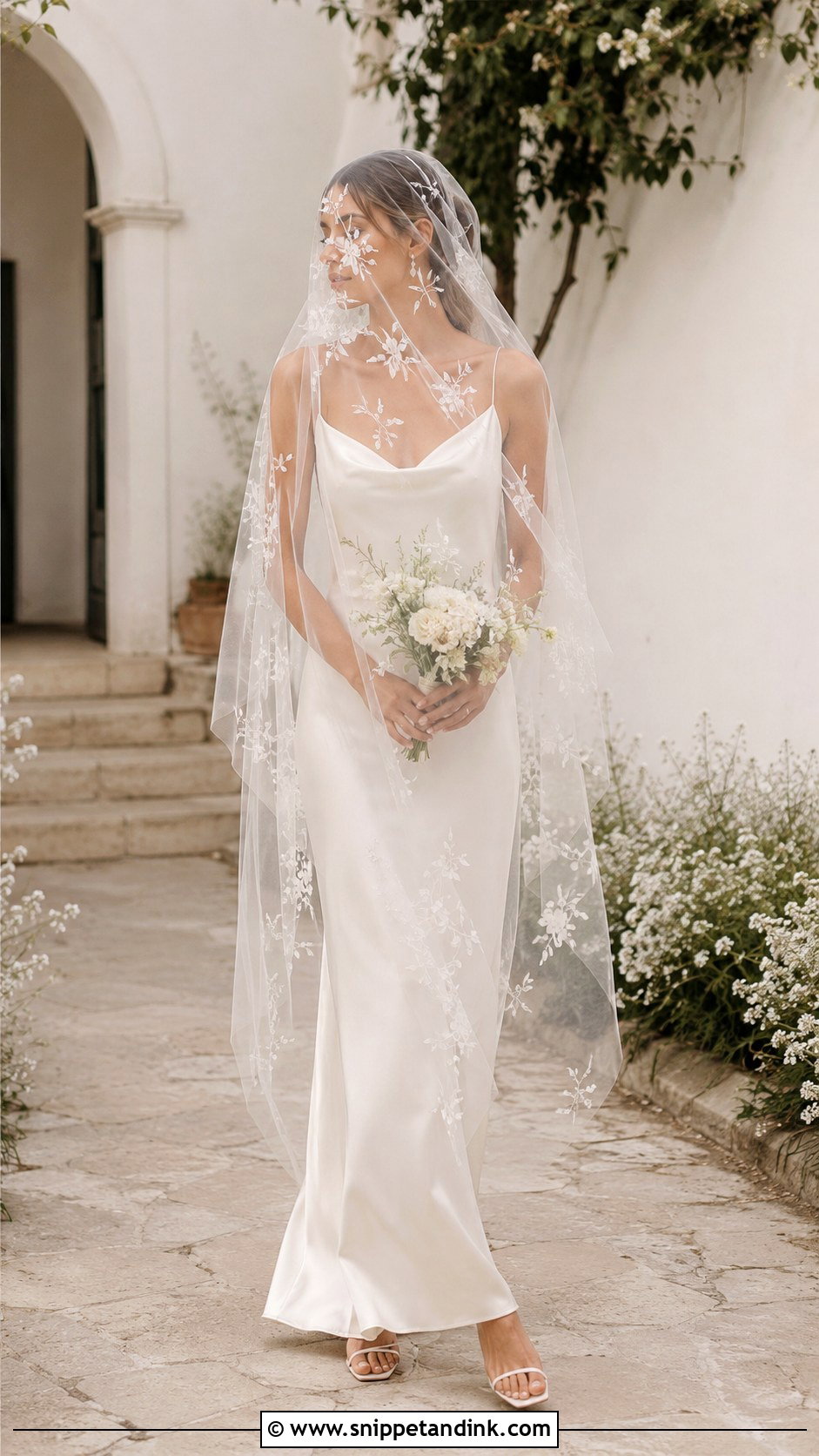
A slip dress is about as simple as a wedding silhouette gets, which leaves the veil free to be the statement. The florals can be embroidered, appliquéd or softly printed across the tulle. My rule with this one: if the flowers are raised, keep them below the chin line, because 3D appliqué at eye level looks lumpy when it’s over your face. Satin or crepe with thin straps, simple heels, a small bouquet and delicate earrings is the whole outfit. Skip big necklaces and bold hairpieces, and let soft waves or a low tucked bun keep the tulle lying flat from aisle to portraits.
13. Fingertip Veil With Face Blusher And Fit And Flare Dress
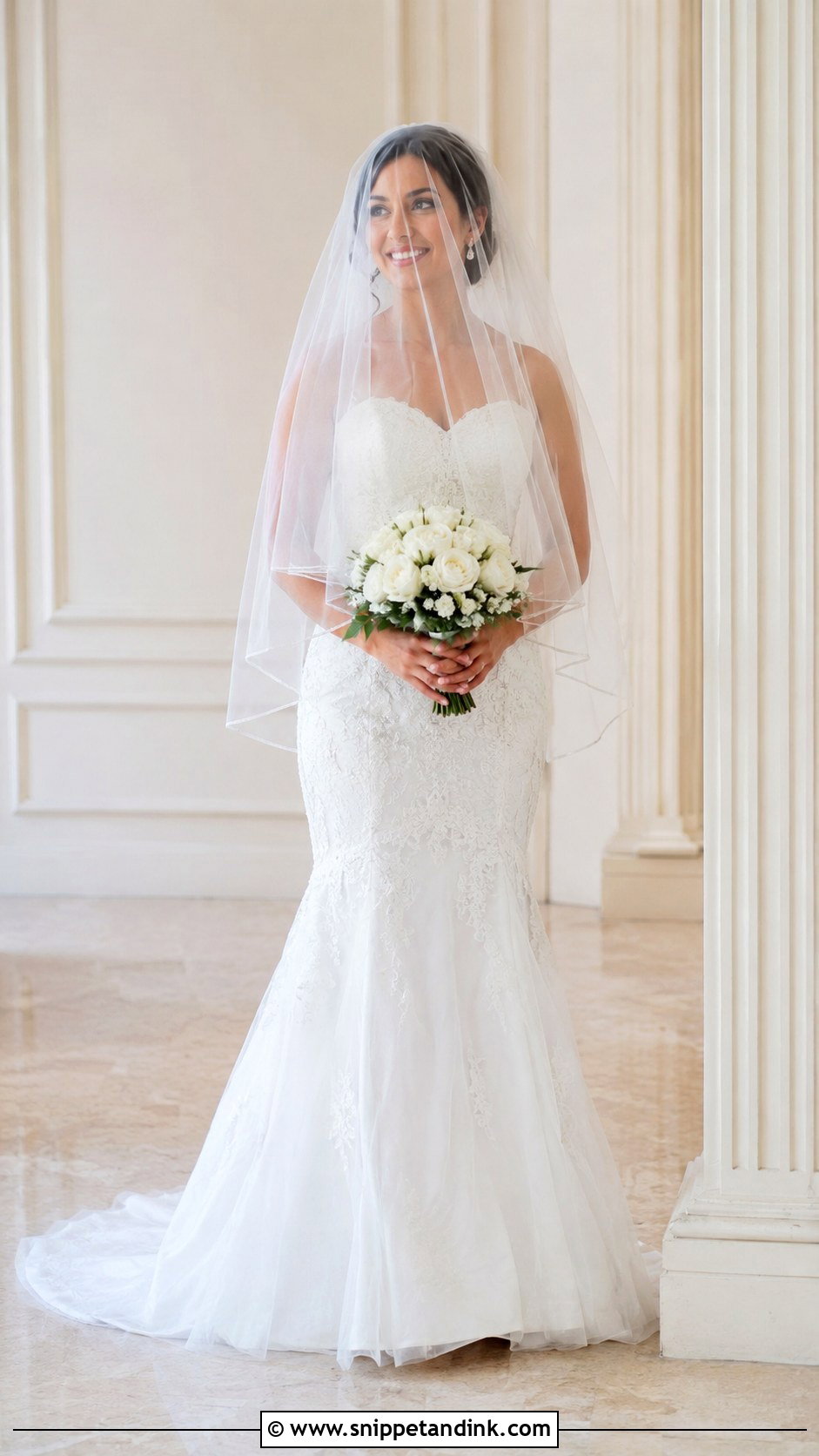
Fingertip length lands roughly where a fit and flare starts to open, which is why the two work so well together. The veil doesn’t swallow the shape, and the blusher still gives you a proper ceremony reveal. Pair a gown that shapes the waist and hips with medium heels, delicate earrings and a bouquet held at waist height. At the fitting, stand with your arms relaxed: the veil should end near your fingertips, and if it’s tangling with the bouquet ribbons, it’s a touch too long. A half-up style or low bun keeps it steady and still lets the back move as you walk.
14. Short Blusher Veil With Mini Wedding Dress
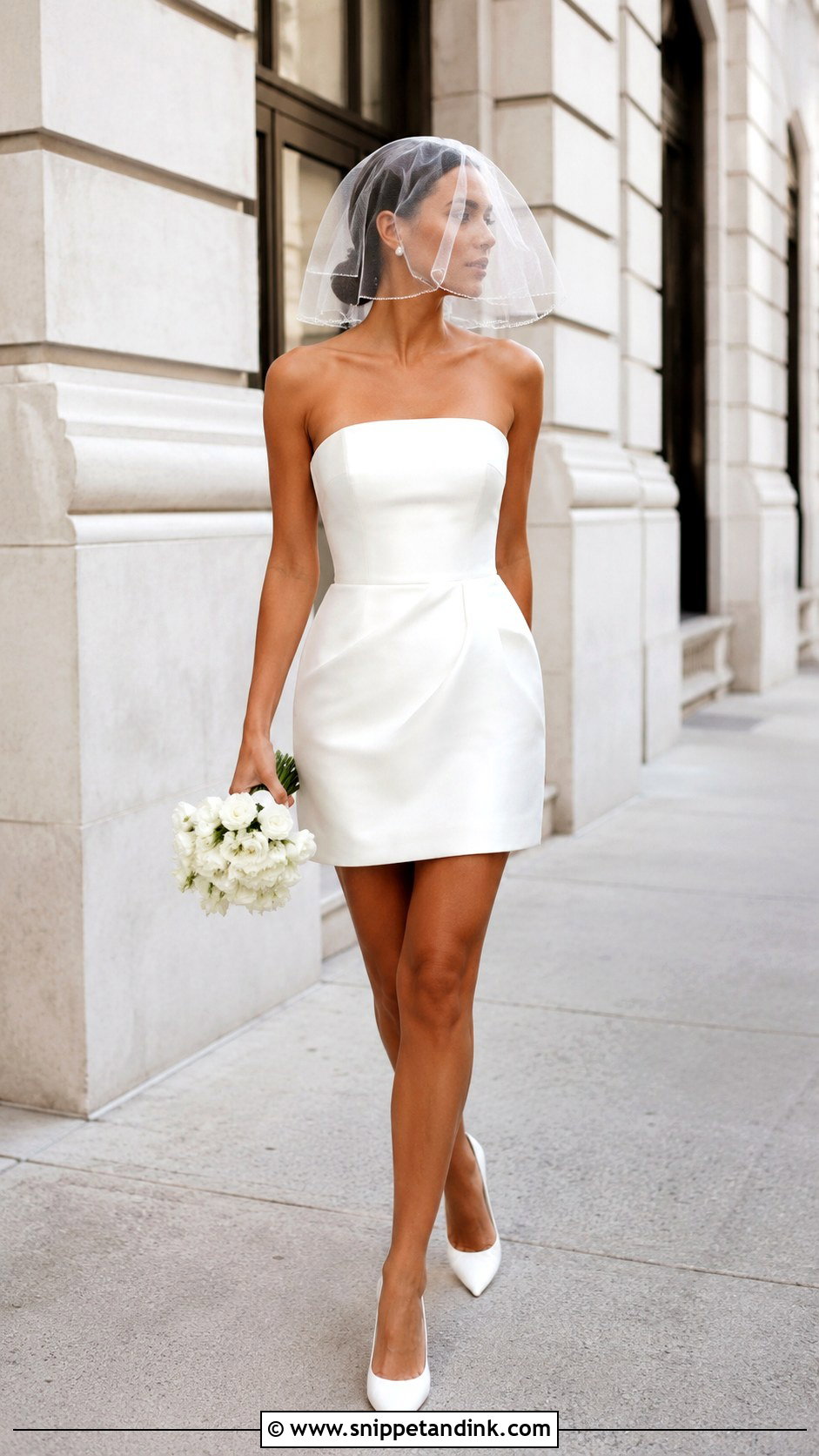
A mini dress needs a short veil. A chin-length or shoulder-length blusher keeps the proportions right, and anything longer starts to dwarf the hemline. I’d style it with a structured mini, block heels or pointed pumps, pearl studs and a small bouquet, and it’s at home at courthouse ceremonies, elopements and as a second look. Choose the lightest tulle you can find. A short blusher bounces with every step, and stiffer net sticks out at the sides like a lampshade. A high bun, sleek ponytail or short polished waves gives the comb a firm hold.
15. Face Veil With Long Sleeve Gown
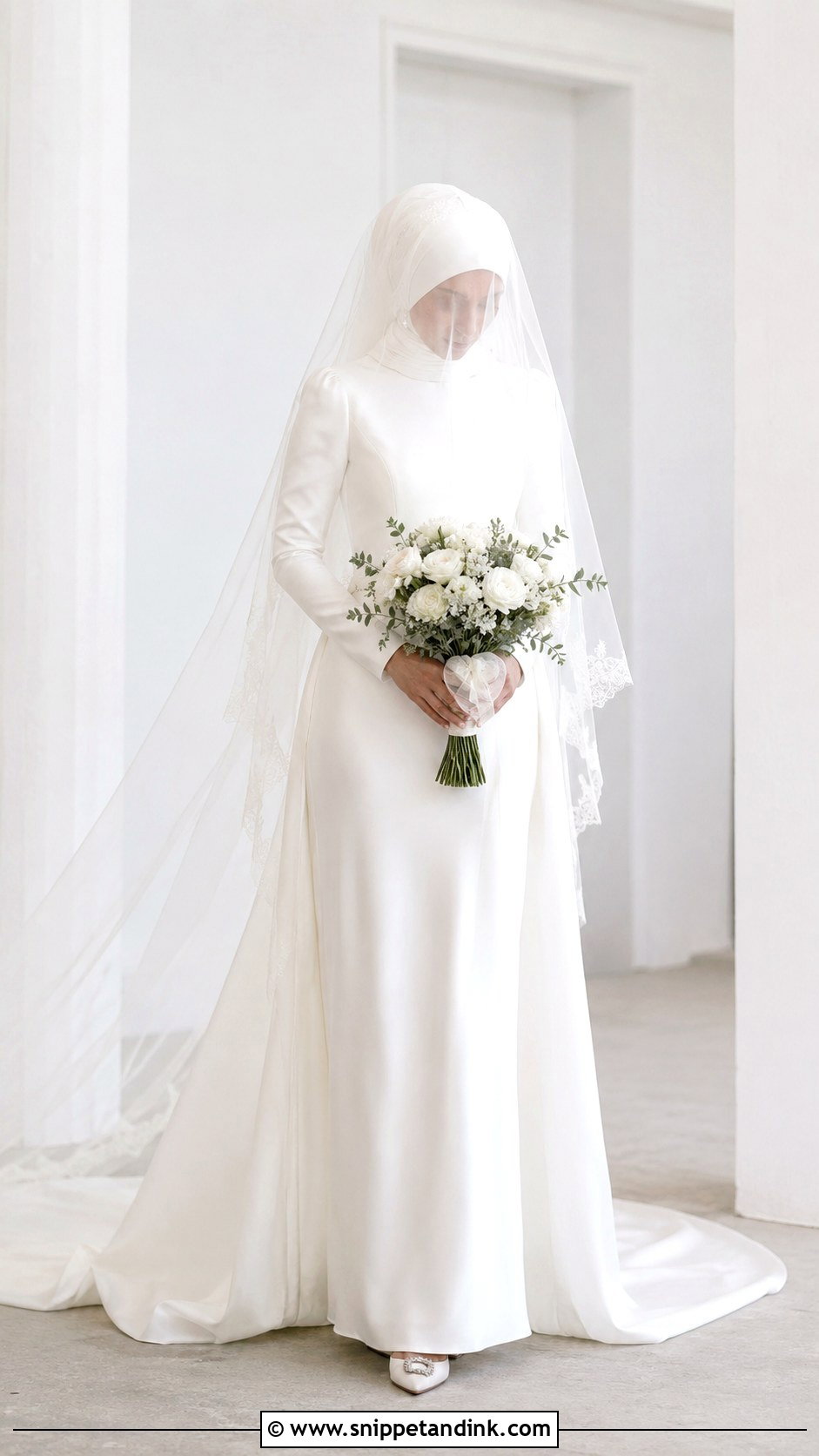
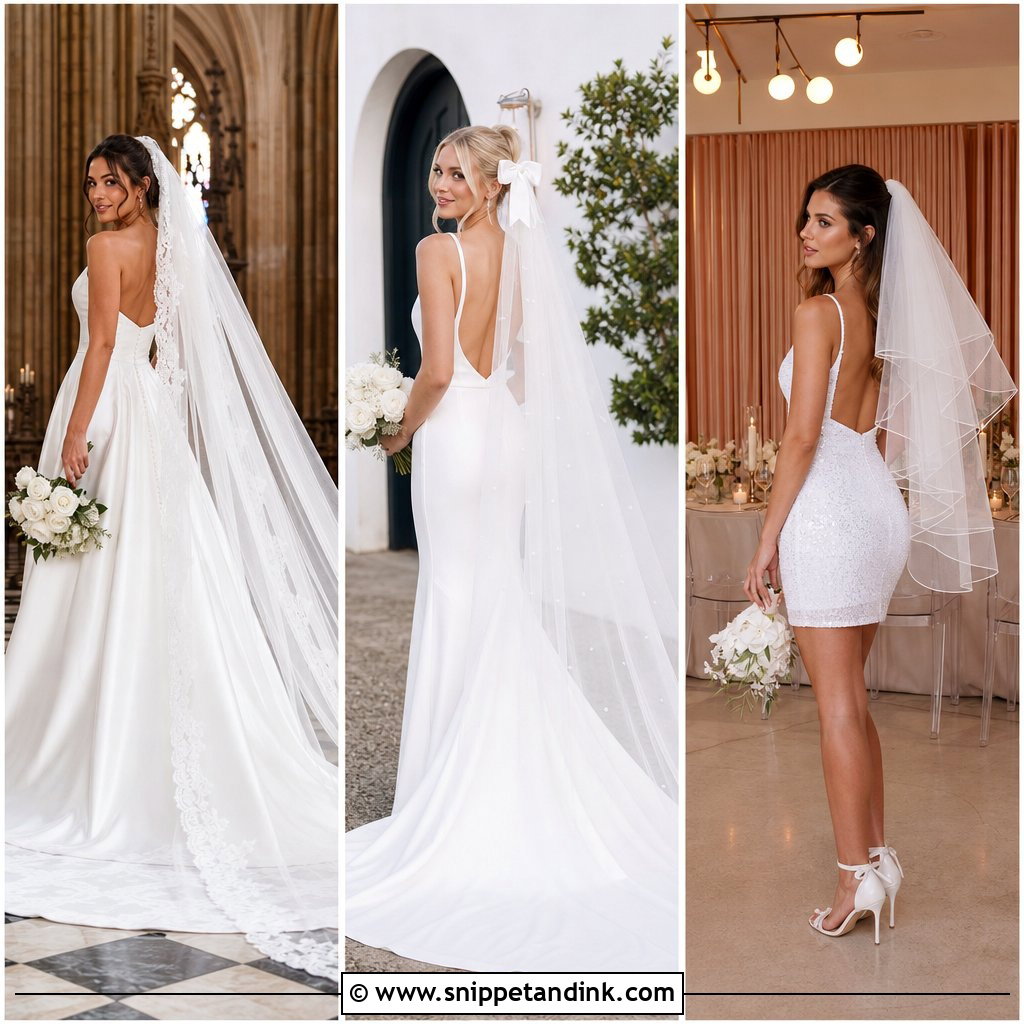
Long sleeves already give you coverage, so the work is keeping the layers from feeling heavy. Sheer sleeves, lace sleeves and smooth crepe all take a soft tulle blusher. My rule of thumb is that detailed sleeves want a clean veil edge, while plain sleeves can carry lace or pearl trim. Add closed-toe heels, simple earrings and a structured bouquet. Lace cuffs and buttons can catch the veil’s edge when you raise your arms, so try a hug and a bouquet toss in the fitting room. A low bun or tucked chignon lets the veil sit comfortably and keeps the neckline in view.
16. Blusher Veil With High Neck Dress
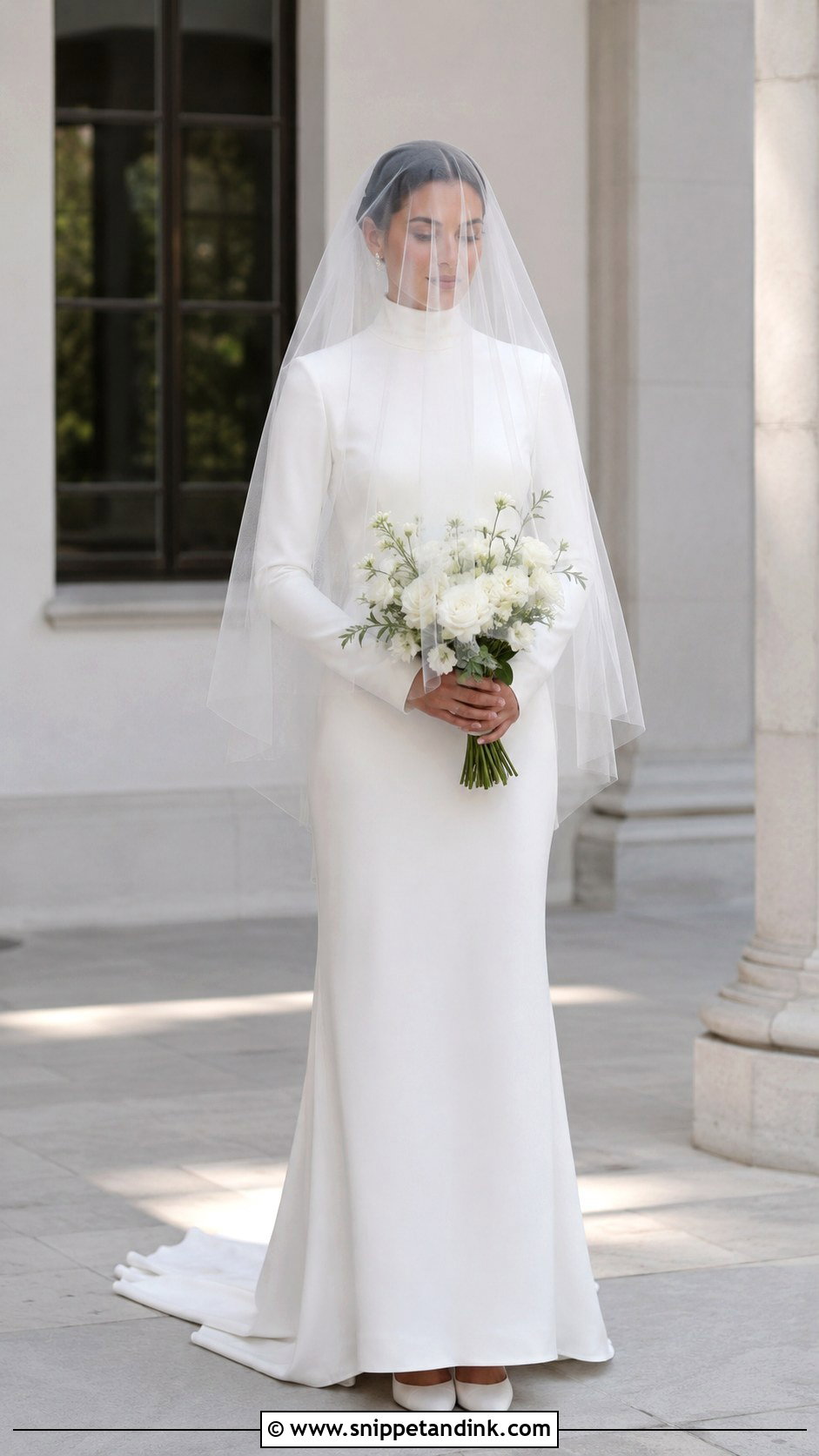
A high neck puts a strong line at the throat, so the blusher has to be the lightest layer in the outfit: sheer, clean and with no trim fighting the collar. Crepe, satin or lace high-neck gowns all work with simple heels, studs and a neat bouquet. Leave necklaces off entirely. The veil comes down to meet the collar and softens it, which is what keeps the look bridal rather than severe. With this neckline I set the comb a little higher on the crown so the tulle clears the collar instead of bunching against it. A sleek bun or polished updo is the safest base.
17. Veil Over Face With Corset Wedding Dress
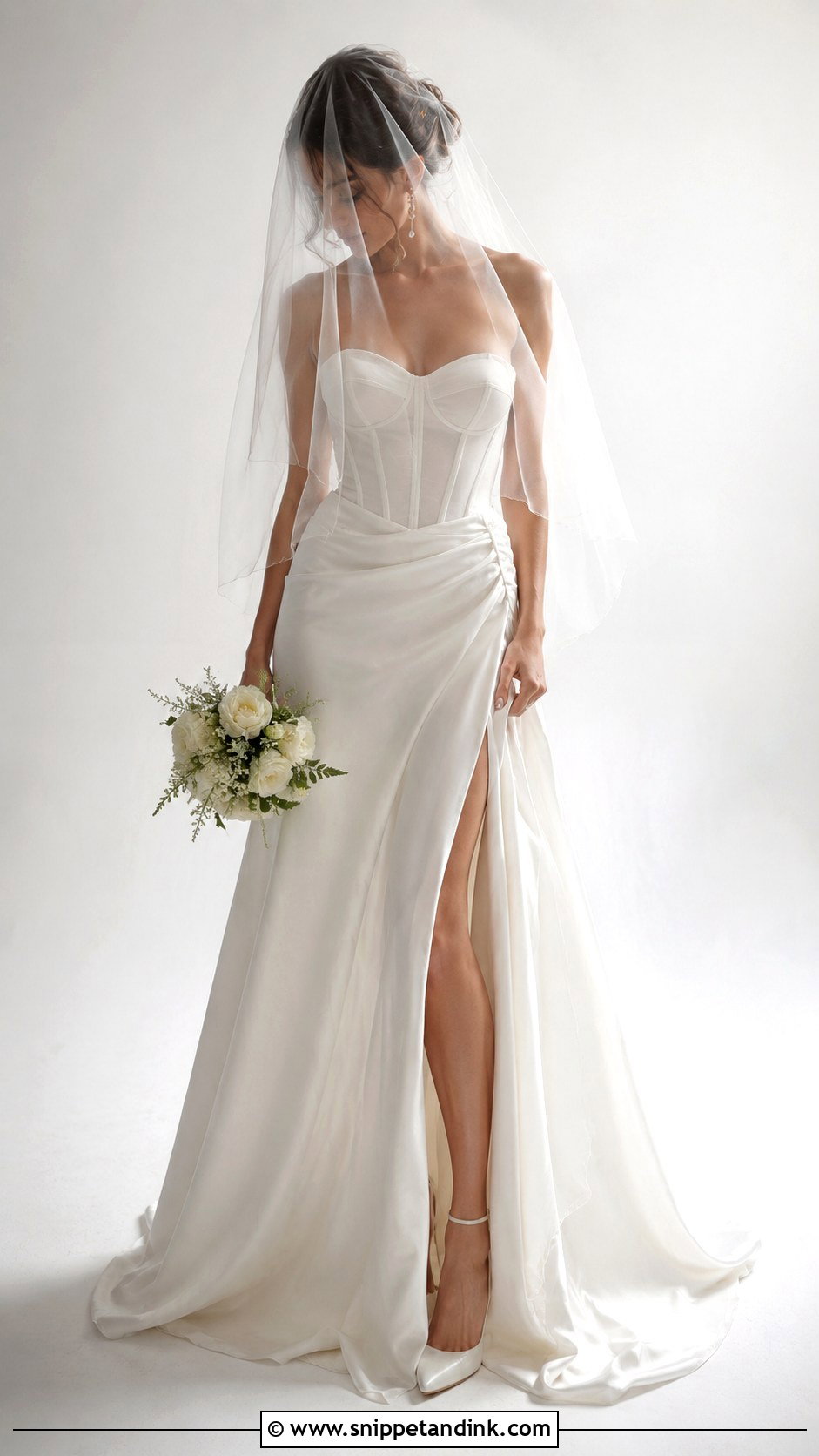
Boning and a sheer blusher make a good contrast. The corset holds a firm shape at the waist, and the tulle softens everything above it. Choose a clean corset top with a flowing skirt and pair it with satin heels, delicate earrings and a small bouquet. If the boning channels show as visible seams, I’d go raw-edge on the veil so the lines stay crisp, and save a lace edge for a softer, more romantic gown. Corsets are laced firmly and reaching up to fix a veil isn’t comfortable in one, so let a bridesmaid handle every adjustment on the day. A loose updo or soft waves pulled off the face suits it.
18. Blusher Veil With Floral Applique Dress
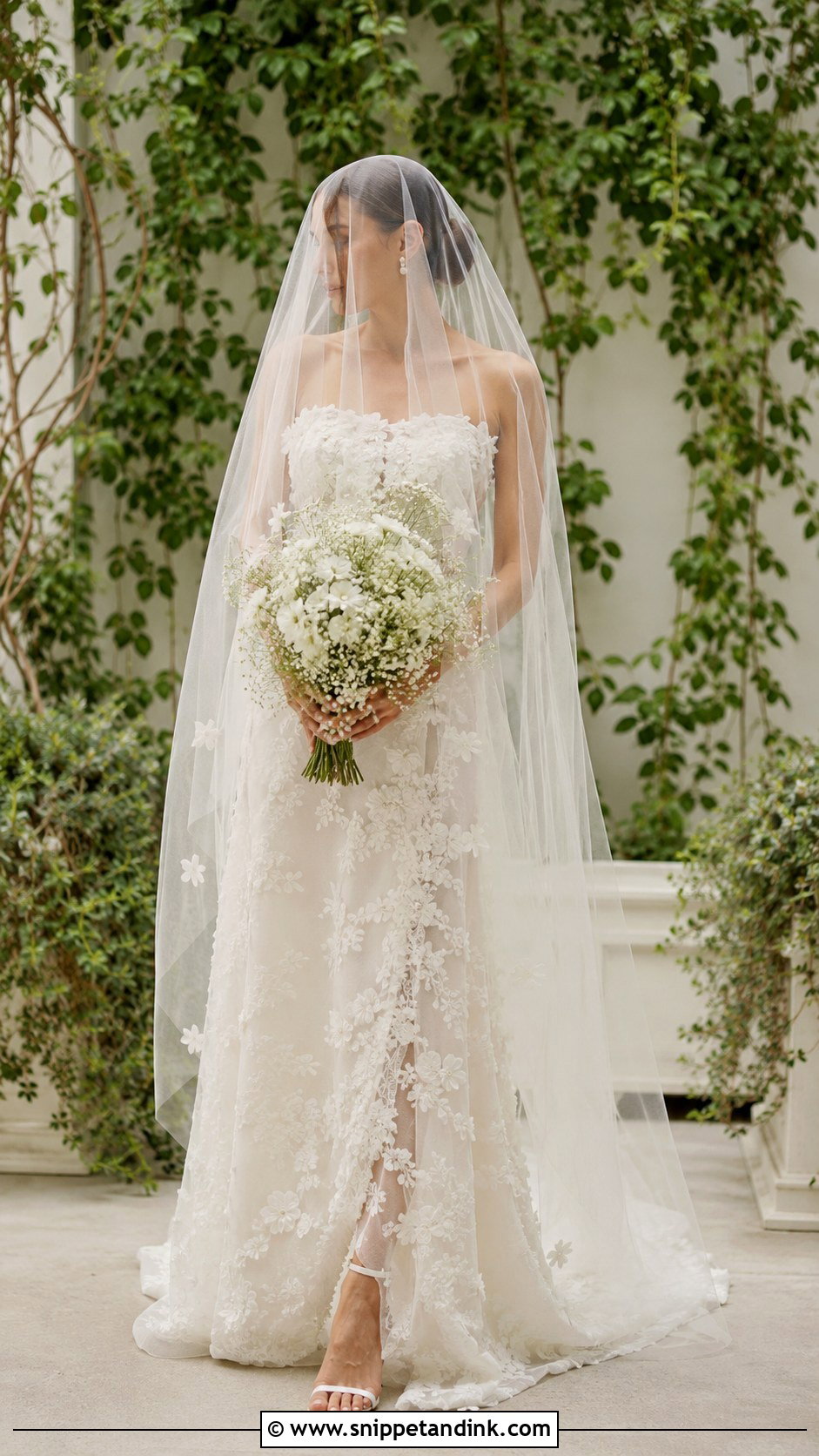
A dress with 3D florals or lace appliqué already has plenty of texture, so the veil should be plain or only lightly floral. I’d rather you see the dress through clean tulle than through a second layer of flowers. Raised appliqué also catches fine tulle, so if the blusher drapes over the bodice, check that it lifts away cleanly without snagging on petals. Delicate heels, small earrings and a bouquet that echoes the dress texture are plenty. A loose bun, braided updo or half-up waves keeps the overall mood soft.
19. Face Covering Veil With Black And White Wedding Dress
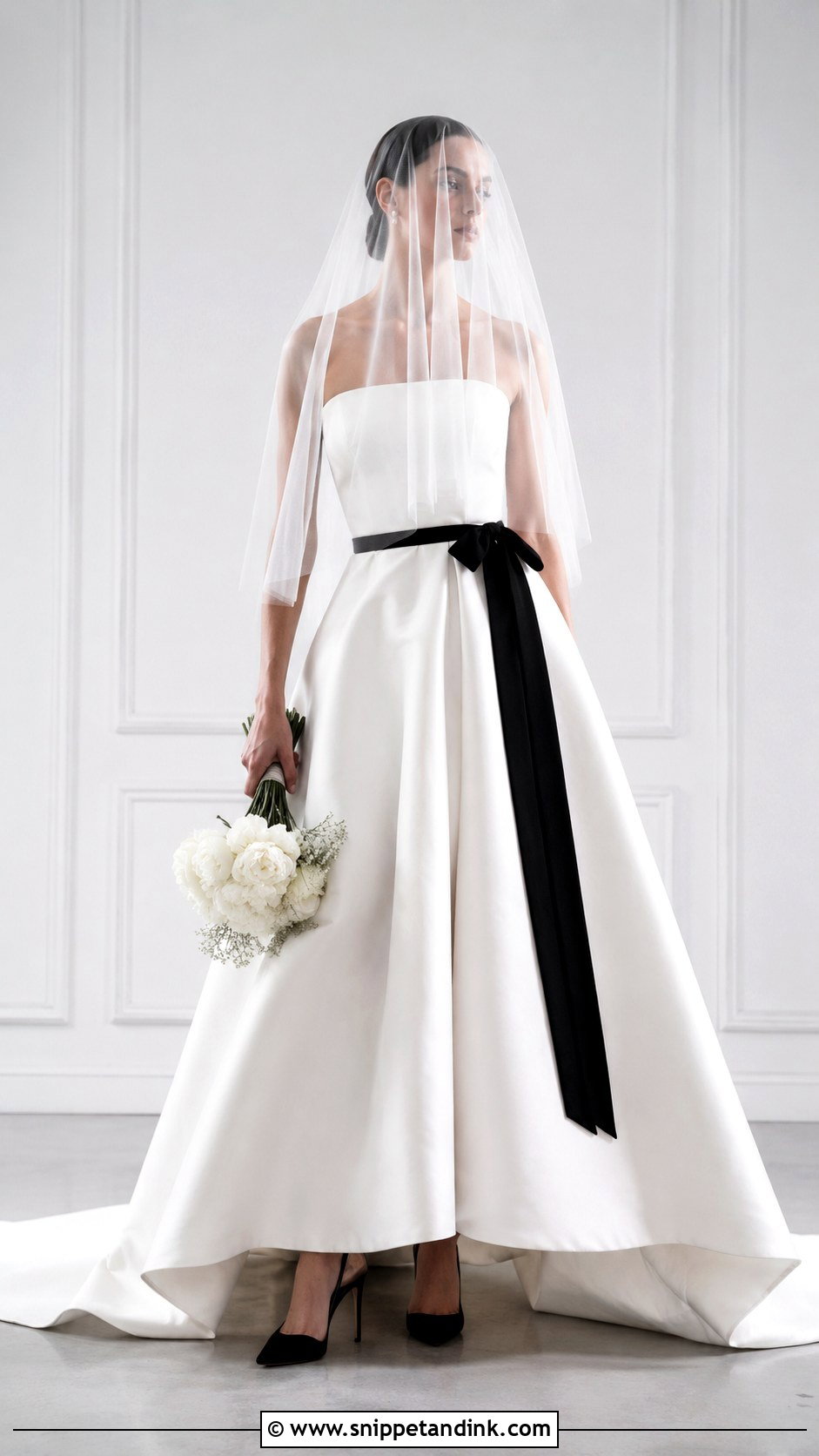
Black accents on a white gown are bold, and a sheer white or ivory blusher is what keeps the outfit reading as bridal. The accent might be black ribbon trim, gloves, a waist bow or a single floral detail. Black pointed heels, or white heels with black touches, finish it, with jewelry kept to pearl studs or small crystals. One detail people forget: black ribbon on the veil itself looks dramatic, but it draws a hard line across your face once the blusher is down. I’d keep the front edge plain and let the dress carry the contrast, with a clean, simple hairstyle.
20. Blusher Veil With Champagne Wedding Dress
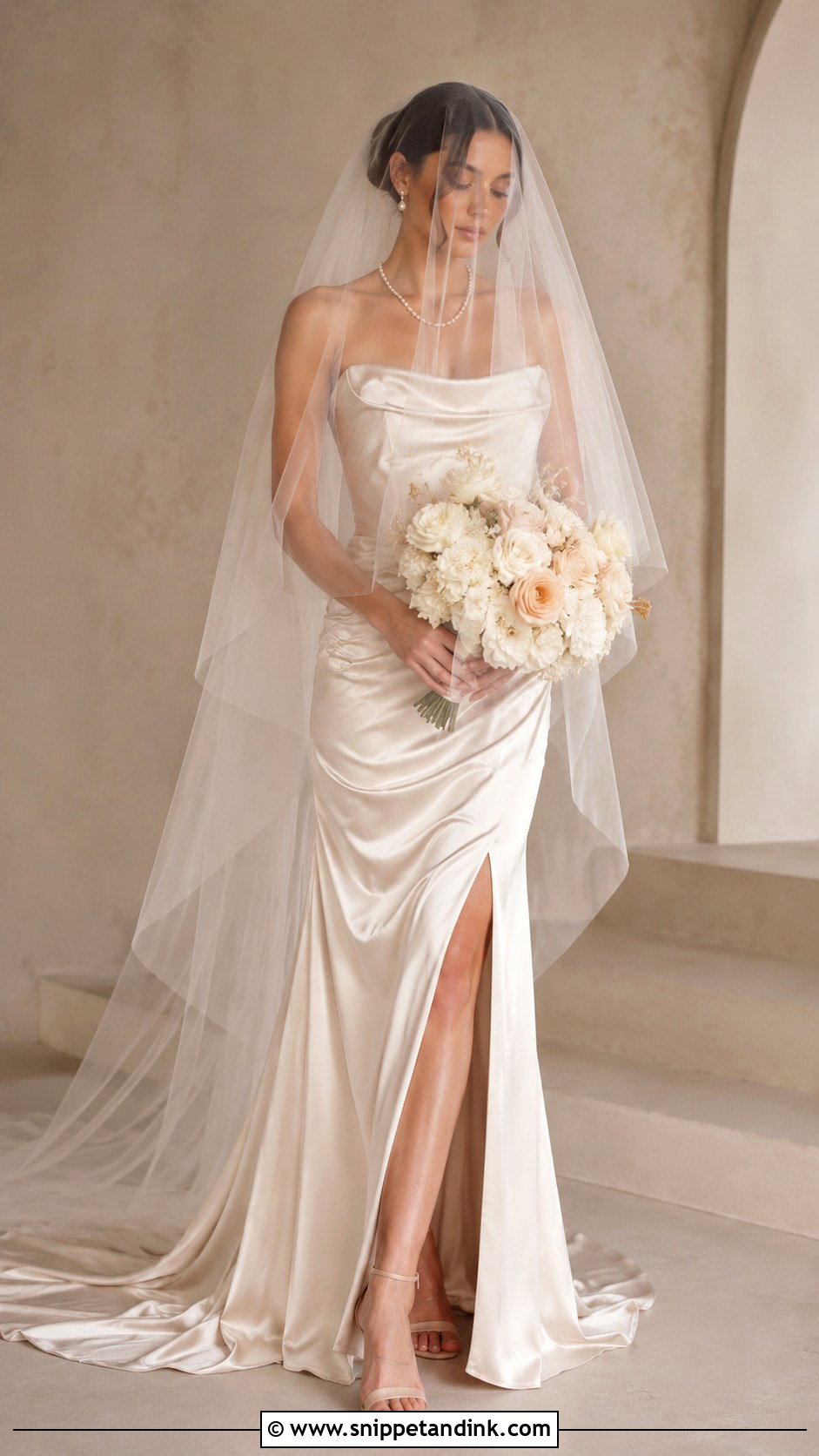
Champagne gowns are warmer than bright white, and a stark white veil beside one can make the dress look faded. Choose ivory or champagne-tinted tulle instead, and hold a swatch against the skirt in daylight before you order. Nude or satin heels, pearl jewelry and a cream or blush bouquet with soft greenery suit the color. A sheer blusher over the face doesn’t hide the gown’s tone, and it sits well over satin, tulle, lace or beaded fabrics. A low bun, loose curls or a polished half-up style finishes it.
21. Face Veil With Two Piece Bridal Outfit
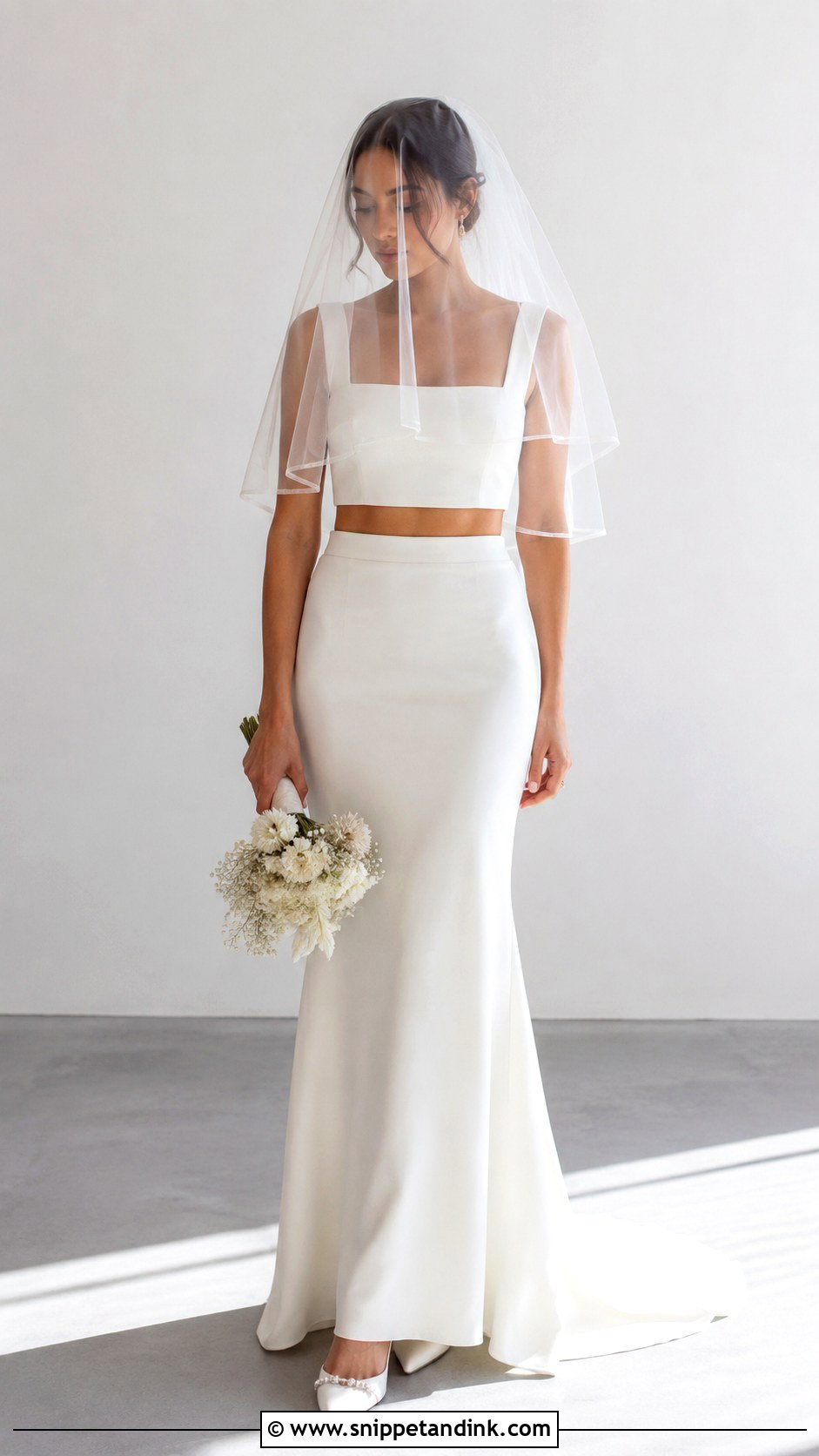
Separates feel modern, and a blusher is the piece that makes them read as ceremonial. A tailored crop top with a high-waist skirt or a structured blouse with a sleek bridal skirt both take a sheer blusher, pointed heels, simple earrings and a small bouquet. My pairing rule is about texture: plain separates can carry a pearl or ribbon-edge veil, while lace or textured fabric wants clean tulle. Watch where the veil ends on a crop top. If it stops right at the waistband, it draws the eye to the gap, so go a little longer or shorter. A sleek bun or ponytail holds the comb securely.
22. Blusher Veil With Bridal Jumpsuit
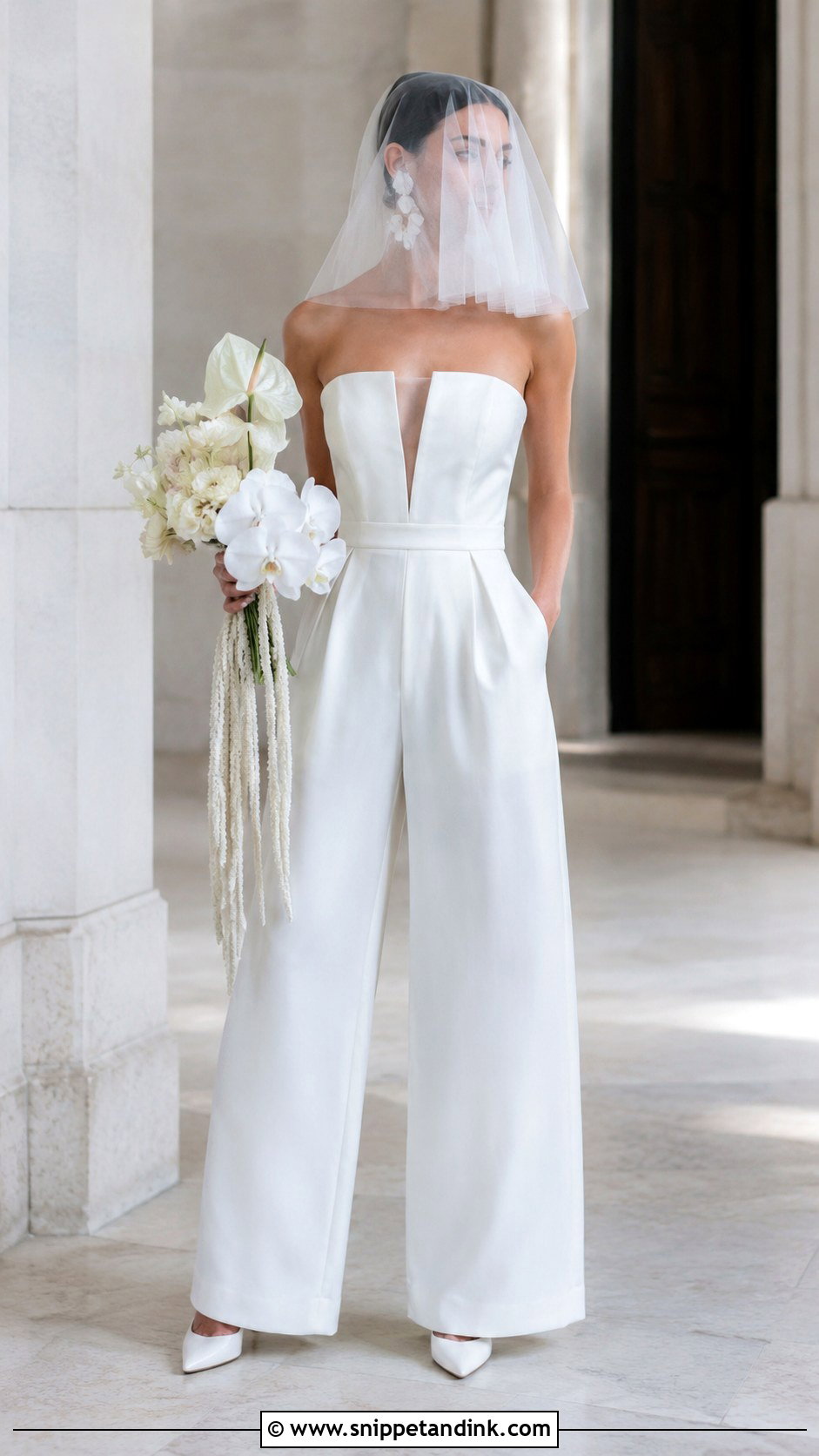
A blusher veil with a bridal jumpsuit is unexpected in a good way. The tailoring gives you a firm base, and the face veil brings the tradition back in. I’d choose white or ivory with wide legs, a fitted waist and a clean neckline, then add pointed heels, sculptural earrings and a sleek bouquet or small clutch. Fingertip or chapel length adds length behind you without hiding the leg line. Wide trousers and long tulle can tangle as you walk, though, so practice a few steps in your heels at the fitting. Polished hair suits it best, and I see this one most at city weddings, civil ceremonies and as a reception change.
23. Veil Covering Face With Cape Wedding Dress
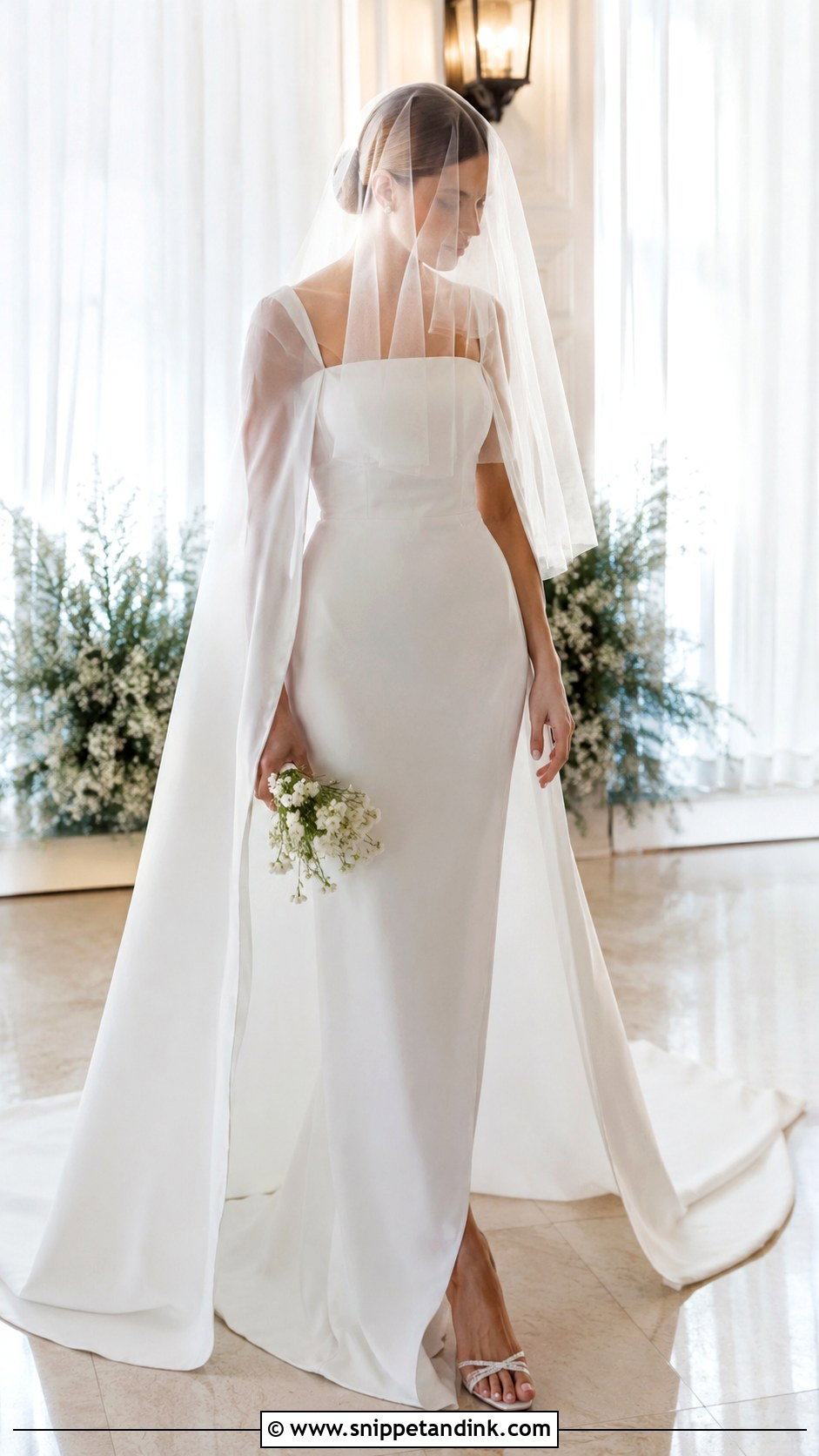
A cape already moves from the shoulders, so two flowing layers have to be planned or they turn into a pile of fabric. Keep the blusher simple with minimal trim, pick a dress with a clean bodice, and add sleek heels, small earrings and a slim bouquet. If the cape is sheer, the veil can show a little more. If it’s heavy or embellished, I’d go almost weightless on the blusher. The question I always settle at the fitting is where the veil ends at the back. It should be clearly shorter or clearly longer than the cape, never the same length, or the two hems look like a mistake. A smooth bun or center-part style lets both fall cleanly.
24. Blusher Veil With Vintage Satin Dress
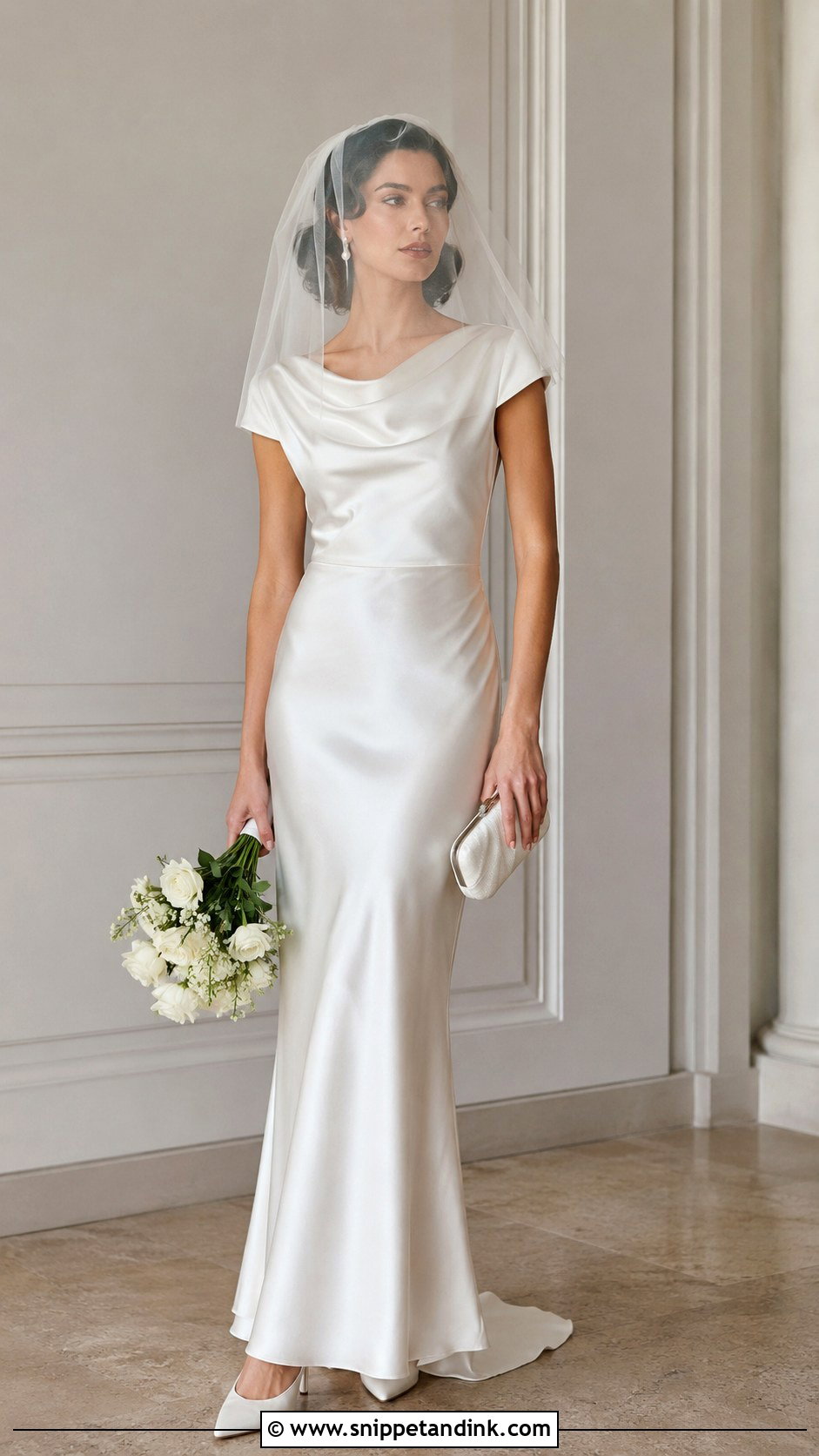
Bias-cut satin has an old-Hollywood feel, and a fine net blusher is what stops it tipping into costume. The matte net sits against the satin’s shine, which is exactly why the pairing works. A soft cowl neck or long fluid skirt, pointed pumps, pearl earrings, a small clutch and a simple bouquet complete it. Bias satin shows every line beneath it, and the same rule applies above the neck, so keep the hair smooth with brushed waves, a low roll or a sleek bun. Restraint is the point here.
25. Face Covering Veil With Modern Ball Gown
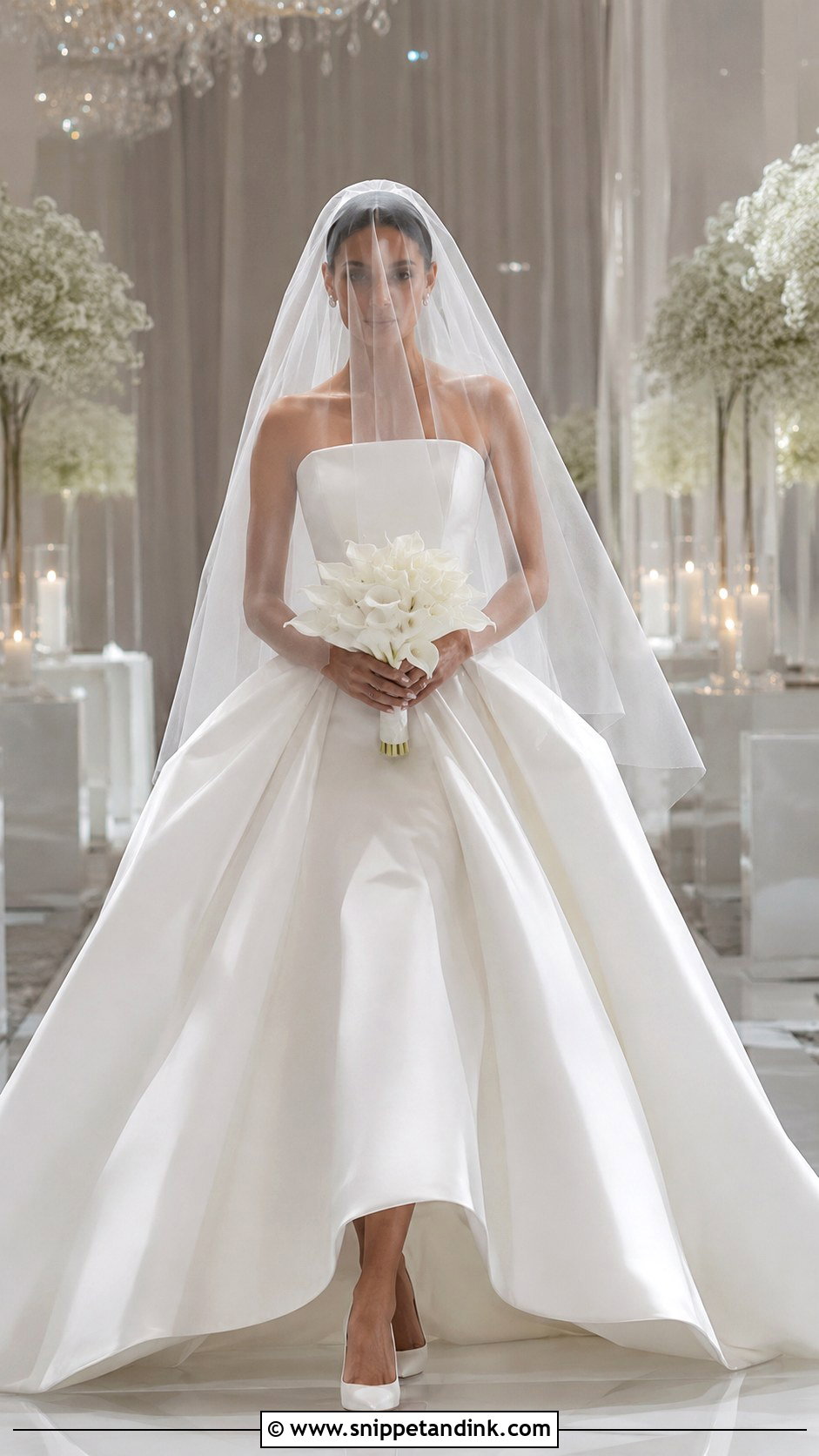
A modern ball gown keeps the full skirt but strips back the decoration, so the structured bodice and the fabric do the talking. A sheer blusher with sleek heels, small earrings and a sculptural bouquet keeps it fresh. On mikado, satin or organza I prefer a raw-edge or ribbon-edge veil, because lace trim against a crisp modern fabric can look borrowed from another dress. Remember that a full skirt plus a long veil needs a wide turning circle, so leave room at the top of the aisle. For hair, a polished bun or smooth waves tucked behind the shoulders.
Who Lifts the Blusher, and When
The lift is the part of a face veil people rehearse least and remember most. Traditionally, whoever walks you in lifts it before handing you over, or your partner lifts it at the altar before the vows or the kiss. Neither is wrong. Decide in advance and tell your officiant and photographer, so the photographer is already in position instead of changing lenses.
Rehearsing it so nothing snags
Whoever does it should take both lower corners and raise the tulle up and back over the comb in one slow movement, then let it settle behind your head. I have brides try this at the final fitting with the real veil and a rough version of the hairstyle. Tiaras, pearl edging and textured updos are the usual snag points, and two or three practice runs show which way the layer wants to fall.
Wearing Tulle Over Makeup Without Leaving Marks
Lipstick and foundation transfer onto tulle easily, and once a smudge is there it shows in every close-up. Ask your makeup artist to set the lower face with powder and use a long-wear lip, and don’t press the blusher against your face to blot tears. Keep a folded tissue tucked in a bridesmaid’s pocket for after the lift.
Fold lines are the other giveaway, and they show over the face far more than at the back. Hang the veil a day or two ahead and steam it gently from a distance. Never iron tulle directly, since synthetic net can scorch or melt. In dry air, a light mist of anti-static spray on the underside helps the front layer fall away from your cheeks, and having someone at your elbow on steps helps too, because tulle softens your view of the ground.
The Dress Sets the Rules for the Veil
Pulling tulle over your face changes the mood of an outfit more than almost any other accessory. It softens a structured gown, makes a simple one feel romantic and ties a modern look back to tradition. In my fittings it nearly always comes down to balance: match the veil’s fabric, length and trim to the dress first, then to the hair and accessories. A detailed gown wants a lighter veil, and a plain one can take more texture or drama. Try the veil on with the dress, walk in it and practice the lift. If it feels comfortable and like you, that’s the one.
You'll Like These Ideas:


Leave a Reply