
I see the veil as part of the hairstyle, not an accessory added at the end. Where it’s anchored, how heavy the border is and what sits under it decide whether it stays put through a long Nikah or slides back every time you look down to sign. Sheer organza floats, pearl trims add weight, and a double dupatta needs two separate anchor points. Below are veil looks for lehengas, ghararas, shararas, gowns and abayas, each with the hair and jewellery notes I’d give a bride at her trial, plus what to watch for.
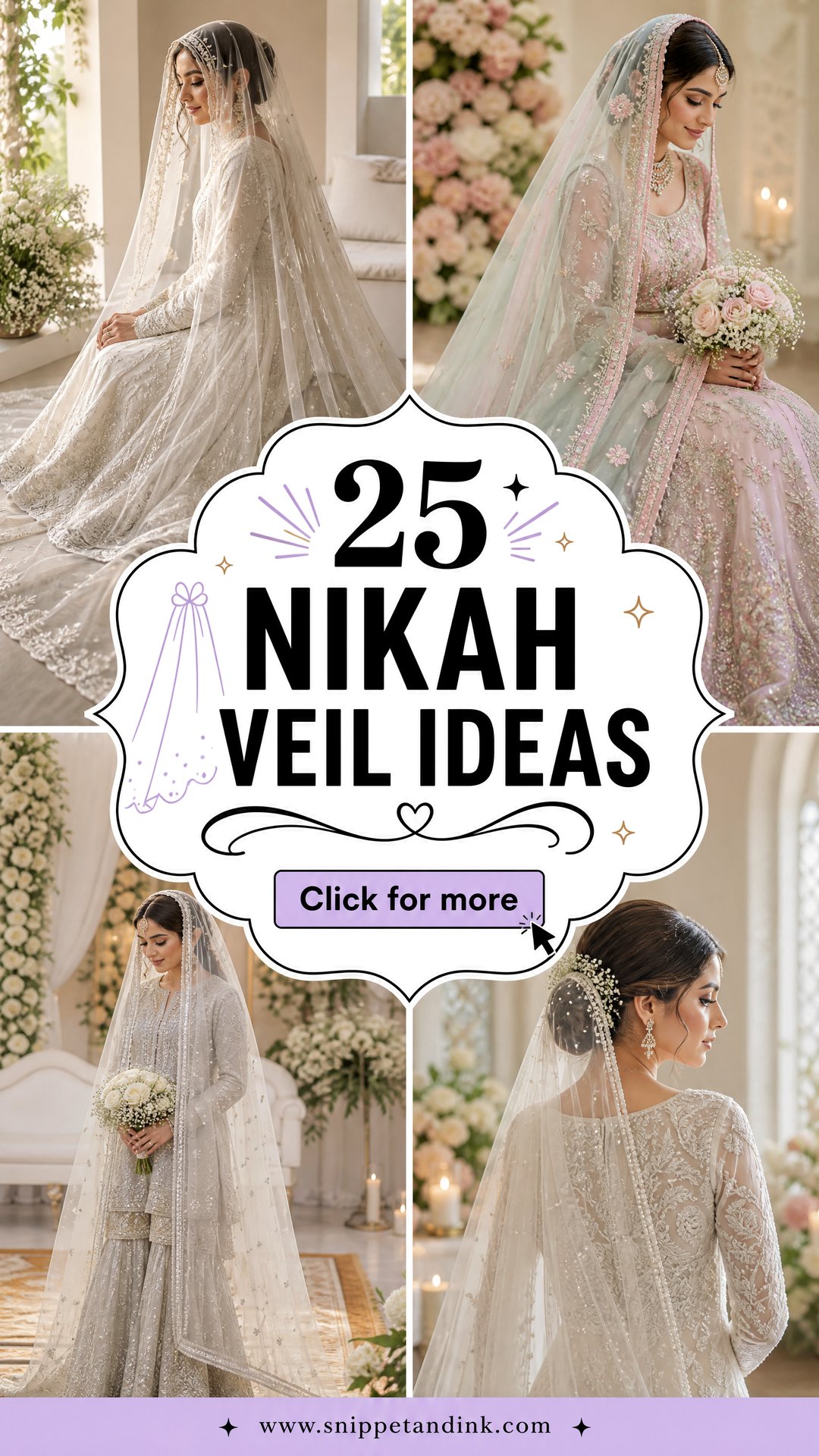
Setting a Nikah Veil Over a Hijab, a Bun or Loose Hair
The fabric and length you see in pictures are only half the decision. The other half is what the veil is pinned to. A comb needs something firm to grip, and a heavy border shifts the weight backward. Here is how I approach each base at a trial.
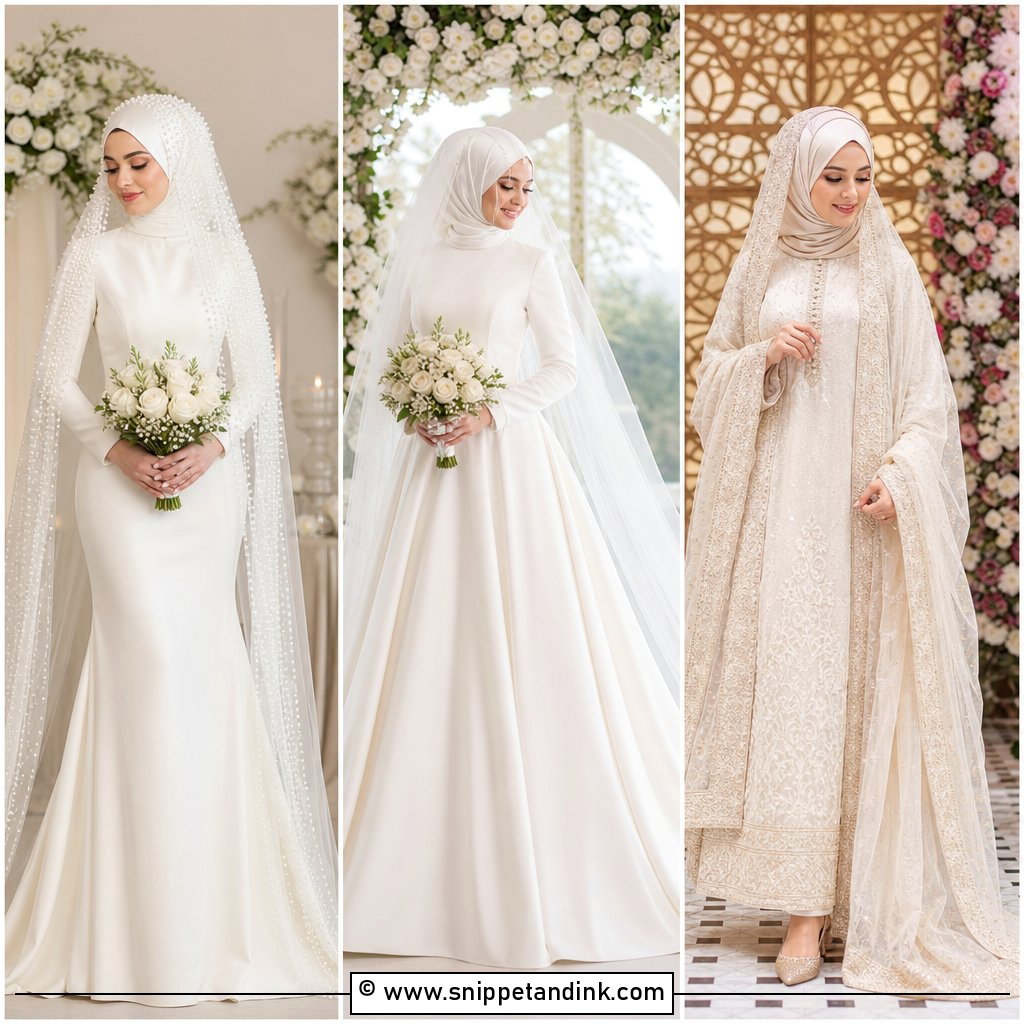
Over a hijab
Start with a snug undercap or bonnet, since pins grip that far better than slippery hijab fabric. Pin the hijab, then attach the veil to the undercap with small pins or a magnetic clip at the crown. Choose a veil fabric with some texture, like net or organza; satin on satin slides.
Over a bun
Slide the comb in just above or just below the bun, teeth pointing toward it, then lock it with two bobby pins crossed over the comb base. Above the bun gives lift for photos; below it hides the comb and lets the veil fall closer to the shoulders.
With loose or half-up hair
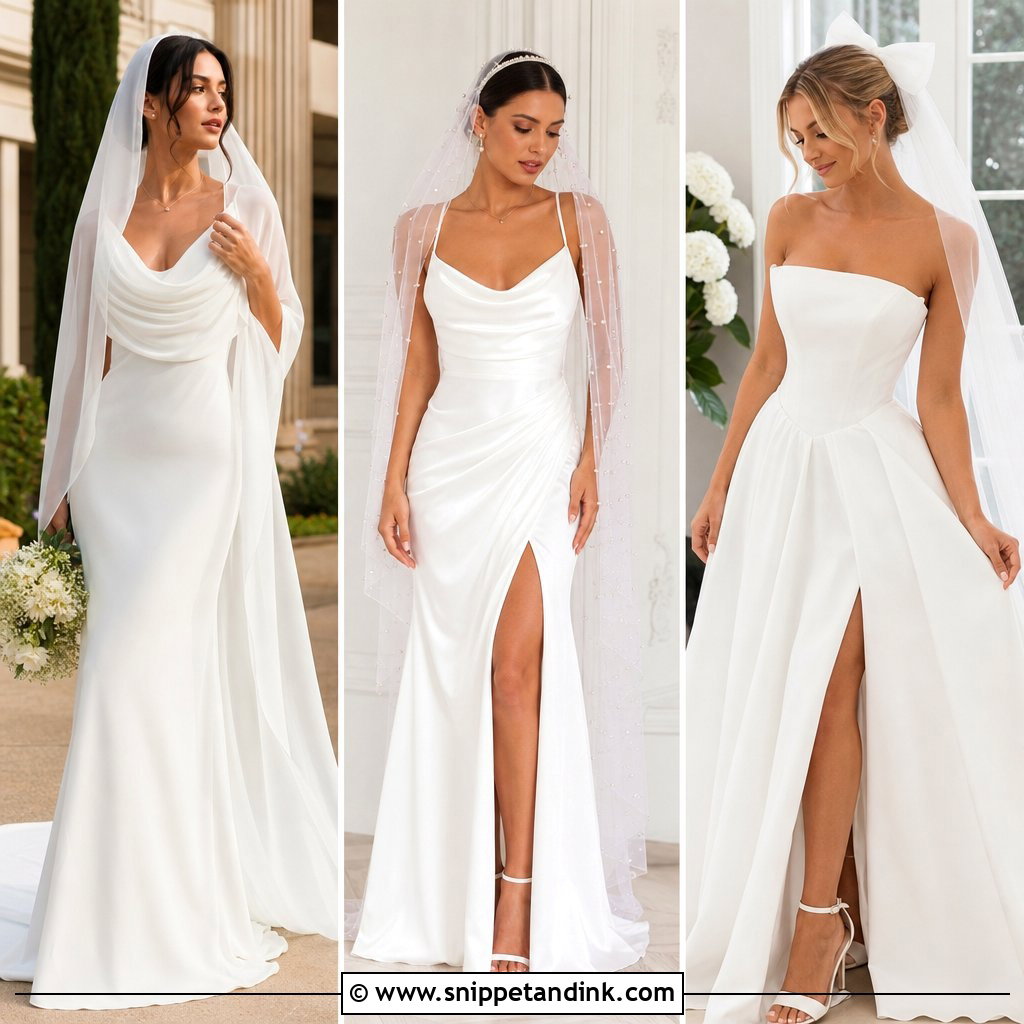
Freshly washed, silky hair is the hardest base. I ask brides to wash the day before, then add texture spray at the crown and build a small hidden anchor with pins or a mini braid. Light tulle works best here; anything heavier pulls the waves flat by the time the ceremony begins.
1. White Nikah Veil With Embroidered Lehenga
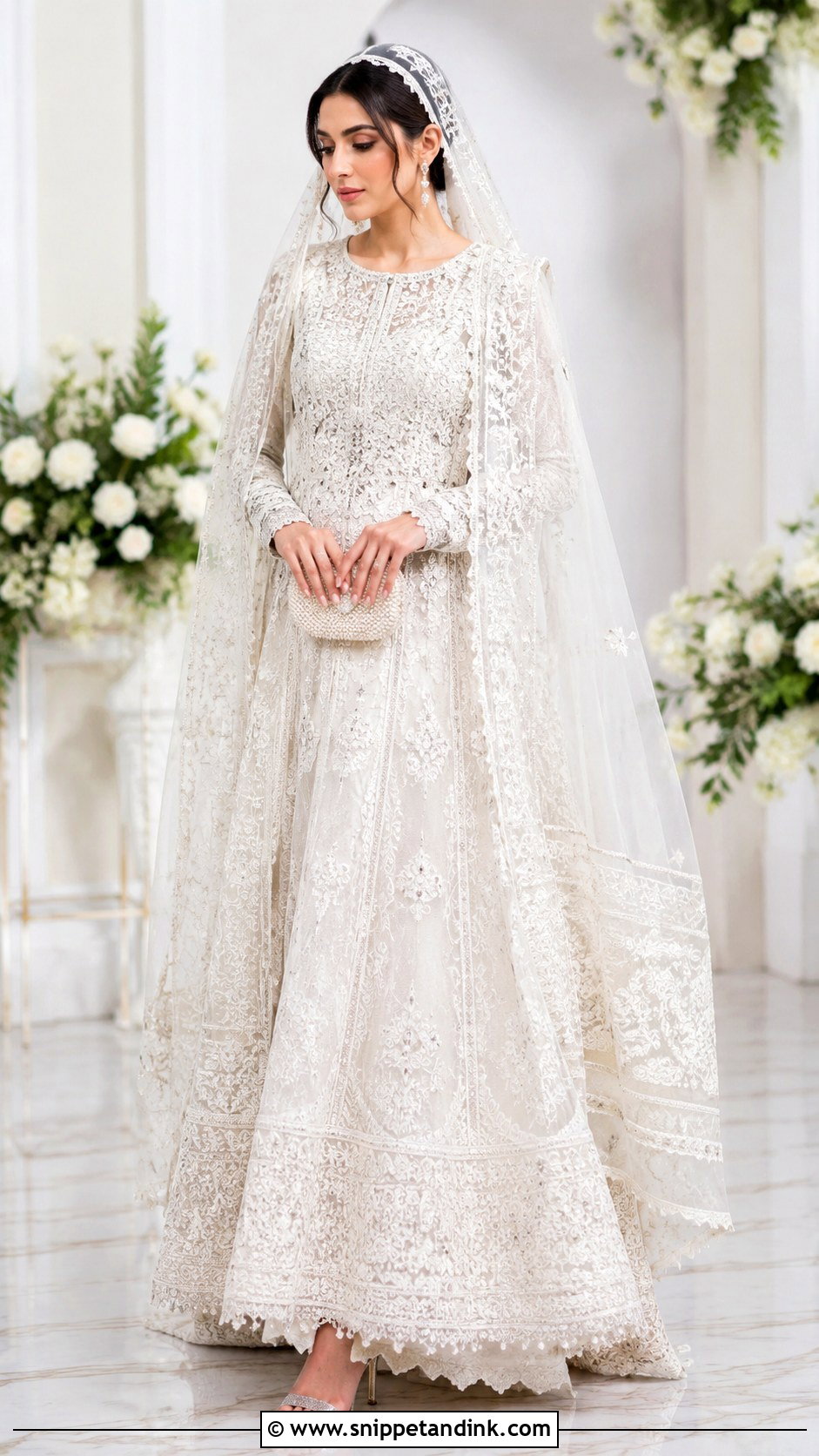
With a white embroidered lehenga, I’d keep the veil itself quiet: sheer net or organza with light threadwork, pearls or a narrow scalloped border. That way the lehenga embroidery still shows through. A matching dupatta over one shoulder balances it. For the hair, a low bun gives me a solid base to pin into, and a delicate maang tikka sits on the centre part before the veil goes on. Silver heels and pearl studs finish it.
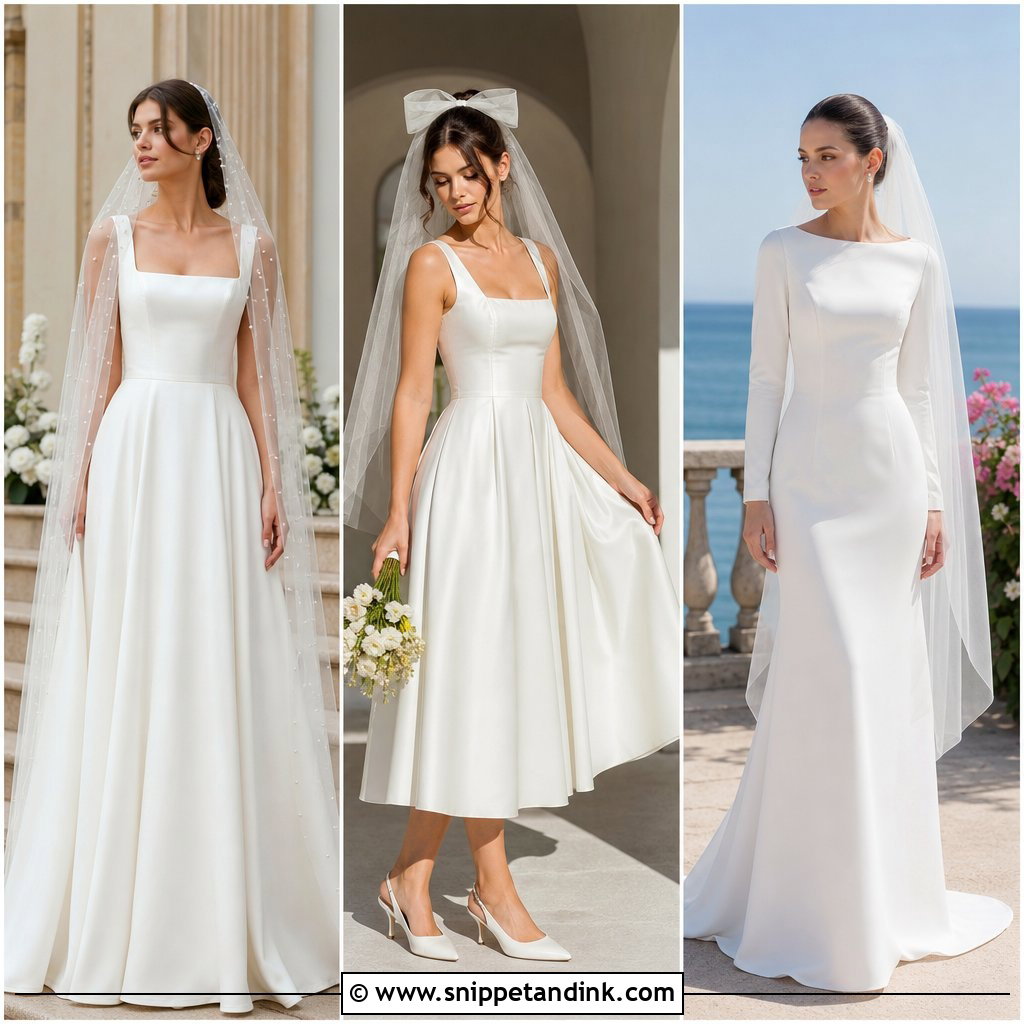
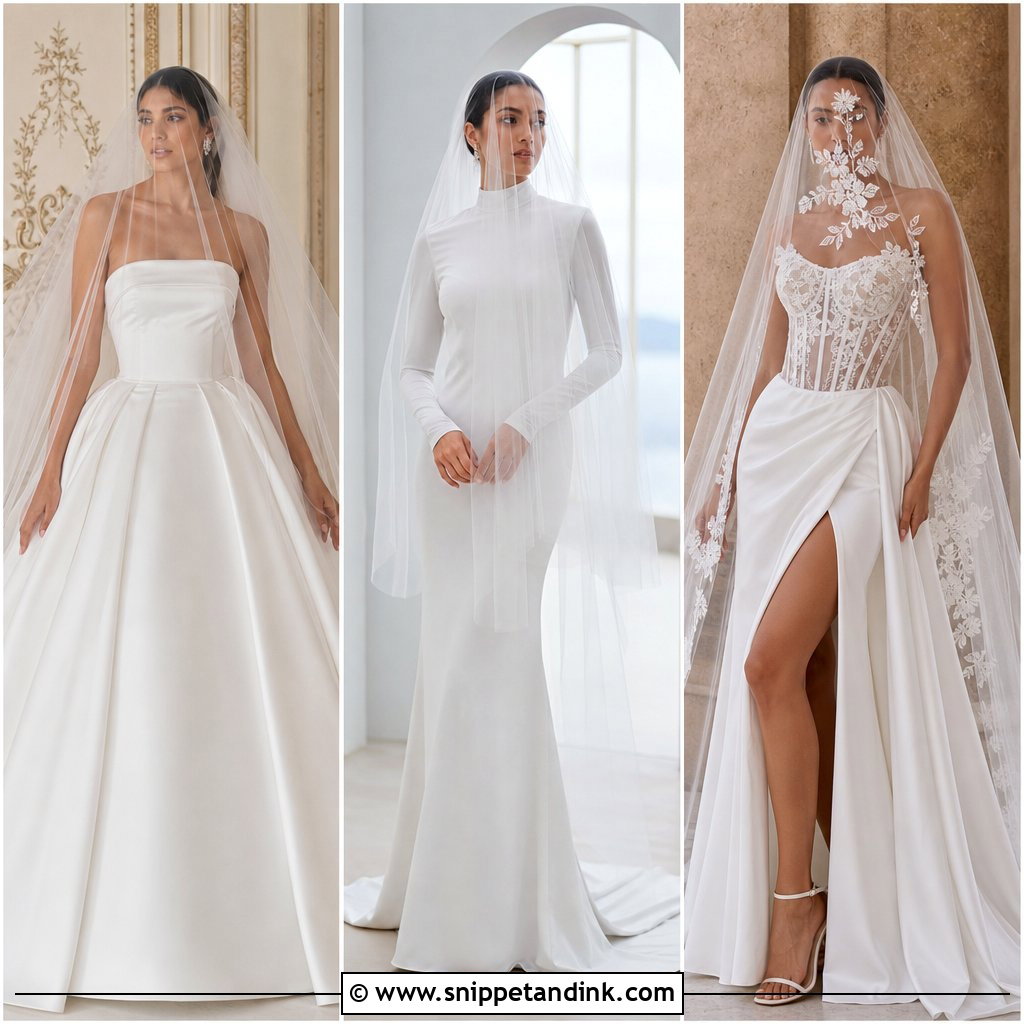
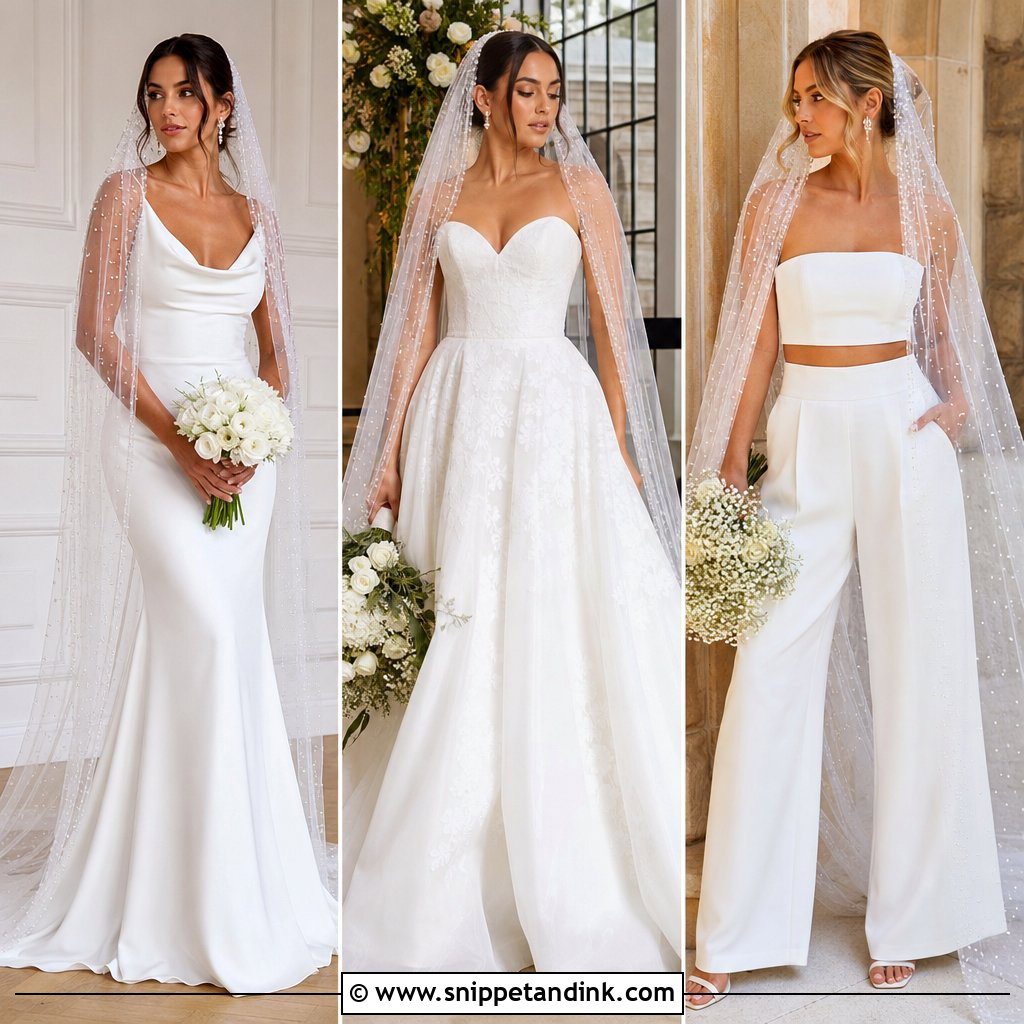
2. Pearl Nikah Veil With Ivory Gown
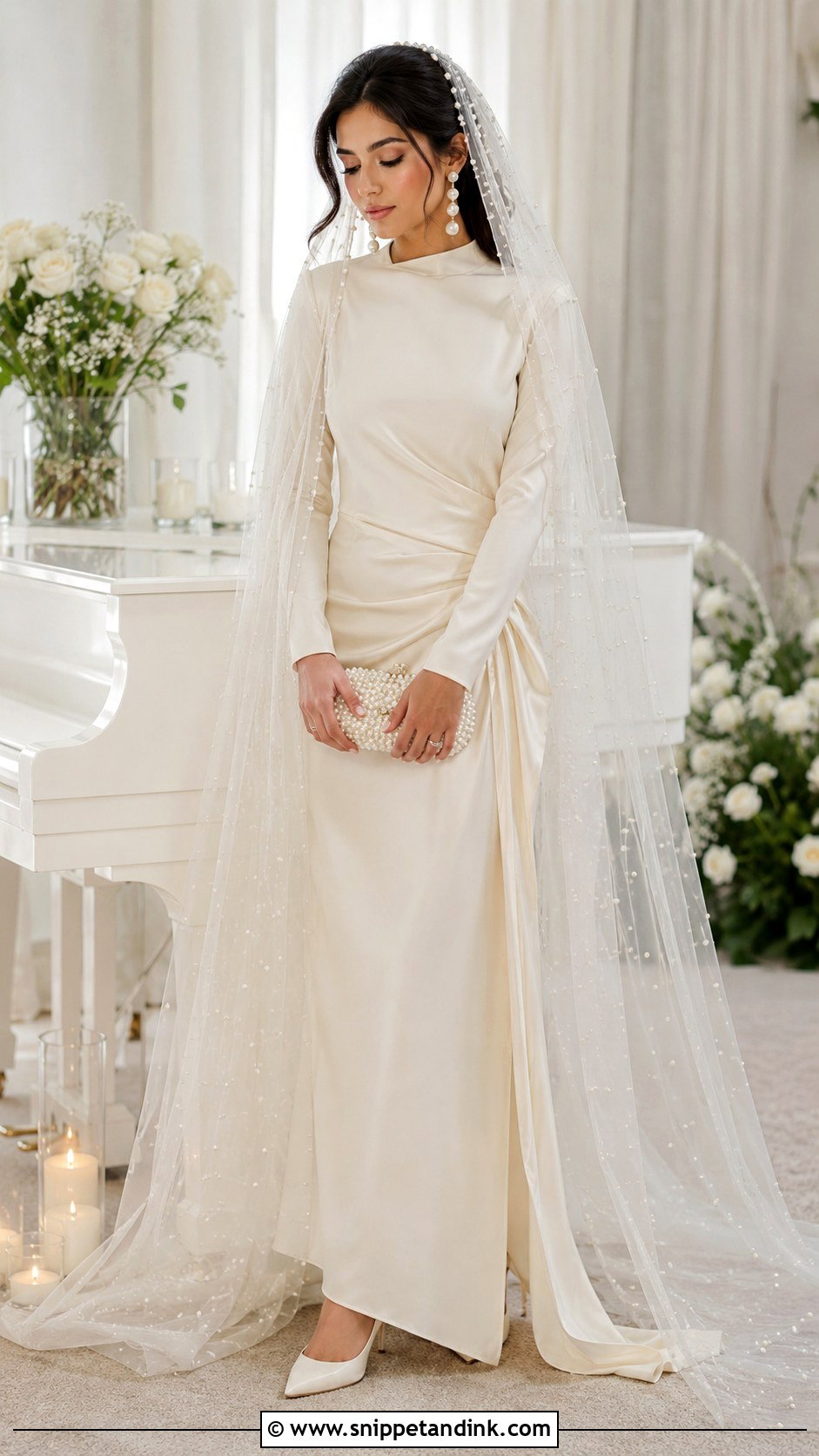
Pearls make a veil heavier than it looks. A floor-length veil with scattered pearls can drag backward off the crown within an hour unless the comb is sewn in firmly and slid into a bun or a braided anchor. Choose scattered pearls if your ivory gown is plain, and only a light pearl border if it is already beaded. Pearl drops at the ear and a sleek bun or soft waves underneath keep the focus on your face.
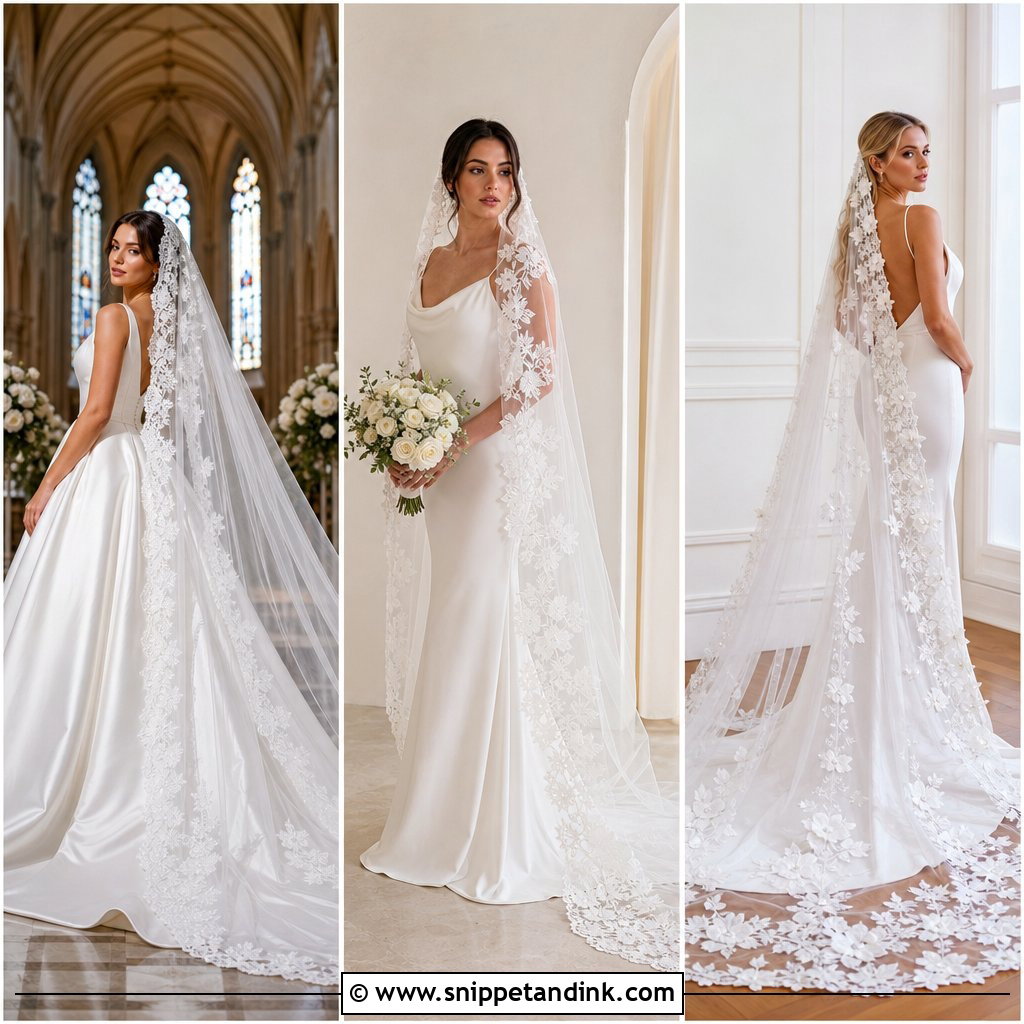
3. Lace Nikah Veil With Satin Dress
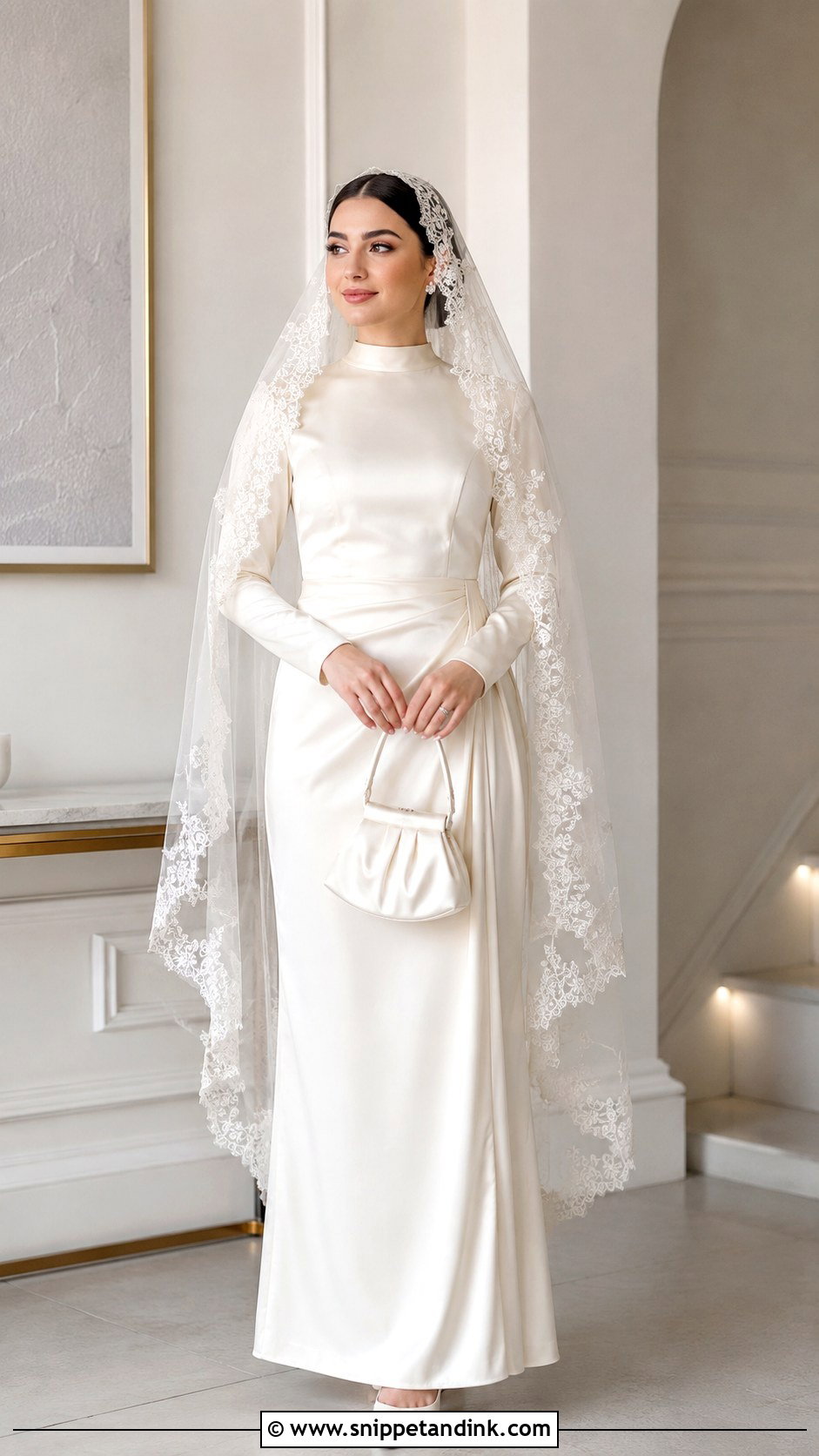
Lace edging on a veil over a satin dress creates contrast, and in ivory, cream or champagne that pairing looks rich without effort. Ask for the lace only around the edges so it frames your shoulders and train. Long sleeves and closed-toe heels keep the line modest. Small studs work better than large earrings here, since lace catches on hooks and posts. I check this at every trial by turning the bride’s head side to side.
4. Long Nikah Veil With Simple Anarkali
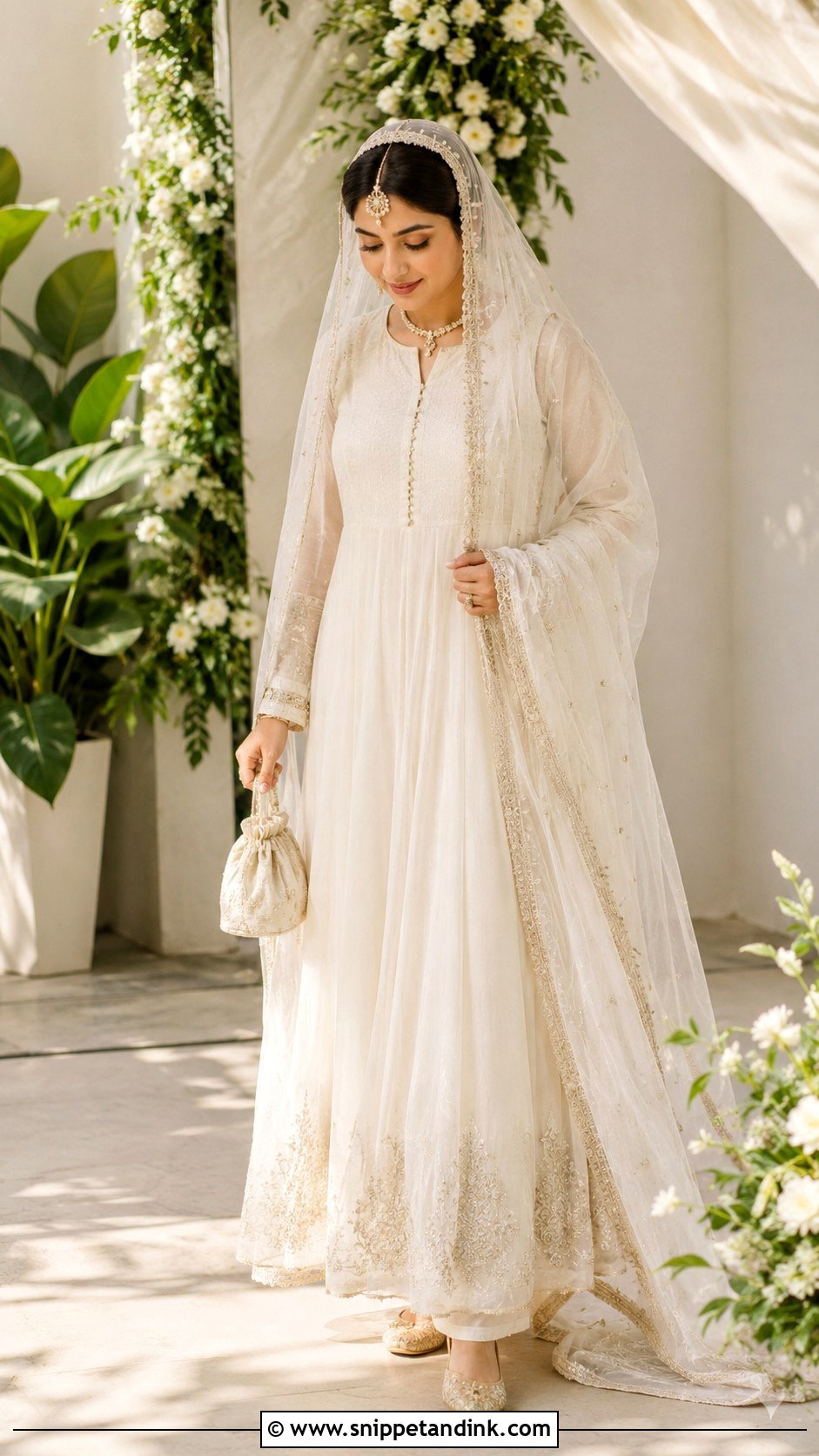
A long veil makes a simple anarkali feel ceremonial, as long as the fabric stays light. Heavy veils pull the head back and tire the neck over a long ceremony. Pick a flowy anarkali in white, ivory, blush or a pastel, with light embroidery at the sleeves and hem, then add a sheer veil that falls just past the hem. Embellished flats or low block heels and a small potli keep it easy. I pin long veils just below the crown so the weight sits over the bun rather than on the forehead.
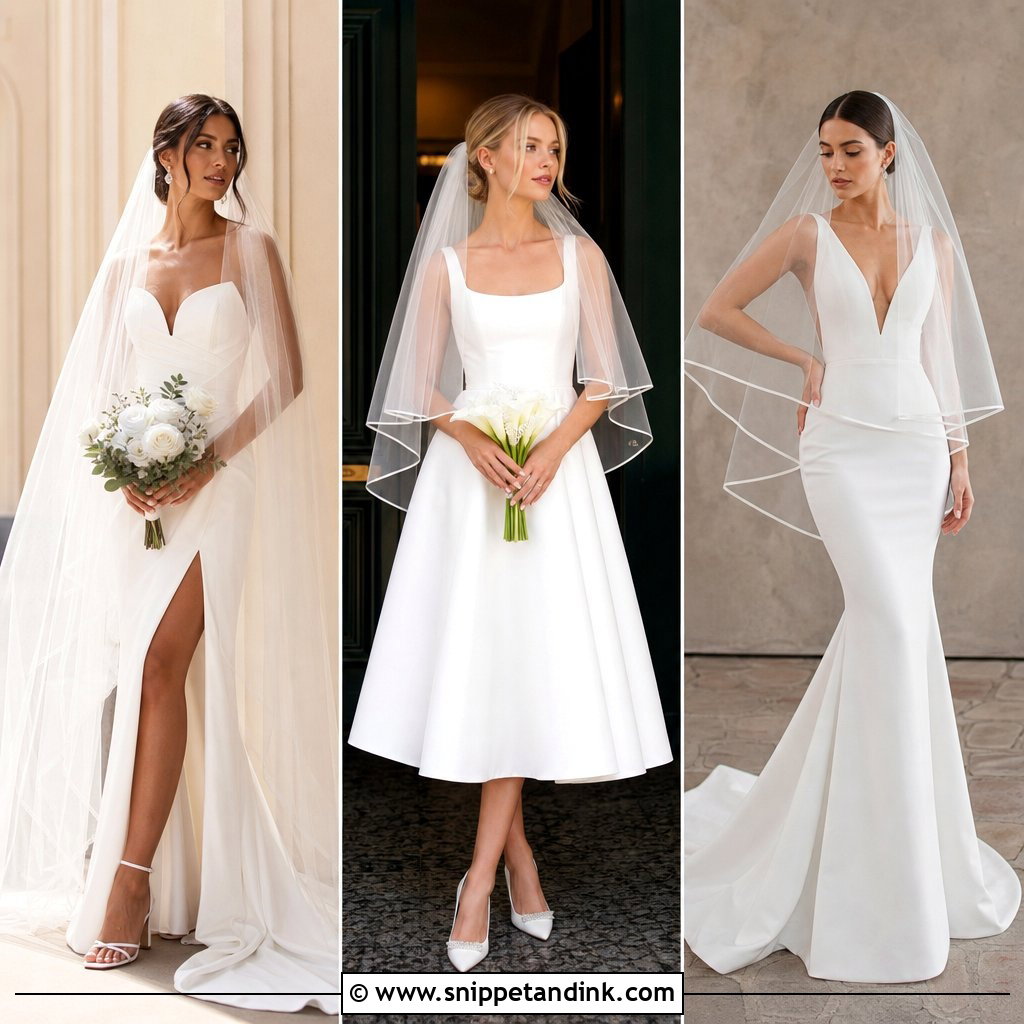
5. Short Nikah Veil With Modern Suit
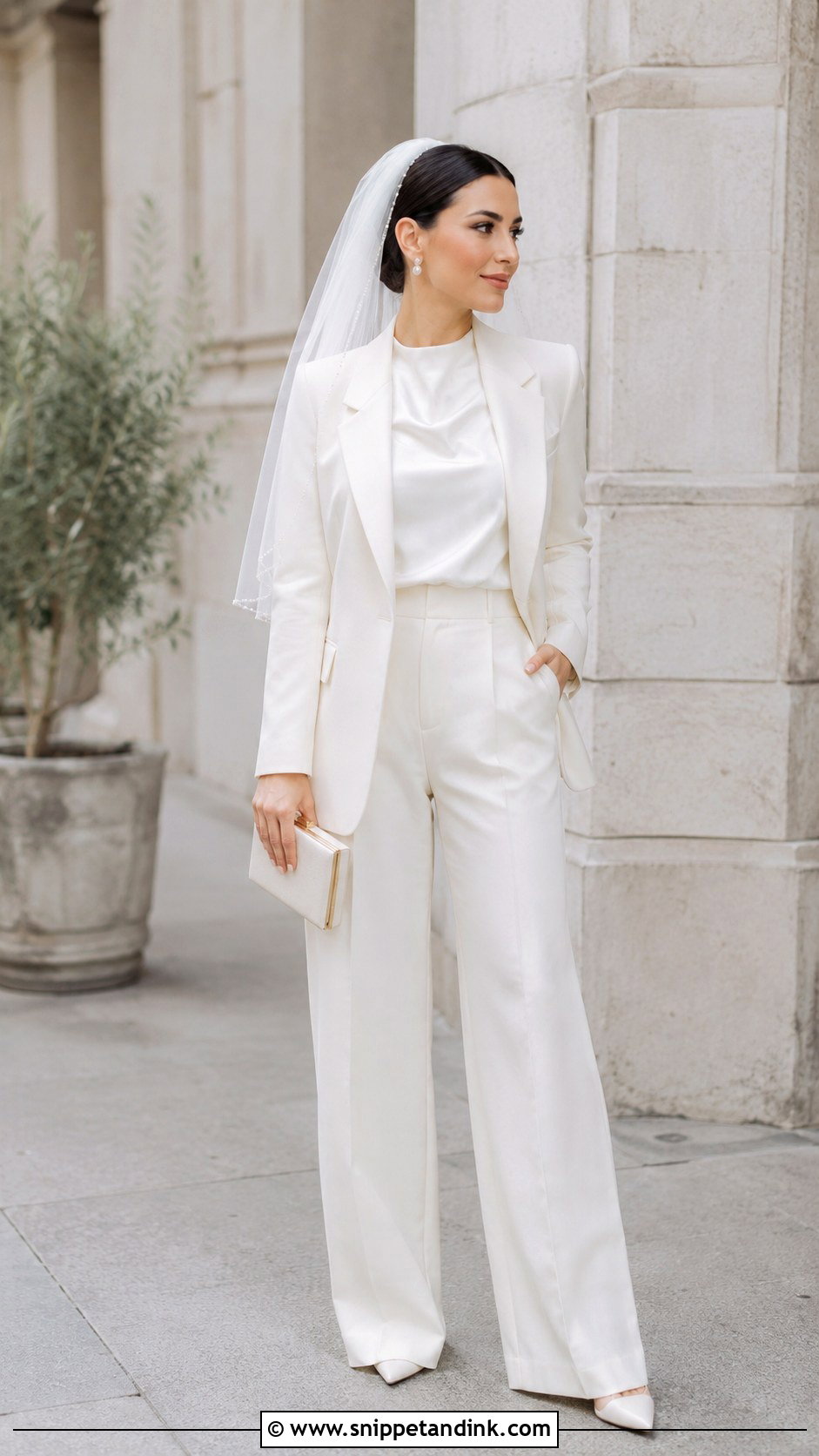
Short veils are the easiest to manage for an intimate ceremony. A waist-length veil pinned at the crown or bun softens an ivory blazer with wide-leg trousers and a modest inner top. Pointed heels, a box clutch and pearl or crystal earrings keep it polished. My one fix for this look: blazer shoulders can push a short veil outward, so I pin it slightly further back to let it fall behind the shoulder seam.
6. Blusher Nikah Veil With A-Line Dress
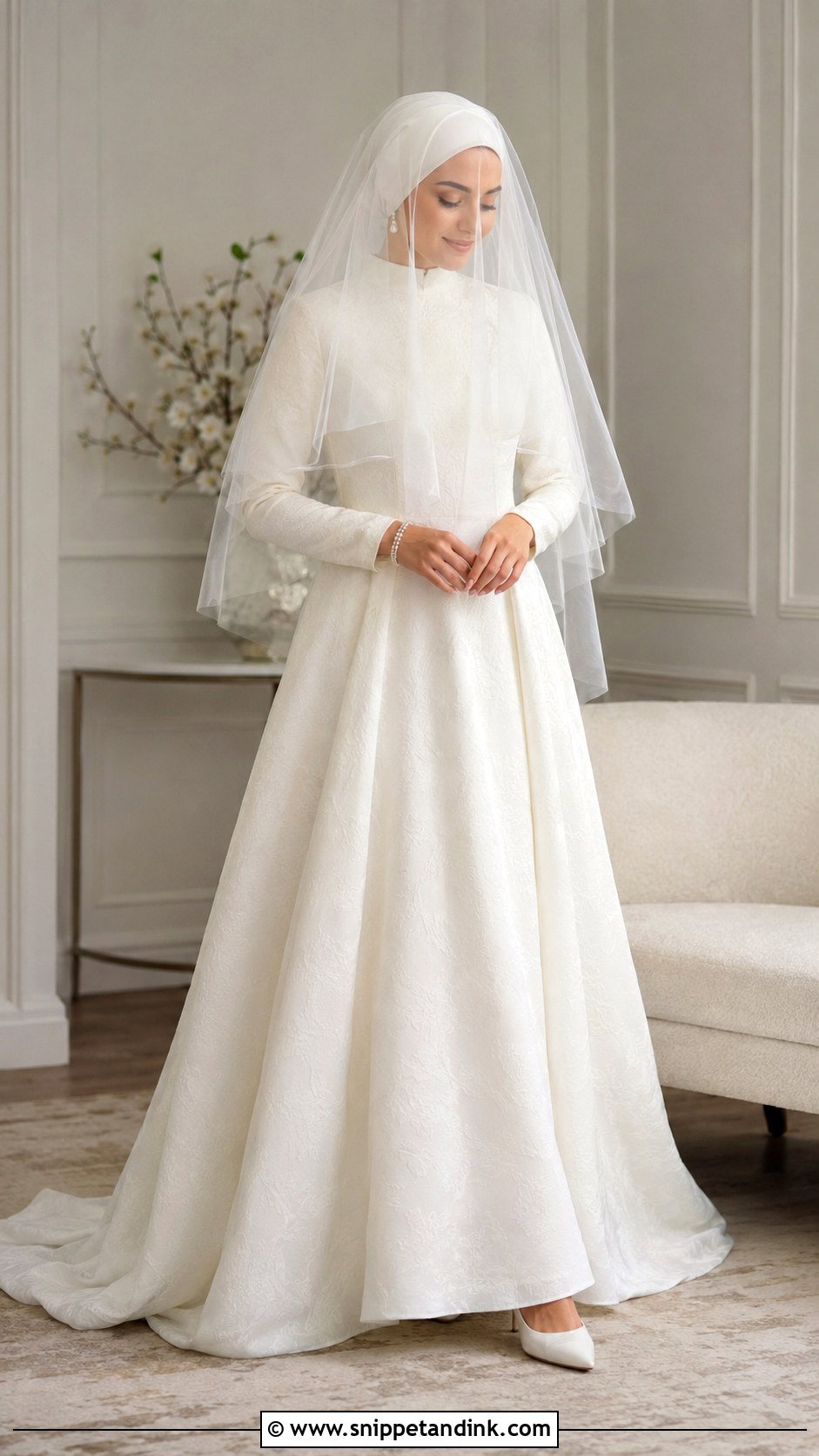
A blusher sits over the face for the walk-in and is lifted later, so the veil needs two layers on one comb: a short front piece and a longer back piece. Choose lightweight tulle or organza, because a heavy blusher flips back on its own. It pairs well with an A-line dress with long sleeves and pearl buttons. Before the day, rehearse who lifts it and when, and practise lifting it by its edge so the comb stays put.
7. Organza Nikah Veil With Pastel Lehenga
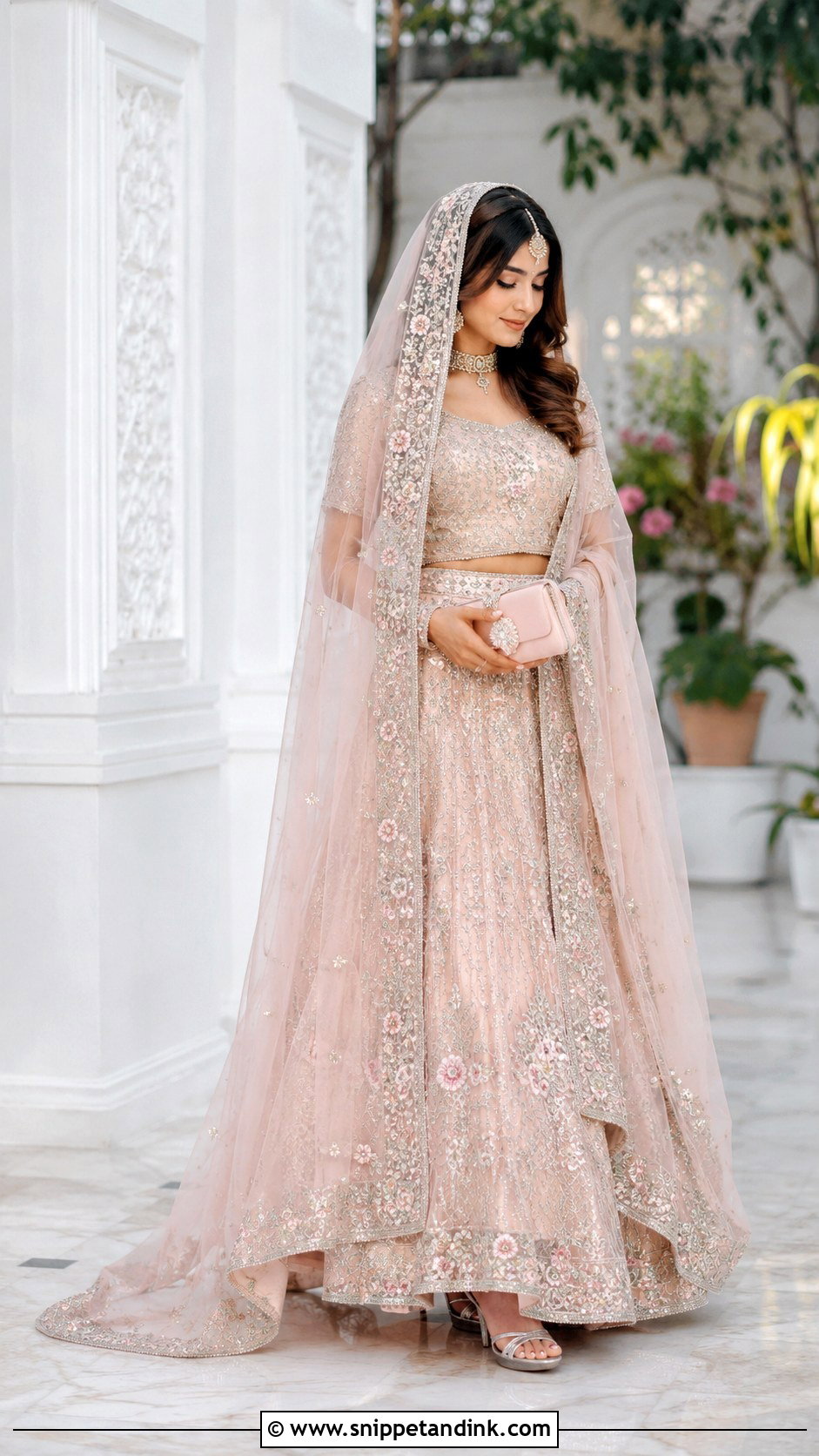
Organza is crisp, so it holds a gentle shape around the head rather than collapsing flat. That suits a pastel lehenga in blush, powder blue, mint, lilac or buttercream for a daytime ceremony. Choose a thin embroidered border or fine sequins so the veil doesn’t overpower the skirt. A second dupatta across one shoulder adds depth. Organza creases easily, though, so steam it on the morning and carry it flat rather than folded.
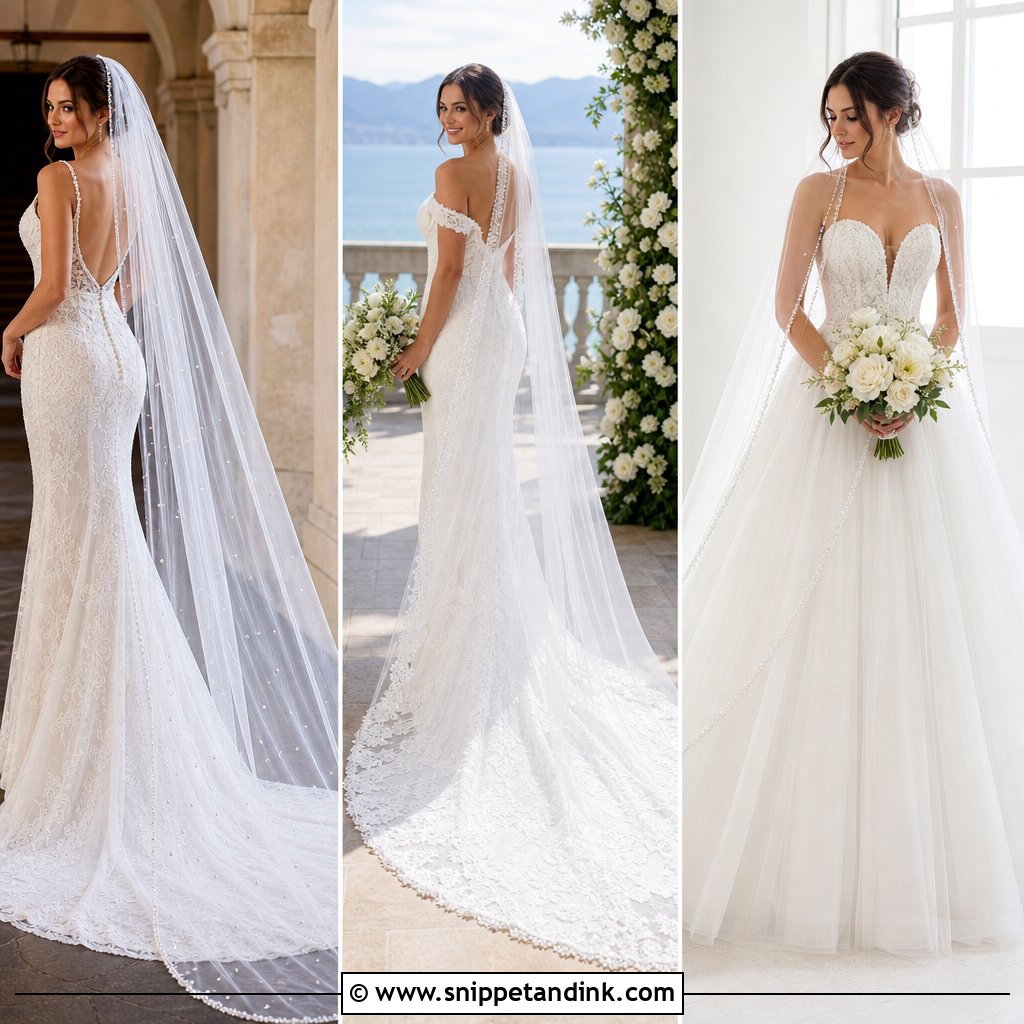
8. Tulle Nikah Veil With Beaded Gown
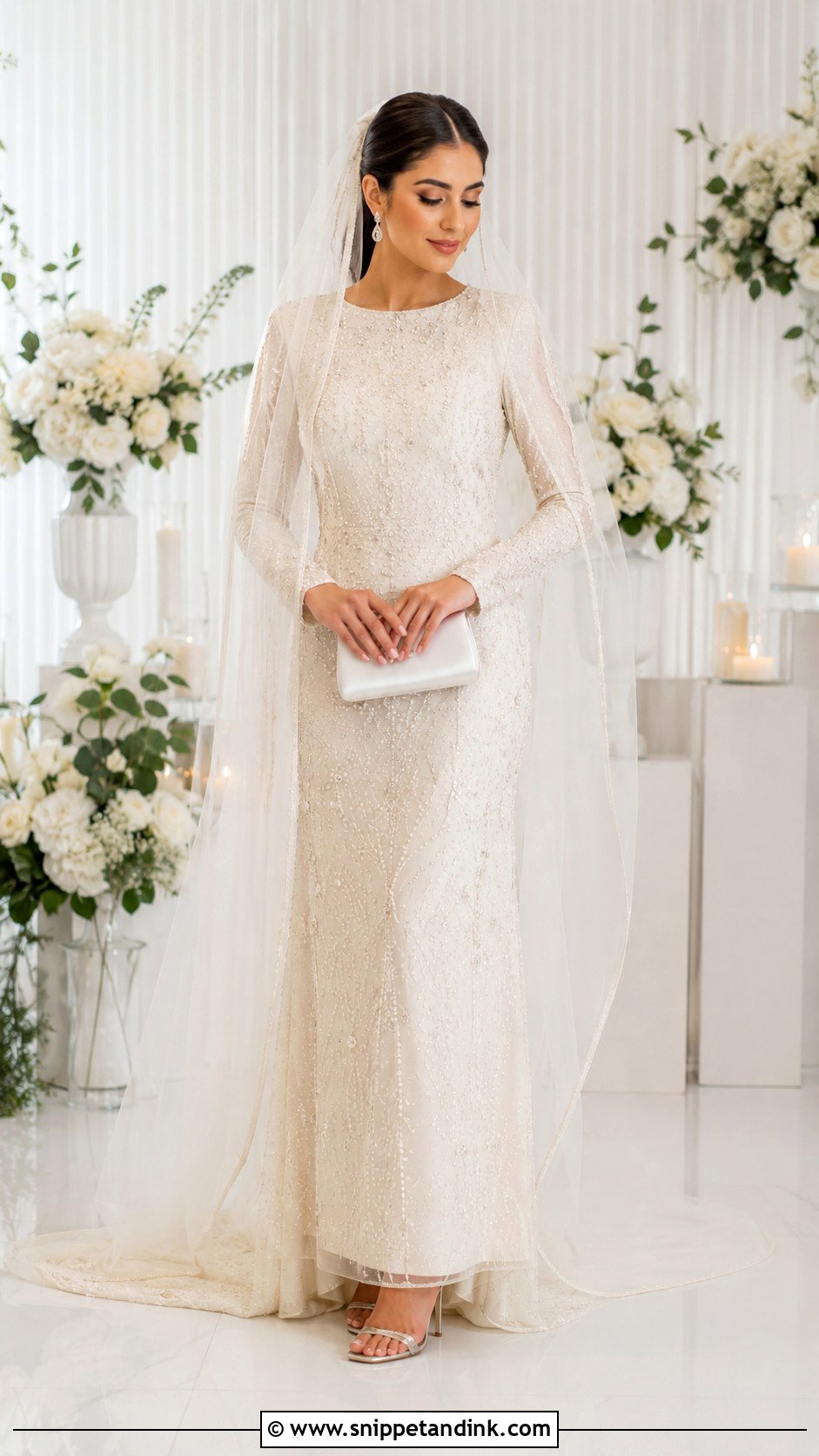
Beaded gowns already reflect a lot of light, so the veil should be plain or only lightly trimmed tulle. Tulle is soft and nearly weightless, which makes it easy to pin even on fine hair. A fitted or softly flared gown in ivory, white or champagne keeps the shape clear. If the neckline is high, skip a necklace and let the veil frame your face instead. Clear or metallic heels and simple earrings stop the look from tipping into too much shine.
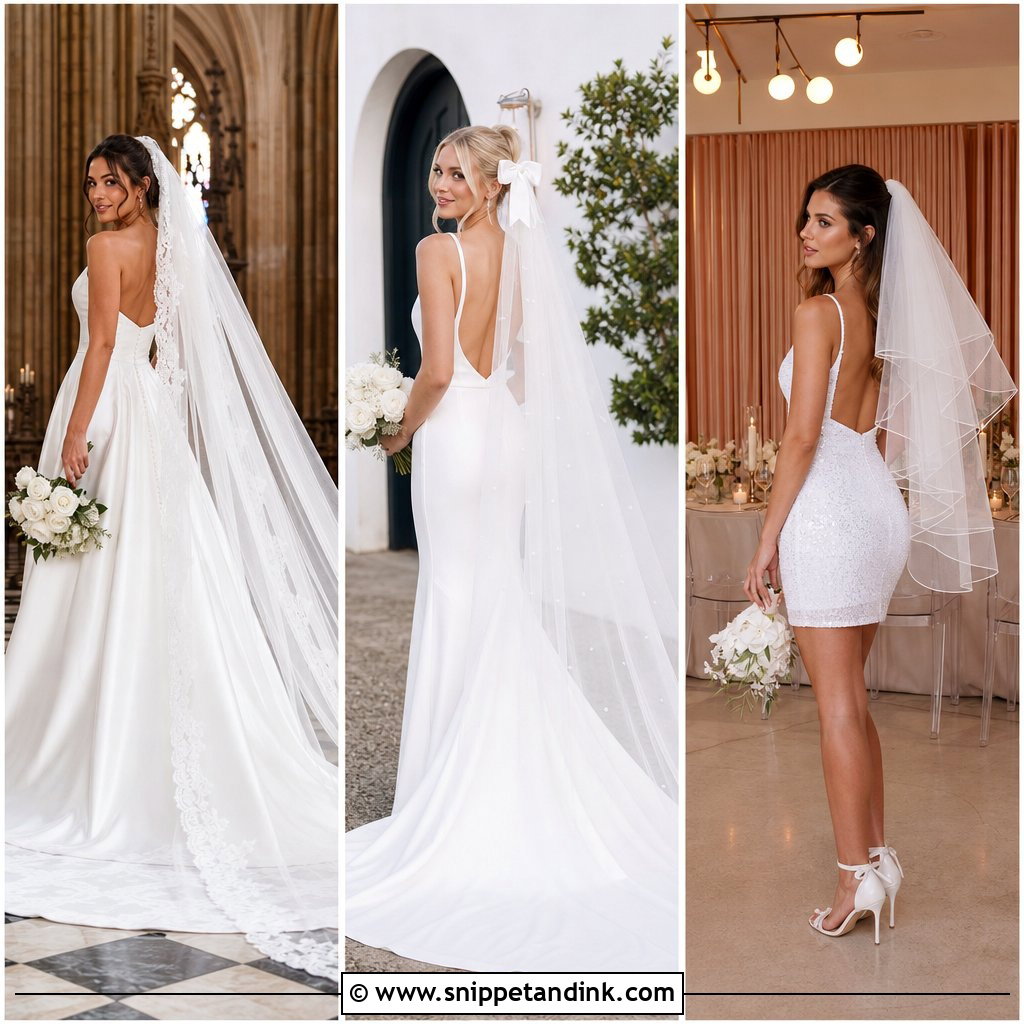
9. Cathedral Nikah Veil With Bridal Lehenga
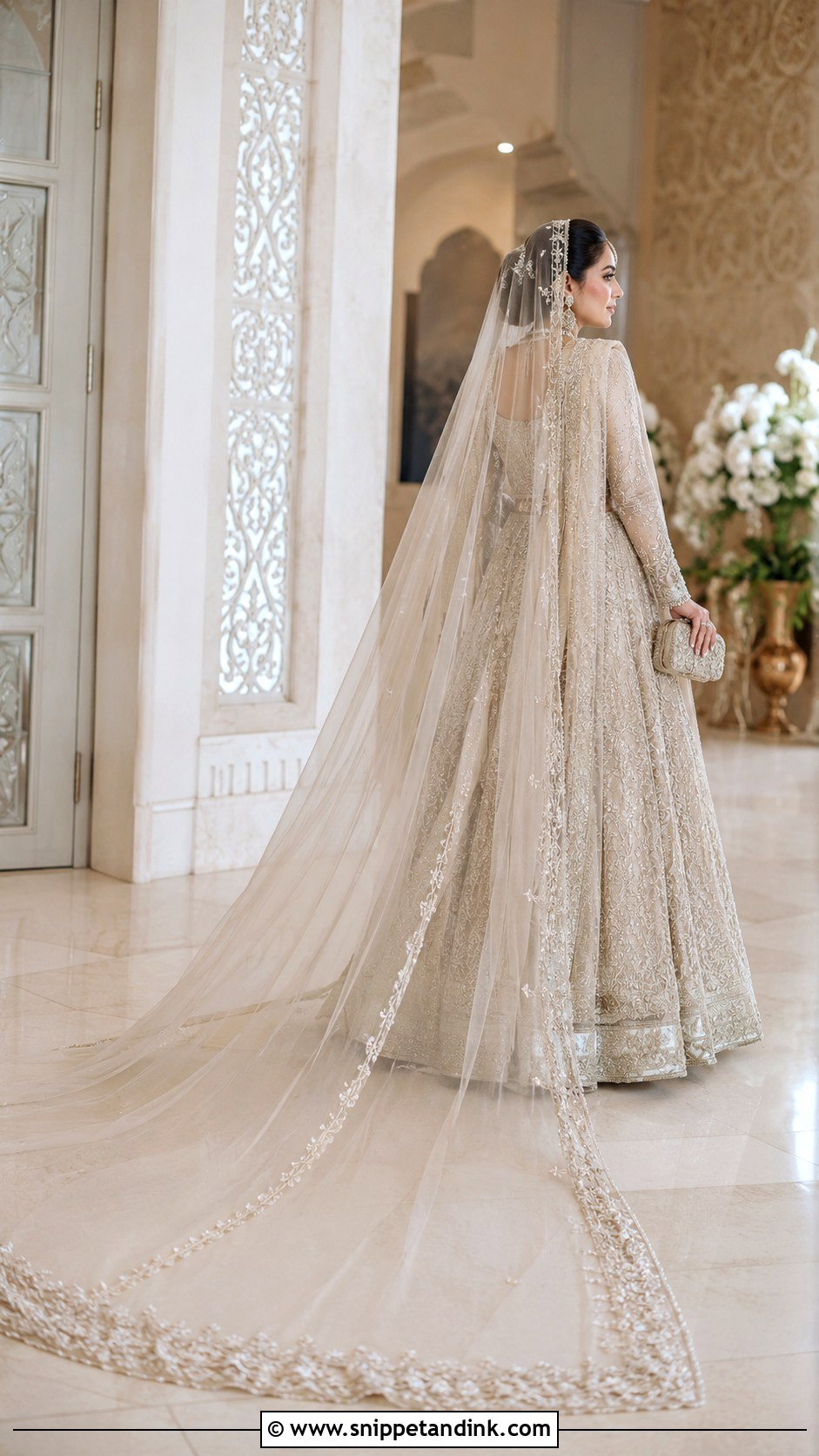
A cathedral veil makes a dramatic entrance, but it needs planning. It should be longer than the lehenga skirt, embroidered or laced only at the border, and anchored firmly into a low bun with a comb plus extra pins. Pinning the shoulder dupatta securely matters too, since a long veil pulls on everything around it. Platform heels add height to carry the length. Choose this for a formal venue with long aisles and a helper to arrange the train each time you sit.
10. Double Dupatta Nikah Veil With Gharara
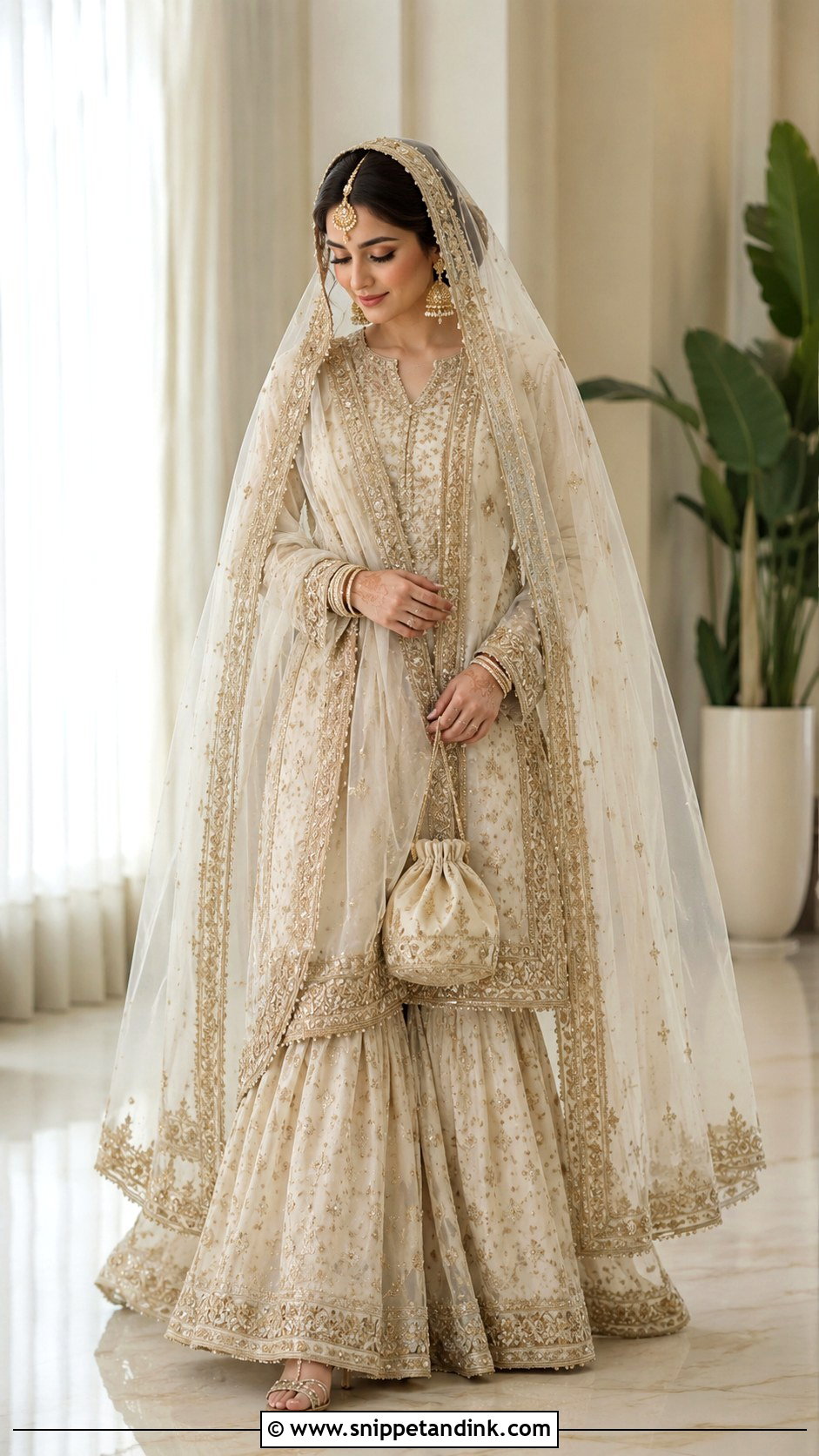
Two dupattas with a gharara is the most traditional of these looks, and the most demanding to pin. One goes over the head, the other across the front or over one shoulder. The head dupatta should be the lighter of the two, otherwise it slides back as soon as you bow your head. A gharara in ivory, gold, blush or soft green with zardozi, gota or pearl work gives real presence here. I pin the shoulder dupatta first, then build the head veil over the bun. Jhumkas, bangles and embellished sandals complete it.
11. Sheer Nikah Veil With Sharara Suit
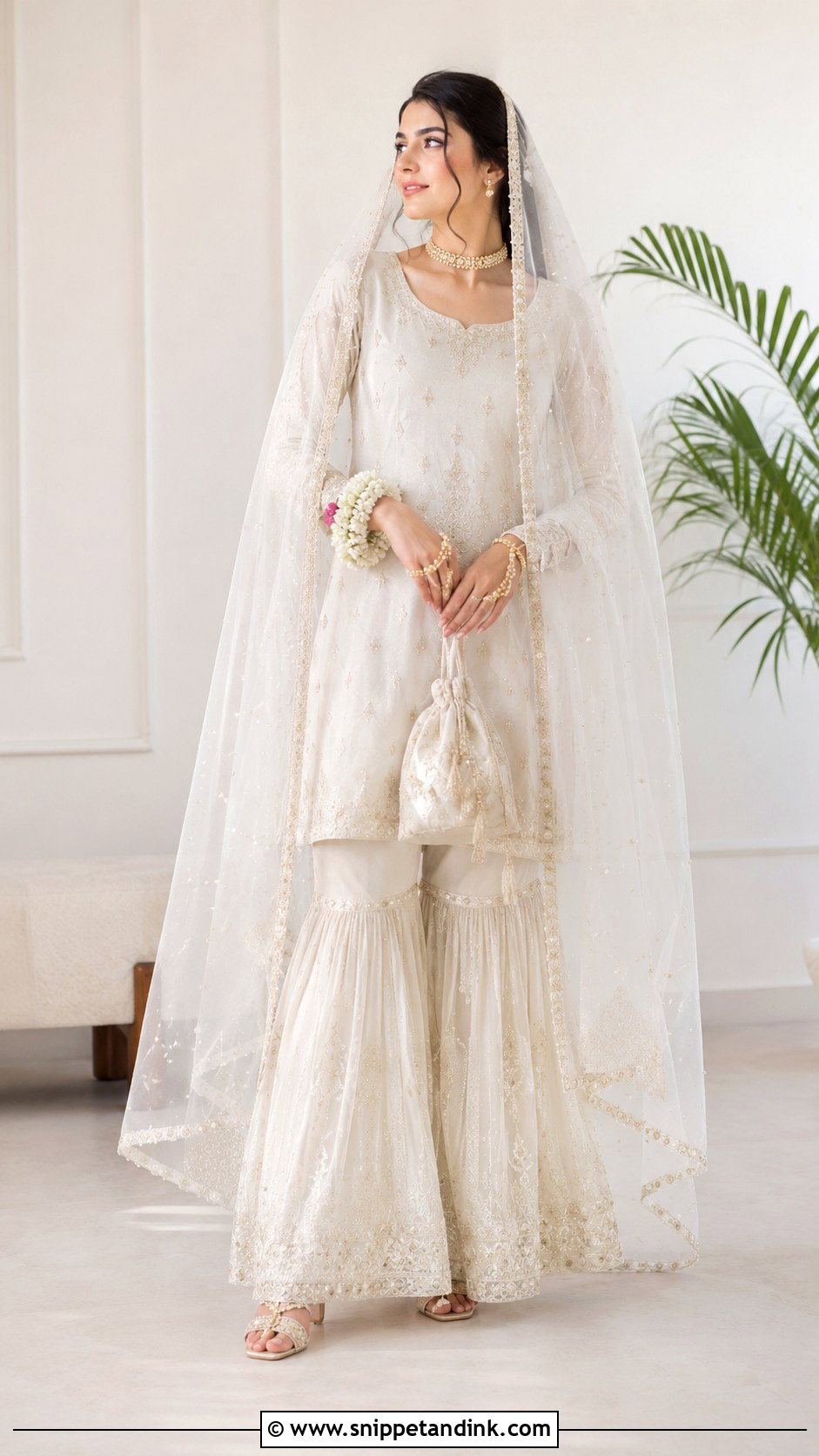
With a sharara suit, a sheer veil softens the outfit without hiding the embroidery. Net, chiffon or organza with tiny pearls, sequins or a fine lace edge all suit it. A short kurti with a flared sharara creates a balanced shape when the veil falls from the crown over the shoulders. Chiffon slides on silky hair, so I texture the crown first with a little dry shampoo and use a few hidden U-pins to grip. This combination is comfortable for sitting and greeting guests.
12. Gold Border Nikah Veil With Cream Outfit
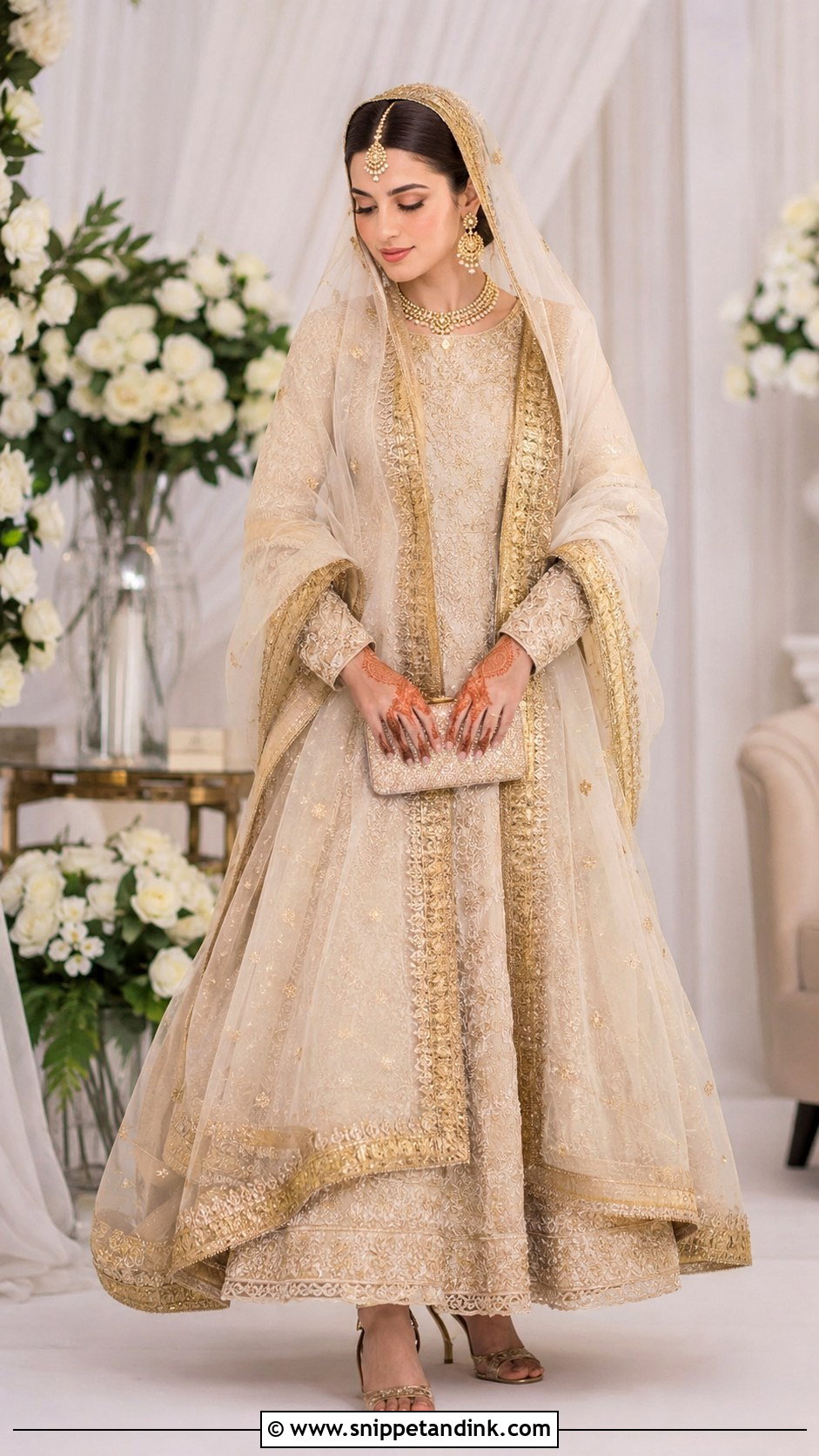
A gold border outlines the face and shoulders, and with a cream lehenga, Anarkali, or sharara it gives a warm, finished frame. Gold embroidery, mirror work or fine thread on the outfit ties the two together. Keep the veil fabric sheer so the border looks crisp rather than bulky; heavy gota borders on thick fabric add a lot of weight at the edge, which pulls the veil open at the front. Traditional jewellery and gold heels complete it.
13. Scalloped Nikah Veil With Chikankari Dress
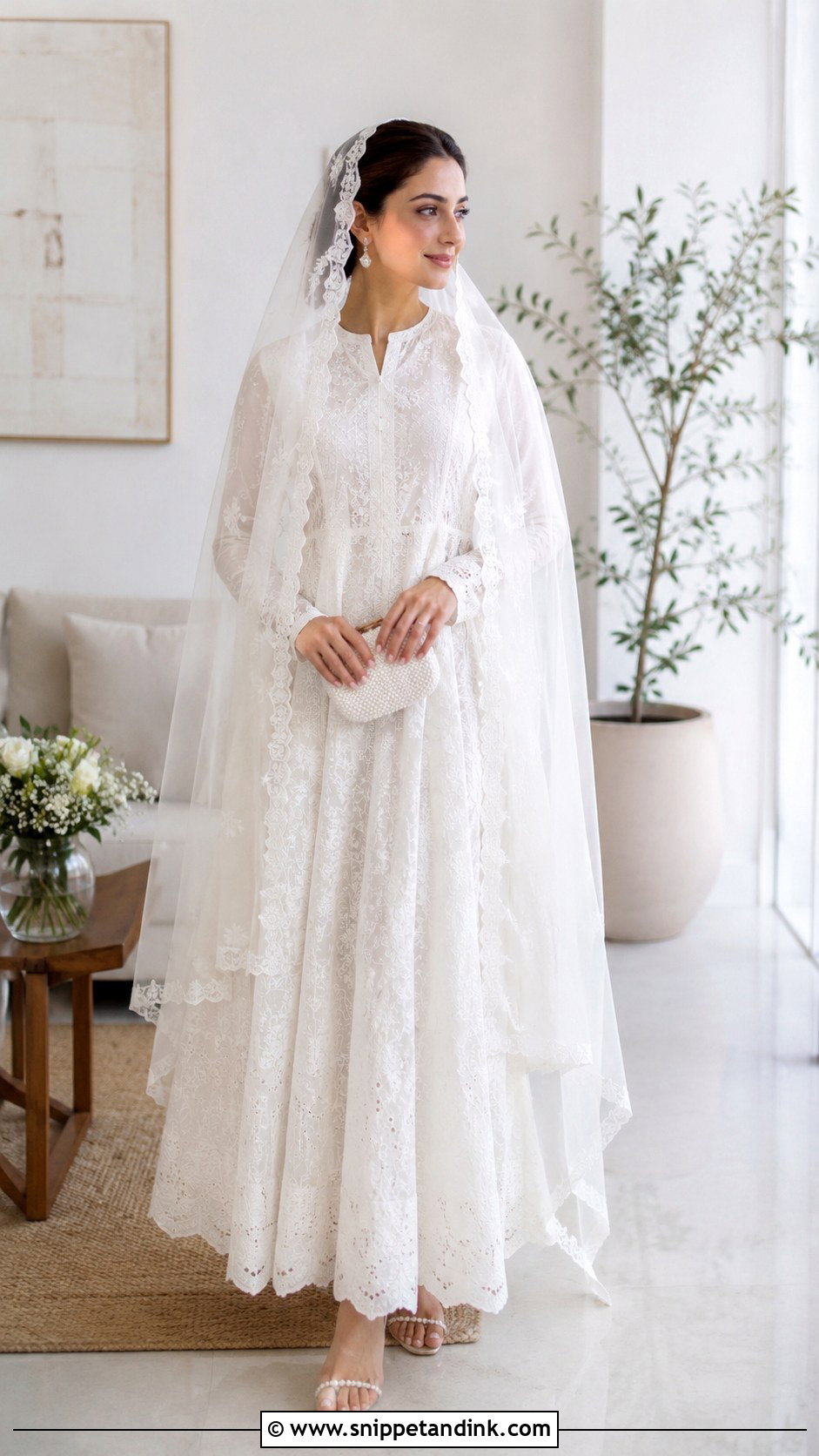
Chikankari is fine, hand-stitched shadow work, and a veil with scalloped edges echoes that delicacy. Pair it with a white or ivory chikankari Anarkali, a straight dress or a long kurta with palazzos. Pearl sandals and simple earrings keep it light. A daytime ceremony or a small home Nikah suits this best. If you’re steaming chikankari, keep the steamer moving, because the fine cotton or muslin shrinks with too much heat.
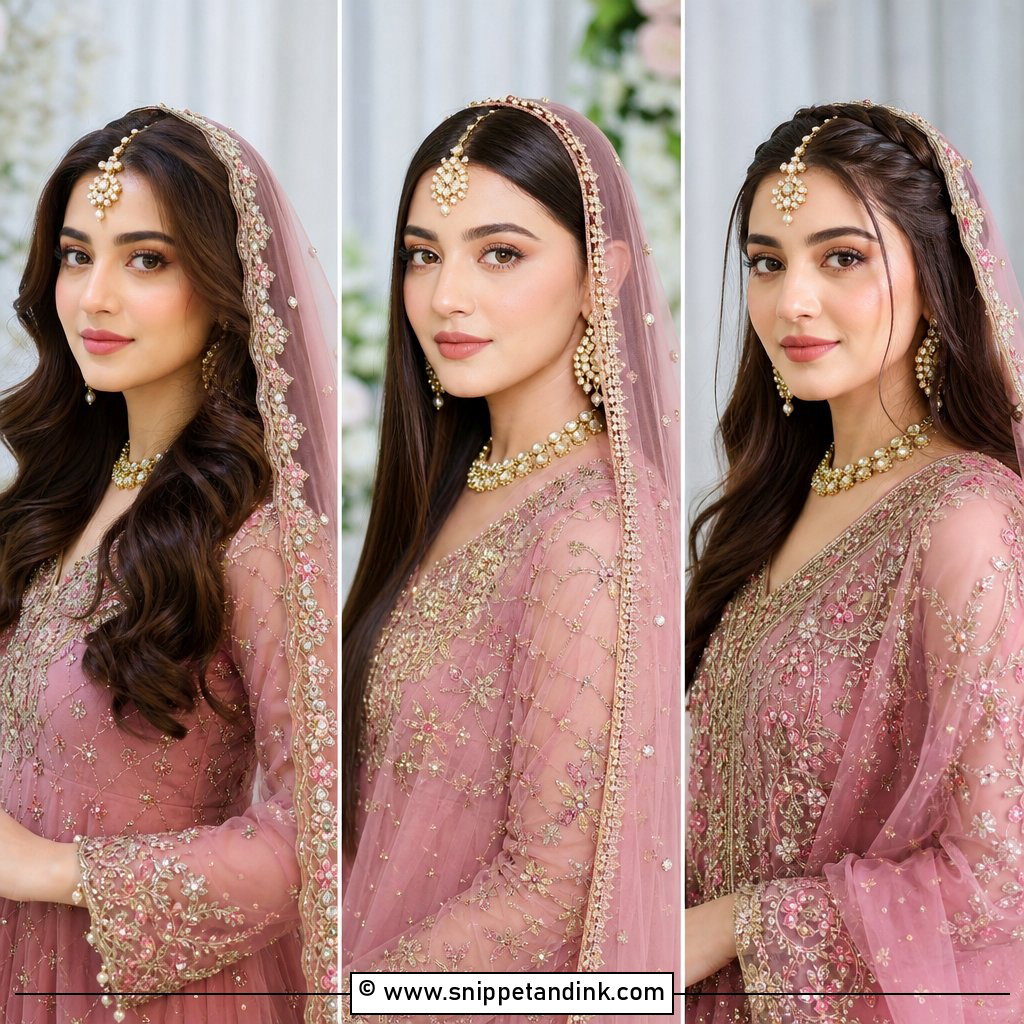
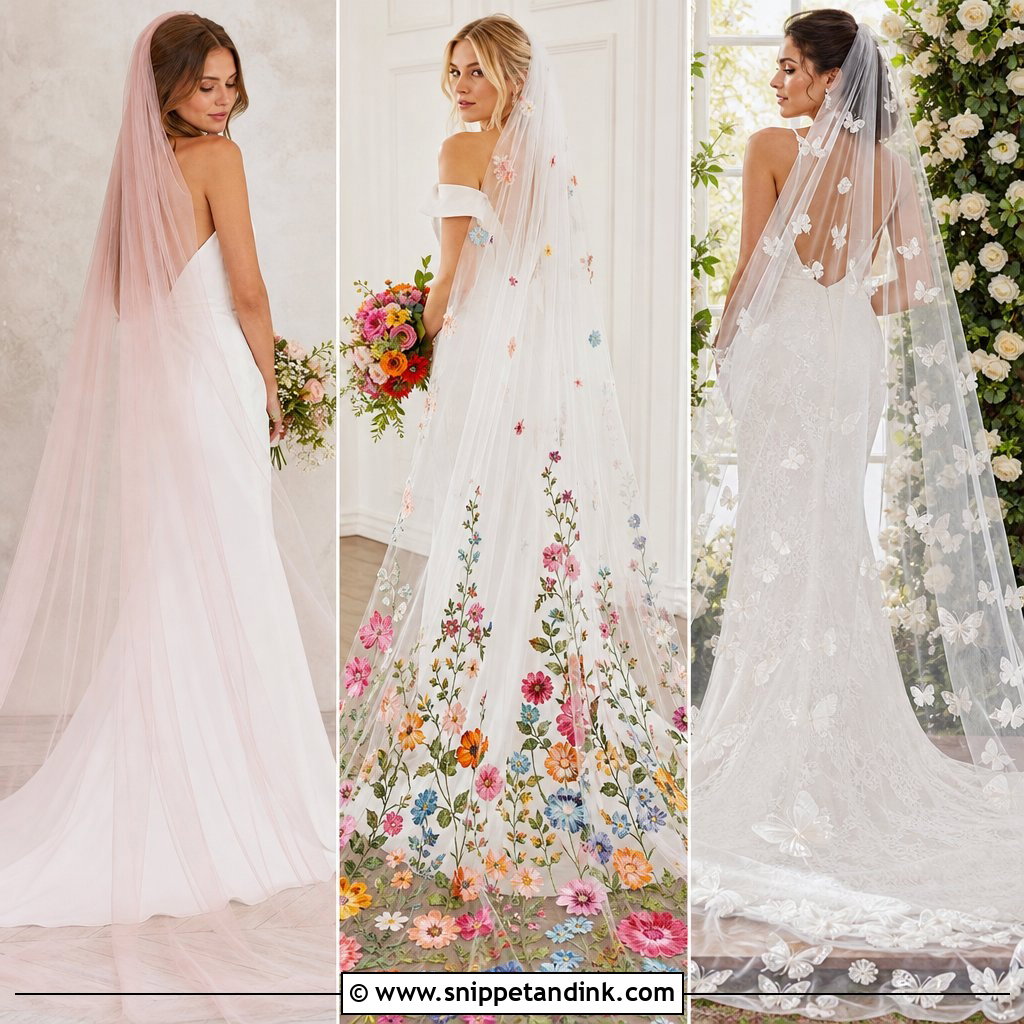
14. Floral Embroidered Nikah Veil With Pink Lehenga
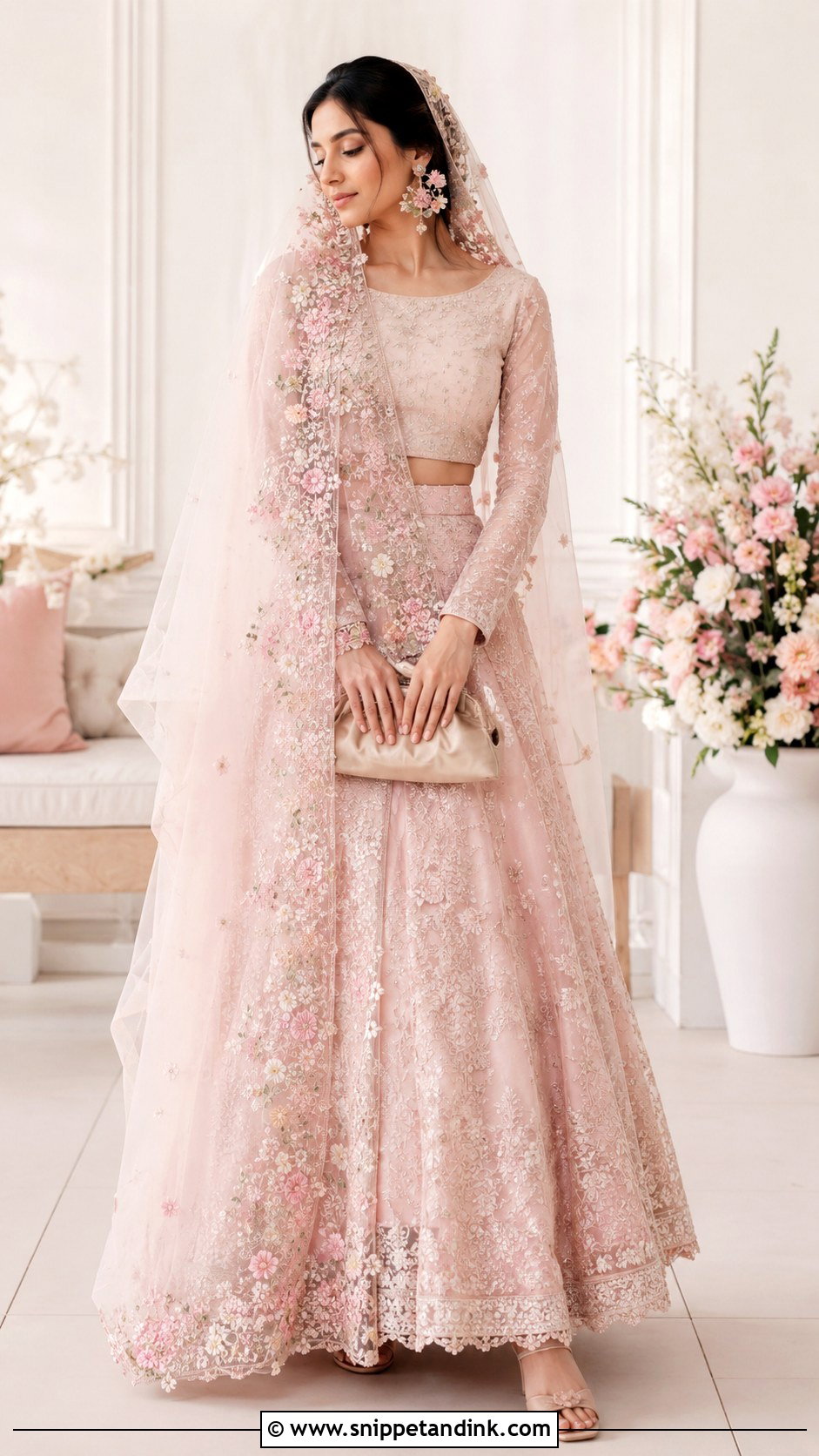
Floral threadwork in blush, ivory, sage or gold adds detail to a pink lehenga without competing. Pair the veil with a pastel lehenga, a fitted blouse and a light dupatta over one shoulder. Nude heels and floral-inspired earrings fit the mood, and soft, glowing makeup keeps the colours balanced. I’d place the veil a little further back here so the floral border lands on the shoulders rather than across the cheek.
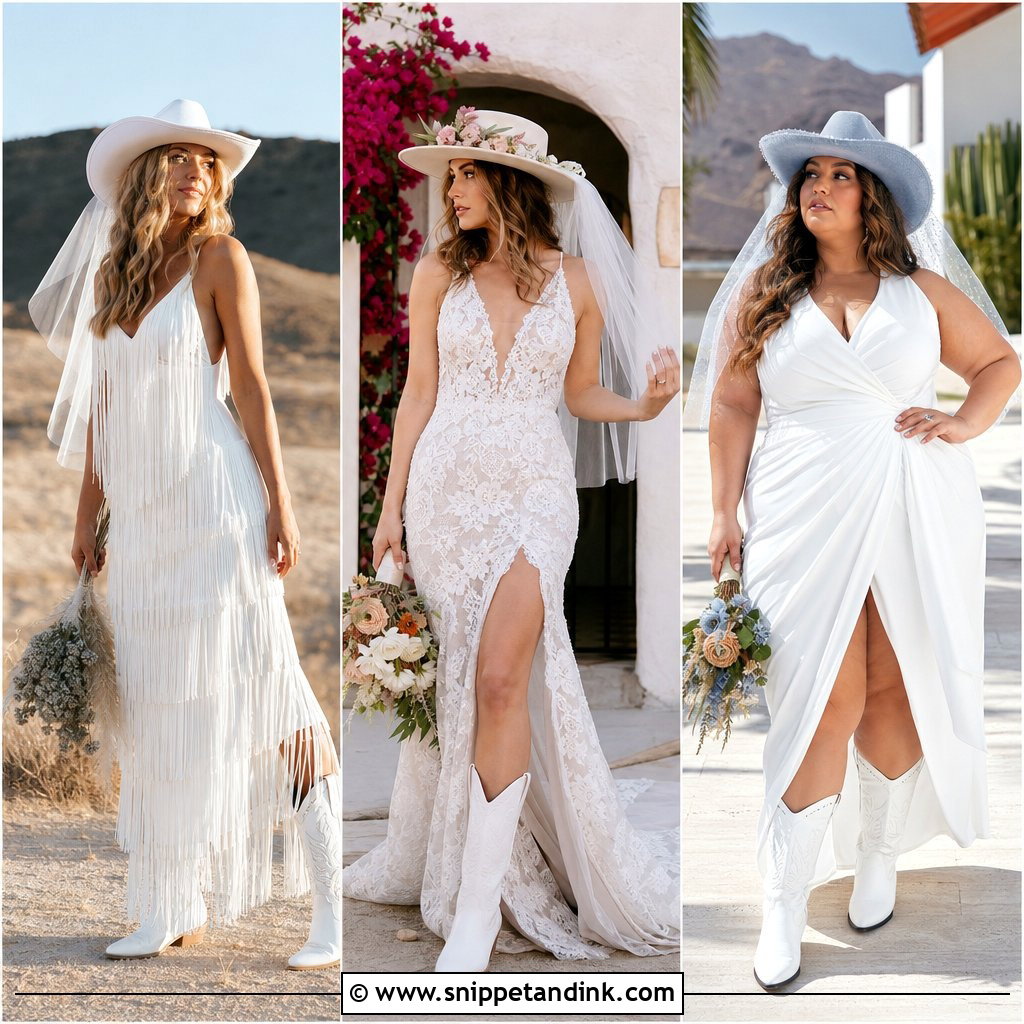
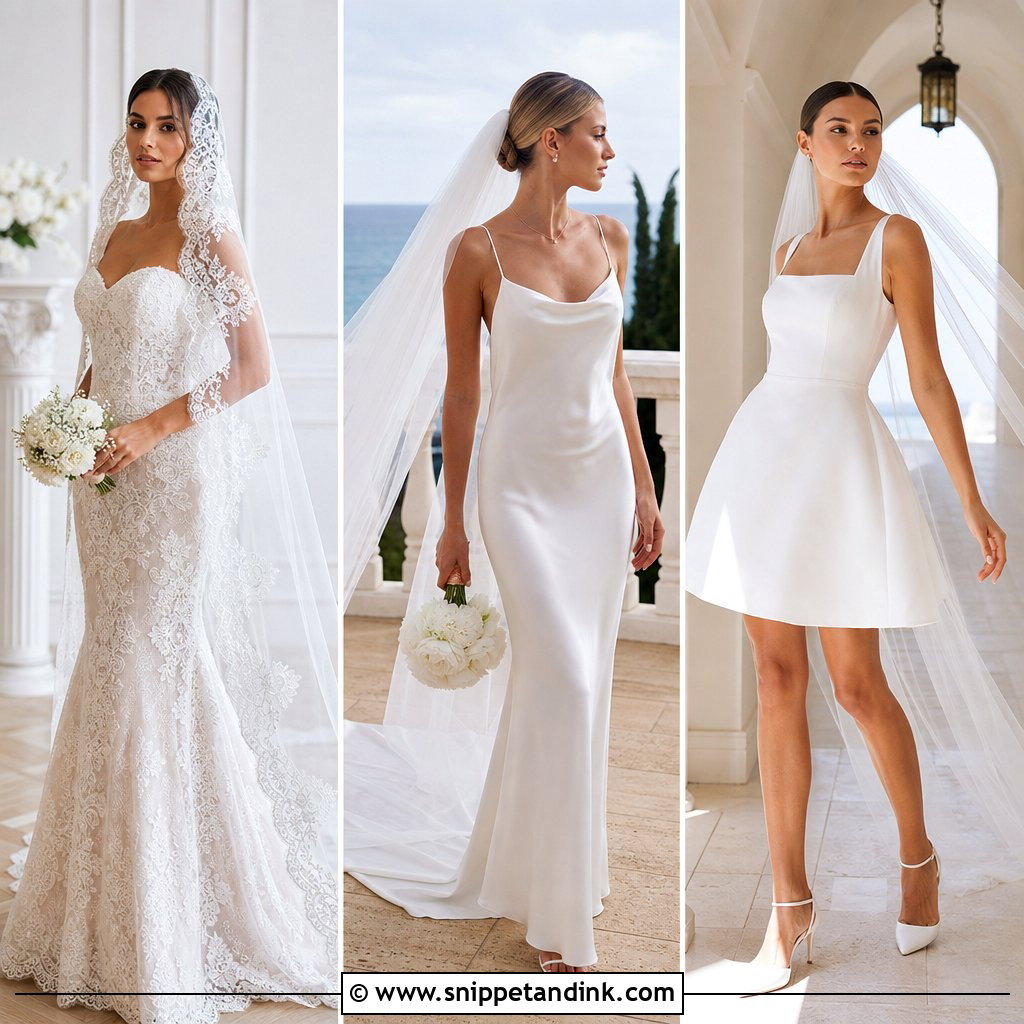
15. Minimal Nikah Veil With Plain Silk Dress
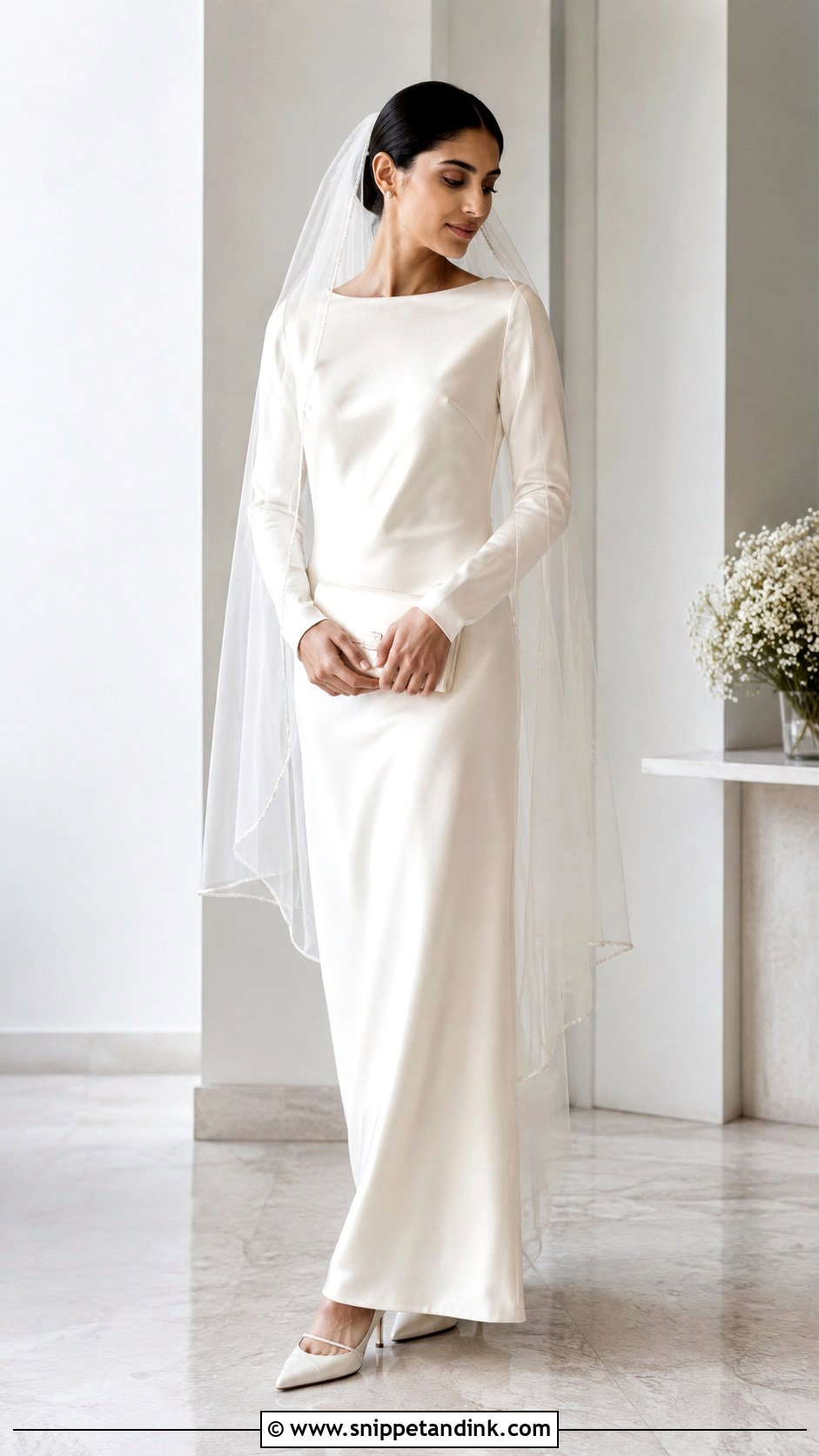
Plain silk has its own sheen, so the veil can step back entirely. Raw-edge tulle, fine organza or barely-there net with no border lets the fabric carry the look. A dress in ivory, pearl white or champagne with silk heels and pearl studs feels quietly luxurious. For hair, a smooth low bun suits silk best because it keeps the neckline clear. This is also the easiest veil to wear for a long ceremony, since there’s almost no weight to hold.
16. Sequined Nikah Veil With Matte Bridal Outfit
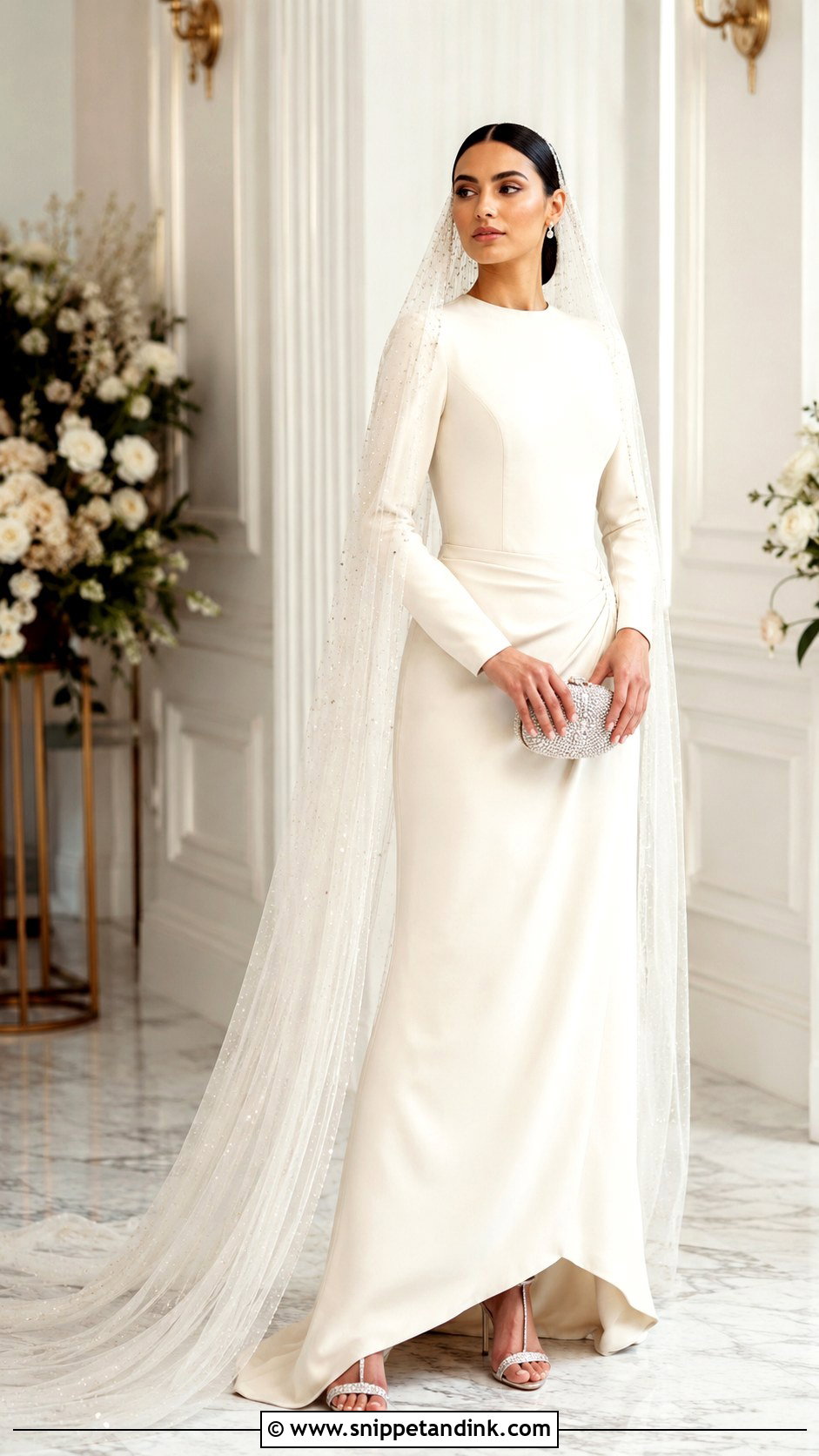
A sequined veil needs a matte outfit underneath, otherwise everything glitters at once and the camera flattens it. Matte crepe, silk anarkali or georgette lehenga in ivory, beige, blush or soft gold all work. Choose scattered sequins or a soft shimmer border. Skip statement jewellery, since the veil already catches every light. It suits an evening Nikah, where candlelight and warm bulbs make the sequins glint rather than flare.
17. Cape Nikah Veil With Modest Jumpsuit
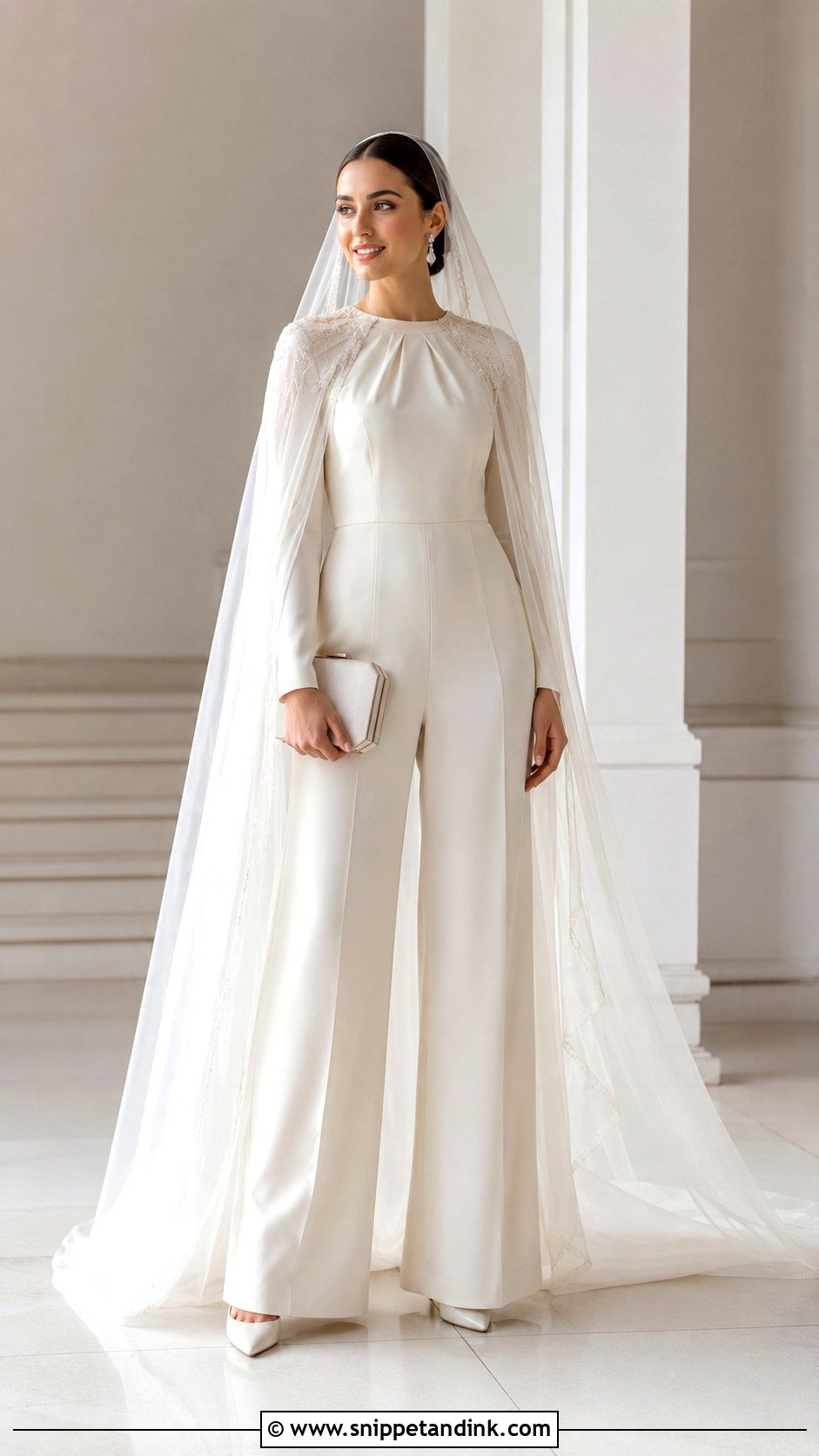
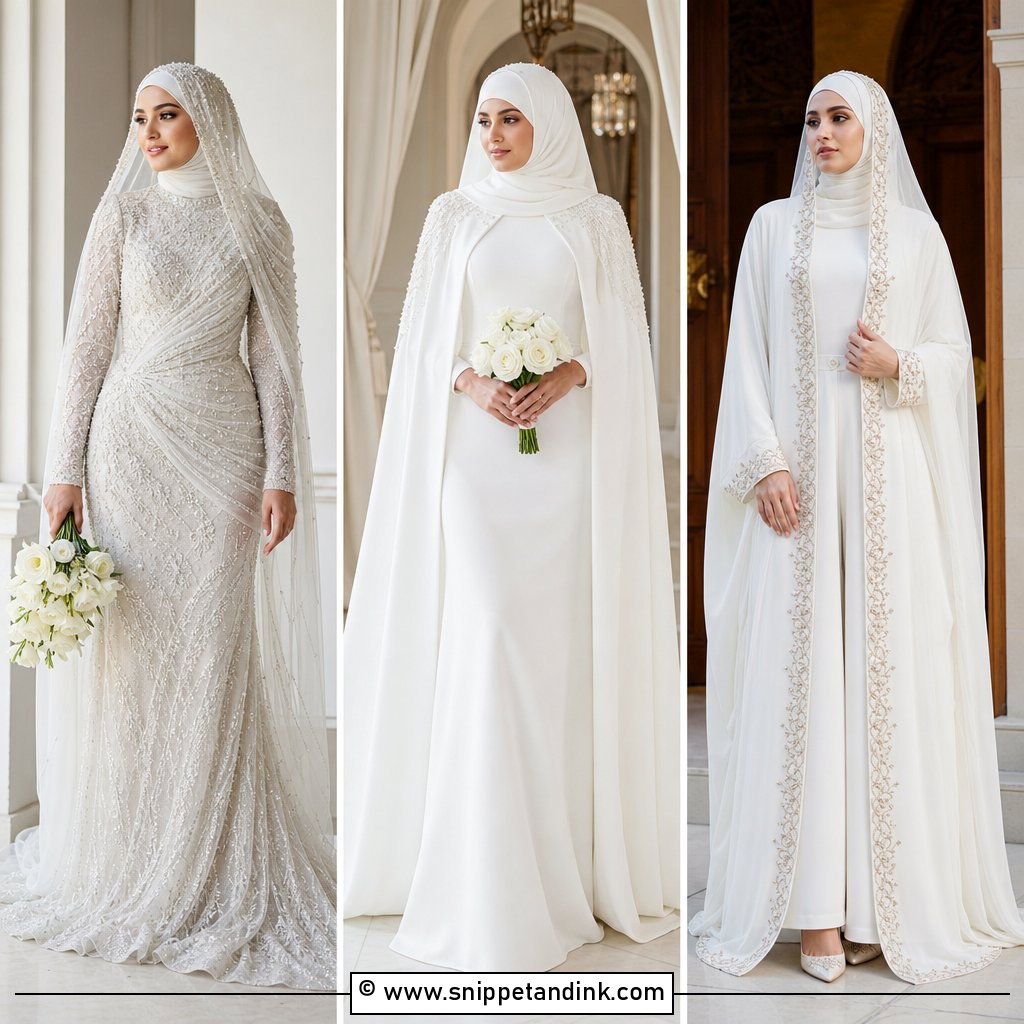
A cape veil attaches at the shoulders or pins softly behind the head and falls down the back, which makes it ideal over a jumpsuit. Choose a white or ivory wide-leg jumpsuit with long sleeves and a high neck or tailored overlay. Pointed heels and sleek earrings keep it modern. If the cape attaches at the shoulders, ask for small hidden loops sewn into the jumpsuit seams; pins alone tear lightweight fabric once you start hugging guests.
18. Hijab Nikah Veil With Embellished Abaya
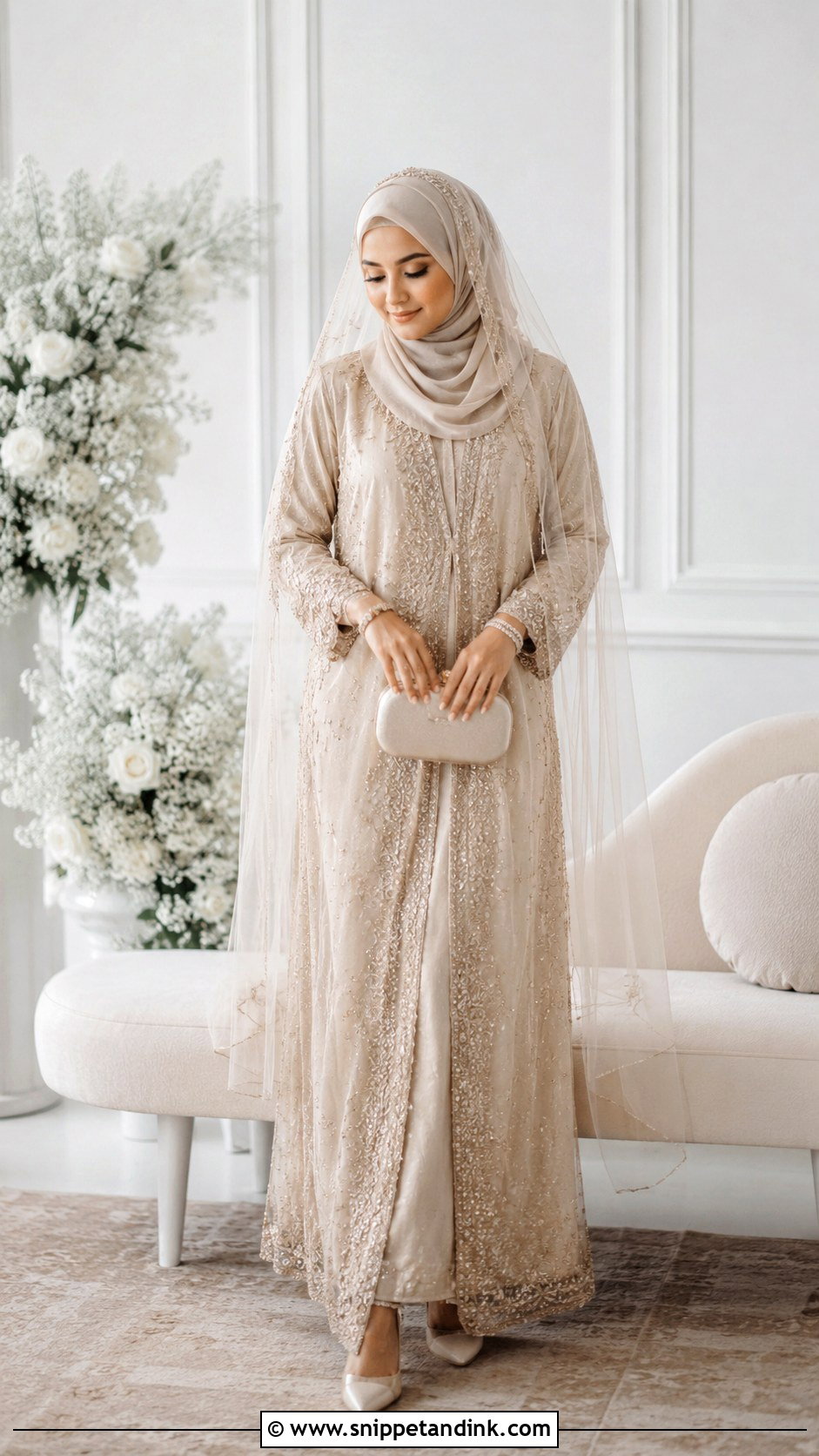
With an embellished abaya, the veil goes over a matching hijab, so layering is the challenge. Start with a white, ivory or champagne abaya worked at the sleeves, hem or bodice. Pin the hijab securely first with an undercap, then lay a sheer veil on top and attach it to the undercap rather than the hijab fabric, which prevents dragging. Keep every layer lightweight. Closed-toe heels and a few delicate rings finish it with full coverage.
19. Mantilla Nikah Veil With Long Sleeve Gown
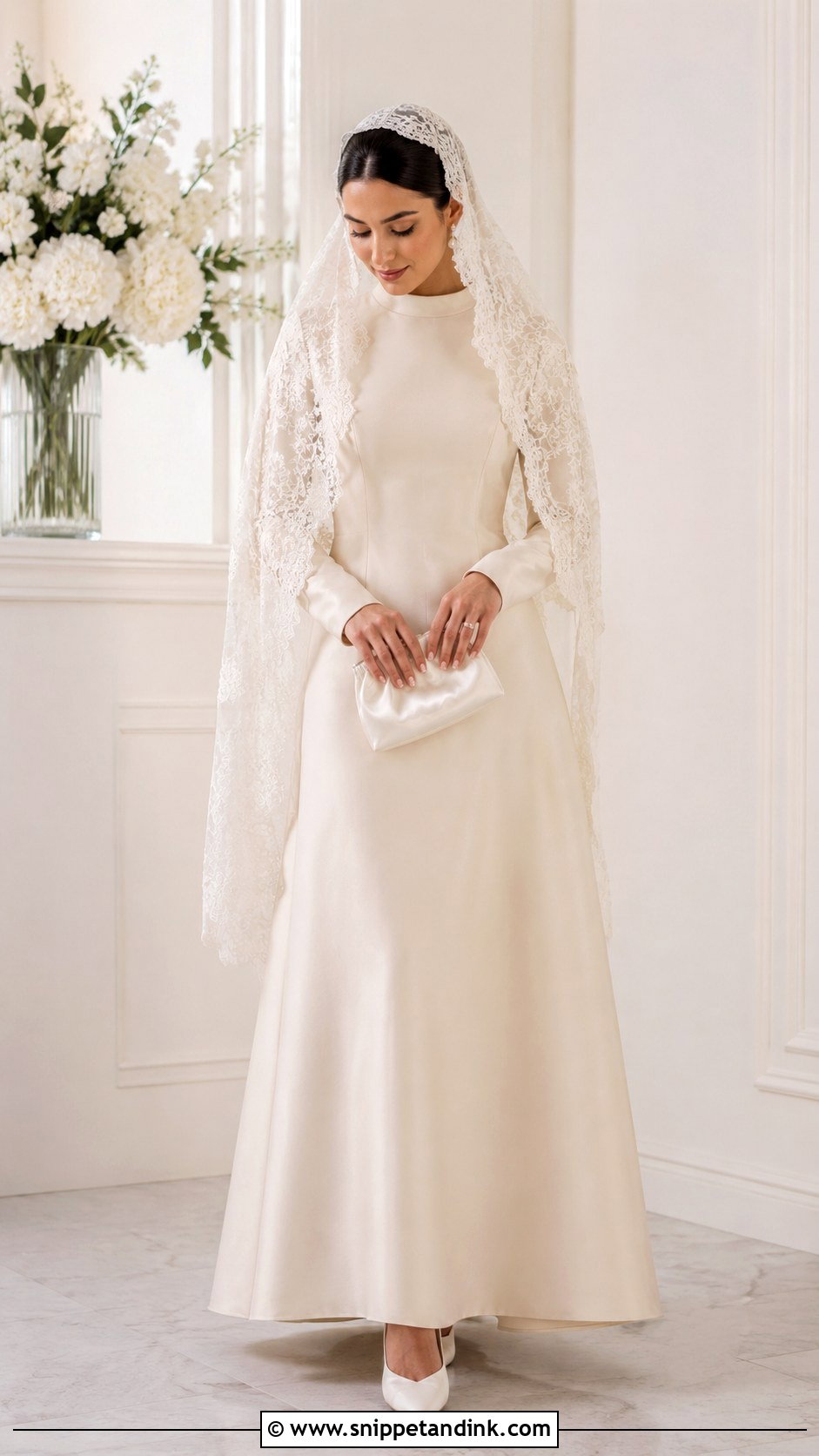
A mantilla is a circular lace-edged veil worn over the crown, and it frames the face like no other style. With a long sleeve gown in ivory, white or soft beige, let it fall without added volume. The lace edge does a lot, so keep the neckline clean and jewellery minimal. Mantillas sit further forward than most veils, which means the comb goes near the top of the head and needs teased hair underneath for grip.
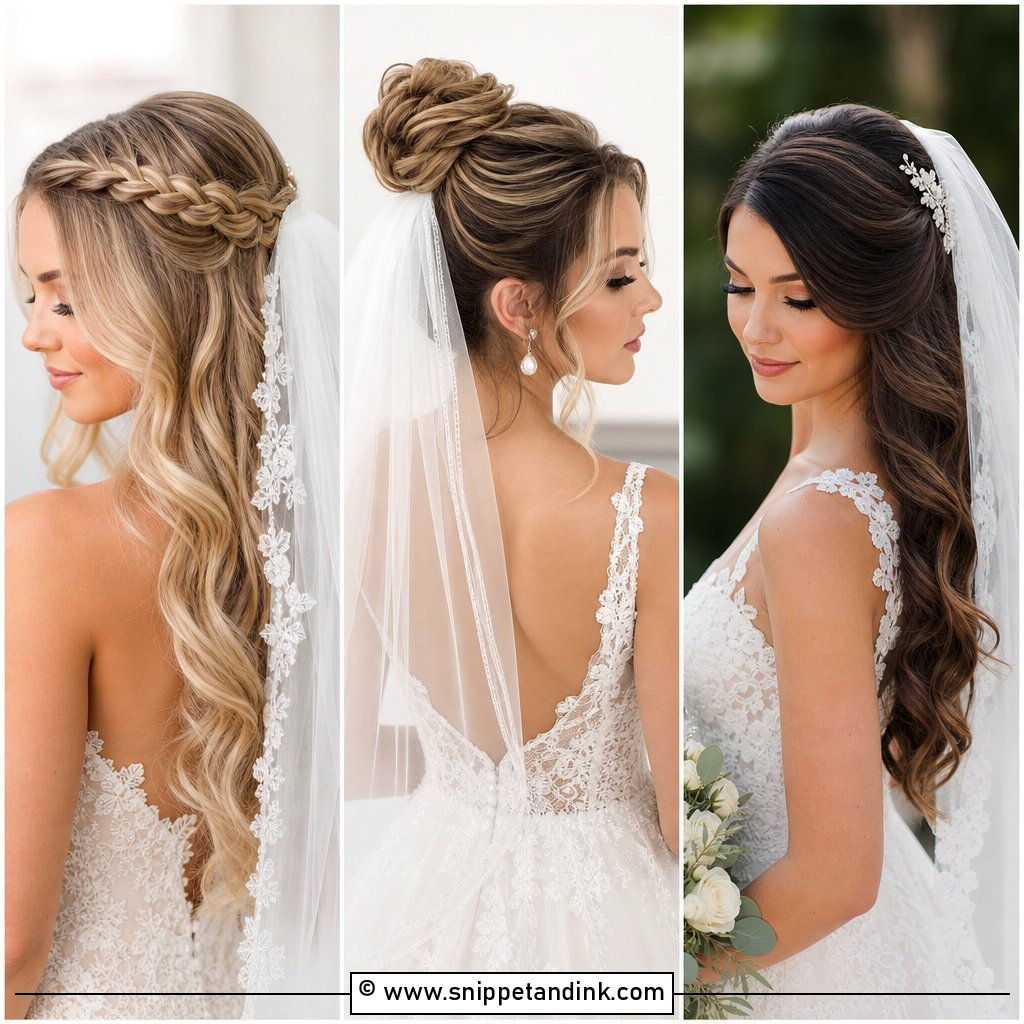
20. Veil With Tiara Nikah Outfit
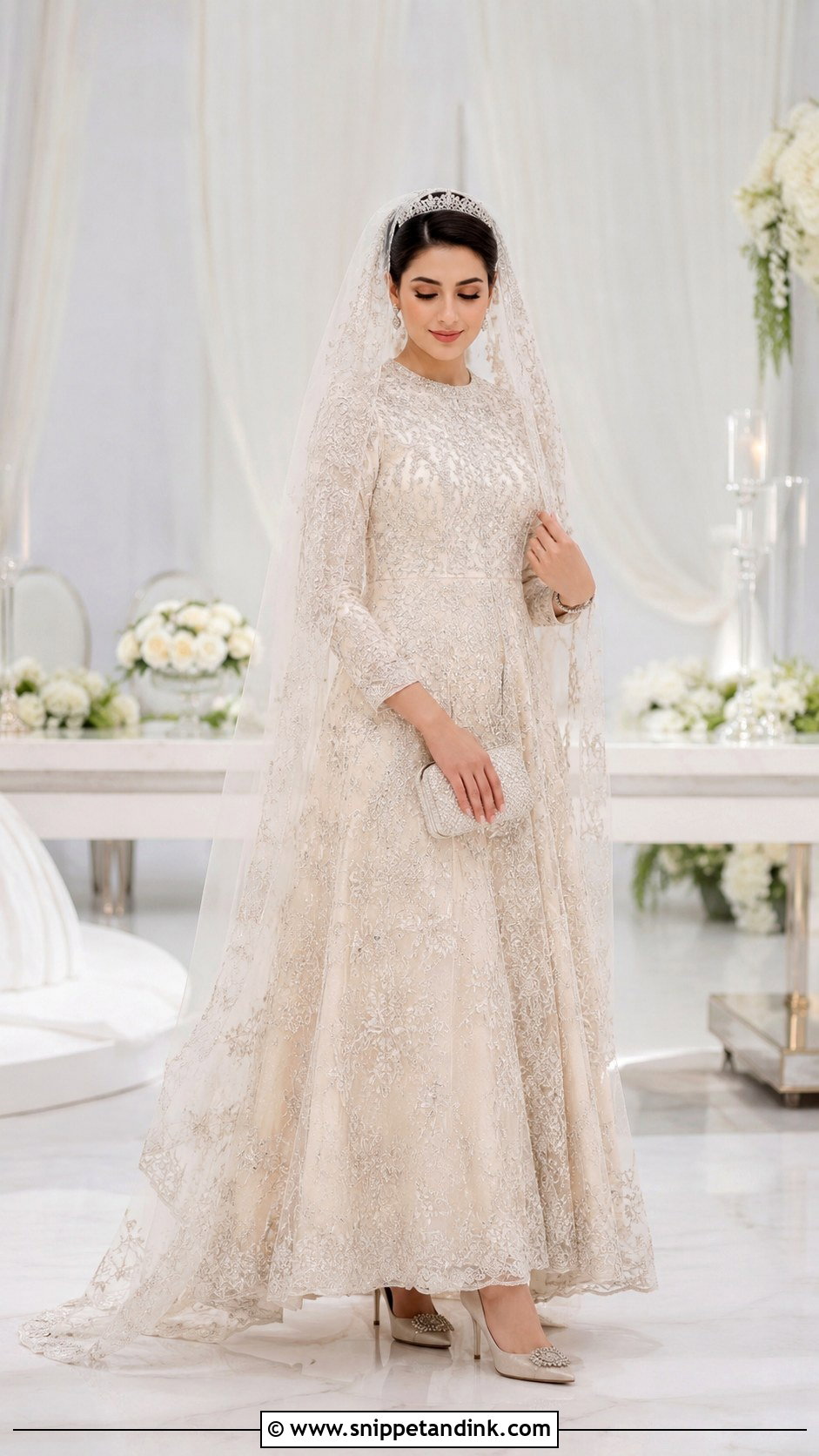
A tiara both holds the veil and adds height, so you don’t need heavy jewellery. Pair it with an ivory gown, a soft lehenga or an embroidered anarkali, and choose a fingertip or floor-length veil. I pin the veil first, slightly behind the tiara, then slide the tiara in front so the combs don’t fight each other. A slim tiara suits heavy embroidery, a bolder one a plain dress.
21. Veil With Matha Patti Nikah Lehenga
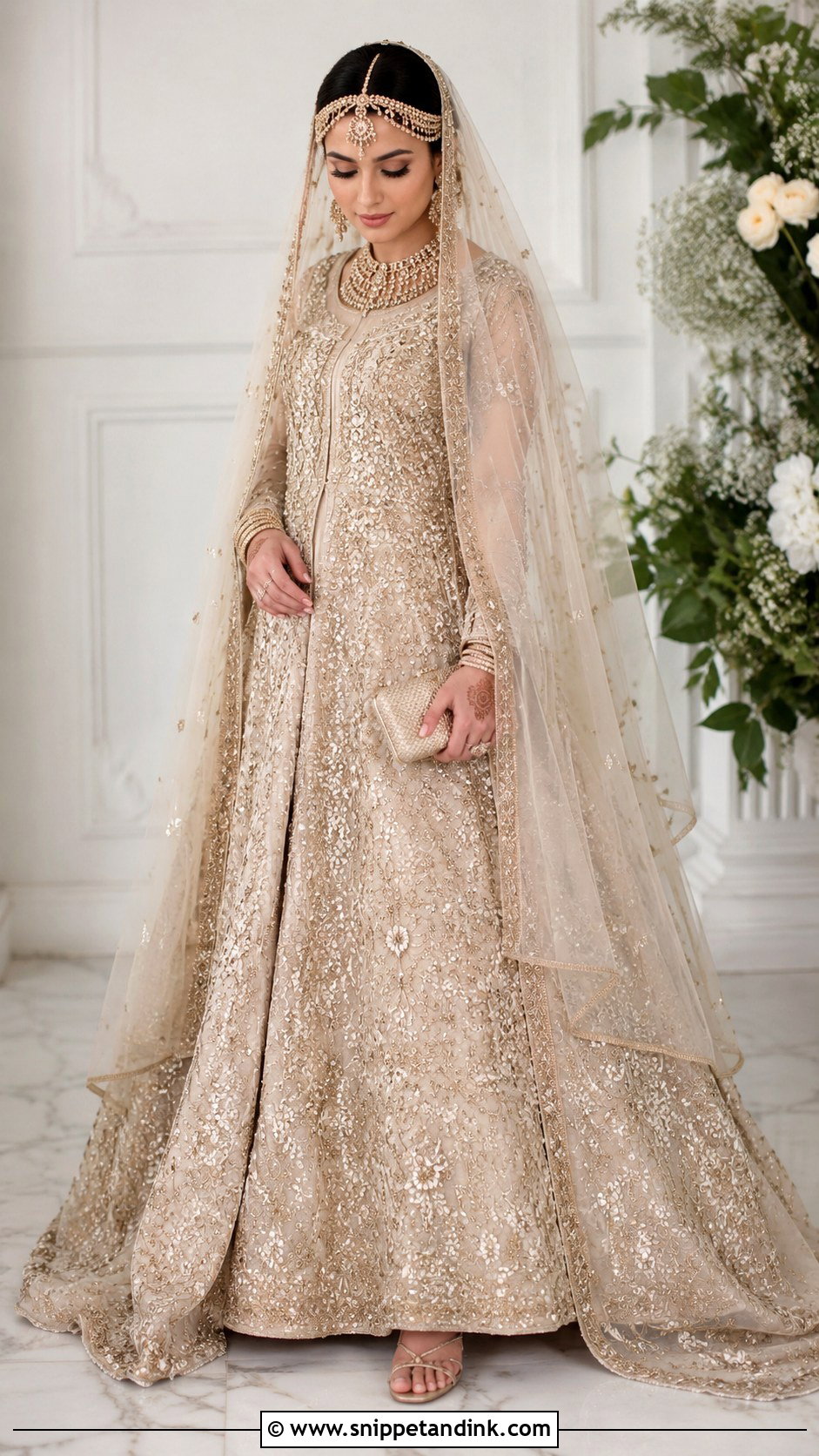
A matha patti draws every eye to the face, which is why I love it under a Nikah veil. Set a clean centre part, or a smooth undercap if you wear hijab, then fix the matha patti with pins at each side before the veil goes on. A soft net or organza veil lets the jewellery show through. Choose a lehenga in ivory, champagne, blush or gold. Keep the necklace modest so the headpiece leads; with both heavy at once, the face gets lost.
22. Veil With Pearl Headband Nikah Dress
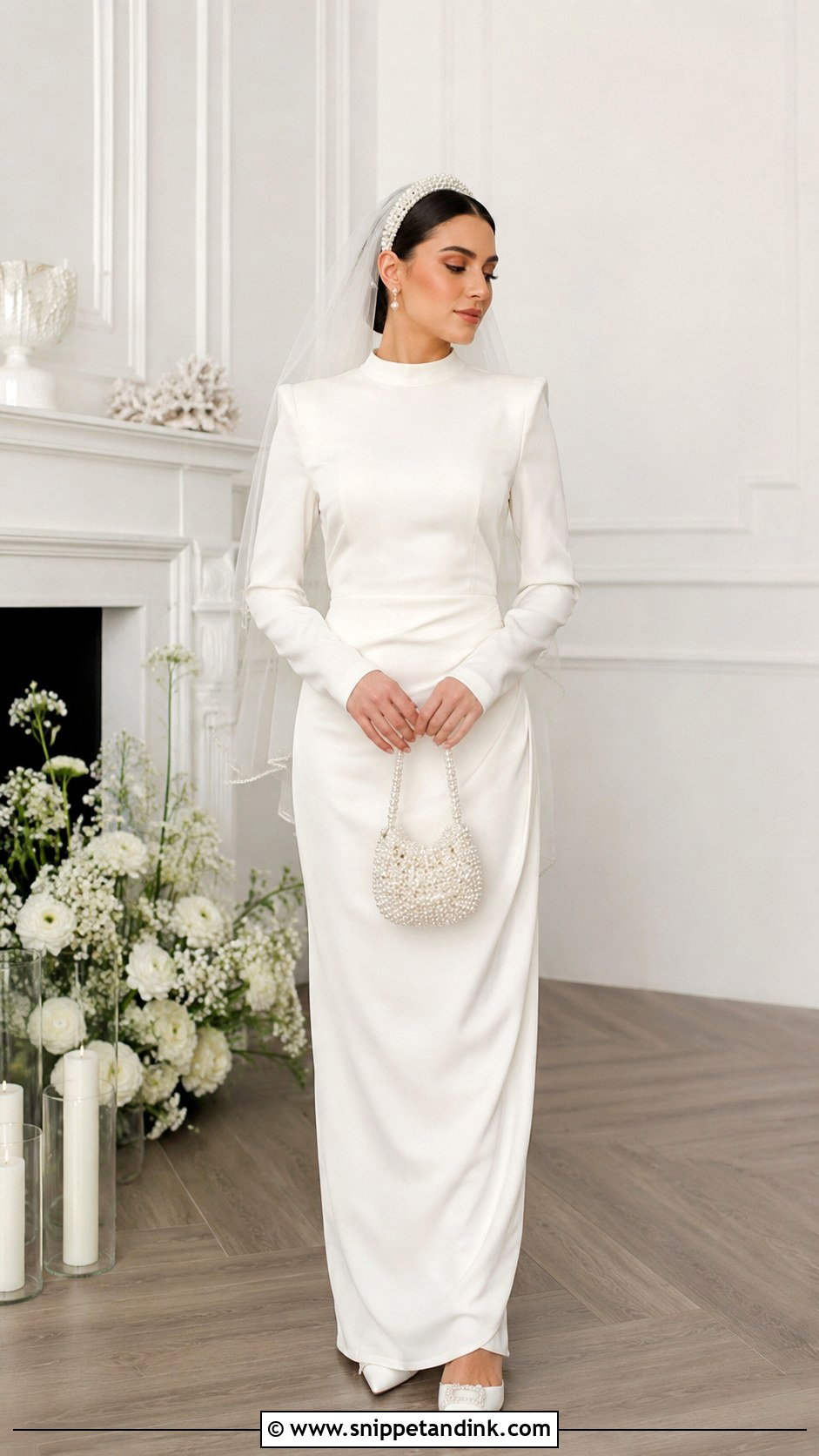
A pearl headband suits a bride who wants a veil but dislikes combs. Pair it with a simple Nikah dress, a satin gown or an embroidered midi outfit, and choose a shoulder-length or fingertip veil. Pearl earrings and white heels keep it cohesive. Hard headbands press behind the ears after a few hours, so wear yours for a full afternoon before the wedding to check it doesn’t give you a headache.
23. Veil With Bun Nikah Outfit
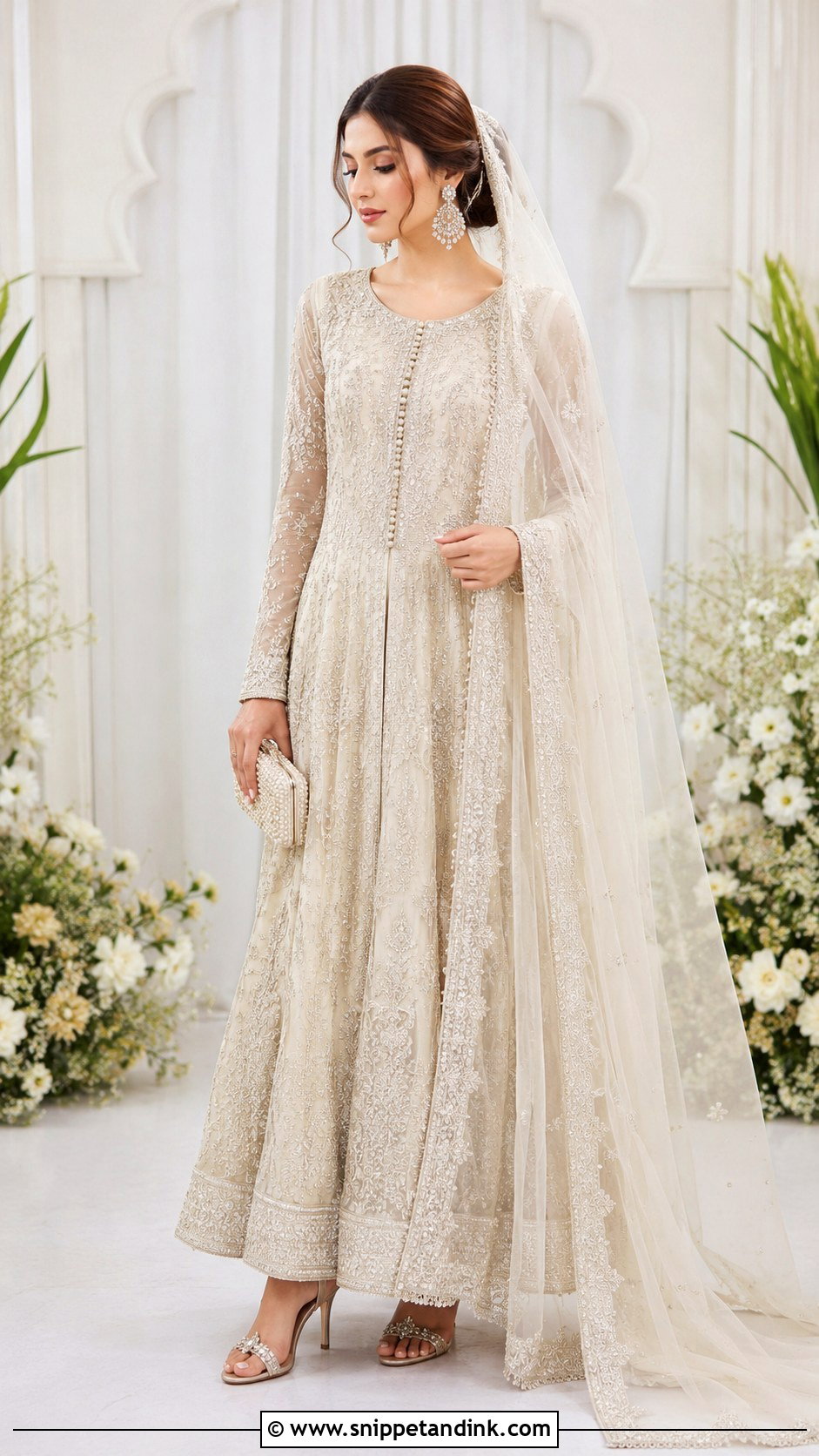
The bun is the most secure base for any veil, and it’s what I recommend to most brides. It gives the comb something solid to grip. Pair it with a lehenga, gown, anarkali or sharara; a low bun suits a long veil, a higher bun adds lift. Use pins that match your hair colour and cross them in an X under the comb for extra hold. Then add earrings and heels to suit the outfit. This holds well through long events.
24. Veil With Open Hair Nikah Gown
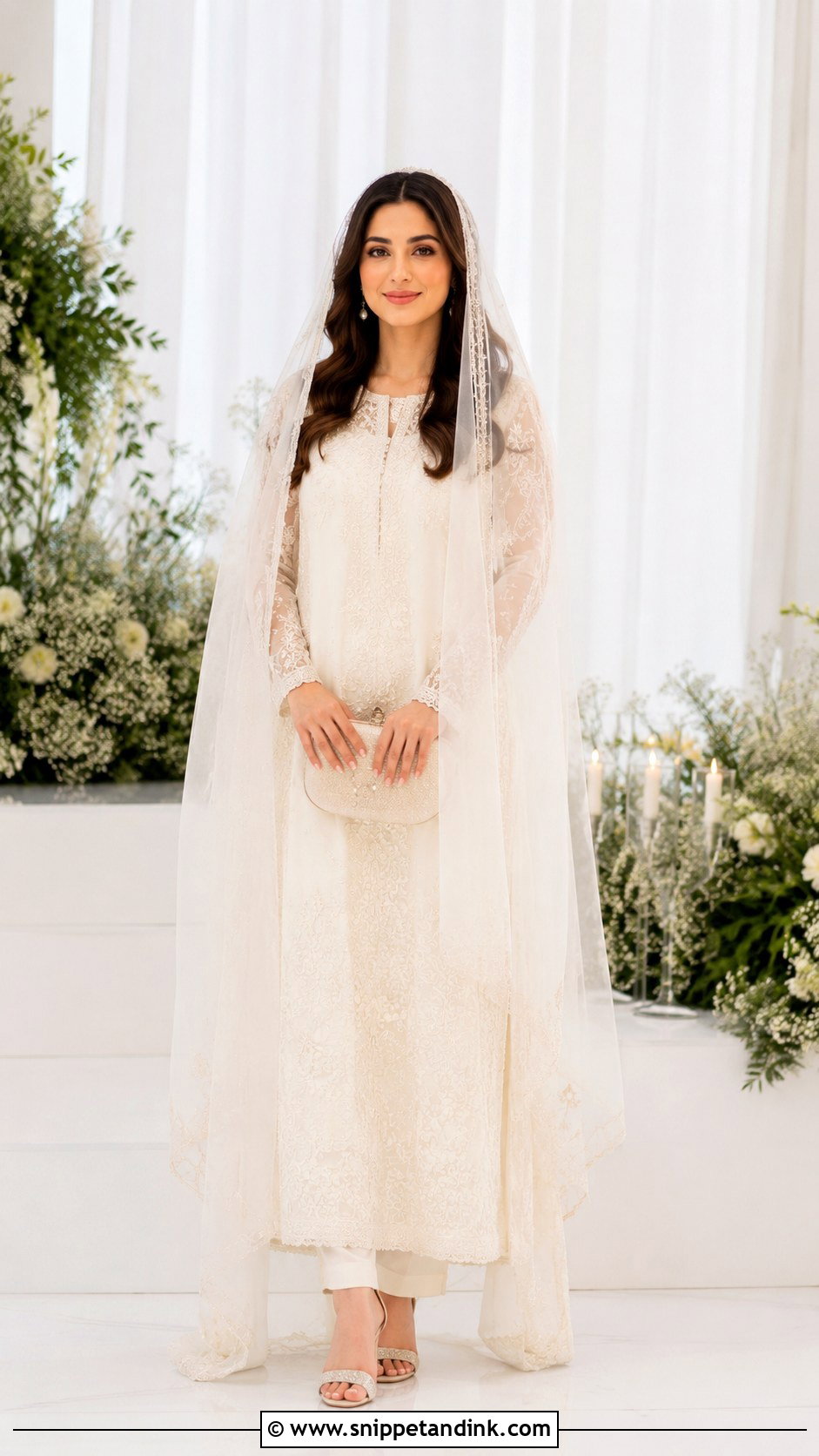
Open hair under a veil is the hardest version to keep in place, because there’s no bun to anchor the comb. I build a small hidden braid or a tight cluster of pins at the crown and slide the comb into that. Loose waves under a light tulle or organza veil frame the face. Pair it with a long sleeve gown, an A-line dress or an embroidered maxi. Heavy veils flatten waves, so stay with the lightest fabric you can find.
25. Veil With Train Nikah Outfit
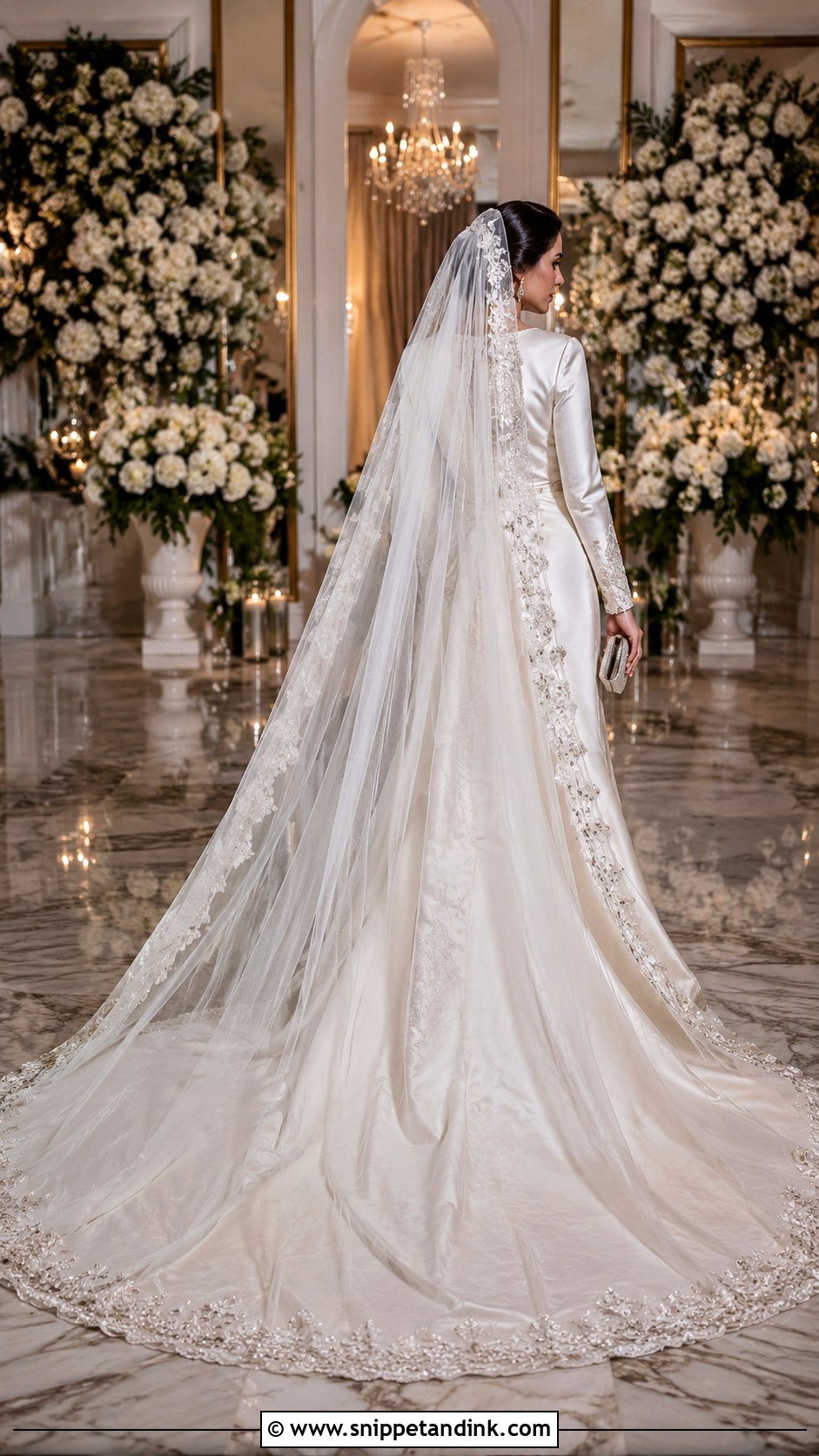
A train can come from the veil, the dress or both, and the rule is balance. If the gown or lehenga already has a long train, choose a simple sheer veil. If the outfit is plain, a longer veil with embroidered edges brings drama. Avoid jewellery with prongs that snag the fabric. Practise walking and sitting before the ceremony, and assign someone to settle the train each time you sit; it saves the veil from being stepped on and pulled off the comb.
Static, Wind and a Slipping Comb on the Day
Veils misbehave in predictable ways, and a small kit handles nearly all of it. I keep these in my bag at every Nikah.
- Static cling: synthetic tulle clings to gowns in dry or air-conditioned rooms. A light mist of anti-static spray on the underside, or hairspray from a distance, settles it.
- Wind outdoors: add a few clear pins at the shoulders, or tuck a short veil behind the ears. A cathedral veil outside needs someone holding the end.
- A loosening comb: re-pin with two bobby pins in an X over the comb base rather than pushing it in deeper.
- Creases from packing: a handheld steamer at low heat held well back, never an iron on tulle.
Also decide in advance whether the veil stays on for the whole event or comes off after the Nikah. Many brides wear it through the ceremony and photos, then remove it for the meal. If you plan to do that, ask your stylist to set a hairstyle that still looks finished without it, and keep a few extra pins for when the comb comes out.
A Last Fitting With the Veil Pinned in Place
The veil you pick has to suit the outfit, your comfort and the coverage you want. A pearl veil softens a simple gown, while a double dupatta turns a gharara or lehenga into a fuller bridal look. Long veils add drama, short veils feel modern and sheer ones stay light. Whatever you choose, bring it to your hair trial with the jewellery and shoes, wear it for at least an hour, and sit down in it. That hour tells you more than any photo will.
You'll Like These Ideas:


Leave a Reply