
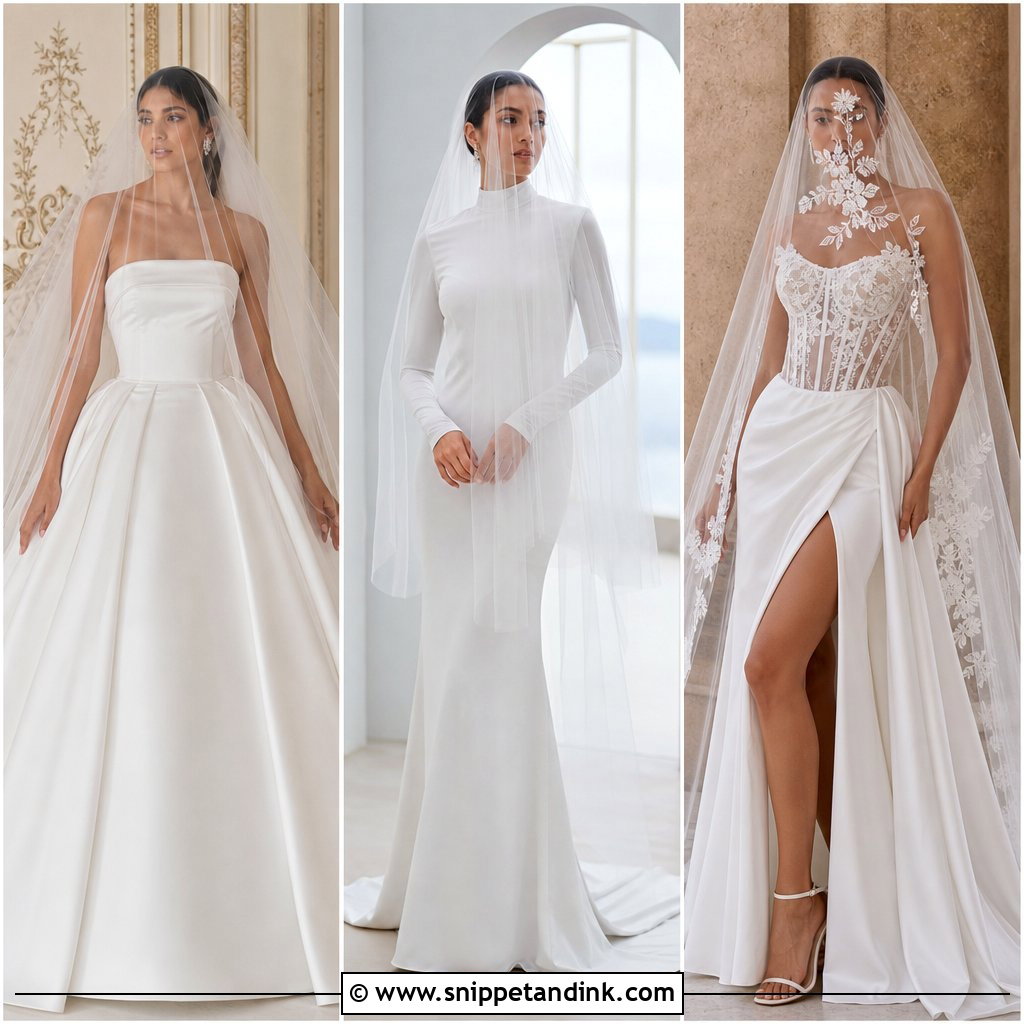
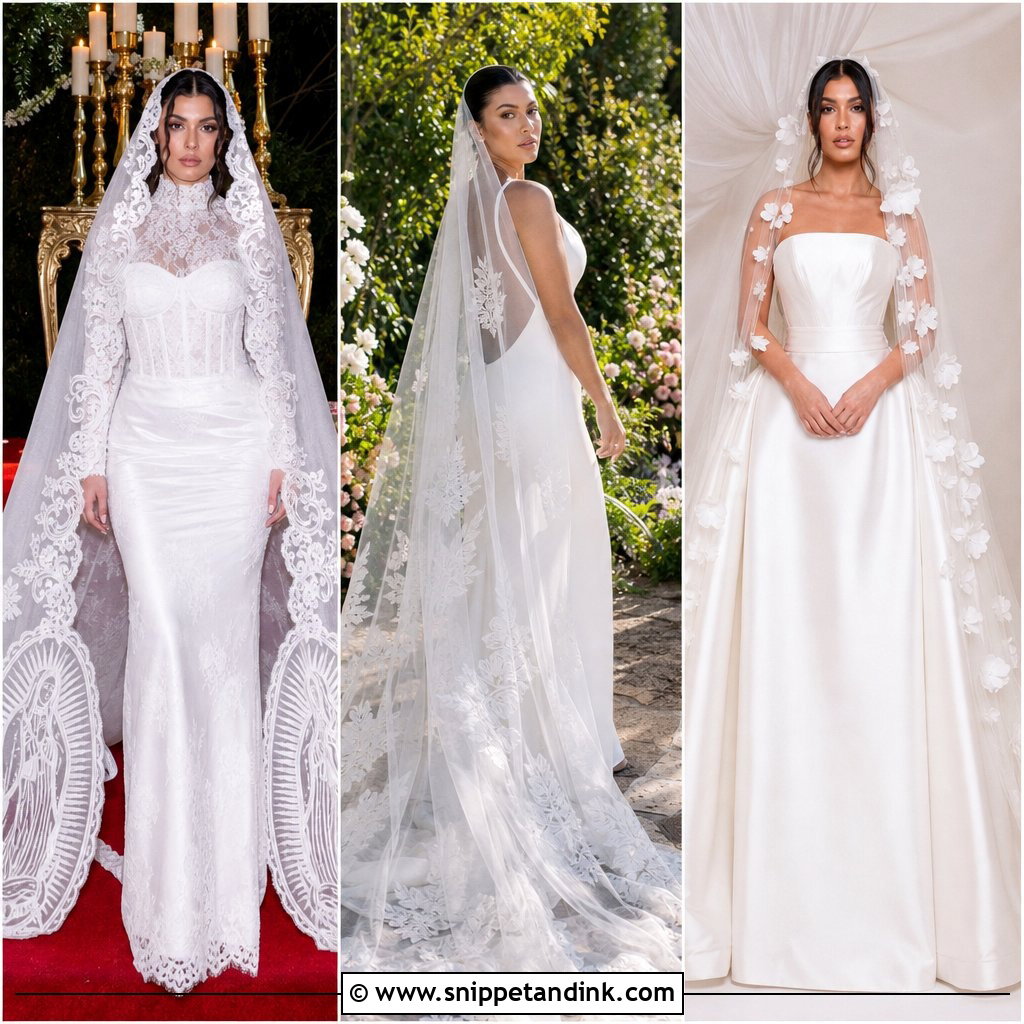
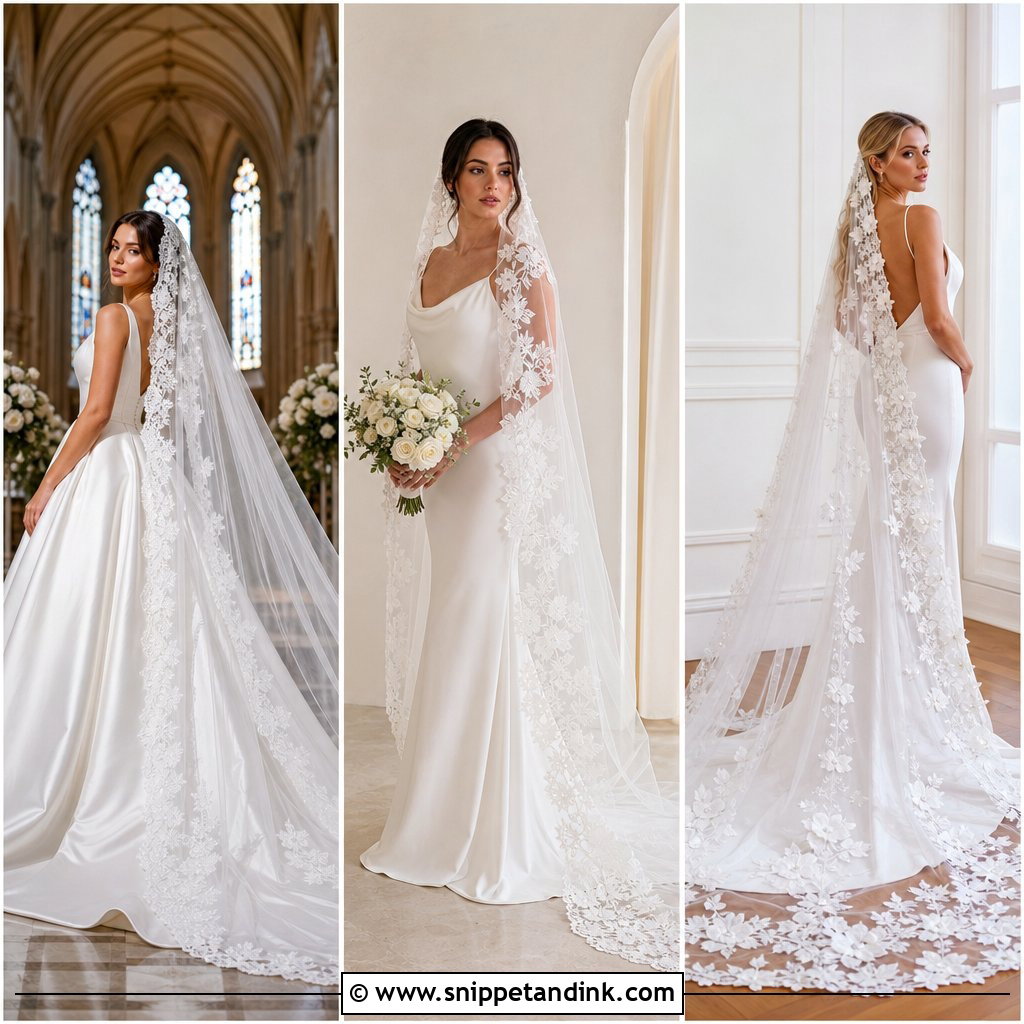
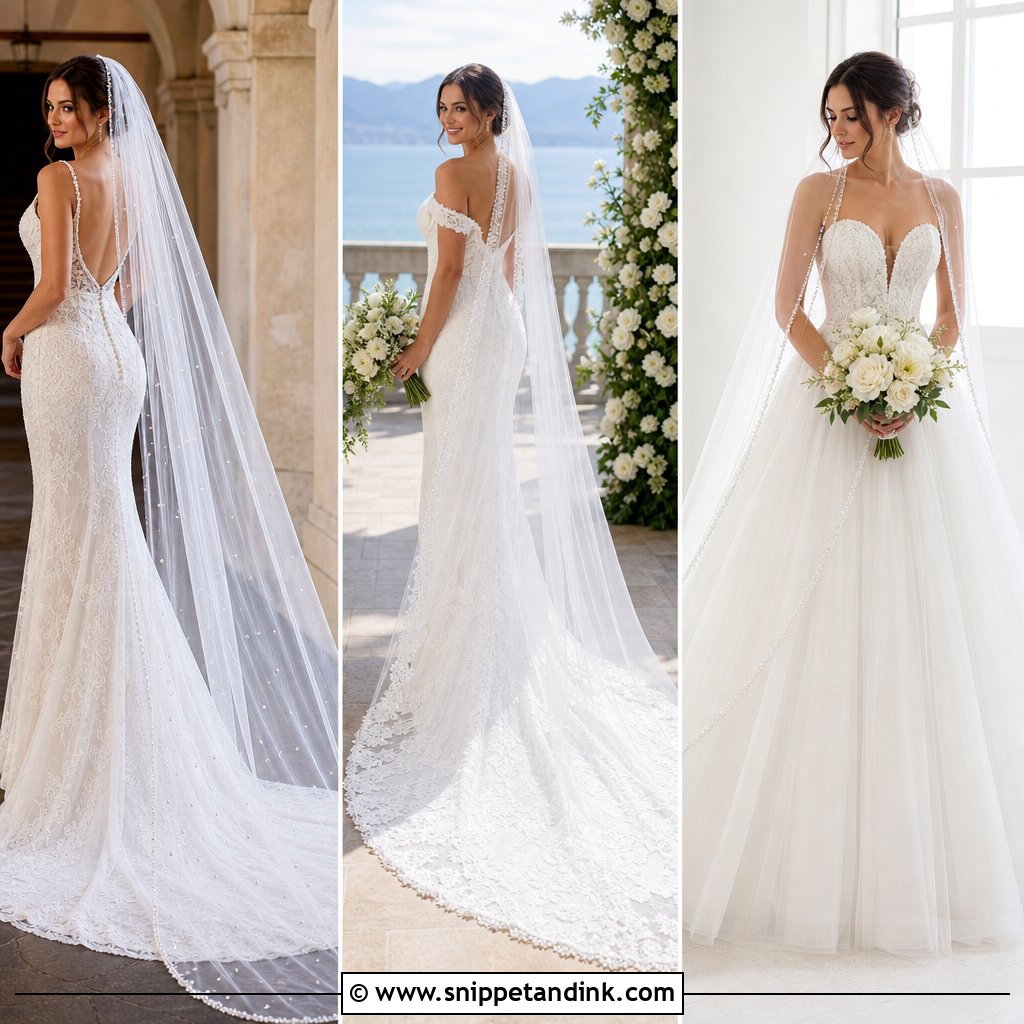
A double veil is two layers of tulle on one comb: a short blusher that comes forward over the face, and a longer tier that falls down the back. From my side of the chair, it’s also twice the weight and twice the fabric to anchor, which is why the hairstyle and the veil have to be planned together. The finishes vary a lot, from raw-edge tulle and scattered pearls to embroidered flowers, lace borders and cathedral trains, and each one behaves differently once it’s pinned. The aim is a veil that suits the gown instead of fighting it, and that suits the ceremony space and how formal the day is. Two tiers add soft volume around a sleek dress, or a royal sweep behind a full skirt. Below are twenty complete looks built around one.
The Comb Position Decides How Both Tiers Fall
Where the comb sits changes the whole look, so I decide it before I finish the hair, not after. The same veil looks completely different at the crown and at the nape.
- At the crown: the blusher falls cleanly forward, and the back tier gets height and drama. Good for ball gowns and a traditional reveal.
- Just above a low bun: the most secure spot, since the pins lock into the bun. The tiers drape down the back and frame the shoulders.
- Below the bun: the veil hangs straight down the back and shows off an updo from the front. It suits a low, sculpted bun, but the blusher can’t come forward from here.
- Angled on the side: rarely works for a double veil because the blusher hangs crooked over the face.
Making the comb stay put
Silky, fine hair is where veils slide. I make a small anchor first: either a little backcombed section sprayed lightly, or two bobby pins crossed in an X, and the comb slides into that anchor so its teeth catch the pins and the teased base rather than loose hair. For a long or heavy veil, I add two more pins through the comb’s outer teeth. If your veil came with a plastic comb, a metal one sewn on instead holds noticeably better.
Bring the veil to your hair trial. Not a photo, the actual veil. Weight and length change where the bun needs to be, and I’d rather find that out weeks ahead than on the morning.
1. Cathedral Double Veil With Lace Wedding Dress
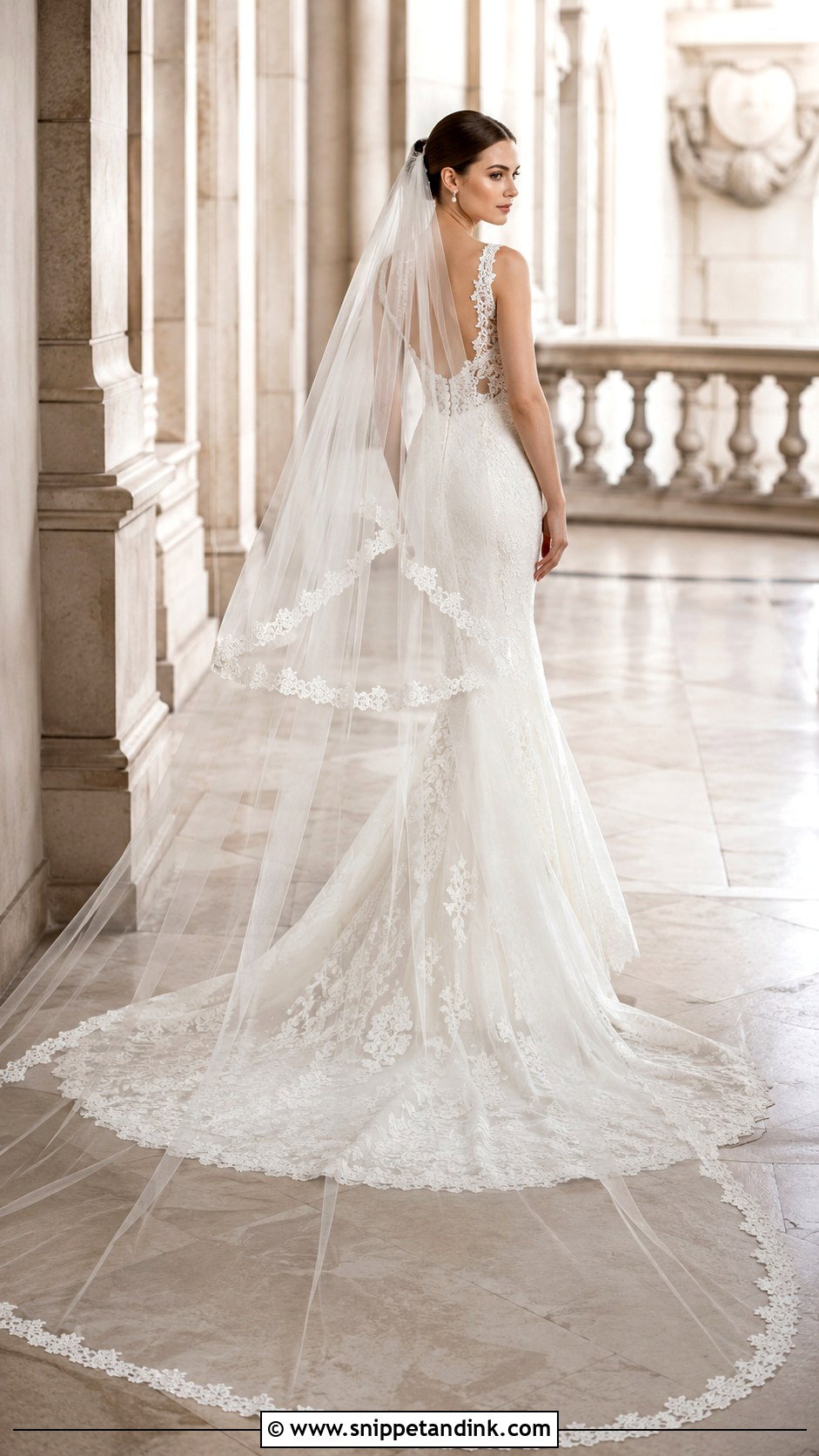
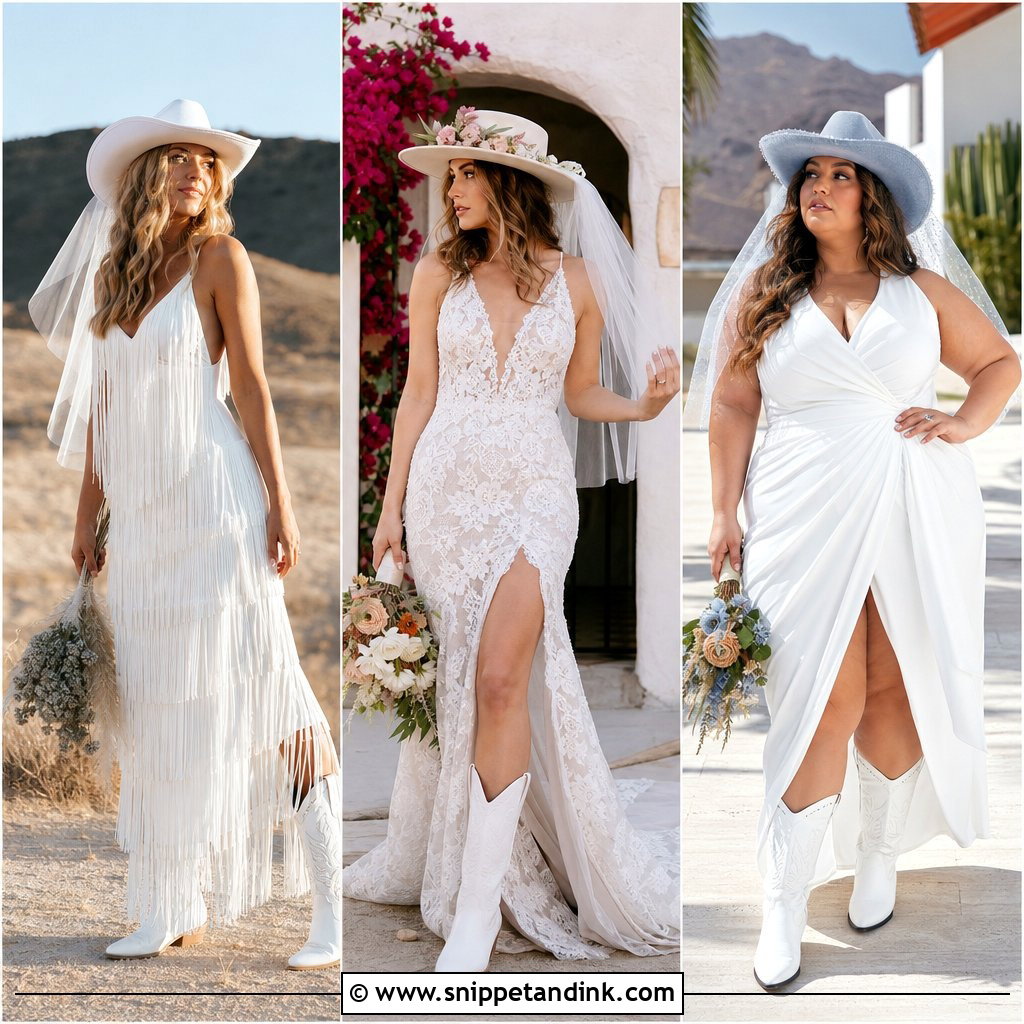
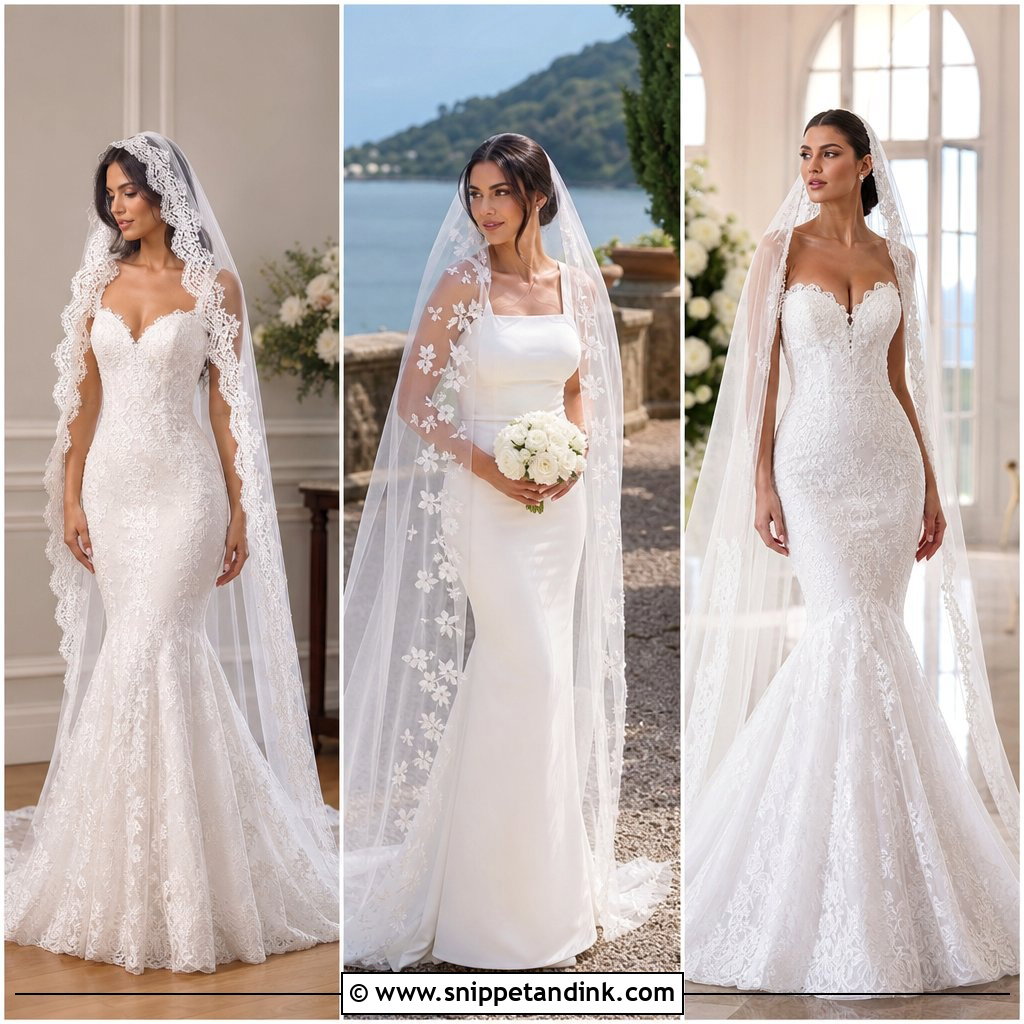
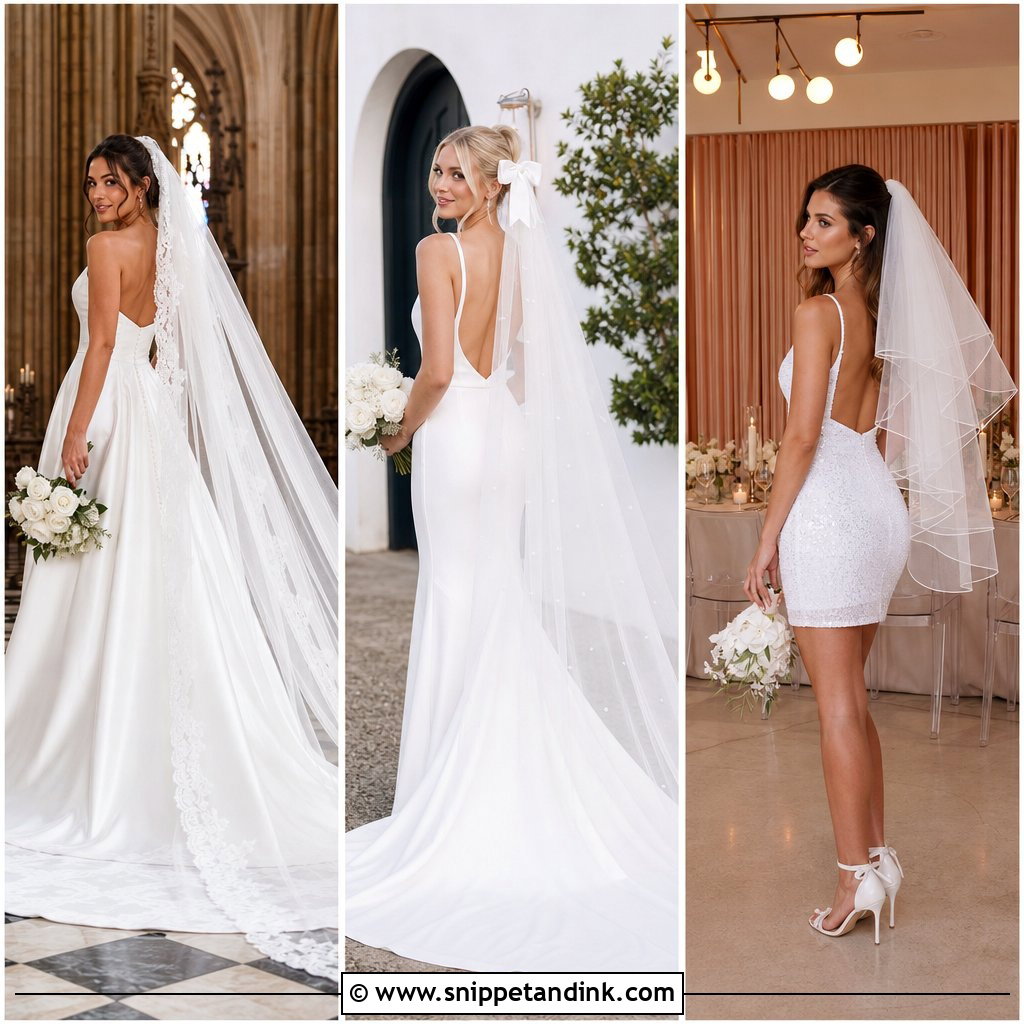
A cathedral double veil with a fitted lace gown makes the entrance most brides picture. Pick a sheer blusher and a back tier that runs a little past the dress train. A narrow lace border can link the two without crowding. The weight of a cathedral tier pulls backward constantly, so I build a firm low bun and set the comb into it with crossed pins underneath; a comb pushed into loose hair will slide down by the vows. Pearl drops, pointed ivory pumps and a compact bouquet finish it. If the gown’s lace is dense, choose a lighter veil pattern so they don’t fight.
2. Pearl Double Veil With Simple Wedding Dress
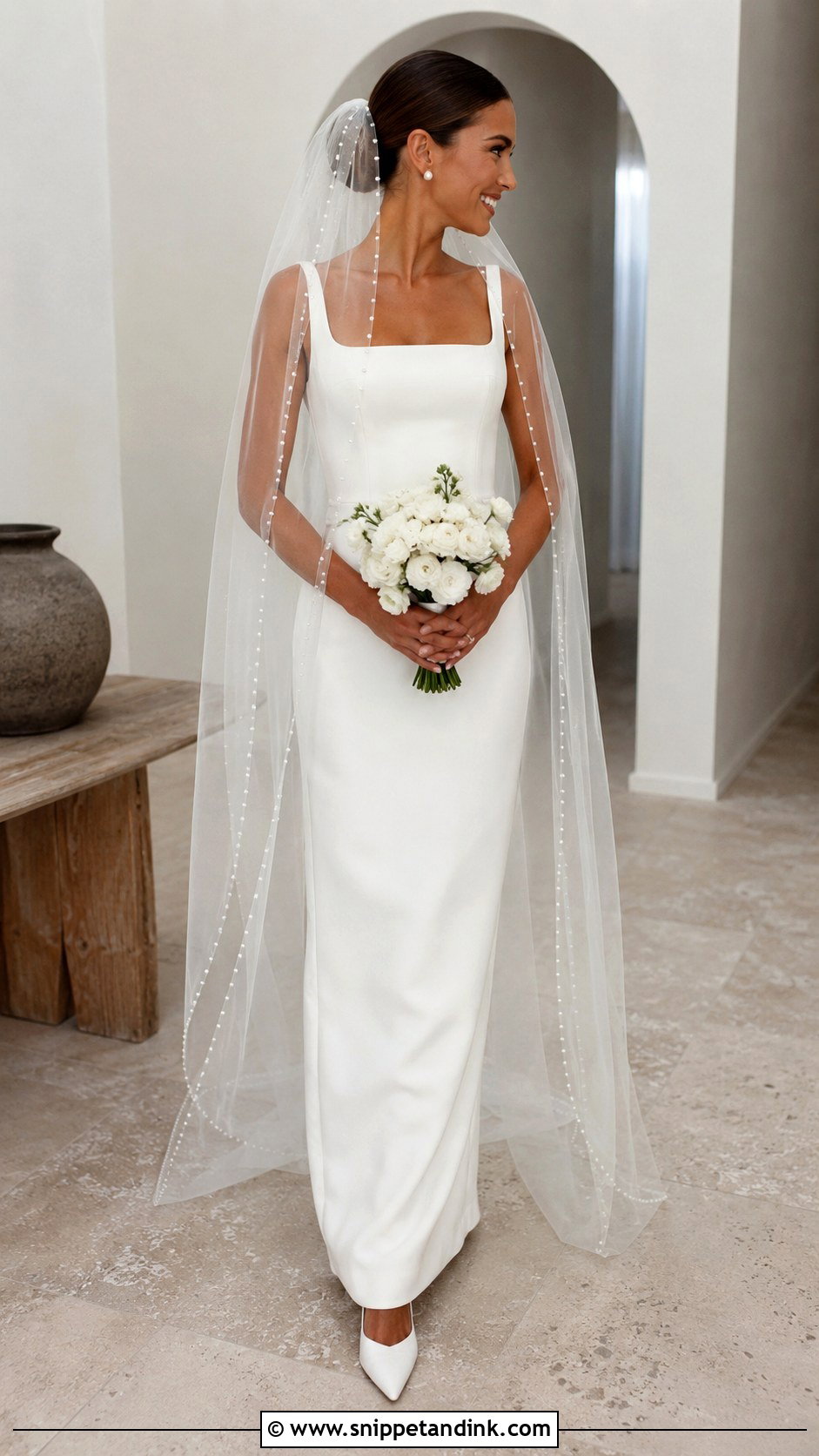
Scattered pearls can make a plain double veil the main decoration of a minimalist outfit. Pair it with a structured crepe column, a square neckline and a slim waist. A fingertip or chapel-length back tier moves without hiding the dress. Pearls add real weight to tulle, and widely spaced ones keep it floating; close-set pearls drag the blusher flat against the face. Wear the short layer forward for the ceremony and sweep it back afterward for volume. Pearl studs, a quiet bracelet, white slingbacks, a smooth chignon and a bouquet of white flowers with greenery complete it.
3. Plain Chapel Double Veil With A-Line Dress
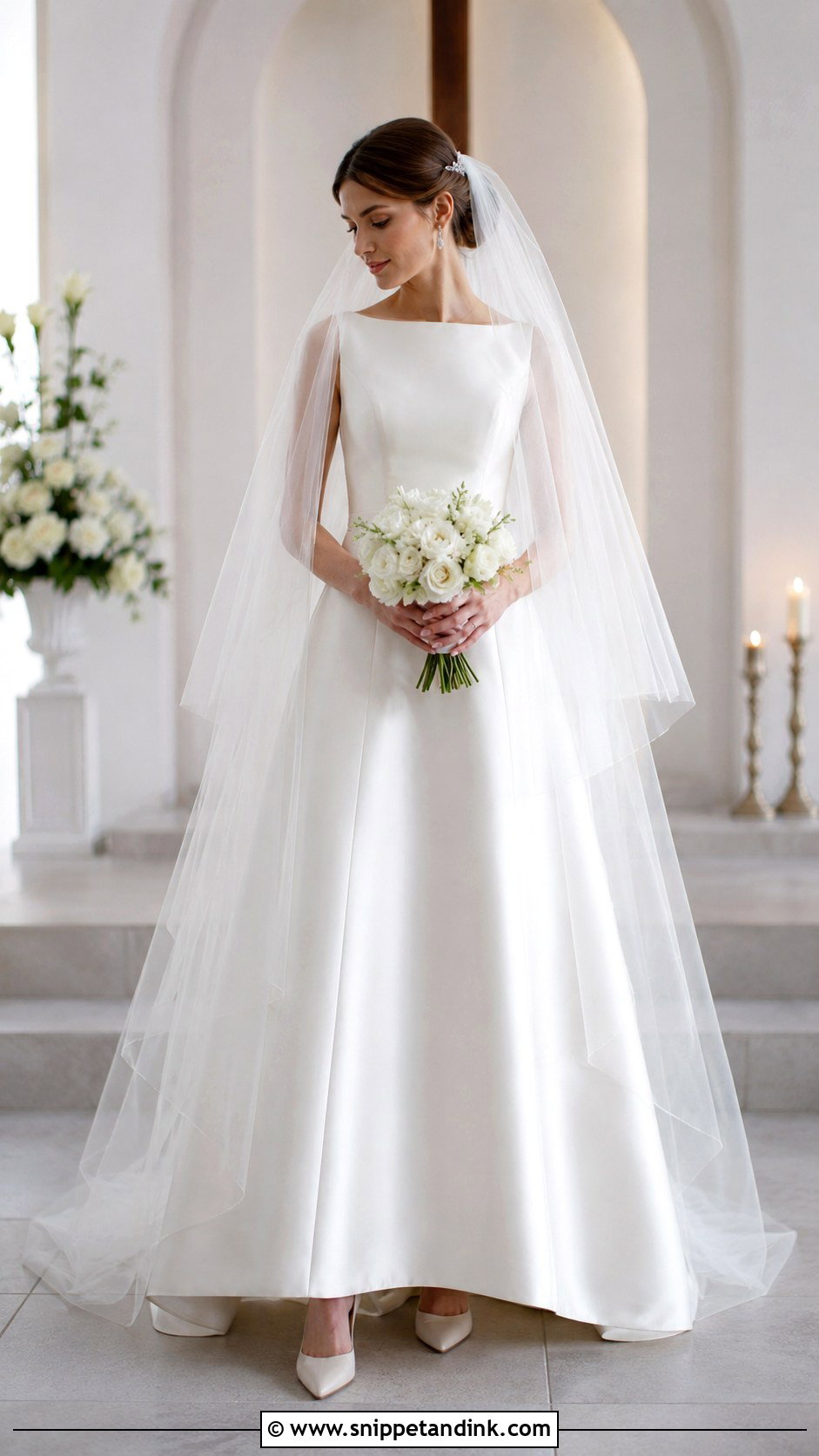
Sometimes the plainest veil gives the clearest look. With an A-line dress and a softly structured bodice, a chapel double veil in light tulle with a raw edge seems to melt into the skirt instead of drawing a line around it. Let the short tier fall near the elbows and the long one finish just beyond the hem. Soft waves with a fine comb, small crystal earrings and closed-toe pumps keep it refined. One thing I watch with loose waves: the comb needs something to grip, so I set a small hidden pin base at the crown before curling the rest. Nothing on the veil hides the dress details in photos.
4. Satin Edge Double Veil With Ball Gown
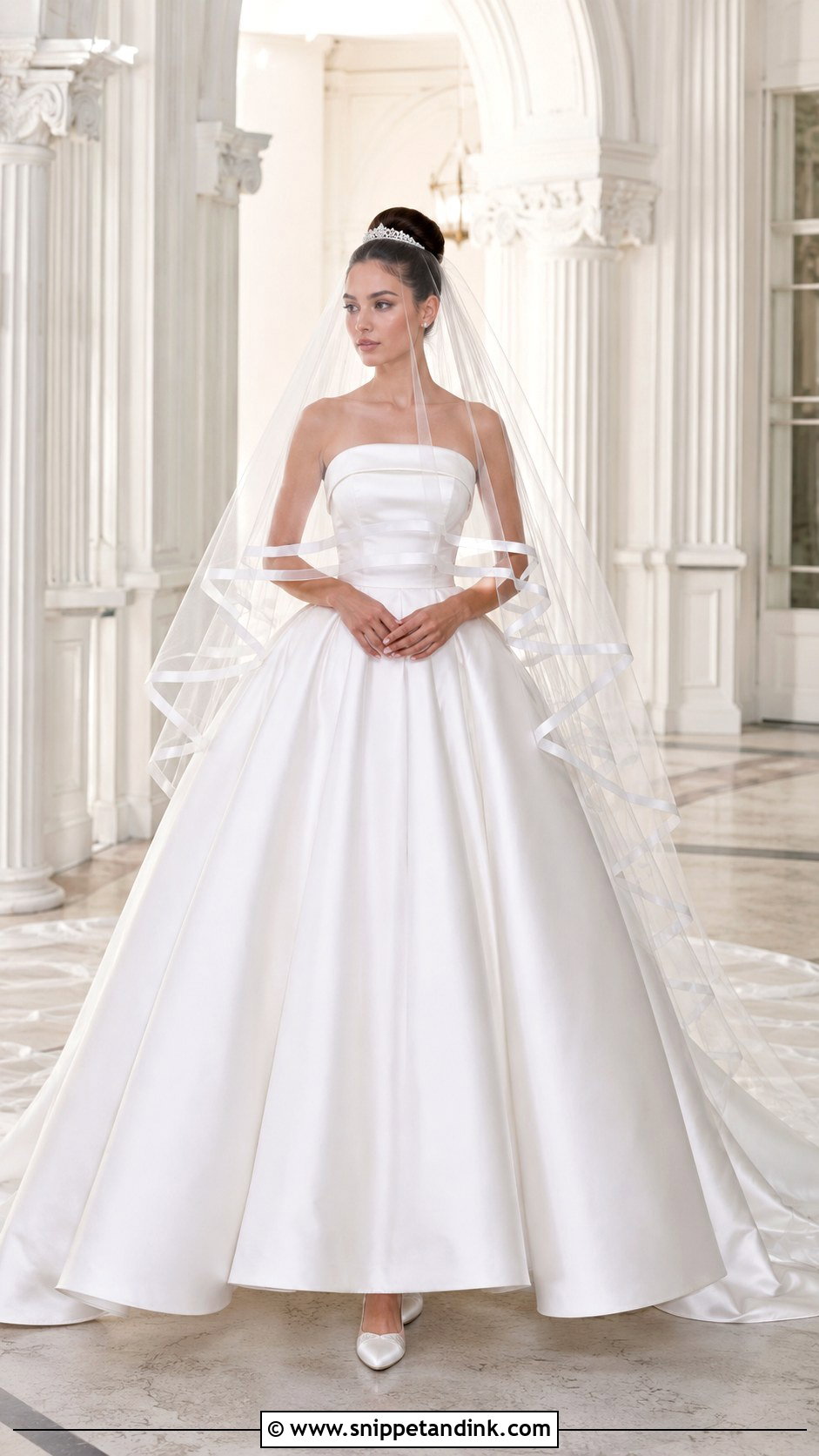
A narrow satin edge outlines the tulle crisply and suits a classic ball gown. Choose a shoulder-length blusher and a cathedral back tier to match the skirt’s volume; keep the satin band slim so it doesn’t look heavy against the dress. A strapless or off-shoulder bodice leaves room for the face-framing layer. I’d set this veil in a high, polished bun, with the comb tucked just under the bun rather than on top, so the tiers fall from the back of the head instead of standing up like a crest. Crystal studs, satin pumps and a structured bouquet finish it. Skip a large headpiece; a small comb or a fine tiara is plenty.
5. Floral Double Veil With Garden Wedding Dress
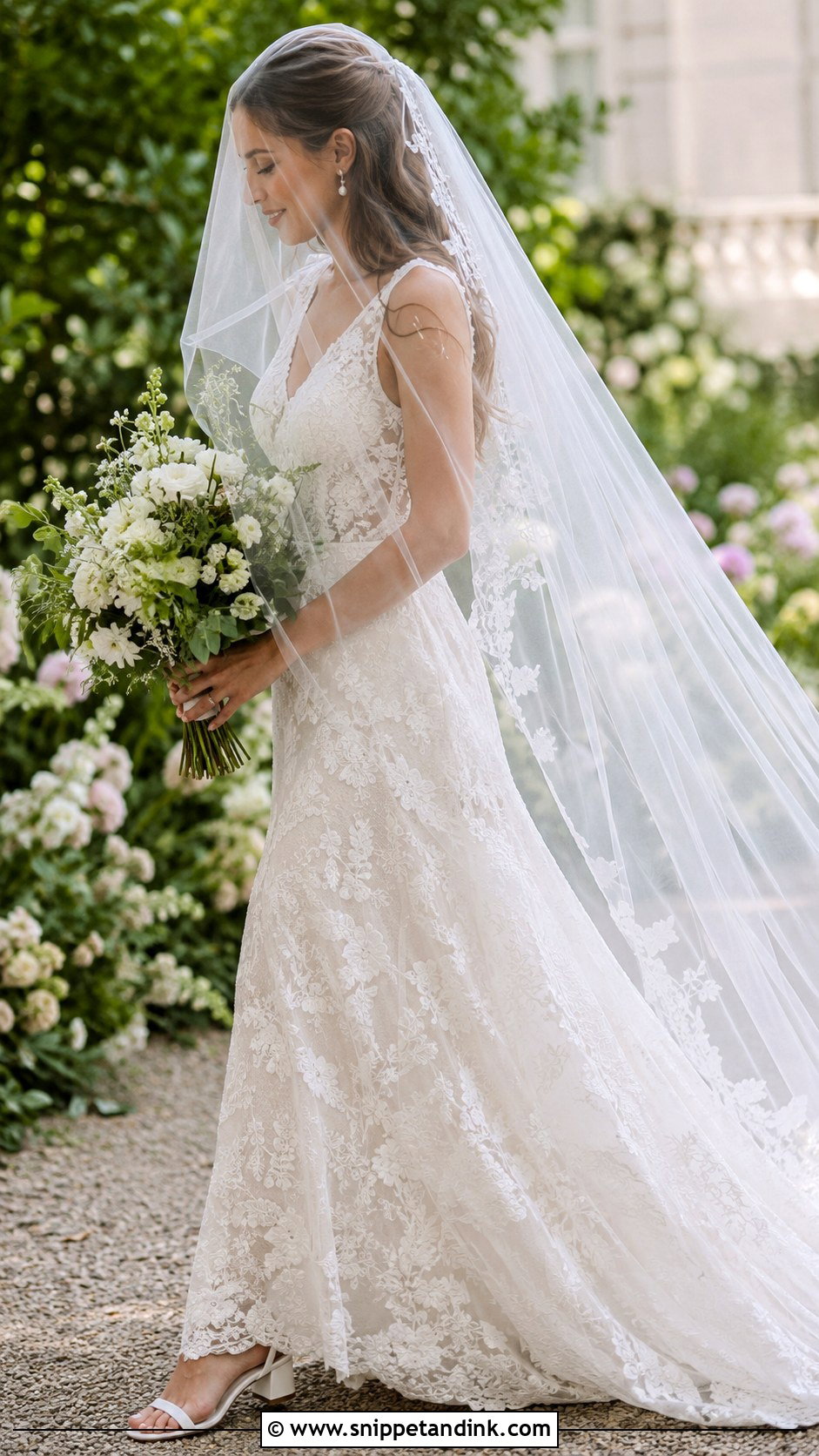
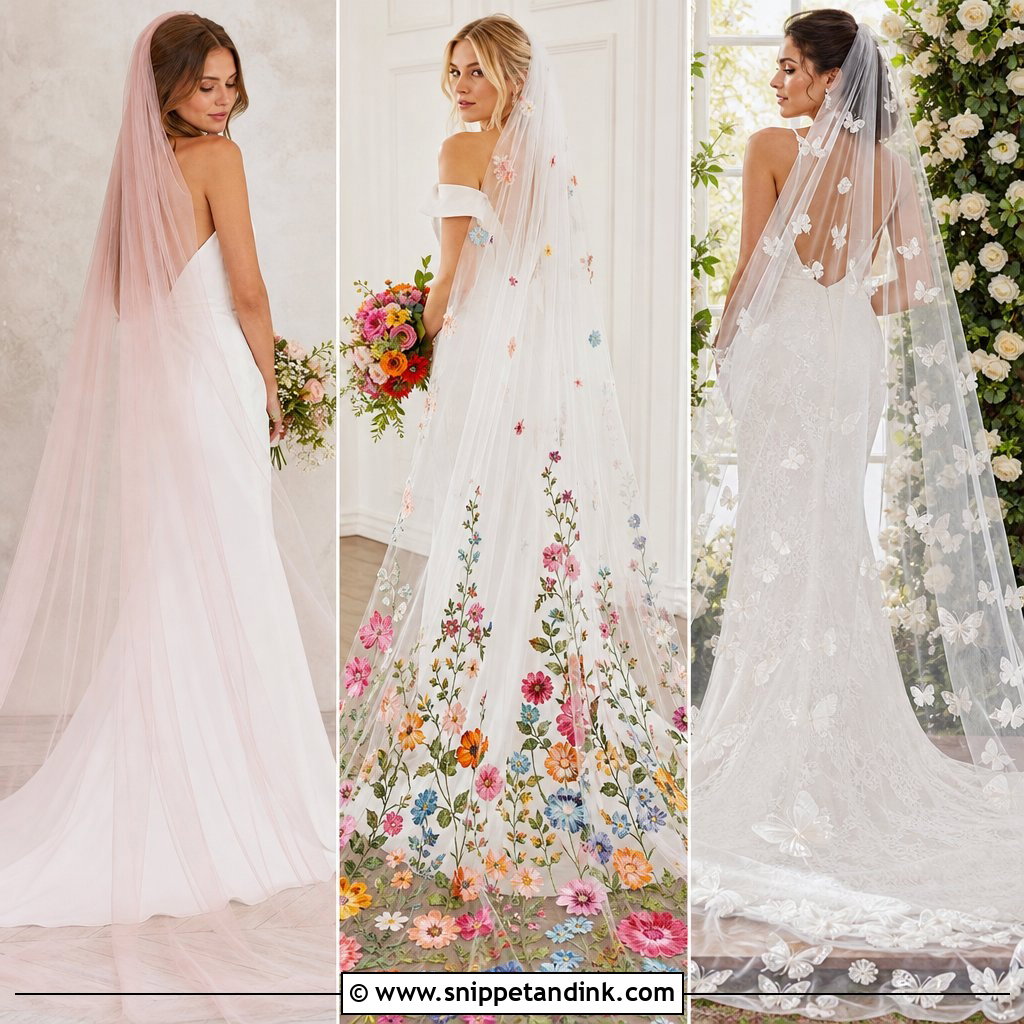
Embroidered flowers scattered over both tiers suit a garden wedding and a soft A-line with botanical lace and chiffon or tulle movement. Look for flowers that echo the gown’s motifs rather than copy them. A chapel back tier floats outdoors; a sheer blusher softens the face for the ceremony. Half-up waves with the veil anchored under a small cluster of hair flowers look natural, but half-up hair is the hardest base for a double veil, so I braid a small section flat at the back first and pin the comb into that. Pearl earrings, low block heels and a green-and-white bouquet let the veil lead.
6. Lace Edge Double Veil With Satin Wedding Dress
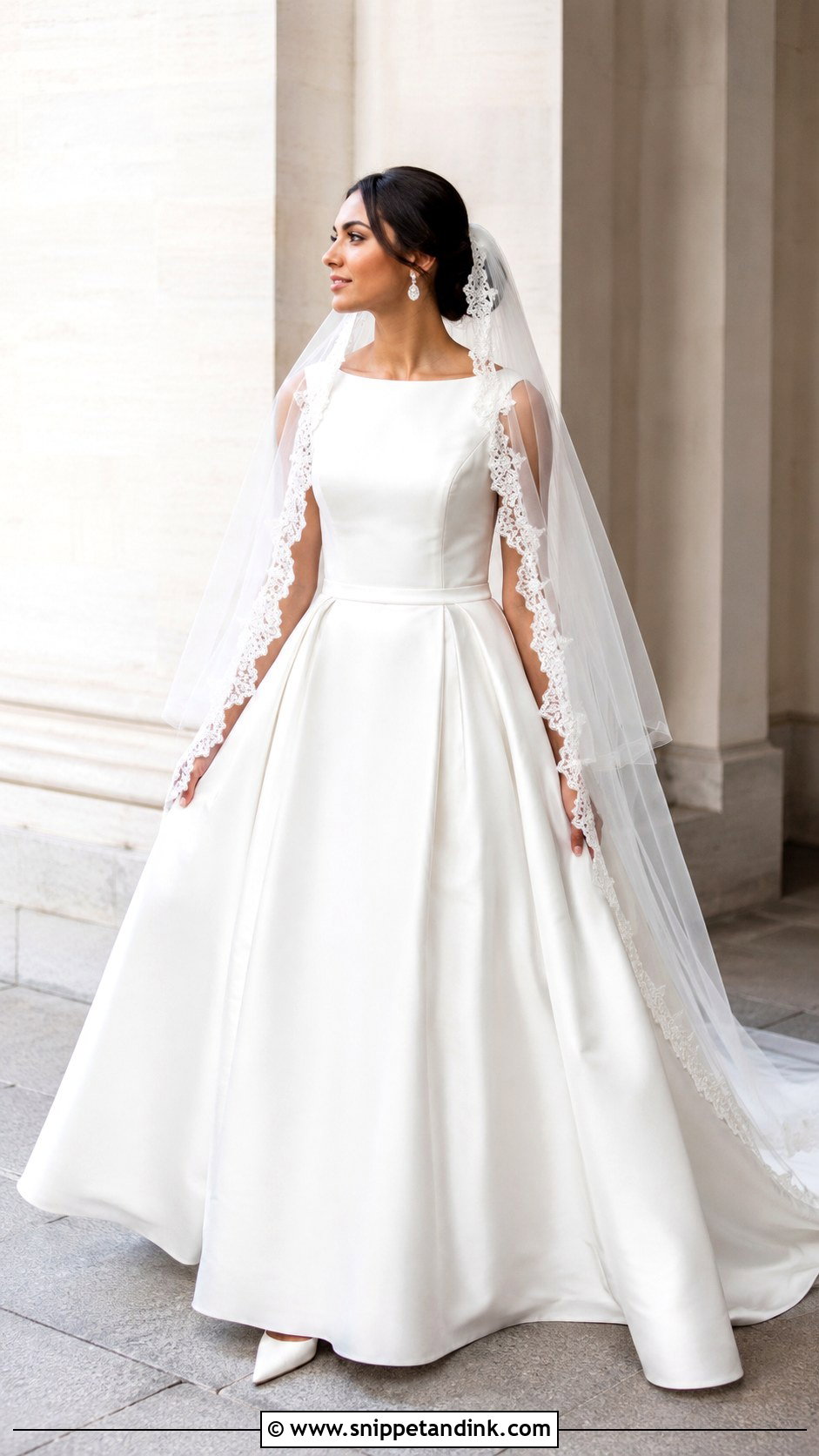
Smooth satin with a lace-edged veil gives texture contrast without clutter. Choose a clean satin gown with a fitted bodice and a full or flared skirt, then a double veil with a narrow lace edge framing the face and continuing around the long tier. A fingertip blusher over a chapel or cathedral back layer is a graceful proportion. A low twisted bun gives the tulle a neat place to fall from. Pointed satin heels, vintage-style earrings and a small bouquet complete it. Compare the veil and gown together in daylight before buying; ivory, soft white and bright white tulle look very different next to satin.
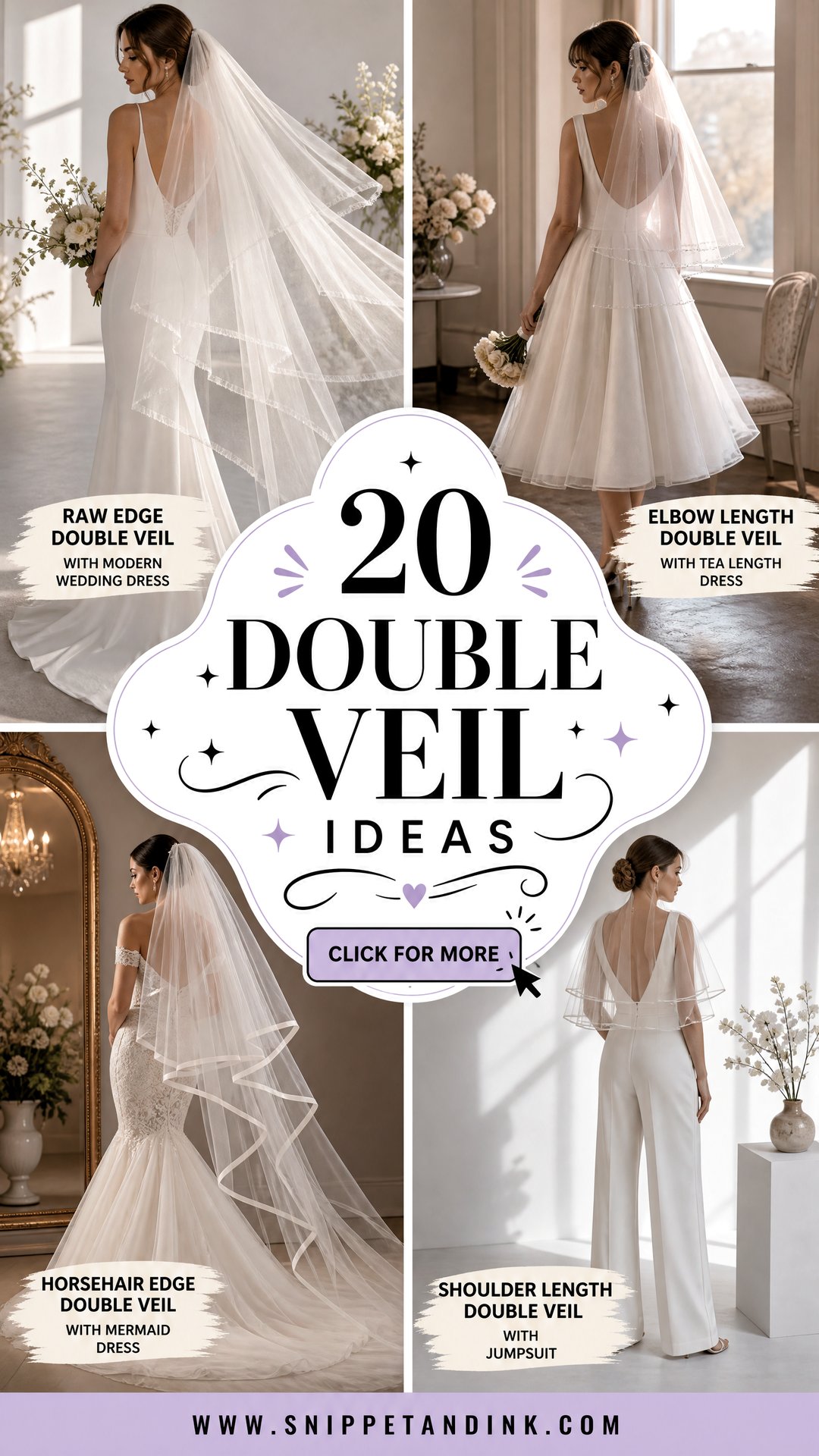
7. Raw Edge Double Veil With Modern Wedding Dress
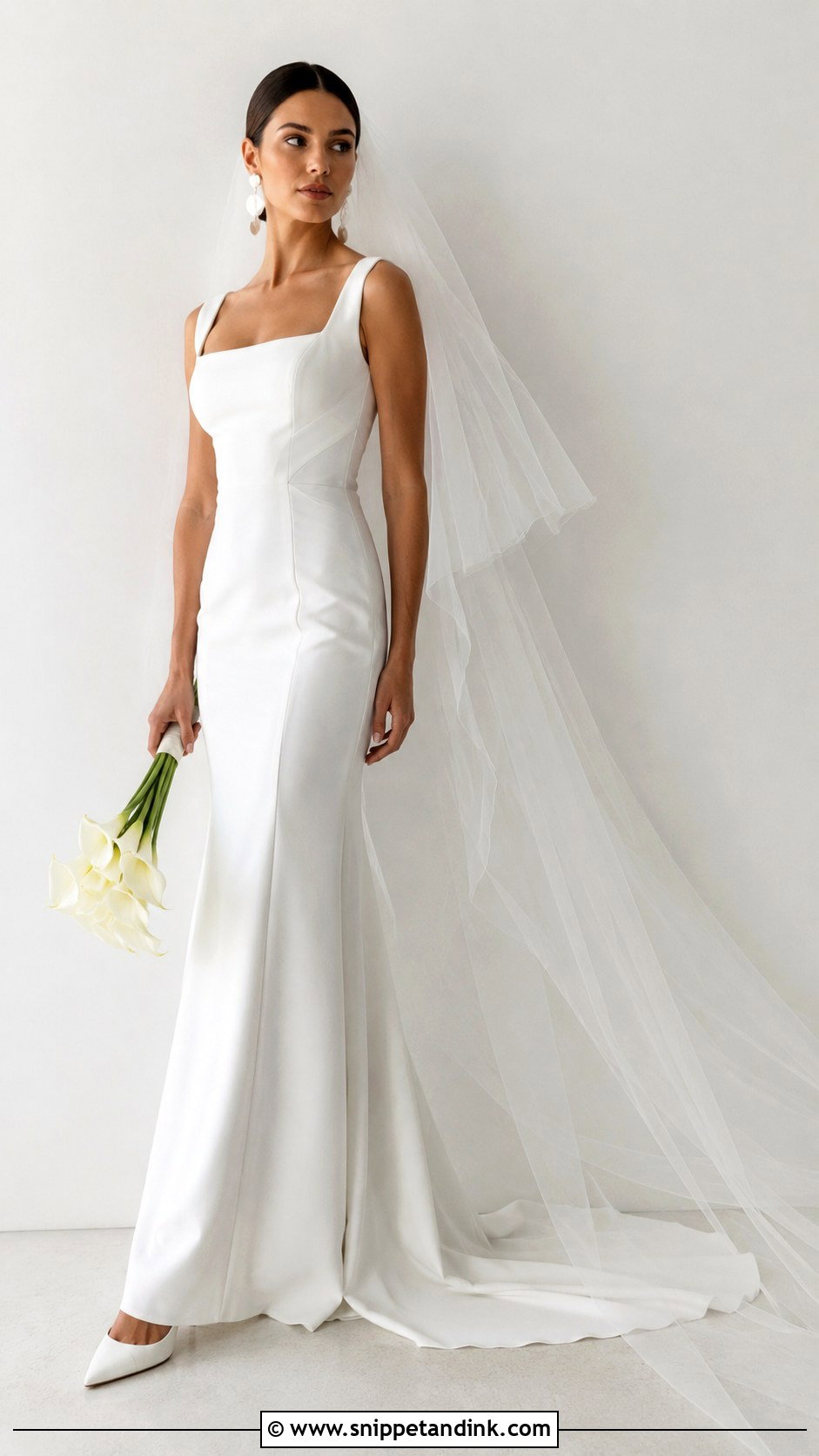
A raw-edge double veil is the least you can add and still look veiled, which is exactly why it suits a sleek modern dress with a square neckline and architectural seams. Fine illusion tulle gives volume without blurring the silhouette. Choose a waist-length blusher and a long chapel or cathedral tier. A centre-parted low bun under the comb, sculptural earrings, white pointed heels and a few calla lilies finish it. Skip lace, ribbon and edging so the veil reads as weightless in photos. Illusion tulle is very fine and static-prone in dry air, so I keep an anti-static spray in my kit for this one.
8. Crystal Double Veil With Glamorous Wedding Dress
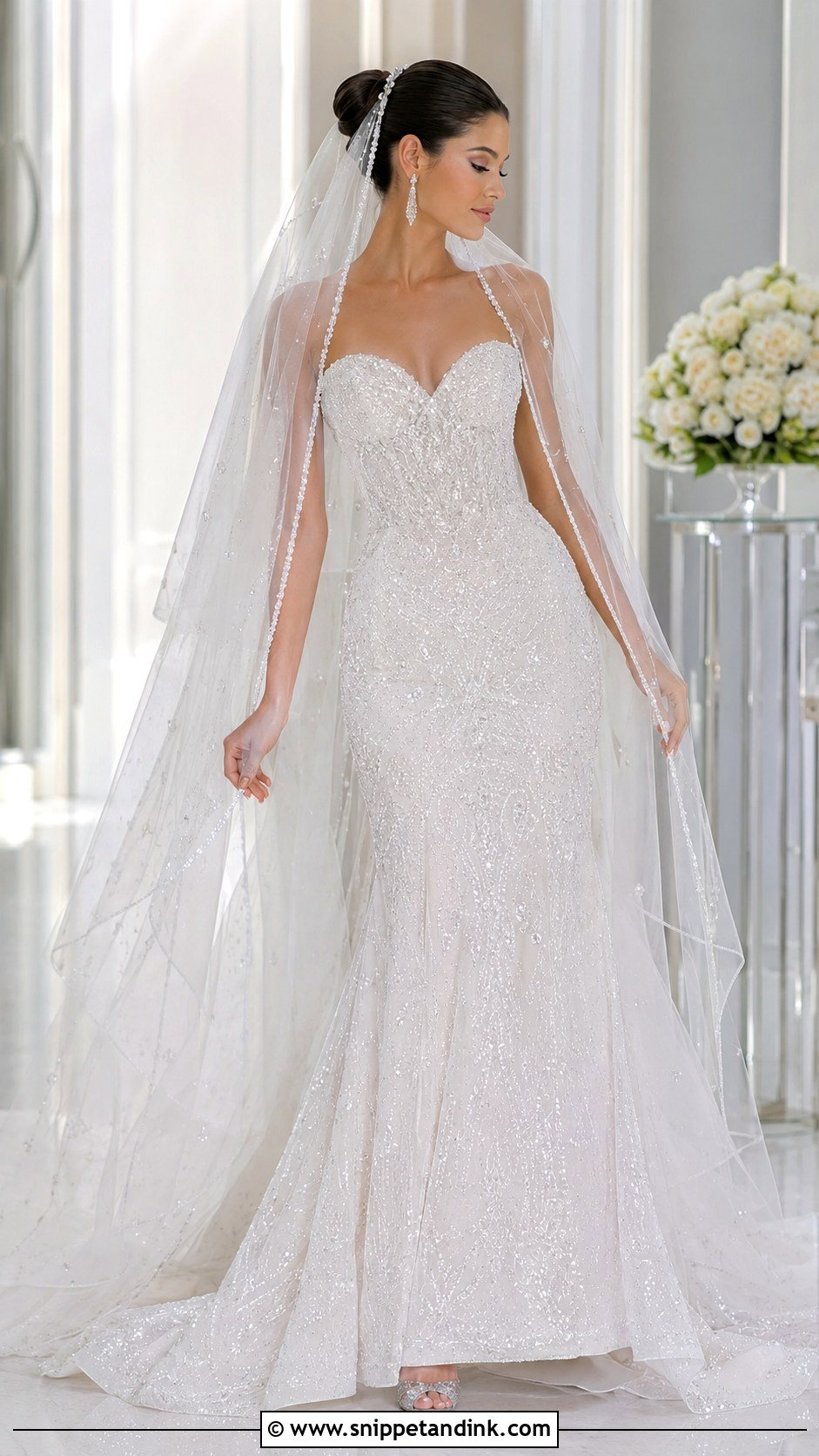
Crystals give a formal outfit some sparkle without a heavily decorated gown. Choose a fitted dress in smooth fabric with a soft sweetheart neckline and a gently flared skirt. The crystals should be scattered lightly on the blusher and grow a little denser toward the bottom of the back tier, keeping the layer near the face soft. Set the veil over a sleek bun, with crystal pins behind the comb. Drop earrings, silver heels and a compact white bouquet are enough. Don’t add a beaded neckline or a big necklace as well; one source of sparkle looks far better under bright ceremony and reception lights.
9. Scalloped Double Veil With Strapless Wedding Dress
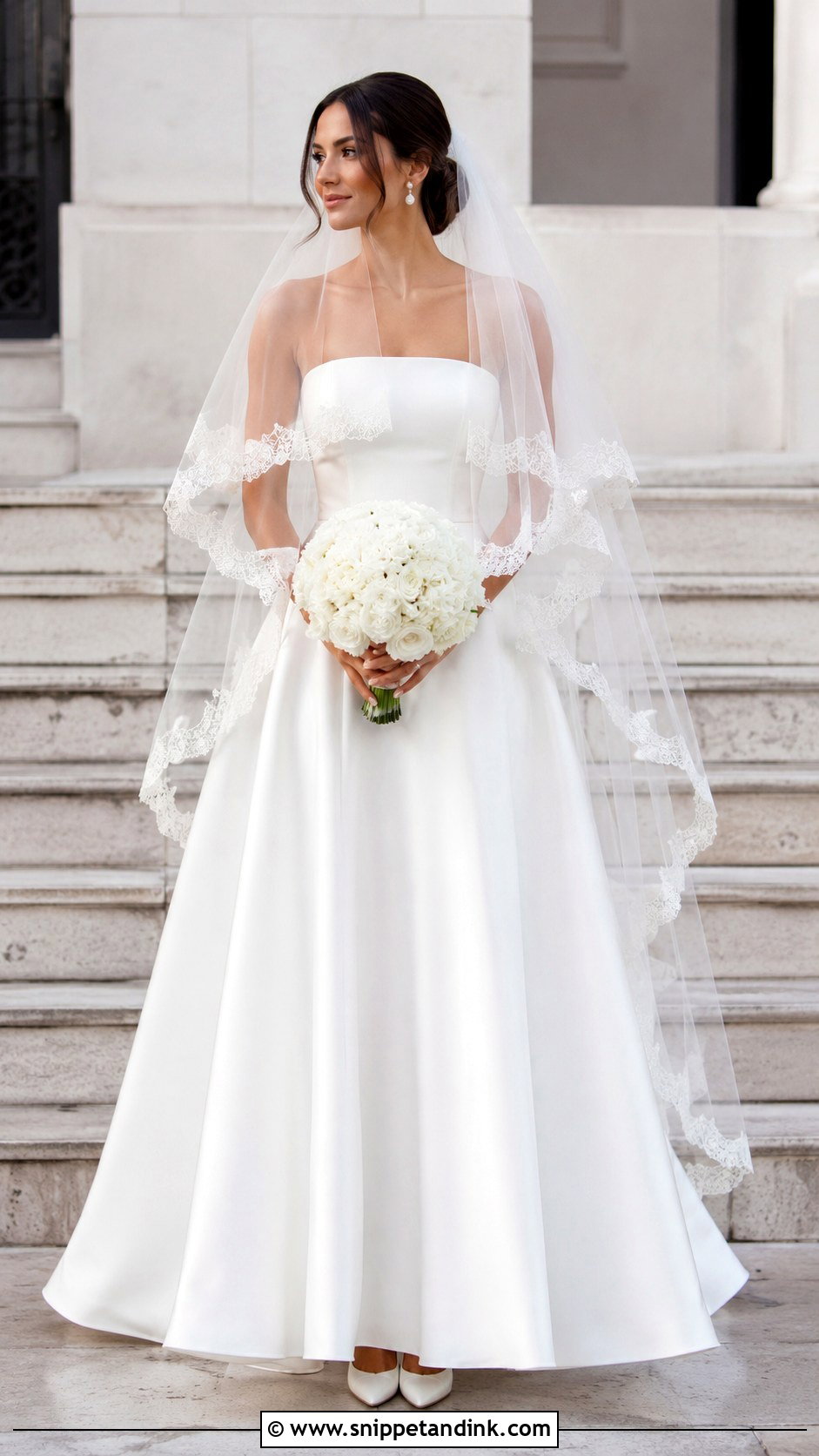
A scalloped edge gives a strapless neckline something to look at. Choose a structured gown with a clean bodice and a flared or full skirt, and let the blusher end around the fingertips so the scallops sit across the front of the dress. Repeat the border on a chapel back tier. If the gown has lace, put the two side by side before buying; scallops and lace motifs of a similar size and spacing look planned, while mismatched patterns crowd the front. A low bun, small pearl earrings, satin pumps and a rounded bouquet keep the lines soft.
10. Elbow Length Double Veil With Tea Length Dress
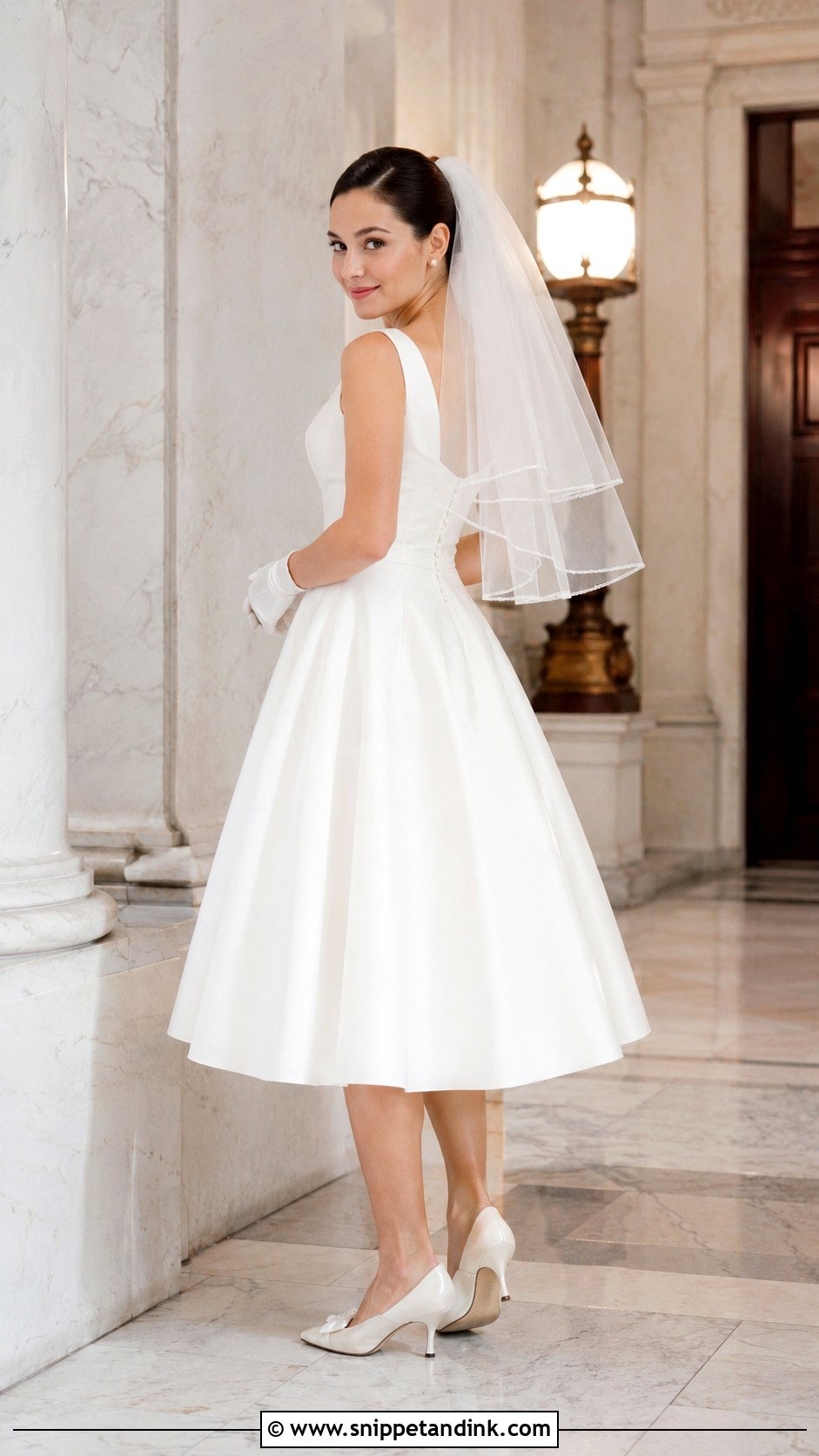
Short tiers and a tea-length hem give a playful vintage look. Choose two softly gathered elbow-length layers that add volume around the shoulders without covering the waist. A fitted bodice and full midi skirt keep it balanced, and the shoes are on show, so pick kitten heels or polished pumps. Pearl studs, short gloves and a smooth updo add the period feel. A narrow pencil edge helps short tulle hold its shape. Short veils are the easiest to wear all day, and I often leave them in through dinner because they don’t catch on chairs. Courthouses, restaurants and small indoor weddings suit it.
11. Waltz Length Double Veil With Slip Dress
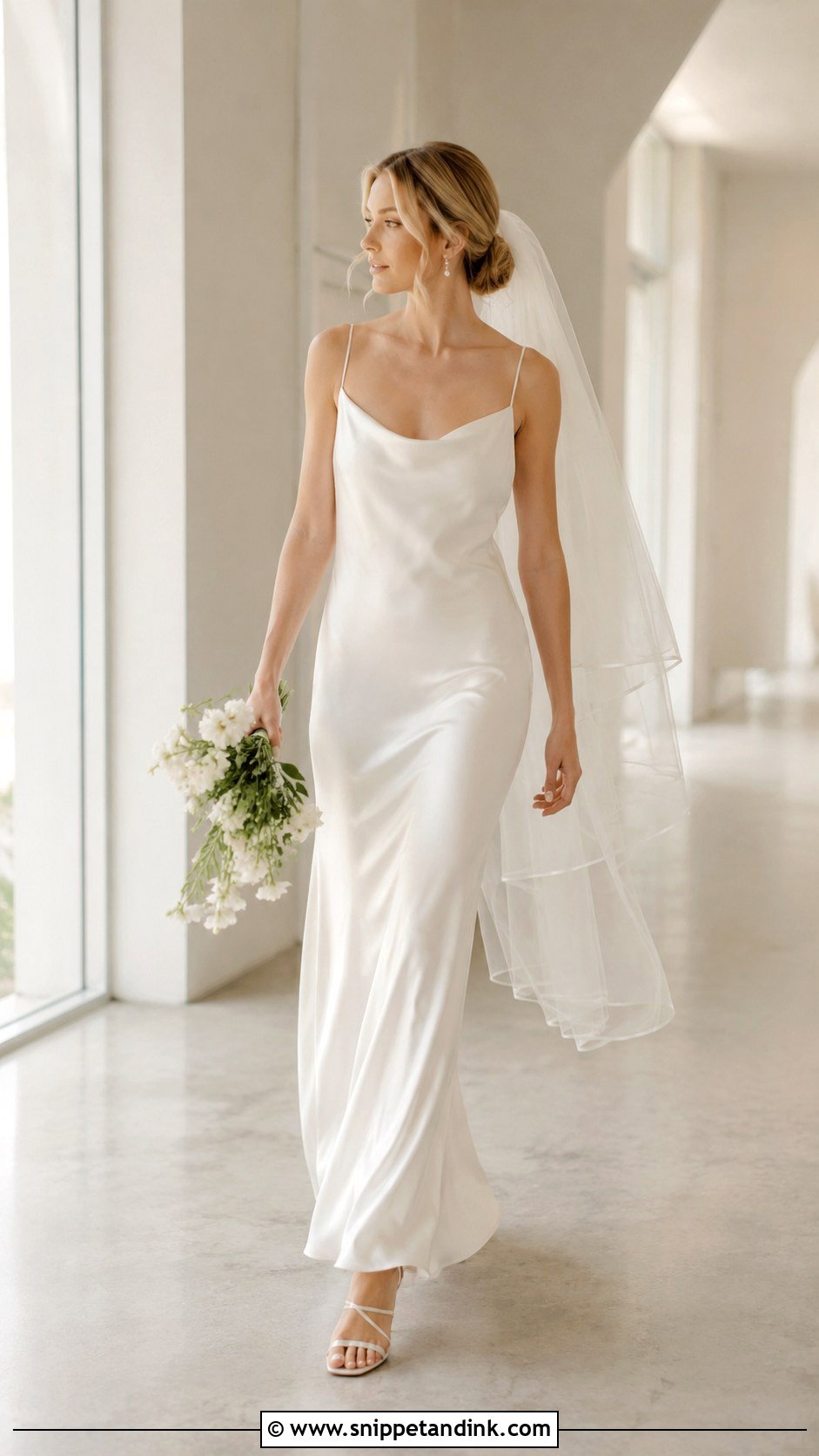
A waltz-length double veil brings movement to a satin slip dress. The long tier ends between knee and ankle and the blusher at the waist or fingertips, so there’s drama but nothing trails on the floor. Soft, lightly gathered tulle floats beside a narrow silhouette; heavy lace would fight the satin, so stick to a raw or pencil edge. Glossy waves or a relaxed low knot both work, depending on the neckline. With waves, I set the comb before the final brush-out so the veil doesn’t flatten the curl at the crown. Strappy ivory heels, delicate drops and a slim bouquet finish it.
12. Royal Length Double Veil With Princess Ball Gown
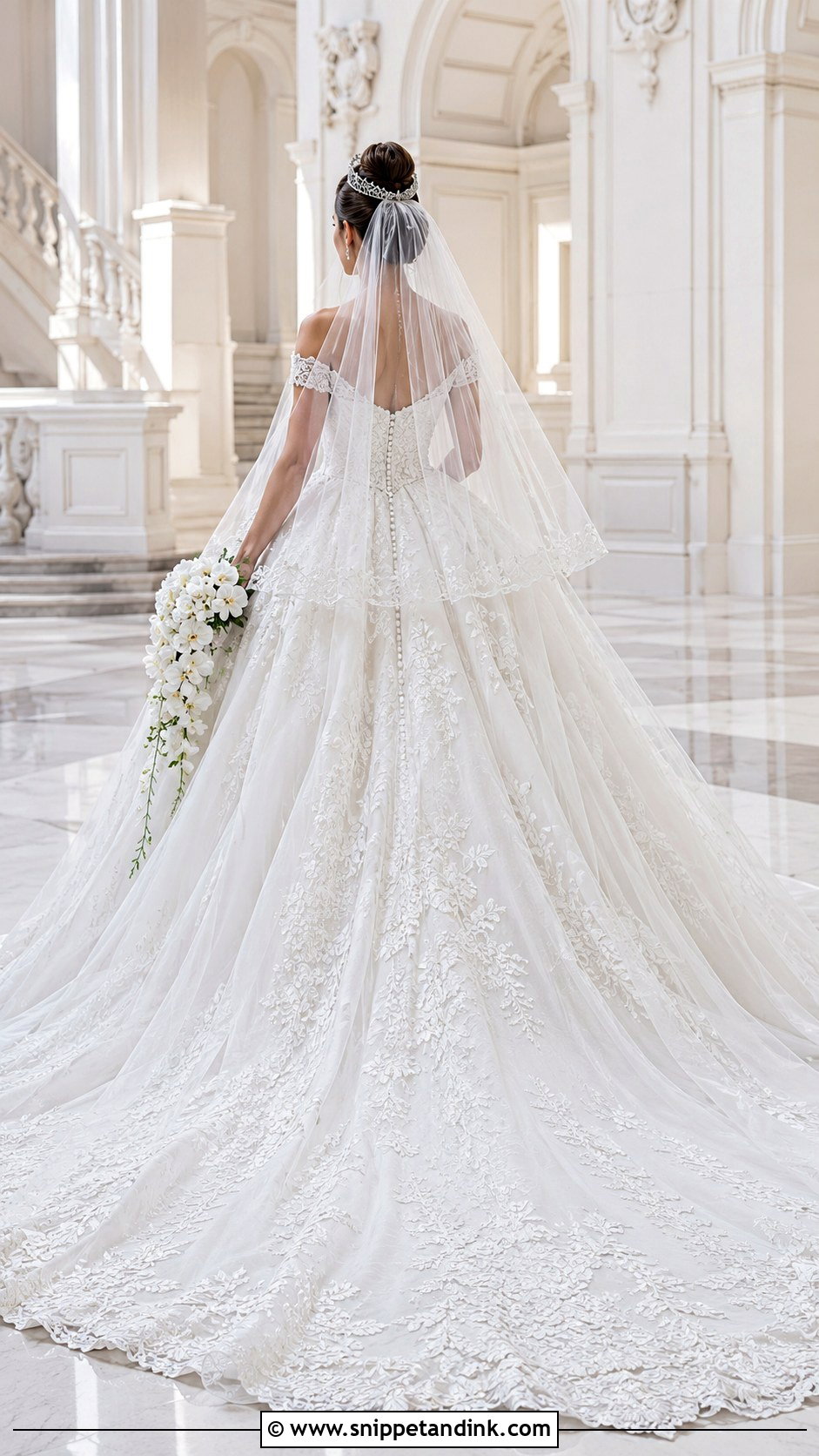
For full grandeur, a royal-length double veil and a structured princess ball gown. The back tier runs well past the gown’s train and fills a wide aisle. Wear the shorter tier as a blusher, then fold it back to build volume at the shoulders. Royal lengths are heavy even in light tulle, so I use a metal comb sewn firmly to the veil and anchor it into a high bun with crossed pins on both sides. Pair it with an off-shoulder bodice, a full skirt and a refined tiara set in front of the comb. Crystal earrings, closed-toe heels and a cascading bouquet finish it. Keep embellishment near the border so the dress shows through the centre.
13. Horsehair Edge Double Veil With Mermaid Dress
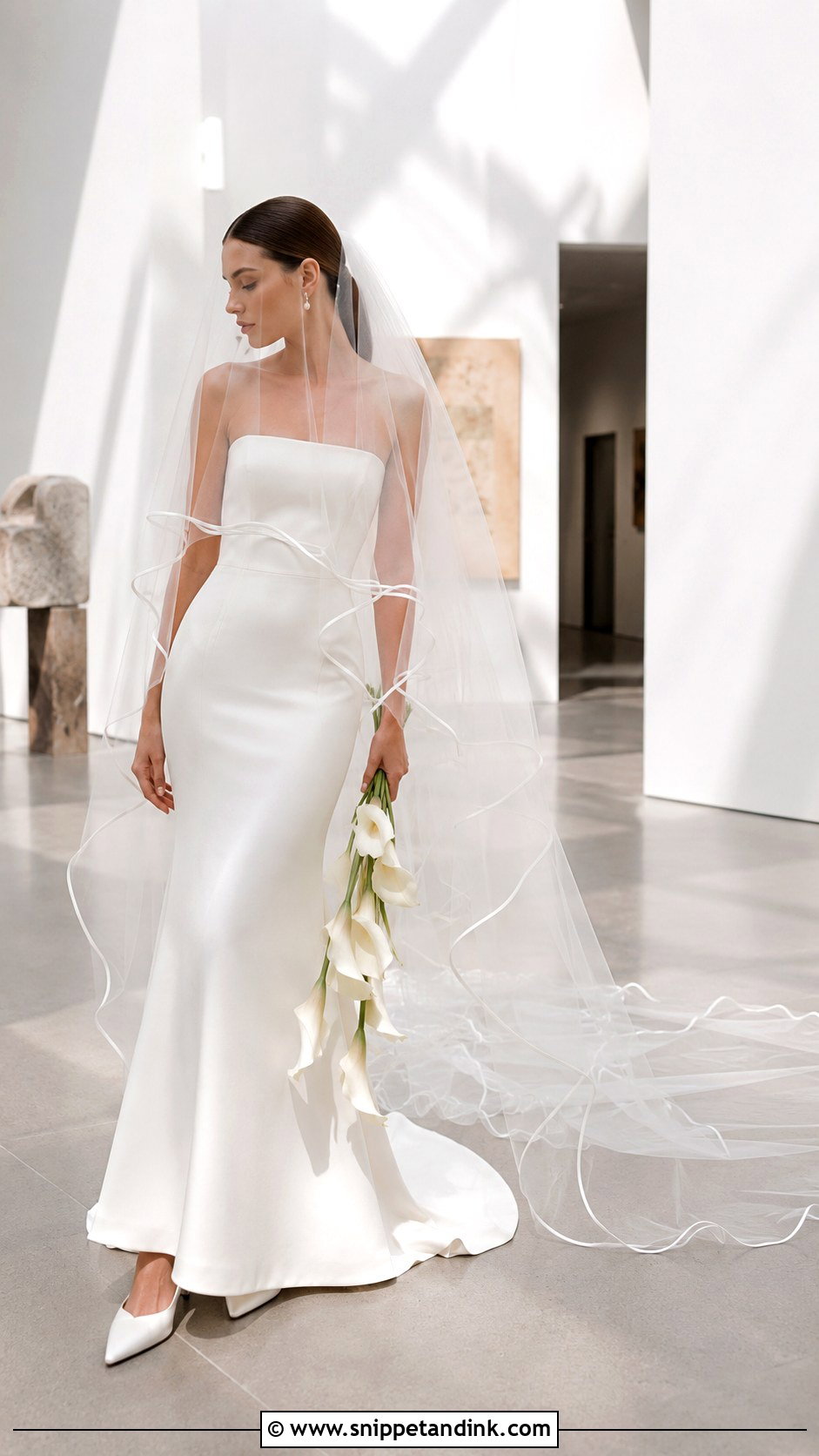
Horsehair trim gives tulle a wavy, sculptural edge, so the veil looks fuller without heavy gathering at the comb. On a fitted mermaid dress, a fingertip blusher and a cathedral back layer follow the flare of the skirt. Clean crepe or satin lets the edge stand out. A smooth low ponytail or bun works; I place the comb above it so the ponytail doesn’t push the veil out from the head. Modern pearl earrings, pointed pumps and long-stemmed flowers finish it. Narrow horsehair gives a soft ripple; a wide band is more editorial and suits a very plain gown. Horsehair also helps the veil sit better in wind.
14. Beaded Double Veil With Long Sleeve Dress
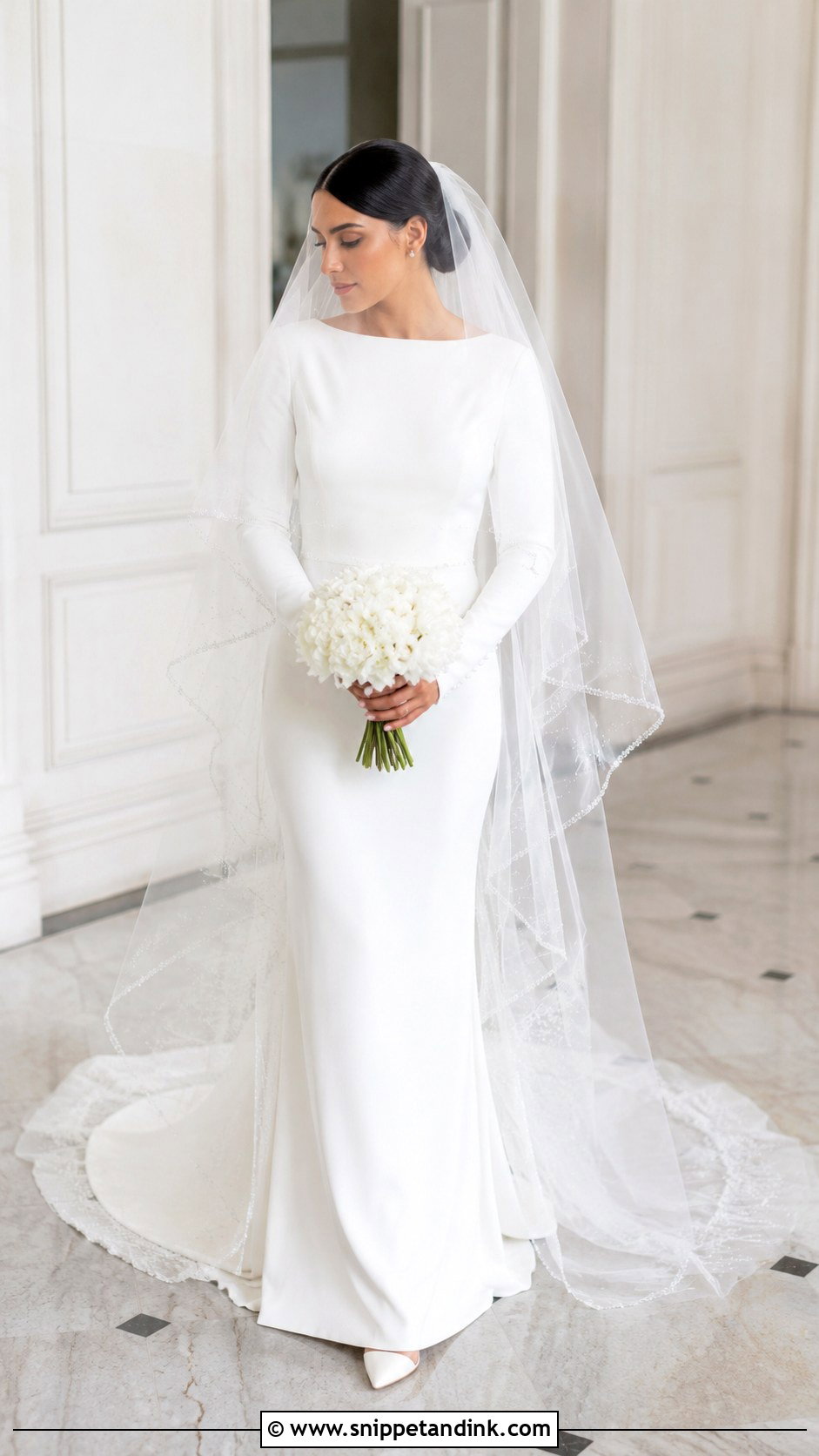
A lightly beaded double veil brightens a long-sleeve gown. Choose a fitted lace or crepe dress with a clean neckline and put the beads along the veil’s edge, not across its surface, so they don’t compete with textured sleeves. A chapel back layer and a shoulder or fingertip blusher frame the upper body. A low, side-parted bun gives a smooth base for the comb. Small crystal earrings, ivory pumps and a structured bouquet finish it. If the dress is beaded too, match the finish: silver, pearl and clear beads look surprisingly different next to each other.
15. Blush Pink Double Veil With Ivory Wedding Dress
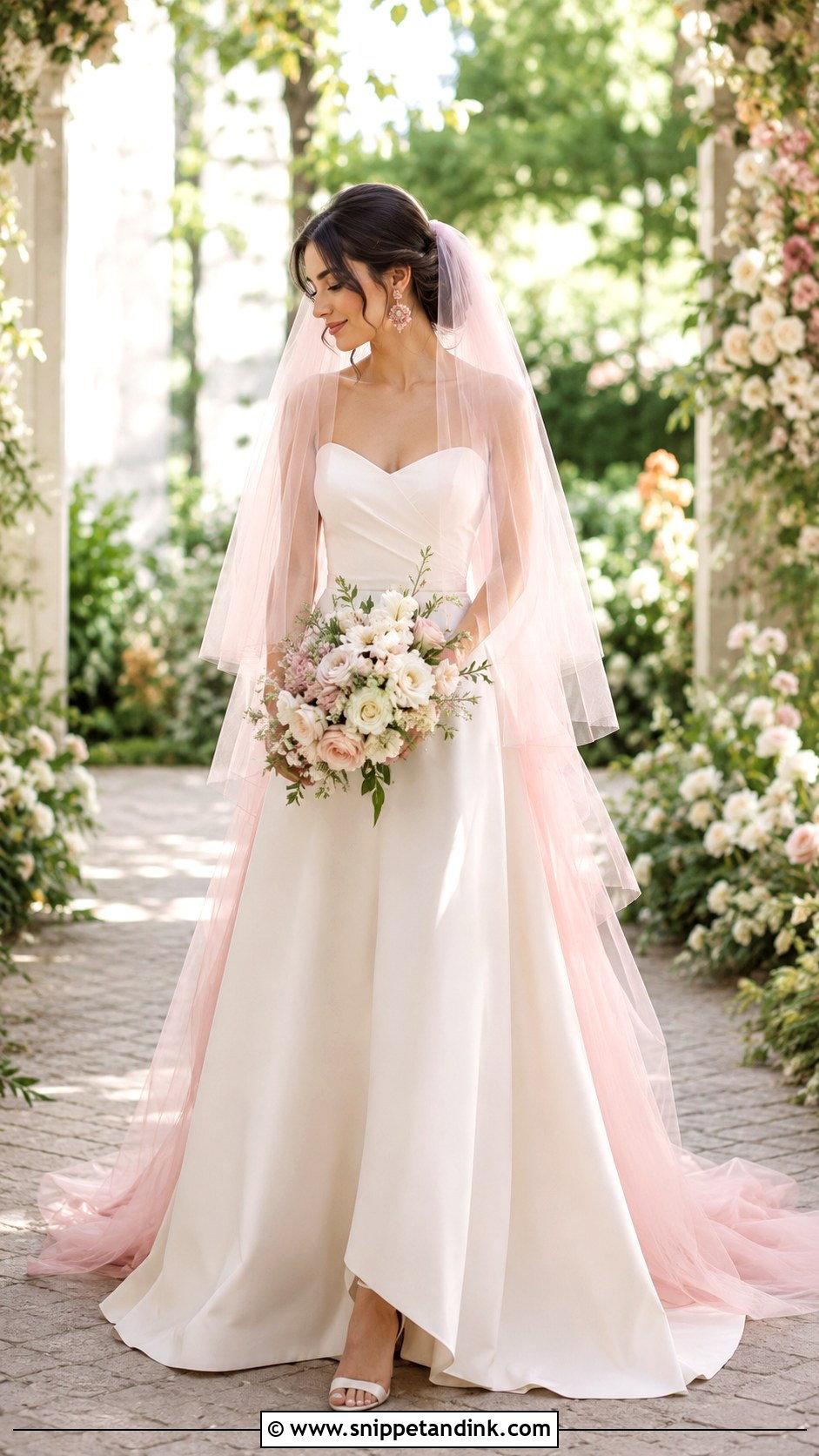
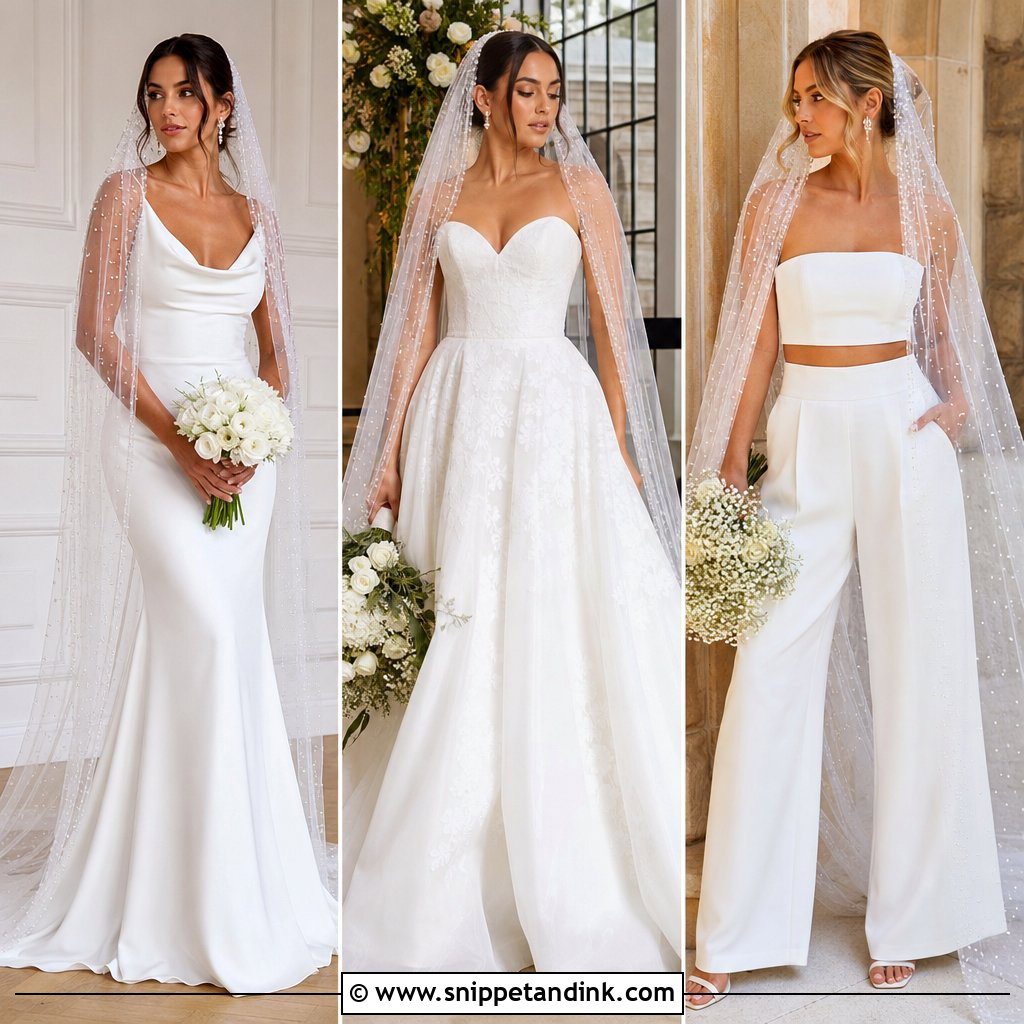
A breath of blush gives a double veil some personality and still reads as bridal. Pair the coloured tulle with an ivory gown so the contrast stays soft; an A-line or column is the cleanest background. Choose a sheer pink blusher and a chapel back tier, and repeat the colour in pale flowers in the bouquet. Rose-toned earrings, neutral heels and a loose low bun finish it. Hold the veil against the actual dress before you order; blush tulle can lean pink, peach or beige, and on some skin tones a peachy blusher right in front of the face can look washed out.
16. Bow Double Veil With Bridal Mini Dress
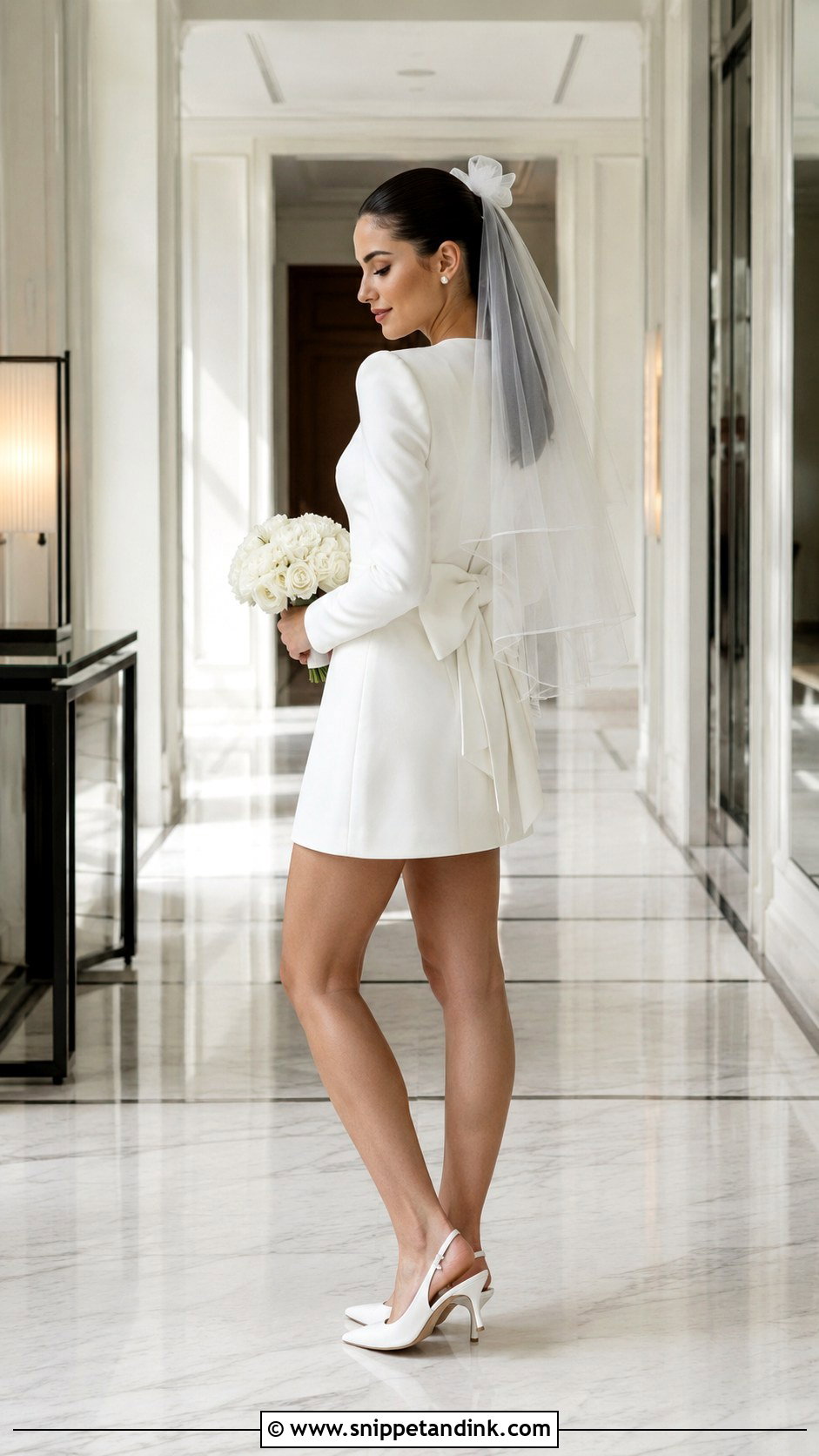
A bow on a short double veil reads playful, especially with a structured mini. Pick two shoulder or elbow-length tiers with a neat bow above or below the comb. A long-sleeve mini, a tailored shift or a short A-line keeps it polished. Add sheer tights in cooler months and pointed pumps or slingbacks. A smooth ponytail or half-up style keeps the bow visible from behind; I tie the ponytail a little higher than usual so the bow sits on the head, not on the neck. Pearl studs and a small bouquet are enough. Leave the veil free of lace and beading.
17. Vintage Double Veil With Bias Cut Wedding Dress
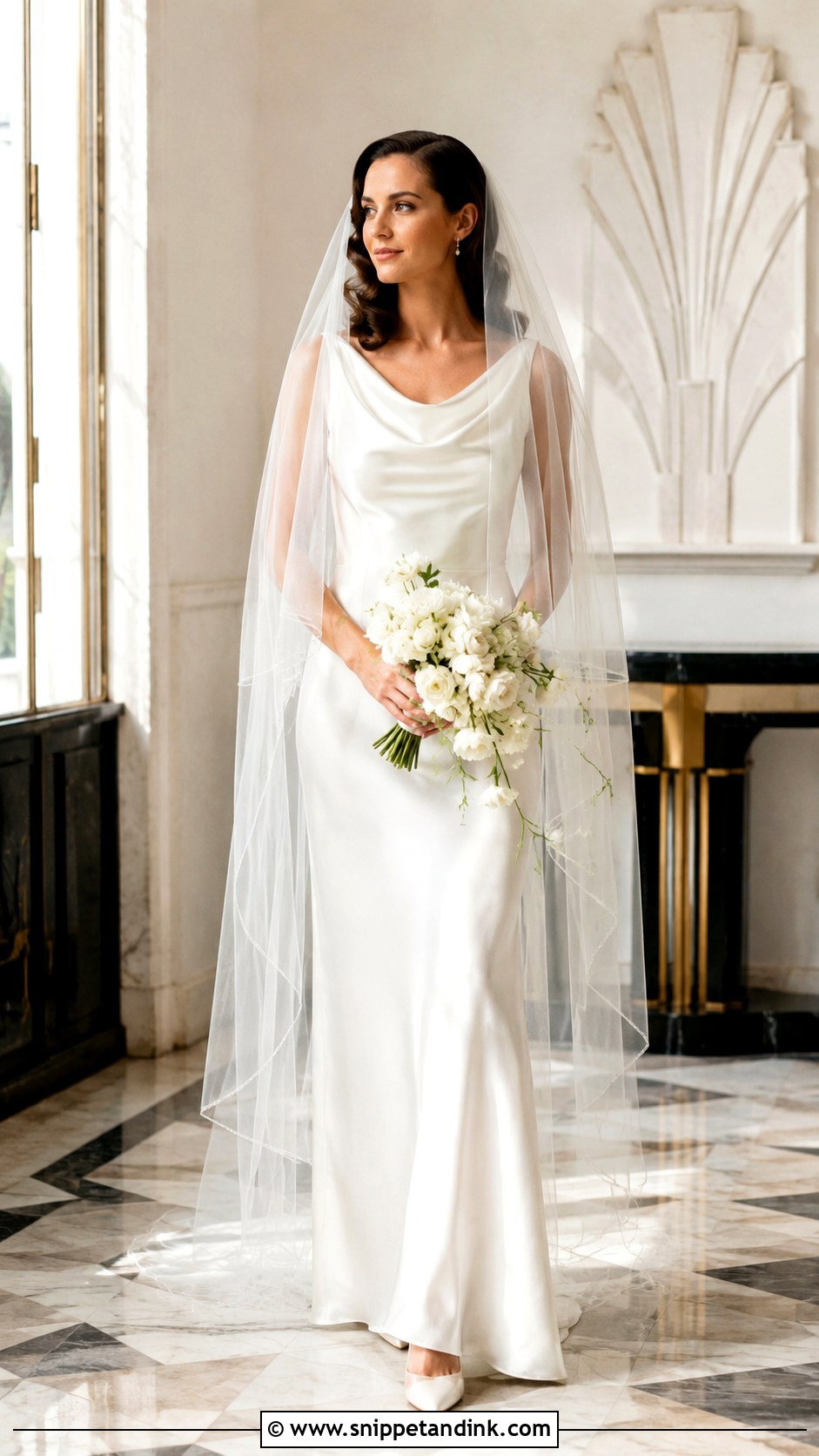
Soft tulle with a fine pencil edge, a lightly gathered crown and a fingertip or waltz-length back tier gives the vintage feel without a costume. The top layer frames the face as a blusher before folding back into gentle volume. A cowl-neck satin gown or a plain long-sleeve design suits the mood. For hair, brushed waves, a low roll or a neat side-parted bun all work, and a low roll gives the comb a particularly firm hold because the pins lock into the roll itself. Small drop earrings, satin pumps and a loosely arranged bouquet finish it. One vintage element in the hair is enough.
18. Shoulder Length Double Veil With Jumpsuit
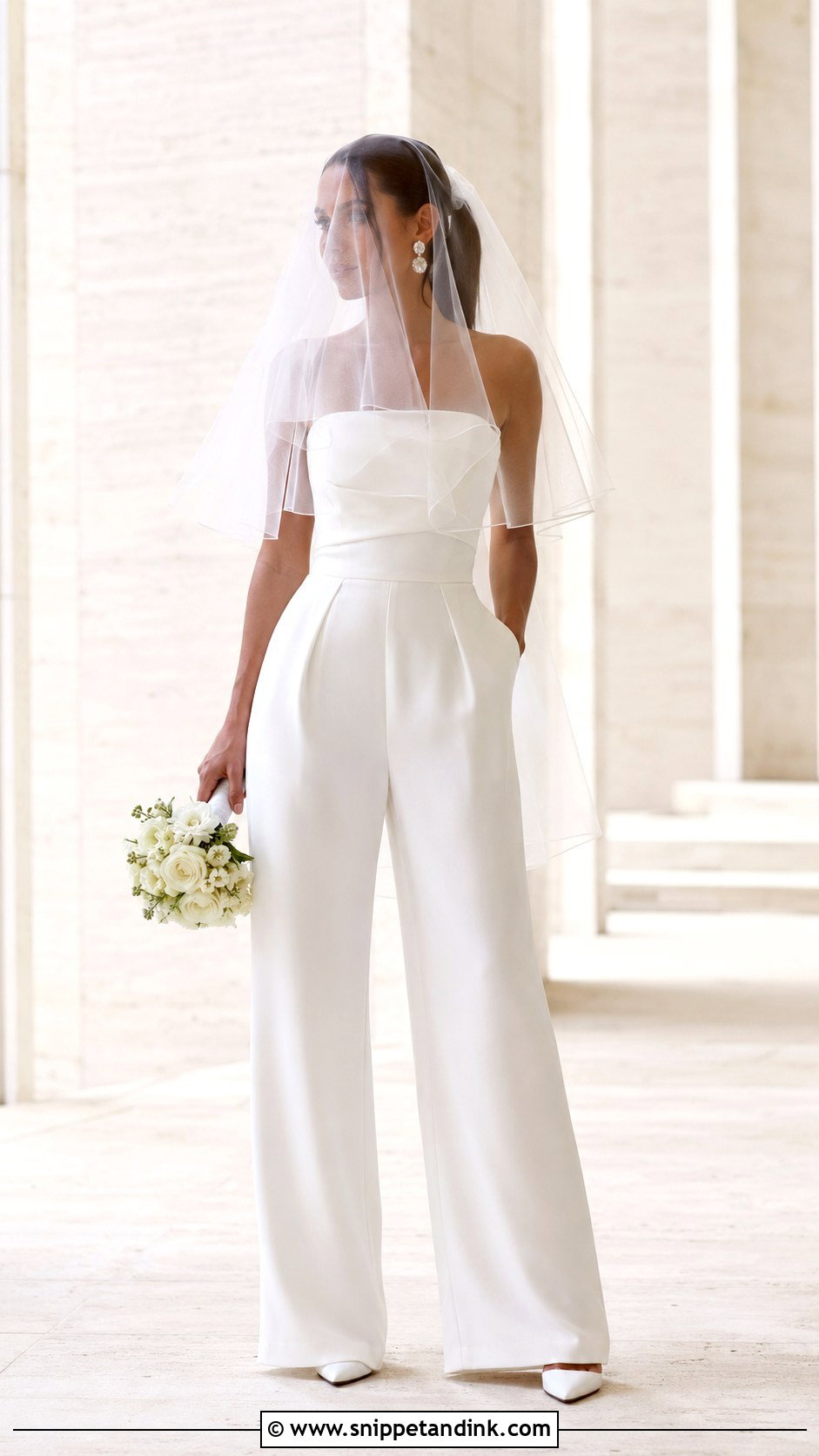
A shoulder-length double veil turns a tailored white jumpsuit unmistakably bridal. Two crisp, light layers sit around the shoulders and upper back without hiding the neckline or waist; a wide-leg cut with a fitted bodice gives a strong shape, and the short blusher adds a traditional moment. On a smooth bob, I’d use small clear elastics to make tiny anchor points behind the ears for the comb, because short hair gives a comb almost nothing to bite into. Pointed white heels, statement earrings and a compact bouquet finish it. A narrow satin or pencil edge suits the tailoring.
19. Detachable Blusher Double Veil With Backless Dress
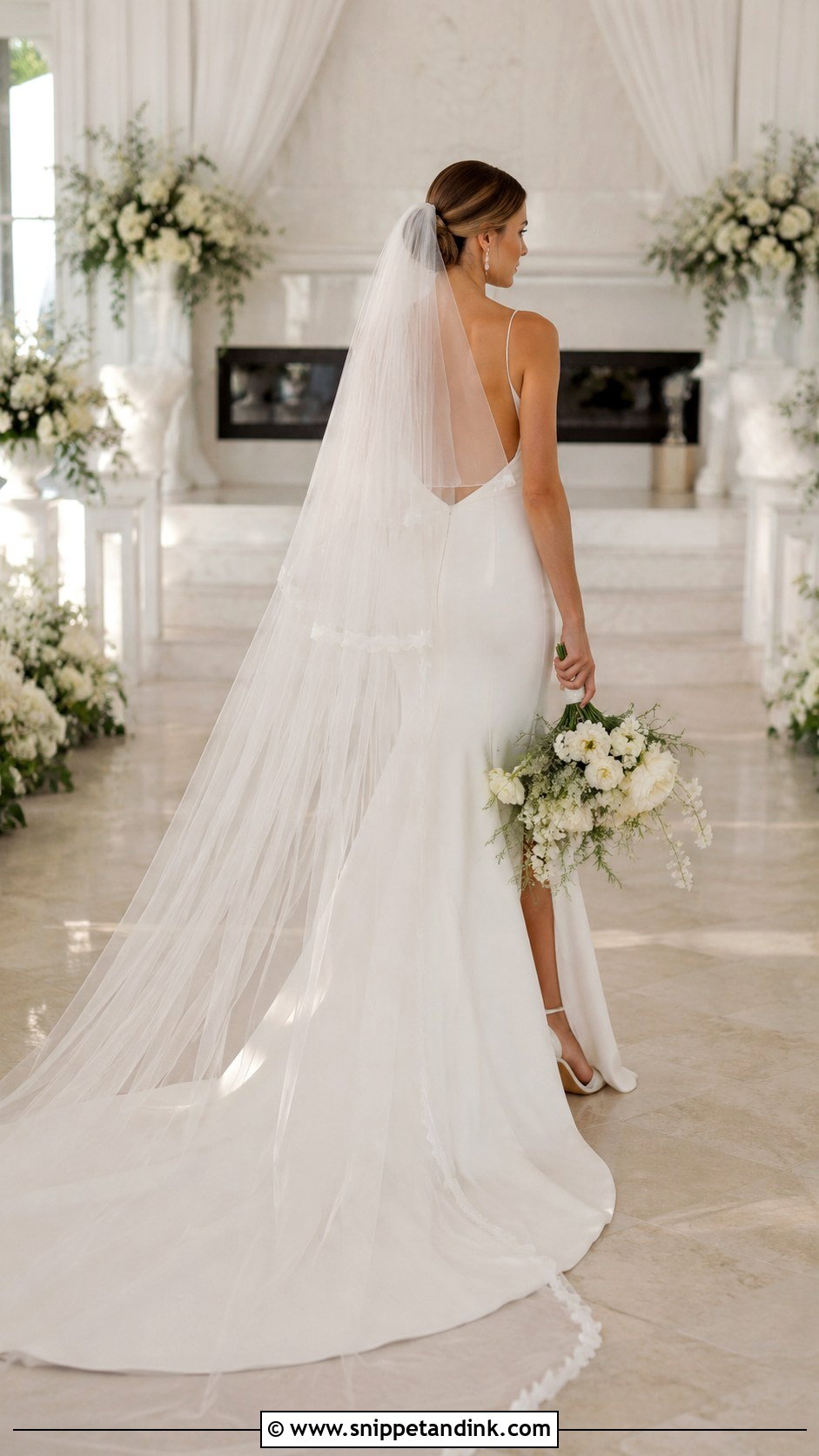
A detachable blusher gives you the double-veil moment without wearing two layers all day. A short face veil goes on its own comb in front of a longer chapel or cathedral veil, and comes off after the ceremony. On a backless gown, that’s the point: the open back shows clearly once the blusher is gone. Plain tulle or a narrow raw edge keeps attention on the dress. Two combs need two anchors, so I build a low bun with a firm pinned base for the back comb and a separate pin base above it for the front one. Practise taking the blusher off at the trial so nothing comes loose.
20. Personalized Double Veil With Minimalist Gown
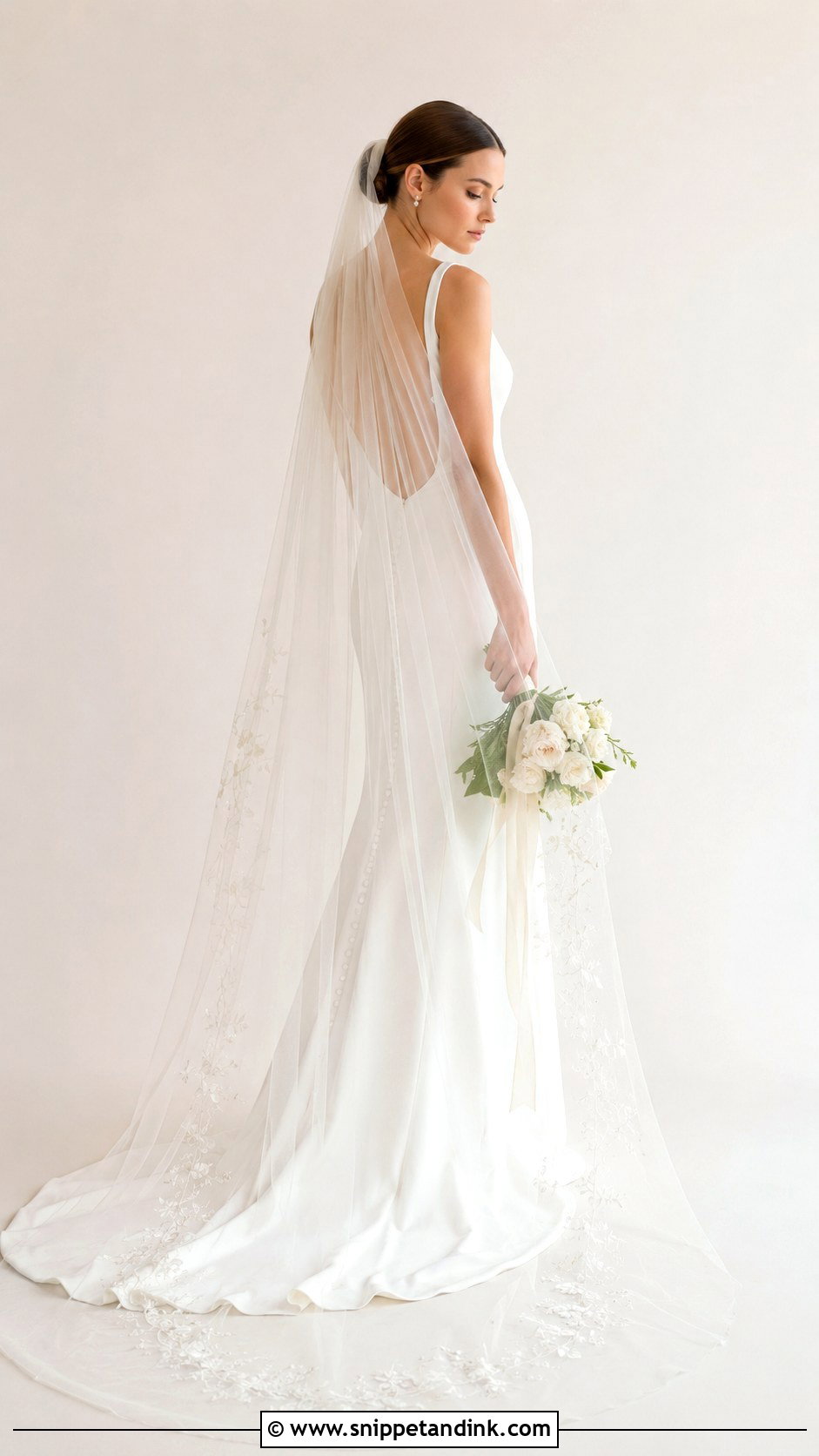
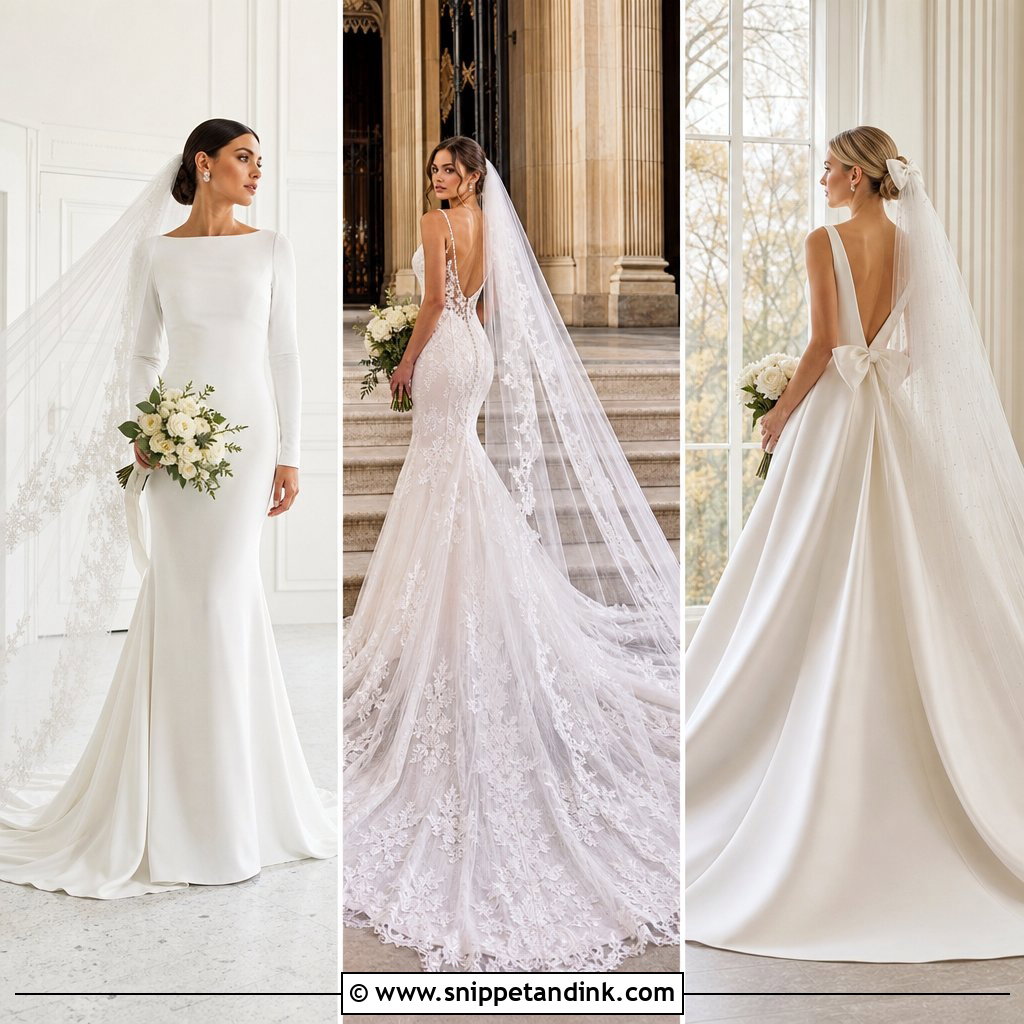
Personalized embroidery turns the veil into something you’ll want to keep. Initials, the date, small flowers or a short phrase near the lower edge of the back tier work best; leave the blusher mostly plain so nothing busy sits near the face. A minimalist crepe gown with a square, boat or strapless neckline gives a clean background. A low bun, quiet earrings, pointed heels and a ribbon-tied bouquet are enough. Thread that blends into the tulle stays subtle. Check the wording, size and placement before it’s made, as embroidery on tulle can’t be unpicked cleanly.
Lifting the Blusher Without Wrecking the Hair
The reveal is ten seconds, and it’s when most hair damage happens, because someone nervous grabs the tulle near the comb and tugs. Whoever lifts it, your partner or the person walking you in, should take the bottom hem of the blusher in both hands, lift it up and over the head in one movement, and let it settle behind. Practise it once at the rehearsal with an old piece of net if the real veil isn’t to hand.
Afterward, I like someone to check the comb in a quick look at the back of the head. If the blusher has caught on a pin, it will pull a section loose, and it’s easy to fix with one pin before the photos.
Creases, static and wind
Veils arrive folded and creased. Hang yours a day or two early and use a handheld steamer on a low setting, held well away from the tulle; never press tulle with an iron, as it melts or goes shiny. A hot shower running in a closed bathroom helps on the morning if you have no steamer. Outdoors, the long tier will catch every breeze. Ask a bridesmaid to hold the end during portraits, and if the ceremony is on a beach or hilltop, consider a veil with a weighted or horsehair edge, or a shorter back tier.
When it’s time to take the veil off for the reception, remove the pins first, then slide the comb out backward. Pulling it straight off drags the teeth through the bun.
Two Layers of Tulle, One Firm Anchor
A double veil looks right when it connects with the dress, the fabric, the hair, the shoes and the jewelry. Cathedral and royal tiers bring drama; elbow, shoulder and waltz lengths are easier to move in. Pearls, lace, crystals, embroidery and satin edges add character, but none of them should compete with the gown’s best detail. Compare colours side by side, test the veil on your actual hairstyle at the trial, and work out how each layer goes back and comes off. Classic, minimal, glamorous or modern, start with the dress and let the veil follow.
You'll Like These Ideas:


Leave a Reply