
I see the veil from a different angle than most people at a bridal fitting: from behind, holding the comb, working out where it can sit so it stays put for eight hours. A veil should suit the gown’s silhouette, fabric, neckline and train without hiding the details she paid for, and it has to suit the hairstyle underneath it too. That’s why I’ve paired each veil below with a complete look, from a long cathedral veil over a minimalist gown to a playful birdcage veil with a tea-length dress. As a rule of thumb, longer veils feel more formal and move more; shorter ones put the attention on the face and the dress. Bring the hair, jewelry, shoes and bouquet into the decision as well, because they all meet at the back of her head.
Where I Anchor the Comb, Hairstyle by Hairstyle
Most veils fail at the comb, not the fabric. A comb slid into loose, freshly curled hair will work its way out within an hour, especially with a long veil pulling back on it. So before any veil goes in, I decide where it will sit and build something for it to hold.
- Low bun or chignon: the comb goes in just above or just below the bun, teeth angled toward it, so the bun works as a ledge.
- Half-up: I slide it into the twist or pinned section at the back, where the hair is already gathered and firm.
- Fully down: I make a small hidden base first, either two bobby pins crossed in an X or a tiny braid, and slide the comb through that.
- Fine or silky hair: a little backcombing at the root where the comb will sit, plus a light dry texture spray, gives the teeth something to grip.
- Heavy veils: two combs, or a comb with bobby pins threaded through its ends and crossed into the hair.
Height changes the look as well. Placed at the crown, a veil adds height and a classic shape; placed under the bun, it disappears into the hairstyle and falls straight down the back. Bring the veil to your hair trial so we can test both and see which suits your face and gown.
1. Cathedral Veil With Minimalist Wedding Dress
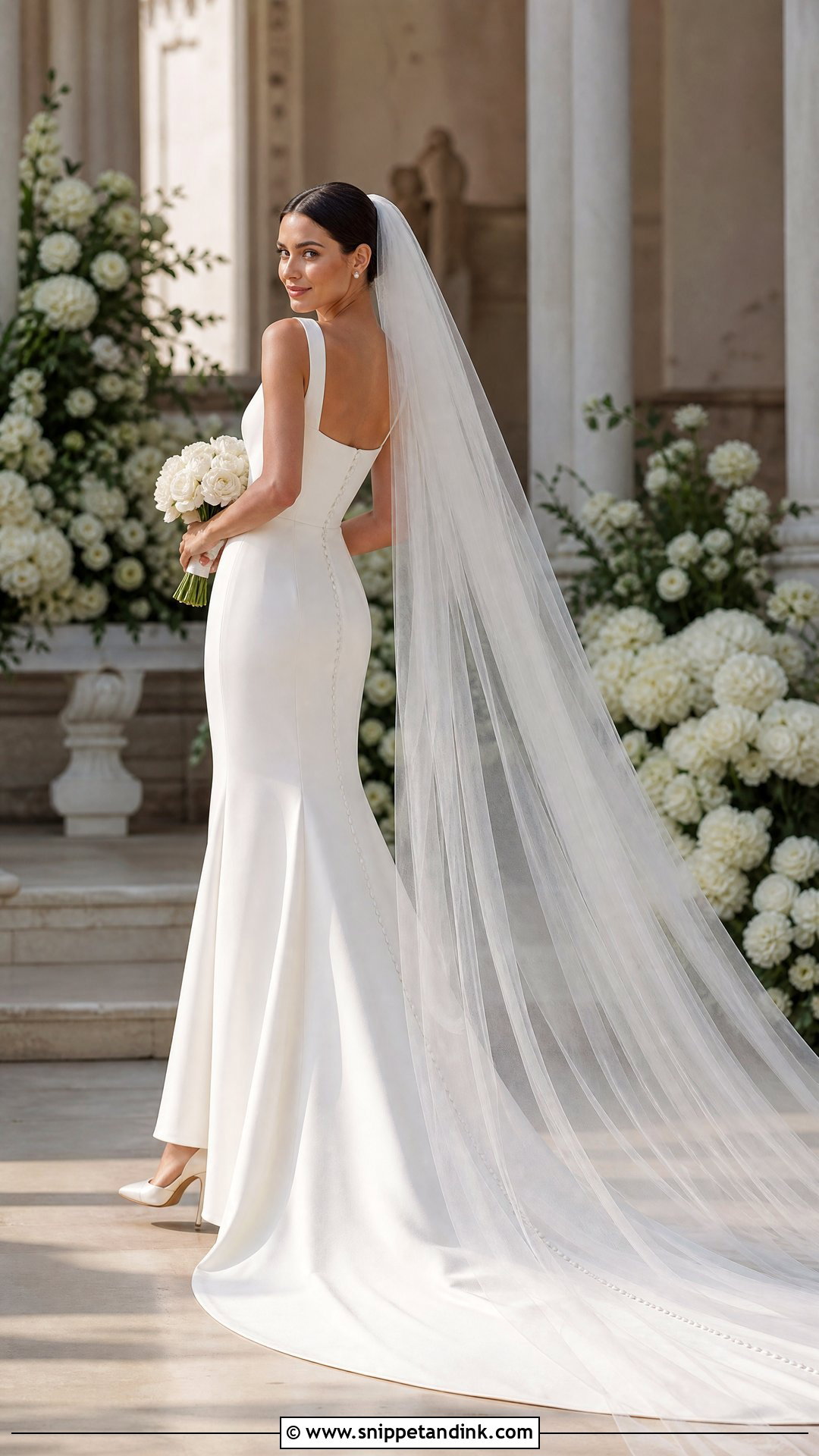
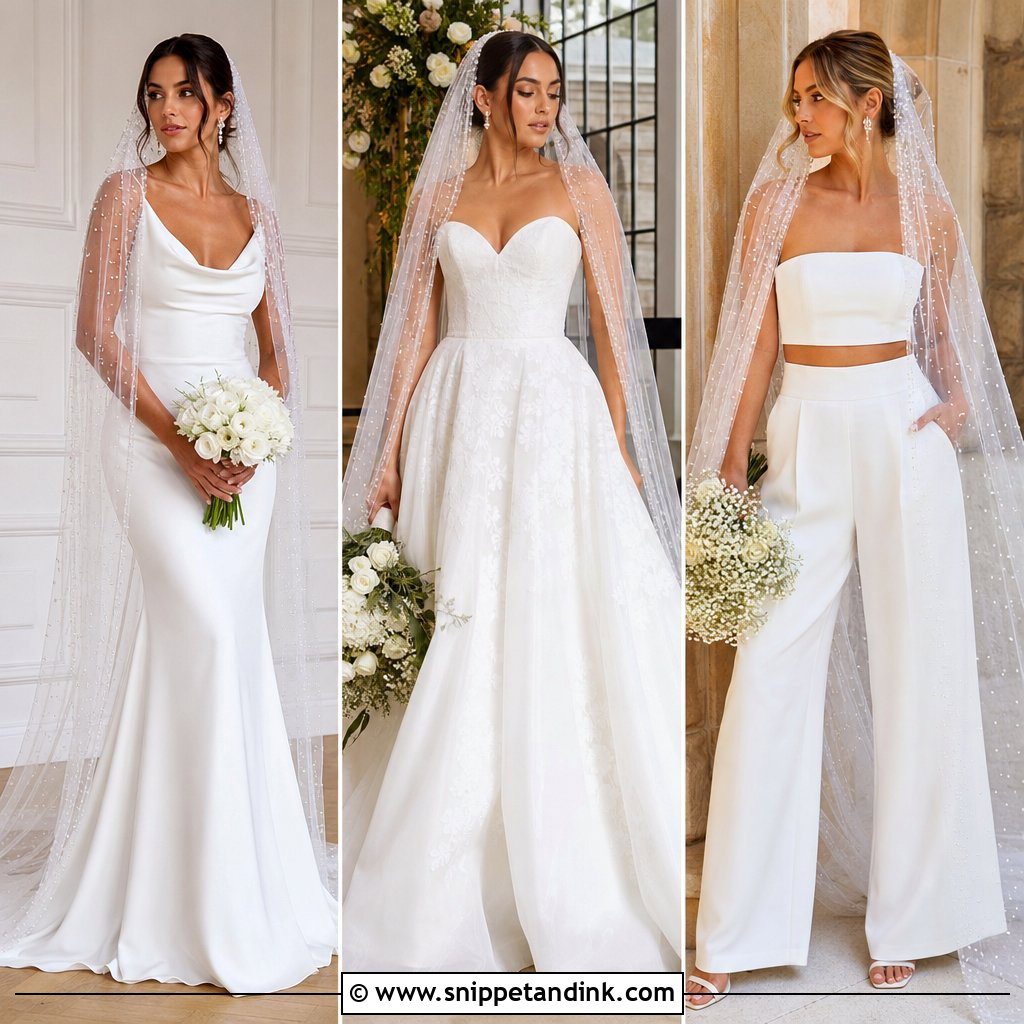
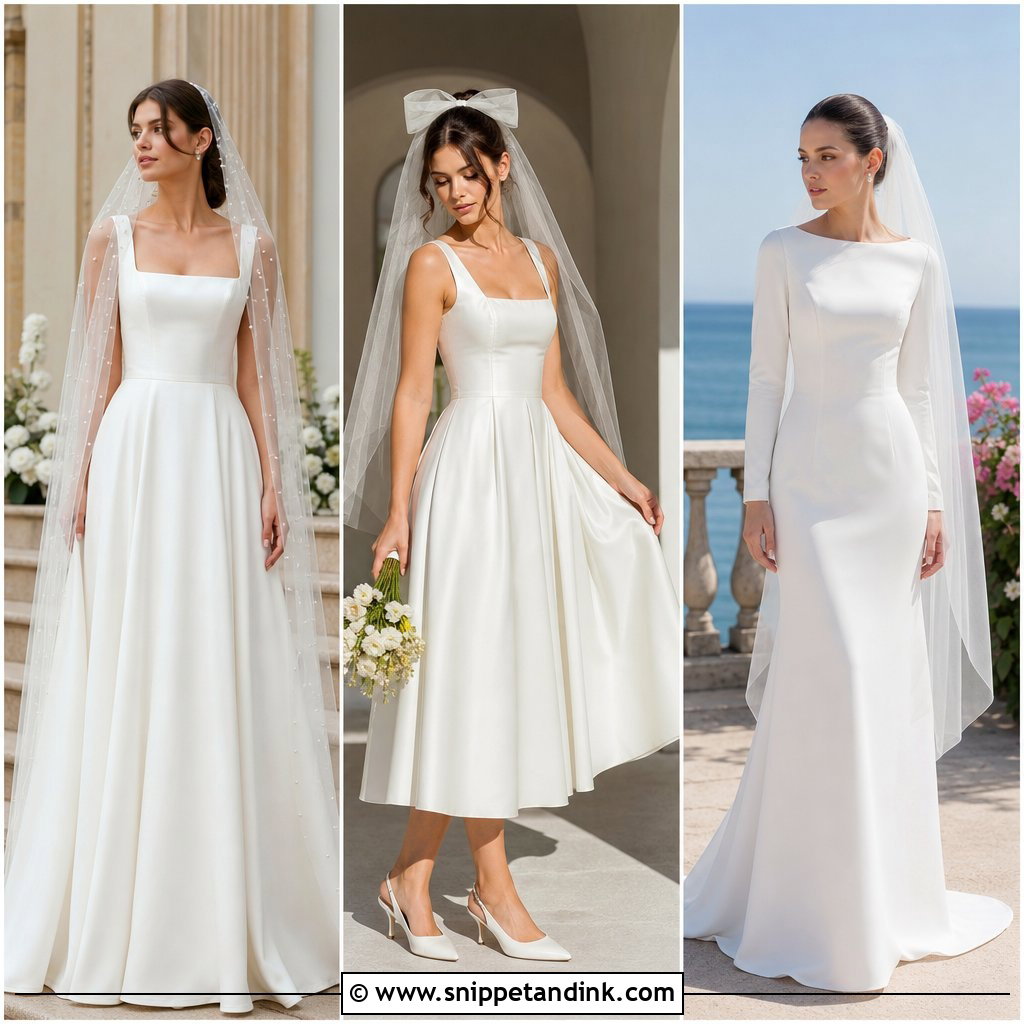
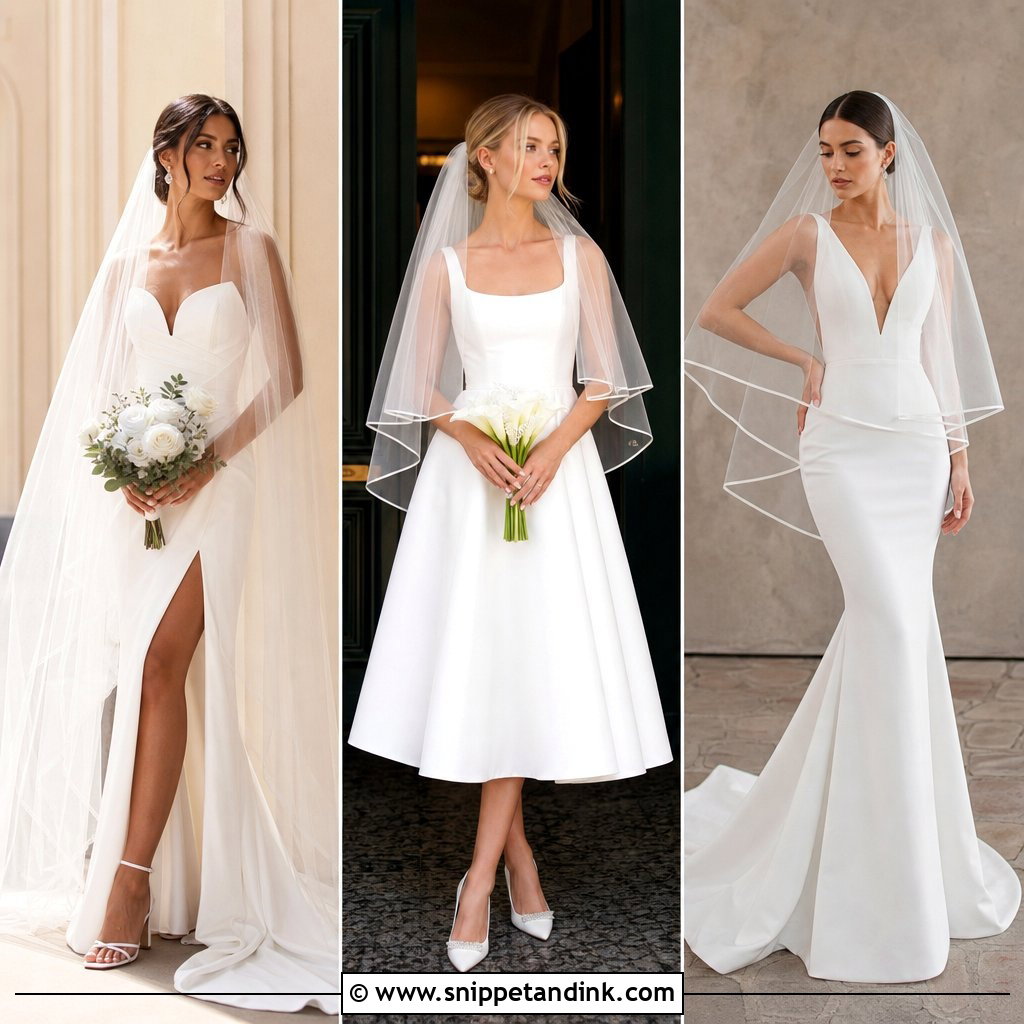
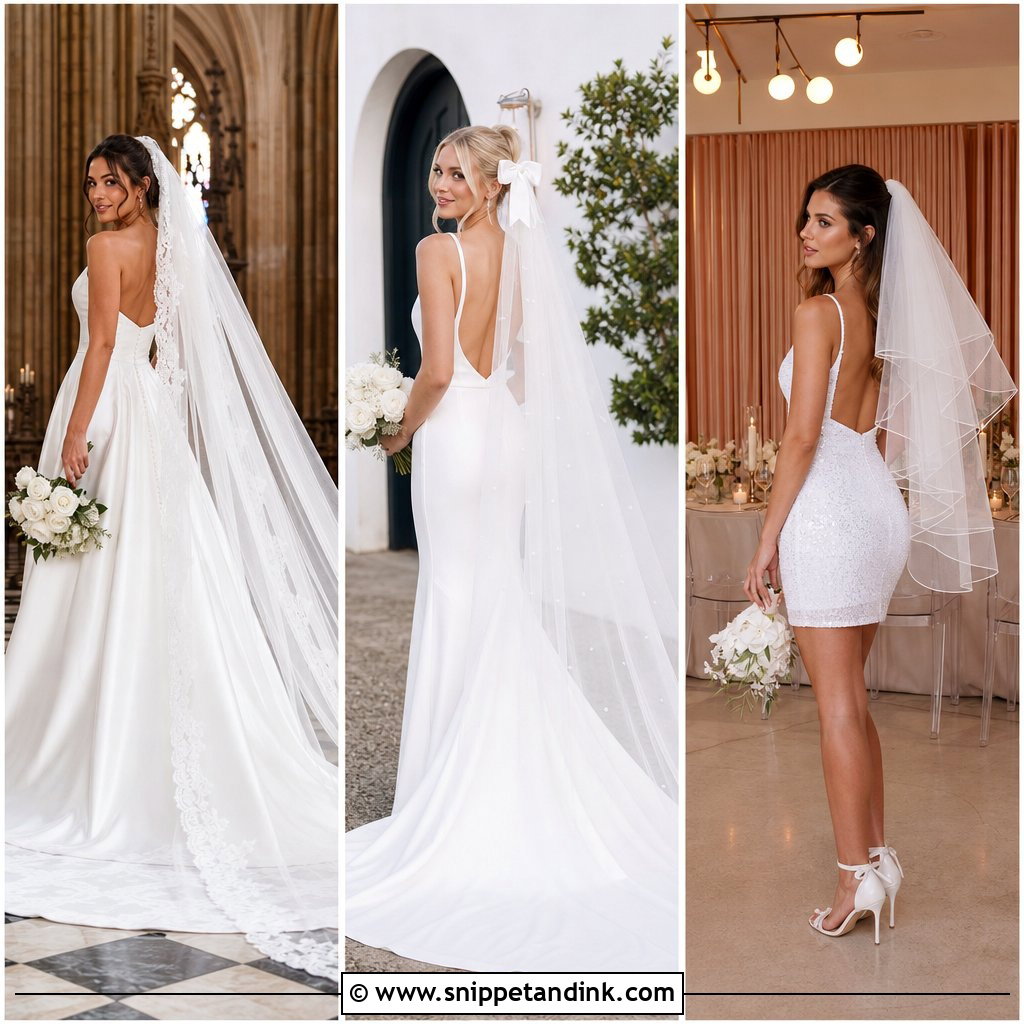
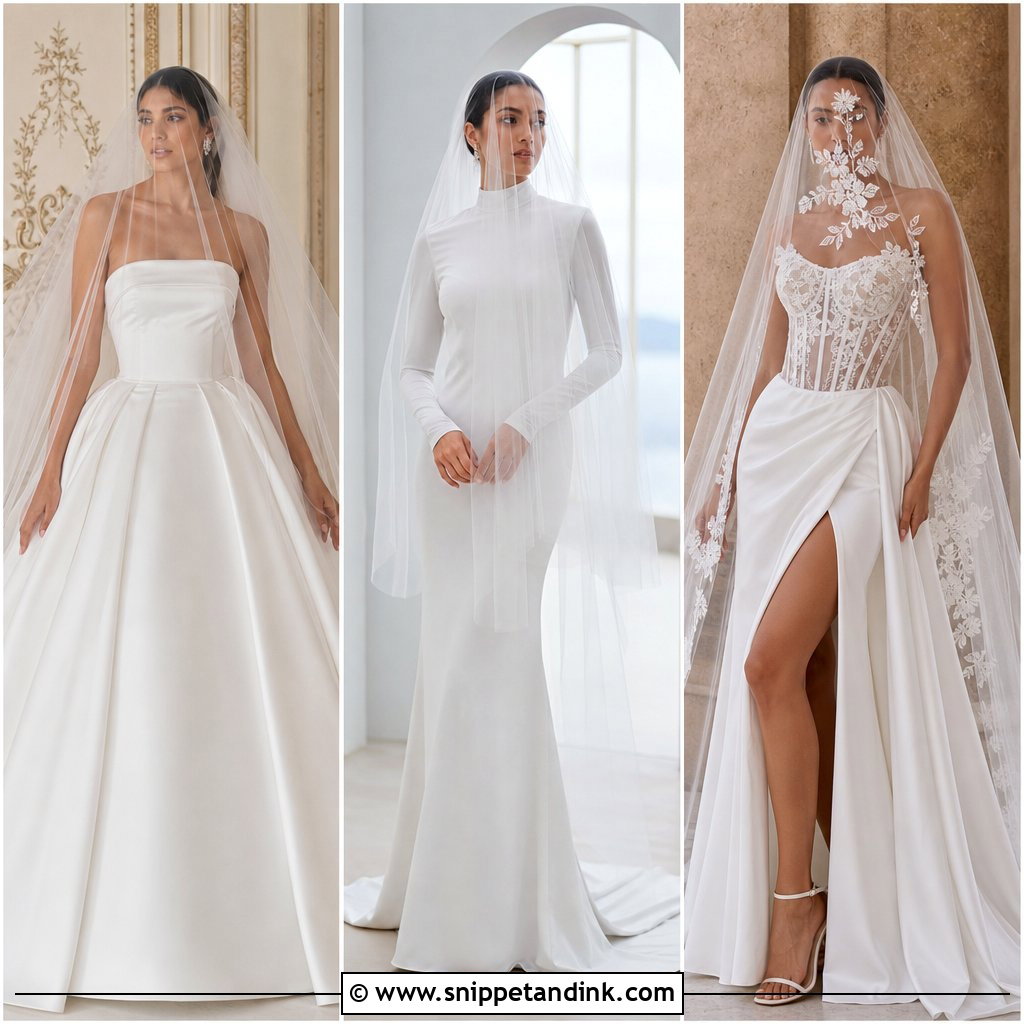
A cathedral veil is the longest of the classic lengths, usually running past the end of the train, and it needs a quiet gown to work against. I pair it with smooth crepe or structured satin and a square, bateau or strapless neckline, so the tulle has room to move. Choose sheer tulle with a raw or narrow satin edge. The weight of all that fabric pulls backward on the comb, so I set it into a low chignon, where the bun itself acts as a ledge for the teeth to grip. Pointed ivory pumps, pearl studs and a compact white bouquet finish the look, and the plain dress keeps the long veil from feeling old-fashioned.
2. Fingertip Veil With A-Line Wedding Dress
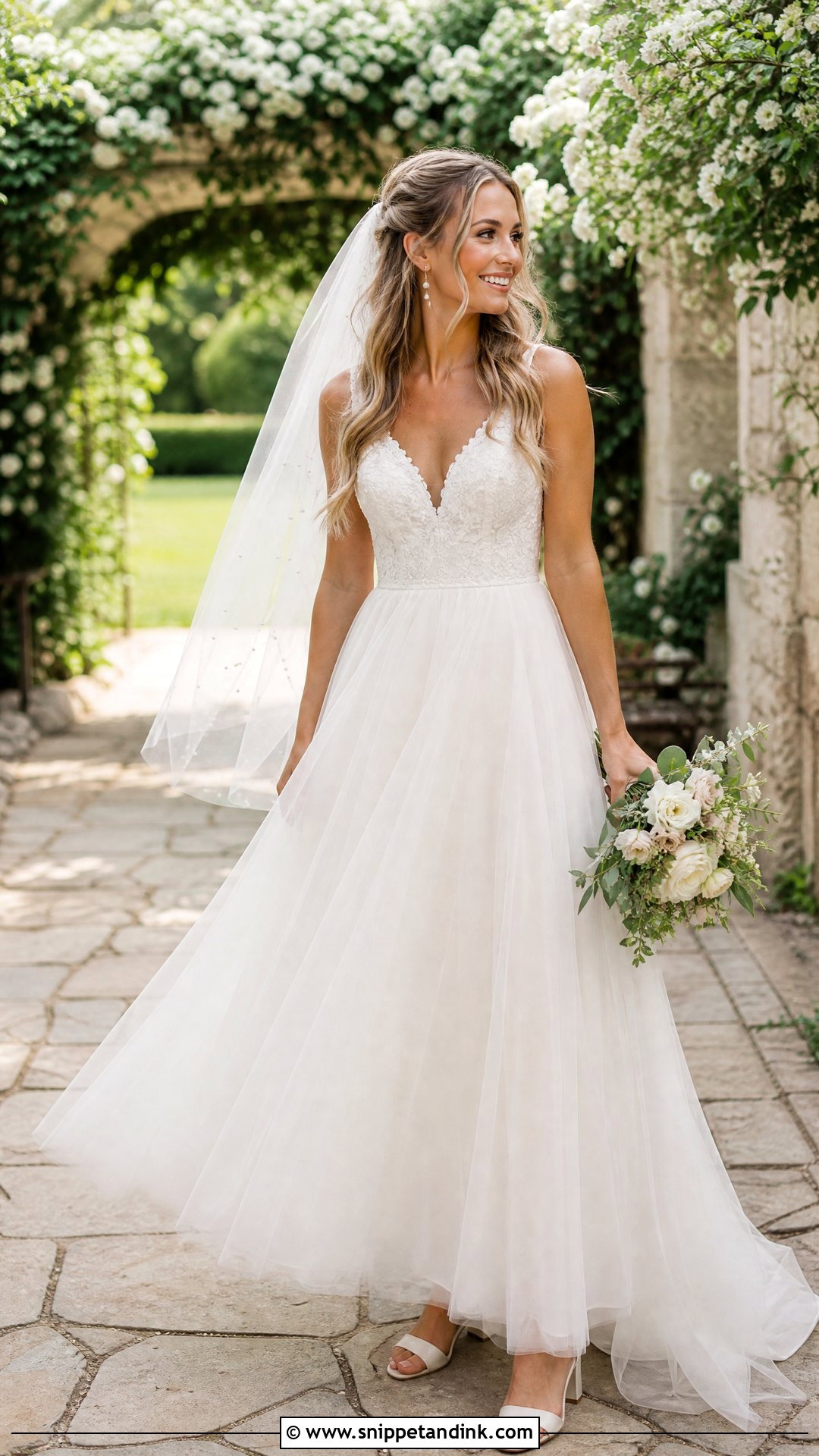
A fingertip veil falls to about where the bride’s hands rest at her sides, which makes it the easiest length to live with all day. It moves without covering the whole skirt or train, and it suits an A-line in chiffon or tulle with a fitted bodice. A pencil edge keeps it clean; scattered pearls add a little texture. For hair, I like loose waves or a half-up style, but loose waves on their own give a comb nothing to hold, so I hide a small pinned anchor under the top section first. Block-heel sandals, a slim bracelet and small drop earrings finish it, indoors or out.
3. Mantilla Veil With Lace Wedding Dress
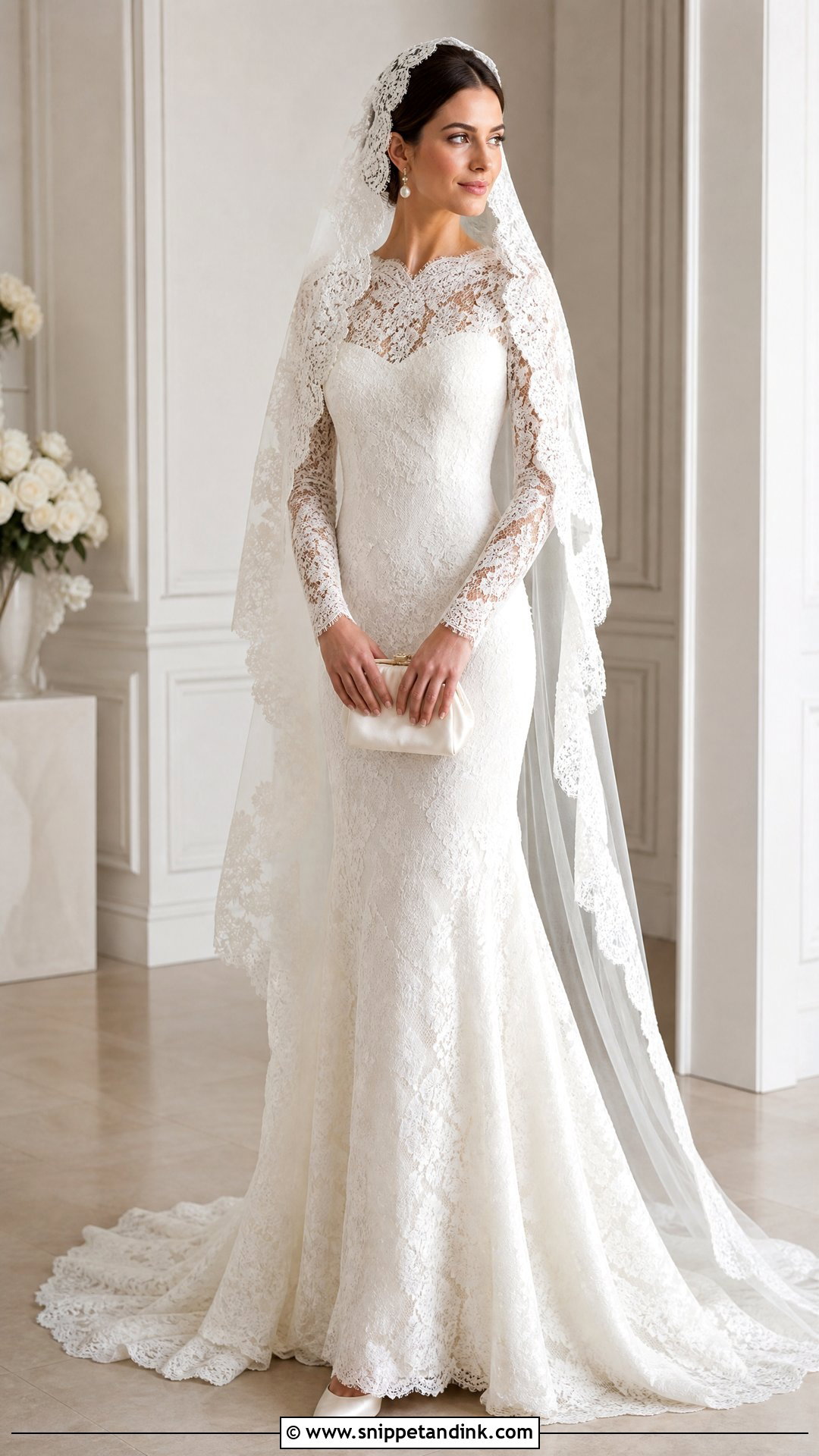
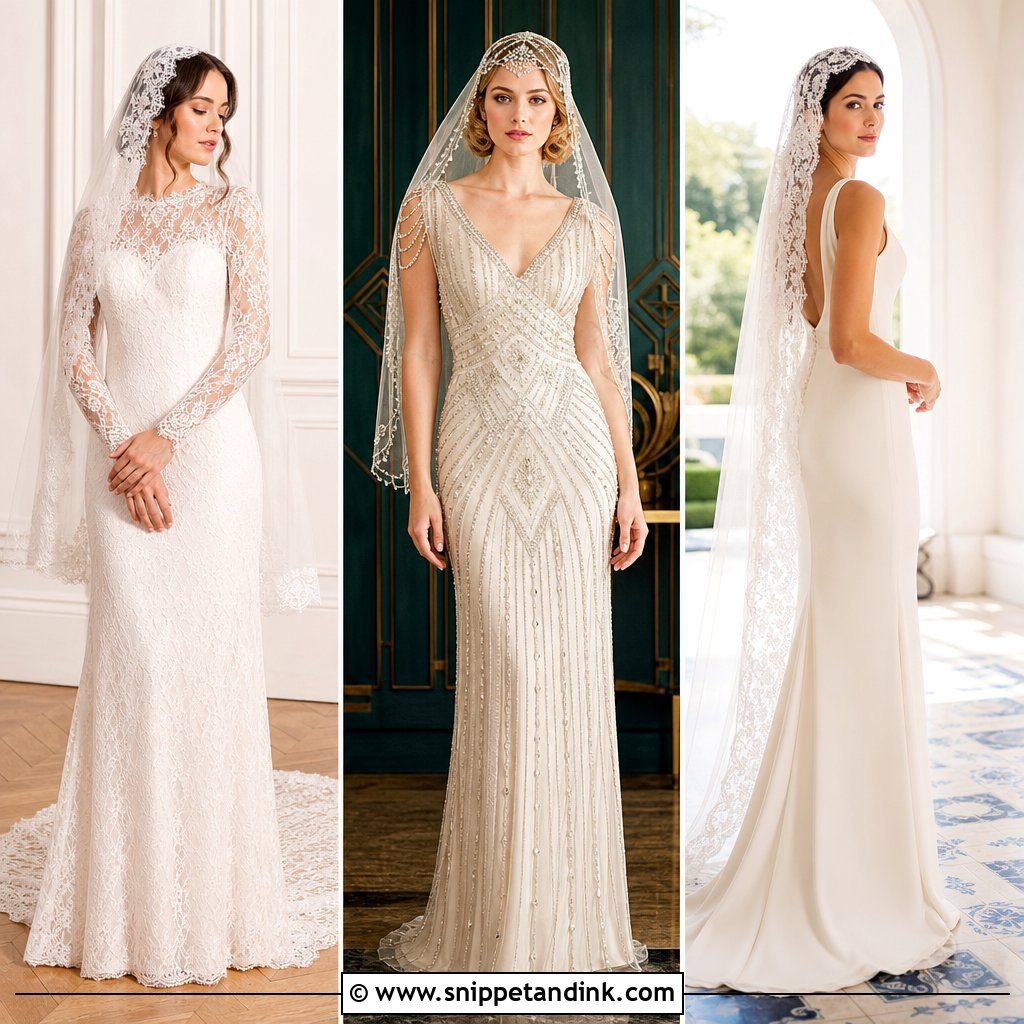
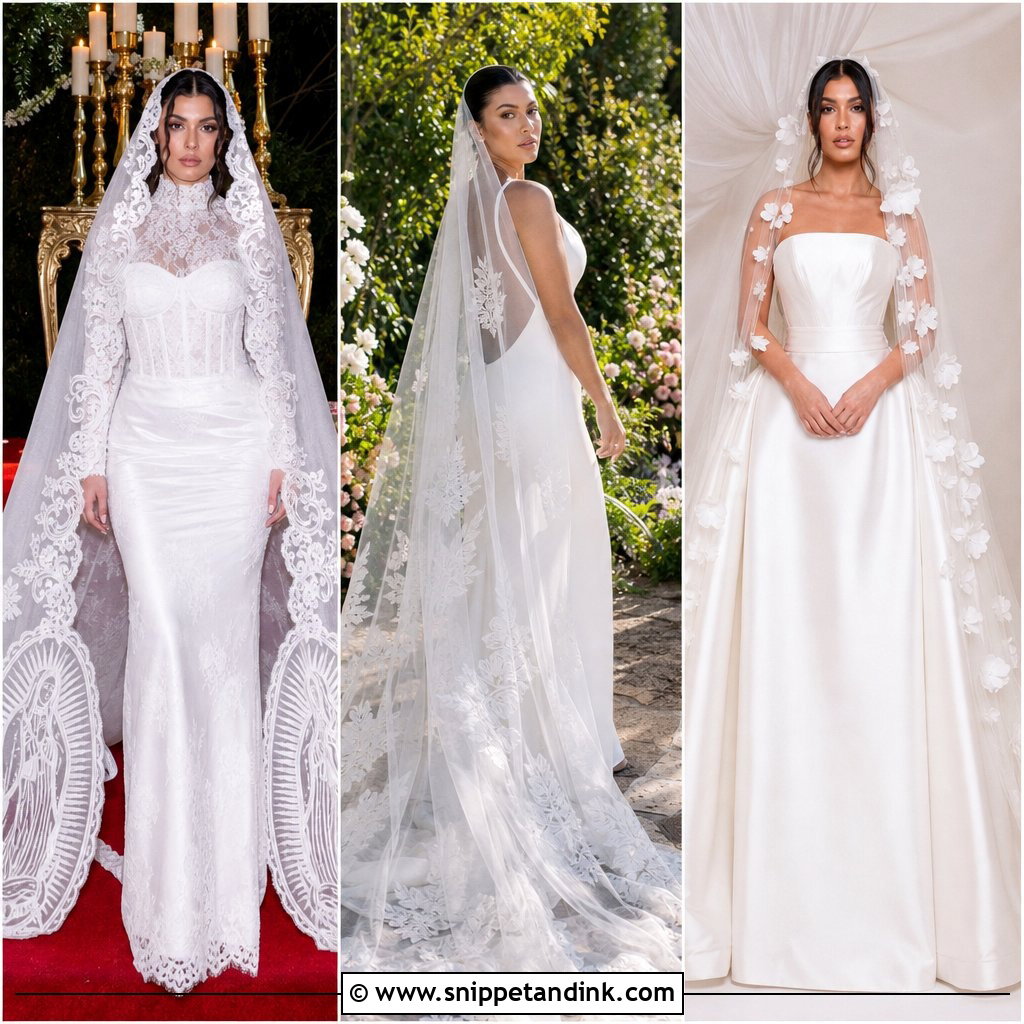
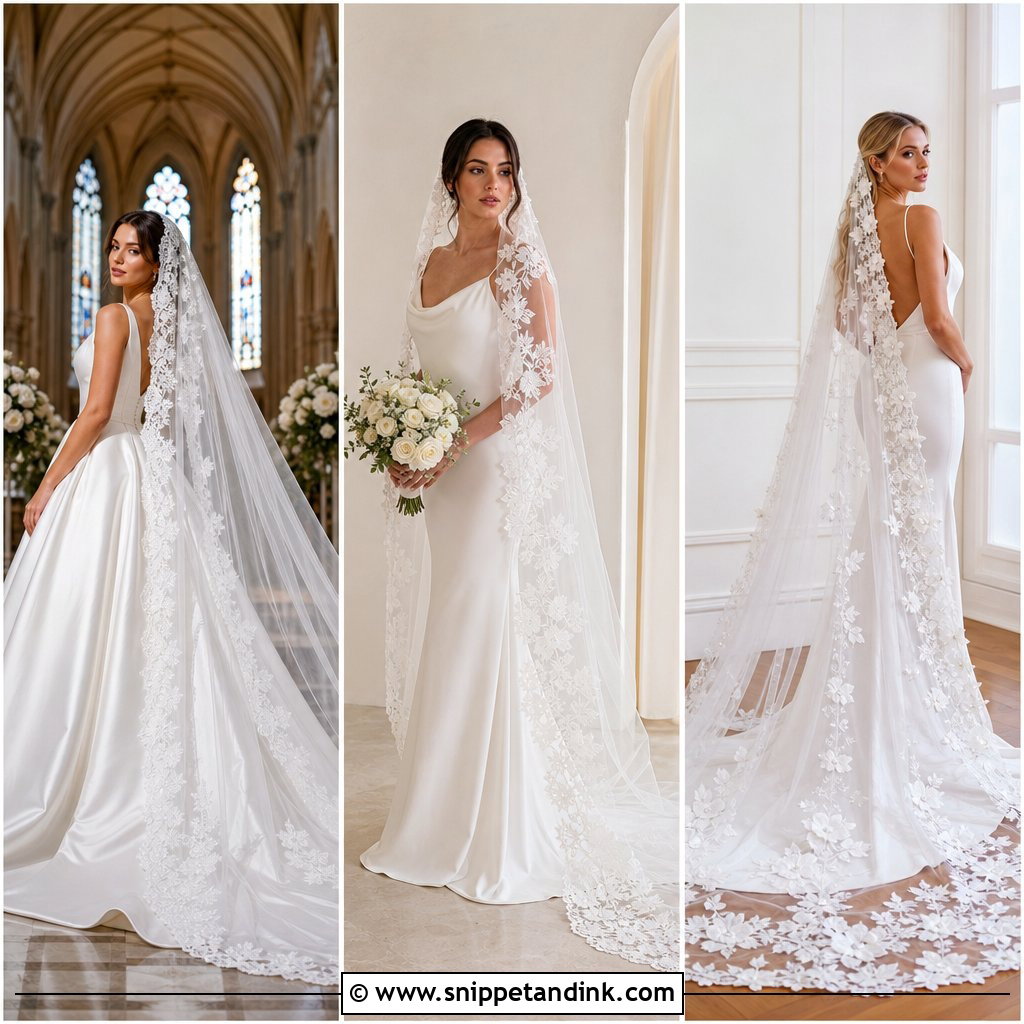
A mantilla veil is defined by its lace border, and it’s worn further forward on the head than most veils, near the crown, so the lace frames the face. That forward placement is also its main styling challenge, since there’s nothing to hold it on top of the head unless I build it. I usually set a small, flat bun or a pinned cross of bobby pins at the crown to take the comb. Pair it with a fitted lace gown with a modest V-neck, long sleeves or a gentle flare. Matching lace motifs look deliberate, though different patterns can work if their scale and floral style are similar. Keep the rest quiet with pearl earrings, ivory pumps and a satin clutch.
4. Blusher Veil With Ball Gown
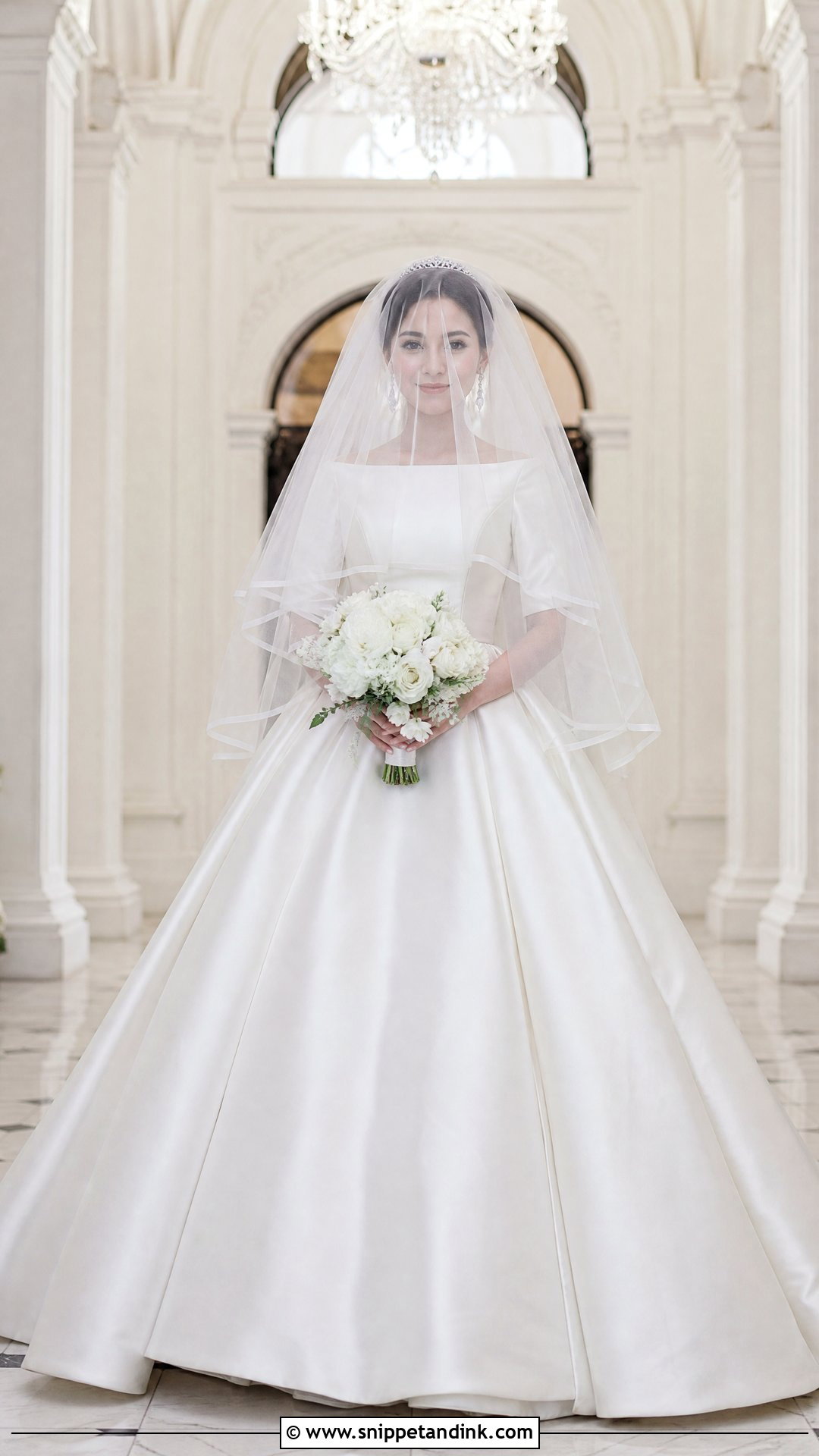
A blusher over a full ball gown is about as ceremonial as bridal dressing gets. The short front layer covers the face until it’s lifted, and an optional longer back layer adds volume behind the skirt. Use lightweight tulle so the blusher doesn’t swamp the face. The thing I rehearse with the bride is the lift: whoever raises it needs to take the bottom edge in both hands and bring it straight up and over, or it catches on earrings and lashes. A structured mikado or satin gown, crystal studs, a delicate tiara and closed-toe heels complete the look, with a smooth bun or polished half-up style anchoring the comb. Skip heavy necklaces.
5. Birdcage Veil With Tea-Length Wedding Dress
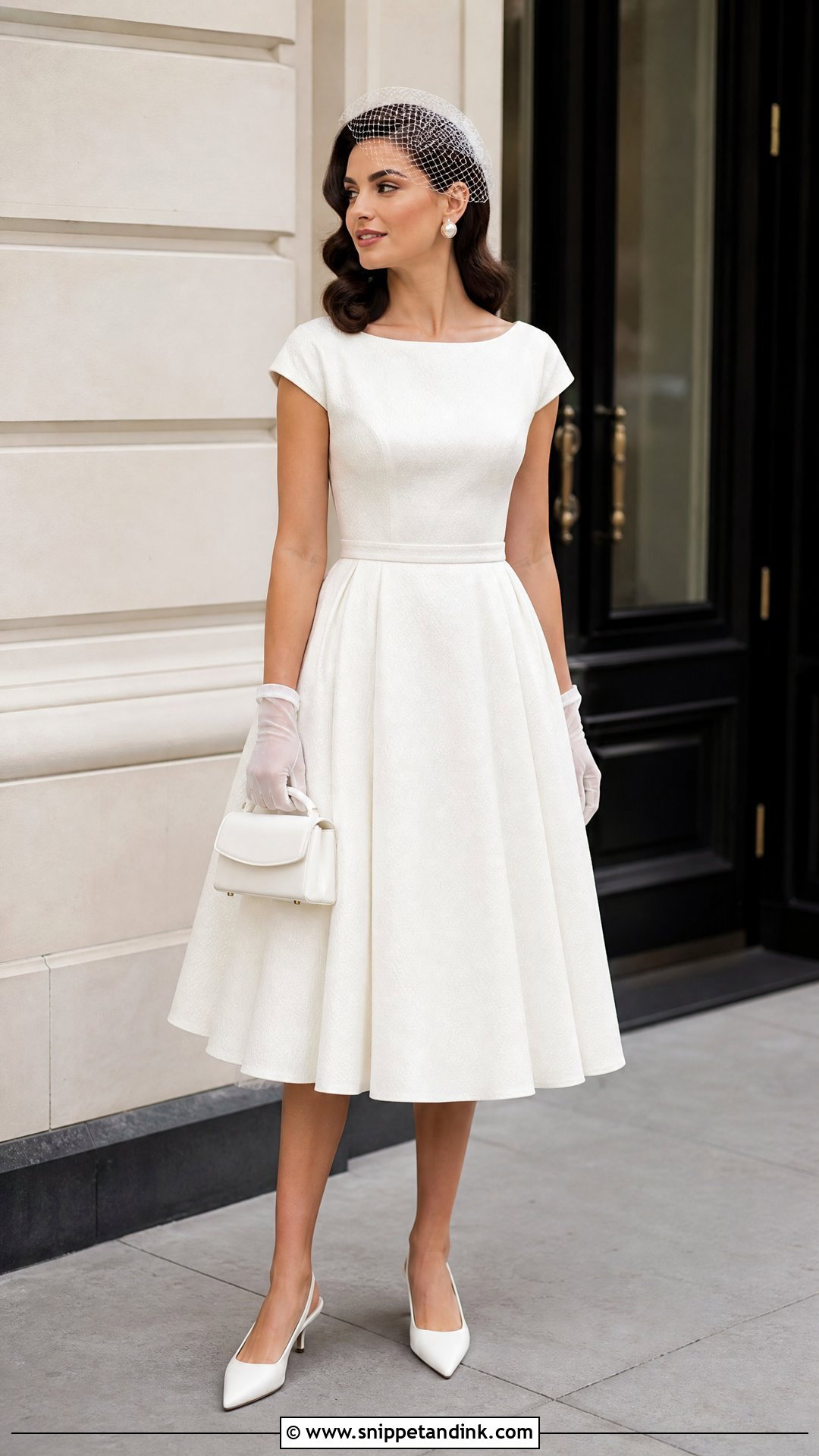
A birdcage veil suits a tea-length dress and a bride with a sense of fun. It covers part of the face and is usually made from a stiff, open net such as Russian tulle, which holds its shape rather than draping. That stiffness means the attachment point matters: I pin it slightly off center on a neat bun or side-swept waves so the net curves around the face instead of sitting flat. It sits well on a chin-length bob. Pair it with a fitted-waist dress, pointed slingbacks, short gloves and pearl earrings. The shorter hem shows the shoes, so pick a pair with a bow or satin finish.
6. Chapel Veil With Fit-And-Flare Wedding Dress
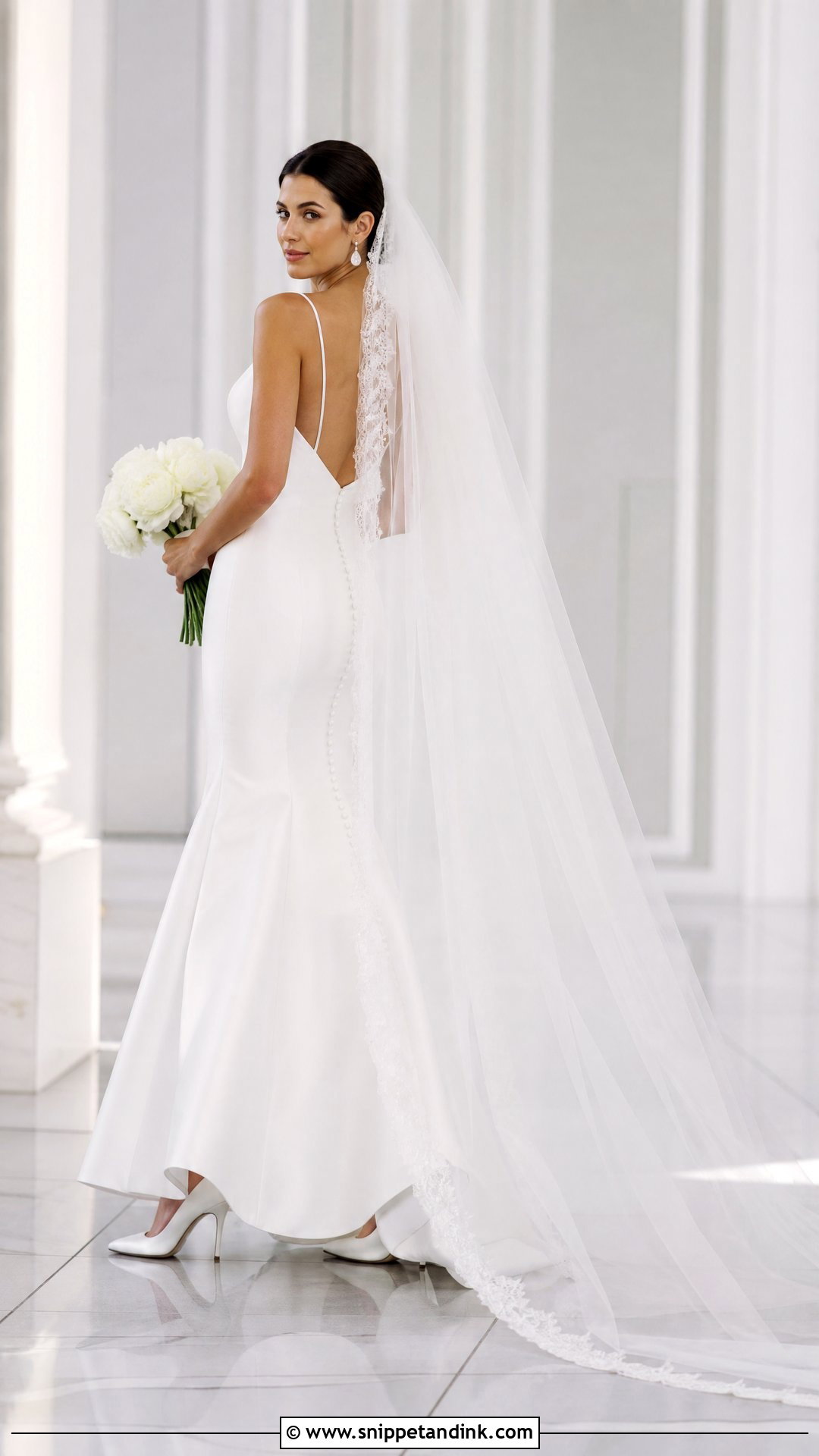
A chapel veil gives graceful length without the sheer volume of a cathedral. I like it over a fit-and-flare gown, where it follows the body and finishes around or just past the train. Plain illusion tulle suits an embellished dress; a lace edge suits a plain one. At the fitting, I always step back and look from behind, because a veil edge that stops halfway across a lace motif or a button line chops the gown’s best feature in half. Pointed pumps, teardrop earrings and a simple comb above a low bun finish the look.
7. Waltz Veil With Satin Slip Dress
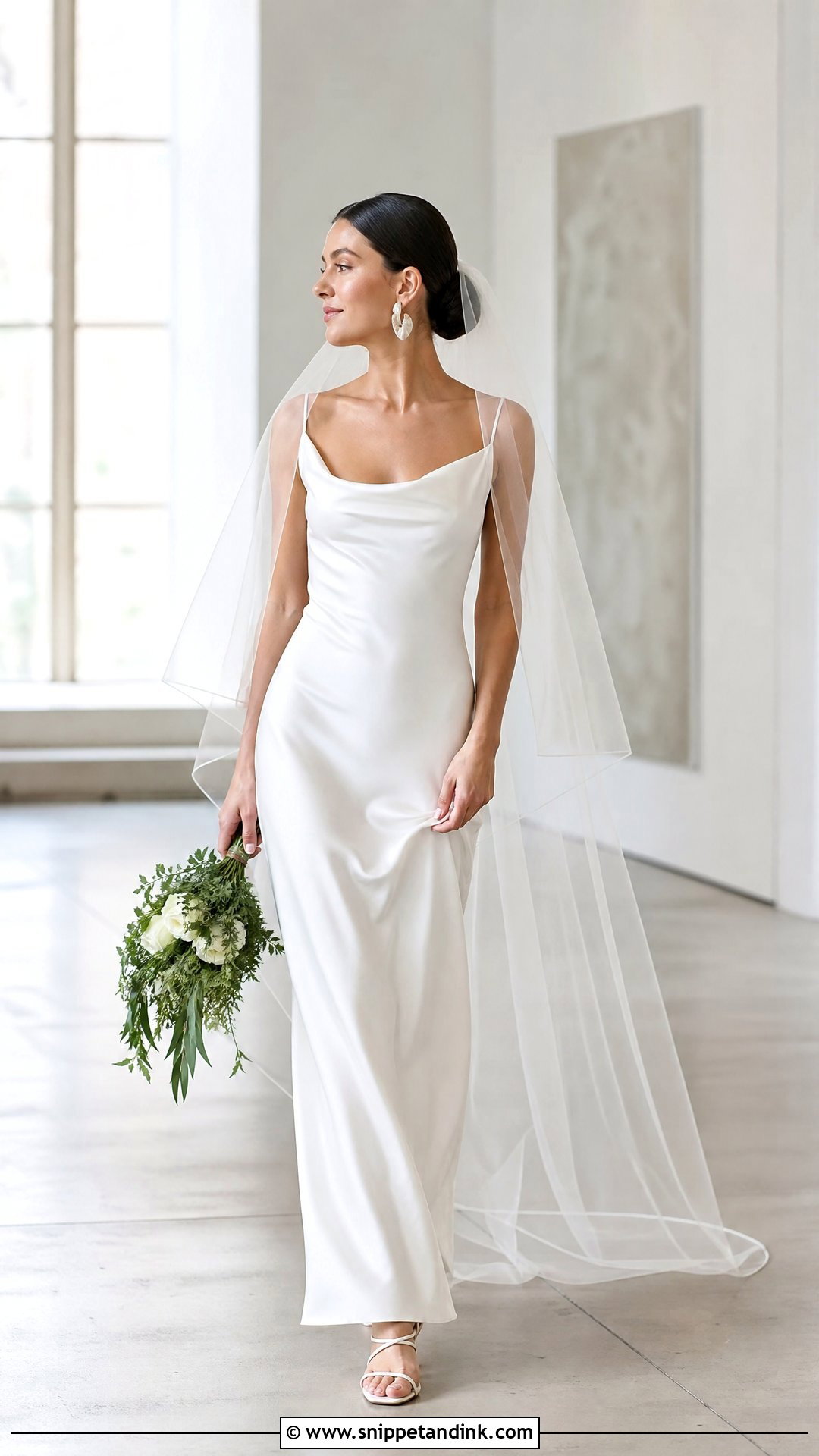
A waltz veil falls between knee and ankle, so it has drama without sweeping the floor, and the bride can walk without anyone carrying it. It echoes the line of a bias-cut satin slip dress with delicate straps or a cowl neck. Keep the veil to a single layer with a narrow edge. Satin slip dresses are unforgiving under the arms and across the back, and a waltz veil softens that rear view. Glossy loose waves or a polished bun suit it; with loose hair, I angle the comb slightly downward into a hidden pin base so the veil doesn’t pull the waves flat. Add sleek low-heeled sandals, sculptural earrings and a small, green bouquet.
8. Elbow Veil With Sheath Wedding Dress
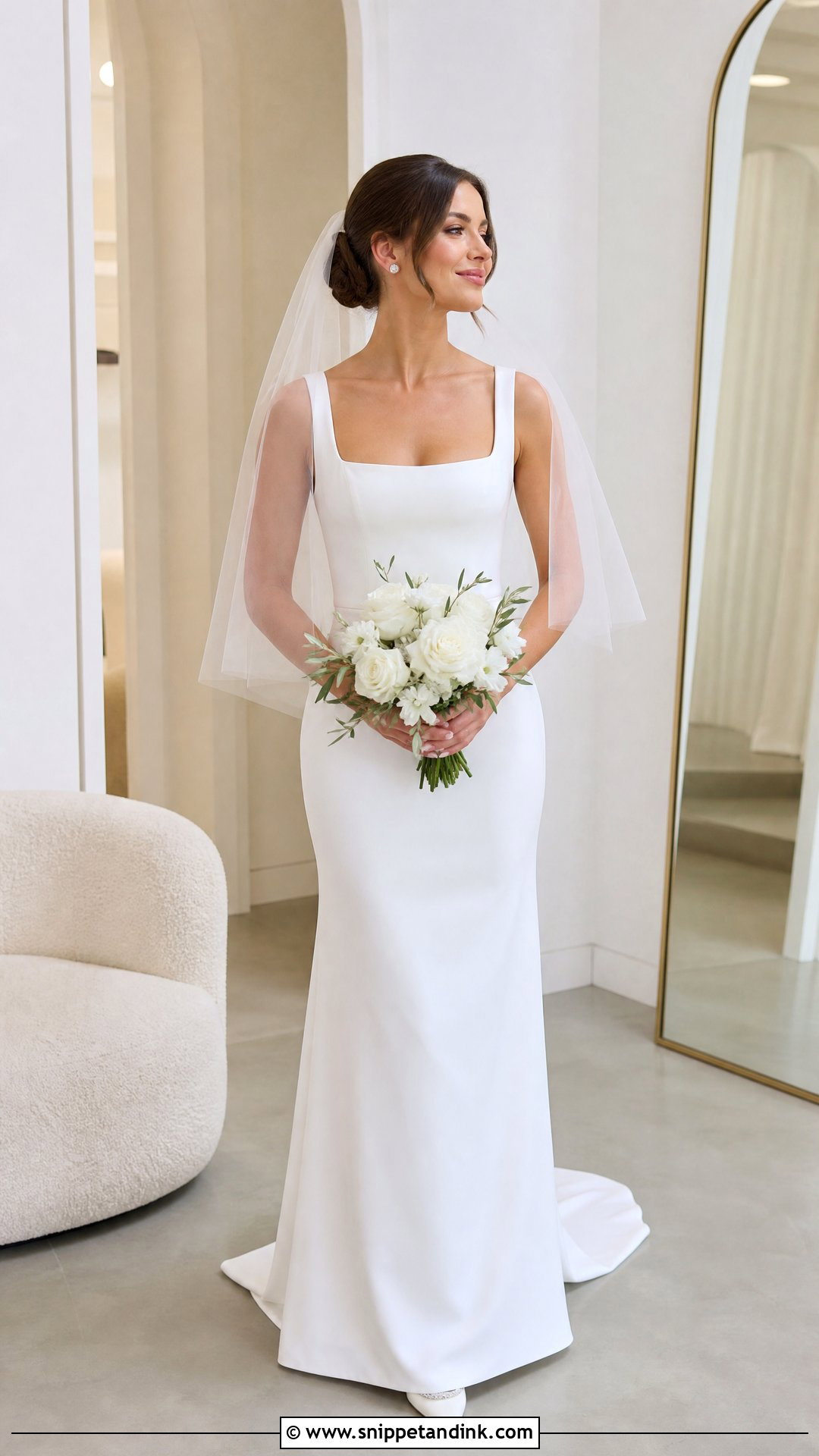
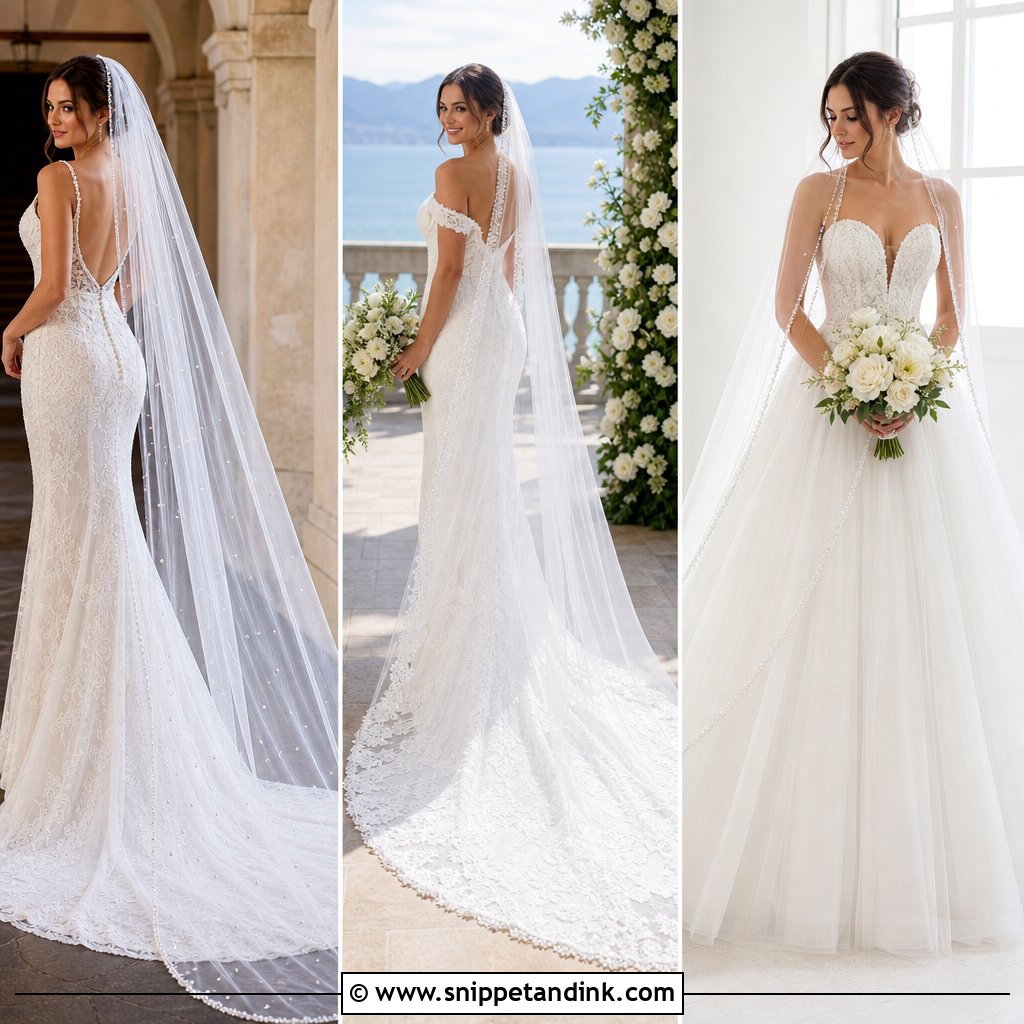
An elbow veil softens the upper body and leaves the skirt and back of a sheath gown fully visible. That’s exactly what you want if the dress has a row of buttons, pleating or a statement waist. Choose a single layer with a raw edge for a modern look, or a slim beaded edge for a little sparkle. Gathering at the comb adds width at the crown, so I keep the gather tight and set it into a low twisted bun, which keeps the silhouette narrow. Pair it with a square-neck or cap-sleeve sheath, pointed pumps, understated crystal earrings and a small, structured bouquet.
9. Ballet Veil With Off-Shoulder Wedding Dress
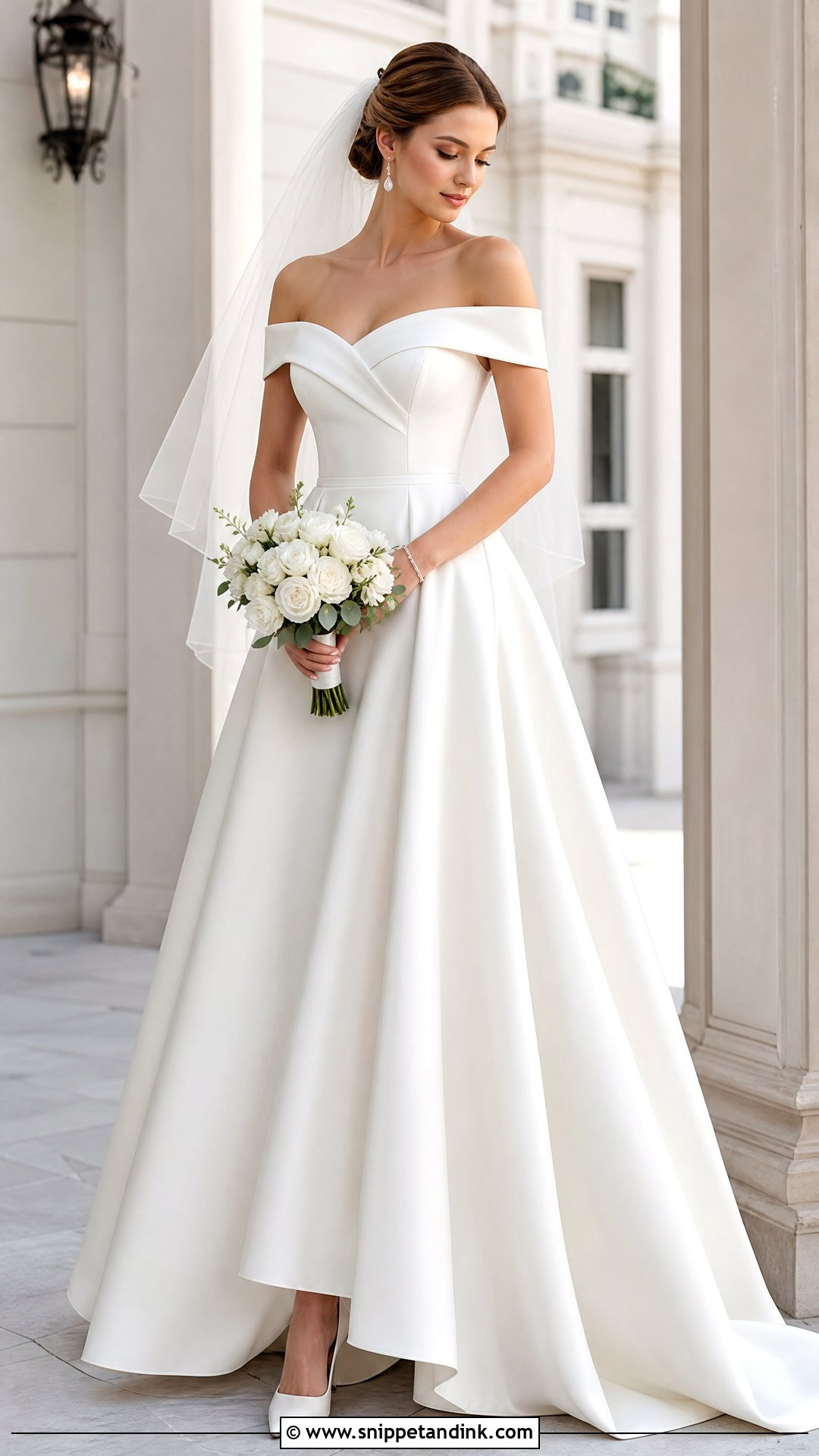
A ballet-length veil reaches the knee or lower leg and balances the bare shoulders of an off-shoulder dress. Matte satin, soft tulle or lightweight crepe all work for the gown, with a sheer veil gathered only lightly at the comb. Drop earrings work better here than a necklace. My concern with this neckline is hair: waves left over the shoulders tangle into the veil, so I tuck them behind or go for a low bun. Pointed pumps and a narrow bracelet complete it. It’s a good middle ground for someone who wants visible length but not a veil trailing across the floor.
10. Flyaway Veil With Mini Wedding Dress
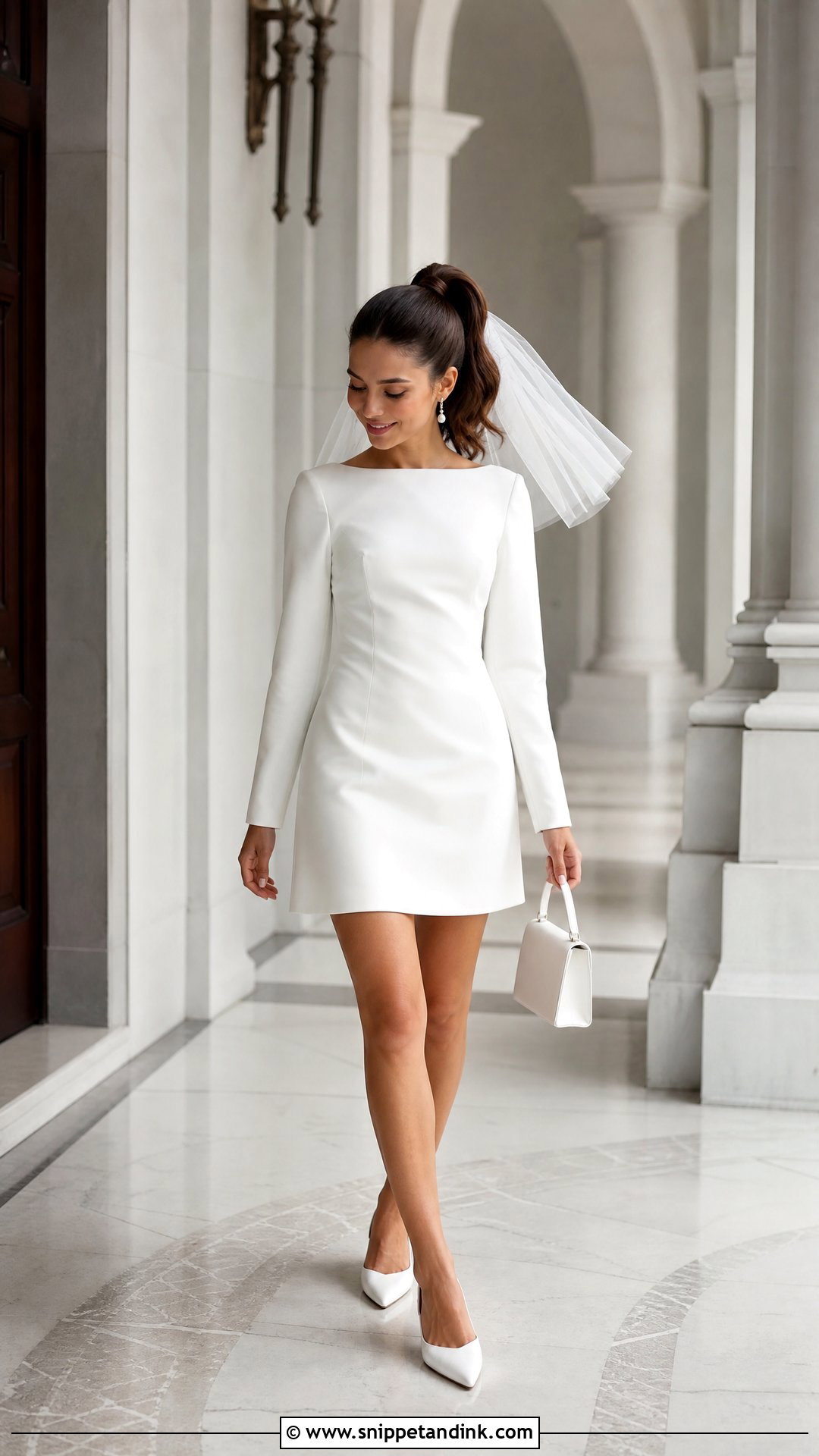
A flyaway veil is short, usually reaching the shoulders or upper back, and it suits a bridal mini. It adds movement without hiding a dramatic neckline, a big bow or a sculpted silhouette. Pick a dress with long sleeves, a bateau neckline or clean architectural seams. A high ponytail makes it playful; a neat bun makes it polished. In a high ponytail, I slide the comb in just below the elastic, angled up, so the base of the ponytail holds it. Keep the veil light and moderately gathered so it moves instead of standing stiff. Kitten heels, pearl drop earrings and a small top-handle bag finish it, and a courthouse ceremony or a reception change is where I use it most.
11. Juliet Cap Veil With Boho Wedding Dress
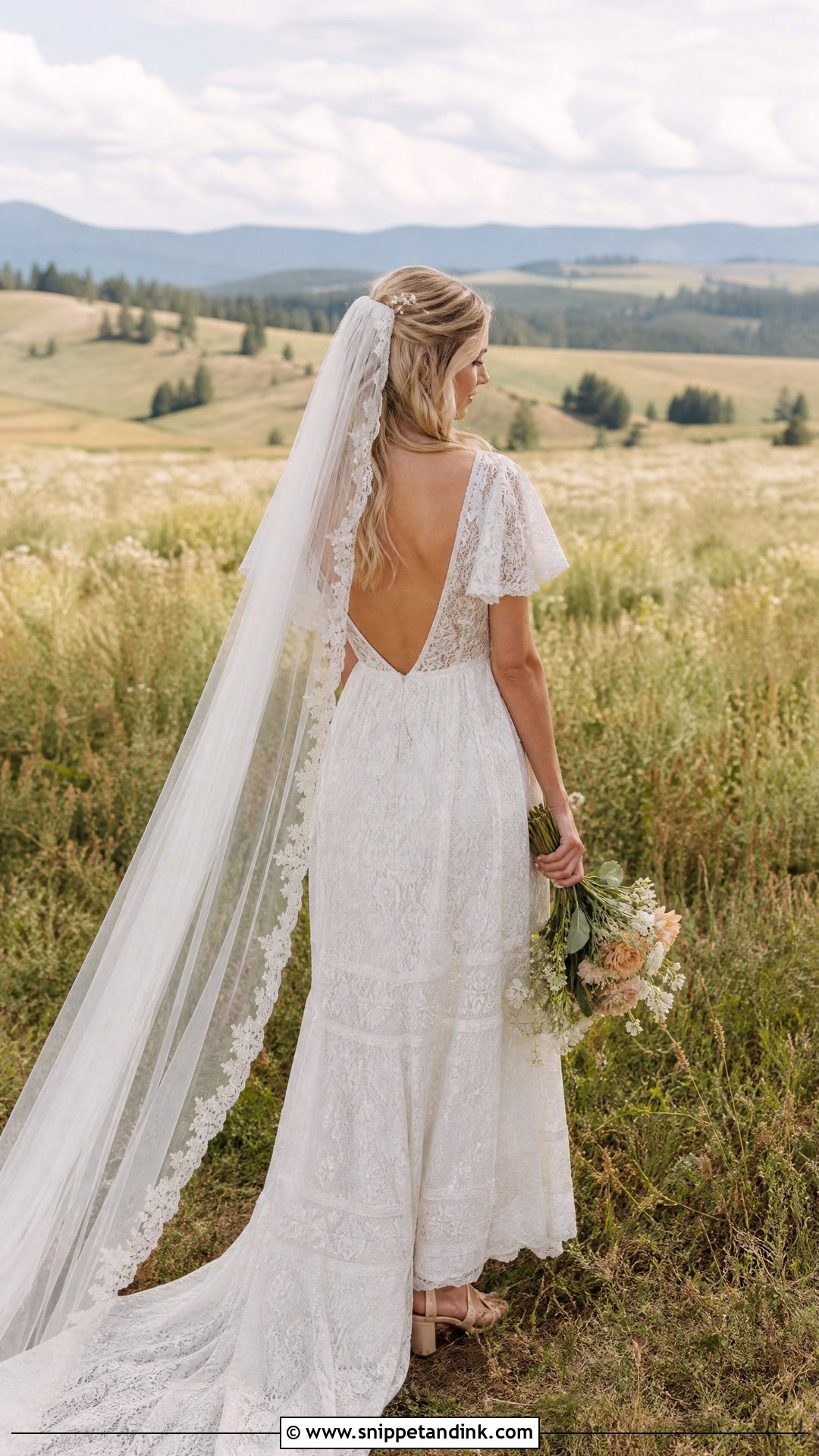
A Juliet cap veil fits close to the head, so it’s the one style where I place the hardware on purpose to be seen. I secure it with decorative combs, small flowers or pearl pins at each side. The veil itself can run to the fingertips or the floor. Pair it with a relaxed chiffon or lace boho gown with flutter sleeves, an open back and a soft waist, plus low block-heel sandals, delicate earrings and a loose seasonal bouquet. Soft waves or a low textured bun sit under the cap without pushing it up. Keep the gown simple and repeat one detail, lace or pearls, to stop it tipping into costume.
12. Drop Veil With Square-Neck Wedding Dress
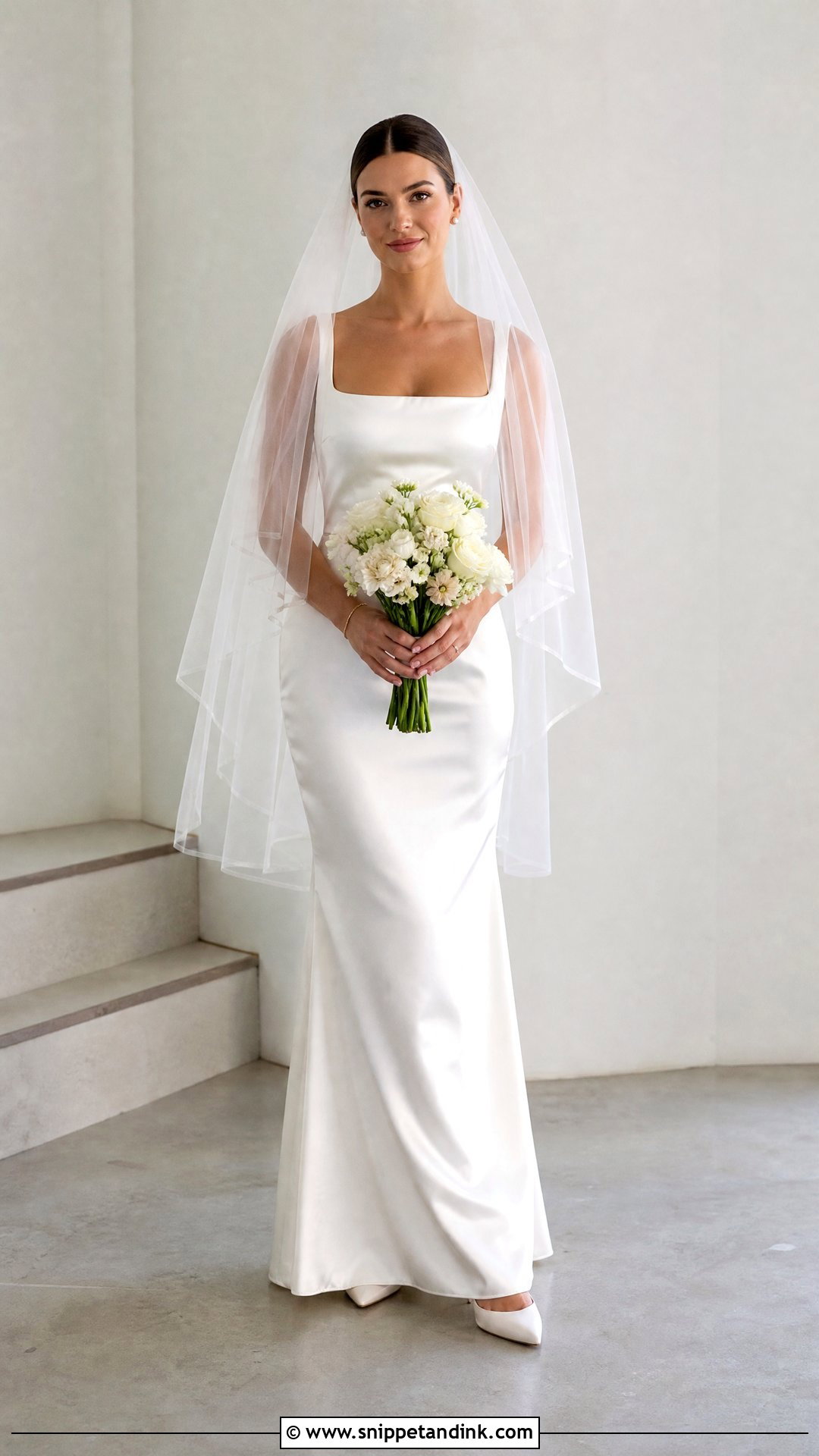
A drop veil has little or no gathering and simply rests over the head, giving the cleanest line of any style here. Because there’s no gather to hide the comb, I lay it flat against a center-parted bun or soft waves and cover the teeth with hair. A two-layer version can cover the face; a single layer runs uninterrupted down the back. Pair it with a square-neck dress in smooth satin or crepe, pearl studs, a slim tennis bracelet and pointed ivory heels. Skip the heavy necklace, since the square neckline already frames the collarbone. It suits tailored gowns, especially those with a long row of covered buttons.
13. Pearl Veil With Crepe Wedding Dress
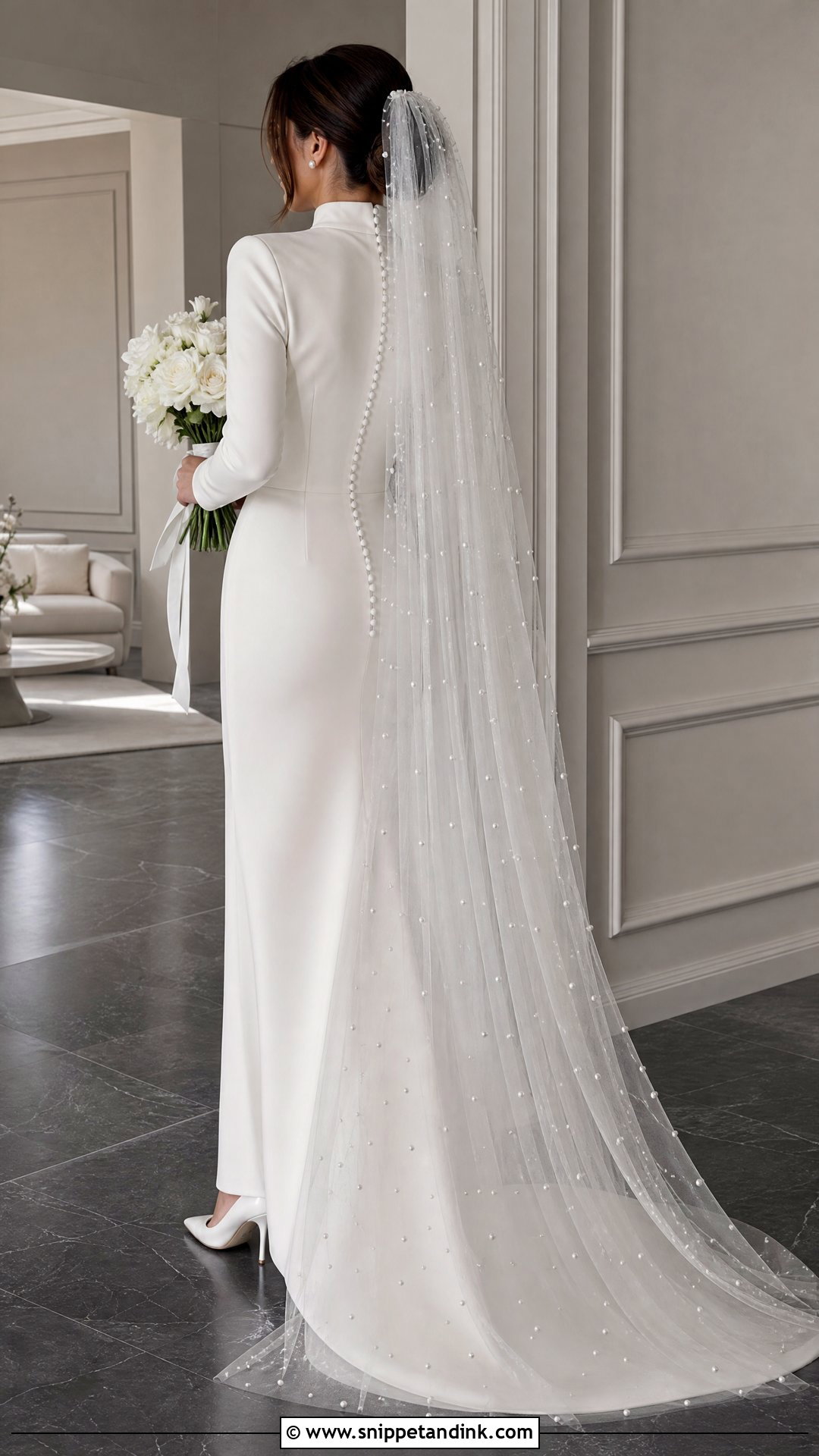
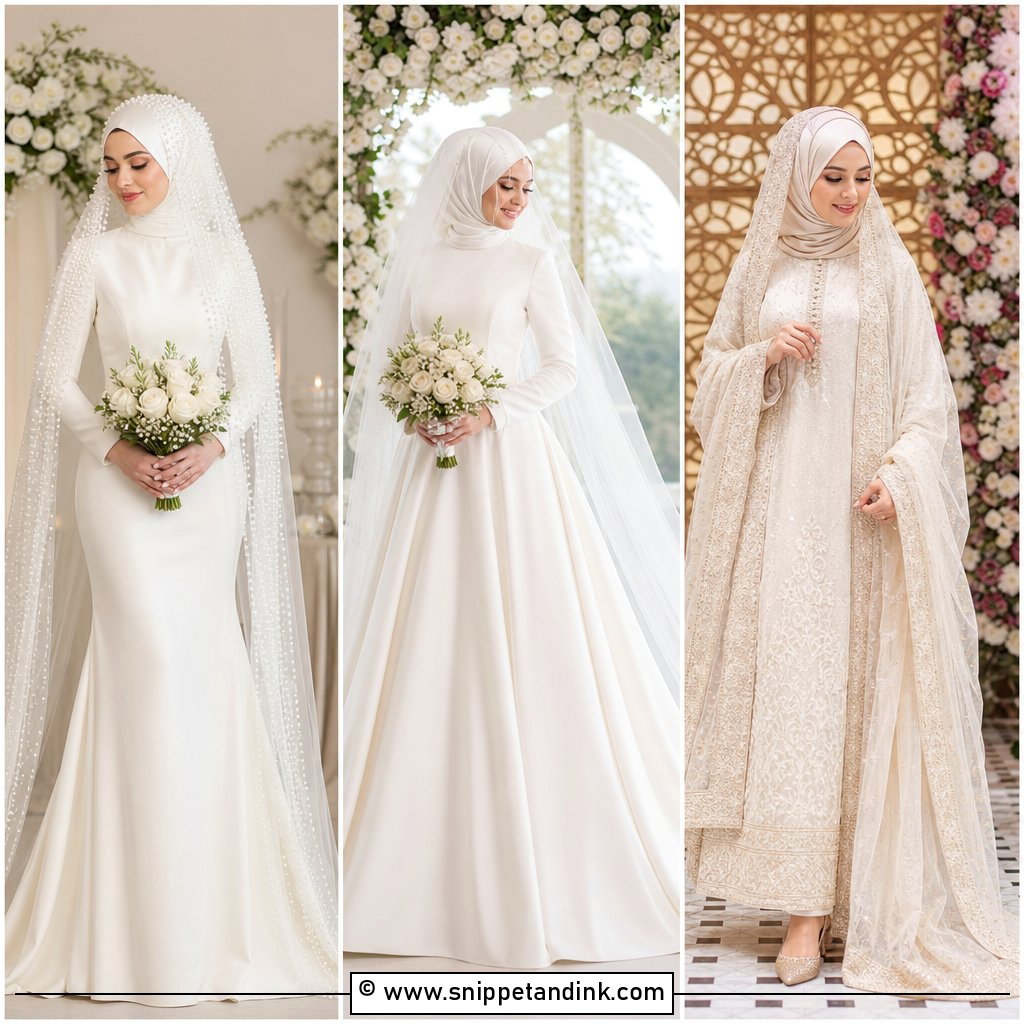
Pearls scattered across a fingertip, chapel or cathedral veil add detail to a plain crepe gown without changing its modern character. I like them graduating, sparse at the top and denser toward the edge. Pair the veil with a fitted crepe dress with a high neck, long sleeves or a clean off-shoulder bodice, plus pearl studs and smooth ivory pumps. Pearls add real weight. A heavily pearled veil pulls backward on the comb all day, so I use a stronger comb, crisscross pins behind it, and skip any jeweled hairpiece. A low bun or glossy waves keeps the veil as the main texture, and a white bouquet tied in satin ribbon finishes it.
14. Floral Veil With Simple Wedding Gown
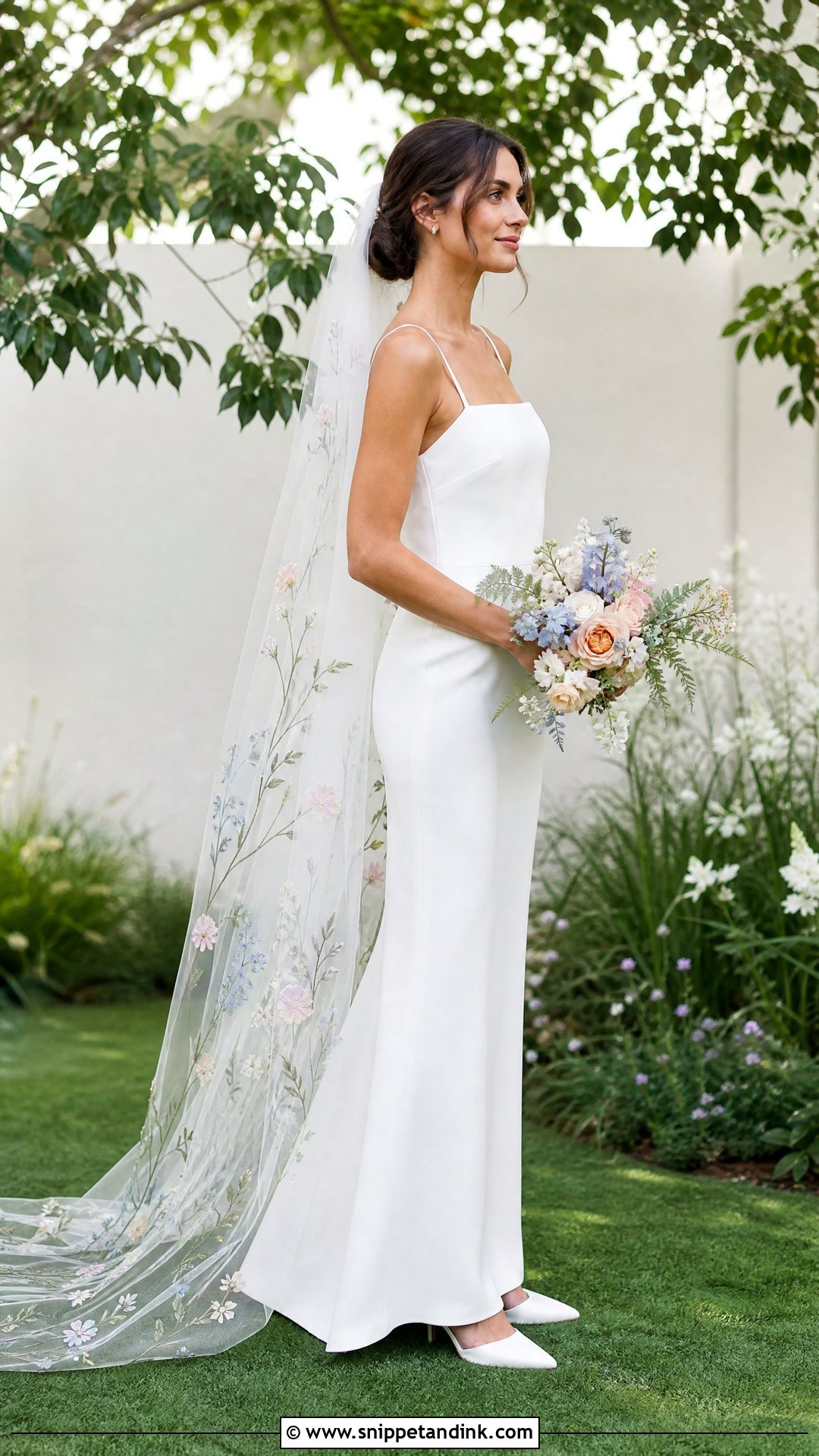
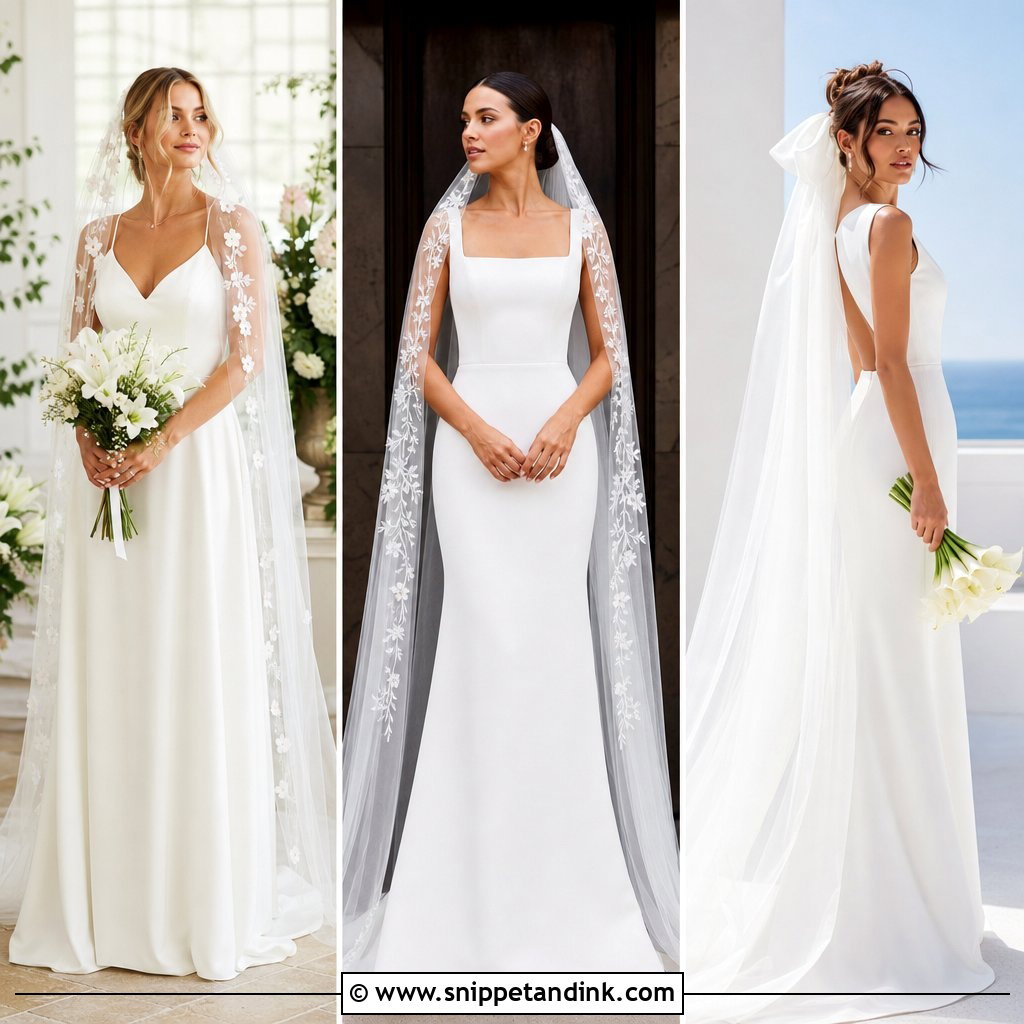
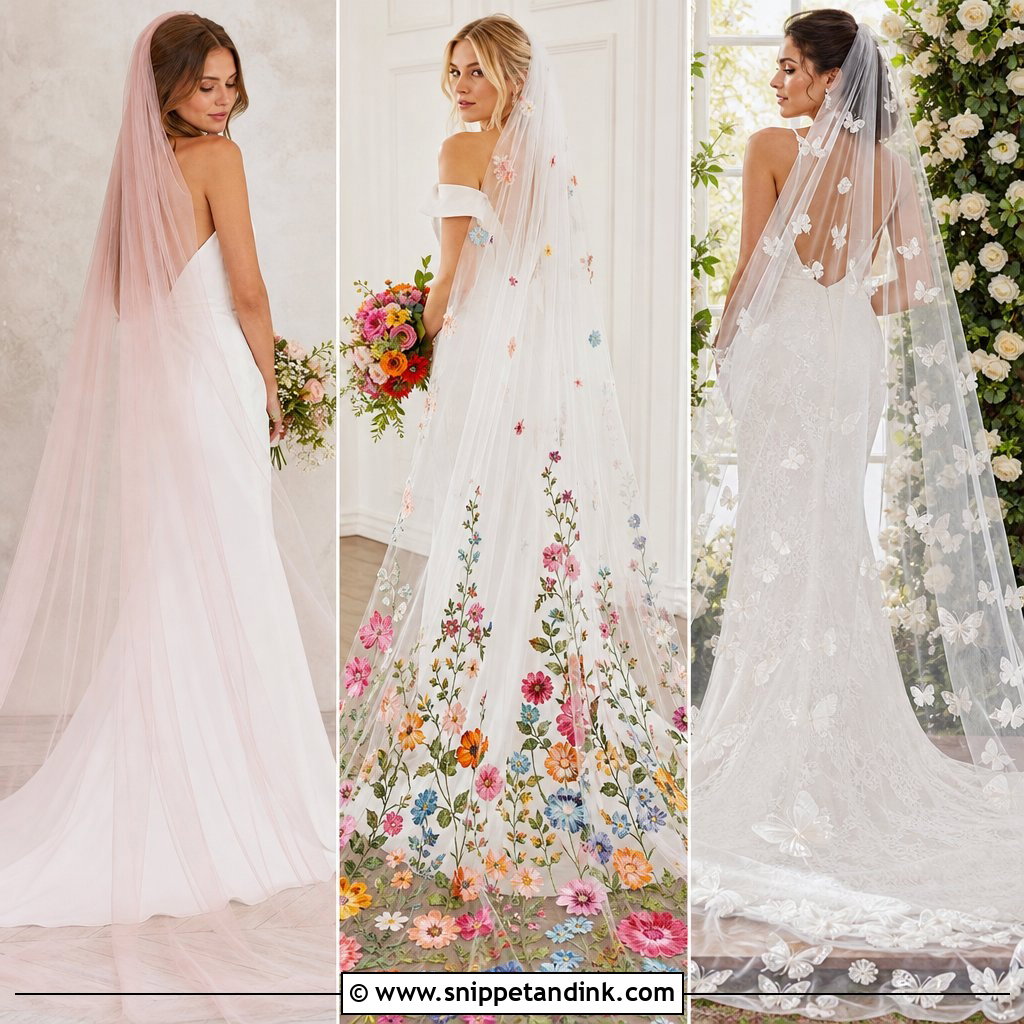
A floral veil brings color and personal detail to a simple gown. Embroidered flowers, appliqués or scattered botanical motifs on a fingertip or chapel base look best over a clean column or A-line, where nothing competes. Pastel embroidery reads romantic; white appliqués read more traditional. Add plain satin heels, minimal studs and a bouquet that repeats one or two colors from the veil. Appliqués give the veil weight in patches, so I check how it hangs before the wedding; an uneven veil sits crooked on the bun. A low bun keeps the whole design visible along the back. Skip belts and statement necklaces. It suits garden weddings especially well.
15. Bow Veil With Bridal Mini Dress
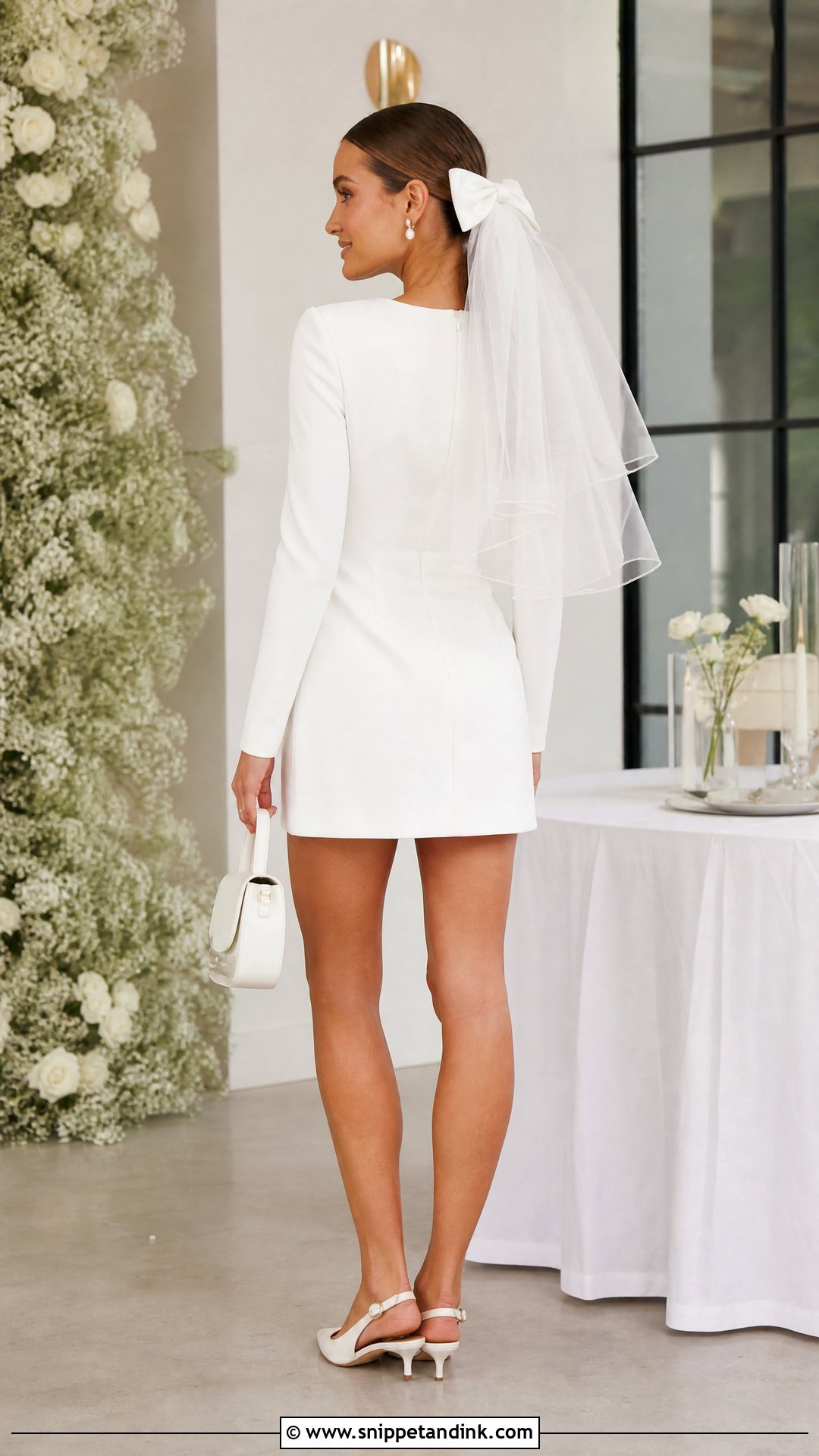
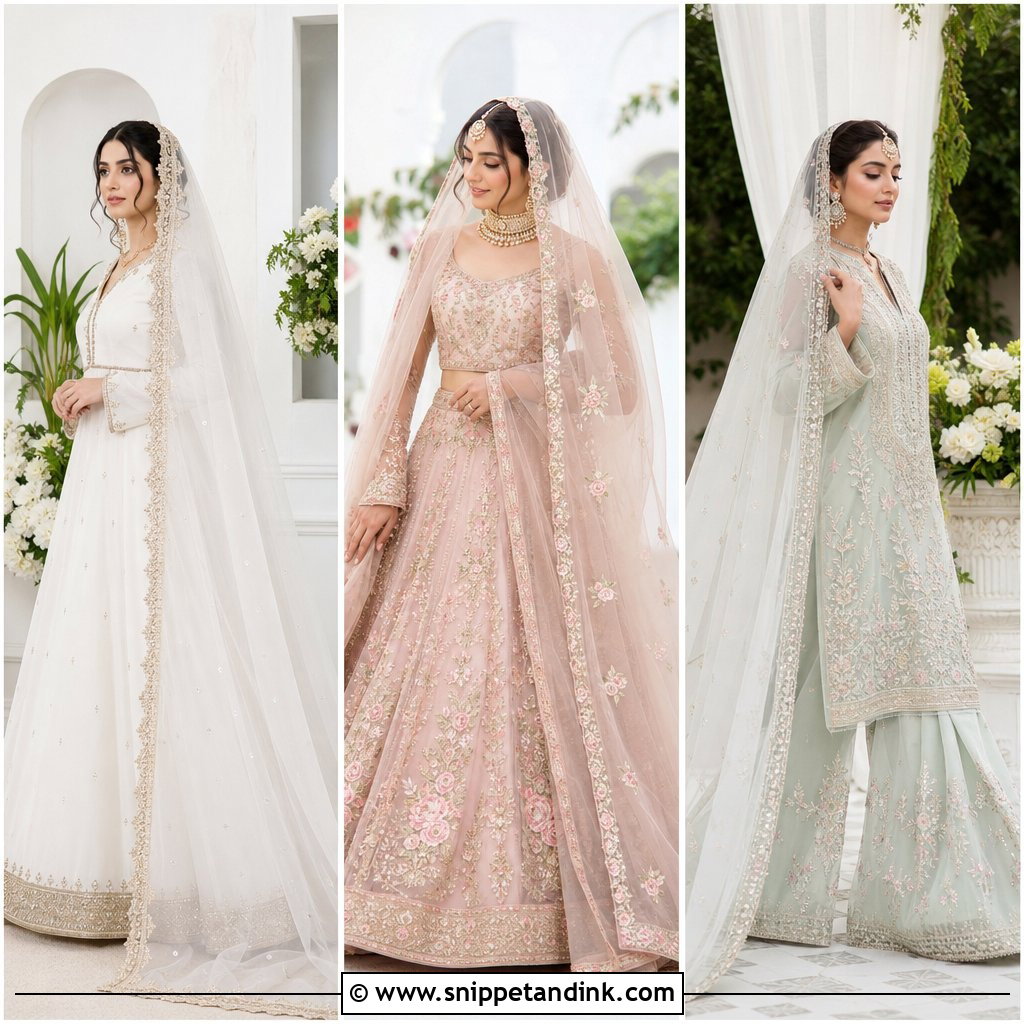
A bow veil pairs a familiar bridal accessory with the playful proportions of a mini. Soft tulle hangs from beneath a structured satin bow and falls to the shoulders, elbows or fingertips. Pair it with a long-sleeve mini, a tailored shift or a short A-line with a clean neckline, plus slingback kitten heels, pearl earrings and a compact bag. A satin bow is heavier than it looks and tilts forward if it sits too high, so I place it at the back of a low ponytail or smooth half-up style where it rests on the hair. Keep everything else simple. It’s good for a civil ceremony, welcome party or reception change.
16. Cape Veil With Column Wedding Dress
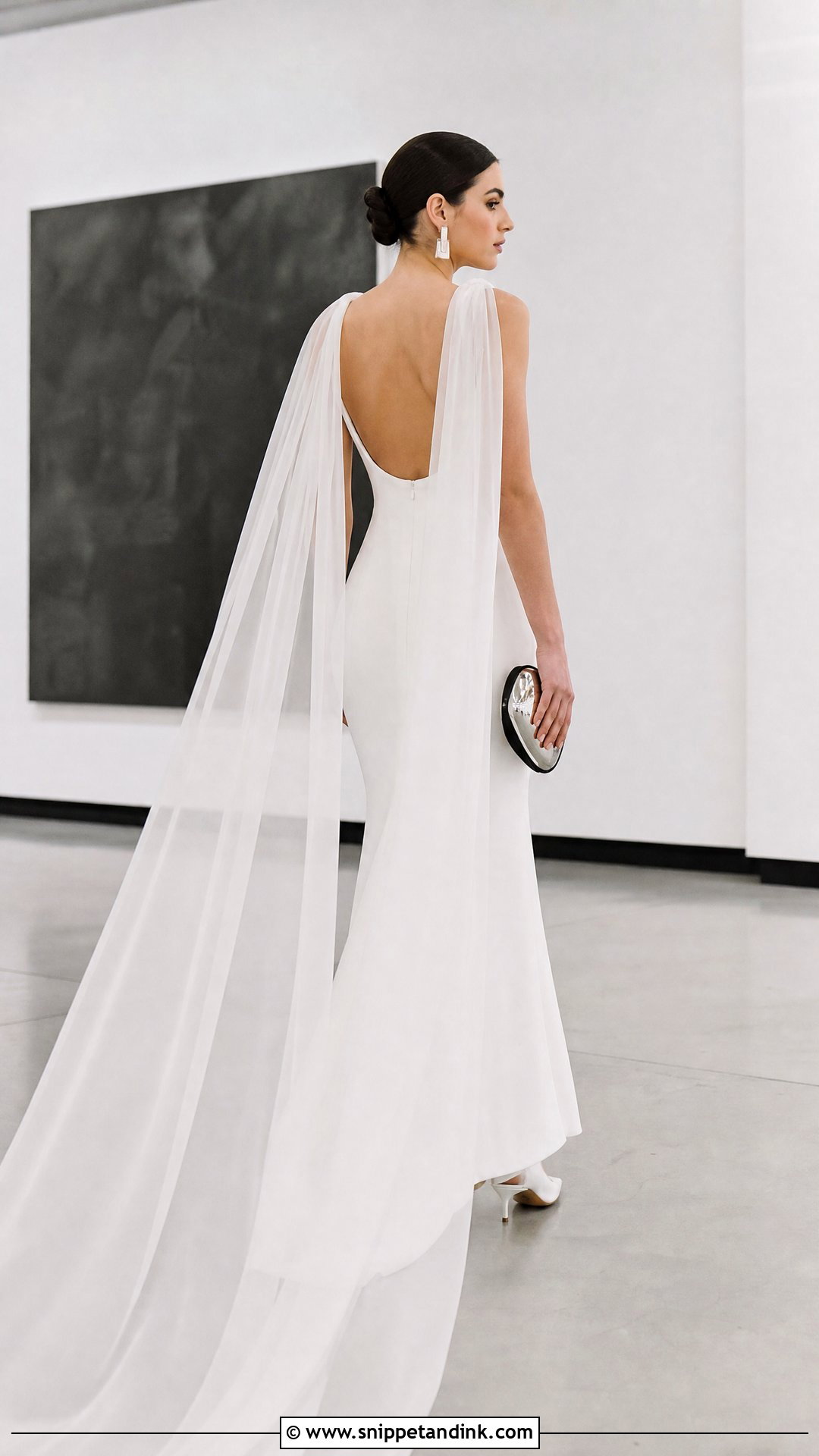
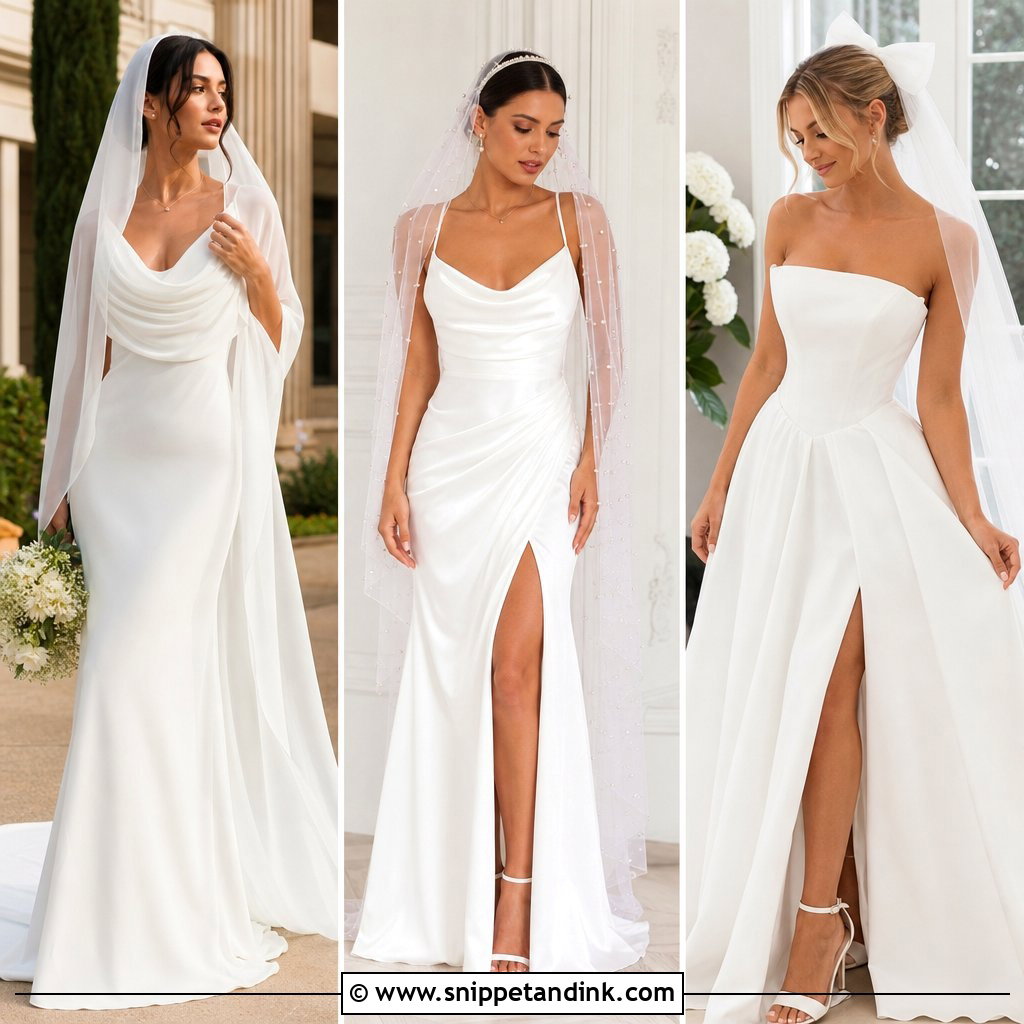
A cape veil attaches at the shoulders or neckline instead of the hair, and it’s the option I suggest to brides who hate the feel of combs and pins. Pair it with a sleeveless column or fitted halter gown so the attachment and the fabric stay visible. Sheer tulle feels delicate; embroidered organza holds more shape. Pointed pumps, geometric earrings and a smooth metallic clutch suit it, with a sleek bun or polished ponytail keeping the upper body clear. The cape covers part of the back, so skip dresses with elaborate rear detail. Ask your seamstress for snaps or hooks rather than stitching if you plan to take it off later.
17. Hooded Veil With Long-Sleeve Wedding Dress
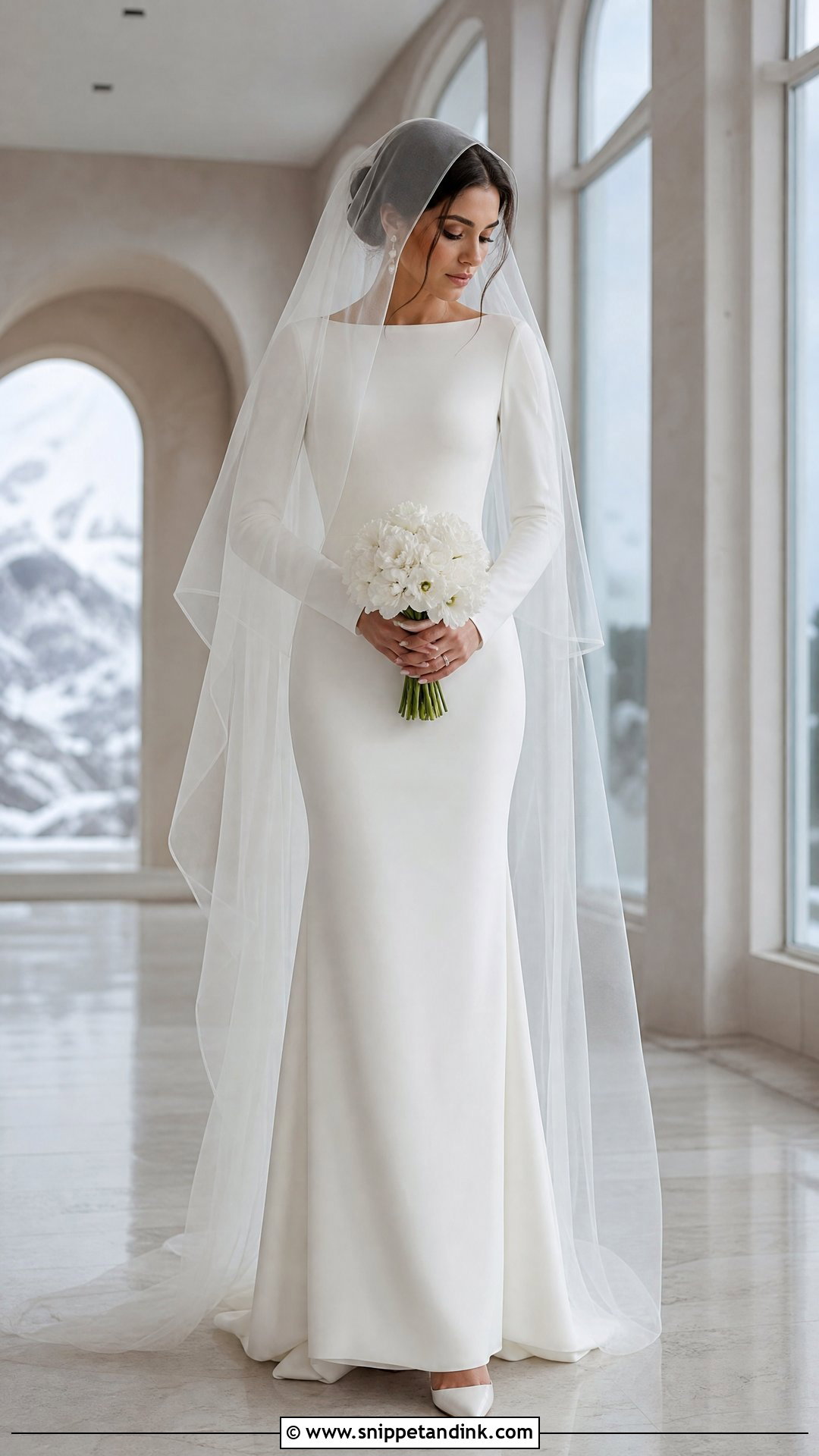
A hooded veil is part veil, part cape: tulle, lace or organza draped over the head and shoulders. Pair it with a slim long-sleeve gown in crepe or satin so the hood stays the focus, and a high neck or simple V-neck keeps the vertical line clean. Hair under a hood needs to be flat, because any volume pushes the hood up into a point. I keep it to a low, smooth bun pinned close to the nape. Choose a light, transparent fabric that frames the face rather than collapsing onto it. Understated earrings, pointed pumps and a small bouquet with minimal greenery complete it. It looks most natural in cooler weather.
18. Two-Tier Veil With Princess Wedding Dress
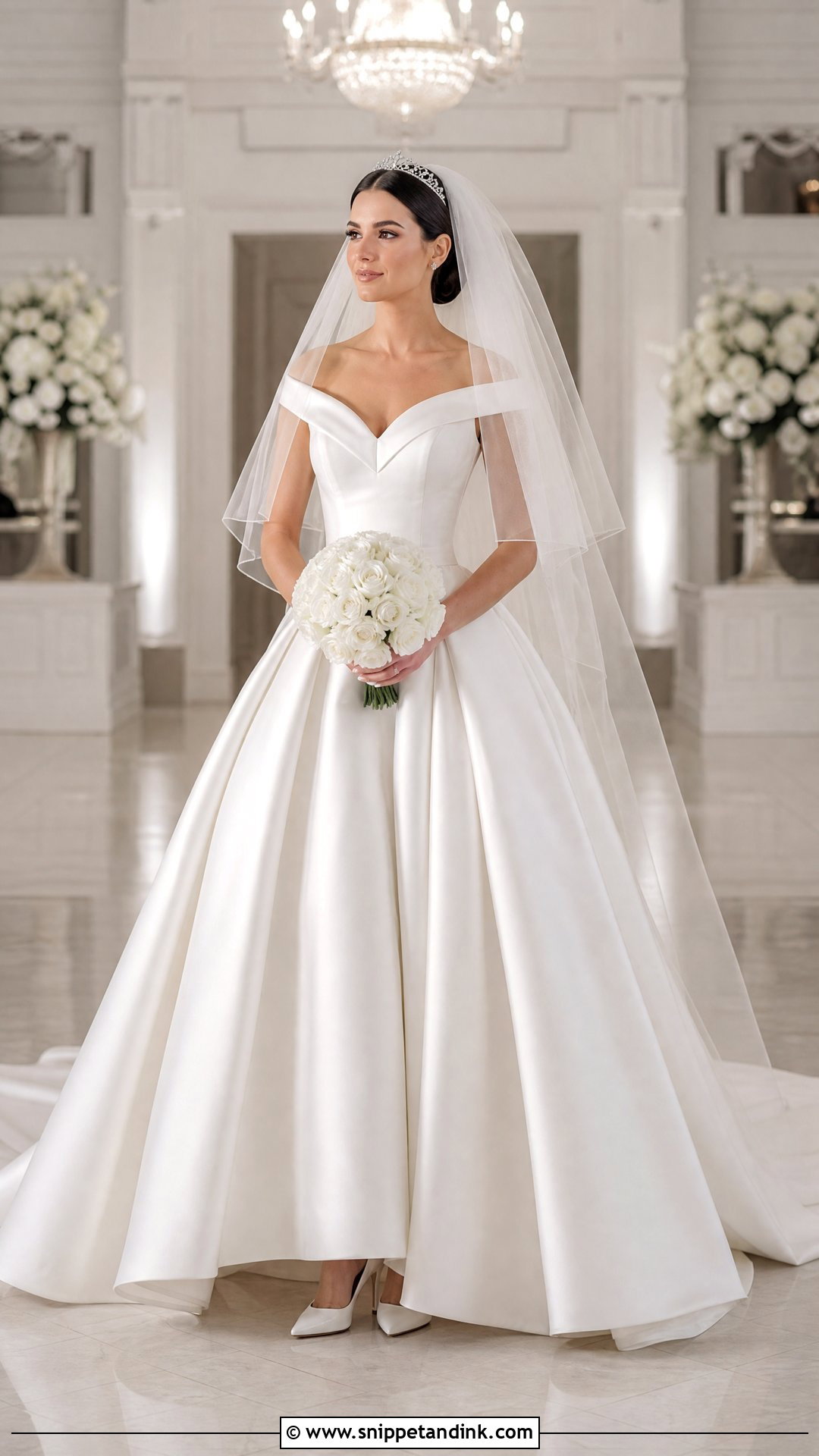
A two-tier veil adds fullness to a princess gown, with the short top layer working as a blusher and the longer layer falling down the back. Keep the veil’s embellishment in proportion with the dress: plain tulle with a beaded gown, a narrow lace border with a simple satin one. Classic pumps, crystal studs and a subtle tiara or comb finish it. Two layers mean double the weight on the comb, so a centered bun is the base I trust to keep both tiers even. Test the blusher at the hair trial too. If the gather is too full, the front layer catches on lashes and lipstick when it’s lifted.
19. Scalloped Lace Veil With Mermaid Wedding Dress
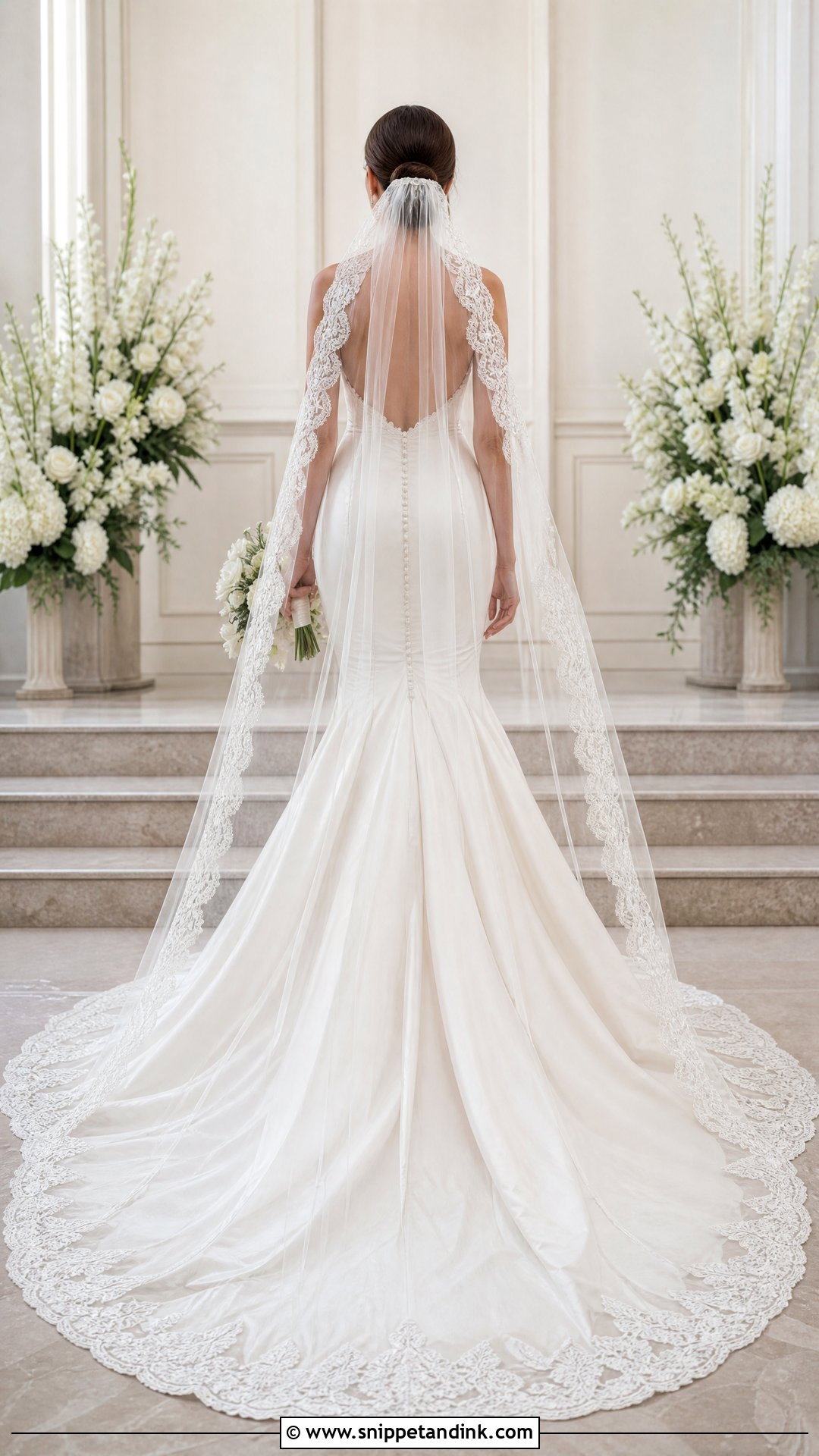
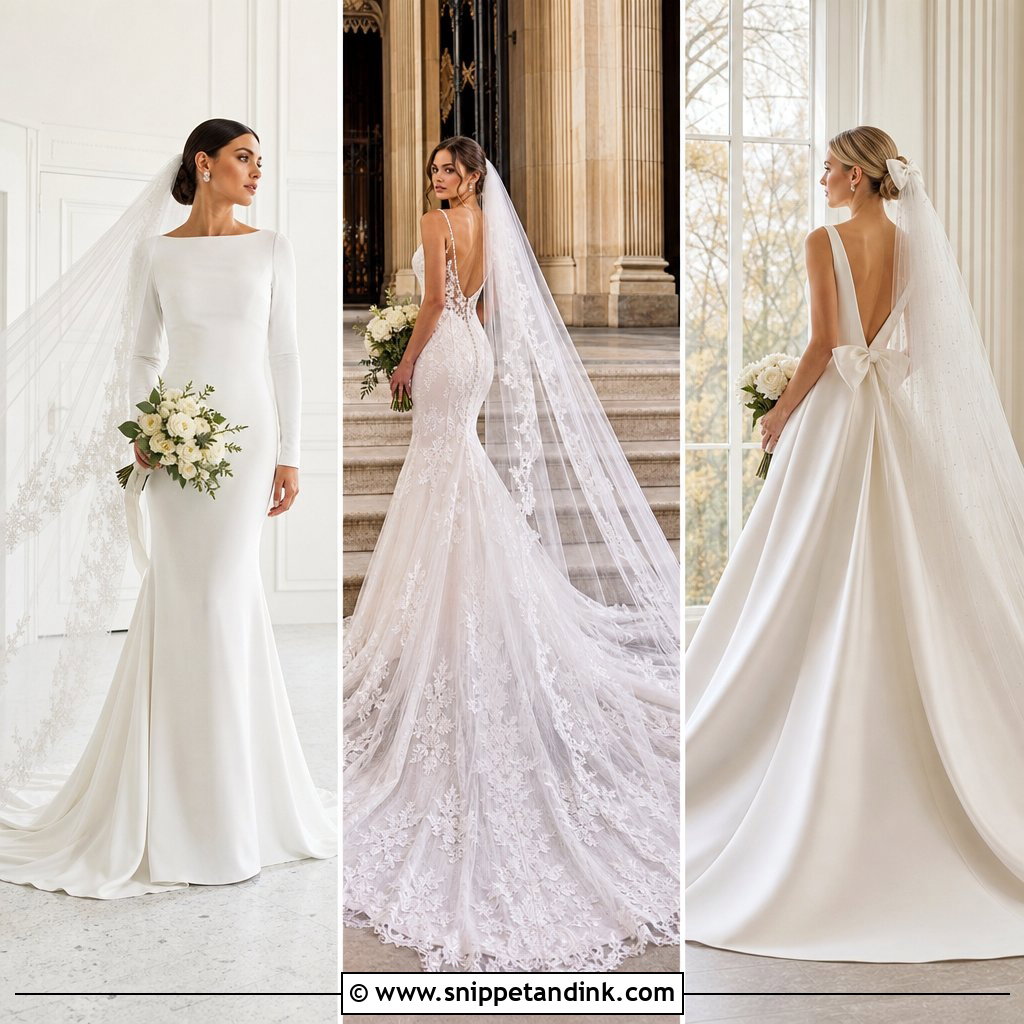
A scalloped lace veil at chapel or cathedral length follows the curves of a mermaid gown and frames its flared hem. If the dress already has lace, match the motif and its scale; with a plain satin mermaid, a richer lace edge can become the focal point. The scalloped edge should lie just beyond the train so it draws a clean outline. Heavy gathering at the comb hides the shaped silhouette, so I ask for a light gather and set it into a smooth low bun. Pointed pumps and small drop earrings suit it, and a compact bouquet keeps the bodice and the lace border clear in photos.
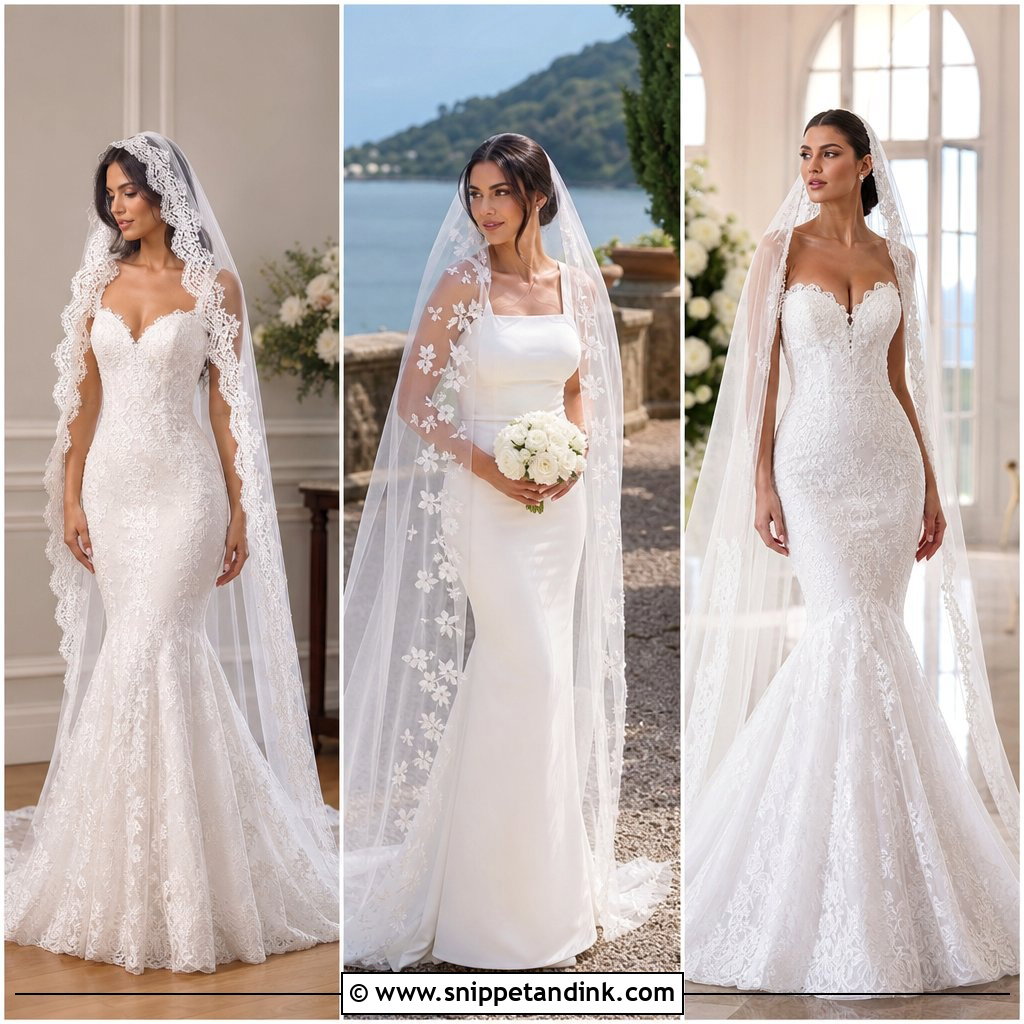
20. Blue Veil With Bridal Jumpsuit
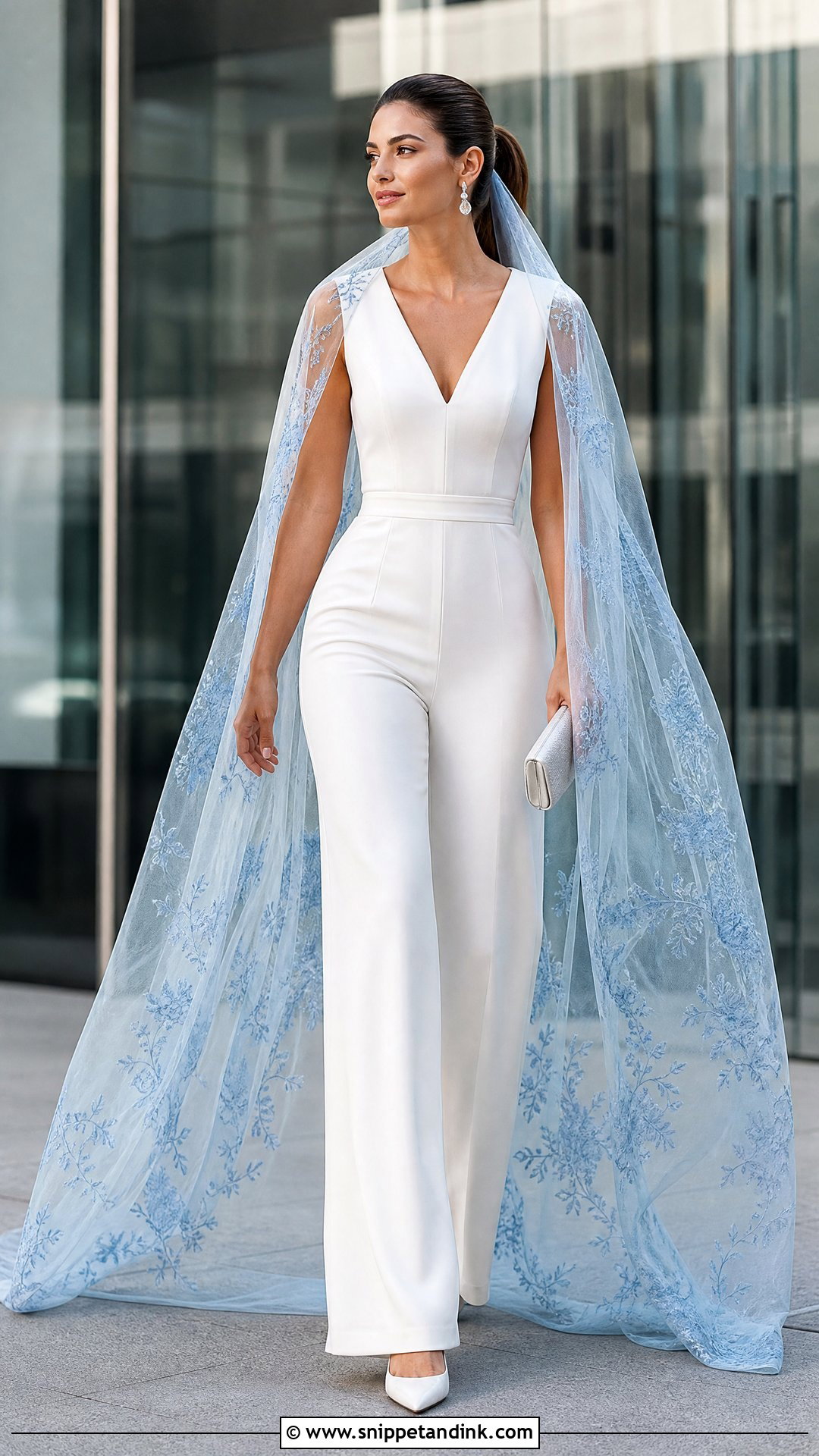
A pale blue veil gives a tailored bridal jumpsuit a fresh finish and a personal touch without changing the main white or ivory palette. Powder blue, misty grey-blue or sheer tulle with blue embroidery all keep it subtle. A floor-length or fingertip veil softens the strong lines of wide-leg trousers, a defined waist and a clean V-neck or one-shoulder bodice. White pointed pumps, silver earrings and a compact clutch complete it. Colored tulle shows the comb’s gather more than white does, so I hide the comb under a sleek ponytail or low bun. Keep the jumpsuit and accessories neutral so the blue reads clearly.
Creases, Wind and Taking the Veil Out
Veils arrive folded and creased. Hang yours a few days before the wedding and let gravity do most of the work, then steam any stubborn lines from a distance on low heat, keeping the steamer moving. Polyester tulle can shrivel if the steamer touches it, and silk tulle can water-spot, so test on a corner first. Never iron a veil.
Outdoors, wind is the issue. A long veil on a breezy hillside will wrap around the bride’s face or blow sideways in every photo. I add one or two extra pins on the windward side and ask a bridesmaid to stand ready to gather the end during the processional. For a cliff or beach ceremony, consider a shorter veil, or plan to remove the long one straight after the vows.
Speaking of removal: decide when it comes out before the day. Many brides keep it on through the ceremony and portraits, then take it off for dinner and dancing. Taking a comb out carelessly can drag the hairstyle with it. I show one bridesmaid how to do it: remove the pins first, then lift the comb gently backward and up, in the opposite direction from how it went in.
Try the Veil With the Hair, Not Just the Dress
A veil should support the dress, not compete with it, and length, fabric, embellishment, venue and comfort all change how it reads. Try it with your actual gown whenever you can, then walk, turn and sit, and look at the back in a mirror. Bring your shoes and jewelry. Most important from where I stand, wear the veil at your hair trial with the hairstyle you’ve chosen, because that’s where you’ll find out whether the comb holds and the weight is comfortable. Cathedral tulle, lace, bows, embroidery or a cape can all work. Go with the one that feels secure enough to forget about once you’re walking.
You'll Like These Ideas:


Leave a Reply