
Most of the veils I pin in are nylon tulle, so when a bride hands me real silk, I slow down. It moves differently, sits flatter against the hair and creases if you look at it wrong. A silk veil can make a plain gown feel ceremonial or calm down an ornate one, and the range is wide now: short veils, embroidered names, vintage caps, flowers, a hint of color, cathedral lengths. Before ordering, ask if the listing means silk tulle, silk chiffon, silk organza or simply a silk edge on synthetic net, because each falls in its own way. Hold it against your gown by a window, too. Below are twenty pairings, each with the hairstyle that actually holds it.
Real Silk Tulle Feels Nothing Like the Nylon Kind
If you have only tried on veils at a bridal shop, you’ve probably worn nylon tulle. It is crisp, light, holds a bit of puff and costs much less. Silk tulle is softer, closer to fine hair net, and it collapses into the body instead of floating out. That is why it looks so ethereal in pictures, and also why it can disappear against a busy gown.
A few practical differences I notice every time I pin one in:
- Silk is usually a natural ivory or soft white, not optic white. Hold it against your dress before you order, because a white veil on an ivory gown can make the dress look yellow.
- It creases in its packaging. Hang it in a steamy bathroom the night before, or steam it lightly from a distance; a hot iron will mark it.
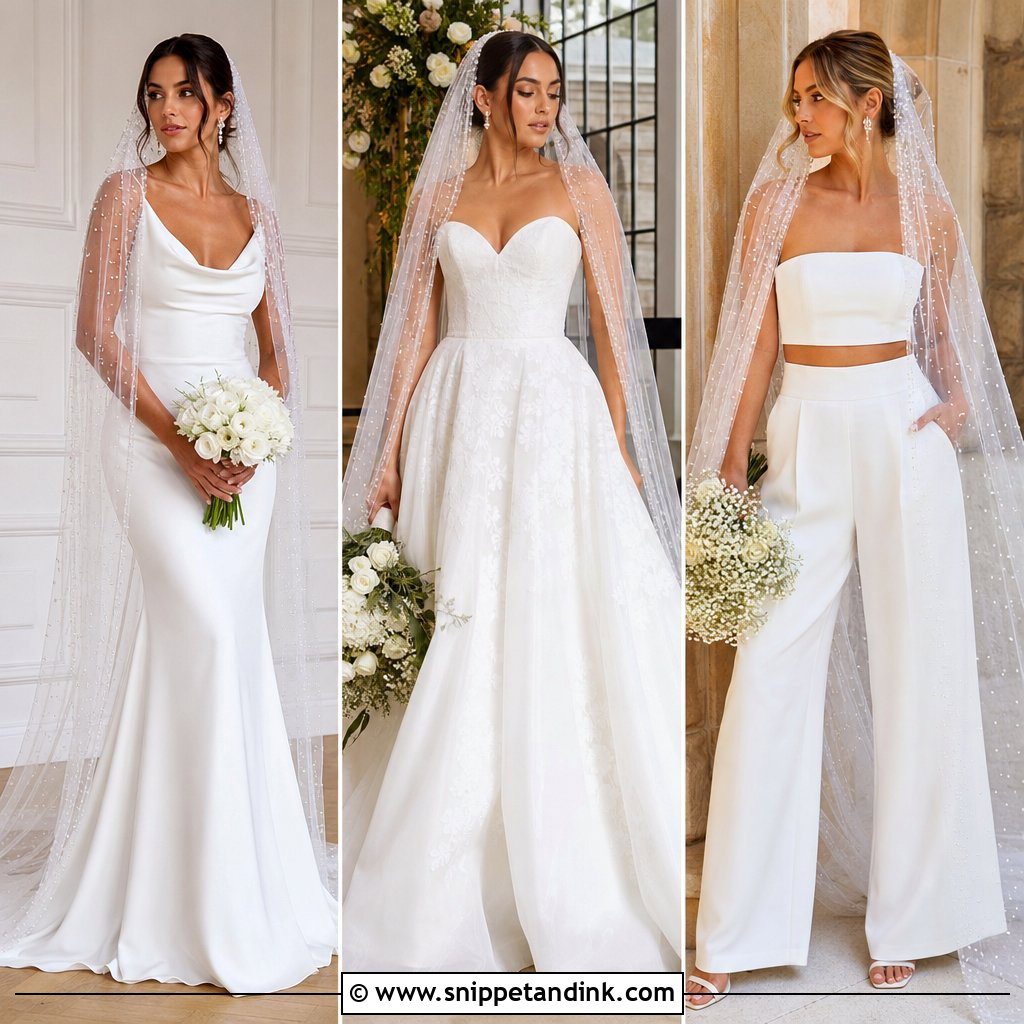
- It snags on rough jewelry, beaded bodices and some earrings, so try your earrings with the veil on.
- Less volume means it sits closer to the head, which suits sleek hair more than big curls.
Silk chiffon and organza are different again: chiffon is weightier and more opaque, organza crisp with a slight sheen. If you want air and movement, silk tulle; if you want a defined shape, organza.
1. Cathedral Silk Veil With Slip Wedding Dress
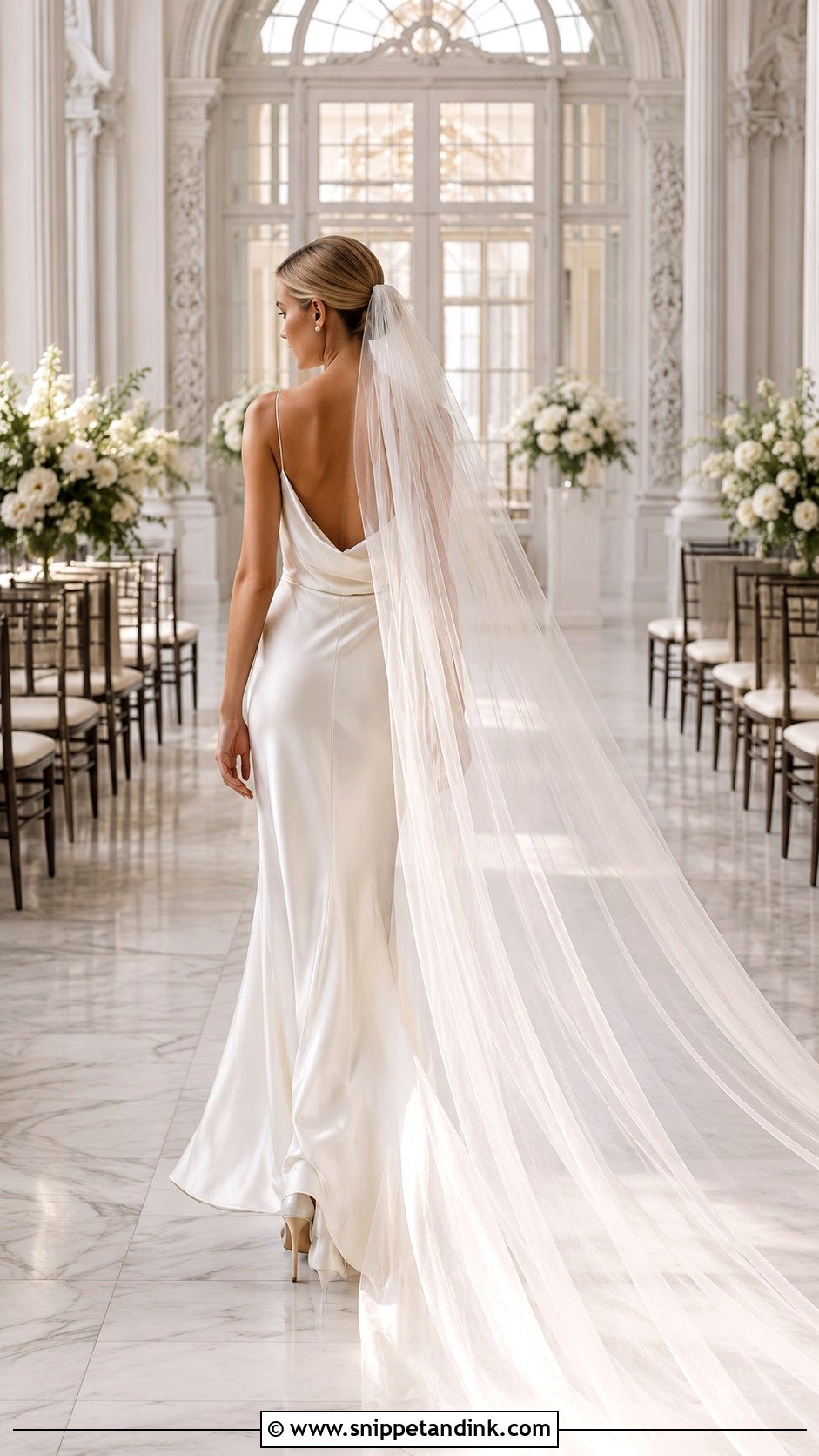
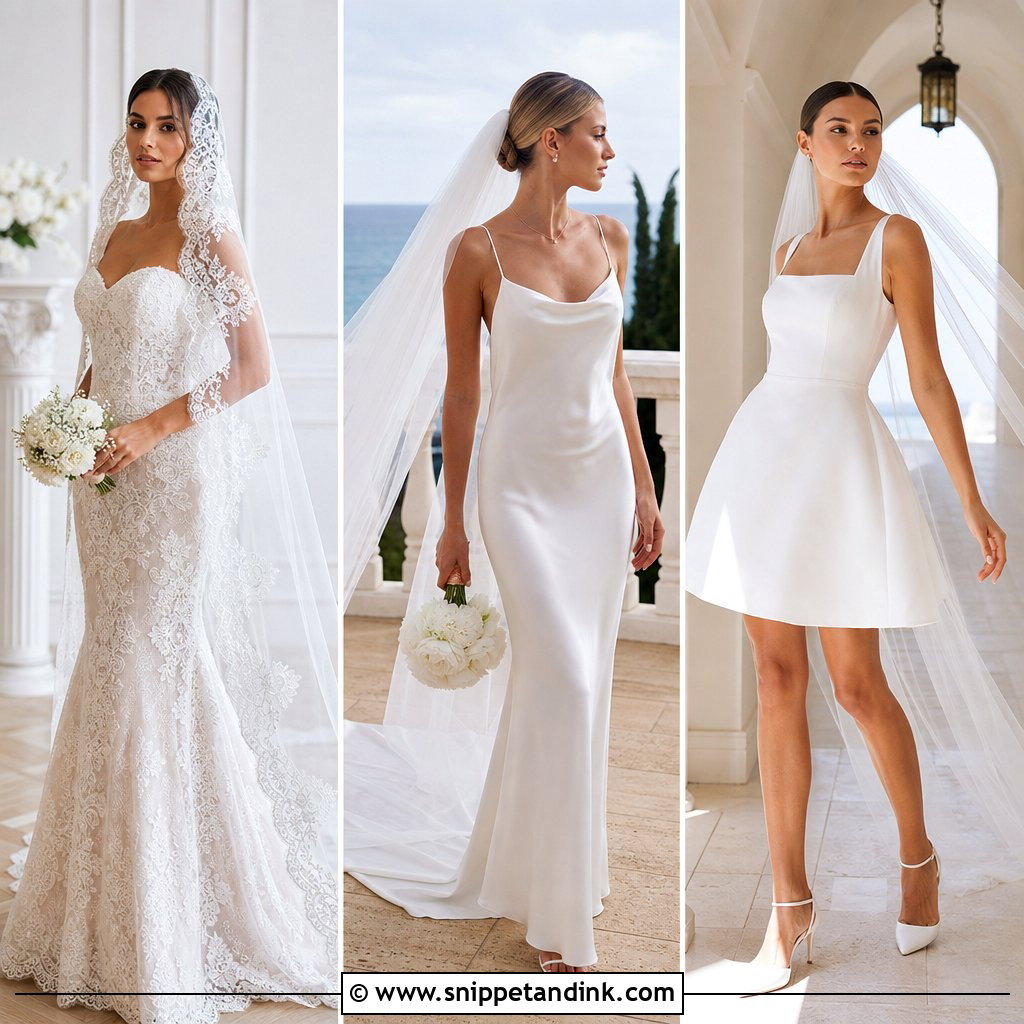
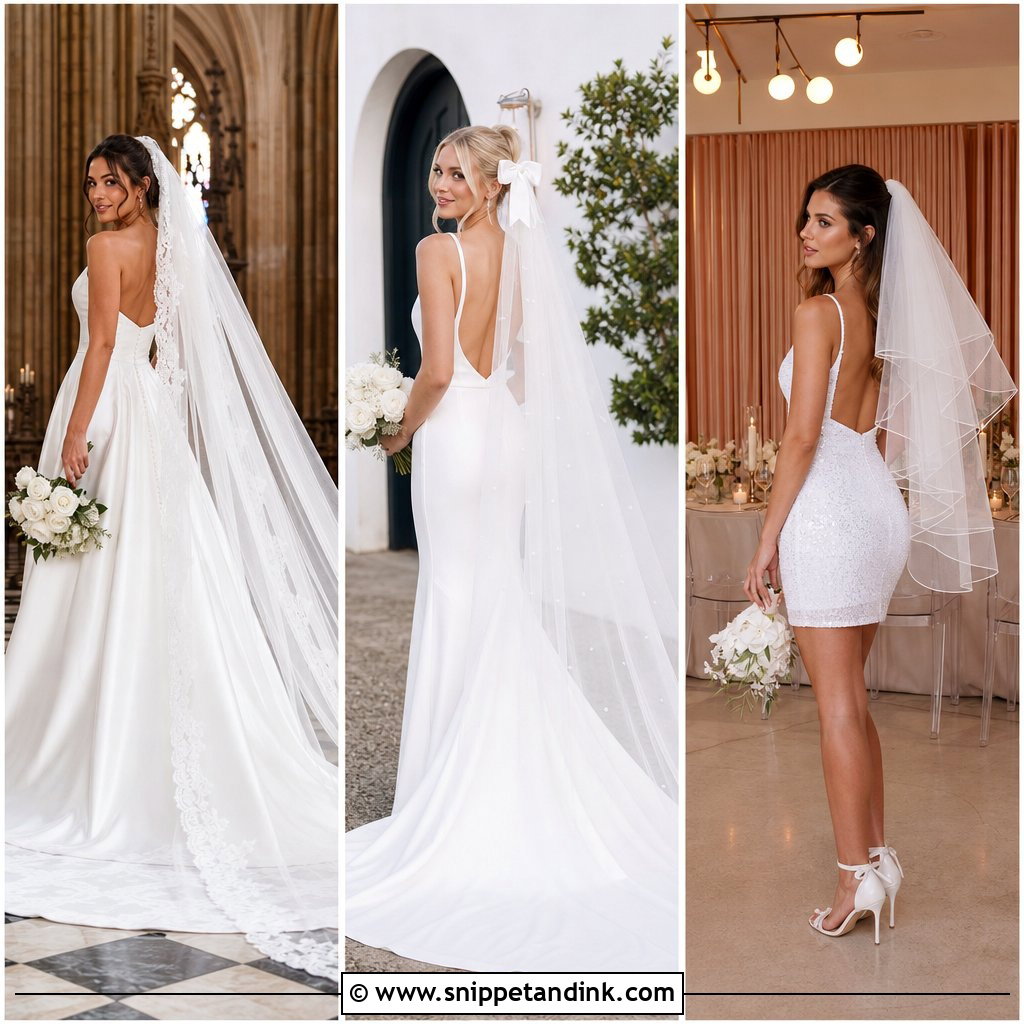
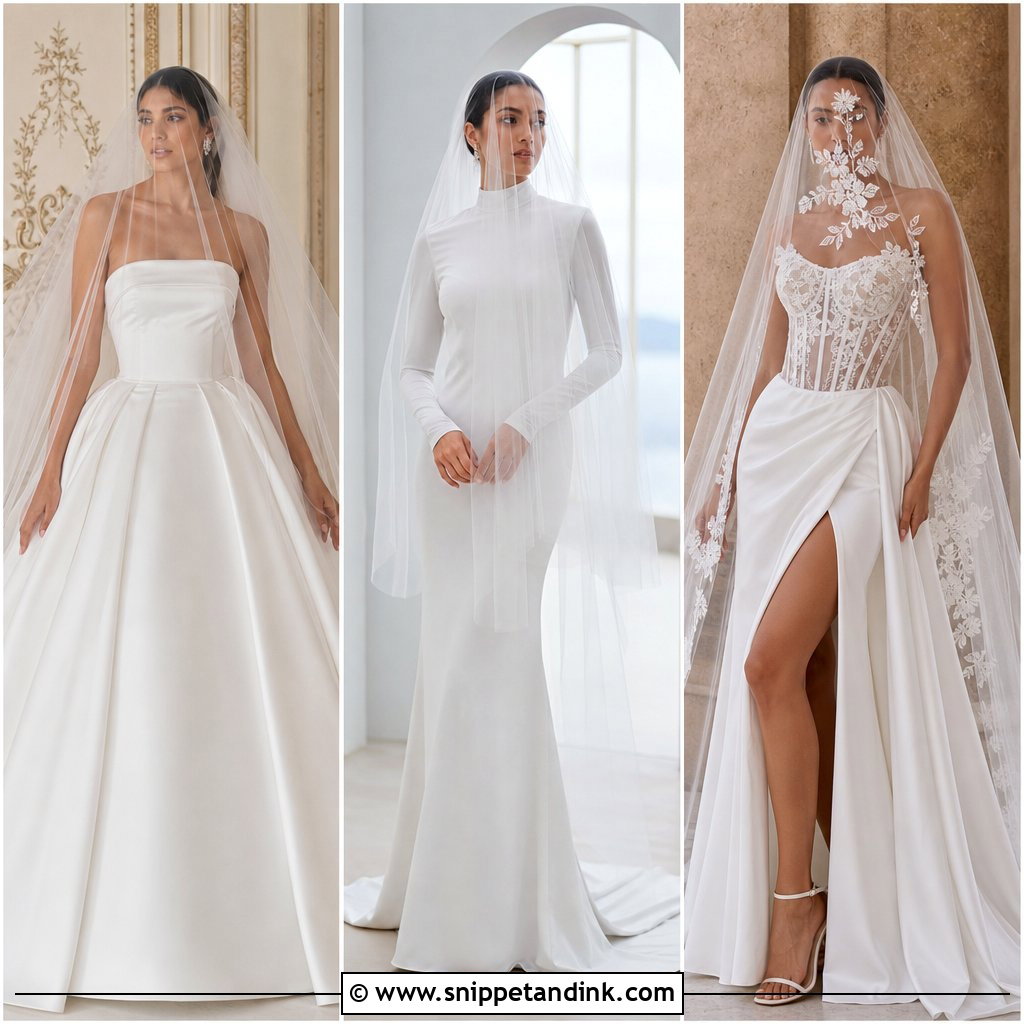
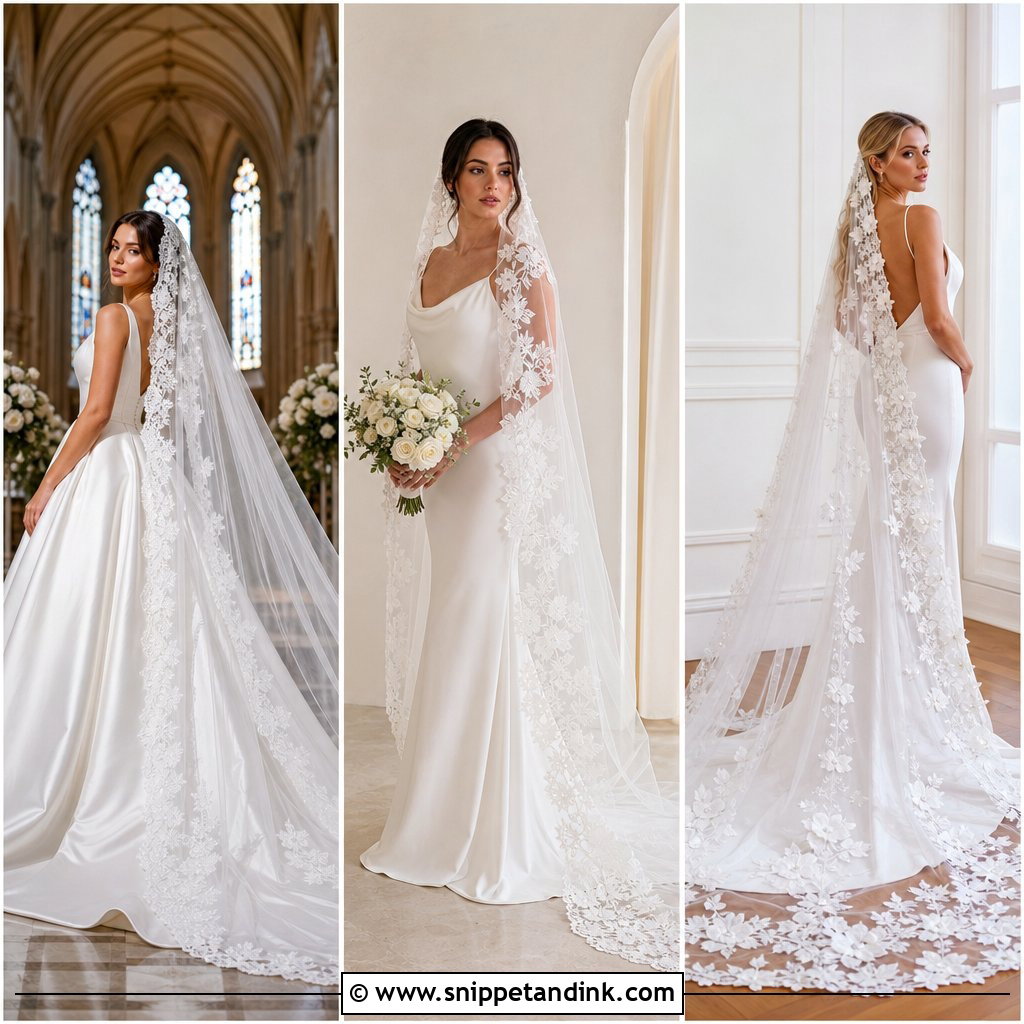
A slip dress is so plain that it needs the length a cathedral veil brings. A single layer of silk tulle keeps everything light behind you, and with a bias-cut silk gown, narrow straps and a clean train, it is the most classic pairing on this list. I set the comb under a smooth low bun, angled down, so the weight hangs from the bun rather than pulling on the crown. Pearl studs, pointed ivory pumps and a small clutch; nothing else. Have your tailor look at the veil and dress trains together so one doesn’t end awkwardly a few inches past the other.
2. Fingertip Silk Veil With A-Line Wedding Dress
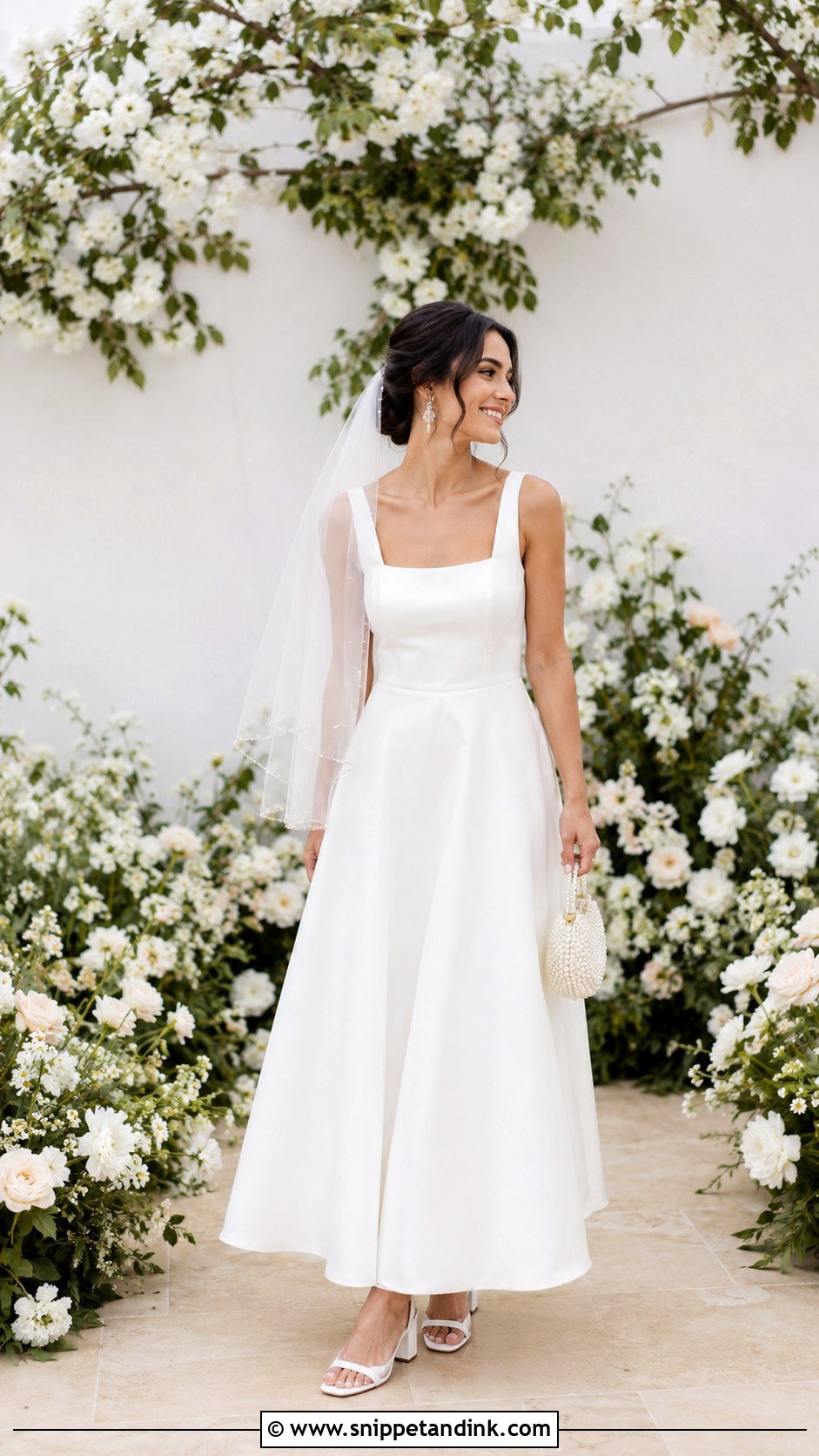
Can a traditional outfit feel relaxed? A fingertip veil with an A-line gown gets close. It ends around your fingertips, so the back of the dress still shows, and a fine silk edge keeps it neat. This length is the one I find easiest to wear all day, because it never gets stepped on and it clears a chair when you sit. A loose chignon gives the comb plenty to grip. Small crystal earrings and block-heel sandals keep it easy for a garden or hotel ceremony, and it can stay on for the first hour of the reception.
3. Blusher Silk Veil With Strapless Ball Gown
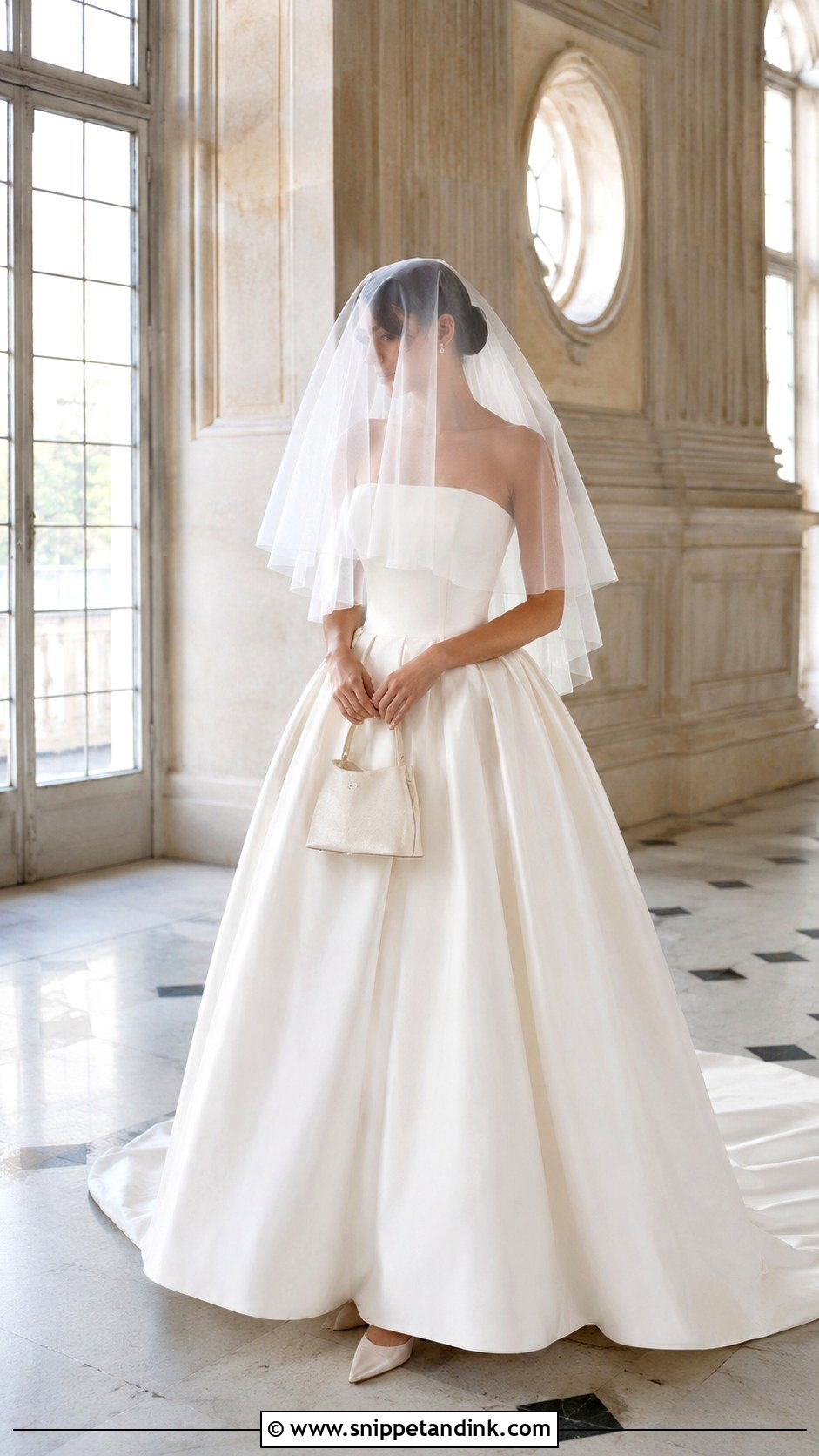
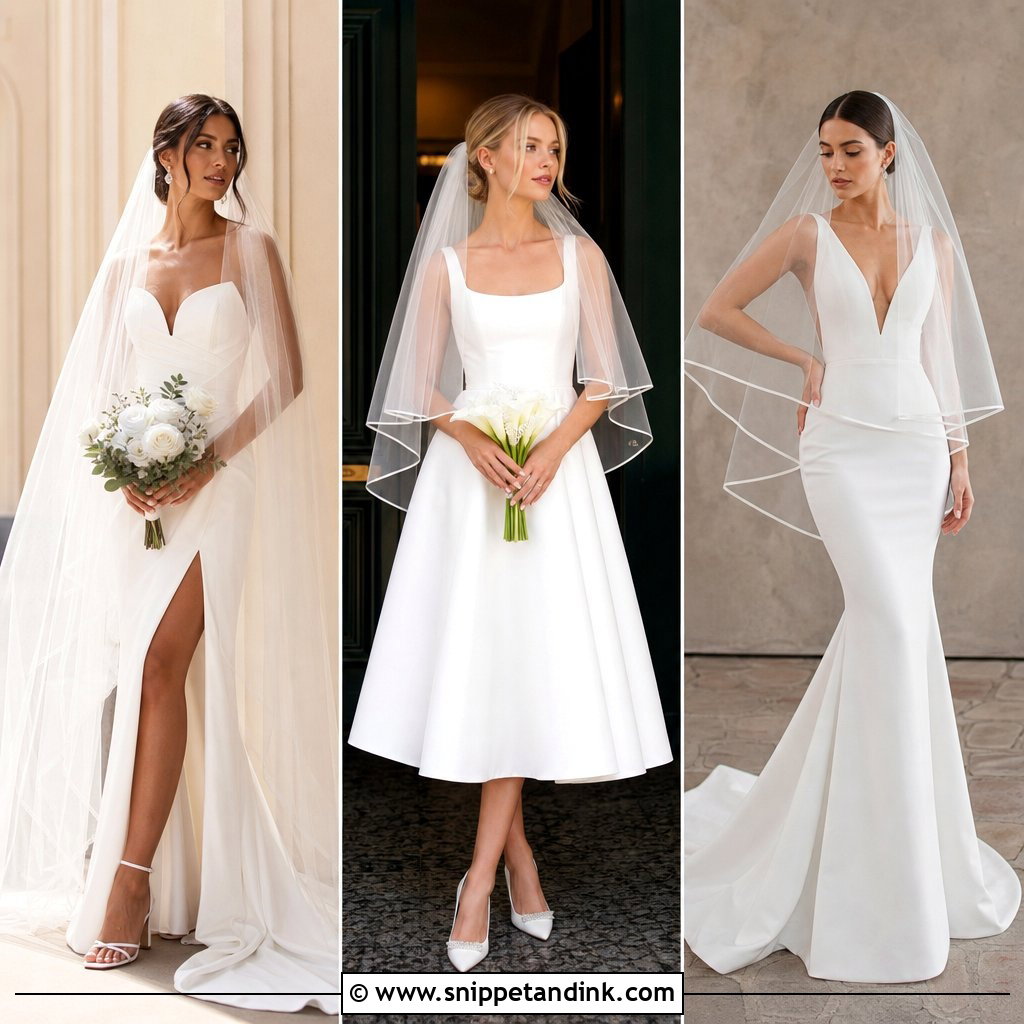
Nothing says bride faster than a blusher over the face. A two-tier silk tulle blusher veil softens a structured strapless ball gown without hiding the neckline. Placement changes the effect: at the crown it gives height, just behind it the veil hugs the head. The part brides forget is the flip. When the blusher goes back, the comb takes a sudden twist, so I anchor it into a section I’ve backcombed and pinned in an X. Practice lifting it at a fitting so the layers don’t bunch. A polished bun, crystal studs and satin heels; skip heavy necklaces.
4. Juliet Cap Silk Veil With Bias-Cut Gown
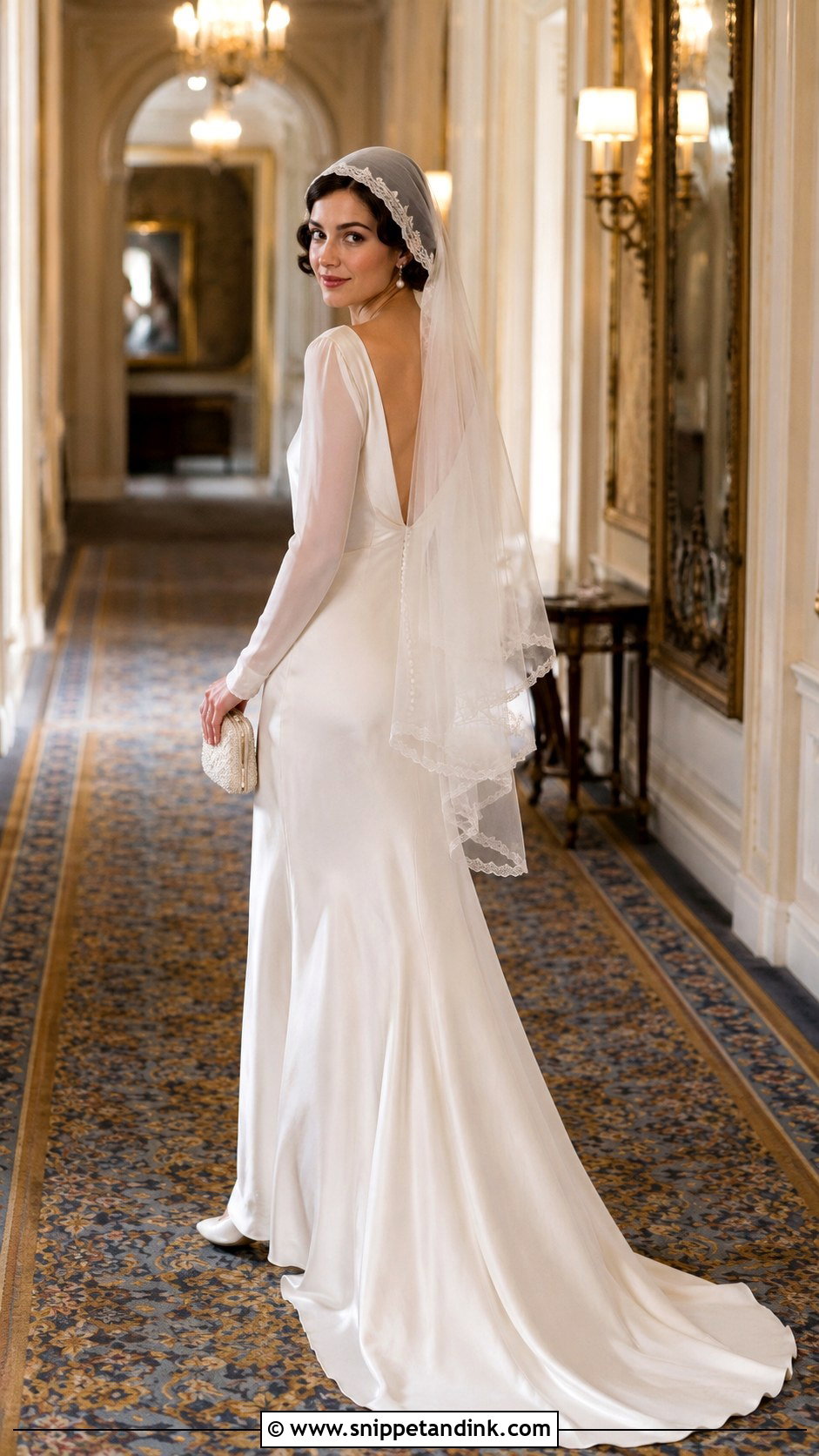
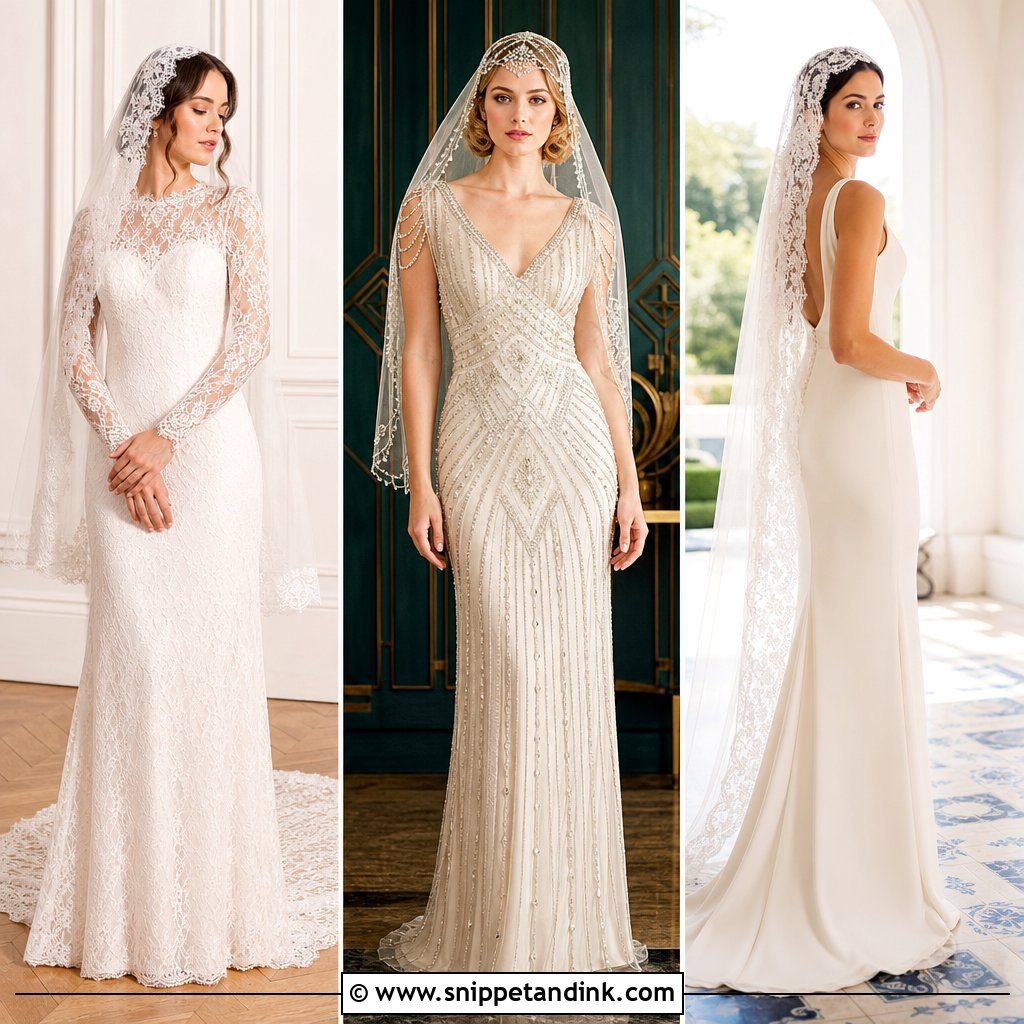
A Juliet cap brings back the 1920s and 1930s, sitting close to the head with silk tulle falling from both sides. Pair it with a bias-cut gown with long fluid lines, a low back or fine sleeves. Vintage caps suit brides who already love heirloom details. The hair needs to be flat and controlled under it: finger waves or a smooth set with the volume kept at the nape, because a high crown pushes the cap up and makes it look like a swim cap. Pearl drops, low heels and a beaded clutch. Keep the dress plain; the cap is the focus.
5. Mantilla Silk Veil With Long-Sleeve Wedding Dress
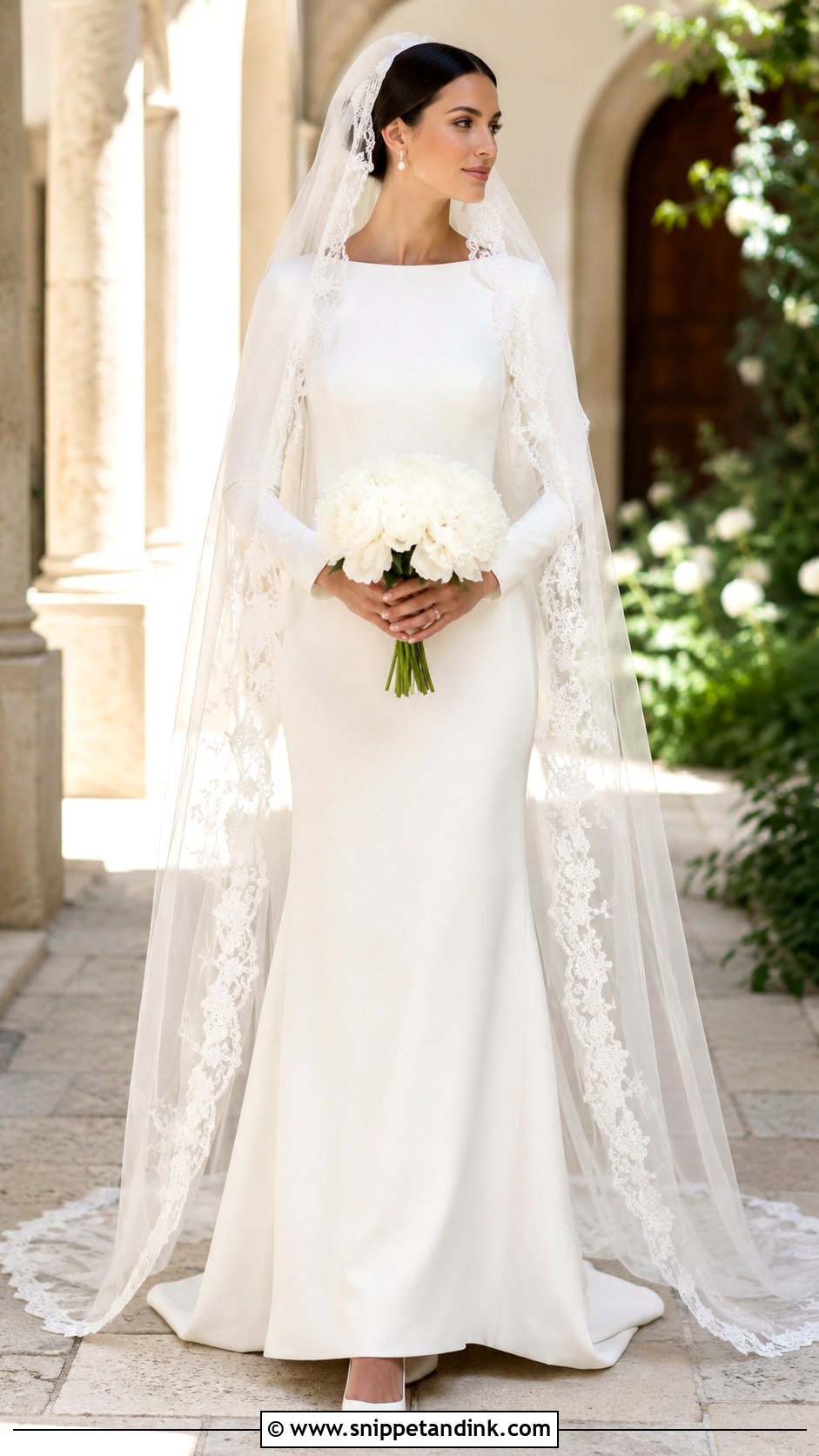
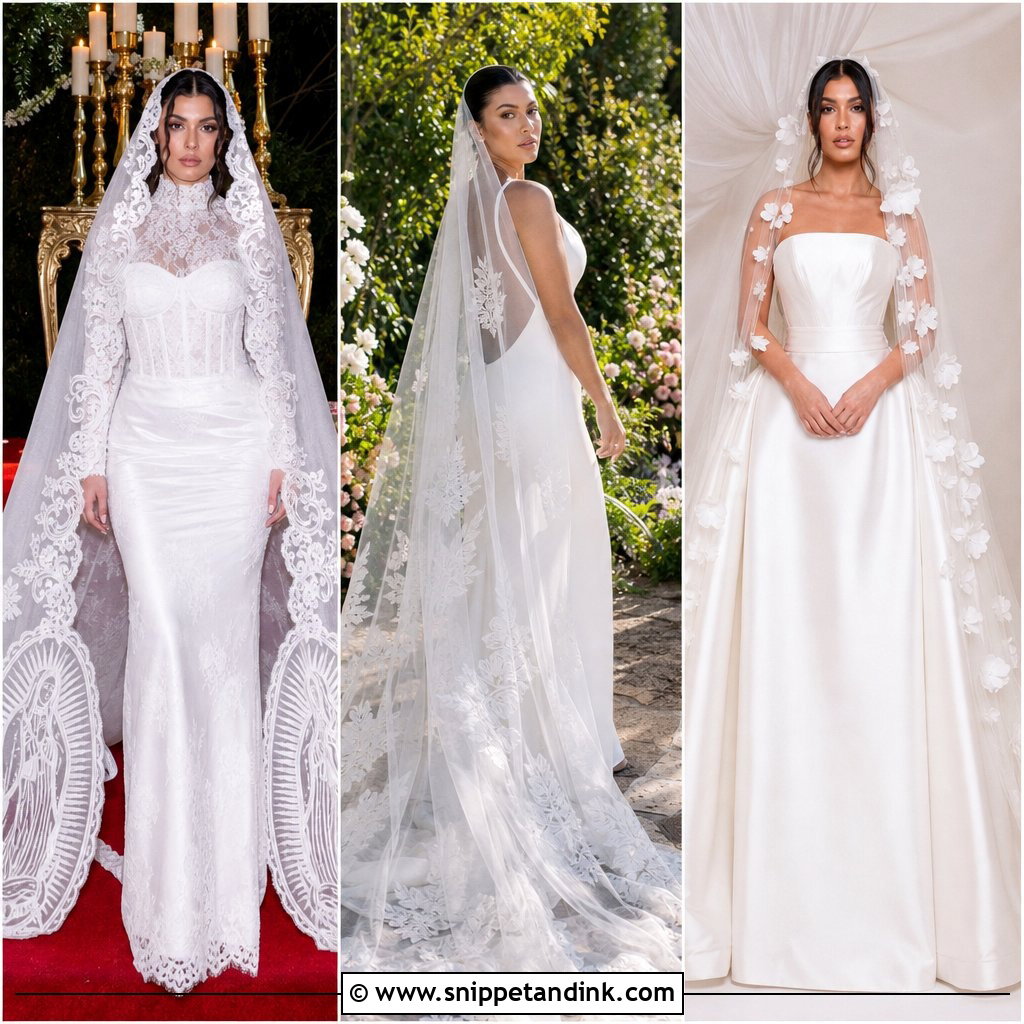
A mantilla-inspired silk veil sits over the crown and frames the face with its lace edge, so the hair underneath has to be smooth enough not to lift it. A low bun works best; I pin the comb just above it and add a couple of small hidden pins along the sides to stop the lace from sliding back. Choose silk tulle with a scalloped edge and a clean crepe long-sleeve gown so the lace stands out. The veil can be fingertip to cathedral. During alterations, have the lace placed so its most detailed sections sit evenly on your shoulders and train.
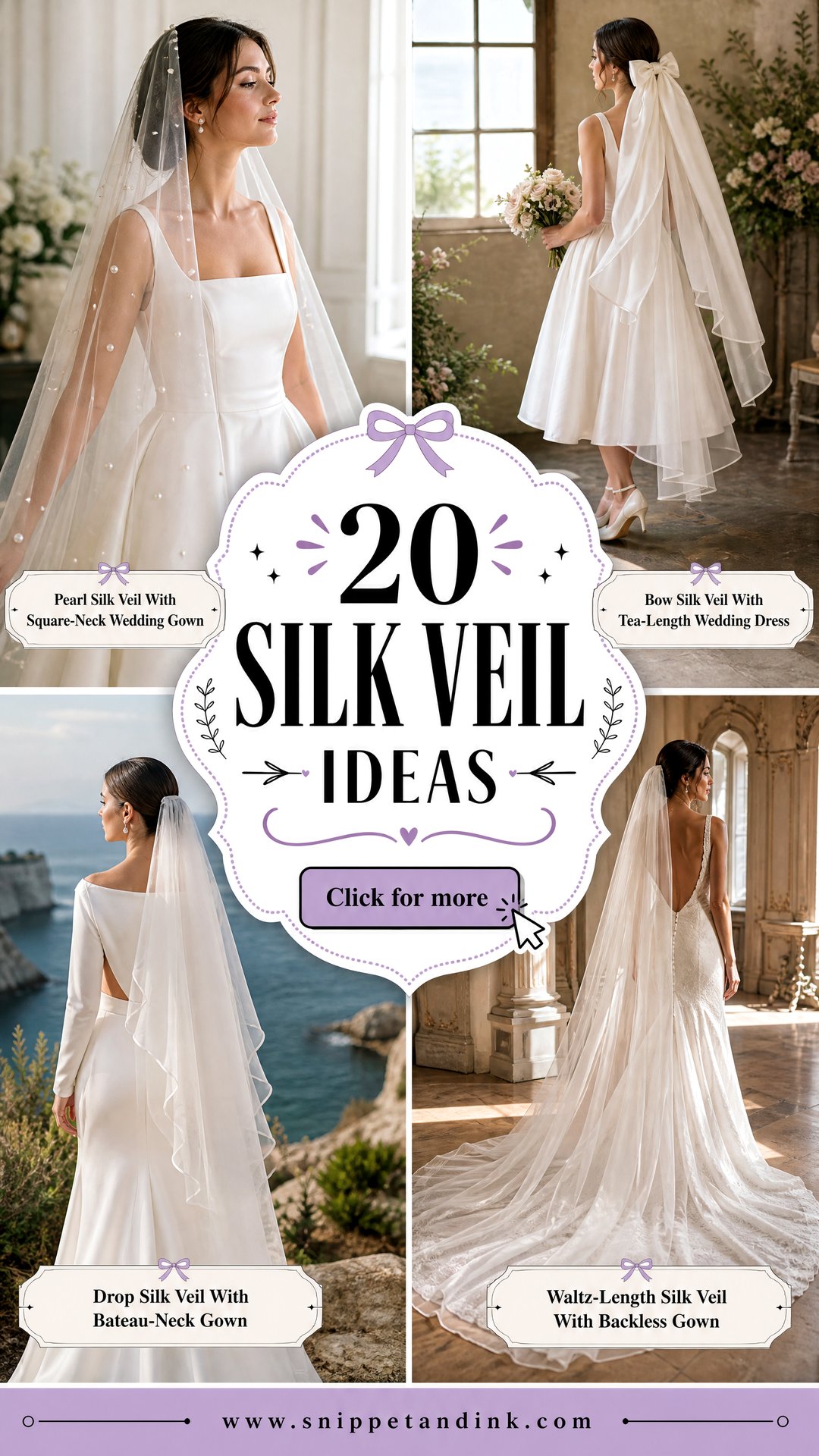
6. Pearl Silk Veil With Square-Neck Wedding Gown
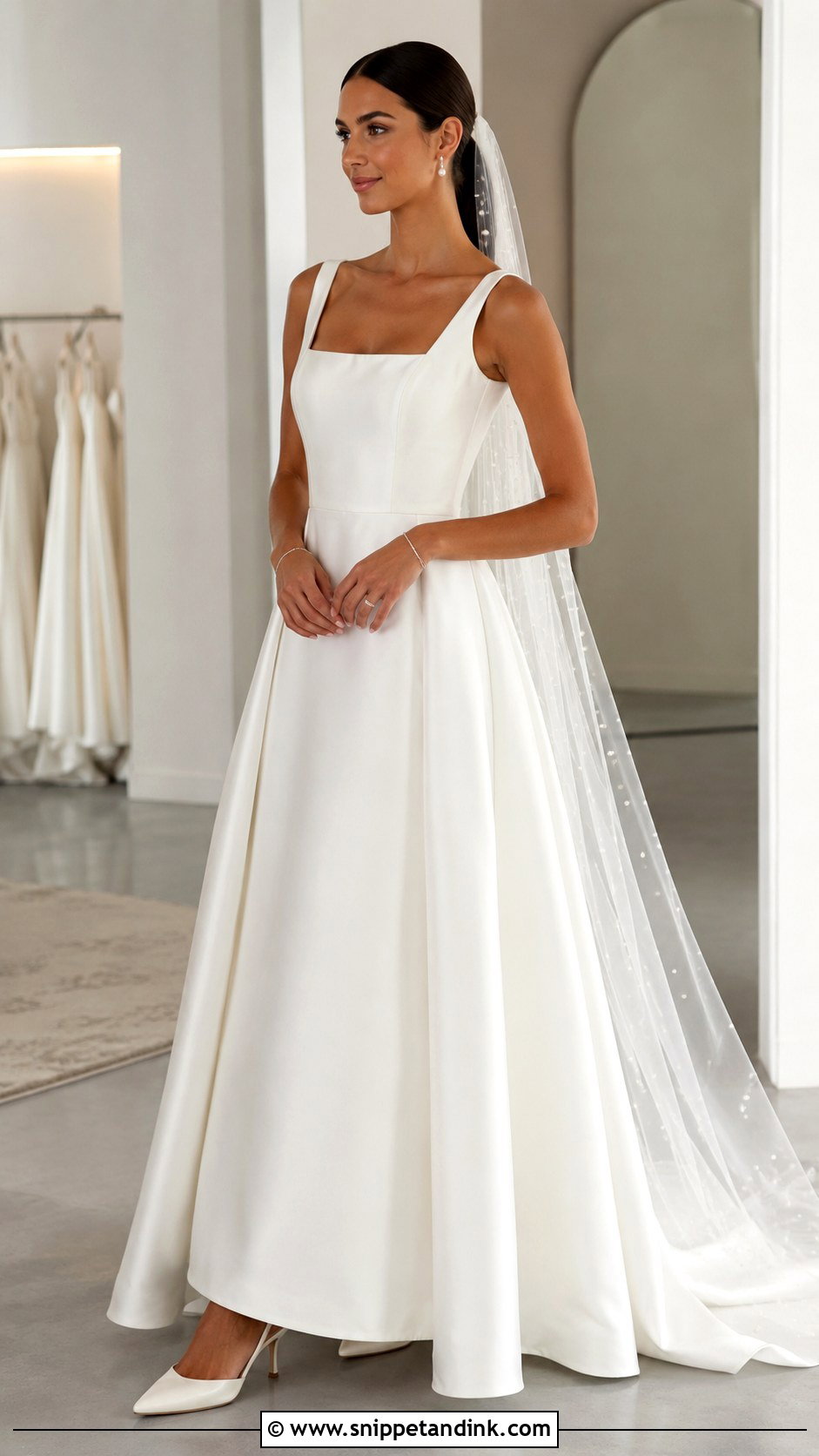
Scattered pearls on silk tulle catch light softly, and a square neckline gives them space to read as delicate. Each pearl adds weight, though, and on fine silk that weight pulls the veil down and flattens the drape. I check the comb end: if it is heavy there, the veil slides back during the ceremony. Lighter near the comb and denser toward the hem is the arrangement I’d ask for. A neat low ponytail or bun keeps loose curls from catching on the beads. Pearl studs, a slim bracelet, slingback heels and a small satin pouch quietly repeat the detail.
7. Floral Silk Veil With Simple Column Gown
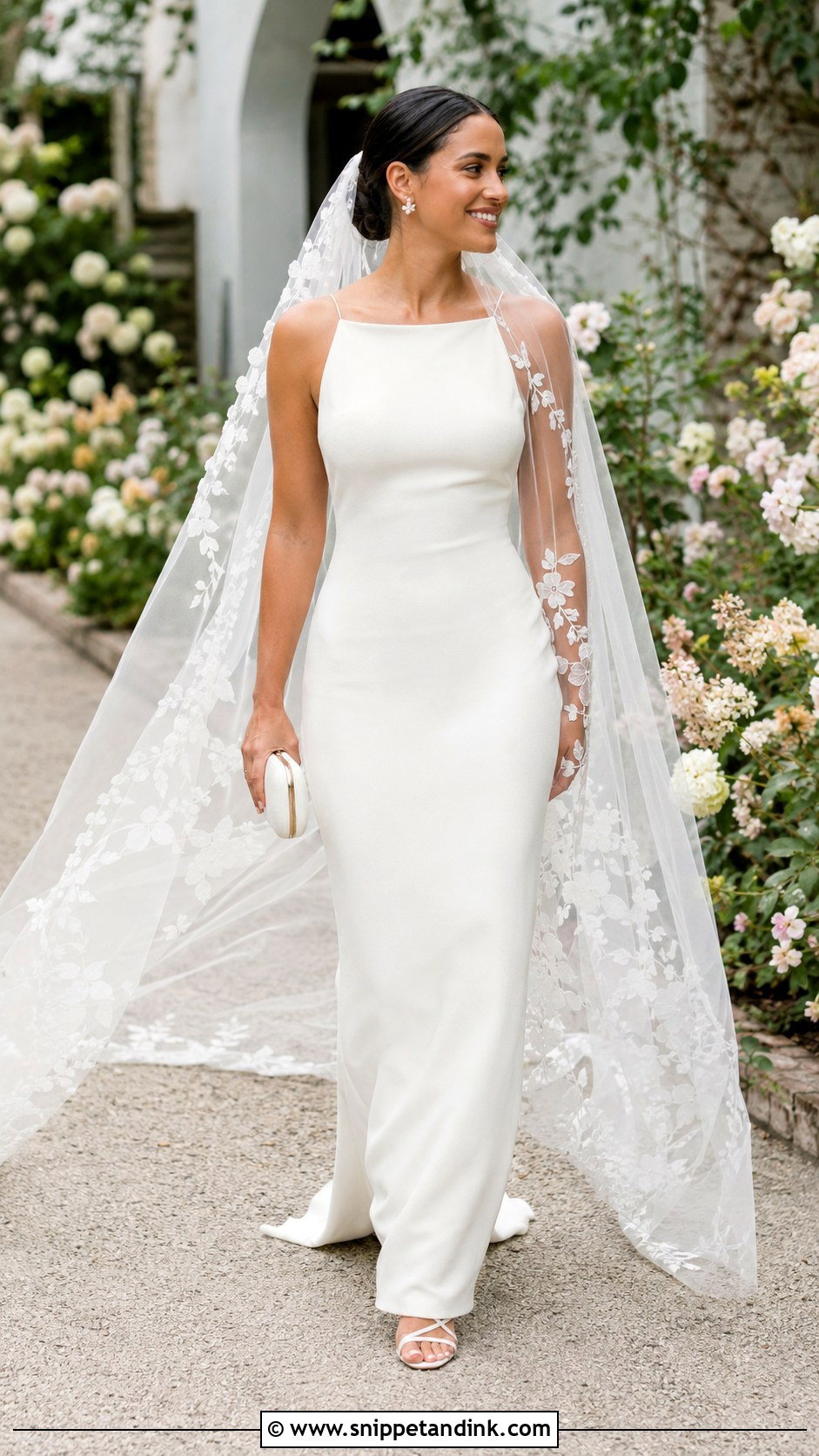
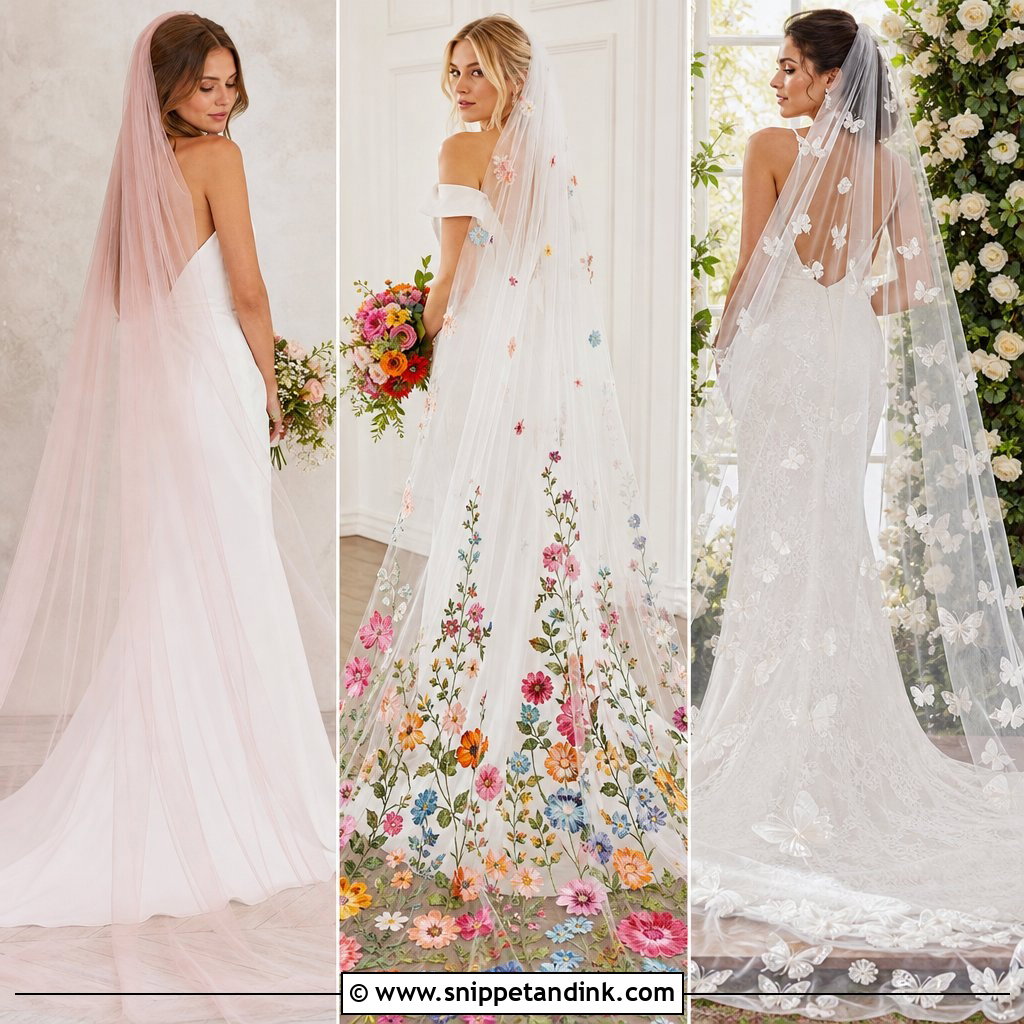
Picture flowers drifting behind you down the aisle. An embroidered floral silk veil gives that effect, and a column gown with minimal seams and a straight neckline leaves room for the embroidery or appliqués to lead. Dimensional flowers add weight unevenly, so I check how the veil hangs when the bride turns her head; if one side drags, a second small comb or a couple of extra pins fixes it. A sleek bun is the steadiest base. Floral studs, narrow-strap sandals and a small ivory clutch. Match one flower from the embroidery to your bouquet, and keep the train narrow.
8. Personalized Silk Veil With Satin Wedding Gown
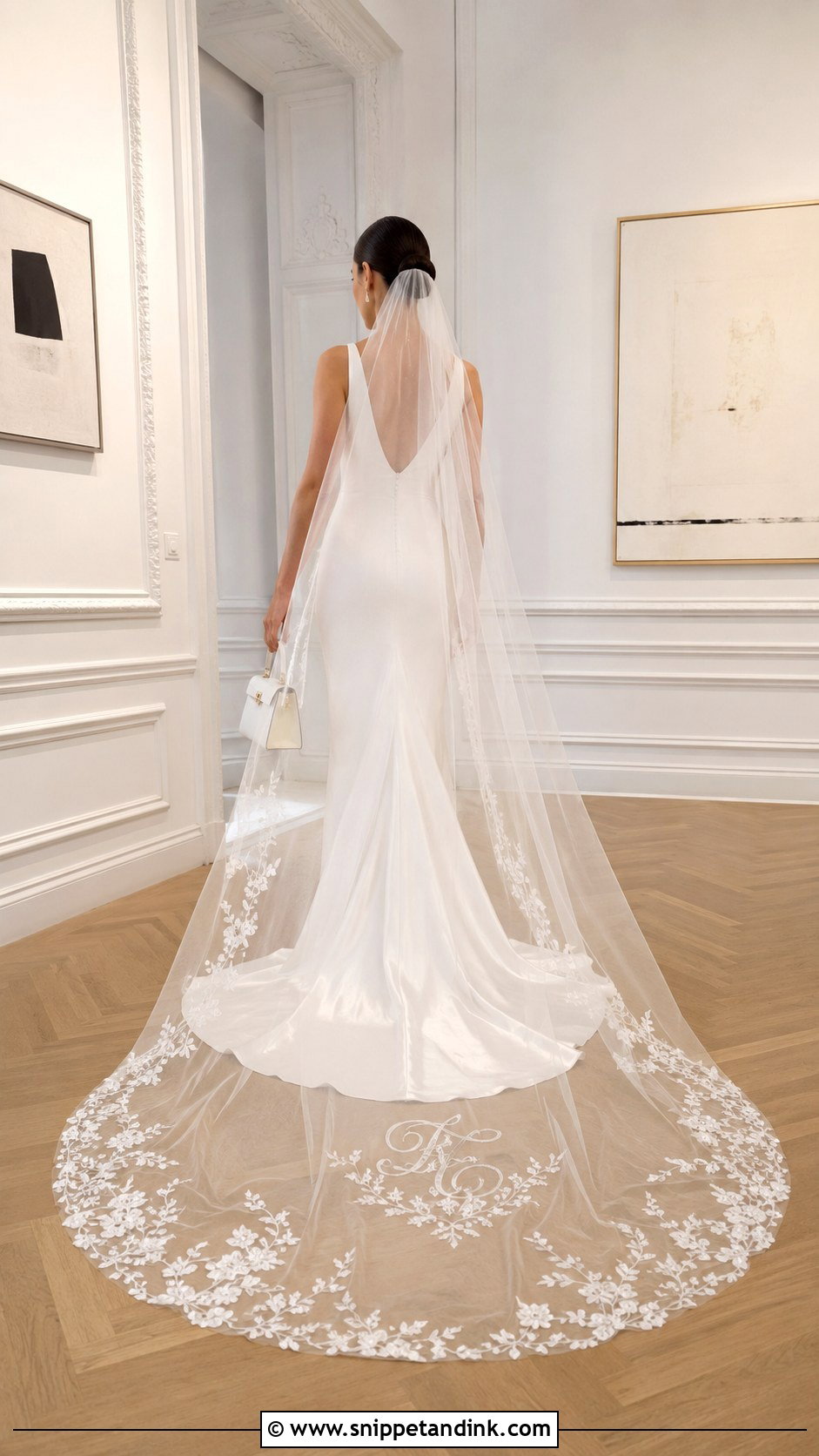
Embroidering initials, a date or a short phrase along the hem makes the veil yours, and it is the piece people pass down. Pair it with a plain satin gown so the stitching is the detail. Readable but small is the right scale; big letters fight the softness of silk. Embroidery on the hem also shifts where the veil hangs, so I place the comb a little lower than usual to let the text fall where the photographer can see it. A center-parted low bun, understated earrings and pointed pumps. Thread a shade or two deeper than the veil, and check spelling and orientation before approving.
9. Bow Silk Veil With Tea-Length Wedding Dress
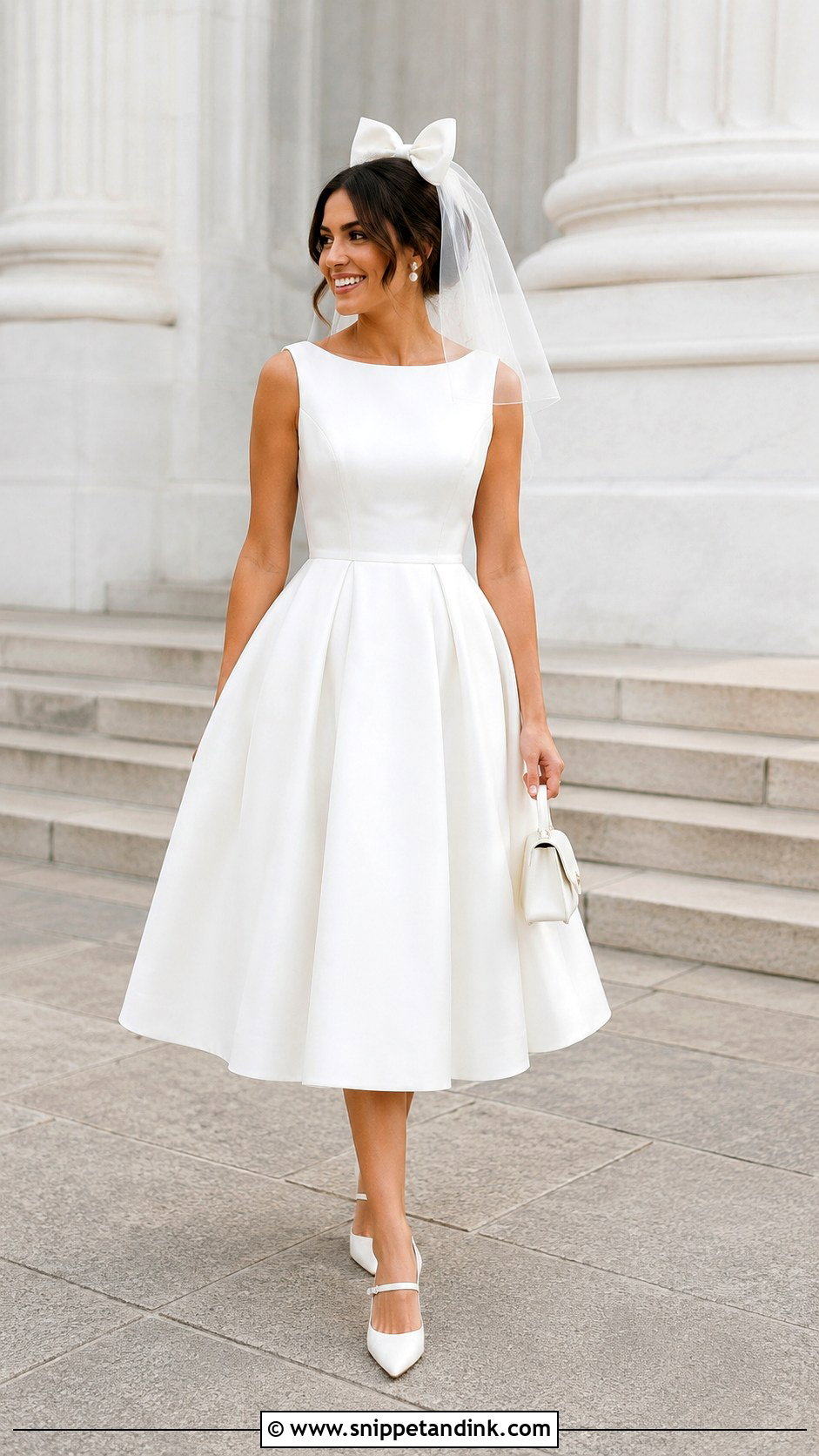
A bow veil has a playful structure: a short or shoulder-length silk tulle veil gathered under a crisp silk organza bow. Pair it with a tea-length dress, a fitted bodice and a full skirt between knee and ankle. Bows can be tiny at the crown or oversized with long tails. A large organza bow catches wind like a sail, so I attach it to a comb and pin it into a firm base, never a loose half-up style. A smooth ponytail or compact bun keeps the bow visible. Pointed pumps or Mary Janes and pearl earrings suit a courthouse or restaurant wedding where you’ll be walking and dancing.
10. Short Silk Veil With Bridal Pantsuit
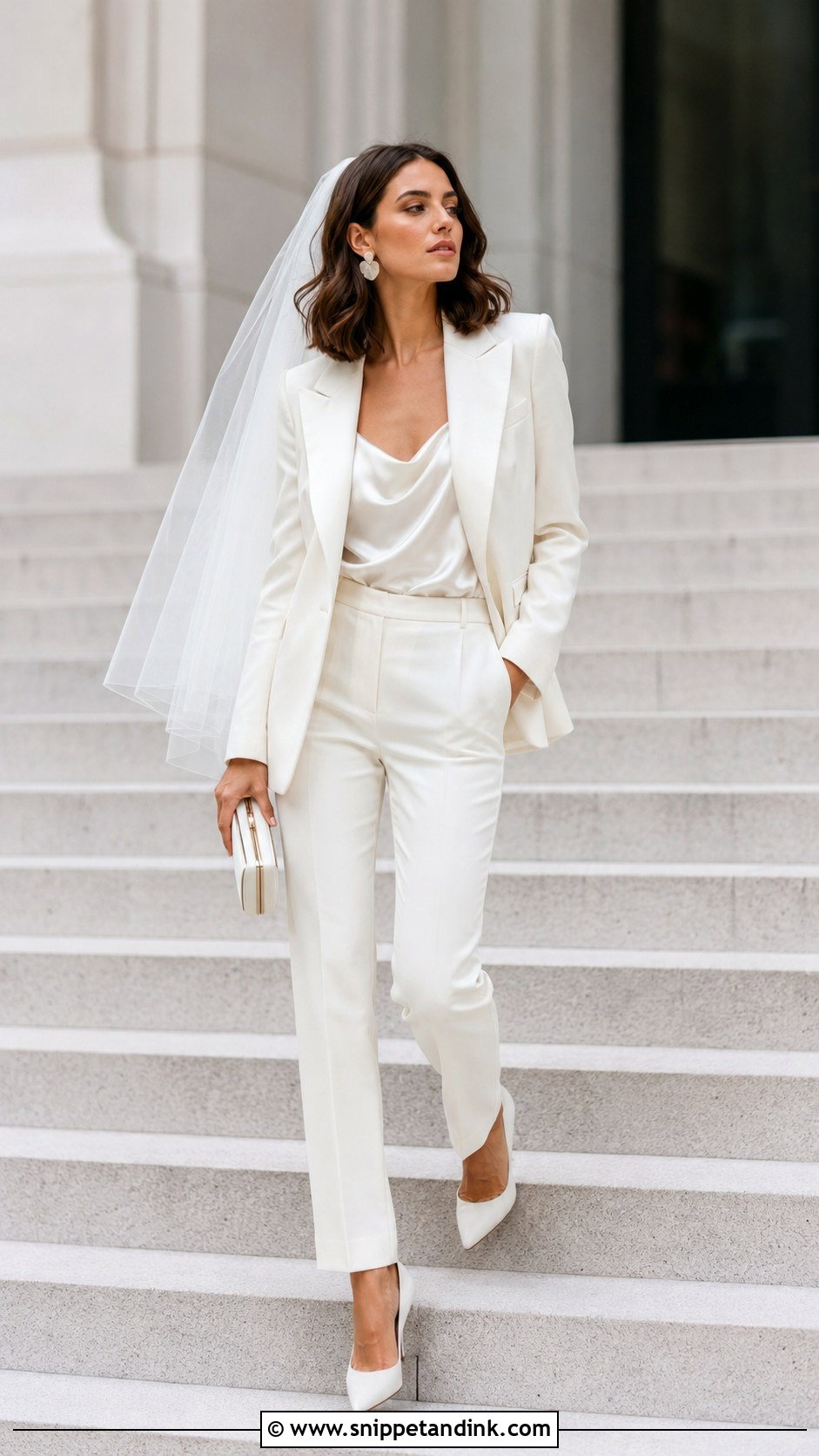
A sharply tailored pantsuit turns bridal the moment a short silk veil goes on. An ivory blazer with a defined waist, straight or wide trousers and a silk camisole or satin shell underneath keeps it clean. A shoulder-length veil on a comb or slim headband softens the tailoring, and short veils are the easiest to wear all day. With shorter hair, I sometimes build a small pinned anchor at the crown so the comb has something to grip. Pointed pumps, sculptural earrings and a structured clutch. Button the blazer for the ceremony, open it later, and hem the trousers to your exact heel.
11. Silk Chiffon Veil With Halter Wedding Gown
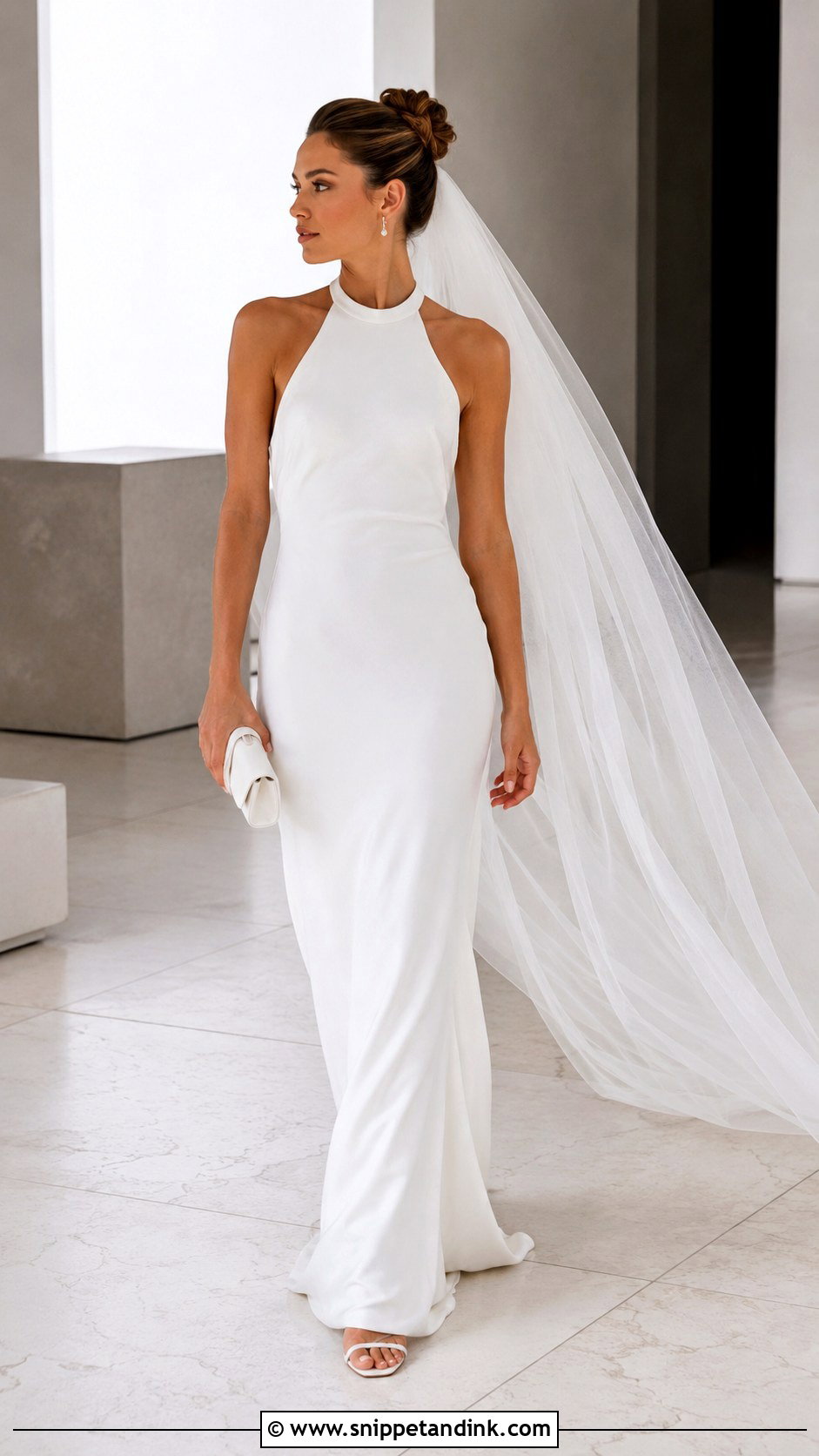
Silk chiffon is more fluid and a little less sheer than fine tulle, and its weight surprises people. It follows the long lines of a halter gown nicely, especially with open shoulders and a narrow skirt. Attach it under a high bun or twisted updo so the halter shows from behind. Chiffon is heavier per yard, so I use a wider comb and cross pins through its teeth; a single small comb tends to tip back by the reception. Slim drop earrings, sandals and a satin clutch. Skip dense embellishment. Test the veil with your hairstyle at the trial, especially for a breezy outdoor ceremony.
12. Satin-Edge Silk Veil With Off-Shoulder Gown
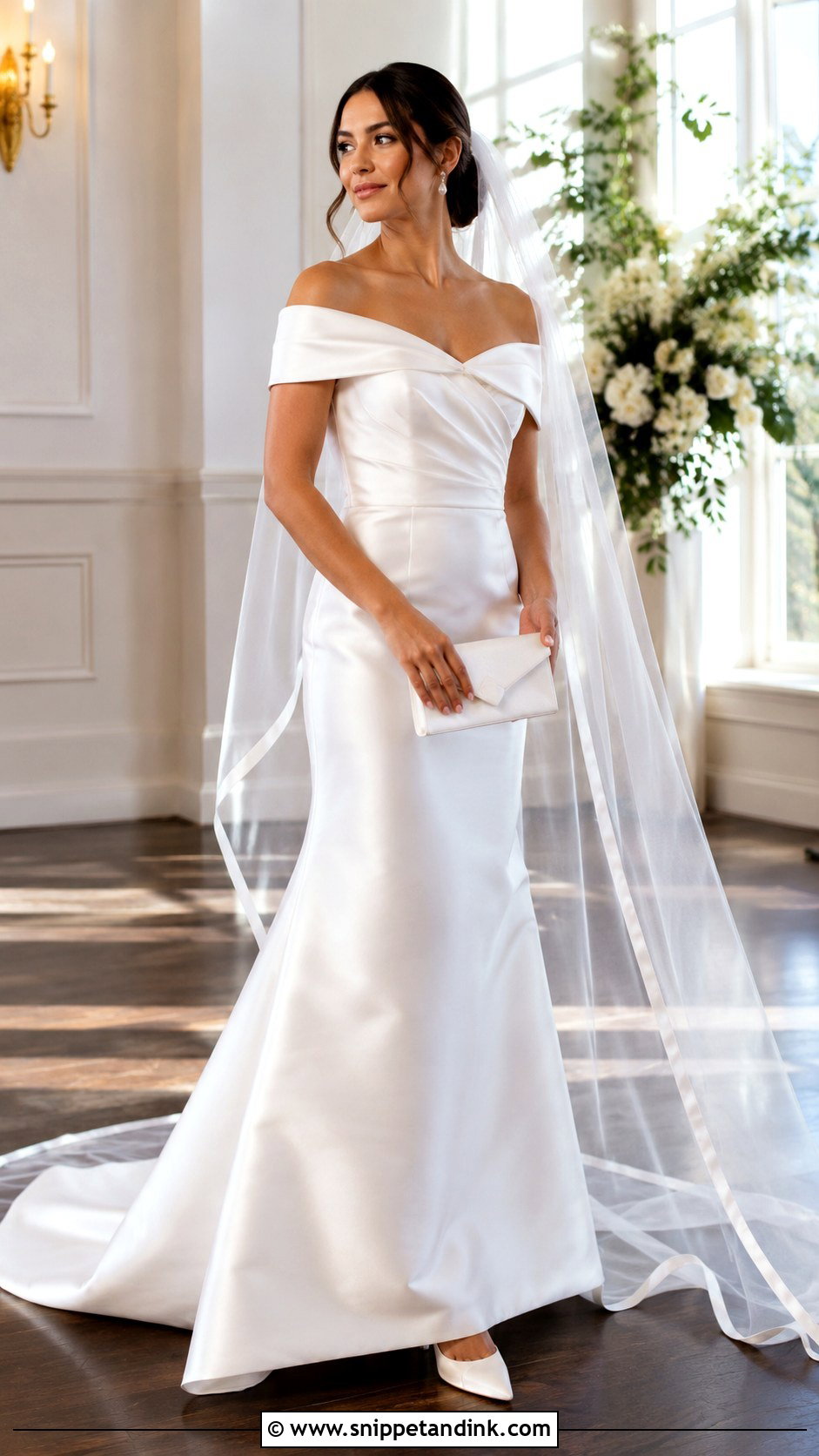
A narrow satin edge outlines the veil and repeats the finish of an off-shoulder satin gown. Fingertip or chapel length shows the edge without much weight. When comparing trims, pick a narrow, flexible one; a thick stiff border makes silk tulle hang like a curtain and swing out at the corners. A low sculpted bun, teardrop earrings, pointed satin heels and an envelope clutch suit it. Leave the neckline bare or nearly bare to show the shoulders. The aim is coordination, not an exact match that looks stiff.
13. Lace-Edge Silk Veil With Fit-And-Flare Gown
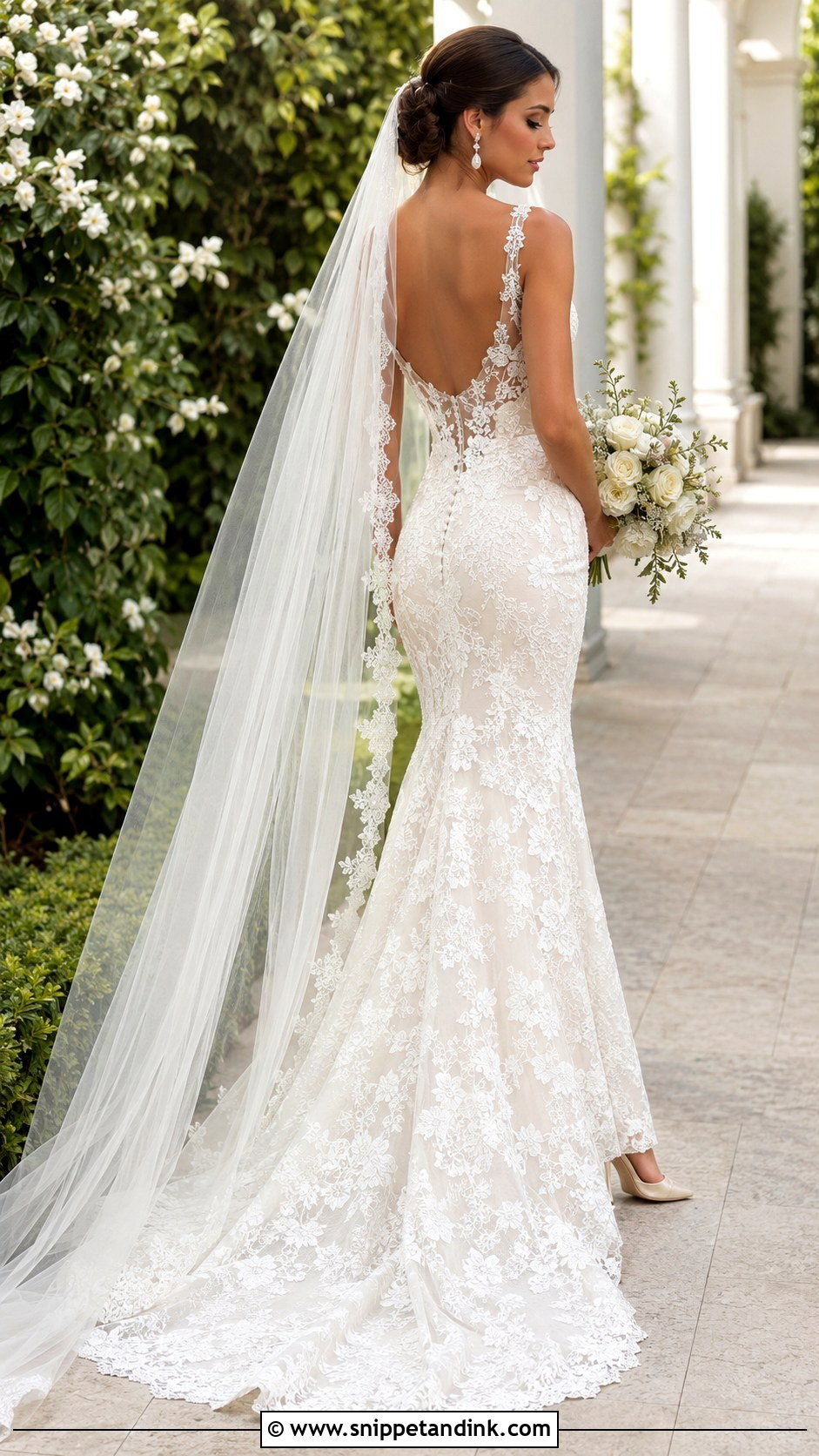
A fit-and-flare gown already has a strong outline, so the veil should follow it. A single layer of silk tulle with a fine scalloped lace edge works, and a chapel-length veil can trace the flare and finish just beyond the train. I place the comb low, at the back of the head under the waves, which keeps the side profile smooth. Soft pinned waves or a low textured bun both hold it. Pearl drops, almond-toe heels and a fine bracelet. If the dress has lace too, compare both patterns; similar scale looks deliberate, unrelated motifs look crowded.
14. Drop Silk Veil With Bateau-Neck Gown
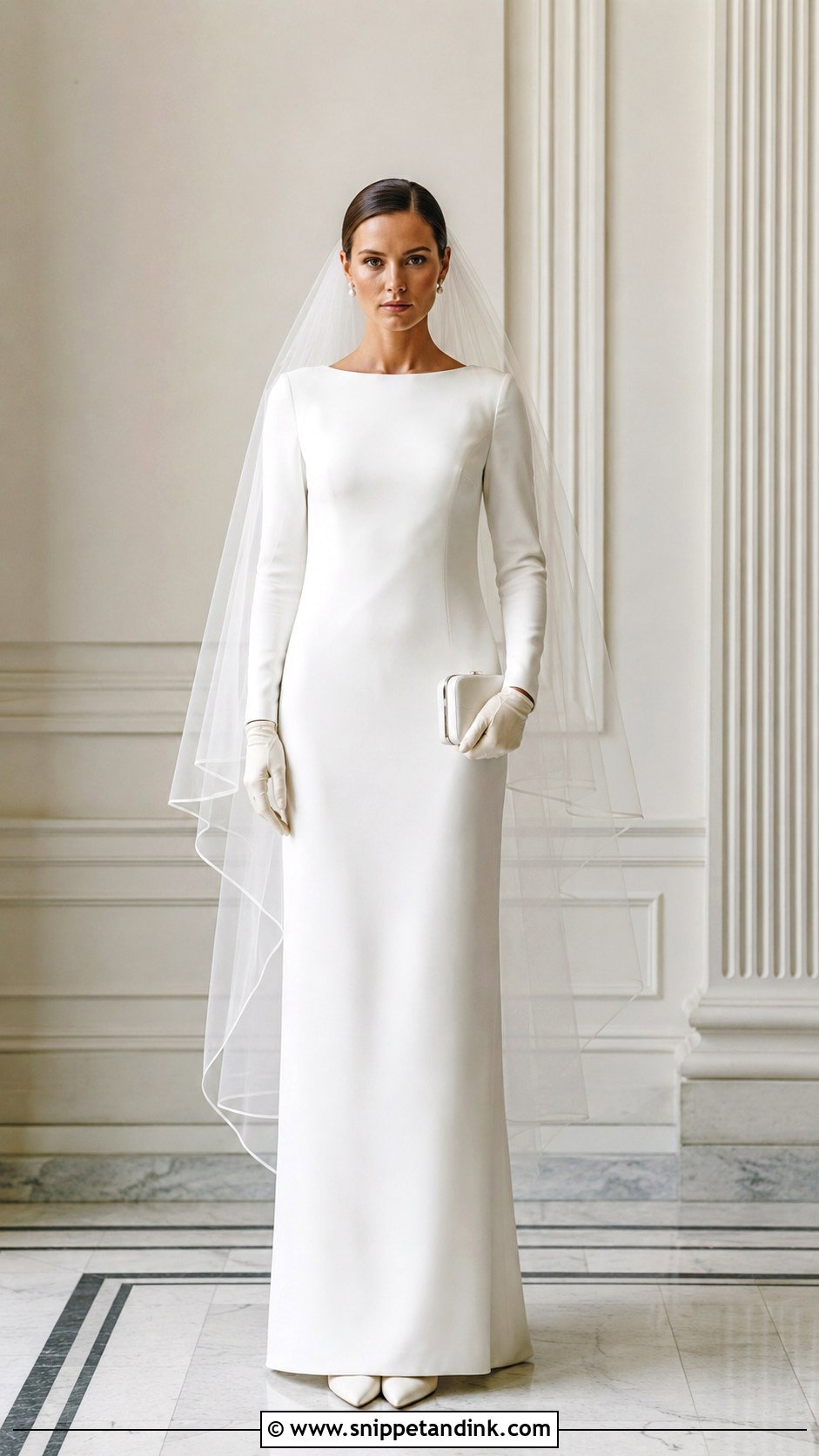
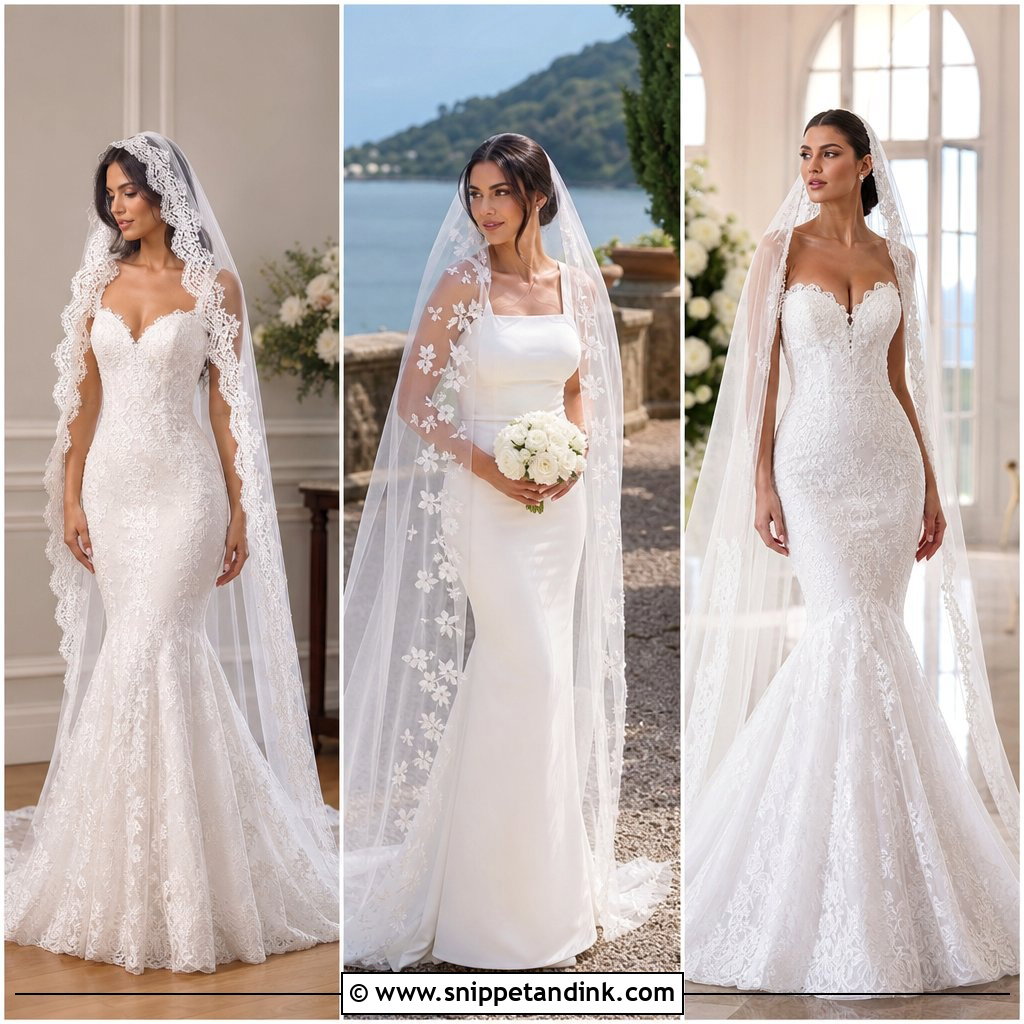
A drop veil has no gathers at the comb, so the fabric falls cleanly over the head and shoulders. That clean top is also the hardest part for me to secure, because there is nothing bunched to hide the comb. I fix a small hidden comb at the crown and run a few pins along the fold so it seems to float. With a bateau neck, a two-tier silk tulle drop veil gives face coverage without hiding the neckline. A sleek chignon, pearl studs, pointed pumps and short gloves if the formality calls for them. No bulky accessories under the veil.
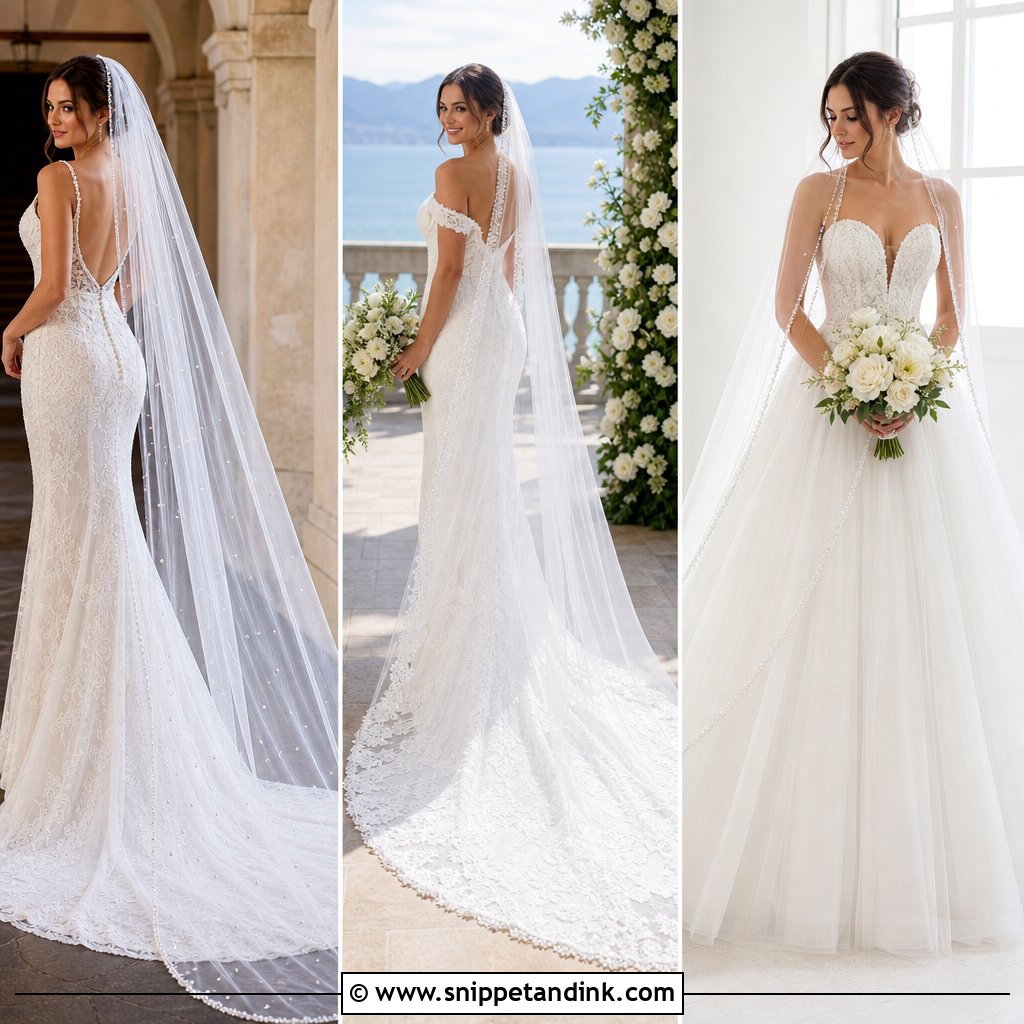
15. Waltz-Length Silk Veil With Backless Gown
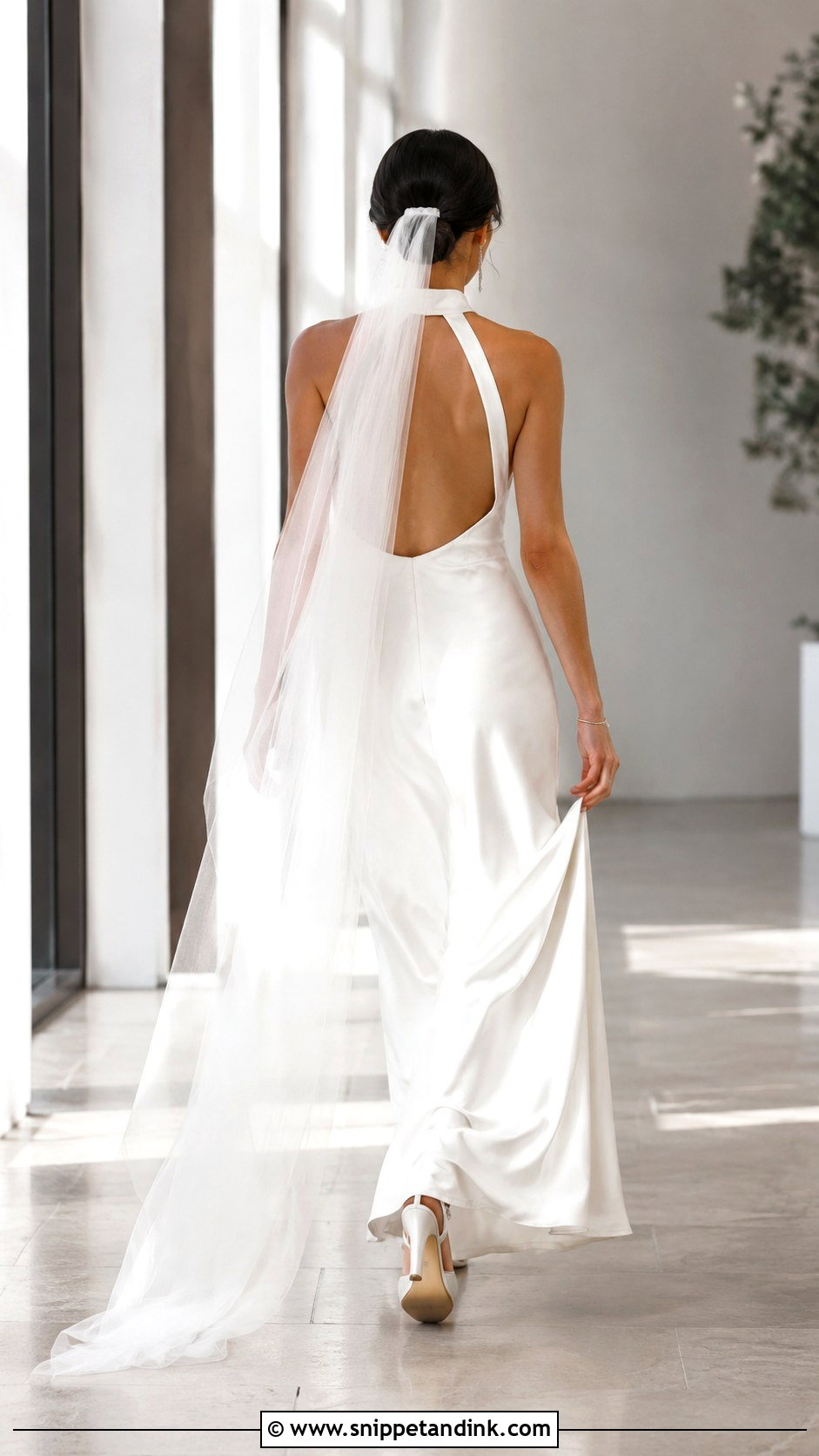
A waltz-length silk veil falls between knee and ankle, long enough for the aisle and short enough to wear through dinner. Paired with a high-neck, open-back gown, it shows the bare back through the sheer fabric when pinned beneath a low bun. A raw edge makes the tulle almost disappear. Long earrings, slim heels and a bracelet instead of a necklace. Practice walking and turning in it, because this length tends to wrap around the ankles when you pivot quickly. I usually pin it slightly to one side of the bun so it swings with you rather than catching under your heels.
16. Chapel Silk Veil With Basque-Waist Gown
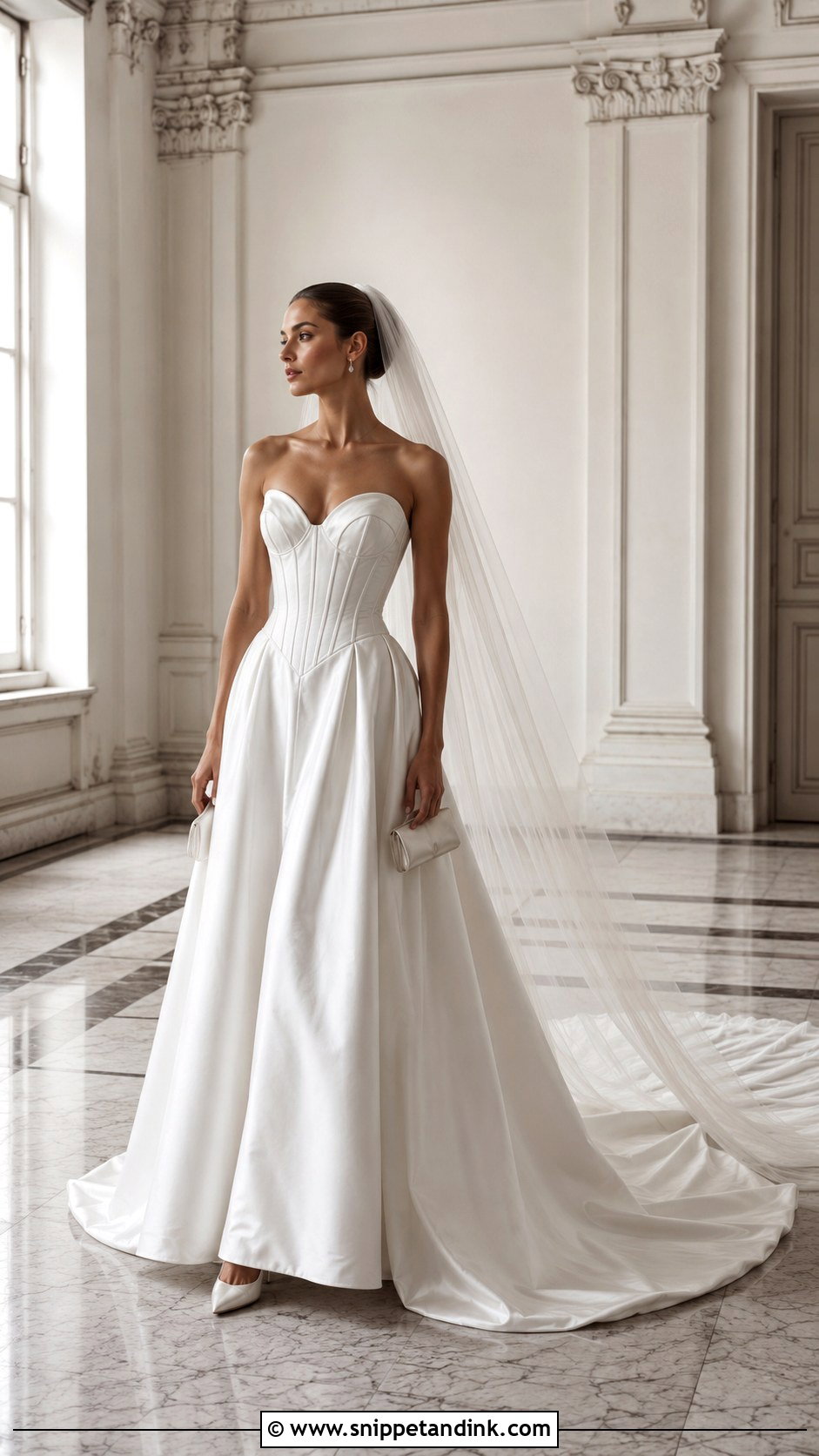
A basque waist has a sculpted point, and a chapel-length veil that finishes a little past the train frames it well. Plain silk tulle keeps a corset-style bodice and full skirt from feeling theatrical. Where the comb sits matters here: start the veil below the crown so it doesn’t cover the waist point and upper back. A classic bun is easier to anchor than a half-up style. Small drop earrings, pointed pumps and a satin clutch. If the bodice is embroidered, keep the veil plain or echo one small motif at the hem. View the whole outfit from behind during alterations.
17. Blush Silk Veil With Minimal Wedding Dress
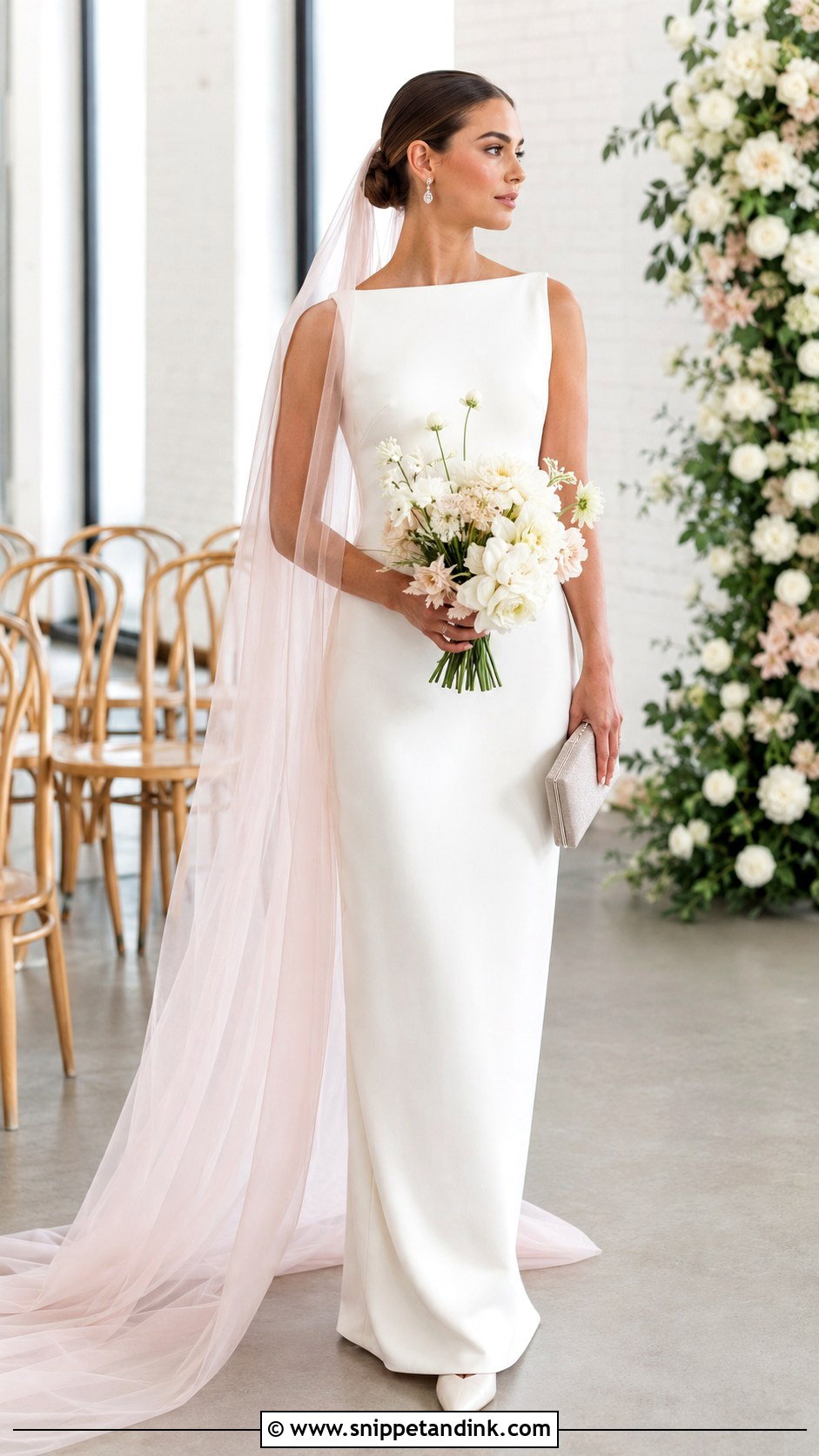
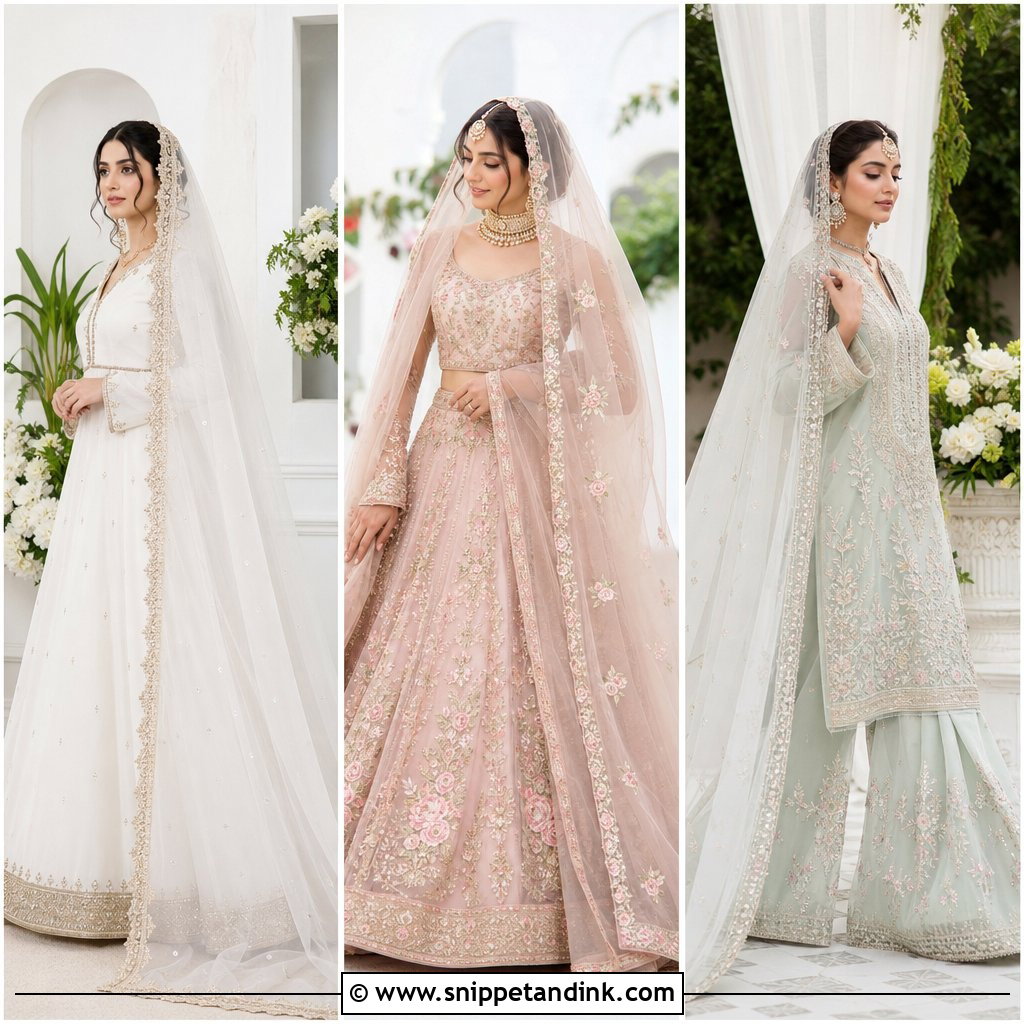
A pale blush veil over an ivory column, sheath or soft A-line adds just a touch of color. Colored veils suit a bride who wants something less traditional, but the shade has to flatter your skin and the undertone of the dress, and blush near the face can either warm the complexion or make it look flushed. Rose-toned earrings, ivory heels and a neutral clutch; don’t match everything to the veil. Keep the bouquet restrained. Test the veil beside the gown in daylight, indoor light and flash before deciding, since pale pink shifts under each one.
18. Hooded Silk Veil With High-Neck Gown
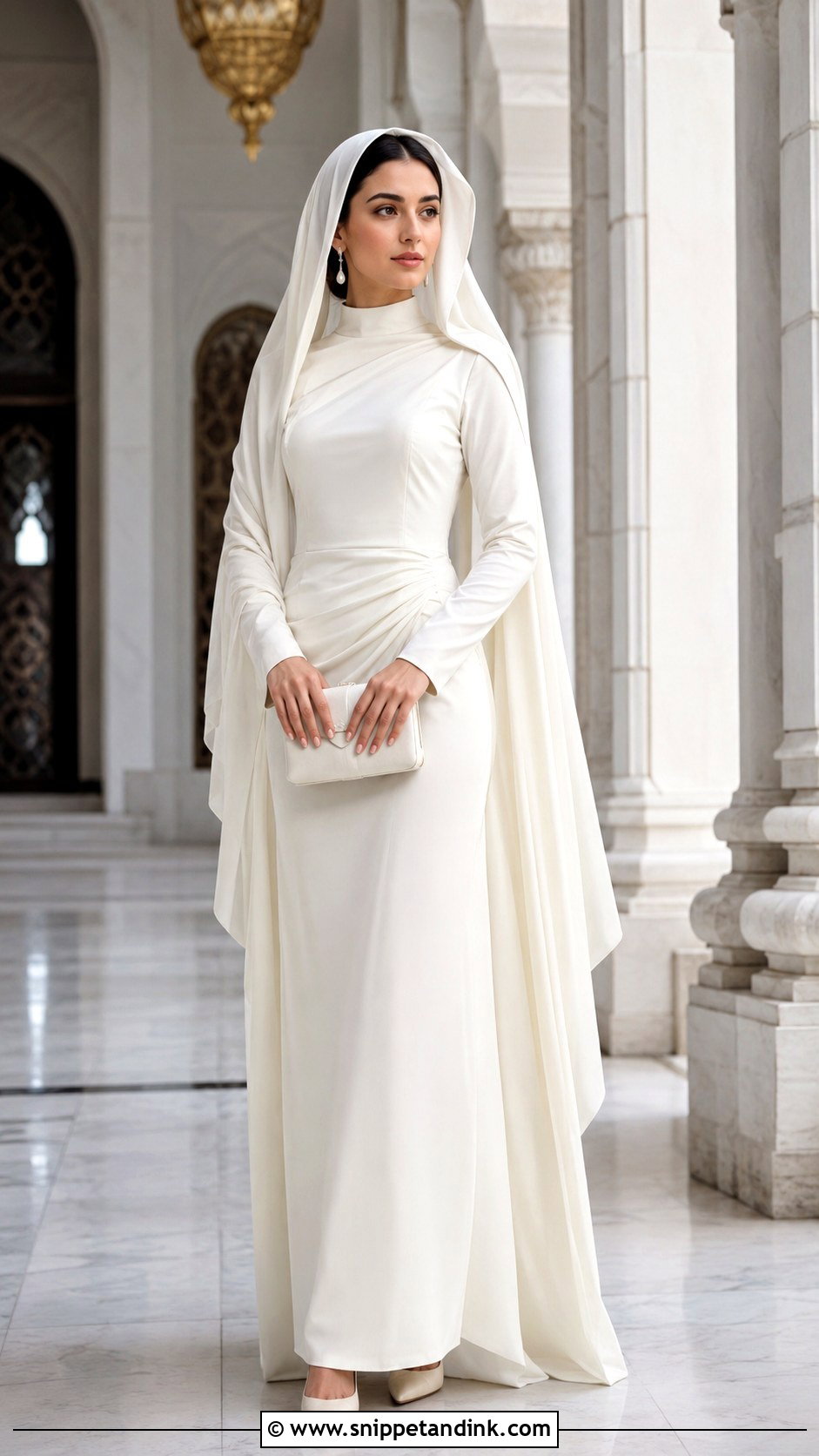
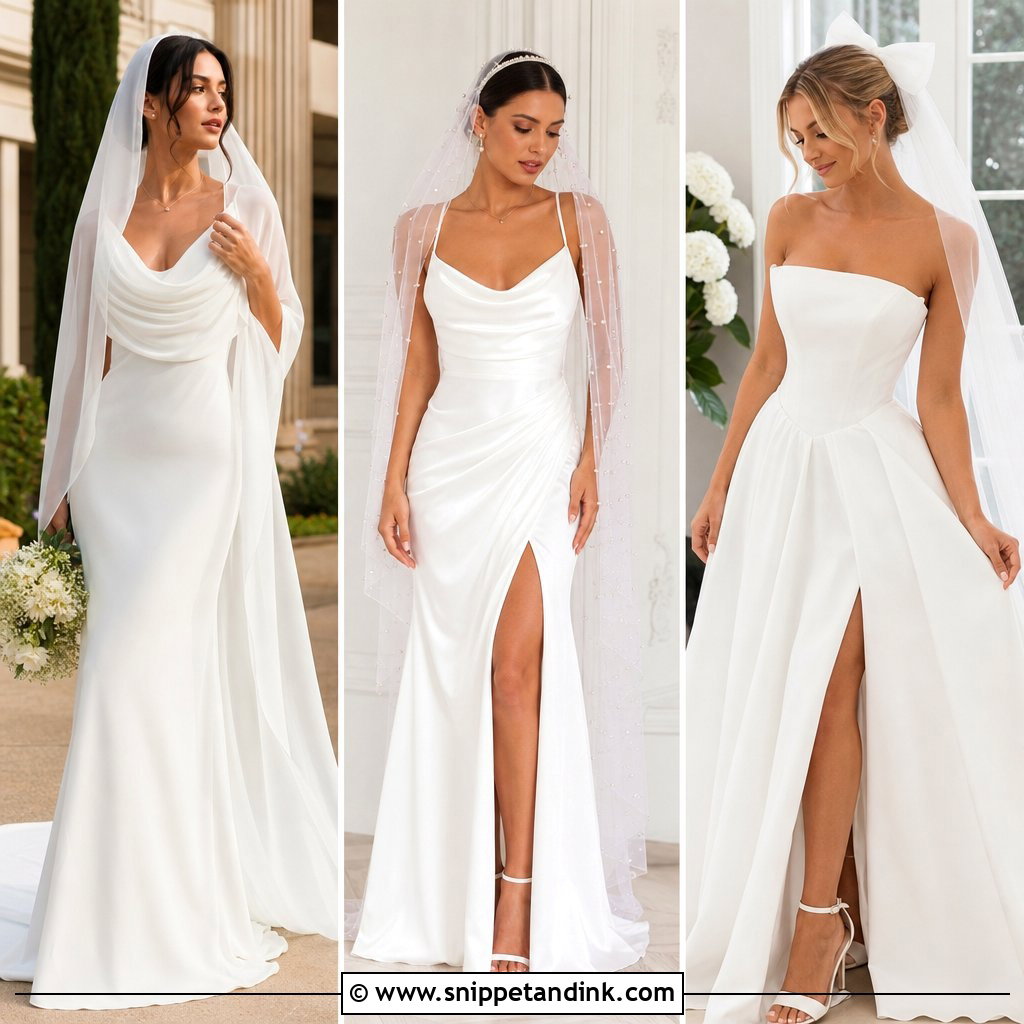
A hooded silk veil gives a modest, cape-like outline over a high-neck long-sleeve gown. Silk chiffon or light silk organza holds the hood’s shape and still falls smoothly at the back. The hood needs room: keep the hair low and flat at the crown, because a high bun pushes the hood forward onto the brow. It should be cut generously, never tight around the face. Pearl drops, closed heels and a fabric clutch. Skip shoulder embellishment. At the fitting, stand, sit and turn your head to see whether the fabric stays put.
19. Silk Veil Scarf With Minimalist Wedding Gown
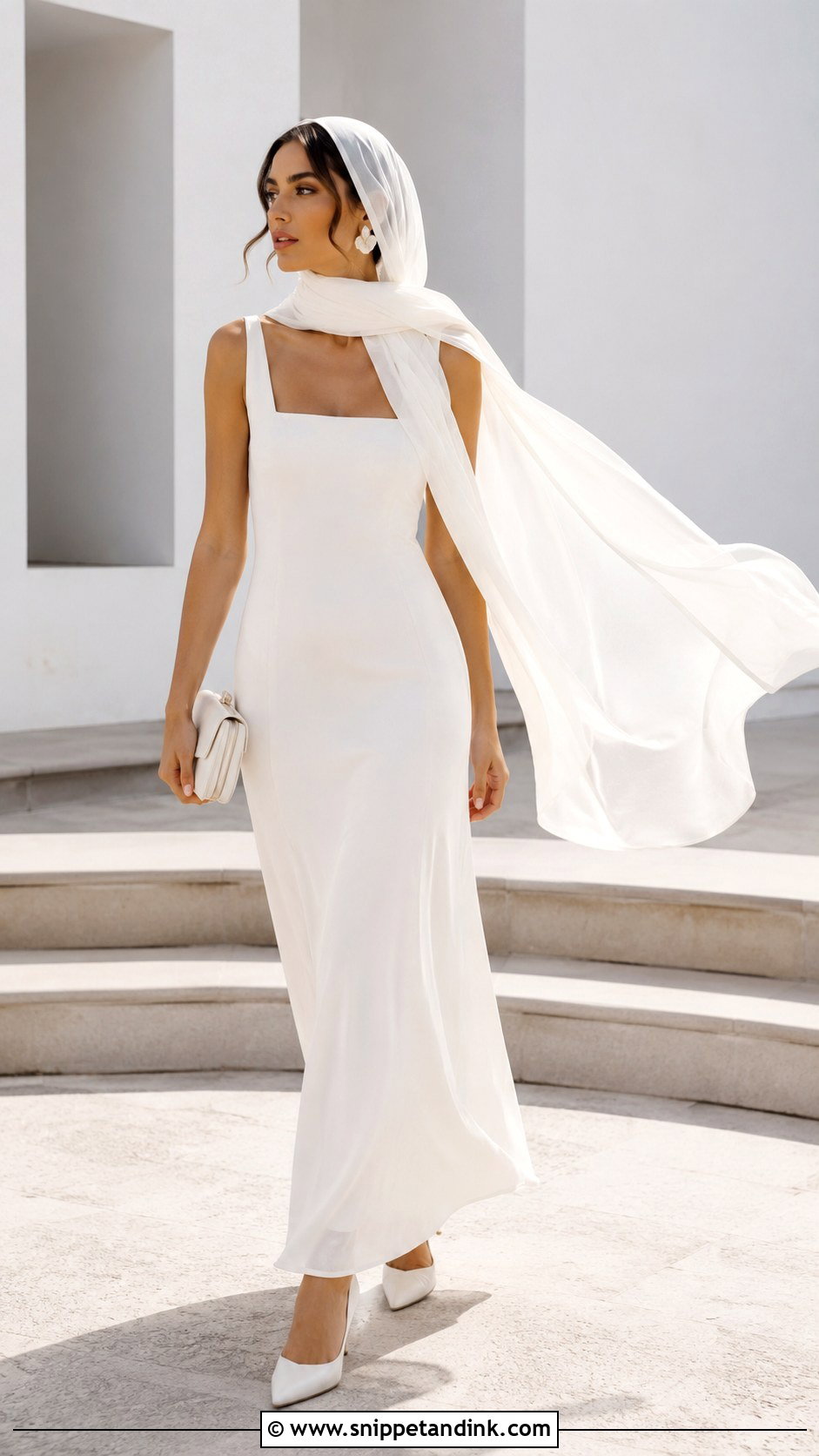
Swapping a comb veil for a long silk scarf is a modern move: wrap it loosely around the head or neck and let the ends fall behind the dress. The neck scarf has become a real alternative because it moves well and is simple to place. Chiffon looks airy, silk satin sleeker. Silk scarves slip on smooth hair, so I add a couple of hidden pins where the wrap meets the head, especially outdoors. Pair it with a minimalist strapless or square-neck gown, kitten heels and sculptural earrings. Let the tails end at a different point than the train to layer from behind.
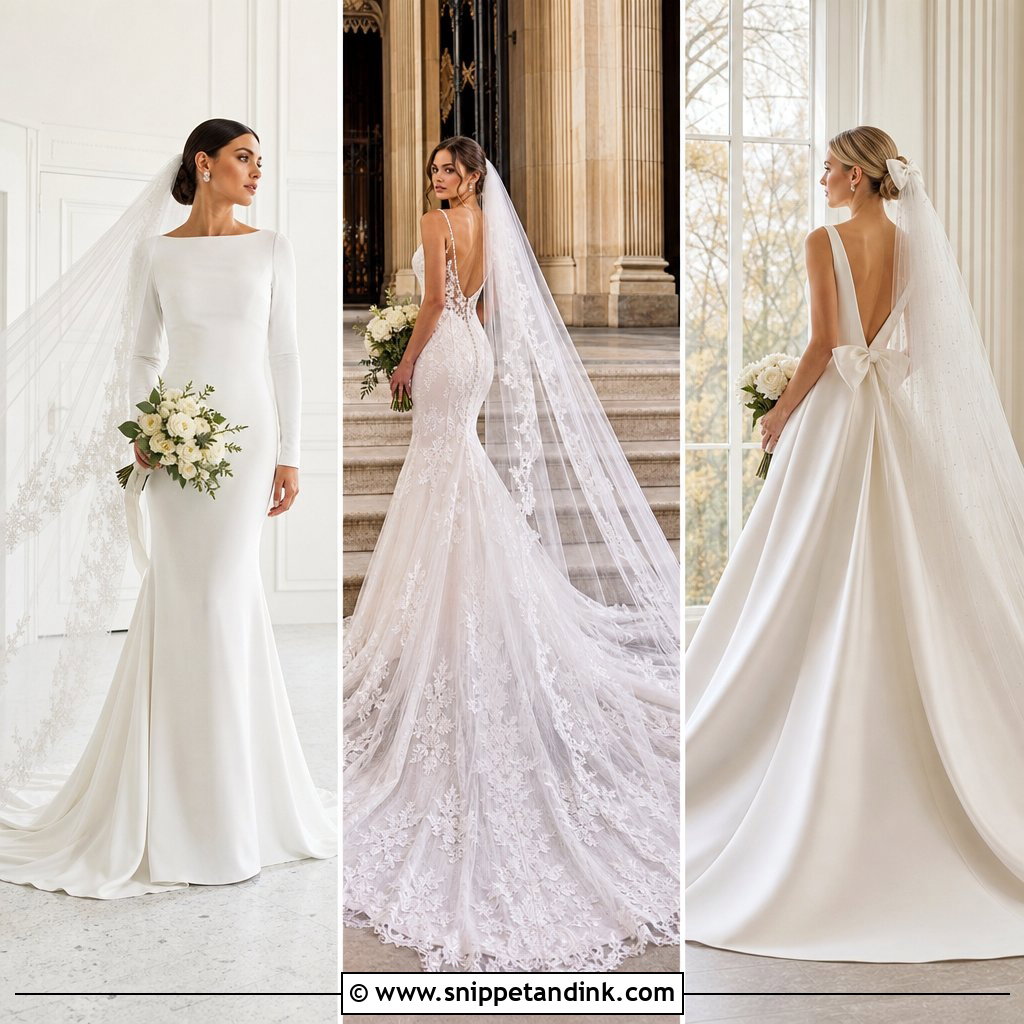
20. Silk Organza Veil With Structured Mini Dress
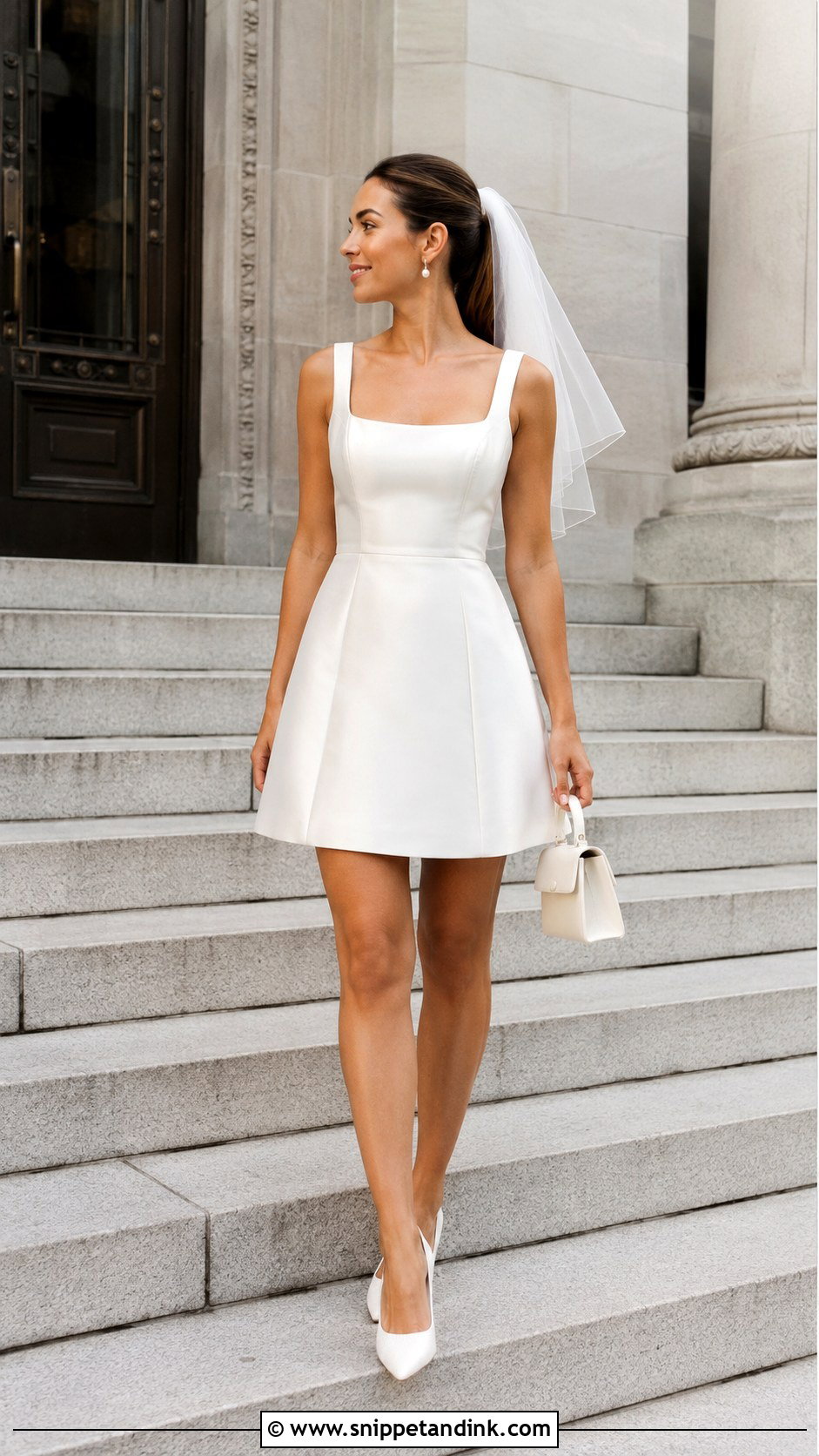
Crisp silk organza holds volume, which suits a structured bridal mini with a square neckline and an A-line or architectural skirt. A shoulder or elbow-length veil with controlled fullness keeps its shape without hiding the dress. Organza is stiffer than tulle, so I give it a firm base: a sleek bun, polished ponytail or short sculpted cut with a small anchor braid hidden underneath. Slingbacks, pearl or crystal studs and a top-handle bag. It suits a courthouse or a reception change. If the dress has big bows or flowers, keep the veil plain; if it is minimal, a narrow silk binding adds enough.
Where the Comb Sits Changes the Whole Silhouette
I decide placement after the hair is done, never before, because the same veil looks completely different depending on where it starts.
- At the crown: adds height and frames the face. Good for blushers and mantillas, but it hides the back of the hairstyle.
- Just above a low bun: the most secure spot, and my default for long and heavy veils.
- Underneath the bun: shows off the updo and the back of the gown. Best for open backs and waltz lengths.
- Off to one side: softer and a little vintage, and useful with a side-swept style.
To hold it, I tease a small section where the comb goes, slide the comb in against the direction of the hair, then cross two bobby pins through its teeth in an X. For a cathedral or chiffon veil, I add a second pair. On a windy day, a long veil needs someone to gather it during the walk to the ceremony, not just good pins.
Taking It Out Without Pulling the Updo Apart
Most brides take the veil off after portraits, and that is when hairstyles get ruined. Ask whoever does it to remove the crossed pins first, then hold the comb by its spine and slide it out in the same direction it went in. Yanking it upward drags out the bun with it.
If you plan to remove it, tell your hairstylist at the trial. I’ll finish the back with a few extra pins so the style still looks complete once the veil is gone, and I can leave a spare comb or a few pins in your touch-up kit.
Bring the Veil to Your Hair Trial
A silk veil should suit your dress, your hair, the venue and how much you want to move, not a rule about what a bride wears. Cathedral lengths bring drama; fingertip, short and waltz lengths are easier all day. Flowers, pearls, lace, bows, embroidery and color give a plain gown personality, while plain silk tulle or chiffon calms a detailed one. Confirm the fiber, compare ivories, test the comb and look at the whole outfit from every side. Most of all, bring the veil to your hair trial. Ten minutes of pinning it into the real hairstyle tells you more than any picture.
You'll Like These Ideas:


Leave a Reply